Home Blog Page 389

Smart Trainer Recommendations Guide for Zwifters

47

From the editor: this post is now outdated. For the latest smart trainer info and reviews, check out our Smart Trainer Index which includes top-rated picks for direct drive and wheel-on trainers.


Are you just getting started on Zwift, or considering a trainer upgrade? This post is for you! We’ve looked at the whole universe of smart trainers and narrowed the list to the best of the best.

About the Categories

We’ve broken this guide into three categories:

  • Wheel-On: affordable trainers which operate by putting friction against your back tire. These are less accurate, with less inertial “road feel” than direct drive trainers. On the plus side: they cost less than direct drive!
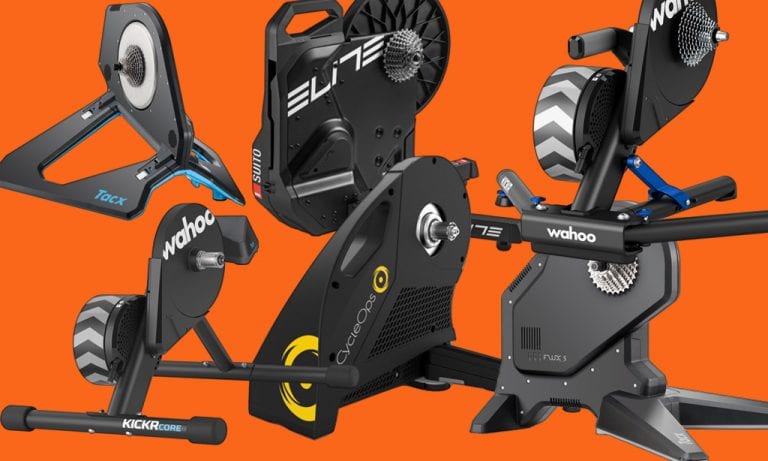
  • Budget Direct Drive: this is the most competitive category of trainers today. Direct drive trainers work with your back wheel removed and offer increased accuracy and improved feel over the wheel-on offerings. With prices ranging from $650-$900, this is where the most bang for the buck is found.
  • Premium Direct Drive: the cream of the crop, these trainers are built to be the best and priced accordingly. They typically offer increased accuracy and higher maximum wattage/gradient simulation than their budget brethren.

How We Made Our Picks

We made our selections using a variety of criteria, including:
  • Testing and Reviews: we’ve read reviews from the likes of DC Rainmaker, Shane Miller (GPLama) and many others. We’ve also done some trainer testing ourselves.
  • Zwift Certification: we’re only recommending trainers which are Zwift certified. This means Zwift has tested the trainer and ensured that it can:
    • Broadcast via BLE
    • Maintain at least +/- 3% power accuracy (although the Tacx Flow does not, even though Zwift says it is certified?)
    • Allow for spindown calibration
    • Support Erg mode
    • Automatically change resistance
    • Provide the user with a great experience
  • Market Research: we look at factors like product availability, the manufacturer’s reputation for quality support, and more.
  • Price: bang for the buck is always a factor!

A Note on Pricing

Price is a major factor in our picks, but pricing can vary by country, dealer, and day of the week. You may find a good discount on a trainer which makes it a better buy over some of our top pics, so we’ve included some notes for each category which mention solid trainers which did not make the list. If you can find those trainers for a bargain price, consider pulling the trigger!

With all that out of the way, let’s jump into our top picks.
Wheel-On Smart Trainers

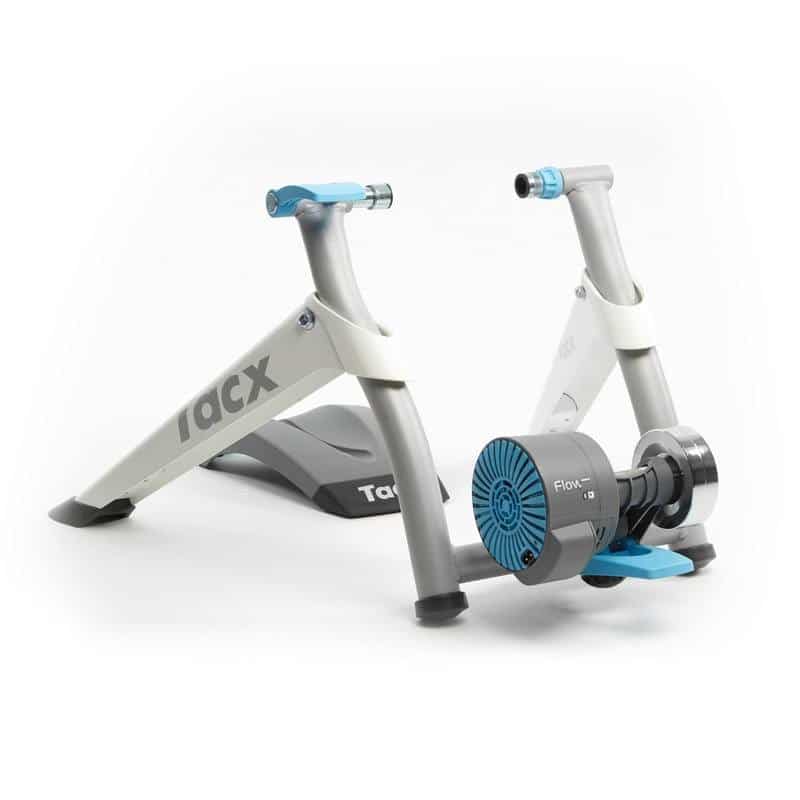
Best Price: Tacx Flow Smart ($369USD)

The cheapest smart trainer around, the Flow made our recommendation list last year as well. It’s the least accurate of the recommended trainers, but you can’t beat the price.

Buy now:
Direct from Tacx/Garmin
Zwift
Amazon
Competitive Cyclist
REI
Clever Training
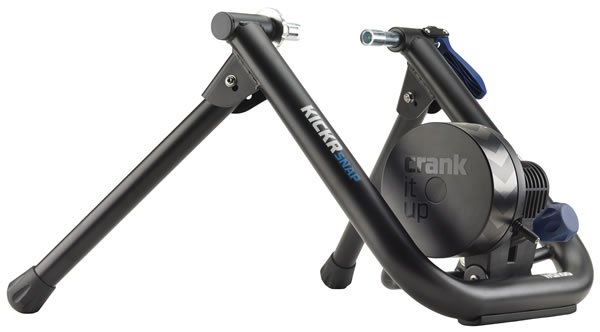
Best Feel: Wahoo KICKR Snap ($499USD)

With the price reduced by $100 from last year, Wahoo’s well-established wheel-on smart trainer is the premium pick in this bracket. Its flywheel gives it a more road-like feel than other wheel-on trainers, and it’s backed by a reputable, US-based company.

Buy now:
Direct from Wahoo
Zwift
Competitive Cyclist
REI
Clever Training

Category Notes

  • DC Rainmaker also recommends the Bkool Smart Go, but since Bkool made the decision to stop making trainers, we don’t feel this is a smart buy at this time. It is clear there’s a lot in flux at Bkool, and this trainer isn’t even listed in their store at this time.
  • The Saris M2 is a decent wheel-on offering as well, but without a flywheel and slightly worse power accuracy than the same-priced KICKR Snap. Saris needs to drop the price on this trainer just a bit to make it competitive.

Budget Direct Drive Smart Trainers

Premium Features: Wahoo KICKR Core ($899USD)
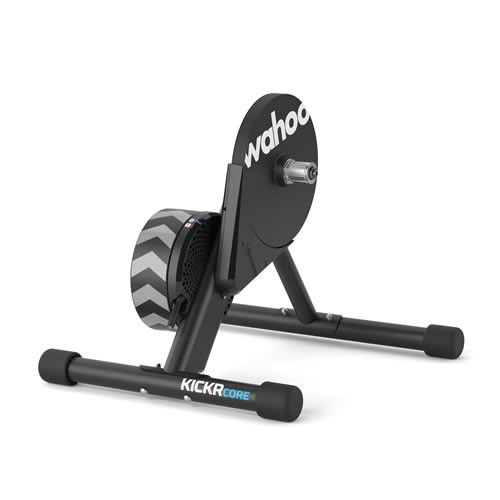
The KICKR Core is essentially a quieter 2017 KICKR. Sure, the frame is a bit different, but the internals, flywheel, and other specs are basically the same–yet it’s whisper-quiet. Also compatible with the Wahoo indoor ecosystem (notably the Climb), if that’s the sort of thing you care about.

Buy now:
Direct from Wahoo
Zwift
Competitive Cyclist
REI
Clever Training

Easy Value: Elite Suito ($799USD)
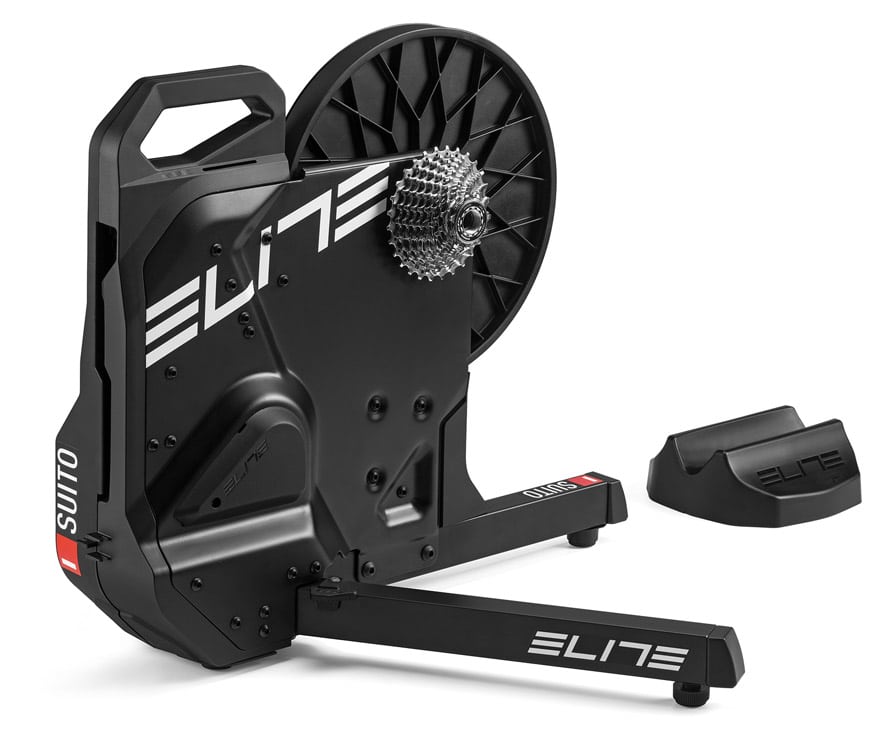
At $100 less than the KICKR Core with a cassette, the Suito delivers a lot of bang for the buck and it’s ready to go out of the box. Bonus for portability/ease of storage.

Buy now:
Amazon
Zwift
Competitive Cyclist
REI
Clever Training

Budget Performer: Tacx Flux S ($749USD)
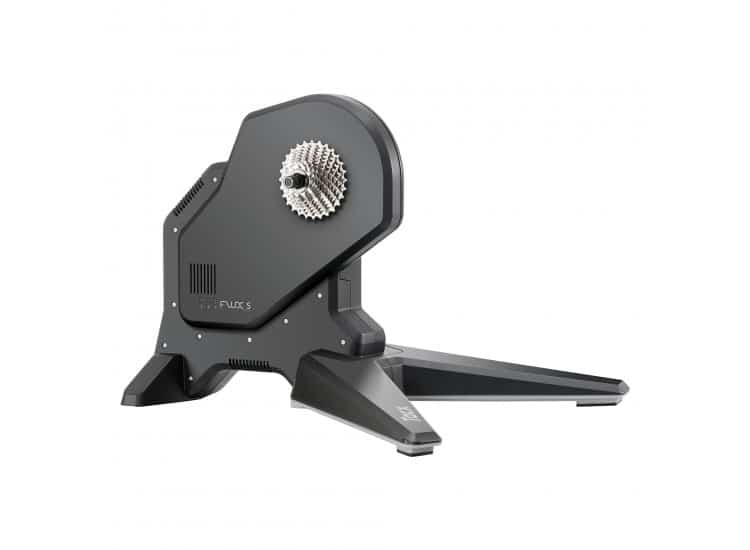
$50 less than the Suito, but without a cassette, the Flux S is a bit more solid than the Suito and also more proven after going through a few model revisions.

Buy now:
Direct from Tacx/Garmin
Zwift
Competitive Cyclist
REI
Clever Training
Power Meter City

Category Notes

  • With a low price and solid test performance, Elite’s Zumo might have made this list, if it was readily available in the US market. Maybe next year.
  • Elite’s Direto X is a solid trainer in this category, but just a bit too pricey at $850, when you consider that the KICKR Core is just $50 more while being quieter and more capable.
Premium Direct Drive Smart Trainers

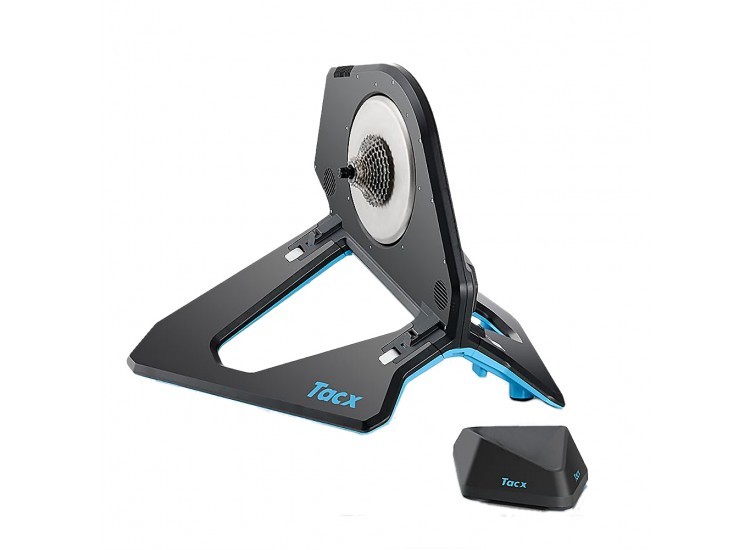
Best Accuracy: Tacx Neo 2T ($1399USD)

The 3rd generation of Tacx’s Neo is the best yet, with more frame compatibility and brake power while maintaining industry-leading noise levels and power accuracy. It’s also got the Tacx “Road Feel” surface simulation feature, which no other trainer can claim.

Buy now:
Direct from Tacx/Garmin
Zwift
Amazon
Competitive Cyclist
REI
Clever Training
Power Meter City
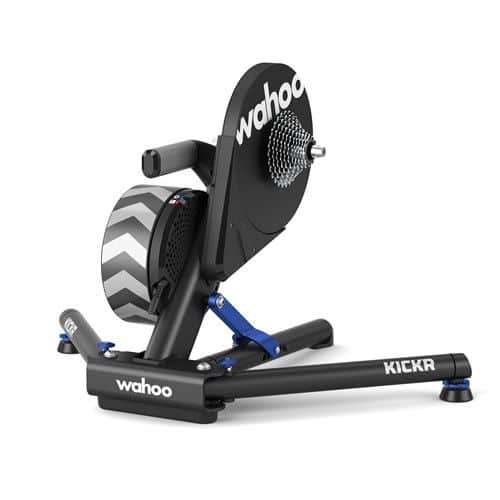
Best Ecosystem: Wahoo KICKR 2018 ($1199USD)

Far and away the most popular smart trainer on Zwift, Wahoo’s 2018 KICKR version suffered some reliability issues early on which seem to be resolved. Built like a tank, with the best inertial feel available. Also compatible with the Climb!

Buy now:
Direct from Wahoo
Zwift
Competitive Cyclist
REI
Clever Training

Best Price: Saris H3 ($999USD)
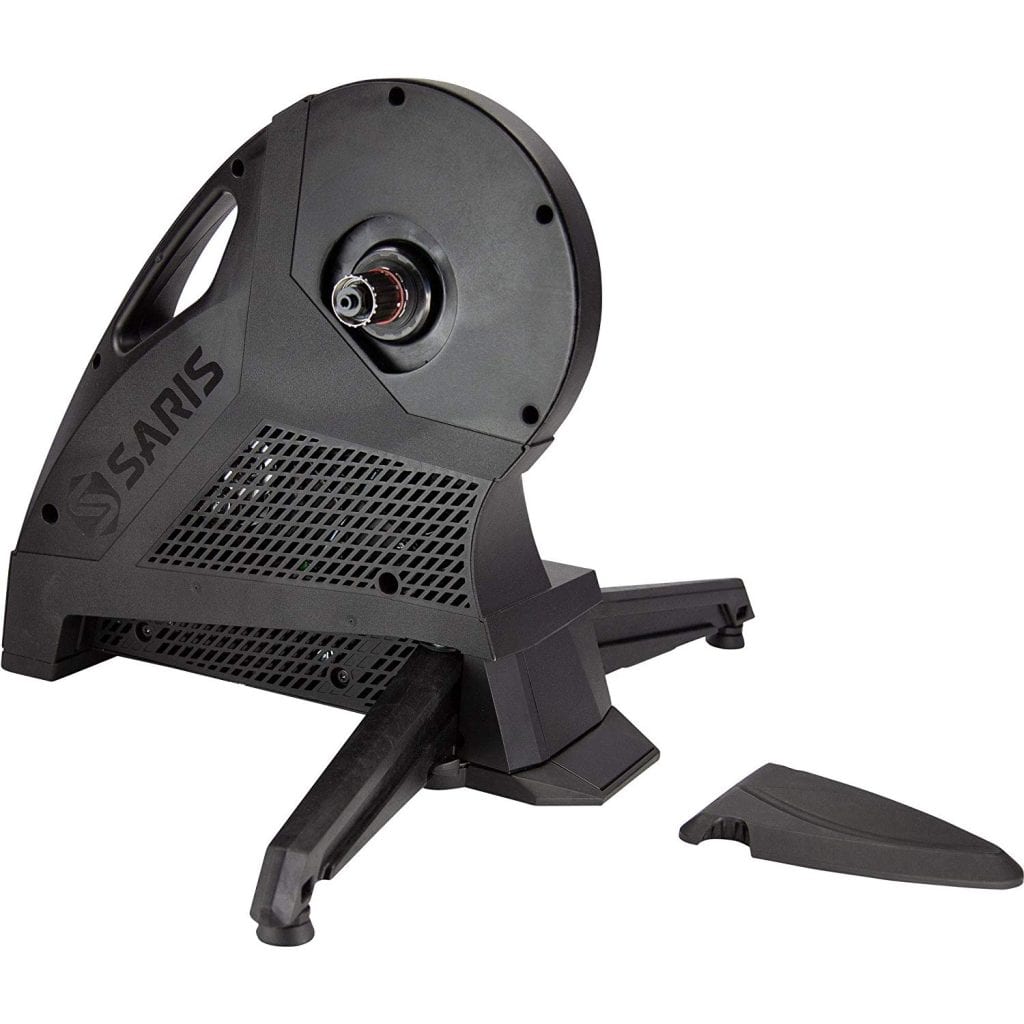
This year’s most exciting new trainer, the H3 from Saris (formerly CycleOps) has performed well in tests and costs significantly less than the KICKR or Neo. Still a few firmware niggles to work out, but given its bargain price and bulletproof built this trainer has to make the list!

Buy now:
Amazon
Zwift
Competitive Cyclist
REI
Clever Training
Power Meter City

Category Notes:

  • Elite’s Drivo II is a great trainer, but it’s hard to recommend when priced the same as the slightly quieter, more full-featured KICKR.

Questions or Thoughts?

Share your input below!
Inside Girona: Cycling Now Illegal In Europe’s Two-Wheeled Capital

6

Inside Girona: Cycling Now Illegal In Europe’s Two-Wheeled Capital

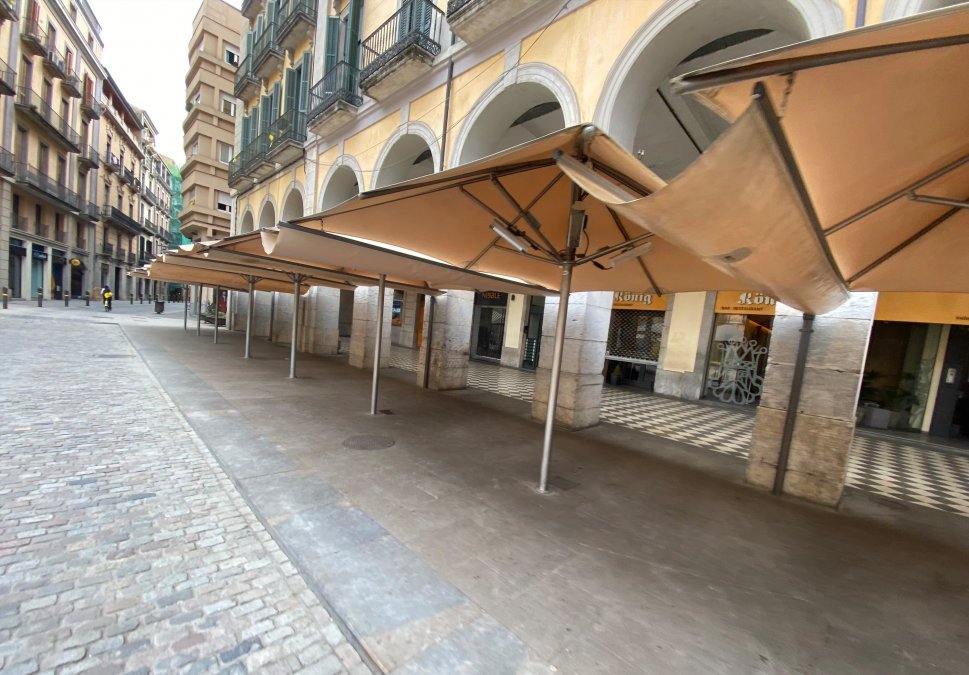
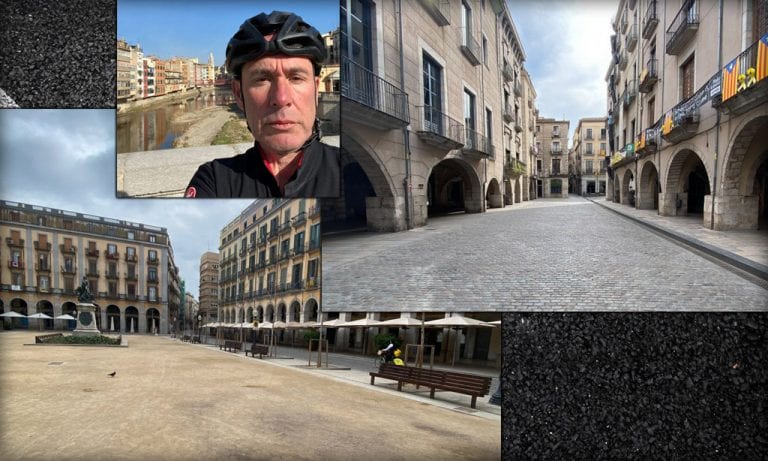
Outside the sun is shining, the sky an unbroken blue. There is no wind. It will be about 22C later. Blissful riding weather in the cycling paradise of Girona, in the heart of Catalonia.

But if I dare to take my bike out, it will be in the sure and certain knowledge I’ll be stopped within moments by one of the many police patrols. If I’m lucky, a ticking off. If I’m not, a substantial fine. If they deploy the nuclear option, as they are newly-empowered to do, I could be thrown in jail.

It wasn’t supposed to be like this

I’m blessed in having a base in Girona, a step taken after a number of cycling trips here. It lives up to the hype. There is a vibrant local cycling community, daily sightings of pro riders and beautiful smooth roads across varied terrain populated by drivers distinguished by both their courtesy and their rarity.

Now – and for the foreseeable future – this idyllic combination may as well be on Mars as 30 metres from my front door. And it hurts.

The cycling ban – there’s a similar one in France – is real. This is not a Virus Myth or an unenforced gesture by a desperate government. There is no leisure or professional cycling. Utility cycling is permitted – but best make sure you have full documentation as you will be asked for it.

Supporting the ban

As an avid and lifelong cyclist whose day is not complete without a ride and whose move here was motivated mainly by cycling, I support the ban completely.

I’m not alone. The ban is being impeccably observed by the emigrant cycling community, the pro rider community and the many local cyclists. We don’t have a choice, of course, but I’ve heard not a syllable of dissent expressed.

Frustration? Yes, that’s inevitable. But the idea behind the ban, that pursuit of our hobby or even profession, could result in a crash which takes up much-needed healthcare resource is one for which I have heard nothing but unwavering support.
We can’t ride and that’s not great. Hospital beds are about life and death, and that’s different.

I’m hearing that just as strongly from the pro riders based here, who I speak to as part of my work making The Zwiftcast, a podcast for Zwifters. There was talk of them being allowed dispensation but the position remains unclear. And those I’ve spoken to not only don’t want to ride into the headwind of public opprobrium, they also want to do their civic duty.

We’re also united in our support for the cycling businesses here in Girona which are a big part of the local community. It is no exaggeration to say that they have been devastated by the cycling ban.

Their revenue, all of it, has vanished just as the peak season was about to start. Their premises are closed by government decree. Their expensively-acquired fleets of hire bikes lie idle and there is no end in sight. There’s not much we can do, in reality, to help but we’re doing our best, even if it’s only moral support.

Coping with the change of circumstance

So how are we coping? Well, obviously, the huge upsurge in numbers on Zwift has been swelled a little by the marooned Girona riders. Many of the yoga and pilates classes we used to go to have moved online. The smarter cycling cafes and craft breweries are doing deliveries. And there’s a lot of turbo trainer swapping and sourcing going on.

We’re just a week into an initial 15-day lockdown – it looks as though another two weeks is inevitable and nobody would be surprised by a further extension beyond that.

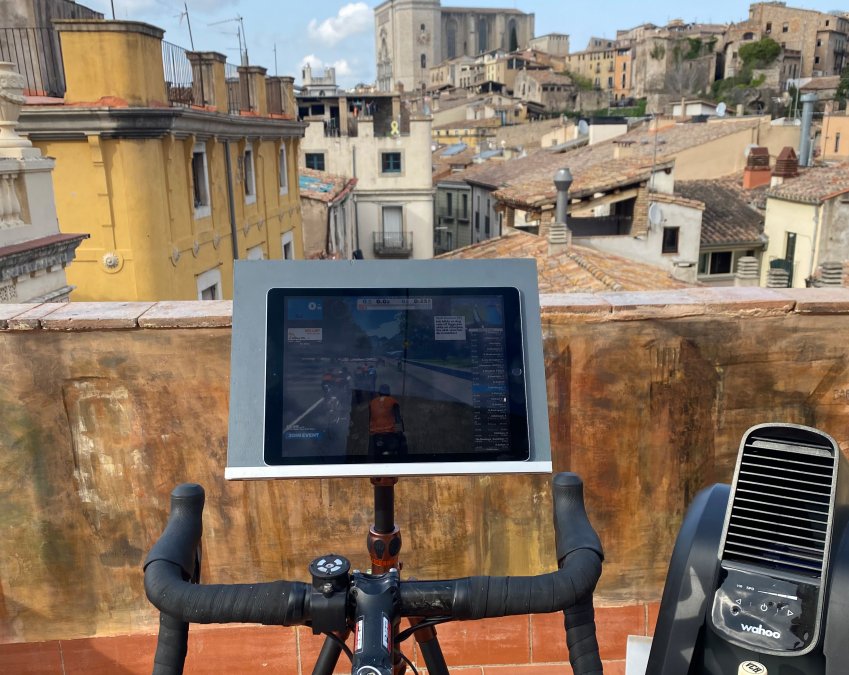
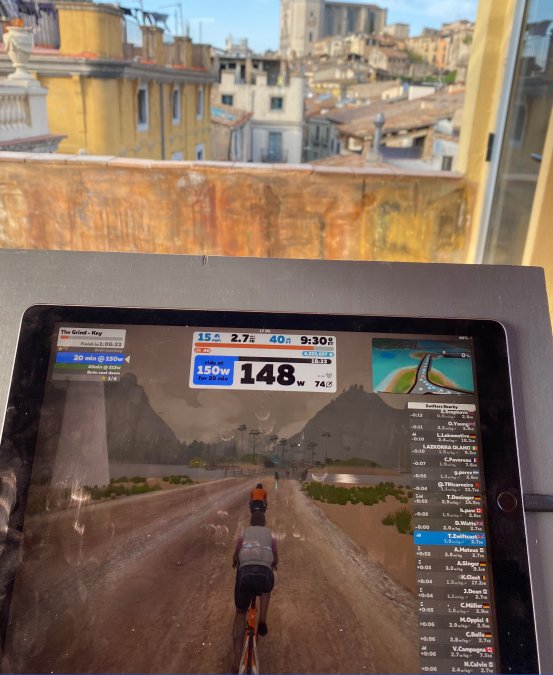
My coping strategy is helped by the fact that I can shift my trainer outside to the terrace, where I not only get a killer view of the deserted and silent Old Town but also precious fresh air.

From there I can see the twin radio masts on top of the famous Rocacorba. Are they taunting me or are they reminding me that when all this is over, they’ll still be there?

It’s the latter because they will still be there as will all the glorious routes, the dappled climbs, the cool pine forests and the joyous runs to the coast. When the mind drifts off the jostling pixels on Zwift, that’s where it goes.

Hear more from Simon on The Zwiftcast >


Simple Zwift Setups: Direct-Drive Smart Trainer + Apple TV (Video)

Simple Zwift Setups: Direct-Drive Smart Trainer + Apple TV (Video)

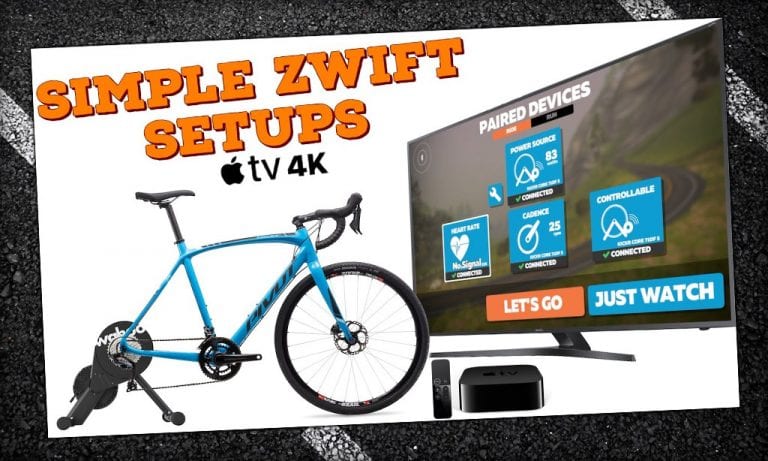
Looking to get on Zwift for the first time? Need a solution that works well without being too complicated? Our favorite Aussie Lama Shane Miller has just posted a video explaining the basics of setting up an easy to use yet high-quality, super-functional Zwift station.

The station has just a handful of components, keeping things simple:

Watch Shane explain it all:


Video: How To Race On Zwift Like A Pro – Tips From An Indoor Cycling Champion

1

Video: How To Race On Zwift Like A Pro – Tips From An Indoor Cycling Champion

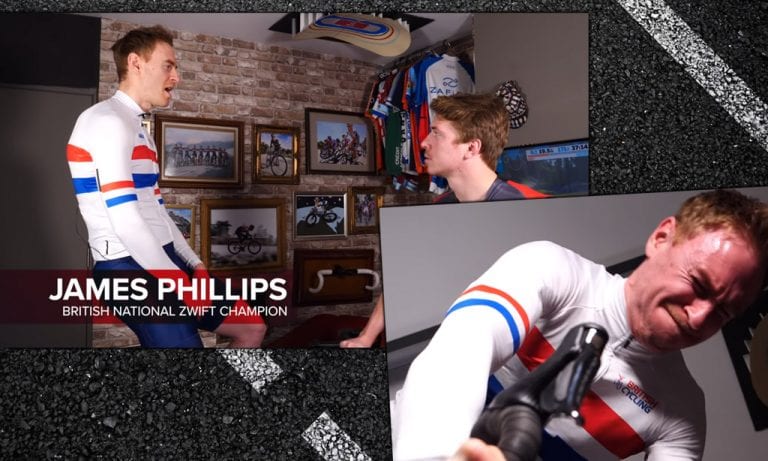
GCN just released a video featuring race tips from British indoor cycling champion James Philips of Canyon ZCC. GCN presenter James Lowsley-Williams talks through a few key topics with Philips, including:

  • Getting started on Zwift racing
  • Race starts – full gas!
  • PowerUps – which is best, and when to use them
  • What sort of fitness works best for Zwift racing
  • Can you make a living off Zwift?
  • What is the future of Zwift eSports?


Endurance Exercise and Immunity – Never Going Pro Podcast S2 E3

Endurance Exercise and Immunity – Never Going Pro Podcast S2 E3

In this episode of the podcast Shayne, Chris, and Ken discuss how endurance exercise can help or hamper immunity.

Related links:

About the Podcast

Never Going Pro is a new podcast about riding bikes, being parents… and trying super hard at both. Hosted by Shayne Gaffney, Ken Nowell, and Chris Gorney. See all episodes on Soundcloud. Also available on Sticher and iTunes.


Base Training – Never Going Pro Podcast S2 E2

Base Training – Never Going Pro Podcast S2 E2

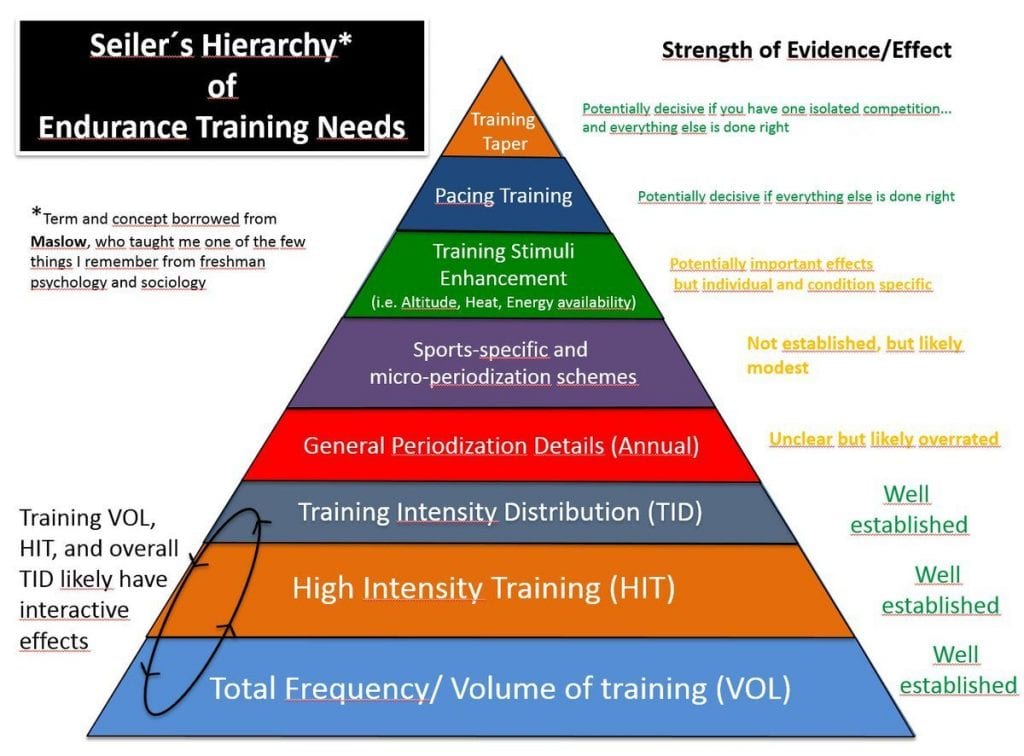
Discussion regarding base training and the pros/cons of popular methods.

Show Notes/Citations

About the Podcast

Never Going Pro is a new podcast about riding bikes, being parents… and trying super hard at both. Hosted by Shayne Gaffney, Ken Nowell, and Chris Gorney. See all episodes on Soundcloud. Also available on Sticher and iTunes.


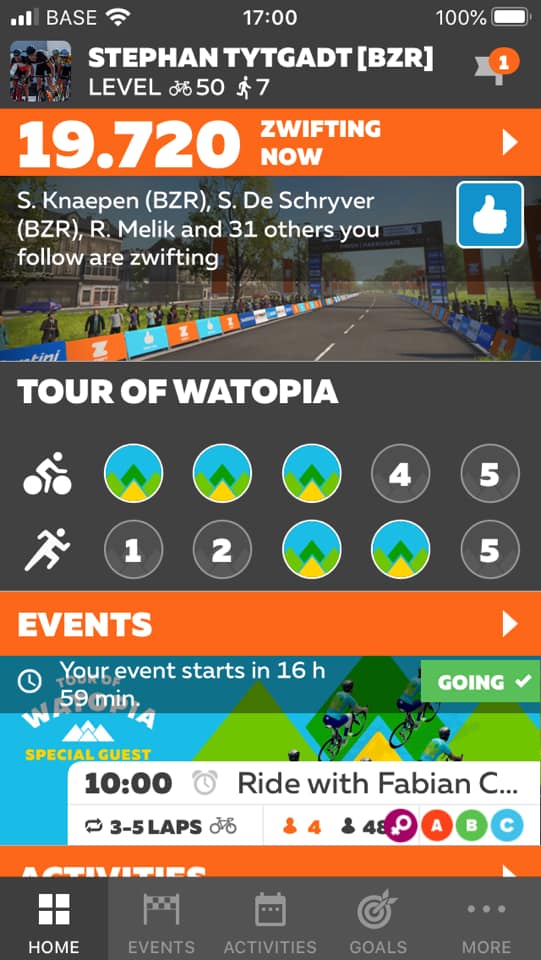
New “Peak Zwift” Achieved: 19,720

28

New “Peak Zwift” Achieved: 19,720

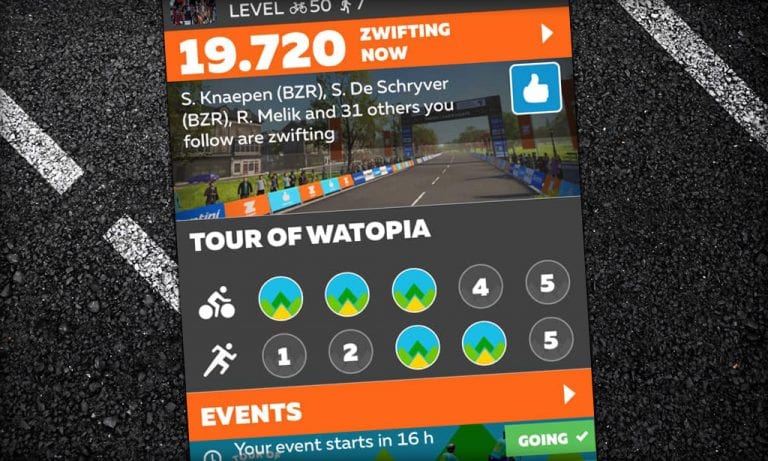
The screenshot to prove it, from Zwifter Stephen Tytgadt

On January 21, 2020, we hit a new record for concurrent users on Zwift: 16,512.

Then earlier this week, we saw that number get bested, but only by a bit – some Zwifters reported seeing numbers around 16,650.

Today we saw two firsts: our first Peak Zwift on a Saturday (it typically happens on Tuesdays around 11am California time). And our first Peak Zwift over 19k!

That’s right, folks: today we hit at least 19,720 concurrent users. A huge jump over our previous record!

Note: unlike past Peak Zwifts, Zwift HQ is declining to give me precise numbers during this time, probably because they don’t want to come off as bragging about user stats that are driven by the COVID-19 pandemic. I don’t blame them – it’s the smart, sensitive approach.

How High Will It Go?

As you all know, many riders and runners are staying indoors right now. And although we’re not sure when all the shelter in place orders and social distancing recommendations are going to end, it doesn’t look like it will be any time in the next few weeks.

This has many cyclists scrambling to get set up on Zwift for the first time, and we’re seeing many new Zwifters coming on each day.

Will we see a new Peak Zwift in the coming days? My guess is an emphatic “yes.” How high will it go? Your guess is as good as mine!


How the Race Was Lost: Tour of Watopia, Stage 4

15

How the Race Was Lost: Tour of Watopia, Stage 4

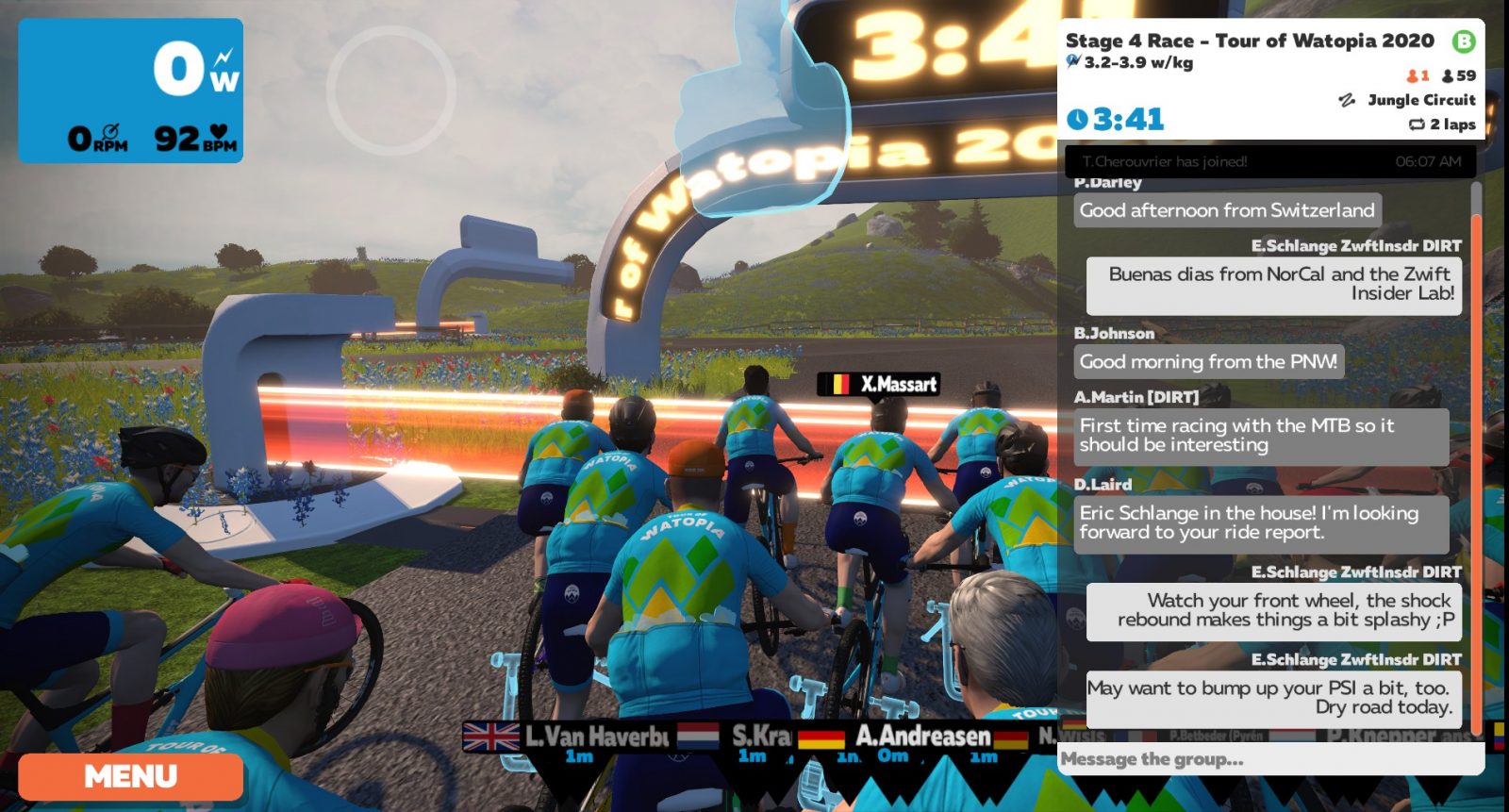
Continuing my plan is to race each Tour of Watopia stage, it was stage 4 at 6:10am for me. Two laps of the Jungle Circuit, a route I haven’t raced much, but know well.

Course knowledge didn’t put me at ease, though: quite the opposite, in fact. I knew the climbing half of the circuit would be super-challenging, and I just hoped I could hold onto the front of the race as we climbed up through the ruins not once, but twice.

Bike Selection

Everybody on a mountain bike!

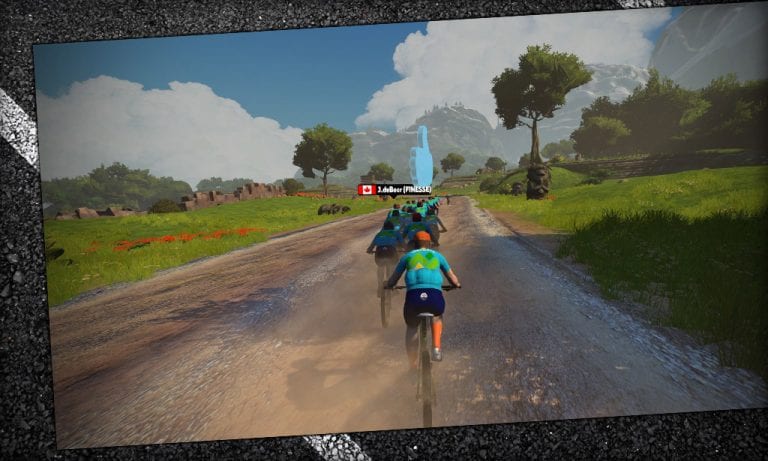
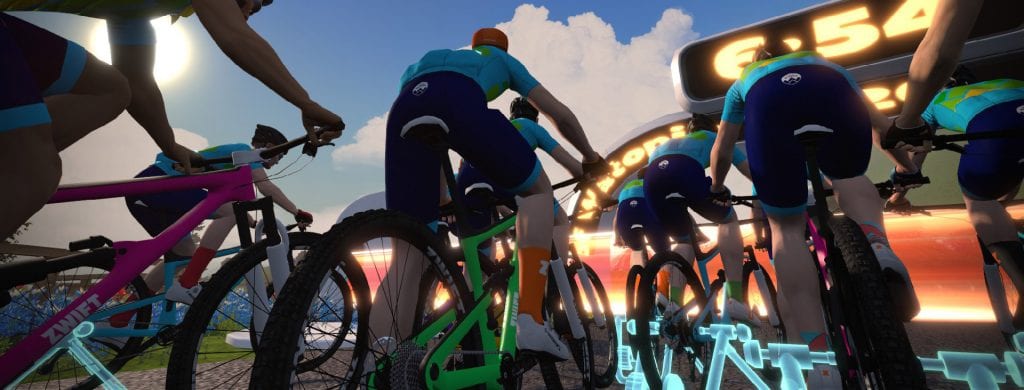
Bike selection is a non-issue for this stage, because Zwift has configured the event to put everyone on the Zwift Mountain Bike. You can’t ride anything else, so embrace it!

Warmup

I rolled out of bed at 5am, chewed two pieces of caffeine gum, put some PR lotion on the legs, and kitted up. Then I hit Tempus Fugit for longer, ~15-mile warmup. I wanted to ease my legs into the effort, because they were sore from a long “socially distanced” hike two days before.

(I can ride 100 miles and not feel sore the next day, but get me out running or hiking for a much shorter time and my legs are in pain for two days. Sad.)

The warmup felt pretty good – my heart rate was responsive, bumping up into the 160’s during hard efforts. That’s always a good sign for me. If I can’t get the heart rate up it means I’m not recovered (or I’m getting sick). Time to race!

The Start

The Jungle Circuit route begins from the Jungle start pens, winding down tarmac to the dirt portion of the Jungle. Today’s start was pretty easy, because 1) everyone was on the same bike, so the roadies weren’t attacking on the pavement and 2) we all knew the climb was where things would break up.

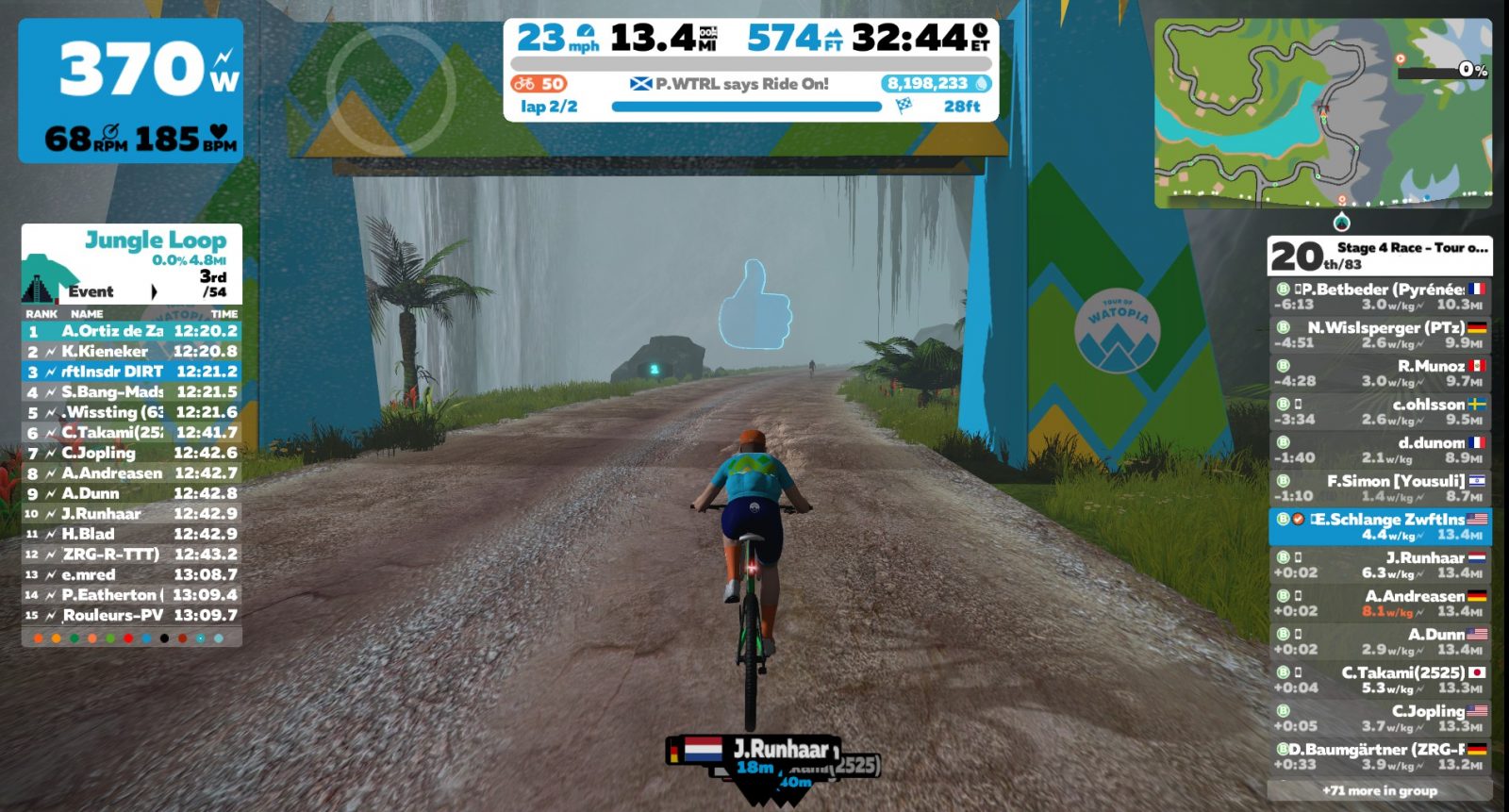
343 watts for 60 seconds kept me in the front group. Our initial starting bunch of 83 was quickly cut in half before we reached the bottom of the Jungle dirt.

The Middle

The Jungle Circuit can be broadly visualized as a simple loop. From the Jungle start banner the first half of the loop is a climb up to the top of the Jungle where you cross the rope bridge. Then the second half of the loop is a descent back to the start line.

We crossed the start banner for the first time and began our first of two climbs. And that’s when things got hectic!

The Jungle climb isn’t particularly steep, averaging around 3%. So race speeds stay high enough that drafting still matters.

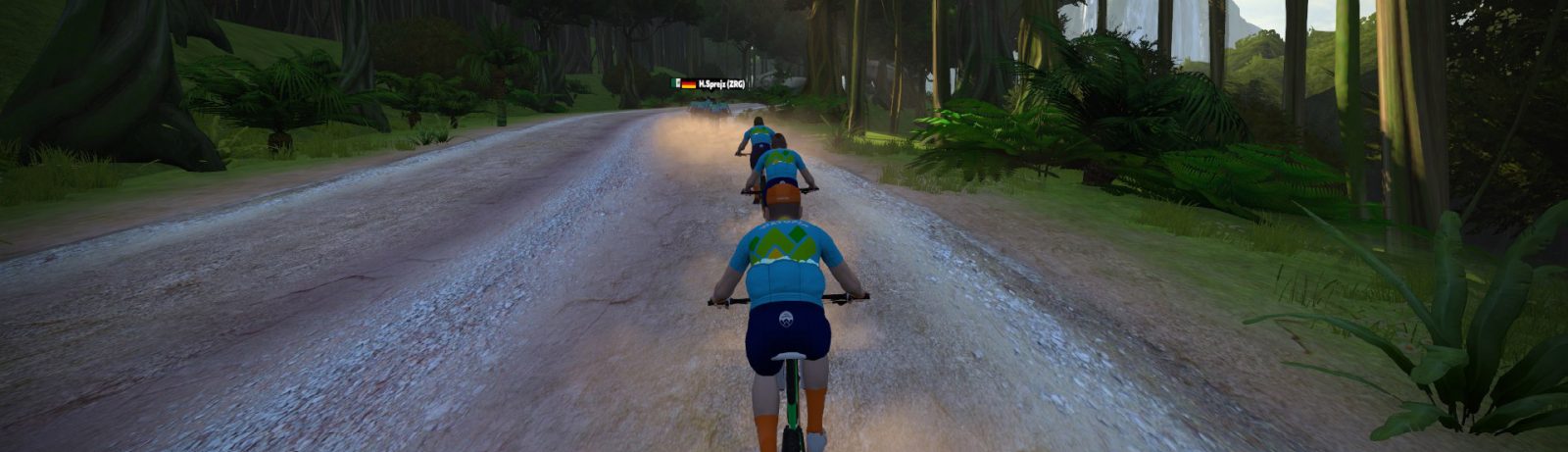
Hitting the climb for the first time. This is gonna hurt!

Our first jungle climb took around 5 minutes and 20 seconds, and I averaged 360 watts (4.3 w/kg) to just barely stay with the front. It was a max effort! As we crossed the rope bridge it was clear that the second big selection had been made: we had a front group of 20.

The descent to the start/finish banner was quite easy, with the group easing up since no one was chasing hard from behind and we had another climb ahead. I tried to recover as much as possible, but I knew this final climb was going to hurt bad. I had my doubts about holding onto the pack, but I resolved myself to give it all I had.

Soon enough we hit that second climb and the group immediately strung out. And I was at the back! A gap opened up a few riders ahead, and I didn’t have the legs to jump across. And that was it. The front rode away, and I couldn’t even hold the wheels of the two riders who had been dropped with me.

Dropped.

The second climb took me about 20 seconds longer than the first, with an average power around 30 watts lower. The front pack went hard up that climb!

The Finish

There was a pack of 5 riders 30 seconds back. I quickly did the math and decided I should be able to stay away, as long as they don’t push too hard. So I buckled down to finish the climb and TT it home with whatever I had left in the legs. I kept a wary eye on the gap as we neared the finish, and it steadily dropped to 20 seconds, then 10.

In the final few hundred meters one rider jumped from the chase group, and that inspired me to use my aero powerup and push it hard to the line so he couldn’t pass me.

I finished 19th according to Zwift. 13th on ZwiftPower.

See my activity on Strava >
See my activity on Zwift.com >
See race results on ZwiftPower >

I stayed away from the chasers… just barely.

Takeaways

No major revelations from this race: it reminded me that climbing is my weakness. I need to keep building that 3-5 minute power and dropping a bit more weight.

This race also has me looking forward to returning to well-managed community races who have much less sandbagging. These ToW races are a bit too influenced by sandbaggers for my taste. Many of the riders who finished ahead of me were legit, don’t get me wrong! But there were several in the 4.3-4.6 w/kg range who doubtless pushed the speed of that front group up the climbs.

What about You?

Did you race ToW stage 4? Share your experience below!

How I Set Up My Kids’ Bikes On Zwift

How I Set Up My Kids’ Bikes On Zwift

Editor’s note: we all want to see our kids riding their bikes, but getting them up and running can be a bit tough since trainers are made for adult bikes. Zwifter Maurice D. recently got in touch with us and asked if he could share a few tips from his experience getting his kids up and riding on Zwift. We found his advice quite useful (who knew a bike setup would work ok just freewheeling?)

Here’s all the info you should need to get your children going on Zwift, even if their bikes are very small.


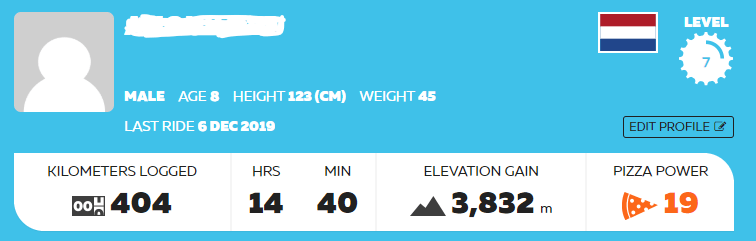
In the past year our children (a girl and a boy) have both used their Zwift Kids account regularly for sessions ranging from 20 minutes to 1 hour. Styling the avatar is their most favorite business, next to riding the Repack Ridge MTB trail. In total, they managed to use Zwift for almost 15 hours and have reached level 7. Here’s how we did it!
First Step: Get a Free Account

First, you need to arrange a children’s account for Zwift first. Since these accounts are free and not difficult to set up, we’ll assume your child’s account is arranged and the bikes need to be set-up.

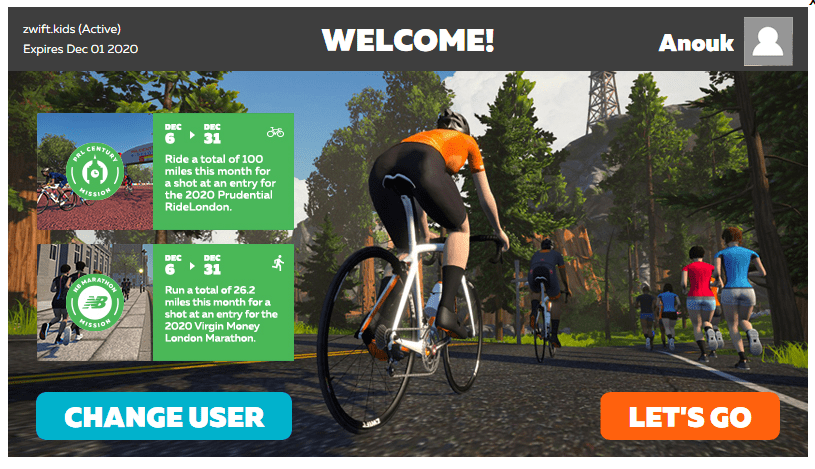
This is how the login screen looks when signed into a kids account:

Note: minimum weight is currently 45kg in Zwift settings, which is almost double the weight of our oldest child (8 years old). Luckily the ‘watts” can be manipulated by choosing a bigger wheel size combined with a dumb trainer (more on this later). Here below is the account summary:

Choosing a Trainer that Fits

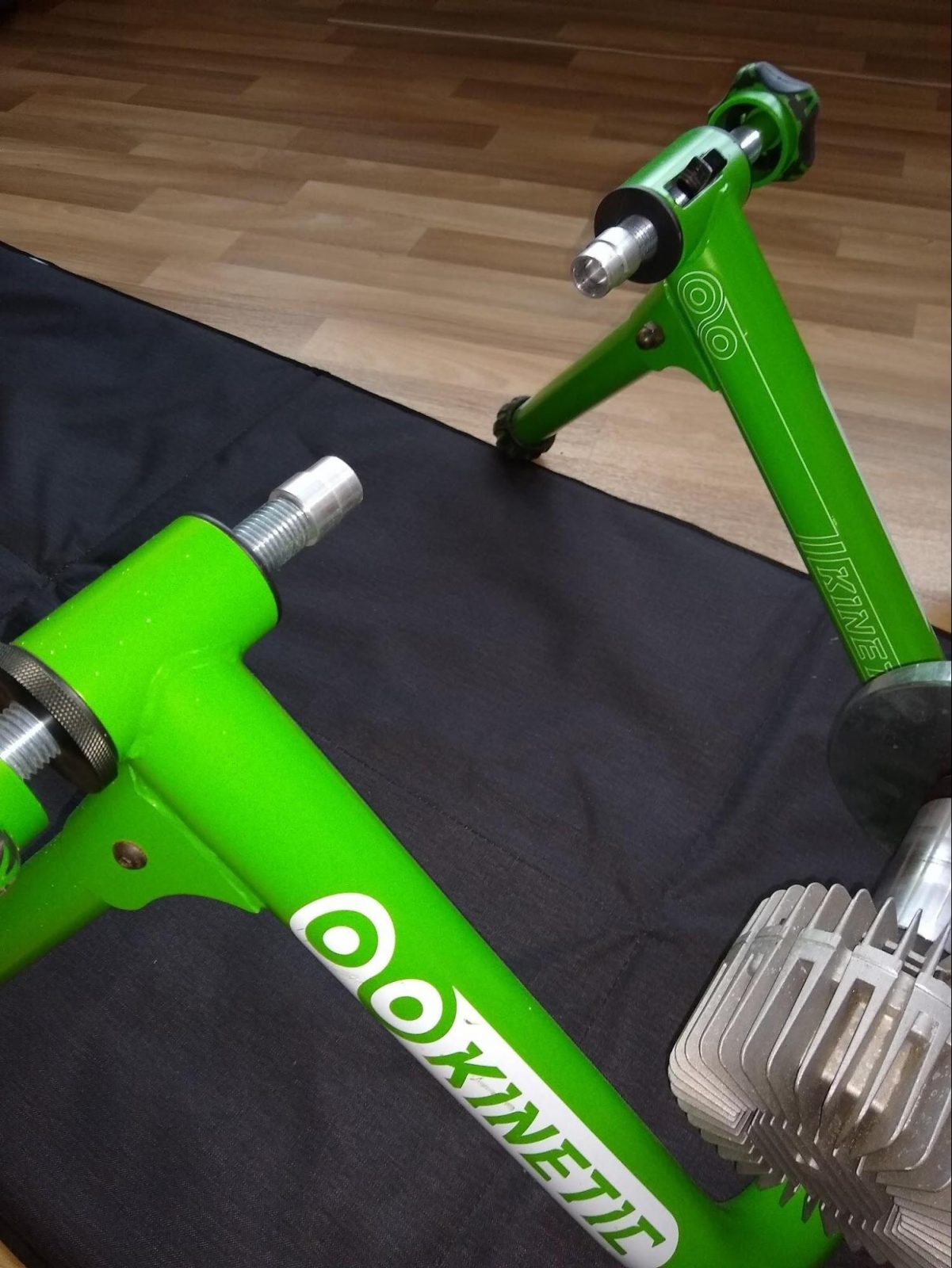
We place all our children’s bikes on a Kinetic fluid trainer. The good thing is that one can find these relatively cheap secondhand nowadays, as many people have upgraded to smart trainers.

The minimum distance between the two bolts is 12 cm. The bikes we used on the trainer are about 14-15 cm in width. A Tacx Sirius, in contrast, has a minimum width of 16 cm which is a bit too wide for the small bikes.

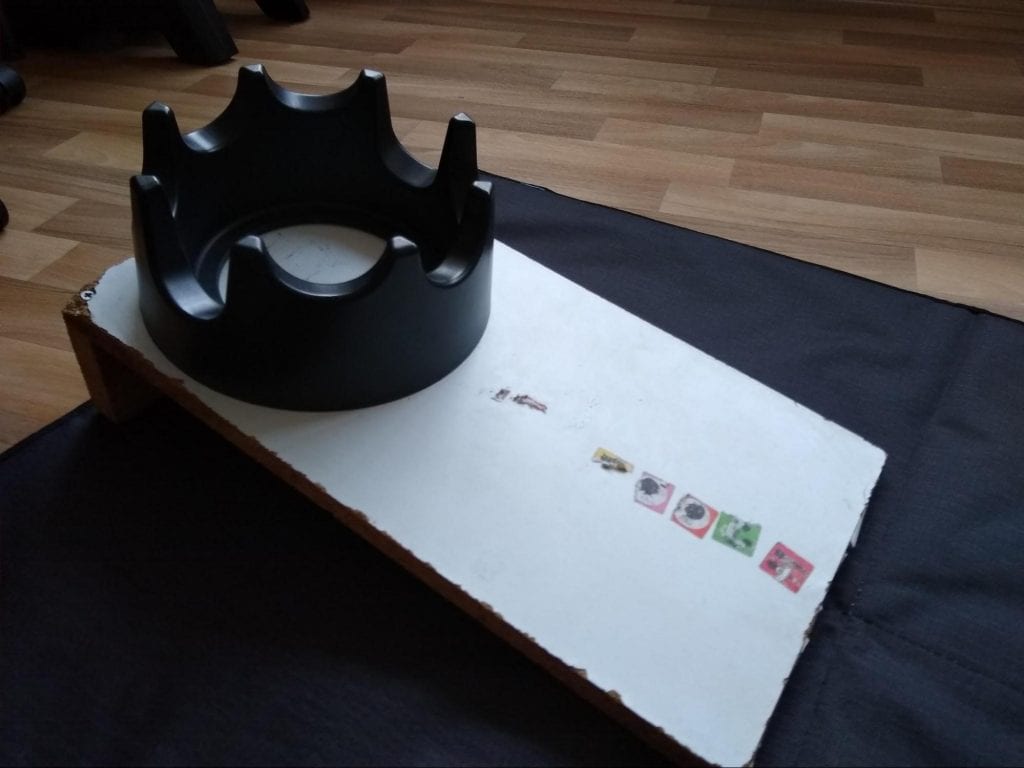
Although I made a wooden interposer block to fit a small bike, using a dumb trainer that directly fits the width of small bikes is easier. The good news is there are plenty of dumb trainers which can fit small bikes. 

Extension kit

Note: I’ve used this fluid trainer with (calibrated) power meter occasionally as a second portable setup. It’s pretty quiet for a wheel-on trainer and definitely not a bad alternative to use now and then. When bought 2nd hand it’s one of the cheapest dumb trainers with the relatively accurate inRIDE power sensor. See Shane Miller’s video about the inRIDE >  

We also bought an extension kit to get the fluid brake to reach 16-18″ wheels. But on small bikes without gears, the brake power is too strong for small kids. I wouldn’t buy it again:

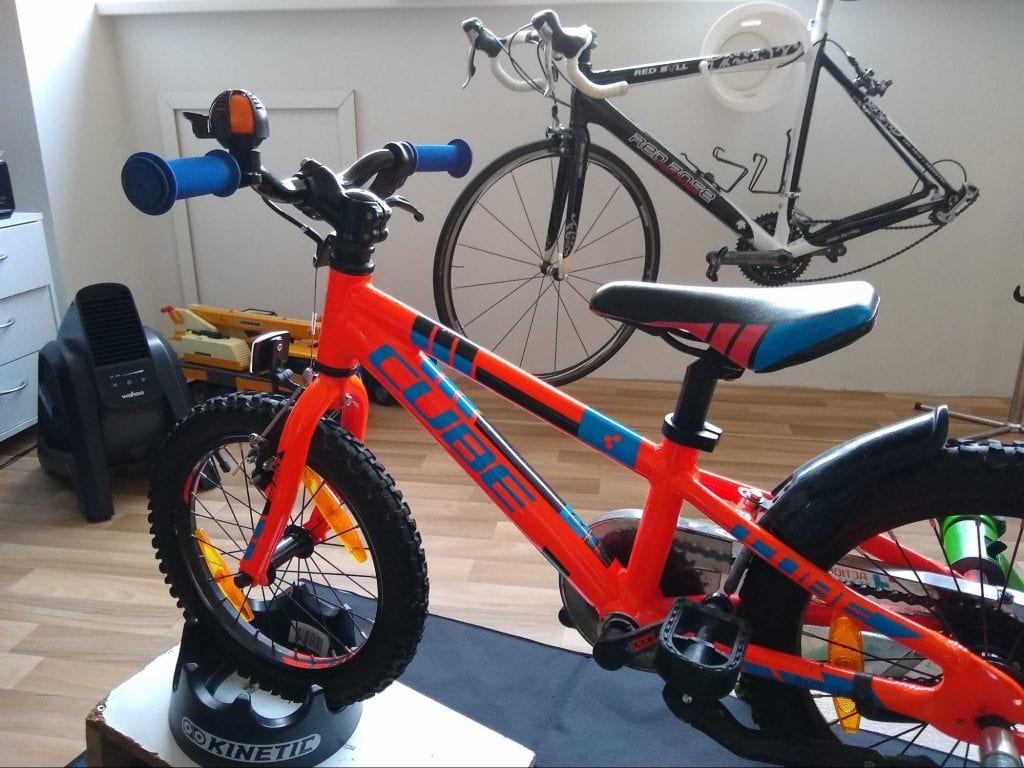
The front wheel riser needs a little increased height, therefore we use a small ramp. This ramp can also be used for the front wheel support when steering on the Watopia MTB section (without riser block):

We use this ramp outdoors as a small ‘bike jump’, only it’s a bit narrow and requires quite good steering to go over it. Next time, I would make it a bit wider!

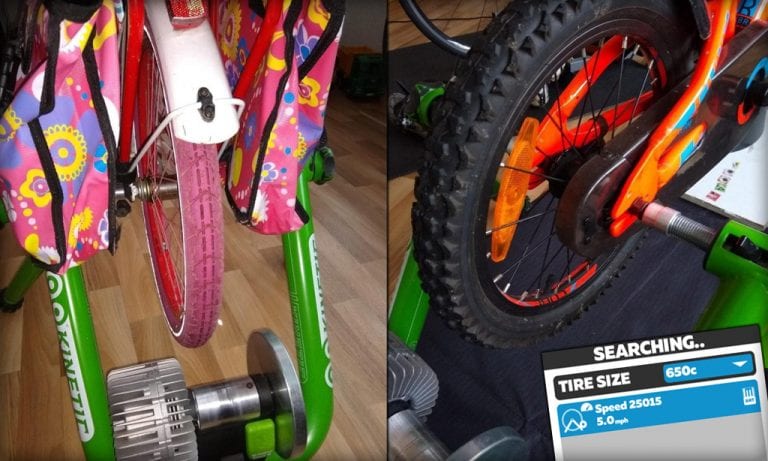
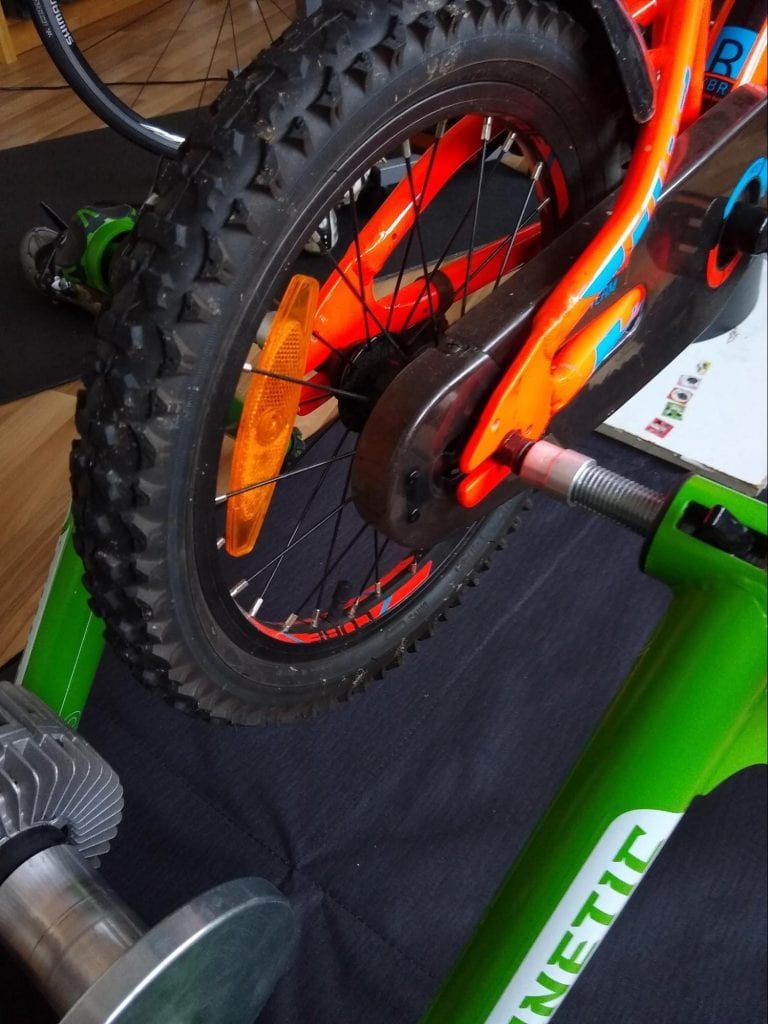
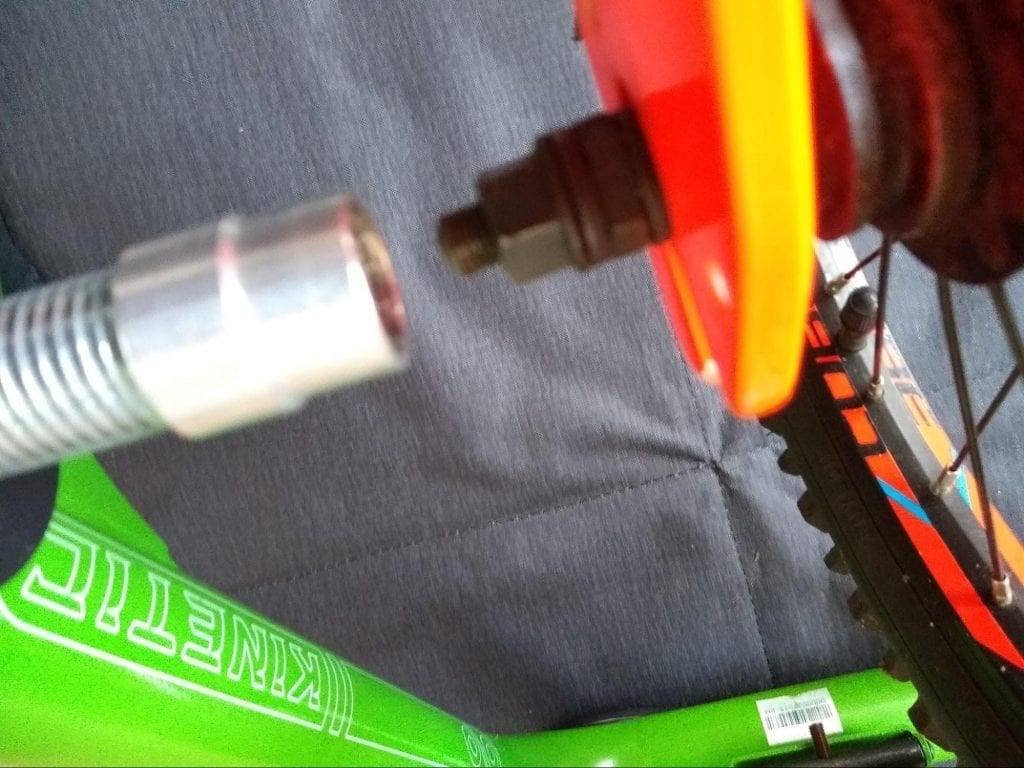
The good thing that I’ve observed is that the rear axle with hex nuts fits directly into the Kinetic fluid trainer. It doesn’t fit 100% perfect, but good enough for children’s bike purpose.

Here’s a look at the small bike (16”) mounted on the trainer: 

For 100% correct fit, it’s also possible to buy ‘Axle Nuts for non-Q/R wheels’, for example from Tacx (T1416). But I don’t think it’s really needed to mount a simple children’s bike on a trainer.

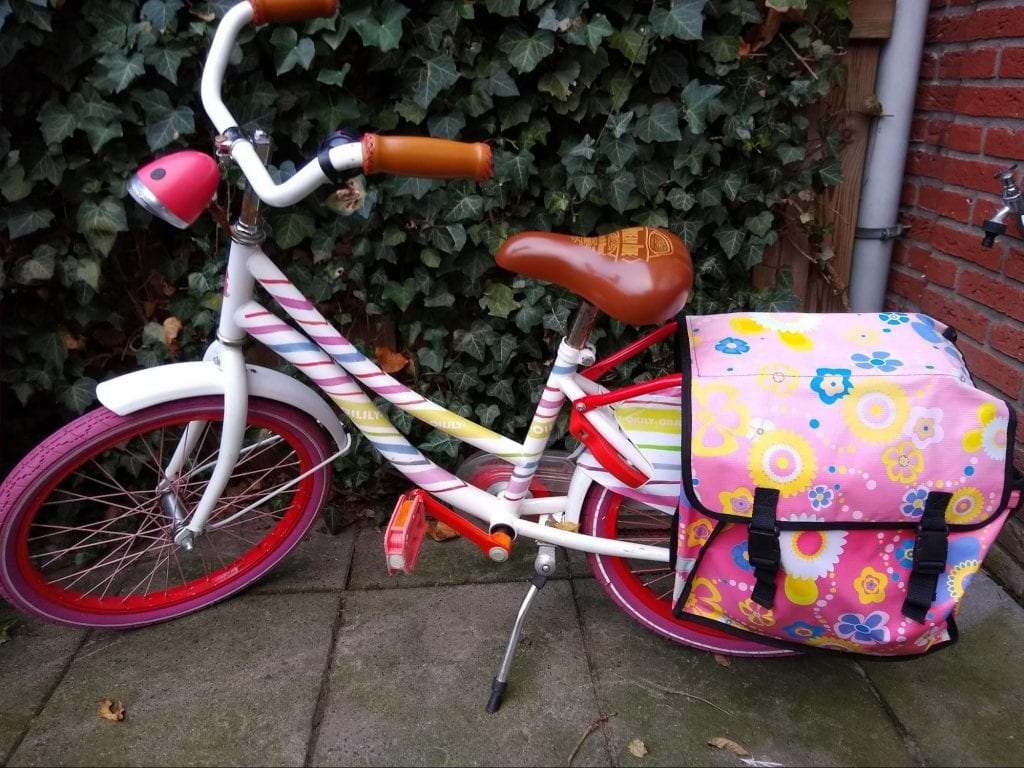
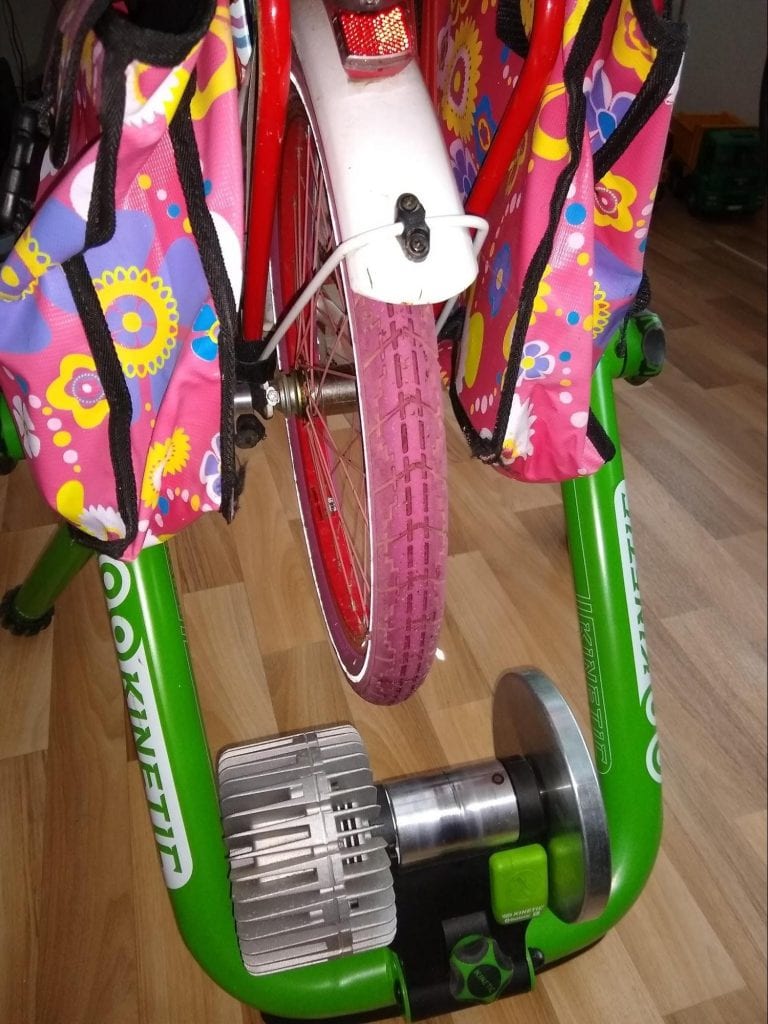
Below is an example of a girls’ single gear bike (20”) that we used on the trainer with Zwift. The rear axle has rounded hex nut which also fits onto the trainer. During the indoor session, the bicycle bags were still on the bike! (It’s too much work to remove the bags for a single Zwift session.)

A 20” bike wouldn’t touch the fluid brake when mounted on the turbo. However, as explained before the brake power is way too high for small kids (with single gear bike) and freewheel is the best working option (that we found).  

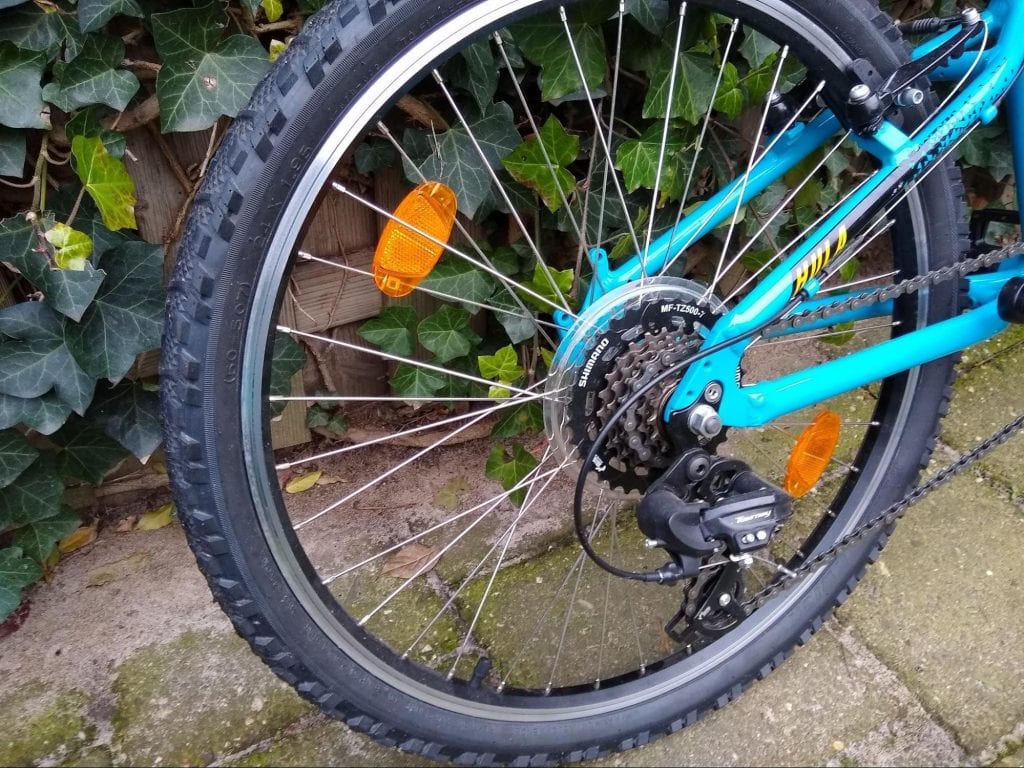
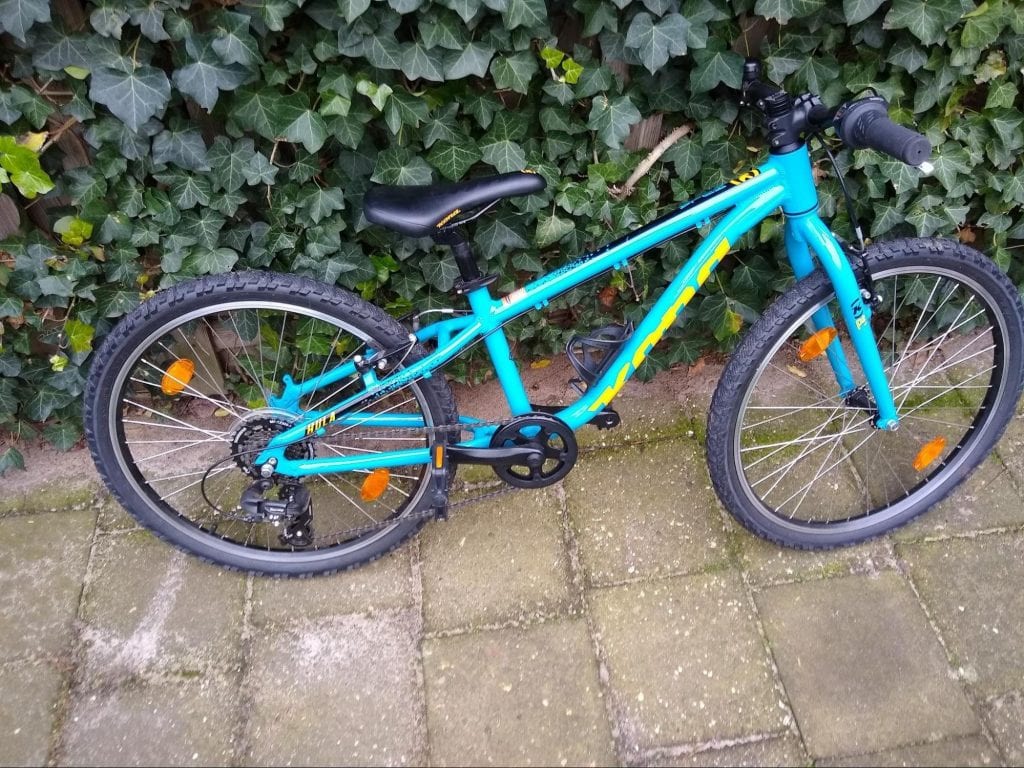
Recently we’ve bought a 24″ Kona MTB. This bike has gears, and again it has hex nuts on the rear axle, which we fit directly on the trainer without too many worries. This 24” rear wheel can be braked with the standard Kinetic fluid brake, although it’s quite noisy as there is some knobby rubber tread on the rear tire. We still use the ANT+ speed sensor as it lets us play with the wheel size to get decent w/kg in-game (whilst minimum weight setting is 45kg). 

Our daughter uses the MTB on the lowest gear and prefers lower cadences as the brake power is quite high for her. Ideally, she would prefer no brake applied. But my opinion is that she should learn how to ride with a brake applied. Maybe it’s related to low flywheel momentum? As low speed, small wheel size doesn’t create a lot of momentum in the flywheel. 

Sensor Pairing

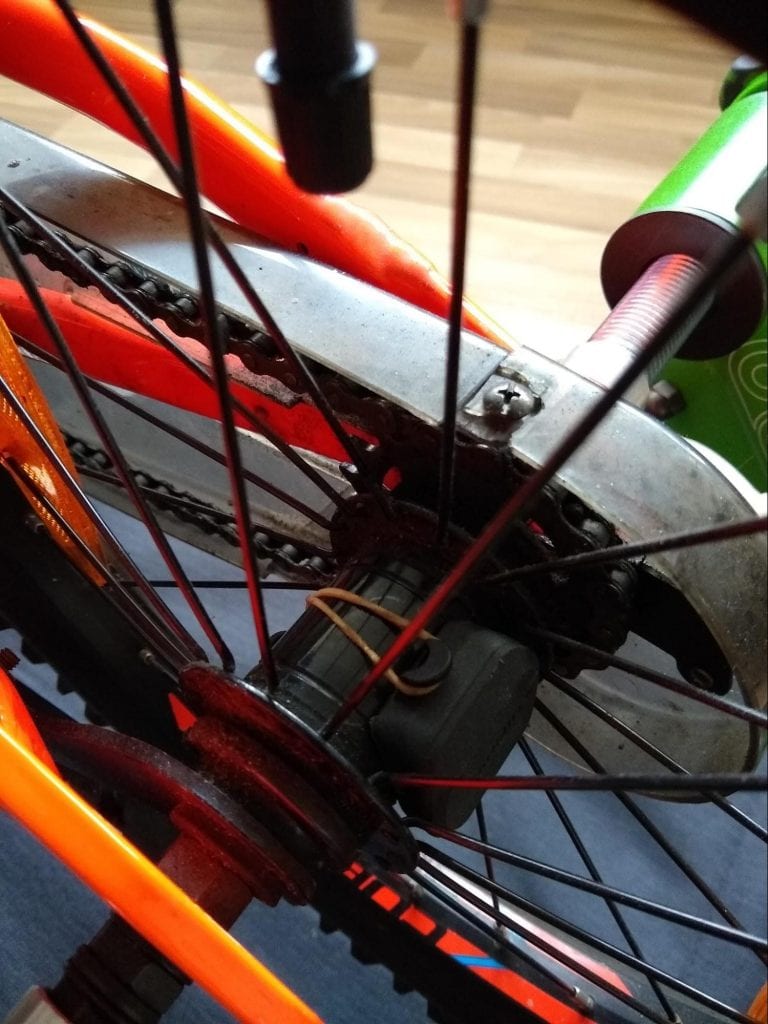
To get an ANT+ signal to the computer a simple speed sensor on the rear hub is used. As the rear hub is pretty big compared to quick release hubs an additional elastic band is used to hold the speed sensor. Note we don’t use the standard ANT+/Bluetooth Power sensor on the Kinetic. Just the speed sensor on the rear wheel.

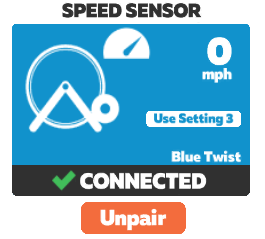
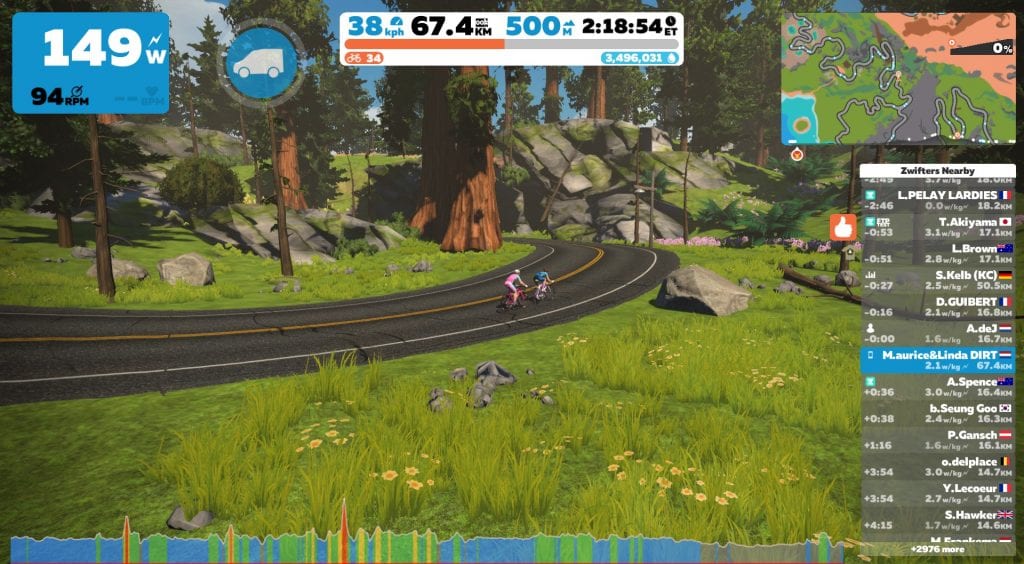
For ANT+ sensor pairing we use a tire size of 650c, which basically boosts the watts they produce and combined with 45kg weight the in-game w/kg is in the 2-4 W/kg range. 

You want to avoid getting flagged by Zwift (the cone of shame!) and wheel size is a variable to play with: smaller wheel will decrease w/kg and a bigger wheel size will increase their w/kg.

Once we use the 24” bike with fluid brake the wheel size could be chosen a bit bigger and for the small bike without any braking (freewheel) the wheel size could be chosen a bit smaller.

Although the small bikes freewheel, our children only spin-out once they do a sprint. During normal cycling, they prefer pretty normal cadences.

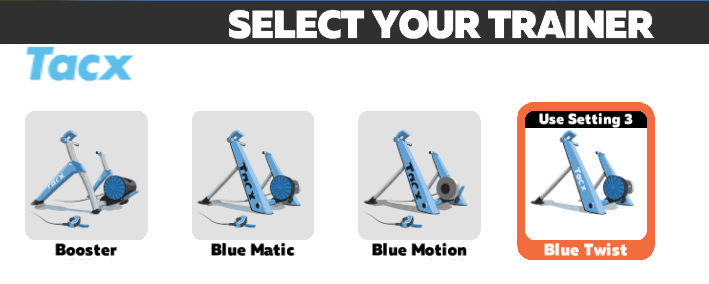
The pictures here below show the pairing of the trainer in Zwift.

Selecting another kind of dumb trainer will probably work as well, but never tried. 

Phone Mount for Steering

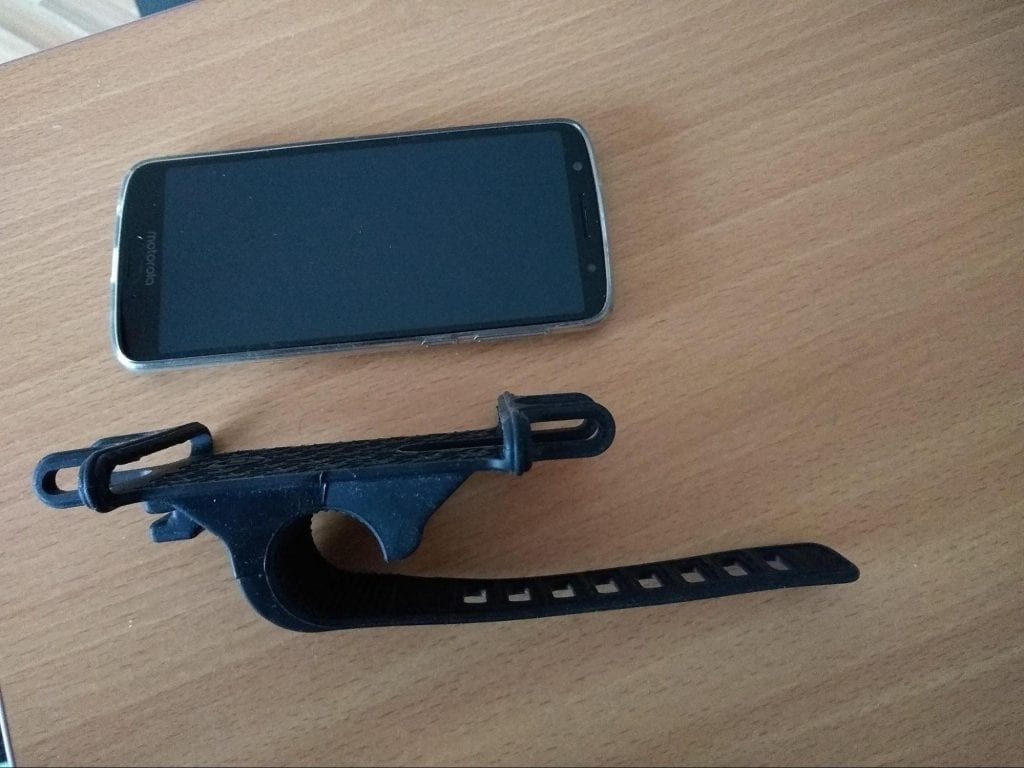
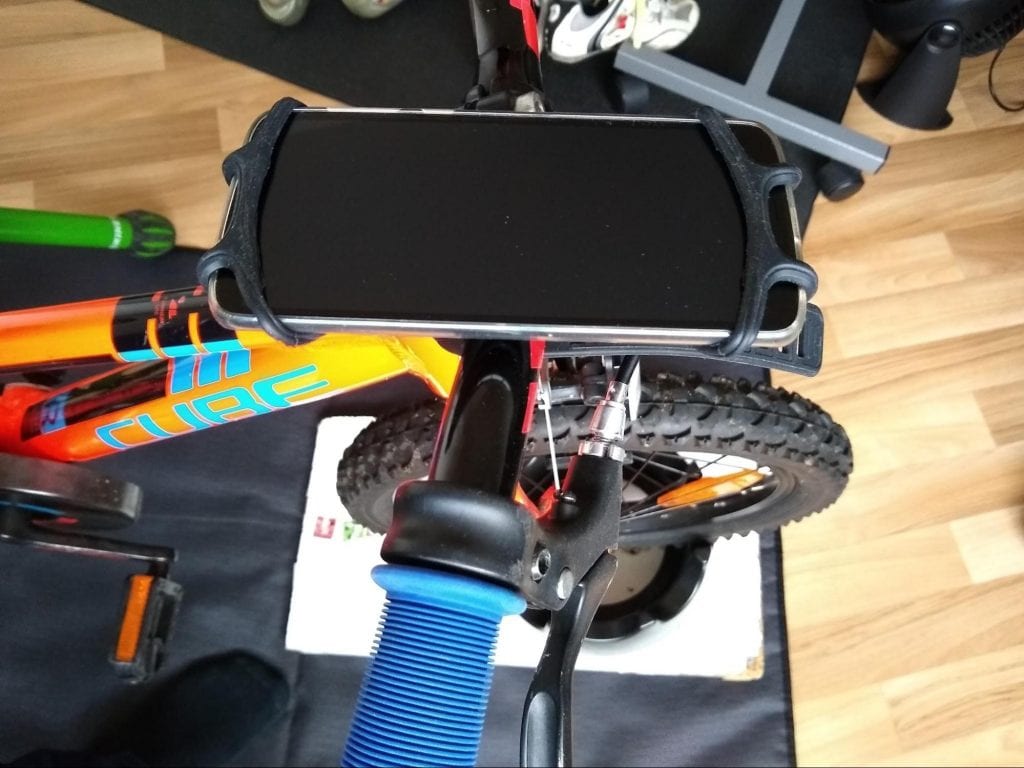
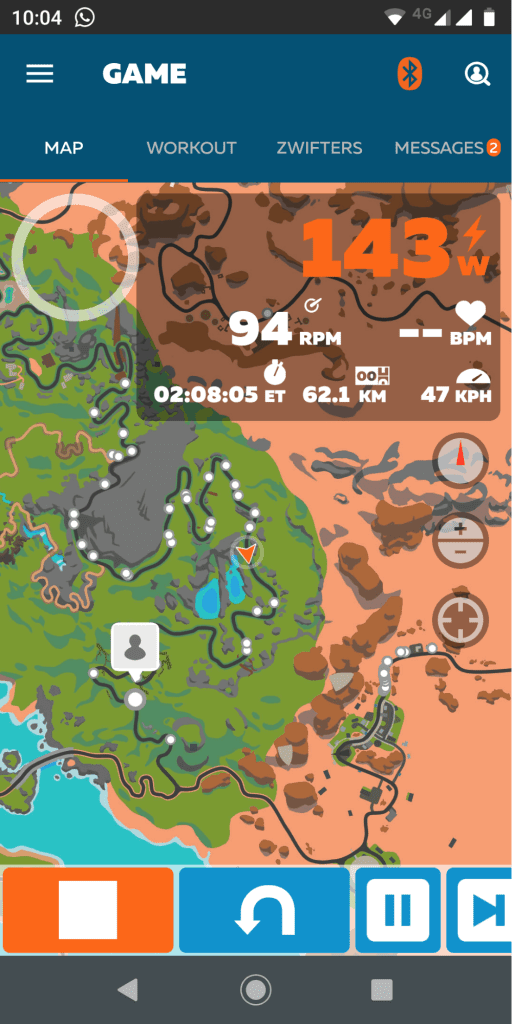
To enable steering in the MTB section of Watopia one of our mobile phones is used in combination with a simple phone mount on the bicycle steer. Important: log out of the Companion app (settings – log out) and log back in again with child’s Zwift account. Otherwise the steering won’t work! 

Note: we remove the front wheel riser block for steering, and the phone is not exactly in the middle of the bars, but that works fine for steering. Kudos to Zwift! 

Other Considerations

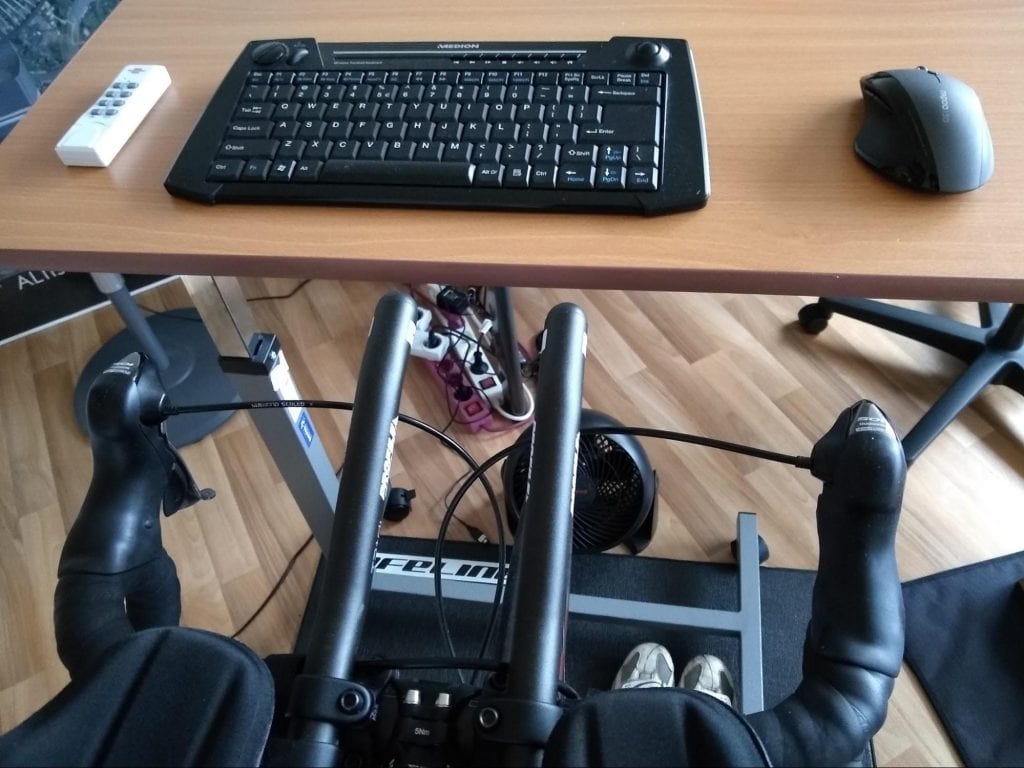
A fan is used to get some fresh air flowing as well. Both our kids seem to like some fresh air from a fan (a Wahoo headwind fan is used on manual mode at lowest intensity setting). 

As we ride the trainer as well once our kids are moving on Zwift, it’s pretty handy to have a wireless mouse connected to the computer running the kid’s Zwift session to choose some basic setup choices at the start of the session.  

This morning, I had started a long ride already before breakfast. I took a quick break for eating together with the family and after breakfast, our son started to Zwift as well. (He had pointed out yesterday that he wants to ride together again, so I set it all up already before starting my ride.)

Ride On!


Jan Frodeno on Legacy (Zwift PowerUp Tri Podcast #24)

0

Jan Frodeno on Legacy (Zwift PowerUp Tri Podcast #24)

This week we chat with reigning IRONMAN World Champ, Jan Frodeno. We dig into his achievements and ask big questions. Is he the best? Does legacy transcend beyond race results?

On the heels of the tragedy of Kobe Bryant, this standout episode hits all the notes. Plus, he spills the beans on why he’s changing shoe sponsors after 17 years! Not to miss. 

About the Podcast:

The Zwift PowerUp Tri Podcast is hosted by former pro triathletes Matt Lieto and Jordan Rapp, lending their in-depth knowledge of the multisport to the Zwift Tri audience.