This time, the team are “upping the ante” by offering the chance to undertake a 12 or 24-hour endurance challenge. To parallel the VEveresting Academy, training events will be hosted in the build-up to the main events.
This challenge is not for the faint-hearted and will test you to your limits and beyond. (For a taste of what’s involved, read this post from earlier in the year when Mitja Kovacic undertook an epic adventure into the unknown of endurance cycling.)
Conscious that 24 hours might be a little of out of reach for some, an alternative 12-hour version is planned. For more information, 3R’s official press release can be viewed below:
3R 12/24hour Ultra Endurance Academy & Challenge
After a long summer where we all rode outside, went on a holiday or pursued racing after a winter long training, it’s time again to set new goals.
3R endurance team is proud to present a possible goal for all Zwift endurance junkies out there.
Saturday September the 18th will be the start of the 12h/24h academy to train towards a 12hour ride on the 15th of January and a 24hour ride on the 26th of February.
The academy consists of a training plan, a weekly ultra endurance ride on Saturday morning 08.00h CET, and guest ride leaders on this weekly ultra endurance ride with ultra endurance experience both on Zwift and real life racers.
Of course doing such challenge group wise will be an extra motivator for all riders to push your limits and complete your goal.
3R Discord ultra endurance channel will be open for all that do the academy to chat, share experience and ask questions about training, gear, food and other ultra endurance topics.
Furthermore 3R once again partners up with World Bicycle Relief; WBR, to raise funds via the challenge.
Sign up
No special sign up is needed – you just join the Zwift events each Saturday morning at 8am CEST.
As this event takes shape, I will be sure to report on it in upcoming posts, in the meantime to keep updated with information, please click on the Discord link: https://discord.io/Team3R
This week’s Top 5 Zwift Videos include three about Zwift Academy Road. Learn how to ride the new Baseline Rides, see a coach’s review of the Academy workouts, and get an introduction to the Academy if you’re new to it. Then check out some beginner racing tips and one Zwifter’s first race… on a Peloton bike!
Zwift Academy 2021 Baseline Ride Explained // Five Things To Know!
In 2021, Zwift Academy Road starts with a “Baseline Ride,” and you’ll want to be prepared before you jump in. Shane Miller (GPLama) explains five things he wishes he had known before his first Baseline Ride.
Every Zwift Academy workout reviewed and ranked
Coach Jesse Coyle reviews every Zwift Academy workout this year (except the one just for pro contenders) on a 20-point scale, based on their specificity, accuracy, trackability, and “X-factor.”
Intro to Zwift Academy – Win a Pro Contract?
What is Zwift Academy all about, anyway? Sarah LaRoque (Everything Is Photogenic) gives a rundown of this program and how it works.
5 Tips for Beginner Zwift Racers
The Zwift Race Place offers up 5 tips with great explanations for beginner Zwift racers.
My first Zwift race (on a Peloton!?)
With the help of power meter pedals, Mitch Boyer tried his first Zwift race on a Peloton bike! See how it went and what he learned.
Got a Great Zwift Video?
Share the link below and we may feature it in an upcoming post!
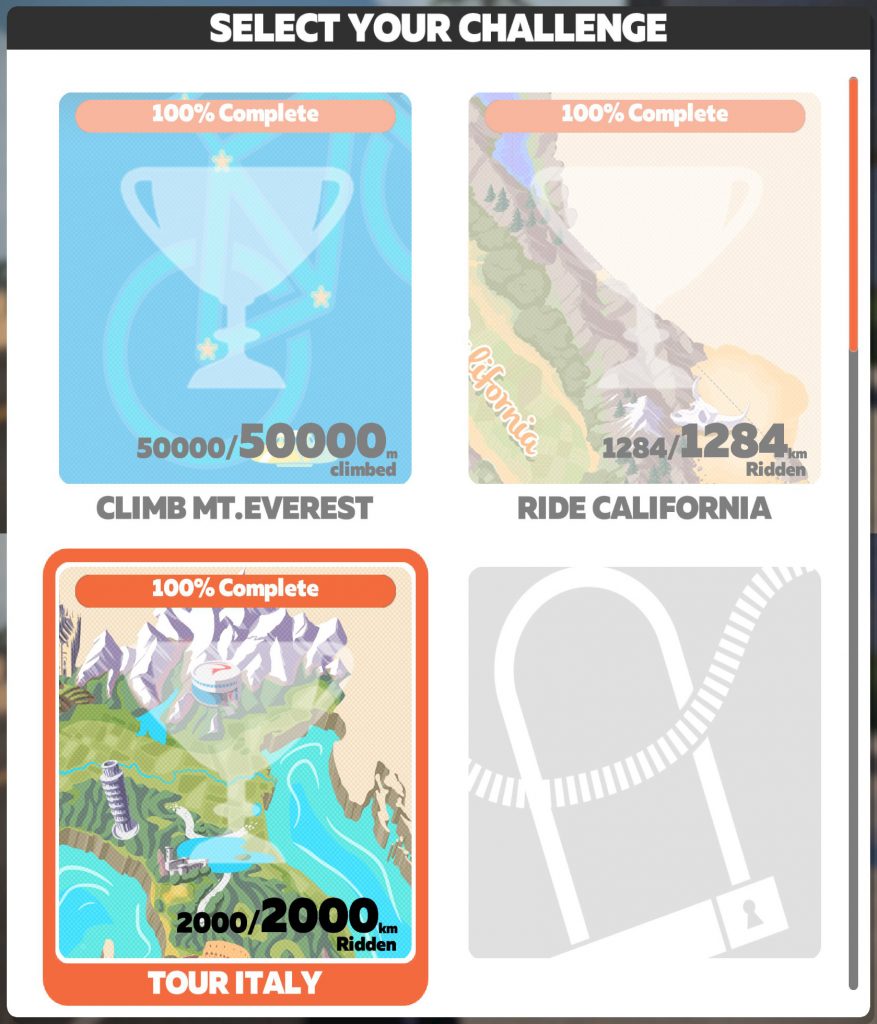
If you rode 100 miles (160km) per week, you’d finish Ride California in 8 weeks, and Tour Italy in 12.5 weeks.
The toughest Challenge by far is Climb Mt. Everest, since it includes the hidden Tron challenge. This one takes a while! If you climbed 300 meters (984′) per day for 167 days you’d complete the challenge.
Using the above plan riders could complete all three challenges in under 45 weeks of daily riding. Experienced riders may do it in half the time or less, and newer cyclists may take twice as long.
Zwifters Love Carrots
Here’s the thing: Zwifters love carrots. No, not the orange vegetable (although, being healthy eaters, we like those too…right?) No, we’re talking about goals. Targets. Rewards. Challenges. It’s why Route Achievement Badges were an immediate hit upon release. And it’s why Zwifters have been asking for a new Challenge for years!
A quick search of Zwift’s Feature Requests forum brings up at least 7 requests for more Challenges. (UPDATE: after the post was published, Zwift forum moderators consolidated all of the requests into one single request.)
Unlock the 4th Challenge: Place Your Votes!
Zwift wants to keep their customers happy, so if a new Challenge would be interesting to you, I’d recommend upvoting this feature request.
If enough buzz is generated, it will get Zwift’s attention. As of today, ZwiftHQ has yet to comment on the feature request. But if they see enough interest from Zwifters, I bet they’d spin up a new Challenge quickly.
Why Don’t We Have a 4th Challenge?
Zwifters have been asking for a 4th Challenge for years. So why do we still only have three?
The answer is unclear. After speaking with several top ZwiftHQ staffers on this very topic, it seems as if the noise of everything else Zwift is working on has drowned out this simple request.
And that’s why we’re posting this article – to bring attention to an easy win for Zwift. It would grab the attention of a huge number of Zwifters, increasing rider engagement. And shouldn’t take long to implement on the dev/art side.
Ideas for New Challenges
Just in case Zwift is looking for ideas for new Challenges, here are a few from myself and the community:
LEJOG: heck, the animation artwork has already been done, and this is a popular IRL challenge for UK-based cyclists. With none of the current Challenges being UK-based, and Zwift having a huge UK userbase, this seems like a good option.
LeTour: ride the distance of the first Tour de France (2,428 km/1,509 miles) and unlock an old-school steel single speed La Française with toe clips–the bike Maurice Garin used to win the first TdF. You could do challenges for the Vuelta and Giro as well, but Zwift’s close ties to the TdF make this a clear choice.
RAAM: complete the Race Across America distance (approximately 3,000 miles). Unlock a touring bike complete with panniers.
Mariana Trench: descend 10,984 meters (36,037 ft). Which means you’ll have to climb first!
The Full Kiwi: ride the length of New Zealand – 1,600km (1,000 miles)
Iceland Loop: 1,332km (828 miles)
Route 66 (America): 3,940km (2,448 miles)
Trans-Siberian Highway: 11,000km (6,800 miles)
Road Trip Down Under: across Australia – 14,500km (9,000 miles)
Great Wall of China: 21,196km (13,171 miles)
Pan-American Highway: 30,000km (18,641 miles)
Around the Moon: 10,921km (6,786 miles)
Around the World: 40,000km (24,855 miles)
It’s worth noting Zwift could create more than just a fourth challenge. Why not create several?
I’d love to have so many challenges that there’s always something I’m working on, even if it’ll take me a year or more! And while I’d love to unlock some special kit or bike upon completion, I don’t mind if they’re “boring” distance-based Challenges with no reward except a few XP and an atta boy popup. A simple carrot is better than no carrot at all!
Your Thoughts
Do you want a 4th Challenge? Got an idea for one that’s better than we’ve listed above? Share below.
(But more importantly, share them on the Zwift Forum topics linked above!)
This week has been particularly busy for me in terms of articles and all Zwift-related things. So to give you a little peak into my day to day Zwift life, the events I am highlighting for the weekend all relate to Zwift activities I have been involved with during the week. Ride on!
For the Ladies: Rapha Women’s 100
Many of you ladies have been training for the big Rapha Women’s 100 ride which happens this weekend. Do it on Zwift or do it outdoors! Read all about it here, then follow the link below to find a Zwift event that fits your calendar.
The Zwift Academy Workout series is tough. Only two sessions down and they certainly feel harder than last year. Either they are harder or age is catching up with me. I like to think the first but probably the later!
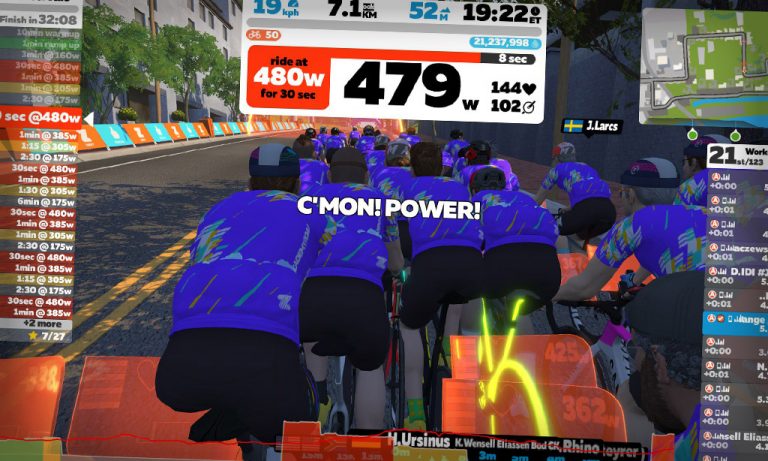
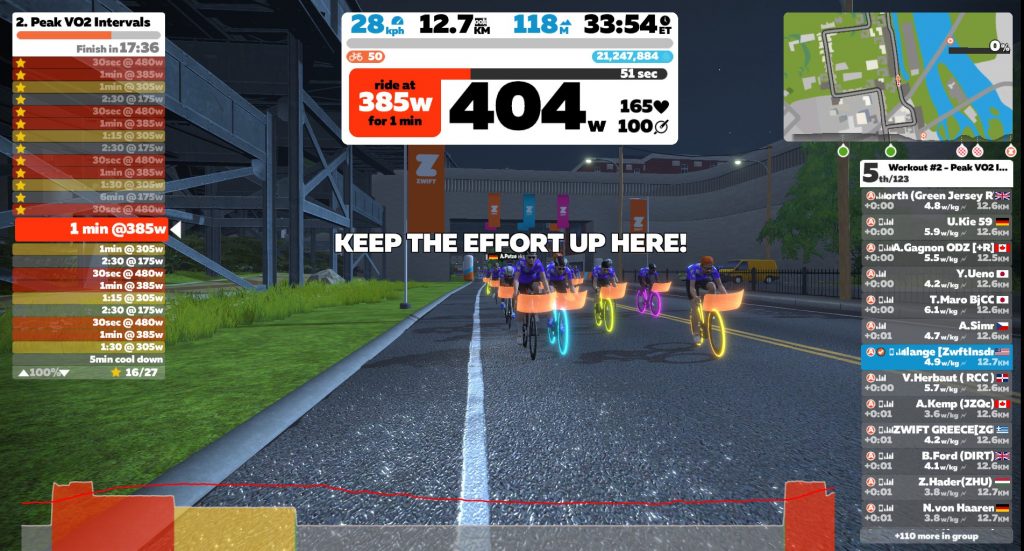
Academy Workout #2 consists of 6 intervals with decreasing power. You hold a high wattage for 30 seconds, then it decreases a bit for another minute before decreasing the last bit for the final minute. Repeat 6 times, with minimal rest. The description in the blurb reads “This session is focused on stressing your peak VO2 early in each interval, then maintaining that level of oxygen consumption before continuing at a level that really works your aerobic system.”
I love the phrase “really works your aerobic system” – I think mine, along with a few others in the group, was on overload. It’s daunting at the start and just a question of hanging in there. I couldn’t imagine struggling through that session without the support and witty jokes on the group. The sense of achievement for completing offset my fatigued state in the end. This is a “must do” event.
This week I caught up with Zwift Intern Leony Boudreau to chat about the amazing 2021 Zwift Internship programme that has just completed. Next year’s programme is soon to launch and applications are to be accepted imminently, so if you are an undergraduate based in the US and would like the opportunity to work at Zwift during your summer vacation, then keep an eye on their job board.
Anyway, Leony was telling me how she is getting into triathlon, so Leony, this training session is for you. Ride On!
Saturday, September 11 @ 2:05pm CEST/1:05pm BST/8:05am EDT/5:05am PDT Event details and signup at zwift.com/events/view/2281316
LEQP Provence Badge Hunter Series
Whilst enjoying a Thursday ride with Rich and his team from Castelli in their weekly “Roll with Castelli” event, a fellow Zwifter requested that Zwift Insider run another PRL Full event. I promised to pass the message on to Eric, but in the meantime, I found the next best thing for the Zwifter on my ride and that is the PRL Half, with the L’Equipe Provence Badge Hunter group.
I really enjoy these rides. Always well organised, well attended and most of all, good fun. If you are going to spend a few hours in the saddle, I would recommend doing it with this team.
I won’t spoil the surprise, but my Mountain Massif TT series is expanding and the new event is going to commence on Friday 17th September.
What I can tell you is that it going to be big, so keep checking back here on Zwift Insider to learn more. I recommend getting in a bit of training in preparation, so I have highlighted this race, on one of my favourite routes, Road to Sky.
Sunday, September 12 @ 4:35pm CEST/3:35pm BST/10:35am EDT/7:35am PDT Event details and signup at zwift.com/events/view/2282507
Your Thoughts
Got other events that stand out this weekend? Share below in the comments!
Zwift racer Illi Gardener talks with host Matt Rowe about the new Everesting World Record which she set on Welsh soil. Find hints, tips, and solid coaching advice for serious climbers in this episode!
About the Podcast
The Zwift PowerUp Cycling Podcast features training tips from host Matt Rowe (Rowe & King), with regular co-hosts Greg Henderson, Rahsaan Bahati, Dani Rowe, and Kristin Armstrong.
Cycling newbies may not know what a call-up is. But if you’ve ever raced outdoors, you know that getting a call-up is the coolest way to start your race.
It’s called a call-up because the race organizer literally calls you up to the start line before all the other riders come to the line. You’re “pole position”, starting at the front of the race so you don’t have to fight your way forward from the beginning.
IRL call-ups are typically given to top-ranked riders: perhaps the top 5 finishers from the previous season, or in the case of grand tours like the Tour de France, call-ups go to riders wearing the leaders’ jerseys.
But did you know there’s a way to give yourself a call-up in Zwift races?
How It’s Done
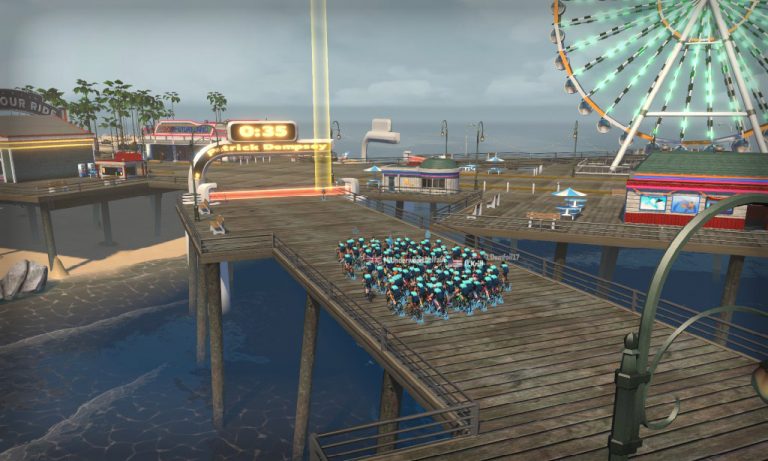
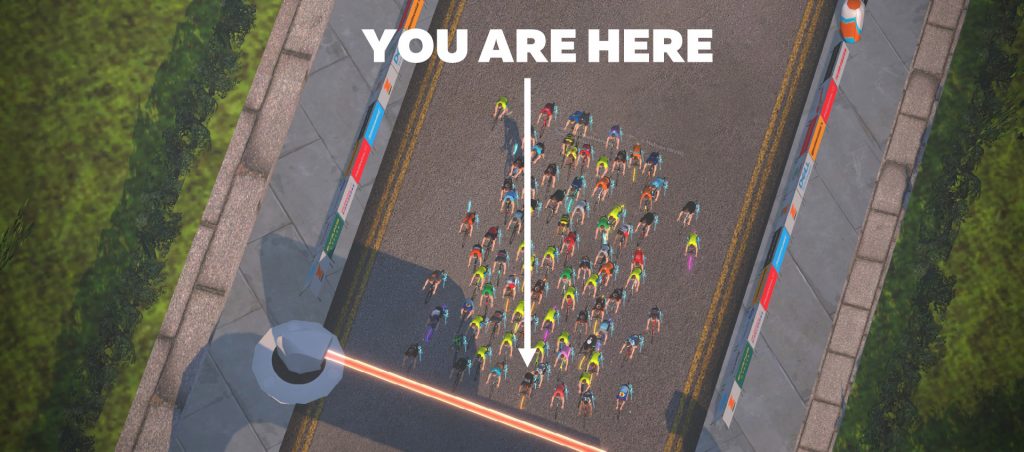
This hack is quite simple. Here’s the big idea: the first time you enter an event’s start pens, your spot is saved. So your goal is to get into the pens as early as possible in order to reserve the most forward position possible. A personal call-up!
For the very best call-up, you’ll want to be signed up for your event and riding in-game more than 30 minutes before the event begins. Then as soon as the “Join Event” button pops up (typically around 30 minutes before the event begins), click that button to be taken to the start pens.
This will place you at or near the front of the start pens. Your call-up spot has been saved.
Once you’re in the pens, you don’t have to stay there. Click to end your ride, and just hit the trash can to delete it (your previous warmup before you entered the start pens has already been saved, so the current activity is empty since all you’ve done is sit in the start pen.) Now you’ve got ~30 minutes to continue warming up before your event, which you can click to join whenever you’d like.
Here’s how it’s done (except for some reason I tried to save my activity in the pens, which is just a waste of time):
Why and When To Do It
The “why” here should be obvious: with Zwift races always starting out with a high effort, beginning near the front of the pack means you’ll save a bit of energy compared to starting near the back. Giving yourself a call-up is just one more way to conserve power so you’ll have it when you need it.
That said, this really isn’t needed unless you’re in an event with a high number of riders, since a small rider count means everyone starts near the front. There’s no clear cutoff, but I’d say if your event has over 100 riders you should definitely give yourself a call-up, and if there are less than 50 riders it really doesn’t matter.
Zwift Academy Road is in full swing, and this week riders attack Workout #2. I’ve seen a lot of questions about the ZA Workouts, and thought a post focusing on proper workout execution and overall Zwift Academy workout structure may be helpful. Let’s dive in!
A Note for ERG Newbies
If you’re new to structured workouts and Erg mode, I would recommend learning how it works before diving into your first workout. Read “All About Erg Mode In Zwift” for details, and consider at least starting one of the workouts in your workouts folder just to get the feel for how Erg mode works before attempting your first Zwift Academy workout.
Workouts 1 & 2
If you’re signed up for ZA Road, you’ve probably already done workout #1, and possibly #2 as well. What were your impressions of the two workouts?
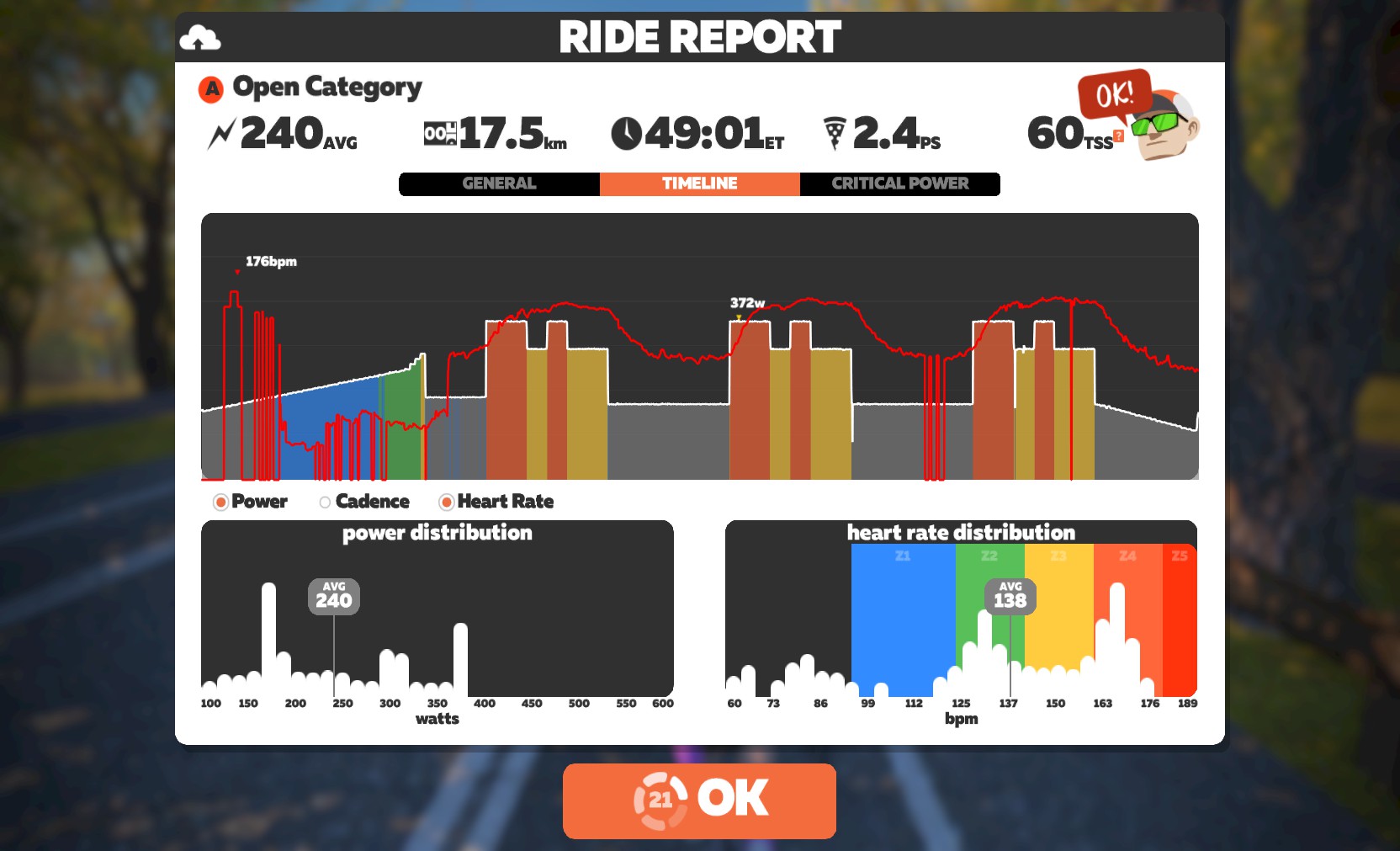
For me, #2 was much tougher than #1. Don’t hear me wrong, #1 was no picnic. But I never thought, “I may not be able to do this” or “I’m near my limit”. My peak heart rate during the tough intervals stayed basically the same (around 170) for the three intervals, meaning I wasn’t fatiguing much as the workout went on.
I felt good enough, in fact, to jump into a race after the workout (albeit with a small field of riders) and ended up winning with a long final breakaway (see it on ZwiftPower).
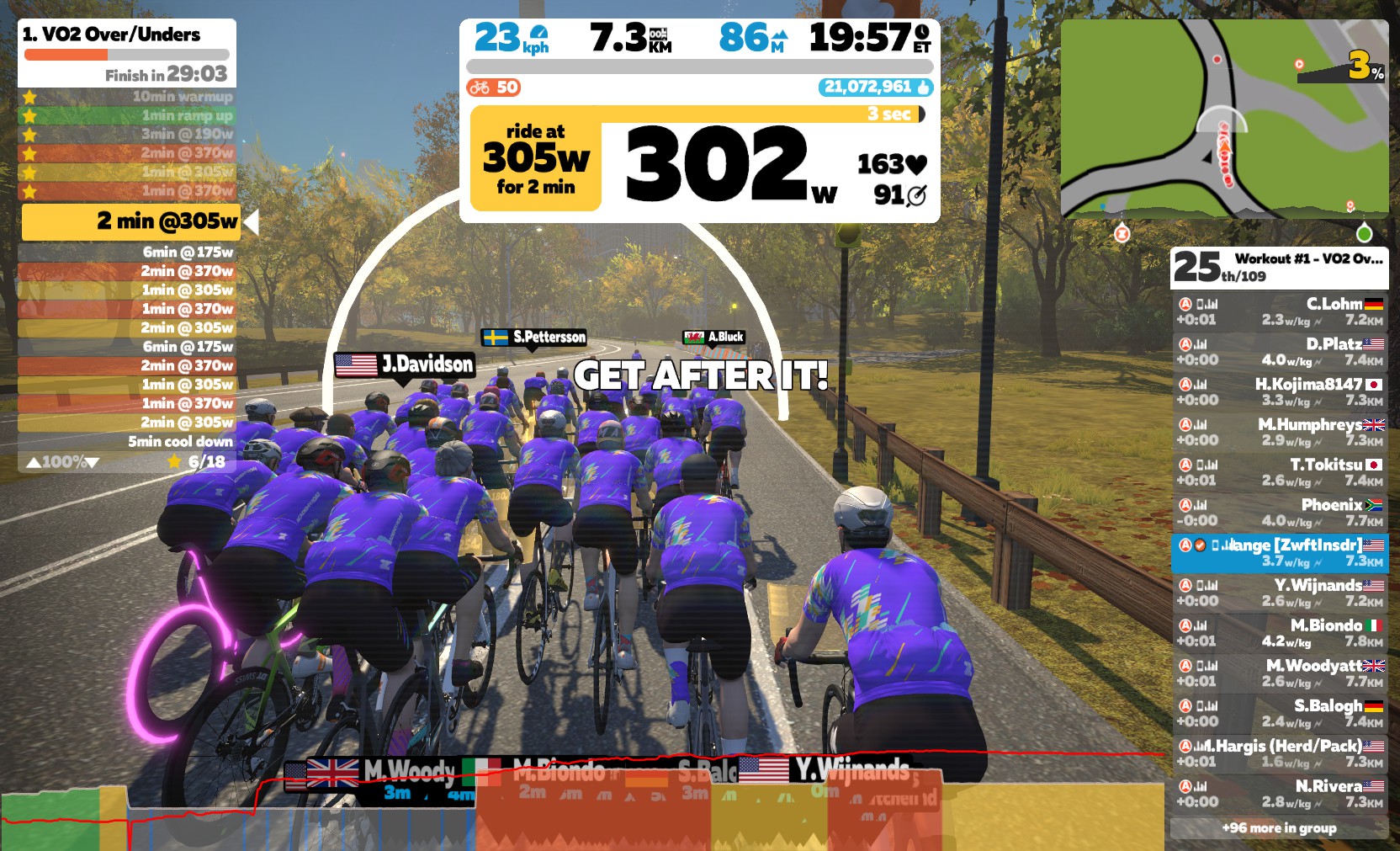
In the middle of workout #1
Workout #1 Ride Report
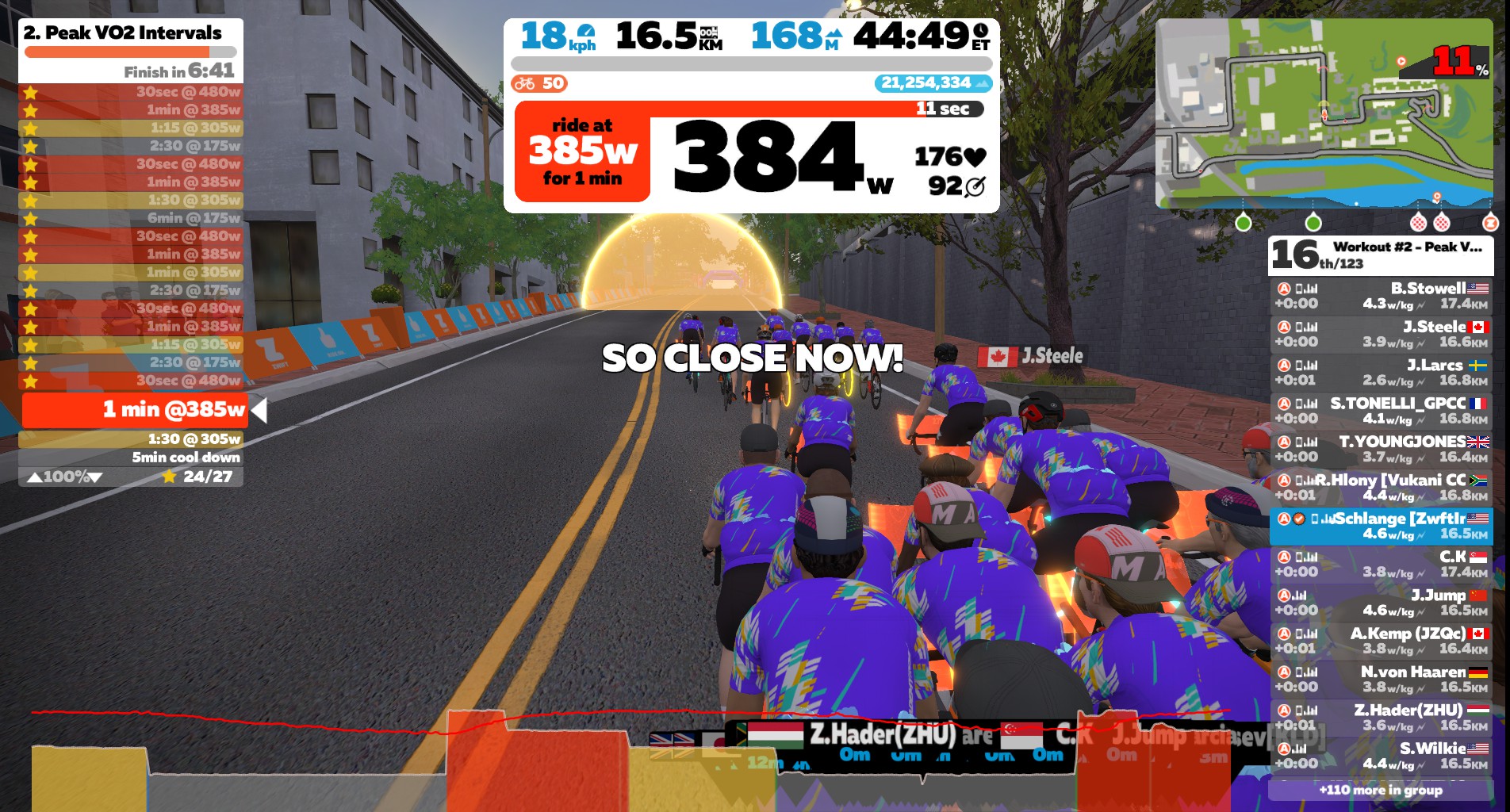
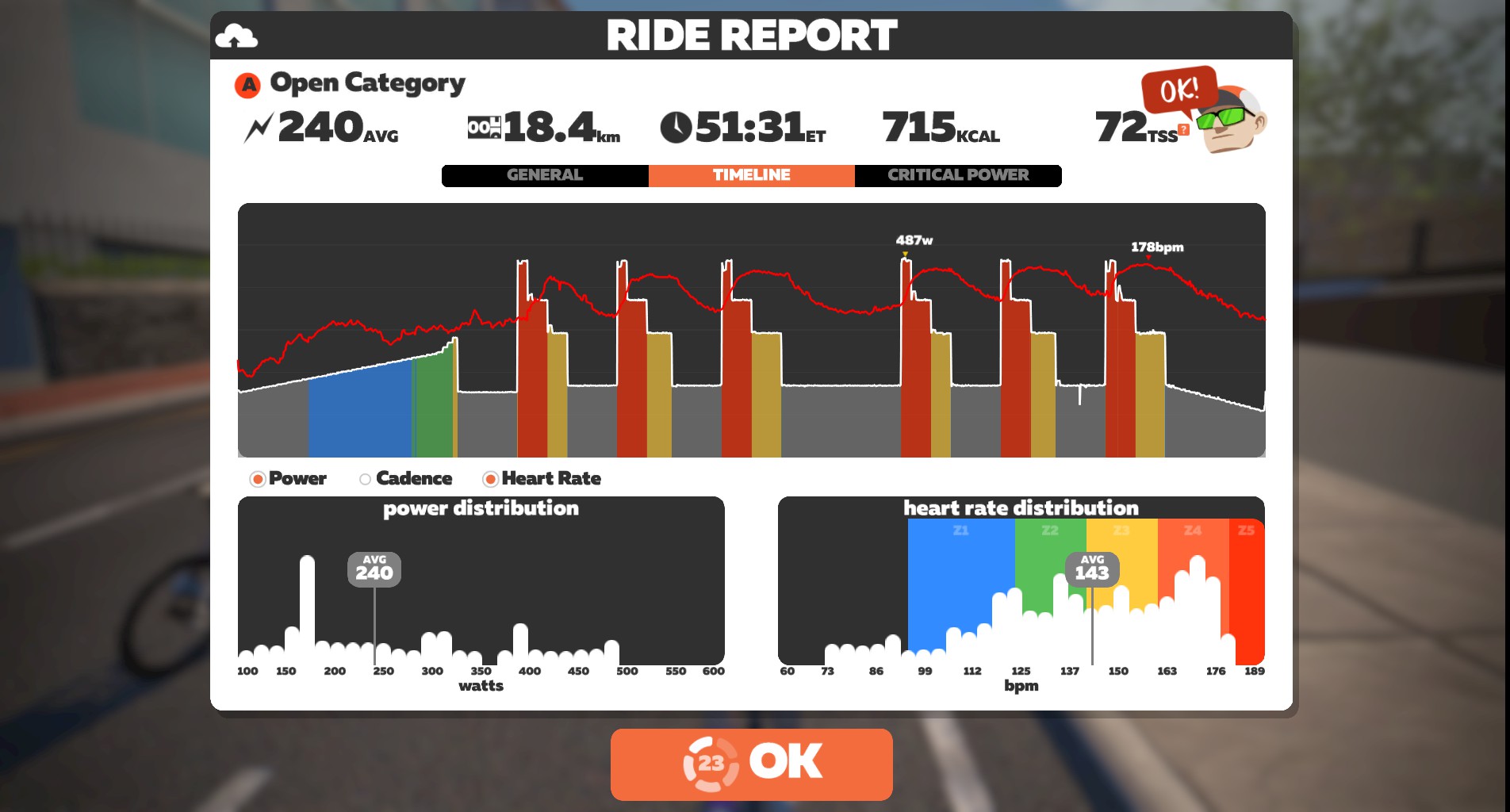
Contrast that with workout #2, where the first couple intervals didn’t feel too bad… but the third one got my attention. And I had another set of three left to do! My peak heart rate bumped up each and every interval, from 165 to 167 to 172 to 174 to 175 to 177. Ouch!
In the middle of workout #2
Workout #2 Ride Report
If you’d like to watch me suffer through workout #2, here’s a silent video (I’ve spared you the joy of listening to a loud fan and heavy breathing):
How Does the ZA Program Work?
To graduate from ZA Road 2021, riders must complete a total of 10 rides:
1 Baseline Ride event
All 6 Zwift Academy workouts (group workouts or individual, your choice)
2 Zwift Academy recovery ride events
1 Finish Line Ride event
That seems straightforward enough. But many Zwifters have written in to ask how best to execute the Zwift Academy “program”. For example, here’s one question I recently received:
Can someone explain how the “block 1” with three workouts works? I mean three rides in four weeks is not going to make me better. Am I supposed to do same three workouts and recovery each week for four weeks? Or just randomly do them? Or workout one only say three times in first week? Am I missing something in the app which will advise which one next to do and just need to pick a time?
Those are valid questions, because ZA isn’t structured like a typical complete training program. (A typical training program would have you doing ~3 challenging workouts per week, with 3-4 easy days in between for recovery. Do this for 3-4 weeks, take a rest week, then do the next block.)
Here’s the thing: Zwift Academy is not a complete training plan. You’ll notice in Zwift’s own messaging that they’ve moved away from calling it such. I asked ZwiftHQ to comment on this – to answer the Zwifter’s question above, essentially. Here’s what they said:
Zwift Academy is an approachable training program, built for the entire Zwift community that encompasses classic elements of training. The prescribed format from Zwift Academy coaches is to do one workout each week. The format and workout load makes Zwift Academy a program that all can engage and complete.
So there you have it. The prescribed format, as designed by the well-qualified Zwift Academy Road coaches, is to do one workout per week. That means workout #1 for week 1, workout #2 for week 2, etc. So your overall ZA activity list would look like this:
If you’re new to structured training, following the “one workout per week” plan is a great way to dip your toe in the water and get a little ERG in your life. That’s why Zwift’s coaches structured ZA in this way, in fact: to make it accessible for newer riders. Imagine if ZA was a typical training plan, but you were a new rider, or perhaps had a complicated schedule. It would make completing the program very difficult!
Zwift Academy is a multi-faceted thing. It’s a pro contract competition, but also a training program of sorts. It’s a massive community event that can also be done (mostly) on your own. It’s trying to be many things to many people, and that makes it a bit confusing at times. What is clear to me after speaking with ZwiftHQ, though, is that one of Zwift’s key goals with ZA is to familiarize newer riders with training systems and educate/introduce them to structured training.
With that said, for more experienced riders who have already done some structured VO2 and threshold training, doing one workout per week won’t go far toward making you a better rider (as the Zwifter above astutely observed). And that leads us to our next topic.
Adapting the ZA Workouts To Your Needs
Many Zwifters are more experienced riders like myself who 1) aren’t in the middle of a custom structured training plan, 2) want to participate in ZA but also 3) want to train effectively, seeing results for our efforts.
How should such a rider approach Zwift Academy Road? Here are three ideas:
Double (or Triple) Up the Workouts: if you’re the type of rider who doesn’t mind doing the same workout a few times, then do each week’s prescribed workout more than once. Do the workout, have a rest day, then do the same workout again, followed by a rest day… etc.
Workouts + Races: this is for the rider who, like myself, gets a lot of their training from Zwift racing. Try making your hard days a mixture of workouts and races. Maybe that means workout, rest day, race, rest day, then race again.
Mix and Match: this is like the first idea, but a bit more interesting. Since all the workouts are available as “on-demand” activities in your workouts folder, you could do the week’s prescribed workout, have a rest day, then do a different week’s workout, rest, and do another week’s workout. I would recommend staying within the proper block so you’re doing VO2 workouts for the first three weeks, and threshold work for the last 3 weeks. So a week in the first block might look like this: Workout #2 as a group workout, rest day, Workout #1 (on demand), rest day, Workout #3 (on demand), rest day.
You get the idea. If one workout per week isn’t enough to boost your fitness, then increase your training stimulus in a way that keeps you interested and pushes your limits. Of course, always leave room for recovery – because that’s where we get stronger.
Zwift Racing League has taken racing to the next level on Zwift. It’s well-organized bike racing on an unprecedented scale, with eight weeks of team-based points competition held across multiple timezones catering to thousands of teams. And that’s why serious Zwift racers show up week after week: because everyone knows ZRL is where competition is the fiercest.
With three seasons completed over the course of the past year, the good people at WTRL have performed admirably, streamlining systems and tightening rulesets to provide a fair, engaging, and competitive platform for Zwift racing. Kudos to WTRL for the good work they’ve done fine-tuning the biggest race league in Zwift’s history!
The next ZRL season begins September 28th, and it’s officially named 2021/22 Season 1 – the first season of a new racing year. We’ll use this page to display all the key info and links in one place.
Rule Changes for Season 4
The updated Season 4 ruleset is available as a PDF linked from this page. (It’s important to understand WTRL’s ruleset does not govern the Zwift Racing League Premier Division, which instead falls under the Zwift Cycling eSports Ruleset.) For everyone racing in the lower Community divisions outside of the Premier Division, here are the key ruleset changes you’ll want to know for season 4:
16+ age requirement: riders must be 16 or older by the event start date to be eligible to participate.
Playoff Structure: WTRL is giving more details about playoff schedules and other specifics – see section 4.3 of the rules for details.
If you’re new to ZRL, you’ll definitely want to get familiar with the ruleset and points structures, as these will inform strategic decisions made as a team.
Timeslots and Divisions
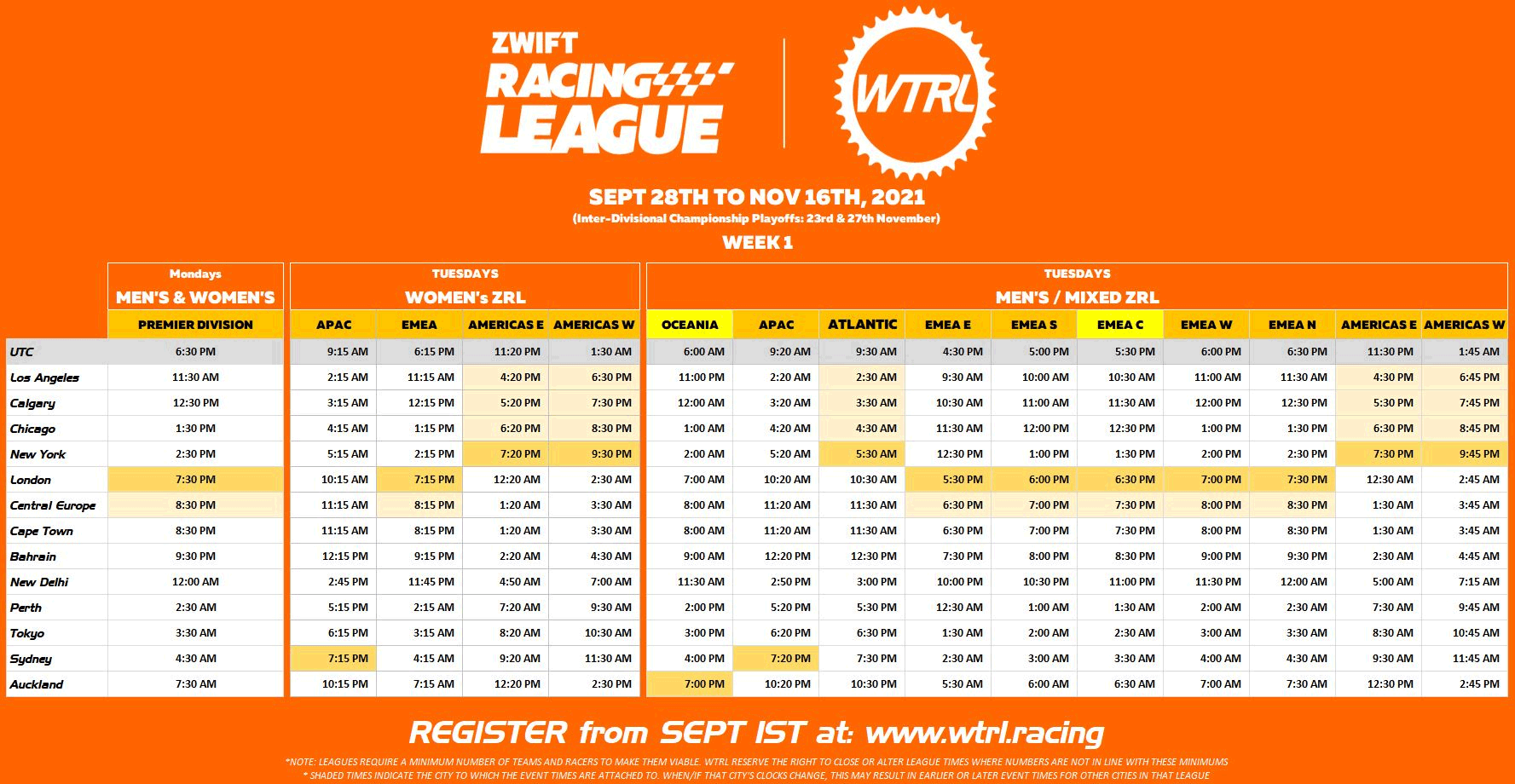
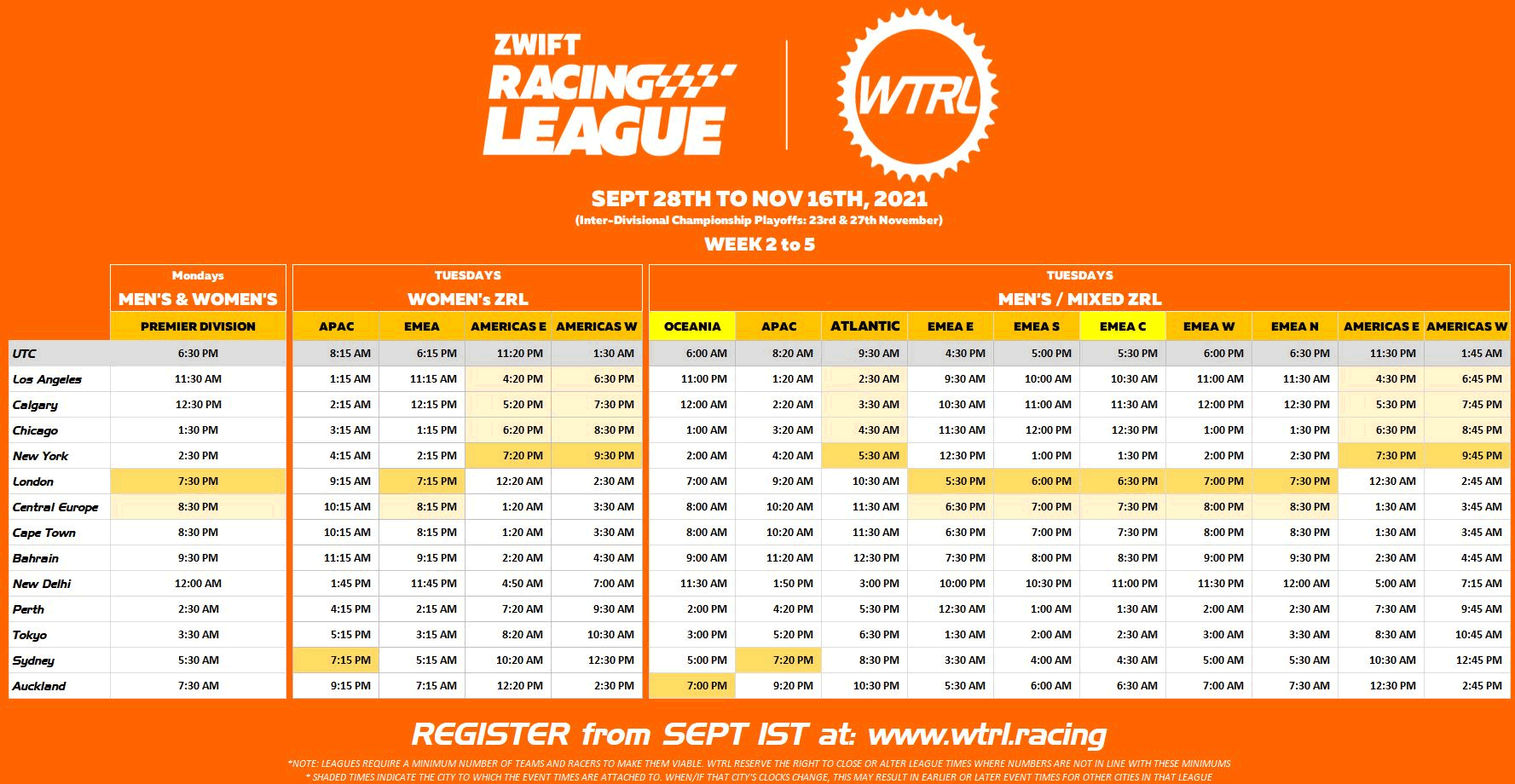
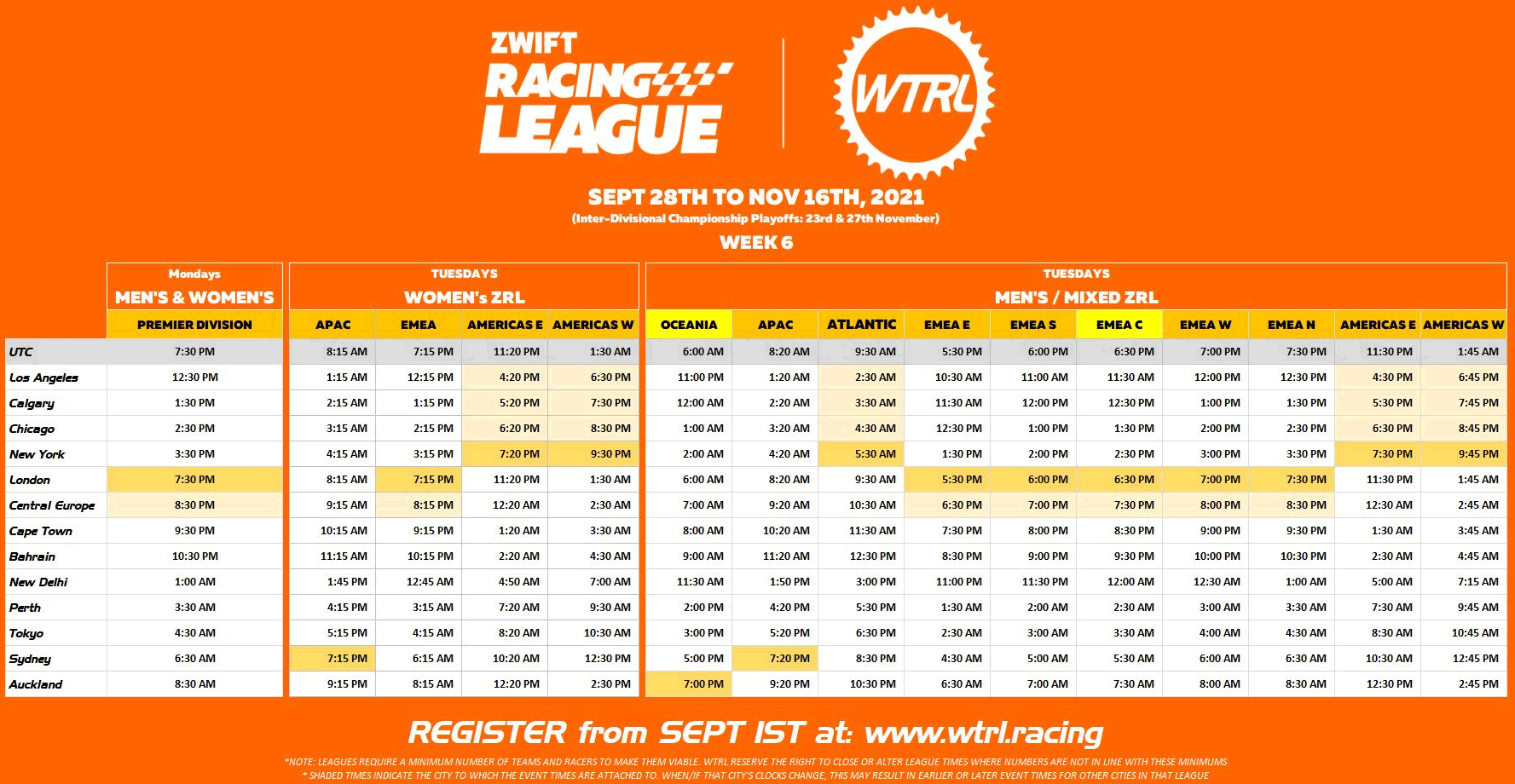
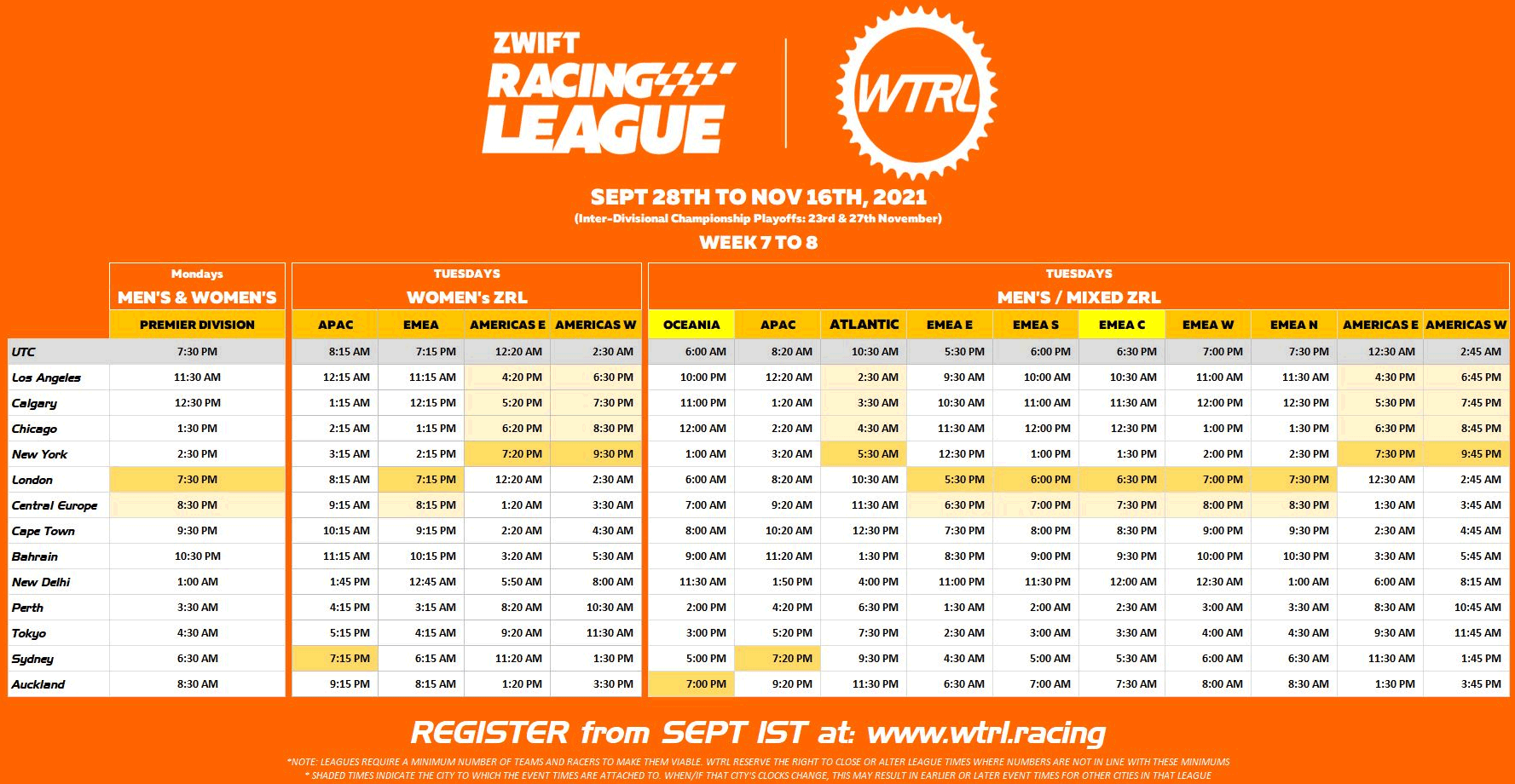
Three new leagues (effectively three new time slots) have been created: Oceania, Atlantic, and EMEA Central. Race start time schedules are always a bit tricky this time of year, with 3 major clock changes happening mid-season. Here are the start times week to week (learn more about the schedule on WTRL’s ZRL About Page):
Want to race, but don’t have a team? Post your info on the Facebook group, and teams will get in touch. Alternatively, email WTRL at [email protected], sharing your info, and they will pass that info on to other team leaders.
Registration closes September 25, 2021 at 3pm UTC. All teams are required to have at least 4 confirmed squad members by this time.
Race Routes and Dates
Note: “Intermediates” are sections on the course where riders compete mid-race for additional points. Intermediates include both Fastest-Through-Segment (FTS) and First-Across-Line (FAL) points – see the scoring page for details.
Premier Division races are on Mondays, while Community Division races are on Tuesdays.
The first 2 races are normal races for returning teams. For new teams, however, WTRL will use these races to evaluate whether they have been placed in the correct divisions.
The first of only two TTTs in the ZRL regular season, this one will be hard and fast, with no major obstacles to slow teams down. That last uphill haul from Ocean Boulevard is going to hurt, but it’s where teams will be caught!
A classic Zwift race route, Figure 8 Reverse has something for everyone with two different sprints and two different KOM intermediates. Watch for climbers trying to split the pack on the first reverse KOM, while sprinters teams push hard at the front to keep things together.
With 99m (325′) of climbing per lap, this route isn’t exactly flat – but the uphill is quite gradual and just wears on the legs. Watch for long breakaway attempts on the last lap, and brace yourself for a crazy-fast finishing sprint on the twisting descent to the line!
The longest race of Season 1 centers on the Petit KOM – a steady 4% grade for around 2.7km which leads into a long descent to the finish. Can the climbers break away on the final climb and stay away to the finish, or will the sprinters be there to battle for the podium? (It appears that C/D riders will finish halfway into the second lap.)
A/B: 2 Laps (46.6km), C/D: 35.7km (~1.5 laps, finishes between end of Pavé Sprint and Start of Aqueduc KOM)
This race course rewards those with the punch to hit it hard up the beginning of the reverse KOM and hold power across the top. Who will survive repeated efforts so they can be in the mix for the final sprint?
Like all Yorkshire routes, this one is never flat. Watch for big moves on the reverse KOM, and sneaky uphill sprint breakaways on Pot Bank’s 15% incline, especially on the final lap.
In this short “turbo” episode, Kristin Armstrong takes a look at the second workout of the Zwift Academy Road program and offers her advice on how to tackle it.
About the Podcast
The Zwift PowerUp Cycling Podcast features training tips from host Matt Rowe (Rowe & King), with regular co-hosts Greg Henderson, Rahsaan Bahati, Dani Rowe, and Kristin Armstrong.