Cycling newbies may not know what a call-up is. But if you’ve ever raced outdoors, you know that getting a call-up is the coolest way to start your race.
It’s called a call-up because the race organizer literally calls you up to the start line before all the other riders come to the line. You’re “pole position”, starting at the front of the race so you don’t have to fight your way forward from the beginning.
IRL call-ups are typically given to top-ranked riders: perhaps the top 5 finishers from the previous season, or in the case of grand tours like the Tour de France, call-ups go to riders wearing the leaders’ jerseys.
But did you know there’s a way to give yourself a call-up in Zwift races?
How It’s Done
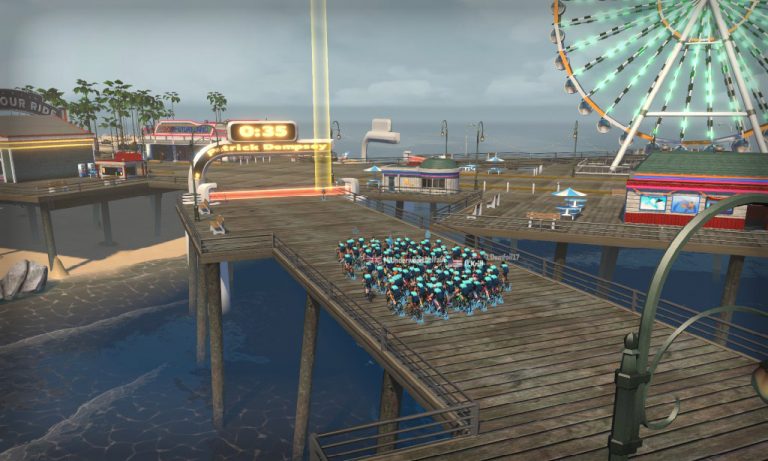
This hack is quite simple. Here’s the big idea: the first time you enter an event’s start pens, your spot is saved. So your goal is to get into the pens as early as possible in order to reserve the most forward position possible. A personal call-up!
For the very best call-up, you’ll want to be signed up for your event and riding in-game more than 30 minutes before the event begins. Then as soon as the “Join Event” button pops up (typically around 30 minutes before the event begins), click that button to be taken to the start pens.
This will place you at or near the front of the start pens. Your call-up spot has been saved.
Once you’re in the pens, you don’t have to stay there. Click to end your ride, and just hit the trash can to delete it (your previous warmup before you entered the start pens has already been saved, so the current activity is empty since all you’ve done is sit in the start pen.) Now you’ve got ~30 minutes to continue warming up before your event, which you can click to join whenever you’d like.
Here’s how it’s done (except for some reason I tried to save my activity in the pens, which is just a waste of time):
Why and When To Do It
The “why” here should be obvious: with Zwift races always starting out with a high effort, beginning near the front of the pack means you’ll save a bit of energy compared to starting near the back. Giving yourself a call-up is just one more way to conserve power so you’ll have it when you need it.
That said, this really isn’t needed unless you’re in an event with a high number of riders, since a small rider count means everyone starts near the front. There’s no clear cutoff, but I’d say if your event has over 100 riders you should definitely give yourself a call-up, and if there are less than 50 riders it really doesn’t matter.
Zwift Academy Road is in full swing, and this week riders attack Workout #2. I’ve seen a lot of questions about the ZA Workouts, and thought a post focusing on proper workout execution and overall Zwift Academy workout structure may be helpful. Let’s dive in!
A Note for ERG Newbies
If you’re new to structured workouts and Erg mode, I would recommend learning how it works before diving into your first workout. Read “All About Erg Mode In Zwift” for details, and consider at least starting one of the workouts in your workouts folder just to get the feel for how Erg mode works before attempting your first Zwift Academy workout.
Workouts 1 & 2
If you’re signed up for ZA Road, you’ve probably already done workout #1, and possibly #2 as well. What were your impressions of the two workouts?
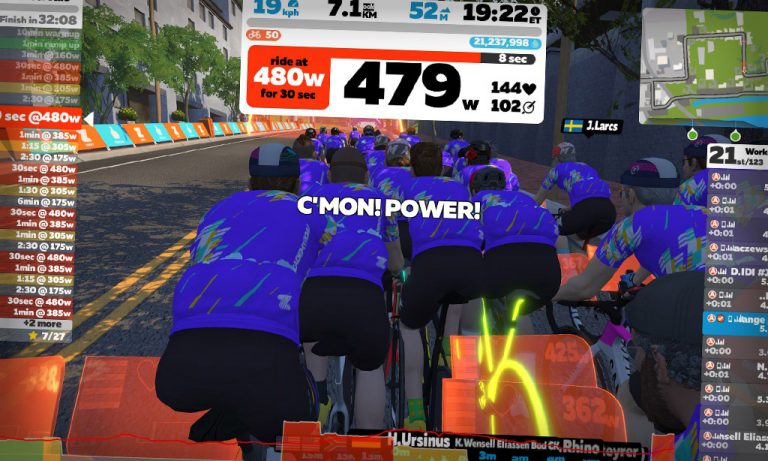
For me, #2 was much tougher than #1. Don’t hear me wrong, #1 was no picnic. But I never thought, “I may not be able to do this” or “I’m near my limit”. My peak heart rate during the tough intervals stayed basically the same (around 170) for the three intervals, meaning I wasn’t fatiguing much as the workout went on.
I felt good enough, in fact, to jump into a race after the workout (albeit with a small field of riders) and ended up winning with a long final breakaway (see it on ZwiftPower).
In the middle of workout #1
Workout #1 Ride Report
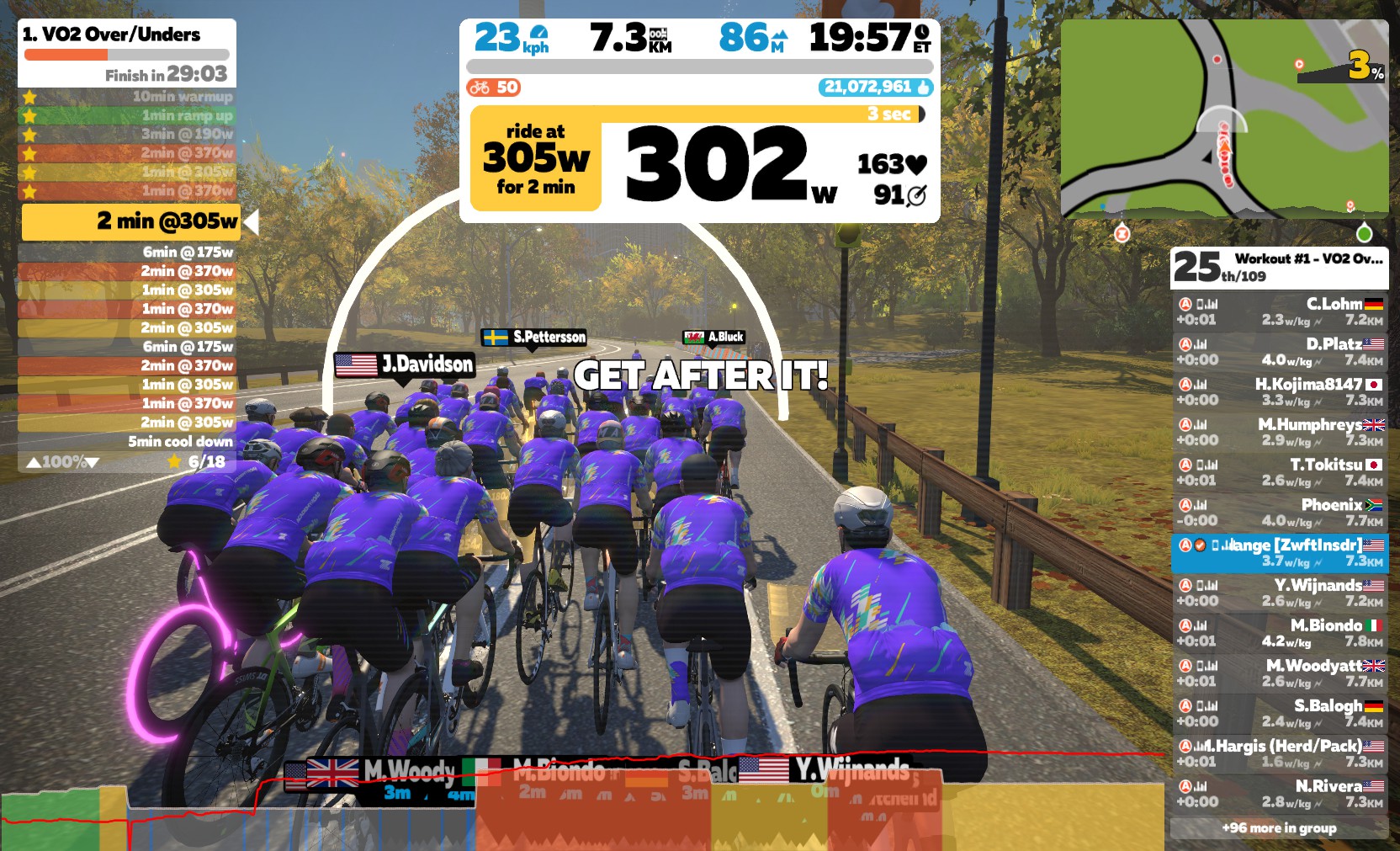
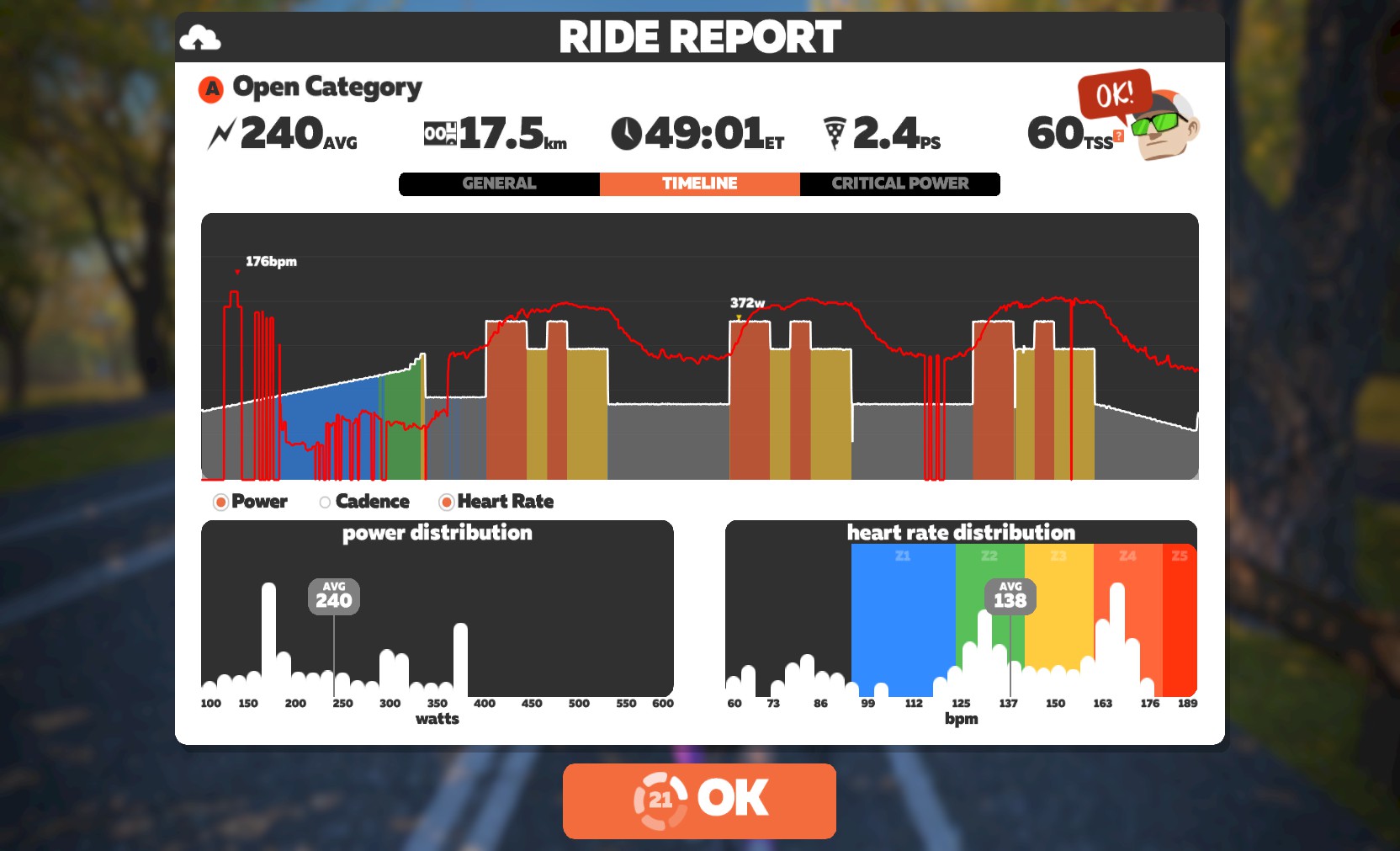
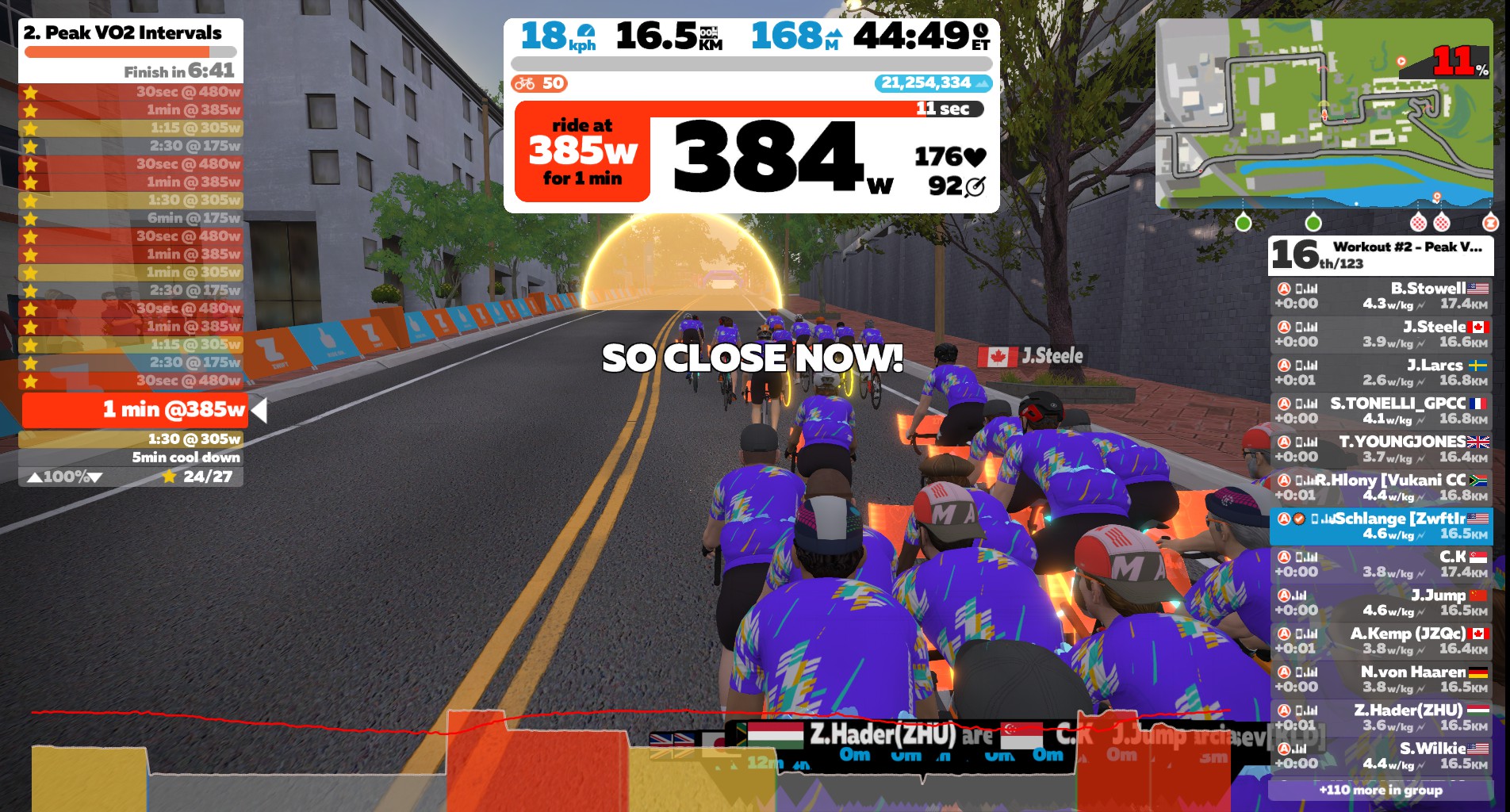
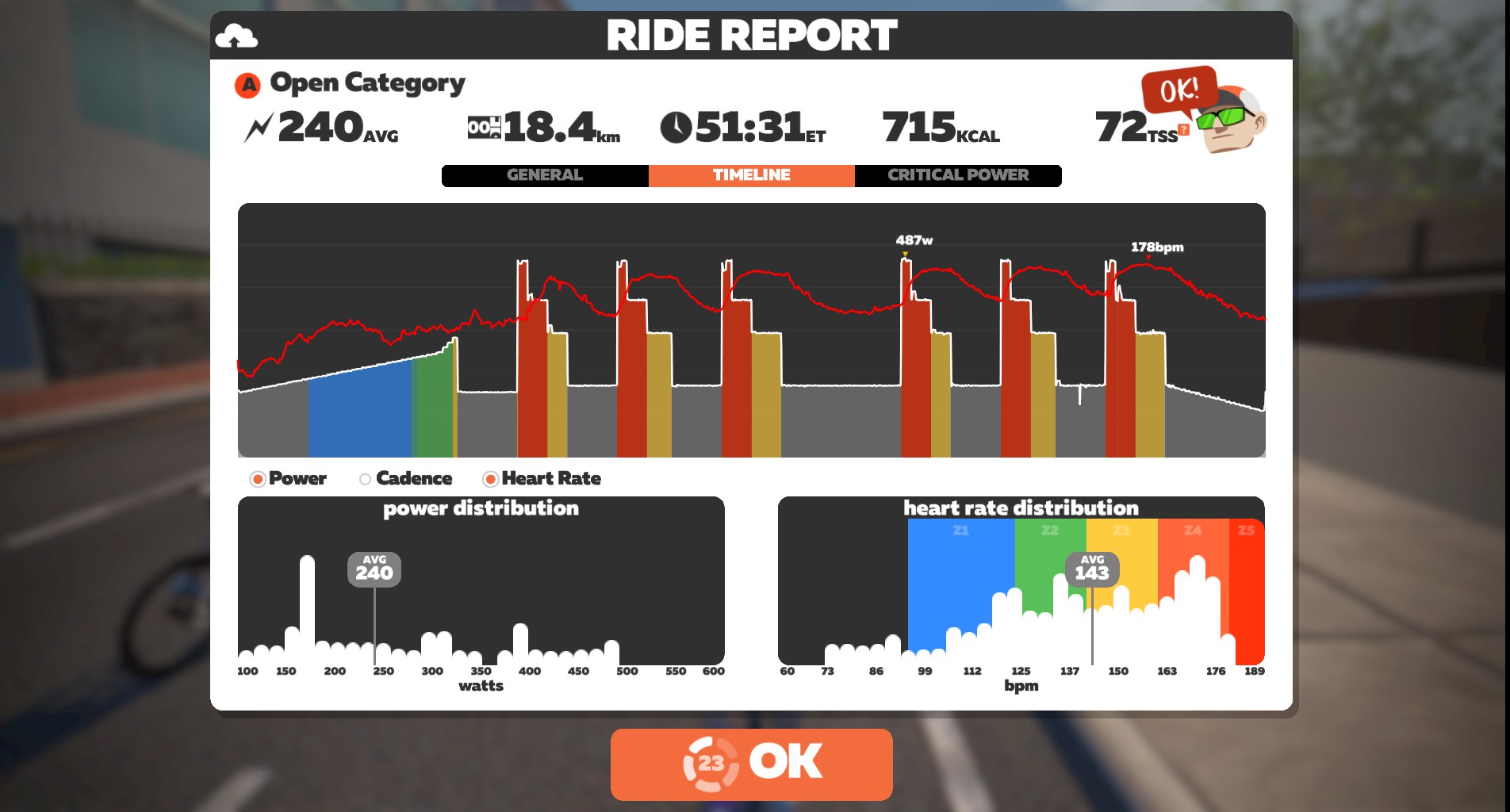
Contrast that with workout #2, where the first couple intervals didn’t feel too bad… but the third one got my attention. And I had another set of three left to do! My peak heart rate bumped up each and every interval, from 165 to 167 to 172 to 174 to 175 to 177. Ouch!
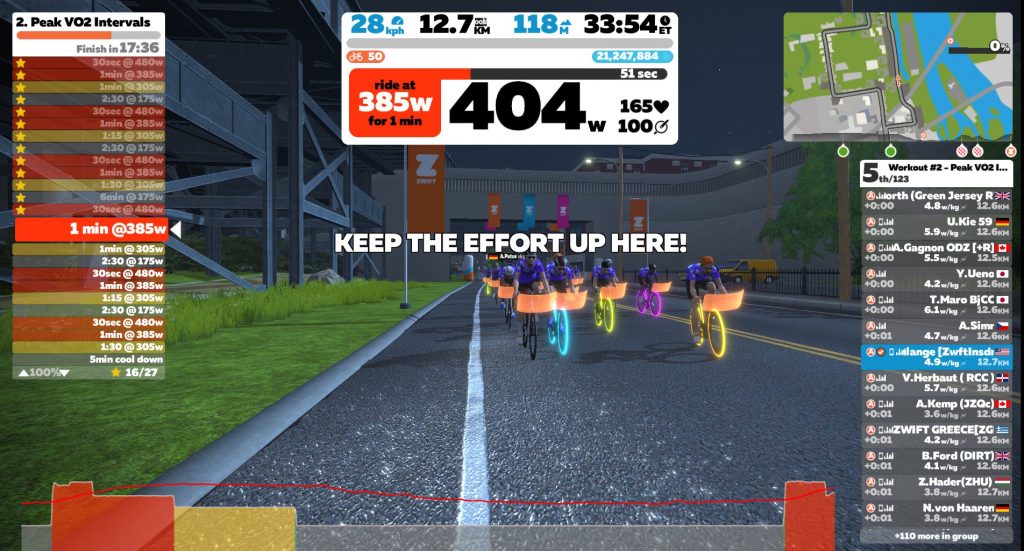
In the middle of workout #2
Workout #2 Ride Report
If you’d like to watch me suffer through workout #2, here’s a silent video (I’ve spared you the joy of listening to a loud fan and heavy breathing):
How Does the ZA Program Work?
To graduate from ZA Road 2021, riders must complete a total of 10 rides:
1 Baseline Ride event
All 6 Zwift Academy workouts (group workouts or individual, your choice)
2 Zwift Academy recovery ride events
1 Finish Line Ride event
That seems straightforward enough. But many Zwifters have written in to ask how best to execute the Zwift Academy “program”. For example, here’s one question I recently received:
Can someone explain how the “block 1” with three workouts works? I mean three rides in four weeks is not going to make me better. Am I supposed to do same three workouts and recovery each week for four weeks? Or just randomly do them? Or workout one only say three times in first week? Am I missing something in the app which will advise which one next to do and just need to pick a time?
Those are valid questions, because ZA isn’t structured like a typical complete training program. (A typical training program would have you doing ~3 challenging workouts per week, with 3-4 easy days in between for recovery. Do this for 3-4 weeks, take a rest week, then do the next block.)
Here’s the thing: Zwift Academy is not a complete training plan. You’ll notice in Zwift’s own messaging that they’ve moved away from calling it such. I asked ZwiftHQ to comment on this – to answer the Zwifter’s question above, essentially. Here’s what they said:
Zwift Academy is an approachable training program, built for the entire Zwift community that encompasses classic elements of training. The prescribed format from Zwift Academy coaches is to do one workout each week. The format and workout load makes Zwift Academy a program that all can engage and complete.
So there you have it. The prescribed format, as designed by the well-qualified Zwift Academy Road coaches, is to do one workout per week. That means workout #1 for week 1, workout #2 for week 2, etc. So your overall ZA activity list would look like this:
If you’re new to structured training, following the “one workout per week” plan is a great way to dip your toe in the water and get a little ERG in your life. That’s why Zwift’s coaches structured ZA in this way, in fact: to make it accessible for newer riders. Imagine if ZA was a typical training plan, but you were a new rider, or perhaps had a complicated schedule. It would make completing the program very difficult!
Zwift Academy is a multi-faceted thing. It’s a pro contract competition, but also a training program of sorts. It’s a massive community event that can also be done (mostly) on your own. It’s trying to be many things to many people, and that makes it a bit confusing at times. What is clear to me after speaking with ZwiftHQ, though, is that one of Zwift’s key goals with ZA is to familiarize newer riders with training systems and educate/introduce them to structured training.
With that said, for more experienced riders who have already done some structured VO2 and threshold training, doing one workout per week won’t go far toward making you a better rider (as the Zwifter above astutely observed). And that leads us to our next topic.
Adapting the ZA Workouts To Your Needs
Many Zwifters are more experienced riders like myself who 1) aren’t in the middle of a custom structured training plan, 2) want to participate in ZA but also 3) want to train effectively, seeing results for our efforts.
How should such a rider approach Zwift Academy Road? Here are three ideas:
Double (or Triple) Up the Workouts: if you’re the type of rider who doesn’t mind doing the same workout a few times, then do each week’s prescribed workout more than once. Do the workout, have a rest day, then do the same workout again, followed by a rest day… etc.
Workouts + Races: this is for the rider who, like myself, gets a lot of their training from Zwift racing. Try making your hard days a mixture of workouts and races. Maybe that means workout, rest day, race, rest day, then race again.
Mix and Match: this is like the first idea, but a bit more interesting. Since all the workouts are available as “on-demand” activities in your workouts folder, you could do the week’s prescribed workout, have a rest day, then do a different week’s workout, rest, and do another week’s workout. I would recommend staying within the proper block so you’re doing VO2 workouts for the first three weeks, and threshold work for the last 3 weeks. So a week in the first block might look like this: Workout #2 as a group workout, rest day, Workout #1 (on demand), rest day, Workout #3 (on demand), rest day.
You get the idea. If one workout per week isn’t enough to boost your fitness, then increase your training stimulus in a way that keeps you interested and pushes your limits. Of course, always leave room for recovery – because that’s where we get stronger.
Zwift Racing League has taken racing to the next level on Zwift. It’s well-organized bike racing on an unprecedented scale, with eight weeks of team-based points competition held across multiple timezones catering to thousands of teams. And that’s why serious Zwift racers show up week after week: because everyone knows ZRL is where competition is the fiercest.
With three seasons completed over the course of the past year, the good people at WTRL have performed admirably, streamlining systems and tightening rulesets to provide a fair, engaging, and competitive platform for Zwift racing. Kudos to WTRL for the good work they’ve done fine-tuning the biggest race league in Zwift’s history!
The next ZRL season begins September 28th, and it’s officially named 2021/22 Season 1 – the first season of a new racing year. We’ll use this page to display all the key info and links in one place.
Rule Changes for Season 4
The updated Season 4 ruleset is available as a PDF linked from this page. (It’s important to understand WTRL’s ruleset does not govern the Zwift Racing League Premier Division, which instead falls under the Zwift Cycling eSports Ruleset.) For everyone racing in the lower Community divisions outside of the Premier Division, here are the key ruleset changes you’ll want to know for season 4:
16+ age requirement: riders must be 16 or older by the event start date to be eligible to participate.
Playoff Structure: WTRL is giving more details about playoff schedules and other specifics – see section 4.3 of the rules for details.
If you’re new to ZRL, you’ll definitely want to get familiar with the ruleset and points structures, as these will inform strategic decisions made as a team.
Timeslots and Divisions
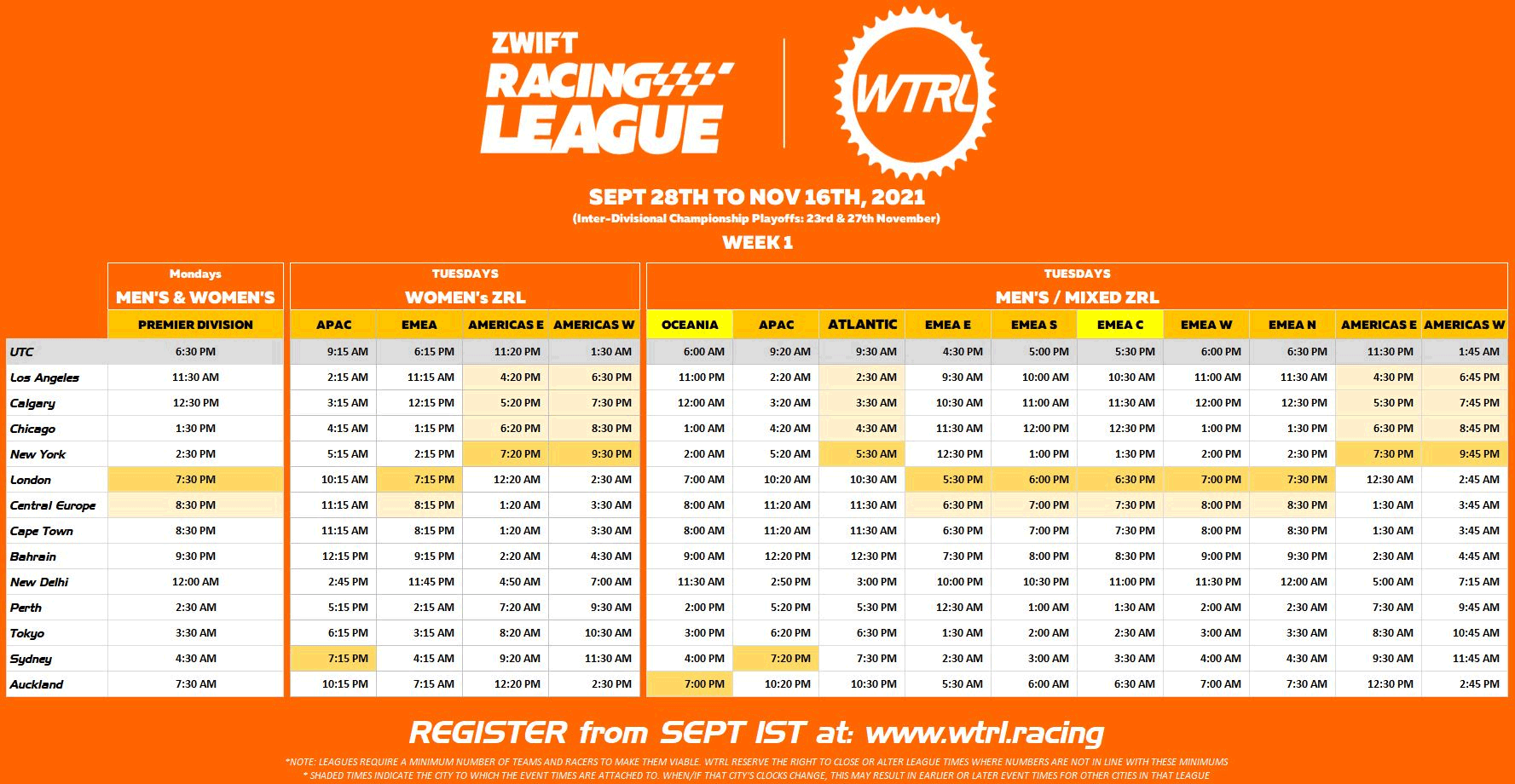
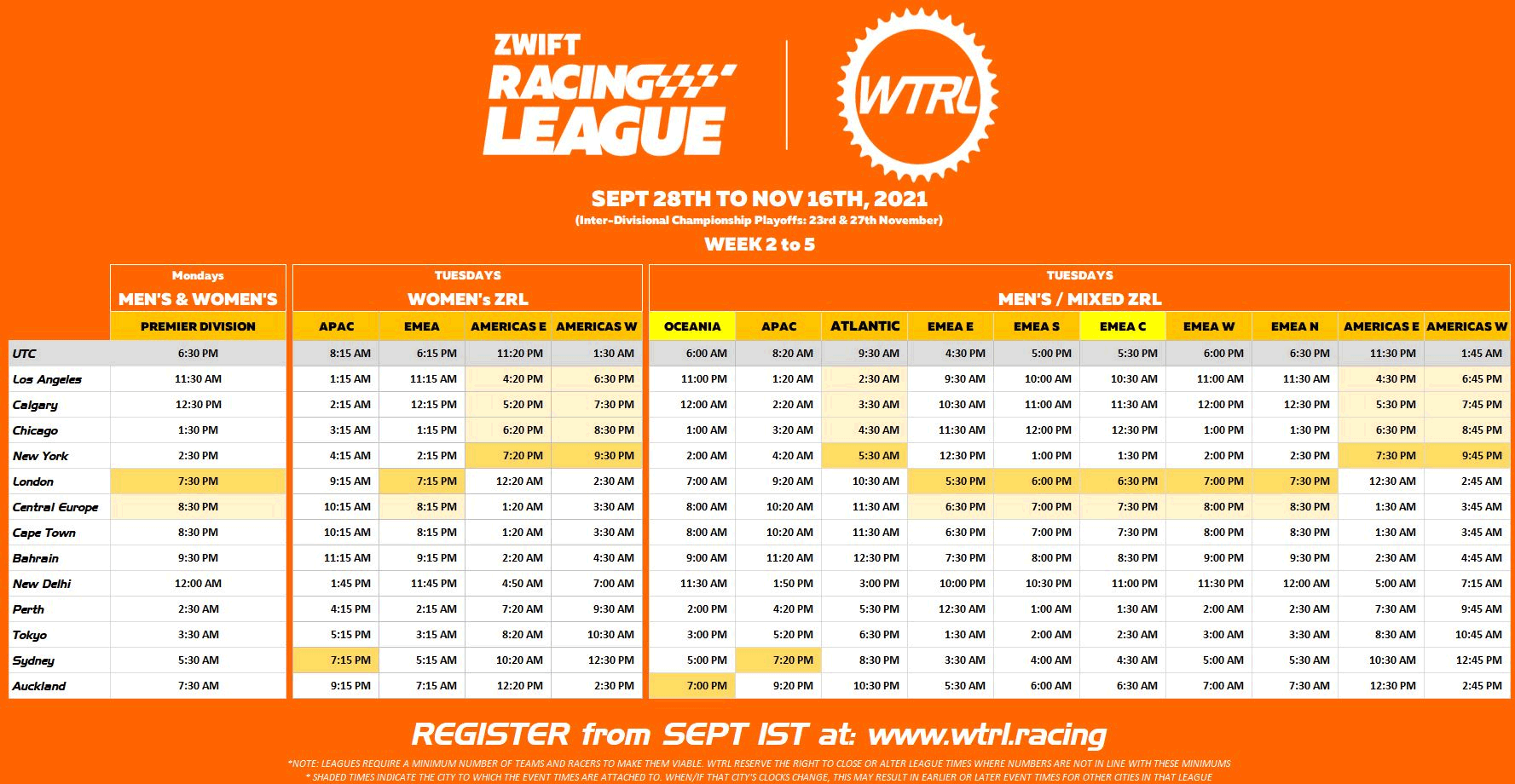
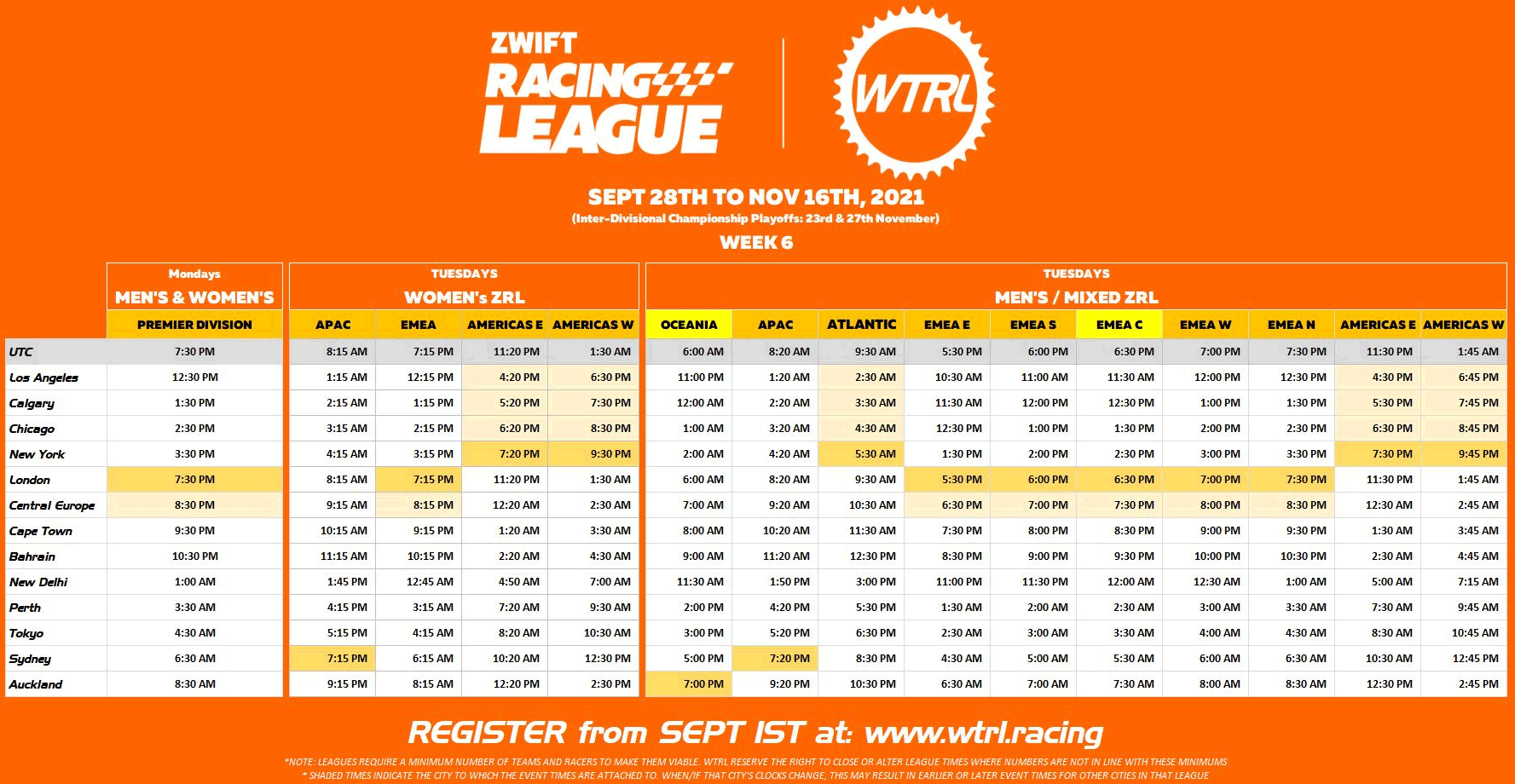
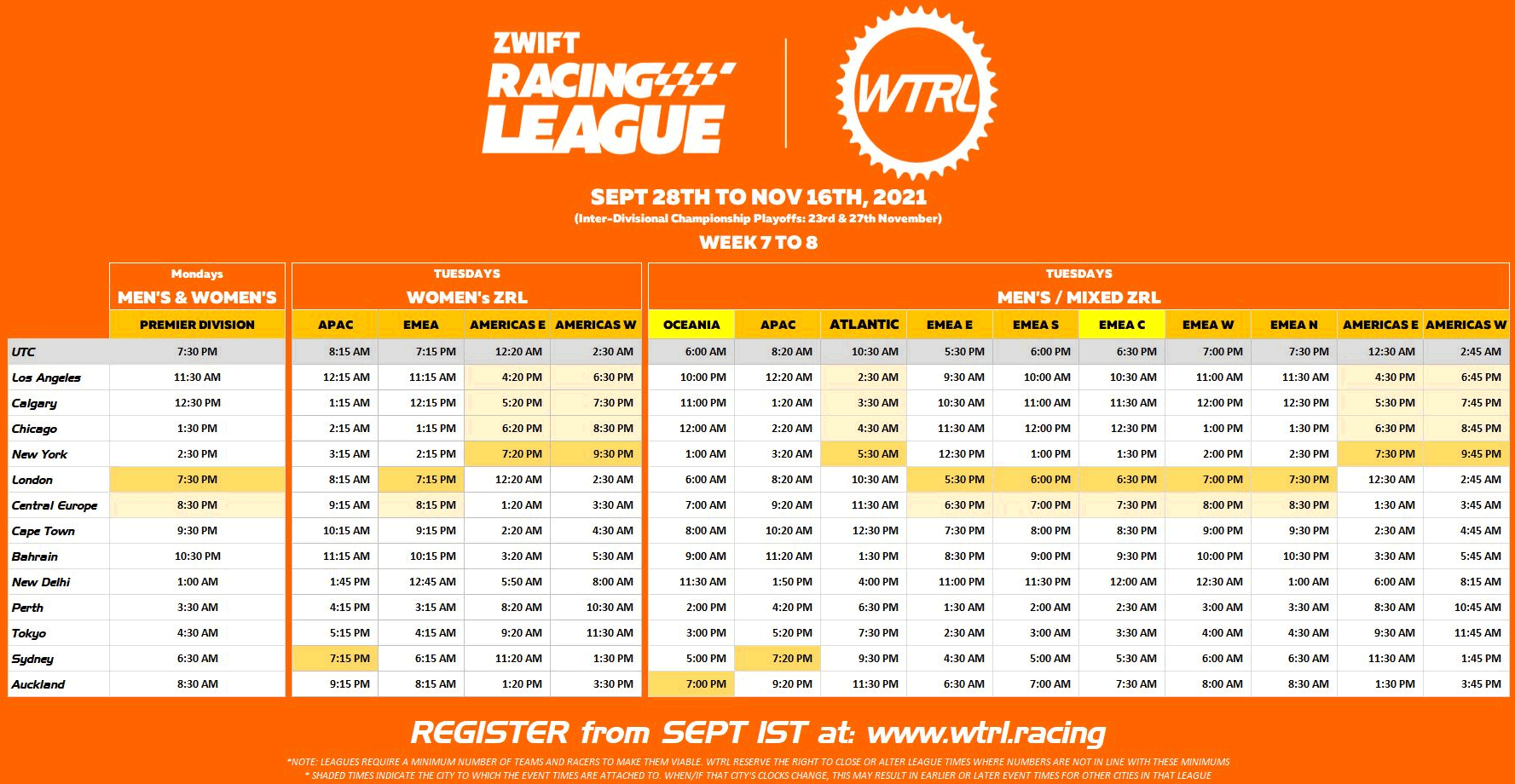
Three new leagues (effectively three new time slots) have been created: Oceania, Atlantic, and EMEA Central. Race start time schedules are always a bit tricky this time of year, with 3 major clock changes happening mid-season. Here are the start times week to week (learn more about the schedule on WTRL’s ZRL About Page):
Want to race, but don’t have a team? Post your info on the Facebook group, and teams will get in touch. Alternatively, email WTRL at [email protected], sharing your info, and they will pass that info on to other team leaders.
Registration closes September 25, 2021 at 3pm UTC. All teams are required to have at least 4 confirmed squad members by this time.
Race Routes and Dates
Note: “Intermediates” are sections on the course where riders compete mid-race for additional points. Intermediates include both Fastest-Through-Segment (FTS) and First-Across-Line (FAL) points – see the scoring page for details.
Premier Division races are on Mondays, while Community Division races are on Tuesdays.
The first 2 races are normal races for returning teams. For new teams, however, WTRL will use these races to evaluate whether they have been placed in the correct divisions.
The first of only two TTTs in the ZRL regular season, this one will be hard and fast, with no major obstacles to slow teams down. That last uphill haul from Ocean Boulevard is going to hurt, but it’s where teams will be caught!
A classic Zwift race route, Figure 8 Reverse has something for everyone with two different sprints and two different KOM intermediates. Watch for climbers trying to split the pack on the first reverse KOM, while sprinters teams push hard at the front to keep things together.
With 99m (325′) of climbing per lap, this route isn’t exactly flat – but the uphill is quite gradual and just wears on the legs. Watch for long breakaway attempts on the last lap, and brace yourself for a crazy-fast finishing sprint on the twisting descent to the line!
The longest race of Season 1 centers on the Petit KOM – a steady 4% grade for around 2.7km which leads into a long descent to the finish. Can the climbers break away on the final climb and stay away to the finish, or will the sprinters be there to battle for the podium? (It appears that C/D riders will finish halfway into the second lap.)
A/B: 2 Laps (46.6km), C/D: 35.7km (~1.5 laps, finishes between end of Pavé Sprint and Start of Aqueduc KOM)
This race course rewards those with the punch to hit it hard up the beginning of the reverse KOM and hold power across the top. Who will survive repeated efforts so they can be in the mix for the final sprint?
Like all Yorkshire routes, this one is never flat. Watch for big moves on the reverse KOM, and sneaky uphill sprint breakaways on Pot Bank’s 15% incline, especially on the final lap.
In this short “turbo” episode, Kristin Armstrong takes a look at the second workout of the Zwift Academy Road program and offers her advice on how to tackle it.
About the Podcast
The Zwift PowerUp Cycling Podcast features training tips from host Matt Rowe (Rowe & King), with regular co-hosts Greg Henderson, Rahsaan Bahati, Dani Rowe, and Kristin Armstrong.
We haven’t heard much from Zwift Co-Founder Jon Mayfield lately, as public interactions on game updates are now being handled by other members of the Game Team, including Wes Salmon.
But Jon and his team have been busy, working on various projects deep in the bowels of Zwift’s super-secret R&D lair. (Actually, thanks to Covid, I would guess they’re all working from their homes. But the lair sounds much cooler.)
One project recently pushed out to the live codebase is Pack Dynamics 3.0 (we’ll call it PD3 for short). I’ve had the opportunity to participate in a few test rides using PD3, and wanted to give you all a look at what’s coming. Because it’s exciting!
First: The Current Situation
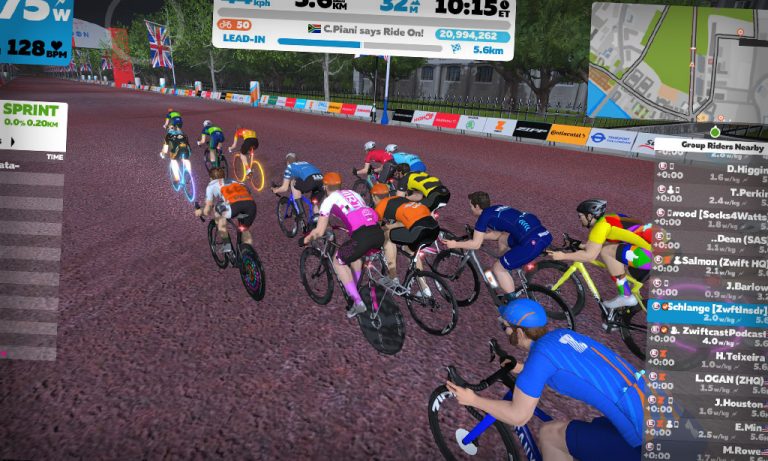
While most Zwifters have grown used to the game’s pack dynamics, the way our avatars move on the road lacks realism in various ways. Watch a snippet of a recent race and see how the pack looks to you:
See anything odd?
I see a lot of side-to-side movement within a tight pack, which isn’t something that happens IRL. Outdoors, riders hold their lines pretty well in a group, because there’s not much space to move right or left, and it’s a dangerous move if overlapping wheels are involved.
I also see the bodies of riders moving through other riders, which of course knocks the realism down a notch.
Lastly, I’d say the pack looks too tight. Even a pro peloton can’t fit that many riders into a tight space!
PD3 seems to address all of these issues quite nicely.
See Pack Dynamics 3.0 In Action
Zwiftcast creator Simon Schofield participated in the same two test rides as I did, and put together a quick video with his impressions of PD3. I think he sums it up quite nicely:
Less Lateral Movement
You’ll notice the jerky side-to-side movements visible in my race video are nearly non-existent in PD3. It feels and looks much more realistic… like the pack is a school of fishes rather than a scurry of squirrels.
Less Sticky Draft
While Zwifters generally recognize why the sticky draft exists, there’s also nearly universal disdain for it. We like sticky draft when it helps us hold a wheel, but we also hate feeling like it’s harder to get around another rider than it should be.
I found the draft to feel much more natural and not sticky at all in PD3. I could ride up behind a rider and hold my position on their back wheel by modulating my power. And if I wanted to go around them, bumping up my power moved me smoothly around, without feeling like I was wasting watts trying to power out of the sticky draft.
One caveat, though: both of the test rides I’ve done were at a rather low pace (2-2.5 w/kg). It may feel quite different at race pace.
More Realistic
Overall, the look of the pack, and the feel of moving forward and backward in it, is much more realistic with PD3. Riders hold their lines well, and, at least in the two test rides I’ve done, there is more space between riders.
Will the increased space making drafting more of a challenge, especially when it matters at high speeds in races? That remains to be seen because, again, we haven’t tested PD3 in a race situation.
Better Predictive Positioning
PD3 also includes an upgrade that isn’t apparent to the individual rider, but matters a lot when it comes to racing and broadcasting. That is much improved predictive positioning of other riders.
The positions of other riders on your screen are calculated using a combination of client-side predictive positioning (your Zwift software is predicting where each rider is going, and rendering their positions accordingly on your screen) and server-side adjustments, where rider positions are broadcast to a central server then your game client sees them and adjusts riders positions on your screen.
This means that one Zwifter’s view of the pack could be quite different from another Zwifter’s, especially if server connectivity was slow or poor. Most of the time this doesn’t really matter – but when it comes to racing, and especially pack sprints, it matters a lot!
In the past few years, Zwift has been tightening up how well this works, so rider positions have become more and more uniform between Zwifters. But PD3 tightens this up much more.
When Will It Be Released?
Zwift is being cautious in rolling out PD3, and will continue running test events before a global PD3 rollout. The current PD3 has a few bugs which will be fixed before any larger public release, and a lot more private testing will take place before public test events are available.
The broad release plan is:
Holding more private test events
Hold public test events
Enable PD3 on an entire map
Enable PD3 across the entire game
Zwift isn’t giving a PD3 release timeline, but it’s certainly not “just around the corner.” My best guess: sometime near the middle of Q4 2021.
Watch More
Want to see more PD3 in action? Here are the full recordings from my two test rides:
Test Ride 1, Makuri Islands
Test Ride 2, London
Your Thoughts
How does PD3 look to you? Share your thoughts below!
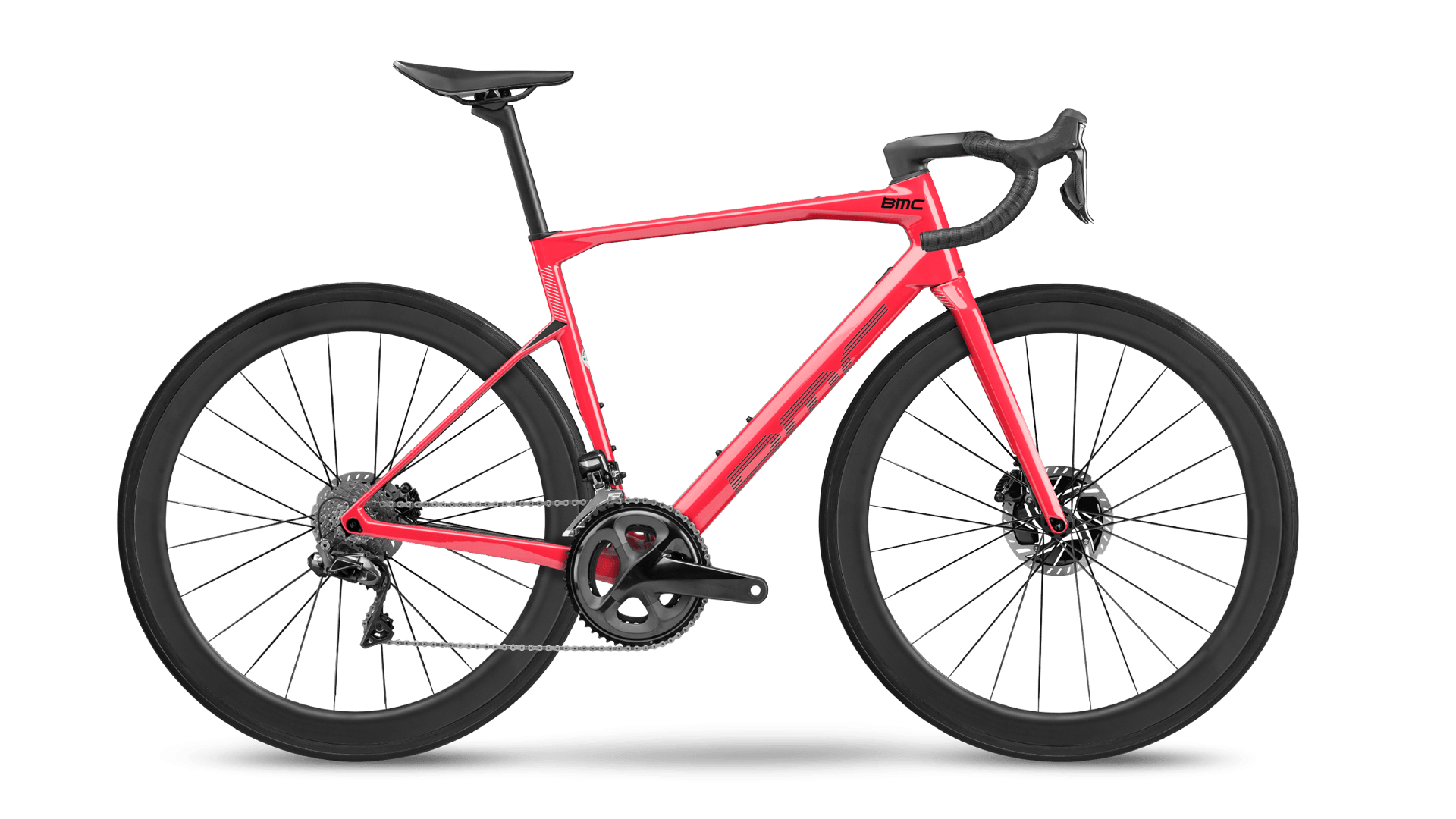
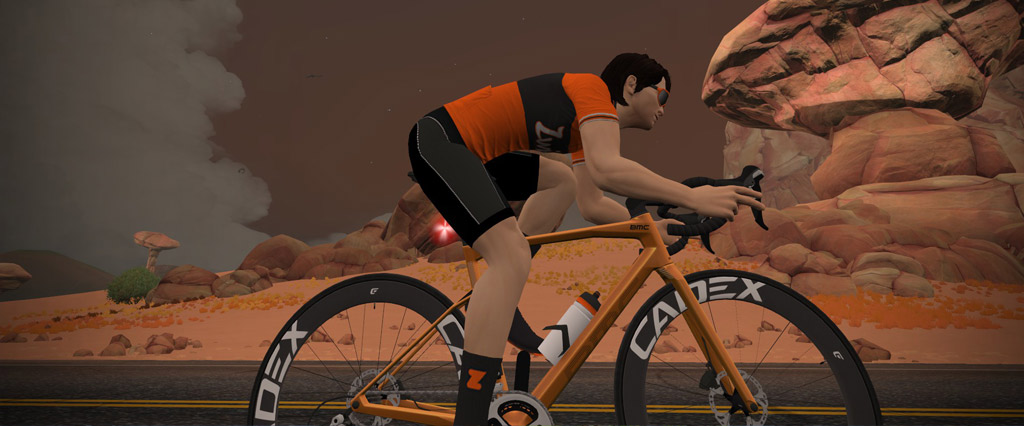
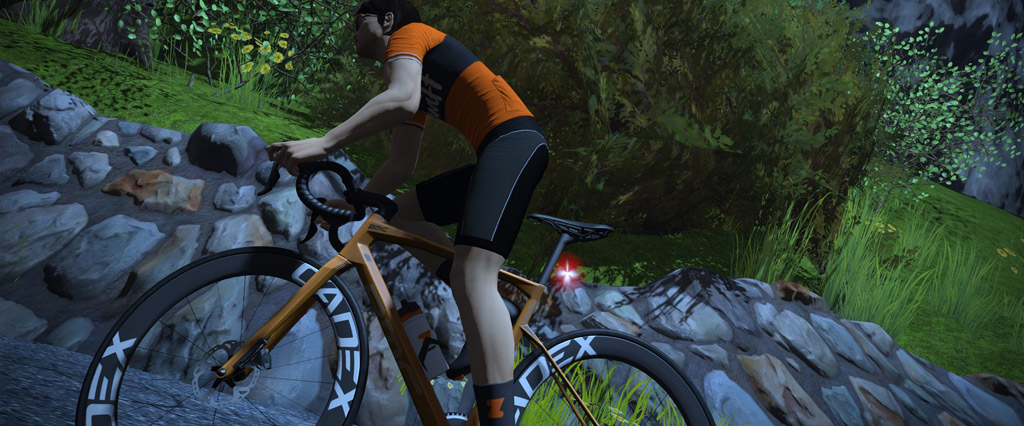
Zwift’s newest update includes a fresh bike frame from Swiss bike maker BMC: the Roadmachine.
Here’s how the Roadmachine is described in the Zwift Drop Shop:
“Meet the Roadmachine: the bike that truly does it all. Rooted in endurance, the frame has been revised to perfection and added more compliance-boosting attributes to make this bike your go-to choice for all-day adventures. As BMC’s highest performing all-arounder, it’s designed to go the distance with resolve. After all, what use is a road without the Roadmachine?”
The frame is rated 2 stars for aero and 3 for weight on Zwift, so even before testing it we knew it wouldn’t be a top aero or climbing bike. As it says in the Drop Shop, this is BMC’s all-arounder. You’ll have to be level 21+ to purchase it in game, at a price of 780,900 Drops.
The BMC Roadmachine, IRL
We ran this frame through our standard tests to learn how it performs in game. Without further ado, here’s everything you need to know about the new BMC Roadmachine in Zwift.
Aero Performance
The Roadmachine turns in a flat test time matching the newly-released Van Rysel EDR CF frame. This places it near the bottom of the pile in terms of aero performance, with a flat test percentile ranking of 11%.
The BMC Roadmachine’s flat test time is 51:34.5. By comparison, the fastest frame in game (Cervelo S5 2020) turns in a time of 51:17.5, and the BMC SLR01 turns in a time of 51:33.5. (Our test course is two laps of Tempus Fugit, which totals 34.6km.)
Climb Performance
The Roadmachine climbs Alpe du Zwift in a time of 49:24, giving it a percentile ranking of 24%.
By comparison, the standard Zwift aero frame turns in a time of 49:31, and the Specialized Aethos completes the test is 48:49. (The older BMC SLR01 frame is 15 seconds faster than the Roadmachine, turning in a time of 49:09.)
Note: all test results above are from a 75kg, 183cm rider holding 300W steady using Zwift’s stock 32mm carbon wheelset.
Conclusions
While the BMC Roadmachine’s modern angular looks appeal to some riders, its performance on Zwift will not. Ranked at 11% on flats and 24% on climbs, we sincerely hope that this isn’t a reflection of the IRL frame’s abilities, since it ranks 57th out of the 63 road frames currently in game in terms of all-arounder performance.
The Roadmachine’s numbers can be found on the following posts, and we’ve added it to our Master Zwift Frames List:
Important note: this post contains speed test results for Zwift frames or wheels. These results may change over time, and a bike's performance relative to others may also change. We don't always revise posts when performance rankings change, but we do keep current, master versions of our speed test results which are always available. See the frame charts, wheel charts, and Tron vs Top Performers for current performance data.
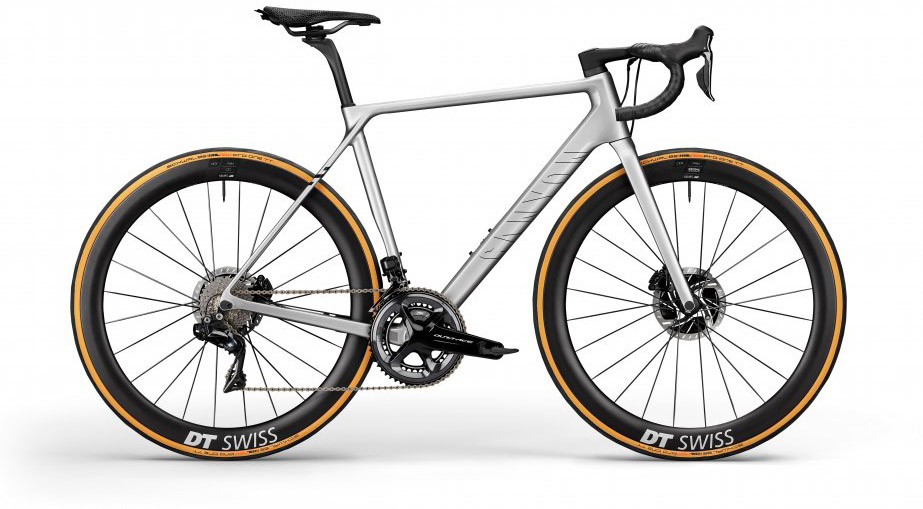
Zwift’s newest update includes a fresh bike frame from Canyon: the Ultimate CFR.
Canyon already has its “Ultimate” frame in game, which is probably based on the Ultimate CF SLX from a few years back. In terms of IRL comparisons, the Ultimate CFR comes in lighter than the current model of the CF SLX Disc, with a 10% improved stiffness-to-weight ratio. But it seems as though the latest Ultimate CFR (which is only available with disc brakes) weighs the same as the older rim-brake Ultimate CF SLX.
Here’s how the new Ultimate CFR is described in the Zwift Drop Shop:
“The Ultimate is the pinnacle of Canyon’s lightweight road bike engineering. Classic road racing performance in their lightest line-up ever. The Ultimate CFR is the epitome of modern cycling design and engineering. Complete with wireless electronic shifting, built-in power meter system and lightweight, aerodynamic frame, this bike is a thoroughbred racing machine.”
The frame is rated 2 stars for aero and 4 for weight on Zwift, so even before testing it we knew it should be a strong climber that isn’t particularly aero. You’ll have to be level 19+ to purchase it in game, at a price of 639,000 Drops.
The Canyon Ultimate CFR, IRL
Based on IRL specs, the new Ultimate CFR in Zwift should clock in very similar times to the existing Ultimate. But IRL performance doesn’t always map directly to Zwift performance, so we ran this frame through our standard tests to learn how it performs in game.
Here’s everything you need to know about the new Canyon Ultimate CFR in Zwift.
Aero Performance
The Ultimate CFR turns in a flat test time 1 second faster than the existing Canyon Ultimate frame, which is expected given the frame’s IRL comparison to the older Ultimate frame. This places it squarely midfield in terms of aero performance vs. all other Zwift frames, with a flat test percentile ranking of 48%.
The Canyon Ultimate CFR’s flat test time is 51:32. By comparison, the fastest frame in game (Cervelo S5 2020) turns in a time of 51:17.5. (Our test course is two laps of Tempus Fugit, which totals 34.6km.)
Climb Performance
With a 4-star weight rating, we expected good things from the Canyon Ultimate CFR. It is, after all, Canyon’s flagship climbing racer, described on their website as “The lightest disc climbing bikes you’ll ever ride.”
The Ultimate CFR climbs Alpe du Zwift in a time of 48:55. By comparison, the standard Zwift aero frame turns in a time of 49:31, and the Specialized Aethos completes the test is 48:49. (The older Canyon Ultimate frame is 7 seconds behind the new Ultimate, turning in a time of 49:02.)
Note: all test results above are from a 75kg, 183cm rider holding 300W steady using Zwift’s stock 32mm carbon wheelset.
Conclusions
The Ultimate CFR is outperformed on the climbs by the Specialized Aethos, without really beating the Aethos on the flats. And the Ultimate CFR is tied with the new Scott Addict RC on the climbs, but gets dropped by the Addict on the flats.
So Canyon’s new Ultimate CFR isn’t the best climbing frame in game – but we’d put it in third place. And that’s not bad at all given its low level requirement (19+) and price (639,000 Drops)!
Thanks to this frame’s strong climbing performance we’ll be updating the following posts soon:
Important note: this post contains speed test results for Zwift frames or wheels. These results may change over time, and a bike's performance relative to others may also change. We don't always revise posts when performance rankings change, but we do keep current, master versions of our speed test results which are always available. See the frame charts, wheel charts, and Tron vs Top Performers for current performance data.
Muc-Off Review: Innovative Products to Clean, Protect, and Optimize Your Bike
I have always been meticulous when it comes to maintaining my bikes, in part because they are worth more than my car, but also because I spend so many hours in the saddle. It’s important for cyclists to make sure all components are well maintained so there are fewer unexpected mechanical issues when we are miles away from home. (Because even despite our best efforts, surprise mechanical issues will arise, like the gear cable failure I had when undertaking a Zwift Gran Fondo earlier this year.)
The reality is, when you cycle on Zwift you put a lot of stress on some components of the bike. After my experience finishing the Gran Fondo with just two gears, you can bet I have been paying closer attention to maintaining my bike and the components!
There are lots of cleaning products on the market, but I have been particularly impressed with the range of products offered by Muc-Off, and over the last 6 months have spent a small fortune using their products exclusively, to keep my bikes clean and happy.
It’s quite easy to spend a small fortune because Muc-Off is effectively a one-stop-shop for bike products that are designed to clean, protect and optimise your bike and components.
In today’s post I’ll highlight a few items that may be of benefit in the field of cleaning, protecting, and optimising your Zwifting bike.
However, before that, the history of Muc-Off makes for fascinating reading. It’s worth understanding the company’s background in cycling and how it has grown into the big brand it now is.
A History of Muc-Off
The origins of the company date back to 1991. In 1991 Rex and Marilyn Trimnell got things started with X-Lite UK, designing and manufacturing the world’s first twin crown bicycle fork and the world’s lightest bar ends. Rex was frustrated at the length of time it took to clean his bike so investigated surfactant technologies and created a perfectly pink cleaner to care for his kit.
Work continued on his product and in 1994 Muc-Off’s cleaning product was born. It was eco-friendly, highly effective, and didn’t damage delicate finishes or components. In summary, it was wholly unlike the other viable option at the time, which was washing up liquid that contained lots of salt, leading to corrosion of bike components.
By the start of the year 2000, when most people were worrying about the non-existent Y2K computer bug, Muc-Off was focussing on more pressing matters, like diversifying their MTB-centric business and branched out into motorcycles. In 2000 Muc-Off made its first range of motorcycle care products.
A car care range followed in 2003, and in 2008 a new biodegradable range of eco-friendly bike lubes was launched. Their evolution continued in 2010 when Muc-Off entered the world of Formula 1 by becoming an official supplier to Sahara Force India.
2014 was an important year for the company when they became the official supplier to Team Sky. This marked the beginning of a very exciting partnership and saw the birth of the Hydrodynamic Chain Lube (more on that later in the article).
Ensuring the company didn’t stray too far from their MTB heritage, in 2015 Muc-Off became the official cleaning partner to Atherton racing, one of the biggest teams in the downhill series.
Muc-Off supported Sir Bradley Wiggins in his attempt at the hour record. Muc-Off started by speed grading over 40 Shimano Dura-Ace chains on specialist Muc-Off lab equipment. They were able to select the very fastest, most efficient chains to then be deep cleaned and treated with a groundbreaking new formula. This state-of-the-art formula and treatment process pushed the boundaries of chain lube innovation and was designed specifically to keep friction to an absolute bare minimum. A highly advanced new military-grade additive, along with some cutting edge extreme pressure additives were added to create an incredibly fast chain lube treatment. Armed with this new advancement, Sir Bradley Wiggins rode a distance of 54.526km (33.88 miles), setting a new World Record.
In 2015 Muc-Off won their first Tour de France with Team Sky using their Hydrodynamic Chain Lube, which was followed up in 2016, 2017, and 2018.
With the evolution of e-bikes, Muc-Off developed a range to suit and in 2018 launched the world’s first eBike-specific range of products including a tyre sealant that became their most successful launch.
Most recently, in response to COVID, Muc-Off pivoted to create a full antibacterial range to help combat the pandemic.
Cleaning Products
Nano Tech Bike Cleaner
As I found out through my experience, it’s more important to regularly maintain your bike when using it for Zwift. The salt generated from the intense sessions can corrode the components without you realising, until it’s too late. I experienced this with my headset bearings rusting, which was as a result of sweat from the handlebars seeping into the bearings. I now clean my bike on a regular basis to avoid costly repairs and apply Muc-Off’s Sweat Protect product (more on that later).
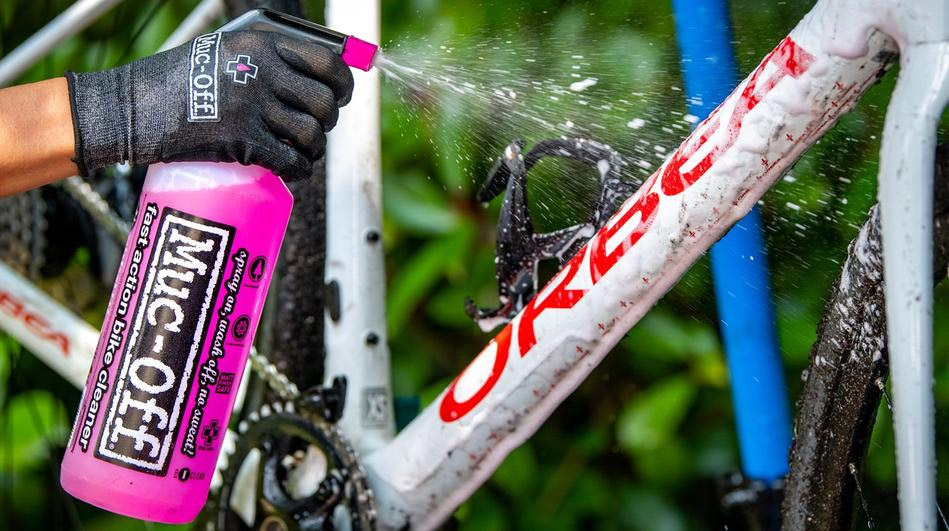
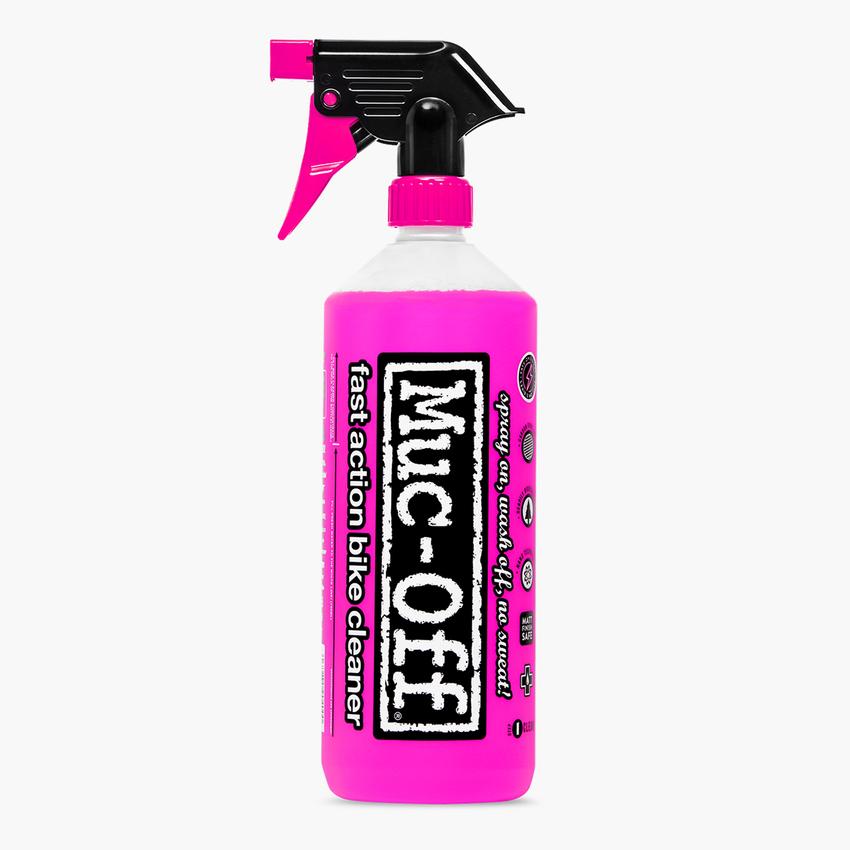
To clean my bike, I opt for the Nano Tech Bike Cleaner. The Nano Technology breaks down dirt and grime at a molecular level so it is easier to clean. You can literally see the grime dissolve in front of your eyes! As Muc-Off states, “It’s the most effective cleaner out there, and it doesn’t even need any of those nasty, dangerous acids or chemicals. In fact, our perfectly pink cleaner is biodegradable, free from acids, CFC’s and solvents, and it’s alkaline based so you can clean away with a guilt-free conscience. It’s safe on all surfaces, and it’s even disc brake rotor and pad friendly.”
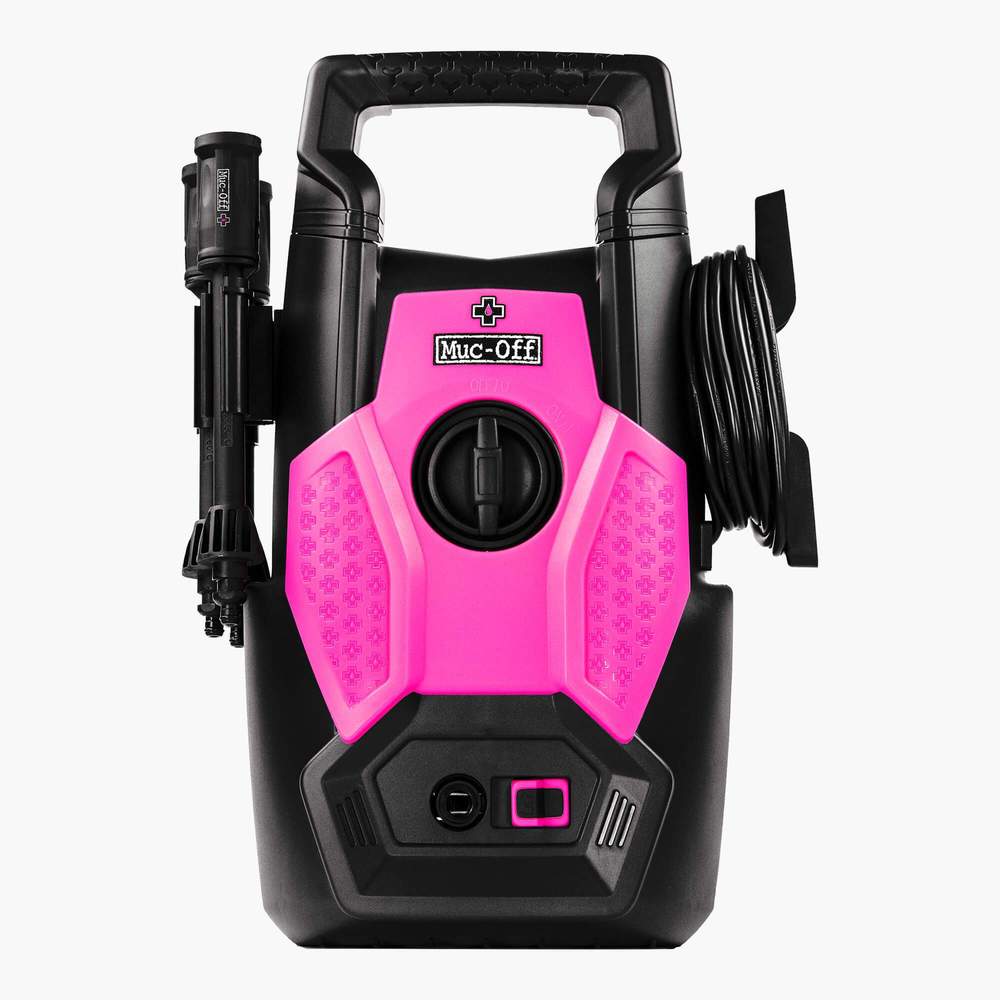
To speed up the process of cleaning your bike, if you aren’t interested in using the old technique of a “bucket and sponge”, Muc-Off offer a bike-specific Pressure Washer range where the Nano Tech Bike Cleaner can be sprayed directly on the bike using a specially-designed pressure washer. I’ve not used one of these but I caught up with Muc-Off’s Steve Fearn who explained in more detail…
Pressure Washer
Muc-Off designed a specific cleaning attachment, referred to as a lance, which has been designed to be bearing and suspension friendly. In their own words “The lance creates a wider fan of water than a typical pressure washer lance. This means that there’s less likelihood of causing any damage to delicate bearings, suspension components and paint finishes.”
There is an adjustable Snow Foam Lance allows you to apply Muc-Off Bike Cleaner, Concentrate, or Snow Foam onto the surface of the bike by simple screwing any of these three bottles directly onto the Snow Foam Lance. There’s no need to mix with any additional water. The pressure washer will mix water and detergent automatically to the desired dilution you’ve set by adjusting the dial.
Basically, if you are thinking of buying a pressure washer to clean your bike, get one of these because the cleaning lances have a softer touch that prevents any likelihood of damaging your bike. Bonus: they’re 30% off this weekend!
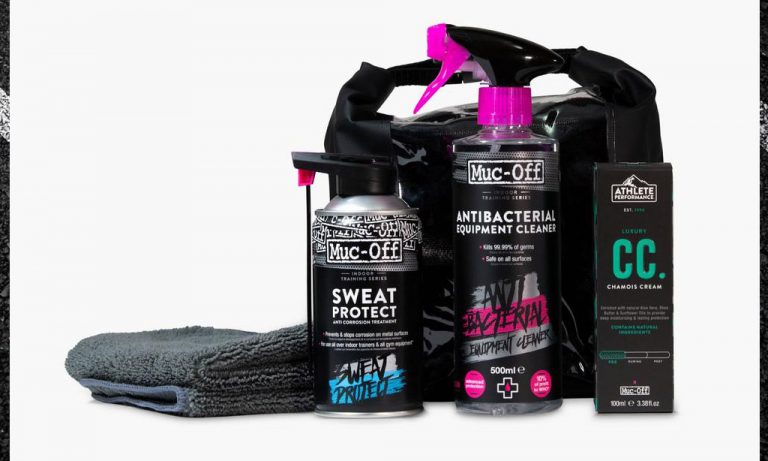
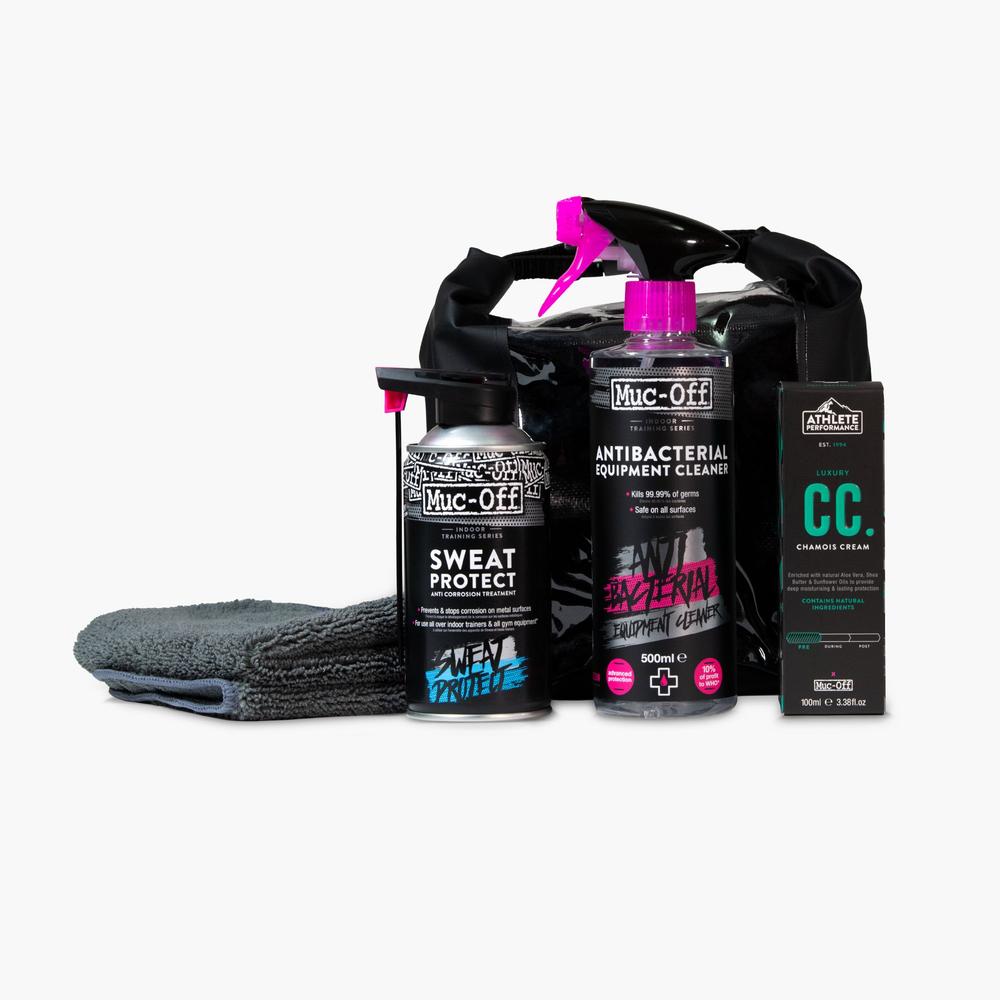
As you can imagine, Muc-Off offer a full range of appropriate brushes to clean your bike and specific components, including the drivetrain, in addition, they offer appropriate microfiber cleaning cloths. The most cost effective way is to purchase them in a kit, such as the Bike Care Essential Kit. They also sell a specific Indoor Training Kit which contains their Antibacterial Cleaner that kills 99.99% of germs and Sweat Protect to stop rust and corrosion.
Protection Products
Bike Protect
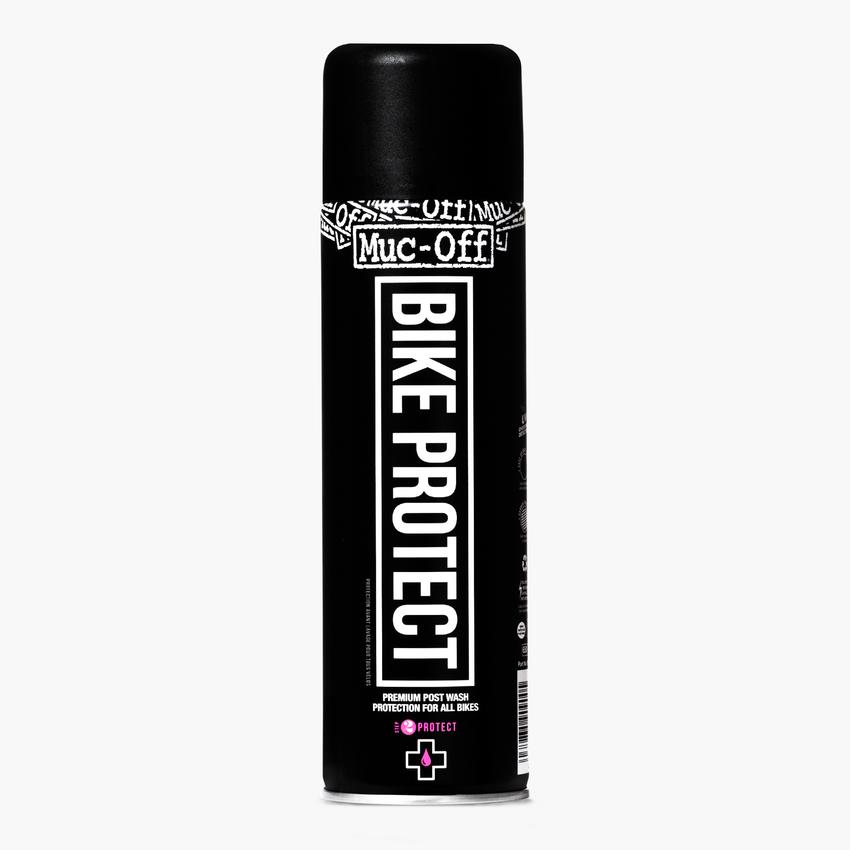
Muc-Off’s second area of expertise is in the field of protecting the bike, because it’s simply not enough just to clean your bike. To protect your bike Muc-Off have created Bike Protect, which is badged as “ultimate liquid bicycle protection.” This spray, which is applied after cleaning your bike, is designed to be applied on your drivetrain to disperse moisture before applying lubrication to the chain. Furthermore, it leaves a non-sticky protective layer on your frame, drive chain, metal parts, and paintwork which is designed to prevent dirt adhesion.
For the ultimate protection, Muc-Off have got a product called Miracle Shine, which is applied immediately after cleaning your bike. This is a high quality polish and protectant that provides a shine to your frame. It contains Carnauba Wax which will make the water bead and disperse, it also removes imperfections and fills minor scratches. If you are wanting to give your bike a complete overhaul, then you can’t go far wrong with applying Miracle Shine and giving it that “new bike look.”
Sweat Protect
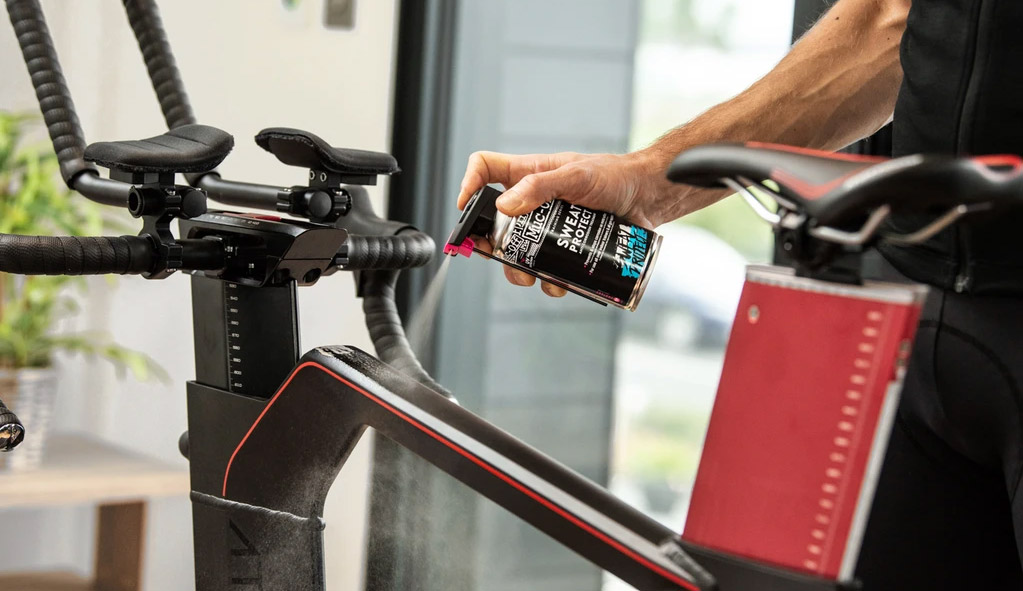
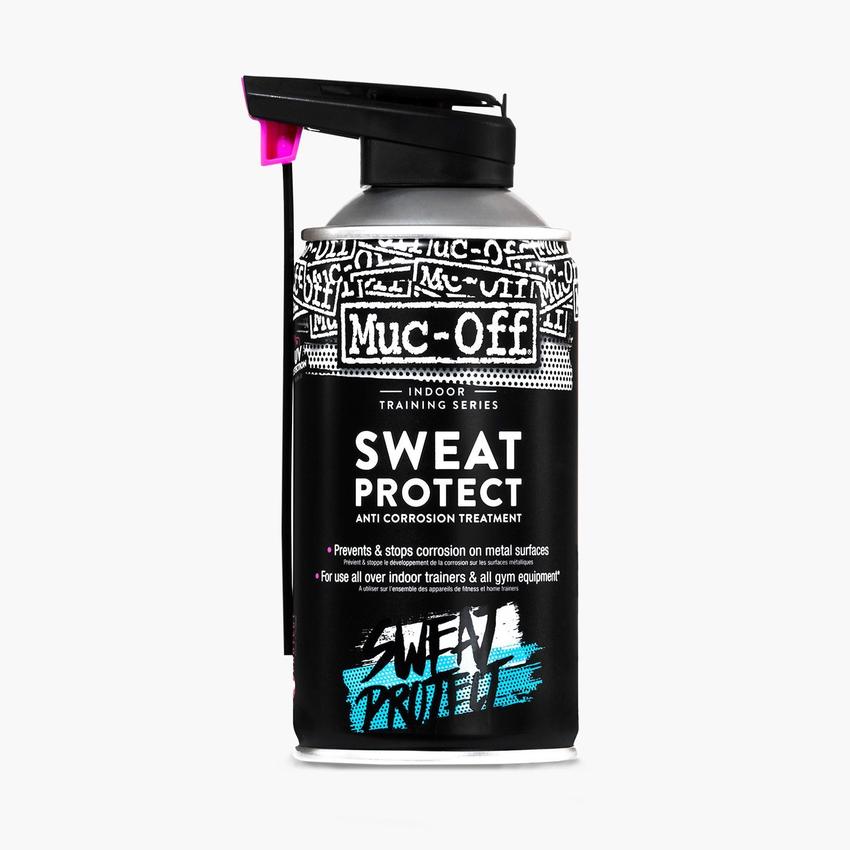
With the increase in indoor cycling, Muc-Off realised the need to protect the components from heavy salt corrosion from sweat. As a result they developed Sweat Protect. This product “uses anti-corrosion additives to protect your bike against rust, driving out the moisture.” I apply this spray frequently, directly after cleaning my bike. This is done to prevent having to replace my headset bearings, which proved quite costly.
The key features of this product are:
For use on all indoor trainers and all gym equipment
Prevents and stops corrosion on metal surfaces
Penetrates and protects
Non-drying film
Rust preventing/anti corrosion
Dissolves rust
Protection lasts up to 3 months
What I have learned is that it is simply not enough just to clean your bike. You have to undertake a level of aftercare to ensure that the components are protected, because the salt from your workout causes rust and the salty crust can make removing components more challenging. In my case, when removing the cable guide for the rear brake, some of the paint flaked away from my carbon frame, resulting in a costly repair – hence why I now use the Sweat Protect spray.
Optimisation
The key insight which I want to share that I gained from talking to Steve was that optimisation of your components, particularly your chain, is vital for those marginal gains we are all seeking.
Steve explained that they have devised a chain called the NTC Nanotube Chain, which has savings of over 10 watts against Ceramic Speed’s Shimano Dura-Ace UFO Chain. In performance terms, this means that the NTC will give you a gain of 3 miles over a 112- mile Ironman bike stage, calculated using the average time of 6 hours and 25 minutes!
However, the downside is that comes at a price: £109 to be exact. The science behind the chain is worthy of a read in itself, via Muc-Off’s own brochure.
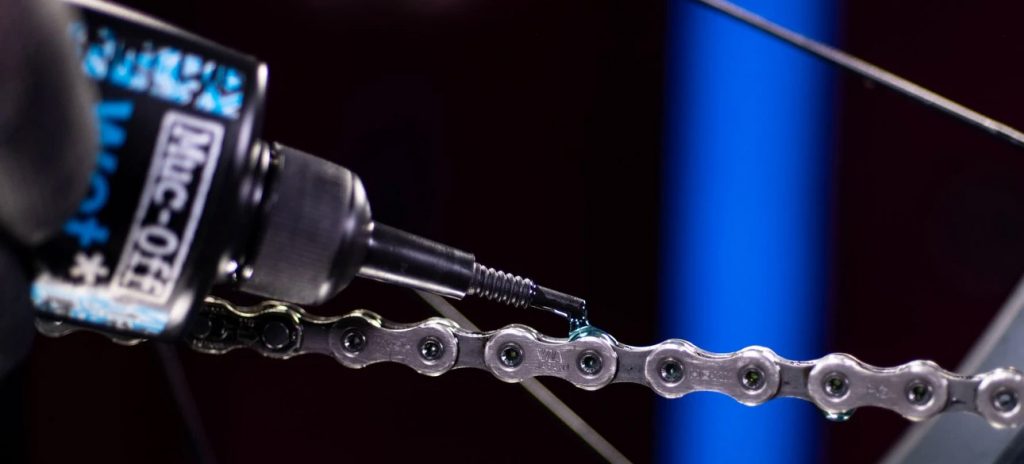
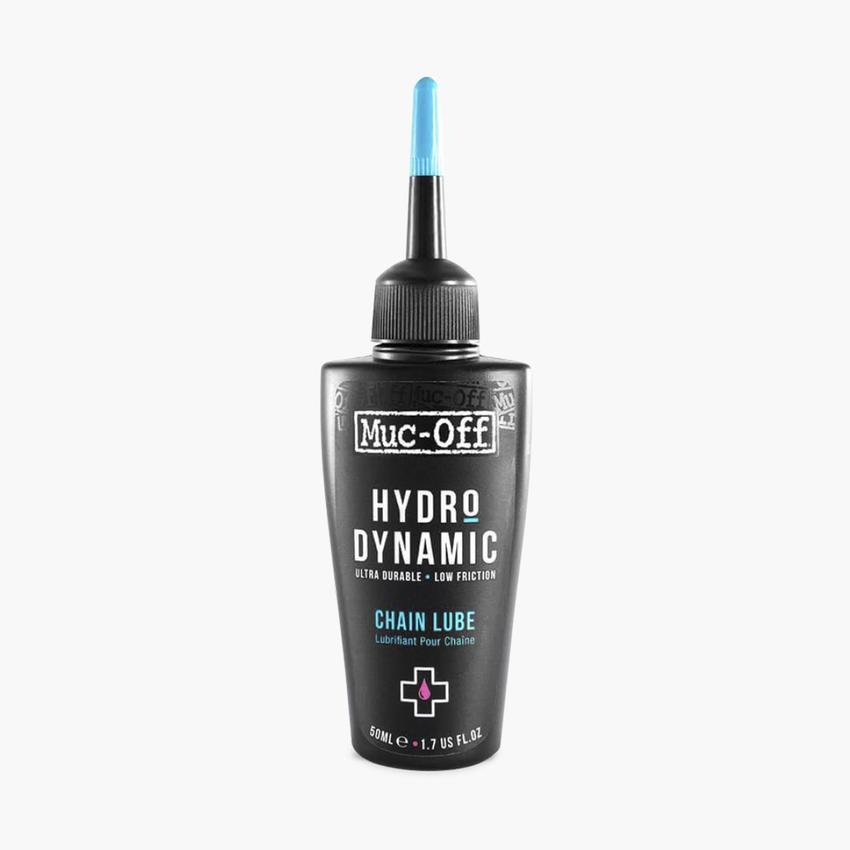
You don’t have to spend big money to achieve some marginal gains. Muc-Off’s popular Hydrodynamic Chain Lube was created by their research team in collaboration with Team Sky (former professional cycling team). This is a highly advanced bicycle chain lubricant. It also doesn’t pick up dirt, dust and debris. What this means is “it is a high strength film forming lubricant which prevents metal to metal contact to ensure peak performance, even under the most extreme workloads.” Basically, it makes your chain smoother, so you can go faster.
Hydrodynamic Chain Lube is used on Zwift by the Canyon eSports Team, which consistently place at the head of the field in the top-tier Zwift Racing League. In fact, Muc-Off realised the growth potential of Zwift and support the Canyon eSports team with the products that I have outlined.
Summing up
Muc-Off are my “go-to” product for cleaning and protecting my bike. They offer a complete range of items, at varying price points. You can spend as little, or as much as you want. But the clear message is that you have to clean your bike and take extra care if you don’t want to incur big expenditure after excessive use.
My rationale with purchasing these products is that, as I learnt the hard way, it is better to pay for quality cleaning products than to replace failed components. Ultimately if it’s good enough for Canyon eSports and Team Sky, it’s good enough for me.
A Note About Links In This Post
After reaching out to Muc-Off about putting together this article, they set up Zwift Insider with an affiliate agreement so the site receives a small commission on any sales through links in this post.
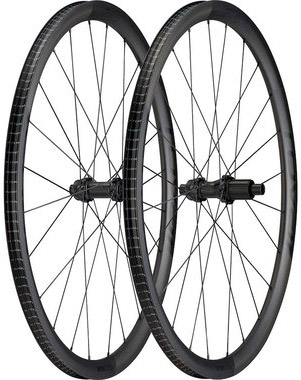
Zwift’s newest update includes a fresh wheelset from Roval: the Alpinist CLX. This is Roval’s third wheelset in game, coming hot on the heels of their Rapide CLX release in May.
The IRL Alpinist CLX wheelset came out in 2020 and received some very positive reviews. Specialized says they are “the lightest road clincher wheelset we have ever made.” And they sure are light, weighing in at 1248 grams. Compare that to Zipp’s (recently launched in game) 353 NSW’s which are Zipp’s lightest tubeless wheels ever at 1255 grams!
The Alpinist wheels are available for 135,300 Drops on Zwift, for level 32+ Zwifters. They are rated 3 stars for aero, 4 stars for weight. Here’s how they’re described in the Drop Shop:
“A pure climber’s dream, the new Alpinist CLX is the lightest road clincher wheelset Roval has ever made. When climbing, mass is the enemy of performance, so Roval pared the Alpinist CLX down to the absolute minimum to capitalize on every precious watt of energy without sacrificing any of the strength, ride quality and durability that are crucial to long term performance and satisfaction.”
Sounds like these wheels should be great climbers. But experienced Zwifters know that real-world performance doesn’t necessarily translate to Zwift performance, so at Zwift Insider we run frames and wheelsets through a battery of tests to learn just how well they perform in Zwift’s virtual world.
Here’s everything you need to know about the new Roval Alpinist CLX wheels in Zwift…
Aero Performance
The Roval Alpinist CLX wheels turn in a flat test time that places them in approximately the 25th percentile for aero performance. This isn’t surprising, given that this is a pure climbing wheelset.
The Alpinist CLX wheels turned in a time of 51:12 on our test course (two laps of Tempus Fugit). By comparison, the fastest wheels in game (DT Swiss disc) turned in a time of 50:25.5, and the Lightweight Meilenstein wheels turn in a time of 51:11.5. (All of these test times were done with the Zwift Aero frame.)
Climb Performance
The Alpinist CLX wheels are rated at 4 stars for weight, and we figured they would out-climb most of the wheels in the game, given their super-low IRL weight.
The Roval Alpinist CLX wheels turned in an Alpe du Zwift time of 49:12. That’s precisely the same time as the Lightweight Meilensteins which have been the best pure climbing wheels ever since they were introduced to the game in March 2018!
By comparison, the new Zipp 353 wheels turn in a time of 49:20. These wheelsets may be separated by only 7 grams IRL, but on Zwift, the Alpinists outclimb the 353’s handily. (It’s worth noting that the 353’s outperform the Alpinists by 14 seconds in our flat tests.)
Conclusions
The “King of the Hill” spot is now shared between the new Roval Alpinist CLX wheelset and the Lightweight Meilensteins, since both wheelsets turn in nearly identical times in our flat and climb tests.
While neither is the best choice for flat or rolling Zwift races due to poor aero performance, if you’re purely focused on climbing, these are the wheels you want in your garage.
Given the standout performance of the Alpinist CLX wheels, we’ll be updating the following posts soon:
Important note: this post contains speed test results for Zwift frames or wheels. These results may change over time, and a bike's performance relative to others may also change. We don't always revise posts when performance rankings change, but we do keep current, master versions of our speed test results which are always available. See the frame charts, wheel charts, and Tron vs Top Performers for current performance data.