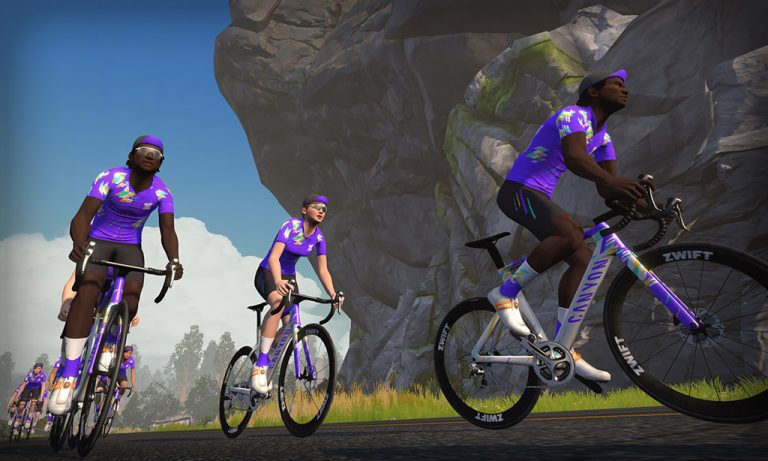
Zwift Academy Road is back! Having completed the events during the week, I can say with confidence that the events are good. If you haven’t tried any yet, you still can! Events are varied with something for everyone, as I will highlight below. Let’s get after it!
The Zwift Academy Baseline ride is a different event from the norm. The point of the ride is to set a Baseline set of times over three particular segments, resting between those segments on course so you can hit the next segment hard.
You will then complete the same event at the end of the Academy and compare your results, to see your progress.
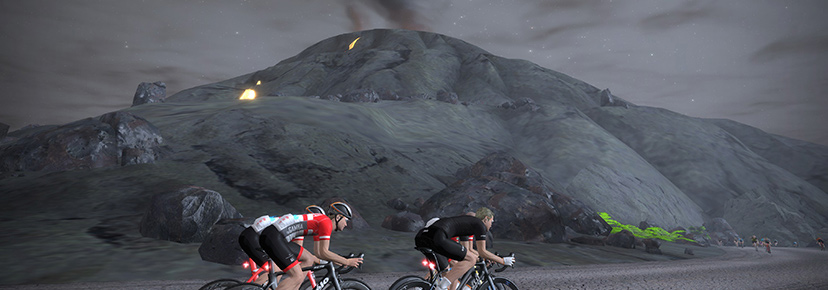
The segments test your sprinting ability, your short power (anaerobic) endurance, and your longer power (aerobic) endurance. You have two course options: “Advanced” on the new Climber’s Gambit route, or “Standard” on the new Legends and Lava route. The big difference between the two is the length of the segment used for the final aerobic effort. (The Advanced Ride climbs the Epic KOM Reverse, while the Standard Ride climbs the Volcano KOM.)
The key thing is to attack the segments and recover in between. When I tackled the route, I didn’t take the opportunity to read the description of the event beforehand, or read the Zwift Insider Baseline Ride FAQ. So I blasted from the start line and kept going, like it was a 30km TT. It was brutally hard and I did enjoy it, but it wasn’t undertaken correctly, so I will need to repeat the exercise and do it properly to get a correct set of results.
All in all, a great event because it is different… and required for Zwift Academy graduation!
This is a tough workout. You work over your FTP for a period of 2 minutes, then under your FTP for 1 minute, then over for another minute, then under for two minutes. And repeat that three times! It’s a “leg zapper” for sure, so only do this if you haven’t got any rides planned as it will certainly leave you with “jelly legs” for the rest of the day.
The purpose of the workout is to improve your VO2 Max, enabling you to increase time spent at moderate and high intensity.
To qualify for the Zwift Academy Road pro contract competition, you need to jump through a few extra hoops, including completing this event. It’s a climb up Alpe Du Zwift, which if you’re a climber like myself, it’s something to look forward to! (Chances are I will be trying this several times.) The official blurb from Zwift says:
“This is a mass-start event using TT bikes. Drafting benefits will be disabled. It all goes down on Road to Sky, featuring the iconic Alpe du Zwift climb. In total, the distance is 10.7 mi // 17.3 km with the actual climb clocking in at 7.5 mi // 12.2 km with an 8.0% grade incline and 3,428 ft // 1,045m elevation gain. The Route begins in the jungle, where you’ll have 3.1 mi // 5.1 km to warm up the legs before the climb starts in earnest. The focus here is on the climb, so take it easy and take advantage of this time to get yourself ready for what’s to come.
We’re looking for high-sustained efforts here, so pacing properly is key. Don’t fire off too hard. Settle into a good rhythm as soon as possible.”
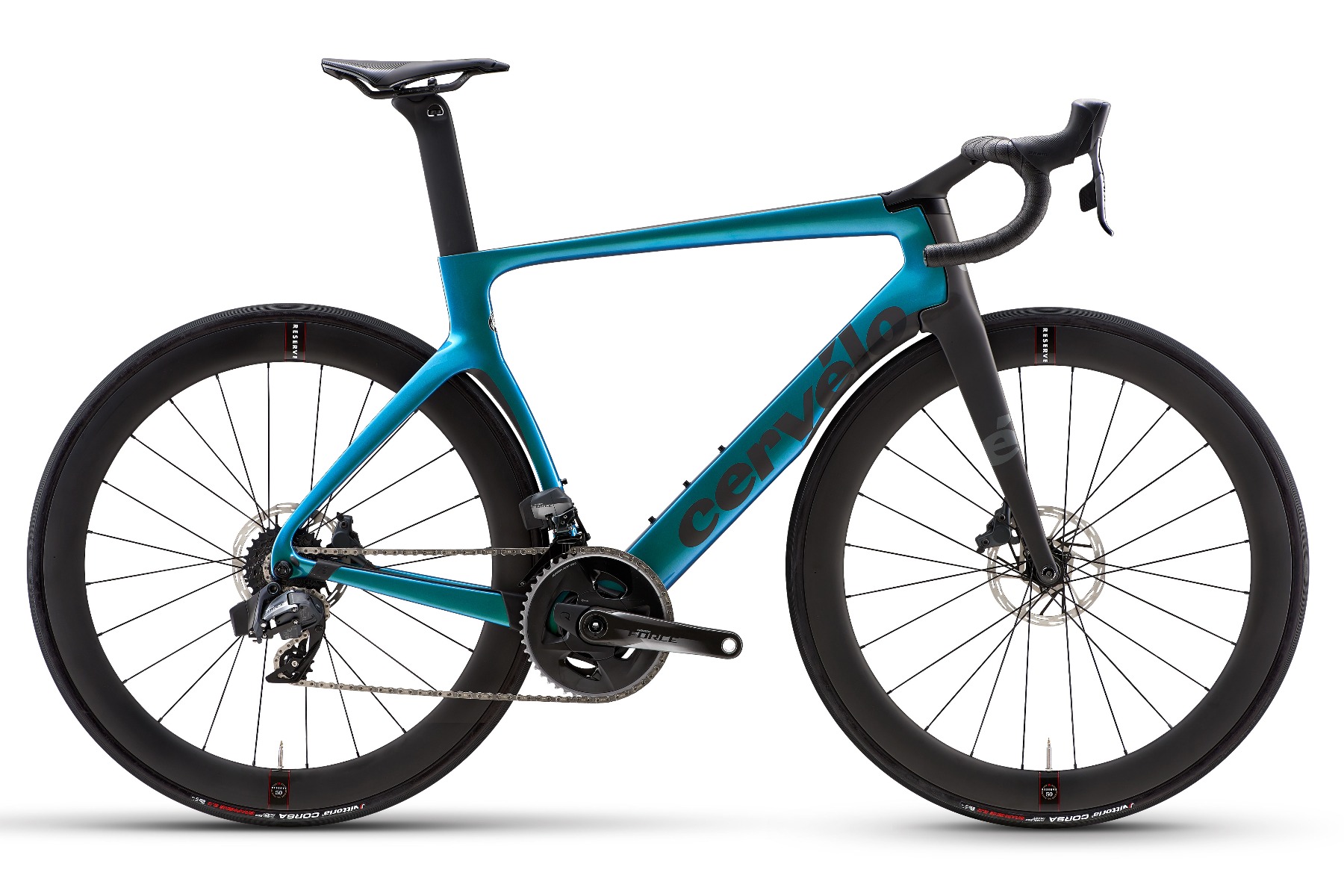
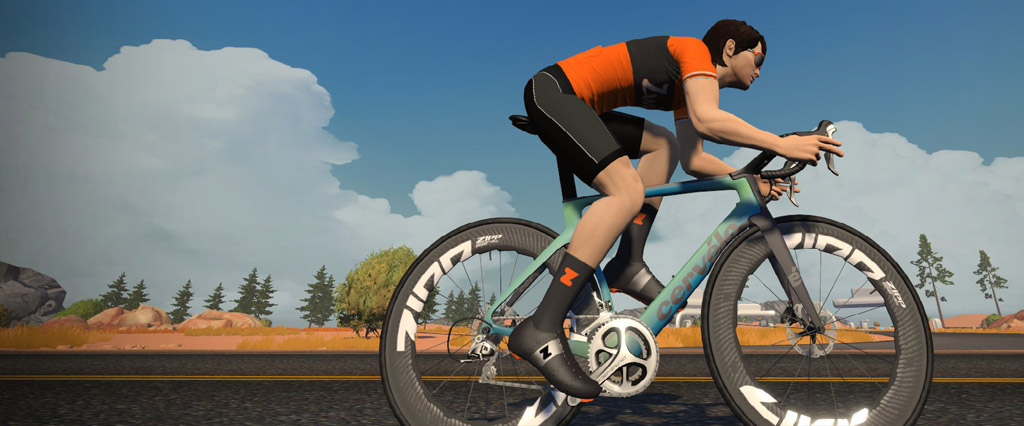
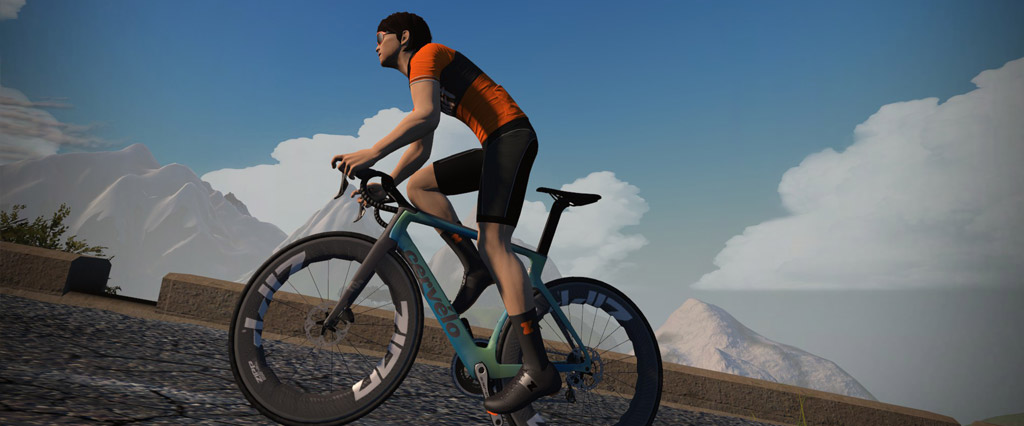
Zwift’s August 2021 update included a new bike frame: the S5 2020 from Cervelo.
The original Cervelo S5 has been in the game since beta days, and is still a favorite among Zwifters because it’s fast. So we were anxious to test the updated S5! But we had to wait a few days after its release, because a bug in the bike’s setup caused it to not be as aero as intended. Once Zwift released their minor update, the aero rating on this frame went from 2 stars to 3, and we were ready to test.
Here’s how the frame is described in the Zwift Drop Shop:
“The S5 prioritizes aerodynamic performance and stiffness, making it a platform preferred by the fastest sprinters in the world. Don’t think it’s a one-trick pony, though – despite the lateral stiffness, the S5 delivers an incredibly comfortable ride. You’ve no doubt noticed the now-iconic V-Stem. Cervelo has optimized that shape to deliver the best possible performance in the wind, hiding cables inside, and making enough bar/stem/stack options to fit just about anyone.”
The frame is rated 3 stars for aero, 3 for weight – the same as other top racing frames in Zwift. (Only TT frames get a 4-star aero rating.) You’ll have to be level 27+ to purchase it in game, at a price of 852,000 Drops.
The Cervelo S5 2020, IRL
Cervelo is known for unique and fast frame designs, and we know the reviews say the IRL (in real life) bike is zippy. But IRL performance doesn’t always map directly to Zwift performance, so we ran this frame through our standard tests to learn how it performs in Zwift. And the results are something racers will want to see!
Here’s everything you need to know about the new Cervelo S5 2020 in Zwift…
Aero Performance
The S5 2020 turns in a faster flat test time than any existing road frame on Zwift, beating the Specialized Venge S-Works by 1 second in our ~50-minute test. The only frames faster on Zwift at this time are TT frames.
The Cervelo S5 2020 is also 1.5 seconds faster than the original Cervelo S5.
The S5 2020 turns in a time of 51:17.5 on our test course (two laps of Tempus Fugit). By comparison, the Zwift Aero frame turns in a time of 51:25.
Climb Performance
Rated at 3 stars for weight, we knew the S5 2020 wasn’t going to perform like a lightweight climber. But Zwift’s star rating system isn’t very granular – two bikes can be rated at 3 stars but have significant time gaps between them. So we had to find out just where this bike sits among the aero frames in terms of climbing performance.
Our tests show that the Cervelo S5 2020 climbs at precisely the same speed as the Specialized Venge S-Works. This means it climbs the Alpe 3 seconds faster than the original S5 frame.
The S5 2020 turns in an Alpe du Zwift time of 49:08. By comparison, the current fastest climbing frame (Specialized Aethos) turns in a time of 48:49.
Note: all test results above are from a 75kg, 183cm rider holding 300W steady using Zwift’s stock 32mm carbon wheelset.
Conclusions
When originally released, this frame’s performance was so outstanding that it almost forced racers to choose it. Then Zwift released the minor version 1.16.2 update which nerfed the frame a bit – and we think that’s a good thing.
Having it be just 1 second faster than the former faster frames means racers can select from a wider variety of frames without feeling like they’re giving themselves a major disadvantage.
Still, it big news that the Cervelo S5 2020 is the new king of the aero hill on Zwift! We’re sure many riders will be using it to maximum advantage any time they ride flat or rolling races (routes like Crit City, Watopia Hilly or flat, Volcano Circuit, Sand and Sequoias, Classique, most of France, etc.)
Due to this frame’s incredible aero performance we’ll be updating the following posts:
Important note: this post contains speed test results for Zwift frames or wheels. These results may change over time, and a bike's performance relative to others may also change. We don't always revise posts when performance rankings change, but we do keep current, master versions of our speed test results which are always available. See the frame charts, wheel charts, and Tron vs Top Performers for current performance data.
This week, 3 of the Top 5 Zwift Videos give you different perspectives on the same race. After watching the YouTubers go head to head, you can get some advice for climbing Alpe du Zwift and see a demonstration sending pre-set Zwift messages using voice commands.
ZWIFT – Pro Bodybuilder vs Pro Eater || Erik The Electric || Vegan Cyclist
Bodybuilder Greg Doucette and his producer Steve challenged fellow YouTubers ErikTheElectric (a powerlifter and competitive eater) and The Vegan Cyclist to a short Zwift race. See how they did on one lap of the Innsbruckring course and hear Greg’s sharp analysis of the race.
ErikTheElectric vs. Coach Greg Doucette in a Bike Race!
ErikTheElectric (Erik Lamkin) shares his perspective of the race against Greg Doucette and The Vegan Cyclist (Tyler Pearce).
YouTubers Zwift Race | Coach Greg, The Vegan Cyclist and Erik The Electric
Finally, another YouTuber decided to jump in the competition to see if he could beat any of the others. Mark Lewis gives a little background on the headline racers and explains his own strategy as he replays his race.
Sub-Hour Alpe Du Zwift Climb with Commentary and Tips
Best Side Cycling climbs the Alpe du Zwift and gives advice that you can use to make your next attempt your best one.
Zwift Message Using Voice Attack (Full Version) to work with Macro Deck (Free Version)
Regular Zwift group ride leaders often send repeated messages about things like the pace of their ride, especially if it changes throughout an event. Taicho Cyclist makes it easier by using the applications Voice Attack and Macro Deck to send these messages with short voice commands.
Got a Great Zwift Video?
Share the link below and we may feature it in an upcoming post!
Based on the response to yesterday’s post about my Zwift Academy (ZA) Baseline Ride experience, lots of Zwifters are asking similar questions about how these rides work.
So here’s a list of Baseline and Finish Line Ride frequently asked questions, with (hopefully) helpful answers.
What is the purpose of Zwift Academy Baseline and Finish Line Rides?
These events were created to measure how you perform within the three different energy systems:
Sprint (tested over a short segment)
Anaerobic (tested over a medium-length segment)
Aerobic (tested over a longer segment)
By the end of Zwift Academy, you’ll have completed both a Baseline and Finish Line ride. You should then be able to determine what type of cyclist you are based on what energy system you excel in.
How do the rides work?
The rides function like any other Zwift group ride – everyone starts from the pens, then rides the prescribed route at their own pace. The category you select at signup determines which of two routes you ride. Each route has three target segments which you want to hit at maximum effort in order to measure how you perform in the three energy systems.
There are three things that set these rides apart from a typical group ride:
Drafting is turned off. This is done so your segment timings aren’t affected by drafting other riders.
The entire goal of the ride is to hit the three segments at maximum effort. In between those segments you should be riding at a very easy pace and recovering, so you’re as fresh as possible for the next segment.
Your three segment times are saved and viewable in the Companion app to track progress.
What routes do the Baseline and Finish Line Rides use?
If you choose the Advanced Baseline Ride (category A for men, B for women) you will ride Watopia’s new Climber’s Gambit route.
If you choose the Standard Baseline Ride (category C for men, D for women) you will ride Watopia’s new Legends and Lava route.
Should I sign up for the Advanced ride, or the Standard one?
The big difference between the two is the length of the segment used for the final aerobic effort. The Advanced Ride climbs the Epic KOM Reverse, while the Standard Ride climbs the Volcano KOM.
Most riders will finish the Volcano KOM in 8-14 minutes. The Epic KOM takes approximately three times longer to complete.
If you are a pro contract contender, you are required to complete the Advanced Baseline Ride. Additionally, if you are a very experienced/fit rider, the Advanced ride may provide a better test of aerobic endurance than the shorter Standard ride.
Just remember: whatever option you choose for the Baseline Ride, will need to be chosen again for the Finish Line Ride so you can track your progress!
Where do the timed segments start/end?
Experienced Zwifters may know the maps well enough to know where the segments begin. But what about the rest of us?
If you are riding the Advanced Baseline ride, you will arrive at the segments at this point during the ride (click segment name for Strava segment details):
If you are riding the Standard Baseline ride, you will arrive at the segments at this point during the ride (click segment name for Strava segment details):
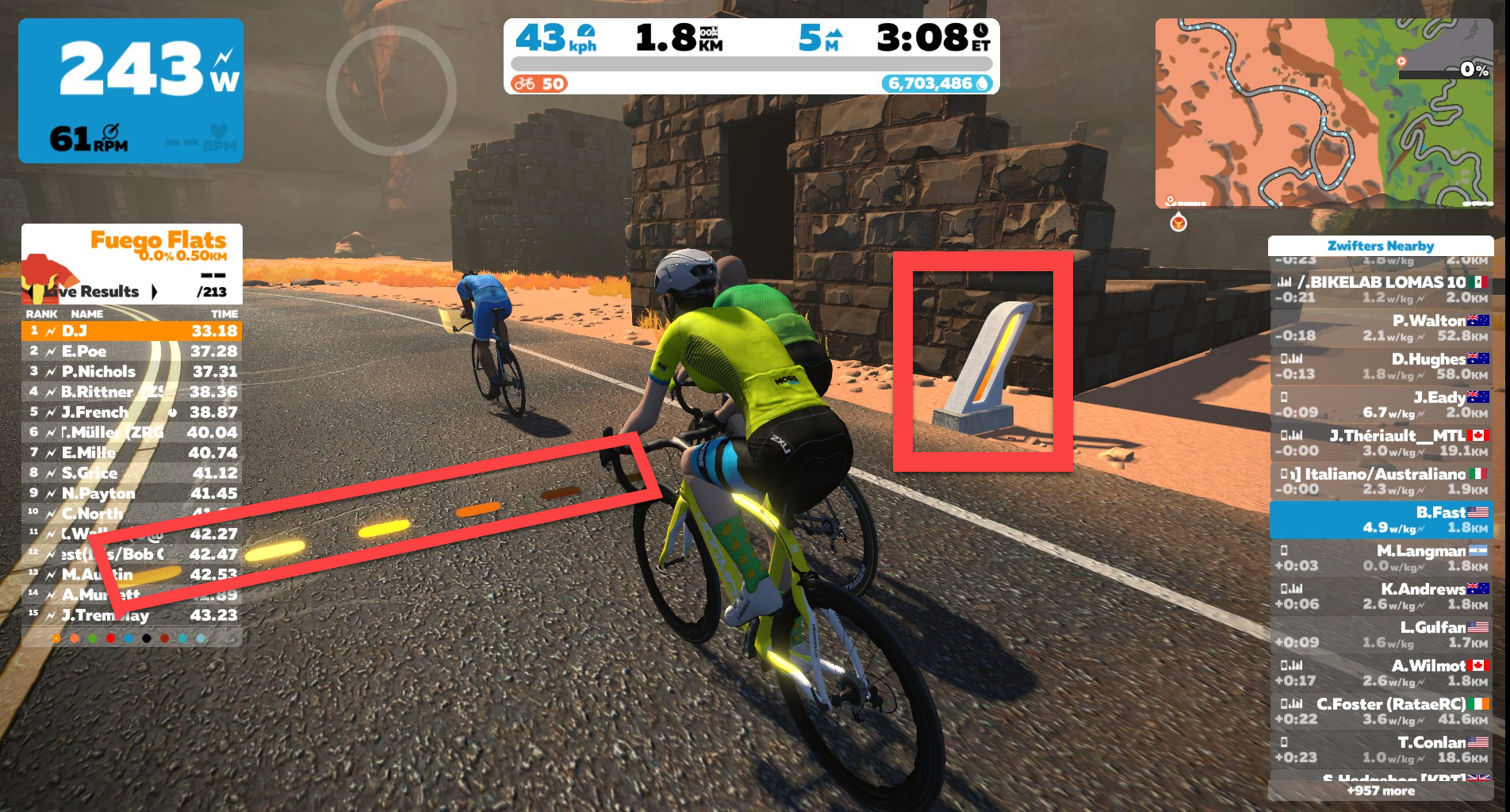
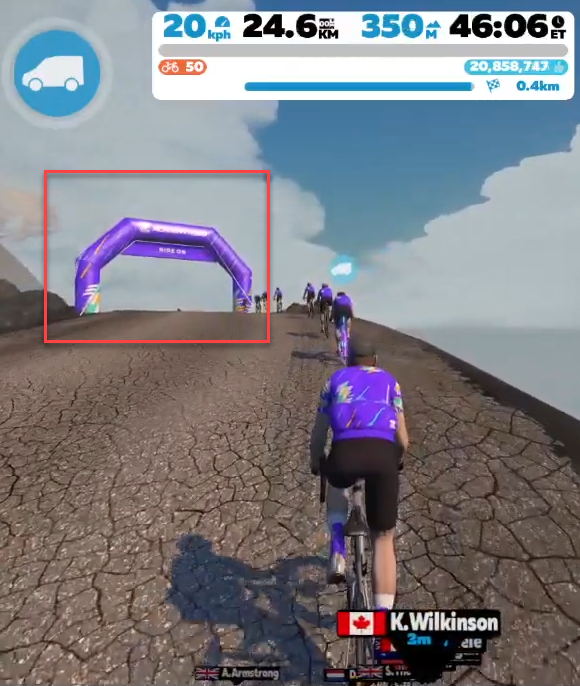
Along with noting the starting distances above, it’s also helpful to recognize the visual indicators used to show that a segment is beginning.
Here’s what segment start and finish lines look like:
Start line has a stanchion with lights across the road
Finish line has a big purple arch
Does the ride end at an arch? How do I know when I’m done?
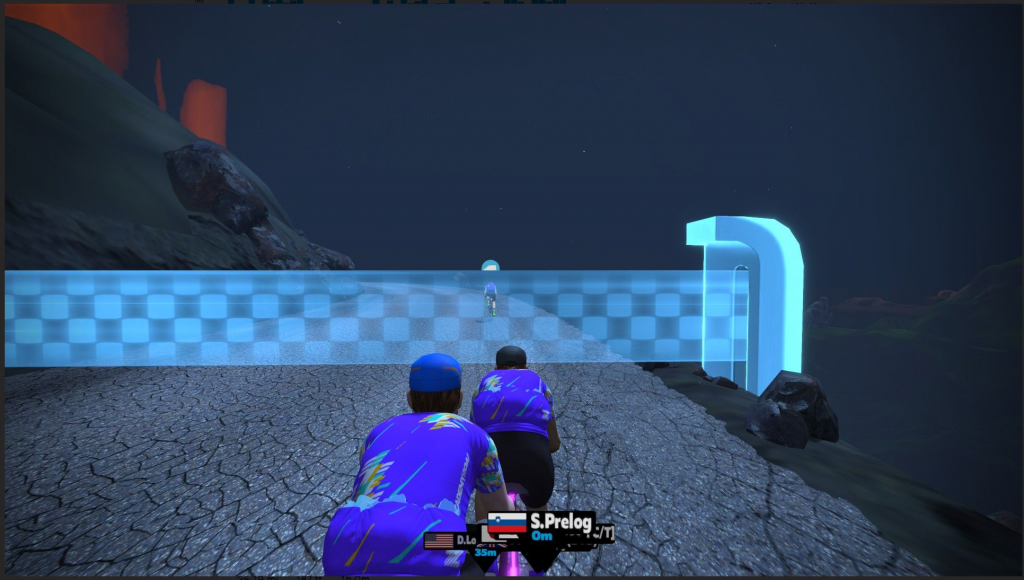
The ride will continue just a bit after the finish arch of the final segment. Just spin those pedals and catch your breath – you’ll see the finish line soon enough! It looks like this:
Which bike should I use? Is there an assigned bike?
There is no assigned bike or wheels for these events. Since you want to be able to compare your segment times between your Baseline Ride (at the start of ZA) and Finish Line Ride (at the end of ZA), you should simply plan to use the same bike frame and wheelset for both events.
Doing this means your times won’t be impacted by the virtual equipment you use, since different wheelsets and frames can be more or less aero and weigh more or less than others.
How can I tell what my strengths or weaknesses are based on my Baseline Ride results?
Strengths and weaknesses (we like to call them “opportunities for improvement”) cannot be determined by Baseline Rides alone. Zwift will be sharing a blog post, probably near the end of ZA, which will go into greater detail about what to do next based on your Baseline + Finish Line results.
If you can’t wait until then, or just love digging into your data, there are third-party apps available to give you more insight into your performance numbers and even rank you against others. The Breakaway app we recently reviewed just received a Zwift integration update and gives you fancy charts ranking you based on power numbers. ZwiftPower also profiles your power to help you understand your strengths and weaknesses.
Is this a race?
No. The entire goal is to put in your best effort over the three segments. Recover at whatever pace you’d like in between those segments, so you can put everything you’ve got into the timed sections.
Is Late Join turned on?
No. Most group rides on Zwift have Late Join enabled so you can join the group up to 30 minutes late. But if you did that on a Baseline Ride, you may join the group after they’ve already completed a segment or two! So you have to show up on time to make it work.
Should I do the Baseline Ride in Erg mode?
No. These aren’t workouts – they’re free rides.
I can do better. Can I do my Baseline Ride over again?
Absolutely! Just sign up for another one and give it a go! They’re scheduled through September 27.
Is drafting turned on for Baseline Rides?
No. Drafting is turned off so you have consistent environmental factors for both the Baseline and Finish Line rides in order to get more accurate results.
Do I need to stay with the group? What if I get dropped?
There’s no need at all to stay with the group. In fact, with drafting turned off, saying bunched up is next to impossible! Just ride at your pace.
Where can I see the results of my Baseline Ride?
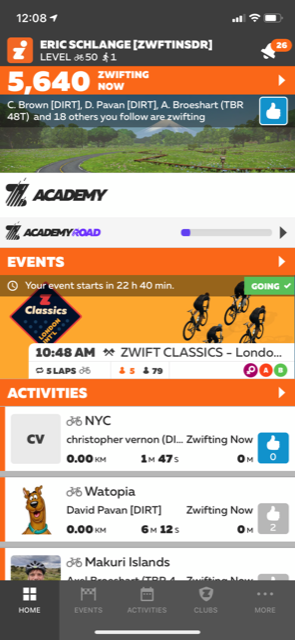
In the Zwift Companion app (available for iOS or Android). Just click the Zwift Academy Road section near the center of the home screen:
Progress!
Does the Baseline Ride function as an FTP test, or do I need to do one of those first?
The Baseline Rides does not function as an FTP test. If you’ve never done an FTP test, we recommend doing one so your FTP is accurately set before you jump into a ZA Workout, since the power levels of the workouts are based on your FTP.
The quickest/easiest way to do an FTP test is to take a ramp test.
How does the Baseline Ride impact the rest of my ZA Workouts?
Short answer: it doesn’t. The goal of Baseline Rides is to gauge your current fitness level at the start of ZA so you have a comparison point for your Finish Line ride at the end of ZA.
Watch me complete a Baseline Ride
Curious what the actual ride experience is like? Here’s a full video of me completing the Standard Baseline Ride:
Still got questions?
Feel free to share them below. We highly recommend checking out the very thorough ZA Road FAQ forum post from Zwift, since it appears to address nearly all questions related to ZA Road 2021.
First Look: Completing a Zwift Academy 2021 Baseline Ride
Yesterday I jumped into the first scheduled Zwift Academy Road Baseline Ride, scheduled for 11am PDT. Completing a Baseline Ride is a requirement for ZA graduation, so I wanted to get this out of the way quickly. But I was also super curious about the ride itself.
Intro to Baseline/Finish Line Rides
This year’s ZA program includes a required Baseline and Finish Line ride. The idea here is to test your fitness over three different intervals:
Sprint
VO2
Threshold
Riders will do that by hitting particular timed segments during the ride at maximum effort. Then you should ease up between the segments to recover as fully as possible so you can hit the next segment hard.
Baseline Rides are only available as group rides, and they are scheduled every other hour through September 27th. That’s over 320 time slots as of the publish date of this post, so you have plenty of chances to get your Baseline Ride in – or even do it more than once if you’d like.
Standard or Advanced?
Riders have two options for these rides: a “standard” route, or the “advanced” one. I chose the “standard” Baseline Ride option (category C), which uses the new Legends and Lava route. The big difference between the standard and advanced option is the threshold effort: standard uses the Volcano KOM, while the advanced version is held on the “Climber’s Gambit” route which uses the longer Epic KOM.
For me, the Volcano KOM takes around 8 minutes at max effort, while the Epic KOM is more like 22 minutes. With a Zwift Classics race the next day, I opted for the shorter effort, hoping it wouldn’t burn up my legs too much.
I knew the route details, but there was a lot I didn’t know going into this ride:
Would the UI be different from a typical group ride? Would we see messages with instructions, or custom leader/results boards, etc?
Would we all be on the same bike/wheels?
Would drafting be enabled?
What would the results screens in Zwift Companion look like?
Poking around on ZwiftHacks and popping into the start pens early answered a few of my questions:
Drafting is disabled
Bike selection: you can pick whatever bike you’d like, including a TT bike if you’re so inclined
A Word About Bike Choice
I selected the Specialized Venge S-Works frame and Zipp 858 wheels as my virtual rig for this ride. I’ve done a lot of riding with these, and figured all that matters is I use the same frame and wheels for my Baseline and Finish Line rides.
That’s something riders should be clear on: use the same frame and wheels for both rides, otherwise your times for the rides won’t be an apples-to-apples comparison.
It would get especially bad if you chose a TT rig for one ride, and a standard road race setup for another. That would really throw the numbers off.
Segment 1: Titans Grove KOM
Soon enough the timer hit zero, and we were off, with over 550 riders in my group! A good number jumped off the front early, for reasons I can’t explain. But I just spun my legs in zone 2, chatting with friendly Zwifters and making my way through Titans Grove toward the first segment.
This first segment is one I’ve actually enjoyed attacking a few times in the past. It’s one of the rare KOMs whose leader’s jersey I’ve actually worn!
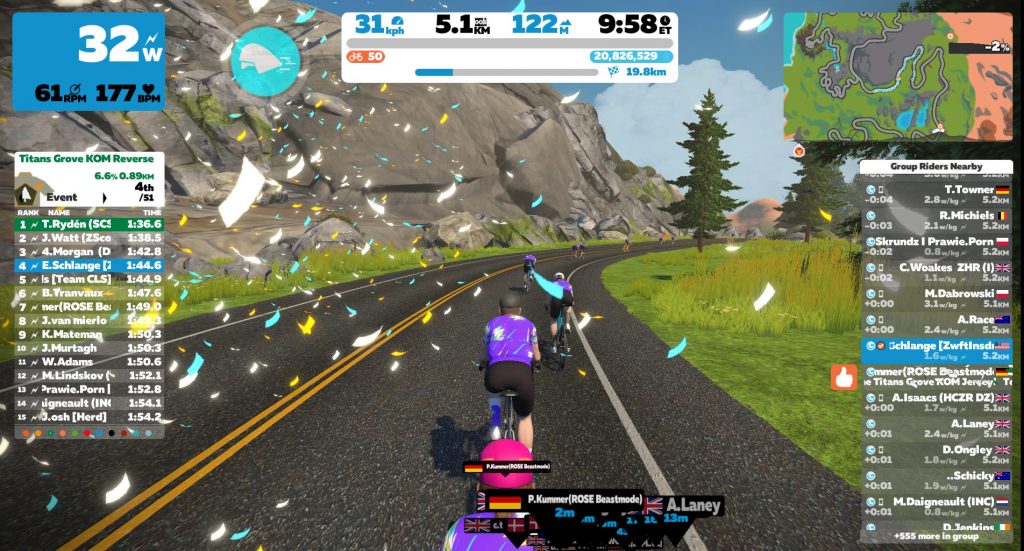
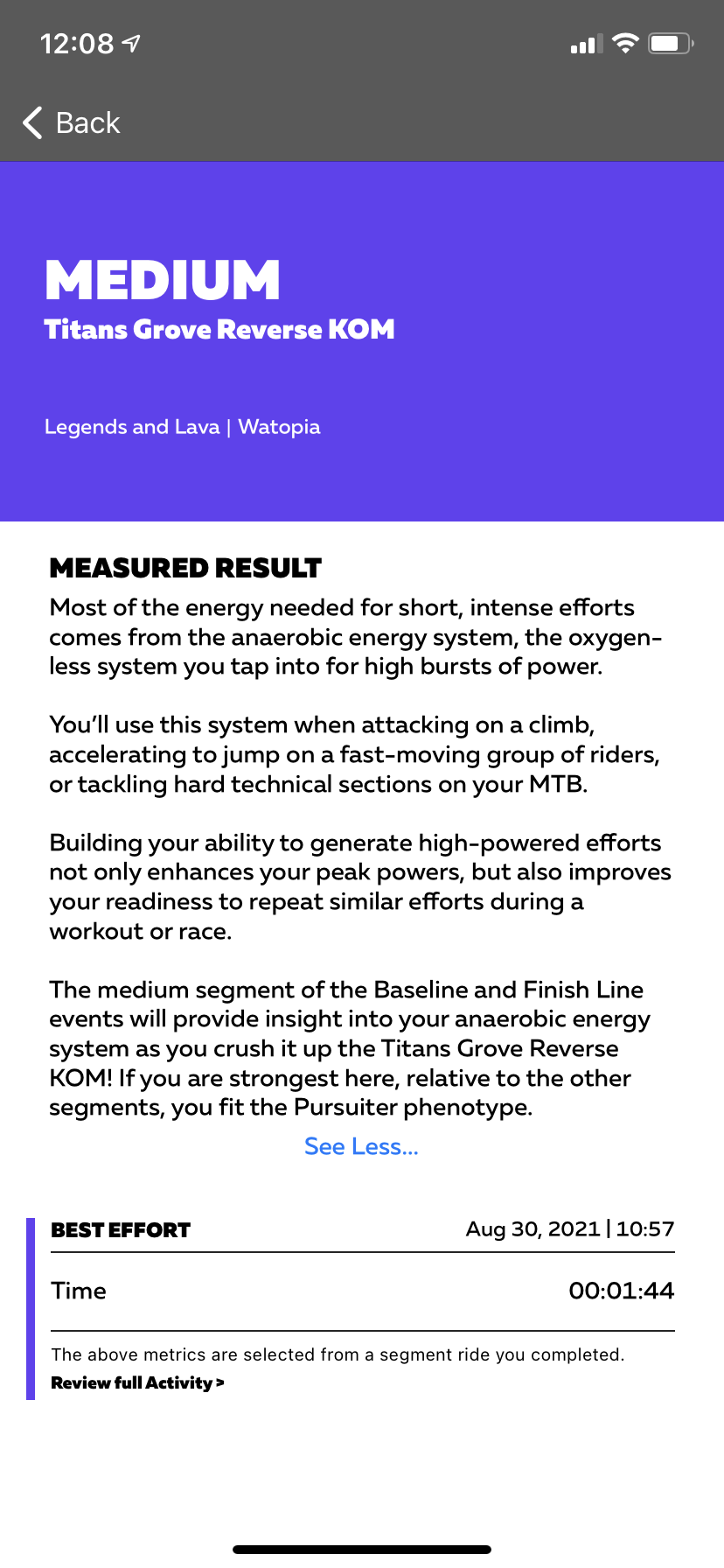
I knew that an all-out effort would see me finishing in under 2 minutes, so that’s what I paced myself for. It was a real adrenaline rush to be hammering out watts and passing a lot of the riders who had jumped off the front. As the road flattened a bit near the top and the KOM banner came into sight I shifted, got out of the saddle, and went all-in for the final seconds. The leaderboard popped up as I crossed the line, showing me in 4th place with a 1:44.6 time. I’ll take that!
It was nice to just spin the legs out after that first effort. I’m so used to Zwift races where you have to hammer on the climbs, then keep the effort up afterward. The change of pace and unhurried feel of things was very welcome.
1:45, 466Waverage
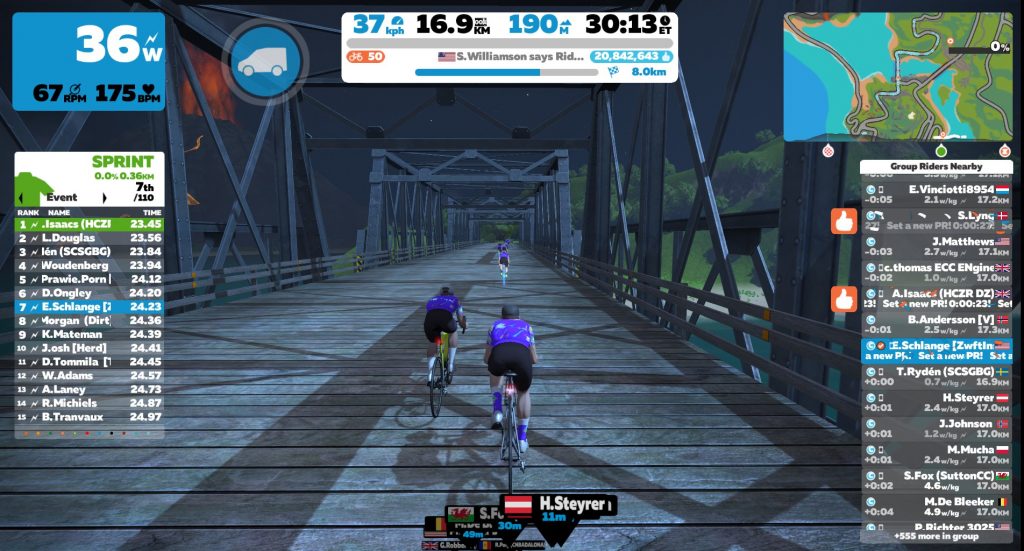
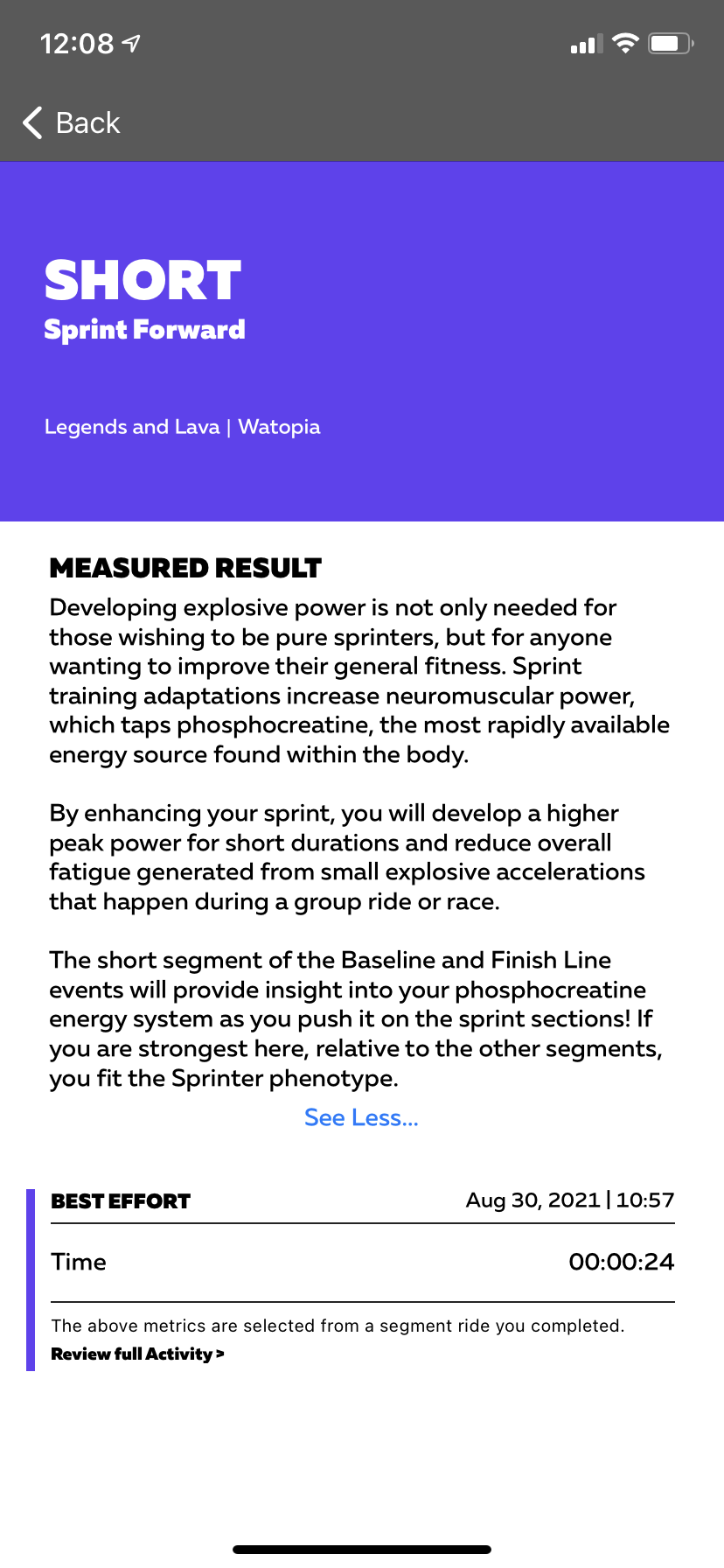
Segment 2: Watopia Sprint Forward
Next up was the sprint segment. Honestly, I wish Zwift had picked a shorter segment to test peak sprint power, as the Watopia Forward sprint is one of the longer ones in the game – so long that I can’t actually push peak power for the duration, because I’ll blow up before the line.
According to Strava, I’ve completed this segment over 530 times. Wow! One thing I’ve learned after all that practice is that getting a fast time on this segment requires ramping up your watts while you’re still on the cobbles of the Italian Villas, so you enter the sprint at a high speed. That means you end up with a 10-15 second ramp up, plus a 20-25 second sprint. That’s a long “sprint” effort!
Anyway, I gave it all I had. I stayed seated, trying to keep my watts pretty even.
23 seconds, 692Waverage
PowerUps Enabled?
One fix Zwift probably needs to make to these rides is to disable PowerUps. They were enabled for my ride, and the problem I see with that is riders were using the PowerUps on the test segments.
This will artificially shorten a rider’s time, then when you do the Finish Line ride to test yourself on the same segment and don’t use the same PowerUp on the same section you won’t get that boost, and your time will be affected.
So here’s my simple advice: if PowerUps are enabled for your Baseline Ride, just ignore them and don’t activate them. Alternatively, you could “burn” them by using them outside of the timed segment, or using the option in Companion or in the action bar on screen to trash the PowerUp without using it.
Segment 3: Volcano KOM
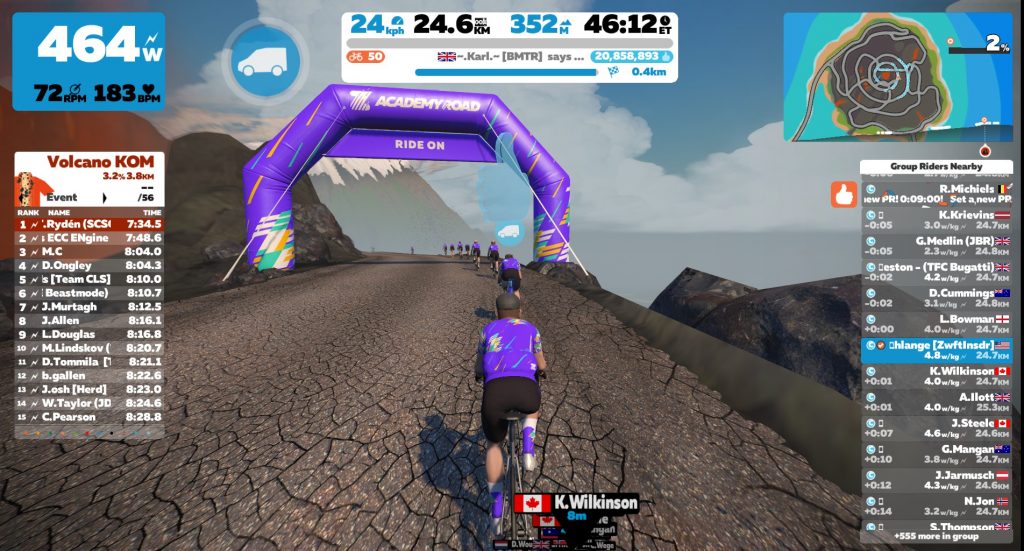
The third and final segment was the one I was dreading the most. The Volcano KOM and I have never gotten along well, because it always feels a bit too long. Regardless, I wanted to give it my best shot. So as the start line approached I ramped up my speed, then tried to hold around 340W for the duration, making sure to bump the watts up a bit more on the steeper sections and ease off a bit on the flatter parts.
I felt I was able to keep my pacing fairly steady, and had just enough in the tank for a standing max effort on the final steepest pitch. I was the 59th rider over the line, and ranked #5 on the leaderboard.
8:07, 333Waverage
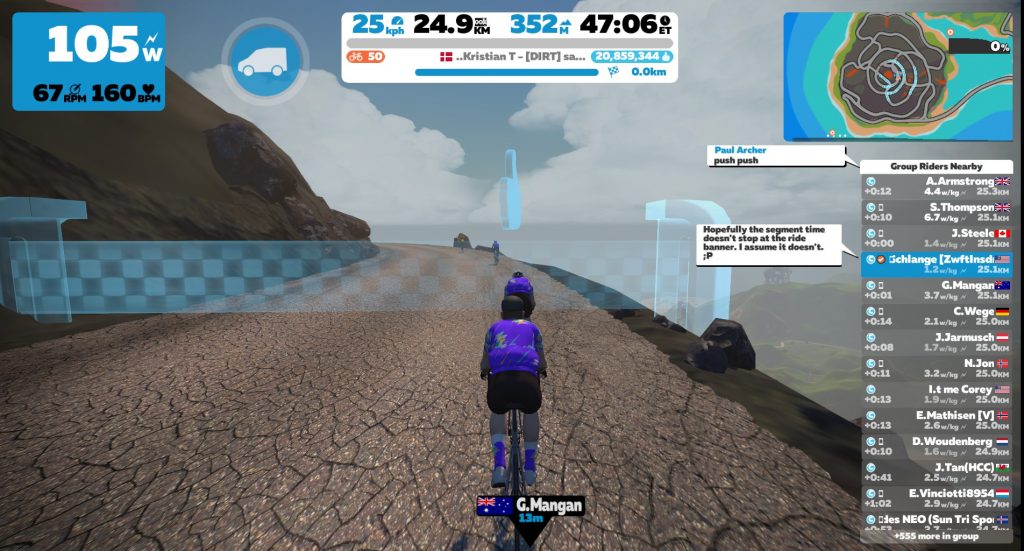
Oddly, the ride didn’t actually end at the KOM banner – it was a virtual finish line five hundred meters down the road. I’m not sure why Zwift set it up this way, but it’s no big deal, either. I just soft-pedaled my way to the finish, then kept soft-pedaling for another 15 minutes or so to make it an hour-long ride.
I kept this recording silent, but if you want to see how the ride unfolded, including group banter, it’s all here!
Companion Results
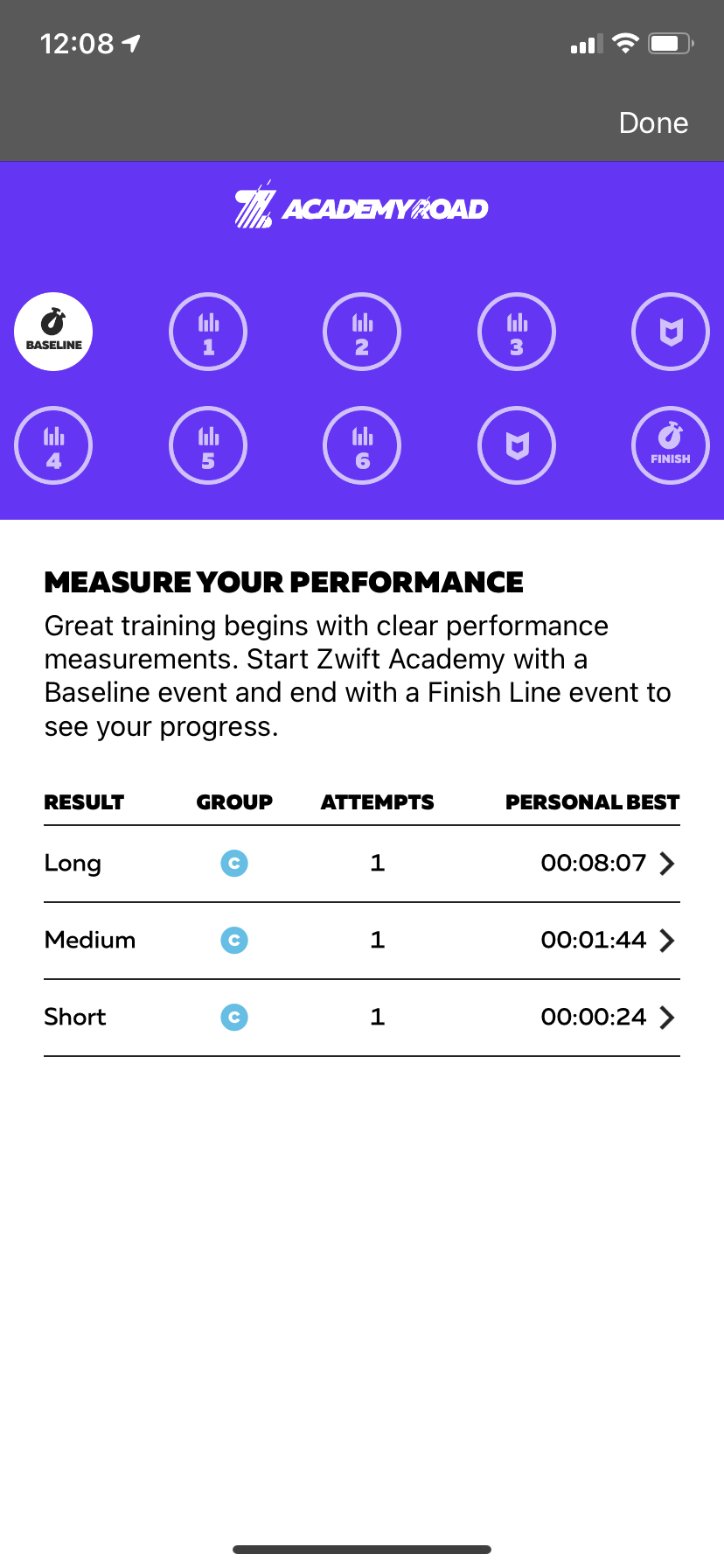
New for this year, the results of the Baseline and Finish Line rides show in Zwift Companion. And our friends at ZwiftHQ tell me if you do multiple attempts, those different results will show as well. Here’s what the screens look like:
Progress!
Tracking my times in Companion is a nice new feature, but data-loving zNerds like myself will immediately want more. The biggest thing I’m missing? Average power over the segment. I don’t really care about my segment time, in fact – power over a particular interval is a much more accurate gauge of fitness.
So why doesn’t Zwift show power?
I’m not sure. But my guess is the tracking of segment times is already built into the game/database, while the tracking of segment power is not. So this was a much easier solution to implement.
How’d I Do?
Some riders may find that they finish the Baseline Ride with more questions than answers. Me, for example: I finished the “Long” segment (Volcano KOM) in 8:07. What does that mean? Am I destined to be a star Time Trialist, or should I stick to sprinting?
Zwift’s text for each of the three segments in Companion ends with, “If you are strongest here, relative to the other segments, you fit the [ ] phenotype.”
But how do I know which segment I’m strongest in? The answer is: I don’t. And even if I take extra steps and look at my power numbers on Strava for the segments, that still doesn’t tell me my strengths or weaknesses.
But many Zwifters (especially n00bs) won’t have access to those tools or understand how to use them. My opinion: if Zwift could do a little more hand-holding by giving more guidance, especially to less-experienced riders, everyone wins.
Conclusions
Last year’s ZA introduced “Segment Rides”, where riders put in max efforts on two segments during the ride. This year’s Baseline and Finish Line rides are the next generation of that idea, with the segments more targeted at specific power systems and Companion integration tracking your efforts.
I just wish Zwift had developed the idea a bit more.
There’s so much Zwift could add to these segment rides to make them more engaging on the front end – like instructions for new users who don’t know when segments begin (there were plenty in the ride I joined), or progress bars on the segments so you know how much you’ve got left to do, or custom leaderboards that show how your efforts rank against other riders. And there’s so much that could be done after the ride to better educate riders and help them easily track training progress.
With all that said, I must add that I really enjoyed my Baseline Ride experience. It was a pleasant, chatty group of riders, and the hard efforts were difficult by not murderous. It was a fitness test that didn’t feel like a test, and that’s a good thing.
I’m curious to see what the Companion results look like after I complete the Finish Line ride at the end of ZA, and I’m hopeful that Zwift will keep developing and refining this idea for future events and training programs.
Your Comments
Have you tried a Baseline Ride yet? How’d it go? Share below!
In this short “turbo” episode, Kristin Armstrong takes a look at the first workout of the Zwift Academy Road program and offers her advice on how to tackle it.
About the Podcast
The Zwift PowerUp Cycling Podcast features training tips from host Matt Rowe (Rowe & King), with regular co-hosts Greg Henderson, Rahsaan Bahati, Dani Rowe, and Kristin Armstrong.
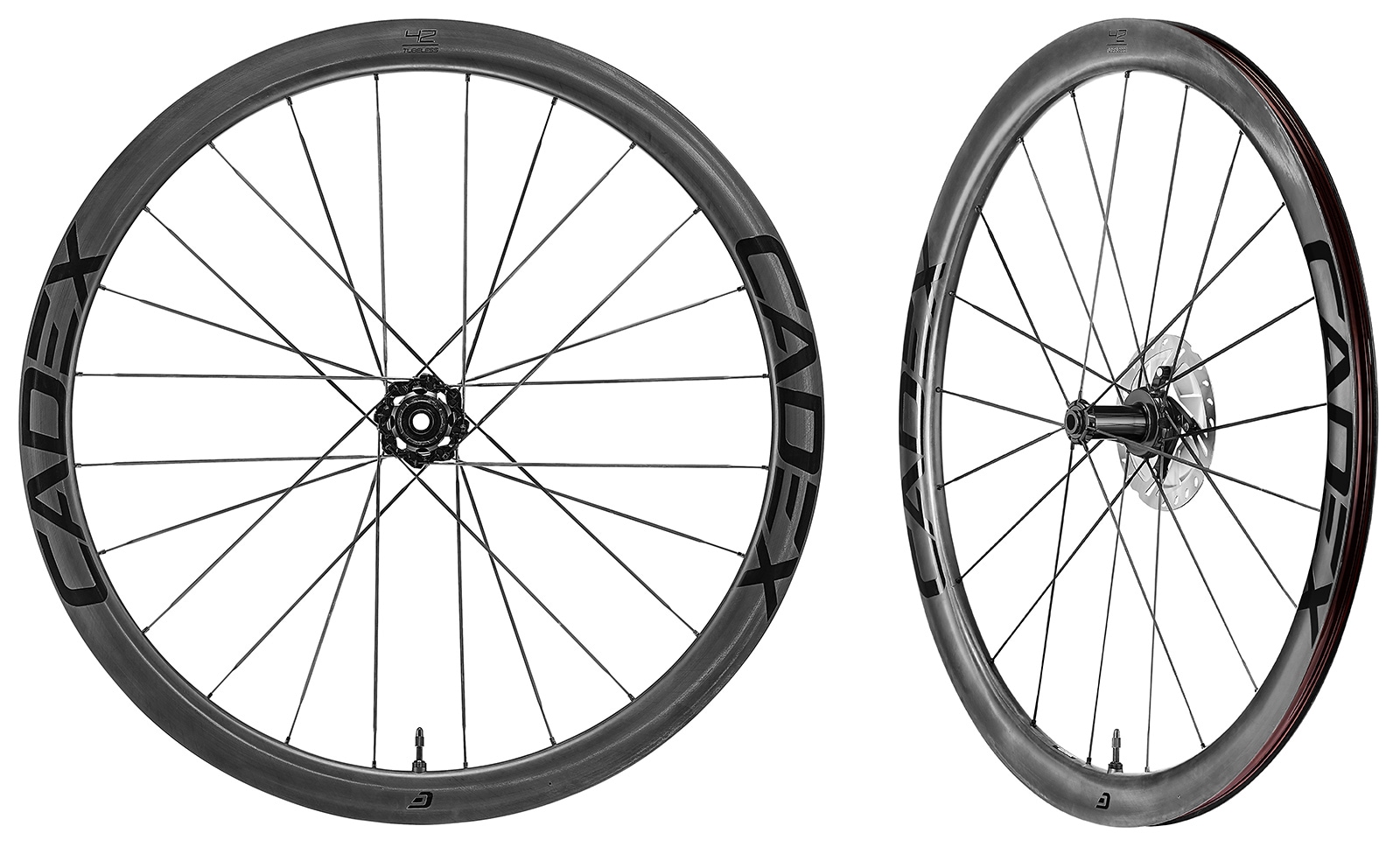
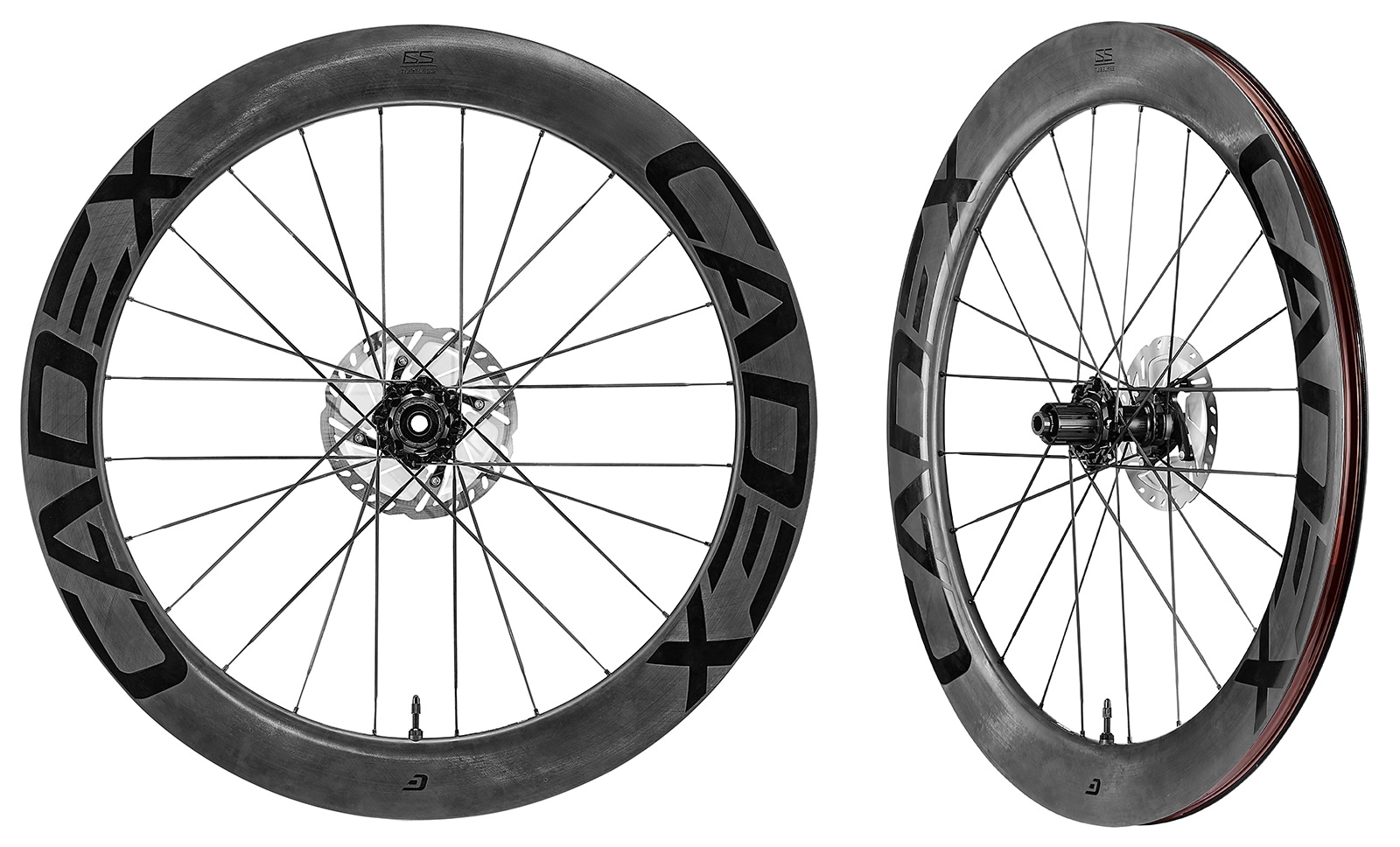
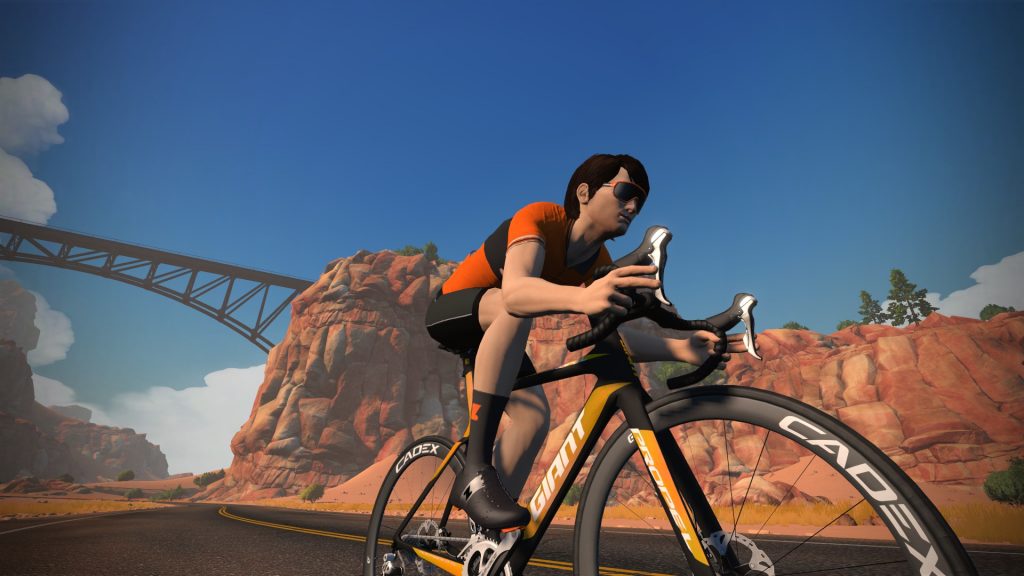
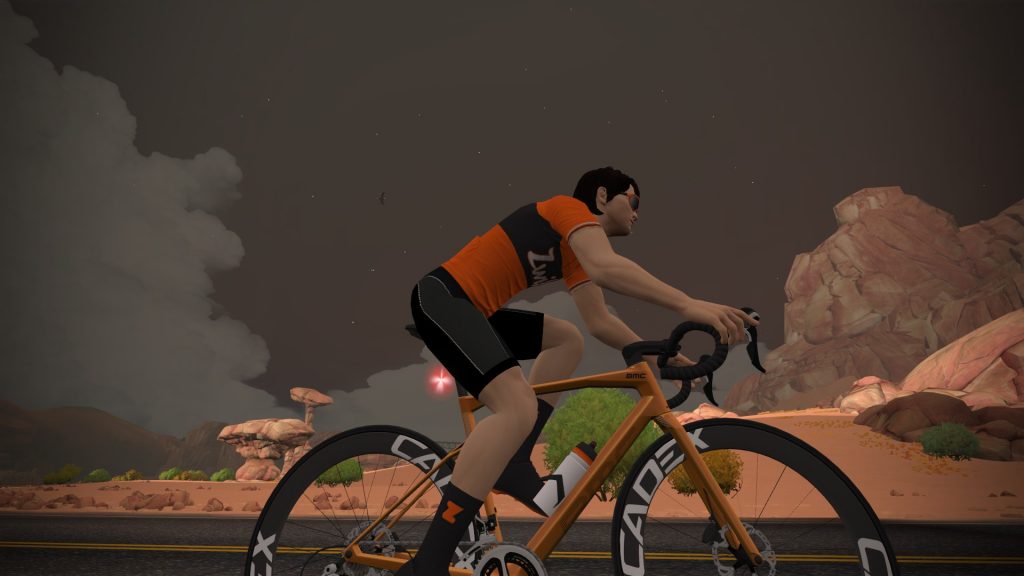
Zwift’s August update includes the first two wheelsets in-game from CADEX, a brand that may be unfamiliar to some cyclists even though it began in the 1980’s.
CADEX began in 1987 as a sub-brand of Giant group, with the goal of building a super lightweight, fully carbon-framed bike. This is commonplace nowadays, but back then, this was a moonshot project. And they did it!
The CADEX brand went dormant once that project wrapped up, but Giant brought it back in 2019 to develop more super-light pinnacle products including handlebars, tubeless tires, saddles, and of course wheels.
Zwifters now have access to the CADEX 42 and CADEX 65 wheelsets. Here’s how they’re described in the Drop Shop:
“The CADEX 42 is the choice on a day that could end in a sprint. Maximum versatility meets lightweight aero performance, featuring 42mm deep hookless rim design to maximize aerodynamics, weight, and durability, as well as low-friction hubs to maintain maximum power efficiency.”
“The CADEX 65 offers ultralight aero speed while remaining confident and stable under all conditions. With a 22.4mm rim width and hookless rim design, allowing a smaller lighter tire to create a more aerodynamically efficient tire shape and a larger contact patch for more control.”
CADEX 42CADEX 65
The CADEX 42 is rated 3 stars for aero and 3 for weight, priced at 227,200 Drops and available at level 8+. The CADEX 65 is rated 4 stars for aero and 3 for weight, priced at 241,400 Drops and available at level 21+. In real life the 42 is a super-light climbing wheelset, while the 65 is slightly heavier (+200 grams or so) and of course more aero.
Will the wheels perform on Zwift like they perform outdoors? There’s only one way to find out! So we fired up our testing rigs and ran both virtual wheelsets through their paces. Here’s what we learned…
Aero Performance
Not surprisingly, the CADEX 65 turns in a strong performance in our flat test, ranking in the 74th percentile in the universe of Zwift wheels. (The CADEX 42 ranks at 34%.)
The CADEX 65 wheels turn a time of 50:50.5 in our test, while the CADEX 42 wheels turn in a time of 51:09. By comparison, the fastest non-disc wheels (Zipp 858) clock in at 50:39 over our flat 34.6km test route (Tempus Fugit).
Climb Performance
This is where things get surprising.
Given the IRL CADEX wheels’ weight differential, one would expect the lighter 42 to climb faster than the 65. And yet, in multiple tests up Alpe du Zwift, the CADEX 65 comes in 1 second ahead of the CADEX 42!
The CADEX 65 wheels turn a time of 49:21 in our climbing test, while the CADEX 42 wheels turn in a time of 49:22. By comparison, the best climbing wheels (Lightweight Meilensteins or Roval Alpinist CLX) reach the top in 49:12.
Note: all test results above are from a 75kg, 183cm rider holding 300W steady using Zwift’s stock 32mm carbon wheelset.
Down the Rabbit Hole
We would expect the lighter 42 wheels to outclimb the 65, but that’s not what we’re seeing. Our hunch is that the climbing performance of these wheels is more of a Zwift equipment spec issue than a reflection of the wheels’ IRL performance. (Which is a shame, because the CADEX wheels have received some really solid reviews, like this one on the 42 from Bicycling and a glowing writeup on the 65 from CyclingWeekly.)
To make things even weirder, the older (and heavier) Giant SLR 0 wheelset on Zwift outclimbs the CADEX 65 (by just half a second), which also doesn’t make sense, given that the offering from CADEX is a much more premium wheel. The CADEX 65 is much more aero than the SLR 0, so there’s really no competition between two on Zwift. But it still seems as though the SLR 0 with its deep-dish rims is too light in Zwift.
Conclusions
With all that said: the new CADEX 65 wheelset is a really strong all-arounder. It ranks #3 in our combined percentile rankings chart, just behind the Zipp 454 and DT Swiss ARC 62 wheels. The DT Swiss wheels will probably remain popular, though, since they’re available at a very low level (6) for a cheap price (184,600 Drops). Zwift definitely threw a bone to new Zwifters when they released those DT Swiss hoops!
The CADEX 42 are solid climbers given their low level lock. But other climbing wheelsets are available in this range offering slightly better performance, including the ENVE 3.4 and DT Swiss ARC 62.
Given the standout performance of the CADEX 65 wheels on Zwift, we’ll be updating the following post soon:
Important note: this post contains speed test results for Zwift frames or wheels. These results may change over time, and a bike's performance relative to others may also change. We don't always revise posts when performance rankings change, but we do keep current, master versions of our speed test results which are always available. See the frame charts, wheel charts, and Tron vs Top Performers for current performance data.
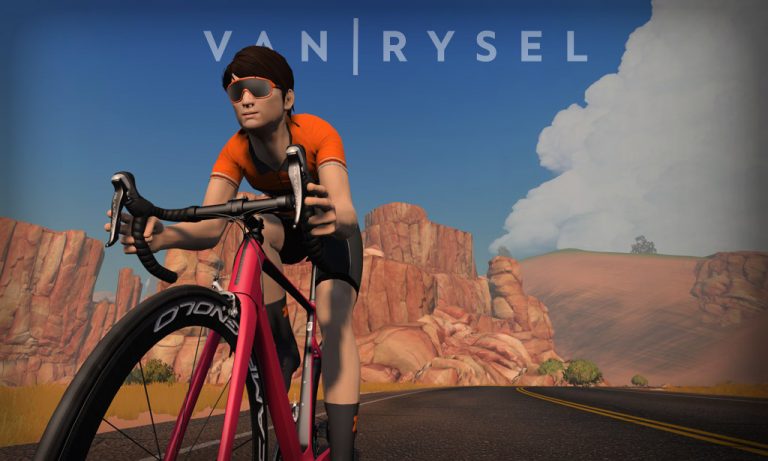
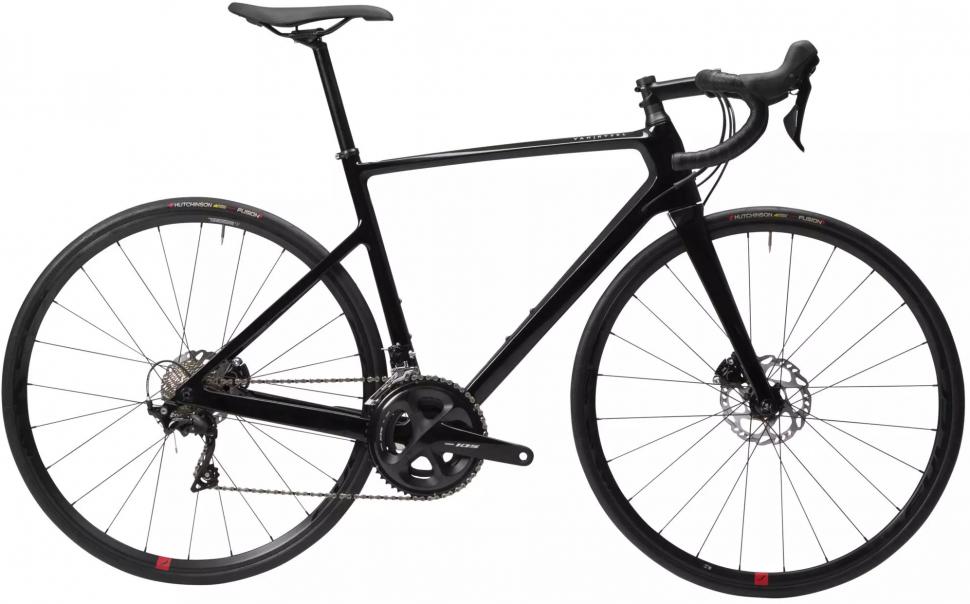
Zwift’s August 2021 update included a new bike frame: the Van Rysel EDR CF.
This is the first frame in Zwift from Van Rysel, which is a brand that may be unfamiliar to many. It’s an in-house brand from Decathlon sports which was launched in January 2019 (read the story here).
Here’s how the frame is described in the Zwift Drop Shop:
“EDR, which stands for EnDuRance, is the new line of bikes from Van Rysel dedicated to performance. But make no mistake, ‘endurance’ and ‘speed’ are not mutually exclusive! That is the challenge that the Van Rysel design team took up in creating this new line. EDR frames are the perfect answer for competitive riders looking for a bike that is as good in the mountains as it is on the bike paths. The perfect combination of rigidity, low weight, and comfort will allow you to leave your past records in the dust.”
The frame is rated 2 stars for aero and 3 for weight, placing it among the mid-tier frames in game. You’ll have to be level 12+ to purchase it in game, at a price of 326,600 Drops.
The Van Rysel EDR CF, IRL
Star ratings don’t tell the full story, though, since two frames with the same rating can turn in test times which vary by a significant margin. So we ran this frame through our standard tests to learn how it performs in Zwift.
Here’s everything you need to know about Zwift’s new Van Rysel EDR CF frame!
Aero Performance
The Van Rysel EDR CF turns in a flat test time well off the mark of Zwift’s fastest frames, placing it in the lower 20th percentile overall. Its time matches the Specialized Allez and new BMC Roadmachine.
It turns in a time of 51:34.5 on our test course (two laps of Tempus Fugit). By comparison, the Zwift Aero frame turns in a time of 51:25, and the fast road frame (Cervelo S5 2020) turns in a time of 51:11.
Climb Performance
The Van Rysel EDR CF turns in a climb test time which places it right around the 50th percentile in Zwift’s universe of frames. It comes in just 1 second faster than the Ridley Helium, and 1 second slower than the Giant TCR Advanced SL.
It turns in an Alpe du Zwift time of 49:20. By comparison, the current fastest climbing frame (Specialized Aethos) turns in a time of 48:49.
Note: all test results above are from a 75kg, 183cm rider holding 300W steady using Zwift’s stock 32mm carbon wheelset.
Conclusions
The Van Rysel EDR CF isn’t remarkable in terms of its Zwift performance, but we didn’t expect much given its low price and level requirement. It is a distinctive color, so if you want to stand out from the crowd in a group ride, or perhaps if you ride a Van Rysel IRL, you may just want to add it to your garage.
This frame has been added to our Master Zwift Frames List, and its test data will be added to the following posts which are updated whenever a new frame is added to the Drop Shop:
Important note: this post contains speed test results for Zwift frames or wheels. These results may change over time, and a bike's performance relative to others may also change. We don't always revise posts when performance rankings change, but we do keep current, master versions of our speed test results which are always available. See the frame charts, wheel charts, and Tron vs Top Performers for current performance data.
Without a lot of high-profile events going on this weekend, we decided to focus on good causes for our picks. Zwifters have always been an amazingly supportive bunch. Let’s keep up the good work and get out there to help in any way we can!
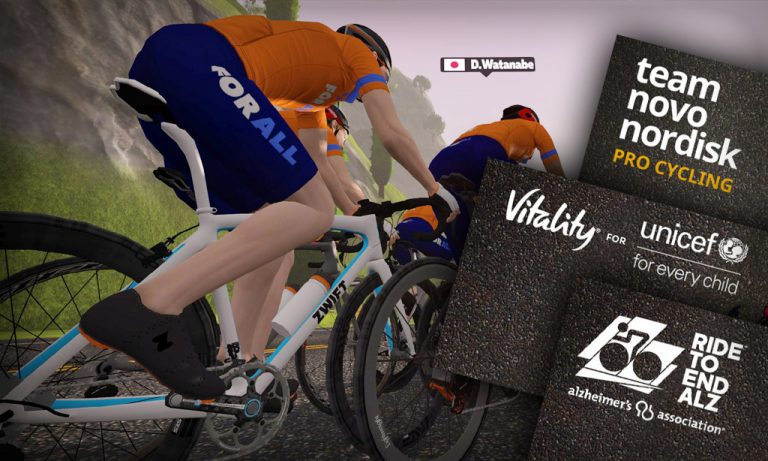
I am keen to highlight this because the Vitality Ride Series forms a part of Vitality’s ongoing commitment with UNICEF to donate over 1 million vaccines worldwide through 2022. The partnership is built on Vitality’s shared-value model where personal health brings about better outcomes for society and Vitality’s insurance partners as a whole – a model which can have more impact than a traditional donation-based model. This model aligns closely with Zwift’s own mission to make more people, more active, more often.
In December 2012 Phil Southerland and Novo Nordisk came together to create Team Novo Nordisk based on a shared vision to inspire, educate and empower people around the world affected by diabetes. This is a one-hour ride led by top Team Novo Nordisk pro athletes.
Team Novo Nordisk is a global all-diabetes sports team of cyclists. For more information visit teamnovonordisk.com.
This is a ride to honor Joaquim Agostinho, a top Portuguese cyclist who died in 1984 at the age of 41. He won stages in several Grand Tours, include 4 Stages in the Tour de France and 3 stages in the Vuelta a España. Whenever you climb Alpe d’Huez, at turn 14 you can see the J.A. statue in honor of his victory.
This race is brought to you by Zwift Philippines riders to help draw attention to Bikes for the Philippines, a non-profit foundation that provides donated/used bicycles to deserving underprivileged students in the Philippines.
This is “a cycling event that fights dementia”. Cyclists around the country are joining together virtually on August 29 to ride indoor and outdoor routes that fuel cutting-edge dementia research efforts. Grab your bike and ride along!
For more information on the Ride to End ALZ visit alz.org/ride.