Home Blog Page 248

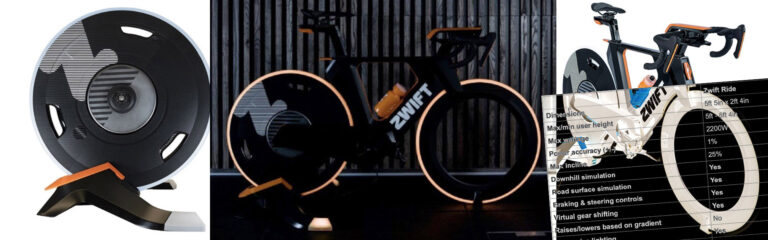
Zwift Ride & Zwift Wheel: a Sneak Peak of Zwift’s First Hardware Concepts

58

Zwift Ride & Zwift Wheel: a Sneak Peak of Zwift’s First Hardware Concepts

Yesterday Zwift sent a survey to a select group of users, asking them to select which trainer they would likely purchase from a fictional store. Here’s that store’s homepage:
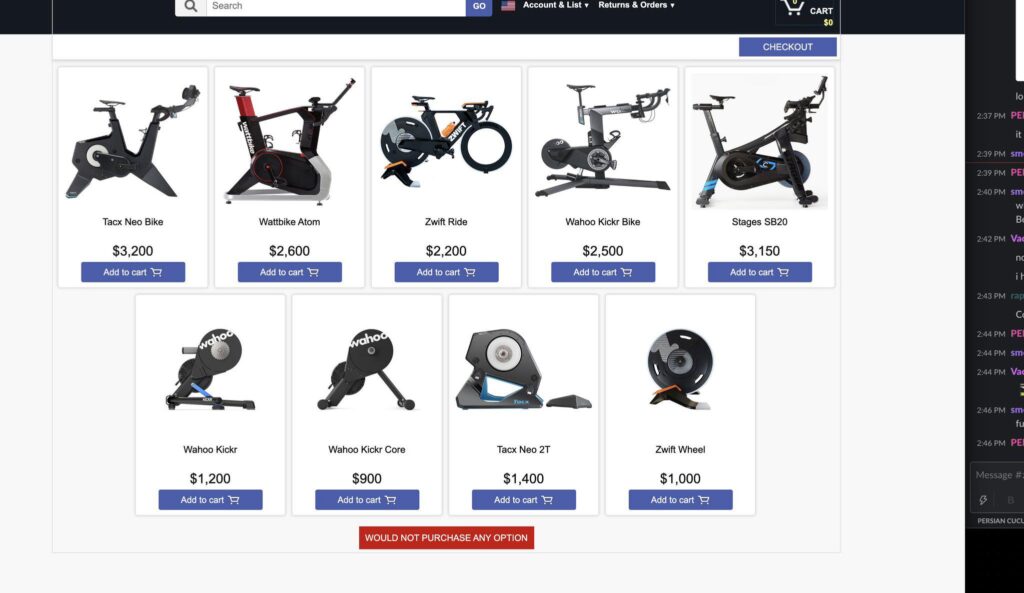
Notice anything especially interesting? We sure did!

The store includes two trainers not yet available on the open market: the “Zwift Ride” and “Zwift Wheel”:
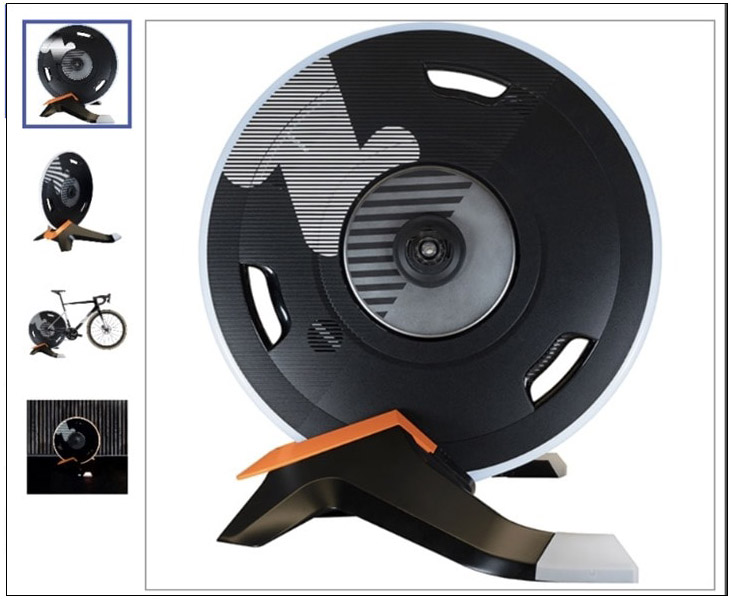
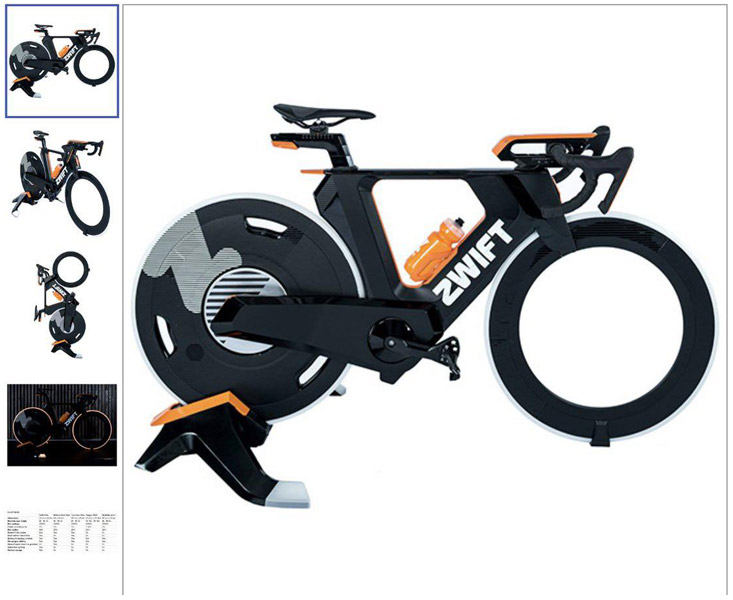
The Wheel is a direct-drive trainer, with a metal flywheel similar to the Tacx Neo. These shots show it without a cassette. The Ride (and this is important to understand) is simply the Wheel with a smartbike frame and front wheel added. So the Wheel can actually be upgraded to a full Ride setup!

We chatted a bit with Zwift CEO Eric Min about the survey and what he’s excited about for the Wheel and Ride. This really is big news in the world of Zwift, because they have “tipped their hand” in a big way. Until now, it’s been well-known that Zwift is working to develop its own hardware. But no images or specs had been released.

Eric told us, “We decided it was worth the risk of leaking the details of our hardware in exchange for the learnings we’ll get from the surveys.”

Core Specs

The key specs and features of the Wheel/Ride shown in the fictional store are as follows (with notes in italics from us):

  • Power Accuracy: +/-1%: this matches the Tacx NEO and Wahoo KICKR
  • Peak Power: 2200W: again, matching the NEO and KICKR
  • Max Simulated Incline of 25%: this can be measured in a variety of ways (no industry standard), but is in the same ballpark as the NEO and KICKR
  • Downhill Simulation: aka “downhill drive”, where a motor drives the flywheel on descents so you can coast and get the feel of descending. This feature only available on the NEO currently.
  • Road surface simulation: another NEO-only feature, this mimicks the feel of cobbles, wooden slats, dirt, etc by sending vibrations through your chain which you feel in the pedals.
  • Braking, Steering, and Game Controls: this is a sort of D-pad controller which is mounted to your handlebars. More on this later…
  • Virtual Gear Shifting (Z Cog): a very interesting feature, which we’ll discuss below.
  • Immersive Lighting: LED lights around the wheel(s) and in other locations presumably can be changed based on power output or other factors.

Additional specs only applicable to the Ride are:

  • Minimum user height of 5′ (152cm), maximum height of 6′ 4″ (193cm): note: the survey actually says 6′ 6″ in a different place
  • Dimensions: 5′ 5″ x 2′ 4″ (165x71cm): same width as a KICKR, narrower than a NEO
  • Vertically storable: very handy for long-term storage, or tight spaces
  • Adjustability: handlebar position, seat position, and crank length are all adjustable

Pricing

There’s no way of knowing the specific pricing Zwift will use when the Ride and Wheel are released, because this survey showed different prices to different survey participants. That’s what makes these surveys so powerful – they are sent to thousands of users, at different price points, so the responses can show how pricing impacts demand.

The first survey we saw had the Wheel priced at $1000 and the Ride at $2200. But other users reported pricing of $1200 and $2800, respectively. The lower price point would undercut everything on the market today in terms of price/features, while the higher price points would essentially match today’s market pricing.

Unique Selling Points

The specs above look solid, but what makes the Zwift Wheel/Ride truly special? There’s a lot to talk about here, so let’s dig in.

Z Cog (Virtual Gear Shifting)

The Zwift Wheel description includes this: “Z Cog: Zwift Wheel is built around a single cog design with virtual shifting, unlocking compatibility with all bikes from the box.”

We sure would like more detail about how this will work. But we think what Zwift is developing is virtual shifting, where you don’t need a front or rear derailleur. Instead, when you shift, the trainer simply changes resistance accordingly to mimic the feel of moving up or down a cog.

This is what most smart bikes do, and the beauty of it is you can set up your virtual groupset to be anything you’d like. Want it to mimic your outdoor road bike? Done. Want to go with a 1×12 to match a MTB or gravel bike, or just so you never have to shift your front chainring? All doable.

But Zwift is taking virtual shifting to a new level (we think), because it’s being controlled by the integrated controller.
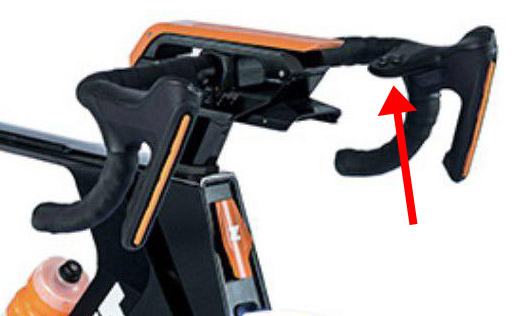
Controller, enlarged to show texture

Using an add-on controller lets Zwift bring virtual shifting to users who buy just the Wheel and bring their own frame (and groupset) to the game. This will be especially helpful for MTB and gravel riders who find they run out of real gears on Zwift, where road gearing is really the ideal setup.

But it would also be handy for users of bikes that are older or poorly constructed. These users often struggle to get their bike to work with a “normal” cassette on a direct-drive trainer, but Z Cog would eliminate that hassle, as well as the hassles of adjusting your shifting so it’s consistent and smooth.

Upgradeability

Many Zwifters get into the game at a lower price point because they’re not convinced it’s worth a big up-front investment. Then down the road, once they’re hooked, they spring for the upgrades: a direct-drive trainer. A big screen. You know how it goes…

Zwift has ingeniously built an upgrade path into their two pieces of hardware, allowing Zwifters to begin with just the Wheel, then add the Ride’s frame and front wheel to the mix later. Smart.

Immersive Lighting

The survey says the Wheel/Ride’s lights “bring the Zwift world into your home”. Images show the lights in an orange color, but surely Zwift plans for the lights to change based on one or more parameters.
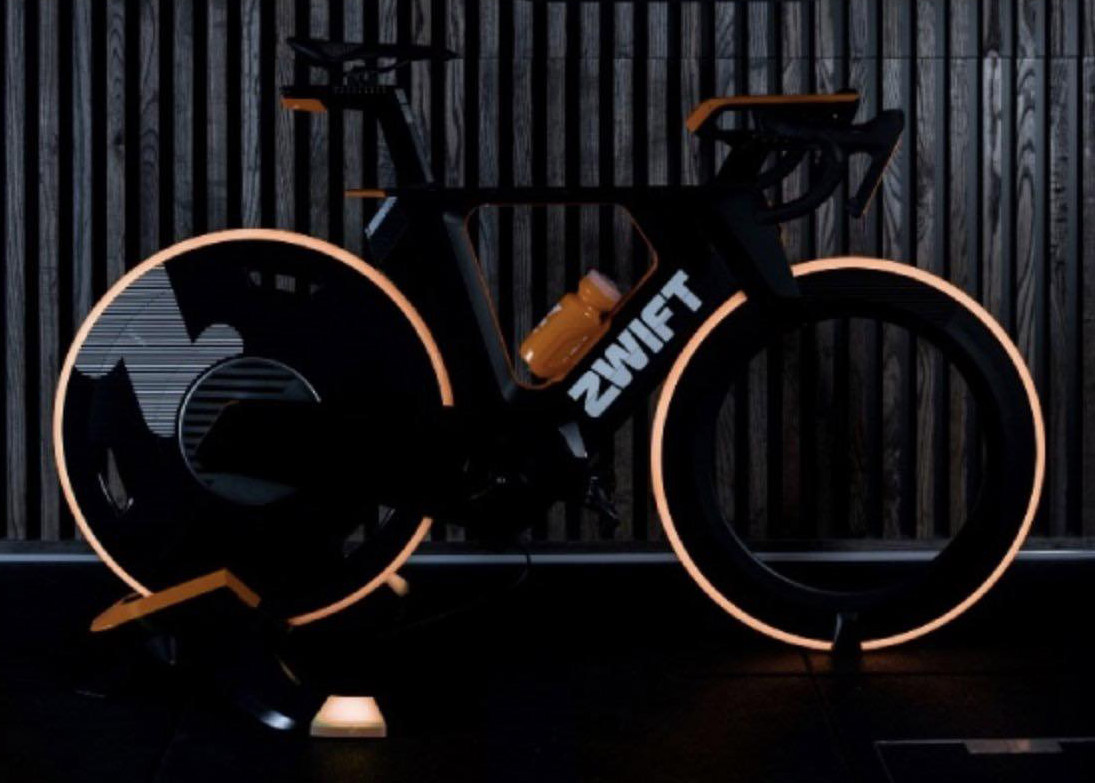
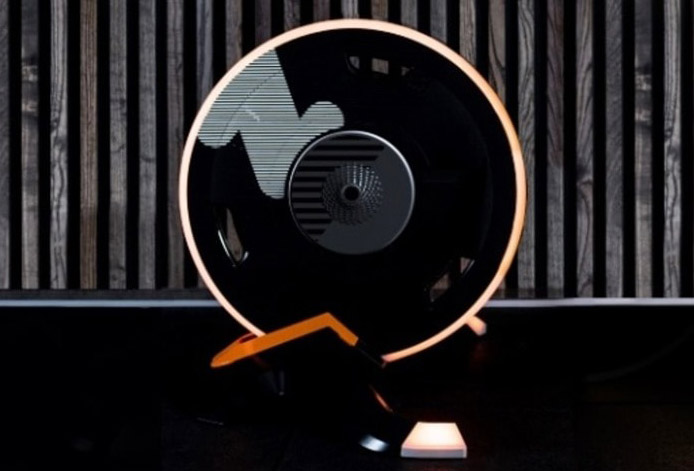
For starters, the lights could certainly change based on your wattage, like the Tacx NEO. That’s basic stuff.

But let’s take it further.

Imagine if the lights changed to mimic the Zwift environment? We know this is very doable, based on Jon Mayfield’s weekend lighting project almost four years ago. All it takes is Zwift sending some extra data to the Wheel/Ride, and that code is probably already sitting in game.

Portability/Storability

The Wheel may seem unnecessarily large, but have you ever tried moving a Tacx NEO? “Ungainly” is a generous description.

The wheel includes handholds, while the full bike frame can be rotated vertically for storage. Both of these features could make the Wheel/Ride more easily moveable and storable than some top trainers (and all current smartbikes).

Add-Ons

This is speculation, but based on what we’ve heard from Zwift in terms of current hardware “pain points”, we assume their hardware will be built with an eye toward allowing add-on accessories.

For example, an integrated screen option (with the hardware to run Zwift) would be welcome by many. And if there’s enough market demand, why not remove that front wheel and add a gradient simulator like the Wahoo CLIMB or Elite RIZER?

That Tron Look

The Ride is far and away the most “bike-like” of smartbikes in terms of its design. Some may not like the Tron look, but you have to admit it’s genius on Zwift’s part. If you’re looking for a smartbike setup that looks unique and futuristic, while still looking like a real bike… the Ride is it.

Conclusions

If Zwift is able to bring the Wheel/Ride to market within the next year, at a price point in the neighborhood of what this survey used, they’re going to give the Zwift community something to cheer about (and the competition something to worry about).

There’s a big caveat worth mentioning: based on the surveys we saw, the Wheel/Ride offer specs matching or exceeding today’s best trainers, with added features and adaptability today’s trainers can’t match.

But Chris Snook, Zwift’s PR Director, told us, “the survey is designed to help us better understand the hardware product features Zwifters value most by showing a mix of real and hypothetical products/product features. These are shown at various hypothetical prices.” So while the specs look good, the final product may be very different.

We’ll just have to wait and see.

Your Thoughts

Share below!

Cycling Canada and Zwift

10

Cycling Canada and Zwift

Zwift is a global platform that attracts users from every nation. This was best witnessed in 2020 with the Nations Challenge, an event which saw countries competing to be considered the best nation on Zwift. It resulted in Sweden being crowned as champions, followed by Belgium and Japan. 

Despite the success of these three nations, it is interesting to see that their National Cycling Governing bodies are not active on Zwift. Or if they are, I haven’t seen them! 

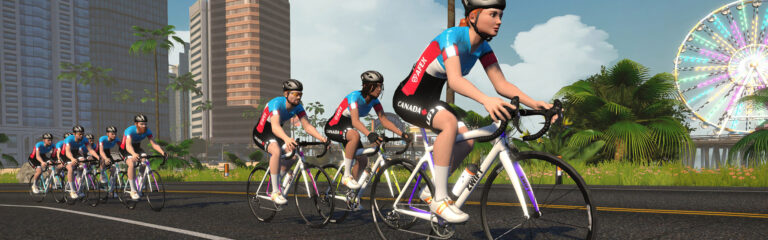
Cycling Canada has a large presence on the platform, offering five diverse events to cater to their community.  I caught up with Josh Peacock, Director of Marketing & Community Engagement to discuss this and explore how the use of Zwift has shifted their sporting strategy.

Cycling Cyclisme Canada (“Cycling Canada”)

Established in 1882, Cycling Cyclisme Canada (“Cycling Canada”) is Canada’s oldest National Sporting Organization, an association of 12 provincial, territorial, and national level organizations that work together to promote, support, and develop cycling across the country.

The purpose of Cycling Canada is to inspire Canadians to cycle and their mandate according to CEO Matthew Jeffries is to “holistically develop our sport, putting more Canadians on bikes from coast-to-coast and more Canadians on podiums around the world.”

When you read Cycling Canada’s strategic plan (2020-2030), you can see, “Community” is at the core of their plan to achieve this objective. Of course, this area where Zwift/virtual cycling/Esports thrives!

Cycling Canada and the Community

In their strategy, Cycling Canada states that “We will create a community with deep connection, affinity, and pride in cycling. The community is the essence of the organization and the sport; it is the greatest area of collective opportunity and is the path to sustainability, diversification, and growth.”

There are two parts to this, as outlined in their plan:

  1. Events: the Association has established a strong reputation and international presence in hosting high-calibre competitive events.
  • Clubs: the Association also has a strong foundation of cycling clubs. Amongst those, there are 10+ major clubs; they are sustainable, they have 100+ members (some with >1,000) and they have existed for decades.

Events on Zwift

Zwift is helping Cycling Canada meet these strategic objectives.

Cycling Canada offers five weekly events on Zwift, and though each has a different purpose, in the end they all achieve the goal of connect to their community.  There are two recovery rides, two races (both with a women’s-only option) and a long ride as follows: 

Monday – Cycling Canada’s Weekly Tune-up Ride

Every Monday at 8:05pm EST, Cycling Canada host a weekly group ride, open to all skill levels and abilities on rotating courses. Course offerings will vary from week to week in an effort to provide a well-rounded mix of training opportunities for Zwifters of all backgrounds.

Tuesday – Cycling Canada’s Weekly Tune-up Ride – Women’s Edition

Every Tuesday at 8:05pm EST, Cycling Canada will host a weekly group ride, open to women of all skill levels and abilities on rotating courses. Course offerings will vary from week to week in an effort to provide a well-rounded mix of training opportunities for Zwifters of all backgrounds.

Wednesday – Cycling Canada Wednesday Night Race Series

Every Wednesday at 8:05pm EST, Cycling Canada will host a race open to all skill levels and abilities on rotating courses. Course offerings will vary from week to week in an effort to provide a well-rounded mix of racing opportunities for Zwifters of all backgrounds.

Wednesday – Cycling Canada Wednesday Night Race Series – Women’s Edition

This is identical to the “Open” race series, but is for women only.  It starts at 8:15pm EST, 10mins after the “Open race.”

Saturday – Cycling Canada Saturday Fundo

Every Saturday at 12:05pm EST, Cycling Canada will host a fondo-style ride open to all skill levels and abilities on rotating courses. Course offerings will sample some of Zwift’s longer distance routes, with sub-categories split by distance. The weekly fundo will be marked as a “ride”, but Zwifters can expect some action at the front, not unlike an in-person fondo. Join the ride at your own pace to reach your weekly distance target, or challenge fellow Zwifters to race with some higher pace off the front.

A – 50km
B – 40km
C – 30km
D – 20km
*No Ride Leaders*

Behind the Scenes of the Events

What I particularly like about Cycling Canada’s approach to events is that the “Tune-Up” rides are hosted on the same course as the Wednesday race, giving people an opportunity to preview the course.  Furthermore, I very much like the way that they are offering women’s-only events. Lastly, I like how each week, the course does change.  Therefore, people have the chance to ride and race on a different course, week in and week out, keeping it fresh.  I very much like this because it means there will be a route to suit someone’s skills, at some point. With a deliberate mindset of trying not to use the same course twice in a season, this also provides those who follow the series a chance at more route badges, awarding their dedication.   

Interestingly, Josh explained that the Wednesday race was used as qualifiers for Canada’s Esports Team, which saw Zwifters beat established traditional national team riders, earning them a berth on the team competing at the 2022 UCI Cycling Esports World Championships on 26th February.  These “Zwift specialists” clearly indicate that Zwift in itself is quickly becoming its own cycling discipline.  

Josh noted that Zwift has high importance within Cycling Canada, and they have a dedicated team to manage the events and engage with the community.  He explained that the Saturday Fundo was created as a consequence of community feedback, at a time that is accessible by all Canadians, so friends and family across the country can meet up and cycle together in the same Canadian-driven event, tackling the longer routes which are not used in the “Tune-Up” rides. Of course, all rides are open to, and encourage the participation of, Zwifters from all over the globe. All are welcome to join the rides and banter on the Discord channel (discord.gg/NTKq4bz) anytime.

Every two weeks, on the “Tune-Up” rides, Cycling Canada tries to arrange a national team athlete to attend, such as Leah Kirchmann, a Canadian road racing cyclist, who currently rides for UCI Women’s World Team, Team DSM.  The “Tune-Up” rides are led by normal Zwifters representing clubs from all regions of the country, with national team guest appearances providing the opportunity for all those on the ride to connect with athletes competing at the highest level. Participants are given regular opportunities for live Q&As with National Team athletes while riding alongside them in real-time – a level of access rarely seen before the advent of applications like Zwift!

Josh commented that through their activities on Zwift, “Cycling is bringing people together from across the country in a way not previously possible.” 

Cycling Canada has a dedicated webpage where their events are updated.

Clubs

In terms of Canadian Cycling Clubs that are active on Zwift, it’s worth mentioning the Toronto Hustle.  They host multiple events and Toronto Hustle has emerged as one of Canada’s most prominent cycling teams, all done through grassroots community building. 

Grassroots

In addition to Zwift being used to help reach Cycling Canada’s targets for Community engagement, Zwift is also being used to help with their Grassroots objective which is to get “More kids on bikes, more athletes in the pipeline.”  To do this there is a fundraiser planned, called the HopOn Ride Fundraiser.

The HopOn Ride Fundraiser will be hosted on February 20th, 2022, with the objective of raising funds for Cycling Canada’s national grassroots program. The ride will take Zwifters along the 2022 UCI Cycling Esports World Championships course and will feature several notable guest riders.

Following the success of the 2021 HopOn Ride which featured Canadian pro Michael “Woodsy” Woods, Lexus Canada is returning to support the 2022 edition and will donate $1 to the national grassroots program for every Zwifter who participates in the ride, giving more children across Canada the opportunity to learn basic cycling skills.

More details will be released in the new year. Visit hoponcanada.ca for details.

Esports

As noted earlier, the Cycling Canada Wednesday Night Race Series has been used to select national racers for the 2022 UCI Cycling Esports World Championships.  This inclusive approach to team selection is to be applauded.  You see, if I was Canadian, I could have attended those events and raced on an equal footing, in the hope of winning and thus representing my country at a World Championship.  It’s that simple.

Cycling Canada has a simple but well-defined selection criteria document. The highlights are: 

  1. The top two eligible female finishers and the top two eligible male finishers in the first selection event, not counting riders already directly qualified through the Continental Qualifiers, will be selected to represent Canada at the 2022 Esports World Championships.
  2. The top two eligible female finishers and the top two eligible male finishers in the second selection event, not counting riders already selected through the first event, will be selected to represent Canada at the 2022 Esports World Championships.

I will watch with interest to see who has been selected for the finals.  I am sure they are wanting to repeat their previous success, where Canada was named “Team of the Race” for the men’s 2020 event, based on how aggressively they rode!

Wrapping It Up

It’s amazing to see Zwift developing so much as a platform that it impacts the strategic policy of a country’s national governing body, in this case being used to help deliver the “Community” aspect of Cycling Canada’s agenda as well as indirectly impacting other areas. Furthermore, through their “Tune Up” rides, Cycling Canada is providing access to Canada’s elite cyclists, who can inspire and motivate everyday riders to reach their goals.

For more information via Cycling Canada’s website Cycling Canada Cyclisme and follow on Instagram (instagram.com/cyclingcanadaofficial) and Facebook (facebook.com/CyclingCanada).

Questions or Comments?

Share below!

Looking Back on Zwift 2021: Tim’s Review

3

Looking Back on Zwift 2021: Tim’s Review

It’s that time of year when we look back and reflect on what’s gone by. As I thought about my year on Zwift, I realised what an exciting year it has been! I thought 2020 was good, but this year certainly tops it.

Unique Experiences

Personally speaking, there have been so many fun and unique experiences which makes using Zwift incredible. Even as recently as this week, something quite extraordinary happened. 

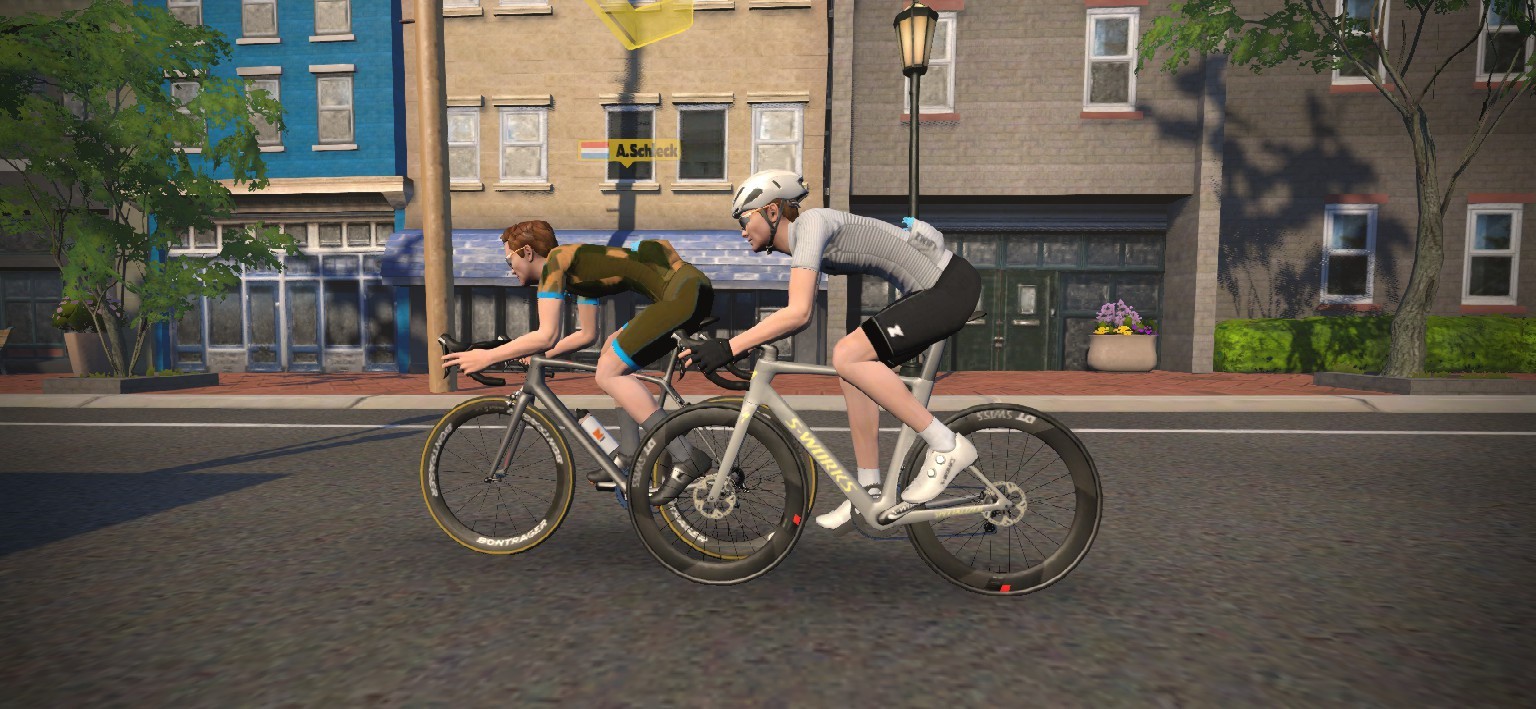
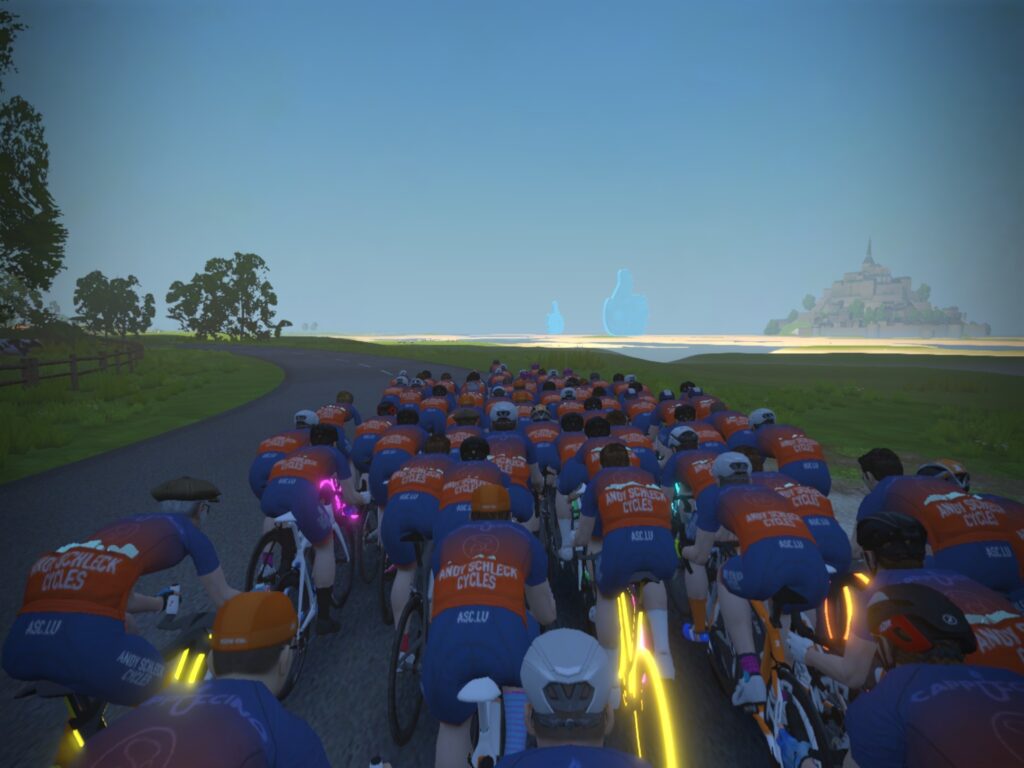
Riding with Andy Schleck

Tuesday evening, I joined Andy Schleck’s Cappuccino ride, with the objective of a nice quiet spin. The ride commenced and there was no sign of Andy, which was highly unusual given he was leading the event.  Then my telephone rang and it was Andy.  It’s not every day a Tour de France Champion phones you up.  “Hello Andy” I said. “Tim, I need your help!” came Andy’s reply. His Companion app wasn’t opening, and therefore he could not communicate to the group, so whilst he was sorting that out, he was giving me instructions to pass to the group, which I was relaying via my Companion app.  Andy got it sorted and the ride was able to resume, but this is one of the many special stories that I have as a result of Zwift.  (Incidentally, Andy had my telephone number because earlier in the year, he had been kind enough to grant me an interview where we cycled around Watopia and talked about his event on Zwift, his career, and also about life after he retired from racing.)

But this isn’t the only unique experience on Zwift for 2021. Far from it! Linking up with Tim Searle was an opportunity for learning.  He told me the challenges of leading a group ride and then supported me in my own undertaking.  This led to an interesting article and it gave me an appreciation of how challenging leading events is. I am certainly a better Zwifter for the experience.

This tutoring from Tim paid dividends later in the year as I was able to pass on my experiences to former professional cyclist now cycling commentator David Millar.  David has recently re-joined the platform and is hosting the CHPT3 rides on Tuesday at 8:00PM CET.  They are excellent fun and David has been joined by friend and co-commentator Ned Boulting. (Ned cycles under a pseudonym, which I won’t reveal, but on the first ride when he announced “I am Ned” it led to an entire ride of people commenting “I am Ned.”) I am certainly looking forward to collaborating with David on future projects.

Zwift Collaborations

Talking of collaborations, I have been fortunate to work with Zwift on two really interesting articles. One focussed on a topic close to my heart: Diversity and Inclusion. With the help of Zwift’s PR Director Chris Snook, I was able to get a clear understanding of the journey Zwift are on in this regard. In my opinion they are actually leading the way, especially as they now sponsor the Tour de France Femmes avec Zwift, starting in 2022. 

Similarly, I had equal amounts of fun working with Joy Osborne and writing in detail about the Zwift Internship program.  It was fascinating to learn how they were able to run a successful programme whilst operating under strict COVID restrictions. A testament to the adaptability of Joy, her team, and Zwift as an organisation.

Personal Progress

In terms of my own cycling, I have reached new heights in recent weeks after linking up with Matt Rowe from Rowe & King and adopting a structured approach to training and racing. I have charted my progress which was seen me increase my 20-minute power to 5.4 w/kg and my 5-minute power to 5.8 w/kg. 

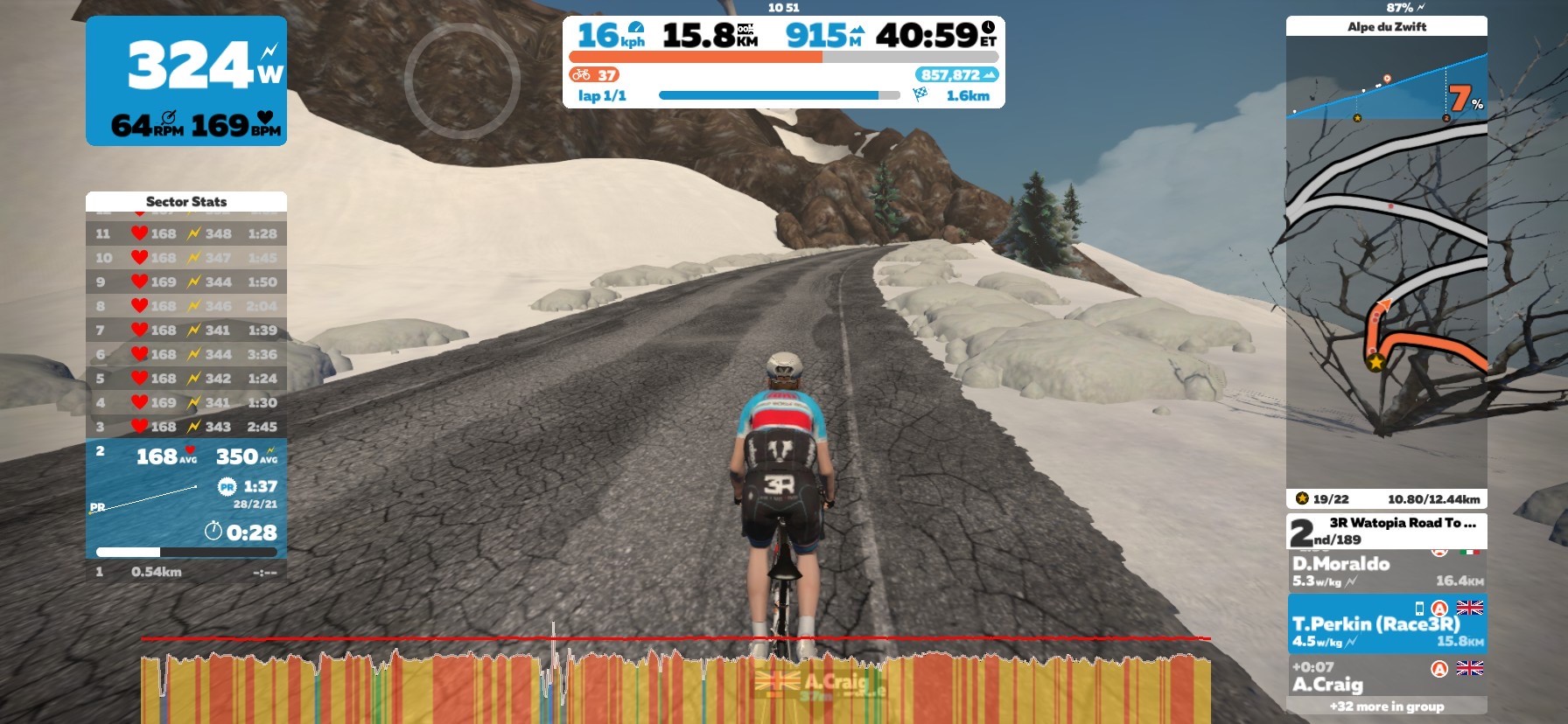
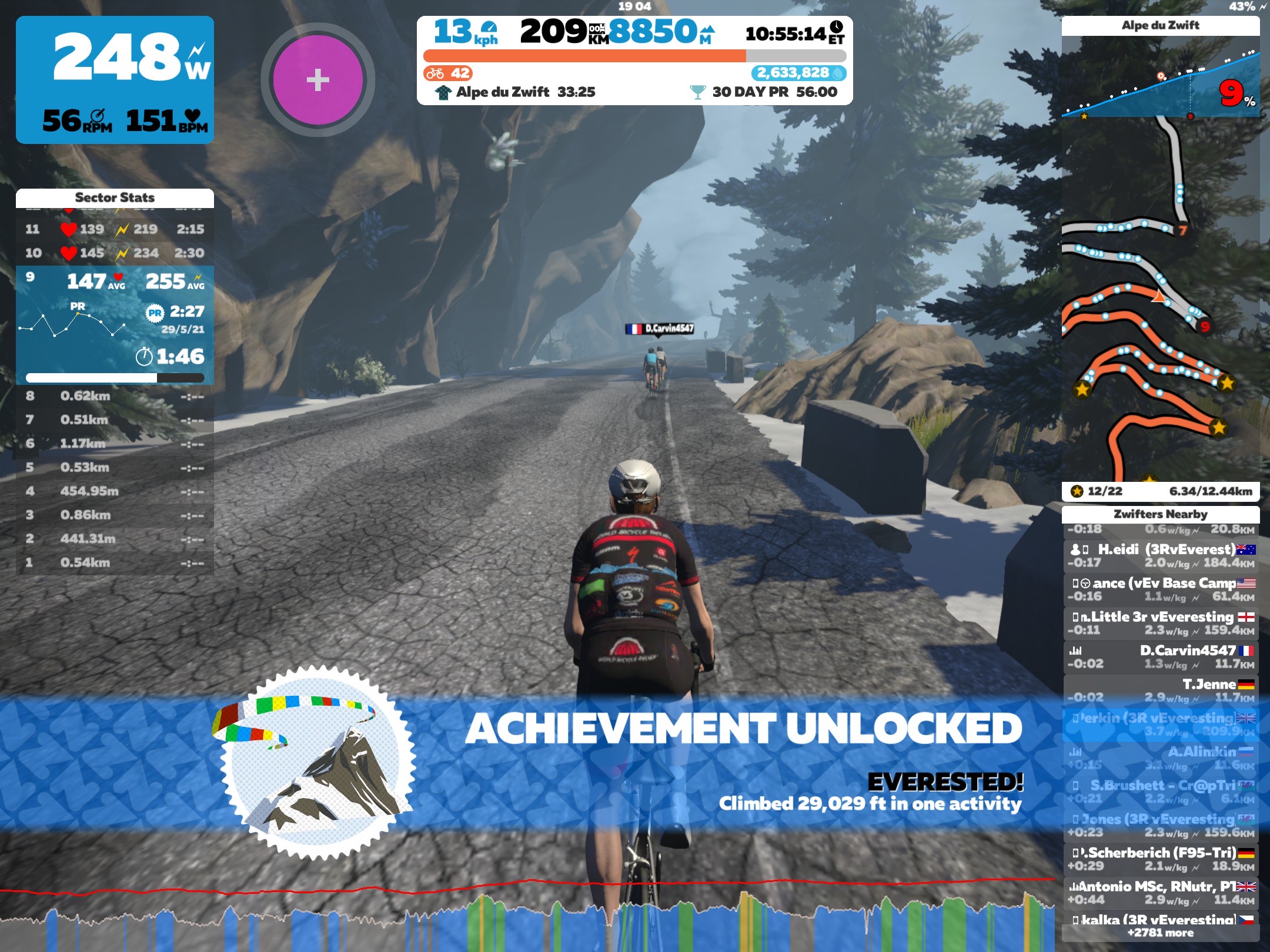
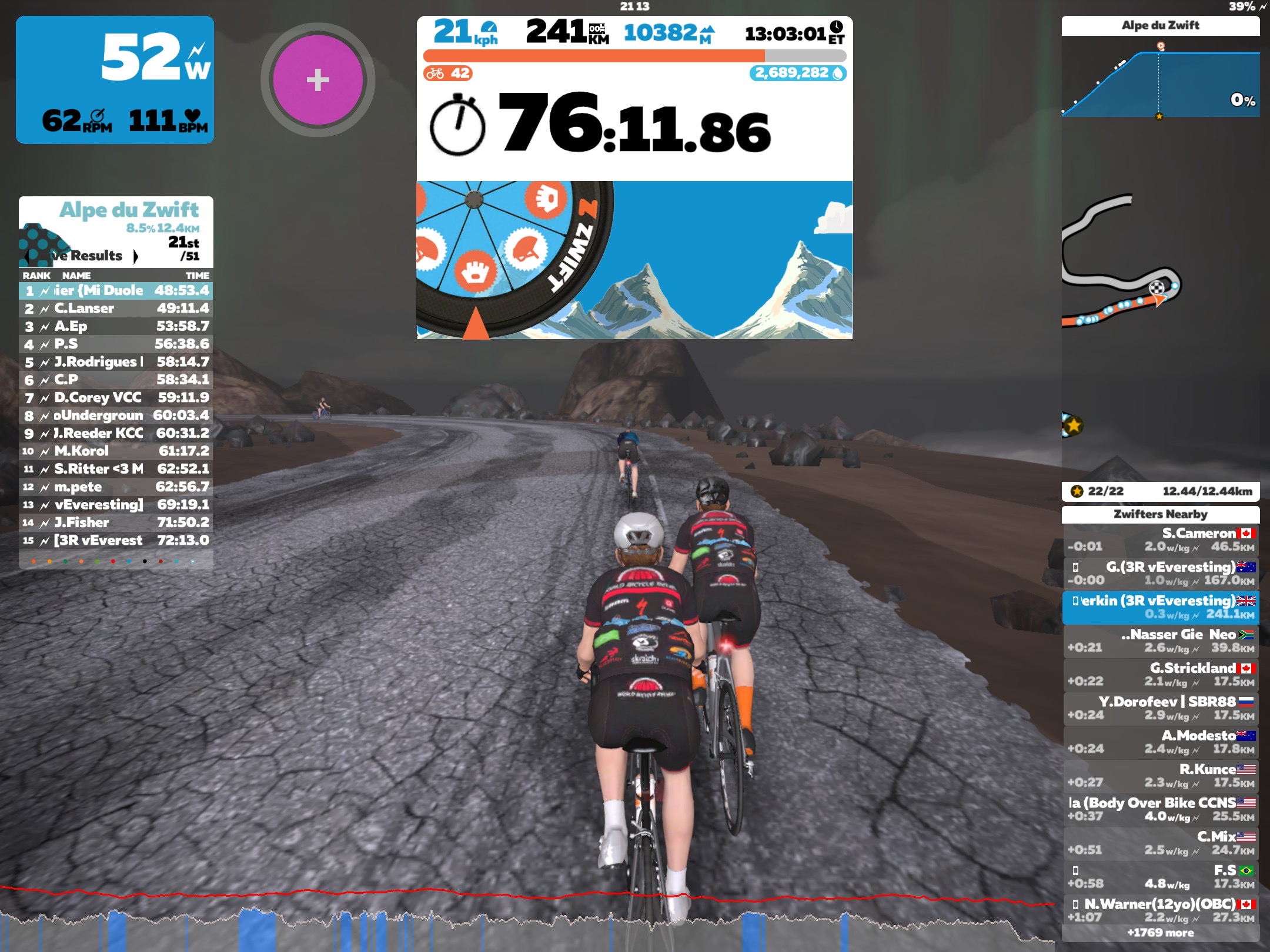
Prior to that, I was able to win a few events, including a TT up the Ven-Top which saw me complete the climb in 1 hour and 38 seconds and another where I managed a sub-40 minute climb up the Alpe du Zwift. 

Riding my sub-40 Alpe

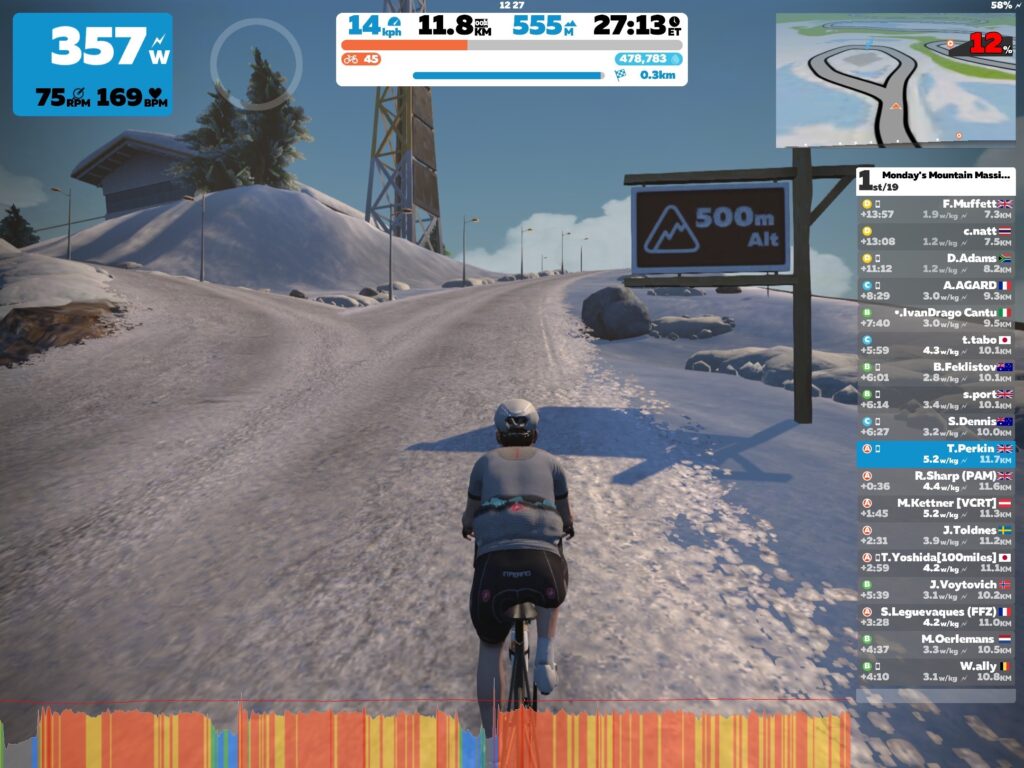
However, the victories I enjoyed most were my back-to-back wins in my Mountain Massif TT events in October. 

Five Events I Enjoyed

This leads on to what events I enjoyed the most this year. Here are five different events that I thought were highlights:

#1: The Haute Route, February 26th – 28th

I really enjoyed this event – the only stage race on Zwift I’ve seen which had back-to-back mountain routes.  This was seriously tough.  The routes were The Mega Pretzel, The Pretzel and Quatch Quest, on consecutive days.  If you were competing for the General Classification, it meant that you had to race in a conservative way, with one eye on the next stage… something which isn’t usually the case with Zwift. 

I hope that there are more events like this in the future.  The races were well-attended, competitive, and thus different. And I liked the GC categorisation, once it was working.  This was certainly a stand-out event for me.

#2: Castelli Group Rides

There are many fine group rides on Zwift, such as those led by AHDR’s Tim Searle.  However, one of my favourites is the “Roll with Castelli” ride.  I caught up with Rich Lovelock, who heads up the Castelli Team that facilitates these well-organised events, and I learned the history and evolution of these rides. 

I personally enjoy the events because they are well-paced, well-led, interactive, with the added bonus that once a month, they host an “Epic Ride.”  These are usually longer than their normal ride and feature guest riders such as Esports World Champion Jason Osborne On top of that, there is the extra incentive that a prize can be won, which usually is some very high-end Castelli garment.  Over the year, I have become a regular attendee and it has that “Club” feel.  Now I look forward to attending, mainly to catch up with how people are and what they have been up to. 

#3: 3R VEveresting Academy

Without a doubt, one of the highlights of my year is being involved in the 3R VEveresting Academy and actually participating and completing the event.

I have to confess, undertaking the VEveresting challenge was never on my “To-Do” list.  The thought of it just seemed too extreme. When I was approached by George Parker-Fuller, the architect of the event, I was happy to promote it, but didn’t see myself ever participating.  Then I attended a few of their training rides and the camaraderie got me hooked and before I knew it, I was lining up alongside the team, tackling what seemed like an impossible task.  In the end, not only did I complete the VEveresting challenge but I totaled 10,000 meters of climbing, achieving the Hells 500 10km badge in the process!      

This event was special because it was well-organised. There was a structured approach to training that people all bought into which truly prepared people for the ride.  During the main event in May, people were supporting each other and it was simply a special experience. If you have the opportunity to participate in this, I recommend doing it. 

This was a sporting highlight of the year for me personally because never have I spent so long on a turbo trainer, never have I climbed so much in a day and never have I ridden so far in one sitting.  To add “icing to the cake” I obtained the VEveresting badge!

#4: Gran Fondo Series 

These monthly rides during the winter period were especially fun and resulted in some interesting stories including one where I had only two gears to complete the event, due to a broken gear cable. 

I appreciate people are saying that they want “different routes” but I actually like the fact that you can challenge yourself on the same route month to month.  I also like the fact that they are mass participation and that you can race the event if you’d like (however, you don’t have to – simply completing the event is an achievement in itself). Furthermore, for your efforts you are awarded a prestigious jersey.  These events are certainly a favourite of mine and look forward to them returning.

#5: Flamme Rouge Racing

There have been two series run this year by Flamme Rouge Racing (FRR), the first in September and the second in November. There is a third scheduled for January. I enjoyed these events is because they brought new innovative ideas to Zwift racing. For example, the crazy Zwift starts were dispensed with for a more realistic neutralised rolling start, which was appreciated by all participants. 

Furthermore, this was a team stage race which was competitive but friendly and fair, as no power-ups were used and the same bike was enforced.  FRR introduced a concept called “Your race, your way” which meant that you were not restricted to a specific time to race as your results from your event would be collated, meaning it gave people more flexibility to race when it suited them. 

All-in-all, this was the team racing event that I enjoyed the most this year.

Honourable Mention – Mountain Massif TT series

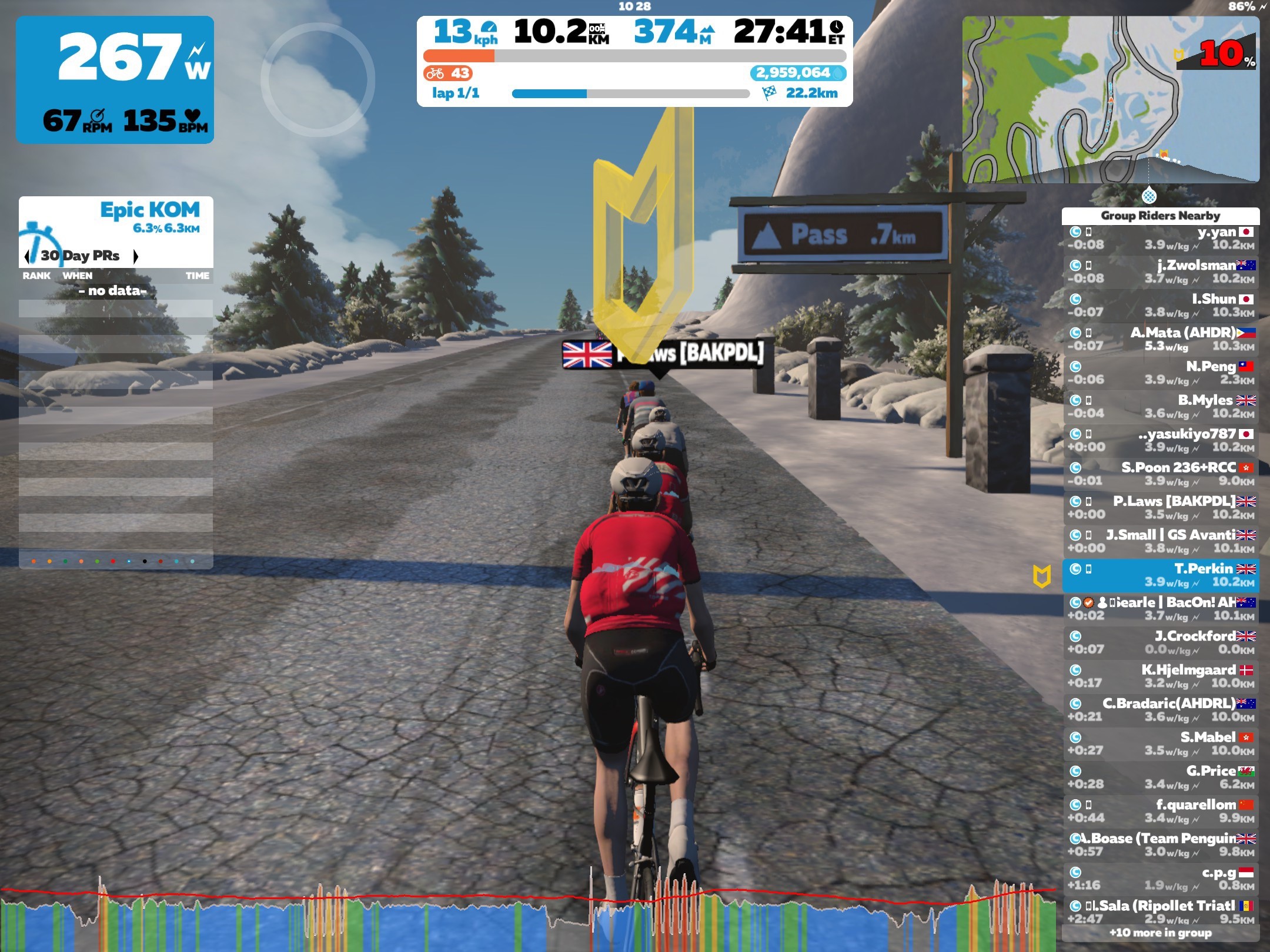
It would be impossible for me to finish my round-up of the year without mentioning my Mountain Massif TT series, which has developed quite organically over the year.  Originally, I created the “Monday Mountain Massif Time Trial” back in March as a race up the Epic KOM reverse. This was a one-off event to document how Zwift events are set up.  It was very gracious of Zwift to facilitate this, and with close to 500 riders attending the launch, Zwift were kind enough to ensure it became a weekly fixture.  And later in the year, an additional timeslot was added to ensure the event would be accessible to a wider audience.

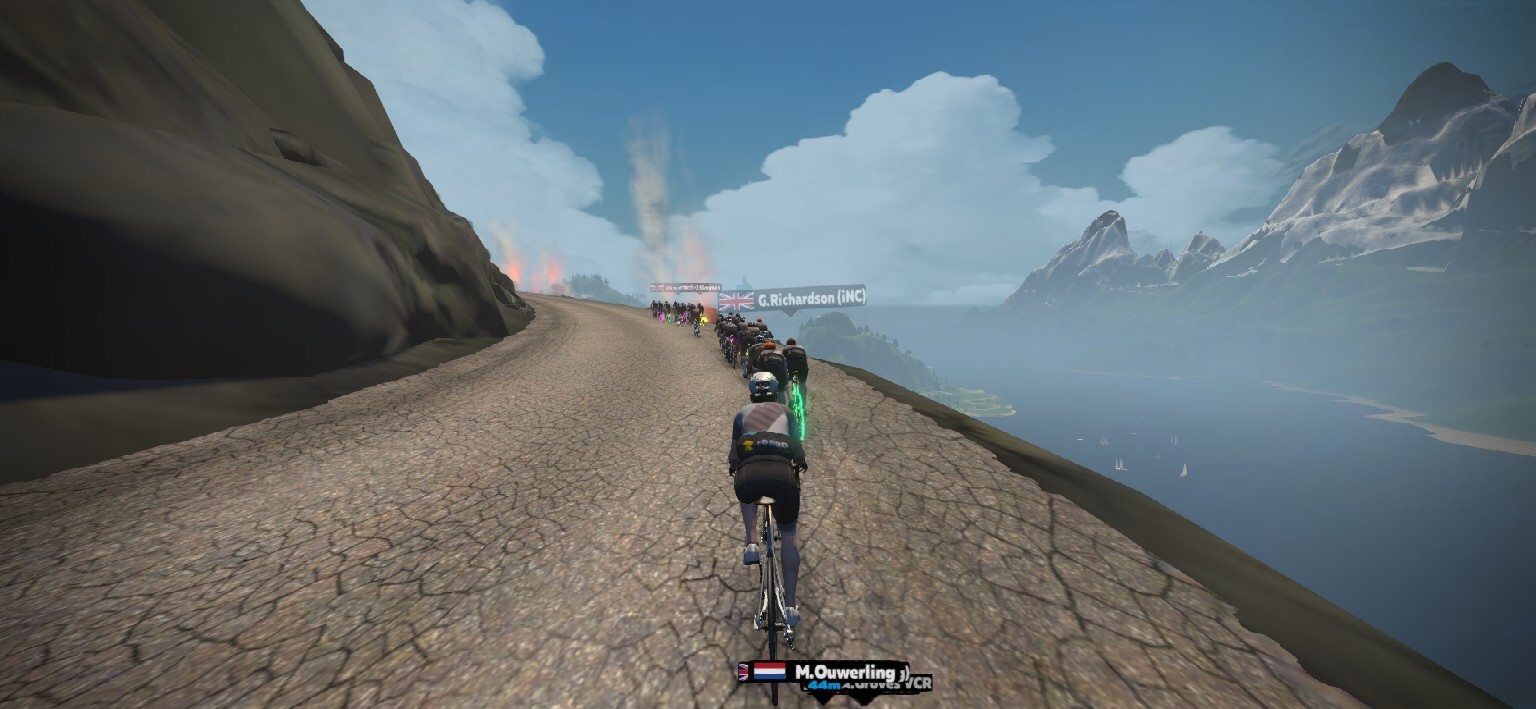
In September, after linking up with Muc-Off, I launched the second in the series, and this event saw racers time trialling 12.1km up the Alpe du Zwift.  This proved equally popular as the original Mountain Massif event and often has triple-digit numbers of attendees competing, despite being what could be considered a “niche event.”

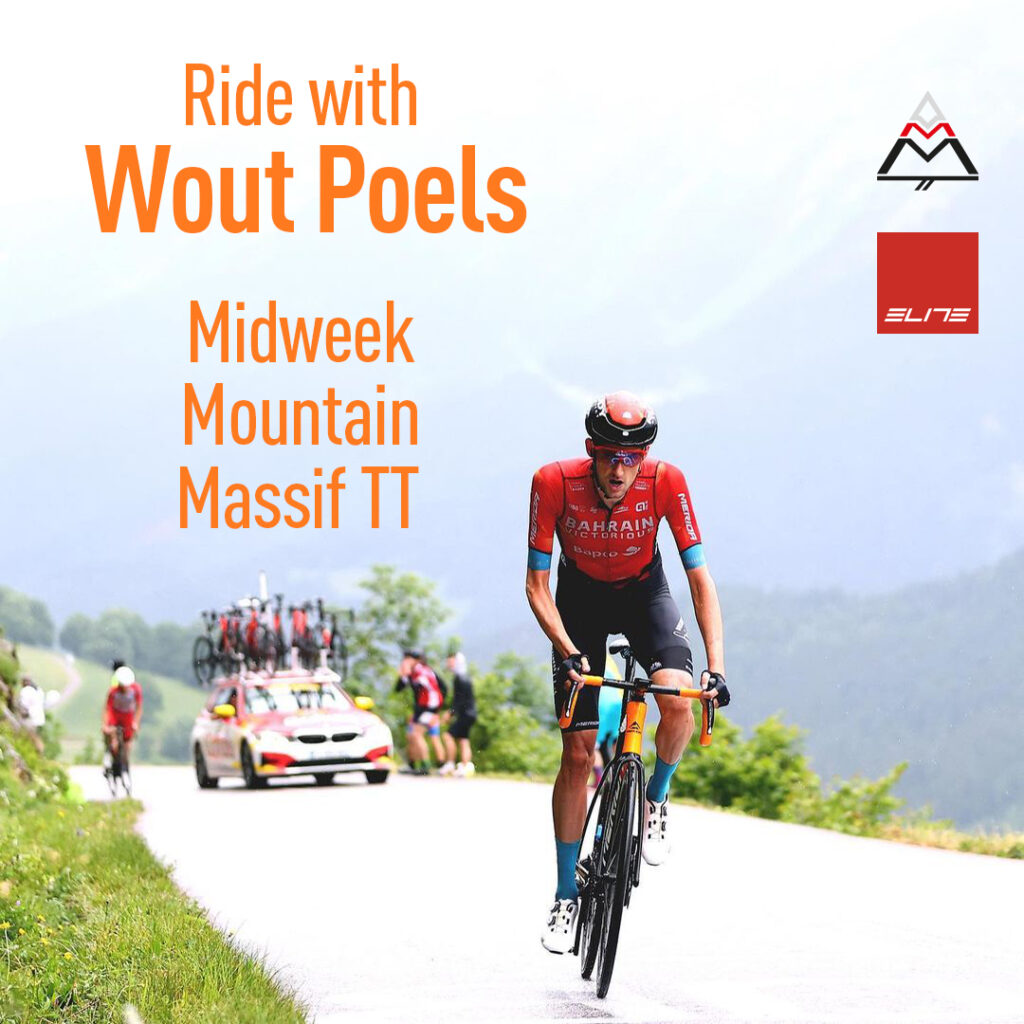
In November, after connecting with Elite to review their RIZER, I launched the third event in the series, a 10.1km TT up the Ven-Top.  The event was headlined by Wout Poels and again saw close to 500 riders participating. 

So what had originally started as a single event has developed into a series of customised mountain time trials which sees people testing themselves on the toughest climbs in Zwift.  What is special about the events is that there are three races in one.  There is the race for the category win, the race for an FTP boost, and a race for your best time on the course.   

Along the journey I’ve had the opportunity to meet new people who have supported me in developing the branding for this series. This includes working with Zwift to produce a custom event banner as well as creating jerseys for the event, which have been passed to Zwift with an eye toward getting them in game.

Summing Up

With so many memorable moments, it’s been a special year for me on Zwift. It’s going to be hard to top, but then I thought the same about 2020! The reality is, I can actually only see things getting better as more people are attracted to the platform and Zwift continues to innovate. 

You see, as Zwift continues to innovate, so does the community. I can already confirm that I am continuing my connection with Elite and we are working on bringing some new and unique opportunities for the community to Zwift. This is one of many things I’m looking forward to next year. 

But There’s More….

One thing I forgot to mention is that when I was back in the UK in the summer I met up with Eric Min (Co-Founder and CEO of Zwift) and we shared a quintessentially English cream tea in the beautiful Cotswolds.  I reached out Eric to ask him his thoughts on 2021 and Eric kindly responded. It seems fitting that we should end with Eric’s views on 2021.

Eric’s Views

“As ever, it’s difficult to look back on the year and single out one thing in particular. I still ride or run on Zwift most days and enjoy a new experience every time I log in.

Pace Partners have added something new and exciting for all Zwifters. They have proven incredibly popular whether you’re warming up for an event, cooling down, or simply looking for a social group to ride with. Pace Partners are now in Makuri Islands and will soon be coming out of FutureWorks. We have much more in store for them next year, so watch this space!

In terms of content experiences, most will know I’m incredibly passionate about eSports and truly believe that Zwift can be an Olympic sport in the not too distant future. It was therefore incredibly exciting for Zwift to have the opportunity to host cycling events for the first IOC Olympic Virtual Series in partnership with the UCI. It was a huge step forward in seeing the dream become reality and was an honour to be able to ride with so many decorated Olympians in the OVS Series on Zwift.

Lastly, I couldn’t talk about 2021 without mentioning the Tour de France Femmes avec Zwift. Attending the route presentation in Paris earlier this year and watching Zwift Academy winners Ella Harris and Neve Bradbury on stage was a special experience and shows how far we’ve come as a brand. We’ve always been proud to invest in women’s cycling and know that thanks to the increased exposure the TdF Femmes avec Zwift will bring we can inspire new generations to take up this fantastic sport. 

As we come to the end of this year, I’m already looking forward to 2022 and beyond. We’ve already previewed Clubs and the new Home Screen and you can bet there will be more new roads on the way as well. I can’t reveal much more just yet but you can bet that next year will be one of the biggest yet!

Thanks!” 


How the Race Was Lost: Marginal Gains at the L39ION Crit

9

How the Race Was Lost: Marginal Gains at the L39ION Crit

After my first race of the L39ION of LA Crit Series (read about that here) I was keen to give it another go. My 20th place result in the first race had earned me a hefty ZwiftPower ranking upgrade, and I was thirsty for more!

But this time, I had a plan…

Planning Position

The truth was, that first race wasn’t terribly hard. Until the final 90 seconds! It was super duper steady, in fact, until that final bit. And while my finish had boosted my ranking nicely, I really hadn’t positioned myself well for the final effort.

I figured I could do better. And boost my ranking even more.

My plan was simple: sit in the pack and conserve. Then position myself close to the front in the final 2 minutes, so I could surf the wheels of early attacks and finish higher.

But as they say, no plan survives contact with the enemy. Or in my case – no plan survives contact with a race buddy’s crazy ideas!

Warmup, and a Last-Minute Change of Plans

My normal pre-race routine was executed to perfection. Two pieces of caffeine gum. Slap some PR lotion on the legs and kit up. Then as I spun out my warmup miles, I got a PM from Tom Meese (ODZ), a racer I’ve ridden with on many occasions. (I think our schedules just tend to line up.) Here’s our chat, verbatim:

Tom: Wanna try a break on the crit?

Me: Perhaps! Around what time you thinking?

Tom: Lap 3 might be good. But with a field this size, I really have no idea.

Me: There no way two of us would stay away for three laps.

Tom: I think we could get some more. We need 10-15.

Me: How about lap 4 we attack on the slight climb just after the Alley Sprint? See if we can get a small group.

Tom: That’s kinda what I was thinking. You tend to be marked. I think if we go we will get others and at least create a split.

Me: Agreed. I’ll probably blow up in spectacular fashion, but it’ll make things interesting!

Tom: That’s part of the fun!

And thus our plan was set. Admittedly, I was conflicted about this. I didn’t have much confidence that others would follow our attack, giving us a big enough group to stay away. But at the same time – wouldn’t it be amazing if we did?

The chance of breakaway glory in such a big race was just too tantalizing. And I rationalized it, of course. “If it doesn’t work out you’ll have a few laps to recover before the final effort…”

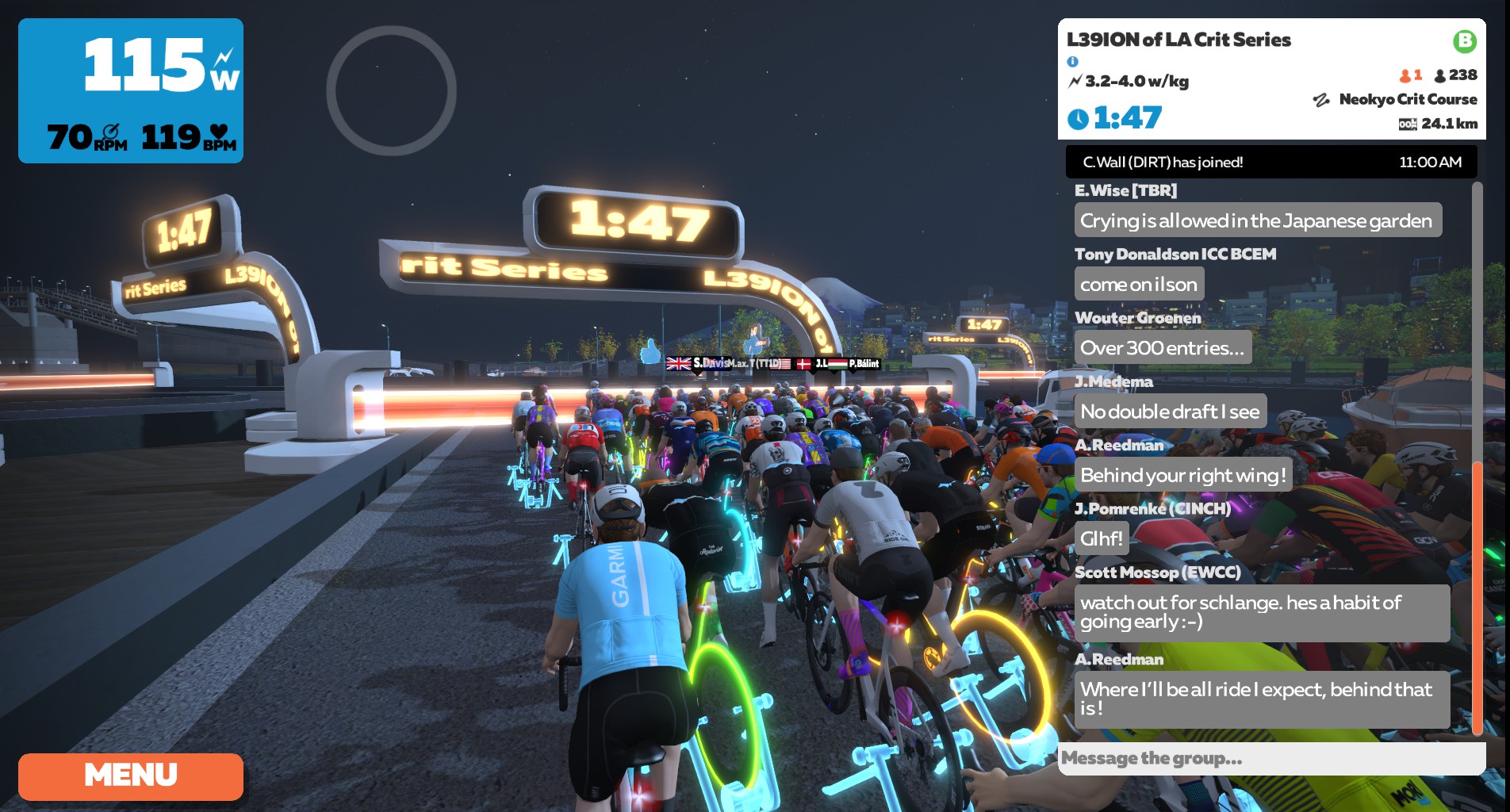
The usual banter in the pens…

The Start

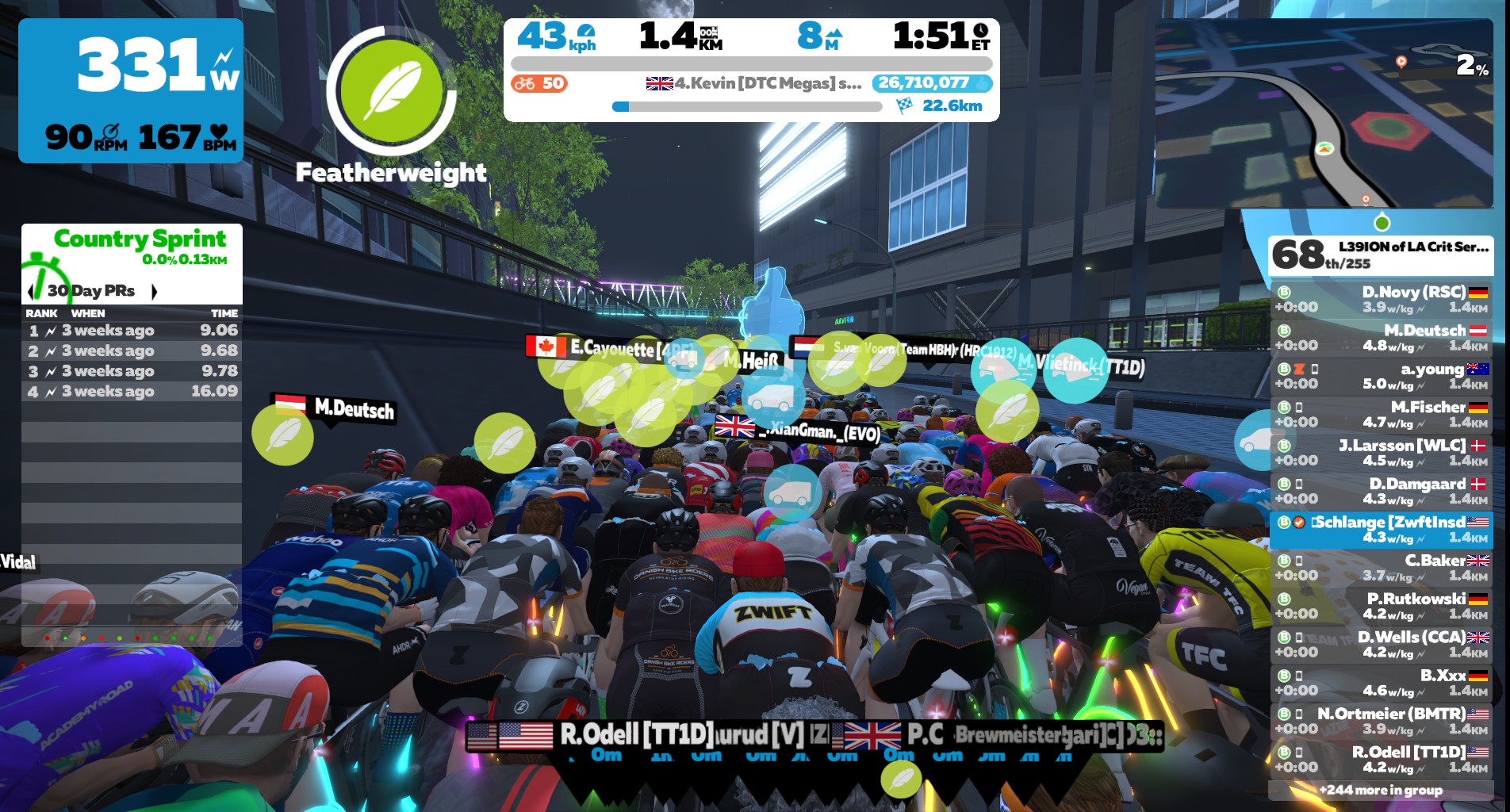
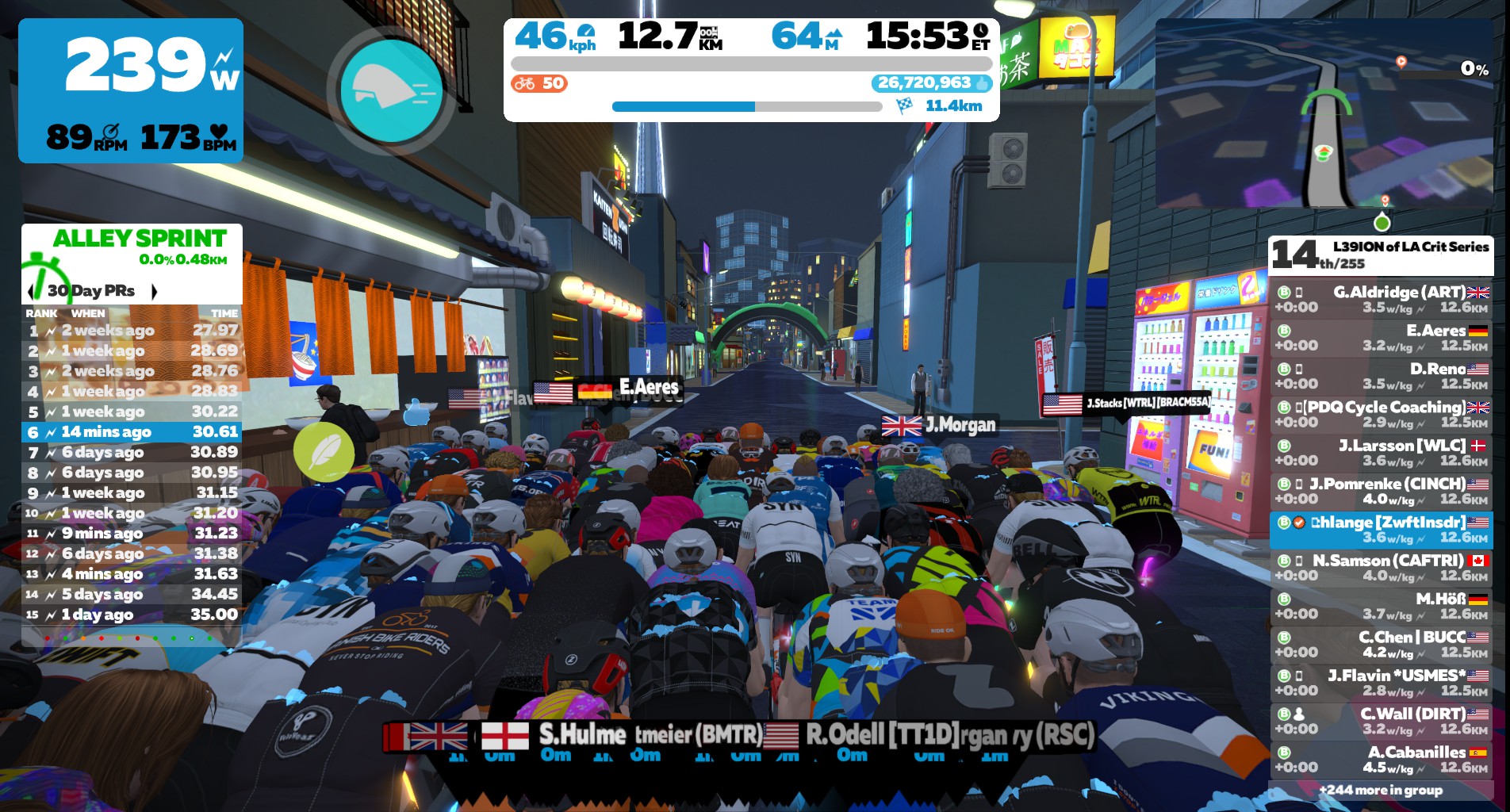
The race began just like last week’s. A bit of a hard effort for the first 30 seconds, then the pack settled in and chugged along around 47-48kph. I sat in the draft, riding as easily as possible without drifting off the back of the front group. We had 255 riders in the race, so a bit less than the previous week.

So many feathers on the false flat!

Efficiency is such a core concept when it comes to racecraft. Racers who win ride as easily as they possibly can, so they have the power to go hard when it’s needed. Those guys sitting in the wind at the front of your group throughout the race rarely end up winning. It’s not rocket science: they’ve spent their legs working extra hard while everyone behind worked 30% less.

For the first 16 minutes of the race I averaged 291W. Then we began lap 4. It was go time!

Mid-Race Attack

Approaching the Alley Sprint banner on lap 4. Almost go time!

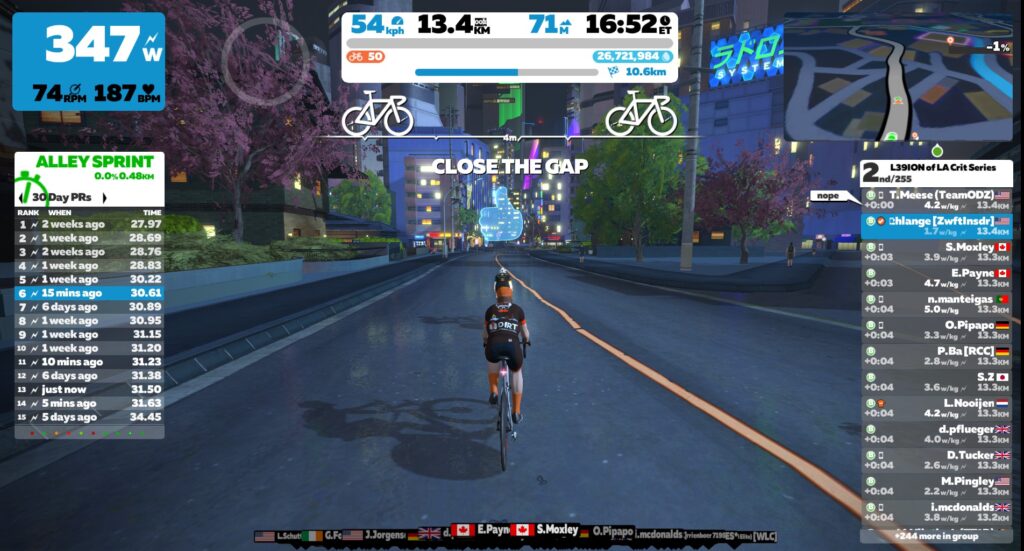
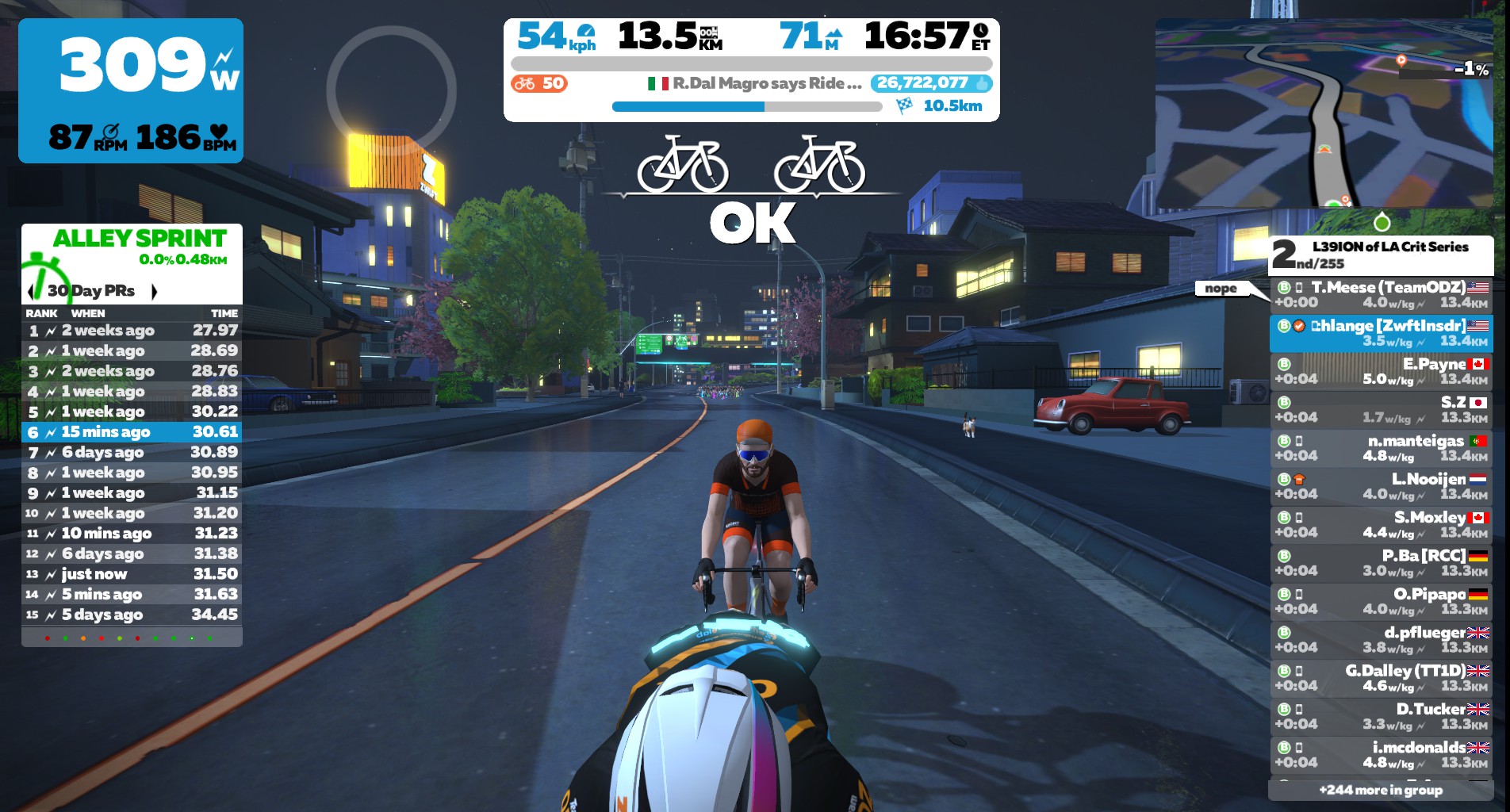
I’d seen Tom surfing wheels in the front group with me, so I knew he was ready for the attack. We sat near the front of the pack of ~100 riders, went through the Alley Sprint arch, then as the road tilted up we both poured on the watts, slingshotting off the draft of those ahead and rocketing into open space.

My aero powerup was activated for an extra boost. And it worked… sort of. We got away from the group, quickly creating a gap of ~4 seconds.

There was only one problem. Nobody had followed us. It was just Tom and I against 100 other riders. “Nope,” Tom messaged.

We both knew it wasn’t going to work, so we eased up. In the end, the attack effort lasted around 30 seconds, with an average wattage of 518W. My heartrate spiked up to 187 (my max is 189). It was time to let the group catch, then sit in and recover.

The Finish

Lap 4 and 5 ticked over quickly, then we arrived at the back half of the final lap. My legs felt good, so it was time to put my original plan into place.

Moving forward for the final effort

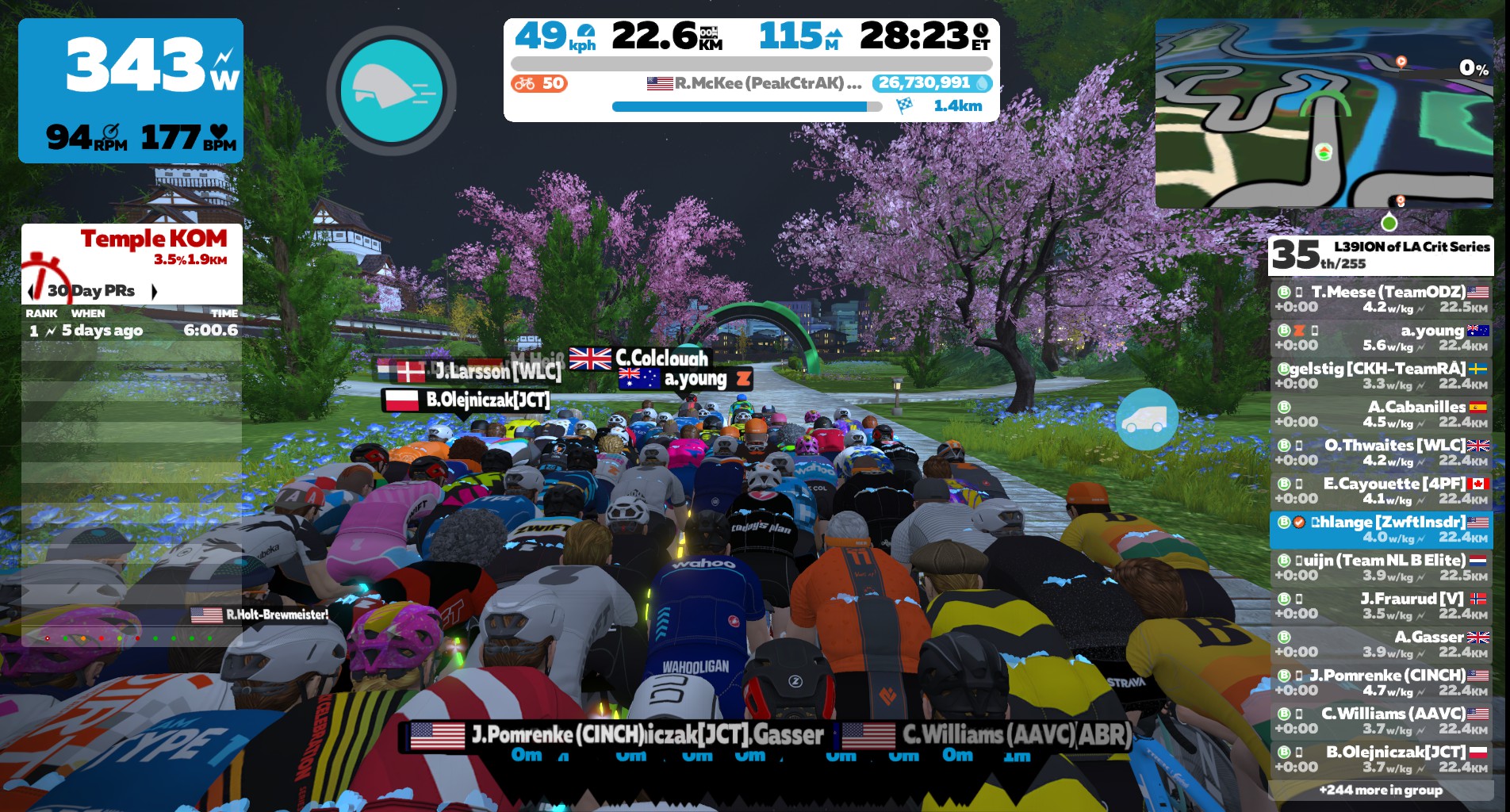
As we rode through the Castle Sprint arch, I worked my way toward the front of the pack. There’s a bit of a rise after the arch, then it’s a twisty, pell-mell final kilometer to the finish line. I wanted to make sure I stayed with the front riders during the final craziness!

Cresting the slight rise, I was positioned well. At first I thought, “The group’s not stretching out like last time,” but then I realized the stretch was happening behind me instead of ahead. Splendid!

I’d held onto an aero powerup, and used it as we neared the final wooden arch. It was go time! I hammered with everything I had, crossing the line in 15th place at 189BPM. Woosh!

See activity on Strava >
See ride on Zwift.com >
See results on ZwiftPower >

Takeaways

I crossed the line 0.513s behind the winner this time, compared to 1.304s in the previous race. I’d say my positioning plan made all the difference. And for my efforts I received another ranking upgrade (-10.75).

This is a good example of the fun Zwifters can have riding “repeat races” against a similar field on the same course. If you learn something each time, and apply it to the next race, you can see measurable improvements. And that’s gratifying.

Was the mid-race attack a smart move? Nah. We should have done something to get more riders involved. What I’ve done in the past (and this may sound crazy) is simply message everyone in game something like “Going to attack on this false flat. Join me?” This always gets more people attacking than if you go for it solo. Sure, it telegraphs the attack, so more riders can surf the wheels and hang on. But it also works better than going solo, in my experience.

If there was another L39ION crit to race, I’d probably give this a try. Sadly, the 4-race series is over.

Could I have finished higher without the mid-race attack? Perhaps. It’s interesting comparing my power numbers for the two L39ION crits:

  • Race 1
    • 299W average
    • 312W normalized
    • Final 2 minutes: 415W average
  • Race 2
    • 306W average
    • 328W normalized
    • Final 2 minutes: 433W average

Normalized power is better than average power at quantifying the difficulty of a race effort, and clearly my mid-race attack plus a bit more effort in the final minutes bumped up the difficulty significantly. (My average wattage for the first 16 minutes was actually 4W lower in the second race. Apart from the mid-race attack and final effort, the rides were quite similar.)

Your Thoughts

Did you race multiple L39ION crits? Did you apply your learnings and improve your results? Share below!

Glucose Monitoring With Supersapiens CEO Phil Southerland (Zwift PowerUp Cycling Podcast)

0

Phil Southerland, CEO of Supersapiens, explains why everyone should be using glucose monitoring in their training.

About the Podcast

The Zwift PowerUp Cycling Podcast features training tips from host Matt Rowe (Rowe & King), with regular co-hosts Greg Henderson, Rahsaan Bahati, Dani Rowe, and Kristin Armstrong.

Zwift Season Guide: What’s Up Next from Zwift HQ?

7

Zwift Season Guide: What’s Up Next from Zwift HQ?

While the Zwift community organizes the bulk of the events on the platform, the truly big events in terms of participation are usually those organized by Zwift themselves, often in partnership with a major brand.

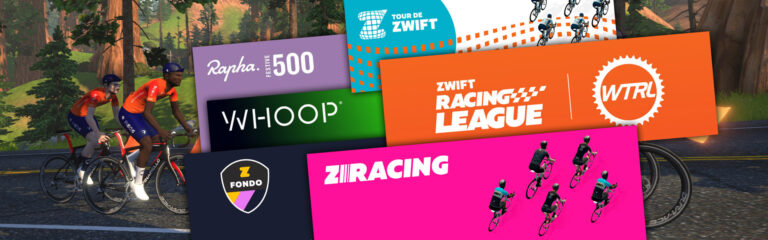
Zwift recently sent out a press release detailing their plans for major events through March 2022 – a welcome move, since it lets Zwifters plan their indoor events and training. Here’s our summary of what’s coming up next from ZwiftHQ!

Rapha Festive 500

This annual event challenges riders to complete 500km between December 24-31st. Join the Strava challenge, then put in the miles… outside or inside!

Read more about how it works on Zwift >

Zwift Fondo Series

It’s fun to fondo! If you’re looking for longer rides with tons of friends, the Z Fondo Series is the place to find it. This is a monthly event, with each month’s event spanning 3 days and multiple timeslots, so everyone can find a time to ride.

New this year: three new fondo routes to choose from: 2022 Bambino, 2022 Medio, and 2022 Gran.

The first fondo kicks off at midnight December 31st GMT, which is 7pm EST/4pm PST December 30th. Events repeat every 5 hours until January 2nd at 10pm GMT/5pm EST/2pm PST, with a total of 15 events currently scheduled.

Read more >

WHOOP Training Series

This ride+run workout series runs from January 3-24th and features sessions inspired by WHOOP ambassadors including 4x IRONMAN champion Lionel Sanders, Alex Howes from EF Pro Cycling, and the Tinman Elite running team. The series also includes recovery sessions led by these ambassadors.

See upcoming events and series details at zwift.com/events/series/whoop-workout-series

Tour de Zwift (Ride and Run)

The biggest tour Zwift holds each year, TdZ inspires riders to explore all of Zwift’s worlds while unlocking fun in-game swag for doing so.

This year’s tour runs from January 10-February 6, with a make-up week following.

Read more >

Zwift Racing League

The biggest thing happening in Zwift racing, ZRL’s next season launches January 11th, with the team registration deadline of Januay 7.

Read more >

INEOS Grenadiers Virtual Training Camp

No details posted yet, but Zwift says, “INEOS Grenadiers will be sharing their training expertise, with Zwifters having the very special chance to ride with some of the sport’s biggest stars.” This takes place in January – we’ll post an article all about it once details are released.

ZRacing Chase Races

Launched in December 2021, this race series from Zwift+WTRL has proven very popular due to its auto-categorization setup and fresh chase race format.

Races happen every Wednesday in multiple timezones.

Read more >

Wahoo Climbing Mission

Hurray – it’s the return of missions on Zwift! The Wahoo Climbing Mission will be held over four weeks, beginning Jan 24th. The goal for Zwifters? Climb 20,000ft. Riders will unlock fun stuff at 10,000ft and 15,000ft as well. More details on this once we get them… up up up!

Rapha Rising

A three-stage challenge event held over consecutive days taking place over the last weekend in February. Zwift promises more details will be unveiled in the new year, and we’ll publish those details once we get them.

More to Come

The list above isn’t a complete list of what’s happening on the platform through March. ZwiftHQ will definitely add more events in the coming months, and of course, the amazing Zwift community will continue to organize killer group rides and races each and every day.

Having trouble finding just the right event for you? Read “6 Tools for Finding Your Perfect Zwift Event“.

Questions or Comments?

Share below!

Zwiftalizer 2.0 Released: Analyze and Visualize Zwift Log Files

Zwiftalizer 2.0 Released: Analyze and Visualize Zwift Log Files

Editor’s note: Zwiftalizer is a log file analyzer/visualizer for Zwifters. Built by Zwifter Mike Hanney back in 2016, it’s a useful tool for analyzing your framerate performance as well as ANT+, Bluetooth, and network signal quality.

Mike just launched a huge revamp of the site, including a return of the much-loved benchmarks database which shows what sort of Zwift performance you can expect from various device setups. As always, Mike has done excellent work. I’ll let him share the details…

Zwiftalizer 2.0 is now live. It is a complete rewrite and includes an updated log parser, benchmarks reports, and a web-based ping test. Here is a summary of the new features:

  • System Specs
  • Graphics profile
  • Graphics vendor/model match (true/false)
  • Platform/Device (PC, Mac, iOS, Android)
  • BLE client type (local or Companion App)
  • BLE device pairings
  • ANT+ device pairings
  • ANT+ device manufacturer and model lookup
  • Loading time
  • Game client version
  • Game client version out of date warning
  • Game Launcher version
  • ISO 8601 date format
  • User timezone (based on browser used to upload)
  • Date and times converted to UTC server side
  • Partition log session into multiple activities
  • Data series per activity:
    • World
    • Start time
    • End time
    • Duration
    • BLE disconnects
    • ANT+ disconnects
    • ANT+ message failures per channel
    • FPS (min, max, avg, 1st percentile)
    • World clock offsets
    • Latency test failures
    • Network TCP disconnects
    • Network UDP disconnects
    • Network UDP Server to Client packet count
    • Network UDP Server to Client packet failures
    • Network UDP Client to Server packet count
    • Network UDP Client to Server packet failures
  • Sharing log reports with permalinks
  • Benchmarks Report
    • Filter by World
    • Filter by Profile
    • Filter by Resolution
    • Top 100 results ordered by average FPS descending
    • Permalink to a report for World, Profile, Resolution
    • Click on an entry to see top 100 activities for that system

Why Now?

As we head into 2022, there’s a renewed interest in CPU and GPU performance for Zwift and renewed motivation on my part to modernize the site and keep it going. The driving factors for this include the continued GPU shortages and hyperinflated prices, Makuri Islands’ inexplicably high demands on PC resources, and Apple’s industry-changing ARM-based M1 chip designs.

Rebuilt for Another Five Years

I felt it was time to rebuild Zwiftalizer.com from the ground up. The parser code in version one ran in the browser. This made it challenging to test on all browser and OS variants. Version two moves the heavy lifting to the server side, and the code is now highly modular, which makes it easier to work on each component in isolation without introducing side effects in another.

It’s an easier maintenance model but it brings some new considerations such as data privacy and security compliance, and higher running costs because I have to store and process the data server-side. This requires consent from end-users. Everybody who uploads a log file must now sign in. This re-platforming will enable Zwiftalizer to keep going for another five years.

Multiple Activities

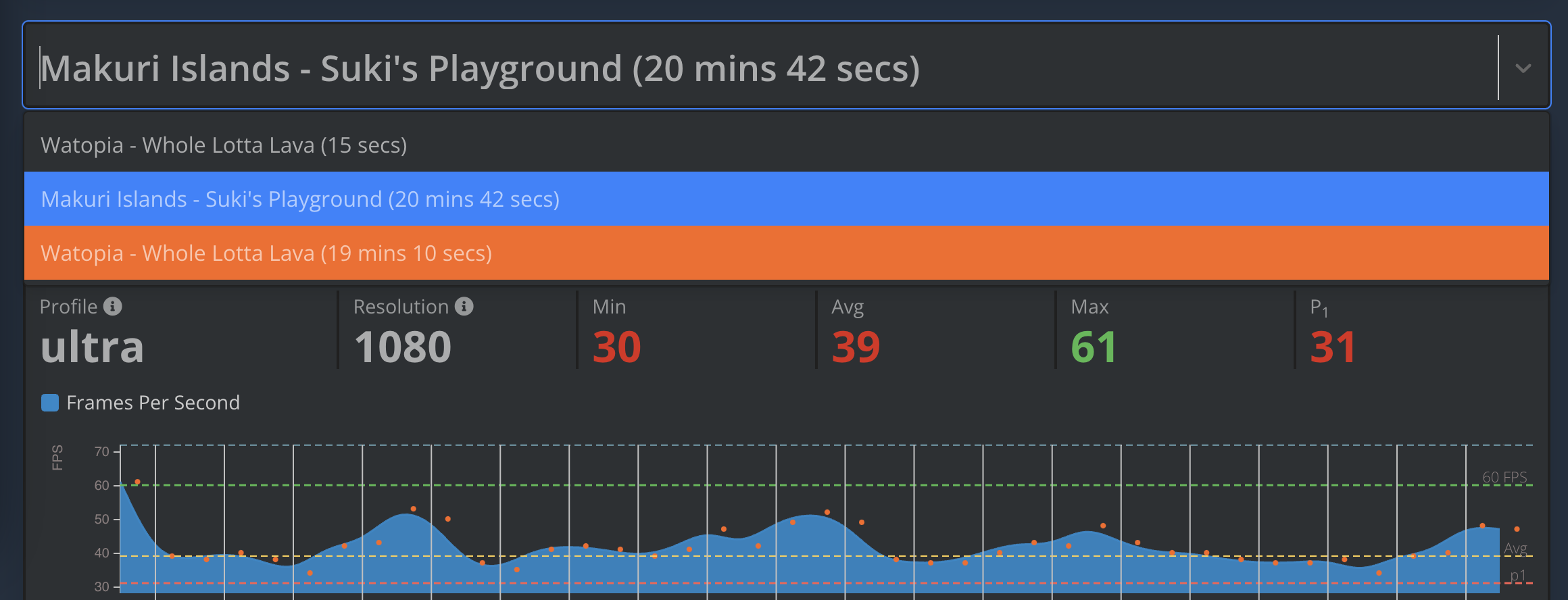
Multiple activities separated out

The biggest change in version 2.0 is that a log file is now divided into activities. This means that if you start a new ride (or run) without exiting, the parser will break up the log file and render charts for each activity. A drop-down menu allows you to flip between activities in the same session.

Log Report Sharing

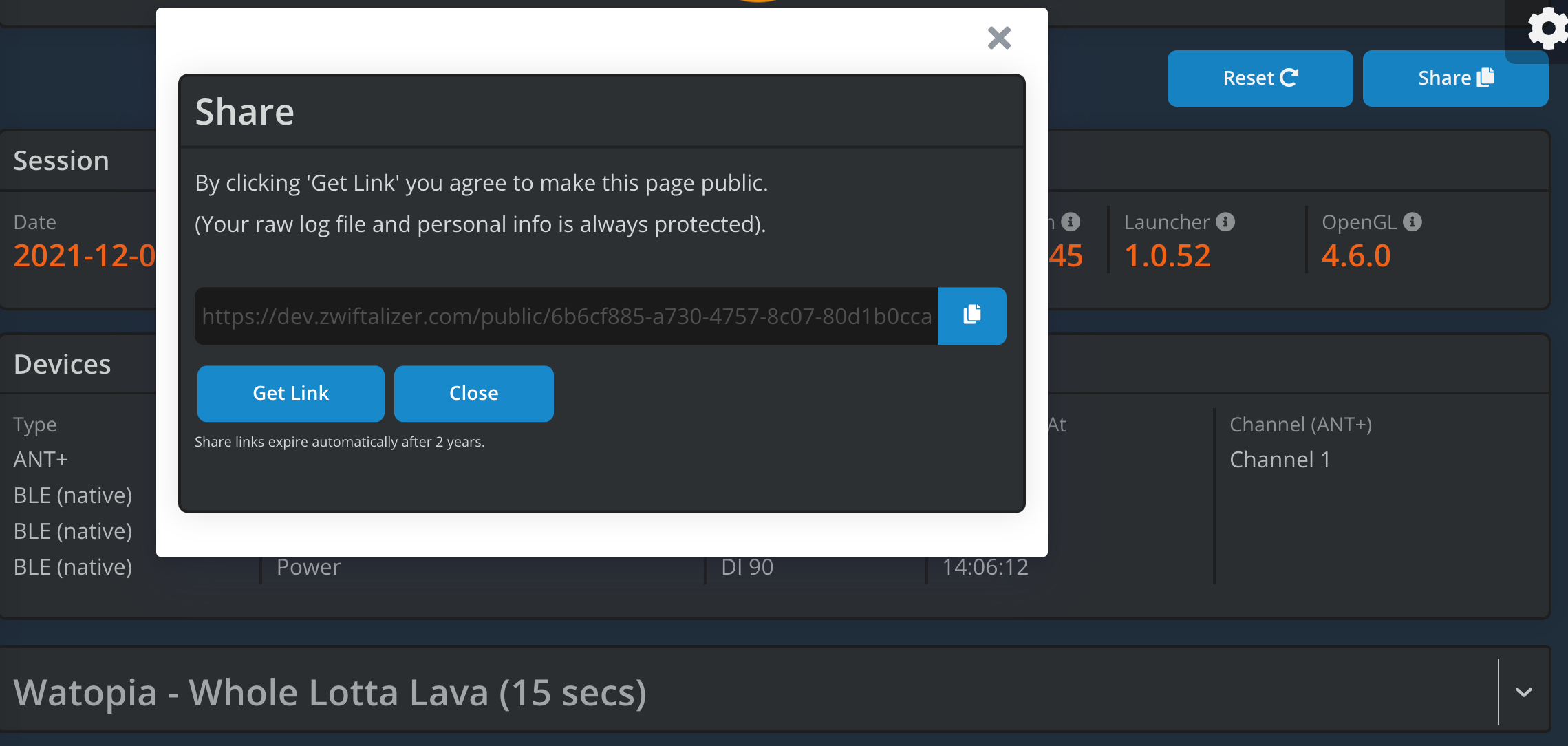
Share your log report with your friends

The output of parsing a log can now be shared with anyone. This allows users to conveniently post links in the Zwift Forums and social media channels that link back to Zwiftalizer without having to take screenshots. It is important to note that raw log files are never made public.

Benchmarks For Each World

Benchmarks are back

Multiple activity parsing facilitates the next big change – benchmarks for each world. Users have been asking me for this for years. Graphics performance for the older worlds like Watopia and London is much better than on the newer worlds like New York and Makuri Islands. This is logical since the newer worlds are considerably more complex.

Now the community can see just how much performance differs across worlds. Interestingly all worlds perform about the same on modern Apple ARM CPUs found in phones, tablets, and Apple TV – 30 FPS at 1080 resolution, basic profile, but the visuals are nowhere near as rich as a discrete GPU running at 4K resolution and ultra profile. This interests me a lot because I feel the business is prioritizing development for the mobile and consumer device userbase and de-prioritizing PC and Mac users, which I can totally understand from a business resource planning and ROI perspective, even if I don’t agree with it.

UDP Network Data

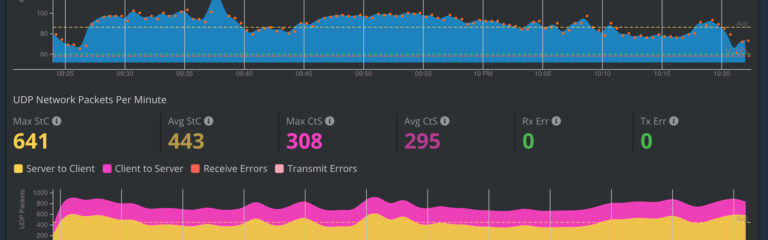
UDP network charts

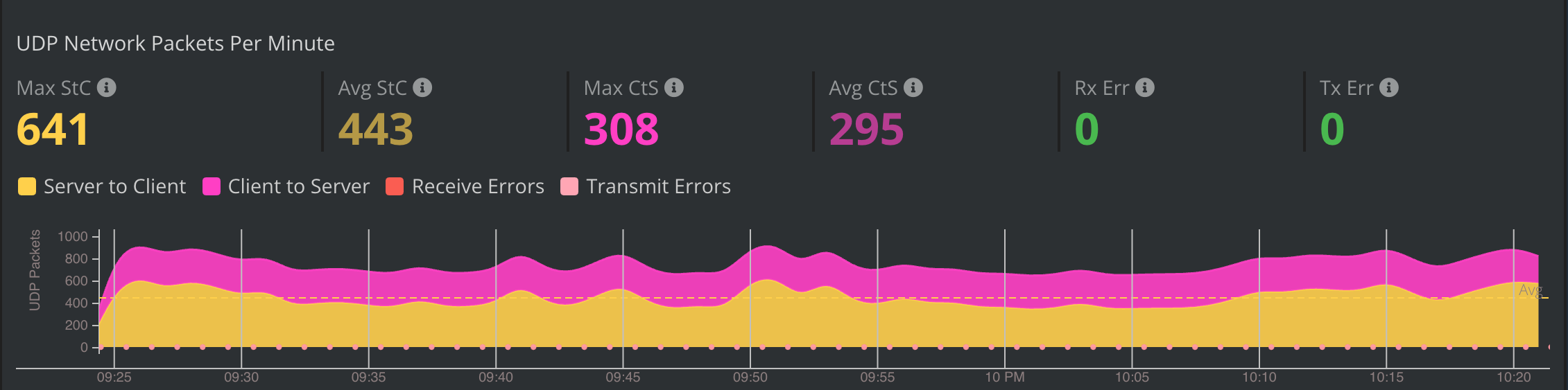
The third biggest change is the addition of UDP network data charts. I noticed UDP data showing up in the log file sometime in early 2021. Being able to visualize UDP packet count alongside FPS confirms something I’ve assumed for a while – that when you’re riding in a large group, and the volume of UDP server to client packets per minute increases, FPS tends to decrease proportionally.

For most people, this isn’t noticeable. But folks who expect a consistent 60 FPS 4K experience from their high-end GPU, and don’t understand why they aren’t seeing it, might want to upgrade their CPU because decoding all that network data is a CPU-bound task, not GPU. Rendering 100 riders is no sweat for a GPU, but knowing where to render them is critical for an MMOG and completely CPU-dependent.

Ping Test

Web based ping test

This leads me to the 4th change – ping test. The motivation for this feature is to provide a convenient, self-service way for a user to visualize their Internet connection quality to the AWS us-west-2 region. Why is this relevant? A consistent round trip time is important for smooth motion in game. Consider this scenario – you are in Singapore connected to Zwift’s servers in AWS’s West coast data center halfway around the world, and I am in Seattle 150 miles away as the crow flies. It takes 210 milliseconds for you to receive the same packet of information that I get in 30 milliseconds. Similarly, it takes 210 milliseconds for the server to receive your latest position, compared to my 30 milliseconds. But (and this is critical) the data refresh interval is the same for both of us. So the latency is not a big deal because the game engine (probably) compensates for our latency differences and normalizes everything to a central clock (the server time and local client time is sent in every data packet).

Now, what if your network latency is highly variable – 210 ms, 450 ms, 560 ms, 360 ms, etc? Your latest position may be beyond the acceptable range for compensation. What would be the outcome? I’m speculating, but I think you would pop in and out of position as my client assumed your position and then had to reposition you when the next good position was received. I believe this repositioning motion is smoothed out by my client, but I assume there are limits to how often this can be done for every single rider around me, and at some point, it drops you back in abruptly. Therefore, consistent round trip time values in the ping test are highly desirable. A low number is not that important (we aren’t shooting virtual bullets at each other) but a consistent number is important for smooth sailing.

Summary

Zwiftalizer 2.0 has been rewritten and modernized. It aims to continue to be a useful tool for PC and Mac enthusiasts looking to optimize and troubleshoot their setups. Operations and features are subject to change following updates in the Zwift game log format on which it depends.

Questions or Comments?

Share below!

Mr. Zwift Worldwide KBH (Nowhere Fast Episode 28)

0

Mr. Zwift Worldwide KBH (Nowhere Fast Episode 28)

In Episode 28 of Nowhere Fast we talk about racing. Lots of racing. KBH competes in the community league playoffs, World Championship Qualifier race, and Project Echelon racing league on RGT. Get compelling insights into what it takes to win top-level indoor races… and the hoops you have to jump through just to get there.

About the Podcast

Nowhere Fast is a part of the Wide Angle Podium network and focuses on virtual bike racing. It includes Zwift commentary, interviews, and coverage of real races on fake bikes. Get it on Apple Podcasts, Podbean, Spotify, or anywhere else fine podcasts are shared.


Training with Rowe & King, Weeks 8-9

2

Training with Rowe & King, Weeks 8-9

Week 8 consisted of steady-state riding with a big effort at the end of the week. 

Monday and Tuesday

Monday saw me join the AHDR crew for a ride around Neokyo at a steady pace. AHDR always puts on well-organised and managed rides.

Tuesday I joined the restart of the Andy Schleck Cycles Cappuccino.  I was hoping for a quiet ride, hearing the re-telling of race stories by Andy. However, I found myself being more involved than I originally planned!
As the ride commenced, I noticed there was no sign of Andy, then to my surprise, my telephone lit up with his name on.  “What was Andy Schleck doing calling me?” I wondered aloud.  (Andy had my telephone number as we had previously ridden together earlier in the year, as I had interviewed him for an article to highlight his rides.)  Andy explained that his Companion app wasn’t working and so was telling me messages to pass to the group, whilst he fixed his technical issues. 

This made for an entertaining ride until Andy finally got the technology working. 

Wednesday to Friday

My steady-state riding continued with a spin with INEOS Grenadiers in the form of a group with Egan Bernal and Richard Carapaz.  It was a strange event in the sense that they didn’t communicate with the group and photos post ride indicated they did not have their Companion app connected.  It was during this event I realised that through Zwift, I had had the opportunity to ride alongside three Tour de France winners: Geraint Thomas, Andy Schleck, and now Egan Bernal. (And let’s not take anything away from Richard Carapaz, a Giro d’Italia champion.)

This is the beauty of Zwift. Every time you sign in for a ride, there is always some fresh experience to be had.

My ride with INEOS Grenadiers was cut a few minutes short as I hopped on to the Neokyo Badge Hunt, which has been a highly popular series. 

Thursday was my customary ride with Castelli, where we tackled the “Legends and Lava” route. Riding with Castelli is one of my favourite activities on Zwift, as the events are always well-paced and organised. Just pleasant conversation at a nice steady pace, making for the perfect lunchtime ride.

Friday was a steady ride again with INEOS Grenadiers but this time with Geraint Thomas and Luke Rowe.  Geraint (being an old hand at Zwift) was very engaging and Luke was there as part of the double act.  For those who haven’t been following my training updates, Luke’s brother Matt has been successfully overseeing my training through Rowe & King.   

Saturday’s Big Effort

This steady-state riding left me primed for the big effort of the week, a sub 60-minute assault up the Ven-Top.  A full report can be read here.  But to get right to the point, I succeeded in the challenge by 2 seconds, or rather 1.9 seconds to be exact, with the average being 5 w/kg for the duration of the ride.  This was 40 seconds faster than I have previously done, so I consider this to be a major achievement given the length of the Ven-Top climb. 

A cool-down ride saw me take an easy spin in Neokyo followed by joining Mark Cavendish at very short notice, as he hosted an event that saw 1100 riders join him to ride around France. 

Sunday saw me barely walking after the effort the day before and subsequently I joined another of Mark Cavendish’s easy rides. 

It was a week of steady-state riding and one big effort that saw me accumulate 9 hours in the saddle.

Achievements

It was during all this steady-state riding that I had time to think about how I have progressed over the last 8 weeks. The sub-60 minute Ven-Top achievement under my belt highlighted to me the steady but definite progress.

  • Week 4 – New 5-minute PB, at 5.7 w/kg.
  • Week 5 – Finishing 8th and 7th in competitive FRR series, on the major stages.
  • Week 6 – New 20-minute power, 5.3 w/kg. My entire average for the 28:23 race was 5.3 w/kg, also a new PB.
  • Week 7 – New 5-minute PB at 5.8 w/kg, new 20-minute PB at 5.4 w/kg, new FTP 349.
  • Week 8 – Ven-Top sub 60 minutes, 59:58.  First time I have achieved this.

At the end of week three, I wrote, “My overall feeling is that I am being pushed to a new level.  The innovative and different interval training is tough but I understand the long-term benefits and I am having the sensation that despite the fatigue, when I am fresh, I will be reaching new peaks.  I just have to stay on plan and manage that recovery.”    

It has been fascinating to look back and see the progress and reread my earlier articles. It’s like there was something prophetic about that statement, and I am delighted with the gains.

With these achievements under my belt, Matt was keen that we continue to build a strong base, which would result in week 9 being a week to recover, consolidate, and look to ensure these new levels become the new normal.

Week 9 – A Slow Week

Monday and Tuesday consisted of low-intensity intervals.

Monday’s session was challenging. It was the duration, 1.04 hrs, which I found difficult to handle. I just didn’t want to ride!  So podcasts were used to distract me and the Erg mode of the trainer ensured that I was operating at around the right resistance.  I won’t lie, I struggled. 

I struggled more on Tuesday which resulted in me having to abandon the session midway through.  I simply didn’t have the strength in the legs to push any resistance.  Feeling disappointed with my failure and following several hours of rest and a big lunch, I attended the Andy Schleck Cycles Cappuccino Ride. This time, however, there was no repeat of technical issues for Andy and it was a fun ride and exactly what I needed.

In desperate need of a rest, Wednesday was a complete day off the bike.  I was still feeling fatigued following my ride with Castelli on Thursday, so Friday and Saturday were much-needed rest days.  (That is not entirely true though. For an upcoming article, I did some power comparisons with my trainer and Garmin Vector 2S pedals. This resulted in a quick spin up the Volcano plus several sprints.)

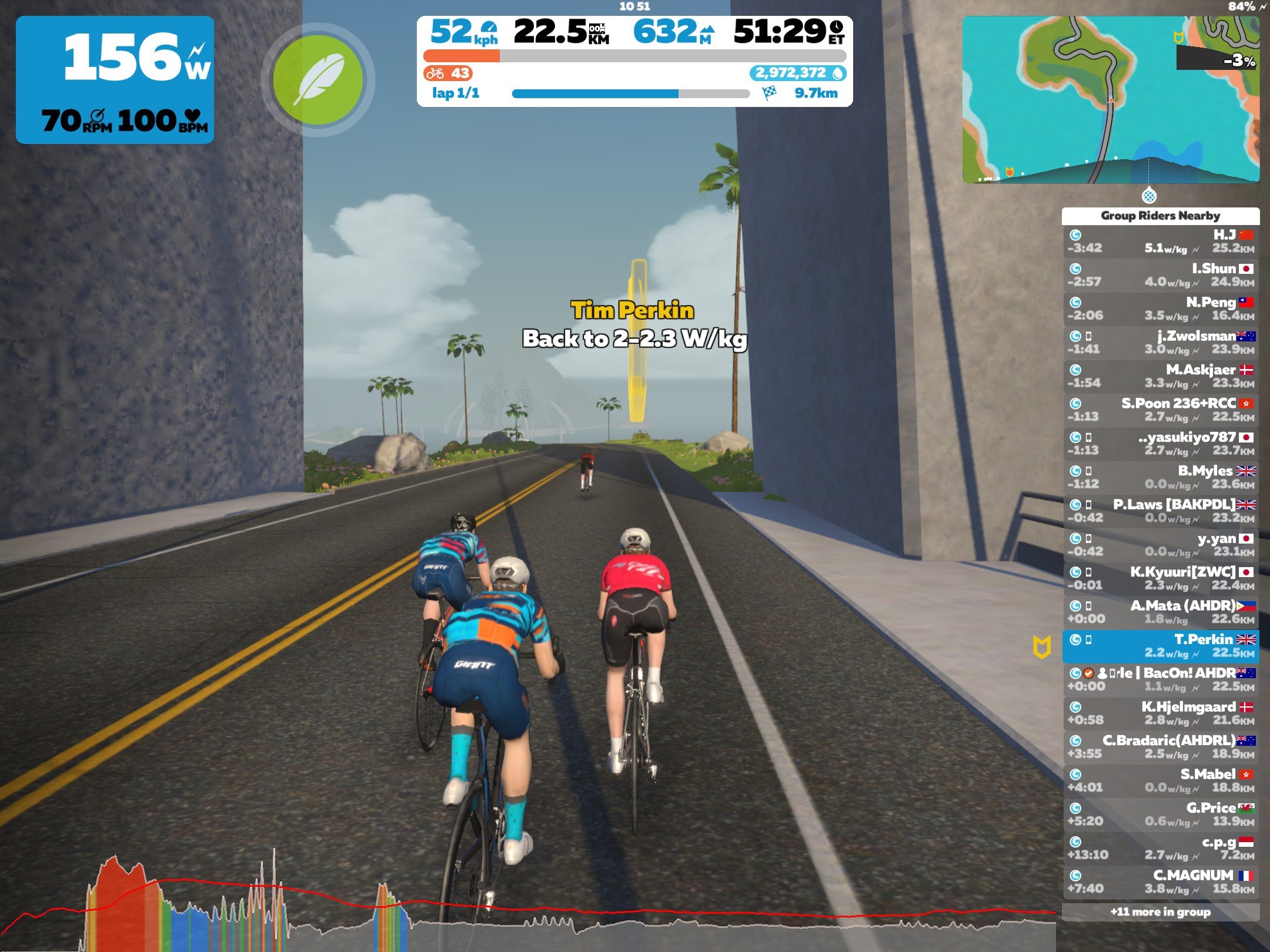
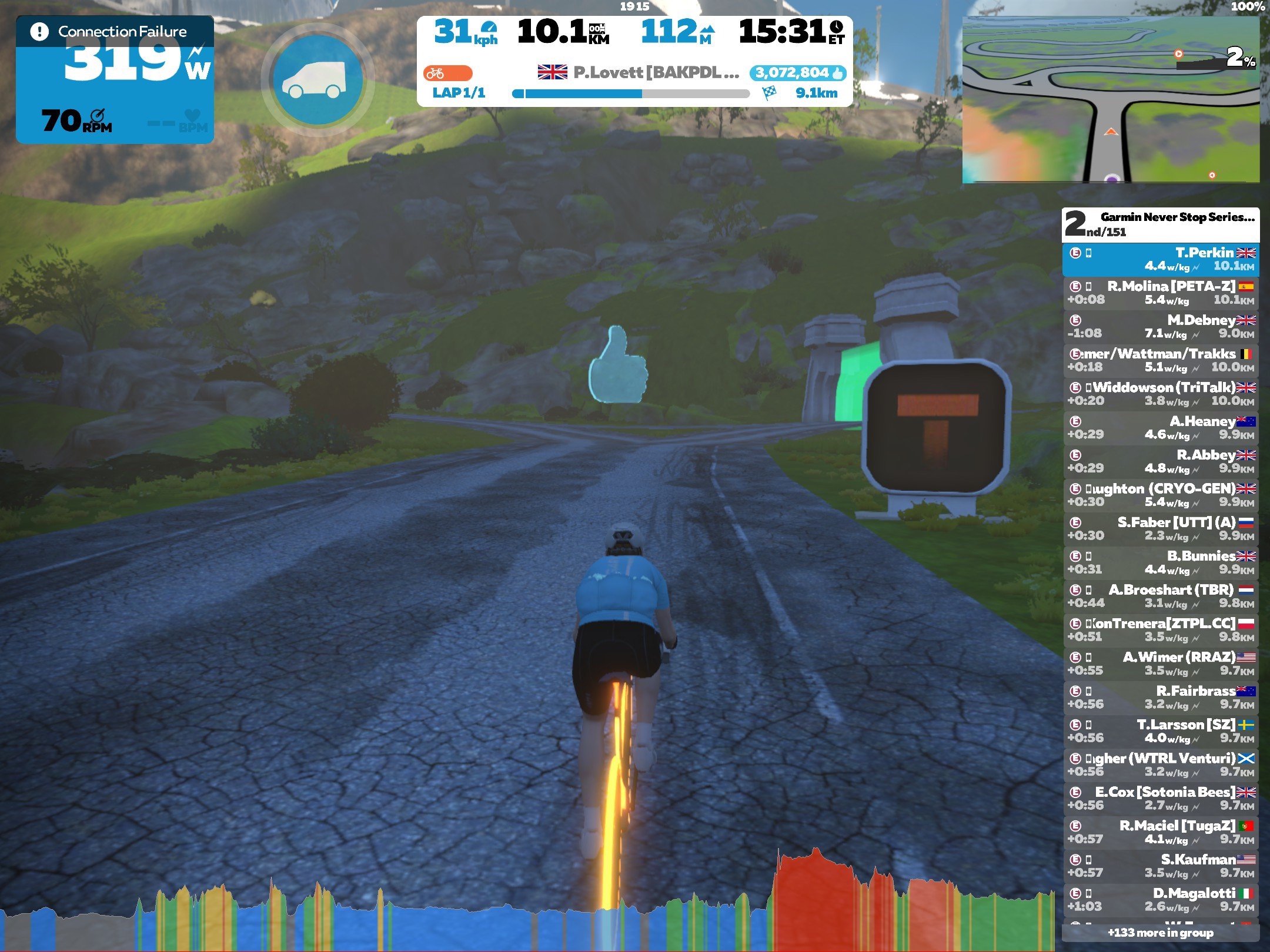
Feeling I needed to salvage the week, on Sunday a 2.5-hour, 100km endurance ride was struggled through, followed by a 30-minute, 20km evening spin on the Garmin “Never Stop Series” where we did the Ocean Lava Cliffside Loop. At the start of the climb towards the Epic KOM, I was at the front of the group and sort of rode away from people.  I wasn’t attacking, it’s just I pushed up the climb and found myself on my own. I was soon joined by two other riders and we completed the route together, where I was outsprinted on the line. 

Despite the week not being terribly intense, I still managed to accumulate close to 250km and 6.5 hours riding. 

The key lesson from the week was that sometimes to go forward, you have to stop. The key thing is not to lose focus on the end goal and become dispirited.  A slow week is still another step in the journey and I am viewing this very much as the start of the next phase of training.  We have had 8 solid weeks of training and racing, with positive results as a consequence, we now have to consolidate before moving forward.


Review: Elite Direto XR-T Smart Trainer

20

Review: Elite Direto XR-T Smart Trainer

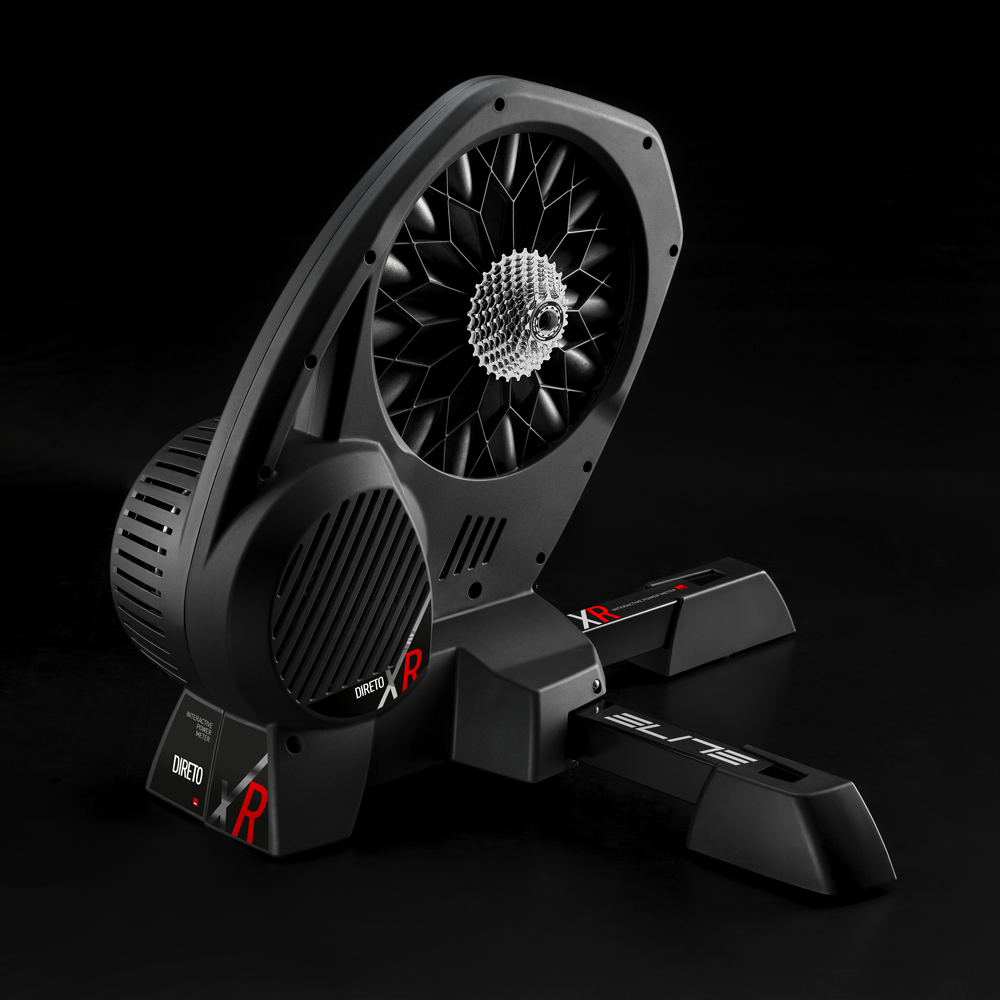
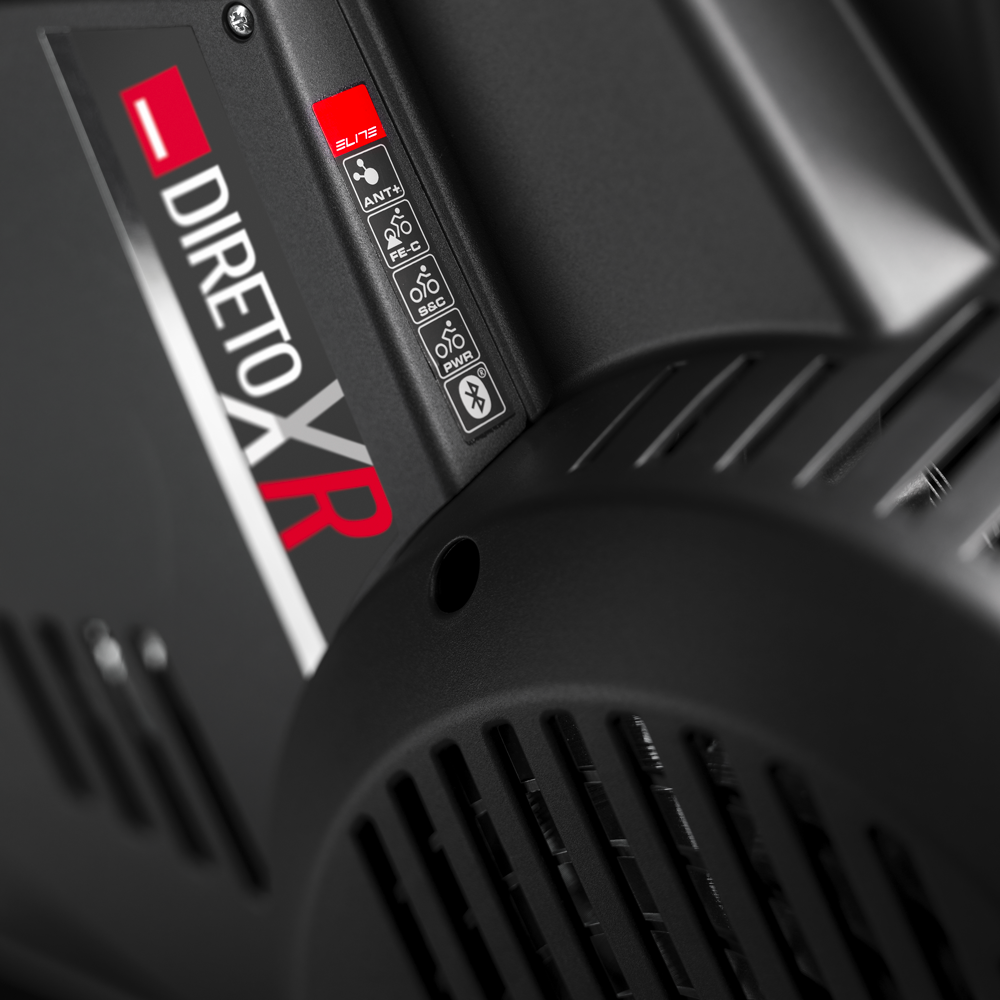
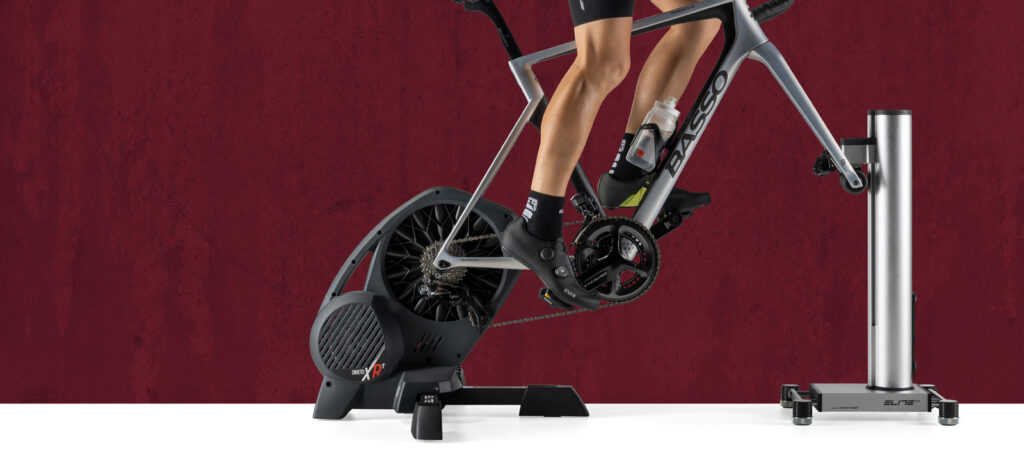
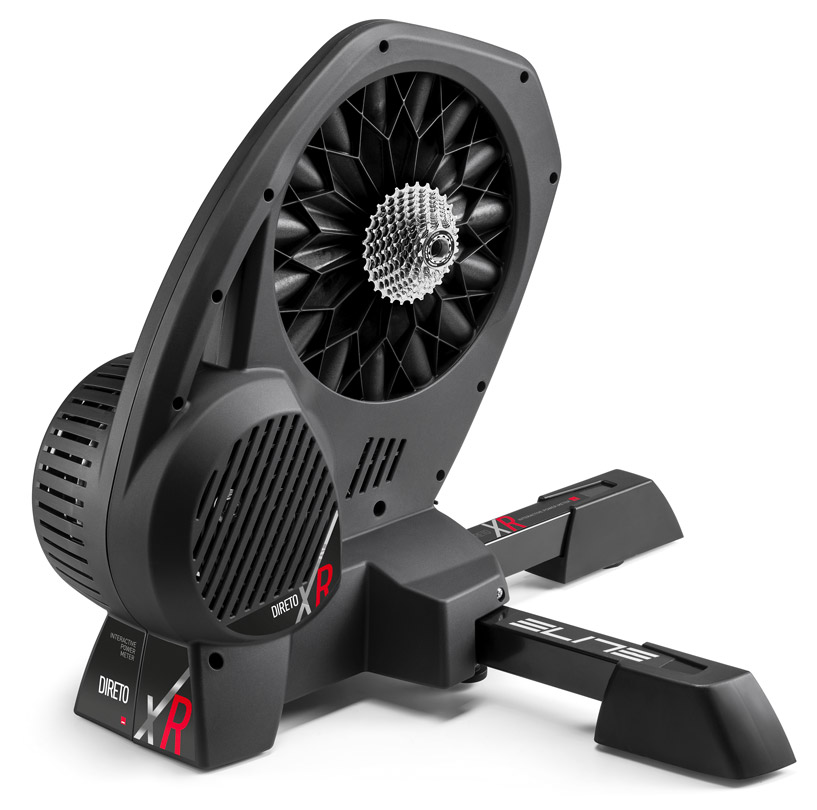
Elite’s premium flagship home trainers are the Direto XR and the Direto XR-T.  They are exactly the same trainer, but the XR comes with a Shimano 11-speed cassette (or equivalent) installed, while the XR-T does not. Of course, the Direto XR and XR-T are compatible with the RIZER, Elite’s gradient simulator with built-in steering, which I recently reviewed.

Note: throughout this review I will refer to the XR-T and XR, but keep in mind that everything written below also applies to both models, since the trainers are identical apart from shipping with or without a cassette.

Overview

The Direto XR-T is compatible with most bike frames, particularly those with a 130-135 x 5mm quick release or 142 x 12mm thru-axle. Both models accommodate long cage derailleurs and are compatible with 9/10/11 speed Shimano®/SRAM, 9/10/11/12 speed Campagnolo (and can be purchased separately), 12 speed SRAM NX, and 12-speed Shimano® Micro Spline cassettes.

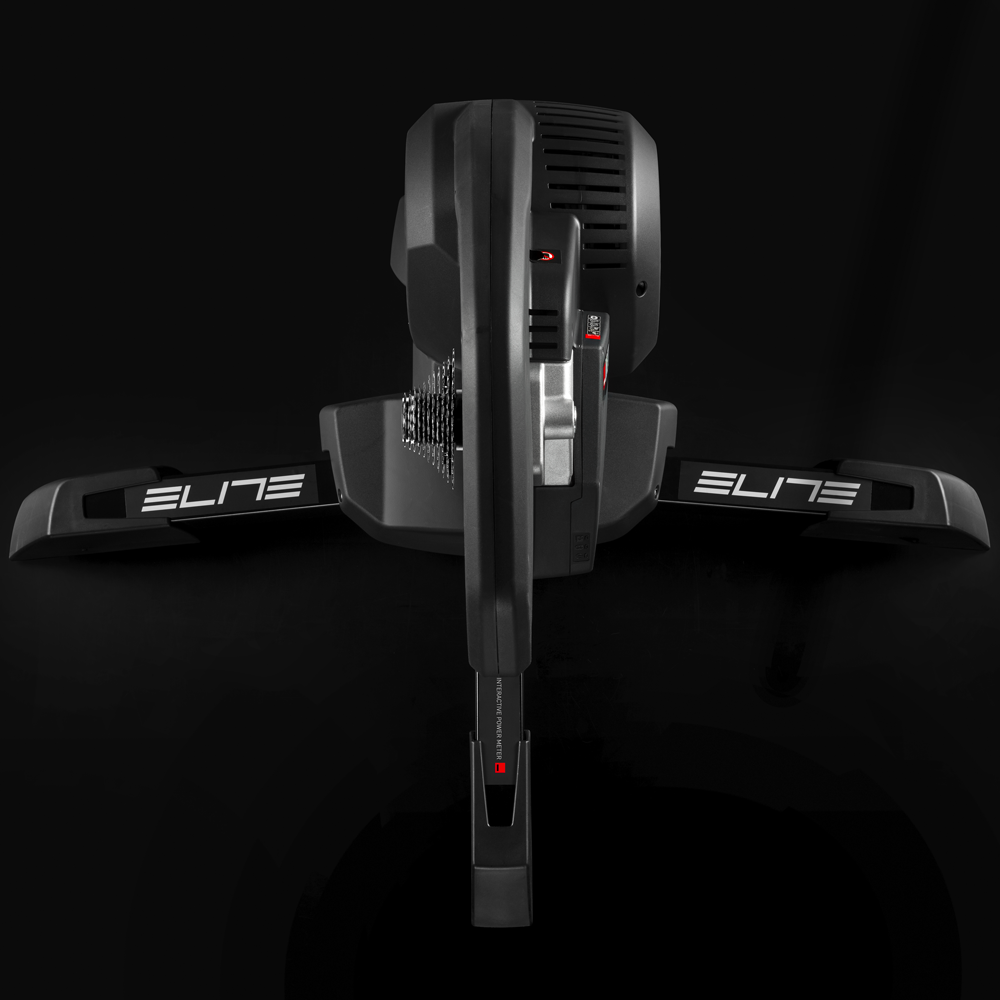
The trainer has foldable legs, and with a weight of only 16kg it is quite moveable and easy to store.  The feet are scratch-proof and adjustable, enabling you to ensure the trainer is level.

The XR-T communicates wirelessly via ANT+ and Bluetooth, as all modern smart trainers do. And the unit is accurate within ± 1,5% as a result of an integrated Optical Torque Sensor (OTS) power meter. 

Compared to the previous model (the Direto X), the XR-T has an improved flywheel, simulates higher gradients (up to 24%), and can handle sprints up to 2400 watts. 

Origins of the Direto

The story of the Direto starts in 2017 when Elite decided to introduce a trainer which had great features but was priced at a more affordable level. At the time, their top trainer was the Drivo.

The Drivo was accurate, stable, and nearly flawless. But its outer casing was made from white plastic and the trainer lacked the appealing look and feel of their competitors. Faced with competition from the Tacx Neo and Wahoo KICKR, Elite went back to their design studio. And thus the Direto was borne. 

The first version simulated slopes of 14% Not the highest on the market, but it was as accurate as the competition within that price point.  For this reason, it soon surpassed Elite’s own Drivo as the “go-to” trainer offered by Elite.

Seeing the consumer’s desire for the product in market sales, Elite decided to update the Direto family.  The Direto evolved into the Direto X in 2019, which simulated gradients up to 18% with improved power accuracy.

As a consequence of the Direto’s success, the Drivo II was discontinued and Elite focussed their attention on developing the Direto X with the objective of delivering high-end technology at more affordable price. Thus came the Direto XR, announced in July 2020.

(Interestingly, the R in the name, stands for RIZER, which the unit is compatible with. The RIZER was originally planned to be launched in conjunction with the new Direto XR, but timescales were impacted by the onset of the global pandemic and Elite, like all businesses, had to adjust their timescales accordingly.)

Product Testing and Release

Before releasing the product, the Direto XR model underwent three levels of testing. 

  • Elite employees
  • Testers
  • Pro cyclists

The first level of testing involved the Project Team.  They checked whether the trainer met Elite’s specific requirements.

The second level involved Testers.  There are in excess of 15 Testers at Elite. All are cyclists who understand the technicalities of indoor cycling, and they provided feedback to the Project Team. The Testers undertook rigorous testing, including seeing how the product worked in Erg mode and in all situations you can imagine.

The third level is testing by the pro cyclists. 

After thorough testing, the product is approved and moves to mass production. From concept to production 2 years passed.

Setting Up

The trainers come ready assembled and all you need to do is fold out the legs and secure them into position. Of course, depending on what model you acquired and what bike you are using, you may or may not have to install a cassette.  (You will need to buy a separate freehub for Campagnolo, SRAM 12 speed, and Shimano Micro Spline cassettes, although this is the same for all turbo trainers on the market today.)

The trainer weighs 16kg – lighter than its competitors and easier to position into place.  When I compare the design to its competitors, it would appear that this weight saving has been obtained by using a different style of plastic for the outer casing, which perhaps is not as aesthetically pleasing.   

Once you have positioned the trainer into place and installed the cassette, install the relevant axle adapter to fit your bike, by simply slotting them into place.  Plug in the trainer and away you go.   Included is a block to raise your front wheel.  You may want to consider configuring it using the My E-Training app, which can be downloaded to your smartphone. 

Technical Specs and Pricing

The technical details of the product are as follows:

  • Power Meter: Integrated OTS (Optical Torque Sensor) 
  • Power Meter Accuracy: ± 1,5%
  • Wireless Communication: ANT+ (FE-C, Power, Speed & Cadence) and Bluetooth (FTMS, Power and Speed Cadence)
  • Max Slope Simulated: 24%
  • Max Power: 1100 Watt (20km/h) – 2400 Watt (40km/h)
  • Flywheel Weight: 5.1kg
  • Bike Compatibility: Road bikes, Mountain bikes, City bikes – including carbon ones, with 130-135 x 5mm hubs and with quick clamping system and 142x12mm with thru-axle (an adapter for 135×10-12mm and rear 148x12mm Boost hubs is available)
  • Cassette Compatibility: 9/10/11 speed Shimano/SRAM, 9/10/11/12 speed Campagnolo, 12 speed SRAM NX, 12 speed micro Spline Shimano. Separate freehub required for Campagnolo, SRAM 12, Shimano Microspline
  • Dimensions Open (Length x Width x Height): 650 x 840 x 550 mm / 25.6’’ x 34’’ x 21.6’’ 
  • Dimensions Closed (Length x Width x Height): 650 x 300 x 550 mm / 25.6’’ x 11.8’’ x 21.6’’ 
  • Weight: 16 kg / 35.30 lb

Cost:

  • Direto XR €864.99/£829.99/US$999.99
  • Direto XR-T €824.99/£799.99/US$949.99

Key Feature: Integrated OTS (Optical Torque Sensor) 

The Direto XR and XR-T feature the OTS which Elite explains is “a power meter based on an optical sensor technology that measures the torsion of the trainer axis and on sophisticated electronics processing. This power meter is able to read the power output with exceptional precision.”

This integrated power meter measures how much power you put into the pedals with ± 1,5% accuracy, which is 0,5% more accurate than the first Direto. Elite state that the Direto XR-T “is one of the most accurate commercially available home trainers.”

Technical Support

When you purchase a trainer from Elite, you are not just purchasing the trainer, but the support that comes with it.  I will explain in greater detail.

When my Direto XR-T arrived and I connected it to Zwift, I noticed some irregularities with the movement of the avatar.  It was like it was moving in slow motion.  I immediately contacted Elite about the issue and within a day, a solution was provided.  It was related to software and I needed to reconfigure the trainer.  This solved the issue, however, upon using the trainer in Erg mode, there were issues with the level of resistance applied by the trainer.

Another email was sent to Elite, along with the relevant FIT file for the ride in question and within the day (5pm), I was having a video conference call where I was walking through the issue with the technician, including providing detailed information about the model.  The following morning, I had been informed that a replacement trainer had been dispatched and I was to make arrangements to return the faulty one.

This was reliable customer service.  Furthermore, there was no mention that I was from Zwift Insider, so did not receive any preferential treatment. 

Elite was apologetic about the situation, but to me, it was not an issue because this is complex technology and all technology has issues at some point (including my old trainer, which was from a competitor – my challenges with that can be read in my VEveresting challenge post).  To me, the important point is how the issues are dealt with. In this case, I was impressed with Elite’s efficiency and resolution.  I am highlighting this because I think support for your product is important and I want to know that if I have an issue, there will be someone to engage with and resolve the matter. 

Elite also responded to inform me that after investigating the issue, it was related to the motherboard and a small bit of soldiering on one of the contacts caused the issue – this reinforces my point about these being complex pieces of technology that can have issues.

Ride Experience 

How Does It Feel?

Due to the size of the flywheel, the trainer can feel a little hard to get moving, but once it is spinning, it has a nice feel. This is true of all flywheel-based trainers. Before any event begins, it is particularly important to have your legs spinning so you are not left behind at the start!

Responsiveness and Accuracy

Once you are moving, the trainer is responsive and you can increase the power by going through the gears.  I did a couple of tests to the accuracy of the trainer, one which could be considered “old school” and another a bit more scientific.

The “old school” test consisted of me tackling the Volcano climb on the Direto XR-T and comparing my time to what I did it previously on my other trainer, the Tacx Flux S. Back in the day, when comparing bikes we didn’t have the technology to compare power and times in the finest detail. We just rode hard and saw if there was a big time gap between the bikes! So this test was a throwback to those days where we were not so consumed by data. 

I topped out in 7:01 on my Tacx Flux S, and with the XR-T, I completed it in 6:57.  So both within a few seconds of each other. 

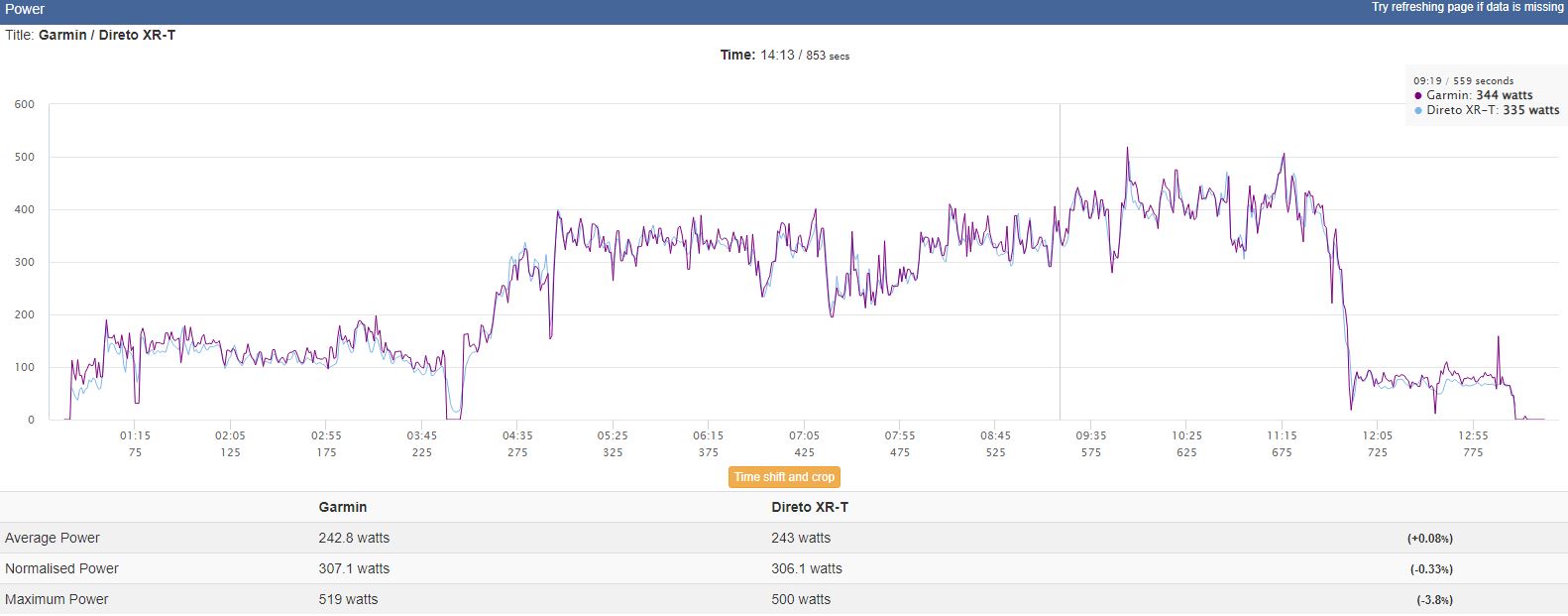
Fortunately, I have some power pedals (Garmin Vector 2S) so I can compare the power in fine detail in a more scientific way. Here is the data from my pedals compared to the trainer power in a second max effort climb of the Volcano (see the live data on ZwiftPower):

The key points to highlight are my normalised power when climbing. The difference between the Garmin Vector 2S pedals and the trainer was -0.33% in favour of the pedals, but the average power was only +0.08% different.  Just as an FYI and harkening back to my “old school” test, I completed the Volcano Climb in 7:12 this time, but as you can see, I only really increased the power towards the end and kept it largely steady.

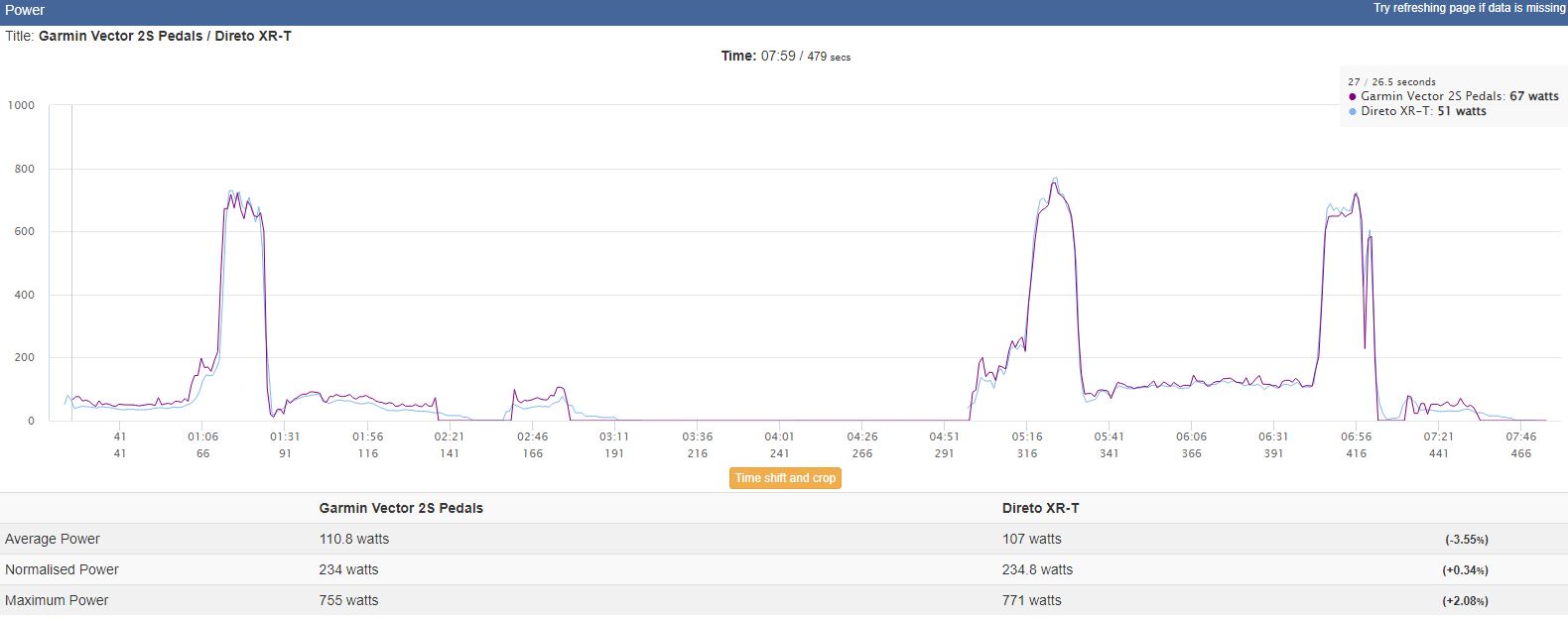
In terms of sprinting, I have undertaken 3 sprints and dual-recorded the data. The trainer was more favourable, by +2.08% than the Garmin Vector 2S pedals.  Data can be seen in the diagram (and live here on ZwiftPower), including where I had a rest after my first “all-out effort.” Yes, I’m not a sprinter and I didn’t top 800 watts but I tried to push it for the purpose of highlighting what the trainer can do.  The trainer does respond as you can see from the diagram and the limiting factor in the test was my ability.  Furthermore, you can see how quickly the trainer responded to the increase in power. 

In terms of power accuracy, my Direto XR-T performed well within spec.

Talking of accuracy and power, compared to my Tacx Flux S I really noticed the difference with the OTS as there are more micro fluctuations on my power graphic at the bottom of the screen. It’s really nothing to worry about as i already noted, the accuracy is there.  This includes changes to the gradient of Zwift, the trainer responds immediately to the onscreen gradient, including when the RIZER is attached. 

Noise

It’s whilst sprinting the trainer makes the most noise, reaching 80 decibels (dB), but normally it ranges between 60 and 70 (dB) which translates to “noise levels in an office environment.” 

To put it simpler, I was able to listen to podcasts and have a conversation and you certainly will not wake anyone if you are doing an early morning Zwift session. It sounds comparable to my Tacx Flux S trainer.

Erg mode

It works.  And works well.  This mode was used extensively and was what I used to highlight to Elite the issues with the power of the first trainer.  My second trainer works as expected in terms of applying the right level of resistance.  I think the correct phrase to use when describing the Erg mode is that “it keeps you honest.”

Summing Up

Elite’s Direto XR-T is a quality trainer with good functionality. The replacement trainer I received works without issues. It’s reassuring to know that if there are subsequent problems, support is on hand to resolve them quickly. 

The XR-T performs well, including how the resistance feels whilst climbing and when combined with the RIZER, offers a complete experience. 

Italy is famed for beautifully-designed buildings and machinery which marry form and function – the Coliseum and Ferrari being examples. It would be nice to see the next version have that Italian design flare applied, since so many people leave their bike permanently connected to their trainer.

Smart Trainer Index Summary

Here are the Directo XR trainer details from Zwift Insider’s Smart Trainer Index.

Key Specs

  • MSRP: $999.99 USD
  • Accuracy: +-1.5%
  • Flywheel: 11lb
  • Max Wattage: 2300 W
  • Max Incline: 24%

Overall Rating

(11 reviews)

Easy setup
91%
Accurate power
82%
Realistic inertia
82%
Well-built
82%
Helpful support
36%
Portable/storable
55%
Quiet
73%
Budget-friendly
27%