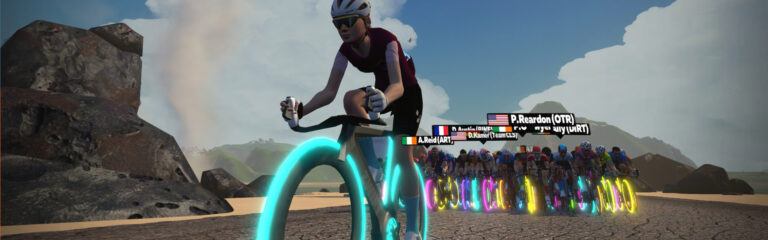
It’s a big weekend on Zwift, and it includes the chance to ride alongside a living legend (see Mountain Massif event below). Our event picks this week are designed to get you enthused about riding indoors.
Stage 1: Get Rolling – Queen’s Highway
I am excited about this new race series (read all about it here). This first race is hosted on the “Queen’s Highway” route in Yorkshire and consists of 5 laps totaling 17.7km.
This offers the opportunity for people to test the waters of racing on Zwift.
There will be four races on different routes in September, and if you complete each one you’ll earn the “Get Rolling” badge for your efforts. Expect each race to be fun and fast!
For anyone new to Zwift, learning the ins and outs can be a daunting prospect. That is why I am highlighting this event to try, since it has the purpose of introducing new riders to the nuances of riding indoors.
As the description notes: “This led group ride is your opportunity to learn some of the fundamentals of Zwift group riding in a friendly, collegial, and non-judgmental atmosphere. The ultimate goal of this ride is to introduce some of the basics of group riding so you can learn how to find, ride with, and stay within the ride leaders peloton – the blob.”
It’s a 60-minute led ride, for all abilities, hosted on the “Libby Hill After Party” route.
This is a relaxed social event where there will be the opportunity to ride alongside some of the greats of cycling. This week in particular will feature the most successful Team Pursuit cyclist in history, Ed Clancy OBE, who has won gold with Team GB at three successive Olympics. This is your chance to ride and chat with Ed.
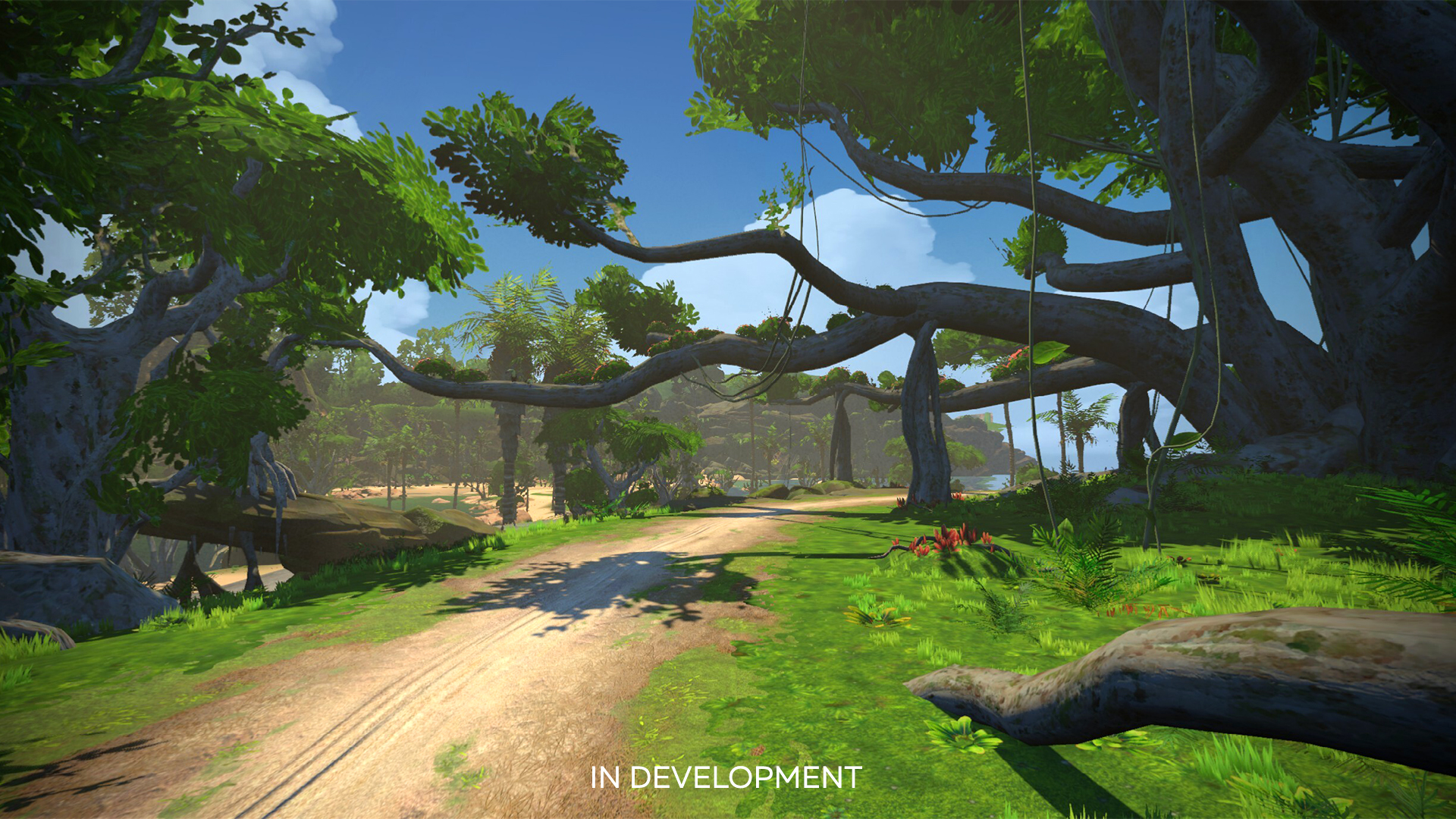
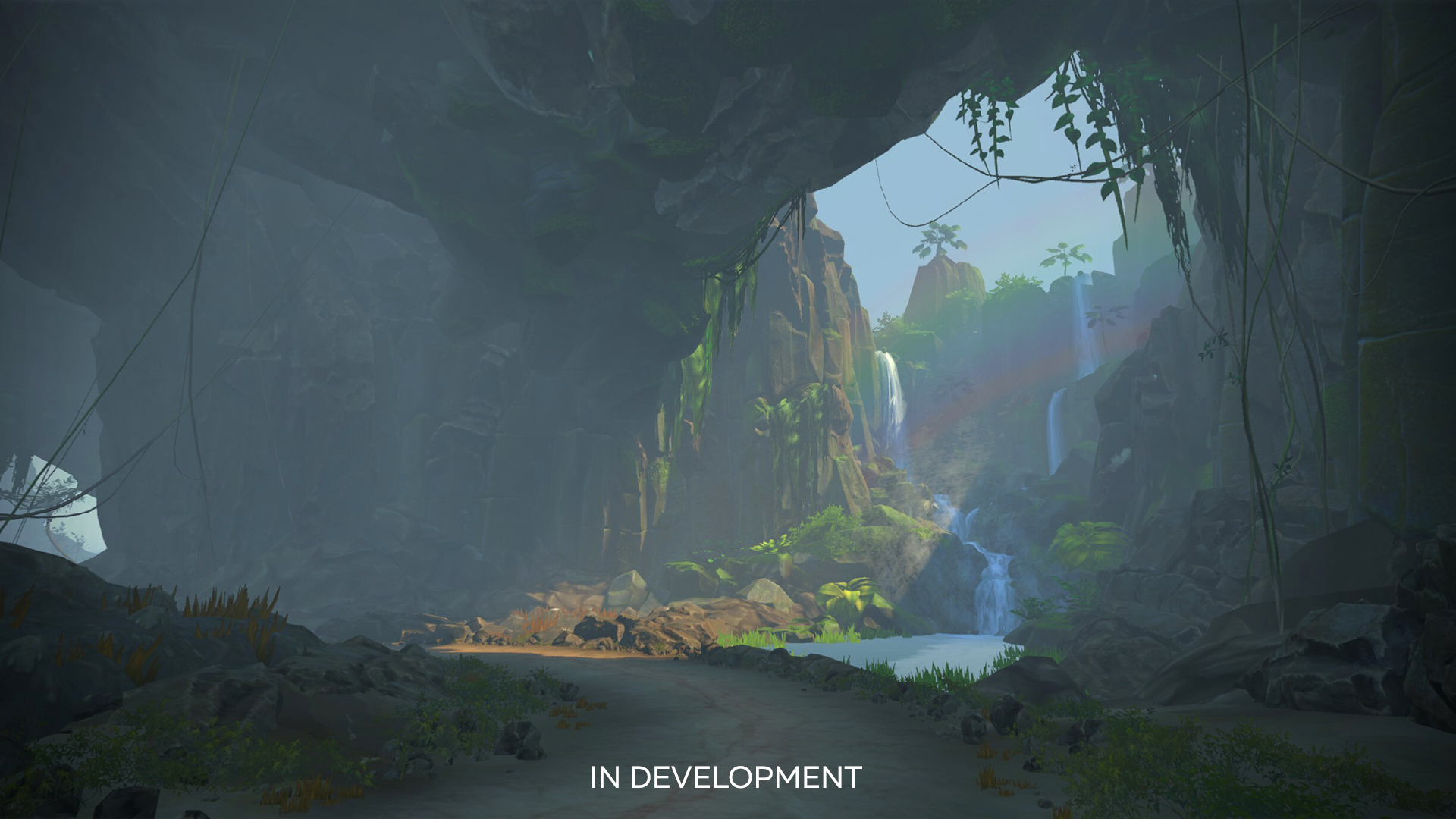
There will be no fence, so feel free to ride at the pace you desire. This event is hosted on the “Legends and Lava” route and will be paced roughly around 2 w/kg, keeping it steady until the Volcano climb, when people can climb at their own pace.
Complete the event and unlock the new “Mountain Massif” jersey.
One great way to enjoy Zwift is to cycle the many routes and collect the badges that are on offer for completing them.
An even better way is to join a group of likeminded people and collect them together!
This is the objective of this popular ride led by our friends at LEQP Provence. This week’s ride tackles the 52.5km “Dust in the Wind” route on gravel bikes.
During their recent This Season on Zwift media event, Zwift shared the following slide summarizing Zwifter activity since the launch of the platform in September 2014:
Here’s the list of stats, with notes from me in italics:
Total Miles: 3.37 billion
Total Meters Climbed: 53 billion (that’s an average of 9.77 meters of climbing per km, which almost precisely matches NYC’s LaGuardia Loop or Makuri Islands’ Temples and Towers)
Total Watt Hours: 26.9 billion (or 26.9 million kilowatt-hours. That’s enough to power New York City for approximately… 2.2 days. That’s 96.84 billion kilojoules, or 23.14 billion calories! That’s over 81 million pizza slices in Zwift math.)
Average Elevation: 277m
Average Distance: 17.47 miles
Imperial Centuries: 171k
Ride Ons Received: 1.11 billion (this means Zwifters have received 1 Ride On every 3 miles, on average)
Workout Activities: 74.3 million
Weekly Races: 1000+ (perhaps a bit high. Our numbers from ZwiftHacks show around 650 community races this week, plus 120 events for Zwift’s ZRacing series. This wouldn’t include private events such as WTRL’s Thursday TTTs, of course.)
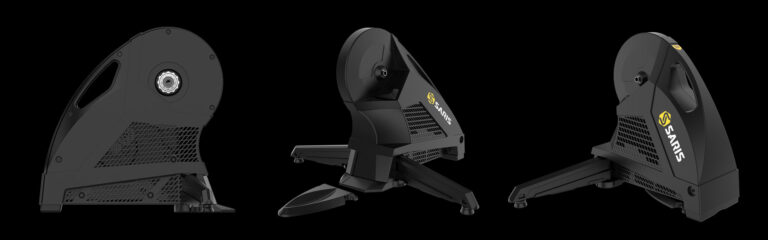
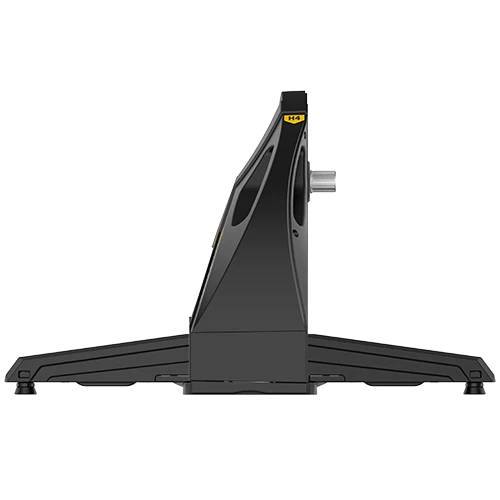
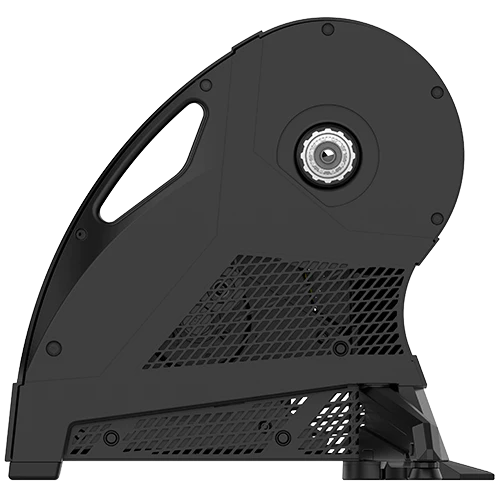
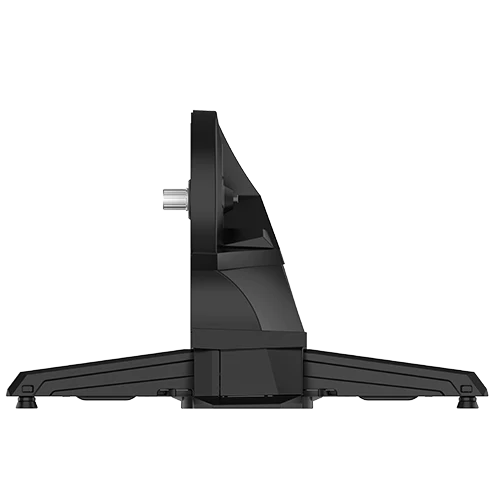
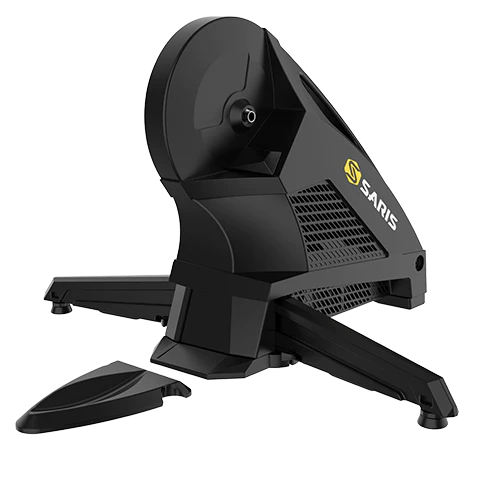
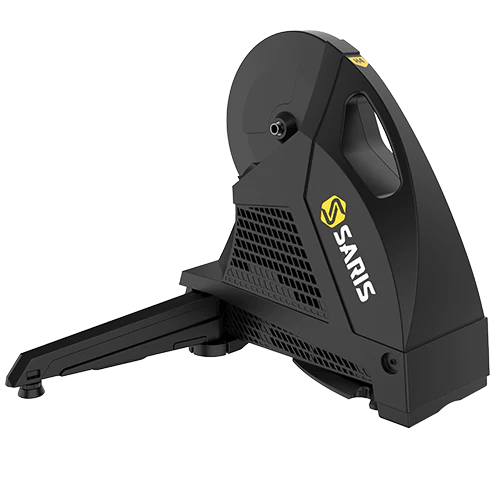
Yesterday Saris announced the next iteration of their flagship H-series direct-drive smart trainer: the H4. Now in its 4th generation, the H4 boasts improved accuracy, higher max wattage, and 12-speed compatibility.
H4 Specs
Here are the trainer’s key specs (items in bold are upgrades from the H3):
Power accuracy: +/- 1% (H3 was 2%)
Max Wattage: 2300W (H3 was 2000W)
Max Incline: 25% Simulated Incline (H3 was 20%)
Cadence: built-in (improved over H3)
Flywheel: 20 lb.
Connectivity: ANT+ FE-C and Bluetooth FTMS connections
Cassette: not included, 12-speed cassette compatible
XD/XDR freehubs sold separately
Microspline freehub sold separately
Axle Compatibility: 142 mm and 148 mm thru axle, 130 mm and 135 mm quick release
Pricing and Availability
The H4 is priced at $999US and is available today on Saris’ website. We aren’t seeing it in stock on dealer websites yet, but presume it will be available there soon.
Solid, Affordable, American-Made
The H3 was already a well-respected trainer. Built in America with a heavy-duty cast aluminum housing and beefy 20# flywheel, the H3 was regarded by some as the best ERG-mode trainer on the market.
This upgrade puts the H4 on-par with the industry’s leading trainers (Tacx Neo 2T and Wahoo KICKR 5) in key specs like power accuracy and max wattage. (The Elite Justo is in this same group as well, it’s just a new product and much less proven than the Neo and KICKR platforms.)
The KICKR and Justo sell for $1199, and the NEO for $1399. The H4’s lower price of $999 is probably justified given the “extras” offered by the Neo and/or KICKR like auto calibration, road feel, and Direct Connect.
One Percenters
Going into 2022/23 Zwift race season, claimed power accuracy of +/- 1% is crucial for top-tier trainers since this is a requirement for elite Zwift races like the Zwift Grand Prix and UCI Esports Worlds qualifiers.
(The vast majority of Zwift races have no such accuracy requirement. But if you’re strong enough to race against the very best on the platform, you’ll need a very accurate trainer/smart bike.)
Saris has long sponsored one of the top teams on Zwift, and their “SARIS | NOPINZ” men’s and women’s squads were both selected to compete in the Zwift Grand Prix. Thanks to the H4, those riders will be racing on a Saris trainer.
The Company Question
The H4 looks to be a smart upgrade from the H3, but the biggest question in the minds of potential buyers may be: can I trust Saris? With the company being sold Zwifters might be forgiven for being a bit hesitant to pull the trigger on the purchase of a new H4.
Given the H4’s pedigree and the fact that we don’t see Saris’ trainer line going away any time soon, we see the H4 becoming a popular trainer in time. Once company sale plans are known and the H4 has been tested by reputable reviewers, customers’ concerns should be eased. But we wouldn’t open our wallets just yet.
Zwift recently published their “This Season On Zwift” (TSOZ) press release summarizing plans for new Zwift features through the end of 2022. And while that press release gives some high-level details of upcoming features, we like to dig a little deeper here at Zwift Insider.
This is one in a series of individual posts discussing specific upcoming features in more depth.See all TSOZ posts >
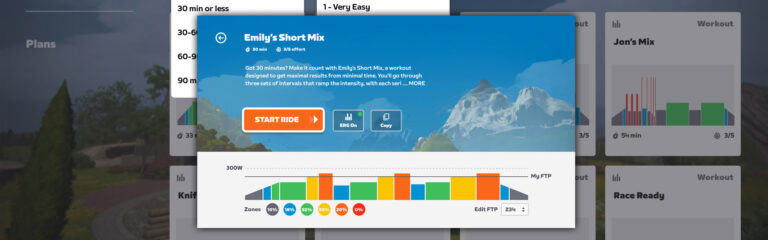
Zwift’s workout screens are about to get a much-welcomed facelift, bringing them in line with the look and feel of of the updated Homescreen UI.
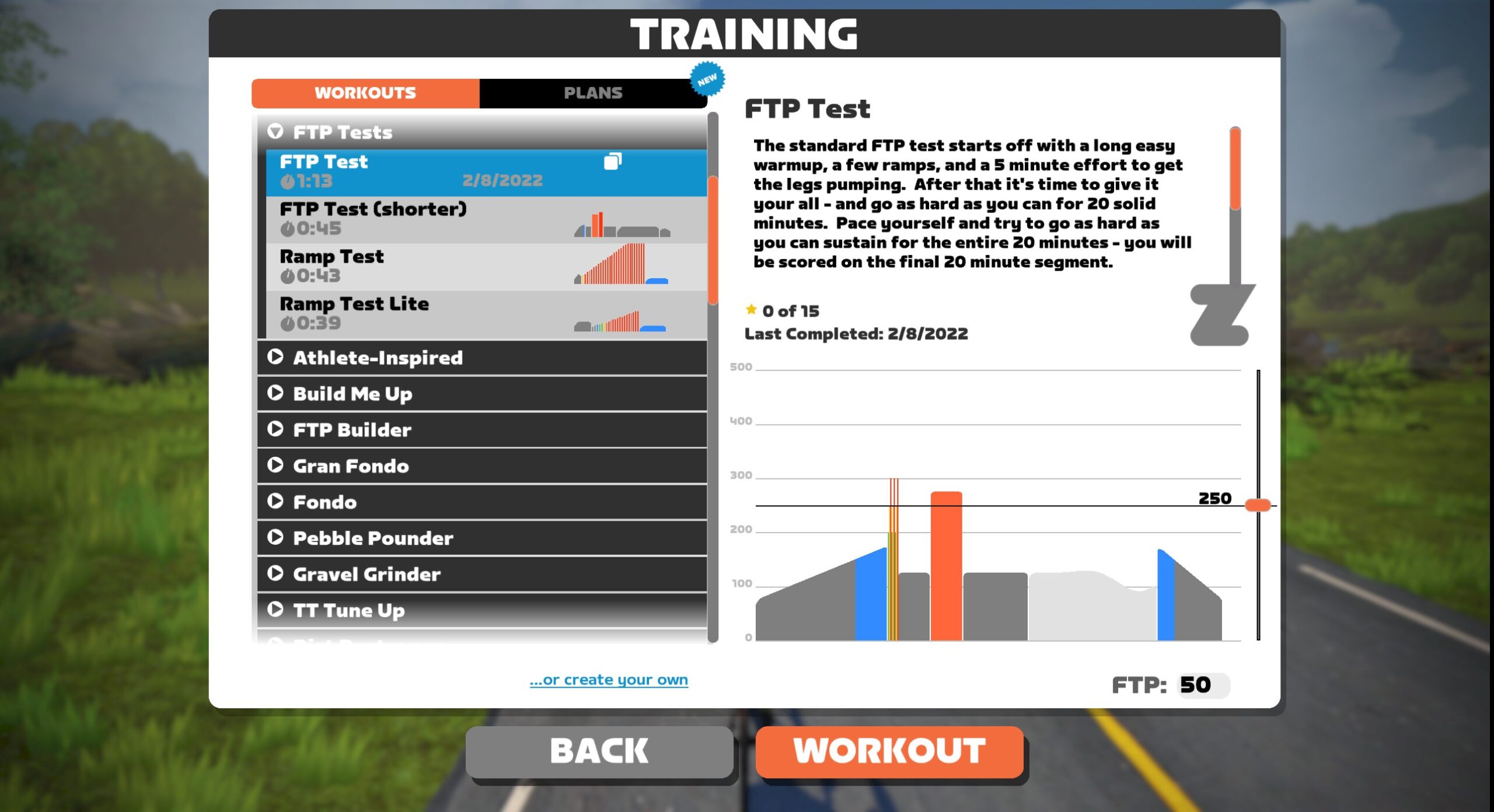
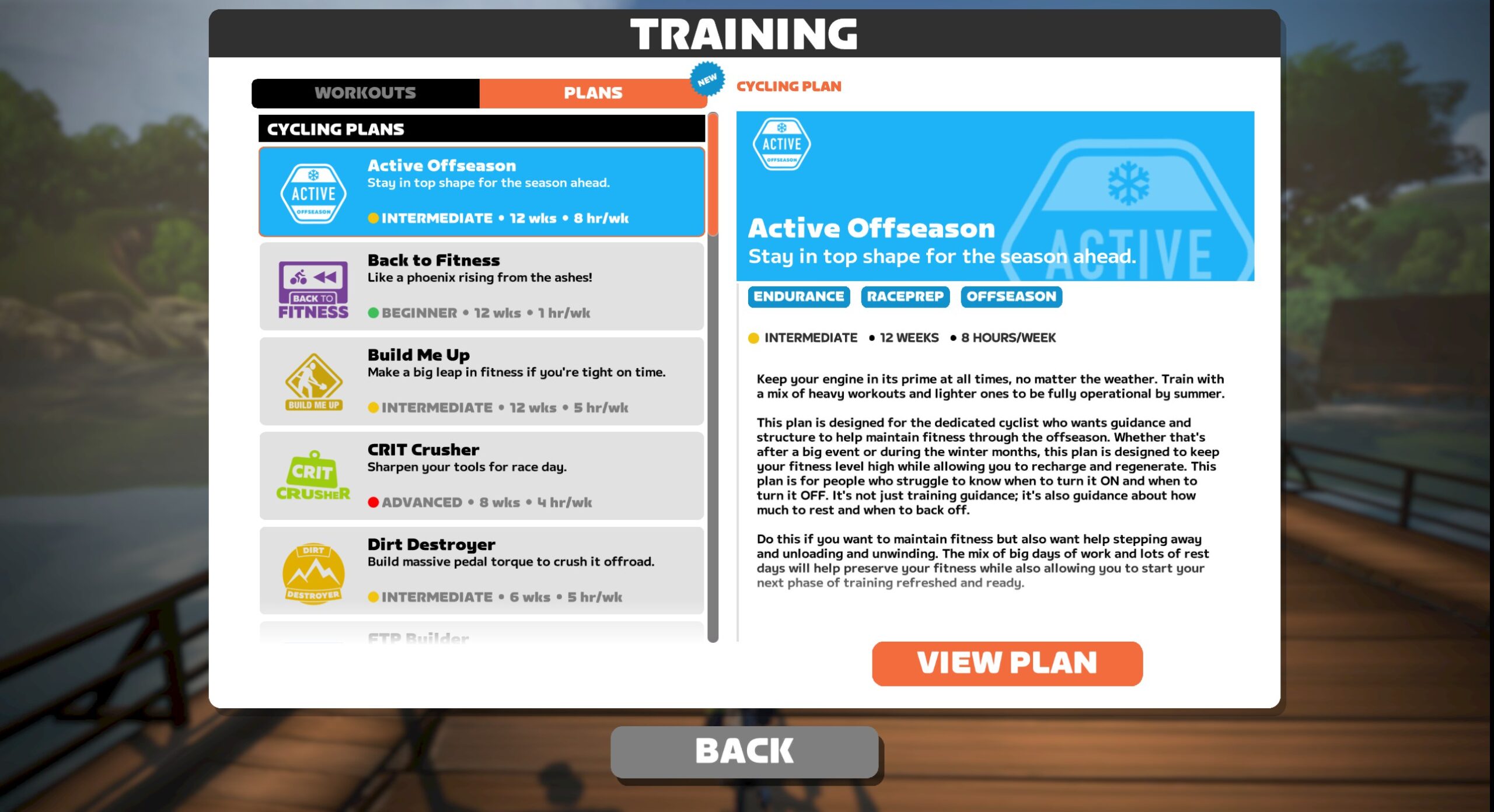
For comparison, here’s a look at the current on-demand workout and Training Plans browser screens:
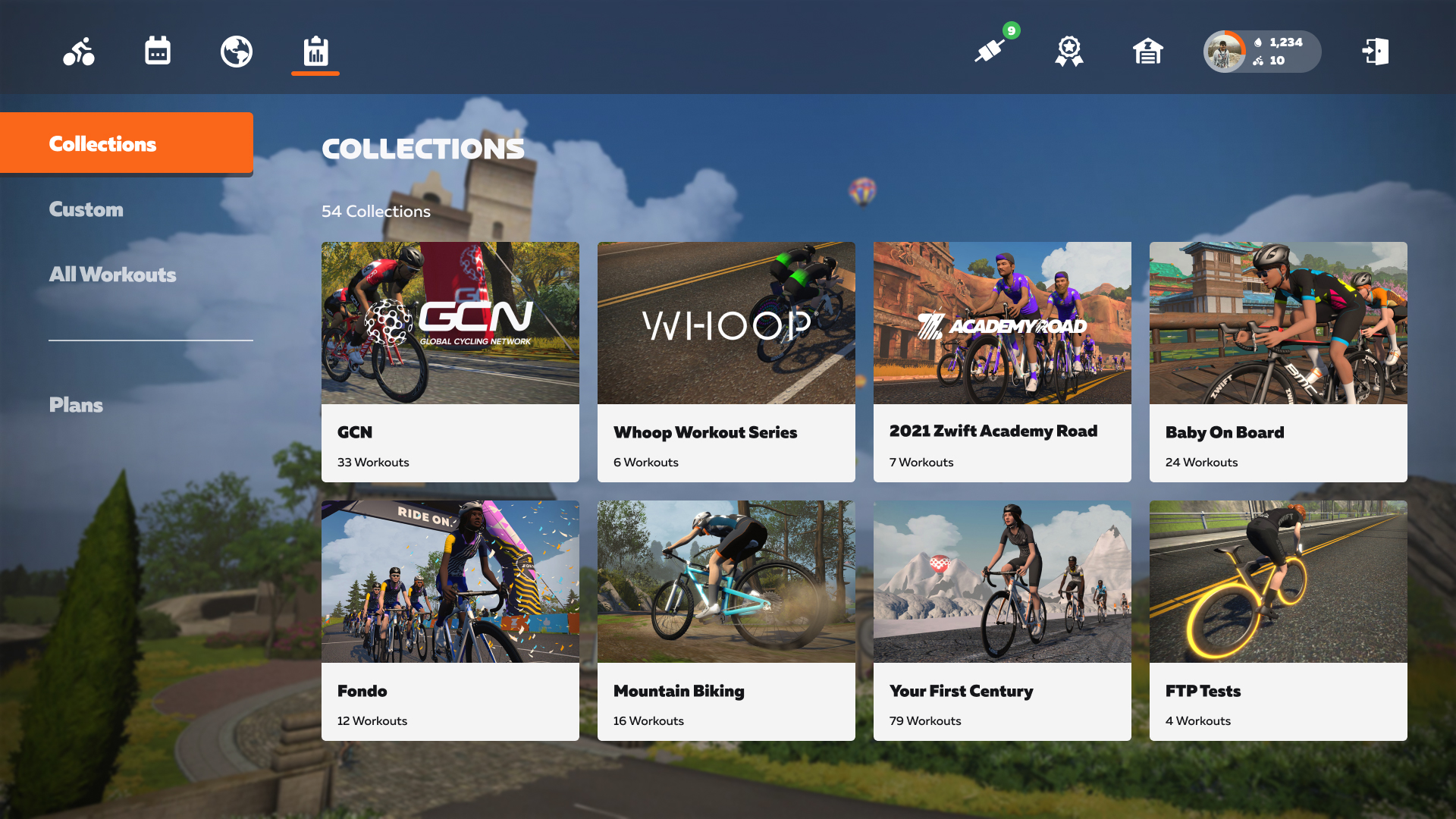
Zwift’s updated workout browser will let us browse workouts in multiple ways:
Collections: groups of workouts, analogous to the current grouping structure of the on-demand workouts list
Custom: your custom workouts
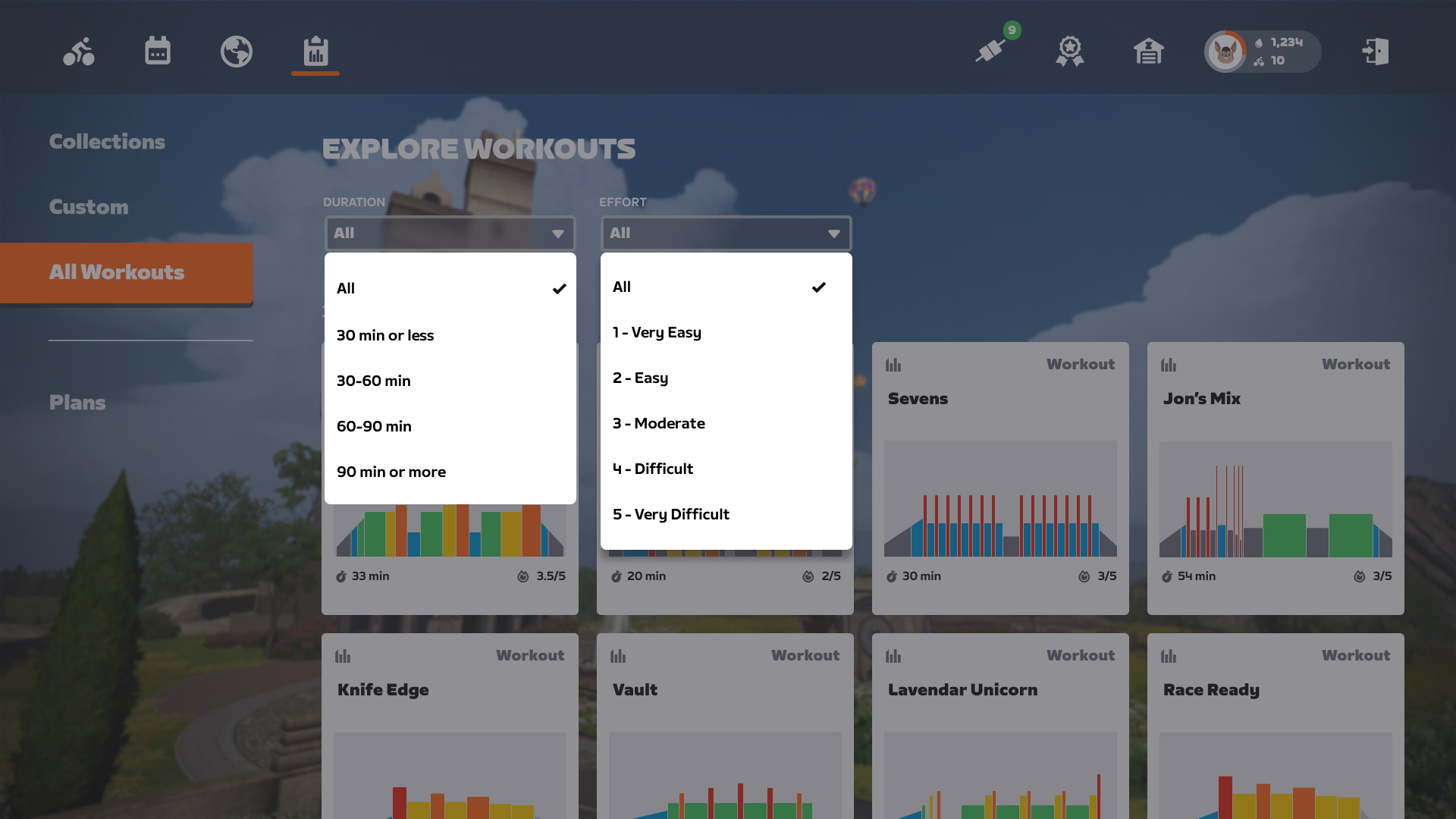
All workouts: a complete list of available workouts, with filters for duration and effort level (see below)
Plans: list of available Training Plans
When browsing “All Workouts”, users can filter the list based on workout duration and/or effort level:
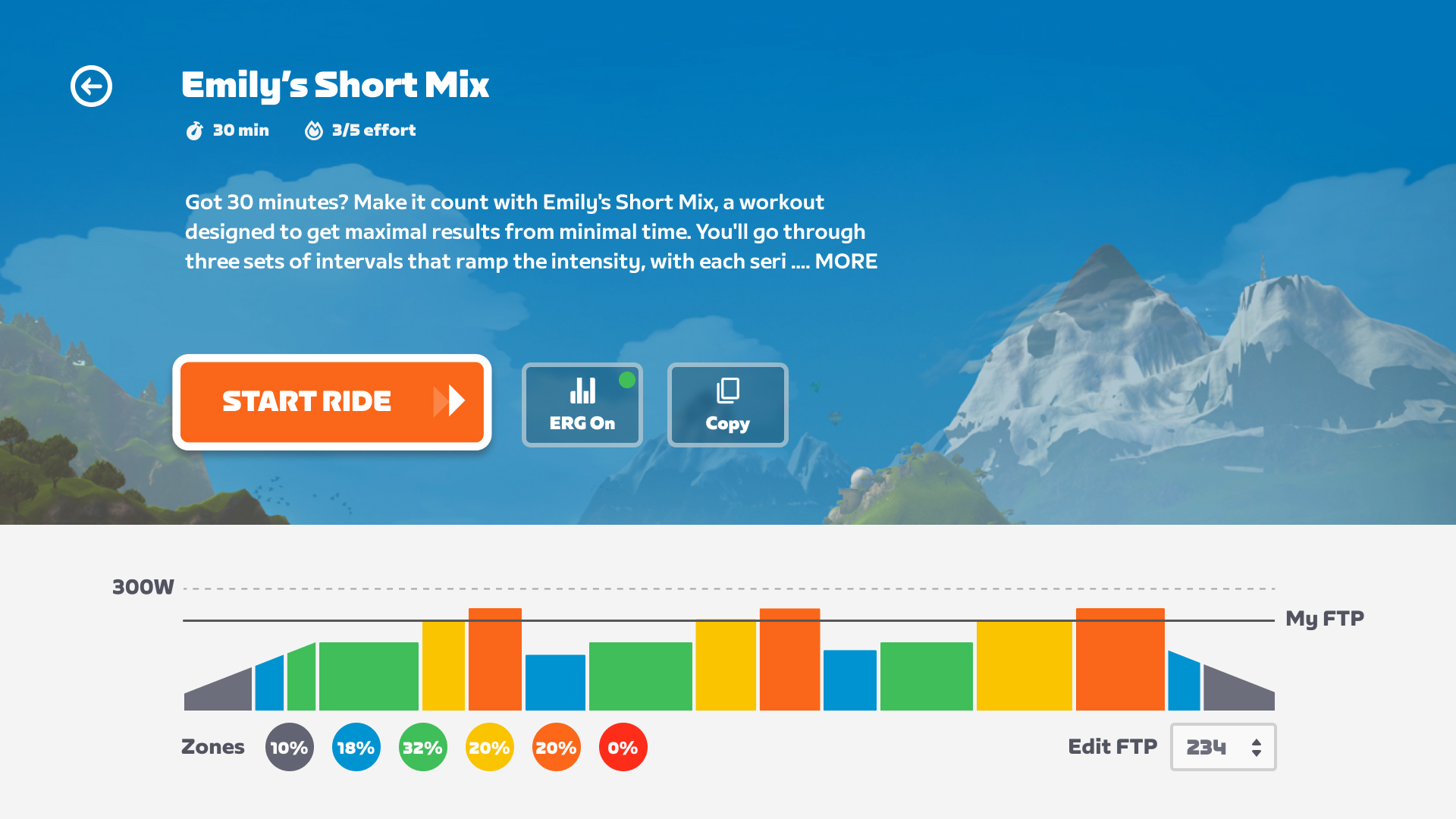
The workout viewer is also getting a facelift, providing a comprehensive overview of the selected session including a breakdown of time spent in zones by percentage and a field to edit FTP:
An Important Step
We’ve long maintained that Zwift’s workout UI and library have lots of room for improvement. The workout library itself could be expanded greatly, but doing so requires improved tools for browsing/searching workouts so Zwifters can find the right workout or Training Plan to fit their needs.
Grouping workouts into collections is nice, but many Zwifters lack the knowledge to select the best workout to help them meet their goals. Zwifters who do have a better idea of what they need would surely appreciate more powerful filtering tools. The “All Workouts” screen above with its basic filtering features is a good first step.
In summary: we hope this UI upgrade is the first step toward greatly expanding Zwift’s workout library and improving the tools used to help Zwifters find their perfect workout.
Release Date
Zwift isn’t giving a firm date for the release of the updated workouts UI, but we’re guessing it will arriving in September or October’s releases.
Tiny Race Series – September 10 Route Details and Last Week’s Results
We had lots of riders in last Saturday’s Tiny Races – the biggest turnout we’ve seen to date in most categories! In the middle timeslot 131 B riders contested the races. It may be time to spin up a fourth time slot.
I had a long outdoor training ride planned (prepping for a bike trip in a couple of weeks) so I didn’t race the Tiny Races on Saturday. But I sat in and watched the middle time slot, providing some decidedly subpar commentary in a live stream. It was a really fun race, as the two top riders were tied going into race 4!
In the end, the overall winner in the Bs for the middle time slot was Chris Hoelzl of WattFabrik. He messaged what is perhaps my favorite quote so far from a Tiny Racer:
A: none B: Anna Russell (Saris-NoPinz) C: Kelsey Tranel (KRT) D: Ann Fleming (HERD)
This Week’s Routes
This week we’re going all-in on Makuri Islands, with four fresh routes that have never been seen in the Tiny Races.
Here are photos so you can see the precise location of the custom finish lines:
Approaching Railways and Rooftops finishRailways and Rooftops finishApproaching Chasing the Sun finishChasing the Sun finishSpirit Forest finishApproaching Spirit Forest finishApproaching Two Village Loop finishTwo Village Loop finish
The reverse version of the Rooftop KOM in Neokyo isn’t an official segment, and it’s a rather unfamiliar climb to most Zwifters since few routes go this way.
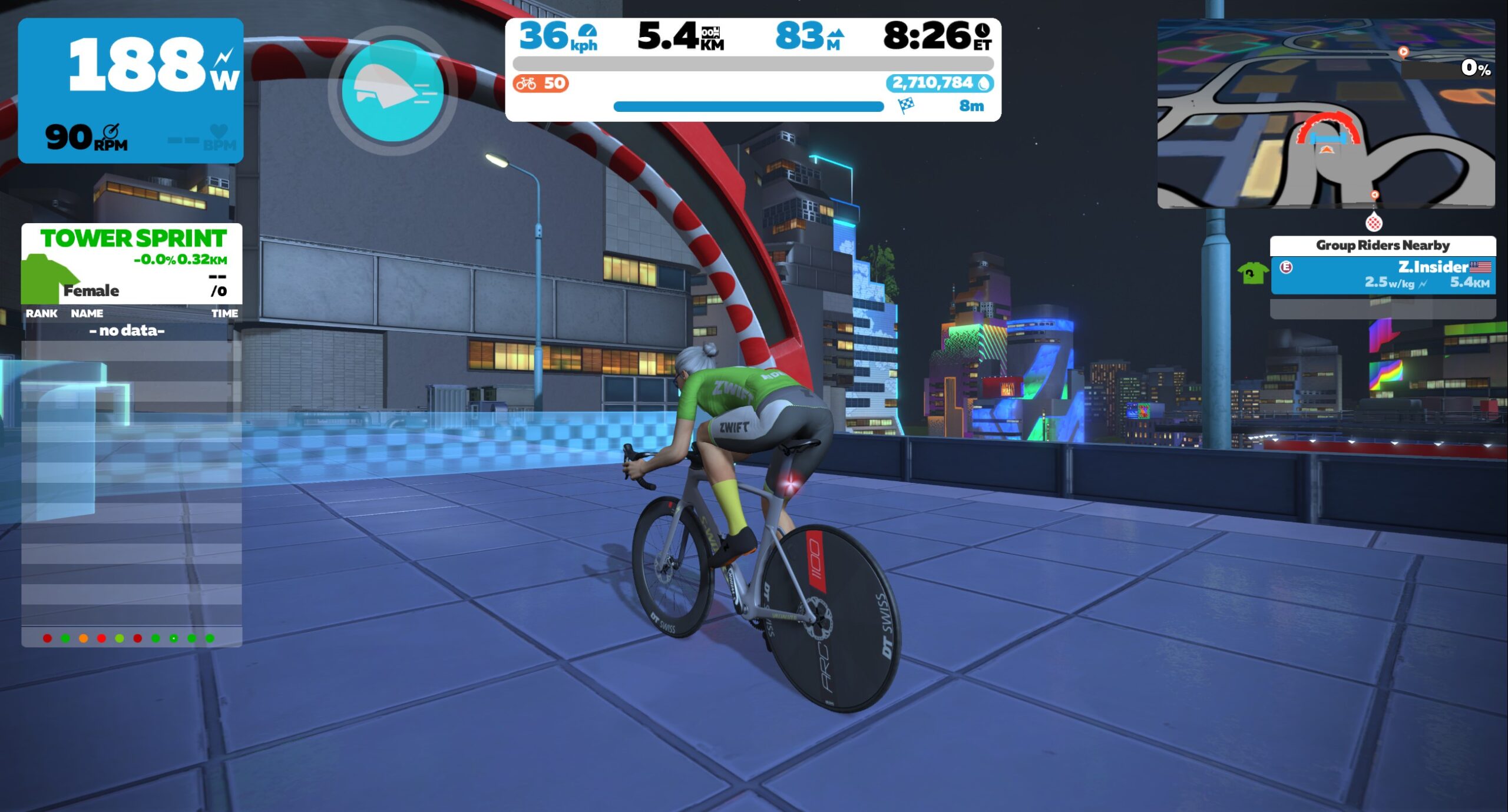
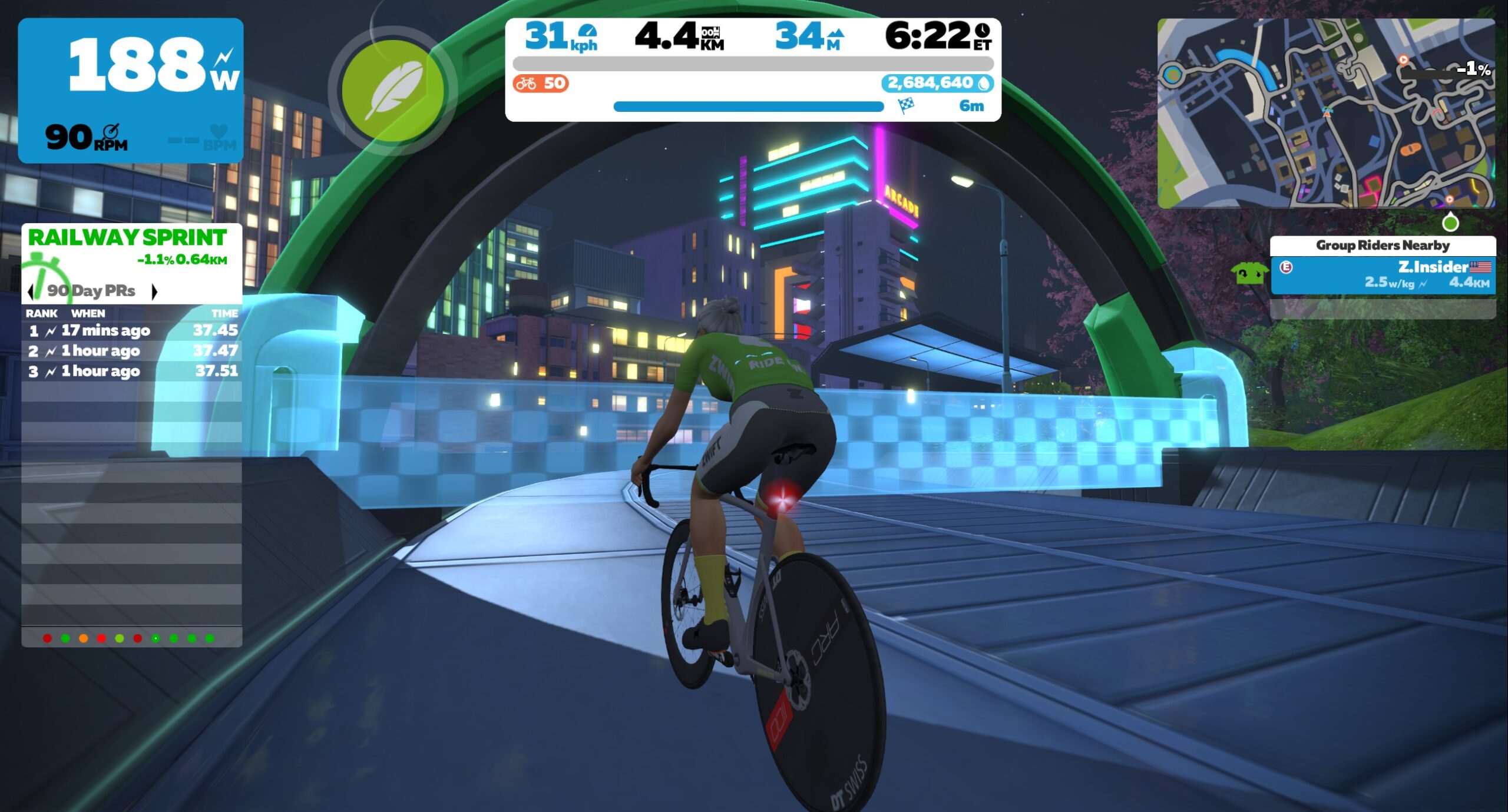
A flattish race through the streets of Neokyo, this one will encourage long attacks on the ramp up to the railway. On top of that, the Railway Sprint always feels like a long effort!
Powerup: Draft Boost
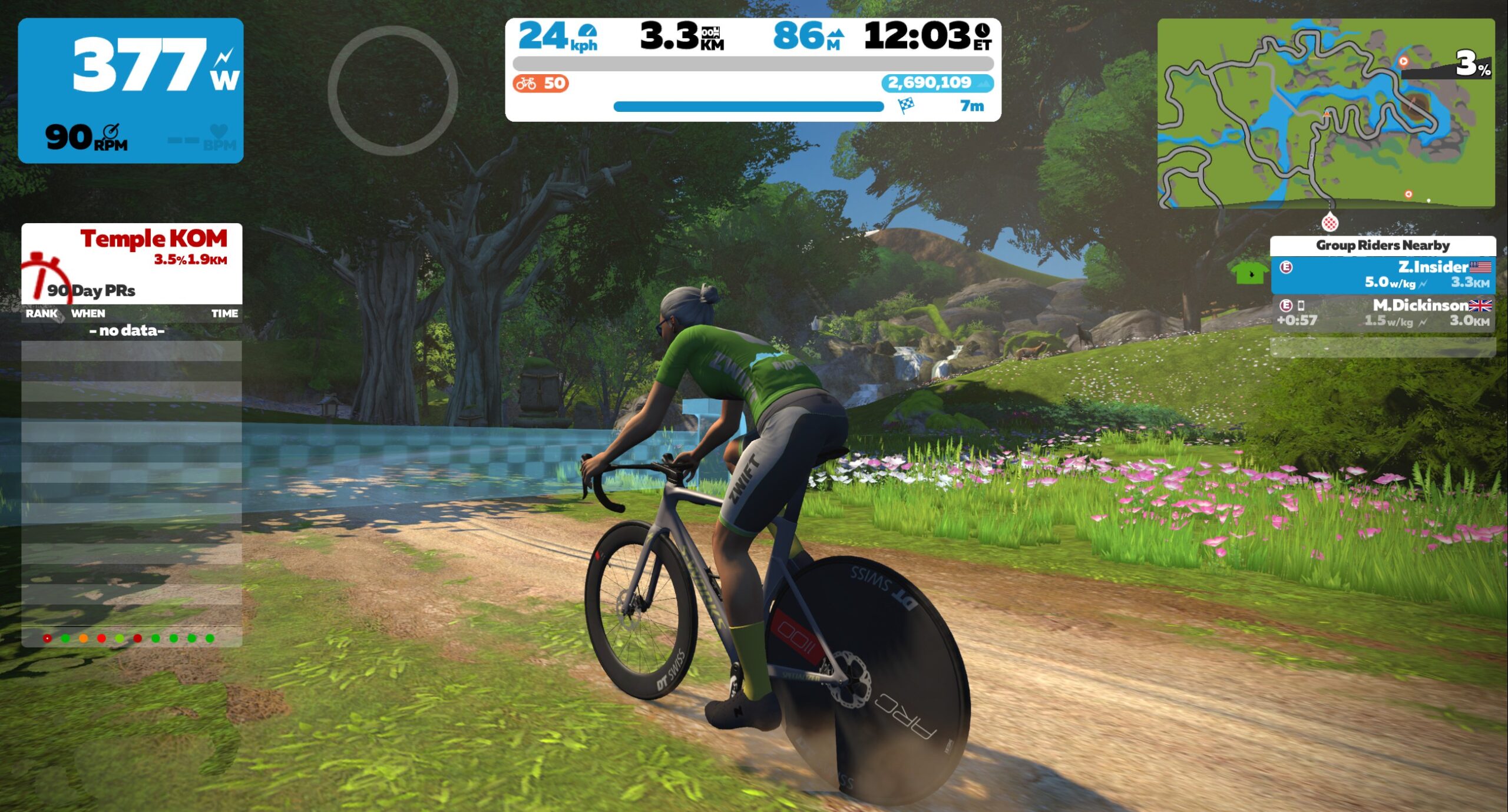
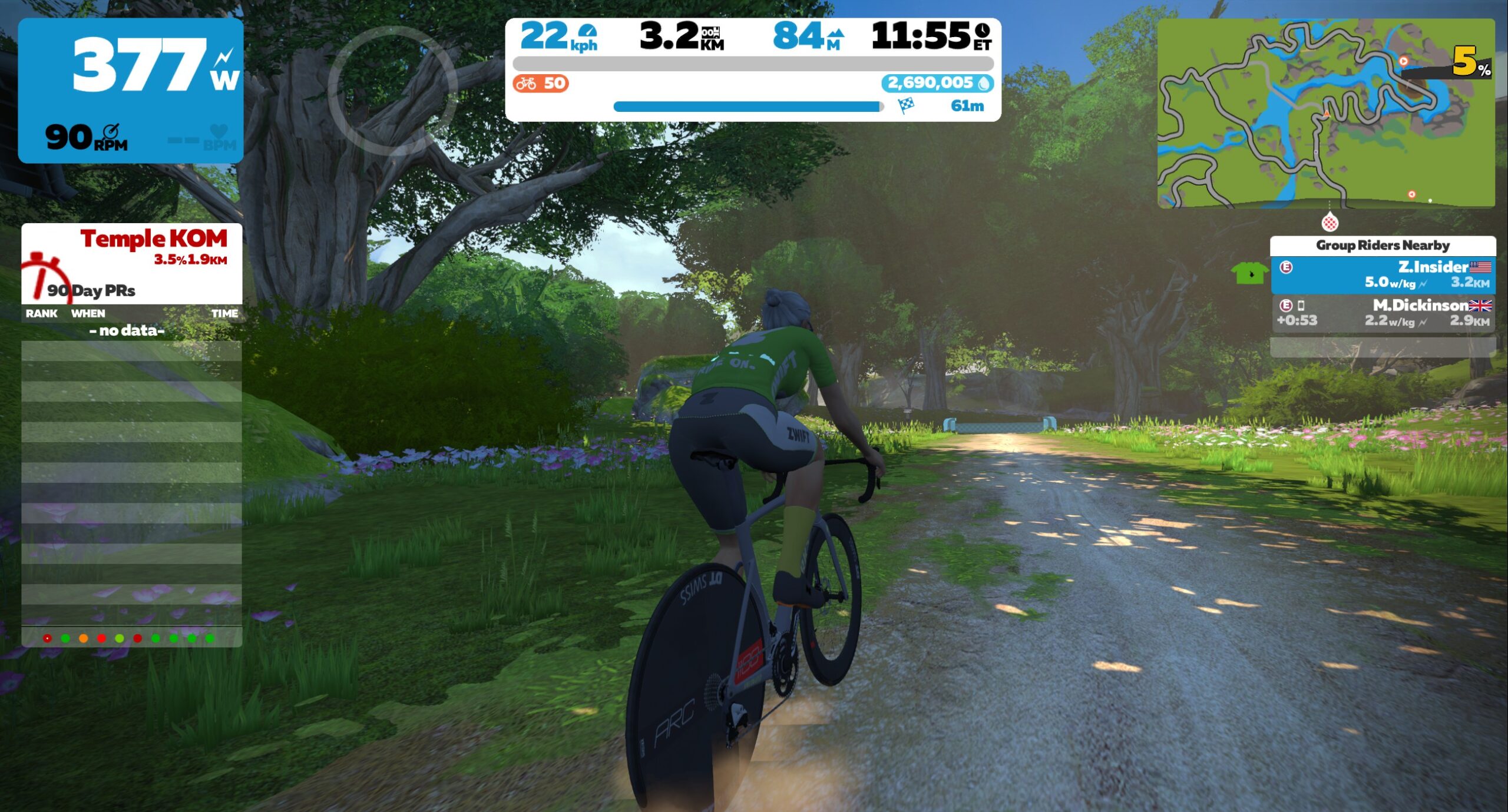
Race 3: Spirit Forest (3.35km, ends partway up Temple KOM)
You’ll want a gravel bike for this one, as it’s almost entirely dirt and mostly uphill. This route takes us on the rarely-ridden cross trail that connects both sides of the Temple KOM partway up their respective climbs. Then we’ll turn left off that cross trail and continue the Temple KOM for a bit, ending at a custom finish.
Powerup: none
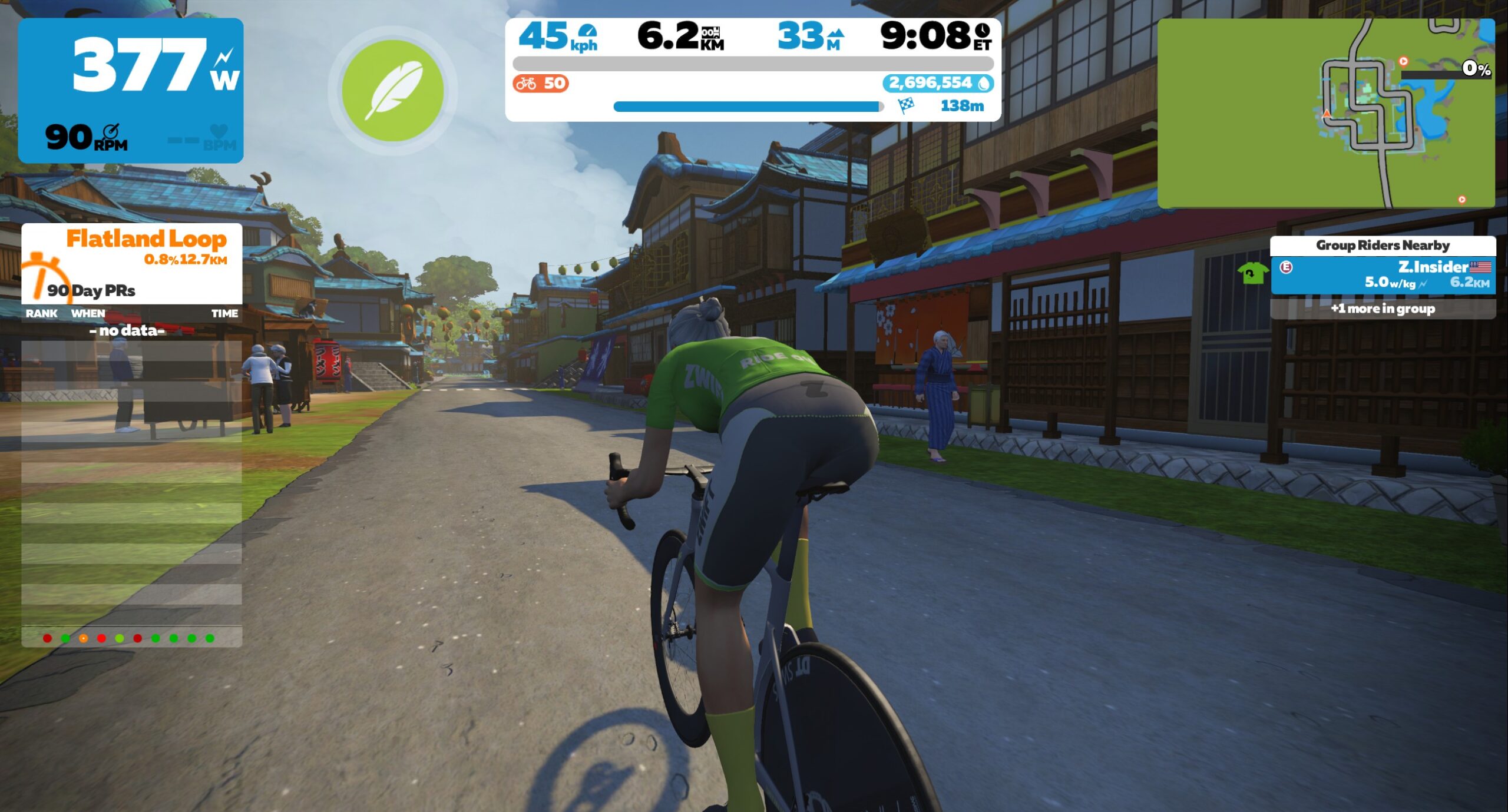
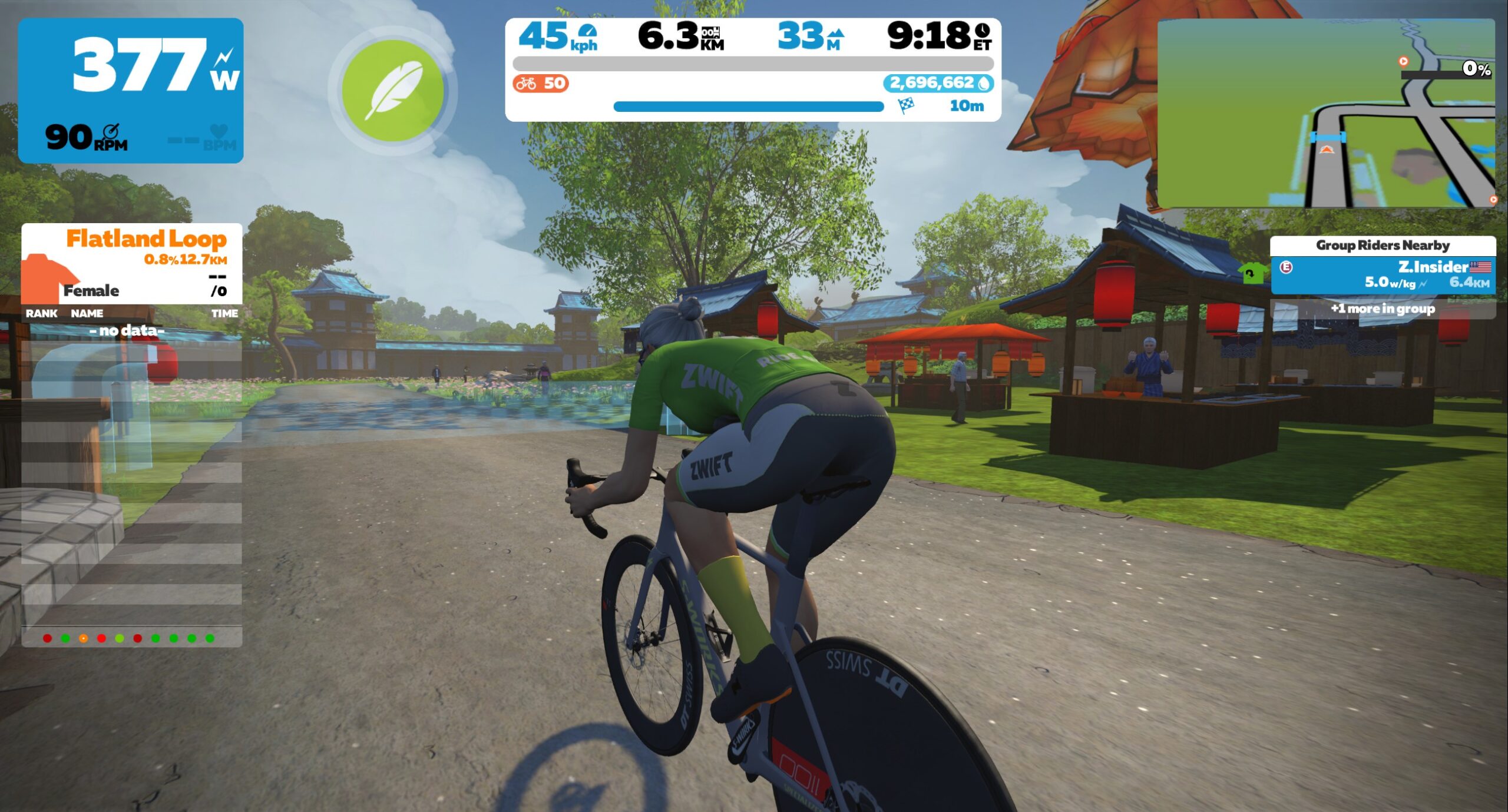
Race 4: Two Village Loop (5.7km, ends on the circuit around Village Onsen)
This is a flattish course as well, although the 1.5km of dirt near the start will make it feel like an uphill effort and encourage early attacks. You’ll do a full lap around the boxy Village Onsen outer roads, finishing partway into the second lap on a straightaway. If that ending doesn’t feel like a crit, nothing will!
Immediately following each hour’s racing, we’ve scheduled 30-minute “Chat & Chill” events where riders from all categories can spin out their legs together and have some fun chatting about how it all went down. Find them at zwift.com/events/tag/tinyraces.
ZwiftPower Results
Zwift displays preliminary race results in game when you cross the line, but points are computed after all four races finish, with final results on ZwiftPower. (We have to press a ZwiftPower button to compute results manually, so if your rankings don’t show up right away, just be patient.)
Riders will earn points based on finish position in each of the 4 Tiny Races. The category winner of each week’s series is the rider with the most points across their timezone’s 4 races. Here are the links for each timezone’s results on ZwiftPower:
Zwift Racing League 2022/23 Round 1 begins Tuesday, September 13th. And we’re starting off with a bang, riding the round’s Queen Stage for our first race!This is a smart move by WTRL, as it will force some potential sandbaggers to set a good 20-minute power number at the start of the round.
Let’s dig into the race, including tips for bike choice, powerups, strategy, and crucial segments.
Looking at the Route: Climber’s Gambit
Watopia’s Climber’s Gambit route was created for the 2021 Zwift Academy Road program as a route-based test of sprint, VO2, and threshold power. And that’s exactly what riders can expect in their ZRL race! The route is 27.9km long with 670m of elevation, and 400m of that elevation comes in the final climb.
Let’s discuss the four key pinch points of this route.
First, the Watopia Sprint Reverse (aka “JWB Sprint Rev”). Located 2.5km into your ride, this short, straight sprint is super fast (9-12s) thanks to a downhill lead-in. It’s all about timing, but things can get crazy in the bunch with the short uphill kicker leading into the descent before the flat sprint.
If you’re chasing FTS, stay in the draft and use your aero or van to maximum advantage. Chasing FAL? You’ll need to chase early attacks, but try to stay out of the wind until you hit the bridge.
Regardless of your goals, beseech the Zwift gods for an aero powerup at the Downtown Watopia arch since it trims ~0.5s off of this sprint.
Second, the start of the Hilly Reverse KOM. Starting at 4.9km, you have a short ramp up and around the giant statues before taking a left onto the cutoff road to the Hilly KOM descent. Mind your position in the pack, give it a little gas to stay in the right spot, and you should make it over this hump unscathed. Take a breather and supertuck the descent!
Third, the Titans Grove Reverse KOM. At 11.9km you’ll begin the first KOM intermediate. Only 900m long and 4.3%, this quick climb can be done in under 75s by top riders. (The rest of us mortals are looking at more like 90-150s, though.)
A feather powerup is most helpful on this climb (use it near the base to keep your speed up), but the aero and draft boost are also helpful since it’s not a steep hill and speeds are high enough that drafting still helps.
The effort shouldn’t be high after the Titans Grove KOM, but watch that you don’t get gapped in the rolling, twisting hills of Titans Grove (before or after the KOM). Recover as much as you can, because the big effort is just up the road.
Finally, the Epic KOM Reverse. Beginning 21.7km into the race, this is the longest climb of our Round 1 at 6.2km and 5.9%! It’s really a series of three ~2km climbs, with short flats/downhills separating each. Draft the fast parts (or use an aero powerup to attack at high speeds), hammer the steeps, and give it all you’ve got to the line because the race ends at the KOM banner.
FAL points are being awarded for the first 10 riders at the Epic KOM banner, and those will just add to the finishing points earned by the top finishers. So there’s a bit extra on the line in this first stage!
Riders will be awarded a powerup at each arch (Downtown Watopia, Sprint, Titans Grove), which means we’ll each receive three powerups in this race.
Every rider will receive one of these powerups:
Aero Boost (helmet): makes you more aerodynamic (reduces your CdA by 25%) for 15 seconds. Use at higher speeds (flats, descents, and sprints), especially when no draft is available (although it is still useful when drafting.)
Draft Boost (van): increases the draft effect you are experiencing by 50% for 30 seconds. Use at higher speeds (flats and descents) when you are already drafting off another rider (since this powerup only helps when you are drafting.) Useful when you’re looking to conserve a bit of power in the pack, or when chasing FTS times on a sprint through the pack.
Feather: reduces your weight by 10% for 15 seconds. Best used on climbs, when weight matters the most. Use it on the Titans Grove KOM Reverse or Epic KOM.
Bike Frame + Wheel Choice
Scott Addict RC + ENVE 7.8, Tron, and Specialized Aethos + Lightweight Meilensteins
Bike and wheel choice on this route isn’t a simple affair. We recommend choosing a bike based on your goals for the race:
Chasing sprint points, and nothing else? If you’re level 35+, go with a disc wheel setup and a top aero frame (see Fastest Zwift Bikes by Level).
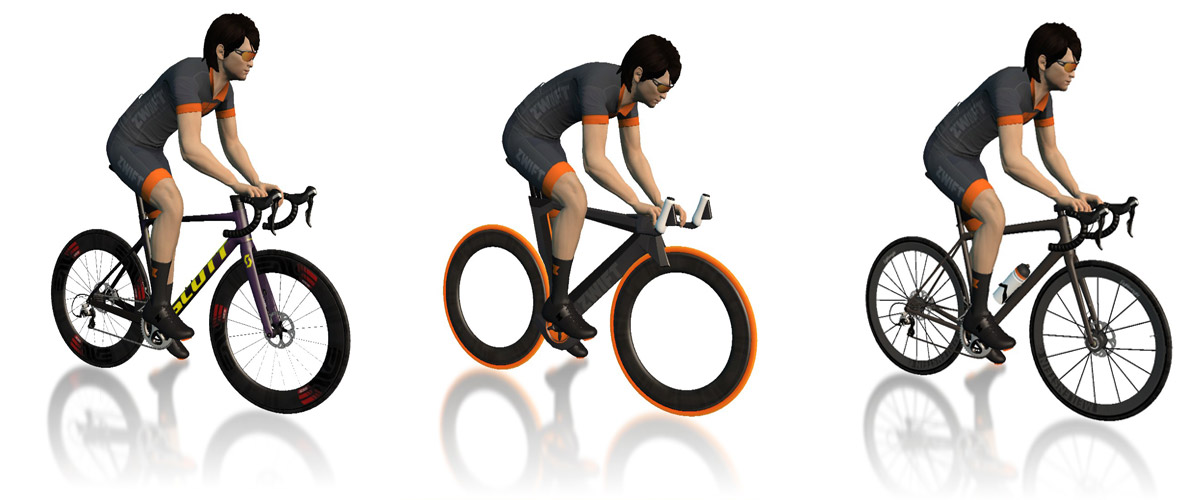
Chasing sprint points while anticipating a decently overall finishing position? Go with an all-arounder. The Tron bike is a solid pick, and we also like the Scott Addict RC + ENVE 7.8 wheels – a combo that climbs 2-3s faster than the Tron on the Epic KOM Reverse. See our Tron vs Top Performers chart for details on the performance of various top frames and wheels.
Just sitting in for the sprints, but chasing climb points and a high overall finishing position? The safe pick is an all-rounder (see previous point), but here’s a hot take: if you’re confident you can sit in with the front group on the flats and descents, grab a pure climber. The Specialized Aethos + Meilenstein or Alpinist combo will trim ~10s off your Epic KOM time compared to the Tron bike.
For most riders, a climb-friendly all-arounder setup is your best bet here. You want something decently fast for the sprint, but light enough to help you a bit on the two key climbs.
More Route Recons
Many events are now being planned each weekend on the upcoming ZRL route. If you’re not familiar with this course, jump into an event and do some recon! Here’s a list of upcoming Climber’s Gambit events.
Looking for a video recon, with lovely British commentary to boot? Check out Si’s recon below:
Si Bradeley
Oli from ZRace Central is also entering the ZRL Recon Game. Check out his video below, which includes lots of good advice for sprint timing, draft positioning, etc. (He may be young, but Oli clearly has a lot of Zwift racing under his belt!)
ZRace Central
Strategic Options
Points Distribution, Climber’s Gambit
This chart shows the maximum points a team of 6 could earn in this race, broken down by point types. Note that since the race ends at the Epic KOM Rev, we moved the FAL points for that climb into the finish points total.
As you can see from the chart above, climbs make up a large majority of the overall points. With 79% of the points being earned atop the two climbs, winning teams will feature riders with high VO2 and 20-minute watts per kilo.
What strategies will riders employ in race 1? Here’s what we predict:
Big Eases Between Segments: smart climbers will know that sprinters won’t be contesting their KOM points, and sprinters won’t be able to drop smart climbers on the flats or descents. So it doesn’t make sense for either group to push in between the intermediates… not with a 20-minute FTP test up the road.
Targeted Efforts: more than any other route featured in ZRL, Climber’s Gambit lends itself to particular riders targeting particular segments. Watch for sprinters and puncheurs to target the sprint and Titans Grove KOM. But the climbers will have their day on the Epic KOM Reverse!
Sag that Start: first across the finish line earns at 50 points (40 finishing + 10 KOM FAL). But cagey, confident climbers will sag at the start, sitting in the back of the group across the start line then pushing to the front in order to earn FTS points as well. Do it right and the Epic KOM Reverse could earn you 70 points!
Your Thoughts
Any insights or further thoughts on this race? Share below!
Zwift Update 1.28.1 (101500): A New Font has Arrived
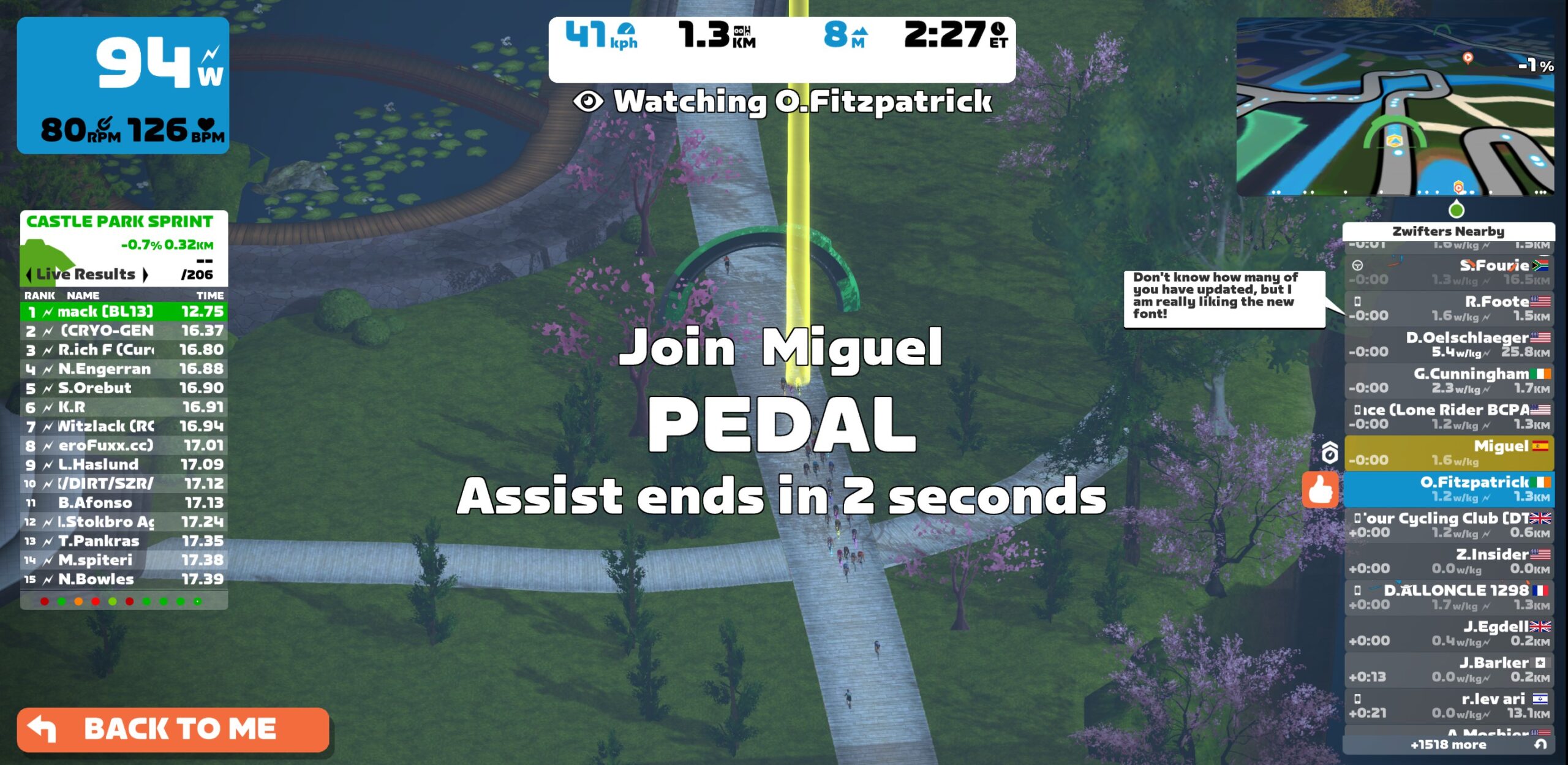
Observant Zwifters will notice that today’s Zwift update changed the look of Zwift’s HUD and other textual elements. A fresh font has arrived! Reviews are positive, at least from one Zwifter we spotted while taking screenshots this morning:
The new font is softer than the previous one, and it’s now being used across the game.
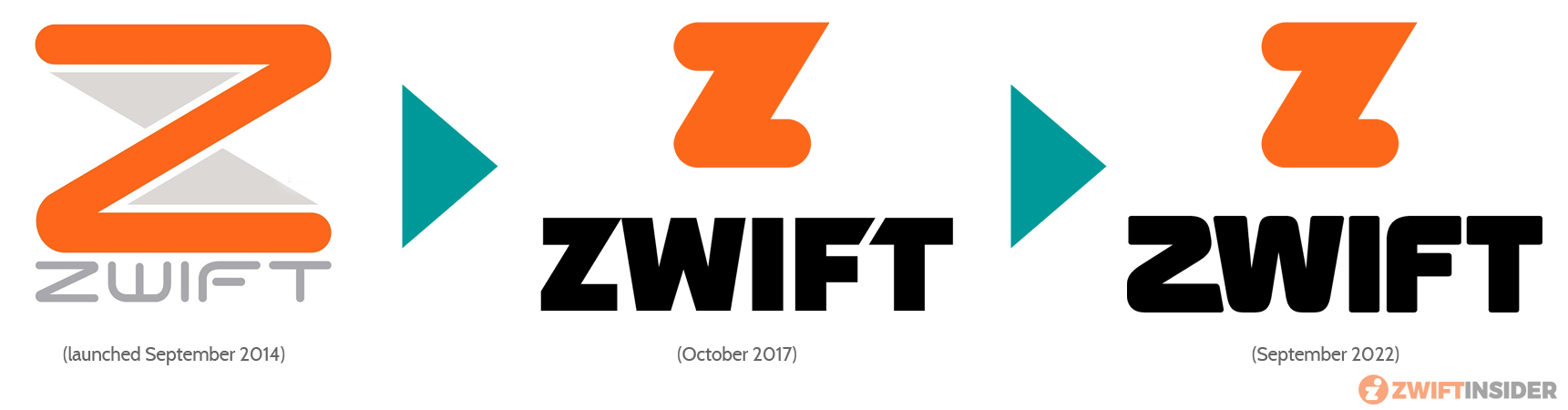
New Logo
Notably, the new font is used in Zwift’s revamped logo, also unveiled today.
Evolution of Zwift logos:
Your Thoughts
We predict this font change won’t generate nearly the discussion we saw when Zwift left the “Skinny Z” logo behind years ago. But what do you think?
Back in May when Zwift announced staffing reductions and a pause on hardware development, we all thought Zwift-branded trainers wouldn’t be seen for at least a year or more. And this didn’t seem like a particularly bad thing, given the glut of trainers available on the post-Covid market.
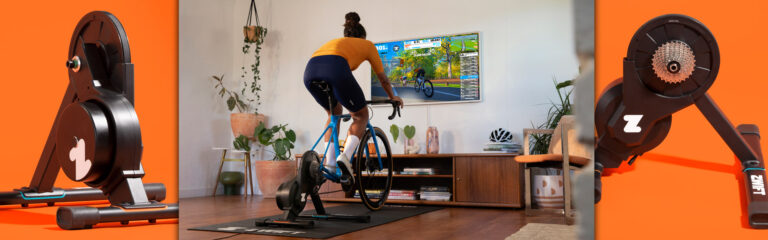
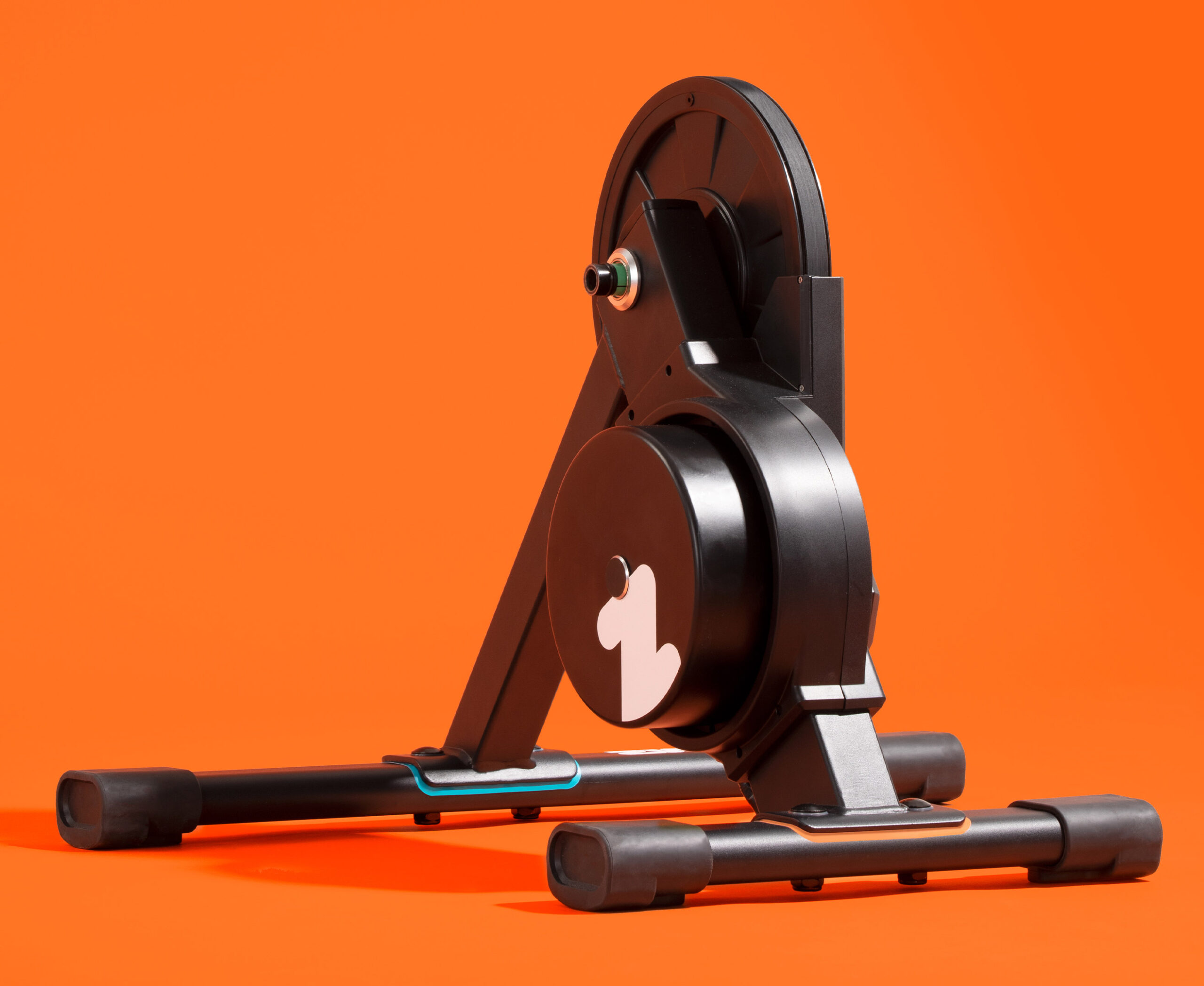
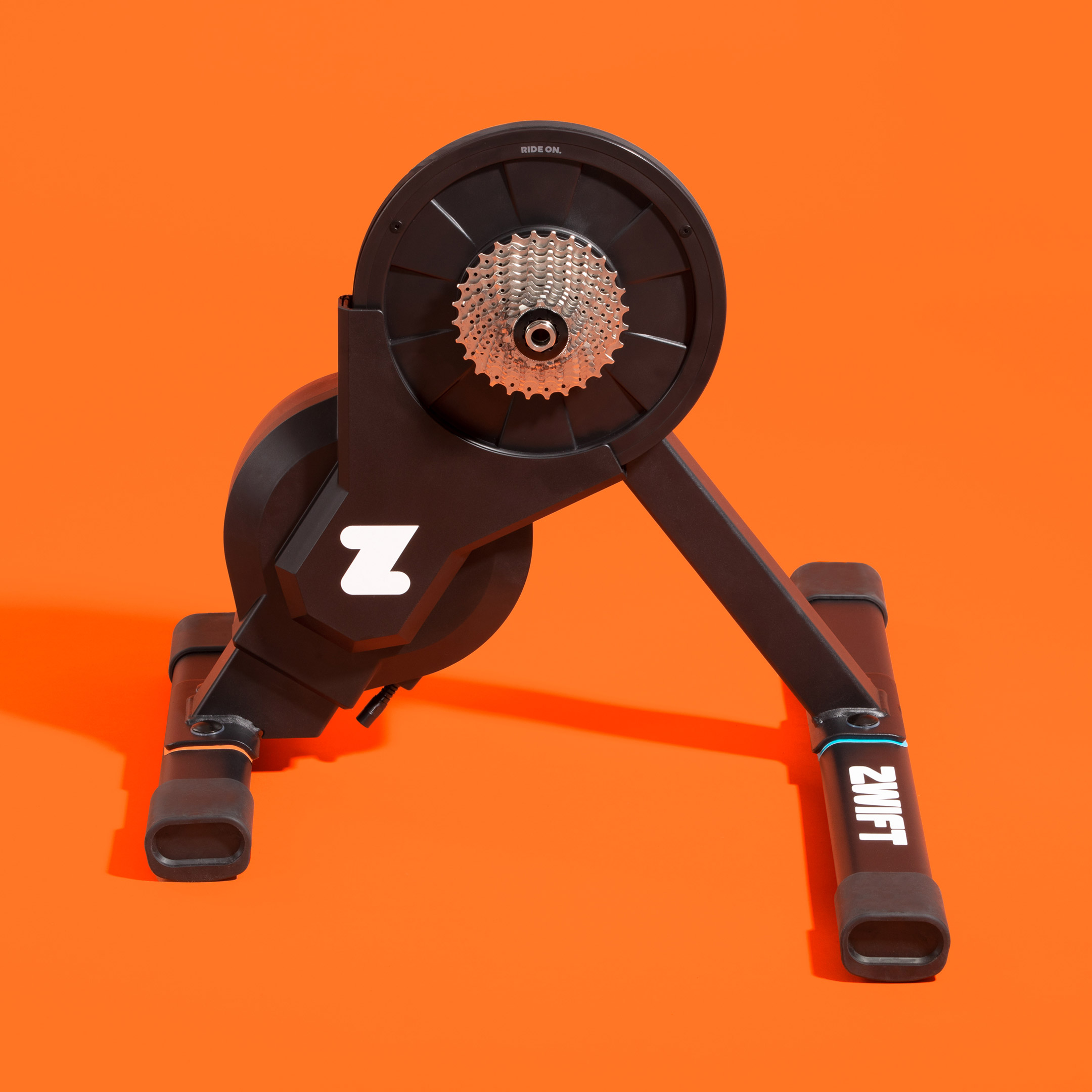
So it surprised everyone today when Zwift announced the “Zwift Hub”: the first smart trainer ever produced by Zwift.
We’ve been testing the Zwift Hub and will be publishing a full review in the coming weeks, but for today let’s just look at the specs and other details shared by Zwift.
Zwift Hub Specs
Accuracy: +/-2.5%
Max Wattage: 1800W
Max Gradient: 16%
Flywheel Weight: 4.7kg
Max Rider Weight: 254lbs/130kgs
Protocols: ANT+ and Bluetooth FTMS controllable
Cadence: built-in
Cassette: included (customers select from 8, 9, 10, 11, or 12-speed)
Axle Compatability: 142/148 thru axle + 130/135mm QR
HRM Bridge: the Hub can pair with your HRM and rebroadcast it via Bluetooth, freeing up an additional Bluetooth connection for AppleTV users
Pricing and Availability
The Hub is attractively priced, given its specs:
USA $499
UK £449
EU €499
It will go on sale October 3 exclusively at zwift.com, and will initially only be available to customers in the USA, UK, and EU. Zwift says potential buyers can register interest and get more information at zwift.com/hub.
Assembly
Zwift clearly knows that assembly and setup of a smart trainer is a pain point for some cyclists. They’ve taken pains to simplify The Hub’s setup process, providing a nicely-designed printed Quick-Start guide in the box plus help videos at zwift.com/hub/setup
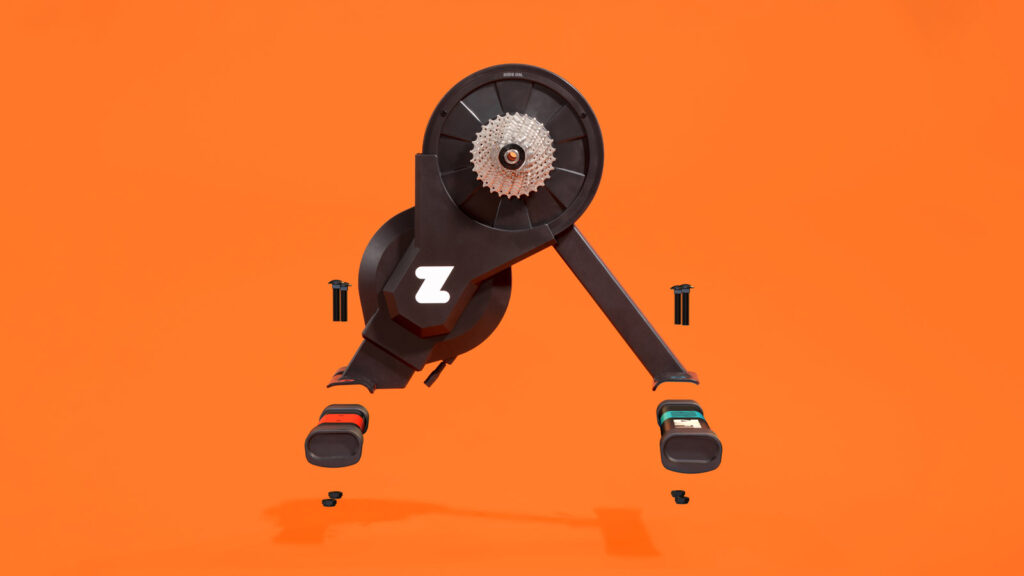
The Hub arrives nearly full-assembled. All you need to do is attach the two base feet, as shown below:
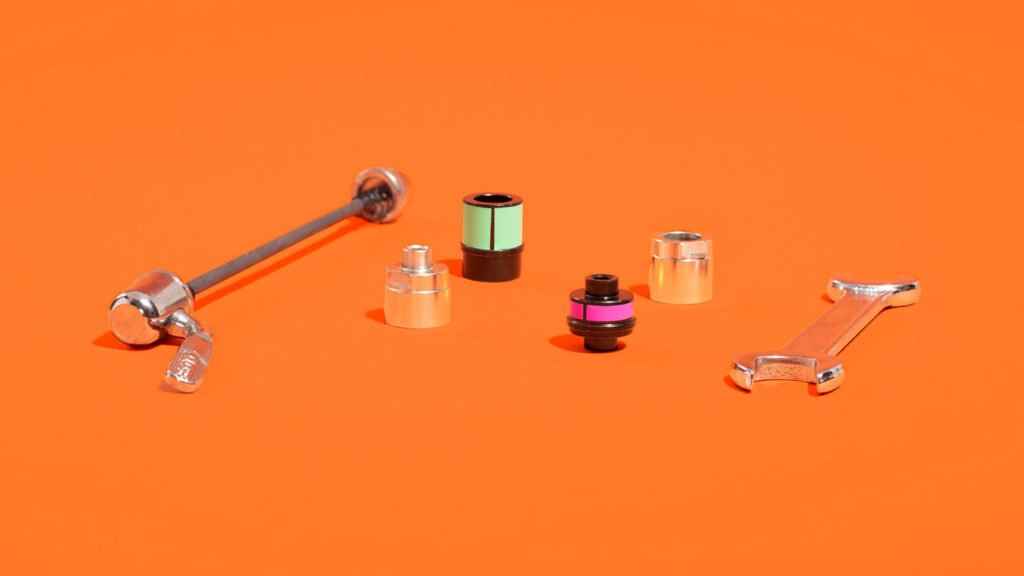
The box even includes a wrench for tightening the bolts, so you don’t have to visit your toolbox.
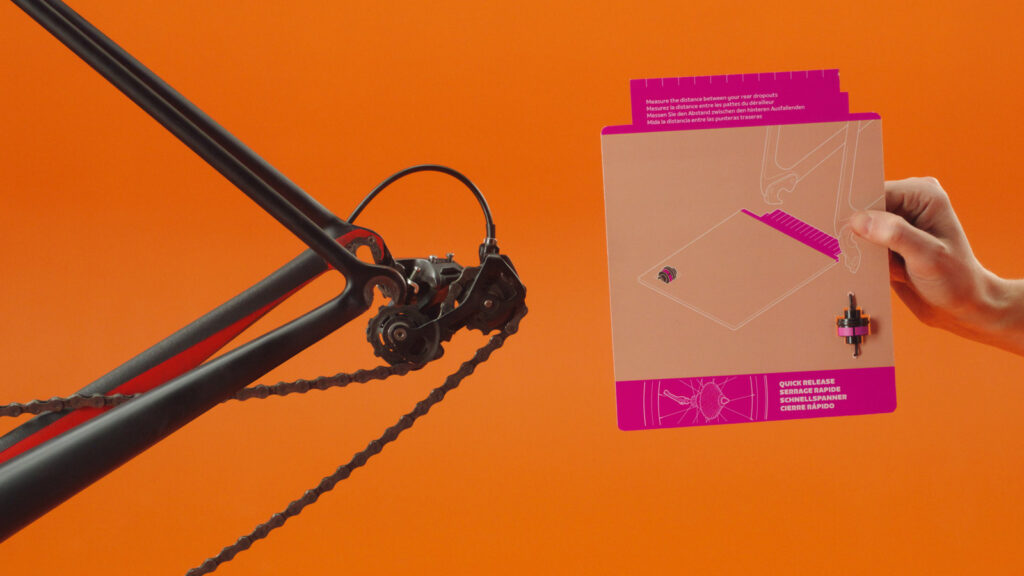
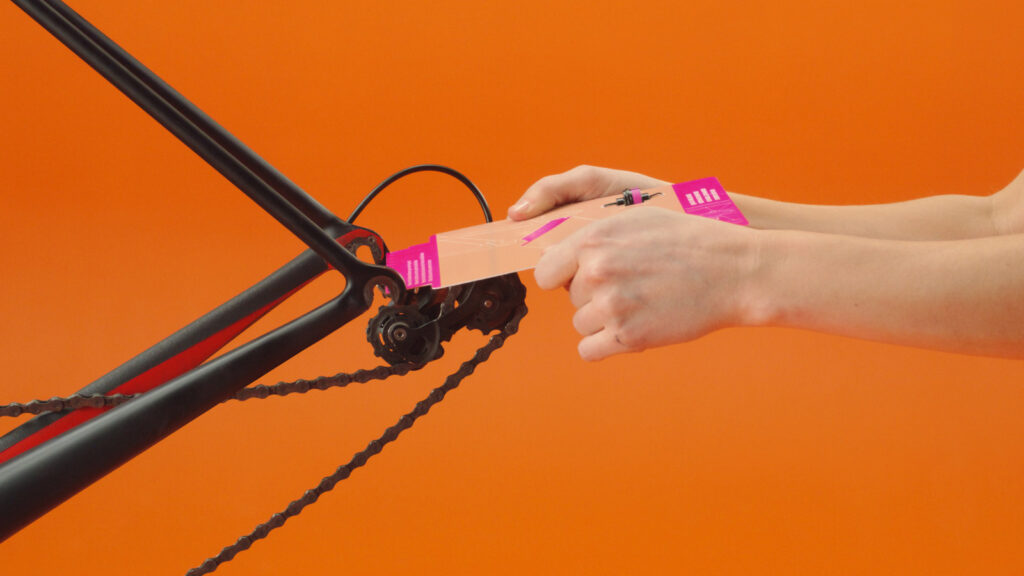
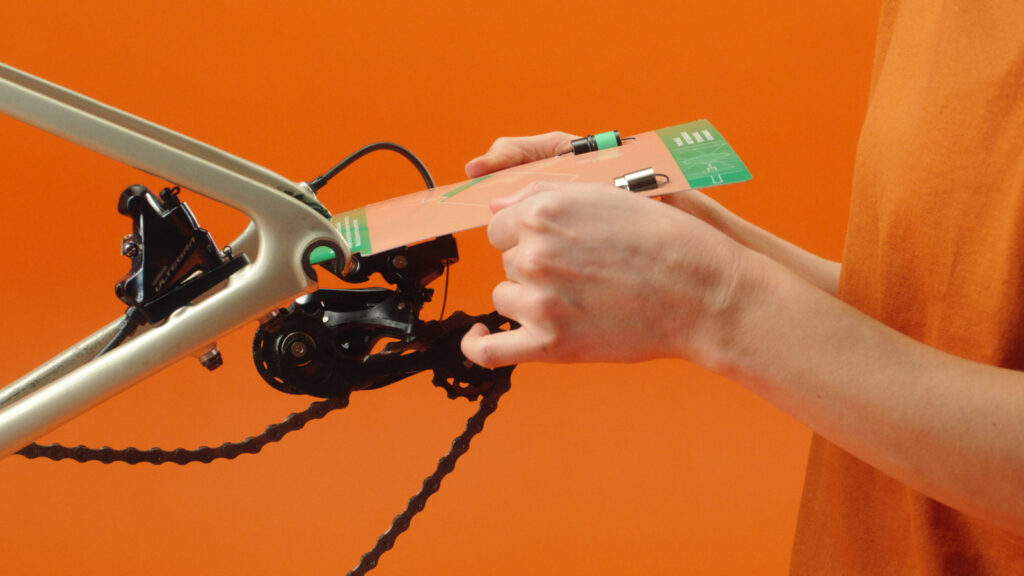
Since many cyclists don’t know the measurements of their rear axle, Zwift includes two handy measurement cards that make it easy to determine which axle adapter to use:
Included parts and toolsChoose the thru-axle or quick release card, depending on your axle typeMeasuring quick release axle widthMeasuring thru axle width
Integration
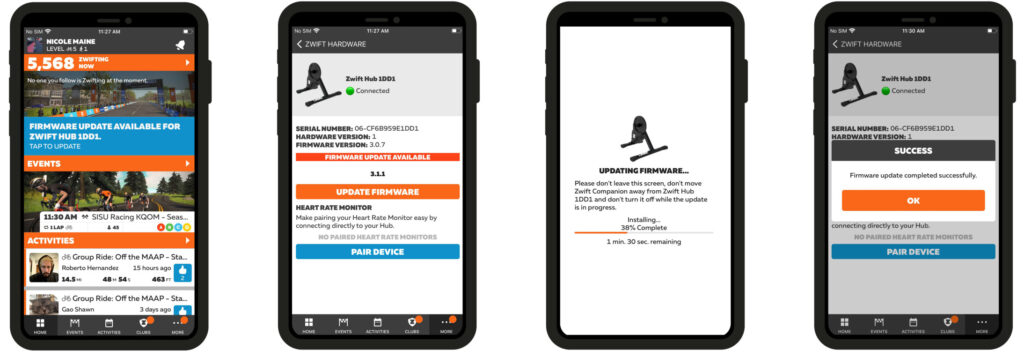
All firmware updates are handled easily via Zwift Companion:
Calibration is currently handled in game via Zwift’s spin-down utility, but Zwift says auto-calibration is coming soon via a firmware update.
Product Testing
With this being Zwift’s first foray into the smart trainer market, they’re being careful to get it right. Additionally, they know Zwift isn’t a proven name in the smart trainer space, so they’ve provided information on their product testing procedures. Here are some interesting details:
QA Riders: real test riders have completed 1,500+ rides totalling 10,000+ miles and 515+ hours on the Hub since April 2022
Bike Mechanics: Zwift contracted with a chain of bike shops in the UK to get the Hub tested for compatibility with as many frames as possible. Each time a bike came in for repair, shop mechanics would fit it to the Hub and log the results:
500 bikes have been fitted to the Hub
70+ brands (all major brands plus many more)
45-64cm frame size range
All main groupset brands
55% rim brake, 45% disc brake
8 to 12 speed groupsets
Lab Testing: Hubs have been running in lab durability test environments for months (read more below).
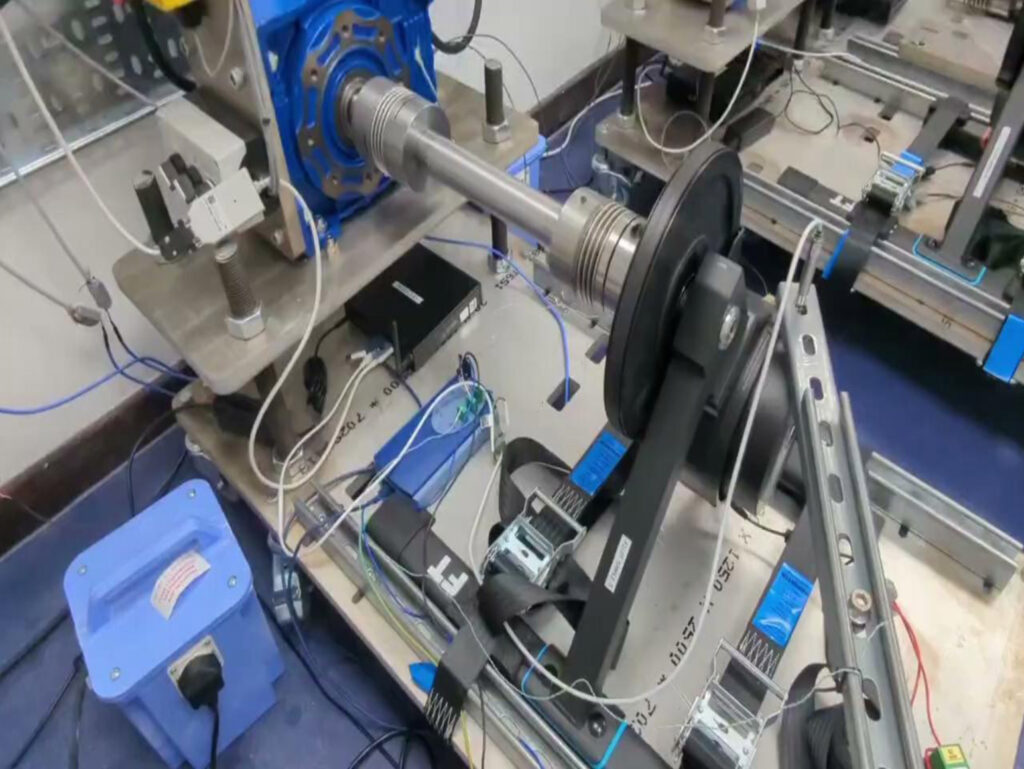
Remember when Zwift acquired eDrive Engineering Services? These electric drive experts have been durability testing four Zwift Hub units on a 24/7 basis. They’ve logged 1,300+ hours, simulating 2 years of hard usage.
The rigs aren’t just running a steady wattage, either. They are using real Zwifter fit file data to simulate actual trainer usage including popular ERG sessions, free rides, and races.
Durability jig in action at eDrive
Where Did It Come From?
Clearly when Zwift said they were pausing hardware plans back in May, they didn’t pause all hardware plans. Still, discerning Zwifters might wonder: how did Zwift design such a (presumably) competent trainer at such a low price point?
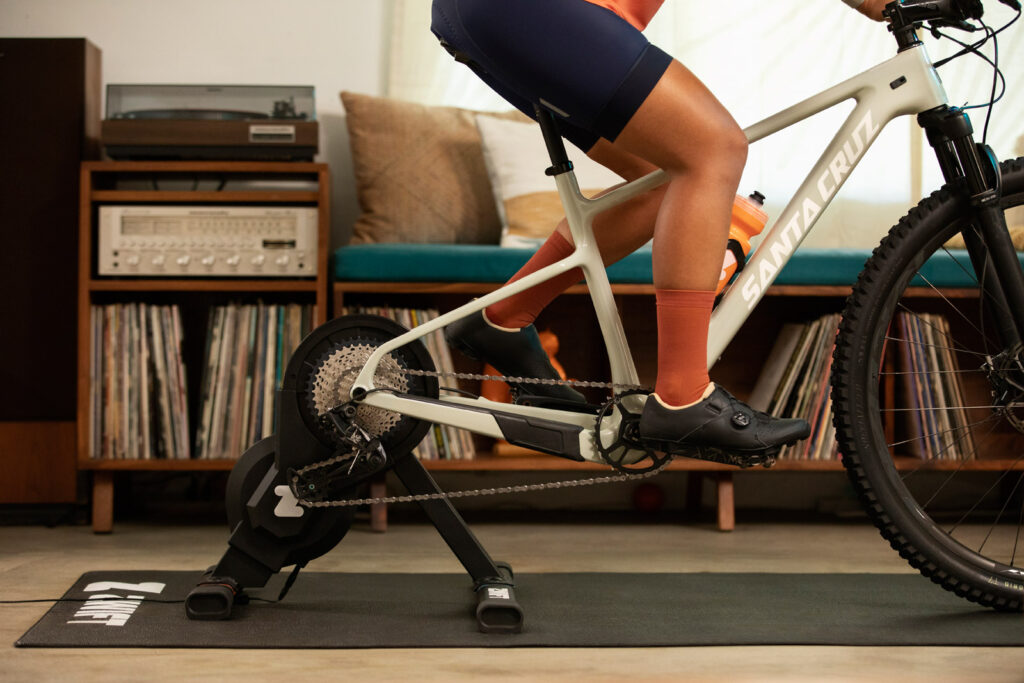
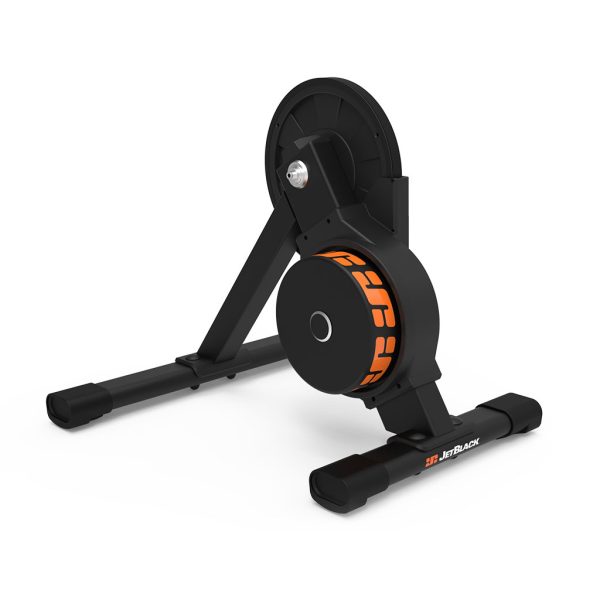
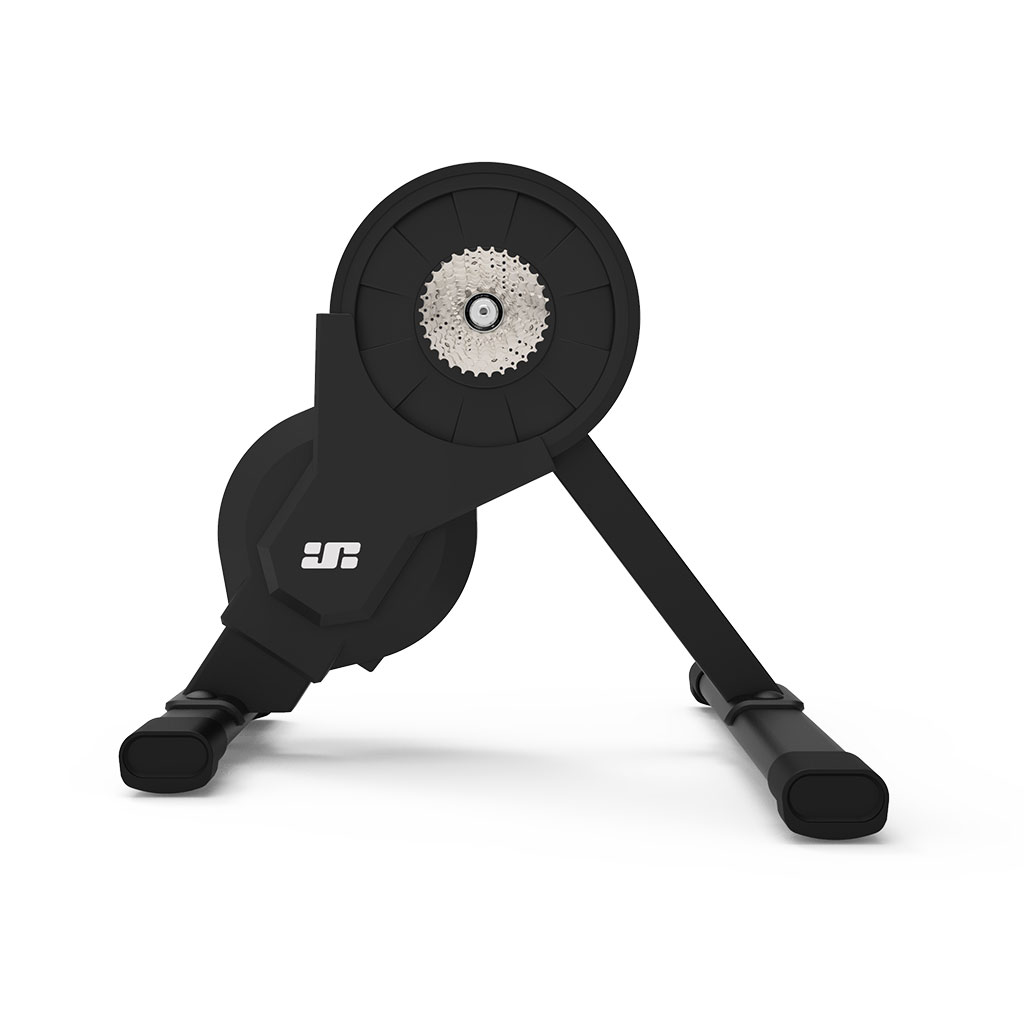
The answer is: they didn’t. Not entirely, at least. If the Zwift Hub looks familiar, that’s probably because you’ve seen the JetBlack Volt. Here are some comparison pics:
In our chats with Zwift, it’s clear they worked with Australia-based JetBlack on some level to develop the Zwift Hub. But what role JetBlack actually plays in the overall development and manufacturing of the Zwift Hub at this point is unclear.
The Hub is clearly based on the Volt, but it’s not the same. Firmware, for one thing, is being managed on Zwift’s side. Additionally, while the Volt has some frame compatibility issues with certain disc brake bikes, Zwift explained to us that the Hub’s body has been modified to maximize compatibility with framesets.
Wrapping It Up
The Zwift Hub’s specs put it on par with other mid-tier direct-drive trainers including the Wahoo KICKR Core, Elite Suito, Tacx Flux 2, and even the mid-high Saris H3. But all of those trainers are priced hundreds of dollars higher than the Zwift Hub, and only one (the Suito) ships with a cassette!
The market doesn’t need another $900-$1200 direct drive trainer. But it does need a $500 direct-drive trainer that ships with your choice of cassette and includes auto-calibration.
Our take: if Zwift is able to get this right, they’ve got a winner on their hands. One Zwift employee told us, “We’re not interested in becoming a hardware business, we’re interested in helping more people gain access to the Zwift experience.”
With these features, at this price point, the Zwift Hub can do exactly that.
“There’s no doubt that Zwift Hub is going to disrupt the market, and we think that’s great news for the customer,” says Eric Min, Zwift’s CEO and Co-Founder. “When we started on our hardware journey, it was important that the hardware served the primary purpose of accessing and elevating the core game experience. Getting set up on Zwift hasn’t been an easy process. It can be hard to know exactly what equipment you need to Zwift, and that equipment can be costly. Zwift Hub will help us deliver our mission to make MORE PEOPLE, MORE ACTIVE, MORE OFTEN by making it both easier, and more affordable to get set up on Zwift.”
Eric Schlange of Zwift Insider (Nowhere Fast Episode 40)
What happens when an unstoppable insider meets an immovable outsider? We can’t comment on the irresistible force paradox, but we did make a podcast episode.
The ultimate insider Eric Schlange of Zwift Insider joined the Nowhere Fast crew to talk about the origins of his website, the inner workings of Zwift, and of course, cheating. If you are wondering what Zwift is up to and what might be in the works for the indoor training program, this is definitely an episode you will want to tune into.
And if you, like us, have been wondering how to pronounce Eric’s last name, then you will DEFINITELY want to tune in.
About the Podcast
Nowhere Fast is a part of the Wide Angle Podium network and focuses on virtual bike racing. It includes Zwift commentary, interviews, and coverage of real races on fake bikes. Get it on Apple Podcasts, Podbean, Spotify, or anywhere else fine podcasts are shared.
This Season on Zwift: See Makuri Islands’ New Urukazi Map
Zwift recently published their “This Season On Zwift” (TSOZ) press release summarizing plans for new Zwift features through the end of 2022. And while that press release gives some high-level details of upcoming features, we like to dig a little deeper here at Zwift Insider.
This is one in a series of individual posts discussing specific upcoming features in more depth.
Nothing gets Zwifters more excited than new roads, and Zwift has promised some fresh roads this winter with an expansion to their Makuri Islands world. Here’s their teaser video:
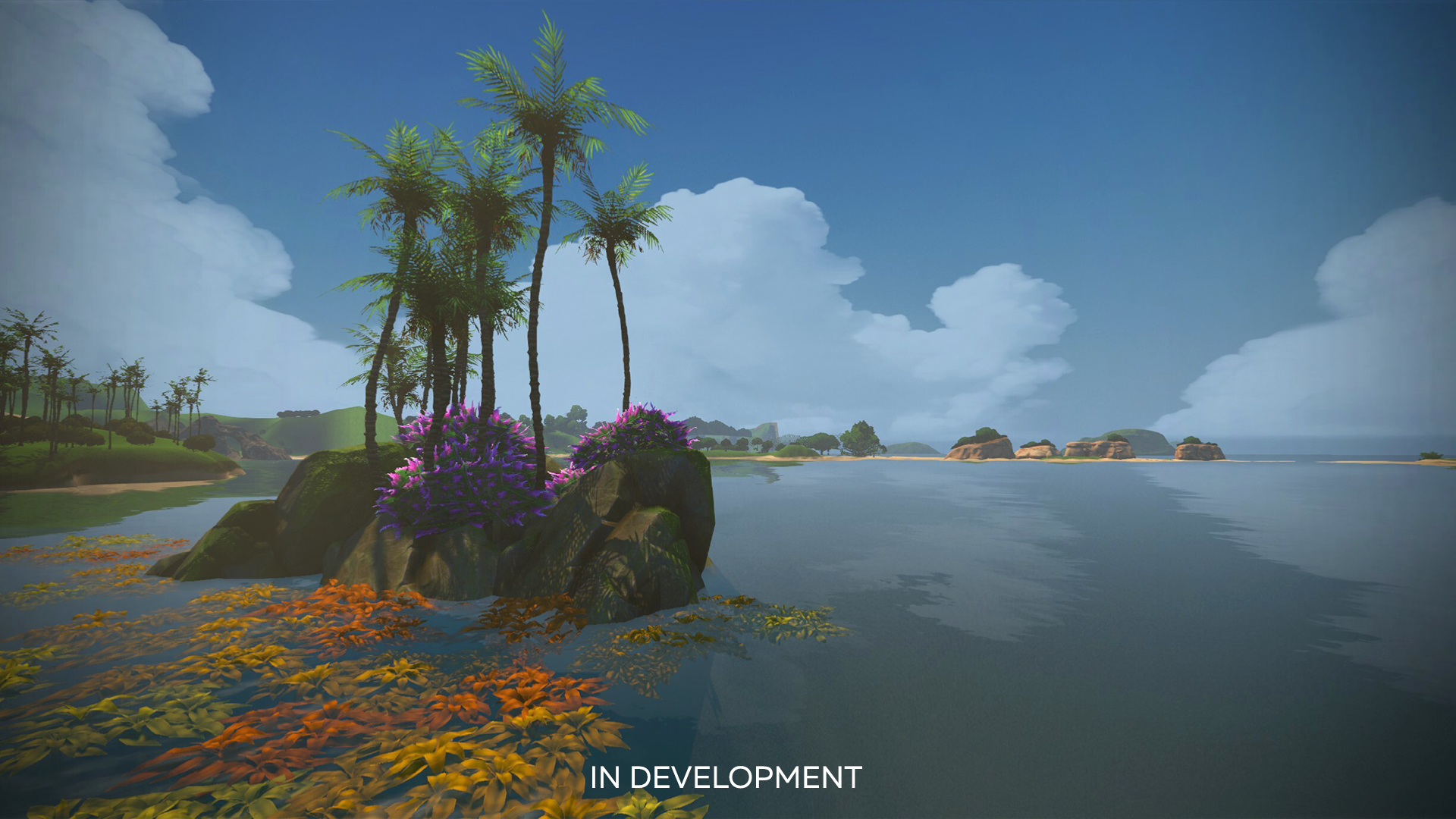
It certainly looks like a beautiful place, and a far cry from urban Neokyo’s neon-lit permanight. The new map is named “Urukazi” (woo-roo-kah-zi) and Zwift’s press release says:
“Urukazi” is the combination of two Okinawan words — “uru” means “shore,” and “kazi” means “breeze.” The combination of the two words is meant to evoke the serene, untouched character of the Southern Japanese archipelago. On the terrain of Urukazi, you’ll find a Zwifty interpretation of those islands’ scenery, as you ride pavement, gravel, and a new type of surface not yet found anywhere else on Zwift.
Rough Urukazi concepts from Zwift’s art team
The new map will add approximately 20km (12 miles) of roads to the Makuri Islands world, bringing the total to approximately 80km (50 miles). 8 new routes will be available when Urukazi launches, including one “uber route” which Zwift says is 40+km (25+ miles) long. (We think/hope this is a typo, as a route covering all roads should be more like 80km in length.)
A New Surface
What’s the “new type of surface not yet found anywhere else on Zwift”? As most Zwifters know, different surfaces on Zwift not only look different, they feel and roll differently. Each Zwift wheelset has specific rolling resistance (Crr) for each type of surface in Zwift.
Brick (example: part of downtown Innsbruck just before the Leg Snapper)
Cobbles (example: Italian Villas)
Wood (examples: Watopia fishing village piers and bridges)
Ice/Snow (found only on the Radio Tower climb, as far as we know)
Dirt (example: Mayan Jungle)
Grass (found only on Repack Ridge, as far as we know)
What would be next on the list that seems at home in an “untouched” land like Urukazi? In the past we’ve talked about a need for a surface where mountain bikes can excel – perhaps a rough singletrack or deeper sand or gravel.
Zwift says the new map features “features pavement, gravel, cobbles, packed sand, and wood planks.” All of those are existing surfaces on Zwift, except sand. So that must be the new surface type.
The trail surface on the teaser image above looks like it may just be the new surface – perhaps a sandy path. But it’s in the shadows, which makes it hard to say definitively.
Where Will It Be?
Again, this is purely conjecture. But our guess is Urukazi may serve as a sort of “bridge” to Zwift’s version of Mount Fuji, which we all hope is arriving someday. Since Fuji is located to the southwest of the current Yumezi map, and is a bit of a distance away from the existing roads, we think Urukazi will be located in this approximate area:
Events On New Roads
Zwift’s ZRacing series for November is titled “Race Makuri”, so you can bet we’ll have lots of chances to race the new Urukazi roads when they roll out.
Zwift is also planning a “Tour of Makuri Islands” Nov 4-30, so even if you aren’t interested in racing, you can ride the routes with friends. Zwift’s tour events are always very popular!
Release Date
It’s not always possible to pin down specific release dates for upcoming Zwift features, but this one is easy. Zwift’s TSOZ FAQ says “your first chance to ride the map will be in the Tour of Makuri Islands”, and that tour begins November 4!