Team Type 1 is at it again with another event you won’t want to miss! It’s a 24-hour team relay happening all day this Saturday, November 14 on World Diabetes Day!
What is World Diabetes Day?
World Diabetes Day was created in 1991 by IDF and WHO to raise awareness about the growing health threat that comes with diabetes:
Why is this such a big concern? Check out some of the stats about diabetes from the World Diabetes Day website:
In 2019 463 million adults (1-in-11) were living with diabetes
1 in 2 adults with diabetes remain undiagnosed
More than 3 in 4 people with diabetes live in low and middle-income countries
Diabetes caused 4.2 million deaths in 2019
How Can I Join Others Riding for World Diabetes Day?
Choose one of the following fun ways, anytime on November 14, 2020 between 12AM EST and 11:59PM EST:
Join Team Type 1 teammate, Steve Reynolds, anytime during the 24 hours. He is planning to ride 24 hours straight!!! To join Steve on ZWIFT, simply add him on your ZWIFT Companion App prior to your ride by searching for his name, Steve Reynolds TT1F. Once his name appears, click to add him to your App. When you are ready to start your relay ride, simply log into ZWIFT, select Watopia, you’ll see his name listed. Click his name, and then click join Steve. You will be transported to him on the ZWIFT Tempus Fugit route. He is not planning to ride fast, and it will be GREAT!
Join the Pace Partner C. Cadence anytime during the 24 hours. Simply log into ZWIFT, select Watopia, and you will see the Pace Partners listed. Choose Coco and you will be teleported to her. There will be many others following her as well. She rides pretty fast (2.5 w/kg), so join Steve instead if you prefer. In the event that the Pace Partners aren’t riding that day, join Steve instead.
Join one of the many teams who are doing social rides and races in solidarity with Team Type 1:
Team Type 1 Weekly Social Ride led by Mark Deal on November 14, 2020 at 10:10AM EST. The ride will be on the same route that Steve and Coco will be riding (Tempus Fugit).
Yes! Team Type 1 is raising money for two excellent organizations: Team Type 1 Foundation and JDRF!
Team Type 1 Foundation believes that nobody should die from diabetes; that nobody should suffer hardship or a lower quality of life because they have diabetes. Access to healthcare is a human right. Their vision is a world without poor health or death from diabetes, and without the common stigma that people with diabetes can’t – because, as they say: We Can. We Do. Go here to donate to Team Type 1 Foundation >
A donation to JDRF means you’re helping fund critical T1D research across the globe in support of their mission: to accelerate life-changing breakthroughs to cure, prevent and treat T1D and its complications. Join them, and as they say: together we can turn Type One into Type None. Go here to donate to JDRF >
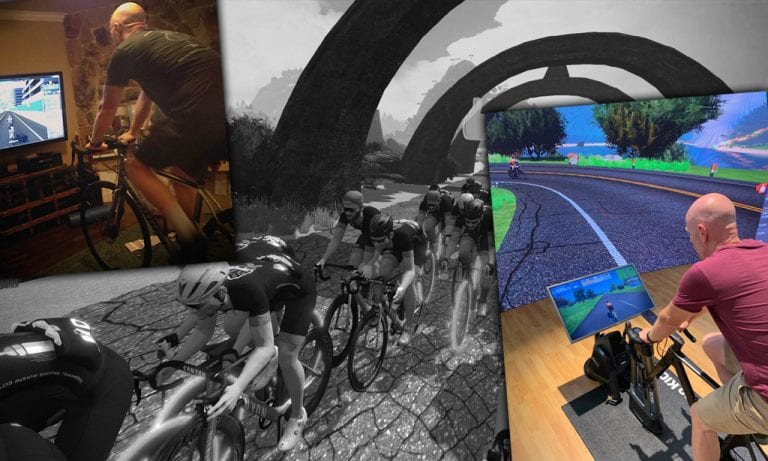
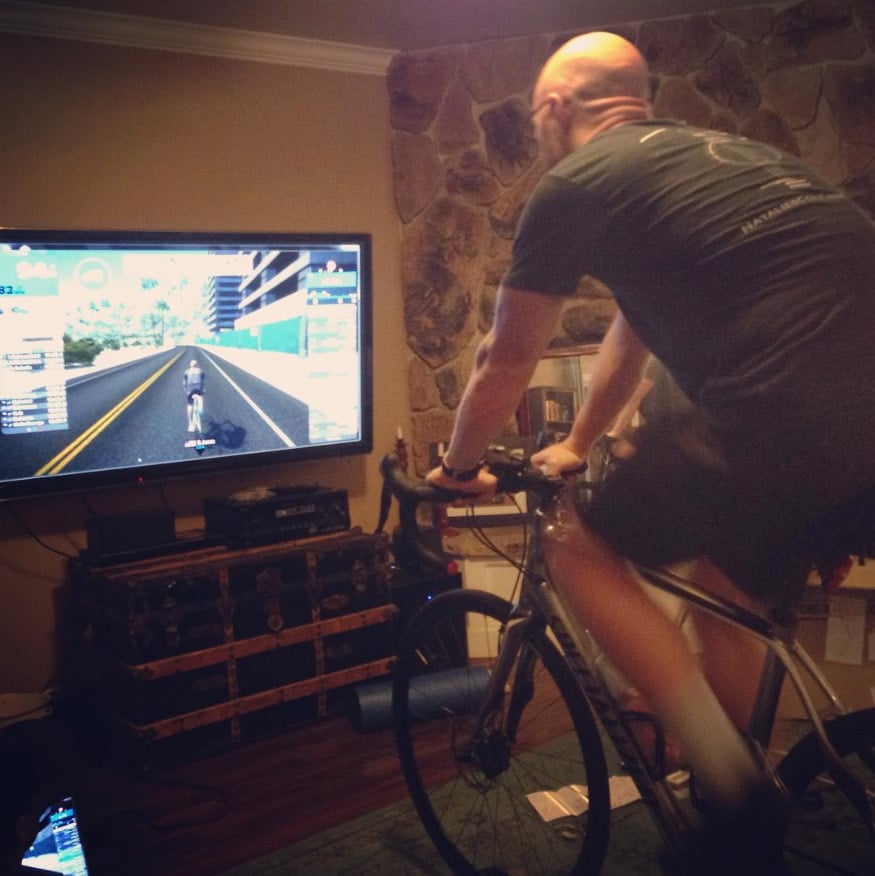
(Pictured above: my first Zwift ride, then a ride at Zwift’s 2019 Eurobike booth almost 4 years later.)
Five years ago today I went for my first ride on Zwift.
It was my first winter after returning to serious road cycling, and I was already dreading the roller sessions. At the time, none of my local riding buddies were using Zwift – I’m not sure any had even heard of it. But I saw it on a random Facebook post, downloaded the game, ran it in “just watch” mode, and immediately knew I had to give it a try.
After a little research, I found a website in Germany selling Tacx Vortex Smart trainers for ~$290 to my door, and I pulled the trigger.
First Zwift session: November 12, 2015
The night my Vortex arrived I put it together, hooked my bike in, and went for my first Zwift ride from the middle of my living room. The trainer wasn’t calibrated, and I wasn’t dressed for a real ride… so that effort didn’t last long.
But two days later I went for my first “real” Zwift ride – two laps of Watopia’s Hilly Route (which was the only route on Watopia at the time). Uploading it to Strava certainly confused local friends. “Are you in the Solomon Islands right now?”
I wish I had been on Zwift from the beginning, but when Zwift beta launched in 2014 I was just returning to serious cycling after an 18-year hiatus. So I never got to ride Jarvis. But what I have been a part of has been special. So each year, I look back and deliver my perspective as a Zwifter and the editor of the web’s most popular Zwift fansite.
Zwifting as a Necessity
Our all-time Peak Zwift of 34,940 came in the middle of worldwide Covid lockdowns. Those same lockdowns shut down pro cycling for months, driving many pros indoors, where they discovered Zwift. At one point in mid-lockdown we had several pro teams per week leading group events, and pro riders on course at all hours of the day. It was wild!
The same happened to non-pros, of course. Cyclists who had never considered Zwift now found it as the best of only a handful of options. Smart trainer sales soared, with some retailers reporting a 900% increase year over year. Getting up and running on Zwift is no small thing – it typically means purchasing a smart trainer, and often some accessories. This barrier to entry was simply too big for many cyclists, but when it became the only option, that barrier was suddenly a minor factor.
Stepping Into the Mainstream
This year, much more than ever before, Zwift has become part of the mainstream cycling world. What was once a small bunch of misfit techies celebrating one hundred concurrent riders is now a massive online community where several thousand regularly ride together.
Zwift is no longer a small startup. It’s not just a beta for nerdy cyclists. This year, Zwift was, in many ways, the biggest thing in cycling.
Today most cyclists know what Zwift is, even if they aren’t “Zwifters”. We see setups in bike shops, ads during the Tour de France, events at world tour UCI races. Most of my local riding buddies are now on Zwift – even the ones who poked fun at me that first winter.
And Zwift is no longer seen as the bad weather antidote: it’s avoiding city traffic. It’s confidence for elderly riders. It’s inspiration for anyone recuperating from injury. It is a supportive community you can access from wherever, whenever. And that’s powerful stuff.
Zwift has become a thing. A really good thing.
Trainers: Much Progress, but Further to Go
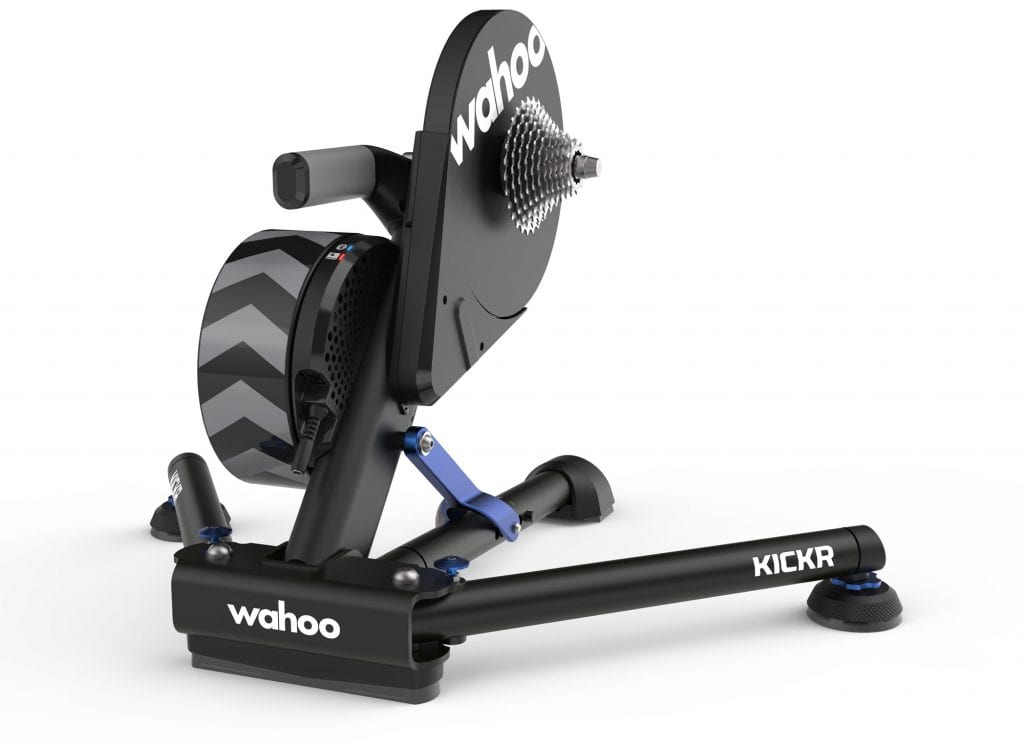
The KICKR, now in its 5th edition
If you wanted a smart trainer in late 2015 your choices were slim. Wahoo’s KICKR ruled the day, but if you couldn’t shell out $1200 you were limited to a small number of trainers that weren’t terribly accurate or reliable. The Vortex Smart I purchased did the job for a season, but I would upgrade after a year to a Tacx Neo and become a “direct driver” for life. (Today my wife rides the Neo while I use a KICKR v5).
Today we have a lot of options when it comes to choosing a smart trainer! (I spent many hours this summer putting together the Zwift Insider Smart Trainer Index, and one thing that experience taught me was that there are many, many smart trainer models on the market.)
Lots of options is a good thing. Lots of good options is even better! Unfortunately, the past twelve months haven’t seen much innovation in the smart trainer space. While we did celebrate the release of an updated Direto and KICKR, there hasn’t been anything eye-opening in the smart trainer world in months. What we are seeing is the price of high-quality direct-drive trainers slowly dropping, as the features of “budget” direct drive trainers begin to match the features of past years’ premium trainers. Today for ~$900 you can get a trainer with the same capabilities as the $1200 trainers of a few years back.
Covid has slowed this drop in prices, as demand has outpaced supply. But we’ll continue to see prices drop and features improve in the $700-$900 range of trainers.
Are we living in the golden age of indoor trainers? Not by a long shot. I would summarize today’s trainer market as there is still plenty of room for improvement, but we’ve come a long way. Today’s smart trainers still suffer from compatibility issues with certain frames, connectivity challenges, poor calibration tools, and setup requirements that are daunting to many cyclists. It’s still too hard to get going on Zwift, and that needs to change.
ZwiftHQ sees this. That’s why they’ve spun up a “Fitness Tech” division. They’re being pretty tight-lipped about what’s in the works, but suffice it to say it won’t be the same as what’s already on the market. They want a simple, reliable solution. I’m thinking a plug and play smart bike, probably with an integrated screen/computer. Just buy it, plug it in, and start riding. Like a Peloton bike… but for cyclists. 😉
A Virtual Tour de France. It really happened!
The eRacing Niche
Zwift racing participation continues to increase, with the first-ever Zwift Racing League pulling in a massive 6,000+ registered riders each week. And of course, we can’t forget the Virtual Tour de France, which was a huge deal, even though only top pros could participate.
But 2020 has seen Zwift less focused on eRacing than past years. And that’s not an accident – it’s a purposeful shift in focus toward the needs of the overall Zwift community. While Jon Mayfield was chided by the community early on for saying racing on Zwift was “niche”, in a way he was right! The majority of Zwifters aren’t racing – not even close. And with tens of thousands of new riders coming online thanks to Covid lockdowns, Zwift made the decision to focus resources on maintaining a stable platform and a steady stream of events for riders of all stripes.
There simply hasn’t been much development on the eRacing side of things in the past year. Features like anti-sandbagging are still only seen in a handful of events, and Zwift taking over ZwiftPower has meant no further innovation on that front.
As a regular racer on Zwift, I certainly have a list of improvements I’d like to see. All Zwift racers do! But I also realize that devoting development resources to race-specific features means fewer resources applied to features that could improve the experience for even more people. It’s a tough balance.
So Many Rides, So Little Time
There was no in-game event calendar five years ago. The community organized their own events and shared them on a Teamup calendar, and riders had to choose the right course then congregate at the start/finish banner before the event. Racers would jump the gun, make wrong turns, have their clocks set wrong… it was a mess! But we made it work because it had to. You couldn’t have hundreds of riders hanging out in one place without some competition!
We also only had two worlds: Watopia and Richmond. (Confession time: I fell in love with Richmond as a race course early on, and still love it. My first Zwift race was on Richmond, so it holds a special place in my heart even though I get dropped on Libby Hill every. single. time.) Happily, this year Richmond got a refresh, making it a much more palatable course for many Zwifters.
Now we have events happening around the clock – a few hundred every day! And ten worlds to choose from.
Support: Here For You
Zwift’s documentation and support were pretty sparse back in 2015, which is one reason why this website was built. When I had a question I would research the answer then document it here. Eventually, I started doing the same for other people’s questions (usually pulled from the Zwift Riders Facebook group), and before I knew it a sort of Zwift knowledgebase had developed.
Thankfully, Zwift has built a large support team since that time. It grew significantly larger when lockdown began, as thousands flooded to the platform and with them, many questions. This year, Zwift even spun up a program to allow Zwifters to perform a support role on the forums and get paid for their labors. What will that lead to? Only time will tell.
Changing Zwift Staff
Early on I was impressed by Zwift’s core team. Eric Min would pop into support chats on Facebook. Jon Mayfield would chime in on Reddit threads. And Lindsay Ruppert or Eric Chon always had some appropriate snark for anyone whining in the Zwift Venting Area.
These staffers were engaged in the community, passionate about what they were building, and cyclists themselves. Eric’s enthusiasm was boundless and infectious.
Five years in, I’ve been able to rub real-world elbows with hundreds of Zwift staffers at various events, and I communicate with many of them on a regular basis. A big re-org happened this year with Zwift’s top management, and one big result I’ve seen from that is Wes Salmon taking a more public-facing role. That’s been a good thing. As a longtime and regular Zwifter, Wes has his finger on the pulse of what the community needs. But he’s also got the project management experience to make stuff happen.
Zwift staffers have been largely working remotely since Covid began. Has this slowed the pace of development, or perhaps reduced their ability to collaborate effectively? That’s unclear. But I think it’s fair to say that for Zwift (and most companies around the world) Covid has presented some major challenges and created a need for creative thinking and organizational flexibility.
Virtual + Meatspace
When I joined Zwift five years ago, I never would have guessed that I would fly halfway around the world to hang out with people I only knew through a virtual cycling platform.
And yet, that’s what I’ve done. More than once!
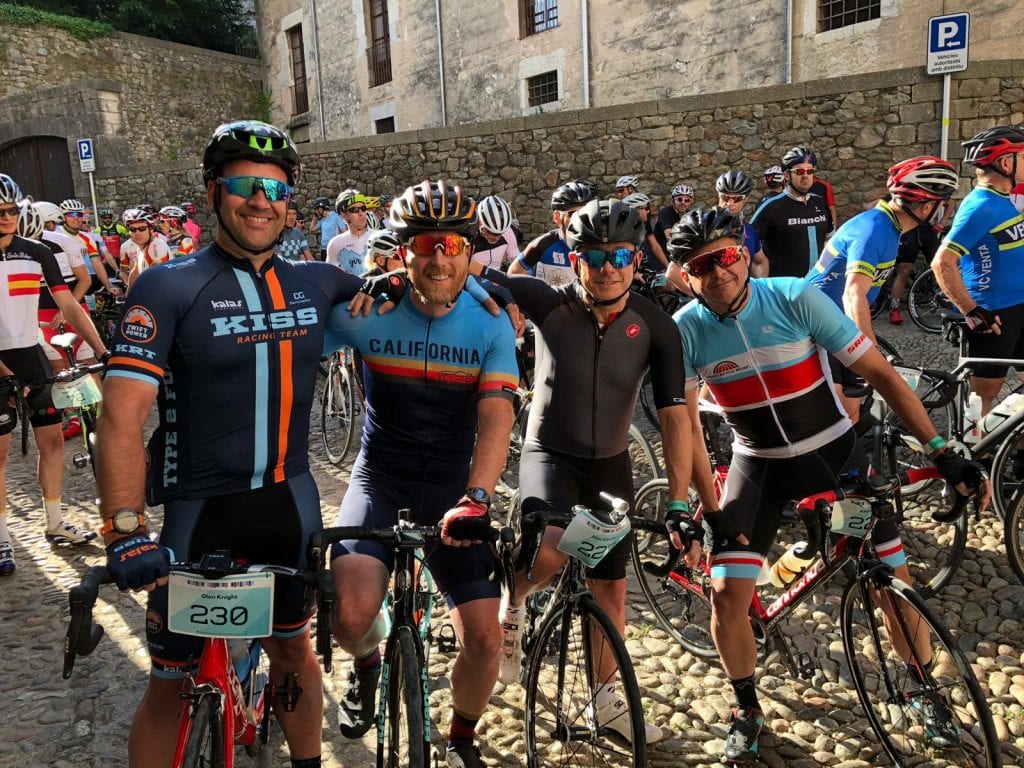
In June 2019 Monica and I celebrated our twentieth anniversary with a trip to Girona, where we hung out with Zwiftcast’s Simon Schofield and several other Zwifters for a week of beautiful rides and late-night dinners.
(left to right) Zwifters Glen Knight, myself, Al Clewley, and Kerry Smith riding the Girona Gran Fondo, June 2019
It may have begun with a virtual spin session, but the relationships I’ve built through Zwift have become real, personal, and valuable. I’m looking forward to doing more “Zwift Travel” in the near future.
The Future Is Bright
It’s not hyperbole to say my involvement with the Zwift community has been life-changing. It’s changed my fitness, it’s changed my work life – it’s even changed my vacation plans! And I’m loving every minute of it.
This winter is going to be crazy, with the crush of new riders on the platform. And I firmly believe that our community will keep growing as the Zwift platform develops and Zwift leadership strives toward their goal of more people, more active, more often. I can’t wait to see what’s next.
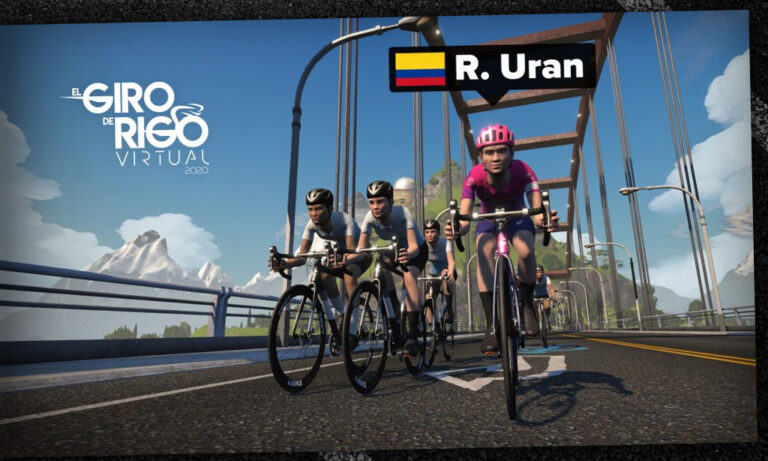
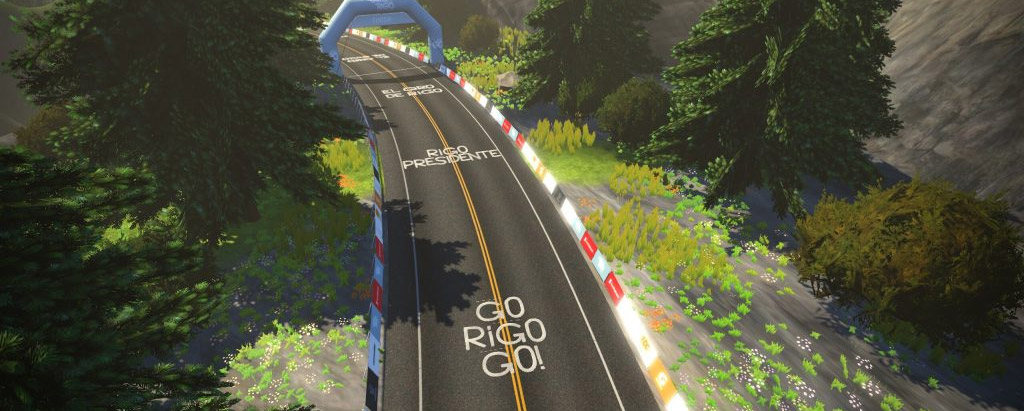
Zwift has just announced that El Giro de Rigo is returning to the platform, and happening this weekend! Normally a massive outdoor event, this year’s El Giro de Rigo in Colombia has unfortunately been canceled due to COVID-19, so Zwift has become the sole destination for 2020 El Giro de Rigo fun.
Last year’s event was very popular with its prizes and a chance to ride with the great Colombian pro cyclist Rigoberto Urán.Here are the details of this year’s events…
Routes
This year’s event includes two route options. The “official” route is a 70km ride on Watopia’s Big Foot Hills, or Zwifters can choose a shorter 42.3km effort on Watopia’s Out and Back Again.
The category you select will determine the gender(s) you compete against as well as your route length. Categories for these events are not based on power numbers.
A: open category (men + women), 70km Big Foot Hills route
B: women only, 70km Big Foot Hills route
C: open category (men + women), 42.3km Out and Back Again route
D: women only, 42.3km Out and Back Again route
Event Schedule
There are currently 11 “2020 El Giro de Rigo” events scheduled this weekend, with the first happening Saturday at 10:05pm Pacific, and the last on Monday at 5:05am Pacific. Rigo will be joining two of the rides – on Sunday at 5:05am and Monday 5:05am Pacific.
Zwifters race for a variety of reasons. Some do it to train for outdoor events, others do it for the pure fun of competition. Some do it to test their personal limits – others because they’re part of a team.
I was going into this race with a different sort of goal – to complete a structured workout in the context of a live race event. I’ve raced as a workout before, but this was a workout I hadn’t yet tried. My motivation was Tuesday’s big Zwift Racing League event on NYC’s Everything Bagel – a race that would be won or lost over a few climbs. And I knew those climbs were my kryptonite.
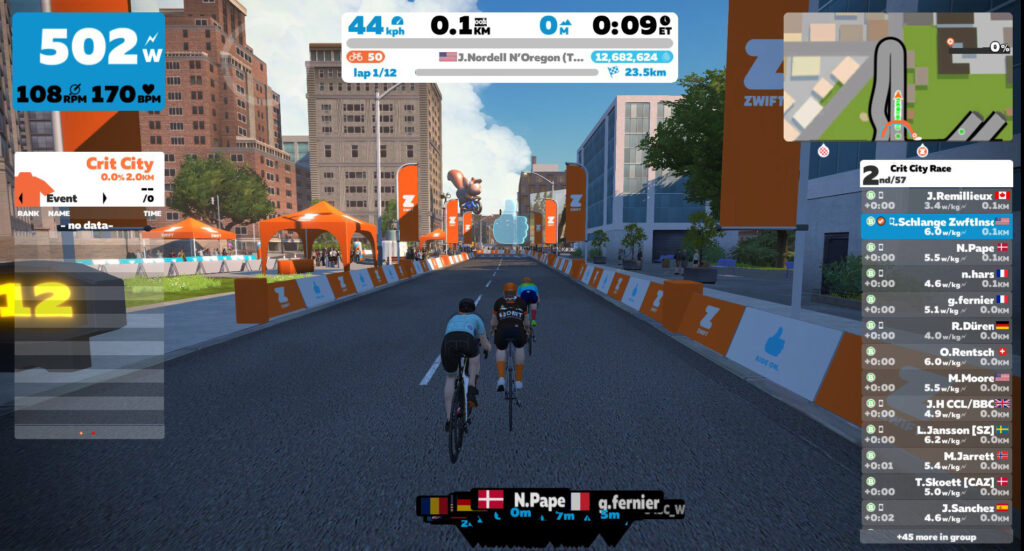
So I conceived a plan to work on my VO2 Max power during a Crit City race. Would one workout fix my historic VO2 Max w/kg weakness? Nah. But 12 laps of the Bell Lap route would provide the perfect environment for an engaging and challenging workout. And what doesn’t kill you makes you stronger, right?
A Bit About VO2 Max
The terms “VO2 Max” refers to the maximal volume of oxygen that can be inhaled and absorbed by your body. It is widely considered the gold standard for evaluating cardiorespiratory fitness.
Cycling coach Jeff Winkler says, “Think of VO2 Max as a supply-and-demand of oxygen, transporting it from the lungs to working muscles. Things that affect that are how well your lungs function at moving oxygen from the air into the blood, the stroke rate and volume of your heart, and capillary density. The demand is the rate that your muscles call for oxygen, a mitochondrial process.”
Testing your capacity to absorb oxygen requires a lab, and the results are stated in milliliters of oxygen per kilogram of body weight per minute, or ml/kg/min. But there are road tests we can take to predict our VO2 Max in terms of power. One simple test: your VO2 Max power is understood to be 110-120% of your FTP. Based on my ZwiftPower numbers, my FTP is 95% of 319 (so 303.5W), making my VO2 Max fall somewhere in the range of 333-364W.
Why does VO2 Max matter? Because it’s a huge determiner of your ability as a cyclist. On Zwift, we see riders pushing to their VO2 Max in many races with short climbs (think 3-5 minutes). In fact, it could be argued that your 1 and 5-minute power is more a determiner of Zwift race success than your FTP. But we’ll leave that for another day!
Warmup and Workout Planning
After chewing a couple pieces of MEG caffeine gum and rubbing some PR lotion into the legs, I headed over to Tempus Fugit for a warmup. Just a typical warmup – around 25 minutes, with a few hard efforts to get my heart rate up to 160.
While I warmed up I mentally rehearsed the ride plan. The race was 12 laps long, and I knew Crit City laps take about 2-1/2 minutes to complete. So I would do two hard laps, then two recovery laps. Repeating this 3 times gave me a total of 12 laps, with 15 minutes of VO2-level effort. Perfect! (Painful, but perfect.)
My grand vision was that I would jump off the front of the pack and stay away for two laps, then they would reel me in as I recovered. Wash, rinse, repeat. But as I checked the signup list I realized the B group had grown in numbers and strength since I had last checked. There were a handful of riders ranked higher than myself, and plenty of strength in the group.
I figured my grand vision might not quite pan out, but it would be a great workout regardless. Let’s race!
The Start (Set 1)
My first tough interval began when the clock hit zero and we charged out of the pens. We had 57 riders in our group, and I was immediately on the front with a couple of other riders, the pack strung out behind us.
Riding on the front – it felt so inefficient!
I knew I could hold around 350W for 5 minutes, so that was what I targeted on the flatter sections. Usually the pace settles down after the first little climb on Crit City, but I keep pushing over the crest, trying to keep my wattage up on the brick descent.
This was a really strange experience mentally. My brain kept questioning why I was pushing hard on the front of the pack! Especially on a descent. Especially on the first lap of the race. And especially when my legs already hurt!
It took some mental gymnastics to keep my body working hard for those first two laps, and I never got a significant gap on the group. But I think the pace stretched things out and dropped a few riders, so that felt good.
After two laps I sat up, going back to my natural habitat of sitting in the draft and riding efficiently.
Lap 5 began soon enough, and with it my next tough VO2 effort. I went hard up the twisty climb, deploying the breakaway burrito on the front so any chasers had to work a little bit harder. But I didn’t drop a single rider in our front pack of ~20. In fact, I was having a hard time staying on the front!
I kept naturally defaulting to sitting in the wheels to recover, before slapping myself and pushing hard to keep the wattage up. But the legs were hurting! I finished the second lap (not a meter too soon) and eased up, sitting in the wheels to recover. I was sure my power was lower for that second set – I could feel that the legs just weren’t fresh enough for an breakout effort today.
The Finish (Set 3)
By the 9th lap I was feeling the effort and realizing that perhaps my neat and tidy lap breakdown wasn’t so smart after all. Because now I was staring down the barrel of two full-gas VO2 interval laps, followed by the final two laps which would surely not be easy! Would I even survive to sprint it out in the end?
I was so busy thinking that I forgot to go hard at the lap banner to begin my third and final VO2 Max set. But I remembered soon enough and went hard up the twisty climb. The group stretched just a bit, but I could tell my wattage was far from impressive. Oh well – it was going to be a killer workout if nothing else! So I pushed for laps 9 and 10, sometimes finding myself in the middle of our pack of ~20, other times riding on the front in a position my mind was not happy with.
At the end of lap 10 I sat up, and just tried to take it easy while staying in the pack. I figured lap 11 would be fairly easy, then 12 would be hellish. Riders were still pushing the pace on the front, but sitting in the draft meant I could hang with the pack at 270W instead of 320W. Much easier.
The final lap hit, and the pace of the group rose palpably as we hit the twisty climb. All I had was a friggin steamroller for a powerup, which would be of no help in the sprint. So I just worked to stay in touch with the front group, using my steamroller on the bricks to make me roll just a bit faster.
A small group had broken off the front, but I didn’t have the legs to chase, so I hoped my pack would reel them in. And we pretty much did, but by that time everything was going fast and the pack was a strung-out mess! I shifted down a couple gears, got out of the saddle, and went all in at the last left turn. I passed a few riders in the final meters, finishing 8th on the day.
While it was difficult, I’d take this sort of a workout format over a solo ERG workout any day! VO2 Max work is really tough, but doing it in a race context helps the time fly by.
My “recovery” between sets wasn’t easy at all (270W+). And I think this made it so I couldn’t hold my normal VO2 wattage for all three intervals. Is that a downside to this style of workout… or a benefit? Is it better to hold that precise VO2 wattage for each interval, or to struggle to hold it while riding tempo in between, just like I would in a race?
I’m not really sure. But here are my numbers for each set:
VO2 Set 1: 361W for 5:02, 175BPM, 88RPM Recovery Set 1: 285W for 5:14, 170BPM, 84RPM
VO2 Set 2: 332W for 5:14, 178BPM, 87RPM Recovery Set 2: 273W for 5:24, 172BPM, 84RPM
VO2 Set 3: 312W for 5:17, 177BPM, 86RPM Recovery Set 3: 321W for 5:08, 176BPM, 87RPM
You can see my power dropped on each VO2 interval. And my so-called “recovery” set on those final two laps was anything but!
I set a new 6-week power PB in the 11:20-18:10 range, which was unexpected.
Would I do this again? For sure. But I think what I’d like to try it in a double draft race, where I could get more recovery on the easy portions. It would mean even less chance of me getting away off the front on the hard intervals, but after this race/workout experience, I’m pretty sure that’s not going to happen anyway. The pack is just moving too fast for me to create a gap and stay away at my VO2 max power.
And that’s another takeaway from this race – just a reminder of the massive difference in effort between riding on the front and sitting in the pack. Just like outdoors, you can kill yourself in the wind on the front of the pack, putting out 350W. Or you can sit in at 270W a few wheels further back. Both positions serve a purpose, but for most racers, if you’re looking to win, sitting in makes the most sense!
Your Thoughts
Have you ever executed a structured workout in a race? Share below!
In this podcast special, Matt Lieto brings in Sean Jefferson to talk about the inaugural Zwift Academy Run program. The training camp is a once-in-a-lifetime opportunity to join Zwift’s new top-end run team, and explore some killer workouts to improve your fitness.
Matt and Sean bring on Terrence Mahon, a world-renowned coach and runner in his own right, to chat about the coaching program he created.
Some really good banter and running history covered in this episode. Give it a listen!
About the Podcast:
The Zwift PowerUp Tri Podcast is hosted by former pro triathletes Matt Lieto and Jordan Rapp, lending their in-depth knowledge of the multisport to the Zwift Tri audience.
Cycling is a voyage of self-discovery. While it teaches us a lot about how we think it also teaches us so much about our physical selves. How much recovery do I need? How strong am I at different types of efforts (sprints, endurance rides, etc)? And how do my physical strengths rank against others?
Thanks to the universe of data amassed by ZwiftPower, Zwifters have a powerful, free tool at our fingertips to help us better understand our physical selves. But before we dig into that, let’s lay a foundation.
Rider Phenotypes
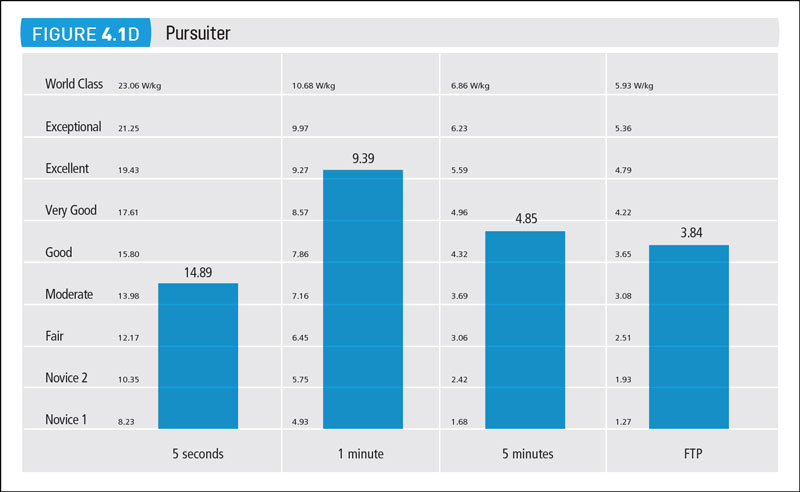
“Rider phenotypes” categorize cyclists based on their maximum average power over different time periods, also known as “critical power”. The time periods vary from book to book or coach to coach, but one popular model uses 5 seconds, 1 minute, 5 minutes, and FTP. A rider’s power numbers may be placed on a graph, creating something like this:
All-Rounder: generally even across all four time periods.
Sprinter: downsloping plot with best power in the 5s range
Time Trialist, Climber, or Steady-State Rider: upward-sloping plot with best power in the FTP range
Pursuiter: an inverted V-shaped plot with the peak in the 1-minute range
What’s Your Phenotype?
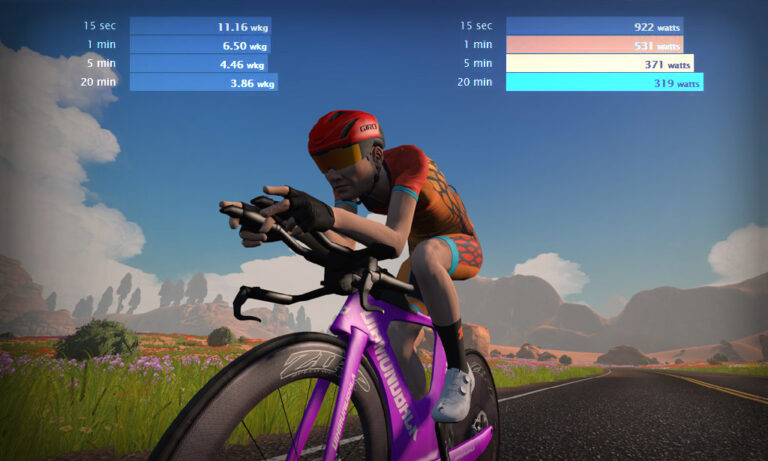
Here’s the fun part: ZwiftPower displays critical power charts on the profiles of each ZwiftPower user, allowing us to see where our strengths and weaknesses lie. Just view your profile page (here’s mine) and look at the graphs directly below your profile pic. Here’s what mine looks like today:
Mouse over each bar for a little more detail, including a percentile ranking against the overall cycling population using Cycling Analytics’ numbers found here. (This percentile grade is split by gender.)
The bars on the left display your power numbers in w/kg, while the bars on the right display them in pure watts.
Your best three bars in terms of population percentile rank are color-coded – these are your strongest points. Orange is your best, dark blue second best, light blue third best. So in my profile, my best is 20-minute wattage, followed by 5-minute and 1-minute.
A Word about Data Quality
It’s worth noting that your phenotype charts will only be as good as the data fed into them. ZwiftPower uses your last 90 days of group ride data for its phenotype charts, so if (for instance) you haven’t put in a hard 20-minute effort in the last 90 days, your chart may show you as a weak Long Climber or Time Trialist even though you may be very strong. And keep in mind this is only for events set up on ZwiftPower, which means your free rides or personal workouts won’t be included.
If you are regularly participating in all-out Zwift races of varying lengths your charts should be quite accurate.
Using the Data: Racing
A quick glance at a Zwifter’s chart can tell us what sorts of race situations suit them best. In my chart above we can see that, first of all, pure wattage is my strength. Power to weight (w/kg) is not! So I’ll do better on flatter courses, where wattage determines speed more than w/kg. Since my 20-minute power is my biggest strength (69.98% rank), I’m looking for flat TTs, or road races where the pace stays high throughout and there is a lot of attrition as riders drop off.
Now look at my weakest bar: 5-minute w/kg of 4.46w/kg (49.22% rank). My chart says that if a race involves a substantial climb in the 5+ minute range, I will struggle to stay with the front riders. And guess what: that’s true!
Contrast my chart above with the current world top-ranked Zwift racer, Stefan Kirchmair:
You’ll notice his best numbers are all on the w/kg side, indicating he excels in races with substantial climbs. His 20-minute power of 5.79 w/kg places him in the 98.66% rank, indicating that very few riders can beat him on long climbs. This is the power profile of a rider who is nearly unbeatable when the road tilts upward!
Not all top racers are lightweight climbers, though. Holden Comeau is the 2019 Zwift USA National Champion, currently ranked 3rd in the world. Check out how different his profile is from Stefan’s:
Holden doesn’t win races by attacking on long climbs – he sits in the pack and wins in the final minute with a super-strong ramp up punctuated by a blistering sprint. With 1-minute power of 768 watts (99.07%) and 15-second power that is ranked over 98% both in pure watts and w/kg, Holden is a rider you have to shake off well before the finish if you want to win!
Holden vs Stefan
If Holden and Stefan raced against each other they could use these critical power charts to come up with a plan and give themselves the best chance at a win. Let’s say they were racing Watopia’s Mountain 8, which begins with a climb up the reverse Epic KOM and radio tower (~18 minutes), then descends to a flat finish of approximately 9km.
Stefan would want to get away from Holden on the climb, putting as much time into him as possible while the road is steep. Then he would want some high-wattage teammates to tow him to the line, keeping him well ahead of Holden so it doesn’t come down to a head-to-head sprint.
Holden would want to limit his losses on the climb, perhaps using teammates to lend a bit of draft and pacing. Then he would want teammates on hand to help him reel Stefan back in on the descent and final flat portions of the race, forcing the race to end in a head-to-head sprint.
Using the Data: Training
Just as the phenotype chart tells you your strengths, it also tells you where you are weakest. Coach Shayne Gaffney says “race your strengths, train your weaknesses.” Even if you aren’t working with a coach, you can use these charts as a simple guide to spot your weakest points.
I know I need to work on my 5-minute power while dropping a bit of weight. What about you?
If you’re looking for a resource to help you train, check out the latest edition of Training and Racing with a Power Meter. The other book I’d highly recommend is “The Cyclist’s Training Bible” by Joe Friel. This is a very well-respected resource from one of the most trusted cycling coaches in the world.
Conclusion
There’s much more we could discuss with these rider phenotype numbers, but I hope this gets you started. Questions or comments? Post below!
Since March I have become obsessed with the weekly Team Time Trial… so I asked Eric if I could share my obsession with you all, in weekly doses.
Each week on a Friday I will give you a profile of the upcoming route, guidance on bike choice and some target times if you want to aim for the Premiere League (top-10 in each coffee class get to be in a special race televised on YouTube).
If you can’t ride, or even if you can ride, but want more action! Don’t forget to tune in to the live TV show on Zwift Community Live’s YouTube Channel at 6:15 (UK time).
Review of TTT #81 UCI Richmond
Over to RIchmond VA for the TTT last week. I took a break from my time targets – and well done to Joy Murphy of the ZSUN Saturn Frappe team – for calling me on it. ZSUN are one of those great forces in Zwift racing – and they have almost 30 teams! It’s great to know you guys have your eyes on the weekly recce, and even better that you like the target times!
Going into the TTT this week I felt very good about the R&K Hyenas. As a feeder and training team for R&K we are constantly getting new riders… then waving them goodbye. Over recent weeks so much has changed that I am the only rider left from the summer! That said, the mix of riders we have going to Richmond seemed the perfect squad for 8 ½ km flat and 8 ½ km with those three bumps. Two riders with a lot of oomph to go with their mass, four lighter climbers, and two all-rounders. We had a plan that would get us through lap one together, and a plan for the endgame.
Mike Tyson, famously, said “Everyone has a plan until they get punched in the face”. My plan got punched in the face pretty early on when two of our climbers got dropped – and in the aftermath the DS (that’s me) made the totally wrong call about whether to go back for them, leaving himself in the wind for a couple of minutes. These are the things races are made of – and while the team performed amazingly, their DS let them down (#sadface). Ah well… next week is another race!
Results are finalized now – so here are the PL times from UCI Richmond:
Category
#47 PL
#81 PL
Vienna
1:14:45 (10 teams)
49:51
Espresso
48:06 (7 teams)
43:58
Frappe
49:17
46:00
Latte
53:17
50:45
Mocha
1:08:10
57:31
Massive gains between #47 and #81… demonstrating the level of professionalism and competition between March and November. Well done and “Ride On” to every team that rode out yesterday!
Thursday 12th November – Two laps of Tempus Fugit
We were last on Tempus Fugit in April this year (WTRL #52), and before that in January. WTRL #52 was my second TTT, and I went out with the CICC lads, a fine bunch of (mostly) expats living in France. Why they adopted this lost lamb from Colorado I don’t know. But they did, for which I will be forever grateful!
Tempus Fugit has to be the flattest route in Zwift, making it the least technical TTT possible. That is perfect for any team wanting to show off their perfect paceline skills to reach max-aero without interruption from course-related complications. The highest mountain you will climb here is… 7m tall. A welcome change from Richmond perhaps.
The Fuego Flats desert course that makes up Tempus Fugit is one of the most popular spots on Zwift, so I’m pretty sure every one of you has been there. The course for Thursday is two laps – so from the Fuego Flats pens it’s a 2.4km lead-in, up and around the cool futuristic building in Saddle Springs (the LAX control tower), back and through the start/finish arch, around the loop and back through the start/finish to complete the first of two laps. This is a fairly long TTT at 37.1km, but it is fast… very fast. A top-flight Espresso team will average 50kph and be done in 45 minutes… while the slowest Mocha team will be in and out in just over an hour.
What to ride?
Don’t ride this
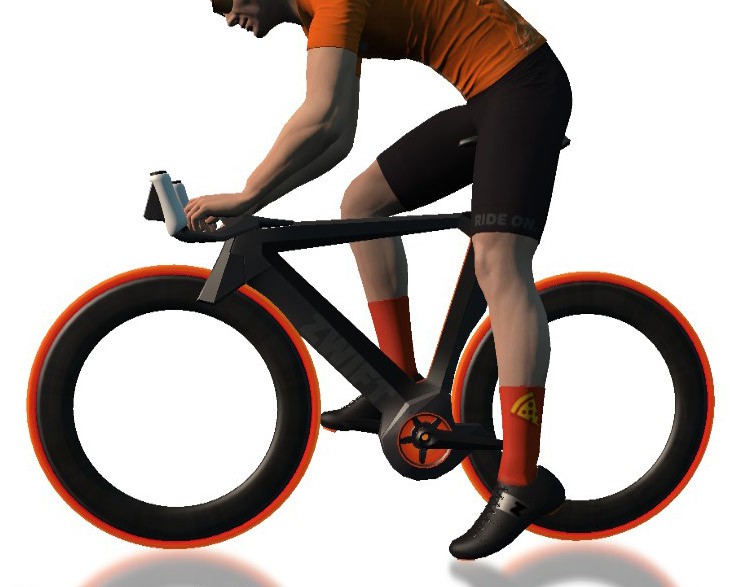
This course is flat… aero-rules-all kind of flat. At the top end, you are looking at Venge S-Works + Zipp 858/Super9 over Tron, with the Aeroad following close behind. Whatever you do, don’t ride the one in the picture above… however sexy it looks!
Level 45 get those 858/Super9 wheels and pair them with the S-Works Venge
I know I say it every week but it is doubly important this week. Get the Tron! Someone on one of the Zwift Facebook groups asked “what is the one thing you wish you’d known at level 1”… the answer is I wish I’d known how important Tron was! So, I cannot stress highly enough that if you are racing you need to be working on Tron. It’ll take a while, but just set the Everest Challenge and forget about it for nine months… like having a baby. On this course Venge S-Works beats Tron… but Tron remains the perfect “set it and forget it” bike.
Route Recon Rides
A few places to go for information – a race-focused recce from Zwift can be found here. Of course, it is focused on profiling the course from an individual racer’s perspective, but worth reading anyway.
There are so many ways to recce this route – the simplest being to hop on and select Tempus Fugit. If you want an organized ride or race follow this link to Zwifthype. There are a lot of individual TTs on the roster since this is one of Zwift’s iTT routes – and that can be an interesting way to test yourself.
Paceline skills are going to be a huge differentiator this week – so if your team wants to do some paceline practice remember you can always set up a private group ride (Meetup) in Companion!
Race Breakdown
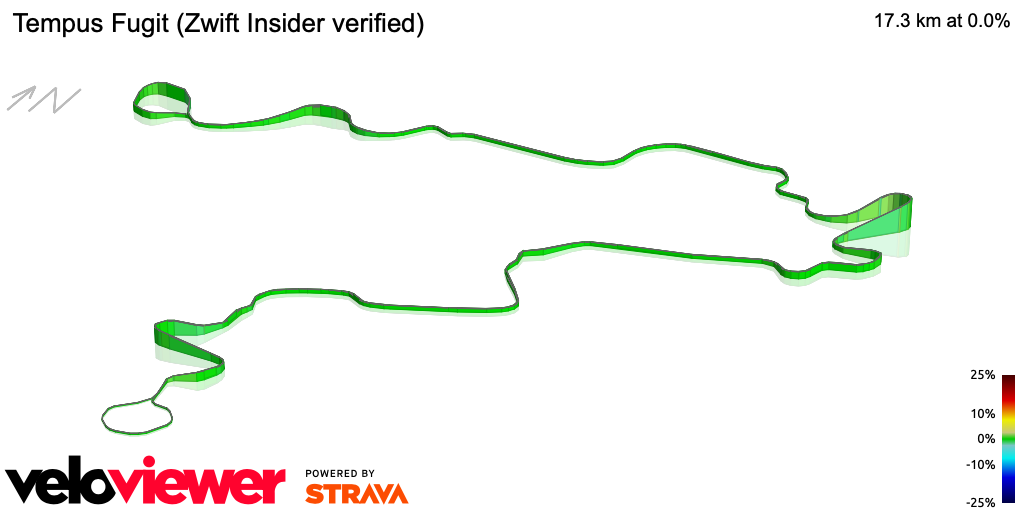
There really isn’t a breakdown of the route that makes sense… other than scenery there is nothing that gets in the way of good team formation. Take a look at the Veloviewer profile (I have purposefully stretched the elevation so you can see the “hills”) and you can see the flatness… one rise in the middle of the map, and another even smaller one in Saddle Springs…
Target times
Tempus Fugit has been ridden in two TTTs this year – in January and in April. January wasn’t competitive, perhaps because everyone was still hungover. #52, in April, was much faster – but I think the influx of teams and the honing of skill will drive up the speeds of the teams significantly in #82.
Category
#37 PL
#52 PL
Vienna
1:10:09 (6 teams)
55:20
Espresso
51:49 (9 teams)
47:30
Frappe
51:22
49:19
Latte
55:13
53:07
Mocha
1:02:36 (7 teams)
1:00:28
So what do I think will happen this week? Well… I think times will be faster across the board. I have assumed the same splits (10k, 20km, 30km) as the last time. Here we go:
Category
10km split
20km split
30km split
Finish
Vienna
14:40
29:20
43:30
52:25
Espresso
12:45
25:30
38:20
46:50
Frappe
13:20
26:35
39:50
48:40
Latte
14:20
28:45
43:20
52:50
Mocha
16:00
31:50
48:00
58:24
I took a little break to think about my life choices after being so far adrift 2 weeks ago. Let’s see how Tempus Fugit treats me!
As for the Hyenas, I don’t know who the team on the ground will be – but right now I’m going to set a target time of sub 54 minutes.
Wrap up
This race is all about team time trialing teamwork. There isn’t anything in the 34km that will get in the way of your team’s aero-excellence. Frankly, while I usually say get out there and recce the route, here I say get out there with your fellow riders… and practice teamwork!
Zwift’s first Z Pro Tri series earlier this year successfully showcased Zwift bike racing to the pro triathlete crowd. Now Zwift has announced the return of the series, with a revamped format and the opportunity for non-pro community riders to participate! Here are the details…
New Format
The brand new 3-part race format will test the all-round abilities of racers. Each week will include a Points Race, Scratch Race and an Individual Hill Climb TT. Events are scheduled together, so you can go from the points race directly to the scratch race and into the TT (each race is approximately 30 minutes long.)
Community riders can race all three back to back “for the full Z Pro Tri experience”, or just jump into one race and give it a try. Each week’s racing will mirror the courses which the pros race.
Community Series
Dates, times, and route details for the community races can be found at zwift.com/zprotri.
Events began November 6, and run through November 26.
Pro Series
The pros will begin racing on November 11.
This race series will be live streamed on Zwift’s Youtube and Facebook channels, with Matt Lieto and Sarah True providing commentary. Here are links to the upcoming race broadcasts:
The start list for each race contains 20 of the biggest stars in the sport, in both short and long distance racing. Confirmed athletes include Teresa Adam, Holly Lawrence, Laura Philipp, Emma Pallant and Annabel Luxford. On the men’s side, Alistair Brownlee, Jonny Brownlee, Sebastian Kienle, Joe Skipper and Antony Costes.
The fifth week of Zwift Racing League is upon us, and it’s going to be a punchy climber’s dream racing New York’s Everything Bagel.Let’s dig into the course, including some tips for bike choice and key selection areas.
Looking At the Route: NYC Everything Bagel
Here’s a route preview from Rick over at No Breakaways:
Route Breakdown
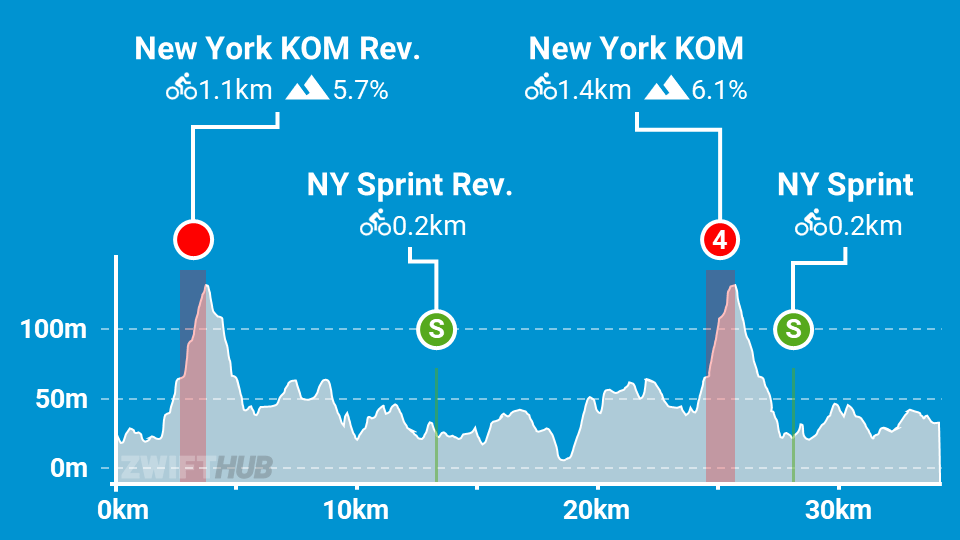
This route is basically never flat, but it’s not as pitchy as the profile below might lead you to believe. Still, the key selections of the race will happen on the first climb, which begins just 2km into the race!
The NYC KOM Reverse climb is an interesting one, because it’s really two climbs. First you’ve got the lead-in of ~800m, then the actual timed segment of 1.1km. Make no mistake – the effort will began at the bottom of the lead in, and it will be an all-out slugfest because riders know that all the intermediate bonus points will go to the group that makes the front selection.
After a quick descent (can the chasers recapture the front group?) the next intermediate is a sprint at ~13km. This has a quick kicker climb leading into it, so keep your eyes open and hammer that climb if you want to take sprint points.
Our next climb comes at 18.5km as we transition from the ground-level tarmac to the glass roads. This section is about 1km long, and is the longest climb on this route apart from the two KOMs.
Then we arrive at the forward KOM, which like the reverse has a lead-in (at 24.2km) before the official timed segment. Expect another all-out effort here as riders push to thin the pack and increase their chances for intermediate points at the top of the climb and the upcoming sprint.
Our final intermediate is the forward sprint at the bottom of the KOM descent, 28.1km in. This is a longer sprint section, so timing is crucial. Then it’s 6km of rolling roads to the finish, where timing is also vital! Many riders go too early here – a course recce is recommended.
Bike Frame/Wheel Choices
We tested various setups over this full course, and looked at segment times for the crucial KOMs. Here are the results:
Frame + Wheelset
Lap
KOM Rev
KOM
Specialized Tarmac Pro + Lightweight Meilenstein
56:41
3:34.69
4:34.00
Zwift Concept ZI (Tron)
55:54
3:34.90
4:34.10
Canyon Aeroad 2021 + DT Swiss ARC 62
56:10
3:34.91
4:34.23
Canyon Aeroad 2021 + ENVE 7.8
56:01
3:35.09
4:34.30
Specialized Venge S-Works + Zipp 858/Super9
55:55
3:36.00
4:35.44
Keep in mind the reverse KOM has a lead-in climb as explained above, so the time gaps above will actually be 30-40% larger over this first crucial climb. Is it worth going with the “pure climber” Tarmac Pro + Lightweights in order to gain an advantage of ~0.3 seconds, if you’re going to lose so much in terms of overall lap time due to the wheels not being very aero?
We don’t think so. Our pick for this course is the Tron bike, which performs next-best on the climbs and is fastest overall on the lap.
If you don’t have the Tron bike, look at the Aeroad 2021 + DT Swiss wheels for a rig that climbs almost as fast, but is available at only level 10.
And definitely do not go with a disc wheelset. That’s going to hurt you on the crucial climbs.
Strategic Options
There are 4 intermediates on Everything Bagel, each awarding extra points for those first over the line (5, 4, 3, 2, and 1 points). They come in this order:
KOM Reverse
Sprint Reverse
KOM Forward
Sprint Forward
There’s no escaping the fact that this is going to be a tough race for the sprinters. Because if you’re not able to get over the top with the front group, you’ve lost your chance at intermediate points.
There’s a slight chance that the front group will be small enough (and the chase group large and strong enough) that chasers could rejoin the front group on the descent after the first KOM. So if you find yourself just behind the front pack, don’t despair. Your group will have to work together to make something happen and pull back the front group, but especially if you’re still in or close to the top 30, it would be worth pushing to rejoin that group.
Some teams may attempt to “protect” their sprinters and try to get them over the first climb. We think this is a fool’s errand. The group will be too fast in the initial kilometers for you to attack and get a significant gap on the climbers, and that first climb is too long for you to preserve a gap of only a few seconds. (The only scenario where this may work is if your sprinter is just a few seconds back over the KOM, and another teammate gives them a wheel to pull them back into contention.)
This week’s race, more than any other on the ZRL season schedule, will see many riders dropped within the first 5 minutes, with no hope of getting anything except the single point for finishing the route. Enjoy your gruppetto time – it’s a rare experience on Zwift!
Lastly, powerups: there will be five opportunities for a powerup on this route. Make sure you know how each powerup works, and use them wisely! Hint: the anvil may prove useful on the descents following the KOMs.
Your Thoughts
Care to share your thoughts about Tuesday’s big race? Comment below!