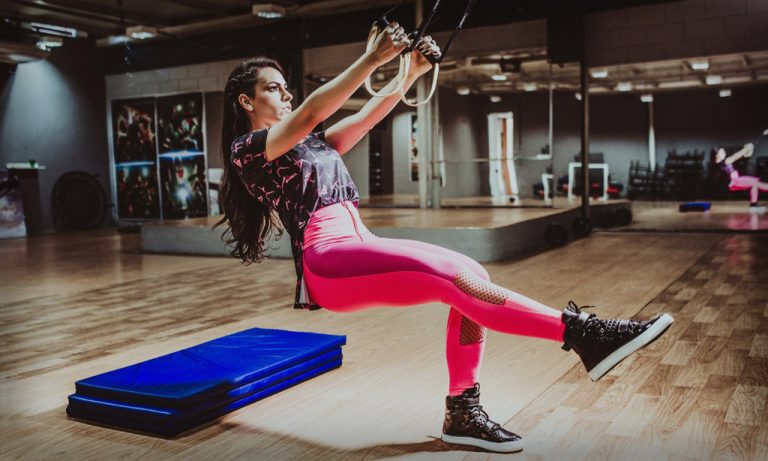
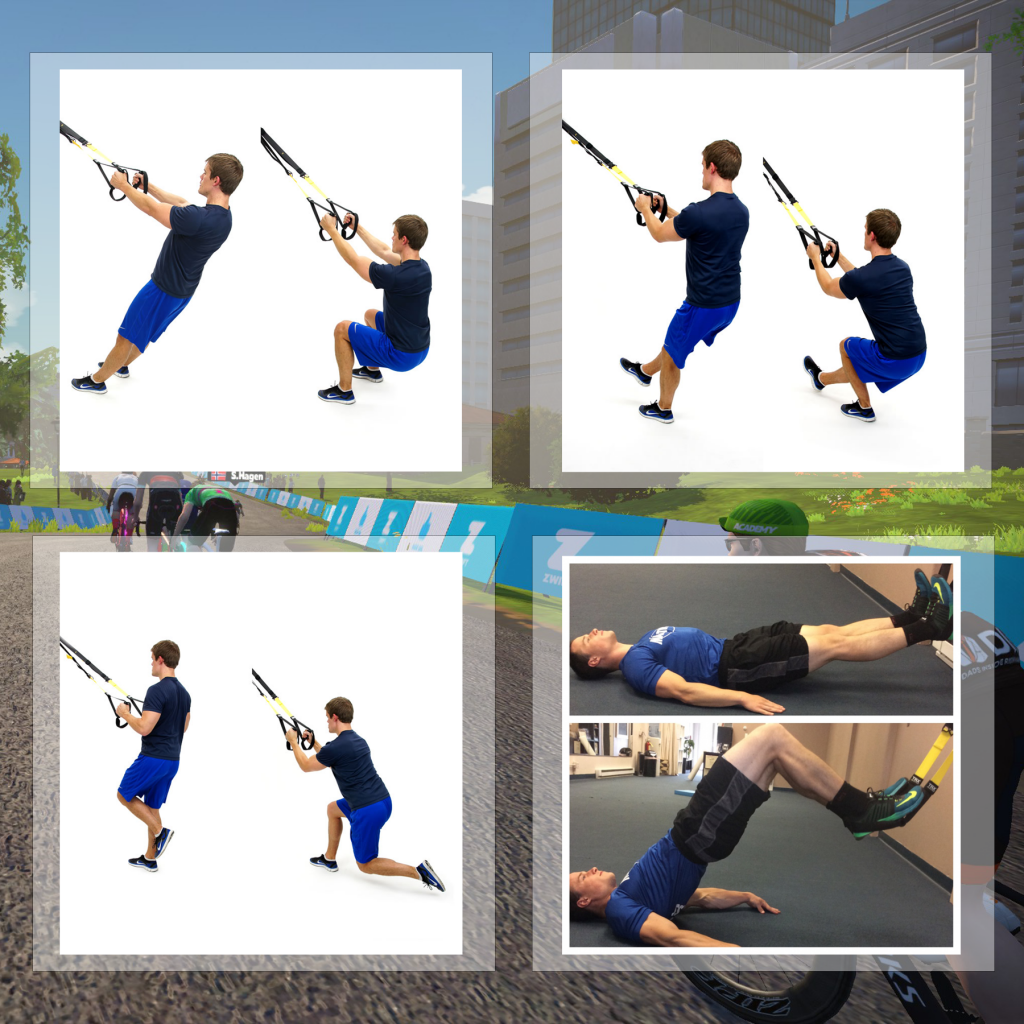
The utilization of suspension training equipment as a tool in the cyclist’s strength training program provides several unique benefits and makes it an appealing choice when focusing on off-the-bike training.
Originated by the Navy SEALs, Suspension Training is a versatile technique that leverages gravity and the user’s body weight to perform a wide range of exercises. Suspension training involves any bodyweight exercise performed while using straps, cords, rings, ropes, or chains suspended from a single or multiple vertical anchor points.
The Benefits of Suspension Training
Core Specific: Essentially every exercise performed on a Suspension Trainer becomes a core exercise, as recruitment of the spinal stabilizers is required for all exercise performance.
Efficient use of training time: With only minor adjustments and no need to change equipment, transition time between exercises is minimal, resulting in shorter, more intense workouts.
Portable and versatile: With the usage of an over-the-door anchor, suspension training can be performed while traveling, in a hotel room, or even outdoors.
Total body training: Most suspension training workout plans employ a vast range of muscle groups, enabling you to to stimulate a greater number of muscle fibers in a shorter period of time.
Cardio aspect: The dynamic nature of the exercises and greater muscle recruitment causes an increase in heart rate while developing muscle strength and endurance.
Less equipment required: Due to the flexibility and adaptability of the exercises, with the utilization of only one piece of equipment you are able to perform a challenging and progressive workout.
Cost-effective: Only one piece of equipment is required.
Little space needed: Most exercises can be performed in a compact space and in the safety of your own pain cave.
Functional for daily life: The exercises are based upon normal everyday movement patterns, through multiple planes, which translates into improvement in the performance of daily living and cycling activities.
Counteracts the negative effects of prolonged sitting: By dynamically engaging core and postural muscles, the exercises negate the deleterious effects of prolonged sitting in the saddle and out.
Do you use suspension training equipment as a tool in your cycling strength training program? Your fellow Zwifters want to know how it works for you. Share below!
Spring!! The long winter is over. Ask most people what they like about spring and they will say lighter nights, warmer days, flowers. Ask one cyclists what they like about spring and they will say:
Cycling outdoors
The Spring Classics
Ask another cyclist what they like about spring and they will say:
The Spring Classics
Cycling outdoors
The Spring Classics are historic cycling races that take part in northern Europe. According to Wikipedia, “The classic cycle races are the most prestigious one-day professional road cycling races in the international calendar. Some of these events date back to the 19th century. They are normally held at roughly the same time each year.” The five most revered races are often described as monuments. Together Strade Bianche, Milan–San Remo, the Cobbled classics (E3 Harelbeke, Gent–Wevelgem, Tour of Flanders, Paris–Roubaix) and the Ardennes classics (Amstel Gold Race, La Flèche Wallonne, Liège–Bastogne–Liège) make up the “Spring Classics”, all held in March and April.
The racing is exciting and just finishing an event is (in my opinion) an accomplishment, with Paris-Roubaix being a distance of roughly 280km or 174 miles. It takes a special kind of rider to race these events. Those who win instantly obtain “legendary” status and those who win more than once such as Tom Boonen, (Paris-Roubaix x 4) or Fabian Cancellara (Paris-Roubaix x 3), are immortalized in the sport.
The racing is fast and the courses unforgiving, causing both man and machine to breakdown. In 2006, American George Hincapie was among the favorites for Paris-Roubaix, having finished runner-up the previous year. However, while navigating a cobbled section in the front of the peloton, the vibration on the cobbles caused the handlebars of his bike to break, resulting in him crashing out of the race, in the most unusual circumstances. To this day, I have never seen anything like it. And that is what makes the Spring Classics special. They are different from any other races.
To celebrate their uniqueness and status within the cycling world, Zwift have teamed up with Zipp and launch the inaugural Zipp Classics. It’s a fitting partnership, since Zipp has been central to the recent history of these races, with many riders taking victory on Zipp wheelsets.
The Event
The Zipp Classics event lasts 4 weeks, and starts on Tuesday, March 30th with a Ride with Kasia Niewiadoma, at 7:00PM CEST.
During each week, there will be a series of group rides led by Zipp athletes and ambassadors. These will be at comfortable, steady pace (2-3 w/kg) social rides where people will be sharing their favorite Classics moments and memories. They also serve as recce rides for the weekend races, since they’re held on the same routes.
Then on the weekend, there will be a mass race!
Weekend Rides (Races)
The four Weekend Group rides will be different from the social events hosted in the week and as they are similar to the Zwift Gran Fondos, most riders will be racing the events.
The Weekend Rides are classified as races, which means they will count as races in ZwiftPower. There are no categories, though – everyone starts at the same time!
Note: weekday rides for week 4 are on Out and Back Again, because event planners felt that Dust in the Wind was a bit too long for a midweek social ride.
An additional unlock will be available on the final weekend’s ride… but we can’t yet tell you what it is!
And finally, one lucky Zwifter who completes all four Weekend Rides will win a new set of Zipp wheels (terms and conditions do not state the wheel model, but they do say the approximate retail value is $4,000USD). Just complete the four events, and you’ll automatically earn an entry into the drawing. Term and conditions apply.
One year ago, March 17th 2020, in order to avoid going crazy during confinement, I acquired Assioma Favero power pedals and set them up on my indoor spin bike. Then I logged onto Zwift. Now is the time to look in the rear mirror and analyze the disease I have developed (and you might be sharing with me since you read ZI).
Since that day I’ve been trapped inside the game. I have reached such a degree of addiction that I can say I see the matrix. Today, I am an Alpe du Zwift junkie talking watts and cadence for 10 hours per day, world Jeopardy champion in “the turns and slopes of Titans Grove” category, keeper of the clouds, and I call Watopia dinosaurs by their name.
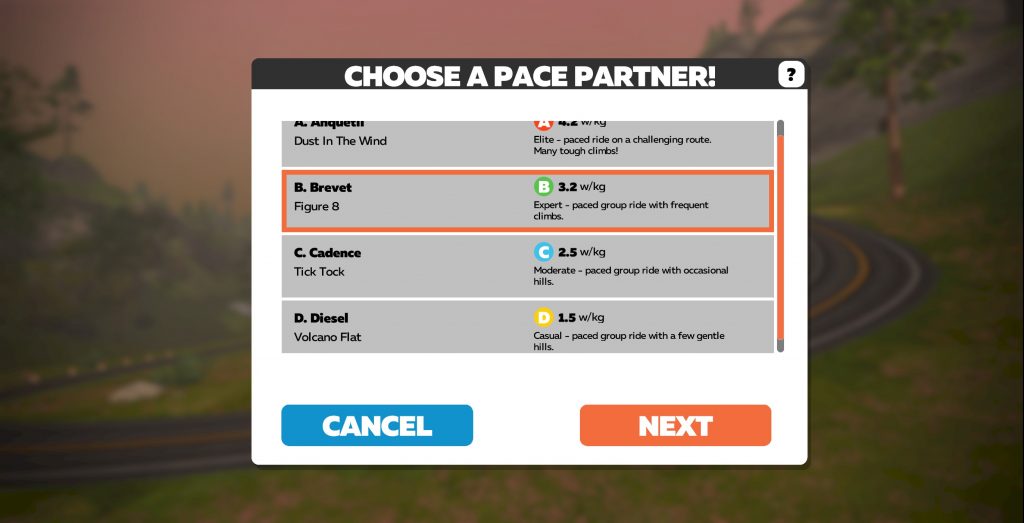
My best friends are D. Diesel, C. Cadence and B. Brevet. I still have my ups and downs with A. Anquetil as she unavoidably puts some distance into me after 20 minutes, which has me thinking she does not really like me despite my best efforts.
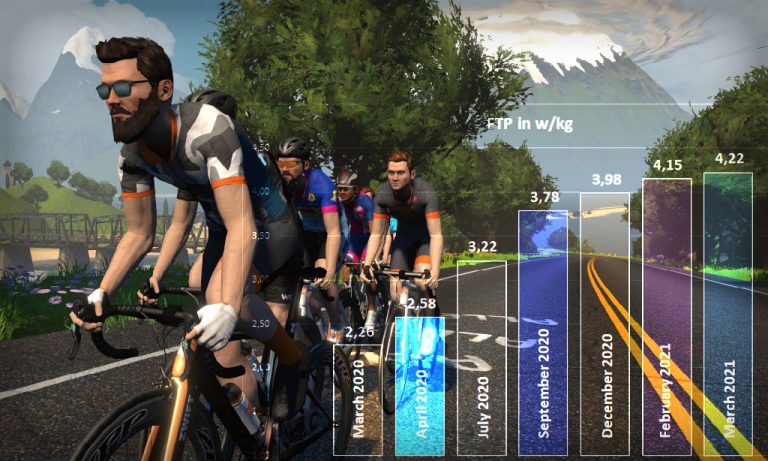
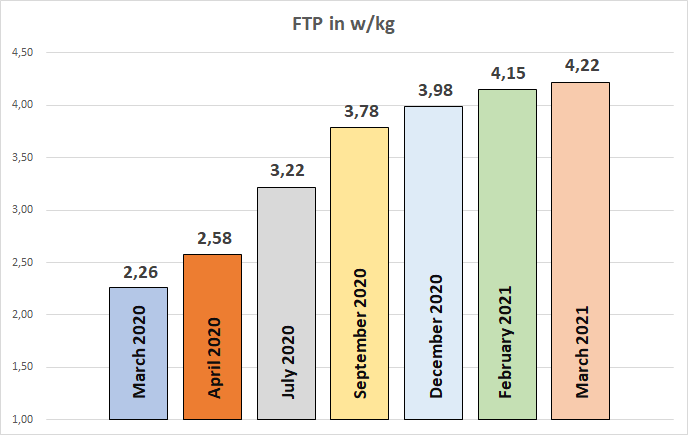
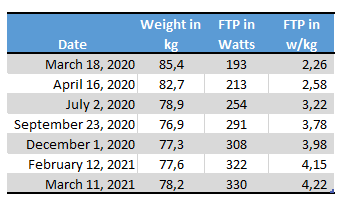
So the first thing I did was an FTP ramp test: 193 Watts (if you boo at this point I will take it personally and I think you will regret it once you read through the entire post and see the table at the end).
(If you are nearly as psychotic as I, you went directly to the end of the post to check the table and came back here. You are so predictable…)
I understood that with my 85 kg and 2.25 w/kg I was positioned at the very base of the food chain and almost every Zwifter would eat me alive in any race. That is exactly what happened in the first race I joined on March 20th. I remember suffocating and breathing so heavily that I was actually able to communicate with the dinosaurs. In their own language. This may explain my current closeness with them.
I have quite a competitive mindset. Never retreat. After reading around, including one post by Alejandro here at Zwift Insider explaining how he improved on Zwift, I decided not to race again until I accomplished at least a basic training plan. For me, that was the 4 week FTP Builder.
I am not going to lie. I have suffered. A lot. If you ever wonder about the small red stains appearing randomly on the sides of the Tempus Fugit circuit, let me solve the mystery immediately: these are the small pieces of lungs I have been spitting during my first 4 weeks on Zwift. (Who is the sadist who invented low cadence FTP intervals workouts? He should be thrown in the same jail as the guy who invented the FTP ramp test!)
After two weeks I was so tired of playing with my spinning bike resistance in order to adapt it to the workouts that it became clear I was going to need a smart trainer and a bike to put it on. Having literally never ridden a road bike before, a whole new IRL world was opening to me.
What can I say about smart trainers beyond the fact Erg mode is the sweetest of drugs and that my Zwift experience skyrocketed to a whole new universe?
After one month on Zwift, I was not a monogamist yet. By that I mean that I was also evaluating and riding on other platforms. What made me definitely decide that my relationship with Zwift was exclusive was ZESP. ZESP is the largest spanish-speaking community on Zwift, with close to 2.000 members. 2.000 friends would be a more accurate description of what ZESP is. As I was feeling a little bit by myself and disconnected, I decided to join them.
Now my Zwift universe is populated by hundreds of ZESPers sharing a similar craziness to mine on Telegram and on the many group rides and races they organize each week. Beyond the individual experience, it gave me a sense of purpose and being part of something bigger, including a Zwift Racing League team. I definitely have ZESP blood running through my veins.
My life also became way more complicated to organize. I went from seeking an adequate work/life balance to seeking an optimal Zwift/life/ZESP/work balance. In that order of importance, I guess.
From there things proceeded in cycles.
After the 4 week FTP Builder I started the Gran Fondo training plan which I combined with long summer rides in the mountains close to Madrid.
During the months of July, August, and September I was clearly entering the virtuous circle in which as you improve, you become more motivated, so you improve even more, and so you are even more motivated, etc…
October was the beginning of the Zwift Racing League so it was motivating in itself until December, when I started to prepare my vEveresting with a personal coach and monitoring activity on Training Peaks. End of January, the second season of the Zwift Racing League had already started and finished last week.
Since nobody cares about feelings and subjective perspectives, let me share with you what really matters: hard figures. Because who wants to enjoy being an absolute loser, right? I have to pinch myself to believe the results obtained throughout the journey… Enjoying and progressing. Best cocktail ever.
My history of anorexia (and recovery) is a little unconventional – as it was actually cycling which helped me to recover from my eating disorder.
As a teenager, and into my early twenties, I suffered with anorexia. I am reluctant to go into too much detail as I know this can be triggering, but for anyone who has been there (or seen a loved one suffer), you will know this is an awful disease which takes over your brain, your body, and well… your life.
I spent years restricting what I ate, searching for the ‘perfect’ number on the scales, and nearly killing myself in the process. I know now that the reality is that number does not exist and searching for it only makes you miserable.
It was only when I started cycling five years ago that I started to rediscover how to have a healthy relationship with food and my body. When I started cycling, I had been physically well for a number of years (i.e., the doctors signed me off because I hit their magic number on the scales), but I was still struggling mentally. I still saw food as an enemy, and my weight as something I needed to control.
But then I fell in love with cycling – with riding outside for hours, with throwing myself up any hill I could find, and with coffee stops with friends. I realised that my body could do amazing things if I took it out of starvation mode and fuelled it. And as my love of cycling grew, the anorexic voice got quieter and quieter until it no longer had a hold over my life. I learnt to fuel my body, and equally as important, to enjoy food (FYI: Hobnobs provide both fuel and pure happiness).
I can safely say that cycling was the key to my recovery.
I have largely felt physically and mentally free from my anorexia for a long time now. However, last year I found some of those thoughts starting to return, unfortunately, because of Zwift.
I should start by saying I LOVE Zwift. It is a huge part of my training and is vital to my physical and mental wellbeing through the rainy Welsh winter (and sometimes summer) months.
But there are aspects to it which has created the perfect breeding ground for disordered eating.
For the first two years of being a Zwifter, I used it exclusively for Erg mode training sessions. In early 2020 I decided to venture into the world of racing and quickly joined a women’s e-sports team. I started racing the Pro-Ams around the time the Esports Regulations were coming in and they introduced the weigh-in protocol. I remember the sheer panic when I read what I would have to do – it brought up memories of weekly weigh-ins with my doctor where my weight would be scrutinised.
I remember one Pro-Am series last summer where we raced 4 or 5 times over 10 days. We had to do a weigh-in video for each race. It felt like I didn’t leave those scales. Many people’s weight will fluctuate throughout the day and week. Having to weigh in so frequently and seeing those numbers change (especially when it would directly affect performance and all your competitors would see your weight adjustments) could mess with anyone’s head.
I even sat one race out because it was a couple of days after my birthday and the pizza/cake/gin celebrations had resulted in a higher number on the scales. I couldn’t face having to do the video and update my profile at that heavier weight, even though the reality was that I had not really gained real weight, it was a fluctuation, and it was back to where it was a couple of days later.
This was the first time my weight had affected my mood in years. I found myself feeling low because the number had increased and wanting to find ways to reduce it.
Every time I raced, I found myself comparing my weight to others and being jealous of anyone lighter than me. I started to get thoughts creeping into my head: “Maybe I could lose a couple of kilos?” In fact, my weight did go down 2-4kg once I started Zwift racing. It may not seem like a lot, but I am very lean, and this put me on the edge of unhealthy.
Luckily, I saw these signs and recognised them from before. I managed to flip my thinking before I spiraled. I could feel my body suffer for that weight loss. I felt weaker and knew I needed to get a handle on it. Part of this involved making the decision to not compete in the Premier League (even though my team had qualified and wanted me in the team). Even at a stage where I feel fully recovered from anorexia, the thought of weekly weigh-ins was too much for me.
I know it is not just me that dreads the weigh-ins. I have heard many stories of men and women not eating (or drinking) for days before, to make sure they are as light as possible. This is not safe. I understand that racers must be accountable, especially at that top level, but there must be a better way of doing this. A way that doesn’t encourage people to starve themselves to be the lightest they possibly can be once a week for a weigh-in.
Editor’s note: Zwift recently revised their weigh-in process, reducing the window to 1-2 hours before the event, instead of 24. We believe this is a positive step, and look forward to supporting Zwift’s efforts to continue developing a ruleset and race culture which encourages both fair competition and healthy dietary practices.
Your Are Not Alone
If you feel you may have a disordered eating problem, or you just don’t know, you are not alone, nor is there any shame in admitting. Contact the American National Eating Disorders Helpline for guidance and support.
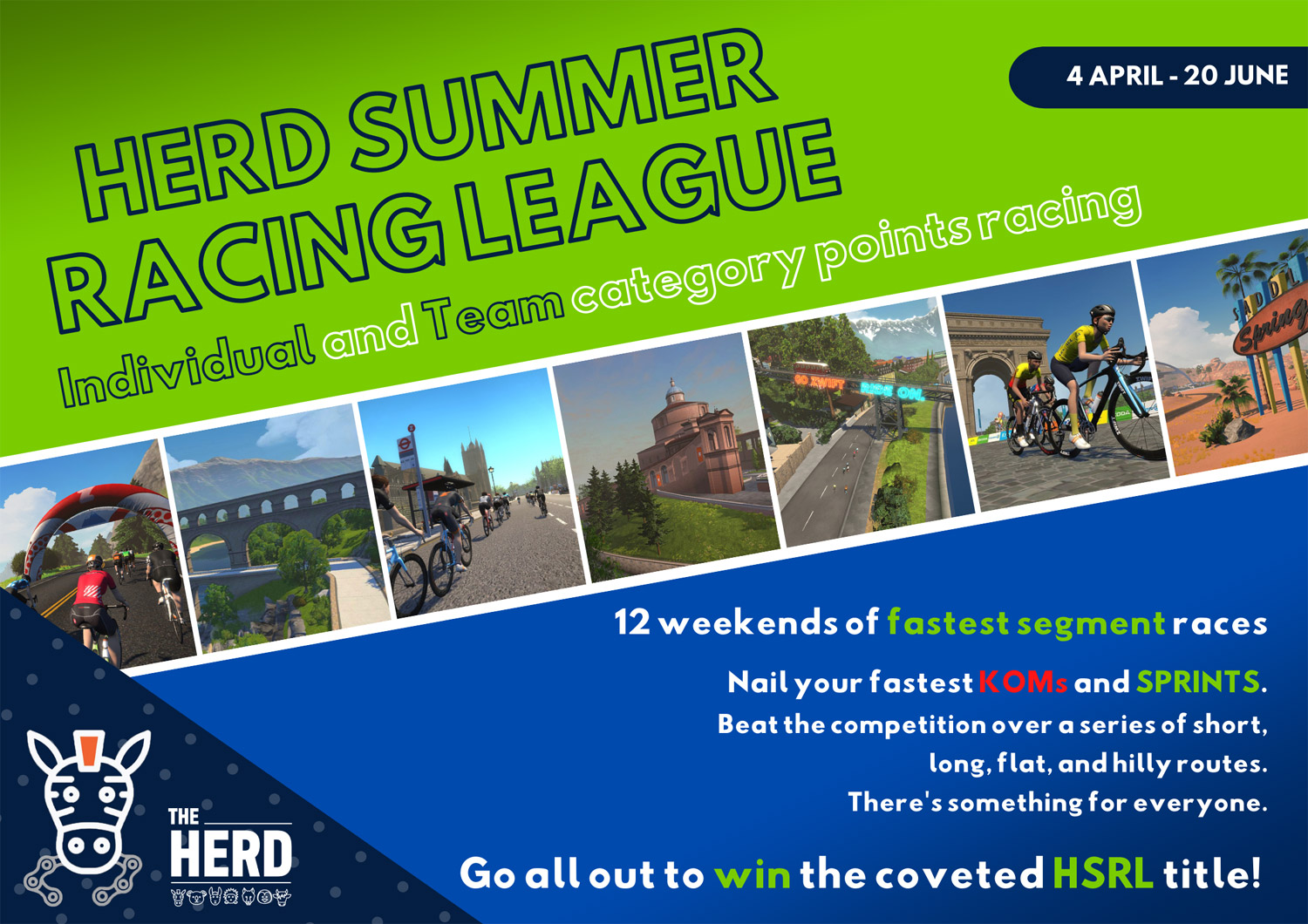
With so many different racing events to take part in, it’s always great to see something a little bit different. The Herd Summer Racing League, now into its 4th season, gives all riders something to race for.
What is the Herd Summer Racing League?
The Herd Summer Racing League is a 12-week, category-based series, with opportunities to race each week in seven events from Friday to Sunday. (Only your position for your first completed race will count each week, in case you were thinking about doing it more than once!)
Similar to the Zwift Racing League (although HSRL was around before ZRL), points are awarded both for your overall finishing position in your category (1/3 of the total points) as well as for the fastest times on the ‘prime’ Sprint and KOM segments (2/3 of the total points).
So this means if you’re light enough to be a mountain goat, or strong enough to be a super-fast sprinter, there’s usually something for you to target in each week’s race. Course knowledge is massively important, so you’re well-positioned to hammer those primes and get maximum points!
Season 4 of the HSRL runs from April 2-June 20, 2021. Season 5 will be hot on its heels from June 25-August 12.
Stage and Route Details
Organizer James Bailey tells us, “I’ve gone for routes that offer a good amount of variety, short and long, flat and hilly, to give all different kinds of riders something that they will be able to excel in.”
Stage One – April 2nd to 4th: Bologna Time Trial TT Laps: 1 Distance: 8.0km Elevation: 230m Notes: No primes in the prologue event, just a dash to the top of the hill! This event will use the TT module, so riders will be sent off with staggered starts.
Stage Two – April 9th to 11th: Watopia’s Big Foot Hills Laps: 1 Distance: 69.0km Elevation: 713m Notes: Primes: Fuego Flats Sprint, Titans Grove KOM, Zwift KOM, Volcano KOM, Titans Grove Reverse KOM, Zwift KOM Reverse.
Stage Three – April 16th to 18th: Paris’ Champs-Élysées Laps: 6 Distance: 42.8km Elevation: 247m Notes: Primes: Lutece Sprint x6
Stage Four – April 23rd to 25th: France’s Douce France Laps: 2 Distance: 48.8km Elevation: 269m Notes: Primes: Ballon Sprint x2, Aqueduc KOM x2, Pavé Sprint x2, Marina Sprint x2.
Stage Five – April 30th to May 2nd: Watopia’s Tempus Fugit TT Laps: 1 Distance: 17.3km Elevation: 16m Notes: No primes in this event, just a single lap of Tempus Fugit using the TT module, so riders will be sent off with staggered starts.
Stage Six – May 7th to 9th: Watopia’s Figure 8 Laps: 1 Distance: 30.2km Elevation: 255m Notes: Primes: Zwift KOM Reverse, Watopia Sprint Reverse, Zwift KOM, Watopia Sprint.
Stage Seven – May 14th to 16th: Watopia’s Out and Back Again Laps: 1 Distance: 42.3km Elevation: 333m Notes: Primes: Fuego Flats Sprint, Watopia Sprint, Volcano KOM, Zwift KOM Reverse.
Stage Eight – May 21st to 23rd: Greater London Flat Laps: 3 Distance: 40.8km Elevation: 204m Notes: Primes: Mall Sprint x3.
Stage Nine – May 28th to 30th: Innsbruck’s Achterbahn Laps: 1 Distance: 47.6km Elevation: 990m Notes: Primes: Innsbruck KOM Reverse, Innsbruck Sprint Reverse, Innsbruck KOM, Innsbruck Sprint.
Stage Ten – June 4th to 6th: London’s Classique Laps: 6 Distance: 38.7km Elevation: 195m Notes: Primes: Mall Sprint x6.
Stage Eleven – June 11th to 13th: France’s Petit Boucle Laps: 1 Distance: 61.8km Elevation: 483m Notes: Primes: Pavé Sprint Reverse, Aqueduc KOM Reverse, Ballon Sprint reverse, Aqueduc KOM, Pavé Sprint, Marina Sprint, Ballon Sprint, Petit KOM.
Stage Twelve – June 18th to 20th: Watopia’s Hilly Route Laps: 10 Distance: 92.2km Elevation: 1080m Notes: Primes: Zwift KOM x10, Watopia Sprint x10. NB: Category A complete 10 laps, Category B complete 9 laps, Category C complete 8 laps and Category D complete 7 laps.
About Herd Racing League
The Herd Racing League is the sister racing group of The Herd and prides itself on encouraging a welcoming and supportive ideology for their racers of all shapes, sizes and ability levels. Herd DS James Bailey first took on organizing the HSRL in 2020.
This week, our Top 5 Zwift videos feature two different ways to race the WTRL Zwift Racing League, a challenge involving 25 laps around the volcano, and a discussion of Ride On etiquette.
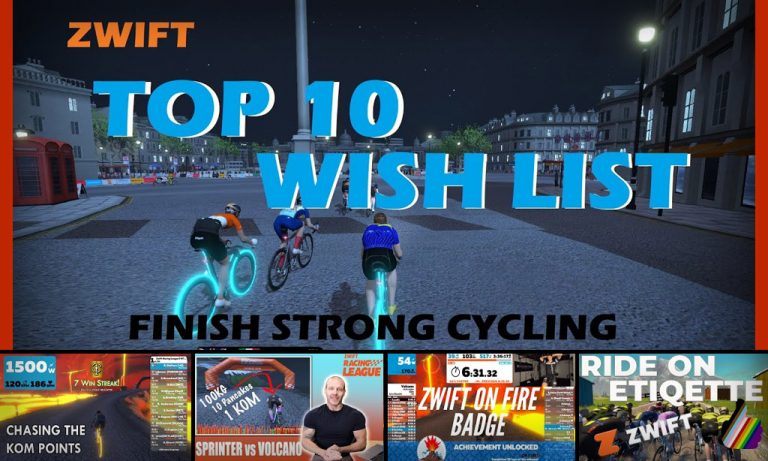
But first, we look to the future as one rider gives Zwift his top 10 wish list…
Zwift Top 10 Wish List
James with Finish Strong Cycling lists his top 10 wishes for Zwift features. How many are on your list?
Zwift Racing | Sprinting for the KOM points and the win!
Red Walters, also known as “The Redster,” walks us through his winning ride in stage 6 of the WTRL Zwift Racing League.
Can a HEAVYWEIGHT get a ZWIFT KOM? | WTRL Season 2 Race 5 & 6
In the Zwift Racing League, if you’re not at the front of the race, you still have a chance to score some big points for your team. But what if you weigh about 100 kilograms, and the only points available are at the top of a hill? Mark Lewis tries it out.
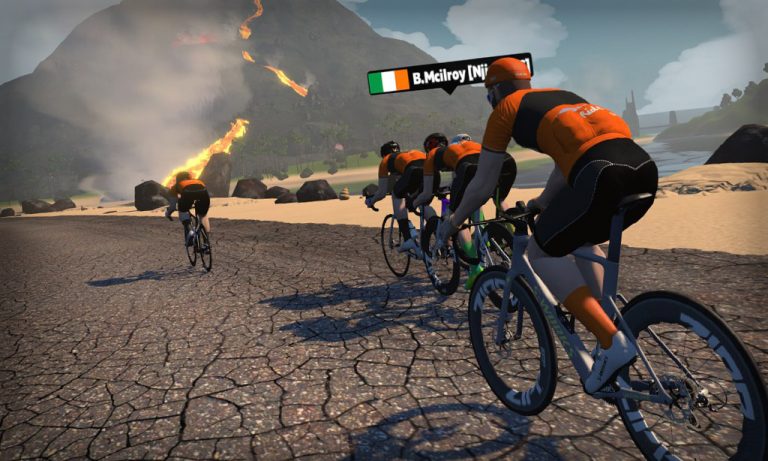
Zwift Challenge – 25 laps of the Volcano Circuit (On Fire Badge)
Riding 25 laps of the Volcano Circuit route will get you the “On Fire” badge and the “100 Clicks” (metric century) badge. Ben Crawley goes for these badges as a fiery personal challenge and shares his experience.
Is There a Ride On Etiquette on Zwift?
Ever wonder why you don’t seem to get as many Ride Ons as you give? Sarah LaRocque (“Everything Is Photogenic”) explains how different Zwifters look at these blue thumbs of encouragement, and why not getting one back might not mean what you think.
Got a Great Zwift Video?
Share the link below and we may feature it in an upcoming post!
It was my recovery day, so of course I was browsing the next day’s Zwift race schedule, looking for an event that appealed to my schedule and sensibilities. I was seeking something without long climbs, but where I’d be pushed to the limit. Then I saw it: “Renegade Race”.
Over 250 riders were already signed up for this event I had never heard of – what was that all about?
Held on 5 laps of Seaside Sprint, this looked like it would be a fun challenge. And all the categories were starting together, which meant I would be pushed to my limit hanging with the A’s until I blew up. (I’ve been doing more of these flattish mass start races lately, since they push me harder than pure B races. Solid training, even if the end results are nothing to crow about.) Let’s do this!
The Warmup
The race started at 11am, and I dinked around the office too long, not getting on the bike until 10:45. I had already chewed a couple of pieces of caffeine gum and put PR lotion on the legs, but I knew that wouldn’t make up for the shorter warmup, which never serves me well. Regardless, I spun with C. Cadence and crew on the Tick Tock route, putting in a few digs to get my heart rate up.
In both of my race warmups this week, it’s been a real chore to get my HR up to 160bpm, which is what I try to hit to “break the ice” before a race. That’s a sign that I’m either 1) sick or 2) not recovered enough to race at full strength. My guess is it’s #2. Time for more rest…
Commercial Bicarb Break
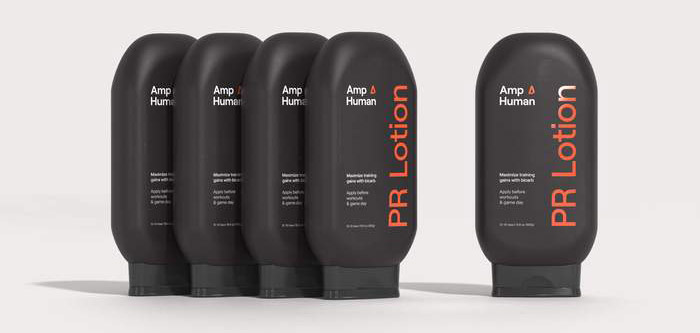
Speaking of PR Lotion: did you know that avid Zwifters and world-class riders Geraint Thomas and Lucy Charles are both PR Lotion users? This stuff is the real deal, delivering game-changing bicarb directly to your muscles to support incredible performance gains. (The only people I see claiming, “It doesn’t work” are people who haven’t tried it. Seriously.)
“The more I use PR Lotion, the more I get out of my training performance and recovery.” – Geraint Thomas, Tour de France Champion
“PR Lotion is part of my routine. I feel better after hard workouts and stronger at every event with PR Lotion.” – Lucy Charles, Pro Triathlete, Ironman Kona 2nd Place Finisher
Amp Human has a buy 4 get 1 bottle free deal going on through the end of March. Add onto that the 20% discount using our ZwiftInsider discount code and you’re saving 36% on the regular price! Don’t miss this chance to stock up.
The Start
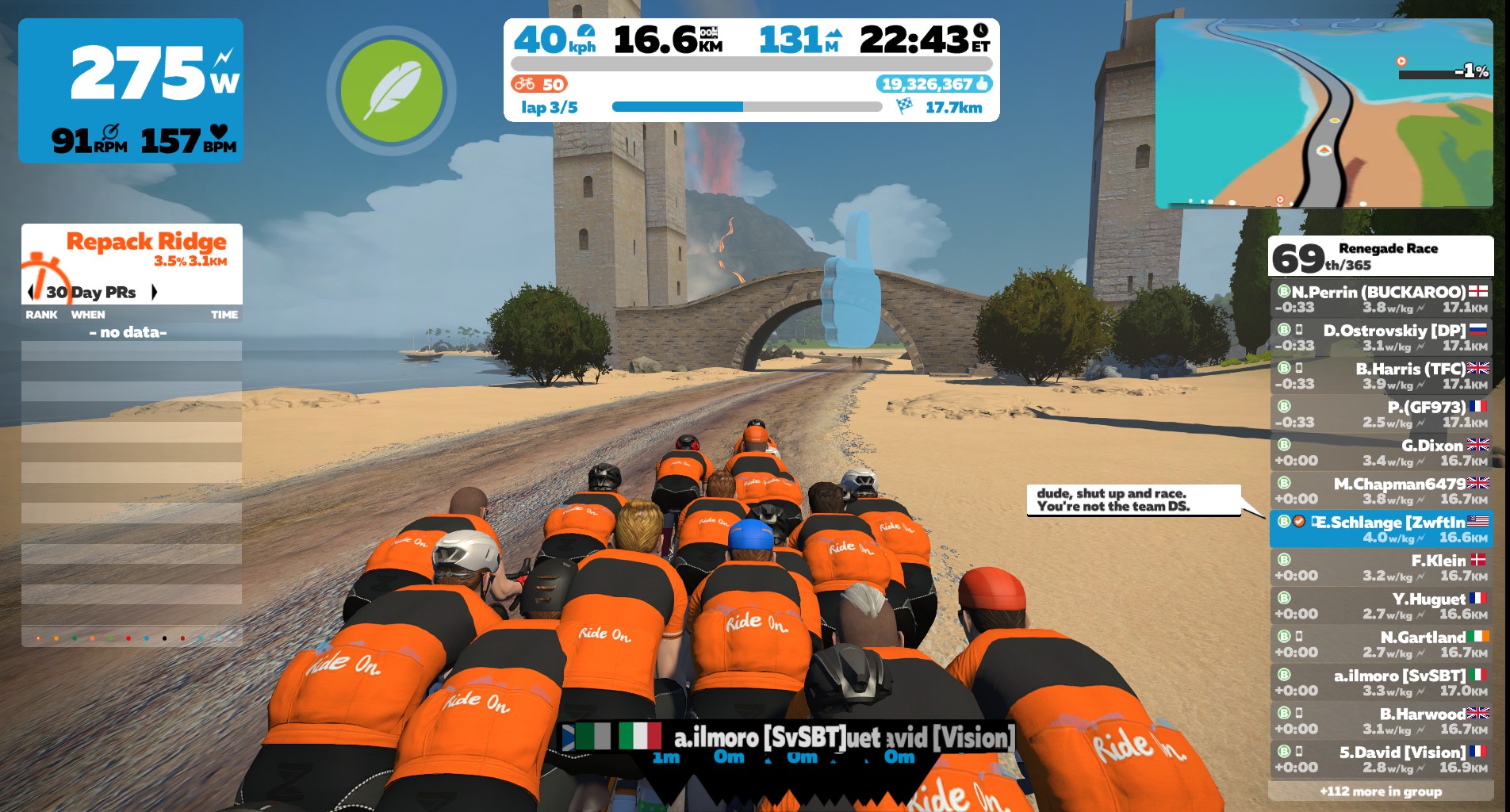
The race started exactly like I thought it would – a hard effort on the lead-in to the first sprint banner. I knew I wouldn’t be able to hang with the front pack for the entire race, but I wanted to push hard until I got dropped. So I hammered away, tailgunning the front pack, hanging on for dear life with sore legs and a heartrate that said, “Don’t expect a power curve bump today.”
Sharing Kit
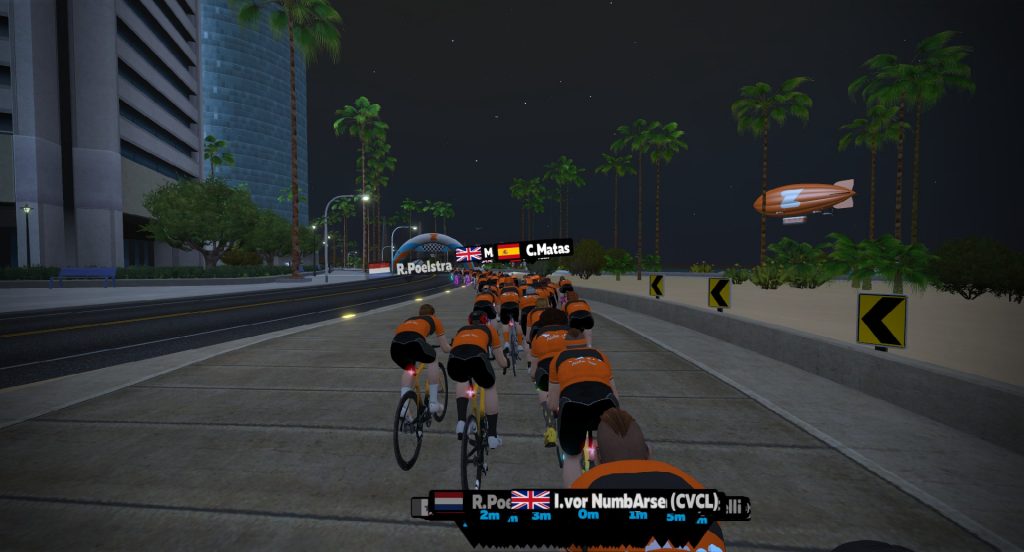
We had 365 riders across all categories, and we all started together. Here’s the weird part: we were all placed into the same kit!
Who thought this was a good idea? Things are confusing enough when you’re mixing all the categories. Why place everyone in the same kit, making it virtually impossible to track individual riders in the pack?
Blegh. Race organizers: please stop forcing us to wear the same kit. (One exception: chase races, where each category has a different kit.)
Getting Dropped
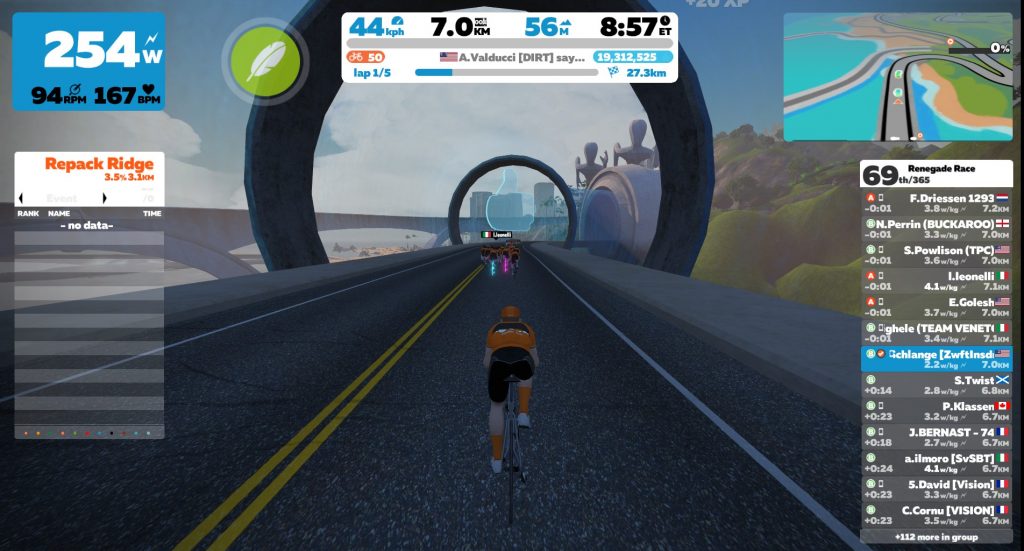
The A’s and strong B’s were in the front pack, which was whittled down to ~75 by the time we hit the first sprint banner. I managed to hang with them until we hit the glass tunnel leaving the Volcano. Didn’t even make it one lap! #sad
Waving goodbye to the front pack
zPower + TT: A Potent Combo
I saw a handful of riders several seconds behind, so I sat up until they caught me, then rode in that group for a while.
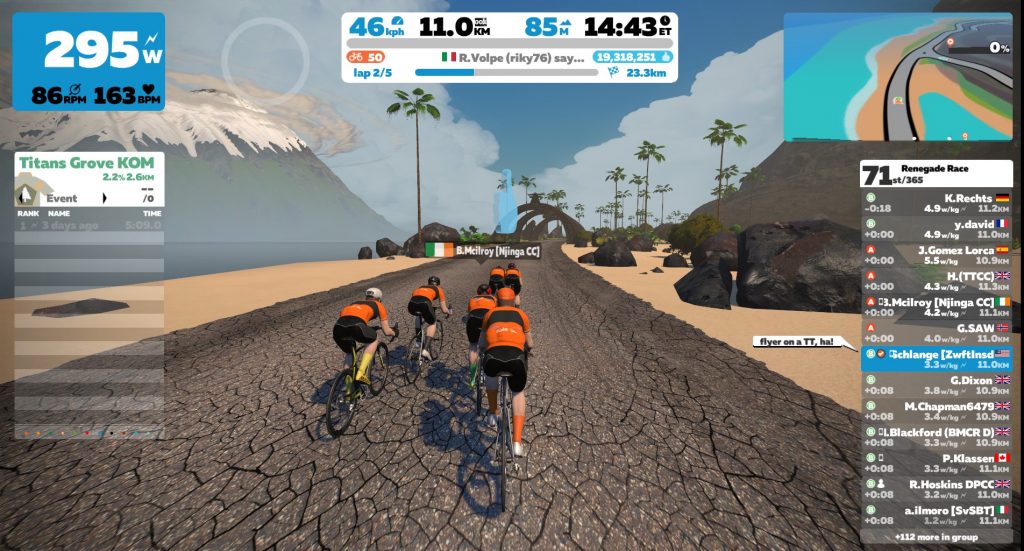
This was an interesting little bunch. We had just 5 riders, but were staying away from the larger group behind. How? Because we had two zPower Rangers in our group: one “B” rider who consistently held 5w/kg+, and another “A” on a TT frame holding 4.5+. And the rest of us were just hammering to hold those wheels.
Needless to say, they stayed on the front of our group. And after a while, my legs said “No more.” Once again I sat up as the group rode away, but I wasn’t very sad about this, because it felt a bit like cheating, sitting in with those two.
Finding My People
The next group caught me quickly. Easing into this pack of 20+ riders, I was happy to find that these were “my people.” Almost all B’s, and riding at a pace my spent legs could sustain. We were halfway done with the race, so I sat in the draft, pushing 250-275W and recovering, hoping to have the legs for a decent sprint at the end of the final lap.
Taking the Bait
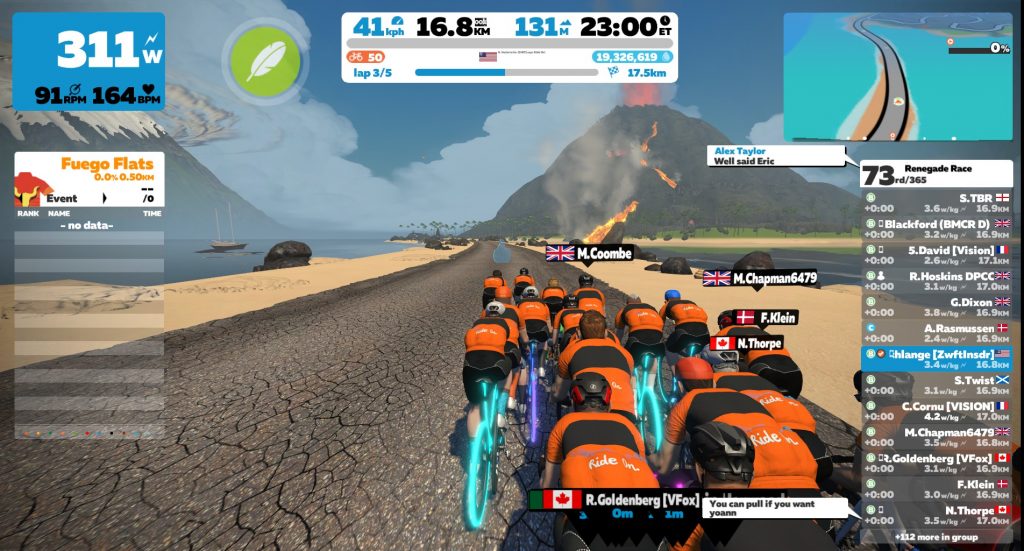
My newfound racing happy place was soon spoiled, though, by one “H” (not his actual screen name) – a French rider who kept messaging in game, complaining that nobody in the pack was taking pulls. “We need to bridge up”, “You’re all just wheelsuckers”, etc, etc.
Wisely, nobody was answering him. I typically stay quiet in these situations as well. But he kept messaging, and eventually I snapped:
Rude? Yeah, a bit. But he was really getting under my skin with his steady complaints that we weren’t working hard enough. Did he not realize I had ridden with the front pack for (nearly) a lap? Then hammered with the zPower Rangers for a couple laps? It’s not like I’d been sitting on his wheel all race.
This is just where I landed after blowing up. Which was probably true for a lot of the riders in the group.
So yeah, I called him out. I’m not proud of it. But come on: I said what everyone was thinking already. As soon as my message popped up, riders in our group chimed in with, “Well said”, “Exactly”, etc. And they started giving H a bit of advice, welcoming him to take all the pulls he’d like:
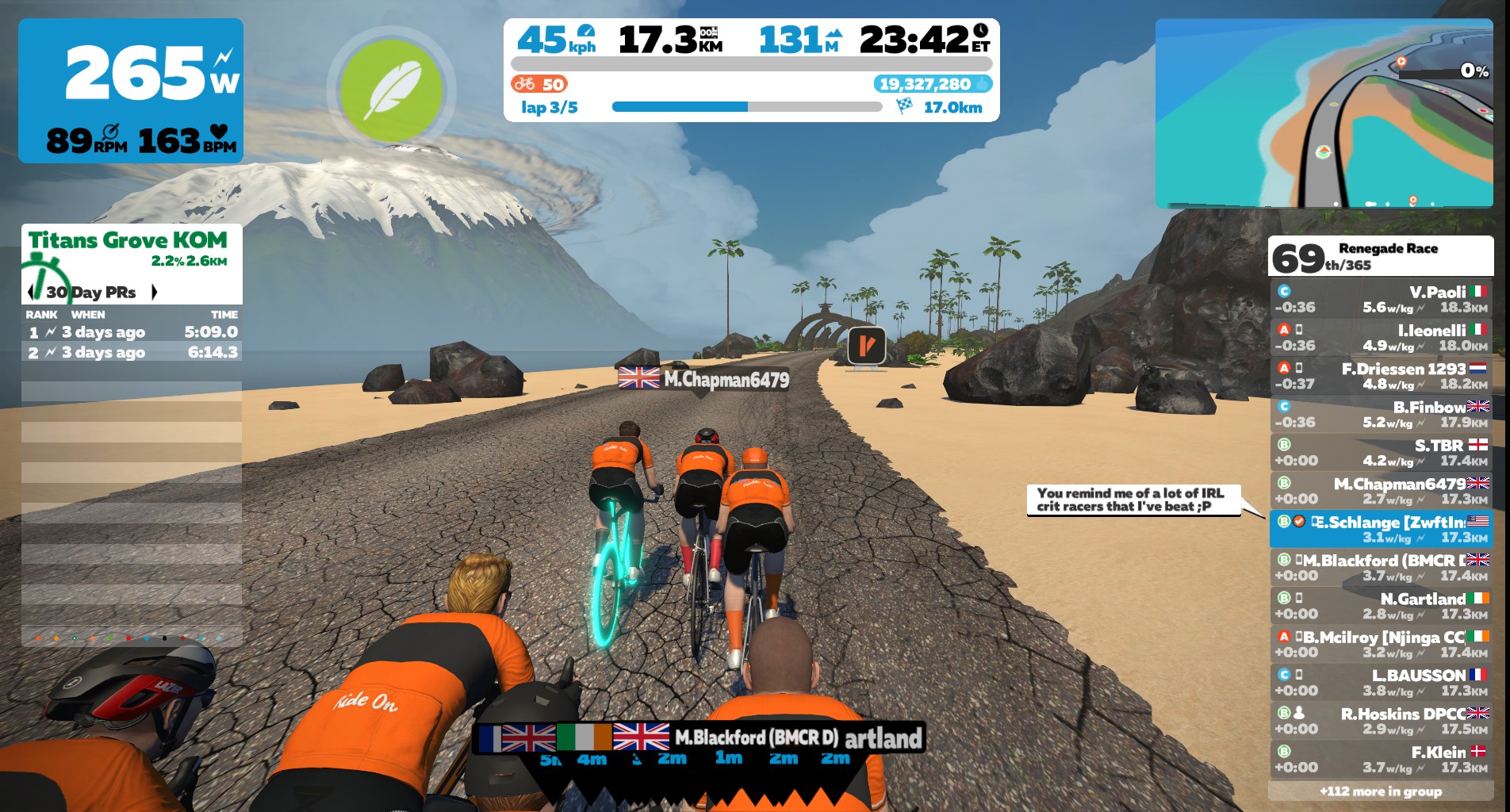
Our messages didn’t stop H from continuing to complain about our laziness. They never do. It reminded me of some IRL races I’ve done, in fact. I messaged to that effect:
IRL Storytime
In my long and illustrious IRL racing career, I’ve won a handful of races. Probably all Cat 5 events. Very high-level stuff.
One crit I remember fondly because of the debriefing with the Cat 1 mentor after the race. One of the riders in our group (who had spent a lot of time needlessly hammering on the front) complained to the mentor that nobody was taking pulls with him. The mentor said, “Well, how did that work out for you?” The rider sheepishly admitted that he finished near the back of the pack.
Then the mentor turned to me (I had won the race) and said, “This guy wasn’t on the front much at all, until the very end when it was time to go. It seemed to work out well for him.”
High Stakes
After throwing down the gauntlet by equating H with IRL dudes I’d beaten, I knew I had just one job left in this race: beat H.
I pulled up ZwiftPower to look at his numbers, hoping I could predict if he’d go for a long attack or a hard sprint finish. And I was surprised to discover he wasn’t even on ZwiftPower.
He was pushing us all to work harder, to help him win a race he’d already lost in multiple ways. The irony.
The Finish
With an aero powerup at the ready, we hit the Esses for the final time.
Don’t mess this up, Eric. Even though he won’t be in the final results, you’ve got to beat him in-game. For honor.
We hit the final little climb before the sprint, and the hammering began. I kept the power up over the crest and onto the descent. Several riders from our group had gone early and were just up the road, but I had my aero boost at the ready. Partway down the descent I triggered it, then kept hammering with whatever I had left.
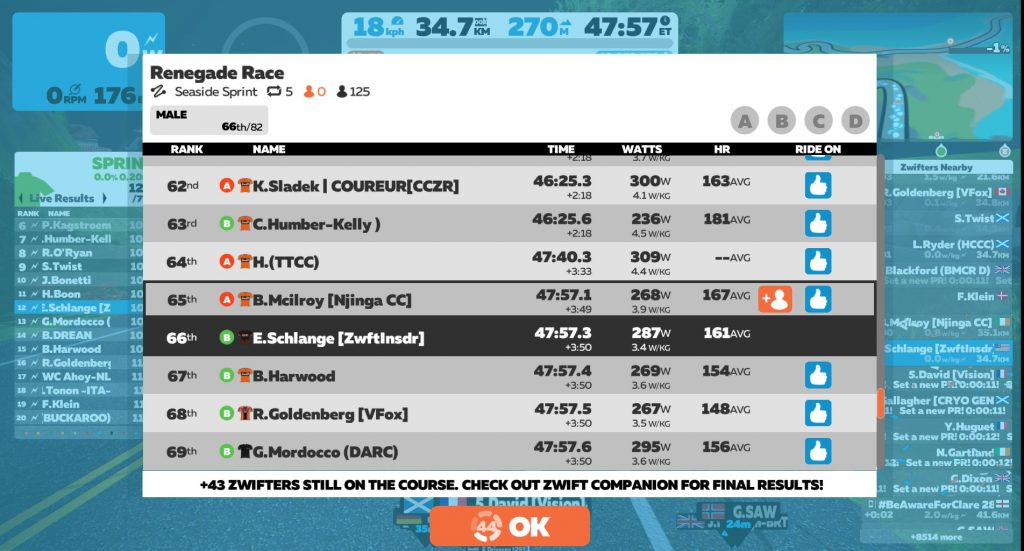
In the end, I finished 66th, just behind an A rider who was in our group, but ahead of everyone else in our pack. Including H.
66th place never felt so good.
Final results (H was around 73rd, and yes, well within the w/kg limits)
Having run web forums for 20+ years, I’ve learned that engaging trolls is rarely the best strategy. The same is usually true when it comes to Zwift racers who are complaining about other riders not putting in the work.
But today I was feeling a bit spicy. And you know what? It made this race more interesting for me, even though that wasn’t my intention. What would have been an unremarkable midpack finish (I was 15th in the B’s in ZwiftPower) became something I was much more invested in – I couldn’t lose to H after calling him out! Which made me push harder. Which is really the whole point anyway.
A final request from me: don’t try to tell other racers what to do, or belittle them for riding the race in whatever way they see fit. It’s just annoying for everyone else, and makes you look ignorant. If you want help on the front, ask once. You’ll get an answer soon enough. Be satisfied with that answer.
One rider in our group described it nicely. “It was like a pedestrian signing up for a marathon race, then telling the other runners they aren’t working hard enough.”
My passion for cycling started in a hotel bar when I was 49 years old, tipped the scales at 120kg and never exercised. Three years later I’ve lost the weight (down to “almost” 75kg) and I’m on Zwift most days! I climbed real-world Ventoux twice in a day, and I vEverested Alpe Du Zwift. I love the WTRL TTT, and each week I publish a recce with a course profile, bike recommendations, and even some target times. I have also started posting video recces and highlight reels, and you can find me on YouTube here.
For over a year now, the Thursday WTRL TTT has been the center of my week and Eric has been wonderful in letting me share that obsession with you here on Zwift Insider.
The big news this week: WTRL are introducing Race Pass to the Thursday TTT. Race Pass was used all through Zwift Racing League Season 2 which WTRL runs, and is intended to remove the faffing about with ZwiftPower tags (among other things). It’s dead easy.
Step 2: Your team captain will get an email with a dedicated link for the race and give it to you.
The link will take you to the WTRL website which will record your entry… then redirect you to Zwift so you can select the correct pen.
It sounds a little daunting, but it’s not. My ZRL team did it with zero hiccups and it really streamlines the admin processes around race day.
Review of TTT #79 Greater London 8
You went back to London again this week for a single lap of Greater London 8, the first time for this route in a TTT, and more importantly, the first time up Box Hill (and down Fox Hill the other side). Personally, I had a mare of a ride – kept up with our faster riders to the foot of Box but had to bail. I have a multitude of excuses but at the end of the day I let the team down! But a bad day on a bike is still a good day!
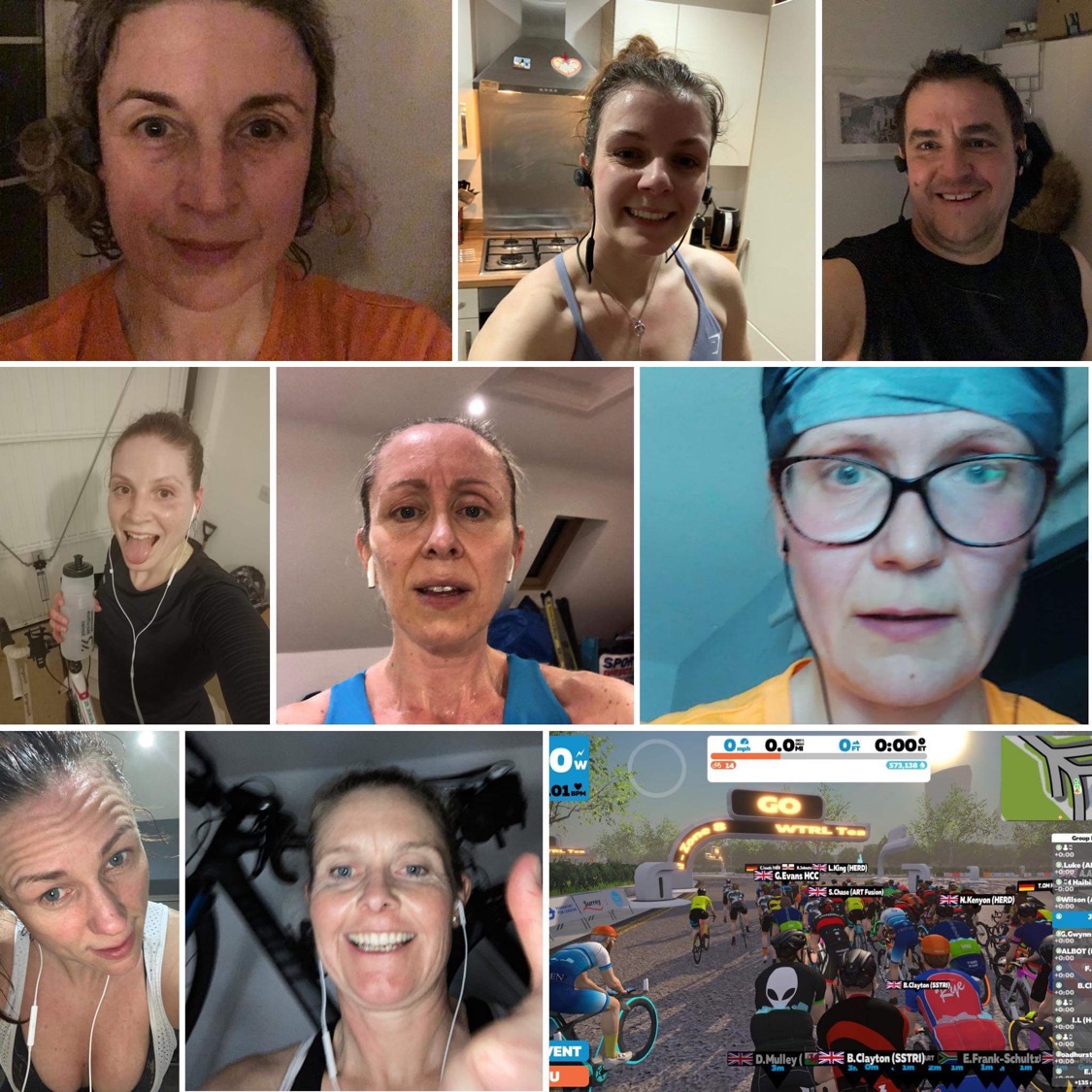
One of the things I do love is finding new teams out there… this week was the turn of TotalTeamTraining from Knutsford in England, who run 16 teams in the TTT most weeks. Literally all I knew about Knutsford was the motorway services, so it’s good to know something else is there as well! Trainer Claire Sutcliffe reached out to me letting me know they had a new Mocha team starting… Total Tri Training 16 (love the catchy name!). The squad has a wonderful post-ride tradition – the Sweaty-Selfies. I checked the results on wtrl.racing – 8 riders went out, and 8 came back in… perfect!
Over in Paris (or wherever the global CICC community reside) Mark B decided his ride report should make a joke about last week’s video recon…
So last week was the Hokey Cokey this week was Monty Python’s Ministry of Poor Excuses. @Phil’s being the most viable (vaccination hangover) – although according to Team Sky injections are supposed to make u faster not slower. Only 5 lined up with 2 climbers, me (average at everything), Carlos-misfiring-turbo-Belmonte and Olivier. This was gonna be a challenge as we needed 4 from 5 finishers.
Was all reasonable on the flat with 325w pulls for a minute taking us to the bottom of Box Hill (not Fox hill as advertised in Sherpa’s video – he apparently confuses F’s and B’s, thank goodness he never mentioned us passing Buck Palace).
Mike disappeared into the distance with Fraz, Carlos’s turbo caught up with him. I worked with Olivier to try and get up. Fraz dropped back to help and Mike waited at top (to be passed by us going warp speed) meant a shambles of a descent too. At one stage, to allow us to regroup, I was pedalling 10w to slow down as that was slower than supertuck. Last 4K wasn’t any better. In summary OK for 16k, shambles for 8.
Our last spotlight team is again from Camden – this time the Mad Jalapenos:
I have missed the last few weeks due to health issues, but this week with improved iron levels and more oxygen coursing through my veins I was raring to go. As a Brit living in Germany, I’ve not been able to go home for over a year now, so riding round a virtual London is the next best thing. Charlotte, Kate, Lou, Pilar and Sharon – we were rotating and pulling. Into the Tube station we went. “Mind the gap!” and out into the Surrey Hills. Pilar had been lucky enough to ride Box Hill IRL last weekend so gave firsthand guidance. We blobbed our way up on the hill and supertucked down.
Our Vienna Latte team had started a minute ahead of our Vienna team of Mad Jalapenos, so we had been keeping an eye on the leaderboard and were pleased to see that we had managed get a bit of a lead on the other ladies. Checking the results we were also ecstatic to finish ahead of our Mixed Latte team, the Eagles. We’re a little bit competitive amongst our Giant Camden teams!
So: France, England, and Germany have stories to tell. I’d love to hear (and publish) stories from around the globe. Reach out in the comments section, through the WTRL TTT Facebook page, or in the comments section of the Youtube recon.
Thursday 1st April – One Lap of Watopia’s Waistband
After a week away in London we are heading back to Watopia. This time we have one single lap of Watopia’s Waistband. This is the flattest 25km in Watopia and was originally one of the community-created “Rebel Routes”. It was adopted as an event-only route by Zwift shortly after. Being event-only recce rides are a little harder – you can’t just hop on and ride, and Meetups don’t work either… more on that later!
The route gate-to-gate itself is 25.5km – with the desert lead-in of 2.5km on top, making this 28km all-in. You start in the desert pens, head through Fuego Flats to Saddle Spring. Up the Col du Saddle Springs – the most arduous climb of the circuit (which tells you how flat this is) then down the other side and through the undersea tunnels. Turn left at the T-junction and carry on towards the fisherman’s village. From the upramp out of the tunnels to the land bridge to the volcano is probably the most challenging segment for the teams – a mix of gravel, false flat, and downhill – nothing to break you… but the changing terrain will throw off momentum. Round the volcano across to downtown and back to the desert. Phew I’m out of breath… but what a fantastic run-on sentence.
Bike recommendations on this route are straightforward. It’s flat and aero rules the day. For me it will be my trusty S-Works Venge and Super9 wheels – everyone should pick their most aero rig.
Level 45 get those 858/Super9 wheels and pair them with the S-Works Venge
For those of you working on Tron – don’t forget the ongoing series of Tron Hunter rides each Sunday. This week it’s Bologna! I know I say it every week but I cannot stress highly enough that if you are racing you need to be working on Tron. It’ll take a while, but just set the Everest Challenge and forget about it for nine months… like having a baby.
Route Recon Rides
Recon for the Waistband is a good news/bad news situation. Being so flat there are quite a few organized rides, but you can’t select it as a route yourself or use a Meetup. As always, Zwifthacks has the up-to-date events listing – all you need to do is click here – and I rode it so you don’t have to!
Here is the official Sherpa Dave Recon of Watopia’s Waistband – and a huge shoutout to BZR for hosting me on one of their group rides. If you are looking for a well-run group ride – you can’t go wrong checking out BZR.
If you want to be adventurous, you can go old skool and ride it like the original Rebels had to. Here are the turns you’ll make to complete this route. Only turns labeled (manual turn) require you to change from the default turn selection, and this route only requires 4 manual turns:
Start by selecting “Out and Back Again”
Select Left towards Volcano Circuit (manual turn)
Left towards Downtown (manual turn)
Left towards Downtown (manual turn)
Left onto Ocean Blvd (manual turn)
Race breakdown
Here’s how the ride breaks down for me:
Pens to Saddle Springs
Col du Saddle Springs then through the tunnels
From the tunnels to the land bridge
Around the Volcano and home
Pens to Saddle Springs
Flat. Hot. Desert.
You know this route well… straight across the desert practicing your formation and gathering speed the whole way. It’s almost exactly 10km from the pens to the base of the “climb”.
Col du Saddle Springs then through the tunnels
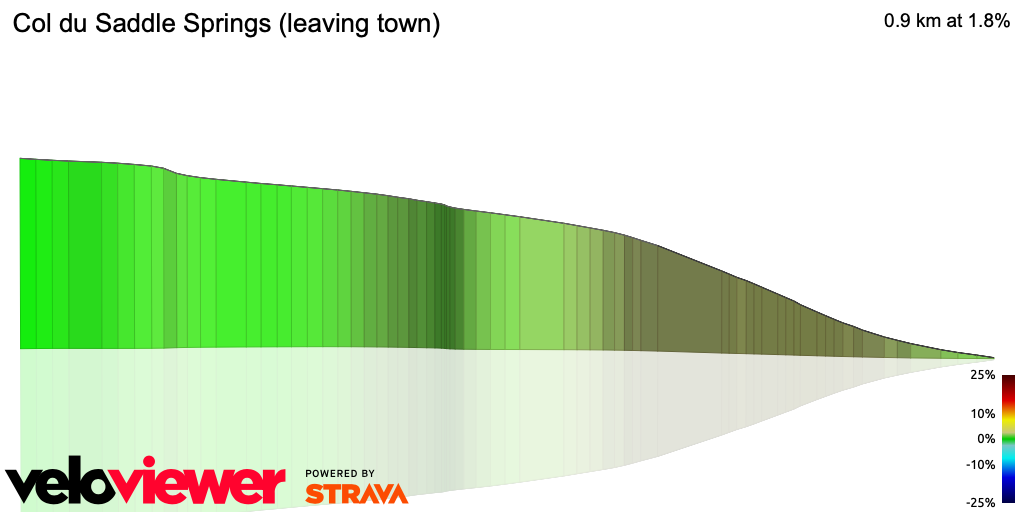
Some wag on Strava coined this term for a segment and I couldn’t resist using it. After 10km flat this is the first real rise – a perfect opportunity for your lighter, stronger climbers to jump ahead and create a split! Rein in those riders and keep everyone together. This little hill is just 2% for 900m – but as you can see from the VeloViewer profile it starts around 3% before flattening out.
After the hill it’s a nice downhill… but if you’re serious you won’t be resting on the downhill, you’ll be accelerating… then into the tunnels under the ocean.
From the tunnels to the land bridge
The rather convoluted segment is tricky. It starts with the bump out of the ocean then heads into some gravel… from there it’s the false flat up the hill which tightens at the top. The downhill from there to the Italian Villas isn’t enough to supertuck, but it’s enough to pick up speed before hitting more gravel. They really need to fix these roads.
As with Col du Saddle Springs, the challenge here isn’t that the riding itself it hard – it’s not… the challenge is the constantly changing terrain can throw off your formation. The descent into the Italian Villas in particular is enough to create a split with heavier riders breaking away faster than the poor lightweights can keep up!
Volcano, downtown and home
This last segment is pretty straightforward. Nothing that’s going to tax the team. The final sprint marker is a good time to begin a final acceleration and bring it home with a flourish.
Target times
I haven’t ridden a TTT on this route – I started just a few weeks afterwards. The last time was TTT #46 on 5th March and before that it was number 35 in December, where there were only 91 teams… oh how times have changed!
Category
#35
#46
#80
Vienna
44:44 (1 team)
49:10
39:44
Doppio
36:10
Espresso
37:07 (7 teams)
38:57 (8 teams)
36:20
Frappe
39:34
39:01
37:08
Latte
43:07
41:44
40:03
Mocha
52:13 (7 teams)
52:45
44:28
The jump in performance from #46 to #48 is easily explained… we have a ton(ne) more teams on the field! In the last 20+ weeks since #80 we have seen significant professionalization which will reflect in our times. Here’s what I think will happen this week.
Category
Platinum League Time
Vienna
38:00
Doppio
35:50
Espresso
36:10
Frappe
36:45
Latte
39:30
Mocha
43:00
Wrap up
This race doesn’t have a defining segment like last week’s Box Hill. I believe this is about pain and suffering in the last third – from the Volcano to the finish line. The longer you can keep the team intact the faster your overall time. While that’s always true in a TTT, there’s nothing in this route that should break you apart.
Since their release in late August 2020, Pace Partners have become a popular feature on Zwift – an always-on group ride which sticks to a consistent pace.
They were expanded to include the Drops Multiplier game in October 2020, rolled out to runners in December 2020, and have been steadily tweaked in each month’s updates to further improve the user experience.
This week Zwift quietly announced another update to the cycling Pace Partners – route rotation!
Up to this point, each Pace Partner has basically stayed on the same route (with very occasional deviations surprising everyone because they weren’t shown in the drop-in screen.) Now the drop-in screen appears to accurately show which route the Pace Partner is actually on, and according to Zwift’s post, the Pace Partners are rotating routes on a weekly basis:
Each Pace Partner’s routes have a similar elevation-to-distance ratio as their original routes (except C. Cadence, whose new routes are a bit more climby than her original pan-flat Tempus Fugit route)
Currently the Pace Partners are set to Route Set 2, which means next week they should be on Route Set 3.
Your Thoughts
Do you like the idea of the Pace Partners rotating routes? What do you think of the route choices? Chime in below! (You might also want to share your feedback on the Zwift forum post.)
I’ve been on some form of a rocker plate since my second season on Zwift, which means I’ve put in something like 45,000 rocking kilometers on Zwift. So you could say I’m no stranger to rockers. For me, riding on a “static” trainer feels very odd and unnatural. Rocking feels right. Yes, it doesn’t feel 100% like riding outdoors, but it’s much closer than a static setup could ever be.
For my first few rocking seasons I used a CoPlate from the Netherlands, which is a great product (and the first rocker plate ever put into production that I know of). I’ve also spent a lot of time on other rocker plates (see my reviews of the SBR Rockr as well as the Axxion Rocker Plate.)
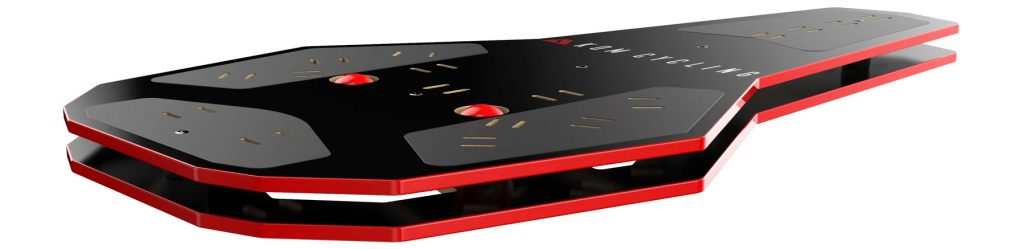
Today, though, I’m excited to review the RPV1: a full-length rocker plate from our friends at KOM Cycling.
We’ve used various KOM products over the years in our Zwift setups – I still use their front wheel riser, and Monica uses their universal phone adapter to attach her iPhone to her Garmin mount. I’m impressed by KOM’s ability to deliver solid products at a great price. Nothing flashy or overpriced because of some hard-to-define “brand panache”. Just usable items for a good price.
And their rocker plate is no different. It’s a disrupter, in fact, at least in terms of what’s available here in the USA.
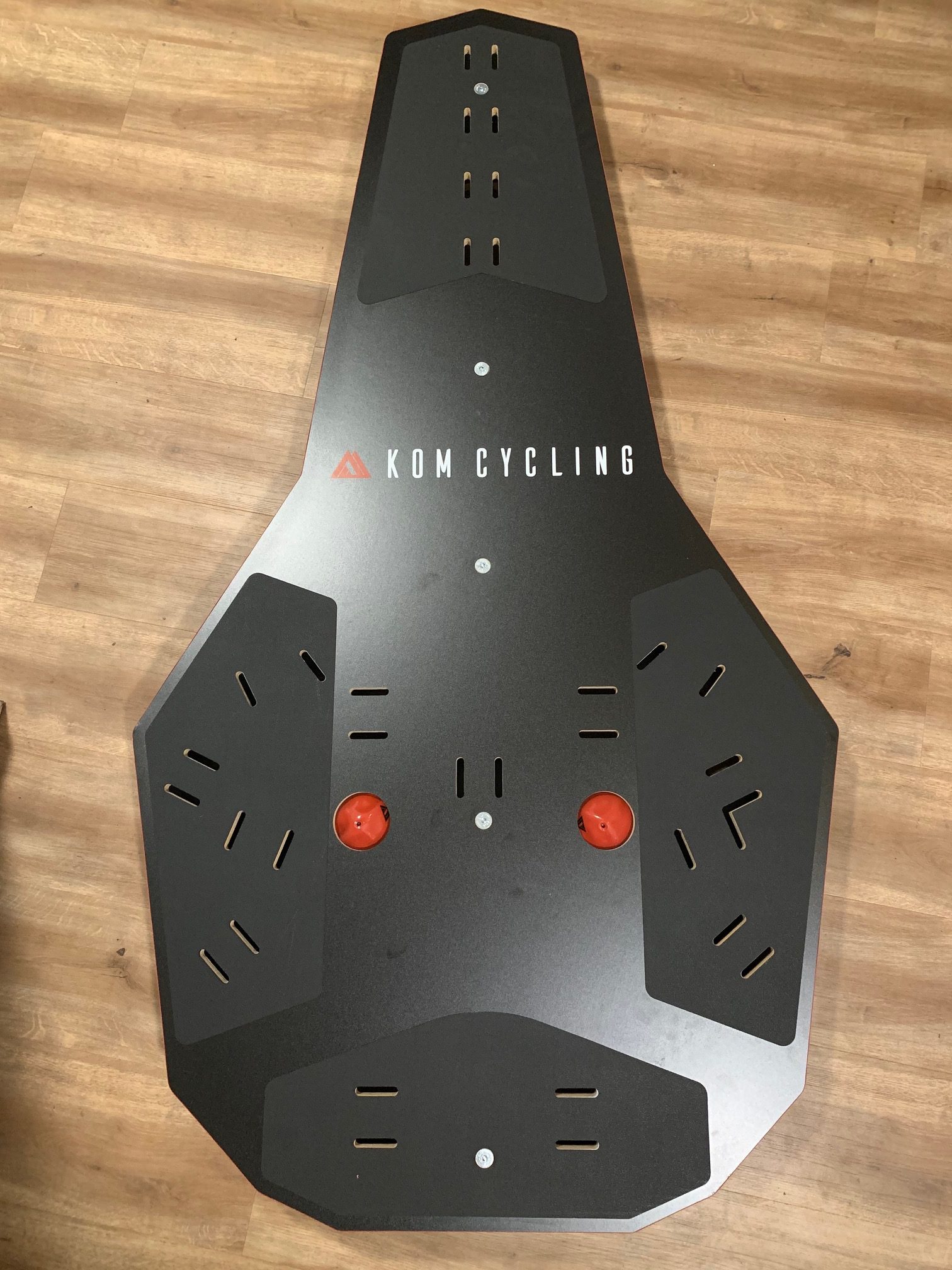
Full-length plate measures 66″ (167.6cm) long and 34.5″ (87.6cm) wide
Two inflatable balls are used as shocks
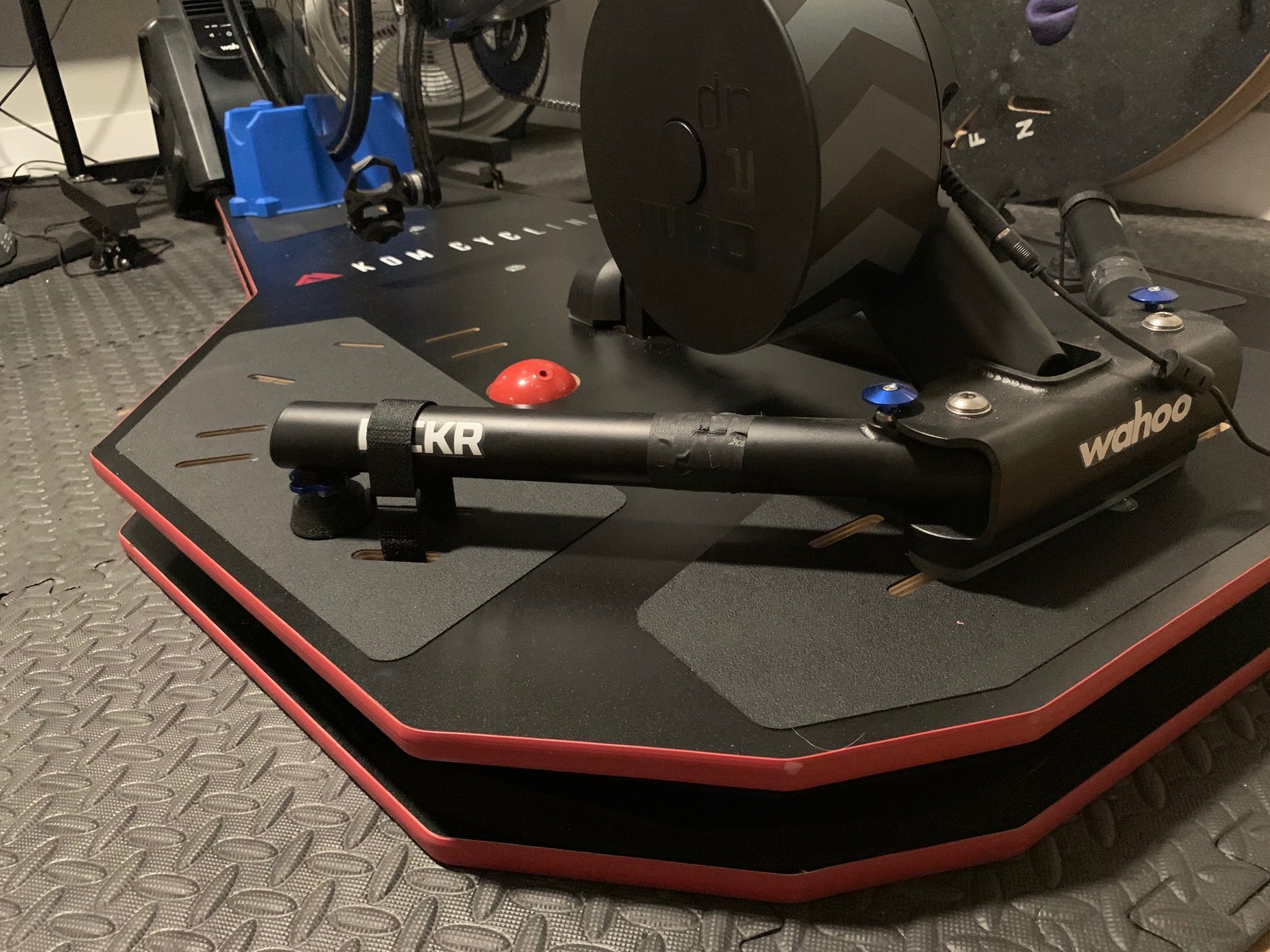
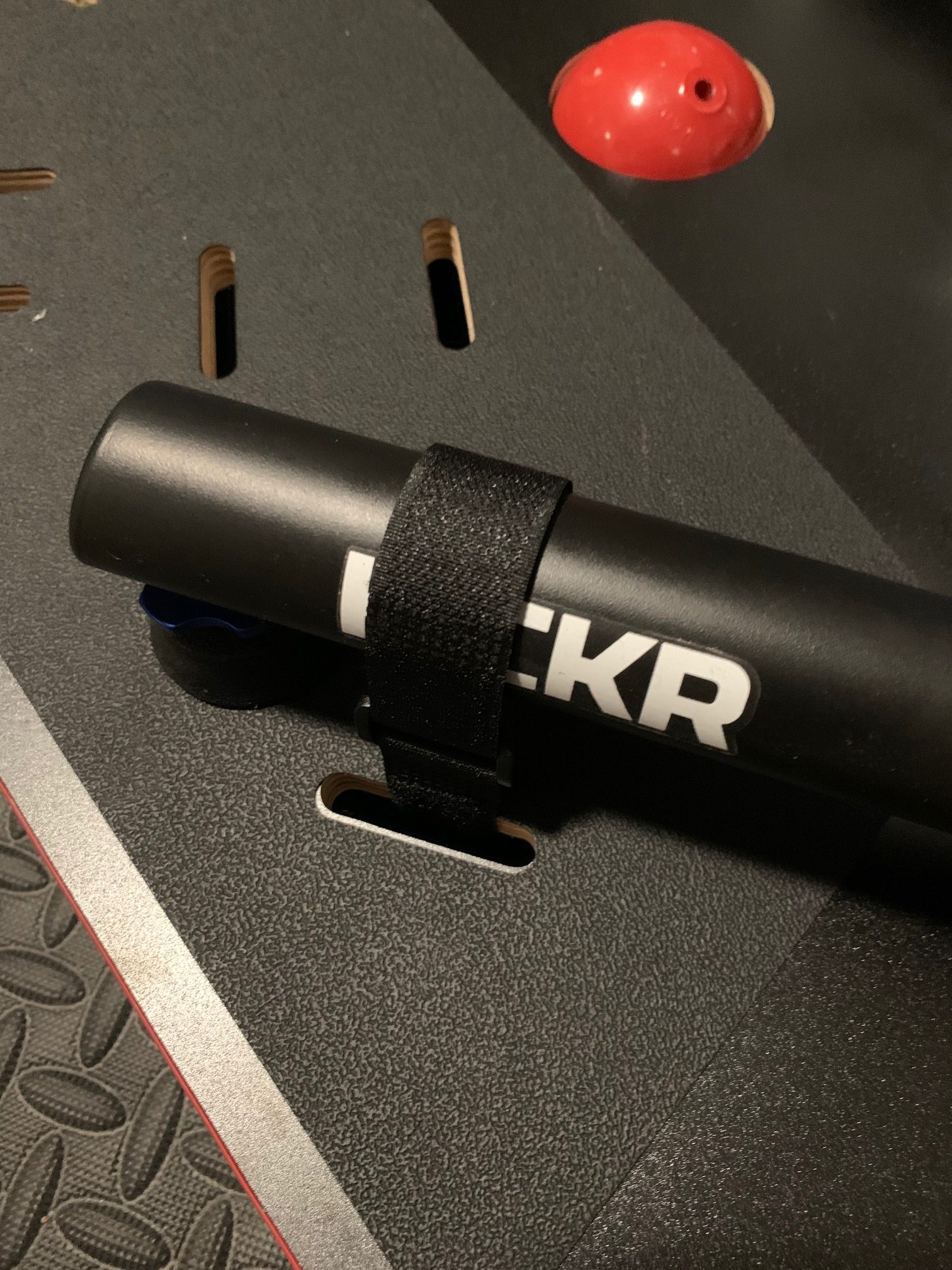
Velcro straps are used to attach the trainer and front wheel to the plate
Unboxing and Setup
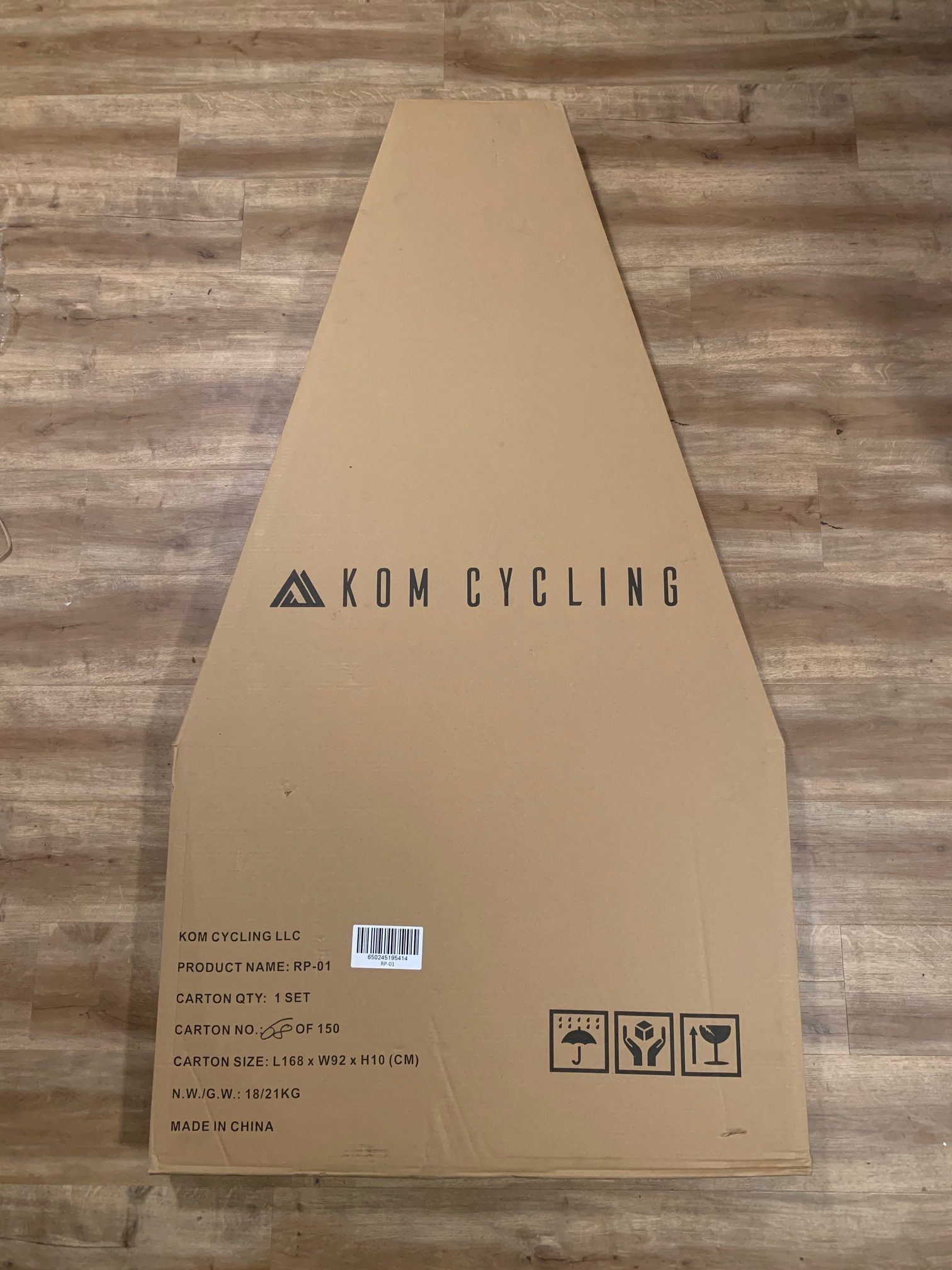
The KOM rocker plate arrives almost entirely assembled – and it’s a big box!
The box as it arrived
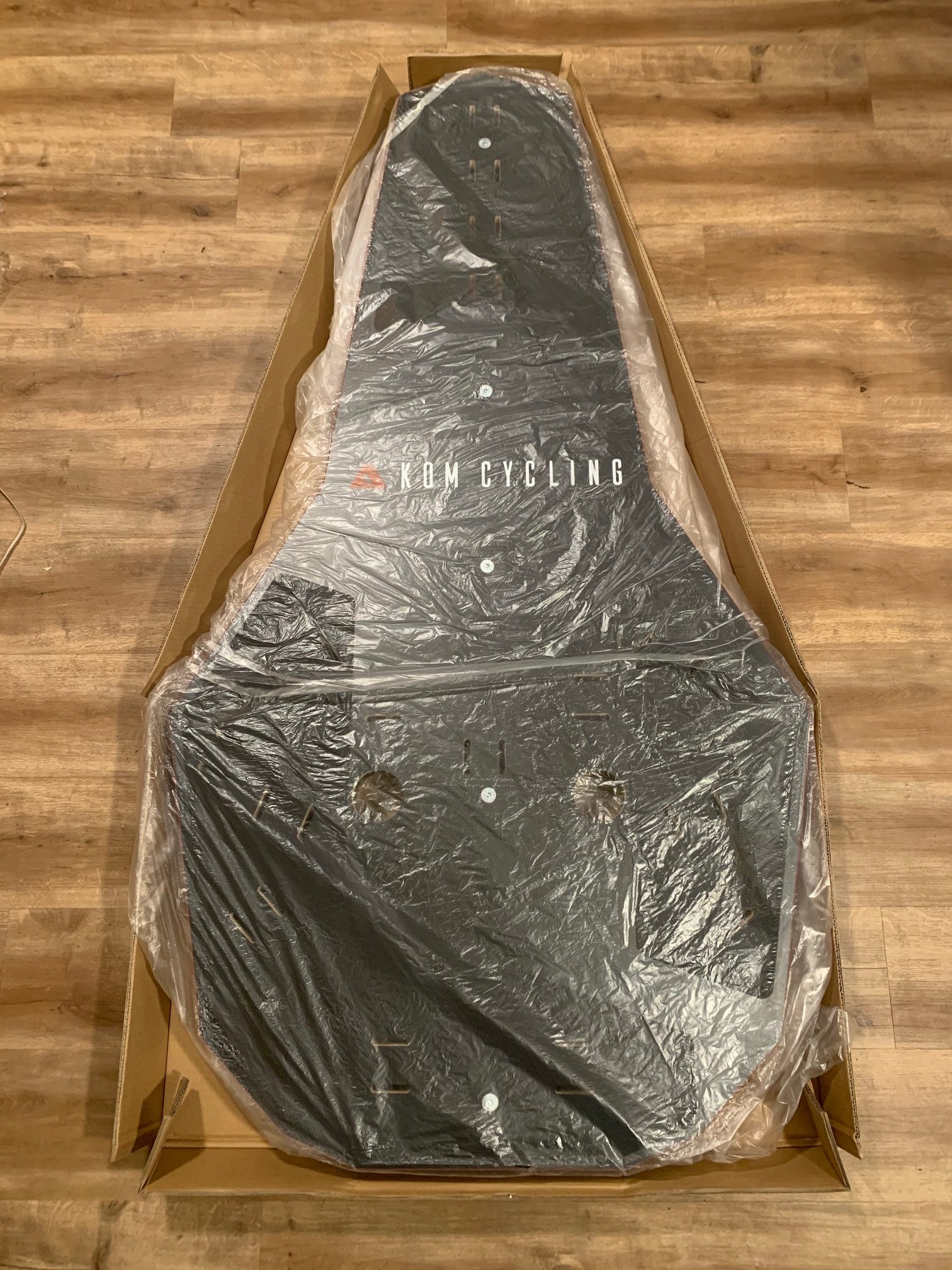
Package contents
Bottom of the rocker, with holes cut to save on weight
Ready to rock!
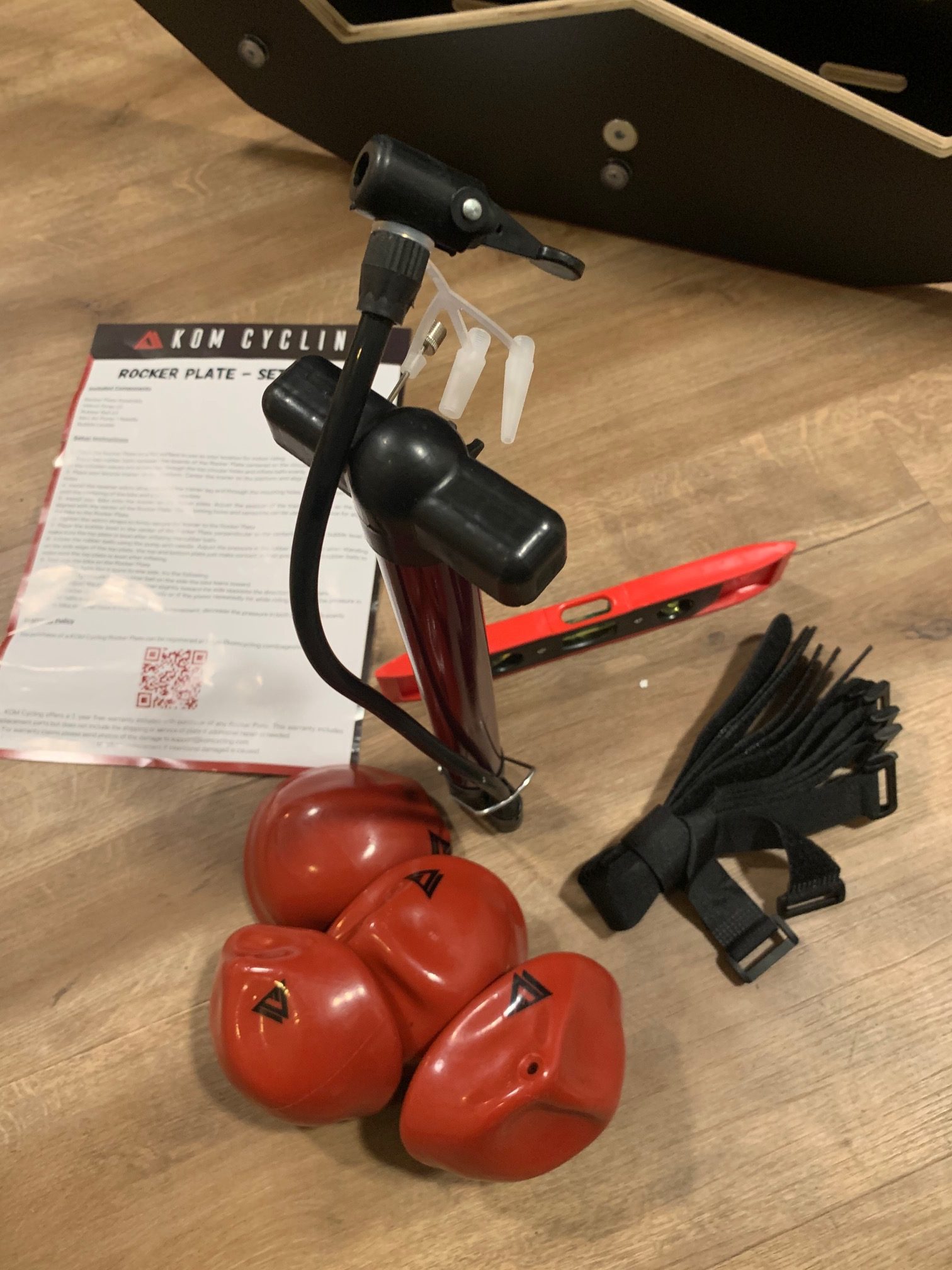
The package includes:
KOM Rocker Plate
4 red balls (2 spares just in case)
Velcro straps
Pump with needle for red balls
Instruction manual
Level
Setup is simple, and can literally be done in 5 minutes. All you have to do is:
Insert and inflate the red balls
Place your trainer/bike on the plate and strap it down
Being full-length and made from two sheets of thick plywood, the rocker plate is a decently heavy object! So if you have to move it up stairs and aren’t particularly strong (cyclist arms, amiright?), you might want to enlist the help of a friend.
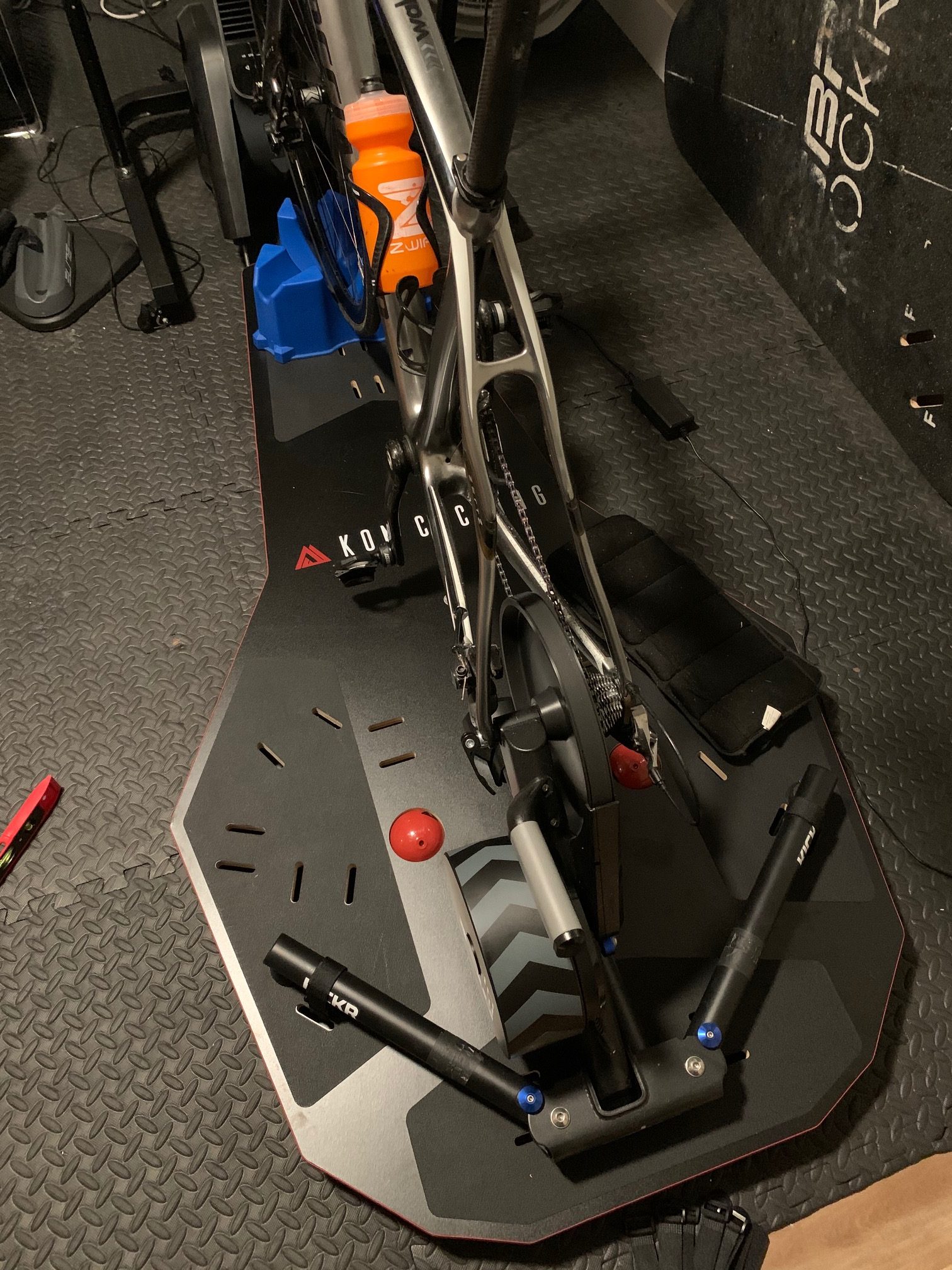
All set up!
Velcro strap closeup
Dialing It In
As with any rocker plate, getting your setup dialed in is key to a good experience. The most important thing is that you don’t feel like you’re leaning to either side when trying to be upright on your bike.
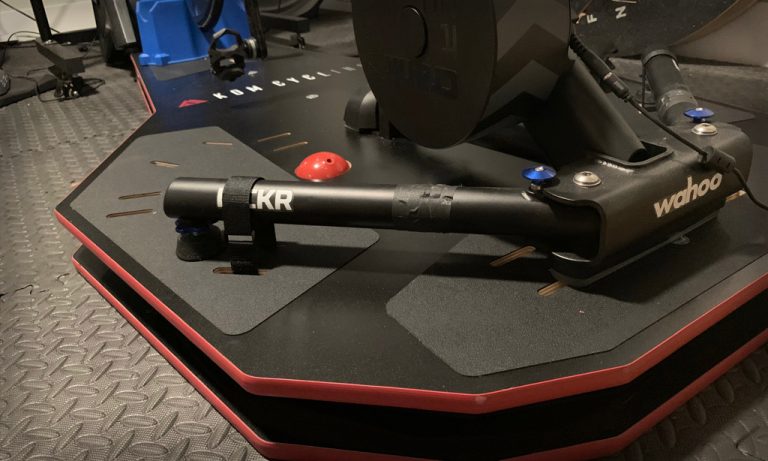
This can be accomplished by altering the air pressure in the red balls, but I prefer to use a counterweight with my Wahoo KICKR 5 setup, since the flywheel means the trainer’s weight isn’t centered. For me, I think it feels more natural to have even weight on both sides, and thus even air pressure in the red balls, than to simply use the red balls to even things out.
I have two ankle weight straps placed on the right-hand side of the rocker plate to offset the KICKR’s flywheel. The nice thing about these straps is they don’t shift around while riding, but I can move them easily to get the balance just right.
Demo Video
Here’s a quick demo video I made, showing the plate in action under normal seated riding as well as standing sprints and climbs:
How Does It Feel?
Having tested my fair share of rocker plates, I had two concerns going into this review:
KOM says the rocker plate allows 13 degrees of side-to-side movement. The SBR ROCKR I had been using provides for 18 degrees. Would I notice the difference and “bottom out”?
Would the velcro straps be sufficient for holding my KICKR in place?
After using the plate for a couple of months (around 2,500 virtual kilometers ridden), I can answer both questions:
I didn’t notice the reduced degrees. The plate feels perfectly fine in full side-to-side movement.
The velcro straps aren’t good enough. For me, at least. Let me explain…
Velcro Strap Shifting
Some trainers are easier to mount to a rocker plate than others, due to their size and/or leg design. The KICKR presents some challenges, and I’ve found in the past that, unless my KICKR is mounted very solidly to the plate, it will move around a bit under hard efforts.
This movement isn’t noticeable during the effort, but I’ll notice that my front wheel is no longer perfectly centered – and eventually, the whole bike may feel off-center, leaning to one side. Then I’ll have to re-adjust things to get them centered again.
The velcro straps used in the KOM Rocker Plate aren’t sufficient to keep my KICKR in place. Now, it may be different for you – if you use a different trainer, or don’t torque your bike and trainer as hard under power, you may never have any issues. But I know for me, and for some others, the velcro straps aren’t enough with this rocker plate.
To be clear, though: this is a minor quibble. The velcro straps don’t add much hassle to my life, and recentering things takes only a minute. But a rock-solid trainer mount setup would mean no hassle at all!
Alternative Mounting Options
One Zwifter pointed me to these heavy duty stage lighting clamps, which do a wonderful job of solidly mounting a KICKR to any rocker plate. You’ll just need to drill three holes and bolt them in.
Another option would be to purchase the $50 KICKR mounting kit from Max over at Traxxion Dynamics. Again, it will require drilling holes in the plate – but this kit bolts your KICKR directly to the plate, giving you a rock-solid mount.
LifeLine Rocker Plate
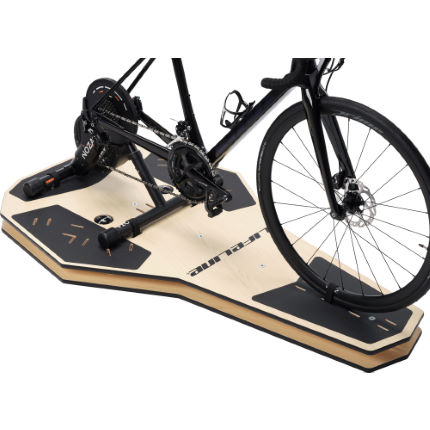
Some of you may recognize the KOM Rocker Plate – it appears to be the same as the “LifeLine Rocker Plate” sold by Wiggle. Just a different color. And you know what? I bet they are! The KOM Plate was made in China, so my guess is both are made in the same factor, with different “finishes” depending on where they’re shipped.
So if you can’t get the KOM Rocker Plate wherever you’re at, the LifeLine Rocker Plate from Wiggle should do the trick quite nicely. But with shipping included, KOM’s plate is more affordable here in the US.
Other “Features”
The KOM Cycling Rocker Plate (RPV1) incudes lots of different slots cut into the top plate, to accommodate velcro mounting a wide variety of trainers. I tested it with the Tacx NEO, KICKR Core, KICKR Bike, and standard KICKR. It works with many others as well.
It also includes grip-tape in key spots, which is more important than you may realize the first time you step on a non-grippy part of the board while wearing cycling shoes! I actually wish the grip tape on the sides extended more toward the front of the board, because I find myself putting my feet on the non-grippy portions when mounting my Zwift steed.
Wrapping It Up
The KOM Cycling Rocker Plate (RPV1) is a solid product for the money, and I would recommend it to anyone looking for a full-length rocker plate. It’s got a clean look, delivers natural out of the saddle side-to-side motion, and setup is a snap.