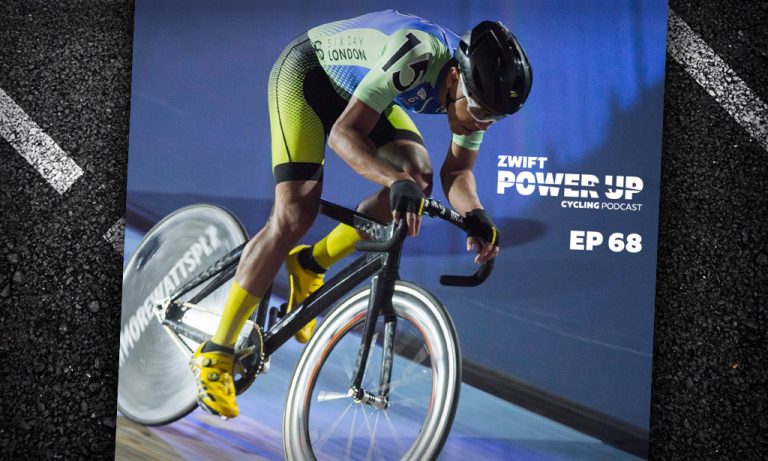
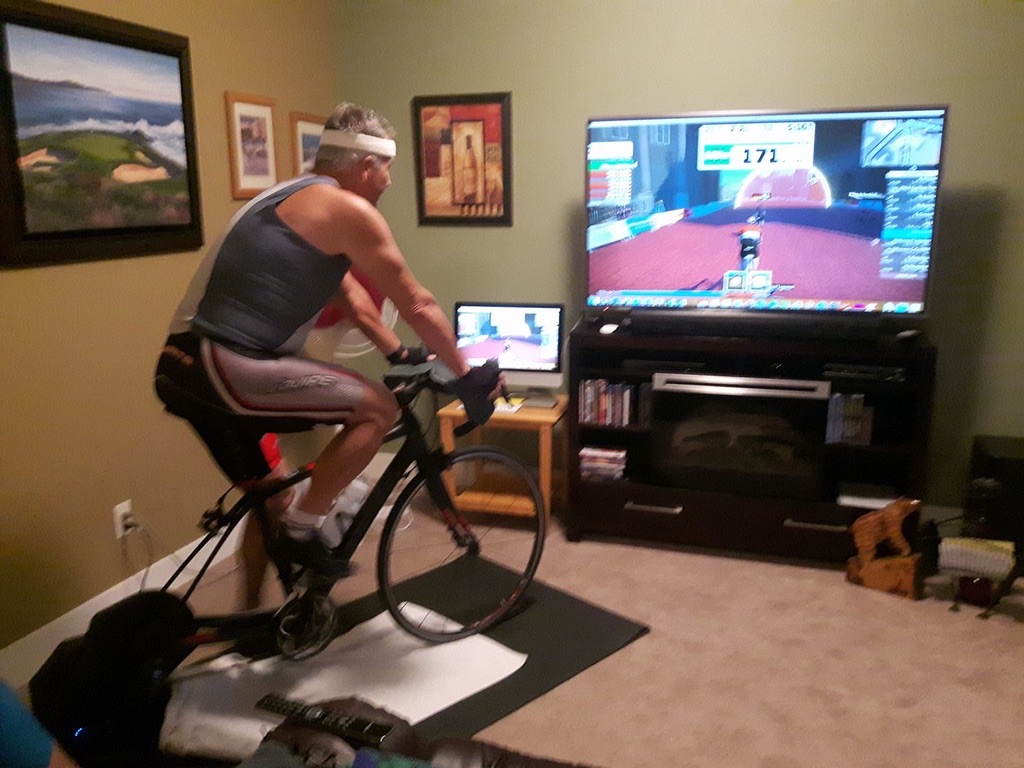
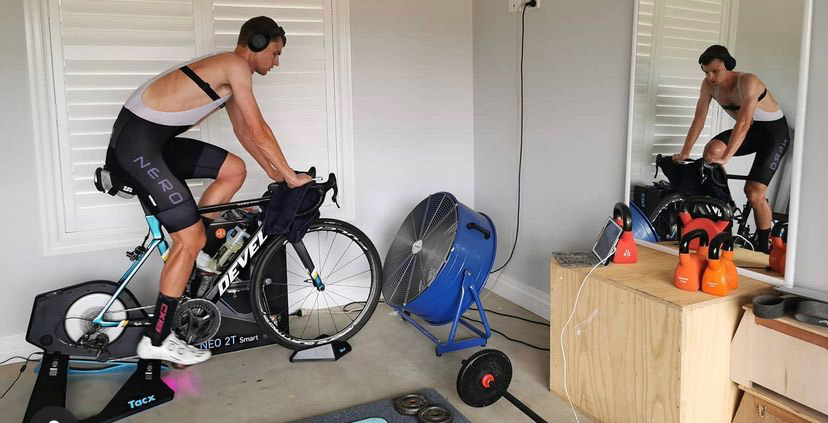
Red Walters has a very promising career ahead of him, but Covid-19 closed down racing for 2020 and he couldn’t show off his potential as he had hoped. Now he’s stuck with only 1 year left in the Under23 category, and 1 year to show off his talent and earn a pro signing.
He sits down with Matt Rowe and Rahsaan Bahati to discuss lockdown training, diversity in cycling, what he hopes the future holds, and let’s not forget his previous accolades in dinghy racing…
About the Podcast
The Zwift PowerUp Cycling Podcast features training tips from host Matt Rowe (Rowe & King), with regular co-hosts Greg Henderson, Rahsaan Bahati, Dani Rowe, and Kristin Armstrong.
My husband is visually impaired. Jim has been what we might call “a little accident-prone” his entire life. He has always been involved in sports, and injuries included ruptured achilles, knees, hip replacements, and more.
In 1990 while cycling to work A 3/4 ton truck hit Jim. He suffered a brain and neck injury and it took five years of rehabilitation and therapy to get him back to “normal”. This accident and another cycling accident seven years later caused optic nerve damage to both eyes. Jim continued to love cycling and eventually I got caught up in the sport as Jim organized various ride groups in Sherwood Park, Alberta for a well-known bike store “Mud, Sweat and Gears”.
In 2014 we moved to Kelowna, British Columbia where we continued to cycle. We became members of the Kelowna Newcomers Club and we organized an outdoor club that included hiking, cycling, and kayaking for up to 25 people. In the winter this group would also snowshoe with us. So you can tell that Jim was very active, both in his early years and later as he retired at the age of 58.
My Life Would Change Forever
We thought the worst of his mishaps were behind us. Little did we know. In February 2018 while in LaQuinta for a three-month stay Jim’s vision started to change. We had taken our road bikes and tandem race bike down to this area as the cycling is amazing and for that reason we chose it as an annual “snowbird” destination to avoid Canadian winters. Jim cycled over 1200 km in January using both his road bike and our tandem racing bike.
On February 10 we were out cycling on the tandem bike when Jim hit the curb. While we did not fall it certainly was a cause for alarm. By February 12 he could no longer drive our car. Jim had lived with controlled glaucoma for several years – all controlled by a simple eyedrop. While in LaQuinta his eyes became red and inflamed and we thought this was from the dryness of the region and the sweat going into Jim’s eyes. After Jim saw five ophthalmology specialists in the Palm Springs area we decided to return home to Kelowna, British Columbia, Canada.
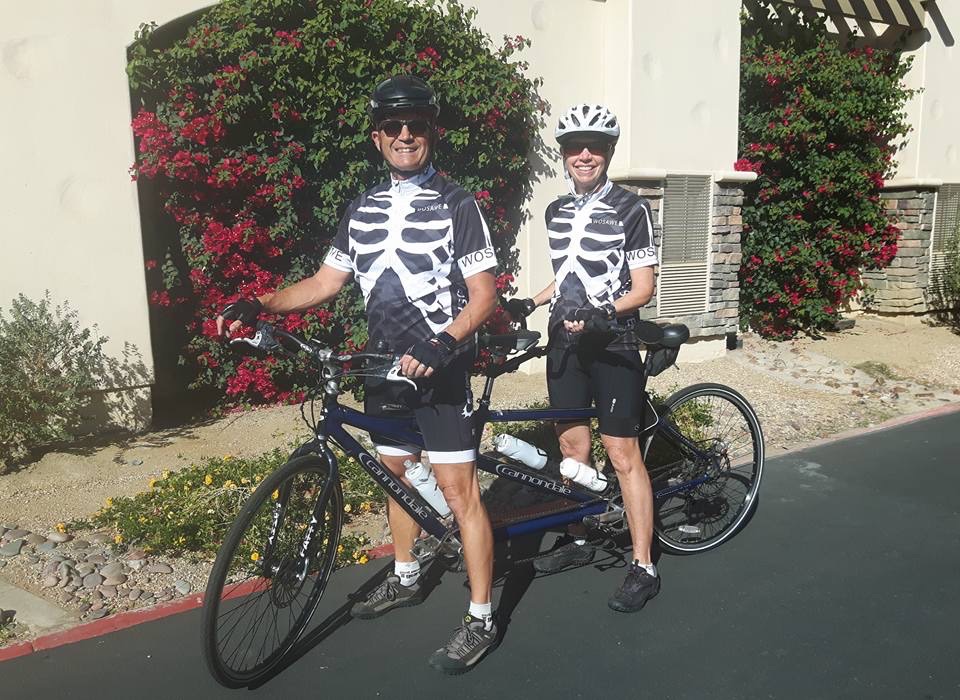
Our last Tandem Bike ride in LaQuinta, California
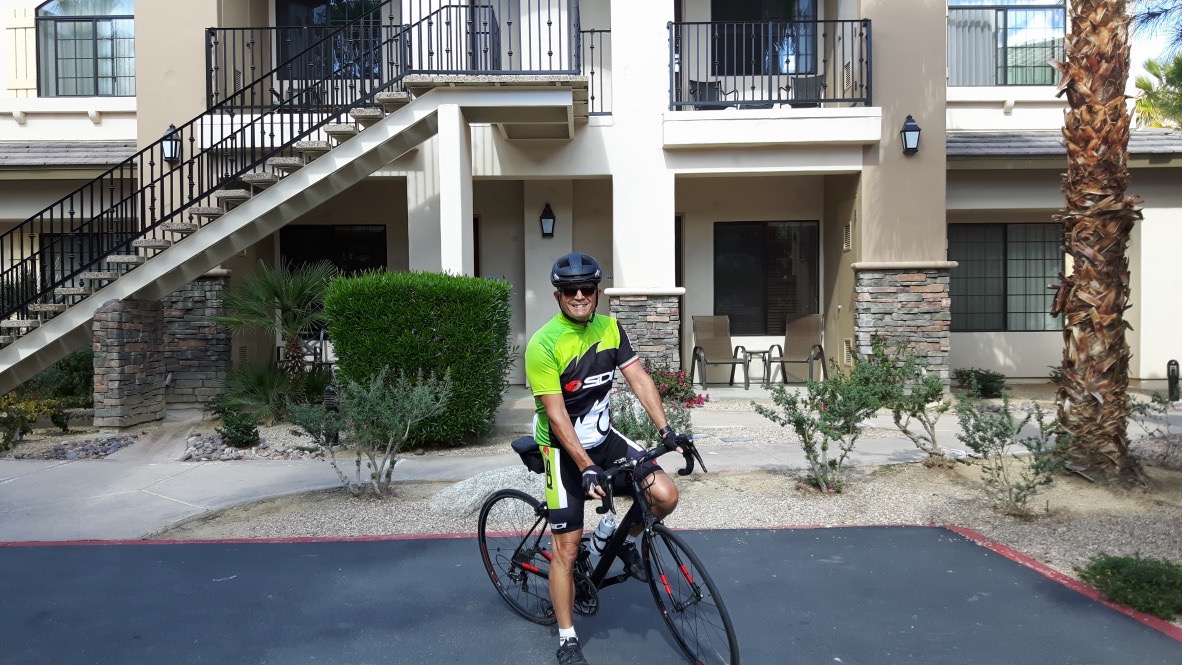
Jim’s last solo cycle ride in LaQuinta, California
We both thought we were coming home to get Jim “fixed”. This was not to be the case. Seven surgeries and one year later Jim was left with a small amount of vision up to a distance of five feet. He explains that it is like looking through waxed paper. He can see outlines but not faces.
Glaucoma is a group of eye disorders that have few symptoms in their early stages, but eventually leads to damage of the optic nerve (the bundle of nerve fibers that carries information from the eye to the brain), which can then lead to vision loss or complete blindness.
Glaucoma is a leading cause of irreversible blindness in the United States and the world.
Upon our return to Canada, our son who lives in New Zealand flew to see us. We all went to Jim’s Opthamologist together. At this time we all learned that Jim’s vision was not going to be repaired. We cried together. In 2018 Jim was diagnosed “legally blind”.
Our son Corey was already a part of the Zwift community. Neither Jim or I had been that interested in Zwift as we spent the winter months in California, taking our outdoor bikes with us. On the way home from the Opthamologist, Corey told his Dad that he was NOT going to see his Dad stop cycling. Jim had cycled for over 40 years.
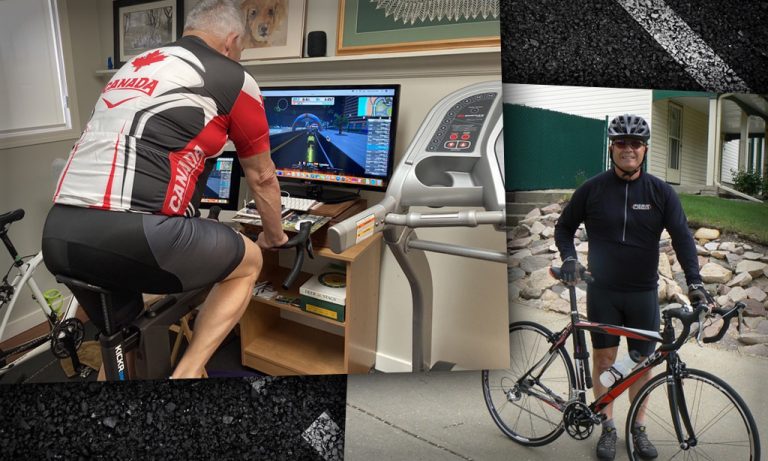
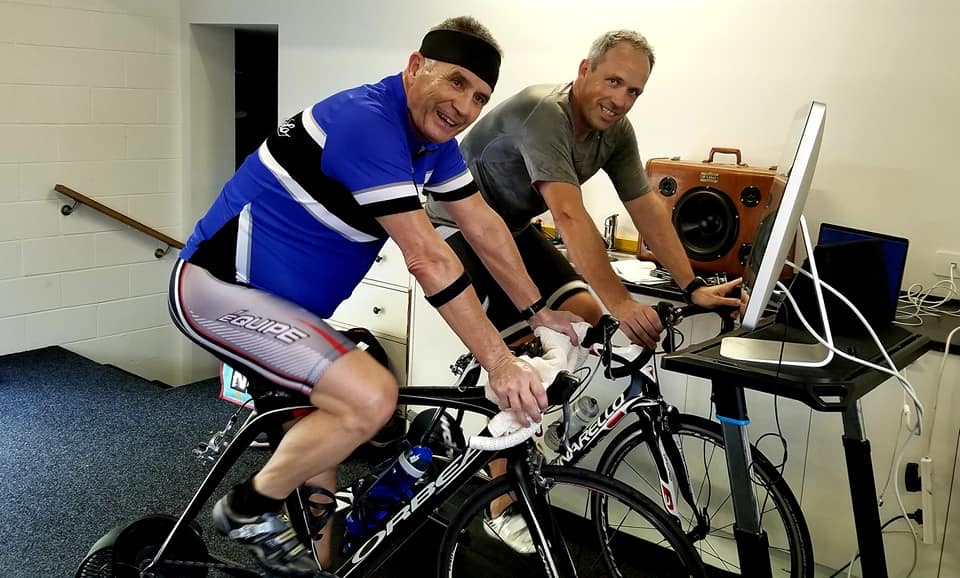
Together they drove to a local cycle shop and Corey purchased Jim his first indoor trainer. By mid-afternoon, Jim was now a member of Zwift and Corey had him cycling his first FTP test. Although Jim could not see the large screen TV, I was able to cycle beside him and give him his cues.
Jim trying out Zwift with the help of our son Corey.
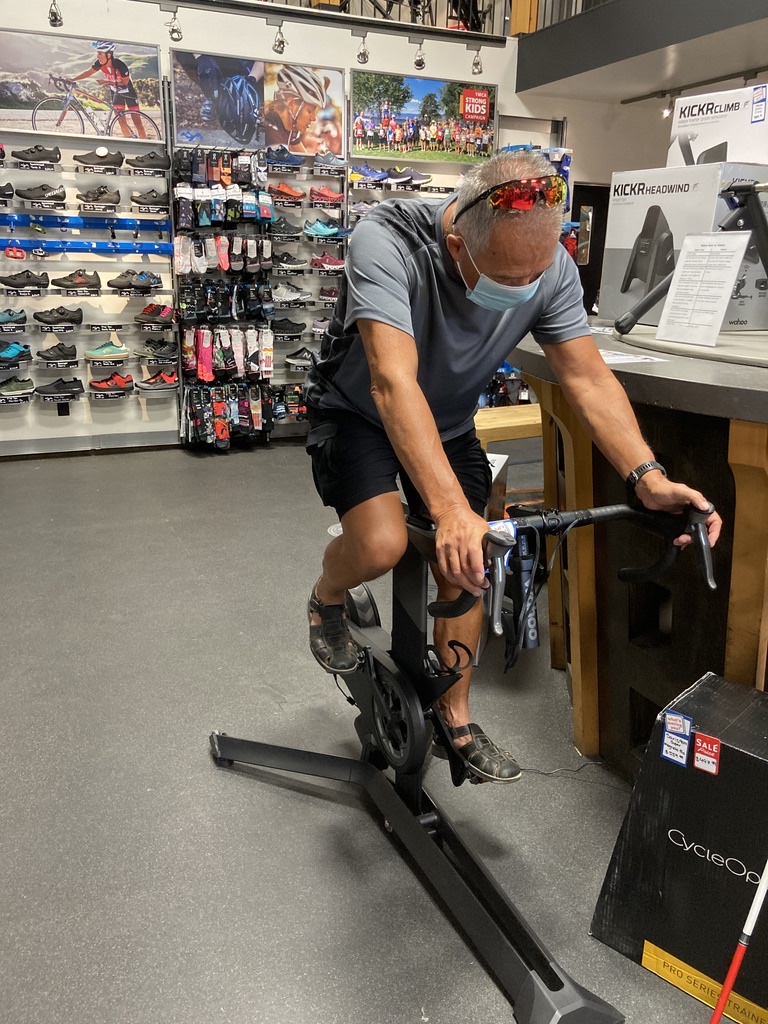
Eventually Jim was set up with a TV which he could make out on his own. Recently he purchased a new Wahoo KICKR Bike!
Life Continues On
Over time he convinced me to also ride on Zwift. At least two or three times a week we do a Zwift Meetup, and Jim stays with me for the duration as I am still the “weakest link”.
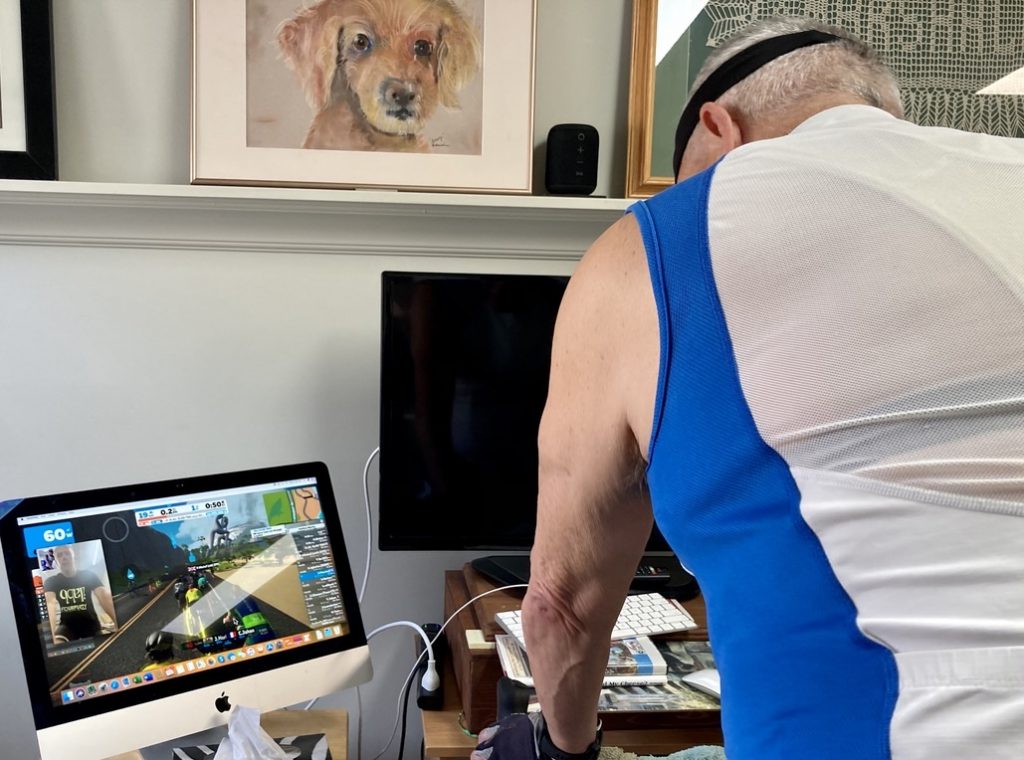
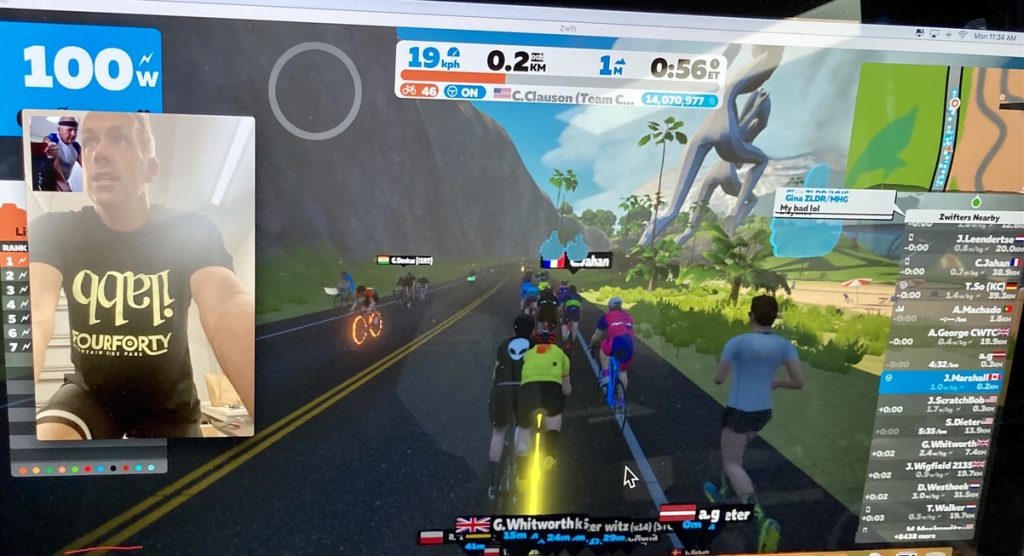
Monday morning is a very special day. Jim cycles with our son in New Zealand.
They use FaceTime to video chat while riding.
Last year when we flew to New Zealand (pre Covid-19) our son set Jim up on a trainer so they could cycle side by side.
The beauty of Zwift is that it can be used anywhere in the world!
Adapting and Overcoming
Jim is now back to golfing, hiking, and cycling outdoors. He had adapted to his present vision and realizes that there is little he cannot do, he just has to do it differently.
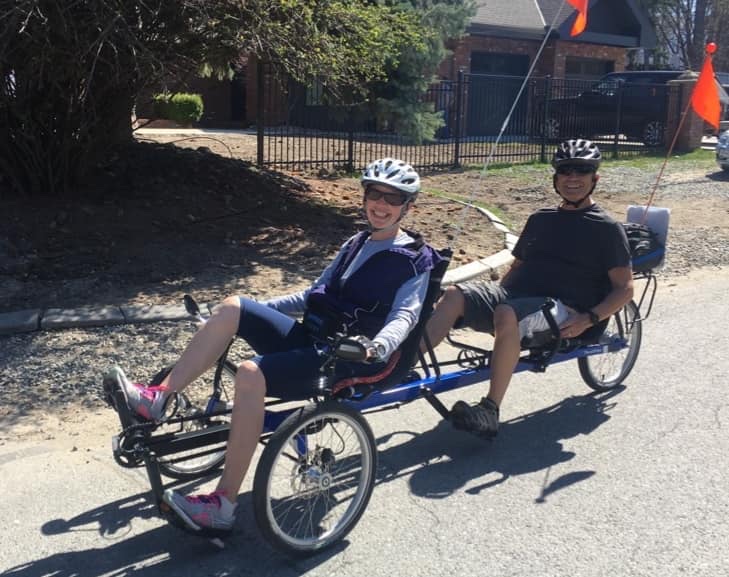
Last summer we purchased a Tandem Terra trike. We always loved tandem cycling. Unfortunately, due to Jim’s current eye status, we could not continue to ride our upright race tandem. Jim could not afford to take another bad fall from an upright bike as this would take away the little optic nerve he has left.
During the summer months you can see us out and about in the Kelowna area. Jim controls all of the gears, while I am the eyes for our special team. We have done many fundraising events on this trike.
I admit it took Jim some time to adjust to the fact that he was now the stoker
I often ask myself, “What if Jim had not been introduced to Zwift by our son?” Where would he have been today? Jim applauds Zwift as his savior, stating, “It’s almost as if it had been designed with me in mind.” Jim thrives on the ability to ride set routes, follow predetermined specific rules and parameters, and interact socially on his terms in a safe, comfortable, and nurturing environment.
He’s still competitive at the age of 66 and is always trying to achieve personal goals. Deep down Jim would be the first to admit that he does miss cycling on his own outdoors. But he is now proud to be a part of the Zwift team. He hopes that one day there will be more audio cues on Zwift for the vision impaired. He also hopes that one day research will give him some of his eyesight back.
We all have our ups and downs and health problems. Like Jim, though, there is little we cannot do when we adapt and overcome. I am proud to call him my husband of 45 years and I thank Zwift for all they do for Jim and others.
Questions and comments?
Do you ride on Zwift with glaucoma or other eyesight impairment? Share your story below!
We, like many of you, were surprised when it was announced that popular route badge tracking site ZwiftHub would be shutting down at the end of April. Toby, the sole developer/artist behind the project, explained the reason for the shutdown:
First of all: Thank you to all the amazing individuals in the indoor cycling community who supported ZwiftHub. Thanks for sharing the cost of hosting the web app with me and for your supportive messages that kept me motivated to keep working on the project.
Exactly one year ago I published ZwiftHub and wrote this post on Reddit. What a journey it has been. ZwiftHub started as my first coding project in my endeavor to pursue a career change, combining my need for some practical software development experience and my passion for cycling.
When I started this hobby project, I didn’t dare to dream that one year later it has over 2,000,000 page visits, 60,000 registered users, and 280,000 unique visitors from 166 countries. My personal highlight was the recognition by two cycling media outlets I’ve been a fan of for a long time: GPLama and CyclingTips .
So why do I shut down ZwiftHub? Whilst I celebrated the success of the web app, the increasing user number meant that what started as a fun project ended up in a lot of unpaid work and higher costs to cover due to more traffic. Answering support emails, catching up with Zwift’s latest changes, fixing bugs, maintaining the backend, etc. This took up a lot of my free time – time I don’t have anymore because…
I have a new job! As I mentioned in the beginning ZwiftHub was my starting point to a career change to software development. It worked out. And, dream come true, I am able to stay within the indoor cycling realm. I’m working now for the company whose Kickr kicked off my indoor cycling career. I will keep working on enhancing your indoor cycling experience as a software developer atWahoo Fitness – The Sufferfest.
Although Wahoo would allow me to keep my hobby project, this doesn’t align with my values; it’s not the right thing to do. As a longtime Wahooligan, I’m grateful for this amazing professional opportunity and want to focus on this challenge without distraction.
Thanks again to everyone who was part of this journey. No matter if Zwift orThe Sufferfest, indoors or outdoors, fast or slow, uphill or downhill: I love cycling, you love cycling, spread the love, stay safe and healthy and I will see you out there!
Toby
While we were delighted to hear that Toby had achieved his career change goal – a dream come true for him! – we also knew that ZwiftHub served a need in the community. We, like many of you, didn’t want to see it go away.
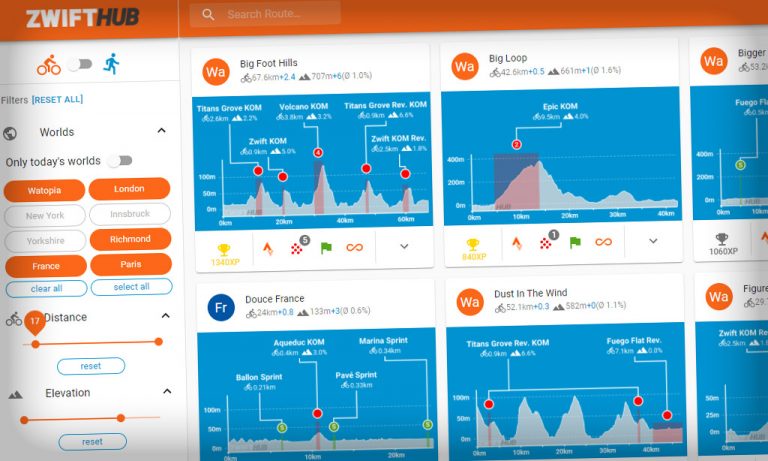
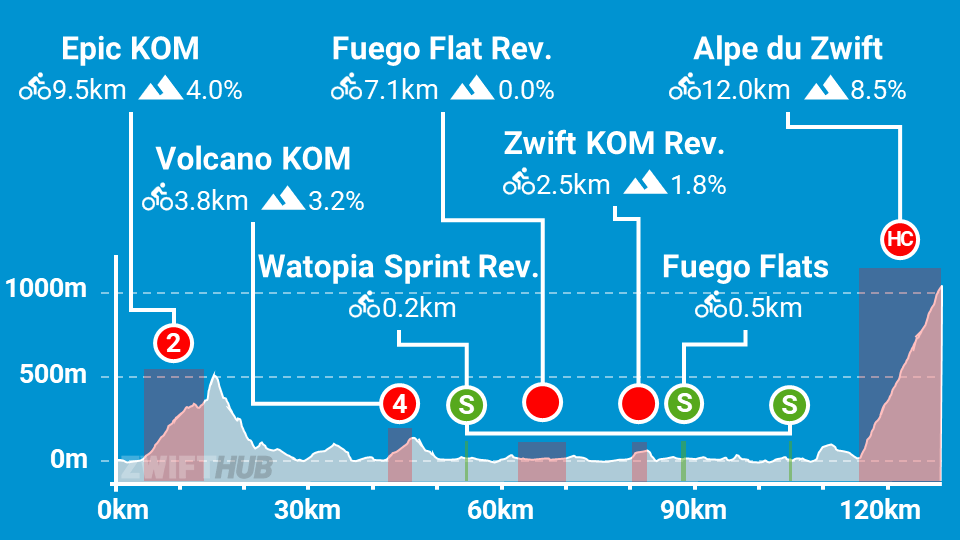
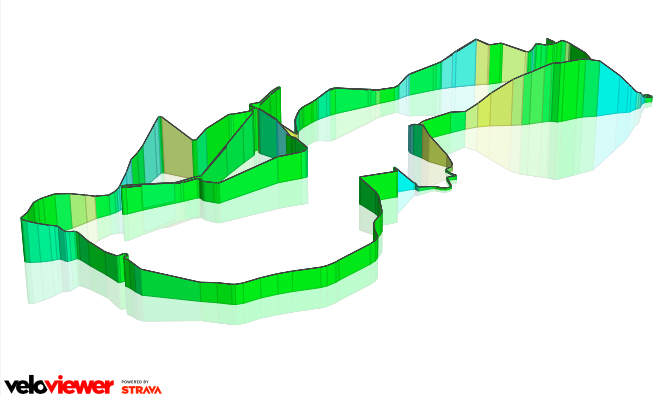
At its core, ZwiftHub lets you track which Zwift route badges you’ve earned. It also provides a slick interface for filtering routes by world, map schedule, distance, elevation, and more. And of course, the route profiles Toby designed are super-useful, which is why we’ve included them (with Toby’s permission) on our route detail pages!
One of Toby’s beautiful route profiles – this is The Uber Pretzel
Toby did some very fine work with ZwiftHub, and we knew Zwifters were happily using it every day. So we contacted him and began discussing the possibility of taking over the site. And today we’re happy to announce that we’ve reached an agreement wherein ZwiftHub will continue to thrive under the Zwift Insider umbrella and expand as Zwift adds new routes!
Notably, Zwift has stepped up to help sponsor the migration of ZwiftHub content and other setup/maintenance/support tasks. But we’ll be looking for another ZwiftHub sponsor or two so the site doesn’t have to survive on donations alone. Message us at [email protected] if you’re interested in sponsoring!
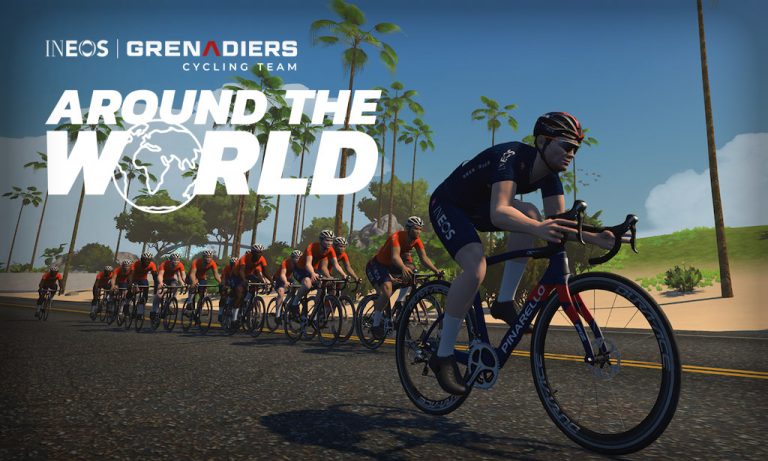
INEOS Grenadiers + Zwift have just announced their latest collaboration – the “Around the World” series of 10 one-hour rides happening May 1st.
Ten Pro INEOS Grenadiers riders will each be hosting a 1-hour ride, all on different routes and at different times. They’re having a bit of a competition with their teammates – who can get the largest group of riders together on Zwift?
Ride Schedule
Here is the list of riders, and routes. The first event (with Tao Geoghegan Hart) starts at 9am GMT/2am PST Saturday, May 1st, and events are scheduled on the hour following that:
Events are group rides, not races. But there is no stated pace for the rides, so plan on groups not staying together and strong riders pushing the pace at the front! Late join is allowed.
Jersey Unlock
Finish any of the 10 rides to unlock the INEOS Grenadiers Training Jersey!
How Many Can You Do?
Since the events are staggered, you can take part in as many as you’d like. How many can you finish?
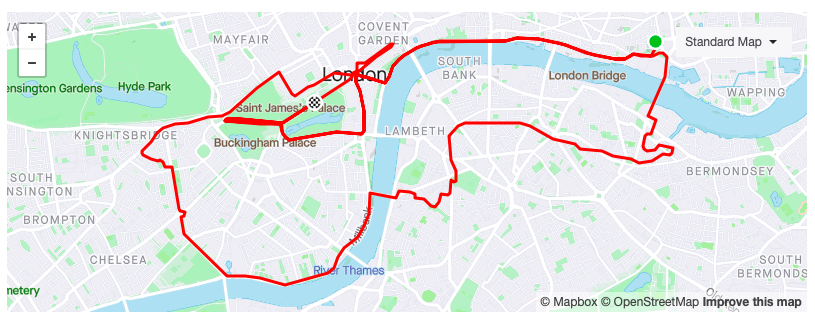
This week we have another TTT, and the route is Greatest London Flat – around the City of London itself, then over to Surrey with the flattest of the three paths through. Two little things to remember:
This isn’t the Greater London Flat… it’s the GREATEST London Flat. Two very different routes.
It starts and ends at The Mall, not at the Start/Finish banner on Upper Thames Street. Remember to add the extra 7km to your ride as you sail past!
This route has the usual 7.5km lead-in from the Pens, followed by a 23.6km loop through London and Surrey. The Zwift Insider route description is here.
What to ride?
This is almost as flat as the route name implies, so aero rules. If you have it, the Specialized S-Works Venge with Zipp 858/Super 9 wheels is the pick of the bunch (and the only frame/wheel combo to beat Tron on the flat). Tron is almost as good on this course, and if you haven’t done it yet – kick off the Everest Challenge and start the long painful climb to get Tron.
As always, the Zwift Insider reports on frames and wheels are superlative so if you want to find the perfect bike and wheel combo for you, check them out.
This is a single lap race. Starting at the pens it’s mostly downhill to Northumberland Avenue, where you head up the hill to Trafalgar Square. Sharp left at the top and then a right as you head towards Buckingham Palace and then down the Mall to the reverse sprint. You are now 7.5km into the ride, and this is where the lap actually starts.
The jaunt around Central London is mostly flat/false-flat, except when you head down Piccadilly through the Hyde Park Corner underpass and up the other side. Soon enough (17.5km) you will head across the river to Surrey – but fear not, you aren’t tackling Box or Leith, you are just heading through the beautiful Surrey parkland.
Through the Underground Station and across Tower Bridge (23.5km) and you’re soon on familiar ground – because you’ll pass the Pens and be back on the lead-in with 7.5km to go. Just follow Upper Thames Street, up the Northumberland Avenue hill to Trafalgar, left, right, past Buck House and a quick Reverse Sprint to cross the line.
Route Recon from No Breakaways
There are loads of rides on this route if you want a proper recce. Check out zwifthacks.com.
What to look out for on the ride
There are no significant hills to split the group, but there are a few areas to watch out for:
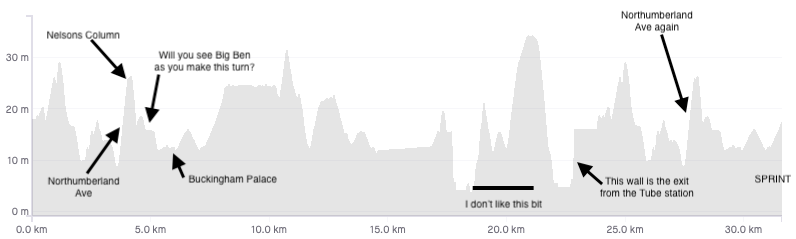
From the pens it is a nice flat start, allowing you to get into formation and go. 3.7km into the ride you make a sharp turn onto Northumberland Avenue – that’s a 150m stretch at 4% – keep the weight-weenies in check and you’ll be fine.
Just past the 11km mark you will head down Piccadilly (1.1km where you will pick up speed) into the underpass and back up the other side (where you will lose it again). The incline out of the underpass shouldn’t split the group but keep an eye on your teammates.
At 18km you hit what I think of as the worst part of the course. Legs are starting to get worn, and there’s a 3km stretch of just annoying ramps. Can’t describe it better than that… annoying and just in the right place to create a split.
Right before 23km you exit the Tube station – it a short, sharp shock peaking at 15%. This will hurt.
Once more down the lead-in, with the main lump being Northumberland Avenue again.
No time to look, but you’ll see Nelson’s Column, Big Ben, and Buckingham Palace again then SPRINT for the line with whoever’s left in the group.
Ride summary
There’s a good reason why this route has made a TTT appearance in every ZRL season so far. It’s a great ride to showcase your TTT skills!
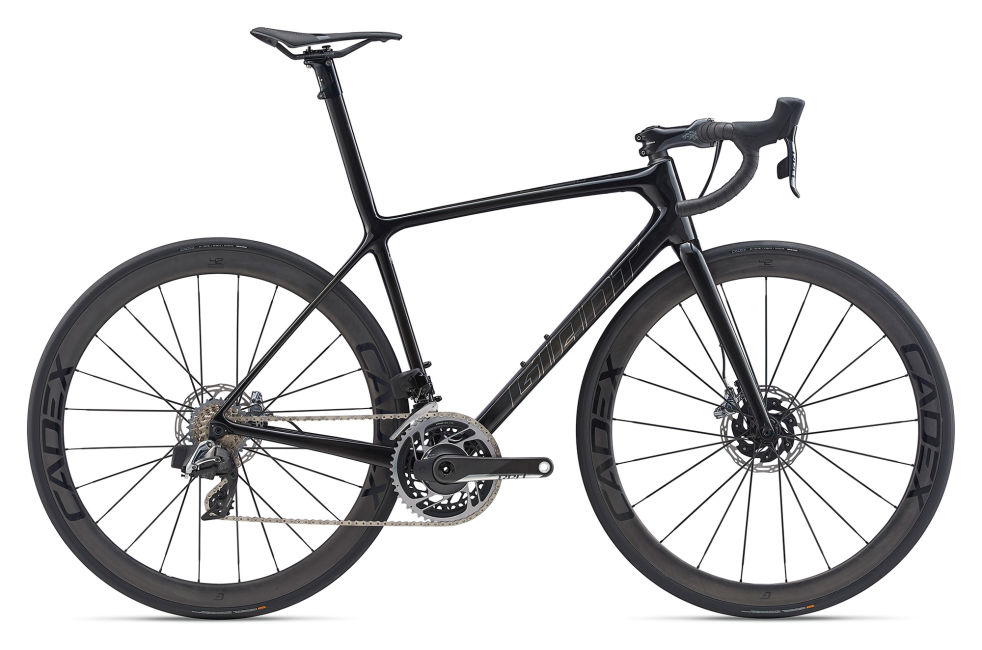
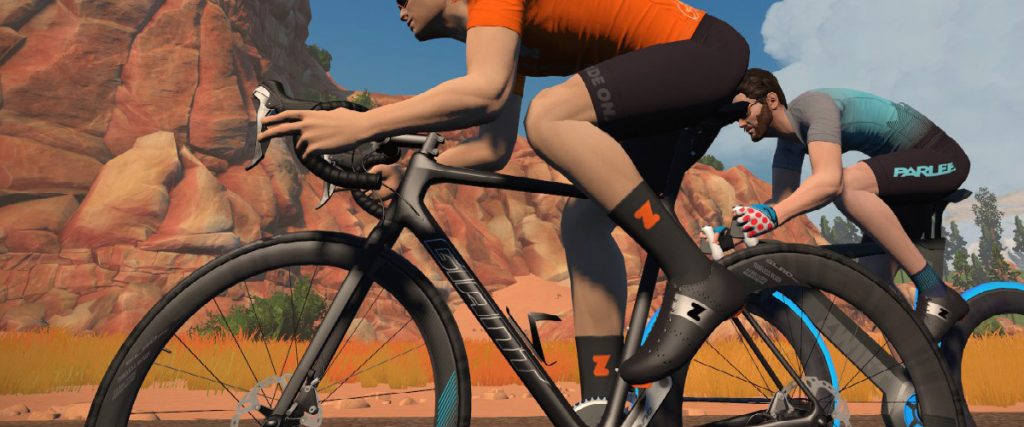
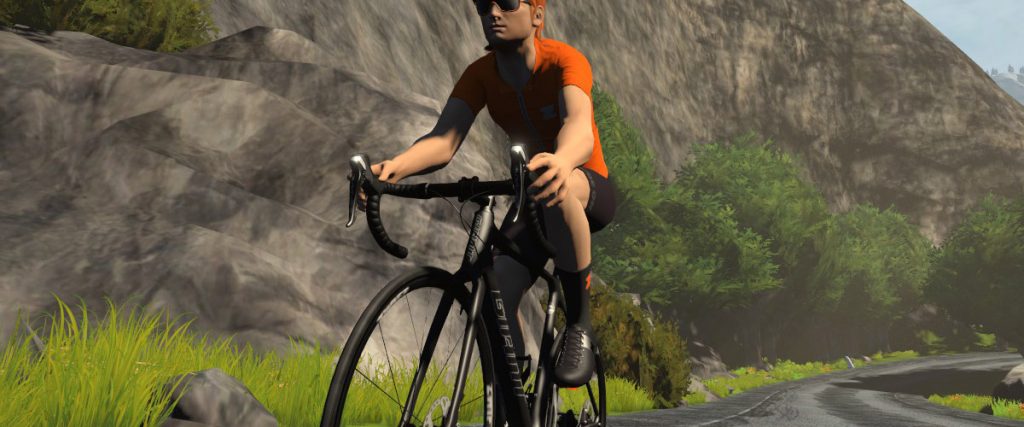
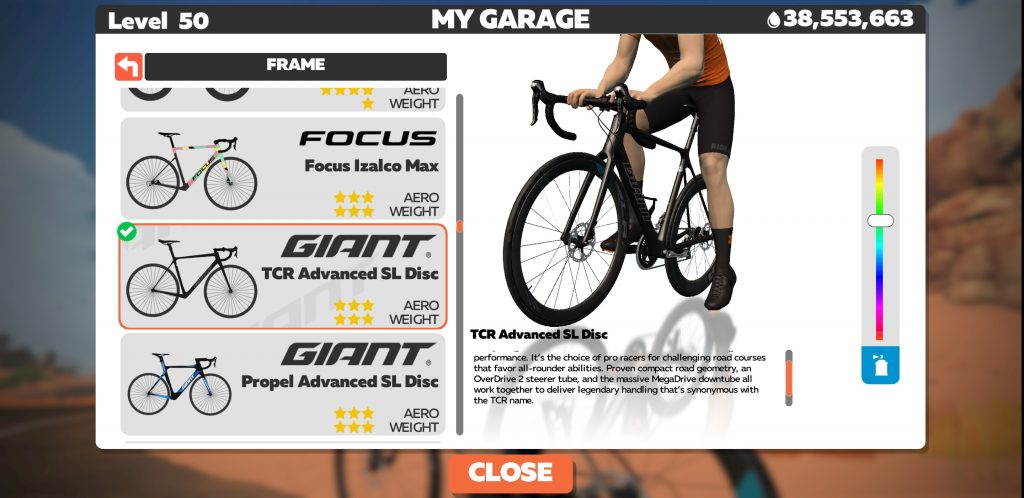
Zwift’s newest update includes a new bike frame – the third Giant frame to be added to the game! It’s the TCR Advanced SL Disc, and an update to the TCR Advanced SL which has been in game for quite some time.
Available at level 14+ for 745,500 Drops, the frame is rated at 3 stars for aero and 3 stars for weight. Here’s how Zwift describes it:
“Everything about the Giant TCR Advanced SL Disc screams high performance. It’s the choice of pro racers for challenging road courses that favor all-arounder abilities. Proven compact road geometry, an OverDrive 2 steerer tube, and the massive MegaDrive downtube all work together to deliver legendary handling that’s synonymous with the TCR name.”
Of course, experienced Zwifters know that real-world performance doesn’t necessarily translate to Zwift performance. So at Zwift Insider we run frames and wheelsets through a battery of tests to figure out just how well they perform in Zwift’s virtual world.
Here’s everything you need to know about the new Giant TCR Advanced SL Disc in Zwift…
The Giant TCR Advanced SL Disc, IRL
Aero Performance
The Giant TCR Advanced SL Disc is rated 3 aero stars, which is the highest any standard road frame is rated in Zwift. Not that this makes it special – approximately half of the current frames have a 3-star aero rating.
This frame’s aero performance sits mid-pack compared to the full list of Zwift road frames, clocking in at 2 seconds faster than the older Giant TCR Advanced SL frame.
The TCR Advanced SL Disc turned in a time of 51:31 on our test course (two laps of Tempus Fugit). By comparison, the fastest frame in game (Specialized Venge S-Works) turned in a time of 51:18. (Both of these test times were done with Zwift’s stock wheelset, the 32mm carbon).
This means the TCR Advanced SL Disc is better than approximately 1/2 of the road frames in game, in terms of aero performance.
Climb Performance
The TCR Advanced SL Disc is rated at 3 stars for weight, so we know it won’t be as fast as the very best climbing frames. But precisely how well does it perform?
The TCR Advanced SL Disc turned in an Alpe du Zwift time of 49:19. By comparison, the fastest frame in game (Specialized Tarmac Pro) turned in a time of 48:57. (Both of these test times were done with Zwift’s stock wheelset, the 32mm carbon).
This means the TCR Advanced SL Disc is only better than approximately 1/3 of the road frames in game, in terms of climb performance.
Color Slider
One oddity we noticed: this frame includes a color slider to customize the look – but it doesn’t actually do anything! Regardless of where you slide it, the frame remains black with white accents.
Comparisons + Alternatives
There are no frames in game which turn in the same performance as the Giant TCR Advanced SL Disc, so we have no direct comparisons. However, we can say that, at the price point of 745,500 Drops and a level lock of 14, there are certainly better performers available.
Based on this frame’s lackluster performance, we don’t anticipate many Zwifters using it for racing purposes. If you’re a Giant fan, though, you might want to pick it up for those less competitive rides – especially if you ride this bike IRL!
Questions or Comments?
Share below!
Important note: this post contains speed test results for Zwift frames or wheels. These results may change over time, and a bike's performance relative to others may also change. We don't always revise posts when performance rankings change, but we do keep current, master versions of our speed test results which are always available. See the frame charts, wheel charts, and Tron vs Top Performers for current performance data.
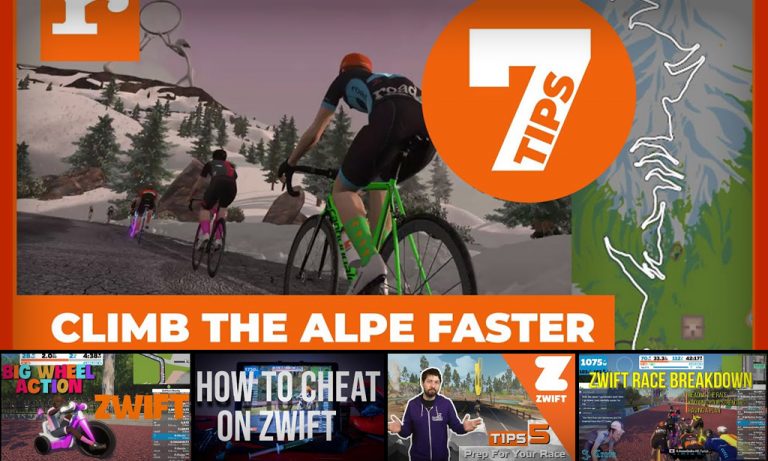
This week’s Top 5 Zwift Videos will help you prepare to climb Alpe du Zwift faster and race smarter. Also see one Zwifter’s reaction to this year’s April Fools’ Day fun, and get some special Zwifting advice from “C. Heater”.
Climb the Alpe faster on Zwift! | 7 top tips to go quicker
From planning to fueling to staying motivated, Road.cc has put together some useful advice to help you do your best climb up the Alpe du Zwift.
How To Cheat On Zwift Like A Man!
Matt LeGrand invites guest Chester Q. Heater to take over his YouTube channel for a special video on April 1. How does “C. Heater” work his magic? We at Zwift Insider don’t endorse it, but you can see for yourself!
Zwift Cycling Big Wheel Tricycle Biking
Zwift always has some fun for April Fool’s Day, and this year saw the return of the big wheel trikes – this time including a Zwift Concept “Tron” version. “Black British Cyclist Kendizle” reacted with joy.
Zwift Top 5 Tips – Preparing to Win Your Race :: Zwiftips Episode 2
General Elost is back with more racing tips. This time, learn how to prepare for your event like an expert Zwift racer.
*Zwift Race Breakdown* The Importance of Having a Plan
It’s a sweet feeling when a race goes according to plan! Jonathan Crain walks through a strategy that he and his teammate came up with for a race and shows how the plan led to a good result.
Got a Great Zwift Video?
Share the link below and we may feature it in an upcoming post!
Something very significant happened in the world of Zwift recently. But Ironically, it happened out on IRL roads! Much like a tree that has fallen in the forest with no one around to hear it, the sound it made perhaps didn’t reverberate through Zwift’s virtual worlds to reach the ears of those riding online. So we wanted to share it here.
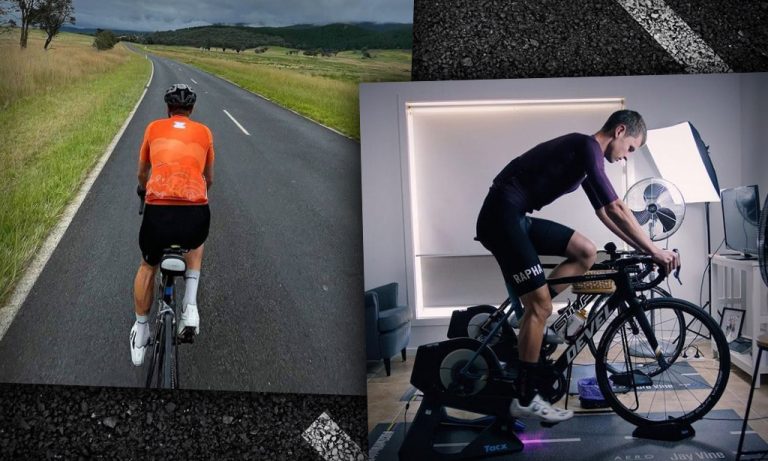
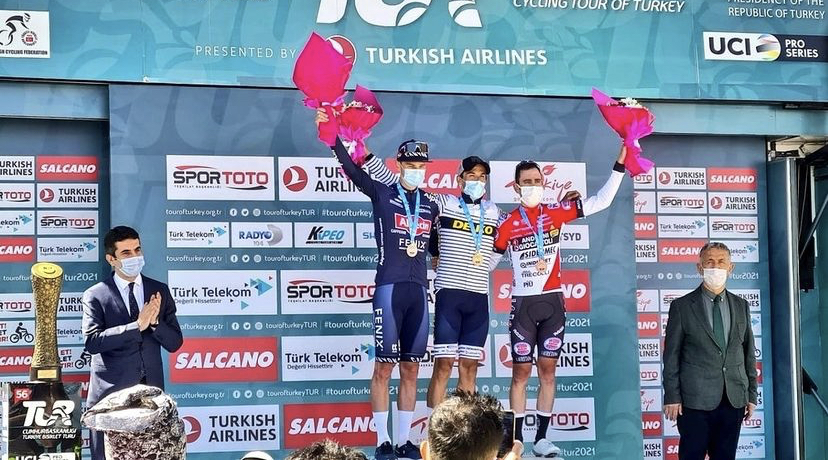
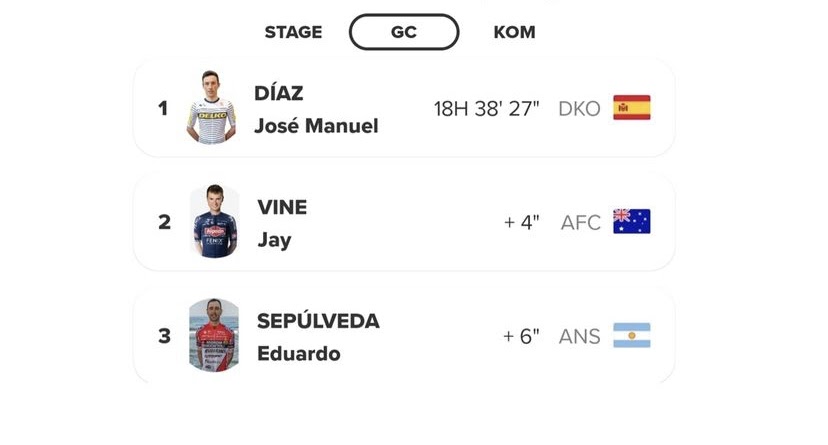
In the Tour of Turkey, an 8 stage UCI ProSeries stage race which took place between the 11th and 18th of April 2021, Jay Vine (Pro Cycling Stats) came in second in the queen stage to Gogubeli and was a mere second from the top of the podium in the General Classification.
Jay Vine (Strava Profile) is a 25-year-old racer from Canberra, Australia who currently lives in Girona, Spain. Jay began his racing career as a mountain biker and transitioned to the road with the New Zealand Cycling Classic in 2019 and later with an amazing 5th place finish in 2020’s Herald Sun Tour (an Australian Professional UCI road race) while racing for the Nero Continental team.
Despite this, Vine didn’t gain the UCI experience required to receive any Pro Tour interest and planned to race a full schedule in 2020 in hopes of being noticed. When the pandemic struck, and quarantine and travel restrictions caused widespread race cancellations and uncertainty, Vine’s plans were placed on hold. However, the lockdown provided Jay the opportunity to develop a passion for virtual cycling!
While he was aware of the Zwift Academy and considered it as an option prior to 2020, he regretted his late start in road racing and not having the knowledge when he would have qualified as a U23 racer. The timing was right for Jay (ZwiftPower Profile) in 2020 when the Zwift Academy was made eligible to all elite riders, and he planned to peak for the finals in December. His strong performance paid off with a win and a one-year professional contract with the UCI Pro Tour Alpecin-Fenix team.
I caught up (in a virtual cycling sort of way…I IM’d him) with Jay following the Tour of Turkey to congratulate him on his momentous achievement and to offer support on behalf of the virtual cycling community. This is what he had to say…
Q&A with Jay Vine
CS: What influenced you to become a virtual cyclist and what aspects of your early career prepared you for Zwift and your participation in the Zwift Academy?
JV: I rode as a MTB rider in my first years cycling but really used Zwift as I transitioned to the road as a full time worker trying to fit my cycling around a full time job.
CS: When you decided to enter the Zwift Academy, did you ever feel that you would have the opportunity to be offered a pro contract?
JV: I knew my numbers were good but had doubt about my age, and thought my lack of racing experience would play a factor in my eventual selection. I knew that the academy was my best chance at breaking out of the NRS Australian bubble and that is why I focussed the back half of 2020 on the Academy.
CS: What are the similarities and differences between virtual cycling competition and the Pro Tour with respect to fitness demands, race conditions, and strategy?
JV: Of course, the type of efforts and the level of pain endured on and off the trainer is comparable, but the moving through the bunch positioning and duration are not something that translates at all. The stage 5 climb (Tour of Turkey), for example, was started after 800km of racing in the legs and 3000 calories burnt on that day.
CS: What are the similarities and differences between Esports competition and the Pro Tour with respect to team strategy and dynamics?
JV: The team aspect is a very similar factor as well as the communication! You are stronger as a unit than as individuals and the communication between riders and DS (team race director) is very important in completing the team’s goal and plan for the day.
CS: How have you been accepted into the pro peloton and do you feel that riders who have struggled up the ranks respect how you earned your contract?
JV: I have NO idea how most people think of how I got my spot. All I can do is give my best and be thankful for the opportunity and that the Academy opened up to the over U23 riders all over the world.
CS: Do you feel that virtual cycling will ever become mainstream and a trusted race entity?
JV: I certainly enjoy racing virtually, but I recognise that Virtual and IRL are different disciplines and therefore going to attract different viewers.
CS: What are your goals for the future?
JV: My goals are a long career in Europe racing my bike!
CS: Do any of them include further virtual cycling competition?
JV: It will be interesting to see where the racing platform goes from here, with how current racing schedules sit and how that fits in with end of season breaks, etc.. Maybe moving Zwift worlds to a central time in the calendar might mean more pros are on form for the event rather than in late December.
A Lesson For Riders With Pro Aspirations
Some serious riders say Zwift racing “isn’t real”, but in Jay’s case (and the case of others) taking Zwift racing seriously has had some very real and positive consequences. I have a feeling we’ll be reading more stories like Jay’s in the coming months and years. Ride on, Jay!
Show Jay your support!
Comment below to let him know that the faith of the Zwift virtual cycling community is behind him.
As Zwifters in the northern hemisphere head outdoors to enjoy sunlight, flesh-and-blood riding buddies, and requisite café stops, we want to provide some IRL tips and tricks to boost your IRL performance. Ready? Let’s dive in!
#1: Unclip
While falling over at the stop sign in a rite of passage for every roadie, it’s not something any of us wants to do. Especially with automobile drivers watching.
You’ve grown used to your bike being held upright (they don’t call it a “trainer for nothing, right?) – but it will fall over if you stop moving in meatspace.
Unclip one foot as you come to a stop. Place that foot on the ground. Leave the trackstands to the pros.
#2: You Have Brakes. Use Them.
Did you know your bike has brakes? Yes, those levers on the handlebars aren’t just for shifting. Pull them inward and your bike will slow down or even stop. It’s like an IRL “hit the ‘A’ key’ hack!
You may have grown accustomed to the idea of flying around hairpin turns at 70kph, but in the real world that’s a bad idea.
#3: Bring Supplies
Depending on where you ride in the vast expanse of the great outdoors (just how big is this map, anyway), supplies may be hard to come by. You can’t simply climb off the trainer and head to the kitchen for a bite to eat or a bidon refill.
Plan your ride, consider your fueling, and carry what you need. Including a spare tube, perhaps! Speaking of tubes…
#4: Air Up
Your front tire slowly dropping to 30psi since October didn’t affect bike handling in Zwift (you can still fly around hairpin turns at 70kph!), but take that floppy rubber out on the road and you’ll get a pinch flat or even crash.
Time to find your pump and give it a go. Bonus: it’s an arm workout! Pace yourself – you’re a cyclist.
#5: Don’t Be An Exhibitionist
Wear a jersey, you disgusting animal! There are children about.
#6: Be Friendly
If you don’t wave or return a Ride On in Zwift, nobody really notices. But if you don’t return a wave in meatspace, you’re just a tool. Don’t be that cyclist. Be friendly! You’re representing all of us.
#7: Grab the KOM
Taking the KOM on Zwift Strava segments is a forgotten dream for all but the very strongest among us – and even those gifted beasts have to contend with zPower flyers and “keep together Meetup” silliness.
But take heart! As you head outdoors, some of those KOMs may actually be attainable. Chase one. Just mind the wind direction. Which leads us to…
#8: Mind the Wind
The only breezes on Zwift are those from your fan, but outside real breezes are blowing. Don’t let a killer headwind destroy your Strava KOM attempt, and be careful that gusts don’t blow you sideways while descending on those deep-dished racing wheels.
#9: Weight Doper? Not out here.
If you’ve been Zwifting with a falsely-low weight, you’re in for a rude awakening. That 10kg you advantageously “lost” over the winter has returned with a vengeance!
It would have slowed your Alpe du Zwift climb by 7.5 minutes, and you’ll find the outdoor effect to be very similar. Yep. It’s about to get real.
#10: Height Doper?
See above. There’s no hiding outside, so you’d better work on that aero position. Tuck the head. Slam that stem!
What About You?
Got more tips for Zwifters turned IRL riders? Share them below!