I can say I really grasped the concept of civil war and secession today. In my own flesh.
Until the TTT today my body had always been a somewhat unified entity. It had its pains and headaches, but was identifiable as a whole, following the same set of rules and governed by the brain. That was until the TTT.
150 meters into Richmond Park, as my left quadriceps had already declared secession, my heart and lungs were calling for an unlimited and unconditional strike (heart and lungs are the frenchiest parts of me). They claimed they would declare independence unless my brain committed to stop giving the instruction to pedal above 5 w/kg.
By the end of the race even my soul was scattered into seven personalities fighting against each other. I was not a singular physical nor metaphysical entity, but a vague constellation of Luciano subsets randomly colliding or escaping.
But I (whatever “I” stands for in the current circumstances) made it to the end.
And I can take zero credit for that.
First, if it was not for Captain Tom, relentlessly encouraging us and trying to make sense and order of our totally different levels, we would have crossed the finish line one by one with a minute separating each of us.
I also would have thrown my bike and myself in the Thames if not for the hero of the day: my teammate Lucien.
He is the one who managed to load my blood cells with oxygen beyond what is naturally humanly possible.
To be clear, if the pro teams in the late 90s had a Lucien within their ranks, EPO would have never made its way in the peloton. It would have been useless against the unlimited power of a Lucien.
A Lucien is way more efficient in getting you pushing harder and longer than any processed chemical. Better: Lucien is not on the antidoping list, extremely fun to ride with, and a great team player. On top of that, if you have allergies you can still be his friend, as Lucien is 100% GMO, Gluten, Lactose, nuts, and even BPA free.
So when things started to get difficult, namely around 67 meters/9 seconds into the race, it became obvious that my only goal during the following 40 minutes or so would be not to allow Lucien to become a small dot up the road on my screen. I should always be able to identify his white helmet, like a lighthouse guiding me home (yes, I am also allowed to write cheesy lines belonging in the chorus of a Bryan Adams song).
I did not manage this all the time, but most of it. This “most of it” was good enough so I felt I contributed to the team.
And in the end we, the entire team, gave it all.
Crossing the finish line, the feeling that all of our tanks were empty was confirmed by the variety of weird sounds saturating my team’s Discord voice channel. (You definitely know you are a team when you feel comfortable enough to expose yourself in those moments of total loss of dignity. No filters.)
These times seal the “blood pact” between teammates, as each member of the team now has privileged and sensitive information about all the others. Nuclear dissuasion and Omerta rules: what happens in Coalition stays in Coalition.
We ranked 10th but were convinced we would rank 1st as teammates.
Later, looking at the figures, I understood why my body disassembled. I set a PB for highest 30-minute heart rate and 30-minute power, rode at a much higher cadence than usual and… FTP increased by 4 watts.
I literally pushed my limits. The impossible became possible (yes, I am also allowed to write taglines that would better fit in a self-improvement book).
Allow me to make it shorter than usual today. I wrote this post with the only finger I have left still obeying my brain. It took me four hours.
I now have to invite the secessionist parts of my body to an armistice meeting, and convince them that I will never again whip them the way I did today.
(We all know that is a lie anyway. Next week we will all die again on Yumezi’s Temple KOM, on a road OR gravel bike, as this decision has still to be made.)
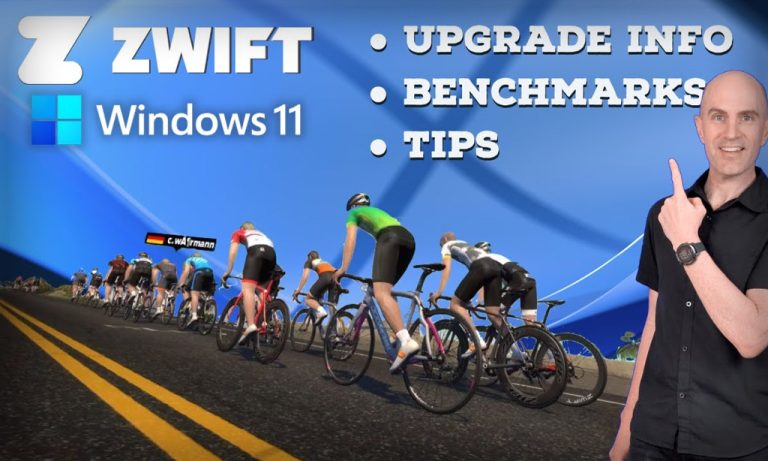
Our friend from down under Shane Miller (GPLama on YouTube) recently posted a video to help Windows-using Zwifters who may be considering upgrading to Windows 11. Shane says, “In this video I cover the upgrade process (fast-tracked), I perform a number of Zwift benchmarks, and show you how to move that start button back over to the LEFT!”
Shane’s average framerate didn’t change after upgrading to Windows 11 on both of his test machines.
He summarizes his findings thus: “I suspect if you have PC that the installation assistant passes all checks and tells you that you can go from Windows 10 to Windows 11, you’re unlikely to have any problems doing this upgrade.”
Questions or Comments?
Have you upgraded your Zwift machine to Windows 11 yet? How’s it performing, if so? Share your experiences below!
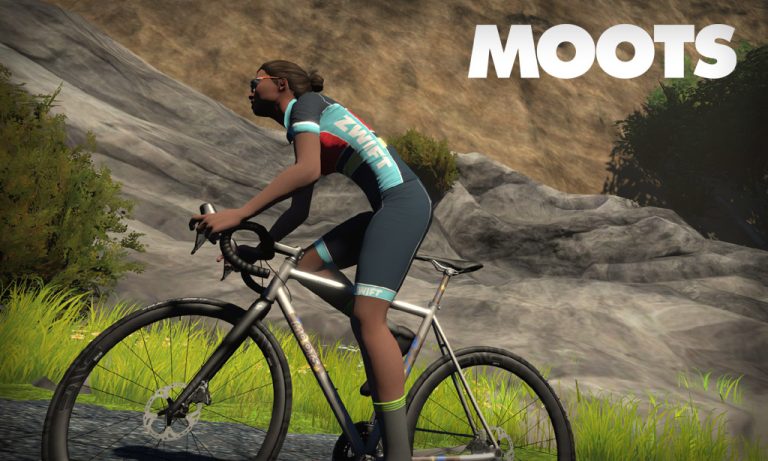
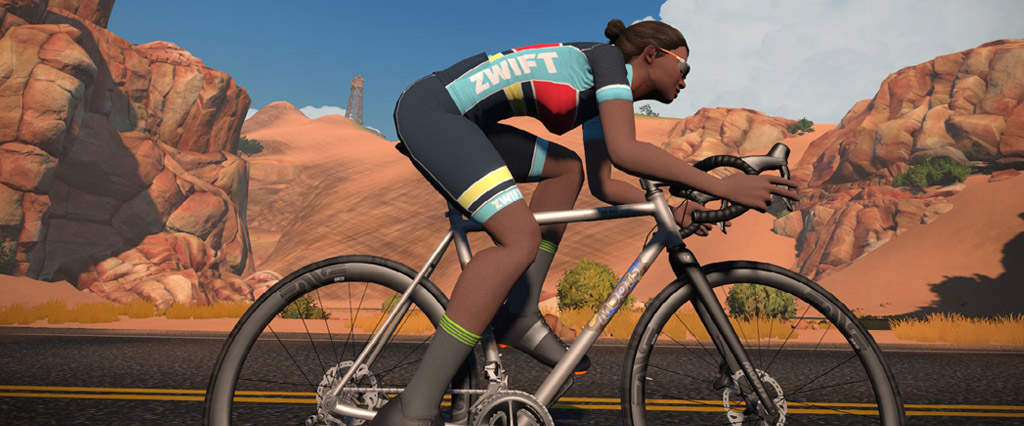
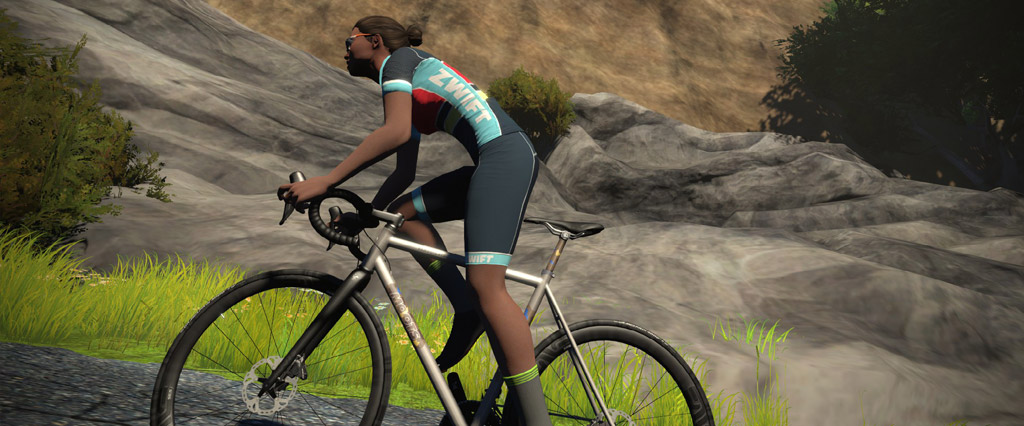
Zwift’s October update included the first-ever in game frame from Colorado-based Moots: the Vamoots. This is actually the “Vamoots RCS” to be precise – see details on the IRL frame here.
Here’s how the Vamoots is described in the Zwift Drop Shop:
“A modern road bike that is more capable with higher volume tire accommodation and handling characteristics that will always leave you with the desire to go just a bit further. The Vamoots RCS (Routt County Special) is something Moots has been dreaming up over the years, making this the perfect match for rides with changing surfaces. The RCS comes with a new model specific fork that allows this bike to perform best with 32mm tires. Newly designed fast back seat stays, updated 3D printed dropouts, and Moots’ double butted RSL tubeset make this a formidable performer that will soon become your favorite road bike.”
Moots makes all their frames from titanium, and this the first-ever titanium frame in Zwift. Cyclists know that titanium is sort of a wonder material in the world of bike frames: lighter than steel, stronger than aluminum, with a luxurious ride feel. (For many years, before carbon frame technology had evolved sufficiently, titanium was the way to go if you could afford it.) Will it make your Zwift sessions more comfortable? Probably not. But will you be just slightly cooler than all those riders on carbon frames? Probably.
This Vamoots is priced at 852,000 Drops and level-locked at 15. It is rated 2 stars for aero and 2 for weight on Zwift, so we figured its performance wouldn’t be terribly impressive.
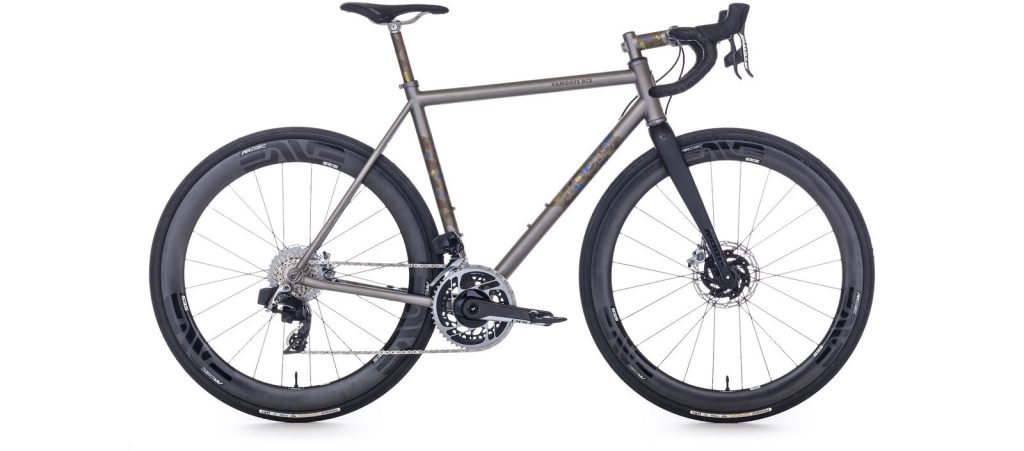
Moots Vamoots RCS, IRL
Of course, the only way to truly judge a frame’s performance in Zwift is to run it through some tests. So that’s just what we did! Here’s everything you need to know about the new Moots Vamoots frame in Zwift.
Aero (Flat/Rolling) Performance
The Vamoots turns in a rather slow time in our flat test, falling in between the Zwift Carbon and Zwift Safety’s times, placing itin the bottom 5% of all frames.
Its test time of 51:36.5 is just a half-second behind the Zwift Carbon, which is the default frame given to all Zwifters. By comparison, the fastest frame in Zwift (Cervelo S5 2020) turns in a time of 51:17.5 on our test course, which is two laps of Tempus Fugit, totaling 34.6km.
Climb Performance
Due to Zwift’s Dura-Ace 9200 bug (see “Still Not Fixed” note here), the Vamoots performs worse on climbs than it should. But even without the bug, the Vamoots is a poor climber! It currently ranks in the lower 4% for climbing.
Without the bug, the frame would climb around 19 seconds faster, which would only boost its percentile ranking up to around 5%.
The Vamoots turns in an Alpe climb time of 49:54. By comparison, the fastest climber in game (Specialized Aethos) completes the test is 48:50.
Note: all test results above are from a 75kg, 183cm rider holding 300W steady using Zwift’s stock 32mm carbon wheelset.
Conclusions
The new Moots Vamoots frame on Zwift performs quite poorly compared to the universe of available framesets. While Ti is super cool, you may want to avoid rocking this frame in Zwift races unless you’re willing to put out some extra watts to keep up with the pack.
The Vamoots’ numbers will be added to the following posts, and it can also be found on our Master Zwift Frames List:
Important note: this post contains speed test results for Zwift frames or wheels. These results may change over time, and a bike's performance relative to others may also change. We don't always revise posts when performance rankings change, but we do keep current, master versions of our speed test results which are always available. See the frame charts, wheel charts, and Tron vs Top Performers for current performance data.
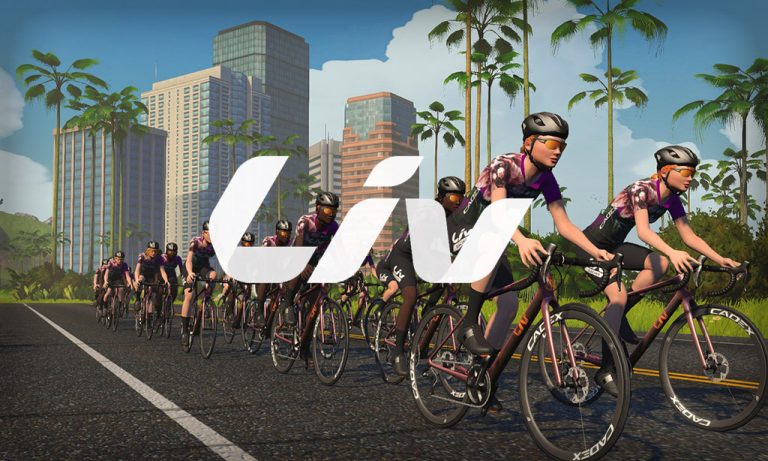
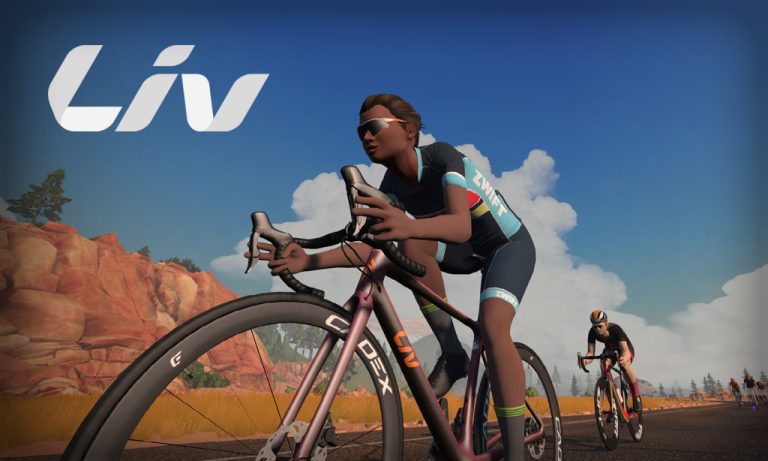
Liv recently launched an all-new Langma Disc bike range, and the new Liv Langma Advanced SL Disc just arrived in Zwift as well. To celebrate the new Langma they’ve rolled out a series of fun Zwift events beginning November 16th.
The podcast rides are 60 minutes long and feature podcast audio with special guests. They are available 5 times daily for 5 days apiece (see schedule and sign up at zwift.com/events/series/livseries):
Liv Party Podcast Ride 1: Zwift 101 with Ayesha McGowan and the new Liv Langma
Guests: Sophia Shih, Liv Engineer in charge of female cycling science and bike designs, including bike structure, specific parts and components, and geometric designs. Jen Audia, Liv Senior Global Product Marketing Specialist
Dates: November 30-December 4
Time-Based Sportive
This is the main event! Join Ayesha McGowen and give your all on one of Watopia’s newest routes, the Climber’s Gambit.
The event is on December 4th at 11am PST/2pm EST/7pm GMT.
IMPORTANT: this ride is structured isn’t like most Zwift races. For this event, your goal is to get as far as possible in 60 minutes. This is a drafting race, so you can sit in with other riders on flatter, faster sections – but the route goes up the Epic KOM, where drafting won’t help you!
Some riders will make it up and over the Epic KOM. Otherwise will finish somewhere mid-climb. Give it your best shot. As long as you try, you win!
Riders will get the unique opportunity to wear the Liv WorldTeam kit in-game during the events of this series. There’s nothing like this anywhere else!
Note: you don’t unlock the kit through these events – you simply get to wear it during the events.
Giveaway
Each event you finish in the series equals one more entry into a prize giveaway for a Liv bundle of branded items, including a Liv WorldTeam replica jersey.
(Pictured above: my first Zwift ride, then a ride at Zwift’s 2019 Eurobike booth almost 4 years later.)
Six years ago today I went for my first ride on Zwift.
It was my first winter after seriously returning to road cycling, and I was already dreading the roller sessions. At the time, none of my local riding buddies were using Zwift – I’m not sure any had even heard of it. But I saw it somewhere on Facebook, downloaded the game, ran it in “just watch” mode, and immediately knew I had to give it a try.
After a little research, I found a website in Germany selling Tacx Vortex Smart trainers for ~$290 to my door, and I pulled the trigger.
First Zwift session: November 12, 2015
The night my Vortex arrived I put it together, hooked my bike in, and went for my first Zwift ride from the middle of my living room. The trainer wasn’t calibrated, and I wasn’t dressed for a real ride… so that effort didn’t last long.
But two days later I went for my first “real” Zwift ride – two laps of Watopia’s Hilly Route (which was the only route on Watopia at the time). Uploading it to Strava certainly confused local friends. “Are you in the Solomon Islands right now?”
I wish I had been on Zwift from the beginning, but when Zwift beta launched in 2014 I was just returning to riding after an 18-year hiatus. So I never got to ride Jarvis. But what I have been a part of is special. So each year, I look back and deliver my perspective as a Zwifter and the editor of the web’s most popular Zwift fansite.
Covid Booster
Our all-time Peak Zwift of 49,114 came early this year, on January 19th to be exact. Much of the world was still in some form of Covid lockdown mode, and that coupled with the standard mid-January traffic highs resulted in a crazy peak.
With Covid lockdowns easing somewhat, it seems like traffic is down just a bit this November compared to 2020. But this isn’t unexpected. The good news for Zwift (and Zwifters, really) is that subscriber numbers are still quite high. Covid forced many cyclists who had never considered Zwift to buy a setup and start using it – and many of those riders got hooked.
It’s what I’ve said from the start – if you can get a rider on a decent Zwifting setup (smart trainer, big screen, etc) they’ll probably be hooked. It’s just too handy, and so much more engaging than other forms of indoor training.
Zwift Is Mainstream
I visited Sacramento recently and jumped into the weekly River Ride so I could pedal on some new roads. I saw one rider with a Zwift water bottle, so I asked, “Are you a Zwifter?” His answer was, “Yeah, but isn’t everybody nowadays?”
Huh. He’s not wrong. Zwift has been around now for over 7 years. It’s not a new thing. And it’s one of the biggest things that has happened to cycling in recent years. Perhaps the biggest thing (although the e-bike revolution might win that argument.)
Seasonal, Not Seasonal
While Zwift numbers still increase by 3x or more during the northern hemisphere’s winter months, the platform is increasingly seen as a year-round training tool.
It’s not just a bad weather antidote: it’s avoiding traffic. It’s confidence for elderly riders. It’s inspiration for anyone recuperating from injury. It is a supportive community you can access from wherever, whenever. And that’s powerful stuff.
Trainers: Stalled Progress
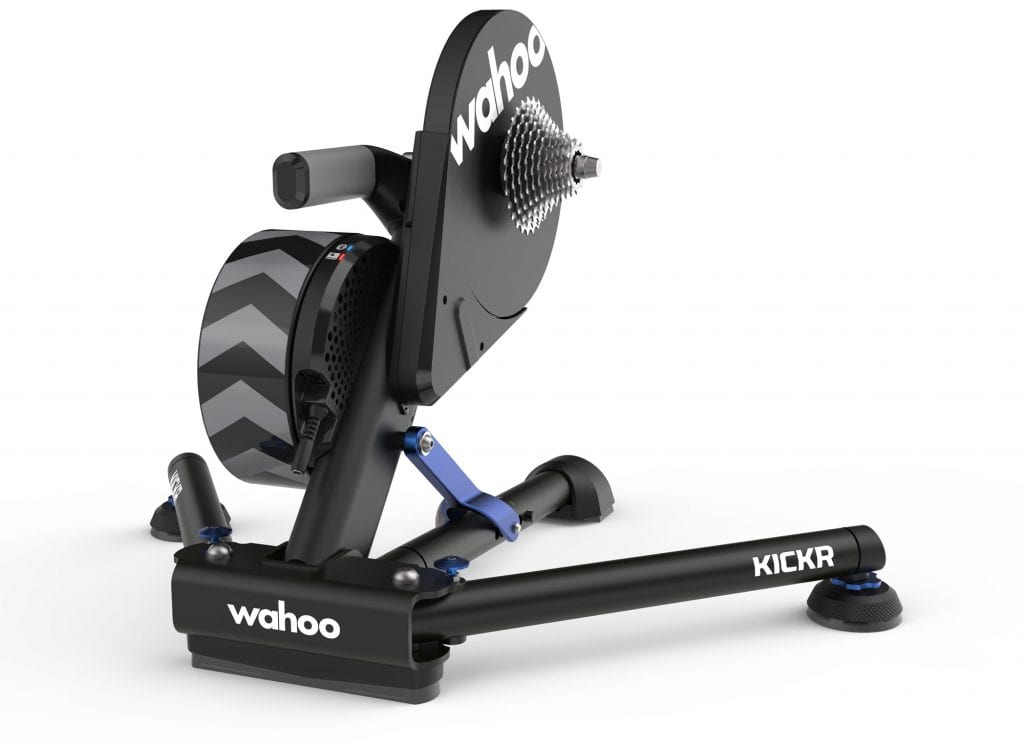
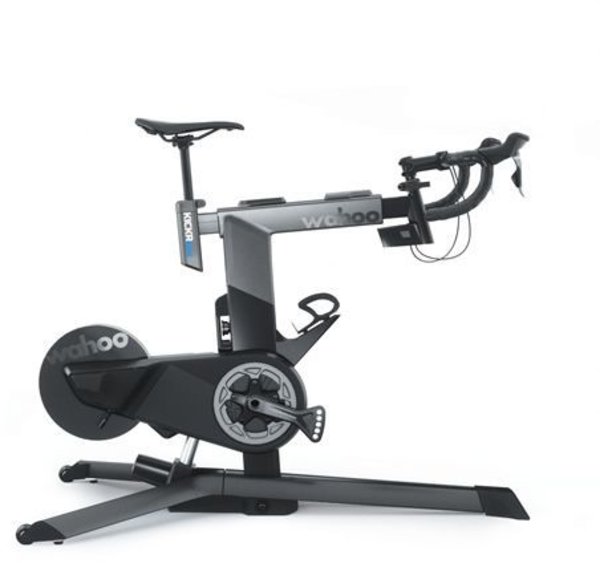
The KICKR, now in its 5th edition
If 2020 was the year nobody could find a smart trainer to buy, 2021 was the year nobody could find a reason to upgrade their trainer.
Availability today isn’t nearly the issue it was a year ago, but trainer tech just hasn’t advanced in the past year, either. Have we reached the place where trainers are as good as they’re going to get? I think in many ways we have – there isn’t much that needs upgrading on the Tacx Neo 2T or Wahoo KICKR v5, both very reliable trainers who both boast super-accurate power which needs no calibration.
Of course Saris, Elite, and Kinetic still have improvements that could be made to their top-tier trainers. Hopefully we’ll see those hit the market soon.
And even though the trainer market seems fairly stable and well-supplied, Zwift is working on their own hardware – probably a smart bike and smart trainer. (Progress has been admittedly slow on this front, to nobody’s surprise.) When will Zwift hardware be released? And will it be amazing enough in terms of features and/or affordable enough in terms of price to compete with what’s already on the market?
KICKR Bike
Smart Bikes Have Arrived
We’re seeing more and more Zwifters on smart bikes as time goes on. My guess is, people are looking to upgrade their Zwift bike and/or trainer after one or more seasons of wear and tear, and they decide it makes sense to just purchase a dedicated setup.
It’s not a bad option for many. Smart bikes are easily adjustable for multiple riders, and having one in place means you don’t have to pop your bike on and off the trainer if you’re a single-bike owner. Once you’ve got an always-available Zwift setup, it’s really hard to go back.
Today’s short list of smart bikes seems to perform quite nicely. The Wahoo KICKR Bike is the undisputed king of the jungle, but the StagesBike SB20 is a rock-solid performer and the Tacx Neo Bike also gets high reviews.
Rocker Plates Are Normalized
This year has seen rocker plates go mainstream, and that puts a smile on my face. I’m a big fan of rocker plates, having used various models since my second year on Zwift.
Rock on, I say. A properly set up rocker plate makes Zwifting much more comfortable, and provides for more realistic out of the saddle movement as well. Here’s a quick demo video I made for a recent review published of the Velocity Rocker plate:
Racing Matures (But Still Needs to Grow Up)
The Zwift Racing League managed by WTRL has continued to grow, pulling in over 10,000 riders in the current 4th season compared to 6,000 in last year’s first season. Race by race, week by week, WTRL has firmed up rulesets, improved backend systems, and made the overall experience better for racers. If you’re only going to participate in one Zwift race each week, ZRL is it.
On top of this, you have the ZRL Premier Division hosting weekly races of the world’s top esports teams. This is managed by Zwift , broadcast on GCN, and governed by its esports ruleset which continues to be fine-tuned. And once again, the UCI is working with Zwift to host the ESports World Championships in February 2022.
That said, it feels as though Zwift has essentially outsourced all things community racing to WTRL. We aren’t seeing ZwiftPower improvements, nor are we seeing further evolution of the early anti-sandbagging controls. Community race organizers who lack the backend power, funding, and API access of WTRL are still stuck dealing with the same challenge they’ve had for years: that any rider can sign up for any category and blow apart any race, with zero consequence.
It’s really not a hard problem to fix, and I think Zwift owes it to community organizers to get it done.
Stronger Competitors
Zwift had very few direct competitors in its early years, but the crush of riders seeking indoor fitness options has definitely led to both growth and consolidation in this niche market.
This year Wahoo purchased and rebranded Sufferfest, and Ironman purchased FulGaz to create their own virtual platform. TrainerRoad has continued to evolve their offering, still considered best-in-class by many for its huge library of quality training programs.
RGT, though, is the platform competing most directly with Zwift in terms of racing and group rides. Their smaller team can be more nimble than Zwift, and they have the advantage of being able to see Zwift’s missteps and offer solutions like updated physics and in-game jerseys that make disgruntled Zwifters happy. Will RGT take a meaningful chunk of Zwift’s business? Time will tell. But on the community side, we can be sure of one thing: competition is good, since it helps keep Zwift on their toes.
So Many Rides, So Little Time
There was no in-game event calendar six years ago, and today there are literally several hundred events per day on Zwift’s calendar. Amazing!
After looking at usage data, Zwift evolved the way they schedule events this year, running popular events like Zwift Academy workouts every hour instead of more intermittently. According to Zwift this leads to more overall participation, and that’s great! But it also led to an even more crowded calendar. I’d really like to see Zwift improve its event filtering tools so I can easily find what I’m looking for.
Zwift also knows they need to start doing some culling of unpopular events. Many riders are using Pace Partners instead of joining group rides, and it seems silly to have so many events on the calendar when some only get 10-20 participants. This may not be much of an issue in the next few months, but when traffic begins to dip again around April, I think we’ll see some events removed from the calendar.
Virtual + Meatspace
When I joined Zwift six years ago, I never would have guessed that I would fly halfway around the world to hang out with people I only knew through a virtual cycling platform.
And yet, that’s what I’ve done. Several times!
Because of Zwift I’ve taken trips to Germany (Eurobike!), the UK, Spain, Southern California, and New York City. And once covid craziness settles down a bit, Monica and I are looking forward to heading across the pond once again.
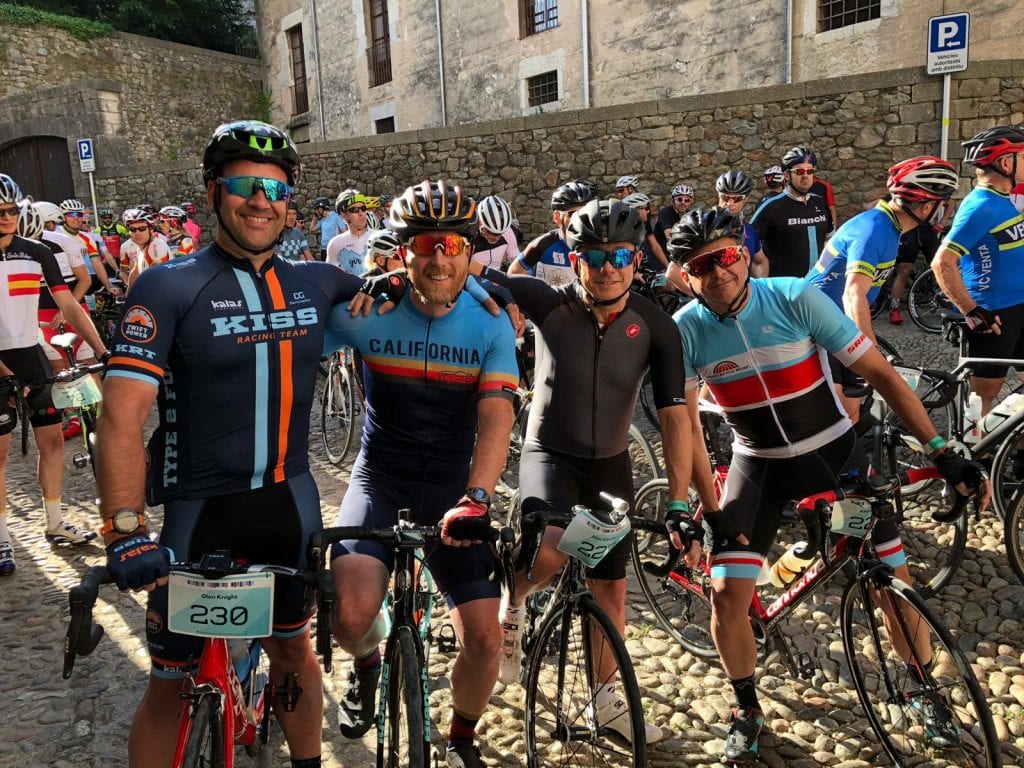
(left to right) Zwifters Glen Knight, myself, Al Clewley, and Kerry Smith riding the Girona Gran Fondo, June 2019
It may have begun with a virtual spin session, but the relationships I’ve built through Zwift have become real, personal, and valuable. And I know many Zwifters who would say the same.
The Future Is Bright
It’s not hyperbole to say my involvement with the Zwift community has been life-changing. It’s changed my fitness, it’s changed my work life – it’s even changed my vacation plans! And I’m loving every minute of it.
This winter is going to be a busy one for sure, but I’m looking forward to it. Zwift has some big feature rollouts planned in the coming months, and I can’t wait to watch as the platform continues to evolve.
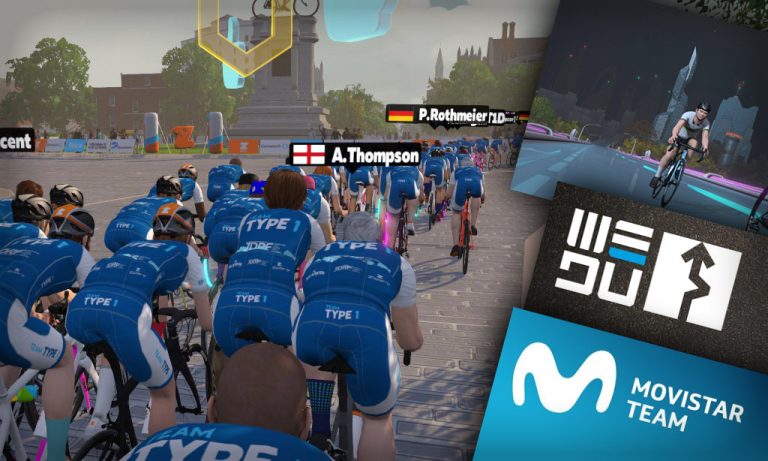
A nice mix of favorite events this weekend: ride for a cause, race into World Championships qualifying, suffer with WEDU, or spin with the Movistar team.
World Diabetes Day with Team Type 1
Team Type 1 on Zwift is commemorating World Diabetes Day this Sunday by organizing a set of events including a 24-hour relay and vEveresting Challenge.
Other teams on Zwift have chosen to honor World Diabetes Day and Team Type 1 by riding in Team Type 1’s kit for their scheduled events on Sunday – see the “Other Teams Supporting WDD” tab on the planning spreadsheet for a list of these rides.
Continental Open Qualifiers to UCI 2022 Cycling Esports World Championships
As reported last month, the Union Cycliste Internationale (UCI) has confirmed that Zwift will host the 2022 UCI Cycling Esports World Championships on February 26, 2022. While most of the riders in that race will be selected by their national governing bodies, Zwift is also holding 5 Continental Qualifiers (Oceania, Asia, Europe, Africa, Pan America). And the top 5 men and 5 women finishers in each of these events will get to take to the start line in the 2022 UCI Cycling Esports World Championships!
But not just anyone can race in the Continental Qualifiers. You must first qualify for the qualifier – and that’s what this weekend’s events are for! This weekend and next, pre-qualified riders can take part in these qualifying races in order to attempt to qualify for the World Championships.
Got that? You’ve got to be pre-qualified so you can race in the qualifier that gets you into the qualifier. Sort of. Or take a shortcut by being an A racer in the Zwift Racing League.
If you fancy a climbing challenge, there is nothing better than undertaking the Four Horsemen route. I rode the route last week with the 3R Endurance Academy and it is tough but also very rewarding and fun.
The WEDŪ leaders and participants aim to finish all 4 climbs in under 2.5 hours, and plan to ride as a group to take advantage of the double draft to the base of the final climb. The leader beacon will be at 2.5 w/kg on flats and 3.5 w/kg for the first 3 climbs.
If you haven’t got your Four Horsemen badge then a group ride is certainly a fun way to achieve it.
Amazing! I just found out about a major sporting event that is just down the road from me… via Zwift!
On Sunday in Sevilla, Spain, MARCA (a Spanish sports store) is hosting events that feature global sports figures. The Movistar Team and its esports branch, the Movistar eTeam, will be hosting a Zwift Social Ride as part of this even
As this is a Sporting festival in Sevilla, I have reached out to find out if they are having a few bikes in Seville connected up, like how the Pros warm-up / down after their events on their turbos, or if this is just taking place virtually. If they are there, I will stop by for sure.
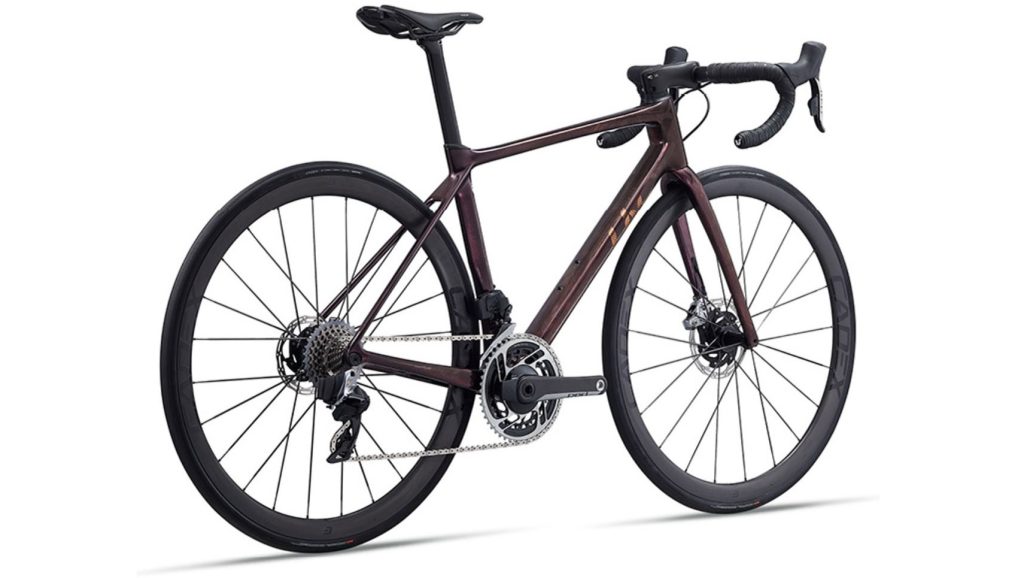
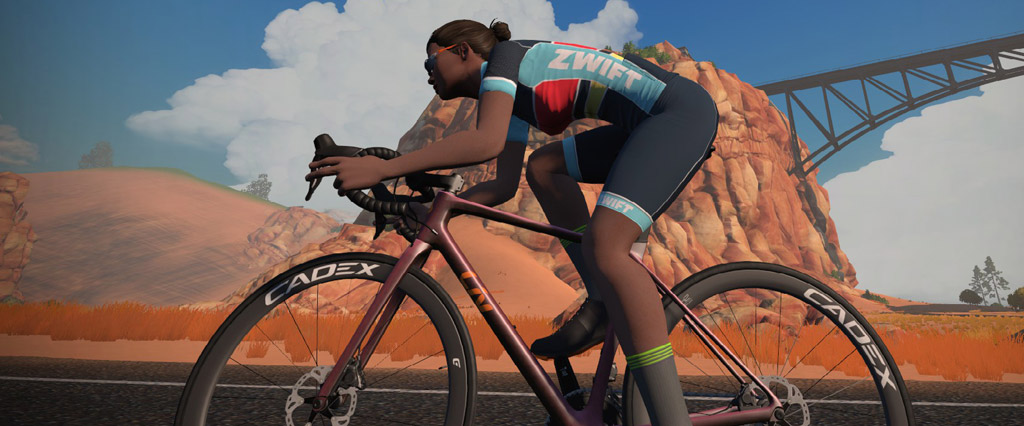
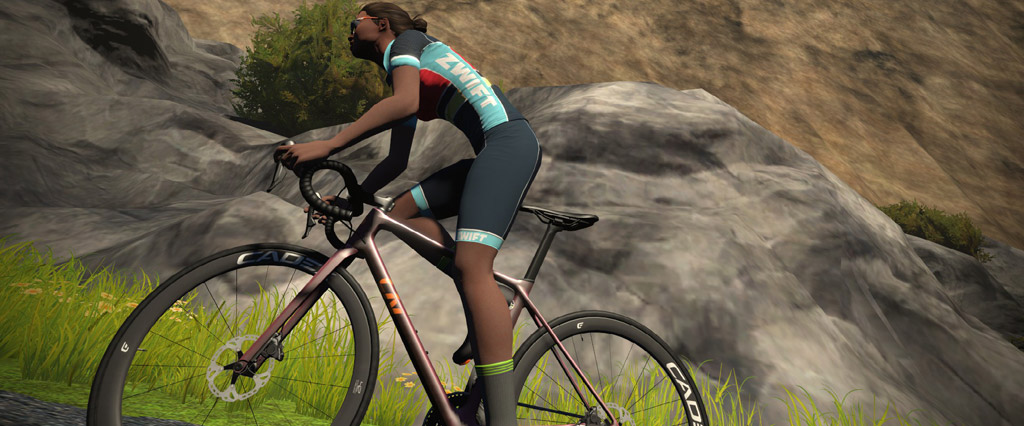
Zwift’s October update included a fresh bike frame from Liv: the Langma SL Advanced Disc.
Here’s how the new Langma is described in the Zwift Drop Shop:
“The all-new Langma Advanced SL Disc is redesigned to be lighter, stiffer, and ready to throw down on race day. The heart of the Langma is an ultra-light Advanced SL-Grade Composite frameset which has been rebuilt with longer, more continuous pieces of carbon fiber for a lighter, stiffer bike. A re-engineered fork offers 50% more lateral stiffness, for precise handling and responsiveness. And an oversized headset and all-new Liv Contact SLR handlebar boost control without sacrificing aerodynamics.”
The frame is rated 3 stars for aero and 3 for weight on Zwift, so we figured it would outperform the older (and confusingly-named) Liv Langma SL Advanced frame in Zwift, which is only rated at 2 stars for aero. This new Langma is priced and level-locked identically to the old Langma, at 745,500 Drops and level 22.
The Liv Langma Advanced SL Disc, IRL
While the new Langma is supposed to be lighter than the old one IRL, and Zwift’s star ratings indicate that it should be more aero, we’ve learned that actual testing of Zwift frames is the only way to judge their performance in game. So we ran this frame through our standard tests to learn how it performs. Here’s everything you need to know about the new Liv Langma SL Advanced frame in Zwift!
Aero (Flat/Rolling) Performance
The new Langma turns in a flat test time matching several in-game frames which are mid-pack performers. This places it right around the 50th percentile in terms of aero performance.
Its test time of 51:32 is 2 seconds faster than the older Langma in game (the Advanced SL). By comparison, the fastest frame in Zwift (Cervelo S5 2020) turns in a time of 51:17.5 on our test course, which is two laps of Tempus Fugit, totaling 34.6km.
Climb Performance
Due to Zwift’s Dura-Ace 9200 bug (see “Still Not Fixed” note here), the new Langma performs worse on climbs than it does on flats, ranking in the lower 20th percentile overall. This is unfortunate, since it reflects poorly on the frame even though the frame itself is designed to climb decently well. (IRL, the new Langma is 60 grams lighter than the old one, according to Liv.)
Without the bug, the frame would rank around the 66th percentile, by our estimation.
The new Langma turns in an Alpe climb time of 49:24. By comparison, the fastest climber in game (Specialized Aethos) completes the test is 48:50. Without the Dura-Ace 9200 bug, the new Langma’s climb time would match the older Langma’s (49:05.5), or perhaps even beat it by half a second.
Note: all test results above are from a 75kg, 183cm rider holding 300W steady using Zwift’s stock 32mm carbon wheelset.
Conclusions
The new Liv Langma SL Advanced Disc frame on Zwift isn’t a standout in terms of flat or climbing performance. In fact, due to the Dura-Ace 9200 bug, it’s a very poor performer on climbs.
The new Langma’s numbers will be added to the following posts, and it can also be found on our Master Zwift Frames List:
Important note: this post contains speed test results for Zwift frames or wheels. These results may change over time, and a bike's performance relative to others may also change. We don't always revise posts when performance rankings change, but we do keep current, master versions of our speed test results which are always available. See the frame charts, wheel charts, and Tron vs Top Performers for current performance data.
The sixth and final points race of the regular Zwift Racing League 2021/22 Season 1 happens Tuesday, November 16nd (Monday the 15th for Premier Division racers). And it’s the Queen Stage, really, since it features the longest climb of the season tackled multiple times!
The race takes place on Makuri Islands’ Countryside Tour route, a first for ZRL. With a significant dirt section, this is also the only route of the season that has racers wondering if they should swap bikes mid-race. But more on that later…
Let’s dig into the course, including tips for bike choice/swaps, strategic options, and the crucial pinch points where riders will get dropped each and every lap.
Looking at the Route: Makuri Islands’ Countryside Tour
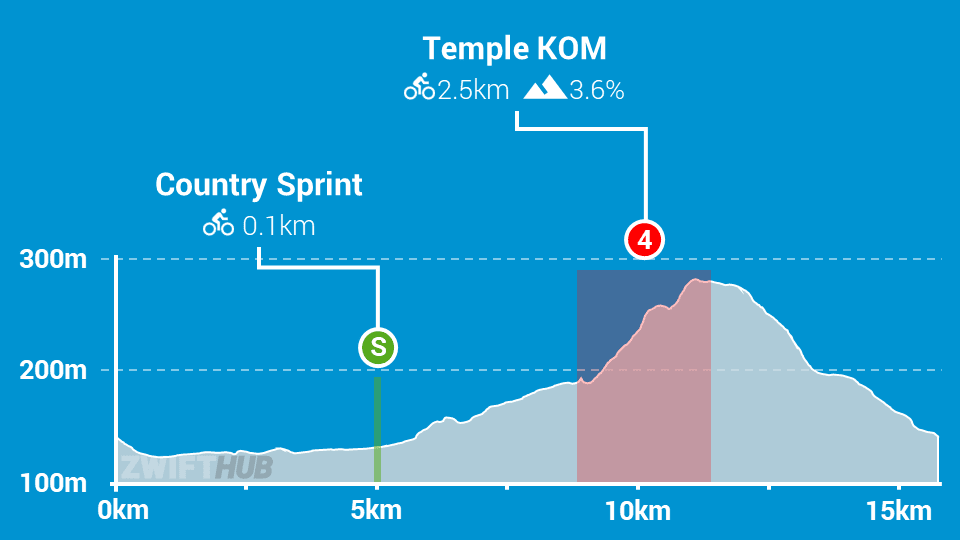
One lap of this route is 15.8km (9.8 miles) long, with 185m (607′) of climbing. A/B categories will race 2-2/3 laps (43.2km), making it a decently long hour+ effort similar to the last few races points races. C/D will only be racing 1-2/3 laps (27.4km).
The race begins at the “main” Yumezi start pens near the lap start/finish banner. This is a downhill start, so riders will get up to speed quickly as we descend to the farmland flats. Hit the watts quickly to get up to speed, but don’t overpower it as you go through the lap banner and grab your first powerup.
The first 5km would normally be quite docile, as there’s no real benefit to pushing the pace yet – but roadies may be pushing to drop riders on gravel bikes. Near the 5km mark things will get spicey as the group hits its first points intermediate, the Country Sprint. Look for all 10 FTS times to be set here on the first lap, when legs are freshest and the group is largest.
After the Country Sprint the road tilts upward as we climb into Village Onsen and beyond. This is where any riders who chose to start with a gravel bike will really begin to regret their decision, as the overall effort required to hang onto the pack will increase. And this is where the first selection of the day will happen, as the pack strings out over the draggy climb. (That said, we don’t expect riders to push too hard here, as the big selection point is just up the road.)
After this long, draggy climb up to the Fishing Village we hang a left onto the route’s main pinch point – the Temple KOM.
At 2.5km and 3.6% average gradient it may not seem daunting, but since it’s mostly dirt it’s extra slow. It’s also not consistent in its gradient, so be mindful of your power in order to keep your speed as high as possible.
If you’re wondering, “Should I swap bikes to a gravel or MTB setup for this section?” – that’s a great question. We’ll discuss that more below…
Once you ride through the KOM banner in the giant mystical tree it’s a twisty dirt descent back to the pavement of the Castle/Marketplace area, then more descending to the lap start/finish line. Then you get to do it all over again!
A Note About Finish Lines
This race uses a custom finish line, which Zwift has historically not been good at placing accurately (see the Casse-Pattes race earlier in the season).
So we asked, and ZwiftHQ has assured us that this week’s finish lines will be accurately placed directly at the KOM banner on the third lap (for A/B) and second lap (for C/D). Still, it wouldn’t hurt to check recordings of earlier races to see where that line ends up. That’s what we’ll be doing!
Riders will be awarded powerups through each segment banner, meaning we’ll get 3 powerups per full lap for a total of 8 powerups for A/B and 5 for C/D. Three powerups will be randomly given out at each banner:
Steamroller: reduces Crr for 30 seconds so you roll as fast as a road tire on pavement regardless of wheels or road surface. Best used on dirt, although it also helps you a bit on other non-paved roads. Definitely helpful on this route’s dirt climb. Curious about how rolling resistance (Crr) works on Zwift? Read this post.
Draft Boost (van): increases the draft effect you are experiencing by 50% for 30 seconds. Use at higher speeds (flats and descents) when you are already drafting off another rider (since this powerup only helps when you are drafting.) Very handy to increase recovery in high-speed sections.
Lightweight (feather): reduces your weight by 10% for 15 seconds. Use on climbs, when weight matters the most. The steeper the road, the more this helps.
Bike Frame + Wheel Choice
The Tron bike is a solid pick for this route – but it really depends on what you’re targeting. Is it sprint points, or finish position?
Sprinters may want to go with the super-fast Cervelo + Disc option, while climbers may want a more lightweight setup for that crucial final KOM. The Tron is a good all-arounder.
See Tron vs Top Performers for a look at the relative performance of various bikes and wheelsets.
To Swap or Not to Swap?
This is the only race of season 4 where swapping bikes to gain an advantage may be a good idea. Zwift has different road surfaces (including pavement and dirt) that have different rolling resistance depending on the bike you use. And the key KOM segment of this race is dirt!
It takes several seconds to swap bikes in Zwift (here’s how to do it quickly), so you have to weigh the advantage gained from a new bike with the cost of stopping for a bike swap.
We ran a pile of tests just for this post. They include the Canyon Grail and Cervelo Aspero gravel bikes, plus the Trek Supercaliber mountain bike. Here are the hard numbers:
KOM Climb Times
This shows how long it took four popular setups to ascend the Temple KOM from the Fishing Village side. These were 75kg riders holding steady power.
Bike + Wheelset
Power
Time
Zwift Concept (Tron)
300W
7:37
Canyon Grail
300W
7:11
Cervelo Aspero
300W
7:12
Trek Supercaliber
300W
7:12
Zwift Concept (Tron)
375W
6:22
Canyon Grail
375W
6:02
Cervelo Aspero
375W
6:03
Trek Supercaliber
375W
6:03
As you can see, the gravel and MTB both cut 25-26 seconds off of the climb time at 300W (4 w/kg), and 19-20 seconds off at 375W (5 w/kg).
KOM Descent Times
This shows how long it took four popular setups to descend the Temple KOM toward the Castle. These were 75kg riders holding steady power.
Bike + Wheelset
Power
Time
Zwift Concept (Tron)
300W
2:24
Canyon Grail
300W
2:22
Cervelo Aspero
300W
2:22
Trek Supercaliber
300W
2:20
Zwift Concept (Tron)
375W
2:14
Canyon Grail
375W
2:14
Cervelo Aspero
375W
2:14
Trek Supercaliber
375W
2:12
As you can see, the MTB descends fastest. But on a descent where most riders will be looking to recover, we don’t see this time advantage as being terribly important.
Power Required to Sit In on Flat Paved Sections
Some riders will be asking if it makes sense to just stay on a gravel or MTB setup for the entire circuit instead of swapping. To test the wisdom of this approach, we had two riders holding constant power on a basic road race setup (Zwift Aero + Zipp 808 wheels), then we rode behind these riders with the lowest wattage possible to remain in their draft.
This simulates sitting in during a race, where other riders are poking their nose into the wind and pushing the pace while you simply ride smart. This is what you’ll be doing on the paved sections of the course if you choose a gravel or MTB, because (as you’ll see below) it’s plenty of work just sitting in the draft!
Drafting Bike + Wheelset
Riders Pulling At
Minimum Wattage Required To Sit In
Zwift Aero + 808
300W
236W
Canyon Grail
300W
260W
Trek Supercaliber
300W
300W
Zwift Aero + 808
375W
272W
Canyon Grail
375W
320W
Trek Supercaliber
375W
375W
Two riders pulling at 300W resulted in a pack speed of around 42kph, while riders pulling at 375 results in a speed just above 45kph. So 300W is comparable to a C/D race, while 375W is comparable to a B/A race.
As you can see, the extra wattage needed to sit in on a gravel bike is significant (24W at 42kph, and 56W at 45kph). And the extra wattage needed to sit it on a MTB is a bit silly – 74W at 42kph and 103W at 45kph.
Do you have the power to sit in on a gravel bike so you don’t have to swap heading into the KOM? Some riders near the very top of their categories may be able to do it, but we’re not convinced their legs will be fresh for the key KOM once they arrive. Read more about bike swapping in the “Strategic Options” section below.
More Route Recon
Plenty of rides are now being consistently planned each weekend on the upcoming ZRL route, which is quite handy. If you’re not familiar with this course, consider jumping into another event to do some recon! Here’s a complete list of upcoming Countryside Tour events.
Zwift’s vibrant race community continues to up its game when it comes to course knowledge and recon videos. Here are our two favorite recon videos this week:
Si Bradeley
Sherpa Dave
Strategic Options
This week is the most complex one of the season in terms of strategic options for teams. You’ve got a sprint segment, a KOM segment, powerups, and varying road surfaces to consider. With all of those factors in mind, here’s our take on what you’ll see in the race:
Final KOM Bike Swaps: this is the approach that makes the most sense to us. Try to hold your best pack position until the final climb, then swap to a gravel or MTB for that last big effort. If you switch quickly it should shave 5-10 seconds off your final climb. You just have decide: do you swap before the KOM start line so you can go for FTS, or do you swap after it, once the climb begins, for a slightly faster overall time?
Climbers On Gravel Bikes at the Start: some climbers will attempt to sit in on gravel bikes so they can go all-in for FTS/FAL points on the first KOM. The question is, will the roadies let them get away with this cheeky move?
KOM Swap: some riders may attempt to swap just before the KOM, then hammer the climb and swap back at the top after crossing the line. The time it takes to swap will basically eat up any overall time gains you may make, but it will reduce your climb time (see numbers above). This is a tricky strategy, because if you lose the group draft, you’re out of the race in terms of finishing position. But it’s a smart strategy if you’re only going for FTS times on the KOM.
Sprinters Going All-In on Lap 1: the first lap will be the sprinters’ lap for sure, so watch for a battle the first time through.
Clawing It Back: with a long descent followed by a flat section after the climb, riders who get off the front on the KOM in a small pack may very well be brought back by larger groups of wattage workhorses thirsty for those sprint FAL points. Teams will need to communicate well to decide if they want to work to bring things back together, or keep things apart.
Playing It Straight: most riders won’t swap bikes at all – perhaps because they’re on AppleTV and it takes too long, or because they don’t realize it’s an option, or because they think it’s silly. And that’s fine. You do you.
Watch the Premier Division Race
Zwift’s top racers will take on 2-2/3 laps of Countryside Tour Monday. Here’s the stream:
Your Thoughts
Any insights or further thoughts on the last big race of season 4? Share below!
Kat Matthews sits down with Matt Lieto and Sarah True to discuss both her occupations: her young triathlon career and her military career.
About the Podcast
The Zwift PowerUp Tri Podcast is hosted by former pro triathlete Matt Lieto and Zwift Academy Tri mentor Sarah True. Both are passionate about lending their in-depth knowledge of the multisport to the Zwift Tri audience.
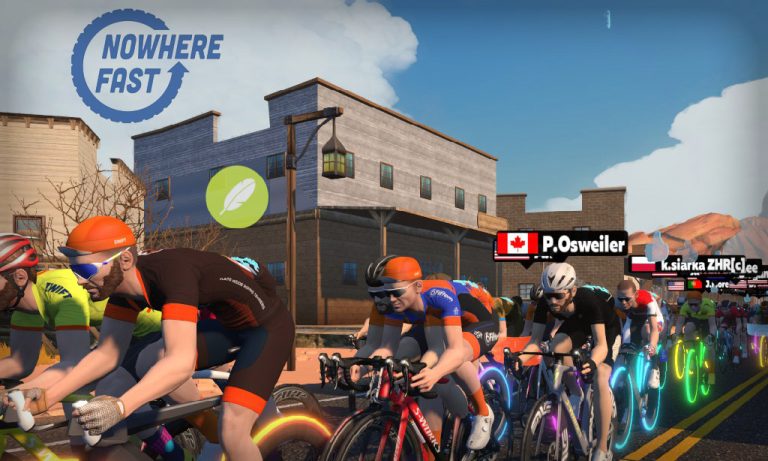
A Glitch in the Zwift Matrix (Nowhere Fast Episode 24)
Hosts Mike Swart, Zach Schuster, and Kevin Bouchard-Hall catch up on what happened at the end of summer. Mike is restarting his Zwift racing with his own 30 races in 30 days and KBH has a string wonky outdoor races.
They say déjà vu is the sign that something in the matrix has been altered and although we end up complaining a bit about wanting more race support, the true glitch was in the pairing screen. KBH takes the red pill and blows up the Alpe KOM and we discuss how ludicrous it is.
We finish up the episode discussing Mike’s race experience with his “race every day” plan. What are some features we would like to see to improve that experience?
About the Podcast
Nowhere Fast is a part of the Wide Angle Podium network and focuses on virtual bike racing. It includes Zwift commentary, interviews, and coverage of real races on fake bikes. Get it on Apple Podcasts, Podbean, Spotify, or anywhere else fine podcasts are shared.