Tiny Race Series – Results and November 12 Routes (Urukazi week!)
This week’s Tiny Races are planned for the new Urukazi map on Zwift’s Makuri Islands world. It’s going to get a little wild as we race unfamiliar roads. Those who do a bit of recon may be rewarded!
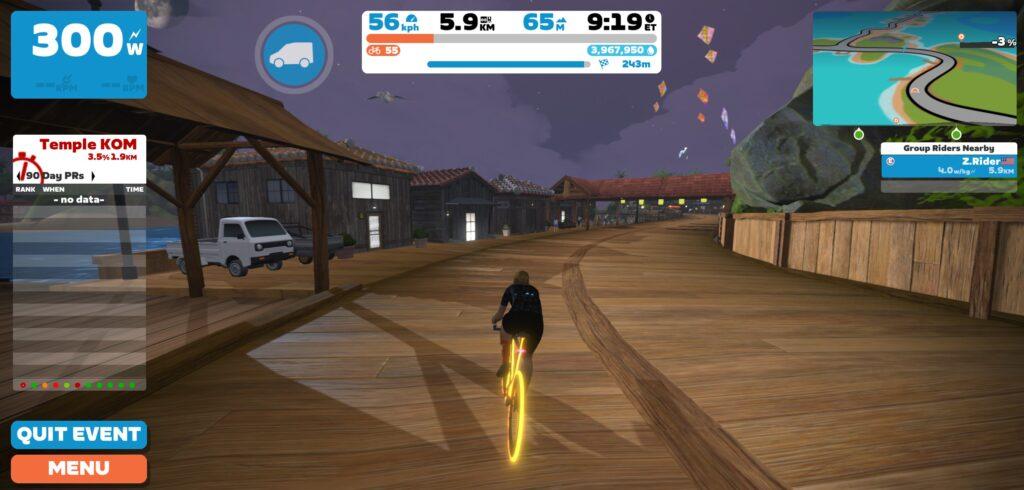
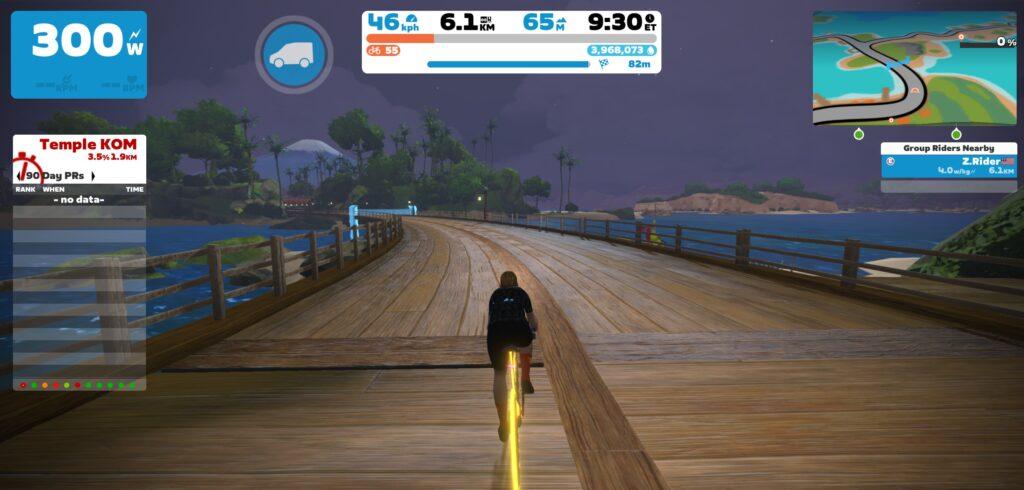
All four races this Saturday will be held on new routes in Zwift’s new Urukazi map! Here are shots of some of the finish lines, so you know what to expect:
Bridges and Boardwalks finishApproaching Island Outskirts finishIsland Outskirts finishApproaching Island Hopper finishIsland Hopper finish
Race 1: Bridges and Boardwalks (~5.051km, ends at Shisa Sprint) Ride over to the Boardwalk Sprint to pick up your feather, then wind your way up to Urukazi’s highest post – the Shisa Sprint bridge – for the big finish!
Powerup: Feather
Race 2: Mech Isle Loop (1 Lap, 4km) The shortest Makuri Island route makes for a great short race with its climb section and mixture of dirt and paved roads. What bike will you use?
Powerup: none
Race 3: Island Outskirts (6.2km, end on boardwalk after descent) Race from Mech Isle up the other side of the Shisa Sprint climb, but this time we’ll descend back down to the boardwalk for the final sprint. Timing is everything – when will you use the anvil?
Powerup: Anvil
Race 4: Island Hopper (7.35km, end on bridge atop Mech Isle climb) We’ve put our longest race of the day last, just in case the D’s need a bit more time. This one ends at the bridge atop the Mech Isle Loop climb.
Zwift displays preliminary race results in game when you cross the line, but points are computed after all four races are finished, with final results on ZwiftPower. (We have to do some data processing on our side to compute results, so if your rankings don’t show up right away, just be patient.)
Riders will earn points based on finish position in each of the 4 Tiny Races. The category winner of each week’s series is the rider with the most points across their timezone’s 4 races. Here are the links for each timezone’s results on ZwiftPower:
Tiny Race rules are simple. Four races, four rules:
You must have a ZwiftPower account, because final results are processed by ZwiftPower (learn how to sign up)
No skipping then returning. These races are meant to be raced as a set of 4. If you need to leave early, that’s fine… but once you miss a race in your hour’s set of 4, don’t come back and race another or you’ll be disqualified from that race since you rested while others were racing! (Example: racing only races 1 and 2 is fine. Racing 1, 2, and 4 is not.)
Heart rate monitors are required for podium finishers
ZPower/Virtual power is not allowed. Smart trainer/smart bike or power meter required.
Join a Chat & Chill Cooldown
Immediately following each hour’s racing, we’ve scheduled 30-minute “Chat & Chill” events where riders from all categories can spin out their legs together and have some fun chatting about how it all went down. Find them at zwift.com/events/tag/tinyraces.
This week’s Top 5 Zwift Videos can teach you about the new HoloReplay feature, the lawsuit Wahoo filed against Zwift, and how to do a ramp test. You’ll also hear from two Zwift Academy Road participants about their experiences this year – both good and bad.
ZWIFT ‘HoloReplay’ Ghost Riders: Race Yourself // Pace Yourself!
Shane Miller (GPLama) introduces the new HoloReplay feature on Zwift, which lets you race “ghosts” of your previous and best times on segments.
Wahoo vs Zwift Lawsuit Over Smart Trainer Patent Infringement
Confused about Wahoo’s patent infringement lawsuit over the Zwift Hub smart trainer? Tariq Ali of SMART Bike Trainers breaks down the basics and the history behind it.
DID IT WORK??? Zwift Academy (2022) | Finish Line Ride
Eric Barfell does his Zwift Academy Road finish line ride.
FAILED ACADEMY? Zwift Bashing or Fair Criticism?
Everything Is Photogenic reflects on Zwift Academy Road and gives her opinions on what worked and what didn’t.
How to Measure Your FTP on Zwift – Ramp Test Overview
If you’re coming back indoors for the winter, it’s a good idea to test your FTP before starting a training plan or entering a race. Here, Caedmon Cycling explains how to take a ramp test on Zwift.
Got a Great Zwift Video?
Share the link below and we may feature it in an upcoming post!
Editor’s note: here at Zwift Insider we’ve been reaching out to women’s Grand Prix teams, inviting them to write race recaps for each round. This week we’re featuring Team Saris | NoPinz, with an article written by Saris NoPinz racer Anna Russell. Enjoy!
Zwift Grand Prix Round 3, the Squad Skirmish, was probably one of the most innovative and different styles of Zwift racing that we have experienced so far.
The first round of the day was the Qualifier events, which involved 3 races all done multiple times, let’s call them the ‘sprint’ stage (300m all out from banner), the ‘flat stage (2.2km along Fuego Flats), and the ‘climb’ stage (straight up Watopia KQOM).
There was a lot of back and forth amongst our team as to who would be best placed where. We don’t have an absolute sprint specialist so unfortunately for Jenn Real, also the Team Manager and DS, she drew the short straw and took on the sprint stages. Morgan Uceny, our Olympic 1500m runner, and Eleanor Wiseman, freshly returned from her pro racing season IRL in Europe, took on the flat Fuego stage. Liz van Houweling, the recently announced Zwift Academy finalist, and I (Anna) challenged ourselves to the climb.
JennMorganEleanorLizAnna
As a racer this format can be really anxiety-inducing as you have to sit through so many of your teammates’ races before it is your turn. The nerves tend to build up and build up and that definitely impacted our first set of races in Round One. We were sitting outside of the Top 5 necessary to make it through to Round Two and we really needed to rally to haul in some points in the second part.
Eleanor and Morgan threw caution to the wind and under Jenn’s guidance performed a hail-mary attack off the front. Morgan managed to sit in the pack while Eleanor pushed pace off the front, keeping her fresh enough to smash it for a 2nd place and some valuable points.
It all came down to Liz and I in the last race: if Liz could get top 3 again and if I could get top 8 then we’d have a shot at making it through. I felt significantly more relaxed the second time around and we actually managed to pull it off! Liz came through in 2nd and I came in 8th, securing just enough (1 point over Movistar!) to make it to the Finals. I was happy… my quads not so much!
Finals
We were into the Finals, where only the top 5 teams got to race. This meant very small race fields and huge opportunities for breakaway efforts!
Eleanor tried a breakaway in the first race but unfortunately got swamped on the line with some very quick sprinters (love her brave racing style though, a great one to watch). Jenn and I hit the Volcano which again ended in a sprint. Then it was up to our power hitters Morgan and Liz to showcase their skills through and up Titans Grove. Unfortunately, a break went away up the road and they just couldn’t quite get on it in time. Points were gathered but we ended up 5th on the day… and 5th overall heading into Round 4.
Thoughts on Round 3
Honest thoughts on the Squad Skirmish: as a rider, it was a big chunk of time (2-1/2 hours total for me) with less than 15mins of actual racing. I like the idea of Squad Skirmish but think it could be refined somewhat, maybe just one round of Qualifier races then more of a mass start type event for the Final.
Our team loves zwiftcraft and actually racing as a team, but when we get split across multiple races it really does become just a power test, kind of like a race version of the dreaded ZADA test!
What is awesome though is that Zwift is trying new things and they are very open to feedback after each race. Bring on Round 4, another completely different format. We’re excited!
We’ve selected a nice set of events this weekend, including the first stage of Zwift’s flagship tour, a handful of group rides, and a long race. Certainly something for all!
Zwift’s flagship event for November is the “Tour of Makuri Islands” – it was exactly a year ago that Zwift released Neokyo, so it seems fitting that they have arranged a series of rides and runs to celebrate this anniversary.
There are two courses to tackle for stage 1 rides: (A) “Chasing the Sun” measured at 35.1km and the shorter (B) “Castle to Castle” route at 23.2km. With a large number of attendees already signed up, this is the “must-do” event over the weekend!
For those that are not familiar with the charity, Bike MS (Multiple Sclerosis) hosted 56 rides with the goal of generating $50 million for the National MS Society in 2022. Bike MS is the largest charity cycling series in the United States and Bike MS supports the National MS Society’s goal of finding a cure for MS while empowering all people living with the disease to lead the best lives possible.
Over the weekend, there are multiple Bike MS rides on Zwift to celebrate wrapping up the 2022 season. Each ride is on a different route, and all are 60 minutes long at a stated pace of 1.5-2 w/kg.
BGDB (“Black Girls Do Bike”) was founded by Monica Godfrey-Garrison in 2013 to grow and support a community of women of colour who share a passion for cycling.
To support this, a BGDB event is being hosted on the “Watopia’s Waistband” course for 1 hour. Those that complete it will unlock the new “Icon” BGDB jersey, which you can wear in Zwift. This event nicely ties in with BGDB’s 10-year anniversary, which is a fantastic achievement!
Being familiar with Ashleigh Moolman Pasio, I thought I would take a look at this event. It transpires there has been a bit of an event going on. The Zwift description notes: “As part of our Rocacorba Collective eSports training camp this week, we are opening our rides, workouts, and races to all!
Join Ashleigh Moolman Pasio and the Rocacorba Community members riding in Ashleigh´s Paincave this Sunday. As every Sunday, this is a recovery banded ride, so you are free to adapt it to your needs.
Join us on our open Discord channel to hear how the week went during this first-ever community eSports Training Camp in Girona, Spain.”
This event is a 1-hour ride on the “Douce France” course and may be fun chatting and hearing what has been going on. Something different at least!
There aren’t many long races on Zwift these days, but if you’re looking for one this Saturday, check out this offering from Rhino Racing. The event takes place on Zwift’s Medio Fondo route, and there are two distances to choose from:
“Join the Party” Mission Now Underway for November
Zwift has rolled out a fresh Mission for November, with a focus on event participation.
Getting Started
To begin the Mission, select the mission card on your homescreen and click to register:
Click to registerReady to go!
Once you’ve registered, clicking the mission card will show your current progress for the Mission.
Completing the Mission
The “Join the Party” Mission runs from October 31-November 30.
To complete the mission and earn the achievement badge, finish 5 events by November 30th These events can be races, group rides, or group workouts. (In our tests, it appears Meetups do not count.)
The first race of Zwift Racing League 2022/23 Round 2 happens Tuesday, November 8th. We’re in France to kick off this round, racing Roule Ma Poule (“Roll My Chicken”?!), a challenging route that will drop many weaker riders and even strong pure sprinters in the first 5 minutes of the race!
Let’s dig into the race, including tips for bike choice, powerups, strategy, and crucial segments.
Looking at the Route: Roule Ma Poule
We’ve never raced Roule Ma Poule before in ZRL, but riders will be familiar with these roads since this loop is the reverse version of the more often raced Casse-Pattes route.
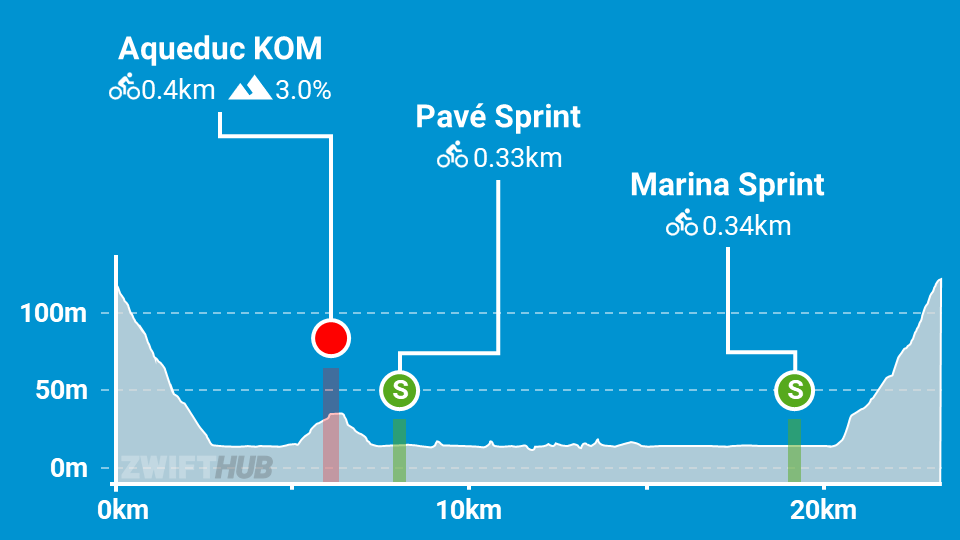
The route totals ~26.1km including the lead in, and all categories will race the same distance. The route includes three intermediates which will be contested for points, shown in the profile below:
This profile doesn’t tell the whole story, though, because it doesn’t include the lead-in! This is going to be a hugely important section of the race because it’s a long (for ZRL) climb which begins right out of the start pens. Here’s what the lead-in to the start of the route proper looks like on Veloviewer:
The lead-in is 3.11km long, averaging 3.4%. It takes you from the start pens up the backside of the Petit KOM (or the foot of Ventoux, if you want to think of it that way) and dumps you off at the Petit KOM banner, which is the official start and finish line for Roule Ma Poule.
This climb is the biggest feature of the course, but it’s not a timed intermediate. Make no mistake, though: the race will be won and lost here! This lead-in climb will stretch and split the field, and the gaps will be big enough that many riders who are dropped will never see the front of the race again.
In the final minutes of the race, those who have survived in the front will get to duke it out once more to see who can cross the line for maximum finish points!
The only other remarkable sections of this route are the intermediates since they award points.
Aqueduc KOM (0.42 km, 0.9%): more of a sprint than a climb, with only a ~200-meter length of uphill road. But be mindful that the segment start line arrives after you’ve already been climbing for a bit. (In fact, the Aqueduc KOM is only 1/3 as long as the overall climb.)
Pavé Sprint (0.33 km, 0%): when you pass the field of lavender to your left shortly after descending from the Aqueduc KOM, you know you’re getting close to the Pavé Sprint. And when the road turns a hard left into the arch to enter the village, your segment begins! The layout of this sprint is such that you won’t see the finish line (or even the start line) until it’s too late to contest the segment, so knowing the landmarks and segment length pays off when you’re chasing points.
Marina Sprint (0.34 km, 0%): look for the tower on the right flying a French flag to know when it’s time to rev up the watts heading into the start of the sprint. You won’t see the finish line yet, but rest assured it’s up the road.
Riders will be awarded powerups through arches on course, meaning we’ll get just 4 powerups in this race. Three powerups will be given out at each banner:
Aero Boost (helmet) (40%): makes you more aerodynamic (reduces your CdA by 25%) for 15 seconds. Use this if you’re contesting a sprint or attacking in the wind at high speed.
Invisibility (ghost) (30%): makes you invisible to other riders for 10 seconds. Disabled within 200m of the finish line. Use when you want to get away from one or more riders. Deploy then hammer, in hopes that you will create enough of a gap that your opponents can’t grab your wheel.
Steamroller (30%): reduces Crr for 30 seconds so you roll as fast as a road tire on pavement regardless of wheels or road surface. Not a terribly useful powerup here, but you can use this on the cobbled Pavé Sprint to save a bit of power/go a bit faster.
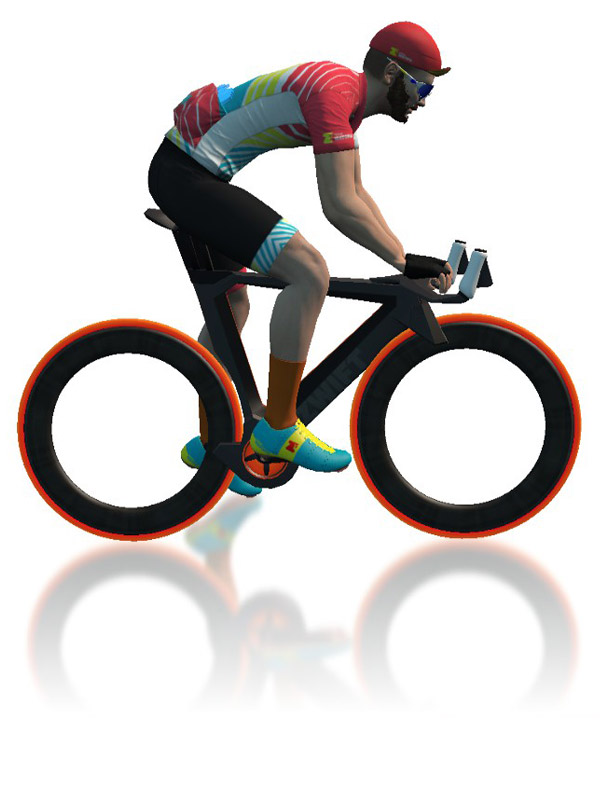
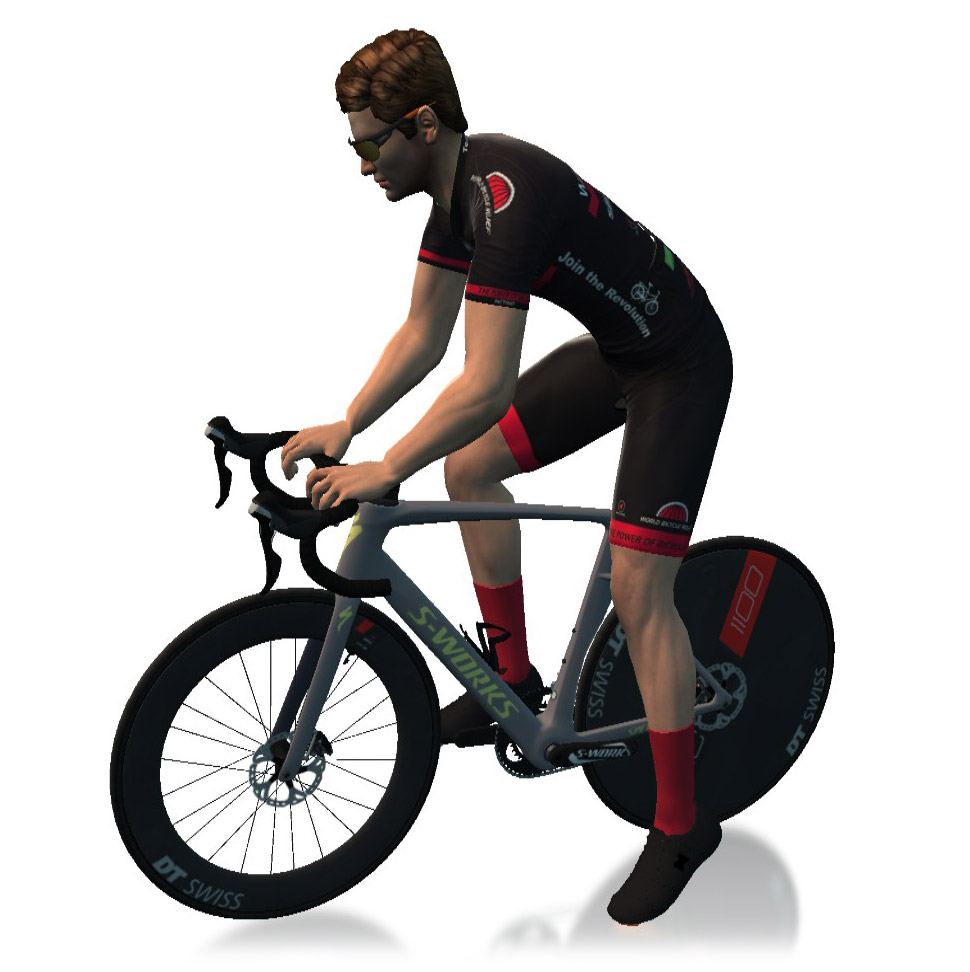
Bike Frame + Wheel Choice
Bike Frame + Wheel Choice
With the important and rather length climb being hit twice in this race, you may be tempted to go with a climbing rig. But we wouldn’t recommend that… for two reasons:
First, the vast majority of this route is flat, where the pack will be moving fast and aero is everything
Second, we tested various bike setups on the key climb (let’s call it the Petit KOM Reverse) and all setups are within 1s of each other when riding at 4 w/kg:
Many events are now being planned each weekend on the upcoming ZRL route. If you’re unfamiliar with this course, jump into an event and do some recon! Here’s a list of upcoming Roule Ma Poule events.
Looking for a video recon, with lovely British commentary to boot? Check out Si’s recon below:
Si Bradeley
Oli Chi
Strategic Options
Points Distribution, Roule Ma Poule
These charts show the maximum points a team of 6 could earn in each race.
What strategies will riders employ in race 1? Here’s what we predict:
Big Push Up the Lead-In: strong climbing teams will push hard on the first climb to create the ideal race situation: dropping a large part of the field and reducing competition for the intermediate points.
The Chase Is On: after the lead-in, dropped riders will attempt to chase back onto the front group to have a shot at intermediate points. Will the front group keep pushing, or ease and allow riders to rejoin? This may depends on the team mix in the front group.
Sag and Sprint: sprinters dropped on the lead-in who don’t go hard to chase the front pack after the climb may be wise to ride easy and save their legs to contest the sprint intermediates for FTS points.
Your Thoughts
Any insights or further thoughts on this race? Share below!
Zwift group rides are a great way to add a social aspect to your time spent riding indoors. Just like picking a pace partner, there is usually a group ride just about to start that caters for your target w/kg. Whether you’re looking for a recovery ride or want to push yourself, having a supportive and chatty group around you can really add to the enjoyment.
Once you’re in the group ride, we all know that the best place to be is snug in the draft, helping a big blob go as fast as possible. But today, let’s look at the Red Beacon and that special breed of masochistic Zwifter that seems to prefer hanging off the back, well out of the draft.
Who needs a sweep? (Well you are gonna get it!)
First off, why do some group rides even have a Red Beacon? I sweep for ZZRC, where our mantra is: we pace, not race. We start each group ride with the intention of getting every rider to the end of the route or time limit in one big, fast blob. Pedaling is easier in the draft and we want the best possible experience for everyone joining. However, sometimes things can go a little awry. From Zwift or Internet dropouts, to answering a phone call, or a brief lapse in concentration, it’s pretty easy to suddenly find yourself out of the draft. Once you’re off the back you need to output more power than the target w/kg for the ride to get back, and that’s where you might need a little help.
The Integral Principles of the Structural Dynamics of Flow (aka Drafting)
Before we look at sweeping, it’s good to examine the dynamics of the draft. Have a look at the picture below taken in “draft viewing mode” (the developer-only mode with rainbow streaks):
The best draft is directly behind the rider in front, and it dissipates as you go wider. The size and strength of the draft also increases the more riders you have. If there are just two riders, the Zwifter behind can get away with outputting around 25% less power than the first rider. If you have a bigger group, that saving can increase to about 35%. It’s using this math that we can get a dropped rider back to the blob without them going too much over the target power.
To sweep, or not to sweep, that is the question
The simplest sweep starts when someone has a drop out. As Red Beacon you’re looking for when someone’s watts go to 0 or, better yet, there is a message asking for help. The sweep team will then ease and drop off the back of the pack, often with a message to say they are coming to help. This is also a message to the leader that a rider needs help – if they’re a long way back the group may need to slow a little – and a signal to other strong riders that they can come back and support Red. Once we’re back with the dropped rider, we spin up, get in front of them, and start pulling them back at around 25-40% more than the ride’s target power.
Things aren’t always that simple, though. Often the rider will not have the Companion app. Sometimes a rider has gone back to do intervals and you get there and they shoot off doing 6 w/kg. They may also be winding down, or are simply happier bobbing along by themselves at a slower pace. It can be lonely trek back if you go to help someone that doesn’t want/need it, so you have to make smart decisions on when to drop. I generally look for riders still holding the ride target w/kg. If they can do that, and we have a big enough group, even a minute gap to the Yellow Beacon is chaseable.
With Great Power Comes Great Responsibility
A well-executed sweep is a team game that requires some skill and coordination, not just pumping out the big watts. We recently rode The Magnificent 8 with a target w/kg of 2-2.5. As Red Beacon you always hang back a bit at the start to pick up the stragglers that are slow leaving the pens. Everyone is fresh so should be able to hold the advertised power comfortably at this point. You blob up with the other riders and lead everyone back to the group, making sure to let them know when you’re going to up the pace to close on Yellow.
As a sweep, any incline is your friend. As long as the main group are keeping to the advertised pace you can use them to close any gaps more easily than you can on the flat. 2.5 vs 2.0 w/kg will close a gap faster at 3% than 0%. The steeper the gradient, and the more you go above target pace, the quicker you catch the group.
Equally, descents are evil. I try not to waste watts chasing on a downslope. With a big group, the effect of the draft is too strong and, no matter what you put out chasing, all you’re doing is limiting your losses. That means as you reach any summit you encourage riders to push up and get in the draft behind Yellow.
That can be asking a lot of a rider that has just been pushing as hard as they can up the climb, so riders off the back are inevitable. On The Magnificent 8 that happens after Hilly KQOM Reverse. Big splits can happen on the fast descent and you have a long, hard, flat slog through the desert to get back to the group. A fellow sweep and I picked up a couple of riders and started heading back. We would see other riders up ahead and type: “jump on as we pass” in the text box. It’s important here to slow down as you go through. If you keep up the sweep pace you will shoot past, so ease off before you get to them and give them a chance to latch onto your draft.
Does my bum look big in these bib shorts?
At this point, I am jumping to the camera of the riders we’re sweeping. I do this for a few reasons, and not just to check out my own rear end. First, I want to be staying about 1-2m ahead of them and doing about 25% more power. I monitor the gap. If I pull ahead too much I need to ease off the pace. If they close I can quickly spin up. I find it easier to gauge that from their camera angle, not mine. I also want to see their heart rate. Are they pushing themselves to an extreme already? Do I think they can do more? Should we ease off a little? Can this rider make it back? Having their information on my screen gives me some insight into this, especially if they are not chatty.
By now we’ll have all the sweep team around us, about five strong riders, which makes the job easier. We have a rider whose heart rate is 171 but they are not letting up. They want to keep going and that makes me even more determined to get them back. A quick message to check they are ok and to instruct them not to do more than 2.5 w/kg. Even if we don’t get them back, I want them to finish the ride and to have enjoyed it, not felt like it was an hour of misery.
Sweeping Is Basically Team Time Trial Practice
This is where our draft dynamics come into play. We need to line up in a formation where the riders at the back of our blob are holding what they feel manageable: 2.5 w/kg in this example. The riders directly in front of them need to ride around 3.0-3.2 w/kg, but absolutely no more. Any more and we drop our precious cargo. We then have another wave of riders that can all hold 3.9-4.1 w/kg. Then it’s a fine balancing act. Am I still in the draft of the rider in front? Is the rider behind still in my draft? Is my power output stable? As long as we’re all cognizant of what’s happening around us, and we have some sweeps pushing over the advertised pace, we can get any rider back to the blob.
Our story has a happy ending. This was a Level 6 rider doing their first ZZRC group ride. Our Yellow Beacon gave words of encouragement and other ZZRC riders soon followed suit. The chat filled with people urging us on. Ride Ons rained down in a giant Thumberstorm and the chaser got their “You’re Famous” badge. We managed to reattach towards the end of the underwater tunnel and everyone could enjoy some respite in the loving embrace of the blob.
Was it incredibly hard for that rider? I have no doubt. Did that rider return for another ZZRC ride? They joined one the very next day.
And so, my fellow Zwift group riders: ask not what your sweep can do for you – ask what you can do for your sweep
Everyone involved in leading or sweeping group rides invests a lot of their own time and effort. At ZZRC we want it to be as enjoyable and inclusive a Club as possible. We do it because we love it, and I have no doubt it’s made us all better cyclists. I am twice I was when I first randomly stumbled into a ZZRC Saturday Social Club feeling very hungover. That said, we sweeps do have a few requests:
An early shout for help if you’re out of the draft saves us both a lot of effort
If you’re deliberately off the back because you want a harder ride, or you want to do intervals, or want to help sweep, that’s great! Just let us know in the chat
Also let us know what power you’re comfortable holding. Again, we want this to be enjoyable for you and there are times when the best thing we can do is just pace with you. We also enjoy doing just that
If you’re feeling strong and can hold above the advertised pace, please volunteer to help. We really appreciate that and the more support we have the better
If we drop back and it turns out you can hold over 4 w/kg, we reserve the right to get towed back by you!
This week Zwift rolled out a fresh set of ZRacing events, named “ZRacing Sprint Races”. Separate from the main ZRacing Series races which are 25-35 minutes in length, these sprint races are only 10-15 minutes long.
Unlike the main ZRacing Series, there is no monthly GC for the Sprint races. These are simply fun, one-off scratch races. James Bailey at ZHQ says these events are “Aimed at people who are strapped for time and want to get in a quick warm-up, race, and cooldown.”
November’s slate of events is a test to gauge interest.
Route Schedule
Races are scheduled multiple times on Monday, Wednesday, and Friday (UTC). (That means, depending on your timezone, you may actually have races available every day, Sunday-Friday.) Here’s the schedule of routes for November’s test run:
Last week’s Tiny Races brought a new sort of suffering with the introduction of Zwift’s experimental Pack Dynamics v4. If you’re curious how it went for other racers, check out these videos from myself (B), Thom Thrall (A), Phil Lovett (A), and Roger Hall (C).
This week we’re locking in our ruleset, and returning to PD3. Details below…
A Note About Rules
Last week we softened the rules a bit, allowing riders to leave before finishing all 4 races and only requiring HRM for podium finishers.
This resulted in a significant reduction in DQs, with around 7% of ZwiftPower race results being DQ. (That’s down from 20% two weeks ago, and 12% one week ago.) While not ideal, this is an acceptable number for us, so we will continue with the current ruleset for the foreseeable future.
Pack Dynamics v4 Testing
Last week’s races were the first races ever run on Zwift using their new experimental Pack Dynamcis v4. Reviews have been mixed, but it seems generally agreed that further work is needed in order for PD4 to be ready for prime time.
Due to inconsistent speeds, we won’t be using the current version of PD4 in future Tiny Races. But if Zwift updates PD4, we’ll do another experimental week!
A quick lead-in followed by one short loop, this is a fast circuit with a bit of a rise just after the lap banner. Will anyone be brave enough to go long, or will it be left to a pack sprint?
This one’s for the punchy climbers. Begin on NYC’s paved roads then quickly transition to the glass roads and attack the NYC KQOM Reverse. First person to the top wins!
One quick clockwise loop of Central Park’s inner roads. The climbs on the back stretch make a great place to stage a long attack, but the long, flat lead-in means a pack sprint is probably on order.
The Harlem Hill climb will stretch and split the field. But with a few kilometers left until the line, some riders may be able to chase back onto the front. This is our longest race of the day, so we put it at the end in case some D riders need a few extra minutes to cross the line.
Zwift displays preliminary race results in game when you cross the line, but points are computed after all four races are finished, with final results on ZwiftPower. (We have to do some data processing on our side to compute results, so if your rankings don’t show up right away, just be patient.)
Riders will earn points based on finish position in each of the 4 Tiny Races. The category winner of each week’s series is the rider with the most points across their timezone’s 4 races. Here are the links for each timezone’s results on ZwiftPower:
Tiny Race rules are simple. Four races, four rules:
You must have a ZwiftPower account, because final results are processed by ZwiftPower (learn how to sign up)
No skipping then returning. These races are meant to be raced as a set of 4. If you need to leave early, that’s fine… but once you miss a race in your hour’s set of 4, don’t come back and race another or you’ll be disqualified from that race since you rested while others were racing! (Example: racing only races 1 and 2 is fine. Racing 1, 2, and 4 is not.)
Heart rate monitors are required for podium finishers
ZPower/Virtual power is not allowed. Smart trainer/smart bike or power meter required.
Join a Chat & Chill Cooldown
Immediately following each hour’s racing, we’ve scheduled 30-minute “Chat & Chill” events where riders from all categories can spin out their legs together and have some fun chatting about how it all went down. Find them at zwift.com/events/tag/tinyraces.
The Wrap, Episode 15: Tim Hanson of Zwiftracing.app
This week on the wrap Anna is broken and talks about Flamme Rouge Racing, why it’s a different racing style, and why it is awesome! There’s a new draft being tested, Nathan has some opinions and how it could really shake up the racing scene… lead-out trains anyone?
Stats geek and programmer extraordinaire Tim Hanson comes on the show to go through his latest passion project, the Zwiftracing.app (read more about it here). If you’re sick of sandbaggers and limited categorisation then this is a must-listen, as it could be the way of the future.
The segment jersey rankings continue with the Watopia sprint/KQOM mash-up jersey, not quite as bad as Fuego but not in the same league as Leith Hill. Garage pick is the out-of-style backward blue companion cap.
The Wrap is all about showcasing the awesome Zwift community, from upcoming events to must-have tech to community guests to the all-important avatar fashion segment. The live nature of the show means that hosts Nathan Guerra and Anna Russell can interact directly with those watching, gaining valuable insights and opinions across a wide range of topics.