Home Blog Page 397

Getting on Zwift: A Step by Step Guide for Cycling

11

Getting on Zwift: A Step by Step Guide for Cycling

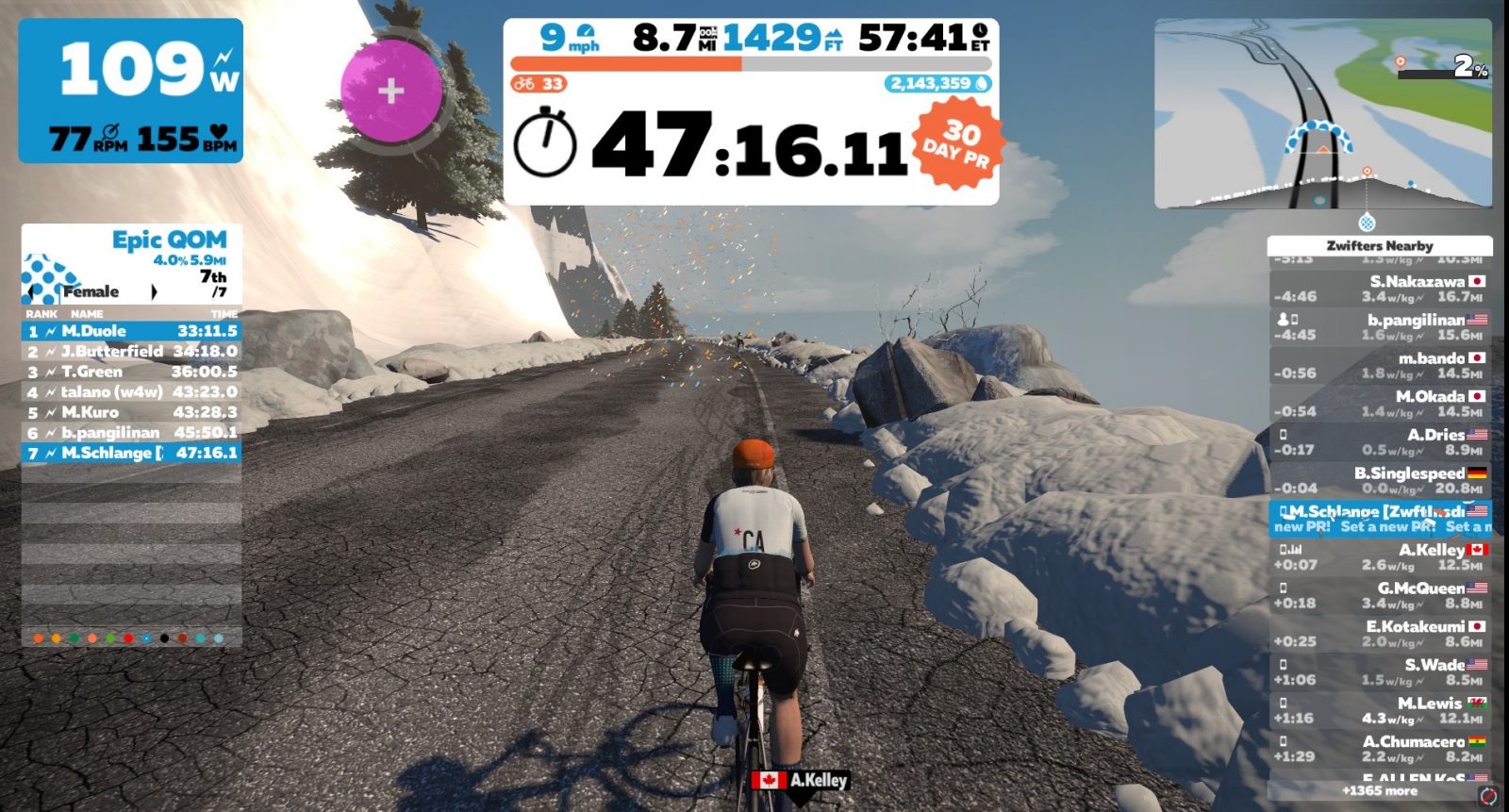
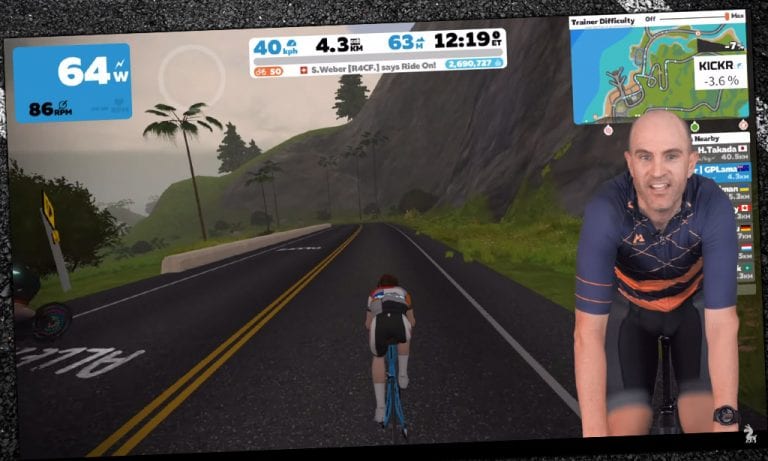
With Zwift, you can use your own bike on an indoor trainer to ride alongside others in a virtual world. When you pedal your bicycle, your avatar – a representation of you – does the same. This step-by-step guide will walk you through how to get cycling on Zwift, including links to help with your specific setup.

What you need

  1. A device to run Zwift
  2. A Zwift account
  3. A bike
  4. One of the following
    1. Smart trainer/rollers
    2. Classic trainer/rollers AND a speed sensor
    3. Power meter AND any trainer/rollers

If you buy one of the new “smart bikes” that takes care of the bike and the smart trainer in the list above.

You also will need an ANT+ USB dongle if you are using a computer and connecting devices to Zwift that transmit only via an ANT+ wireless signal.

1. Find a device to run Zwift

Here is a summary of devices which can run the Zwift software and the wireless connections they allow:

Smartphones/Tablets: Bluetooth only

  • iPhone
  • iPad/iPod
  • AppleTV
  • Android

Computers

  • Windows 10 64bit or higher: ANT+ supported if you plug in an ANT+ dongle, Bluetooth supported on Windows 10 with Bluetooth 4.
  • macOS 10.14.4 or higher: ANT+ supported if you plug in an ANT+ dongle, Bluetooth also supported.

Note: if your smartphone/tablet/computer was made in the last few years, it should be able to run Zwift. But you may want to double-check by looking at Zwift’s current device requirements.

2. Sign up for a Zwift account

To create a Zwift account on a computer, go to zwift.com/create_account.

Once you have answered the required questions, you’ll be taken to your new profile at my.zwift.com. If you’re ready, you can click the “Download” button to go to the download page, then click “Download” again underneath your operating system (Mac or Windows). Open the file and follow the instructions to install Zwift. On the download page, there is also a link to install Zwift from the App Store on an iPhone, iPad, or Apple TV.

If you download Zwift before signing up for an account, Zwift will prompt you to sign up at the login screen. On a Mac or PC, click the words “Create an account.” On an iOS mobile device or Apple TV, search for the Zwift app in the App Store. After downloading and installing it, open the app and select “I’m New.” Answer the required questions and tap “Let’s Go” to get started.

An unlimited subscription to Zwift costs a monthly fee ($14.99/month in the United States). When you first sign up, you get a 7-day free trial subscription. After that, you will get another 25 kilometers (15.5 miles) of distance free every month. (If you signed up on a mobile iOS device or Apple TV, activate your 7-day free trial by selecting “Join Now” after you’ve used your first 25 km / 15.5 mi.)

You can pay for your Zwift subscription by:

  • Going to the membership page of your Zwift Profile;
  • Clicking “Join Now” at the bottom left of the starting screen on Zwift; OR
  • Clicking “Join Now” in Zwift on an iPhone, iPad, or Apple TV and paying through your Apple/iTunes account

3. Choose a bike

Most bicycles will work with Zwift as long as they can be mounted on a trainer. When you choose a trainer, check to see which wheel sizes it supports. Very small wheel sizes may need an adapter for certain trainers. (This is most likely if you’re using a children’s bike, a BMX bike, or a recumbent bike.) To get on Zwift with a smart trainer, your safest bet is a standard 10 or 11-speed road bike, as this will work on virtually all smart trainers.

If you have a Zwift-compatible “smart bike,” you obviously won’t need a separate bicycle!

4. Choose and pair a trainer

The type of trainer you use will depend on your budget and the features that are important to you. A controllable smart trainer can transmit power to Zwift, simulate the feel of hills on the virtual roads, and help you hold your target watts in workout mode. A classic trainer doesn’t have those features, but it is cheaper. Can’t decide? This post can help you choose between a smart trainer or a classic “dumb” trainer. If you have a power meter you can use any type of trainer.

Check to make sure that your trainer and/or power meter will work with Zwift by looking at Zwift’s list of compatible hardware.

See the following guides for more tips on choosing a trainer and setup instructions:

  • Classic trainer and a speed sensor: How to Get Started on Zwift with a Classic Trainer
    • When setting up your bike on a classic trainer, make sure your rear tire is properly inflated and that you set the trainer tension according to the manufacturer’s instructions. Zwift uses the reading from your speed sensor and the stored power curve of your trainer to calculate virtual power or zPower.
  • Smart trainer:How to Get Started on Zwift with a Smart Trainer
    • If your smart trainer requires calibration, it’s a good idea to calibrate it regularly following the manufacturer’s instructions (usually after a good warm-up). If you’re using a wheel-on smart trainer instead of direct drive, also make sure your rear tire is properly inflated. With a controllable smart trainer, you can set the trainer difficulty to change how it simulates gradients on the virtual roads, or use Erg mode to help hit your targets in structured workouts.
  • Rollers: To use Zwift with rollers, it’s best to have either a power meter or a set of smart rollers that will transmit power to Zwift. Follow the instructions for getting started with a smart trainer or power meter above. You can use Zwift with a speed sensor and a normal set of rollers, but your estimated power probably won’t be accurate. In that case, set it up as a classic trainer.
  • Smart bikes: Most exercise bikes aren’t compatible with Zwift, but some are. Smart bikes broadcast power through open ANT+ or Bluetooth signals so that Zwift can communicate with them. Check here to see if yours is compatible. If it is, follow the above instructions for getting started with a smart trainer.

Once you click “OK” on the pairing screen, you’ll be greeted with the “Startup Screen.” Click the big orange “Ride” button to get going right away, “Training” for a structured workout, and “Routes” to browse the available routes. Keep in mind there are always two worlds available on a given day: Watopia and a “guest world”. Each world has its own unique set of routes, and the guest world rotates based on a monthly schedule.

Optional Steps

Pair a Cadence Sensor

A cadence sensor will sync the movement of your avatar’s legs with your own and give you cadence data. Power meters also transmit cadence. Some smart trainers estimate cadence, but it may not be accurate.

Pair a Heart Rate Monitor

A heart rate monitor gives you more information about how hard you’re working. Some races require one to place in their official results.

Connect Zwift to Other Services

If you want to connect Zwift to other fitness apps and services, go to your Zwift profile at my.zwift.com and click “Settings” at the top left. Here, you can edit your profile and change your password, but for now click “Connections.” This will allow you to connect Zwift to Strava, TrainingPeaks, MapMyFitness, Garmin, and other services.

Recommended: Zwift Companion

While it’s not required to use Zwift, Zwift Companion is a handy tool with some features that are only found in this mobile app. Find it in the Apple and Google Play stores.

More Beginner’s Guides


Have you seen Zwift’s Getting Started Guide?

2

Have you seen Zwift’s Getting Started Guide?

I recently ordered a new trainer from Zwift’s online shop (a Wahoo KICKR, if you’re wondering) and it arrived with a handy little “Getting Started Guide.”

If you haven’t ordered a trainer from Zwift, you’ve probably never seen this guide. But it’s really well done! It should ship with every smart trainer, whether Zwift sells it or not! (Because we all know what those smart trainers are going to be used for, right?)

Download a PDF version of Zwift’s Getting Started Guide >

The guide is quite thorough, with top-notch design and sections concisely covering topics like:

  • Powerups
  • On-screen elements (Ride Ons, HUD, etc)
  • Key terms like drafting, FTP, w/kg
  • Downloading the app and creating an account
  • All the pieces needed to Zwift (bike, trainer, mat, fan, etc)
  • Trainer Tips (for direct drive and wheel-on)
  • Extra tips (water, HR monitor, etc)
  • Using ANT+
  • Importance of strong WiFi
  • Fueling your ride
  • Rider’s checklist
  • Events and meetups
  • Workouts
  • Unlocks and level ups
  • Zwift Companion
  • Keyboard shortcuts
  • How to get help

Along the way, the reader is treated to some nice vanity shots of the game in action. A brilliant way to entice people to get on and get zwifting!

Here’s my favorite page. Donuts!

Well done, Zwift HQ. Keep making it easier for Zwifters to use the platform. A growing community is a healthy community!


Listen Close: It’s the Zwift Sound Quiz!

0

Listen Close: It’s the Zwift Sound Quiz!

Welcome to the Zwift Sound Quiz! Listen to a quick sound clip from within Zwift, then identify where it came from.

Just 10 questions, and you can’t change your answer once you click. Good luck…

[wp_quiz id=”48152″]


The Lamb Chop Series is Back – Handicap Racing for All
2

The Lamb Chop Series is Back – Handicap Racing for All
Black Sheep Cycling and AHDR Chop have launched another Lamb Chop series which began yesterday. These races are always popular among Zwifters–let’s learn more about them and find out why.
Handicap Racing: the Basics

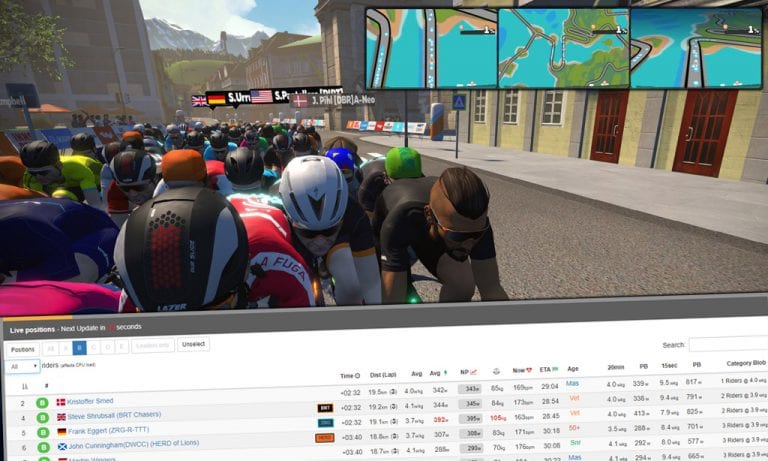
Handicap races are known as chase, cat and mouse, or pursuit races. Unlike the standard Zwift road race or TT formats, handicap races are designed to encourage category riders to work together, and to give all riders a chance to win regardless of category.

In a handicap race, slower categories are released before faster categories. Each category’s time gap is calculated by the race organizer, with the goal of having all categories meeting up near the end of the race for a final sprint.
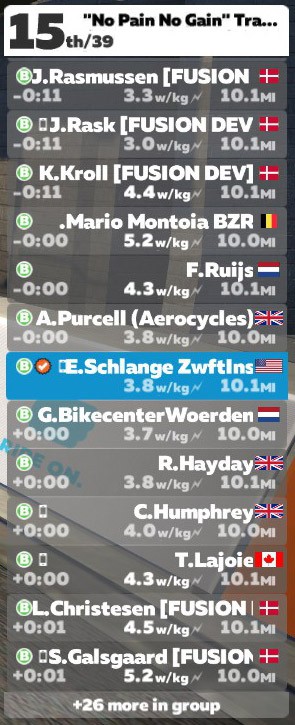
So this format encourages each category’s riders to work together to stay away from chasers and catch any riders up the road. But if you’re caught by a faster group from behind–all bets are off. Grab those wheels!
Live Streaming

The Lamb Chop series is being covered by the great Nathan Guerra on Zwift Live, available on YouTube and Facebook. Here’s today’s broadcast of the women’s and men’s races:

Series Schedule

The Lamb Chop Series is happening weekly on Thursdays, with two different time slots and separate races for men and women.

Early race:

  • 11AM Pacific (Women only)
  • 11:45AM Pacific (Men/Mixed)

Late race:

  • 4PM Pacific (Women only)
  • 4:45PM Pacific (Men/Mixed)

See the full series schedule and sign up here >

Glancing at the upcoming race schedule, it’s clear Lamb Chop organizers gravitated toward flatter courses. This makes sense, because those flatter courses allow groups to work together rather than having a TT-style race up a longer climb.

Kit Unlock

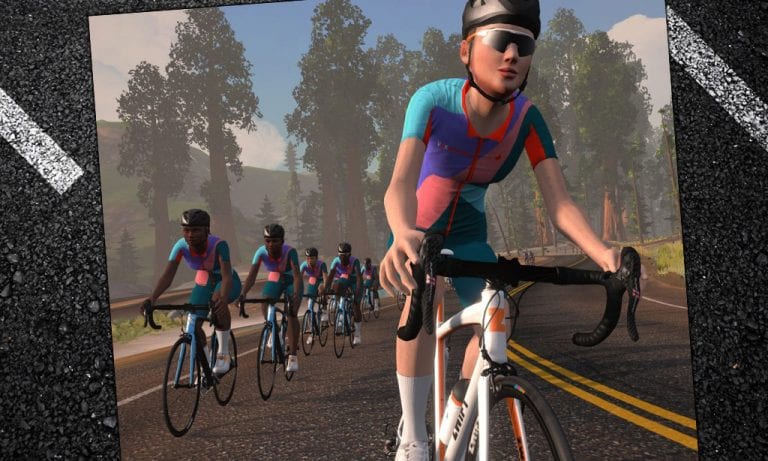
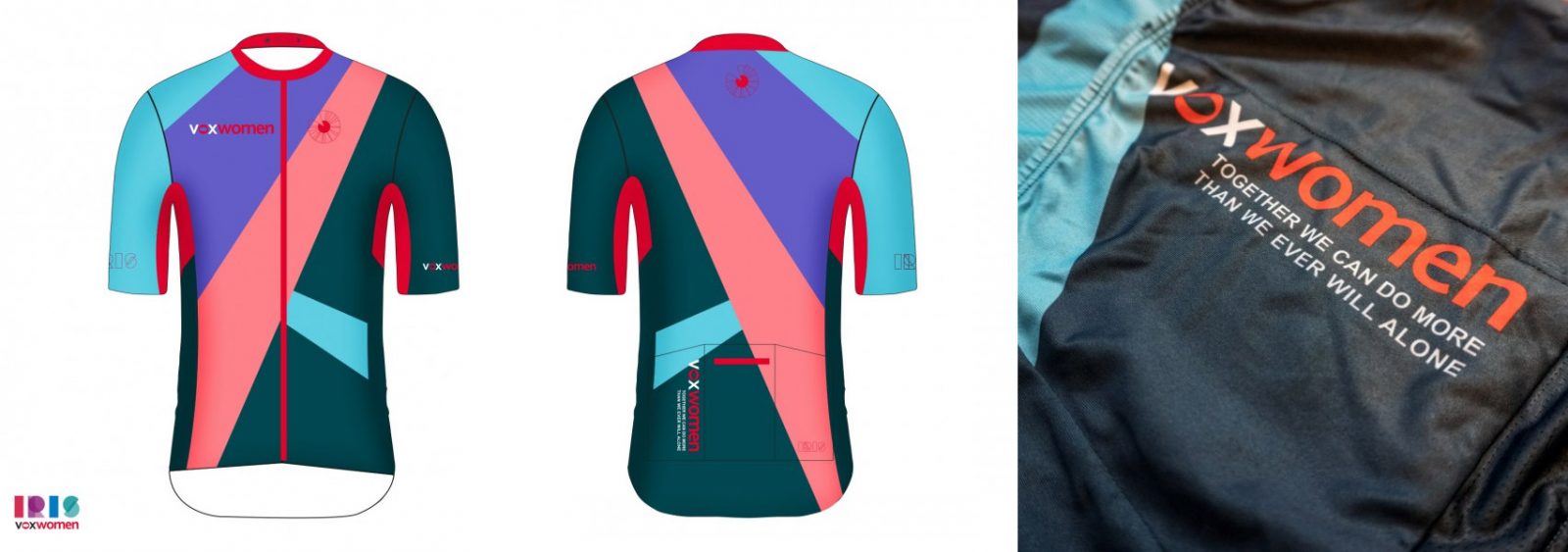
Complete any of the six races to score the new Racing Club kit by Black Sheep Cycling.

My Story: Today’s Race

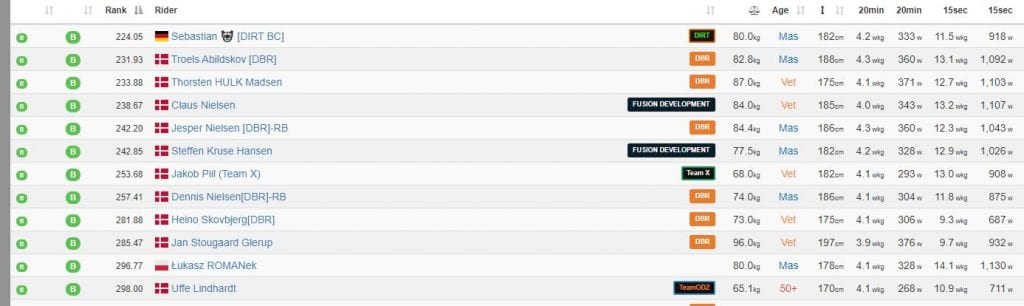
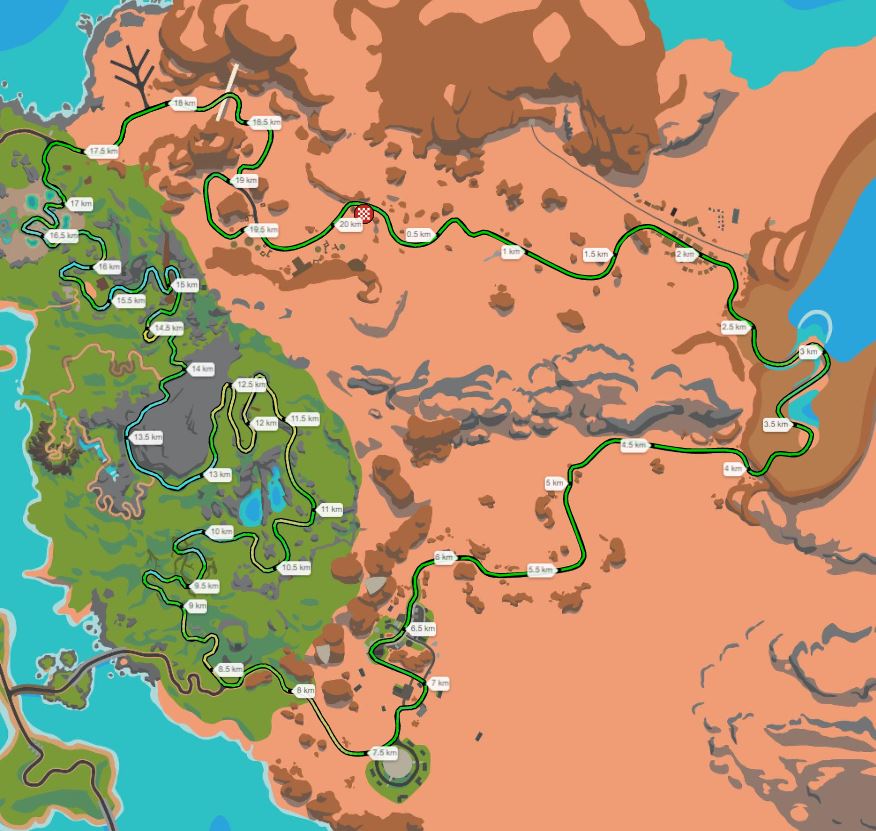
I joined the early race today, racing with the B’s (see my race on Strava). We completed two laps of the Tick Tock route, and it was a tough race. A fun group of B’s, though, and plenty of banter flying early on.

We began with 101 riders in our group, but that was quickly whittled down to ~60 as the group surged ahead. We averaged 29.5mph in the first 30 minutes!

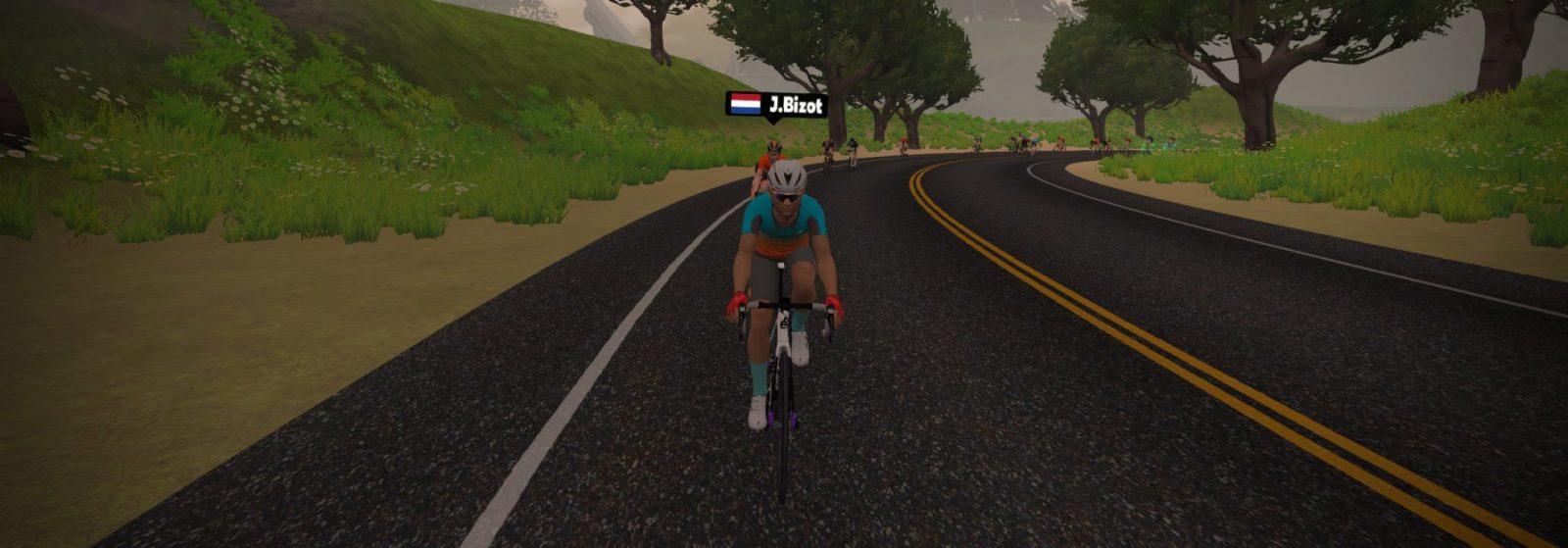
I like to race in first-person view (camera angle 3) in chase races, because it’s difficult to know who’s who when everyone wears the same kit!

I held on until the final kicker coming out of the Ocean Blvd tunnel, just 4km from the finish. I wasn’t riding quite as attentively as I should have been, and let too much of a gap open up as the group stretched out. Race over for me!

The race rides away…

My B group raced well, though–catching the C and D groups ahead and staying away from the A’s. That’s the goal of a chase race!

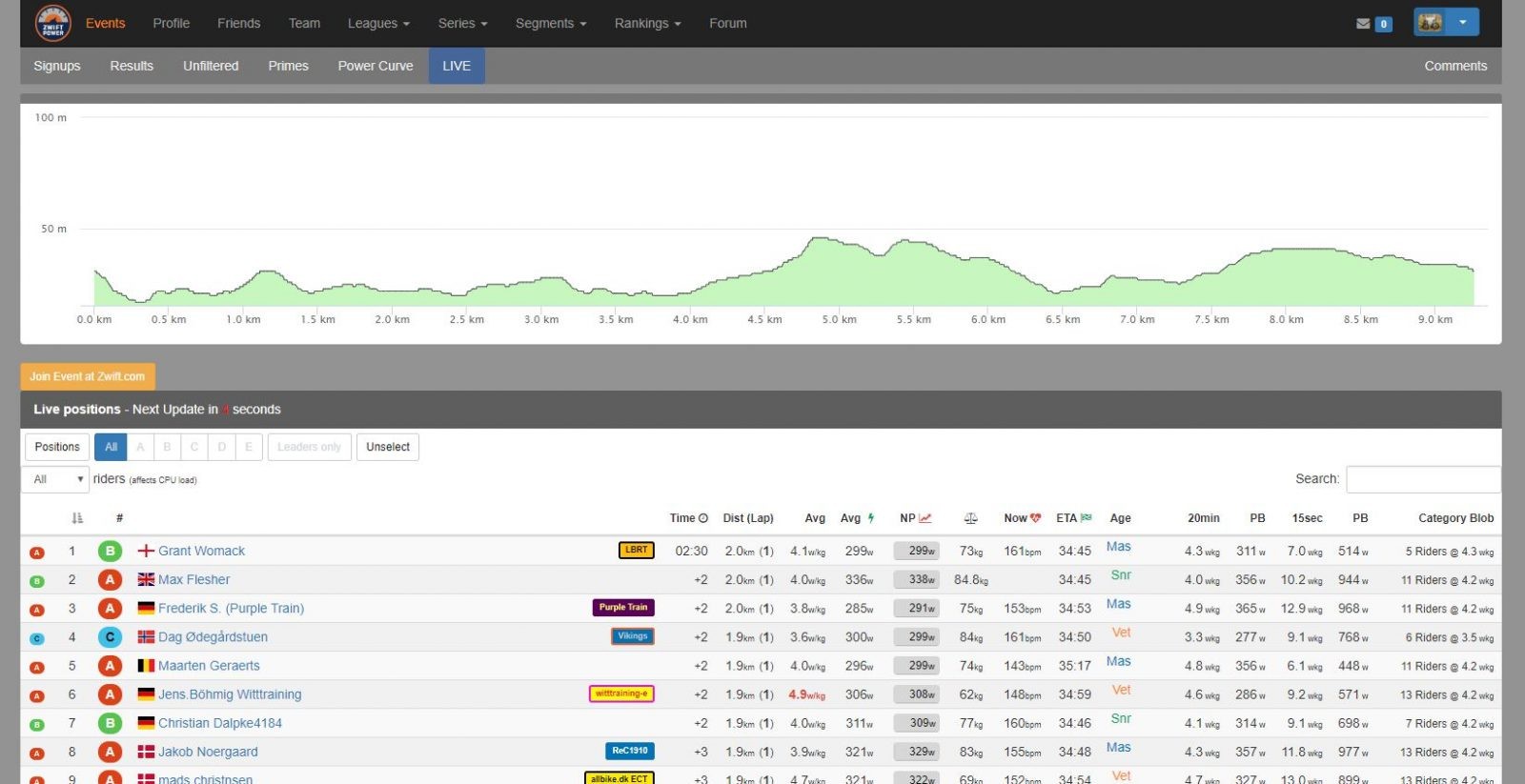
See the final results in ZwiftPower >

In the end, this was the hardest effort I’d put into a Zwift race in months. Great (type 2) fun!

Other Handicap Races

If you’re interested in chase-style racing but can’t make the Lamb Chop schedule, check out DIRT DADurday races on Saturdays, or the long-running ZHR (Zwift Handicap Races). There are other handicap races available throughout the week as well, including those organized by Peel Cycling.

Feedback

Have you tried any chase races? Which ones are your favorite? Share below!


About Zwift’s Recent Spawn Point and Lead In Changes

0

About Zwift’s Recent Spawn Point and Lead In Changes

Zwift’s November 1st update included a note about some updates made to the lead-in setup:

Reworked ‘lead-in’ system for events. This should improve the lead-in countdown before lap based events, as well as resolve some of the other discrepancies we saw in the user interface during those events.

The new system had some initial bugs (showing different distances on the top bar and sidebar and counting down inaccurately at the end of events). But those bugs appear to be ironed out with Zwift’s latest minor update.

Lead-In Changes

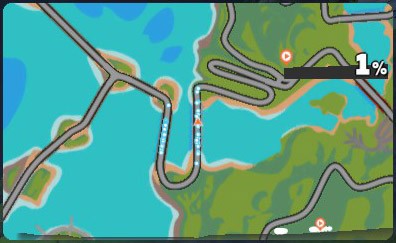
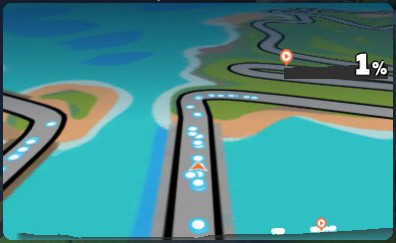
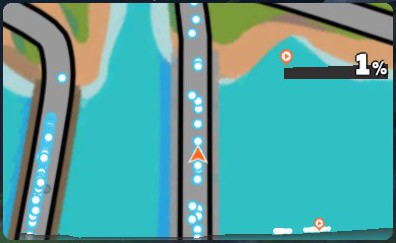
Along with those distance indicator changes, Zwift updated their animated in-game route maps to show the lead-in portion of routes in blue. Here’s an example:

This should help alleviate some of the confusion around the lead-in portion of routes. (The confusion became especially apparent when Zwift introduced route achievement badges and Zwifters began to track their completion of certain routes in earnest.)

Many routes have a lead-in segment not included in the route’s stated length, and Zwifters were understandably frustrated after riding for the stated length but not earning a badge. Surrey Hills is a common example of such a route: the lead-in takes you all the way from downtown London to the top of Fox Hill before the route actually begins!

If you’re going for a route badge, here’s our simple advice: the route will begin and end at an arch of some kind. So if you’ve already ridden the proper distance but haven’t seen the achievement pop up, keep riding to the next arch.

New Spawn Points

*sigh* Sometimes we wonder if Zwift just likes assigning us Strava homework. 😊

Spawn points were also moved for several routes in the recent updates:

  • Duchy Estate: spawn point now comes before the start banner
  • Tour of Tewit Well: spawn point now comes before the start banner
  • Royal Pump Room 8: spawn point now comes before the start banner
  • Road to Sky: spawn point now comes just before the not-yet-opened start pens on the road to the Jungle Route, making it easier/quicker to get to the Alpe

Updated Segments and Veloviewer Leaderboard

We have updated our Strava segments to reflect the new spawn points (see full list of Zwift Insider verified segments). We may also be updating some of the segments used on our Veloviewer Leaderboards.

Progress + Little Bugs

The improved lead-in maps and distance metrics are a good improvement, but there are still some small bugs to be worked out. Two examples:

  • Queen’s Highway: this route’s spawn point should have logically been moved with the other Yorkshire routes to before the start banner, but it was not.
  • Tour of Fire and Ice: the route animation shows this beginning with a lead-in from the downtown Watopia start/finish banner, but it actually begins at the Volcano Circuit banner.

Your Feedback

If you’ve spotted any other recent lead-in or spawn point changes, let us know below!


How Zwift Calculates XP for Cycling Workouts

How Zwift Calculates XP for Cycling Workouts

Gaining experience points (XP) in Zwift allows you to level up, unlocking better bike frames and wheels and gaining access to certain restricted roads.

For a complete look at XP unlocks and more see “XP, Levels, and Unlocks in Zwift Ride“.

But XP is calculated in an entirely different way for structured workouts. In a workout you don’t accumulate distance-based XP, nor do you receive XP as you ride through arches. You also don’t receive powerups as you ride through arches, so you can’t get an XP bonus powerup.

Instead, Zwift calculates your XP based on the types of interval “blocks” you complete, how long those intervals last, and how well you complete them. Let’s take a closer look at how each type of interval is scored.

XP By Interval Block Type

Warmups/Cooldowns

Warmups and cooldowns (called “ramp up” and “ramp down” if they don’t bookend your workout) reward 5-6XP per minute, regardless of the wattage you set for the start and end of the ramp.

Zone Blocks

These are the simplest intervals to understand in Zwift: just a block of time at a particular wattage. Thanks to astute Zwifter Claus Jensen we know that Zwift rewards 1XP for every 5.55 seconds on Zone Blocks, or approximately 10XP per minute.

Contrary to what you may think, Zwift does not reward higher-effort intervals with more XP. One minute at Zone 1 earns the same as one minute at Zone 6!

Free Riding

Free ride intervals reward you 5XP per minute, regardless of effort level. We’re not sure precisely how many seconds it takes to accumulate 1XP in free ride mode, but 61 seconds earns you 6XP, and 72 seconds earns you 7XP.

Intervals

“Intervals” are essentially a pair of Zone Blocks, with each block able to be set to a particular wattage and time. This pair of blocks is then repeated two or more times, as dictated by the workout.

Intervals reward you a set amount of XP based on the total time of the interval block: 12XP per minute, regardless of interval wattage.

FAQ

FTP Bias adjustments

Moving your FTP bias up or down does not change the amount of XP rewarded. You may be working harder, but you’re not earning more!

Half stars, no stars

If you don’t hit your wattage accurately enough, you will be rewarded a half star instead of a full star. Half stars are worth 70% of the XP you would have been rewarded if you had received the full star.

We’re not sure where the threshold is for receiving a half star instead of a full star, but in our basic tests if you power was more than ~12% off the target you went to a half star.

If you really mess up the interval, you’ll receive no star–which is worth approximately 1XP per minute of interval length.

Cadence Targets

Although a workout may include cadence targets, cadence does not affect stars (or XP) rewarded.

Completion Bonus

There is no bonus XP rewarded upon completion of your workout, even if you earn all your stars. “The joy is in the journey,” my friends!

Hacks

Can workout mode be used to accumulate XP more quickly or easily than other modes? Well, that depends. As you can see above, a hard workout doesn’t earn you more XP than an easy one. Thirty minutes of Zone 4 will get you 300XP, but so will 30 minutes of Zone 1!

For most riders, if you’re going hard, chances are you’ll get more XP outside of a structured workout. But if you’re taking it easy, a workout will probably give you more XP per minute.

Here are a couple of hacks to maximize your workout XP…

Playing with Seconds

With certain interval types, adding just one or two seconds to each minute of interval will increase the XP significantly. For example:

  • 60 seconds of free riding gets you 5XP, but 61 seconds gets you 6XP
  • 60 seconds of a zone block gets you 10XP, but 62 seconds gets you 11XP. (Also, 56 seconds of a zone block will get you 10XP, just like 60 seconds!)

ERGing up the Alpe

Since XP is mostly distance-based outside of workouts, riding flat routes gains you more XP than riding climbs.

You do, however, gain a lot of XP while descending!

So do your workout while riding up Alpe du Zwift, then coast down in free ride mode once the workout is finished. You’ll earn XP on the way up that is similar to what you’d earn while riding the flats, then you’ll earn a lot of XP on the fast descent. You may also earn a big XP bonus from the prize spinner at the top: 1000XP if it lands on the wheels and you’ve already got them in your garage.

Improvement Suggestions

It seems odd that workouts do not reward more XP for harder intervals. We would like to see Zwift change this, rewarding (for example) 8XP per minute of Zone 1, 10XP per minute of Zone 2, 12XP for Z3, etc. Zwifters shouldn’t be punished for doing harder workouts, but that is effectively what’s happening with the current system.

Secondly, giving a completion bonus for a workout where you get all the stars seems like a great idea. It doesn’t have to be a big bonus, but a little pat on the back is always nice. (If Zwift were to adopt a completion bonus they would also need to change the workout summary screen behavior. Currently, the screen pops up immediately after you finish your last interval, so you cannot see the XP you were rewarded for the last block.)


Your Feedback

We’ve tried to be as thorough and accurate as possible with the summary above, but if you spot anything we missed or have any questions, please comment below!


Not Just Software Anymore: Zwift Is Hiring at Their New “Fitness Tech” Division

0

Not Just Software Anymore: Zwift Is Hiring at Their New “Fitness Tech” Division

Zwift has just surprised everyone and no one at all by posting 7 new job listings for a new division named “Fitness Tech”, located in Surrey, England.

See the listings here >

What is this new Fitness Tech division? Here’s what the job listings say:

Fit-Tech will consist of high calibre, experienced individuals rolling up to the CEO through the Director for Engineering and the VP Fitness Technologies. The division will form a new P&L within the business and will focus on topics of high strategic importance to Zwift and Zwift eSports, in particular developing new products that improve or enhance the overall Zwift offering. Fit Tech consists of 3 main divisions, of which Engineering is the largest, the others being Programme Management and Product Management.

The language is rather vague, but here’s the first clue: “…focus on topics of high strategic importance to Zwift and Zwift eSports, in particular developing new products that improve or enhance the overall Zwift offering.”

The next clue comes in looking at the job listings themselves, which are clearly laying out requirements for team members who can reverse engineer, design, and manage the production of hardware. (DC Rainmaker has a more detailed breakdown of the job descriptions, so I won’t rehash them here.)

That’s right. Fit-Tech is Zwift’s new hardware division. It’s not just a game anymore.

What Are They Building?

We already know Zwift licensed some of the intellectual property of smart bike maker VirtuPro. But that deal seems has soured, with lawsuits ongoing.

We also know Zwift has worked directly with at least one trainer manufacturer to develop a Zwift-branded direct-drive trainer, but that deal didn’t come to fruition either (although some of you are riding that very trainer today).

So what will the Fit-Tech team be working on in Surrey?

My best guess: hardware that makes Zwifting easier.

Zwift’s leadership has been paying a lot of attention to Peloton’s approach: selling a single, simple unit that gets people on the platform. Yes, this approach isn’t for everyone–but there are many cyclists willing to pay a premium for a hassle-free experience. The customers are there, but the solution is not. Only Zwift can provide that solution.

It’s a solution that will integrate the hardware and software sides of Zwift: a smart bike with a built-in screen is the most logical guess. An idiot-proof trainer which connects reliably while requiring no calibration (or a simple in-game calibration) would be a good second guess.

Certifying Hardware

There’s also this section in a Zwift statement quoted by DC Rainmaker:

“With the first UCI Cycling Esports World Championships taking place next year, we at Zwift need to ensure we take on the responsibility of certifying trainers for esports competition at the highest level – where world titles and prize money is on the line. This certification process will be a key responsibility for the department.”

So Fit-Tech isn’t just about developing new hardware–they will also be taking apart existing trainers and testing them for certification. This is good news for Zwifters, who will have one more source of information when looking to decide which trainers perform at the highest level.

What About the Bugs?

Some Zwifters are already complaining: “I’d rather see Zwift fix some of the game’s bugs instead of building trainers!” Here’s the thing: we’re talking about a company with ~300 employees. It is quite possible that some of those employees can work on one project, while other employees work on another. Zwift is not one person, working on one thing.

In fact, the move to hardware may just make the Zwift experience better for everyone–because as the Fit-Tech division develops and tests new devices, they’ll discover Zwift bugs that need to be fixed for the device to work optimally. They may also develop some new hardware tech which helps the trainer work better with Zwift software, and perhaps that tech will find its way into non-Zwift trainers.

What About Non-Zwift Hardware?

Zwifter are also asking: how long until Zwift only allows Zwift trainers on their platform?

I’ll go on record here and say Zwift will never move to a model where only their hardware is supported. It makes no sense, when their entire subscriber base is on non-Zwift trainers. It would torpedo their business overnight.

And it isn’t just me saying this: Zwift leadership says the same thing.

Additionally, allowing third-party hardware on the platform encourages continued innovation, so advances in hardware don’t fall on the shoulders of a small team in Surrey.

Zwift’s Official Statement

I reached out to Zwift, and they sent me the same official statement they sent over to DC Rainmaker. Here it is:

While Zwift’s Fitness Technology division is a new addition to the business, this news will come as a surprise to few in the industry and  the picture has more depth than manufacturing our own hardware.

First up, as we have always sought to do, we will continue to work closely with hardware partners to deliver business growth, new innovations for cyclists, runners and triathletes, and create a more immersive and better value consumer experience. As the industry leader in indoor training, Zwift remains fully committed to growing the market for industry hardware sales.

This vision of better integration between partner hardware and Zwift software aligns with our ambition for Esports. With the first UCI Cycling Esports World Championships taking place next year, we at Zwift need to ensure we take on the responsibility of certifying trainers for esports competition at the highest level – where world titles and prize money is on the line. This certification process will be a key responsibility for the department.

We know it is no easy task to create hardware. Our industry partners have years of trusted experience and our priorities as a business will continue to centre around our core business as a software platform.

It’s too early for us to disclose any more detail, or to provide any indications on timings at this point but, as ever, we look forward to what the future holds.”

Conclusion

It’s exciting times in the world of Zwift, for sure. The company is taking big steps to ensure continued dominance in their market. This Fit-Tech move isn’t going to produce new hardware anytime soon, but a couple years down the road we may see some (literally) game-changing products. Zwift’s leadership is looking ahead.

What do you think about Zwift making big moves into the hardware business? What will they be working on? Share your thoughts below.


Zwift Academy 2019 Finalists Announced

0

Zwift Academy 2019 Finalists Announced

It began with over 68,000 riders signing up for the men’s and women’s 2019 Zwift Academies. Graduates from that group were selected in mid-October for the semi-finals: 12 from each Academy.

Now that group of 24 has been whittled down once more: we have our 6 finalists for the Men’s and Women’s 2019 Zwift Academies.

CANYON//SRAM Racing | Zwift Academy Finalists

Catherine Colyn

South Africa

Catherine is proficient on both the road and MTB and has had a lifelong dream of going pro. In 2018, she captured the U23 National Road Race Championship and is looking forward to riding with the team in Spain and fighting hard for a pro contract.

Jessica Pratt

Australia

Jessica is an all-rounder on the bike with accomplishments including a U19 Australian National Championships title and a 9th place finish at the U19 World Championship Road Race in 2015 held in Virginia, USA.

Samara Sheppard

New Zealand

Samara converted to cycling after a running injury forced her to choose a new sport. A multi-time National and Oceania Champion in MTB, she is excited to meet the CANYON//SRAM racing team and learn about their experiences in the pro peloton.


Team Dimension Data | Zwift Academy Finalists:

Drew Christensen

New Zealand

Drew is a long-distance rider who knows how to climb. He has had an impact in junior races including finishing the World Championships Men’s junior race in Harrogate this year. He is now looking to take his riding to the next level with the possibility of a professional contract.

Mathijs Loman

Netherlands

Mathijs is a racer with grit, currently pursuing a degree in mechanical engineering. He is looking forward to the chance to train full time and fight for the pro contract.

Campbell Pithie

New Zealand

Campbell Pithie has titles both in cyclocross and on the road and loves to ride aggressively and attack. While at the Finals camp, he is looking to work on race tactics, learn from the team, and compete for the professional contract.


According to Zwift, “All finalists have displayed the natural ability that is required to make it as a professional rider.”

What’s Next?

Now all eyes are on that very prize–a professional cycling contract for the 2020 season. The winner of the women’s finals will earn a contract with CANYON//SRAM Racing, while the men’s finals winner will land a contract with NTT Pro Cycling U23 Team (Dimension Data is rebranding to NTT for 2020).

The finalists will head to Southern Spain in early December for the team camps of CANYON//SRAM Racing and Team Dimension Data. The riders will be required to perform a series of tests on Zwift and out on the road with the respective World Tour teams. Riders will be assessed not only on their raw cycling talent, but also their race craft, communication skills, and ability to fit in well with a team. The two winners will be selected by team coaches, staff, and also the riders.

At the end of the finals, the winner will be announced from each camp. The women’s winner will join 2018 Academy winner Ella Harris on the CANYON//SRAM World Tour team. The men’s winner will join the NTT Pro Cycling U23 Team alongside Martin Lavrič, the 2018 Zwift Academy winner.


Supplements and Special Guest, Shane Miller (GPLama) – Never Going Pro Podcast #7

Supplements and Special Guest, Shane Miller (GPLama) – Never Going Pro Podcast #7

In this episode of the podcast Shayne, Chris, and Ken chat it up about supplements and which ones are most likely worth your money. And our special guest this week is Shane Miller (GPLama). Enjoy!

Show Notes:

Papers Referenced:

Further Resources:

Show Transcript:

Ken: Do you want to hear a Dad joke?

Chris: I do. Very much.

Ken: Okay. I warned my daughter about using her whistle inside, and gave her one last chance. Unfortunately she blew it.

Chris: Man. They just get worse. They just get worse.

Ken: Yeah. Well, that’s kind of my job. I’m the designated bad joke lobber.

Chris: So here’s a question, we all hate these jokes-

Shayne: Lobber?

Ken: Yeah. Lobbing. I would think that’s a word. The person that lobs jokes.

Chris: I think maybe that’s a Southern colloquialism. To lob.

Shayne: Y’all lob.

Chris: I guess you would say that. Lob things. How do you spell that?

Ken: Anyway, guys. Welcome to The Never Going Pro Podcast by Dads Inside Riding Trainers, featuring GC Coaching. It’s a podcast about riding bikes and parenthood, and trying really, really hard at both. I’m your host Ken “The Badger” Nowell, and with me is Shayne Gaffney, owner of GC Coaching.

Shayne: Hello, everyone.

Ken: And Chris Gorney, fellow DIRT teammate, passionate cyclist, and outstanding dad.

Chris: I’m always bothered when we say outstanding dad, because I’m wondering if people are going to be judging me for that?

Ken: Well-

Shayne: I know I am.

Ken: Yeah.

Chris: I mean, I’m sorry. What I meant was, hi!

Ken: Hello, Chris. It’s good to talk to you today. How is everybody doing? You dodging the wildfires in California?

Chris: I for sure could make irreverent jokes, but I think my entire family has Alzheimer’s and I’m not mocking people with Alzheimer’s, but every single day we get a text from the same people in our family asking, “Are the fires near you?” First off, look at a map. They all have our address. Google it. Secondly, we are not worried about the fires until downtown Los Angeles burns. Like where we’re at, compared to where the fires are at. But it’s nice, I guess, that people care. I suppose.

Ken: We just don’t care enough to Google it-

Chris: But it’s every day.

Ken: … to make sure you’re really okay.

Chris: Yeah. What it tells me is that they’re looking at the news, and the news is like, “All of California is on fire.” The fires are serious. There’s huge evacuations. I had a meeting downtown LA on Monday. Man, you see the smoke. You can smell it in your car. It’s everywhere.

Ken: That’s crazy.

Chris: We’re in Long Beach, man. I’m by the ocean. You wouldn’t even know here, even though it’s 30 miles away. Anyway, so thanks family who might be listening. Appreciate it, but look at a map once in awhile. That’s us.

Ken: Well, yep, that’s us. Anyway, we’ve got a great show lined up for you this week. This week we are going to be talking about supplements, and we have a very special interview with Shane “GPLama” Miller. I’m super excited to introduce that to you at the end of the show. But one of the big things in the news since the last time that we spoke about, was this guy that ran the two hour marathon.

Chris: I want to give it a shot, hold on. Ready? Here we go. Crap! Where is it? Kipchoge.

Ken: Kipchoge?

Shayne: Yeah, there you go. Yeah.

Chris: Did I do it?

Shayne: I’ll take that. I think so.

Chris: Okay. Okay.

Shayne: Eliud Kipchoge.

Chris: You guys wanted Shayne to do it, but then I just thought I’d be the first one off the high deck.

Ken: Well, congratulations to Kipchoge. Is that right?

Chris: Sure.

Shayne: Yeah, it’s Kipchoge.

Ken: For the two hours marathon. I saw just some little Tweets about it here, and a news article about it there, but I really don’t understand. What did they do? They had just guys jump in along the route and pace him for a couple of miles here and there?

Chris: It’s called a phalanx. It’s an inverted V.

Ken: Okay.

Shayne: Yep.

Chris: I googled this. I’m not that smart.

Ken: Like geese?

Shayne: Yeah.

Chris: Basically, you remember the movie The Mighty Ducks? They had the Flying V? Okay, that but reverse.

Shayne: Okay. They had people rotating, too, every lap.

Ken: So they did it on a course, a lap?

Shayne: They did it on a course, yeah. That’s why technically this isn’t the world record, because it was done with rotating teams, and they were all out on the same course at the same time.

Ken: Got it.

Chris: You’re not allowed to rabbit anybody. That’s the thing.

Shayne: No. Right. Technically he ran sub-two, but it’s also technically not the world record.

Chris: Can we also say technically no one wants those people at a party? The guy ran. I mean, we can get into it, we’re getting into it. The guy ran a sub-two hour marathon. I can’t do it. Everyone should calm down. I mean, it’s incredible. Okay, the shoe gives a 4% boost because of foam, or whatever. Maybe. They’re saying it does, they think. They’re not sure how. That’s the research, is like, “Yeah. It does something. No one knows why, or how.” It’s not doing what they designed it to do, but it’s doing something else that has the same result and they’re not sure how.

Shayne: Right. I mean, that’s how you and I originally got into this conversation was, I saw an article that said that the shoe isn’t really a shoe anymore, it’s becoming a spring. Some people were a little bit up in arms over that. Is this record an actual record? Or just say another technological advance? As opposed to a physiological one. I like to compare that to cycling, because cycling is obviously very technology-driven, especially with a time trial. Then I sent you the picture of Rohan Dennis, and then the guy who came in last place, I can’t remember his name. I’m sorry. Just the comparison of their-

Chris: That’s probably because he came in last place.

Ken: You’ve got a point.

Shayne: So obviously Rohan Dennis is a phenomenal athlete, but I also can say that obviously the stuff he rode and the technology that was behind him gave him somewhat of an advantage, too, in terms of the time.

Ken: Well-

Chris: So, three thoughts-

Ken: Okay, go ahead Chris.

Chris: Three thoughts. These are well-formed. One, if we’re talking about springs in shoes, they’ve had Moon Shoes around for like 30 years. I’m just saying, we’ve all played on Moon Shoes. We understand bouncing doesn’t necessarily help everything. Although, I do want to see that now. I want to see someone run a marathon in Moon Shoes. [crosstalk 00:06:08]-

Shayne: [crosstalk 00:06:08] see Kipchoge run a marathon? I think they’re Moon Shoes, yeah. I know what you’re talking about.

Chris: In Moon Shoes. Sure.

Shayne: They’re green and purple?

Chris: Sure. Secondly, did you guys catch that it was sponsored by Ineos? Essentially, there’s one of your cycling connections.

Shayne: Yeah.

Chris: That’s who did it. Ineos continuing their dominance in sponsoring the endurance sport world. Third, and this was my point to you Shayne, it was like, “Hey, look. I think there’s a difference,” this is a real point, not the other BS points. “I think there’s a difference in running and cycling in that there is a heavy,” and people are going to disagree with this, that’s why it’s an opinion, so everyone can shut up! “But there’s a heavy difference in cycling than to running.” Running has a purity to it that is one of the things I actually like about it, is like, “Hey, you can just go do it. You just need a pair of shoes, you go.” It doesn’t take all the extra tech, and I feel like there’s much fewer opportunities for technological advancements in running, that I don’t necessarily think there’s anything wrong with what they’re doing.

Chris: I think this is the beginning of some serious leaps in technology in running. So everyone is kind of pissed about it. I imagine there are similar arguments when they went from composite to carbon fiber bikes. You’re like, “Wow. No, this is too light. It’s too light. It’s too light.” That’s what this feels like to me. I mean, what do you guys think?

Shayne: Yep.

Ken: Well, I-

Chris: Good thoughts.

Ken: Those are good thoughts. Ultimately the guy propelled himself. There wasn’t a battery in the shoe. There wasn’t some sort of fuel source in it.

Chris: Maybe.

Ken: But what it reminds me of was the 2008 Olympics where they all had those Speedo super suits, and they just smashed every single world record.

Chris: Yeah.

Ken: They finally were like, “Hey, listen. Just to keep a level playing field, let’s just ditch the suits, it’s not really adding anything to the sport.” Also, these power lifting guys, they wear these big rubber suits too, and they squat a thousand pounds. People aren’t touching those weights raw. It’s dazzling to see it, but I don’t know. I don’t know. I think it is impressive.

Chris: It’s impressive, man. He ran a sub-two.

Ken: Yeah. It is impressive. I’m not against what he did based on the little I know, which is this conversation right here. It’s just some shoes.

Shayne: Yeah.

Ken: But I mean, I do think it’s interesting with how technology is a big part of what sells cycling. I mean, people geek out on it.

Chris: Sure.

Ken: It’s part of the hobby. We love reading about it, we’ve got magazines about it. I love going to the bike shop, and I love going to bike demo days and seeing all the small tweaks that they make to mountain bikes every year. To me, it’s part of the fun, is the technology, and the data.

Shayne: Sure. Definitely.

Ken: We get to collect the data. I mean, that’s essentially what you are, Shayne, is a data scientist that analyzes this stuff and then basically gives people a program to follow.

Shayne: Yeah.

Ken: I think it’s really cool.

Shayne: Yep. Yep. I think running is going that way; especially with the advent of the Stryd Power Meter. I don’t know if you guys have seen that.

Chris: Yeah.

Shayne: But I have a couple of athletes that I work with who are triathletes, and they use a Stryd Power Meter and it’s definitely been revolutionary for their training. I think we’ll definitely see more of that going the way of power, and just with cycling. Cycling is almost 20 years ahead of running, in terms of technology. It’s interesting to see Ineos take over, and then all of a sudden the technology is becoming a much bigger component to things now, which is kind of cool. Even they use the Ineos wind tunnel to kind of perfect that flying V thing that they did.

Ken: That’s crazy.

Shayne: Everything they did was kind of cool.

Chris: Well, there’s even a thing about the structure of the shoe, particularly the carbon fiber. Again, it was just something I read. It was maybe relieving a little bit of strain on the calf muscles from lateral flexing that’s required to keep balance, so it’s actually essentially improving long-term efficiencies by not wasting as much as energy. That sounds like cycling; that’s what that sounds like. [crosstalk 00:10:01] transfer.

Male: Yeah.

Chris: How much flex are you losing in the frame? That’s what that starts to sound like, to me. I mean, I don’t know. You can go down this rabbit hole pretty far. Okay, so he was drafting. Let’s call it drafting. Okay. Well, I mean if you run the mile on the track, like at the NCAA’s or something, those guys are in a pack and they rotate out. It’s rarely one guy in the front the entire time who wins it. I mean, at what level are you saying, “Well, okay. You were behind someone for 50% of the time, so now it doesn’t count.” I mean, where is that line?

Shayne: Right.

Chris: Now granted, they did this on purpose. I don’t know. It’s a rabbit hole. I think at the very least you just have to say, super impressive. I mean, he’s the first guy to do it. Let’s see what happens the next couple years. I mean, if somebody could do it in regular equipment they would have done it by now.

Ken: Yeah. Yeah. That is interesting.

Shayne: Right.

Ken: Also, they’re starting to put power meters in everything. They’re starting to put power meter, or the strain gauges, on brakes for bikes so you can start to analyze your braking, and seeing where you can pick up efficiencies there. But, yeah. Really cool stuff.

Chris: Just further making all cyclists the worst person to talk to at a party, is what that’s doing.

Ken: Hey, you’re going to the wrong type of party.

Chris: [crosstalk 00:11:12].

Ken: Hey, the parties I go to only have cyclists. So there we go.

Chris: Wow. Wow. I need different friends. I think we said that in another episode. Man!

Shayne: I say it all the time.

Ken: Well, so check this out. Not quite in the same vein as the technology thing, but still based in performance. We have a focus question this week. It from [Scott Olson 00:11:34], and he asks, “Supplements.” Yeah, you ready?

Shayne: Shout-out. Scotty!

Ken: He said, “Supplements; are there any of them that are actually worth the price? Or is a solid diet good enough?” I see that Shayne has got some science, and a couple of specific supplements that he wants to talk about. The takeaway here is a bunch of them just don’t do anything.

Shayne: Well, at least that haven’t been proven yet by placebo, double-blind kind of studies. I typically like to talk about four; which are beta alanine, creatine, caffeine, and sodium phosphate.

Chris: Sodium phosphate?

Shayne: Sodium phosphate.

Chris: Okay.

Shayne: It’s an interesting one. Beta alanine is probably the most popular one, I would say. Most people have heard about it. It works on the amino acid called carnosine, where it increases carnosine levels in your muscles. The thought is that that acts as a buffer to acidosis that develops once you go above FTP.

Chris: The development of lactic acid.

Shayne: Exactly. It basically buffers your lactate, but again, there’s now studies coming out that say lactate may not be all its cracked up to be. Acidosis may be from non-mitochondrial ATP turn over, which I can link to the show notes too. So that stuff could also be changing, as well.

Chris: I think everybody probably knows what that is.

Shayne: Yeah. For sure.

Chris: Said no one.

Shayne: Anyways, beta alanine works in the one minute to four minute/five minute-ish ranges. The study that I like to refer to is they took a meta-analysis of a bunch of studies, and they found a 2.85 increase in exercise bouts that lasted from 60 to 240 seconds. What that means is they were able to increase their time to exhaustion, in that time range, by 2.85%. They were able to produce more power, but as well as increase the time they could maintain that power for, as well.

Ken: That’s kind of a big deal.

Chris: I would agree.

Shayne: Yeah. It is kind of a big deal. I’m going to link all the studies I’m referring to, to the show notes, like I always do.

Ken: [crosstalk 00:13:47] recommended brands?

Shayne: But anything under a minute or over four minutes… Brands are tough, because it really depends on what is in it. I think Labdoor is probably the best to do it that way, is Labdoor takes a third party approach and they test and basically go through and make sure everything that is in the supplement is what it says it is. They give you safety ratings, and all the stuff in it. It’s actually really cool. We can link that to the show notes, too.

Chris: That’s fascinating.

Shayne: Yeah. Typically people will take 5 grams pre-workout, and you also may experience some tingling and some parasthesia, which is also normal with beta alanine.

Ken: Okay.

Shayne: If you guys have ever taken it before.

Ken: Well, I take pre-workout; so that’s what I’m feeling is the tingling in the skin; almost like a flushness. Okay.

Shayne: Yeah, that’s beta alanine. Exactly. Yep.

Ken: Cool.

Chris: I don’t do that.

Ken: I take something, called Six Shooter or something, I got from Amazon. I used to take [crosstalk 00:14:44]-

Chris: [crosstalk 00:14:44] all of the groceries, Shayne?

Ken: I used to take C4, but this is cheaper than C4. It comes in the same type of shiny can. Yeah.

Shayne: Okay. I’ve heard of C4 before. Yeah. I mean, it has a ton of caffeine in it too, right?

Ken: I mean, yeah. It does have a lot of caffeine in it. Which, I believe, is another thing that you were going to talk about. Was that one of the things on your list?

Chris: But you skipped two. Yeah, that was number three.

Shayne: Yeah, for sure.

Chris: But he skipped two.

Ken: Okay.

Shayne: But that was number three. Yep. The second one I like to do is creatine. Creatine hasn’t really done much in terms of muscular endurance performance, but it has shown good improvement in anaerobic power, and especially repeated anaerobic power. The study I like to refer to is they took active men, they took through five sets of two minute bouts with a one minute rest in between, on a trainer. Then after multiple testing sessions, supplementing with creatine 5 grams pre-workout, they were shown an increase of 6.72% in power output compared to the placebo and control groups.

Ken: Is this like a max sprint?

Shayne: That’s a pretty decent jump. Yeah, exactly right. Five sets, two minutes, full gas with one minute rest in between.

Ken: Okay.

Shayne: They found that their mean power increased by 6.72% through the five sets, compared to the placebo and the control groups.

Chris: So far both of these are really just top percentage, very specific moments. This isn’t going to help you hold an effort for four hours.

Shayne: No. Nope. I was going to loop it back to his other thing was, is diet the best thing? Diet is the best thing for endurance performance. These things are all going to work on short, anaerobic kind of power efforts, but not [crosstalk 00:16:26] in terms of endurance.

Ken: Okay.

Chris: Hey Shayne, can you say that again, but address is directly to Ken, about diet? We all know what we’re talking about. I’m outing Ken right now. I’m outing him.

Shayne: We’re going to have to start that series eventually, so you might as well start it now.

Chris: The Badger diet. So everyone, we’re starting a new podcast, I’m announcing now, that we might actually do, called What Did The Badger Eat Today? You have to understand, that when we plan these podcasts, kind of throughout the week we’re talking about things, it’s text or it’s on Slack or something. Inevitably we start talking about our worlds, and what we’re eating. It always ends with Ken texting, as if there was an apocalypse, and then he was the last guy at the grocery store, and all the good food was gone, and Ken found what was ever left, he decided to eat that intentionally, and then act like it was a good idea. This is what he eats.

Shayne: We’ll have to link some photos to the show notes. It was a glass jar of gravy with Salisbury steak-

Chris: Powdered mashed potatoes.

Ken: Parkay.

Shayne: … powdered mashed potatoes, and there was something else too. Parkay.

Ken: It was liquid butter that you keep in your refrigerator, it sprays out like syrup.

Chris: Oh, what was the butter?

Ken: It’s margarine.

Chris: What was the butter you had?

Ken: Parkay.

Chris: Parkay. Who knew that was even around?

Shayne: Parkay.

Ken: Hey, man. It’s great. It’s really easy to use.

Chris: [crosstalk 00:17:47].

Ken: It goes great on that organic bread that I had.

Chris: Yeah. The third podcast will be Stories From The Badger’s Toilet, which nobody will listen to.

Shayne: Geez.

Chris: Right?

Shayne: I’ll have a Big Mac and large fry, but just give me a Diet Coke. I’m trying to lose some weight.

Ken: Yeah. Diet [crosstalk 00:18:14] time crunch.

Shayne: Oh, Ken. I love you, buddy.

Chris: I don’t know, man. I feel like it takes more effort for you to do that than it would be just to eat more healthy.

Ken: Well, I tell you what. What we’ll do is maybe the next podcast we will talk about what I can do to turn my diet around, and do some tracking. Yeah. We’ll do a little check-in.

Chris: Interview [crosstalk 00:18:33].

Ken: We’ll do a little check-in every week, see how it’s going. I think that could be a lot of fun.

Chris: Do you feel exposed, Ken? Did we just out you to the world?

Ken: No. I think it’s pretty well-known, at least in my small circles, that I have a pretty terrible diet.

Chris: It’s amazing.

Ken: Thank God I ride a bike, or otherwise I’d be 300 pounds.

Chris: Yeah.

Shayne: Now all 10 listeners know, too. That’s good.

Chris: I feel like we insult people somehow; gravy manufacturers are pissed at us.

Shayne: Right. [crosstalk 00:18:59].

Chris: There’s somebody out there who works on powdered mashed potatoes, and they’re pissed at us. So Shayne, caffeine huh?

Shayne: Yeah. Caffeine. Good segue.

Chris: Yeah, it was a good one.

Shayne: Caffeine is probably the most abused, I don’t want to say abused, but the most used performance enhancer across all groups; whether it’s runners, or cyclists, triathletes, whatever. Or just people looking to get a little bit more work done at their daily job or whatever. The study I like to refer to, they used 3 mg per kilo dosage, and 6 mg per kilo dosages. Both dosages showed an improvement of 4.2% in power production over a 60 minute time trial. But the 6 mg didn’t show much more than a 3 mg dosage did. My recommendation is to do 3 mg per kilo before your workout.

Shayne: But again, what that means depends on how much you weigh, but also what your tolerance is for caffeine. Where if you’re a really heavy caffeine drinker, you may need to go closer to 6 mg per kilo. If you’re kind of a minimal caffeine drinker, maybe just 3 mg per kilo. But definitely experiment with what works best for you, because there has been some issues with GI upset if you take too much caffeine. Or you get jitters, or that kind of stuff, which I’m sure everybody has experienced listening, that has taken caffeine.

Chris: Every day.

Shayne: Again, pretty good improvement.

Ken: Just to put that in a little more layman’s terms, the delivery vehicle for most of us is going to be coffee, or maybe some sort of pre-workout supplement. But for a 150 pound male, that would be about 210 mg of caffeine. That’s a pretty stout cup of coffee.

Shayne: Yeah. That’s a cup to two. I think it’s 70 to 140 mg of caffeine in a brewed eight ounce cup of coffee.

Ken: Okay.

Shayne: I think probably a Starbucks is probably closer to 140. Then maybe a home-brew, or a Mr. Coffee, whatever, may be closer to 70.

Ken: Okay.

Shayne: Typically they’ll say about 95 to 100 mg per cup, on average.

Ken: Okay.

Shayne: You’re talking about two cups of coffee.

Ken: A double shot of espresso. Yeah. Go ahead, Chris.

Shayne: Yeah.

Chris: Can I share something with you guys that is maybe related, but maybe just more silly? I drink a lot of coffee. Because of that, I like to go to this website called Death by Caffeine, which will tell you how much of a… This is also getting in trouble.

Shayne: How close you are to death?

Chris: How much it’ll take of a caffeine beverage to kill you, based on your weight. Now, it also tells you your daily safe maximum. I think it’s interesting. First off, all energy drinks are terrible for you. You can pretty much just believe that.

Ken: Okay.

Chris: It says for a 150 pound person, that 2.5 cups of coffee is your maximum for the day. My question for you, Shayne, is: Now if you’re exercising, I would imagine that would go up, right? That’s probably a fairly sedentary number. Is there an affect on energy output versus caffeine use? If I’m going to go ride, does that mean I get to drink four cups of coffee a day? How does that work? Just so you know-

Shayne: I don’t know.

Chris: … it would be 63 cups of coffee, is a lethal dose, at 150 pounds.

Shayne: 63 cups? Wow.

Chris: A cup is eight ounces. I mean, that’s a lot. I’m not worried about telling anyone that. They’re not going to go-

Shayne: You’d probably go hyponatremic before you actually died from caffeine overdose.

Ken: Geez, dude. That would be a bad way to die, man.

Shayne: Would you die from a heart attack?

Chris: I don’t know.

Shayne: Or would you die from, like we were saying, just hyponatremia?

Chris: 128 cans of Red Bull.

Shayne: Wow!

Chris: I know.

Shayne: That’s a lot of fluid.

Chris: Yeah, it might be more than coffee. That’s weird.

Shayne: That’s a good question. I don’t know that. I wouldn’t assume, because it’s not like calories, where if you work out more you can eat more calories. Because you’re talking strictly about an actually neurotransmitter. I’m pretty sure the brain is the brain. I don’t think it changes too much, in terms of exercise. But I think the main thing is, if you drink a lot of caffeine, then you need to drink more caffeine to get that same caffeine buzz, and then vice versa. The less caffeine you drink, the less you need to have to have that buzz feeling.

Chris: There’s also some hydration issues there too, right?

Shayne: Yeah. That’s been a little bit debunked. If you’re a new caffeine drinker, then you will become slightly dehydrated. But if you’re a frequent caffeine drinker, then there hasn’t been too much, in terms of dehydration. As long as you take your normal dosage of caffeine.

Chris: All right. So I’m okay to drink my coffee before I go ride? Just make sure I don’t poop myself. That’s basically what-

Ken: Right.

Chris: Okay.

Ken: If you do, at least don’t wear your shammy underneath your clothes all day.

Chris: Look, man. I did that again last week, and I almost texted you guys.

Shayne: That’s so gross, dude.

Ken: You’re going to get some kind of weird taint rash, man. Ugh!

Chris: Yeah. It actually-

Shayne: That’s nasty, man.

Chris: I’d be lying. I’m being vulnerable here. I’d be lying if I wasn’t worried about a little saddle sores from that.

Ken: Yeah. Well, you probably, yeah.

Shayne: Yeah. That’s what happens. Folliculitis, for sure.

Ken: What did you call it?

Shayne: Folliculitis. It’s inflammation of a hair follicle, and then that hair follicle can get infected.

Ken: Gosh!

Shayne: That’s what causes the sore.

Chris: I don’t have that.

Shayne: Saddles sores are typically folliculitis.

Ken: Yeah. Well, that’s because you-

Chris: We could do a whole episode on shammy butter; pro or con.

Ken: Yep. Well-

Shayne: Pro, as long you use tea tree oil.

Chris: Fourth supplement. We’re drifting.

Shayne: Tea tree oil. Well, actually that was not a bad segue because-

Chris: You’re welcome.

Shayne: … caffeine has been show to mobilize more free fatty acids. If you can combine a low carbohydrate state, so not fasted, but a low carbohydrate-state ride with caffeine pre, it’s actually been shown to increase more fat metabolism. I can link that study to the show notes, as well. I hate the word biohacking-

Male: Sure.

Shayne: … but it’s kind of what you’re doing. If you eat a low carbohydrate dinner, get up in the morning for, it has to be low intensity, it can’t be high intensity-

Chris: Oh, okay.

Shayne: … as you found that out this week, too.

Chris: Sure.

Shayne: When you almost blacked out-

Chris: Look, man. It only happens [crosstalk 00:25:21]-

Shayne: So low intensity for a long time. That’s been shown to actually increase more free fatty oxidation, which is kind of cool too. So weight loss, stuff like that, is good. Or just becoming more fat-adapted per se.

Chris: Hey, my [crosstalk 00:25:34]-

Shayne: Yeah. The last one-

Chris: [crosstalk 00:25:36] really fast. Have you guys ever tried Pre:Play? P-R-E play.

Ken: No.

Chris: All right. So Re:Play/Pre:Play, it’s a type of hydration. Pre:Play has a ton of caffeine in it, and if you want something that hydrates you and has a ton of caffeine, it’s slow-slow release. Normally if I just have to get up, right on my bike, and get on, I’ll throw that in my bottle. It hits you by about the time you meet up with people. Anyway, moving on. Product placement. They’ll sponsor us soon.

Shayne: I’ll check it out. The last one is sodium phosphate. This is kind of a wacky one. The study I like to refer to with this one is elite cyclists, again, and they did a 16.1 km cycling time trial. Then they broke it down again into control group, placebo group, and sodium phosphate group. They took one gram, four times a day, for… I should know that. For 14 days. One milligram, four times a day, for 14 days. They did the test again. This is crazy the difference they found, but they found that the mean power output increased between eight to 9.8%-

Male: What?

Shayne: … and the time decreased by 2.9 to 3%.

Ken: Wow!

Shayne: That’s crazy.

Chris: Does that come in tablet form? What form does it even come in?

Shayne: You can get tablets. People usually just get it in loose form. It looks like-

Chris: Salt?

Shayne: … table salts, yeah. Sodium phosphate, it’s table salt. But, yeah. Again, kind of crazy. The study, it seems to be pretty legit. People have referenced it before. It comes from 2008. Like I said, it’s 16, they said elite cyclists, so you’re not getting a lot of newb gains there, with some other studies you may be getting, just as an FYI. Yeah, that’s kind of interesting. But I’ll link that one to the show notes, as well. That was from the Journal of Science and Medicine in Sports, and Jonathan Folland is the author of that one. It’s a kind of cool one. Yeah, that’s my three. It’s beta alanine, creatine, caffeine, and sodium phosphate.

Ken: Very cool. All right. Well, thanks for that.

Shayne: [crosstalk 00:27:50].

Chris: [crosstalk 00:27:50] great.

Ken: You said, just to sort of recap what you were saying, is these four have some pretty good data behind them to back them up. But a lot of the other stuff, there’s just not anything that shows that it works.

Shayne: Right.

Ken: Yet, at least.

Shayne: Yet. The number one thing is a good diet, by far and away.

Chris: I was going to say, to summarize some of these things work specifically in some instances, for some people, sometimes. But eat well.

Ken: Okay. Got it.

Shayne: Correct. Eating well, being consistent, getting your sleep, checking off all the low-hanging fruits, that’s the most important part of any training. Then once you have that stuff all [macked 00:28:29] down, then you can move on to this supplementation.

Ken: Got it. Got it.

Chris: Did you hear that, Ken? Cans of gravy and mashed potatoes; that’s all you get to eat.

Ken: And instant grits; you’ve got to let me have my breakfast, man. Yeah.

Chris: Ick.

Ken: With country ham.

Shayne: Oh, yes. I love instant grits.

Ken: Yeah. All right. Thanks for that. Today’s interview is really, really cool. Many of you know Shane Miller, as known as GPLama. He’s our guest interview this week, and many of you know him from his YouTube Channel where he does product reviews. He was an early adopter of Zwift. He loved doing time trials, that was his jam. He started off with a blog, and it got more and more popular. He just sort of got into this universe of cycling, and product reviews, and Zwift. Now that’s what he does full time. One of the reasons I wanted to reach out to him, not to go into a bunch of gearhead stuff because he could geek out on that all day, but just to find out what is it like for him balancing being a new dad, he’s got a son named Maxwell who is probably about 11/12 weeks old now, but he also has a thriving career and he’s very interested in his own fitness. We caught up with him. I hope you will enjoy the interview. We are going to bounce over to that right now.

Ken: Okay. We have a very special guest this morning for me, and this evening for him. We have Shane Miller, also known as GPLama. Many of you know Shane from his videos, and his YouTube Channel, where he does lots of equipment reviews. Everything from power meters to these new indoor bikes that are coming out. Let’s give an introduction. Shane, how are you doing?

Shane: I am very, very well. The sun is now shining here, the days are longer. I’m just back in from a very short little ride in the sun at 6:00 pm at night. I’m super happy.

Ken: That’s great. You have good roads to ride on where you are?

Shane: Oh, absolutely. They’re long and empty. They’re not too bad, quality-wise. But it’s all about correct tires and correct tire pressure and things like that; which again, it’s the bike nerd in me that makes it all good. But no, it’s brilliant. It’s a really good place to be.

Ken: That’s really great. Around here, once you get out to the countryside and outside of town, it’s pretty good. There can be some angry drivers, though. When I have to train, I have to do it in the morning, and this time of year it’s so dark and cold and wet. It’s just not worth it. I’m really grateful to have Zwift as a tool to ride on. I do some TrainerRoad, as well. This time of year is when things really open up for you. What about in the wintertime? Do you spend more time inside?

Shane: Absolutely. August is the worst month here, because everything has been so cold for so long, and then the rain comes in, everything is dark, and the shorter days. That’s where I think indoor cycling just takes over, because you can do all the riding. Now, your social rides, just going for a ride, or your training. I’ve been indoor cycling for years and years. It’s good that everyone else is filing on board, too.

Ken: Yeah, that’s awesome. Tell us a little bit about how you developed your passion for bikes and bike racing. What’s a little bit of your background?

Shane: I could go on for hours and hours and hours. I like too, as well. I like talking about this, but I’ll try and keep it short. I got into it really, really late. My background is IT and IT security, and just nerding out on all the old tech stuff, if anybody listening is into the old certification sort of thing. I’m a CCNP for Cisco, MCP in Windows 2000, when that first came out, but I haven’t renewed any of those certs. Back in the day I was into IT, but I started riding to and from work because I love riding bikes. I’ve ridden a bike since I was a kid. Coming from Country Victoria, that’s how we got to and from school. Then I got a little faster, and a little faster. I met somebody on a bike path, and he said, “Maybe you should come down and race the crits.” I’m like, “Really? Do you think I’m good enough to race crits?” About this time Lance Armstrong was winning the 2003 Tour de France.

Ken: Okay.

Shane: I got hooked. I’m like, “Oh, this was super cool.” Jumped on, jumped on a bike, won my first crit, and then just went from there. Fell in love with bikes. Then my passion of both IT and technology, as we’ve seen in the last 10 or 15 years, technology is moving the bicycles like nothing else. It combined my two passions, and the rest is history. I was blogging for awhile. I raced a lot, and raced full time for awhile. Ticked all the boxes there. I was sort of looking, “What do I do next? I’ve won the two big races that I wanted to win. I’ve got those yellow jerseys, the national championship stuff for the age groupers. What now?”

Shane: Then Zwift came along; so without Zwift, I would have hung it up long ago. But Zwift has just renewed my passion for the tech, and I think the rest of the industry has come along as well, and just said, “Wow. There’s something here we can all be a part of.” We’ve seen trainer companies, yeah, accelerate through this time, which has been great.

Ken: When Zwift came along, if I remember correctly, you won a big time trial, or some kind of King of the Mountain. There was only one route, is that right? Is my history right here?

Shane: Yeah. I guess it was the beginning of the eSports on Zwift.

Ken: Okay.

Shane: When Zwift went from, it was private beta, you had to submit your email address and say what kind of hardware you had. I had a KICKR at the time, and I got onto the private beta. Then the announcement of public beta was done in Northern Australia, my hometown. Well, my hometown at the time.

Ken: Okay.

Shane: That was done at an event at a bike shop, and they had an event there that night with a time trial around Watopia; it was the hilly route. The hilly route we all know and love. 9.1 kilometer, I think, in one direction. I knew the course so well that I went there, and I was time trialing at the time outdoors quite a lot as well, and it’s just a big time trial. I went there and won that. I think I set the fastest lap time, at the time? I mean, there’s a lot faster guys now, and guys and girls coming along. I got in early; just like real estate, you get in early, you get out, before the big guys come along.

Ken: Right. Right. Exactly. Yeah.

Shane: Eric Wynn was there, as well. It was really good to be part of the seed of Zwift, when it was just so very young, and it was still beta at the time. My history goes back a long way with Zwift.

Ken: That is awesome. Once you did this Zwift event, is that when you started recording your own content and started doing your reviews? Or when did that come along?

Shane: Well, yeah. Funny you should mention. It came along a few months after that. I’ve got a blog, it’s still up there, gplama.blogspot.com. I’d been blogging for years and years about my race reports, because we would race in a place, like all around Country Victoria, Country Australia, and people wouldn’t know where to go. This was before Google Maps was around.

Ken: Okay.

Shane: It was sort of word-of-mouth, or Yahoo Groups back in the day. People would say, “Okay. There’s a race at [Beliang 00:35:24] this weekend.” People are like, “Where Beliang?” No one could ever figure out where Beliang was, because [crosstalk 00:35:29].

Ken: Because there weren’t any maps. Wow.

Shane: Correct. We would be driving to Beliang, and we’d see cars going the opposite direction, and this was probably 2003/2004 when I first got into it. I’m like, “Hang on. Nobody knows where to go. No one knows what these events are about.” They’re sort of, a bit of, some guy in a boot, literally opens the car boot, or the trunk of the car, writes down your name, he takes your $2, and off you go and race.

Shane: So I started blogging about where the race was, putting maps up, I put race reports. I was doing pretty well, so there was a few photos there, some winning shots, and other success stories I guess, as well. And how things panned out. So the blogspot has been around for ages and ages. Then I started being more and more into technology; I was ordering things online, ordering things from The States, and from the UK, and then people were asking me about them. Being in tech, and being in tech support, and sort of the engineering side of things, you’re always answering questions, or making things easier for people. So that went into text. I was sort of blogging away, blogging away, blogging away. That did okay. Then Cycling Maven was a YouTuber in Melbourne.

Ken: Oh, sure. Yeah.

Shane: Now, I’ve raced Mark awhile. I know I raced Mark, because he kept beating me in sprints. I remember when we first raced at a sports track. Anyways, I’ve been good friends with Maven for a long time. He had his Channel going really, really well. We’d hung out at the Tour Down Under, here in Adelaide. He’s just like, “Mate, just get a camera. Just turn the camera on, because what you’re doing is interesting. You’ve got access to all this stuff, you’re blogging about it, but just turn a camera on.” I’m like, “Well, look. I’m pretty ugly. I speak too fast. People will hang on my accent. Is that really going to work?”

Shane: I started, and I stumbled a little bit at the start. I told my story about where I came from, because I guess depending on what phase of life you’re in, you become that person for the last six to 12 months. I’m known as a YouTuber, but for me, I’m still the IT guy. Then I was also known as the time trialer. I’ve also been known as the championship chaser. It sort of goes in phases. People know me as a YouTuber, I guess. I’ve told my story about where I come from, my background in cycling and what level I got to. Then someone said, “Shane. You’re done telling your story. You’re not interesting anymore. Turn the camera around more, and keep it about the products. They’re interesting.”

Shane: Ever since then I’m like, “Easy, done.” There’s non-stop content. If it’s about me, I’ve got to keep telling stories about me, and I get boring pretty quick. There’s non-stop new tech hitting the market. There’s just no end of new trainers coming out, new power meters, or innovations on Zwift, Zwift updates, firmware updates. I’m just excited by it all. Because any product is only ever one firmware update away from being awesome, or even better. If I can share that with people, and people get the same experiences I have, because I still love this stuff. I’ve ridden, I was going to say hundreds of thousands of k’s, probably hundreds of thousands of k’s. But I’m still out there like a kid; on a bike, the sun is up, flying along on the bike, looking down at my left/right balance, and thinking, “How cool is this?” I just want to share that. I think it’s working.

Ken: Sure. When you’re riding it sounds like you sort of get into this meditative state, where sort of your mind, and the numbers, and the experience of having the wind go over your body, just all sort of melds into one almost like an atmosphere.

Shane: Oh, yeah. You’ve just described time trialing like nothing else. In time trialing I was so focused on that, so focused. This is every single little detail we looked at, and you’re in full control. Time trialing, you never miss a breakaway, you never have an unlucky or a bad day, unless it’s equipment. But if you focus on your equipment, everything is perfect. That’s what I love about that. You can’t predict the result of your competitors. You can always predict your own result, though.

Ken: Right.

Shane: I love a good time trial.

Ken: Yeah, it seems like it. It seems like it really sort of fits that core personality trait that you have of just being a numbers guy, and a data geek.

Shane: It works really, really well. I started off with a PowerTap Hub. Funnily enough, thinking back to it, I should do a video on it. My first power meter didn’t work, it broke. Which is still happening to this day. The troubleshooting of that was, I couldn’t figure out what was making it drop out, and I was racing and all of a sudden after an hour it would drop out.

Ken: Okay.

Shane: Or I was riding to work, and I’d pass a certain point of my ride to work, and it would drop out. I’m thinking, “Oh, what could this be?” It was actually temperature-related; anything over 16 degrees Celsius, it would drop out. It took me months to figure that out. That was a bit of fun. How many years later down the track, I’m still doing the exact kind of [inaudible 00:39:56]; just with a lot more tools, a lot more power meters.

Ken: Right. Well, speaking of PowerTap Hubs. When I was looking for my first power meter, I was like, “Man. I don’t have a whole lot of money to spend on this thing. I don’t want to spend thousands of dollars. I want to spend hundreds of dollars.” I also was looking for a good set of wheels. A friend of mine sold me a pair of Reynolds Assault PowerTap wheels, and that’s still what I use now.

Shane: Oh, nice!

Ken: I mean, they’re probably eight years old?

Shane: Really?

Ken: Yeah. It still works.

Shane: Did you start off with a yellow server with two buttons?

Ken: No, I didn’t. The one that I have, it would just sync up to my Garmin. But I remember the original PowerTap Hubs; these big ugly aluminum-looking things. Yeah. I think the G3 is the one I’ve got.

Shane: Oh, that’s nice. It’s a smaller one. Yeah. The originals were like soup cans, I guess you’d call it. You’d ride along behind someone, these big silver things spinning around, it was like a soup can hub. But I guess we sort of both started in PowerTap. Yeah, excellent.

Ken: Yeah. Yeah. Definitely. When I first started deciding to get into Zwift, I had been thinking about it for awhile, but I didn’t think I had a computer that I could run with it, and I didn’t know much about trainers. Your videos, and of course DC Rainmaker and his blog, those were the two spots where I really went to learn about the equipment that I was going to need. Finally, winter of 2017 started setting in, and I had been hit by a car a few months earlier. I didn’t get hurt, but it was just like, “You know what, man? This is sketchy out here, to try to ride alone in the morning before work. I’ve got a kid now. There’s just a lot on the line.”

Ken: So anything that I could do to make sure that I’m getting in more training, and averting some of the risks, that became really important to me. Also, the only fitness tracker that I was using at the time was Strava Summit had the fitness fatigue thing, and you could look at it over all time, and that winter it just went up and up and up and up. It was the first time that it didn’t take a big dip. I came into the 2018 season and signed up for a mountain bike race, and I won it. I was like, “What in the heck is going on?”

Shane: Excellent.

Ken: It was funny, because I’d get out in front of the pack and I was like, “You’re doing something wrong, man. This isn’t right. You’re overcooking it.” Sure enough, 90 minutes goes by and I’m still in the front; two hours, two and a half, three hours. I’m like, “Oh, man.” It happened, it worked.

Shane: Hang on one second.

Ken: Sure.

Shane: Sorry, my audio has just dropped out to my headphones. [crosstalk 00:42:47].

Ken: Oh, okay. Yeah, you can take a minute to fix that.

Shane: Oh, come on Bluetooth. You can do better than this. Do I have a plug? I have a second… Sorry about this.

Ken: No, do your thing. We want to make sure that we’re having a good conversation, free of any technical issues. If you need to grab some other headphones, go for it.

Shane: Okay. Are you there? I’m on speaker, just one moment. What is this doing? This should be off right there. Okay. Where are we at? That is camera, page is accessing your microphone, that’s cool. Continue. Okay. You there?

Ken: I’m here. Can you hear me?

Shane: Yeah. Sorry about that. I don’t know what happened. My Bluetooth has just dropped. If it happens again, I’ll go get some wired headphones.

Ken: Okay. Yeah. That sounds good.

Shane: It just did, damn! Okay. Hang on one moment. I’ll grab those headphones.

Ken: Oh, sure.

Shane: Okay. I have wired headphones. Let’s go with wire. It’s like my trainer this morning dropping out.

Ken: I saw that you follow Zwiftalizer. That was really helpful for me, because I could not figure out why my amp plus kept dropping out. It didn’t seem to ever drop out on workouts. It would only drop out in races or events. It was weird. Once I sort of figured that out, and they released that where you can Bluetooth your phone through the companion app, that fixed the problem. That was a really nice feature, because Windows Bluetooth just never seemed to sync very well with my trainer.

Shane: Yeah, game over for Windows Bluetooth. It still is a bit of a problem. Okay. Now I have wired headphones in. Is my microphone still coming through okay?

Ken: Yeah, you sound fantastic.

Shane: Excellent. Excellent. Sorry about that. I’ve got a good story about, your mountain bike one, as well, where you were super fit after your winter training. I’ve got another one that works really well.

Ken: Yeah, let’s hear it.

Shane: Speaking of training through winter, and not quite realizing how strong you are. I had the same effect over in Perth. Now we were living in Perth for three months. My wife Veronica had a project over there. I just tailed along. I’d been riding Zwift indoors a lot, and I’d been doing green jersey sprints. But for me, I didn’t remember doing them. They were just part of Zwift. When I was out racing on the weekend, I was coming into a sprint. I’m like, “Oh, I’ve got no hope in hell here, but I’ll open up a little earlier than normal and see if I can get the jump on them.” Boom! Blew their doors off, and I won it. I had to think back, “Where have I been doing sprint practice?” It was all the green jersey sprints. It was one of those cases of-

Ken: That is awesome.

Shane: … the Zwift effect, where you’re doing this training indoors, but it takes you so far away from what you’re actually doing, I didn’t put two and two together. Yeah. The Zwift effect; it is real, indoors and out.

Ken: It certainly is. On Team DIRT, we call it the DIRT effect, that’s our hashtag.

Shane: Awesome.

Ken: Because we get to see all these dads that are like, “I can’t believe it. This is crazy.” They post their screenshots of their FTP increases. The thing that I like is when they show podiums in real-life races, of the thing that they’re doing outside. Or some guys, they’ve lost 30 or 40 or 50 pounds, those are the awesome stories. It’s great to win, but also just seeing these people, these guys, and some moms too, and some other people, that have joined our club, just making fitness breakthroughs that they never thought possible. I think that’s been one of the great things. It’s such an injury-free thing to ride a stationary bike. It’s about as safe as you can get, and still push really, really hard.

Shane: Yeah. There are some inspiring stories out there. A lot of people say thanks to me, for covering the technology they’re using. I’m saying thanks to them, for showing us what you can do, what the applications are, of what I’m covering. People are out there running KICKRs, or NEOs, or Hammers, and becoming stronger, or losing that weight, or getting 5th place rather than 15th place. That’s what inspires me to keep covering this, as well. I love seeing those posts.

Ken: Yeah, it’s awesome. You told me that about 10 weeks ago y’all had a kid. I’d like to hear a little bit about how training evolved for you, as your wife was pregnant, and then what it has been like over the last 10 weeks for you.

Shane: Yeah. Well, it has been a whirlwind. I guess everybody can relate. Up until Maxwell was born, everything was normal. Even Veronica, my wife, she’s a Zwifter, she’s a competitive cyclist, I think she was doing some groups rides or group races, I don’t think it was Zwift Academy at the time. But she was on there doing her rides and races. We had to put the steering up a lot higher, because she couldn’t reach over the bars, little Maxwell was too [inaudible 00:47:54] at the time. Even myself, I was training all the way through, we’d gone over to Amsterdam to catch up with DC Rainmaker, we had an open house over there. We went to the Tour de France, the Giro Rosa. We went down and saw Elite’s. This was when she was 32 weeks pregnant; just borderline of not being able to travel.

Ken: On the border. Okay.

Shane: The CEO of Elite, when we were there at the factory in Italy, he was pushing Veronica around on a chair. He says, “No, no, no. You don’t walk. You don’t walk. I will push you around the factory floor on a chair.”

Ken: Oh my God.

Shane: It was just brilliant. People were just giving up seats for Veronica, because she was pregnant. It has been a really good journey, because we were hoping for a family for awhile, and to see that society accepts pregnant women, having their own car parks. It’s been really good. But anyway, to the story about little Maxwell’s birth. I had just stepped off a Zwift ride. Now, it’s pretty common that I step off a Zwift ride, it’s nearly every day, but it was 8:30 at night, just on the Australian Ozzie hump day, on a Wednesday, with 400 of my friends. I’m just sort of recovering, shaking the legs out, and Veronica has walked in, and this was still three or four weeks early. Veronica’s going, “I think it’s time.” I’m like, “No, no. It’s not time. I’ve got to have a shower. I just stepped off Zwift. Yeah, it’s not time.” She goes, “Oh, no. It’s time.”

Ken: You didn’t even get a shower?

Shane: Nope.

Ken: Did you show up in the hospital in the [crosstalk 00:49:18]?

Shane: No, no. I got changed. We were trying not to get on that, because we’d done all the classes, and we went through everything, just trying to do the best we can, and learn up as new parents first. This is our first. We’d done all the classes, everything. A lot of the classes say, if you go to the hospital and the contractions aren’t between a certain time period, they’ll send you home. You’re only five minutes down the road. I’m driving there going, “You know what happened today? Blah, blah, blah, blah, blah.” [Von’s 00:49:42] like, “I’m having a baby here.” “Okay, but let’s just keep things normal. So this happened, and this happened, and then I got 26th place, because I think that…” Then Von’s like, “I’m having a baby here.”

Shane: I finally calm down, and realize I was about to become a dad. We got in there, and it was an emergency c-section. We were booked in for a c-section a few weeks later, anyway, because little Maxwell hadn’t spun around. He was still riding the reverse Watopia course, I think is how we referred to it.

Ken: Yeah, that’s good.

Shane: It was an emergency c-section. I mean, I’ve got a million and one stories, and I’ll keep reeling them out until you tell me to stop.

Ken: Sure.

Shane: I get into the theater, and the doctor looks at me, looks at Veronica, but looks back at me and goes, “You and DC Rainmaker…” I’m like, “You’re a cyclist, aren’t you?” He goes, “That’s right.”

Ken: Nice!

Shane: I’m like, “So what sort of bike do you ride?” He goes, “Oh, I ride a Bon.” I’m like, “Right. I’ll talk to you more about my bike, but my wife is having a baby.” “Okay, cool. I’ll take care of that.” 45 minutes later I was a dad. Super healthy.

Ken: Wow!

Shane: I didn’t want to interrupt my cadence, so to speak, with the Channel on YouTube, and effectively my work, so I wanted to keep doing things. The next video that I did, I think was a day or so later, the very last bit… People knew, because if they follow me along, and follow my personal side of things, they knew Veronica was pregnant, but I hadn’t made a big thing of it. And in the very second of the video, it’s Maxwell’s very first scream that I recorded, just after he was born. He let out the scream, and I look sideways, and I look back at the camera, and I cut it so it was the end of the video. So it was a little Easter egg in there, of Maxwell’s very first noise that he ever made. Ah, just thinking back to that. Just that very first scream. If anybody is a parent, I’m sure they can relate. You’ve finally got a healthy baby, and my life changed at that moment. It’s been unbelievable ever since.

Ken: Well, I guess he was really little when you brought him home.

Shane: Well, he was one day off being prem.

Ken: Okay.

Shane: But he was ready to go. It was his time. He was straight out, 3.386 kg, 7.7 pounds.

Ken: Okay.

Shane: Super healthy. He was back to birth weight in about two or three days, because they lose a bit of weight and they put it back on.

Ken: Okay.

Shane: He was straight on breastfeeding within 24 minutes, I think.

Ken: Nice.

Shane: Textbook baby, which is good, because being a geek into all the tech specs, I’m like, “Okay. The baby should be this, this, this, and this, and this. And tick, tick, tick, tick, tick.” He matches the specs, that’s what was written on the side of the pamphlet. It was all good.

Ken: That’s great. You getting some good sleep?

Shane: Well, last night, and I don’t want to brag or anything, but it was 8.5 hours last night. He’s 10 weeks old, and he’s sleeping for 8 hours.

Ken: Oh my goodness.

Shane: Veronica is like, “Let’s just think about this for awhile. It’s not going to keep like this all the time.” He was up feeding, obviously, on and off for two or three hours and things, but he’s just slowly dragging that out. Funnily enough, part of my IT course, I did childhood developmental psych, as a non-contributing elective.

Ken: Okay.

Shane: So knowing the cognitive development, and seeing that take place with my very own child is just amazing. You can just see them becoming more and more conscious every day, and aware of their surroundings. It makes them cry, because realizing how big the world is, and that they’re not connected to the mother. Again, I could talk about this all day. It’s just amazing. Just amazing.

Ken: Yeah. As a matter of fact, I got a psychology degree, and my senior research was in developmental psych, so I love that stuff.

Shane: Oh, wow. Man! Awesome!

Ken: Well, that’s really cool. I guess I’m curious, how do you train? Do you follow a program, or do you just ride Zwift? You just try to hit a certain number of hours a week?

Shane: It’s changed since I’ve stopped competing, because I competed to the level where… Well, we all know, the thing that people don’t talk about in bikes, at sort of the high level, things hurt. You’ve got to push yourself so far, so far, into these zones. If you’re comfortable with that, it’s about training the body, training the mind, but training that threshold of pain. If you can’t tolerate that, you just can’t cope.

Ken: Right.

Shane: A lot of people just can’t push themselves to that level. With the time trial stuff, that’s purely about pain, especially the shorter 20 km time trials, or the 10 or 13 mile time trails that we were doing for master’s level stuff. My training for that was fun. I enjoyed that, pushing myself. But then I think there was one hill I was riding in preparation for a tour that we were doing. Now, I had already won the tour. It was masters one, two, and three, categories; and then masters A, B, and C. I had won both versions of this race over the last few years. I was riding up a hill called Tawonga Gap, if anybody knows that in Australia, and it’s a 20 minute hill, you’re doing like 380 watts for 20 minutes up this hill. I got halfway up and went, “There’s a really nice coffee shop down in town. I’m training for something that I’ve already achieved.” So I spun around, and I don’t think I’ve competed much since then; only in the eSports side of things, but not much outside.

Shane: Since then, my training has changed. I do it because I want to do it, and because it’s fun; not because I want to push myself to levels that I’ve pushed before.

Ken: Sure.

Shane: As for cramming it in, well, if it’s my work and I can go for a ride and test something at the same time, it’s a double win for me. This afternoon I was testing a new head unit, and a new power meter, but it was just an afternoon ride. So if I can cram it in for two things and create content around that, it’s a double win. This morning was a new trainer firmware, that was 45 minutes. Veronica went off to the physio, and had some her time, and little Max was next to me. But, yeah. It has changed a lot with Max around. It’s about making sure that the trainer noise is white noise for him. We have the Nest Cam set up at home, so I could keep an eye on him.

Ken: Nice.

Shane: Yes, things do get interrupted now. It’s not all about me.

Ken: It’s true. It’s funny, because we do this podcast as sort of a side hustle, really just a hobby for us, the three guys that do it. We’re all dads, and we’re all trying to balance out complex schedules, and we just get together when we can, which is why they’re not here right now. One of them is on the West Coast, it’s probably 3:30 in the morning for him. The other one, Shayne Gaffney, I don’t know if you know Shayne, but he’s got a daughter that’s not a whole lot older than Maxwell.

Shane: Right.

Ken: He’s trying to sort it all out. I guess this is all you do. Now, this is your career.

Shane: It is. Yes, it is. Slowly moved over. I was at one company for 10 years, and then I took a year off, because the company merged and got bought out and then I took my share and went and rode bikes for awhile and ticked all the boxes there in 2014, had a heap of fun doing that. Then yeah, things just got busier and busier and busier. Then YouTube came along, and then we could monetize YouTube, which is really handy. That’s sort of going up and up and up, and to a point where it’s now sustainable. There’s a bit of consulting in the background; if a company is making either a new product or wants some feedback, sort of away from the YouTube, or away from the public facing stuff. Yeah, we can get some of that as well, in the Lama Lab.

Ken: Right.

Shane: Because the Lama Lab’s not a bad looking setup. There’s a few things that we’ve found in the Lama Lab. A few things creep out into the public space, if I don’t have an agreement with the company. Let me think back. INPEAK come to mind. They sent me a power meter, and just said, “Look, just do whatever you like with it. Just let us know how good it is. Publish whatever you like. It’s a great power meter.” And it wasn’t. Then I sent back a whole list of things to fix. They sent me another one, and then it still didn’t fix it. They sent me a third one, they nailed it. Absolutely nailed it.

Ken: No kidding.

Shane: I’m like, “That’s the influence I want to have.” People call me an influencer online, you see the Instagram influencers, the social media influencers. I really don’t care what people buy. Buy a Garmin Varia Radar, though. Those things are just game changers. In regards to trainer brands, or technology, just make an informed decision with our content, and then choose whatever you like.

Ken: Sure.

Shane: I’d rather have influence over the companies making better products, and that’s a perfect example. If I can be more involved in that aspect, yeah. Happy days.

Ken: You’ve definitely seem pretty, sort of platform agnostic, and that’s the feeling that I get from watching your videos, is that you’re not really married, or too influenced, by any particular brand. You certainly seem to have the brands that you like, or respect, like Wahoo for instance. I see that you really like to use the Wahoo products.

Shane: Yeah. It depends on the relationship I have with the company. If a company is releasing products across the board, that I use every single day, it’s easy for me to do content on them. That usually sparks a good relationship with the product manager at the company. I was thinking the other day about Wahoo, and I knew this was going to come up at some point. Someone goes, “You do a lot of Wahoo content.” That’s because I think every time I ride a bike, either indoors or outdoors, I’m using something from Wahoo. That’s why. I’m always looking for firmware updates for this, or how does this work? Or now it’s got radar integration with their ROAM. Then we can customize this. So Wahoo take care of indoors and outdoors, which is a really good position to be in. Garmin are very similar because you’re using Garmin’s almost all the time as head units and power meters, the Vector 3’s. There’s old Vector 2’s floating around, as well.

Shane: But when it comes to software, though, it’s mainly Zwift. Because it’s just there, and it’s just what I ride, and I can interact with people at the same time.

Ken: That’s really cool. I guess there’s one more thing I wanted to talk about before we sign off, and ask you: What is the thing that you are the most excited about? I know you’re coming into your summertime there, but I would say the majority of human beings live in the Western Hemisphere where it’s coming into wintertime, and unfavorable weather conditions. What are the things that you’re the most excited about in indoor training as we approach the winter months?

Shane: Oh, that’s a tough one. That is a tough one.

Ken: Your top three, maybe?

Shane: Smartbikes are good, but they’re not going to replace direct drive trainers, because the competitive cyclist wants to ride their bike. For me, I want to ride my time trial bike.

Ken: Okay. Okay.

Shane: I don’t think it will replace the market there, but I tell you what. The smartbikes are a pretty good experience, especially if you saw my video on configuring the KICKR bike, and how you can reconfigure the gears. If you want to go do a climbing workout, or you want to climb out the Zwift, you can effectively just put on a climbing cassette with a few clicks of a button. If you want to do a time trial, and have a straight block cassette, or a virtual straight block cassette, again, a few clicks, done. That’s super cool. It’s almost too realistic, it’s almost too smooth, and the gear changes are almost too perfect.

Shane: I said in my video, it’s kind of like the gearing system you want on your outdoor bike, because you can slam down through the gears, you’re not going to throw a chain, it becomes a little bit artificial, I guess. Because you don’t want to jump on your indoor bike, or let’s say your indoor smartbike, and start smashing through gears, getting outside and forgetting you have to nurse the chain from the small [inaudible 01:00:52], and vice versa.

Ken: Right. Right.

Shane: The smartbike tick is really cool, but I guess the rabbit hole from that would be I’m hoping it’s going to open up this world to more people. Because the more people on indoor training platforms, or indoor cycling, the more monies these companies will have to make awesome products for everyone else. The more races there will be on Zwift, or other platforms. It’s just good for everyone. It’s like the rising tide with tall ships. I’m trying to think what else.

Ken: Sure.

Shane: I mean, I’ve been blown away by the Garmin Varia Radar. The radar spec is an open [crosstalk 01:01:25]-

Ken: Okay.

Shane: … so it’s not just the Garmin. It’s only Garmin who make them for riding. You were talking earlier on about going outdoors and training, and about the safety aspect, and feeling a bit spooked by cars, and just your surroundings, and it happens to all of us. The radar, which sits on the back of your bike, and just gives you a little beep. Is this a car coming, or an object coming behind you? Or you can see if there’s multiple ones coming behind you. That is the biggest game changer, hands down. I’ve ridden nearly every single new smarttrainer out there, every platform, every power meter. If you’ve seen the Channel, I’m [crosstalk 01:01:55]-

Ken: Yeah. Yeah, we have.

Shane: The radar is the one thing that I will tell people, if you do riding like I do, solo, empty roads, or even on a busy road it’s going to be pretty useless, it’s just going to beep like a Christmas tree. But it is an absolute game changer. If I could sell those things and make a commission, I would, and that’s all I would do. Trust me, they are just the best things ever.

Ken: That’s very good to hear. Well Shane, thank you so much for joining us today. It was really special for us to have somebody that has been so popular in the circles that we run in, and hearing about your experiences as a new dad, and how things are with Maxwell. It’s just been a real pleasure. I wish you, Maxwell, and Veronica the best. It’s been a lot of fun this morning.

Shane: Thanks so much for having me on, and where do I sign up for Team DIRT? Do I have to submit an application? Or do I just become part of it now that I’m a dad?

Ken: I tell you what, now that you’re a dad, what I’m going to do as soon as we’re done, is I’m going to send you the link to the DIRT resources on our indoor specialist website. That will let you know how to get logged on with Zwift Power, and get your DIRT kit, and if you want to join the banter on Discord and Facebook, we would love to have you.

Shane: There we go. The listeners can do part of that, as well? Or take part in all of that?

Ken: Yep, they sure can. What we’ll do is, we’ll post a link to DIRT resources in our podcast notes on this podcast.

Shane: Brilliant. I look forward to it.

Ken: All right. Thanks again, Shane.

Shane: Well, thanks so much for having me on. Ride on!

Ken: Ride on! I hope that you enjoyed the interview with Shane Miller, and thanks for taking the time to listen to Never Going Pro. Chris and Shayne, thanks again. Great catching up with you guys, as well.

Chris: Yeah, I’ll see you guys next time.

Ken: Okay. Okay. Let me [crosstalk 01:03:43]. You’ve got to keep up with me on the outline.

Chris: Hey, I’d just like to point out I was there.

Ken: All right, here we go.

Shayne: You go first, man.

Chris: I just said that. My name is first. I did it.

Ken: Well, I hope you enjoyed the interview. Thanks again to Shane Miller for taking the time to be on NGP. Chris and Shayne, great catching up with you guys as well.

Chris: Yeah, thanks.

Ken: Thank you for [crosstalk 01:04:06]-

Shayne: Bye guys, thank you!

Chris: Seriously. Just terrible.

Ken: All right. Three time’s the charm.

Chris: Awkward prob. We’re done, we’re just done. Now we’re done.

Ken: No, no, no, no, no. We’re going to get this right.

Chris: Unbelievable.

Shayne: What was, “Yeah, thanks,” with the attitude?

Ken: I hope you enjoyed the interview.

Chris: Yeah, thanks. Thanks everybody.

Ken: I hope you enjoyed the interview, and thanks again to Shane Miller for taking the time to be on Never Going Pro. Chris and Shayne, great catching up with you guys and I hope you have a great evening.

Chris: Yeah, thanks everybody.

Shayne: Bye guys, thank you.

Ken: Thank you again for listening to Never Going Pro. Ride on! I will see you in Watopia.

About the Podcast

Never Going Pro is a new podcast about riding bikes, being parents… and trying super hard at both. Hosted by Shayne Gaffney, Ken Nowell, and Chris Gorney. See all episodes on Soundcloud. Also available on Sticher and iTunes.


Is this the next Watopia Gravel Route?

0

Is this the next Watopia Gravel Route?

You’ve passed by it a dozen times and never saw it.

Watopia is a big place, and growing all the time. There are places we have come to know and love but there may be other places that have yet to be discovered.

On one of my recent rides, I was more focused on enjoying the artwork of the game and I believe I found just such a place. I had ridden past this spot dozens of times since it was first released but it wasn’t until just this past week that I noticed what appears to be a gravel or mountain bike road at the peak of the Titan’s Grove KOM.

Watch below to see where this new gravel road is in Watopia… and where it might lead: