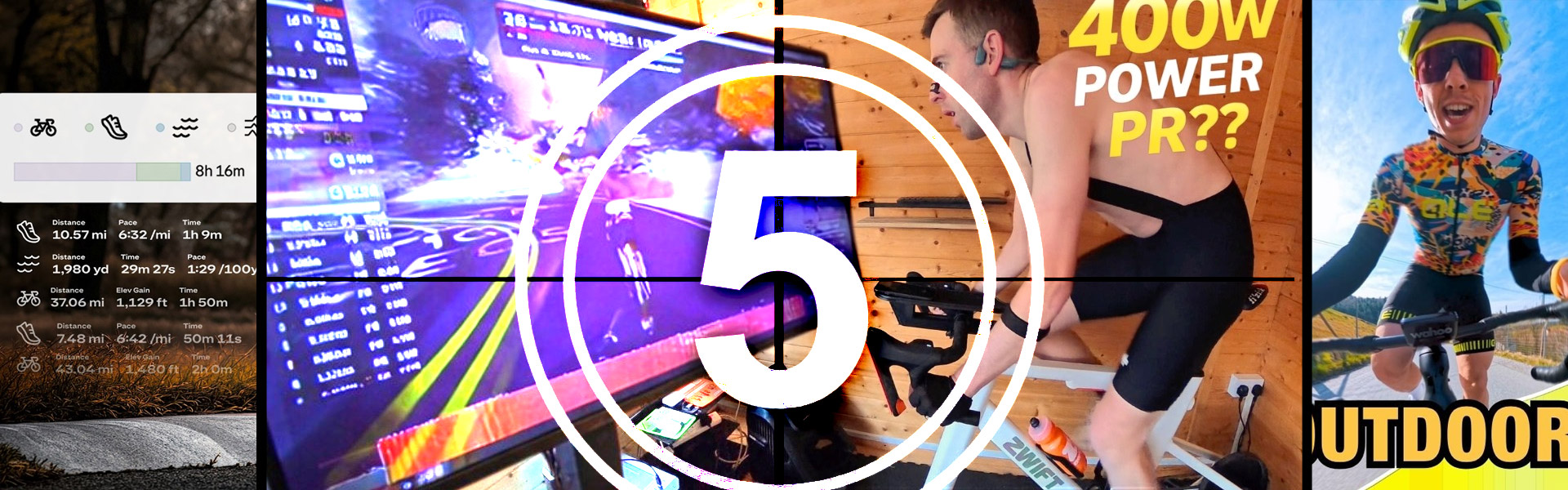
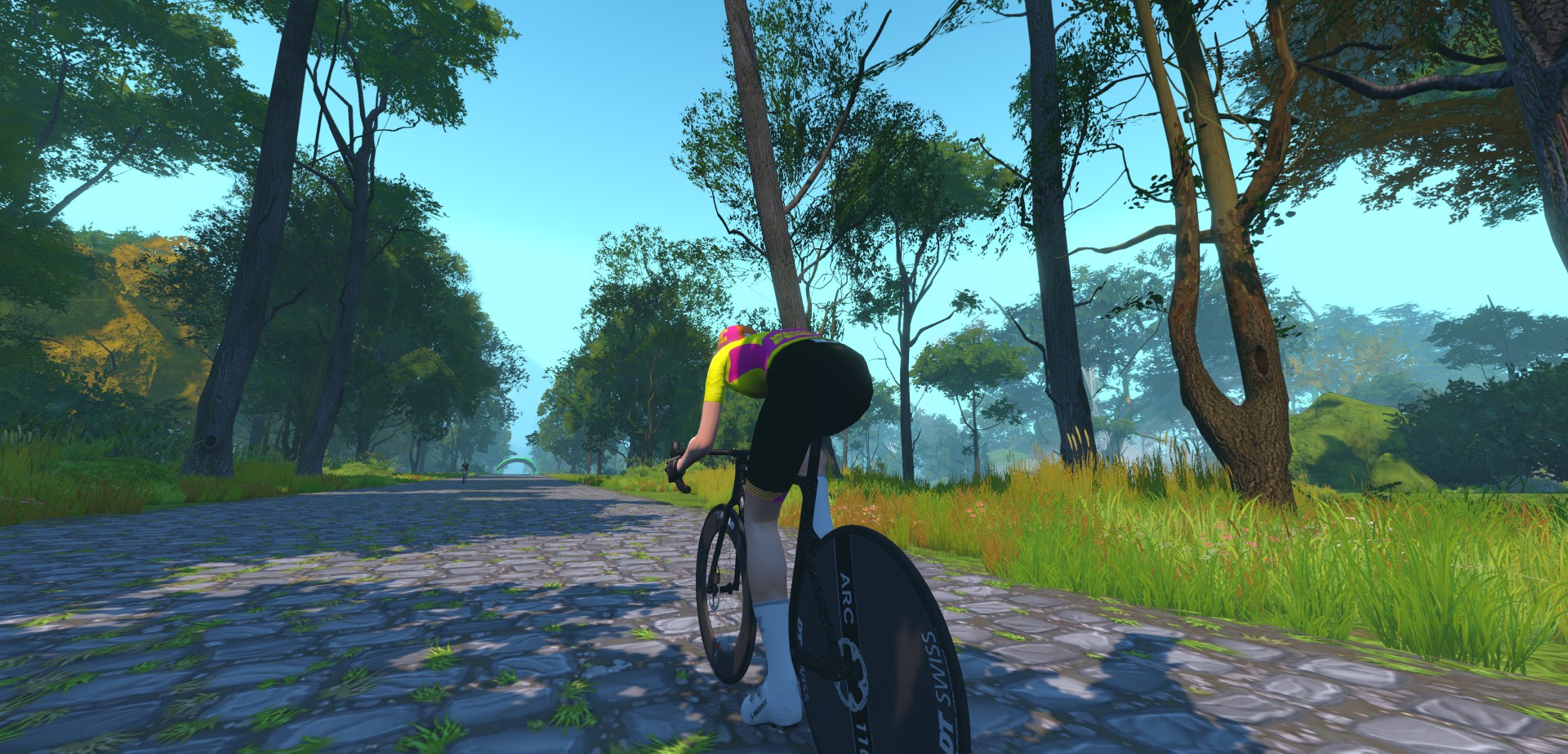
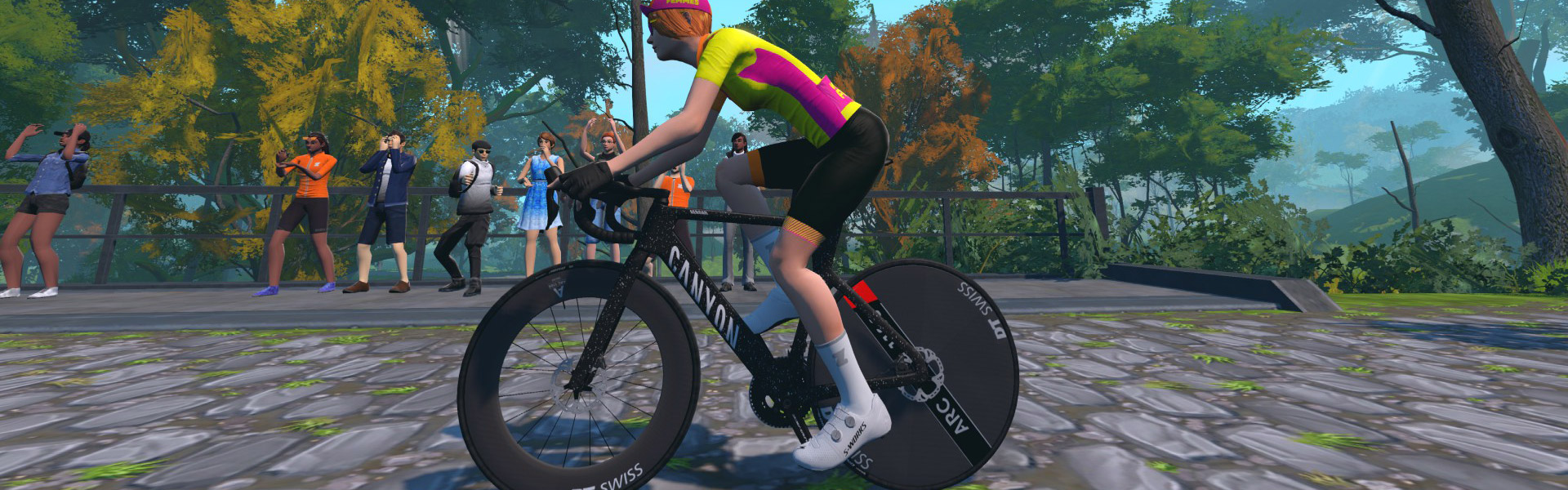
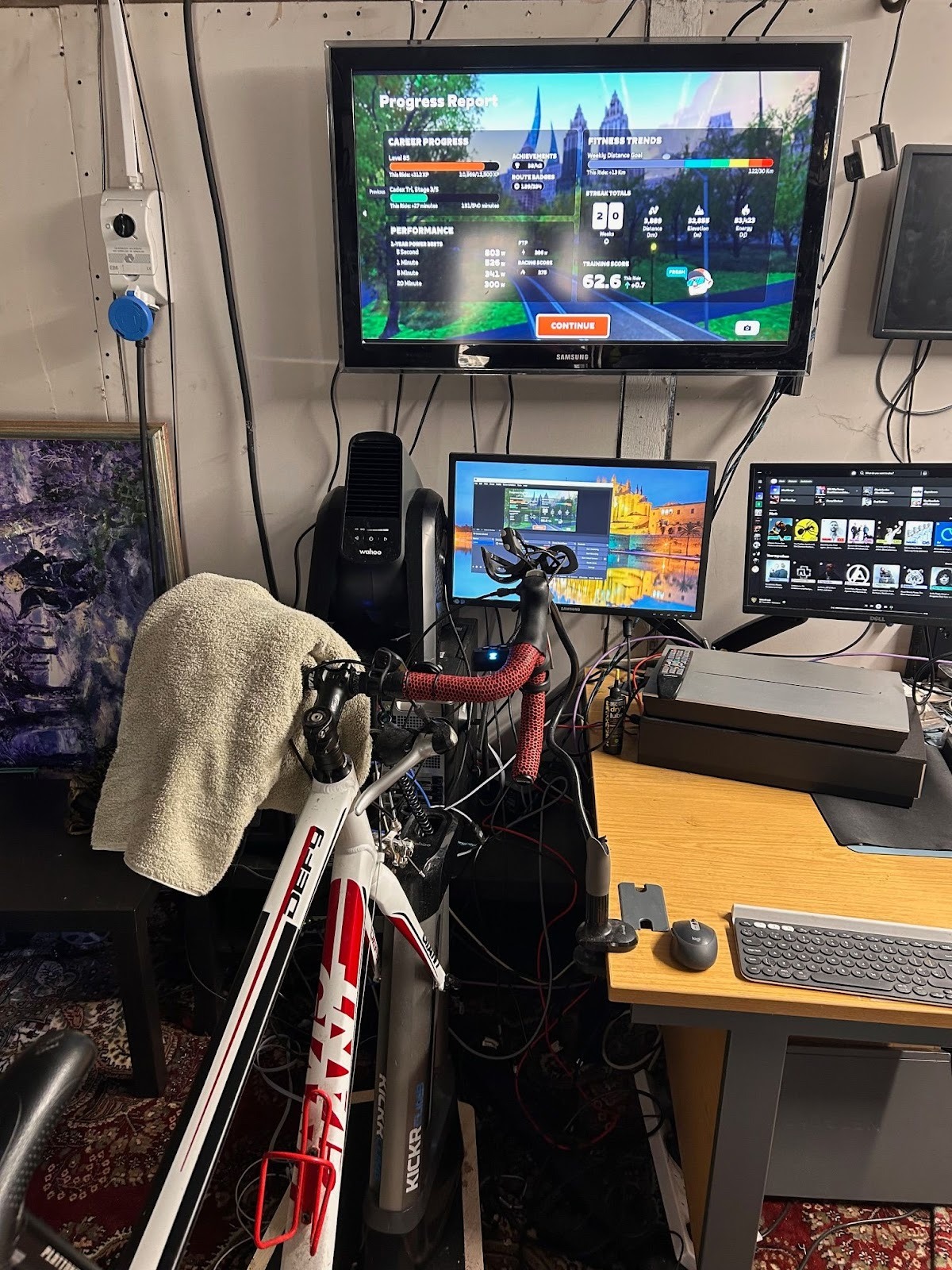
Is 6 weeks enough time to see noticeable power gains? In this week’s top video, watch as one Zwifter shares the power results after a 6-week training block.
Also featured: IRONMAN training, riding outdoors after months of Zwifting, getting started on Zwift, and Zwift’s newest wheelsets.
I Gave Myself 6 Weeks to Hit 400W…. the Results are In!
After 6 weeks of training, can Ed Laverack hit a 400-watt 20-minute power?
A Week of IRONMAN 70.3 Training
Watch as Zach Levet takes viewers through a week of his IRONMAN 70.3 training, which features several bike sessions on Zwift.
Can Zwift Prepare You for Real Climbs?
After a long indoor season, Manuel Essl hits the roads to tackle several outdoor climbs. Hear from him as he discusses his efforts and shares how riding outdoors compares to his indoor training on Zwift.
What do you need to get on Zwift in 2026?
What do you really need to get started on Zwift? In his latest video, Rob Ingram Fitness breaks down everything you need to get started on Zwift.
Should You Actually Buy the New Wheels on Zwift?
Are the new wheelsets in Zwift worth purchasing? Adam from Road to A discusses whether he thinks it is worth purchasing these new wheels.
Got a Great Zwift Video?
Share the link below and we may feature it in an upcoming post!
This is a fairly unremarkable route, particularly for a scratch race format that doesn’t encourage segment efforts. Will riders spice it up, or will everyone sit in the wheels and conserve?
Let’s dig into the course layout, powerups, bike decisions, and strategic options.
Looking at the Route
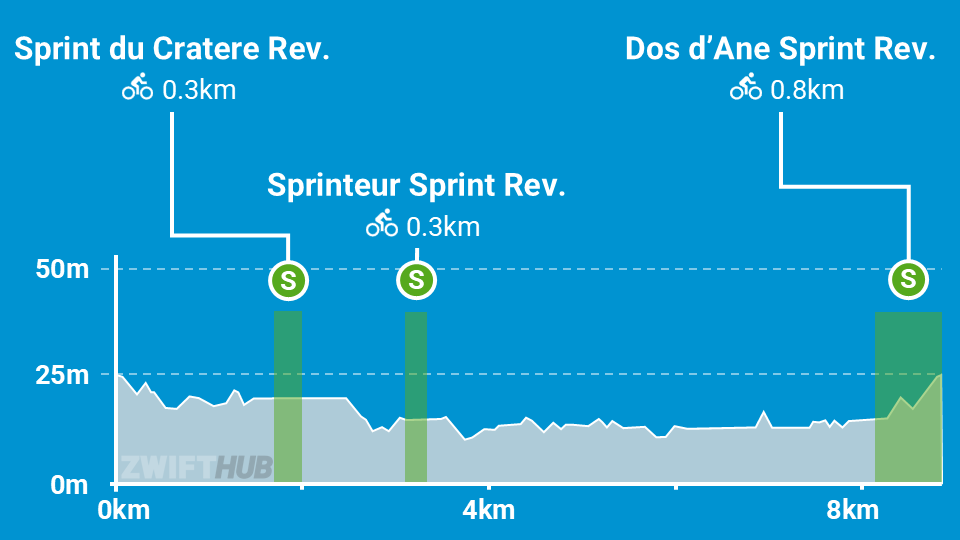
France’s Croissant is a quick, flattish loop covering all the new roads added to the map in April 2025. There’s a 3.2km lead-in, then each lap is 9.3km long, with 49m of elevation gain. A/B teams will be racing 4 laps (40.4km, 219m), while C/D will race 3 (31.1km, 170m).
Here’s a profile of 1 Croissant lap:
This is a rather unremarkable route, particularly for a scratch race. The bit most suited for attacks is the Dos d’Ane Sprint Reverse segment at the end of each lap (and at the end of the lead-in), since it’s the longest uphill on the circuit. While attacks will surely happen elsewhere, you can bet your sweaty bib straps they’ll happen on this segment, every lap.
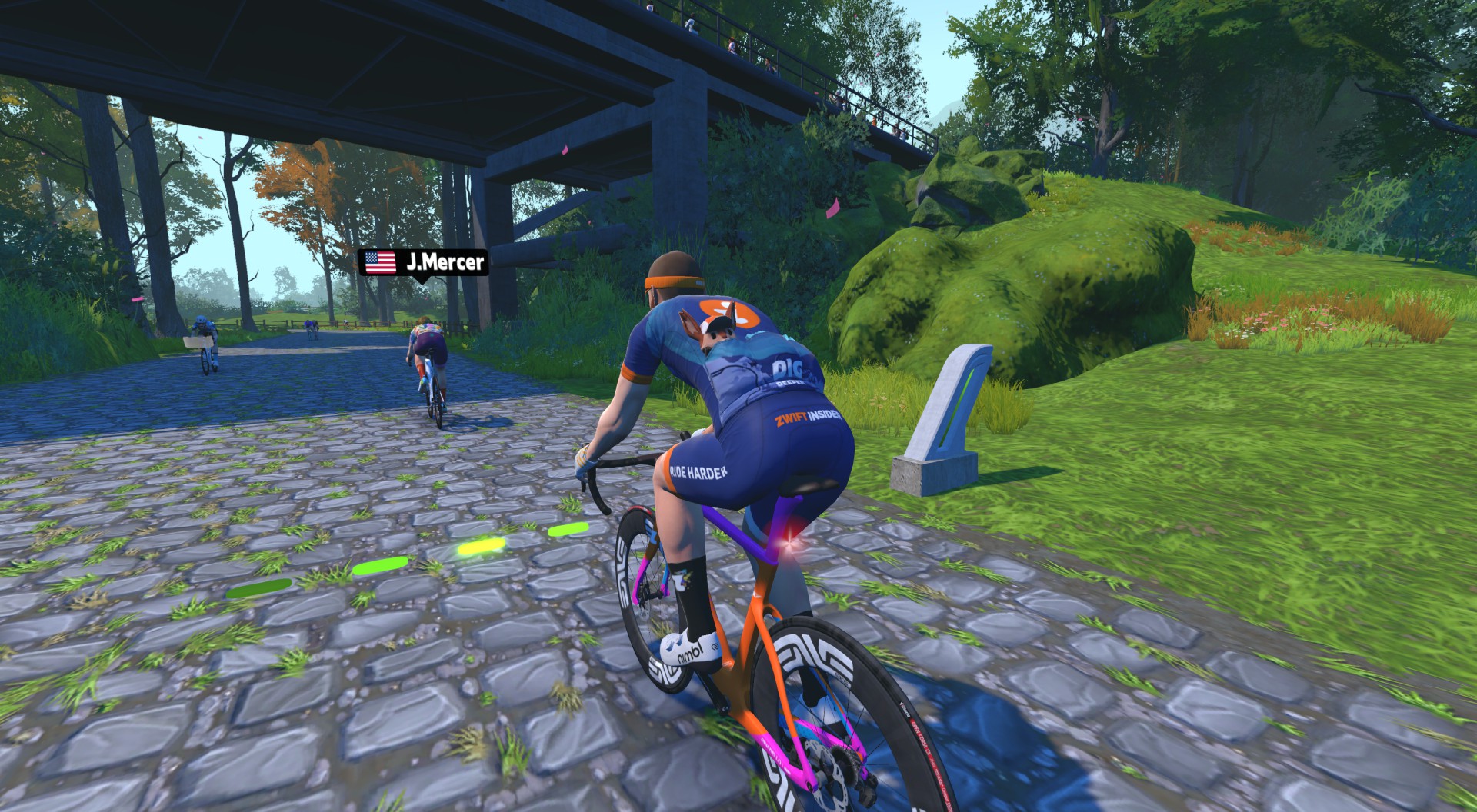
The start of Dos d’Ane Sprint Reverse is easy to spot, as it’s the only place on the course where you ride beneath an overpass:
The Dos d’Ane Sprint Reverse segment is 750 meters long, but it’s far from a steady grade. I like to think of it in four parts:
Flat lead-in (~100 meters)
First climb (~250 meters)
Slight descent (~100 meters)
Second climb (~300 meters)
Timing will be crucial on the finish, as it’s easy to go too hard too soon and blow up on the rises of Dos d’Ane Sprint Reverse. You may want to recon this segment before your race, or even be a bit cheeky and use the first laps of the race to do your recon.
Three different powerups are on offer for this race, given with equally-weighted probability at each arch. There are three arches in each lap of the route: the Dos d’Âne Sprint at the start of each lap, followed by Sprint du Cratère ~2km later, then the Sprinteur Sprint just 1.4 after that.
We’ll also get a Draft Boost powerup in the start pens.
Lightweight (feather): reduces your weight by 10% for 30 seconds. Use on climbs, where weight slows you more than it does on flats and descents. This is probably the least useful of the three powerups, since this is such a flat route. Use it on the second climb of the Dos d’Âne Sprint Reverse if you’ve got it.
Draft Boost (van): increases the draft effect you are experiencing for 40 seconds. Use at higher speeds (flats and descents) when you are already drafting off another rider (since this powerup only helps when you are drafting). This powerup lasts the longest and is most useful when sprinting in a pack at the finish, or if you want some recovery on the flats/descents while sitting in the wheels. Not a bad powerup for the finish, particularly if you trigger it on the downhill/flat middle section of Dos d’Âne Sprint Reverse and use it to sit in the pack and/or move up to a good position near the front.
Aero Boost (helmet): makes you more aerodynamic (reduces your CdA by 25%) for 15 seconds. Use at higher speeds (flats and descents), especially when no draft is available (although it is still useful when drafting). This powerup is the best of the three to use in the final sprint, even if it’s slightly uphill. It’s also useful if you want to put in a mid-race attack on the flats, or perhaps bridge up to riders just ahead.
Bike Recommendations
Bike recommendations for this race are simple: use the most aero road bike and wheelset you’ve got. That means one of these for most racers:
A note for the super-Zwifters: this is a rare ZRL race where using your fully-upgraded Halo bike (the Tron or Project 74) is also a good option, as they are super aero!
(And while the S-Works Venge is technically just a smidge faster than the top 4 all-arounders in terms of pure aero performance, it’s a much worse climber, so it’s hard to recommend.)
For wheels, I’d put the DT Swiss 85/Disc on, since it is about 4 seconds faster across an hour compared to the next best.
Lots of recon events are scheduled on upcoming ZRL routes, led by various teams. See upcoming ZRL recons for this race at zwift.com/events/tag/zrlrecon.
Additionally, riders in the Zwift community do a great job every week creating recon videos that preview the courses and offer tips to help you perform your best on the day. I’ll add them below as I find them!
J Dirom
Nathan Krake
Strategic Options
It’s been a while since we had a scratch race on such a flat route. While it may very well result in boring races, remember: the riders make the race. It’ll be interesting to see how teams work to maximize their results.
Remember: all that matters is your finishing position.
Here are some of the strategies we’ll be seeing next Tuesday:
Planned Attacks: Strong climbers will put in hard attacks off the front, forcing other teams to chase while their teammates ride the wheels. A coordinated full-team breakaway, the holy grail of race victories, may even be an option.
Sitting In: Many riders will take the approach of sitting mid-pack, surfing the wheels, and letting others close down any gaps to attacking riders. This is the lowest-effort approach, but it also carries the risk of being dropped if the elastic snaps ahead.
Dos d’Ane Sprinting: This segment will be a hard effort every time, as it’s the only easy-recognizable location on the map where a slight uphill lends itself well to attacks.
Going Long: Riders who don’t fancy their chance in a bunch uphill sprint will begin rolling off the front well before the final Dos d’Ane Sprint segment. Expect the last 5 minutes of the race to be an over-threshold effort, with an extra hard 60-second finish as icing on the cake!
Your Thoughts
Any insights or further thoughts on this race? Share below!
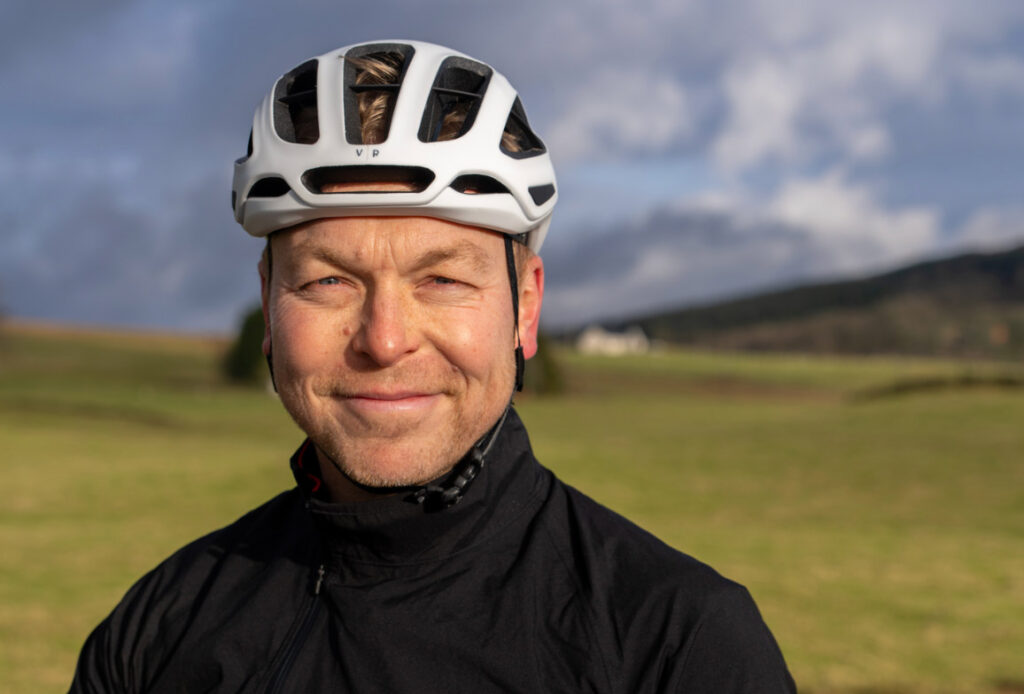
Tour de 4 Ride Series Announced with Sir Chris Hoy and Special Guests
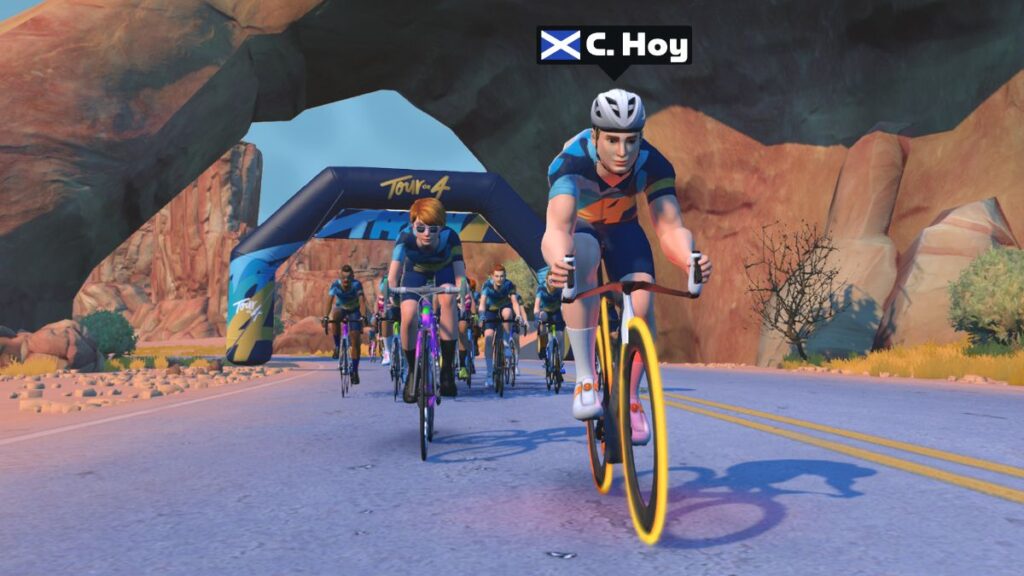
Zwift joined Sir Chris Hoy’s Tour de 4 as a founding partner in 2025, and they’ve just announced a new series of training rides leading up to the IRL Tour de 4 event on September 6, 2026.
The rides bring the global Zwift community together around a shared purpose: raising awareness and funds for cancer research.
The Tour de 4 is an initiative launched by Sir Chris Hoy to change the perception of people living with stage 4 cancer and to raise vital funds for cancer charities across the UK. Tour de 4 also aims to help connect those affected by cancer.
Zwift is kicking things off with a £50k donation to the Tour de 4 charities. But the real power is in the community!
Along with Sir Chris, many VIPs will also be joining each ride. Mark Beaumont, Matthew Keenan, Lucy Charles-Barclay, Reece Barclay, and Alistair Brownlee already signed up for the April 18 kickoff.
Designed as a Saturday social ride, the group will roll out of the pens at 9am UTC/5am ET/2am PT for a 45-minute banded ride. Each event is on a different course:
Fighting Cancer, Keeping My Identity – Mark Strevens
Mark Strevens’ cancer journey started in 2013. He had an appointment with the doctor to remove some skin tags. While there, his wife Kim asked the doctor to look at one of his moles on the back of his shoulder. They didn’t like the look of it, and immediately set up a dermatology appointment where it was excised, followed by a wider excision.
No additional treatment was required for the malignant melanoma. After five years of monitoring, everything was fine, and he thought he was good to go.
Discovering Zwift
Mark started zwifting in the winter of 2023 as a way to prep and drop some weight for a half-marathon he was aiming to do. He loved it. He raced cat D during prime time and then moved on to ladder races and ZRL with the HERD.
A Lump
At the beginning of December 2024, he started to develop COVID-like symptoms. He went back to his doctor in January 2025 with a persistent cough and a painful small lump in his right armpit. His doctor estimated the size at 2 mm and suggested it was a fatty lump.
“I was put on the non-urgent pathway for an ultrasound (6 weeks) and a variety of blood tests. A week later, I went back to the doctor complaining of the pain in my armpit. I was advised to wait for the ultrasound. As part of the blood work, I was misdiagnosed as type 2 diabetic due to a lab issue. My doctor put me on metformin, but declined to examine my lump. I had a bad reaction to the metformin, and after 2 weeks, Kim took me back to the doctor due to general poor health.”
The doctor stopped the metformin and expressed concern over the lump, but Mark could not get an earlier appointment for ultrasound because it was only two weeks until the appointment.
At the ultrasound appointment, his tumor was now 10 mm across and diagnosed as probable cancer. Bloodwork had come back with slightly elevated PSA and FIT test had blood present.
“I was placed on three cancer pathways: melanoma, colon, and prostate. I had a prostate MRI two days later and a two-week appointment for an ultrasound-guided biopsy. Two days prior to the biopsy, I was extremely unwell, so Kim took me to Accident and Emergency. I was admitted to the hospital with a high CRP and a slightly low white cell count. I was on IV antibiotics over the next two weeks to control the unknown infection. A biopsy confirmed metastatic melanoma, CT scan showed no brain metastasis.”
Mark’s prostate MRI showed a lesion, but the investigation was paused due to the melanoma. His colon investigation was also paused.
“Sent Home to Die”
Mark was discharged from the hospital with an expectation of two weeks to live.
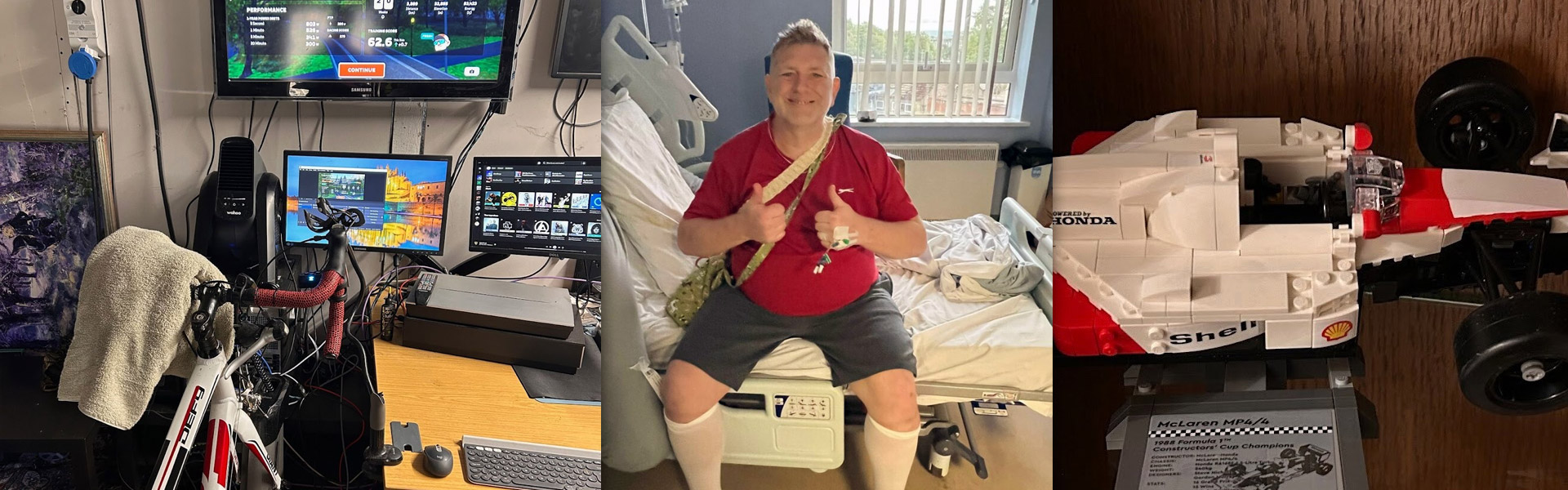
“I was sent home to die.” He had lost about 15 kg and was added to the palliative care team case load. His pain was managed with morphine. Surgery was set for 3 weeks time – a right axillary node dissection for the purpose of life extension.
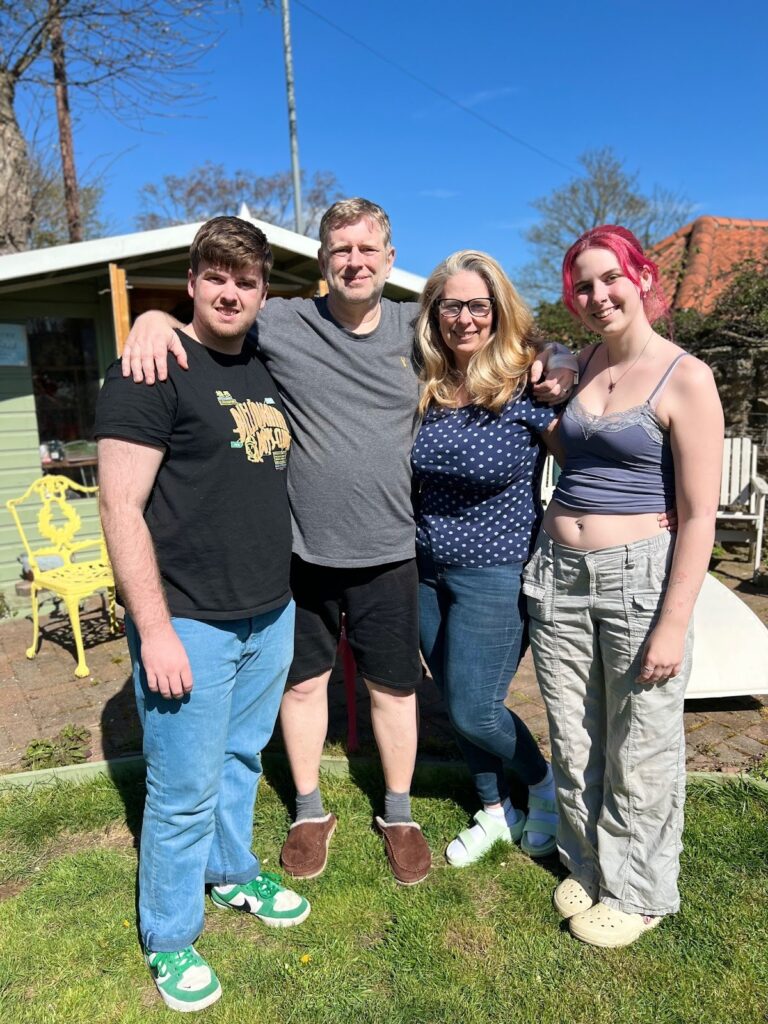
Once home, the palliative care team arranged DNR, prescription and a supply of end-of-life drugs. “My brothers came up, and I spent time with my wife and kids. We all took farewell photos. I put all my Zwift equipment and bikes up for sale, too.”
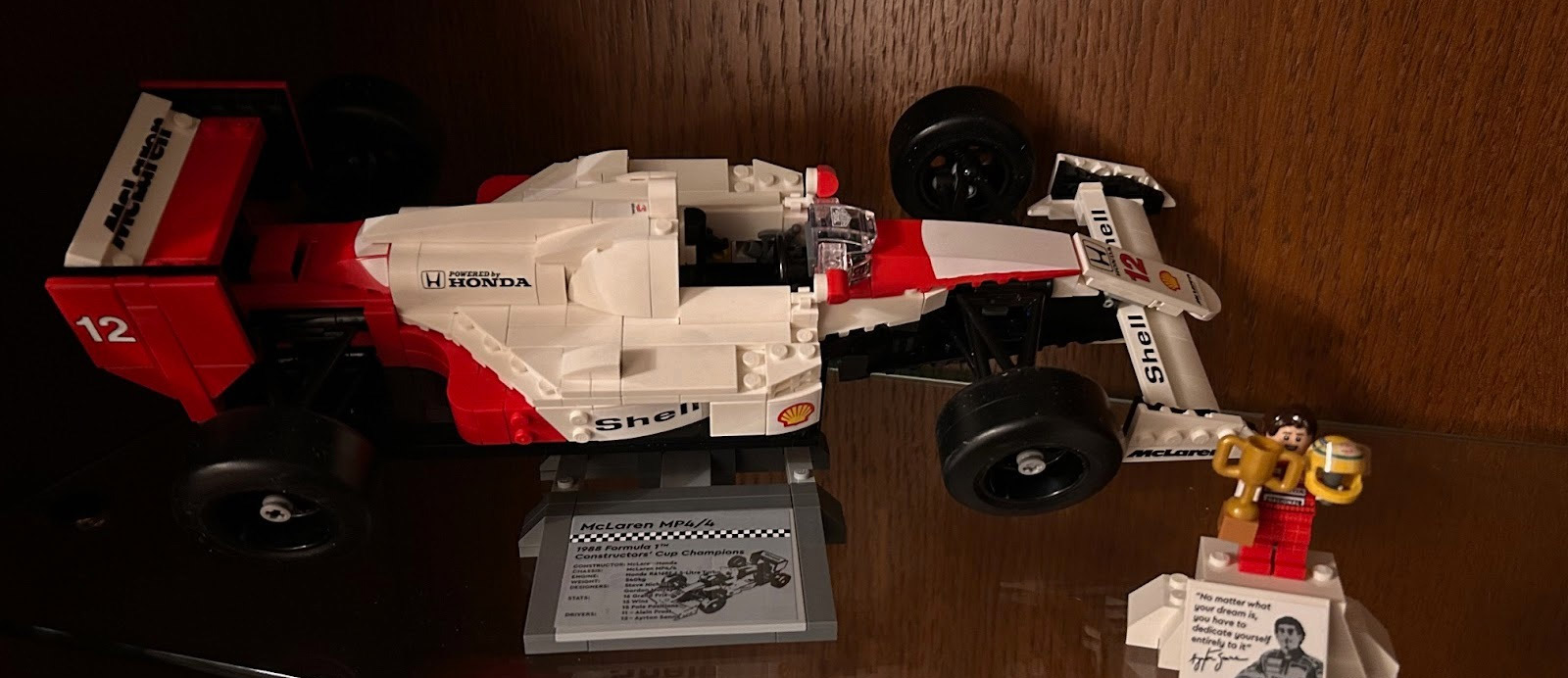
Mark loved riding and racing with Herd. “Sheldon Mair, the team captain for the Herd of Seahorses, kept in regular contact with Kim and sent me an aid package of a Lego F1 car to build.” This was great for morale.
Defying Expectations
“Despite expectations, I survived until surgery and the tumor was completely excised intact. It was 20 cm across.”
The tumor had not compromised any other organs. Along with the tumor, 25 lymph nodes were also removed, seven of which had cancer present and one of which was extra-capsular, meaning that the cancer had spread beyond the boundary of the lymph node.
“I recovered well from surgery and was referred to the oncology team for adjuvant treatment. They attempted targeted therapy, but it was a complete sh*t show. After four weeks, the side effects were so bad I wanted to die.”
They stopped treatment for two weeks and then restarted it on a lower dose. “Again, side effects started to kick in, and an echocardiogram showed significant damage to my heart.”
Back On the Bike: Odds Improving
Post-surgery and during targeted therapy, Mark really wanted to get back to riding. “I was in no shape to ride outdoors. If it wasn’t for Zwift, I wouldn’t have been able to ride at all.”
And he got some good news: a subsequent echocardiogram showed his heart had mostly recovered.
Mark was discharged from oncology with an expected 10-year survival chance of around 60% and a 50% chance of being disease-free over the same period.
“Once we had given up targeted therapy, I was able to get back on the bike in full swing and saw significant improvements in my performance.”
An Uncertain Future
After his surgery and after he was feeling a bit better, he was able to get his previously paused colonoscopy and prostate biopsy tests run. The colonoscopy was clear, but the prostate showed intermediate prostate cancer. Radiotherapy on his prostate was completed in the middle of December 2025.
“However, about a week before starting radiotherapy, I discovered a painful lump on my right flank. We managed to get a next-day appointment with a dermatologist.” The doctor was concerned, and they went straight down for an ultrasound-guided biopsy and CT scan. “I almost canceled the radiotherapy, as we did not have the result, and what was the point of treating the prostate cancer if the melanoma was back?” The biopsy was inconclusive, so he had a second biopsy a week later which showed it to be benign.
“This incident really damaged my calm. We had an expectation of at least 2-3 years of good health and had started looking at holidays for this summer, but now feel we can’t book anything more than a few weeks in advance.”
Helps Through Tough Times
Current side effects of the surgery are lymphoedema in Mark’s right arm and breast, nerve damage and pain in his right hand and right thigh, and reduced mobility in his right shoulder along with non-specific pain and discomfort in his right shoulder. Mark is now waiting on the results of more investigations on his shoulder.
“The response from Zwift riders has been amazing. And he’s never even met them in person. Social interaction is very important for Mark,” says Kim.
“It can’t be overstated, Zwift is a mental health saver,” says Mark adamantly.
Keeping His Identity
Because of his condition, he hasn’t been able to work, and the medication has impacted his memory and kept him from doing most of what he used to do. “He looks forward to zwifting as much as possible. He saves all his energy to get up and ride – to maintain his identity as a cyclist. Also, there’s so much support from other Zwifters going through the same thing,” says Kim.
“We support each other,” Mark adds. “Zwift has let me exercise and improve my recovery and maintain my mental health.”
Kim adds: “Whenever he’s done riding on Zwift he’s got a spring in his step!”
Keep that spring in your step, Mark! We are all cheering you on!
Four Temporary Zwift Hacks for Fast Bikes and Wheels
Due to a rare combination of Zwift events and bugs/misconfigurations, there are currently four very time-limited “hacks” available to all Zwifters.
There’s something here for everyone, but these should be particularly appealing to lower-level Zwifters looking to procure faster in-game setups. Read on for details
#1: Cervelo Aspero 5 (Faster Upgrading)
The new Cervelo Aspero 5 is the most aero gravel bike on Zwift, beating the next-fastest bikes by just over 3 seconds across an hour of riding. It’s a bit heavy, so maybe not the best choice for races that involve steeper, longer climbs. But it’s still one of the top 4 gravel bikes on Zwift.
Currently, the Aspero 5 is set up as a mid-level bike in terms of upgrades. This means it can be upgraded to top performance with much less work than the other top gravel bikes, which are all set as high-level upgrade bikes.
A mid-range bike requires you to ride 160+200+240+280=880km and spend 50k+100k+150k+200k=500,000 Drops to reach stage 4 and top speed.
A high-end bike requires you to ride 200+260+320+380+440=1600km and spend 100k+200k+350k+500k+750k=1,900,000 Drops to reach stage 5 and top speed.
A couple of caveats to note:
The Aspero 5 is currently misconfigured in terms of weight, meaning it’s a bit heavier than it should be. Zwift tells me this will be fixed in the next update, scheduled to roll out April 21. All the info above about its performance, as well as the data on today’s gravel performance post, are based on this revised weight.
I’m assuming Zwift will adjust this frame to use the high-end upgrade scheme in the April 21 update as well. When that happens, any upgrade stages you have reached (and paid Drops to unlock) will remain in place, but any new stages will be shifted to the high-end requirements. It’s a rather odd state of affairs, because you may have reached stage 4 and maximum performance, but once it is shifted to a high-end scheme, you’ll need to upgrade to stage 5 for maximum performance.
#2: Pinarello Dogma 2024 (No Level Lock)
The Dogma 2024 is one of the top-performing road frames on Zwift, and my personal favorite due to a very limited-availability paint scheme I unlocked back in 2024 so my in-game Dogma matches my IRL bike.
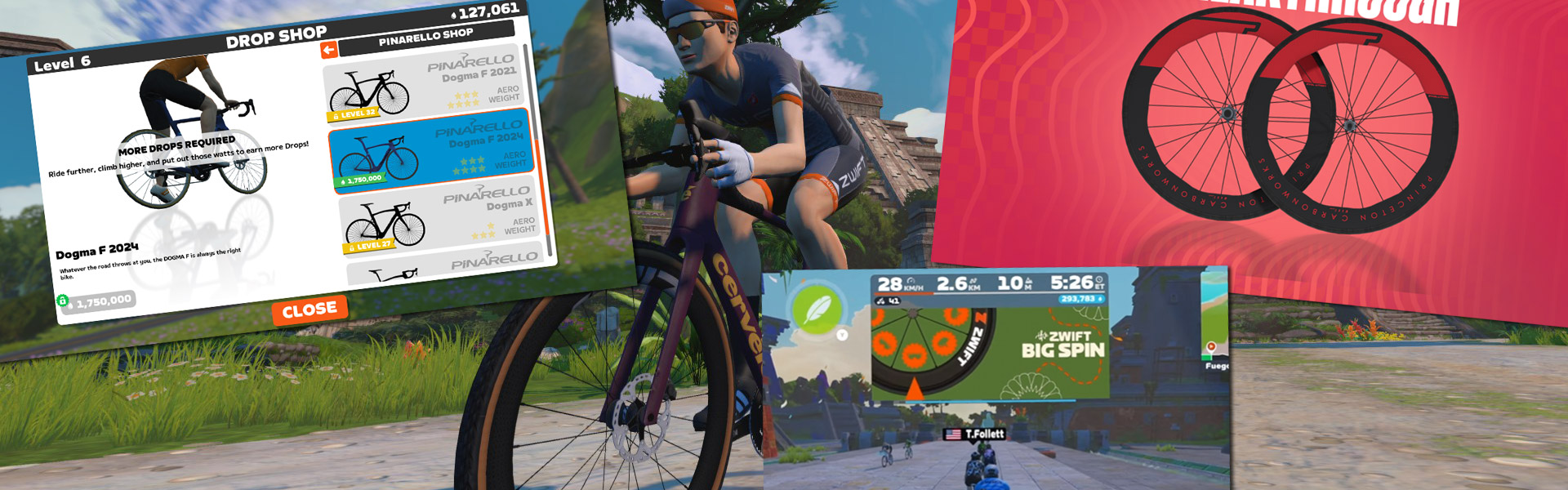
Zwift didn’t announce this, but a rider tipped me off that the Pinarello Dogma 2024, typically locked so only level 40+ riders can buy it, has had its level lock completely removed. Zwift did this because Zwift Camp: Breakthrough includes a “Starry Red” colorway unlock for the Dogma 2024, but you have to purchase the frame to use the unlock. I guess Zwift decided it would be a bummer to be below level 40 and unlock the colorway with no way to use it.
I’m sure the Dogma 2024 will return to a level 40+ lock once Zwift Camp: Breakthrough ends, so if you’re below level 40 and want this frame, buy it while you can! (It’s not cheap: 1,750,000 Drops.)
#3: Princeton Carbonworks Wake 6560 Lava (Free Unlock)
I saved the best for last.
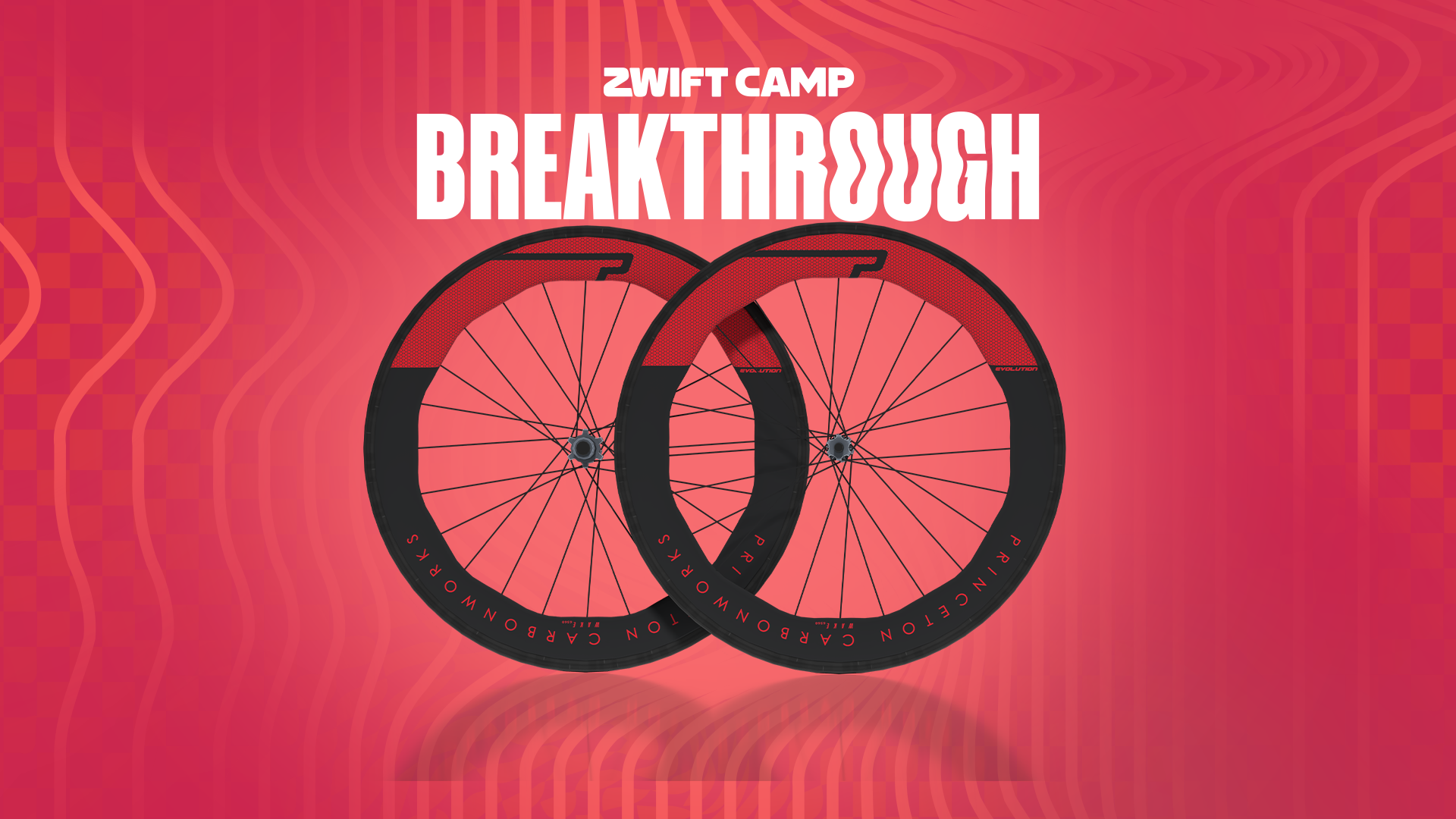
Zwift originally said riders would unlock a “Lava” colorway for the new Princeton Wake 6560 wheels as part of Zwift Camp: Breakthrough. But it turns out, you unlock the actual wheelset. That’s right: complete any two stages of Zwift Camp: Breakthrough, and you’ll get these wheels (a 685,000 Drops value!) free of charge.
This isn’t just any wheelset, either. As explained here, the Princeton Carbonworks Wake 6560 White is the new top all-arounder in the game. Super strong climbers.
One minor caveat: the “Lava” version of these wheels is currently misconfigured and a bit slower than the “white” version. Zwift knows about it, and I bet this will be fixed to match the White wheels in the next release.
#4: Mystery Spinner Drops Farming
Lots of riders have been “Drops Farming” the Stoneway Sprint Reverse segment on Watopia’s southern coast, because every time you complete the segment you get a spin on the mystery spinner. If the spinner lands on a prize you already own, you’ll get a healthy 10k Drops bonus instead.
I was able to do a full “rep” in 1 minute, 40 seconds, without a lot of effort. 10k Drops every 100 seconds=360k per hour (and 72 U-turns)! Here’s a YouTuber showing how it’s done…
Tip: Several routes will get you to the Stoneway Sprint Reverse quickly. The Mayan 8 is one of them.
Note: this is a very limited-time opportunity. I believe the Mystery Spinners will end with the Big Spin 2026 ends, on April 20th.
Questions or comments?
Will you be taking advantage of any of these hacks? Share below!
Your chosen bike frame and wheelset both affect speed in Zwift, so it makes sense for racers to do a little research and choose the best tool for the job. This is especially true for courses that include significant amounts of dirt road, because Zwift’s gravel bikes perform much better than road bikes on dirt!
On top of that, while Zwift’s 4-star rating system for weight and aero is simple and easy to understand, performance can vary even among frames with the same star ratings, because the stars are just an approximation. Plus, Zwift’s addition of bike upgrades means racers need to consider how a frame will perform when fully upgraded, not only when it’s first purchased.
Below, you’ll find charts ranking all the gravel bike frames and wheels based on their performance on flat roads and climbs. We also dig into how they perform in the dirt, including a chart comparing gravel bike performance to top road, TT, and MTB setups.
Charts last updated April 10, 2026
Gravel Frame Tarmac Performance
We begin with a simple chart showing how much time each gravel frame with the basic Zwift Gravel wheels will cost you compared to the stock Zwift Carbon frame with 32mm Carbon wheels across 1 hour of riding at 300W (4 W/kg) on tarmac.
A few helpful notes:
These are “stage 0” frames, meaning no performance upgrades have been applied.
Relative performance on tarmac is the same as relative performance on dirt. That is, if a gravel frame is faster than another gravel frame in these tarmac tests, it will be faster on dirt as well.
The times below are all negative because all gravel frame+wheel combos are much slower on tarmac than even the most basic road bikes. The faster your gravel frame, the less time you’ll lose.
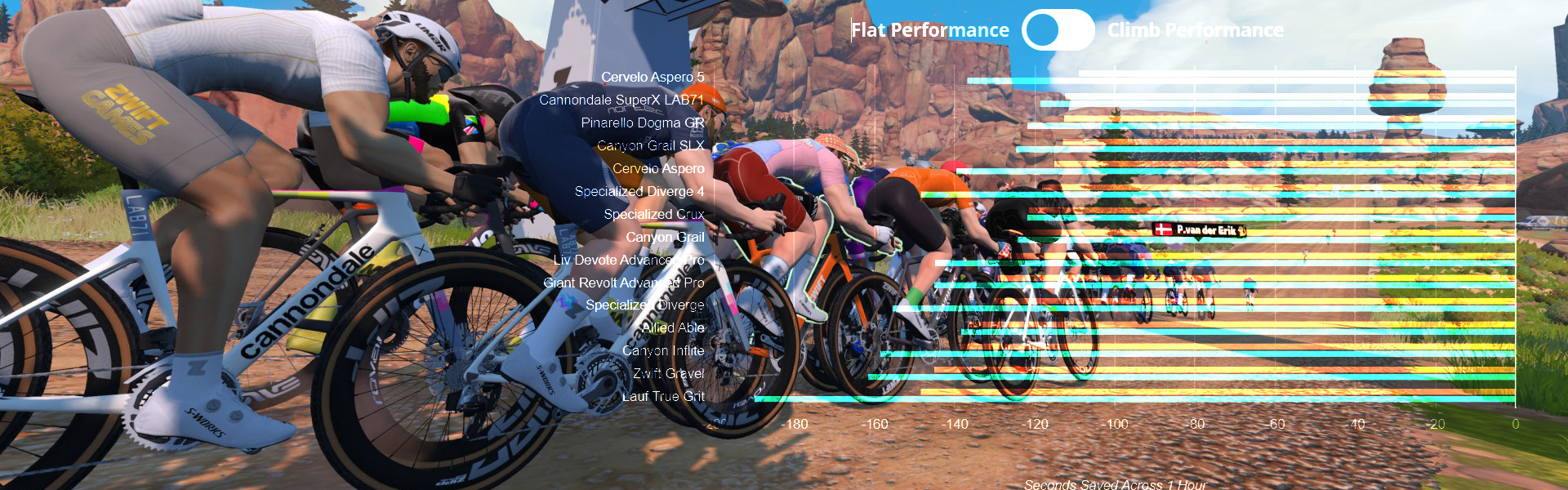
Mouse over the bars for specific data. These numbers show how many seconds each particular gravel frame loses compared to the basic road setup. They also let you compare one gravel frame to another. For example, in our flat test, the Cannondale SuperX LAB71 loses 112.4 seconds, while the Lauf True Grit loses 148.7 seconds. That means the Cannondale is 36.3 seconds faster than the Lauf across an hour of flat tarmac.
The chart is sorted from the best-performing frames to the worst, and you can sort based on flat performance or climb performance.
Sort Chart By:
Flat Performance
Climb Performance
Takeaways
The most obvious takeaway is that gravel setups are much slower on tarmac than road setups. Even the most aero gravel bike still loses 109.1 seconds to a basic road bike, and the best climbing gravel bike loses 118.7 seconds across an hour of climbing.
Comparing gravel frames to gravel frames, you can see that the latest additions to Zwift’s Drop Shop are the clear top performers in the flat test, taking the top 4 spots. The climb test is a bit mixed, with the super light Specialized Crux in second place and the Canyon Grail essentially tied with the new Grail SLX. But apart from those two frames, the other top 4 spots go to the new gravel frames.
Gravel Frame Performance, Stacked
This chart uses the same data as above, but combines the flat and climb times, sorting by their sum, so frames are ranked based on total time cost across both tests. This chart lets you easily see the best all-around performers, and whether their performance leans to the aero or climbing side.
Takeaways
Nothing too earth-shattering here… four of the top five slots go to the newest bunch of gravel frames, with the Cannondale SuperX LAB71 delivering the best all-around performance.
Gravel Wheels Tarmac Performance
Like the frame chart above, this simple chart shows how much time a particular gravel wheelset (paired with the Zwift Gravel frame) will cost you across 1 hour of riding at 300W (4 W/kg) on tarmac compared to the stock Zwift Carbon road setup.
On Zwift, all gravel wheels are much slower on tarmac than even the most basic road wheels. So the numbers below are all negative, meaning you’re losing time to the stock road setup. The faster your wheels, the less time you’ll lose.
The chart is sorted from the best-performing wheels to the worst, and you can sort based on flat performance or climb performance.
Show Chart For:
Flat Performance
Climb Performance
Takeaways
On the flats, the two newest gravel wheelsets are tied at the top of the podium, while all the other wheelsets are ~13 seconds slower.
In terms of climb performance, you can see there isn’t much variation from the fastest to slowest wheels. Still, the two newest wheelsets sit atop the chart, while all the older wheelsets turn in essentially the same time, apart from the Zwift Gravel being just a touch slower.
The simple takeaway here is: use the Roval Terra Aero CLX or Zipp 303 XPLR SW wheels.
Jungle Performance – Gravel Frames + Wheels
What about performance in the dirt, where gravel bikes really shine?
Here are two simple charts showing how each gravel frame and wheelset performs in the Jungle. This clearly shows which frames and wheels perform best in the dirt.
Gravel Frames
Time savings vs Zwift Carbon Frame + 32mm Carbon Wheels across 1 hour of Jungle Circuit riding at 300W (4 W/kg). All tests used the Zwift Gravel wheels.
Gravel Wheels
Time savings vs Zwift Carbon Frame + 32mm Carbon Wheels across 1 hour of Jungle Circuit riding at 300W (4 W/kg). All tests used the Zwift Gravel frame.
Takeaways
The first thing to notice is that gravel setups are much faster than road setups on Zwift dirt. More on this below in the “Jungle Top Performer Shootout” chart, but you can broadly estimate that road bikes lose time to gravel bikes in the dirt at twice the rate that gravel bikes lose time to road bikes on tarmac. This is useful information when racing on routes that include both tarmac and dirt surfaces.
The overall ranking of the gravel frames isn’t surprising, with the four newest racing frames taking the top four slots. The same goes for the wheels – while it may look like the two new wheelsets (Roval Terra Aero CLX and Zipp ZIPP 303 XPLR SW) are much faster than the other wheelsets, it’s just a chart scaling trick. Their time gap in the dirt is about the same as on the tarmac.
The simple takeaways here are: buy one of the new gravel frames and new gravel wheelsets if you’re looking to race in the dirt.
Jungle Top Performer Shootout
Our final chart shows Jungle performance for top setups in Gravel, Road, TT, and MTB. People often want to know how one type of setup (eg, TT) performs vs another (eg, Gravel) in dirt, or on a mixed-surface route. There’s no way to quantify this precisely due to race dynamics (drafting) and power fluctuation, but at least the chart below shows how each type of bike broadly performs relative to the other in the Jungle.
Keep in mind the data displayed is seconds saved across an hour of riding, compared to the time of the Zwift Carbon frame paired with the 32mm Carbon wheels.
Use the toggle to see data for stage 0 frames or fully-upgraded stage 5 frames.
Show Chart For:
Stage 0
Stage 5
Takeaways
Gravel setups are the clear winner on dirt courses, beating the next contender (a TT setup) by over 2 minutes across an hour of riding when comparing stage 0 setups. Gravel bikes even come out well ahead when comparing an un-upgraded gravel bike to a fully-upgraded TT rig!
Testing Methodology
The data above was generated using our standard bot testing procedures. Our bot rides alone on Zwift, set to 75kg weight, 183cm height. The aero (flat) test route is Tempus Fugit, the flattest course on Zwift, while the weight (climbing) test is done on Alpe du Zwift since it’s a long, steep, and fairly steady climb.
All About the New Specialized Diverge 4 Gravel Frame on Zwift
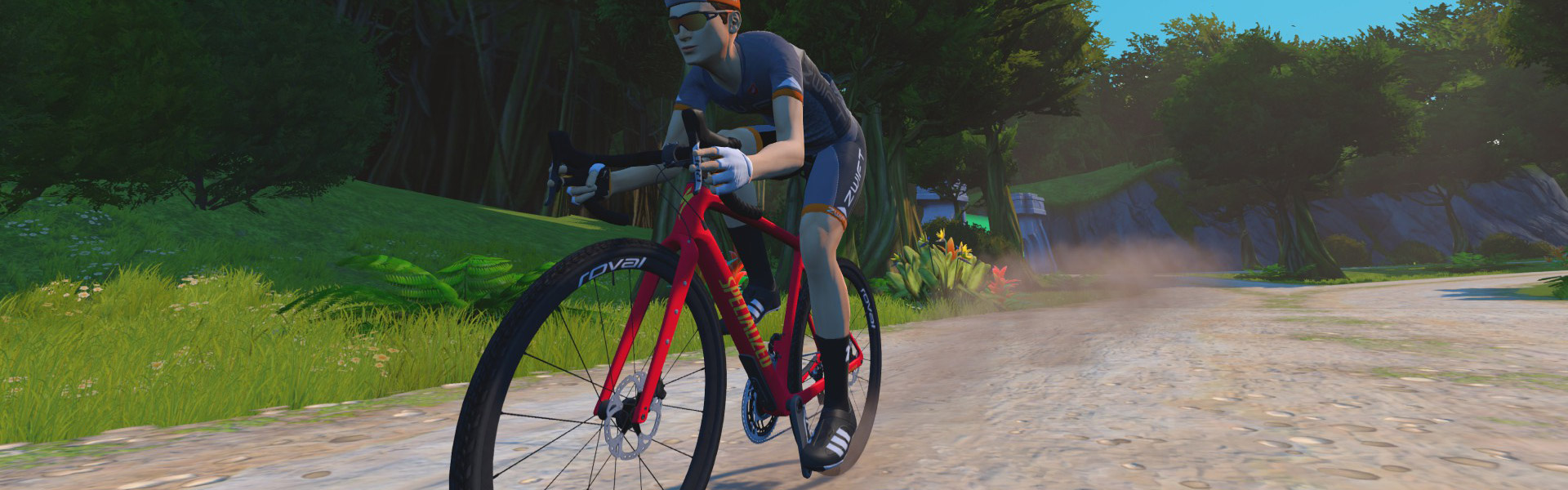
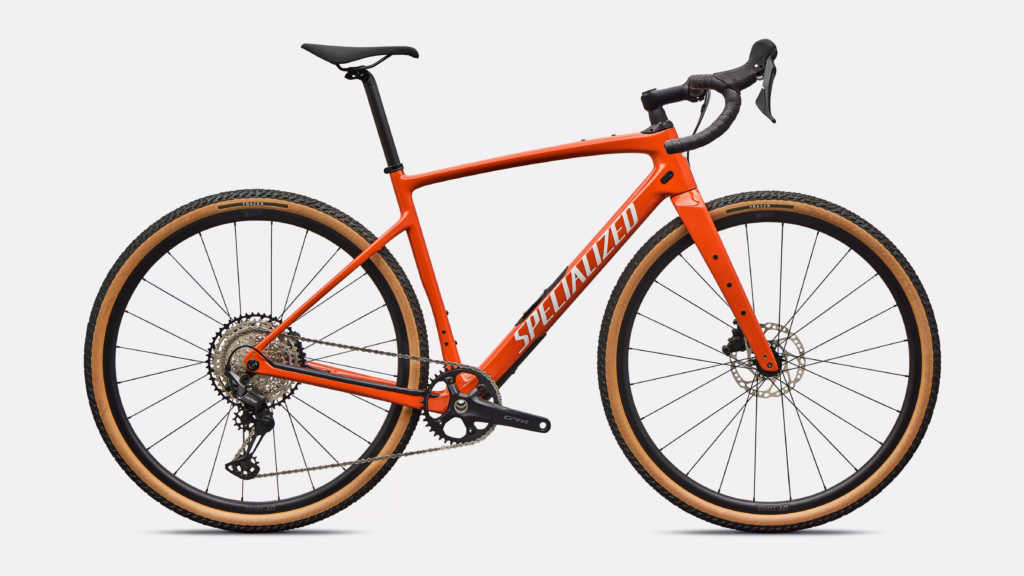
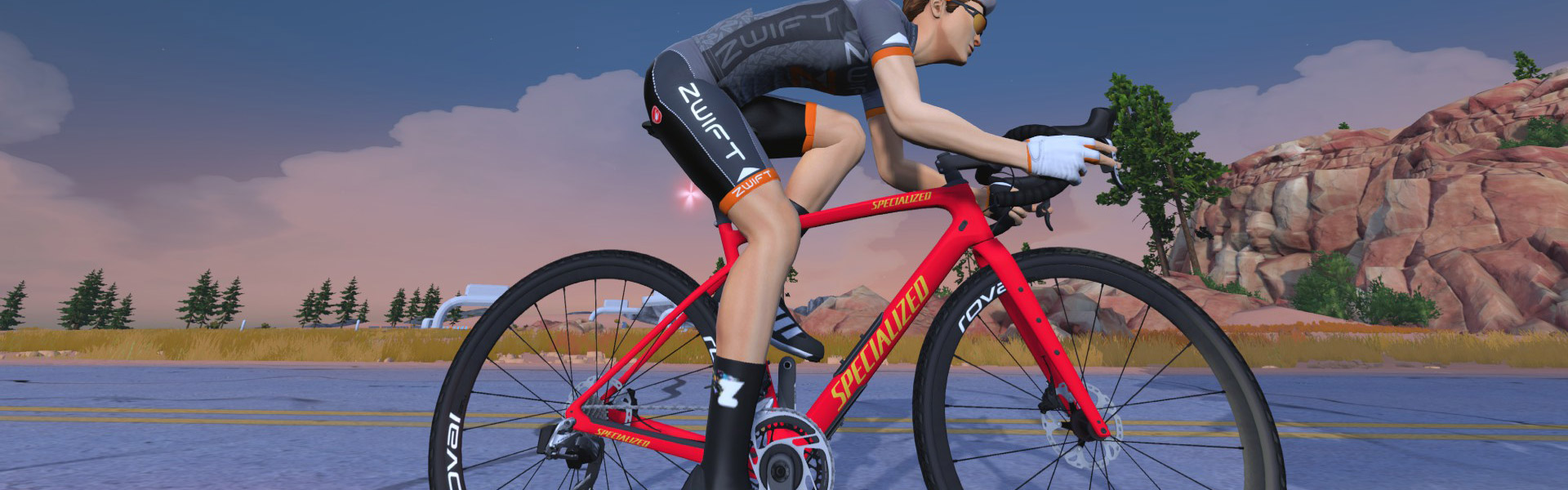
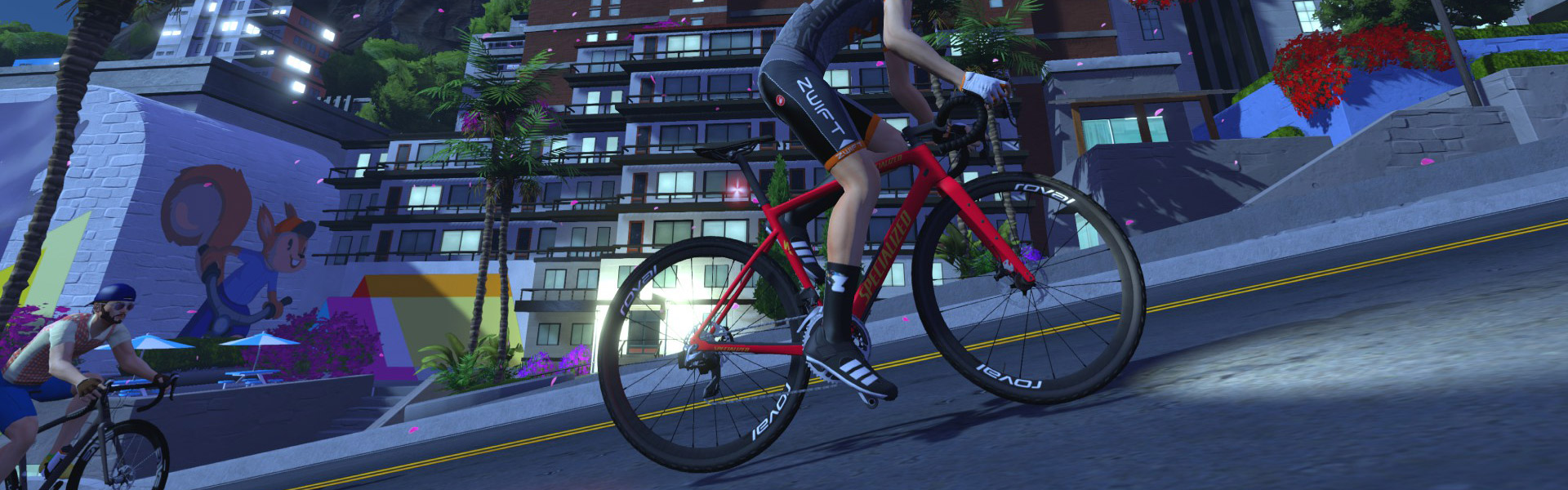
Zwift’s latest update includes a new gravel frame from Specialized, the Diverge 4, the latest version of their popular Diverge gravel line. The Diverge 4 is an updated version of the Diverge frame added to Zwift in March 2022, delivering improved aerodynamics and reduced weight.
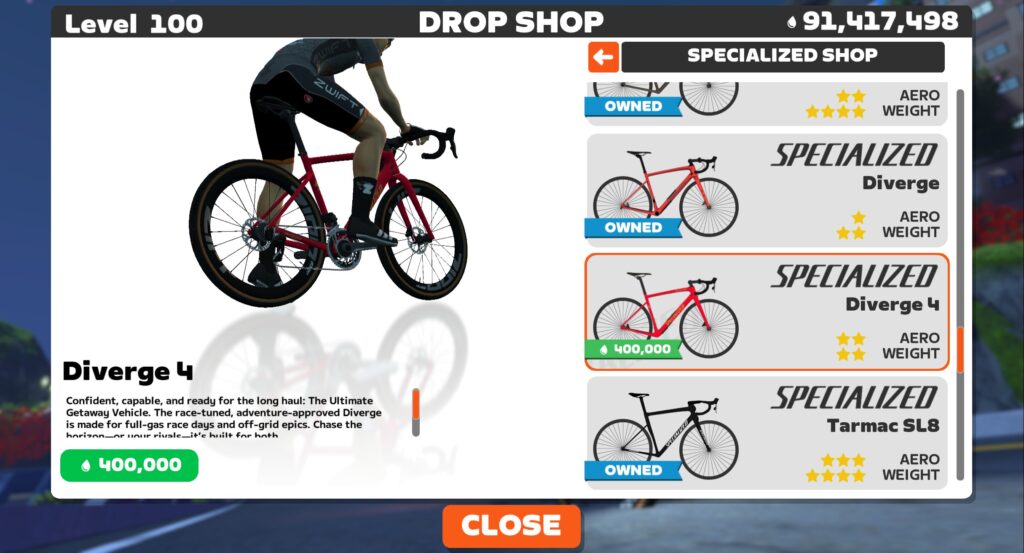
On Zwift, you’ll need to be updated to game version 1.111+ to see this bike in the Drop Shop. You’ll also need to be at level 12+ with 400,000 Drops to buy it. Here’s how it’s described in the Drop Shop:
“Confident, capable, and ready for the long haul: The Ultimate Getaway Vehicle. The race-tuned, adventure-approved Diverge is made for full-gas race days and off-grid epics. Cashe the horizon – or your rivals – it’s build for both.”
It’s rated 2 stars for aero and 2 stars for weight, while the original Diverge was rated only 1 star for aero. So we knew this bike would be faster than the original Diverge. But how much faster? Since Zwift’s 4-star system isn’t the most granular of performance measurements, we ran this frame through our precise tests to measure performance at nerd-level detail. Let’s dive in!
Note: test results below are from a 75kg, 183cm rider holding 300W steady using Zwift’s stock gravel wheelset on the un-upgraded version of the frame.
Aero (Flat/Rolling) Performance
Specialized’s Diverge 4 turns in a much stronger flat test performance than the original Diverge, beating it by 12 seconds over an hour of riding. In fact, the Diverge 4 beats the Specialized Crux that is currently in game (but only because that Crux is over 4 years old – surely if Zwift brings the latest Crux into the game, it will beat the Diverge in both tests.)
For comparison, the stock Zwift Gravel frame loses 145.4 seconds to our baseline Zwift Carbon frame across an hour of flat tarmac, while the fastest gravel bike, the Cervelo Aspero 5, loses 111.2 seconds. The Diverge 4 loses 118.4 seconds.
Climb Performance
The Specialized Diverge 4’s climbing performance isn’t on par with its aero performance, even though it does shave several seconds off the original Diverge’s time.
The stock Zwift Gravel frame loses 161.8 seconds to our baseline Zwift Carbon frame across an hour of Alpe du Zwift climbing, while the new Cannondale SuperX LAB71 loses 118.7 seconds. The Diverge 4 loses 148.5 seconds, putting it in the lower third of all gravel frames on Zwift in terms of climbing performance.
Jungle Performance
Of course, nobody really cares about how well a gravel frame performs on pavement, which is where we do our aero and climb testing (above). While those flat and climb tests help us tease out a frame’s aerodynamic capabilities and weight, when it comes to gravel bikes, people really want to know how fast they are on Zwift’s virtual dirt!
In that regard, the Diverge 4 turns in a strong “midpack” performance, losing ~9 seconds across an hour of Jungle Circuit riding to the fastest gravel frames.
Upgrading Your Specialized Diverge 4
Like all frames in Zwift, Specialized’s Diverge 4 can be upgraded in five stages. As a mid-range distance bike, only the first four stages result in a performance improvement. The Specialized Diverge 4 upgrade stages are as follows:
Ride 160km, pay 50,000 Drops for an aero upgrade
Ride 200km, pay 100,000 Drops for a weight reduction
Ride 240km, pay 150,000 Drops for a drivetrain efficiency improvement
Ride 280km, pay 200,000 Drops for an aero upgrade
Ride 320km, pay 250,000 Drops for a 5% Dropsboost
You can expect a stage 4 Specialized Diverge 4 to be approximately 28 seconds faster on a flat hour and 36 seconds faster on an hour-long climb vs a “stock” (un-upgraded) Specialized Diverge 4.
Conclusions
Specialized’s new Diverge 4 isn’t an exceptional performer in Zwift, but that’s realistic: it’s not a racing frame like the Specialized Crux. Rather, it’s more of a comfortable all-day adventure bike. Those characteristics, while appealing IRL, aren’t as attractive on Zwift, for obvious reasons.
The new Diverge is, however, available at a low level, and at a bargain price. Beginners may want to grab this bike as a decent gravel performer while they work their way up to higher levels and faster bikes.
We’ll be adding this bike to the following posts soon:
What do you think of Specialized’s new Diverge 4 in Zwift? Share below…
Important note: this post contains speed test results for Zwift frames or wheels. These results may change over time, and a bike's performance relative to others may also change. We don't always revise posts when performance rankings change, but we do keep current, master versions of our speed test results which are always available. See the frame charts, wheel charts, and Tron vs Top Performers for current performance data.
This weekend’s picks include a popular event from bike brand Winspace, a unique community vs community race, a World Parkinson’s Day ride, and Big Spin-focused events with fun prizes! See all the details below…
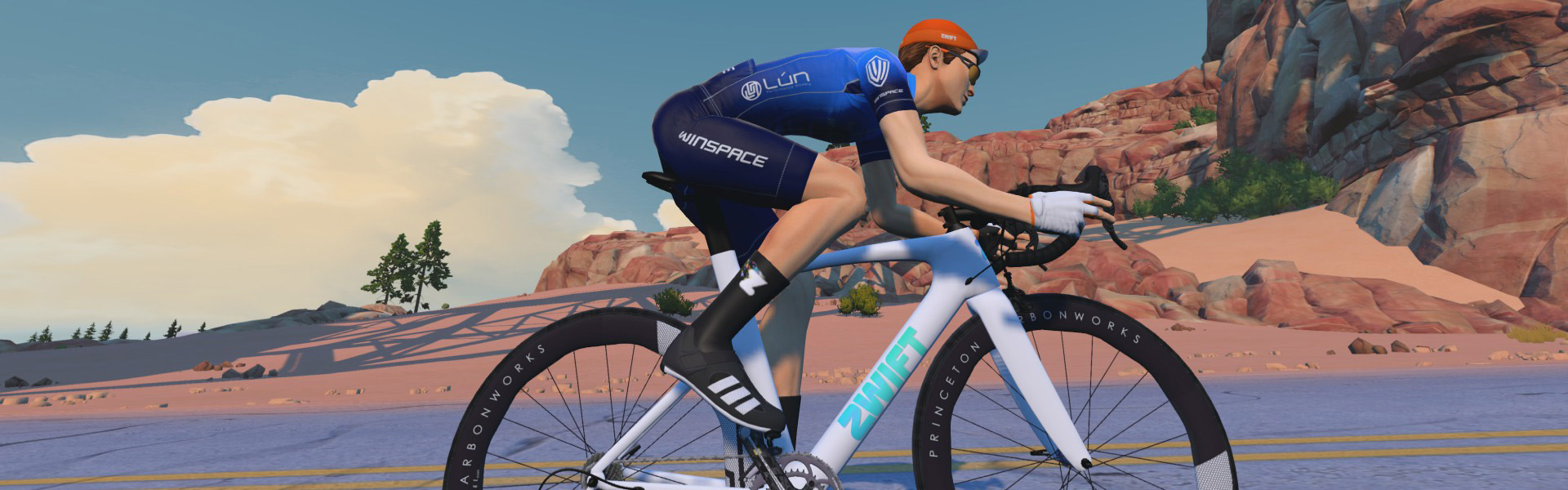
This is the first Zwift event I’ve seen from Winspace, and it’s always fun to see a new bike brand embracing the platform. This event has lots of signups, so they’re doing something right! It’s a simple ride – just 30 open-paced minutes on Tempus Fugit. Finish the ride to unlock the Winspace jersey (shown above) and win raffle prizes!
This week’s ride is on Watopia’s Southern Coast Cruise, which is also a Big Spin route, so you’ll get a prize spin at the end of each lap.
YouTubers Adam (Road to A), Liam (LiamShawLevelsUp), and Steven (Bike Bonk Biff) are hosting a community vs. community Zwift Racing event. This is a novel event on several levels, and it already has lots of signups!
Riders choose which team they’re on by changing their in-game name. Then it’s all about earning points for your team based on your finishing position, power numbers, and heart rate. Be sure to read the event description for all the details!
The race is on one lap of Watopia’s Hot Laps route (23.5km, 149m).
Saturday is International Parkinson’s Day, and the crew at ZWAP (ZWifters Against Parkinson’s) is hosting their 4th annual awareness ride.
This is an open-paced ride on Power to the Portal, which includes the Trollstigen climb (12.4km, 6.3%), a virtual recreation of one of Norway’s most iconic mountain roads.
Once again, we’re featuring a popular ride from the newish ZABI squad. It’s a 120-minute banded ride on Watopia’s Flat Out Fast route (21.4km, 46m).
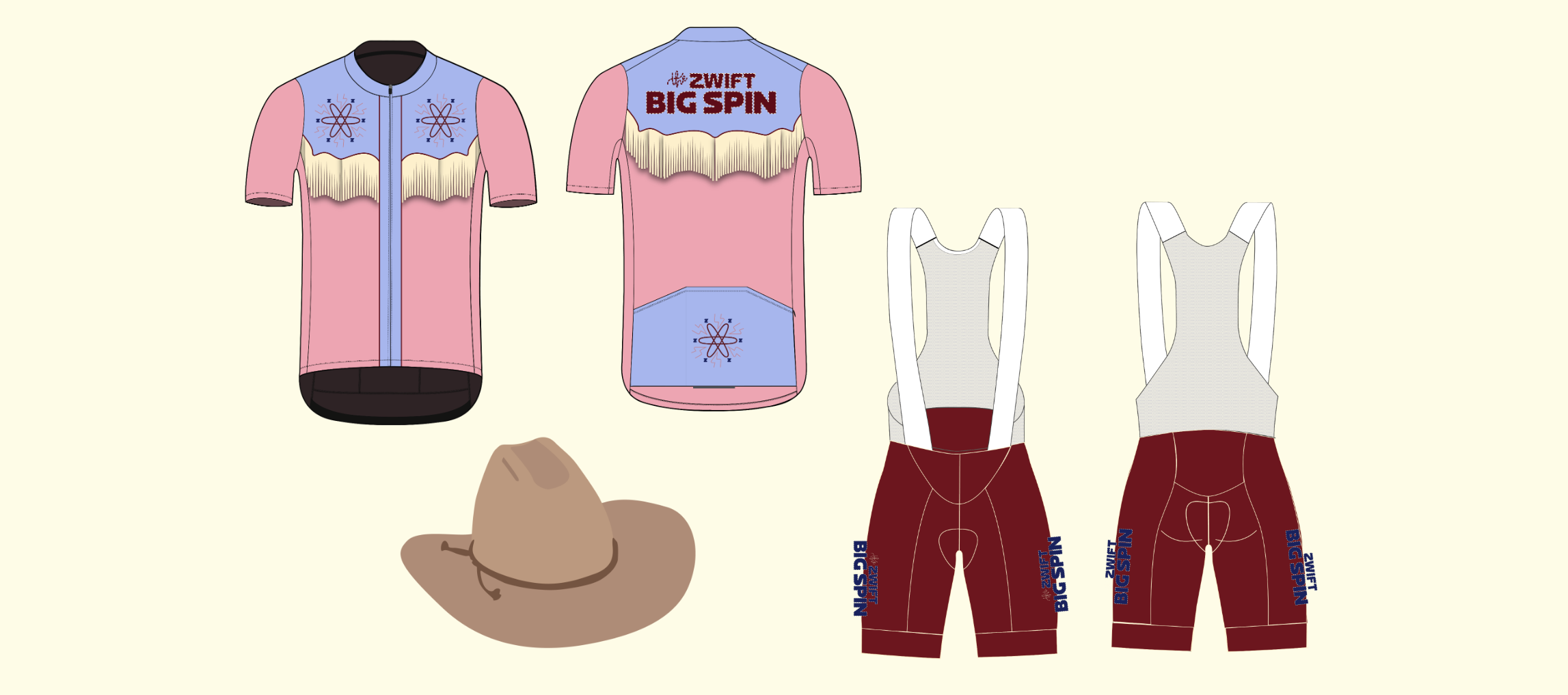
As a bonus, this route Big Spin’s stage 1, so if you’re still trying to unlock that cowboy hat, this may be just the ticket! You’ll get several chances (spins) to win…
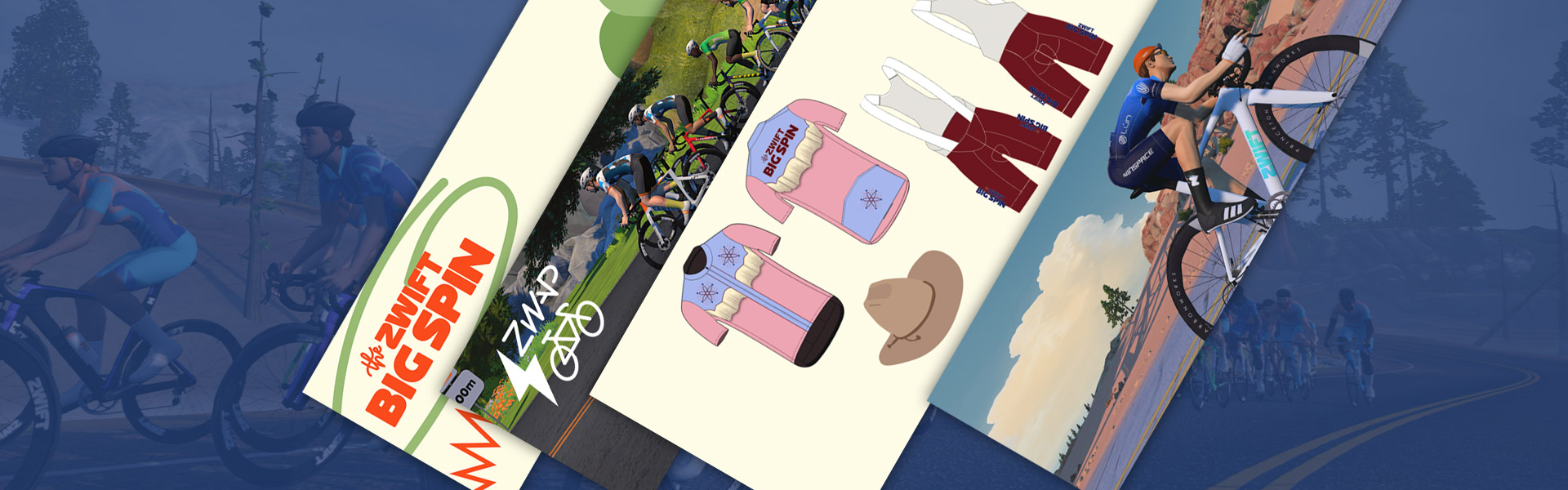
Zwift’s annual Big Spin series is well underway, with stage 4 on Watopia’s Sand and Sequoias route (22.4km, 179m) happening this week. Join the fun and unlock fun stuff!
We choose each weekend’s Notable Events based on a variety of factors including:
Is the event unique/innovative in some way?
Are celebrities (pro riders, etc) attending/leading?
Are signup counts already high, meaning the event is extra-popular?
Does the ride include desirable unlocks or prizes?
Does the event appeal to ladies on Zwift? (We like to support this under-represented group!)
Is it for a good cause?
Is it just plain crazy (extra long races, world record attempts, etc)?
Is it a long-running, popular weekly event with a dedicated leader who deserves a shout out?
In the end, we want to call attention to events that are extra-special and therefore extra-appealing to Zwifters. If you think your event qualifies, comment below with a link/details and we may just include it in an upcoming post!
All About the New Pinarello Dogma GR Gravel Frame on Zwift
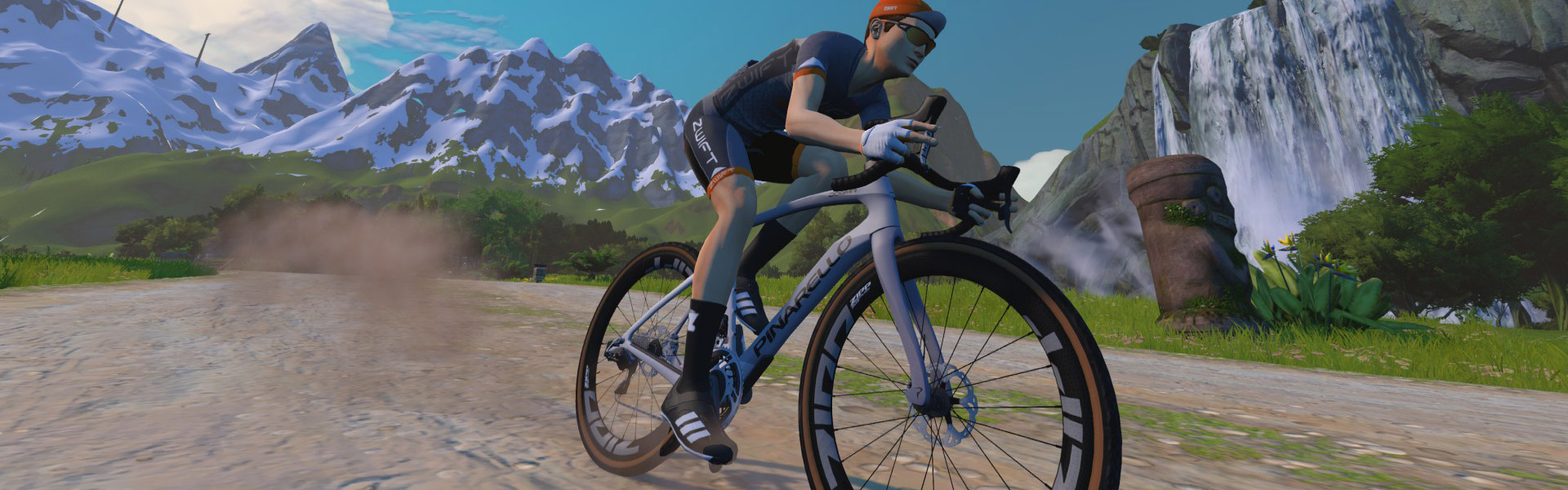
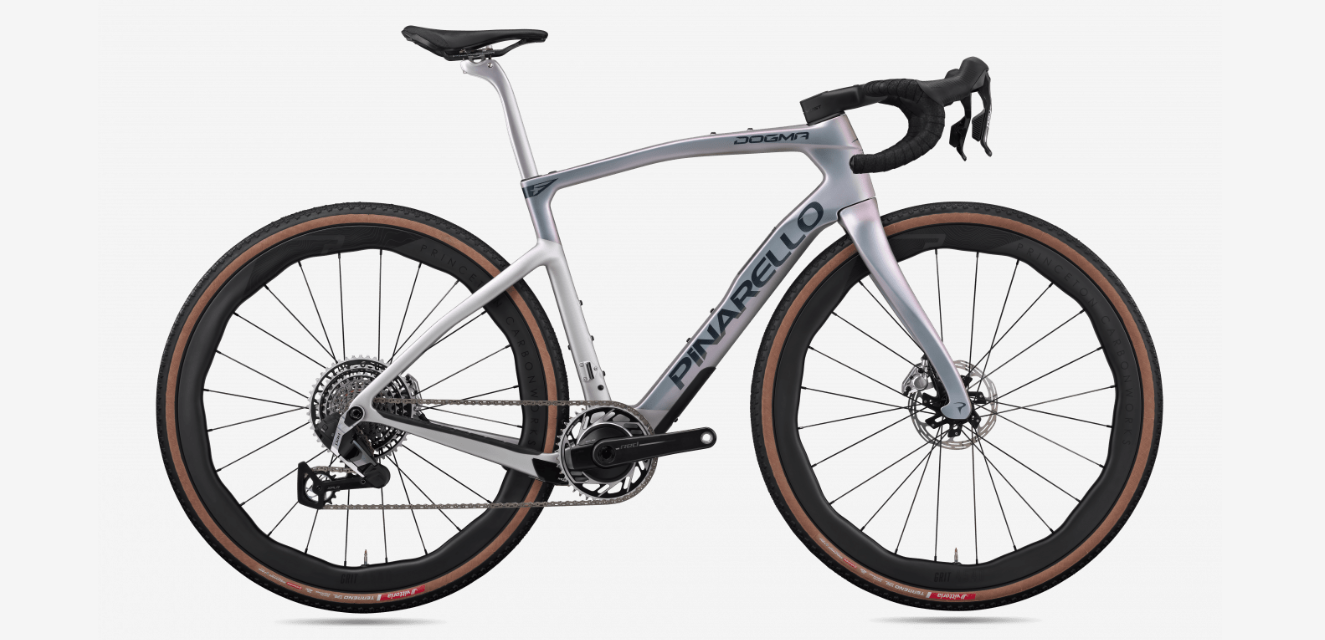
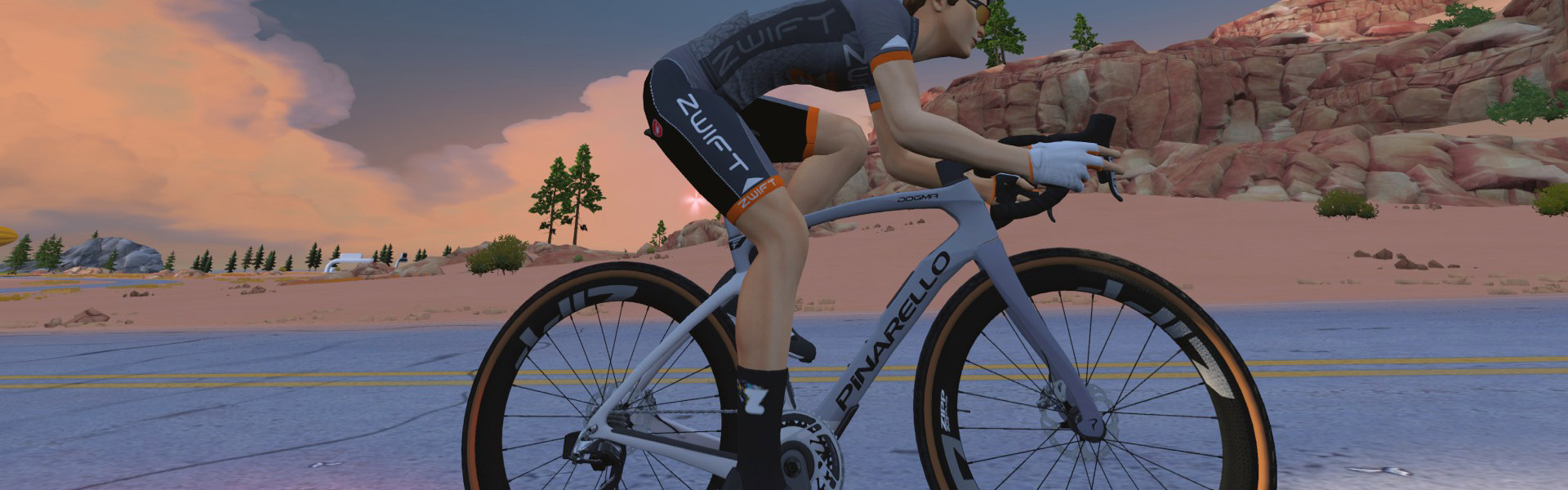
Zwift’s latest update includes a new gravel frame from Pinarello, the Italian company’s first gravel frame in game. It’s the Pinarello Dogma GR, which is Pinarello’s race-focused gravel bike, sort of a “road bike in disguise” made for shorter, faster, less chunky gravel excursions:
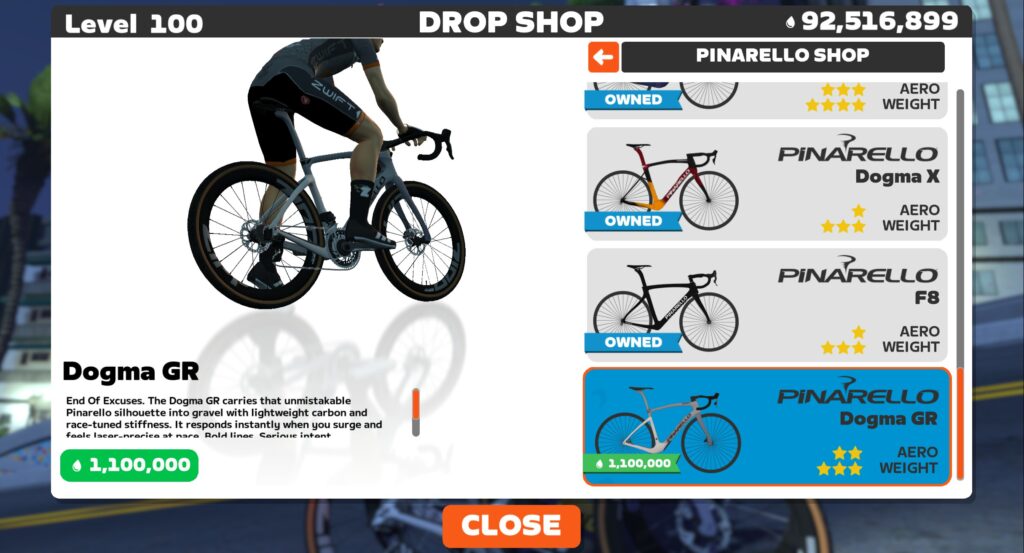
On Zwift, you’ll need to be updated to game version 1.111+ to see this bike in the Drop Shop. You’ll also need to be at level 30+ with 1,100,000 Drops to buy it. Here’s how it’s described in the Drop Shop:
“End of Excuses. The Dogma GR carries that unmistakable Pinarello silhouette into gravel with lightweight carbon and race-tuned stiffness. It responds instantly when you surge and feels laser-precise at pace. Bold lines. Serious intent.”
It’s rated 2 stars for aero 3 stars for weight, so we know it will perform decently well compared to other Zwift gravel bikes. But since Zwift’s 4-star system isn’t the most granular of performance measurements, we ran this frame through our precise tests to measure performance at nerd-level detail. Let’s dive in!
Note: test results below are from a 75kg, 183cm rider holding 300W steady using Zwift’s stock gravel wheelset on the un-upgraded version of the frame.
Aero (Flat/Rolling) Performance
Pinarello’s Dogma GR turns in a strong performance on the flats, beating all existing gravel bikes on tarmac apart from the new Cannondale SuperX LAB71 and Cervelo Aspero 5.
For comparison, the stock Zwift Gravel frame loses 145.4 seconds to our baseline Zwift Carbon frame across an hour of flat tarmac, while the (former) fastest gravel bike, the Cervelo Aspero 5, loses 111.2 seconds. The Dogma GR loses 112.8 seconds.
Climb Performance
The Dogma GR is a strong climber as well, essentially tying the Specialized Crux while falling just short of the new Cannondale SuperX LAB71.
The stock Zwift Gravel frame loses 161.8 seconds to our baseline Zwift Carbon frame across an hour of Alpe du Zwift climbing, while the new Cannondale SuperX LAB71 loses 118.7 seconds. The Dogma GR loses 122.1 seconds, putting it in 3rd (or tied for 2nd with the Crux at 122 seconds) among the gravel frames in our climbing test.
Jungle Performance
Of course, nobody really cares about how well a gravel frame performs on pavement, which is where we do our aero and climb testing (above). While those flat and climb tests help us tease out a frame’s aerodynamic capabilities and weight, when it comes to gravel bikes, people really want to know how fast they are on Zwift’s virtual dirt!
Like all frames in Zwift, Pinarello’s Dogma GR can be upgraded in five stages. As a high-end race bike, each of the five stages results in a performance improvement. The Dogma GR upgrade stages are as follows:
Ride 200km, pay 100,000 Drops for an aero upgrade
Ride 260km, pay 200,000 Drops for a weight reduction
Ride 320km, pay 350,000 Drops for a drivetrain efficiency improvement
Ride 380km, pay 500,000 Drops for an aero upgrade
Ride 440km, pay 750,000 Drops for a weight reduction
You can expect a fully-upgraded Pinarello Dogma GR to be approximately 28 seconds faster on a flat hour and 36 seconds faster on an hour-long climb vs a “stock” (un-upgraded) Dogma GR.
Conclusions
As both a strong climber and aero performer, Pinarello’s new Dogma GR beats every gravel bike in Zwift apart from the new Cannondale SuperX Lab71 and Cervelo Aspero 5. And it holds its own quite nicely against those two frames anyway, so if you’re a Pinarello fan, riding this as your virtual gravel whip may just be the winning move.
We’ll be adding this bike to the following posts soon:
What do you think of Pinarello’s new Dogma GR in Zwift? Share below…
Important note: this post contains speed test results for Zwift frames or wheels. These results may change over time, and a bike's performance relative to others may also change. We don't always revise posts when performance rankings change, but we do keep current, master versions of our speed test results which are always available. See the frame charts, wheel charts, and Tron vs Top Performers for current performance data.