Home Blog Page 378

What Do Yesterday’s Strava Changes Mean for Zwifters?

89

Strava rolled out a massive set of changes yesterday – the largest raft of changes in recent memory, in fact. The changes are centered around encouraging users to become paying subscribers, which, as Strava says, “… ensures that Strava can serve athletes decades from now, and in an up-front way that honors the support of the athletes we serve today.” Or in plain English: Strava isn’t yet profitable, but they need to get there. So they’re going to cater to athletes willing to pay a fee for the service.

Given the context of seeking profitability, it’s no surprise that yesterday’s changes expand the features available for subscribers. But Strava has also reduced the features available to non-subscribers, making the subscription service more appealing while doubtlessly driving non-subscriber masses to take up pitchforks and light torches.

Here’s a quick summary of those changes, in case you haven’t yet read the details:

New features for subscribers:

  • A big Routes update, with planning & recommendations on iOS and Android
  • Matched Rides: Analyze performance on identical rides over time
  • See your full workout history with Training Log on iOS
  • Workout Analysis is now available for all activity types
  • Grade-Adjusted Pace (GAP) now on iOS and Android
  • Coming soon: A whole new way to compete on segments…

Subscription-only features that were previously free:

  • Overall segment leaderboards (Top 10 view is still free)
  • Comparing, filtering and analyzing segment efforts
  • Route planning on strava.com, with a huge redesign launching soon!
  • Matched Runs: Analyze performance on identical runs over time
  • Training Log on Android and strava.com
  • Monthly activity trends and comparisons

Non-subscribers will still have access to the following (not an exhaustive list):

  • Top 10 all-time and Top 10 women
  • New segment creation (but private segments only for Zwifters)
  • Segment detail screen
  • Segment explore/search
  • Flagging segments
  • XOMs and PRs on segments

How Does This Affect Zwifters?

Depending on your subscriber status, and how you use Strava, these changes may have a big impact on your usage of the platform. Or they may have no impact at all!

Subscribers aren’t losing any functionality – they’re getting a few upgrades, in fact, including an improved route builder and fitness stats on the mobile app.

Non-subscribers, however, will notice a reduced feature set compared to the Strava they’ve grown accustomed to. For Zwifters, this will be most noticeable when it comes to tracking your leaderboard rank on segments, and comparing/analyzing your segment times.

  • Leaderboard Rank: non-subscribers will only see the top 10 leaderboard, as well as their own ranking, for a segment. You can’t see the rankings of your friends, club members, etc. If you’re anything like me, you don’t really pay attention to your overall rank on Zwift segments – with tens of thousands of riders competing on each segment, my overall rank just isn’t a useful metric. (It’s very useful for outdoor segments, though!)
  • Analyzing Segment Times: What I do pay attention to are my historical times on segments. I like to see how many efforts I’ve made on a particular segment, and those segment times. This segment analysis is going away for non-subscribers.

Veloviewer Changes

Many of you have enjoyed using the Zwift Insider Route Hunter Leaderboards powered by Veloviewer. As part of yesterday’s change, Strava has greatly reduced the data available to third party apps like Veloviewer. The good news is, for paying subscribers, Veloviewer leaderboards will continue functioning just as they did before.
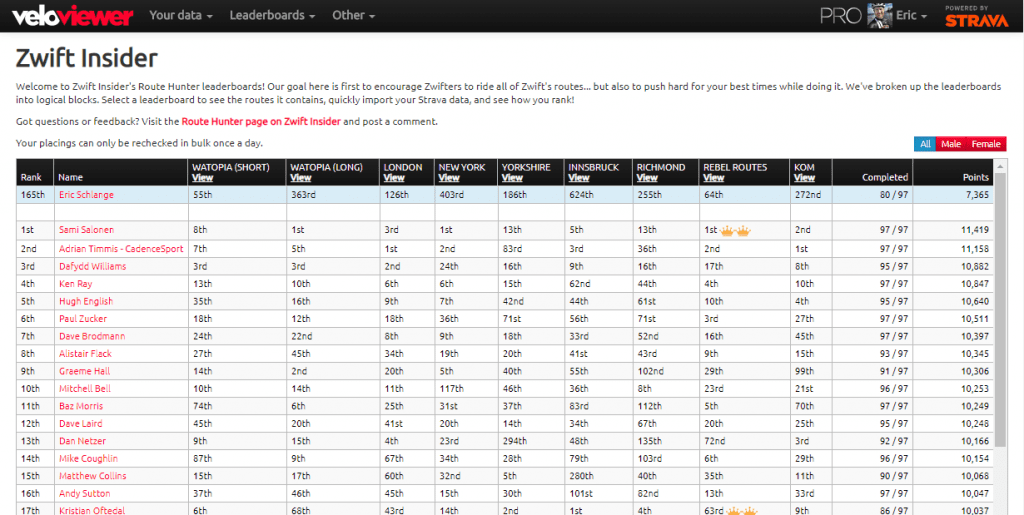
For non-Strava-subscribers, though, Veloviewer (and other third-party apps) can no longer grab your segment times via the Strava API. So Veloviewer’s leaderboards will become more of a checklist of segments, and less of a ranking tool.

Here’s a post from Veloviewer detailing the differences in Veloviewer features for Strava subscribers and non-subscribers.

Response from the Community

DC Rainmaker posted a rather scathing article about the changes. It summarizes some of the changes, especially the neutering of their API. CyclingTips shared a thorough, measured post explaining the changes. A quick Google search brings up plenty of other posts about the changes, if you’re in for some light and repetitive reading.

Overall the response from the community seems to be quite negative, but that’s not surprising, given that ~95% of Strava’s users aren’t paying subscribers. Strava’s challenge here is that they gave away so much for free for so long. When you try to take all that free goodness away, you’ll get some angry users.

Me? I’ve been a Strava subscriber for years, because I find the service useful and affordable. (How else would I chase live segment KOMs in my IRL rides?) So these changes don’t impact me directly, although I can see how they will make segments less interesting for non-subscribers, which is a bit of a bummer for everyone.

An Opportunity for Zwift, and Others

This is purely speculation on my part – but I’d say Strava’s latest changes open the door even wider for Zwift (and other companies) to step in and provide a useful, free solution to the activity tracking and route-creation needs of their customers.

What if Zwift Companion could show me segment analysis for my Zwift rides? Right now the only PR data I can see is in-game, and it only lasts for 30 days. What if segment PRs were stored forever and accessible to be analyzed? What if we could view KOM/QOM data, comment with user tagging, filter by friends lists and Clubs, and more? All included in the price of your Zwift subscription.

I’d love to see it – but I suspect it’s not high on Zwift’s list of priorities. And that’s probably a good thing, for now.

Your Thoughts?

Are you a non-subscriber who is annoyed by these changes? A subscriber who is perfectly fine with it? Or something else? Do you think there’s a place here for another company to swoop in and build a Strava-beater? Or perhaps such a platform already exists? Share your thoughts below!
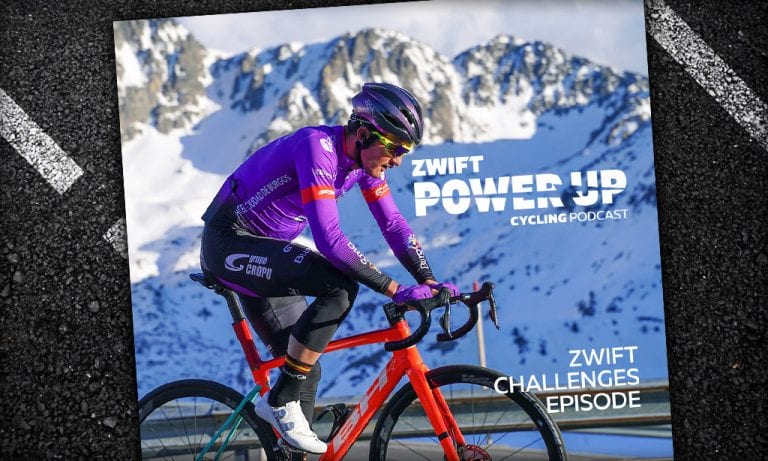
Willie Smit on Conquering Zwift Challenges (Zwift PowerUp Cycling Podcast)

During lockdown, some Zwifters have taken on some seriously massive challenges! Take South African pro cyclist Willie Smit for example. The Burgos–BH rider headed to Watopia on April 14, where he tackled a continuous 1,000-kilometer ride, covering every meter in 37 hours. After broadcasting certain parts of the ride live on YouTube, he posted the final data on Instagram: 8,150 meters climbed. 17,081 calories burned. Kev chats with Willie about the next-level undertaking in this episode.

About the Podcast

The Zwift PowerUp Cycling Podcast features training tips from host Matt Rowe (Rowe & King), with regular co-hosts Greg Henderson (Coach Hendy) and Kev Poulton (Powerhouse Cycling).

How Long Does It Take to Ride Up Alpe du Zwift?

Alpe du Zwift is by far the longest, hardest, most intimidating climb in game. Modeled as a GPS-accurate replica of the famous Alpe d’Huez, its 21 hairpin turns average 8.5%, and riders climb 1035 meters (3,396′) over 12.2 km (7.6 miles) to reach the summit.

Many Zwifters who’ve never climbed Alpe du Zwift ask the same question: how long will it take me?

Luckily, ZwiftPower has built up a history of Alpe du Zwift segment times, so you can see what sort of time you can expect.

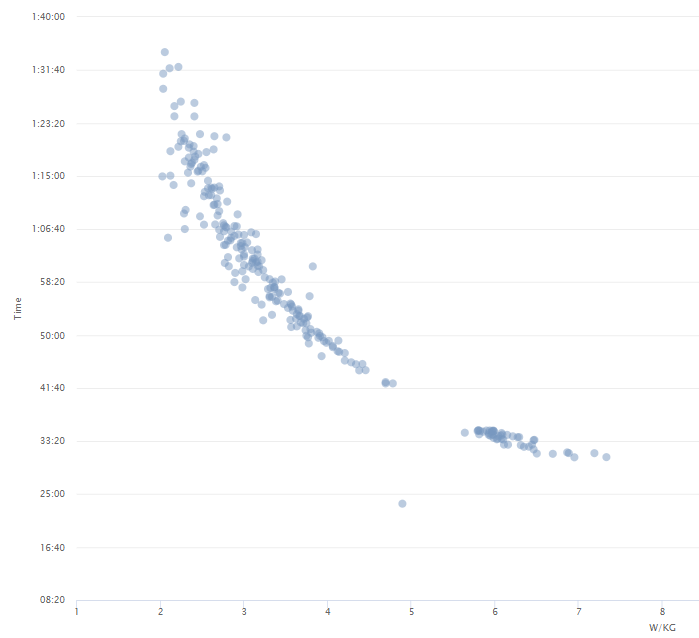
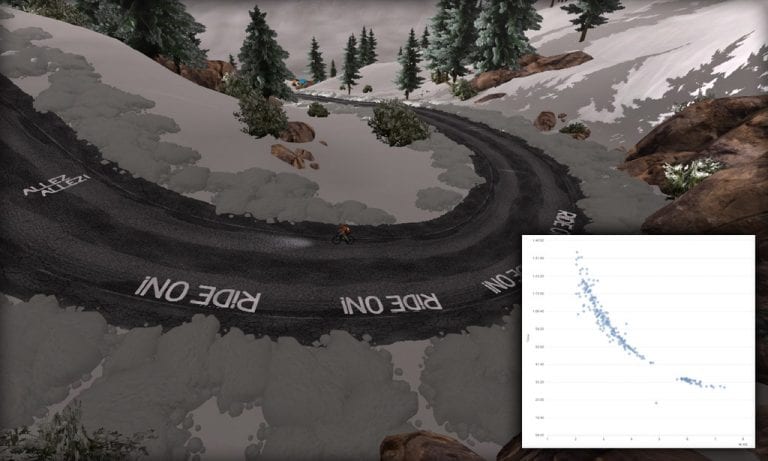
To get to the data, go to ZwiftPower.com and click Segments>Alpe du Zwift, then click Analysis. Or just click here. You be greeted with a chart like this:

Mouse over each point in the graph to see the w/kg and time of each ZwiftPower user’s Alpe personal best!

Using this data we can make some time estimates based on w/kg:

  • 2 w/kg: 90 minutes
  • 2.5 w/kg 75 minutes
  • 3 w/kg: 62 minutes
  • 3.5 w/kg: 55 minutes
  • 4 w/kg: 49 minutes
  • 4.5 w/kg: 44 minutes
  • 5 w/kg: 40 minutes
  • 5.5 w/kg: 37 minutes
  • 6 w/kg: 35 minutes
  • 6.5 w/kg: 32 minutes

Pretty cool, huh? Keep in mind these are just estimates. Your time will vary based on frame/wheel choice, your height and weight, how much drafting you’re doing, and when you apply your power on the climb (hint: go hardest when the road is steepest). But the above estimates should be within a minute or two of your finishing time.

Dig Deeper

You can use the ZwiftPower tool to look up Power vs Time graphs for all timed segments in Zwift. This includes Box Hill, the Fuego Flats sprint, the Central Park loop, and much more! Just click “Segments” in the main menu to get started.

Questions or Comments?

Share below!

Swift Zwift Tip: Changes to Zwift AppleTV Device Pairing // Companion App Pairing

Our favorite Aussie Lama Shane Miller has released a Swift Zwift Tip quickly explaining some recent changes to Zwift for AppleTV.

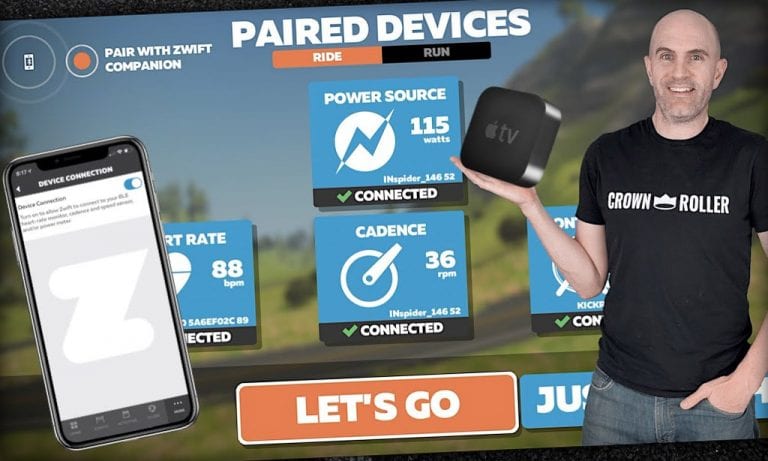
The modifications to the pairing screen make it clear that Zwifters must pair their Bluetooth devices by one of these two methods:

  1. Using Zwift Companion (on your phone), which works via your local network and does not limit the number of devices you can connect; or
  2. Directly to AppleTV, which only allows two device connections

The two connection limit is one of the hassles which AppleTV users have to put up with. This isn’t a limit from Zwift, but from Apple. There are various ways around it, but if you’re running up against that limit the simplest (and cheapest) solution is to just use Zwift Companion.

On the other hand, if you have a smart trainer with built-in cadence such as the Wahoo KICKR line, Tacx Neo and other smart trainers, Saris H3, or any Elite interactive trainer, you can pair up your heart rate monitor as well as your smart trainer directly to AppleTV and be off and Zwifting in no time!

Watch the video:

Recommended Reads for Zwifters (List 2)

7

Following on the heels of last month’s book recommendations, here are four more highly recommended reads for cyclists.

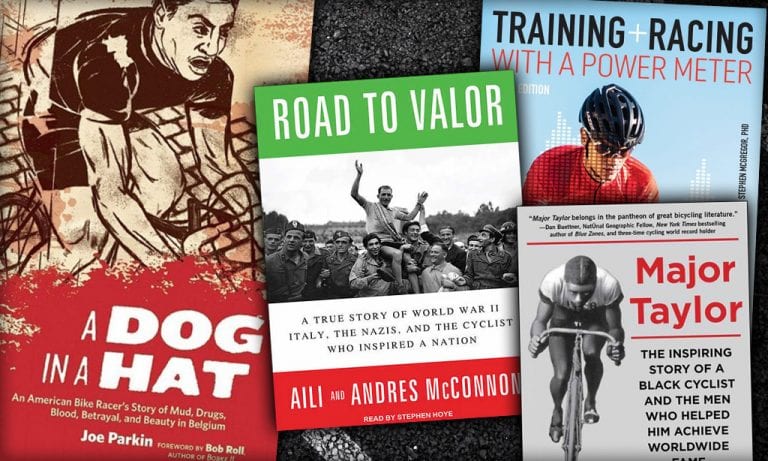
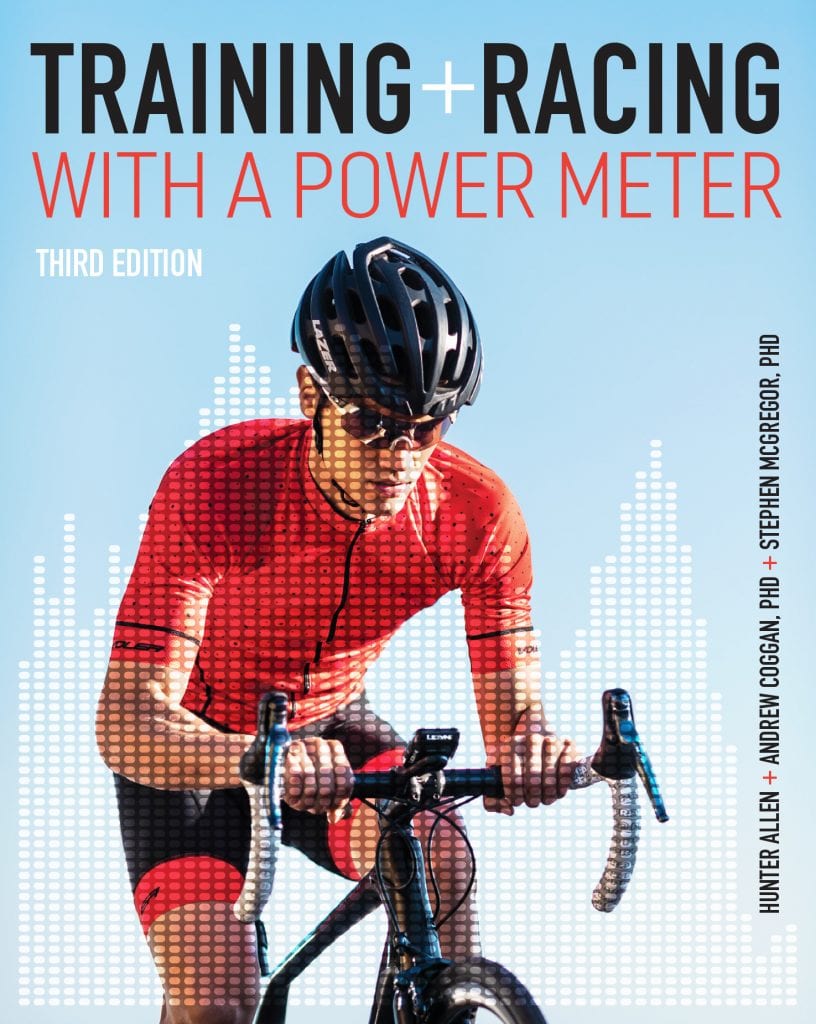
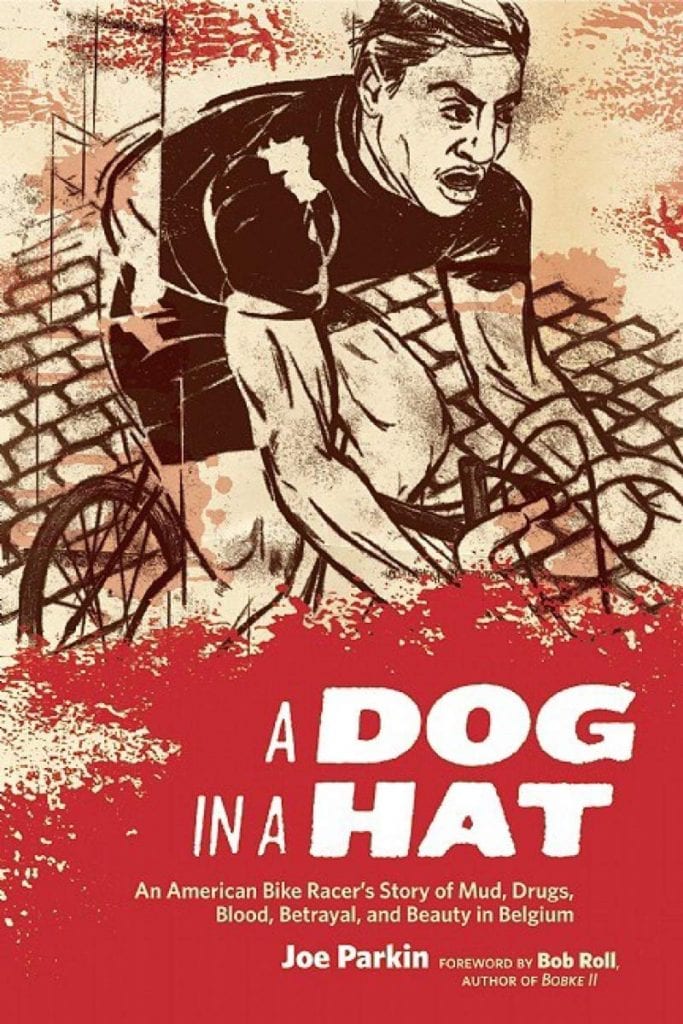
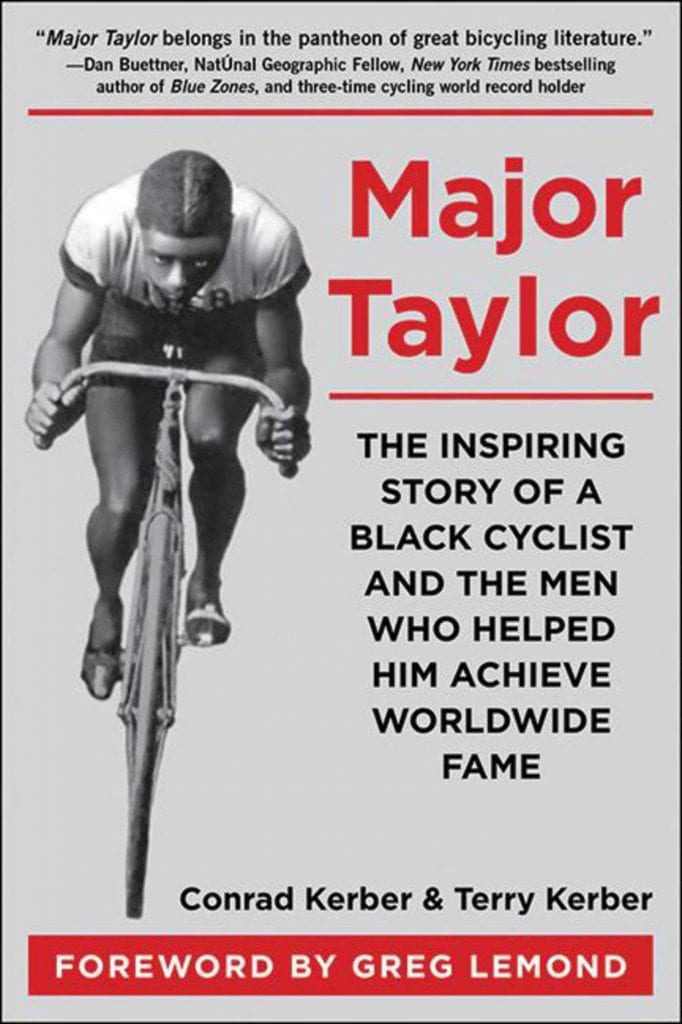
I’ve selected two stories of pro cyclists who rocked the world in different ways (Road to Valor and Major Taylor), a gritty look at becoming a pro racer in 1980’s Belgium (A Dog In a Hat), and one of the most highly-recommended training manuals available today (Training and Racing with a Power Meter). Enjoy!

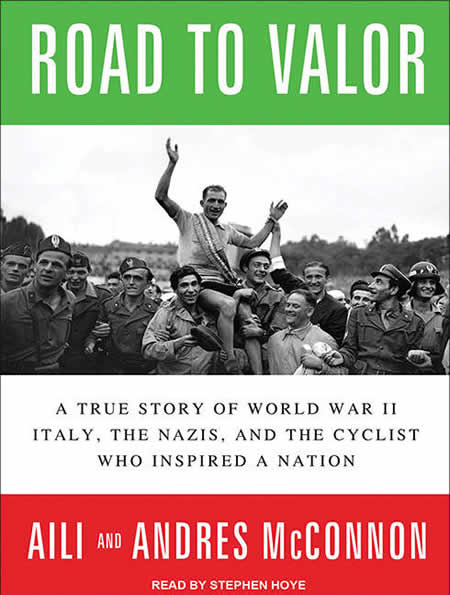
Road to Valor

A True Story of WWII Italy, the Nazis, and the Cyclist Who Inspired a Nation

Aili and Andres McConnon

Gino Bartali is an Italian cycling legend who not only won the Tour de France twice but also holds the record for the longest time span between victories. He first won in 1938 at the age of 24, then won again 10 years later. A lot happened in between, including Bartoli’s secret work to save Jews during the war.

Based on nearly ten years of research, Road to Valor is the first book ever written about Bartali in English and the only book written in any language to explore the full scope of Bartali’s wartime work. An epic tale of courage, resilience, and redemption, it is the untold story of one of the greatest athletes of the twentieth century.

Buy on Amazon

Training and Racing with a Power Meter

Third Edition

Hunter Allen, Andrew Coggan, Stephen McGregor

Modern cyclists have access to more trainer data than ever before – but what do you do with it? This latest edition updates what has become one of the top training guides for self-coached cyclists.

Pioneering cycling coach Hunter Allen and exercise physiologists Dr. Andy Coggan and Stephen McGregor show how to use a power meter to find your baseline power data, profile your strengths and weakness, measure fitness and fatigue, optimize your daily workouts, peak for races, and set and adjust your racing strategy during a race.

Buy on Amazon

A Dog In a Hat

An American Bike Racer’s Story of Mud, Drugs, Blood, Betrayal, and Beauty in Belgium

Joe Parkin

In 1987, Joe Parkin was an amateur bike racer in California when he ran into Bob Roll, a pro on the powerhouse Team 7-Eleven. “Lobotomy Bob” told Parkin that, to become a pro, he must go to Belgium.

Riding along a canal in Belgium years later, Roll encountered Parkin, who he described as “a wraith, an avenging angel of misery, a twelve-toothed assassin”. Roll barely recognized him. Belgium had forged Parkin into a pro, and changed him forever.

A Dog in a Hat is the remarkable story of the un-ordinary education of Joe Parker and his love affair with racing, set in the hardest place in the world to be a bike racer.

Buy on Amazon

Major Taylor

The Inspiring Story of a Black Cyclist and the Men Who Helped Him Achieve Worldwide Fame

Conrad and Terry Kerber

“Before Magic, before Ali, before Jesse Owens, there was Major Taylor.” ~Bob Roll

At the turn of the century, one of the world’s most popular athletes was a black bicycle racer named Marshall Walter “Major” Taylor. Known throughout the country, he was the fastest man in America and the first African American cyclist to achieve the level of world champion. But he still faced the virulent racism and belittling treatment that was a daily occurrence for so many.

Buy on Amazon

What do you think?

Have you read any of these books? Got others you would recommend? Share your thoughts below!
5 Zwift Events Not To Miss This Weekend

3

With more big events than ever in our virtual cycling paradise, it’s easy to miss some really cool rides! Here are 5 events this weekend that you won’t want to miss.

Special thanks to Jesper at ZwiftHacks with his Events app which provides powerful event filtering tools so we can narrow the weekend list from 400+ events to just a handful.

Haute Route Community Rides // Quatch Quest

Ready for a challenge? Hit the tough Quatch Quest route with other riders in your category. Go easy if you’d like, or go all-in for a race.

Best of all, this ride helps doctors on the front lines of the pandemic! All miles ridden will be donated to support Mexican doctors working against COVID-19.

Saturday, 2:30 pm BST / 9:30 am EDT / 6:30 am PDT
Sign up at zwift.com/events/view/742963

Tour for All Stage 4 Goes Up Up Up!

Stage 4 of Zwift’s biggest-ever fundraiser series begins tomorrow (Saturday)! This stage is all about the big climbs, with group rides and races up the Alpe and Epic KOM.

Learn more about the Tour for All, then join a ride or run. You can make it an easy group ride, or go for a race effort.

Multiple events throughout the day. See ride schedule at zwift.com/tfaride, run schedule at zwift.com/tfarun

Sammy’s Ride To Beat Arthritis

Here’s a ride we stumbled across that deserves the community’s support. We’re short on details, but what we know is enough! The event description simply says “Riding the Tour of Fire and Ice route finishing at the top of Alpe Du Zwift with Samantha who is 8 and is cycling to try and stay on top of arthritis in her knees and back.”

Sign up, get a solid workout, and support little Samantha!

Saturday, 9:00 pm BST / 4:00 pm EDT / 1:00 pm PDT
Sign up at zwift.com/events/view/789690

GoRigoGo Mountain Rampage

Join Rigoberto Urán of Education First Pro Cycling for an all out effort to the top of the Epic KOM. This ride is short (7.5 miles), but it’s gonna hurt!

Rigo will lead out the group and it’s going to be full gas from the get go. Try to stay with the Yellow Beacon for as long as possible.

Saturday, 3:00 pm BST / 10:00 am EDT / 7:00 am PDT
Sign up at zwift.com/events/view/787655

BC Bike Race: Ride To Win with Geoff Kabush

Ride with accomplished Canadian MTB pro Geoff Kabush, unlock a new kit, and be entered into multiple prize drawings! Get all the details of this weekend’s ride series >

Multiple ride times scheduled, see details at zwift.com/events/series/bcbr-ride-to-win-with-geoff-kabush/

Your Thoughts

Got other events that stand out this weekend? Share below in the comments! And if you participate in any of these events, let us know how your ride went.

BC Bike Race Weekend with Geoff Kabush Announced

2

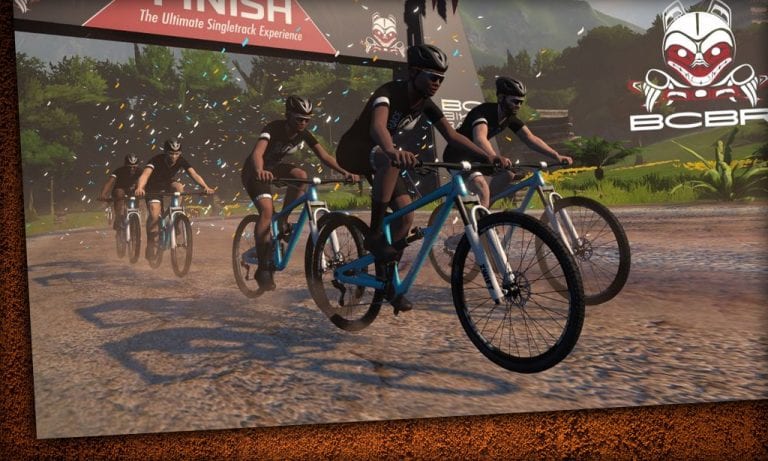
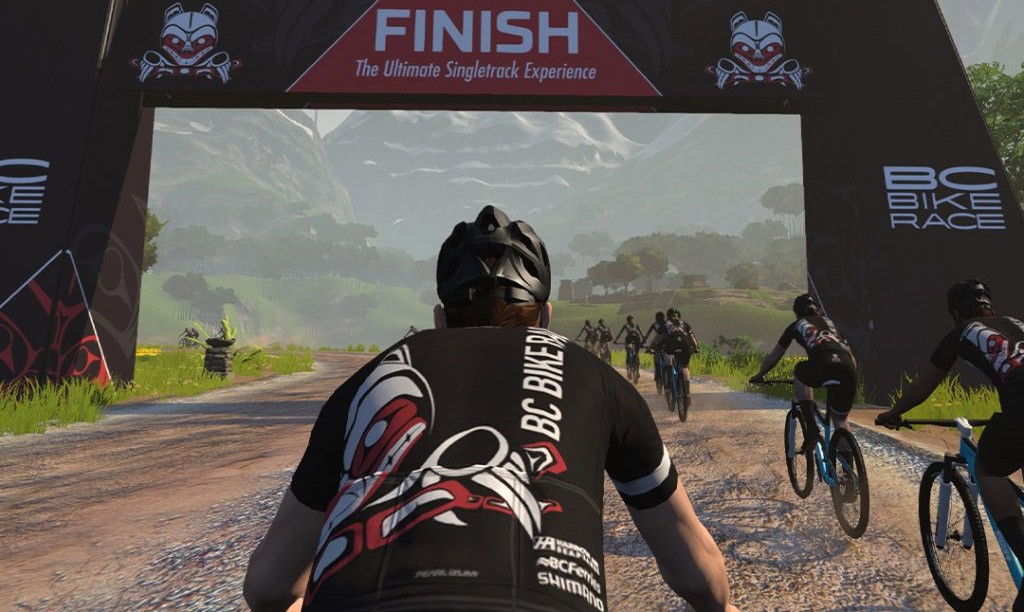
Zwift has rolled out a new series of six group rides running from today through May 18th, centered around BC Bike Race (BCBR), one of the most renowned mountain bike races in the world!

The rides are led by Geoff Kabush, a Canadian pro cyclist who has earned dozens of accolades over his career. 15 Canadian National titles. Five US National MTB Series titles. A World Cup win. He’s stood on nine World Cup podiums, and is a three-time Olympian. He’s also a two-time BCBR winner!

Geoff will join all six events and be on hand to answer any questions, Q&A style.

Ride Schedule and Routes

All six rides are held on routes which center on the Jungle: Road to Ruins, Jungle Circuit, and reverse versions of those routes. You’ll want to prep your mountain bike! These are group rides, but many riders will doubtless be racing. You do you – pick a pace and find a group. Late joining is allowed!

See the full ride schedule >

Prizes

Complete any of the group rides and you’ll be entered into a random drawing for both the Grand Prize and First Prize!

Grand Prize: 

First Prizes:

Kit Unlock

Finish any of the rides to unlock the BCBR kit in-game.

For more details, including the schedule of rides, visit zwift.com/events/series/bcbr-ride-to-win-with-geoff-kabush/

First Look: Zwift FutureWorks “Sights and Sounds” Mode

Early this week I joined other Club Jarvis members to test yet another Zwift FutureWorks feature. Called the “Sights and Sounds Tour”, and the basic idea is that all on-screen HUD elements are removed, so you can enjoy a screen full of Watopian visuals. It was a fun experience, and I want to share some thoughts about it! But first…

FutureWorks Update

But let’s take a step back and review where we’re at with Zwift’s FutureWorks features. If you recall, Club Jarvis was spun up in late March 2020 as a way for veteran Zwifters to test Zwift’s new FutureWorks features. (It may sound strange, but the first FutureWorks feature Club Jarvis members tested was Club Jarvis itself!) Although the Clubs feature set is fairly basic, it seems to be functional and stable. A month and a half later, it’s still the only club in Zwift – but hopefully other clubs will get onboarded soon.

A few weeks after Clubs launched, I hopped into the first-ever “members-only” event, where a slew of long-time Zwifters went for an social spin around Sand and Sequoias while cracking jokes on Discord and chatting about new game features. This test of a “club-only” event seemed to go quite nicely.

Then early this month, I took part in yet another Club Jarvis members-only event: a Crit City race testing the new FutureWorks “boost mode” feature. That was a blast!

So we already had three FutureWorks “modules” released to Club Jarvis: Clubs, Members-Only Events, and Boost Mode. Now we have a fourth!

Sights and Sounds

The event description said:

Experience the sights and sounds of Watopia in this experimental, bare bones Zwift ride. No timers, no watts, no text at all… just pure Zwift.

This ride will be automatically led by Jarvis the Bear who will be rolling at a solid 2.5w/kg. You can choose to hang around with Jarvis or do your own thing.

So there were actually two interesting things happening on this ride. First, we have the bare bones “experimental” mode. While we were in the start pens, the standard message box was on the right. But once the ride began, all HUD elements disappeared, and the only text we ever saw on the screen was rider names above avatars.

Here’s a video of my first Sand and Sequoias lap on this ride, so you can experience it for yourself:

Get Your Own Tour

You may not realize it, but if you’re on a Mac or PC, it’s quite easy to set your Zwift game to function without any HUD elements. It’s a hack we covered over three years ago, in fact! You can also use the ZwiftHacks ZwiftPreferenes tool to enable the minimal UI feature – MacOS users can use the ZwiftPref tool.

I’m not sure if Zwift is doing anything beyond just enabling the “Minimal UI” preference setting for these events. One thing I did notice is that it seemed like the visual quality was a bit better on this Club Jarvis ride – the graphics on the backs of riders’ jerseys were sharp even when I was close up, where typically they start to look a little low-res on my normal Zwifting setup.

What Was It Like?

Riding in “Sights and Sounds” mode was more engaging in some ways – more like a real club ride, where I felt I had to pay attention to the riders around me, and I could see more of the scenery. (Did you know there are ruins on top of the desert start/finish rock arch?) We were all in the same Zwift Beta kit, which made it hard to pick out riders from the bunch. I think a race in this mode would be really interesting, as long as riders could wear their own kit!

I found myself getting picky about the sounds I was hearing – it seemed like the rolling road noise and dings from the UI were overpowering. I wanted to be surrounded by nature sounds, and maybe some sounds of other riders. So while the visuals were quite nice, I think I would opt to listen to music in my earbuds until Zwift upgrades their soundscape.

Messaging was interesting – I could hit “M” and type a message on screen, but it only showed up if people were looking at messages on Companion – which many riders were doing. I found myself wanting to make a quick comment here or there, but not doing it because it felt like nobody would see it.

Overall, I’d say Sight and Sounds mode is a nice option for event organizers, and could make for some really interesting “stripped down” racing. Other Club Jarvis riders who participated in this event had very positive things to say as well, so my guess is we’ll see this as an optional event mode in the future.

Jarvis the Robo-Bear

The second feature of this ride was Jarvis the Bear. He had actually made an appearance in our first Club Jarvis event but in this ride he was the official leader, complete with some auto-scripted messaging before the ride began.

As promised, he held 2.5 w/kg steady for the whole ride. That meant he hung with our main pack until we hit the redwoods, at which point many riders (including myself) bumped up our wattage on the climbs, and Jarvis quickly got dropped.

Is this a useful feature for Zwift events? I could see how a constant wattage beacon would be handy for flat rides. I’m not sure if would work on hilly routes, unless Zwift builds a feature to algorithmically scale Jarvis’ efforts on climbs.

For example: ride leaders could enter the wattage range for the ride (say, 2.5-3 w/kg). Jarvis would hold the lower end on flats, then on climbs his effort would scale up in proportion to the incline. So he might only bump it up to 2.6 w/kg on a 2% rise, but 3.0 w/kg on a 10%+ rise. It could make for a really challenging pacer-bot session if done right!

Zwifters have been asking for pacerbots for years – more specifically, they’ve been wanting a pacerbot of their own best efforts, so they could race themselves. Jarvis may just be the beginning of such a bot.

Your Comments

What do you think of these FutureWorks features? Have you been able to try them yourself? Comment below!

How the Race Was Lost: Chase Group Podium

20

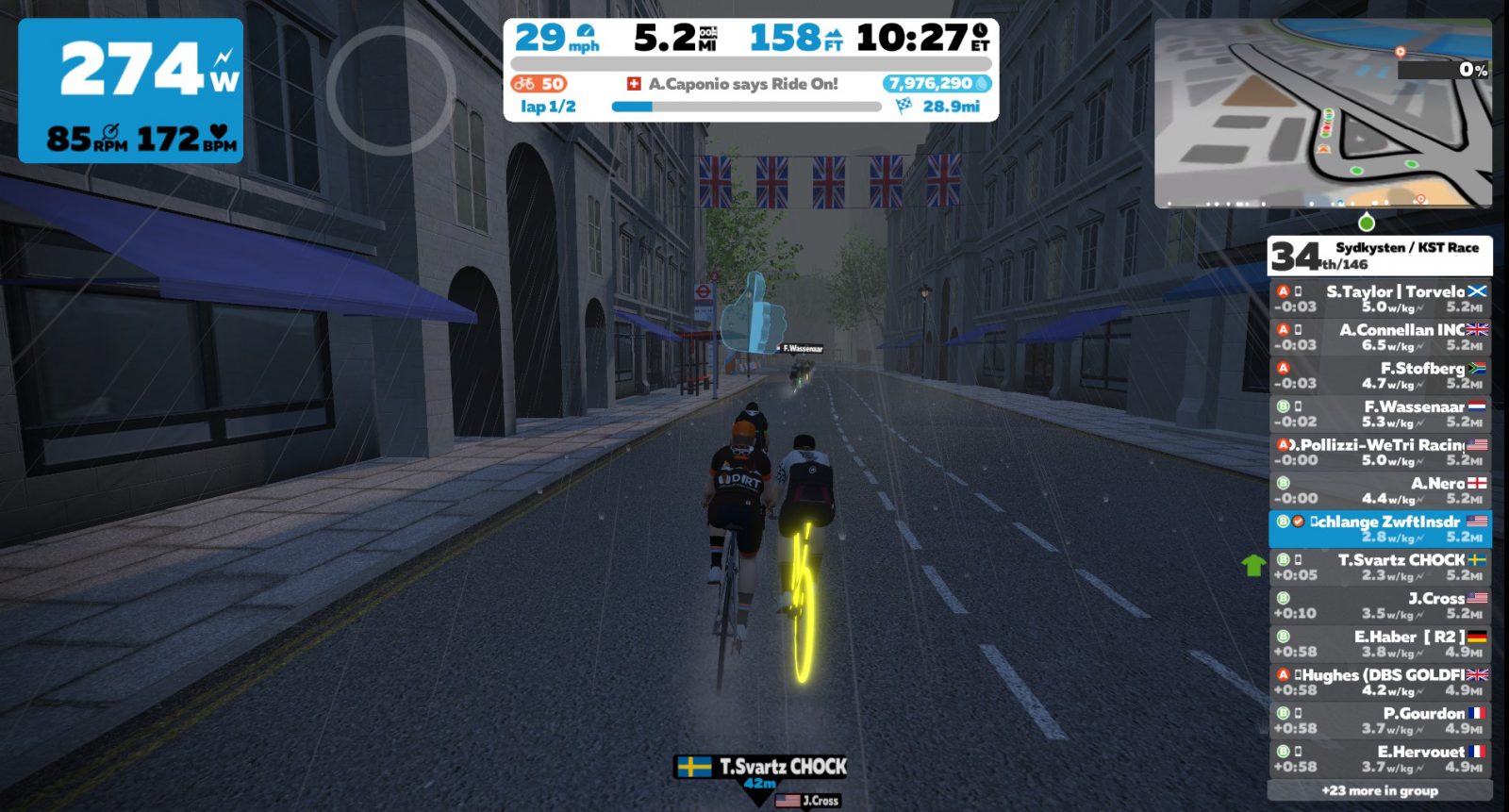
After an easy recovery day, I was looking forward to hitting a longer, harder Zwift race for today’s effort. Scrolling through the events list, I couldn’t find a race that was exactly what I wanted – so instead I signed up for the Sydkysten/KST Race which would be held over two laps of the Greatest London Flat route.

Being on a flatter course was a good thing for me, although the Greatest London Flat route always kicks my butt when we hit the rises through the park section. Happily, this was a double draft event, which works in my favor over those rises as long as I could hold a wheel.

The only downside was that all the categories were starting together, which meant I would be starting hard and holding onto the A’s as long as possible. Not my preference, but without another race that fit my schedule, I decided to give it a go anyway. Because what doesn’t kill you makes you stronger, right?

The Warmup

I started my race prep the same way I always do – a couple pieces of caffeine gum and some PR lotion on the legs. I was running a bit later than usual, so my Tempus Fugit warmup was only around 15 minutes long. Shorter than my usual ~30 minutes, but I tried to convince myself that, since this was a longer race, perhaps a shorter warmup would be sufficient.

(Typically longer outdoor road races don’t start very hard – they often have a lead-in/warmup section, in fact, so a shorter warmup is permissible. In contrast, short road races start harder, so a longer warmup is needed. Unfortunately, that race rule only really works outside. Zwift races always start hard!)

With just a couple minutes to go, I clicked to head for the London start pens. It had been a while since I last raced on the London map. Let’s race!

The Start

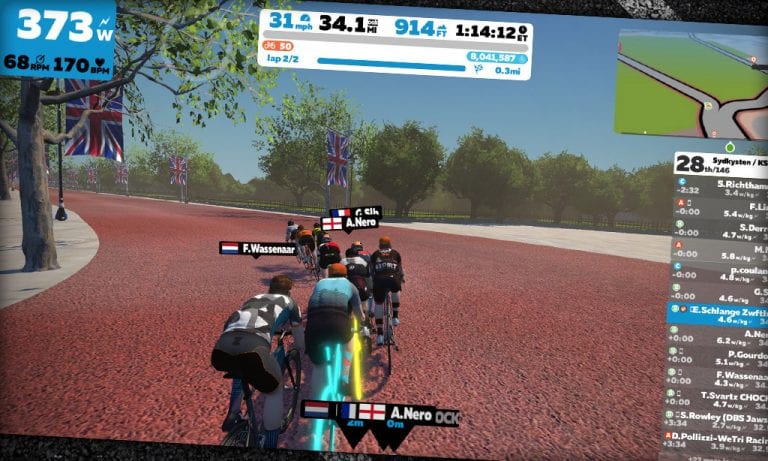
The clock hit zero, and the race started hard. I averaged 336W for the first 5 minutes and 318W for the first 11 minutes. Then someone on the front of the pack pinned it hard on the false flat as we left the Classique’s red pavement. Our pack got strung out and gaps opened up – including one directly in front of my bike!

Dropped!

I was dropped. Time to assess the situation.

I had two riders with me: and A named Pollizzi and a fellow B named Nero. The three of us grouped up and began working together, wondering if we could stay away from the chase group that was doubtless forming behind.

This being a double draft race, I had my doubts about our ability to stay away from the chasers. As that group grew, its speed would increase. Our group of three, on the other hand, wasn’t getting any bigger. So I kept a wary eye on the time gap to the group behind.

Sure enough, that gap began to come down steadily. That’s when I made the decision to stay off the front of our pack of three – it was just wasted energy, after all. I could destroy myself pulling our group, only to be caught 5 miles up the road by the chasers. Or I could sit in and take it (relatively) easy, and get caught 3 miles up the road. I made the easy choice.

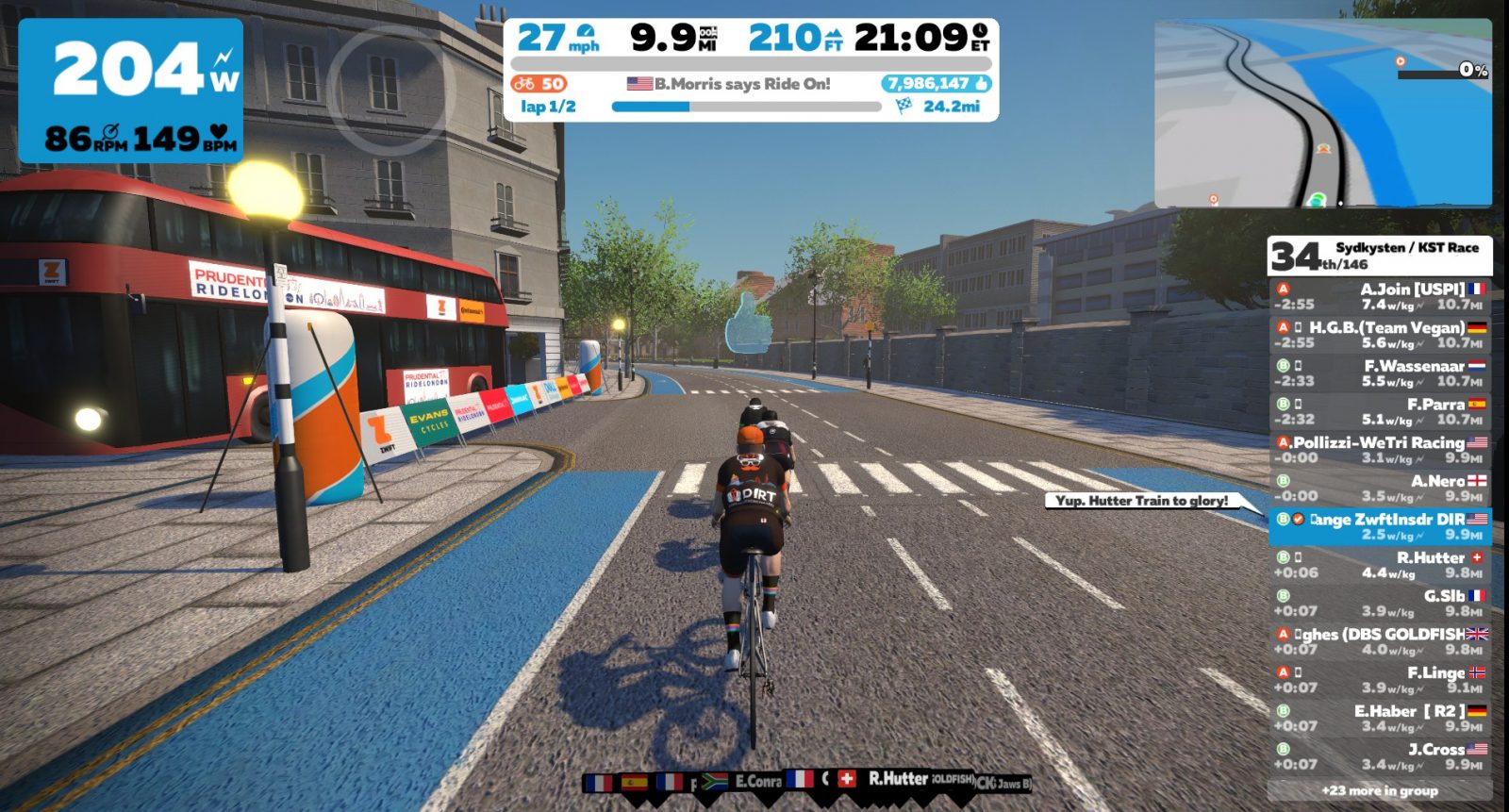
It was interesting to watch the rider names of the chase group as they came closer. There were definitely a small number of riders on the front, putting in the work. This included one zPowered B named “R. Hutter” who was pinning it at 4.5+. It also included two A riders, and a couple of B’s who would finish near the top in the end. As they neared my small group we joked about how we were going to let Hutter sit on the front and pull us to the finish. He never replied, but based on his power numbers for the next several miles, he certainly did his best! Thank you, sir.

At mile 10, 22 minutes into the race, we were picked up by the chase group. This pack of ~12 was mostly B’s, with one C (you’re not fooling anyone, “p.coulange”!) and two A’s. At this point, I should have checked ZwiftPower’s live results to find out how many B’s were up the road – but when I had done that in a race two days earlier, the live results weren’t working, so I figured they wouldn’t be today. (Note: I was wrong!)

All that to say: I wasn’t sure what place I was racing for at this point. The front of our group was 32nd place, and I figured there were probably 20-25 A’s up the road. That left several B’s probably in that front pack. With any luck some might get dropped and picked up by us, but chances were the podium was all up the road, never to be seen again.

I stayed off the front, because I knew three things:

  • We weren’t going to catch the front group, which was stuffed with A’s and strong B’s
  • I didn’t have the legs to attack and stay away from a pack of ~12, especially in double draft mode with 25 miles to go
  • The gentle slopes of the park section were coming up, and I would need everything I had to stay with the group over this section

The Middle

The park section of this route can really be broken down into three climbs. Calling them “climbs” is generous – they’re really just rises in the road. Yet I’m always surprised by how hard they make my races! In fact, as far as I can recall, I haven’t survived this section in any of my past races. I always get dropped by some or all of whatever group I’m in.

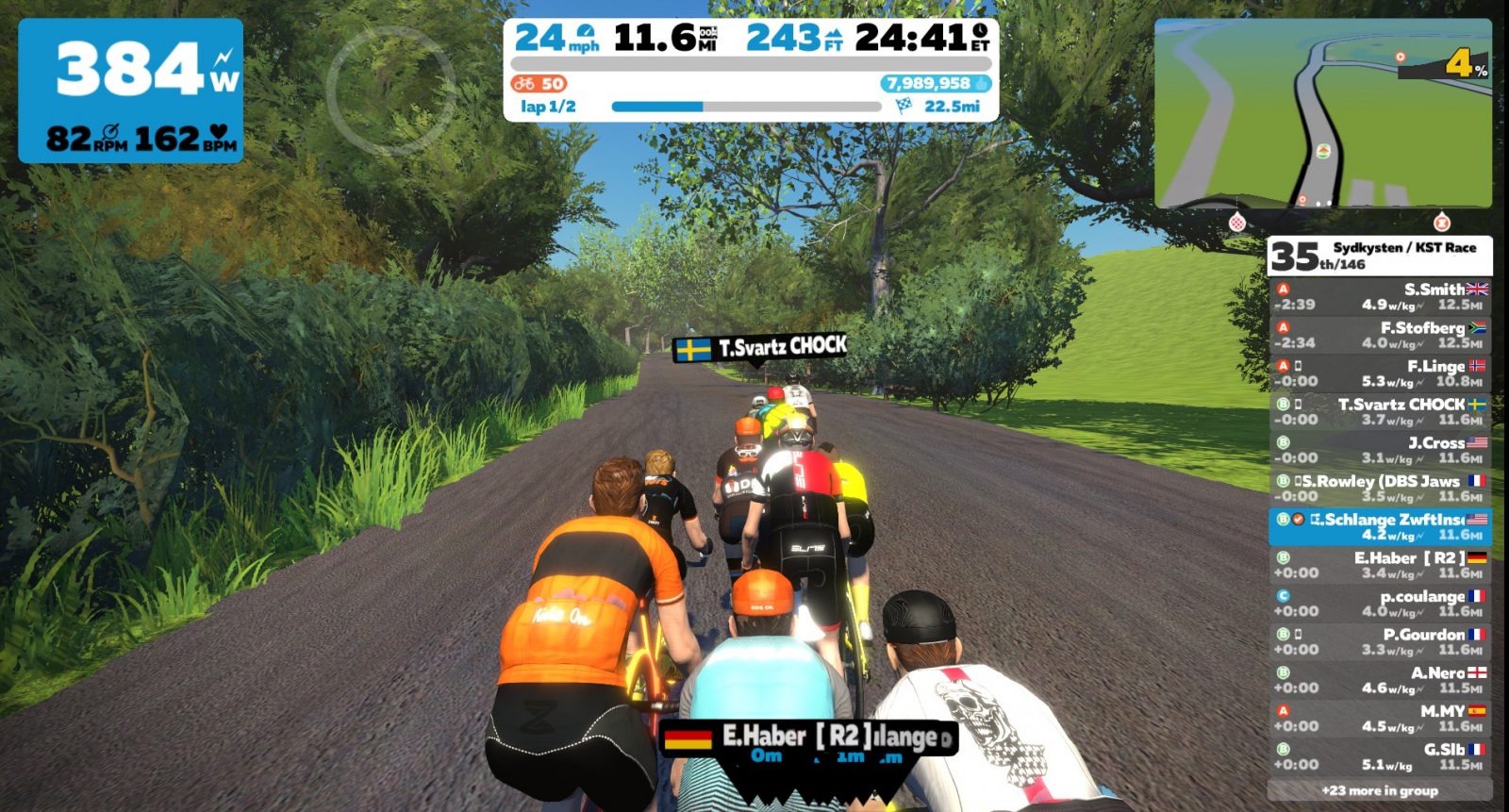
We hit the first rise, just out of the Underground tunnel. I stayed seated, wanting to save my out of the saddle power for when I needed it most. I tried to stay close to the front of the group, too – benefiting from the double draft (we were moving at 24 mph, even on the climb) without being so far back that I could get caught out if a gap opened up.

Holding position up the first rise

It worked! I finished that first climb near the front of our group. Then it was onto the next climb, the smallest of the three. I maintained a good position there, enjoyed the slight downhill, then steeled myself for the last rise – the longest and toughest.

This rise I attacked with a combination of seated and standing efforts, forcing myself not to get “lazy” by drifting back too far in the pack. Happily, our chase group didn’t have the hard-charging strength that was certainly in the front group, so I was able to hold onto the wheels without going fully into the red zone.

We exited the park, and hit the ramp up out of the Underground. This is an interesting section to race, as it always catches someone by surprise. I’ve found the best approach is to hammer hard up the climb, then keep hammering until I’m up to speed with the rest of the group.

You can’t attack it easy. And you’ve got to keep pushing even after it flattens out, otherwise you’ll get left behind.

Someone in our group caught sight of a handful of B riders 2 minutes up the road, and the chase was on! I almost felt sorry for these lonely B’s, knowing the inevitability of the catch. Sure enough, we gobbled them up mid-Classique. The front of our group was now 24th place. Were the B’s in my group now competing for a spot on the podium? I didn’t know, but I decided it was quite possible.

The Finish

The second lap was uneventful – just chugging along in the double draft, employing the same tactics over the park rises that I used to good effect on the first lap. This final lap was largely a high tempo effort for me, meaning I wasn’t on the rivet, but it also wasn’t easy. I could have pushed harder, but there was simply no reason to do so, with no riders up the road within catching distance, and no way I could stay away attacking off the front.

Soon enough, we found ourselves back on the red pavement of the Classique for the final stretch. 33 miles in, 10 riders in our pack, and probably a B podium slot up for grabs!

Did I have a strong enough sprint to beat the other B’s in our group? This race wasn’t handing out powerups, so that was a non-issue. And I had sprinted this section many times, since we use the Classique Reverse route for Sprintapalooza occasionally. I knew it was a “slow” sprint, since it was on a false flat. I also knew I could conserve a lot of energy by staying in the draft, so I tried to maintain a position 2-3 wheels from the front, until just before the sprint start line.

Then I shifted, stood up, and went all in! I didn’t even look up until I heard the sound of my rider crossing the banner. 5th place in the B’s is what the results screen said – but 1st place had averaged 4.7 w/kg, so I knew he was out. 4th place then.

But wait… what would ZwiftPower say? That is, after all, where the final results live. I knew R. Neumann, the one B who was able to hang with the front pack, was a legit B on ZwiftPower. (I had looked at the start list before the race began, and he was the highest-ranked B.)

As it turned out, 3rd place finisher “G. Slb” was on zPower, and that wasn’t allowed on the B podium for this race (a pretty common practice). So I made it onto the podium… just barely. Third place in the final results, and second place Nero beat me out by 1/100th of a second. Well done Neumann and Nero!

See my activity on Strava >
See my activity on Zwift >
See race results on ZwiftPower >

Rider Types and Race Selection

Race winner Richard Neumann is an Austrian who rides for Kirchmair e-Cycling and appears to be perfectly suited for just this sort of race. He’s a bigger rider (89 kg) with massive 20-minute power that puts him right at the top of the B category, just under 4 w/kg.

That means he can sit in with A riders on a flat course and not even be fussed about having a weaker sprint, since he has no B’s left to sprint against by the time the race ends. Which is exactly what he did today. Smart race choice, sir!

Takeaways

My big takeaway from this race is it ain’t over ’til it’s over. Typically my mindset is, “If I get dropped from the front group, my shot at a podium is gone.” And that’s generally true, if you’re in a race where the categories are split up! But in a combined race like today’s, you may very well be racing for one or more B (or C, or D) podium spots from the chase group, as riders up ahead may eventually drop back to your group, or get DQ’d on ZwiftPower for various reasons.

So race smart from the chase group. That may mean pushing the pace on the front to help catch your competition up the road. It may mean sitting in and conserving energy, because there’s no way your group will catch anyone from your category. It may also mean attacking hard to drop some of your competition from the chase group, so you have a better chance at a high result.

Your Comments

What’s the best race result you’ve ever had from the chase group? Share your experience below!

Speed Tests: Supertuck (Solo + 2 Riders, Race vs Free-RIde)

Zwift’s supertuck is a fun feature, a sort of Easter egg which can be combined with strong course knowledge to give the legs a bit of respite during a race. The concept is simple enough: if the road is steep enough, and you’re going fast enough, stop pedaling and your avatar will get into the aero supertuck position. This will allow you to coast at zero watts while keeping pace with riders who are holding some significant power on the descent.

For details of how the supertuck works, read “All About the Supertuck on Zwift

But did you know the supertuck actually behaves differently in races than it does when free-riding? This is because of an update released in May 2019 which changed two key race physics, but only in race events:

  1. The slight braking force when descending is entirely removed. So you will descend faster in a race event than you would in a group ride or free ride, assuming all other variables are equal.
  2. Zwift made the supertuck more aero. Zwift didn’t share the exact numbers, but they’ve said the supertuck’s aero advantage is similar to the aero powerup (which reduces your CdA by 25%).

This means our experience supertucking in group ride events and free rides might vary significantly when compared to races. What does that difference look and feel like? I decided to run some experiments… for science!

Test Goals

This test set out to answer three questions:

  1. How much faster is the supertuck in race vs non-race mode?
  2. Is it faster to supertuck with additional riders vs solo supertucking? If it is faster, how much faster is it?
  3. If I’m supertucking, how hard do riders around me need to pedal in order to drop me from the group? Does this change in race vs non-race mode?

Test Parameters and Methodology

All of the test riders were set to 183cm height, 75kg weight, and rode Zwift Aero bikes with 32mm Zwift wheels.

Tests were done on the Fox Hill descent in London. (I prefer the steady, steep, long descent of the Alpe du Zwift, but no race events ever descend the Alpe, so it wouldn’t work for these tests.) We would hold 300 watts steady once the descent began, then cut power to 0 as soon as the riders hit 60 kph.

Two-rider tests were done either in “Meetup-Only View” or on deserted courses, to eliminate the possibility of speed-influencing interference from other riders.

Test Results

Mode# of RidersPowerFox Hill Descent TimeSpeed
Race10 (Supertuck)2:1862.87 kph (39.07 mph)
Race1225W (3 w/kg)2:2460.25 kph (37.44 mph)
Race1300W (4 w/kg)2:1862.87 kph (39.07 mph)
Race20 (Supertuck)2:1464.75 kph (40.23 mph)
Race 2300W (4 w/kg)2:1763.33 kph (39.35 mph)
Non-Race10 (Supertuck)2:3954.57 kph (33.91 mph)
Non-Race1150W (2 w/kg)2:3057.84 kph (35.94 mph)
Non-Race1200W (2.7 w/kg)2:2559.83 kph (37.18 mph)
Non-Race1225W (3 w/kg)2:2559.83 kph (37.18 mph)
Non-Race1250W (3.3 w/kg)2:2161.53 kph (38.23 mph)
Non-Race1275W (3.7 w/kg)2:2061.97 kph (38.51 mph)
Non-Race20 (Supertuck)2:3456.38 kph (35.01 mph)
Non-Race2150W (2 w/kg)2:2858.62 kph (36.43 mph)
Non-Race2200W (2.7 w/kg)2:2261.1 kph (37.96 mph)

Conclusions

There are several conclusions to draw from the results of our tests:

  1. The supertuck is much faster in race mode: our solo supertuck tests showed a difference of over 8kph between race-mode and non-race mode. And while this difference is magnified somewhat because the non-race supertuckers actually came out of the supertuck on slower portions of the descent, clearly race mode supertucking is significantly faster.
  2. Supertucking works well in pack and solo race situations: it allows you to rest while staying in a pack of riders who are putting out significant wattage (see “Supertucking In a Mixed Group” below). In fact, if the race is strung out and riders are solo, our numbers show that supertucking will let you keep pace with a rider holding 300W. That’s huge!
  3. Supertucking with others is faster than solo: by now smart Zwifters know this – that the “churn” of riders swapping places at the front makes a group go faster than a solo rider could in the same conditions. Here’s a quick video showing the supertuck churn in one of our tests.
  4. Solo supertucking isn’t a fast strategy outside of races: in our test, a solo supertucking rider is 9 seconds slower than a rider holding just 150W (2 w/kg). This tells us that if you supertuck in a free ride or group ride, you’ll probably be slower than if you simply pedaled at a recovery pace. And you certainly won’t keep up with others who are putting out higher wattage – unless you’re sitting in their draft.

Although I didn’t test it here, it’s also worth noting that the steeper the road gets, the smarter it is to supertuck. We know from our w/kg tests that as a decline gets steeper, putting out higher wattage makes less and less of a speed difference. So the steeper the road gets, the more others would have to hammer to keep up with your supertuck.

Supertucking In a Mixed Group

The tests above give us some solid numbers to work from, but they don’t answer our final question: “If I’m supertucking, how hard do riders around me need to pedal in order to drop me from the group? Does this change in race vs non-race mode?”

Based on the race numbers above, we can see that a solo supertucking rider travels at the same speed as a solo rider holding 300W. And two supertucking riders will actually travel significantly faster than two riders holding 300W! So clearly, a supertucking rider can sit in with other riders who are putting out 300W (4 w/kg) on a descent like Fox Hill.

It is possible to supertuck behind one or more “powered” riders in a group ride or free ride situation as well, but the supertuck doesn’t offer as much of an advantage in this situation, due to Zwift’s modified physics for races. Still, we ran a simple test with two riders – on supertucking, and the other holding the highest power we could hold without dropping the supertucker. The results are far from perfect, but our “powered” rider was able to hold 275W with the supertucker still holding on all the way down Fox Hill.

Questions or Comments?

Share below!