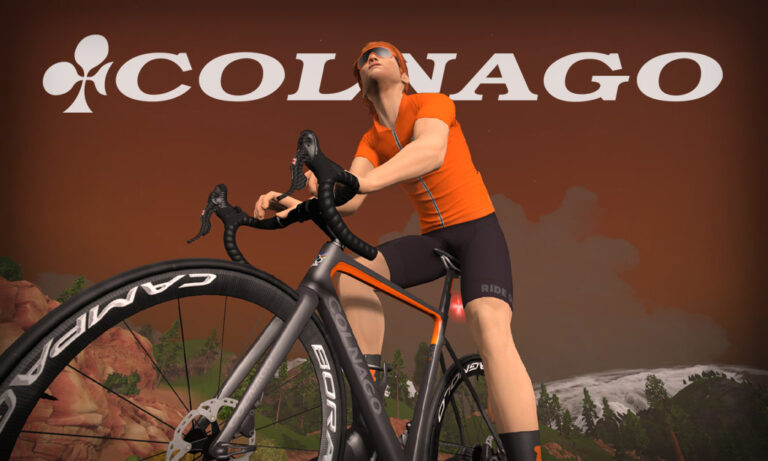
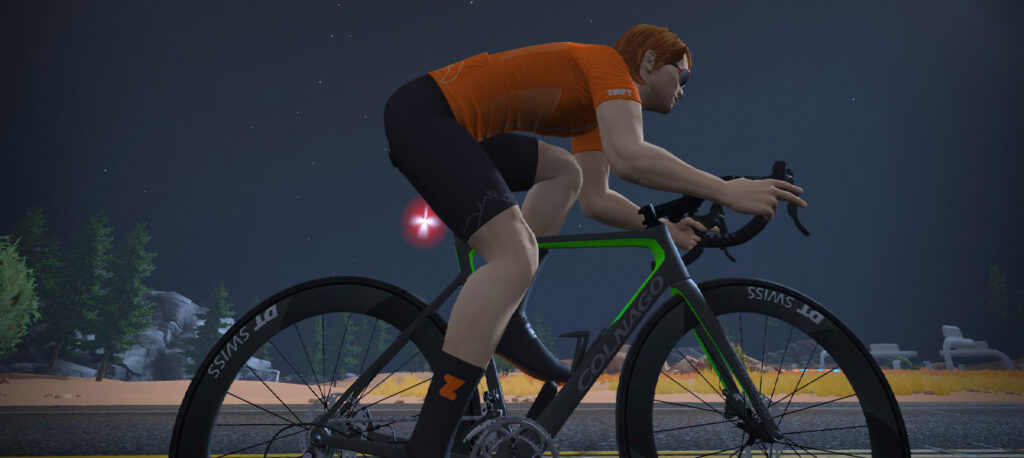
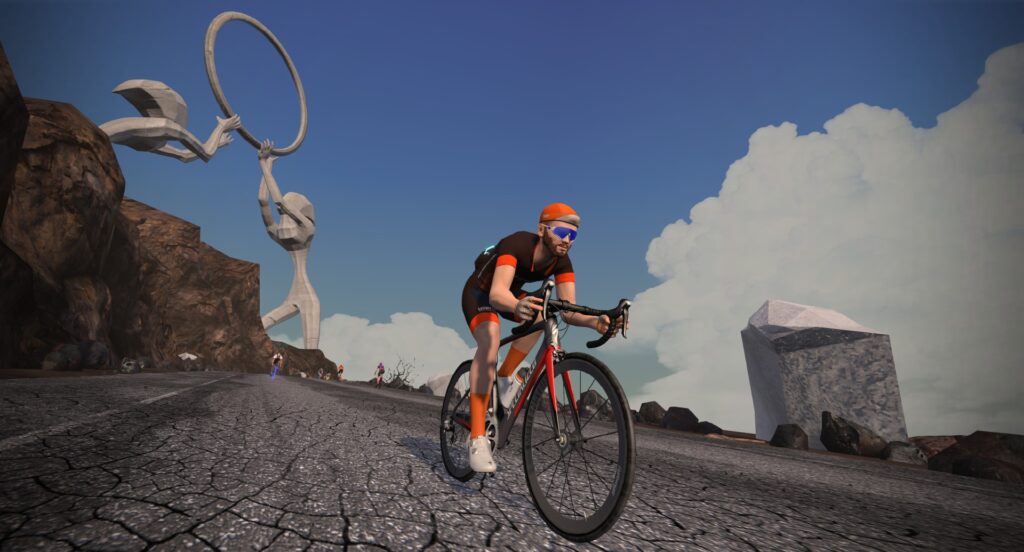
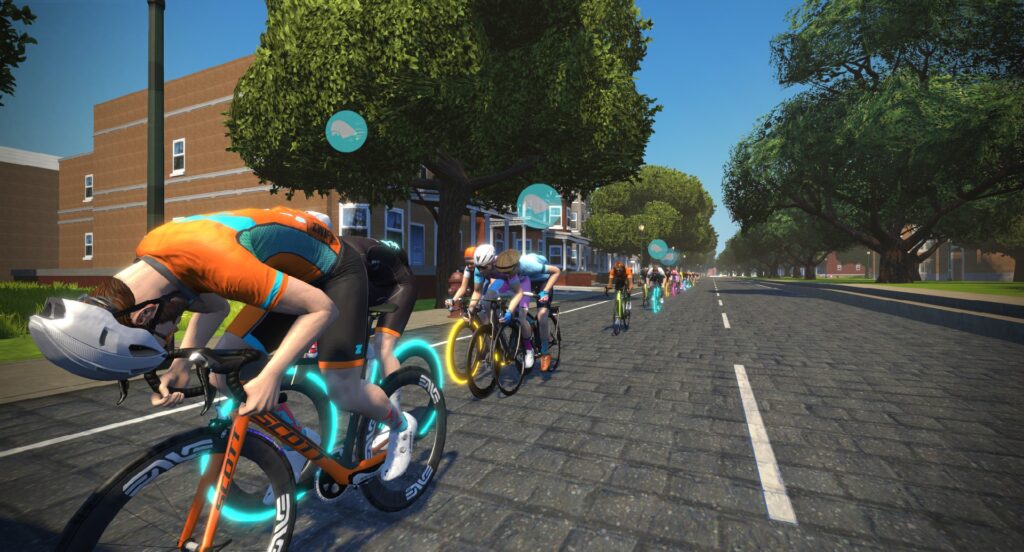
Zwift’s newest update includes a new bike frame – the first Colnago to show up in Zwift, ever! It’s the V3Rs, which is described in the Drop Shop like this:
The V3RS represents the best of Colnago technology, and is designed to thrive in all conditions. The V3 is fast on the long climbs; in the windy plans; in the stages of Grand Tours; and perfect for a demanding Gran Fondo. It’s a great bike for all situations.
Of course, experienced Zwifters know that real-world performance doesn’t necessarily translate to Zwift performance. So at Zwift Insider we run frames and wheelsets through a battery of tests to figure out just how well they perform in Zwift’s virtual world.
Here’s everything you need to know about the Colnago V3Rs in Zwift…
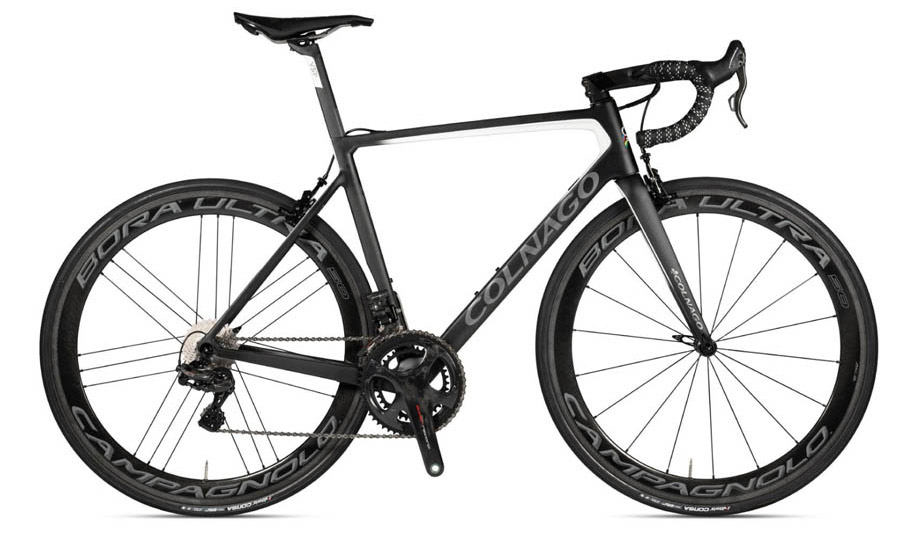
The Colnago V3Rs, IRL
Aero Performance
The V3Rs is only rated 2 aero stars, and that rating is reflected in flat course performance in our tests. This frame is one of the slowest in terms of aero performance, turning in the same time as the Zwift Carbon, Specialized Allez, Cannondale Synapse, and several other frames.
The Colnago V3Rs turned in a time of 51:35 on our test course (two laps of Tempus Fugit). By comparison, the fastest frame in game (Specialized Venge S-Works) turned in a time of 51:18. (Both of these test times were done with Zwift’s stock wheelset, the 32mm carbon).
This puts the V3Rs in the 13th percentile for aero performance.
Climb Performance
Fortunately, the V3Rs performs better on climbs than it does on flats! Rated at 3 stars for weight (more stars is better), the Colnago turned in the same Alpe time as the Cervelo S5, Felt AR, and Focus Izalco Max 2020.
The Colnago V3Rs turned in an Alpe du Zwift time of 49:11. By comparison, the fastest frame in game (Specialized Tarmac Pro) turned in a time of 48:57. (Both of these test times were done with Zwift’s stock wheelset, the 32mm carbon).
This puts the V3Rs in the 58th percentile for climb performance.
Comparisons + Alternatives
The Colnago V3Rs performs almost identically to the Cannondale Synapse in game: identical flat test results and a climb test time just 1s slower.
But it’s level-locked at 18 and costs 695,800 Drops, making it hard to recommend the Colnago V3Rs in terms of performance given the other frames already available in game.
The Specialized Tarmac SL7 is nearly same price, but available at level 5. It’s a much better climber, and also more aero. Canyon’s Aeroad 2021 is 100k Drops cheaper, climbs better, and is much more aero.
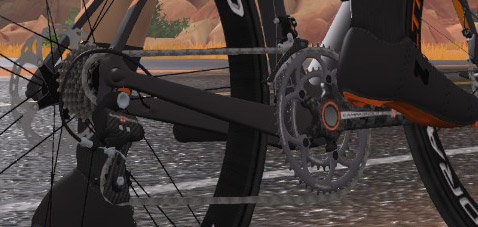
Fun fact: the V3Rs uses the Campagnolo SuperRecord groupset in-game. There aren’t many Zwift bikes using this groupset – the classic Zwift Steel is one. Do you know of any others?
If you want to run virtual Campy, or are just a big Colnago fan – then pick up the V3Rs. Then again, it sounds like we’ll all be riding this frame Haute Route Watopia 2021 events this weekend. So maybe take it for a virtual spin first? 😃
This update doesn’t include any new roads, but it does include upgrades to the popular Pace Partners feature and workouts library… plus a new bike. Let’s dig into the details…
Pace Partner Tweaks
Zwift’s merry band of programmers continues to iterate on the Pace Partners experience, making small changes based on user feedback. This update includes two tweaks:
Dynamic Drops multiplier distance: in large groups like we see with C. Cadence it can be hard to stay close enough to the Pace Partner to keep the Drops multiplier game going. Now the distance at which your Drops multiplier stays active will increase as the size of the group increases, to a maximum radius of ~24 meters, which is double what it used to be.
Restricted access: if a Pace Partner is riding in a level-locked area of Watopia, lower-level Zwifters will be able to follow them without getting locked out.
Workout Expansions
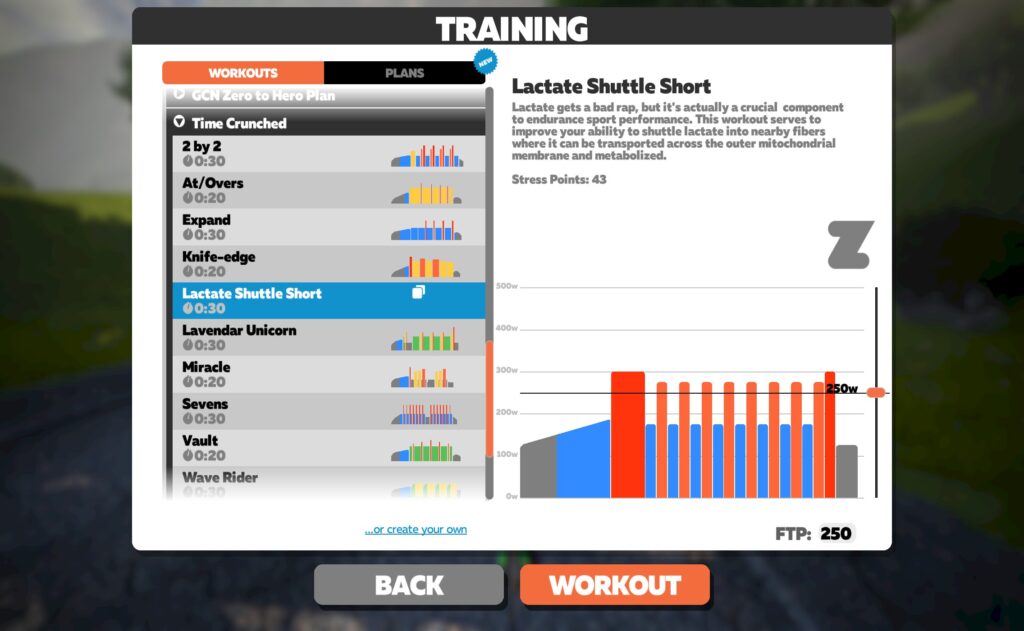
Three new folders have been added to the structured workouts library. These contain new workouts plus some older workouts which have simply been relocated to a better place:
Time Crunched: 10 cycling workouts, including 4 new workouts. Each 30 minutes or less.
GCN Zero to Hero: workout series which consists of a 7-week program to make you stronger in the off-season.
Norseman 2020: 6 cycling and 6 running workouts.
Additionally, improvements have been made to the FTP Builder workouts to correct erroneous timing and interval data.
The Start of Something Good
Zwift knows they support a huge population of people who regularly use these structured workouts, and while they haven’t given us any firm commitments, they recently told us we can expect to see an increased focus on expanded training content in the coming months.
That’s great news! An expanded training library with more flexible training plan scheduling would be very welcome.
New Bike Day: Colnago V3Rs
New bike day is always a good day! Today’s update includes the first-ever in-game frame from Italian builder Colnago, the V3Rs. It’s rated 2 stars for aero and 3 for weight, which indicates it won’t be a particularly fast bike on the flats, and not the fastest on climbs, either. It’s level-locked at 18, and costs 695,800 drops. The in-game description says:
The V3Rs represents the best of Colnago technology, and is designed to thrive in all conditions. The V3 is fast on the long climbs; in the windy plans; in the stages of Grand Tours; and perfect for a demanding Gran Fondo. It’s a great bike for all situations.
With a description like that, we’d expect the frame to be a decent climber, which may explain why it’s the frame of choice for this weekend’s Haute Route Watopia 2021. We’re testing the Colnago V3Rs now and will publish results ASAP.
Pack Dynamics Tweaks
We recently wrote about Zwift’s testing of new pack dynamics in certain events. While not mentioned in the update notes, this release includes improvements to these new pack dynamics which should reduce the surging seen by some riders.
One benefit of these new pack dynamics is more precise locating of Zwifters system-wide, which should mean that what one person sees on their screen will more closely match what another sees. It should also improve the ride leader fence’s functionality.
Zwift’s intent is to roll out the new pack dynamics Zwift-wide in a future release. But since the dynamics make packs behave differently, Zwift is being mindful about affecting existing race series (such as ZRL).
It may take riders a while to get used to the new pack dynamics, so events won’t be forced to use them any time soon. That said, if you want to test out the “New AI” pack dynamics, here’s a list of upcoming events using them.
Steering Updates: Wahoo KICKR Bike on Repack Ridge
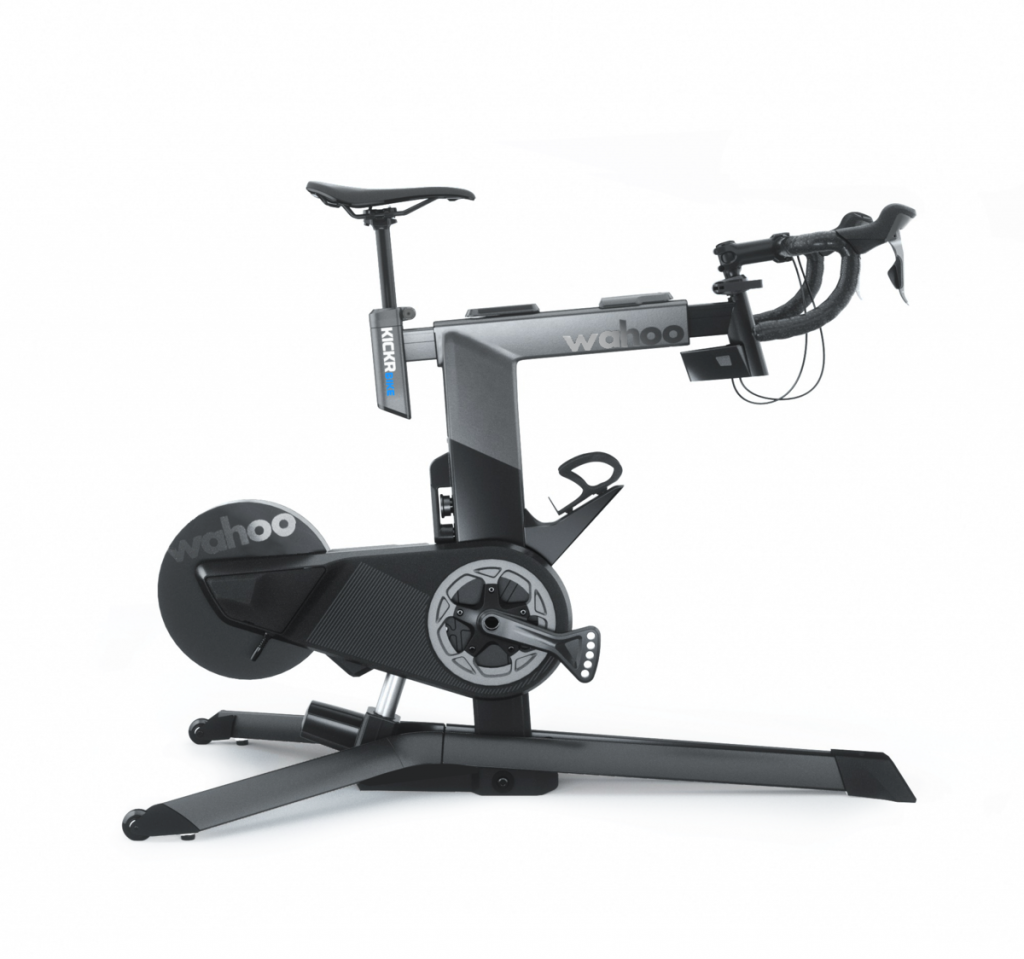
Last month’s update allowed Wahoo KICKR Bike riders to steer using the bike’s buttons, on every bit of Zwift road except the Repack Ridge singletrack. Today’s update opens up Repack to KICKR bike riders.
Go shred some gnar!
[Brackets] vs (Parenthesis)
Here’s an odd change we noticed which isn’t mentioned in the release notes: if you put something in your last name in brackets, such as [TEAM NAME], that text is no longer visible in the rider list on the right side.
If you use parenthesis like (TEAM NAME) it is still visible.
UPDATE: ZHQ has confirmed this is a bug, and they’re working on getting a hotfix out since it can hamper racing…
Bug Fixes/Improvements
This release also includes a pile of minor fixes… here’s the list from the release notes, with a few comments where appropriate:
Numerous cycling and running assets (kits, shirts, etc.) have been added or updated.
Improved our client versioning to make it easier for users to know what version they are using. Now Zwift client versions will be expressed with a version number (such as 1.10.0) along with a build number in parenthesis.
Added an error message when a user is trying to join an event on a route that their current game client does not support. This typically happens when new Zwift worlds are released but users log in with older game clients. This is a welcome improvement, as there have been numerous issues in the past with people running outdated versions without knowing it, and suffering a poor experience as a result.
Fixed a bug that would cause the wrong stage to appear as complete for programs such as Tour de Zwift.
Fixed a bug that would cause over steering on Repack Ridge when the game framerate was low.
Fixed a bug causing the ground to appear misaligned at the top of the Epic KOM (Earthquakes in Watopia apparently are a thing).
Fixed a bug that would cause users to do a u-turn or donuts. Hopefully this fixes the Wattbike steering bug introduced in the previous update.
Fixed a bug that would cause names to appear incorrectly in the Riders Nearby list.
Fixed a bug with the thumbnail of the Super League Community running shirt.
Fixed a bug that would cause iOS and TVOS clients to crash on rare occasions.
Fixed a bug where bike frame star ratings would not render correctly within the window.
Removed the app notification badge when Bluetooth notifications are triggered on mobile devices.
The PRL Full is the longest route on Zwift (173 km/107.5 miles), covering eleven laps of the London Loop plus a bit more. It’s a big effort, but a totally different “feel” from the Über Pretzel.
And we’re going to conquer it together on March 13th at 6am Pacific/9am Eastern/2pm GMT.
The Setup
This Über event began as a harebrained idea from Steve Beckett (Chief Marketing Officer at Zwift) and myself, who were chatting after February’s Mega Pretzel fondo about how neither of us had the Über Pretzel route badge (shameful, right?). Steve suggested we knock it out together, then we had the idea of inviting some friends to a Meetup, then we decided to make it Zwift Insider’s first-ever official Zwift event. It’s amazing what can happen in the span of a few WhatsApp messages!
Let’s just say I’ve had better days out on the bike…
So we announced it on the morning of Wednesday, February 10th. 400 Zwifters signed up within a couple of hours and I headed outside in the afternoon for a solo ride up my local volcano, Mount Konocti.
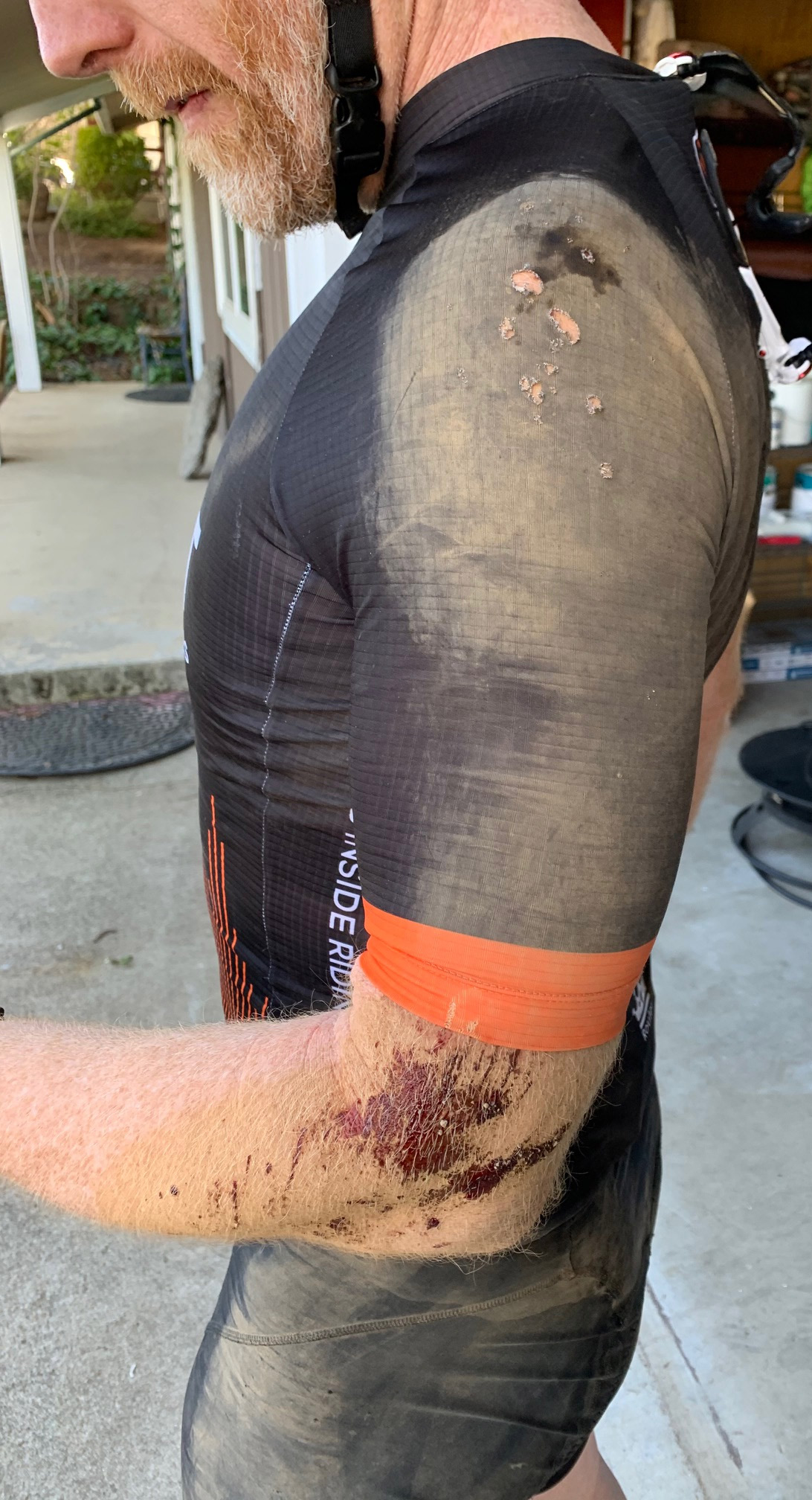
It was a beautiful ride to the top – 3000′ of climbing to full panoramic views of our lake and the surrounding mountains. But on the way down, I cut the inside of a left-hand hairpin (dumb mistake) and met a dirt biker (motorcycle) on his way up the gravel road. I hit the dirt, tumbled over, and met his front wheel on my lower back/ribs. Ouch.
Luckily neither of us was traveling at high speed. It could have been so much worse. But that didn’t make me feel much better the next day when I could barely get out of bed. The road rash was no big deal – I’ve dealt with that before. But the bruised ribs/internals? These were going to be a problem.
I had to laugh at the irony of crashing just a few hours after announcing Zwift Insider’s biggest event ever. But I also set myself a goal: I would do everything I could to finish The Über Pretzel on February 20th.
Anticipation Grows
It was so much fun to watch the number of signups grow every day. 1000 signed up within 24 hours. A week out, over 2000. I sent out an email blast which included the event as a highlight, and on Wednesday, 3 days before the event, we broke 4000. The night before we were over 5000.
Who were these crazy people? How could there possibly be over 5000 people wanting to ride The Über Pretzel?
Back On the Bike
I took 3 days off from riding after the crash, just trying to let my body heal by resting, heat/ice, and taking slow walks. Walking felt like I’d suddenly aged 40 years. Who knew how much your core was used just to move your legs?
On Sunday I took my first ride, free riding through Fuego Flats and even hanging with C. Cadence’s group for a bit. But I had to keep my effort low and stay upright, as stretching the ribs put me in a dark place.
Although I’ve seen and heard stories, this was my first experience using Zwift as a rehab vehicle. For someone who wants to get back on the bike in a very controlled manner, Zwift is perfect – very few variables. You can climb off whenever you want. No cars or potholes.
Each day I rode for about an hour, and each day I felt a bit better on the bike. But I still couldn’t push above zone 2 without causing things to hurt a lot, and getting out of the saddle (which I love to do!) wasn’t working either. Mornings were the worst as things were limbered up yet – but I rode early anyway, because I knew Saturday’s effort would begin at 6am.
The day before the big ride I led my Friday Sprintapalooza event at 5:25am – without sprinting! My average power was the highest it had been all week, and I was able to get out of the saddle a bit more comfortably. I finished that ride confident that I could start The Über Pretzel and at least finish most of it.
And So It Begins
Saturday morning Monica and I woke up at 5am, with the ride beginning at 6am. We set out all the necessities – extra bottles, fresh kit and towels, food. Monica’s plan was to ride for the first hour or so – she’s still dealing with a hip injury and didn’t want to push it. She was downstairs on the iPad, I was upstairs at Zwift Insider World Headquarters.
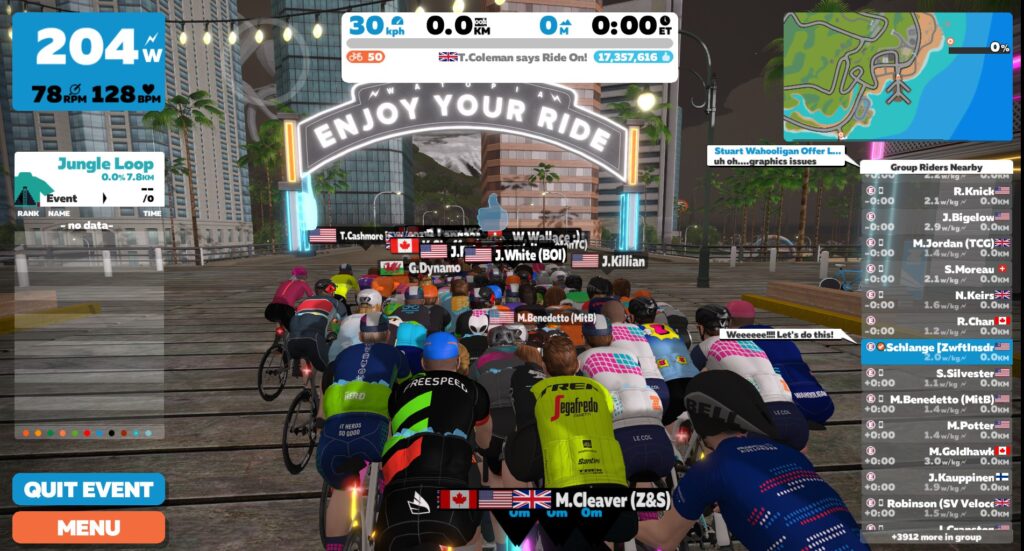
When the clock hit zero we all barreled out of the start pens. Well, most of us, at least. My screen showed 3905 riders taking part, and that was simply too much for some people’s devices to process. Including my poor wife’s! Monica came upstairs a bit teary-eyed… the Zwift app had simply locked up when the event started, then it shut down.
Trying to rejoin the ride didn’t work. And I had purposely not enabled the Late Join feature for the event, because I didn’t want people to late join, ride to the top of the Alpe, then not get the route badge.
As Monica started her own ride, I chugged along in the group around 1500th place. Zone 2. The ribs were letting me know they were there, but it wasn’t nearly as bad as earlier in the week.
Glorious Discord
We used Zwift Insider’s Discord server for the ride, and there were quite a few folks in the voice channel – around 50. Once I had muted the handful of riders who couldn’t figure out how to enable Push to Talk, we had a wonderful time chatting as we rode. Friends were checking the positions of other friends, we were sharing Zwift tips, telling stories of what we do IRL… it was a grand time.
Seriously, I can’t emphasize this enough: chatting on Discord makes these long rides fly by. As I made my way up the Radio Tower climb my buddy Lewis Dinsdale from the KISS Racing Team messaged me, asking if I could hop onto his Discord channel for a quick interview as he livestreamed the event (my chat with him begins at 46 minutes).
Watch the Live Stream:
After a nice chat with Lewis I pressed on, and eventually found myself at the 2.5-hour mark feeling fresh and chatting away with friends. I was now confident I could make it to the end. Thank goodness for Discord!
To Swap, Or Not To Swap?
After making our way over the Epic KOM and up the Radio Tower climb we descended to a lap of the Jungle. Now came the big question: swap to a mountain bike, or stay on my Tron?
It’s not an entirely easy question to answer in a double-draft event with lots of riders. Because if you’re in a pack of riders it may very well make more sense to stay with your group instead of stopping (and getting dropped), then having to ride ahead of the pack so you can stop and swap back and finish ahead of them (or with them) in the end. This was the case for the riders at the pointy end of today’s ride.
When the Jungle dirt began I had decided to just stay on my road bike. But a few minutes down the road I realized that I wasn’t really in a pack – I was in a continuous line of riders. If I stopped and swapped I wouldn’t by dropped from a pack – I would still be able to draft others.
So I swapped to MTB, and began working my way through the riders ahead. By the time I finished the Jungle Circuit and swapped back onto my Tron bike I had gained around 150 places!
Sitting In + a Refresher
Apart from the Epic KOM + Radio Tower early on, The Über Pretzel actually feels like quite a flat route! The miles flew by once we left the Jungle. Double draft + flat roads made for a splendid time. Soon enough I was at the 3-hour mark, and since we were heading out to the Alpe soon I decided to hop off the bike, take a toilet break, and change to a fresh kit.
Anyone who has done this in the middle of a long Zwift session will tell you: it makes you feel like a new person. It’s the fresh chamois, isn’t it?
The Alpe
As we made our way out to the Alpe, Monica informed me that the first rider had crossed the finish line – Stefan Kirchmair, in 3:25. Wow!
Swapping to my MTB for the short Jungle descent down to the start of the Alpe helped me pass lots of roadies along the way. There were quite a few riders parked at the bottom of the Alpe as well – perhaps taking a bit of a break before tackling the final climb?
I stopped as well – to climb off the heavy MTB and hop onto a good climbing rig. Because I knew I could use all the help I could get!
My Alpe rig
I began the Alpe climb 3:45 into the ride. Going into this I was vaguely hoping to finish around the 5-hour mark, but I had no idea if that would be doable. Now it seemed very possible, since I’ve climbed the Alpe in under 60 minutes many times.
But that’s easy to say, at the bottom of the Alpe.
I tried to hold steady power up the climb, somewhere around 200-210W. And that worked great, for about 30 minutes. Then my legs gave up. In hindsight, I think I didn’t eat enough in the hour leading up to the Alpe – I didn’t have an appetite, so left the Clif bars on the table. Big mistake.
The rest of the climb was a slog. I knew I could do it, my legs just weren’t interested. Even had a nice quad cramp near the end! And although a sub 5-hour Über had seemed possible when the Alpe began, that possibility evaporated away. 5 hours and 5 minutes would be my final time, finishing around 1250th place. Then I enjoyed a well-earned coast to the bottom as I breathed repeated sighs of sweet relief. Done and dusted!
Final Stats
Final numbers for the big event:
Signups: 6,973
Starting Riders: 3,666
Finished: 2,637
Total Event Distance Ridden: 277k miles/445k kilometers
Elevation: 24M feet/7.33M meters
Gender Split: 87% Men 13% Women
Of all these numbers, I’m most impressed that 72% of those who started the ride finished. Amazing work, everyone!
When, in the middle of the Zwift Racing League Volcano stage, I was not totally sure if it was the second or the third climb of the race, it was a clear sign oxygen was no longer reaching my brain properly.
If you experience such a situation, the most probable thing is that you are actually in the second climb, and the fact you believed it was the third was pure survival wishful thinking.
So, let’s analyze more in detail the butterfly effect chronology leading to you sweat, curse, and whine while you see the leading pack inevitably distancing you. Oh yes! Oxygen not reaching your brain and you being distanced go usually together. It’s the basics of Murphy’s Law.
But don’t get it wrong. It’s nobody’s fault except yours.
The root question is why. Yes, why? Why did you agree to this while you could be slurping a beer in your sofa, watching with one eye a non-sensical zombie sitcom on TV and checking the gazillionth Youtube video compilation of dogs jumping into swimming pools with the other one?
In my case the why is very simple and summarizes to a single word: Sweden.
Allow me to elaborate a little bit.
Two days after the announcement of the confinement in Madrid I was conversing with a Swedish friend (I don’t know if he still qualifies as such since he is responsible for my suffering), in which I was telling him it was going to be really tough to be behind closed doors for several months. He answered very spontaneously it would be less mentally damaging for him since he was on Schift (that’s what I understood, Schift).
I did not pay attention, and ignored his comment. After two days, desperate and feeling jailed, I called him back hoping Schift would be some kind of magic pill making things look and feel great.
That’s when he explained Zwift in detail. I went immediately online to check what would be the quickest setup to be able to Zwift.
Buying a smart trainer in April 2020 was the closest thing to an Indiana Jones adventure I’ve ever done. All those going through a similar process would tell you about this time where they had it in the shopping cart but a credit card mistake delayed the payment and then there was no longer available stock. Venomous snakes and acid grenades aside, it was clearly a script for the seventh episode of Indiana Jones saga.
So, the day I received Amanda (my smart trainer and I became so close I had to give her a name) was one of the happiest of my life. The happiness lasted exactly ten minutes and fifty-five seconds. That is the time it took me to calibrate and start my first FTP Ramp Test on Zwift.
From there until now it has been a kind of love/hate relationship with Amanda. The days I feel great and generate a good number of watts she is the best; the days I have the strength of an average snail she is the source of all the problems in my life.
Almost a year down the line I have made dozens of virtual and non-virtual friends on the platform. I have joined a Zwift Club, a Zwift Racing League team, and I am having fun like I haven’t since I was a teenager. I also vEverested three weeks ago! All things I would believe were science fiction a year ago.
Today’s post-race team debrief made me realize there is absolutely nothing more creative than a Zwifter who crosses the finish line of a race in which he did poorly. Me, in this case.
There is an inverse correlation between the quantity/absurdity of the excuses a Zwifter can improvise in order to explain his subpar performance, and the number of watts that the same Zwifter has generated during the race.
The formula for the standard Zwifter, where “x” is the number of excuses post-race and “y” the average watts output during the race, would be something like this:
x = y2
For someone absolutely hyperbolic like me (I have both Argentinian, French, and Italian blood), the formula would rather be:
x = 20.y10
Let’s dig into the portfolio of excuses.
Classics: Tuesday is the International Day of Wifi Connection Issues: “I swear I was in the top 10 when Zwift had a problem: everybody disappeared and I reappeared 1265th.”
Tuesday is the International Day of Numbers Not Making Sense: “My trainer was not accurately calibrated. I mean I am sure I was developing 300w, I know when I do, but it was showing 175w.”
Tuesday is the International Day of Food Poisoning: “10km to the finish line I started feeling kind of sick. It’s the bad oyster in the seafood plate I ate seven minutes before the start of the race.”
Tuesday is the International Day of “I had a horrible day at work”: “Work is crazy and really, really, as soon as the race has started, I had no strength at all. If it was not because of the crazy workday I am sure I would have nailed it!”
Monday night is the International Day of Insomnia: “I got to the race like a zombie. Two hours of sleep is not enough you know. It is a shame because I was ready for a 20-minute PR…”
Tuesday is the International Day of Zwift cheaters: “All the guys arriving before me are height+weight doping/sticky-watts/sandbaggers!!! Look at their w/kg average on 20 minutes! It’s a scandal. They should be UPG or WKG! They are clear-cut cat A!”
Tuesday is the International Day of the Magic Towel: “I was in the leading pack well-protected inside the group, I took my towel to clean the sweat off my face as I was preparing my unbeatable attack, and when I looked back to the screen they were all gone!!!”
And finally, Tuesday is the International Day of Paranormal Events: “I was having what was certainly my best race so far in the Zwift League. Literally at 150 meters before the finish line, a Portuguese removal truck hit a street lamp two blocks away from my place, creating a 20-minute electricity outage in all the neighborhood. I was literally at 150 meters! I am sure this is a TugaZ conspiracy!”
“The dog came and bit the cable of my smart trainer. I managed to get them apart but then an eagle broke the window and attacked the trainer confused by the rabbit sticker. Thank God I managed to take off the sticker while still pedaling. Otherwise, I finish top 5 for sure!!”
No matter how crazy it is, your teammates would never challenge your excuse: best teammates in the world. They understand you need to go through the curve of “acknowledgement you just did awful”, which implies a first phase of two hours of absolute bad faith excuses, leading you to bed still feeling life has been just been so unfair with you.
Now, Wednesday morning is another story. You wake up with an “excuse hangover”. You feel nothing but embarrassed about what a crying little baby you were the day before.
The best thing is, no matter how miserable you feel at that precise moment, nothing is going to prevent you from inventing a whole new avalanche of absurd excuses next Tuesday.
PS: one, only one of the excuses listed above actually really happened to me. Guess which one?
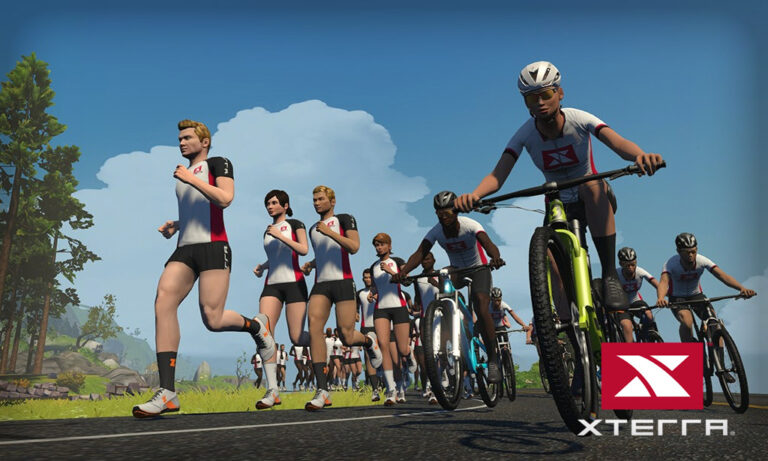
The IRL XTERRA is a series of cross triathlon races that include swimming, mountain biking, and trail running. It began in 1996 on the Hawaiian island of Maui as the Aquaterra, and was later renamed the XTERRA. XTERRA evolved into an endurance sports lifestyle brand with worldwide appeal. Over the past 20 years, XTERRA transcended its status as “just a race” to become a “way of life” for thousands of intrepid triathletes and trail runners across the globe. It has a racing presence in over 30 countries worldwide and is expanding.
XTERRA has brought their adventurous spirit to Zwift to give athletes the chance to experience the excitement and challenge of the event. There are 7 days of Ride and Run races on varying courses which gives athletes the chance to compete and test themselves.
For a year I have been obsessed with the weekly Team Time Trial… so I asked Eric if I could share my obsession with you all, in weekly doses.
Each week I will give you a profile of the upcoming route, guidance on bike choice, and some target times if you want to aim for the Premiere League (top-10 in each coffee class get to be in a special race televised on YouTube).
If you can’t ride, or even if you can ride, but want more action! Don’t forget to tune in to the live TV show on Zwift Community Live’s YouTube Channel at 6:15 (UK time).
Watopia Volcano Flat recap
Before heading to the Big Apple let’s take a look at how well you did in looping the Volcano last week.
Volcano Flat was a TTT course three times last year – in February (#45), in May (#56), then again in July (#63). Doppio, Espresso, Frappe, and Mocha performed pretty much as expected… coming in a little better than July. But Vienna and Latte blew the doors off – both of them shaved over a minute off their legs.
Highlight of my predictions this week – Espresso. Not just because I nailed 11th spot in my prediction, but also because the R&K Cheetahs secured a PL spot coming in right around the time I set. I’m not saying they got a PL spot because of me, but…
Class
#56
#63
My prediction
#96 PL time
My place
Vienna
55:53
55:28
55:00
54:21
18th
Doppio
47:44
48:06
47:15
47:39
6th
Espresso
48:48
49:54
48:25
48:34
11th
Frappe
50:59
51:02
50:30
50:21
13th
Latte
54:54
54:42
54:30
53:47
22nd
Mocha
1:02:23
1:02:00
1:01:00
1:01:12
7th
As good as the Cheetahs were this week, the R&K Lions were awesome. Fastest team of 5 in Espresso this week, securing 8th spot. Over the last year of TTTs I have seen so much improvement in fitness in our (growing) squad and the competitive spirit is as strong in my Latte team as it is with the Espresso riders! However much performance I gain, I just seem to barely keep up with my friends and teammates. Beyond fitness, one of the things R&K excels at is creating a sense of community and the highlight of everyone’s Thursday is the Captain’s ride reports.
Stripped of our stars, including an Olympic champion in the reshuffle, we searched for replacements in a weekend spent drilling the R&K talent mines. From the darkness we unearthed Simon E, Shifty, and Ben M, all 3 of them rouleurs ideally suited to the flat course. Joining us from the reserves was Martin H the bespectacled sexagenarian lawman and completing the team we had Sherpa, Andy A, and the sole surviving original Vixen, Sue S.
Shifty’s avatar failed to live up to his name and refused to budge from the stalls so 7 of us set off.
A regular pattern quickly emerged, Ben M on the front for extended turns with support from Andy A , Simon E, Martin H, and Sherpa.
Having realised what power we had with the big lad we shamelessly “sweated the asset” and pressed him on through the ups, downs, and flats, occasionally reigning him back when, for example, Sherpa claimed he was off the back due to a loose earpiece. Eventually Sue S slipped beneath the surface of her Florida pool and Simon E was trapped in an overtaken group. We lashed Ben all the way to the finish and Sherpa immediately phoned WTRL WW HQ for the results, but alas, our arch rivals (Frappe team R&K Cheetahs led by the evil Nealel) pipped us by a few seconds. Anyway there’ll be 8 of us next week and we’ve still got Ben the chuggernaut, so watch out pussycats.
R&K riders are entertained by 10 of these reports (11 from next week), and the team captains work hard to out-do each other… and this helps keep the community together.
I realize that every one of the 1000+ teams riding each week has an equivalent story, so I asked a couple of friends for theirs – starting with my old mates CICC – Croissy International Cycling Club. Their “B” team is CICC Blast – here is Mark B’s ride report.
Blast looked good with 8 strong riders lined up. William H had foolishly accepted a bet on Chris Hs tech letting him down and were paying out before the start with his obligatory IT crash. Robbie had sorted his Dalek Discord voice and was duly appointed road captain. The team set off at a fair clip and got into good form swapping strong 45 second turns. The dual goal was to overhaul CICC Crew (who were 90 seconds up the road) and stay out of the clutches of CICC vAmos (3 min back).
Team after team were passed with Larry pulling a few strong turns before dialing out – he had been thrown overboard by Crew late in the day as Crew were overcrewed so it was a fab effort. That left us with 6 strong riders as we waved to Crew on the way past. As the gap to crew increased vAmos came into the rear view mirror – but 2 mins back with less than a lap to go.
Our 6 became 7 as we overtook a straggler who decided to ‘join’ and spoil our line – he was sworn at twice in broad ‘Scots’ then our multilingual climber Mr Perkins impolitely told him in French to ‘cease and desist’ he ignored all of this so Gerry duped him into thinking he was struggling and dropped him. Hammer down for the last few K, Luke disappeared at some point leaving a 5 person pull for the line.
… and if you will excuse me, one more personal ride report. This time from a Team Giant Camden rider which epitomizes how the weekly TTT has helped local clubs become global in these trying times.
From one lone Devonianin the pack, local friends and cycling club mates have come on board and the Devonian crew now proliferate almost every team in the GC family. From the pre-event chatter on the line through the shared agony as someone shouts “off in 5”, to the sound of gasping as finish lines are reached almost an hour later, we pedal alongside… hoping that one day we will get to do this together on the hills of Dartmoor. For now though, its another lap of the Volcano, and right now there is no better place to be, or better group to share it with… my turn on the front again… “Powering Up!”…
I’m looking to feature ride reports from around the community… if your team has a personal TTT story to share come and find me.
Thursday… the International Day of…
Before we head into the recce of Astoria Line 8 I want to introduce a new friend. Luciano Pollastri has made a global migration in the opposite direction to me – I went from the UK to America, he went from Argentina, to France, and now Madrid. (If you haven’t read his Lucianotes article you should, but obviously not til you finish the Recce!) Luciano is going to put together a weekly post-TTT report, but as an introduction to his irreverent style, here are some words we will all find useful:
Today’s team debrief post-race made me realize there is absolutely nothing more creative than a Zwifter who crosses the finish line of a race in which he did poorly: me in this case.
There is an inverse correlation between the quantity and absurdity of the excuses a Zwifter can improvise in order to explain his subpar performance, and the number of watts that the same Zwifter has generated during the race.
The formula for the standard Zwifter, where “x” is the number of excuses post-race and “y” the average watts output during the race, would be something like this: x = y2
For someone absolutely hyperbolic like me (I have both Argentinian, French and Italian blood), the formula would rather be: x = 20.y10
Let’s dig into my portfolio of excuses – these work as well for normal races as they do for the TTT!
Thursday is the international day of wifi connection issues “I swear I was doing great then Zwift had a problem: everybody disappeared and I reappeared 1265th.”
Tuesday is the international day of numbers not making sense “My trainer must not have calibrated right. I am sure I was developing 300w, I know when I do, but it was showing 250w.”
Thursday was the international day of bad food choices “10km to the finish line I started feeling kind of sick. It’s the bad oyster in the seafood plate I ate seven minutes before the start of the race.”
Thursday was the International day of horrible work “Work is crazy and really stressful. As soon as the race started I had no strength at all. If it was not because of the crazy workday I am sure I would have nailed it!”
Wednesday…. the international night of insomnia “I got to the race like a zombie. Two hours of sleep is not enough you know.”
Zwift Cheaters “Everyone ahead of us in the rankings are height/weight/cheating/sticky-watts/sandbaggers!!! Look at their wkg average on 20 minutes on this other race! It’s a scandal”
The magic towel “I was about to take my turn on the front, took my towel to clean the sweat of my face and when I looked back to the screen you’d dropped me!!!”
And finally, the international day of paranormal events
“I was having the perfect TTT – taking long turns on the front and feeling great…. Then a Portuguese removal truck (other country’s trucks may be available in your area) has hit a street lamp two blocks away from my place, creating a 20 minutes electricity outage in all the neighborhood.
No matter how crazy the excuses, your teammates would never challenge them – they are the best teammates in the world. They understand you need to go through the curve of “acknowledgement you just did awful”, which implies a first phase of two hours of absolute bad faith excuses, leading you to bed still feeling that life has been just been so unfair with you. Now, Friday morning is another story. You wake up with “excuse hangover”. You feel nothing but embarrassed about how a crying little baby you have been the day before.
The best thing is that, no matter how miserable you feel at that precise moment, nothing is going to prevent you from inventing a whole new avalanche of absurd excuses next Tuesday.
I am really looking forward to Luciano’s ride reports… and for the record, my earpiece really did fall out this week, and I really did get dropped trying to reconfigure Discord on-the-fly… but I did get back on!
Thursday 25th February – Astoria Line 8
Over to the USA this week, to New York’s Central Park of course. Astoria Line 8 is named for New York’s first subway line – but for the bikes we keep it above ground throughout. The route is an accurate replica of the surface roads in the Park – when the New York world was released Dave Chauner, NYC racer from the 60’s said “Rode the new Central Park course this morning. It’s been a long time but I recognized every meter of the circuit”.
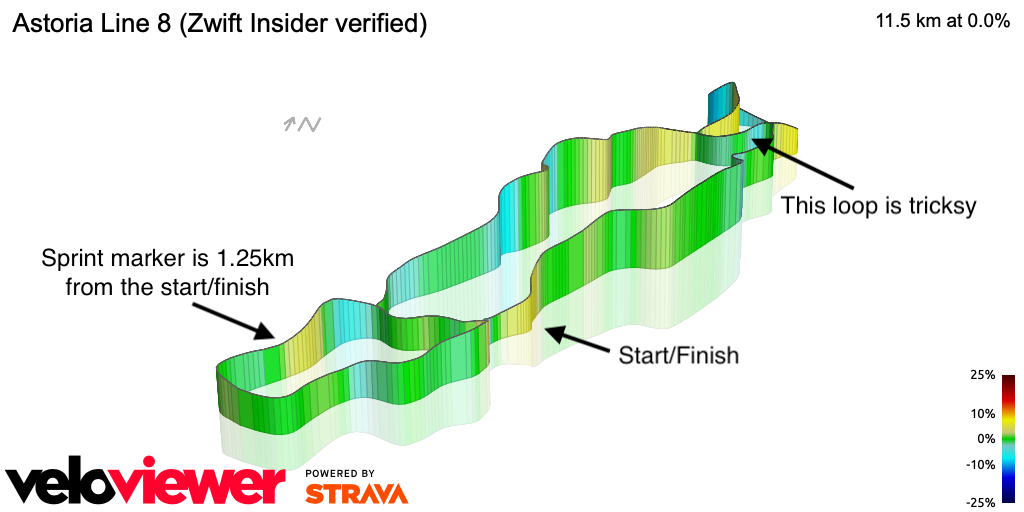
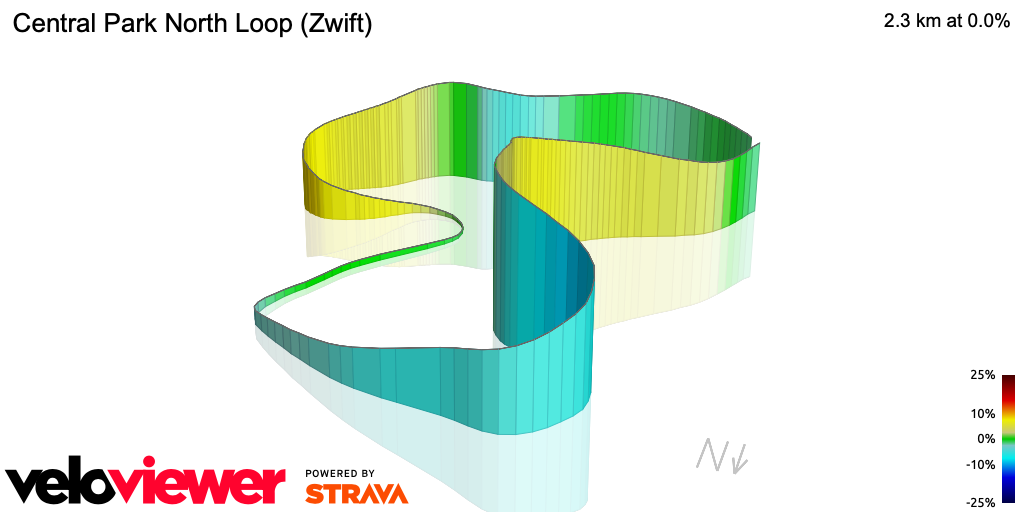
Three laps at around 11.58km (7.2 miles) each with no lead-in gives a total distance of 34.75km. There are no significant hills but this course is LUMPY – there is no significant flat on the course at all, but equally there are no mountains to climb here. Elevation per lap is 141m (460’ in old money).
The layout of Astoria Line has confused me for ages – I ended up watching a ‘cast of the last TTT (thank you Team DIRT) to try and work it out. The pens are slightly the “wrong” side of the start/finish banner so technically (I think) what you have is a lead-in of 11.58km on a lap that’s also 11.58km. I’m going to try and ride this again and pay attention to where the pen is vs the start/finish.
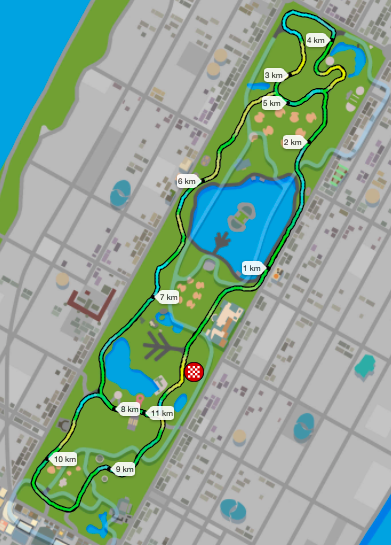
The course itself is best described as a figure-8 if the 8 had an extra loop.
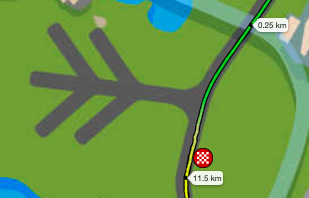
A 2.25 km clockwise loop at the top of the park, straight down the west side of the park to (almost) 8km, then a 3km clockwise loop at the southern end before getting back to the start/finish banner at 11.5km. You can see the start/finish banner by the Pens on the map. Of course, with Zwift you don’t have to worry about directions – just pedal and go!
What to ride?
Unlike last week, this is not a flat route, but there are no mountains here – it’s best described as lumpy. Last week i recommended Venge/Super 9 over Tron… this week I am reversing that… Tron over Venge.
Here are some choices for you at different levels – but to reiterate – none of these combinations will beat the Tron around Astoria Line 8.
Level 5 Specialized SL7 with ENVE 3.4 (last week’s pick, the Roval’s don’t climb well which is why I went with the ENVEs)
Level 6 Upgrade to DT Swiss ARC 62 wheels
Level 10 Upgrade to Canyon Aeroad 2021 frame
Level 13 Upgrade the wheels for ZIPP 808s
Level 33 S-Works Venge with ENVE SES8.9
Level 40 S-Works Venge with Zipp 858
Level 45 get those 858/Super 9 wheels and pair them with the S-Works Venge
As always, the Zwift Insider reports on frames and wheels are superlative so if you want to find the perfect bike and wheel combo for you, check them out. The “Fastest Bikes at Each Level” post is also a helpful summary of those more in-depth reports.
Every week i give the same message about the Tron, which can be summarized as “get it”. This week I have a little more practical help. Team Giant Camden who the observant will remember from the Ride Report above are putting on a series of 4 (to start with) Tron Hunter events – the first is March 7th and they will be weekly from there. The routes are hand-picked to have enough ascent to be useful, but not to be just another grind. London Surrey Hills on March 7th, New York Rising Empire on the 14th, Ven-Top on the 21st, and finishing with Royal Pump Room 8 in Yorkshire.
I don’t have links to the events yet but as soon as I do I will post them in the recce. Team Giant Camden are well known for being a friendly lot and while they are based out of a bike shop in London, they have 200+ racers from all over the world with a very strong female contingent. The Tron Hunter rides are open to all… see you there!
Route recon
In my experience this is a hard route to break down and analyze. I find New York’s ground-level landmarks hard to differentiate between and I never seem to know where I am on the course.
There aren’t a massive number of rides on Astoria 8 over the weekend but there are some. If you didn’t ride this as a TTT in September (I didn’t), check out the event listing on zwifthacks.com and find a ride or two. Good news though – New York is one of the guest worlds on Wednesday… and you can always set up a Meetup for your crew.
What to look out for on the ride
This is a technical ride. Like Harrogate last week, winning this week is all about knowing your team’s strengths and weaknesses under pressure. There are a couple of places where teammates might crack; the loop at the north of the park, and the bump right after the sprint are particular hotspots. ,
West side
Out of the gate here you hit a gentle rise and fall leading into the North Loop. This is the most straightforward part of the whole ride. A perfect time to get into your stride… or on subsequent laps to regroup.
North loop
The north loop is a rollercoaster – On the segment picture below, you enter at the top (where the green turns to blue), take the right turn and straight up the hill – North Woods Climb East which is 400m at 5%, down the hill (get your heart rate down) then up East Drive Climb which is a curvy 420m at 5% again, but has a tight 8% section in the middle.
East side
The east side straight is dominated by a triple bump hill. This isn’t steep by any stretch of the imagination – 400, 350 and 300m each at 2.5% – but it is a leg-sapping section, particularly as it comes right after East Drive Climb. After that, though, you head downwards for 700m to the relative calm of the South Loop.
South loop
The south loop is fairly straightforward – a lumpy 3km around. Two areas of note – the sprint, which you can use as a distance marker (it’s 1.25km to the start/finish) and the climb right after the sprint banner (300m at 4%).
The finish
That last climb isn’t rough – but I can tell you from personal experience that on the last lap, 300m at 4% is a killer. On the last TTT I got dropped here – but at least I did a decent turn on the front before pulling the parachute.
The route has an uphill finish – 300m at 3%. Save some adrenaline for that on the last loop around!
Target times
I’m mighty proud of my predictions for last week – if you hit my times you would have been in the middle of the Premiere League in every category. But… what I want to do for you is get closer to the maximum time for each Coffee Class that will still get you into the Premiere. Let’s see how close I can get this week.
This course has been run three times before; last time September (I missed this one), before that was April (#53, my second TTT), and the first time i found was August 2019.
#20
#53
#74
Prediction
Vienna
53:50
55:14
53:45
Doppio
45:52 (9 teams)
48:24 (6 teams)
45:30
Espresso
48:56
47:06
47:15
46:30
Frappe
53:55
48:32
48:30
48:00
Latte
59:20
52:57
52:38
52:00
Mocha
1:09:31 (team 6 of 7)
1:01:55
1:00:06
59:00
I didn’t race in September, and my best time around this route is from the TTT in April when I was with the CICC-B (B stands for Before they started getting creative with team names) team. I took 1:05:19 coming in around a minute after the team. This time around I’m hoping to stay with the Vixens and get close to the PL time.
The Vixens are looking pretty slick… I kept my Vixens spot this week, and feel good about our chances of catching the Cheetahs. We are creeping closer to PL, however, over our shoulder I see the R&K Hyenas have a beefed up roster including Gabi, Dani, and Dani’s dad. Can we keep ahead of them on this rolling course? An epic battle between the lightweight ladies (+dad) and the hulking bruisers.
Wrapup
Last week’s loop around the flat volcano was fun, but this week is all technical. If you practice situational awareness and communications on the flat, you will reap the benefits here. The northern/eastern side (the first half of the ride) is pretty technical and I personally find it hard to know where we are at any given moment. Once you hit the north loop it’s up, up, up in a sequence of bumps, but the second half opens up a little and is easier on the brain so the team can regroup. This is a great course for a Team Time Trial that I hate with a passion!
Welcome to the second post in a series aimed at helping you avoid n00b powerup mistakes in Zwift races.
Powerups add a fun element of randomness and strategy to Zwift racing. While some purists deride their use, most racers welcome their addition to an indoor racing experience which can feel a bit oversimplified since it has fewer variables than outdoor riding.
Experienced Zwift racers understand how powerups work, but we see them used incorrectly over and over again. Hopefully this series can help.
Every rider in Zwift has a CdA based on their weight and height plus other constants controlled by Zwift. This virtual CdA is a key part of Zwift’s physics, greatly affecting your in-game speed.
When the Aero Boost powerup is activated, your CdA is reduced by 25%.
What’s the effect? You’ll go faster for the same wattage. Quite a bit faster, in fact: there’s a reason Zwift racers say the aero helmet is the best powerup to have when you’re heading into a sprint finish!
The Aero Boost lasts for 15 seconds, which means you need to time things just right. A bit of trivia: it used to last for 30 seconds, but was revised in May 2019 because it was simply too strong of a powerup.
How It’s Misused
The most common misuse of the Aero Boost is on climbs. When you climb, you move slower. And like IRL riding, when your avatar is moving slower on Zwift, it is encountering less virtual air resistance. The Aero Boost powerup is designed to reduce air resistance, but if you use it while moving slowly, it’s lowering something that isn’t really there (or, more precisely, isn’t significant enough for you to notice.)
If you’re slogging up the Radio Tower at 12kph/7.5mph, the Aero Boost will not help you.
At what speed does the Aero Boost become noticeably helpful? That’s a good question, but it’s one we can’t answer precisely. Our educated guess is it’s somewhere around 30kph/18.5mph, but of course the Aero Boost is much more noticeable at high speeds like 40-50kph (25-31mph)+. That’s why riders find it especially useful for sprint finishes, attacks on descents, and unlocking the Daredevil achievement badge.
To maximize your Aero Boost benefit, use it when virtual wind resistance is the highest. That means at high speeds, especially when you’re out of the draft, perhaps attacking off the front of a group.
Judgment Calls
The Aero Boost, perhaps more than any other powerup, forces us to make judgment calls about its deployment. It’s the powerup most commonly “held” because riders want to make sure they have it going into the final sprint. Because a helmet on the head is worth two in the bush…
But what are you losing by holding your helmet instead of using it? That’s the judgment call.
A course like Crit City really brings this into stark relief, since you’re receiving a new powerup every lap and races often end in a pack sprint. With a lap lasting approximately 2 minutes and 30 seconds, and most races lasting 6-12 laps, you know exactly when you’ll get another chance at a powerup if you use the one you’ve got.
But what if you have three laps to go, and you get an aero helmet? Do you use now, or hold? What if there are 6 laps to go? What if you’re struggling on the brick climb each lap, and really need a helpful powerup each time around to stay in touch with your group?
As you can see, there is a very real strategic element in play. You may not always make the right call, but that’s all part of the game. Just make sure you aren’t using your aero powerup during a slow climb. Because that’s just silly.