It’s been just over a year since the Zwift Hub first shipped. Watch as a well-known sports tech reviewer revisits the trainer after thousands of miles of use. Additionally, we have selected videos about the Tour of Watopia, a rider’s Zwift racing journey, a Zwift Racing League recap, and the upcoming Zwift Grand Prix.
Zwift Hub Long-Term Review // Does Budget Price Mean Budget Performance?
After putting a couple thousand miles on the Zwift Hub, DesFit provides a long-term review of this smart trainer. Included in this video are noise level tests, power accuracy, and more!
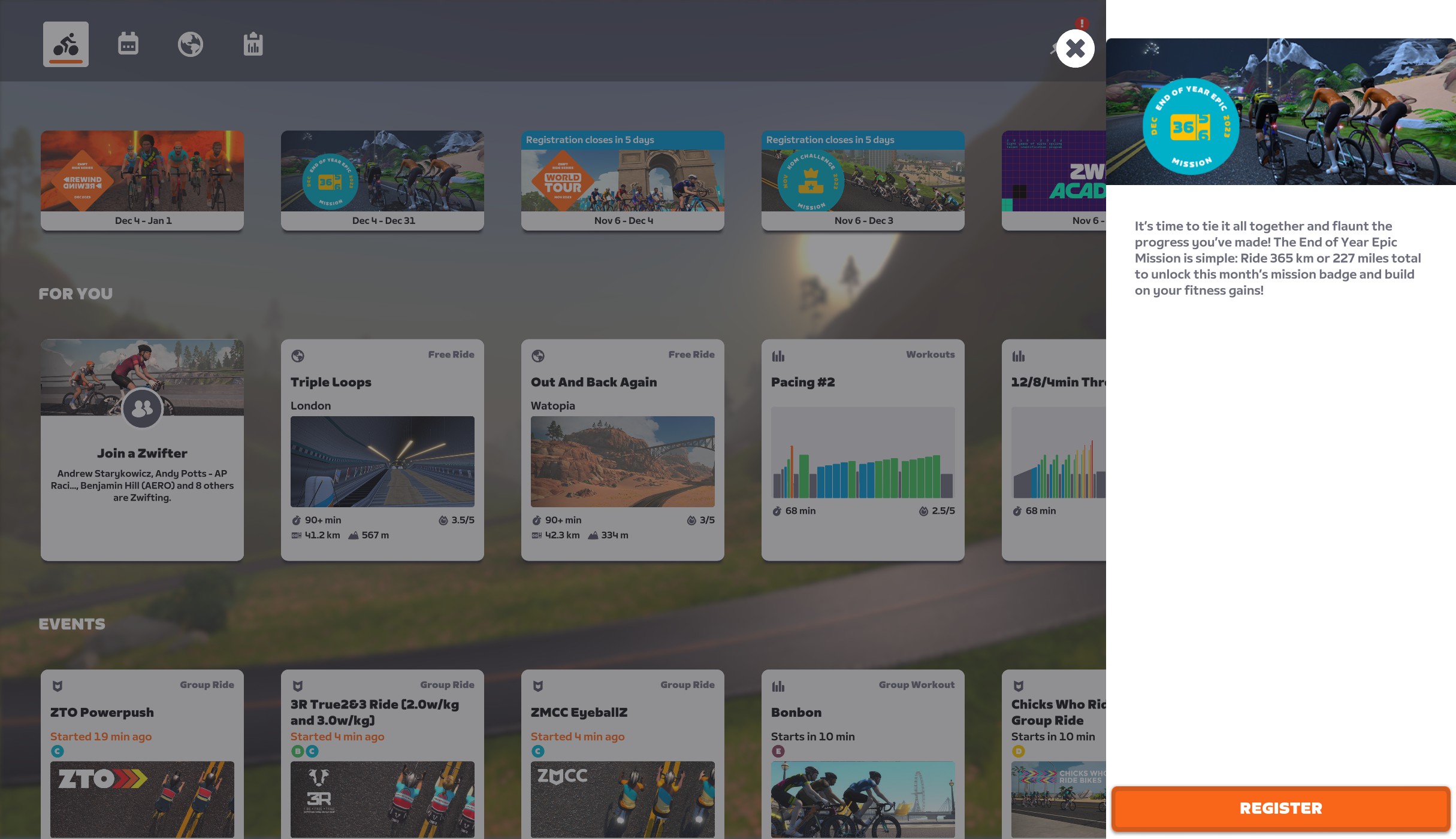
Maximize Your Progress: Levelling Up FAST in Zwift’s Tour of Watopia ’23
Looking to make the most of this year’s Tour of Watopia? As usual, this year’s tour features double XP, something pretty much all Zwifters love! Shane Miller, GPLama shares all of the tips and tricks to getting the most XP possible.
Zwift Racing League Recap
The latest Zwift Racing League race was certainly a tough one. Watch it from Not Tadej Pogacar’s view as he provides commentary and analysis of his performance.
Zwift Grand Prix 2024 Launch – All the Details
The latest edition of the Zwift Grand Prix (ZGP) has recently been announced. For those who don’t know, the ZGP is essentially Zwift Racing League for professional e-sport teams! Watch as none other than Si Bradeley covers all of the details of the upcoming racing series.
How to Podium in a Zwift Race (Cat D)
Ryan Condon started Zwifting around 6 months ago. Since then, he has grown quite a bit as a cyclist. In this video, he shares some of his best tips and tricks to help you land on the podium of Zwift races.
Got a Great Zwift Video?
Share the link below and we may feature it in an upcoming post!
Zwift Training Plans: Browsing, Enrolling, Cancelling, and Finishing Your Training Plan
Last week Zwift reorganized/simplified their workout library, and some Zwifters have been left confused because they couldn’t find the Training Plan workouts they had been accessing via the library’s old folder structure.
There’s a bit of a confusing rabbit hole here that we’ll avoid going entirely down, but it’s worth mentioning that, for years, Zwift Training Plan workouts were only accessible if you signed up for a Training Plan. Then a couple of years back, Zwift put all those workouts into the library as individual, on-demand workouts, allowing you to access them without signing up for the Training Plan.
Whether that was a good or bad move is up for debate, but Zwift’s recent reorg removed many of those on-demand training plan workouts while retaining some of them in renamed folders. The end result: if you want to use workouts from Zwift’s Training Plans, it’s probably simplest to just enroll in the Training Plan. Here’s how that works…
Accessing Zwift’s Training Plans
Interested in checking out what plans Zwift has to offer? Browsing the list is easy.
Start up the game, then from the homescreen click the clipboard icon (top-left) to access the workouts view.
From the workouts view, click “Plans” on the left.
You can now browse the plans. Click “View Plan” to view the specific workouts for a selected plan.
Enrolling In a Training Plan
The beauty of a training plan is that it offers a structured, scheduled set of workouts to progressively take you from where you are today to where you want to be! But in order to get there, you’ve got to sign up for the plan.
To enroll in a Zwift training plan, browse the plans (see instructions above) and click “View Plan” on the one you’re interested in. From this plan detail view you can click the big “Enroll” button to sign up. That’s the easy part done!
Completing a Training Plan
Now comes the work! After enrolling in your training plan, you can start the first workout right away.
Some plans have optional workouts at the start. Do those if you’d like, or skip ahead to the first workout marked “Available Workout”.
The Companion app on your phone will show a list of upcoming workouts so you can see what’s in store, and the game will also show upcoming workouts when you first start up, so you can choose your workout easily:
Plans are organized into weeks, and each week may have 2-5 workouts scheduled. It is best to follow the weekly schedule if you can, but if life happens you can “pause” your plan by simply not doing the workouts. They’ll still be there when you come back!
You can also skip workouts, but this isn’t recommended since workouts progressively build on themselves.
If you complete a workout outside, just go into your plan view and click “I did it!” to mark it as complete.
Once you complete the plan, you’ll earn the achievement badge. Hurray!
Canceling a Training Plan
Canceling your Zwift Training Plan is easy… if you know where to look! The only place to do it is in the game under the detailed plan view, so you’ll need to pull up the list of plans then click “View Plan” under your plan.
Here’s the tricky part: the “Cancel Plan” button is on the far left of this screen, so you’ll need to click the left arrow or click and drag to see it. Click the button, confirm your cancelation, and you’re done.
All About Zwift Grand Prix 2023/24: Finding the Ultimate Zwift Team
Zwift just announced the details of the upcoming Zwift Grand Prix: a 7-round race series featuring the top men’s and women’s teams in Zwift.
Interested in following this series and marveling at what the world’s best Zwift racers can do? We’ve got all the key details summarized below!
Selected Teams
Zwift has selected 32 elite teams for participation in the Zwift Grand Prix, up from the 24 teams selected last season.
Men’s Teams
Women’s Teams
ABUS – Synergy
Aeonian
Beastmode p/b ROSE
ABUS – Synergy*
BL13 p/b Level Velo*
Beastmode p/b ROSE
Coalition Alpha
BL13 p/b Level Velo*
dPAC-ELITE*
Coalition Alpha
Foudre Punchers Coalition*
Hexagone*
Hexagone
Movistar eTeam
Movistar eTeam
NeXT eSports p/b Enshored*
NeXT eSports p/b Enshored
Primór RWB esports Femmes*
Primór RWB esports*
Rocacorba Collective
Restart p/b Alex Coh*
Saris | Nopinz
Saris | Nopinz*
Team Castelli p/b Elite*
Team Castelli p/b Elite
Team Swedish Zwifters
Toyota Elite ECycling
Wahoo Le Col
Wahoo Le Col
Virginia’s Blue Ridge Twenty24
*: new team this season
Season Schedule
Each round uses a different race format (as noted below), with rounds 3, 4, and 5 using the Zwift Racing League (ZRL) race format the community will race the following Tuesday. This makes the Zwift Grand Prix events into a “preview” of the upcoming ZRL events!
All races during the regular season will be scheduled on Thursdays at 6pm/7pm UTC.
Round 1 – Points Hunter
Men’s Race and Women’s Race
Thursday Oct 19 @ 6pm UTC
Round 2 – Mountain Points Race
Men’s Race and Women’s Race
Thursday Oct 26 @ 6pm UTC
Round 3 – ZRL Races
Men’s Race
Thursday Nov 9 @ 7pm UTC
Women’s Race
Thursday Nov 16 @ 7pm UTC
Round 4 – ZRL Races
Men’s Race
Thursday Nov 23 @ 7pm UTC
Women’s Race
Thursday Nov 30 @ 7pm UTC
Round 5 – ZRL Races
Men’s Race
Thursday Dec 7 @ 7pm UTC
Women’s Race
Thursday Dec 14 @ 7pm UTC
Round 6 – Epic Points Race
Men’s Race and Women’s Race
Thursday Jan 11 @ 7pm UTC
Round 7 – Points Hunter
Men’s Race and Women’s Race
Thursday Jan 18 @ 7pm UTC
After each race, teams will be awarded series points to determine overall series rankings. The men’s and women’s teams with most series points after round 7 are the overall winners and take home the big prize (see below).
Race Formats
Once again, Zwift is using innovative formats for the Grand Prix races to make them more exciting and engaging. This season’s Grand Prix improves on the winning formats from last season while bringing in a strong tie-in to the Zwift Racing League. We’ve summarized each round’s details below.
Points Hunter (Round 1)
This race requires strategic decision making from the moment riders leave the pens. Teams must determine whether to go for points early or gamble on securing higher points at the end of the race where they risk leaving empty-handed.
8 intermediate points locations (sprint and KOM arches on each lap), with different points available at each
Once a rider scores points they are removed from the race
26 riders eliminated at intermediates
Finish Line
54 riders left for the finish line
First 8 riders will score points
Mountain Points Race (Round 2)
An all-out battle up the iconic Alpe de Zwift, with a few surprises along the way! This race has a lot of firsts for elite Zwift Racing: the first climbers points race, and the first race with a time cutoff.
New this season, Grand Prix riders will race a “preview” of the next week’s Zwift Racing League event, giving ZRL participants a chance to watch the race and recce the course! Here are the details for all 6 Grand Prix x ZRL races:
Points scored based on finishing time of each team’s 3rd placed rider
Epic Points Race (Round 6)
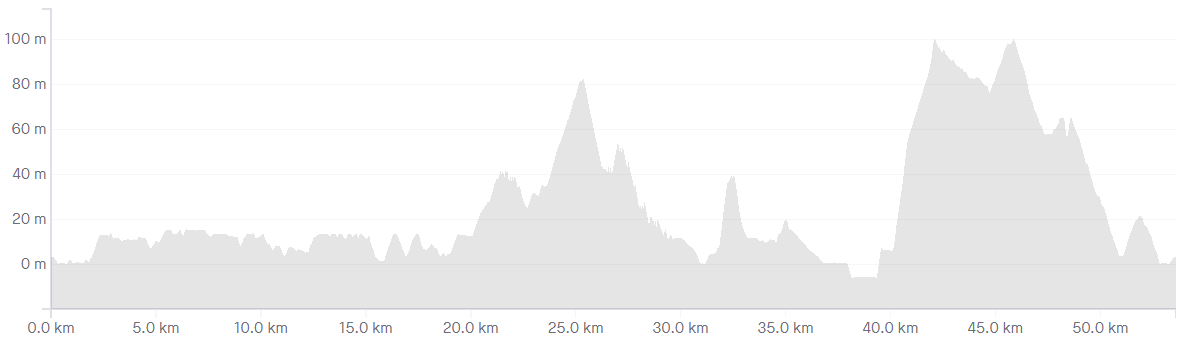
Taking on the PRL Half course, in London, the Epic Points Race is the longest race ever featured in the Zwift Grand Prix! It features 877m of climbing over 69.7km and is aimed squarely at endurance riders. Intermediate points will be available at the top of Box Hill each lap.
Same format as Round 1, but on a different course. Once again, teams must determine whether to go for points early or gamble on securing higher points at the end of the race where they risk leaving empty-handed!
Catching Up with Mountain Massif Structured Training in Association with Rowe & King
With the darker nights drawing in, summer in the northern hemisphere is quickly disappearing down the road with all the enthusiasm of a breakaway on the first day of the Tour de France. On the positive side, it means a return of the masses to Zwift!
Given the number of events and races on Zwift that involve climbs, Mountain Massif linked up with Rowe & King to offer a structured 6-week training program aimed to improve your climbing. Each workout in the Mountain Massif training series has a specific purpose, and when you stitch them all together in a structured training plan, you will improve your climbing ability on Zwift and in real life!
The sessions on Zwift are hosted on a Mondays, Wednesdays, and Fridays at 5pm BST (see schedule here). With the first week of training now complete, I wanted to share how it unfolded.
Baseline Event
On Monday, September 25, the training program kicked off with a short time trial race (10.1km) to baseline people’s fitness. The event was hosted on a shortened Knickerbocker course in New York. This course was carefully selected because it provided two key aspects, the first being an undulating segment and the second being a climb that was steep enough to test even the strongest rider. Having not raced much recently (as a result of cycling accident that saw me take a trip in a Spanish ambulance) I was keen to see how I would do.
The answer – better than expected. For the first part of the event I battled with the changing gradient and consequently found myself surging, pushing too hard on the short inclines and backing off too much on the descents. Then before I knew it, I was on the climb. I was good for a few minutes but ultimately, with my heart rate maxing out, my power levels dropped and I was overtaken, making the 500-meter drag to the finish that much more painful. I was literally powerless as I watched the rider ahead of me effortlessly pulled away.
Still, this was what the training program was created for, with sessions specifically designed to help riders reach new levels of fitness.
Week 1 & 2
The 6-week training program is designed to build your aerobic fitness and improve your strength. Wednesday marked the first formal structured training session, and given the high intensity of the baseline race, this Sustained Tempo session felt more relaxed.
Session 1
This particular workout was designed to help improve sustainable power, which is critical for maintaining your effort all the way to the top of a climb. It is the cornerstone of the program, in fact, with the intensity and duration of this session increasing as the weeks progress.
I personally found the event painful, not because the session was difficult but for the fact that as I participated, I waited nervously for each and every instruction and encouragement (all of which I had pre-programmed) to flash on the screen, hoping that I hadn’t made any typing mistakes! To my relief, there were no issues and the session went as planned, including the group being decked out in the updated Mountain Massif jersey being showcased for the new event.
Session 2
Session 2, in contrast to session 1, had people counting the seconds to the end. Called “FTP Nudges @ 105%,” the workout has you operate above your FTP for a short period of time. However, the phrase “short” is certainly subjective as the 5 minutes over FTP seemed to get longer with each interval! By the fifth and final one, it felt like an eternity. At that point I’d given up checking on the accuracy of my pre-recorded words of encouragement!
Session 3
Session 3 marked the start of the second week of training, and this Sustained Tempo session built upon that of the previous, with difficulty increasing duration to 5 minutes per interval. Similarly, session 4, FTP Nudges, increased in difficulty to 108% with 7 reps in total, 3 minutes in length. For me personally, this was the most difficult by far, resulting in having to turn off Erg mode for the last 2 reps, allowing me to manually control the power, and thus being able to complete the set without lowering the difficulty.
It was here that I noticed my first typing error in the instructions – it had to come at some point.
Session 4
The week’s final session was Sweet Spot training, which is 75-85% of your maximum heart rate. With the first two weeks completed, I was relieved that despite a minor typing error in the instructions, everything had gone to plan, including creating and establishing the training plan on TrainingPeaks so anyone who missed a session could have the workout files (minus the commentary) and keep pace with the program.
TrainingPeaks
To create a truly authentic training experience and provide maximum flexibility, we linked up with TrainingPeaks, an insightful training app that allows you to plan, track, and analyze your training, all in one place.
Obtaining the 6-week training plan is free. However, you will need a TrainingPeaks Premium account.TrainingPeaks is offering a 20% discount on their Premium account for members of the Mountain Massif club on Zwift. Simply join the club by clicking here and get access to the discount code located in the Chat. Download the session and apply it to your TrainingPeaks calendar, ensuring you select the start date as September 27 and thus align the sessions to the start of the 6-week program.
As mentioned, one of the benefits of downloading the plan into your TrainingPeaks calendar is that, if you cannot attend one of the Zwift scheduled sessions, using TrainingPeaks you can undertake the training session independently, provided you have synched your TrainingPeaks account with Zwift. It will be available in the “TrainingPeaks Custom Workouts” folder in the training plan section of Zwift. (Syncing your TrainingPeaks account with Zwift is simple and instructions on how to do this can be read here.)
It is important to note that the session will appear on the day you have it in your TrainingPeaks calendar, which you can adjust to your timetable. The only difference between undertaking the training independently is you will not have my onscreen commentary to encourage you through the session.
Accessing TrainingPeaks
If you are new to TrainingPeaks and want to try it, you can sign up here. There are two levels of accounts: Basic and Premium. The Basic account is like a training diary, where if you sync the app to Zwift, your data is uploaded after each ride and you can see basic information about your session such as the duration, distance, and your Training Stress Score (TSS) — a metric used to quantify the amount of stress a workout puts on your body.
Along with these features, the Premium version allows you to reschedule missed sessions so you have greater control over how you schedule your workouts. Other benefits include:
Plan future workouts and reschedule missed ones.
Build your own workouts and gain unlimited access to the TrainingPeaks workout library.
Track your fitness progress via the Performance Management Charts.
Analyze your fitness trends with power, HR, pace, distance, and other charts.
About the Sessions and Rowe & King
These sessions are high quality and have been designed by Rowe & King’s father-son coaches Courtney and Matt Rowe.
Age 62, with an FTP of 358, Courtney is as fit as they come thanks to a lifetime of cycling and racing. He won World Championship medals on the track at the Masters level and has numerous British and Welsh Championship titles to his name on both the Road and Track.
Courtney has been coaching for the last 30 years, including his sons Matt, Luke who is a pro racing for INEOS Grenadiers, and daughter-in-law Dani Rowe MBE (nee King), who has won an Olympic Gold and 3 World titles.
Rowe & King offers a range of coaching services to cater to all levels. Their monthly subscription service is popular since it offers a generic training plan, virtual sessions such as strength and conditioning, yoga, nutritional advice and guidance, weekly social Zwift rides, and IRL group rides from locations all around the UK – effectively creating a supportive cycling community.
Summing Up
As this event kicks into high gear, you are welcome to join us on this unique and complete structured training program. It will push you beyond your perceived limits, helping improve your fitness and in particular your climbing skills.
Don’t worry if you have missed any sessions! You can catch up using the plan in TrainingPeaks and join the live events which are hosted on Monday, Wednesday and Friday at 5pm BST.
It is important to note that you should only undertake vigorous exercise if you are healthy and fit to do so. If you are at all unsure, consult your doctor. Additionally, all training equipment, including bikes and turbo trainers, should be in full working order. Do not use any piece of equipment that does not come up to the required standard.
Are you interested in racing on Zwift? ZRacing is a great place to begin. These events are popular because they’re made to fit anyone’s schedule, delivering a solid 1-hour workout (including warmup and cooldown) on an ever-changing set of courses.
Here’s everything you need to know about Zwift’s “ZRacing” – the platform’s most popular ongoing race series.
Pas Normal Series for April 2026
The standard ZRacing events have been taken over by the Pas Normal Series for April 2026.
XP Bonuses
Zwift has replaced the achievement badges you could formerly earn for completing every race in a ZRacing series with XP bonuses. You will now earn a 1000 XP bonus for completing stage 1, then additional bonuses for each stage thereafter.
Zwift says you will “earn up to 1500 XP in a four-week series or 2000 XP in a five-week series.”
GC Leaderboards
Zwift debuted new web-based leaderboards at zwift.com for tracking the Zwift Games 2025 GC, and an upgraded version of those leaderboards is now being put to work for the monthly ZRacing series.
Your GC ranking is based on your best finishing time for each stage, and you can race each stage more than once to try for a better time.
Choosing Your Category
Zwift schedules three different flavors of ZRacing events in order to encourage “Fairer, more competitive racing for everyone.” They are titled Advanced, Range 1, and Range 2. Read on for details!
One common complaint among top-ranked racers is a lack of participation in the top category of ZRacing events. Zwift is working to change this by hosting special “Advanced” category races targetting riders with a Zwift Racing Score of 650+.
Advanced races are held less often than the Range 1/2 races in order to focus participation and improve competition at the top level.
Tighter, Alternating Categories for 700-
For riders with a Zwift Racing Score of 700 and below, ZRacing events feature tighter categories that alternate hourly between two different sets of ranges:
Category ranges flexing across events has implications for riders competing in the overall monthly GC. More on this below…
Riders with scores between 650-700 have the option of racing in the new Advanced events, or in the top category of Range 2 events.
If you’re looking for a race where you have the best shot of winning, the alternating Range 1/Range 2 events give you access to an event where you are fairly close to the top of the category range.
Looking for a harder workout? You can always race up a category, or choose a category range that puts you near the bottom of the category.
Monthly GC Competition
Every race event is a competition itself, but each month’s series is also a time-based GC (general classification) competition based on riders’ finishing times on each stage. The rider with the lowest overall time for that month’s races wins!
With three different flavors of ZRacing events being scheduled (Advanced, Range 1, and Range 2 as explained above), riders chasing the GC need to consider the following:
Field Size Matters: all else being equal, the fastest times will come from the largest fields. So riding in the most popular races can help your GC results. But also…
Category Range Matters: a group of riders with scores between 330-450 will be faster than a group of riders at 270-390. So while Zwift may recommend either of these categories for you if your score is 350, and you may have a better chance at a race win in the 270-390 group, the upper category may very well give you a better finishing time. But also…
Your Abilities Matter: neither of the above considerations matters if you get dropped from the front group midway through the race.
While the GC results pages at zwift.com let you filter by score range, those are really artificial groupings at this point since the actual events aren’t using those score ranges. It may be most helpful to see the GC as a way of ranking yourself against the entire universe of ZRacing participants, which means it’s up to you to choose your events and execute your races strategically to maximize your GC ranking.
Also worth noting: you can race each stage multiple times to improve your finishing time!
As the outdoor road cycling season begins winding down, some of the final major pro cycling events take place this weekend, including Il Lombardia, a race that inspired two of the events on our list below! All of our picks this week are longer rides (90 minutes plus) – perfect for anyone looking to build endurance.
This weekend, some of the world’s top riders will be racing the last monument of the pro cycling season: Il Lombardia on the roads of Italy. The Chasing Tour races aim to simulate the IRL race by presenting riders with similar terrain and distance.
Expect an impressive turnout from these events! They tend to be filled with some of the top Zwifters in the world. Riders will be racing 1.5 laps of the Three Sisters Reverse course in Watopia.
Looking for more of an endurance option? Rhino has you covered. Join riders from Rhino Racing for a 2-hour group ride around the roads of Watopia. In this unique group ride format the “Party Bus” is lead at 2.2-2.5 w/kg, but a breakaway is also allowed to form and work to stay off the front. An active Discord server helps pass the time!
This week’s event takes place on the Eastern Eight course in Watopia. As one of the most popular events this weekend, expect a large turnout and lots of fun!
As another event celebrating Il Lombardia, riders are invited to treat this as a race or simply a challenging group ride. Join the Discord channel for fun banter!
This ride/race will be held over one lap of the London PRL Half course.
The ZSUN Sunday Social Ride is a classic weekend Zwift ride dating all the way back to 2016! This group ride offers two different paces. The faster-paced ride will start before the slower-paced group, allowing for riders in the faster group to drop back to the slower group if needed.
A bit longer than traditional group rides, this ride will be 90 minutes on the Douce France course.
🥇 The BMTR Fundo – Dave Schoepel Hits 100k Zwift Miles!
✅ Popular Event ✅ Legacy Leaders ✅ Jersey Unlock
We know we just featured this event last weekend, but this weekend is a special one for the BMTR riders. Dave Schoepoel, a BMTR regular, will be hitting 100,000 miles on Zwift in this ride. Join him as he hits this iconic milestone!
The BMTR Fundo is a great way for riders to practice building their endurance. Four different distance options help make it a more fun and inclusive event.
All the distances will be on the same course – Triple Flat Loops. Note: the BMTR jersey will be unlocked with the completion of this race.
We choose each weekend’s Notable Events based on a variety of factors including:
Is the event unique/innovative in some way?
Are celebrities (pro riders, etc) attending/leading?
Are signup counts already high, meaning the event is extra-popular?
Does the ride include desirable unlocks or prizes?
Does the event appeal to ladies on Zwift? (We like to support this under-represented group!)
Is it for a good cause?
Is it just plain crazy (extra long races, world record attempts, etc)?
Is it a long-running, popular weekly event with a dedicated leader who deserves a shout out?
In the end, we want to call attention to events that are extra-special and therefore extra-appealing to Zwifters. If you think your event qualifies, comment below with a link/details and we may just include it in an upcoming post!
Your Thoughts
Got other events that stand out this weekend? Share below in the comments!
Rhino Racing has announced the seasonal return of the popular Rhino Migration beginning on Saturday, October 7.
Since its creation, the format has evolved. But the current configuration is by far the favorite among the regulars. Here’s what Zwifters are saying about it:
Stephen (A Cat rider): “I like the structure and the comradery. A time to get on the bike means I don’t skip those longer rides, and the chat on Discord makes it go a lot quicker.”
Joe (B Cat rider): “I really value it as part of my weekly winter training structure. A guaranteed couple of months of regular Z2 training with pleasant company and active Discord – by all cats regardless of where they are spread out on the course.”
Iris (C Cat rider): “The Party Bus encouraged me to complete the long ride, along with lovely chat with fellow Rhinos and others on Discord.”
Rob (D Cat rider): “It’s the chance to do some of the longer Zwift routes at a good pace (within a group – so you get the benefits of draft) whilst enjoying a good amount of banter and chat.”
The Format
Rhino Migration rides are aimed at an average pace of 2.2-2.5 W/kg. The pace is held nicely by the ride’s yellow and red beacons, which the team calls the “Party Bus” since it is led by a Driver controlling the pace and a Conductor helping at the back when needed.
What the Rhino Migration does differently from other group rides is to encourage a breakaway group to form. This group gets to set a faster pace, see what gap they can make to the Party Bus, and how much extra distance they can cover by the end of the 120-minute event.
Late join is enabled for up to 30 minutes.
Migration Routes
Each week a new route will be chosen. Some will be harder than others, and routes will feature a variety of elevations, gradients, and surfaces.
Week one will be Watopia’s Eastern Eight, a popular route but not often used in group rides due to its longer length.
Make the time pass quicker…
The team at Rhino Racing encourages everyone to join the Rhino Racing Discord server in the Migration voice channel during the ride. Participants offer encouragement, conversation, and banter which helps the time fly by!
Reminder: Zwift Insider Epic Race on Watopia Pretzel this weekend!
With our Epic Series well underway, this weekend finds us on Watopia’s “The Pretzel” for the second Epic Race of the series. We have 6 timeslots spread across Saturday and Sunday, so find one that works for you and get a hard effort in!
When The Pretzel launched, it was the longest and most challenging route on Zwift, covering all segments in Watopia at least twice. With new roads and routes added since its creation, The Pretzel is no longer the longest or toughest route. But it still packs a punch at 44.8 miles (72.1km) with 4,375′ (1333m) of elevation gain.
It features 2 climbs (the Hilly and the Epic), but you hit the KQOM segments in each direction for a total of 4 timed KQOM climbs:
To help ensure all riders have company as they race the long route, we’ve set up the event so all categories start together and are visible to each other.
Epic Race Rules
Each Epic Series race event is a standalone event (no series GC) using the following rules:
Only Feathers: only feather powerups will be given. Because mountains.
Tiny Race Series – October 7 Routes and Last Week’s Results
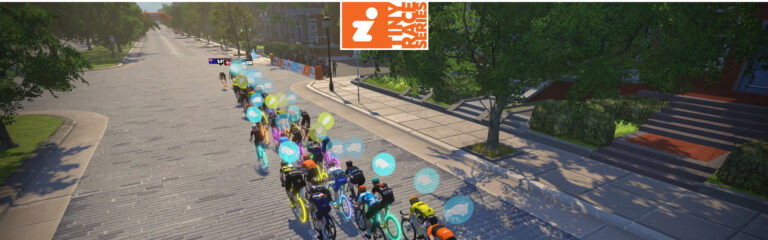
The Tiny Races happen every Saturday, and they’re all about getting a hard, fun effort done in 1 hour. You race all 4 races back-to-back, with each lasting just 5-10 minutes, giving you a short break in between.
Got a great YouTube video of your Tiny Race experience? Post it in the comments and we may feature it on Zwift Insider!
This week each race features a climb early on, offering a chance for riders to chase back on afterward. Can the strong climbers stay away, or can the chasers bring it back? We’ll find out.
Here are photos so you can see the precise location of the custom finish lines for race 1 and 3:
Race 1: Hilly Route (3.2 km, ends atop post-KOM kicker)
Starting off with a bang, we’ll hammer up Watopia’s well-known Hilly KOM, grab our anvil powerups, then begin a descent. The road turns a sharp right onto a short uphill kicker, and the finish line is at the top.
Most racers know Crit City well, but have you ever raced just 3 laps? Hopefully somebody will go long on the final twisty climb and really make it interesting.
This route ends on the straight false flat following the super-steep Pot Bank descent (see photos above for location). Do you use your anvil on an early downhill to chase back on, or save it for Pot Bank so you can hit crazy fast speeds?
The Harlem Hill climb will stretch and split the field. But with a few kilometers left until the line, some riders may be able to chase back onto the front.
Zwift displays preliminary race results in game when you cross the line, but points are computed after all four races are finished, with final results on ZwiftPower. (We have to do some data processing on our side to compute results, so if your rankings don’t show up right away, be patient.)
Riders will earn points based on finish position in each of the 4 Tiny Races. The category winner of each week’s series is the rider with the most points across their timezone’s 4 races. Here are the links for each timezone’s results on ZwiftPower:
Tiny Race rules are simple, but still every week 6-8% of registered ZwiftPower racers get disqualified and removed from the final results. Don’t let that be you! Four races, four rules:
You must have a ZwiftPower account, because final results are processed by ZwiftPower (learn how to sign up)
No skipping then returning. These races are meant to be raced as a set of 4. If you need to leave early, that’s fine… but once you miss a race in your hour’s set of 4, don’t come back and race another or you’ll be disqualified from that race since you rested while others were racing! (Example: racing only races 1 and 2 is fine. Racing 1, 2, and 4 is not – you will be DQ from race 4. And if you race 2, 3, and 4, you’ll be DQ from all those races, since you skipped race 1!)
Heart rate monitors are required.
Smart trainer/smart bike or power meter required. ZPower/Virtual power is not allowed.
Join a Chat & Chill Cooldown
Immediately following each hour’s racing, we’ve scheduled 30-minute “Chat & Chill” events where riders from all categories can spin their legs together and chat about how it all went down. Find them at zwift.com/events/tag/tinyraces.
Zwift Insider Kit Unlock
Finish any Tiny Race or a Chat & Chill ride and unlock the Zwift Insider “Ride Smarter // Ride Harder” in-game kit.
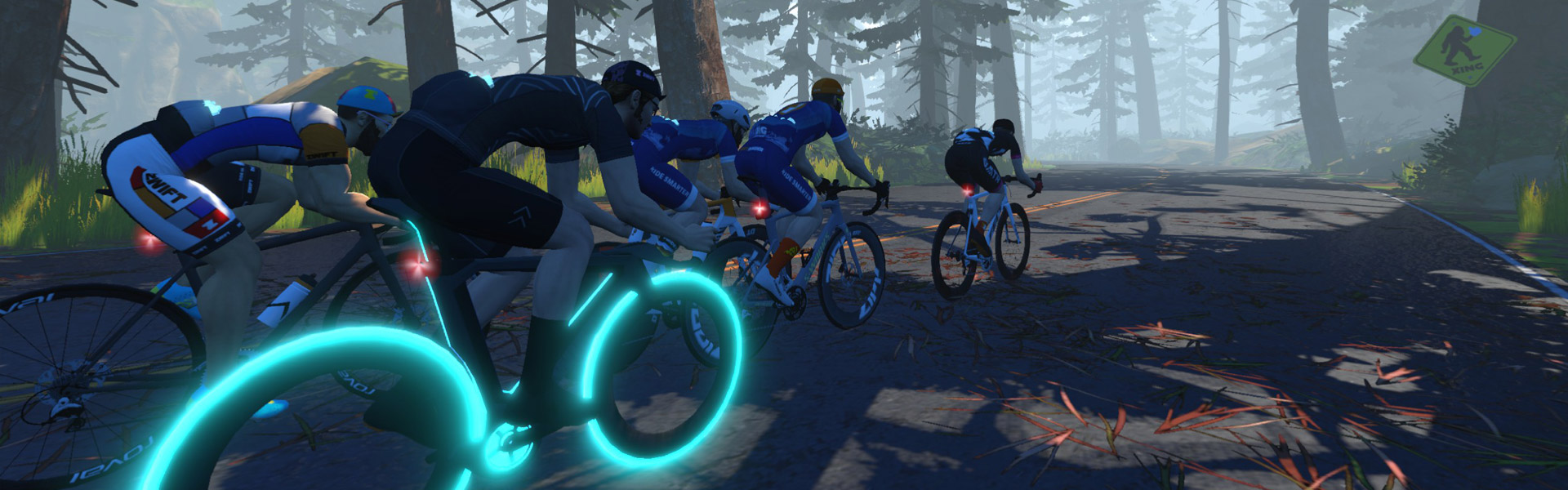
After digging into user feedback on Pack Dynamics 4.1, Zwift discovered, “Currently the progression inside the groups in PD 4.1 is harder than it should be. It’s like a game stuck in the hardest difficulty.” So they came up with a fix and enabled it on Monday, Oct 2.
Below are the results of our standard 4-rider drafting tests using PD4.1.1 (what we’re calling the bug-fixed version of PD4.1) and road bikes. We will follow up with a test using TT frames in a drafting TTT scenario, but we believe the same conclusions will be drawn from both sets of tests. Let’s dig in!
History of Our 4-Rider Speed Tests
Our original TTT speed test post from 2020 gave team time trial riders some very welcome guidance about how to ride their races most efficiently. Then in 2021, Zwift rolled out Pack Dynamics 3, and we ran a second test to see what, if anything, had changed. (We found speeds hadn’t changed, it was just harder to hold an efficient single-file formation due the lack of sticky draft.)
In August 2023, Zwift released Pack Dynamics 4.1 slowing packs and reducing churn on the front, so we ran our tests with PD4.1.
This week, Zwift rolled out Pack Dynamics 4.1.1 (officially just a bug fix for PD4.1) You know what that means… time for more tests!
Test Goals
We set out to answer three questions with these tests:
Is road bike power savings in the draft with Pack Dynamics v4.1.1 different than the savings with Pack Dynamics v4.1?
Does Pack Dynamics v4.1.1 alter pack speeds, and if so, how?
Are there any other observable differences between PD4.1 and PD4.1.1?
Test Parameters and Methodology
All test riders were set to 183cm height, 75kg weight, and rode Zwift Carbon road bike frames with Zwift 32mm carbon wheels.
Tests were done in an isolated event on Watopia’s Tempus Fugit route because it’s the flattest on Zwift and has a timed section (Fuego Flats Reverse, 7.1km long) which could be used to measure the speeds of each test formation precisely.
All tests were done with four riders.
Tests and Results
Test 1: the Churn
For our first test, we put all riders at the same 300W power setting. This results in a very inefficient pack of riders, but it lets us test the slingshot effect. Here’s a quick snippet of what we saw:
The pack seemed to churn a bit more in PD4.1.1 compared to PD4.1 (see that video here), while still being much more stable (less churn) than PD4.
All riders @ 300W
Segment time 10:31.9
Speed: 40.44 kph
Our test segment was completed 4.5 seconds faster in PD4.1.1 compared to PD4.1. We attribute this small time savings to having a bit of churn on the front, but it’s worth noting that the churn with PD4.1.1 is very minor compared to PD4, which turned in a time 27.4 seconds faster in this test!
Test 2: Single File @300W
The second test had the lead rider holding 300W, with the other three riders in single file behind, holding the minimum wattage possible to stay in formation. This is what you would see in an outdoor team time trial:
The “minimum wattages” stated for riders 2-4 on this test and other tests below should be considered approximations, as it is impossible to figure out the precise wattage required to hold formation due to Zwift’s dynamic physics engine and very small undulations in terrain, even on Fuego Flats.
Riders received power savings of 25%, 32.7%, and 37.6%. The first 3 riders had essentially the same numbers as PD4.1, but the last rider could stay on with less power, indicating that perhaps the “fall off” point of the draft has been extended in PD4.1.1.
In a TTT situation with all riders taking equal pulls on the front at these wattages, each rider would average 228.5W. (With PD4.1 the average was 232W.)
With PD4.1, test 2’s segment time perfectly matched test 1’s. This isn’t the case with PD4.1.1, because there’s a bit of a churn/slingshot effect happening.
It’s worth noting that we did a solo rider test at 300W steady, because we were curious if there was any advantage to the front rider if there were riders behind. There is not. Our solo rider turned in the same time as this 4-rider group.
Test 3: Single File @400W
This test was similar to Test 2, we just bumped the front rider up to 400W, then increased the power of the riders behind accordingly.
Riders received power savings of 22.5%, 31.3%, and 40% (2nd, 3rd, and 4th rider, respectively). Again, the first 3 riders’ numbers didn’t change much from PD4.1, but the final rider saw a significant decrease of 18W.
In a TTT situation with all riders taking equal pulls on the front at these wattages, each rider would average 306.25W. (With PD4.1 the average was 309W.)
Test 4: Hybrid
Lastly, we tested a formation that many Zwift TTT teams have used, wherein there is one designated rider in front, and the riders behind simply churn in the front rider’s draft. This reduces the hassle of trying to maintain single-file positioning while receiving some of the benefits. But how does it impact efficiency?
Rider 1 @ 400W, Riders 2, 3, and 4 at @ 296W steady
Segment time: 9:33.4
Speed: 44.53 kph
Notes:
If there wasn’t at least 1 rider holding 296W or more in the pack of 3 behind the front rider, the pack of 3 would get dropped.
With PD4.1, the pack of 3 needed to hold 308W. Why the lower wattage in PD4.1.1? Because the pack of 3 was benefiting from the churn/slingshot while sitting behind the front rider. This increased their speed a bit, allowing them to hold onto the front rider while holding 12W less than they did with PD4.1.
In a TTT situation with all riders taking equal pulls on the front, each rider would average 322W. (With PD4.1 the average was 331W).
The hybrid format was a solid option with PD4, and terribly inefficient compared to single file formation in PD4.1. With PD4.1.1 its efficiency improved a bit, but based on average power it’s still not nearly as efficient as a single file formation.
Conclusions
Let’s answer the three questions we stated at the top of the page:
Is road bike power savings in the draft with Pack Dynamics v4.1.1 different than the savings with Pack Dyamics v4.1?
Absolutely! Here’s a table showing approximate power savings with various versions of Pack Dynamics based on your position in a TTT group of 4 riders:
Position
PD3
PD4
PD4.1
PD4.1.1
2
17%
28%
24%
24%
3
25%
33%
33%
32%
4
30%
37%
34%
39%
As you can see, the big difference in draft power savings between PD4.1 and PD4.1.1 is for that 4th rider.
Does Pack Dynamics v4.1.1 alter pack speeds, and if so, how?
Yes. Pack Dynamics 4.1.1 will speed up packs slightly due to the increased churn/slingshot effect on the front. It’s worth noting that this slight pack speed increase is nothing compared to the major pack speed decrease that PD4.1 delivered! Overall, packs are still significantly slower today than with PD4 and earlier.
Are there any other observable differences between PD4.1.1 and PD4.1?
Yes. PD4.1 made it rather difficult to move forward in a pack, allowing riders to “waste watts” by pushing harder than necessary to hold a pack position (see video). That’s not the case with PD4.1.1. Now, increasing your power results in moving forward in the pack as it should. Additionally, it feels as though rider inertia has increased, because once you start moving forward, you tend to keep doing so!
Also, as noted above, it appears that the draft “fall off” point has been lengthened, so the draft “shadow” extends even further behind each rider. This is the only way we can explain the 4th rider’s ability to hold on with less power in our two single-file tests above.
What It Means for Road Racing
For road racers on Zwift (vs TT), we believe Zwift’s Pack Dynamics 4.1.1 will greatly reduce complaints from riders who said it was too hard to sit in. (Those riders were mostly complaining because they were wasting watts, but in the end, the truth is that it was harder for them.)
Pack speeds are still lower compared to PD4 and earlier, though. This means breakaways stand a chance of surviving, which means riders will be attempting more breakaways! The end result is races that feel more punchy/dynamic… harder.
This isn’t a Zwift physics issue, though: it’s an evolution of the Zwift racing mindset.
Your Comments
Got comments or questions about Pack Dynamics v4.1.1? Share below!