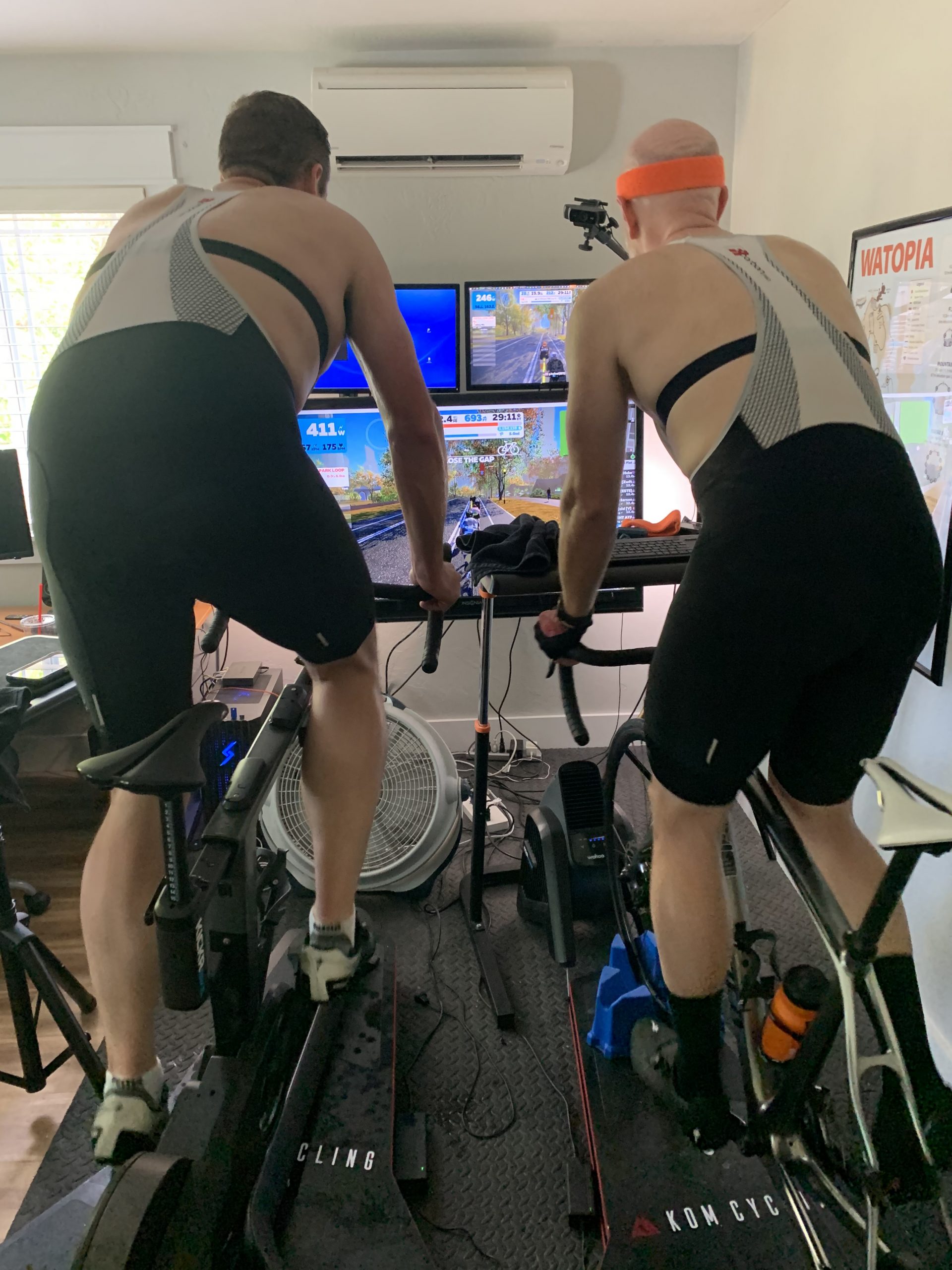
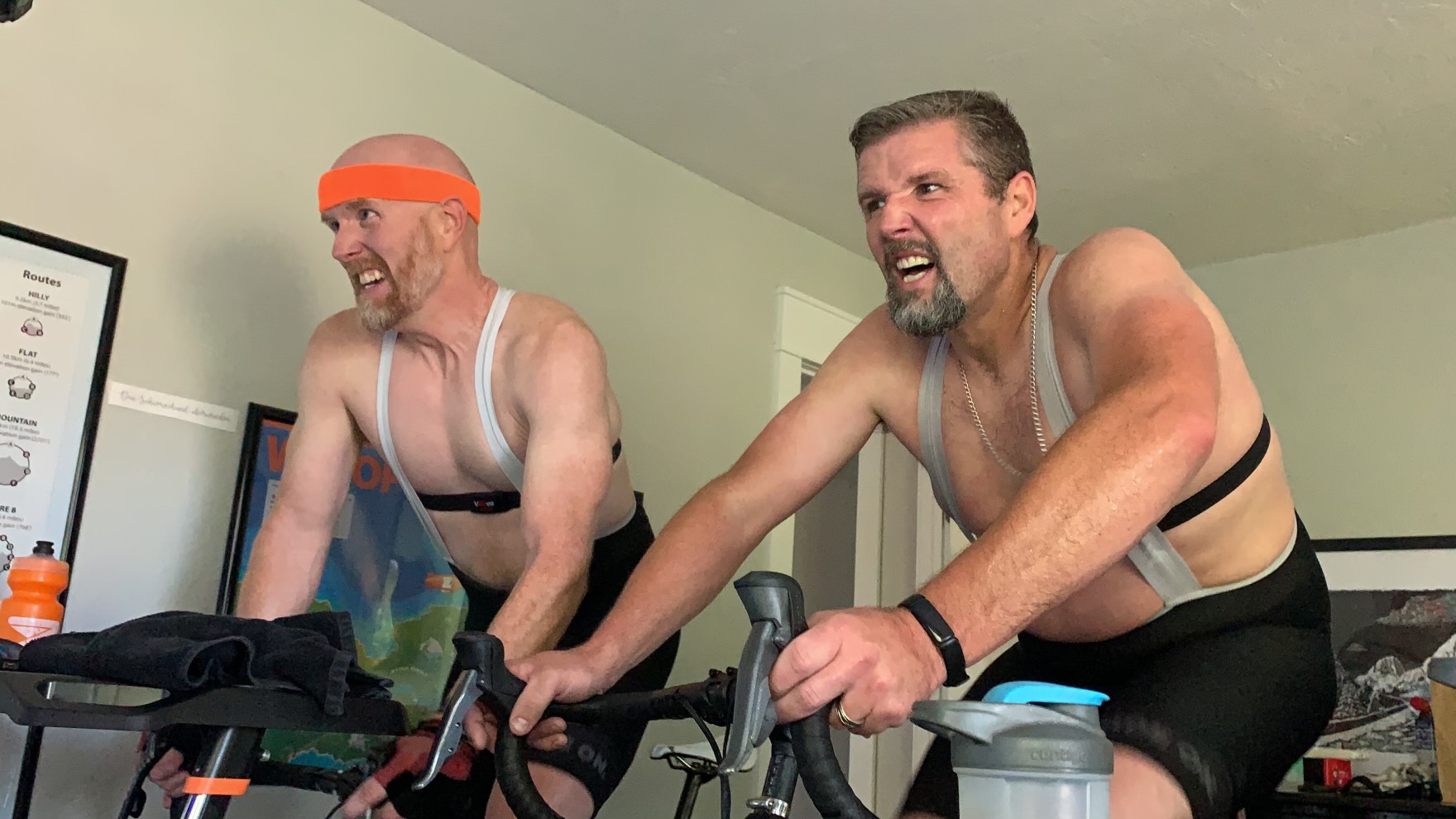
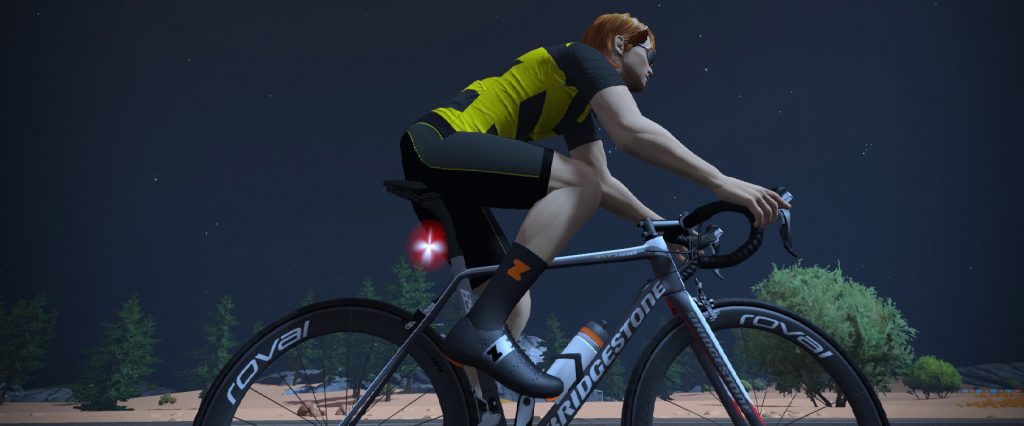
It’s been nearly a month since we last updated you on Boone’s “C to B” training project. In that previous post, Boone had hit the goal of C to B project, completing an FTP test that put him at 3.22w/kg. And we were asking the question: what next?
While we contemplated what our next goal should be, Boone kept riding, working hard at a mix of VO2 workouts, races, and steady 60-90 minute rides where he grabbed route badges while building endurance.
Here’s an update on Boone’s recent training…
New Goal
Our new goal for Boone is to see him upgraded to a B racer in ZwiftPower. In order to do that, he has to have three races where 95% of his 20-minute power averages out to 3.2w/kg+.
He’s currently ranked as a C in ZwiftPower, and his three best races show 2.91, 2.88, and 2.79 for 95% of 20-minute power. So he’s got some work to do, since he needs to add 0.3w/kg to his numbers in order to get that upgrade!
He’s also set a secondary goal of climbing Alpe du Zwift in 70 minutes. He’s climbed the mountain twice – 81 minutes the first time, 76 minutes the second time. Based on his current power numbers, though, we think he’s probably already able to do it in 70 if he paces it well.
Boone has been riding 4 days a week (M-W-F and typically a race on Sundays). We’ve settled on a mix of five different types of rides.
Races: Boone has started doing mixed-category races so he is pushed to hang with the higher-category riders (more on that below).
VO2 Workouts: this is the cornerstone workout of each week. Nobody likes VO2 work, but we both agree Boone is getting a lot of benefit from these.
Pace Partner Efforts: we use the Pace Partners (C. Cadence or Bowie Brevet) to anchor fun, interactive steady or interval workouts. Lots of options here.
FTP Ramp Tests: we do ramp tests occasionally to measure progress via an objective test.
Badge Hunting/Recovery Rides: some days, Boone will just need a lower-intensity effort in the saddle. So he’ll ride around 90 minutes at a sustainable pace, building endurance without burning out the legs.
Weight Loss Plateau
If you’ve followed Boone’s training progress, you’ll know he lost an astounding 50 pounds in his first few months of training, dropping from ~265 pounds to ~215. But since then, his weight has held quite steady.
This isn’t surprising – anyone who has lost significant weight will tell you that your body hits a point where the “easy weight” has come off, and the lifestyle changes that got you to this point aren’t enough to take you further. Boone is still determined to get down below 200#, but he’s still working to figure out how to make that happen.
One thing’s for sure, though: he’s enjoying the lighter weight. We played volleyball for the first time this year a few days ago, and he’s jumping higher, moving faster, and recovering quickly – a force to be reckoned with!
VO2 Workouts
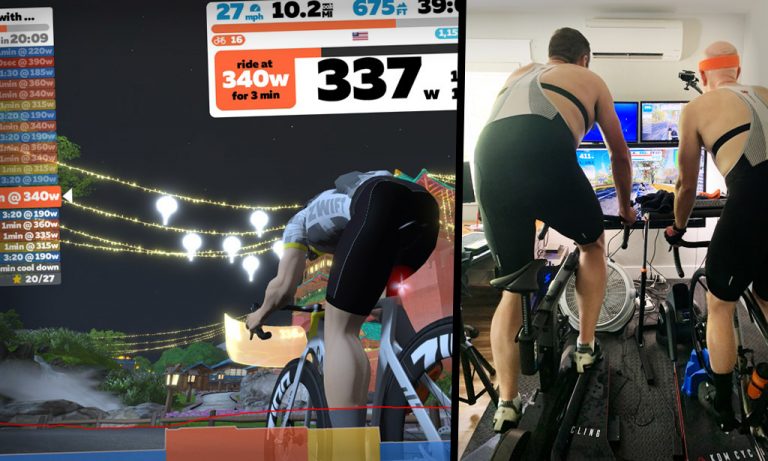
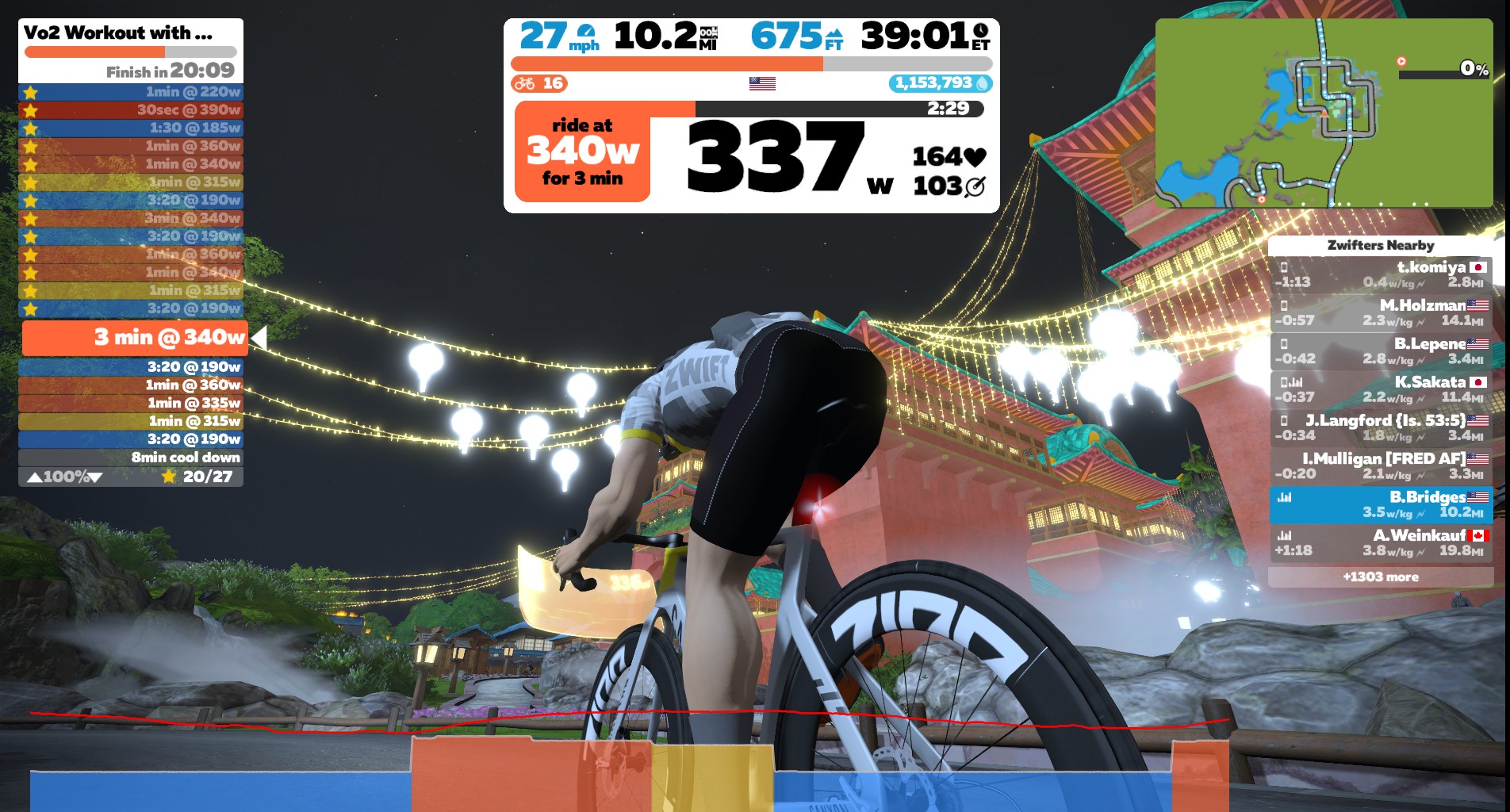
VO2 effort in Yumezi
Boone’s Friday afternoon VO2 workouts have been his cornerstone “max effort” weekly ride. We’ve tweaked them as we’ve gone along, but essentially it’s a warmup followed by 5x 3-minute efforts at 110-115% of his FTP.
We’ve started mixing in some stepped intervals, so (for example) instead of 3 minutes at 340W we do 1 minute at 360W, 1 minute at 340W, 1 minute at 320W. Same average wattage over the 3 minutes, but you get the heart rate up quicker with the tough first minute, meaning your HR is in the VO2 range for more of the interval.
In the past three weeks we’ve ratcheted up his FTP setting from his old one (294W) to his new one (310W). Just last Friday he completed the workout at 310W – it put him right on the limit, but he did it! Even the lights and landscape of Zwift’s new Makuri Islands map couldn’t distract him from knocking out those final intervals.
Mixed Cat Racing
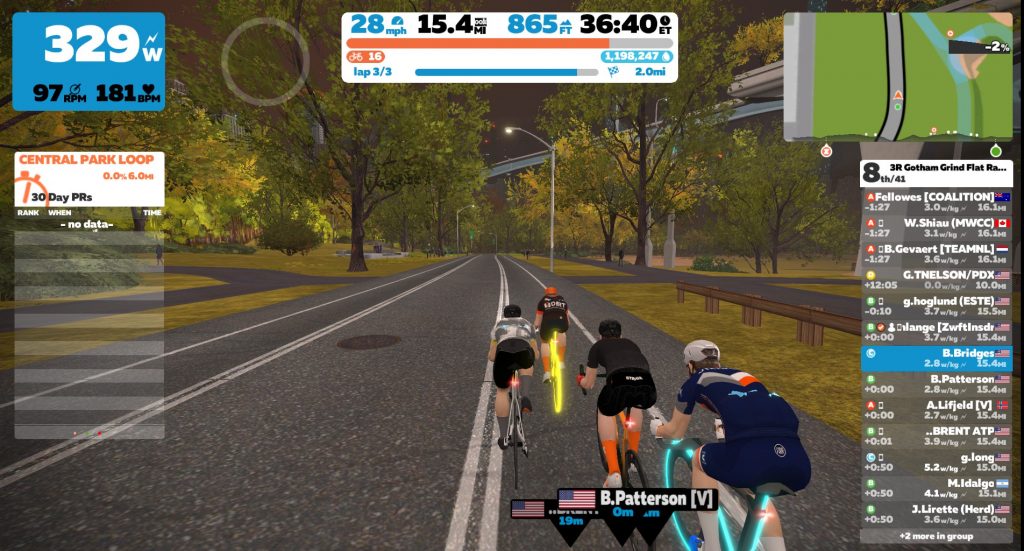
Boone and I at the front of the chase group in a recent race
For the past two Sundays, Boone has hopped into the 3R Gotham Grind Flat Race which happens at 2:05PM Pacific Time. We’ve been trying these races instead of his standard Crit City efforts for two reasons:
We wanted to get some longer races in, so he has to push himself to the limit longer. These races last just over 40 minutes.
These are mixed category races, where all categories begin together. This means he can’t just sit in the C peloton then sprint at the end – he has to push to the max to hang with the front group’s A’s and B’s until he gets dropped!
These races have been a lot of fun, and the two weeks’ results are remarkably similar. In both weeks Boone hung with the front pack for most of the first lap, then fell off into a small chase group of 5-8 riders which finished next behind the front group. In both weeks, all of the C’s except for Boone got dropped early on, so he was in the chase group with A’s and B’s. And he finished well ahead of the next C.
Putting in a dig on the uphill
Coach Zane enjoying his easy job
Sprinting to the line!
The only downside of this race even is that it isn’t well-attended, with only around 15 riders from each category showing up. It would be nice to get more C’s in the mix, so Boone has more competition on ZwiftPower! But for now, it’s working out well – he’s received around 25 ranking points in each race, since he’s beating some B and A riders each week.
This past Sunday I joined Boone in the race. I raced as a B, Boone as a C, but I was there just to work as a domestique for him, to help him get the best result possible. So I was calling out moves, chasing down attacks here and there, and dropping back to give Boone a while if he was gapped a bit.
He held his own mostly, and in reality probably would have achieved the same result without my help. But it was really fun to work as his sidekick and actually race together for the first time. We’ll be doing more of this for sure.
Boone is clearly getting stronger week by week, even if he isn’t getting lighter. When it comes to races without long climbs, he’s definitely a “strong C” at this point, although it’ll take a significant jump in fitness to get upgraded on ZwiftPower.
He’ll keep plugging away at the weekly training, then we’ll probably jump into some mixed-category Crit City 8-lap races where he can hopefully set some new 20-minute PB’s to get him upgraded to B status. Because Zwift racers know, if you’re looking to cat up, Crit City is the place to do it!
Your Thoughts
Got ideas for Boone, or questions about his training? Comment below!
The final race of Zwift Racing League Round 3 happens tomorrow, May 25th. And it’s definitely the Queen Stage of our race series, taking on the super-climby Surrey Hills route with over 1000 meters of elevation for A/B racers!
Let’s dig into the course, including some tips for bike choice and strategic options.
Looking at the Route: Surrey Hills
Course Confusion
Let’s get three confusing things out of the way before we talk about the actual route…
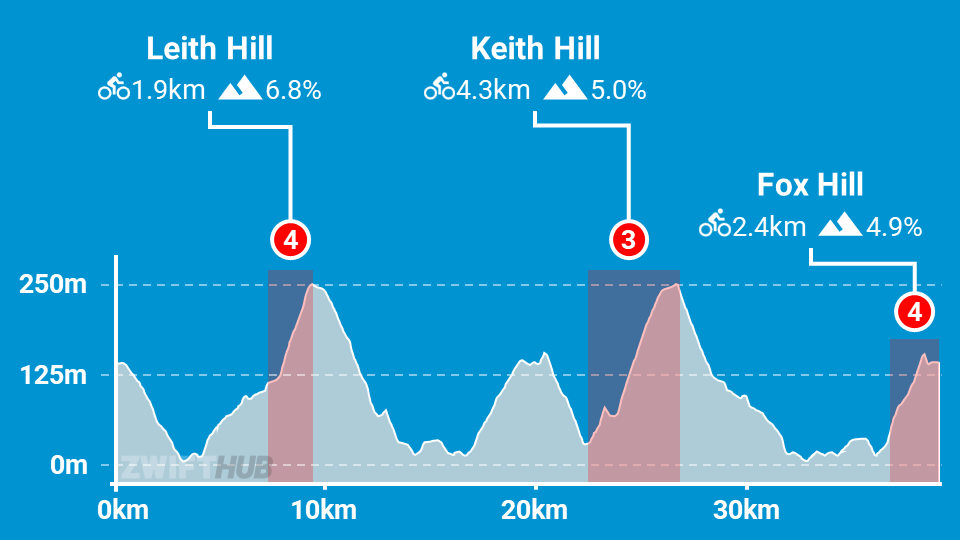
First: the lead-in. Many route maps, including the ZwiftHub profile below, are a bit deceiving because they leave off the lead-in. On most Zwift routes the lead-in isn’t a big deal, maybe a few flattish kilometers (or no lead-in at all). But on this route, the lead-in is the Fox Hill climb – a big effort which will be the first major selection point of the race!
That’s right – for many riders, their performance on the lead-in will determine their destiny for the rest of the race. And the second time up Fox Hill (which only A and B racers are doing) will be the other big selection point, as it’s the final climb.
So the Fox Hill climb is where we’ll see a lot of the key race action.
Second: the Fox Hill intermediate scoring. Folks seem a bit confused about how this will work, because of the way it’s displayed on WTRL’s website. Here’s the simple way to think about it – it’s just like any other ZRL race. Every time we climb Fox Hill, it’s an intermediate, with FAL and FTS points on offer.
Third: the finish point for the C/D race. While the A and B racers will be finishing the Surrey Hills route (which ends atop Fox Hill at the KOM banner), the C/D racers have a course that is mercifully shortened, ending at the bottom of the Leith Hill descent. Where exactly does it end? WTRL says, “The precise distance for the C & D race is 37,002 metres – approx 600m short of the roundabout/traffic circle at the bottom of the descent.”
The roundabout they’re referring to is the one at the bottom of Box Hill.
Route Details: the Climbs
This route is really all about the climbs, so let’s look at those, in order of appearance:
First Climb: Fox Hill
4.3% average gradient, 2.4km long. The 4.3% number is deceptive, though, because the climb actually ends ~700m before the finish line! Fox Hill is actually a much steeper climb of 7.4% followed by a short descent then a flat run-in to the KOM banner.
Second Climb: Leith Hill
Speaking of deceptive numbers, let’s look at Leith Hill! The stats say 1.95km at 6.9%. But that’s just the timed portion of the climb. The actual climb (here’s the Strava segment) is 6km long, averaging 4.0%. The early slopes before the KOM segment are more gradual, but make no mistake – this one will hurt all the way up. And it’s the longest climb on the route.
Third Climb: Box Hill (most of it)
The third climb isn’t a timed segment (no intermediate points), but it is most of Box Hill, which means it’s a substantial effort. Because of the way the Surrey Hills course lays out, we enter the climb from another direction after the official Box Hill KOM has already begun, hence this can’t be a timed intermediate.
Expect watts to ratchet up here, but not as high as they do on the KOMs which hand out bonus points. Why waste the effort?
Fourth Climb: Keith Hill
5.2% average gradient, 4.2km in length. This climb ends with a nearly-flat 600m section, so heavier riders can pull back a few spots with their pure watts near the end.
Fifth Climb: Fox Again
The final climb (again, only for A/B racers) is Fox Hill once again.
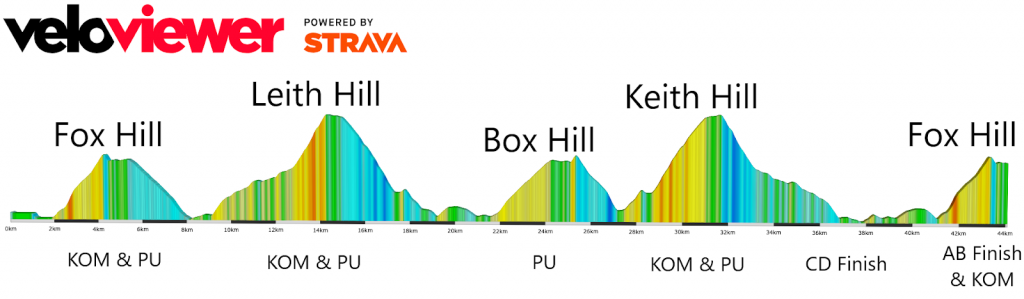
Here’s the full route on Veloviewer:
Bike Frame + Wheel Choice
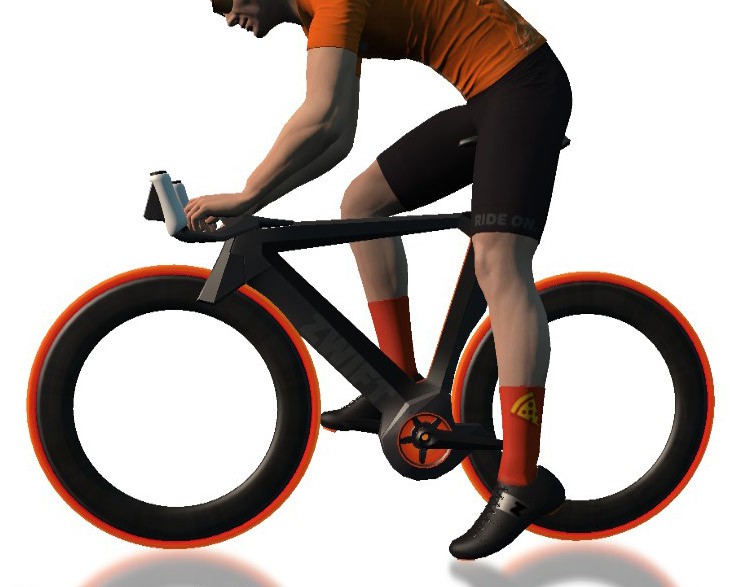
Zwift Concept 1 (Tron) bike
A LOT of Zwifters have been asking us, “What’s the best bike for the Surrey Hills route”? It’s a tricky question, because it’s not as simple as doing a series of bot tests and picking the bike with the fastest times.
In a road race, the big moves will happen on the climbs, and you can expect efforts outside of the climbs to be much lower. So you want a rig that gives you a strong advantage on the climbs, where you need it most.
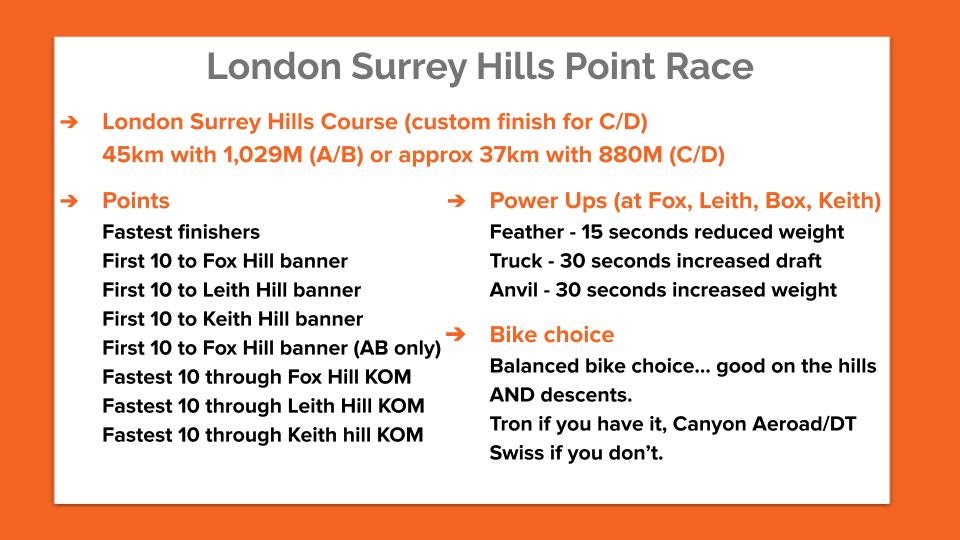
We did some test laps on the actual route – you can see them on our Speed Tests Google Sheet. Those tests indicate that the Tron bike is the clear choice. It turns in the fastest overall course time, but (more importantly) is also tied with, or within 1 second of, the fastest rigs on all the climbs.
If you don’t have the Tron, the DT Swiss ARC 62 wheels is an excellent choice that’s available to basically all Zwifters. Pair that with a good climbing frame – there are three all tied for first place nowadays!
Sherpa Dave has put together a race recon video and some helpful notes:
This is undoubtedly the Queen Stage of the season: four big climbs for the Cs and Ds, five for the As and Bs. This is going to be a long hard day in the saddle.
Making it even better, as this is the last race before playoffs, intra-division competition is heating up. Every team is looking to finish strong and maybe steal a placing or two from their rivals. I know my lads in the Hyenas are pulling out every watt to try and find the 4 points difference between us and Tugaz (olá ciclistas rivais!). I can only hope every division has managed to have so much fun with each other!
Fox, Leith, Box, Keith, Fox. This is a long ride – a hilly 37km for the Cs and Ds, and a hillier 44km for the As and Bs. I highly recommend going out at a pace you can sustain, unless you are really focused on those First Across the Line points on Fox Hill. That’s right – the first intermediate gate happens at 5km! This course is really technical, and if you are working on intermediate points, each of the KOM has interesting features you can capitalize on. Check the video below to see what I mean.
Some questions I want to make sure I answer for you…
Cs and Ds… if you finish the race then carry on the extra 7km do you get the Surrey Hills route badge? YES!
Why isnt Box Hill an intermediate… no FAL/FTS points? Approaching Box from Richmond Park as we do here… we don’t cross the KOM start marker… so while you climb MOST of Box Hill, you don’t climb ALL of Box Hill, and therefore it’s not an intermediate.
What will Sherpa Dave be riding? A pink Tron. All those hills rule out an aero setup. Second choice would be Canyon Aeroad with DT Swiss wheels. To be fair, I only know this because I asked Guru Schlange!
We have four long months to wait for Season 4. As each season has come and gone I have noticed a fairer and more competitive playing field, and the team at WTRL are responsible for much of that. If anyone wants to say a big thank-you to Martin and Steven, I am pretty sure their Paypal account accepts all currencies! The link is at the top of the page on wtrl.racing >
For those who prefer their recons in a visual style, with tunes, here is the official Sherpa Dave Recon Video. As I write this, the channel’s subscriber count has just clicked over 1,000 – something I never thought I could do. Eric gave me a shot writing my column on the Thursday TTT six months ago and I’ve been having fun ever since with that column, my notes on ZRL. and weekly videos on both WTRL TTT and ZRL. Thank you to every ZRL racer for reading, for watching, and for commenting!
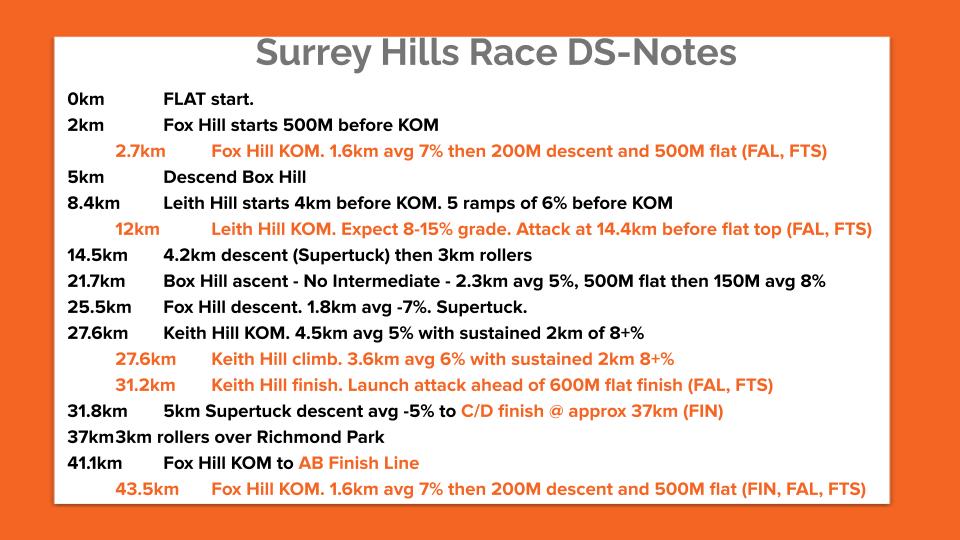
I tried to focus the DS sheet on the key climbs of the day:
All-in-all, ZwiftPower crashes aside, Series 3 was a tour-de-force. I can’t wait til Season 4. In the meantime though I still have to get over Fox, Leith, Box, and Keith. Luckily I’m a lowly Cat-C so I can stop there!
No Breakaways Course Preview
Here’s the nicely-detailed course preview from Rick at No Breakaways:
PowerUp Notes
Riders will be awarded powerups through every KOM banner, meaning we’ll all get 4 powerup chances in this race. Three powerups will be given out at each banner:
Anvil: makes you heavier for 30 seconds, so you can descend faster. Event-only. Use this on downhills. Pair it with a supertuck to go extra fast with zero effort!
Lightweight (feather): reduces your weight by 10% for 15 seconds. Use this when the road tilts upward. Useful for taking the edge off of a ground-level road’s lumpy climbs, or to help you grab extra points on that final KOM.
Draft Boost (van): increases the draft effect you are experiencing by 50% for 30 seconds. Use at higher speeds (flats and descents) when you are already drafting off another rider (since this powerup only helps when you are drafting.)
The Anvil is the big unknown here – the vast majority of Zwifters have never used this powerup in a race. Just what sort of effect does it have on your weight, and how much will that speed up your descent? Our guess is: it won’t matter much, and we would all rather have the feather or van.
Strategic Options
This is a points race, so everything comes down to the timed KOMs. All the miles in between are just the setup.
Here are a few predictions about what we’ll see in this race:
The front group will get smaller on each climb, as the strong climbers work to drop everyone else. It’s in the climbers’ interest to do this, because both A/B and C/D racers are essentially a sprint finish. Good climbing legs will keep you in the front pack, but it will be sprint power that wins from the elite front group in the end.
Many riders will blow up and drift backward. It’s difficult to pace a race of this length, since it’s so different from other ZRL races we’ve done in terms of climb length and overall length. Riders will push too hard early, then blow up and fall off the front groups. Well-paced riders will catch a lot of blown up riders.
FTS points for Fox Hill will be set on the first climb. With a larger group, fresher legs, and a big selection being made, expect the top 10 FTS slots to all get filled on the first ascent of Fox Hill.
Powerups won’t matter: unlike some past ZRL races, powerups will play very little part in this race. We’ll only get 4 of them, the race is long, and the feather only lasts for 15 seconds.
Your Thoughts
Any insights or further thoughts on the big race? Share below!
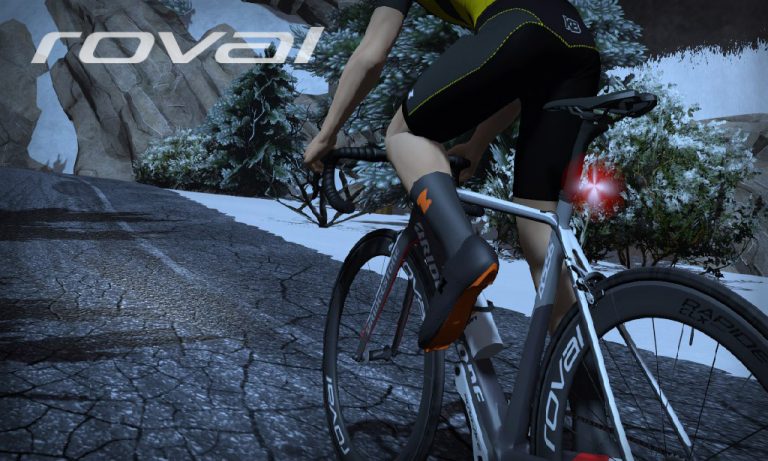
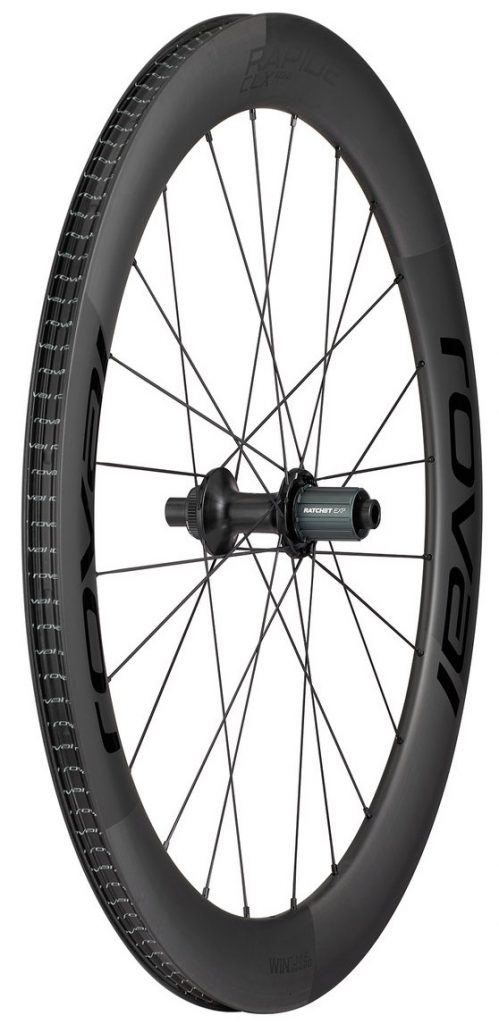
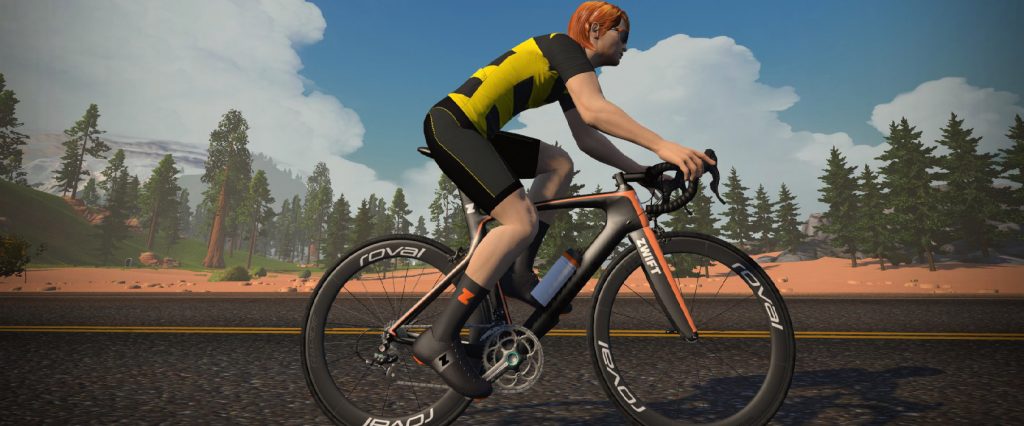
Zwift’s newest update includes a new wheelset from Roval: the Rapide CLX. This is Roval’s second wheelset in game, with the first being the CLX64.
The IRL Rapide CLX wheelset came out in 2020 and received some very positive reviews. The wheels are exceptionally wide, and the front wheel isn’t as deep as the rear (51mm vs 60mm, respectively.)
The wheels are available for 195,300 Drops on Zwift, for level 14+ Zwifters. This is how they’re described in the Drop Shop:
“Combining the aerodynamic excellence of the time trial dominating CLX64 with the light weight and superb manners of the CLX32, the new Rapide CLX delivers stellar climbing performance with slippery aero efficiency. Who says you can’t have your cake and eat it too?”
Sounds like these wheels may be great all-arounders. But experienced Zwifters know that real-world performance doesn’t necessarily translate to Zwift performance, so at Zwift Insider we run frames and wheelsets through a battery of tests to figure out just how well they perform in Zwift’s virtual world.
Here’s everything you need to know about the new Roval Rapide CLX wheels in Zwift…
Aero Performance
The Roval Rapid CLX wheels turn in the same flat test time as the older Roval CLX64’s, placing them at around 65% in our wheel percentile rankings. Since they’re rated at just three stars for aero performance, this isn’t surprising.
The Rapide CLX wheels turned in a time of 50:54 on our test course (two laps of Tempus Fugit). By comparison, the fastest wheels in game (Zipp 858/Super9) turned in a time of 50:33. (Both of these test times were done with the Zwift Aero frame.)
Climb Performance
The Rapide CLX wheels are rated at 3 stars for weight, so we figured they would out-climb at least the CLX64’s. And they did, beating that wheelset out by 5 seconds.
The Roval Rapide CLX wheels turned in an Alpe du Zwift time of 49:24 – the same time as the Zipp 202 wheels, and just 1 second slower than 4 other wheelsets. This puts them right around 65% in our wheel percentile rankings.
By comparison, the lightest wheels in game (Lightweight Meilensteins) turn in a time of 49:15. (All times listed were set using the Zwift Aero frame.)
Conclusions
These wheels aren’t exceptional in terms of their Zwift performance, ranking in the 65th percentile for both the flat and climbing tests. They’re not your best pick for a flat race, and also not your best pick for a climbing race.
As all-arounders they rank #10 out of 31 on our combined percentile graph. Clearly, the DT Swiss Arc 1100 and Zipp 454 wheelsets are better all-arounder picks, since they turn in better performance on both flats and climbs.
Questions or Comments?
Share below!
Important note: this post contains speed test results for Zwift frames or wheels. These results may change over time, and a bike's performance relative to others may also change. We don't always revise posts when performance rankings change, but we do keep current, master versions of our speed test results which are always available. See the frame charts, wheel charts, and Tron vs Top Performers for current performance data.
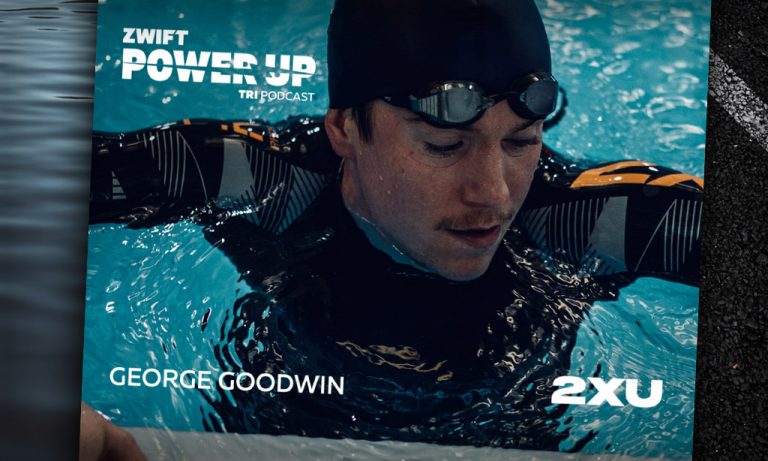
The 2XU Brick Training Series is a 6-week event series with top 2XU Pro Triathletes riding and running their favorite workouts throughout Zwift. What makes these workouts their favorite? Find out as they dish the details in exclusive interviews on the PowerUp Tri Podcast! This week, we are joined by British Pro George Goodwin.
Tune in to the latest episode each Wednesday and have a live Q&A ride or run session with top pro triathletes like Brent McMahon, Sarah Crowley, Terenzo Bozzone, and Cam Brown. Or join a recast ride every Saturday, where you can zone in the workout with the podcast.
About the Podcast:
The Zwift PowerUp Tri Podcast is hosted by former pro triathlete Matt Lieto and Zwift Academy Tri mentor Sarah True. Both are passionate about lending their in-depth knowledge of the multisport to the Zwift Tri audience.
How the (Team) Race Was Won: ZRL Season 3, Race 5 (Cobbled Climbs)
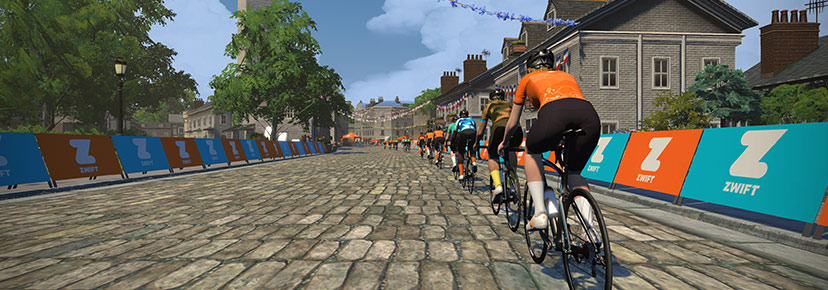
The 5th race of of Zwift Racing League season 3 was one I’d been dreading ever since I saw it on the schedule – FIVE LAPS of Richmond’s tough Cobbled Climbs route. What were those murderers at WTRL+Zwift thinking?
I’d been swapping between two DIRT B teams for this season, filling in as needed. My old Hellhounds team was racing in division 1, while the new team (Roosters) was in division 5. Both teams were firmly in first place, but the competition level in division 5 was a step down from division 1.
Happily, I was with my division 5 Roosters this week – so I thought I might just stand a chance of making the front group. Maybe. I rested my legs, steeled my mind, chewed some caffeine, applied PR lotion, warmed up thoroughly, then headed to the start pens. Let’s race!
Watch My Race Summary
Here’s an edit of my race video, where I highlight key moves and explain my team’s strategic thinking:
Lap 1
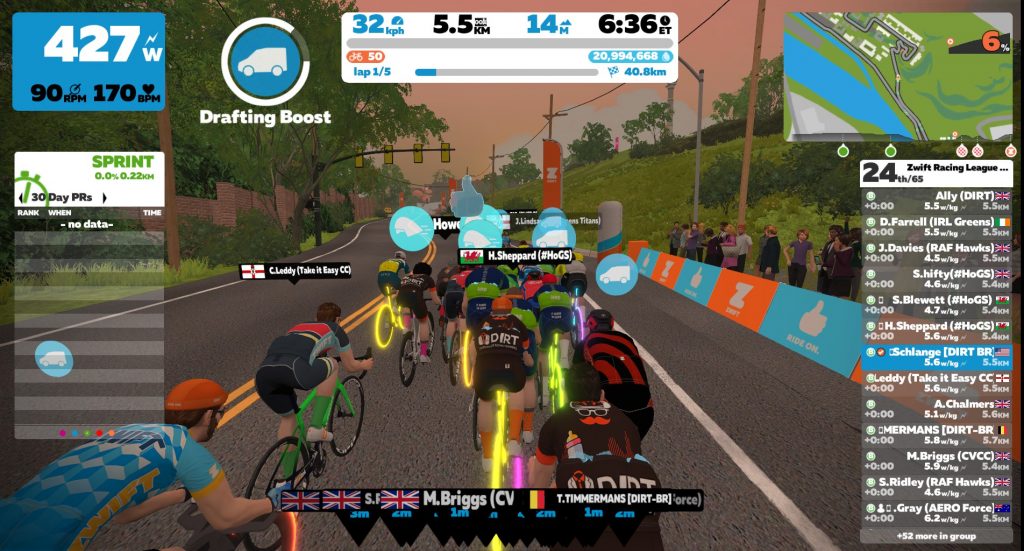
Everyone knew the first lap was where the biggest fireworks would go off. With fresh legs, this is where the fastest-through-segment times would be set, and this is where the first key selection would be made.
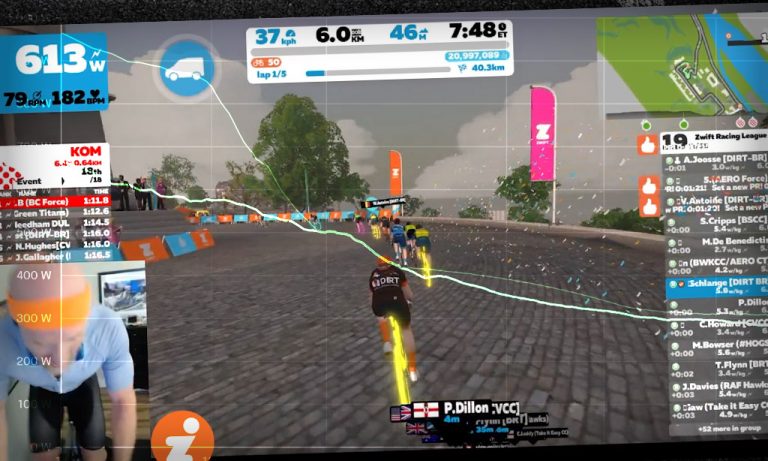
Everything stayed pretty low-key until we hit the start of the Libby Hill KOM. I didn’t have a great powerup – the van. So I used it early on, when speeds were still high, then I went all-in on the climb as the group strung out. Made it over the top in 20th, then used my drafting boost, a supertuck, and a 23rd street sprint to make up a few places.
The fireworks begin: Libby KOM, lap 1
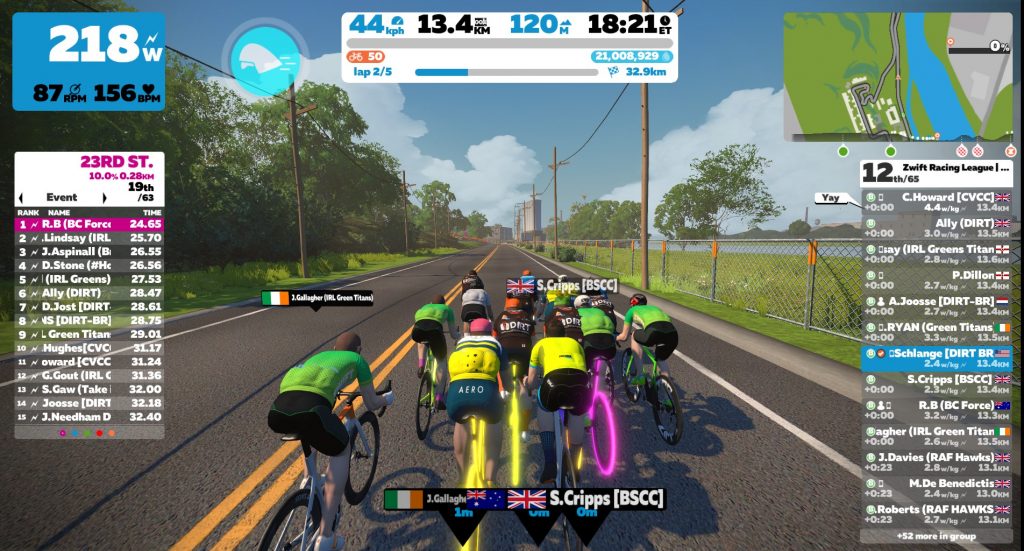
My small chase group caught the front of the race at the bottom of the Governors Street climb. I was still in the front group, along with 4 other Roosters. Our rivals the Green Titans had 4 in the front group – so the game was on!
Lap 2
In the front group
The second lap is where I made my big mistake. Everything was tame again in the front group on the flats and descent, but when we hit Libby Hill, it exploded – at a much higher level than I expected. (And of course, once again, I didn’t have a good powerup!)
Gaps opened up, and as we went over the top I lost the front group of 12, never to find them again.
But we were in a good position, with two Roosters in the front group, and a couple near me.
Who Will Work?
At the end of the second lap, we did some clicking around and discussing on our team Discord channel. My chase group had 2 Green Titans and 1 CVCC rider in it, along with myself and a teammate. The front group had only 1 Green Titan and 1 CVCC rider in it – so as we saw it, there was no reason for DIRT to work in the chase group, because we had the advantage in the front group. (Also, I didn’t have the legs to chase).
So we sat in. The one CVCC rider in our group stayed on the front quite a bit, and we just sat on his wheel for most of the next few laps.
The Finish
Because of how WTRL’s scoring system works, 11-15th place gets the same points. And that was my chase group! So no matter if I sprinted it out and took first in my group, or sat up and took last, I’d get the same number of finish points.
The CVCC rider jumped hard on the final climb up Governors Street, and I let him go. He deserved it! I crossed the line in 12th, the third Rooster to finish.
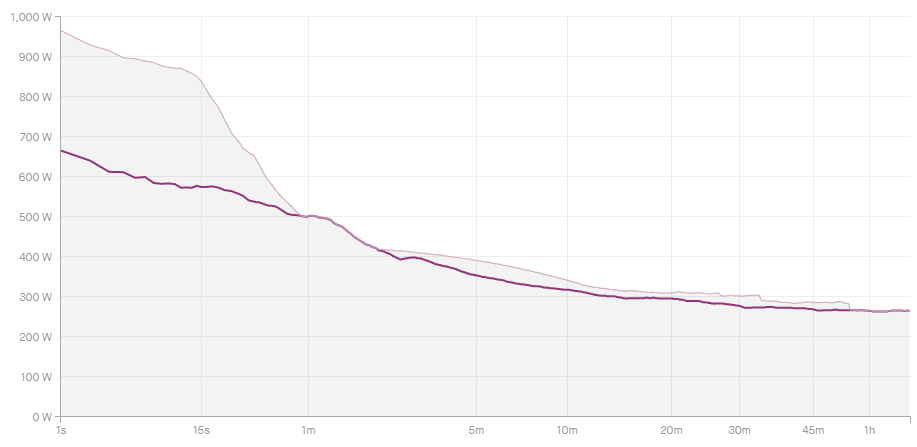
Those Libby Hill kicks were tough. I got a new bump on my 6-week power curve from this race, set on Libby Hill, lap 1:
One thing I noticed on this route is efforts were much more polarized – you were either resting, or going all-out. There wasn’t as much of the steady TT effort feel you get in flatter Zwift races.
I was kicking myself for getting gapped on the 2nd time up Libby. Could I have made the break? Maybe. Race hindsight is always optimistic though, isn’t it?
But the most important thing was that the Roosters won! In fact, our strongest rider Thomas broke away off the front and TTd to a solo victory. Him being off the front meant our other rider in the front group (Ally) could just sit in and conserve – giving him better legs for the final sprint, so he could finish 2nd.
All 6 of our riders finished in the top 25, which helped us get a lot of finish points. Our goal was to get as many riders as possible in the front group, then finish as high up as possible after that. And we smashed it.
Your Thoughts
How did the Cobbled Climbs race go for you? Is your race hindsight always optimistic, like mine? Share below!
Zwift launched Yumezi, the first map on its new Makuri Islands world, early this week. It includes ~27.6km of roads, and ~8.6km of those roads are dirt.
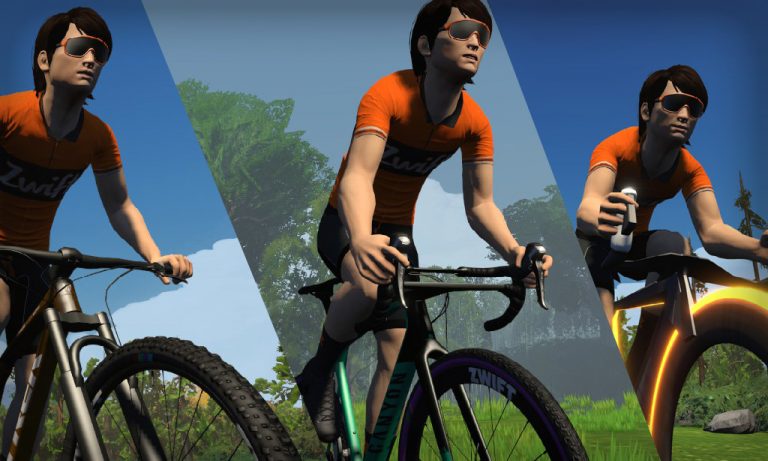
This has some astute Zwifters asking the question – which bike should I use for these mixed routes? On Zwift, different road surfaces roll at different speeds depending on which wheels you are using (read “Crr and Watt Savings of Zwift Wheel Types” for details).
Standard road bike wheels are the fastest choice on Pavement, Brick, Wood, Cobbles, and Ice/Snow surfaces. Mountain bike wheels roll fastest on Dirt surfaces. And Gravel wheels fall somewhere in between, rolling faster on Pavement than MTB wheels, but slower than road bike wheels.
Things start getting complex when you’re talking about routes that have climbs and descents, because gravel bikes are much lighter than MTB, meaning they will outclimb them, especially if the dirt gets steep. And it gets even more complex when you’re talking about routes with a mixture of surfaces!
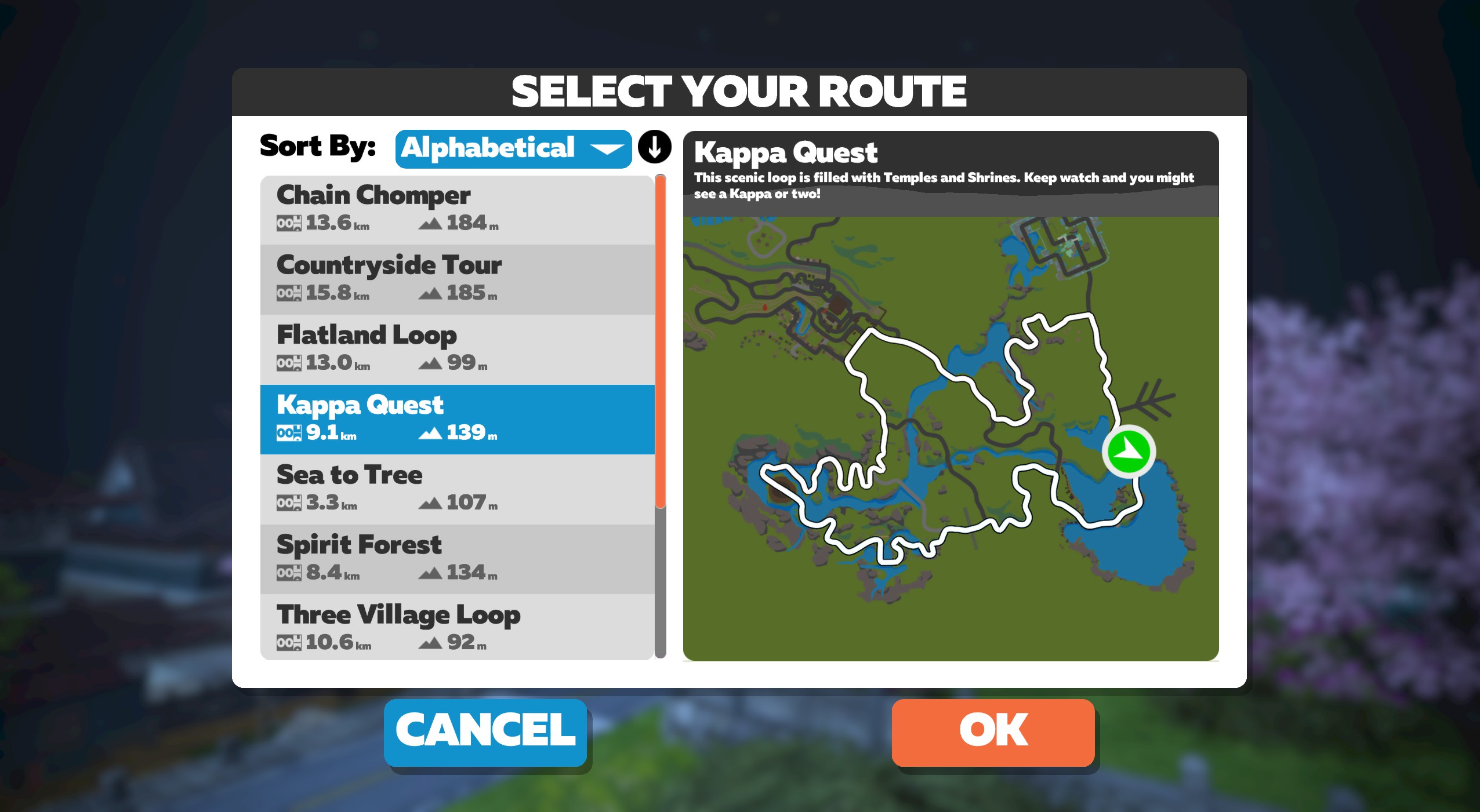
One such route is Kappa Quest. This route is essentially a dirt KOM climb, a dirt descent, then a mixed dirt/pavement connector road from the bottom of the KOM descent to the start of the climb.
We ran some Kappa Quest test laps at 300W steady with a 75kg rider using five different bike setups. Here are the results:
Bike
Climb
Descent
Forest
Tarmac
Lap
Zwift Concept Z1 (Tron)
7:36
2:24
1:53
5:12
17:05
Canyon Grail (Gravel) Zwift Gravel wheels
7:10
2:22
1:49
5:28
16:49
Trek Supercaliber (MTB)
7:11
2:20
1:46
5:38
16:55
Specialized Crux (Gravel) with Zwift Gravel wheels
7:11
2:22
1:49
5:29
16:51
Specialized Crux (Gravel) with ENVE G23 wheels
7:01
2:21
1:48
5:27
16:37
A few observations:
The Gravel and MTB perform nearly identically on the climb, when using the stock Zwift wheels for each. This means the faster-rolling MTB Crr is being equalized by the Gravel bike’s lighter weight. If the road got steeper, the Gravel bike’s lead would increase. If it got flatter, the MTB would move ahead.
The MTB is the best dirt descender, which isn’t a surprise, since it’s the heaviest of the three and the has the lowest Crr in the dirt.
The Tron bike grabs a lot of time on the tarmac, but not enough to get a faster overall lap. And while the Gravel bikes with stock wheels are slightly slower than the MTB on the dirt sections, it makes up for that lost time by outperforming the MTB on the tarmac by 10 seconds.
The overall winner is the gravel bike with the ENVE G23 wheels (the Roval Terra CLX perform identically), because they have a lower Crr than the stock gravel wheels.
Where Do You Want Your Advantage?
Bike choice on some Yumezi routes may come down to picking your advantage. Do you want an edge on the dirt climb? The dirt descent? Or the pavement? The advantage you select will mean a disadvantage elsewhere, so choose carefully!
On a race around Kappa Quest, the big moves will happen on the KOM climb. So it would seem that the Gravel bike would be the smartest choice for this route, since it gives the biggest advantage on the crucial climb where effort is highest. It also rolls faster than the MTB on pavement, and turns in the overall fastest times.
To Swap, Or Not to Swap?
Swapping from one bike to another is often done heading in and out of the Jungle Circuit in Watopia. With a little practice, it takes around 15 seconds to hit the brakes, make the switch, then get back up to speed.
Does swapping bikes make sense on Yumezi? Probably not, since the overall advantage gained isn’t enough to outweigh the 30-second cost of swapping to one bike then swapping back again.
The only exceptions that I can see to this would be
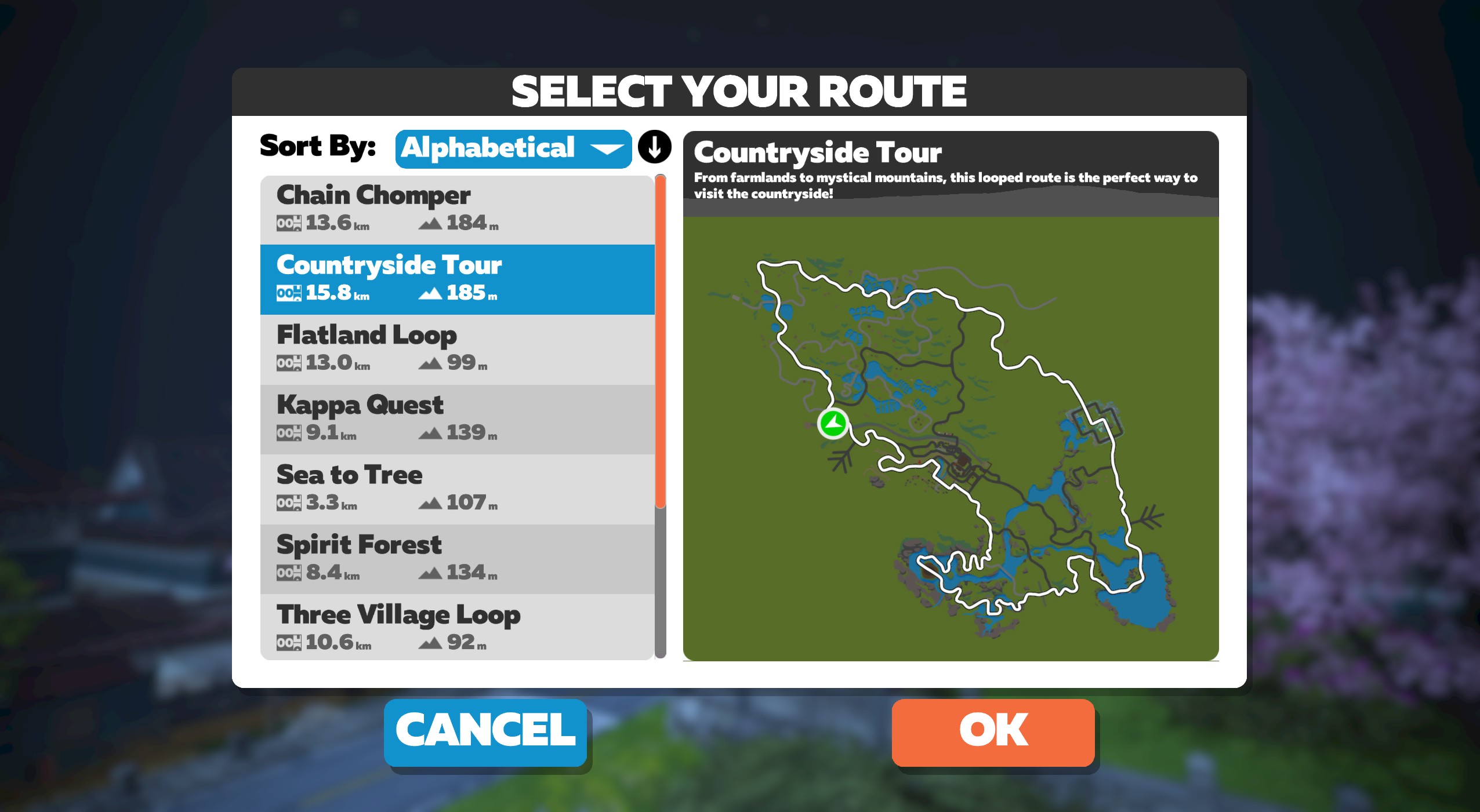
The Countryside Tour route, which is a great candidate for a one-way bike swap in a single-lap race (see note below).
Races with a custom distance which end atop the Temple KOM. This means you don’t have to swap back to the gravel bike, so your 15s swap cost will be easily made up by the speed advantage to the top.
Slower riders: if you ride at 3 w/kg, you’ll see a bigger time advantage by using the gravel bike on the Temple KOM. C and D racers should look more closely at swapping than B and A racers.
Route Recommendations
Given all this, here are my recommendations for which type of bike to use on each Yumezi route during a race:
Chain Chomper: go with a Road bike since there’s so much tarmac. Try to drop any MTB and Gravel riders early, before the dirt begins. And just be confident that even if the MTB or Gravel riders drop you on the dirt climb, you’ll be able to claw them back on the long paved descent to the finish line.
Countryside Tour: go with a Road bike since there’s so much tarmac. But consider swapping to Gravel before starting the climb, then staying on your Gravel bike through the paved descent to the finish line (it’s not worth the time lost to swap back).
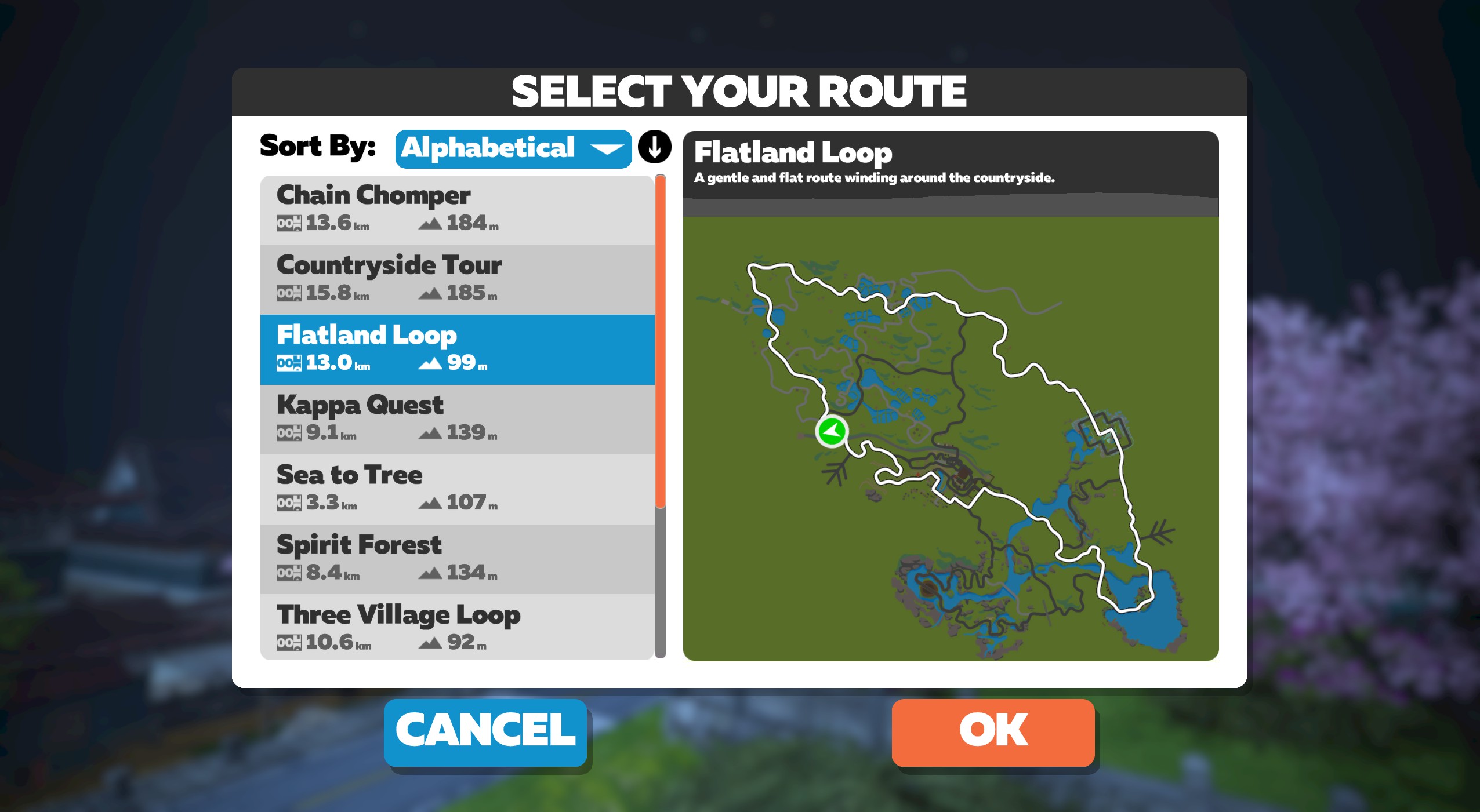
Flatland Loop: definitely Road bike. No dirt roads on this route!
Kappa Quest: Gravel bikes gives you the most balanced advantage.
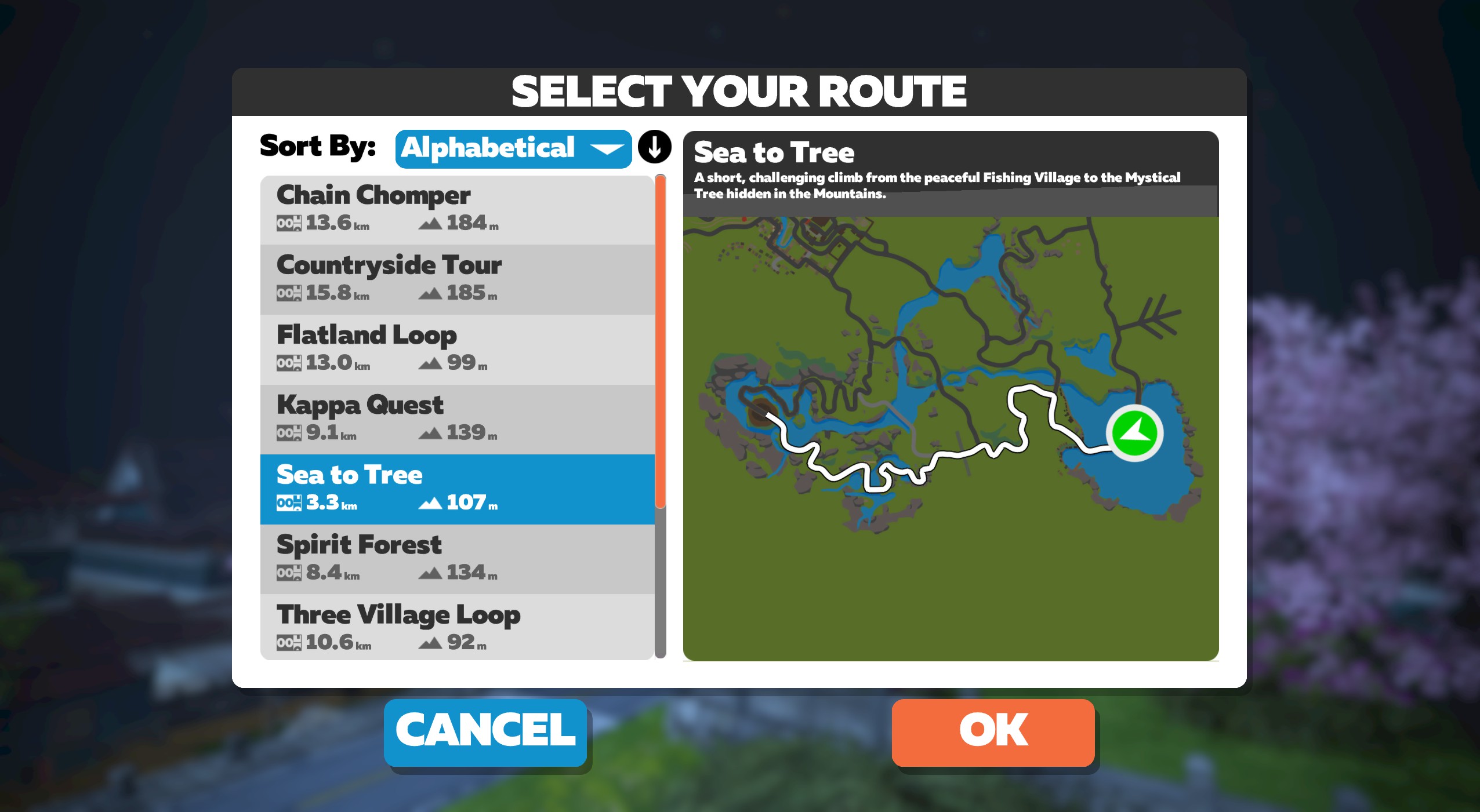
Sea to Tree: definitely Gravel bike, as this is almost entirely a dirt climb.
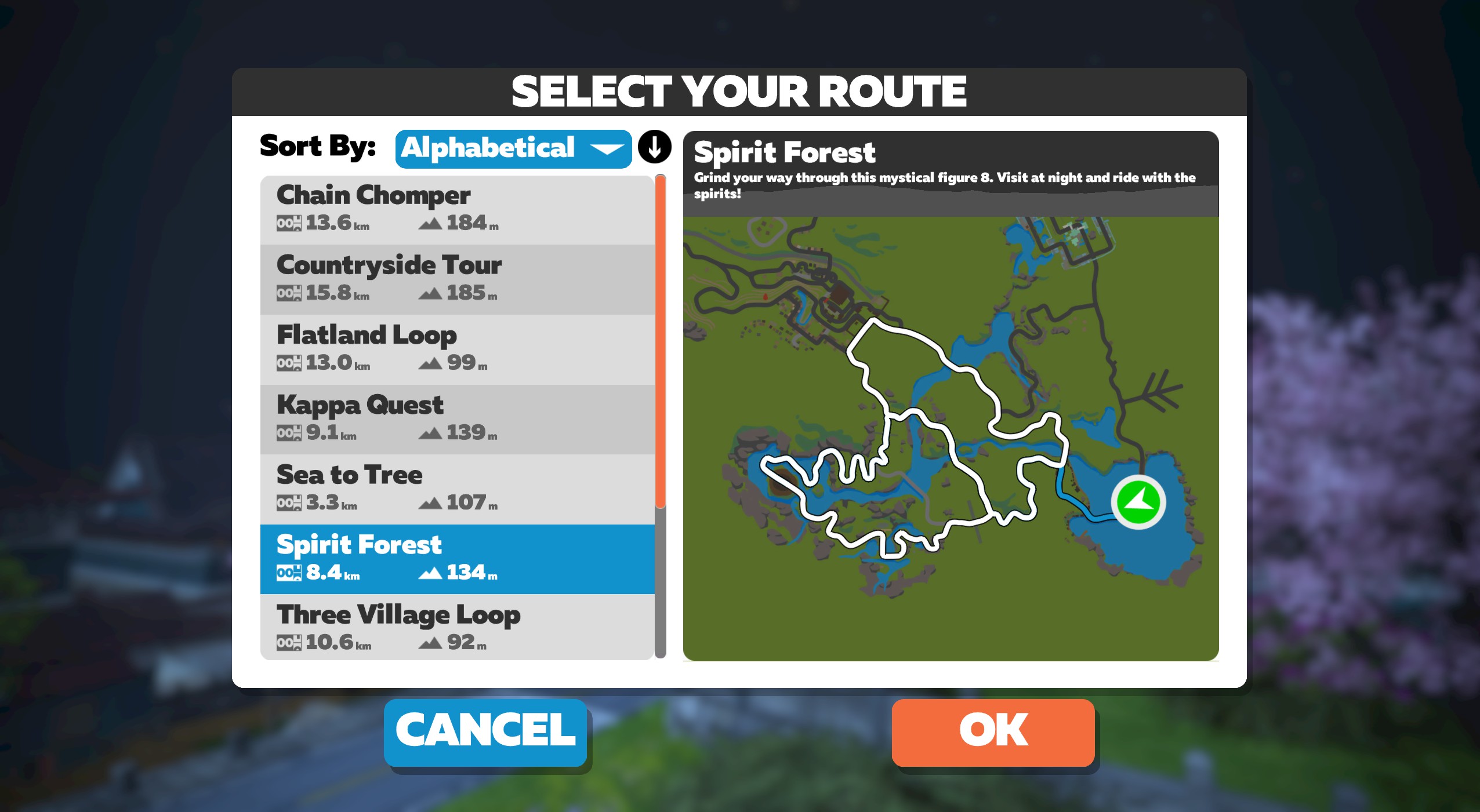
Spirit Forest: Gravel bikes gives you the most balanced advantage.
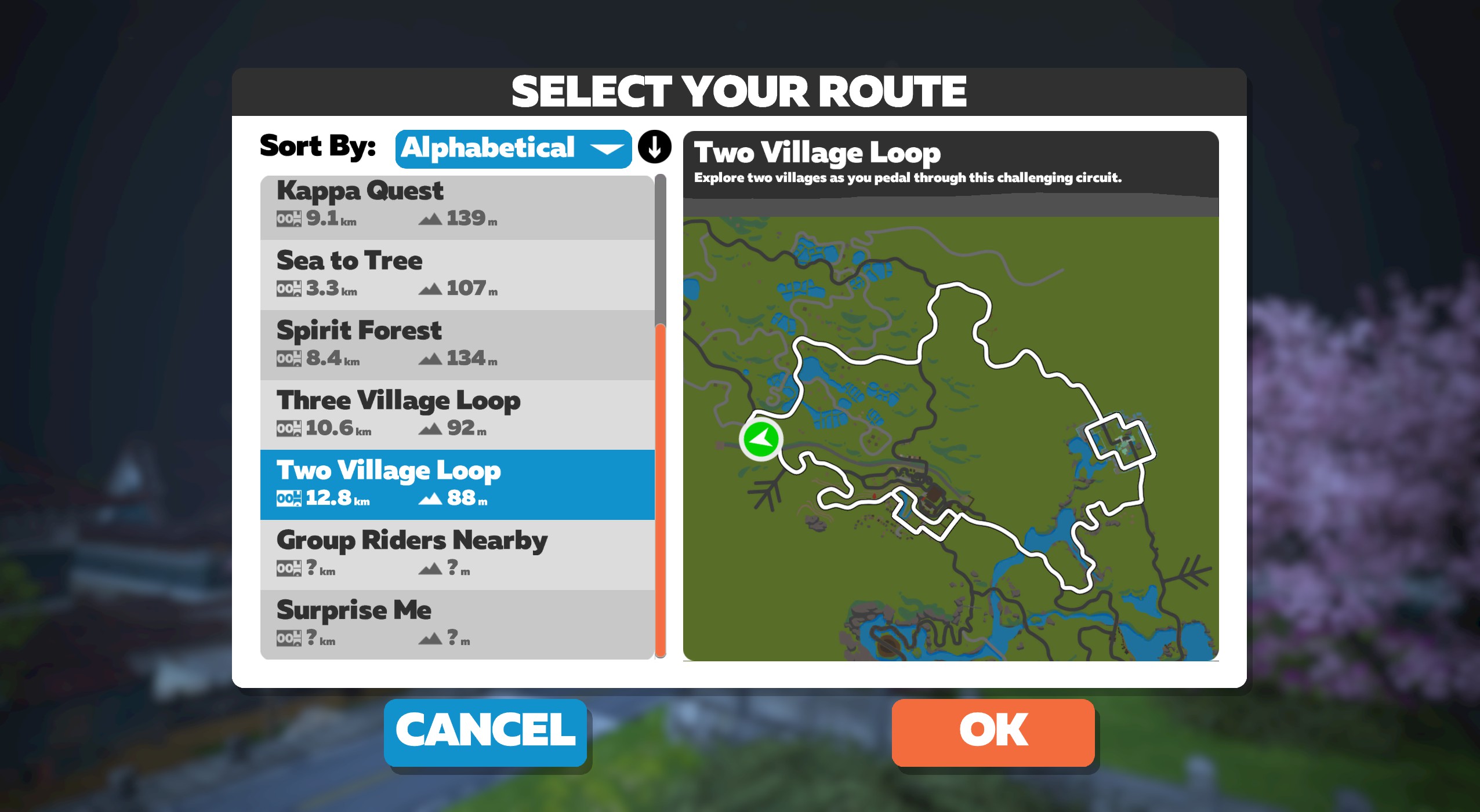
Two Village Loop: tough call. 3km of dirt, 9.8km of paved roads. Pick the gravel or road bike, then use your advantage to ride strategically and drop anyone who made the opposite pick!
On this episode we bring in the mighty duo of Gerry Rodrigues and Jim Lubinski of Tower26 to chat about one of the often overlooked disciplines in triathlon… the swim! Gerry and Jim break down some key things to work on for form, but most importantly workout focus and how to periodize your swimming training in the season.
If you feel you haven’t gotten the most out of your swim yet, dive in and you won’t be disappointed!
About the Podcast:
The Zwift PowerUp Tri Podcast is hosted by former pro triathlete Matt Lieto and Zwift Academy Tri mentor Sarah True. Both are passionate about lending their in-depth knowledge of the multisport to the Zwift Tri audience.
Triathlon is a tough discipline: to be successful you must be a master of both the water and the road. Fortunately, there are plenty of events on Zwift to help hone your skills. I have highlighted some events that will fill the weekend.
Triathletes on Zwift Saturday Endurance Workout
This is really an endurance session at 167 minutes in length and is part of a 30-week progressive series that builds from tempo to sub-threshold-focused workout efforts.
2XU Brick Training Series, George Goodwin Bike Workout
A 60 minute ‘brick’ training session designed for triathletes. This session is from George Goodwin, a British professional triathlete. This is part of the 2XU Brick Training Series, an epic 6-week event with top 2XU Pro Triathletes riding and running their favourite workouts throughout Zwift.
Our friends at LEQP are undertaking “the big one” – PRL Full. This is ideal training for anyone doing the Ironman who needs to clock up serious mileage on the bike.
TOWER 26 Race Series – 56 Mile Bike Segment, 13.1 Mile Run Segment
A Half Ironman race distance, without drafting! Part of the training program for Tower 26. Ideal for those who fancy something a bit different. Separate events for rides and runs.
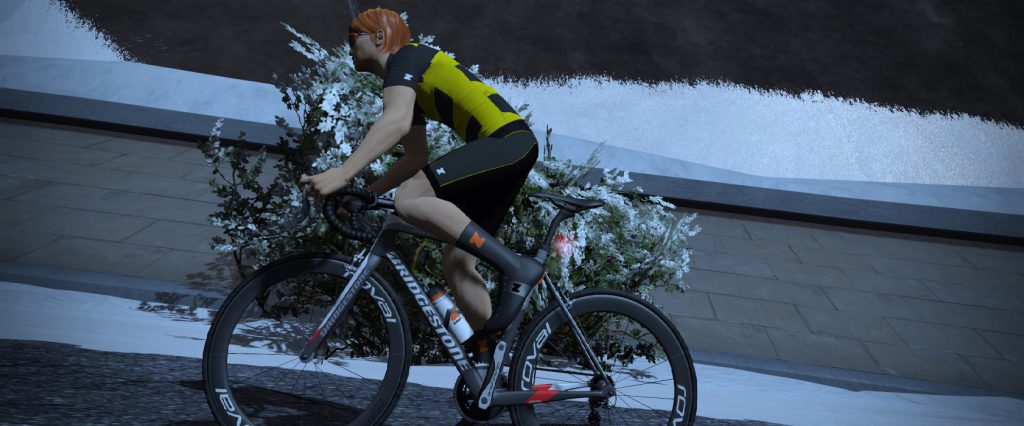
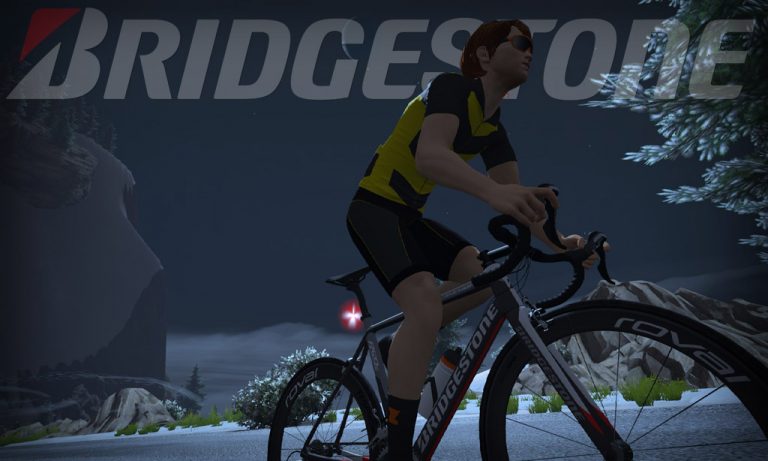
Zwift’s newest update includes a new bike frame: the Anchor RS9s from Japan-based Bridgestone.
Bridgestone, you say? Yes. They make car tires, but they also make bikes. In fact, they’ve been doing so for a long time, and have made some really nice road and mountain bikes over the years! That said, their distribution network and marketing outside of Japan is not strong. In short: Bridgestone may just be the world’s largest maker of high-end bikes you’ve never heard of.
This bike’s release corresponds to Zwift’s Makuri Islands Japan-themed map release – our first Japanese frame, and our first Japanese world. This frame is Bridgestone’s top road racing rig (read more about the IRL Bridgestone Anchor RS9s here.) It’s available for only 511,200 Drops on Zwift, for level 15+ Zwifters. The frame description is surprisingly brief in the Drop Shop, though:
“A high-end bicycle that keeps performance tight.”
That description is about as generic as they come. And experienced Zwifters know that real-world performance doesn’t necessarily translate to Zwift performance, so at Zwift Insider we run frames and wheelsets through a battery of tests to figure out just how well they perform in Zwift’s virtual world.
Here’s everything you need to know about the new Bridgestone Anchor RS9s in Zwift…
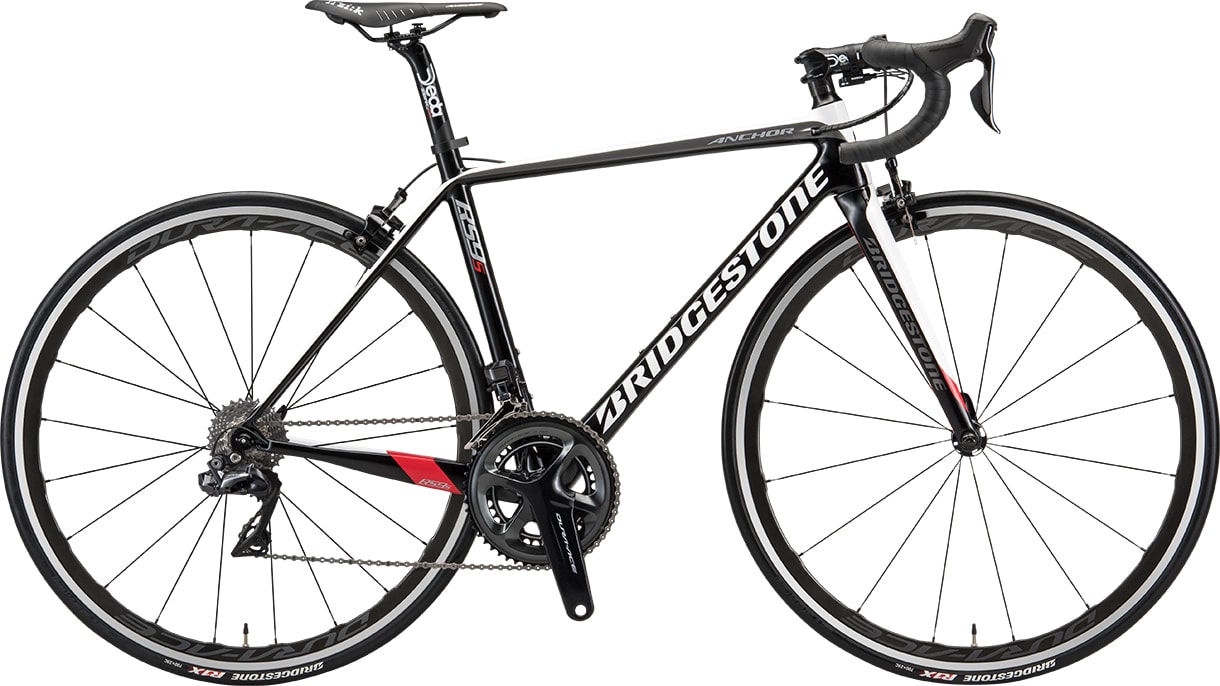
The Bridgestone Anchor RS9s, IRL
Aero Performance
The Bridgestone Anchor RS9s turns in the same flat test time as several existing frames, including (and this is important for later) the Specialized Tarmac Pro and Cannondale EVO.
Rated at just two stars for aero performance, we didn’t expect this frame to blow off the doors in our flat test. It turned in a time that places it right in the middle of the aero performance percentile rankings, along with 9 other frames which turned in the same time.
The Anchor RS9s turned in a time of 51:33 on our test course (two laps of Tempus Fugit). By comparison, the fastest frame in game (Specialized Venge S-Works) turned in a time of 51:18. (Both of these test times were done with Zwift’s stock wheelset, the 32mm carbon).
Climb Performance
The Bridgestone Anchor RS9s is rated at 4 stars for weight, so we were excited to test and see how it stacked up against the best climbers in game.
This frame comes from Bridgestone’s “Anchor” line (it’s written on the top tube), which feels sort of like naming an aero bike “the sail”. But as writers, we can appreciate a little irony.
Here’s the big news: the Anchor RS9s is a super-nimble climber, turning in the same time on our Alpe tests as the best climbing frames in game (the Specialized Tarmac Pro and Cannondale EVO). That’s right… we’ve got a three-way tie in the best climbing frames category.
The Bridgestone Anchor RS9s turned in an Alpe du Zwift time of 48:58. By comparison, the standard Zwift aero frame turns in a time of 49:31. (Both of these test times were done with Zwift’s stock wheelset, the 32mm carbon).
Star Rating Madness?
Posts like these always bring out the commenters lamenting how Zwift’s simple 4-star rating system doesn’t work. And they have a point: there are two frames in the Drop Shop rated at 4 stars for weight, but 3 for aero – and neither of these frames performs better on our Alpe climbing tests than the three leaders (Specialized Tarmac Pro, Cannondale EVO, and Bridgestone Anchor RS9s).
It’s not that the system is broken or inaccurate – it’s simply that the 4-star ratings aren’t granular enough to tell us precisely how the frames will really perform.
Conclusions
As a result of this frame’s top-notch climbing, we’ve updated the following posts to include the Bridgestone Anchor RS9s:
Unfortunately for Bridgestone, the frame is more expensive and level locked higher than the Specialized Tarmac Pro and Cannondale EVO – so there’s no compelling reason to pick it up, unless you’re a Bridgestone bike fan, or want to ride something others aren’t. Still, it’s always fun to get a new top performer in game!
Questions or Comments?
Share below!
Important note: this post contains speed test results for Zwift frames or wheels. These results may change over time, and a bike's performance relative to others may also change. We don't always revise posts when performance rankings change, but we do keep current, master versions of our speed test results which are always available. See the frame charts, wheel charts, and Tron vs Top Performers for current performance data.