Rhino Racing Team Safari Racing Series begins February 25
The Rhino Team Safari, now in its third season, has shaken up the Zwift world by introducing a new categorization system. Teams can consist of riders from different Zwift categories and, instead of categorizing single riders, the whole team is categorized and placed into a division based on its roster power.
The Rhino Team Safari focuses massively on teamwork and has developed the hugely popular ‘Team Points Hunt’. Featuring twice for the first time this season, the Team Points Hunt requires a tactical plan and the ability to change team focus during the race. Only the second and fourth-placed riders in each team will score finishing points and only the fastest rider per team will score FTS points. Also for the first time this season, the Safari will be using the new Pack Dynamics 4, which is at the cutting edge of Zwift research to closer mimic real group dynamics.
The new season runs every Saturday from February 25 to April 1 at 10am EDT/EST (3/4pm UTC).
Rhino Team Safari: All You Need to Know
Team categorization: teams can consist of riders from different ZP categories
Rosters can consist of up to 10 riders; 6 riders can race each stage
Teams are placed into divisions based on their entire roster power
The Team Points Hunt will feature twice, with only second and fourth-placed riders scoring FIN points
ITT and TTT both feature primes
More riders contribute to points; cascading FTS/FAL points throughout the entire field
Winner Doesn’t Take All
Whereas professional racing is all about winning (or at least getting a podium), Zwift community racing is about fitness, fun, competition, and camaraderie. Thus, there is no need for winner-takes-all systems. As a result, all riders in finishing and prime positions will contribute equally to the team result. Primes points go from first to last; race wins, podiums or top ten results do not give over proportional points.
It’s Not Just About the Racing
The Rhino Team Safari has built up a fantastic Discord community with over 270 members. This is the place to chat and have banter with your rivals, along with the best memes and gifs (family-friendly).
Series Schedule
Stage 1 (Feb 25) Figure 8 Reverse – TTT with Primes 10am EST/3pm UTC
Search for the Best CPU and GPU Combination for Zwift
Devoted Zwifters understand that better graphics make the game more engaging and lifelike. However, figuring out the best combination of CPU and GPU for your system can be difficult and time-consuming, given the many options available.
This feature is designed to help you quickly and easily find the ideal combination of CPU and GPU for your needs. Whether you’re building your own PC or buying a pre-built system, the search function will save you time and effort.
This is particularly useful right now because although the prices of graphics cards went up due to high demand for mining crypto and supply chain issues resulting from COVID, prices are now mostly back to normal levels, and supply is expanding. As serious gamers upgrade their systems, there are also great deals to be had on used computer parts and graphics cards from previous generations.
Last but not least, 2023 is a great time to look at GPU options for Zwift again because AMD finally improved their OpenGL drivers, Intel released a line of graphics cards, and Apple Silicon has (almost) done away with the need for a graphics card altogether.
How It Works
Just type the CPU model code and GPU model code into the search box to find out how well a certain CPU and GPU work together:
The search function draws from a database of real user rides from 2022 and later to rank the results based on the average frames per second (FPS) and the crowding factor. Crowding is important because when it’s busy around you, the CPU has to do more work to figure out the physics, which makes the GPU wait for instructions. This is what people mean when they say the CPU is a bottleneck or that Zwift is often a ‘CPU bound’ app. The results also show details for world, profile, resolution, game client version and date.
It’s important to remember the key performance indicators we’re looking at are:
whether or not it can consistently run at 60 FPS, and
how often does it dip below 60 FPS
For the first, we look at Average, and for the second, we look at P1. P1 is the 1st percentile, which means that 1% of the time, the low values were equal to or lower than this number. A P1 of 60 FPS or more means that the frame rate never went below that. That’s perfect.
Max and averages of more than 60 FPS are not always better. In fact, very high values are usually a sign that the computer is overkill for Zwift and that the user has wasted a lot of money. Also, many users keep vertical sync turned on, which typically caps the FPS at 60, whether they know it or not. This is why there are so many results at 60,60,60, which is good.
It’s important to know that Zwift uses only one core of the CPU to do most of its number crunching. This means that you don’t have to buy a pre-built gaming PC with many CPU cores. Instead, you can easily get by with a cheaper Core i3 CPU from the 12th generation or higher. But many pre-built computers don’t have a Core i3, so the options are to either spend too much or build your own with parts better suited to Zwift.
Build Your Own PC
The results show that putting together your own PC from parts is still the way to go. Dave Higgins’ post covers this topic in great detail, and my research confirms that a 12th generation Intel Core i3 12100F and an Nvidia GTX 1650 is a great combination for getting 60 FPS at 1440 resolution and Ultra profile for all worlds (except Makuri Islands), which many builders agree is the optimal balance of quality, performance, and cost.
Why not use 4K? I think it’s overrated, and the benefits don’t make up for the extra cost. 4K means that there are 4 times as many pixels as in 1080 and 2.25 times as many as in 1440. As you might imagine, that needs a GPU that costs at least twice as much, as well as a 4K monitor or TV. I’ve never been tempted. I use a Core i5 4690K, GTX 970 at 1440, and a cheap 1080 TV. Since we’re talking about total costs, I’d recommend that everyone get the best trainer they can afford before they upgrade their graphics.
4K has 4 times as many pixels as 1080 and 2.25 times the number of pixels as 1440:
1920 x 1080 = 2,073,600 pixels
2560 x 1440 = 3,686,400 pixels –> sweet spot
3840 x 2160 = 8,294,400 pixels (4 x 2,073,600)
If building your own PC isn’t for you, don’t worry. The search function can also help you check how a pre-built machine will perform, so you don’t have to spend hours researching and comparing irrelevant benchmarks (no other game has the same performance characteristics as Zwift). When you see a PC, laptop, or Mac that fits your needs, look carefully at the CPU and GPU model numbers and type them into the search to see what performance you can expect. Follow the Amazon links to check current price (USA and UK). I make money from these links, and that’s helped keep Zwiftalizer up and running for over seven years.
Some Examples
Nvidia Cards Remain The Best Choice
Since its release in 2016, Zwiftalizer has consistently shown that Nvidia graphics cards are the best choice for Zwift on PC. This is because Zwift still uses the OpenGL graphics library on Windows, and Nvidia has the best OpenGL drivers.
Recent tests show that AMD Radeon cards on Windows now perform 15%-20% better than they did in previous years. This is because AMD made optimizations to OpenGL drivers on Windows. This is great news for everyone with an AMD Radeon card. Make sure you have at least version 22.11.2 of the Radeon Adrenaline driver.
In a separate improvement, Macs with AMD Radeon GPUs also got a performance boost. Zwift completed the switch from OpenGL graphics APIs to Metal graphics APIs on MacOS sometime toward the end of 2022. I recommend the Sapphire Pulse Radeon RX 580 8GB because there are a lot of them on the used market and they work in everything from 2009 Mac Pro Towers, in eGPUs enclosures on Intel Macs, to Windows PCs and Hackintoshes, and there’s even a Zwifter using one on Linux with Windows as a virtual machine.
Intel has finally released a line of discrete graphics cards. Search results show the ARC A770 performs well. We can also see when the ARC A770 was given the Ultra profile by Zwift developers (PC Client version 1.32, early December 2022).
It’s not clear how and when the people who work on Zwift give profiles to GPU models. Even years after being released, some new models still don’t have Ultra.
While I still advise getting an Nvidia card it’s good to know there is an alternative if Nvidia supplies run short or prices rise again.
I wouldn’t suggest this option because integrated Intel and AMD Radeon graphics are still not very good. If you want something small, you should get an Apple TV. Some people still want to run Windows programs on the smallest PC they can get, so the results of the Radeon APU Vega 11 could be interesting to them. The Radeon NUC line works pretty well now and there are some very potent Intel+Nvidia options, but both are ridiculously expensive, so I’d advise an M1 Mac Mini over a NUC if a small box is really important to you.
Since Zwift switched to the Metal graphics API around the end of 2022, there has been about an 18% increase in FPS for machines with Apple Silicon, like M1, M2, and so on. With 7 GPU cores, the base-level M1 chip from 2020 can now maintain 60 FPS at 1440 resolution with the High profile in every world except Makuri Islands. This is impressive for a System-on-a-Chip (SOC) design that uses very little power and has no fans. However, to put things in perspective, the performance is still only the same as a low-end graphics card from 2015, the Nvidia GTX 950 GPU.
Now that all iOS, AppleTV, and MacOS devices run on Metal, graphics improvements are likely to come to all of them in 2023. In November 2022, Jon Mayfield posted the following comment on Reddit (see thread):
Thus far iOS and AppleTV devices have all been switched, as well as almost all macbooks – except the M1/M2! Seems like Apple’s drivers were slightly different on M1/M2. So yes, changes are coming (probably within 30 days!) for M1/M2s to start running on the Metal API (vs OpenGL), but no, visual changes won’t be apparent until next year sometime.
Also, Jon said on February 13, 2023, that more than half of Zwift users use Apple devices (see thread).
We’ve now moved all our apple devices to Metal (more than 50% of our users!), and are now measuring how feasible it is to ship Vulcan on windows+android. Turns out those older laptops are still lacking a bit of support here, but the numbers are diminishing to the point it looks reasonable to go Vulcan (backup plan is DX on windows, GLES on Android).
There is potential to improve this further if Zwift makes a binary specifically for Apple M1/M2 Silicon. This does not appear to be a priority for Zwift though. For example, it’s been two years and there are still discrepancies with the M1/M2 profiles. The M1 has High profile without rider shadows, and the M2 has Medium profile with rider shadows and appears to be capped at 30 FPS.
The main reason Zwift doesn’t have a native binary for M1/M2 yet is that it depends on software libraries from a third party that would need to be rebuilt. In March 2022, Jon said the following (see thread):
As for a Mac M1 native version of Zwift, that isn’t in the works at the moment [March 2022]. Our code would compile easily on it, but there are 3rd party libs that would need to be rebuilt that we aren’t in control of. Maybe next year? Fortunately the translation layer Apple made seems pretty good so it’s not the end of the world. That’ll be another mac m1 specific speed boost we can look forward to.
At $549 USD for a renewed M1 Mac Mini, I wouldn’t really recommend it over an AppleTV, just for Zwift, because the graphics quality isn’t three times better. You should still keep an eye on it if you want a Mac for other reasons or you find a used one at a good price.
I don’t understand any of this. What laptop should I buy?
A Core i5 11300H and Nvidia GeForce RTX 3050 laptop costs between $700 and $800 USD right now. If portability is important to you, this is a reasonable choice. But be aware that in a few years, you may want more performance and a laptop typically can’t be meaningfully upgraded.
I would also like to point out that laptop parts aren’t as strong as desktop parts with the same product codes. This is a marketing trick. Compared to the desktop 30xx GPU line, the mobile/laptop RTX 3050 is really very weak. This is because the parts in a laptop use less power so heat doesn’t build up in its small case and burn your house to the ground.
AppleTV logs are inaccessible, however many logs from iPads and iPhones with the same CPU have been uploaded. This shows that the performance of AppleTV is the worst that Zwift is capable of in terms of the graphics experience. It is consistent though, and it’s cheap, but it’s still an iPhone chip in a box and capped at 30 FPS.
People have asked me if I think the latest AppleTV with the A15 Bionic processor will do real 4K. The short answer is no. It only has 4GB of RAM which is not enough to use the high-resolution textures that are needed for the scene to look sharp at 4K, and they are capped at 30 FPS due to the power and heat constraints of the small box, which makes the scene look choppy at 4K.
Android Tablet?
Um, yeah. Pass. It’s still 720 basic, but if that’s your jam – Mali G78 (Kirin 9000, Exynos 2100) beats Adreno 660 (Snapdragon 888)
In summary, the search feature on Zwiftalizer 2.0 is a useful tool for all Zwifters who want to find the best graphics experience without breaking the bank. Whether you’re building your own PC or buying a pre-built system, the search function will help you find the perfect combination of CPU and GPU.
Thanks to Dave Higgins for checking my facts and fixing my weird half-Welsh, half-American grammar. Also, a huge thank you to everyone who has bought me a coffee, sent me money through PayPal, or become a Patreon. Because of you, everyone can still use Zwiftalizer for free.
P.S. Zwiftalizer log results will include Scotland when Zwift includes Wales. Come on, two England worlds? Do Wales. We have hills, dragons and over 400 castles.
This week’s notable events include route badges, short races, and fun group rides.
Note: we didn’t include it below, since it’s not an “open” event, but the UCI Esports Worlds happens this Saturday at 6pm UTC (1pm ET/10am PT). Don’t miss it! Learn more >
Currently, the Gran Fondo -Endurance Hisp event has the second most sign-ups in all Zwift events this weekend! This event is part of a series of six events occurring from February to June. The goal of this event series is to help riders improve their endurance and really make sure that they know how to properly fuel, hydrate, and pace themselves in an event like this. There will likely be hundreds of riders in this event, so it will be pretty easy to find a group to ride with. Like most fondos, this event is openly paced, so riders are not obligated to ride at any specific pace.
Since this is a fondo, the event is going to be longer: just over 100km, taking place over three laps of the Country to Coastal course in the Makuri Islands.
Team Velos is offering a nice opportunity for riders to get tougher route badges through their weekly Route Bagger Challenge event series, with rest breaks scattered throughout the ride to make sure everyone can finish the event together. Leaders and sweepers will be present to ensure that everyone feels supported, and the leader will be riding at a steady 1.9-2.1 w/kg.
This week, riders will be trying to get the Watopia Pretzel badge. Already have the badge? No problem! Just join for the fun and banter!
It can be pretty tough to find good events on Sunday afternoons for those in the western hemisphere. This event is one of the most popular rides this weekend, and it is in the afternoon for riders in the west – nice! This Ride Scotland event p/b The Herd is a great group ride for those who want to finish the weekend with a nice social ride. In addition to that, riders get to unlock an all-new route badge in the Scotland world.
For this ride, riders will be riding the new Loch Loop course in Scotland. It is not clear what the ride is paced at, but the event listing does advertise an open pace.
Note: if this particular time doesn’t work for you, there are many Ride Scotland events this weekend. Loch Loop and The Muckle Yin rides don’t begin until Sunday afternoon Pacific time, though!
🥇Zwift TT Club Racing Series / Scotland / Week One
Looking for a short, fast, and fun race? This week, the Zwift TT Club Racing Series takes place over a super short course. This will make things even more exciting in the race because it really will come down to the very last second of the race. Like most time trials on Zwift, it will use the TT module and will not have drafting enabled. In this race, there will be the traditional four categories with the addition of a women-only category.
This race takes place on the Glasgow Crit Circuit in Scotland, a route that is being used for the 2023 UCI eSports World Championships this weekend.
The Galaxy Cycling Club hosts a 75km (46 miles) or 75-minute group ride every week, and this week’s it’s the latter. The group ride is a category C event paced at 2.3-2.7 w/kg. Leaders and sweepers will be present in this ride, so if you happen to find yourself off the back, give the sweepers a shout as quickly as possible for the best chance of catching back up the peloton.
This ride takes place on the flat and fast Triple Flat Loops course in Watopia. Riders will likely complete around 1.5 laps of this course over the 75-minute event. This is a great way to start the weekend off strong!
The First Rule of MyWhoosh Club (Nowhere Fast Episode 47)
The first rule of MyWhoosh Club is … don’t talk about MyWhoosh Club. The second rule of MyWhoosh Club is … well, you know the drill.
MyWhoosh is a Zwift alternative that is quietly gaining attention thanks to its races with huge payouts. Next up is a seven-race series with a payout of $1 million dollars. But we don’t talk about that.
This weekend also features the 2023 UCI Zwift e-racing World Championships for, like, a fake jersey and €8,000. Some podcasts have insights and analysis of who’s going to win the new three-race format, but you know that isn’t Nowhere Fast. We are probably funnier though.
Finally, RGT has dipped its toe into the world of steering. Nowhere Fast Tech Correspondent Mike Swart gave it a try and reports back on how it compares to his trusty Sterzo.
If you’re looking for a vintage Nowhere Fast that’s “funny,” “entertaining,” and “not very rigorous,” this is definitely one worth cranking during your next trainer ride.
About the Podcast
Nowhere Fast is a member of the Wide Angle Podium network. To support this podcast and help cover the money we are not winning by racing on MyWhoosh, head to wideanglepodium.com to become a member of the network and support what we do.
Zwift has just published a series of Community Support events to help Zwifters “ride for unity and support for those devastated by the earthquakes in Turkey, Syria, and surrounding areas.”
The rides serve two purposes. First, they are a show of unity/solidarity by participants for those affected by the earthquakes. Secondly, the rides encourage participants to donate to organizations on the ground providing much-needed support.
Zwift chose the following three organizations for this series of events:
Global Red Cross and Red Crescent Networks
The American Red Cross, a global organization, deployed Red Cross and Red Crescent responders on the ground to provide blood products, millions of hot meals, emergency temporary shelter, medical care, emergency aid supplies, and mental and emotional support to people in need. Many people have evacuated and are also in need of emergency supplies including hygiene items and blankets. Donate Here
Doctors Without Borders/ Médecins Sans Frontières (MSF)
MSF is an international, independent organization that provides medical assistance to people affected by disasters such as the Syria-Turkey earthquake. On the ground, they are treating patients in their supported hospitals, and their teams have donated emergency medical kits to other facilities in the region. Donate Here
Syrian American Medical Society (SAMS)
SAMS is a global medical relief organization that works on the front lines of crisis relief to save lives. They are providing urgent medical care to the injured at Bab Al Hawa hospital among others. Donate Here
Chasing Tour Announced: A Year-Long Zwift Racing Calendar
The Chasing Tour (chasingtour.com) has just been announced, and it’s nothing we’ve seen before on Zwift! Built from the model of last year’s well-received “Chasing Yellow” series, this is a comprehensive, year-long Zwift racing calendar following the pro peloton tour.
Riders can participate in 90 days of racing that mirror what real-life pros will race on those same days: grand tours, stage races, seasonal series, and single-day races.
Everything kicks off Saturday, March 4th with the single-day Chasing Bianche (52.4km/529m).
Race Your Way
Riders can participate in events whenever they want, riding as many or as few events as they wish. You may want to only try out a single-day race or one of the longer tours, and that’s perfectly fine. Of course, if you’re competing for the overall GC, you’ll want to participate in as many races as possible!
There are 4 time slots available for each race so riders from around the globe can complete at a time that works best for their schedule.
Competitions
Chasing Tour 2023 GC
The individual rider GC is calculated off a rider’s point accumulation across the season.
The team GC is calculated using the point accumulation from a team’s top 3 riders from each race event and GC competition.
Race Events
There are 90 individual event races during the 2023 circuit.
Riders are awarded points for each individual race event they participate in and complete.
Many of the individual event races are organized into GC competitions.
GC | Stage Race
Stage races evaluate a rider’s combined time over the course of multiple stages (race events).
If a rider misses a stage they are given the last finishing time for the stage.
Riders must complete the minimum required amount of stages within a GC competition to qualify for GC competition points. This is generally at least 2/3 of the stages.
Don’t worry if you miss a stage, riders still earn points from the individual race events they complete within a stage race.
GC | Seasonal Series
Seasonal event series evaluate a rider’s point accumulation across a defined set of races.
There is no minimum required race count with the competition to earn GC placement and points.
Scoring
You earn points in two ways, from individual race events and general classification (GC) competitions. The more you ride, the more you earn.
Race Event Scoring
Points are awarded for each category and event time zone
Riders can complete the race in any time zone; its not required to always race in the same time zone
Only the first completed event for a specific race counts
Race event points determined by the race tier
GC Competition Scoring
GC standing are calculated globally, not for each time zone
Points awarded for each category
Riders must complete the minimum number of GC competition events to receive GC points
Categorization is different than typical Zwift races, since the Chasing Tour is using the zwiftracing.app ranking system to provide categorization. Riders should sign up for the category that corresponds to their zwiftracing.app rank:
A: Platinum, Challenge, Champion, Grand Champion
B: Gold
C: Silver
D: Bronze
All categories will start at the same time and be visible to each other during the race. Categories are used at signup so riders can see their competition.
If you need help determining your category, see the CATEGORIES section of the Rules & Scoring page.
Prizes
Tour sponsor The Breakaway will provide grand prizes for each main tour (Chasing Pink, Chasing Yellow, Chasing Femmes, and Chasing Red).
Additionally, each 8-week or all-time PR earned on The Breakaway during each tour will earn you a virtual ticket for a raffle at the end of that tour. The more PR’s you get, the more chances to win!
For each tour, three finishers will be selected at random to receive:
Love, Loss, and Tempus Fugit: John Walkley’s Epic Attempt to Ride 4025km In 7 days
From 28 December to 03 January 2023, John Walkley was a man on a mission. And, frankly, it was a mission only a madman would accept: ride 4025 virtual kilometres in 7 days to beat the current record on ZwiftPower. To put the sheer size of that task into perspective, at 40kph that would mean riding for around 14.5 hours… every day… for 7 days!
John received a huge amount of support from the Zwift community at large, and also from the Team Vegan Zwift Community, where he is now firmly established like some sort of plant-powered demi-god.
You may have already read or heard about John’s effort at the time here at Zwift Insider but recently I (virtually) sat down with John to follow up on his attempt and talk about the soaring highs and the deep deep lows of his incredible effort.
Hi John! It’s great to see you! We’re just over a month out from the challenge. I have to ask: how are you feeling now?
Hey Chris! Stronger than ever on the bike. In fact, I’ve just posted a 10-minute and 20-minute PB yesterday! My fingers and toes still tingle a little and my tendons feel the strain if I push too hard, but otherwise fully recovered.
There is literally no stopping you! So, the big question: how far did you manage to go in total?
I managed a single Zwift activity of 2,829km and a total distance of 3,334km over 7 days.
That is absolutely mind-boggling! Did you have a plan going in as to how you were going to tackle that?
I had initially planned to ride with Pace Partners, but once the ride started I had a strong sense of wanting to ride solo. I was hoping some friends may join in from time to time and I’m glad it happened that way: so many people joined in and the challenge became a community effort. I couldn’t succeed on my own, but I had faith it was possible with support from those around me.
Do I dare ask how many calories you burned?
For the ride itself, 65-70,000kcal. The afterburn was intense though, so I think it must have been a lot higher overall: more like 100,000. I finished the ride at 76kg (normal weight 77kg) but dropped to 73kg during the next 10 days of recovery.
Yikes, that’s quite the shift in weight! I hope you are making up for it now with plenty of vegan treats.
Did someone say vegan cake!?! Yes, I’m a big believer in training with numbers and eating to feel. I don’t count calories, but just ensure a varied and wholesome diet. I’m still eating three breakfasts each morning to help ensure a strong start to the day for training, work and family. I’ve acquired a new love for porridge and have been experimenting with recipes shared by friends. It’s bizarre, because I’ve always hated porridge. What is also strange is that I can no longer stand sugar in my coffee! I guess I’m just responding to what my body is asking for. Lots of fresh fruits and carbs like potatoes, rice and oats. For protein, I’ve been reaching for nut butters (peanut, almond and hazelnut) as well as plenty of beans, lentils, tempeh and tofu!
What is reassuring is that my blood results showed good levels of all nutrients after my challenge had ended, despite the demands on my body.
So that’s where vegans get their protein from…
One of the things that struck me, watching you on Twitch and in-game, was just how positive you were outwardly. Would it be fair to assume that there were some bumps behind the scenes?
Yes, many! I almost quit on the very first day. I’d had a great day of riding, a little too hot perhaps, but I felt good. I was taking a nap and got up to go to the bathroom. The next thing I remember is being brought around by my wife, Johanna, having passed out and fallen through the shower door. My back was badly scraped and bruised and I was pretty shaken up. After speaking with my coach, we put it down to low blood sugar and decided to carry on. I didn’t tell anyone else as I didn’t want people to worry!
The next big challenge came when both of my Achilles’ tendons flared up. Johanna and I taped my legs as best as we could (ahem, badly) and I carried on. The next day was even worse, I couldn’t stand and was having to crawl about the house. I’d planned to restart at 5am, but both legs swelled and bruised badly. This was the second time I thought it was all over. Johanna told me to stop. I cried. I felt that it had become bigger than me and I had to find a way to carry on. We spent the next 7 hours massaging, icing, elevating until the swelling came down. We also reached out to the local community and were saved by a physio who swung by to properly tape and massage my legs. She was our hero. I got back on at midday and rode until the early hours of the next morning to make up time and we were back on track.
From then on, every time I got on the bike, I had to fight through the pain to warm up, find my quiet space, and get into a rhythm. This was the hardest part of the challenge.
There were other smaller issues that cropped up too. Arm friction burns from the pads. A sore mouth from constant eating and drinking (resolved with pears, cucumber and zucchini). At one point, I had to wrap both wrists with boxing bandages because I couldn’t hold myself up!
I’m sure there’s a joke there about being ‘fighting fit’! How did you deal with all that pain? You say you went to your quiet place?
Yes, meditation was key to blocking out the pain and clearing the mind. That was something I’d never done before, but learned as the week progressed. Once my mind was clear, and the pain put to one side, I was able to enjoy being in the moment: the cheeky in-game message that made me laugh; the ‘package dropped’ search for me by the team when we’re all wearing the same kit; trying to eat noodles whilst noodling; people messing about firing up their socks! The joy of the small moments and feeling the big sense of togetherness with the team kept me going. Most of my time I spent not thinking at all, but just feeling and being present.
When you don’t think and just feel the small moments of joy, it is hard not to be positive.
I think a lot of people would have thrown in the towel pretty quickly, especially given the issues you faced on day 1. What was it that got you up again each day to carry on?
The thing that got me started was the idea that I wanted to show my son, Edison, that no matter how big the challenge or how long the odds, you need to keep going. We never know how deep we can dig unless we try.
Edison has been extremely ill since February 2022 and for him, he doesn’t have a choice: he has to battle every day. I chose an almost impossible challenge of endurance to show that we can keep going against the odds. I felt it was important to show him he was not alone, that he wasn’t the only one who had to push.
Once I started hearing from other people who could relate to our struggle (with loved ones lost or facing their own battles), I was doing it for them, also.
I also had a constant influx of messages from people saying they were inspired to attempt their own challenges, whether it was their first 50k or 500k. Every message was like a turbo boost for the soul.
That’s incredibly powerful stuff, and I know it had a big impact on everyone that heard about your challenge and the reasons behind it.
Coming back to the challenge itself, your aim was to ride 575km per day. That doesn’t sound like it leaves a lot of time for sleep or, well, much of anything else! Can you tell us about your schedule for those days?
Sleeping was a real issue. I wanted to sleep but found it almost impossible. Most of my off-bike time was spent on self-care and injury treatment. During the night, I struggled to get more than a few hours of broken sleep.
For most of the week, I was riding in blocks of 3-5 hours, stopping for self-care and bib changes and sometimes a power nap. I’d spend anything from 20 minutes to 1 hour to rest, then just jump back on. As the week progressed and my injury threw me off-plan, I just rode by feel and stopped for small breaks here and there. I had no sense of time; I was either on the bike or getting ready to get back on for another session, continually.
Once on the bike, the ritual became:
Overcoming the pain and getting into zone
Warming up
Having fun and being on fire with friends
Step 1 was the hardest part, and as the week progressed, could take anything from 10 minutes to an hour or two. By the end of the week, I had no idea what was going on and was hallucinating and in a world of my own. Unbeknownst to me, Johanna and my coach, Ashley, planned to stop my ride on the final day, while I was on a high, as they could see I was at breaking point. They communicated with the team and invited everyone for that final ride. We ended up with a sea of green Vegan jerseys. To me it was like one big rock concert, I was on stage riding my bike and all of my friends and the Zwifting community were jumping up and down screaming in the mosh pit. It was surreal!
Sounds almost like a religious experience! I have to say, when I was riding with you for the few hours I could during the challenge (just about hanging on!), I felt that the ride turned into something more than just breaking a record. Did you get a similar feeling?
Absolutely! In my mind, it became everyone’s challenge.
The number of individuals who came out to support and were clearly pushing and giving so much of themselves, in effort, in time, in words, it created a sense of palpable humanity to a degree that I had never witnessed before. Zwift was alive with a sense of community, togetherness, where we all suddenly believed anything was possible. If I could try the impossible, with no fear of failure, well then anyone could attempt their own version of the impossible.
One person’s hill is another person’s mountain; we should celebrate all efforts in equal measure. I feel like this challenge rekindled people’s innate sense of wanting to help each other to believe in themselves and be there for one another.
Speaking of climbing mountains, sometimes I find the climb down can be just as daunting as the ascent. Did you have a plan for how you were going to recover after such a monster ride?
Oh no, I didn’t. I just did as I was told. Johanna took care of me! She was in touch with my coach, Ashley, and between them they made sure I was on the right track. I also made sure to check in with my GP for blood tests and health screenings to be certain all was ok.
The primary focus during the first two days was about mental recovery and complete rest.
Digging deep for so long (mostly meditating through the pain of injury) took its toll. I spent many hours chatting with Team Vegan friends as a support network to help with this part of the recovery process. They’ve been super supportive.
My physical recovery mostly centred on eating healthily and frequently to minimise weight loss. I managed to maintain most of my muscle, but did drop 3kg in weight, to 73kg, during the 10 days of afterburn post-event! I’m now at a new steady state of 74kg and feeling good.
Training resumed on day 3 of recovery. It was important to maintain a level of fatigue to ease back to a normal training load, rather than having a complete stop. My tendons were still very sore, so I just took things steady and eased up the pace gradually. I also introduced exercises to rebuild tendon strength and post-ride ankle rotations and tendon massage to improve mobility.
Now, one thing we haven’t touched on is that this was an indoor virtual challenge on Zwift. I think it’s fair to say things didn’t quite go to plan with the technology?
Yes, I experienced a dropout in my Zwift game midweek, which thankfully recovered to the same ride. However, a second drop at 2,829km was a real gut-wrencher. When I loaded back up, it was a new ride at 0kms. I remember just staring at the screen in disbelief. It was the first ride of that day and I knew that the record attempt was over. But, as I mentioned before, this had become more than just the record attempt. It wasn’t about me anymore. I turned to the camera and just said that it was over, but let’s keep going. Let’s see what we can do.
It was always going to be a risk for such a long ride, especially since I was keeping the system running 24 hours a day for 7 days. Zwift have been supportive in looking for a way to recover a FIT file for the ride, so I’m hopeful I’ll be able to upload to Strava soon. (Because if it’s not on Strava it didn’t happen, right?)
Looking back on those 7 days, what are the things that you are going to take onwards with you?
I now know what pain feels like. I now realise that I’d never actually pushed myself anywhere near my limits before. My body is capable of more, and I will now strive for higher performance.
I have found my voice. It may seem cliché, but I went on a journey that week, laying myself open and vulnerable so publicly, yet feeling so supported, that it has given me a new sense of confidence to just be myself. And if it helps others in doing so, then all the better.
Results don’t matter as much as the journey. I may not have gotten the big record, but I ended up with so much more than I could have imagined.
I already felt like I was a part of Team Vegan, but now I feel like I truly belong and have built some really valuable friendships. I will never forget the support I have been given. It was truly amazing!
So far, you’ve raised £7,105 for Royal Stoke Children’s Hospital. That in itself is a truly incredible achievement. Can people still donate?
Yes, it’s amazing what the community has managed to raise! You can still donate at www.justgiving.com/crowdfunding/john-Walkley as I’ve not yet closed the page down. I’m liaising with the hospital to purchase the equipment for the play team and will post some photos as soon as it’s all secured.
To anyone thinking of a similar challenge, do you have any words of wisdom?
Training to eat is as important as training your legs. I spent three months learning to eat hourly in readiness for this event. Food will get you through it!
Make a plan, but be prepared to wing it. At the start of this challenge, I made a list for my coach and family of the important things to check and look out for, such as food and hydration. More importantly, though, I was honest with them beforehand about what lies I would tell once I got past my breaking point, what to ignore, and what to actually listen to.
Support is key. Everything is easier with friends. Don’t be afraid to ask. This exercise has taught me that most people’s starting point is that they want others to succeed and will go out of their way to support.
Finally, do you have a next challenge in mind?
Yes. I am now focussed on three challenges:
Achieve a 5W/kg FTP (current PB is 4.6)
See how close I can get to 400 FTP (PB is 341)
4,000km in 7 days. I will try again – watch this space!
Thanks, John! We’ll see you on the (virtual) road. Ride on!
Zwift Insider Worlds Experience: Last Weekend’s Results, This Weekend’s Races
Last weekend our popular Saturday Tiny Races were replaced by back-to-back-to-back races replicating what the pros will experience for the UCI eSports Worlds events. And we’re doing it once more this weekend!
Last weekend’s races didn’t have any major issues, but there are two time-related adjustments we’re making this weekend:
Most of the races will be an hour earlier than last week, matching up with our typical Tiny Race time. This should give more folks access to try out the races.
Race 3 now begins 5 minutes later, to give D riders more time to finish race 2. (Last weekend some D riders weren’t able to finish race 2 in time, and thus missed race 3.)
Race Results
We won’t list the full results of all 6 zones here, but we’ll mention that it was fun to see many of the UCI Worlds starters racing these events for practice! In fact, 4 of the 6 men’s A winners are Worlds starters. On the women’s side, all the A winners were also Worlds starters.
List of 1st place finishers who are also racing worlds this Saturday:
Men
Brian Duffy Jr (USA)
Ben Ruthe (New Zealand)
Rinus Verhelle (Belgium)
Jason Osborne (Germany) – 2020 Esports Worlds champ!
Women
Mary Wilkinson (Great Britain)
Kristen Kulchinsky (USA)
Anne Nevin (Norway)
Imogen Cotter (Ireland)
Bronwyn MacGregor (New Zealand)
Looking for the full results of last weekend’s races? See them on ZwiftPower:
Worlds Experience Races are being delivered in sets of three, and the idea is that you should race all three events in sequence, much like our Tiny Races. This will take about 75 minutes to complete.
Each race uses the same single powerup type that Worlds racers will receive.
Race 1, “The Punch”, is a single lap of Rolling Highlands (14.1km long, 106m elevation). Riders will receive one burrito powerup at the Breakaway Brae banner.
30 minutes later Race 2, “The Climb”, begins: a single lap of City and the Sgurr (8.6km long, 166m elevation). This twisty, climby route will take you up to the Sgurr summit a total of three times, and two of those climbs will be on the gravel side. Riders will receive one anvil powerup early in the ride at Central Station. Use it wisely!
Lastly, Race 3, “The Podium” begins 30 minutes after Race 2. This race will be over 4 laps of Glasgow Crit Circuit (each lap is 3km long, 33m elevation). Racers will receive a burrito powerup at the Champions Sprint banner each lap, which means everyone will get 4 burritos.
At the end of the race set you will have completed three races on three separate Scotland routes, much like the world’s top eracers on February 18.
We’ve tweaked the times just a bit this weekend, moving everything back 1 hour except for the races that happen around the time the UCI Esports Worlds events will take place.
The final winners for each time slot’s set of three races will be determined by points. You earn points based on your finishing position in each of the three races, then the rider with the most points wins. Points structure can be found on the ZwiftPower results pages below:
Wahoo Race Mode News: Released for KICKR 5 + KICKR Bike v2, Disallowed for UCI Worlds
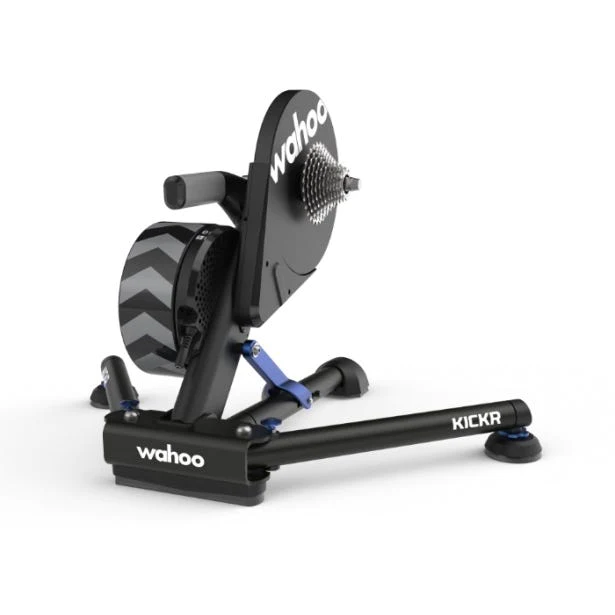
Last week Wahoo released “race mode” for the Wahoo KICKR 6 trainer – an enhanced communication mode that sends power data up to 10x per second (10Hz). This is significantly faster than the typical 1Hz typically seen on smart trainers and power meters.
Today, Wahoo released a firmware update for the Wahoo KICKR 5 trainer which enables race mode when using Direct Connect ($99USD). Race Mode on KICKR 5 was originally planned for release later this year, but Wahoo saw the feedback from KICKR 5 owners and their engineers put in late nights to make it happen quickly. Chapeau!
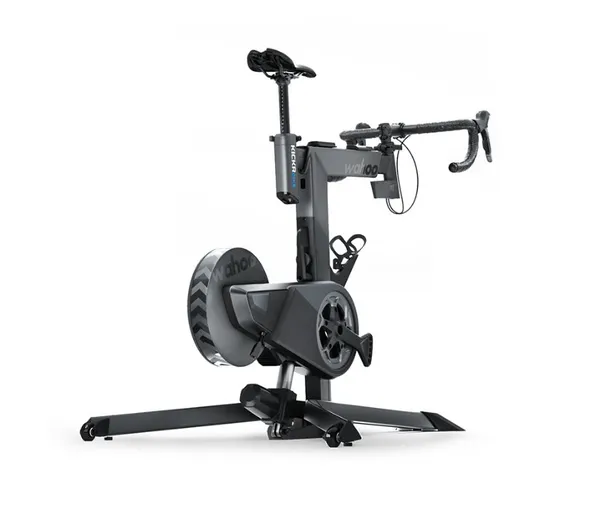
KICKR v5KICKR Bike v2
Additionally, Race Mode will soon be enabled for the KICKR Bike 2 when connected via WiFi or Direct Connect. Wahoo isn’t saying exactly when, but we’re hearing it will be in the next few weeks.
Simply put: if your Wahoo trainer/bike connects via WiFi or Direct Connect, it now supports Race Mode… or will very soon.
We heard whispers that race mode was being disallowed for the Worlds races, and have confirmed with Zwift that this in fact the case. Why is it restricted? Because race mode requires the KICKR to be connected by WiFi or Direct Connect, and not all racers’ setups use those methods for connection.
With such a short time period between race mode’s release and the Worlds events, it seemed best to disallow the feature rather than scramble to get all riders on a race mode-enabled setup. Sounds sensible to us.
Is It Advantageous?
Our favorite Aussie Lama continues to experiment with race mode… for science! Shane released this video just today, showing how in 7 test races, race mode won 6:
Why is race mode advantageous? Because it gives you the jump on competitors. When it comes to the final sprint to the line, Zwift will see your power spike sooner in race mode than if you’re running a typical 1Hz setup… and that may be just the edge you need.
Which bike is fastest on Zwift Scotland’s City and the Sgurr route?
Scotland’s City and the Sgurr is a spicy new route that’s just right for hill repeats and tough climbing races. The route takes in both sides of the Sgurr climb; the longer side (Sgurr Summit North) is 1.6km long at 3.7%, while the shorter side (Sgurr Summit South) is 1km at 3.3%.
The climbs are really the focal points of the route. Everything else is just turnarounds and descents!
What makes it really interesting, though, is that the longer climb is mostly gravel. With different types of bikes rolling at different speeds on different surfaces, City and the Sgurr’s mixed-surface design leaves riders asking: which type of bike should I use for this course?
Our Test Bikes
To answer the question, we tested the route using three different frame/wheel combos and a solo rider (75kg) holding steady wattage (300W) with no drafting. Here are the bikes, in order of their performance on a flat, paved road:
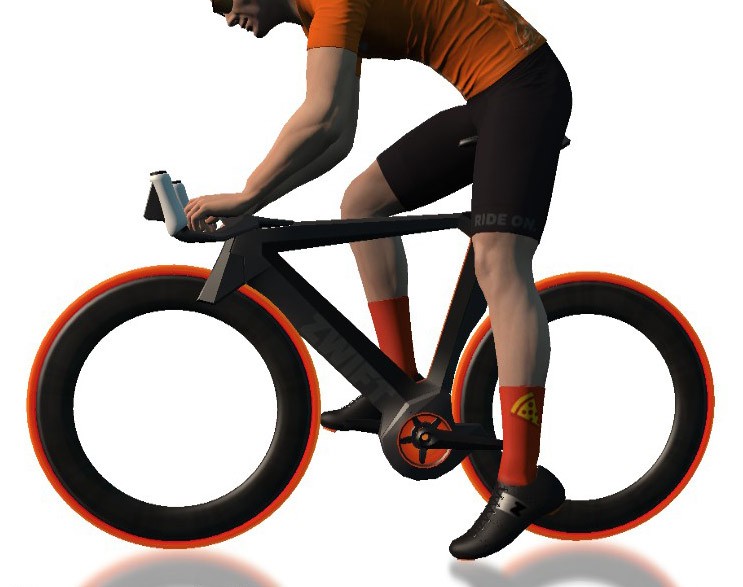
Tron Bike (Zwift Concept Z1)
Specialized Crux + CADEX wheels (gravel bike)
Scott Spark RC World Cup (mountain bike)
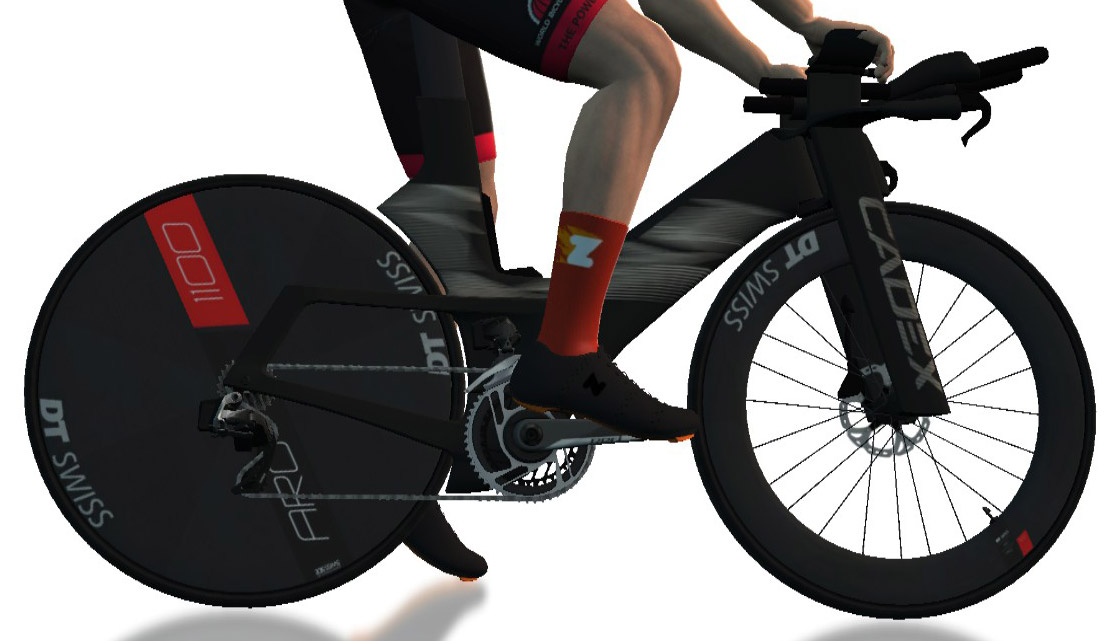
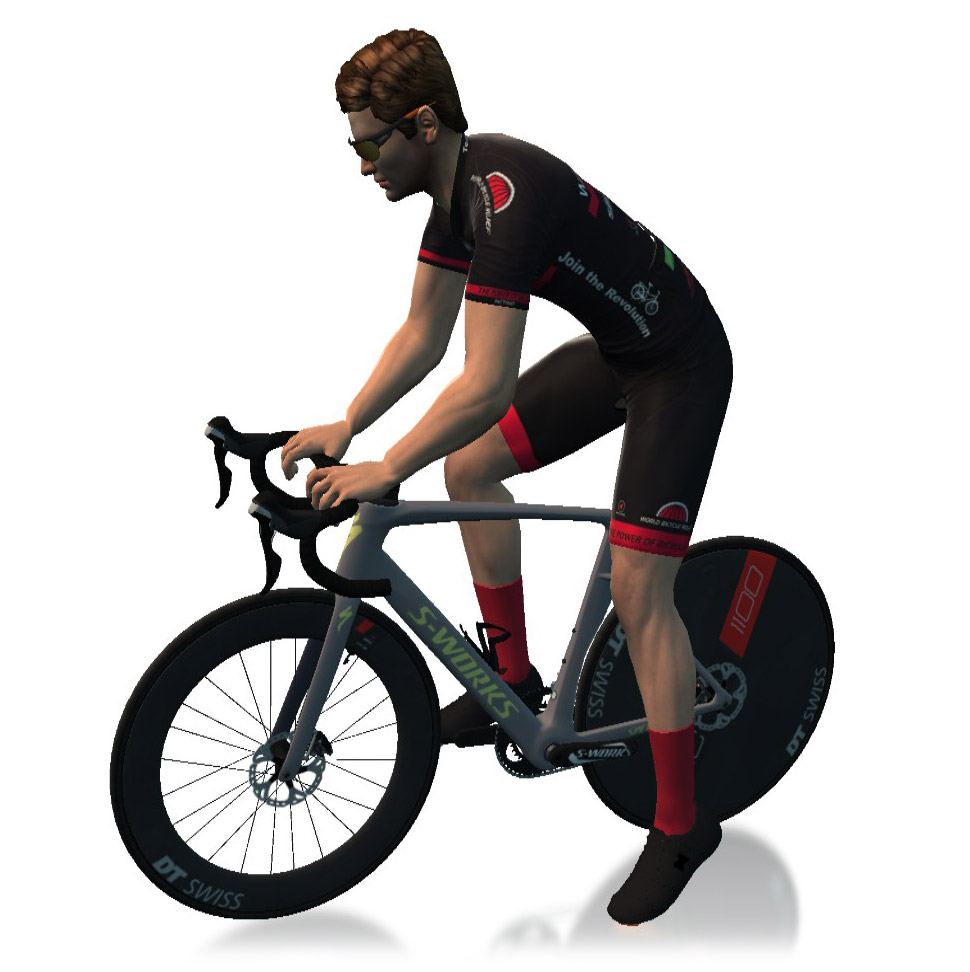
CADEX Tri + DT Swiss Disc wheelsVenge S-Works + DT Swiss Disc wheelsTronSpecialized Aethos + LightweightsSpecialized Crux + RovalsScott Spark RC World Cup
Results: Sgurr Summit North
This is the main climb on the route, so naturally we were curious how each bike would perform. Not surprisingly, the gravel bike (Crux) beat everyone else, hands-down.
Frame + Wheelset
KOM Time
Specialized Crux + Rovals
3:55.99
Scott Spark RC World Cup (MTB)
4:05.04
Tron
4:01.2
Results: Sgurr Summit South
What about the paved side of the climb? Again, the results aren’t surprising – the road bikes won, and aero won the day:
Frame + Wheelset
KOM Time
Cadex Tri + DT Swiss Disc
2:09
Specialized Venge S-Works + DT Swiss Disc
2:11
Specialized Aethos + Lightweight Meilensteins
2:12
Tron
2:12
Specialized Crux + Rovals
2:21
Scott Spark RC World Cup (MTB)
2:31
The Venge and its heavy disc wheels edging out the Tron and Aethos may be surprising, but this can be attributed to a few factors:
The climb is short, leaving already closely-matched frames without enough road to pull away from each other
The climb isn’t very steep on this side, so aero abilities still matter
Strava is only precise to the second, so the time difference could just be a rounding error
Results: Full City and Sgurr Course (Not Including Lead-In)
Now the big question: which setup is fastest over one lap of the course?
Frame + Wheelset
Time
Cadex Tri + DT Swiss Disc
10:29
Specialized Crux + Rovals
10:37
Specialized Venge S-Works + DT Swiss Disc
10:43
Tron
10:43
Specialized Aethos + Lightweight Meilensteins
10:49
Scott Spark RC World Cup (MTB)
11:11
Why did the Cadex Tri win? Because TT bikes on Zwift are much more aero than other frames. But in a race with drafting, a TT frame definitely isn’t your best choice.
In a drafting race, the Crux wins. Why? Do the math. The route is only 5.9km long, and that includes going up and down the 1.6km gravel climb. That’s ~3.2km of gravel, which means more than half the route is gravel.
If you include the lead-in, the gravel percentage actually increases to ~55% of the course. And in fact, if you include the lead-in, the Crux beats the Cadex Tri in a TT race by 2 seconds. Truth.
More to Consider
Hopefully, the timings above are a helpful guide when choosing your bike for the City and Sgurr route. But before you go, there are a few more things worth noting:
Watch the Finish
The last bit of the gravel climb is actually paved, so if you’re on a gravel bike racing riders on road bikes, you’ll want to shake them off your wheel before you get to the end.
Last Climb Counts
In a race, riders will generally save what they can and then go all-in on the final climb. That final climb is the gravel side, and you’ll probably want every advantage you can get for your last ascent of the Sgurr.
Power Savings
Based on the Crr numbers, gravel bike power savings is around 2x that of the road bike, when each bike is on its ideal surface.
Example: at 40kph a road bike saves 36W over gravel on pavement. But at that same speed on gravel, a gravel bike saves 66W over a road bike!
Bike Choice Doesn’t Matter (Much)
Don’t stress about using the exact same gravel or road bike setup as I did in my tests. The fastest gravel bike or fastest road bike you have access to will turn in very similar times. The biggest concern is the type of bike (road vs gravel).
Racing Tips: City and the Sgurr on a Gravel Bike
If you opt for a gravel bike on your next City and the Sgurr race, here’s how I would break up the race mentally in order to finish well against other gravel bike riders while dropping the roadies:
Paved Lead-In (0-1.1km): Be ready to go hard for the first kilometer: Zwift race starts are always a bit spicy, but this will be extra hard for you since you’ll be trying to keep up with road bikes on pavement. Sit in the draft, hold a good position, and wait for the gravel before you attack.
First Gravel Climb (1.1-2.6km): keep the pace high, but know that if you go off the front you’ll get pulled back by roadies on the paved descent and climb. Put the hurt on the road bikes if you can, or just maintain a good pack position if you’re struggling.
Paved Descent (2.7-3.7km): normally you’d be recovering on the descent, but you may need to put in a bit of work to stay in the wheels of the road bikes. Try not to let them drop you, as you may never pull them back if they get too far away this early!
Paved Climb (4.1-5.1km): this will be the most challenging part of the ride in terms of maintaining a good place in the peloton, since you’re fighting against advantaged road bikes. Grit your teeth, sit in the wheels, and push hard – you’ll be able to recover on the gravel descent just up the road.
Gravel Descent (5.1-6.7km): probably the easiest part of your race, unless you’re needing to push to bridge across to groups ahead. If you’re in the front group you should be able to almost soft pedal here and get that heart rate down.
Second Gravel Climb (7-8.6km): there’s probably carnage all over the race course, but this final climb is going to be extra brutal. If you’ve survived in the front pack, be sure to drop any roadies before the final paved ~100m to the line, so they don’t outsprint you. Mid-pack or near the back? See how many roadies you can catch before the top. Go for gravel glory!