Home Blog Page 178

Notable Zwift Events for the Weekend of March 18-19

2

This weekend’s notable events shine a spotlight on an exclusive jersey unlock, a fondo for a good cause, and several popular endurance rides and races!


🤝 Jersey Highlight // Black Girls Do Bike Kit Unlock Ride

✅ ZRL Route  ✅ Sweet Unlock

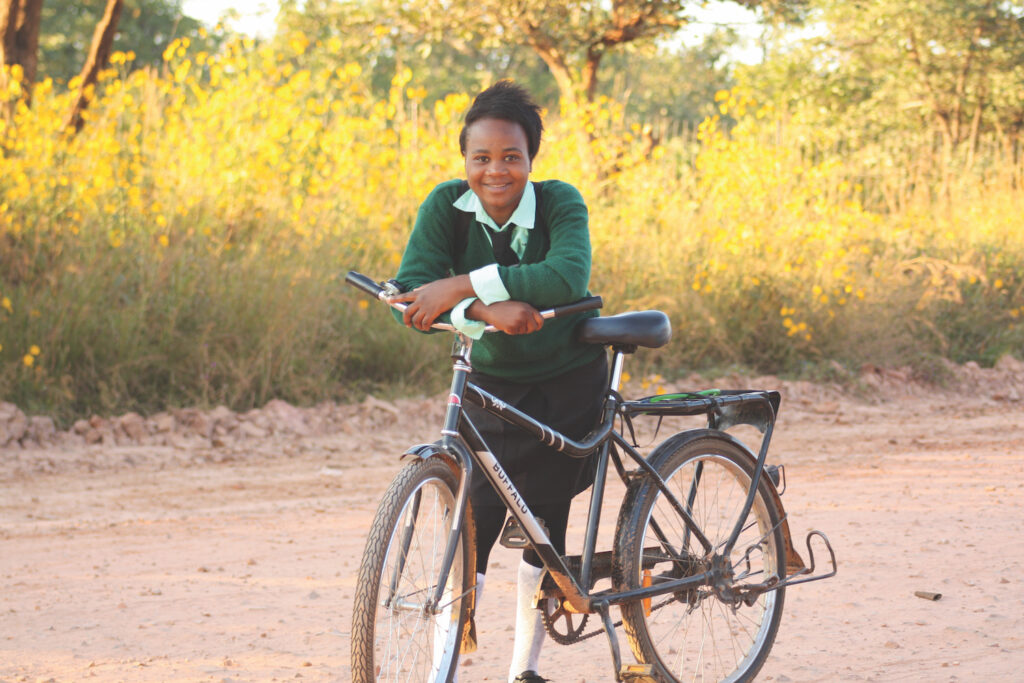
Join the Black Girls Do Bike cycling club for an exclusive chance to unlock their in-game jersey (see the IRL version here)! The Black Girls Do Bike club was founded by Monica Godfrey-Garrison, with the goal of encouraging more women of color to join the sport of cycling. Soon, the club will be celebrating its 10-year anniversary in San Diego! Throughout the ride, the pace will be held at around 1-2.5 w/kg. Note: as usual, riders must complete the ride to receive the unlock. 

This social ride will take place over the new Rolling Highlands course in Scotland. This 60-minute ride is a great opportunity to also ride the course of the final race of the Zwift Racing League finals.

Saturday, Mar 18 @ 3pm UTC/11am EDT/8am PDT
Sign up at zwift.com/events/view/3602481


🤝 Gran Fondo Operation Enfant Soleil – 2er Etape

✅ Feel-Good Factor⁣⁣  ✅ Popular Event ✅ Extra Tough

This gran fondo is one of the most popular events for the weekend. This ride aims to bring together riders to take on this challenge while raising money for children who suffer from severe motor and intellectual deficits. However, the event description is French. Despite this, riders from all around the world are welcome to join. The organization aims to raise $300,000 this year.

Over the course of the 101.3 mi (163 km), riders will complete numerous laps of Watopia’s Waistband course. This is a very flat and fast course, so riders will be able to hold a fairly steady pace throughout the fondo. Best of luck!

Saturday, Mar 18  @ 2pm UTC/10:00am EDT/7am PDT
Sign up at zwift.com/events/view/3233972


🥇 La Cyclosportive by Team Foudre

✅ Extra Tough 

Yet another endurance ride and French-based ride, Team Foudre is hosting an endurance race. Unlike most races, this features a mass start, so riders will have to find riders around their level throughout the ride. However, that should not be too hard because there are already nearly a hundred riders registered! The goal of this race is to help riders build their endurance through a tough, long, race. Tip: start hard to find the best group possible.

Foudre also has some rules that can be found in the event description. These rules help keep the race fair and fun, and complying with these rules will allow for riders to be included in the ZwiftPower results.

This endurance race will be held over 46.5mi (74.8 km) on the Petit Boucle course. With this custom finish, riders will finish just before the Aqueduct KOM.

Sunday, Mar 18 @ 8:15am UTC/4:15am EDT
Sign up at zwift.com/events/view/3572761


🤝 Cycle Nation Beginner Endurance Ride

✅ Beginner Friendly

For most riders, the gran fondo distances are extremely tough. This Saturday, Cycle Nation is hosting an endurance group ride to help riders build up to longer distances. The leaders will be maintaining a steady pace of around 1-1.5 w/kg. Of course, the pace will vary slightly depending on the terrain. Double Draft is also enabled in this ride to help riders out. Note: because Double Draft is enabled, it will be pretty tough to rejoin the group once getting dropped. Suck those wheels!

To help ensure this is a welcoming ride for beginners, riders will be covering 31.1 mi (50 km) on the Tempus Fugit course in Watopia.

Special settings: double draft

Saturday, Mar 18 @ 1pm UTC/9am EDT/6am PDT
Sign up at zwift.com/events/view/3582195


🤝 ¡HISPerame!

✅ Beginner Friendly  ✅ Popular Event

For those looking for a more mellow social ride, join the team at HISP for one of the most popular group rides every Saturday! Every week, this group ride attracts hundreds of riders from all around the world. Leaders will be holding a steady pace of around 1.5 w/kg. The fence will also be on to ensure that the group remains nice and tight. 

Because this is meant to be an easier ride, Zwifters will be riding on the Tick Tock route in Watopia. Bonus: this ride uses Pack Dynamics v4.

Saturday, Mar 18 @ 5pm UTC/1pm EDT/10am PDT
Sign up at zwift.com/events/view/3599299

How We Make Our Picks

We choose each weekend’s Notable Events based on a variety of factors including:

  • Is the event unique/innovative in some way?
  • Are celebrities (pro riders, etc) attending/leading?
  • Are signup counts already high, meaning the event is extra-popular?
  • Does the ride include desirable unlocks or prizes?
  • Does the event appeal to ladies on Zwift? (We like to support this under-represented group!)
  • Is it for a good cause?
  • Is it just plain crazy (extra long races, world record attempts, etc)?
  • Is it a long-running, popular weekly event with a dedicated leader who deserves a shout out?

In the end, we want to call attention to events that are extra-special and therefore extra-appealing to Zwifters. If you think your event qualifies, comment below with a link/details and we may just include it in an upcoming post!

Your Thoughts

Got other events that stand out this weekend? Share below in the comments!

Tiny Race Series – March 18 Routes and Last Week’s Results

10

Tiny Race Series – March 18 Routes and Last Week’s Results

This week we’ve got a fun selection of Scotland routes that have never been raced before! But first, we wanted to share some of our favorite Tiny Race content, plus last week’s results.

Phillip Lovett (Bike Racing Without Mercy) recently shared this video with us, along with this note: “I got badly injured in a bike crash in May 2022, and gradually made my way back to fitness, with the final block of training basically comprising your wonderful Tiny Races each week plus one other Zwift race and then a single structured workout (was very busy at work – so not much time to train). It worked brilliantly…”

Well done, Phil, and we’re happy to provide, as you said, an “Uplifting yet disgusting VO2 max challenge”.

Secondly, check out this fun tweet from GeneralElost:

Last Week’s Results

Overall Winners

Zone 1 (9am UTC)

A: Ryota Yamazaki (NeXT pb Enshored)
B: Allan Myhré (SWE)
C: Zaqqri Zylde22
D: Robin Baelemans (BZR)

Zone 2 (3pm UTC)

A: Travis Samuel (WLC)
B: Rainer Beckers (WattFabrik)
C: Guillaume Laforest (Optimum)
D: Alex Kroll

Zone 3 (9pm UTC)

A: Brian Duffy Jr (NeXT pb Enshored)*
B: Gregory “Goose” Pilgrim (DIRT)
C: Joseph Trotman (RYB)
D: PapaBroda

* Brian Duffy Jr tied with Stu Turner (AHDR) in points, but Brian gets the overall win since he had more first-place finishes.

Women’s Winners

Zone 1 (9am UTC)

A: Elyse Gallegos (CrushPod)
B: Polona Itkin (AEO)
C: Julia Brook (EVO)
D: Julie Brownbill (BAKPDL)

Zone 2 (3pm UTC)

A: none
B: Sophie Giovane (Team Castelli pb Elite)
C:Josée Rossignol [=(AEO)
D: Helén Freytag (CK Wano)

Zone 3 (9pm UTC)

A: none
B: Anna Rogers (REVO)
C: Kat Salthouse (ATP)
D: Lee Darling (GXY)

This Week’s Routes: Bonnie Scotland

To celebrate Scotland being open to free riding, Meetups, and Club events, we’re holding this week’s Tiny Races in Scotland! The first three races feature custom-length routes you’ve never seen before, while the last race is a Tiny Race repeat.

  • Race 1: The Muckle Yin (6km, ending at Breakaway Brae Rev banner)
    Start in Glasgow, then wind your way up the Cliffs before hitting the Corkscrew Castle and Breakaway Brae Rev climbs in quick succession.
    • Powerup: Feather (2x)
  • Race 2: City and the Sgurr (5.188km, ending at Sgurr Summit South banner)
    We all know a gravel bike is the best choice on City and the Sgurr, but what if it’s a custom-length route that ends on the paved side of the climb?
    • Powerup: (Draft Boost 2x)
  • Race 3: Loch Loop (6.2km, ending at Corkscrew Castle entrance)
    Racers know this loop well already, but not this finish line. It’s another 1-2 punch with back-to-back short climbs!
    • Powerup: (Aero Boost 2x)
  • Race 4: Glasgow Crit Circuit (2 laps, 6km)
    We wrap up our all-Scotland week with two hard laps of the crit course. Brace yourself for big attacks on The Clyde Kicker, dial in your aero timing (you’ve got lots of them), and make sure you time that final sprint just right.
    • Powerup: Aero Boost (6x)

Sign up at zwift.com/events/tag/tinyraces

ZwiftPower Results

Zwift displays preliminary race results in game when you cross the line, but points are computed after all four races are finished, with final results on ZwiftPower. (We have to do some data processing on our side to compute results, so if your rankings don’t show up right away, be patient.)

Riders will earn points based on finish position in each of the 4 Tiny Races. The category winner of each week’s series is the rider with the most points across their timezone’s 4 races. Here are the links for each timezone’s results on ZwiftPower:

Rules

Tiny Race rules are simple, but still every week 8-10% of registered ZwiftPower racers get disqualified and removed from the final results. Don’t let that be you! Four races, four rules:

  • You must have a ZwiftPower account, because final results are processed by ZwiftPower (learn how to sign up)
  • No skipping then returning. These races are meant to be raced as a set of 4. If you need to leave early, that’s fine… but once you miss a race in your hour’s set of 4, don’t come back and race another or you’ll be disqualified from that race since you rested while others were racing! (Example: racing only races 1 and 2 is fine. Racing 1, 2, and 4 is not – you will be DQ from race 4. And if you race 2, 3, and 4, you’ll be DQ from all those races, since you skipped race 1!)
  • Heart rate monitors are required for podium finishers
  • ZPower/Virtual power is not allowed. Smart trainer/smart bike or power meter required.

Pack Dynamics v4 Testing Continues

We’ve been using Zwift’s experimental Pack Dynamics v4 since the first weekend in March, and will continue to do so.

Got feedback on PD4 after your Tiny Races? Share it on this forum topic.

Join a Chat & Chill Cooldown

Immediately following each hour’s racing, we’ve scheduled 30-minute “Chat & Chill” events where riders from all categories can spin their legs together and chat about how it all went down. Find them at zwift.com/events/tag/tinyraces.

Questions or Comments

Post below!


Zwift Update Version 1.33.5 (108826) Released

The latest Zwift update is now available on all platforms: Mac, PC, Android, iOS, and AppleTV.

Not sure if your Zwift install is up-to-date? Here’s how to check >

This month Zwift is releasing a series of updates they consider to be minor based on how they’re numbering the game versions. As such, today’s update isn’t anything earth-shattering… but it does open up Scotland to free riding! Let’s dig into the details…

Scotland Opens

Mystical Roundabout and the Sgurr

Zwift’s Scotland map arrived in game in late January, and was only available for specific events in February, including the 2023 UCI Esports World Championships.

But today, Scotland opens to all, just like any other Zwift world. It’s now in the guest world rotation (see the updated schedule), and you can schedule Meetups and Club Events on Scotland routes as well!

Workout World Hack

Want to free ride in Scotland even when it’s not on the calendar? The easiest “hack” is the workout hack. Select a workout from the homescreen, then Zwift will ask you to choose a world and route in which to ride your workout. Select the Scotland route you’d like to ride/run, then Zwift will place you there. You can then exit the workout and ride/run the route freely.

HoloReplay Changes

This update includes two changes to Zwift’s HoloReplay feature.

First, every segment and route on Scotland is now HoloReplayable. Every segment and route you complete in Scotland during free rides or events (excluding rubberbanded events) will now be available to you from this date forward to spawn a HoloReplay.

Second, there’s a new setting in the main menu called “HoloReplay Type” which allows you to choose if you want HoloReplays only on routes, only on segments, or both on routes and segments (default).

New Route

A new route is showing up for France – the “France Classic Fondo“. 145km, 1099m elevation gain. We’ll post route details once we’ve created Strava segments…

More Fixes and Tweaks

A few more fixes were noted in this release:

  • ~50 Leaderboards routes now have corrected segment details. This includes Tick Tock, Road to Ruins, Flatland Loop, Quatch Quest, Uber Pretzel, Road to Sky, and Tour of Fire and Ice.
  • Fixed an issue when joining a Time Trial event that would cause the start time on the UI to show incorrectly.

See notes on this update release in the Zwift forum >

Bugs in this Release

Here are some bugs the community is finding in this release:

  • Pairing screen crash: some users on Windows and Mac are seeing Zwift crash just after hitting”OK” on the pairing screen
    • Temporary workaround: while in the pairing screen, click on the bottom right corner to change the language to anything. Then change the language back to the original, and restart Zwift.
  • Accelerated XP display broken: some (all?) level 50-59 users who are earning accelerated XP are no longer seeing those accelerated numbers each km/mile, despite the game saying they are still on the accelerated program and accelerated XP being added each mile/km.

Questions or Comments?

If you spotted any other changes or bugs in the update, please comment below!

How the Race Was Lost: Unconventional, Controversial, and Barely Successful (ZRL Semi-Finals)

How the Race Was Lost: Unconventional, Controversial, and Barely Successful (ZRL Semi-Finals)

Yesterday my team (the DIRT Roosters) took on 21 other teams in the second race of the ZRL Semi-Finals. This race field had some very strong riders – certainly a more competitive field than we’d seen in the regular season, and that was a tough season in EMEA W B1! On top of that, my fitness was nowhere near its peak, and the punchy course didn’t suit me well.

So I chose an unconventional approach to grabbing race points. Controversial? Perhaps. Successful? Also perhaps. Read on for the full story…

The Warmup

The race began at 12:30 (it had shifted an hour thanks to last weekend’s time change), so I was on the bike a little after noon to spin up the legs with Coco. I had chewed two pieces of caffeine gum and applied PR lotion to the legs… my typical race prep.

The Plan

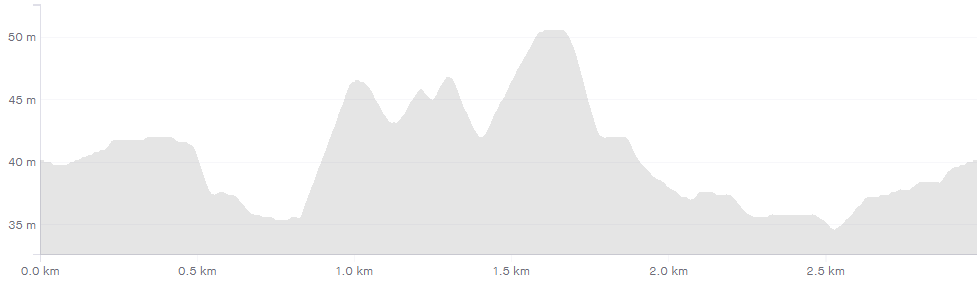
This was a points race on 10 laps of Scotland’s Glasgow Crit Circuit… which is just nuts, if you think about it. This 3km circuit has 2 segments (a short, flat sprint and a punchy, short climb) per lap, and we would be contesting those segments on every lap for first-across-the-line (FAL) and fastest-through-segment (FTS) points.

This course is punchy enough as a scratch race. But throw in points at every intermediate, and you have attacks every two minutes for 40 minutes!

So I decided I’d try something unconventional. Instead of trying to hang with the front so I could come across the finish line in the highest place possible, I decided to sit up and take it easy for the duration of the race, apart from chasing points on the Champion’s Sprint segment. This is an approach I’d never taken in a race, although I’ve seen it done by others.

My specific plan was this:

  1. Go all-out from the gun in an attempt to grab FAL points the first time through the sprint
  2. Sit up, get a good powerup, and let the pack lap me. I would then sprint with them in an attempt to grab an FTS slot.
  3. Repeat step 2 as many times as possible, if grabbing FTS slots seems realistic
  4. Bonus: consider going for Clyde Kicker FTS, if the times on the leaderboard look beatable.

I realize this sort of racing may rub you the wrong way, and to be perfectly honest, I’m not a big fan of it either. But it’s completely within the rules of ZRL and in fact, one could argue ZRL’s rules actually encourage this sort of thing.

In the end, it wasn’t hard to rationalize my decision, because I knew four things:

  1. I wouldn’t be able to hang with the front group for the duration of the race. The competition in these semi-finals is even stronger than in the regular season, this is a difficult circuit that doesn’t suit me, and I’m nowhere near peak form currently.
  2. If I was struggling to hold onto the front pack (and I knew I would be), I didn’t stand a snowball’s chance in hell at grabbing any segment points. I would just be trying to survive every segment.
  3. My sprint is not first-class, but my fresh legs vs the tired legs of better sprinters probably stood a good chance at grabbing some points.
  4. This wasn’t a life-or-death decision – my team is sitting mid-pack in the semi-finals results, and we probably won’t even field a full team for next week’s TTT. My paltry points, no matter how I earned them, wouldn’t matter much.

I had informed my team of my plan, and they seemed to trust that I knew what was best for me. The rest of them would be trying to hang with the front while grabbing intermediate points wherever possible.

The Lead-In

The first step of my plan started at the gun. I had already saved a spot near the front of the start pen, and I knew I had about 40 seconds of hard effort to the first banner. My goal was to be one of the first riders across the line, thus grabbing FAL points.

I tried to sit in the wheels while staying near the front. Teammate Clem flew off the front, and another teammate (Dejan) was next to me as the sprint began and we went all-in. I was the 4th rider across the line, with a sprint time of 11.45s. A good start!

Waving goodbye to the pack after the lead-in

Sit Up and Sprint, #1

After the sprint, I just sat up and pedaled easy. What a strange feeling to let the race ride away! I could have stopped pedaling entirely, or pedaled super slowly, so the pack would lap me on this first lap… but that felt much too slow. So I decided I would do two laps for the front group’s three.

Even then, I didn’t time it very well. I should have worked even less! I had to stop on the side of the road and wait for the front group to catch me, then I hammered out a Champion’s Sprint attempt using my draft boost powerup.

But I held everything too late. The group caught me too close to the start line, I didn’t hit the start line fast enough, and I was off the front in the wind by the end of it, crossing the line ahead of the pack (but of course, a lap behind). My sprint time was a pathetic 12.352s… not even close to top 10 in FTS.

Caught by a chase group

Eyeing the Clyde

Somewhere between my two sprints I took a look at the Clyde Kicker leaderboard, and realized I didn’t stand a chance of getting on it. I would need to improve my PR (26.57s, set in a strong race) by over 2 seconds, which just wasn’t possible.

This wasn’t particularly surprising, given the strong riders in this race.

If I wanted points today, they would be coming from the Champion’s Sprint.

Sit Up and Sprint, #2

Once again, I did two easy laps following the sprint. Well, almost 2. This time I stopped on the side of the road earlier, letting the front pack catch me sooner so I could get my position dialed in before the sprint began.

I had also burned through powerups until I got an aero, knowing it would help me more than the draft boost on the sprint.

This time around I felt I executed the sprint well – starting near the back of the pack and sprinting through, with my powerup running out as I crossed the line. But even though I had the fastest time of anyone on that lap, my time of 11.563 didn’t even beat my attempt on the lead-in!

I was frustrated. I could already see that my best time of 11.45 wasn’t even in the top 10 for FTS, and I didn’t seem to be able to improve that time.

With no better ideas, I just pedaled to the finish, coming in 103 out of 104 riders.

See activity on Strava >
See results on ZwiftPower

Watch the Race

Takeaways

Reviewing my race video, I realized I could have cracked the top 10 FTS if I’d just timed my sprint better. I had the power numbers, but my timing was poor. This is a good lesson for anyone chasing fast sprint segment times in any context, so I’ll unpack it here.
  • I should have let the group catch me well before the sprint. Perhaps I could have waited atop the Clyde Kicker? This would let me get my legs spinning and heart rate normalized early instead of spiking it with just seconds to go before the sprint effort.
  • I should have the started my sprint effort about 10 seconds earlier. I hit the start line at 54kph, but got up to 68kph on the sprint! That means I should have hit the line much faster. Doing some quick math, this change alone would have put me into around 6th overall in FTS.
  • I should have started my sprint effort from further back in the pack, so I had more riders and a stronger draft for the duration of the sprint.
  • I should have triggered my aero boost powerup 4-5 seconds earlier. I still had a bit of it left when I crossed the line, and it’s usually best to have these end 1-2 seconds before your sprint finishes.
  • I could have stopped pedaling and done just 1 lap for the front pack’s 2, giving me 5 sprint attempts instead of the 2 I took.

In my second sprint, I did a few things right: I was in the draft the entire time, and I had the right powerup. But if I’d done the 5 things listed above, I would have earned FTS points. Probably on multiple sprints!

In the end, I earned 8 points for my team: 7 from my 4th place FAL on the first sprint, and 1 finishing point. Could I have earned more points by trying to hang with the front pack? Possibly. After the front group of 33 riders, there was a large pack representing places 39-84. I think I would have finished in this group. The question is, would I have outsprinted them and earned 15 finishing points for 39th place? Or finished in the back, with just 1 finishing point?

We’ll never know. But I won’t lose any sleep over my result, because even if I’d finished 39th, it wouldn’t have moved us up in the results. In the end, the DIRT Roosters finished 4th on the day on the back of strong performances by Clem, Arjen, and Tim, who all finished in the front pack while grabbing some FAL points.

Will I be trying this approach in future races? Meh. It’s really not a fun way to “race”, so after trying it out this time, I think I’ll only be keen to do it as a last resort in extreme situations.

Your Thoughts

Go ahead, throw your tomatoes. Let me know what you think of my approach to this race, and share if you’ve ever done something similarly unconventional.


Recommended Accessories for New Zwifters: Indoor Cycling Tables

Recommended Accessories for New Zwifters: Indoor Cycling Tables

The more you ride indoors, the more you’ll feel the need for certain accessories that aren’t necessary outdoors: fans, sweat towels, desks, etc. These aren’t major purchases, but they still pay off big in helping you train your best.

This is the second post in a series covering recommended accessories for new Zwifters (see our first post covering fans here). Today, we’re talking about one of those accessories you don’t think about when starting up on Zwift… but once you have it, you won’t know how you lived without it!

The table. The training desk. The indoor cycling media platform.

Whatever you call it, it’s essential if you Zwift using an iPad or laptop… and simply very very handy if you’re riding on a big screen using Apple TV or PC/Mac. They can hold a keyboard, towel, bottles, snacks, remotes, phones, small fans… you get the idea.

New Zwifters often begin with a repurposed stool or music stand next to their bike, but these solutions aren’t the most stable or roomy. If you’re ready to upgrade, we’ve got your back. Here’s our short list of recommended indoor cycling tables for Zwifters.

The Budget Approach: KOM Cycling Media Display

At $99USD, this table is significantly cheaper than the Wahoo Desk or its bargain-basement competitors. The folks at KOM Cycling know how to see a need in the market and produce well-conceived, affordable solutions. Their Indoor Cycling Desk is no exception.

The stand is a generic collapsable tripod type, and the tabletop itself is a non-slip rubber and includes two bottle holders and a slot for tablets or phones. Bonus: the tablet/phone slot is actually wide enough to accommodate devices with cases, unlike the Wahoo Desks!

The tabletop isn’t quite as large or sturdy as the Wahoo Desk designs, but it’s lighter, less bulky, and easier to move around. Works nicely as a side table if that’s more your speed.

Pros:

  • Low price
  • Small footprint
  • Device slots that work with cases
  • Goes extra high (50″)

Cons:

  • Less beefy/strong than some desks
  • Smaller table surface

The Dark Horse: Medical Overbeds

It’s always smart to see if products are already being produced to meet other needs before purchasing or developing a product to meet your more specialized need. Bedside tables, sometimes called “medical overbeds”, are sturdy, adjustable-height devices sold in huge numbers worldwide. There are a variety of makers and models, but they generally have similar designs, with different finishes.

The Vaunn Bedside Table (shown below) is one of the lower-priced models. A quick search on Amazon brings up other alternatives like the clean-looking SANODESK or the Vive Overbed Table.

Note that these tables don’t include the non-slip rubber surface or bottle holders. Another potential downside to medical overbeds is that, unlike other tables in this list, most overbeds only go up to 40″, so they won’t be taller than your road bike’s hoods. That may or may not be an issue for you, depending on your preferred setup.

Pros:

  • Low price
  • Sturdy
  • Locking wheels

Cons:

  • Slipper top surface
  • No bottle holders or other slots
  • Only goes up to 40″ high

Budget Wahoo: RAD Cycle Products Desc

The RAD Cycle Products Desk is a blatant Wahoo Desk ripoff, but it’s also half the price (or less!), making it hard to ignore.

Prices on this desk tend to fluctuate, but it’s currently $160 on Amazon, and the Lifeline-branded version (which appears to be identical) is $69 on Chain Reaction.

Don’t expect build quality to match the Wahoo Desk. The casters aren’t very heavy duty and in fact make the table more wobbly than some may prefer (you might just remove them) but in general, this desk is sturdy and functional, making it hard to justify the additional expense of the Wahoo Desk.

Pros:

  • Low price vs Wahoo desk
  • Sturdy
  • Roomy tabletop

Cons:

  • Poor built quality vs Wahoo Desk
  • Tablet/phone slots don’t work with cases

Premium Solution: Wahoo KICKR Desk

Like they’ve done with fans, Wahoo’s desk solution is a premium offering in this space. Now priced at $299, the Wahoo KICKR Desk is well-built and stable. We would prefer bottle holders, lockable wheels, and a table/phone slot that was wide enough to accommodate cases. But apart from those issues it’s a solid product, even though it’s pricey.

Pros:

  • Good build quality
  • Roomy tabletop
  • Smooth-rolling wheels

Cons:

  • No water bottle holders
  • Pricey
  • Tablet/phone slots don’t work with cases

Upgrade Your Desk

If you have a Wahoo-style desk, our favorite Aussie Lama has some sweet tips for customizing your desk to make it the “Ultimate Indoor Cycling Smart Desk”:

Questions or Comments?

Post below!


Zwift Chase Race Basics, Strategies, and More

Zwift Chase Race Basics, Strategies, and More

When it comes to Zwift racing, the classic first-across-the-line scratch race is the most popular format by far. You’ll also see many points races, where riders accumulate points at the finish line and on intermediate segments (think ZRL). And of course, there’s the “race of truth”, the time trial, which comes in individual and team formats.

Today I will unpack the chase race format, which is sort of a blend between a scratch race and a team time trial.

Chase Race Basics

In a chase race, riders are grouped by category, and category starts are staggered, with slower categories starting before faster categories. (This is why chase races are sometimes called “handicap races”.)

For example, a chase race may have these category start times:

  • Category D – 12:00
  • Category C – 12:03
  • Category B – 12:05
  • Category A – 12:07

Start time gaps between categories are calculated by race organizers with the goal of giving faster categories a chance to catch the slower groups ahead near the end of the race, so multiple categories are together for the finish.

Most chase races use the Zwift chase race kit so each category can be easily seen on course

Typically held on flatter routes, chase races begin as team efforts. If your category’s pack isn’t working together to keep the speed high, they will be unable to catch the group up the road and may be caught by a chasing group from behind. But chase races always end as individual efforts as you sprint for the line against members of your category, and often members of others categories as well!

Chase Race Strategy

Note Pack Sizes

Pack size is a big determiner of pack speed on Zwift. While A riders are stronger than B riders, a pack of 60 B’s will probably not get caught by a pack of 20 A’s, because the B riders get more rest between hard pull efforts on the front.

The larger your category group, the less discipline is required to keep pack speed high. In fact, you may be able to sit in the draft for all or most of the race! Conversely, smaller groups must be more organized in rotating hard pulls to succeed.

Work Together

When the race begins, your default mode should be to work with the other riders in your category to keep your pack speed high. It will take at least several minutes to figure out how quickly you’re catching groups ahead and being caught by groups behind. Best to get organized quickly!

Know/Watch Time Gaps

Know the gaps between groups at the start, then watch those gaps change during the race. Time gap knowledge is vital if you want to race smart, as illustrated in these three examples:

  1. You’re a B rider 10km into a 40km race. The C group began 3 minutes before you, and that gap is now down to 90 seconds. Clearly you’ll easily catch the C group well before the finish, so you can ease up your group pace.
  2. You’re an A rider 20km into a 40km race. The B group began 2 minutes before you, and that gap is now down to 1 minute. Your pace is spot on.
  3. You’re an D rider 30km into a 40km race. The C group began 4 minutes after you, and that gap is now down to 30 seconds. Your group is going to get caught by the C’s well before the finish, so you need to decide if you want to up the pace and bring other D’s with you, or just ease and wait for the C’s.

The examples above are oversimplified, of course, because you can’t always make decisions based on gaps to just one group. You may be a B rider easily catching the C group, but the A’s are also catching you, so you shouldn’t ease up!

How do you see/calculate gaps between groups? This data isn’t available easily in game, but it can be found using different tools and methods. Here are four:

  • ZwiftPower‘s Live view is a good tool for tracking group time gaps, if you have another browser screen available. (Just navigate to your chase race event on ZwiftPower, then click the “Live” link.)
  • Sauce 4 Zwift‘s groups feature is an excellent tool for tracking time gaps between groups.
  • The minimap at the top-right is actually a handy tool for calculating group gaps. Click the map to zoom out, then note your ride time when main category groups pass a particular spot on the course. Compare that time to your time, and you can calculate gaps easily.
  • Lastly, you can often determine gaps in game by riding to the front of your pack and noting the gap to the next category rider ahead, or dropping to the back and noting the next category behind. This approach is far from perfect, though, since you can’t always see riders in the main category group.

Predict and Respond

As you begin to track time gaps and note how strong you’re feeling on this particular day, you’ll want to start predicting how the race is going to unfold, so you can respond appropriately to maximize your individual result. A few examples:

  • You’re in the C group, the largest group in the race, and it looks like you’ll be catching the D’s and staying away from the B and A riders behind as well. If you’re a sprinter, you should sit in the draft and wait for the final effort.
  • You’re in a smaller A group, and as you get close to the end of the race it’s clear you won’t be catching any of the categories up the road. You can treat the rest of the race like a standard scratch race, attacking if you feel strong or perhaps sitting in and waiting for that final sprint.
  • You’re in the B group, and it’s clear the A’s behind will catch you several kilometers from the finish. Don’t kill yourself on the front of the B’s. Rest so you’re ready to go hard and grab wheels when the A’s ride through!

Got caught? Survival mode!

If your group gets caught by a faster category from behind, there’s no need for your category to keep working as a team. In fact, it’s impossible to do so! When that faster category catches you it becomes every man (or woman) for themselves, as you’re just trying to hang onto the wheels of the faster category.

Gaps Close Fast At the End

One key thing to know is gaps tend to close quickly near the end of the race. This is probably due to two factors:

  1. Lower-category riders on a whole have less endurance and poorer pacing than higher-category riders, so their pace will fall off near the end of the race while the higher category riders have more to give.
  2. Categories behind may be coming together and forming bigger, faster-moving packs. That is, near the end of the race the solo D group may be chased by a combined pack of the fastest A, B, and C riders.

It’s hard to predict just how much faster gaps close near the end of the race, so just keep in mind that you may not be as safe as you think.

How Chase Races Get Broken

Because of how Zwift (and humans) work, it’s easy for specific chase races to be “broken”. Here are a few ways that happens:

  • Sandbaggers: overpowered riders are a big problem, especially if a race doesn’t use category enforcement. Race organizers compute time gaps based on realistic category pacing, but if an overpowered rider joins and puts in big pulls on the front, a category will go faster than it should, breaking the structure of the race.
  • Bad group gaps: calculating group start time gaps is no easy task. Organizers need to predict group speeds which are a factor of pack size, route length, and the hilliness of the route. Sometimes they get it wrong, and sometimes it’s off by just a bit, because Zwift doesn’t let you set start times that include fractions of minutes.
  • Unexpected big differences between pack sizes: typically the C or B packs are the largest, and race organizers account for this in their time gaps. But if a category is unexpectedly larger or smaller, the gaps may not work well.
  • Nobody willing to work: this is just human nature. Many Zwift racers get used to sitting in the draft, but if everyone does that in a chase race your category will never get to the front before the finish! Sometimes it helps to have a group DS who encourages people to take pulls, calls out time gaps, etc.

Chase Race Improvements

I’ve got two ideas for improvements Zwift could make to boost the chase race experience:

  1. Dynamic start times: the game could automatically calculate precise start times for each category based on the number of signups and the chosen course. If everyone knew that each category stood a good chance of making to the finish first, everyone would work harder.
  2. More precise start times: instead of (or in addition to) the above idea, let race organizers set group gaps in increments of seconds instead of minutes.
  3. Visible time gaps: show gaps in the rider list to categories ahead and behind.

Finding Chase Races

Chase races aren’t easy to find on the calendar, as they don’t consistently use the “chaserace” tag. Here’s a ZwiftHacks list of the next 7 days worth of events which contain “chase” or “handicap” in their title. (Most of the events on the list are chase races, although a few are group rides.)

Some of the most popular chase races:

  • Rhino Crash Chase Race
  • DIRT Dadurday Chase Race
  • Cat & Mouse KZR Chase Race
  • WattFabrik CE Chase Race

Questions or Comments?

Got other chase race strategy tips, or ideas for improvements? Post below!


Improve Your Sprinting with Team Velos

2

Improve Your Sprinting with Team Velos

Velos is a global team founded by UK-based rider Steve Whitcombe, known by many as ‘Silent Sweep.’ Steve has led and swept Zwift events since 2015, and Velos has gained a reputation for innovative events such as ‘Poursuite de la Lanterne Rouge,’ which includes several challenges culminating in a chase of the red beacon. The team also hosts two weekly races, the Race of Truth (individual time trial) on Saturdays and the Bumper Chase (handicap-style race) on Sundays.

See all Team Velos events at zwift.com/events/tag/velos >

I created Velos to host a range of fun rides that embody our team goal of helping people get stronger and gain skills in a friendly, supportive environment,” Steve says. “Our Social Sprint Series has proven to be popular and successful at helping riders improve their sprinting. We especially encourage more women to try this event and increase their confidence sprinting.” 

About the Velos Social Sprint Series

The Velos Social Sprint Series is a weekly event on Wednesdays that has gained a strong following. Riders of all levels (especially novices) are encouraged to participate.

  • Courses change monthly (this month it’s Makuri Islands’ Fine and Sandy)
  • Features a hotly contested competition that accrues points to the ten fastest ladies and men each week (10 points for fastest sprint, down to 1 point). Results are taken from ZwiftPower, and points are totaled each week; regular participation means more points.
  • The highest-scoring man and woman are awarded a trophy and certificate at the end of each month.
  • A handicap system creates opportunities for more people to win the title, with winners on half points for two subsequent months.

Some past sprint trophy winners…

Velos in Neokyo

The Social Sprint Series has been won by highly skilled sprinters, including Melanie Dobbins (who won both British Masters Track Sprint titles in 2022), along with her husband Mark (the couple who sprints together, stays together!) and their track teammate Steve Biddulph (who won 2022 British Masters Sprint, Keirin, and TT titles). All three race for Team Velos.

A new Social Sprint Series started on Wednesday, March 1 at 11:15am Pacific/7:15pm UK. You can register for this week’s ride at zwift.com/events/tag/velos/view/3592338

Velos Racing Team

Steve Whitcombe launched Velos Racing in December 2021, which quickly became a popular extension of the team’s social rides. Velos fielded 9 teams in season 3 of Zwift Racing League, including a women’s C team (Velosipedes) who won their division in their first round as a team. Velos teams had strong results in all CATs this season, and camaraderie has grown through racing together. Several teammates will meet in Somerset, England in April to ride the Cheddar Gorge sportive. 

Said Steve: “Adding a Zwift racing team and two distinct races to our weekly calendar were natural extensions of our social rides, since they focus on building strength and gaining skills in a range of disciplines.”

To learn more about Team Velos including their racing team, visit teamvelos.co.uk (the link takes you to their social group Facebook page). They also have a Facebook group for their racing team, and a club on the Companion app.

See all Team Velos events at zwift.com/events/tag/velos >


Top 5 Zwift Videos: World Championships, Mindset, and Zwift Racing League

0

The UCI Cycling eSports World Championships feature heavily in this week’s Top 5 Zwift Videos! You can see a perspective from someone who raced it, along with an analysis of two of the races from a spectator. Then, one Zwifter examines how his mindset affected a recent race, while another is determined to have a great Zwift Racing League finish.

My Race Perspective // 2023 UCI CYCLING ESPORTS WORLD CHAMPIONSHIPS on Zwift

With the first world championships race predicted to end in a sprint, Ed Laverack attacked twice to get in a breakaway. In this video, he explains why!

Does a Negative Mindset Really Affect Zwift Racing?

Oliver Moore, on his YouTube channel “not tadej pogacar,” notes how just a few moments of negative thinking had an impact on his motivation and how he finished a race.

If it’s the last race… ALL IN! Rolling Highlands, Scotland, Zwift Racing League Category B

Leonard Goh wants to finish the Zwift Racing League season with a bang! Check out his analysis of the race and its explosive finish.

2023 UCI E-Sport World Championships Men’s Race 1 Analysis Zwift

Oli Chi (ZRace Central) analyzes the first men’s race from the UCI Cycling eSports World Championships, based on his experience with Zwift racing.

2023 UCI E-Sport World Championships Men’s Race 2 Analysis Zwift

Here’s the analysis of the second Zwift world championships men’s race by Oli Chi (ZRace Central).

Got a Great Zwift Video?

Share the link below and we may feature it in an upcoming post!

How the Race Was Lost: Sickness Leads to a DNF

How the Race Was Lost: Sickness Leads to a DNF

I’ve completed 963 races on Zwift, but the number of races I’ve DNF’d can, I think, be counted on one hand.

This isn’t because I’m some mental or endurance giant. It’s just because I hate getting geared up for a race, then pulling out before it’s done. So even if I get dropped, and even if it’s because of some strange mechanical or technical issue, I’ll almost always keep pedaling to the line.

But last Saturday’s race was a bit different. Here’s how it unfolded…

The Warmup

The race began at 9:30am, so I was planning to be on the bike by 9am to spin up the legs with Coco. I had chewed two pieces of caffeine gum and applied PR lotion to the legs… my typical race prep. But I got distracted processing Tiny Race results and ended up with only 15 minutes to warm up.

The shorter warmup wasn’t a big deal, but I did note that it felt harder than usual to produce high-end power, and my heart rate seemed a bit higher than normal. Typically I can chug along in the Coco group at ~125-130 bpm, but today it was more like 135-140.

This wasn’t altogether surprising, as I’d been a bit sick for a few days. It was one of those annoying cold/flu bugs where your nose is running just enough, you’re forced to cough just enough, and you’re feeling just tired enough to know you’re sick. I wouldn’t have called myself super sick. Generally, I try to pretend I’m not sick anyway, so I wouldn’t have even called myself sick. Just a “bit” sick.

I was hopping into this race, hoping the sickness was minor and wouldn’t affect my riding. But I was beginning to think that wouldn’t be the case…

The Plan

The race (part of the EVR Winter Series) was on 2 laps of London’s Greatest London Flat, a course that generally lives up to its name even though that longer, slack climb in the Richmond Park area always feels a bit too suffery:

This race used two settings I typically don’t see in the races I frequent. First, all categories began together. Secondly, double draft was enabled. So I joined, hoping I’d be able to ride smart and stay with the A’s in front for the duration of the mostly-flat race.

Lead-In and Lap 1

We began with 143 riders across all categories, but the first selection happened quickly, with a front group of 58 riders consolidating in less than 3 minutes. Then we hit the short Northumberland Avenue climb up to Trafalgar Square and the group was whittled down to 48. (Most of the front riders were A or B category, although a few cagey C riders had snuck in.)

As we finished the lead-in I saw a message from “Old Andy”, a rider I had raced recently in Makuri Islands where we found ourselves together, unsuccessfully chasing a breakaway. “I see you young Eric @ ZI”, he wrote. I had barely beaten him to the line in that last race, and he had later commented, “But there’s always next time. Keep up the good work Eric, and watch out for Old Andy trying to chase you down.” I figured Old Andy would be doing his best to beat me to the line this time!

Despite being mixed in with A riders, the pace for the lead-in and start of lap 1 wasn’t bad at all (thanks, double draft). I was averaging around 270W, but then one “L. Swatowski” (a rider using virtual power) attacked. I promptly messaged “zPower ranger attacks!” partly because it’s funny, but also in hopes of dissuading people from chasing.

But that didn’t work. The pack strung out, powerups flew, and the chase was on. And that’s when I began to feel the effects of being a bit sick.

As noted, I had already noticed that my HR was 5-10 bpm higher than it should have been for the given effort. But when the pace picked up for more than a few seconds, things just got suffery and miserable. My body didn’t want to perform.

At 14.6km I decided to pull the plug and drop from the front pack. I messaged the group to let them know I was dropping due to high HR/sickness. I also messaged “Good luck Old Andy! Stick it to the A’s!” He replied “Take care” and I dropped off the back and spun the pedals for a few minutes before signing off.

Old Andy: your 11th place finish in the Bs certainly beat my DNF. Chapeau!

See activity on Strava >

Watch the Race

Takeaways

After the race I checked my numbers to make sure I wasn’t imagining things. Here’s my HR distribution for this race:

Here’s my HR distribution from a similar (but slightly harder) race effort one week later:

My weighted average power in the second race was 289W, while the race I quit due to sickness was only 273W. And yet, the sick race had me at threshold HR for 58.8% of the ride, while the race with higher power output only had me at threshold or above for 17.9%!

So I wasn’t imagining things.

I asked my cycling coach buddy Alan Dempsey for his thoughts on training while sick. He said:

There’s always a risk of myocarditis from doing that.

General rule of thumb is if it’s in your chest, don’t exercise.

If it’s not in your chest, max zone 1/2.

That’s pretty solid advice. He went on to say:

I look at it this way… you can’t work hard enough to gain fitness when you feel like shit. All you do is prolong the illness.

Adaptation from training is not dissimilar to an immune response. Damage >> repair.

So you’re not getting better. Riding easy might help maintain fitness while you’re sick, but still might extend the illness.

For me, recovering from sickness as quickly as possible is the best course for getting back to training healthy and staying fit. And when you’re sick that’s rest, fluids, and healthy eating.

Good stuff, Alan. It reminds me of this paper I read in the early days of the Covid lockdown when I was researching the links between our immune systems and exercise. The paper had a lot of good stuff, but two key takeaways were that “Acute exercise is an immune system adjuvant that improves defense activity and metabolic health” and “the best evidence supports that high exercise training workloads, competition events, and the associated physiological, metabolic, and psychological stress are linked to immune dysfunction, inflammation, oxidative stress, and muscle damage.”

Or to put it simply: low to mid-exertion exercise is an immune system booster, but high-exertion exercise stresses the immune system so it doesn’t function as well.

The common rule in cycling is, “If it’s above your neck, you can ride. If it’s below the neck, rest.” Not a bad rule, but I would expand that rule a bit and say if your heart rate is elevated, or you’re feeling sick at all, keep it at zone 1-2. Don’t stress the immune system that’s already working hard to make you whole again.

Your Thoughts

Have you ever ended a race or workout due to high HR from sickness? What are your personal practices when it comes to riding while you’re sick? Share below!


Nopinz Club Shop and Mountain Massif, Part 2: Manufacturing My Club Kit

2

Nopinz Club Shop and Mountain Massif, Part 2: Manufacturing My Club Kit

Part one of this two-part article highlighted how I connected with Nopinz to utilise their “Club Shop” feature, getting my virtual Zwift jersey designed and available to all my “Mountain Massif” club members. Here in part 2 we’ll look at the next step, which is getting the garments manufactured and distributed.

One thing to note regarding Nopinz is that it is a solely British-owned and operated manufacturing company based in Barnstable, Devon, UK. In today’s global economy, it is less and less common to see a product designed and manufactured on the same premises. Nopinz are bucking this trend and by keeping the entire process in-house are able to exert a high degree of quality and process control. This helps optimise all steps of the production process, ensuring the minimisation of waste, which ultimately helps keep the costs of the items down.

To produce my jersey, there were a number of complex but interesting processes that took place, which will be outlined. It’s worth noting that the “Club Shop” feature is proving popular and consequently, due to the volume of orders, Nopinz has a 40 working day lead time from when the order is placed to when it is manufactured (although they aim to send the completed order before that).

Setup

Each item, whether a jersey or set of bib shorts, is individually printed. This first step in the manufacturing process is called “setting up the flats.”

This means that the garment’s design is deconstructed into its key components.  Effectively, the different panels that comprise the garments are split out and laid out to optimise the use of the different fabrics (for example, with a jersey, the arms are constructed from a different material to the front and rear panel). This creates a template, called the “flat template.” The “flat template” is created for any new design and used in the production of future items.

Toyota Cryo RDT’s flat template

These templates are compiled to create what is called a “print run.”

Historically, these templates were compiled manually, like a giant jigsaw puzzle, to optimise the use of the fabric. However, this has been recently automated, refining the process and thus reducing production lead times through the removal of a manual step. Perhaps most importantly this maximises the use of the fabric, ensuring very little is wasted.

Printing and Pressing

The next step in the process involves printing the design on a special form of paper called “textile transfer paper.” This paper is then pressed to the fabric, and under intense heat and pressure, the designs are transferred to the fabric via giant rollers. This is called “dye sublimation.”

The fabric specifically-manufactured fabrics are stored in-house.

Cutting and Picking

Fabric being cut in the laser cutter

The components are then cut from the fabric using a laser. The laser makes precise cuts along predetermined black markings and the individual panels are picked by the staff and bagged. Any discarded fabric is collected and recycled.

The “picking” process is vital because not all print runs will have all the components of the garment. For example, the arm panels for a jersey will most likely be in a different print run to the front and back panels and consequently it is the job of the “Pickers” to collect parts so they can be passed to the Machinists to be transformed into the garment.

In addition, at this point the silicone is applied to relevant panels such as leg grippers and arm grippers.

Construction

A Nopinz Machinist at work

The Machinists then receive the bag of all of necessary parts to construct the garment and undertake the task in its entirety. This ensures a sense of completeness, as the Machinist gets to see the final product, then sign a card to let the end user know who produced the item.

I caught up with Jenifer, a Machinist who has worked for Nopinz for 6 years and asked her about the finer details of constructing a jersey.  Jenifer explained that a “normal jersey takes roughly an hour to make from start to finish.”  Similarly, a “Pro 1 skinsuit can be made and finished in an hour but a Flow suit can take between an hour and a half to two hours.” 

As you would imagine the more complex designs take longer; however, the difference in production times was not as diverse as I thought.  Despite the Flow suits taking longer, she noted, “I enjoy making the Flow suits and tri-belts the most because they have more detailing and have a nice ‘finished’ look. I enjoy making tri-belts as it is something different to make as an accessory to full kits.”

Jenifer explained that the most difficult part of the production process is “matching a detailed and intricate design over seams and over zips so that it isn’t distorted and looks how it is meant to look.” She commented that her least favourite item to make was the warm-up leggings because “you have to cover stitch the waistband and it is quite fiddly and can be frustrating if it doesn’t quite sit right when on.”

Distribution

Following the construction of the garment, the items gets packed in their own branded bags and dispatched.  Nopinz offers a global shipping programme so your items will be shipped wherever you are located, making this ideal if you have a global, virtual club. 

Wrapping It Up

When my Nopinz parcel arrived, I was filled with anticipation!  It’s always nice to receive new cycling kit, but when it’s something that you have been personally involved with, that sense of expectancy is heightened.

I was not disappointed when I finally opened the package and held the jersey before me.  The design and construction is such that it would not look out of place within the pro peloton.  The colours were clear and defined, the logos and branding, sharp.  This was definitely something to be proud of, with each logo part of the history of the “Mountain Massif” event series and now Zwift club (which can be joined by clicking here).

In terms of the jersey, I opted for the Superlight eco jersey. It has a nice comfortable fit, the zipper is robust and easy to use, and its three rear pockets are big enough to carry your essentials. The rear pockets are edged with reflective material, which is a very nice feature for two reasons. Firstly, safety: this being a black jersey, the reflective strip may help keep me visible in overcast conditions. Secondly, being grey, it ties in with the design of the jersey. 

Another nice detail is the waistband. This is rubber and has been manufactured to ensure the jersey doesn’t rise up your back when you move positions, notably when out of the saddle and climbing.

Equally, the bib shorts were a nice fit, with a good level of padding in the shorts and comfortable elastic shoulder straps.

In terms of the quality of the garment, it’s second to none, a topic that I discussed with former multiple-time British time trial champion Alex Dowsett, who since retiring from professional cycling is working with Nopinz. Alex explained:

“The Nopinz kit is in the full performance bracket of sporting equipment available to cyclists.  The Flow suit is highly competitive and stacks up in the wind tunnel, which I tested in an unbiased capacity. And the Road skinsuit was used when I won Stages in the 2020 Giro.” 

The reason for the high quality of Nopinz’ product is, as Alex summarised, that “Nopinz has the entire ecosystem correct, they use the correct materials for the job, the construction of the garments is correct, with high attention to detail in all aspects, including their ‘Custom fit’ kit which really makes a difference in the wind tunnel and in a race, allowing you to squeeze out an extra bit of speed.” Alex noted that “no performance products are made off-site, allowing for efficiency with the construction of the garments and a high degree of quality control.” 

Talking of quality, Alex explained that upon a recent visit to the factory, it was special to see garments that would be used in the Tour de France being manufactured next to club kit, showing that whether you are a small club or a team competing at an international level, you have access to the same quality items that historically have been exclusively available only to the professionals. Alex also mentioned that “the Nopinz team are able to accommodate most requests due to the bespoke skills within the company.”

The bespoke skills Alex noted were evident in the creation of my jersey, an overall process that I could summarize as “fun.”  I have enjoyed working with Nopinz and I am impressed by the output – the jersey arrived within their 40 working day timeframe to a quality that exceeded my expectations.  Furthermore, their vast range of products available to club members is incredible and I will be putting additional orders in for items such as t-shirts and hats. (The full range of items can be viewed here.)

If you are part of cycling club, whether virtual or in real life, and you want some new and professionally manufactured products, then it’s certainly worth connecting with Nopinz by following this link. What I like is that it creates this bridge from the virtual cycling world that we all enjoy and are passionate about, to something physical. That is special.  The “Club Shop” enables people anywhere in the world to purchase kit and have that physical connection to the club.  Nopinz have truly helped me transcend from the virtual to the physical world.

This leaves me wanting to acknowledge those that have helped transform the initial concept of a club jersey into reality. These include Jon Geddes, Dan O’Shea, Neil Allen, Emily Ormond, and the Nopinz Team.