
Tiny Race Series – July 5 Routes – Painful Bumps
See zwiftinsider.com/tiny for current Tiny Race details.
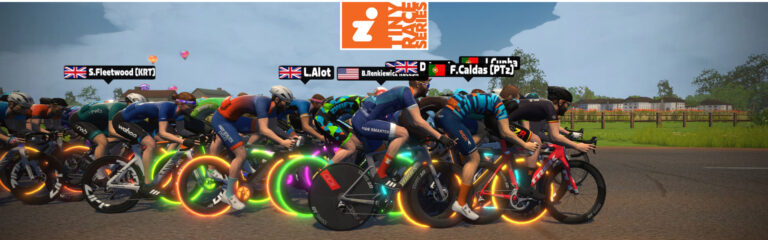
See zwiftinsider.com/tiny for current Tiny Race details.
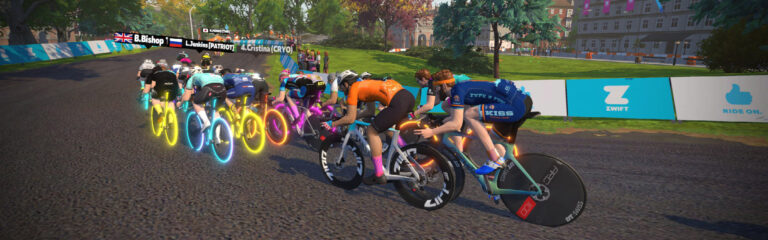
Zwift has posted a new set of “fast, friendly, and totally unserious” races, dubbed the “Friday Night Fun Races.” These popped up on the calendar unannounced, and are unique in a few different ways, so we wanted to get the word out…
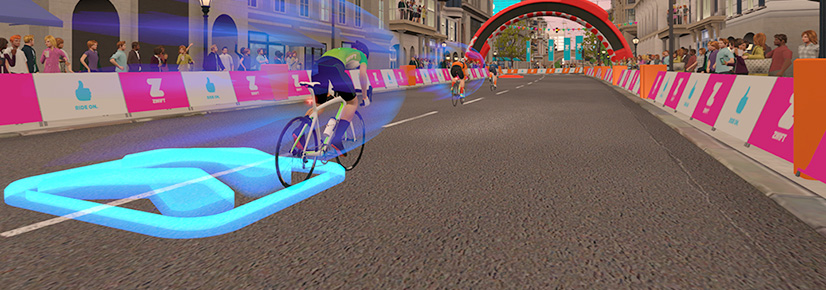
Everyone starts with a boost powerup, with “extras available throughout the race,” according to Zwift. Trigger it for a short, sharp speed boost. Sometimes the powerup gives you one boost, while other times it gives you two.
There are other surprises in store as well, and it sounds like each week will have its own twist. (We’re hearing rumors of dino suits and big wheels being tested, but who knows what Zwift will actually settle on.)
You’ll be categorized by your existing Racing Score for fair competition. But in an interesting twist – I think this is a first on Zwift – race results won’t impact your score. Zwift says they’re doing this to keep pressure low and fun high.
Races are scheduled at five different timeslots each Friday:
The first three weeks of races are now on the calendar:
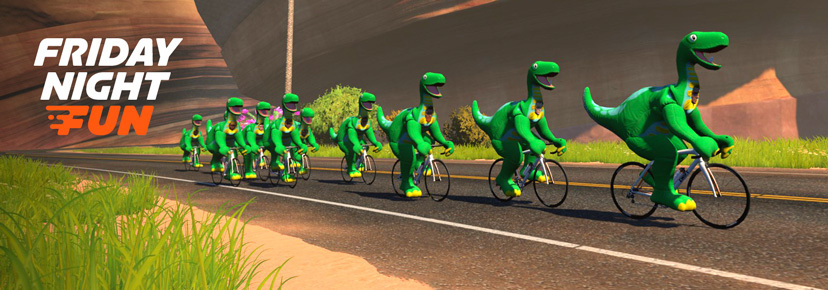
Sign up at zwift.com/events/tag/fridaynightfunrace
If you take part in one of these events, share your comments below to let others know how it went!

Team TMR p/b Passage is a Zwift team based in Japan and the US, led by Rie Tamuro and managed by her husband Kota. While the team includes both men and women, they are currently focusing on supporting and uplifting the Japanese women’s Zwift community through new events, including the Japan Women’s Racing Series which was just announced for July. Read on for details…
Open to women worldwide, the series is designed to be inclusive and beginner-friendly, while still offering a competitive format. Riders will be divided into categories (A/B/C) based on their Zwift Racing Score to ensure fair racing.

Races are scheduled at 7:30am EDT/8:30pm JST) each Tuesday in July to suit riders in Japan and other Asia-friendly regions.
See all upcoming series events at zwift.com/events/tag/jwrs
Full race descriptions, course details, and additional context are available on the official event announcement page.
TMR stands for Team TaMuRo – yes, the name comes from the team’s leader, Rie Tamuro! The team started with a playful spirit: “Go all in on fun, and before you know it, you’re strong.”
(July’s race series also commemorates the 600th livestream on Rie’s YouTube channel – an impressive feat!)
It’s a family-run community, with Rie as the leader and her husband, Kota, as the manager. From competitive racing to social rides, Team TMR is all about creating a space where everyone belongs – no matter their experience level.
Recently, we entered into a sponsorship agreement with Passage, a U.S.-based company developing immersive 3D event spaces. Under their new name Team TMR p/b Passage, they aim to deliver next-level livestreams where viewers can explore and interact inside custom-built virtual race venues, making the racing experience more immersive and participatory than ever!
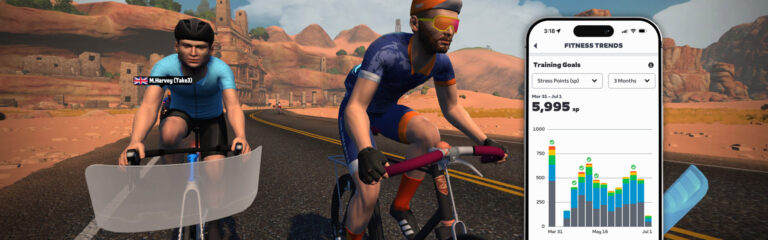
Today, Zwift rolled out a much-requested enhancement to its Companion-based Fitness Tracker. Dubbed “Fitness Trends”, it allows us to track our historic fitness via simple charts in the Companion app:
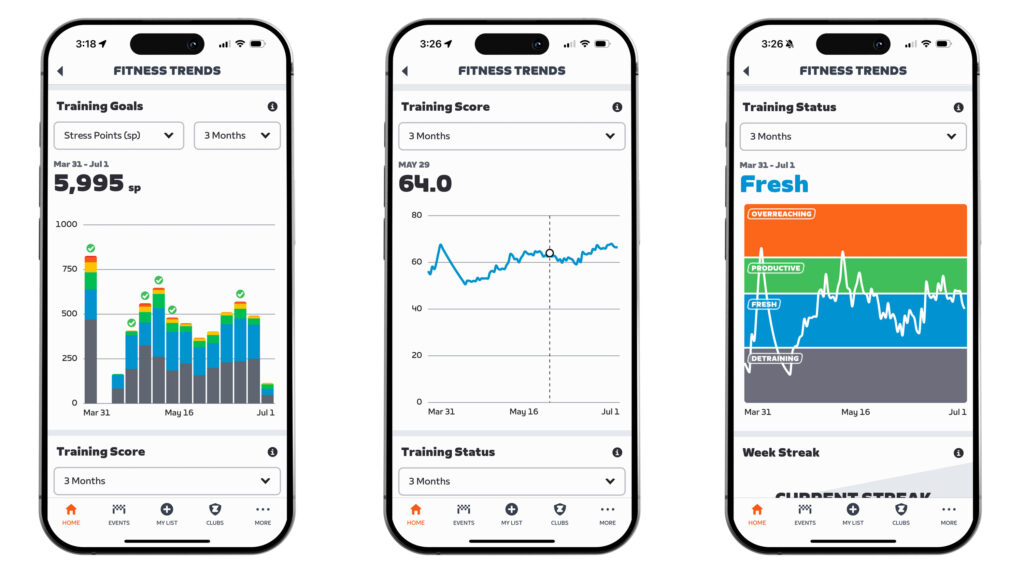
Start by tapping “Fitness Trends” at the top of your Companion app homescreen. (This is only visible if you’re “offline” with Zwift and not in the live view mode that is automatically enabled when connected to your active Zwift session.)
Fitness Trends is launching with three charts:
Tapping anywhere on these charts lets you see precise values for a given date.
Each chart includes a configuration dropdown or two:
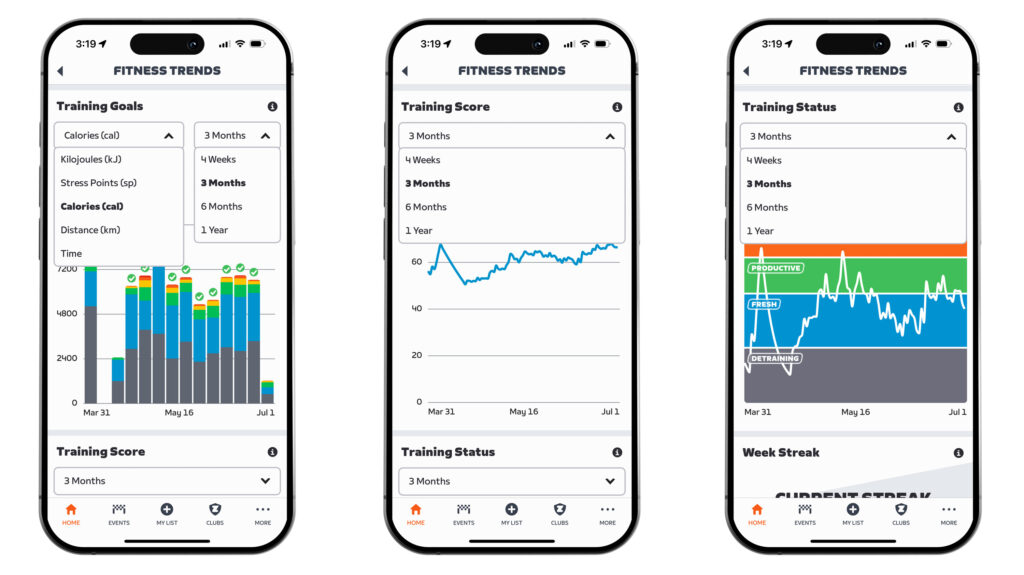
Note: while the charts’ time windows can be expanded up to 1 year, due to Garmin and Wahoo API restrictions Zwift only imported 90 days of past activities when Fitness Tracking launched back in early April 2025. That means data on these charts prior to January 2025 won’t be terribly accurate/useful.
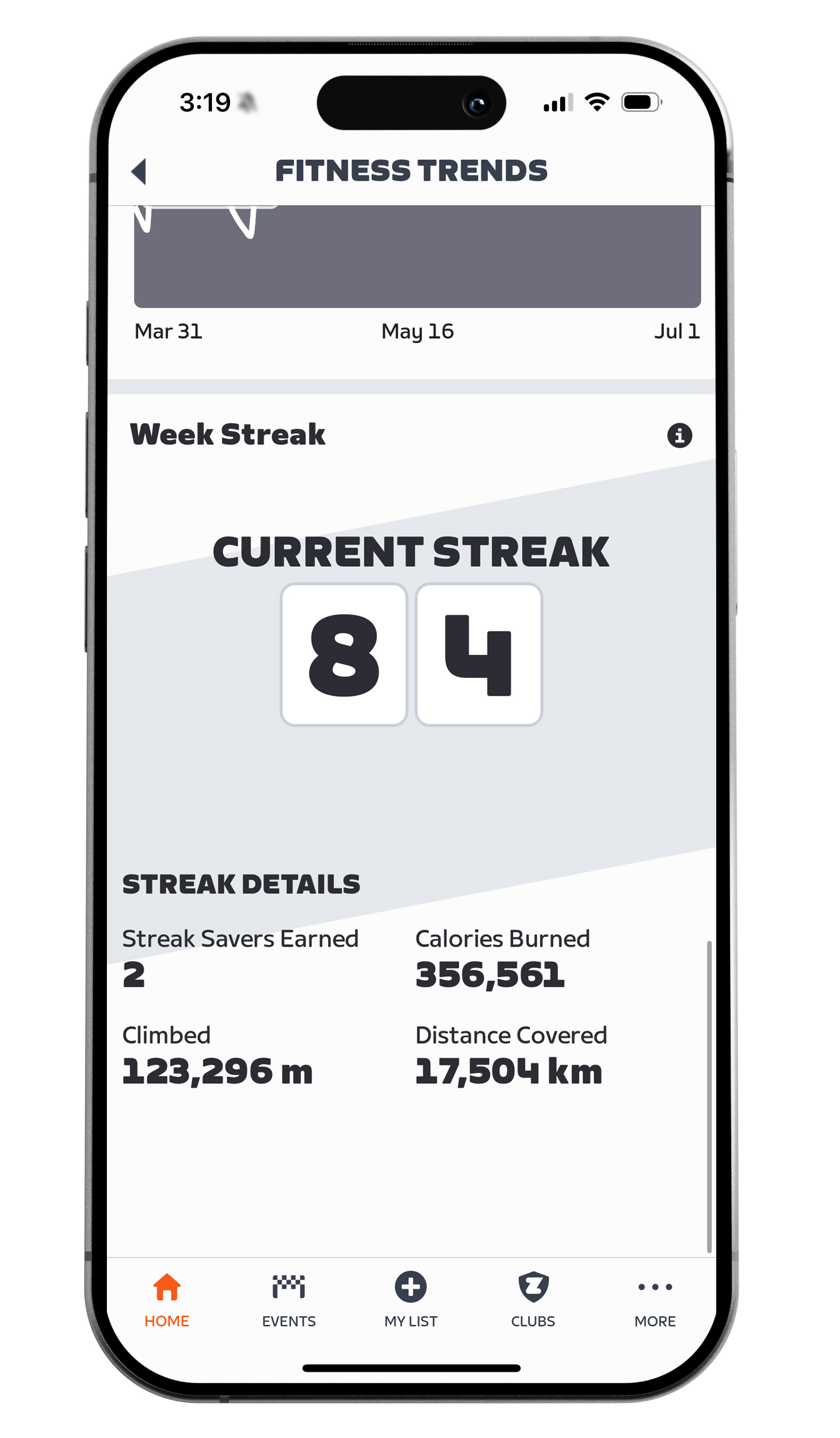
Scroll to the bottom of the Fitness Trends screen and you’ll find a Week Streak summary:
If you also ride outside, Zwift’s Fitness Tracking will only be accurate if you get those outdoor rides imported into Zwift along with your Zwift activities.
This post explains how to import activities from Garmin and Wahoo. In that post, I also explain why I recommend setting an accurate FTP and using a power meter outdoors.
What do you think of Zwift’s new Fitness Trends? And more importantly, do you have that coveted 84-week streak showing you haven’t missed a week since Streaks launched? Comment below!
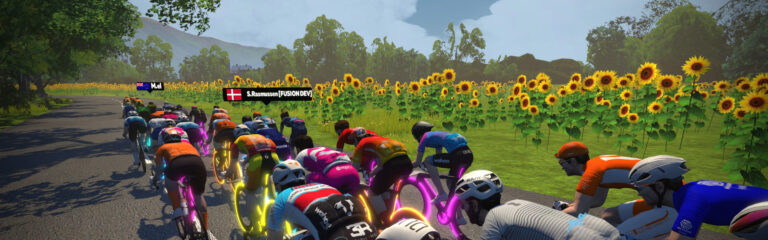
Four years ago, a simple idea made a big splash in the world of Zwift racing: what if Zwifters could experience their own version of the Tour de France, with stage-by-stage racing that mirrors what the pros tackle in real life? That idea became Chasing Yellow, and on July 5, ECRO’s flagship Grand Tour returns for its fourth edition.
As previously announced on Zwift Insider, the E-Cycling Race Organization (ECRO) is working to transform virtual cycling with its comprehensive racing platform. And the heart of this ecosystem is Chasing Yellow: the 21-stage Grand Tour that started it all.
The concept behind Chasing Yellow is straightforward: when the pros face flat stages built for sprinters, Chasing Yellow participants get their own sprint opportunities. When the peloton tackles mountain stages, virtual riders experience their own climbing battles on challenging terrain.
Each of the 21 stages offers a mini-version of what the professional peloton faces that same day. This creates an opportunity to experience cycling’s greatest event from the inside, with stages that mirror the terrain and tactical challenges of each Tour de France day.
Chasing Yellow 2025 follows the same three-week schedule as the Tour de France, running from July 5 to 27. The 21-stage route offers diverse challenges, from flat sprinter stages to brutal mountain finishes.
Rest Day: Tuesday, July 15
Rest Day: Monday, July 21
Full race times and registration details are available at www.ecro.app.
While the Tour de France crowns individual winners, Chasing Yellow embraces cycling’s team nature through ECRO’s team competition structure. Teams of up to 12 riders work together across categories, making strategic decisions that span the entire three-week competition.
The team dynamics add tactical layers that don’t exist in traditional Zwift racing. Teams decide when to send climbers up the road on mountain stages or control the race for sprinters in flat stages. These decisions play out across 21 stages, creating storylines that develop over three weeks.
Chasing Yellow brings together riders from around the world through multiple race events for each stage. The competition uses ECRO’s five-category structure based on zwiftracing.app vELO ratings, ensuring riders compete against others of similar ability while contributing to their teams’ overall success.
This creates multiple competitions within each stage, from elite Category A battles to developing riders pursuing their first Grand Tour stage win in Category E.
Chasing Yellow exists within ECRO’s ecosystem of team contracts, rider transfers, and virtual economics. Teams invest in riders throughout the season, and success in Chasing Yellow impacts rider values and team standings. A breakthrough performance can transform a rider’s virtual career, while team success enhances reputation and recruitment opportunities.
The three weeks of racing also bring the ECRO community together in the platform’s active Discord channel. July becomes a lively month of competition as riders debate tactics, celebrate stage wins, and offer support and encouragement throughout the demanding tour. The camaraderie and banter that develop over 21 stages often become as memorable as the racing itself.
The 2025 edition of Chasing Yellow brings together established teams and emerging squads, promising competitive racing. With ECRO’s platform now supporting a full season calendar, teams arrive at the Grand Tour with established form and championship aspirations.
Riders looking to participate in Chasing Yellow must obtain an ECRO Rider License ($7.99 for the 2025 season) and meet platform requirements, including Zwift Power registration and the use of a heart rate monitor. Teams require a Team License ($12.99 for the 2025 season) to compete in the full competition.
While anyone can join ECRO events on Zwift, licensed participants compete in the official standings and experience the complete Grand Tour competition.
Learn more about ECRO registration, pricing, etc >
Four years after its debut, Chasing Yellow has evolved from an ambitious experiment into what is arguably virtual cycling’s premier Grand Tour. For riders seeking more than isolated race experiences and teams wanting strategic depth, Chasing Yellow offers a three-week racing experience you simply won’t find elsewhere.
Chasing Yellow is part of the ECRO World Tour 2025, featuring 75 races including three Grand Tours throughout the season. Learn more about ECRO and register for the 2025 season at www.ecro.app

Back in May, I published XP Farming on Zwift’s Climb Portal – the Ultimate Guide. In it I detailed how you could “game” Zwift’s Climb Portal to earn lots of XP per hour and level up more quickly.
Maybe that post caught the attention of someone at ZHQ. Or maybe they already had a change in the works? Regardless, last week’s game update (version 1.92) included an unannounced change to the powerup probability algorithm in the Climb Portal.
Previously, the probability of getting a Large Bonus powerup (which awards 250XP) was 10% (feathers were 25%, small XP bonus 65%). With every climb portal having 10 powerup arches, this meant you would average 1 Large Bonus each time you completed a Climb Portal.
The new algorithm for determining the probability of obtaining a Large Bonus powerup considers both the selected difficulty scaling (50%, 75%, 100%, or 125%) and the climb’s total ascent. There is also a minimum (1%) and maximum (10%) probability.
Examples:
Let’s compare estimated XP earnings per hour between the old flat 10% probability and Zwift’s new algorithm explained above. Our first example uses the shortest possible climb (Cauberg) at 50% scaling.
An hourly rate of 2530XP is better than any other XP farming method, but keep in mind that’s at a 4 W/kg pace and on the shortest climb in the library. (Also, Zwift has stopped scheduling the Cauberg because its GPS coordinates overlay the start of Norton Summit, resulting in riders getting credit for both climbs when riding Norton Summit.)
What if we use the next shortest climb, Oude Kwaremont, at a more reasonable 3 W/kg pace?
Most XP farming approaches on Zwift earn 1200-1600XP per hour, including Shane Miller’s Alpe du Zwift workout approach. So this XP earn rate of 1591XP is right in line with other methods, whereas before the probability update it more than doubled the other approaches.
I’d say yes. While you can still earn a healthy amount of XP on Zwift’s shortest portals, it’s nowhere near the amount of XP you could earn previously.
While the Climb Portal still serves many good purposes (enabling us to climb GPS replicas of real-world climbs, providing a place for targeted hill climbing, etc.), riders won’t be climbing in the portal with the goal of leveling up extra quickly.
Do you think Zwift made the right move in reducing the Large Bonus probabilities in the Climb Portal? Will you still be using the Climb Portal despite the XP reductions? Share your thoughts below!

This week at Eurobike, Garmin released the Tacx Alpine, a gradient simulator for indoor cyclists similar in general function to the Wahoo KICKR Climb and Elite Rizer. It does, however, have some unique features which I’ll explain below.
You can see it in action in this short hype video, but I think this “look inside” video from Garmin is much more interesting:
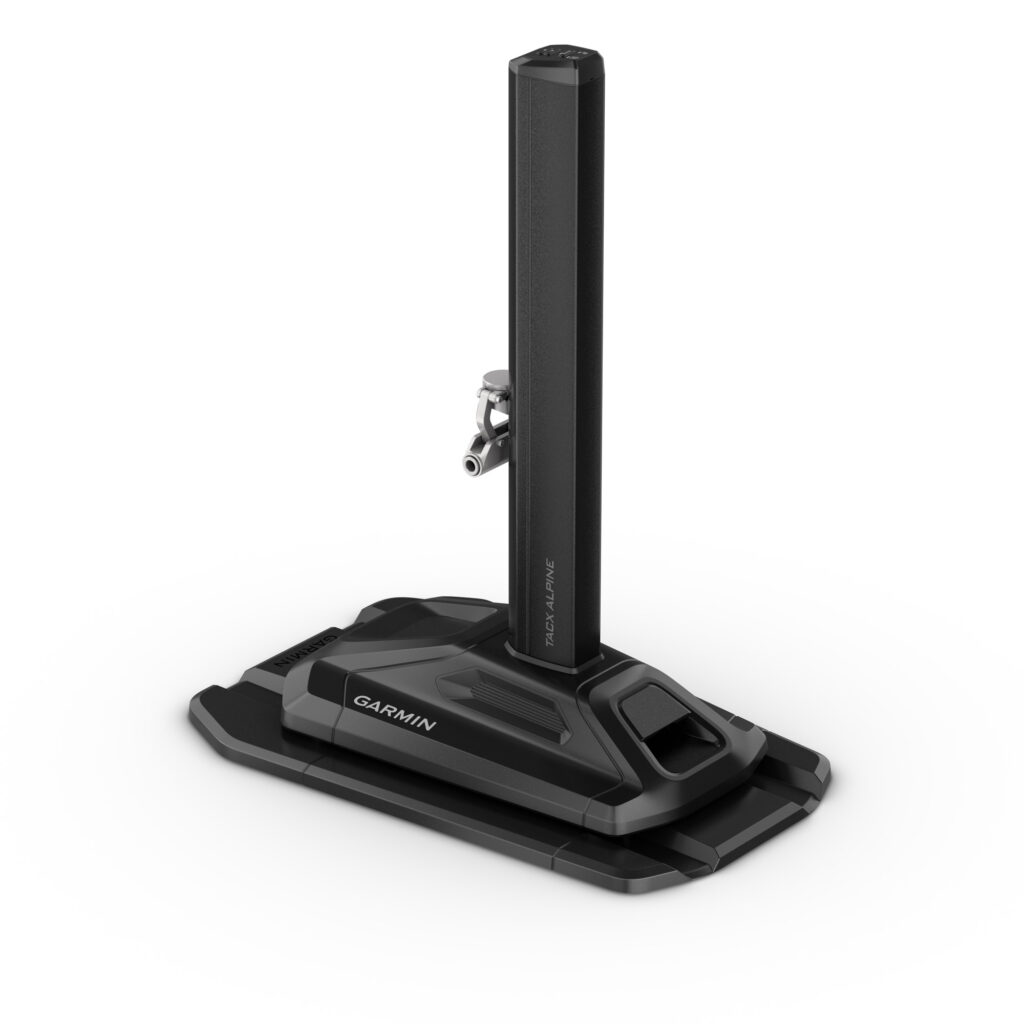
The Tacx Alpine works exclusively with Garmin’s two flagship trainers: the Tacx NEO 2T and Tacx NEO 3M.
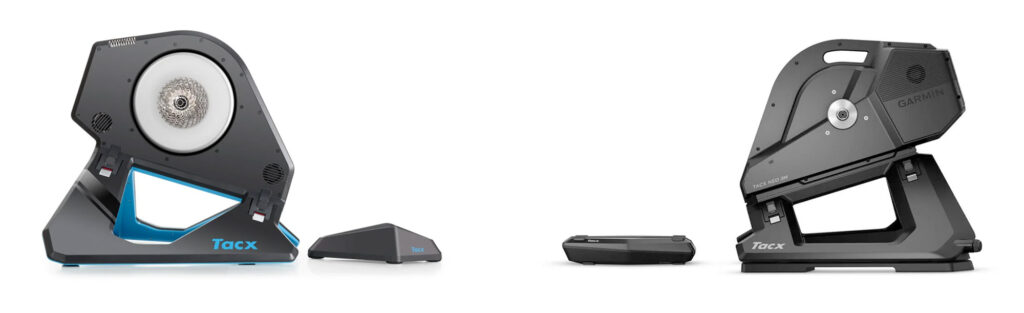
Older Tacx trainers are not compatible because they do not allow the rear axle to rotate.
How does the Tacx Alpine compare to the other two climb simulators on the market, the Wahoo KICKR Climb and Elite Rizer?
First, it has a higher maximum gradient (25%) than the other two (20%). This shouldn’t matter much to most Zwifters, though, since there are very few road sections above 20% in Zwift, and most Zwifters aren’t riding at 100% Trainer Difficulty anyway.
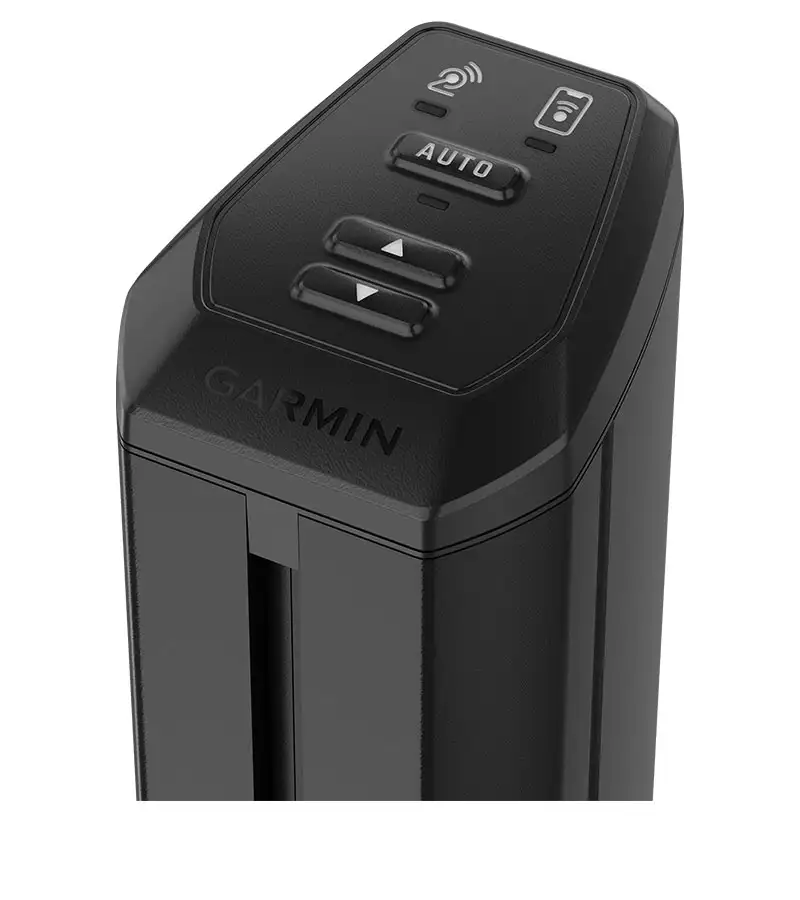
The Alpine has, arguably, better app integration as well, with the ability to easily control it via the Tacx app and also set a minimum or maximum gradient to keep your frame safe.
The Alpine has fore/aft movement and Zwift-compatible steering, two features also found on the Elite Rizer but not on the Wahoo KICKR Climb.
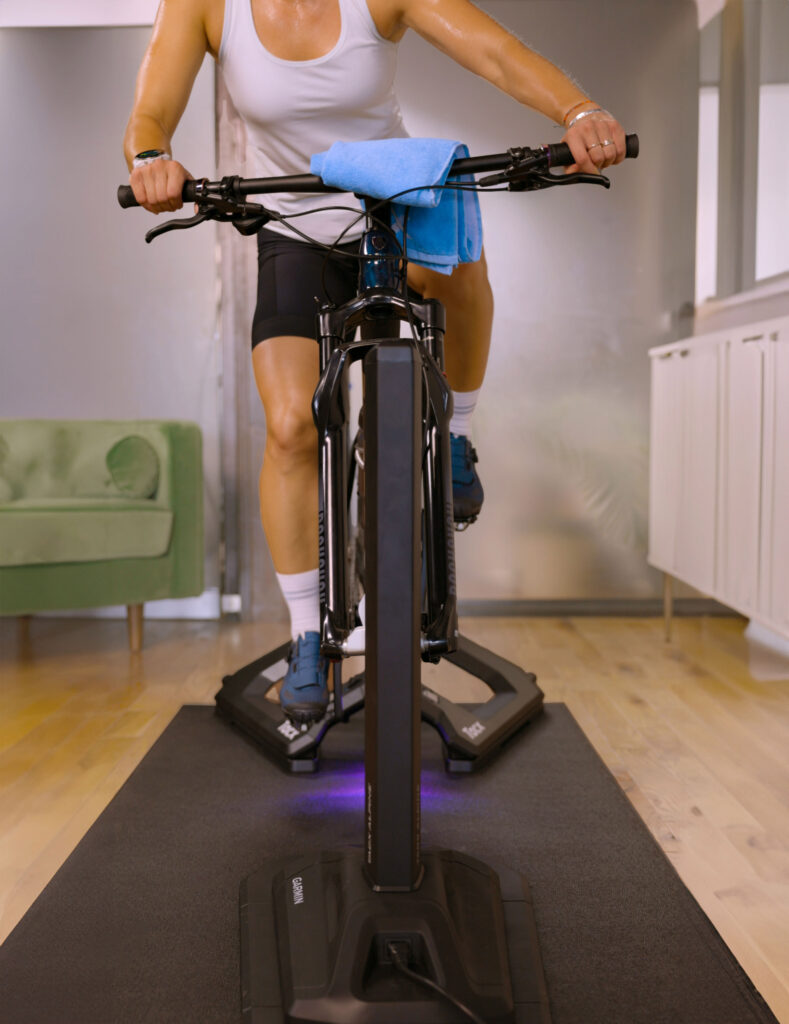
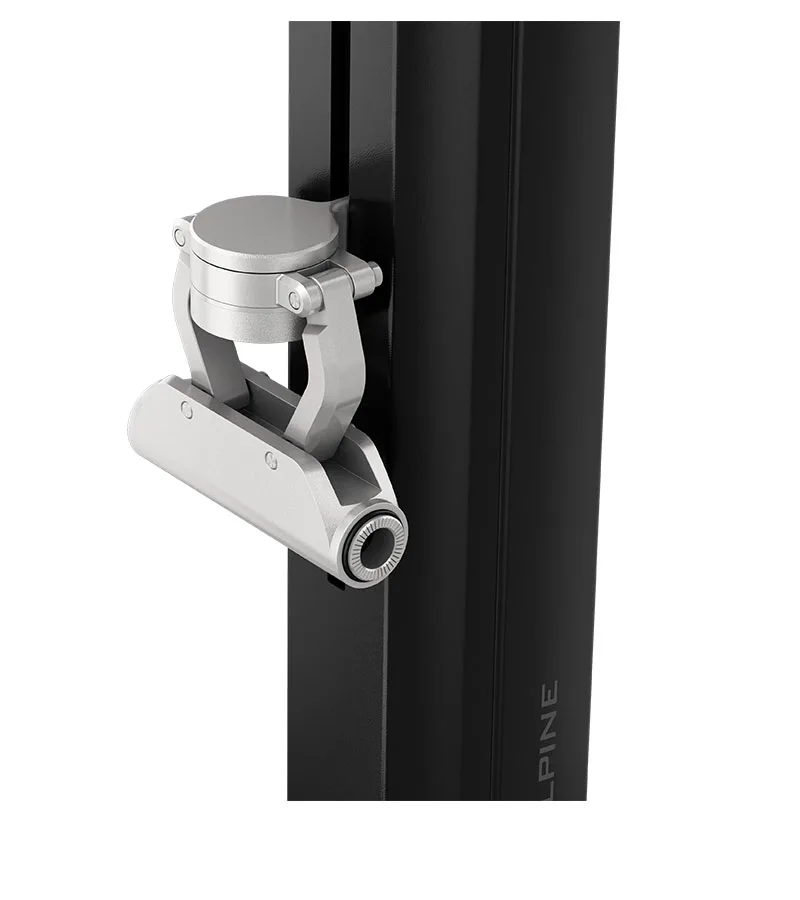
The Alpine’s front fork mount is complex and unique, offering the highest degree of movement between the three simulators. Wahoo’s mount effectively locks you in tight, while Elite’s allows for some degree of left-right movement, but no sway. The Tacx Alpine mount allows for both left-right steering movement and sway.
Lastly, and not surprisingly, the Tacx Alpine is the most expensive of the bunch:
The Tacx Alpine is now available at Garmin.com >
This week’s first two picks are nearly identical events: banded group rides on pretzel routes at 7am UTC on Saturday. You can’t ride both, though, so you’ll need to choose!
Our other event picks this week include two long group rides and a race from our friends at HISP. Ride on!
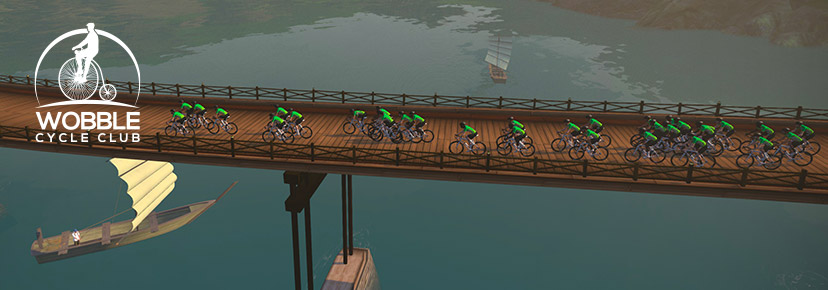
✅ Banded Ride ✅ Beginner-Friendly ✅ Endurance Challenge
Beth’s Badge Hunt is a series of monthly rides taking on big Zwift routes. Led by Wobble Cycling Club’s Beth Phillips, these are banded rides, so everyone can ride at whatever effort level they’d like.
This weekend’s ride is on the London Pretzel route (56.2km, 576m).
Saturday, June 28 @ 7am UTC/3am ET/12am PT
Sign up at zwift.com/events/view/5018049
✅ Banded Ride ✅ Beginner-Friendly ✅ Endurance Challenge
The friendly Bikealicious crew is leading a “keep together” group ride on the Watopia Pretzel route (72.6km, 1361m). Grab this route badge if you haven’t done so yet, which comes with 1440 of extra XP! This is a banded ride, so as long as you keep turning those pedals over, you’ll hang with the group. Ride whatever pace you’d like!
Saturday, June 28 @ 7am UTC/3am ET/12am PT
Sign up at zwift.com/events/view/5029413
✅ Endurance Challenge ✅ Pace Options
Here’s a popular long ride with two pace options: B group at 3-3.3 W/kg, or C at 2.5-2.9 W/kg. Both groups will be riding The Big Ring for 100km, with optional efforts on some of the intermediate segments if you’d like.
Choose your desired pace, listen to the ride leader, and get that endurance work done! Both categories have a leader (yellow beacon) and sweepers.
Saturday, June 28 at 8:05pm UTC/4:05pm ET/1:05pm PT
Sign up at zwift.com/events/view/5029638
✅ Route Badge ✅ Popular Event
Looking for a race? This one already has a solid number of signups, and it’s held on France’s new Bon Voyage route (31.4km, 155m).
Sunday, June 29 @ 8:05am UTC/4:05am ET/1:05am PT
Sign up at zwift.com/events/view/5030242
✅ Popular Ride ✅ Legacy Leader ✅ Endurance Challenge ✅ Kit Unlock
A regularly-featured event here on Zwift Insider, the BMTR Fundo consistently gets lots of joiners because it’s well-led and run consistently week after week, year after year.
This week’s ride is on France’s new Knights of the Roundabout route, and you have four distance groups to choose from, all the way up to 100 miles!
Saturday, June 28 @ 12:10pm UTC/8:10am EDT/5:10am PDT
Sign up at zwift.com/events/view/5029515
We choose each weekend’s Notable Events based on a variety of factors including:
In the end, we want to call attention to events that are extra-special and therefore extra-appealing to Zwifters. If you think your event qualifies, comment below with a link/details and we may just include it in an upcoming post!

Today, Zwift released two new wheelsets from DT Swiss: the ARC 1100 DICUT 65 and the ARC 1100 DICUT 85/Disc. The disc wheel is a virtual version of DT Swiss’ latest ARC 1100 DICUT DISC, while the carbon hoops are based on DT Swiss’ latest ARC 1100 DICUT DB (for disc brake) models.
| DT Swiss ARC 1100 DICUT 65 | DT Swiss ARC 1100 DICUT 85/Disc |
| Level 29 unlock | Level 40 unlock |
| 650,000 Drops | 1,000,000 Drops |
| Aero Rating: ⭐⭐⭐⭐ | Aero Rating: ⭐⭐⭐⭐ |
| Weight Rating: ⭐⭐⭐ | Weight Rating: ⭐ |
| “Wider, higher, lighter: the ARC 1100 DICUT 65 wheelset is the best choice when you are in a breakaway group and looking for the best aero-to-weight ratio. The v-shaped 65mm high rim, combined with the AERO 111 front wheel tire, makes your favorite bike faster and will not let you down in the final sprint!” | “The innovative AERO 111 tire on the ARC 1100 DICUT 85 front wheel and the ARC 1100 DICUT DISC rear wheel is your perfect companion for super-fast rides and new high-speed challenges. Take the lead and go for your personal victory.” |
Zwift’s 4-star rating system is a good starting point, but it’s not precise enough for our taste. So we ran these wheels through our standard battery of tests to determine exactly how they perform in Zwift and stack up against other wheelsets in game. And guess what? These wheels are fast.
Let’s dive in and learn all about the performance of these two new wheelsets from DT Swiss…
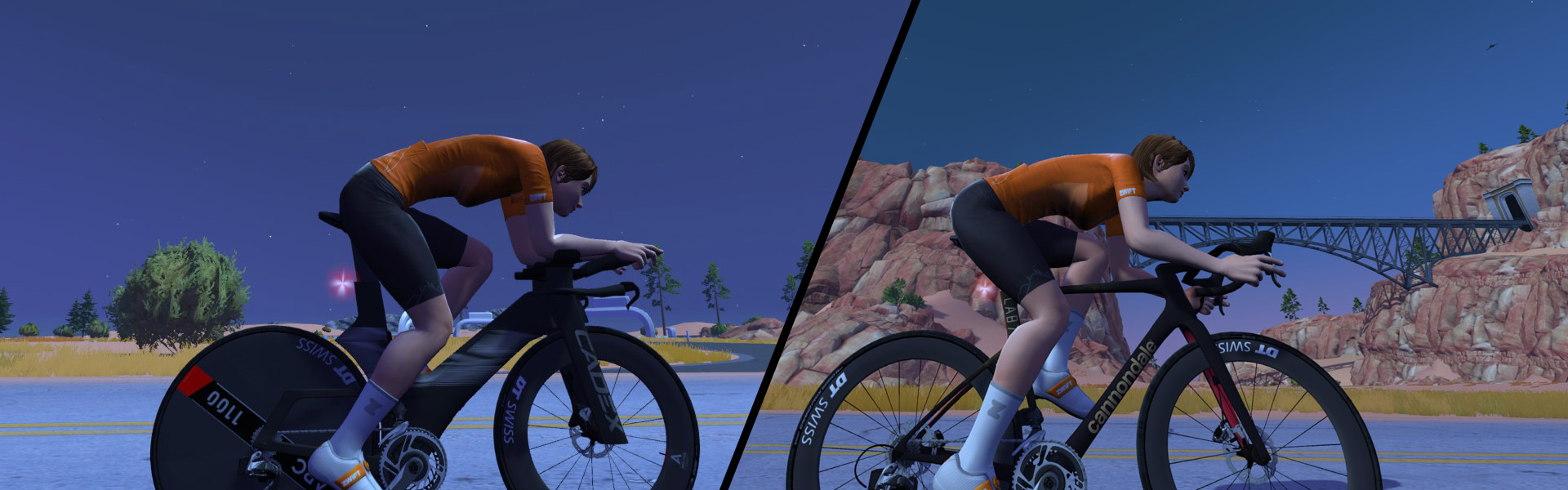
Simply put, both wheelsets deliver best-in-class performance at high speeds, with the 65 being the new fastest non-disc wheelset in Zwift, and the 85/Disc being the new fastest wheelset overall.
The 65 is just a bit slower than the ENVE 8.9 on our flat test, edged out by a half second. But our test’s margin of error is 1 second, and the 65 handily outclimbs the ENVE 8.9. This makes them the fastest non-disc hoops in game, saving 46.2 seconds across an hour of flat riding vs the stock 32mm carbon wheels.
The 85/Disc is 4 seconds faster than the Zipp 858/Disc, formerly the fastest wheels in game. That means the 85/Disc is the new king, shaving 52.5 seconds over an hour vs the stock 32mm carbon hoops.
Comparing the older DT Swiss wheelsets to the new, the 65 is 7 seconds faster on the flats vs the DT Swiss ARC 1100 DICUT 62, while the 85/Disc is 4.3 seconds faster than the DT Swiss ARC 1100 DiCut Disc.
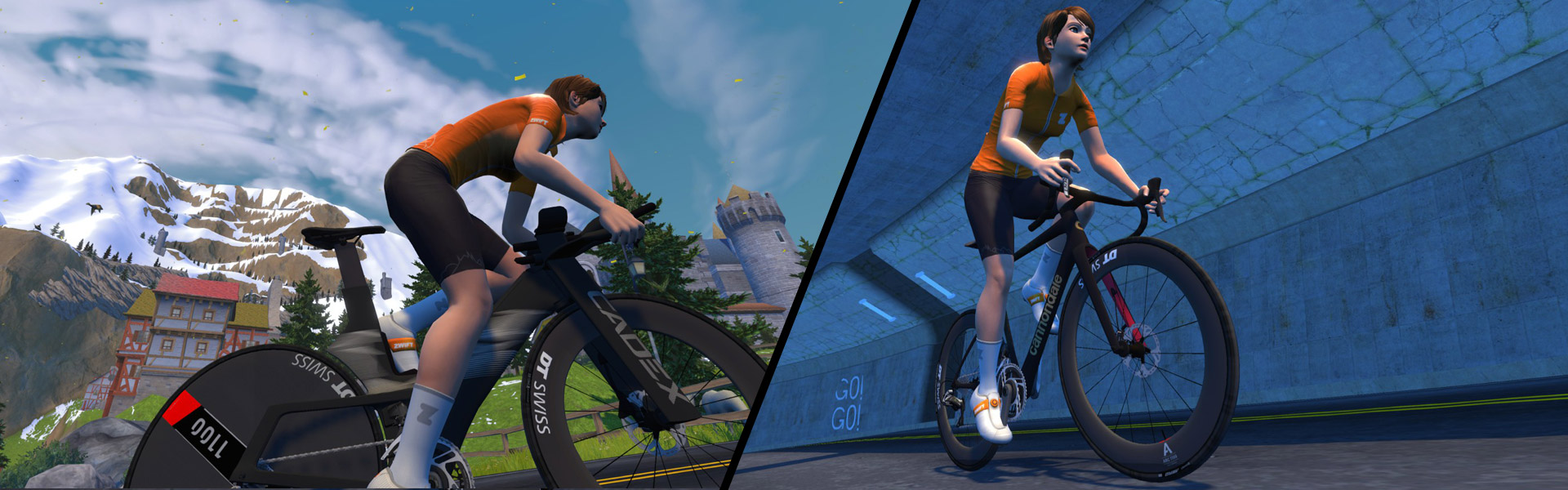
The 65 handily beats the ENVE 8.9 on our climb test, solidifying its position at the top of the non-disc food chain (at least for now). The 65 gains 11.3 seconds on the ENVE 8.9 across an hour of climbing, and in fact outclimbs the more nimble ENVE 7.8 by 3.4 seconds as well! They aren’t the best climbing wheels in game, but they are the best all-around, non-disc wheels, saving 2.7 seconds across an hour of climbing vs the stock 32mm carbon wheels.
The 85/Disc climbs just a bit slower (0.9 seconds) than its closest competition, the Zipp 858/Disc. Both wheelsets are quite heavy and not intended for climbing races, so it’s no surprise that the 85/Disc loses 20.3 seconds to the stock 32mm carbon hoops across an hour of climbing.
Comparing the older DT Swiss wheelsets to the new, the 65 is 2.7 seconds faster on the climb vs the DTSwiss ARC 1100 DICUT 62, while the 85/Disc is 3 seconds faster. Impressive uphill gains, considering the new wheelsets are deeper than the older ones!
Note: all test results above are from a 75kg, 183cm rider holding 300W steady using the Zwift Carbon frame.
Astute Zwifters may notice that Zwift has begun placing labels on tires, pairing particular tires with particular wheelsets per the manufacturer’s spec. I think it’s a fun little detail. Here’s what you can see on these new DT Swiss wheels:
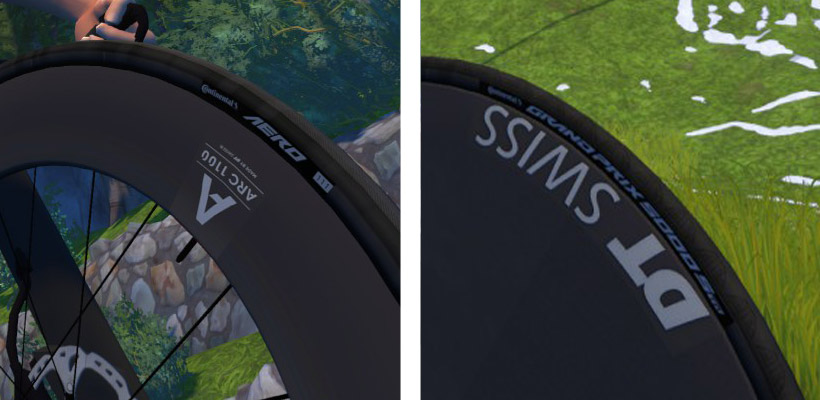
The front tire on both wheelsets is the Continental AERO 111, while the rear tire is the Continental Grand Prix 5000 S TR (the tubeless-ready version of the ever-popular Grand Prix 5000).
These wheels effectively replace the previous DT Swiss ARC wheels in the Drop Shop. (That is, if you already owned the ARC 1100 DICUT 62 or ARC 1100 DICUT DISC wheels before today they’re still in your garage, but if you want to purchase new DT Swiss wheels these older models are no longer available.)
Both of these wheelsets will be immediately popular with Zwift racers, because they both perform better than any other wheel in their class.
The ARC 1100 DICUT 65 will be very popular in rolling races or those where the climbs are short and draftable enough to maintain high speeds.
Remember, disc wheels roll faster when paired with TT frames than with road frames (around ~18 seconds per hour faster on flat ground, based on our tests). That means the ARC 1100 DICUT 85/Disc will be popular with TT racers on flat and rolling courses. You’ll also see road racers using them, but only when the course is quite flat.
These wheelsets have been added to the following posts:
Share below!
Important note: this post contains speed test results for Zwift frames or wheels. These results may change over time, and a bike's performance relative to others may also change. We don't always revise posts when performance rankings change, but we do keep current, master versions of our speed test results which are always available. See the frame charts, wheel charts, and Tron vs Top Performers for current performance data.
Zwift’s “ZRacing” is the platform’s most popular ongoing race series, and July’s races have us jumping on the Tour Fever train with five TdF-themed stages in France.
New this month: a “Cool Down” feature that extends the race experience past the finish line. Read on for details about this month’s race routes and more!

Here are the routes we’ll be racing in July:
See upcoming Range 1 events >
See upcoming Range 2 events >
See upcoming Advanced events >
See ALL upcoming events >
Zwift is debuting a new “cool down” feature in July’s ZRacing events. After each race, riders will stay in the event for 10 minutes instead of automatically returning to the open world, giving you a chance to warm down with the people you just raced against.
Each rider’s finishing position will be on the back of their kit, and you can click to view race results in the HUD whenever you’d like.
Zwift debuted new web-based leaderboards at zwift.com for tracking the Zwift Games 2025 GC, and an upgraded version of those leaderboards is now being put to work for the monthly ZRacing series.
Access July’s leaderboard at zwift.com/racing/leagues/zracingjul2025 >
Your GC ranking is based on your best finishing time for each stage, and you can race each stage more than once to try for a better time.
Zwift schedules three different flavors of ZRacing events in order to encourage “Fairer, more competitive racing for everyone.” They each use different racing score ranges for categorization and are titled Advanced, Range 1, and Range 2. Click banners below to see upcoming events for each:

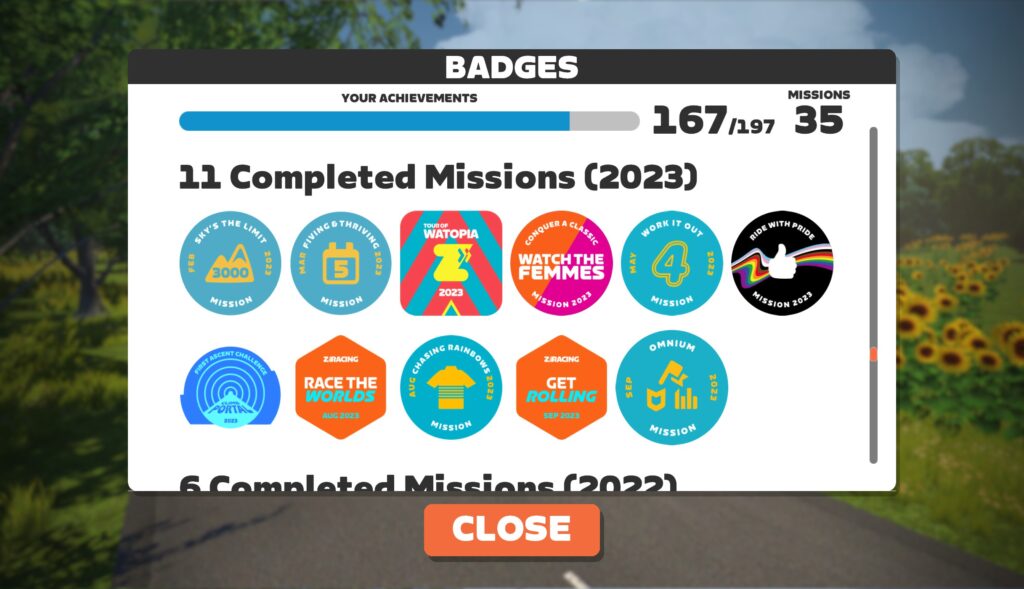
Each month’s ZRacing series has a unique achievement badge, which you can unlock by finishing every stage for the month. There are no makeup events, so if you miss a stage, you miss out on the badge and competing in the GC.
Zwift has planned these events to deliver a solid 1-hour workout, so each race should only take around 1 hour to complete, including your warmup and cooldown.
Post below!