Home Blog Page 267

Zwift Racing League 2021/22 Season 1 Week 4 Race Guide (Casse-Pattes)

18

The third points race of Zwift Racing League 2021/22 Season 1 happens Tuesday, October 19th (Monday the 18th for Premier Division racers). This week has something everyone – sprints, short climbs, and one of the longest climbs of the season.

The race takes place on France’s Casse-Pattes route, which has never been raced before in ZRL. On top of that there are four timed intermediate sections (two sprints and two KOMs), certain intermediates not awarding standard segment points, and A/B racers racing longer than C/D racers. It’s a lot to wrap your head around – but we’re here to help!

Let’s dig into the course, including tips for bike choice, strategic options, and details about those confusing intermediate points competitions.

Looking at the Route: France’s Casse-Pattes

French cyclists use the term “casse-pattes” (literally “leg-breaking”) to refer to particularly difficult parts of a ride, or roads that awkwardly change gradient and break a cyclist’s rhythm. It’s a fitting name for this route, which is quite flat and steady until the all-important Petit KOM section.

One lap of this route is 23km (14.3 miles) long, with 145m (476′) of climbing. A/B categories will race two full laps, while C/D will race around 1.5 laps, ending atop the Aqueduc KOM Reverse for a total distance of 35.7km according to WTRL.

The race begins with a short lead-in from the start pens to the Marina Sprint Reverse banner. This may be ZRL’s wildest race start yet, because the first Marina Sprint is an intermediate offering first across the line (FAL) and fastest through segment (FTS) points.

So plan on the typical hard start out of the pens – with a sprint to finish it off! The sprint begins just 700 meters into the race.

Once we’re through the Marina Sprint things stay fairly flat and simple until the next sprint, Pavé Sprint Reverse. When you find yourself riding through the field with sunflowers on your right, you know you’re approaching the sprint. It begins as you turn right and head through the arch into town. And you can’t see the start line until it’s too late to start your effort, so make sure you keep an eye on your minimap so you know where you’re at!

Oddly enough, for this race WTRL isn’t giving points for FTS on the Pavé Sprint – only FAL. This is important to know, if you’re contesting sprint points, as it may change your positioning strategy approaching and during the sprint.

The Pavé Sprint is a fairly long segment at 340m on slower-rolling cobbles. Fast sprinters will complete it in 18-22 seconds.
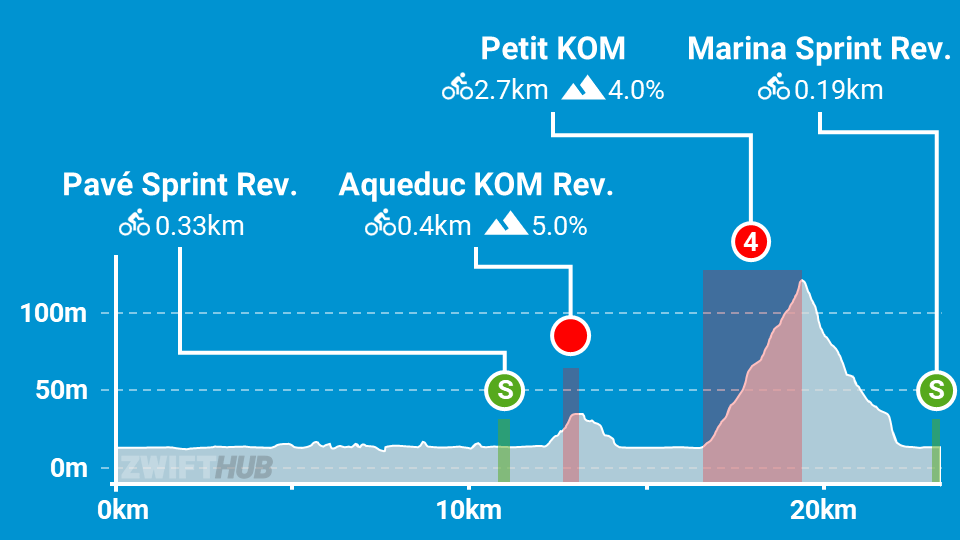
After the Pavé Sprint we have a moment to catch our breath before the road tilts upward, heading into the Aqueduc KOM Reverse. The stats on this climb are deceiving since you’ve got around 0.5km of snaking uphill leading into the timed segment. Efforts will lift as the road lifts, so be ready to go hard for around 1 full kilometer, with a bit of extra mustard in the final flat meters as you battle for placement over the line.

Like the Pavé Sprint, there are no FTS points given for the Aqueduc KOM – only FAL matters. (We checked with WTRL and confirmed that this includes the second lap for C/D riders, where the Aqueduc KOM banner is the finish line but also awards FAL points!)

Then it’s a short, winding descent to flat ground and a bit of recovery before the big climb of the day. If you were poorly positioned on the Aqueduc KOM you may spend extra effort chasing wheels here, so try to come over the top well-placed. There will certainly be a selection on this short climb, and you don’t want to be relegated to the chase group!

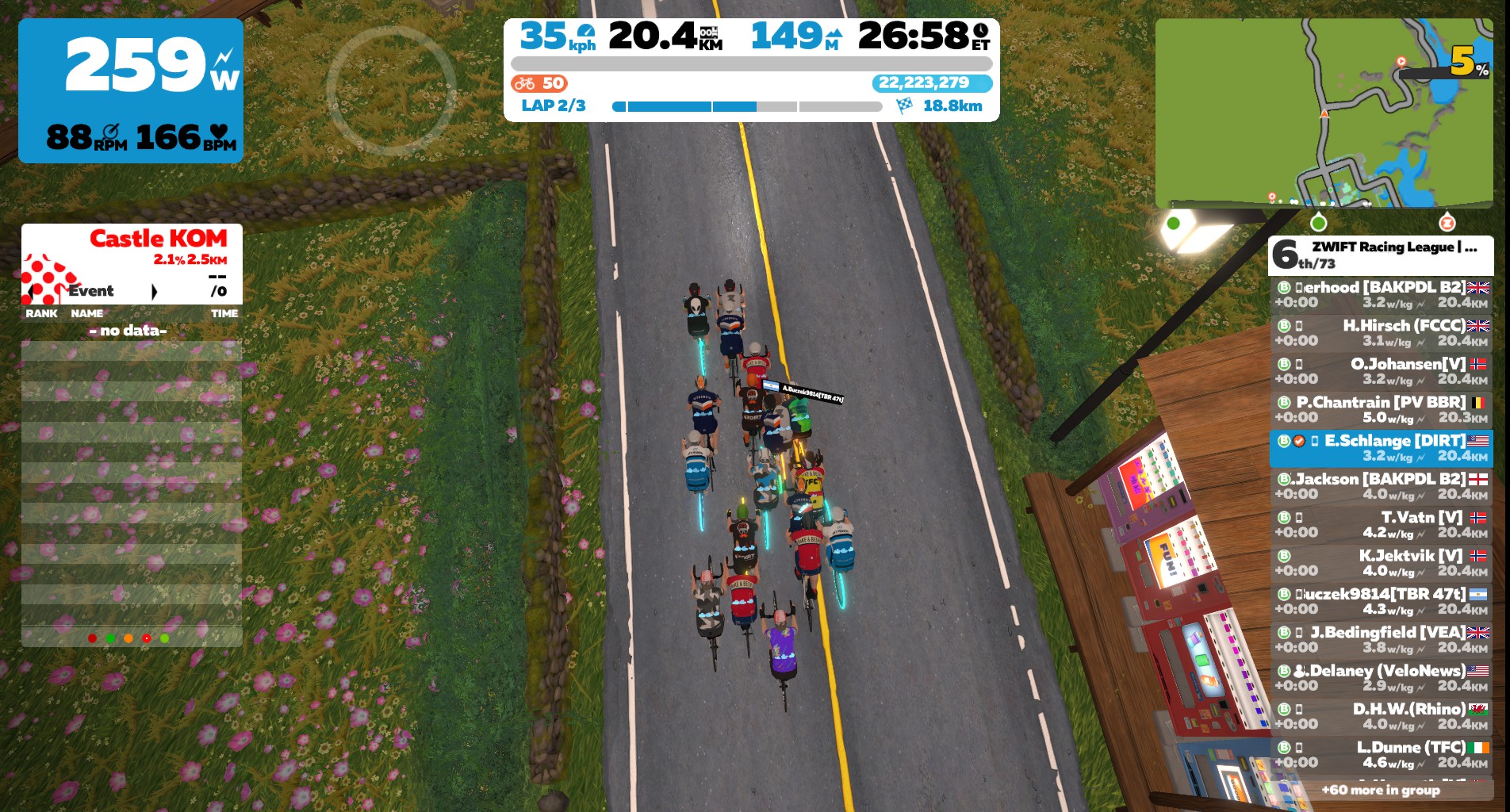
The Petit KOM is next, and don’t let the name fool you. This draggy climb is going to force the biggest splits of the race. It’s a challenging climb at 4% for 2.7km. Some sections are flatter (2-3%), especially at the start of the climb before the zigzags. These areas offer more advantage to those who are drafting. Other sections are steeper (6-7%) and pure w/kg will be crucial.

Once over the Petit KOM it’s a long descent to the start pens and a flat lead-in to more intermediate points on the Marina Sprint Reverse. This is the last Marina Sprint that will give FAL intermediate points, as A/B will end at the Marina Sprint banner next lap (WTRL says FTS will still be active for the finish, but not FAL), and C/D’s race ends before they reach the Marina Sprint again.

Wash, rinse, repeat on the second lap – unless you’re a C or D racer! Your race ends between the end of the Pavé Sprint and the start of the Aqueduc KOM (Zwift clearly placed this finish line in the wrong place.)

*Note for C/D racers: Zwift has manually set the finish line at the Aqueduc banner. But historically, they haven’t always done a good job of placing these virtual finish lines in exactly the right place. Look for the blue finish line on your minimap and screen, and don’t stop until you pass it. It’s quite possible that it may be located 50-100m past the Aqueduc KOM banner!

Read more about the Casse-Pattes route >

PowerUp Notes

Riders will be awarded powerups through each segment banner, meaning we’ll get 4 powerup chances per lap for a total of 8 powerups for A/B and 6 for C/D. Three powerups will be randomly given out at each banner:

Anvil: makes you heavier for 30 seconds, so you can descend faster.
Use this on downhills. Pair it with a supertuck to go extra fast with zero effort! Really only useful here on the descent from the Petit KOM, although you could use it descending from the Aqueduc KOM as well.

Draft Boost (van): increases the draft effect you are experiencing by 50% for 30 seconds. Use at higher speeds (flats and descents) when you are already drafting off another rider (since this powerup only helps when you are drafting.) Very handy to increase recovery on the flats, or boost your sprint speed when chasing FTS points through a sprinting pack.

Burrito: turns off draft effect for riders within a 2.5m radius for 10 seconds.
Use when attacking off the front so opponents have to work harder to follow you, or use it in the group to make everyone work harder for a bit.

We saw on Surrey Hills in a previous ZRL season that the anvil powerup actually boosts speeds quite a bit on descents – use it to bridge up to other riders after the Petit KOM, or even to launch a long attack at the end of your A/B race.

Tip: Trashing Powerups

This week, perhaps more than any other in ZRL, riders may want to just trash a powerup so they can get a new one at the next banner without actually activating the powerup they’re holding.

For example: if I get an anvil powerup at the first banner (Marina Sprint), you can bet I’ll be wanting to get rid of it before the Pavé Sprint banner, so I can get a better powerup. But I don’t want to activate my anvil and make myself heavier while we’re racing on flat ground!
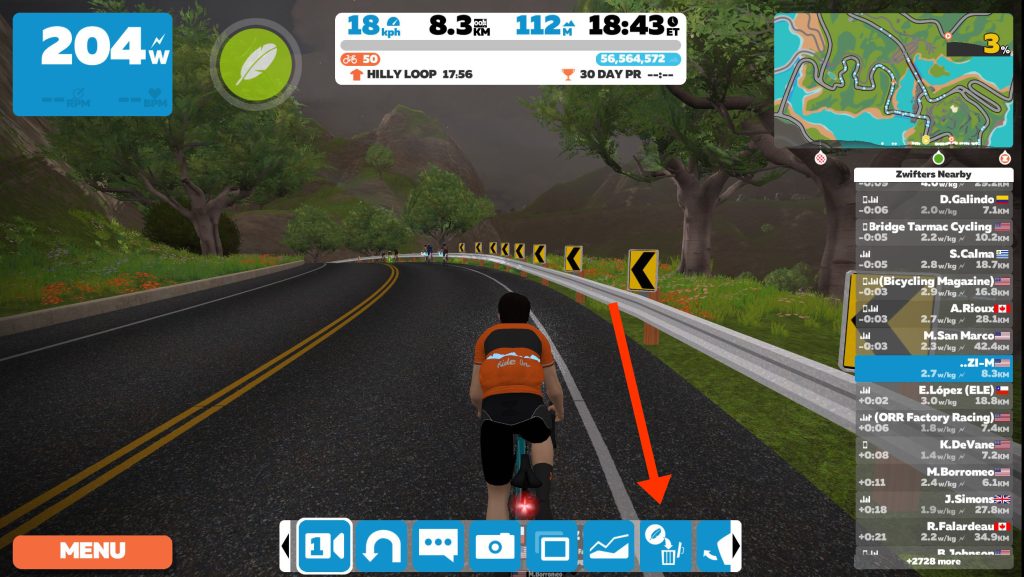
Zwift anticipated this situation, and built a simple way to trash your powerups. Just click/tap at the bottom center of your screen, or use the Companion app. Both have a button showing your powerup going into a trashcan. Tapping that button will immediately delete your powerup. Done!

Here’s a quick video showing how it works:

Bike Frame + Wheel Choice
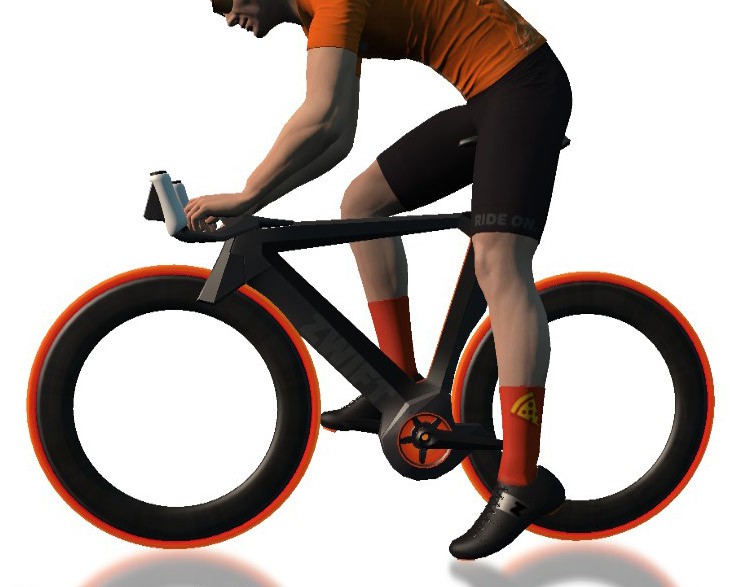
Zwift Concept 1 (Tron) bike is a strong all-arounder

Choosing the right frame for this route is a tricky proposition, since the fastest aero setup is going to cost you around 2 seconds on the crucial Petit KOM climb. So where do you want your advantage? Strong climbers may opt for a more aero setup, saving themselves watts on the flats and descents.

But if you anticipate struggling on the climbs, we recommend going with a more balanced all-arounder like one of these setups:

  • Tron bike (of course)
  • Scott Addict RC or Specialized Venge S-Works frame + ENVE 7.8 or DT Swiss ARC 62 wheels

If you’re strong on the flats and want to go extreme to help you on the climbs, look at the Specialized Aethos frame paired with the ENVE 7.8 or DT Swiss ARC 62 wheels… or even the Lightweight Meilensteins.

See Tron vs Top Performers for a helpful chart of how different popular setups perform >

More Route Recon

Several rides are planned on Casse-Pattes leading into the big race. If you’re not familiar with this course, consider jumping into another event to do some recon! Here’s a complete list of upcoming Casse-Pattes events.

Zwift’s vibrant race community continues to up its game when it comes to course knowledge and recon videos. Here are our two favorite recon videos this week:

Sherpa Dave

Si Bradeley

Strategic Options

This week’s race has the longest climb we’ve seen this season, and in fact it’s the biggest climb we’ll see until the final race on Makuri Islands’ Countryside Tour. Here are a few predictions of strategies we’ll see deployed:

  • FTS the First Time Through: plan on all the FTS points being scored on the first trips through the Marina Sprint and up the Petit KOM. Why? Because legs will be freshest and packs will be largest. If you’re going after FTS, do it on lap one.
    EDIT: WTRL has told us that FTS will be active on the last time through the Marina Sprint, for the finish. It’s possible that some top 10 times will be set in these final meters, give how many points it would be worth to finish high and grab FTS!
  • Force an Early Selection: teams of pure wattage bazookas who don’t fancy their chances of hanging with the front up the Petit KOM might try to push very hard for the first few minutes of the race, grabbing intermediate points at the Marina Sprint and forcing a selection by breaking away from the front of the pack. If they can drop the stronger climbers it’ll be worth it for sure. But heck, even if they don’t drop the climbers… it might still be worth it! Plan on a hectic start.
  • C/D Finish – Go Early, or Go Late: the C/D finish on the Aqueduc KOM will be interesting because of how it lays out and because it carries extra FAL points. Strong climbers will want to attack early on the uphill to gap sprinters so they can stay away to the finish. Sprinters will want to wait to attack until the flat finish. Who will win the battle?
  • A/B Finish – Go Long, Uphill: strong climbers will push extra hard on the second Petit KOM in order to drop sprinters before the final run-in.
  • A/B Finish – Go Long, Downhill: heavier riders, anyone with anvil powerups, and riders who don’t fancy their chances in a pack sprint will try to go long on the final descent so they can solo to victory. It’s 4km from atop the Petit KOM to the finish line. Can you hold it?

Watch the Premier Division Race

Zwift’s top racers will take on 2 laps of Casse-Pattes on Monday at 11am PST.

Your Thoughts

Any insights or further thoughts on Week 4’s big race? Share below!
We Can All Wear the Maillot Jaune Tomorrow, Thanks to Tour de France Femmes avec Zwift 2021

5

We Can All Wear the Maillot Jaune Tomorrow, Thanks to Tour de France Femmes avec Zwift 2021

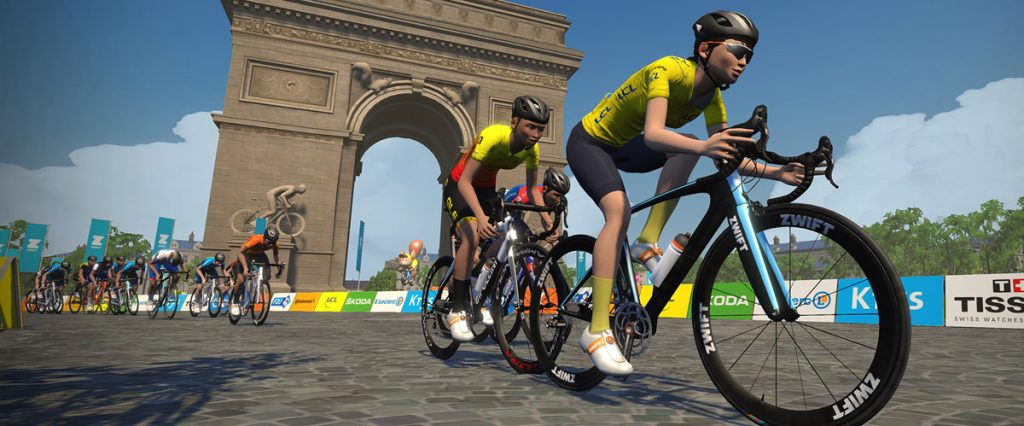
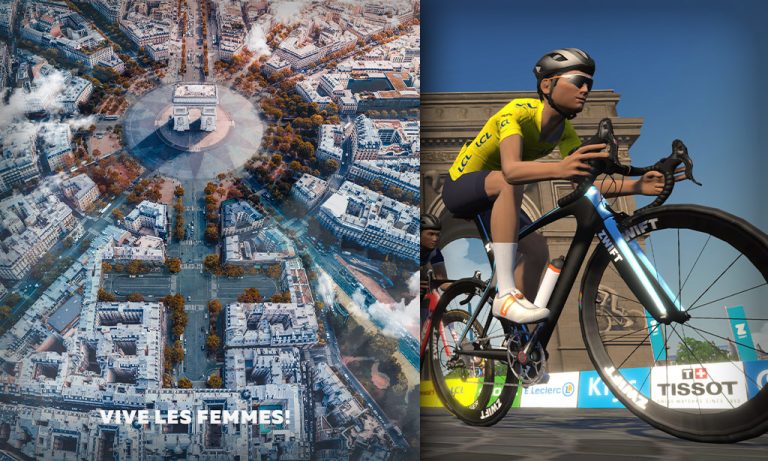
Tomorrow (October 14) the race presentation for the first-ever Tour de France Femmes takes place. To celebrate the revelation of the inaugural race’s 8 stages, Zwift is placing all riders in the Tour de France Femmes avec Zwift virtual maillot jaune (yellow jersey) over the course of 24 hours!

The maillot jaune from the first virtual TdF in 2020

Celebratory Group Rides

A number of group rides have been planned, led by CANYON//SRAM, Internationelles, and Cyclists Alliance. These rides will begin at 2am PST. (While they aren’t yet visible on Zwift’s events list, we are assured they will be live in the calendar starting at 11pm PST today, October 13th.)

Word is the rides will take place on (where else?) Paris’ iconic Champs-Élysées route.

About the Yellow Jersey

The Tour de France’s yellow jersey is the most coveted jersey in all of professional cycling. While the race is underway, one rider wears the maillot jaune in each stage to indicate that they are the current leader in the overall or “general” classification (GC).

At the end of the TdF, whoever has the lowest overall time wins the GC and takes home the yellow jersey for keeps.

A yellow jersey from 1951

The yellow jersey wasn’t always a part of Le Tour, though. When the TdF began in 1903, there was no clear indicator of who was in the lead on each stage. Here’s how Smithsonian Magazine tells the story of the first maillot jaune:

In 1919, the Tour de France returned following a four-year hiatus because of World War I. Two-thirds of the way through the race, the director of the Tour de France—Henri Desgrange—decided he needed a clearer identifier of the leader. He came up with the idea that whoever had the fastest overall time at a given stage of the race would don a yellow jersey—yellow in honor of the sports newspaper that sponsored the race, L’Auto-Vélo, which was printed on yellow paper.

As the story goes, around 2 a.m. on July 18, 1919, Desgrange gave the current leader, Eugène Christophe, the first incarnation of the jersey to take with him. But unlike its modern counterparts, this yellow jersey was made of wool, and Christophe complained that the yellow looked silly—according to historian Paul F. State, he insisted he resembled a canary.

The jersey is still used to demarcate the race leader today, with one addition: after Desgrange died in 1940, his initials—HD—were added to the waistline.

Smithsonian Magazine, “The Original Tour de France Yellow Jersey Was Made of Wool

More Info

Want a different kit? The kit will be auto-assigned when you sign in, but you can just head to the garage to change.

If you miss the chance to wear the jersey, there will be plenty of opportunities to learn more about the race and get involved with events and rides before July 2022 when the race starts!

Visit zwift.com/tour-de-france-femmes-avec-zwift starting tomorrow for more info on all things Tour de France Femmes avec Zwift.


Flamme Rouge Racing 6 Stage “Tour Britannia” Announced for November 13-21

38

Flamme Rouge Racing 6 Stage “Tour Britannia” Announced for November 13-21

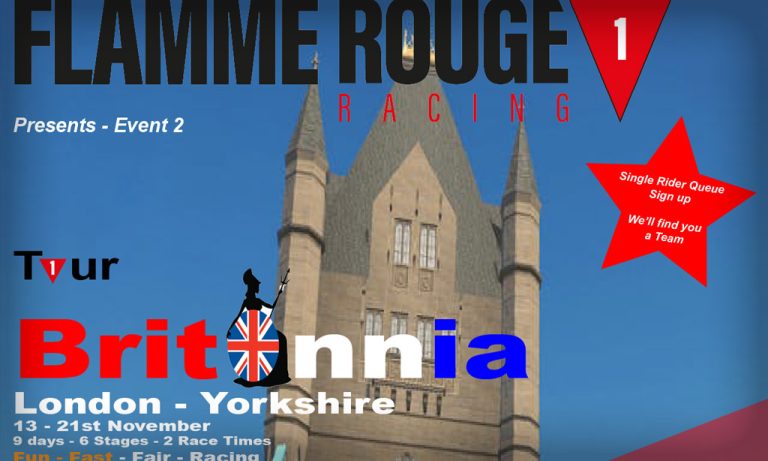
In August we reported on a new racing series brought to you by Flamme Rouge Racing (FRR).  The first series, which started on Saturday 4th September, took riders on a weeklong adventure through France with the race series introducing some concepts that I have not seen before on Zwift such as a Prologue and rolling or “neutralised” starts.  The neutralised starts were well received by racers who commented “it is a good idea so that no one suffers a technical and gets dropped” and “LOVED the neutral start — I think the Zwift Sprint starts are the stupidest things. 2 min. of insecurity and insanity!”

The pilot event was liked by all and minor concerns that riders raised mid-race were addressed and as a consequence, FRR have taken the lessons learned from their first offering and returned with their next event, called Tour Britannia.

This new team stage race runs from November 13-21, covering 6 stages, 220km, and 4,500m of climbing, all in 9 days – definitely one of the hardest stage events seen on Zwift! Pre-registration of teams is open and is required by November 7 so there is plenty of time to build a team and formulate tactics.

Tour Britannia Essentials

Tour Britannia will be offered in two time zones, to cater for the global community of Zwift. This series is a little different from what is currently offered on Zwift, making it a bit special.  The details include:

  • 9 days, 6 stages, 3 different race formats (TTT, iTT, Points)
  • First two stages run consecutively on the same day, TTT Prologue and a full Points race
  • Ladies can race a mixed category down (as in real life) but of course do not have to
  • Teams (mixed) can be formed of different CAT riders (max 2 outside of Team CAT)
  • Neutralised starts
  • Same bike setup enforced
  • No powerups
  • Broom wagon time cut (keeps riders racing)
  • Single rider team placement (if you don’t have a Zwift team, FRR will find one for you)

What is good about the race schedule for this event is that it is varied. For example, there is an Individual Time Trial on the Tour of Tewit Well route, at 11km in length.  I have never undertaken an Individual Time Trial on that course, so that will be unique and I will be interested to see how I will be able to manage a max effort after several days of hard racing. 

One major key to success in a stage race of this nature is how well you can recover from consecutive days of racing, and how well you manage your fatigue. One thing for certain: is that it’s going to be entertaining racing, especially with the Surrey Hills route to finish on!  

Routes and Schedule

  • Stage 1 (Nov 13): Greater London Loop TTT – 21km
    • APAC @ 0800GMT, EMEA @ 1800GMT
  • Stage 2 (Nov 13): 2019 UCI Worlds – 40km, 735m
    • APAC @ 0900GMT, EMEA @ 1900GMT
  • Stage 3 (Nov 14): Royal Pump Room 8 – 56km, 980m
    • APAC @ 0800GMT, EMEA @ 1800GMT
  • Stage 4 (Nov 19): Tour of Tewit Well iTT – 11km, 204m
    • APAC @ 0800GMT, EMEA @ 1900GMT
  • Stage 5 (Nov 20): London Pretzel – 55km, 980m
    • APAC @ 0800GMT, EMEA @ 1800GMT
  • Stage 6 (Nov 21): Surrey Hills – 50km, 1,250m
    • APAC @ 0900GMT, EMEA @ 1600GMT

Event Registration

Teams and single riders must pre-register at FlammeRougeRacing.com to take part in the event. Registration deadline is midnight November 7 (GMT).  I have registered for the event and the platform to register is easy to navigate. You do need a Zwift Power account to participate and will need to take note of your Zwift Rider ID.   

A full list of the rules and points available can be read here.

FRR can be emailed at [email protected] for further information, but everything can be found on the registration page, rules document, and event poster.

Once registered, team managers can create and manage teams. Additionally, all riders can access the event content, race communications, and most importantly the results.

FRR now have a Facebook page and a Private FRR Event User Group page for managers and riders to join, discuss, and have input into events the community would like.

“Club Race Team” Management

As mentioned, to undertake this series FRR have developed online functionality to enable teams to manage their roster of riders.  This is referred to as ‘Club Race Team’ Management.  Richard Vale, the creator of the site and organiser of the event is currently supporting Zwift Team Race3R, who use the system to manage their global race team for popular events like TTT and ZRL. It is available for all to utilise.

Richard is keen to emphasize that the platform is moving forward quickly and yet was only first put together 6 months ago.

Racing in Yorkshire

More Than Just an Event

After catching up with Richard to discuss the first series he explained that he has ventured in a direction not envisaged and has moved FRR towards Charitable status and fundraising.  This was a direct consequence of one team that entered.  The Masaka Cycling Club, the first Ugandan Zwift Club, competed in event 1.  They were however only limited to 4 riders because they only had 4 smart trainers in the region! By event 2 they will have 6 as FRR has provided the equipment to enable them to compete and will look to support them and other similar causes through fundraising events and donations. (In addition to supplying them with smart trainers, FRR supplied them with sporting apparel.)  If you feel empowered to help, please contact FRR.

Zwift are experts at marketing and the phrase “Fun is Fast” lingers in the mind, but Sam Mutton, club organiser for Masaka Cycling related that for riders in his club, Zwift is not simply cycling for fun.  The club offers an educational programme which includes racing on Zwift, and by completing their studies and racing they get a small income. The more committed to their studies and training and the better they can become, the more the level of financial support offered by the club increases. The club is supported by the charity called Joy for Children and Communities (a UK-based charity).

Summing Up

Zwift provides a fantastic platform and Richard recognises that we are currently only scratching the surface of its potential. He has other interesting and different events in the pipeline, and I am going to look to use his platform for something I have planned. In the meantime, be sure to look at giving this event a go as it provides us with something different. 

It’s important to note that this event is very different from the popular Zwift Racing League. I particularly like this concentrated, multi-stage race concept and so do many other Zwifters and as a consequence the FRR Team have already got 2 additional events planned: Tour Watopia, kicking off on January 2 followed by Tour International, commencing March 12 which will be a full 2-week stage event.

Questions or Comments?

Share below!

How the Race Was Won: You gotta know when to hold ’em – ZRL Week 3 (Flatland Loop)

14

How the Race Was Won: You gotta know when to hold ’em – ZRL Week 3 (Flatland Loop)

Yesterday was the first Zwift Racing League event ever held on Zwift’s newest world, the Makuri Islands. With riders having so much less experience on these roads there were a lot of question marks heading into the race. Where should we start our sprints? Could we hang on for the climb section? And how could we best attack that crazy downhill finish?

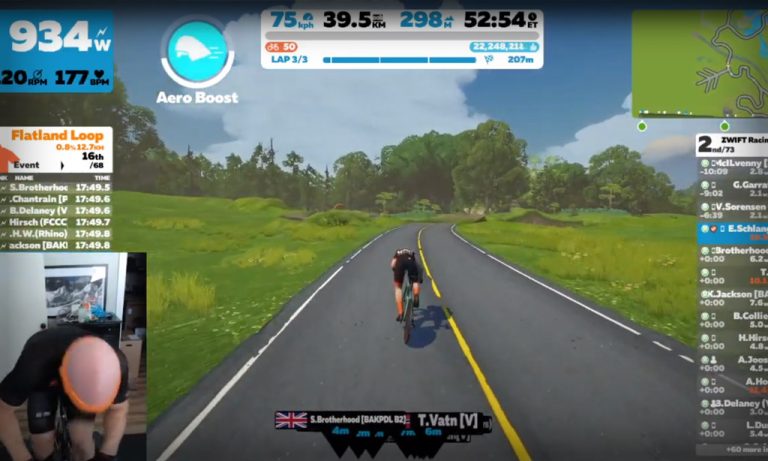
For me, all those questions combined into a surprising result – a rare race win, and my first ZRL win ever! Here’s how it all went down over three laps of Flatland Loop. (Note: I’m a B racer with the DIRT Roosters squad racing in Division 3 of the EMEA W zone.)

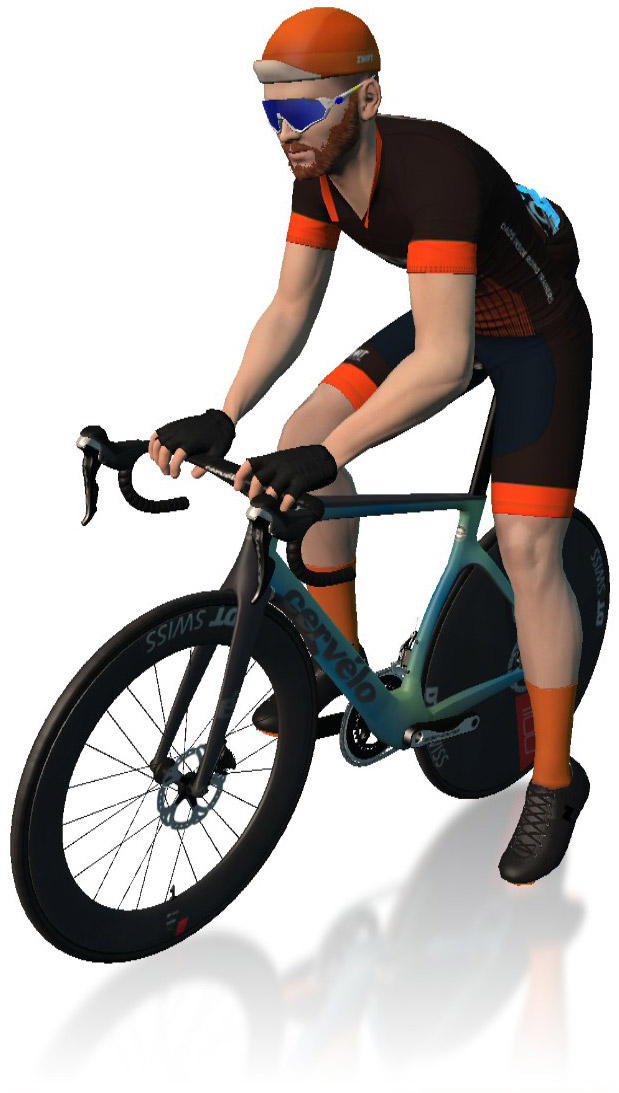
Cervelo S5 2020 + DT Swiss Disc – the fastest bike in game

The Warmup

My typical pre-race ritual was executed as usual. Beet juice (liquid dirt) a couple of hours before the race, then three pieces of caffeine gum (100mg of go-go juice per piece!) an hour before, and PR lotion on the legs before kitting up.

Related note: I recently saw a nice post from Asker Jeukendrup re: caffeinated chewing gum discussing how quickly it kicks in, dosing, etc. Check it out >

Then it was time to kit up and awaken the legs and heart by spinning with the C. Cadence groupies. 30 minutes or so with a few sprints to get the heart rate up and I was ready to go.

I went with the Cervelo S5 2020 with DT Swiss Disc wheels this time around, because I wanted every aero advantage I could get on this flat course where the sprint intermediates and downhill finish were everything.

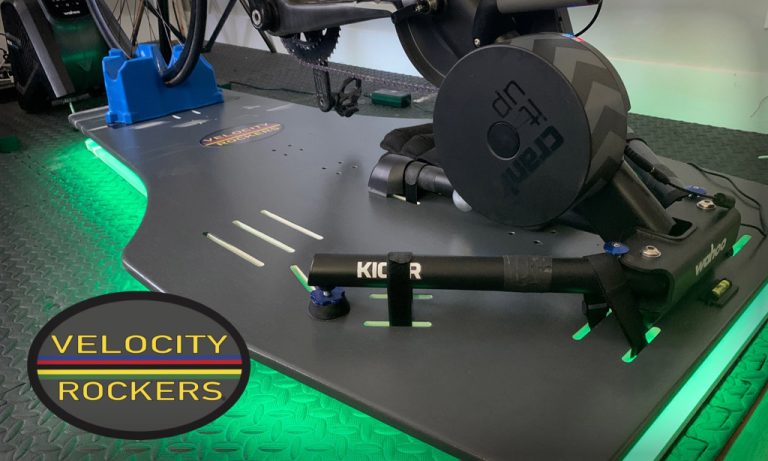
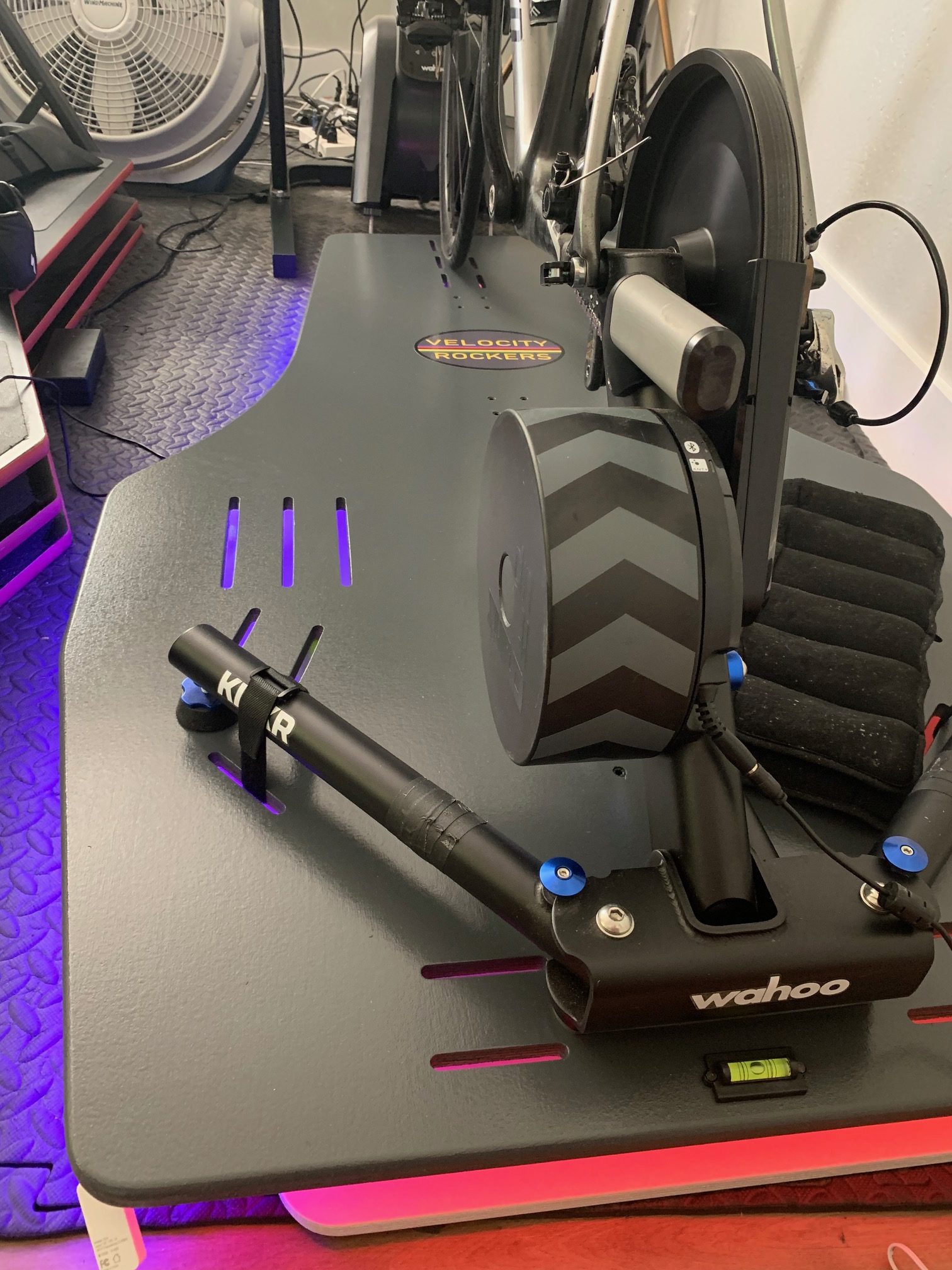
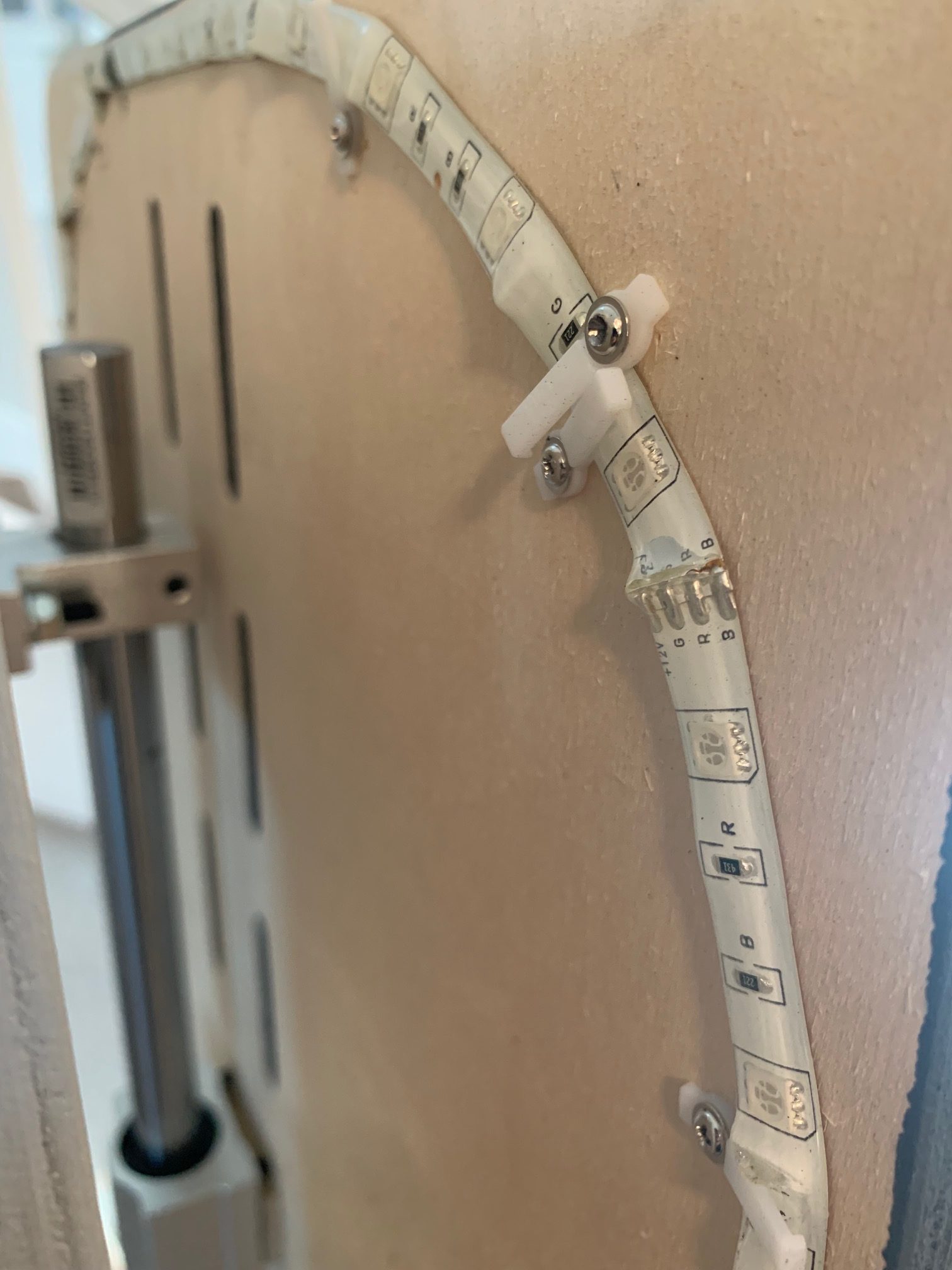
After checking that Discord was set up, the racing playlist cued, and OBS was recording all the action, it was time. I even had my Velocity Rocker plate‘s LED lights turned on… green for go. Let’s race!

Lap 1

The race began quite tamely, as our pack of 73 seemed to anticipate the key selections coming on the first sprint and the climb immediately following. I got an aero powerup at the start/finish banner, so I decided I would push the first sprint and try to get some extra points.

I’ll confess, though, that I was going back and forth mentally with myself regarding the sprints. Especially this first sprint – I didn’t know how hard the first climb effort would be – I’ve been dropped on it in other races. I didn’t want to burn out my legs sprinting then get dropped on the first lap! So I didn’t go all-in on this sprint… or any of the intermediate sprints, really. Just couldn’t get myself to fully commit.

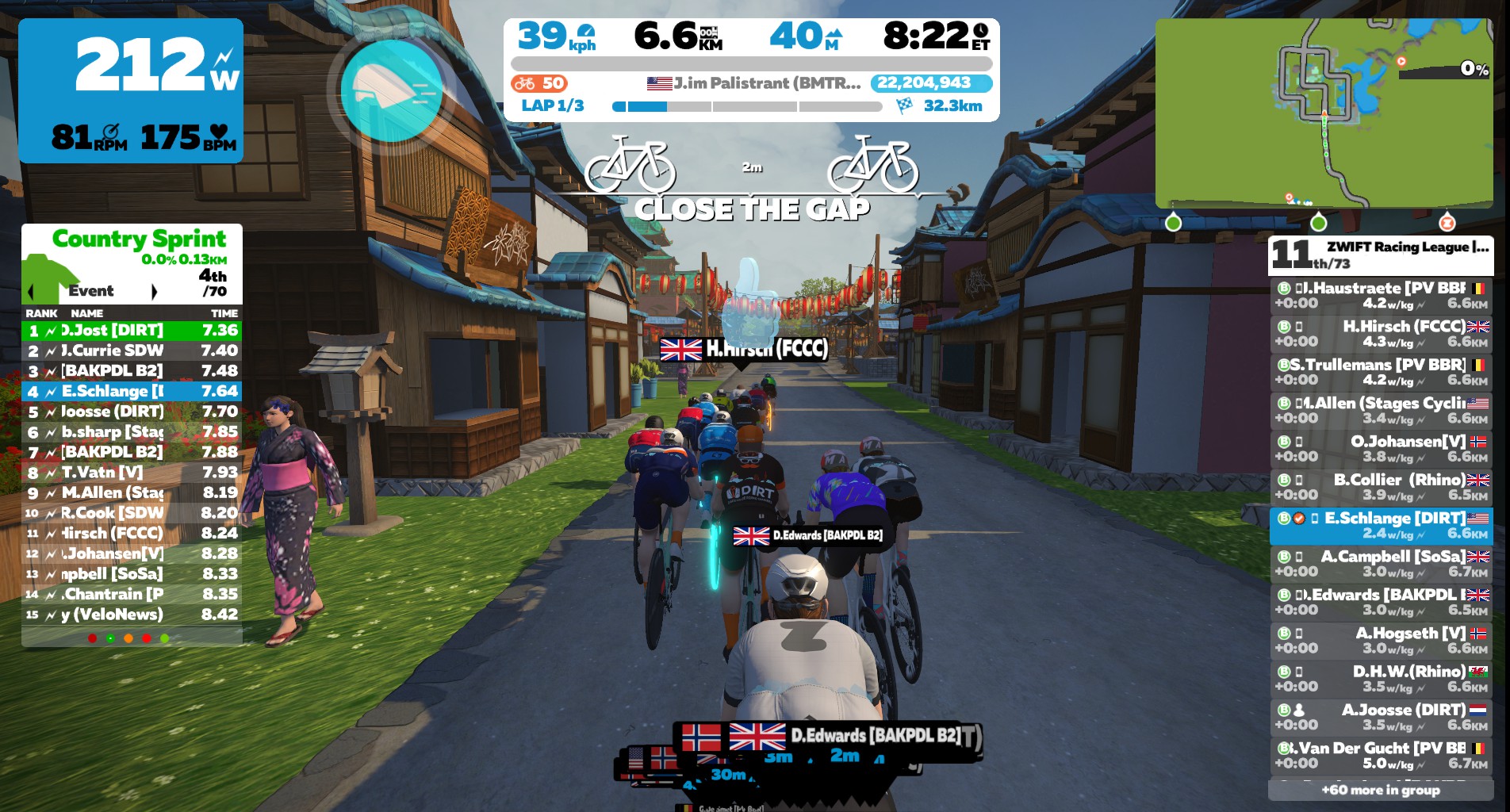
That said, I was 6th FAL and 4th FTS overall on the first Country Sprint. Thank goodness for aero powerups!

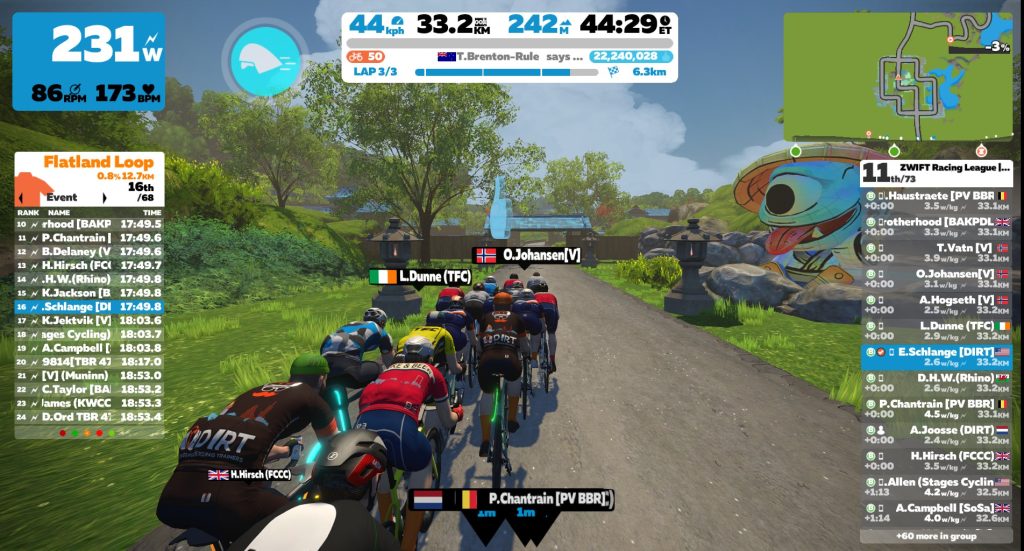
Then the climb began. I moved closer to the front as we hit the incline heading into Village Onsen, wanting to give myself every chance of hanging with the front if big attacks happened. But… nothing happened! Sure, the effort ramped up on the climb, but it was quite sustainable. I only averaged 302W on the main climb section, and that kept me in the front group.

Riding through Village Onsen on Lap 1 – see the riders being dropped in the minimap?

Then it was time to gear up for the Village Sprint. I knew from Sprintapalooza practice that you have to go early if you want a fast time go early, ramping it up as you hang a right into the Village. And I had an aero powerup, too! So I popped the aero as we turned right, then started hammering from ~5 bike lengths back. I found myself on a Vikings’ wheel (Johansen) but couldn’t come around his strong effort – so I sat up at the end and took 2nd FAL, as well as 5th overall FTS.

I got a feather powerup through the sprint banner – totally useless (even detrimental) on a descent. So I trashed it. On the plus side, finishing near the front on the Village Sprint made the ensuing trip to the finish line an easy one. Just easy spinning, letting the riders behind catch up, and recovering more on the descent and flats.

One lap down, and the legs were feeling pretty good!

Lap 2

The Roosters began chatting on Discord as we hit the flats of Lap 2. Where was everyone at, and how were we feeling? That’s when we realized we were in trouble: Thomas (our strongest rider) had been dropped from the front pack on the Village Sprint/descent section. And Ally, also a strong rider, had dropped a chain near the start, putting him out of the front group almost immediately. Couple those issues with our team captain Antoine not being able to race and we were looking pretty weak compared to the Vikings, who had three riders in the front group compared to our two!

It was up to Arjen and myself to score as many points as possible. Could we beat the teams who still had three riders in the front pack of ~20?

I didn’t think I’d be able to grab more FTS points on the second (or third) laps due to a smaller, slower pack compared to the first lap. But I thought I could snag some FAL points, since it seemed like most riders weren’t contesting the sprints. Plus, I had another aero powerup! So for the Country Sprint I did another 90% effort, trying to surf the wheels but also finish near the front. 4th over the line. A few more points.

The front group of 19 on the climb section of lap 2

The climb section on the second lap was unremarkable, and I had no powerup for the Village Sprint. But I still put in a dig, looking for those FAL points, figuring I needed to get near the front before the descent anyway. 5th FAL. And another feather to trash on the descent. Time for the final lap!

Lap 3

I was gifted an aero powerup at the start/finish banner heading into lap 3, and now I had a decision to make: use it and chase sprint points? Or keep it for the final sprint?

I opted to use it on the Country Sprint, mostly as a tool to let me stay near the front for FAL points without putting in an all-out effort. I was 5th over the line and trying to strike a difficult balance: grab as many intermediate points as I could, while saving my legs for the finish, where I thought I could do quite well if the stars aligned.

The powerup gods smiled upon me, granting another aero powerup at the sprint banner. I chose to hold onto this one for the finish, because I knew speeds would be crazy high on the descent, so aero would be hugely important.

There were 16 riders left in the front group as we began the climb. The Vikings and Pro-Vision BBR teams both had three riders in the group, and I 100% expected one of those teams to send a man off the front for a long attack on the climb section, or even on the little kicker heading toward the Village Sprint.

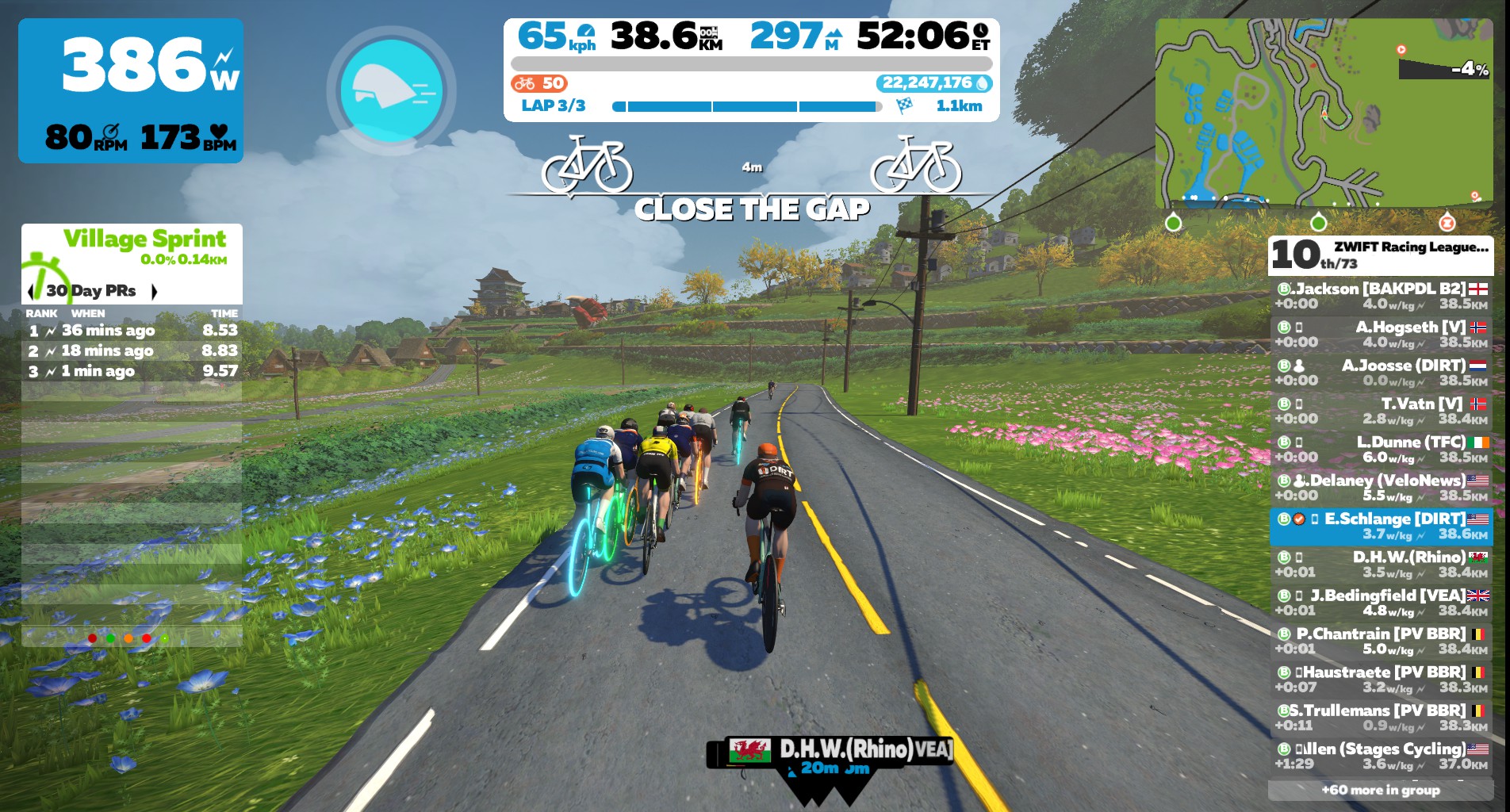
Our last time through Village Onsen

I was already playing it out in my mind: what would I do if someone attacked off the front? I couldn’t decide if I would chase it down, or sit in and let the group try to chase it. If I chased it down, the rider could just sit up and make me pull him to stay away from the group while his teammates sat in the pack. But if I didn’t chase it down, he might stay away to the finish.

And that is why you send a rider off the front when you’ve got the numbers.

But neither team sent a rider! I can only assume everyone’s legs were too knackered, but whatever the reason, I was happy things stayed steady. Because it meant I could sit in and conserve in the crucial final kilometers.

We hit the Village Sprint, the last intermediate of the day, and a few riders used their aero powerups (a brave move)! I just tried to stay near the front so I wouldn’t get gapped heading into the descent. 10th over the line. A small gap opened ahead, but I was able to close it down because I was expecting it and watching closely.

At this point, the Vikings (smartly) sent a man off the front (Johansen). I just hoped he didn’t have the legs or the powerup to stay away from our fast-moving pack. I watched him warily, deciding I would use my aero to give chase if he began pulling away.

Chasing Johansen down in the final kilometer

Our group was slowly pulling Johansen in, though, so I opted to rest up and even supertuck a bit. It all came down to this. We caught Johansen with 700m to go, then a few riders popped feather powerups. (Silly Billies! Never use a feather on a descent!)

With 300m I was a few bike lengths from the front. It was go time! A spacebar tap activated my aero powerup, then I just put my head down and gave it everything I had. Glancing up at the screen I saw I was off the front – could I hold it?

Another glance up. Omygosh I’m still off the front. Keep hammering!
Gah! I’m spinning too fast, I should shift!
Keep hammering!

I crossed the line in first place, traveling at 71kph with the Vikings’ Hogseth bearing down on me quickly. My first ZRL win! That felt really, really good.

See my ride on Zwift.com >
See my activity on Strava >
See race results on ZwiftPower >

Watch Full Race Recording

Team Result

As the race wrapped up the Roosters began tallying points and speculating on the final team result. Initially there was a feeling in our Discord conversation of “we put up a good fight, but too much went wrong – there’s no way we won.”

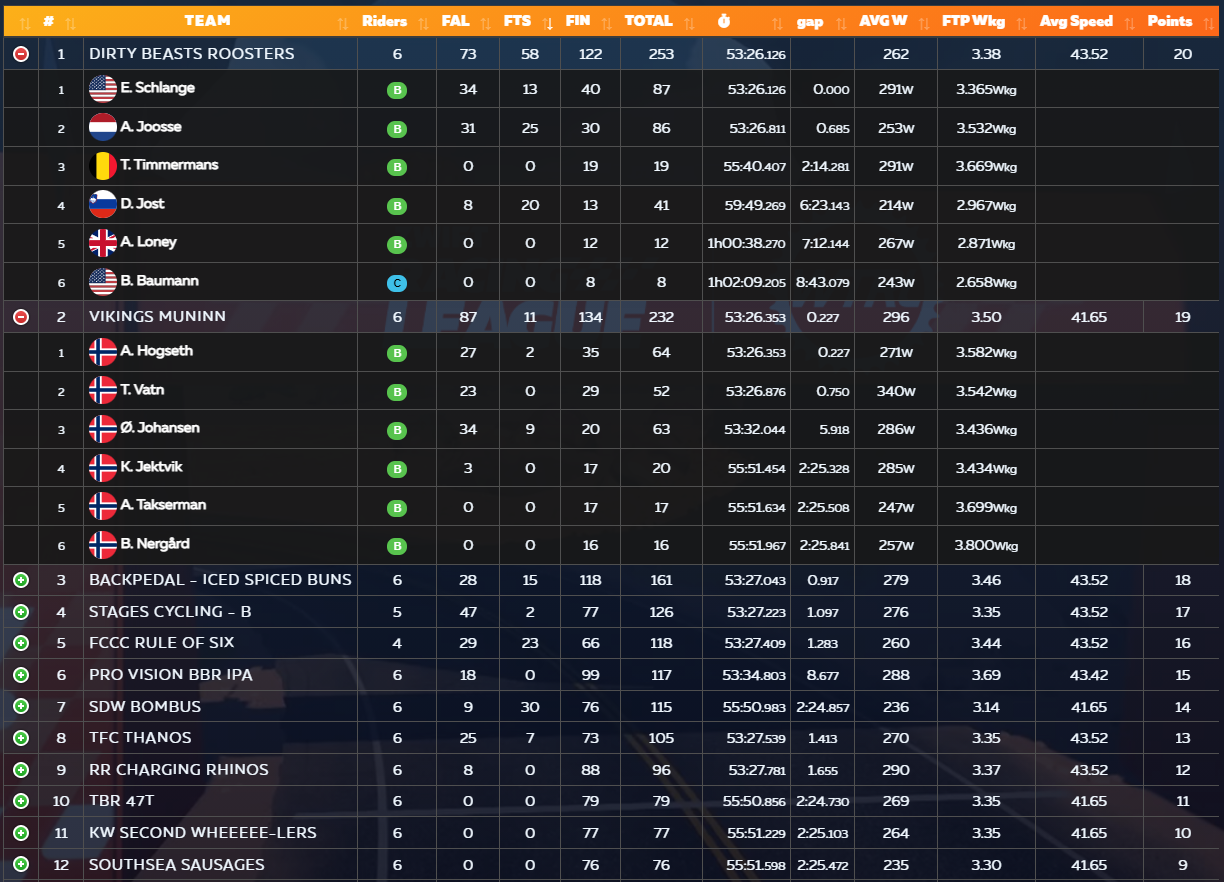
Then Ally, our resident human calculator, began looking at the actual results – specifically the intermediate points. And things began to look better for us. The Vikings had amassed more FAL points than us thanks to their three riders in the front group (and the strong sprints of those riders, of course). But we had scored more FTS points, thanks especially to teammates Arjen and Dean.

Ally calculated that we had scored 253 points to the Vikings’ 232. Could it be?

Within a few hours the final results were on WTRL’s website. And Ally, once again, earned an A for accuracy:

I was super stoked that the Roosters took the team win, because I hated the thought of winning the race individually but not winning as a team (which is all that really matters in ZRL). Nice work, Roosters. And thanks to all the other teams (especially Vikings Muninn) for putting up another good fight!

The Vikings’ Hogseth (2nd place finisher) sent me his race recording – watch it here to see how the race unfolded from his perspective.

Takeaways

Intermediate points are so crucial in ZRL races. And this race really played to our strengths, with all the intermediate points being sprint-based.

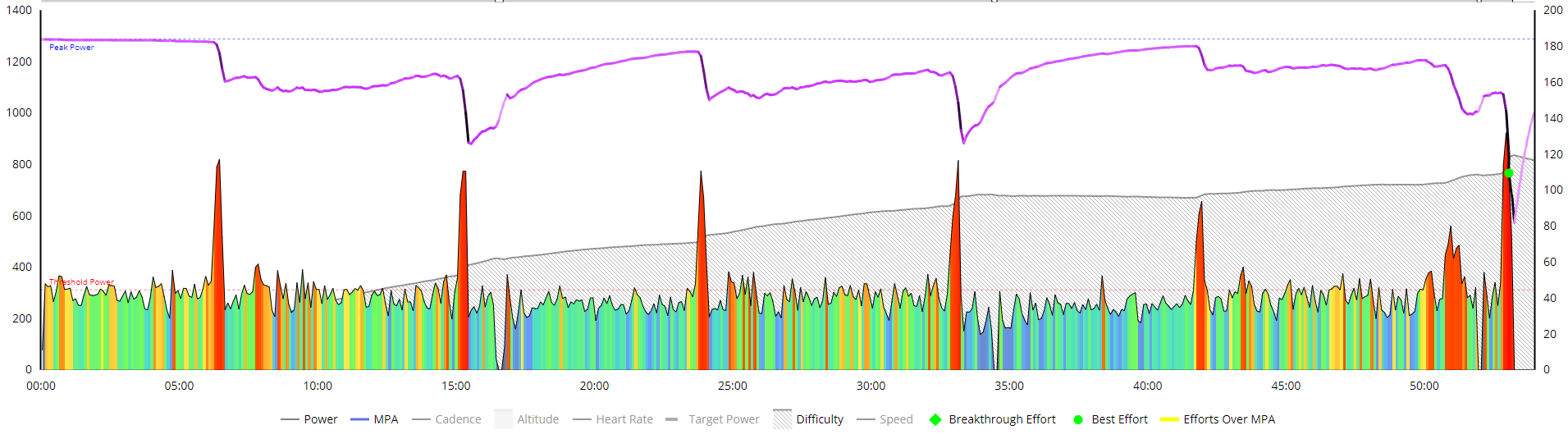
For my part, I felt like I managed my efforts really well in this race, striking that super-elusive balance between contesting intermediates and staying fresh for the finish. Check out my XERT chart, where the purple line is MPA (maximum power available). For those who aren’t familiar with XERT, the idea is that it’s basically impossible to ever exceed your MPA in a race. (And if you manage to do that, XERT calls it a “Breakthrough” and updates your metrics to reflect that you’ve grown stronger.)

See how my MPA dips on every sprint, and my final effort touches that line? That’s what it looks like to “burn a match” on every sprint, then empty the tank in the final effort.

Lastly, I’m happy to see that changes to my sprinting form seem to be helping. After years of standing, lower-cadence sprints I’m finding that seated, higher-cadence efforts seem to let me hold higher power for longer durations, especially at the ends of races. It’s still a strange feeling, because it’s so different from my lower-cadence “torque-based” sprints. Of course, it’s not all about torque… it’s also about RPM. And I hit a cadence of 123 in the final seconds of today’s race!

(In fact, I set a new 2021 power curve PR in the 16-30s range at the end of this race. #fistpump)

Your Thoughts

Did you race ZRL this week? How did it go for you and your team? Share below!

Velocity Rockers Full Motion Rocker Plate Review

Velocity Rockers Full Motion Rocker Plate Review

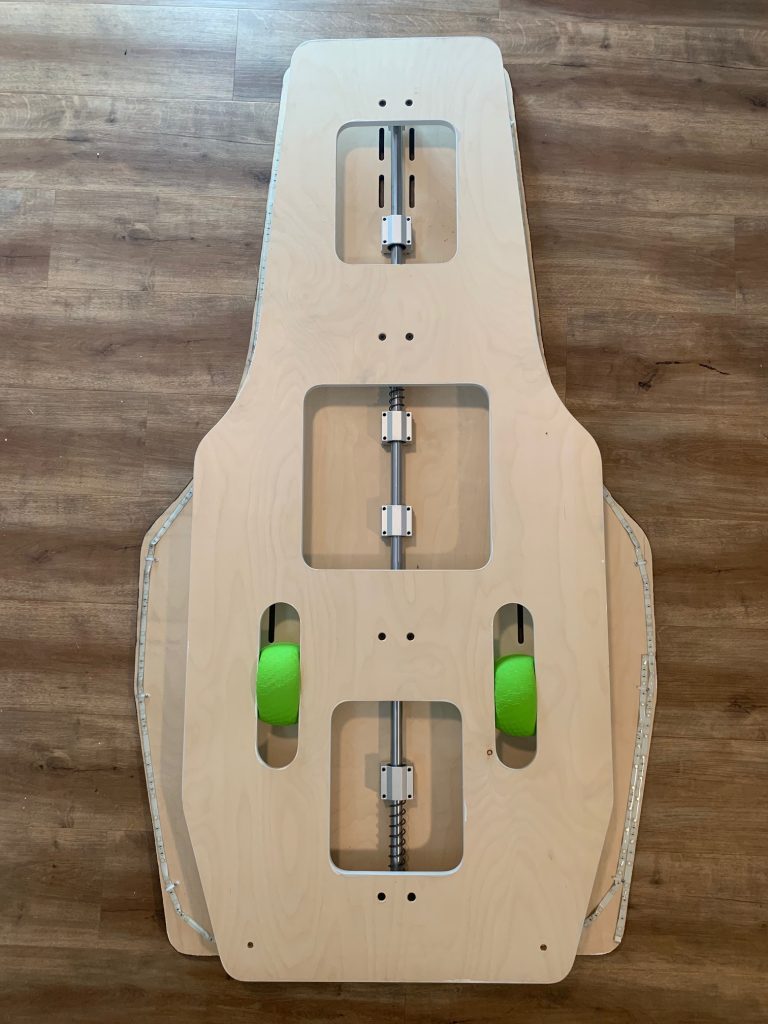
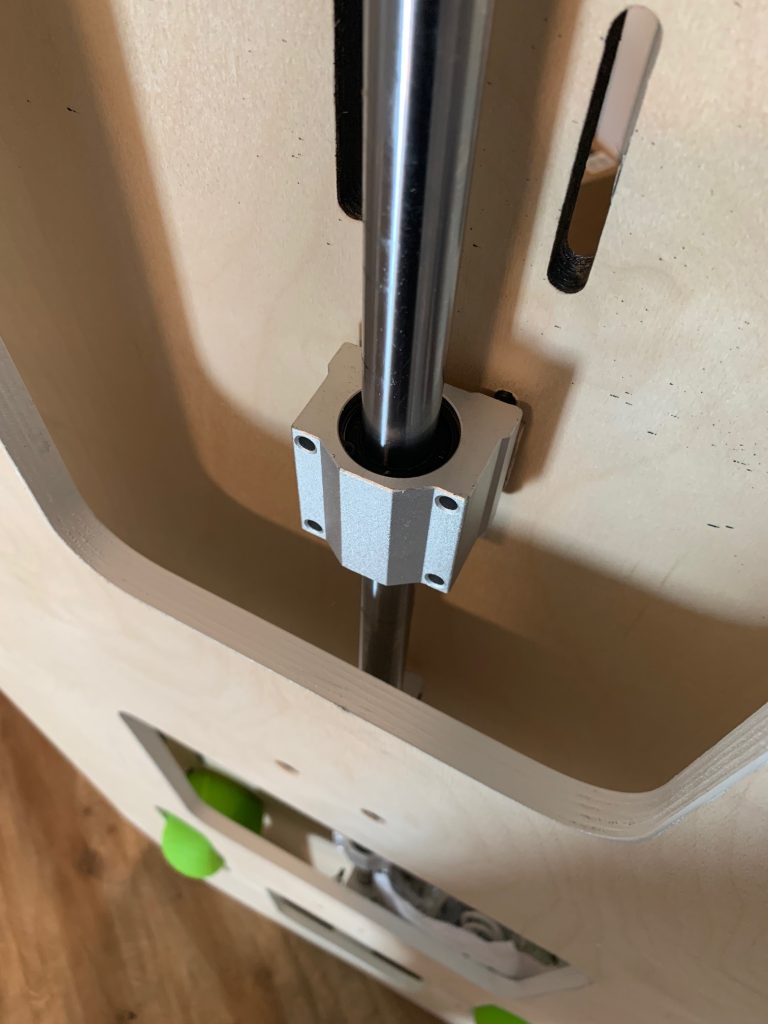
Back in April I received an email from a company I hadn’t heard of before: Velocity Rockers. Owner Albert Knowles piqued my interest with this description of his rocker plate: “It is a 2-axis rocker plate using the linear rod and bearing architecture with 5 inch balls for the lateral movement.”

2-axis, you say? And a linear rod/bearing architecture? I was intrigued.

I’ve logged almost all of my 54,616km Zwift kilometers from a trainer perched atop a rocker plate, but I haven’t spent significant time on a rocker with fore-aft motion, or one that uses a linear rod/bearing architecture for its central structure. So I was keen to experience it for those reasons alone.

But I’m also a big fan of rocker plates in general, so reviewing new products in this niche market is one of my Zwifty pleasures. I’ve said it before, and I’ll say it again: I’m amazed that so few Zwifters use rocker plates because for me, while rocker plate motion doesn’t perfectly replicate outdoors, it’s waaaay more natural than a non-rocking setup. Not to mention more comfortable and easier on your frame!

Anyway, I’ll get off my rocker plate soapbox. Now that I’ve logged lots of races and miles on the Velocity Rocker, a review is in order. Let’s rock!

Setup

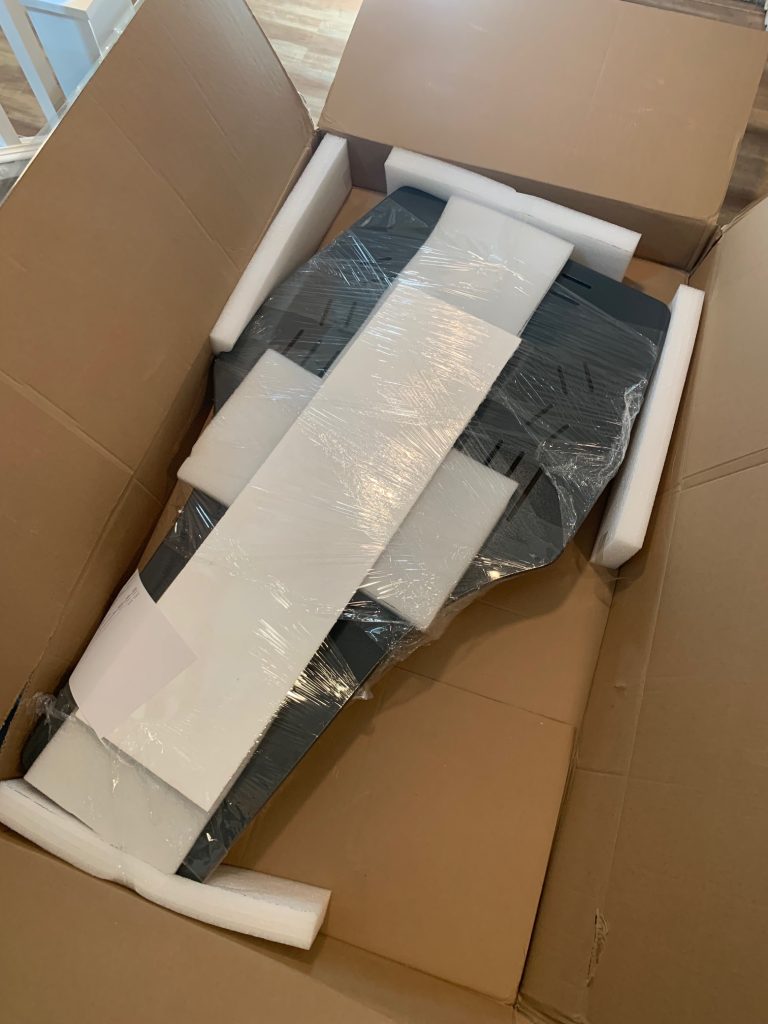
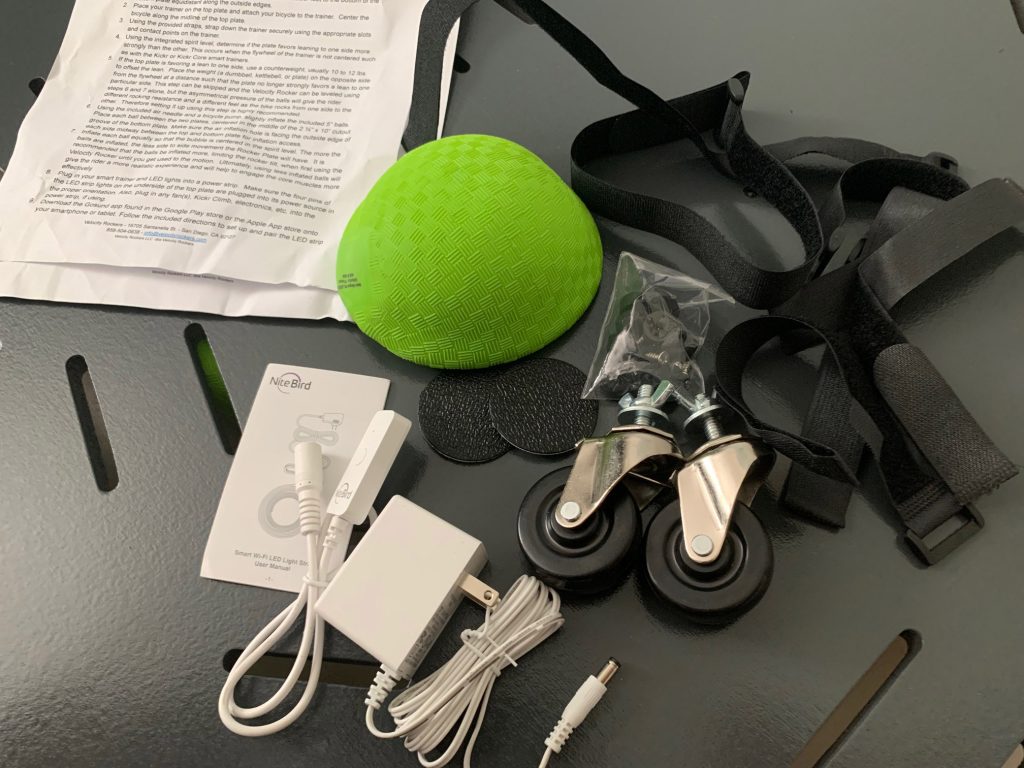
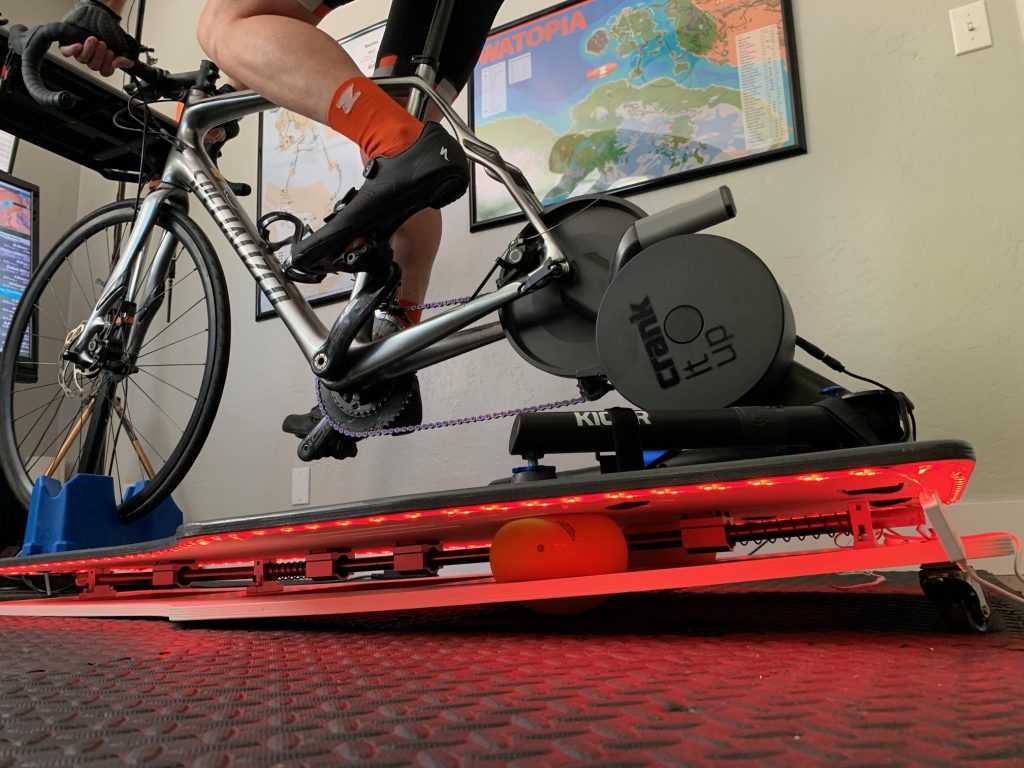
The Velocity Rocker arrives fully assembled, which is pretty standard when you’re talking about full-length rocker plates nowadays. All you have to do is unpack it, mount your trainer, inflate the two suspension balls, and you’re ready to ride!

Out of the box I was immediately struck with two things:

  • High build quality: it feels sturdy and looks great
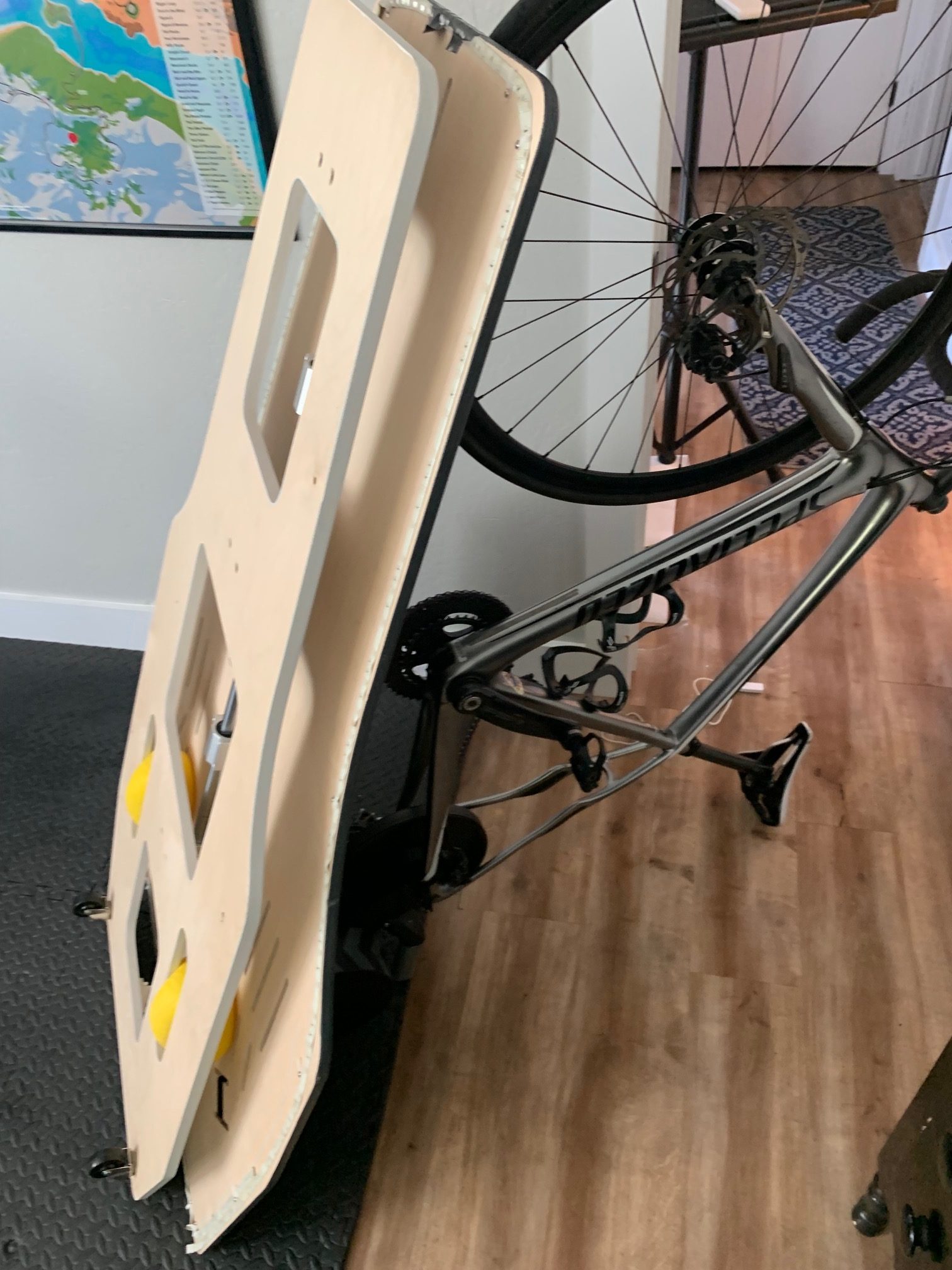
  • Light weight: the Zwift Insider Pain Lab is upstairs in our house, and I told Monica (my wife) I would need her help hauling the plate up the stairs. But I was surprised when I picked up one end – it didn’t feel any heavier than other full-length simple left-right rockers I’ve used. Perhaps even lighter! I hauled it upstairs myself, easy peasy. (It weighs around 47 pounds.)

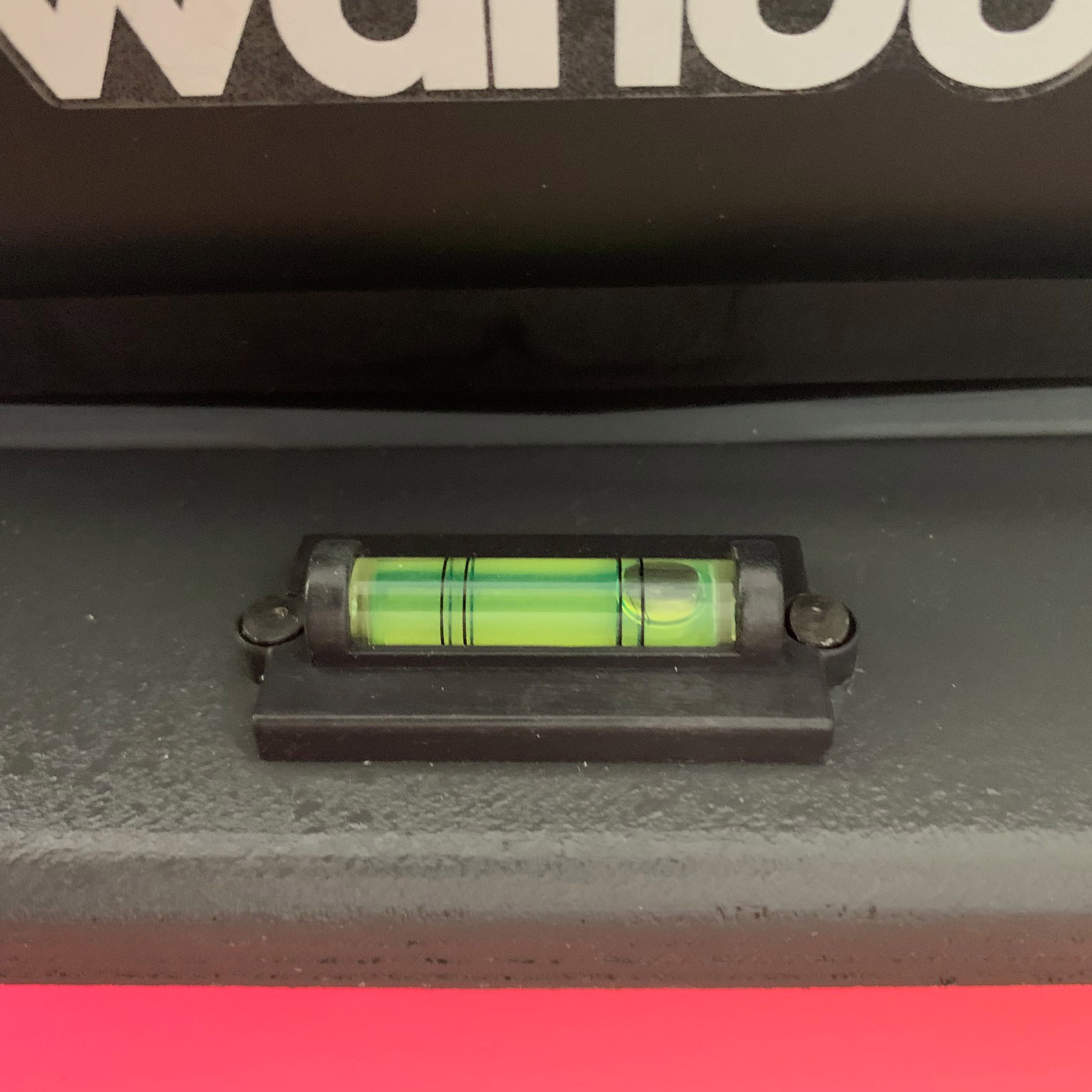
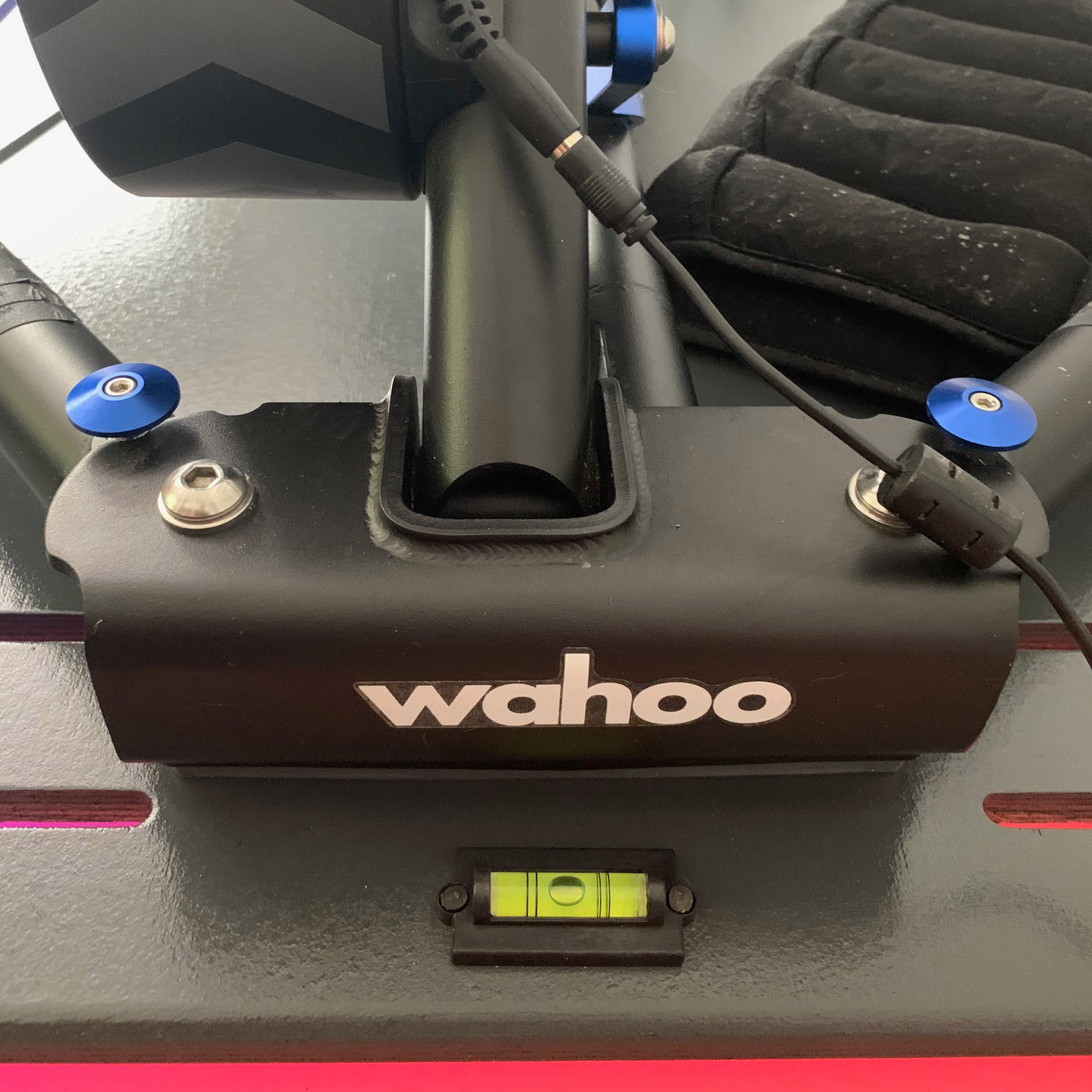
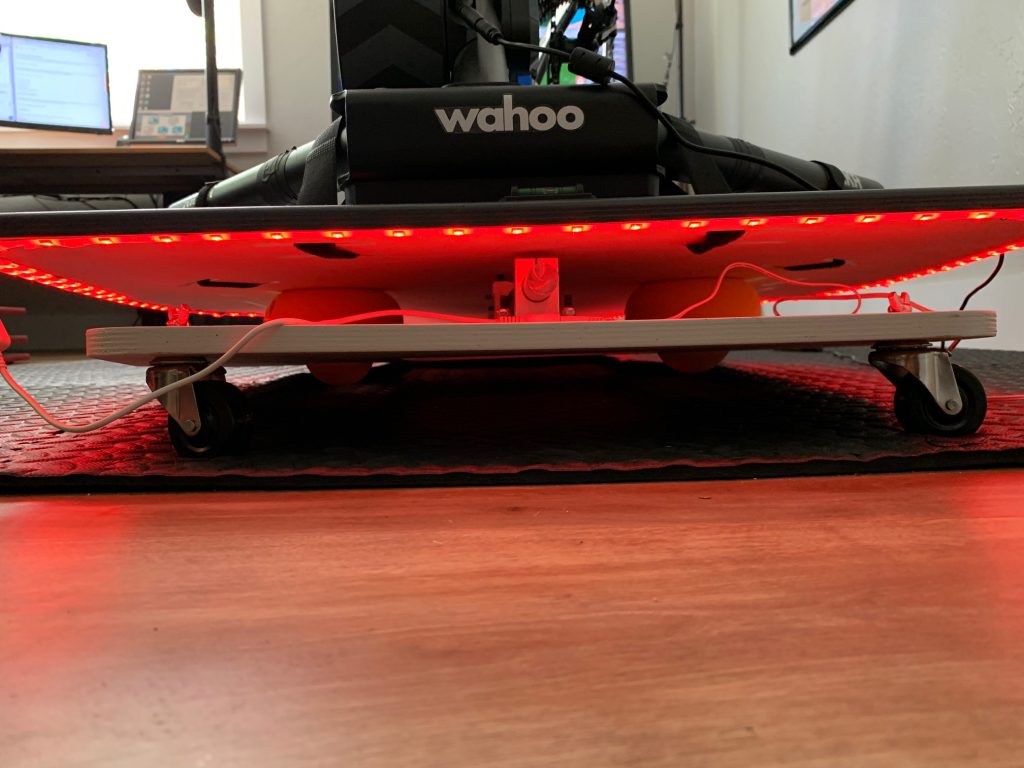
Once it was upstairs I placed my Wahoo KICKR 5 (still attached to my bike) onto the platform. The built in spirit level showed everything leaning left, which wasn’t surprising since the KICKR’s heavy flywheel is off-center. Adding my ever-useful ankle weights to the right side leveled things out perfectly.

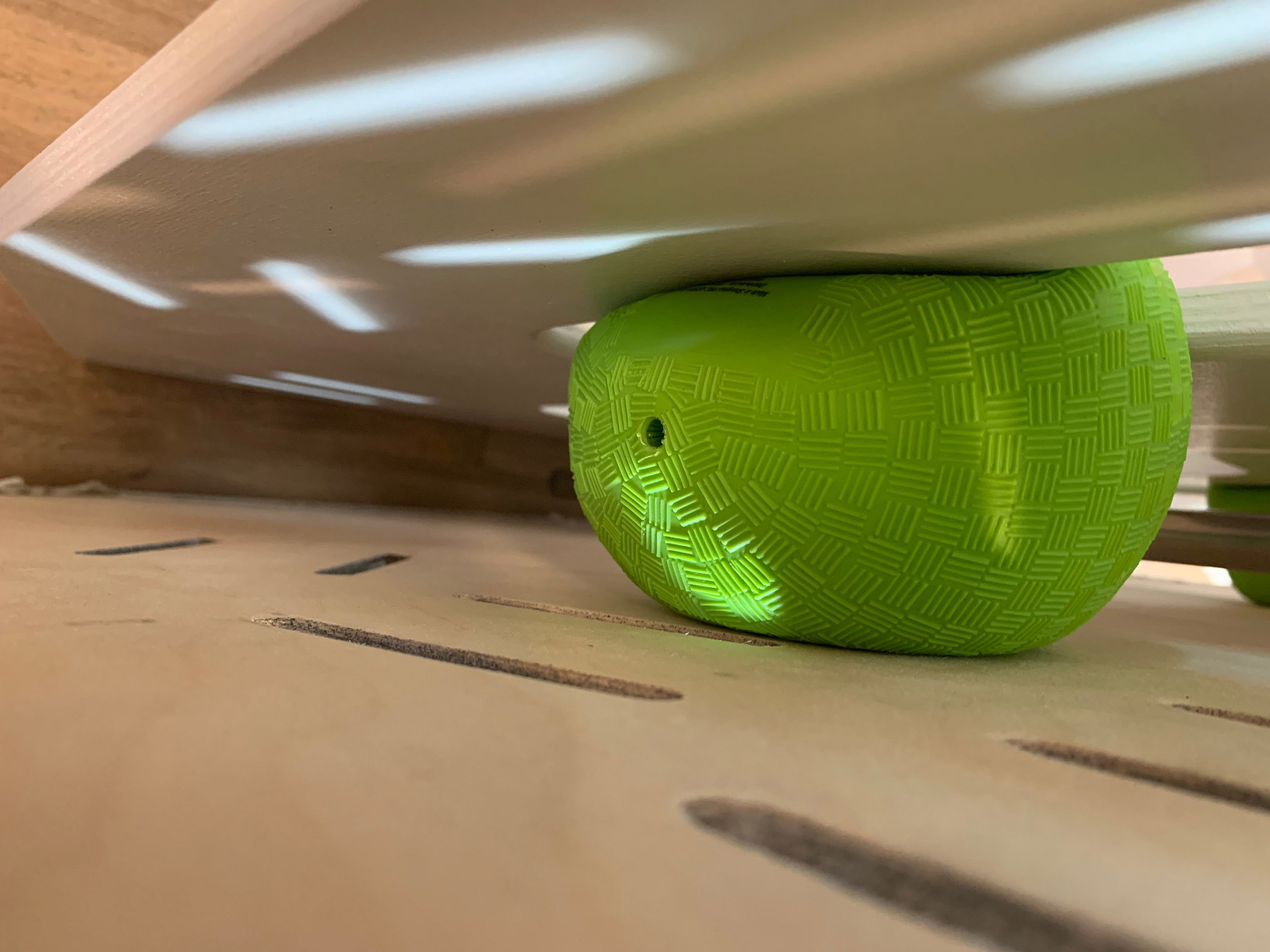
I hopped on the bike to test out the initial feel, but quickly realized the two dampening/shock absorber balls were not inflated enough. So I dismounted and gave them each 5 pumps with my small handheld pump, making sure the spirit level still showed everything flat afterward. Back on the bike, and it felt great.

Inflating the balls for the Velocity Rocker was a bit more of a pain than other rocker plates, because the balls aren’t set up in a way where you can insert a needle through a hole cut in the top plate. Instead, you have to reach in between the top and bottom plates to insert the needle.

This design makes for a very clean-looking rocker plate, but as with many things clean-looking (looking at you, internal cable routing on bikes), it can make maintenance a bit more of a hassle.

Complete setup time: 10 minutes.

Dimensions

The Velocity Rocker is 60″ long, 34″ wide (at its widest point), and 3.5″ tall.

Setup Options

How Much Air?

The ideal “tightness” of a rocker plate’s side to side movement is determined by how much air you put into the two balls. How tight you want your rocker’s movement is somewhat a matter of personal preference, although I would argue that you can certainly go too tight, which can result in “opposite form” that’s a big no-no. And you can go too loose, which results in you having to work to stay upright, which of course isn’t ideal either! Read more on this topic >

Strapping It In

The Velocity Rocker comes with pre-drilled holes and plenty of velcro straps so it’s compatible with most trainers. Velocity says “Fits most trainers on the market: Wahoo Kickr, Tacx, Elite, Saris, and older trainers, the Kickr Climb and all front wheel risers.” Not sure if your trainer will work? Just contact Velocity and ask.

For my Wahoo KICKR, I ended up using five straps. One at the end of each leg, and two in the back near the blue knobs. These two straps are crucial to keep the trainer from shifting left/right under heavy load.

Your Front Wheel

One reason riders are drawn to full-length plates is because they’re compatible with front wheel risers including Wahoo’s KICKR Climb and Elite’s new Rizer. Those are certainly valid options.

I prefer to use this simple front wheel block from KOM Cycling. You could also just put your front wheel directly on the plate and even strap it in with velcro.

You may notice in some of my photos that I placed black tape on the plate below the front wheel block – this was just to make sure my wheel block didn’t scratch up the plate during testing. (It wasn’t pretty, but it worked!)

Lights, Camera, Action!

This is the first rocker I’ve tested with built-in lights. While some might say this is a gimmicky feature, I think it’s a super cool, low-cost add-on that will appeal to many.

The lights are simple LED strip lights and can be controlled on a very basic level from the on-off switch where they plug in. But if you really want to have fun, install the “Gosund” app and pair your lights to your WiFI so you can set the colors, choose a “scene” for automated color changing, or hook it up so it changes to the music (heard through your smart phone’s microphone).

The music control sounded fun to me, but to be honest it was a bit underwhelming – like the app couldn’t hear the music well enough.

The lights can also be controlled by Alexa/Google, but I haven’t gone down that road. Yet.

Someday perhaps Zwift will open up a lighting API so we can have LED lights in our pain caves that change color based on the Zwift environment or our effort level (it was done three years ago by Jon Mayfield). Until then, we can have fun with lighting solutions like Velocity Rockers and fun stuff like Philips Hue Smart Lighting.

Wheels for Portability

The Velocity Rocker ships with two caster wheels which can easily be installed by hand into pre-drilled holes in the back of the plate, allowing you to pick up the nose of the plate and roll the whole assembly around (bike and trainer included).

I didn’t really need these wheels for my setup, but I installed them anyway to test them out. If you were on a hard surface I think the wheels would be a bad idea, as your plate would swing back and forth under heavy sprinting loads. But on carpet or a foam surface like mine everything stayed put even when I was putting a lot of power into the pedals.

I did notice the bottom plate bends a bit when the wheels are installed – at least when a 185-pounder like myself was on top. I don’t think this would affect anything adversely over the long term, though.

Using the Velocity Rocker

I tested this rocker plate in a wide variety of Zwift situations: casual riding, Zwift Academy workouts, races, Sprintapaloozas, and more. Here’s a quick demo video I made running the plate through its paces:

Fore-Aft Notes

The first thing I noticed – and to be honest it annoyed me out a bit – was how the plate would move forward and backward by just a fraction of an inch on each pedal downstroke when I was pushing harder (say, 300W or above) while in the saddle. You can see it in the demo video above.

But I got used to that motion after spending several hours on the plate, and now I’m curious if a boring old left-right rocker will feel too static!

Where I really like the fore-aft movement is when I get out of the saddle, and when I sit back down. This movement feels more natural with a fore-aft rocker, and I think it’s also more comfortable having the whole assembly slide back a bit each time I sit down.

There is some “sliding noise” when you make big fore-aft movements due to the architecture of the board. Here’s a quick sample:

To my ear, the video makes the board sound noisier than it really is. Keep in mind what you’re hearing is the noise of the board making a full fore-aft movement (around 6.5 inches), which only happens if you get out of the saddle forcefully or sit down forcefully. Smaller movements are much quieter, and even unnoticeable.

Left-Right Notes

Left to right motion on the Velocity Rocker felt natural and comparable to other full-length rockers I’ve tested including the KOM Rocker RPV1 and SBR ROCKR Pro.

Velocity says their plate allows for 15 degrees of left-right movement, while KOM allows for 13 degrees and SBR ROCKR Pro allows for 18 degrees. Did I notice a difference between them? Nah. As long as the suspension balls are inflated enough you won’t “bottom out”, and many riders won’t even get close to using the full range of movement.

Wrapping It Up

As far as I know, this is the only fully-assembled 2-axis rocker currently made in the US apart from Saris’ $1200 MP1. Because of that fact alone, the Velocity Rocker is a welcome entry into the marketplace!

But it’s also a well-built product. The top plate’s finish is water (sweat) proof and seems pretty bomb-proof as well, not easily marred by cleats like some plates I’ve used. It’s priced reasonably, and the personal support from owner Albert Knowles is a nice bonus.

Where to Buy

The Velocity Rocker is priced at $675 and available on their website at velocityrockers.com. They only ship to the USA and Canada.

Shipping is free within the continental US, and $50 to Canada.

Questions or Comments?

Share below!

ABSA Cape Epic | Qhubeka Special – Max Cluer (Zwift PowerUp Cycling Podcast)

0

About this Episode

Rahsaan Bahati speaks with Qhubeka Ambassador and Olympic and International Sports Commentator Max Cluer about how the bicycle changed his life.

About the Podcast

The Zwift PowerUp Cycling Podcast features training tips from host Matt Rowe (Rowe & King), with regular co-hosts Greg Henderson, Rahsaan Bahati, Dani Rowe, and Kristin Armstrong.

ABSA Cape Epic | Qhubeka Special – Kevin Vermaak (Zwift PowerUp Cycling Podcast)

0

About this Episode

Rahsaan Bahati speaks with Qhubeka Ambassador and Cape Epic Founder Kevin Vermaak about how the bicycle changed his life.

About the Podcast

The Zwift PowerUp Cycling Podcast features training tips from host Matt Rowe (Rowe & King), with regular co-hosts Greg Henderson, Rahsaan Bahati, Dani Rowe, and Kristin Armstrong.

Developing Diversity and Inclusion In cycling with Jools Walker (World of Zwift #46)

0

The latest episode of WoZ is out, covering all things great and beautiful in our favorite virtual world.

In this episode, host OJ Borg brings us:

  • This Week in the World of Zwift 01:01
  • Black Celebration Series with Jools Walker 01:39
  • Zwift Academy this Week, with Matt Lieto 06:34
  • Feed Zone 16:06
  • A-Zwift 17:33
  • ZRL Rider Recon with Nathan Guerra: Casse-Pattes 18:33
  • Workout of the Week 24:04

ABSA Cape Epic | Qhubeka Special – Victor Campenaerts (Zwift PowerUp Cycling Podcast)

0

About this Episode

Rahsaan Bahati speaks with Qhubeka Ambassador and WorldTour Pro Victor Campenaerts about how the bicycle changed his life.

About the Podcast

The Zwift PowerUp Cycling Podcast features training tips from host Matt Rowe (Rowe & King), with regular co-hosts Greg Henderson, Rahsaan Bahati, Dani Rowe, and Kristin Armstrong.

Zwift to Host 2022 UCI Cycling Esports World Championships February 26

7

Zwift to Host 2022 UCI Cycling Esports World Championships February 26

Today the Union Cycliste Internationale (UCI) has confirmed that Zwift will host the 2022 UCI Cycling Esports World Championships on February 26, 2022.

The races will take place on Zwift’s New York map over 2.5 laps of the Knickerbocker route and broadcast to a worldwide audience. Of course, there’s prize money on the line, plus the opportunity to wear the coveted virtual and real-life UCI Cycling Esports Rainbow Jersey!

But perhaps the most exciting news is a qualification pathway for Zwift community racers to take part in the big race. David Lappartient, UCI President, says it is, “exciting to reveal a new opportunity for emerging cycling esports stars, enabling them to compete with household names from the UCI WorldTour peloton.” Let’s dig into the details.

Automatic Invites

The UCI will be awarding automatic invites to 23 National Federations. “Places will be awarded based on a combination of Cycling Esports community size and the depth of talent based on both esports and UCI road rankings,” according to Zwift’s press release, which also says more detailed criteria will be released in due course.

How You Can Qualify

Of course, most Zwift racers aren’t in the position to be chosen for their national federation’s Esports Worlds team. And this became an issue back in 2020 when the first-ever Esports Worlds was hosted on Zwift. Some national federations didn’t do the best job of recruiting strong racers who were also experienced Zwifters and in fact, some top community racers complained that there was no way for them to get onto their country’s team.

We’re happy to see that all of that has changed for this second edition of Esports Worlds! Together the UCI and Zwift have designed five “Continental Qualifiers to UCI 2022 Cycling Esports World Championships” covering Oceana, Asia, Europe, Africa, and the Americas. These races will take place on November 27 (women) and November 28 (men), with the top 5 finishers from each race being added to their national squad and therefore awarded a place on the starting line of the 2022 UCI Cycling Esports World Championships.

Regional Qualification Event   Women (Nov 27) Men (Nov 28) 
Oceania Qualifiers to UCI 2022 Cycling Esports World Championships5am UTC 5am UTC 
Asian Qualifiers to UCI 2022 Cycling Esports World Championships8am UTC 8am UTC 
European Qualifiers to UCI 2022 Cycling Esports World Championships11am UTC 11am UTC
African Qualifiers to UCI 2022 Cycling Esports World Championships2pm UTC 2pm UTC 
Pan American Qualifiers to UCI 2022 Cycling Esports World Championships5pm UTC 5pm UTC 

But not everyone can take part in the Continental Qualifier races! These are invitation-only as well. To receive a Continental Qualifier invite riders must meet one or both of the following criteria:

  • Be racing in Zwift Racing League Premier Division 2021/22 Season 1: all Premier Division riders will receive an automatic invite
  • Be a Level 5+ Zwifter who has been auto-categorized by WTRL as a Category A (or above) during the following events (riders must have taken part in at least 2 of these designated events to be eligible):
    • Zwift Racing League (ZRL) 2021/22 Season 1 Community Division (Oct – Nov 2021) – you can gain eligibility through all of the regular season races (Rounds 1 – 6) that take place in between October 12th and November 16th 2021. 
    • Continental Open event series – for any riders that are not currently competing in ZRL (or are only able to complete one event during ZRL), Zwift and WTRL are holding standalone Continental Open events for all time zones on the following dates;
      • November 13
      • November 14
      • November 20
      • November 21

There are lots of details involved in qualifying for, and racing in, Esports Worlds 2022. These include trainer accuracy requirements, UCI Regulations, ZADA verification, and anti-doping measures. We highly recommend you read Zwift’s blog post for all the details of qualifying as a community racer.

Additionally, here is WTRL’s homepage for the pre-qualifers.

Esports Worlds Race Details

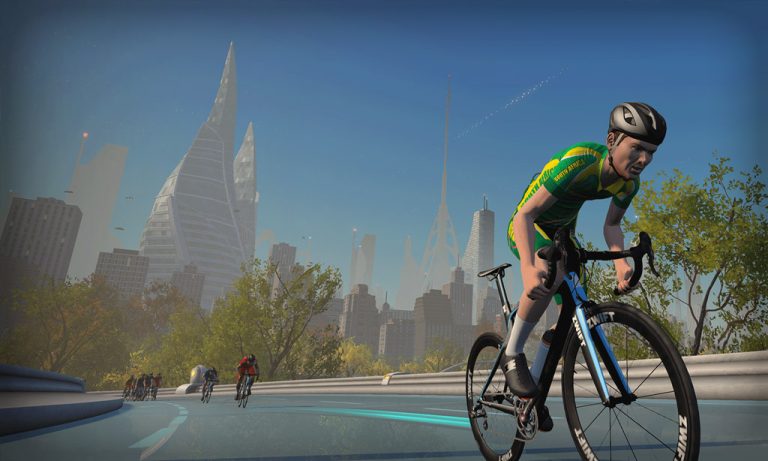
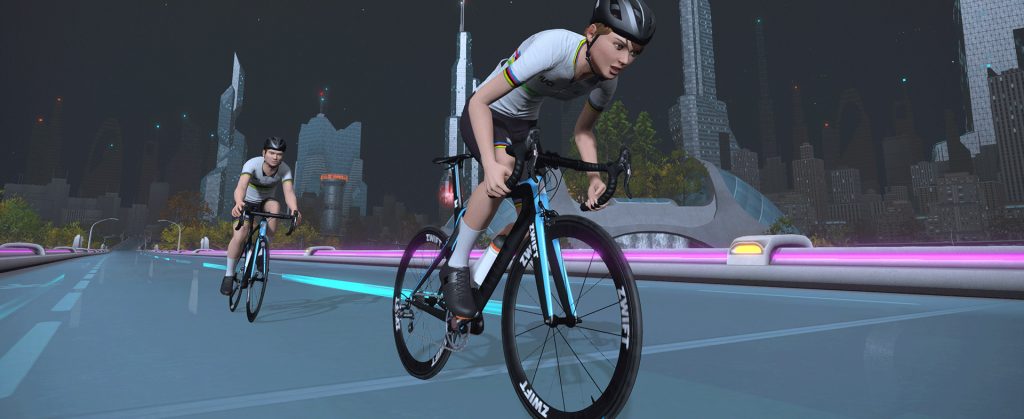
Racers will be riding on the custom “2022 Cycling Esports World Championship Route” which is 2.5 laps of the Knickerbocker route, “a challenging parcours worthy of a UCI World Championship event.” This route features the rolling roads of NYC’s Central Park, as well as the futuristic glass road KOM.

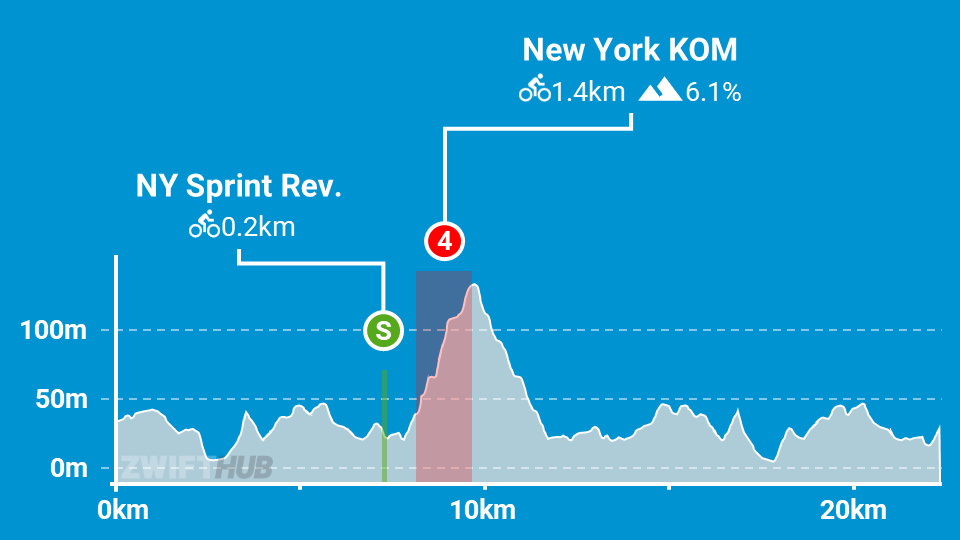
NYC’s Knickerbocker route, 1 circuit

The rolling roads and steep KOM gradients will make for a selective race. Both Men’s and Women’s Elite fields will tackle two full circuits of the 22.5km route before finishing at the top of the New York KOM, a 1.4km climb with an average gradient of 6.1% and ramps of up to 17%.

In total, riders will cover 54.9km and 944m of climbing.

Like the inaugural 2020 Esports Worlds, the big race will include Zwift powerups, and participants will be competing entirely remotely from their own residences or training bases.

And of course, winners of both races will be awarded the UCI Cycling Esports Rainbow Jersey within Zwift. The winners will also receive physical jerseys which they will be able to wear in esports competitions for the following year.

2020 UCI Cycling Esports Rainbow Jersey

Parity

Prize monies will be equal for men and women. The number of racers should be equal as well, since the UCI and Zwift are formulating automatic invite criteria to ensure that “the maximum possible number of entries for both genders will be the same.”

More To Come

More details will be released in the coming months, including scheduling specifics. We will update this post with additional information as it becomes available.

Questions or Comments?

Share below!