Last week, Zwift announced the launch of a new “microgrant” program. The full text of their press release is below.
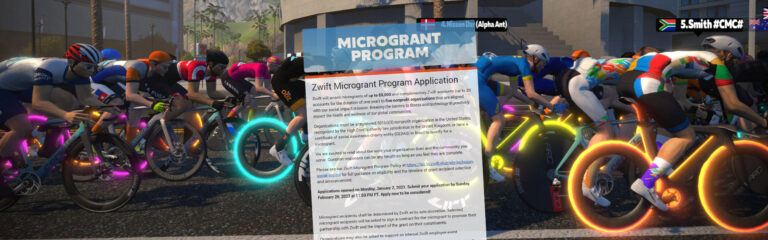
Zwift, the global online fitness platform for cyclists and runners, recognizes the importance of supporting our global community and the organizations Zwifters are passionate about. To help non-profits work toward their missions, Zwift has launched a new microgrant program.
Called Zwift Microgrants, this new program will allow Zwift to expand support for organizations and causes that are important to our Zwift community, and aligned with our mission.
Starting in 2023, Zwift will award five $5,000 grants to qualifying organizations aligned with our social impact mission, and will also provide each grantee as many as twenty complimentary Zwift accounts.
“Zwift’s work to foster and support a diverse community on our virtual worlds is what truly sets us apart from all other fitness platforms,” said Eric Min, Zwift Co-Founder and Co-CEO, “We’re excited to support organizations engaged in the same work by offering these five grants to organizations that align with our missions and we look forward to see the positive impact that will result.”
Microgrants will be awarded to registered non-profit organizations that are aligned with one or all of Zwift’s social impact pillars: fitness and technology, health and wellness, and community. Applications will be reviewed by our People, Growth, and Impact team.
Organizations must be registered as a 501(c)(3) in the United States, recognized by the High Court’s charity law jurisdiction in the United Kingdom, or have a certificate of social assistance charity entity (CEBAS) in Brazil to be considered for the Microgrant program. Qualifying organizations can apply between January 2 and February 26, 2023. Grantees will be notified in March. For more information on how to apply for Zwift Cares grants, please visit this site. Organizations can apply here.
Updated: Post-Christmas Deals for Zwifters (Smart Trainer/Bike Discounts)
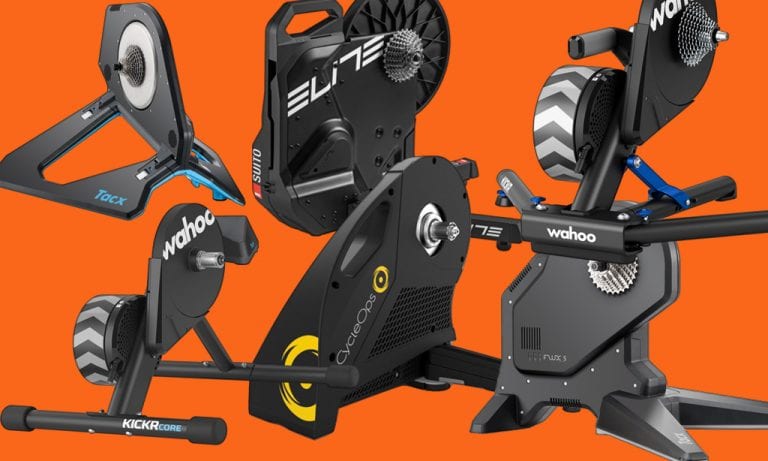
This year’s holiday sales had the biggest discounts we’d ever seen on smart trainers and smart bikes, thanks to many brands being overstocked and some looking to make room for new models.And the good news is, most of those deals are still available today!
If you want to upgrade your smart trainer, now is the time: we’re in the middle of Zwift season, and these deals won’t be around when indoor season rolls around 9 months from now.
Here’s the list, with ⭐ next to the most impressive deals.
Smart Trainers
Click a trainer for reviews and specs, or click “Buy” to get the deal.
NeXT pb Enshored splashed onto the eRacing scene in 2021 with their first season win of the Zwift Racing League Premier Division. They’ve raced in countless elite and community races since then and now, NeXT is launching its first race series!
The 6-week race series, the NeXT Cup, starts this Sunday (Jan 8). The race format is modeled after the upcoming World Championships format (similar to the Continental Qualifiers, but without eliminations). No rainbow jersey will be on the line, but racers will compete for prizes from Kogel Bearings, Cutaway Apparel, and Watrbodl.
Here’s how NeXT explains the series format:
Each week will consist of three races that are 30 minutes apart on varying types of terrain, each lasting 20-25 minutes. As will be the case at the World Championships, the first race will be on rolling terrain (scratch); the second finish on a climb (scratch); the third will be crit style points race.
All Categories Welcome
This is a format that, so far, has been experienced only at the top level of Zwift racing, and the series is sure to draw many of the top Zwift racers in the world. But the NeXT Cup will have separate A, B, C, and D fields – and shorter races for the C and D fields.
NeXT Cup Basics
Three races every Sunday: Punch, Climb, Sprint!
January 8 to February 12
Shorter races for C/D categories (targeting 20 minutes each)
Series winners for men and women
Weekly giveaways
Separate scoring for men and women (must finish each race to be scored)
Dual recording required for top 5 in each race in Category A
100% trainer difficulty required in Category A (should happen automatically)
Heart rate monitors required for all racers in A/B and for top 5 in each race in C/D
It’s no coincidence the NeXT Cup series ends a week before Worlds (7 of the 35 members of NeXT secured a Worlds spot). With the World Championship moving from a single scratch road race to a three-race format, NeXT is hoping its series will be popular with racers looking to prep for the big stage, and for everyone else looking to get into this fresh racing format.
Series Schedule
The 6-stage series is held on Sundays at 08:00 ET/13:00 UTC. Each week, Race 1 of 3 will start at that time; Race 2 of 3 will start 30 minutes later, and Race 3 of 3 will start 30 minutes after the Race 2 start.
The series begins on January 8 in New York. Courses are still being planned for the races on January 15, 22, and 29 and February 5 and 12.
Earlier in the week, team ZTO attempted to break 8 minutes on the Fuego Flats Reverse segment in Watopia. Using the best equipment in the game, including the use of drafting on TT bikes. However, the fastest group fell ~5 seconds short. Now, ZTO is back to have another crack at a record-setting time on this segment!
The event takes place over 2 laps of Tempus Fugit where riders will chill and chat until the ride back on the second lap. This is the perfect chance to have a shot at a record on a segment that has been completed by hundreds of thousands of riders.
Special settings: double draft, draft-enabled TT bikes,
Join DZR for an epic badge hunt ride! The Uber Pretzel is definitely a bucket list route, and this is the perfect opportunity to complete it. Riding with company helps pass the time as you crest some of the largest climbs in Zwift. Double draft will also be enabled on this ride, and if this doesn’t tempt you enough, completing this route for the first time will give a 2560 XP bonus.
The Uber Pretzel is arguably the second hardest route on Zwift, falling shortly behind the PRL Full. However, the Uber Pretzel is no doubt an extremely tough route that often takes riders 5+ hours to complete.
NeXT p/b Enshored, the top e-sport cycling team on Zwift, is hosting a race series inspired by the new UCI Esports Worlds format. The series consists of three back-to-back races. The first race is a traditional scratch race, with the top 30 finishers scoring points. Also a scratch race, the second race will allow the top 15 finishers to score points. To finish off the series, riders will battle it out with a points race. For the final race, points will be awarded to the top 10 riders on each prime, in addition to the top 10 finishers receiving points.
To increase the competition, prizes are on offer from the sponsors of NeXT p/b Enshored. Prizes will be awarded to the weekly winners, with a grand prize given to the series winner (top 5 of 6 results count towards the series GC).
Join the HERD on their weekly endurance ride. The goal of this ride is to help riders build their endurance through a well-paced social ride throughout the roads of Zwift. Late join is enabled, so riders can join up to 30 minutes after the event begins.
Leaders and sweepers will be present, and HERD suggests that stronger riders drop back to help assist the sweeps in helping riders rejoin the group. The ride takes place over 90 minutes on the Makuri 40 course in the Makuri Islands – a great course to sit up and take in the scenery.
Start the Zwift Racing League round strong by joining team Rave for a recon ride of this week’s course. Knowing the course is always extremely helpful when it comes down to racing, and this is especially true for this week’s race. In this ride, there will be two options for pacing: the yellow beacon will hold a steady 2-2.5 w/kg, while the red beacon will hold a steady 1.8-2 w/kg.
This group ride takes place over the ZRL course for the first race of round 3 of the series, Chain Chomper. The group ride is set to last 60 minutes, so riders will likely complete ~2.5 laps of the course.
Welcome to another post in our series aimed at helping you avoid n00b powerup mistakes in Zwift races.
Powerups add a fun element of randomness and strategy to Zwift racing. While some purists deride their use, most racers welcome their addition to an indoor racing experience which can feel a bit oversimplified since it has fewer variables than outdoor riding.
Experienced Zwift racers understand how powerups work, but we see them used incorrectly over and over again. Hopefully this series can help.
Using the anvil on the Aqueduc KOM descent in a ZRL race
The Anvil: How It Works
As you might guess, the Anvil powerup makes you heavier when activated. It lasts for 15 seconds, but crucially, that extra weight is only added while you’re on a descent of -1.5% or greater.
(The Anvil didn’t always work this way. Initially it simply made you 50kg heavier for 30 seconds, regardless of the terrain. But Zwift found many people were getting dropped by misusing it on flats or climbs, so they decided to make it smarter in September 2022, so it only worked on descents. Then they revised it again in May 2023, making it less powerful overall while also basing its weight on a percentage of your body weight, with the percentage being higher for lighter riders.)
Why would any cyclist want to gain weight? Because it makes you faster on the descents! Activate this powerup on downhills – the steeper and longer the better – for a speed boost. Combine it with a supertuck for even more speed.
Here are two shots from a Zwift Insider Tiny Race where every rider received an Anvil… and most deployed it on the downhill lead-in to the sprint:
Activated Anvils on the descent into the JWB Sprint RevStill activated on the flat, but the 50kg has been removed
How It’s Misused
While its usage may seem obvious, many Zwifters aren’t familiar with the Anvil since it only appears in events when specifically enabled by organizers.
The most obvious misuse of the Anvil is on flat or uphill roads. Before the Anvil became “smart”, activating it on a climb could get you dropped from the pack quickly. Now, with the added weight only applying on descents, activating your Anvil on a flat or climb simply wastes it. Like activating your draft boost when you’re on a solo breakaway, it has no effect. You might as well just throw the powerup away.
Building Momentum
Racers have found that the smart Anvil is a potent weapon in certain situations. It adds significant weight (especially if you’re a lighter rider), and you’ll find yourself descending more quickly with the Anvil activated.
Using it on long descents is a no-brainer, but it can also be used to build momentum on a short descent which can help you on the flat road or climb that follows. Activate the Anvil on the descent, give a good kick to reach a high speed, then keep pushing after the road levels out to maintain your speed. You’ll find that the momentum you built with the Anvil will carry you across flat ground and up small climbs much more quickly than if you’d attempted the same, sans Anvil.
This week is for the w/kg powerhouses, as every race ends on a climb. And we’re not talking about quick uphill sprint finishes – each route ends in at least 2-3 minutes of climbing.
These are all new routes, too. Never before seen in the Tiny Race series!
Approaching Temples and Towers finishTemples and Towers finishApproaching Royal Pump 8 finishRoyal Pump 8 finishApproaching London Loop Reverse finishLondon Loop Reverse finish
Race 1: Temples and Towers (5.286km, end atop Rooftop KOM) Starting off pretty easy, this one ends on Neokyo’s Rooftop KOM which is very draftable, especially in the early portion.
Powerup: none
Race 2: Royal Pump Room 8 (6km, end on Otley Road climb) This one is a bit lumpy, as Yorkshire routes always are. Ride a quick loop of the short upper circuit, grab a powerup, then come back by the start pens and head up Otley Road for the drag to the finish.
Powerup: Feather x2
Race 3:London Loop Reverse (3.43km, end partway up Fox Hill climb) The flat start takes you over Tower Bridge and through the Underground tunnel, then it’s up, up up to the finish line partway up Fox Hill.
Powerup: none
Race 4: Sea to Tree (3.8km – 1 lap) Ending with our longest climb of the day, we’ll begin on asphalt then hit the dirt to ascend up the Temple KOM to the finish at the arch in the giant mystical tree. You’ll want a gravel rig with name-brand wheels for this one.
Zwift displays preliminary race results in game when you cross the line, but points are computed after all four races are finished, with final results on ZwiftPower. (We have to do some data processing on our side to compute results, so if your rankings don’t show up right away, be patient.)
Riders will earn points based on finish position in each of the 4 Tiny Races. The category winner of each week’s series is the rider with the most points across their timezone’s 4 races. Here are the links for each timezone’s results on ZwiftPower:
Tiny Race rules are simple. Four races, four rules:
You must have a ZwiftPower account, because final results are processed by ZwiftPower (learn how to sign up)
No skipping then returning. These races are meant to be raced as a set of 4. If you need to leave early, that’s fine… but once you miss a race in your hour’s set of 4, don’t come back and race another or you’ll be disqualified from that race since you rested while others were racing! (Example: racing only races 1 and 2 is fine. Racing 1, 2, and 4 is not – you will be DQ from race 4. And if you race 2, 3, and 4, you’ll be DQ from all those races, since you skipped race 1!)
Heart rate monitors are required for podium finishers
ZPower/Virtual power is not allowed. Smart trainer/smart bike or power meter required.
Join a Chat & Chill Cooldown
Immediately following each hour’s racing, we’ve scheduled 30-minute “Chat & Chill” events where riders from all categories can spin out their legs together and have some fun chatting about how it all went down. Find them at zwift.com/events/tag/tinyraces.
On a global scale 2022 began tamely enough, but it turned into quite a ride. Russia’s invasion of Ukraine put the world on edge, and inflation spikes made people more budget conscious than ever before. Post-Covid logistics issues resulted in business challenges in the cycling and indoor training space, leading to job loss, price cuts, and in some cases bankruptcies and buyouts.
It wasn’t a pretty year. But amidst all of that, Zwifters continued to ride and run our favorite virtual roads, while Zwift kept rolling out updates.
Was 2022 everything we’d hoped for on Zwift? Of course not, because we always want more than Zwift delivers. That’s just part of being a Zwifter; we never get enough new roads, racing improvements, or new shiny features.
But Zwift made some major internal changes this year, implemented a pile of welcome improvements in the platform, and emerged from 2022 a leaner, more focused organization. That bodes well for 2023.
This is our look back at all things Zwift for 2022. Enjoy the ride!
New Roads and Routes
While Zwift still isn’t creating fresh roads as fast as most Zwifters would like, they’re still giving us new routes on existing roads from time to time. Toward the end of the year, they threw us a bone and released the new Urukazi section of Makuri Islands – the only “fresh pavement” released in 2022. Here’s a list of new routes added to the game, by month:
In 2022 we didn’t see Zwift rolling out major new community events. Instead, they largely built on previous years’ successes, attempting to improve what was already proven to work in marquee events like the Tour of Watopia, the Zwift Classics, Zwift Fondos, Zwift Academies, and more.
The one notable exception is the Zwift Grand Prix – a new elite racing format Zwift launched to replace the ZRL-linked “Premier League”. In what must surely be a sign of things to come, this event series saw Zwift experimenting with many fresh, uniquely-esports race formats.
WTRL’s Zwift Racing League continued to grow in popularity as the biggest race league in Zwift, while Zwift’s monthly ZRacing series (see the current series here) launched and become a welcome fixture on the calendar with its monthly GC and smart rotation of routes.
On the community side organizers continue hosting amazing races week in and week out. This includes our own Zwift Insider Tiny Races which have proven very popular since launching in July!
We won’t list all of Zwift’smajor events for 2022 here, but you can certainly browse the events archive to see what we highlighted throughout the year.
Restructuring
In May, Zwift announced a major restructuring and refocus of the organization. This included a pause on their smart trainer plans as well as a reduction of their ~700-employee workforce by ~20%.
The employee exodus was massive and included Watopians on all levels of the food chain, some of them veterans from Zwift’s early days.
While this sort of thing is never easy, it does seem from our “Inside” view that the new leaner, meaner Zwift is moving more quickly and nimbly than before.
Then in December, Zwift announced that CEO Eric Min would be sharing the CEO chair with former Amazon executive Kurt Beidler. This is an unprecedented change in Zwift leadership, and our guess is we’ll start to see the effects in the next few months.
New Homescreen
Zwift announced that a long-awaited new homescreen would begin rolling out to Windows users in January 2022. It took until December for the homescreen to be rolled out to all Android users – the last group of Zwifters to receive the update.
Reviews of the new homescreen have been mixed, especially when it comes to the hassle of selecting certain workouts. But overall we like the stronger focus on events, and see lots of potential for smart activity recommendations in the future.
Workout Changes
This year saw big changes made to Zwift’s workout library and functionality, in an attempt to make Training Plans and workouts more flexible and accessible. Key changes include:
Bigger Bias: in February, Zwift made it so you could adjust your FTP Bias from -25% to +25%, expanded from -10% and +10%.
Wide Open Training Plans: Training Plans become truly flexible this year, allowing you to take on whatever workouts you’d like, whenever you’d like.
Localization: Workout localization began in April, translating popular workouts to French, German, Spanish, and Japanese.
UI Update: this rolled out in September, updating the workout browser UI to match the new homescreen
Short workouts: just last month Zwift added two new Training Plans for time-crunched athletes, as well as additional “under 30 minutes” workouts.
Frames and Wheels
Lots of new wheels and frames were added to the Drop Shop in 2022, but most weren’t remarkable in terms of their performance. Here’s what stood out:
New gravel wheels were released in February, and more in March. These name-brand wheels perform much better on dirt than the stock Zwift-branded gravel wheels.
Specialized Crux was released in February, setting the new standard as the fastest climbing gravel bike.
CADEX Tri frame was added in September, and it’s the fastest TT frame on flat and rolling routes, by a significant margin.
CADEX TriFelt IA 2.0Scott Plasma RC Ultimate
New/Expanded Features
Along with everything listed above, Zwift rolled out additional new features in 2022 and improved existing features. Here’s the complete list:
90-Day Segment PRs: segment PRs on the in-game leaderboard have always lasted for only 30 days, but in June this changed to 90 days.
Auto screenshot improvements: in August, Strava users smiled when Zwift started taking automatic screenshots at key points in our activities, making our Strava uploads much more interesting.
Category Enforcement: Zwift began testing CE in February 2022, and it quickly caught on. Related UI was added in October, and as of now around 2/3 of all races use it. This is, simply put, the biggest advance in racing fairness since Zwift launched. Read more >
Clubs: limits were increased dramatically this year, allowing more people to join more Clubs. While Club functionality hasn’t expanded much this year, lots of Clubs are using their basic tools each week to manage events. Hopefully Zwift will upgrade Clubs with new features in 2023.
Handcycles: added in September, the virtual handcycle let IRL handcyclists finally have an avatar that matches their real bike. Read more >
HoloReplay: released in October, this handy feature lets us ride against our past efforts. Read more >
“Join a Zwifter” returns: the “Join a Zwifter” tool was mystifyingly not included in the new homescreen UI. But Zwift finally brought it back in November, and it was improved significantly from the original version.
Levels 51-60: veteran Zwifters rejoiced when 10 more levels were added in September. Some of those Zwifters hit the new level 60 limit before the year was out.
Pace Partners/RoboPacers: in September Pace Partners finally moved out of FutureWorks and “graduated” to become an official Zwift feature. As part of that process they were renamed RoboPacers, given an ongoing rotation in Watopia and Makuri Islands, expanded to include a wide variety of paces, given their own row on the homescreen, and the Drops multiplier game was even updated so it gives us more Drops! Read more >
Pack Dynamics 4.x: in 2021, Zwift released Pack Dynamics 3.0, bringing major improvements to the way riders behaved in packs. They’re currently testing Pack Dynamics 4, which is supposed to slow down packs, display less forward/backward movement in packs, and allow for more breakaways in races. We assume this will be released in the first half of 2023.
Ride on Bombs return: we haven’t been able to give Ride Ons to the 5 closest Zwifters in events for years, but in September Zwift flipped a switch so we could easily share the Ride On love in races, group rides, etc.
Smart Anvils: while we loved seeing people deploy the anvil on climbs, Zwift apparently did not. So in September they made the anvil powerup smart, so it only works if you’re on a 1.5% or greater descent. It’s now a favorite powerup of many racers.
TT improvements: these began rolling out in June, and eventually included TTT improvements so ZRL racers could stop manually timing their TTT starts, and could use TT frames. Zoom zoom!
Zapping Fence: in June, Zwift announced that ride leaders could request that their event use the zapping fence, which boots riders out if they ride ahead of the fence for too long. Take that, zinners!
Game Updates
Zwift stayed on schedule with monthly updates throughout the year. Some updates were far more exciting than others, but we like the pace of regular releases nonetheless:
Support for Wahoo’s Direct Connect was (finally) added to Zwift in April, and this functionality now allows the latest Wahoo KICKR to connect to Zwift via WiFi.
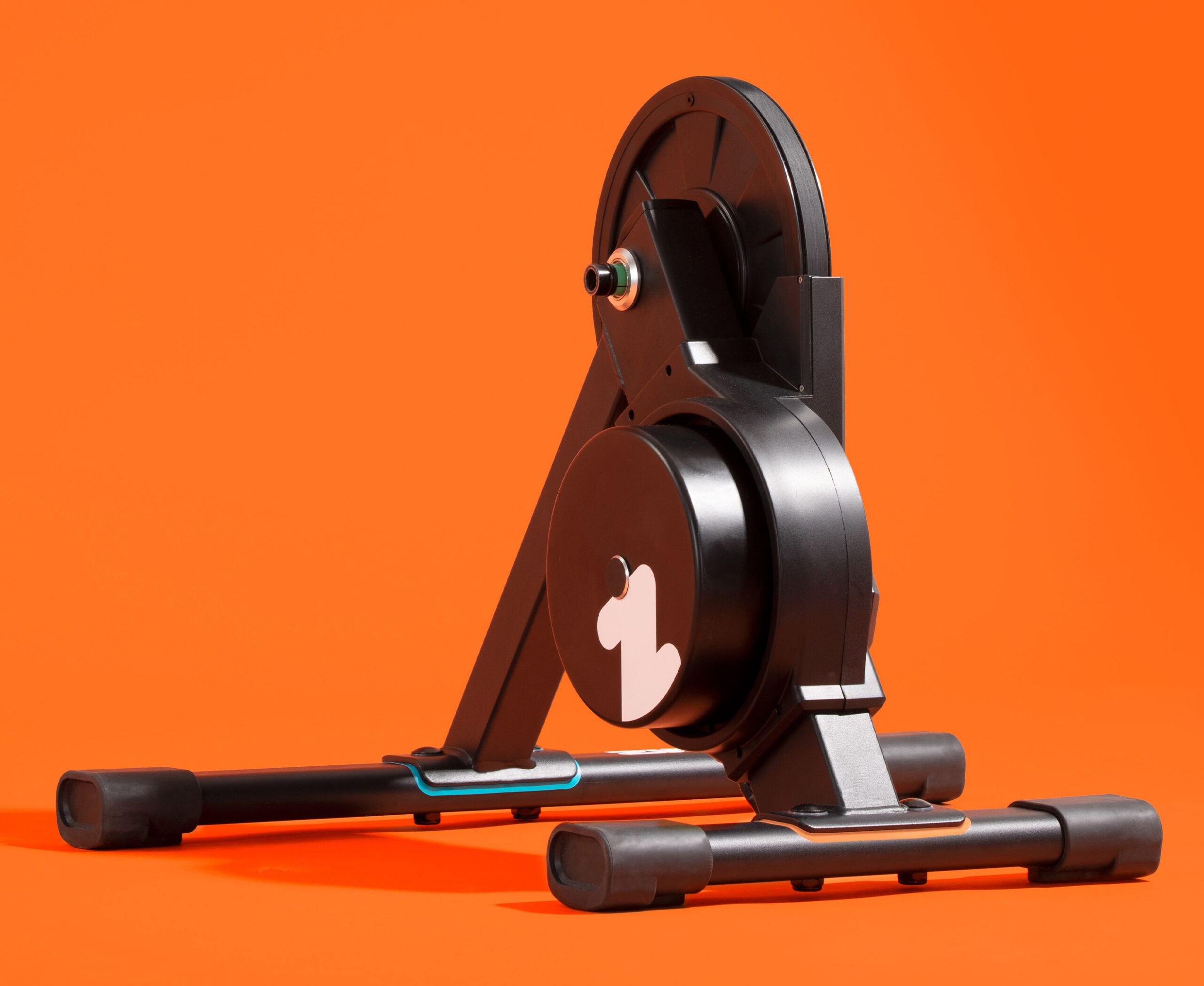
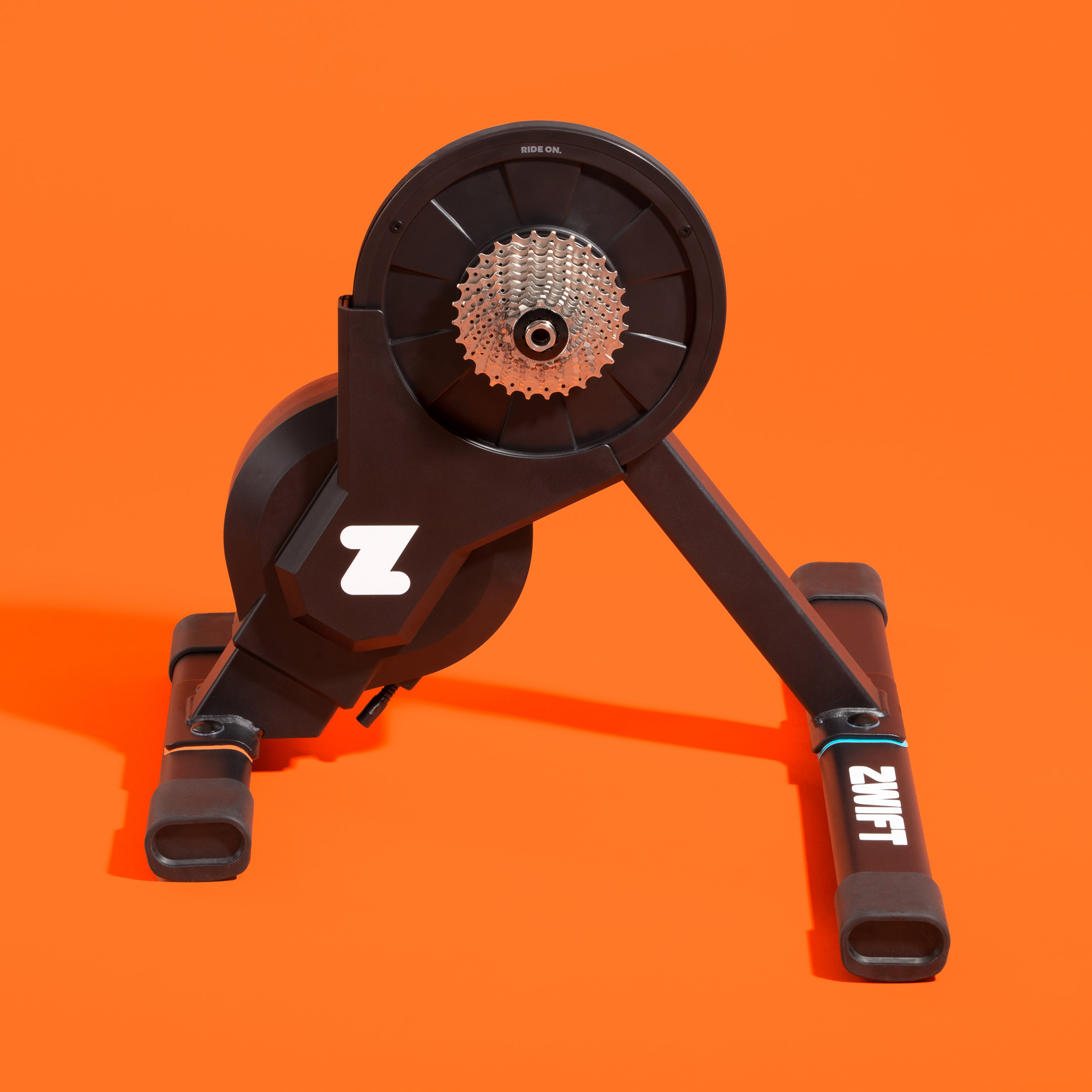
The biggest news in the hardware space, though, was Zwift’s release of their Zwift Hub trainer: a capable direct-drive trainer priced to sell at $499. It’s no exaggeration to say this news rocked the indoor cycling world, where direct drive trainers typically sell for $800+.
Wahoo quickly filed a lawsuit against Zwift, arguing that the Zwift Hub infringes on a number of patents utilized in Wahoo’s KICKR trainers (read more from DC Rainmaker). This lawsuit is in its early stages, but we’ll surely see more news in the coming months.
2020’s lockdowns validated indoor training, then 2021 saw the fruit of that validation as trainer sales stayed robust and trainer manufacturers ramped up production.
Then 2022 arrived, and the bottom dropped out.
This year, for the first time ever, we’ve been seeing massive, ongoing discounts for trainers from popular makers including Wahoo, Tacx, and Saris. Where you couldn’t find a KICKR v5 to buy in 2020, Wahoo couldn’t seem to offload enough of them this year, even at a 30% discount.
It’s a challenging time to be in the trainer business, with so few customers looking to drop big money on a new trainer and the aftermarket flooded with post-Covid used hardware. So it was no surprise to hear Saris had to sell itself at a bankruptcy auction a few months back. Chances are we’ll see others struggle in the indoor space for the next year or more.
Competitors
In April, Wahoo announced its acquisition of Zwift’s closest competitor, RGT. Rebranded as “Wahoo RGT”, the platform was integrated into a new monthly subscription dubbed “Wahoo X” which also includes Wahoo’s SYSTM (formerly known as Sufferfest).
With Wahoo X priced equally to Zwift, the acquisition was a clear move to compete head-to-head with Zwift in the training software space. Wahoo also made moves to differentiate RGT from Zwift, offering an annual plan discount and recently rolling out in-game voice comms.
Where will the Wahoo vs Zwift story go in 2023, with a trainer patent lawsuit looming and the industry’s two top software platforms battling for market share?
Community Bummers
Two things happened in the Zwift community in 2022 which need to be mentioned here, in the interest of having a complete record of the year.
First, in February, there was #FreeLuciano. We’ll leave it to you to read the full story if you wish, but to summarize: one Zwifter (Luciano) revealed a massive racing exploit, then was banned by Zwift. And the kerfuffle just got more fuffled as the days went on…
Then in June, Zwift warned community add-on developers that required upcoming encryption changes would be breaking their apps. And in July, that’s exactly what happened. Popular add-ons like Zwift Activity Monitor, ZwiftMap, and Sauce for Zwift were rendered nonfunctional when Zwift began encrypting their client-side datastream to comply with new requirements on Android.
Since that time, both ZwiftMap and Sauce for Zwift have released updated versions with workarounds. Still, we sure would love to see Zwift create a true API so approved developers could plug into game data and do amazing things.
What’s Coming in 2023?
Here’s what we know is coming very soon (within 1-2 months) to Zwift:
Zwift “For You”: a smart set of activity recommendations on your homescreen
There’s more to come in addition to what’s listed above. Some things we’re not allowed to mention yet, but there are definitely other things Zwift simply hasn’t told us! We’re looking forward to 2023 and all the Zwifty upgrades it will bring, and we hope you are, too.
Your Comments
What are your thoughts on Zwift’s 2022? Favorite new features, things you wish Zwift had released but didn’t? And what would you most like to see in 2023? Share below!
Important note: we discuss Segment Battle Points several times in this post, but WTRL just announced yesterday (Monday) that SBP will not be used until race 3.
The Chain Chomper in Makuri Islands features tough back-to-back KOM climbs, and we’ll be hitting those climbs twice. Additionally, Segment Battle Points have been introduced for this race, adding a layer of complexity and effort to what was already a grueling and strategic race.
Let’s dig into the race, including an intro to Segment Battle Points plus tips for bike choice, powerups, strategy, and crucial segments.
Introducing Segment Battle Points
WTRL is introducing a new way of earning points this round, and it’s big news for ZRL racers! Segment Battle Points (SBP) are designed to keep everyone pushing hard on the intermediate sprint and KOM segments, no matter where you’re at in the race.
SBP works like this: your team members are ranked 1-6 using a secret algorithm from WTRL. This happens for all other teams as well, so all the #1 riders are in an SBP group, all the #2 riders in another, etc. You compete against the riders in your group to be first across the line and earn points on each segment.
Looking at the Route: Makuri Islands’ Chain Chomper
The distance math on this race is a bit challenging, but we’ll spell it out for you:
The Chain Chomper route is 13.6km long
It also begins with a 2.3km lead-in
WTRL says the custom race distance is 23.3km
This places the race finish 23.3-(13.6+2.3)=7.4km into the second lap, or right at the top of the second Temple KOM Reverse. The KOM banner is your finish line.
All categories will be racing the same route, for a total elevation of around 368 meters.
We’ll be contesting two KOMs and a sprint segment for points, hitting each one twice over the course of the race for a total of six segments. These segments are shown in the profile below:
You’ll begin with a slightly downhill lead-in to the Country Sprint Reverse. It will be hard for attacks to get away early on the lead-in with pack speeds high, but watch for riders with fresh legs to hit the sprint well before the start line in a bid for big FTS/FAL points.
Country Sprint Reverse
We hit the Country Sprint Reverse twice: once on the lead-in, and again at the end of the first lap. The segment is only 150m long, and has a slightly downhill lead-in, so it’s going to be fast! Expect attacks well before the start line.
Castle KOM
This 2.5km climb begins not long after the Country Sprint Reverse ends. It’s actually more of a two-part climb, with ~1.1 km of flat roads mixed in. Riders usually don’t get dropped on the first climb (across the bridge and twisting up through the village). Then you have a flat bit, and the real work begins as you climb to the castle. This is where the pack will stretch and snap!
Temple KOM Reverse
You won’t have much time or flat ground for catching your breath after the Castle KOM before the road takes you outside the castle walls and you hang a left onto the dirt Temple KOM Reverse.
The Temple KOM Reverse isn’t raced much compared to the Temple KOM. It’s shorter in this direction (1.9km vs 2.5km) and just a bit less steep (3.5% vs 3.6%). It’s a fairly steady climb that turns to a false flat in the final ~600 meters. Does it make sense to swap bikes for this dirt climb? See the “Bike Frame + Wheel Choice” section below…
Descend the dirt path from the top of the Temple KOM and hit the pavement to ride through the Fishing Village and descend through Village Onsen and back to the Country Sprint Reverse to begin your second (partial) lap.
This lap will end atop the Temple KOM Reverse, meaning the second Temple KOM Reverse climb awards both top finishing points and FAL points to the first riders across the line!
Riders will be awarded powerups through the KQOM and sprint banners, meaning we’ll get 5 powerups during the race. Three powerups will be given out at each banner:
Lightweight (feather) (33%): reduces your weight by 10% for 15 seconds. Use on climbs, when weight matters the most.
Aero Boost (helmet) (34%): makes you more aerodynamic (reduces your CdA by 25%) for 15 seconds. Use this if you’re contesting a sprint or attacking in the wind at high speed. Also useful when bridging gaps on flats or descents.
Anvil (33%): makes you 50kg heavier for up to 30 seconds, so you can descend faster. Safe to use whenever you’d like, since it is only active when the road is at a -1.5% decline or greater. Use this on downhills. Really only useful if you’re attacking on the second Country Sprint lead-in, or when descending the Temple KOM.
Bike Frame + Wheel Choice
This custom Chain Chomper route has an uphill (mostly) dirt finish, a flat sprint intermediate, and a paved KOM. What’s the best bike for this tricky course?
We ran some tests on the Temple KOM Reverse with three different bikes at 4 W/kg (75kg rider). Here are the results:
What does this tell us? First, it tells us you definitely do not want to use the popular Venge + Disc combo, unless you’re only going for sprint points.
The gravel rig (Crux) is 23 seconds faster up the Temple KOM than the Tron bike. Is it worth swapping? Possibly.
Swapping on the first time up the Temple KOM Reverse doesn’t make much sense, because you’ll need to swap back to a road bike before hitting the pavement again (which will cost you more time). That said, if you’re a strong climber chasing KOM points this may work for you, as long as you can make both swaps quickly.
Swapping on the final run up the Temple KOM Reverse makes good sense, as a good swap may only take ~12s, meaning you’ll gain ~10s by swapping. (This gain will be greater for D and C riders, less for A riders.)
Many events are now being planned each weekend on the upcoming ZRL route. If you’re unfamiliar with this course, jump into an event and do some recon! Here’s a list of upcoming Chain Chomper events.
Looking for a video recon? Check out our favorites:
Si Bradeley
Oli Chi
Strategic Options
Points Distribution, Chain Chomper
This chart shows the maximum points a team of 6 could earn in the race.
How will the race unfold, and what strategies will riders employ in the first race of round 3? Here’s what we predict:
Country Sprint Reverse, First Time: Most or all of the Country Sprint Reverse FTS times will be set on the first attempt, as the pack will be largest and freshest.
Castle KOM, First Time: Most or all of the Castle KOM FTS times will be set on the first attempt because legs will be fresh, the pack will be large, and the second time around most riders will be saving their legs for the finishing climb.
Temple KOM Reverse, Second Time: Most or all of the Temple KOM Reverse FTS times will be set on the second attempt, as the race ends atop this climb and therefore riders will be pushing max efforts for finishing + segment points.
Stay in Front: This was already going to be a hard race, but the introduction of Segment Battle Points means getting dropped from the front pack will lose you a lot of SBP, and the “spin easy then go hard for FTS” strategy is going to cost major points as well.
Breaking Up Ain’t Hard To Do: This race will break up more than your typical ZRL race. If you’re able to track the other riders in your SBP group, you’ll be able to ride smarter. A good DS may be very helpful.
Final Climb Swap: skilled bike swappers will hop onto their gravel rigs for the final climb, knowing it will trim ~10s off their climb time.
Your Thoughts
Any insights or further thoughts on this race? Share below!
Most Zwift races end in a pack sprint – but it doesn’t have to be this way. What if you could break away from the pack and solo to victory?
It’s every racer’s dream.
Successfully getting away in a race requires a few abilities: namely fitness, timing, and smarts. We call it “sneaking away”, but it’s not like you’re invisible to your competition. Rather, sneaking away means you get away from the group without causing a lot of commotion, bringing only yourself or perhaps a select group of friends along. And if you do it right, in a large enough race, some riders will even forget you’re off the front!
Here are 10 tips for successful sneaking in Zwift races. Good luck!
#1: Know the Route
The better you know your race route, the smarter you can race. Course knowledge lets you take calculated risks, perhaps attacking on a certain climb because you know you’ll have adequate recovery afterward.
The two most important things to know about your Zwift race route are the locations of any climbs, and how the finish lays out. Climbs are important because efforts will always ramp up there, and you need to know how long and hard the climb is so you can dose your effort appropriately, especially if you’re planning an attack.
Knowing the finish is important because you need to know how to best deploy powerups and time your final effort. Is the finish on a long flat, a long climb, or something else? Do you feel confident contending against a pack of riders in a flat-out sprint finish, or will you fare better by sneaking away early?
This technique is used in outdoor racing to some extent, but can be used to greater effect on Zwift because we can “ride through” riders ahead of us.
First, ease up on your power a bit to slide backward in the group, 5-10 bike lengths from the front. Then begin your attack from that position, benefiting from the draft effect as you accelerate. By the time you hit the front of the group, you want to be traveling fast enough that you rocket away from the pack, making it harder for them to respond quickly enough to grab your wheel.
#3: Don’t Signal Your Attack
The rider list on the right side of the screen displays everyone’s watts per kilogram, and if you hit 8.0 W/kg or higher your number turns orange. Experienced Zwift racers always have the rider list in their peripheral vision, and when orange numbers pop up, it gets their attention!
If you’re trying to sneak away (perhaps beginning with a slingshot maneuver), keep a low profile by staying out of the orange while you’re accelerating through the pack or off the front.
Another visual signal racers watch for is the out-of-the-saddle sprint. Much like the orange numbers, out-of-the-saddle sprinting is a sign that a rider is going hard, because the animation only kicks in when you’re putting out twice your FTP wattage or higher.
Lastly: be sure to swap your Fire Socks for something a bit more under-the-radar if you want your attack to go unnoticed.
#4: Know the Competition
Many of the elements that go into a successful attack are under your control, but some are not. Knowing who else is in your group, and how likely they are to follow your wheel or pull back any attacks, may help you determine if trying to get away even makes sense.
ZwiftPower is an easy way to look at who is signed up for the race. Sort by race ranking, and click the higher-ranked riders to see their power profiles. Sauce for Zwift is an option if you’re on PC/Mac, and it provides an overlay that lets you check out other nearby riders while you race.
#5: Know Your Draft Mode
Zwift has three drafting “modes”: no draft (used in individual time trials), standard draft, and double draft. Most races use Zwift’s standard draft. It’s important to know what draft mode your race is using, because it’s more difficult to solo away in double draft mode.
This is because the pack moves faster in double draft mode. Riders aren’t working as hard while drafting, then they charge to the front and bring the group’s speed up, only to slide back and rest again. This continual churning at the front drives up pack speeds noticeably in flatter races, while solo rider speeds are unchanged.
You can still get away in double draft mode, but it works best as a group effort. Additionally, keep in mind that in double draft mode, launching off the front fast without letting anyone grab your double draft wheel is even more important.
#6: Jump on the Climbs
As demonstrated in our w/kg speed tests, climbs are where you can create the biggest gaps by hitting the power hard. It’s just physics! This is why Zwifters hit every incline extra hard.
You can often catch riders sleeping on small rises or short kickers if you’re familiar with the course and they aren’t. Use this to your advantage if you’re trying to sneak away! Keep your momentum high by hitting the power hard just before the climb begins. Then keep the power up all the way over the crest until you’re moving fast on the other side.
For an extra boost, deploy that feather powerup as you hit the climb.
#7: Use PowerUps Wisely
PowerUps give you small “boosts” and, if used smartly, can help you sneak away in a race. (If you don’t know the basics of Zwift powerups, read Your Guide to Zwift PowerUps for a complete rundown.)
Powerups can be used to help you sneak away in a race, but they need to be used smartly. Here are some notes:
Lightweight (feather): reduces your weight for 15 seconds. Use this just before you hit it hard to drop others on a climb (see below for more on that). You can also use it to help you accelerate a bit harder if you’re jumping off the front, although the feather icon over your head will make “sneaking away” a bit difficult.
Draft Boost (van): increases the draft effect you are experiencing by 50% for 30 seconds. Use at higher speeds (flats and descents) when you are already drafting off another rider. Useful for boosting your speed in a slingshot, or sitting on another attacker’s wheel to recover.
Aero Boost (helmet): makes you more aerodynamic for 15 seconds. If you aren’t planning on a final sprint, the aero boost is a very effective way to go off the front of the group, since its use blunts the loss of draft effect you would normally feel when you stick you nose into the virtual wind. But again, that icon over your head will draw attention!
Burrito: makes you undraftable for 10 seconds. The burrito was made for exactly this situation – when you want to go off the front and not have others follow on your wheel. This is best used on flat ground, where the draft effect is very helpful to chasers.
Cloaking (ghost): makes you invisible to other riders for 10 seconds. At last, we arrive at the true “sneaking away” powerup. The toughest thing about the ghost is that it only lasts 10 seconds – so you need to make the most of it! Use the slingshot technique described above. Start several riders back in the pack and accelerate smoothly (no orange numbers!), then deploy the ghost when you hit the front of your group. You’ll disappear from their view and can go hard into those orange numbers for 10 seconds before reappearing.
Steamroller: reduces Crr for 30 seconds so you roll as fast as a road tire on pavement regardless of wheels or road surface. If you’re on a road bike, use this when you hit a dirt patch. (It also provides an advantage on cobbles, bricks, ice/snow, etc.) If you’re on a mountain bike in the jungle, use this when you hit the wooden bridges or the hard-packed dirt at the bottom of the Jungle Circuit.
Anvil: makes you 50kg heavier for up to 30 seconds, so you can descend faster. Activate it whenever you’d like, because it only adds 50kg when the road is at a -1.5% decline or greater. Use this on downhills. Pair it with a supertuck to go extra fast with zero effort!
#8: Get Some Help
Just like racing outside, it’s really tough to stay away from a large pack of riders if you’re working alone. If you’re looking to attack off the front and form a small breakaway group, consider enlisting the help of one or more buddies to attempt a coordinated attack then work together to stay away. (Read how the Fusion Dev team executed a team attack perfectly in a Crit City race.)
Sometimes this happens naturally – if you see an attack on the front and you follow that wheel, you may be able to get away and stay away with the other rider(s). You might also attack and get a few riders who come with you.
#9: Launch a Surprise Attack
All of the tips above are sensible, even predictable. This tip is not!
Sometimes, the surprise attack is the one that sticks. If you jump off the front at a spot in the race where attacking doesn’t seem to make sense, other riders are more likely to let you go. That’s exactly what happened to Ribble Pro Cycling’s Ed Hopper in round 2 of the KISS Super League on the Innsbruckring route. Racers who knew the circuit expected the pack to split up on the leg snapper climb, or perhaps at the sprint point – but Ed just bumped his power up and rode off the front as the group made its way down the flat, open road to the lap banner, 9km from the finish.
Watch Hopper’s race here (he goes off the front at around 38:30):
Sometimes the surprise attack surprises even you. That’s what happened to Hopper. After this race he said:
I just kinda drifted off the front, then when I saw I had a one sec gap I thought I’d just see what I could carry in to the climb. Thought I was going to get caught for sure...
#10: Practice, Practice, Practice
One wonderful thing about Zwift racing is you can try out different strategies without feeling like you threw your race day “investment” away. While participating in an outdoor race usually requires hours of driving and a good chunk of cash, Zwift races are always available just a click away, for free!
Getting away and staying away is the ultimate win in bike racing. It requires a strong body, sharp mind, and a good sense of timing. Hopefully you can use the tips above to animate your next race and maybe, just maybe… solo to victory!
What About You?
Have you ever snuck away in a Zwift race? Share your story below!
ZwiftRacing.app News: Season 2 Update & Weekend Tour
As we enter 2023 ZwiftRacing.app hits its first milestone: entering the second season. Each season at ZwiftRacing.app rider rankings are reset. The reset allows any anomalies to be accounted for, ensuring that rank changes stay consistent and accurate for everyone. They also allow ZwiftRacing.app developer Tim Hanson to make significant under-the-hood changes without impacting rankings or platform performance mid-season.
The start of 2023 and ZwiftRacing.app season 2 bring some exciting new things, with much more on the horizon. The reset itself is executed as follows:
Riders with a rating within 200 either side of their Compound Score will start Season 2 with the same rating they finished with in Season 1 (87,427 riders)
Ratings more than 200 above a rider’s 5m Compound Score have been reduced to 200 above their CS (1339 riders affected)
Ratings more than 200 less than a rider’s 5m Compound Score have been increased to 200 below their CS (6989 affected)
Maximum Rating to start the season set to 3200 (16 affected)
All race histories from Season 1 have been preserved
Alongside the ranking reset, Tim has also been working hard on a complete upgrade to the backend server to support much of the future roadmap. But let’s talk about two big changes some users may have noticed: rider profiles and ZwiftRacing.app races.
Rider Profiles
You can now log into ZwiftRacing.app using your Strava credentials. Once you have done this, be sure to search for yourself and claim your profile. Now every time you access the website you will be able to quickly and easily view your profile, along with a list of riders you have added as favorites.
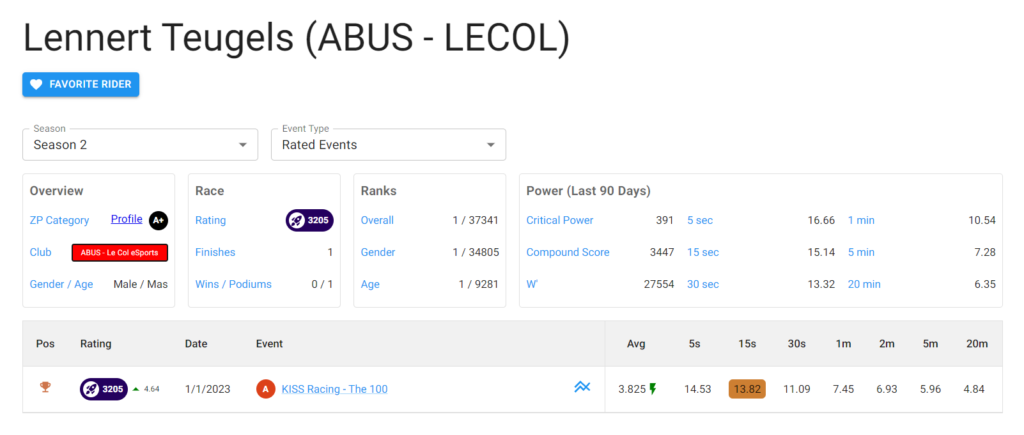
Profile for Lennert Teugels, currently the top-ranked rider overall on ZwiftRacing.app
Race Organizer Dashboard
Race organizers can now use the ZwiftRacing.app platform to organize races with completely custom pen boundaries and pen enforcement! The MVP version of the toolkit allows riders to publish an event for signup. After signup closes, The organizer can distribute riders into custom pens, each with a unique event link. They could distribute riders by rank, any of the available power metrics, or any way they see fit. After the event has been finalized, riders can then get access to join the correct Zwift pen.
Future versions of this toolkit will allow organizers to pre-determine the logic to split riders, so that on signup they can get immediate access to the pen. There will also be the option to get pen details emailed to you once a race is finalized.
For more information on how to organize a ZwiftRacing.app event, be sure to join the ZwiftRacing.app Discord server where a member of the community will be able to help get you started.
Weekend Tour
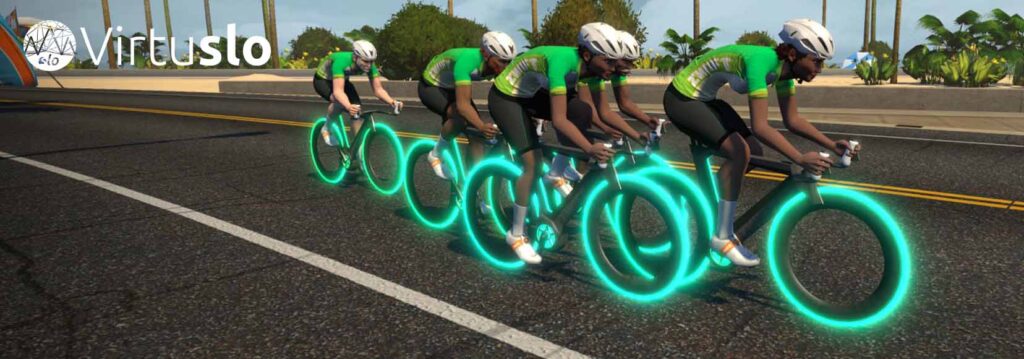
The Weekend Tour is an event hosted by VirtoSlo using rankings over the weekend of January 13-15. The tour consists of 3 stages over 3 days with both team and individual GC classifications, including sprints and KOMs.
The Tour consists of the following events:
Stage 1 – Flat / Sprints (Jan 13th at 19:00 UTC / 20:00 CET) Course: Douce France Distance: 2 Laps (48.8 km – 270m)
Stage 2 – Flat / Sprints & KOM (Jan 14th at 16:00 UTC / 17:00 CET) Course: Watopia 2022 Medio Fondo Distance: 1 Lap (79.3km – 922m)
Stage 3 – Mountain / KOMs (Sunday January 15th 16:00 UTC / 17:00 CET) Course: London Surrey Hills Distance: 1 Lap (44.2 km – 1034 m)
General Classification (GC) – Mixed and Women
Each stage will have a stage winner, but the overall winner in the GC is the rider who has taken the least time to complete all stages. Riders must finish a stage in order to start the next stage.
Team Classification
Team Classification is calculated by adding up the top three riders’ times from each team for each stage. The team with the lowest total time is the winner of the classification.
Sprint Classification
The sprint classification is based on the total amount of sprint points earned in all stages. Points can be earned on intermediate sprints and finish sprints (see points distribution).
KOM Classification
The KOM classification is based on the total amount of KOM points earned in all stages. Points can be earned based on the categorization of each climb (see points distribution).
Join the Tour!
To sign up for this tour head over to zwiftracing.app/zr-events and ensure that you are signed in. You will then be able to join.