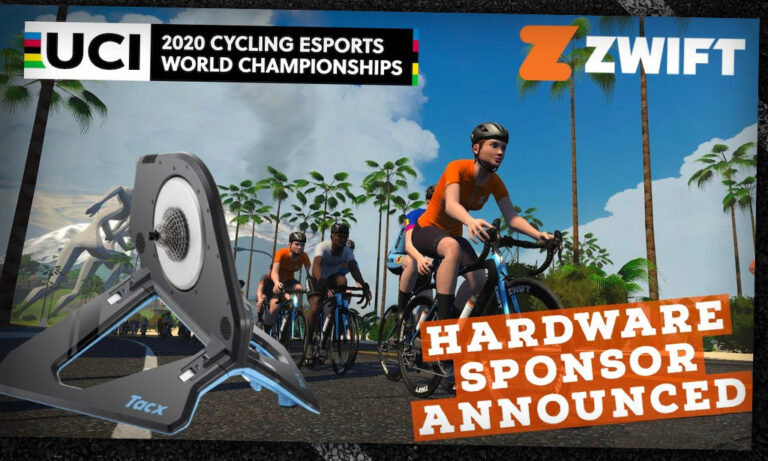
In the below video, Shane Miller lists several reasons why he thinks the UCI and Zwift chose the Neo 2T:
Existing commercial arrangements with the UCI: Likely the biggest reason, according to Shane. Garmin Tacx already partners with the UCI for the Road World Championships.
Availability of direct-drive smart trainers: They needed a supplier that could handle the distribution of 200+ units to racers around the world in 2020.
The Neo 2T’s tech specs, including:
+/- 1% power accuracy
No spindown or calibration necessary (or even possible!)
Up to 25% gradient simulation
Maximum of 2200 watts, so it can handle pro-level sprints
Quick-release and through-axle compatibility
Compact shipping, especially compared to a smartbike
These are also the reasons he predicted that the Neo 2T would be chosen back in September. Good call, Shane!
UCI Cycling Esports World Championships: Official Smart Trainer Announced
The news is tucked into the General Information Bulletin in the UCI’s official documents about the event:
“Zwift are delighted to confirm that Garmin Tacx have been awarded the trainer sponsor category for the 2020 UCI Cycling Esports World Championships. The public announcement of this partnership will follow.
Garmin Tacx will be providing each rider in the event with a Tacx Neo 2T smart trainer and all of the associated accessories required to enable each athlete to compete on the same model of hardware, wherever they are in the world. Once National Federation squads have been confirmed on the 16th October, Garmin Tacx will begin the process of distributing the hardware to riders. Garmin Tacx will cover all costs associated with delivering and collecting the smart trainers from riders, subject to riders signing Garmin Tacx’s standard trainer acceptance form.”
In this ZA Roadshow episode, Leah tells us how to get the best out of Today’s Plan, coaches Dan and Stephen show what workout five is all about, and group ride leader Christina Hanson explains why she compares beer to each workout.
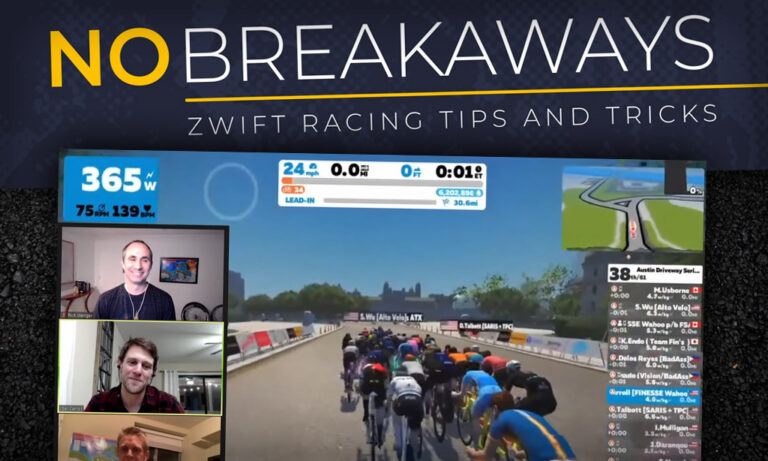
This week on our No Breakaways Race Breakdown we take a look at two races: our amateur Brandon Peterson racing the Dadurday Chase Race against 2019 US National Champion Holden Comeau on the Champs-Elysees and the leader of the Austin Driveway Series and top 50 ranked Zwifter Joel Carroll.
There are some top tips shared on how to win a chase race, and and a helpful breakdown of the team tactics that took Joel to a sprint victory in his race.
Brandon’s Race:
Joel’s Race:
We have been putting out a lot of content specifically geared towards making you a better Zwift racer and have a lot more planned. More live coaching is coming soon as well as some special events so stay tuned!
Every Thursday we are also releasing WTRL Course Previews for the following week.
Thanks to everyone who applied to be on a show! We are working through the responses and will be getting back to you all soon.
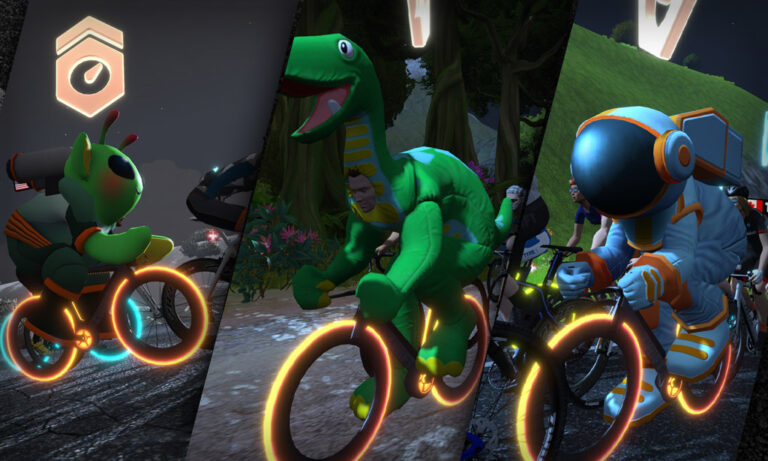
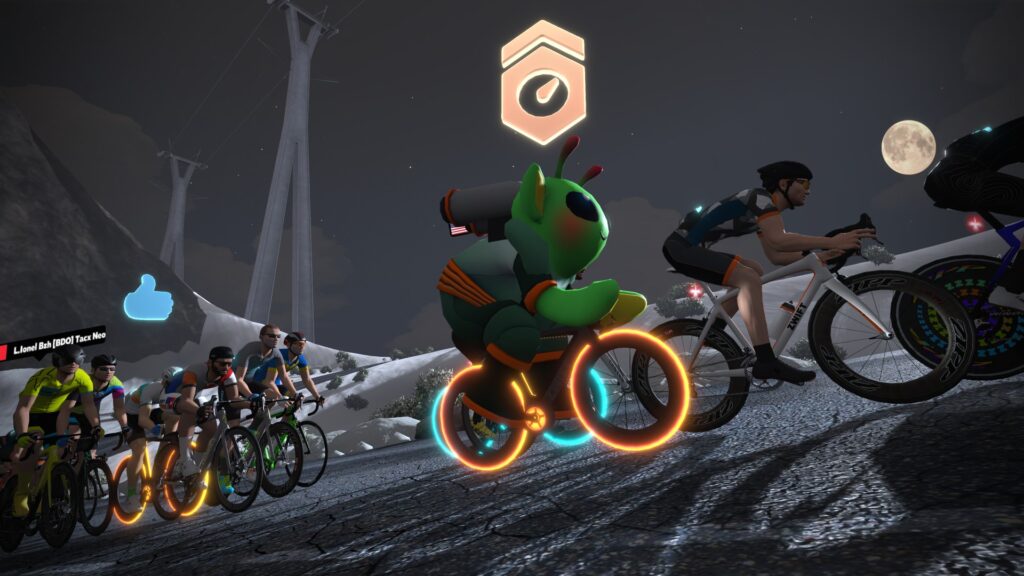
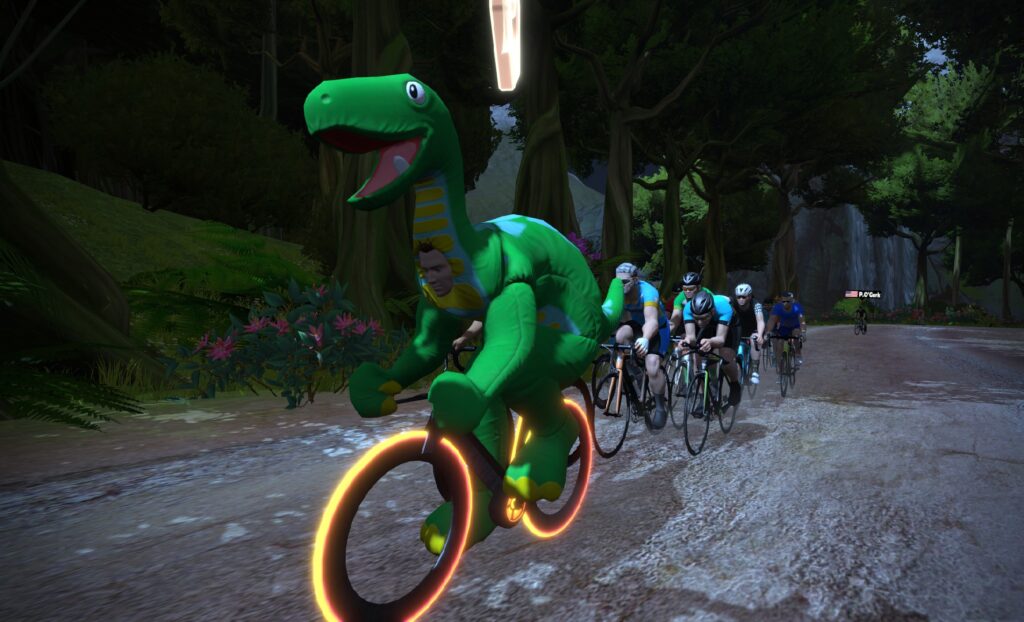
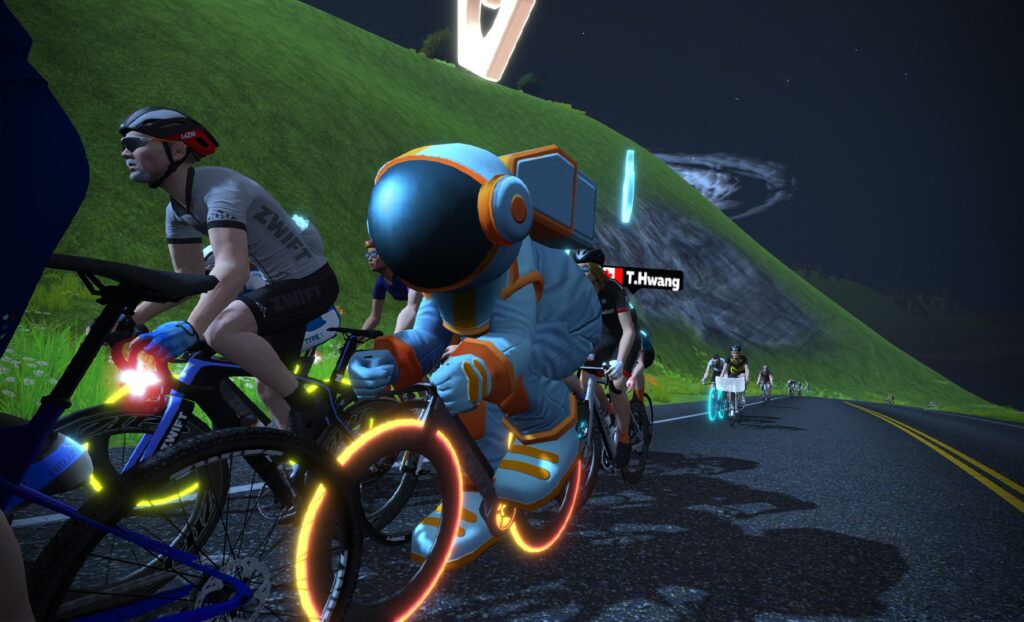
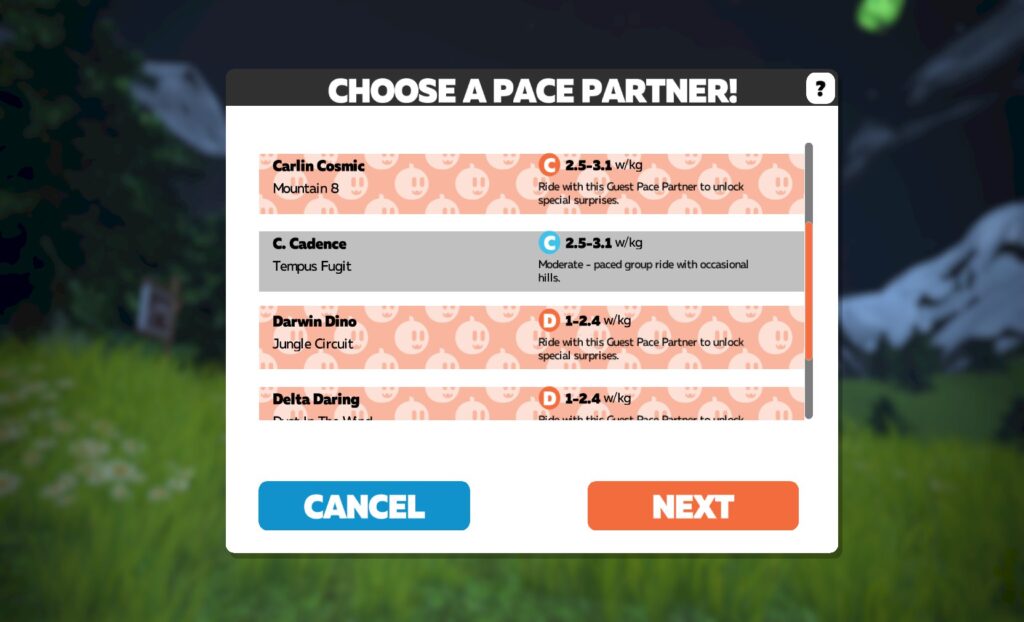
Last night some new Pace Partners went live as part of a little Halloween game. Carlin Cosmic, Darwin Dino, Delta Daring have arrived, and they’re handing out Halloween costumes!
Carlin Cosmic
Darwin Dino
Delta Daring
How It Works
Each of the three costumes comes in multiple pieces. To unlock each piece, ride near the Pace Partner in the same way you would the original Pace Partners in the Drops Multiplier game.
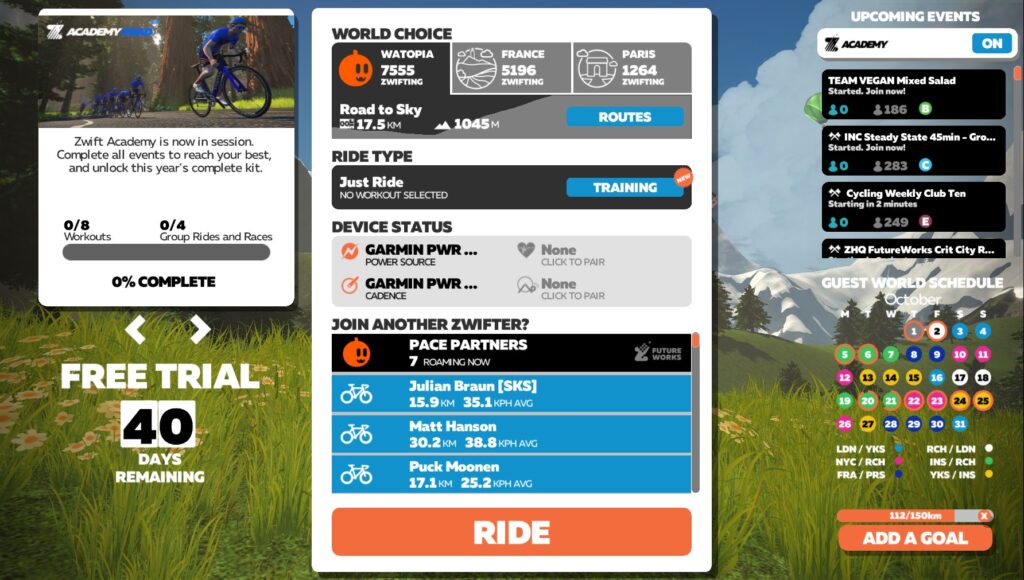
Click the Pace Partners box to see a list of available Pace Partners
Choose one of the Halloween-themed Partners
We’re told unlocked costume pieces will be remembered, so when you join that Pace Partner again on a separate ride you won’t be starting from zero.
Be warned – sticking with these Halloween Pace Partners isn’t easy! Their wattage is constantly fluctuating (a first for Pace Partners, see short clip below), and you’ll need to pay close attention to stay within 12m and continue accruing costume pieces.
Questions or Comments?
Did you unlock a full costume yet? It’s no easy task! Share your thoughts below…
Getting Zwift to run on Linux was a journey I started just over a year ago. I didn’t get very far with my effort, but since then a lot of progress has been made by the Wine developers and others in the community, and Zwift is now (mostly) playable on Linux. I’ll admit there are some workarounds required, like having to use the Zwift Companion app to connect sensors. But on the whole, it works well. So I wanted to summarise the process for anyone who wants to try it for themselves.
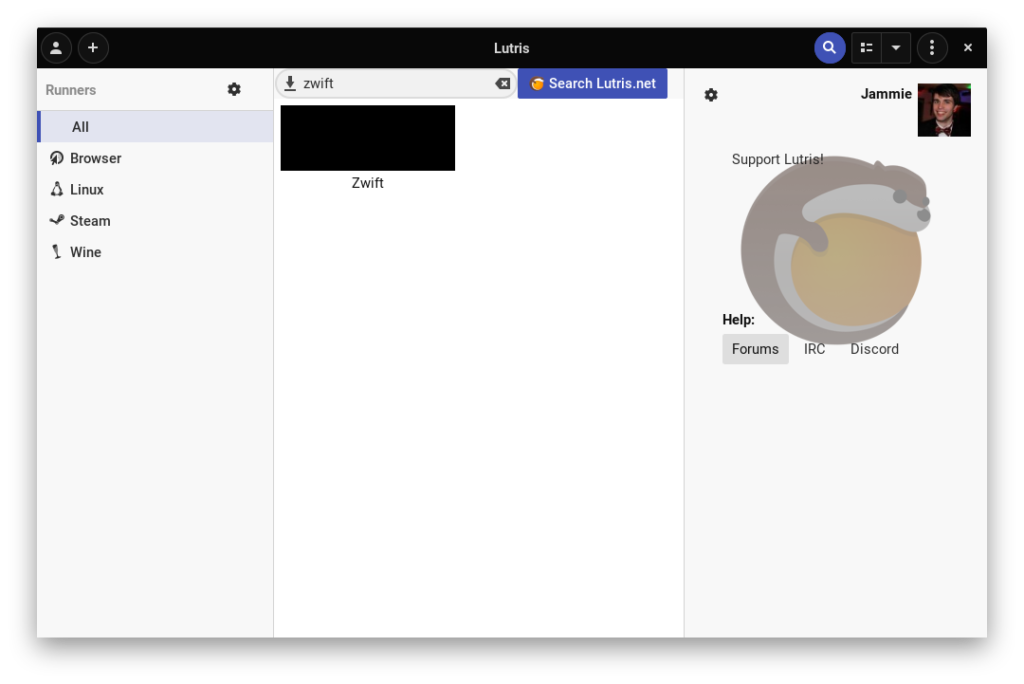
I’m using Lutris, a gaming client for Linux, to script out all the steps needed to make games playable on Linux. If you’ve never used it before, I’d really recommend it for gaming on Linux in general. First things first, you’re going to have to download and install Lutris for your Linux distribution. Thankfully Lutris has a great help page explaining how to do this for most distributions.
Installation
Once you’ve got Lutris installed, installing Zwift is pretty easy. In Lutris search for Zwift, select the only result, and click the “Install” button to start the installation process. You can also start the installer from the command line by running lutris install/zwift-windows.
This might take a while, and depending on your Internet speed could be anywhere from 10 minutes to around an hour.
Once the Zwift launcher has finished downloading and updating, we’ve hit the first hurdle that can’t be scripted with Lutris.
The launcher will appear as a blank white window. Actually, the launcher is displaying a web page, but Wine can’t render properly. Thankfully all the files are already downloaded, so all you need to do is quit the launcher window, and exit Zwift from the Wine system menu. After that, the Lutris installer should complete.
Running Zwift
Zwift requires the Launcher to be running all the time while in-game. However, Lutris only allows 1 application to launch from the “Play” button. So before you hit the play button, first you need to click “Run EXE inside wine prefix” and browse to drive_c\Program Files (x86)\Zwift\ZwiftLauncher. You should see that familiar blank white screen.
Finally, you can hit the “Play” button and Ride On 👍
In order for me to tell this story we need to go back a little over 5 years ago.
It is May 2015. I have not long completed the Paris-Roubaix sportive and I am in the shape of my life.
Then I get a cold. It doesn’t get better; in fact, it gets worse. A lot worse, so I went to the doctor who diagnosed flu. It wasn’t flu and 2 days later I was in hospital at death’s door with Pneumonia. Pneumonia that got better really quickly with IV antibiotics. There were blood tests… so many blood tests. I was Neutropenic (Low white blood cells) but that was it. They sent me home and there were more blood tests and I was still Neutropenic.
So they did a bone marrow biopsy. I will spare you the details of how this is done but suffice to say it isn’t fun.
A few days later I got a phone call from one of the Consultant Haematologists. Could I pop in and see them? “Sure,” I said. Could I come now? Oh, and bring my wife and bring an overnight bag.
With a request like that you know that when you get there you are not going to like what you hear.
“I’m very sorry to tell you that you have Acute Lymphoblastic Leukaemia.”
My world stopped turning. I was 43 years old, I had a wonderful wife and an amazing 4 year old son and I was dying.
ALL is the type of Leukaemia that kids get and has a 90% cure rate in kids. Sadly this is not the case in adults. It is highly aggressive and only 4 in every 10 people diagnosed make it to 1 year.
I needed that overnight bag for the next 3 weeks as I was started on chemo. I was put on massive doses of steroids and my weight skyrocketed from 80kg to 110kg.
The chemo wipes you out, but I tried to keep as active as I could even if it was just a short walk to the end of my road. They completely stopped the steroids one day and for a week it felt like someone had turned up gravity.
I had 3 rounds of chemo over 3 months with “drug holidays” in between. Chemo is poison. There is no other way to describe it. It is designed to kill the cancer but it also kills a lot of other cells. I was sick… a lot!
But still I tried to keep active. I bought a turbo trainer. It wasn’t smart and wouldn’t work with the newly released Zwift. I could only manage 15-minute rides watching a line move up a graph, but I needed to be in the best shape I could be for what was to come. My Dad came over from the US to visit and we walked up Mynedd Machen; my local hill. I fell asleep at the top I was so tired.
My first turbo
I received more bags of blood than US Postal. You can feel each drop entering your system and your energy levels increase like Popeye eating spinach.
It was decided that my best chance of survival was a bone marrow transplant (BMT) and the search for a donor was started. There are 2 types of BMT, a Reduced Intensity which involves more chemo and then the transplant and a Full Intensity which involves more chemo, total body irradiation, and then the transplant.
The full intensity isn’t offered to people over 40 as it is considered too hard to recover from. I was now 44 and well over that hill but I was fit before I was diagnosed. Really fit. Paris-Roubaix fit. They thought I could survive the treatment and the recovery as a result of the fitness cycling had given me and so I was offered the Full Intensity Transplant. It was the easiest decision I ever made. When world experts in a field tell you what they think the best option is for you, you would be an idiot to go any other way.
I kept walking and cycling and eating. I followed all the rules and kept as healthy as possible and then after a 3-week treatment holiday I went in to hospital.
I had 2 days of incredibly harsh chemo designed to kill off as much of my own bone marrow as possible and then I had 8 treatments of total body irradiation over 4 days to kill off the rest. Then I went in to isolation in a tiny hospital room with a sink and a commode.
Receiving the transplant
The following day I received my bone marrow transplant. My donor was a 23-year-old German man whose name I don’t know to this day but to whom I will forever have a debt of gratitude.
I was in isolation for 12 days and was fed via a tube through my nose to my stomach as the effects of the treatment raged through my body. Once my cell counts started to rise I was allowed out of isolation and then after another week, I went home to start the long road to recovery and eventually to the start line.
I could barely eat, I was sick many times a day, and once the effects of the radiation hit I could only manage to walk down the stairs in my house to sit on the sofa for the day and then be helped back up to bed at night.
I gradually started to get stronger. I could walk to the end of the road. Then I managed 1 km, then 2. Eventually, I was strong enough to get back on the bike. I bought a cheap smart trainer and signed up for Zwift. 11 months after my transplant I did my first ride on Zwift. I managed 20 minutes at 178 watts. I rode 7km. It felt like a marathon.
I started riding 3 or 4 times a week. My FTP started to creep up but I wasn’t really using Zwift to its full potential. I was just riding aimlessly, concentrating on elapsed time rather than anything else. I had a few setbacks with infections that kept me off the bike for months at a time. But I stuck with it. I started riding outdoors again.
Last year was when I really started using Zwift properly. I did some group rides, started doing workouts and almost 4 years after my transplant I entered my first race. The route was the Volcano After Party and I was 3rd in the Cs. I was also absolutely destroyed. It was so much harder than I had expected and I certainly wasn’t prepared enough. I continued doing the occasional race, but mainly concentrated on longer group rides to get my aerobic base up. Last year I also rode Paris-Roubaix again having used Zwift as a major training tool.
Finishing Roubaix 2019
I entered the British Transplant Games for the first time and then Covid happened and it was canceled. As luck would have it I had been introduced online to a couple of other transplant cyclists and I joined a couple of Facebook groups. We started to organise Meet Ups and then we created a team and started to enter the occasional race and the awesome WTRL TTT. This group of guys and girls was my lifeline during lockdown. The team spirit and support was incredible. We raced the Virtual Tour de France amongst ourselves over the summer and then lockdown ended and we could ride outside again and take advantage of the better weather.
All through this I was getting stronger and faster. My FTP crept up and my weight dropped.
I kept Zwifting as well and racing most weeks. Then along came the Zwift Racing League (ZRL). I was desperate to be involved but we didn’t have enough Transplant Cyclists of the same category to enter. So I joined the mighty ZSUN Racing. They are amazing. Really well organised and super supportive. I have raced the first 2 races in the ZRL for my assigned team and am also a minor part of a very strong TTT team as well.
Which brings us to today.
Today is the 5th anniversary of my transplant.
It is the day that I am officially classed as cured and cycling and Zwift have played a huge part in every part of that journey.
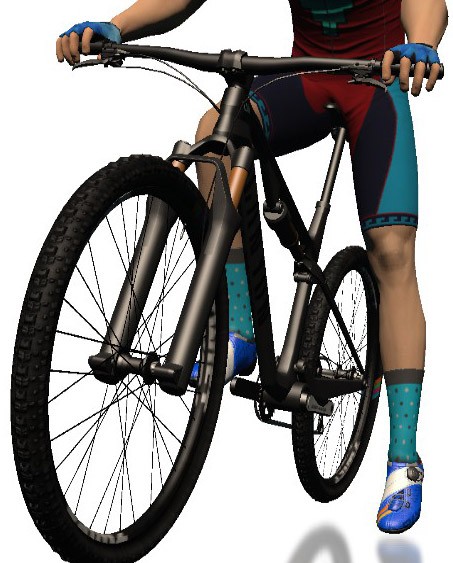
Zwift’s mountain bikes perform better in the dirt than road bikes, thanks to a lower rolling resistance (Crr). But how do the individual mountain bikes perform against each other?
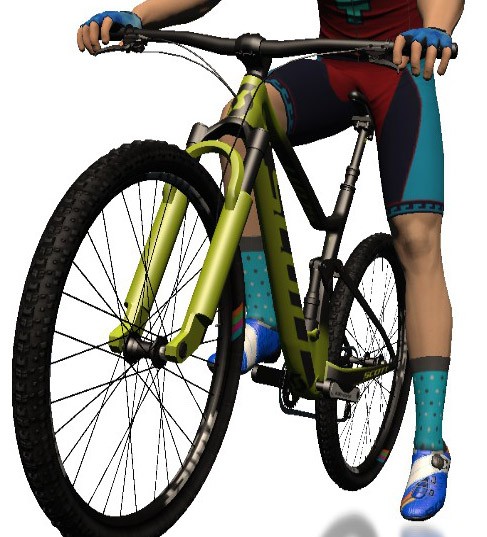
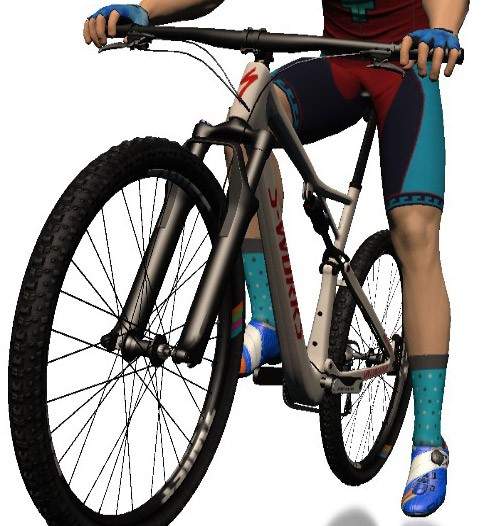
Here are the mountain bikes currently available (not shown: the stock Zwift Mountain bike):
Scott Spark RCSpecialized Epic S-WorksCanyon LuxScott Spark RC World CupTrek Super Caliber
We ran extensive tests to find out how each bike performs on climbs, flats, and on the Jungle Circuit. Here are the results…
Flat Pavement Performance
Here’s how each mountain bike performed over two laps of our Tempus Fugit test segment (300 watts steady, 75kg rider):
Scott Spark RC World Cup: 55:40
Trek Supercaliber: 55:41
Scott Spark RC: 55:43
Specialized Epic S-Works: 55:44
Canyon Lux: 55:45
Zwift Mountain: 55:53
The Spark World Cup just edges out the Supercaliber by a consistent 1 second, so we give it the win in this test.
By comparison, the fastest road bikes complete the test route in 50:25, while the slowest road bikes (Zwift Steel with 32mm carbon wheels) complete it in 51:40. So if you’re riding an all-pavement race, you definitely don’t want to be riding a mountain bike, because mountain bike wheels roll much slower on tarmac than road wheels due to Zwift’s Crr settings.
The fastest gravel bikes complete the test route in 53:47, which is what you would expect: the mountain bikes’ big knobbies and poor aero values make them slower than road or gravel rigs on pavement.
But how do the mountain bikes perform in other settings?
Climb Performance
Here’s how the mountain bikes performed up the big Alpe du Zwift climb:
Scott Spark RC World Cup: 55:21
Trek Supercaliber: 55:25
Scott Spark RC: 55:31
Specialized Epic S-Works: 55:36
Canyon Lux: 55:42
Zwift Mountain: 55:53
Again the Spark RC World Cup comes out on top, well ahead of the competition on climbs. It’s certainly a lightweight rig!
The fastest road bikes climb the Alpe in 48:42, while the slower (Zwift Steel with 32mm carbon wheels) complete it in 49:57. So the heavy mountain bikes are well behind, as they should be. Because mountain bikes are heavy, they roll slower, and physics matter!
Jungle Performance
What about the dirt? This is where knobby tires should excel, and indeed they do. Here’s how the mountain bikes perform on one lap of the Jungle Circuit:
Scott Spark RC World Cup: 13:18
Trek Supercaliber: 13:18
Specialized Epic S-Works: 13:19
Canyon Lux: 13:19
Scott Spark RC: 13:19
Zwift Mountain: 13:21
The four brand-name bikes turn in nearly identical performances, with the stock Zwift Mountain bike a few seconds behind.
The faster road bikes complete a jungle lap in around 13:35, while the gravel bikes do it in 13:20. But our mountain bikes shred some gnar and lay the hurt on all those skinny-tired, rigid-forked rigs!
MTB Conclusions
Zwifters really only ride mountain bikes on dirt routes – unless you’re looking for a good workout in a group ride on the tarmac! So which bike should you choose in the Mayan Jungle?
Clearly the Scott Spark RC World Cup is the standout performer here, as it will outperform the other frames on the crucial uphill portion of the circuit while keeping pace on the flats and descents.
Your Thoughts
Have you tried the new Supercaliber? What’s your go-to MTB rig on Zwift? Share below!
Last week’s Zwift update quietly included a new mountain bike – the Trek Supercaliber. This is the first Trek MTB available on Zwift, and they chose a good one – IRL, the Supercaliber is the “fastest, lightest, and most capable cross country race bike we make” (Trek’s own words).
It’s available for 532,500 Drops, for level 20+ Zwifters (the highest level requirement of any MTB in game).
But how does it perform on Zwift? Quite well, as it turns out…
A Lightweight Climber
The Supercaliber is now the lightest MTB in game, turning in an Alpe climb 6 seconds faster than the Scott Spark RC, the next-fastest climber.
Fast on the Flats
The Supercaliber is the fastest MTB in our flat tests as well, beating out the next fastest (Scott Spark RC) by 2 seconds over ~50 minutes.
What about the Jungle?
Most mountain biking on Zwift is restricted to the Jungle or Repack Ridge, since MTBs roll so slowly on tarmac. So how does the new Supercaliber perform in the Jungle?
Not surprisingly (given the above test results) it’s the fastest overall – but just barely, turning in a lap time 1s ahead of the other three brand-name MTBs. If the small 1s difference seems odd, consider that Jungle lap times are around 14 minutes in our tests, while our Alpe and flat test times are closer to 50 minutes. Stretch your Jungle Circuit race out to 4 laps, and the Trek Supercaliber should deliver an advantange of ~4s over the other rigs.
Have you ridden with the Zwift FutureWorks Pace Partners recently? If you stay close to A. Anquetil, B. Brevet, C. Cadence, and D. Diesel, they now reward you by multiplying the Drops you earn while riding. The longer you’re with them, the bigger the multiplier!
In the video below, Shane Miller tries out this new game and gives some advice. He jumps into a ride with C. Cadence and stays as close as he can to the pacer bot. What’s it like to be in a pace group? How easy or hard is it to keep that number climbing? Watch the video and see!
Zwift FutureWorks Pace Partners: Details // New Drop Multiplier Game!
Since this video was created, Zwift has added beacons above the pace partners, making it easier to see where they are. They also reduced the max Drops multipler to x2.0. Shane discusses these changes and a few more in his latest video.
The third week of Zwift Racing League is upon us, and it’s going to be a big one now that qualifying heats are finished. Who will survive the cobbles of Libby Hill, and who will be left to chase?
Divisions are Frozen: Let’s Race!
For divisions with more than ~30 teams, WTRL used the past two weeks as sort of “qualifying heats” to rank teams so they could be broken up into smaller divisions based on ability. So beginning tomorrow, teams in every division are set – no new teams will be allowed to join Zwift Racing League.
Here’s how the divisions are now organized. You can see some divisions (especially the women’s) had lower numbers of teams, so there is only one division. But most divisions had enough teams that they needed to be divided into smaller divisions – so the Men’s EMEA W B division is now EMEA W1 B1-4 and EMEA W2 B1-4. One division becomes eight. This is how you make things competitive for 6000 racers!
Timezone Fun
We’re in that strange time of year where part of the world has changed their clocks, but another part has not. What time is tomorrow’s race? The easiest way to make sure you’ve got it right is to follow the signup link emailed to your team manager – this will show your local race time accurately.
Looking At the Route: 2015 UCI Worlds Course
Here’s a route preview from Rick over at No Breakaways.
The video above was made before WTRL announced some final changes to this week’s route, most notably intermediates changed to top 3 from top 5.
On a course like Richmond, we recommend making your frame and wheel selection based on gaining an advantage for the most important sections of the course. On Richmond, the big selections will take place on the three climbs. So you want a bike setup that will deliver you to those climbs as fresh as possible (aero still matters) and, most importantly, get you up those climbs as quickly as possible (lightweight).
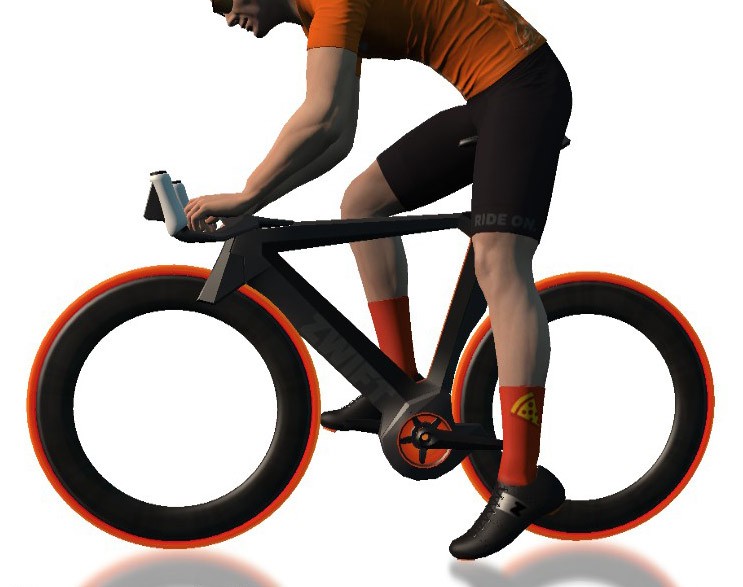
The Tron bike is your clear first choice, based on speed tests run just last week. It turns in the same overall route time as the fastest combination in game (Specialized Venge S-Works with Zipp 858/Super9 wheel) but climbs just a bit faster.
In lieu of the Tron, a second pick isn’t as clear… but the Aeroad 2021 with ENVE 7.8’s would be our 2nd choice, if you’re looking for a bit of a climbing advantage. That combo is just 4 seconds slower than the Tron on a single lap of Richmond – it climbs at the same speed, but is slightly less aero.
Route Breakdown
The route begins on flat roads, taking riders through two sprint points: first the Monument Avenue sprint, then the Broad Street sprint. In terms of distance, this flat portion lasts for half of the route.
A long descent signals the start of the lumpier second half of the route. Riders will quickly arrive on the cobbles of famous Libby Hill – a twisty, punchy climb which will certainly put hurt in the legs and gaps in the peloton!
The 23rd Street KOM follows soon afterward – a short, straight, steep climb. Can you attack like Sagan and stay away?
Keep your speed up into the descent, then it’s a long, slow climb up to the false flat straightaway to the finish. The final kilometer is always a slugfest, and often the riders who go hard early are reeled back in when they run out of steam. Have you got what it takes?
Strategic Options
There are 4 intermediates on each lap of Richmond, corresponding to the 4 official timed segments in game:
Monument Ave
Broad Street
Libby Hill
23rd St
For all categories (just confirmed by WTRL), the first three racers across the line on each of these points will receive extra points – 3, 2, and 1.
Teams have a lot of strategic options here. On this course, the major selections happen on the climbs – especially on Libby Hill and the Governor Street (which isn’t a timed KOM/intermediate, but the longest climb on the route, and the lead-in to the finish). The intermediate sprints should help to break up the flat first half of each lap and force some additional selections, but we don’t see the flat sprints playing a major role in race selections.
Sprinters: do you sit in and conserve on the flats so you’ve got more matches for the climbs? Or should you push hard on the two intermediate sprints in order to grab some extra points and drop or weaken some of the strong climbers?
Climbers: clearly you just sit in the front group and conserve as much as possible on the flats and descents. The big question is, which climb(s) do you use to launch your attack? For A and B groups, if you attack too early, a strong and large group may be able to bring you back on the flats.
All Arounders: this is your race, with its tasty mix of flats and punchy climbs. If you’re strong enough to stay with the front group, your challenge will be deciding which attacks to chase. If you chase them all you’ll waste energy and blow up early – but if you let them all go, you’ll miss the big move. Study your competition!
Teams: only the top 29 riders across the finish line score extra points. If you’re a rider who doesn’t fancy their chances of making it into the top 29, what can you do to help your team grab as many points as possible?
Lastly, powerups: there will be five opportunities for a powerup every lap – at the start/finish and each intermediate. Make sure you know how each powerup works, and use them wisely! Hint: the steamroller and anvil can both be useful on Richmond.
Your Thoughts
Care to share your thoughts about tomorrow’s big race? Comment below!