

I’m still amazed when I hear from Zwifters who don’t yet use a fan. How do you survive? Granted, I run pretty hot, and perhaps you don’t need as much cooling as I do. But you do need a fan for Zwifting, unless you are specifically training for heat adaptation.
WHY YOU NEED A FAN
Your body only runs at around 25% efficiency, which means that every watt of pedal power comes with three “wasted” watts which are turned into heat. Cruising along at 200 watts? You’re generating 600 watts of heat. Race at 400 watts and you’re producing enough waste heat (1200 watts) to power a toaster oven!
Without a fan, that waste heat creates a superheated pocket of air around your body. Soon enough your body temperature will rise, your RPE will increase, and your power output will decline as your body kicks in its “governors” to keep you from overheating and damaging internal organs. Without a fan, you simply can’t hold your maximum wattage! This is probably the biggest cause for new Zwifters complaining that they can’t hold the same power indoors as they can outdoors.
Adequate cooling also helps to reduce cardiac drift. Here’s what coach Hunter Allen has to say in this article:
Staying cool is very important while riding indoors, a small change in body temperature can create a large change in the amount of power you can produce. As your body becomes hotter and hotter, you will perspire more and more to help cool the skin. Losing that fluid creates thicker blood and therefore more resistance internally in the cardiovascular system. The result of this is that your heart has to pump faster in order to get the same amount of blood to your working muscles. This is called cardiovascular drift and while you are stressing the heart more, you are not increasing your absolute FTP.
By keeping yourself cool and hydrated, you will be able to produce more wattage for a given heart rate and thus increase your overall absolute fitness. Overheating can easily cause a reduction in indoor power by 20 to 30 watts alone, so it’s critical that you have a large fan blowing on you during your workout and if you can do it in a cool room, that will make a difference as well.
HOW STRONG IS MOTHER NATURE’S FAN?
One way to choose how much air you need blowing on you indoors is trial and error. But this is Zwift Insider, so let’s use some math to come up with another solution by calculating how much air cooling we receive when riding outdoors. Wind generated by fans is typically quoted in CFM, or cubit feet per minute. What CFM do we experience when riding outside? That is, how much air hits us every minute? We start by figuring out our frontal area. This obviously varies depending on rider size and position, but typical frontal areas taken from this page are:
- Bar Tops: 0.632 square meters, or 6.8 square feet
- Hoods: 0.40 square meters, or 4.3 square feet
- Drops: 0.32 square meters, or 3.4 square feet
Then we multiply that frontal area by how far we travel in a minute in order to get CFM. At 20 miles per hour you are traveling 20*5280=106,600 feet per hour. Multiply that by our frontal area–let’s use the hoods for a best guess estimate–and we get 20*5280*4.3=454,080 cubit feet of air per hour. Divide by 60 and you get 7568 cubic feet per minute. This is how much air is hitting you when riding outdoors on a windless day on the hoods at 20mph (32.2kmph). What if we tweak our variables a bit?
- 20mph on the hoods = 7568 cfm
- 15mph on your bar tops = 8976 cfm
- 25mph in the drops = 7480 cfm
So you can see that at a minimum you need around 7500 cfm of fan power to replicate outdoor air movement in your pain cave.
HOW MUCH DO YOU REALLY NEED?
There are other factors to consider, of course:
- Some of the fan’s output will miss your body, so you’ll need more than 7500 cfm of air movement in order to replicate the outdoor feel
- Your ambient pain cave temperature may be higher or lower than outdoors, requiring more or less air movement
- You may want more or less air movement than you receive outside
Cooling needs vary from person to person and setup to setup, but for me I like having two powerful fans so I can turn them both on or off independently when desired. I would say if you find yourself dripping sweat during anything other than maximal efforts, you need to improve your fan setup.
FAN RECOMMENDATIONS
Here are three good Zwifting fans with consistently good reviews on Amazon:
Stanley Blower Fan
350CFM
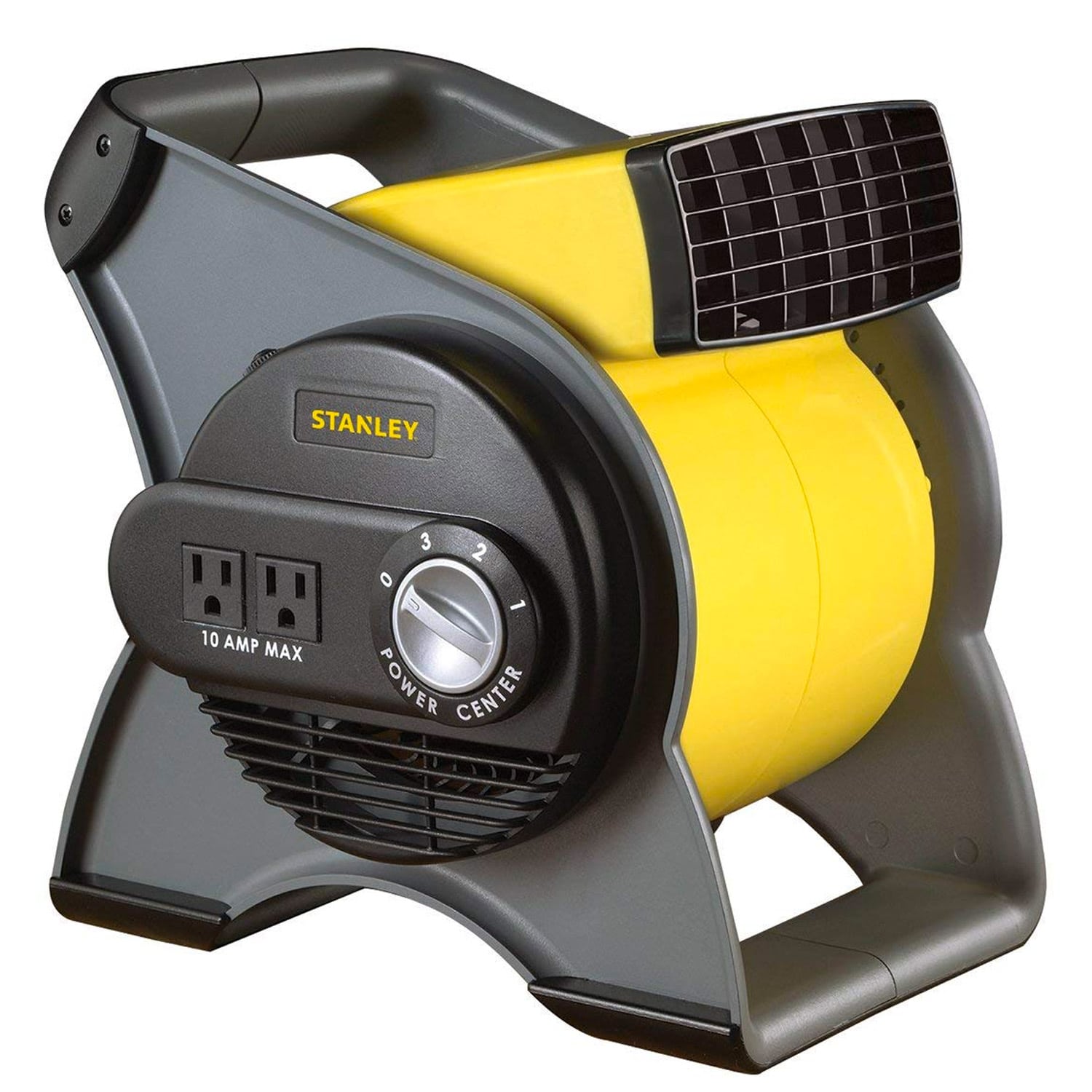
If you want a lot of air in a narrow window, “blower” fans are the ticket. They don’t move as much air as a good box fan, but they move a narrow column of air very quickly, great for keeping sweat off your face.
Lasko 20″ High Velocity Fan w/Remote
3460CFM
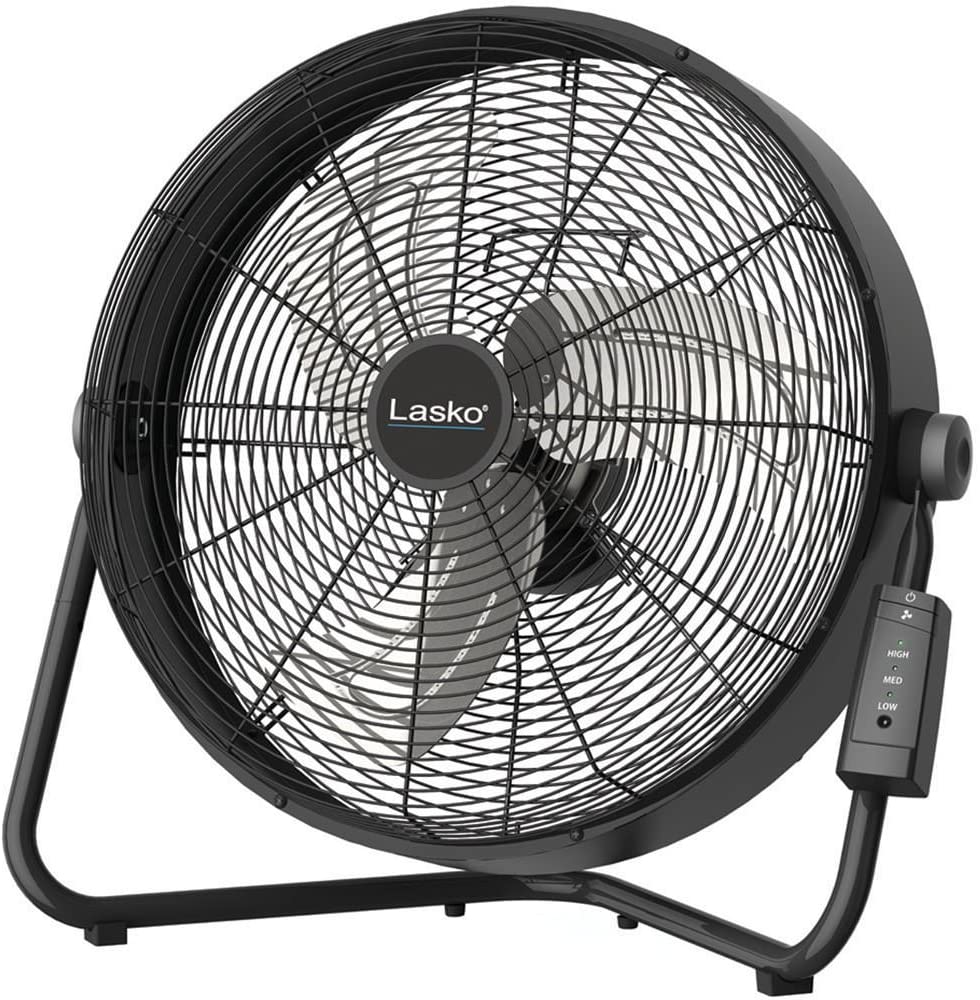
Lasko’s 20″ fans move a lot of fair, even though I doubt their quoted CFM number. Not a bad price, either, considering it includes a remote.
Vornado Mid-Size Air Circulator
331CFM
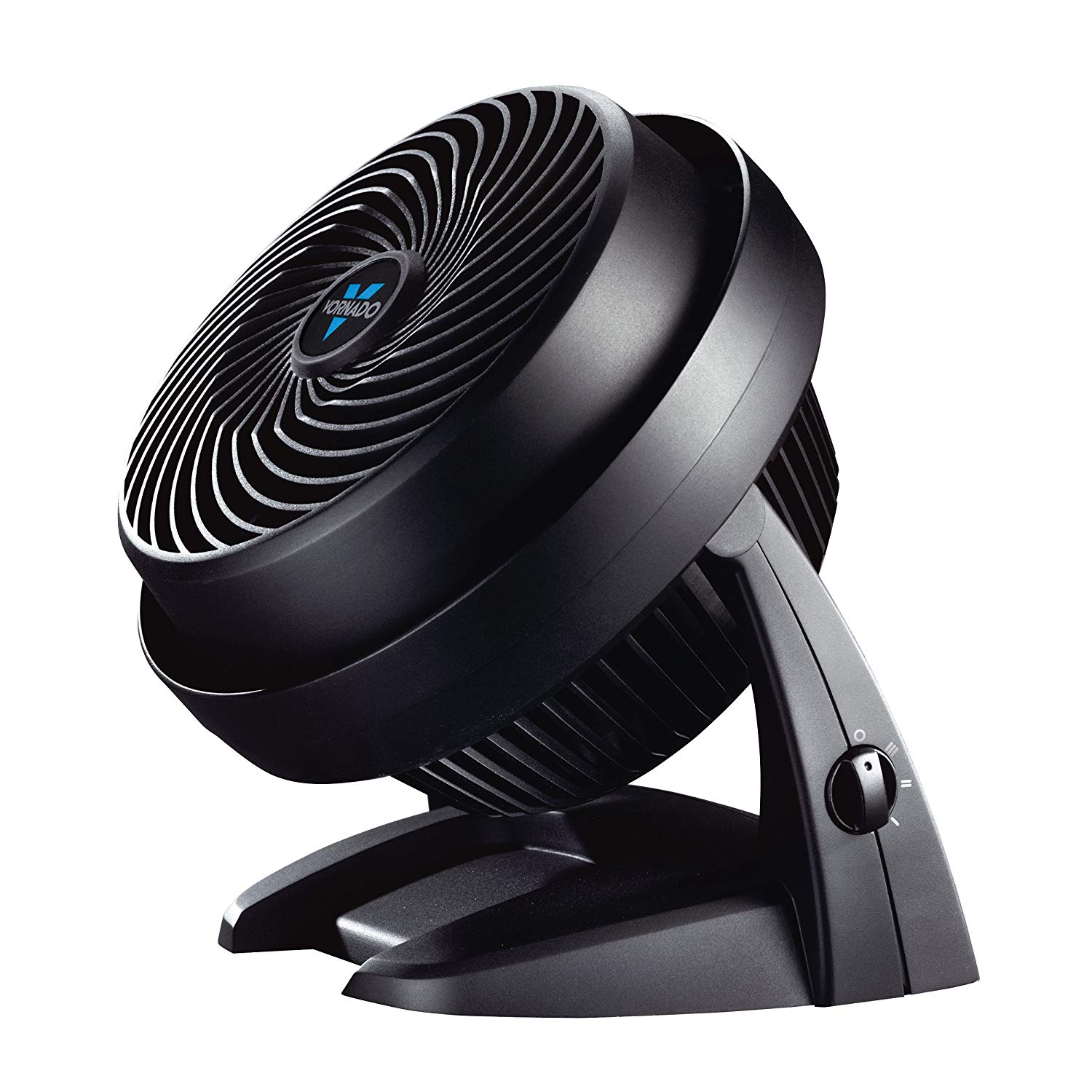
Kind of between a “blower” fan and the Wind Machine in terms of tightness of the air column, the Vornado packs a punch in a smaller footprint.
THE PREMIUM SOLUTION
Want the very best? Check out Wahoo’s Kickr Headwind. It blows a very tight column of air right where you need it, and wind speed can be automatically modulated based on your virtual speed (to simulate a headwind) or heart rate (to cool you when you need it most). I’ll be posting a review on this soon, but everything I’ve read and seen on this has folks very pleased with its functionality.
Buy on Wahoo.com >
Buy on Amazon >
Pro tip: get a wifi-connected power strip so you can easily turn your fan(s) on using your phone!
WHAT ABOUT YOU?
Got a fan setup you’re happy with? Share below!


Great article, and since no one had commented, here I am 🙂
The calcs on air flow are informative, but this is primarily a heat transfer problem, more than a flow problem – so the statement about temperature affecting this is very important. People definitely get caught up on the CFM thing though….
In this case, the 80/20 rule definitely applies as some air flow, any forced airflow, will be a dramatic improvement over the natural convection of the heat drifting away in a still room. That’s why even a light breeze feels good, because forced convection heat rates (difficult to measure accurately as they are) are much greater than natural rates in most cases.
For a noob wanting to know where to spend their dollars to get started on Zwift, I say drop the coin on the upgrade to a wheel-off direct drive trainer (eg Wahoo Core vs Snap) and go grab a cheap fan – maybe not as cheap as my setup, and you’ll see why.
I’ve been using a 600-800 CFM ‘Turbo fan’ that costs about $15 pointed just right and I’m not dying to upgrade. That said my cave runs 50F or less, so….2 fans for $30 if you like your workout space closer to 70?
Maybe add a 3rd fan….can forget the radiative heat from the 65″ tv blasting at you form 3 ft away 😛
Anyway, like I said, great article with good guidelines. No doubt the Headwind is magical, but I can’t seem to find CFM ratings anywhere…I’ll take the bet it’s much less than 7500. Like may things, it’s not the size, it’s how you use it.
My ceiling fan is enough for me. Makes all the difference in the world.
Having pedalled away in the cave for a month and lost gallons of water over that time, I’m not going to argue with the science, so have bought a fan at last, and gone for the Headwind, plenty of people seem happy enough for me to go for that. Seems perfect for the job.
I spent £20 on a stand up fan from Amazon. If you’re on a budget it does the job fine.
I got a 40cm pedestal fan with remote control from my local supermarket for $40. Does the trick pretty well! I was using my heat pump on cold which was right above me but found it was very inconsistent and I couldn’t set it properly
this is the fan i use, the remote is a dream. https://www.amazon.co.uk/gp/product/B085ZFYW2Y/ref=ppx_yo_dt_b_asin_title_o00_s00?ie=UTF8&psc=1
This is great, Eric! However, there seem to be a contradiction in your logic and recommendation. You pointed out that one should have as many CFMs as possible to simulate natural cooling why riding indoors, ideally 7,000 to 9,000 CFM. However, it is easy to calculate that Wahoo Headwind, which is a great smart fan, produces only about 440 CFM. Wahoo does not specify CFMs, but one can estimate air flow from spec of 30 mph air speed (13.41 m/s) and area of the section of the fan through air is pumped, 14.5×10.75 cm = 155.8 cm3=0.01558 m3. Multiplying one with the other, we get 0.1089 m3/s, or 12.535 m3/min, or 442.7 CFM. I own a Headwind, and it is adequate for most conditions, even though for me it fells short when it is summer-warm in the house. But then, if 440 CFM is enough and it is best of the best, one can ask, how can it be enough if natural cooling is 7,000 to 9,000 CFM, i.e., up to 20 times more? Actually, I think I know the answer, or a part of it. The most cooling is needed when we generate most power, which oftentimes is climbing. When we climb, speed is relatively slow and natural airflow is modest (at least for me). We may be getting more cooling than we need when riding on a flat terrain or downhill, and less cooling than we could use on climbs. A smart fan reverses that, providing the max cooling that it can provide when we generate most power or have the highest heart rate and slowing down when we need it less. Also, it is so directional that it blows, basically, only on the torso, which could be an even smaller area than in your estimate. It still defeats common sense how it can be enough, but it feels enough most of the time!
I think you right ! but maybe someone will receive money for some ad-vice ;
)
The “www.cyclingpowerlab.com” link returns a 404 “server not found” error at the moment.
Since I haven’t seen yet anywhere, I thought to share my way to avoid bathing in my own shoes since I really sweat a lot. I took 3 old 12V PC fans, 2 120 mm fans are located at the rear brakes to cool my legs from the back, and a small one located at the head tube.
How were you able to connect these? I also have a few fans laying around and think this is beyong brilliant. Id like some maybe pointing at my head from under my handle bars (not sure if it will work with towel) but just thinking allowed here. Very cool you used PC fans!
I’ve been waiting to post a comment on here as I tested a bunch of fans. I have found ‘the one’ and figured I would share. Fair warning: this is not cheap but you only need one of them. The XPOWER FC-250ad fan. Here’s the link: https://smile.amazon.com/XPOWER-FC-250AD-Circulator-Blower-Outlets/dp/B08642SFWZ/ref=sr_1_1?dchild=1&keywords=xpower+fc-250ad&qid=1611273443&s=home-garden&sr=1-1
I wrote the longer review there on Amazon that goes into detail, so I’ll spare any readers here from regurgitating all those words. Basically, these specialized air mover and water damage remediation fans use a whole other design and are engineered to send this concentrated beam of air that can literally blow the glasses off your face at 10ft. No industrial drum fan moving several thousand CFM can come close to that because that’s not what those fans were designed to do. I strongly recommend you look into this if you’re having cooling problems while riding indoors. I’m in a fairly warm climate year round so cooling while riding and racing indoors is, er was, a challenge.
We are Electric DC Motors Manufacturers situated in Jieyang city, Guangdong Province. an Electric DC engine is a sort of electric machine that changes over electrical energy into mechanical energy
Huge important area that I haven’t gotten much traction on with others. I hope your article is wake up call. Bit I have some things to add and hey everyone don’t read too long and you won’t believe me so lol keep your headwinds and ride on lol 😉
3) bruh does anyone have a fan? Nah. (Like, not anything remotely close to what’s useful). Check out tornado 24’’ drum fan yellow is up to 8000+ cfm now red one higher AND they tuned them do
less decimals … amazing. I set up my yellow and a ‘cooling down’ much smaller fan attached to smart plugs but within reach so can easily manually hit the buttons on it too. $120 ish. Yeah, you can afford it.
4) pedestal fans (vs floor fans) will cost more for same air movement bit the above company has some and if you have a cycling ‘desk’ it’s hard to get the flow right from the floor. Don’t buy a fan that doesn’t list cfm and have lots of reviews. There may be others but I don’t see anything as good with cfm price noise as the above one. They make call mounted ones too if have beams to screw then into.
4) the air movement dynamics are hugely important: if the fan is near a back wall in a narrow room where’s the air coming from? I have min now on one side angled slightly towards the wall it’s near directly at my near that side wall, and if you stand in the other side of the room you can feel the wind of the air coming round to go through it. Moving other air inhibitors out of the way makes a difference.
5) more than one fan so can titrate more than one big one on off good too…but remember ‘how is the air circulating in here?’ And tweak configurations it makes a huge difference. Agree compared to no fan it’s like 20-25% difference in watts going hard like 50 watts night and day. Your mileage likely won’t vary but like other stuff Eric writes aboit in plain site and others additions it’s all here I hope this is helpful for at least some out there 👍
Link and description of fan I mentioned on US Amazon store see additional comments above.
‘’Tornado 24 Inch High Velocity Heavy Duty Tilt Metal Drum Fan Yellow Commercial, Industrial Use 3 Speed 8540 CFM 1/3 HP 8 FT Cord UL Safety Listed https://a.co/d/9HY1b8U