In this week’s ZA Roadshow, Matt Stephens gets some insider tips on the Academy from former Zwift Academy winner Martin Lavric, our coaches guide us through workout 3, and Leah lets us know all about the start of the Zwift Academy races.
We’re highlighting some of the best videos you may have missed in the world of Zwift. This week, check out some tips for racers and beginner Zwifters, a Zwift Academy rundown, and a pro’s comparison of a Zwift Bologna Time Trial to the real thing.
Zwift – 5 Tips for Improving Race Results
James with Finish Strong Cycling watches a recent Zwift race he completed and gives some good advice to help Zwift racers get better results.
8 THINGS I WISH I’D KNOWN ABOUT ZWIFT!
Katie Kookaburra drops some knowledge that she wishes she had as a new Zwifter. Some of these are basic features, while others are lesser-known tips and tricks, and all of them are handy!
ZWIFT ACADEMY – Getting Started!
It’s that time of year again! Zwift Academy 2020 is underway, and Sarah LaRocque gives us the rundown on what it is and what to expect. She’s also documenting her progress through the workouts on her YouTube channel, “Everything Is Photogenic.”
Is a ZWIFT Time Trial like the real thing? I found out the *HARD* way
Zwift’s Bologna course is modeled on a time trial stage of the 2019 Giro d’Italia, but how close is the experience to a TT on real roads? Time trial specialist Alex Dowsett, a pro with team Israel Start-Up Nation, tries out a TT race on Zwift and gives his opinion.
How to Win in Zwift Racing with 2018 USA National Champion Adam Zimmerman
The new YouTube channel “No Breakaways: Zwift Racing Tips and Tricks” breaks down a Zwift race ridden by Dave Shafron. Zwift racing champion Adam Zimmerman gives Shafron – and us – useful pointers for next time.
Got a Great Zwift Video?
Share the link below and we may feature it in an upcoming post!
I’m excited to announce the launch of No Breakaways, a new YouTube channel focused on sharing racing tips, tricks, tactics, and more with the Zwift community!
Our first episode features 2018 USA National Champion Adam Zimmerman. Adam breaks down a race with an amateur racer, Dave Shafron, as well as one of his own races. Planned upcoming content includes previewing the WTRL Zwift Racing League courses, live coaching streaming, publishing shorter videos on specific course segments and tactics, and more! If you’re looking for actionable advice on how to improve your Zwift races, check out episode 1 and subscribe!
Calling Amateur Zwifters
We are looking for amateurs to join episodes so if you’re interested in being a guest on the show, please apply here.
Calling Pro Zwifters
If you are a Zwift pro and interested in making some content, let us know by emailing us at [email protected].
Do you have ideas for future content for this channel? Do you have segments that give you trouble? Do you feel stuck at your current level? Share your ideas for future topics in the comments below!
Stay tuned. It’s an exciting time to be a Zwift racer.
Like many of you, I follow Eric Schlange’s How the Race Was Lost (or sometimes Won) series, and going into Thursday afternoon’s ZA Race #1 race, I fully expected my experience to be a cautionary tale describing how important it is to have a proper warm-up and how easy it is for larger athletes to get dropped by the field once the hills arrive.
This isn’t that tale though. I’ve been participating in Zwift Academy, and even before that trying hard to increase my Watts/kilogram since August 18th. My motivation on this was two-fold: My Facebook memories showed that a year prior I had been fit and in France about to begin Paris-Brest-Paris (my write-up of which can be found here), and I’ve been working from home and wearing what my friends call “soft pants” since March, so when I had to put on slacks there was a bit of a scramble to find some that fit. I wasn’t on Zwift (and didn’t know my FTP) in August 2019 but I suspect I was then a Category C racer and now (despite this story) am still solidly a D.
Zwift’s information page for the Zwift Academy Race #1 helpfully included a link to the Zwift Insider 2015 UCI Worlds Course Route Details which I studied on Wednesday night and for the first time ever looked at the Guest Worlds Schedule. I determined that I could very carefully and slowly do a lap just to see exactly which hill Peter Sagan got away on, as well as scope out the scene right then.
I selected the Thursday afternoon race because I’ve been trying to do the Bear Mountaineer (BMTR) Fundo on Saturdays and their Mini Fundo on Sundays, both in a fasted state. I knew that if I wanted to do well in the Zwift Academy races I would need to be fueled, which meant a non-morning race, and because of some other scheduling I didn’t manage to ride Tuesday or Wednesday. Indeed, my pre-ride Wednesday night was done halfway through an adult beverage and was not in any way rigorous. My legs were rested and I pretty much managed to keep them rested.
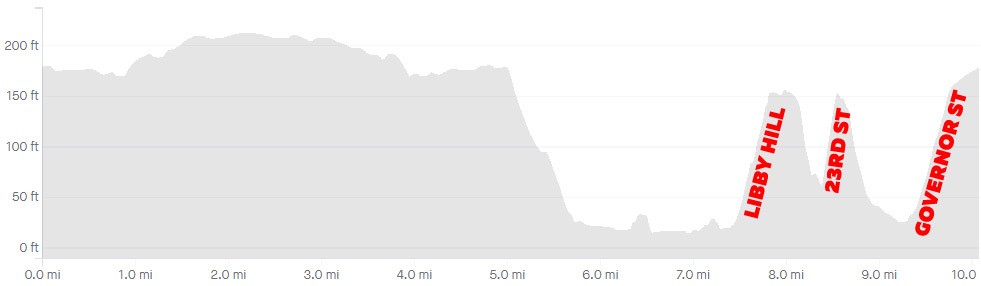
Looking at the route profile I saw that someone nearing 100 kilograms such as myself had an opportunity to push the pace on the downhills but needed to do so carefully in order to be prepared for the grueling task of keeping up with lighter-weight riders on Libby Hill, 23rd Street, and again on Governor Street. The route looked like I would be fine for the first half but on the second half I was concerned I would be left alone struggling uphill.
Knowing that I’m a rather slow climber, one of the things I’ve done in road races in the past was move to the front of the field approaching a hill so that they all have to work to pass me, giving me a chance to make contact with the tail as I finally huff to the top. In Zwift they just get to pass through me like I’m not even there, but at least the distance could make a difference. I went into it vowing that I would try to hit the hills ahead of the field if I could.
WARMUP
The race I signed up for was at 4:13 pm and thus I was pretty annoyed with myself that I forgot that my coworkers would probably schedule a teleconference just prior. I got the email sometime Thursday morning that it would be from 3-4 pm. The next scheduled race wasn’t until pretty late at night, so I figured I would just have to make it work.
Before my conference, I put on my shorts knowing they would only see my t-shirt anyway. I also mixed up some lemon-lime Heed and sipped it throughout the meeting. At 3:55 I unplugged my laptop and carried it down into my basement and plugged it in for my usual Zwift set-up. I put my shoes and heart rate monitor on and stood in front of it waiting for the meeting to wrap up. A coworker commented that I looked as if I was standing in a beam of light, and I had to explain that was my basement window, showed them the heart rate monitor on my arm, and explained I really had to go. I started up Zwift and immediately joined the race, relying on those few minutes of trainer time at the start to try to loosen my legs. They were not very loose.
LAP 1
At the beginning of the race I fully expected things to start off hard. I spun up and was ready to do whatever I had to do in order to keep contact with the group. My avatar moved quickly but oddly veered left and then stayed on the left side of the road as we rounded the corner, meaning I was alone without a wheel to follow. I had to work hard to keep pace with the group on the right side of the road and it seemed to take a long time to finally drift into the draft.
Once I was in the draft it was OK and got my breathing under control. My goal was to stay toward the front, but not actually on the front, as much as possible, so when we went around the hairpin turn leading into the Monument Avenue Sprint I was right there when two sprinters took off for it. I decided my legs could use a bit more of a stretch so I impishly took off after them. I didn’t win but that wasn’t the point. The three of us let up after the banner and I fully expected the field to show up any second.
I positioned myself in between the two of them and the one in front wasn’t working super-hard but she also wasn’t soft pedaling. I could see on the mini-map that there was actually a gap between us and the field and I realized such a gap would be very helpful to me once we got to Libby Hill. Here’s a map for reference:
I was thinking that it would be a dream if we managed to stay away, and I suspect that at least one of the other women with me was thinking the same, for we rotated all way down the hill (with the exception of a little jockeying for the Broad Street Sprint). R.Vaisanen, J.Cooper, and I took turns deploying Helmet powerups at the front, and by the time we got to Libby Hill I actually could not see the main field dot on the mini-map.
On Libby Hill, though, I was pretty sure my fears of being left were being realized. Vaisanen darted around me and I had to work on the downhill to close the gap. I was grateful I weighed a lot at that point, for mashing a big gear downhill made that possible. I hadn’t quite figured this out yet, but Cooper didn’t make it up the hill with us, and I went into the 23rd Street climb assuming Vaisanen would again beat me. I was very surprised when I was able to power through to the banner there and again at the lap line.
LAP 2
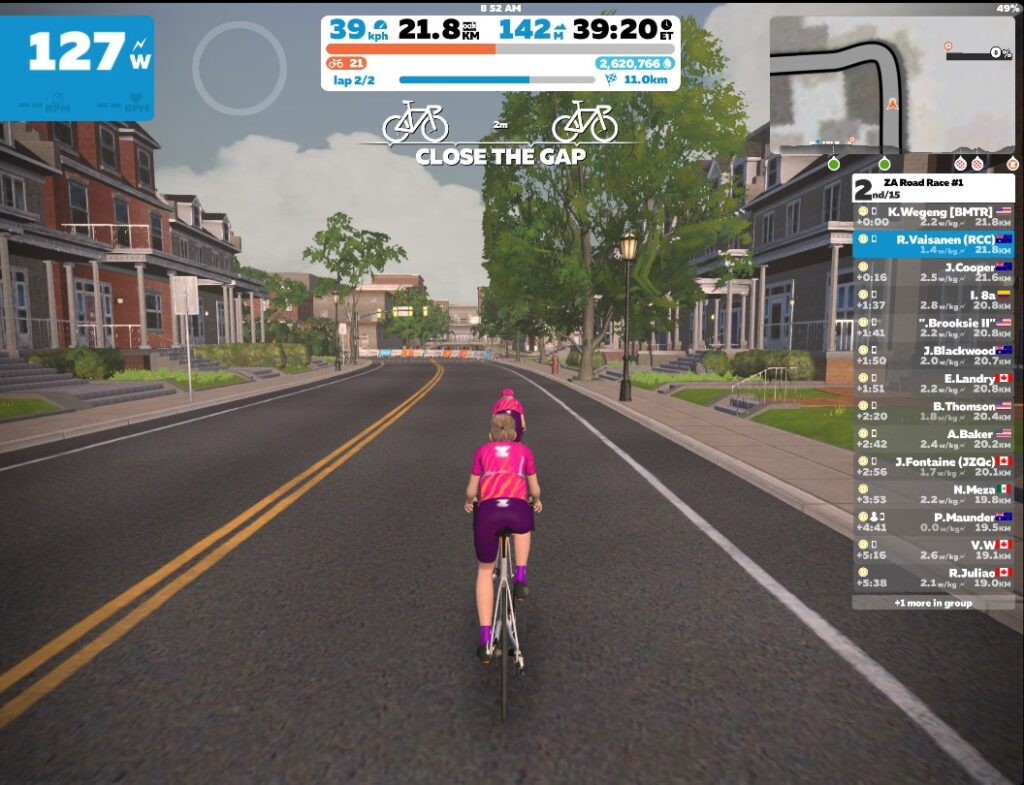
I was really taxed from the Governor Street climb going into the first lap. When we got to the Monument Avenue Sprint Vaisanen again went for it and I really didn’t want to give her a gap so I stood up and hammered. (I didn’t go into this knowing I would win so I did not take any screen shots. Usually there is at least one that Zwift includes with the ride but mine was blacked out for some reason.) Vaisanen gave her permission for me to use her picture here and I think it was taken about at this point in the race. You can see how strung out the field is on the right but my eyes were not good enough to see how things stood. I imagined the field was somewhere together behind us, working to catch us still.
I wanted to know how things stood though, so at this point I called my husband and asked him if he had a few minutes to come and read things for me. Vaisanen did manage to close that gap and I could see that she was right behind me. I tried to see if she would share the work to help keep us away but every time I let her in the front we dropped down to around seventeen miles an hour. I didn’t want Cooper to catch us, I didn’t want anyone in the field to catch us, and I certainly didn’t want to pull sprinters around just so they could dart past me at the finish. I knew I had to lose her.
My husband came downstairs and let me know the field wasn’t coming, but he agreed I needed to get away. Vaisanen darted ahead for the Broad Street Sprint and this time I let her. I then put the hammer down just afterward, gave it all I had and got an achievement for going over 700 watts for the first time.
On the big downhill I pushed a big gear slowly, sat up, and took deep breaths, trying to keep my distance while recovering enough to handle the hills without cracking. I felt like the possibility of cracking was real. I asked Jesse to get me a mini-Coke from the fridge and drank about half of it, glad for the sugar and caffeine. That was my last rest.
I refused to let myself drop below 3 W/kg on Libby Hill (a pace that was really hard for me) and cursed when I got a Truck powerup at the top. My husband reminded me to use it anyway, for maybe I would get a Feather next. I did and got the Feather.
THE FINISH
The rest of the race was a pile of pain. I pushed as hard as I could on the downhill after 23rd Street and brought my gap to 40 seconds. Vaisanen and Cooper looked like they were meeting up and would work together to reel me in but then separated again on the hills. I deployed my Feather when the grade turned orange on Governor Street and kept telling myself that it could only hurt this badly for a few more minutes.
My husband sat silently on the couch. (When asked about this later, he said he didn’t want to say anything, for fear I would let up.) I was sure that was bad and really dug deep into the red. There isn’t an overhead arch at the end so I actually didn’t know I was at the line until I was crossing it. It was a surprise to see the finish screen pop up with my name at the top.
I slow pedaled and stuck my arms in the air. My husband congratulated me and went over to my laptop and gave the other women Ride-Ons as they started coming in 45 seconds later. It took so long I thought there was some mistake – how could I have grown my gap on an uphill finish?
TAKEAWAYS
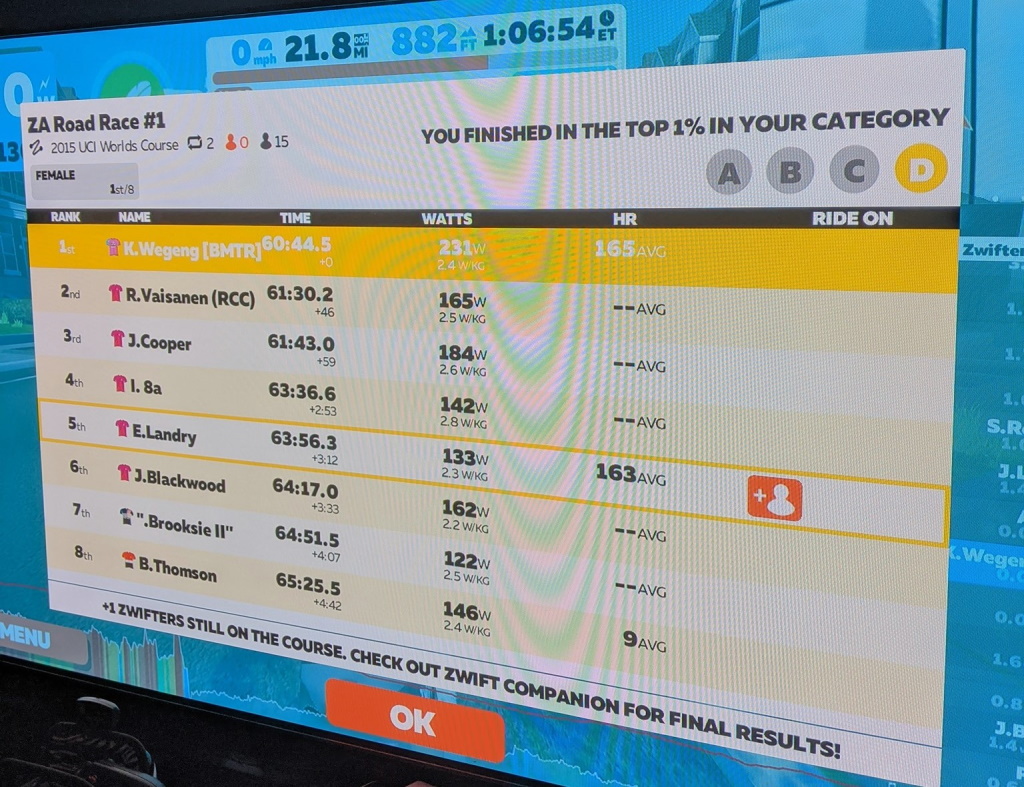
I still can’t believe that I won. My average output was 2.4 W/kg, appropriate for my category and lower than the women who came in 2nd-4th. I got away after the first sprint and stayed away, and then managed to lose the sprinters on my wheel and time trialed to the finish. It sounds like some ridiculous fairy tale and yet I’m talking about myself.
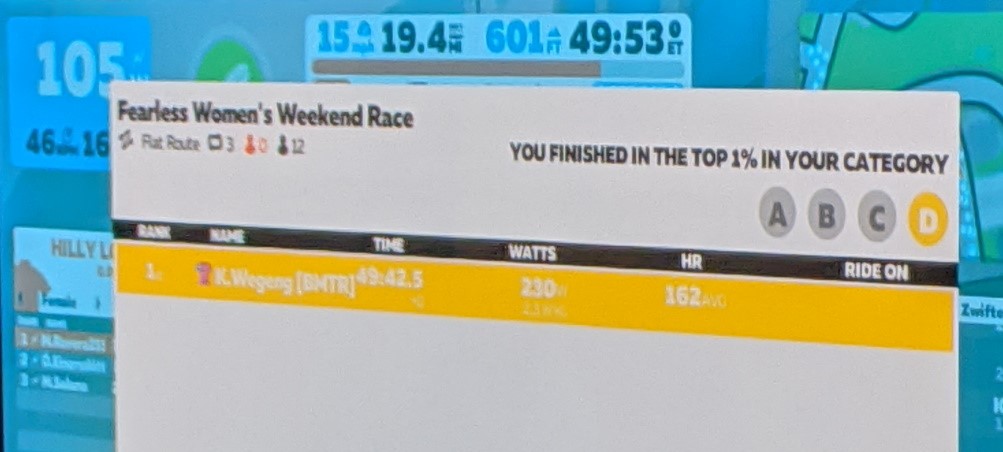
I’m carefully watching ZwiftPower to see if they append “Almost C” to my category anytime soon, but so far it hasn’t happened. I’m hopeful it will eventually, but with the way it stands now I’m solidly a D. I did get called a sandbagger on Saturday, after which I took another picture of my television:
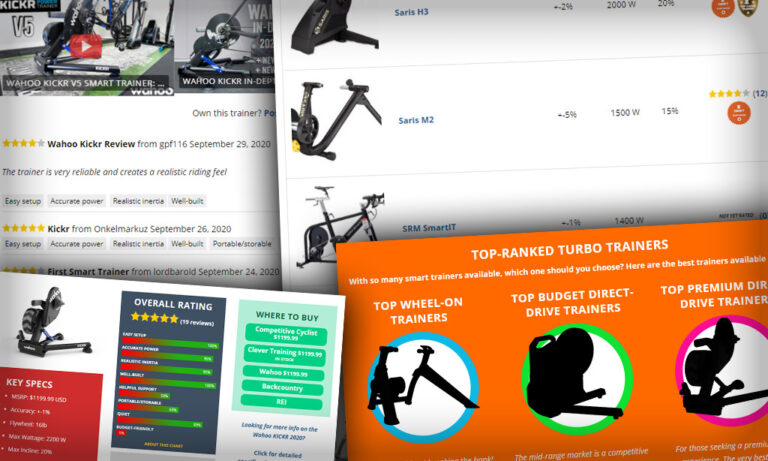
You need a smart trainer to truly experience what Zwift has to offer. But picking out the best trainer for you can be a real challenge! Buying a smart trainer or smart bike is a significant investment, and Zwifters have to take into account factors like price, specifications (max incline, power accuracy), quality (ride feel, durability), and manufacturer support in order to make the best decision for their situation.
It’s not hard to compare the basic specs of one trainer to another. But what about ease of setup? Do certain parts wear out after only one season? And how do you know what level of support the manufacturer is going to offer if you encounter a problem?
These are the questions we’re attempting to answer with our new Smart Trainer Index. The goal of this summer project was to create the web’s most exhaustive database of smart trainer specifications and reviews, and we’ve done it… with your help! The Index currently contains over 100 smart trainers and 1100 reviews.
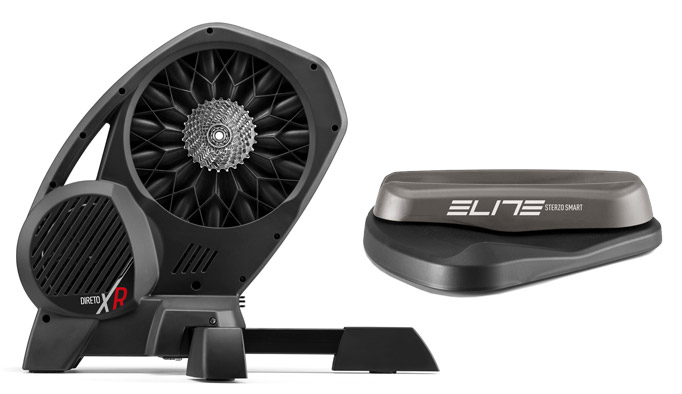
First, a huge congratulations to James Colbeck of Scotland, who won the Elite Direto XR + Sterzo Smart giveaway! James was randomly chosen from the full list of Zwifters who submitted trainer reviews.
Thanks to all who posted a review – that shared information will help others make informed decisions in the months to come.
Top Lists
We’ve combined your review stats and other information to create three separate lists of top-ranked turbo trainers based on budget levels:
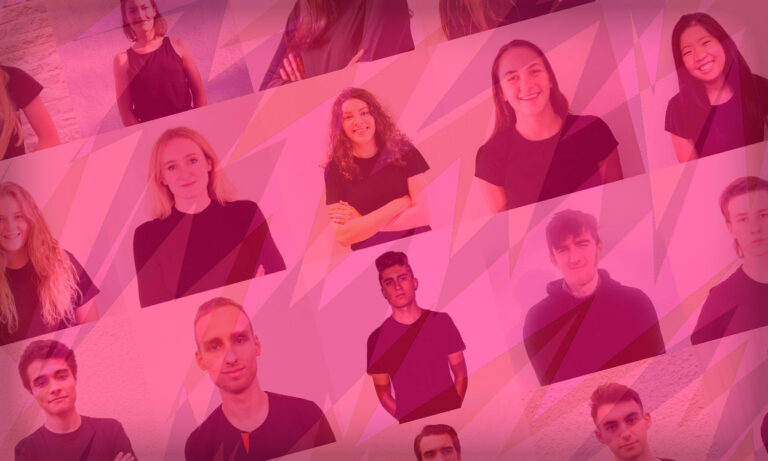
Back in August, Canyon Esports announced that they were on the hunt for talented racers between the ages of 16-23 to become part of a new development squad. Applications closed at the end of August and since then the team has been busy going through the selection process to pick the final 20 riders.
Today, Canyon Esports announced the list of riders who won a 1-year contract with the team. The development team is made up of two squads of 10 riders each:
WMN
Daniela Dinorah García (17, Mexico)
Greta Higginbotham (18, USA)
Lydia Hunter (23, England)
Amber Lacompte (20, Belgium)
Louisa Leidl (17, Austria)
Cécile Lejeune (22, France)
Maud Oudeman (17, Netherlands)
Maia Simmons (16, Northern Ireland)
Elida Soleim (18, Norway)
Melissa Wong (20, Canada)
MEN
Ethan Browne (18, Wales)
Lucas Byam (17, Trinidad & Tobago)
Lars Droogmans (19, Belgium)
Rodolfo Giovanni Niels Gervasio (18, Mexico)
Tyler Hannay (17, Isle of Man)
Michał Kamiński (22, Poland)
Callum McQueen (20, England)
Alban Puech (18, France)
Aiden Sinclair (16, Australia)
Charlie Velez (21, USA)
Rhys Howell, Team Manager of Canyon Esports, says, “We were really spoilt for choice when it came to deciding who should be in the final selection – and honestly we could have filled the team several times over. I’m absolutely delighted with the final 20 riders we selected and it’s been a pleasure getting to know them all ahead of the upcoming racing season. We will work closely with them so that they can get the most from the experience and develop as racers. This is exactly how a cycling team should look – made up of riders from all around the world judged purely on merit, character, and potential. We really want to create a pathway from the youth divisions to the pro-level and this is a fantastic first step.”
Cécile Lejeune (22, France), who has already had a taste of top-flight eRacing with the senior Canyon squad in September, says “I applied to join the development programme with the hope of being part of what I believe to be the best team in eRacing – not only in terms of performances, but also with regard to style and communication. What I love about the Canyon eSports team, is that they manage to make racing bikes on a computer look sexy, which is what the sport needs to grow. I’ve already learned a lot from shared conversations with the senior squad and it’s been very enriching to feel part of the team.“
Lucas Byam (17, Trinidad & Tobago), says, “I have looked up to the guys from the Pro team ever since I first started racing on Zwift – so to be able to benefit from their mentorship is invaluable! We have a fantastic group in the Dev squad and all get on really well already, so I’m very optimistic about the upcoming season. Let’s go!”
Racing Begins Tomorrow
The two squads that make up the Canyon Development Team already have a full race calendar laid out before them, starting with the newly-announced Zwift Racing League. While the senior squads will compete in the Premier League, the younger development squads will cut their teeth in the division below, vying for a spot for promotion in the second season. You’ll be able to catch them racing every week on the Zwift Community Live broadcast.
Just the Beginning
While only 10% of applicants made it onto the team in this first round, Canyon Esports plans to repeat the process again in August 2021. Rhys Howell says, “We hope to develop the programme over the coming months to make it bigger and better by the time we open up applications again. The selection process was already incredibly tough this time around – I can’t imagine what it will be like in 10 months’ time. So, for anyone that missed out – we hope to see you next time”.
About Canyon Esports
Canyon’s Esports team was founded in January 2019 and launched as the world’s first professional eRacing team. A month later and the team had won both the men’s and the women’s inaugural KISS Community League, with several national titles coming shortly after that. The team has continued to dominate at the top of the sport with a close-knit group of 12 riders based all around the world. The professional senior squad is now joined by twenty U23 riders in its Development Programme.
Canyon Esports is supported by Canyon, Wahoo, Nuun, CeramicSpeed, Infocrank and TrainingPeaks.
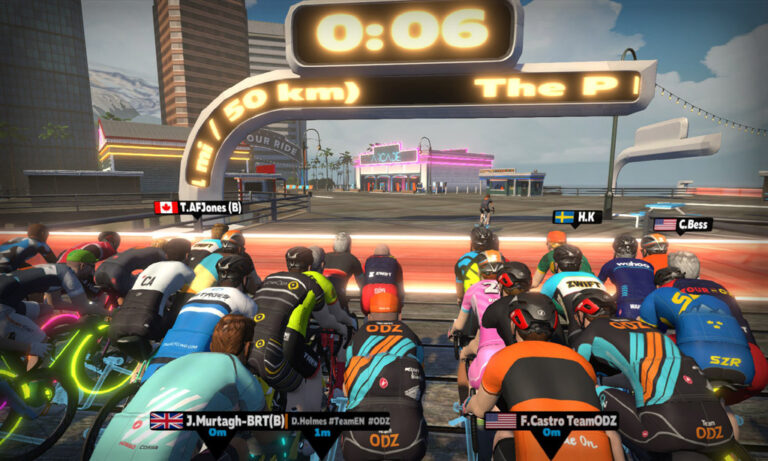
In a big Zwift event, your starting position can mean the difference between leading the pack and chasing from behind. Riders line up based on when they get to the starting pen. Shane Miller has a tip for how to claim and save your spot – even after logging out!
First, join the event’s start pen as early as you can (once you’re signed up for an event, a “Join Event” button should appear in the bottom left corner of your Zwift screen about 30 minutes before the start time). You can stay in the pen to warm up if you want, but you don’t have to! You can quit the event and Zwift until you’re ready, or you can start another ride in any available world. Just click the “Join Event” button when you’re ready to come back to the pens.
Your virtual trainer will be there at the start, right where you left it! That’s where you can keep warming up until the countdown hits zero. Watch the video to see how it works:
Swift Zwift Tip: How to Start in the Front Group of Zwift Events!
We’d still suggest getting to the pens with plenty of time to spare, especially if it’s an important event. You don’t want to miss the start if something goes wrong! This is a good way to claim a spot up front, though, if you’d rather do something else for a while.
Your Comments
Have you used this tame “hack” to save a good starting spot? Got any other helpful race tips? Share below!
Last week, Strava rolled out enhanced map styles which can be activated on a per-activity basis to highlight a particular activity attribute (read their announcement).
This isn’t a particularly innovative feature – Fitbit, Apple, Garmin and others already have this feature in various forms. But it’s worth noting since Strava is used by so many Zwifters. Let’s dig into the details!
Using StatMaps
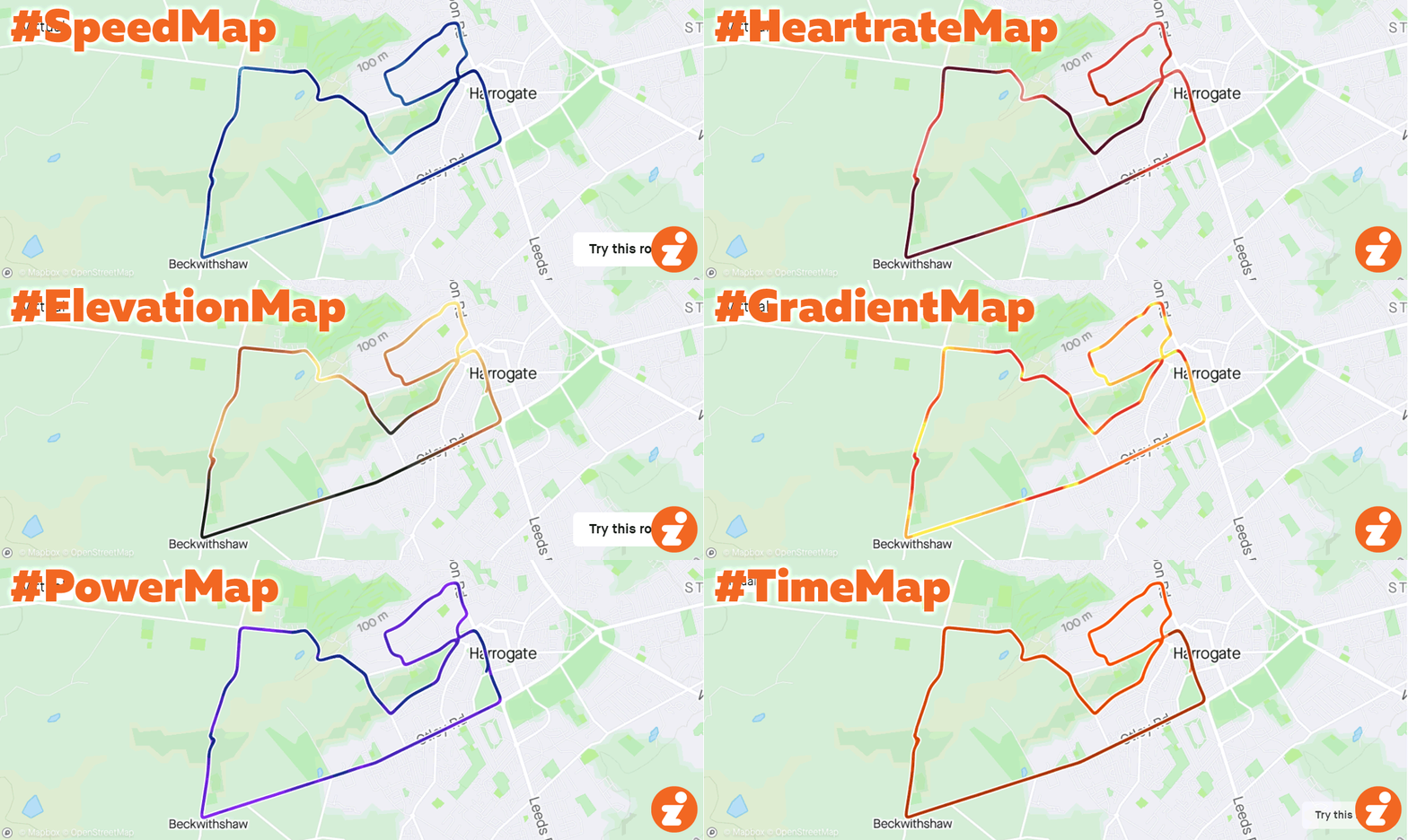
The following #statmaps are available (list copy-pasted from Strava):
#PaceMap or #SpeedMap: Higher speed/lower pace will be a darker blue.
#HeartrateMap: Higher heart rate will be a darker red.
#Elevationmap: Lower absolute elevation will be black and higher elevation will be yellow.
#GradientMap: Descents will be yellow and inclines will be red.
#PowerMap: Higher power will be darker purple.
#TimeMap: Longer elapsed time will be a darker red
#TemperatureMap: Higher temperatures will be a darker red.
To activate a #statmap for one of your activities, simply add the hashtag to that activity’s title or description.
Subscribers Only
Only Strava subscribers can add #statmaps to their activities but all athletes will be able to see them in their feed.
Viewing #StatMaps
For whatever reason, #statmaps are only rendered in your feed – they don’t show up on your activity’s detail page. So they can’t be zoomed or panned – what you see is what you get.
Here’s a quick animation showing what how each #statmap appears for a recent Yorkshire race:
Bugs & Niggles
This is only Strava’s first public iteration of #statmaps, so hopefully they’ll roll out improvements soon. Here are some suggestions:
#Elevationmap: Strava says “Lower absolute elevation will be black and higher elevation will be yellow”, but I found the exact opposite! (See animation above.)
#GradientMap (#GradeMap also works): this is a weird one. If you look at the animation above, I raced Yorkshire’s Royal Pump Room 8 route which covers all the roads you see in both directions. It’s as if the gradient map is preferentially-coloring the uphills – so even though the last time around I may have descended a particular section, it’s colored red because I climbed it earlier in the activity. Maybe that actually makes more sense than just coloring what happened the last time over the road, but it’s weird to see.
#PowerMap: there needs to be more variation between colors. Even on my Sprintapalooza ride, which is essentially a zone 2 spin followed by a short sprint every lap, the color doesn’t vary much. Why not color by power zones?
Let us see #statmaps for particular segment efforts. Right now the #statmap covers your entire activity, which makes it not terribly useful if you’re looking at a multi-lap effort such as a Crit City race, where you’ll only see your final lap. What if you could select a particular segment, and see your #statmap for that single segment effort?
Expanding on the segment idea – why not let us see gradient maps for segments, similar to what Veloviewer does so well.
Give us a legend or more detail about how each #statmap works
Make #statmaps settings apply to the map on the activity’s detail page as well, so it can be zoomed and panned
Your Thoughts
Is this feature useful for you, and if so, how? Share below!
I’ve been purposely taking on longer/harder races lately in preparation for the start of the big Zwift Racing League this Tuesday. So when I saw that the first race for Zwift Academy was a three-lapper of Richmond’s 2015 UCI Worlds route, I knew that was the perfect event for me. Three laps works out to ~50k, the same length as the Tuesday’s big ZRL kickoff race. And Richmond had some punchy climbs, which is the kind of training I need more of.
I love racing in Richmond, and I’m not entirely sure why. I never win here. But it is the first race route I remember racing, back in November 2015 as part of the ZTR and TFC races.
There’s just something special about the way the course is laid out that keeps me coming back again and again. Will I ever be able to power away from the field on the final ascent of 23rd Street so I can supertuck and stay away from the chasers just like Sagan? Doubtful. But that doesn’t stop me from dreaming, then racing my guts out every time I’m in Richmond.
Warmup
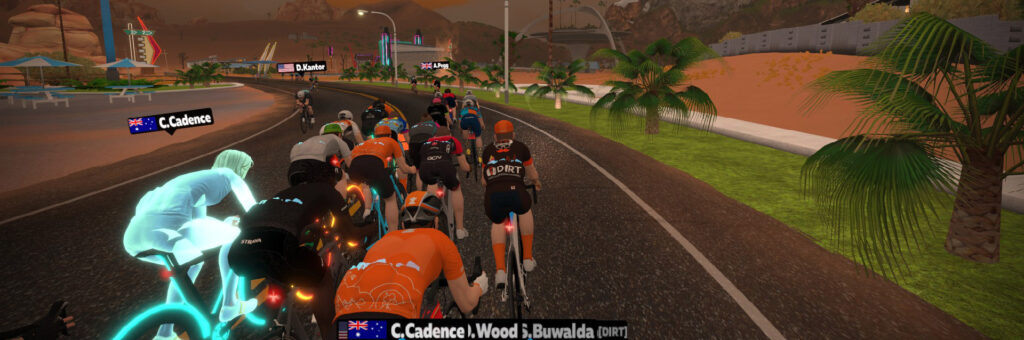
Today’s race was at 7:11am, so I had already chewed my caffeine gum and rubbed PR lotion on the legs well before climbing into the bike at 6:15. I was happy to see the Pace Partners had returned, giving me a chance to spin through Fuego Flats with Coco Cadence and her cadre. (I’m not sure why I enjoy warming up with Coco, but it sure is more fun that going it alone!)
15 easy miles later it was time to head to the pens.
Bike Choice
I’ve been riding the new Canyon Aeroad 2021 lately, because it’s such a freakin’ light bike, while remaining super aero. It’s exactly what I need, since I struggle on the climbs! I’ve been pairing it with the Zipp 858 wheels, only because it’s hard for me to put disc wheels on for a road race. Even a virtual one. Just feels wrong.
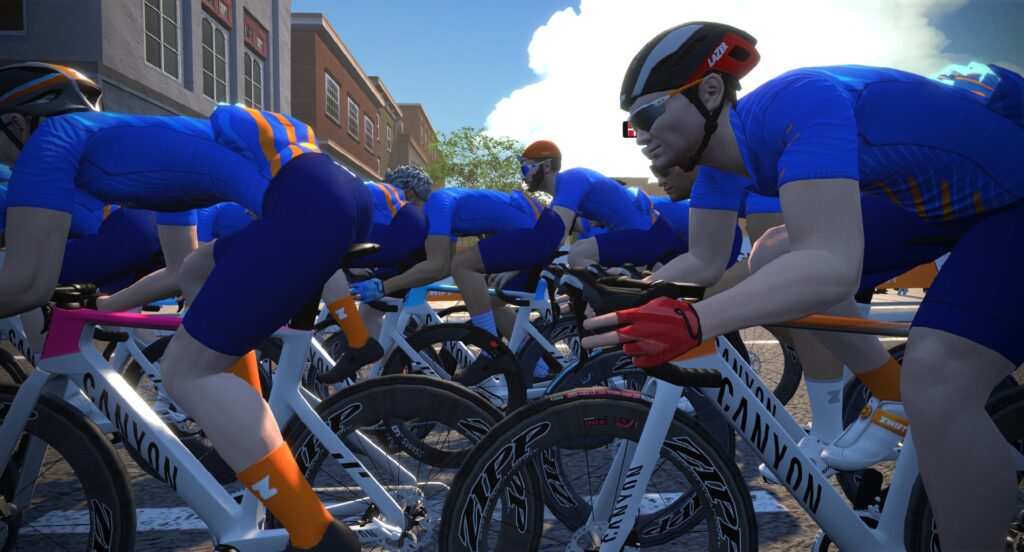
When I hit the start pens, I discovered something interesting: everyone had the Aeroad 2021. Apparently Zwift is auto-equipping us with that bike for these races! So watch out, Tron riders – you may end up with a wimpy wheelset when you join the start pens. Double-check your rig.
A whole lotta Canyon Aeroad 2021s!
Route Notes
What I wanted to do was stay with the front of the race over the each of the three climbs we would be hitting on each lap. Three climbs per lap. Three laps. Nine goals.
For those unfamiliar with Richmond’s 2015 UCI worlds route, it’s essentially flat for the first half, then bump for the second half. Here’s the profile:
You’ll only shed a few riders on the flat half of the course – then the fireworks happen when Libby Hill, then 23rd St, then Governor St blow apart the field on the back half. It really is a magnificent race course, even if it destroys me… every… time.
The Start
Predictably, the race didn’t start too hard. We began with 66 riders and dropped a few quickly, but we still had at least 2/3 of the field intact when we hit Libby Hill for the first time. I made sure to position myself near the front (but out of the wind) as we began climbing, giving me a bit of space to drift backward if necessary while still staying in touch with the front pack. It worked like a charm, and I made it to the top with the front riders just a few bike lengths ahead.
One down. Eight to go.
23rd Street comes hard and fast after Libby, and it’s just a straight near-sprint to the banner. I crested the hill in 6th, gave a few extra hard pushes on the pedals to get up to speed, then messaged “Sagaaaaan” as I descended in a supertuck. (Seriously. I could watch his race win on repeat forever.)
Governor Street was the last climb of the first lap, and it’s always a tough one – the longest of the three. I made it to the top in the front group, but it was far from easy. Our group of 66 had dwindled to just 16, and we still had two laps to go. This was going to hurt.
The Middle
Things were tame for the flat portion of the second lap, and I made it to the top of Libby Hill with the front just as one “A. Courts” jumped off the front with one other rider in tow. I couldn’t have chased even if I wanted to, but with 15 miles left I figured those riders would be coming back anyway.
Up 23rd, then up Governor Street. I was still with the front pack, although A. Courts was off the front, and one “mbahgusmbangs” (we’ll call him “Bangs”) had just jumped away as well. How was A. Courts staying away? And how did Bangs jump so hard after such a hard climb? Looking closely at the rider list, my question was answered: neither was registered on ZwiftPower. And both were using zPower.
Cool. No need to worry about chasing them down.
Unless…
Ah, crap. A legit rider (D. Maxwell) had jumped up and onto Bang’s wheel. Smart. Perhaps not entirely sporting by some standards, but it was within the rules, and he was playing the game brilliantly.
As a public service announcement, I messaged everyone to let them know that A. Courts was on zPower, not on ZwiftPower, and therefore didn’t need to be chased. (He quickly replied, in classic zPower Ranger fashion, calling me a “whinging yank.” LOLz. I wasn’t whinging. But I do suppose I am a yank. So he was half right.)
It’s not that I’m against zPower riders – I’m all for being inclusive. But when they behave as a sandbagger, pushing massive watts which affect the race… that’s not cool.
The Finish
With one lap to go, the two zPower Rangers were off the front, with the canny Mr. D. Maxwell in tow. Maxwell was just 8 seconds ahead, but nobody in our group wanted to put in the effort to chase him down on the flats, knowing we would need everything we had for the three final climbs.
I could actually feel my matches burning on each of those climbs. The question was, did I have enough left? I felt I did not. But I resolved to give it all I had.
We had a pack of nine, chasing a pair, with A. Courts alone in front.
We reeled in Maxwell and Bangs on the descent before Libby Hill, then Bangs sat on the front of our group, pulling us along at 5+ w/kg. Ha!
Then we hit Libby for the last time, and the climbers pulled out their big power to weight ratios. Our pack splintered to pieces, with me bunched up near the back with the 9-11th place riders.
Supertucking, Sagan-style
Up 23rd Street, things got even more broken up. On the plus side, Bangs had disappeared, leaving us only one zPower rider to chase (A Courts, still over 20s off the front). I was in a pack of 3, representing 7th, 8th, and 9th place. I deployed my feather powerup on the right-hand corner of Governor Street, since that’s the steepest section of the climb. Then I hit the power hard, trying to drop the two guys I was with and perhaps bridge up to a rider ahead.
(Turns out that was the glycogen depletion talking. There was no way I was catching the riders ahead.)
One rider followed my attack: Tharratt. He came around me, then eventually I was able to come around him. As we reached the top of the climb I hammered hard to get up to speed and try to break the elastic between Tharratt and my back wheel. I was on the limit, pushing as hard as I could while watching Tharratt’s numbers to see if he was going to try to reel me in. Somehow I managed to stay just ahead, crossing the line totally exhausted in 7th place.
This was a tough, tough race. I could tell because my legs were sapped the next day for Sprintapalooza. That said, I think it was great training for Tuesday’s big ZRL kickoff race with all its punchy climbs and longer distance.
I’m not sure I could have played this race any better than I did. Richmond’s climbs kick my butt every time, and having to take them on three times put me over my limit.
My only real takeaways here are for Zwift HQ, actually. First: please stop holding races where we’re all stuck in the same kit. We know this is a Zwift Academy event – we don’t need the jersey to remind us. And it’s super-difficult to know who is who in a race where everyone is in the same kit (and on the same bike)!
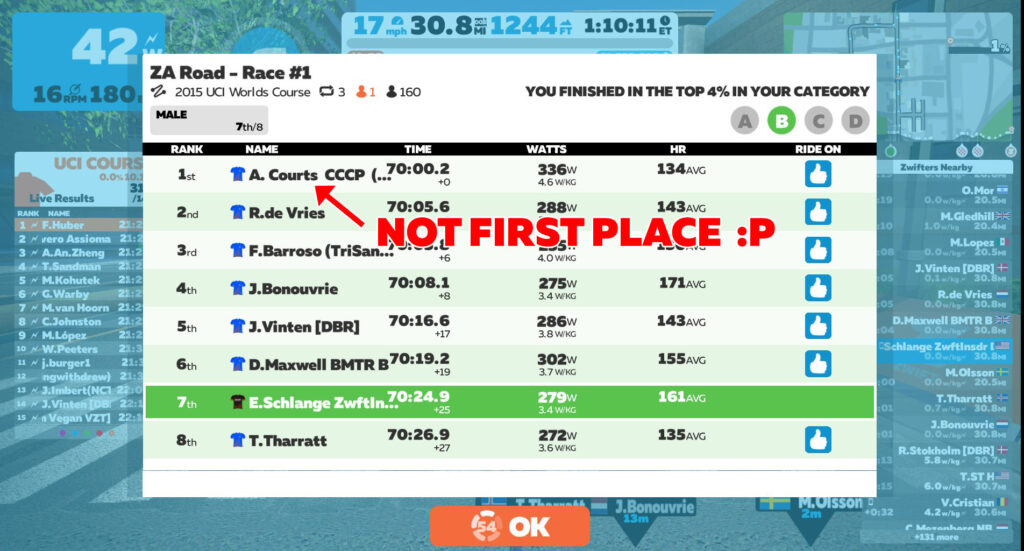
Secondly: please roll out your anti-sandbagging tools soon, and/or make it so race organizers can hold events where zPower riders are barred from entry. And if a rider is over the stated category limits when they cross the finish line, for heaven’s sake, don’t show them on the leaderboard! That just reinforces their behavior, which means one rider will continue to negatively impact everyone else in the event.
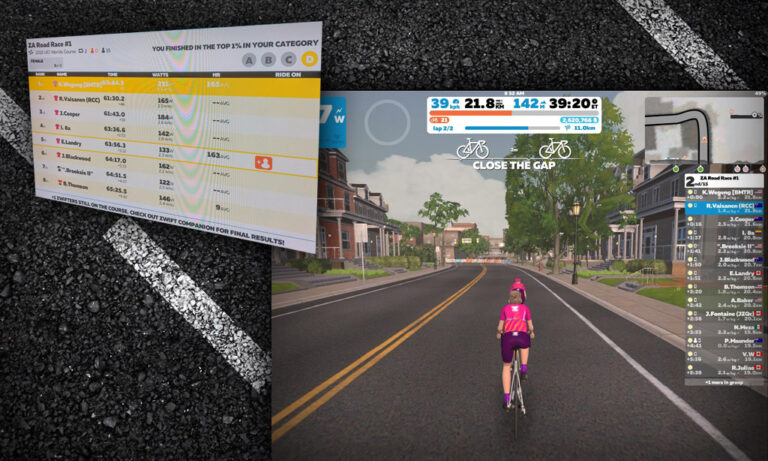
In lieu of the fixes above, I’ve taken the liberty of editing the results screen from this race:
This weekend we’ve got our first Zwift Academy Road races, plus some cool benefit rides and a very special series of events for triathletes. See all the details below!
Special thanks to Jesper at ZwiftHacks with his Events app which provides powerful event filtering tools that help us create this list each week.
Zwift Academy Races
This is our first weekend of racing with Zwift Academy Road, and lots of riders are signed up to give it their all in Richmond. We’re on the wonderful 2015 UCI Worlds Course, with enough laps and climbing to make it hurt!
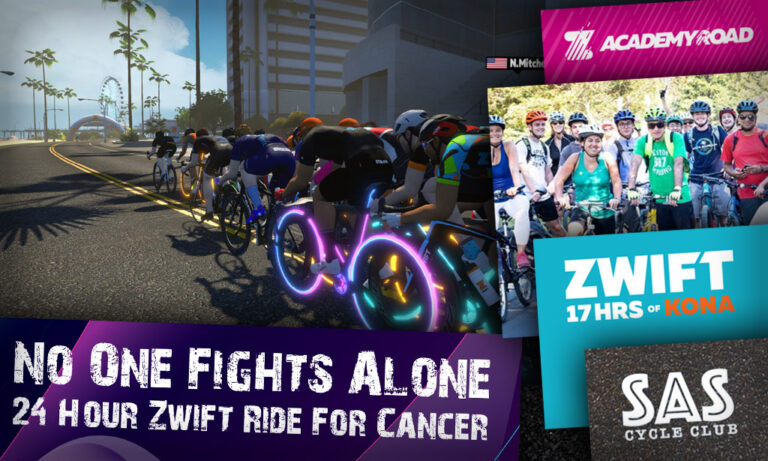
Two years ago my younger brother Shaun was diagnosed with testicular cancer. After treatments and removal surgery his annual screenings were all clear until this week when a red flag came back in his blood work. After further testing his cancer has metastasized. He starts very aggressive chemo beginning October 5th for 3 months, 4-6 hours per treatment.
On October 9th at 8pm I am going to channel all my energy and frustration into a 24 hour ride on Zwift to support him. This is a significant day as this will be the end of his first week of intense chemo.
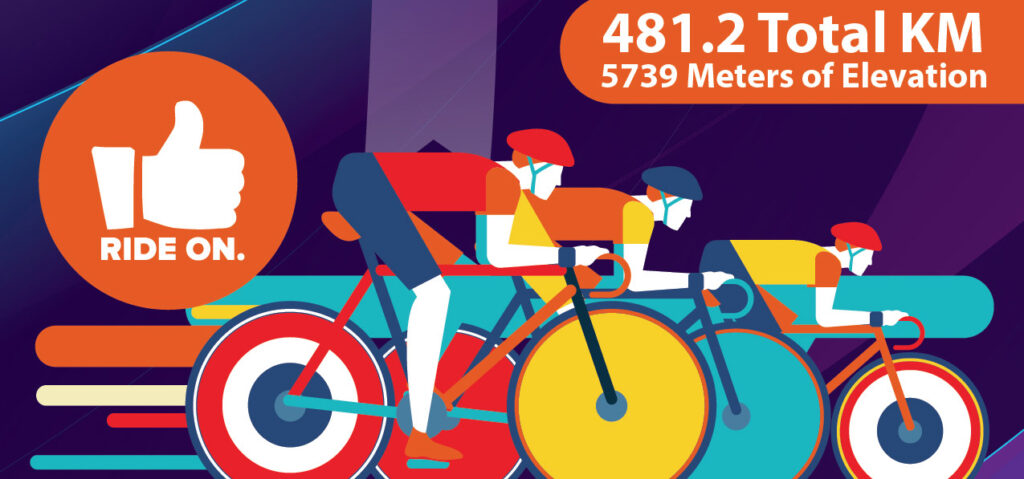
Myself, my closest friend Chuck Engle and a TFC teammate Eric Houston are going to ride all 24 hours and are hoping to have people join us at the start times for the routes. We will be doing a steady 1.8-2w/kg, the routes totaled up gets us 481.2km and 5739m of elevation.
Friday October 9, 2020 8PM EST | France – Roule Ma Pole | 23km 9PM EST | France – Tire Bouchon | 61km Saturday October 10, 2020 12AM EST| Watopia – Mega Pretzel | 107km 5AM EST| Watopia – Dust In The Wind | 54.6km 7:30AM EST| Watopia – Quatch Quest | 45.9km 11AM EST | Watopia – Bigger Loop | 53.1km 2PM EST| Watopia – On Fire! Badge Hunt | 100km 6:30PM EST| Champs-Elysees Meetup | 39.6km
Begins Saturday 1am BST/Friday 8pm EDT/5pm PDT Learn more on the Facebook event page
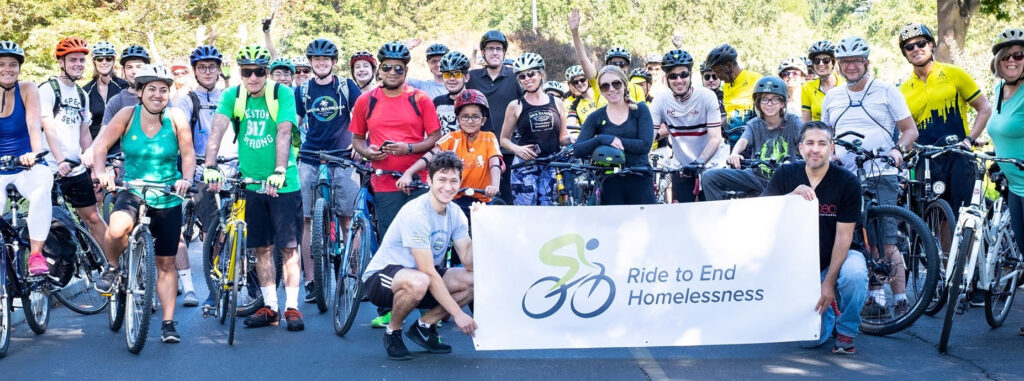
Life Moves – Ride to End Homelessness
This is the 7th annual LifeMoves – Ride to End Homelessness, and this year it’s happening on Zwift. But the the cause stays the same – ending homelessness! 90 minute ride on Douce France route will be social 1.8 w/kg – 2.2 w/kg. The goal is to raise awareness for www.lifemoves.org
The Ironman World Championships in Kona, Hawaii, was supposed to take place Oct. 10 but has been canceled this year. Instead, some of the pros will be leading events on Zwift around our very own Volcano, in celebration of one of the biggest days on the triathlon calendar! Read more >