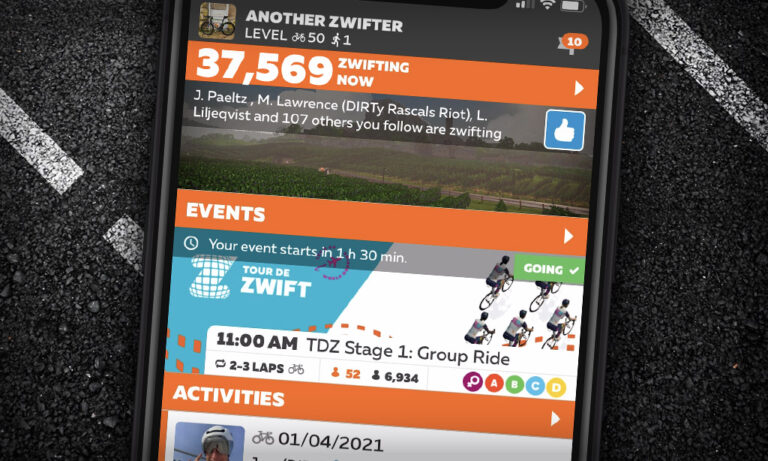
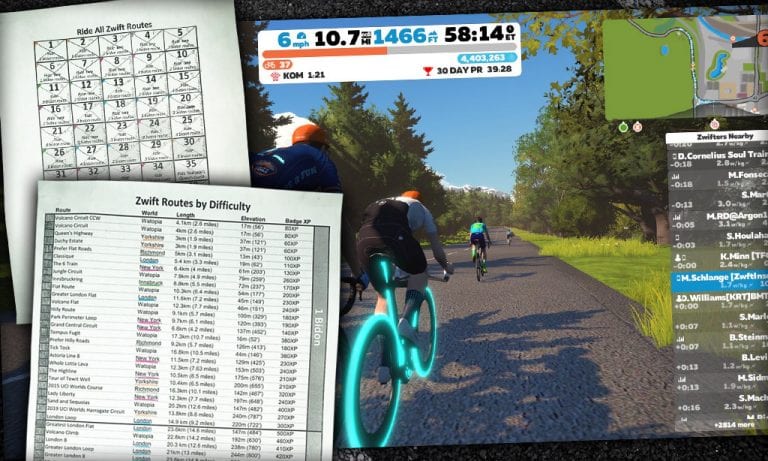
Yesterday’s Peak Zwift surprised some of us, since it was on a Monday and fairly early in January. But today’s new peak is less surprising, since Tuesdays are when Peak Zwift often happens.
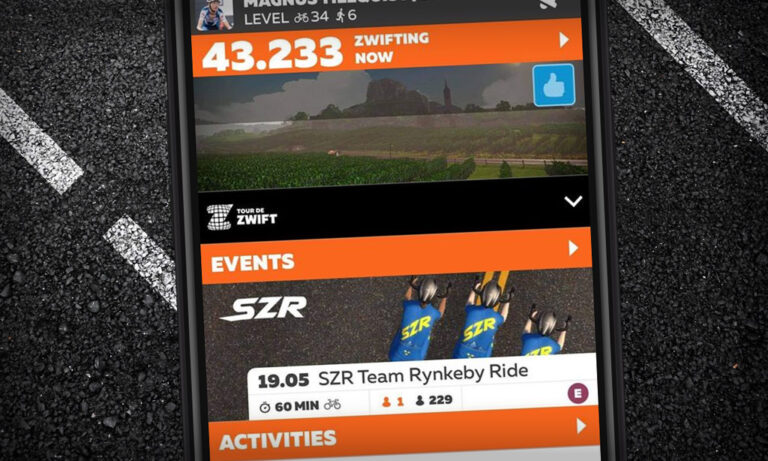
Today’s peak jumped to 43,233, up 15% from yesterday’s peak of 37,569. Quite a jump!
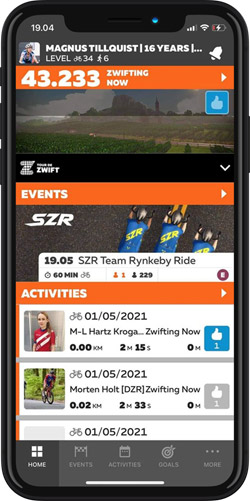
The peak occurred just after 10am Pacific time as another Tour de Zwift event was kicking off. Many Zwifters sent us Companion app screenshots showing 40k+ Zwifters online, but the prize goes to Magnus Tillquist who snapped the highest number we’ve seen yet – 43,233!
Reminder: Zwift hasn’t been confirming precise peak numbers, so it’s up to us to spot new records. That means we don’t know the precise Peak Zwift number, but we can certainly get close.
If you think you’ve spotted a new Peak Zwift, snap a screenshot and send it over to me at [email protected]!
What will 2021’s Peak Zwift number be, and when will it happen? Comment below with your guess!
UPDATE: Astute Zwifter Daren Chandisingh posted a screenshot showing 43,265, so we’ve modified this post accordingly!
The power of positivity is an undeniable force, especially in the case of Larry Parker. But as Zwift racers know all too well, it is watts that push the pedals! After reading the story of this incredible man’s struggle to overcome adversity while maintaining perception, neophytes like us were left with one big question: how?
Editor’s note: if you haven’t read part 1 of Larry’s story, we recommend you check that out before continuing, so you can read what’s below in its proper context.
How did this remarkable individual go from the cardiac ICU to pulling piles of books behind his mountain bike to strengthen his ticker to one of the top-ranked Zwifter racer in the world?
While I would never accuse the Zwift racing community of being a cynical bunch, I would admit that when I first heard Larry’s story, the random remorseful “Is he legit?” thought entered that deep dark recess of my subconscious reserved only for cutthroat competition.
No Question: Larry’s Legit
I feel uneasy by the mere allusion, so let’s get this out of the way: the proof of Larry’s veracity is transparent and as his ZwiftPower profile clearly demonstrates, he has nothing to hide.
Larry utilizes a Tacx NEO 2T direct-drive smart trainer, known within the industry to be extremely accurate and reliable. Used in the recent UCI ESports Worlds, the NEO 2T does not require calibration, and as numerous user reviews attest, it’s not the preferred choice of ‘Trainer Dopers’.
Larry also uses a Quarq DZero crank-based power meter as a secondary power data source to confirm the reliability of his trainer’s data readings. A weigh-in video can be found on ZwifTransparency. Nope…not a ‘Weight Doper’. In fact, there is nothing to see here, but you can look if you are so inclined.
Larry’s Comeback: Where He Started
Larry was always physically active, racing motocross, training in mixed martial arts, weightlifting, and running. But he denies being a serious endurance athlete or having a genetic gift.
Prior to 2009, Larry had no health concerns, warning signs, familial history, or genetic predisposition to cardiac issues. However, in hindsight, Larry does feel his lifestyle was the major contributing factor to his illness.
“I burnt the candle at both ends”, acknowledges Larry, who worked 40-60 hours a week while attending college, exercising vigorously, and raising a family.
Despite thoroughly enjoying his rewarding work in law enforcement, Larry agrees that it was extremely stressful and laments, “the stress of the job, long hours, poor sleep, diet, and hydration were all factors.”
Larry’s Cardiac History: A Deep Dive
Between 2009 and 2011, following multiple hospital admissions, assessment by the foremost cardiac specialists in the field at The University of Pennsylvania, several cardiac ICU stays, and countless ER visits, Larry was formally diagnosed with:
Congestive Heart Failure: Occurs when the heart works less efficiently than normal and cannot pump enough oxygen and nutrients to meet the body’s needs
Cardiomyopathy: An enlarged heart due to a medical condition
Ventricular Tachycardia (Sustained): A heart rhythm disorder (arrhythmia) causing the heart to beat faster than normal (>100bpm) preventing it from pumping enough blood to the body
Atrial Fibrillation: When the heart’s two upper chambers (atria) beat out of coordination with the lower (ventricles) increasing the risk of heart failure
Cardiomegaly: An enlarged heart caused by a medical condition
Secondary Complications
He also experienced the following related/secondary complications:
Cardiac Ejection Fraction of 22: The percentage of blood leaving the heart each time it contracts (normal >55%).
Acute Renal Failure: When the kidneys become unable to filter waste products from the blood.
Traumatic Brain Injury: When ischemic in nature is due to a lack of blood flow to the brain.
Treatments
Larry underwent the following treatments:
Multiple Cardiac Catheterizations
6 Cardiac Ablations
Surgical Implantation of Pacemaker/Defibrillator in January 2010
“I was 200 pounds and seriously out of shape,” states Larry, who was advised to avoid exercise and stress, denied return to the job he loved in law enforcement, and “basically told to go home and wait to die.” This was not an option for Larry who was motivated to beat CHF and be there for his family.
Larry started by climbing the staircase in his home several times a day, and when not exhausted and out of breath from doing so, progressed to taking short walks outside with a portable oxygen machine. That is when the mountain bike and book buggy came in, and his cycling career was born.
Larry’s Comeback: Where He Is Now
Larry is a level 50 Zwifter with 25,000 plus miles and close to a million vertical feet of climbing on the platform, including over 300 races and 46 victories, after beginning his racing career in January of 2018. Presently, Larry is ranked 10th in the world in the 50+ age group and 54th overall in A, and at one time was ranked first in each category.
Larry was forced to stop riding with the elite Saris-The Pro’s Closet team in May of 2020 due to the increased demands upon his heart, but does fondly recall his greatest Zwift accomplishment to be his first victory with the team in January of 2020.
Always concerned about the strain placed upon his failing heart, Larry never rides without wearing two heart rate monitors, and keeps antiarrhythmic meds close at hand. “There have been numerous times that I have stopped racing due to an erratic or high heart rate,” states Larry, whose max is between 174 and 182bpm. His defibrillator set to cardiovert at 210 sustained.
“There have been days that I felt horrible at the beginning of a race and for some reason I settle in, control the anxiety, and have a great race,” describes Larry. “Other times I can’t mentally control it and have to take a DNF.” Larry credits the Zwift racing platform with giving him the confidence to push his limits, since “if I have a medical issue my family is just up the stairs.”
Larry’s Comeback: How He Got There
With Zwift as a safe venue to pursue his passion, Larry began building a cycling base, firmly believing the “stronger the foundation the sounder the structure” by learning the basics of bike fit, positioning, pedal stroke, cadence, and power. He further fortified his base through “long sufferfests on the trainer” and averaged 12 to 14 hours per week and over 13,000 miles per year, while turning “micro-improvements into macro-gains.”
“The mental and emotional effect is incredible,” Larry excitedly remarks, “going from terminal CHF to winning elite Zwift races” fuels his desire to beat the odds. Larry’s doctors consider him an anomaly worthy of study and believe his perseverance may explain his improvement from a cardiac EF of 22 to its present near normal level of 48.
Larry’s Training Plan
2 Zwift races per week
2 Tempo rides of 3-4 hours with multiple 1 to 5 minute intervals
1 to 2 Hard Group rides (or race simulations)
1 Flexibility and Core Session
Larry’s Zwift Racing Tips
Learn the game! Know the routes, climbs, sprints, and distances.
Learn the draft! Practice during group rides to conserve energy for the sprint.
Be efficient! Know when to go and save your watts because you only have so many.
Know your opponent! Research your competition’s strengths and weaknesses.
Be honest with yourself! Know your own strengths and weaknesses and use them.
Maintain your equipment!
Be strict with hydration and cooling! 20oz. of fluid per 20 minutes of racing, and 165 daily.
Be analytical! Zwiftpower has all the data on your competition and you have your own.
Recover as hard as you ride! More is not always better.
Love to suffer! Embrace the suck and push beyond it.
Have fun! Zwift is all about fun, fitness, and friends.
My Apologies
Please forgive me, my pack fodder brethren, for leaving you feeling unsatisfied if you read this hoping to find the secret which was going to push your performance over the edge. The truth when it comes to Larry Parker is that there is no special sauce, no secret, nothing which he does which is new or revolutionary, except to say that Larry is all of those things.
Larry is that rare individual who has the ability to just do things better, like that guy in your group ride who makes it look easy, or the kid you admired growing up who could do everything. He prepares more, trains harder, studies more thoroughly, races smarter, and digs deeper. This coupled with an innate ability to thrive under pressure in the face of extreme adversity is what makes him a great cop and Dad, allowing him to excel in a sport that rewards those who can just plain suffer better.
Don’t give up hope my fellow domestiques. Although most of us will never rise to Larry’s level, the good news from the gruppetto is that we all can prepare more, train harder, study more thoroughly, race smarter, and dig deeper. Ride on!
What About You?
Do you have any riding or racing tips which are so simple that they are super? If yes, let us know how you use your secret to become the best cyclist you can be.
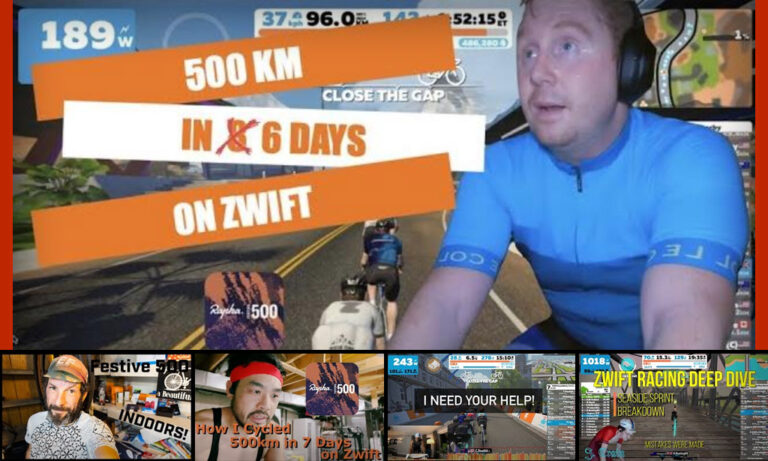
In our Top 5 Zwift Videos this week, we have a feast of Rapha Festive 500 logs! For the first time, virtual rides counted in this challenge to ride 500 kilometers in the 8 days between Christmas Eve and New Year’s Eve. Videos also include a beginner’s analysis of one of his first races and a breakdown of a Zwift race finish.
RAPHA FESTIVE 500 I Riding 500 km on Zwift in 6 days
Starting a bit late, Dan Nelson set out to ride all 500 kilometers of the Rapha Festive 500 in 6 days instead of 8. Dan is training for the Dragon Ride Gran Fondo to raise money for MacMillan Cancer Support and documenting it on his YouTube channel, “Dan vs the Dragon.” He had a plan, but how well did he stick to it?
Riding the Rapha Festive 500 Completely Indoors on Zwift
Tim Fitzwater didn’t expect to do all 500 kilometers indoors, but weather and other circumstances kept him on the trainer instead of on a bike outside. See how he divided up his Rapha Festive 500 rides in this vlog.
Ralpha Festive 500 / How I Cycled 500km in 7 Days on Zwift! // Strava Challenge
This all-indoor Rapha Festive 500 includes some workouts from Zwift’s Build Me Up training plan. On his YouTube channel “Don’t Get Dropped Cycling,” Erik Lee shares how each day went and how those workouts affected his riding.
My 2nd Zwift Race Ever! – ZHQ FutureWorks Crit City Cat C
Patrick Lino tries out his second Zwift race ever and walks us through what he’s learning. He’s asking for help, so more experienced Zwift racers can give him some pointers and encouragement!
Breaking Down A Zwift Race Finale. Let’s Learn From My Mistakes!
Two of the most important parts of Zwift race finishes are timing and positioning. Jonathan Crain breaks down the finale of one of his races to show the difference they can make.
Got a Great Zwift Video?
Share the link below and we may feature it in an upcoming post!
“Peak Zwift” is one of many metrics used to track how active and large the Zwift community is, and traditionally it happens each year around mid-January. Usually on a Tuesday, around 11am Pacific time.
But 2020 threw us all a curve, and we set a new peak on April 5th of 34,940. That record has stood for almost 9 months, but was finally toppled today thanks to the first Tour de Zwift event!
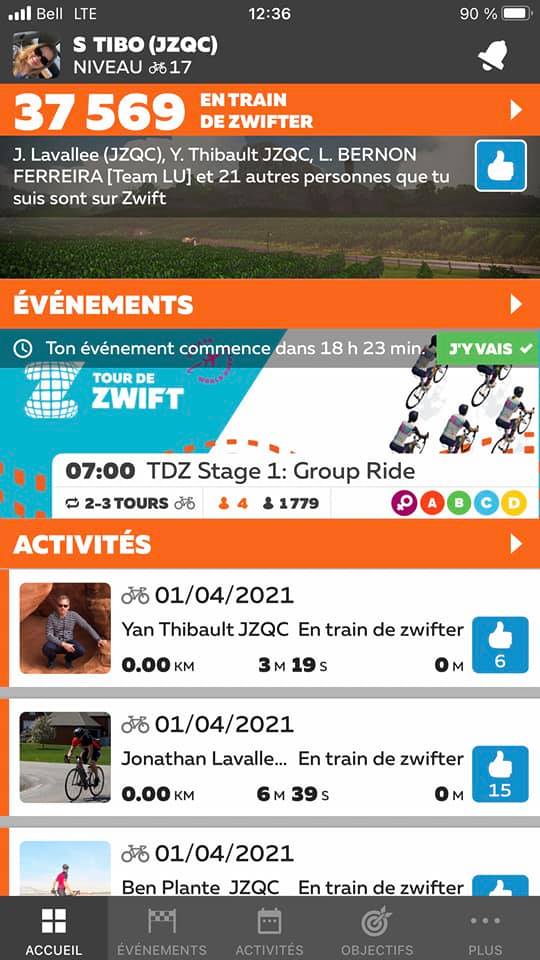
The kickoff stage 1 event (9am Pacific time) had over 15,000 riders signed up, and at 9:36 Pacific one astute Zwifter (Sandra Thibault) snapped a Companion app screenshot showing the highest number we’ve seen since April: 37,569!
This is also the first time we’ve hit a new Peak Zwift on a Monday, as far as we can recall.
Zwift hasn’t confirmed peak numbers yet for today, so we don’t know the precise number. It’s quite possible we hit an even higher point today, and our money says it will go even higher in the coming weeks.
What will 2021’s Peak Zwift number be, and when will it happen? Comment below with your guess!
Riding in a bunch on Zwift – as in real life – is faster than riding by yourself. This is because you’re getting a benefit from the draft. When you’re tucked into the slipstreams of riders ahead, you aren’t fighting as much air resistance and you can roll along at a higher speed for the same effort.
But how much of a difference does it make? Shane Miller decided to find out. He completed one lap of Watopia’s flat Tempus Fugit route with a group surrounding a Pace Partner. Then he rode another lap alone at the same average power, disconnecting from the Internet so that no other riders would appear on the course. Finally, he tried a lap on a Zwift time trial bike.
Zwift Cycling Speed: How Much Faster are Bunch Rides?
As expected, the lap with the group was the fastest, followed by the TT bike lap, and then the solo lap with a road bike. The bunch ride was 5.6 kph (about 3.5 mph) faster on the pan-flat route than a solo lap on the same road bike. And while the time trial bike helped, it still didn’t get close to the speed of the group.
To see how Shane did the test and a breakdown of the times and speeds, take a look at the video.
The lesson here? Close that gap! If you want to cover as much distance as possible as quickly as possible, find and stay with a group.
Since March I have become obsessed with the weekly WTRL Team Time Trial… so I asked Eric if I could share my obsession with you all, in weekly doses.
Each week I will give you a profile of the upcoming route, guidance on bike choice, and some target times if you want to aim for the Premiere League (top-10 in each coffee class get to be in a special race televised on YouTube).
If you can’t ride (or even if you can ride, but want more action) tune in to the live TV show on Zwift Community Live’s YouTube Channel at 6:15 (UK time)
One Lap of Casse-Pattes
Off to belles-France this week. The route is a single short lap of Casse-Pattes. At 23km with a 900M lead-in I believe it might be the shortest TTT we have done for a long time. This is one of those “flat except where it isn’t” courses. Casse-Pattes takes a clockwise loop around France, up and over the aqueduct then at the t-junction takes a left turn up and over the Petit-KOM before a downhill finish into town.
Despite the decent-sized KOM, for the most part this is a flat route. Eric and I chatted about this – and both of us agree in the Venge/Super 9 vs Tron battle, Tron probably wins… with luck he will get a chance to run some performance tests, in which case I will update this. In the meantime my decision will be Tron – because my hill game isn’t where it needs to be so I don’t want to get dropped by the team at the end of the ride.
That gives some insight into how you might want to think of this ride – do you want to accentuate your positives or combat your weaknesses? Are you strong on the flat or on the hills? Choose your bike and wheels accordingly.
Here are some recommendations on equipment at various levels:
Level 45 get those 858/Super 9 wheels and pair them with the S-Works Venge
I know I say it every week but it is doubly important this week. Get the Tron!
Route Recon Rides
This is quite a popular route for group rides and races so you shouldn’t have any trouble finding a recce. Check out the event listing on zwifthacks.com to see for yourself. Of course, you can always set up a Meetup using the Companion App to have a private ride around the course.
Race Recon
I break this ride into two parts… the flat before the Petit KOM, and the Petit KOM.
Before the KOM things are pretty much flat. You will build up great speed as you roll through the marina and flatlands. There are a few false flats up and down as you progress here, but essentially nothing of note except the view until 12.9km when you start the bump up and over the aqueduct. As always – by the time you get to the KOM marker for the aqueduct you are basically at the top. This is a 900 meter “climb” rising 21 meters progressively. Descend and then it’s flat until you hit the Petit KOM at 17.6km.
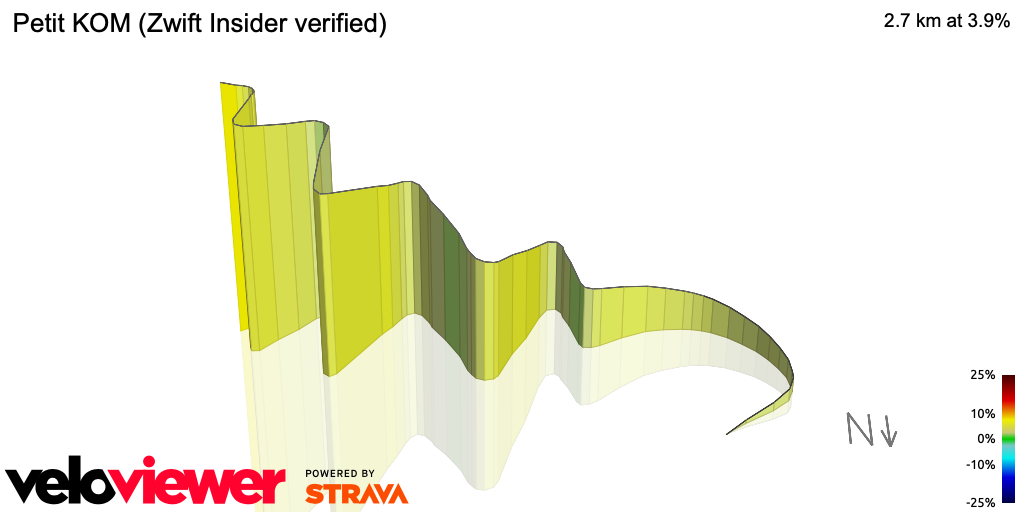
The Petit KOM is a lovely 2.7km climb at 4% in a series of switchbacks. Once you descend there is only a small sprint to the end.
Wrap up
The make or break here is the flat before the Petit KOM. How well can you get into formation and drive the team hard? Then once you get to the KOM it’s just about surviving at speed up the hill with your fastest 4.
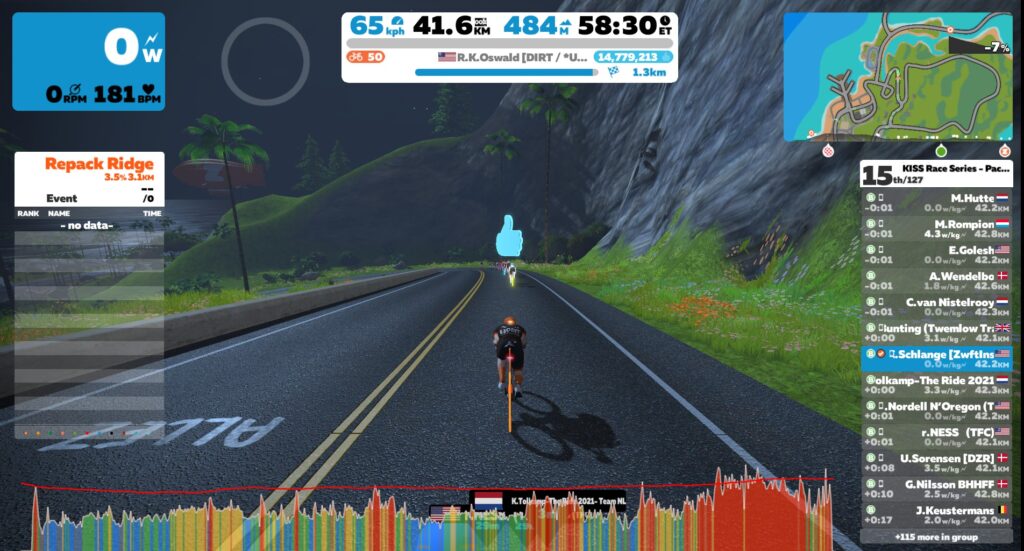
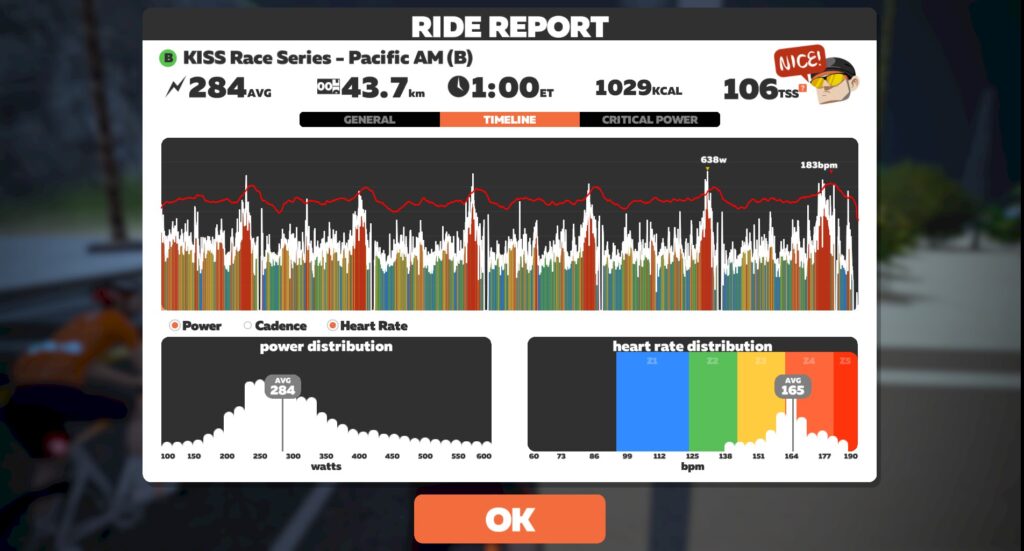
Fresh from a mid Festive 500 rest day, I was looking for a hard effort in the middle of a 50-60 kilometer day. And I found just the right event: KISS Race Series Pacific AM, on Watopia’s new Two Bridges Loop route.
At 43km (6 laps) the race was decently long, and I was excited about racing a new route that I knew would be a bit challenging.
The Warmup
The race was set to kick off at 6am, so I woke up at 5am to get ready. Prep began with two pieces of caffeine gum (I’m not a coffee guy) and some PR lotion on the legs, then it was time to kit up and warm up.
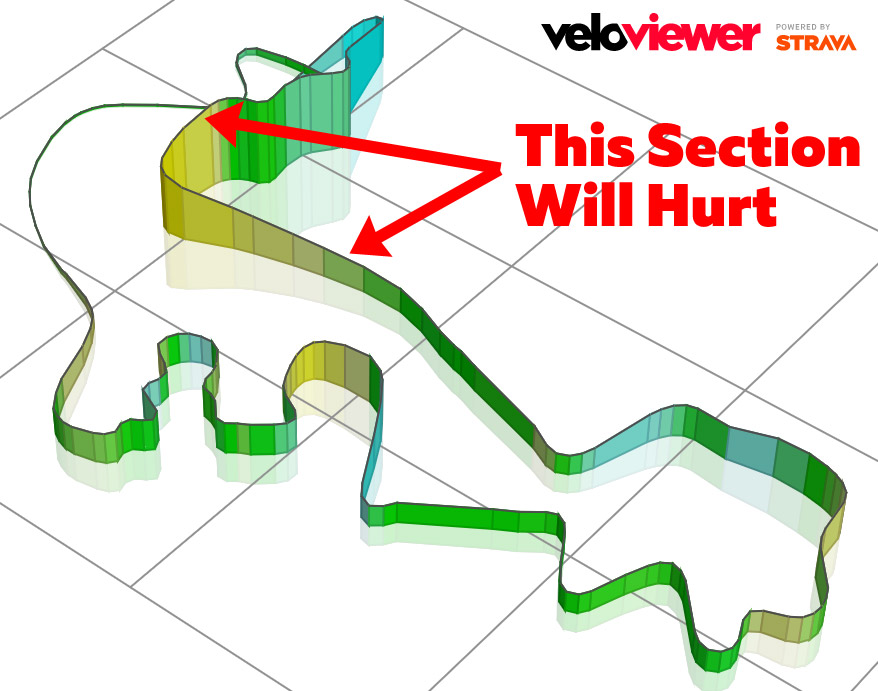
While warming up I checked out Zwift Insider’s page on the Two Bridges Loop, rehearsing the route in my head to figure out where the “pinch points” might be. While the Esses and Italian Villas had a few ramps and rollers to deal with, I figured they could be handled with attentive riding. The portion that worried me, though, was the start of the Hilly Reverse KOM, which would be an all-out effort until we turned onto the slight descent of the new bypass road.
Next, I pulled up the event on ZwiftPower to look at the competition. It was a strong list, with over 120 signed up in Zwift including a few A riders (what were they doing?) and several B’s ranked significantly higher than myself. I steeled myself for a hard effort.
After spinning the legs up and making a few hard efforts to get my heart rate up over 160, I was ready to head to the pens with 5 minutes to go. Let’s race!
The Start
The start wasn’t easy, but it was very doable. 329W for the first 3:15 got me through the Esses and onto the downramp to the bridge, where the pace eased a bit. We zipped over the waterfall rollers after the Italian Villas, and I moved toward the front of our group as we crossed the 360 bridge before the start of the reverse KOM climb, briefly finding myself in first position.
Starting our first climb
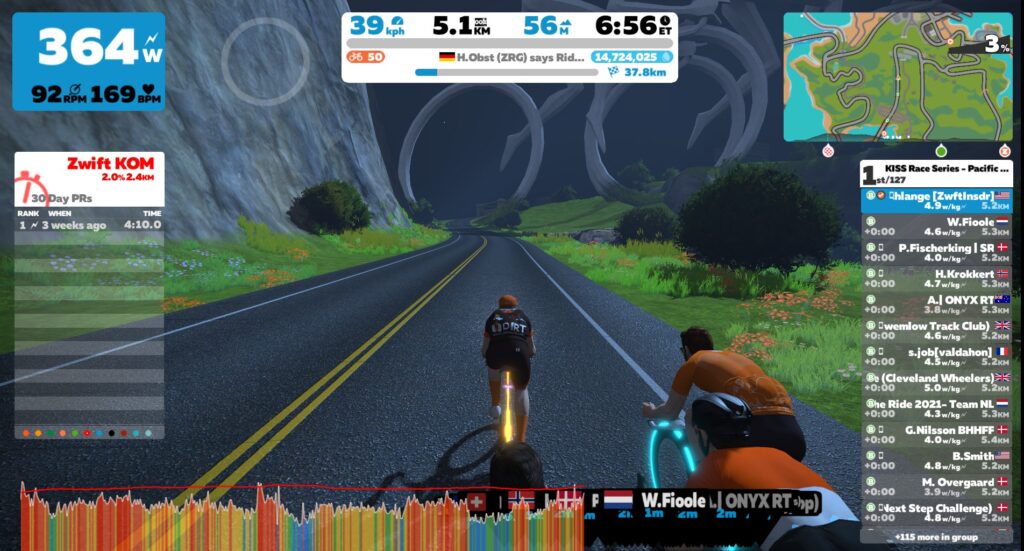
Clearly the riders were a bit tentative, having never raced this new route. The first effort up the climb was hard, but not all-out. I just tried to sit within a few wheels of the front, and 418W (5.1 w/kg) for 1 minute kept me near the front nicely. I kept the power up over the crest of the hill as we turned left onto the new bypass, then surfed the wheels until I could supertuck down the forward KOM for a few seconds.
Grabbing a quick supertuck
The Middle
As the race continued, it became clear that we had a few sandbaggers and zPower Rangers in the front group. First one zPowered “F. Roll” attacked off the front. A few laps later, “M Gozzer” (an A according to ZwiftPower) attacked. In both cases I messaged the group to call out the rider, mostly just so they knew someone was watching. I didn’t expect them to change their behavior – and they didn’t.
Luckily, their attacks didn’t massively lift the effort required to stay in the front group. They did impact the race somewhat, but that’s a hard thing to quantify. For my part, I concentrated on riding efficiently and making it over the key kicker climb each lap.
The tried and true “start climbs at the front of the group” strategy was very helpful here. Over the 360 bridge I would bump up the watts to move forward, so that even when a few riders passed me near the top, I was still mid-pack as we began the descent.
The Finish
Our starting group of 127 had been reduced to less than 20, and my legs were definitely feeling the past several days of longer Festive 500 efforts. Going into the key climb on the final lap, I expected the hardest attacks thus far. And my expectations were met.
First, the group accelerated as we crossed the 360 bridge, with everyone jostling for that forward position before the climb. Then my zPowered friend F. Roll powered off the front, but nobody chased, knowing he wouldn’t be in the final results. As we hit the official start of the climb I was perfectly positioned but already hurting as legit B’s started pouring on the power.
P. Fischerking put in a masterfully hard attack from the back of the group, and M. Harris followed. The group began to stretch out, but I was still mid-pack. As we crested the hill I was in 15th, near the tail end of a strung-out front pack.
This is such a dangerous place to be in a bike race, because a gap can easily open ahead, and you’ll have to jump across if you want to stay in contention.
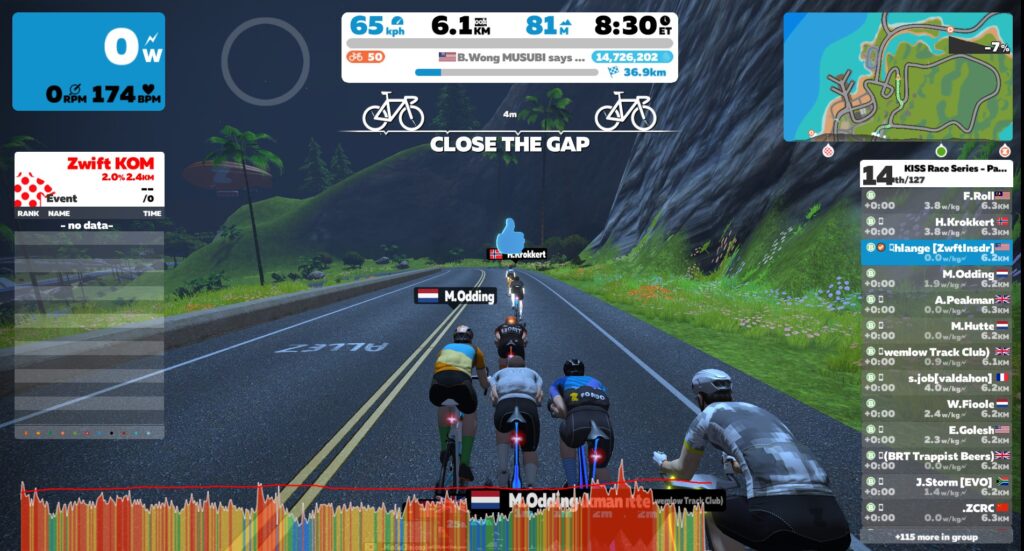
And that’s what happened. The rider I was drafting got gapped, so I accelerated past him to grab the wheel of the group just ahead. By the time I had made it to that next wheel, he too had been gapped, and I didn’t have the legs left to jump up to the group.
The race rides away from me
And that was it. I was just one wheel too far back to make the front selection. My legs were spent, and though the front group was only 2 seconds ahead, they were accelerating away. My goose was cooked. I sat up and spun my way to the finish, crossing in 18th place (12th on ZwiftPower).
Two Bridges Loop was a fun race route, as the constantly turning and rolling roads keep things interesting and the abbreviated Hilly Reverse KOM provided a key attack point on every lap. The route rewards riders who pay attention and modulate their power for maximum efficiency, and if you’re feeling spicy there are plenty of short climbs which make perfect launchpads for attacks.
This route compares most closely to NYC’s Park Perimeter Loop and Innsbruck’s Innsbruckring, in my opinion. Both of these routes are around 3 minutes longer per lap than Two Bridges Loop, but all three routes share a key climb around 1 minute in length. The Park Perimeter’s roads are more rolling like the Two Bridges Loops, while Innsbruckring’s roads are fairly flat.
Takeaways
I wasn’t expecting an amazing result in this race, given the fatigue I’d built up. Between the sandbaggers and strong B’s, I was happy to be able to hang in there until the final big effort.
Still, this race reminds me that 1-5 minute w/kg is my biggest weakness as a B racer. I need to continue training that interval, and racing routes like Two Bridges Loop is a great way to do it.
Start strong, finish stronger. That’s what Zwift races require. The first lap’s climb section required 1 minute at 418W (5.1 w/kg) for me to stay with the front group. But on that same section on the last lap I did 470W for 1 minute and got dropped! So having good 1-minute power isn’t enough – you also have to have the ability to repeat the effort several times over the length of the race.
On a related note: UCI Esports World Champ Jason Osborne can reportedly hold 480W for 20 minutes… and he weighs 10 kilos less than me. How’s that for a slice of humble pie?
Finally, like I’ve said in many other race writeups: Zwift really needs to get rid of the sandbagging and zPowered silliness. Overpowered riders change the fundamentals of the race, which is discouraging and unfair to the legit contenders. It’s usually not much of an issue in B races (this was the worst I’ve seen in a while) but it’s a massive problem for D and C events. Maybe a little ZwiftPower matchmaking would do the trick?
Your Thoughts
Have you raced Two Bridges Loop yet? What did you think? Share your comments below!
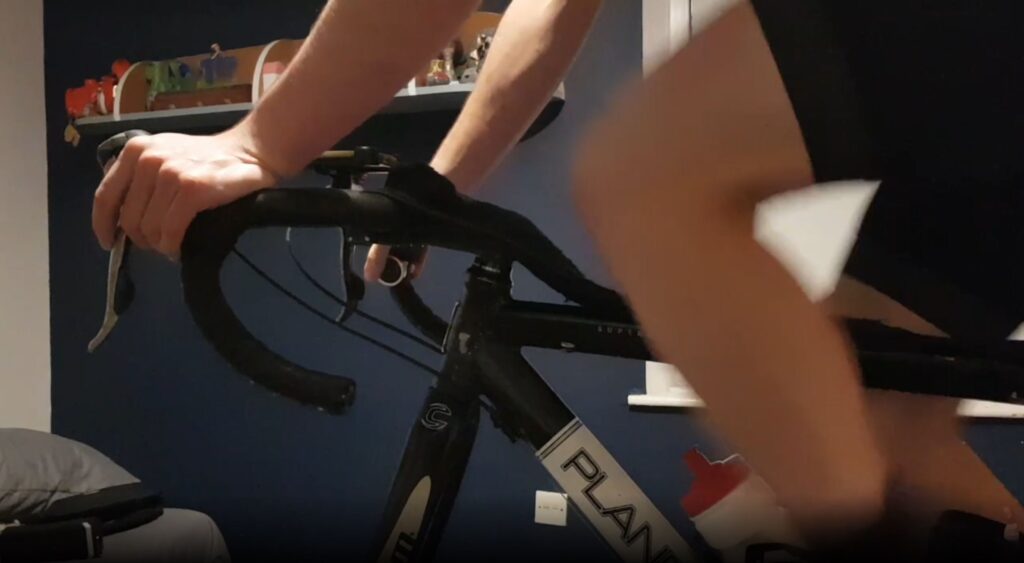
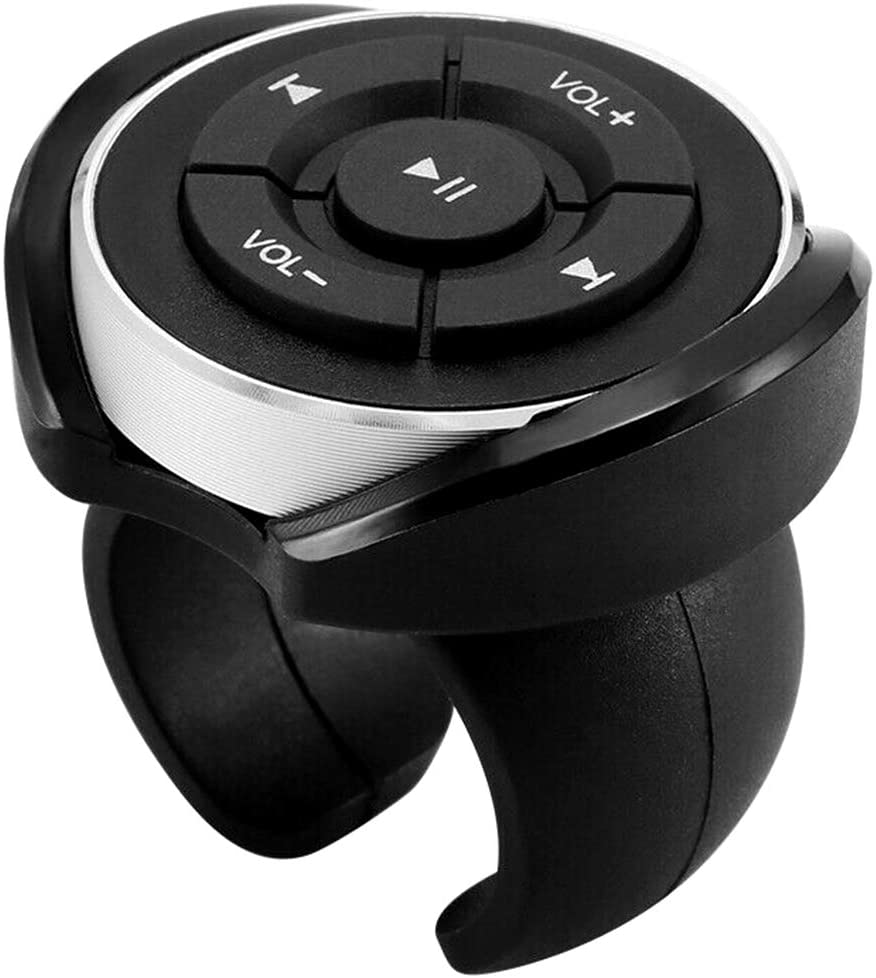
Having taken part in Zwift races regularly during lockdown, I found myself frustrated by the need to take my hands off the shifters every time I wanted to activate a powerup. I was also having issues with sweaty hands not being particularly effective at interacting with phone touchscreens, so started looking for a solution. After a few failed attempts with various Bluetooth devices, I came across this article.
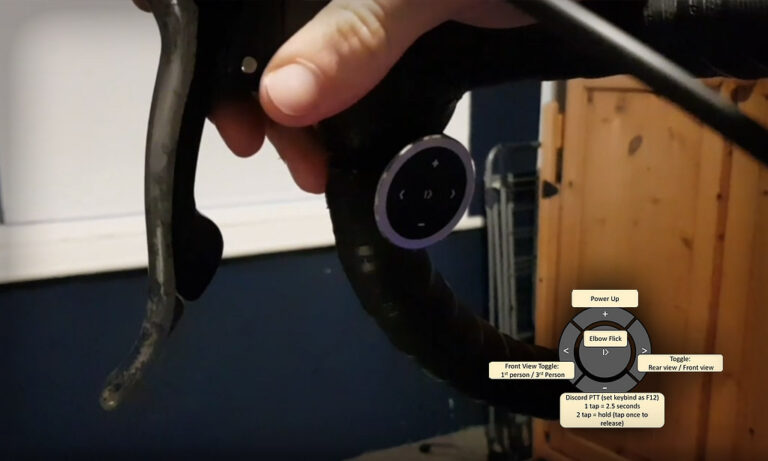
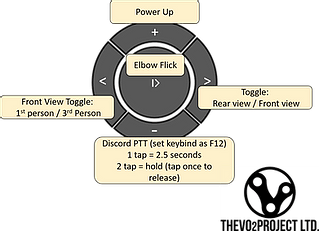
It seemed a good starting point, and after a couple of helpful emails began working on my own code and way of attaching it to the bars to put the controller within easy reach. Having found myself with a controller that had five buttons, rather than the initially planned one, I started thinking what else could be done.
The controller in action (below my right thumb)
I had been riding the WTRL Team Time Trial Series for several months at this point, and the Bluetooth controller offered a number of applications to improve our team’s performance by changing camera angles to help me and my team stay in the wheels, as well as communicate more effectively via elbow flicks and Discord‘s Push to Talk voice chat function. The videos below show you how to make and set up the controller.
Requirements
You are running Zwift and Discord on a Windows PC with Bluetooth capabilities
Any sort of headset and microphone connected to the PC
Once you have paired the button (you should only need to do this once), pressing the play pause button before loading the software each time will wake up the device and connect it to your PC. The controller is more reliable if you are paired before launching Zwift.
The software is set to automatically load Zwift and will automatically close itself when you quit Zwift.
The button works by mimicking pressing buttons on the keyboard. You can test if it is working properly by opening a word processor and pressing the controller button. It should start typing numbers and spaces (depending on which button you have pressed).
If it is not working, first check it is connected to your PC and that Zwift is the active window.
Occasionally, restarting your PC and removing and repairing your controller may be required if problems persist.
About This Project
Like many cyclists, I’ve found a lot more of my training and racing has been indoors this year. I’ve really enjoyed Zwift and have benefited a lot from the collaborative work of members of the indoor training community. It felt only fair to make a contribution myself, and maybe at the same time raise some money for charity.
Chess on wheels. That’s how I would describe a Gran Fondo.
The length and complexity of the race/event (depending on how you are treating it) means that every move needs to be planned and calculated, otherwise you could pay for it later. Every action has a consequence and it’s your job to manage these consequences so there are more positives than negatives.
It is this continuous balancing act over the course of several hours that makes riding a Gran Fondo so different than other rides on Zwift.
The longer routes, large number of riders, and mountaintop finishes mean this is the closest many of us ever get to racing a stage similar in style and stature to that of the Tour de France or other Grand Tours.
Having raced the Gran Fondo – Bambino in November, I decided to try the middle distance event, called the Medio, measured at 72.6km in length. Unlike last time, I wouldn’t be racing this event alone – this time I would be racing alongside Michael, the experienced Dutch rider who I met in my previous Fondo. It seemed natural to invite him along for this ride.
Unlike the previous Gran Fondo, all of the different routes had staggered start times. This small change made a huge difference as instantly you were able to identify who you were racing. The start was not as manic as previous races and it felt more measured. There could be two reasons for this. Firstly, it could be that due to the length of the race, there was not a big panic for road position given we had 72km to race. Secondly, it could be that I have become accustomed to the starts on Zwift and my experience with other races such as the TTR Mini race has changed my perception of what constitutes a “fast start.”
The Game Begins
Following a “steady start”, we hit our first challenge, the Zwift KOM. With the experience of my previous Fondo fresh in my mind, I was conscious of not getting split from the front group so I made sure I was at the front. My early bit of aggressive riding ensured that I secured a new PB of 3 mins 42 seconds, up the Zwift KOM. This climb had split the front group into two and I was desperately searching for Michael. It would have been disastrous if he hadn’t made it. There were frantic messages between us via the Companion App as we tried to establish where each other was r, fortunately, his avatar appeared alongside mine. “Game-on!”
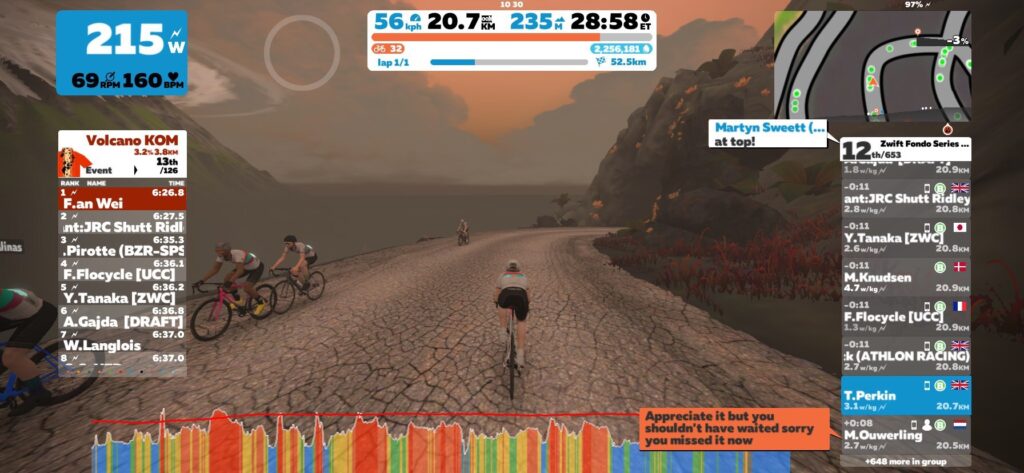
Having made light work of the Zwift KOM, we quickly approached our second challenge, the Volcano Climb. I feared this climb, knowing full well that this favoured riders with a very strong 5 minute power output. I feared that they could be up and over the climb before most of us had even reached the summit. If enough riders escaped, then the race would be over.
The First Move
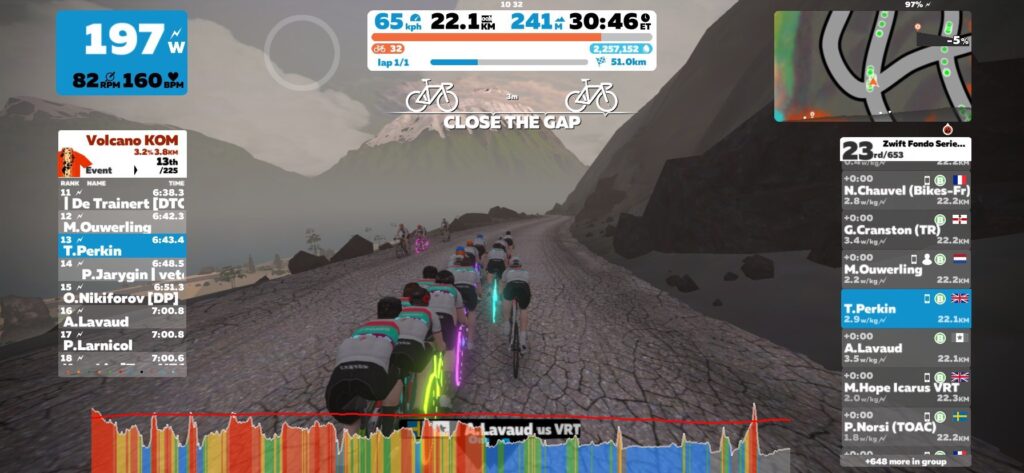
My prediction was correct, the climb up the Volcano was fast – so fast I obtained a new PB, 6 minutes and 43 seconds! Again, like the previous climb, I was ready for the increase in pace and I went straight to the wheels of the early escapees. Despite this, they simply had too much power for me and I struggled to stay with them, all the while marveling at how their explosive acceleration left us trailing behind.
Prior to the start of the climb, Michael mentioned that “he didn’t have good legs” and instructed me not to wait for him. (The reason Michael wasn’t feeling special was later revealed and he’d actually had a big crash on the road the previous evening and landed heavily on his hip, making efforts like the Volcano climb more challenging.) I got detached from the lead riders as they crested the climb and Michael chastised me for waiting for him, to which I replied “I didn’t, they were just too strong, I did a PB up the climb!”
Over the top of the climb and fearing that I was missing the main move of the race I went into “time trial mode” and pedaled frantically downhill, attempting to generate as much power as I could and close the gap to the top 9 riders. It was impossible. I was gaining no ground and I felt deflated.
Then within seconds, the race changed again as help arrived in the form of a mini bunch of riders, led by Michael! He gave me a quick message warming me about his approaching group, so I sped-up and got successfully swallowed by the bunch.
Now sat comfortably in the group, the leading few riders realised that there wasn’t enough of them to escape, so they relented and their breakaway was pulled in. I was back in the race! But their explosive acceleration and my failed chase had done damage. I was exhausted and the temporary ceasefire that ensued was much needed.
Regrouping on the Volcano descent
Break in Play
It was during this lull that I was desperately trying to recover by drinking a combination of water and Energy drinks, interspersed with sweets to give me a much-needed sugar boost. It was clear that everyone was doing the same because riders in the group kept “yo-yoing” from the group as people’s concentration waned.
Round Two
This break in the race was short-lived. As we approached the Reverse Epic KOM, a group of 4 riders put in a massive attack of 6-7 watts per kilo just before the start of the climb and before the right turn to the Jungle. I still hadn’t recovered from the previous big effort and could not get close to them. They were up the road before the majority of other riders could react. It was a well-timed attack and clearly pre-planned. By the time the second group had formed, the lead riders had built a 10-second advantage over our group. This was the definitive move of the race and I had missed it.
As my chase group turned right at the T-junction and headed towards the Jungle, the lead had grown to 20 seconds. The front group were clearly organised and working well together. Fortunately, Michael had made my group and noted he was the last rider that did. Our group spanned positions 14-26 out of 652.
No one likes this part of the game
Three things of note happened in the Jungle:
The front group extended their lead to 1 minute 20 seconds
It was universally agreed in our group that we all hated the Jungle
Bizarrely, one rider from the front group thought it would be a good idea to stop and change their bike
When I saw the message about changing bikes I thought it was a joke. But moments later, our group flew by a stationary rider! Indeed, one rider decided it would be preferable to change bikes. By their own admission, that was a mistake. I learnt “never change your bike in the Jungle mid race!” (The rider decided to change their bike due to the surface being dirt. This is also why our group universally agreed we did not like the Jungle. Nothing wrong with the route, more an issue with the slow road surface.)
Out of the Jungle and back on terra firma our group started closing the gap to the front. We were approaching the end game, the Epic KOM. I tried to sit in the group whilst I refueled but again found myself surging as I was distracted. It was during this moment that I nearly missed the fact the several riders from the front group had become detached and the gap was now down to 1 minute. I figured, if we could get the gap down smaller, I might be able to make some gains on the climb.
I pushed to the front of the group and started to try and drive the pace, messaging all that would listen that we needed to chase. Michael and I exchanged messages and I explained that I was going to attack at the very start of the climb. He warned against this and advised to attack at the Castle halfway up, but I was undeterred. I was going from the start of the climb. Better to attack and fail, then to be cautious and wonder what might have been. This was my big move.
The Final Move
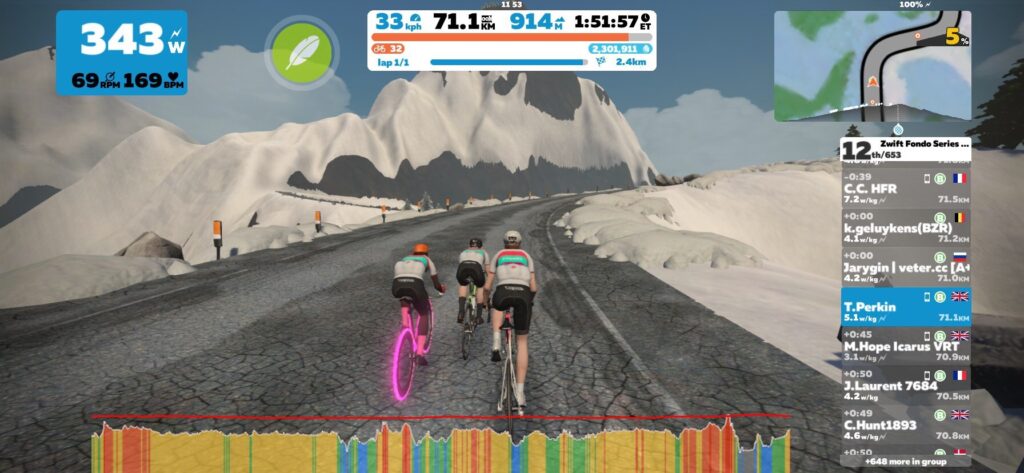
The blue line indicating the start of the climb approached, and I went, taking 3 riders with me. I didn’t look at the gaps behind, I just focussed on getting into my rhythm. To me, this was now just another ZWC Hill Climb Battle and I led our group up the climb, through the village, on through the Castle and up to where the snow started to line the side of the route.
It was just before the underpass that the tempo was too much for one rider, who dropped back. I was still leading this select few riders, with the main group losing time as we pushed on. Just after the underpass and before the road descended over the bridge, one of the riders attacked! I had to increase my effort and struggled to catch, but I used the momentum of the descent to gain speed and soon I was back on their wheel. The gap to the riders ahead had been halved and now stood at 27 seconds, but I was running out of road and lnew I was now racing for position, with the last kilometre to go.
The last kilometre before the Epic KOM banner is always longer than you think. As the road descended, I pushed the pace and gave it everything. I now sat 10th on the road. The finish line came into sight. I used the “Feather” powerup that I had saved all race exactly for this moment, and started sprinting.
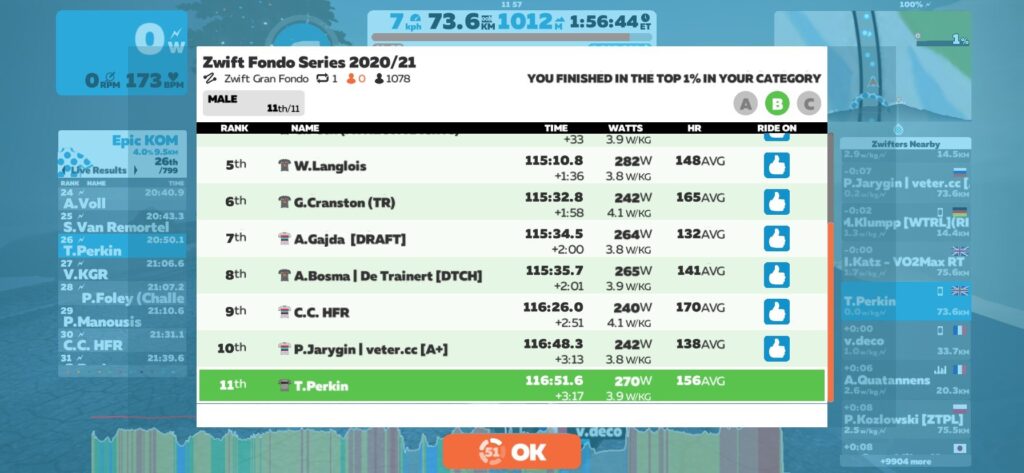
But I wasn’t the only one with this idea. The rider who attacked earlier pulled alongside and we were sprinting it out for 10th position. My mammoth effort earlier in the race had left me with nothing for the sprint finish and I rolled in 11th on the road, 10th on Zwift Power in a time of 1:56:51.
I climbed the Epic KOM in 20 minutes, 50 seconds. Michael finished a few minutes behind which was impressive, given his accident.
The winning time was 1:53:35 by Yuki Tanaka, who rides for Team ZWC and had a blistering time of 18:40 up the Epic KOM. That in itself deserved the victory.
Personally speaking, it was a fine result and one where I know where I got outmanoeuvred. But I’m already looking forward to this weekend’s zFondo challenge.
What About You?
Do you treat fondos like a race, or a personal challenge? Got any tips to share? Post below!
While making my Zwifting goals for 2021 I realized some of them come from not doing my 2020 goals well. Mainly, my Couch to Route Hero challenge could have been so much better!
We’re all in this Zwift community together so I hope you find this list of mistakes will keep you from making the same ones. Here’s what I didn’t get right last year–
#1: Core workouts
I said it often, “I need to do more core strengthening exercises.” Even doing ONE would have been more than what I was doing. Strengthening my core would have meant better form while Zwifting and less of the pains that come with poor form and/or a weak core. This one is key! I know that now.
#2: Rolling Out My IT Band
I am now suffering from bursitis and tendonitis of the IT Band. Had I rolled it out regularly I don’t believe I would have these problems. (Keep in mind, I’m not a doctor or coach. Do what’s best for your body, get advice from an expert for your own situation.)
#3: Stretching
I did some stretching, but usually only after really long rides. I should have stretched much more often, and held those stretches for much longer.
#4: Extending Grace to Myself
Toward the end of my Route Challenge (when 11 weeks turned into 13!) I found some weeks took 10-15 hours of riding! I should have given myself more grace to extend the whole challenge out even longer. Fewer rides each week toward the end would have meant it took longer, but it would have been less difficult on my body.
My chiropractor knows what he’s talking about: “if you want to stay out of my office, don’t add more than 10% each week!” Just because I made a plan doesn’t mean I have to finish it out exactly how I started.