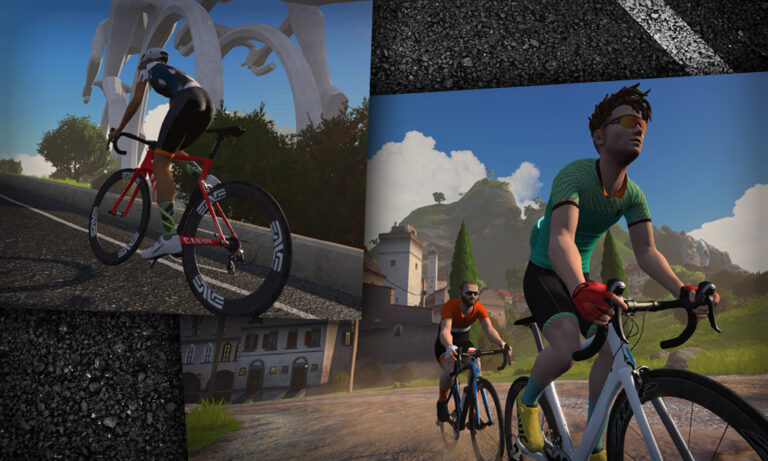
It’s unfortunate that Zwift racing requires a height and weight control procedure. But given the crazy stories we have experienced over the past months I am not sure there is another alternative.
A few weeks ago I was saying there is nothing more creative than a Zwifter finding excuses for having done poorly in a race. But I was wrong and forgot that the most creative plans have always been created to cheat: from robbing banks to performance-enhancing drugs to, yes, lying about your weight or height on Zwift.
(If you have the patience and enough time to waste to read until the end, you will understand why weight is no small topic for me.)
Since starting the Zwift Racing League, I’ve planned my training and food intake like a boxing champion, just to be sure I will “make weight”.
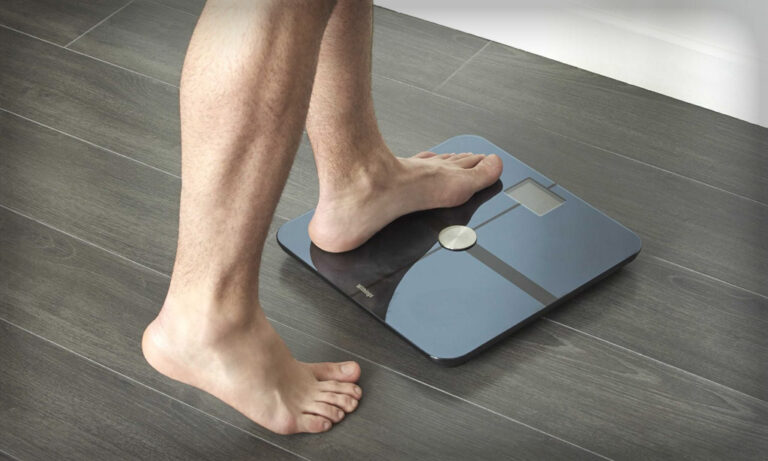
I light a candle each single Friday morning, praying I will not have to go through the infamous video in which you have to tape yourself calibrating the scale, showing the date, stepping up the scale, and measuring your height.
All those riders look sooooooo miserable going through the process.
First of all because I don’t know a single person in this world who would look sexy in bib shorts… George Clooney or Brad Pitt would look as pathetic as Mr. Bean or Sheldon Cooper in bibs.
If bib shorts were the norm, I would have serious doubts about the survival of the human race, as it would dramatically affect our collective libido and therefore the worldwide birth rate. Thankfully, my wife committed to spending the rest of her life with me before she ever saw me wearing them.
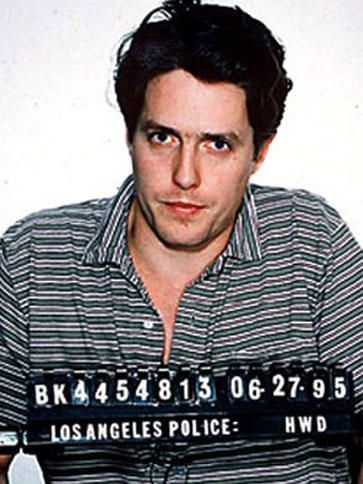
Second, because we all look vulnerable in those videos. We are suspects. I can’t prevent myself from seeing similarities between those videos and the mugshots of guys arrested by the police. Again, no one looks nice and sexy in those. If you don’t believe me ask Hugh Grant… (call it jealousy if you want, I am into destroying handsome actors today.)
Even if some of the “lucky ones” are trying to make it fun, if you have to go through the weigh-in process you should plan to lose at least part of your dignity.
In my case it would make no difference, as I have no dignity left since the day I publicly acknowledged I like cauliflower. Plain, steam-cooked cauliflower. The following day 127 people unfriended me on Facebook and my IRL friends started whispering to each other when I entered the room. And since then, my wife has never looked at me with the same blend of love and admiration. Even my dog no longer comes to the door to welcome me with wagging tail.
I have to get something of my chest.
So if my cauliflower addiction was not too much for you to take and, be it by compassion or temerity, you are still with me now, I have a more personal story to share.
My ZwiftPower profile shows 78kg (172 pounds) today. It has been pretty stable for the last six months, varying one kilo up or down. However, that has not always been the case.
In May 2019, my weight was 143kg (315 pounds) and there was nothing I hated more in the world than my scale. Over the years I have been fighting against it, alternating miracle diet periods where I would lose 20kg with rebounds in which I would gain 30kg. And I never stopped exercising. I was even proud of being the super-obese guy still running half-marathons!
Call it denial, but because of those periods where I was losing weight and because I never stopped exercising, I was fooling myself believing I was in control. When confronted with my problem I was passive-aggressive, rejecting any advice or support, even from my close relatives, the people I loved and trusted the most.
One event dramatically changed my perspective: my wife videotaped me in the middle of the night having an episode of sleep apnea where I was not breathing. She was still shaking when she showed me the video and explained how, for a moment, she thought I was dead.
To make a long story short, the following day we arranged all the tests which confirmed I had a chronic moderate to severe obstructive sleep apnea. I will spare you the details of all the possible complications of sleep apnea. What is important is that three months later, May 10th 2019, l had gastric bypass surgery.
Many say they were born again the day of their gastric bypass surgery. I am more of the belief I was given the opportunity to push the reset button of my body and make the choice to embrace a healthier and happier life.
And you can bet that I am going to make the most out of it. Even if it involves recording myself in bib shorts, stepping onto a scale and, posting it on Facebook.
My passion for cycling started in a hotel bar when I was 49 years old. At that time, I tipped the scales at 120kg and never exercised. Three years later I’ve lost the weight (down to “almost” 75kg) and I’m on Zwift most days! I climbed real-world Ventoux twice in a day, and I everested Alpe Du Zwift.
I love the WTRL TTT, and each week I publish a recce filled with a course profile, bike recommendations and even some target times. You can find me on YouTube here.
This is The Big One: TTT #100. I have been riding for half of them – my first was TTT #51 on Sand and Sequoias last April with CICC. It almost killed me!
Greater London Flat recap
Greater London Flat is a regular fixture on the calendar… so regular that when I created the target times for this week I missed the most recent. I have updated that below – remember my prediction time tries to hit 11th place, since the top 11 teams in each class receive a Premier League invitation:
Category
Feb 11th #95
My prediction
WTRL #99
My position
Vienna
41:36
41:30
41:37
10th
Doppio
36:50
36:30
37:00
7th
Espresso
37:05
37:30
37:24
14th
Frappe
38:29
38:45
38:42
13th
Latte
41:03
41:25
41:02
17th
Mocha
45:57
46:45
45:44
21st
I put together another highlight reel of my team – the R&K Vixens… I hope this captures a flavor of what the TTT means for all of us… hilarious hard-work!
Of course, the Vixens were just one of over 1000 teams out there. As usual, I have a couple of other ride stories – one written by a German, one by an Englader. I’m always looking for more ride anecdotes and stories – reach out in the comments below, or via Facebook Messenger.
France-based CICC (who still don’t have a website… come on guys it’s 2021 😃) now have 4 teams, and even had a lady-rider last night! Jan, “the German”, rode in CICCs top-flight vAmos team.
Déjà-vu: Big news today for CICC: The first week with 4 teams in race (vAmos, Blast, Crew, Dyno) and the very first female CICC Zwifter participating (Sherpa’s note… no it isn’t… there was a lady rider a while back).
It’s the course where CICC vAmos delivered their masterpiece in early February: Their first top 100 in the TTT general classement. No need for extra motivation: All the CICC teams started in the same pen setting up perfectly for intra-team rivalry. 6 vAmos riders on the start line, 4 Brits, one Irish, and one German as only one today riding in and representing the French town (Paris Saint-Germain) that gives the club its home.
A good start, quick formation with our British powerhorses (Sherpa’s note: they were trying to escape Europe… Brexit all over again) taking the lead. A bit of chat over voice reveals that vAmos is not yet delivering their 110%. But this changes a few kilometers further. Kudos to Nicky and Alex taking most of the pulls. At the end of the first lap, a risk to split but quickly corrected thanks to Jason and Nik. At the Mall sprint, we see Blast ahead and just after the banner in our rear-view mirrors. We also pass CICC teams Crew and Dyno, keen to improve our February result. And what intense last kilometers. Heart rates peaking with the final sprint and 6 riders pass the finish line almost in parallel – excellent, consistent teamwork! Another great race is over, all eyes on the results: 6 seconds slower than in February, a close one, but we still made it: The second top 100 in GC for CICC vAmos!
Our second team story comes from London-based Giant-Camden… on home turf! This report comes from Kat Milward, riding with the well-tailored Holy Roller Mocha team.
I donned the Giant Camden Holy Roller’s iconic Alienware jersey tonight for the first time in months. It’s been a while since the Holys have Rolled together and I’d forgotten how much I’d missed them. An hour before the start we were down from 6 to 4. No pressure on the tech then! We settled on a loose plan of rotation: Binni, me, then Kirsty, with a w/kg range that would be manageable for three of us. The second part of our plan was to support Daniela to stay in the group, practicing her draft technique. As a new rider and a new Zwifter, this was her first TTT.
How did we get on with our plan you ask? Well… no tales of tech woes, no heroic sacrifices, just good workmanlike Discord comms. This was one of our best displays of teamwork for a while. We stuck together, everyone took their turns and all four crossed the line within 0.3 seconds of each other. And newcomer Dani? She was a star! Let’s hope the experience was positive enough that she’ll be back next week. Team Giant Camden’s best-dressed team is back!
6,391 TTT riders means 6,391 stories… these were just a few!
Thursday 24th September – Watopia Figure 8
If you can’t ride, or even if you can ride, but want more action, don’t forget to tune in to the live TV show on Zwift Community Live’s YouTube Channel at 6:15 (UK time). I am working through the glitches on my nascent livestreaming attempt so if you want to watch my TTT you can do that on YouTube here starting at 6:15 UK time also.
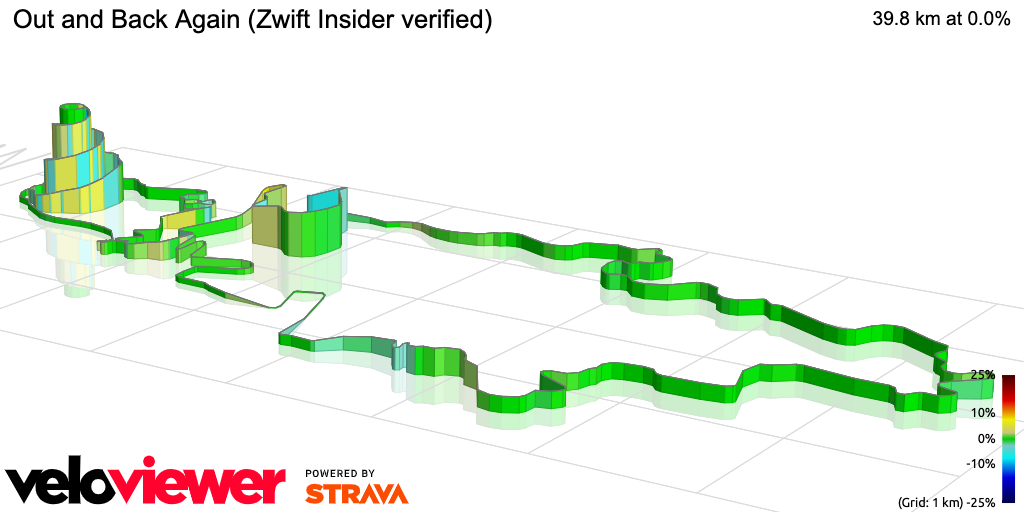
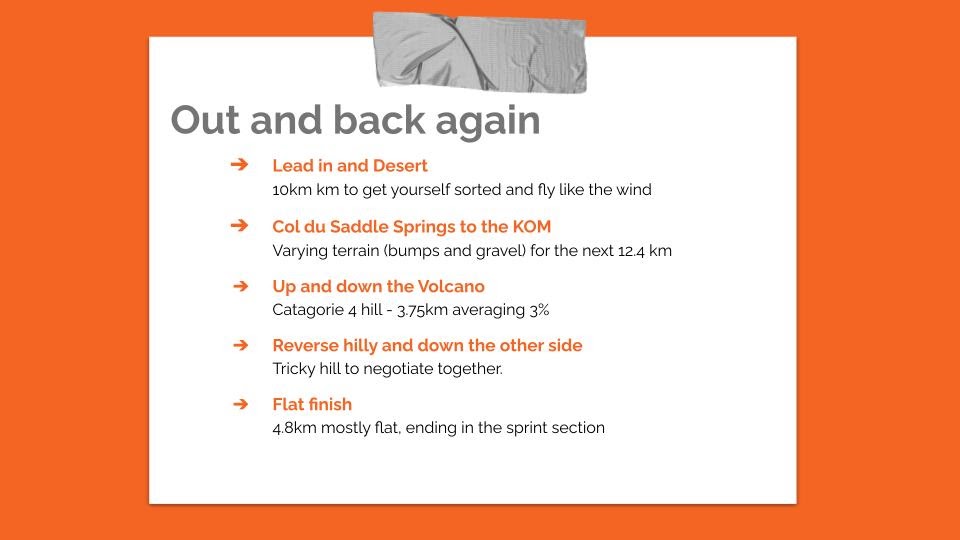
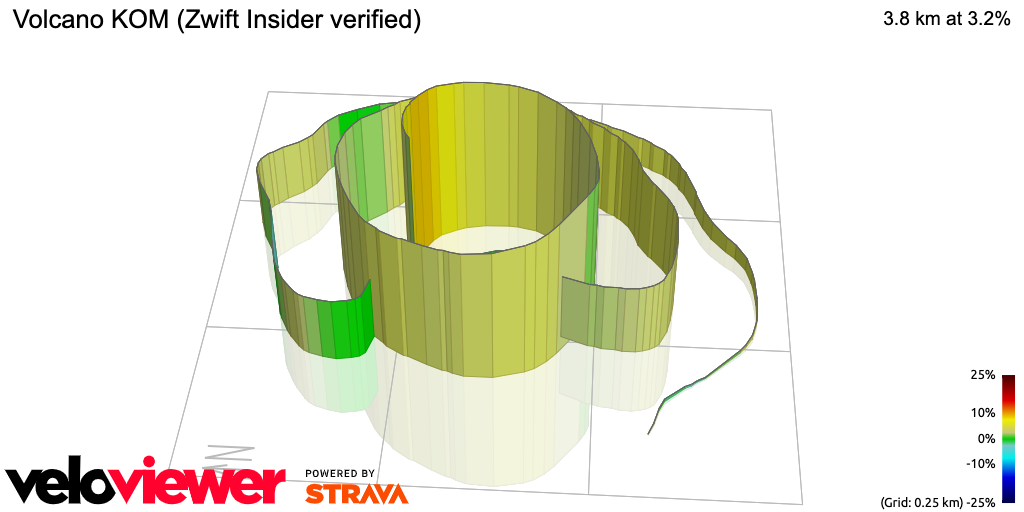
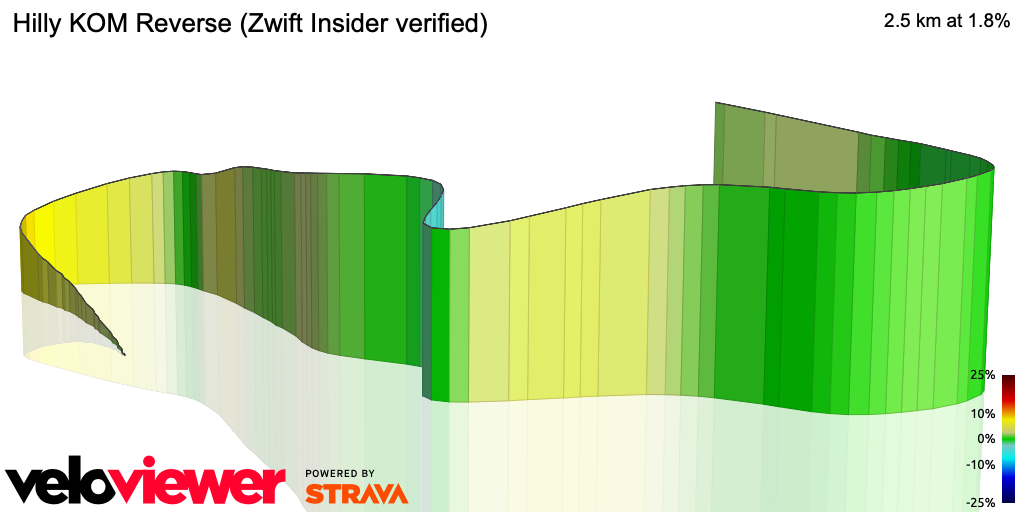
Back to Watopia next week for a single lap of Out and Back Again (not There and Back Again… a book by Bilbo Baggins). This is a harder route than in the last few weeks, so prepare yourself for a good hour’s effort. Along the way we will tackle both the Volcano KOM and the Reverse Hilly and a whole bunch of flat.
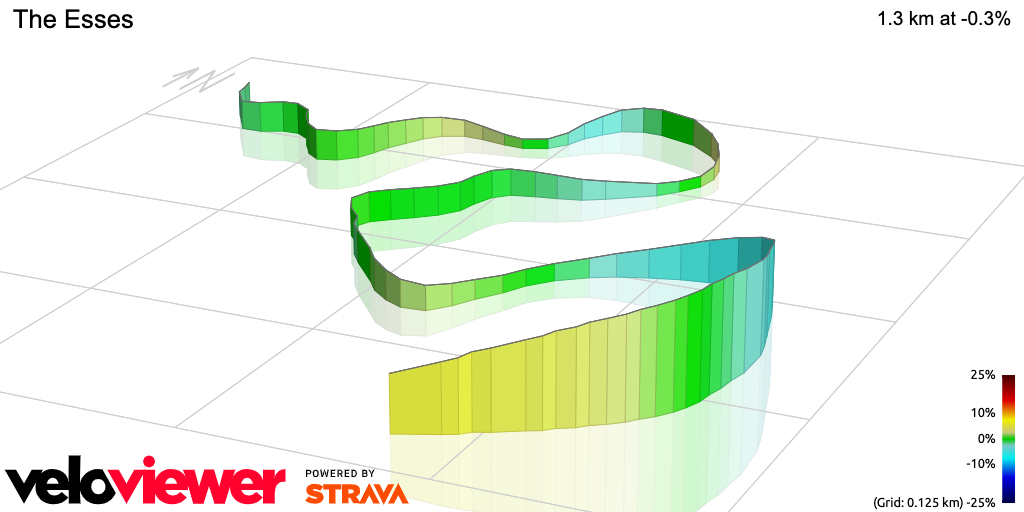
Starting in the desert we head to Saddle Springs, up the Col then down into the undersea tunnels. Through the Jarvis Tree, out of the tunnels, past the fishing village and up the gentle hill. From here you head down through the Italian VIllas, veering right to the Esses (which you hit at 13.4 km) and across the sky-bridge to the Volcano. At the top of the Volcano you have ridden 26.2 km.
Back down the Volcano, back across to the mainland using the causeway, up the gravel path to the Italian Villas, swing right and continue on to the Hilly KOM Reverse – the same hill we did a couple of weeks ago on Figure 8. Down the Hilly KOM (don’t forget to supertuck) and then its flat-out for 4.8km to the end.
In total this is 42.4km with 303m of hills.
What to ride?
This route is an interesting one. Miles and miles of flat, with two decent hills. My head says Tron, my heart says Venge/Super9… so I asked Eric because he actually has what it takes to get the answer right! He recommended the Venge/Super9, since it matches the Tron on the two climbs, and is just a bit faster on flats and descents.
As always, the Zwift Insider reports on frames and wheels are superlative for research, so if you want to find the perfect bike and wheel combo for you, check them out.
Every week i give the same message about the Tron, which can be summarized as “get it”. A couple of rides for Tron Hunters out there: First is Zwift Insider’s own PRL Full ride on Saturday – there are thousands (2650 as of right now) already signed up for this monster ride. Second is the Team Giant Camden Tron Hunter series on Sunday. This week it’s on Royal Pump Room 8 in Yorkshire – sign up here.
Route recon
This is a long ride 40km with hills as well. If you want to ride a recce there are a few rides to choose from this week – check out the event listing on zwifthacks.com. Of course you can always create a Meetup like I did (although “Johnny No Mates” here had to ride it solo)
Check out the video recce… my hour of pain cut down to a (hopefully) entertaining few minutes:
What to look out for on the ride
The ride starts with a nice flat intro across the desert. Use those first 10 kilometers to get sorted before heading up Col Du Saddle Springs.
Col du Saddle Springs to Volcano
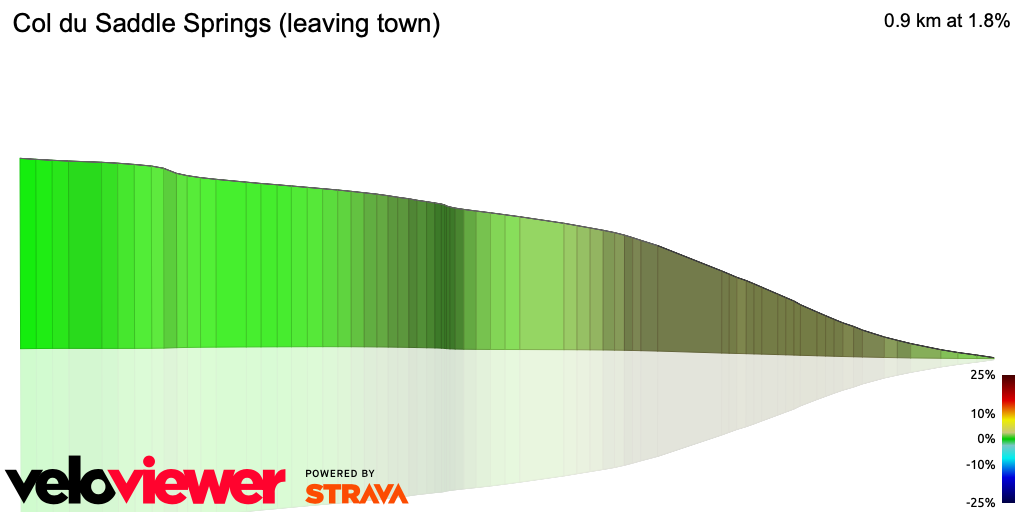
You exit the township of Saddle Springs at 10km. The Col is a small rise that comes right after the futuristic building you pass on your left (it’s a copy of the LAX Control Tower). After the long flat this is a perfect opportunity for your lighter, stronger climbers to jump ahead and create a split! Rein in those riders and keep everyone together. This little hill averages just 2% for 900m before you head back down and into the undersea tunnels.
Exit the tunnels and head past the fishing village on mixed surfaces, then up the winding false-flat hill and down to the Italian Villas. Through the sprint and over the Esses.
The Esses undulate four times times over 2km so make sure you hold together. The first hill of the Esses in this direction is the worst.
The Volcano KOM
The Volcano climb starts at 22.4km but the ride so far hasn’t been too taxing if you have paced yourself. In many ways, how your team handles this segment will define your result… it’s that important.
This is far from a steady, “whoever has the highest w/kg wins” effort. Rather, it’s a low-grade climb which can be ridden strategically for maximum results. On average the climb is 3.2%, but it is far from a steady climb, with ramps up to 6%, some flats and mini descents.
For a TTT team there is one key piece of information… the hill is draftable all the way up except for a short steep section towards the end. I break it into four parts:
1.3km to the flat: A rollercoaster of ramps and short descents.
500m flat: the longest flat section of the climb, going through the heart of the mountain. Regroup here so you can tackle the final section together.
1.5km variable climb: Draftable climb. Undulates but not as much as the first section.
FInal effort: Kicks up to 10% in places. Heavier riders dig in… short sections here will have no draft.
For the most part this isn’t a steep one, but it’s variable throughout – so staying together and getting group-draft benefit will take good situational awareness, particularly on the part of lighter riders.
The descent is an opportunity for heavier riders to recover a little for the second half of the ride, and then you cross the land-bridge, head up the gravel hill to the Italian Villas then continue up to the Hilly KOM Reverse.
Reverse Hilly
By the numbers the reverse KOM barely exists… it’s 1.8% for 2.5km… a false-flat, right? Well the truth is we have four ramps separated by easier segments and even some downhill rendering those numbers meaningless. And the first of those bumps up above 10%!
When we did this 2 weeks ago your legs were pretty fresh, but this time your team will have the Volcano KOM in them. Take this steady and make sure you regroup after the first bump. And DSs, watch carefully for the riders that are spent.
The first time I did this route as a TTT I got dropped by the stronger lads in CICC B in exactly this spot. Heartlessly they carried on without me.
If you come over the top together you’re in luck – gather momentum on the descent and there is even an opportunity to supertuck for a few seconds – just look out for the flatter section around the bend where your supertuck will break. Stay together here and power through to the desert.
Homeward Bound
The rest is easy enough. Whoever you have (at least 4) surviving together at the bottom of Hilly KOM become your finishing team. It’s all flat/false flat to the finish line.
Targets
Last August was generally slower than last April. I am going to put that down to outdoor summer riding in the Northern Hemisphere and bump up my predictions to a little faster than #55.
Category
#55 April
#69 August
My prediction
Vienna
1:05:39
1:07:17
1:05:00
Doppio
56:39
58:06 (8-teams)
56:20
Espresso
57:17
58:21
57:00
Frappe
59:48
1:00:21
59:00
Latte
1:05:31
1:05:02
1:05:00
Mocha
1:15:53
1:15:54
1:15:00
Wrapup
I have TTT’d it twice. Once getting dropped on Reverse Hilly as mentioned above, and once where we only had 4 members. Both times it was a hard route.
This route is a good test of a DS, or of team decision-making. The mix of flat with challenging hills is hard enough, but the magic will happen if you can get some of the larger riders over Hilly for the long flat home.
Official Zwift fondo events are always a blast, with thousands of riders taking part. Like an outdoor fondo, they feature challenging (read: hilly) routes with multiple length options. Riders can race the event, or just push to do their best and finish a challenging effort.
The fifth and final fondo of Zwift’s 5-month northern hemisphere 20/21 series has just been posted for next weekend (March 20-21). Like last month, Zwift has included two welcome changes:
An extra-tough “bonus route” option has been added – this month it’s the Mega Pretzel, like last month.
Schedule has been expanded to 6 different event times on Saturday plus another 6 on Sunday
March’s Fondo events have four categories (A, B, C, and E) which are open to all riders. These categories don’t refer to rider strength or speed – they refer to route length.
March routes (click for details):
E: Mega Pretzel - 110.7 km (68.8 miles), 1642m (5387')
A: Gran Fondo - 97.2km (60.4 miles), 1148m (3766′)
B: Medio Fondo - 72.6km (45.1 miles), 981m (3219′)
C: Bambino Fondo - 52.1km (32.4 miles), 553m (1814′)
UPDATE: ZHQ has informed us that the Mega Pretzel will be used for this Fondo, not the Uber. So we’ve updated the list above.
Kit Unlock
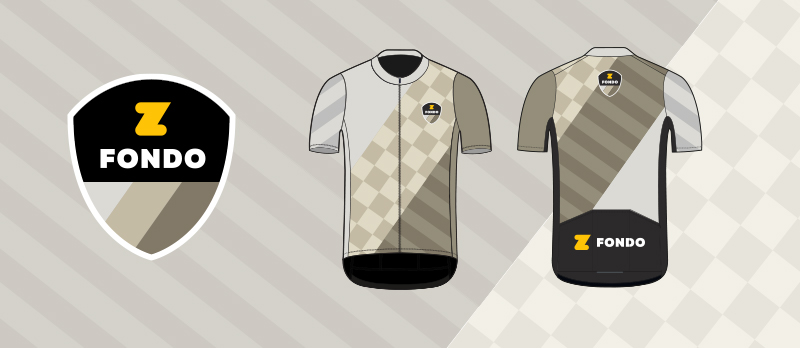
This is a 5-month series, and each month’s fondo has its own unique kit unlock. These kits are exclusive, meaning they will never be available anywhere else in game. A true badge of honor! Here is March’s kit:
Event Specifics
There are 6 events scheduled each day (Saturday and Sunday, March 20 and 21) to accommodate all timezones
You will unlock the route badge if you ride the Mega Pretzel event. The other routes are event-only routes and therefore do not have route badges.
Is this a Race?
Yes. Sort of.
A fondo is a “fun race”, meaning it’s more about the personal challenge of finishing a tough course and doing your best. For some riders, the goal is simply to finish the ride. If that’s you, there’s good news: with so many Zwifters taking part in these events, you’ll always have company regardless of your abilities!
That said, thousands of riders turn out for these popular events, and the front of each category is always filled with superfit riders going all out. If you’re feeling strong and looking for an extended race challenge, find a fondo.
Note: efondo events don’t give out ZwiftPower ranking points, so in that sense, this event is not a race.
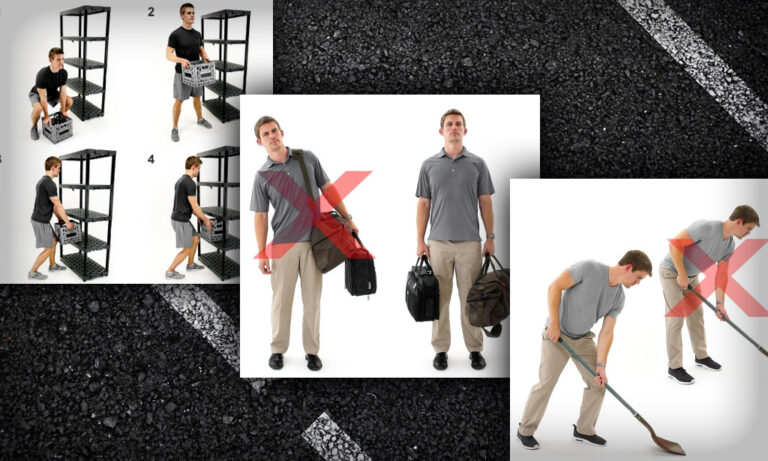
We are all pros at something, but for the vast majority of us, it isn’t cycling. If you are like me, it isn’t home or yard do-it-yourself projects either. That is why it is important practice proper body mechanics during the performance of household and vocational tasks.
Having the strongest core and legs doesn’t mean a thing if you don’t use them properly. And if you don’t use them properly, you risk saddle time spent on the couch with a sore back!
Below you will find some tips to help protect your spine and joints. Add them to your database of things you should be doing, even if it takes a bit of EXTRA effort and thought to do so.
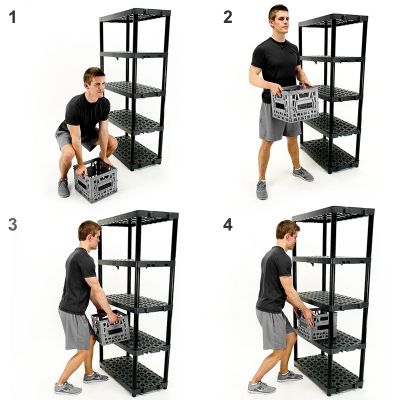
KNEE HEIGHT LIFTING
Start by standing close to the object with feet spread apart. Bend at the knees and hips and NOT at your spine. Hold the object close to your body as you use your legs to stand back up while lifting the object. Walk over to the surface you want to set the object onto and set it down bending at the knees slightly.
Do not bend at the spine. Also, be sure NOT to twist your spine, but to pivot your feet so that your feet are pointed forward to where you want to set the object.
Slide the object on the shelf to off load your body.
WAIST HEIGHT LIFTING
Start by standing close to the object with feet spread apart. Bend at the knees and hips and NOT at your spine. Hold the object close to your body as you use your legs to stand back up while lifting the object. Walk over to the surface you want to set the object onto and set it down.
Be sure to NOT twist your spine, but to pivot your feet so that your feet are pointed forward to where you want to set the object. Slide the object on the shelf to offload your body.
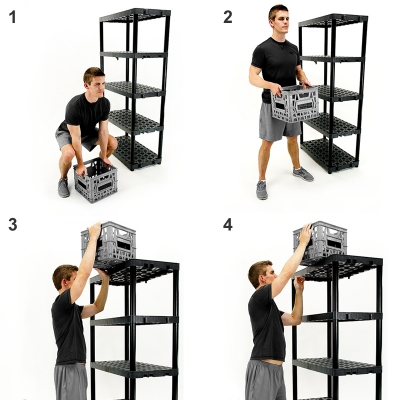
OVERHEAD LIFTING
Start by standing close to the object with feet spread apart. Bend at the knees and hips and NOT at your spine. Hold the object close to your body as you use your legs to stand back up while lifting the object. Walk over to the surface you want to set the object onto and raise it up overhead with a “one-hand-under and one-hand-over” technique as shown.
Set it down and DO NOT extend at the spine. Also, be sure NOT to twist your spine but to pivot your feet so that your feet are pointed forward to where you want to set the object. Slide the object on the shelf to offload your body.
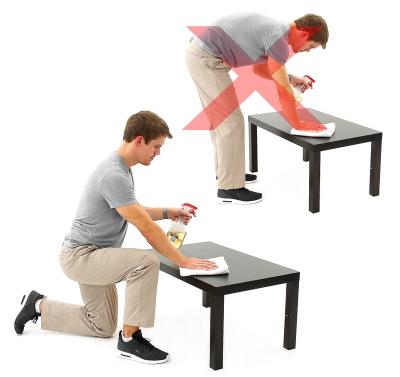
CLEANING LOW SURFACES
When cleaning a low surface such as a table, position yourself into a half-kneel position as shown. You should have one knee on the ground and the other knee bent with your foot on the ground.
Keep your spine straight. Place a pillow or folder towel under your down-knee if needed for comfort.
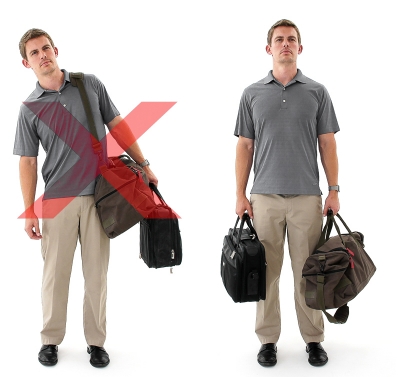
CARRYING A BAG OR SUITCASE
When carrying bags, be sure to distribute the weight evenly between the right and left side of your body. Maintain a straight spine. If you are carrying only one bag then switch sides periodically.
DUSTPAN SWEEP
Use a long-handled dustpan when sweeping the floor. Keep your spine straight.
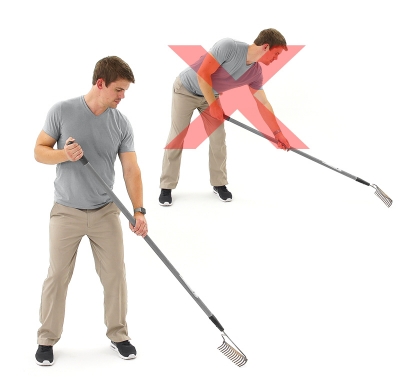
RAKING
When raking keep your arms close to the center of your body and do not bend over at the spine. Bend your knees and lunge if needed. Keep your spine straight.
MOWING THE LAWN
When mowing the lawn, walk with the mower to minimize bending over. Also, extend the handle, if adjustable, to improve reach. Keep your spine straight.
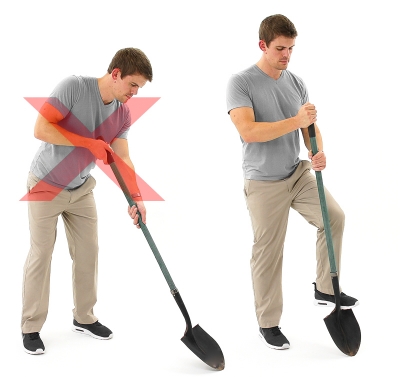
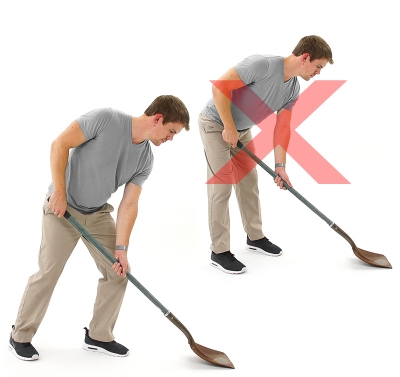
DIGGING WITH A SHOVEL
When digging with a shovel, keep the shovel tip close to your body and keep your spine straight.
USING A SCOOP SHOVEL
When scooping with a shovel, move in a lunge pattern with one foot in front of the other as you bend your knees to move forward and back. Keep your spine straight.
The Follow-Up Appointment
Stay tuned, as in the next edition of this series I will introduce the theory of periodization for off-the-bike strength training and why it is important to your performance on the bike.
Your Call!
Do you have any physical therapy related topics or questions which haven’t been addressed that you feel would improve your cycling performance and enjoyment? Let me know!
If you are going to win your first race on Zwift, you might as well win big – but sadly it wasn’t a moment where I crossed the finish line with my arms aloft, celebrating. And I think it’s something Zwift needs to try and address! But more on that later…
The Haute Route Watopia and riding into form
The previous week, I battled the three stages of Haute Route Watopia 2021. I think the courses were fun, challenging, and different. Unfortunately, the entire event was let down by the failure of the “General Category” competition not functioning properly on ZwiftPower.
I never got to the bottom of the issue and despite repeated requests for an interview, Zwift did not respond. The event ultimately left many racers, myself included, very frustrated by the failure of the ‘GC competition’. By the time the results were published a week later, I, like many, had moved on with life and didn’t really care. The whole experience, which was badged as a “GC competition” disintegrated into a farce as you never knew where you were in the competition – it was like racing the Tour de France and no one knowing where they were in the standings until the final results were published, a week after the finish.
It just failed, and this issue with results would resurface later. That said, after racing Haute Route and coming into a bit of form, I decided to have an easy week, recover, and target a quick time up the Alpe Du Zwift.
Target the Mountain
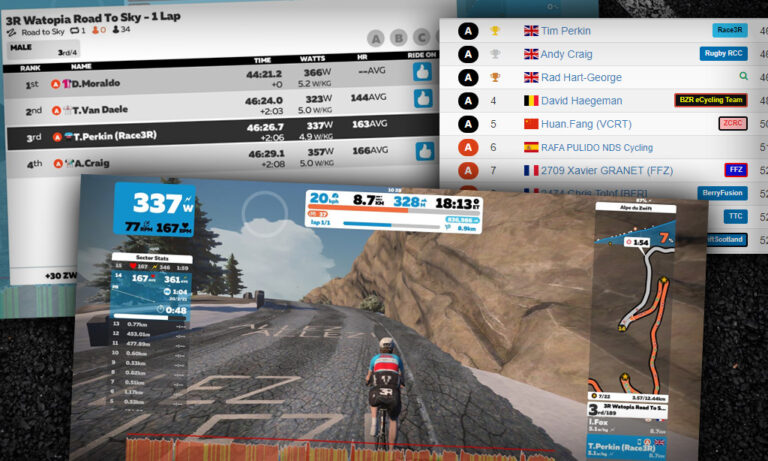
My chosen event was the Road to Sky race by Team3R on Sunday morning (CET). My aim was to try and crack the Alpe in under 40 minutes. I agree, it is an insane target. But in January 2021 I managed to climb the Alpe in 40 minutes and 05 seconds, and was heartbroken afterward when I was told by a fellow competitor that the Canyon Aeroad which I had ridden was no longer the fastest climbing bike in the game and had probably cost me 9 seconds over the Specialized Tarmac Pro. I clearly had missed the memo where Zwift had downgraded its performance stats!
6 seconds haunted me. I had tried several times to recreate the magic of that climbing performance and break the 40 minute barrier, but it proved elusive. I was always a minute or two off and thus I concluded that the time of 40.05 was merely a fluke and had come off the back of the Rapha 500, which I had completed over the Christmas period.
Race preparation
Not to repeat the same mistake in terms of bike choice, I grabbed the Specialized Tarmac Pro and the Lightweight Meilenstein wheels (which I had gained in a previous failed attempt up the Alpe). This was the quickest ‘climbing setup’ according to the stats.
I skipped racing in week leading up, instead undertaking several easy rides with the intention of keeping my legs fresh. Wanting to save every ounce of energy, I did an easy, short, 6km warm-up, then it was off to the start.
The Start
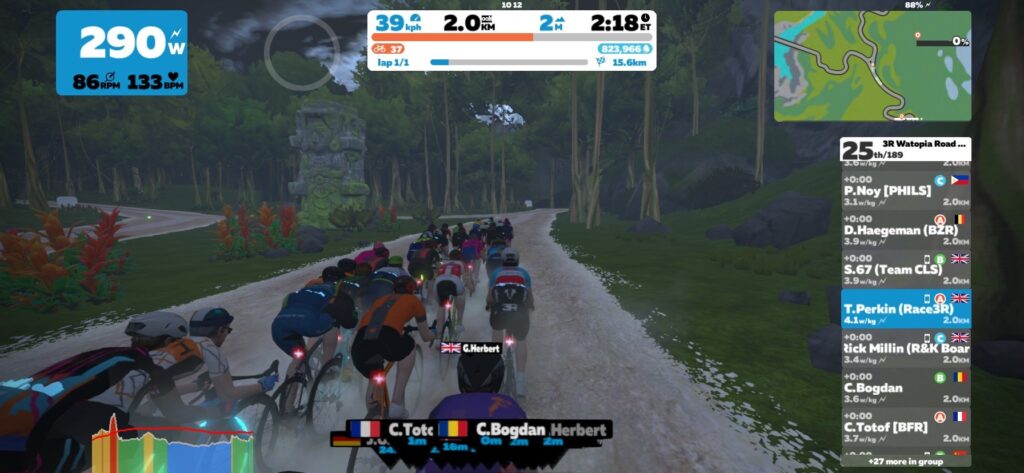
Conscious to conserve all my energy for the climb, I made sure at the start of the race that I immediately got in the middle of the bunch. I didn’t want to be pushing to catch the front of the group so I did just enough to keep within the group as we sped through the Jungle. I noted that the event was well attended with 189 riders, with over 30 in Category A, which I was racing.
We navigated the Jungle, and hit the base of the climb. Then the group exploded.
The First Turn
There is a danger when racing the Alpe that you go too hard on the early slopes then fade away toward the end or worse, completely blow up. The difficulty is that if you go too easy at the start, then your chance of a good time can disappear.
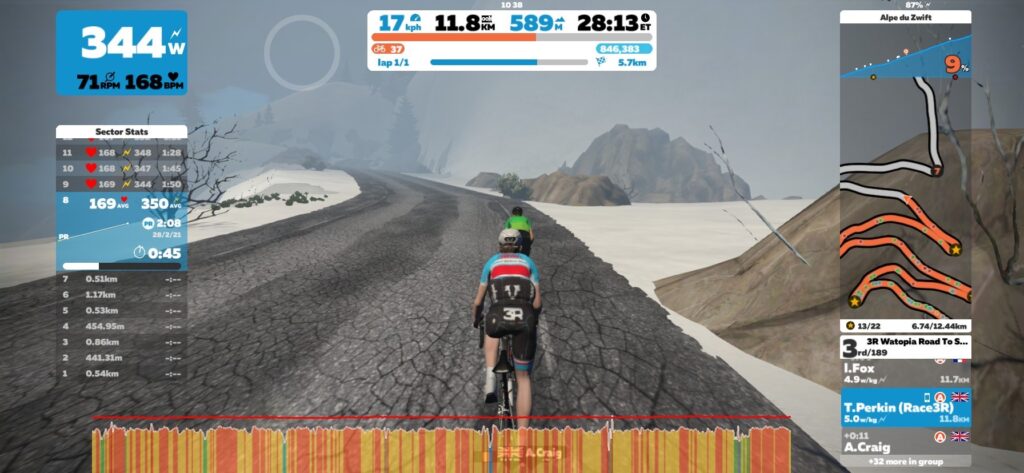
My strategy was to hit the first turn hard and settle into a sustainable rhythm as soon as possible. Two riders pulled away, but I let them go, focusing on my own pacing. I was racing the clock and had decided not to get drawn into racing the people.
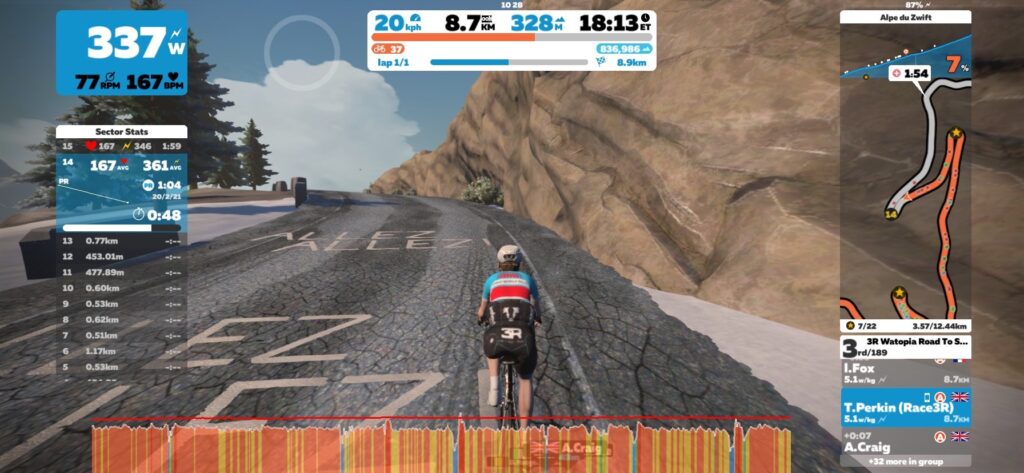
I hit the first turn and the Head-Up-Display on the left of the screen noted that I had churned out a massive 360 watts. This was above what I was capable of, and since I knew it was unsustainable, I dropped a gear and began spinning my legs. My usual low cadence of 70 jumped to 80-90 rpm.
During a recent Wednesday “Andy’s Schleck’s Cappuccino Ride”, the Tour de France winner provided some valuable insight into climbing quickly. He said, “to climb quickly, it is best to use an easy gear and have a high cadence and ‘spin the legs’ as this avoids fatiguing the muscles.” I tried to adopt this approach, figuring if I could get anything above my usual 65 rpm that would benefit me.
The early slopes
The Alpe is a long way. I always appreciate the distance climbed but only on the descent because on the way up, I’m too focused on getting to each corner. To that end, the early slopes were a blur, I tried to keep my heart rate below the “red zone” whilst keeping the cadence and power high. On the approach to each turn, I was sure to change down a gear or two and really power through the corner, ensuring I have momentum to propel me forward before once again settling back into the rhythm of the climb.
Having previously failed at trying to break sub 40 minutes, I realized that even 1 second lost on each turn could be costly, so I became focused on making each turn effective. By turn 15 I was outputting around 345 watts, which I calculated might be enough for me to reach my target, if I could maintain it.
Halfway
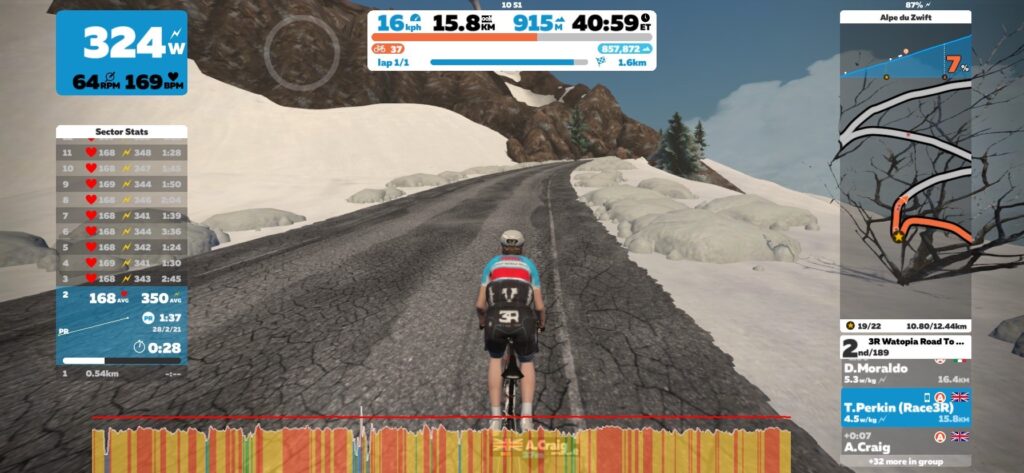
Halfway up the mountain, I was well into the rhythm of the climb. My heart rate was consistent, my power was steady, and despite being tired, I was still conscious of my surroundings as the ‘red fog’ had not yet descended. This was a good sign.
It was at this point I caught and overtook the second-placed rider on the road. He probably had reached the ‘red fog’ state I had just mentioned, and he had slowed considerably. It meant I was now sitting in second place on the road, with the lead rider some 300 meters ahead and out of sight.
At this point, I realized that I was in unchartered waters. It’s very rare to find myself at the front of a race, hence the typical title of my articles (“The View from the Back”). Yet here I was, halfway up the climb, sitting in second!
I didn’t let the prospect of a high finish stay in my thoughts too long, my target was still the sub 40 minutes and I reckoned that if I could try and manage my effort over the next few kilometers, I might be in with a chance. But it would be close. Earlier, I researched that to reach my target, I would need to be hitting over 5 watts per kilo and this was my current level.
Turn 7 and 6
The long straight stretch between turn 7 and 6 is relentless and for me probably one of the most critical and difficult parts of the race. It’s where fatigue creeps in. With roughly 4km to go, there still is a lot of climbing to be done, you are tired, and now you have to dig deep. Today was no exception.
I pushed round turn 6 but I could tell that the legs were failing. The mind was willing, but the legs couldn’t push the power like before. I could almost hear the late great commentator, Paul Sherwen, offering some sound bite like “Bridge to engine room; more power!”
The Final Turns
I managed to squeeze more power out of my failing legs. For the first time in the race I noted the position and time gaps to my competitors. I could see there were two riders behind me and noted that they were gaining on me. Seconds were being chipped away with each passing meter and as I rounded the last turn, I had a 7-second advantage.
I was now not only racing for my sub 40-minute target, but racing for position. By this stage, I was really hot, the fan offering little respite, so like the riders in the Tour de France, I poured the remaining water from my bidónover my head. Any little help was welcome!
The final stretch
The final push to the finish after the last corner is never ending and the ‘red fog’ I mentioned earlier had engulfed me. I pushed as hard as I could, holding over 400 watts as my heart rate rocketed as I summoned up every last reserve of energy attempting to defend my position on the road.
With 400 meters to go, I was in 2nd position. I kept pushing, but the rider behind was chasing. I could “feel him” and I saw he was putting out a staggering 6.5 watts per kilo. Through sheer panic I somehow managed 6, which at this stage even surprised me!
To force the pace I got out of the saddle to sprint, but had nothing. With 50 meters before the line, the rider sped past me. I was heartbroken.
The results
As I crossed the line, the results flashed up. The first-placed rider didn’t have a heart rate meter. I knew that his results would not count in ZwiftPower and so being overtaken on the line by the second-placed rider was extra-devastating since I had lost out on the chance of victory up the famous mountain. Or so I believed.
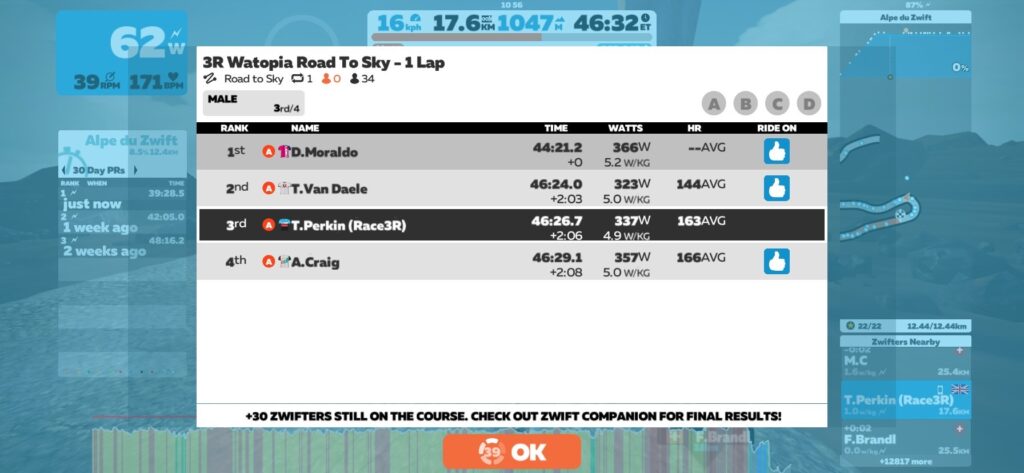
The consolation was that I had climbed the mountain in a staggering 39 minutes, 28 seconds. I had achieved my goal! I immediately logged on ZwiftPower to check my data. And I couldn’t believe what I saw. ZwiftPower had me in first place!
“I won!” I shouted. The second-placed rider was not on ZwiftPower meaning that I had taken victory as per the rules of the race!
Summing up
Naturally, I am pleased to have won the race and achieve my target of sub 40 minutes, but the joy was only felt well after the crossing the line. That moment of joy when crossing the finish line as per real life was not there, and checking the race results on a different system took away from the experience.
I don’t have a solution on how to correct the issue, but perhaps to enter races there needs to be prerequisites in order to partake. This is an issue for Zwift to look at and solve. And this leads me to the point I started with about the Haute Route and the ‘General Classification’ issue and Zwift Power.
If Zwift is going to host racing events, they need to look at it holistically and put in processes and procedures to ensure the user experience is enhanced. Because I want my next win to feel better than this. After all, I earned that moment of victory and want to celebrate it, even if it’s in a virtual world!
Some plans seem easy. So brilliant in their simplicity that you can’t stop yourself from asking, “Why didn’t I think of that?” Then you realize why the best-laid plans of the few remain the dreams of the many – because even when a plan is simple in concept, it is rarely ever easy to execute.
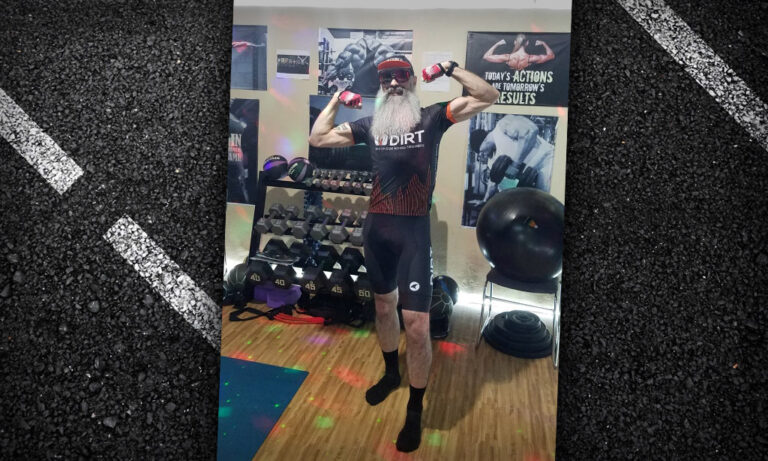
Such is the case for James Martin (see him on Strava). His plan was simple, but neither its execution nor the man are.
If you ask James, however, I’m sure he’d disagree. He prefers to focus his perspective upon the most basic of motivations. For James life is all about three simple things: Fatherhood, Faith, and Fitness.
A Rough Childhood
Childhood was not easy for James Martin, and those early experiences influenced his decisions and relationships as an adult. James describes carrying a lot of baggage from his childhood years: “What stuck with me was a deep down resentment and unforgiveness, rage, and addiction.”
James explains, “These awful things I carried with me, and into my own marriage, led to the suffering of my family and ended in divorce.” James Jr. was 9 when James’ wife informed him she was leaving for someone else.
“I got down and begged her… please, please, please do not take my son from me,” James pleaded. “My father was shot and killed when I was 13 years old and I didn’t want my son to live without his dad.”
Poor Life Choices Took Their Toll
At the age of 39 James weighed 225 pounds, the consequence of bad choices and habits resulting from the demands of working two shifts to support his family while attending classes to earn his high school degree. “It took a toll on my health,” he says, “I put on a lot of weight, was drinking heavily, and didn’t eat too healthy.”
His life a “mess”, James decided he had to make a change. “Having a good father figure is something that children need, and not having a strong role model definitely caused issues in my choices as a father,” he says. Knowing firsthand the importance of a father’s influence motivated James to make the lifestyle changes required to assure that he would always be there for his son.
James Turns His Life Around… The First Time
James’ first job after dropping out of high school at 16 was at a bike shop where he worked for 9 years. “I was there when mountain biking took off in the 90’s and I developed a love for working on them, and riding them,” he remembers with enthusiasm.
In the span of a few short years, he trimmed himself to 165 pounds and changed his life by following an exercise regimen of calisthenics and mountain biking.
James credits his fitness routine with giving him the emotional strength to be an example to his son. “I believe when one is healthy it just doesn’t leave any room for depression,” states James.
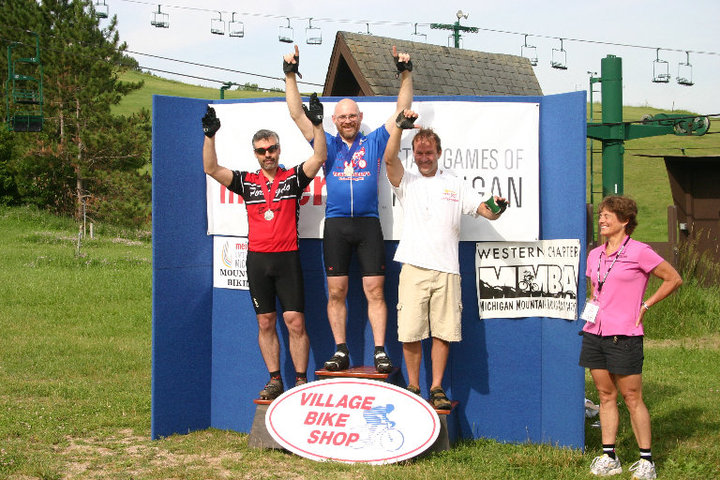
He was in the best shape of his life, working out 2 to 3 times a day, sometimes performing in excess of 900 push-ups daily. His talent and dedication as a mountain biker earned him 2nd place in the inaugural State Games of Michigan.
A Damaging Obsession
The addictive personality which proved to be an insurmountable burden upon his marriage also wreaked havoc upon James’ joints. The excessive wear and tear of his often obsessive training routine caused overuse injury to his shoulders. Recovery was not in mind as James remembers, “I always felt so good I didn’t think about it, but my shoulders began to hurt so bad I couldn’t even do a push-up.”
James was forced to stop his calisthenic routine and eventually gave up mountain biking altogether. In the years that followed, James gained back the weight, and something much more important to him in helping to change his life… again.
Faith Turns His Life Around… The Second Time
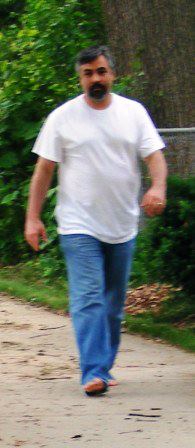
James in June 2020
Through a growing commitment to his faith he sought forgiveness from his family for the poor choices he’d made and the pain he’d caused. “I had come to realize how easy it would be for them to make the same mistakes I made, living a life of blame, while carrying the same patterns into their own families, just as I had done.”
The day of revival, and of implementing his health plan, came on June 15th, 2020. At the age of 51 and a weight of 220 pounds, facing the reality of the risks of his poor health in a pandemic world, James again made the commitment to get healthy.
He explains, “If and when Covid hits our house I need to have done everything possible to give myself the best chance to survive for my son.”
A Simple Fitness + Nutrition Plan
James’ goal of returning to the healthy weight and active lifestyle he once enjoyed was achieved by getting back to the basics. In addition to steadily increasing his saddle time, James eliminated junk food from his diet, limiting himself to two meals a day consisting of only lean meat (except pork), oatmeal, fruit, vegetables, and eggs, eating only what he describes as, “whole foods”.
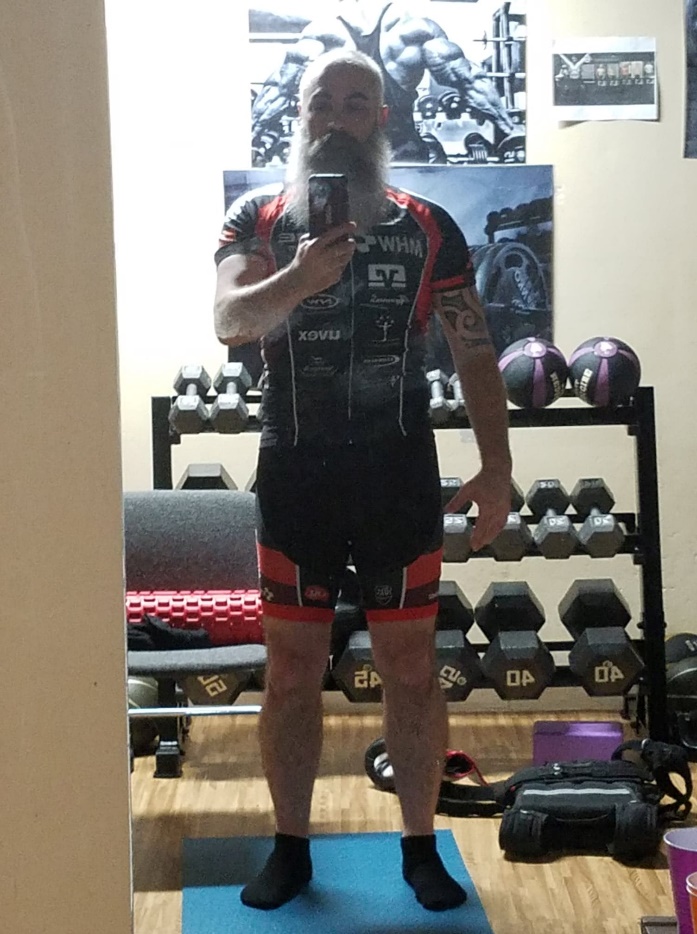
James in December 2020
He began commuting back and forth to work on his mountain bike. The 4.2 mile trip which started off as a 20-minute ride soon became a 12-minute race, thanks to the new road bike he gifted himself. On September 27th, he took his last race to work.
Discovering Zwift
The harsh Michigan weather forced James inside, prompting him to take the wheels off of his road bike and put it on the trainer. “I jumped on Zwift for my first ride,” he exclaims. “Oh my, I absolutely love this!”
He recalls the wonder he felt in his first Zwift group ride he noticed, “I can feel what it is like to slide into the draft and to ride in a group. This is not mountain biking, this is a different thing altogether!”
In December of 2020 James was riding in excess of 400 miles per week and weighed in at 148 pounds. Yes, James lost over 70 pounds in under a year! The simple basic way.
An Avid Zwift Believer
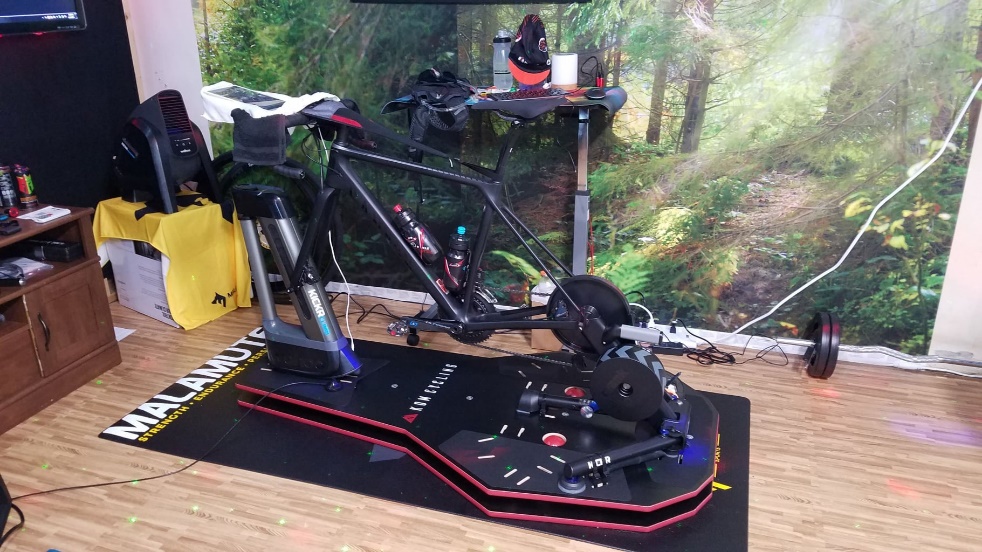
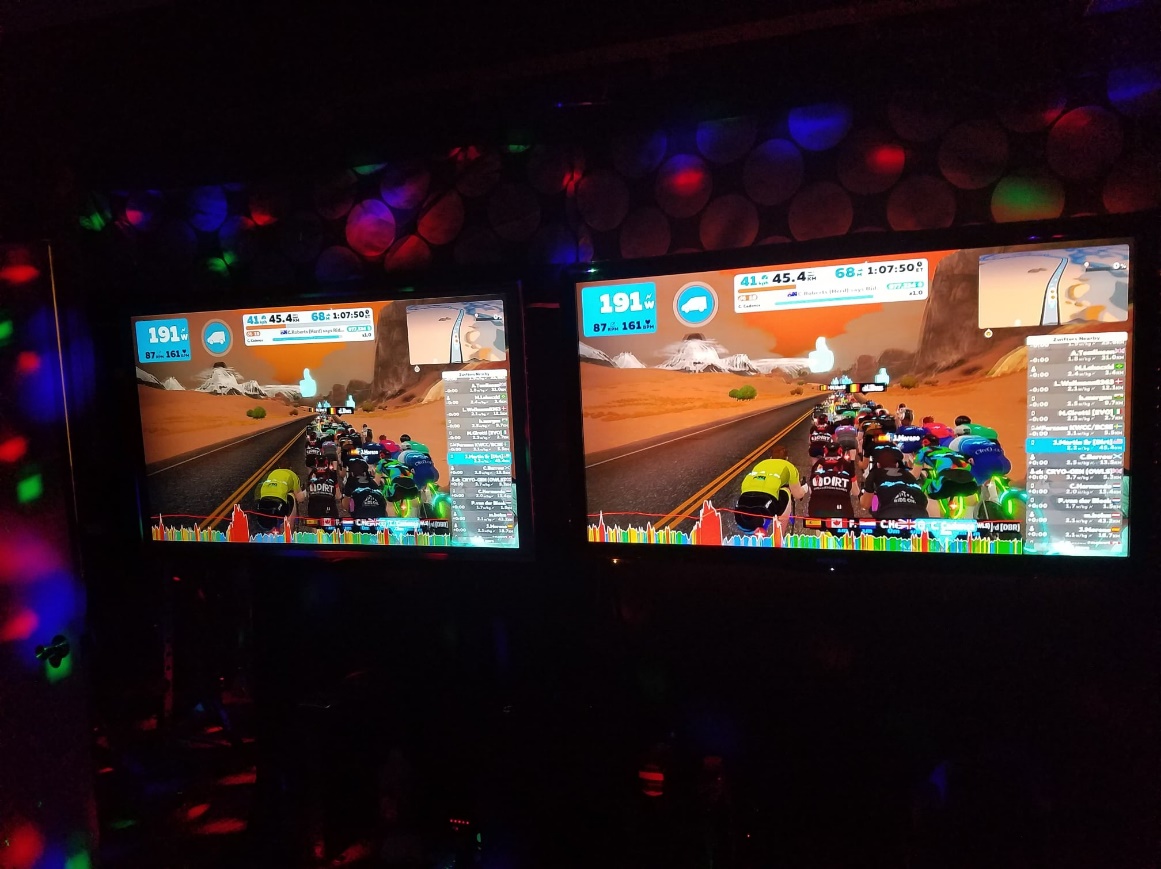
As evidenced by his incredible setup (below), it is obvious James has entered the category of “avid Zwifter.” He rides a Wahoo KICKR equipped with a Climb positioned atop a KOM Cycling Rocker Plate. Two television monitors mounted side-by-side allows James Jr. to ride his Wahoo KICKR Snap alongside.
“I have invested quite a bit into my Zwift setup,” James admits, emphasizing that “it is worth every penny because Zwift has brought me much more than just fitness.”
James’ Zwift setup
One screen for James, one screen for James Jr.
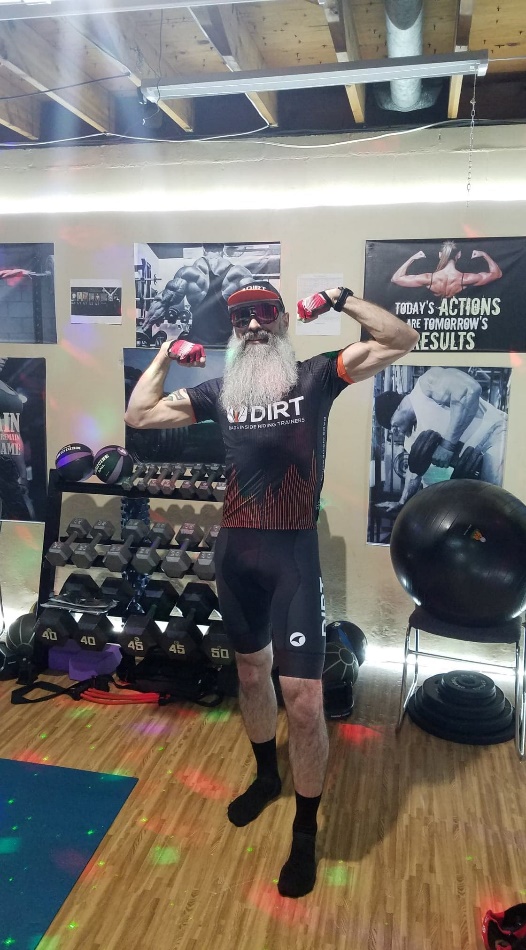
“Zwift has been a blessing to me,” remarks James, who not only transformed his body, but found a community whose belief system coincides with his basics. “I took my first 100k group ride with riders who called themselves DIRT (Dads Insider Riding Trainers),” he recalls. “What a treasure to have the ability to ride with people from all over the world with the same beliefs as me. I love Zwift so much I can’t see ever taking my bike off the trainer.”
Tuesday is Zwift Racing League day. But also, every few weeks, it’s the day Zwift chooses to release an update of its app. And that is exactly what happened last week.
It places you in an unsolvable dilemma between your body asking frantically to have the latest features of the app, versus your brain reminding you that on more than one occasion there were unstable updates that left you crying after a mid-race app crash.
You also remember all the myths and legends running around the forums and Facebook pages where your mates have had Close Encounters of the Third Kind type of experiences:
Middle of the race the pack turns right and… you turn left by yourself.
Everybody disappears. So, in one way it’s good because you are kind of owner of Watopia… but in a race that ruins your week more than the last episode of Game of Thrones (only joking, of course – there is nothing I can imagine more deceiving than that last episode).
You can no longer connect your HRM or your smart trainer, and you need to show the patience of a Shaolin monk in order to overcome the steps required to get everything back in order.
Your avatar starts to erratically go right and left at the speed of light and disappears within the dinosaurs of the jungle.
The app language changes to Aramean Hieroglyphics.
Your avatar punches the guy next to you out of envy, you steal his Tron Bike and escape at 7w/kg while the Zwift police patrol pursues you (my apologies, I may have spent too many hours playing Grand Theft Auto during my teenage years).
Chances are all those issues had nothing to do with the update but with a random bug. However, you can’t help thinking that there is a higher frequency of bugs on update days.
So you are left with an existential decision to make: to update or not to update?
An image of your Zwift mentor, the guy you took advice from since day one, pops up in your head, Star Wars Yoda like, and says: “Update you must not, learn patience you must.”
At the exact same time, Scotty (the Zwift Squirrel) appears and whispers to you “You know you have it inside you, deep in your heart you are an early adopter and you want to update! Join me within the latest version of Zwift!”
The intellectual struggle becomes unbearable. You always thought you were a Luke Skywalker and now you are discovering you might be an Anakin/Darth Vader wannabe and the Dark Side is in your blood. Noooo! Zwift is the Dark Side of the force!
Separated from your body, you are now floating in the room. You see your finger slowly approach the pad of the remote control (I am on AppleTV) and select “update”. You are one click away from taking the red pill and bang, you do it. You have not felt so rebellious since the day, back in 2013, where you did not take your morning vitamins, on purpose!
And you immediately regret it. OMG, what have I just done! All my data is going to be wiped for sure! There’s no way to roll back to the previous version! My anxiolytics expenditure is going to skyrocket!
Ten minutes before the start of the race, while in the pen, you are sweating without even pedaling. You track any detail on the screen which would indicate an instability announcing the collapse of mankind. The race starts and everything seems to work properly: you are doing as bad as usual. The race finishes, you save your session, it uploads to Strava, to Garmin, to Training Peaks, to Tik Tok, to Snapchat. All is perfect.
You’ve survived DEFCON one. And in some way, you kind of saved the world by exposing yourself to the update first. Except that Zwift’s Facebook page is inexplicably full of comments from people experiencing Close Encounter situations which are for sure the consequence of the app update…
A little bit about me: I became active later in life, and road biking is very new to me. I’ve had a mountain bike for years, but used it only occasionally. In the spring of 2019 I purchased my first road bike, and in July I went for my first ride on it. I was instantly hooked! Long story short, I still consider myself fairly new in the cycling world. Also, I’m not a writer!
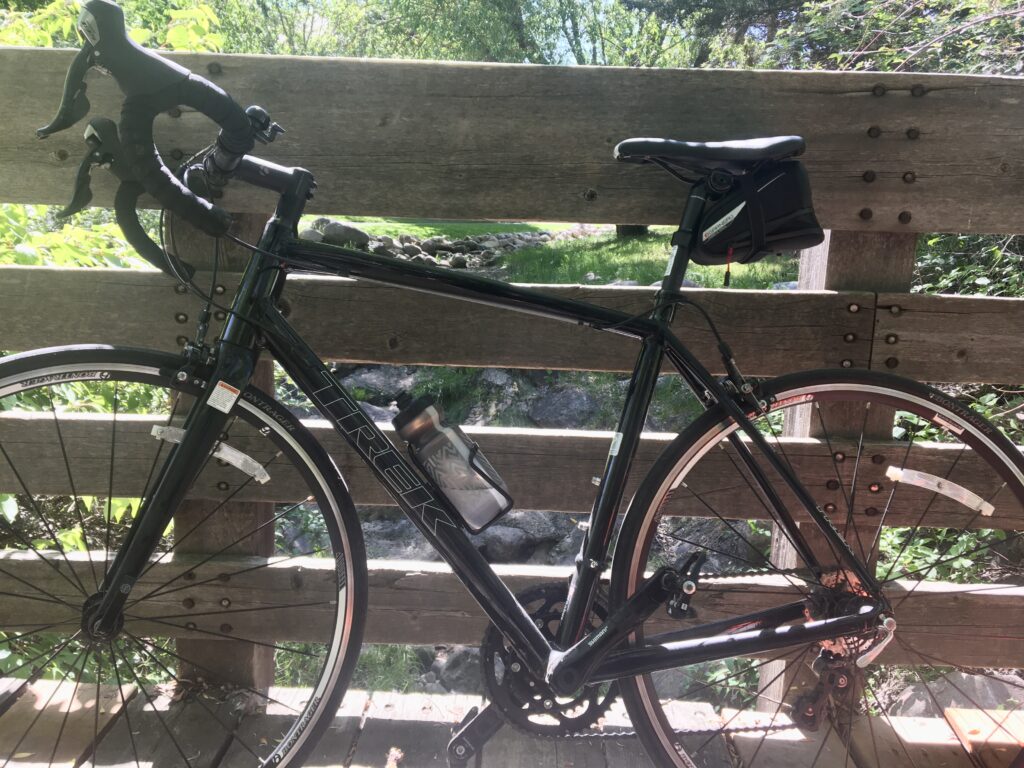
A random shot of my bike
Starting the Über Pretzel
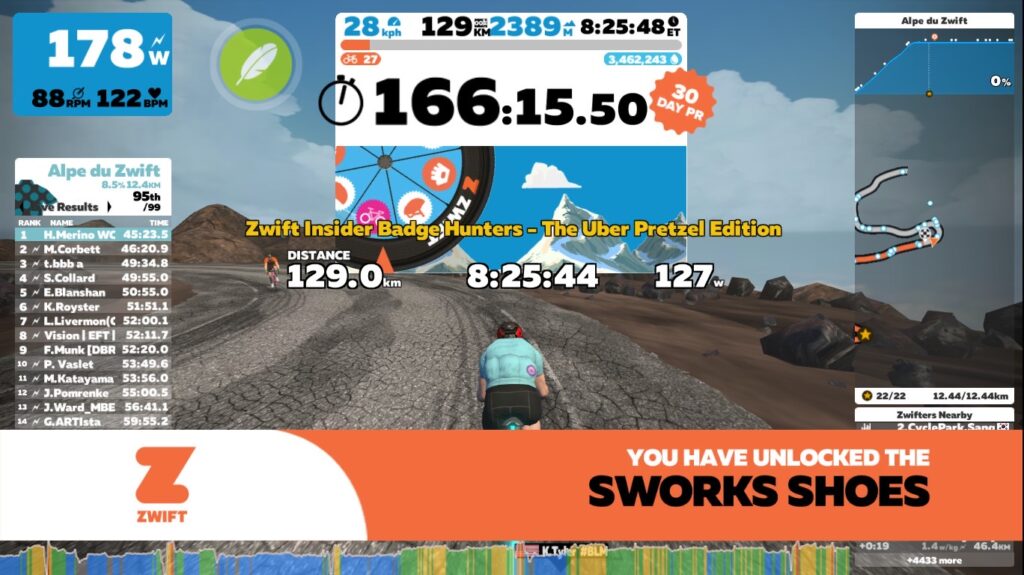
I’m one of those “completeness types” in real life, and this translates into Zwift. I have been crossing off badges and recently earned the Zwift Concept bike. I knew as soon as I saw the article on this event that I wanted the badge, regardless of where I was on my training. My hope was that tenacity would get me through the ride.
I prepared food and drinks (both water and Nuun) the night before. Hydrated like crazy for the two days prior, with a good night sleep before the ride. I felt that it would take me about 7.5 hours based on some prior rides, and really felt ready.
My plan was to start slow, warmup, then settle into a group and take advantage of the double draft. My first mistake! People shot out of the gate, and immediately I was rapidly falling off most groups. If I had to do it again, I would have warmed up prior to the ride, then started the ride faster to find a group that I could draft in. As it was, there were limited options for groups (just a line of riders that started a bit slower), so I found my pace and kept at it.
The Discord Advantage
I joined the Zwift Insider Discord channel, and that made a major difference on the first half of the ride! The talk was lively, and there were a lot of good questions that Eric and others patiently answered.
The one lesson that I did learn from Discord was that, as much as this was a massive event with lots of people, rider placing still mattered to some riders. On Discord, people were really excited to move up places by switching to mountain bikes in the jungle (information which was useful to me, as I took advantage of the mountain bike later in the jungle).
Later in the ride, the hardest part of Discord was hearing riders completing the ride while I knew it would be a while before I finished.
If there is an option to join Discord, take advantage! It adds another element to make a ride go by quicker.
The Ride
Once I warmed up, I enjoyed the Epic KOM, and even the radio tower. Down to the jungle, switch to mountain bike, feeling good so far. Volcano climb, then my first break of the ride at 2 ½ hours. I wasn’t off the bike long, and when I came back, there still weren’t a lot of groups. I did occasionally find a small group to tag along with, but with everyone having different plans for breaks, the groups didn’t last long.
I do remember hitting the desert for the first time, and seeing large groups of riders already coming back the other way. Not sure why, but I thought it wouldn’t take me long to do the next sections, and I would be coming back to leave the desert. Turns out, I was wrong by a lot. I didn’t really pay much attention to the details of the route, but it was an hour and a half before I left the flats for the final time. I continued on, taking breaks when needed. For the second time in the jungle I stayed with the road bike and I immediately regretted this choice. I remembered how much easier it felt the first time through the jungle on the MTB!
Saddle Problems
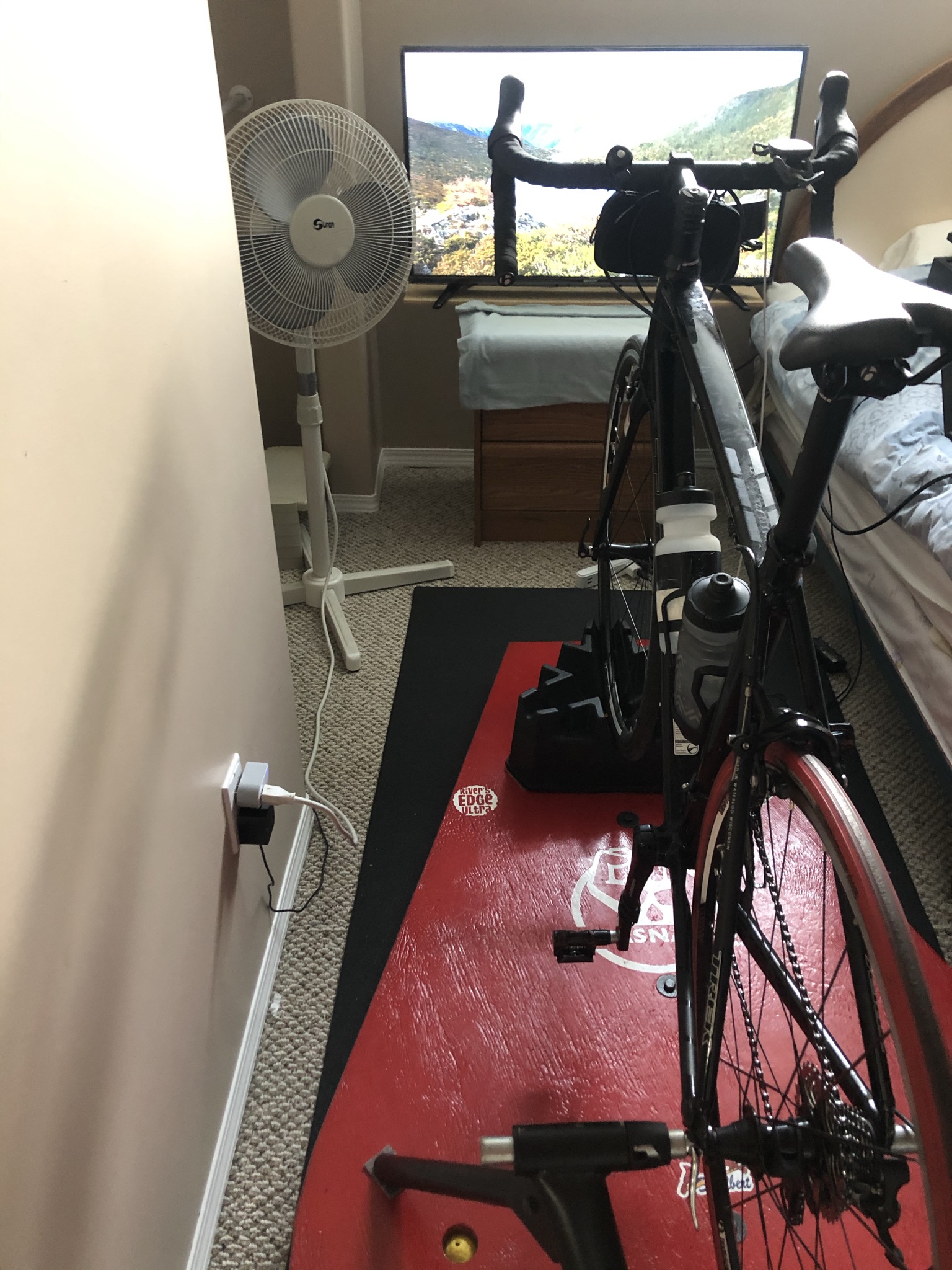
My Zwift setup
Prior to the event I found that rides over 4 hours were hard on my undercarriage. I thought a tweak in saddle position might help for the ride, so 3 days beforehand I adjusted the saddle a bit. I did one test ride two days before the Über, and the saddle did feel better.
Well, turns out I didn’t quite tighten the seat bolt enough, and during the ride the saddle very slowly started drifting backward. It took a couple of stops to get the bolt tightened correctly, and the saddle to stay at the right spot. Big lesson learned here: don’t think about equipment changes this close to a major ride! Either that, or get stronger with the tools!
The Alpe (and another lesson learned)
I rolled up to the base of the Alpe, just shy of 6 hours. Like many others, this seemed like a logical place for a break before starting the last effort. Right here is where I once again realized I should have listened to others and had a new kit to change into. I’ve been biking for a short time and thought 2020 would give me lots of opportunities to pick up a spare pair of shorts/bib and extra jerseys by signing up for some IRL races, but Covid changed things and I stayed with what I had. In hindsight, I believe changing here would have made a big difference for the last 2+ hours for me. I did change out my socks, and that did help a bit.
I’m currently using a CycleOps Fluid 2 trainer (dumb trainer), so effectively going up a hill is similar to riding on the flats. But in my mind, it feels different. The slow speed, the relentless hills all play tricks on me, and going up really becomes a grind although it shouldn’t feel different.
I was really saddle sore at this point and ended up taking a break from the bike on 5 more occasions. When I got to turn 4, I started to push hard just to get the ride done. I ended up stopping once again just shy of turn 2, taking another break, then made that final push. Yet another lesson learned: don’t push hard too early.
The neatest part of the ride to me: somewhere on the Alpe a rider that was higher up than me decided they were done, and said something to the effect in chat. My mind was pretty muddled up at this point, and I thought about typing something out but someone beat me to it. Some others convinced that person to keep plugging away and finish. There were a few other people throwing out positive comments to help others on the hill, which did make a difference.
Wrapping it up
What I did right: Food, water, electrolytes, hydration before the ride.
What I could do better: warm up for the ride to take advantage of drafting groups, a second kit to change into, and leave the bike setup alone prior to the ride.
Discord was really good to hear all kinds of tips and advice.
Hardest part of the ride: thinking about the ride up the Alpe and knowing it would take over 2 hours.
On the whole, I’m grateful to have done the ride. Grateful for the Zwift community (the Herd in particular) for all the great advice and encouragement over the past year as I was grinding out badges and the Zwift Concept (Tron) bike.
I also want to call out a group of riders that go out every Saturday as the “DaveT longer ride meetup” for their help on my Zwift journey.
Finally, thanks to Zwift Insider for putting the ride together! To be honest, I was dreading doing this ride, and this event was exactly what I needed to get it done.
How about you?
I finished 2508 overall, and I know there were others on the hill after me that were going to finish! Were you one of them? Let me know in the comments!
Team3R are hosting a 4 week event to keep you racing sharp before the next season of the Zwift Racing League.
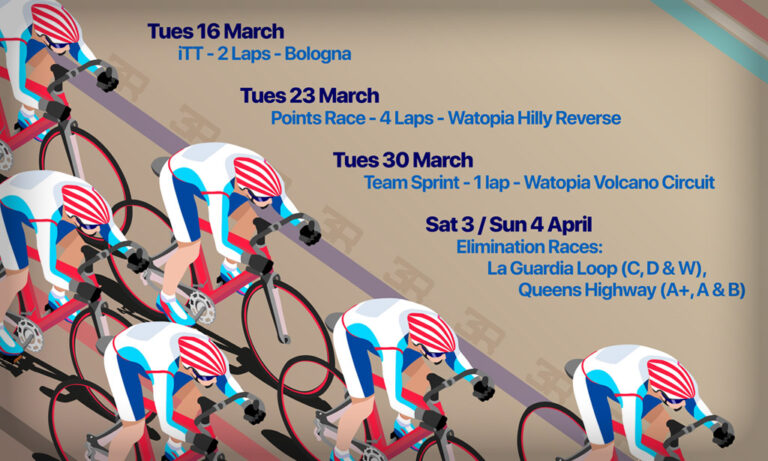
The 3R Omnium Team Championship is a 4-week team event with 4 different formats running at 19:00 GMT each Tuesday starting on 9th March 2021. This will culminate in a series of league decider Elimination Races as the 5th exciting event on the weekend of 3/4 April.
Team3R tells us, “We wanted to bring the excitement of track racing to Zwift so picked the multi-format omnium event to run a team championship. Bringing 2 brand new race formats to Zwift we want to push the limits of the platform whilst hosting great, competitive racing. The series will culminate in the first competitive elimination races held on Zwift so come and join the fun and give yourself the chances to be the last rider standing!”
It certainly will be an explosive series.
More Details
This is a team event and each race (other than the series decider elimination races) can feature 6 riders from a starting roster of 8 riders.
To start the series off we have a great course that’s undoubtedly going to go to the wire. Taking in the main roads of London including the Mall, the Embankment, Trafalgar and Richmond Park, we bypass the hills for a guaranteed fast race!
Home of the 2019 Giro prologue iTT course, we will be doing 2 laps to really get the legs going. This is a race against the clock. Make those extra seconds count as every second may mean that extra point for your team.
One of the great Zwift race courses with a mix of punchy hills and rapid sprints, this is your chance to amass a good haul of points for your team. Will you push early, late, or hold out for the prize of a high finishing place?
Points awarded for each arch and at the finish line
One Team, One Lap, One Goal – slingshot one rider to the fastest lap you can around the classic Volcano Circuit course. Choose your tactic: stay as a Team? Smash and Peel? Or Something Different…….?
Whatever you choose, your fastest rider time counts for the team.
So, your team has made the top 10 and you’re ready to take on the best of your league. Pit one of your riders against the competition on one of these great short crit courses for a chance to win big points for your team.
With a rider eliminated each lap, the competition will get fiercer – can you hold the power and nerve to be crowned the winner and maybe come out champions of the first Omnium series?
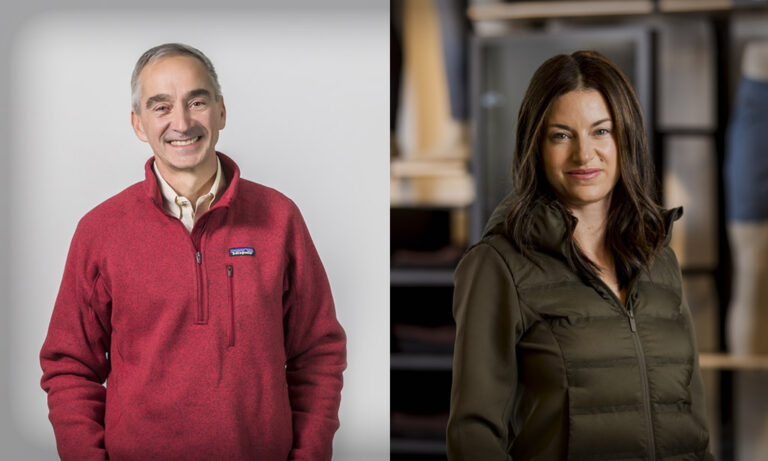
Today Zwift announced the appointment of two new members to its board of directors. Below is the press release from ZwiftHQ in its entirety:
Zwift, the online fitness platform for cyclists, runners and triathletes worldwide, has confirmed the appointment of Patrick Pichette and Celeste Burgoyne to its board of directors. The appointments follow Zwift’s recent Series C funding round.
“We made a commitment to invest in the very best talent to support Zwift’s growth as a brand, so I’m delighted to be in a position to welcome Patrick Pichette and Celeste Burgoyne to our board of directors, says Eric Min, Zwift CEO and Co-Founder. “Both bring an enormous wealth of experience from their respective fields, covering finance, technology, brand & marketing, retail, eCommerce and fitness. Importantly for us, they are both passionate about our product and share our vision to help support millions of people enjoying an active lifestyle.”
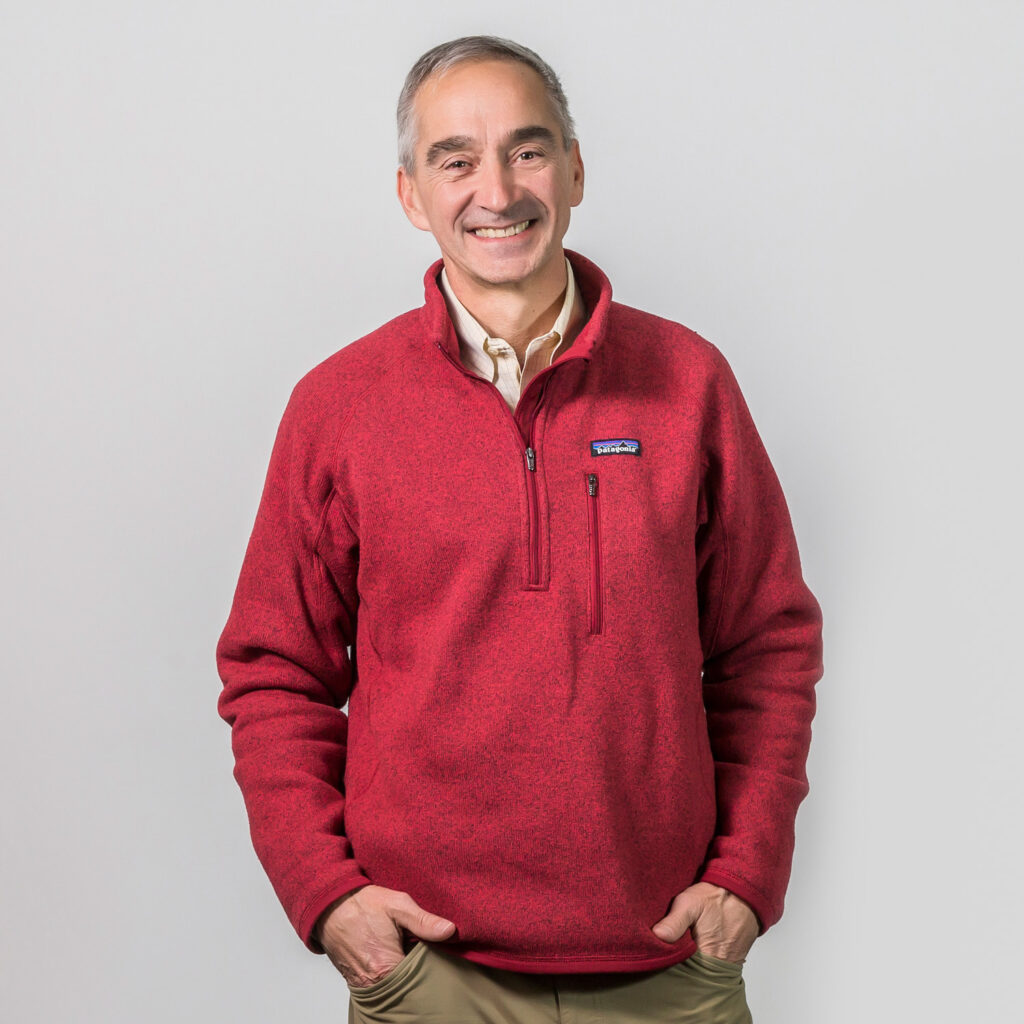
Patrick Pichette brings over 30 years worth of financial and operating experience to Zwift, with a history of helping to scale companies of all sizes. Pichette served as CFO for Google from 2008 to 2015. While serving at Google, he took an active part in Google’s growth agenda and ultimately supported the creation of the Alphabet structure. Today, Patrick serves as Chair of both Twitter (NYSE:TWTR) and Lightspeed (NYSE:LSPD) Board of Directors, and is a partner at Inovia Capital, which has invested in Zwift for an undisclosed sum.
“As a Zwift user, and someone who has always enjoyed an active lifestyle, It’s easy to get behind a mission to make more people, more active, more often, while having fun! Who can argue with that? says Patrick Pichette, Partner at Inovia Capital. “I am excited to support Zwift’s world class team by sharing my experience and networks as we forge ahead and deliver on that mission.”
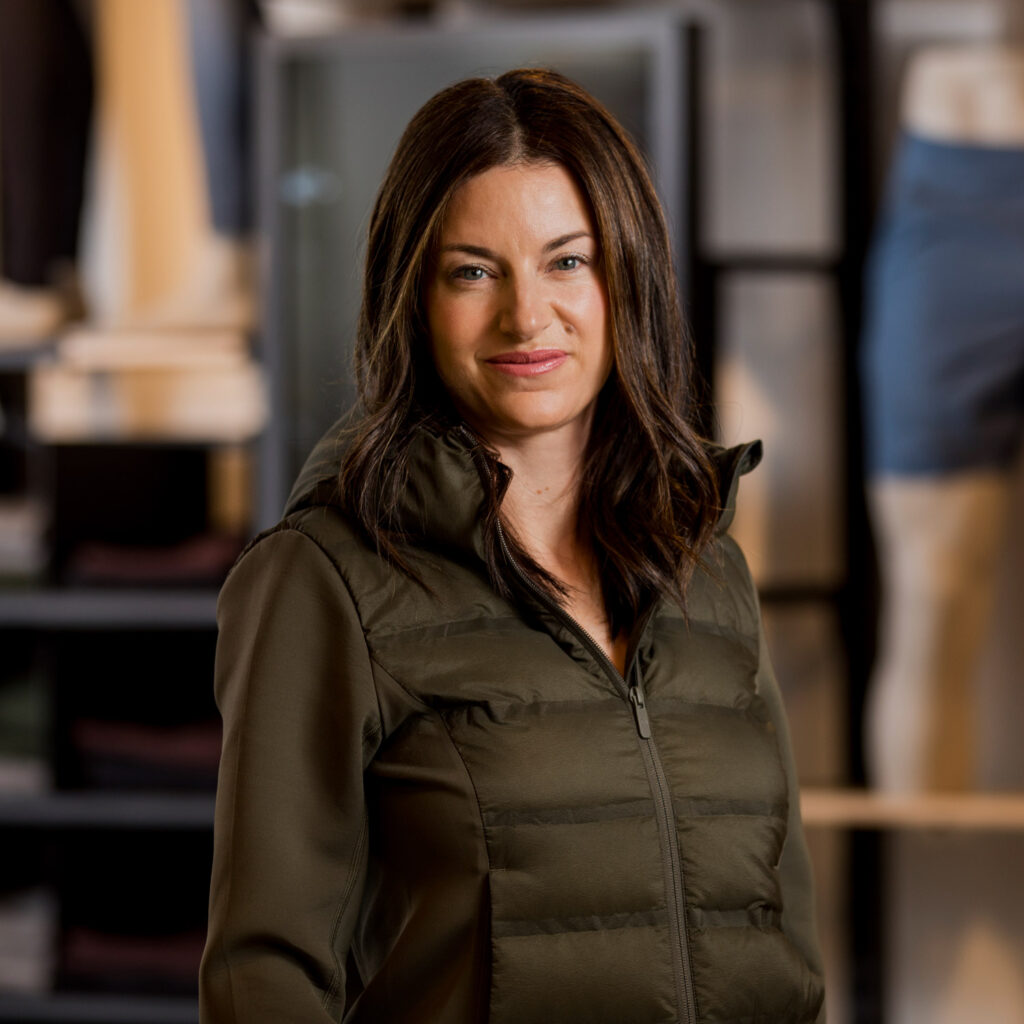
Also joining Zwift’s board of directors is Celeste Burgoyne, President, Americas and Global Guest Innovation at lululemon, who brings more than 25 years of experience within the retail industry. Burgoyne joined lululemon in 2006 prior to its IPO and has held a variety of roles with increased responsibility as the company has now grown its annual revenue to approximately $4B. In addition, Burgoyne brings experience from the at-home fitness industry after lululemon acquired MIRROR in 2020.
“It is an incredibly exciting time for me to join Zwift’s board of directors,” said Burgoyne. “Zwift is at the beginning of a new chapter as it develops the hardware to complement its software platform to provide a fully integrated at-home fitness experience. I look forward to helping the management team at Zwift identify opportunities to reach a broader audience.”