Home Blog Page 245

Lucianotes: What Type of Crazy ZRL Coach Are You?

4

Lucianotes: What Type of Crazy ZRL Coach Are You?

At the end of last ZRL season we shared some stereotypes of irritating ZRL riders, and the conversation immediately shifted to the coaches and directeurs sportif, making it clear that a similar post for ZRL coach types was unavoidable. After last week’s post detailing a week in the miserable life of a ZRL coach, here is my take on the crazy ZRL captain profiles. We still love them. 

#1: The Shouter

This is the most expensive of the captains. During the race, under pressure, their vocal cords cannot produce any sound lower than 277 decibels. And this is costing each team member a consultation with an otolaryngologist after each race. Unfortunately there are no targeted “ZRL Captain Noise Canceling” headphones yet. 

#2: The Onomatopoeian

No matter what the question is, he answers with something in between a grunt and an understandable noise. “Mmmpfff…”, “aaaaarrrghh…”, “oooooooh…”, “Booooooom!”, “Waouh”, “wohoooo!” The good thing is that most onomatopoeia are universal and understood by everyone. 

#3: The Diplomat

Within a team there are always arguments and conflicts. He officially never takes sides. Yes or no are forbidden words for him. He is an expert on the “I tend to agree” and “fair enough” answers, allowing everyone to believe he is in agreement with you. 

Here is a small translation table from diplomat language to straight forward language.
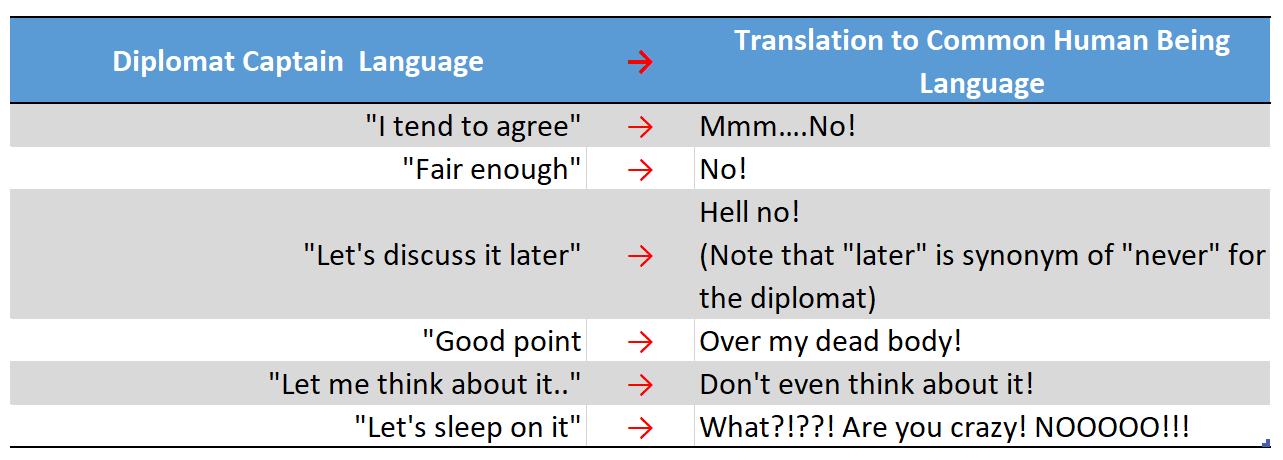
#4: The Universal Expert

Don’t buy a voice assistant if your captain is a “Universal Expert”. He is a direct competitor to Alexa and Google. There is not a single thing he does not know, he has an answer for everything. Even for the things that he actually does not know, he will find a way to make you believe he knows. He believes his entire status as a captain would be challenged if he does not know. 

  • How stalactites are formed? Of course I know!
  • A recipe for Cannelés Bordelais? I am your man!
  • A DIY rocker plate? I have the best template!

#5: The Organization Disaster

This coach has a well-earned reputation for messing up schedules, circuits, names, to the extent that you are safer doing the opposite of what he says instead of what he actually says.  

#6: The Last Minute Guy

It’s twenty minutes to the start and you did not receive the link to register for the event? 

It’s Tuesday morning and you don’t know if you are racing today? 

It’s TTT time and you don’t know who is in the pen? 

It’s the end of the season and you still don’t have a name for your team? 

Your captain is certainly a “last minute guy”. 

#7: The Reminder

There is an Argentinian proverb that says we have only one mother because two would be unbearable. The Reminder captain is that second mother. 

“Remember to warm up with enough time.”
“Remember to calibrate your trainer.”
“Remember to check all your connections.”
“Remember to go to the toilet before the race.”
“Remember to register for the event.”
“Remember to prepare enough water and drink.”
“Remember the towel.”
“Remember that the climb starts at 4.2km.”
“Remember to wash your teeth, to do your homework before dinner.”
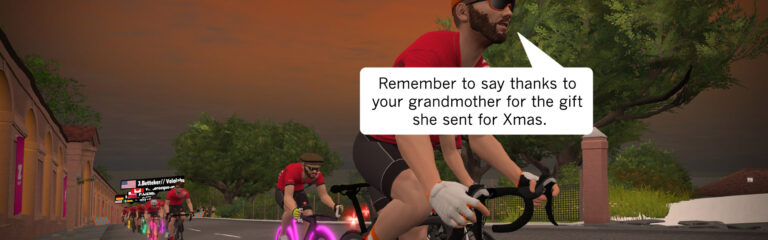
“Remember to say thanks to your grandmother for the gift she sent for Xmas.”
“Remember to put your history book in your backpack.” 

The Reminder is a human checklist and brings you back to your childhood, when your parents would remind you of EVERYTHING.

#8: Captain Positivity

No matter how good or bad the team did during a race, the conclusion of this captain is always the same: “Great job, guys!” Everybody knows it was a disaster, but the captain still genuinely believes we did great. Denial or exacerbated positivism, nothing breaks his enthusiasm.

#9: The Best Team’s Captain

A delta variant to the Captain Positivity is The Best Team’s Captain. 

Like a parent looking at his children and feeling they are perfect even if they are an exact replica of Darth Vader’s personality. Your team might be composed of two Charles Mansons, one Jack the Stripper, one Hannibal Lecter, one Machiavelli, and a Raspoutine. Your captain will see you all as aesthetically Michelangelo sculptures, Einstein-like minds, Pogacar kind of cyclists and above all Nelson Mandela-type human beings. There is no point in arguing, “Our team is the best!”

#10: The Revisionist

This type of captain gets along very well with the “I told you so” rider we described during last ZRL season.  They nurture each other. The Revisionist always finds a fantastical explanation of why things didn’t go as planned, attributing it to external factors. “We were right in our decision to break the pack in the first climb, the issue is that the other teams did not analyze the race properly and did not follow. But we were right, everybody else was wrong. In one way we are in advance of our time. In the future people will acknowledge we were right, we were pioneers, visionaries. We are Zwift Van Goghs.”

#11: The Stick to the Planner

No matter how the circumstances have changed the “Stick to the Planner” feels safe only within the boundaries of the option prepared before the race. In a TTT, we keep six pulls even if only five made it to the race. We go slow and cautious at the beginning even if there are five Vikings and four DIRT giants pushing at 15 w/kg in the first kilometer. “We stick to the plan!”

#12: The Swearer

Strangely enough, the most extreme swearers I have witnessed were the most polite and kind teammates in normal circumstances. You only discover a captain is a swearer in the moments of highest tension during the races. Bruce Banner becomes The Hulk in two seconds: “Sh*t, f**k, h****e, as***e” (the list is infinite and, like always, includes references to mothers and sisters of the other riders). The swearer has a very limited vocabulary, yet it’s clear enough to not require further explanation. I love the swearers because most of the time they verbalize what is in my head and I don’t have to take the blame for the atrocities I imagine. I sometimes even pretend I am offended by their vulgarity while in reality I enjoy every last bit.

#13: The Sorcerer’s Apprentice

You have the feeling you are part of a permanent experiment? It is not a feeling but a reality if your captain is the “sorcerer’s apprentice” type. This captain is a Harry Potter fan who will always choose an experimental alternative defying the most basic laws of physics.
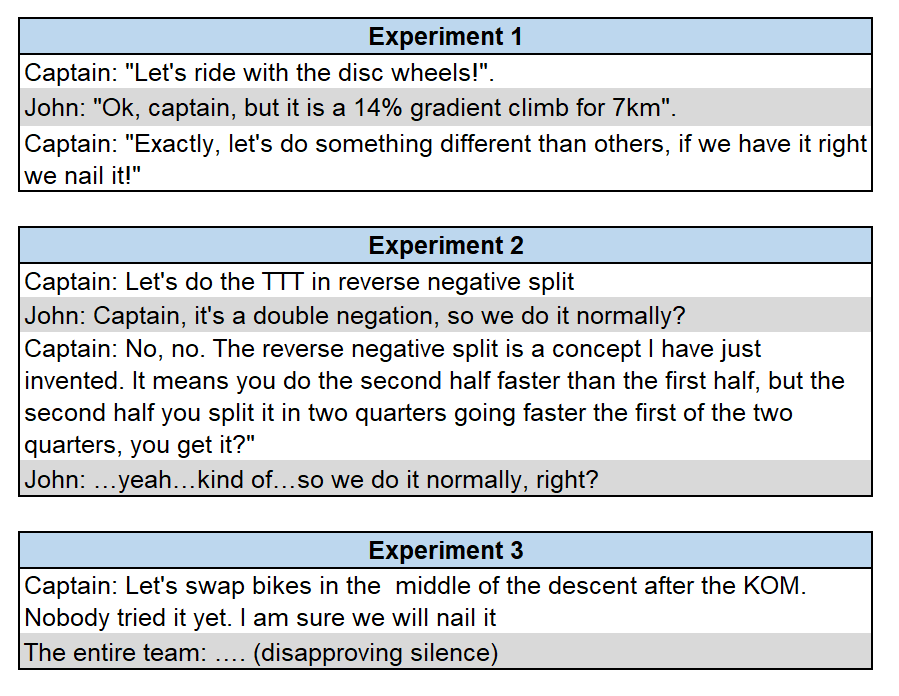
#14: The Under Controller

Even if the world is falling apart, everything is under control. It’s 10 minutes before the start of the race, two guys are in the wrong pen, another one is in the right pen but has connection issues, the leader of the team got a muscle cramp while warming up, but, “no worries, everything is under control!” What do you mean everything is under control? Everything is a mess! We will all die in enormous suffering!

#15: Mister Perfect

They are understanding, inclusive, maintain their calm under pressure, encourage everybody, remember the birthdays of each team member, empathize with everybody’s personal and professional issues, anticipate and erase all complexities, are always prepared and updated with the latest news, share documents and thoughts about the next five races seven weeks in advance. They are so loveable and sooo exasperating at the same time! I love AND hate them. 

What About You?

Are you any of these? Did we miss some Captain types? Comment below!


3R Endurance Academy 12-Hour Challenge this Saturday

1

3R Endurance Academy 12-Hour Challenge this Saturday

In September, I wrote about the 3R Ultra Endurance Academy. Since then, I have joined several of their Saturday endurance rides to see how people have been getting on. The events have always been well attended and organised. 

Schedule & Plan

It’s incredible to think what has happened in the proceeding 4 months. So many kilometers ridden! But the day of reckoning has arrived. On Saturday 15th January, members from the Academy are going to attempt the first of their two challenges, which is to cycle for 12 hours.

The plan on Saturday is to ride between 2.2-2.5 w/kg and undertake the normal Saturday Endurance ride, on Tempus Fugit, but continue once the scheduled 120km event has been completed. The hope is that just like the Pace Partners, a large blob will have formed and people will naturally join in and support the challenge.  However, if you fancy joining Rob, who has coordinated this event, then follow him in the Companion app by searching for “Rob Keunen,” then select to ride with him when you log on to Zwift.

Commitment

It’s important to understand the volume of training that Rob and other members of the Academy have put into this challenge. An estimated 180 hours have been recorded by each rider in the space of 4 months!

The offshoot of this is that the event has brought so many like-minded riders together that 3R and Rob will continue to run the Saturday Endurance ride after the event is completed.

Rob’s View

I spoke to Rob about the event, after he had just completed a 300km training ride in under 8 hours. He explained that he has been really pleased with how the Academy has gone and 10 people have committed to undertaking the challenge, which is substantial.  Rob was keen to emphasize that the 12-Hour Challenge is a “stepping stone” to their bigger target of undertaking the 24-Hour Challenge, which is scheduled on 26th February.   

Charity

Team 3R are undertaking this to raise funds for the charity World Bicycle ReliefThis event has so far raised £3200, which is excellent.  For those unaware, World Bicycle Relief is an international non-profit specializing in large-scale, comprehensive bicycle distribution programs to aid poverty relief in developing countries around the world. 

To donate, simply visit give.worldbicyclerelief.org/team/390235.

Join the Challenge!

For those that are interested in riding at least 120km with the Academy, the link to the event is zwift.com/events/view/2628918


Zwift Update Version 1.21.0 (100317) Released

The latest Zwift update is now available on all platforms: Mac, PC, Android, iOS, and AppleTV.

Not sure if your Zwift install is up-to-date? Here’s how to check >

This update includes new routes and badges, an upcoming mission, and of course a pile of bug fixes. There are also behind-the-scenes updates we can’t yet access. Here are the details…

New Makuri Islands Routes

Two routes (and badges!) have been added to the Makuri Islands world:

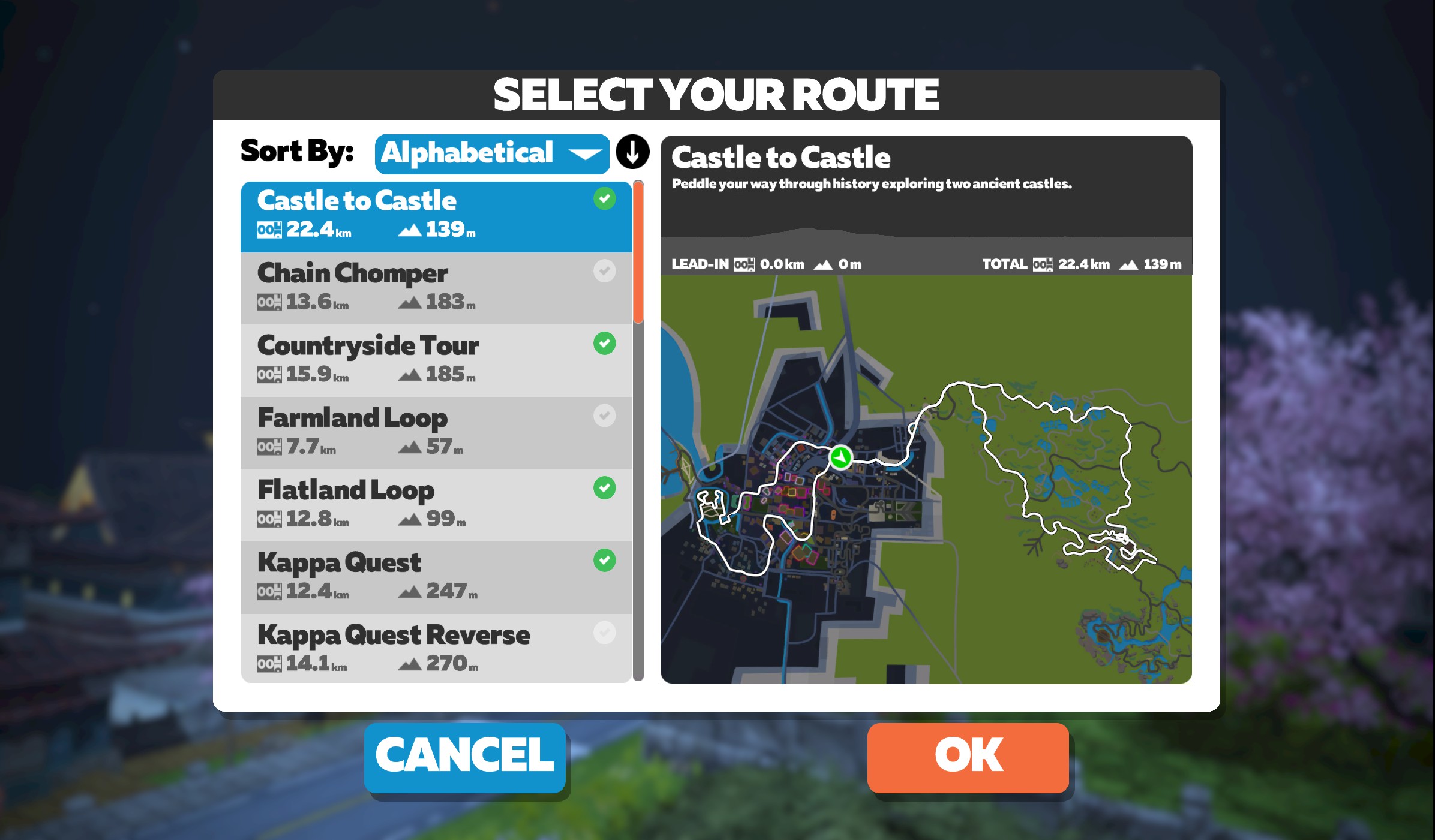
  • Castle to Castle: begin in Neokyo, then head up to the Yumezi Castle area before returning to Neokyo and going through the Castle Park.
    Total distance/elevation: 22.4km/139m
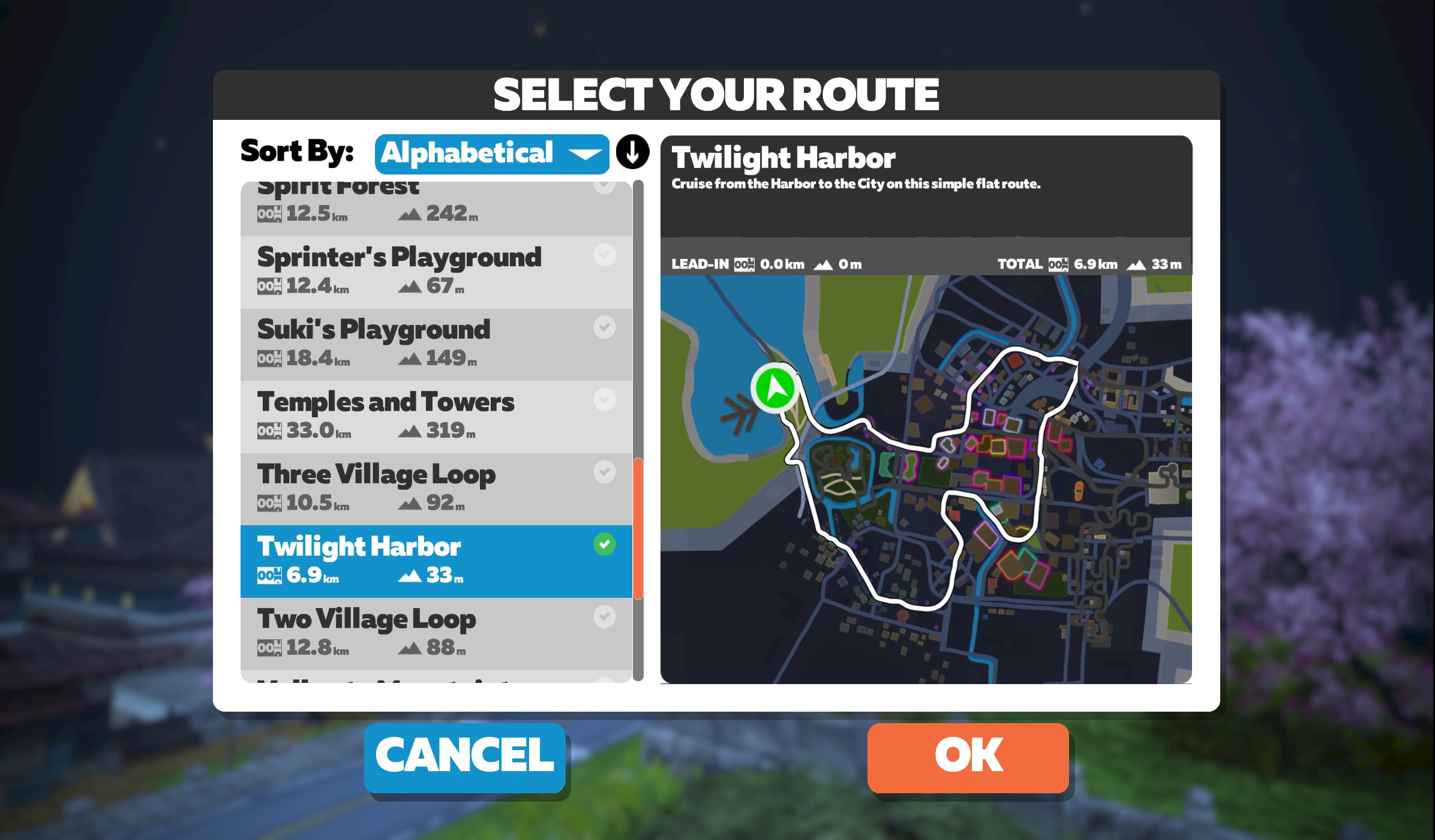
  • Twilight Harbor: a short loop in the Harbor/Shopping District of Neokyo.
    Total distance/elevation: 6.9km/33m

Wahoo Climbing Mission

“The mission starts on January 24th and ends February 26th. Climb a total of 20,000 feet (6,096m), and unlock various in-game prizes as well as the opportunity to win IRL prizes from Wahoo.”

The mission in itself is fun, but the bigger news from our perspective is it sounds like Zwift is looking to bring missions back to the platform on a regular basis. And that’s a carrot we’re happy to chase!

Signups begin Monday, January 17th. We’ll publish a dedicated post covering the details of this mission soon.

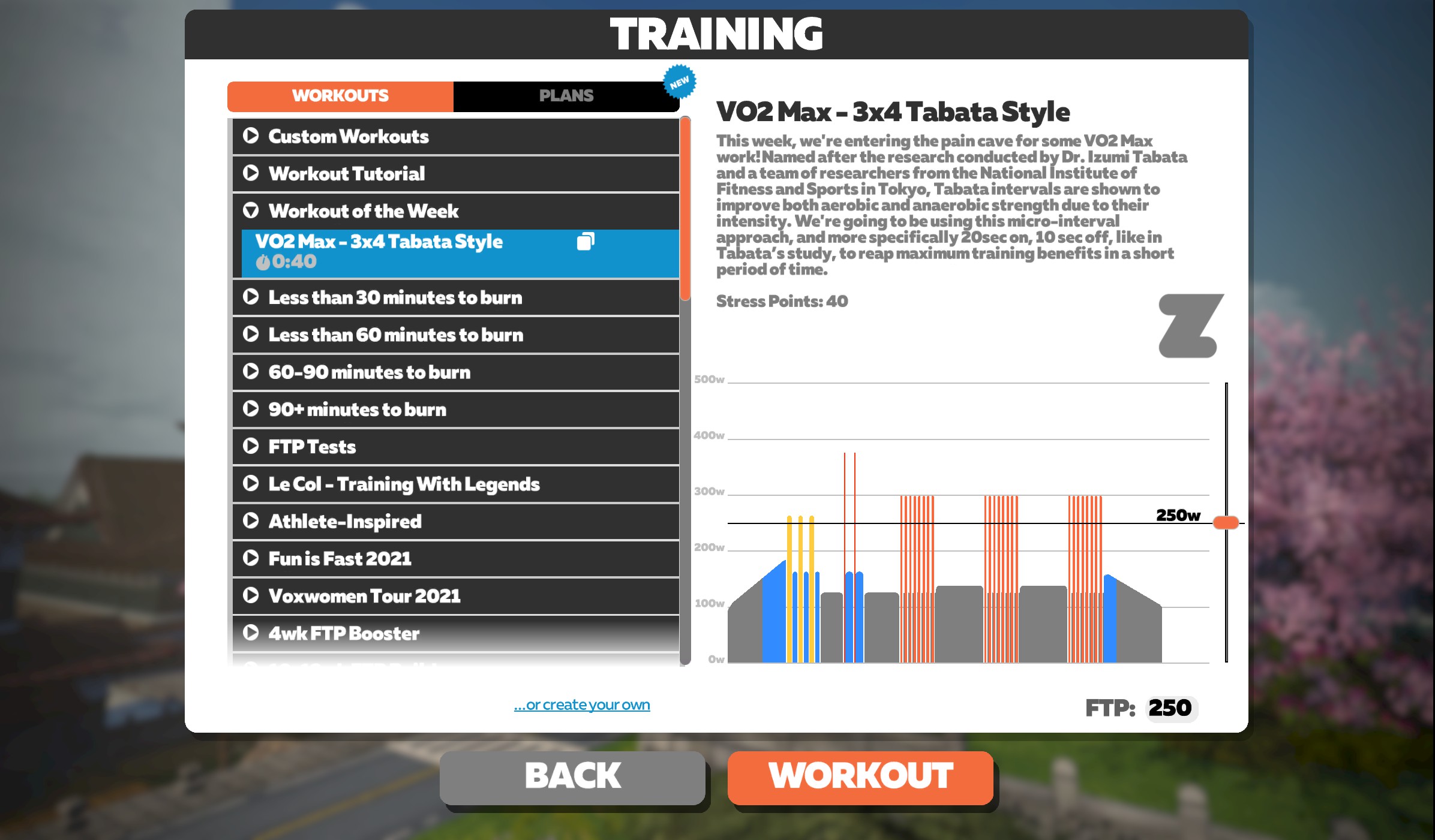
New Workouts of the Week

Workouts have been added to the on-demand list for the month of January. You can also see the current week’s workout, which you can do on your own or in a Wednesday Group Workout.

Localized Workouts

For English speakers this isn’t a big news item… but Zwift has a worldwide userbase! In today’s update, Zwift has upgraded 11 of their most popular workouts to include localization in German, French, and Spanish.

The workouts are: Sevens, Step by Step, Vault, Ramp Test Lite, Ramp Test, FTP Test (short), Miracle, Lavender Unicorn, Grin and Bear it, 2 by 2, and Emily’s Short Mix. If your in-game language is set to German, French, or Spanish, you will see the titles of these 11 workouts, as well as the workout content, localized for your native tongue.

Additional popular workouts will be localized in the coming months.

Zwift Launcher v1.1.1 for Windows

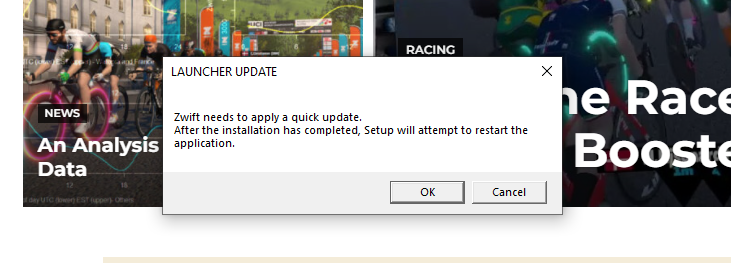
Today’s update includes a Zwift Launcher update for PC users. “Zwift Launcher” is the program executed when you click the Zwift startup icon on your Windows PC. It checks to make sure required Windows components are on your machine, checks for available Zwift updates, then starts the game app.

This launcher (finally!) uses the updated Microsoft Edge browser instead of the old Internet Explorer. It also fixes the annoying script error dialog that has been bugging us for a couple of months.

See Shuji’s notes about the launcher update in the Zwift forum >

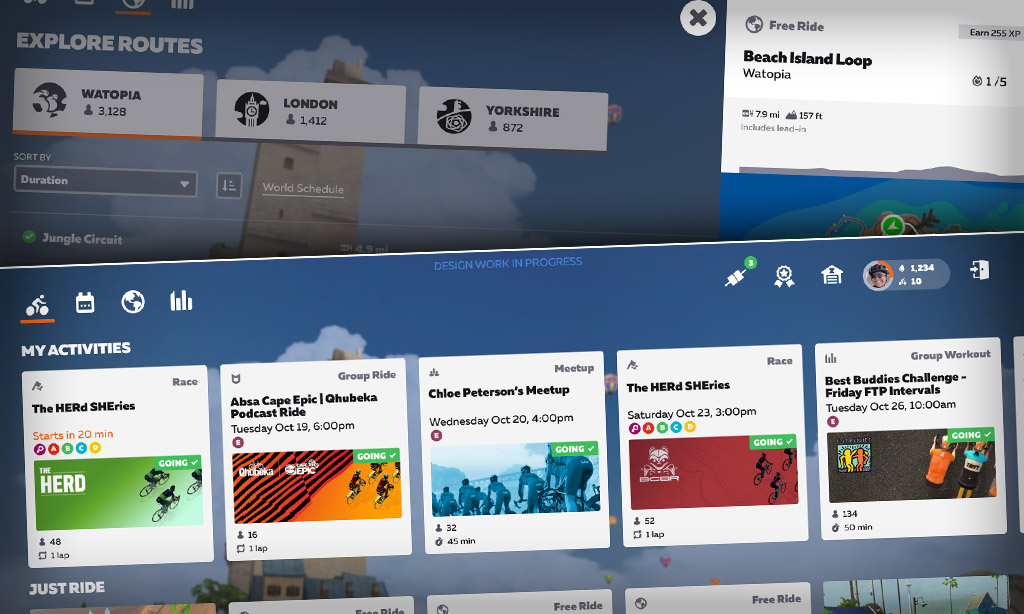
Hidden Update: New Homescreen

Today’s update includes improvements to the new homescreen UI which has been undergoing internal testing for the past few months. ZwiftHQ tells us the new homescreen is going to be rolled out very slowly, to Windows users only initially. Full access for all operating systems could be several months away.

Why the slow rollout? Because bugs in the homescreen UI could dramatically impact the user experience. So Zwift wants to make sure things work well before rolling the homescreen out to all users. Seems wise.

Bug Fixes and Misc Improvements

Here’s Zwift’s list of fixes and improvements included in this update, with notes in italic from us:

  • Made improvements to the automatic naming of activities. This is a welcome update. Now our Strava activities will be automatically titled something a bit more descriptive than “Zwift: Watopia”!
  • Fixed an issue causing some text not to update when a new language was selected in the home screen.
  • Fixed an issue where the minimum year in the date of birth UI was not correct.
  • Fixed an issue causing a line to appear on the post-activity map when a Zwifter transitioned from a workout to an event.
  • Fixed an issue which would cause an unexpected solar eclipse, where the entire world was in a shadow of a much larger object.
  • Fixed an issue where the crankset for the Pinarello Dogma F was invisible. And if you’re wondering… yes, the Dogma F was lighter and faster for the last few weeks.
  • Fixed an issue causing the Menu button to appear overtop of the Return to Me button when fanviewing another Zwifter.
  • Apple TV: Fixed an issue causing improper UI layout on the edit profile screen while the game was paused.
  • Fixed an issue causing all deer in the game to appear white. This seems downright frightening.
  • Devices running Windows versions prior to Windows 10 are no longer supported. Read “Changes to Supported Operating Systems for Zwifters” for details.

See Wes Salmon’s notes on this update release in the Zwift forum >

Questions or Comments?

If you spotted any other changes or bugs in the update, please comment below!
How To Create Zwift Club Events

How To Create Zwift Club Events

Early this week, Zwift began opening up its FutureWorks Club tools to more users. Once the rollout is complete, all level 20+ riders or level 10+ runners will have access to create Clubs. (You must also be at least 16 years of age, and have an active Zwift subscription.)

Further reading: How to Create a Zwift Club

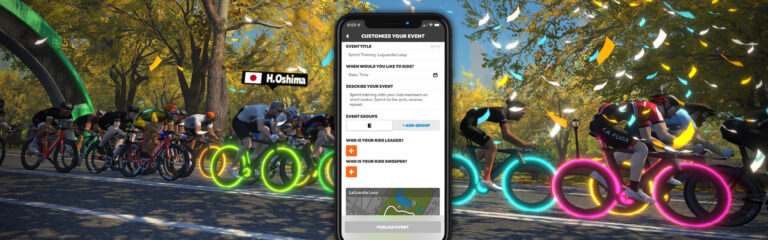
The most exciting capability Clubs delivers is events hosting. Club owners can easily create events that behave just like “official” Zwift events, starting from the start pens with sweeper/leader beacons, results screens, and more.

Let’s dig into the details of how it all works, and some best practices for creating successful Club events!

Creating a Zwift Club Event

If you’re designated as a Club’s owner, it’s easy to create events for your Club. In fact, Zwift has done much of the work for us! Here are the minimum steps required to create a Club event:

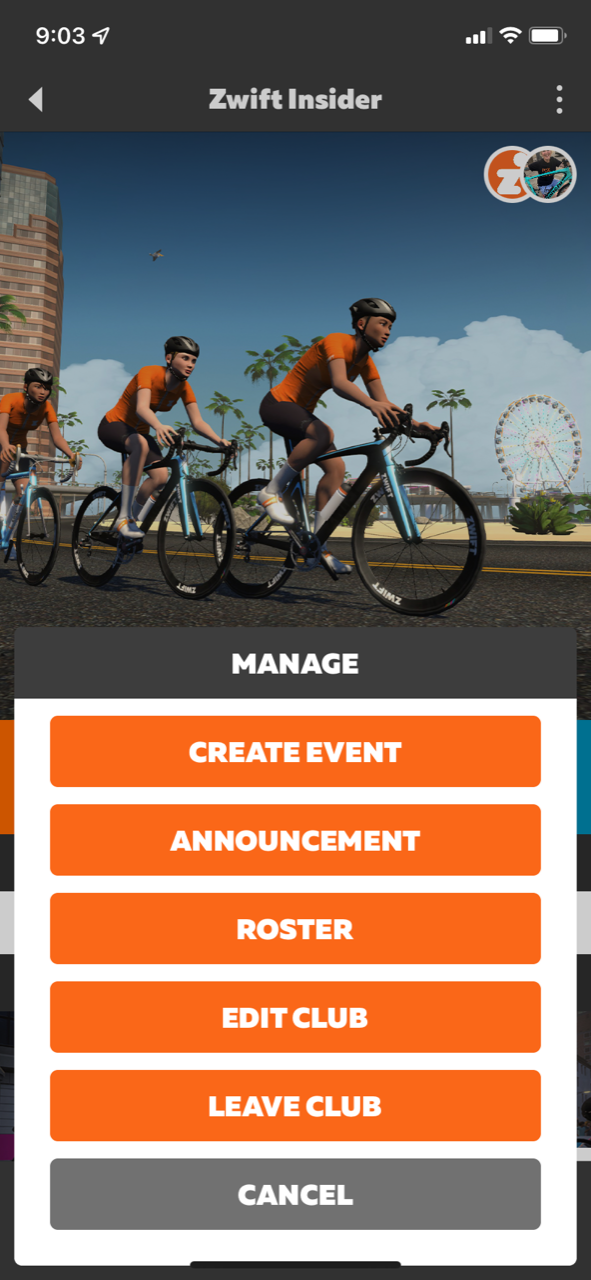
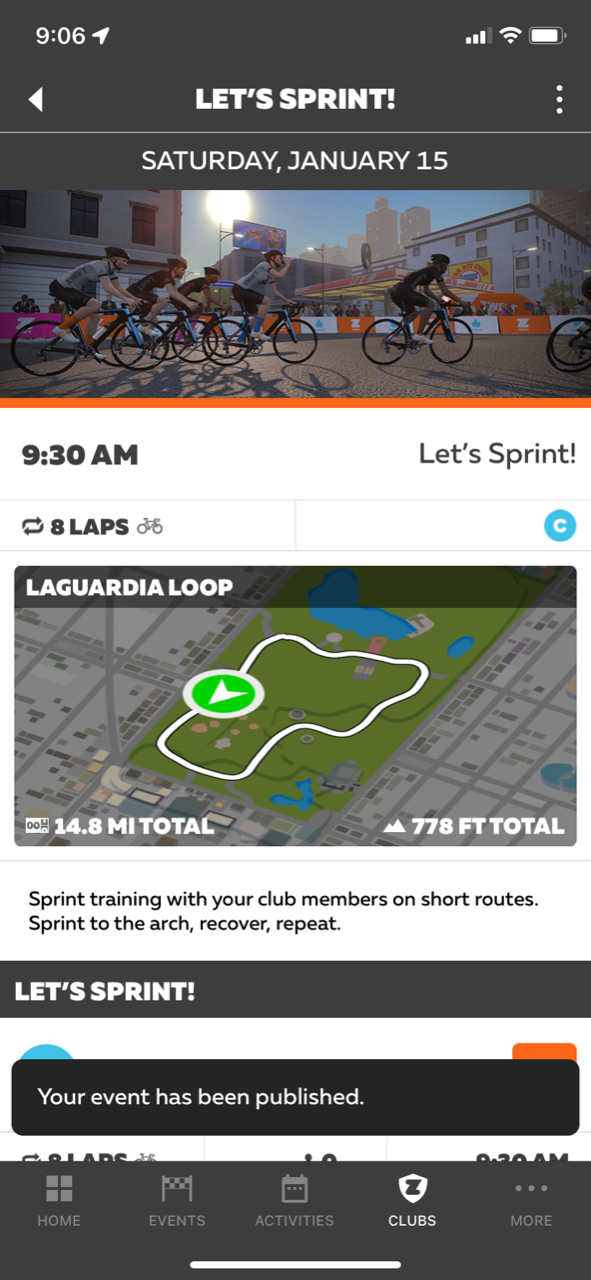
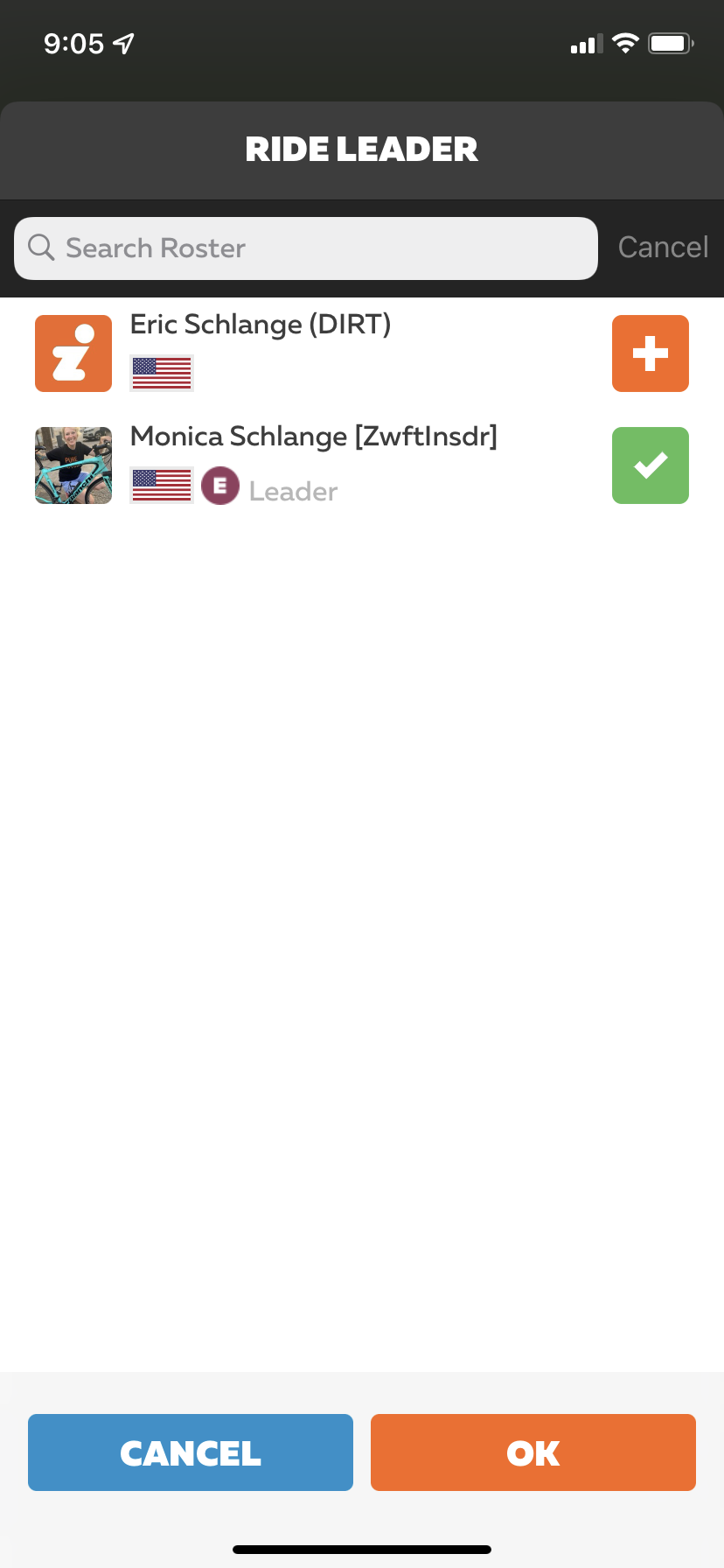
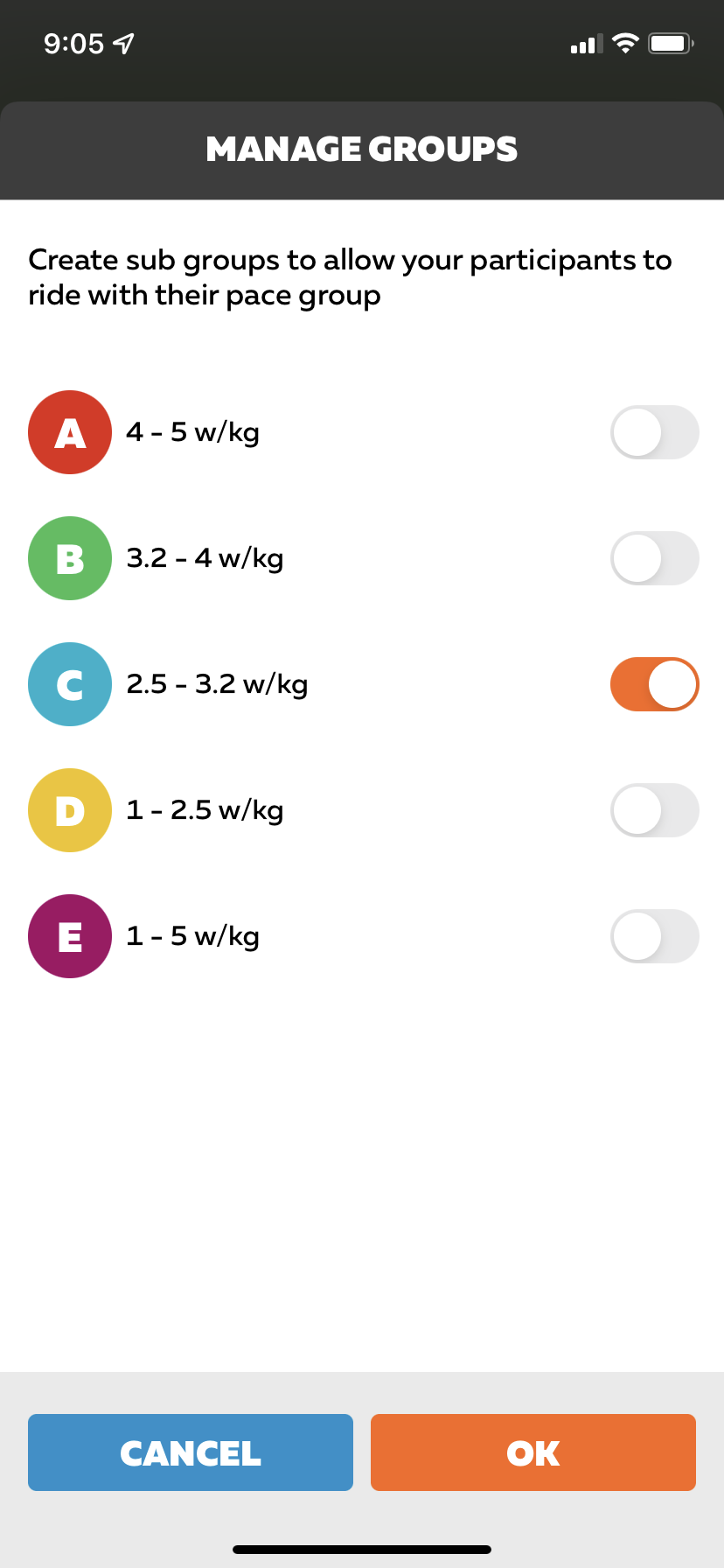
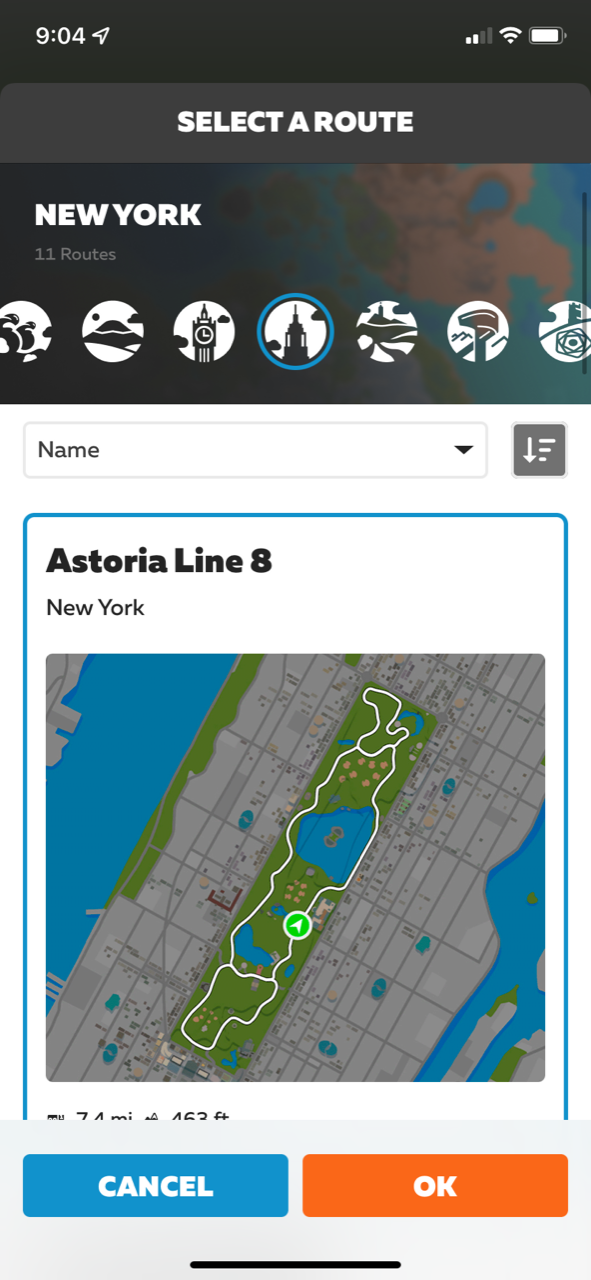
  1. Tap “Create Event” (available from the 3 dots menu, or at the bottom of the page if you have no upcoming events) from your Club’s homepage
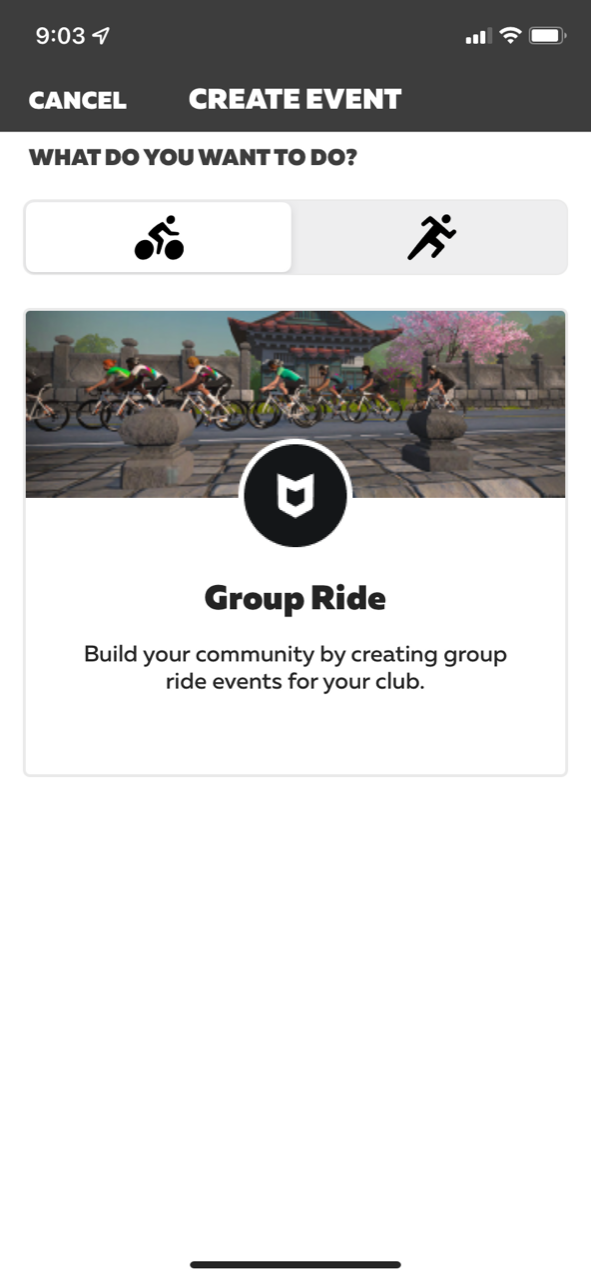
  2. Select event type (Ride or Run) and tap the large box below to proceed
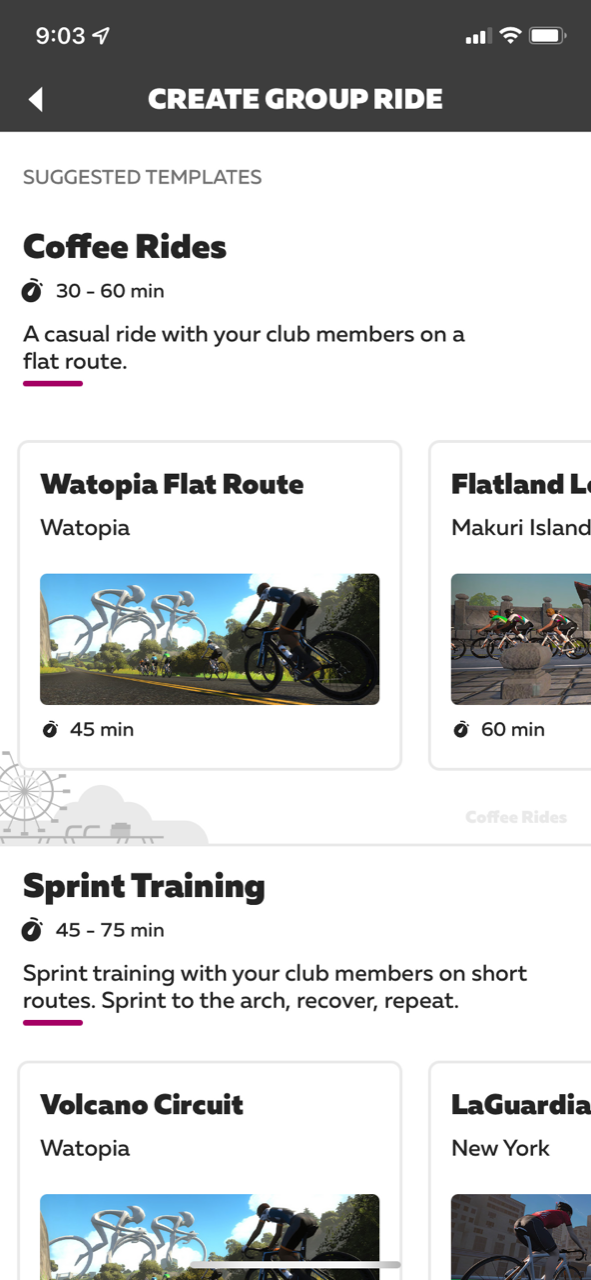
  3. Choose an event template (you can customize all settings on the next screen) or scroll down and tap “Routes” to build an event from scratch
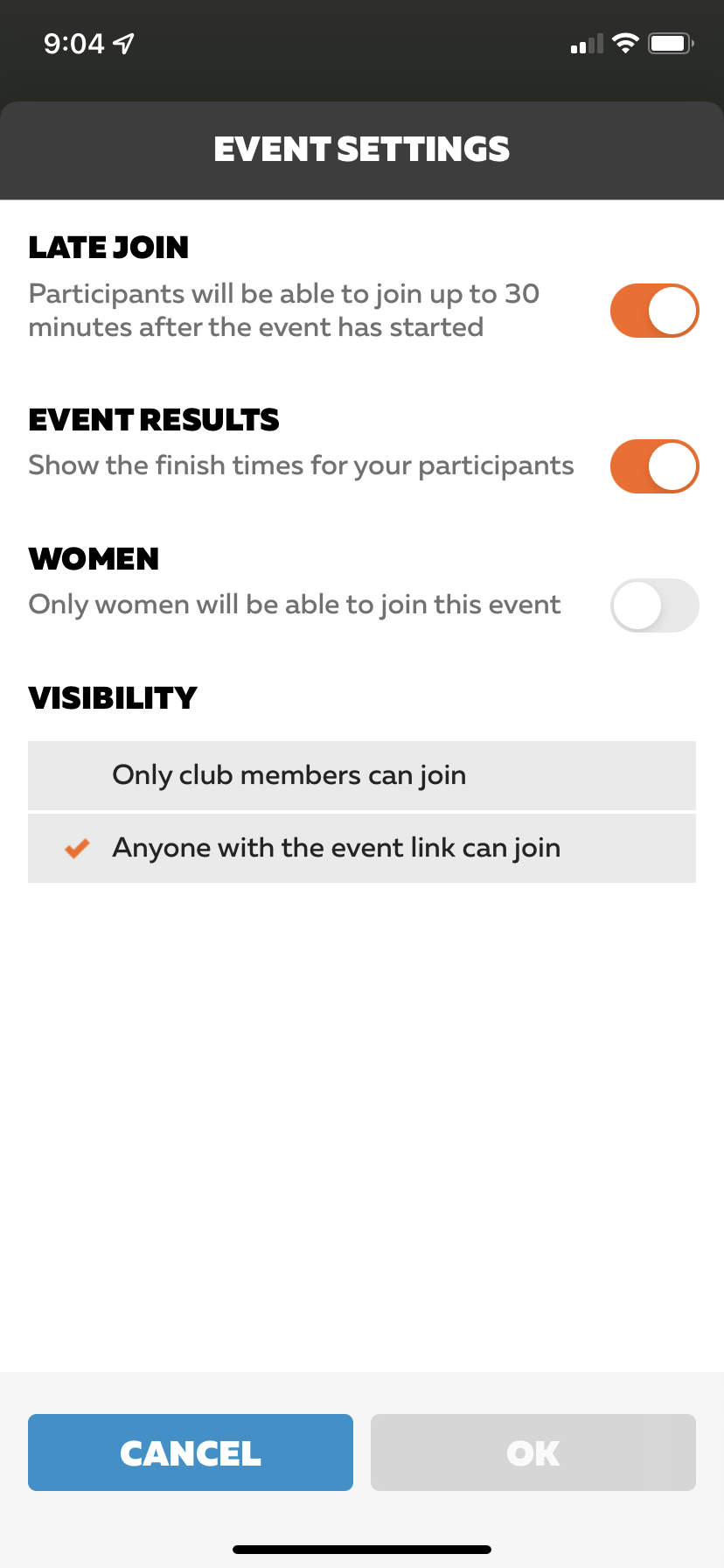
  4. If you chose a template, everything is set up for your event except the date and time. Enter a date and time, customize your settings if desired, then tap “Publish Event”

All done! Here’s what the screens look like:

Watch a quick video tutorial on creating an event:

Exhaustive Event Settings List

Zwift’s event templates pre-populate settings, making it easy for you to spin up an event. But club events can be customized in a variety of ways! Here’s the full list of currently-available event settings:

  • Title (140 character limit)
  • Date, Time (events can be scheduled up to a month out)
  • Description: descriptive text about the event. Can include hyperlinks (eg, “zwiftinsider.com”)
  • Groups: A, B, C, D, and E page groups can be toggled on or off for the event. These groups have set pacings attached which cannot be customized.
  • Leader and Sweeper: select a Club member as the leader (yellow beacon) and one as sweeper (red beacon) if desired
  • Route: choose from any free-ride/run routes on any Zwift world. (Event-only routes not allowed.)
  • Length: define your event’s length in terms of set Distance, Duration, or Laps
  • Late Join: toggle on/off
  • Event Results: taggle the event-finish results screen on or off
  • Women Only: toggle on/off to make it a women’s only event
  • Visibility: choose between “Only club members can join” and “Anyone with the event link can join”

Best Practices for Club Events

Want your Club events to be successful? Follow these best practices.

Use Your Words

Your event has title and description text fields. Pay close attention to what you enter here. The title should be short, descriptive, and enticing. You’ll probably want to include your Club’s name or abbreviation at the start of the title, since event images are currently generic and the description text isn’t visible until people click to see event details.

The description should further “sell” the event to potential participants, then go on to answer any questions they may have.

Be sure to include website and Discord links in the description if applicable.

Choose the Best Date/Time

Real-life club leaders know that getting athletes together at the same time and place can be a challenge. The challenge is similar on Zwift. When choosing a date/time for your event, consider the following:

  • Think about repeatability and habits. Are you choosing a date/time that can be repeated regularly, if this will be an ongoing event?
  • Did your IRL club have a regular outdoor event on a particular day which is no longer running? Perhaps schedule the Zwift event for the same date/time.
  • Think of timezones: if you’re trying to create an event that appears to Zwifters outside of your local timezone, you need to do the math to figure out a time that works well for you and others.
  • Think of life schedules: Zwifters tend to workout after work, before work, and during their lunch break (in that order). Choose your times accordingly.

Make It Special

Zwifters have access to hundreds of events every day. If you want them to dedicate their time to your event, you’ve gotta make it special. Put yourself in their shoes. How does your event meet their needs, and catch their eye? A few ideas:

  • Structure the event so it accomplishes a particular goal, such as sprint efforts, climbing practice, social recovery, or route badges.
  • Use the popular Discord app for voice chat during the event. This helps pass the time and create bonds between participants.
  • Give away prizes, even if they’re virtual and/or silly.
  • Give your event a unique name that stands out from the crowd.
  • Need ideas? Ask for feedback. Then tweak your event and improve each iteration, at least in the early days.

Get the Word Out

Club members can see your event in their Companion app events list, but don’t wait for them to stumble across it. Use other communication channels to share your event link, which is accessible via the 3 dots menu on the event’s homepage.

  • IRL club looking to get members involved? Blast the link out via email, a texting list, or on your Club’s Facebook page.
  • Influencer with a large social audience? Share the link on your social profiles and watch the signups roll in!
  • YouTubers: put together a quick video, then share the event link in your video description.

Take It Seriously

People joining your events is an honor that should be taken seriously. Do everything you can to deliver a top-notch experience to those who have entrusted you with their precious time. Roll out the red carpet, and make it an experience they’ll want to repeat!

Further reading: How to Lead a Zwift Group Ride

Only the Club owner can create events at this time, so make sure the owner is willing and able to post events! If you are an IRL club looking to hold events on Zwift, it’s smart to:

  • Appoint a Zwift events manager and have them create your Club and/or
  • Create a formal process for submitting Club event details to the Club owner

Run a Test

Unsure how an event will unfold? Create a test event, label it as such, then give it a dry run to make sure everything works the way you’d like!

Club Events FAQ

I want to hold Club races. Will the results show up on ZwiftPower?

They will not. All Club events are sort of “private” events which ZwiftPower doesn’t see in any way… at least not yet. The only results you will see would be the event results screen in game, assuming you have it enabled.

Will people see my Club’s events in the Companion events list?

If someone is a member of your Club, they will see your events in their list.

We like using the “Keep Everyone Together” option in our Meetups. Is there a way to do this with Club events?

Not at this time, but we’d predict Zwift will support this eventually.

Is there a way to use my Club to host a group workout?

Not at this time, although we’d love to see this feature! The best you can do right now is use this Meetup hack.

Can only the Club’s creator make events? Or can I let other members make events?

Only Club Owners can create events – but you can designate as many owners as you’d like! To promote a member to Owner, tap the 3 dots menu next to a member’s name and tap “Make Moderator”. Then tap it again and select “Make Owner” and confirm.

Questions or comments?

Have you set up or attended your first Club event yet? Got questions about how Club events work? Comments about additional functionality you’d like to see? Share below!

How to Create and Set Up a Zwift Club

How to Create and Set Up a Zwift Club

Zwift’s Club feature lets Zwifters form groups which can communicate via the Companion app and hold events. It’s a powerful feature useful for real-life Clubs wanting a Zwift presence, as well as Zwift-only Clubs wanting a single gathering place for their members.

First Things First

Before we explain how Clubs are created, let’s make sure you understand the basics of how Clubs function on Zwift.

Clubs Are For Events… For Now

What’s the purpose of Clubs? Much like real-world cycling or running clubs, they let Zwifters organize themselves into groups, then take part in activities together.

In the future Clubs will have a more expanded feature set, but the core function of Clubs today is to let organizers create events. This is something never before seen on Zwift: the ability to create an event and invite others via a simple link.

Further Reading: How to Create Zwift Club Events

It’s sort of like creating Meetup, but it’s next level because the event organizer doesn’t have to manually invite individual followers to their event. The link can be shared and anyone can join, if that’s what you want!

Plus, the events feel more official since they begin in standard start pens, like other Zwift events, instead of along roadside like Meetups.

Who Can Create a Club?

To create a Club once the rollout is complete, you must meet the following requirements:

  • Have an active paid Zwift subscription
  • Be at least 16 years old
  • Be a level 5+ rider or runner

Club Limits

Clubs are limited to 100 members at this time. This was increased to 10,000 members in May 2022.

You can be a member of up to 3 clubs. This was increased to 10 Clubs in May 2022. You can be a member of up to 50 Clubs as of October 2024. That may mean you’ve created 1 Club, and joined 49 others. It may mean you simply join ten Clubs (or less). But you can only be “attached” to 50 clubs at any given time.

Creating Your Club

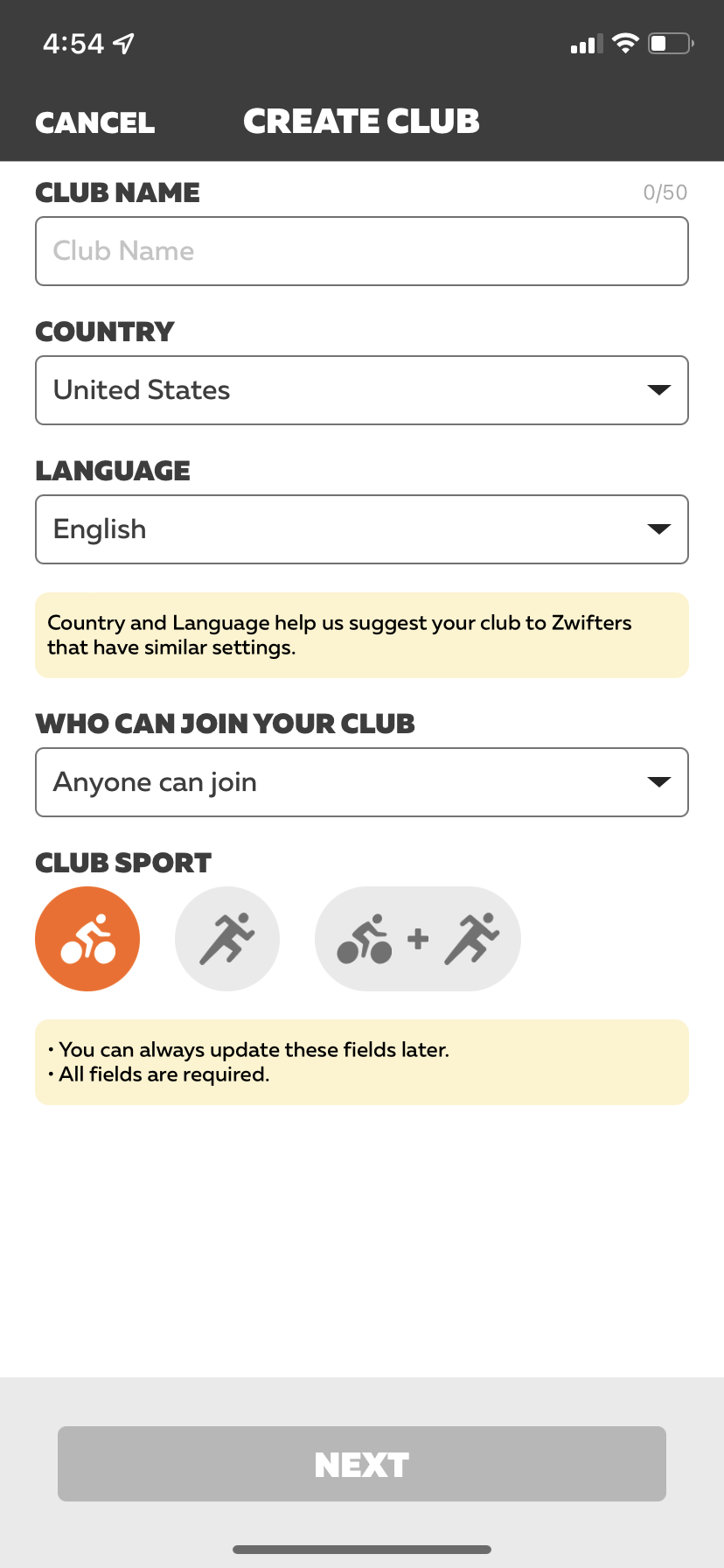
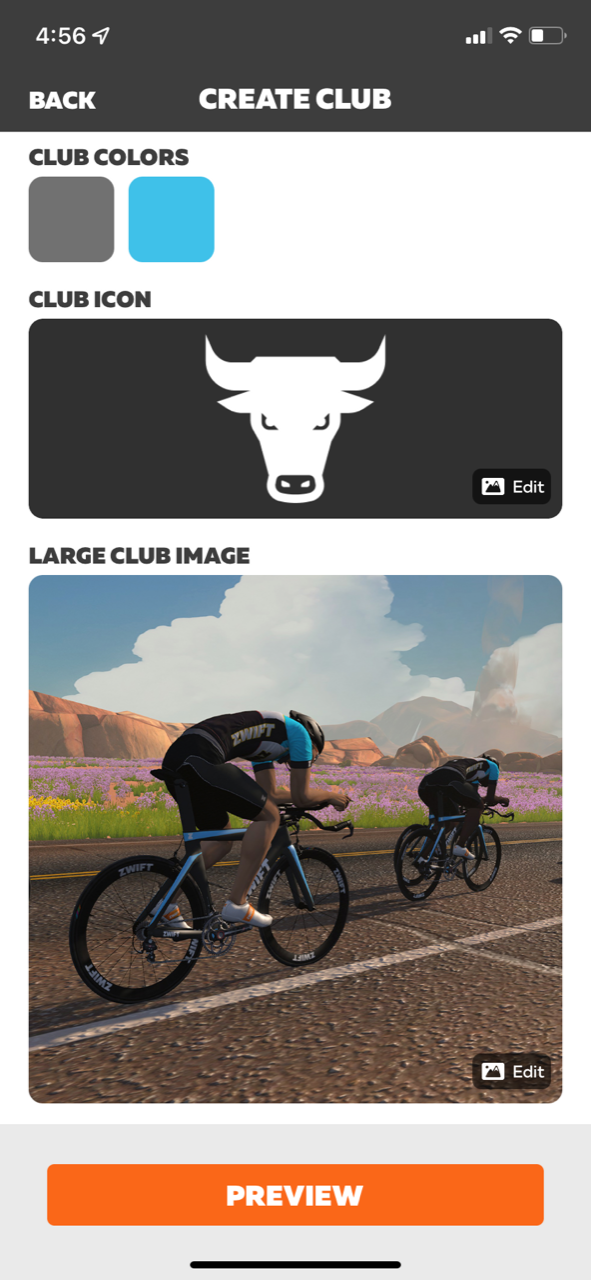
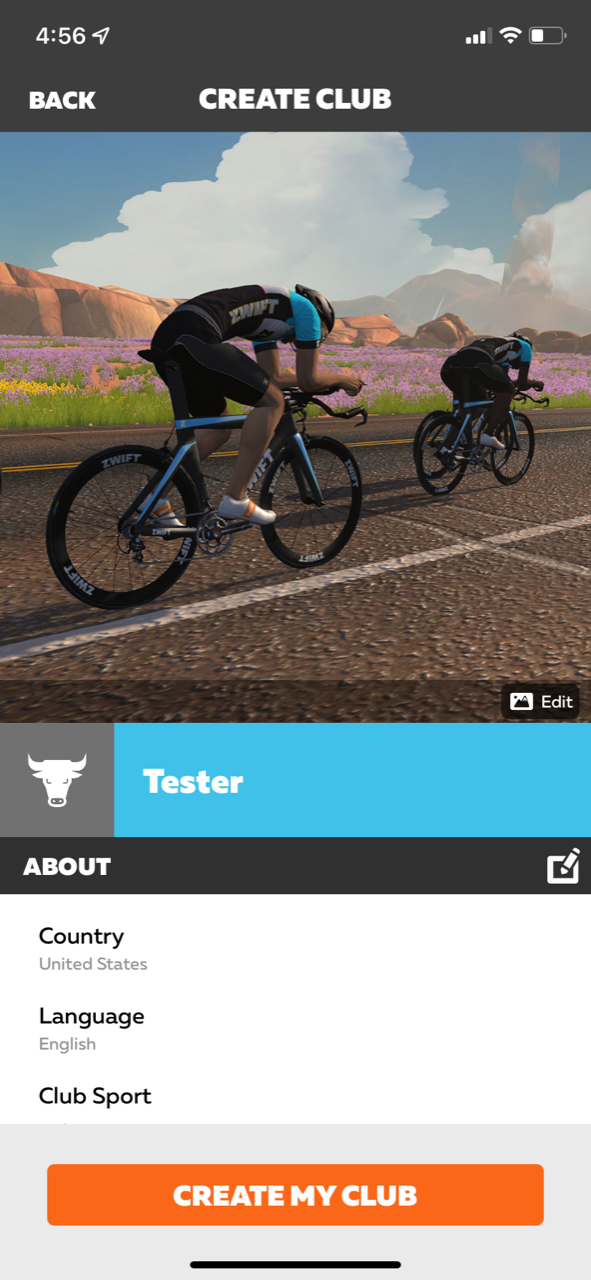
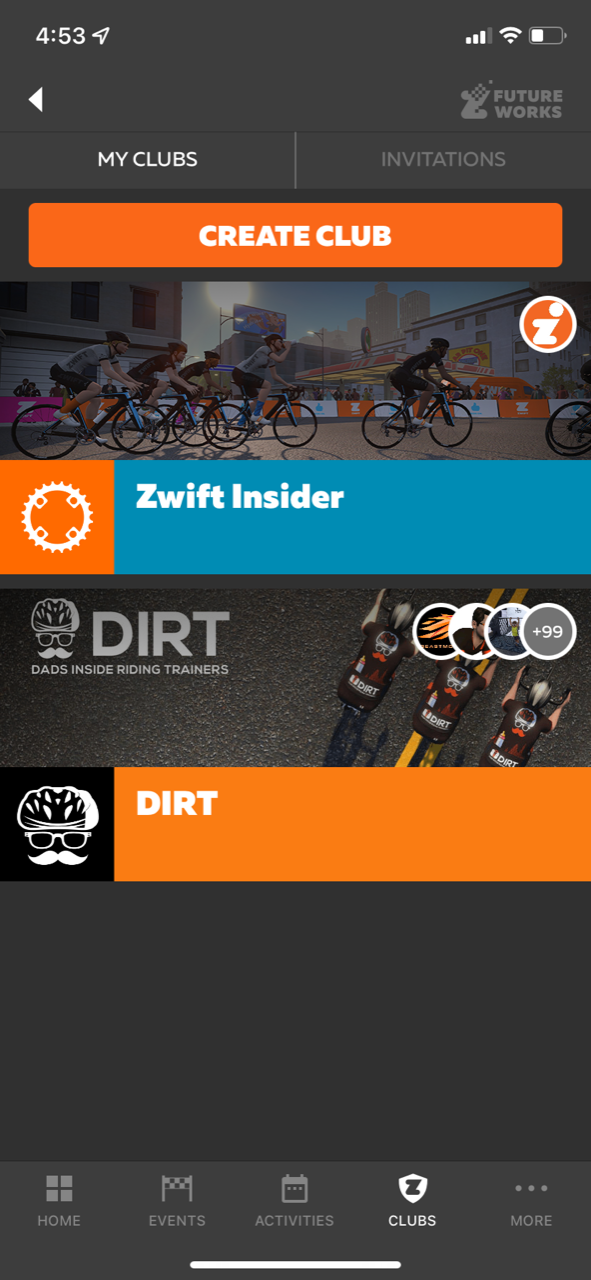
Creating a Club is super simple, and can be done in under a minute via Zwift’s Companion app on iOS or Android. Here are the minimum steps required to create a Club:

  1. Tap “Clubs”
  2. Tap “Create Club”
  3. Enter your Club name
  4. Tap “Next”
  5. Click “Preview”
  6. Click “Create My Club”

That’s it!

Here’s a quick video walking you through the Club creation process:

Best Practices for Starting a Zwift Club

Mind Your Brand

Clubs will be created for a variety of reasons, of course. Some Zwift Clubs will belong to huge multinational corporations, while others will be created as a joke between friends. If your Club is created around an existing organization, or one you’re wanting to start up, mind your branding.

Make sure the name is spelled and capitalized correctly. Select good colors. And use the other best practices outlined below.

Add “About” Info

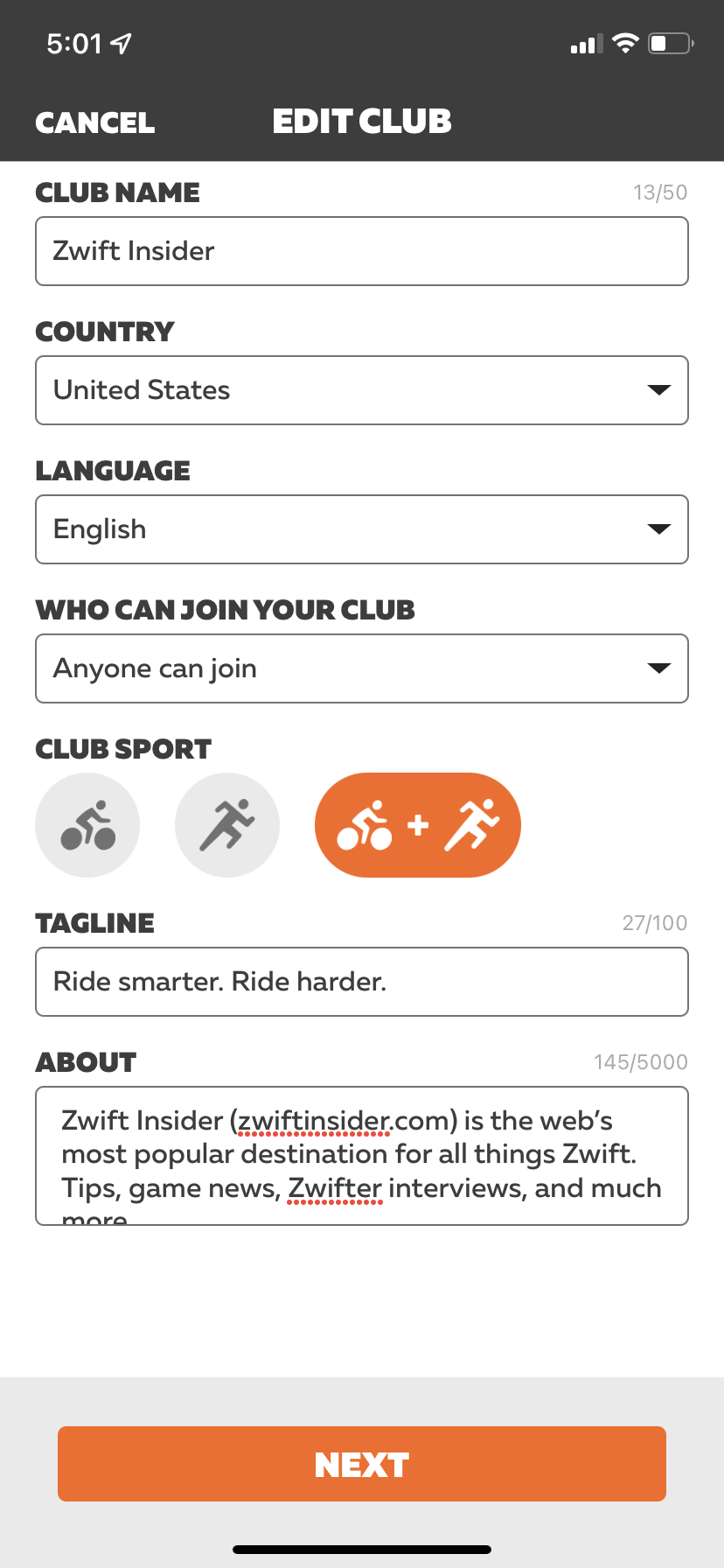
Once your Club is created, you can edit it to add additional info not available in the initial setup process.

Tap the 3 dots menu at the top-right of your Club’s homepage and click “Edit Club”. You’ll see a Tagline and About fields which you can fill in to add more info to your homepage. Does your Club have a website? Enter it in About (just “yourdomain.com” will do the trick) and members will have a clickable link.

You can also add an Announcement to the top of your homepage. Announcements are temporary messages will expire on a given date.

Create an Event

As already mentioned, the real power of Clubs is their ability to host events of any size, on any open Zwift route on any Zwift map.

Here’s a post all about creating Club events, including best practices.

Zwift hosts hundreds of public events every day. Make yours special, and participation will follow!

Invite Members

If you’re looking to create or empower a community using the Zwift Clubs tool, then you’ll need people to join your Club. There are not yet any Club “discovery” tools available, so the only way anyone can join your Club is if you invite them to it.

Your Club can have up to 10,000 members. Zwift Companion only lets you directly invite members who are following you, but you can share your Club’s join URL to anyone you’d like via other means (email, text, social media) and they can click to join.

From your Club’s homepage, tap the 3 dots menu, click “Roster”, then the add member icon at the top-right to search for followers to invite. But before you do that, consider this: why would someone want to join your Club?

Here’s what Club membership gets you:

  • Access to Club homepage and all Club events
  • Access to members-only events
  • The ability to be designated as an event’s leader or sweeper
  • The opportunity to be upgraded to Club Moderator status, so you can invite, kick, or ban Club members
  • The opportunity to be upgraded to Club Owner status, which gives you full control of the Club (including event creation)

Club Members can participate in the Club Chat as well – but that will have limited participation until Zwift updates the chat functionality to include things like notifications and private messaging.

Questions or Comments?

Have you created a Zwift Club yet? Still waiting to get access? Joined a Club? Share any Club-related questions or comments below.


An Analysis of Zwift Usage Data

An Analysis of Zwift Usage Data

During the last couple of months, I have been logging onto Zwift at random occasions, both day and night, to write down the number of Zwifters in each world. The Companion app gives the total number of Zwifters, so it’s possible to calculate the number of Zwifters in the worlds not on rotation as well.

Why Is This Interesting?

Having numbers through different times of day, and across longer periods, can be regarded as customer data and be used to predict customers’ preferences, desires, and future behaviors. This is a central component of data-driven marketing and probably the type of data Zwift use to plan further expansions and the road ahead.

Zwift does of course collect detailed continuous data on many aspects of use. Not only which nationalities are riding and where they’re riding but also how long people spend in each world, their favorite courses, and where they push the most wattage. A limited dataset cannot give very detailed information on customer data but can still be analyzed for interesting trends. It might be used to at least answer some questions on the average Zwifter’s preferences and behavior. Here I have applied some flexible statistical models that correlate data nonlinearly and control for several effects at the same time to the data I extracted. The point was to shed some light on a few of the most basic questions.

When Does the Average Zwifter Ride?

Whether you like to outsprint slower riders while hanging on to faster ones, or you think some worlds are getting too busy, it can be useful to know when the number of Zwifters peaks.

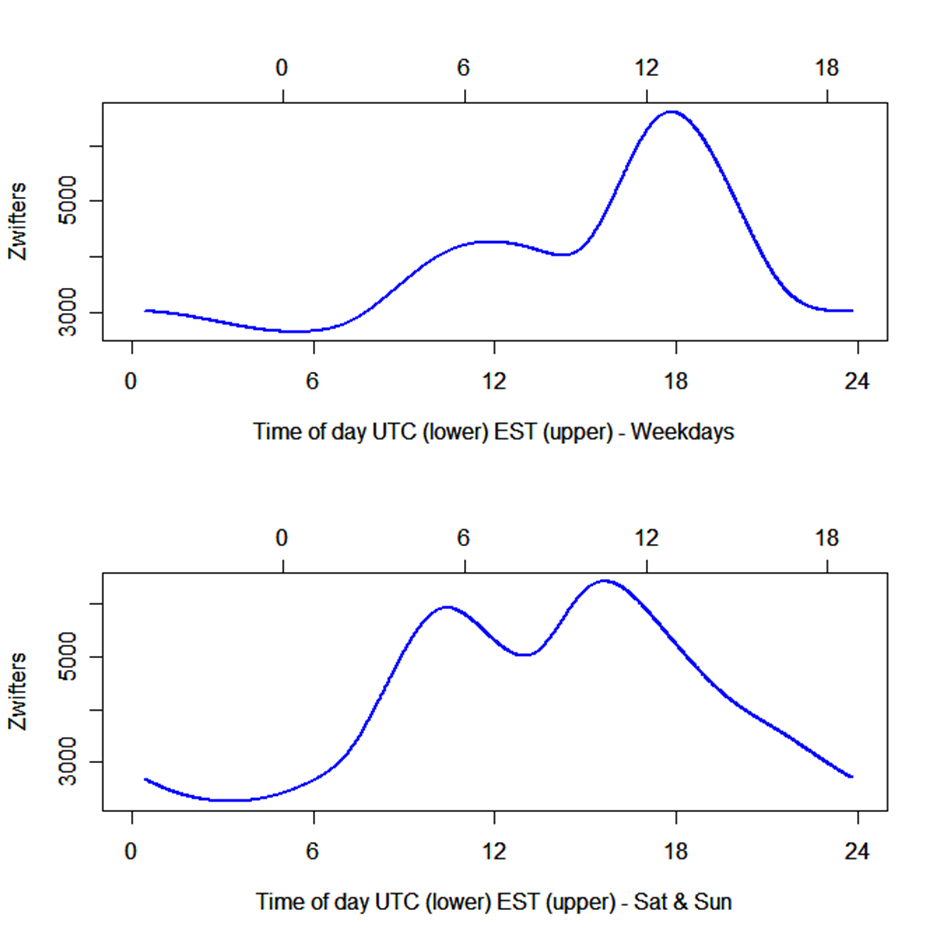
The figures above show the expected number of Zwifters through a 24h period in Watopia in the middle of December. The expected absolute number of Zwifters in the other worlds on rotation will be different, but the trend through the 24h period is here modeled as the same no matter where. The model did also include a trend through the period, so different dates will also have different absolute numbers.

The patterns are different during weekdays and weekends. Not surprisingly, on Saturday and Sunday the peak period is wider, maybe with two peaks at around 10:30 UTC and another at nearly 16:00 UTC. During weekdays, the most prominent peak is the “European afternoon” peak at 17:49, while the earlier peak is less prominent. In addition, the weekend average is 361 riders more than during weekdays. The time with the lowest activity is around midnight EST (or Zwift Standard Time, since that’s when the worlds are changing). If we assume that most people are Zwifting after work on weekdays (1700-2000), the patterns of Zwifters throughout the day would best fit Europe and have least activity in the US and East Asia.

What is the Most Popular World?

The average number of riders in each world could be regarded as a popularity index. So, here is the list with the average number of Zwifters in parenthesis from lowest to highest when time of day and date is corrected for:

RankWorldAverage # of ZwiftersDays in Rotation in period# of Routes
10Paris838102
9Worlds not on rotation1131Always availableNA
8Yorkshire1213185
7Richmond1251133
6Innsbruck1691175
5New York17182111
4London29621413
3France3622107
2Makuri37512120
1Watopia4487Always available34

Watopia is by far the most popular world. France and Makuri clearly round off the podium but are nearly indistinguishable, with the difference being on average only 129 riders in favor of Makuri. (This is despite Makuri having the novelty factor of Neokyo launching during in this period.) France’s popularity could be boosted by always being paired up with Paris, the least popular world.

In terms of number of Zwifters, the UCI worlds tend to be less popular, but New York as well, just barely ahead of them. If we further look at the true observed number of riders in Watopia when only the less popular UCI worlds are on rotation, the observed number of riders are often higher than expected from the model. This means people tend to choose Watopia in favor of Richmond, Yorkshire, and even London. However, when France and Paris are on rotation on average 109 riders less than usual selects Watopia. This is even more skewed when Makuri and New York are on rotation. On these days, nearly 200 less riders choose Watopia.

Popularity could be linked to availability as France and Paris have a high popularity and are the worlds with the fewest days in rotation in this period, less than half of Makuri. However Watopia is always present, and Makuri had the highest number of days in rotation in this period.

Small worlds with few routes could be expected to be less popular. Paris is a rather small world with only 2 routes, so it wouldn’t be expected to have the same numbers of riders before getting too crowded or people having checked off the badges. However, if we divide the number of Zwifters by the number of routes available in each world, France and Paris comes out on top, while Watopia, New York, and Makuri constitute the bottom three. This could indicate that some people to a larger degree ride the same routes over again in the smaller worlds.

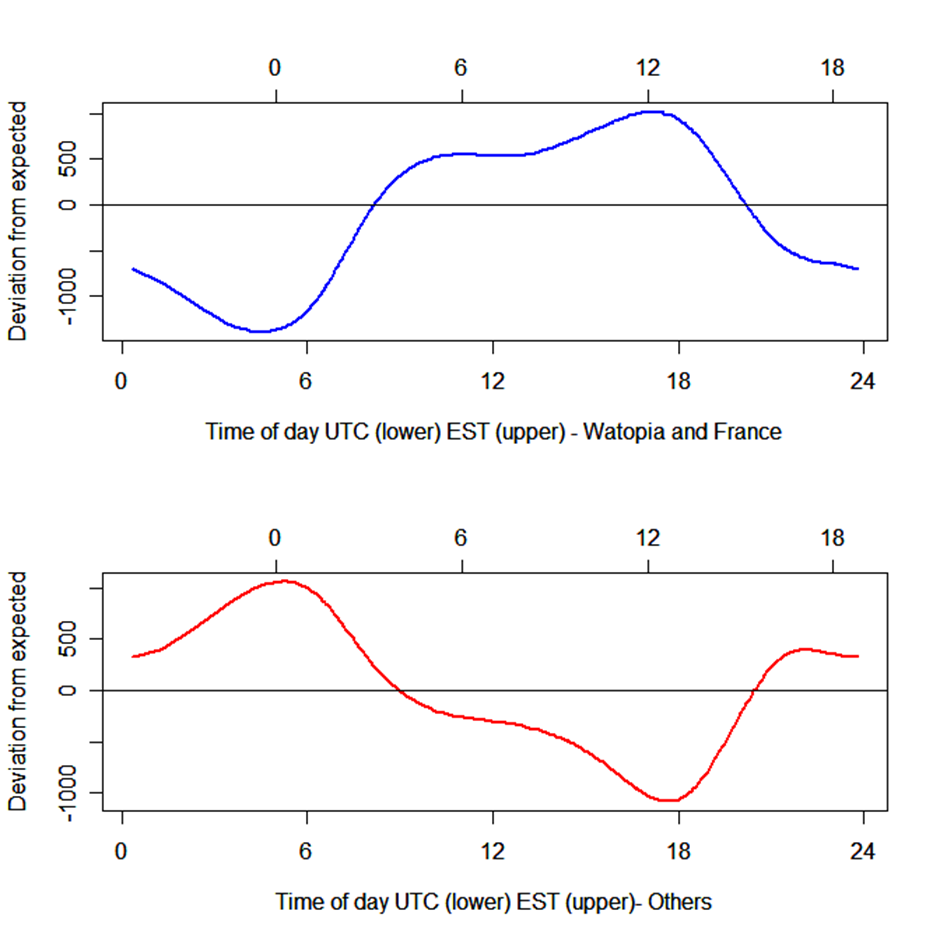
So maybe different people choose different worlds? The model assumed the same curve through the 24h period for all worlds. If some worlds are more popular at specific times of day, the model will have a larger deviation between the expected and observed number of Zwifters at those periods. If we combine the two old favorite worlds Watopia and France (and they do indeed have a similar pattern), we can look for trends in the deviation from the expected (we leave out Makuri since it has Neokyo that probably have a large appeal to all Zwifters to test):

The two graphs show the trend in deviation between what is expected from the model and what is observed. A high positive number indicates a lot more people were observed in the specific world at the time than the model would expect based on a standard relationship. The observed number of riders in Watopia and France are on average nearly 1000 riders higher during the “peak” periods (1700-1800 UTC) and more than 1000 riders lower during the UTC and EST nighttime. On the other hand, people riding at UTC and EST nighttime tend to choose to ride in a world not on rotation (using world hack or participating in events).

So, France and Watopia are very popular with the typical, maybe European, Zwifter, and the realistic UCI worlds are not the most popular across any time zone. If Zwift wants to try to attract new customers, and maybe they consider Europe to be nearly fully utilized, it makes sense to expand on new fantasy worlds.

By this time I realized my hopes of riding the UCI Worlds road race course in Belgium on Zwift was diminishing…

What Effect Did the Neokyo Release Have?

So Zwift’s world expansion strategy is not a secret. They have launched Makuri Islands, added on Neokyo, and stated that they want to expand Makuri as a “sister” to Watopia. But, does launching a new world have a large effect on Zwifters’ preferences? This question is somewhat difficult to answer since I have no data on a typical autumn/winter without a “Neokyo” release. We can nevertheless try to “mine” the data for some assumptions.

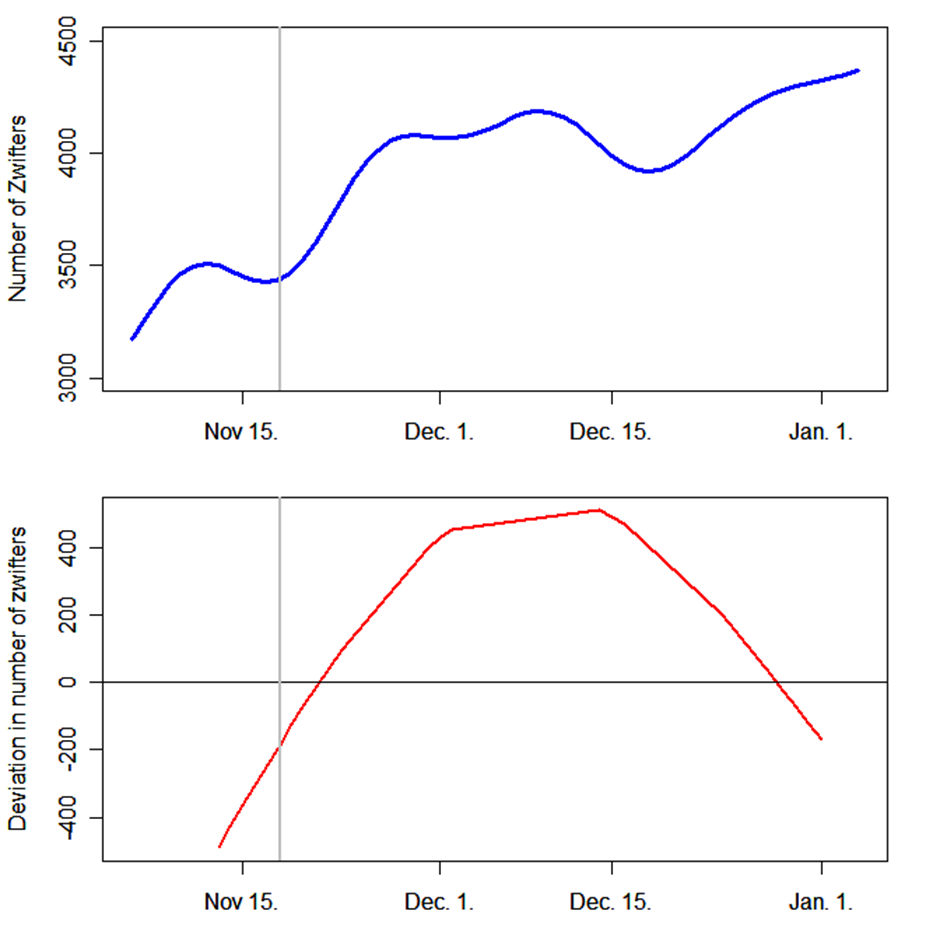
The blue curve in the top plot below is the expected number of riders in Makuri from November 5-January 5. The number of Zwifters increases in total during this period. This is probably an effect of more and more people moving from riding outside to riding indoors during winter in the northern hemisphere.  The trend curve has a “two lumped bulb” starting by November 18 being the first date with numbers from Neokyo. If we imagine a linear trend through November and December, the Neokyo effect can be regarded as a surplus until the middle of December. The curve is not specific to Makuri since it’s not modeled differently for different worlds. This means the surplus is present in all worlds and could be an effect of more people logging in to Zwift in general to ride Neokyo.

To consider Makuri specifically we can look at the deviation between actually observed riders in Makuri and expected riders based on the model (with the same date effect extracted from all worlds). This is the lower curve with a red line. It becomes even more obvious that in addition to the increase of 500-600 Zwifters on a daily basis in the early Neokyo days, there were also approximately 800 more Zwifters in Makuri these days than before the release of Neokyo.

I’m a scientist and not a marketing expert, and probably Zwift has tons more customer data to plan their further strategies. But given these limited data it makes sense to keep on expanding Makuri. Although bear in mind that France seems, contrarily, to be a world with limited routes, yet still one of the most popular worlds. And personally, my favorite world is France…

Technical Notes

Data was collected from the Zwift main menu and Zwift Companion app:

The analysis is based upon the assumptions that these numbers are real and unfiltered numbers of actual Zwift users, and are not biased in any way. A total of 1144 numbers were used from 285 occasions. Observations were done from 1 to 8 times a day, with an average of 4.7 times. The range of observations per world was from 47 to 286.

Data was analyzed using a generalized additive model given by the equation:

where Nik is the number of Zwifters in the i’th world at the k’th observation occasion. β0i is a world-specific intercept (corresponding to average number of Zwifters in each world), Tks is the time of day of the k’th observation occasion if the day of the k’th observation is a Saturday or Sunday. Tkw is the time of day of the k’th observation occasion if the day of the k’th observation is a weekday. Dk is the serialday of the k’th observation given by days since November 1. β1k is an offset if the k’th observation is a Saturday or Sunday.

The s1k, s2k, and s3k are specific smoothing curves (cubic splines), tailoring the effect of the covariates to the response at the different occasions through time and date. The s1k and s2k splines were modeled as cyclic to tailor the effect of the end of the 24h period to the beginning for a continuous trend. The number of knots for the smoothing curves was found using generalized cross validation.  εik is the error term being identical and independently normally distributed for all worlds and at all occasions and represents deviation between model expectation and observed numbers. The model explained 90% of the variation in the data.

Questions or Comments?

Share below!


Festiveresting on Zwift

11

Festiveresting on Zwift

Hi there! I read an interview with Eric where he said he likes posting user stories on Zwift Insider – so here I am writing my Festiveresting story hoping someone likes the read!

First, some words on me: I’m 37 years old, a husband, a father of three, and a sports addict. In that order I would say, and I hope others say that too. Basically, I define myself as a runner. I did two triathlons before the pandemic, but got stuck on Zwift in 2019. As with everything fun I spend way too much time with it and have reached level 39, so I’ve put some miles on the roads of Watopia. The only thing I had left to do with all the badges and challenges was the Masochist badge and the Everesting. Early November I injured my foot, which kept me off running the roads – so here we are!

Preparation

Well, the main preparation was getting the “go” from the family! Maybe it went something like this:

Me: Hey, I got an idea!

My wife: 🙄 .. what is it?

Me: I’d like to do the everesting challenge!

Son: Dad, what is everesting?

Me: That’s riding the height of Mount Everest in one activity. About 9km up.

Son: Cooool!

Wife: 🙄🙄🙄

Maybe it went a bit different, but the topic was on the table sometime in November. To put some social pressure on myself I shouted it out on social media. My sports bubble likes to use #allebekloppt for crazy sports activities (which means something like “all nuts”). To give it a special touch I called the challenge not a #vEveresting but #TripleZugspitzing. The Zugspitze (Germany’s highest mountain) is almost exactly 1/3 of Mt. Everest, so instead of climbing 8848m my goal was set to 8886m. Almost the same, but some special labeling is always nice, isn’t it? I planned it loosely for my Christmas holiday, as this is when I could spend a night riding without using much of the time needed for family life or work.

I used November/December to ride a lot more than before due to my foot. Holiday time came and the first idea I had was: why not ride the everesting within the Festive 500 challenge? But pandemic or not, the time between Christmas and New Year’s is family time where it is difficult enough to get the hours to ride the 500km. With Coco pacing the pack it was quite easy though. I am used to hopping on the bike at 5AM to get some miles in before work (usually running, but biking works just as well), so I did 60-100k easily in the morning hours. With my kids having to knock off some roads as well I also had an hour or so in some of the afternoons, so I was done with the Festive 500 on December 28, giving me the rest of the year to knock off 6000km for 2021 (and 1250+ in December alone). Which is way, way more than I ever put in pedals in my life!

So on New Year’s Day I carefully put the everesting back on the table again by asking, “Well what’s our plan for the first week of the year? Is there time to sit a night on the bike?” “You really want to do that? So why not start now?” was the answer, and thus I was sitting on the bike at about 4PM on January 1st!

To get back on the topic: preparation was more or less not done. I didn’t train climbing, instead with doing the Festive 500 the week before I rode more km in a week than I ever have. Completely flat. I didn’t sleep that much the night before (given it was January 1st the reason should be obvious). What I actually did: I prepared a drink, placed some Clif Bars nearby, put on my clothes (literally nothing more than bike shorts and shoes) and off I went! What could possibly go wrong?

Everesting

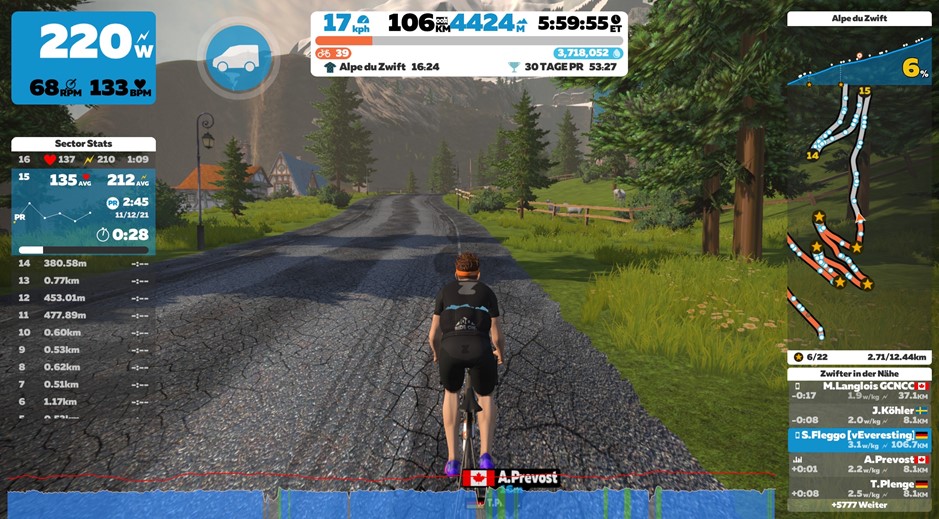
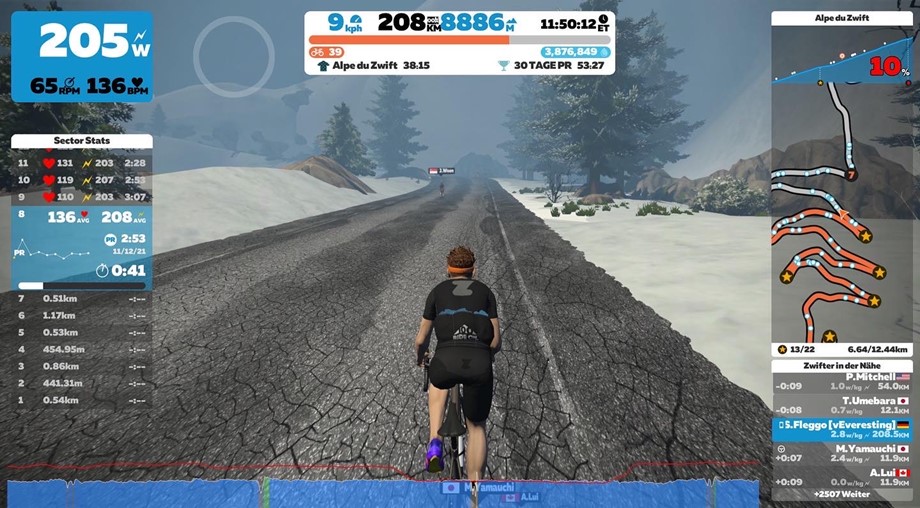
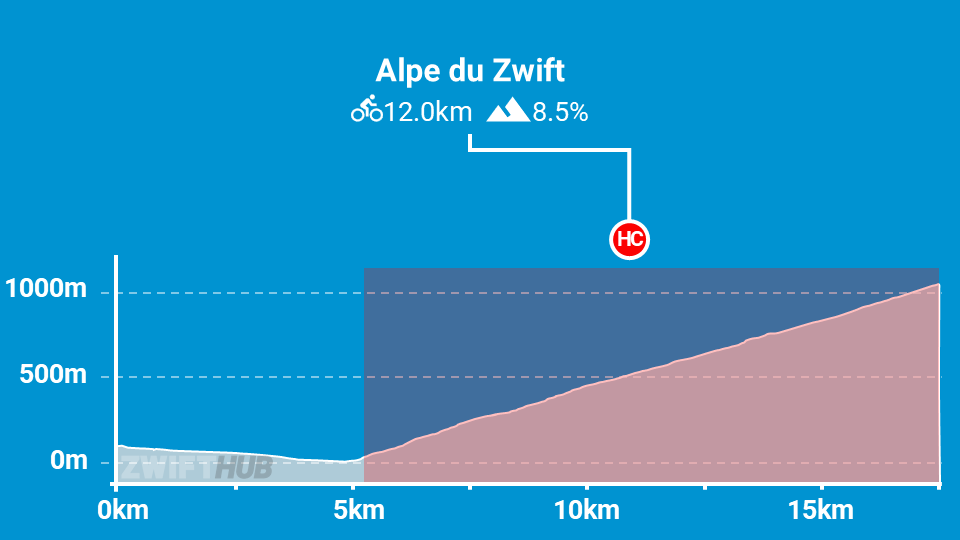
I chose Alpe du Zwift as the hill to for my challenge (as nearly everybody does I guess). I used the 10 minutes or so riding through the jungle to write down the milestones in my notes app: as oxygen was still available in my brain I could do the altitude maths for each rep without the need of a calculator.

So this was the plan I had when I started the ride:

  • Road: Alpe du Zwift (each climb: 1036m)
  • Duration per Climb: Not sure. Goal about 1h 15min (+ downhill: about 10 min), say 1h30min in total per repetition
  • Total time: 8.5 times that trip -> say it will be 12h 30mins without breaks

Starting at 4PM that would be a finishing time of 4:30AM. Which was quite good, as everybody should be asleep then, giving me some buffer to be slower or take a short rest in between.

That was all I planned. I had a glass of isotonic drink and a bag of Clif Bars. While riding to the foot of the hill I put on my heart rate sensor (I usually just wear it in races) to have some control over my condition. Everything I missed by now I would have to get while coasting downhill. So up I went.

Climbing the Alpe

Riding at 2.8 watts/kg meant a bit less than 200W. I took the easiest gear I had, which left me with a cadence of just 60 rpm, but lead exactly to the watts I wanted. After the first few bends of the climb my heart rate settled in at 120bpm, which was just perfect for a long trip.

About 20 minutes into the first climb I recognized I was still riding the Tron bike. It might just be margins, but on a challenge like this every single bit might count, so I decided to switch the bike. First I checked which one to use here on Zwift Insider (don’t know when I last visited the Drop Shop and I had some drops to spend), looked five times through the garage until I found the bike I wanted (the first sign of decreased oxygen?) and on with the Lightweight Meilensteins to continue my climb.

From here, everything went totally smooth. I chatted with some other riders attempting the everesting, watched the family riding their roads, and was at the top after 74 minutes. I passed the banner, turned around, hopped off the bike, and filled up my drinks. I also drank a glass or two of water/water-juice-mix right then. I took the bag of isotonic down to the bike to be able to fill it up there later at night and also took two bottles of Mate (a caffeinated soft drink if you don’t know what it is) with me as well.

After being down: up it goes again! That’s the rule! Off I went again, and from the beginning I was totally in. I found my cadence, produced the watts, and my heart rate was perfectly in the low 120s. The nutrition plan that came to my mind seemed to be fine: Having .5l of isotonic Drink + 1 Cliff Bar + x (another energy bar or whatever) per climb – that should fit my needs. This time I drank one bottle of Mate as well (another .5l + some calories) and I felt totally fine with it. 70mins and up I was again feeling perfectly good.

That really pushed me. Feeling good with my routine, I kept it! I drank a glass or two again, ate some pasta with the kids, and took two towels down to the bike this time. I always wanted to be back on the bike when the downhill was done. I did not want to pause for a long time in between, as I know I have trouble when getting back on the bike after a break. I also didn’t sit down (except when I had to take a toilet break) but instead stood or walked around.

Same procedure every round: hop on, get the rhythm and climb the Alpe! It went as before: 200/60/125 were the numbers to go for and I went for them. Another climb and another 70min later I was up again. And the repetition started over. As the kids would be on their way to bed while I climbed for the 4th time I wished a good night to them. I took nothing down with me that time (did I finally have everything with me now?) and went up for trip number 4.

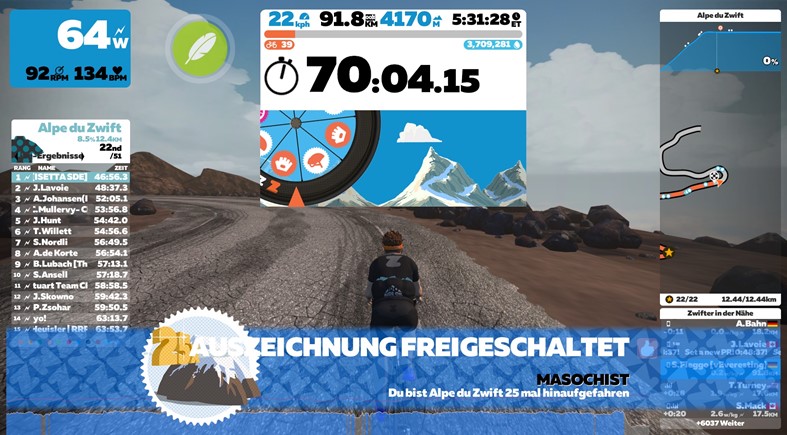
Earning the Masochist badge at the top of climb 4

I know it’s probably a bit boring to read, but this story has no cliffhangers. I found my rhythm, took the masochist badge after climb 4, and kept going. Round after round, just hopping off the bike while rolling down. Always matching the numbers, being mentally totally clear and knocking off climb after climb in about 70mins (+/- 20 seconds or so). The legs worked like a machine, doing their job.

It was a series of great trips up the Alpe, and everything worked way easier than expected. The last time I tried vEveresting I dropped at 5,500m, but this time it went fine from the first to the last meter. I vEverested. I TripleZugspitzed.

I know this story missed the mental breakdown with the happy ending, but for me, it was way preferable that way!

I should write down something for you that might help. Here it is:

  • Get your nutrition! For me it was a key to get 0.5 liters while climbing + 1 Bar + x and 0.5-1 liters between the climbs. In addition 0.5 liters of caffeinated drink every second climb (with calories as well!)
  •  Get your entertainment! First I had the family with me, then I had streaming (first dopesick – watch it! Then Ted Lasso for the good moods. Then some music and podcasts afterwards.) It was never boring at any time.

The Day After

The next day (Jan 2) was of course a relaxed one. The craziest thing was that I felt really good. No physical problems, no mental problems. So I made preparations for the next trip!

The Zwift Fondo Series was running, so I logged in to the last Bambino Fondo event at 6PM. No, I did not ride that. But I stood in the starting grid until 5AM Jan 3rd to ride it on my own. #allebekloppt, you know?

RIDE ON!

For the German speaking audience that made it down here: I also write a blog at www.likethewindt.de mainly about my running, but also cycling if it is notable. You’ll find this text there as well (a bit different as I wrote both as it came to my mind and did not translate it). So feel free to hop over to have a look.


Training with Rowe & King, Week 10

Training with Rowe & King, Week 10

Training with Rowe & King continues despite the busy schedule around the holiday season.  The plan for this week was to have several longer steady rides to continue building the base, before finishing with several tougher events to build the fatigue, mirroring the early weeks of training but hopefully at a higher level.

Consequently, Monday was started with a very steady ride, Zone 1, a nice 40km which was 1 hour and 15 minutes, which was probably as much as my legs could handle given the important 100km endurance ride the previous day. 

Tuesday’s 3-in-1

The plan for the week was to build into it, with Tuesday being another steady day which saw me dipping into three different Zwift events, one after the other.  Tuesday evening in Europe is a peak time and the first ride I joined was one hosted by Ben Foster, a professional footballer who plays for a team in the English Premier League.  The ride is called “The Cycling GK Monthly Ride Along” (GK stands for “Goalkeeper”, the position which Ben plays).  Ben is very active on social media and has some interesting podcasts.  I think he would make for an interesting interview and I think he is the only pro footballer hosting events on Zwift so it would be an interesting conversation. After 30 minutes with Ben, it was into my next ride with Castelli.

Having promoted the “Roll with Castell Epic” I wanted to join in the fun and hear what European Women’s Ironman Champion Laura Philipp had to tell us.  This was a fascinating ride as Laura had just returned from a training camp where she had been cross-country skiing to build fitness for 2022.  This also included gym work, so my takeaway was that I certainly need to build gym work into my programme. 

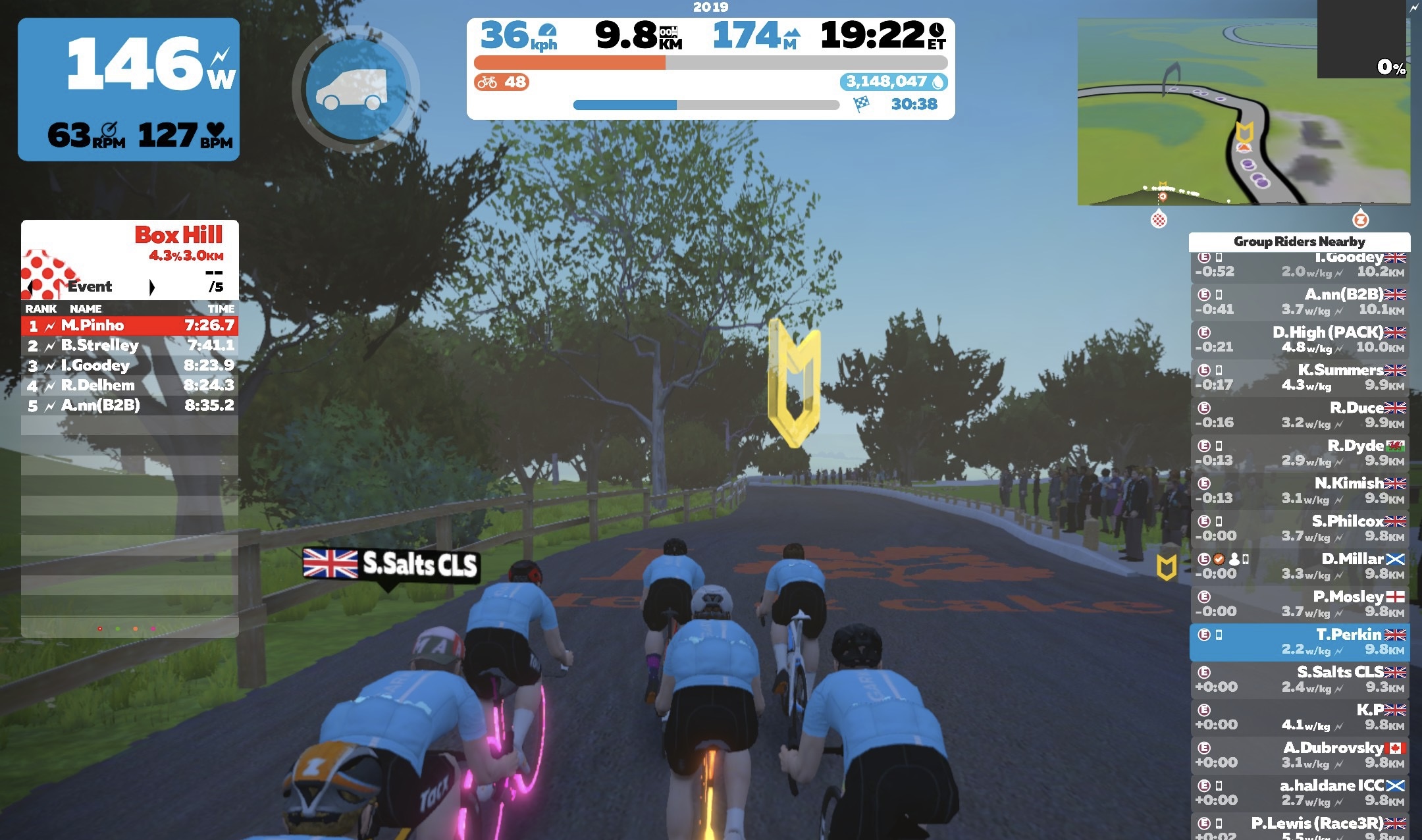
Then it was on to the next ride, 30 minutes with David Millar in his CHPT3 ride.  Having promoted this, I was keen to support David and see how he has been getting on as he re-finds his feet with Zwift.  This was a nice leisurely ride around London that took in Box Hill. For a moment as David led a small group that formed around him up the climb, I felt like a member of the 2012 British Olympic Cycling Road Race team, which David was part of. Until I got dropped on the descent! It was at that point and 30 minutes into the event, I called “time” on my evening of cycling.

CHPT3 ride

I have never dipped into one event and then abandoned halfway to join another then another, but found it a really nice way to sample all the different rides. This was another roughly 50km accumulated in 90 minutes of steady cycling.

Wednesday Chase Race 

The last time I did this event, I really enjoyed it.  This time, not so much.  You see the objective of this training session was to push myself to an uncomfortable level, simulating being in the pack at race pace.  When I signed up, I could see that the E group that I was assigned to had 5 riders.  It was going to be difficult to catch up with the other riders.  As I waited in the pen, I could see riders setting off at their intervals and those in the pen were getting less and less.  It was time for the A’s to leave, which then left me alone in the pen.  Well, this was absolutely rubbish.  The group ahead was already flying and one minute up the road by the time I set off.  They encouraged me to chase and try and catch up, but it was futile and I never made any headway and I watched in vain as the distance to the group ahead got larger.

I could have quit, but this was the time allocated to training so I persisted and turned it into a solo TT effort on the R.G.V. course in France.  It was at this point I should have stopped and changed my bike to a TT frame, but I didn’t want to stop, so I plowed on.  I did curse the fact that I hadn’t realised I was the solo protagonist in my team as I would have equipped a TT bike from the start, but it was too late for that. I was committed.

I took on the challenge of seeing if I could catch anyone.  My task was clear.  Ride as hard as I could, for as long as I could, and see who, if anyone, I could catch.

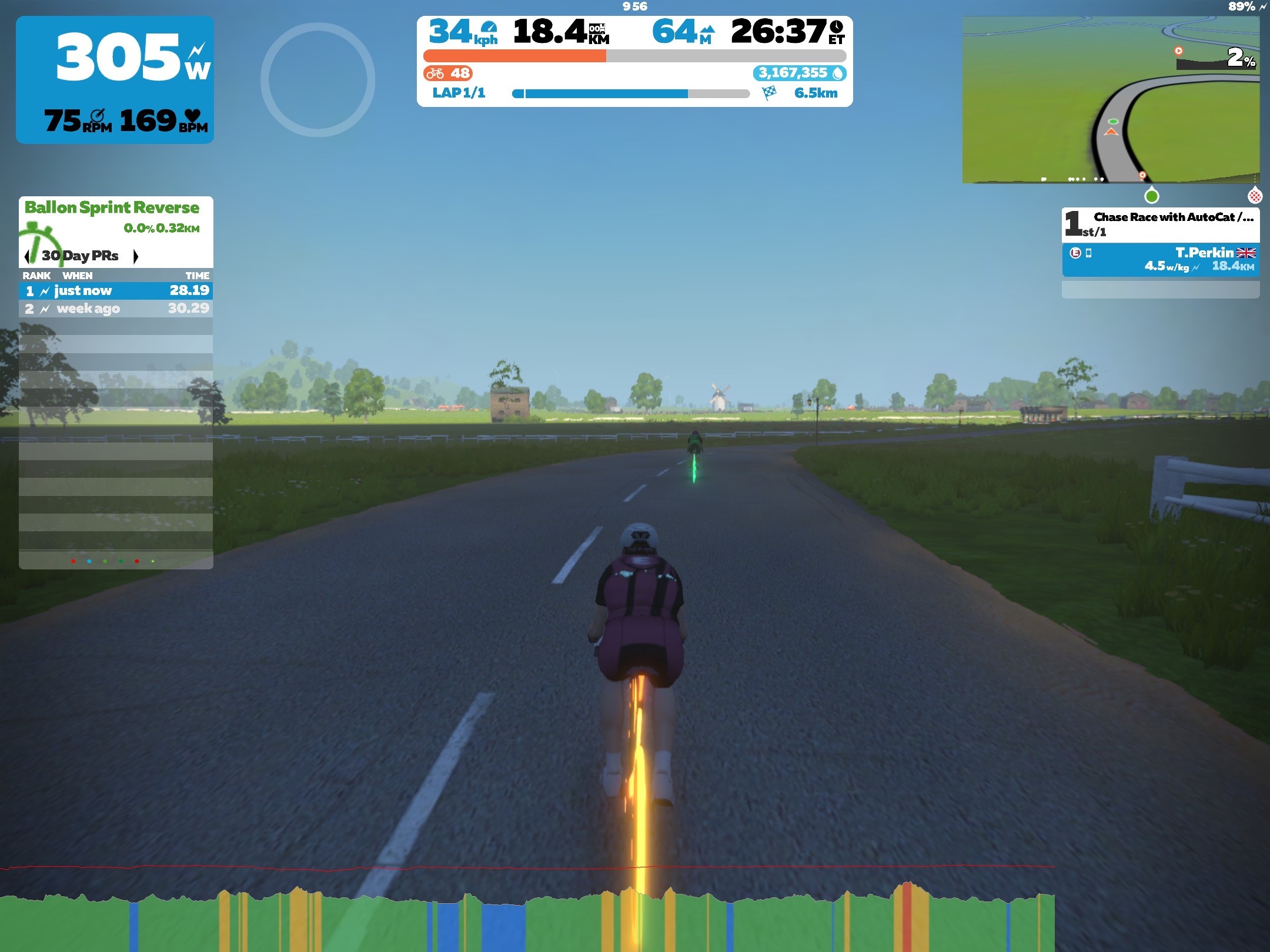
As I pushed on, what I did notice in the early few kilometres is that I was down on power.  I was struggling to hold over 300 watts, which was unusual, especially as I had been performing well in the interval sessions where I was forced to hold 320 watts. 

It’s interesting because this directly ties back to the first few weeks of training where it’s as much about managing the fatigue and recovery as it is performing and executing the planned session.

With this ride, I was determined not to finish last on the road. When I saw a single rider on the mini-map, I had a renewed focus.  I wasn’t able to suddenly produce another 50 watts, but what it did do, was stop me easing off.  So I focussed on the single green dot from the B rider up the road.

It took what felt like an eternity to make the catch, which was achieved with 6.5km of the 25km route remaining. 

I was determined not to concede the place, so again this gave me renewed focus to continue my steady ride.

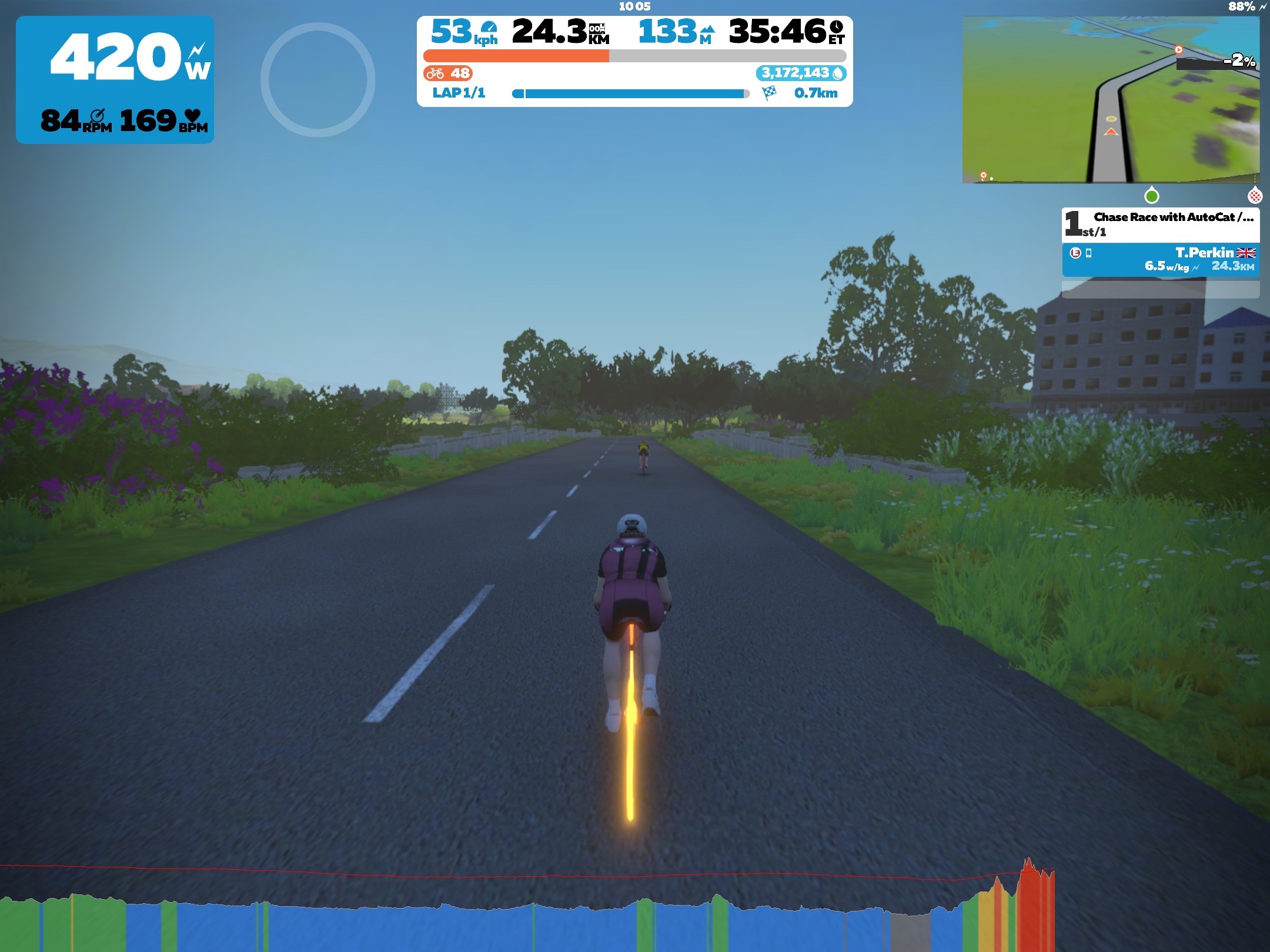
With several kilometres remaining, I saw an additional rider that I had the potential to catch.  I was determined and this time, I dug deep to muster a few extra watts to close the gap.  However, I was running out of road fast! With 0.7km remaining, I glimpsed the rider.  Donned in yellow, he was the last D Category rider on the course.  It was a valiant effort but I overtook him with 500 meters remaining.  I did feel guilty.  I wanted to acknowledge their effort but I couldn’t find the button on the Companion app.  As I overtook them, I dug deep to ensure they didn’t get into my slipstream and I finished strong.

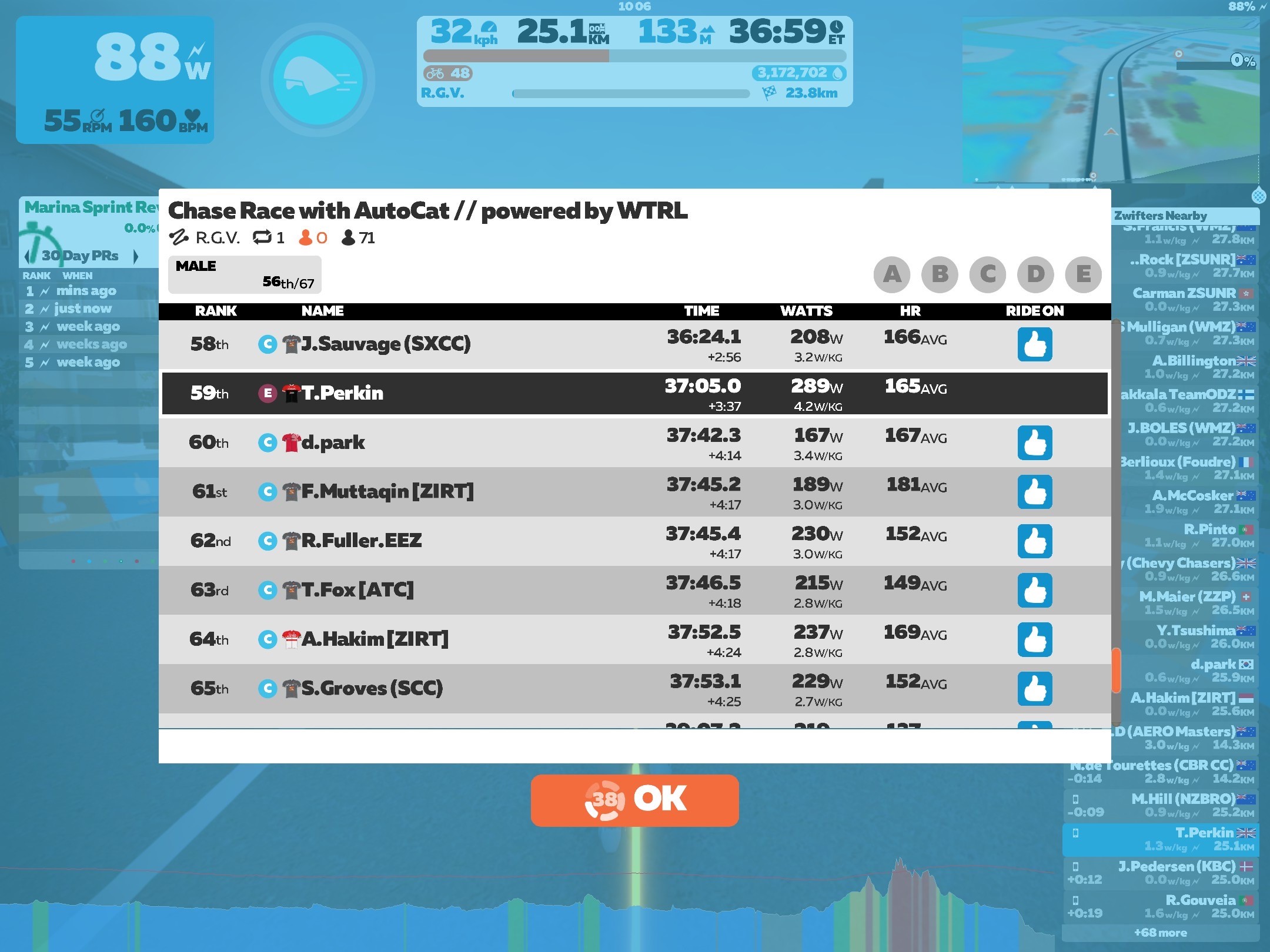
My lone effort was good enough for 59th overall with an average of 4.2 w/kg and 289 watts.  Certainly not my best performance in terms of power but I stuck at it, like I did in the early weeks where I was struggling with fatigue. 

Thursday – Bologna TT

In the early weeks of my training, I used the WTRL Team Time Trial as a means of helping build fitness. This same tactic was utilised this week when I was fortunate enough to pick up a ride with DIRT Steam Engines.

One of the special things about Zwift is that by the very nature of being on the platform, you have this instant connection with people through your shared interest in cycling or running. It was a pleasure to connect with new people and ride with them.

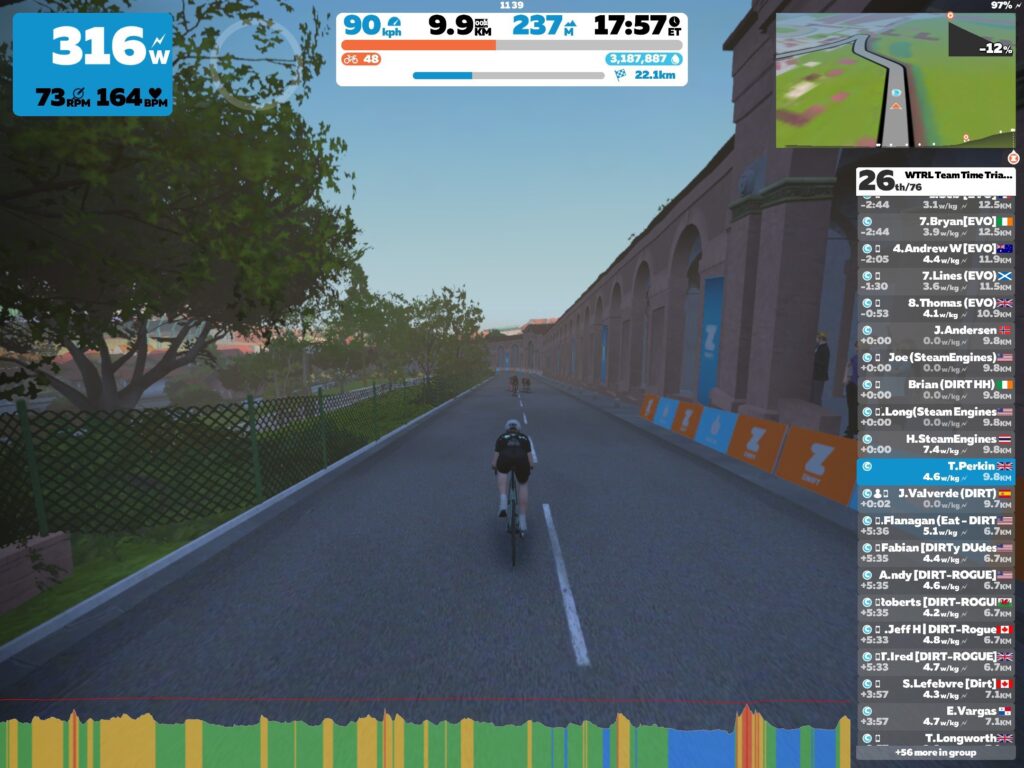
I’ll confess, I absolutely suffered during the 32km race on Bologna Time Trial.

There were 3 A+ riders in the team and we were given the task of taking the team to the bottom of the climb. This meant that I did 2 or 3 pulls at the front before we hit the climb.  It was interesting because despite being an A+ rider, some of the team members had a far higher power output, so when I was at the front pulling at 5.6 w/kg and more, the other team members were able to sit relatively comfortably in the wheel!  I think I went too hard during my pulls because when I hit the climb, which couldn’t come fast enough for me, I was struggling.

The last time I rode Bologna I had crushed the climb with a 5.8 w/kg personal best.  Here I was struggling to keep 4.8 w/kg.  It was at this point I know I was in a bit of trouble.

Dropped on the descent

And it got worse. On the descent, as I expected, I slipped from the back of the pack and on the flat I was turning myself inside out to catch up.  I asked them to wait, and when I couldn’t see the gap closing I started having flashbacks to the day before.  My second request involved a curse word to emphasise how badly I was in trouble and it worked.  The group slowed and I was able to rejoin.  But I was seriously in the “red zone.”  I couldn’t contribute the entire flat section back to the start and it was only at the start of the second lap that I was able to speak again and go to the front to do a few turns.

As we reached the climb for a second time, I expected to pull up to the leading riders in the team.  I couldn’t.  I was empty.  I went into survival mode.  We have all been there: the mist descends, sweat pouring from your face, you can’t get comfortable in the saddle, all rhythm and smoothness goes and moreover, you lose the ability to communicate.

The top of the climb couldn’t come soon enough and once again I was distanced on the descent by a few seconds. Fortunately, a rider slowed and allowed me to reconnect with the group.  There was, I think,  only 4 or 5 remaining and I was hanging on for dear life.  I crossed the line and hunched over the handlebars.  That was one of the hardest efforts I had done.  The power numbers weres not where, but in terms of heart rate, it crept up to levels only previously seen when chasing for the finish line up the Ven-Top

Despite the suffering, it was a good team experience and solid training.  I could not have been made more welcome and this again emphasizes the community aspect that makes Zwift so appealing.  What I really loved about undertaking this training is the increased interaction with the wider community. One person in particular I have connected with is Barry Pope.

Barry Pope      

I want to tell you about Barry.  Barry had read my early articles and my challenges in terms of stagnation in performance and it sounded familiar.  He contacted me about my experience with the Rowe & King team.  I recommended he speak to them directly. After speaking with Rowe & King, Barry has decided to embark on a similar quest to reach his goals.

I caught up with Barry to find out his story and what he is hoping to achieve as he embarks on his own journey with Rowe & King.      

Barry explained that in June and July 2020, he was finding his way on Zwift, including Zwift racing, and was racing several times a day and was achieving results through, as he describes it, “brute force.”  However, in August 2020, Barry started noticing that he could not hit his previous power of 354 watts for 20 minutes and was struggling to generate 200.

After connecting with Rowe & King, Barry was assigned to Peter, one of the coaches in the Rowe & King team.  Peter analysed Barry’s training and noted that Barry had done an awful lot of top end racing but did not have a firm base amount of training.  Barry is working with Peter to undertake sessions to address these gaps in his riding.

Barry told me, “I am impressed with how Rowe & King are able to interpret the data and create the relevant workouts.  The workouts are hard.  I am doing them, like a robot and doing what I am told.”  Barry also explained how he has taken a step back from all the racing he has been doing which resulted in him being overloaded.    

I’ll keep you updated on how Barry progresses. 

Friday – Christmas Eve

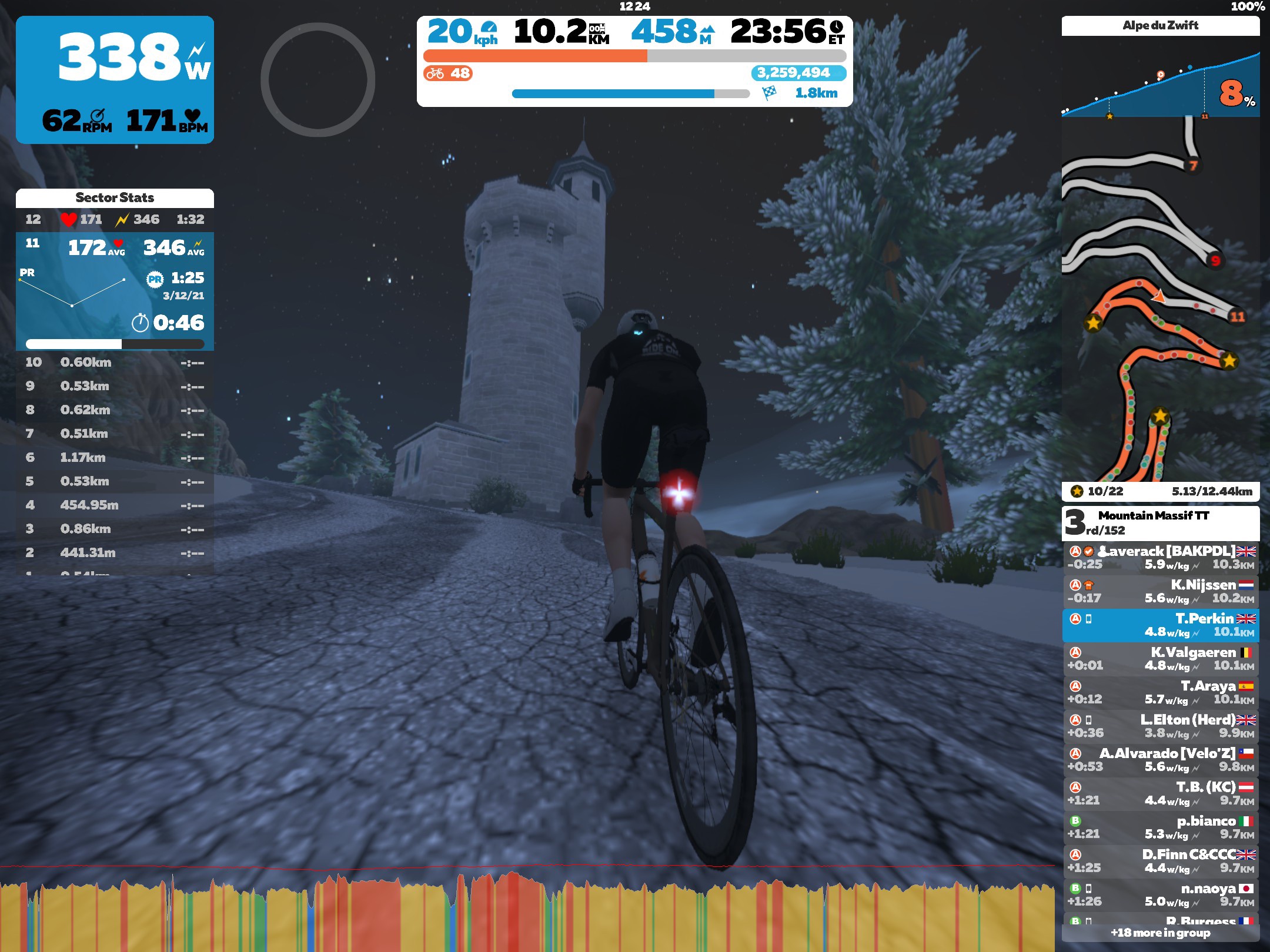
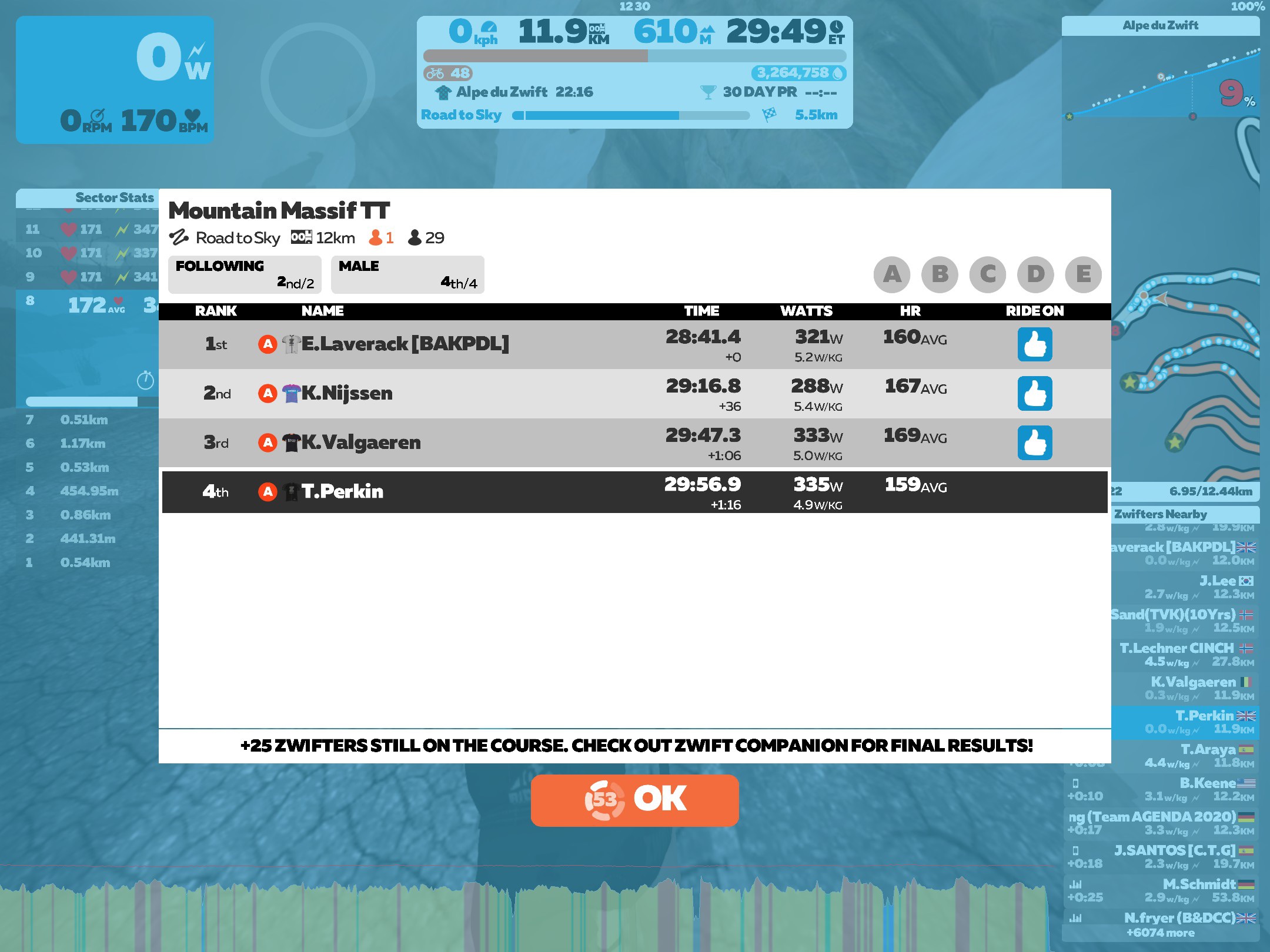
Friday was a doubleheader. I joined the Rapha Festive 500 Group ride, which was a huge ride of close to 4000 people. I then followed this up with my Mountain Massif TT race up the Alpe Du Zwift.

Like the Rapha 500 before, it was nice to see a large number of people taking part. It was an absolute battle and no one took it easy.

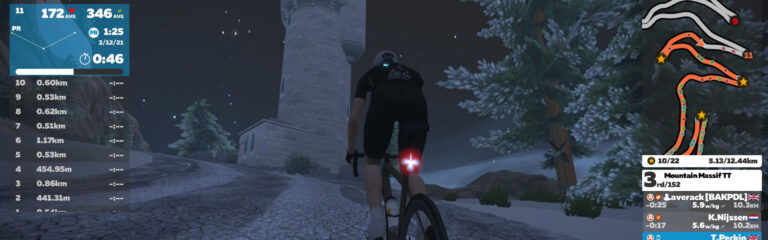
I was able to hit consistent power numbers, flexing around 5.3 w/kg on the climb, but this certainly wasn’t my best effort of the year according to the indicator on the left of the screen. Still, I climbed my way to 3rd position at one point I was in front of former British Hill Climb Champion Ed Laverack until he edged ahead of me after 8.2km.  I couldn’t hold on to my third position and got overtaken on the final turn and finished 4th.  My average for the ride was 4.9 w/kg, which I was satisfied with given the number of hard rides that I had undertaken that week.   

Saturday – Christmas Day

Whilst the turkey was in the oven, I allowed myself 45 minutes to have a little ride, allowing me to indulge myself without feeling guilty. So a steady 45 minute ride was undertaken where I earned myself the “Legends and Lava” route badge, a nice little present for my efforts.

Summary of the Week

Although by my normal standards I only accumulated 7 hours of riding, the intensity made it feel like a long and difficult week.  It built on my recovery week and I certainly feel the next phase of the training.

Week 11 will be “interesting” as I have a combination of intervals and races, including the new Zwift Fondo and the start of the Flamme Rouge Race series which will continue to build on the foundations that have been laid.

This certainly does feel like the early weeks of training, and with the Flamme Rouge Racing series being used to build fitness, it mirrors the first part of my programme in some ways.  Similarly, the key challenge will be recovery between sessions, managing fatigue and getting the balance right and not overtraining.

Because I can see the parallels with the first phase of the training and have seen the performance gains that I have achieved, I am trusting the process and remain committed.  Having feedback from the coaching staff at Rowe & King means that you have their support, which after 10 weeks, is needed to help maintain motivation.    


Best Zwift Week Ever (Part 2): Alpe TTT

14

Best Zwift Week Ever (Part 2): Alpe TTT

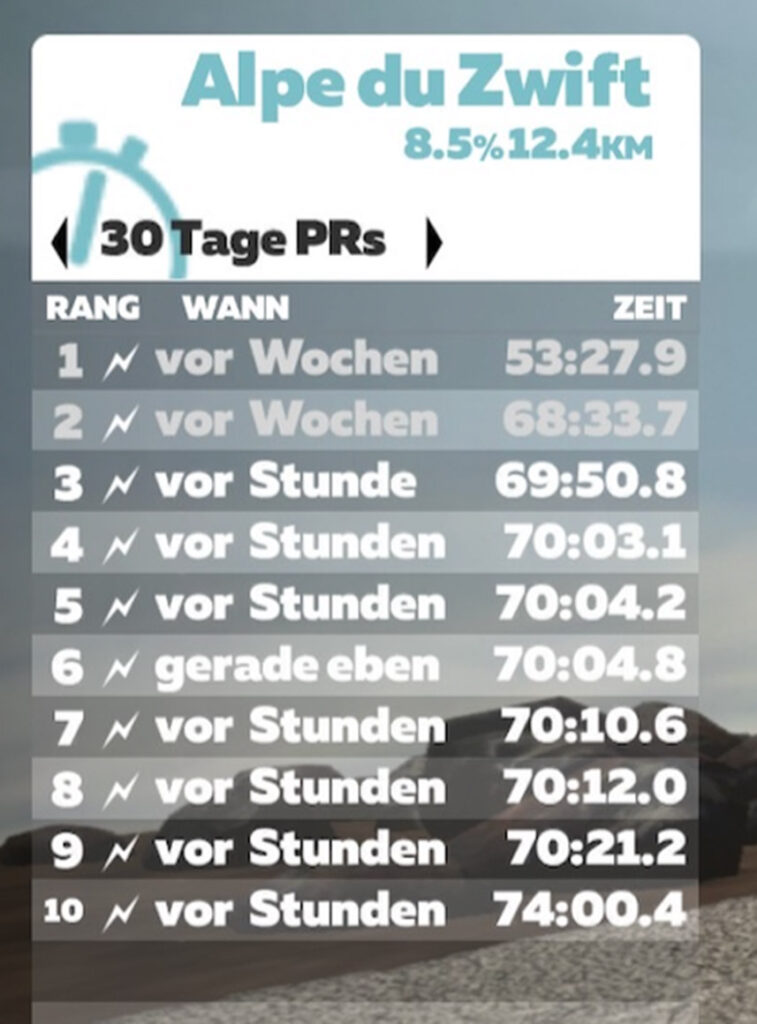
I am going to start from the end: all the members of my team broke their ADZ record by huge margins during this TTT event (3 minutes for me). As a team, we finished 4th in Frappe overall and 3rd in the Platinum League. Great result. 

We made sure that collectively and individually there was nothing left to achieve in 2021, so we could make peace with quite a difficult year. 

I have a natural tendency to use superlatives and exaggerated adjectives in normal situations. The upside of painting things with a glowing description is that it helps ordinary things look great. The downside is that when something really superlative occurs, I am left without options to describe it. 

Climbing ADZ for the First Time

For any Zwifter, the first time you cross the line indicating the beginning of the ADZ climb and the countdown of the 21 turns appears on your screen, it is one of the most daunting experiences in the game. The most optimistic of us think “I am not going to make it”, while the most dramatic say “I am going to die in the attempt.” More than likely, at least the first time, by the end of the climb any physical resemblance with a human being will be a pure coincidence. At best you may qualify for a deteriorated Zombie, or a mummified version of a very old type of Homo neanderthalensis.

The reality is that one way or the other the vast majority of us make it, and swear to never do it again. But then we do it again. And sometimes, again and again. At least in my case, ADZ is addictive. I’ve climbed it more than 40 times, and I know it by heart: the gradients, the turns, where to push or not, where it hurts, and when to recover. 

On 30th December, surrounded by my teammates, I felt I was discovering ADZ for the first time. It felt totally different, like we were conquering something together. Our plan was to deploy the Coalition flag on top of ADZ in less than 48 minutes and I felt I was a blend of Armstrong (I mean Neil Armstrong, not Lance), an Avenger (I will take it personally if someone suggests I am Antman), and Super Mario (the Kart version for Super Nintendo console in which you could throw banana peels). 

Despite the fact that nothing went as planned, I think we all felt we were in a bubble. 

The Climb: IRL Inflation Applies to W/KG

While we agreed we would start at 4 w/kg and see how everybody felt, Brian thought that the inflation we are experiencing IRL also applies to w/kg and quickly decided that 4 = 5. Andy tried for six milliseconds to have him decelerate, but quickly understood it was a lost cause. 

Nobody complained. It was a collective  “F**k it. Let’s do this. What’s meant to happen will happen. If we die we die. Tell my family I do this for them and I love them.” 

(This is the moment in my posts when I usually refer to a song popping in my head, which in this case was “I Don’t Wanna Miss a Thing” by Aerosmith, which is too embarrassing to disclose, so I will not).

We did not sustain 5 w/kg until turn 14, but we were on average way above the 4 and somewhere between 4.3 and 4.4. Since the results of TTT depend on the time of the 4th rider crossing the line and the first signs of fatigue appeared in some teammates, a decision had to be made. 

In a no draft world like ADZ, normally you race against each other. Here we were racing FOR each other. We needed to remain in groups. On turn 11 we decided the best option was to split with a group of five leading. 

In Brian I had found my ADZ twin and partner, we stuck to each other as if our lives depended on it. I could not produce a single watt more for sure, but slowing down would have also broken my body into a thousand pieces, and I assume I am not very good at reassembling bodies. I tried once to reassemble a bike and it did not go particularly well, therefore a body…

As we approached the top of the climb, the only thing maintaining our pedaling was the faith our teammates had in us. We may fail ourselves, but we couldn’t fail them. 

Andy’s Permanent Feather PowerUp

Two kilometers to the top, Andy was still able to move many times back and forth between two groups separated by 30 seconds as if it was normal. Jokes aside, I am seriously convinced Andy swallowed a feather powerup when he was a child which has a lifelong permanent effect. There is no other possible explanation… is that cheating? Should I report him to ZADA?

Before the race, we all tried to guess what time we could achieve on ADZ. But as each of us crossed the line we could not believe our times. We were all announcing ADZ personal records in full minutes. 2, 3, 5-minute cuts… it was a collective PR slaughter! It was a victory of the team against other teams, but also of each of us against ourselves. 

Overcoming difficulties together and achieving great results is for me the essence of what a team is. I starve for these moments. They create incredibly strong links. I will never forget the 30th December 2021. 


How the Race Was Lost: Barely Boosted By B’s

22

How the Race Was Lost: Barely Boosted By B’s

Regular readers of Zwift Insider may have noticed that I’ve been paying more attention to ZwiftPower ranking points lately. Chasing rankings hasn’t been something I’ve ever really done, but it’s proving to be an interesting endeavor. Plus, it pushes me to race harder events where I’m forced to race smarter.

Racer harder. Race smarter. The slogan on Zwift Insider’s in-game kit, hopefully arriving in February’s release. But we’ll talk more about that when it happens…

Today’s event wasn’t especially remarkable in how it unfolded or ended, although my podium result was decent. The more interesting part of this event was how the points shook out in the end! But I’m getting ahead of myself…

Warmup: Learning to Ride Again

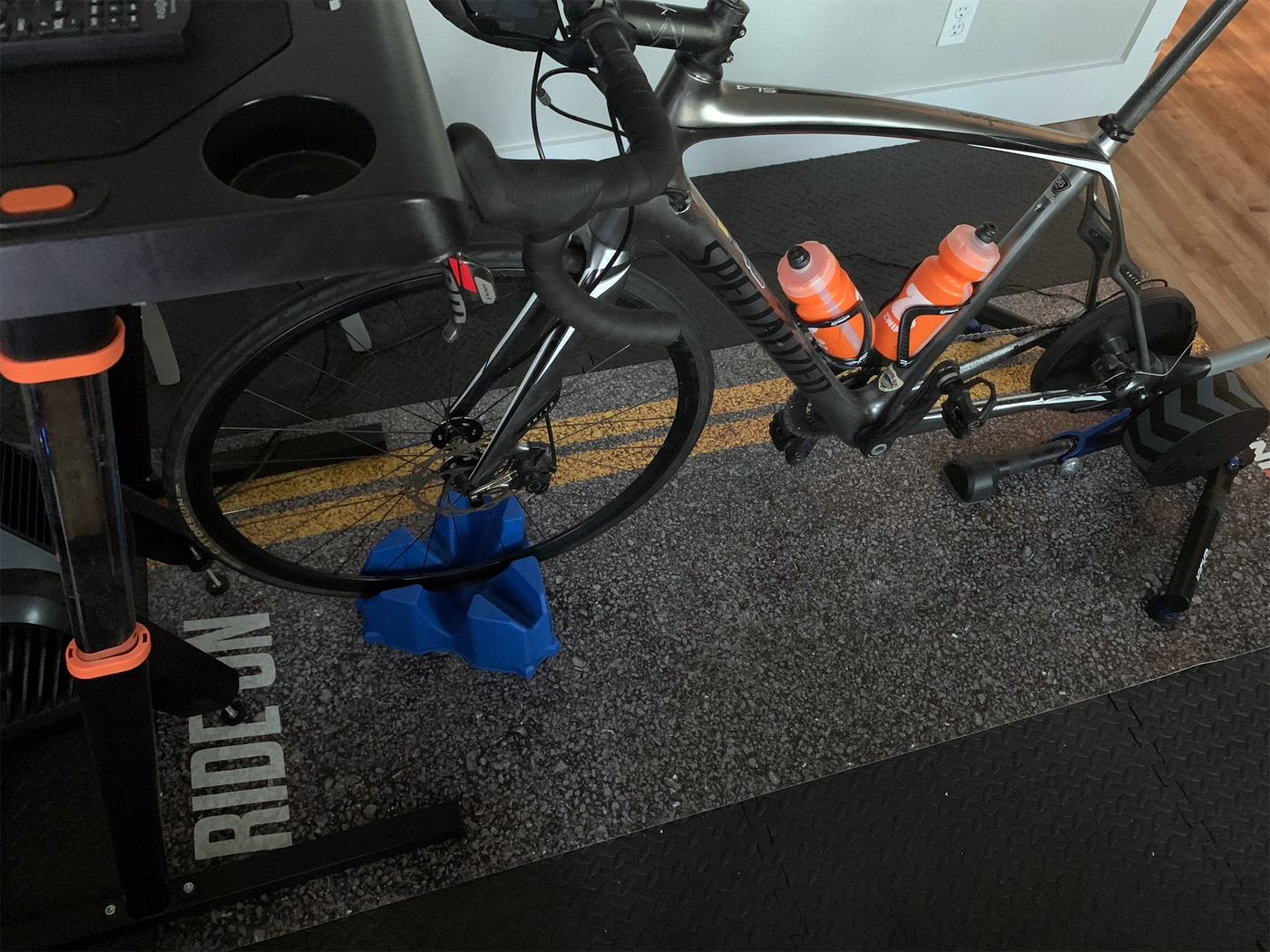
My normal pre-race routine got a bit jumbled up today, because I needed to tear apart the Pain Lab in order to prep for some equipment tests/reviews I’d been putting off. So I took the trainer off the rocker plate, shoved Boone’s KICKR Bike out of the way, and hopped into an easy ride to see how things would feel in a static (no rocker plate) setup.

While spinning my legs I chewed two pieces of caffeine gum. And I paid close attention to how my body felt with this “rigid” setup. It’s such a radically different feel from a good rocker plate setup, especially out of the saddle! Seated, my bike had a slight side to side rocking motion that intensified as the watts increased. If my KICKR had been on a hard concrete floor the movement would have been much less, but I was on a mat on top of foam gym squares on top of laminate flooring (which has foam backing). So a bit of sponginess, even if it’s a far cry from a rocker plate.

Riding hard out of the saddle with a rigid setup is just… tough! I felt like I was trying to learn how to ride a bike again, because my body wanted to move the “natural” way (lean the body to the right while the bike leans left you’re pushing the pedals down on the right, then do the opposite for your left pedal stroke.)

When you’re used to riding indoors on a static setup, and you’ve worked to hone your technique, you can execute a really strong sprint using particular form (see Shane Miller do it here). But that would take some work. For today, I would need to stay seated in my hard efforts.

Then it was time to get off the bike, slap some PR lotion on the legs, adjust my setup around more so the fan did its job and my video recording worked… and head to the start pens.

The rigid setup, including a custom mat from Velomats (10% off with code ZWIFTINSIDER)

Points Recon

Since I’m on a bit of a points chasing kick, I visited ZwiftPower, clicked my event, and clicked to sort the B signups by ranking. I was ranked 2nd overall, with a few strong riders just behind me.

That meant there wasn’t much chance of me finishing “in the points” today, especially considering my awkward-feeling rigid setup. But I’d give it a go and see how things shook out. 12 laps of Crit City’s Bell Lap. Let’s race!

Race Summary

This wasn’t a particularly remarkable race in terms of dynamics or big moves. There were a few noteworthy things, though:

  • Rob Maz (EVO) was the rider I was watching the closest, because he was the only rider I’d seen in the signup list ranked above me. (Also, his bright pink kit made him easy to spot!) He put in a lot of hard attacks and pushed the front of the pack several times during the race.
  • Kevin Horsley (WLC) was another strong rider I was watching. Ranked just below me, but he definitely rode stronger than I did in this event, putting in more attacks than anyone else. Super effort.
  • My legs definitely didn’t feel fresh. So after chasing Maz’s first attack and noticing how the legs responded, I switched to conservation mode.
  • The pack of 66 was whittled down to about 30 by the time we hit the final lap.
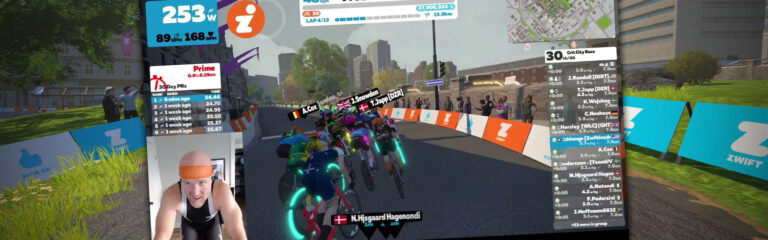
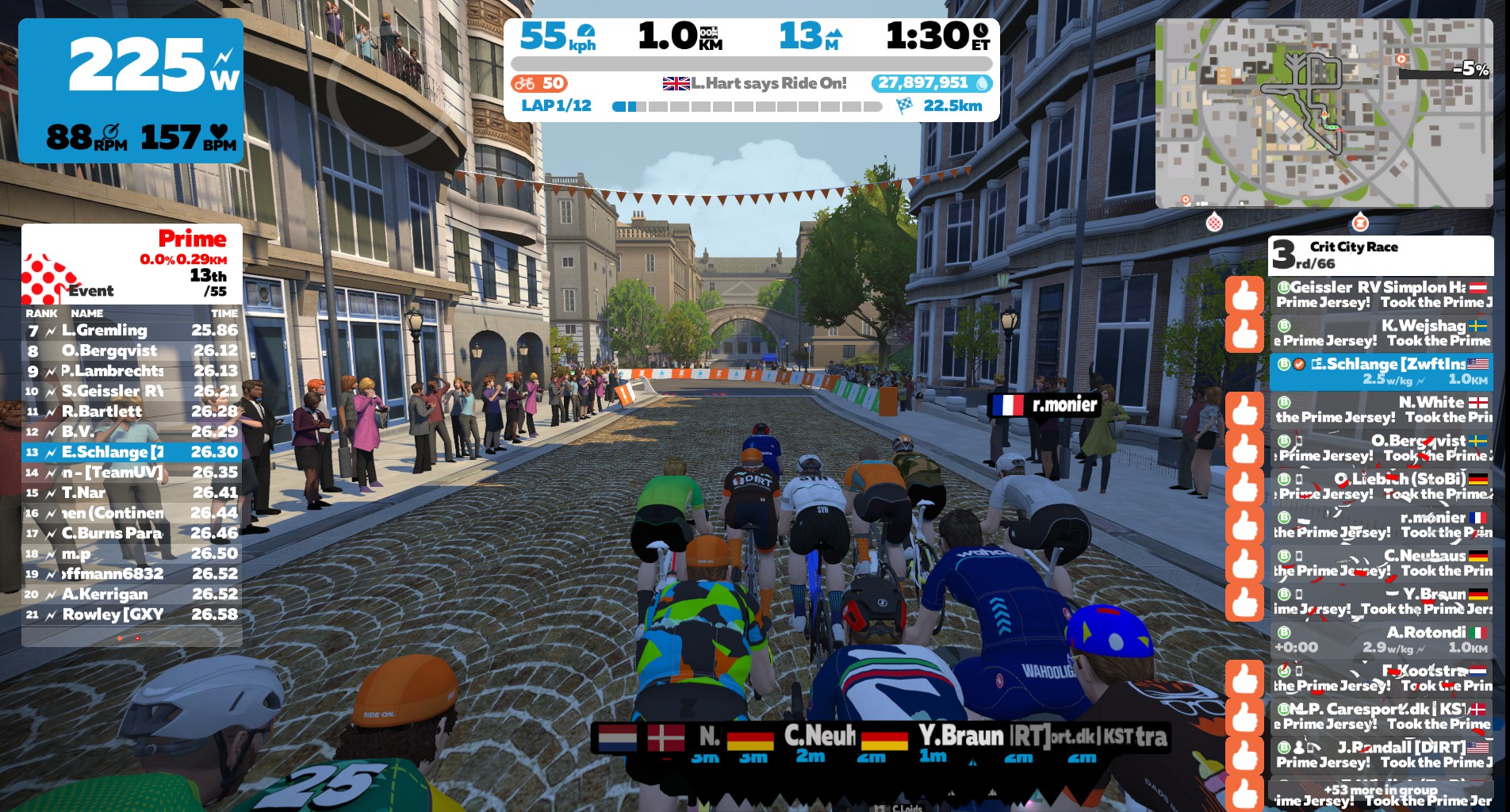
Confetti flies as riders take the non-existent Crit City Prime Jersey on lap 1

The Finish

I’d received an aero powerup with 4 laps to go. Nobody went hard on the final lap’s twisty climb section, or on the descent. It seemed everyone was a bit tired and waiting for someone else to make the first jump.

With 400m to go, I saw Horsley sprinting through the pack with a draft powerup. Go time! If I could grab his wheel then use my aero powerup, hopefully we could distance most of the pack.

A few other riders had the same idea, so it became a 4-man sprint with Horsley, Maz, Thomas Japp (DZR), and myself. I was seated, putting in one of those high-cadence sprints I’ve been working on (around 120rpm), and my bike was moving back and forth a lot more than it should have on a rigid setup (apologies to my seat stays).

Glancing at the screen, I saw a 5th rider zoom through our pack of 4 just meters from line. Where did he come from?!

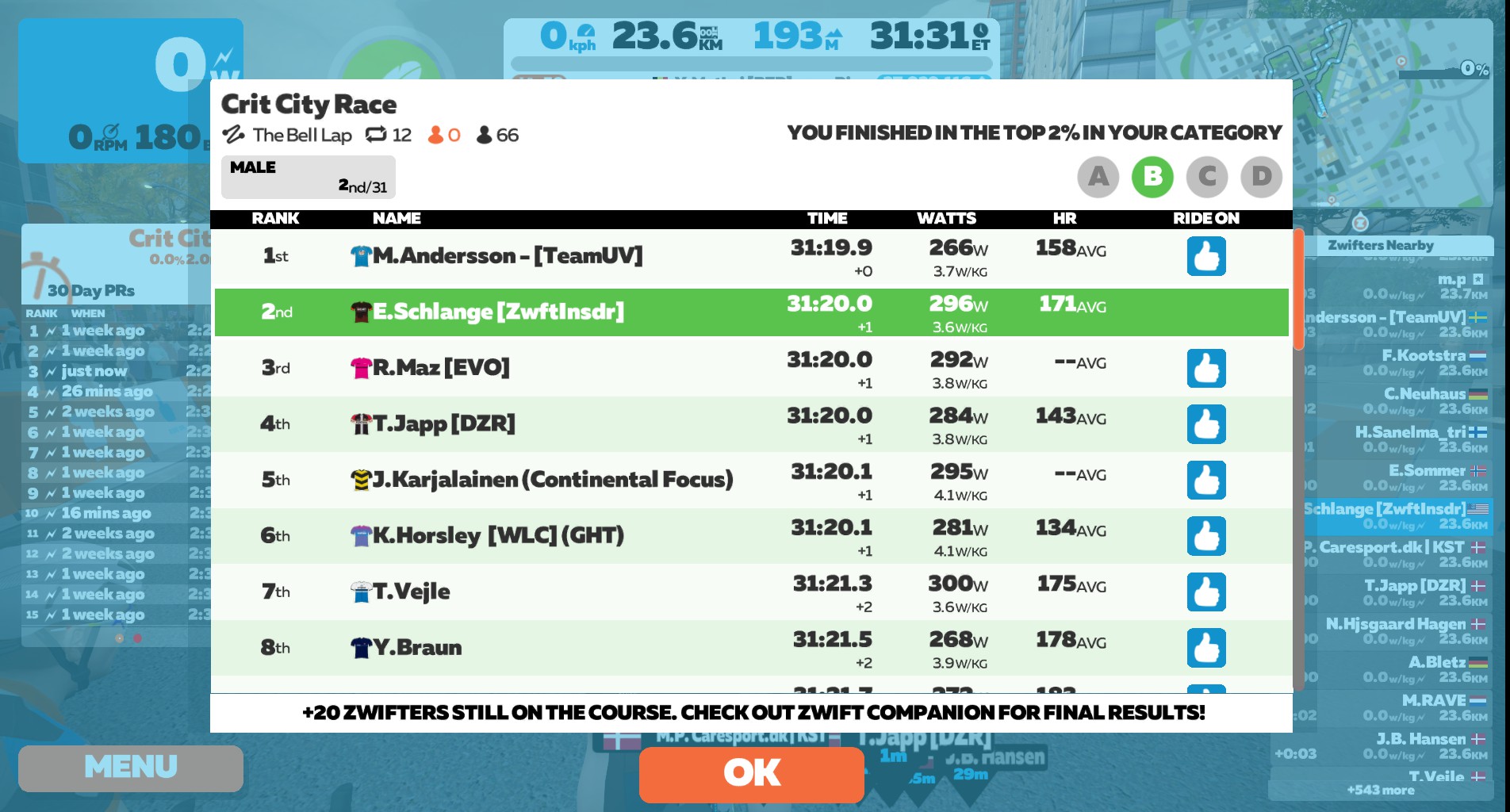
I couldn’t tell what place I’d finished – somewhere between 2nd and 5th. It was close! The results screen popped up, showing me in 2nd:

See activity on Strava >
See ride on Zwift.com >
See results on ZwiftPower >

Watch Race Recording

How to Win a Sprint

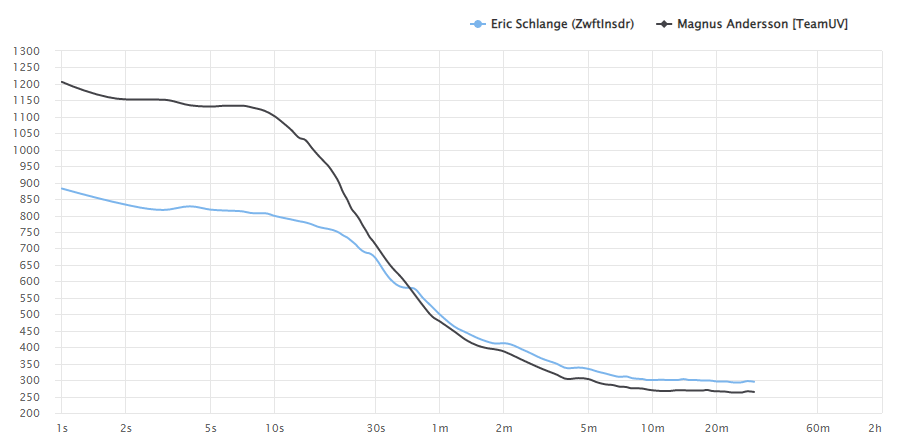
Luckily I’d recorded the race, because I wanted to see how winner Magnus Andersson (TeamUV) executed his sprint. Turns out he waited a bit longer than the “front 4”, but his sprint power was massive – 10 seconds at 1102W (15.2 w/kg)! He also sprinted through the front ~10 riders, benefiting from their draft. And used an aero powerup to boot.

Looking at the critical power curves on ZwiftPower, it’s actually pretty laughable how much stronger Andersson’s sprint was than mine. Here’s the chart in pure watts. Keep in mind Andersson also weighs 10kg less than I do:

Quite possibly the most perfectly-executed sprint I’ve ever seen. And I’ve seen quite a few. Chapeau, sir.

Crunching the Ranking Numbers

I returned to ZwiftPower after a shower to look at how the points shook out. Andersson hadn’t even been on my radar since he signed up at the last minute, but his rank of 129.82 was sure to boost the numbers. And I had beaten Maz, who was ranked ahead of me (156.87), so I figured I would get at least a bit of a points boost.

Looking at the ZwiftPower results, I saw I had earned 5.91 points. Nice! That would put me at a ranking of 176.71. But I also saw that the 3rd and 4th place finishers weren’t in the results. Clicking on “Unfiltered” I saw Maz had been removed from the results for no heartrate, while 4th place Japp was removed because he needs to race in the A’s.

After pulling out my trust spreadsheet and copy-pasting some numbers, I calculated that even though Maz and Japp were DQ’d, their numbers were still used to compute the race quality and points per place figures (if you don’t know how those work, read How ZwiftPower Calculates Rider Rankings). They didn’t earn a result for themselves, but their rankings contributed to the results everyone else earned.

And that’s a good thing. Because it helped me earn some points!

But here’s the bummer: 3rd place on ZwiftPower (Jukka Karjalainen [Continental-Focus]) was only given 5th place ranking points. So even though Maz and Japp (who finished 3rd and 4th) were removed from the results, they still “took” their points, even though those points won’t be added to their rankings since they were disqualified.

One other note on rankings: I’ve been talking about the wisdom of racing up a category lately, so out of curiosity I looked at the A results for this race. And guess what? If I had finished 2nd in the A race, I would have earned slightly fewer points due to a combination of a smaller A field and fewer high-ranked riders in that race. That’s something you don’t see every day!

In both the A and B races, if I had finished 3rd I wouldn’t have earned any points. That’s how close this was.

Takeaways

I learned some interesting details about how ZwiftPower handles ranking points and disqualified riders. And I learned that racing up a cat may not always give you a better points result.

But mostly, this was a humbling reminder that I’m far outclassed by some of the top riders in the B category. And let’s not even talk about those superhuman A’s…

Your Thoughts

Share below!