Home Blog Page 297

Olympic Virtual Series Announced on Zwift

27

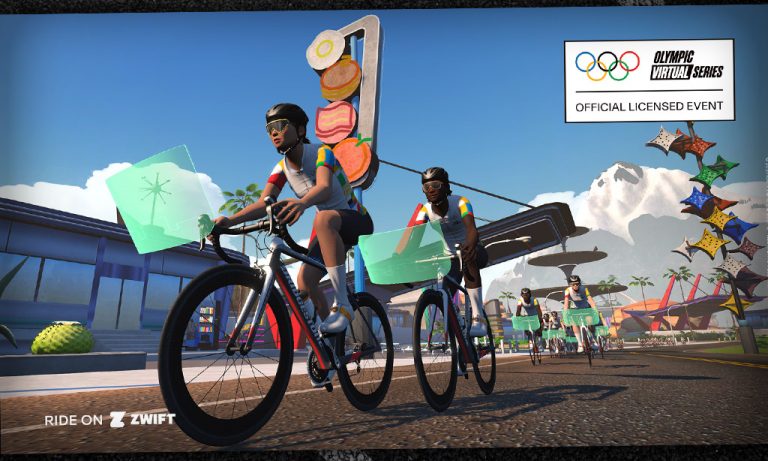
Today Zwift announced their participation in the Olympic Virtual Series (OVS), a new virtual event launched by the International Olympic Committee (IOC).

For those of who’ve dreamed of the Olympics but were never able to reach the high standards required, this is a chance to participate in an official Olympic event. How fun is that? Here’s what we know…

The Big Picture

The IOC is working with the governing bodies of five different sports (baseball/softball, cycling, rowing, sailing, and motor sport) to create this series of mass-participation events. Here are the governing bodies and the platforms they’ve partnered with for the OVS:

  • World Baseball Softball Confederation (WBSC) – eBaseball Powerful Pro Baseball 2020, Konami Digital Entertainment
  • Union Cycliste Internationale (UCI) – Zwift, Zwift inc.
  • World Rowing – Open format
  • World Sailing – Virtual Regatta, Virtual Regatta SAS
  • Fédération Internationale de l’Automobile (FIA) – Gran Turismo, Polyphony Digital

The IOC’s press release on this topic includes a few interesting bits of info:

The mass-participation Series allows participants around the world to compete from home or their training facilities in order to generate excitement in the build-up to the Olympic Games Tokyo 2020.

All five OVS events will differ in form and concept, and will operate via the sport’s respective publisher platform where participants will be able to take part. 

In line with Recommendation 9 of Olympic Agenda 2020+5, which states “Encourage the development of virtual sports and further engage with video gaming communities”, the launch of the first-ever OVS supports the IOC’s Digital Strategy and aims to leverage the growing popularity of virtual sport to promote the Olympic Movement, Olympic values and sports participation and grow direct relations with young people. It supports the IFs in further establishing virtual and simulated forms of sports as a discipline within their regulations and strategies. Building on the success of their respective events, both the Fédération Internationale de Football Association (FIFA) and the International Basketball Federation (FIBA), along with other International Federations such as the International Tennis Federation (ITF) and World Taekwondo (WT) have confirmed their excitement and commitment to exploring inclusion in future editions of the OVS.

2020+5

All of this is in keeping with the “Olympic Agenda 2020+5“, the strategic agenda of the IOC Executive Board which was formulated to act as a roadmap for the five years following the 2020 Olympics.

One key focus of that agenda is the “the growth in digitalisation”, which leads to a recommendation that the ICO “Grow digital engagement with people” and “Encourage the development of virtual sports and further engage with video gaming communities.” In short, the ICO is very interested in exploring virtual competition as a way to bring sport to everyone. 

The IOC approached UCI, who are cycling’s governing body, to fulfil the cycling aspect of their agenda. Zwift has a strong relationship with the UCI, having held the first cycling esports world championships in December 2020, which included the Nations Challenge mass participation events. So the partnership of IOC+UCI+Zwift simply makes sense.

Zwift CEO and Co-Founder Eric Min says, “Participation in virtual sports is at an all-time high and Zwift is at the forefront of creating a new genre of physical virtual sport. The Olympic Virtual Series aligns with Zwift’s own mission to engage more people, to connect a global audience, and to speak to a younger generation. We’re thrilled that the IOC and the UCI share in our vision and have selected Zwift to be the publisher for the very first OVS.”

About the Zwift Events

We don’t know much yet about how the OVS events will work on Zwift, but details will be coming at the end of May. We do know that the OVS will be open to all Zwifters and take place between June 1-27.

It appears there will be a competitive twist to some events, but at its heart this series seems to be about inclusivity and the chance for riders worldwide to participate in an official IOC event for the first time. So we anticipate mass-start races as well as group rides, perhaps with celebrity Olympian hosts.

Virtual medals? We doubt it. This is more about the IOC testing the waters of digital competition, and (smartly) using digital platforms to broaden its audience. It’s just one early step in the challenging process of bringing esports into the Olympic Games – but it’s exciting nonetheless!

A New Map?

We’ve known that a map related to the Tokyo/Japan was planned for launch last year before the lockdown cancelled the Olympics. That map still hasn’t launched, but it would seem likely that the map would be released in late May in order to host these Olympic events in June. Fingers crossed!

Your Thoughts

What do you think of this big announcement? Share your comments below!

Sport-Related Anxiety in eSports (Part 2)

Editor’s note: this article wraps up a two-part series on sports-related anxiety as it pertains to Zwift. If you haven’t yet read the first part, we highly recommend starting there. Read Part 1 >


Sport-Related Anxiety Management: A Three Step Approach

Step One: Make Mental Preparedness an Aspect of Your Annual Training Plan

  • Learn to identify negative thoughts and avoid having an unrealistic defeatist attitude by putting things into proper perspective.
  • Be confident in your inner strength and emphasize the aspects of your daily life where you excel in the face of difficulty.
  • Foster and facilitate healthy coping mechanisms and eliminate those which prove a limitation.
  • Prioritize the reasons you choose to compete and the enjoyment, excitement, and satisfaction racing your bike provides.
  • Create a sound pre-race preparation and start-up routine that through repetition, will eliminate the need for thought or worry on race day.
  • Set realistic goals and be fair in your self-assessment and level of expectancy. 

Step Two: In the Days Leading Up to the Event

  • Well ahead of race day take care of the practical aspects by pre-registering for the event, scouting and studying the course, assuring that your equipment (mechanical and technology) is in optimal condition, and fostering sound preparation habits.
  • Assure your physical preparedness by adhering to a solid training plan and being confident that you have done the work required to maximize your performance.
  • Set the groundwork for psychological preparedness by developing healthy patterns of thinking and reflection: 
    • Practice meditation to develop daily habits of calmness.
    • Practice relaxation and deep breathing techniques.
    • Talk through your apprehensions with someone who understands and can provide a supportive, honest, and objective opinion of what you are feeling.
    • Talk yourself through periods of worry by reflecting on past experiences when manageable levels of pre-race anxiety improved your performance. 
    • Visualize yourself successfully achieving your goals by closing your eyes and imagining the physical movements that you will make to do so.
    • Be sure to only dwell upon aspects of the event which are within your control.

Step Three: In the Hours Leading up to the Event

  • Leave sufficient time prior to the start of the event for completion of your pre-race checklist and to address any issues which may arise:
    • Final inspection of your bike and its mechanical components.
    • Power up your technology and log in to all required programs and applications.
    • Ensure that all software and firmware is up to date.
  • Perform and complete your well-rehearsed and trusted warm-up routine:
    • Monitor your status while being sure to temper your reaction to physical cues with a balance of mellowness and excitement.
    • Tell yourself that it is okay not to feel 100% just before a race and rely upon past experience when that was true and you performed optimally.
    • Utilize the relaxation, breathing, and visualization techniques that you have practiced to control your heart rate and relieve muscle tension.

Coach Shayne Gaffney’s Thoughts on Dealing with Sport-Related Anxiety

“The best modalities I have found for dealing with performance anxiety symptoms are visualization and meditation. 

  • Visualization is only seeing yourself achieving everything you are setting out to do. Believe and achieve!
  • Meditation takes more work to become proficient at, but the athletes that understand how to use it always do great. The goal is to clear your mind to achieve calm and absolute focus. Meditation will reduce the “noise” of anxiety symptoms and allow for pre-race/event calmness and serenity.”

Risks of Unaddressed Sport-Related Anxiety

Sport-related anxiety is a normal emotion experienced by many that if left unaddressed can lead to more serious psychological disorders.  Recognizing early signs and symptoms (often the responsibility of professionals and peers interacting with athletes on a daily basis) is lacking in virtual competition.  Like many other issues plaguing competition on all levels in all venues, awareness and education are key.  

Sport-related anxiety can cause a spiraling effect on an athlete by:

  • Negatively impacting sport performance during practice and competition.
  • Leading to increased risk of injury occurrence.
  • Delaying and obstructing injury rehabilitation and the return to sport process.
  • Increasing subsequent injury risk during post-rehabilitation competition.

Some Nervousness is Good, Too Much Anxiety is Not!

Expert opinions and anecdotal stories from experienced athletes agree that some level of sport-related anxiety is unavoidable.  It is the uncontrolled symptoms and detrimental effect they have upon an athlete’s emotions and performance that require introspection and self-assessment to identify and manage. 

Just like other aspects of cycling, with hard work even that goal is readily achievable.

Your Thoughts

How do you cope with sport-related nervousness?  Share your thoughts below!

Sport-Related Anxiety in eSports (Part 1)

Admitting to nervous jitters or butterflies in your stomach prior to a race, important event, or even an exceptionally difficult training session does not make you weak-minded.  Just the opposite is true, in fact: to not feel some level of nervousness prior to a high-priority event would be abnormal.  

Sports psychologists and researchers agree that competitive sport has the potential for high levels of stress and anxiety.  Equally, practicing and employing a range of psychological strategies to combat potential negative emotional states such as sport-related anxiety has become an integral part of a competitive athlete’s performance preparation.1

Yerkes and Dodson, in early research on anxiety in sport, describe an inverted U-shaped hypothesis to explain the effects stating, “low anxiety leads to decreases in performance, increases in anxiety can facilitate performance up to an optimal level, and beyond that point additional anxiety causes performance to decline.”  

Managing pre-race anxiety to remain within this optimal level is a skill which requires preparation and practice.  Identifying potential anxiety triggers (virtual cycling has its own unique set) and instituting coping mechanisms to eliminate negative performance while facilitating mental wellness can help us find on-the-bike success and off-the-bike happiness.

A Zwift Champion’s Honest Thoughts

Holden Comeau, the 2019 USA National Zwift Champion (see his ZwiftPower profile) and member of Team Saris+The Pro’s Closet has this to say about pre-race anxiety:

“I have anxiety related to performance that is relative to my expectations in a given race.  When my teammates sacrifice it gives me a sense of obligation.  Intellectually, when I think about this scenario prior to a race, the gravity of the whole thing is my greatest source of anxiety.  The anxiety has always been there my whole life, so now I focus on having enough courage to face it head on.  But I’m always nervous!”

A Coach Shares About Anxiety and His Athletes

Shayne Gaffney is the Founder of GC Coaching, a USA Cycling Level 1 Coach, and as the Workout Content Editor at Zwift has a deep knowledge base and unique perspective of virtual racers.

“A very high percentage of my athletes experience pre-race/event anxiety symptoms, but whether that affects their performance and how they deal with them is a different story. The most significant driving force behind experiencing anxiety and how intensely it occurs, in my experience, tends to be: Event Caliber (Local Tuesday night club ride vs. IRONMAN Kona), Frequency of Competition (Has this athlete done this type of event before?), and Experience in Competition (The more experience the better they tend to deal with symptoms).” 

Sports Psychologist on Anxiety in Virtual Cycling

Susan Sotir, Ph.D (see her ZwiftPower profile), a Sports Psychologist who coaches full-time with Breakthrough Performance Coaching, has over 30 years of experience in sport and education.  Dr. Sotir’s perspective as a Zwift beta tester, active competitor, and IRONMAN triathlete is invaluable when comparing the experience of real life to esports.  

“For virtual racing, the unpredictable and uncontrollable factors loom large. You can’t actually see your competition, so your imagination is free to make them physically superior, completely unethical, and willing to cheat. You can’t know everyone, so you have no context for types of strategies or tactics they’ll use, or ability to anticipate their behaviour.  Additional stressors arise from the demands of getting all of the pieces in place to race: the registrations, internet speed, gadget connectivity, and the difficulties in communicating tactics. There are few experienced mentors, so folks show up with more uncertainties than they would racing irl with a team or club.

Finally, people all over the world will see your metrics during and after the race, which can feel threatening to self-presentation, since being ranked leaves all sorts of feelings around where you “should” be versus where you are and now it’s on a global scale, instead of just a local one.” 

Do You Have Sports-Related Anxiety?

  • Do you have recurrent or continual thoughts of worry about the event?
  • Do you feel as if it may be easier to avoid the race altogether?
  • Are you losing sleep or do you have queasiness in your stomach upon thoughts of the event?
  • Is it difficult to achieve a relaxed state when thinking of or as the event nears? 

Some Common Symptoms

According to Coach Shayne Gaffney, the most common symptoms his athletes experience are:

  • Fear: Crashing, not completing the event, not “hitting their numbers,” etc.
  • Unwanted Thoughts/Worries: “Do I have enough food?”, “When was the last time I calibrated my trainer?”
  • Restlessness/Lack of Focus: Toeing the line, but seemingly unfocused, continually checking their setup.
  • Insomnia the Evening Before

The experts agree that sport-related anxiety frequency, and the symptoms seen in virtual athletes, are similar to those who race exclusively outdoors.  They also agree, with confirmation by athletes who have extensive experience competing at a high level in both venues, that the sources take on different forms, with eSports posing a unique set of challenges and sources of potential anxiety.

A Different Kind of Crash

The reliance upon technology as a requirement for success is a potential source of stress unique to virtual cycling and eSports. 

“No longer do we hear the awful sounds of carbon scraping the pavement coupled with agonizing screams of pain,” states Daniel Wisner, an A racer who now competes exclusively on Zwift (see his ZwiftPower profile) following a long successful career as a Cat 2 racer on the road.  The blaring sound of silence is deafening when your app or computer system drops in the final race of a series like the ZRL, leaving you with much frustration and no result.

A Different Sort of Mechanical

The dreaded power drop

“There is nothing worse than that tiny squish underneath you when riding,” remembers Daniel upon the realization that you will never rejoin the peloton due to a puncture when on the road.  “That same sensation for me is a trainer disconnect.”

As Michael Hutchinson whimsically wrote in a recent article published in Cycling Weekly when describing his experience of a Bluetooth drop out, “Give it another couple of months and it will be perfectly normal to have a team car alongside you out there in the garage with a spare trainer on the roof.”2  Unfortunately, I don’t think so.

An Inconsistent and (Potentially) Uneven Playing Field

When racing in real life, the course is constant when all variables are considered, and your competition is kitted up directly beside you, leaving little to the imagination.

In contrast, continual underlying trepidation of inconsistencies in the virtual cycling experience (such as variation in pack dynamics, drafting which doesn’t seem quite right, and a ‘stickier’ sticky draft) are always in the subconscious.  In addition, the anonymity of virtual competition lends itself to less accountability for those choosing to cheat, misrepresent themselves, or sandbag. This breeds a general distrust of the competition, fostering an attitude of defeatism.

The New Normal

When asked if there are a greater number of potential sources of pre-race anxiety when competing virtually, Daniel replied, “I guess it has mostly been a paradigm shift.”  He notes that the mechanical issues which often plagued him on the road are replaced by technological failures, conceding, “They’re just my new normal.”

Holden Comeau had an interesting take when asked:

“I’d say the sources of stress are less diversified.  There are more logistical risks to deal with and prepare for outdoors.  But the overall stress is the same with indoor, it’s just channeled out of fewer sources.  And in fact, the anxiety feels even more intense because it’s all about the performance part.”

Thoughts of a Coach With Pro and A+ Zwift Race Experience

Ben Wolfe (see his ZwiftPower profile), former pro racer for Jelly Belly and current A+ racer on Zwift provided his point of view as a USA Cycling certified coach for Charles Coaching and Nutrition Services when asked to compare virtual cycling with real life:

“A technology mechanical is sometimes even harder to recover from than an IRL mishap, so I get stressed about my connections a lot, and I worry about how fast the sprint start is going to be and maintaining position if the first climb comes quickly.  An IRL race has a calmer start and I can rely upon my bike handling for positioning.  Without that to fall back on I get incredible pre-race anxiety due to the need to be at my best, right away!”

Up Next

Read part 2 of this series, where we look at the risks of unaddressed sport-related anxiety and explain a three-step approach to dealing with sport-related anxiety.

Questions or Comments?

How do you cope with sport-related nervousness? Share below!

How Can Zwift Develop a Platform for Fair Racing?

144

The proposed removal of weight and height metrics from display in Zwift Power caused quite the community backlash – the common theme of the response was that transparency of these metrics helped the community self-police weight-dopers.

But the truth is, the Zwift community do not have a need or want to see people’s weight and height. What they do have, though, is a strong desire to ensure that racing is as fair as possible – because a fair racing platform is more engaging and more rewarding!

This article explores cheating in Zwift, and looks at ways that it could be tackled in the future, should Zwift determine that community racing is a core part of the platform that deserves development time, money and resources.

Aside: Whilst the total number of active racers on the platform may be a small percentage of the overall user base, I would argue that these are the most engaged Zwifters, and their marketing impact is huge. If you look for Youtube videos or articles about Zwift, racing is nearly always the focus. An active and engaged racing community is critical to the long term success of the platform.

What Factors Contribute to Performance Inaccuracies?

Fundamentally there are four factors that, if not correct, can lead to an ‘enhanced’ racing performance.

  • Weight – a deliberate input
  • Height – a deliberate input
  • Power – determined by the trainer/power meter. This can either be inaccurate by accident (poorly calibrated, poor quality trainer) or deliberate (knowingly using the trainer or power meter in a way to give you an unrealistic advantage, or faking power output)
  • Category manipulation – racing in a lower category than you should, either by ‘cruising’ (managing your output so that you do not get upgraded) or entering a joining a lower pen than your Zwift Power assigned category.

How Can These be Managed?

Remove the incentive and reward gained by cheating

The current category system is founded on the W/Kg metric, so falsification of weight or height can easily give you an advantage by moving you to the top of the category in terms of output, or keeping you in a lower category than you should be racing (reverse weight doping).

A focus on forcing accurate weight and height, perhaps with technology (e.g. smart scales) or by pre-race validation or exposure of weight and height metrics publicly, is a wasted effort in my opinion. Cheaters will always find a way to exploit the system to gain a benefit, so instead we should look at the behavior and the psychology behind it. If falsifying metrics is not really worth it, will they bother?

I have previously proposed a results-based ranking and matchmaking system for Zwift racing. If this were implemented, manipulating weight and height may mean a racer gets an unrealistically high ranking, but their chances of winning would not be increased – they would just race tougher opponents.

In this scenario, is cheating really worth it? (It’s worth noting that, at the highest level where there are more rewards, more stringent validation is already in place to prevent this in the first place).

Anti-cheating tools

Most big online games use anti-cheating tools to recognize cheating – be that manipulated code, or patterns of suspicious behavior. A toolset could be developed to highlight and flag suspicious performances, which either automatically disqualify a rider or flag the rider for race organisers to determine the outcome.

For example, the system may catch changes in height (height is generally consistent, so any changes should probably require a direct request from ZHQ), suspicious changes in weight, suspicious power behavior (large performance gains, sticky watts), etc.

Racing standards

Race organisers should be able to mandate a certain standard of equipment or a certain level of performance validation. I am not really a fan of dual recording, but this could be required, as well as privately submitted weight/height validation or power validation. A standard of trainer could also be required, for example direct drive trainers only, or factory-calibrated direct drive trainers. Of course, limitations like this reduce the potential audience, and would likely be limited to specific competitions.

Commitment Required

All of the above developments would require a big commitment to community racing on the part of ZwiftHQ. I hope that this commitment can be made, and that Zwift can engage with the community as this system progresses to ensure it is fit for purpose.

I truly believe that if this is landed well, it could massively improve the proposition to a large community of users that become more engaged with Zwift, promote the platform, and ultimately drive revenue. The stakes are high: Zwift racers are some of the most passionate users, and if they move across to a system provided by the competition, they will likely bring a large number of more casual users with them.

My Questions To You

I have a few questions to the wider Zwift community. Can you give me your feedback in the comments section below?

  • If the above systems were developed, would there be any need to see height and weight?
  • Would the above systems see you racing on Zwift more often, the same, or less?
  • What other changes could make you feel like Zwift racing is fairer?

2XU Brick Training Series with Canadian Pro Brent McMahon (PowerUp Tri Podcast)

0

Episode Description:

The 2XU Brick Training Series is a 6-week event series with top 2XU Pro Triathletes riding and running their favorite workouts throughout Zwift. What makes these workouts their favorite? Find out as they dish the details in interviews on the PowerUp Tri Podcast! This week, we are joined by Canadian Pro Brent McMahon.

Tune in to the latest episode each Wednesday and have a live Q&A ride or run session with top pro triathletes like Brent McMahon, Sarah Crowley, Terenzo Bozzone, and Cam Brown. Or join a recast ride every Saturday, where you can zone in the workout with the podcast.

About the Podcast:

The Zwift PowerUp Tri Podcast is hosted by former pro triathlete Matt Lieto and Zwift Academy Tri mentor Sarah True. Both are passionate about lending their in-depth knowledge of the multisport to the Zwift Tri audience.

Tim Don, the Master of all Distances? (PowerUp Tri Podcast, Episode 37)

0

Episode Description:

In this episode Sarah and Matt sit down with the man, the myth, the legend, Tim Don to talk about his experiences at the top end of both short and long-distance racing. Tim shares what the change from short course to long course was like, but also what listeners could learn from trying a similar change themselves.

Always a laugh-filled chat with Tim, and some big news during Matt and Sarah’s banter time!

About the Podcast:

The Zwift PowerUp Tri Podcast is hosted by former pro triathlete Matt Lieto and Zwift Academy Tri mentor Sarah True. Both are passionate about lending their in-depth knowledge of the multisport to the Zwift Tri audience.

Zwift Update Version 1.12.0 (67624) Released

The latest Zwift update is now available on Mac and PC, with Android, iOS, and AppleTV releasing soon.

Not sure if your Zwift install is up-to-date? Here’s how to check >

This update is pretty minor, containing mostly bug fixes apart from the new “Hide the Display” feature. But don’t despair – word from ZwiftHQ is that May’s update should include something fresh and new that Zwifters will love!

Hide the Display

This new viewing mode was teased a few days ago, but now we get to use it for real! Here’s a quick demo video:

A Companion app update will drop soon which lets everyone who is not on a Mac or PC access this fun feature. Until then, it’s only available to Mac and PC users via the “H” keyboard shortcut, or by pulling up the action bar and clicking the button to hide the display.

Hiding the Display hides the chat dialog, so make sure you’ve got Companion running if you still want to read and send chats. It also hides rider name bars which appear above avatars.

Note: Hide Display Mode can be activated in most situations in Zwift, with a few exceptions. Zwifters cannot Hide the Display in workout mode (solo or group) since it’s important to see your intervals. Additionally, Zwifters cannot turn the display ON for “Hide the Display” event types.

Interesting in riding in a “Hide the Display” event? Click here to see upcoming events tagged with “No HUD” >

New Wheels: ZIPP 353 NSW

A new set of wheels is always fun! We’re testing these now, and will release a post with our findings ASAP.

New Frame: Giant TCR Advanced SL Disc

We’ve also got a new frame from Giant! We’re speed testing this bad boy as well…

“Everything about the Giant TCR Advanced SL Disc screams high performance. It’s the choice of pro racers for challenging road courses that favor all-arounder abilities. Proven compact road geometry, an OverDrive 2 steerer tube, and the massive MegaDrive downtube all work together to deliver legendary handling that’s synonymous with the TCR name.”

New Workout of the Week

The “Workout of the Week” category was added in the last update, and today’s update gives us a new workout for this week.

Workouts of the Week are available as group ride events (several daily, see schedule) or you can tackle them on your own. These are specifically designed for time-crunched athletes, and usually last 30-45 minutes.

Launcher Update

For the first time in a long time, this update includes an update to the Zwift Launcher program, at least for Windows users. (If you haven’t re-installed Zwift in the past year or so, you’ve been using an older version of the launcher, since the only way to update it was to re-install Zwift.)

The newer launcher (current version 1.0.52) allows for multi-threaded downloads, meaning Zwift updates will happen much more quickly. Additionally, we’re hopeful this launcher fixes recent issues which were causing Mac users to get “Forbidden” errors on the startup screen (an issue released to the web browser and caching).

Bug Fixes and Misc Improvements

  • Numerous cycling and running assets (kits, shirts, etc.) have been added or updated.
  • Fixed an issue with some road decals going missing in Watopia and London.
  • Added the AMD Radeon RX 6800 series to the list of 4k compatible video cards.
  • Added a retry function for PC and Mac when saving your activity fails for some reason.
  • Created a new workout category for running named Distance Based workouts.
  • Fixed a bug that would cause trainer difficulty to fail to reset after participating in an event with a minimum trainer difficulty value set.
  • Fixed a bug that would cause steering to be disabled in events with the steering only value set.
  • Fixed a bug that would cause the Wattbike gear display to show the wrong gear.
  • Fixed a bug with Pace Partner UI where the wrong route would be shown.
  • Fixed a bug with the Steering pairing UI where it would appear to be paired after unpairing a smart bike.
  • Fixed a bug that would cause riders in Richmond to go off road.
  • Fixed a bug that would cause some player names to appear as NVALID.
  • Fixed a bug where the steering rating prompt would not appear for new riders on iOS and Android.
  • Fixed a bug where the Join Event button would not appear for some users when joining a steering only event without steering device connected.
  • Fixed a bug where riders in the event paddock would slide backwards.
  • Fixed a bug that would cause small groups to move erratically in group workouts.
  • Fixed a typo in the Resume Activity UI.
  • Fixed a bug that would cause some UI to appear behind the home screen when returning to home while fanviewing another Zwifter.
  • Fixed a bug causing some buttons to overlap in the End Activity screen.
  • Fixed a bug with the navigation UI when following a Pace Partner.
  • Fixed a bug that would cause screenshots from a previous activity to appear in the End Activity screen for your next activity.
  • Fixed a bug that would cause Meetup tiles in the Home screen to be shorter than they should be.
  • Fixed some typos in the TT Tune Up workouts.
  • Fixed a bug that would cause some riders to crash when crossing the finish line in Zwift Racing League events.

See Wes Salmon’s notes on this update release in the Zwift forum >

Questions or Comments?

If you spotted any other changes in yesterday’s update, please comment below!

Boone’s C to B: Week 6 – Back In the Saddle Again

After a very successful “Couch to Cat C” project, Boone is now well into his “C to B” training block, where the goal is to see him hit 3.2 w/kg in his ramp FTP test and thus qualify as a B racer.

Many of you who have been following Boone’s training story asked what happened to the series, with no updates after week 5. What happened was: Boone went on vacation! First hunting, then skiing. He tried to stay fairly active by doing some jogging in the first (hunting) week, and his diet was fairly disciplined that week as well. For his ski week, he counted hitting the slopes as his training, and was pretty loose with his diet plan.

And that’s OK – after 5 weeks of disciplined training and dieting, it’s nice to give your body a break. By the end of his vacation, Boone told me, “It’s hard to believe, but I miss being on the bike.” Warmed this cyclist’s heart.

This first week back wasn’t anything huge – it was all about getting back in the swing of things. Here’s how it unfolded…

The Plan

As a reminder: the basic plan we’ve settled on for the 6 weeks contains a mix of five different types of rides. (Many thanks to Alan Dempsey of HPP Coaching for giving us solid advice that sets Boone up for success).

  • Races: Boone will race the C’s every week or two to check his progress, work on race craft, and of course get in a good workout.
  • VO2 Workouts: this will be the cornerstone workout of each week. Nobody likes VO2 work, but we both agree Boone is getting a lot of benefit from these.
  • Pace Partner Intervals: we’ll use the Pace Partners (C. Cadence or Bowie Brevet) to anchor a fun, interactive interval workout. Warm up with the pace partner, then sprint off the front for 15s. Or drop off the back, and put in a measured 2-minute effort to get back on. Lots of options here.
  • FTP Ramp Tests: we’ll do at least two ramp tests to measure FTP progress.
  • Recovery Rides: some days, Boone will just need an easier effort in the saddle. Since he’s still a beginning cyclist, even easy efforts are far from wasted.

Running?! Is Someone Chasing You?

One new addition to Boone’s training regiment is running. That’s right: he’s started doing more running (outside) on his non-ride days. Like myself, he found that when he dropped some weight and built cardio fitness on the bike, running became much more enjoyable. He’s even considering training for a half marathon!

My strongest advice for him has been to make sure he’s allowing his body to recover between hard workouts. He’s getting to the point where he can push himself hard enough in a tough run or ride that his next day needs to be an easy recovery effort, to allow his body to adapt and rebuild from the hard workout.

Because we don’t get stronger during hard workouts. We get stronger after those workouts, as our bodies rest/recover/rebuild.

If all we do is go out and push hard every day, we end up with hard workouts that aren’t actually hard enough, and “recovery” workouts that don’t help us recover at all.

Ride 20: Cruising with Cadence

Most riders will tell you that going out and smashing it after a couple weeks off isn’t the best plan. While basic logic may say, “My legs are perfectly rested and ready for a hard effort” the actual truth is that you’ll usually ride better if you’ve “blown out the cobwebs” a day or two earlier – especially if you’re talking about shorter (less than 1 hour), harder efforts.

With that in mind, we opted to have Boone just put in a solid hour+ with C. Cadence. Simples.

Her and her roadies (groupies?) were on the Tick Tock route, and Boone hung with them for a bit over 50 minutes before easing up and spinning it out for the final 15 minutes.

See this ride on Strava >

Ride 21: More Cruising

Today was a fast day for Boone (“fast” referring to not eating), so we wanted to do another steady ride. This ride was very similar to his previous effort, except he hung in with C. and her roadies for 73 minutes before dropping off and spinning it out for a while.

See this ride on Strava >

Ride 22: VO2 Steps

The week wouldn’t be complete without a butt-kicking VO2 workout, so that’s what Boone tackled today. But first – we adjusted his weight down a couple of pounds, which is always fun! He’s now at 214.2, and hoping to hit ~195. Less than 20 pounds to go!

For today’s VO2 session, we decided to try something our coach/advisor Alan Dempsey had recently mentioned: using “stepdown” intervals instead of steady intervals, in order to get the heart rate up faster then keep it there.

With a typical 3-minute VO2 interval, your heart rate may take 90 seconds to reach the target level. If instead you begin with a harder 1-minute effort, your heart rate will jump up to that target level within, say, 45 seconds, then remain there for the next two 1-minute intervals. The end result: you spend more time at that target heart rate.

We weren’t sure how Boone would perform on this style of interval, so we decided to mix them in with our standard 3-minute steady intervals. You can see the workout below:

Want to try this workout? Download it here >

So how did he do? Well, the split interval definitely got his heart rate up faster than the steady ones. But they were also tough! He threw in the towel on the third minute of the 4th VO2 section, then we had to lower the final segment in order for him to finish it.

Did he hit the wall because of the stepped intervals… or because he had logged 12k steps that day, running electrical wiring in his real job? Hard to say. But we’ll give this workout another try for sure.

See this ride on Strava >

Week 6 Takeaways

One really interesting takeaway from this week has to do with just how much your weight can fluctuate between training weeks and vacation weeks.

Boone lost 13 pounds in less than 5 days, from his “end of vacation” weight on Sunday to his Friday morning, “I’m back in the saddle again” weigh-in. Of course, that’s not 13 pounds of fat – it would be mostly water retained due to eating salty and higher-carb foods. But the lesson here is: a few days of relaxed eating won’t kill your weight loss goals, as long as you get back in the saddle. In fact, taking a bit of a “diet break” may be very good for the soul.

Other than that, this week was fairly unremarkable. But after three workouts, Boone is primed and ready to hit it hard and make real progress on his journey to cat B. Hup hup!

Questions or Comments?

Post below!

ZwiftPower Height & Weight Changes Postponed

67

Last week we announced Zwift’s plans to remove rider height and weight from ZwiftPower, among other changes (read the full post here).

Response to our post as well as Zwift’s own post in their forum were resoundingly negative from members of the Zwift racing community. While most Zwifters seemed to understand and even appreciate the intent behind the change, there was concern that removing this information would result in increased height/weight doping.

This afternoon, Zwift posted a follow-up message on the forum. Here it is in its entirety:

Last week we outlined a number of planned changes to address harassment and further safeguard the health and wellbeing of the Zwift Community.

Among the communicated changes were plans to hide the visibility of height and weight from ZwiftPower in an effort to encourage individual health and wellness. This raised concerns within the Zwift Racing Community regarding fairness in racing. Though our intent is to protect potentially vulnerable users by removing labels that can trigger unhealthy behaviours, we also hear the concerns of the racing community.

As such, we have agreed to pause this change while we develop tools that deliver greater transparency to Zwift racing while promoting wellness. For the time being, height and weight will remain visible on ZwiftPower.

We would like to thank the community for your passion and feedback. Your voice is important to us. In the future, we’ll continue to bring potential product ideas and changes to members of the Zwift Racing Community, with the hope that you’ll embrace this as a collaborative effort to help shape the experience.

Other planned changes communicated last week, including plans to improve the reporting features in Zwift will be rolled out as planned. Additionally, we’ll be moving forward on hiding height and weight from Zwift Companion and Web. We remain committed to protecting the health and well being of the broader Zwift Community, and we look forward to enacting additional measures in the future.

Our Comments

We like this move from Zwift. First, it shows that they’re listening to the community. That’s a good thing. We really like the sound of this:

In the future, we’ll continue to bring potential product ideas and changes to members of the Zwift Racing Community, with the hope that you’ll embrace this as a collaborative effort to help shape the experience.

Secondly, Zwift’s statement says they agree there is a need for “tools that deliver greater transparency to Zwift racing.” That’s good to see, and we completely agree! As we said in the first post, “Assuming race organizers can access the data via ZwiftPower, and the site includes simple tools for spotting potential weight or height dopers (perhaps flagging those who made dramatic changes recently), then hiding weight and height data from the public should work swimmingly.”

Hopefully when it comes time to hide height and weight from public view on ZwiftPower, Zwift will have some really useful tools in place which help race organizers do their jobs more quickly and effectively, while promoting wellness in the racing community.

As Zwift racer James Eastwood so aptly put it, “The community don’t want to see people’s weight – they want fair racing.”

Your Thoughts

Share your thoughts below, and you may also wish to share those thoughts on the actual forum post.

Zwift Academy Run Team 2021 Announced

0

Over 12,000 people signed up for the inaugural Zwift Academy Run. All those that completed the program’s 8 workouts and 2 races graduated with a chance to make the final team selection process. The six member team is comprised of runners from a variety of different backgrounds, each with an interesting story to tell.

The Zwift Academy Run team 2021:

  • Ivan Alonso, USA: lives in Texas and through his athletic journey has lost over 85lbs (38kg). He went from running a 4:30 marathon to 2:57 and getting his Boston Qualifier.
  • Naomi Feder, Australia: a Chiropractor and mother of twin girls. As an ultramarathoner she looks to inspire and encourage women of all ages and abilities to run.
  • Max Rahm, Germany: a carpenter at his family business who will soon be starting architecture school. He is a focused runner with Berlin being his marathon debut. 
  • Katie Sloane, England: another experienced runner, hoping to run 2:45 in Berlin. She can usually be found running the trails of the Peak District with her labrador Billy.
  • Deb Zelisko, Canada: President & CEO of an audiology company. An avid cyclist and a committed Zwifter with level 50 on the bike, she started Zwift running during Covid and is now a level 20 runner. Berlin will be her first marathon.
  • Youiti Kado, Japan: an AI research engineer who started running after signing up for the Tokyo marathon 7 years ago.

Athletes will receive coaching and mentorship throughout the year in the build-up towards the Berlin Marathon from both Terrence Mahon and Jen Rhines. Runners will also receive support from team sponsors:

  • Adidas is supplying all athletes with top-of-the-line training apparel and run footwear
  • Woodway will be providing treadmills
  • Garmin will provide GPS smartwatches, heart rate monitors, and cadence sensors
  • Maurten will provide products based on their hydrogel technology
  • Hyperice will provide a full suite of warm-up and recovery tools

Follow along the Zwift Academy Run team’s journey as the team balances everyday life while trying to train to be their best for the Berlin Marathon.

2021 will be the first racing for some of the team in over a year and for some members of the team this will be the first time building up to a marathon. The team is mixed, with some trying to run under 2 hours 30 minutes while others are looking to break 4 hours with their first marathon.

We wish the 2021 Run Team the best of luck in their training as they prep for Berlin!