Here’s a quick hack sent in by Zwifter John (aka “Victor Echo”):
Ever wanted to have Zwift cycle through the camera views while you’re riding hard enough to puke and can’t let go of the handlebars lest you fall to the floor in a puddle of sweat? Perhaps you’re streaming your ride, and want to give viewers some interesting in-game angles?
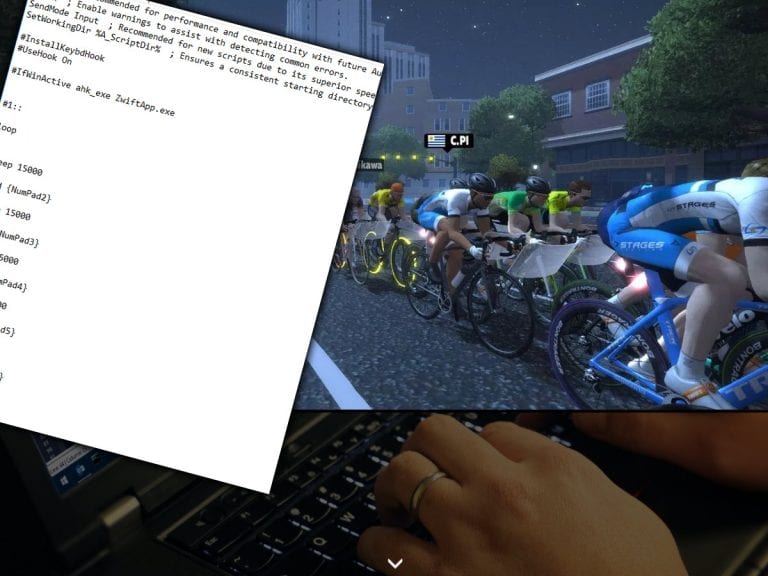
Enter AutoHotKey – a simple scripting program that allows you to create a list of key presses with delays and send them to Zwift as if you were pushing the keys.
I’ve created a simple script that will cycle through all 9 available camera angles, automatically changing them every 15 seconds.
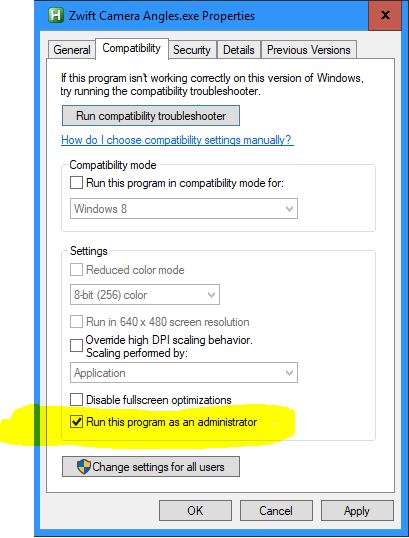
Right click the exe file and go to properties, then select “Run as Administrator” to always run the file with adequate permissions.
Making It Work
(The following instructions apply only to Windows users – sorry I don’t have a Mac!)
Download Zwift-Camera-Angles.zip and extract the exe file from it. The file needs to be run as an administrator.
Once in Zwift, press Win+1 to start the script, and Win+2 to pause the script. And you can control the camera as normal whenever you’d like.
Creating a Custom Script
If you’re afraid of my exe file, or if you want to create a custom script with just your favorite angles, you can edit the ahk file included in the zip file linked above in your favorite text editor. (You’ll also need to download and install the free program AutoHotKey and compile your own exe.)
Standard Disclaimers
I run Zwift in Windowed Mode – and it seems to work quite smoothly – haven’t tried it full screen.
I’m not a professional programmer nor do I play one on TV, but this was a really simple way to get Zwift to do what I wanted.
Swift Zwift Tip: Reset Personal Best Power Numbers
Editor’s note (Dec 26, 2022): the method described in this post no longer works. Our hunch is that Zwift is now storing your power PBs on their servers, so deleting them from your device has no effect.
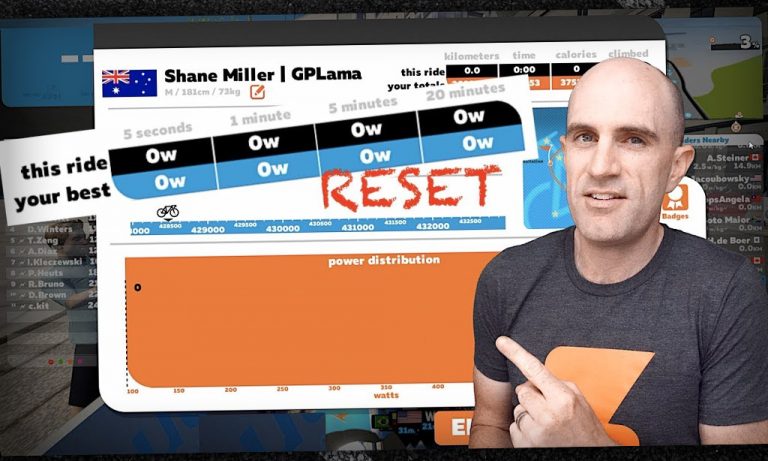
Your personal best power numbers for 5 seconds, 1 minute, 5 minutes, and 20 minutes are stored in Zwift and can be viewed from the menu screen while in game. Occasionally, riders want to reset these numbers for any number of reasons:
A temporary calibration problem which bumps their power up incorrectly
A new smart trainer or power meter which reads lower/more accurately than a previous setup
A friend who “borrows” their Zwift account and puts out higher power numbers
Recovering from injury and wanting to show current power levels instead of old PBs
Whatever your reason, we’re here to help. Here’s a quick video explaining how to reset the personal best power numbers in Zwift:
“This is not for you. Nothing personal. But it’s not. This is for people with fight. Resilience. And minds tougher than their bodies…”
That’s how the Norseman website introduces the event. It’s not your typical triathlon: it’s an extreme triathlon. It begins with a 3.8km (2.3 mile) swim in near-freezing water, then continues to a 180km (112 mile) ride up a mountain, finishing with a marathon that includes steep climbing for the final 10+ miles. Begin at sea level, finish at 1,850m above sea level with a total ascent of 5,000m.
Zwift has hosted a Norseman series every year since 2018, and they’re always popular with athletes wanting to push themselves to the limit. This year’s events have just rolled out (although they’re still being added to the calendar). The series runs from June 28-Aug 8, starting with 5 weeks of workouts and culminating in a week of races with jersey unlocks and giveaways available. Here are the details…
Norseman Festival of Climbing Workout Series
The 5-week workout series begins June 28 and runs through August 1. These workouts are designed to prepare Zwifters for the rigors of the Festival of Climbing Races. Each week features a fresh run workout as well as a bike workout, all designed by coach Graeme Stewart, who is a 4x Norseman finisher (doing his 5th this year to earn his green jersey).
Graeme will be leading select rides and runs throughout the series.
The final week of the series (August 2-8) is the Norseman Festival of Climbing. This is a challenging week of races finishing with a long ride race on August 7th and a half marathon run race on August 8th.
The Norseman White jersey and run shirt for completing any of the races. This is a brand new kit for the series.
The coveted Norseman Black jersey and run shirt is reserved for Zwifters completing the August 7th Cat A race (7 Horsemen race) and Aug. 8th half marathon race.
Prize Drawing
Two Norseman 2022 Race Entries are up for grabs (1 male and 1 female). Zwifters can earn up to 2 entries into the drawing by completing the 7 Horsemen race and/or the Three Sisters Half Marathon run race.
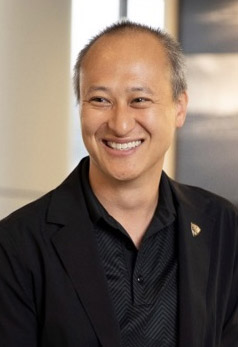
The latest Zwiftcast episode is a special edition featuring an interview with Zwift’s first Chief Product Officer YuChaing Cheng (known to all as YC). YC’s job description puts him in charge of what seems like almost everything at Zwift. So his perspective on where Zwift is at and where it’s going should be interesting to all fans of the platform.
After listening to the full interview, I thought an article summarizing some of the most interesting bits may prove useful. You’ll be the judge of that, of course! Let’s dive in…
Does Zwift Need to Change the Way It Works?
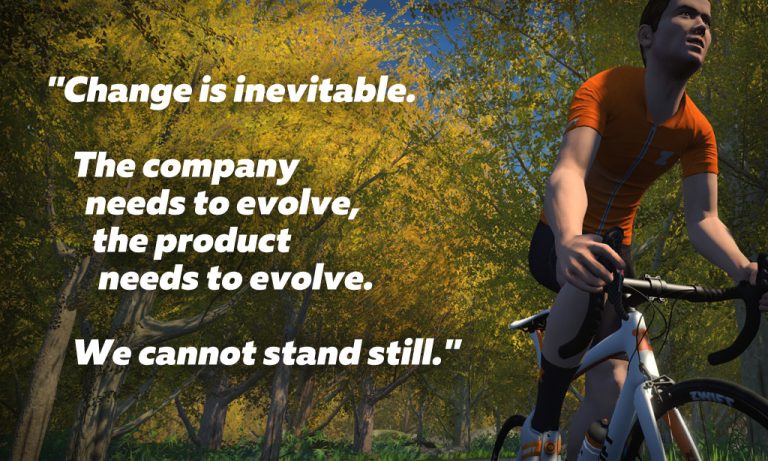
Simon asked YC if he has identified ways in which the company needs to change the way it works. YC begins by saying, “Change is inevitable. The company needs to evolve, the product needs to evolve. We cannot stand still.”
He then lists the overarching changes that he is working to implement:
Focus on the long term
Listen to the community
Gather information about how the product is performing
Plan it out over time
He acknowledges that ZHQ staff are generally passionate Zwifters who want a better product, but they just haven’t been as effective as they could be. I can echo this truth. Zwift staffers (and I’ve spoken with many over the years, from top executives to those in the trenches) generally love cycling and love the product. But despite this, for the past few years it has often felt as like unknown organizational/process/staffing hangups have resulted in a lack of quality execution, resulting in less-than-ideal product development.
YC’s focus on longer-term planning coupled with community input and product usage metrics is right on target. This is the only way forward for a company in Zwift’s position, that is:
A diverse, dedicated, and vocal user base
A complex product that involves many systems interacting together across a variety of devices
Massive opportunities for product improvement on multiple fronts
Casual vs Hardcore, Growth Over Development
Simon asks YC is Zwift is prioritizing the “casual cyclist” over the more hardcore initial users of the platform. Or to put it another way – if they’re trying to grow the user base more than they’re trying to develop the product. Certainly a pertinent question, given how Zwift pivoted away from development and toward new user onboarding/customer support during the pandemic.
But YC pushes back a bit, making the case the growth and development are not a dichotomy – that Zwift doesn’t need to choose between the two. He says, “We should be able to do more things. We should not have to sacrifice so much… we should be able to satisfy more than one thing.”
Zwift is in a challenging position when it comes to deciding where to invest their resources. It’s easy to play “armchair quarterback” and pass judgment on the features and bugs Zwift is or isn’t working on. But as YC explains, Zwifters come to the platform for a variety of reasons, and, “For us, it’s about trying to support the diversity of motivations and things that people are trying to get out of Zwift.”
Product-Led
YC talks about how Eric Min pivoted the company to a “product-led” focus, and YC’s appointment is part of that pivot. What does it mean to be product-led? YC defines it as “Focusing on trying to deliver the best experience.”
Again, YC brings up the community in this conversation, stating how vital it is that Zwift is “intentional about having a collaborative conversation with our members.”
“A lot of Zwift’s success is because of how the community has embraced it and helped it move forward.” He’s not wrong!
Is speaking of what the product-led approach will lead to, YC says, “You will see more and more ‘crowd pleasers’ because we just think it’s also the right thing to do.” I like the sound of that.
Zwift 2.0
Simon asks YC if Zwift is working on a new game engine – “Zwift 2.0”, you might call it. (For those unaware: Zwift runs on a proprietary game engine initially developed by founder Jon Mayfield.)
YC explains that Zwift is investing in the games engine quite a bit – in fact, that’s most of what Jon Mayfield is doing these days! But he stops well short of calling anything “Zwift 2.0”. Instead, he sees it as continual improvement of the existing proprietary engine, explaining that “many many successful games have their own proprietary engines.”
What work is being done on the existing engine? YC says they’re constantly working to “Make it more scalable, maintainable, more stable.”
No Pay to Play
YC came from a background working with the World Gold Tour game that included “pay to play” aspects where users could pay real money to purchase better-performing virtual equipment. Is that coming to Zwift?
It’s not, according to YC.
All things to all people, or do one thing and do it well?
Simon queries YC on where Zwift is heading in the fitness space. Are they wanting to embrace multiple sports – running, rowing, maybe even golf, etc? Or are they focused on doing one thing well?
YC answers that near term, Zwift is focused on cycling.
This answer may not please the runners on the platform – or the rowers. But cyclists make up the vast majority of Zwift’s userbase, and if Zwift can dial in the experience for cycling, much of that learning and development work can be applied to other activities in the future, if Zwift ever decides to expand its activity list.
Why Hardware?
When asked why Zwift is putting so many resources into developing its own hardware, YC first makes the case that, relative to the size of the company, hardware is actually quite a small part of the budget. And he reiterates what we’ve heard from other Zwift execs, that Zwift wants to continue working with their hardware partners (think Wahoo, Tacx, Elite, Saris, etc) in tandem with developing their own hardware.
Why the focus on hardware? YC sees it as an important part of Zwift’s future success, because if properly done, hardware could help solve the challenge of Zwift accessibility. As YC says, right now, “It’s very hard to onboard people.”
This isn’t news to Zwifters, of course. We’ve all experienced the challenge of ascending Zwift’s learning curve! What do I need in order to Zwift? Which trainer should I buy? How do I hook these things up? Why am I having ANT+ dropouts?
The challenge of setting up a stable Zwifting environment has turned off many potential Zwifters. Some never signed up because they were overwhelmed. Others signed up but found the experience too challenging.
ZwiftHQ knows there are struggles. At least, they see the “big picture”. But YC says something interesting, in making the case for Zwift building their own hardware: “We’re not learning enough. We do not understand the pain in solving the problems for new Zwifters and existing Zwifters. This is our best way of improving the experience, learning… and I think it’s going to be a positive for everyone.”
That’s an unexpected reason for building Zwift hardware: he is essentially saying Zwift needs to have its own hardware so they can truly understand what makes onboarding new Zwifters a challenge. While I agree Zwift will get to experience the joy of fielding many tech support requests if/when it releases its own trainer, if the goal is simply to smooth the onboarding process, it seems like some focus group work would accomplish the same thing much more quickly and cheaply.
Is Nimble the Goal?
One common complaint among Zwift faithful in recent years has been that the slow pace of development. Simon says “even the most dedicated fanboys would struggle to characterize the company as agile or nimble” and he wonders if YC agrees, and if that’s something that he wants to address?
The thoughtful answer from YC is, “Is nimble really the goal? Is Apple nimble? But yet they deliver excellent experiences at a regular good pace.”
“Overall… we want more output of amazing features. But we want them to land… we want them to work better.”
Fair point. In the early days, Zwift was much smaller in terms of the game itself, the userbase, and its staff. There was a comradery there and a sort of startup zeitgeist which no longer exists. And that’s OK. Zwift is much more established now, and that means new features will take longer to develop – but if they’re done right, they will improve the game experience for a huge number of users.
Staffing and Culture
YC reveals that Zwift has hired over 200 people in the past 12 months. Wow!
He also talks about how the development team’s culture has been changing. He characterizes it as, “Fail fast, learn, iterate on things, so we can innovate.” That sounds a lot like what I’ve heard from Lead Game Designer Wes Salmon over the past couple of years.
In past years Zwift has said they’ve struggled to hire the necessary game development team due to competition from larger game houses and the need to be located in Long Beach. YC says this too is changing – Zwift is now recruiting from all over the world, and everyone is working remotely. Zwift is also “working with outsourced agencies famous in gaming so we can flex more.”
We may not see the effect of an expanded development team overnight, but YC says the processes and teams they are building will result in a sustainable pipeline that will result in quality features in the future.
Pace Partners on Laptops
When Simon asks about why it seems certain projects launch with a basic “MVP” (minimum viable product), then don’t see much further development, YC explains that it’s easy to create an MVP, but long-term, sustainable, hardened features take a massive amount of work.
As an example, YC explains that the wildly successful Pace Partners feature initially ran on someone’s laptop from their home. Crazy, right? But kudos to that Zwift developer who overcame lockdown craziness to make a new feature come to life from his home office.
“There’s a huge chasm between the MVP and the final product,” YC says. “Because the final product needs to be so much more sophisticated.”
Race Improvements
YC acknowledges that results-based race categorization is still a goal. But it definitely sounds like it’s not happening any time soon.
“We’re moving more towards a system that a lot of people had theorized and written long articles on and trying to be much more focused on outcome-based categorization. And that is going to take more time for us to implement and understand.”
Use Zwift’s Forums
Throughout the interview, YC mentions how he reads the Zwift forums, wants Zwifters to use the forums, etc. In fact, YC says he reads them every day, and that the forums are the most constructive place to have conversations.
Zwifters who are plugged into social networks know that we’ve had Zwifty conversations on Reddit (a favorite haunt of Jon Mayfield’s), Twitter, Facebook (home of the 86.7k member Zwift Riders group), and email. But ZwiftHQ clearly prefers the forums as a way to interact with members. That’s where they’re putting their energy when it comes to communicating.
Listen to the Full Episode
Your Comments
What do you think of YC’s interview? Share your thoughts below!
In terms of cycling brands, they don’t get much bigger, historic, or well-respected than Castelli.
For those who are not familiar, Castelli is a premium cycling clothing manufacturer based in Italy with roots dating back to an Italian tailor, Vittore Gianni, in Milan, 1876. In 1935 Armando Castelli joined Gianni’s staff and 4 years later purchased the company and continued to service high-profile cycling clients such as Gino Bartali and Fausto Coppi (2x Tour de France winner and 5x Giro d’Italia winner).
It was some 30 years later when the Castelli scorpion logo was introduced. This was around the time of the first aerodynamic Lycra shorts used in racing. They would eventually be sold to the public.
The modern jersey with printed logos was pioneered by Castelli along with windproof jerseys which were first worn by Bernard Hinault, 5x winner of the Tour de France.
Castelli has been integral to the development of cycling clothing and offer a premium product. Given their impact on cycling, it’s no surprise that Castelli are active on Zwift.
Castelli and Zwift
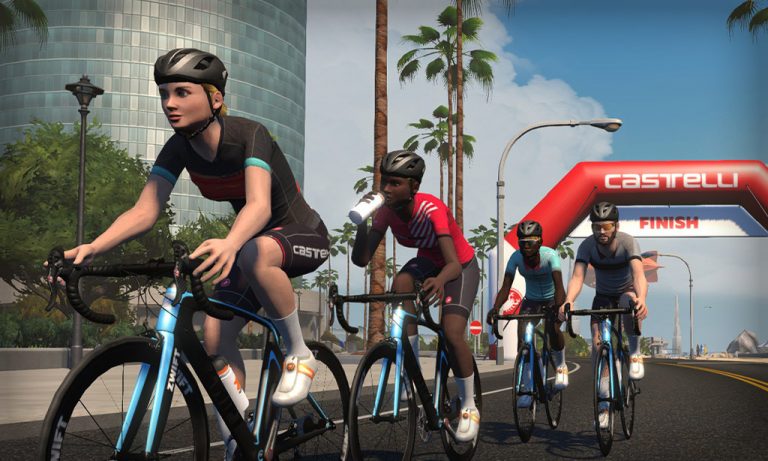
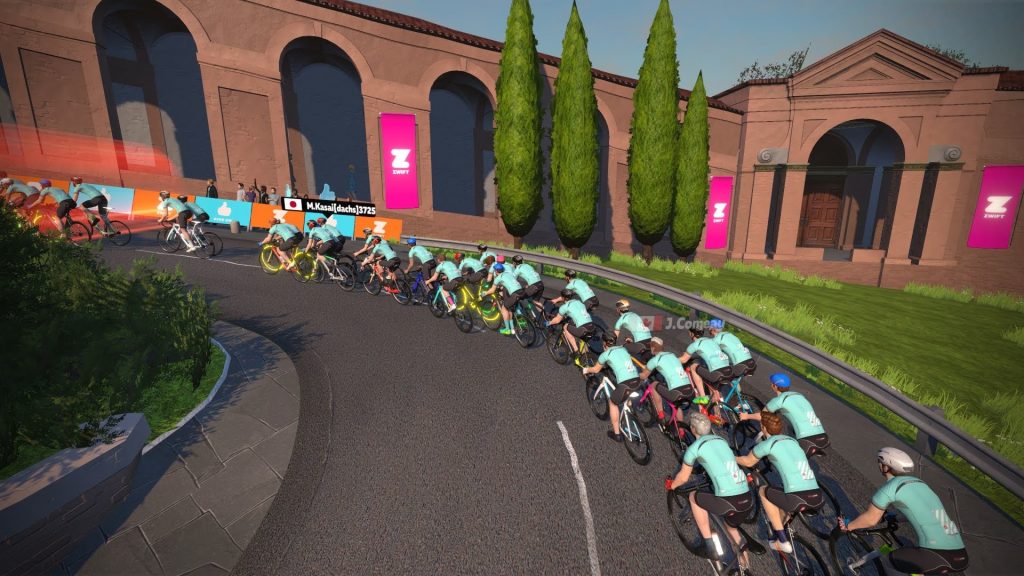
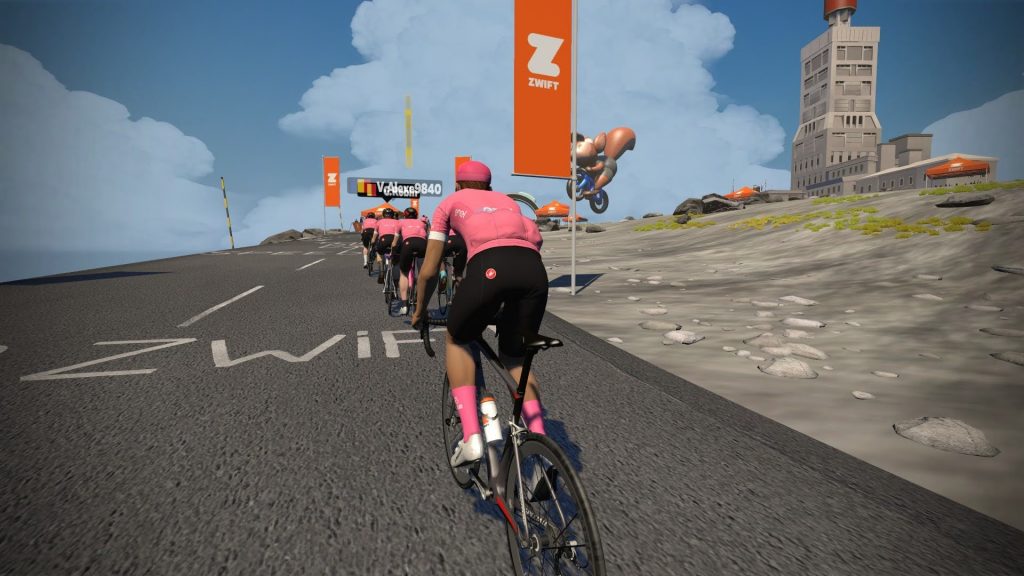
Like their cycling apparel, Castelli has evolved over the last several years on Zwift and now offer 3 weekly group rides, with 4 different formats to keep them interesting and fresh, all under the “Roll with Castelli” name. Each ride has a different Castelli jersey to unlock including AERO RACE 4.1, CLIMBER’S 2.0, and INFERNO BIBS.
These are well-organised group rides and these events have attracted some of cycling’s major powerbrokers such Eric Min (CEO, Zwift), Charlie Issendorf (Head of Racing, Zwift), Sir David Brailsford and Tim Kerrison (INEOS Grenadiers), along with Fausto Pinarello. It is worth mentioning that as a result of Castelli being the official clothing sponsor for the INEOS Grenadier Pro Cycling team that many of the team’s riders have also attended the events along with various pro triathletes. Jason Osborne the eSports World Champ has also shown up, as he is sponsored by Castelli. They attended because the events are well-organised, have good participation, and the changing routes and formats means they offer something for everyone.
One ride is designed specifically as a Women’s-only event and is hosted on Monday evenings at a time to cater to those based in the US.
Other rides include a Tuesday evening ride for those based in Europe along with a Thursday evening ride to cater for those in the Southern Hemisphere. The Thursday ride also doubles up for an excellent lunchtime ride for people in Europe.
The alternating formats keep the event fresh: there is a climbing event, a chase event, an ‘After Party’ ride along with the most prestigious, the ‘Epic.’
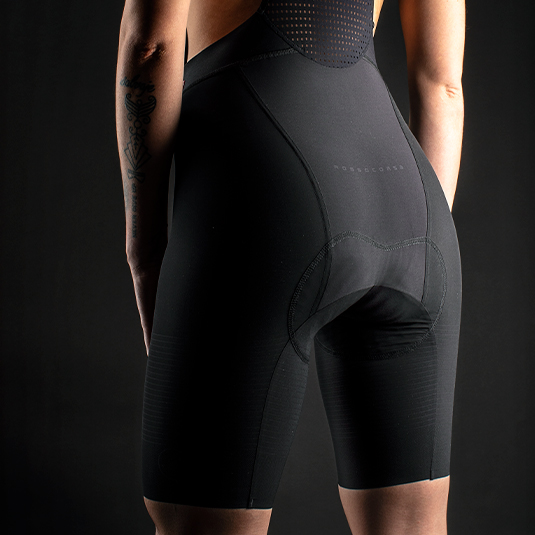
The ‘Epic’ ride happens once a month and provides riders the opportunity to win a prize from Castelli – we are not talking about some water bottles, but a premium item of Castelli clothing. This month, the prize was a pair of Castelli Cycling Premio Black bib shorts which retail at €229,95.
To win, the Ride Leader takes a photograph during the ‘Epic ride’ and the one closest to the beacon wins the item. Miguel Mendez from Spain was the winner of June’s “Roll with Castelli” prize and was announced on Catelli’s Strava Club site, which riders are welcome to join.
The Premio Black bib shorts
Given the number of hours we spend on Zwift and thus in the saddle, it’s certainly worth investing in some quality cycling shorts. In my recent VEveresting Challenge I completed the challenge using 2 pairs of Castelli’s shorts. 13 hours in the saddle and no issues, and this was without the Premio Black bib shorts, which is worth highlighting. Had I had those, I am sure I would have been even more comfortable!
The bib shorts have been re-engineered by Castelli, who have reduced the number of panels, seams and inserts to a minimum by incorporating components into a single engineered fabric that supports the body like a second skin. The 3 panels that make up the shorts replace up to 10 components in traditional shorts. As you would expect from Castelli, there is version specific for women too, ensuring everyone is catered for.
One of the important parts of the design is the Progetto X2 Air Seamless Seat pad. It is the softest and stretchiest layer Castelli has made and is designed to move with your skin and avoid abrasions. Beneath that layer is a completely separate component that Castelli calls the Cushioning Layer. It’s in the shape of a saddle and provides progressive cushioning. In addition, there is soft foam for immediate comfort, with a medium-density foam for support and 3 mm gel pads under the sit bones and perineum. With all that padding, it’s like sitting on a sofa.
Other key features of the new shorts include:
Gradient stretch woven fabric for the right support in the right place
Woven fabric weighs 30% less than comparable knit fabric
Perforated back bib panel with lie flat bib straps that don’t bind at shoulders
Integrated gripper elastic at leg ending holds short in place without need for extra silicone grippers
Laser-etched logos with RossoCorsa at centre back and black scorpion shadow logos at lower legs
Progetto X2 Air Seamless seat pad
Weight:156g
In summary, if you are going to spend hours in the saddle, this a premium product that will make the experience more comfortable.
Origins of the “Roll with Castelli” Rides
Like the origins of Castelli, the origins of their ride make for some fascinating reading and dates as far back as 2015 and starts with Rich Lovelock.
In 2015 there were not many group rides on Zwift and Rich used it as a way to connect with his fellow cyclists from his local club, during the eternal wet and cold British winters. He put together simple training plans which attracted people to his structured workouts which averaged 100-200 riders a week.
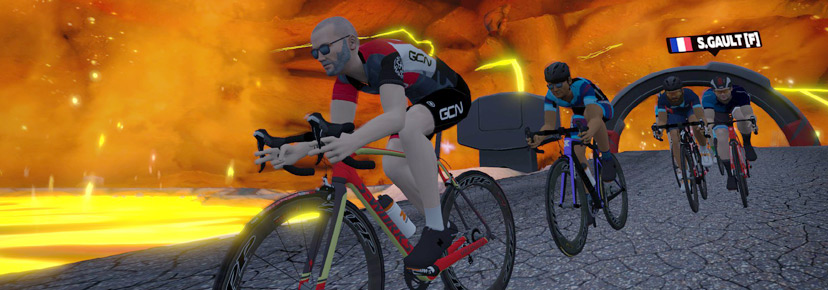
In 2017, to tie in with the release of the Volcano routes in Zwift, Rich evolved his group rides and called them ‘AVC Inferno’. The sessions were innovative! Having a degree in Sports Science, Rich was able to able structure the sessions in a way that previously hadn’t been done on Zwift. The session intensity would increase with each lap of the Volcano Circuit. The fundamental concept underpinning the event was “simplicity” – the idea was to keep the event simple, so people could connect with it and regular return for training. To accommodate all abilities, there were 3 different levels: ‘Mild’, ‘Hot’ and ‘Scorcher.’ These were operating between 6-8 times a week and were led by Rich.
Rich’s event caught the attention of Zwift, and he was invited to be involved in the Zwift Academy and led rides for 3 consecutive years from 2017 through to 2019.
Late in 2017 Castelli and Rich connected, and using his experience of creating and leading group rides, on the 8th January 2018 the first Castelli ride was led by Rich, attracting 340 riders. It was called the ‘Rosso Corsa Ride’ after Castelli’s premium product line. In March 2020 with the global pandemic, the ride was rebranded to ‘Ride It Out’ before its name changed again in June 2020 to ‘Roll with Castelli’.
To support the expanding event and like any true cycling team, Rich realised the importance of having a strong and diverse group of riders. So he filled his roster with quality Ride Leaders from across the globe! The roster includes Alvin Nordell (Colorado, US), Lars Blesvik (Oslo, Norway), Jesus Velasco (Andalucía, Spain), David Johnson (Tokyo, Japan), and their newest member, Jason Fuller (Tuscany, Italy). To round out the roster and to support the new ‘Roll with Castelli – Women’ ride, a specific US-focused team was created and consists of Carmen Thomas, Christine Meyer, Johanna Schwartz, and Inga Beck.
As a reward for the dedication Rich showed to the Castelli family, he was awarded with an Ambassadorial role. Rich told me, “It is a privilege to be a Castelli Brand Ambassador, Castelli is an innovative and inclusive company that despite being a global organisation, still maintains that ‘family feel’ in part because everyone is passionate and works to add value and produce quality products, like it has always done.”
On that notion of innovation, in true Castelli style, Rich is exploring returning to his roots of hosting workouts and even a Race Series, all under the supportive umbrella of the Castelli brand. All I can say is if they are half as good as the group rides, then the Zwift community is in for a real treat. I am already looking forward to lining up on the start line to review the event.
IRL
I have already mentioned that Castelli have their own Strava club, which is called ‘Castelli Squadra Corse’. What isn’t widely known is that Castelli is a main partner in a major Italian Fondo called the Maratona dles Dolomites Enel.
The Maratona is a road-bike marathon in the Dolomites with start and finish in Alta Badia. The first Maratona dles Dolomites event took place in 1987 and has grown in stature, year on year.
There are 3 possible routes. Participants are free to select the route best suited to their ability, also during the course of the event, entirely according to their own judgement. This is something certainly to plan for and the courses are as follows:
Maratona course Length: 138 km Altitude gain: 4230 m
Middle course Length: 106 km Altitude gain: 3130 m
Sellaronda course Length: 55 km Altitude gain: 1780 m
Summing up
It is clear that Castelli’s innovative approach and attention to quality is not limited to the apparel they produce. Their involvement with Rich has led to quality group rides being hosted on Zwift, which are incentivised by the chance to win some of their premium products. This coupled with Castelli’s involvement on Strava and in the Gran Fondos helps make it clear that they are integral part of the fabric of the cycling community.
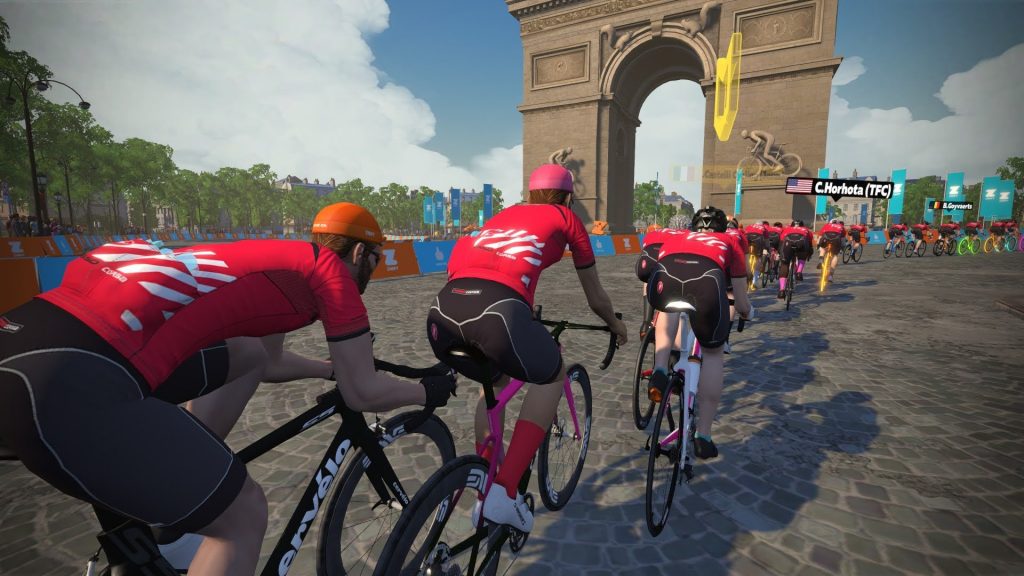
With so many events on Zwift, it pays to have a catchy event name. (You have to hand it to the Zwift Events + Marketing Teams as they are experts at this!) I have already mentioned in previous articles how Zwift have been brilliant with their “Time Trial Tuesdays” and “Fast Fridays” slogans, and they also did it with their “Fun is Fast” which has now given birth to a series of events this month.
If you have been watching the Tour de France, you’ve probably seen the Zwift advert that is particularly eye-catching. Coupled with the groovy song “Go” by The Chemical Brothers, it’s one that stays in your memory. Therefore to pay homage to this “Fun is Fast” marketing triumph and series, I am going to highlight events this weekend that equally have catchy titles.
Fun Is Fast
The “Fun is Fast” series that Zwift is running is good. Really good. This week I did the “Fun is Fast: Workout inspired by Mathieu van der Poel” – it was brutally hard and thus excellent training.
Throughout the weekend there are other excellent workouts to try, inspired by other top cyclists such as Geraint Thomas and Anna van der Breggen.
These are certainly the headline events this weekend.
No matter your sporting level, at some point you may have a target and that target most likely will have the word “sub” in it. For example, running a 10km in sub 1 hour, 50 minutes or 40 minutes. In the end, any event with the word “sub” in it lets you know it is going to be a real challenge!
This event looks particularly tough. 100km in sub 2-hours. That is averaging 50 kph… for two hours! As the description says:
“Join us in an attempt to be the first groups to tackle 100km on Zwift in under 2 hours! We’ll be pushing the pace as hard as we can for 2 hours. Help us make history!”
Other groups have tried and failed. Will STPC make it happen? It’ll take a big group, pushing hard!
This is a rare event for junior riders and actually one of the first I have seen. It transpires that Team CLS runs this event for juniors and those that are new to Zwift. They try to repeat the first 3 events of each month so riders can measure their progress. These vary from sprint focus to climbs and the tough ramped laps (“How long can you hang on to the Peloton?”).
If you are a young cyclist, or if you are looking at introducing your children into Zwift, then this looks to be an excellent environment to try.
I love the title. Who is Dave T? What is an Anti-Social Social? To quote Sir Winston Churchill, “It is a riddle, wrapped in a mystery, inside an enigma.” But one thing is for sure, it got my attention. I will probably ride it just to discover who Dave T is and what the ride is actually about!
I also loved the description because it is fun and is complete with a hashtag. See below the event description below:
“The ride is open to everyone and you all are welcome.
Anti Social: If you want to ride hard, Race your mates, Go for KOM’s/QOM’s and Sprints or just chase a fast lap time,
Social: Ride with the main Yellow Beacon group as a supportive and leisurely meetup where we can enjoy riding together, We will aim for around 1.5-1.7Wkg average which will go above and below this depending on the terrain and to help keep the group together. The main group don’t race we ride as one, supporting each other with the stronger riders being encouraged to drop back and support our awesome sweep team who help riders achieve goals they thought were impossible, The ride will be a recovery for some and a workout for others,
No matter how you decide to ride, we won’t judge you, We will take on the longer routes on Zwift riding either 2 hours or the route lap each week, The main group will also take short breaks on the longer rides,
The most important thing is for everyone to have fun and enjoy the ride.
Welcome to this Zwiftcast Special Episode, an extended interview with the company’s first Chief Product Officer.
YuChiang Cheng, known to all as YC, was appointed in January and the move was hailed as “critically important” by Zwift’s CEO, Eric Min.
YC was put in charge of what seemed like almost everything… from game design and art, engineering, research and development through content programming and live operations, plus a bit more.
It was clear that YC, whose background includes the development of the 28 million-player World Tour Golf game, was going to be hugely influential in Zwift’s continued growth and development.
So what does he have planned? Was the rapid deployment of the much-requested Return To Home feature soon after YC joined a mere co-incidence or a sign of things to come? Is Zwift working on a brand new platform architecture? Will new features roll out faster? So many questions.
Simon sits down with YC to see if the Zwift community can get some answers to these and lots of other questions.
We hope you enjoy listening.
00.00-02.10: Intro, including rules of engagement
02.30: What was your last decision in your last meeting?
02.50:Give us your 60 second career resume? (SPOILER: It’s longer than 60 secs)
04.45: How did the opportunity at Zwift come about?
06.46: Do you ride a bike?
08.00: Have you identified areas where Zwift needs to change the way it works?
10.00: The Press release on your arrival stressed “accessibility” and “innovation”. What did that mean?
13.58: In seeking to widen accessibility there’s a feeling that the hard core cyclist will lose out to the casual fitness crowd. You are prioritising growth over development. How do you respond to that?
17.20: The last couple of updates have included “crowd pleaser” features. Is that your doing?
19.50: Is the company developing a Zwift 2.0? A new games engine?
21.50: So is Jon Mayfield, in his new role, working on a new game engine?
22.15: The golf game you were involved in featured performance improvements in exchange for payment. Will this ever be the case on Zwift?
23.10: Zwift Running has not been a conspicuous success. Is Zwift’s future multi-sport?
24.00: Why is hardware development so critical?
25.55: Zwift is neither agile nor nimble. Do you feel the need to address this?
29.10: Has recruitment of talented development people improved? Why not offshore development?
32.20: Tell me about your working relationship with Jon Mayfield?
34.30: We see a number of big projects announced – then grind to a halt. Why?
37.50: Pace Partners, as an example, were a huge hit. But development of them has been glaciallly slow. Why?
40.15. Racing: At pro level, it serves Zwift marketing well. At community level, tools, features and functions are slow to roll out.Fair point?
43.30: Why are some Zwifters on very high end machines seeing low frame rates on Makuri? Is this directional, or a glitch?
48.00 Will Zwift ever lock down certain features to its own hardware?
51.00: Zwift hardware. When are we going to see something?
51.20: What has surprised you, both upside and downside, since you joined Zwift?
52.35: Golfers or cyclists. Which is the most demanding community?
53.00: Does Zwift have a proper dialogue with its community?
How the Race Was Won: Bullseye Points Race on Crit City’s Downtown Dolphin
It was Wednesday, and my legs were fresh. That meant it was time to seek out a race I could treat as an interval workout! Scrolling through the Companion app I stumbled across the Herd’s “Bullseye Points Race”. Seeing it reminded me that I’d raced and won a Bullseye Points Race over a year ago – and had sworn to race it again, because it was so much fun! But I had never returned, since I rarely race on Wednesdays.
It was scheduled for 11am, which slotted in perfectly between Zoom meetings.
The details of the race said it was on 12 laps of Crit City’s Downtown Dolphin route. Each category would start at separate times, but all categories would be visible on course. Interesting! And this was a points race, where riders received points for their finishing order across the line each lap. 50 for 1st, 49 for 2nd, etc. And this was the first race in a 9-week series, where the overall point scorer is crowned the victor.
Warmup
I chewed two pieces of caffeine gum about an hour before the event, rubbed PR lotion on the legs before kitting up, then jumped in with the C Cadence roadies for a quick 20-minute warmup. Soon enough it was time to head to the Crit City pens. Let’s race!
The Start
I wasn’t sure how tough the start would be, but I assumed it wouldn’t be too bad since (1) there were only 19 riders signed up and (2) riders would be saving their legs for the sprints.
I was right – the start was pretty tame, and we settled into a rhythm, barely even attacking up the first brick climb. Everyone was keeping their powder dry for that first sprint. Smart.
The Sprints
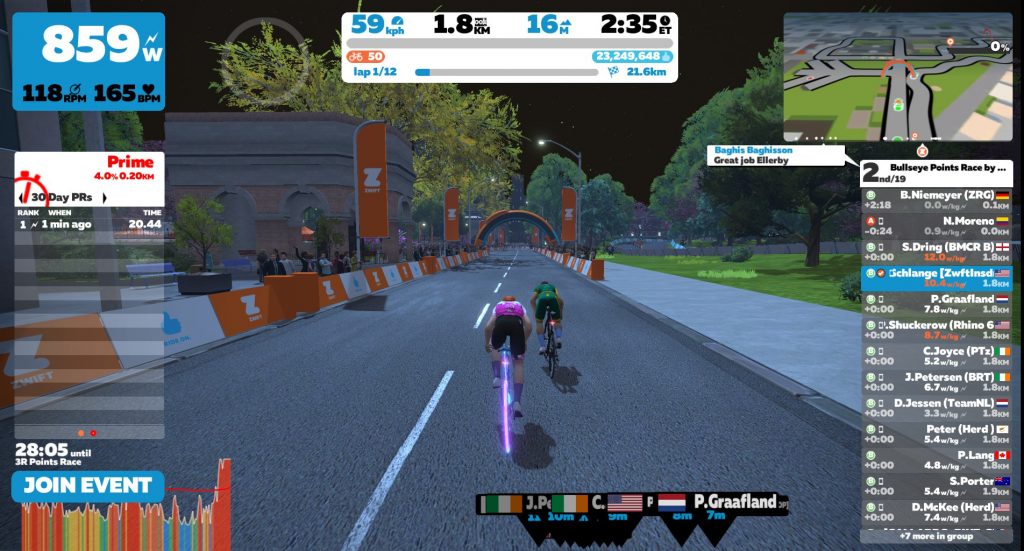
We descended the twisty rollers, and I sat near the front of the pack, waiting to start my first sprint until I saw someone else go. That happened right at the hairpin, so I started hammering, staying seated and giving it all I had. I crossed the line in 2nd place just behind S.Dring – and we had gapped the group by over 10 meters. A good start!
Sprint #1, finishing just behind S.Dring
Immediately after the sprint everyone sat up and rode tempo. I averaged around 265W from the end of the sprint to the start of the next one, and this pattern would repeat itself each lap.
Without walking you through the details of the race, here’s how all 12 sprints shook out for me:
Sprint 1: no powerup, 2nd place (no points, because the first lap doesn’t award points in ZwiftPower)
Sprint 2: drafting powerup, 2nd place (49 points)
Sprint 3: aero powerup, 1st place (50 points)
Sprint 4: no powerup, 4th place (47 points)
Sprint 5: drafting powerup, 2nd place (49 points)
Sprint 6: drafting powerup, 1st place (50 points)
Sprint 7: no powerup, 5th place (46 points)
Sprint 8: aero powerup, 1st place (50 points)
Sprint 9: drafting powerup, 1st place (50 points)
Sprint 10: drafting powerup, 3rd place (48 points)
Sprint 11: drafting powerup, 2nd place (49 points)
Sprint 12 (Final Lap): feather powerup, 2nd place (98 points)
Total: 586 points out of a possible 600
The Finish
On the final lap, one rider (S.Porter) jumped well before the brick climb and put in a really solid effort to create and maintain a gap. Nobody chased his wheel, and I wasn’t about to put in the work to pull the pack up to him, because I didn’t think he had anywhere near enough points to beat me. Better to keep my legs fresh so I could (hopefully) outsprint the pack around me which held my closest competition.
I had a feather powerup (my first of the race) – pretty useless in this points format! I used it on the brick climb and put in a bit of a dig to see if I could create a gap, but that didn’t work. I quickly switched back to conservation mode, saving my legs for the final seconds.
And in those final seconds I started my sprint early, trying to surprise the pack by not waiting for someone else to go. Surprisingly, I stayed away from the other 5 riders, crossing the line in 2nd being S.Porter.
After the race, organizer James Bailey from the Herd team messaged me on Facebook with congratulations. I had won the points race!
Based on how high I had finished in each sprint, I actually thought I had won the race by a good margin – because I didn’t notice any rider who was consistently beating me. Little did I know, I only won by 7 points! A couple of weak sprints or a pack finish from me and someone else could have easily been atop the podium.
Somehow I hadn’t noticed 2nd place P.Graafland turning in consistently strong sprint results. So that’s my lesson from this race – pay more attention to the riders who are sprinting strong. I had been watching S.Dring because I knew he was strong, but that was the only name I was watching closely. (Don’t ask me why – I have no idea!)
I’ve been working on seated sprints lately, at higher cadences. They’re really working well for me. So almost all of my sprints today were seated. My next goal is to integrate higher cadence into my standing sprints. This could get interesting!
I also learned from race organizer James that the final lap’s sprint is actually worth double points. Good to know for future races! This isn’t written anywhere in the event description – James explained that it’s a big pain getting event descriptions updated by Zwift HQ, when he has to manually submit a help ticket for each event’s change. (A note for ZHQ – give event managers access to edit their descriptions please!)
Also interesting to note that, although we all sprinted on the first lap, nobody was awarded points for that sprint by ZwiftPower. Presumably because that first lap isn’t a full lap, since the start pens put you on course after the lap banner?
The points format is a super fun change from the typical Zwift scratch race format. It requires different strategies, different strengths, and with a sprint on every short lap, it’s actually a great “sprinterval” workout. I highly recommend trying out one of these races if you’re into sprinting, looking to do some repeats, or just want a change from the typical Zwift race. Wednesdays at 11am and 5pm PDT. 8 weeks left in the series!
Your Thoughts
Have you tried a Bullseye Points Race (or other race) on Zwift? Share your experience below!
How To Use Your Concept2 Rower, SkiErg, or WaterRower on Zwift
Editor’s note: this post was originally published in January 2018, and over the years it has generated no small amount of interest from rowers looking for a more interactive experience. In July 2020 Zwift CEO Eric Min mentioned in a podcast that rowing would be released “in a few weeks”… and that never happened.
Despite Zwift’s reluctance to pull the trigger on rowing, we still hold out hope that one day all that beautiful water in Watopia will be put to good use. So here’s an updated version of this post which reflects the current state of apps and other add-ons which can make your Zwift rowing experience a fun one.
First, I want to be clear: I’m not an experienced rower. I’m also not an experienced software or hardware hacker. But I do enjoy rowing workouts, and I do enjoy a useful tech hack.
So when I first heard of a few Zwifters who had figured out how to row in game (that is, use their rower to power their Zwift cycling avatar) I was intrigued. This was early in my Zwift life, and I spent some time poking around online, tried to get myself hooked up… and gave up after a couple of hours. It was all doable with little or no extra hardware/software needed – but it would require too much time and learning on my part to implement. Not worth it.
Fast forward a couple of years (January 2018), and astute Zwift Insider reader Victor Bastiaansen emails me with news about a new feature in the PainSled app which makes it easy to connect your Concept2 to Zwift. It got my attention, so I headed down to the garage and spent 15 minutes setting it up. Viola! I was rowing on Zwift.
What You Need
Your exercise equipment:
Concept2 rower or skierg with the PM5 head unit
Concept2 rower or skierg with the PM3 or PM4 head unit and the (out of stock) LiveRowing cable
WaterRower with S4 head unit
An iOS or Android device to run the PainSled or RowedBiker emulator apps
A device to run Zwift. This device must either support Bluetooth connections OR you can use the Zwift Companion app to pick up the Bluetooth power signal and send it to your Zwift session, so you can Zwift on a device that doesn’t have native Bluetooth.
Getting Started
These instructions cover the Concept2 PM5 head unit. (I don’t have access to a WaterRower or a Concept2 PM3 or PM4, so I can’t give specific instructions for those.)
Make sure your PM5’s firmware is up to date. (If you’re like me, you never updated it after purchasing the rower.) I connected the PM5 to my Windows laptop via USB, downloaded the Concept2 Utility, and updated the firmware. It’s a simple process.
Install the PainSled or RowedBiker app on your iOS or Android device
PainSled: enable the ZWIFT option in the Settings page
RowedBiker: follow the instructions to connect to your exercise equipment
Connect PainSled/RowedBiker to your Concept2’s PM5. To do this, click More Options > Turn Wireless On on your PM5. Make sure Bluetooth is enabled on your iOS device, then your PM5 should quickly connect to PainSled/RowedBiker. If you start rowing, you will see your wattage on the iOS device.
On your Zwift device, connect to your PainSled/RowedBiker iOS device as your power meter. You can also pair other sensors on your Zwift device (such as your HR monitor).
Get Zwifting!
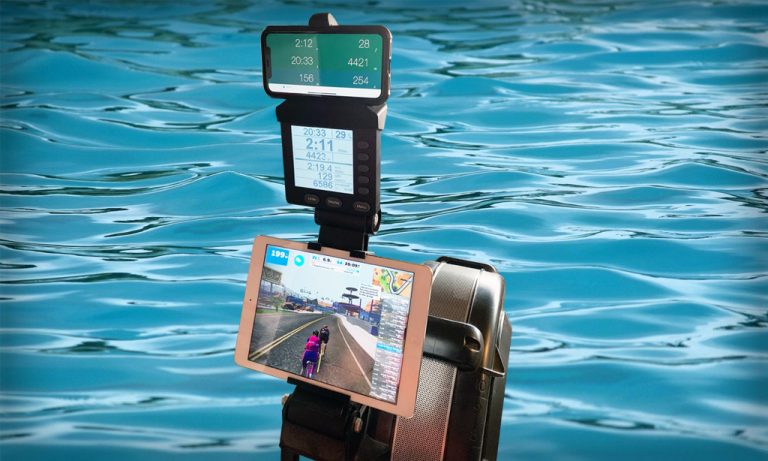
And that’s all there is to it. For me, I’m running PainSled on my iPhone, and Zwift on my iPad. It’s quick and easy to jump on whenever I’d like… faster than signing into Zwift on my PC, in fact. Here’s me in a messy garage testing out my setup:
Note: there are other ways of hooking this up (via Zwift Companion, the CABLE ANT to Bluetooth bridge, etc): see comments below for some of these ideas.
Upgrade Your Setup
I purchased this Concept2 tablet holder on Etsy to hold my iPad. Just a few pieces of plastic, but it works great, and is adjustable to hold a variety of tablet sizes.
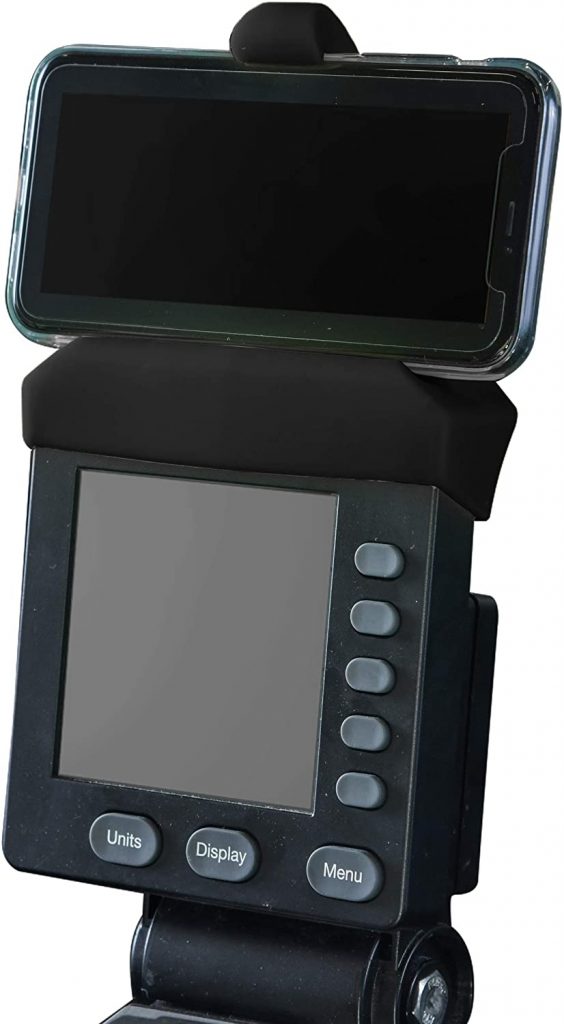
I also purchased this phone holder from Amazon, which perches my phone securely in landscape mode at the top of my Concept2’s head unit.