

Ten years ago today, I went for my first ride on Zwift.
The winter of 2015 was my first “indoor season” as a serious cyclist, and I was already dreading the roller sessions. At the time, none of my local riding buddies were on Zwift. None of them had even heard of it. But I saw it somewhere on Facebook, downloaded the game, ran it in “just watch” mode, and immediately knew I had to give it a try.
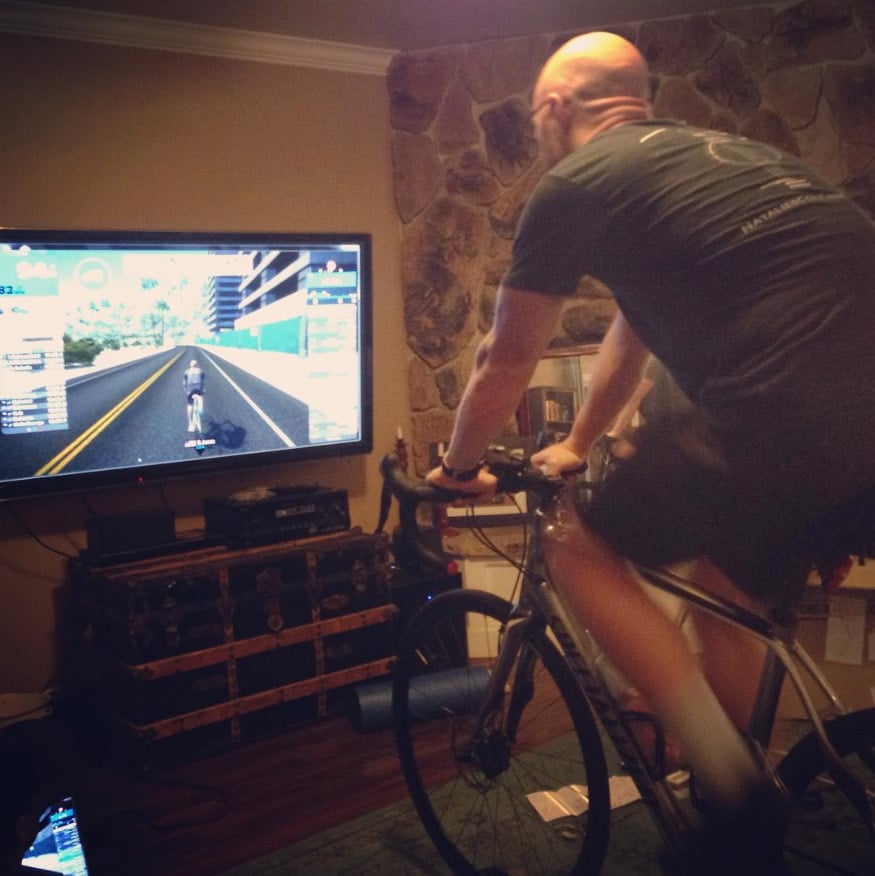
I found a website in Germany selling Tacx Vortex Smart trainers for ~$290 to my door, so I pulled the trigger. The night it arrived I put it together, hooked my bike in, and went for my first Zwift ride from the middle of my living room. The trainer wasn’t calibrated, I had no fan, and I wasn’t dressed for a real ride… so that effort didn’t last long.
But two days later, I went for my first “real” Zwift ride – two laps of Watopia’s Hilly Route (the only route in Watopia at the time). Uploading it to Strava certainly confused local friends. “Are you in the Solomon Islands right now?”
That’s how it all began for me. And I jumped in with both feet! Less than a month later I launched ZwiftBlog.com, which became Zwift Insider two years later.
I wish I had been on Zwift from the beginning, but when Zwift beta launched in 2014 I was just rediscovering cycling after an 18-year hiatus.
It has become my habit each November 12th to post a refreshed Zwiftversary article. So here I am, once again looking back at my journey and delivering my perspective as a Zwifter and the editor of the web’s biggest Zwift fansite (5,043 posts and counting).
Growth Trends
The all-time Peak Zwift of 49,114 came in January 2021. Remember that time? It was actually illegal to ride your bike outdoors in some European countries, as COVID lockdowns sent Zwift numbers off the charts.
A year later, traffic numbers were much lower than their mid-COVID peak, and really, since that time, if you remove seasonality, numbers have basically held steady as far as I can tell. We certainly aren’t seeing the massive year-over-year growth we saw each winter pre-COVID.
That said, I’m seeing a lot of brand-new riders on the platform in the past year or so. Zwift’s big moves in the hardware space certainly have something to do with this, with tens of thousands of Zwift Rides being sold since the product launched.
Hardware: Simpler, Cheaper, and More Powerful

The Zwift Ride was released in June 2024, and it immediately disrupted the smart bike market. Priced at just $1299USD, it was half the price of the cheapest competitor (Wattbike) and a third the price of the premium options (Wahoo KICKR Bike Pro, Tacx NEO Bike Plus).
But was it a smart bike? Or just a simple frame attached to a standard trainer? What exactly is a smart bike?
Turns out, the answer to those questions isn’t all that important. Because the truth is, the Zwift Ride became the overnight default smart bike recommendation for most Zwifters. It’s just really difficult to justify spending 2-3x more.
A year and a half after its launch, Zwift Ride is even more refined and capable thanks to a quieter Zwift Cog, an adjustable crank arms option, and an upgraded KICKR CORE 2 with WiFi, race mode, and more.
The Zwift Ride’s price point has driven down the cost of standalone direct-drive trainers as well. The Wahoo KICKR CORE 2 with Zwift Cog and Click now sells for $549USD, which in itself is a remarkably low price compared to pre-COVID days. But on top of that, JetBlack’s Victory trainer is just $399USD, and Decathlon’s Van Ryself D100 is just $299!
I don’t think prices can drop much more. But Zwift has done an amazing job of strategically lowering the bar when it comes to price, and that is opening up Zwift to a new audience while consolidating the trainer market.
A Virtual Shift
Speaking of hardware, we’ve seen lots of trainers come online with support for Zwift’s virtual shifting in recent months, including Tacx and Elite. It seems crazy, but Zwift only released virtual shifting two years ago (October 2023), and then only on the Zwift Hub. Today, that list has expanded to the following:
- Elite Avanti
- Elite Avanti with Zwift Cog and Click
- Elite Direto
- Elite Direto X
- Elite Direto XR
- Elite Direto XR with Zwift Cog and Click
- Elite Direto XR-T
- Elite Justo
- Elite Justo 2
- Elite Rivo
- Elite Rivo with Zwift Cog and Click
- Elite Suito
- Elite Suito T
- JetBlack Victory
- JetBlack Volt V2
- Tacx NEO 2
- Tacx NEO 2T
- Tacx NEO 3M
- VAN RYSEL D100
- Wahoo KICKR CORE
- Wahoo KICKR CORE 2
- Wahoo KICKR CORE Zwift One
- Wahoo KICKR Gen 6 (2022)
- Wahoo KICKR Move
- Zwift Hub Classic
- Zwift Hub One
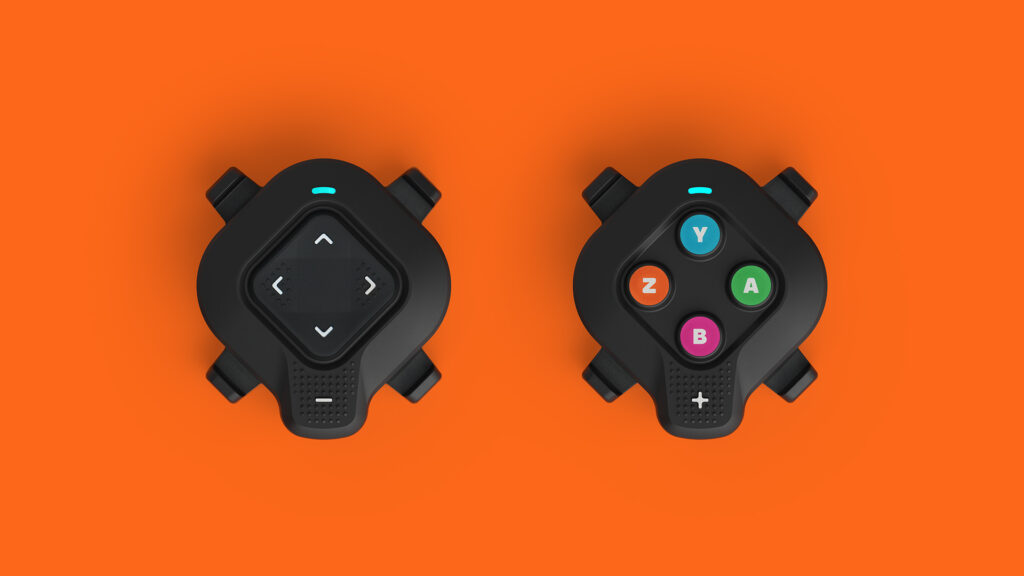
Zwift discontinued their Play Controllers this summer, and started shipping the Click v2 in September. The Click v2 is a simpler, more affordable controller that offers much the same capability, in a form factor that is more broadly compatible with various handlebars and setups.
We could argue about whether Zwift should have created a more “open” standard for virtual shifting that could be used on any trainer without a firmware upgrade, and perhaps even operated via a keyboard or the Companion app. But at the end of the day, the truth is this: Zwift’s virtual shifting is an innovation they brought to the market that helps enable a quality experience on the platform, and most riders shopping for a new trainer will heavily consider virtual shifting capabilities in their decision.
Training Partner Expansion

Zwift has had its own library of structured workouts since early days, and they work great for a lot of people. But some Zwifters want more or different workouts, or an easy way to execute workouts in Zwift that come from another provider/coach. So Zwift rolled out their Training API 15 months ago, allowing partners to sync workouts and session data to and from Zwift automatically.
It’s wild (but not inaccurate) to think how these new Training API integrations have infinitely expanded the library of workouts available on Zwift while also customizing that library to your specific needs. It may sound cliché, but we really are seeing training tools today that are exponentially more powerful than what we’ve had in the past. It’s fun to watch!
Here’s the full list of Training API partners currently syncing to Zwift:
- TrainerRoad
- TrainingPeaks (using legacy API)
- TriDot
- Vekta
- Velodapt
- Wahoo SYSTM
- XERT
Competition and Pricing
Two years ago when I wrote this post, I listed Zwift’s three competitors. That list hasn’t changed:
- MyWhoosh: they won the UCI Esports Worlds contract, and in fact are hosting the 2025 edition in just a few days. With no subscription cost, budget-minded riders are attracted to the platform. Additionally, big prize money is always attractive to racers! Still, it feels like people use the platform for monetary reasons, not because it’s particularly good.
- Rouvy: a popular platform for riders who want to ride “real” roads. They’ve been doing a fair amount of expensive marketing in the past year or two and certainly have a following.
- TrainingPeaks Virtual: the most compelling entry on the list for me, due to the intriguing combination of a popular training platform (TrainingPeaks) and a fast-moving, race-focused game developer (George Gilbert). I love how quickly they’ve built out lots of powerful features, but I don’t love the UI or gameplay appearance.
Zwift raised their price in May 2024, which made some Zwifters look at the alternatives. Then they removed their monthly 25km free trial last July, which was sort of a mystifying move that seemed destined only to drive people toward the competition.
Even so, Zwift is more profitable than ever, with a solid subscriber base and a strong influx of new riders on Zwift hardware. And internal sources tell me they’re investing that available cash in making big, long-term investments that will continue to drive innovation in the space. (Which innovations exactly? Zwift isn’t sharing, but my guess is it involves, at a minimum, AI-driven workout recommendations and new hardware development.)
Community Racing Development
Last year, I wrote, “it feels like Zwift has shifted the weight of its racing focus off of the elite side and onto the community side in the past 6 months.” This continues to be the case, with Zwift announcing last July that they would not be hosting an elite race series this fall/winter like they’ve done in years past.
While Zwift is dialing back their involvement in elite racing, they clearly see the value of community racing. Zwift Racing Score is still evolving, community organizers are being supported, and lots of racing is happening on the platform.
The problem is, innovating in the racing space just isn’t something Zwift has ever done well. It’s always been a grassroots effort, with the community suggesting and even building out the tools needed for racing to work well. Will that ever change? I’m not sure.
Perhaps Zwift has made the right call in throwing their weight behind the development of features that impact the subscriber base broadly, and not just racers. But if they’re going to focus on those “all-platform” features, I’d really love to see them deliver a rich toolset to community organizers, so we can create innovative race events and group rides on the platform. That way, everyone wins.
Zwift Camp vs Zwift Academy
This year, for the first time since 2016, Zwift isn’t hosting a Zwift Academy. That’s a big move! I get the sense that Zwift Academy has a bit of an identity crisis. Is it a community workout program, or a global talent ID program? Perhaps it can’t be both.
I think everyone loves the idea of Zwift hosting a global talent ID program that places deserving riders on top-tier teams. That’s just a cool concept, and one that shakes up the world of bike racing.
Last year’s academy pivoted heavily towards the talent ID side of things. Personally, I think that’s the way to go. Let Zwift Academy identify top riders around the world, and create another workout program that can be embraced by the everyman. In fact, proposed this approach back in August of 2024 in this post: Pondering the Possibilities: Zwift Academy and Zwift Community College.
Zwift has spun up a “Zwift Camp” program this season, with Zwift Camp: Build beginning this week. The Zwift Camp idea appears to be moving toward my year-round, progressive training “Zwift Community College” idea (admittedly, “Zwift Camp” is a cooler name). We’ll see where this all leads in the next year as Zwift’s personalized recommendations engine comes online in the next few months.
Clubs: What Now?
Things haven’t changed much with Clubs in the past few years, apart from Zwift raising limits so Clubs can get bigger and Zwifters can join more of them.
Here’s what irks me, though: even with one of the largest Clubs on Zwift (39.2k members, click here to join) I still struggle to put it to good use. The Club chat tool is very limited (no tagging members, no clickable URLs) which means most members just turn off notifications and never check the chat. And apart from chat, the club really just becomes a container for Club events.
Which is fine, I suppose. But having built and interacted with online communities for 20+ years, I can’t help but believe Zwift Clubs could be so much more. I’d love to see:
- Club kit designs
- Voice chat in game with Club members
- Team racing where Club members are automatically linked together
- More powerful Club chat/discussion tools
- Club leaderboards, to promote competition between Clubs
- and more!
So Many Rides, So Little Time
There was no in-game event calendar ten years ago – instead, the community put one together using Teamup (see it here). Today, there are ~385+ events per day on Zwift’s public calendar. Amazing! And that doesn’t even include private Meetups and Club Events.
Maintaining the perfect event calendar is no easy task, though. There is a tension that exists between Zwift-organized events like the currently underway Zwift Unlocked and community-organized events. Big Zwift events get lots of marketing and calendar space and, consequently, attract a lot of overall participation. But this reduces numbers for community-organized events.
Is that a bad thing? Not necessarily. I would argue that the end-user experience is what’s most important, so if riders are enjoying Zwift’s big events, that’s a good thing.
But Zwift’s community is also a massive asset for the platform, and volunteer organizers in the community have pushed the platform forward in terms of event innovation since day one. (This is still happening: witness today’s kickoff of a well-planned winter TT series from Cycling Time Trials, the national governing body for time trials in England, Scotland, and Wales. They’ve got over 1000 riders signed up to race the first week.) Zwift needs to be careful to cultivate and inspire event organizers, not battle with them for riders.
So once again, as the organizer of various Zwift events, including the Tiny Race Series and Pizza Burner 100km, I’ll sound my clarion call for more event options and better event management tools. Based on my experience over the years organizing hundreds of events, I know that improving these systems would reduce event configuration errors, streamline organizer workflows, and allow the community to innovate in the space, all of which logically leads to higher-quality event experiences for end users.
100km at 5am

Speaking of community-led rides, I should discuss a major addition to my training calendar this year: the Thursday Pizza Burner 100km! I launched this with ZHQ’s James Bailey on January 9th, 2025, and it’s been held every week since.
It’s a bit crazy to think I’ve been getting up at 4:15am every Thursday to start this ride in the dark. But it’s also become a part of my weekly routine in the past 11 months, and I intend to keep it going, because I can feel the difference this ride has made in my fitness. I’ve definitely built endurance, specifically an increased ability to hold high zone 2 and tempo power for durations of 2.5 hours or more.
Now I need to start building power in the 3-10 minute range. More on that in future posts!
The Future Is Bright
It’s not hyperbole to say my involvement with the Zwift community has been life-changing. It’s changed my fitness, it’s changed my work life – it’s even changed my vacation plans (Mallorca was amazing). Heck, in less than 48 hours, I’m heading to the Death Valley Century, where I’ll be riding with Zwift’s Jon Mayfield and two buddies whom I’ve spent hours riding with virtually, but have never met IRL!
This Zwift journey of mine has taken me many places, and I love being a part of it all. Every day, I’m reminded that I am truly blessed to serve the community through my work here at Zwift Insider. It’s something I hope to do for many years to come.
Ride on!
What about You?
What’s your Zwift story? How long have you been on Zwift, and do you feel the platform is moving in a good direction? What features are at the top of your wishlist? Share below!

 wpDiscuz

