Home Blog Page 367

How to Become a Zwift Top 20 Category B Racer

134

I had been riding off and on since I had kids about 8 years ago. Two years ago, I found out about Zwift and was immediately hooked. I was determined to be the top Category A+ racer. I was a Division I runner in college and I figured “how hard can it be to beat these people?” Of course I am old, I have two kids and a full time job and I really wasn’t a very good Division I runner, so I quickly pivoted to “What does it take to be the top CATEGORY B racer?”. Below is what I found after cranking through the data.

If you don’t know about ZwiftPower and how they rank races, check out the top 20 riders in Cat B, which I used as a basis for analysis. (Only race data considered; group rides and tours were excluded in the analysis.)

After analyzing the data, it is clear that if you’re looking to move into the top positions, you should try to emulate the below:

  • Race Experience: These people race a lot and get very good at it. Zwift is a skill. It also gives them more chances to pray to the powerup gods.
  • Pretty High 15-Second Sprint Power: 10+ W/kg
  • Very High 1-Minute Power: 6.5+ W/kg (most likely the 45 seconds before the sprint, then 10+ W/kg at the end; you have to be able to get into a position to let your 10+ W/kg sprint rip)
  • Top of Category 20-Minute Power: 3.7 to 4.9 W/kg; overall average 4.1 W/kg
  • Be Light: ZwiftPower states that to move to Cat A you have to have three races/group rides above 4.0 W/kg 20-Minute Power and your power from those rides must be above 250 Watts. So if you are light you can exceed 4.0 W/kg and remain in Cat B.
  • Race in Category A: Higher Category = lower points

If you’re curious about the specific data I used, check out all the data details at the end of the article. Otherwise, let’s jump into the number details.

The Numbers Breakdown

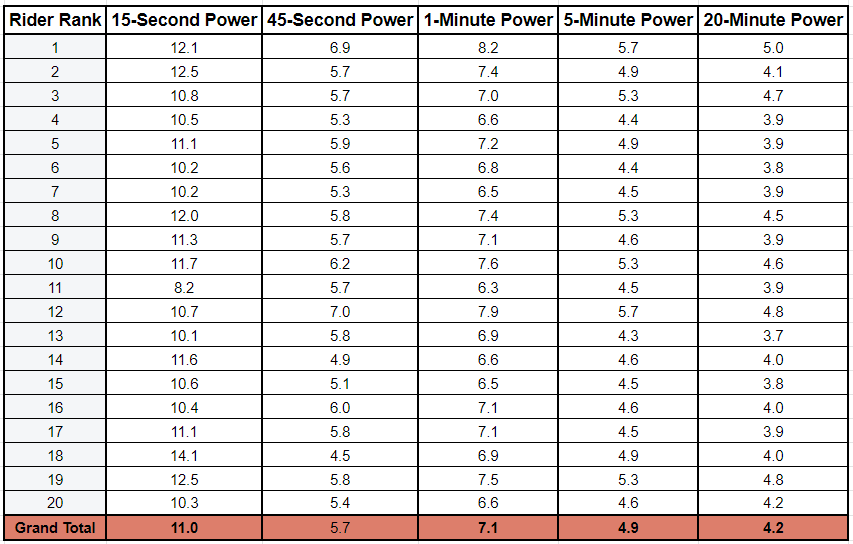
So let’s start here… the data table:
20-Minute Power

This one isn’t a mystery. You must have a high power to weight ratio. All of these riders except one are capable of riding 45-60 minute races at 4.0 W/kg or above (except that pesky Rider 11). They may not do it every race, but they can, and I am guessing they are all experts at sitting in the draft.

Six of the 20 riders have W/kg that averaged over 4.0 W/kg. That is because they are small enough not to trigger the category upgrade where you need to be above a 250 W FTP. 

5-Minute Power

You need to be able to hang with the group up the hills. About 4.7 W/kg will do the trick on average. I did some spot checks on races and that is about right, except for the light people who average higher. Hopefully, I will be able to figure out a better way to get actual data for individual races and I can expand on this.

1-Minute Power

I think this is the most important part of placing highly. As you can see in the table above, you have to be very good at 1-Minute power. If you can’t average 6.5 – 7.0 W/kg across the final minute of the race you won’t even be in a position to use your sprint. This is skewed up because it likely includes the 15-second sprint power – to correct for this I extrapolated 45-Second power in the table.

Or more succinctly: you have to sprint for 45 seconds at the 45-second power and then 15 seconds at the 15-second power. 

15-Second Power

My initial hypothesis was that the person with the max 15-second power was going to win the race. This is partially true, but it seems like a combination of 1-minute and 15-second is the key. You have to be good at both. As you can see in the table, you need to be able to average at least 10 W/kg, and realistically 11 W/kg to get into this upper echelon of B category racers. If you want to be the top B racer you need 12 W/kg to hang with the sprint in the A category where you need to race to get a low enough ranking.

Races Per Week

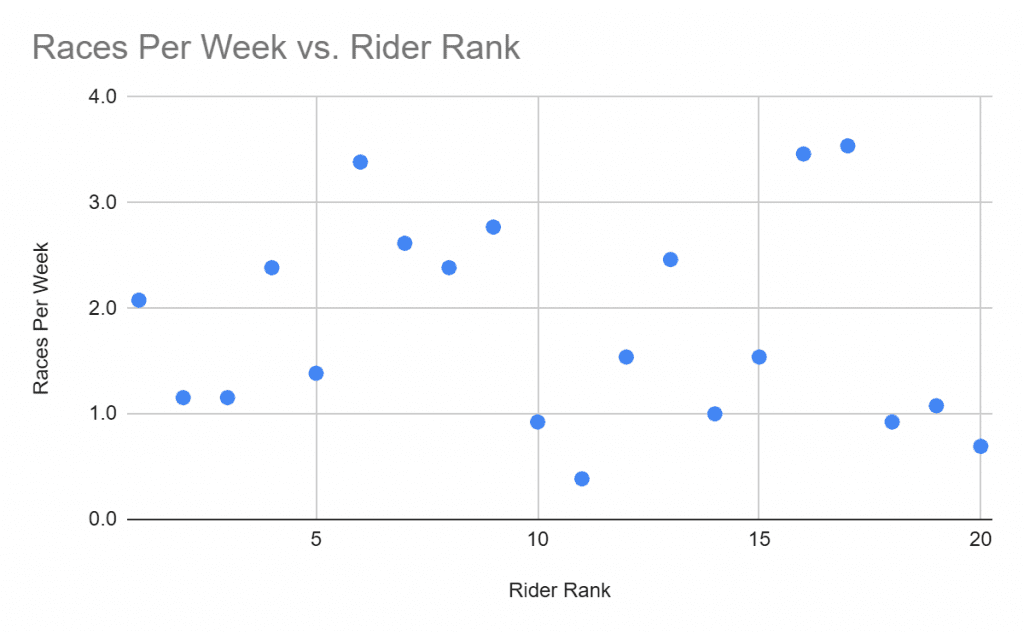
If you want to get a good rank you have to race a lot. Don’t underestimate the power of learning how to race well and the luck of needing an aero to place high enough to get that race ranking.
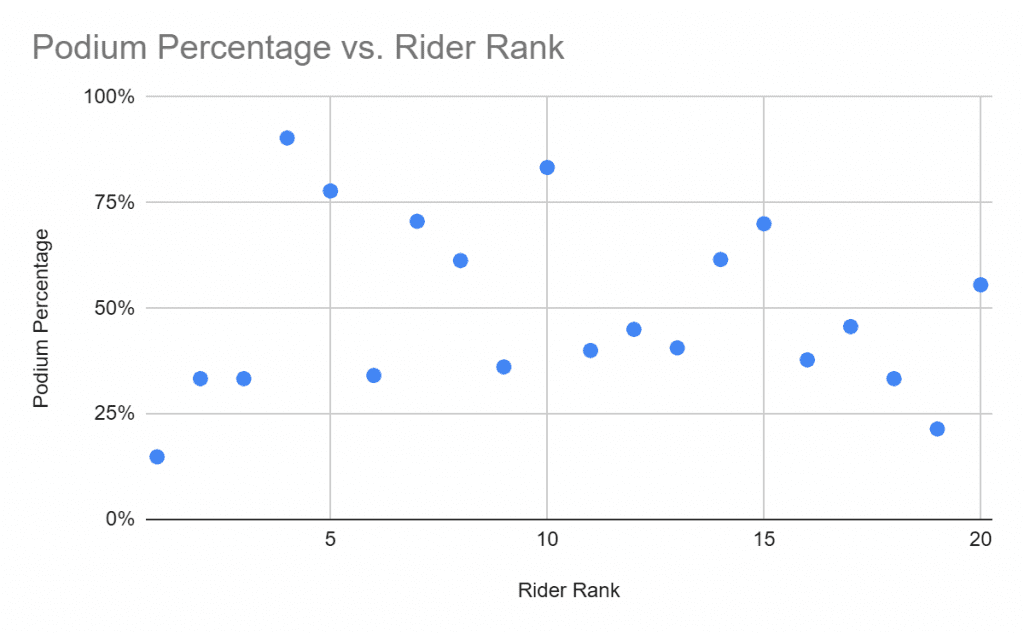
Podium Percentage

This is how often a racer is in the top three of their race. Lots of these people race in the A category so their ranking gets better while still classified as a B rider. In general, the lower podium percentage racers here usually race in Cat A, and the higher percentages race more in B. I was surprised the percentages were not higher – it might go to show how hard it is to get in position and have the right powerup for a Zwift sprint.
Other Tidbits
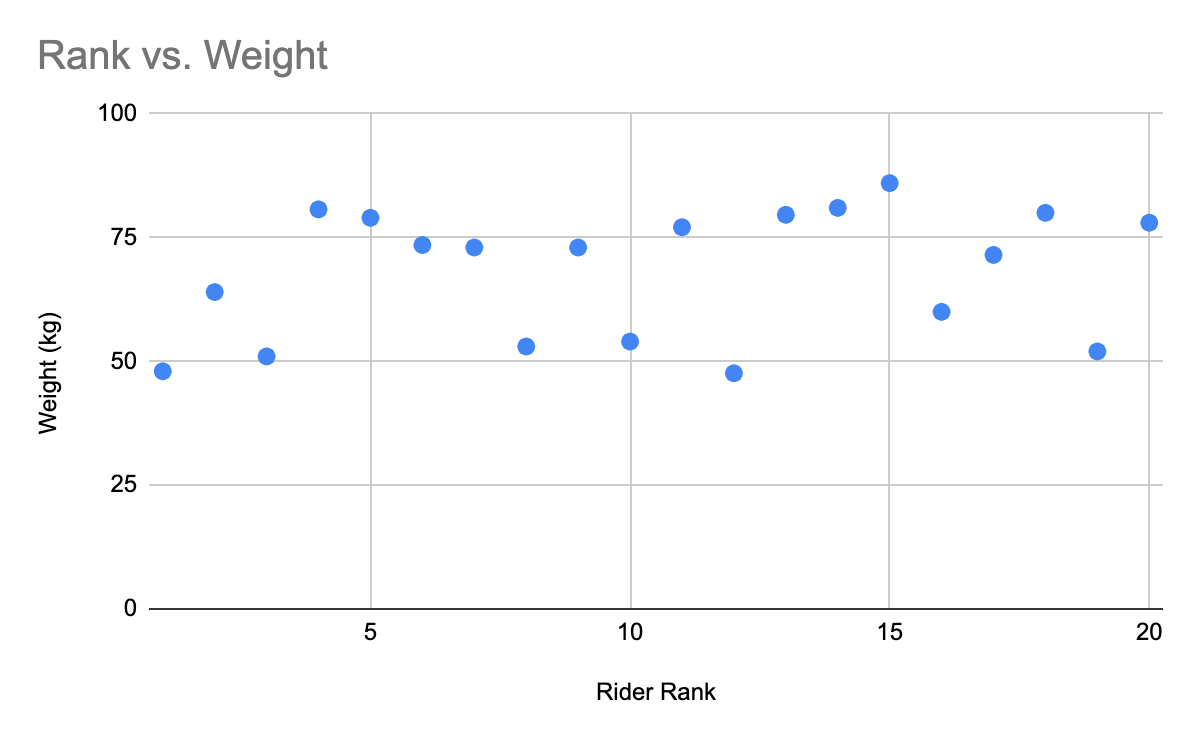
  • The racers seem to be clustered around 50 and 75 kg. 
    • The lighter side makes sense – they can exceed Cat B W/kg with an FTP right below 250. They must be just heavy enough where the flats aren’t too bad and the sprints are fast too. It also might just be the lower limit of what men (I believe these are all men) weigh – I found a calculator that said 50 kg was in the 1st percentile of 30-year-old men.
    • I’m not sure why 75 kg. I’m guessing it provides enough strength for a good sprint with a low enough weight to keep a reasonable FTP for normal people. This might also just be the weight most men end up around when they are biking a lot.
  • 11 of the 20 riders race primarily in Cat A, 4 of the riders race in a combo of A and B, and the other 5 riders primarily race B. 
  • 5 of the 20 riders have fake names. 
  • 1 of the riders (Tom Gakes) looks like he used to be a pro and is a verified rider on ZwiftPower.
  • 3 of the 20 riders are under 20 years old, 2 are between 23-29, 11 are between 30-39, 2 are between 40-49. 1 person is not registered at ZwiftPower (I don’t get why the person is in there). 1 person mysteriously disappeared from ZwiftPower since I ran the data and 3 days later when I looked up the ages.
  • 6 of the people are from Europe, 5 are from North America, 8 are from Asia and one has vanished into the ether. Japan and the US are tied with 4 each.
  • A huge portion of the races these people do are short and flat like Crits. 

The Data Details

  • Data Source: ZwiftPower
  • Data Curation: Manually downloaded. I would love to pull more data and do other analyses (see other articles I’m planning at the end) but I haven’t found an API to download all of the data from ZwiftPower. (Guys who run ZwiftPower – hit me up.)
  • Data Filter(s): Past 90 days of racing from the Top 20 category B racers as of July 26th. When you look at the rider profiles you will see higher power than what is shown below because the data I used is only from races where the rider achieved a rank of under 250 for the race ranking. Our goal is to identify how to become a top Category B racer in Zwift, not to see what everyone’s max wattage is during a 2.0 W/kg group ride with a sprint in the middle. Also, cutting off at 250 is arbitrary. Looking at the best five races from some of the riders between 15-20th it looked like a good cutoff. 
  • Analysis Tool(s): Google Sheets and Excel. If I can get more data I will do better analysis in R, but this data is easy.
  • Additional Notes: Rider 11 seems to be an anomaly. That person has consistently lower power across all categories. 

Let Me Know What Else You’d Like to Know About

Below are additional data-focused articles I plan to write, also based on data from ZwiftPower:

  • Cat A+, A, C, D (Next in Line)
  • Women Specific article – I’m not sure of format and Categories
  • What it takes to win a Zwift race
  • How to win on each course
  • Zwift Rankings and Category Improvements

Let me know if this has helped you and what you want to hear about next. Just keep in mind that I cry easily and if I don’t see any comments or votes below that my kids will ask me why I am sobbing at my computer looking at Zwift Insider and I will have to explain how cruel a place the world is. So please just comment so I don’t have to burst my kids’ bubbles at 6 and 8 years old.
Zwift Events Not To Miss This Weekend

5

Lots going on this weekend: some long/hard events, and the first community-hosted France and Paris map rides. Ride on!

Special thanks to Jesper at ZwiftHacks with his Events app which provides powerful event filtering tools that help us create this list each week.

Norseman Festival of Climbing: Uber Pretzel Race

The Norseman 2020 Training Series culminates in this weekend’s Uber Pretzel Race. Do you have what it takes to finish what may be Zwift’s toughest route? You’ll unlock the exclusive Norseman jersey if you do!

Multiple event times, see zwift.com/events/series/the-norseman-2020 for details

Zwift Fondo 2020 Series (Southern Hemisphere)

The last event in a 3-month Fondo series targeting the Southern Hemisphere, these events have plenty of time slots that work for Northerners also.

Multiple event times, see zwift.com/events/series/fondos-2020-series for details

PMC 2020 Ride

The Pan-Mass Challenge is an annual bike-a-thon that raises more money for charity than any other single event in the US. 100% of rider-raised dollars are donated to the world-renowned Dana-Farber Cancer Institute (Massachusetts) for cancer research and treatment.

Instead of riding the traditional routes that span dozens of towns across Massachusetts, this year’s PMC participants will ride or show their support through individual activities – on or off the bike. The goal is to raise $41 million for Dana-Farber,

A 60-minute group ride kicks off everyone’s efforts on Zwift, and will be streamed on pmc.org and the PMC’s Facebook page. Those interested in participating can register here, however, no advance sign-up is required to participate.

Group ride participants will include six-time US National Cyclocross Champion Tim Johnson and his special guest, Emma White! Emma is a UCI World Track Champion, a member of the 2020 US Olympic Long Team, and a competitor in the first-ever Virtual Tour de France.

Saturday 1:05pm BST/8:05am EDT/5:05am PDT
Sign up at zwift.com/events/view/967221

LEQPxCDC Ventoux Badge Hunter Ride

Take on Zwift’s new Mont Ventoux in this special edition of L’Equipe Provence’s Badge Hunter Series! “It won’t be easy, no ascent of the Ventoux ever is. “

LEQ has partnered with Café du Cycliste to take on the Giant of Provence for an exclusive chance to collect your own REAL Ventoux badge! Signup with Café du Cycliste, defeat the Bald Mountain on August 2nd, and you’ll received a limited edition Ventoux Badge to celebrate this epic ride!

Sunday 7:30am BST/2:30am EDT/Saturday 11:30pm PDT
Sign up at zwift.com/events/view/983376

Group Rides in France (and Paris)!

Now that the Virtual Tour de France has wrapped up, Zwift is allowing community-led group rides onto the new France and Paris maps. So if you’re wanting to explore Zwift’s newest routes, this weekend is a wonderful time to do it, with plenty of events throughout the weekend.
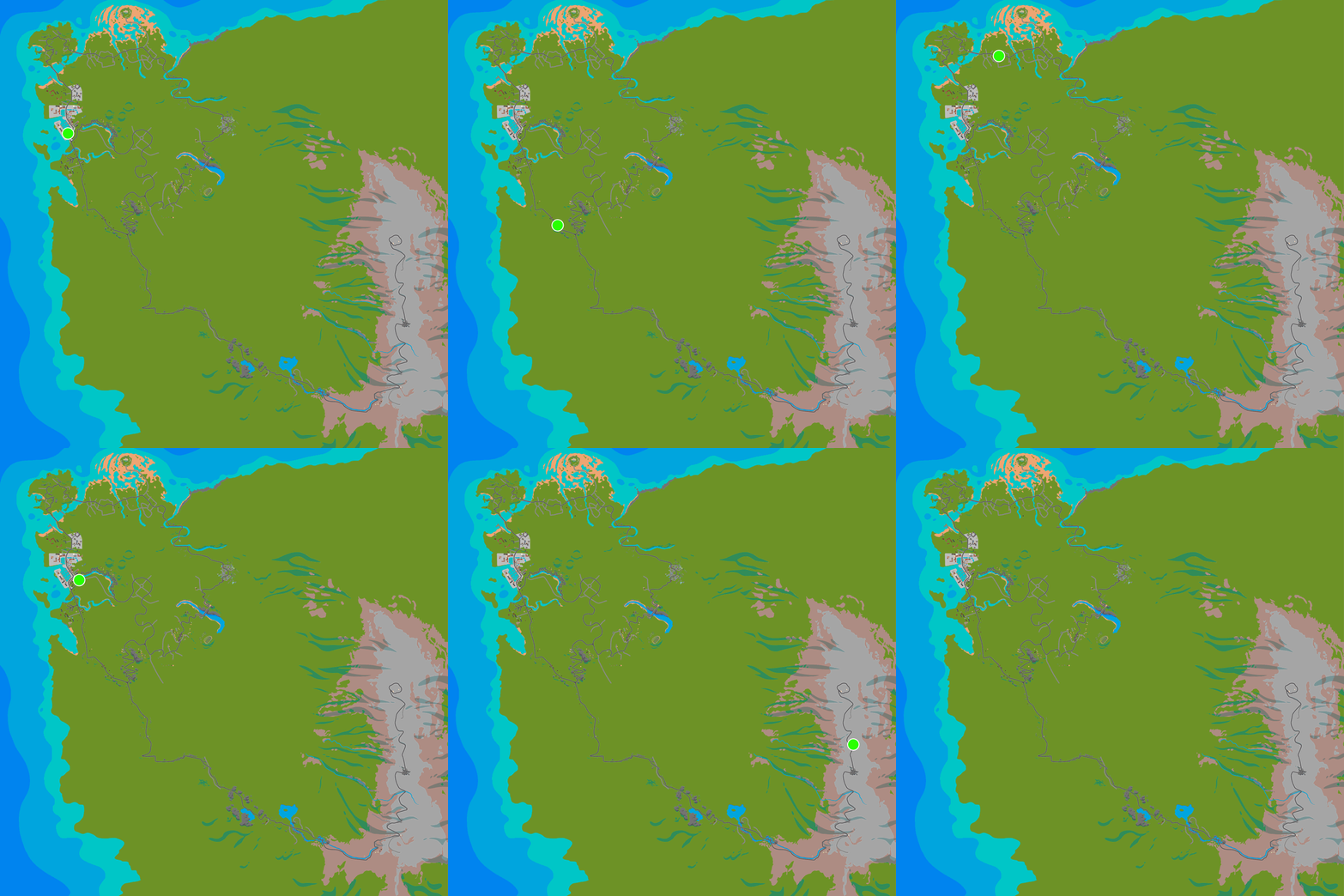
FYI: France is being added to the guest world rotation for free riding beginning August 10th.
View all upcoming events on France map >
View all upcoming events on Paris map >

Your Thoughts

Got other events that stand out this weekend? Share below in the comments!

How the Race Was Won: Announcing the Attack

23

One thing I really enjoy about Zwift racing is the ability to try new tactics without risking much. Whereas an outdoor race might cost me a $40 entry fee plus several hours of driving (and associated costs), racing on Zwift costs me almost nothing at all. The time commitment is minimal, there is no risk factor, and there’s no entry fee!

Sometimes I come up with hair-brained race tactics beforehand – I’ve written about plenty of those. Other times, the ideas strike mid-race, like some sort of divine lightning bolt. Today’s race was the latter. And the best part is: it worked! Here’s the story…

Warmup

I grabbed just one piece of caffeine gum and rubbed some PR lotion on my legs. Then it was off to Watopia for a ~45 minute warmup before my race at 6:35am. This time around I hopped into a group ride led by my buddy Peter McKenzie because the stated pace (2.7-3 w/kg) was just right for a warmup, once I threw in a sprint or two.

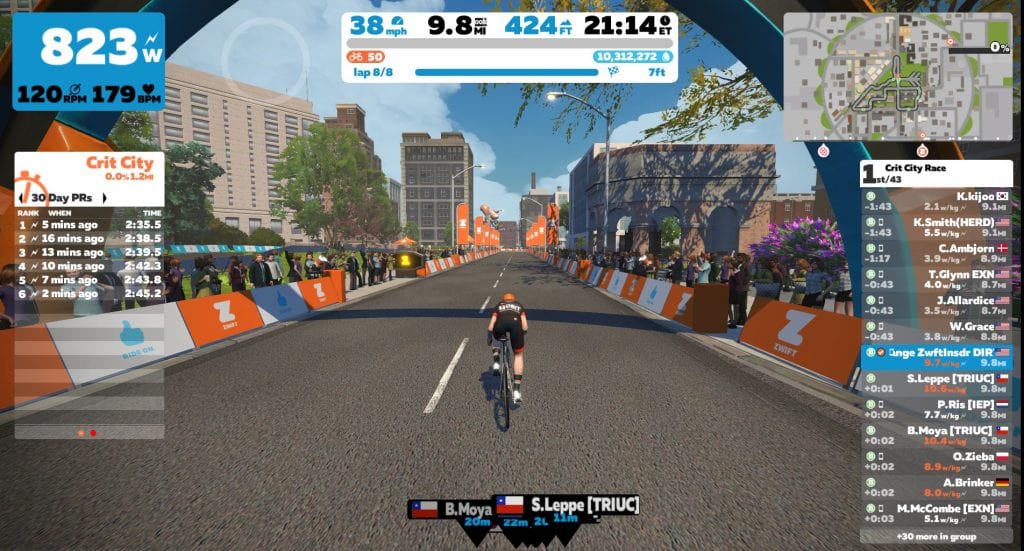
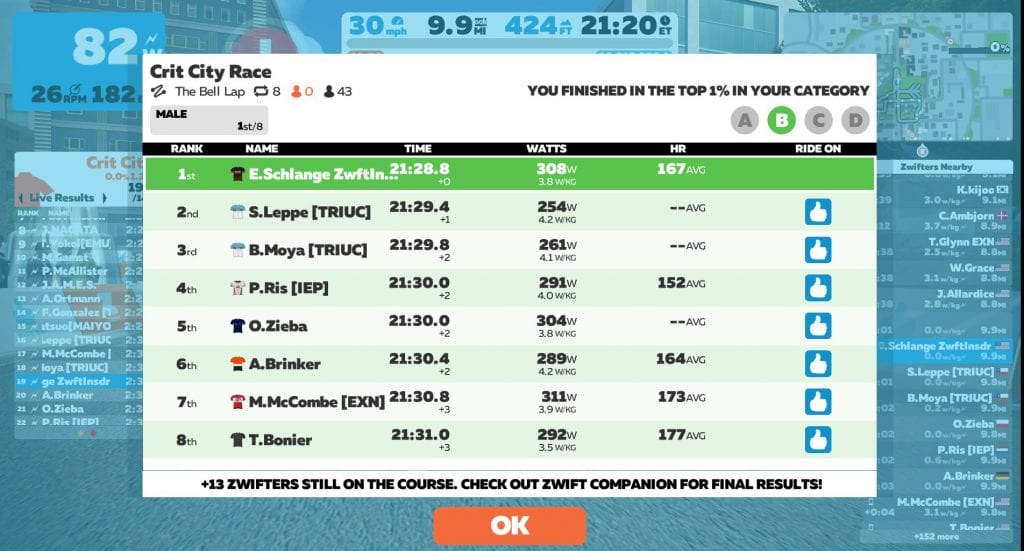
After a nice warmup spin with Pete and crew, I headed to the start pens. Eight laps of “Bell Lap“, which is actually the direction I prefer on Crit City. Let’s race!

The Start

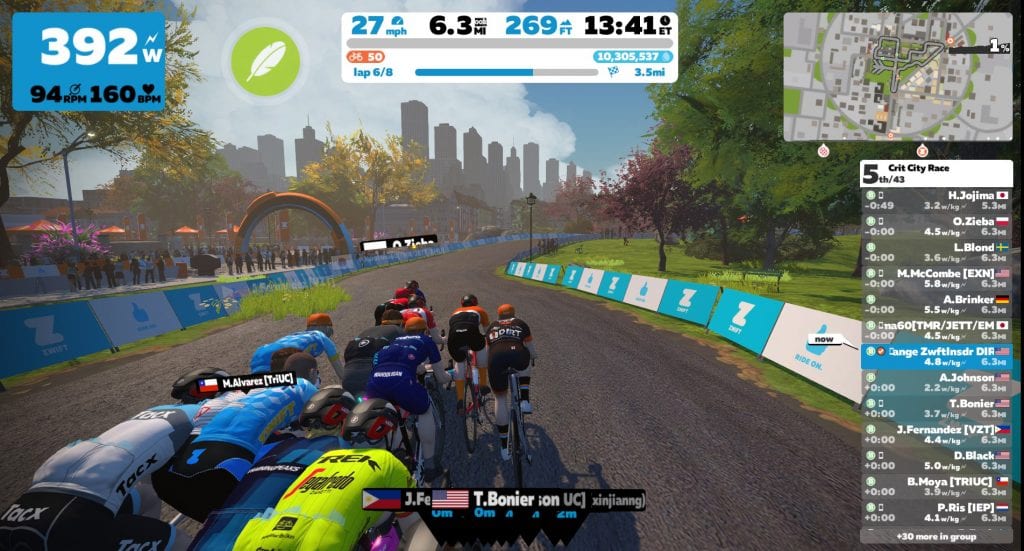
We had a mid-sized group with 42 starters in B cat. As usual, the start was hard and fast, and the selection was quickly made – halfway into the first lap a group of ~20 was off the front.

As we began the second lap, I noticed the rider on the front our group, one z-powered “J Kippen”, was holding steady between 5.5-6.5 w/kg. Some riders were struggling to hold his wheel as he kept pushing unrealistic power numbers, so I messaged the group: “Kippen is a flier. Let him go?”

The group seemed to respond immediately, letting Kippen drift off the front. Brilliant! I felt bad for the riders who had already been dropped off the front group thanks to Kippen’s Z-Power Ranger pull, but what do you do? That’s Zwift racing… for now, at least.

Kippen off the front. Now we’ve got a fair race!

The Middle

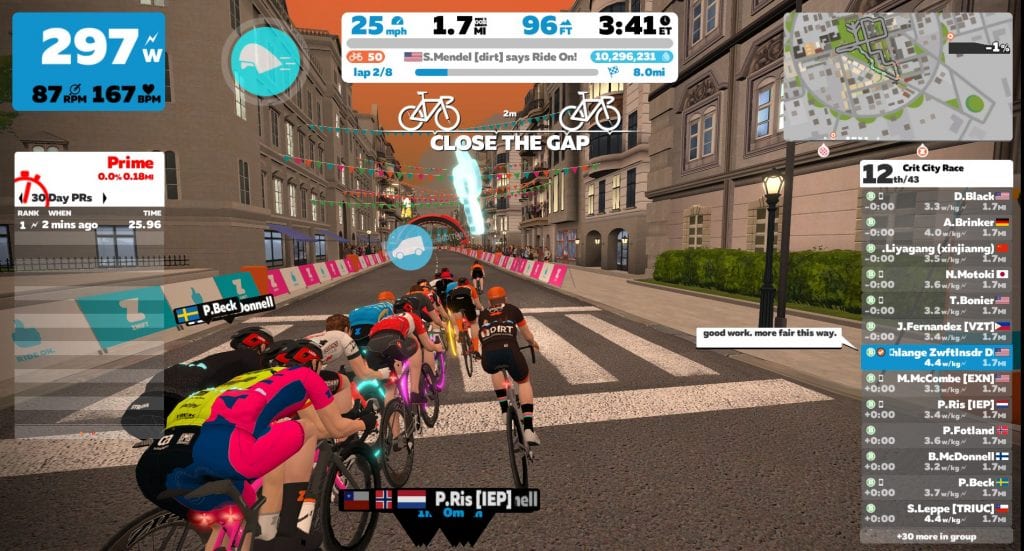
We had 18 in our front group, and the pace was pretty manageable. So I started putting in attacks with the help of whatever powerup I received each lap, just testing to see if others would go with me, or if I could thin the herd a bit.

Testing the waters…

As usual, nobody went with me. And I didn’t see a single rider drop from the pack either! And that’s when the idea struck, like a bolt of lightning sent from the Zwift gods: what if I announced my attack?

Crazy, right? But follow me for a minute.

“Anyone Want to Attack with Me?”

My experience in over 170 Zwift races has taught me that solo attacks rarely have much effect, at least until the final minutes of the race. This isn’t the case outdoors, so what’s different on Zwift? I have some theories:

  1. It’s hard to spot an attack on Zwift: compared to outdoor races, it’s harder to see when someone begins an attack on Zwift. Unless you’re looking closely at the right-hand list of power numbers, you won’t notice a rider attacking until they’ve drifted off the front – unless they’re foolish enough to really power up so their avatar changes to the sprinting position. Because attacks are hard to spot, your response to the attack gets delayed, so by the time you notice, it’s just not worth the effort to put in the dig to close the gap to the attacker. So you sit in the pack, knowing the lone attacker will get reeled in soon enough.
  2. High pack speeds: pack speeds on Zwift are higher than outdoors, especially in double draft events. This makes it even harder for a single attack to stay away from the group.
  3. We’ve been conditioned: after experiencing the lone attacker being unable to stay off the front, Zwifters have been conditioned to not respond to attacks, and not initiate them, either.

Whatever the causes, I think we can all agree that attacks are most fruitful on Zwift (and outdoors) if you can get at least a few riders to join you. But how do you do that, if you don’t have team members in the race on Discord?

What the heck. I’ll just announce my attack, and see if others want to follow.

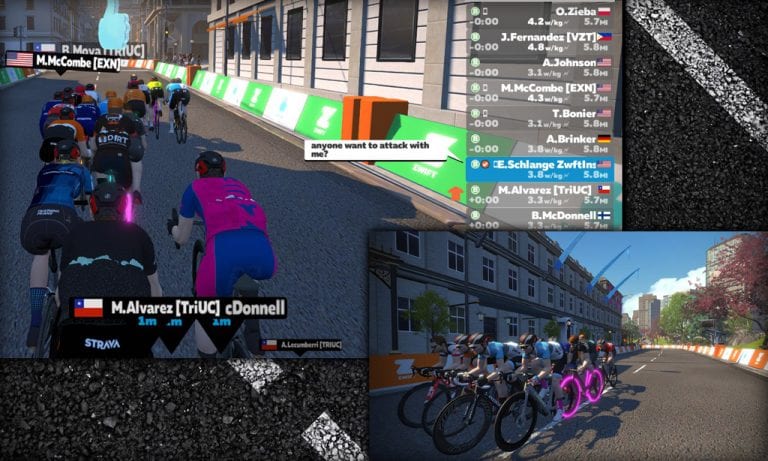
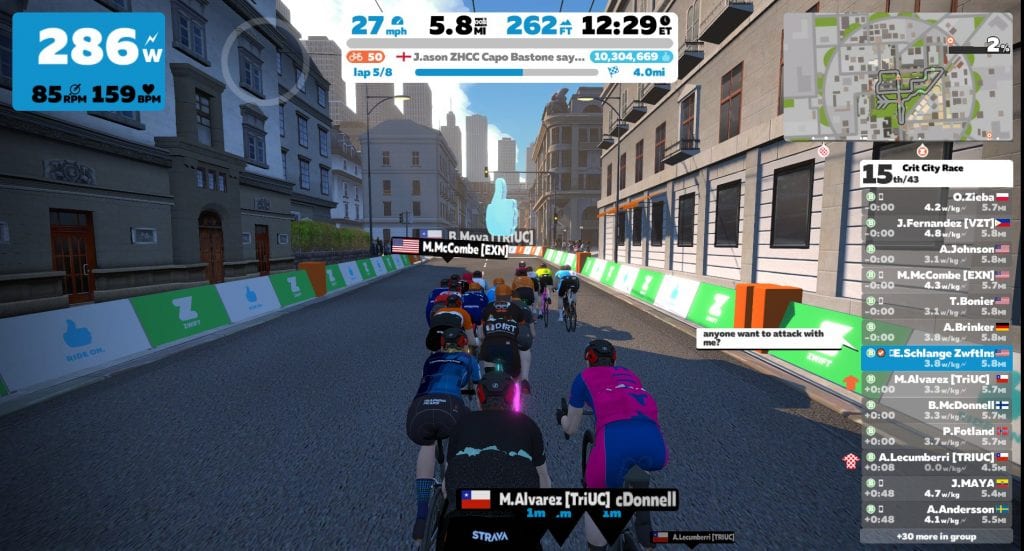
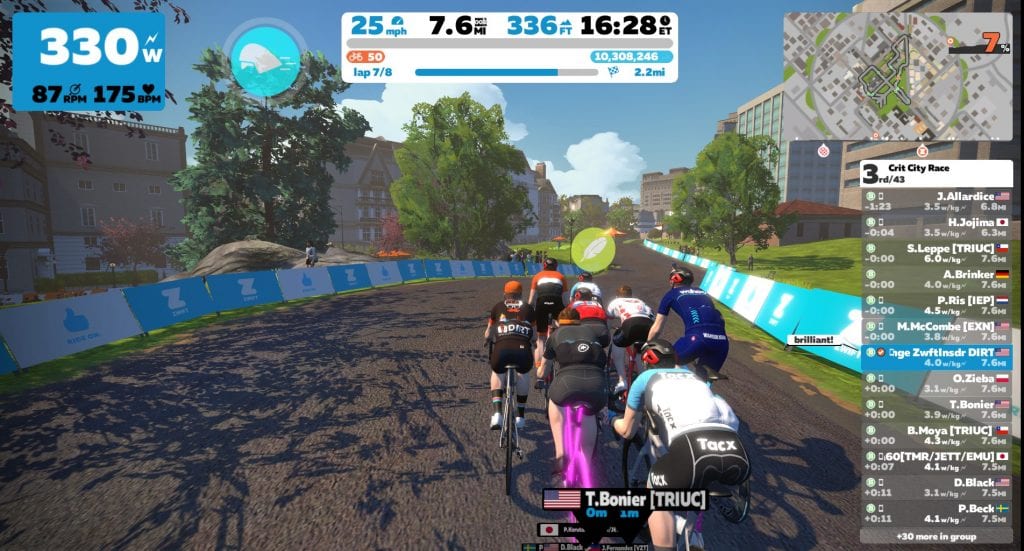
Near the end of lap 5, I messaged the group: “Anyone want to attack with me?” Nobody responded for a bit, until one rider wrote “What’s the signal?” I didn’t have a signal, but I had a feather, and the twisty climb was coming up. So as soon as we hit it, I just wrote “Now”, activated my powerup, and hit the power hard!

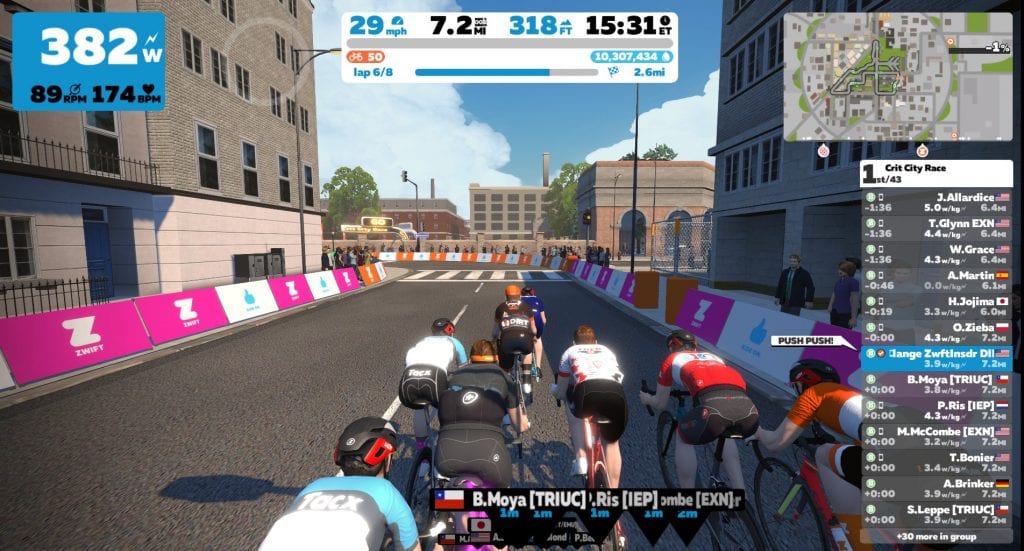
A gap quickly formed several riders back. I messaged the group “PUSH PUSH” and we kept the power up for another minute or so, watching the gap grow from 3 to 5 to 8 seconds. We’d done it! We now had a front group of 8, and the chasers weren’t coming back. I couldn’t help but smile, even as I suffered. Type II fun, right?

The Finish

With two laps left, our breakaway group was firmly established. We locked into a steady pace, and I held onto my aero powerup for the final sprint. No one attacked in any significant way on the final laps, so we moved into the final meters as a unit.

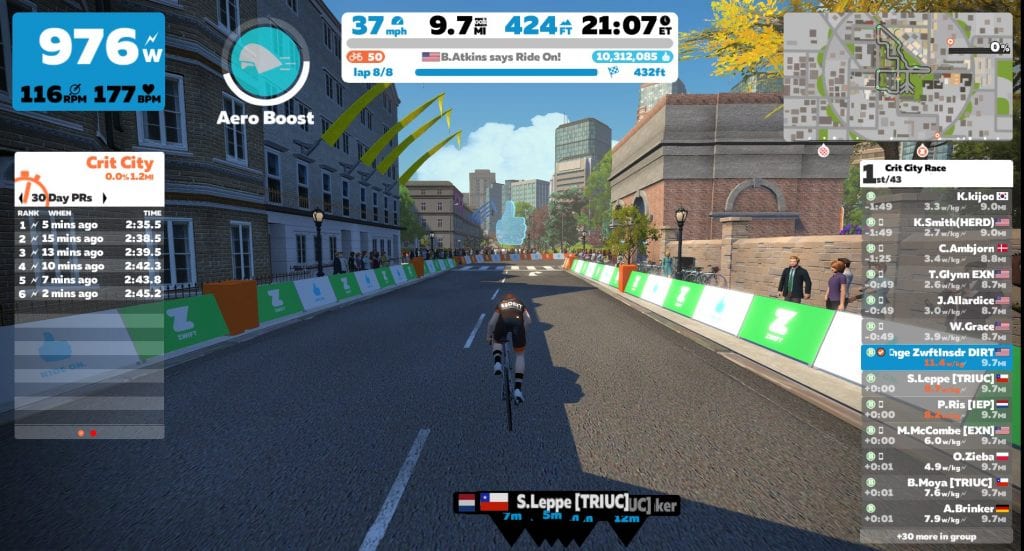
I activated my aero powerup just after the last left-hand turn, ramping up my power in a (rare for me) seated sprint.

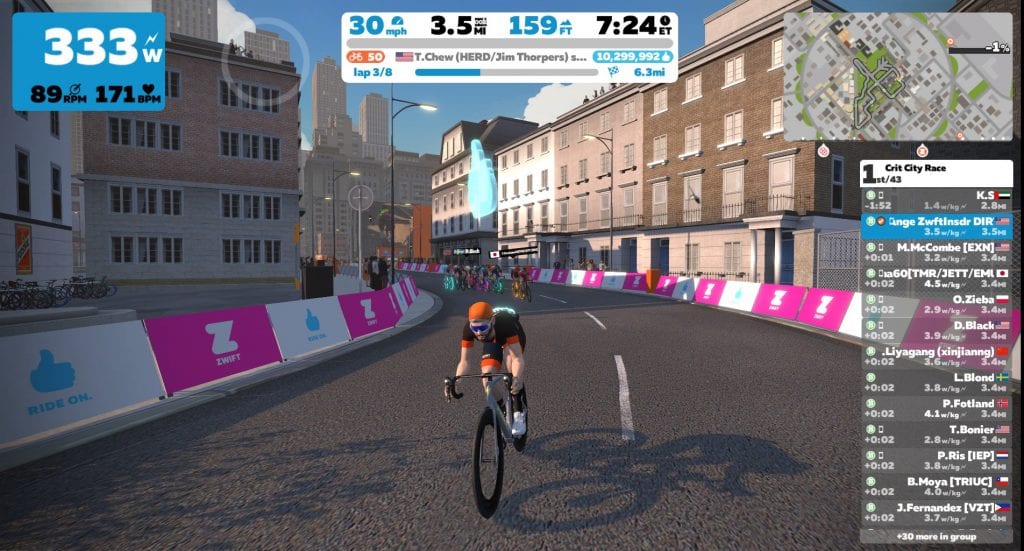
I’ve been testing the Axxion Rocker Plate from Traxxion Dynamics, and I’m finding that my seated sprints are really strong due to its design/setup. My power numbers were really good for this sprint, averaging 876w for the final 13 seconds. I even had enough of a lead on the group to snap a couple shots!

See activity on Zwift >
See activity on Strava >
See results on ZwiftPower >

Takeaways

My simple takeaway for this race is announcing your attacks may be a good idea. Certainly not something I would do outside, but on Zwift, I think there’s a case to be made for it, at least in certain circumstances.

I’d love it if some of you could try announcing an attack in an upcoming race, then comment below to let me know how it went.

Your Thoughts

Is “telegraphing your pass” a good idea in Zwift racing? Why or why not? Share your thoughts below!

Join Tomorrow’s Colorado Classic’s #WeRide for Women

0

Here’s an event worthy of every Zwifter’s support: tomorrow (Wednesday) July 29th at 5pm PDT (8pm EDT/1am BST/10am AEST July 30th) join a group ride to support the women’s peloton!

This social-paced group ride will be attended by 60+ world-class pro riders, including ride leader Mari Holden (retired Olympic Silver Medalist and World Champion) and celebrity sweeper Meredith Miller (former national road racing champion, retired pro cyclocross racer, and current race announcer).

See full list of participating athletes at coloradoclassic.com/zwift >

Prizes

Don’t miss out on a chance to win prizes from and chat with these top athletes! Join the ride to win prizes from The North Face, Vans, and Smartwool. Keep your eyes peeled for some fan favorites from Team Twenty20, Rally, Lux and DNA.

Prizes to earn along the ride and post-ride:

  • Sprint brought to you by FirstBank – Be the closest rider to a 2019 Sprint Leader @ 15 minutes into the ride to receive $100 The North Face® gift card
  • Be the rider closest to the Ride Leader @ 30 minutes into the ride and win a $100 Altra® gift card
  • Be the rider closest to the Celebratory Sweeper @ 30 minutes into the ride and win a $100 Smartwool® gift card
  • QOM brought to you by Colorado Tourism Office – Be the closest rider to a 2019 QOM Pro @ 45 minutes into the ride to receive $100 The North Face® gift card

Winners must screenshot win in Zwift and send to [email protected] by August 1 with contact info for fulfillment of the prize won.

Route and Pace

The ride takes place on Watopia’s Figure 8 route, at a pace of 1.8-2 w/kg.

Support the Riders

This ride raises funds for the Colorado Classic #WeRide Development Fund which was created to help the teams in the women’s pro peloton. $30,000 has already been raised with donations from FirstBank, Gates Corporation, and RPM Events Group (organizers of the Colorado Classic).

Additionally, Zwift will donate $5 for every participant of #WeRide for Women, up to $5,000!

Through, August 1st anyone and everyone can use this link to donate. You may also learn more and donate by texting “WERIDE” to 797979.

Event Sign Up

Sign up at zwift.com/events/view/961370 or in the Companion app. See you there!

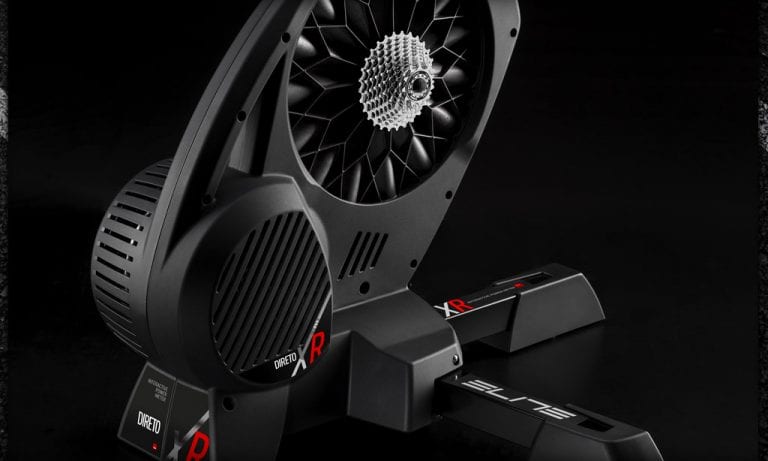
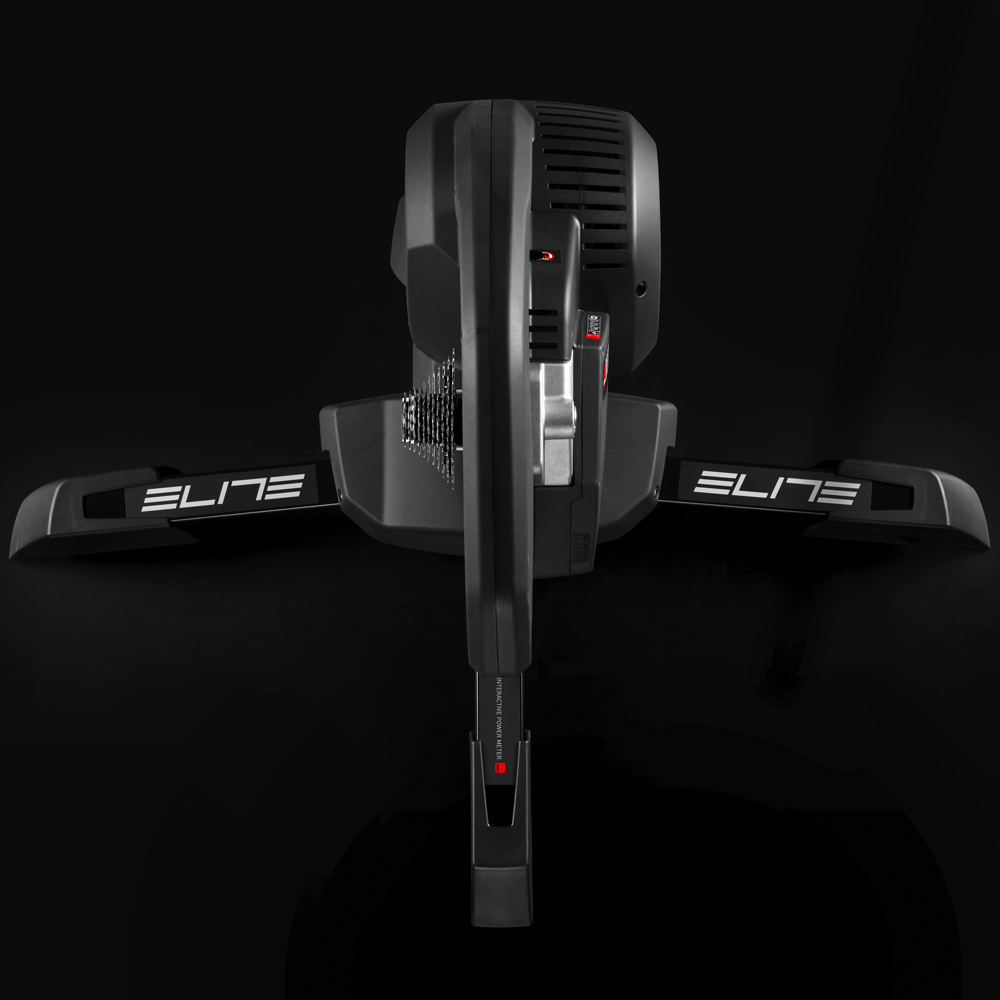
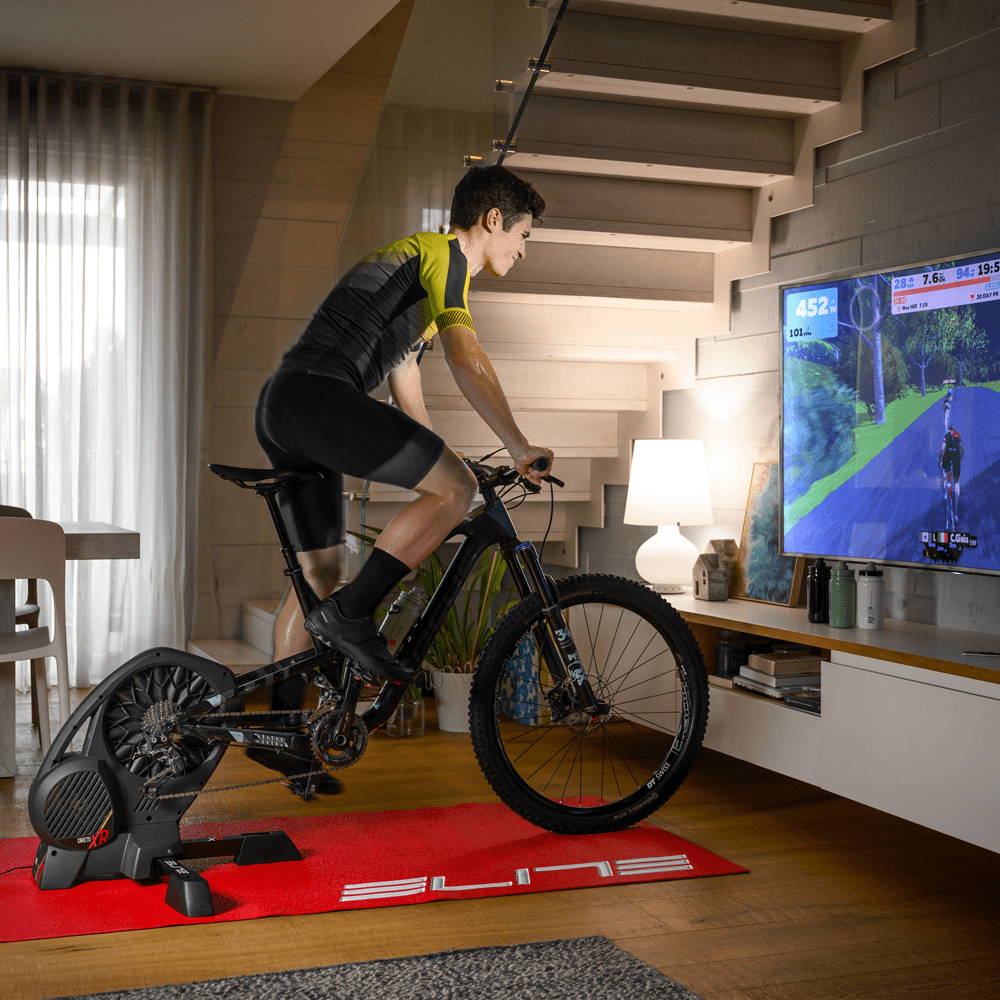
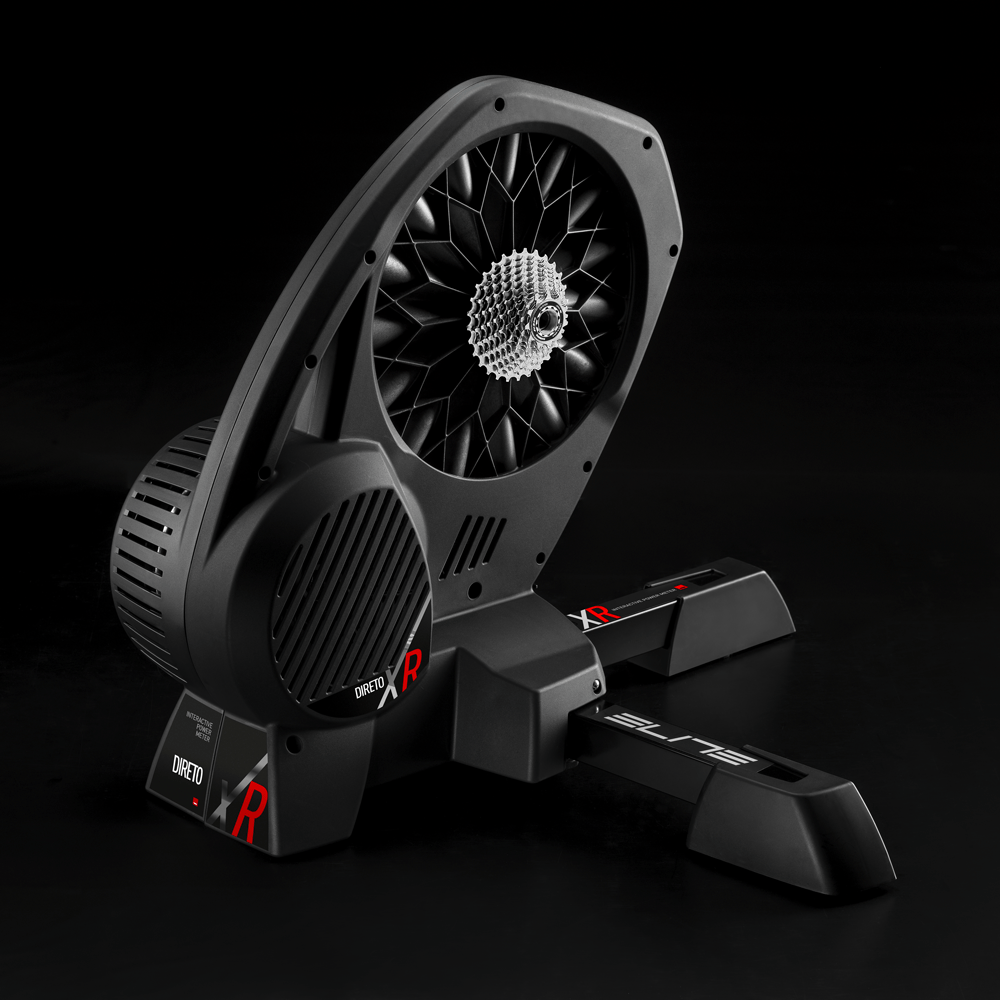
Elite Direto XR Smart Trainer Announced

Elite has just released the 4th generation of its Direto trainer, dubbed the Direto XR. It includes a bit of a price increase from the previous model (+$50USD), but also significantly upgraded specs and a pre-installed 11-speed cassette!

The Direto line, which began as a mid-range direct-drive trainer, has now been upgraded to specs comparable to higher-end trainers, including Elite’s high-end Drivo line. Sensibly, Elite has discontinued the Drivo line (it is no longer listed on their site).

Elite appears to be simplifying its smart trainer offerings, and that’s a good thing, as things were a bit muddled in the past. They are now offering the Direto XR as their high-end trainer, the Suito as a mid-range direct-drive trainer, and the Tuo as a wheel-on trainer (although this cute little toaster is still not available to purchase, which may explain why Elite still lists their Novo Smart wheel-on trainer on their site).

Specifications

  • Gradient simulation: 24% (increased from 18%)
  • 11-speed cassette included
  • Flywheel: 5.1kg (increased from 4.2kg).
  • Max wattage: 2300W (increased from 2100W)
  • Power accuracy: +/- 1.5%
  • Noise level: quiet (not silent)
  • Includes front wheel riser block

Pricing

  • USD $949.99
  • CAD: $1299.99
  • Euro: €849.99
  • GBP: £824.99
  • AUD: $1399.99

Axle Compatibility

  • Built-in 130-135 x 5mm (road/MTB/city)
  • Built-in 142x12mm thru axle
  • Adapter required: 135 x 10-12mm
  • 148x 12mm

Cassette Compatibility

  • Built-in 9/10/11 speed Shimano/SRAM
  • Accessory freehub for Campagnolo
  • SRAM XD/XDR
  • 12-speed SRAM NX
  • 12-speed micro-spline Shimano

According to Elite, the “moment of inertia” has increased by 15%, which should lead to a more realistic road feel. And that seems to be the case – both DC Rainmaker and GP Lama mention that they feel the road feel is improved in the XR over previous models.

Erg mode algorithms have also been improved over the previous model, and reviews are saying Erg mode works well. Power accuracy is within spec, and responsiveness is solid.

This is the first time a cassette has been included with the Direto, and that’s something worth mentioning as well. The Direto XR ships fully-assembled (like the Suito), which means most Zwifters will just need to unbox it, hook up your bike, plug it in, and go!

DC Rainmaker’s Review

Read DC Rainmaker’s in-depth review >

GP Lama’s Review

Availability

The Direto XR is shipping now from various retailers worldwide. Support this site by purchasing through Clever Training!

Questions or Comments?

Post below!

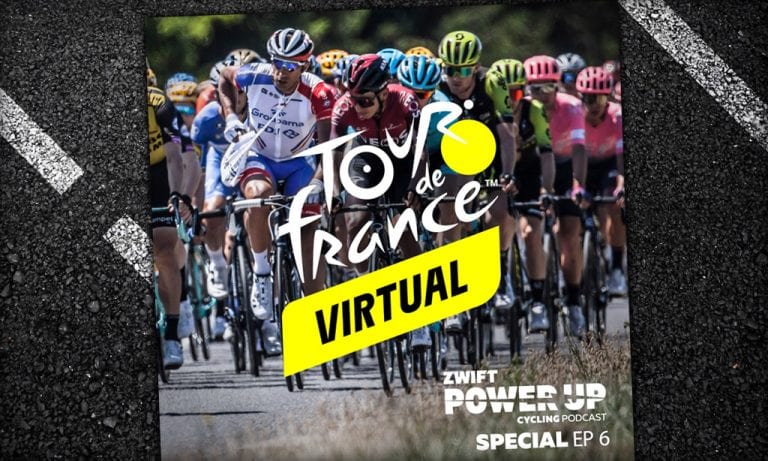
Virtual Tour de France Stage 5 and 6 Winner Interviews with Ash Moolman Pasio, Mike Woods And More (Zwift PowerUp Cycling Podcast)

0

The Virtual Tour de France has come to an end but that doesn’t mean we don’t still have some winner interviews for you to sink your teeth into. Ashleigh Moolman-Pasio, Mike Woods, Lauren Stephens, and Will Clarke all dominated over the weekend and Kristin Armstrong got the inside scoop from them all the moment they stepped off the bike!

Plus we have an extra interview with Rachel Hedderman, DS of Team Tibco-Silicon Valley Bank. (A chat with Doug Ryder, DS of NTT Pro Cycling, will feature in next week’s episode.)

About the Podcast

The Zwift PowerUp Cycling Podcast features training tips from host Matt Rowe (Rowe & King), with regular co-hosts Greg Henderson (Coach Hendy) and Kev Poulton (Powerhouse Cycling).

5 Zwift Events Not To Miss This Weekend

1

The Virtual Tour de France has wrapped up, but we’ve still got plenty of fun events this weekend. Here are our top 5 picks for Saturday and Sunday!

Special thanks to Jesper at ZwiftHacks with his Events app which provides powerful event filtering tools that help us create this list each week.

Alpecin Cycling Series

This Sunday sees the second in a Euro-centric monthly fondo series in partnership with pro team Alpecin Cycling. The “Alpecin Cycling Series” includes a big prize drawing and a chance to try to hold the wheel of cycling superstar Mathieu Van der Poel. Read event details >

Sunday 9am BST/4am EDT/1am PDT
Sign up at zwift.com/events/view/887332

ZRS: Balade a Paris

Bienvenue à Paris! Be a part of Zwift’s very first run event in Paris. Fall in love with the Champs-Élysées. Explore the Arc de Triomphe. Admire the Place de la Concorde. The races are 10km in length, and there are multiple events throughout the weekend so you can find a time that works.

Multiple event times, see zwift.com/events/series/zwift-race-series-running for details

111 – Strongman Racing Series

Looking for a slightly longer race this weekend? Lots of signups for this Colombia-centric race with non-standard w/kg category bands!

Includes “raffles, prizes, and surprises for participants who complete the event.”

Saturday 2pm BST/9am EDT/6am PDT
Sign up at zwift.com/events/view/907825

JDRF My Ride 100

JDRF, Team Type 1, and Zwift have arranged a virtual replacement to one of the big IRL Riding for a Cure charity rides. It happens this Saturday over multiple distances (20-100 miles) on Watopia’s Waistband and YOU are invited!

Whether you ride Saturday to support JDRF and Team Type 1, or you’re riding AND fundraising for this amazing cause; whether you’re in it for the fun, or you’re a T1D trying out cycling for the first time, they would love to see you at this event! Read all about Team Type 1 and JDRF in yesterday’s Zwift Insider post >

Saturday 3pm BST/10am EDT/7am PDT
Sign up at zwift.com/events/view/939027

“Yowamushi Pedal” Group Ride with Watanabe Sensei

Manga and anime fans – enjoy a casual-paced 2.0 w/kg group ride with Wataru Watanabe, author of the comic “Yowamushi Pedal” and Yamato Shirota, ex-pro racer of JPT Utsunomiya Blitzen.

Sunday 1:30am BST/Saturday 8:30pm EDT/5:30pm PDT
Sign up at zwift.com/events/view/973495

Your Thoughts

Got other events that stand out this weekend? Share below in the comments!

Support JDRF and Team Type 1 This Saturday On the JDRF My Ride 100

6

Have you ever decided to just hop on Zwift last minute without much thought to anything but turning your fan on and grabbing a towel? I’ve recently met a whole team of people who don’t have the luxury of just hopping on with no thought about preparation… and they may be some of the loveliest people you’ll ever meet!

I’m referring to the ~1400 member Team Type 1 on Zwift. This team, started by Ed Angeli in 2016, is mostly made up of people with Type 1 Diabetes (T1D), but includes family members or very close acquaintances of people with T1D as well. 

What is Type 1 Diabetes?

Flo Burrage of Team Type 1 explains it this way:

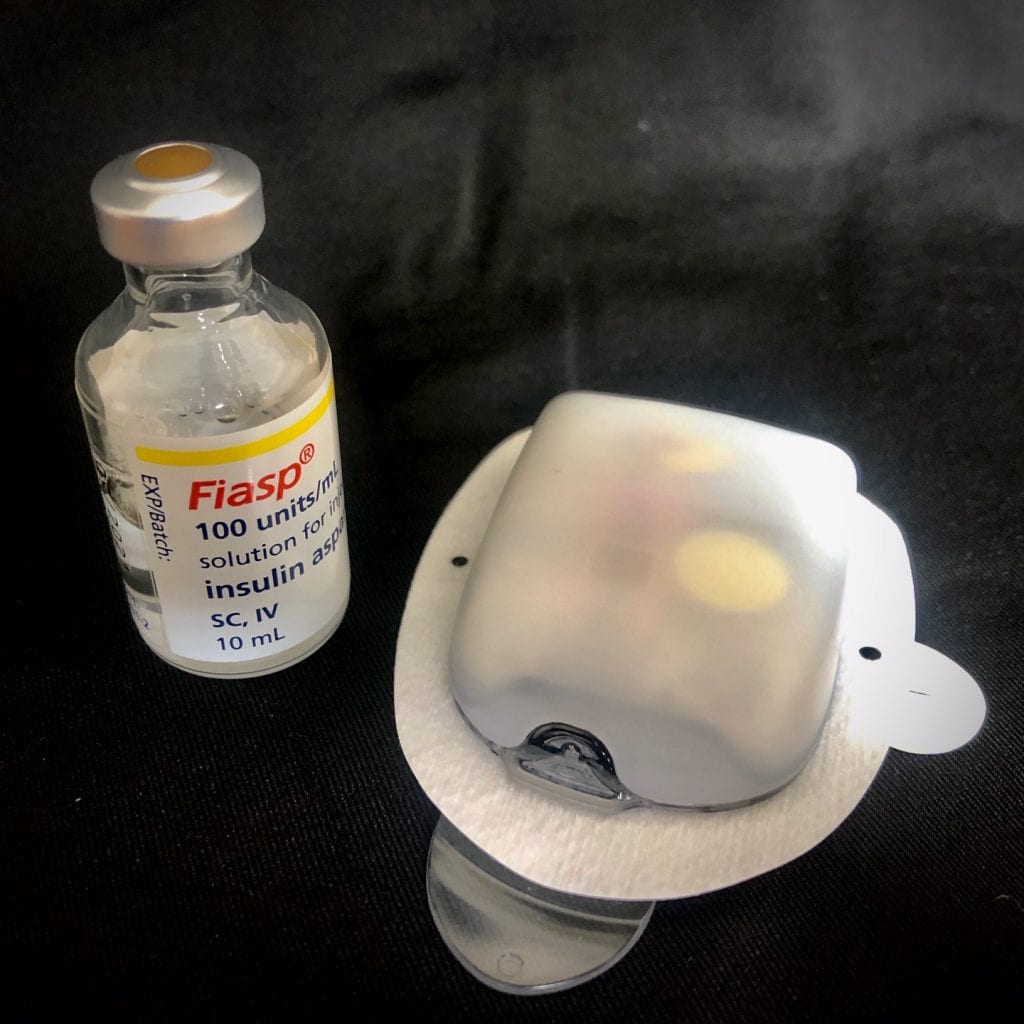
One of the insulin vials pumps Flo uses(an Omnipod, made by Insulet)

Type 1 Diabetes is a chronic autoimmune disease in which insulin-producing beta cells in the pancreas are mistakenly destroyed by the body’s immune system. The cause of this attack is not fully understood; there is nothing an individual can change to prevent it from happening, and there is currently no cure. Approximately 20-40 million people have T1D. 

People with T1D are treated with the hormone insulin and must manage their condition by monitoring their blood glucose levels and injecting insulin multiple times each day, or by infusion using an insulin pump 24/7. This is a full-time activity, day and night, and at the simplest level involves balancing carbohydrate intake, activity levels and insulin dosing to maintain as near normal blood glucose levels as reasonably possible. 

If the balancing act doesn’t work so well, in the short term this can lead to too low blood sugar (hypoglycemia), or too high blood sugar (hyperglycemia). Either of these can lead to hospital admission, coma, and worst case, death. In the longer term, sub-optimal blood glucose management can lead to a number of complications such as loss of sight, nerve damage, cardiovascular disease, amputation, and kidney problems, among other complications of varying severity.

T1D and Zwifting

Flo, having been diagnosed with T1D when he was 13 tells us that “being active is incredibly important for people with diabetes. Not only does it improve our general health, physically and mentally, but activity can also help our bodies to use insulin efficiently, help us to regulate blood glucose effectively, help to keep our bodies healthy and strong and reduce the longer term risks of developing complications.”

“Cycling is a great activity for people with diabetes to take part in at any level as it can be gentle on the body for those becoming more active, or it can be thoroughly exhausting and a true challenge for the mind for those looking for a tougher workout!” 

Zwift is especially beneficial for T1D Flo explains, as “some are unable to sense their own hypoglycemia and it can be quite frightening heading out on the road, knowing that if you’ve got the balance of carbs, insulin and activity levels wrong it would be very easy to end up in a heap on the side of the road.” Zwifting allows for a safe place to test out and/or maintain levels, especially for T1Ds who are still learning what works for them.

Family Support

Flo has an excellent support system on Zwift AND at home, including his 10-year-old son, Tom! Tom, his sister Emily and their parents live in Northwest England where they sail dinghies all summer. Tom has been riding most of his life, starting out on a balance bike when he was 2, and at 3 ½ jumping on Emily’s pedal bike, able to ride by day’s end. It was one of Flo’s best memories as a dad as Tom zoomed around making car racing noises. Tom and Flo started riding on Zwift in 2018, when Tom was 8, riding 2-3 days a week. 

When the pandemic hit it brought many charitable events to a hault, including the London Marathon. The London Marathon organizers started a 2.6 Challenge where they encouraged people to do some sort of fun activity that had to do with 2.6 and to raise money for the cause of their choice. Tom says, “My dad challenged me to do something for the 2.6 challenge. I went away and had a good think about it and I had a few different ideas, but then I thought about doing 2.6 times up the Alpe du Zwift. Then we worked out how many meters it would take to do 2.6 times. My daft Dad tried to persuade me not to do it, I forced my Dad to let me.” 

In the weeks leading up to this ride Tom rode every morning before school to earn enough Drops to pay for the Tarmac Pro and Enve 3.4s (having read ZwiftInsider to find out what the best set up for the climb was) as he also approached Level 12 so he could ride the Alpe!

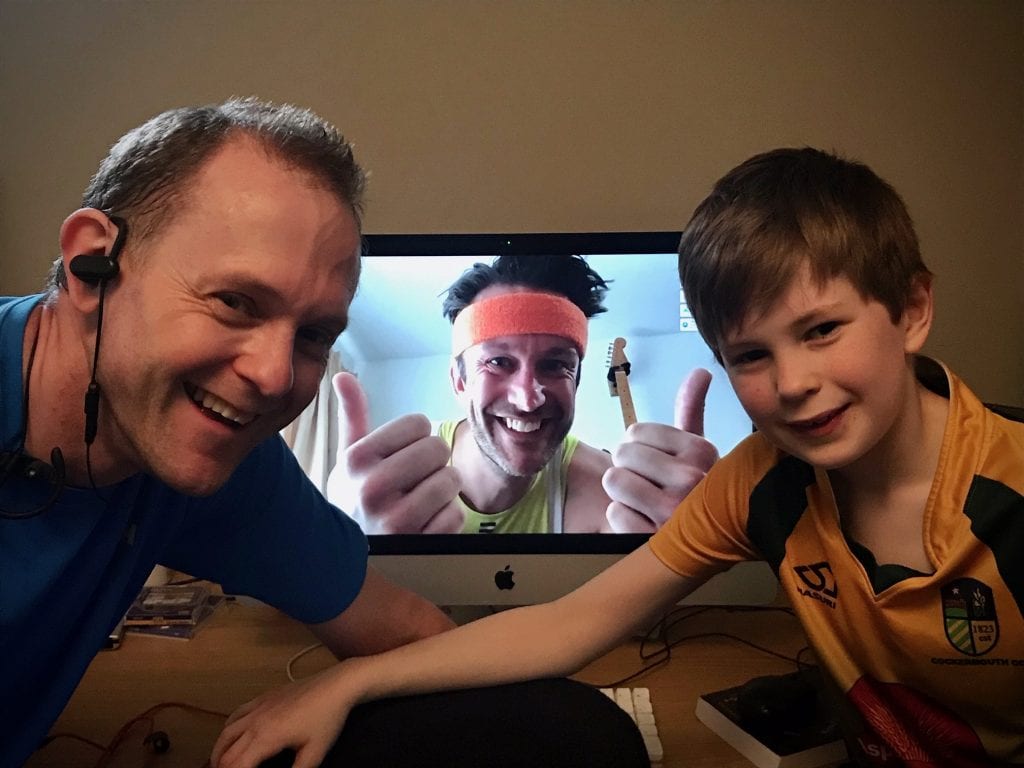
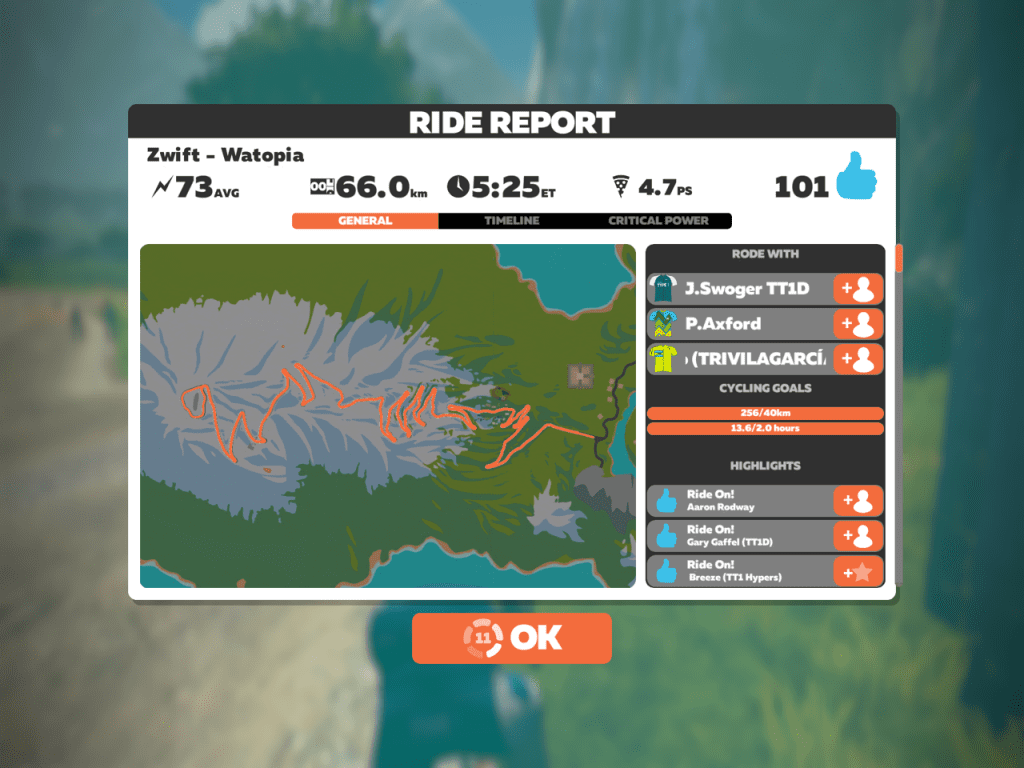
It took Tom 5 hours, 25 minutes to do the 66km and 2704m of climb! He rode with Flo and their friend Lewis Dinsdale (via Zoom) and some of their Team Type 1 friends joined for parts of the ride. Tom was pleased to share he received many Ride Ons, enough to earn his Bigger Than Jensie Badge which Dad Flo doesn’t even have!

Tom’s effort raised a whopping £1200 to date for JDRF, blowing his original target of £250 out of the water. Vance Nall of TT1 said, “The Zwift Team Type 1 group was so proud of the work that Tom did and he is an incredible role model for all people and especially children. The world needs more kids like Tom in it.”

So who is JDRF?

JDRF is an international diabetes charity which supports some incredible research around the world: looking for better therapies, a means of prevention, and ultimately a cure! Their goal is to rid the world of T1D. 

JDRF also provides much needed support to many children, adults and families coming to terms with diagnosis, including education material and events, opportunities to meet other people with diabetes and learn about the research they are funding. Type 1 diabetes is unusual enough that many people living with T1D don’t meet others in daily life, so JDRF is very helpful!

More about Team Type 1 on Zwift

Team Type 1 (TT1) has been described as “an incredible group,” “super supportive,” “a common bond that other teams do not have,” “inspiring.” 

Both Vance and Ed work to facilitate the growth of TT1, which has a very supportive Facebook group. TT1’s goals are to support and inspire each other, offer team training opportunities, race as a team, and share Zwift and outside race activities with each other. TT1 also has a Zwift social ride weekly on Saturdays at 10:10am EST called Ride On with Type 1 and invites others to join them whether you have T1D or not. They also have a 24-hour team relay on Zwift during November World Diabetes Day.  

If you see their members in game there’s usually a tag at the end of their name: TT1D (this means the rider has T1 diabetes), TT1F (the rider has a family member with the condition), or TT1DF (the rider has the condition and has a family member with it). Give them a Ride On when you see them!

Now, before you conclude that this is just a bunch of really cool people with a condition they have to manage know too that they have a racing team you need to watch out for. They’re very competitive and very speedy (but also very good at bringing along new T1D Zwifters who want to try out racing)! Most recently one of their teams, called the TT1 Lancets, competed in the Premier League WTRL TTT, crushing the competition! 

How Can We Support Team Type 1 and JDRF?

JDRF, Team Type 1, and Zwift have arranged a virtual replacement to one of the big IRL Riding for a Cure charity rides. JDRF My Ride 100 is this Saturday, July 25 over multiple distances (20-100 miles) on Watopia’s Waistband and YOU are invited!

Whether you ride Saturday to support JDRF and Team Type 1, or you’re riding AND fundraising for this amazing cause; whether you’re in it for the fun, or you’re a T1D trying out cycling for the first time, they would love to see you at this event! 

Each person I’ve spoken to who is connected with TT1 has graciously shared their story and then tripped over themselves to tell me about someone else on their team that they really admire or are inspired by. Anyone with T1D or who knows someone with it will find great camaraderie in this group of excellent humans!

From now on, each time I see someone on Zwift with a Team Type 1 tag in their name, I’ll trip over myself trying to reach out to say “Hi” and give a Ride On! As I ride I worry about the fan pointing in the right direction, but as they ride they’ve got much bigger things on their mind. And somehow that makes them a group of very lovely people! 

Trainer Difficulty on Zwift: How Much of a Bigger Granny Gear Does 75%, 50%, and 25% Provide?

Editor’s note: this article originally ran on Jordan’s website at meatmotor.com. We appreciated Jordan’s alternative view of Trainer Difficulty and loved his willingness to sweat for science, so we asked if we could share his findings with our audience.


Jump Straight to the Gearing Results

Perhaps there is nothing more misunderstood in the Zwift world than trainer difficulty.

Some people have (wrongly) postulated that if they are racing with the Difficulty slider at 100% against someone racing at 50%, they are at a disadvantage. This is not mathematically true. In Zwift, watts are watts. The difference is the feedback in terms of resistance your legs get on an incline (and decline).

On Zwift, keep in mind you have a virtual rider who is propelled by watts. You also have the real world you in which you create those watts.

There are two ways to generate more watts. (1) Press harder on the pedals (force/torque) or (2) spin the pedals faster.

Zwift Trainer Difficulty is said to be a decrease in the gradient of a hill in terms of what is presented to your legs in terms of resistance on the trainer.

  • At 100% Difficulty on a 10% gradient, you feel the full 10% in terms of pedal resistance.
  • At 75% on a 10% gradient, you are only experiencing a 7.5% gradient in terms of pedal resistance.
  • At 50% Difficulty, that hill is now a 5% gradient in terms of pedal resistance.

And so on…

Here are how things even out. Your on-screen-rider is STILL going up a 10% gradient and needs that amount of virtual watts to get up the climb even though your Trainer Difficulty can make the gradient feel reduced to you the real-rider.

So if you are racing someone and they are at 100% difficulty, and you are at 50%, their trainer resistance will be higher, and they will be putting out more force and watts than you at the same cadence as you. To keep up with the 100% rider in the same IRL (in real life) gear as you, you will need a much higher cadence to output the watts needed to drive your virtual rider up the climb.

So a good comparison/analogy is to see trainer Difficulty as your available gear selections. But realize that your available gear selection changes based on the gradient of the hill.

At 100% difficulty, you are locked into your real-world gearing on your bike. So if you are riding a steep climb in your granny gear of 34×28 is too difficult to spin at 80 RPM cadence, all you can do is reduce your cadence. Just like IRL, you’ll be slogging up that hill at some incredibly low RPMs (aka the dreaded 50 RPM climb). This is usually not the most advantageous physiological means to get a bike up a hill. There is a lot of taxing on the muscular system at 50 RPMs cadence.

But, with the Difficulty reduced to 75%, you now have a bigger granny gear at your disposal, and at 50% an even bigger one. You can now spin at higher cadences than you could on your real-world gears. (But don’t forget, you’ll have to spin faster to go the same speed online).

But Just How Much Bigger Are the Gears at Each Percentage?

Ahhhh, time for an experiment and a report.

Test method:

  1. Climb up a specific segment of Alpe du Zwift that is a 10% gradient at the same cadence but with different difficulty settings. In this experiment, cadence is the constant in the equation. I chose 80 RPMs because it seems like a good balance between grinders and spinners. I chose the 10% segment because that is a solid round number.
  2. Trainer Difficulty is the variable. The test was performed at 100%, 75%, 50%, and 25% difficulties.
  3. Speed will be the outcome. Spinning at 80 RPMs at 100% difficulty makes your virtual rider go faster than spinning at 80 RPMs on 75% difficulty. So the speed in mph is the important piece of the experiment.
  4. Once we get the speed for each difficulty level, we can reverse engineer the speed at cadence to approximate the gear using Sheldon Brown’s Online Gear Calculator.

Note: I ran this test twice at each Difficulty, but it needs more repetitions to be definitive. Also, the gradient does affect the results. A lesser gradient would be a smaller equivalent gear difference. But 10% is a pretty classic climbing percentage, and Alpe du Zwift is the most iconic climb (granted the overall ADZ climb averages 8.5% overall). When I have time, I’ll rerun this on this segment and at other gradients.

Setup data for the experiment:

  • 77 kg rider on Zwift.
  • Sheldon Calculator inputs using 700ccx25 tire and 172.5mm cranks. Yes, I am using a direct drive trainer IRL, but I had to pick something for that value.

Test results:

  • Runs at 100% Difficulty and 80 RPM Cadence on 34×28 (2 run average)
    Speed achieved in Zwift 7.98 mph
  • Runs at 75% Difficulty and 80 RPM Cadence on 34×28 (2 run average)
    Speed achieved in Zwift 6.54 mph
  • Runs at 50% Difficulty and 80 RPM Cadence on 34×28 (2 run averages)
    Speed achieved in Zwift 4.65 mph
  • Runs at 25% Difficulty and 80 RPM Cadence on 34×28 (2 run averages)
    Speed achieved in Zwift 2.69 mph

Then we reverse-engineered the equivalent gears on Sheldon’s calculator.

The Results

Difficulty SettingGear Equivalent on 10% ClimbWatts Required for 80 Cadence
100%34 x 28 (real-life test gear)311 watts
75%34 x 33248 watts
50%34 x 46177 watts
25%34 x 77 (aka the whopper)93 watts

This is what you really wanted to know. Thanks for sticking around.

Summary and Insights

You can get some whopping big granny gears in Zwift using the Trainer Difficulty setting. For riding inside the Zwift world, you can virtually swap out your cassette just by reducing the percentage. Spin like Froome or grind like Ulrich, whichever you prefer to go fast.

On a 10% climb, reducing the difficulty to 25% means that you have a massive gear available to you. Granted, you will need to spin the snot out of it, because at 80 RPM and 2.69 mph it will take you 2 hours and 47 minutes to arrive at the summit. Of course, you can always run at 25% difficulty and simply use a bigger real-world gear. Heck, run your big ring and feel like a pro.

When racing, you can reduce Trainer Difficulty, just realize on every incline you’ll have to spin faster than your competitors due to the decrease in gradient effect. As you see in the chart above, you are at 25% difficulty and your opponent 100% spinning at the same cadence, you’ll get dropped like a hot rock.

One caveat, if you are going to do some massive real-world climbs, you might not want to not dial down the difficulty on Zwift. Instead, get used to grinding your real-world gear limitations once you run out of gears.

Questions or Comments?

Share below!

Rebel Route: Toutes les Routes

Our newest Rebel Route covers every road on the new France map, in both directions. It’s the longest Rebel Route we’ve created to date (the first to break the 100km barrier) and our first non-Watopia Rebel Route!

Here’s an animation of this route:

About Rebel Routes

“Rebel Routes” are Zwift rides which are not available on Zwift’s routes list, thus requiring manual navigation.

See all rebel routes >

The reward for your rebel ride? Exploring a new route, knowing you’ve gone where few Zwifters have gone before. And a Strava segment rank in the tens or hundreds instead of the thousands! They are included as a separate category on our Veloviewer Route Hunter leaderboard.

Route Description

This long Rebel Route begins with a ~900 meter lead-in from the spawn point to the Marina Sprint line. Then we ride around the main outer loop of the map in a clockwise direction, nearly completing a full lap of the Casse-Pattes route which includes the Pavé Sprint Reverse, the Aqueduc KOM Reverse, and the Petit KOM (in that order).

Then we turn right toward the Balloon Field, making our way over the twisty river road to the Balloon Field and the Ballon Sprint before turning left and riding the main outer loop in the counter-clockwise direction. This includes the short Aqueduc KOM, Pavé Sprint, and Marina Sprint Reverse. We continue past the start pens and up the base of the Mont Ventoux climb before turning left to descend the Petit KOM.

After descending the zigzags of the Petit KOM it’s a quick left toward the Balloon Field and another chance to sprint, this time on the Ballon Sprint Reverse. Then it’s over the twisty river road and a right turn toward Mont Ventoux: let the fun begin!

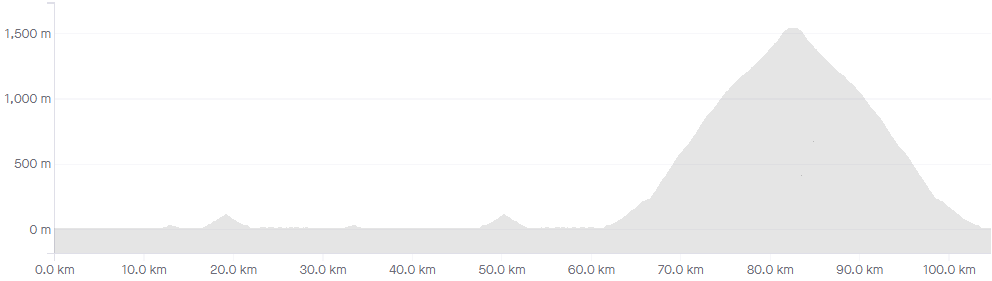
The Mont Ventoux climb is the biggest in Zwift at just over 19km (11.8 miles) long with 1480m (4,857)’ of elevation gain. Top racers complete the climb in just under an hour, while many fit amateurs shot to break 90 minutes.

Once you reach the top, enjoy the view: you’ve earned it! Stay on the ring road around the observatory then descend back to where you began – the route ends at the Marina Sprint banner.

Profile

This route is quite flat for the first 60km. We saved all the fun for the end!

Getting Started + Lead-In

Start by choosing the Casse-Pattes route. This will take you in the right direction for the first portion of the ride.

Turn by Turn

Here are the turns you’ll need to make to successfully complete Toutes les Routes. Start by choosing the Casse-Pattes route, or any route that begins near the start pens. The official Strava segment begins at the Marina Sprint arch.

  1. Straight to Mont Saint-Michel (during lead-in, before Marina Sprint arch)
  2. 16km: Straight to Ventoux Summit
  3. 19km: Right to Mont Saint-Michel
  4. 22.5km: Right to Balloon Field
  5. 30km: Straight to Aqueduct
  6. 46.5km: Straight to Ventoux Summit
  7. 50km: Left to Aqueduct
  8. 53km: Left to Balloon Fields
  9. 60.5km: Left to Ventoux Summit
  10. 64km: Straight to Ventoux Summit
  11. 101km: Straight to Mont Saint-Michel
  12. 104.3km: Straight to Mont Saint-Michael

Route details:
Distance: 104.8km (65.1 miles)
Elevation Gain: 1968m (6,458′)
Strava Segment

Rebel Route Suggestions

Got an idea for a great rebel route? Share it below and maybe we’ll publish a post about it!