Tiny Race Series – April 4 Routes – Tour de France, v1
See zwiftinsider.com/tiny for current Tiny Race details.
See zwiftinsider.com/tiny for current Tiny Race details.
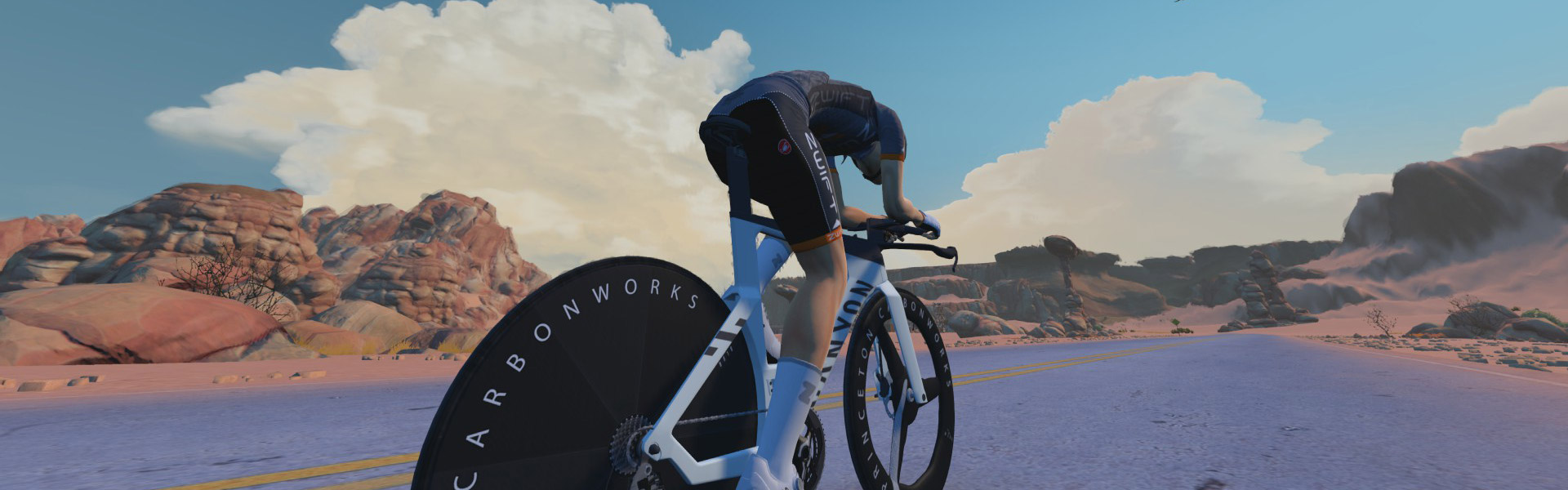
Princeton Carbonworks arrived in Zwift last week, with three wheelsets released to the game: the Alta 3532, the Wake 6560 White, and the Mach TSV2/Blur Disc. Today, we’re looking at the Mach TSV2/Blur Disc combo, which pairs Princeton’s Mach 7580 TSV2 tri-spoke front wheel with a Blur 633 V3 disc in the rear.
Here’s what the Drop Shop says about this wheelset: “The shape of speed, reimagined. A wind-eating tri-spoke up front meets a relentless full disc rear, slicing drag and holding momentum when seconds matter most.”
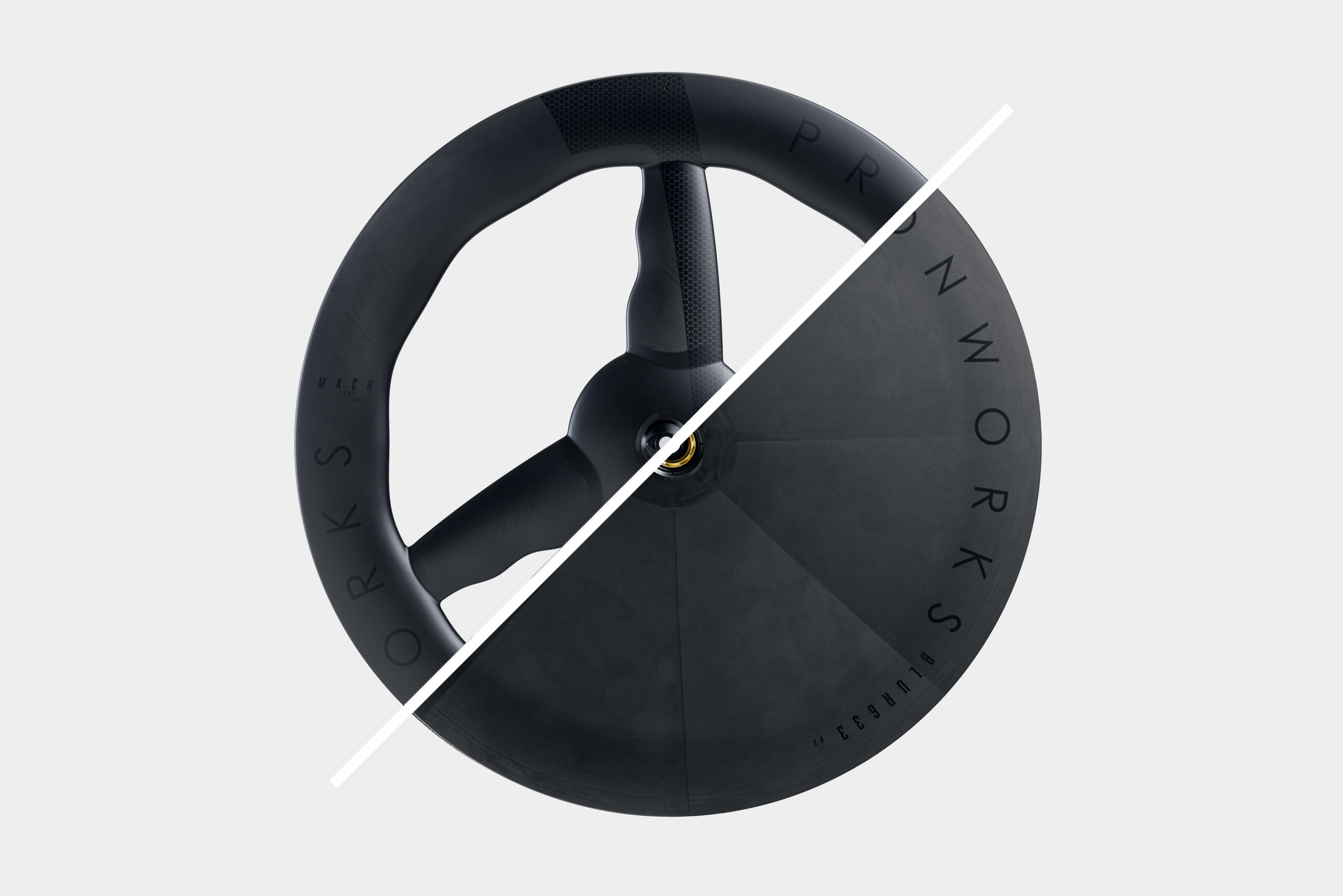
The wheelset is now available in the Drop Shop, accessible at level 42 and above, for 1,100,000 Drops. It is rated 4 stars for aero and 1 for weight, like the other four competitive disc wheelsets in game. But since Zwift’s 4-star rating system isn’t precise enough for our taste, we ran this wheelset through our standard battery of tests to determine exactly how it performs in Zwift and stacks up against other wheelsets in game.
Let’s dive in and learn all about the performance of this new wheelset from Princeton Carbonworks…
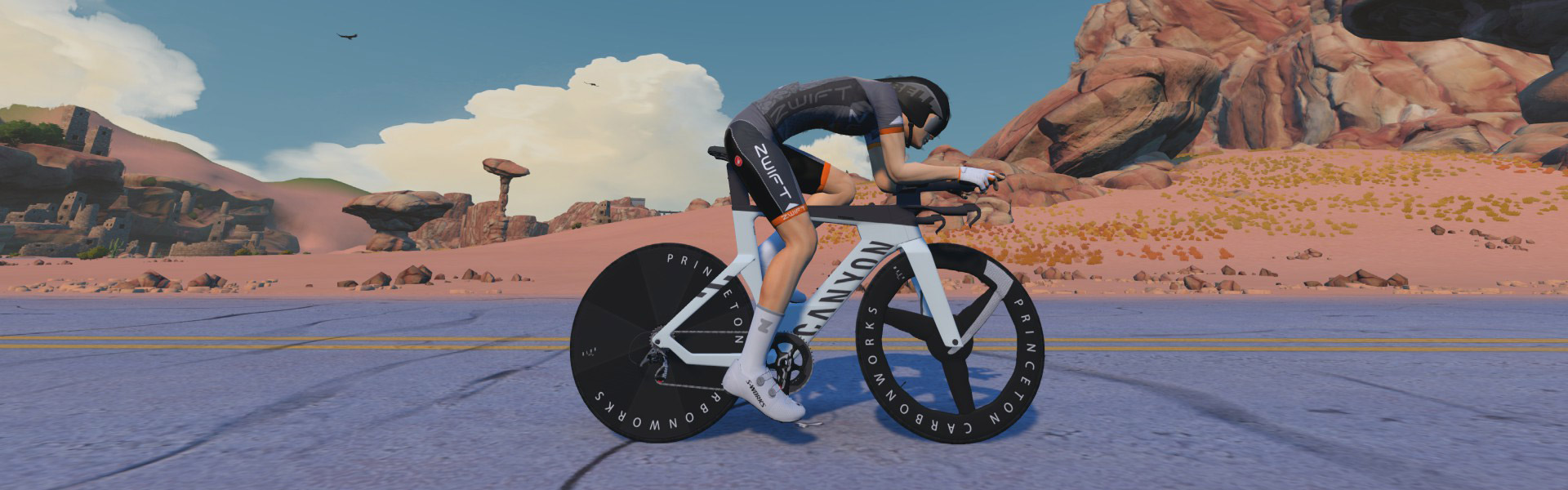
Princeton Carbonworks’ Mach TSV2/Blur Disc wheel is quite aero compared to the full universe of Zwift wheelsets, but it only beats one of the four serious disc wheelsets in game, and that’s the oldest: the Zipp 808/Super9.
In fact, the Mach TSV2/Blur Disc loses (just barely) to two non-disc wheelsets – the DT Swiss ARC 1100 DICUT 65 and ENVE SES 8.9. Comparing it with the best of the best, the Mach TSV2/Blur Disc put 45.3 seconds into our baseline setup over an hour of flat riding, but the fastest disc wheel, the DT Swiss ARC 1100 DICUT 85/Disc, put in 52.5 seconds.
(The above results are for our road bike tests. We also tested the wheels using the Zwift TT frame, since Zwift codes in a bit of an advantage for disc wheels on TT bikes. Our tests confirmed that the ranking of the five disc wheelsets on TT frames is the same as it is on road bikes, although the time gaps are slightly expanded on TT frames.)
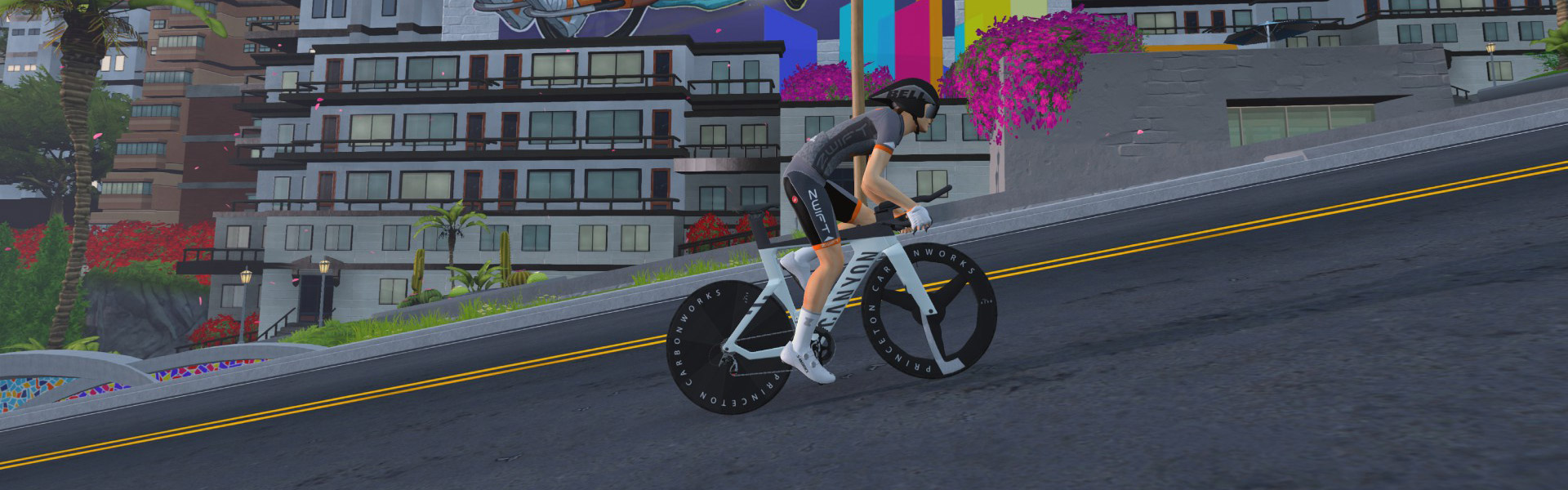
Due to its heavy weight, the Mach TSV2/Blur Disc sets the same climb time as the DT Swiss ARC 1100 DICUT DISC, the older disc wheelset from DT Swiss. Both of these wheelsets are the poorest climbers of the five racing disc wheelsets currently on Zwift.
To be fair, though, all of the disc wheels are poor climbers. While the heaviest disc wheels are 23.7 seconds slower than our test setup across an hour of climbing, the lightest disc wheels (the Zipp 858/Super9) are still 19.4 seconds slower.
(The above results are for our road bike tests. We also tested the wheels using the Zwift TT frame, since Zwift codes in a bit of an advantage for disc wheels on TT bikes. Our tests confirmed that the ranking of the five disc wheelsets on TT frames is the same as it is on road bikes, although the time gaps are slightly expanded on road bikes.)
Note: all test results above are from a 75kg, 183cm rider holding 300W steady using the Zwift Carbon or Zwift TT frames.
The Mach TSV2/Blur Disc combo from Princeton Carbonworks is the first competitive tri-spoke/disc wheelset in the game, but it’s a bit heavy and a bit slow compared to the top-performing disc wheelsets.
Zwifters wouldn’t be faulted for riding this wheelset strictly for its distinctive looks, but if you’re buying purely for performance, there are better options in Zwift today.
These wheels have been, or will soon be, added to the following posts:
Share below!
Important note: this post contains speed test results for Zwift frames or wheels. These results may change over time, and a bike's performance relative to others may also change. We don't always revise posts when performance rankings change, but we do keep current, master versions of our speed test results which are always available. See the frame charts, wheel charts, and Tron vs Top Performers for current performance data.
Zwifters recently descended on Mallorca for Zwift Community Live 2026, an IRL event bringing people together from around the world for 3 days of epic riding. In this week’s top video, watch as one Zwifting YouTuber takes on his first group rides ever!
Zwift just shared a roadmap of what’s coming in the next few months with their “This Season on Zwift” press release, so two of our videos feature this info. We’ve also included videos about riding outdoors after a long indoor season, and racing the final stage of the Zwift Games.
Share the link below and we may feature it in an upcoming post!
The first race of Zwift Racing League 2025/26’s final round happens Tuesday, April 7, and it’s a team time trial with a spicy finish!
Hell of the North was named in a nod to Paris-Roubaix, my favorite one-day race on the cycling calendar. The name is perhaps a bit dramatic, given that this is a flat route with a “petit” climb at the end. Be that as it may, it’s one of France’s newer routes, hasn’t been raced yet in ZRL, and should make for an interesting opening TTT.
Let’s dig into the course, look at bike selection, and more!
All riders will race 1 lap of France’s Hell of the North, for a total race length of 20.1km with 241m of elevation gain.
Broadly speaking, this is a simple route: 17km of flattish roads, finishing with the Petit KOM, a 2.7km climb averaging 4%:
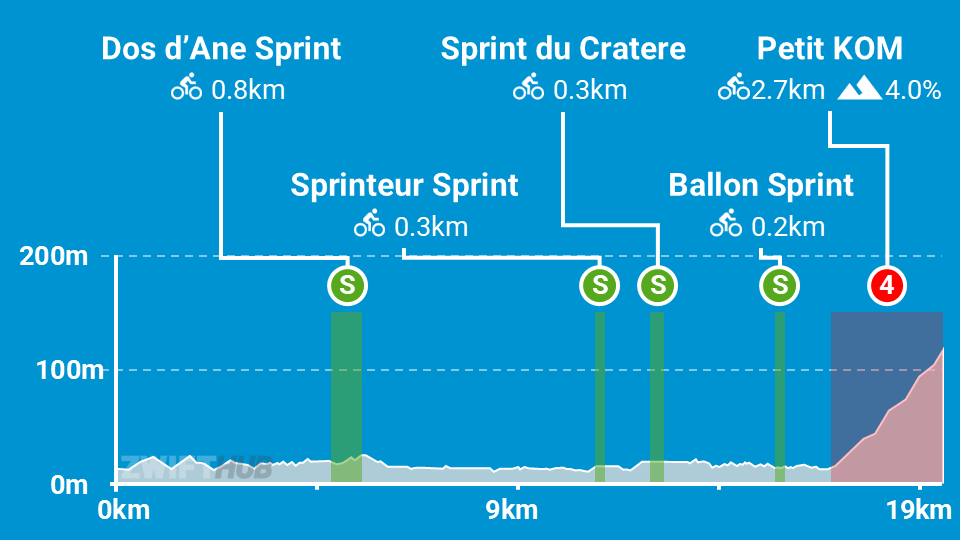
But let’s drill down a bit into key sections and waypoints:
The Petit KOM is, of course, the standout feature on this route. In a scratch race, it’s where the pack breaks up as riders with high w/kg drop the sprinters whose wheels they’ve been borrowing thus far.
In a TTT, though, the Petit KOM requires a different kind of strategy. While it’s a sub 5-minute climb for A riders, and sub 6 minutes for B, it’s not just about the best effort you can put in. Because at only 3.9%, this is a very draftable climb, particularly in the flatter bits. (This climb zig-zags its way to the top, and the “zig” portions, when you’re traveling roughly toward the start pens, are much flatter than the “zags”.)
You may also want to sacrifice a rider or two, particularly on the flatter portions of the climb, since your time is taken based on the fourth rider to finish.
Read more about the Hell of the North route >
A few years ago, powerups were announced for a ZRL TTT… but as I recall, it never actually happened.
I always thought that would be a fun addition, though. And it sounds like it’s going to happen for this stage! WTRL says we’ll get a draft boost (van) powerup in the start pens, and at every arch. See notes above under “Looking at the Route” for arch locations.

Reminder: the draft boost increases the draft effect you are experiencing for 40 seconds. It’s best used at high speeds (flats and descents), and only helpful when you’re drafting!
Teams would be wise to discuss how to best use these powerups, as you will receive a total of 5 during the race. I see “offensive” and “defensive” approaches to powerup use in this race:
Bike choice here is simple, assuming you have access to everything: go aero.
The math is straightforward: a lighter frame like the Scott Plasma RC Ultimate only saves half a second on the Petit KOM at 5 W/kg. And the fastest lightweight wheels (ENVE SES 4.5) don’t save any time over the DT Swiss ARC 1100 DICUT 85/Disc on the climb, given how aero the disc is.
That scant savings from a lighter frame will be wiped out on the flats, where the disc wheel drastically outperforms climbing wheels. So full aero it is.
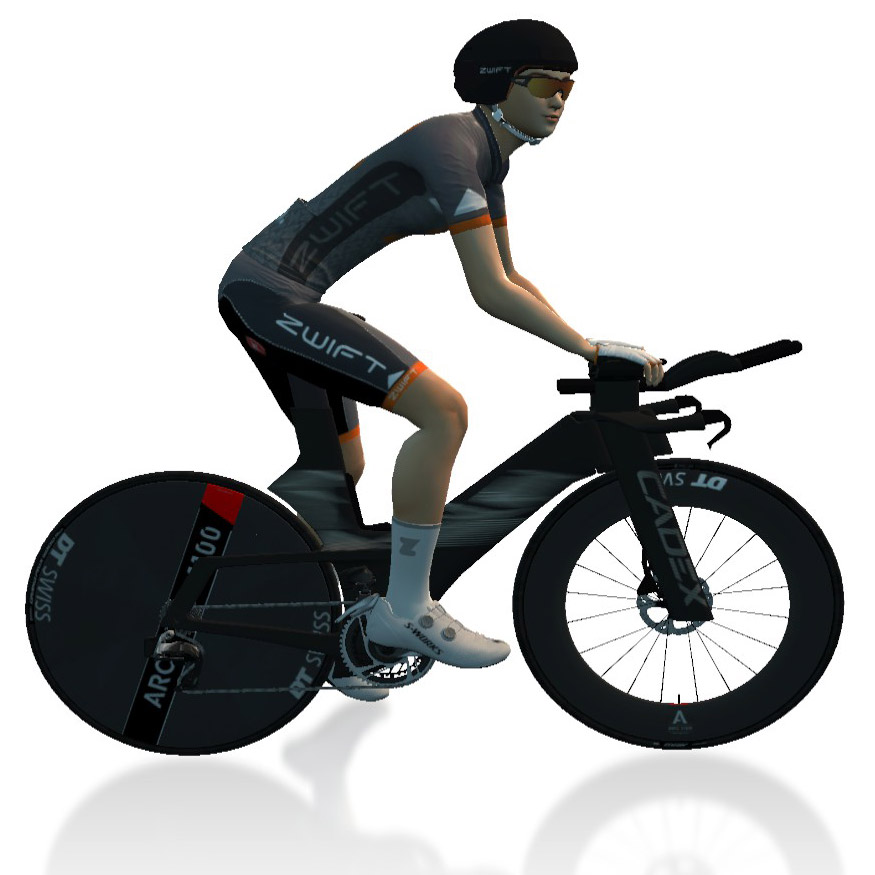
If you don’t have access to this setup, check out “Fastest TT Bike Frames and Wheels at Each Zwift Level” and use the fastest TT frame and wheelset available at your level.
One more note on bike choice: upgrading your frame makes a big difference. A fully upgraded frame saves around 13 watts, or ~48 seconds per hour of riding. Read all about the performance improvements you receive from upgrades here.
Many recon rides are planned each week on the upcoming ZRL route. If you’re unfamiliar with this course, jump into an event and familiarize yourself with the route! Find a list of upcoming ZRL recon rides at zwift.com/events/tag/zrlrecon.
Additionally, riders in the Zwift community do a great job every week creating recon videos that preview the courses and offer tips to help you perform your best on the day. See those below…
Successful team time trialing on Zwift requires a challenging combination of physical strength, proper pacing, and Zwift minutiae like picking the fastest bike, understanding drafting in a TTT context, and getting your frame fully upgraded.
Mixed courses like this week give valuable seconds to “balanced” teams with two strengths:
On a course like this week’s, I recommend all team members set their Trainer Difficulty to the same value, and make sure that value is at least 75%, so you feel slight gradient changes and increase power to compensate. This will help you automatically punch on the uphills, keeping your overall speed high.
Your goal in a ZRL TTT is to get four riders across the line in the shortest time possible. That means every team’s pace plan will differ based on each rider’s abilities. I highly recommend having an experienced DS on Discord directing your team, especially if your team contains some inexperienced TTT riders.
Lastly, if you want to go further down the TTT rabbit hole, I highly recommend Dave Edmond’s Zwift TTT Calculator tool.
Share below!
This is our 12th April Fools’ Day on Zwift, and each year ZHQ has come up with something fun for the community.
In 2025 we all got a Pocket Scotty, which became an ongoing feature the next day. In 2024 we ironically wore VR Goggles, and before that it was two years of special April Fools’ Day events. 2021 saw us big wheeling, 2020 saw us transported to 1989, and 2019 we smelled burning rubber. The year before that it was Paperboy. In 2017 we had big heads, 2016 gave us the old-timey effect, and in 2015 we rode big wheels on Jarvis.
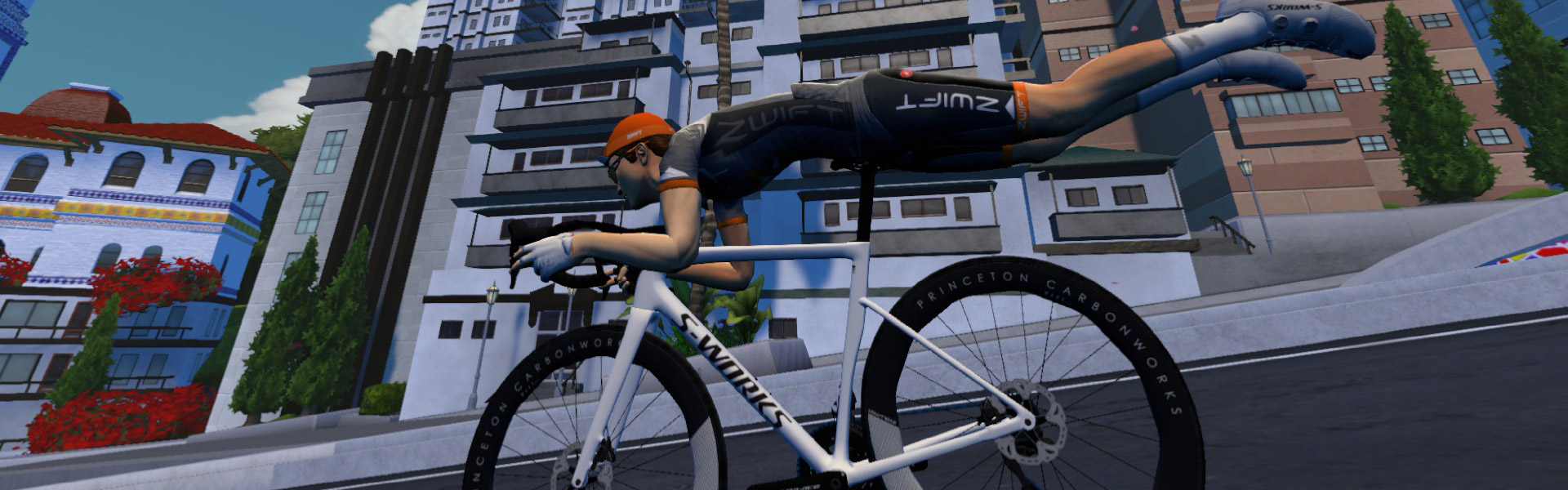
This year Zwift has a new surprise – they’ve swapped out the supertuck rider position for the superman! (Apologies for the low-quality images… I’m traveling and trying to get shots from a low-powered laptop…)
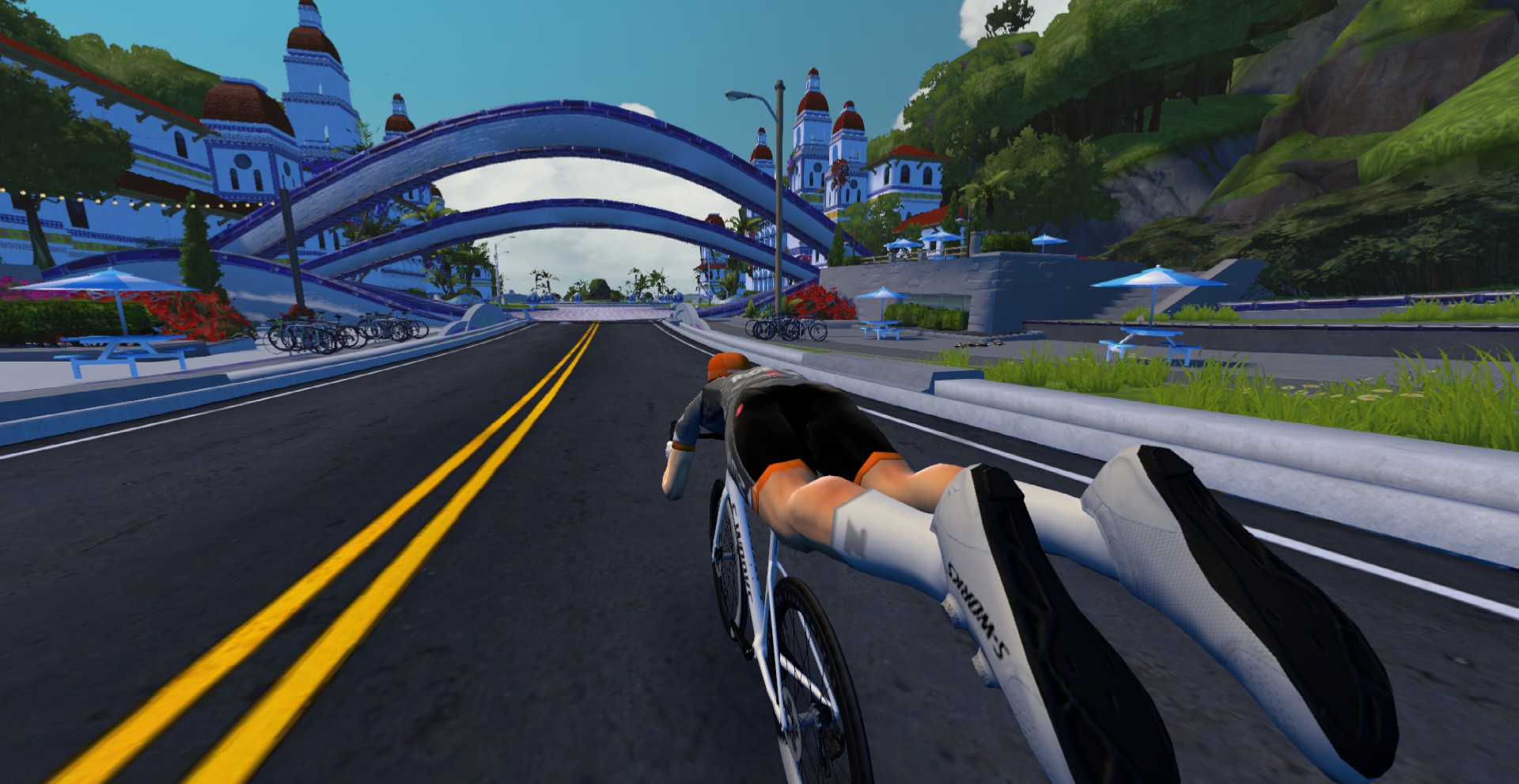
To get into the new Superman position on Zwift, five conditions must be met:
Zwift will automatically place your avatar in the superman position if all these conditions are true. You come back out of the superman once any of these conditions is not met – for example, if the road flattens out to a -2% decline.
While I can’t recommend attempting this position in real life, I can promise you it’s possible:
There’s even a tutorial video. But don’t blame me if you try this and it doesn’t go well for you:
Based on this April 1st fun and recent images from the Pas Racing Series, it appears Zwift has worked up some new avatar poses/positions. What other avatar postures would you like to see? (I want a victory wheelie.) Share your thoughts below!
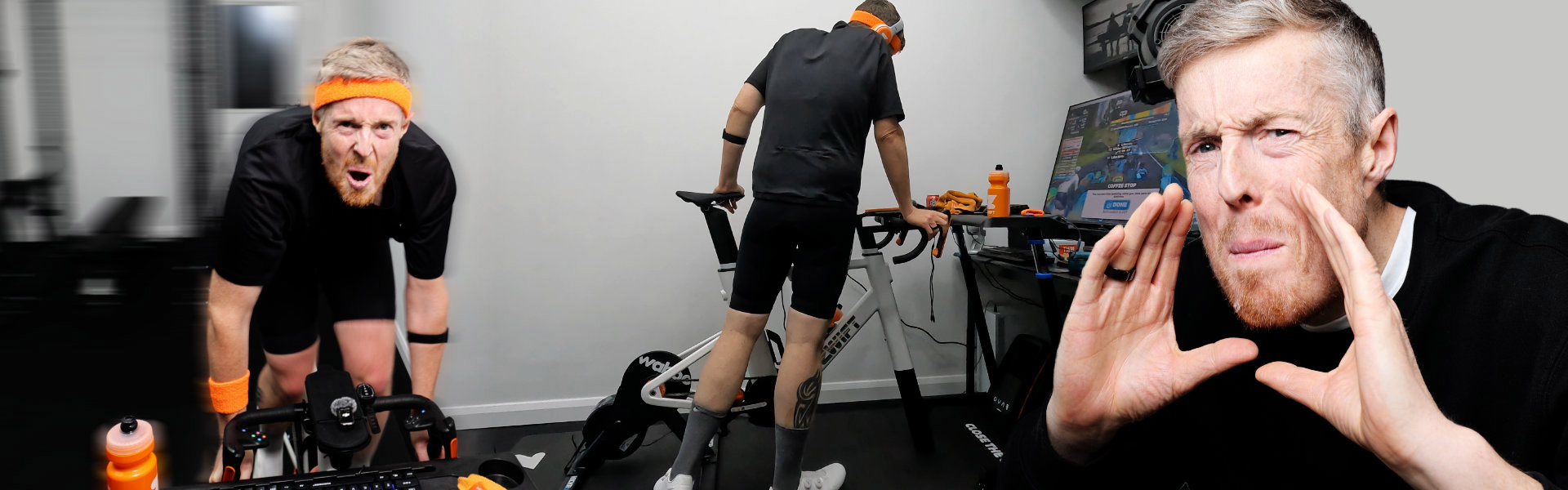
“Always sprint for a finish line” and “try to hold on even if you have to burn matches to do so” are my two golden rules when it comes to riding and racing on Zwift. They obviously mostly apply to racing, but as I’m coming back from an annoying cycling-related knee injury that kept me off the bike for nearly nine weeks, these rules also apply to most of the group rides I take part in nowadays, too.
Other people’s “Zone 2” seems to be my threshold at the moment, but I’m getting there. My power, endurance, and—most importantly—my ability to recover quickly are all returning to their pre-injury levels, slowly but surely.
However (and this is a big HOWEVER)… getting dropped in Zwift is still light years ahead of where I was only six years ago. Like a toddler in a sweet shop, I still see smashing myself around Watopia as a privilege, not something I have to force myself to do and I have to remind myself of that every time I end up finishing mid-pack in a race or questioning all of life’s choices while trying to hold onto Eric Schlange in one of his weekly “fun” Pizza Burners. But that’s just my competitive side coming out. That childish grin quickly returns whenever I think back to my “pre-fitness” days in 2018.
(Seriously though, someone really needs to report Eric’s weekly “pizza burner” ride description to the Federal Trade Commission—100 km at threshold is more than just a “spin”…)
It’s only now, having just checked when my first ever Zwift-related video was uploaded (1st May 2023), that I’ve realised I’ve been riding and racing on Zwift for almost three years. Wowsers! Time really does fly when you’re having fun.
My name is Ryan Condon, and I’ve been making entertaining YouTube videos about my fitness journey for the past six years. Zwifting on my trusty Zwift Ride in my homemade “pain cave” has been a huge part of that journey.
At the end of 2018 and the beginning of 2019, I weighed 190 kg. To put that into perspective, the average UK man in his 40s weighs 83 kg. I was 107 kg heavier than the Joe Bloggs you walk past every day on your local high street.
The physical and mental implications of weighing this much were massive. Being tall (6’2”) had helped me “get away” with being “big”—a term my grandma used to describe me.
“He’s not fat, he’s big-boned,” she’d snap whenever anyone dared mention my disproportionate size in front of her when I was a teenager. Unfortunately for me, I wasn’t anywhere near as confident as she was when dealing with the snide remarks from my schoolmates.
By the age of 38, my knees ached, my energy was non-existent, and my sleep was a joke—I probably averaged three to four hours a night. Depression and anxiety were taking hold, although I didn’t recognise it at the time.
I grew up in a working-class London family; feelings weren’t discussed, and “depression” was something other people had. I was also likely alcohol-dependent by this point. I made a video about this subject (which you can watch here), but in a nutshell, the mental darkness I lived with was amplified by my drinking. At one point, I was even too heavy to weigh myself on standard bathroom scales. That sense of alienation—of being on my own—was staggering.
Fast forward six years: I no longer drink, I’m teetotal, I’m vegan (a story for another time), and I now weigh anywhere between 87–89 kg, depending on which way the wind is blowing or how many croissants I’ve had that day.
I’m literally half the man I used to be, and I’m in the best shape of my life. That 103kg of body fat I lost (as my partner Tracie likes to joke) is more than the weight of an entire adult male.
When I started uploading videos to YouTube, I realised there were almost no fitness influencers catering to bigger men (or bigger people in general). Most assumed you already had a base level of fitness and of course, I didn’t. I just wanted to know:
Because I couldn’t see anyone who looked like me online—unless they were the experiment or the butt of the joke in a MrBeast-style video—I decided to document my own weight-loss journey, with an emphasis on making the videos entertaining, hoping it might inspire others like me… those who knew enough to know that doing something—anything—is better than doing nothing.
I’m not a nutritionist or fitness expert. I simply share what works for me, hoping to inspire others in the way I once wanted to be inspired.
Indoor cycling on Zwift was the extra string to my bow that I was looking for back in 2023. By then, I had already managed to lose 70 kg through walking and then running, getting down to about 120 kg. But my body adapted and my weight loss plateaued, even though I was still exercising and eating sensibly.
It was then that I discovered indoor cycling—specifically Zwift—purely by chance, and it completely revolutionised my fitness and weight-loss progress, helping me lose another 30 kg of body fat.
I very recently crossed the 10,000 km mark for total lifetime distance covered, with well over 113,000 metres climbed. That’s a big benchmark for me.
It’s still “rookie numbers” compared to others on the platform, but I’ve also made and uploaded over 100 Zwift-related videos to my YouTube channel, so I like to think I have some lived experience on the subject.
I’ve also become quite a capable racer, climbing from Category D into Category B. That just means I went from complete beginner to an above-average, pretty good Zwifter at my peak. However, at the end of last year I suffered a sports-related knee injury that kept me from working out and Zwifting for nearly nine weeks. As any Zwifter knows, without regular training you lose your power and endurance much quicker than it takes to gain them.
I’m now back on the road to recovery. I’ve regained about 80% of my pre-injury Zwifting abilities and have managed to get myself back into the upper end of Category C with my ZRS hovering somewhere around 420; however, at my peak, I reached 570, and I’d like to get back there as soon as possible.
I love running and cycling outside, and nothing will ever replace that vibe. However, when time is scarce or it’s chucking it down and I don’t fancy a Special Forces selection test just to fit in my cardio for the day… Zwift is the answer.
It fits into my plan easily, no matter the weather. If I’ve got everything set up just the way I like it, there should be no barriers—and no barriers means no excuses and of course, no excuses = consistency.
When I started on Zwift for the first time, I didn’t really know what my real power number was, even after several months of consistent riding. This is because we’re programmed to hold back as humans. No one jumps into a fast group ride or race and completely buries themselves the first time they try. It’s counterintuitive to everything we’ve been told to do. So we end up getting dropped—which is fine. It’s all part of the process and that’s the single best piece of advice I can give any new Zwifter: Trust the process! Just jump in feet first and learn through the baptism of fire.
I now have three “pillars” that I try to stick to every day:
Obviously, there’s a lot more to this. The nuances are hard to highlight in one article without disappearing down a fitness rabbit hole, but these three pillars are what I think about every day when planning my week ahead.
Back in 2019, I started by walking every day for a whole year without a single day off. I even made a video about it:
This might be a risky thing to say—especially on a website dedicated to cyclists—but I still consider walking to be the best exercise for weight loss. However, cycling and Zwifting are catching up quickly in my mind.
People often ask if I had a defining wake-up moment.
Honestly, I didn’t.
There wasn’t one big “eureka” moment—there were hundreds of small moments of realisation.
Buying plus-size clothes.
Making excuses at my daughter’s school sports day.
Not being able to fit on a rollercoaster at a theme park.
Just three of many dominoes that had to fall before I finally pulled the trigger and made the change.
A David Goggins quote resonated with me:
“To achieve greatness, one must be willing to be unbalanced for a period of time.”
Back when I was walking 10 miles every day, I was unbalanced—in the best possible way.
My obsession, once directed at my career, was now fuelling my health, fitness, and eventually my family life. But I had to face “40 days and nights in the desert” before I could reset my factory settings. This combination of dietary discipline, physical movement, and psychological commitment transformed my life.
Mindset, willpower, and behaviour change are more important than fad diets or gimmicky exercises.
My motivation has to be personal—losing weight just to look good for a holiday won’t sustain long-term change.
Find your “happy place”—your reason to move forward even when it’s tough.
Don’t sweat the small stuff. I used to get frustrated when things didn’t go to plan. Now I choose what I care about, and when things go wrong I try to adapt instead of reacting.
Celebrate meaningful achievements. Rewards should reinforce progress—not undo it. There is no secret sauce.
“Change happens when the fear of staying the same outweighs the fear of change.”
Believe in yourself.
Be kind to yourself.
Keep moving forward.
Small steps matter. Consistency matters.
Your journey is yours—nobody else’s.
You can watch all of my videos on my YouTube channel: Ryan Condon.
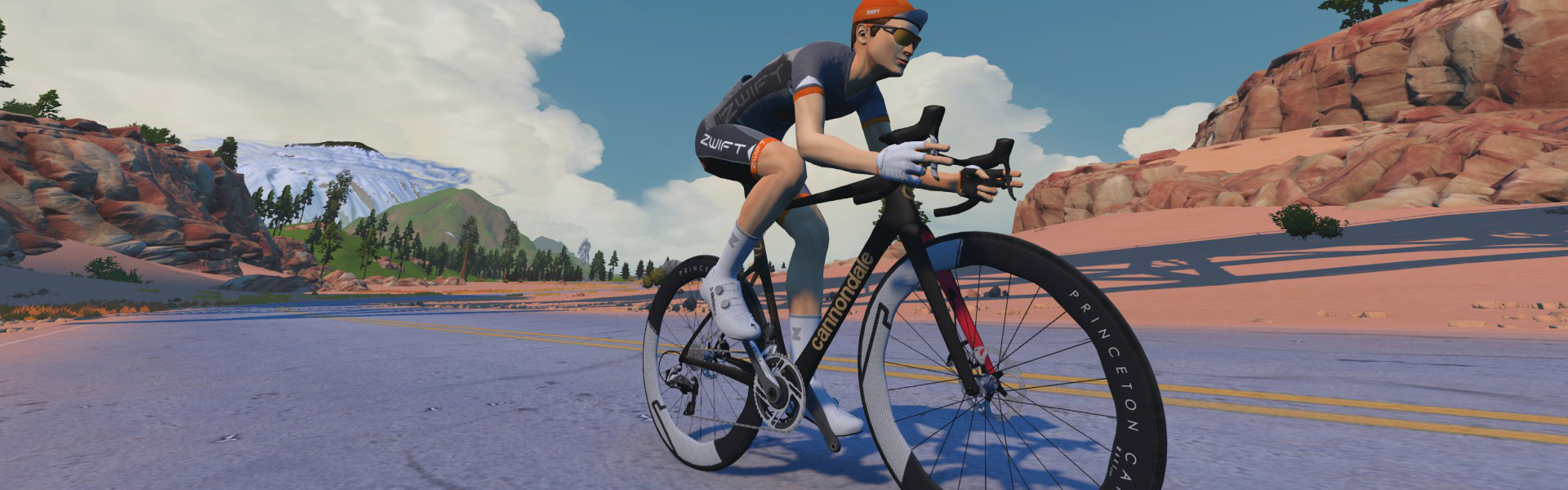
Princeton Carbonworks has arrived in Zwift, with three wheelsets released to the game: the Alta 3532, the Wake 6560 White, and the Mach TSV2/Blur Disc. Today, we’re looking at the Wake 6560, the company’s popular flagship racing wheelset, known for aero performance and light weight.
A bit of trivia: the “Wake” name is a nod to the collegiate rowing roots of Princeton Carbonworks’ founders.
Here’s how these wheels (the Wake 6560 Evolution II) are described: “The 6th iteration of the Wake series and the largest step change in performance they’ve made yet. Faster. Lighter. Stiffer.”
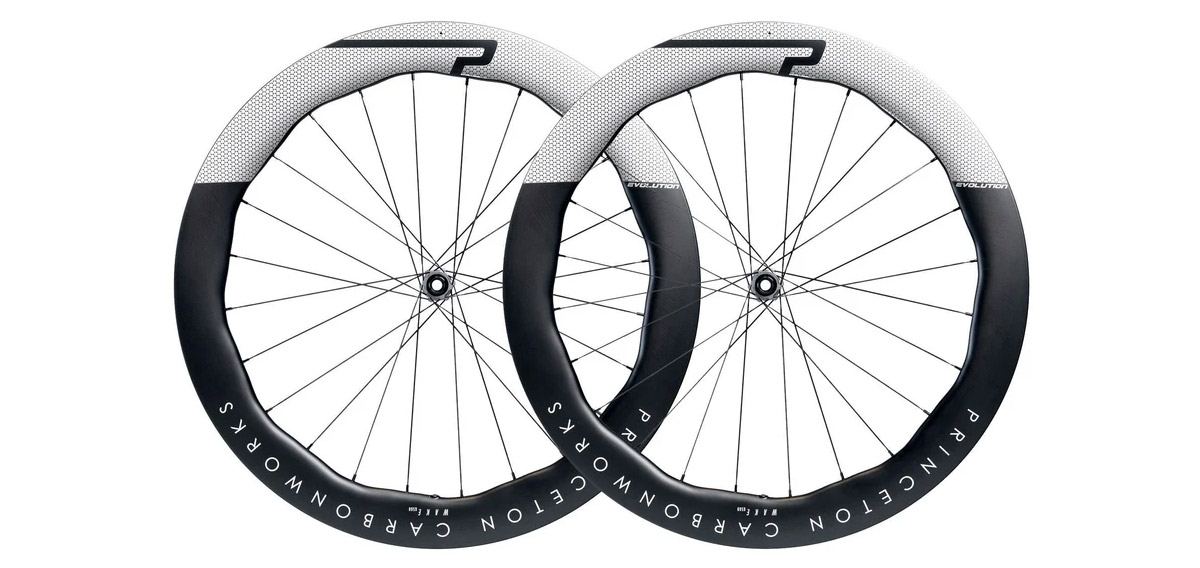
The wheels are now available in the Drop Shop, accessible at level 32 and above, for 685,000 Drops. Notably, they are rated 4 stars for aero and 4 for weight, the only wheelset in game with such a high rating, apart from the newish ENVE SES 4.5 PRO. Since Zwift’s 4-star rating system isn’t precise enough for our taste, we ran these wheels through our standard battery of tests to determine exactly how they perform in Zwift and stack up against other wheelsets in game.
Let’s dive in and learn all about the performance of this wheelset from Princeton Carbonworks…
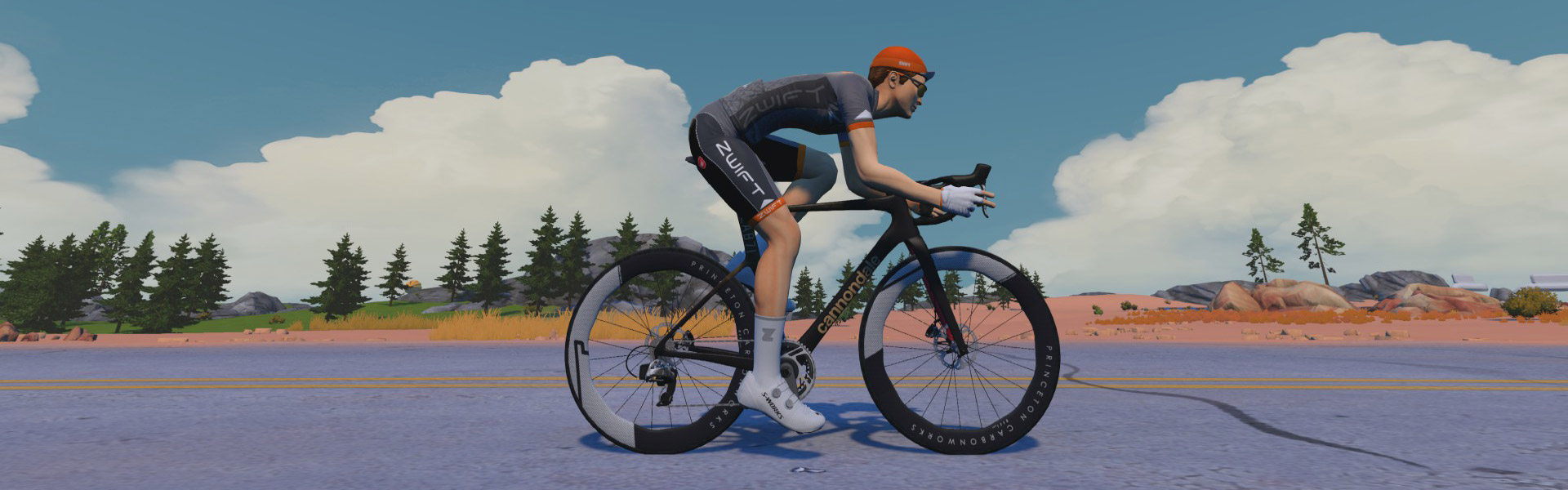
Princeton’s Wake 6560 wheels deliver impressive aero performance, edging out the ENVE SES 4.5 PRO but falling just behind the most aero hoops in game: the ENVE SES 8.9, DT Swiss ARC 1100 DICUT 65, and ENVE SES 7.8.
As the 4th-fastest wheels in game, the Wake 6560 lose 4.4 seconds across an hour of riding compared to the ENVE SES 8.9. They lose 10.2 seconds across an hour compared to the fastest disc wheelset in game, the DT Swiss ARC 1100 DICUT 85/Disc.
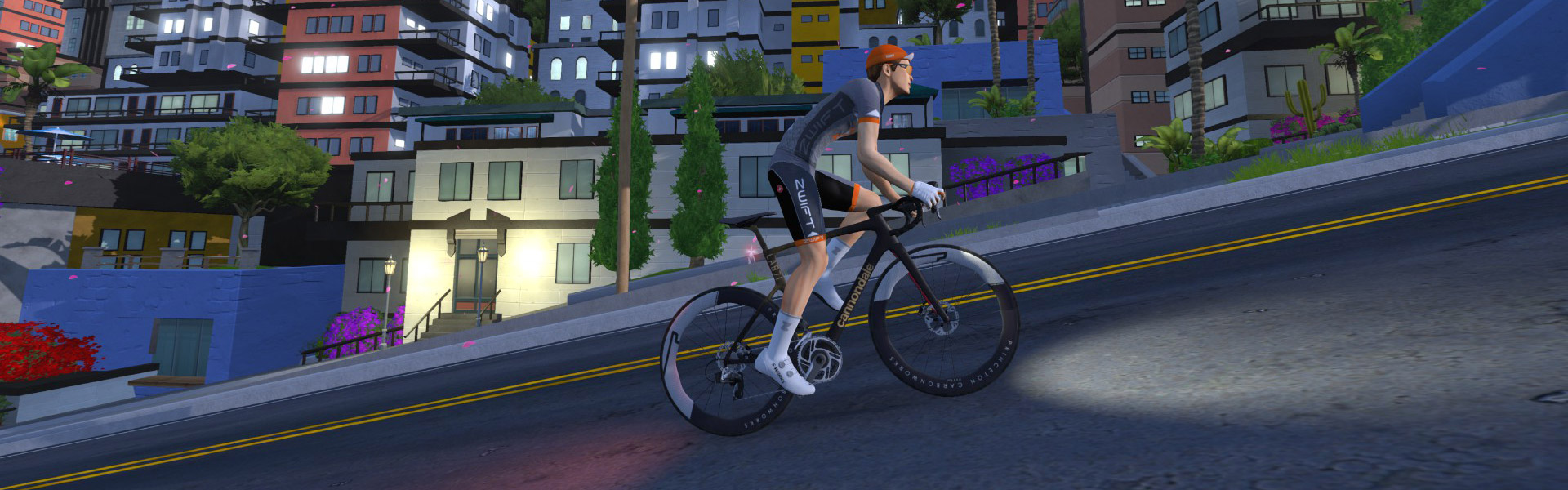
You would think such a deep wheelset wouldn’t climb well, but this is 2026, and wheelmakers are working miracles. With a claimed 1250-gram wheelset weight, the Wake 6560 is a bit lighter than the ENVE SES 4.5 PRO, and it shows in Zwift.
Princeton’s Wake 6560 wheels gain 12.3 seconds over our baseline wheels in an hour of climbing, beating the former top climbers (Zipp 353 NSW and Lightweight Meilenstein) by 2.5 seconds, and beating the ENVE SES 4.5 PRO by 2.9 seconds. They lose only to Princeton’s own Alta 3532 wheels, and then only by 1.8 seconds over an hour. How’s that for an all-arounder performance?
Note: all test results above are from a 75kg, 183cm rider holding 300W steady using the Zwift Carbon frame.
The Wake 6560 wheels from Princeton are Zwift’s new top all-arounders, edging out the ENVE SES 4.5 PRO in both our flat and climb tests and, in fact, outclimbing all the best dedicated climbing wheels in the game, apart from the new Princeton Alta 3532 hoops!
If you’re looking for a wheelset to use in races with significant climbs, this is the best one available in Zwift today.
These wheels have been, or will soon be, added to the following posts:
Share below!
Important note: this post contains speed test results for Zwift frames or wheels. These results may change over time, and a bike's performance relative to others may also change. We don't always revise posts when performance rankings change, but we do keep current, master versions of our speed test results which are always available. See the frame charts, wheel charts, and Tron vs Top Performers for current performance data.
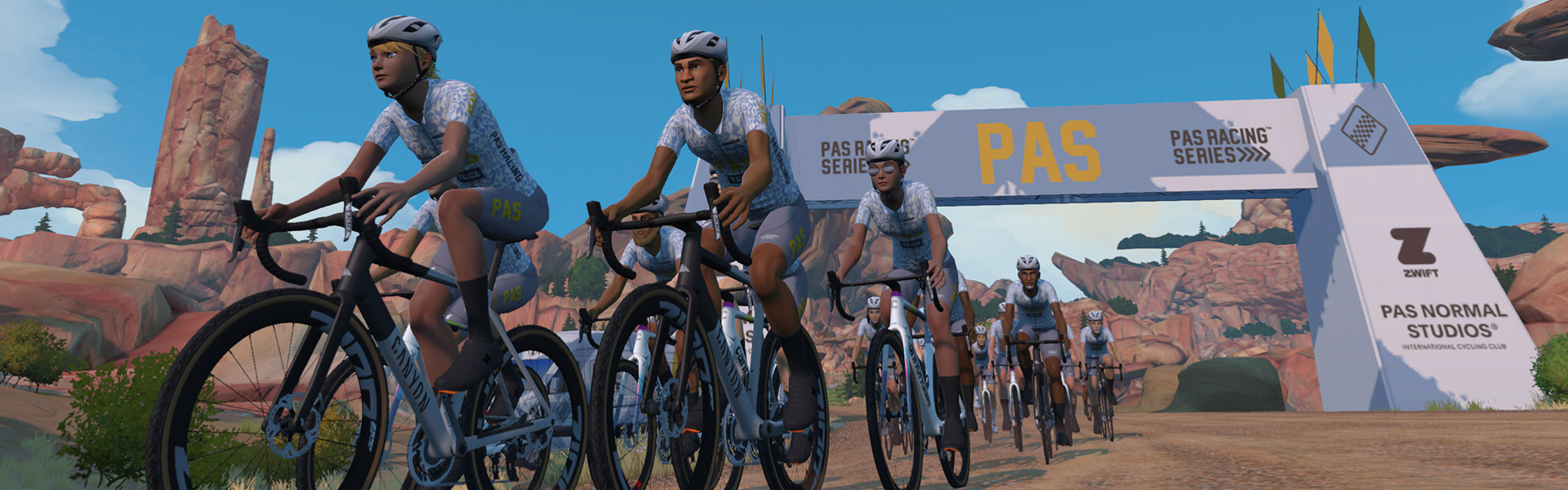
Zwift + Pas Normal Studios are partnering for a race series April 6 to May 3, and it’s going to be a gravel blowout! The series features three new gravel-focused routes and is timed to line up with new gravel frames and wheelsets in Zwift’s Drop Shop. And on top of all that, we’ve got a kit unlock on offer as well!
These races will be popular for several reasons, including prominence on the calendar as they effectively replace Zwift’s regular ZRacing events for four weeks. Read about the series below…
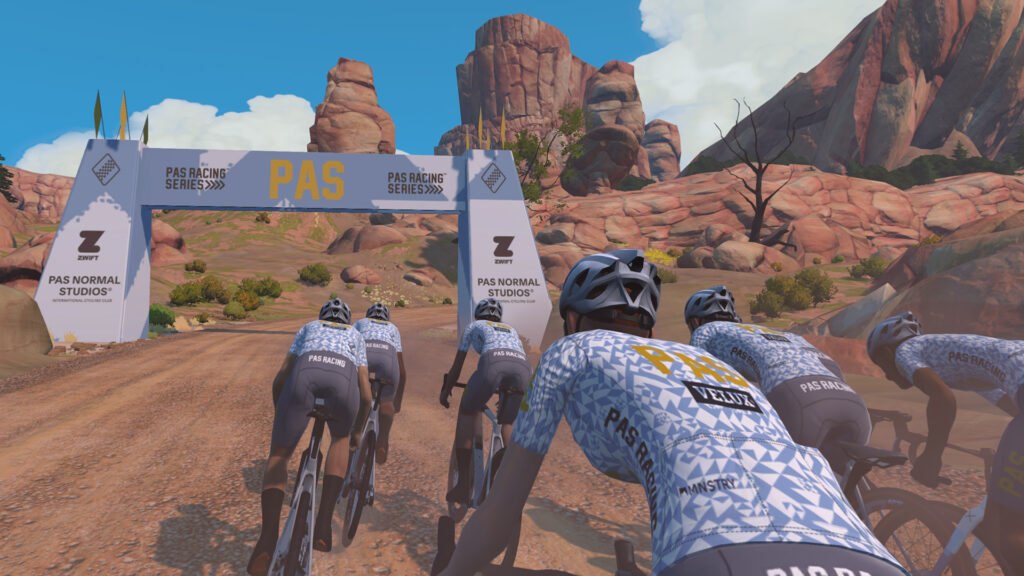
UPDATE April 7, 2026: Zwift informed us today that they’re pulling the new Gravel Mountain routes from the Pas Normal Racing series due to user feedback after the first day of racing. (You can read some of that feedback in the comments on this page, as well as Zwift forum topics like this.)
Stage 1 has been changed to Watopia’s Jungle Circuit, and stage 4 is now on Watopia’s Serpentine 8.
A decision has not yet been made on how the GC will be handled for the series, since it wouldn’t make sense to count riders’ times for two different routes. We will update this post once we know more.
Here are the details of what we’ll be racing in the Pas Normal Racing series:
See all upcoming series events >
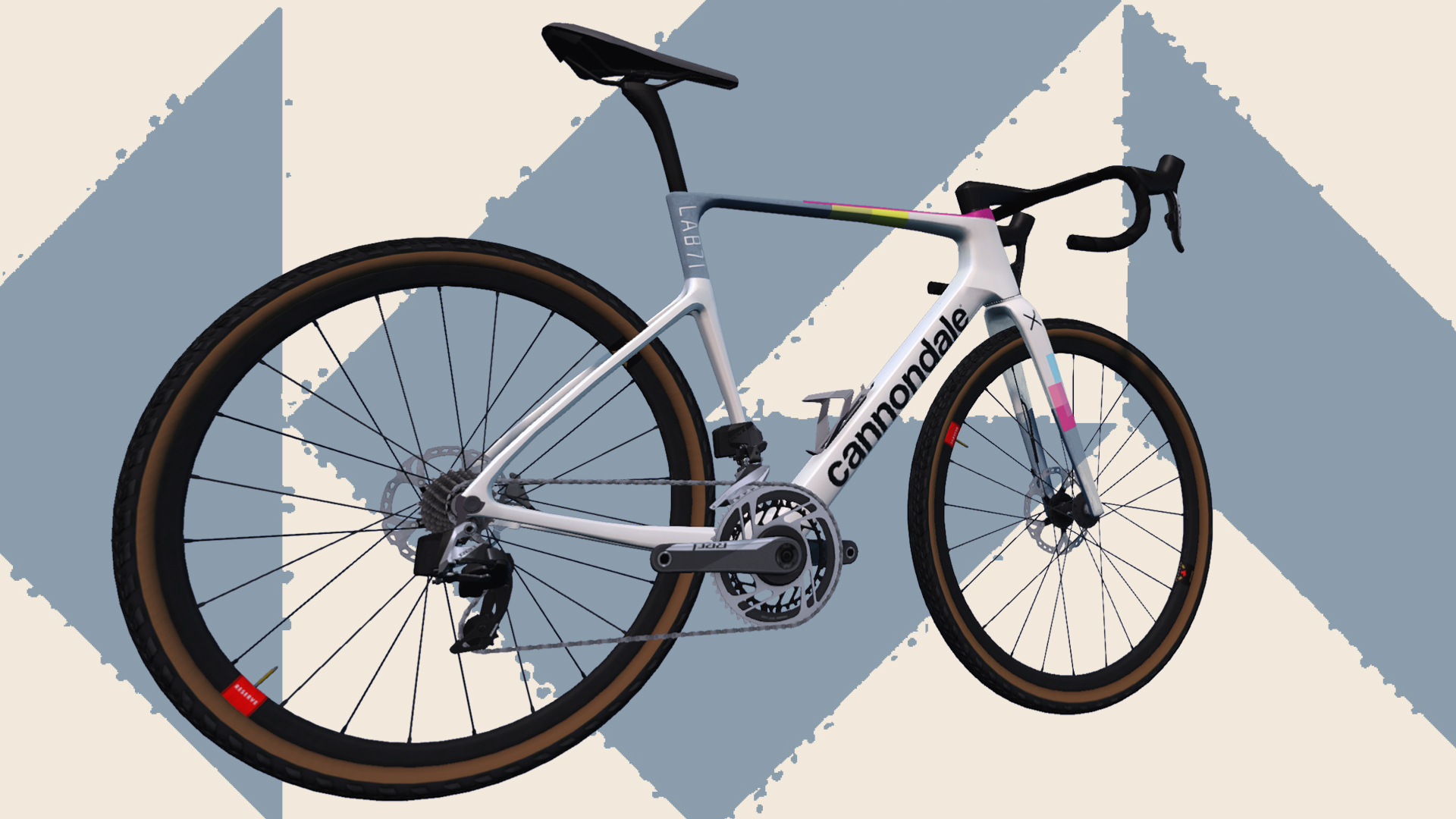
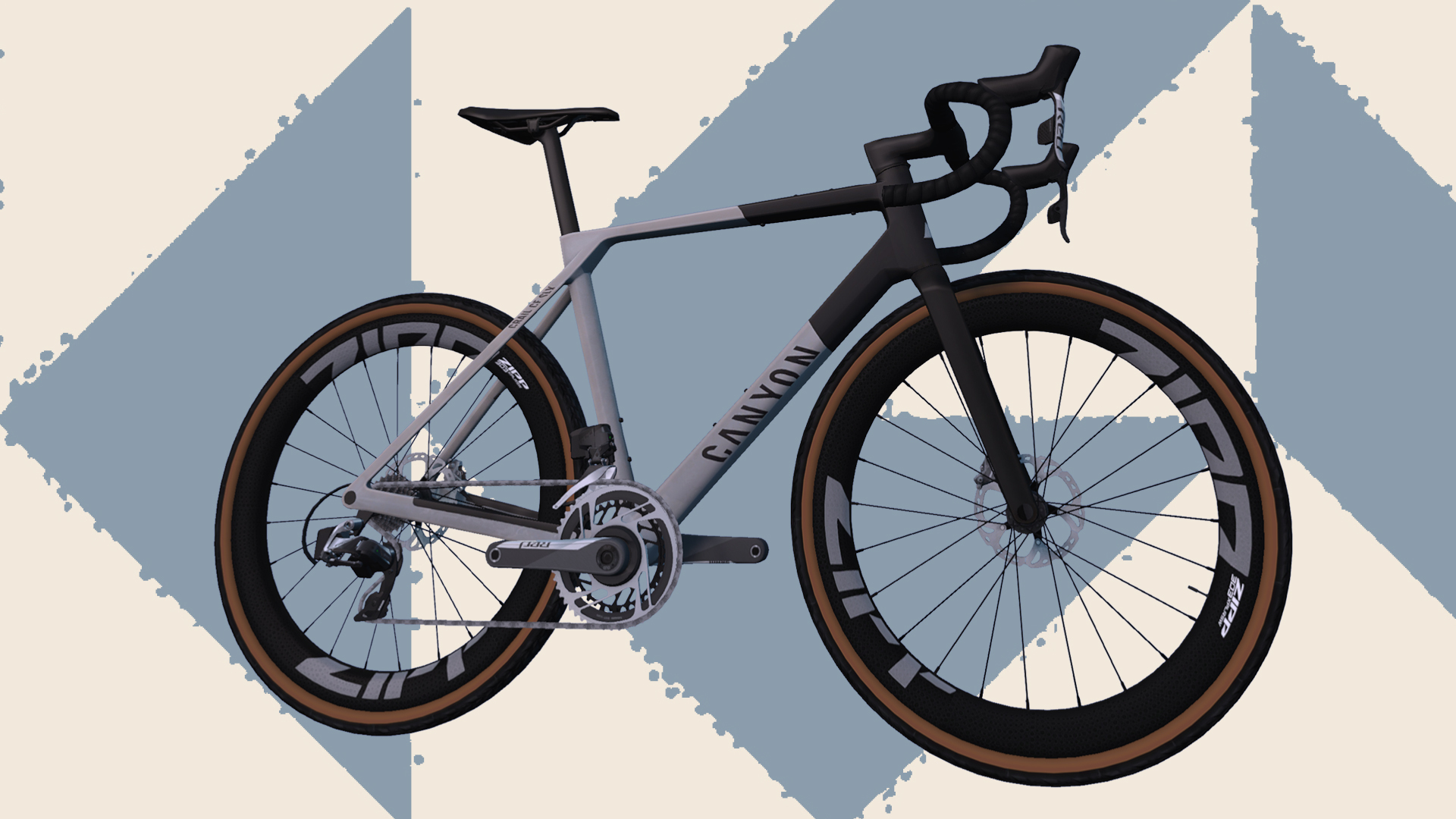
Zwift is using this series as an opportunity to refresh the Drop Shop’s gravel offerings more than ever before, with 5 frames arriving along with 2 wheelsets! Some of these are already in game and available for purchase, and we’ve completed and published our performance tests. Others will arrive in Zwift’s next game update, which is scheduled to roll out April 7.
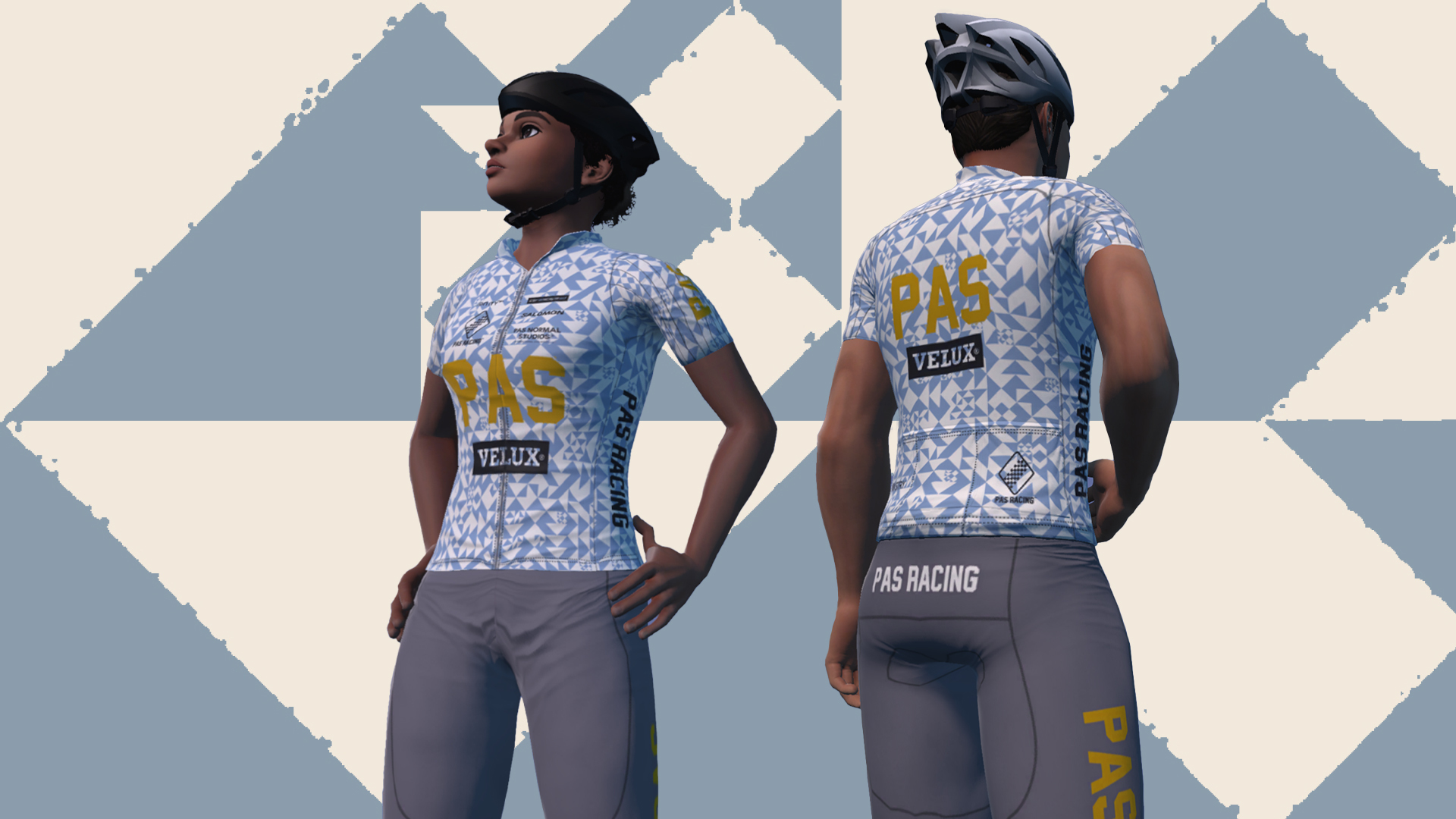
Finish any stage of this series and unlock the in-game Pas Normal Racing kit.
Like Zwift’s regular ZRacing series, this race series includes XP bonuses for stage completion! A total of 2000 XP is available:
Zwift’s web-based leaderboards are used to track the monthly GC competition in ZRacing and similar series. Unlike past years, no ZwiftPower registration or use is necessary.
Access the ZRacing leaderboards at zwift.com/racing/leagues/pasracing2026 >
Your GC ranking is based on your best finishing time for each stage, and you can race each stage more than once to try for a better time.
For their monthly series, Zwift typically schedules three different categorization schemes to encourage “Fairer, more competitive racing for everyone.” The different racing score ranges are titled Advanced, Range 1, and Range 2:
See upcoming Range 1 events >
See upcoming Range 2 events >
See upcoming Advanced events >
See ALL upcoming events >
Post below!
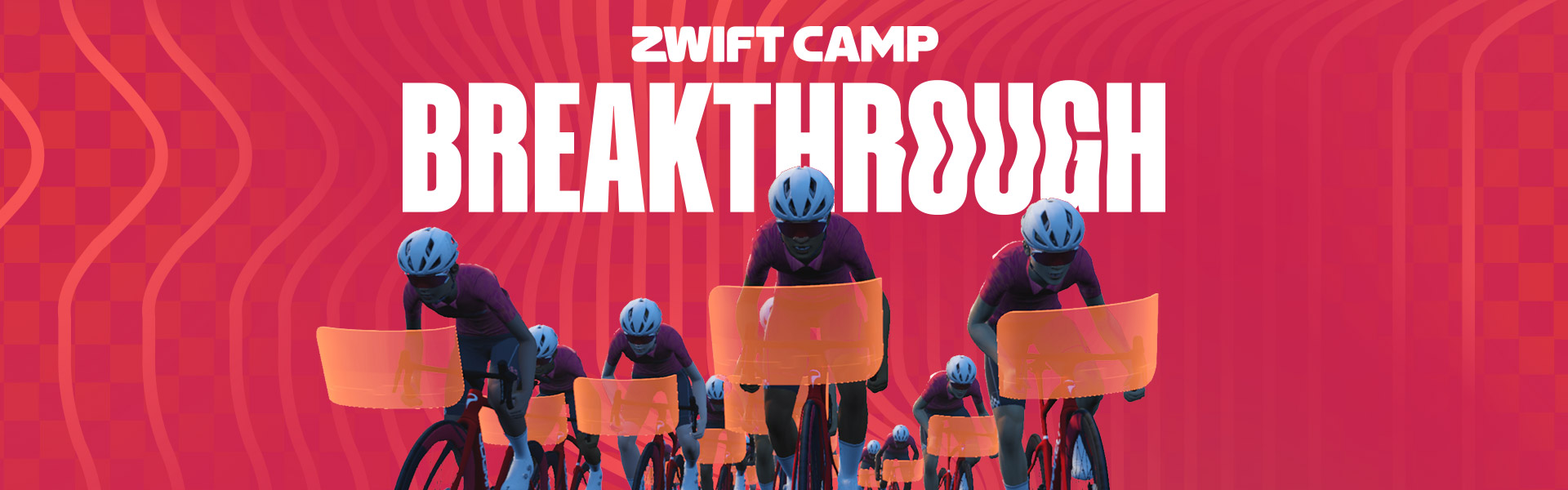
This season, Zwift is leaning heavily into the Zwift Camp concept, launching a three-camp series that kicked off with Zwift Camp: Baseline in September.
Next week (Monday, April 6), the third and final Camp of the season begins. Named “Zwift Camp: Breakthrough”, it’s a 5-stage workout series all about helping you transition to outdoor riding. Dive into all the details below!
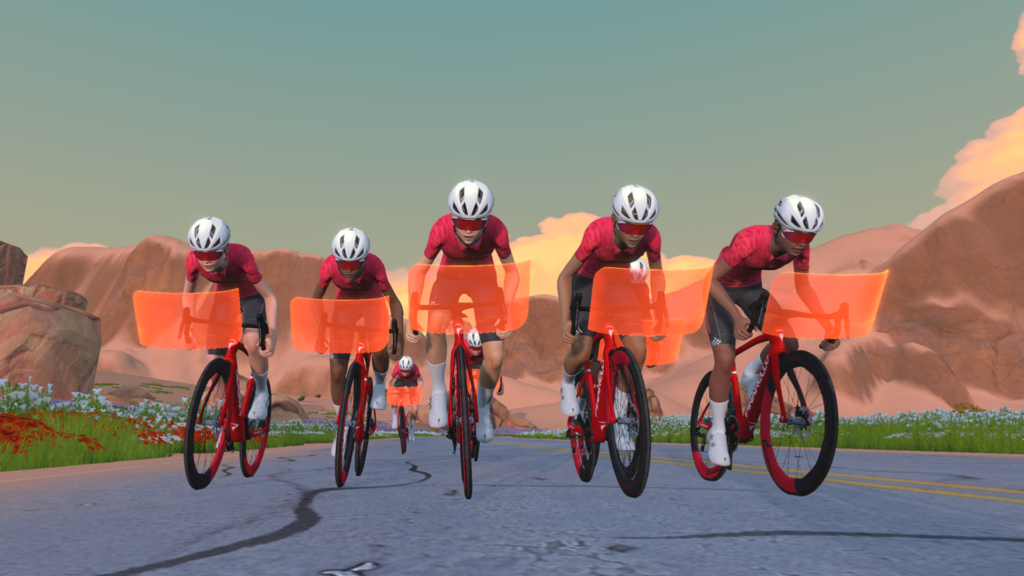
After Zwift Camp: Baseline showed us our power bests across various intervals, and Zwift Camp: Build pushed us to get stronger, Zwift Camp: Breakthrough is here to help us transition confidently into outdoor riding.
The Camp consists of five different workouts, spread across five weeks. You can finish each workout once and complete the Camp, but you can also do a workout multiple times if you’re looking for additional training.
Instead of targeting power intervals like the first two camps, ZC: Breakthrough workouts target your technique while helping you build enduring fitness:
Stages can be completed as on-demand (solo) efforts whenever you’d like, or you can join a scheduled group event.
Sign up at zwift.com/zwift-camp > (events coming soon)
Each stage is a week long, with events beginning at 9am PST on Monday and scheduled hourly on the hour until 8am PST the following Monday.
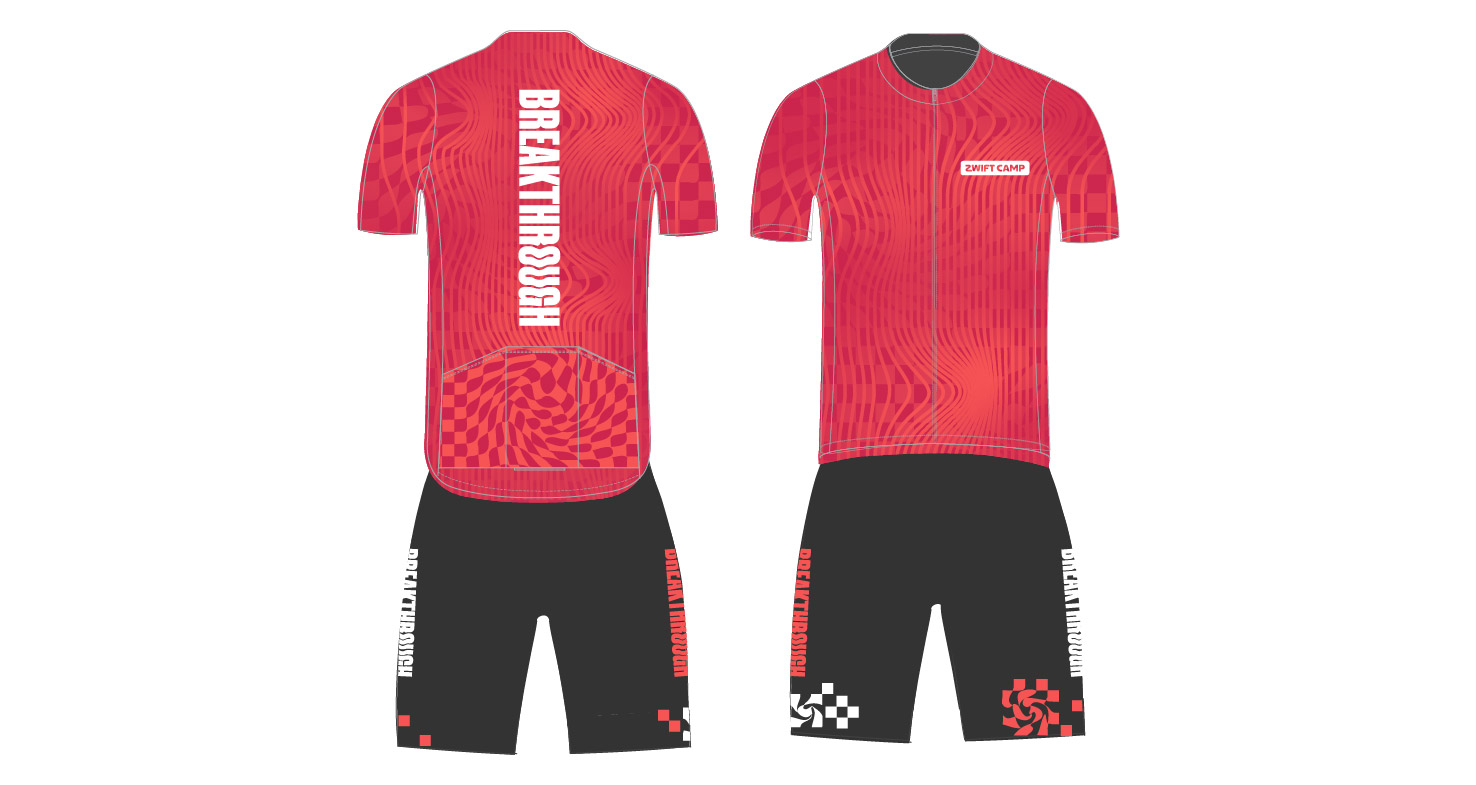
Four unlocks are available as you work your way through Zwift Camp: Breakthrough:
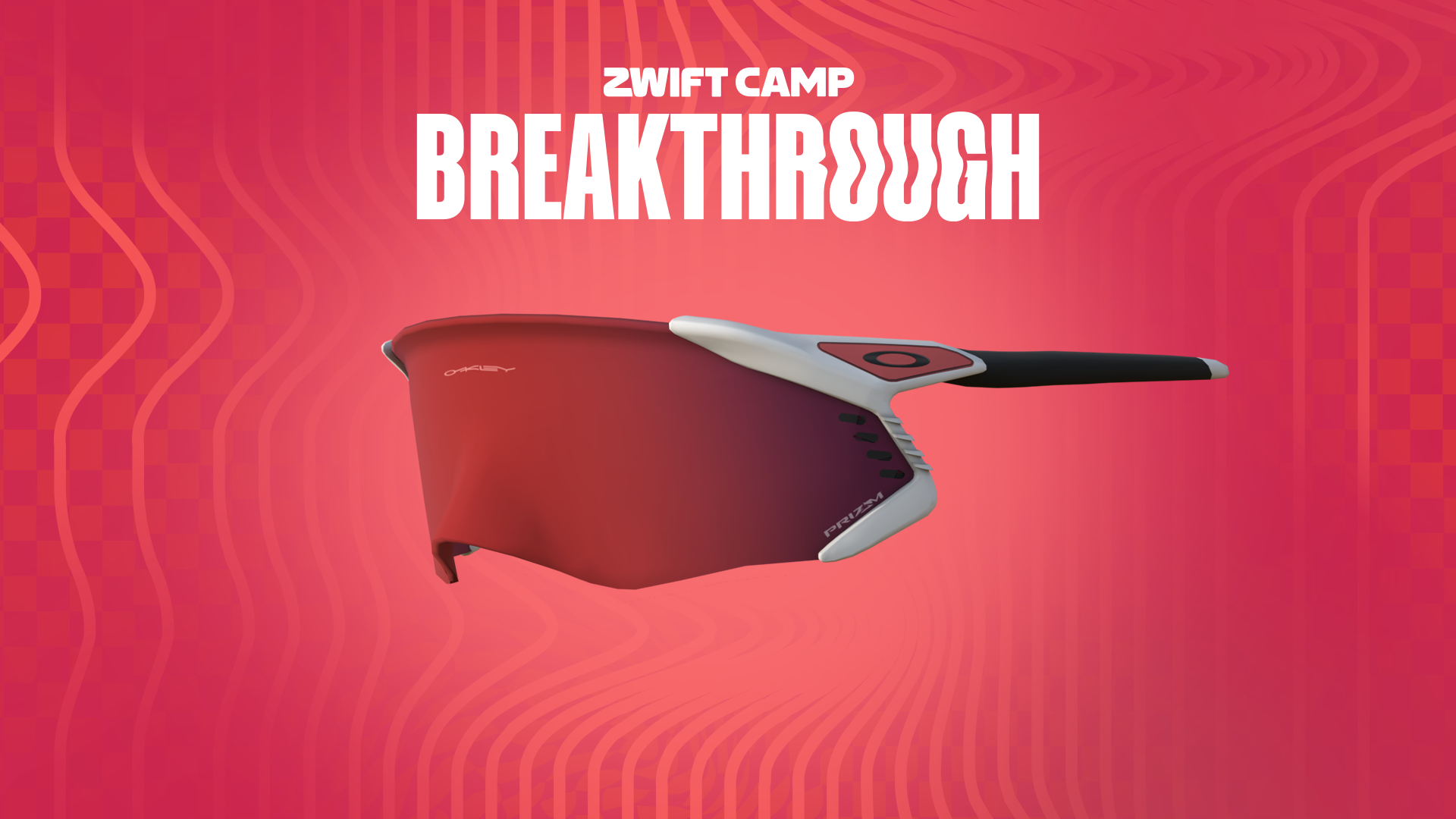
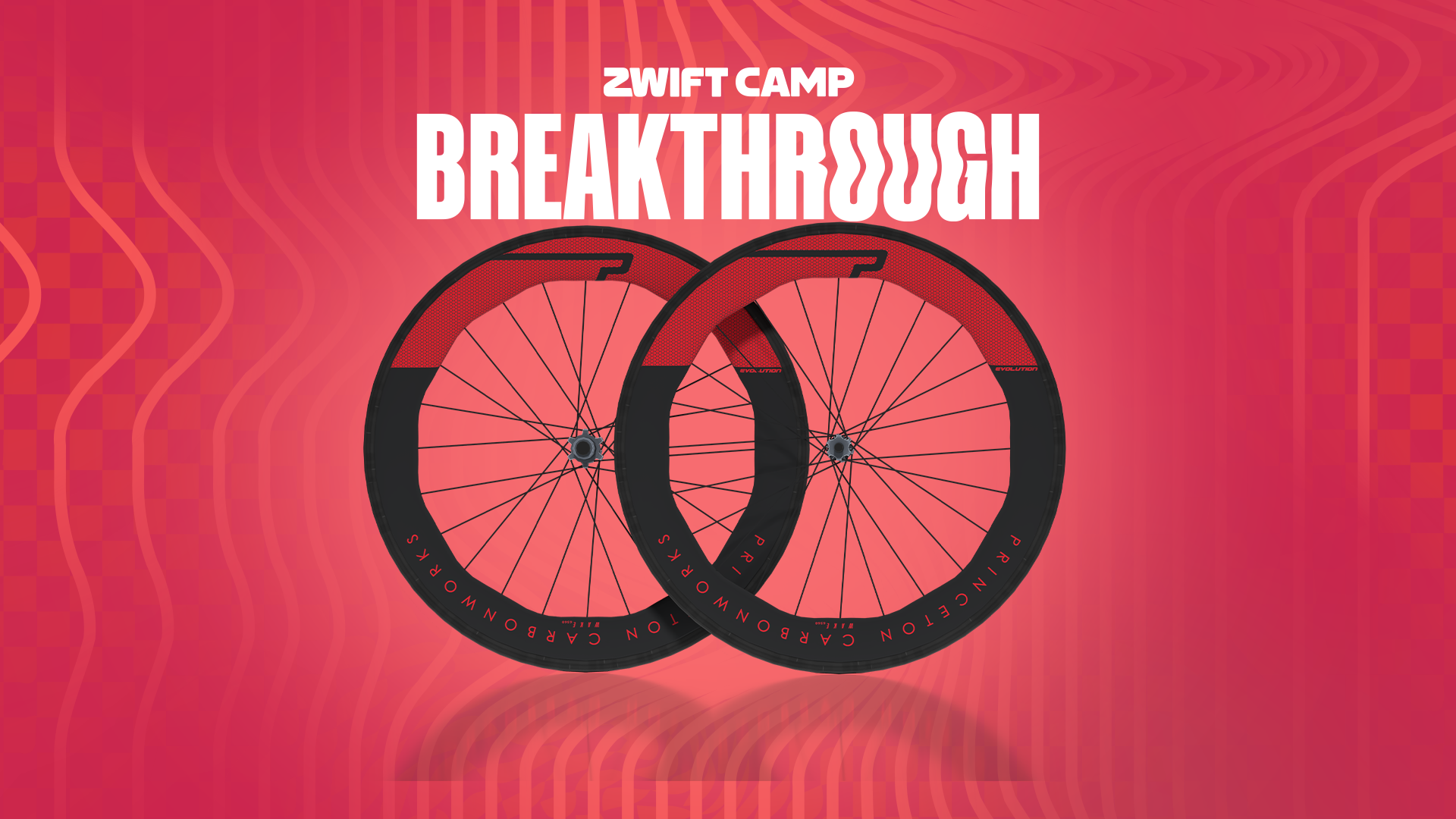
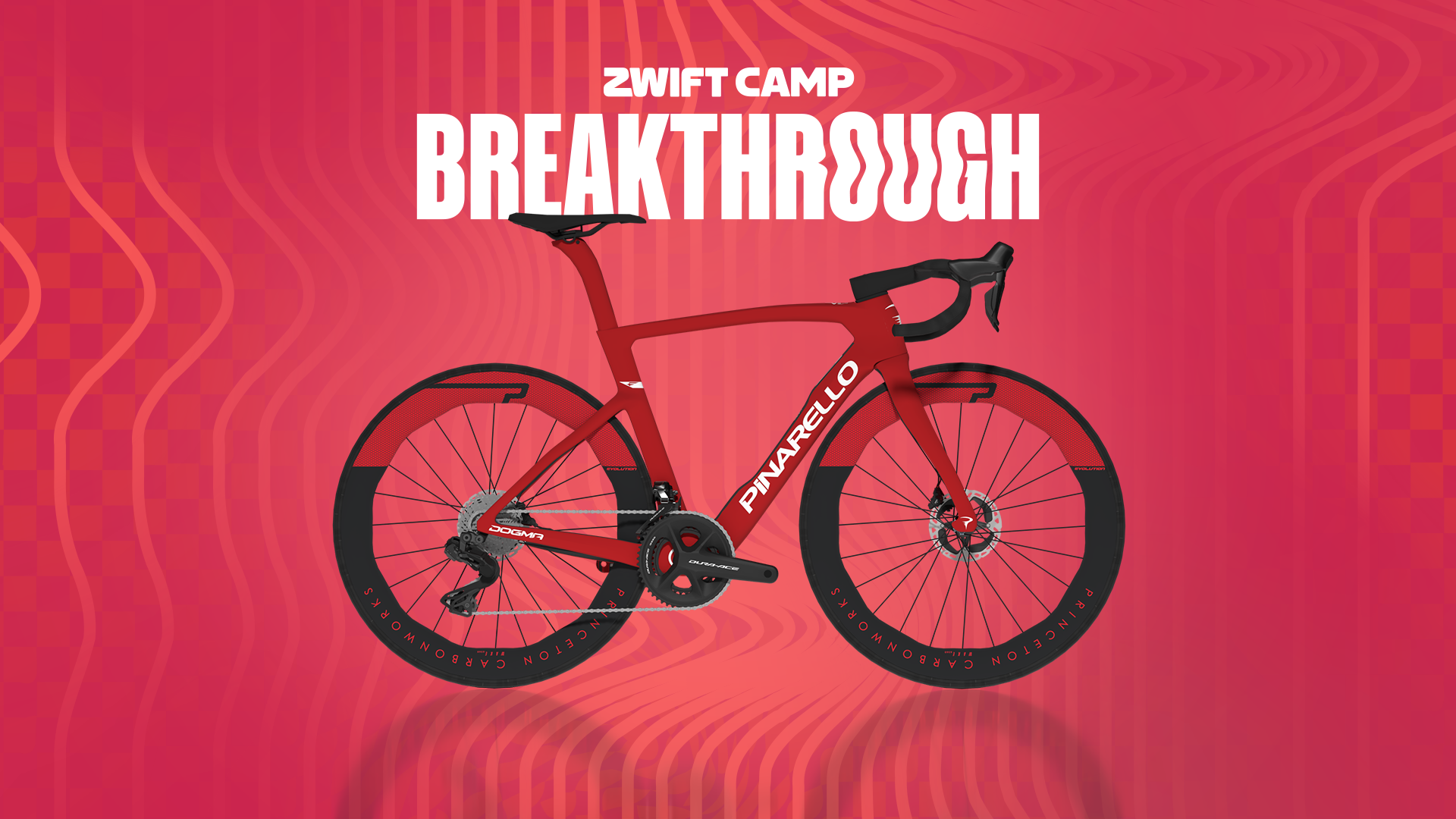
*The stage 3 unlock is for the frame colorway only. You must still purchase the base Pinarello Dogma F 2024 frame in the DropShop.
What do you think of this last Zwift Camp of the season? Planning to participate? Got questions? Share your thoughts below!
As part of Women’s History Month, we’re featuring four different women’s clubs with a strong presence on Zwift. Looking to join a women’s club? See our Women’s Clubs on Zwift post!
When was your club founded?
Female Cycling Force started in 2021. In 2025, we officially became a brand (femalecyclingforce.com).
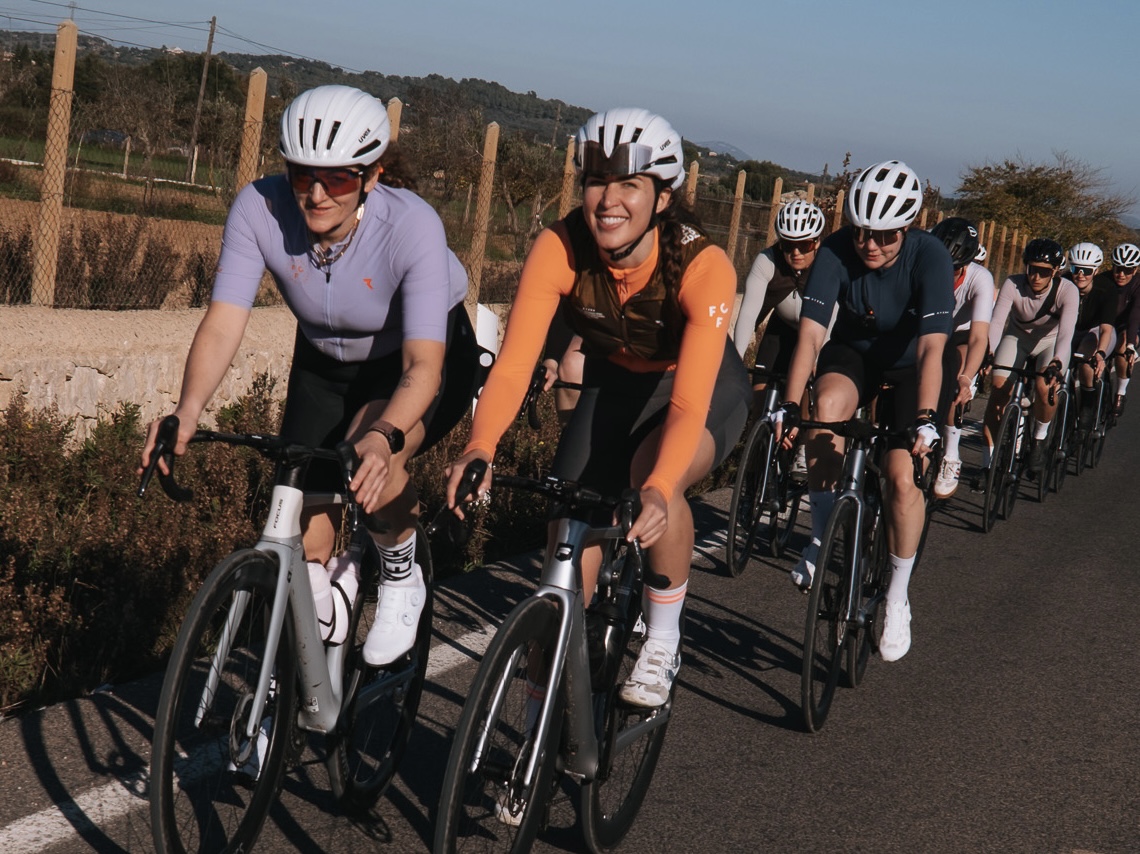
How did your club come to exist?
Our founder Linda began road cycling at a time when the only options were to ride with men or to ride alone. Unwilling to accept that reality, she founded Female Cycling Force to connect women in cycling and to inspire more women to start riding themselves.
Have any/all your club members ever met up IRL? If so, please tell us about it!
Yes! We organize weekly rides in Munich and Stuttgart, as well as camps, so the Female Cycling Force community can meet in person from all around the world.
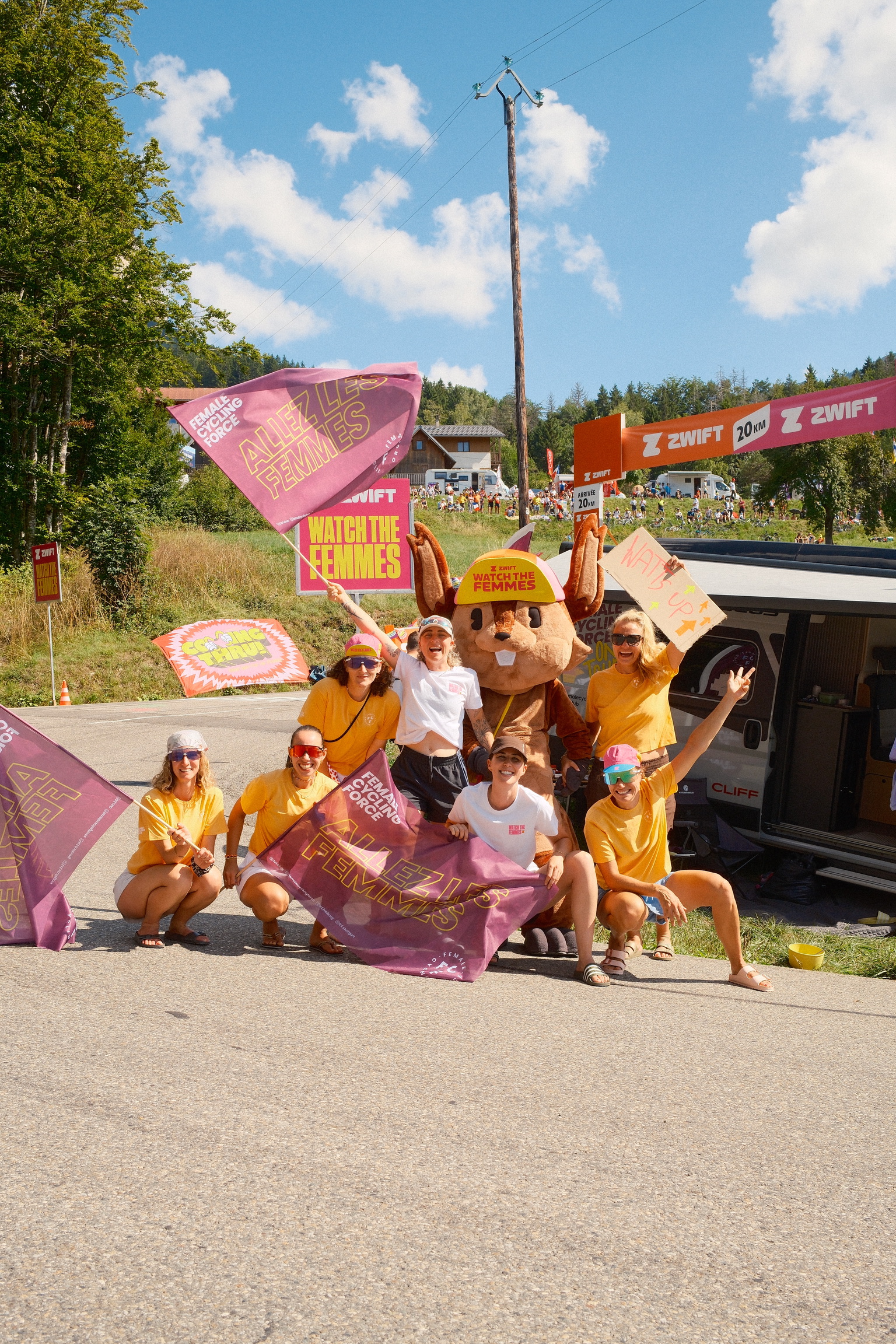
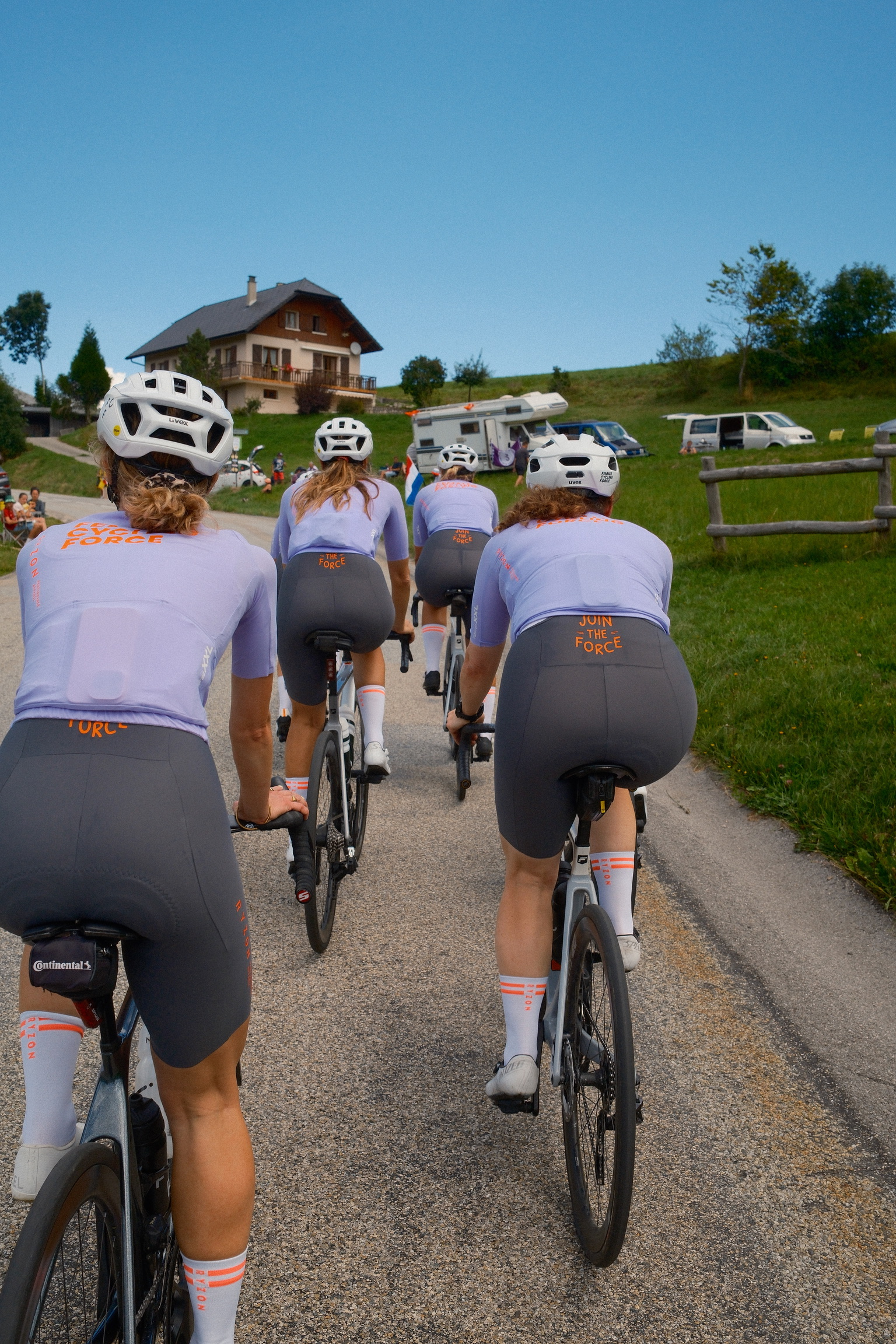
Do most/many/any of your members also ride outdoors?
Yes, we all ride outdoors as well.
What do you see as the biggest hurdle for women to start cycling?
A lack of role models, the fear of being dropped on rides, feeling “not good enough” for group rides, as well as the overwhelming number of different bikes and not knowing which one is best for them.
Is the answer the same for women starting cycling on Zwift?
No, Zwift is definitely easier and more accessible for everyone.
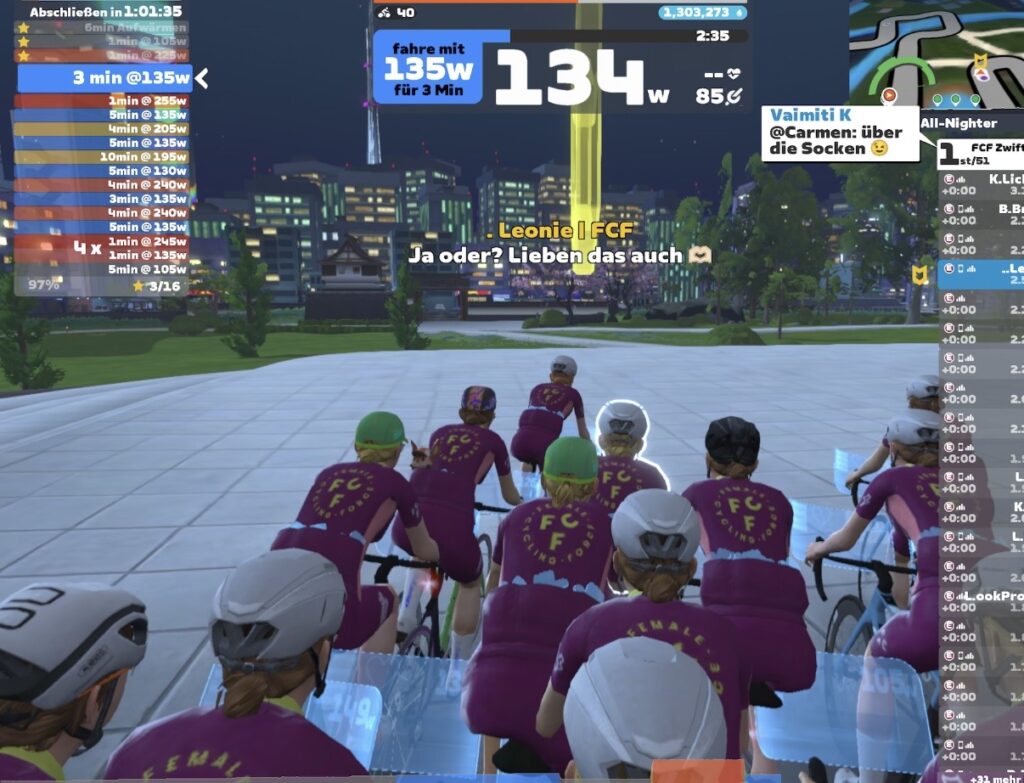
Do you have thoughts/ideas/dreams for how we (we as a collective humanity, not necessarily Zwift – but it can include Zwift if you want) get more women riding?
Create more safe spaces, and give more role models a stage. Also, research and testing should not be men-specific with products adapted for women. Instead, test with women and make products for women!
What is a fun fact you’d like to share about your club?
Even if we are a female-only community, our biggest supporters are men!
If you had a magic wand to change one thing about the Zwift product OR the Zwift community, what would you wish for?
Video chat on group rides!