This weekend we’re featuring two tough community races: the long-running KISS 100 and the brand-new Spring Classics series from PETA-Z! Also in the mix is a popular charity ride and of course the Big Spin rides and Zwift Games races.
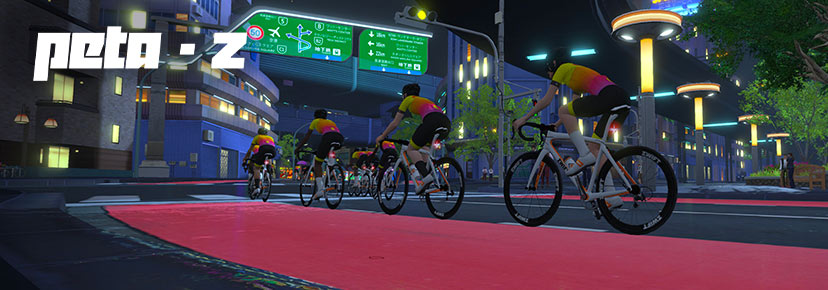
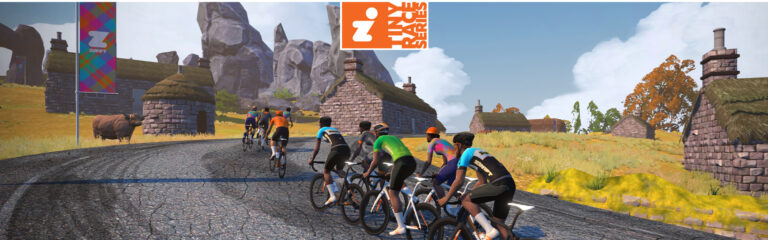
This Saturday the PETA-Z team kicks off their Spring Classics weekly race series with a Zwifty edition of Milano-Sanremo, held on Beach Island Loop. The race is 64.1km long for A/B/C riders, and 38.5km long for D/E.
Be sure to read the event description for important details!
✅ Good Cause ✅ Popular ✅ Special Guests ✅ Kit Unlock
The Tour de 4 is an initiative launched by Sir Chris Hoy to change the perception of people living with stage 4 cancer and to raise vital funds for cancer charities across the UK. These rides are proving quite popular, thanks in no small part to the big-name guest riders in attendance.
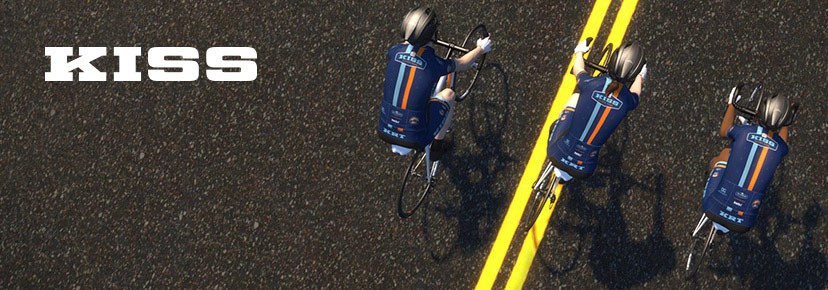
The KISS 100 is probably the longest-running long race on Zwift’s calendar. The A category, in particular, always has some hitters showing up!
This week the race is on 9 laps of New York’s Astoria Line 8 for a total length of 104.5km. The later timeslot (linked below) is typically the popular one, but the same event is also held at 6am UTC each Sunday.
The Big Spin series is underway, and riders are showing up en masse for fun group rides with a prize spinner at the end! Have you won the BMX bike yet?
We choose each weekend’s Notable Events based on a variety of factors including:
Is the event unique/innovative in some way?
Are celebrities (pro riders, etc) attending/leading?
Are signup counts already high, meaning the event is extra-popular?
Does the ride include desirable unlocks or prizes?
Does the event appeal to ladies on Zwift? (We like to support this under-represented group!)
Is it for a good cause?
Is it just plain crazy (extra long races, world record attempts, etc)?
Is it a long-running, popular weekly event with a dedicated leader who deserves a shout out?
In the end, we want to call attention to events that are extra-special and therefore extra-appealing to Zwifters. If you think your event qualifies, comment below with a link/details and we may just include it in an upcoming post!
They’re the four words you never, ever want to hear. “I’m sorry. It’s terminal”, said the oncologist.
It was a shock, but not a surprise, which sounds peculiar, so let me explain. Prostate cancer has waxed and waned in my life the past seven years.
My first diagnosis, in 2017, permitted, even encouraged, optimism. It was “treatable”. Nine out of ten men with the flavour I then had get blasted with radiotherapy, undergo surgery or more rarely other forms of treatment, and cross the threshold of the oncologist’s office only to be signed off as cured, or at least in remission indefinitely.
That was me, until it wasn’t; until I became That Guy, the one in ten, where it comes back, but worse. So in September 2024 I heard Those Four Words.
Deep down, I knew they were coming. I’d seen the worrying test results, I’d done the reading. So yeah, shocked, but not surprised.
Family, friends – they’re the first to know, of course. Then colleagues. And the upshot of that was an abrupt and largely unexplained vanishing act from the newly-rebooted Zwiftcast. Long-time listeners will recall that I’d always planned to hand over to a new team. But like this? No, not like this.
This was all, oddly, contemporaneous with Sir Chris Hoy’s similar bombshell announcement, and like the great Olympian, I too started a brutal, gruelling six rounds of chemotherapy. Friends, it was hellish.
I was left hollowed out, weak as a kitten and felt like I’d never, ever get back on a bike again.
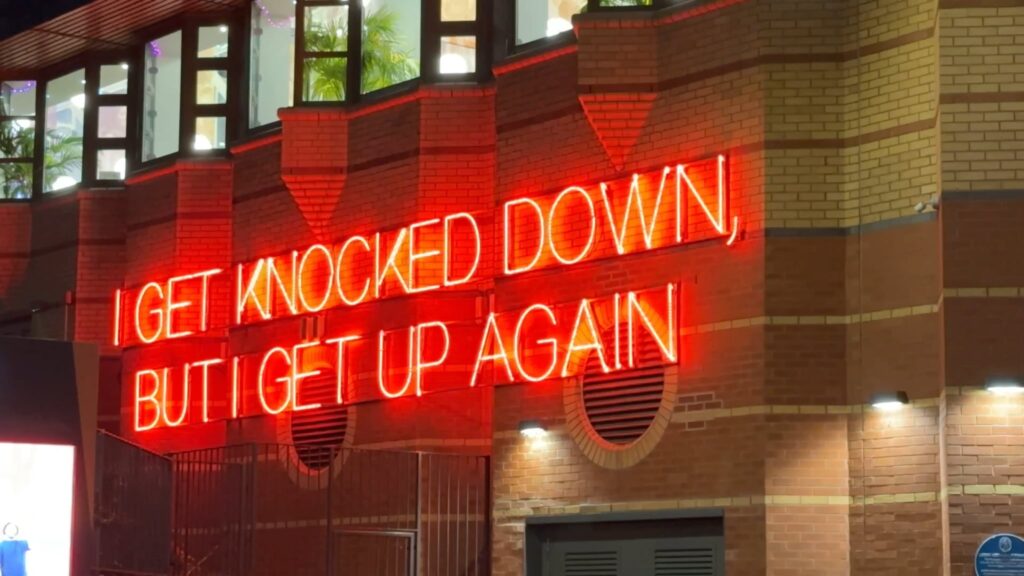
But then on the way to the hospital for another session, we drove past an artistic landmark in my home-town of Leeds in Yorkshire, England.
It’s a line from the great Chumbawumba anthem, Tubthumping, from 1997:
It resonated. It spoke to me. Let’s be frank, I won’t beat cancer. That’s not how it works. But I can Get Up Again and get back on a bike.
Plans were hatched. Strategies devised. And they included a YouTube channel. It would document my ascent from the nadir of chemo to the moment I got back in the saddle. And beyond – it would follow my progress as I attempted to get back to something like the cyclist I was before Those Four Words.
The name? Well, it could only be Simon Rides On… a nod to my long, long association with Zwift and a forward-looking thought to spur me on. And much of the reasoning behind the channel is about that – accountability. It would be easy to give up, to accept my riding days are over, to focus on other things in the remaining time.
But I love riding a bike. Exercise, I strongly believe, is a panacea. I’ll get stronger, rid my body of the toxins of chemo and restore some kind of normality after a tumultuous few months. And committing to that on the internet, well, I gotta do it then haven’t I?
I know what you’re thinking – and no, I don’t know either. My oncologist doesn’t know. It could be two years, maybe five, possibly ten or more. However long it is, I’m determined to spend a portion of that time doing the thing that has brought me great joy, fantastic friendships and been a huge part of my life.
Do you want to join the ride? I’d love to have you along.
All About the New Specialized S-Works Tarmac SL8 on Zwift
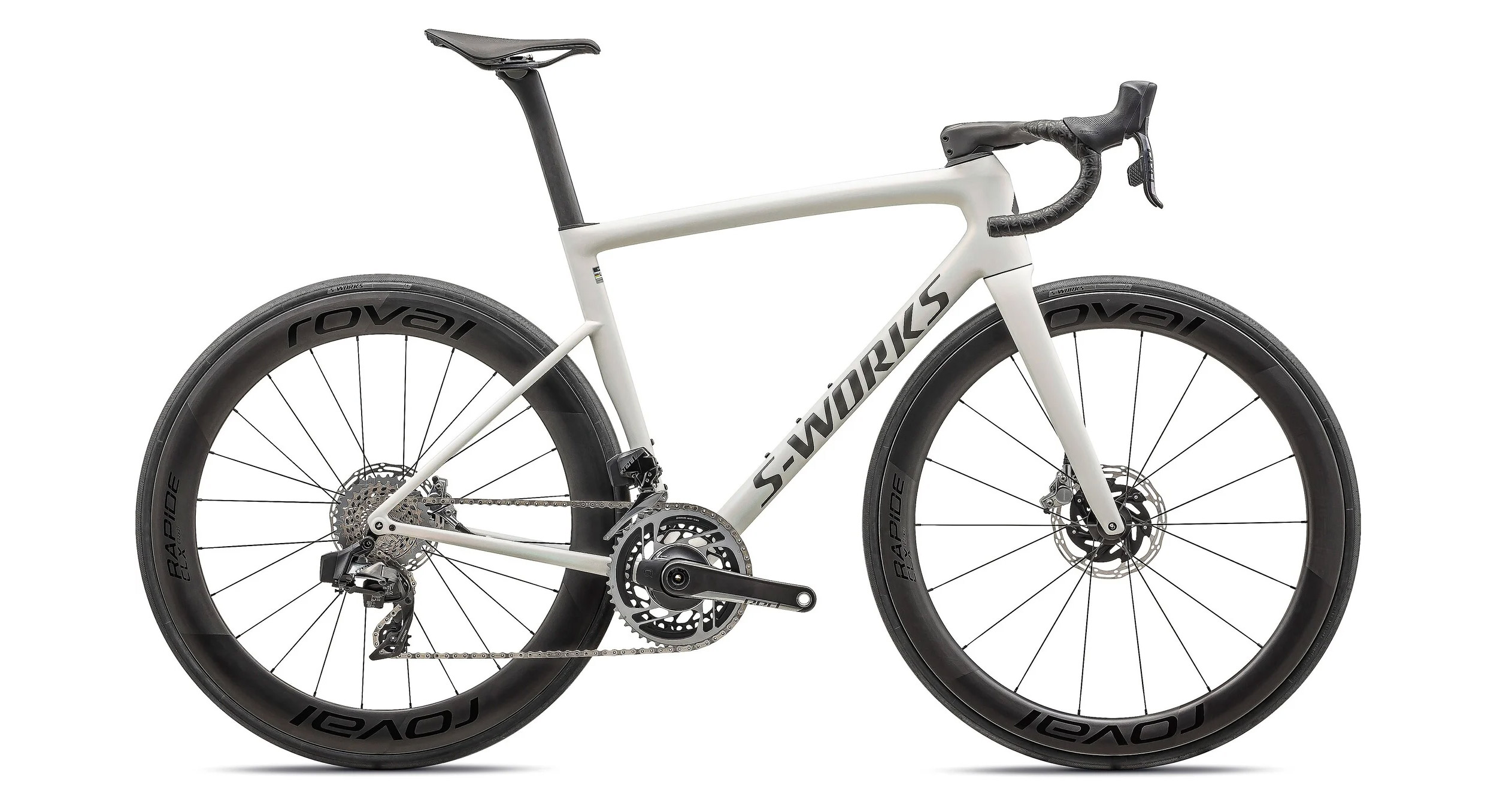
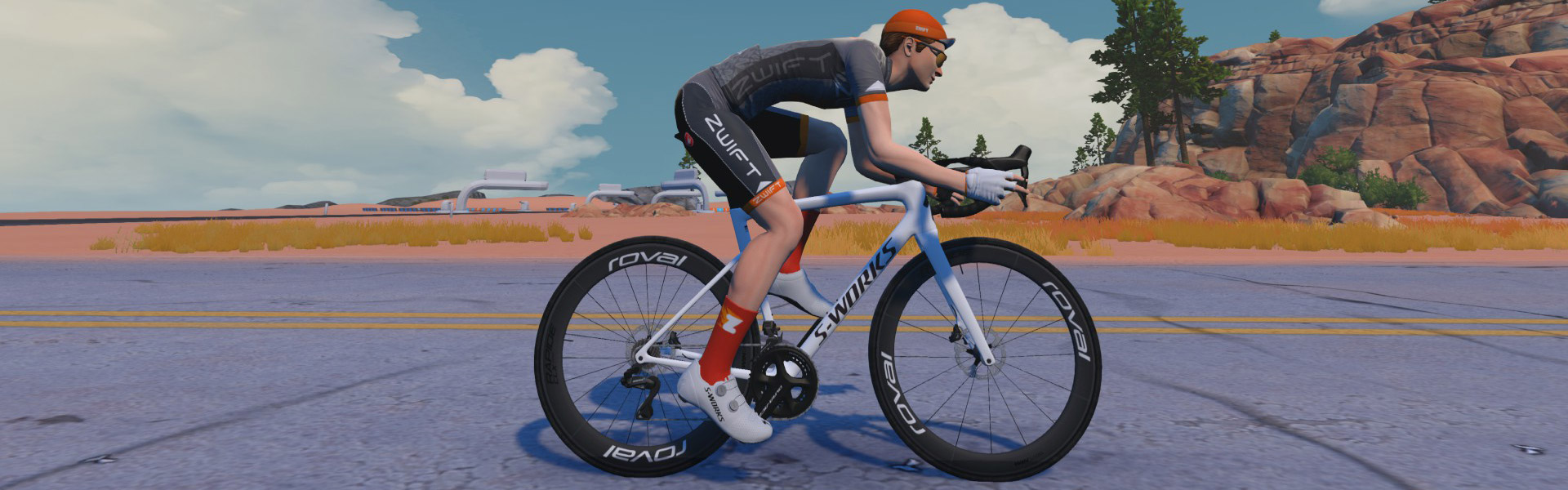
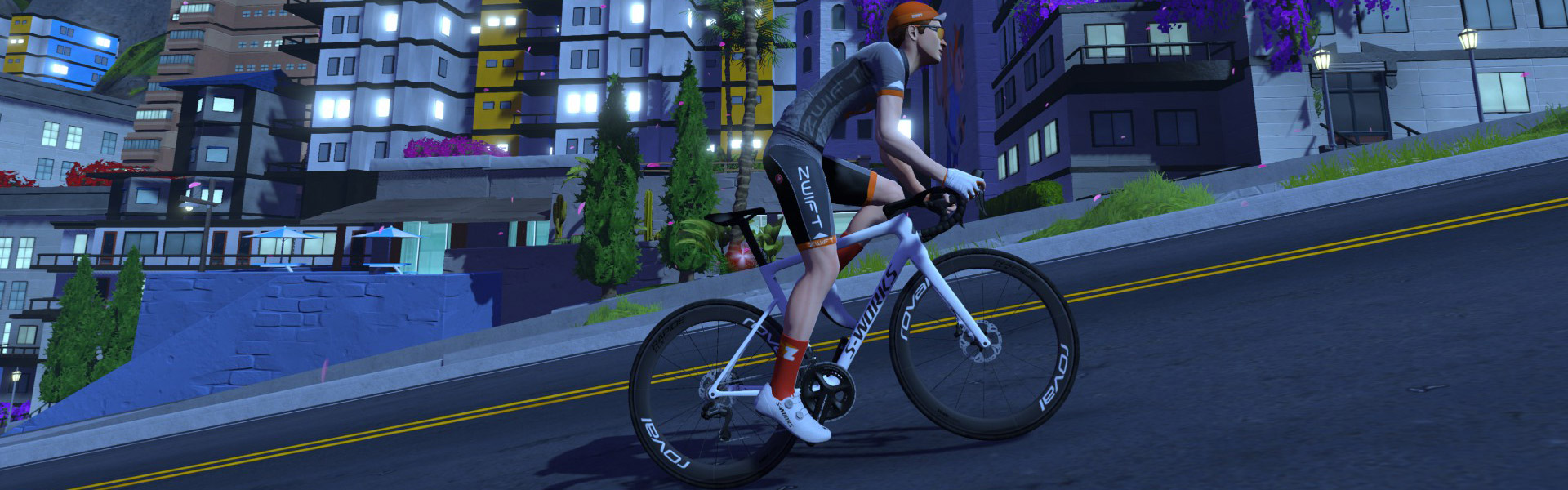
This week’s big Zwift update includes the welcome addition of several new bike frames, including two versions of the highly respected Tarmac SL8 from Specialized. Today we’ll look at the in-game performance of the S-Works Tarmac SL8, since it’s the fastest of the four “production” frames added this week.
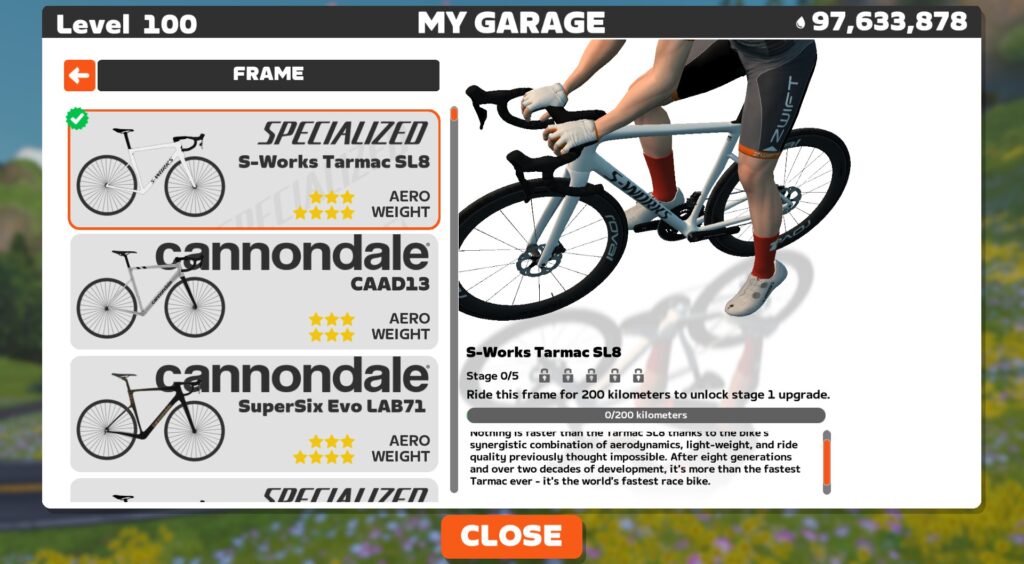
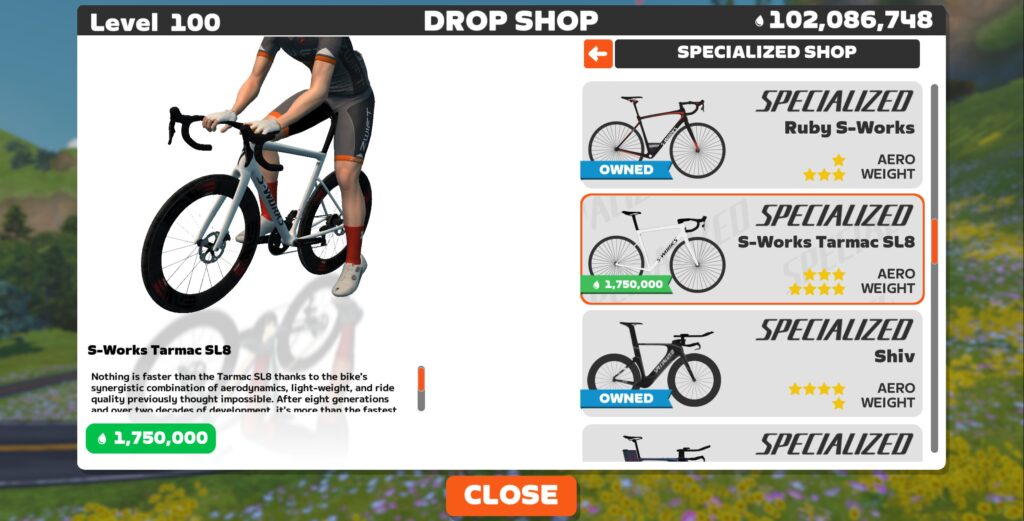
You’ll need to be updated to game version 1.86+ to see the S-Works Tarmac SL8 in Zwift’s Drop Shop. You’ll also need to be at level 40+ with 1,750,000 Drops to buy it. Here’s how it’s described in the Drop Shop:
“Nothing is faster than the Specialized Tarmac SL8 thanks to the bike’s synergistic combination of aerodynamics, light weight, and ride quality previously thought impossible. After eight generations and over two decades of development, it’s more than the fastest Tarmac ever – it’s the world’s fastest race bike.”
Those are big words, and while cyclists doubtless have differing opinions as to their veracity, what we’re concerned about here is in-game performance. Just how fast is this bike in Zwift, and how does it compare to other frames?
It’s rated 3 stars for aero, 4 stars for weight, like a handful of other top newish all-arounders. But a 4-star system isn’t the most granular of performance measurements, so we ran this frame through our precise tests to measure performance at nerd-level detail. Let’s dive in!
Note: test results below are from a 75kg, 183cm rider holding 300W steady using Zwift’s stock 32mm Carbon wheelset.
Aero (Flat/Rolling) Performance
The S-Works Tarmac SL8 is very slippery, trimming 61.9s off our baseline Zwift Carbon frame over an hour of flat riding.
That puts it within 1.1 seconds of the game’s fastest frames, and when you consider that our tests have a 1-second margin of error, one could reasonably lump this frame in with the other fastest frames in terms of performance on flat roads.
Climb Performance
If you thought the S-Works Tarmac SL8 was fast on the flats, wait until you see how it climbs!
This Tarmac shaves 56 seconds off of our baseline Zwift Carbon’s time on an hourlong climb, which means it beats the S-Works Aethos (which was the fastest climbing bike in Zwift until this week) by 1.6 seconds.
That’s right, folks. We have a new top climber, and it’s super aero. There’s a new king in town.
Upgrading Your S-Works Tarmac SL8
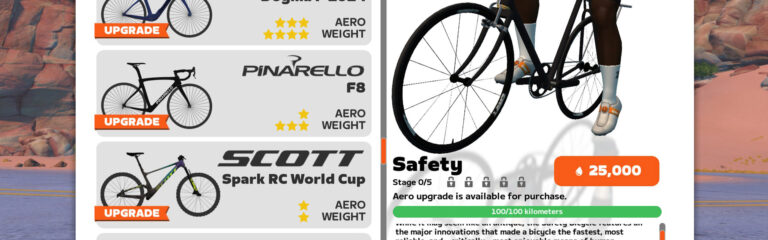
Like all frames in Zwift, the S-Works Tarmac SL8 can be upgraded in five stages. As a high-end race bike, each of the five stages results in a performance improvement. The S-Works Tarmac SL8 upgrade stages are as follows:
Ride 200km, pay 100,000 Drops for an aero upgrade
Ride 260km, pay 200,000 Drops for a weight reduction
Ride 320km, pay 350,000 Drops for a drivetrain efficiency improvement
Ride 380km, pay 500,000 Drops for an aero upgrade
Ride 440km, pay 750,000 Drops for a weight reduction
You can expect a fully-upgraded S-Works Tarmac SL8 to be approximately 28 seconds faster on a flat hour and 36 seconds faster on an hourlong climb vs the “stock” S-Works Tarmac SL8.
Conclusions
What we’ve seen in IRL road cycling, we’re seeing on Zwift: the industry moved away from the pure (but heavy) aero bikes and toward all-arounders that are nearly as slippery but weigh much less.
The Scott Addict RC was the first strong all-arounder on Zwift to give the Tron bike a run for its money. But in the past several months, Zwift added the Canyon Aeroad 2024 and Pinarello Dogma F 2024, which both outperform the Addict RC. And now the S-Works SL8 comes along, setting a new benchmark.
These fast all-arounders are within 1 second of the “pure” aero bikes (think S-Works Venge, Felt AR, Cervelo S5 2020) over an hour on flat ground in Zwift, but climb much faster. And that’s why we’re seeing them replacing the pure aero frames in Zwift race pelotons.
Other frames are within a few seconds of the S-Works SL8, so riders have the luxury of picking from a handful of top performers without feeling like they’re on a slow bike that will cost them the race. That said, if you want the frame that turns in the best all-around performance in Zwift, it’s the S-Works SL8.
Questions or Comments?
To answer one question: no, it doesn’t come with a color slider. (You can have any color S-Works Tarmac SL8 you want, as long as it’s white!) What other questions or comments do you have? Share below…
Important note: this post contains speed test results for Zwift frames or wheels. These results may change over time, and a bike's performance relative to others may also change. We don't always revise posts when performance rankings change, but we do keep current, master versions of our speed test results which are always available. See the frame charts, wheel charts, and Tron vs Top Performers for current performance data.
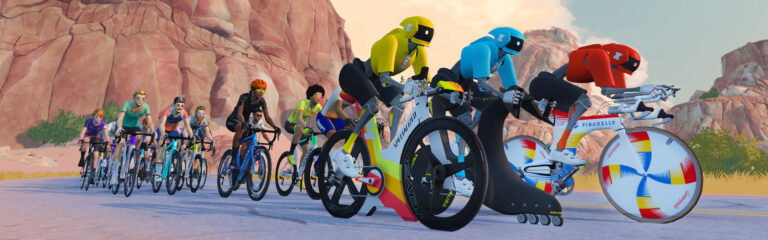
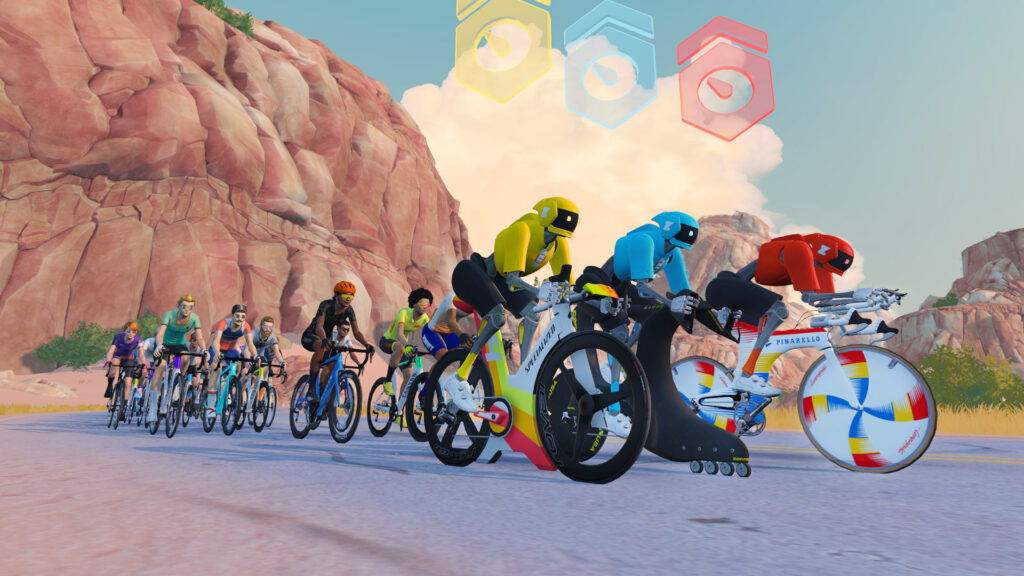
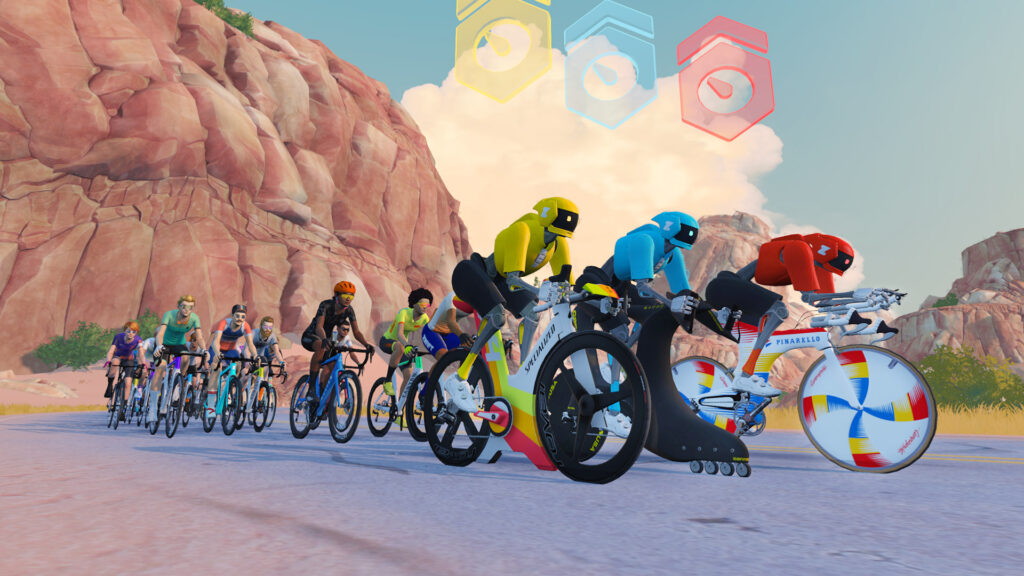
This week’s big Zwift update adds a new, highly prestigious type of bike to Zwift: the Halo Bike! These super unique bikes take a lot of work to unlock, a ton of Drops to purchase, and oodles more work and Drops to fully upgrade.
There are currently four available:
Pinarello Espada
Specialized Project ’74
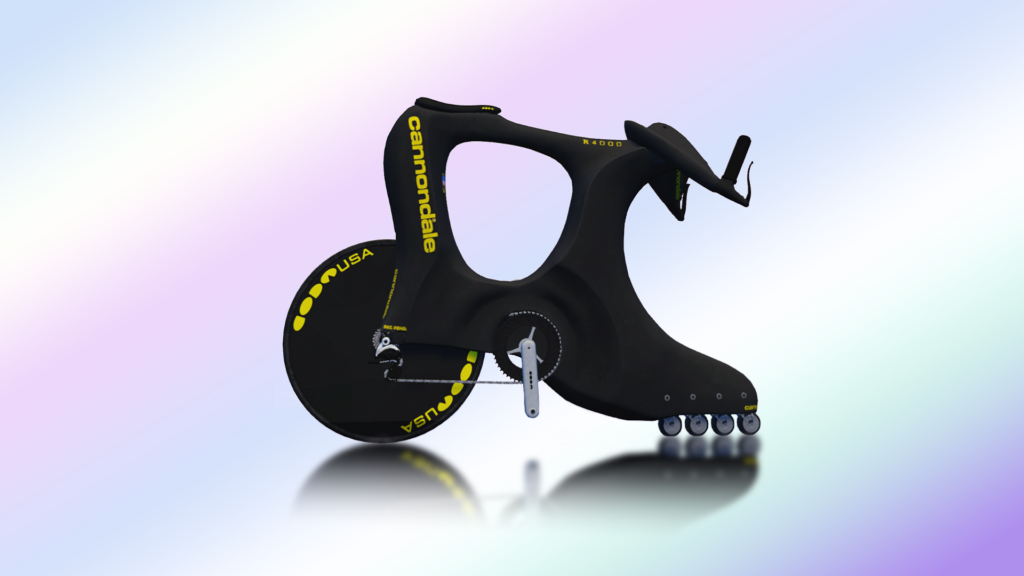
Cannondale R4000 Roller Blade
Zwift Concept Z1
Let’s dive into some details about how Halo Bikes work, then look at what makes each of these bikes special, including the results of our performance tests.
Halo Bikes can be seen as brand loyalty rewards, because unlocking a brand’s Halo Bike requires you to fully upgrade three frames from that brand.
Example: fully upgrade (all 5 stages) the Pinarello Dogma F 2024, Pinarello Bolide TT, and Pinarello Dogma F10 to unlock the ability to purchase the Pinarello Espada.
Simply unlocking a Halo Bike doesn’t mean you own it, though. You still have to purchase the bike (which includes a wheelset that cannot be changed), at a hefty price of 10 million Drops. Yes, you read that right: 10. Million. Drops.
Upgrading Halo Bikes
Halo Bikes can be upgraded in 5 stages, just like every other bike in Zwift. But the work required to unlock each upgrade, and the Drops cost to purchase those upgrades, is around 5x more than even the best non-Halo Bikes. Wow!
That means it will cost you another 10 million Drops to fully upgrade a Halo Bike, on top of all the riding just to unlock each upgrade stage.
When it comes to performance at each upgrade stage, bikes of the same type will basically gain the same performance increases at each stage. (You can see this by comparing the pattern of dots on the scatterplots of the Project 74, R4000, and Concept Z1 below.) So, for example, a stage 3 Pinarello Dogma F 2024 frame will have gained the same boosts as a stage 4 Specialized Project 74 Halo Bike, since both are classified as road racing frames.
Below, we’ve listed the details of each upgrade stage for each bike.
Pinarello Espada Details
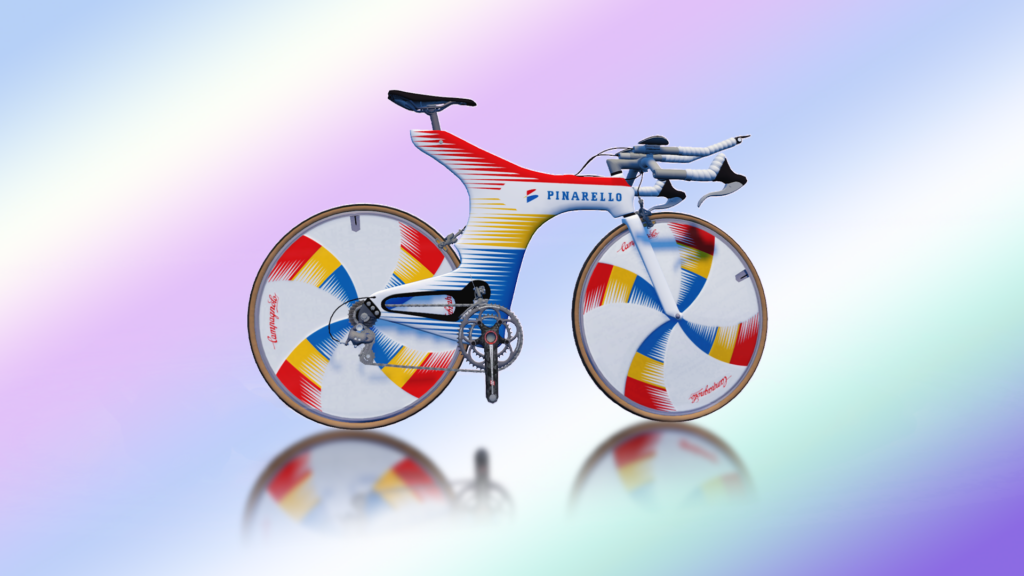
In 1994, Miguel “Big Mig” Induráin set a new hour record, breaking the 53-kilometer mark for the first time in history with a distance of 53.040 kilometers in Bourdeaux. And he did it atop the Pinarello Espada, a bike which quickly became legendary itself!
This bike was introduced to the game in April 2024 for the Pinarello Espada Challenge, and it has the distinction of being the only Halo Bike classified as a TT frame.
Designed by Fausto Beroglio, the carbon-framed, Campagnolo-equipped bike weighed in at 7.5 kilograms and was custom-molded to fit Big Mig. Only four versions of the bike were ever created, and Induráin won both of the long time trials at the 1995 Tour de France on a version modified to allow shifting.
Performance by Upgrade Stage
Like all frames in Zwift, the Pinarello Espada can be upgraded in five stages, with each upgrade resulting in a performance improvement. The Espada’s upgrade stages are as follows:
Ride for 20 hours, pay 400,000 Drops for an aero upgrade
Ride for 30 hours, pay 800,000 Drops for a weight reduction
Ride for 40 hours, pay 1,200,000 Drops for a drivetrain efficiency improvement
Ride for 50 hours, pay 2,600,000 Drops for a weight reduction
Ride for 60 hours, pay 5,000,0000 Drops for an aero upgrade
If you’re wondering precisely how each upgrade stage impacts the bike’s performance, here is a chart showing speed test results at each upgrade stage (using our standard 75kg/183cm bot riding at 300W):
The Espada, it could be said, performs like a top-quality TT frame from the 1990’s. It loses ~26 seconds to the fastest TT frame in game (the Cadex Tri) across an hour, so you won’t want to use this for TT racing.
It’s also a heavy bike. It loses to nearly every TT frame when it comes to climbing, even at 4 W/kg, where its stellar aero performance still factors in significantly. It loses over 30 seconds in an hour of climbing compared to the best TT climbing frames (Scott Plasma RC Ultimate and Felt IA 2.0).
Specialized Project ’74 Details
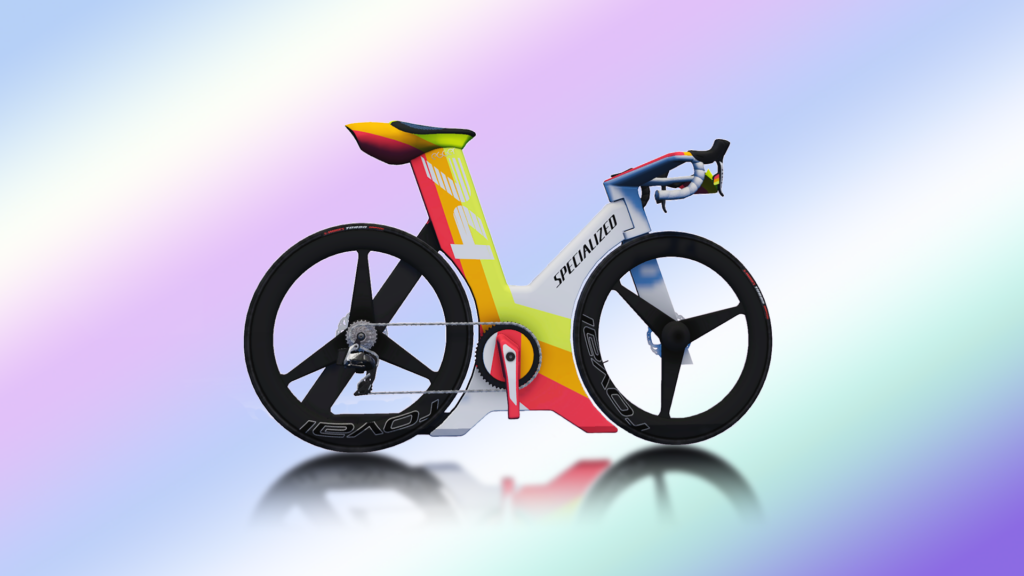
The Project 74 bike from Specialized was conceived by Robert Egger to honor the founding of Specialized in 1974. Forged by the desire to “Innovate or Die”, this bike was Egger’s answer to the challenge of thinking outside the UCI box and beyond the double triangle.
Performance by Upgrade Stage
Like all frames in Zwift, the Specialized Project 74 can be upgraded in five stages, with each upgrade resulting in a performance improvement. The Project 74’s upgrade stages are as follows:
Ride 550km, pay 400,000 Drops for an aero upgrade
Ride 1050km, pay 800,000 Drops for a weight reduction
Ride 1600km, pay 1,200,000 Drops for a drivetrain efficiency improvement
Ride 2150km, pay 2,600,000 Drops for an aero upgrade
Ride 2650km, pay 5,000,000 Drops for a weight reduction
If you’re wondering precisely how each upgrade stage impacts the bike’s performance, here is a chart showing speed test results at each upgrade stage (using our standard 75kg/183cm bot riding at 300W):
On flat roads, the Project 74 outperforms the best aero road setups in game, beating even the Tron bike by ~10 seconds across an hour. It’s the most aero road bike available in Zwift today. Take that, UCI!
On climbs, though, it’s a different story! This bike is actually the worst climber of the non-TT Halo Bikes, losing ~75 seconds to the best climbing bikes over an hour.
Cannondale R4000 Roller Blade Details
The Cannondale R4000 Roller Blade is a visionary concept bike from the mid 1990s featuring four inline skate wheels instead of a regular front wheel.
Performance by Upgrade Stage
Like all frames in Zwift, the Cannondale R4000 Roller Blade can be upgraded in five stages, with each upgrade resulting in a performance improvement. The R4000’s upgrade stages are as follows:
Ride 550km, pay 400,000 Drops for an aero upgrade
Ride 1050km, pay 800,000 Drops for a weight reduction
Ride 1600km, pay 1,200,000 Drops for a drivetrain efficiency improvement
Ride 2150km, pay 2,600,000 Drops for an aero upgrade
Ride 2650km, pay 5,000,000 Drops for a weight reduction
If you’re wondering precisely how each upgrade stage impacts the bike’s performance, here is a chart showing speed test results at each upgrade stage (using our standard 75kg/183cm bot riding at 300W):
The R4000 is faster than the Concept Z1 on flat ground, but just a few seconds behind the Project 74. It beats the Tron bike by ~6 seconds across an hour, which means it beats all of the best “production” bike/wheel combos in game when it comes to flat performance.
On climbs, the R4000 is, like the Project 74, not a great performer (but anyone looking at this bike would assume this). It outclimbs the Project 74 by several seconds, but is handily beat by production climbing bikes, losing ~67 seconds over an hour to the best climbers.
Zwift Concept Z1 Details
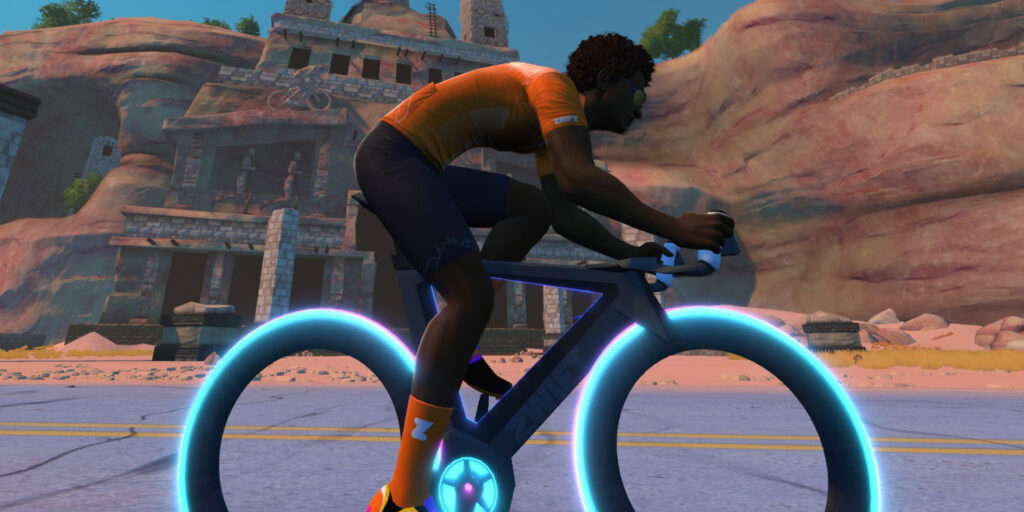
Zwift’s Concept Z1, aka “The Tron Bike”, has been in game since early days, and as such was the first “Halo Bike” in Zwift. Unlike the other bikes above, the only way to get the Tron is to finish the Climb Mt. Everest Challenge (including the extra bit).
This bike has some unique features, including rider posture idiosyncrasies and wheels that light up differently based on power output. (Dial in your slider just right and you’ll find some cool dual-tone lights!)
Performance by Upgrade Stage
Like all frames in Zwift, the Concept Z1 can be upgraded in five stages, with each upgrade resulting in a performance improvement. The Concept Z1’s upgrade stages are as follows:
Ride 550km, pay 400,000 Drops for an aero upgrade
Ride 1050km, pay 800,000 Drops for a weight reduction
Ride 1600km, pay 1,200,000 Drops for a drivetrain efficiency improvement
Ride 2150km, pay 2,600,000 Drops for an aero upgrade
Ride 2650km, pay 5,000,000 Drops for a weight reduction
If you’re wondering precisely how each upgrade stage impacts the bike’s performance, here is a chart showing speed test results at each upgrade stage (using our standard 75kg/183cm bot riding at 300W):
The Concept Z1 is the fastest aero performer you can get with a reasonable amount of work in game, since the Project 74 and R4000 bikes will take significantly more time and effort! That said, the Concept Z1 just barely edges out the top aero performers, gaining ~1 second across an hour of flat riding.
Those top aero performers, though, handily beat the Concept Z1 on climbs, which means you may not want to use the Concept Z1 in a race that has any significant hills. Learn more about how the Concept Z1 compares to other top performer road frame+wheel combos by checking out our “Speed Tests: Concept Z1 (Tron) Bike vs Top Performers” post.
Questions or Comments?
What do you think of Zwift’s new Halo Bike concept? Which one are you working to unlock first, and why? Share below!
Zwiftcast Episode 213: Women’s History Month Special 2 of 2
This week, co-hosts Rebecca Charlton and Dave Towle are joined by an array of special guests for the second of two Zwiftcast episodes celebrating Women’s History Month.
First, Eric Schlange takes us through bike upgrades, wind tunnels, and all the latest, biggest events.
Then WorldTour AG Insurance Soudal star Ashleigh Moolman Pasio drops in for a chat about returning from serious injury and why she’s supporting the next generation of women and girls from South Africa. Sindile Mavundla follows up, sharing the story of the Khaltsha Cycling Academy and why it’s transforming the lives of young girls. Here’s how you can support their great work.
And finally, the wonderful creator of the Zwiftcast, Simon Schofield, is back to share his story as he launches a new YouTube channel to document his return to the bike after being diagnosed with Stage 4 cancer.
All About Zwift’s New “Bike Upgrades” Functionality
This week, Zwift’s much-anticipated Bike Upgrades feature goes live, allowing Zwifters to trade Drops and accumulated riding for performance upgrades.
But how does it work? What sort of performance improvements can we expect? And what exactly is a “Halo Bike”? Dive in and find out!
Bike Upgrade: the Basics
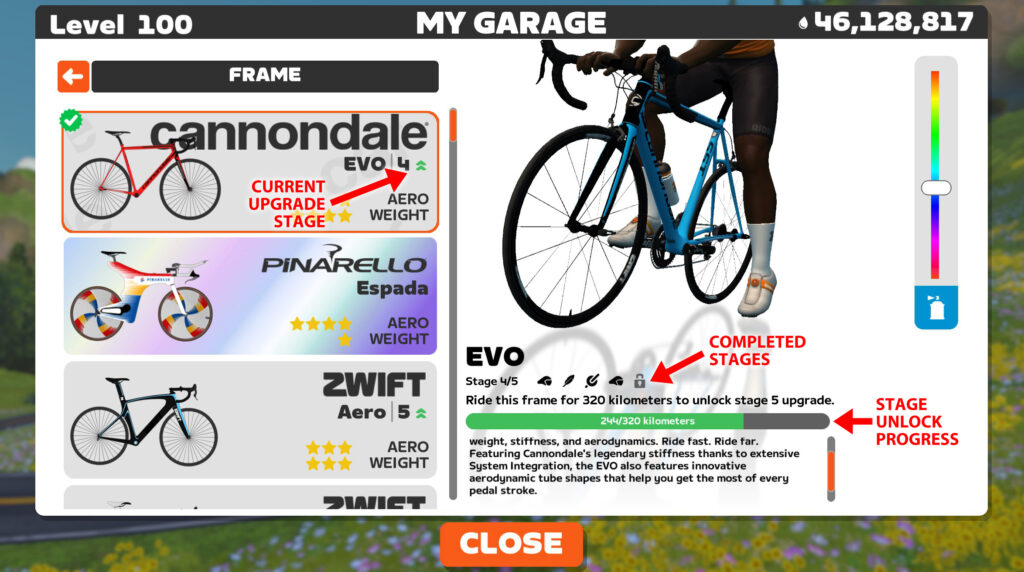
Every bike frame in Zwift now has 5 “stages” of upgrades available. As you ride a particular frame, you work your way toward completing the current stage. Completion progress is visible in your garage:
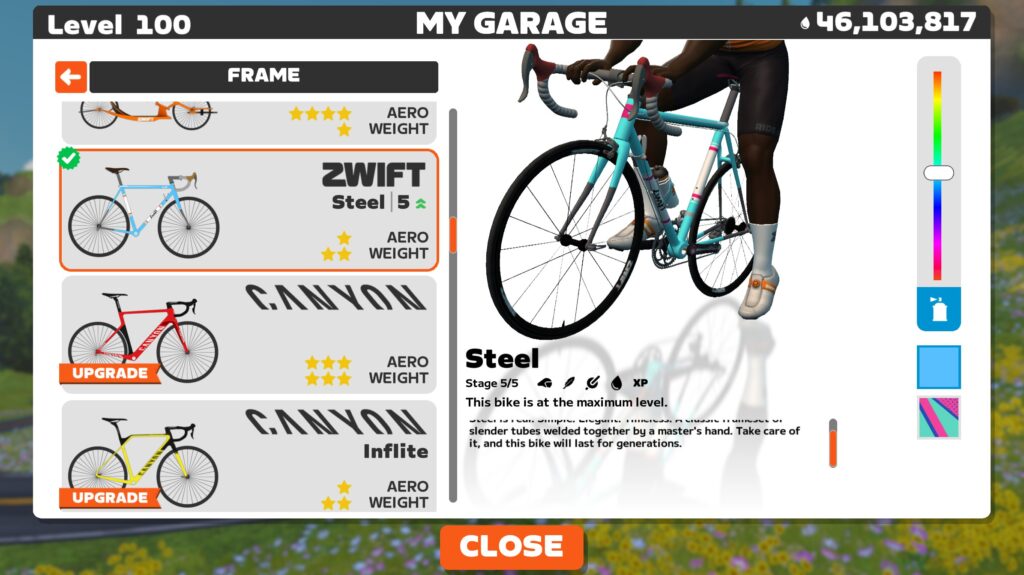
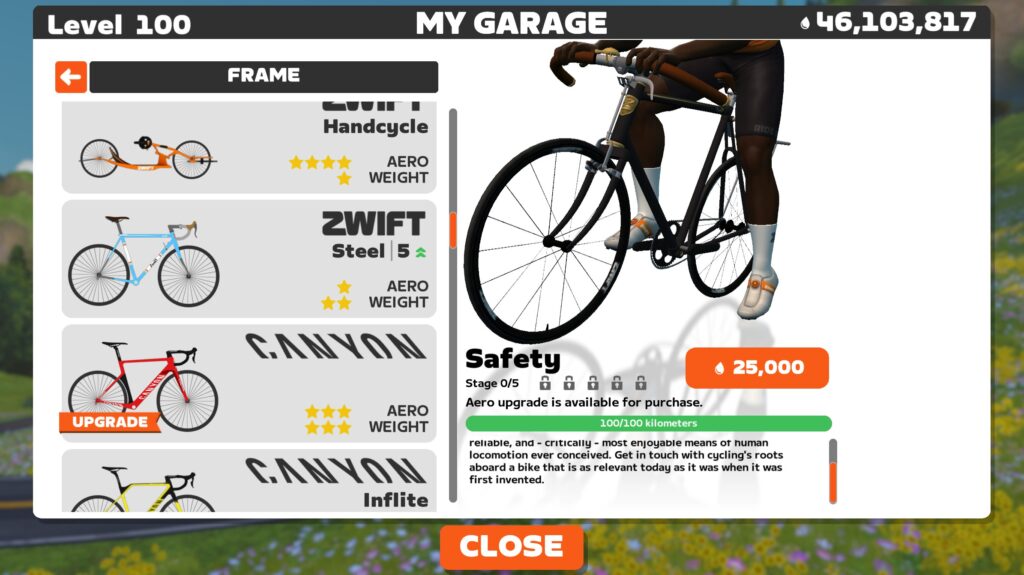
Completing the work required unlocks the ability to purchase that upgrade for your bike:
There are five types of bike upgrades:
CDA (aero) improvements
Weight reduction
Drivetrain Efficiency improvements
Drops earning increase (5%)
XP earning increase (5%)
Why Upgrades?
It seems that, with every new feature Zwift releases, there are people who comment, “Why did Zwift put the development resources into building this feature? I won’t be using this. Etc, etc…”
Bike Upgrades add another carrot to the game – a fresh incentive to get on your bike and put in the work. Will that carrot be attractive to all Zwifters? Of course not. No feature is. But Zwift is betting it will appeal to many.
Additionally, most experience Zwifters have millions of Drops saved, with nothing to spend them on (I’ve currently got 81 million.) Bike Upgrades give Zwifters a place to spend our Drops.
Lastly, Bike Upgrades add a strategic element for racers who may want to put some thought into which bike(s) to upgrade and when, for maximum in-game performance.
While every bike in Zwift now has 5 stages of upgrades, it’s not the same upgrades for every bike. The upgrades available for a particular frame are based on two factors:
Bike Type: climbing bikes get more weight reductions, TT bikes get more aero upgrades, and all other bikes get a more even mix of upgrades. Example: a maxed out TT frame compared to its un-upgraded version is about 45 seconds faster over an hour on flat roads, and 26 seconds faster on an hour of climbing. By contrast, a maxed out S-Works Aethos is about 21 seconds faster over an hour on flat roads, and 58 seconds faster on an hour of climbing, compared to its un-upgraded version.
Bike Price: entry-level bikes get bigger performance increases in the early upgrade stages, while latter stages unlock Drops or XP bonuses. Higher-level bikes don’t unlock Drops or XP bonuses, but rather spread the performance increase upgrades across all 5 stages so you really have to put in the work to max out a top-level frame.
Additionally, the type of workyou must do to unlock upgrades, the amount of work you must do to unlock an upgrade, and the cost of each upgrade vary between bikes based on three factors:
Bike Type: climbing bikes require accumulated elevation, TT bikes require accumulated time, and all other bikes require accumulated distance. Example: to unlock upgrade stage 1, the S-Works Aethos (climbing frame) requires 2000 meters of climbing while the Cadex Tri TT requires 6 hours of use and the Felt AR 200km of distance.
Upgrade Stage: each stage requires more effort to unlock than the stage before. Example, the S-Works Venge requires 200km of riding to unlock stage 1, but 440km for stage 5.
Bike Price: just like outdoors, higher-end bikes cost more to upgrade. Example: in the climbing bike category, the S-Works Aethos requires 4000 meters of climbing and 750,000 Drops for its stage 5 upgrade, while the more entry-level Trek Emonda SL requires just 2000 meters of climbing and 200,000 Drops for its stage 5 upgrade.
Upgrades vary widely in price. A basic bike’s stage 1 upgrade only costs 25,000, while a Halo Bike’s stage 5 upgrade costs an astronomical 5 million Drops!
Performance Improvements
The big question on everyone’s mind is: just how much faster will upgraded bikes be?
While we can’t tell you exactly what each stage’s upgrade will trim off of your time (not yet, anyway), we can share overall time improvements for a “stage 0” (completely un-upgraded) frame vs its maxed out “stage 5” version. Here is the time savings you can expect across an hour of riding at 4 W/kg:
Bike Type
Flat Roads (Stage 0 vs Stage 5)
Climbs (Stage 0 vs Stage 5)
Climbing
-22s
-60s
TT
-50s
-26s
All Others
-28s
-37s
Note that the 1-hour time savings above is estimated based on test results with our bot (75kg, 183cm tall, at 300W). Flat tests are done on Tempus Fugit, while the climb test is done on Alpe du Zwift.
Halo Bikes
This update from Zwift also adds a new, highly prestigious set of bikes to Zwift: Halo Bikes! These are fast and unique bikes that take a lot of work to unlock, a ton of Drops to purchase, and oodles of work and Drops to fully upgrade.
There are four available today:
Pinarello Espada
Specialized Project ’74
Cannondale R4000 Roller Blade
Concept Z1*
* the Concept Z1 (Tron bike) is unique on this list, because many Zwifters already own it after completing the Climb Mt Everest Challenge. This is still the only way to unlock it, but if you want to upgrade your Tron bike, you have to fully upgrade 3 Zwift frames first.
Halo Bikes can be seen as brand loyalty rewards, because unlocking a brand’s Halo Bike requires you to first fully upgrade three frames from that brand. Simply unlocking a Halo Bike doesn’t mean you own it, though. You still have to purchase the bike, at a hefty price of 10 million Drops. Yes, you read that right: 10. Million. Drops.
Once you own it, a Halo Bike can be upgraded in 5 stages, just like every other bike in Zwift. But the work and cost of each upgrade is around 5x more than even the best non-Halo Bikes! So while Halo Bikes will be somewhat rare, fully-upgraded Halo Bikes will be rarer still.
Zwifters – especially racers and riders who collect unique in-game bikes – will probably be asking two questions:
Question #1: Which bike should I upgrade first?
If you’re a racer, it’s probably smart to upgrade the bike you race the most. Maxing out high-end race bikes like the S-Works Venge or Pinarello Dogma F 2024 requires 1600km of riding and 1.9 million Drops. That’s no small ask, but it is also doable in 3-5 weeks for many experienced riders.
If you just want a particular Halo Bike, and aren’t concerned with race performance, you’ll get there quickest by upgrading three lower-end bikes, because lower-end bikes can be upgraded to stage 5 much quicker than higher-end bikes.
Question #2: Are there ways to speed up the upgrade process?
The simple answer is “yes,” but a full explanation could be an article in itself. As explained above, depending on which type of frame you’re riding, upgrades will be unlocked based on accumulated elevation, distance, or time on the bike.
Shortening your upgrade time, then, means figuring out how to accumulate more elevation, distance, or time on the bike. A few ideas:
To gain elevation faster, do your structured workouts on climbs like Alpe du Zwift or Ventoux. The workout won’t feel any different, but you’ll be gaining more altitude than you would riding on a flat route.
To gain distance faster, ride in groups. Robopacers are an obvious choice, but group rides or races are also a good option.
To get more time on the bike, try adding another long, slow zone 2 endurance ride to your week. These sorts of rides do wonders for your riding, delivering increased mitochondrial density, improved lactate clearance, and new muscle capillaries, among other things.
One last tip for upgrading as quickly as possible: once you’ve done the work to unlock an upgrade, spend the Drops to buy it before you begin a new session! If you’ve unlocked an upgrade, then start a new session, that new session’s work won’t be added to the next step of the upgrade.
So when you see the upgrade unlock notice mid-session, just remember to purchase the upgrade at the end of that session. Any additional work you did after unlocking the upgrade will go toward your next upgrade if you do it this way. (You can also stop right there and buy it, if you’re willing to stop. But that can be a hassle.)
Zwift version 1.86 begins its phased rollout today. This is a major release – Zwift’s largest so far this year – delivering major changes to the Drop Shop and Garage including new bikes, frame/wheel performance modifications, and the much-anticipated Bike Upgrades system. Read on for details…
Bike Upgrades
Zwift’s release notes say, “the Zwift Garage now features a Bike Upgrade system that lets Zwifters upgrade any bike and hand cycle to five (5) upgrade stages for increased performance.”
It’s the long-awaited “Garage Upgrades” functionality announced back in September 2024, and it adds lots of new carrots for Zwifters to chase. It also gives us a reason to spend Drops and think strategically about which bikes to upgrade and when!
This is a big update, so we’ve put together a detailed post all about it.
To support the Bike Upgrades system and increase in-game realism, this week’s update includes performance tweaks to nearly all bikes and wheelsets in game. Again, there’s way too much detail to share here, but the good news is we published a post last week detailing the new performance characteristics of all the road frames and wheels:
There’s much more to talk about in this space, including performance changes to the Tron (Concept Z1) bike as well as TT, MTB, and Gravel frames. Watch Zwift Insider for more info soon.
7 New Bikes
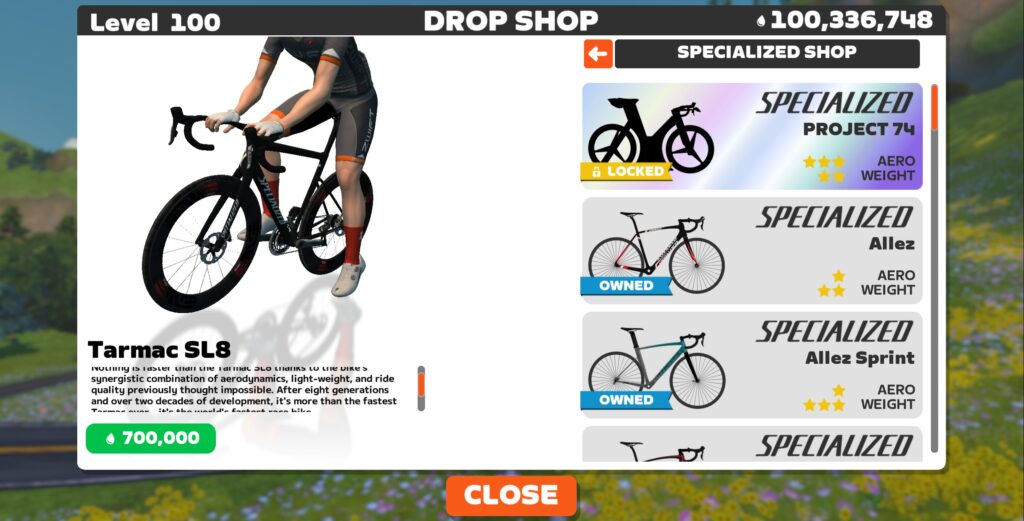
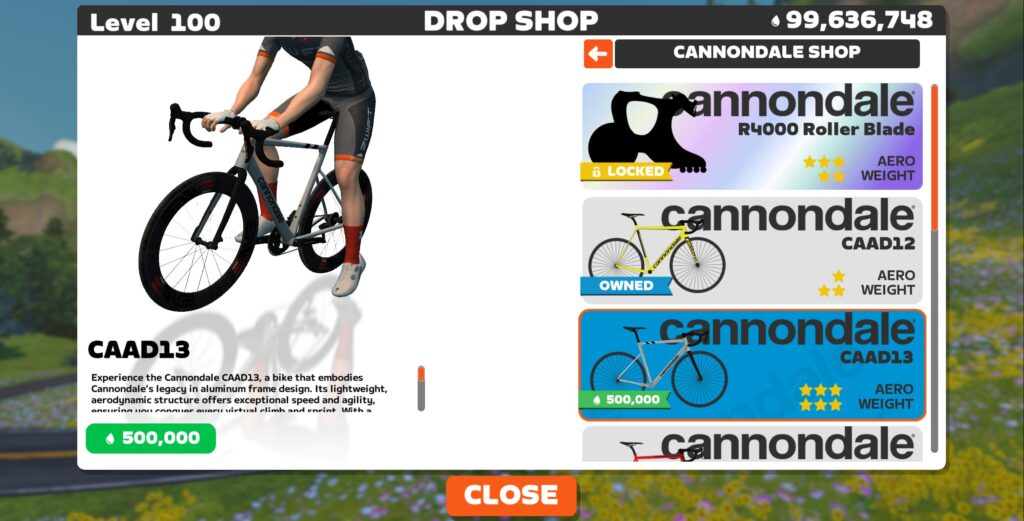
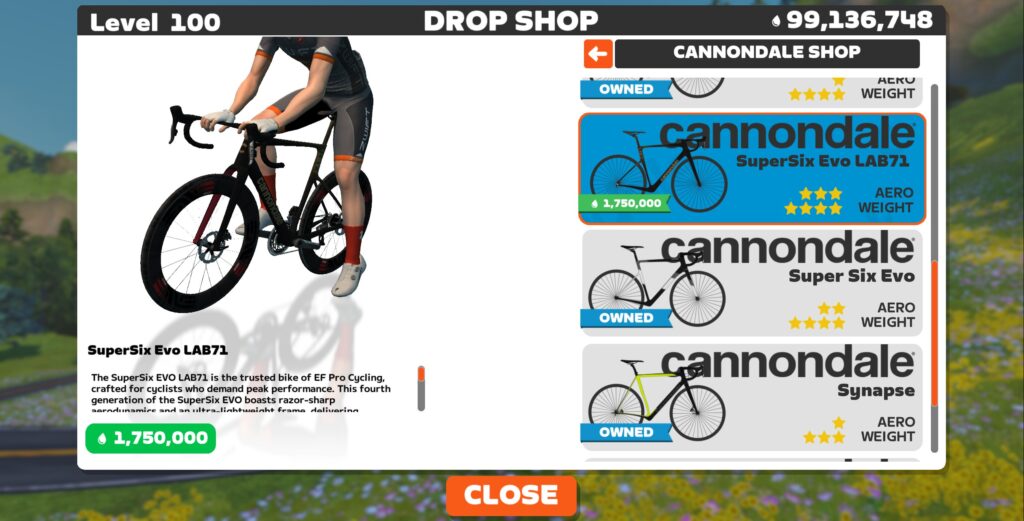
Everyone loves new bike day! Four new “production” road bikes have been added to the Drop Shop: the Specialized S-Works Tarmac SL8 (Level 40+), Specialized Tarmac SL8 (Level 35+), Cannondale CAAD13 (Level 14+), and Cannondale Super Six EVO LAB71 (Level 40+):
We are now running speed tests on these bikes. They are fast. We will publish results as soon as possible. Speed test results for these bikes can be found in this post.
Additionally, three new “Halo Bikes” are now “available” in the Drop Shop: the Specialized Project 74, Pinarello Espada, and Cannondale R4000 Roller Blade:
We say “available” for the Halo Bikes because Zwifters will have to put in a lot of work and spend a pile of Drops before they even have the opportunity to unlock a Halo Bike. Read our Bike Upgrades post for more info.
Drop Shop Price Changes
The Pinarello Dogma F 2024 has slightly increased in price, from 1,400,000 to 1,750,000. That is the only frame with a new price. Wheels, on the other hand, have (almost) all increased in price:
Wheelset
Old Price
New Price
Bontrager Aeolus5
67,700
150,000
CADEX 36
216,900
375,000
CADEX 42
119,500
425,000
CADEX 65
223,900
450,000
Campy 35
250,000
350,000
Campy 50
150,000
450,000
DTSwiss 62
400,000
500,000
DTSwiss DISC
655,000
750,000
Enve SES 2.2
174,300
400,000
Enve SES 3.4
200,000
525,000
Enve SES 6.7
150,000
525,000
Enve SES 7.8
278,900
550,000
Enve SES 8.9
250,000
550,000
FFWD RYOT55
136,100
200,000
Giant SLR 0
165,100
450,000
HED Vanquish RC6 Pro
120,000
175,000
Mavic Comete Pro
38,400
200,000
Mavic Cosmic CXR60c
39,800
150,000
Mavic Cosmic Ultimate
38,400
525,000
Novatec R4
37,900
150,000
Roval Alpinist CLX
634,300
550,000
Roval CLX64
150,000
525,000
Roval Rapide CLX
200,000
500,000
Shimano C40
85,300
300,000
Shimano C50
165,000
250,000
Shimano C60
187,000
325,000
Zipp 202
135,200
350,000
Zipp 353 NSW
168,800
600,000
Zipp 404
115,600
425,000
Zipp 454
204,300
600,000
Zipp 808
200,000
425,000
Zipp 808/Super9
450,000
650,000
Zipp 858
300,000
600,000
Zipp 858/Super9
550,000
750,000
Zwift 32mm Carbon
32,000
100,000
Additionally, four wheelsets have had their unlock levels changed:
HED Vanquish RC6 Pro: 17 to 10
Shimano C60: 10 to 17
FFWD RYOT55: 18 to 6
Mavic Cosmic Ultimate: 6 to 18
New Routes
Three new routes (and route badges) arrived in this update. Two are now available to free ride, while the third (Hilltop Hustle) is event-only at this time.
This wasn’t mentioned in the release notes, but Zwift has “retired” many older bike models in today’s release by removing them from the Drop Shop. (This is the first mass bike retirement in Zwift’s history.)
Here’s the full list of bikes retired in this release:
Specialized
2015 Shiv
2019 Tarmac Pro
2015 Tarmac
2015 Roubaix
2015 Amira
2016 S-Works Amira
2019 Ruby
2015 S-Works Ruby
Specialized Allez 2015
Cannondale
CAAD12
Pinarello
2019 Dogma F10
2015 Dogma 65.1
Canyon
2015 Ultimate
2015 Speedmax
Cervelo
2015 S3D
2015 S5
Scott
Scott Foil 2015
If you already own one of these bikes, it will remain in your garage. But you won’t be able to purchase these bikes once you’ve installed version 1.86.
Release Notes
Zwift provided notes on additional tweaks and bug fixes in this update:
Improved the reliability of The Zwift Big Spin reward spinner.
Improved the navigation and appearance of the tabs shown on top of the Home screen.
Fixed an issue that caused Running progress to incorrectly count towards the Factory Tour challenge.
Fixed an issue that could cause the Shift Style and Gear Range settings to appear for trainers that do not support virtual shifting.
Windows: For Windows devices that are compatible with Video Screenshots, Video Screenshots is now disabled by default for devices that have less than 8 GB of RAM or fewer than 4 CPU cores. Video Screenshots can be re-enabled at any time for these devices under Settings → Video Screenshots.
iOS: Fixed an issue that could cause Bluetooth devices to not automatically reconnect if Zwift was open for an extended period of time.
Android: Fixed an issue that could prevent Bluetooth devices from automatically reconnecting after a disconnection.
How the Race Was Lost: Zwift Games Stages 3 and 4 (Downtown Eruption and London Uprising)
The Zwift Games are upon us, and with them big race packs on fresh routes. Having finished third in stage 1 (read more) and second in stage 2 (read more), I was really enjoying myself in the 450-570 group.
But then the climb stages arrived, and everything changed. Here are my summaries of stages 3 and 4 of Zwift Games.
Stage 3: Warmup
It didn’t take long for me to realize that today wasn’t going to be pretty.
As I spun my legs to gently warm them up prior to the race, I could tell today (Tuesday, March 11) was a bad leg day. You know what I’m talking about. Sometimes these days are expected, other times they come as a surprise. Today was a bit of a surprise since I had ridden the day before and felt fairly good.
What was the cause? Poor sleep? Insufficient nutrition? Getting sick? I wasn’t sure. But I could tell something was off.
Stage 3: Volcano Implosion
Stage 3 took place on the new Downtown Eruption route in Watopia, and I knew exactly where I would have trouble here: the Volcano KOM. This segment has often been my undoing in races, as it’s just a bit too steep and long for me to hang on!
We had a big pack of 144 starters in the race, so I knew the effort was going to be extra tough. That’s just how it works on Zwift: bigger packs mean more strong riders, generally.
The course begins with a quick climb up the bottom half of the Hilly KOM, and it took ~450 watts for 50 seconds to hold onto the group here. Job done, but I knew the big test was up the road.
I made it to the foot of the Volcano KOM without incident, but it wasn’t long (around 600 meters in) before I saw my avatar drifting backward in the group. At 1.1km into the climb, the white flag came out. 75 riders rode away in a long string ahead, and I was quickly passed by several more.
At first, I sat up and spun easily, sinking down to 93rd place. Then I realized there was still a GC competition going on, so I pushed a bit to catch the wheels of the small group just ahead as we hit the flat halfway point of the Volcano KOM.
But then the road tilted up again, and that group rode away from me too! Jimmeny Christmas. This was bad.
Over the top, I found myself with just a couple of riders. We descended together, and I used the supertuck and some well-timed power to bridge us up to a small group just up the road.
The race may be lost, but you can still make it interesting, right?
You can tell it’s a bad leg day when your legs like you’re riding at threshold, but your heart rate doesn’t want to get above tempo zone. That’s what I was feeling on this day – like I couldn’t even push my legs hard enough to make my heart work hard!
Stage 3: Finish
Six of us made our way through Downtown Watopia, then it was time for the final challenge: the Hilly KOM. This climb is around 2 minutes long and, again, has been my nemesis in past races, seeing me dropped by just a few seconds as we crest the top.
Our group strung out and separated up this climb, and I finished somewhere in the middle of my pack of 6, for a final placement of 94th overall.
On Saturday, March 15, I raced the second climbing stage on the new London Uprising route. I knew this one would be rough, too, because it features two big climbs: Fox Hill and Box Hill.
My legs felt nicely recovered during the warmup, and I spun my legs for around an hour prior to the race.
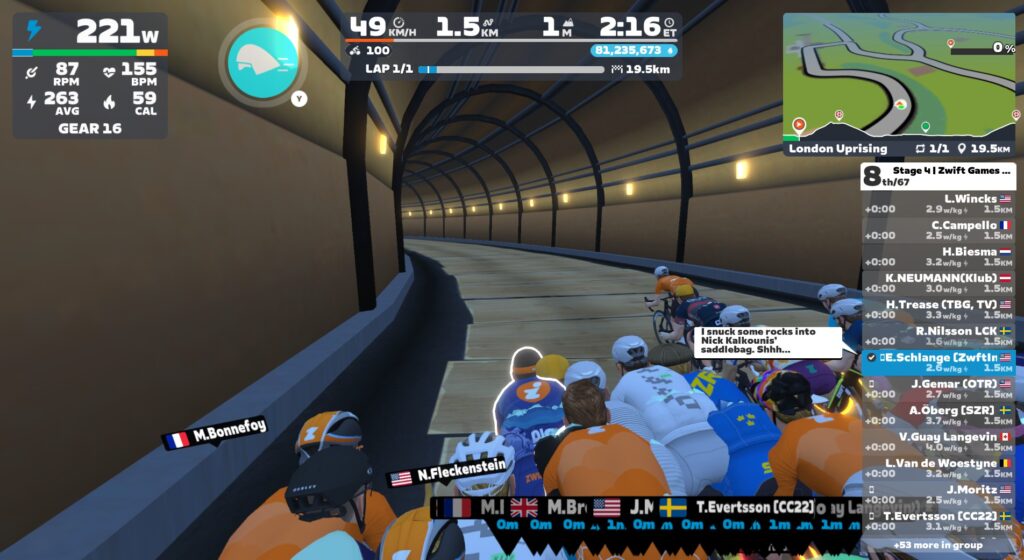
I’d been chatting with Nick Kalkounis from ZwiftHQ about the Zwift Games stages prior to this, sharing my results as he shared his. (Nick is a cool dude who’s done a lot of work with Zwift Racing Score. We met on my trip to the Specialized Win Tunnel back in October – read more about that here).
We decided to meet up for this race, and Nick invited Tim Hanson (of zwiftracing.app fame) along. So the three of us were having a sort of informal “race within the race.” Nick is a fit dude without a scrap of fat on his body, so I didn’t think I stood much chance against him on this course. But it’s always fun to race with friends anyway. Let’s go!
Stage 4: Outfoxed
The London Uprising route begins by taking riders straight up Fox Hill. Then you descend, do a lap of the Classique, and head up Box Hill for the finish.
Simple. But not easy.
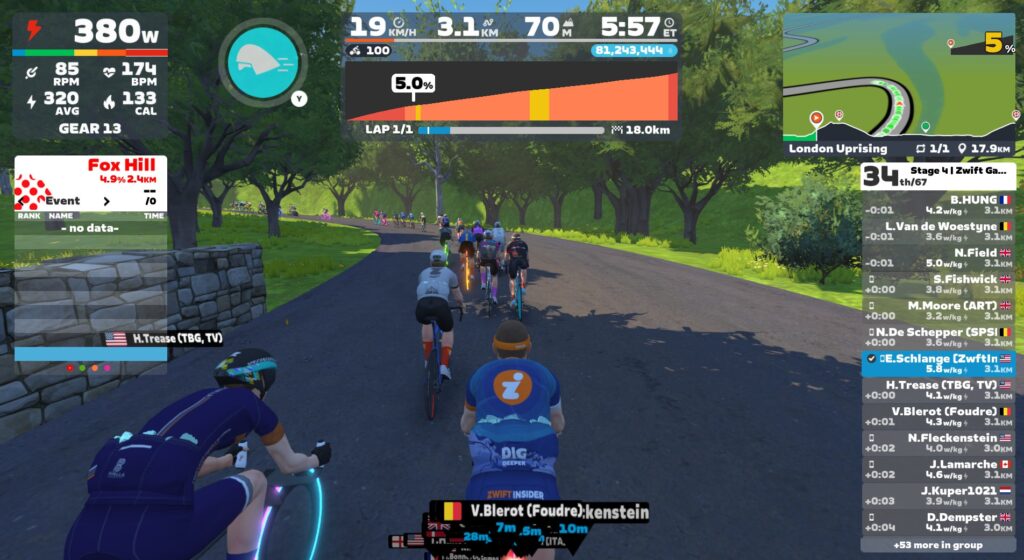
The start was pretty chill, since everyone knew the work would begin just up the road. 67 riders left the start pens, and soon enough we hit Fox Hill, and things exploded! Despite holding some solid power numbers (for myself, at least), I was dropped from the front group by the time we hit the first flattish spot just ~400 meters into the 2.4km climb. And I kept drifting back. 34th… 36th… 39th.
At 3.4km, I saw a gap to the group behind, so I pushed to hold the wheels just ahead. “Maybe Nick is in that group behind?” I hoped, against hope. Then I tapped his name in the Companion app and hit “Fan View”… and saw that he was sitting in 2nd place, on the 1st place rider’s wheel. Crap!
I finished Fox Hill in 39th, and joined a group of 7 riders. We were caught by a group of 8 from behind, despite my valiant supertucking, and that group headed to the Classique.
Soon enough, a few riders from our group got bored and attacked, leaving me in a pack of 10 riders with 3 up the road. By the time we hit the base of Box Hill, I was in a group of 8 constituting places 34-42.
Stage 4: Finish
On the first section of Box Hill, our group stretched out, and I simply didn’t have the legs to hold on. Most of them went up the road, then as it leveled out I found a bit of energy to push hard to reel in some riders just ahead.
I made it to the flat top of Box Hill with two other riders in 38-41st place, and my only goal was to beat both of them to the line. I deployed my aero powerup and went hard with 250 meters to go, but M. Moore (ART) had a much stronger sprint and blew past me. I finished 39th overall.
Chapeau to Nick Kalkounis, who hit the bottom of Box Hill with the front pack, and ended up finishing in 21st.
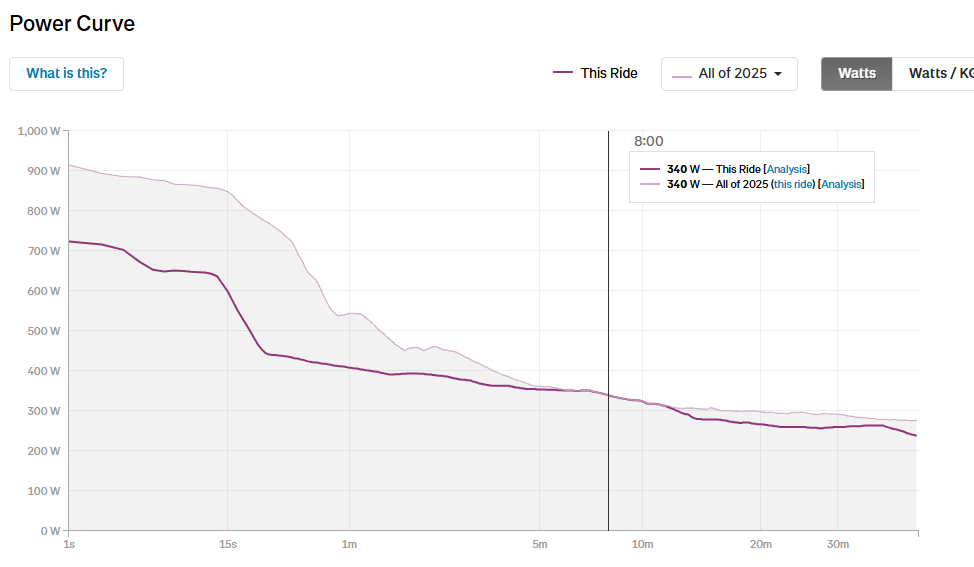
Races with climbs over a few minutes are always tough for me, and Zwift Games stages 3 and 4 were no exception. Stage 3 was especially rough because my legs just didn’t show up!
I actually had some decent power numbers in Stage 4, hitting 2025 bests in the 6-11 minute range as I climbed Fox Hill:
But that simply wasn’t good enough. It’s clear that my racing score puts me in a group where I have a shot at the podium in flat races, but will get dropped handily if the race features any significant climbing.
Which is how it should work. I have no complaints. If I want to put in a hard effort and know I won’t have a shot at a win, I can do a climbing race. If I want a shot at a podium, I need to stick to flatter events.
Lastly, I think it’s worth mentioning that my two terrible finishes in the races above each only dropped my racing score by 1 point! After stage 3 I went from 550 to 549. Then stage 4 knocked me down to 548. Ha! (If I was doing these races to tank my score, it would take a long time…)
Your Thoughts
Did you race Zwift Games stages 3 and 4? How did they unfold for you? Share below!
Now that the Zwift Academy 2024 winners have been announced, one Zwifter, namely Katie Kookaburra, can now share her inside look at the series. This week’s top video provides an interesting behind the scenes at the women’s Zwift Academy Finals!
Also included in this week’s top picks are videos about the latest indoor cycling news, The Big Spin, and the Zwift Ride sale.
My secret mission with PROs CANYON SRAM // Behind the scenes Zwift Academy!
Get an exclusive behind the scenes look at Zwift Academy from the one and only Katie Kookaburra.
Zwift and TrainerRoad Hug It Out?!
DCRainmaker and Desfit talk all things indoor cycling, including discussions on the new Zwift and TrainerRoad integration, smart bikes, and budget trainers.
Conquering Zwift’s Latest Challenge!
After hearing about the new BMX Bandit bike added for The Big Spin, Thomas Martinez, aka The Cycling Tattooist, rides The Big Spin and tries to get this coveted unlock.
Zwift Ride Sale has Arrived – 3 Reasons to Act Now + Extra Discount
ViveLeVelo discusses the new sale on the Zwift Ride and shares three reasons why you should purchase one.
Can I win the Zwift BMX Bandit First Try? | Stage 1 – The Zwift Big Spin 2025
After focusing most of her energy on running recently, Jessica Strange decides to switch things up and tackle stage 1 of The Big Spin.
Got a Great Zwift Video?
Share the link below and we may feature it in an upcoming post!