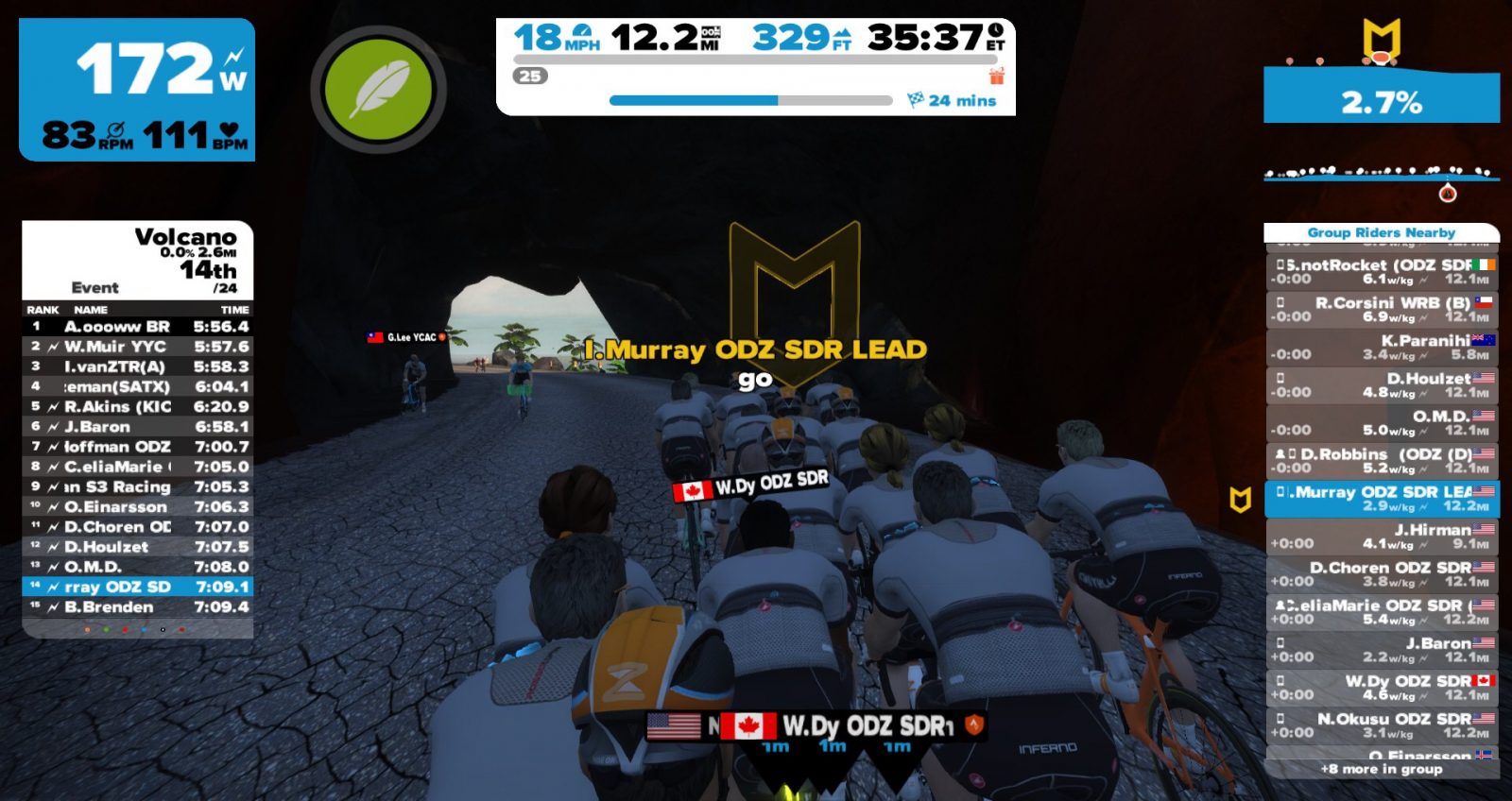
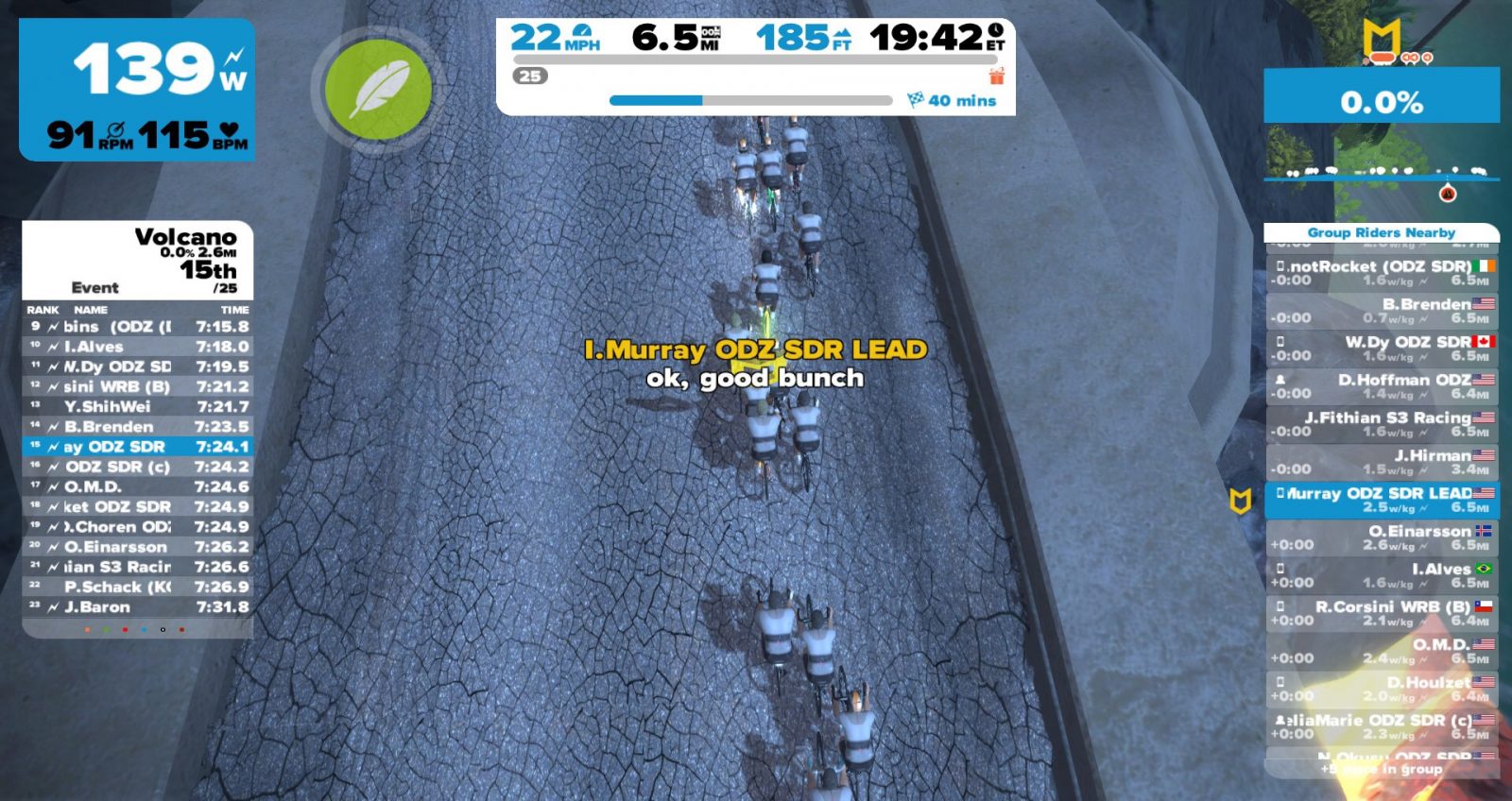
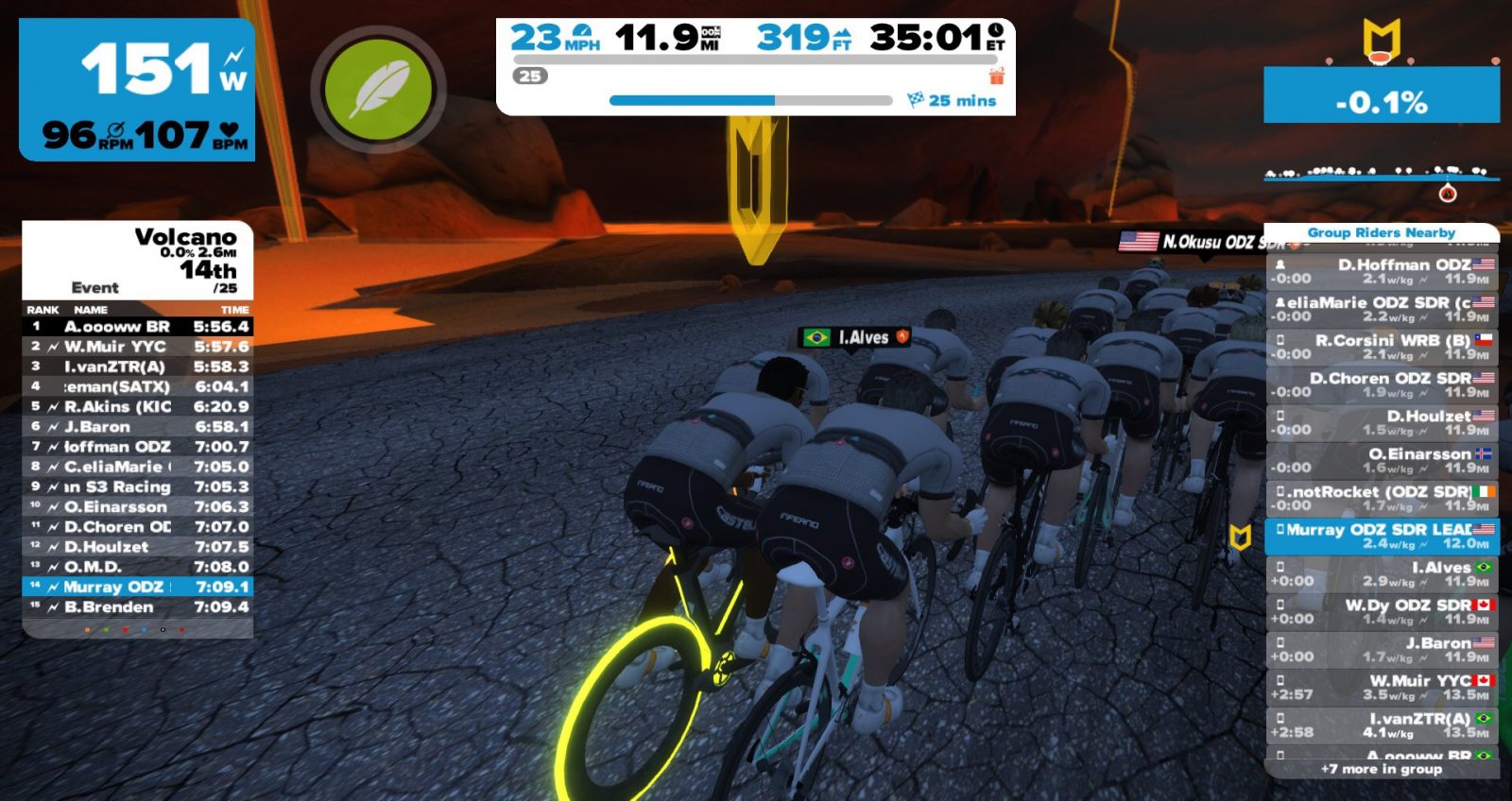
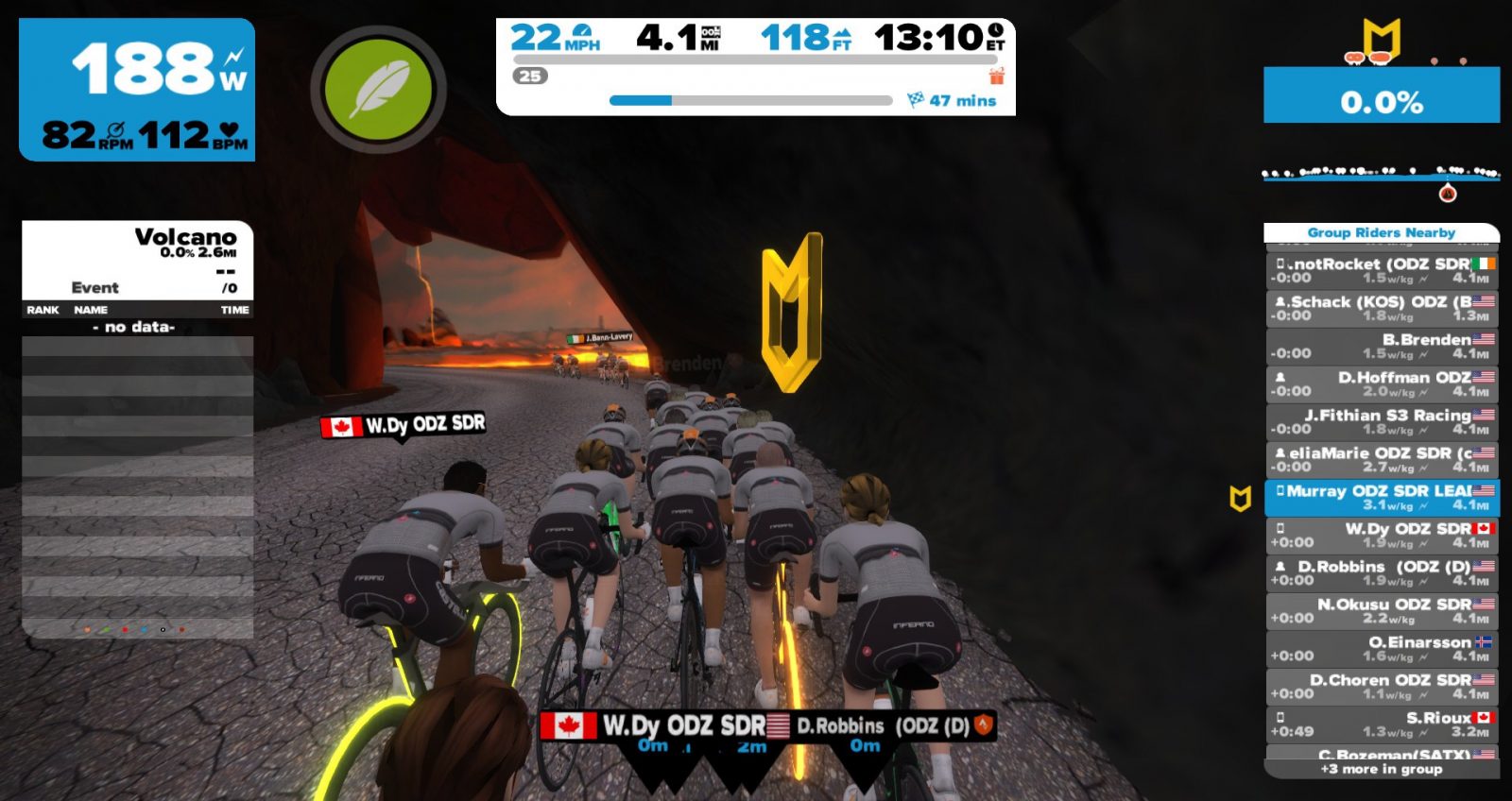
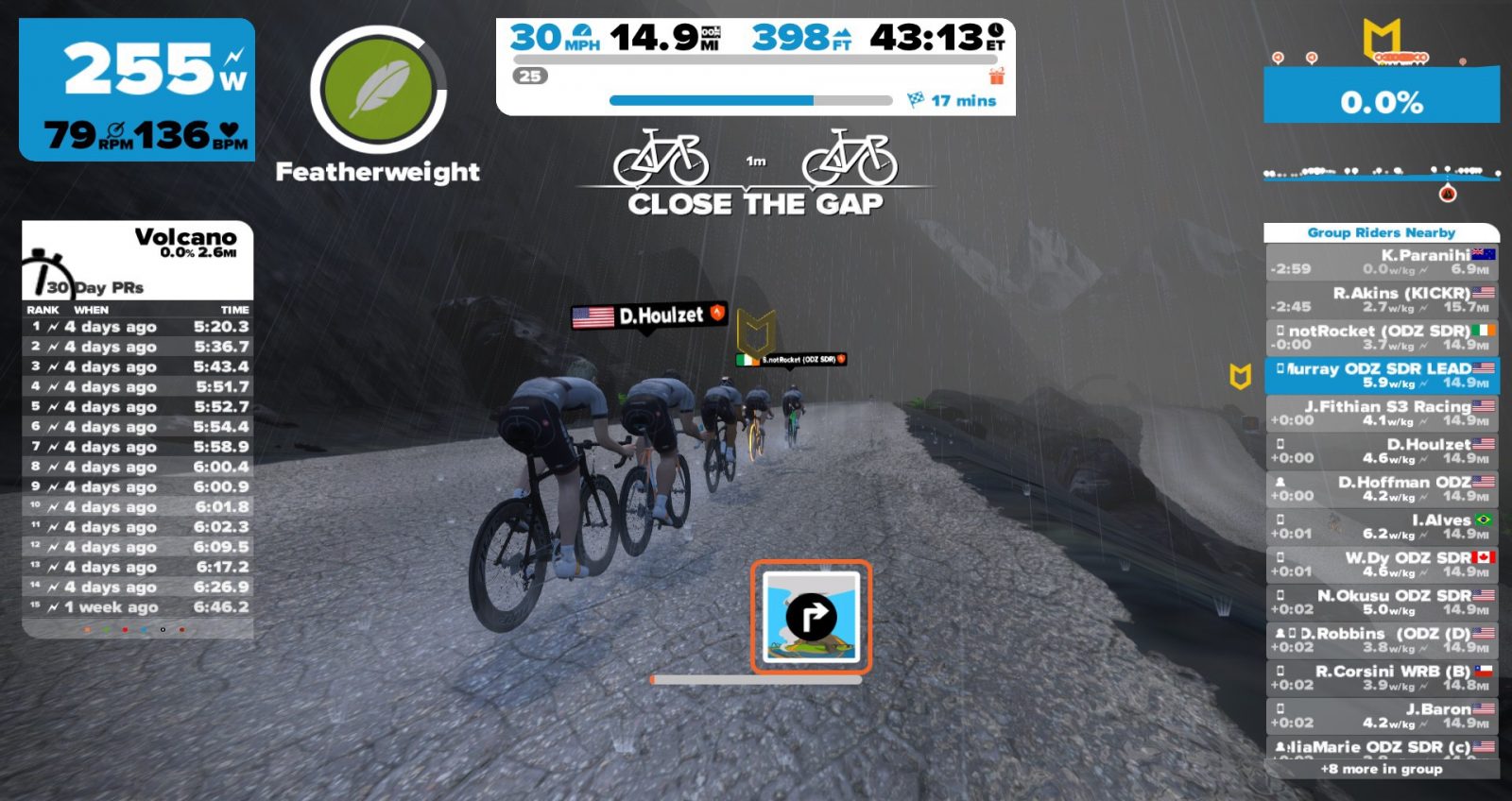
The “Watts up with Power?” ride is likely the slowest group ride you’ll find on Zwift, because it focuses on learning the basics of power based training while riding together on Zwift. Each ride is streamed to Zwift LIVE by ODZ on Facebook, and focuses on teaching specific principles of power-based training. For viewers that are unable to attend live, the teaching is made available for all to review afterwards.
Here is the summary for June 7th from ride leader Nate Dunn.
If you hope to gain anything of value from the PMC, you need to make sure you’re feeding it good data. Here’s where to start.
Make sure your power meter is accurate. Single sided power meters might not be the best option for feeding the PMC.
Keep your FTP settings as accurate as possible. FTP drives TSS values which in turn define the PMC. If your FTP is not accurate, the PMC is of little value.
Frequently test yourself with best efforts, either in races or training rides. If you’re rarely going as hard as you can, it will be difficult to discern what combination of CTL, ATL, or TSB makes up your best efforts.
The Basics
If you’re confused with all the power jargon here are a few of the absolute basics. For more detailed descriptions check out the many available online.
ATL = Fatigue over a week
CTL = Fitness over a few months
TSB = CTL – ATL, Current freshness
Who Cares?
So why is the Performance Manager Chart of value to our cycling?
Helps to analyze historical trends like peak power outputs in context with fatigue, fitness, and freshness
Provides motivation and context for daily efforts.
Models future fitness/fatigue. Visualize a taper and peak.
Peaking with the PMC
So you’ve got some of the basics down, how do we use the PMC to help plan a peak for your season?
Analyze your PMC in relation to past best efforts. What is it telling you?
Maybe a trend, maybe nothing conclusive
Chose a CTL/TSB target to use for your next peak
Model your taper/peak with TSS and see what happens
Everything you need to know about tomorrow’s CVR World Cup race in London
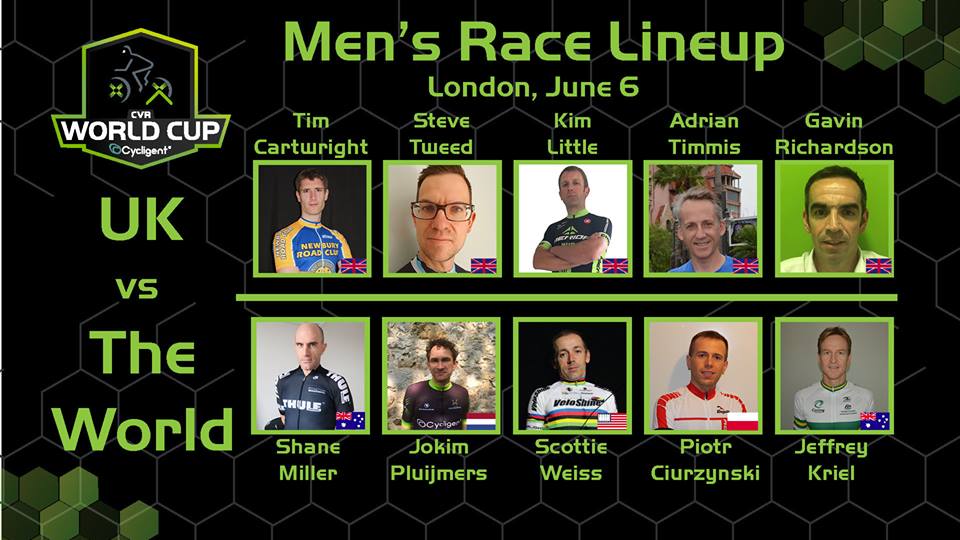
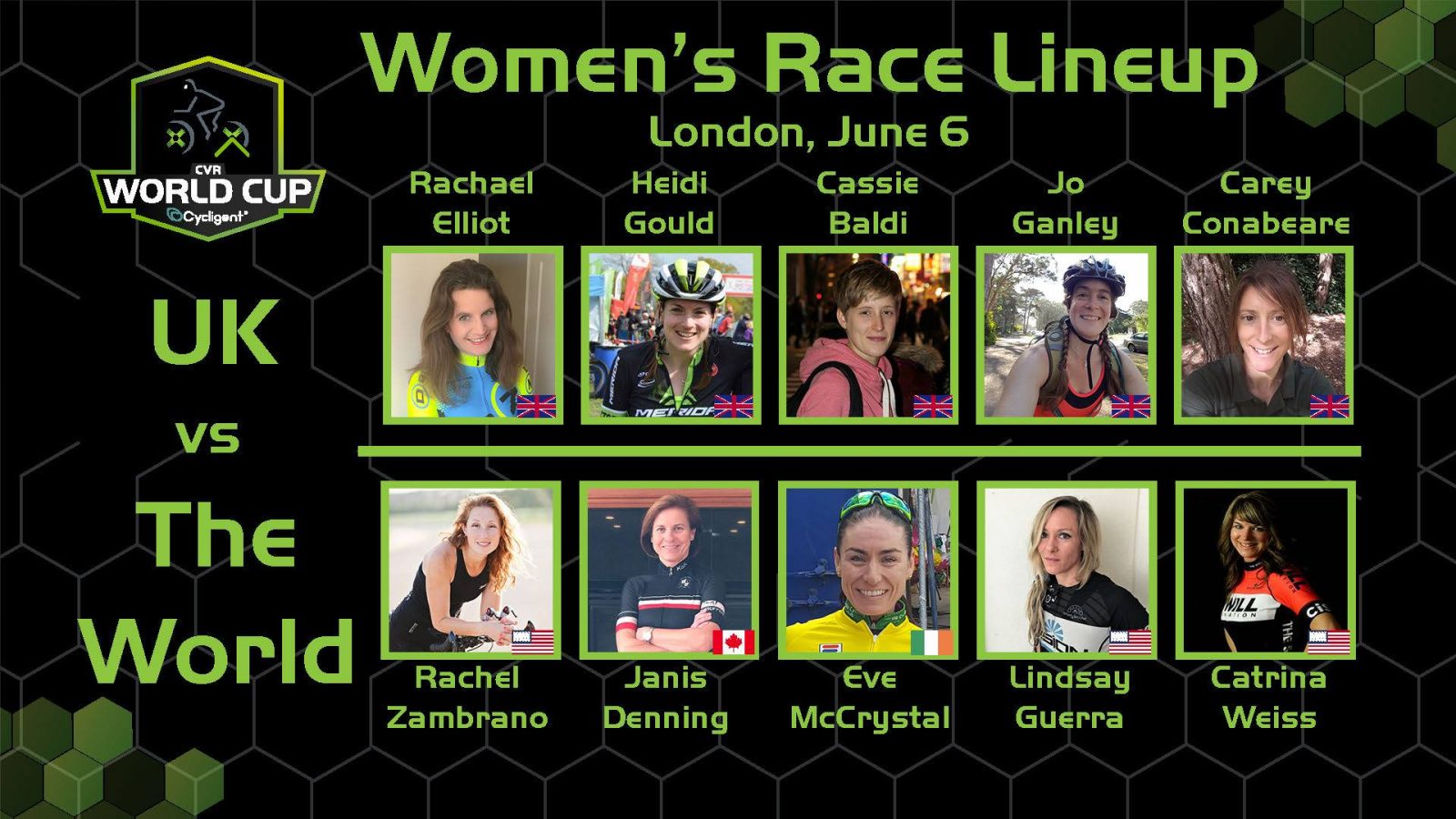
Tomorrow twenty of the world’s top Zwift racers will be battling it out in London at the CVR World Cup event. Here’s everything you need to know to join in the fun!
Who is Racing
The men’s race consists of 5 UK riders and 5 riders from other parts of the world.
Most people will be watching via the live stream at worldcup.cycligentrankings.com/stream/. The stream will begin broadcasting at 5:05 pm UK time (GMT+1) or 12:05PM EDT/9:05 AM PDT.
Ladies race starts at 5:50 pm, Men’s race starts at 8:10 pm UK time.
Get there in person! If you live nearby you may also attend the event live for free at Kachette in London! Just register here >
What Should We Expect?
These events are still evolving, but you can plan on top-quality race commentary from Nathan Guerra as some of the world’s top Zwift racers battle it out. For a taste of what’s in store, check out highlights from the first CVR World Cup in Las Vegas below:
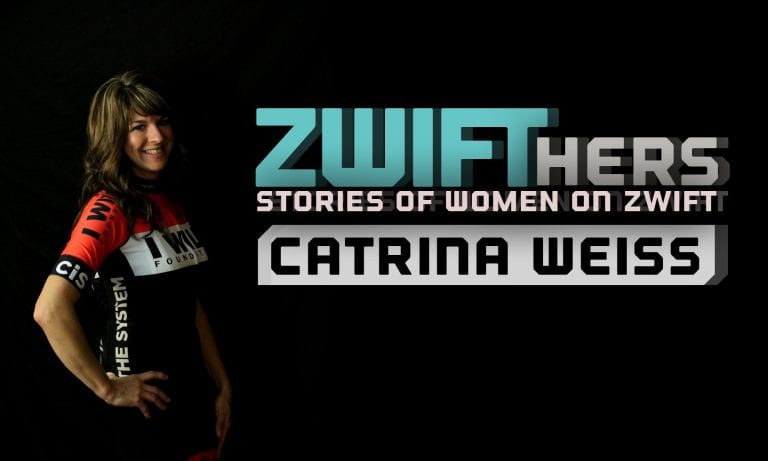
I’m from a small city in the USA – Radford, VA very close to pretty much where I grew up. I am married to Scottie Weiss (@THESWPLACE) current Master RR World Champion & Master TT World Champion. We met at the age of 12 while speed skating on the same team at a local rink near here. We traveled together with our families at a young age, competing and racing at speed meets around the southeast once a month. We were at that point Best Friends then it just went from there! Now we have been married 16 years and had our son Noah in 2009. What a blessing he has been for us both. We all absolutely love riding our bikes together, on and off Zwift. Noah was riding his bike at 2 years old! I work full-time at a very busy Pediatric office as the Front Office Manager.
We have a son named Noah too! He’s almost 11 and loves to ride as well. Please tell us why you Zwift and what got you started.
I love Zwift because it is convenient as a mother working full time trying to get my training in. And being married to a retired Pro racer, he still races at that level so with our schedules Zwift has been amazing for us both. I started in 2014 as a beta tester, Scottie had been asked to test it out so I was lucky enough to do so also.
What does your Zwift set up look like?
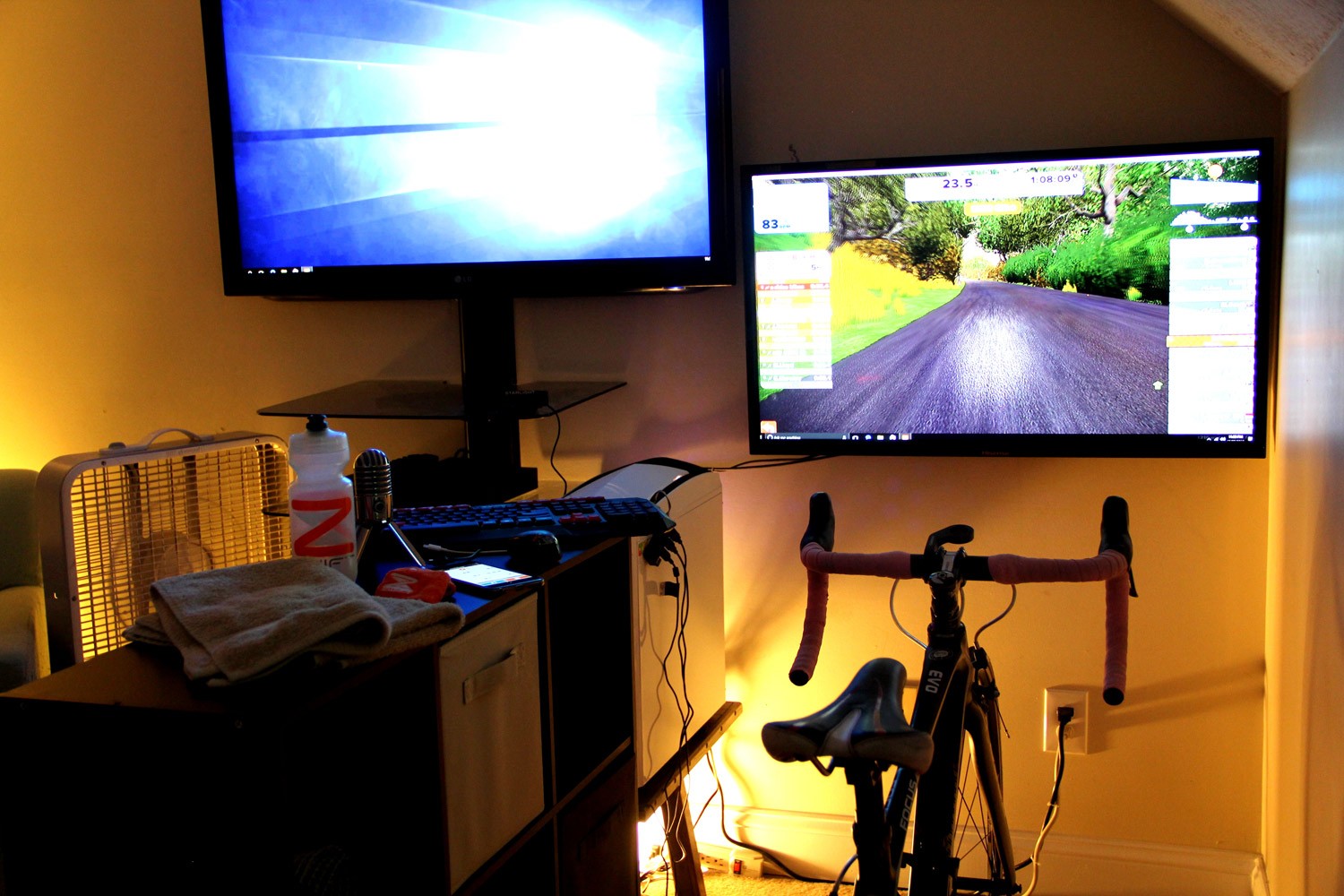
I have my trainer set up in our spare living area upstairs in our house. I use a Kickr for my trainer. We have a 30inch TV screen connected to our PC. It is an awesome set up. When you indoor train most of the time you have to be comfortable.
Catrina’s Zwift setup
Yes! Agreed! How often and where do you prefer to ride on Zwift?
I ride Zwift 6 days a week now. I started my training in 2013 only a few days a week 30 mins at a time. Then as a Christmas gift in 2013 Scottie arranged and surprised me with a membership to “CIS” Training System! I am now up to nearly 200 miles a week, sometimes if I am lucky I get more!
I ride everywhere on Zwift… I love all the courses! It depends on my training for the day as my training is really specific to the work I need to do that day or week. Workout mode is great, I build workouts based on my training plan and it simplifies everything so I can concentrate on the ride.
I also do some Zwift group rides. My Coach leads the Monday “BTW” and the Wednesday CIS group ride so I do those every week. Soon I will be at the end of this training block so I may join the Zwift Academy once again this year. Those group rides and workouts are amazing.
What’s your must-have piece of equipment for riding?
Comfortable cycling bibs/shorts! If those are not good… oh goodness it’s going to be a long, rough day! I’m lucky that Scottie is a partner at Starlight Apparel! They have actually implemented some ideas and feedback I’ve given to help continue the success they are having across the full line of items! Starlight Bibs are my very favorite!
I’m going to have to check those out! Thanks for the tip! How has Zwifting changed your IRL rides?
Zwift has helped me get so much stronger for my IRL rides, it is absolutely amazing! I have done 90-95% of my training on Zwift due to a busy lifestyle!
What is some advice or info you wish you knew sooner in your cycling journey?
I wish I could have started cycling sooner because I had no idea that I had the passion and love for it as I do today!
You raced in the first CVR World Cup in Las Vegas and are slated to race in the CVR World Cup in London on June 6th. Have you changed your training since the Vegas race at all to prepare for the London race?
You could say I’ve basically been training for the London race since that first race! I definitely want to place higher than 6th this time.
Thanks for sharing a bit of your story, Catrina! I look forward to seeing you race the CVR World Cup in London on June 6th! Ride on!
Castelli SkillZ and DrillZ Ride, 17 May – Did it happen again to you? You felt great going into the end of a race, so you launched yourself off the front of the race. The initial surge got you three bike lengths, and you could see the finish line rapidly approaching. Just when you think you have it all sewn up, three or four riders blow right by you, leaving you wondering what just happened.
Dont’t worry. You are not alone.
What if I were to tell you that it happens to professional riders all of the time? Would you believe me? Check out the end of Stage 15 of the Giro d’Italia on 21 May. Simon Yates from Orica Green Edge launched an attack with 300 meters to go, only to get pulled back with 50 meters left to finish fourth.
What If I told you there exists a strategy that will greatly increase the chance of success of your attacks? Would you believe me? Mikael Kwiatkowski used the strategy to great success multiple times this year, including his masterpiece win at Straade Bianchi, which I found more impressive than his win at Milan-San Remo.
Timing is Everything
During SkillZ and DrillZ, we talk about timing quite a bit. Picking the time to launch an attack or repeated attacks is often the deciding factor on whether you escape or not. That timing is often crucial to whether you stay away if you manage to escape. Unless your goal is to get TV time for your sponsor, a flashy attack that results in getting caught and spit out the back is no more useful than getting dropped early on in the race.
Drill 1 – Attacking on the Incline
The first drill of the day focused on attacking the group on a short climb. We have covered attacking on short climbs before, but this time we looked at it from the perspective of the finish line not being at the top of the climb. No, the short climb would be the set-up to get away from the sprinters and downhill specialists.
Attacking on the climb is no different than any other attack, except gravity gets to play a part. Due to that, I often try to avoid attacking from the bottom of the climb to limit the amount of time I have to fight against nature. Also, the bottom of most climbs on Zwift are often not very steep. No, the hard ramp usually happens in the middle. That’s when I like to go, when it gets really hard.
Why? Well, I’m already going to have to go hard because of the increased pitch, so what’s a little deeper grab into the pain bank if the duration is short? Not much when you consider the upside.
The second key to attacking on the short climb in an effort to escape is holding it through the crest and down the first third of the descent if one follows the climb. If there is no corresponding downhill section, you need to hold the hard effort for a few minutes after the climb ends.
Yes, it sounds horrible and painful. It is. I’m not telling you it is easy to escape on a climb. This technique works, though, because everyone wants to briefly sit up after a hard climb and catch his or her breath, especially if you roll into a descent. It is a natural response to stop the pain if given the option. Escaping requires you to fight that natural urge.
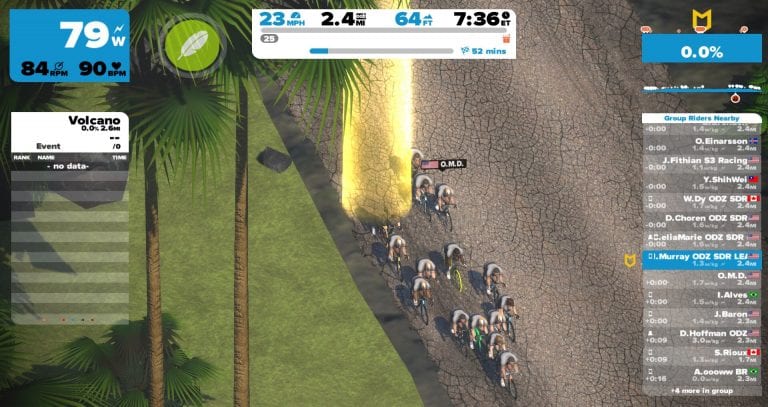
We practiced a number of attacks on the Volcano CCW course on the short, steep climb heading into the finish line/lap counter and on the short, but not quite as steep climb just before the windy descent to finish the lap. The biggest immediate gaps opened on the first climb, but the bigger gaps over the duration occurred when attacking the climb before the descent. We’ll cover why that is the case during Drill 2.
The key to success for Drill 1 was going hard enough to get a gap but not going so hard that the attacker blew up before cresting and continuing on down the road. After a few iterations, we were able to see that everyone’s launch point was different, but the end result was the same, a gap and an opportunity.
Drill 2 – Attacking the Downhill
What happens if you are surrounded by little climbers or Philippe Gilbert types who love those punchy, short climbs? If you aren’t one of those, then attacking on that terrain is tantamount to handing someone else the victory. That’s what we call the opposite of smart racing tactics.
In this case, we have to look for better options. If you are a heavier rider who packs a good kick or a death-defying daredevil, you may want to look for an opportunity to launch an attack on a downhill section of the race.
Attacking the downhill is one of those instances where Zwift and IRL racing diverge but only once on the downhill. I say that because a downhill attack does not start on the downhill. No, it starts at the last little kick rolling into the crest of the hill. That’s where the gap happens.
Once the gap opens, it’s time to ride like hell to reach your maximum safe speed as quickly as possible. If you are not a very skilled bike handler, I wouldn’t recommend this type of IRL attack. Stick to Zwift. The important part is keeping the effort high. On Zwift, rider weight plays a significant role in longer downhills, so take that into account. On the Volcano CCW course, weight does not seem to play as much of a factor on the steep downhill after the second pass through the volcano.
We practiced this technique a few times in the group, and those who hit the gas hard before the crest started the descent with much more momentum than those who did not treat it as a vicious attack. Carrying speed out of the climb is key.
Understand that your ability to accelerate to faster speeds on the descent takes more energy per relative mph gain than going uphill or on the flats. That’s because the gravitational advantage applies to everyone, and the faster you are going, the more energy it takes to go faster. Likewise, your gearing becomes a factor, too, as you may run out of gears with power still left in the legs.
Yes, that’s the dreaded spin out on a smart trainer. Before you know it, you are in your smallest cog, spinning like a crazy person at 125 RPMs, and bouncing up and down on your saddle like you are riding a bucking bronco. (Note: lowering your trainer difficulty can help with this.)
That effective use of inertia is the key to Drill 2. Keep in mind that you need to ride within your skillz, so make sure that you are technically competent before attempting any of the crazy stuff out on the road. Oh, and watching pro riders descend like lead balloons on television does not mean that you have skillz. It just makes you a fan, like me.
Drill 3 – Attacking from Distance
Yatesy the Sprinter?
Now that we walked through some of the drillz, we have to incorporate our knowledge of the course and the conditions into the development and implementation of the strategy. Let’s examine our two examples from the beginning, Adam Yates and Mikael Kwiatkowski.
Looking back at our Giro example, Adam Yates made a decision based on a faulty assumption. He thought for a minute that he didn’t suck at sprinting.
WRONG! He does.
Ok, it’s not so much that he is a horrible sprinter, but relative to Bob Jungels and Tom Domoulin on a race course with a slight downhill finish, Yates’ attack was horribly timed. Of course, we have the luxury of hindsight, and he was flush with lactic acid after a short, steep cobbled section to finish off the 200-kilometer day. The only chance Yates had to succeed was to launch from just beneath the crest of the finishing hill. I say that because there were too many big names with fresh-ish legs at the base of the climb, and nobody wanted to lose time, resulting in a chase of every attack. Just before the top, though, the lull happened, as the GC contenders all began to crest. That would have been the only opportunity for Yates. Sure, it would have been a longer attack, but the early momentum may have carried him, as his legs began to give out.
History Favors the Bold
Mikael Kwiatkowski is a true rolleur. He can climb well enough, sprint well enough, and time trial well enough, but he cannot compete with the specialists in those disciplines. No, he is simply very good across the board but not great at anything.
Except for picking the time to attack. He is exceptional at that. In Strade Bianchi, Kwiatkowski found himself in a group with some exceptional finishers. The remaining portion of the race featured rolling and windy terrain on crappy roads that favored a small group or an individual over a large peloton. Rather than wait until the last few kilometers to attack or sprint against some top class sprinters, Kwiatkowski went from distance.
It worked, and he was deemed a genius. He wasn’t a genius, though. He simply made a calculated decision. Kwiatkowski attacked hard enough to get a gap and quickly consolidated that gap, knowing that the remaining contenders would not immediately work together to pull him back. How did he know this?
Well, it was pretty simple. None of the major contenders had many teammates left in the chase pack, and nobody who wanted to sprint for the win would be willing to drag 20 other riders to the finish line. Thus, he calculated that the disorganization would allow him enough time to build a big enough gap that only a well-organized chase would be able to pull back.
Of note, when Kwiatkowski got out of sight of the chasers, he settled to a hard but manageable pace, really only burning matches to get away and to close out the last few kilometers. Other than that, he pushed but stayed within himself, the secret to the long-distance attack.
Guaranteed Success or Your Money Back
Ok, nothing guarantees success in a bike race other than being the only racer. The strongest rider doesn’t always win, and luck sometimes favors the stupid. However, if you take into consideration the other racers in your group, the race conditions, and your relative strengths, you can pick a much smarter attack strategy.
It won’t always work because the enemy gets a say on any plan you develop, but your odds of succeeding increase significantly if you have a plan vs simply playing it by ear or reacting to the other racer.
Over time, you will get a lot better at picking when to make your attacks to ensure that you maximize your chances. Increased knowledge of your opponents and familiarity with the race course are hugely helpful and can give you a good advantage. In the end, once you make the decision to attack, commit. A well-timed but half-hearted attack will fail virtually every time. However, a well-executed attack, even if not perfectly timed, at least will put you in the running for the win.
SkillZ and DrillZ will be back on 31 May for some fun efforts. We will be back at it full force all summer long for the northern hemisphere types and all winter for those south of the equator. During the break, keep trying to add the lessons from previous classes into your racing and group riding to work on your tactical prowess. Until next month, RideOn!
Join the Zwift Fitness FTP Challenge presented by TeamODZ
If you are a C or D level rider looking to improve your fitness metrics across the board, take a look at this new challenge just announced by Zwift Fitness and TeamODZ.
Who Is It For?
This challenge is designed for C and D level riders, so anyone with an FTP below 3.2 w/kg. (Of course, anyone can benefit from these workouts, but they are optimized for this particular segment of riders.)
What Is the Goal?
Workouts are designed to provide improvements on all fitness metrics, using only the minimum effective dose of time on the bike. So if you’re a time-crunched C/D cyclist this challenge is just right for you!
Plan Details
The challenge center on 8 weeks of structured training using a mix of VO2max, SST and endurance work. There will be 3 key workouts per week with the option to do them in group or as an individual. Structure will be 3 hard work weeks and 1 recovery week through the 8 weeks.
You will not be completing this challenge alone! All registrants will be assigned a team and team leader who will help guide, motivate and keep you accountable though the 8 weeks.
All the workouts are custom-designed by the ODZwifters team at TeamODZ and will be downloadable at www.whatsonzwift.com.
At the end of the challenge each team will be scored on their team increase in fitness metrics as a percentage of where each rider started.
The “Watts up with Power?” ride is likely the slowest group ride you’ll find on Zwift, because it focuses on learning the basics of power based training while riding together on Zwift. Each ride is streamed to Zwift LIVE by ODZ on Facebook, and focuses on teaching specific principles of power-based training. For viewers that are unable to attend live, the teaching is made available for all to review afterwards.
Here is the summary for May 24th from ride leader Taylor Thomas.
One of the first things riders that are new to training with power recognize is how random their power readings are due to wind, terrain, effort, etc. This randomness impacts average power and causes it to not accurately reflect the physiological “cost” of a ride. In order to quantify and plan for the metabolic demands of a ride we have to look outside of average power. Tools such as Normalized Power (NP), Intensity Factor (IF), Training Stress Score (TSS), and Quadrant Analysis help us to understand ride dynamics and energy expenditure when average power is no longer useful.
1: Normalized Power (NP)
Normalized Power is a rather complex algorithm that takes into account the body’s physiological response to rapid changes in intensity, and recognizes that the response and intensity maintain a curvilinear relationship.
Simplified, NP is your average power had you pedaled smoothly for a given effort. It’s the effort your body “thought” it was doing.
Variability Index (VI) is normalized power divided by average power. VI helps to clarify and understand the metabolic demands of a race or training session.
2: Intensity Factor (IF)
IF is the ratio of NP:Functional Threshold Power (FTP).
IF helps shed light on an individual’s adaptation over time. As athletes repeat the same races, or types of workouts, their IF becomes lower for a given intensity. It takes less energy to produce the same effort, meaning fitness has been gained.
3: Training Stress Score (TSS)
TSS takes both frequency and duration into account, rather than just intensity. TSS helps to accurately reflect the impact of volume on an athlete’s training.
TSS is based on the premise that a 1 hour time trial at FTP is equal to 100 TSS points. Grasping this concept enables athletes and coaches to understand how hard and how stressful a race or a workout was, and how much recovery is needed afterwards.
Due to the fact that TSS incorporates FTP, and FTP is relative for all athletes, riders can work at a level that is right for them regarding duration and intensity.
4: Quadrant Analysis
Quadrant analysis helps to capture the role and importance of neuromuscular power. Neuromuscular function is simply how fast, how strong, and for how long a muscle contracts before it fatigues.
Using quadrants for power file review allows for the singling out of outliers in the power data. It also enables athletes to realize how those outliers may have impacted their overall performance.
By illustrating force in relation to FTP quadrant analysis provides some idea of the amount of slow and fast twitch muscle, and when the body begins to recruit type II fibers during high intensity rides.
Quadrant analysis highlights the distinct difference and relationship between strength and power. Strength is the maximal force generating capacity of a muscle, and power is defined as the rate at which work is being done. Strength rarely limits a riders power.
Episode 27 of Zwiftcast has been released. Here’s the full episode description:
This episode of the Zwiftcast takes a long hard look at female Zwifters and Zwifting as Simon is joined by Lindsay Guerra and Veronica Micich in the role of guest co-hosts.
The trio kick off with a look at the everyday experience of Zwifting for women and whether the platform is a more egalitarian space for women than some encounter IRL.
It’s followed up with the first in a series of interview excerpts with Kate Veronneau, head of Women’s Strategy at ZHQ, as she sets out the best ways to counter the gender imbalance in the game, with most estimates putting women in a minority of around 10%.
The trio discuss whether ZHQ’s preferred tactic of boosting female participation using group rides and womens’ only events is the best way forward before considering whether more aggressive methods might be useful.
Inga Thompson was a legendary and pioneering road racer in the American scene in the 80s and early 90’s. In a detailed interview, Inga discusses why she thinks women’s cycling has moved backwards since she left the sport, and pinpoints a “lack of visibility” as a key problem. Simon, Lindsay and Veronica discuss Inga’s contention that Zwift could improve this situation.
Zwift Academy is now rightly recognised as a great success and the trio discuss both winner Leah Thorvilson’s progress and the wider picture, with help from Anne-Marije Hook, the Women’s Editor of the Cycling Tips website. Kate V is back to let us know what’s new in Zwift Academy Two.
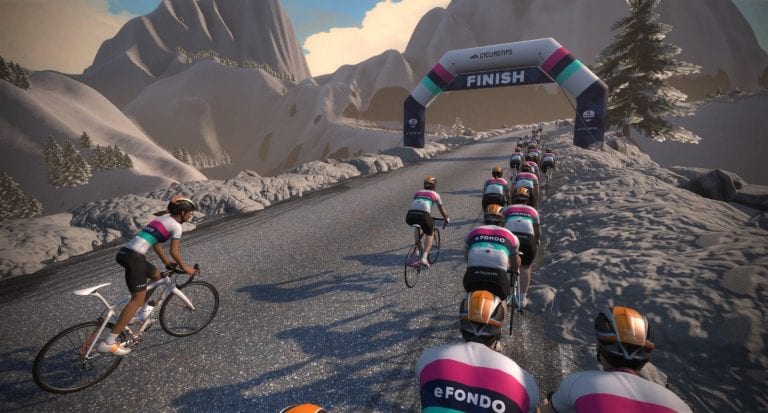
This past weekend saw the first of five eFondos which will be held monthly through September. Presented by CyclingTips, the events are held at a time friendly for Australian riders (7am AWST/9am AEST) which means they occur the previous day at 7PM EDT for Americans. These events are targeted at Southern Hemisphere riders, but anyone can participate.
Upcoming eFondo dates:
Sunday June 18
Sunday July 23
Sunday August 20
Sunday September 24
What is a Fondo, Anyway?
For those unfamiliar with the term, a fondo (sometimes referred to as a cyclosportif or l’etape) is a mass-start cycling event which falls somewhere between a race and a long hard group ride. This style of ride has gained huge popularity worldwide in recent years, with some fondos attracting 10,000-15,000 participants.
These events generally include race numbers, aid stations, and course marshaling, with prizes awarded to top finishers in each category. Most riders enter knowing they have no chance of winning the race–they simply want to push hard and finish well. Think “fast-casual.” Think “fun-race.”
Ride Details
These Zwift eFondo rides are held on Watopia’s Pretzel route, which is 72.2km (44.9 miles) long with a 1,333m (4,375′) of elevation gain. There is a different kit for each month’s event, and when you complete the ride you will unlock the kit so it is yours to keep. Completing the event is the only way to unlock this badge of honor, so don’t miss out!
To join the event, simply choose between A or C category. The C category is for riders in the 1-2.9 w/kg range, and A is for anyone above that.
Prizes
Eligible Australian and New Zealand Zwifters who complete 3 of the 5 eFondos from May to September will be entered to win a VIP trip to the 2018 Tour Down Under. See Sweepstakes Official Rules for details.
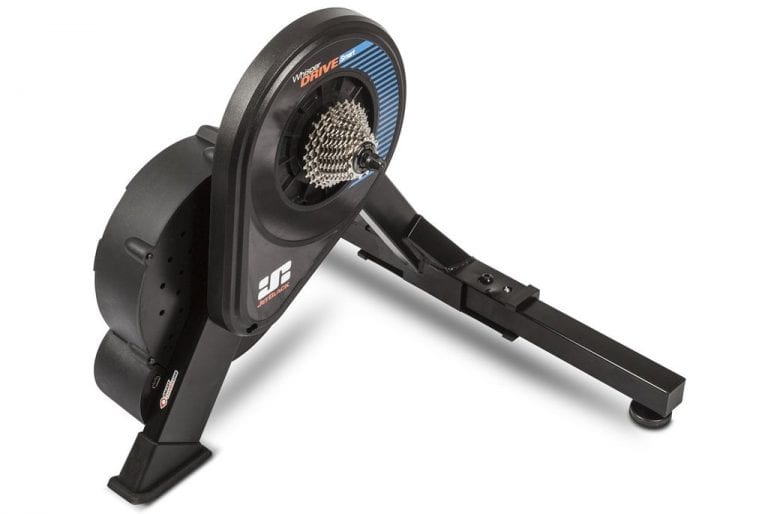
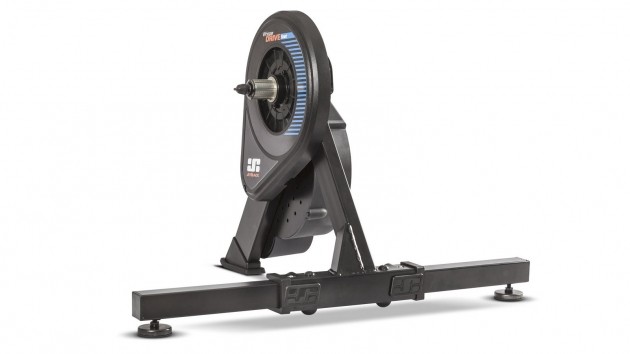
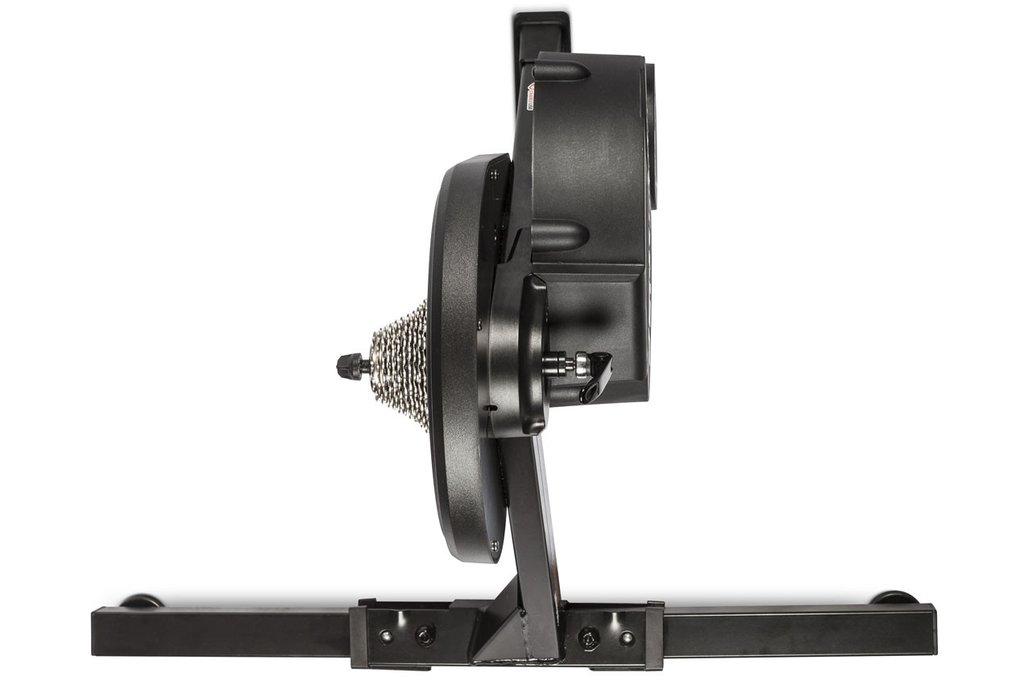
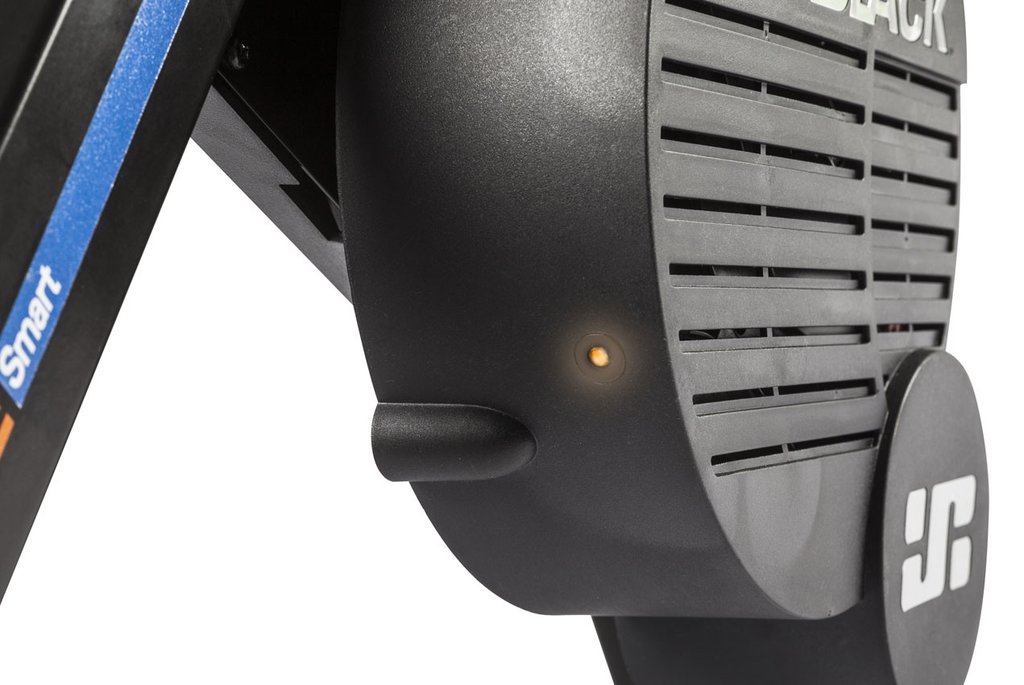
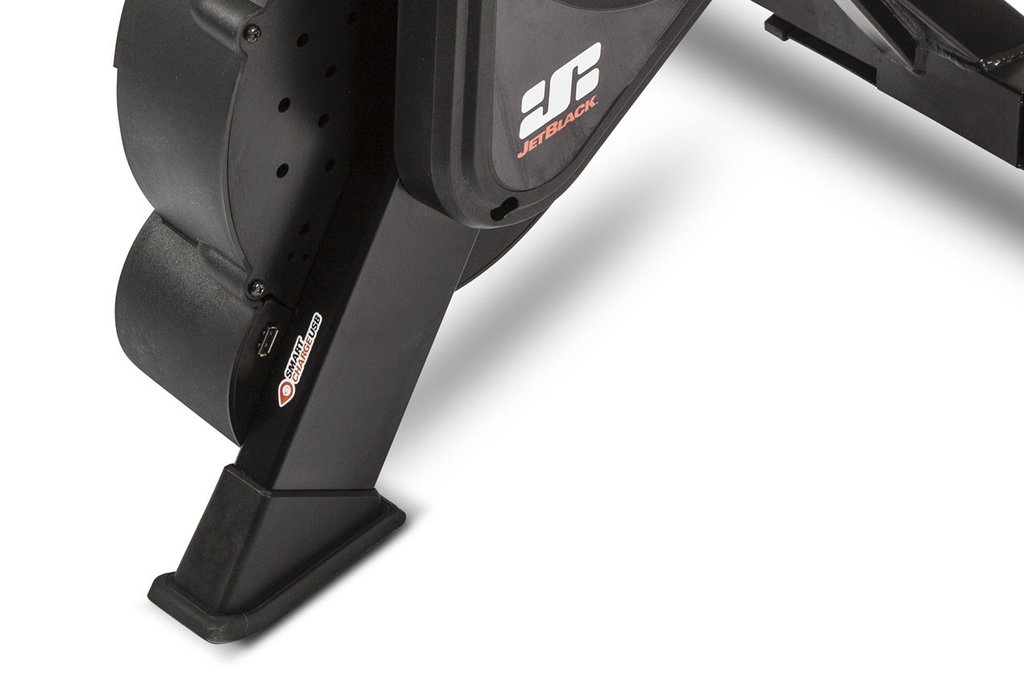
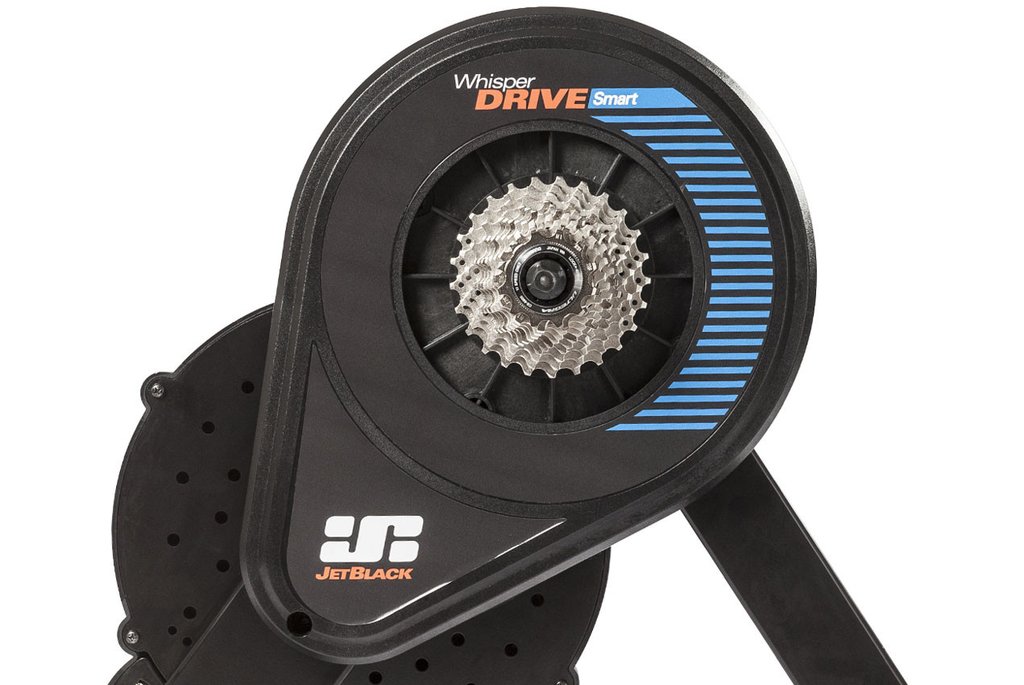
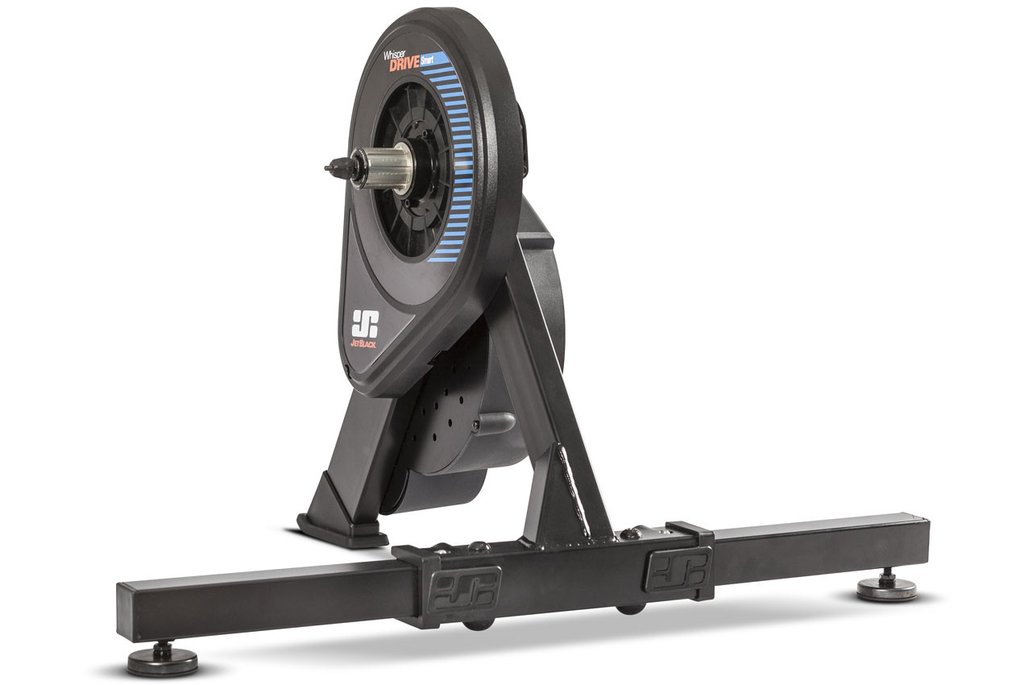
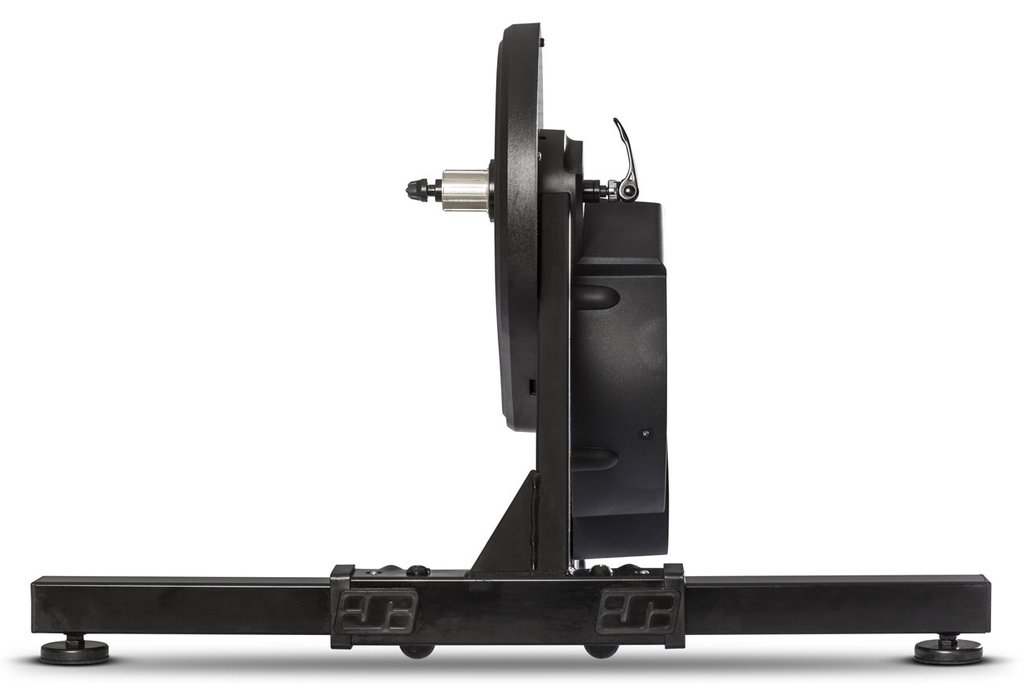
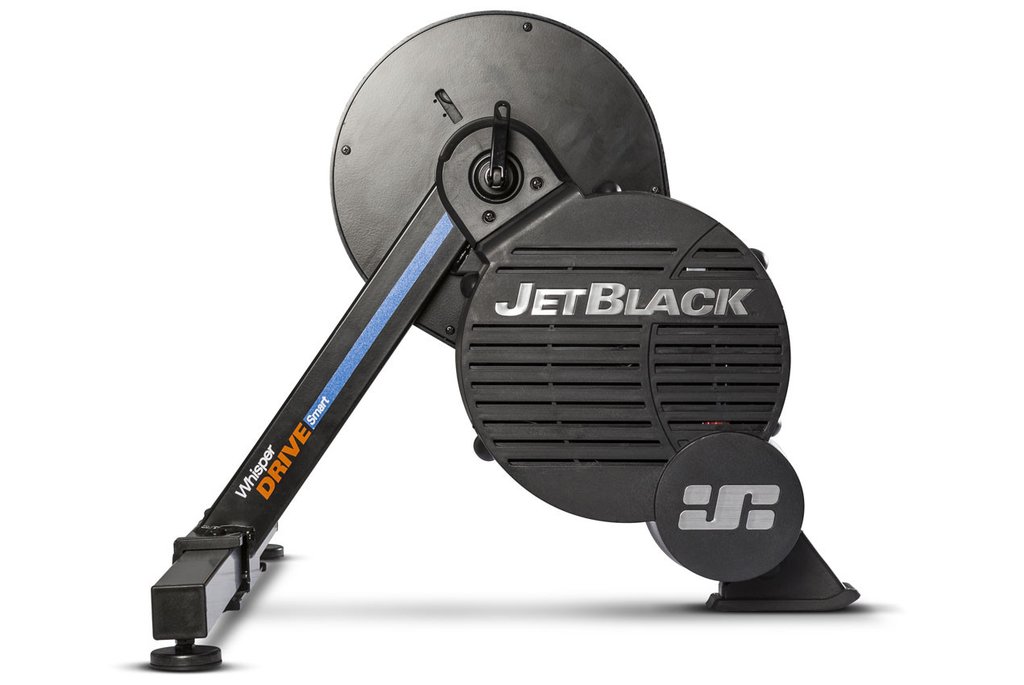
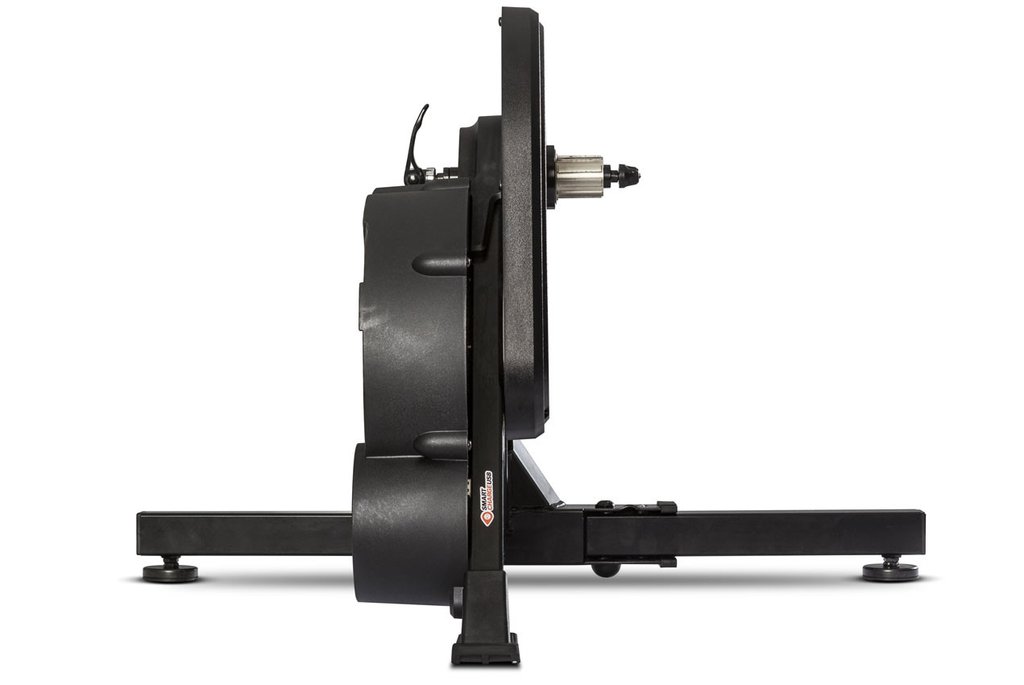
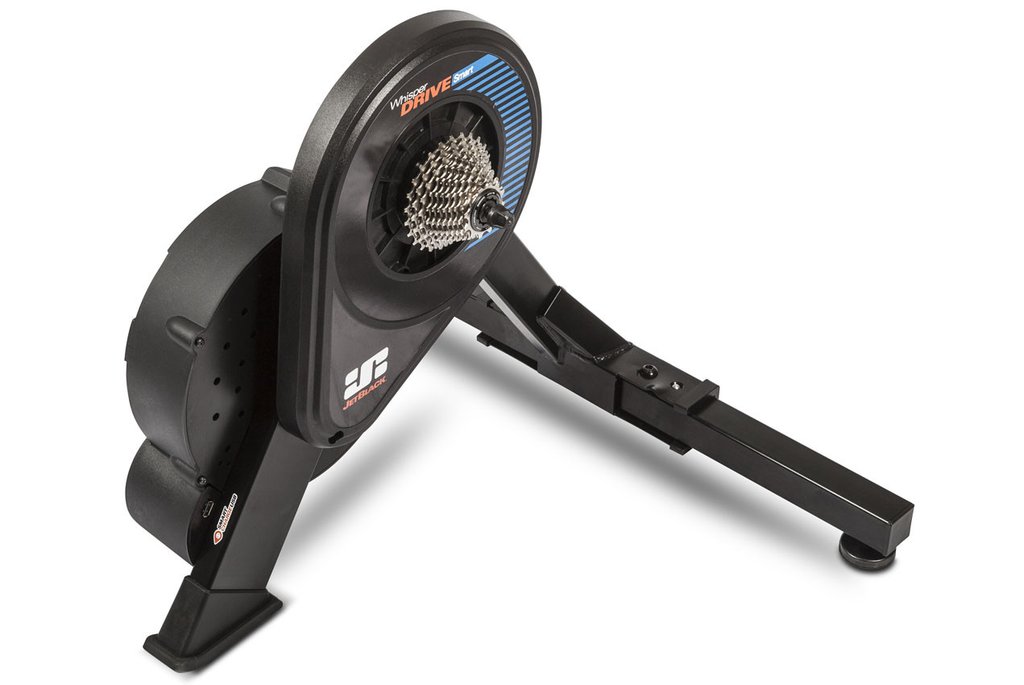
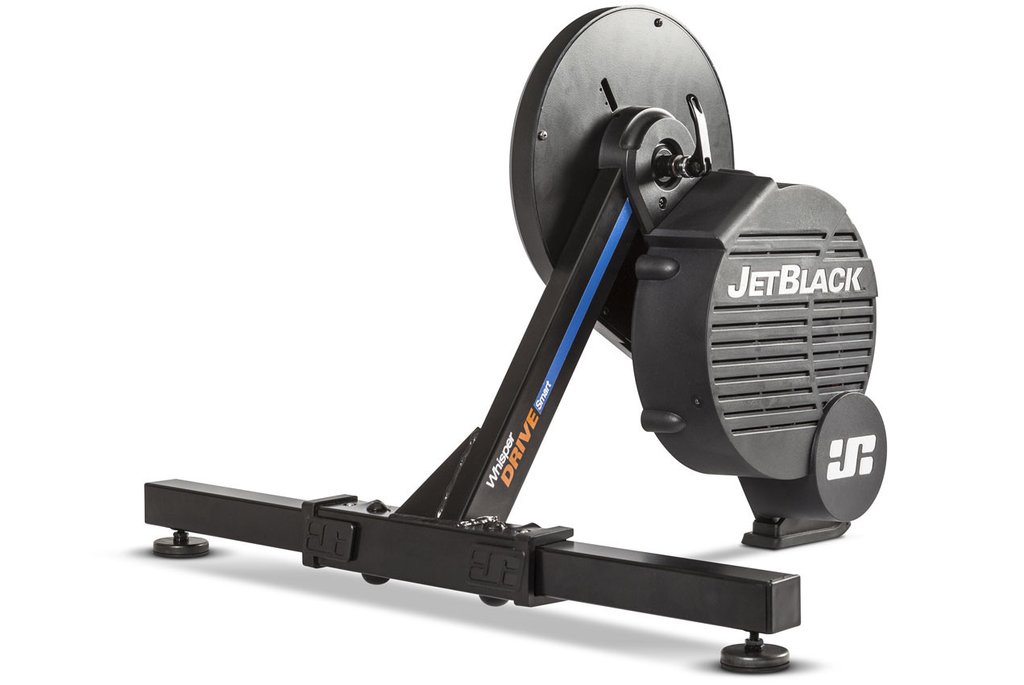
Australia-based JetBlack has announced the latest version of their WhisperDrive direct-drive trainers, named WhisperDrive Smart. This is JetBlack’s first electronic smart trainer (the original WhisperDrive provided magnetic resistance through manual control.)
Trainer specs include everything we’ve come to expect in a direct-drive smart trainer, including dual ANT+/Bluetooth wireless connectivity and compatibility with a broad range axles and cassettes. Additionally, the WhisperDrive smart boasts some strong features including:
Impressive resistance of up to 1600 watts at a 12% incline
A real 6.5kg/17.5lb internal flywheel for a realistic road feel
Whisper-quiet performance (see noise test video below)
Look Mom, No Cord!
One standout feature of this trainer is that it is power cord free. That’s right–you generate the power! (Only the Tacx Neo offers similar capabilities for direct-drive trainers, although it seems to operate more smoothly while plugged in.) The trainer also includes a USB smart charge port, so you can keep your phone or tablet charged as you ride.
If you ride the trainer without connecting it to a control source such as Zwift or another app, it reverts to “progressive power mode” and behaves like JetBlack’s standard fluid trainer.
The trainer does not ship with a cassette. Industry sources say it is set to retail for a very attractive AU$1,100, while international pricing is to be confirmed.
The “Watts up with Power?” ride is likely the slowest group ride you’ll find on Zwift, because it focuses on learning the basics of power based training while riding together on Zwift. Each ride is streamed to Zwift LIVE by ODZ on Facebook, and focuses on teaching specific principles of power-based training. For viewers that are unable to attend live, the teaching is made available for all to review afterwards.
Here is the summary for May 17th from ride leader Nate Dunn.
Looking at your ride data can be overwhelming. Squiggly lines, scatter plots, and power training jargon. For a lot of athletes their first response is to tune out. Let’s examine a simple system to help you get the most out of your ride data.
Developing Your Own Perspective
Start by asking yourself these questions.
What do you want to see?
What perspective allows you to best see what you’re looking for?
Answers will vary but the basic concept is to develop your own perspective on viewing data that works for you. Start with simple, then add more data channels as you see fit.
Looking to analyze an interval workout? Hiding all data channels other than power and HR might be your most effective perspective. No need to get distracted with every piece of data available when your objective is to determine whether or not you nailed a power target. So you’ve worked out an effective “perspective” to view your data. Now what?
File Review System
Here’s a simple system for getting the most out of each of your ride files
Ask yourself, what was the objective of the ride?
What story does the data tell? Did you succeed or fail at your ride objective?
Were there any external factors that influenced your success or failure?
Reviewing an Interval Workout
Let’s practice that system on a typical 2 X 20 Threshold interval workout
What was the ride objective?
To spend approximately 40m near a threshold intensity.
What story does the data tell?
I was successful at executing each interval as designed. Pacing was solid with consistent power throughout each interval.
Were there any external factors that influenced my success or failure?
Temperature was cool and comfortable
Early morning ride full of energy
Low stress, relaxing weekend at home in the days prior
Rest week last week had me fresh, motivated, and ready to attack this ride
Developing Your Own Process
Your process might look different but the basic mechanics should be the same.
Develop your own perspective to view your data
Decide what you’re looking for
Use your data to determine the success/failure of your ride objective.
Try to better understand the context of your success/failure by identifying influential external factors