Home Blog Page 498

The basics of building your own training plan

The basics of building your own training plan

The “Watts up with Power?” ride is likely the slowest group ride you’ll find on Zwift, because it focuses on learning the basics of power based training while riding together on Zwift. Each ride is streamed to Zwift LIVE by ODZ on Facebook, and focuses on teaching specific principles of power-based training. For viewers that are unable to attend live, the teaching is made available for all to review afterwards.

Here is the summary for March 15 from ride leader Justin Wagner.


If you’ve ever looked into following a training plan, you have likely noticed that they can be rather complex and highly specific. Here are a few tips to help you understand the basics of how to build your own training plan.

1: Pick your events and annual goal

The purpose of any training plan is to help the athlete achieve their goals, and to be on form for the event(s) that build towards or accomplish those goals.

Look through the big events you want to do for the year, and get them on the calendar. Some of the events you did last year might not match your personal schedule this year.

Pick a small number of goals for the year that will be your main area(s) of focus. Even just one goal is sufficient.

Figure out your event schedule early, so you can build your training plan around it.

2: Build training structure around your events

Look at your annual event schedule, and pick out which weeks are going to be hard or easy weeks.

Don’t schedule more than 2-3 hard weeks consecutively, and don’t try to plan hard training weeks when you can’t devote the time required for them.

Most importantly be honest about the amount of training you’ve done before, and don’t try and push yourself way beyond those limits too quickly. Many people ditch their training plan because they tried to push themselves too hard too quickly.

3: Nail down specific weekly targets

Each week needs to have an overall goal for total TSS, as this will help you choose your day to day workouts.

Pick a TSS that will push yourself up to the next level, and target to have a ramp rate of 6 or less on your hard weeks.

Your easier weeks should target a TSS of no more than your current CTL times 7.

4: Adapt to unforeseen factors

Life happens. We are all human, and we can’t know all of the things that will happen to use during our training plan.
Plan a specific day and time each week to sit down and review and adjust the upcoming week’s training plan, taking into account your overall plan structure, and any unforeseen changes that happened along the way.


XRS-ZTR DeCat – Triple Vision

0

XRS-ZTR DeCat – Triple Vision

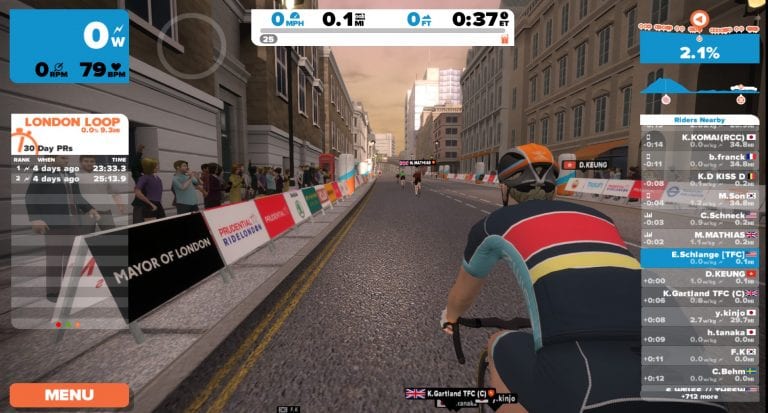
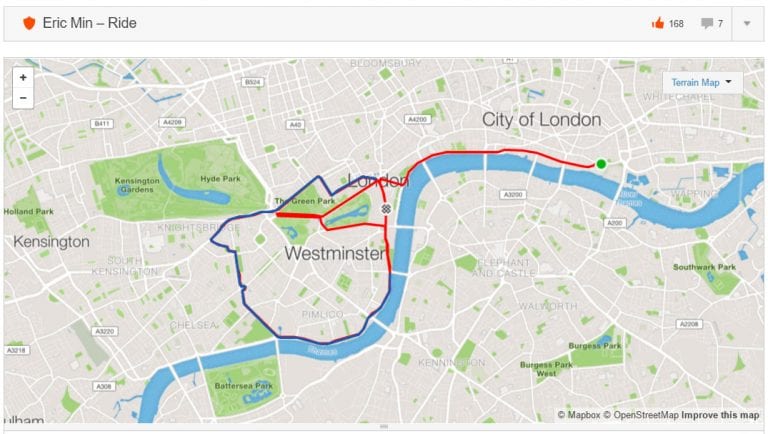
The newborn XRS-ZTR DeCat race of March 13th took place on the fast London Classique course. Adam Webb (Vision) was the fastest to cross the finish line after 5 laps of the flat English course. Quentin Lafaye (Vision) took 2nd and Aarron Locks (Vision) completed the podium.

Gama (PTz) didn’t count his efforts.

Right from the gun, the race went fast and furious. Over the first climb up to Trafalgar square, the first selection was made and 12 riders formed the first peloton: Gama (PTz), Fabes (Team X), Marcher, Henderson, Bank (BRTeam), Stellings (BRTeam), Whiteley (BRTeam), Locks (Vision), Lafaye (Vision), Webb (Vision), Roberts and Watson. The Portuguese rider from PTz was one of the most attacking riders during the race, even if he got dropped from the pack at times, always managing to find his way back, and earned himself the q/l Report-Combativity Award of the day. As the race went on, the Vision climbers made the pack grow thinner every lap.
Coming into the last lap, 8 riders were still in contention for the win: the 3 Vision riders, Whiteley and Stellings (BRTeam), Marcher, Roberts and Gama (PTz). The last climb up to Trafalgar saw Aarron Locks leading Adam Webb out of the pack, and allowing him to go alone for the win. “I love team racing, says Locks. Sacrificing yourself to help a teammate get the win, even it it means destroying yourself, is worth every effort.” Taking his first official win of the month, Adam Webb (Vision) managed to keep a 5-second gap between himself and the pack. “The team effort today was just amazing, says Webb. Having climbers on that course helps grinding down the guys, and allows to focus on controlling. As long as they were in the pack with me, I knew I’d be fine.

“They don’t need Discord to know what the other thinks”

The bunch sprint, coming a few seconds after the winner, was won by Lafaye (Vision), with Locks (Vision) “locked” in his wheel, and barely holding the 3rd place over Phil Whiteley (BRTeam). “The real strength of this team is that riders know each other so well that they don’t need Discord or text to know what the other is up to, and that might’ve made the difference today” appreciates Vision team manager. Taking 2nd place in the B category, Jens Rasmussen was also committed to his “task” as he explained it: “I got dropped coming into the first lap, but I hung on to allow the team to get first place in the team ranking as well. That’s something we value a lot, and I wanted to do my part.

Even though it was a “DeCat” Race, meaning no categories were involved, it’s only fair to take a look at the B, C and D winners. Holding on to the first pack for a long time, Travis Henderson was the first B to cross the line. Swedish rider Daniel Ahlin took the “win” in the C category and Carl Jobling, out of Great Britain, did the same in the Ds.

Check out full results on ZwiftPower.com >>>

XRS-ZTR DeCat Race – March 13th:
1- A.Webb (GBR-Vision)
2- Q.Lafaye (FRA-Vision)
3- A.Locks (GBR-Vision)
4- P.Whiteley (BRTeam)
5- R.Gama (POR-PTz)
6- M.Roberts (GBR-U/A)
7- S.Stellings (GBR-BRTeam)
8- J.Banks (USA-BRTeam)
9- J.Watson (GBR-U/A)
10- M.Sirbu (MOL-BRTeam)
q/l Report-Combativity Award : R.Gama (POR-PTz)

-the q/l Report-


Zwiftcast Episode 22

Zwiftcast Episode 22

Episode 22 of Zwiftcast has been released. Here’s the full episode description:cription:


An episode which focuses on the pro riders using Zwift, taking in current pro riders, a new pro rider in the form of Leah Thorvilson, the winner of the Zwift Academy scheme which used the platform as a talent trawl and a former pro rider who’s discovering a new lease of racing life virtually.

Shane and Nathan get the day off as Simon travels to Girona to spend some time with the Cannondale Drapac team. Whilst there, he caught up with Andrew Talansky and Taylor Phinney, huge stars on the World Tour circuit and enthusiastic Zwifters.

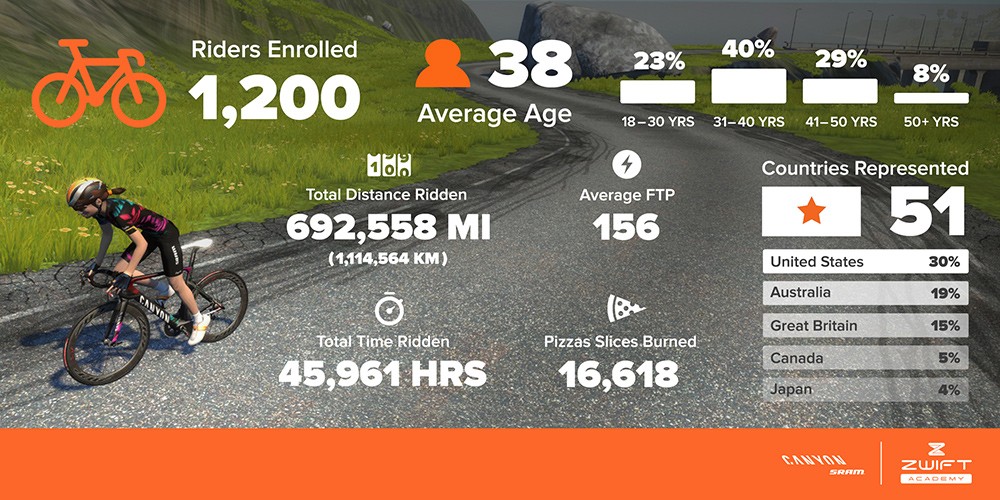
Leah Thorvilson has just completed her first UCI races with her new team Canyon SRAM, WMN Cycling. She talks frankly about the “horrifying” aspects of racing as part of the pro peloton but also how much she’s learning – and how fast.

Adrian Timmis raced the Tour de France in 1987 as part of the ill-fated Halfords ANC British team. Now he’s back racing, but on Zwift and he’s as competitive as ever. Adrian reflects on his experiences.

This episode is also packed with pro tips, from the pros, on how they use the platform to hone their form. Hear about “favourite” intervals from Patrick Bevin; Ryan Mullen; Tom Skujins – and what a debt Brendan Canty owes to the Zwiftcast’s very own Shane Miller. There’s also an interview with the team’s performance director, Keith Flory, explaining the value of indoor training.


Transitioning to outdoor training

Transitioning to outdoor training

The “Watts up with Power?” ride is likely the slowest group ride you’ll find on Zwift, because it focuses on learning the basics of power based training while riding together on Zwift. Each ride is streamed to Zwift LIVE by ODZ on Facebook, and focuses on teaching specific principles of power-based training. For viewers that are unable to attend live, the teaching is made available for all to review afterwards.

Here is the summary for March 8, 2017 from guest ride leader Nate Dunn.


If your primary introduction to training with power has come via Zwift, spring weather might be shifting your mindset to riding outdoors.  Here are a few tips to aid in your transition to outdoor training.

1:  Know your Equipment

Make sure you understand the quirks and limitations of your power meter.  What is the proper calibration procedure?  Is it installed properly?

Get familiar with how to operate your head unit.  Make sure you understand how to sync with your power meter, record your rides, and sync to your training app.

If you don’t already, buy a powerful tail light with at least 70 lumens.  Increasingly your visibility at dusk and during the day might save your life.

2:  Know your Environment

Get to know your local terrain.  Where are the best stretches of road to get work done?  What is the longest stretch of road you have for continuous riding?  Where are the best spots for sprints?

Get better at planning ahead.  Understand how heat will impact your rides and plan accordingly.

If your ride time is changing (perhaps to the afternoon), think more critically about your nutrition throughout the day.  What you eat while at work will impact the quality of your riding in the afternoon.

3:  Know the differences in Training

Confirm your threshold/training zones for outdoor riding.  Between a different power meter and different environment, your power output will more than likely be different.

Dial in your head unit to match the purpose of your ride.  Get familiar with how to create and navigate different data fields.

Jump into the local ride scene.  No matter your fitness/experience level, there is always a group to welcome and push you toward progress.  Use competition to get better.


How to Find Your Zwift ID

How to Find Your Zwift ID

Your Zwift ID is a unique number assigned your Zwift account. It is used by ZwiftPower and other third-party apps who connect to your Zwift data. Here are two ways to find your ID…

Via PC/MAC File System

Your Zwift ID can be found in the desktop version of Zwift by going to Documents->Zwift->CP. The folder names here (eg, “user123456” use the ID’s of every Zwifter who has ever used your computer.

If you see multiple folders and are unsure which one belongs to your account, look at the dates of the files inside the folder, which will correspond to dates you have used Zwift on this computer.

Via Any Web Browser (including iOS or Android)

Log into https://my.zwift.com/, click to view the details of one of your activities, then click the gear to edit the activity or download its fit file. Hover over the “Download Fit File” button. Your ID is shown just after prod/ like so https://s3-fit-prd-uswest2-zwift.s3.amazonaws.com/prod/654321/a2e1b7f8-27610843

Want another solution? The ever-helpful Christian Wiedmann has created a simple lookup tool for finding your Zwift ID using your Zwift login. See it here >

Getting ZwiftPower Errors? Opt in!

If you’re using the correct ID but ZwiftPower says it does not recognize your Zwift ID, this means you have not opted in to share your Zwift data with ZwiftPower. This is required due to GDPR privacy requirements. Here’s how to get it done:

  1. Log into my.zwift.com
  2. Click My Profile
  3. Click Connections
  4. Scroll to the bottom until you see the ZwiftPower icon and click to Opt-In. All done!


Strava Smackdown Series, week 4: Epic KOM

0

Strava Smackdown Series, week 4: Epic KOM

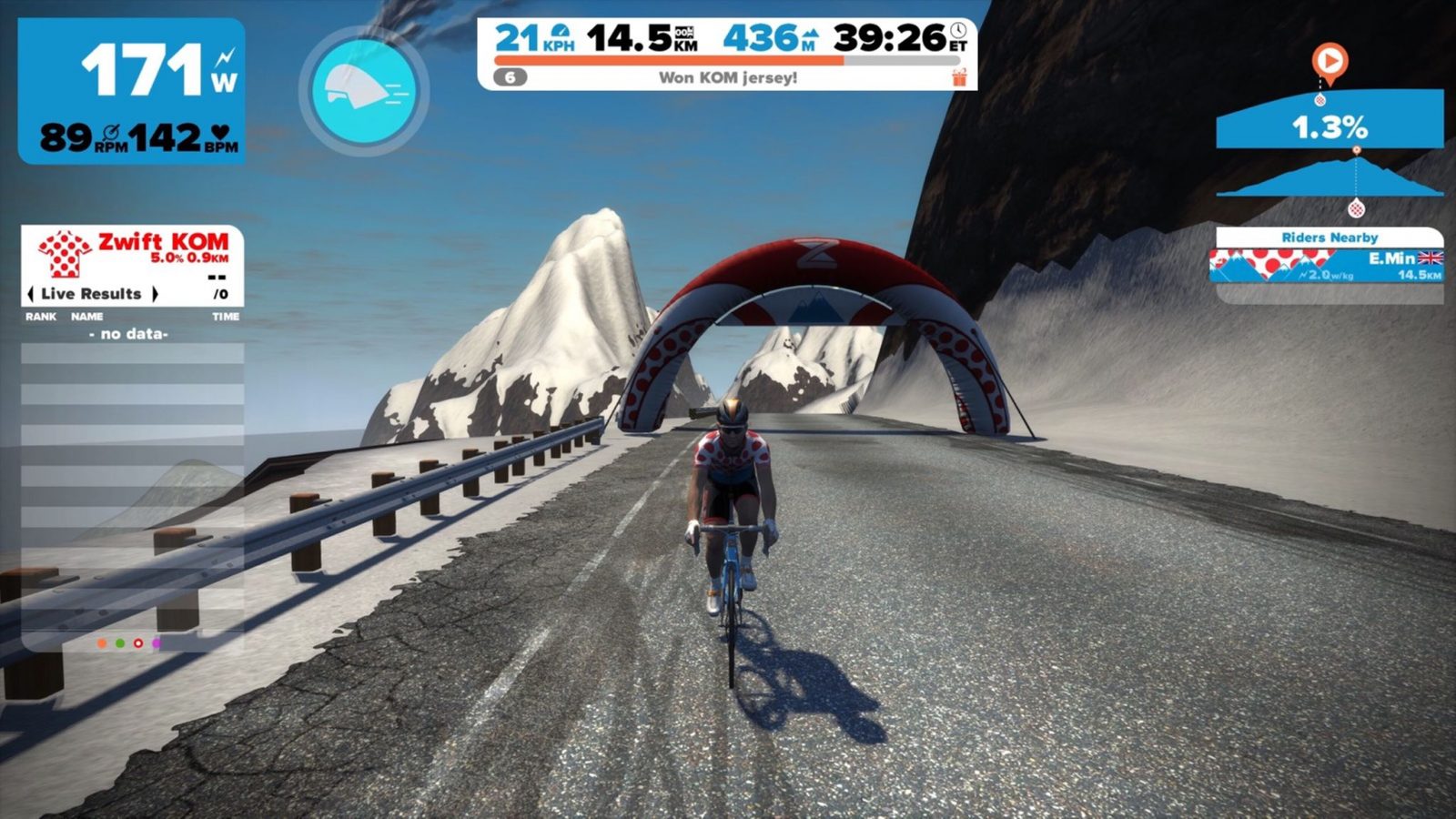
This week’s smackdown covers our toughest segment yet: Watopia’s Epic KOM! The Strava segment is titled “Epic KOM Forward (Zwift Insider verified)” and covers 5.9 miles with 1361′ of climbing. You can learn more about the route here.

See week 4 round live standings >

Prizes this Week

First place for men and women will each receive a swag bag from our friends at World Bicycle Relief.

Three other random finishers will receive a Zwift water bottle from ZwiftHQ! These high-quality Specialized Purist 22oz bottles will make an excellent addition to anyone’s indoor setup.

How to Enter

Entry is easy–the ride is the hard part! Simply join the Zwift Insider Strava Smackdown league on Strava LeaguesClick to join >

Then ride the Epic KOM segment and upload your ride to Strava. (Hint: the easiest way to ride that segment is to choose the “Mountain Route” on Watopia. You will see the Epic KOM timer start at the top of your screen once the climb begins.)


Is trainer use covered by your warranty?

Is trainer use covered by your warranty?

I’ve previously written about how it is safe to use your carbon bike on a trainer. (Read the linked article for more details, but in summary, I agree with many industry leaders that there is insufficient evidence to support the idea that trainer use places undue stress on carbon frames.)

Given the huge number of bikes being used on trainers, it is also true that some frames will inevitably fail while being used on a trainer. What happens then? Will your frame be replaced under warranty, or will you need to pay for a new one?

User Error vs Defect

First, it is important to note that there is a difference between “user error” (such as a bike crash) and manufacturer defects (defective carbon layups, etc).

On a trainer, “user error” typically involves using the wrong skewer, or improper tightening of the skewer or skewer clamps. These mistakes can allow your bike to disengage from the trainer (especially under hard efforts) and the resulting chaos can cause real damage to your frame.

No one would expect bike makers to warranty damage caused by user error. In this case, it is common practice for manufacturers to offer “crash replacement” frames at a steep discount.

Manufacturer defects, though, are outside of the rider’s control and should be warrantied whether they are discovered outside on the road or indoors on the trainer. But sadly, some manufacturers don’t see it this way.

Which Brands Allow Trainer Use?

There is no clear answer to this, but I’ve created two lists below of brands which, based on my research, are friendly or unfriendly toward trainer usage. If you have personal experience with other brands, or your experience contradicts what my list shows, please comment below.

Trainer-Friendly Brands

Trainer-Unfriendly Brands

The brands below either explicitly state in their warranty or manuals that trainer usage on carbon frames voids their warranty, or their manuals are unclear but additional research has shown that they do not warranty damage which occurs during trainer use.

  • BMC
  • Look
  • Seven Cycles
  • Specialized
  • Trek

Marketing vs Reality

Perhaps the most disappointing aspect of the current situation is most (if not all) of the “trainer-unfriendly” manufacturers actively market their products with trainers:

  • We see pro teams on trainers before and after races
  • We see trainers in use in local bike shops or at manufacturer’s headquarters
  • Some manufacturers (including as Trek and Canyon) sell trainers on their websites
  • Canyon, Specialized and Trek have all partnered with Zwift on various major events

If trainer use voids the warranty, marketing efforts should not encourage trainer use.

What’s the Solution?

It’s time for manufacturer’s to explicitly include trainer use as part of the warrantied “normal use” of their bikes. This is a move that would put the customer first, and I applaud the manufacturers who have already done it.

In the market for a new bike? Make your voice heard: ask if trainer use is covered under the warranty. If it isn’t covered, let them know you are disappointed and will be purchasing another brand. If it is covered, give them your business. Dollars talk!

Further Reading/Listening

Updates:


Strava Smackdown Series week 3 winners

0

Strava Smackdown Series week 3 winners

For our third Strava Smackdown week, 83 riders took on the Volcano Flat segment. Here are the podium finishers!

All finishing times can be seen on this round’s page at stravaleagues.com.

Water Bottle Winners

Along with Wahoo Fitness swag bag prizes for our first place finishers, three random entrants will also get a water bottle from ZwiftHQ. Those three winners are:

Claim Your Prizes

Since we have no way of directly contacting entrants, prize winners must email [email protected] by March 14th with their full name and mailing address so we can get your prizes shipped out.


Interview with TGIF ride leaders Eric Grant and Wes Salmon

Interview with TGIF ride leaders Eric Grant and Wes Salmon

A note from Eric: I recently published a post about the best slow group rides on Zwift. The TGIF ride is one of the oldest and most loved slow group ride on the list, so I decided to interview ride leaders Wes Salmon and Eric Grant and learn more about themselves and the ride. 

First, a little about yourself. Where are you from, and how would you describe yourself as a cyclist?

From Eric: I live in Austin, TX, but I started riding about 10 years ago when I lived in Maryland.  I’m a fair weather rider which pretty much means year-round in Austin.  I got into cycling to commute to work when Hurricane Katrina hit and the gas prices sky rocketed but I’ve stuck with it more to stay healthy.  I’m a Clydesdale and probably will always be but in the last 5 years I’ve lost ~120lbs, mostly from cycling and ~75lbs of that after starting Zwift in August of 2015.

Tell me about the slow ride you lead. When does it happen, how long is the ride, what sort of pace do you hold, etc.

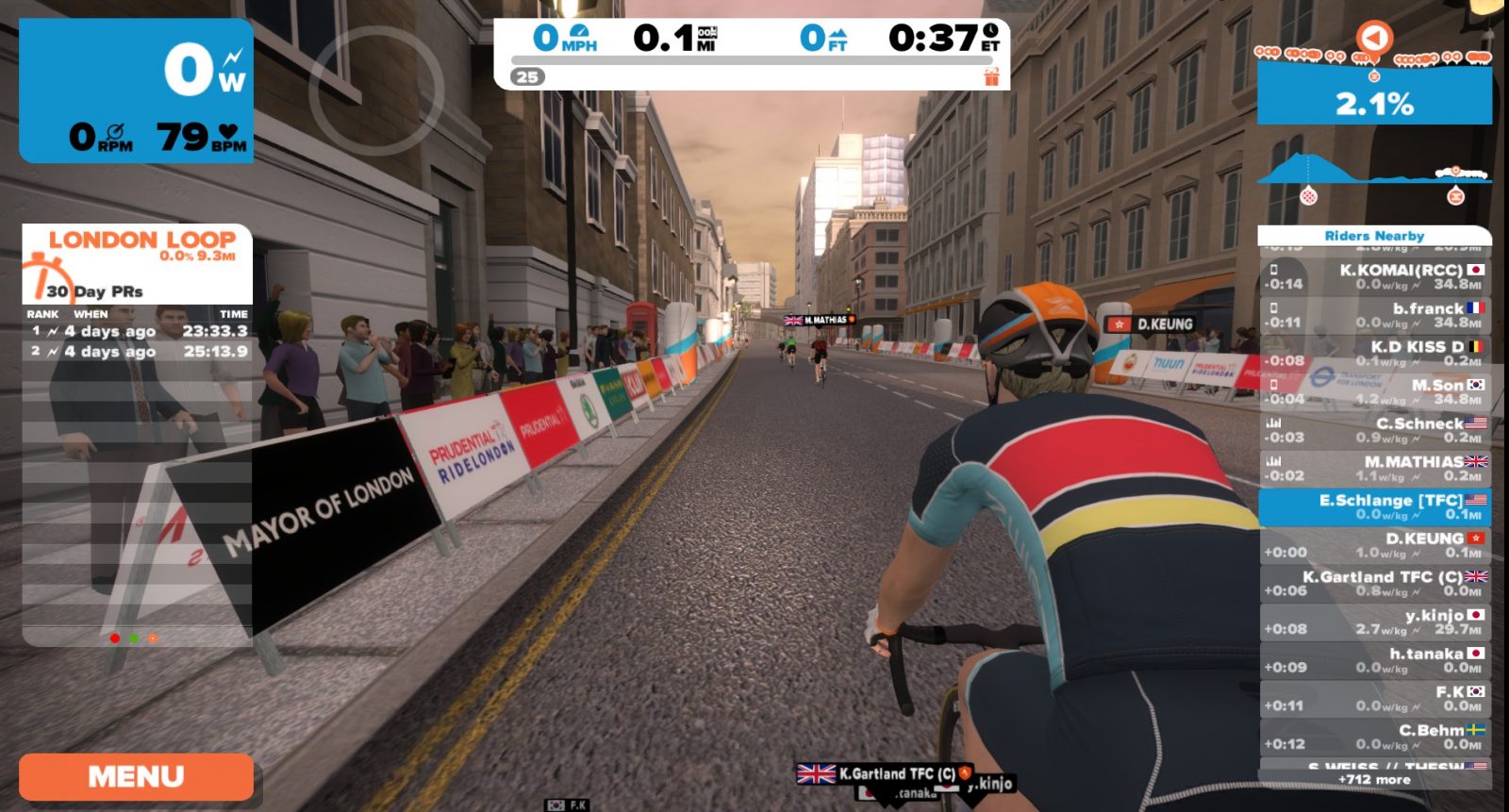
From Eric: TGIF is every Friday night.  It started as a North American Ride but we do see some Australian riders join on their Saturday morning.  In London the ride is 5 laps Classique (20.4miles) plus After party (~6-10 miles).  Our ride lasts about an hour for the 2w/kg event part and maybe 1hr 20min if you stick around for the After party.  As the rider with the leader beacon I hold 2w/kg in Erg mode through my trainer app. Since I’m a heavier rider I also adjust my weight for the ride so that it’s a more average 160w/170lbs.  If flyers ride off the front we let them go, but if riders get dropped we do all that we can to bring them back to the group.

The two events that make TGIF special are the Points System and the After Party.  The points system is basically a fun game we play during the ride to hold the group together.  Every 10 minutes we take a screenshot and the closer you are to the Leader, the more points you get.  It sounds easy, but only 16 out of 150+ riders gets points every 10 minutes.  Some of the riders even try to add a twist to it by trying to get captured in the screenshot with either orange w/kg or 0.0 w/kg.  At the end of the season there are random prizes awarded and those with higher points have a higher chance of winning.

The After Party is similar to what some other rides do, where after the main 2w/kg ride is over a smaller group goes a little harder.  We change this up every week and we vote on it in our Facebook group.  If we are in London, our choices are usually 2 laps Classique @2.5w/kg and we go for the sprint point, 1 lap Classique race, Fox Hill or Box Hill.  The sprints are very popular because with a large group they can really open it up, but the climbs are a good change from time to time.  The voting stays open until the end of the 4th lap so it becomes a running tally as people ride and log into Facebook to vote.  The After Party is a pure old school Zwift group ride with no leader beacon because it’s decided during the ride.


How many riders have you been seeing on your ride lately?

From Eric: Our Max was 206 riders on 1/7/2017, partially due to the January group ride prize.  At 200+ it was pretty unmanageable since many of the riders couldn’t see the Leader Beacon.  Last week we had 138 and this week 157.  We grew considerably when winter hit, from 40-65 to over 100.

Some group rides on Zwift have been around for quite a while, while others are relatively new. How long has your ride being going? What was the inspiration behind starting it? 

From Wes: The ride was originally created by Chris Ryder and William Kwan back in the Fall of 2015.  The inspiration was to create a ride that focused on socializing at a recovery ride pace at the end of a long week.  At that time in Zwift, most of the group rides were more performance focused and TGIF was one of the first 2w/kg or lower targeted rides.

I joined the first TGIF ride with Chris and William on Sept 18th, 2015.

After a few months of TGIFs, Chris had to take a break due to an injury and I offered to step up and lead the ride while he recovered.  The result was that I became the defacto leader of TGIF through May 2016.

From Eric: I think TGIF was the first group ride I ever did and I guess I missed the first week but I was there for the 2nd. I helped out by calling out landmarks before we had the Leader Beacon so everyone could find the Leader. Shortly after the Leader Beacon first came out we didn’t have a set leader so TGIF fell off the sponsored event list.  People still showed up for the ride, and after one frustrating ride around June I decided to contact Chris Ryder and Zwift to take over the Leader position and turn TGIF back into a sponsored Zwift event.  We’ve just grown since then, but many of our riders have been with us since the beginning.

Many group rides are run by a team–sweepers helping those off the back, different leaders rotating responsibilities, even others helping to advertise the ride, etc. Who helps make your ride happen?

From Wes: We have been really lucky to have some amazing people step up over the years and we have never really used sweepers or rotating leaders.  The key thing we did early on before Teamspeak became popular was to have someone in the ride texting out leader location as we passed known landmarks.  This helped keep unintentional flyers in check.

We never really went looking for sweepers but we’ve always been a social ride so people look out for each other, so a few of the regulars usually help sweep.  I’m not really a social butterfly but it seems that we have a vocal group, so often when the conversation comes about 2w/kg rides someone speaks up and that’s how most of our advertising comes from word of mouth.

In all honesty the group makes this ride happen.  Someone suggest to have a bot set at 2w/kg instead of the leader and I’m all for that because we are more about the social aspect of the ride instead of holding a specific wattage.  The conversation and the good times is what keeps bringing people back.

Do you have problems with “flyers” zooming off the front of your rides? How do you handle that situation?

From Wes: Sadly we do have flyers and as the ride continued to grow, it became more common for the group to be split up due to a fast front pack not sticking with the leader.  In an attempt to fix that, we created a game within the game to encourage people to stick with the leader (see “Points System explained above).

The result is that those who want to fly off the front still do and the group who wants to stay with the leader really doesn’t care.  Some even say they are glad the flyers leave us behind, it makes it easier for them to get points.

From Eric: Wes is the brains behind the points system and it’s amazing to see how tight the group gets every 10 minutes hunting for those points.  It makes me feel popular when everyone is trying to hug my wheel.  I just ignore the flyers and let them go their way.

Here is a screen shot from one of our points checkpoints and you can see how tight the group is in the elevation profile, even at 157 riders.  We do spread out between checkpoints but they seem to manage to come back together to get those virtual points.

Does your ride use Discord for audio communication? If so, how can folks get in on that?

From Wes:Yep, we switched from Teamspeak to Discord after the new year and it’s been really great for the points game.  We can post real-time screenshots at every 10 minute mark so riders know if they got points that round.

We have over 175 members of our Discord server and it grows every week.

People can join our Discord server at http://discord.me/tgif

As you know, we’ve got lots of new folks joining the Zwift community. What would you recommend to anyone who wants to try your ride, but has never done a Zwift group ride before?

From Wes: A few things:

  • Get on the Discord server, lots of verbal help happens there before and during the rides
  • Learn the camera hot keys so you can find the leader beacon, it’s the most important part of the ride
  • Practice the draft.  Even though we’re a 2w/kg ride, we go FAST when you have 150+ riders in a group.  Falling out of the draft even by a few seconds can mean you never catch up
  • Ask for help, the core group of TGIFers are super helpful
  • Follow the Leader Beacon, not the front rider.  Unlike real world rides you can’t ride to the front and slow the group down, that just speeds up the group.
  • Use the elevation profile to see if you are ahead or behind the leader beacon.

Zwift has come a long way in the last year with the event module, leader beacon, etc. What other upgrades could Zwift roll out to make your group rides even better?

From Wes: I think they could focus more on discouraging bad behavior for specific rides like a social recovery ride.  There have been some ideas thrown around about auto kicking flyers out of the group and I think those types of things make sense but I’d also like to see well-behaved riders get bonuses as well.  Integrating something like the points proximity game into a group ride would be great.

From Eric: I know Zwift has talked about it but integrating something like Discord into Zwift should be a priority.  We have a good group on Discord but a large majority of the ride is missing out on that conversation.  I know there are some difficulties getting the mics setup, but just being able to listen to the chat would be a major step in improving the social aspect.  Many people already just listen and respond in Zwift chat.

There are many things that Zwift could do to give the Leaders more control (or any control) but I think we get by with what we have and it’s working.  There are other things I would prefer Zwift to work on.

Wes wanted to make sure Eric got the credit he deserves, and sent me this additional note:

When I quit Zwifting for the Summer in 2016, Eric was the reason TGIF continued being a great ride.  He took it over and kept things running smoothly while the group continued to grow.  Without that, I suspect there would be no TGIF right now.  He is an amazing ride leader and the entire TGIF group owes him a debt of gratitude for his leadership.


Small group sprint finishes (Skillz and Drillz – February 29)

Small group sprint finishes (Skillz and Drillz – February 29)

Last week we discussed chasing as a group, so today we covered how to finish off your race from the small group.  Sprinting from a small group is a different animal than sprinting from a large field with the help of teammates.  In the small group, the smarter or more situationally-aware rider can sometimes outwit the stronger rider.  At the end of the day, though, your legs have to still put out the power to get to the line first.

As usual, we started with our 1.5 W/kg warm-up and practiced moving around the bunch.  After about ten minutes we got into class.  Like I stated earlier, sprinting from a small group is different than a field sprint.  In general, there are three types of moves that you can make in the final sprint:  the cagey sprint, the high speed sprint, and the sprint from the front.  During the class, we executed each two times to make sure everyone got the feel for the effort.

Cagey Sprint

This is something everyone has watched in a small group, breakaway finish.  The cagey sprint occurs when you put another rider on the front and use his or her slipstream to slingshot you around for your sprint.  It is a surprisingly simple tactic, but everyone knows it is coming.  To execute the cagey sprint, you have to keep working into the last kilometer or so.  At that point, you have to make a concentrated effort to slow your effort rapidly, forcing the riders behind you to take the lead position, giving you an aerodynamic advantage.  The difficult part will be staying off of the front as the riders on the front will not want to be there.  That’s where the caginess comes into play.  As the pace starts to wane, you have to make the determination of when to launch your sprint based on your fatigue, the terrain, and the wind.  However, you have to be in the gear you desire to open your sprint.  Otherwise, you could fall victim to the sprint off the front technique (we’ll cover that later).  As you approach your identified launch point, let a small gap of a couple of meters open between you and the rider in front of you.  Once the gap opens a bit, start the sprint and slingshot around the riders in front of you.  Be careful to not launch to early because the other riders are sure to respond, and the advantage of surprise will be lost.

This type of sprint can be a bit longer than some, but you shouldn’t go from much more than 400 meters, or you risk fading in the last 50.  I will caution you that this is an easier tactic to pull off on the road than on Zwift.  Other riders can see your W/kg without putting themselves in danger, so the element of surprise is not as powerful of a tool.  On the road, you have more options.  You can go when all riders are looking forward or to the side away from where they look most often (most people have a preferred side).  If they look right and you go left, you may be able to get an extra bike length or two before they process what just happened.

High Speed Sprint

Basically, you execute this sprint when the group you are in does not have a big enough gap for games.  Thus, nobody can afford to let off the gas to try to put someone on the front, usually because the main field is charging up behind them.  You see this periodically in rolling sprint stages at the Grand Tours towards the latter part of the three weeks.  To execute this technique, you need to be in the first four wheels.  Third wheel is preferred.  Any further back than that, you will burn your max power just getting to the front and likely won’t have enough to hold off your group.  From third or fourth wheel, let a small gap of two to three meters open, but no more.  Shift up a gear or two if you can, dropping the cadence to the high 60s or low 70s.  Use the small gap to build to max power.  You need to be at max power as you come around the wheel in front of you, or you will not be able to break the draft.  You will simply lead out the riders you just passed.  Due to the speed that the group is already riding, you need to delay the sprint as long as possible to take advantage of your ten second power and hold off the group as the riders respond.

Fortunately, the group will probably shatter almost immediately under your attack, and there will likely not be any collaboration between individuals unless they are teammates.  This technique is much easier to pull off in Zwift than in IRL racing.  Jumping out into the headwind can just crush your motivation, and you will be too hypoxic and delirious from lactic acid to have a good understanding of how your competitors have reacted.

Sprint from the Front

Of all three, this is the least likely to succeed unless you are simply way stronger than those behind you or have a teammate on your wheel who will let the gap open.  There is no reason to want to do this technique unless you get put on the front and can’t get off of it.  Try and try again to slow the pace and put someone else on the front.  As you do so, watch the reactions of the other riders.  If you can lull them into a pattern, they will start paying attention to those behind them and not to you.  Be mindful that you need to start this process early, preferably well before the 1km to go banner.  That way, you have a chance to get off the front or get them to think about other riders.

In live road racing, you can look at what the other riders are doing, and that will cue you in to how they might react.  In Zwift racing, you can only watch their w/kg data and look to see if they stop pedaling when you slow down.  If they do, that’s when you time your launch.  Same goes for IRL racing.  If the riders begin looking around, look back and ease off the pedals like you have done five or six times already.  The key is to look back first.  As soon as the second wheel turns his or her head, you go, and you go hard.  In Zwift, you watch for that w/kg to begin to drop, then you go.  If you do this from about 1km to go, you might get the group to hesitate, as it will have missed the opportunity to respond immediately.  That hesitation is all you need.  Settle into your one minute power and crush the last kilometer.

Conclusion

Now, these techniques are not fool-proof ways to win a race.  Sometimes, you just get out-powered.  Other riders also know these same techniques, so think of it as chess or poker.  Try not to give away what you are doing, and always have a Plan B ready if the situation changes on you.  Next time you find yourself in a small group at a race or group ride with the county line sprint, give one or more of these techniques a shot and let me know how it worked out for you.

Next week, we’ll be on Watopia Flat, and we’ll work on bridging.  Expect some good strong but short efforts.  Until then, RideOn!