Home Blog Page 337

Speed Tests: Learn How Zwift’s Mountain Bikes Perform

30

Important: the info in this post is now outdated. For current info, see Speed Tests: Gravel, MTB, and Road Frames on Zwift Dirt.

Zwift’s mountain bikes perform better in the dirt than road bikes, thanks to a lower rolling resistance (Crr). But how do the individual mountain bikes perform against each other?

Here are the mountain bikes currently available (not shown: the stock Zwift Mountain bike):

We ran extensive tests to find out how each bike performs on climbs, flats, and on the Jungle Circuit. Here are the results…

Flat Pavement Performance

Here’s how each mountain bike performed over two laps of our Tempus Fugit test segment (300 watts steady, 75kg rider):

  1. Scott Spark RC World Cup: 55:40
  2. Trek Supercaliber: 55:41
  3. Scott Spark RC: 55:43
  4. Specialized Epic S-Works: 55:44
  5. Canyon Lux: 55:45
  6. Zwift Mountain: 55:53

The Spark World Cup just edges out the Supercaliber by a consistent 1 second, so we give it the win in this test.

By comparison, the fastest road bikes complete the test route in 50:25, while the slowest road bikes (Zwift Steel with 32mm carbon wheels) complete it in 51:40. So if you’re riding an all-pavement race, you definitely don’t want to be riding a mountain bike, because mountain bike wheels roll much slower on tarmac than road wheels due to Zwift’s Crr settings.

The fastest gravel bikes complete the test route in 53:47, which is what you would expect: the mountain bikes’ big knobbies and poor aero values make them slower than road or gravel rigs on pavement.

But how do the mountain bikes perform in other settings?

Climb Performance

Here’s how the mountain bikes performed up the big Alpe du Zwift climb:

  1. Scott Spark RC World Cup: 55:21
  2. Trek Supercaliber: 55:25
  3. Scott Spark RC: 55:31
  4. Specialized Epic S-Works: 55:36
  5. Canyon Lux: 55:42
  6. Zwift Mountain: 55:53

Again the Spark RC World Cup comes out on top, well ahead of the competition on climbs. It’s certainly a lightweight rig!

The fastest road bikes climb the Alpe in 48:42, while the slower (Zwift Steel with 32mm carbon wheels) complete it in 49:57. So the heavy mountain bikes are well behind, as they should be. Because mountain bikes are heavy, they roll slower, and physics matter!

Jungle Performance

What about the dirt? This is where knobby tires should excel, and indeed they do. Here’s how the mountain bikes perform on one lap of the Jungle Circuit:

  1. Scott Spark RC World Cup: 13:18
  2. Trek Supercaliber: 13:18
  3. Specialized Epic S-Works: 13:19
  4. Canyon Lux: 13:19
  5. Scott Spark RC: 13:19
  6. Zwift Mountain: 13:21

The four brand-name bikes turn in nearly identical performances, with the stock Zwift Mountain bike a few seconds behind.

The faster road bikes complete a jungle lap in around 13:35, while the gravel bikes do it in 13:20. But our mountain bikes shred some gnar and lay the hurt on all those skinny-tired, rigid-forked rigs!

MTB Conclusions

Zwifters really only ride mountain bikes on dirt routes – unless you’re looking for a good workout in a group ride on the tarmac! So which bike should you choose in the Mayan Jungle?

Clearly the Scott Spark RC World Cup is the standout performer here, as it will outperform the other frames on the crucial uphill portion of the circuit while keeping pace on the flats and descents.

Your Thoughts

Have you tried the new Supercaliber? What’s your go-to MTB rig on Zwift? Share below!

All About Zwift’s Trek Supercaliber Mountain Bike

6

Last week’s Zwift update quietly included a new mountain bike – the Trek Supercaliber. This is the first Trek MTB available on Zwift, and they chose a good one – IRL, the Supercaliber is the “fastest, lightest, and most capable cross country race bike we make” (Trek’s own words).

It’s available for 532,500 Drops, for level 20+ Zwifters (the highest level requirement of any MTB in game).

But how does it perform on Zwift? Quite well, as it turns out…

A Lightweight Climber

The Supercaliber is now the lightest MTB in game, turning in an Alpe climb 6 seconds faster than the Scott Spark RC, the next-fastest climber.

Fast on the Flats

The Supercaliber is the fastest MTB in our flat tests as well, beating out the next fastest (Scott Spark RC) by 2 seconds over ~50 minutes.

What about the Jungle?

Most mountain biking on Zwift is restricted to the Jungle or Repack Ridge, since MTBs roll so slowly on tarmac. So how does the new Supercaliber perform in the Jungle?

Not surprisingly (given the above test results) it’s the fastest overall – but just barely, turning in a lap time 1s ahead of the other three brand-name MTBs. If the small 1s difference seems odd, consider that Jungle lap times are around 14 minutes in our tests, while our Alpe and flat test times are closer to 50 minutes. Stretch your Jungle Circuit race out to 4 laps, and the Trek Supercaliber should deliver an advantange of ~4s over the other rigs.

Questions or Comments?

Share below!
Video: Zwift FutureWorks Pace Partners: New Drop Multiplier Game

3

Have you ridden with the Zwift FutureWorks Pace Partners recently? If you stay close to A. Anquetil, B. Brevet, C. Cadence, and D. Diesel, they now reward you by multiplying the Drops you earn while riding. The longer you’re with them, the bigger the multiplier!

In the video below, Shane Miller tries out this new game and gives some advice. He jumps into a ride with C. Cadence and stays as close as he can to the pacer bot. What’s it like to be in a pace group? How easy or hard is it to keep that number climbing? Watch the video and see!

Zwift FutureWorks Pace Partners: Details // New Drop Multiplier Game!

For more information, check out this in-depth post about the drops multiplier game. To ride with a Zwift FutureWorks Pace Partner, you can select their name and choose “Ride With” when starting your ride. Or if you spot them while free-riding in Watopia, go ahead and catch their wheel to join them!

Updates

Since this video was created, Zwift has added beacons above the pace partners, making it easier to see where they are. They also reduced the max Drops multipler to x2.0. Shane discusses these changes and a few more in his latest video.

Zwift Racing League 2020/21 Round 1 Week 3 Guide: 2015 UCI Worlds Course

11

The third week of Zwift Racing League is upon us, and it’s going to be a big one now that qualifying heats are finished. Who will survive the cobbles of Libby Hill, and who will be left to chase?

Divisions are Frozen: Let’s Race!

For divisions with more than ~30 teams, WTRL used the past two weeks as sort of “qualifying heats” to rank teams so they could be broken up into smaller divisions based on ability. So beginning tomorrow, teams in every division are set – no new teams will be allowed to join Zwift Racing League.

Here’s how the divisions are now organized. You can see some divisions (especially the women’s) had lower numbers of teams, so there is only one division. But most divisions had enough teams that they needed to be divided into smaller divisions – so the Men’s EMEA W B division is now EMEA W1 B1-4 and EMEA W2 B1-4. One division becomes eight. This is how you make things competitive for 6000 racers!

Timezone Fun

We’re in that strange time of year where part of the world has changed their clocks, but another part has not. What time is tomorrow’s race? The easiest way to make sure you’ve got it right is to follow the signup link emailed to your team manager – this will show your local race time accurately.

Looking At the Route: 2015 UCI Worlds Course

Here’s a route preview from Rick over at No Breakaways.

The video above was made before WTRL announced some final changes to this week’s route, most notably intermediates changed to top 3 from top 5.

Bike Frame/Wheel Choices

The video above includes frame/wheel recommendations that were made before Zwift slowed down the Canyon Aeroad 2021.

On a course like Richmond, we recommend making your frame and wheel selection based on gaining an advantage for the most important sections of the course. On Richmond, the big selections will take place on the three climbs. So you want a bike setup that will deliver you to those climbs as fresh as possible (aero still matters) and, most importantly, get you up those climbs as quickly as possible (lightweight).

The Tron bike is your clear first choice, based on speed tests run just last week. It turns in the same overall route time as the fastest combination in game (Specialized Venge S-Works with Zipp 858/Super9 wheel) but climbs just a bit faster.

In lieu of the Tron, a second pick isn’t as clear… but the Aeroad 2021 with ENVE 7.8’s would be our 2nd choice, if you’re looking for a bit of a climbing advantage. That combo is just 4 seconds slower than the Tron on a single lap of Richmond – it climbs at the same speed, but is slightly less aero.

Route Breakdown

The route begins on flat roads, taking riders through two sprint points: first the Monument Avenue sprint, then the Broad Street sprint. In terms of distance, this flat portion lasts for half of the route.

A long descent signals the start of the lumpier second half of the route. Riders will quickly arrive on the cobbles of famous Libby Hill – a twisty, punchy climb which will certainly put hurt in the legs and gaps in the peloton!

The 23rd Street KOM follows soon afterward – a short, straight, steep climb. Can you attack like Sagan and stay away?

Keep your speed up into the descent, then it’s a long, slow climb up to the false flat straightaway to the finish. The final kilometer is always a slugfest, and often the riders who go hard early are reeled back in when they run out of steam. Have you got what it takes?

Strategic Options

There are 4 intermediates on each lap of Richmond, corresponding to the 4 official timed segments in game:

  • Monument Ave
  • Broad Street
  • Libby Hill
  • 23rd St

For all categories (just confirmed by WTRL), the first three racers across the line on each of these points will receive extra points – 3, 2, and 1.

Teams have a lot of strategic options here. On this course, the major selections happen on the climbs – especially on Libby Hill and the Governor Street (which isn’t a timed KOM/intermediate, but the longest climb on the route, and the lead-in to the finish). The intermediate sprints should help to break up the flat first half of each lap and force some additional selections, but we don’t see the flat sprints playing a major role in race selections.

  • Sprinters: do you sit in and conserve on the flats so you’ve got more matches for the climbs? Or should you push hard on the two intermediate sprints in order to grab some extra points and drop or weaken some of the strong climbers?
  • Climbers: clearly you just sit in the front group and conserve as much as possible on the flats and descents. The big question is, which climb(s) do you use to launch your attack? For A and B groups, if you attack too early, a strong and large group may be able to bring you back on the flats.
  • All Arounders: this is your race, with its tasty mix of flats and punchy climbs. If you’re strong enough to stay with the front group, your challenge will be deciding which attacks to chase. If you chase them all you’ll waste energy and blow up early – but if you let them all go, you’ll miss the big move. Study your competition!
  • Teams: only the top 29 riders across the finish line score extra points. If you’re a rider who doesn’t fancy their chances of making it into the top 29, what can you do to help your team grab as many points as possible?

Lastly, powerups: there will be five opportunities for a powerup every lap – at the start/finish and each intermediate. Make sure you know how each powerup works, and use them wisely! Hint: the steamroller and anvil can both be useful on Richmond.

Your Thoughts

Care to share your thoughts about tomorrow’s big race? Comment below!

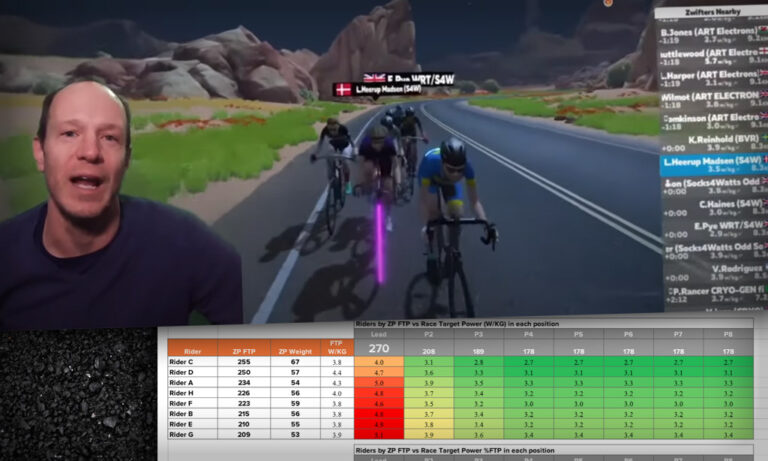
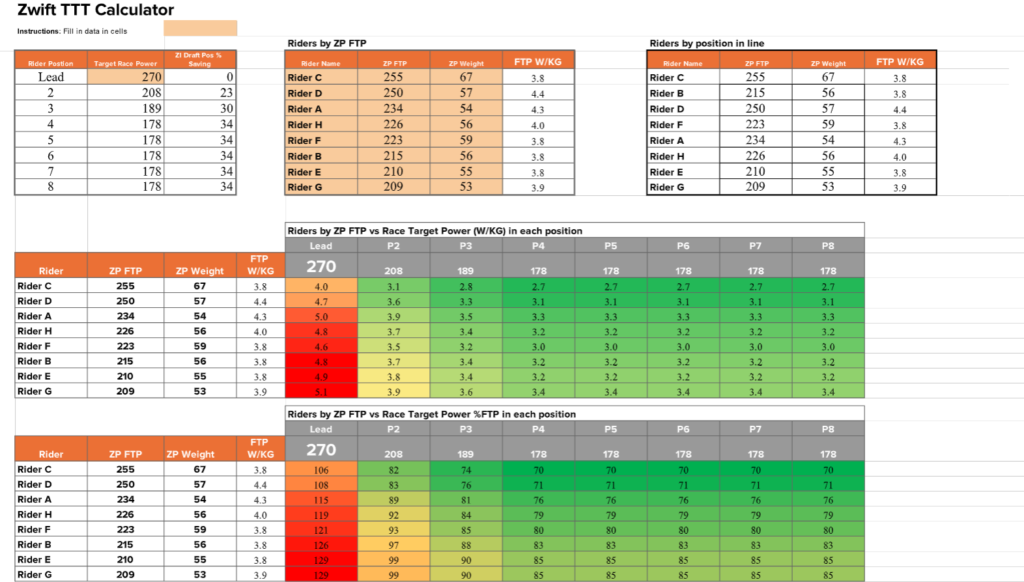
Flat and Fast – Tips for WTRL TTT #80 – Watopia’s Waistband

4

About this Series

Since March I have become obsessed with the weekly Team Time Trial… so I asked Eric if I could share my obsession with you all, in weekly doses.

Each week on a Friday I will give you a profile of the upcoming route, guidance on bike choice and some target times if you want to aim for the Premiere League (top-10 in each coffee class get to be in a special race televised on YouTube). 

If you can’t ride, or even if you can ride, but want more action! Don’t forget to tune in to the live TV show on Zwift Community Live’s YouTube Channel at 6:15 (UK time). 

Review of TTT #79 Innsbruckring

Last week was a return to Austria for three laps of the city center. I called it Six times over the Inn since the route passes over the River Inn twice each lap! I don’t know how you all feel, but for our team the legbreaker (Kleiner Hugel) was definitely where each lap was made. 

The Hyenas did well under the leadership of our very own Matt Rowe as Guest Star DS for the night. We pulled a time of 41:25 which is 32 seconds faster than when we went out in June – good enough for 76th spot in Latte. In the process, we passed two teams, and were passed by one – well done Ballet Bunnies for coming past clean, tidy, and very fast!

CategoryPL this timeJune 23rd PLMy PL predictionPosition
Vienna39:1741:2441:0018th
Espresso34:4234:4934:3010th
Frappe36:1336:4836:3520th
Latte39:1639:3939:3015th
Mocha44:5244:4144:3010th

Espresso and Mocha… I nailed it. Vienna, Frappe, Latte – how could I ever have doubted you! My team’s experience in Latte sums it up – we were significantly faster than last time around, and higher in the GC rankings… but lower in the Latte rankings simply because the Latte teams have gotten faster. Same with Frappe and Vienna. 

Thursday 29th October – Watopia’s Waistband

After a week away we are heading back to Watopia. This time we have one single lap of Watopia’s Waistband – and I believe it is the flattest 30km route in Watopia. (A little bit of trivia: this route was originally a community-created rebel route but was adopted as an event-only route by Zwift shortly after.)

The route itself is 25.5km – with the long desert lead in of 2.5km on top, making this 28km all-in. You start in the desert pens, head through Fuego Flats to Saddle Springs. Up the Col du Saddle Springs – the most arduous climb of the circuit (which tells you how flat this is) then down the other side and through the undersea tunnels. Turn left at the T-junction and carry on towards the fisherman’s village. From the upramp out of the tunnels to the land bridge to the volcano is probably the most challenging segment for the teams – it’s a mix of gravel, false flat, and downhill – nothing to break you… but the changing terrain will throw off momentum. Round the volcano across to downtown and back to the desert. Phew I’m out of breath….

Here’s the fantastic VeloViewer segment view along with a map. 

What to ride?

Bike recommendations on this route are straightforward. It’s flat and aero rules the day. For me it will be my trusty S-Works Venge and Super9 wheels.

The recent changes to the performance of the Canyon Aeroad don’t change much – it’s still fast on the flat, just not as lightweight for the hills… and we don’t have hills here! Here are my recommendations:

  • Level 6 Zwift Aero frame and DT Swiss ARC 62 wheels
  • Level 10 Canyon Aeroad 2021 and DT Swiss ARC 62s
  • Level 13 Canyon Aeroad 2021 with Zipp 808s
  • Level 33 S-Works Venge with Zipp 808s
  • Level 35 S-Works Venge with Zipp 808/Super9
  • Level 45 get those 858/Super 9 wheels and pair them with the S-Works Venge

You may ask why im not recommending the Speciailized Tarmac SL7 any more. While the SL7 is an excellent bike, and it’s available at a pretty low level, it is expensive, and most at Level 5 Zwifters don’t have enough Drops. On balance it’s better to invest in the wheels for the Zwift Aero frame than buy a new frame. 

I know I say it every week but I cannot stress highly enough that if you are racing you need to be working on Tron. It’ll take a while, but just set the Everest Challenge and forget about it for nine months… like having a baby. On this course, the only thing that beats Tron is the level 35 or 45 setup.

Route Recon Rides

Being so flat, there are quite a few rides on the Waistband route! As always, Zwifthacks has the up to date events listing – all you need to do is click here!.  

If you want to be adventurous though, you can go old skool and ride it like the original rebels had to. 

Here are the turns you’ll make to complete this route. Only turns labeled (manual turn) require you change from the default turn selection, so this route only requires 4 manual turns:

  1. Start by selecting “Out and Back Again”
  2. Select Left towards Volcano Circuit (manual turn)
  3. Left towards Downtown (manual turn)
  4. Left towards Downtown (manual turn)
  5. Left onto Ocean Blvd (manual turn)

Race breakdown 

Here’s how the ride breaks down for me:

  • Pens to Saddle Springs
  • Col du Saddle Springs then through the tunnels
  • From the tunnels to the land bridge
  • Around the Volcano and home

Pens to Saddle Springs

Flat. Hot. Desert. 

You know this route well… straight across the desert practicing your formation and gathering speed the whole way. It’s almost exactly 10km from the pens to the base of the “climb”.

Col du Saddle Springs then through the tunnels

Some wag on Strava coined this term for a segment and I couldn’t resist using it. After 10km flat this is the first real rise – a perfect opportunity for your lighter, stronger climbers to jump ahead and create a split! Rein in those riders and keep everyone together. This little hill is just 2% for 900m – but as you can see from the VeloViewer profile it starts around 3% before flattening out. 

After the hill it’s a nice downhill, but if you’re serious you won’t be resting on the downhill, you’ll be accelerating! Then it’s into the tunnels and under the ocean. 

From the tunnels to the land bridge

This rather convoluted segment is tricky. It starts with the bump out of the ocean then heads into some gravel… from there it’s the false flat up the hill which tightens at the top. The downhill from there to the Italian Villas isn’t enough to supertuck, but it’s enough to pick up speed before hitting more gravel. They really need to fix these roads. 

As with Col du Saddle Springs, the challenge here isn’t that the riding itself is hard – it’s not. The challenge is the constantly changing terrain can throw off your formation. The descent into the Italian Villas in particular is enough to create a split with heavier riders breaking away faster than the poor lightweights can keep up!

Volcano, downtown, and home

This last segment is pretty straightforward. Nothing that’s going to tax the team. The final sprint marker is a good time to begin a final acceleration and bring it home with a flourish. 

Target times

I haven’t ridden a TTT on this route – I started just a few weeks afterwards. The last time was TTT #46 on 5th March and before that it was number 35 in December, where there were only 91 teams… oh how times have changed!

Category#35#46
Vienna44:44 (1 team)49:10
Espresso37:07 (7 teams)38:57 (8 teams)
Frappe39:3439:01
Latte43:0741:44
Mocha52:13 (7 teams)52:45

You really aren’t giving me a lot to go on here! Still… 

Last week we were almost back up to 600 teams. I think there will be over 600 this week and competition will be high. Here are my predictions for a PL spot this week.

CategoryFinish
Vienna44:20
Espresso34:30
Frappe38:15
Latte39:30
Mocha50:00

Wrap up

This race doesn’t have a defining segment like last time in Innsbruck – I believe this is about pain and suffering in the last third – from the Volcano to the finish line. The longer you can keep the team intact the faster your overall time… while that’s always true in a TTT, there’s nothing in this route that should break you apart. 

Mark Barfield on Mechanical Doping Part 2 (Zwift PowerUp Cycling Podcast #58)

1

Part 2 on Mechanical Doping sees Greg chat with mechanical doping mastermind Mark Barfield on how he took a blank sheet of paper and developed a strategy for the UCI’s successful management of mechanical doping!

Plus, Matt and Greg talk about Grand Tours, crashing, Tadej Pogacar, and Zwift Academy!

About the Podcast

The Zwift PowerUp Cycling Podcast features training tips from host Matt Rowe (Rowe & King), with regular guest hosts Greg Henderson, Dani Rowe, and Kristin Armstrong.

Zwift Announces Planned Outage Monday Night PDT

12

Zwift HQ has asked us to share the word about an upcoming service outage which will affect access to the game and other Zwift services on all devices.

According to ZHQ, this is being done “in order to upgrade our system performance and stability, ensuring even greater service and reliability for our Zwift community!” It appears to be a major database migration, as impacted services include anything requiring a login such as the game itself, Zwift Companion, and Zwift.com, including the forums.

ZHQ is planning a 4-hour maintenance window for this outage to be safe, but our sources tell us there’s a very good chance service could be restored within 1.5-2 hours. Best not to plan an important ride during the maintenance window, though!

Scheduled Downtime

Here is the maintenance schedule by major timezone:

  • London:  2:00am – 6:00am GMT | October 27, 2020
  • Los Angeles: 7:00pm – 11:00pm PDT | October 26, 2020
  • New York: 10:00pm – 2:00am EDT | October 26-27, 2020
  • Sydney: 1:00pm – 5:00pm AEST | October 27, 2020
  • Tokyo: 11:00am – 3:00pm JST | October 27, 2020

Status updates will be provided via Zwift’s status page.

Performance Details for Zwift’s Updated Canyon Aeroad 2021

55

Astute observers may have noticed that yesterday’s Zwift update included a slight spec change to the Canyon Aeroad 2021 frame.

A Bit of Recent History

Released in the September 28th update, the new Aeroad turned in amazing climbing performance, ascending the Alpe faster than any other frame on Zwift. And it did all this while turning in very fast times on flat routes, which made it a standout frame in terms of all-around performance.

Change Details

Zwift changed three things about the Canyon Aeroad 2021 in yesterday’s update:

  1. Weight rating went from 4 to 3 stars (so it got heavier)
  2. Price increased from 532,500 to 568,000 Drops
  3. Level requirement dropped from 23+ to 10+

New Performance Numbers

Zwift added a bit of weight to the Aeroad 2021, which didn’t slow its performance in our flat tests, but added 9 seconds to our Alpe test results.

The real question is, how did the Aeroad 2021’s performance change in relation to other frames? Here’s how it charted before the yesterday’s update (mouse over points for details – the black points are the Aeroad 2021):

And here’s how it charts now:

So the Tarmac Pro is a stronger climber than the Aeroad 2021, thanks to yesterday’s change. (Little-known fact: the Cannondale EVO actually performs precisely the same as the Tarmac Pro.)

Who Should Use It?

If you don’t have the Tron bike (or don’t want to use it for some reason), the Aeroad 2021 is an excellent choice for flat or rolling routes, since it’s a bit lighter than the other aero frames, without sacrificing much in terms of speed on flats. Especially now that it’s available at level 10, it’s become the fastest frame for beginning Zwifters!

In fact, even though its gained a little weight, the Aeroad 2021 is still the best all-around frame in terms of percentile rankings, if you leave the Tron bike out of the equation (which we have to do, since the Tron bike can’t be separated into testable frame and wheel components):

If you have the Tron bike, there’s really no situation where using the Aeroad 2021 makes sense in terms of speed gains. To beat the Tron on our flat test (by just 1 second!) you have to run the disc wheel with the Aeroad 2021, which makes it climb much worse than the Tron. And beating the Tron in a climbing test requires you to use a much less aero wheel than the Tron, so you’ll lose speed on flat or downhills.

Updated Numbers

We’ve updated various posts today to reflect the Aeroad 2021’s new performance numbers:

Conclusion

Racers weren’t too happy to hear that their brand-new Aeroad frame had been slowed by ZHQ, and that’s understandable. The good news is, it’s still a useful frame, particularly for riders who haven’t yet unlocked the Tron bike. (Zwiftcast Simon, we’re talking to you!)

World of Zwift – Episode 2

0

Welcome to episode two of World of Zwift, the weekly show bringing you all that is great and good in Zwift Racing.

In this episode, host OJ Borg delivers:

  • Highlights and results from the first-ever ZRL Premier Division TTT
  • Twenty20 boss Nicola Cranmer reflecting on Week 2’s TTT and all things Twenty20
  • His experience racing the first and second ZRL races with his own team
  • Ex Team Sky rider Russ Downing previewing Week 3 of Zwift Racing League held on the UCI World Champs Course in Richmond

Zwift Update Version 1.0.57620 Released

84

The latest Zwift update is now available for download on PC, Mac, and Android and will appear for iOS and Apple TV soon.

Not sure if your Zwift install is up-to-date? Here’s how to check >

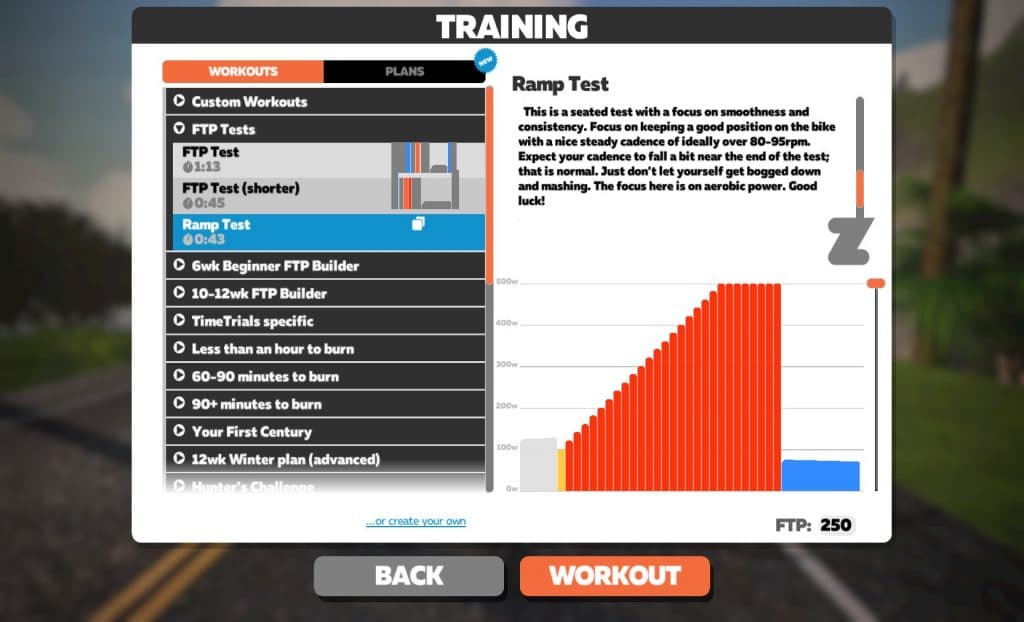
Like the previous update, this release doesn’t contain much by way of new features. But it does include welcome improvements to the very popular Pace Partners, and new workouts which are always a plus! Let’s dig into the details…

Pace Partner Updates

Thanks to the new Drops Multiplier game and their “always on” nature, Pace Partners have become very popular very quickly. This update includes two small improvements to the Pace Partner experience.

First: Pace Partners now have a beacon over their avatar, so they’re easier to spot in the bunch. If you’re trying to stay close to the Pace Partner in order to earn additional Drops, this is a big help!

Second: if you’re following a Pace Partner but on a different route than that Pace Partner, you may come to an intersection and make a different turn than the Pace Partner! That’s a bummer. So Zwift has added a warning to help you make the right turn.

Interesting bit of related triva: Zwift stats show that a lot of people riding with Pace Partners are simply joining them randomly from within a free ride. Did you know you can easily find a Pace Partner from the startup screen, then start your ride and be dropped into the Pace Partner’s pack? Just click Watopia, then choose the Pace Partners box…

New Training Plan + Workouts

A new Training Plan has been added, called “Back to Fitness”. This plan is specifically targetting those at a low level of fitness who want to kick start their return to cycling after a hiatus.

Five workouts have also been added to help Zwifters prepare for the 2020 Rapha Festive 500. This will be the 11th year of this popular challenge (ride a total of 500km between Christmas Eve and New Year’s Eve) and while the challenge isn’t on Strava yet, we expect it to show up soon.

Canyon Aeroad 2021 Tweaks

We received a tip from within ZHQ that this release includes tweaks to the aero + weight settings for the Canyon Aeroad 2021 frame. If you recall, this frame was released in the previous update, and its performance was amazing – making it the best all-around frame in the game as well as the best climber.

Its level lock has been reduced from 23 to 10, price raised from 532,500 to 568,000, and weight rating reduced from 4 stars to 3 (so it’s heavier).

We’re testing it now, but we expect it won’t be the best climber anymore. Stay tuned. #sigh

New Trek Super Caliber MTB

Not mentioned in the update notes: this release includes a new Trek Super Caliber MTB frame in the Drop Shop. We’re testing its performance and will share our findings ASAP.

Halloween Fun

Zwift likes to have a little fun on certain holidays – especially Halloween, Christmas, and April Fool’s Day. Today’s update notes say, “Halloween has arrived in Watopia. Keep a close eye out for some fun surprises.”

We earned dino costumes in 2019, rode bone bikes and swapped heads in 2018, and looked like witches and monsters in 2017. What do they have up their sleeve for 2020?

Who knows. Certainly it won’t be any scarier than what we’ve already encountered this year!

Bug Fixes and Improvements

Update notes included these various bug fixes (with our notes in italics):

  • Updated the minimum allowed time for the Yorkshire sprint to reduce incorrect flagging in race events. If you’re lucky enough to have noticed this bug, we salute you!
  • A steering icon will now appear in the Zwifters Nearby UI to indicate riders who are using a steering device. A welcome change! It will be interesting to take part in ZHQ Steering Races and see who indeed has steering and who doesn’t.
  • Bluetooth devices should now be easier to pair and reconnect for Windows users. More and more Windows users are utilizing native Bluetooth for connections, so Zwift is investing some resources in making it function better on this platform. That’s great news.
  • Numerous new assets (decorations and kits) added to support upcoming events and programs.
  • Fixed a bug on iOS causing a crash when users tried to restore a purchase. Specifically, this has to do with subscribing to Zwift via the Apple store.
  • Fixed a bug on iOS which would cause an occasional crash on the pairing screen while an Apple Watch was also connected.
  • Fixed an issue with event kit and bike overrides not appearing for those outside of the event.
  • Fixed a bug that would sometimes cause the race results screen to appear blank after a race. We’ve seen a lot of blank screens at the end of group rides lately. Hopefully this is fixed!
  • Fixed a bug that would cause frame rates to drop when taking a screenshot.
  • Minor fixes and improvements to the Dirt Destroyer and Pebble Pounder workouts.
  • Fixed a bug making it difficult to pair a Sterzo Smart while using the Zwift Companion Bluetooth bridge function.
  • Fixed a localization error for the French save screen.

See/discuss release notes on Zwift’s forum >

Questions or Comments?

Share your thoughts below!