How to Purchase Bike Frames and Wheels from Zwift’s Drop Shop
Cyclists are notorious gearhounds, and while our budgets (and significant others) may not support our real-money purchases, we get to indulge ourselves virtually on Zwift! The in-game “Drop Shop” lets us spend Drops (the virtual currency earned by real effort) to “purchase” virtual frames and wheelsets.
Why Buy?
Just like outdoors, the virtual frames and wheels you use on Zwift influence your in-game speeds. Lightweight items help you climb faster, and more aero items offer dividends at higher speeds on flatter ground and descents.
If you’re racing on Zwift or just chasing speed PRs, you owe it to yourself to buy a high-performing setup. Everyone else is doing it!
How To Make a Purchase
Step 1: Click “Garage”
Step 2: Select Frames or Wheels from Drop Shop side
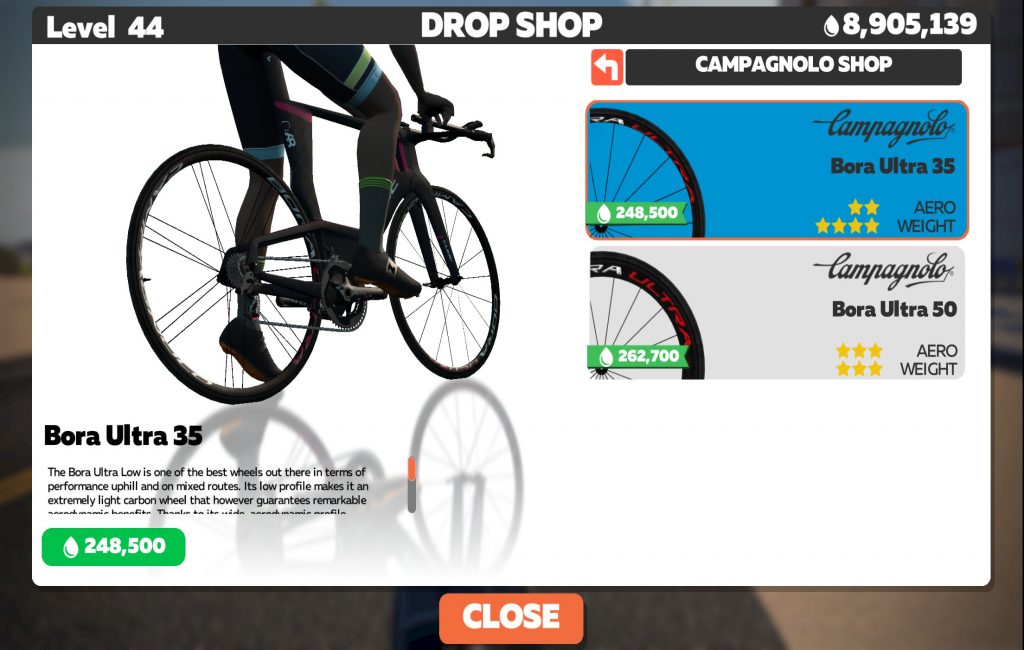
Step 3: Select a manufacturer
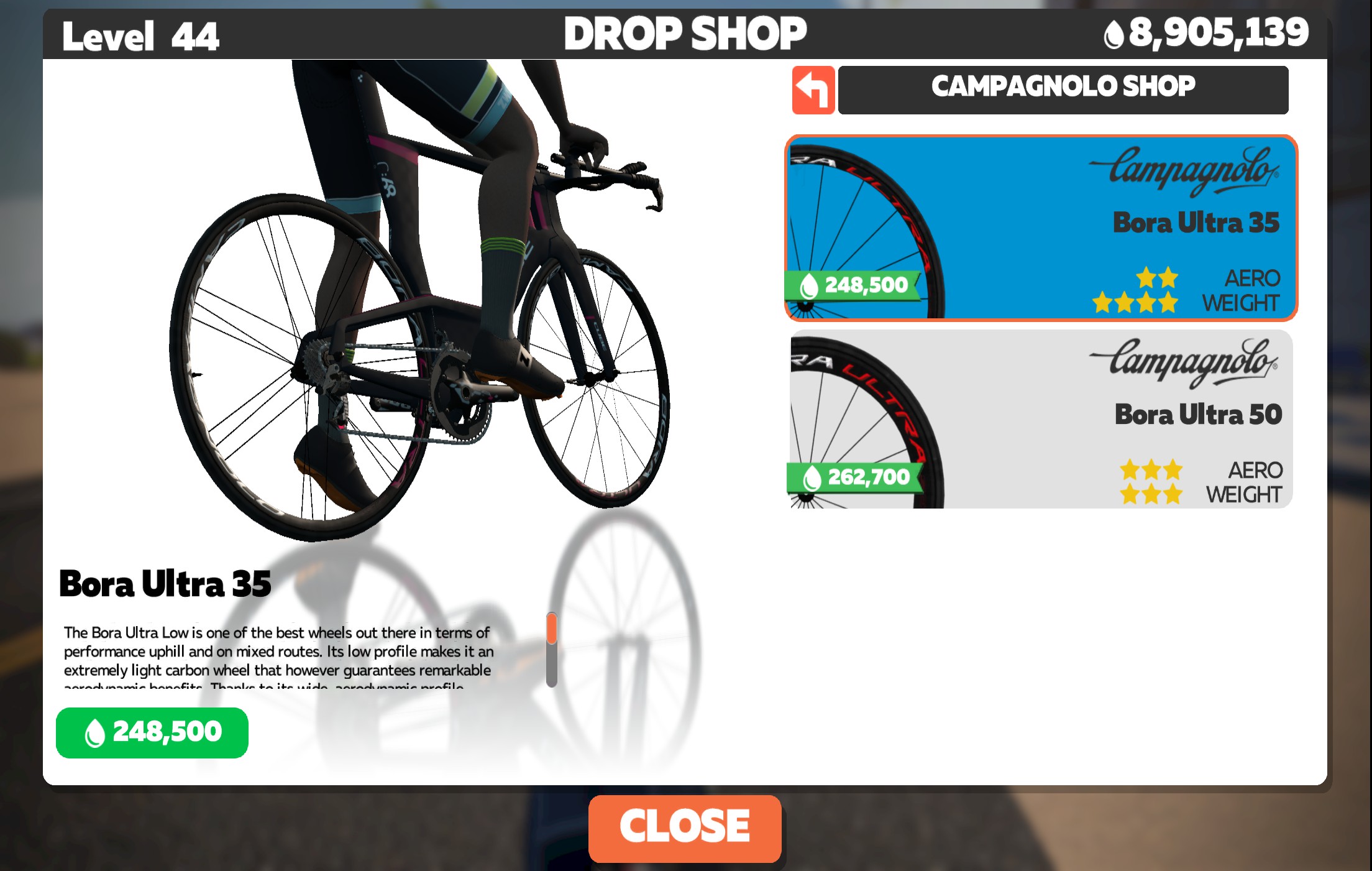
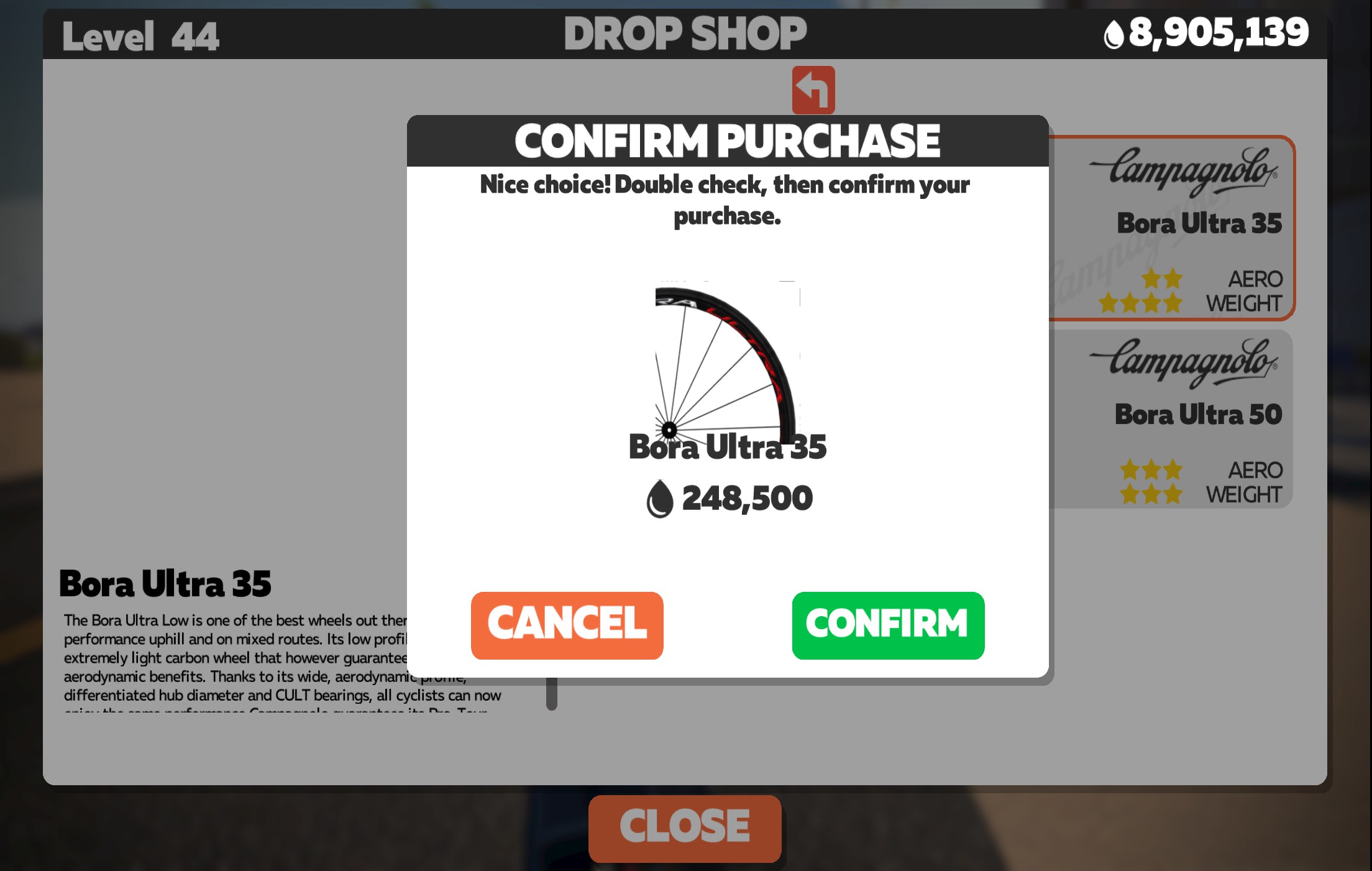
Step 4: Click price (bottom left) to purchase
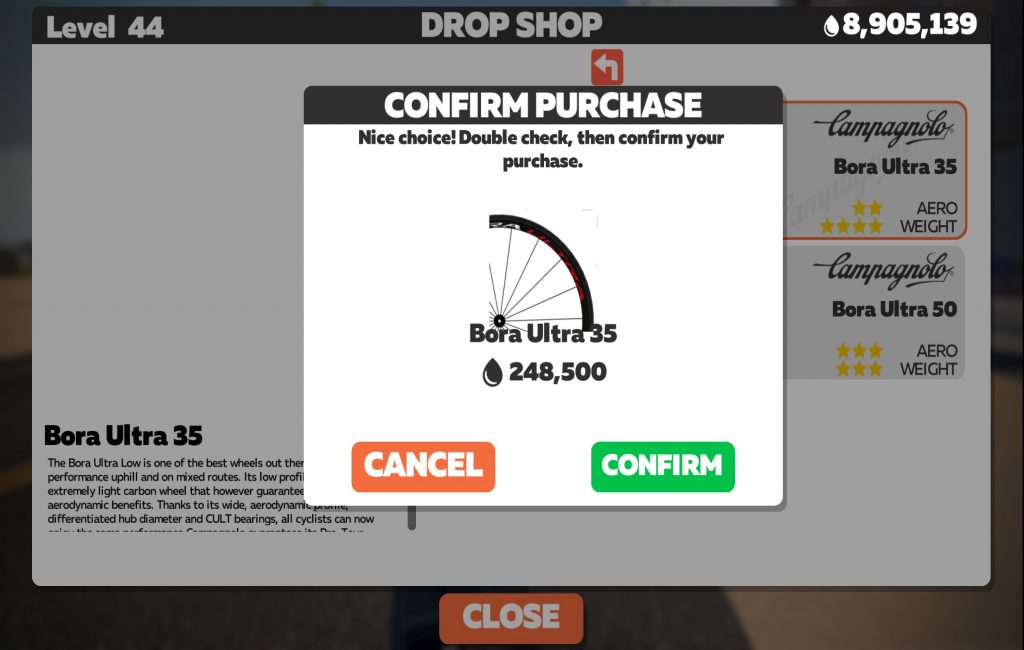
Step 5: Click to confirm purchase
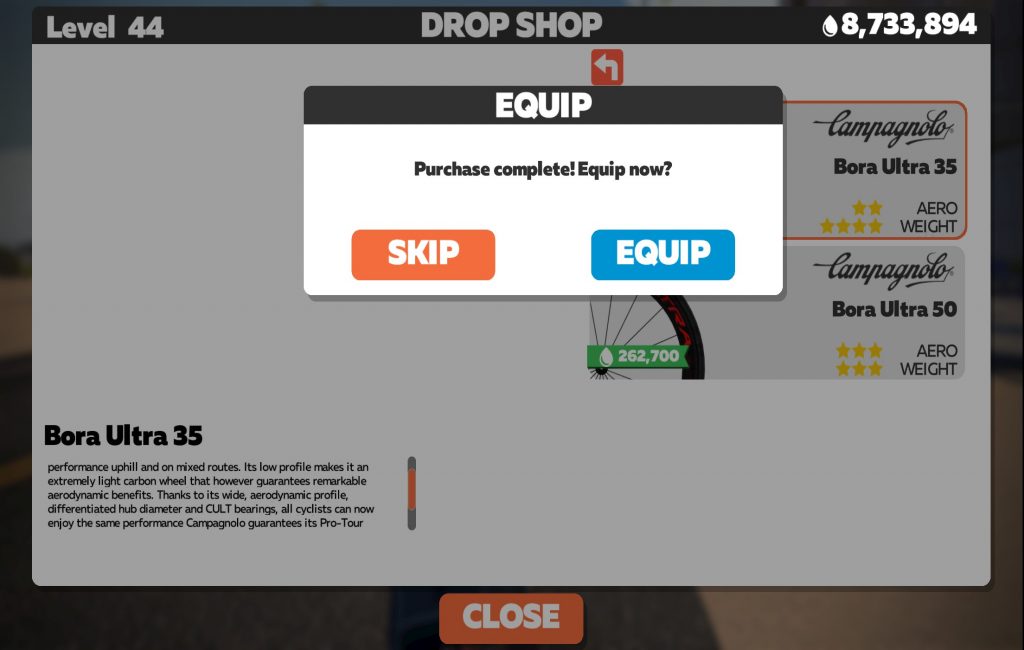
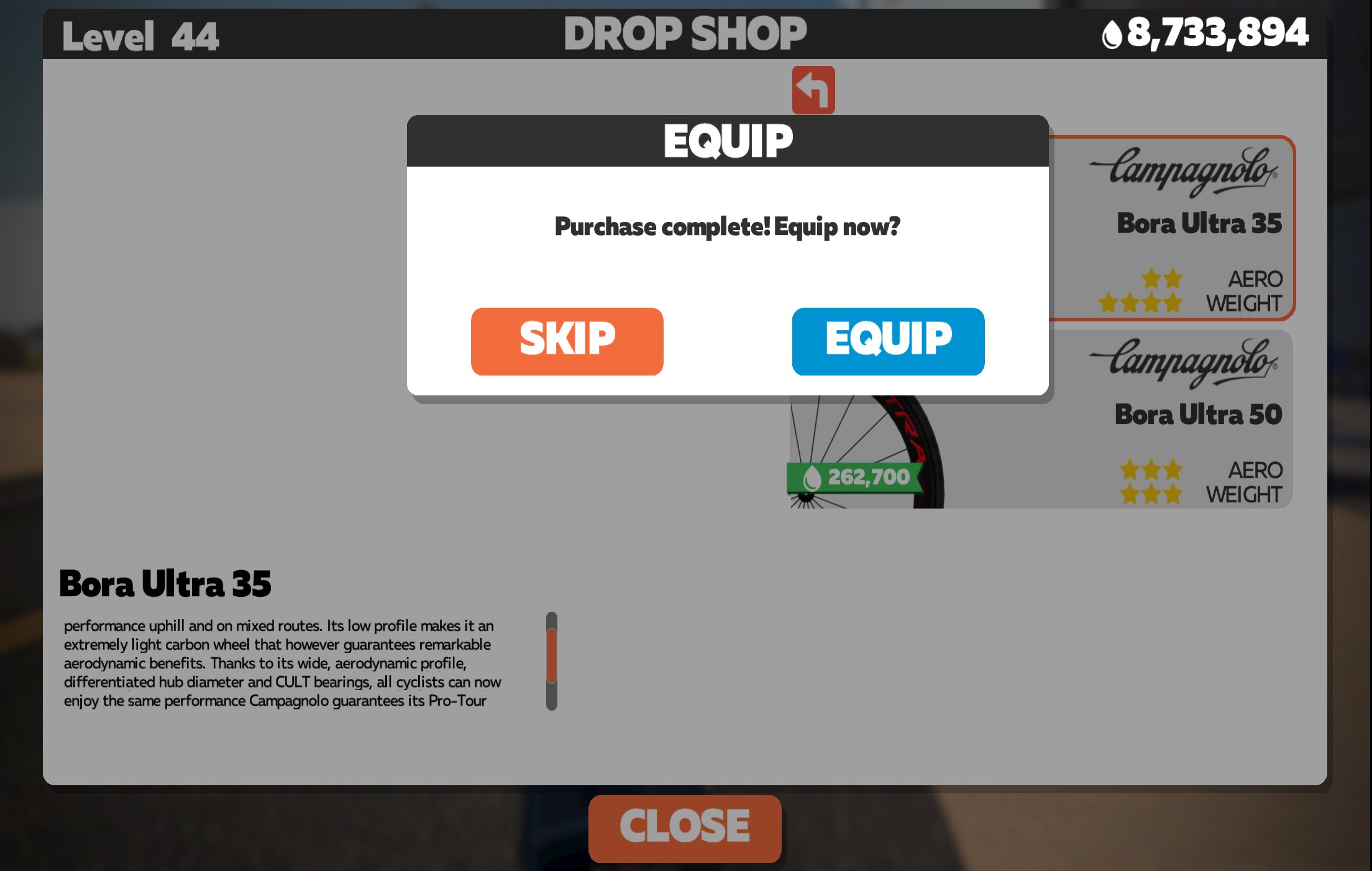
Step 6: elect to equip or not
In order to make a Drop Shop purchase (or change your bike using stuff you already have in your Garage) you have to be logged into the Zwift game and on the actual Zwift map. But you can’t be moving.
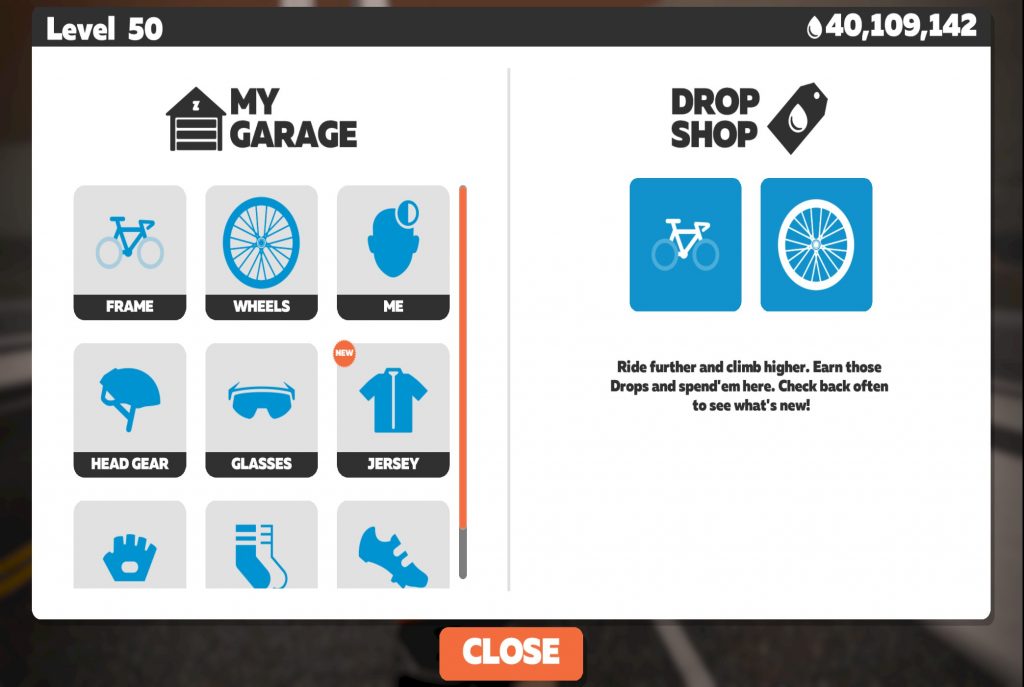
Click Menu, then “Garage” in order to go to the Garage/Drop Shop page.
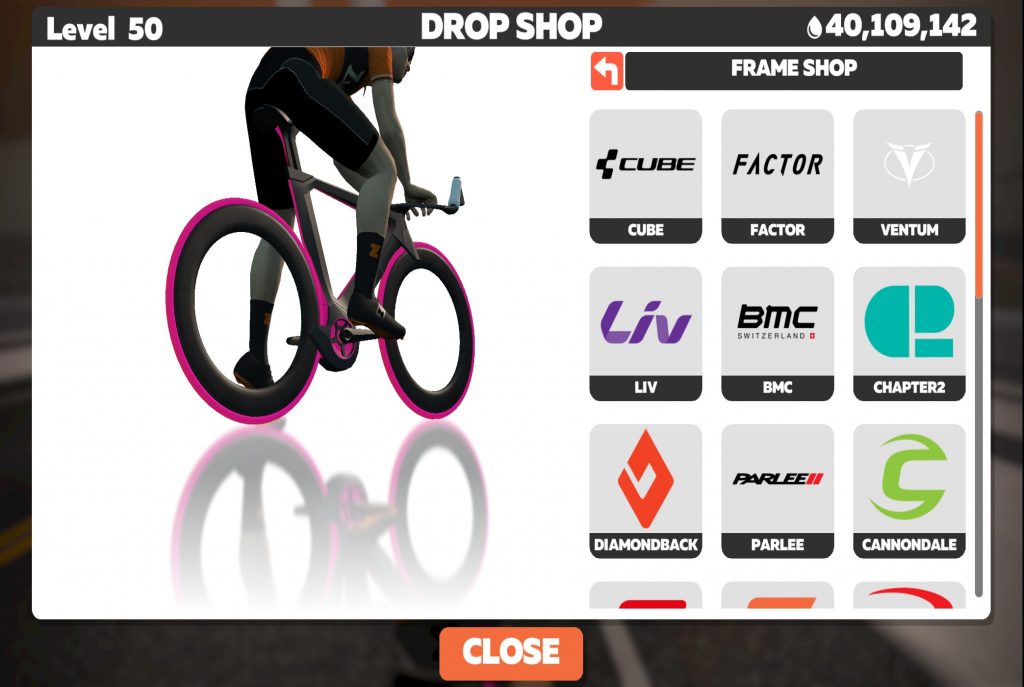
From this page, select which portion of the Drop Shop you want to access – the frames or the wheelsets. Then select a brand to browse items, and click a particular item for details and a purchase option.
Click the item price at the bottom-left to make the purchase. Click “Confirm” to purchase, then choose whether to immediately equip (use) your new stuff or not.
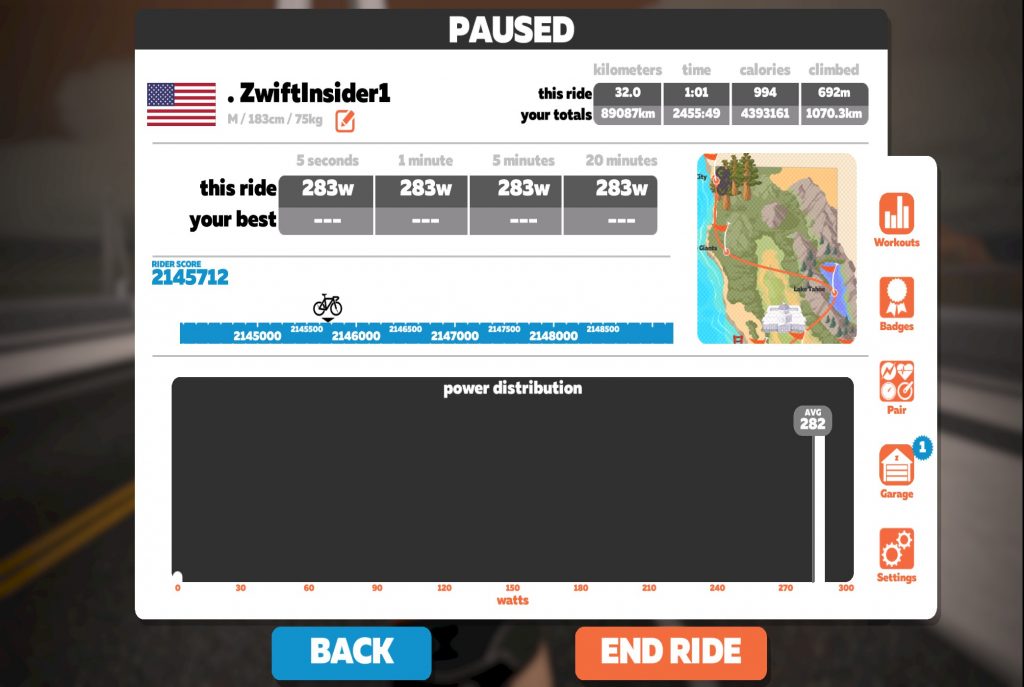
Your purchase is now in your garage, and can be selected whenever you wish. Here’s a step-by-step walk through the screens of a Drop Shop purchase:
Video: Buying from Zwift’s Drop Shop
Here’s a quick video showing how to make a Drop Shop purchase:
Gotta Be Stopped
Reminder (because this trips a lot of folks up): you can’t even get into the Drop Shop if your avatar is in motion. You also won’t be able to access your Garage in order to swap bike frames or wheelsets.
Once you stop moving, you’ll be able to do both.
How Pricing Works
Most of these frames and wheels are virtual versions of real-life bike parts, and their Drops price reflects real-life pricing, with 1 Drop being roughly equal to 1 US cent. (So a $10,000US bike frame will cost roughly 1,000,000 Drops, while a $1500US wheelset will cost 150,000 Drops.)
Level Locks
Most items in the Drop Shop are level-locked, meaning you have to reach a certain Zwift level before you can make the purchase.
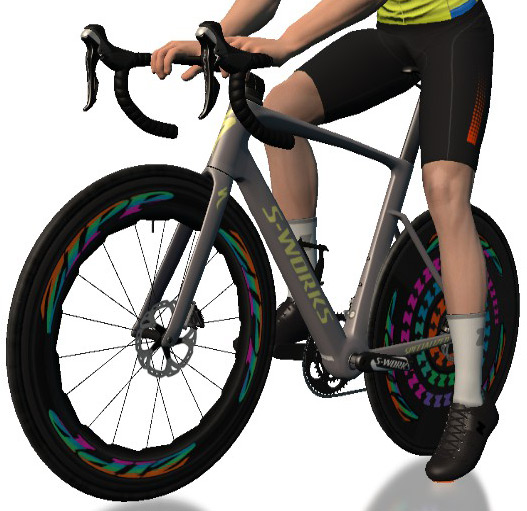
S-Works Venge + Disc Wheels – a potent and coveted race machine!
What Should I Buy?
Now this is the big question! Each bike frame and wheelset has its own characteristics in terms of “aeroness” and weight. The best setup for you depends on the route you’ll be riding, what sort of rider you are, and how you plan to approach your ride.
It can be confusing, but we’ve put together the “Zwift Shopping Guide” which lists recommended purchases at each Zwift level. You may also be interested in our speed test charts:
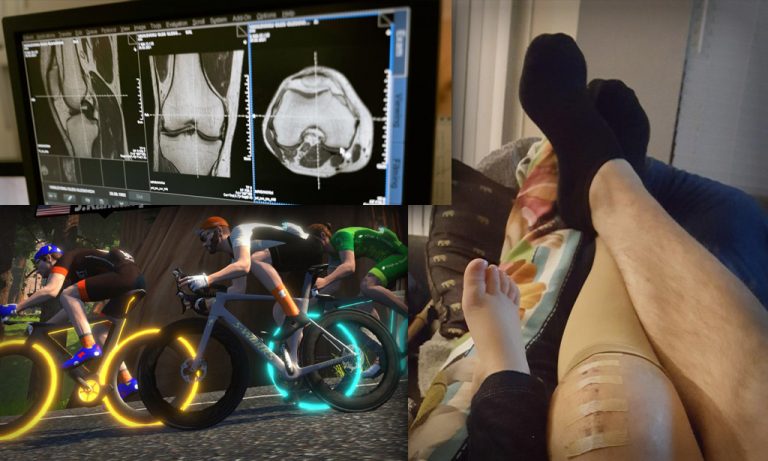
An Active Approach to Cycling Injuries: Total Knee Replacement
Recent data shows that as many as 47% of people surveyed have delayed seeking relief from their joint pain due to concerns with the post-operative process. Although I have no definitive proof, my guess is that a greater percentage of cyclists avoid surgical intervention despite the significant limitations of joint deterioration for fear of the inability to regain their active cycling lifestyle.
With advances in medical technology and post-operative rehabilitative care this need not be the case. By asking the right questions and making educated decisions you can return to cycling after Total Knee Replacement, and likely at a higher performance level and with greater enjoyment than prior to surgery!
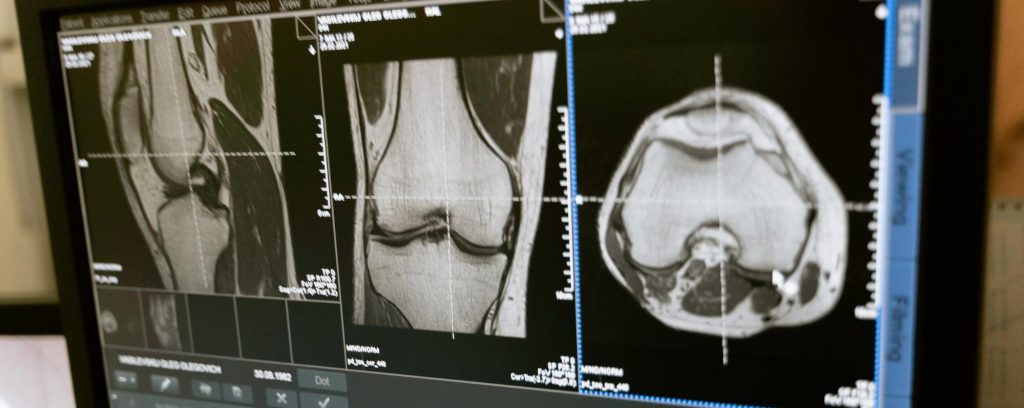
In a recent installment of this series, it was suggested that not all knee injuries require a hiatus from riding and most can be managed while maintaining some level of cycling fitness. But when all conservative modalities have been exhausted, knee joint deterioration has progressed to severe, and the pain and loss of function leaves you with the inability to perform daily activities (let alone ride a bike), Total Knee Replacement may be the only available option.
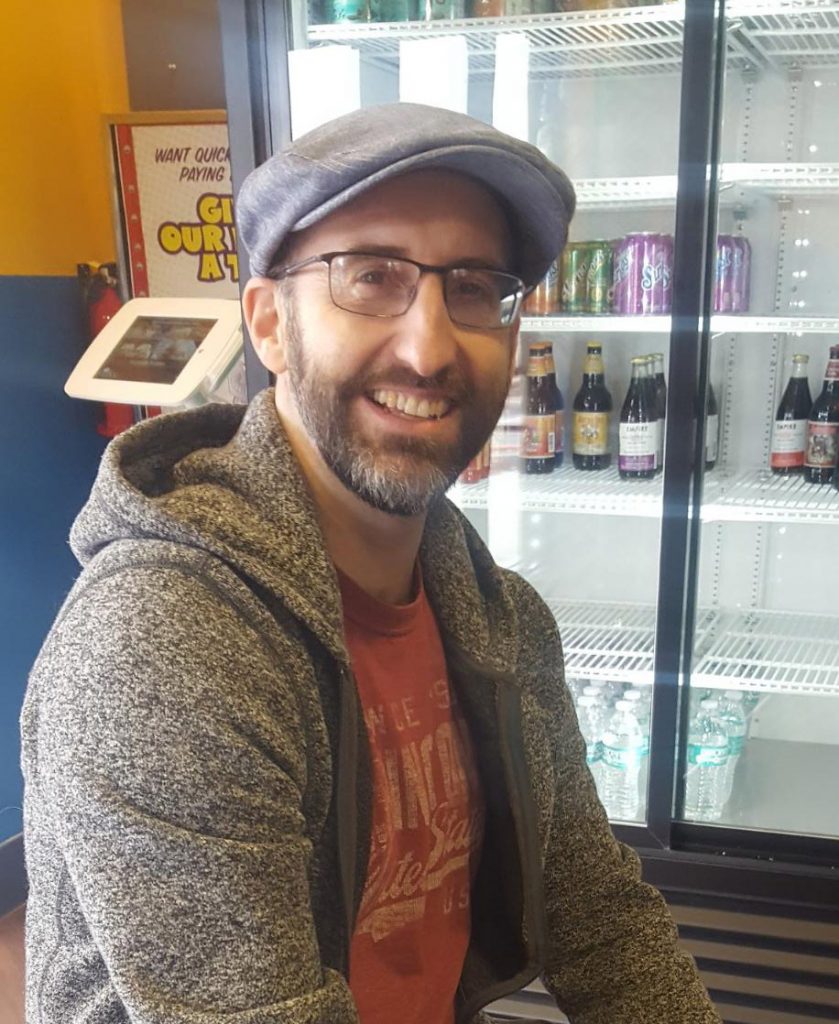
Seron Eaton
With the help of Zwifter Seron Eaton (see his ZwiftPower and Strava profiles) who has successfully returned to cycling after undergoing Total Knee Replacement surgery, this article will explain the questions to consider. With Seron’s experienced-based answers and informative research, you can gain the knowledge required to make an educated decision when considering Total Knee Replacement as a cyclist.
With Seron’s consent, the answers to many of your Total Knee Replacement questions can be found below.
How long did you suffer with knee pain and did you delay surgery because it would interfere with your cycling lifestyle?
I had knee trouble and arthritis for the good part of 20 years, and after trying all other therapies (bracing, cortisone injections, platelet rich plasma), it was on to the replacement. I put it off as long as I could and riding was definitely a factor.
When did you know it was time to undergo total knee replacement surgery?
The level of discomfort from arthritis was debilitating. I couldn’t stand for 15 minutes, walk in the grocery store, or do the dishes without severe pain. The level of disability works into your head and the growing depression is real. When I wouldn’t want to do chores, run around with the kids, or pedal my bike, I knew it was time.
How important was the ability to return to an active cycling lifestyle in the decision to undergo surgery?
Being able to ride comfortably and with the same ability was paramount.
Was finding a surgeon who could provide you a level of confidence that you would return to cycling important and was it difficult to find?
I’d been going to the same Orthopedic clinic for many years and felt confident in the reputation of their knee specialist who had performed at least 12,000 replacements. The doc was sure I would return to a full cycling life with little loss of ability.
Did you require a specialized surgical procedure or implant?
Nope.
When were you able to resume cycling post-surgery?
I was able to begin pedaling a bike within weeks after the surgery and started to ride outdoors at three months out. With three months of Zwift I felt pretty strong and well on my way to riding without worry.
Did you have to change your Zwift setup?
Nope. The knee took to it like riding a bike.
Did you receive Physical Therapy treatment and for how long?
When was your surgery and at what level are you cycling now compared to pre-surgery?
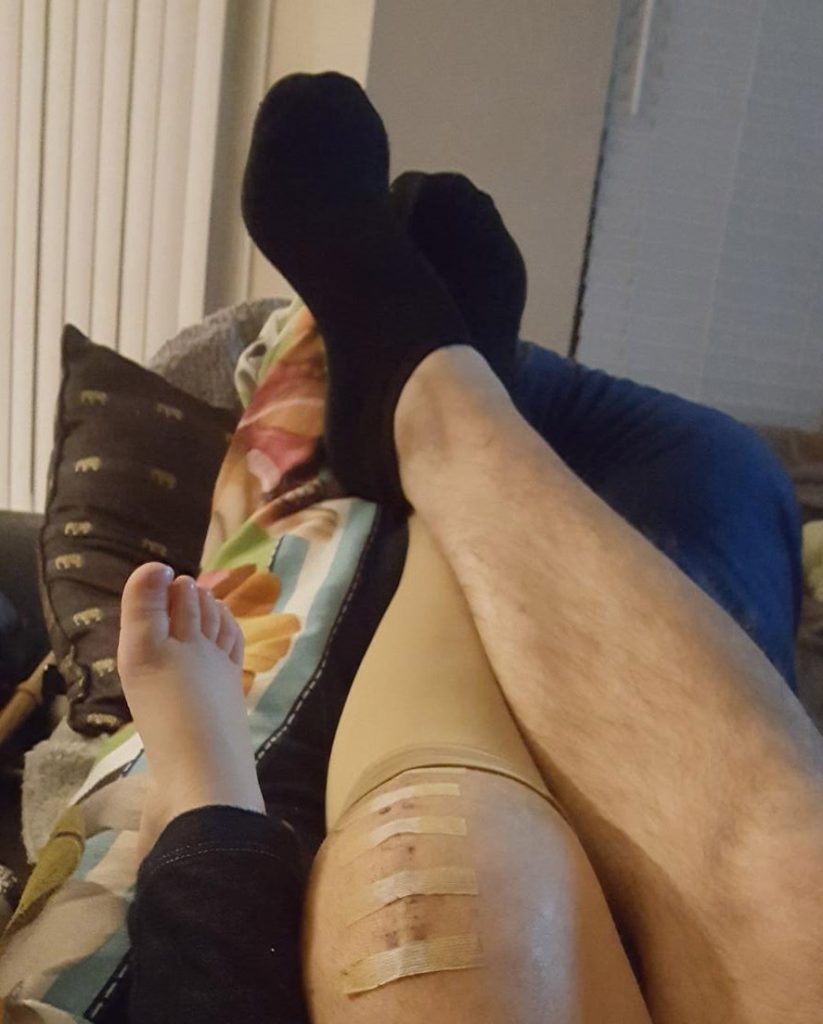
My surgery was in January of 2019 and I was riding well within 6 months. My volume is now higher than before surgery and my cardio is the best it has been in 20 years. I can pedal and sprint to my heart’s content. Now I don’t even think about my knee.
Are you pleased with your decision to undergo Total Knee Replacement surgery?
I’m ecstatic! It’s fantastic! In many ways, I feel reborn, able to chase the kids, do chores, and ride. I’m forever grateful to my surgeon’s skilled hands, awesome technology, and Zwift, otherwise the pack would have left me to the wolves before too long.
Do the Research to Best Make This Very Difficult Decision
While the decision to undergo Total Knee Replacement surgery is not one you should make without considerable thought, research, and preparation, it need not be avoided purely for the fear of never being able to ride again. Knee replacement is a major surgery and the rehabilitation is extensive and demanding, but when all other options have been explored, it quite possibly may be the best decision you could make. It was for Seron. Ride on!
Was it the correct decision for you?
Have you undergone Total Knee Replacement and returned to an active cycling lifestyle? Tell your fellow Zwifters about it. Comment below!
Review: The Breakaway App: A Glimpse of Future Zwift?
Call me a sucker or a sheep, but around a month ago, Facebook popped up an ad for an intriguing app, and I took the bait.
(Incidentally, this is how I discovered Zwift back in 2015. So I’ve learned to pay attention to Facebook ads, as they’ve turned into a nice discovery tool for all things cycling, including terribly ugly jerseys from oddly-named overseas companies.)
The app is called “The Breakaway” (breakaway.app) and it bills itself as “The Ultimate Cycling Training Companion”. They summarize the app like this:
The Breakaway analyzes your power data and provides Insight with actionable next steps. We break your efforts into Power Skills, and then show you the 12 Power Intervals that you can work on. We offer Challenges to help you improve specific skills and we track you and keep you honest on getting the work done.
Where Do I Stand?
There are two kinds of cyclists: those who constantly compare themselves to others, and those who don’t. The first group would call themselves “competitive”, and you’ll find them racing on the weekends and chasing Strava KOMs whenever the wind is favorable. The second group would call themselves “non-competitive” and say things like “the joy is in the journey” and “I’m just trying to be the best me I can be” while taking exploratory gravel rides and hunting Zwift route badges.
I’m firmly in the first camp, and have a hard time even understanding how someone can live in the second camp. Here’s what’s fun, though: The Breakaway appeals to both camps.
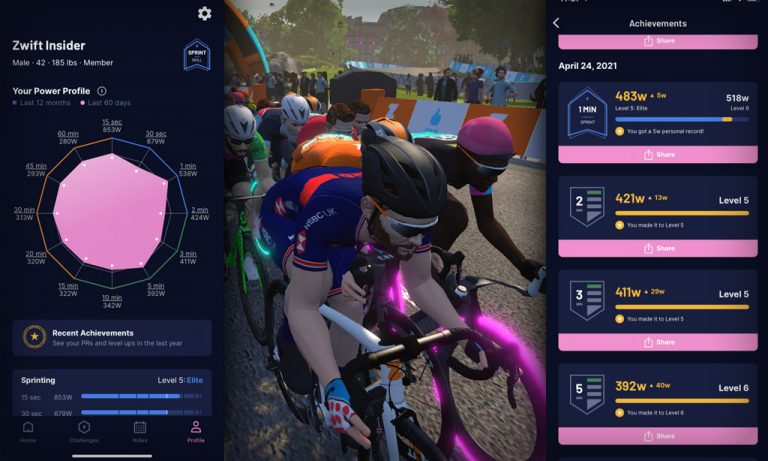
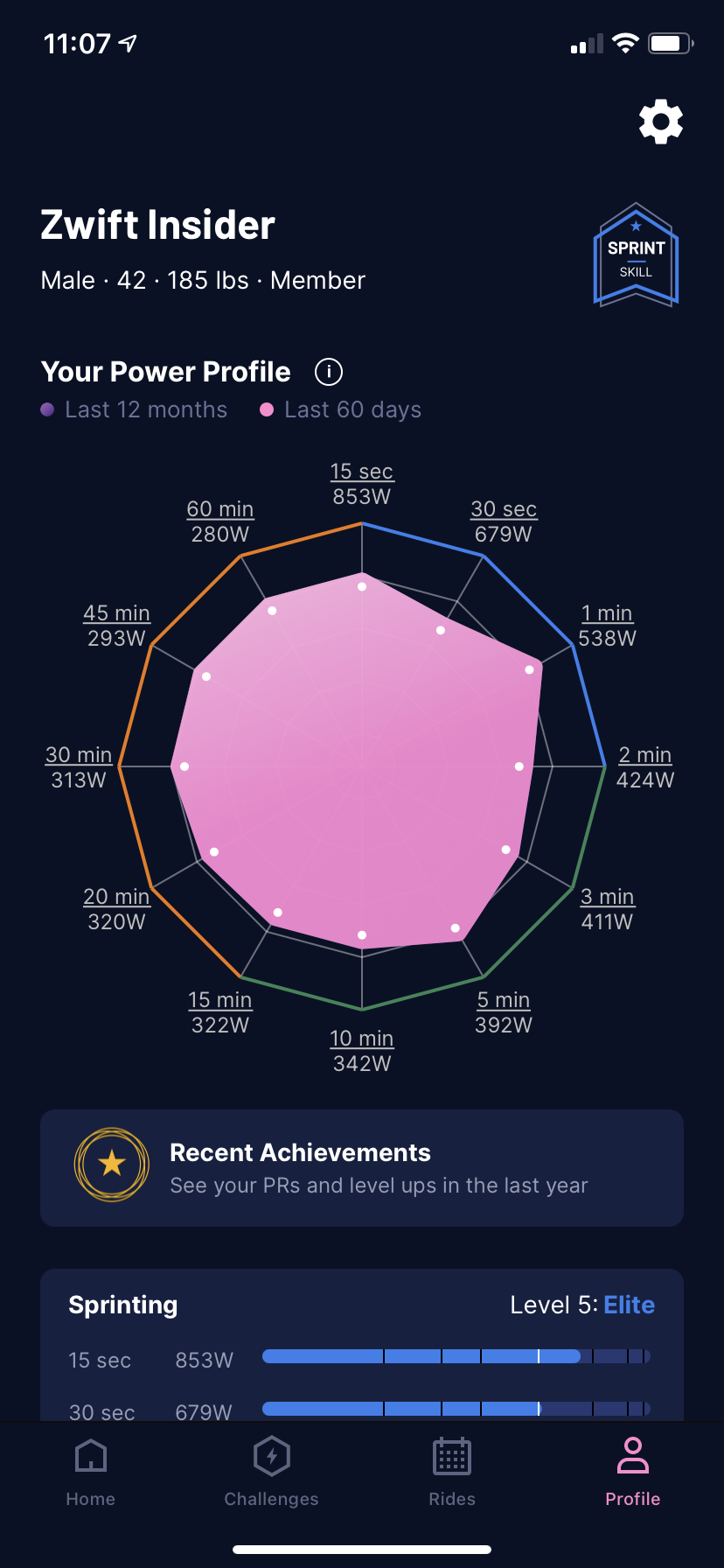
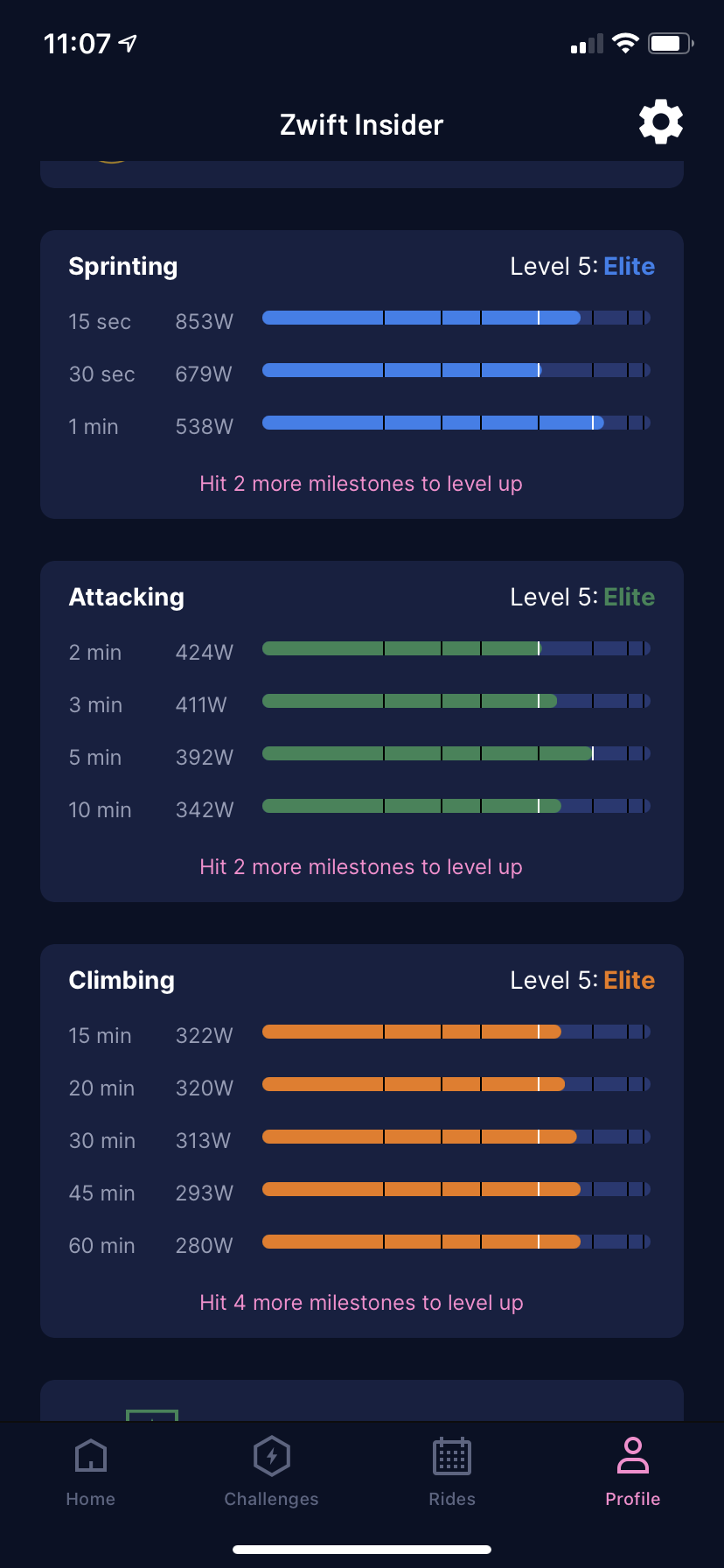
When you first install the app and hook it into your Strava account, it will read in your historic data and display a chart ranking your performance using The Breakaway’s proprietary metrics. Here’s what my charts look like:
This is fascinating stuff. First, the chart shows your power not just on a simple 20-minute interval (or ZwiftPower’s 4 rider phenotype intervals), but on 12 different time intervals (The Breakaway calls them “Power Skills”):
15 seconds
30 seconds
1 minute
2 minutes
3 minutes
5 minutes
10 minutes
15 minutes
20 minutes
30 minutes
45 minutes
60 minutes
Then it shows where your power numbers theoretically place you in the universe of cyclists. I’m firmly in the “elite” camp, which is the 5th of 8 levels that shake out something like this:
Level 8 – World Class
Level 7 – National Star
Level 6 – Semi-Pro
Level 5 – Elite
Level 4 – Sport
Level 3 – Athletic
Level 2 – Intermediate
Level 1 – Beginner
The data nerd inside me immediately had questions. I loved the sound of being “elite”, but what did that actually mean? Is an elite 42-year-old as strong as an elite 24-year-old? Are age and weight figured into the equation?
I reached out to The Breakaway, and founder Jordan Kobert wrote back. Jordan is a lifelong cyclist who was one of Strava’s first employees (employee #8, Strava user #30). Here’s how he explained the level rankings:
Our benchmarks are the standard for performance across male and female efforts in our 12 defined PowerSkills (15 seconds all the way up to 60 minutes). So when you see your ranking, this isn’t against anyone else, or a leaderboard, but against what’s possible. We built this by looking at male and female world-class performances, then adjusting for performance/age degradation and accounting for body weight. The beauty of this is it’s a standard way of measuring, not a leaderboard of thousands.
We look at the percentile breakdowns for each category and as we developed this, checked it against other sports, benchmarks, and current and former professional athlete data. We are continuing to dial this data as we learn but we’re incredibly confident in the results and we continue to stress test this with new results, data, etc. Some areas are easier than others. For example, we can look at age-group data for certain things like track events, timed criteriums, etc. The reality though is that there isn’t a benchmark or “defined standard” for what a 46-year-old man or woman can do in 45 min power. So we’re inventing this as we go to create a fun and engaging way to stay motivated and track your progress.
Defining ‘Elite’ is different if you’re 35 vs 65. Watts are also a meaningless number if they’re not looked at on a weight-based standard. Leaderboards are great but more and more, if you’re not in the top echelon they lose meaning. What we’ve heard over and over again from customers is they want to know how they’re doing against themselves, people like them, and their inner circle of friends/training partners…
That’s a solid answer. And of course Jordan is right: there simply is no objective standard available which says “If you’re a X-year-old male and weigh X your 15s power of X places you at the semi-pro level.” The closest thing to such a standard may be Coggan’s chart which shows rankings based on 5-second, 1 minute, 5 minute, and FTP. But that chart doesn’t take age into account, and it ranks me somewhere between a Cat 5 and a Cat 3.
So I’m going to go with The Breakaway’s “Elite” status. It feels much better.
What The Breakaway’s level says to me is that I’m performing at an Elite level for my age. And they take weight into account as well, so if I dropped 10 pounds but kept my power numbers the same, I’d move closer to the higher “semi-pro” level. Which begs the question: how many cookies am I willing to skip in order to be a semi-pro? (Answer: not enough.)
How Did I Do?
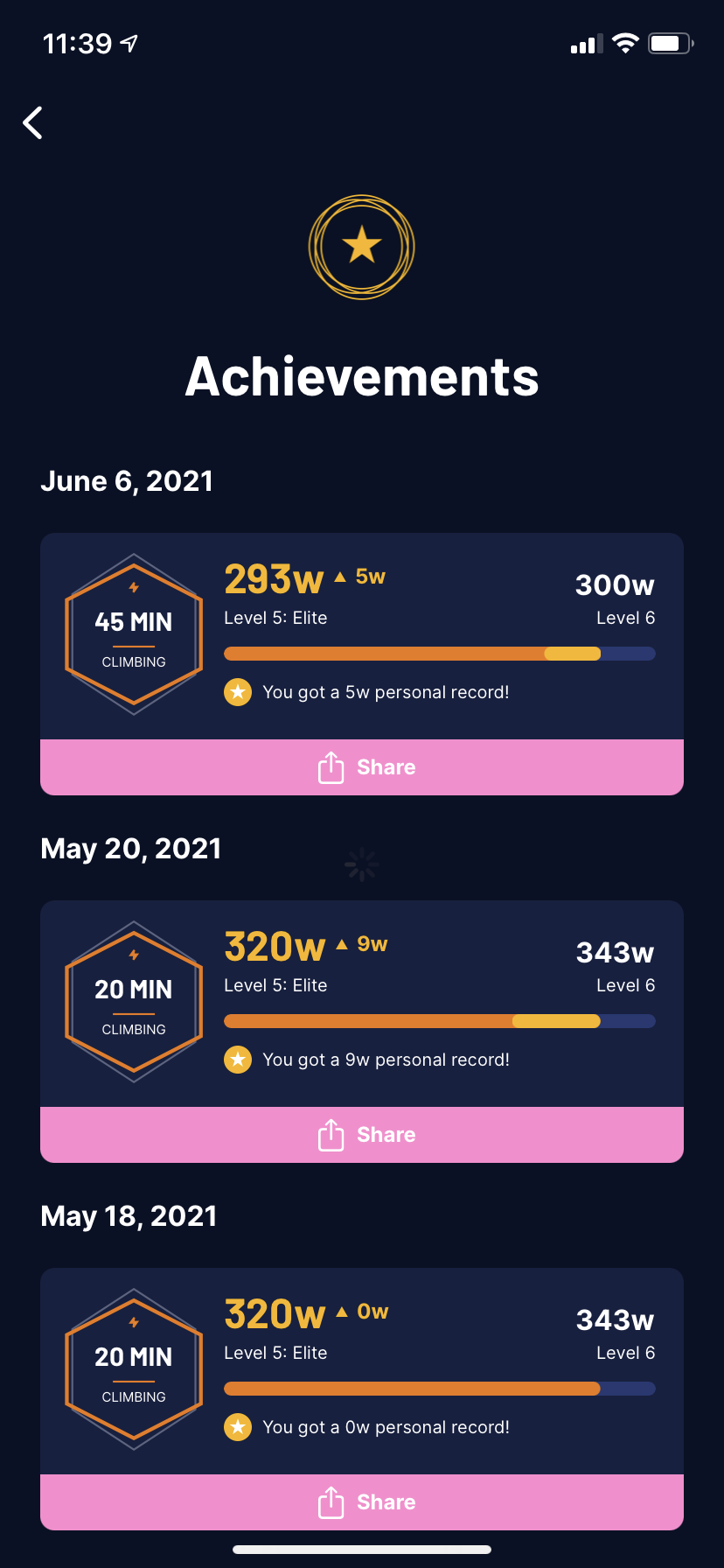
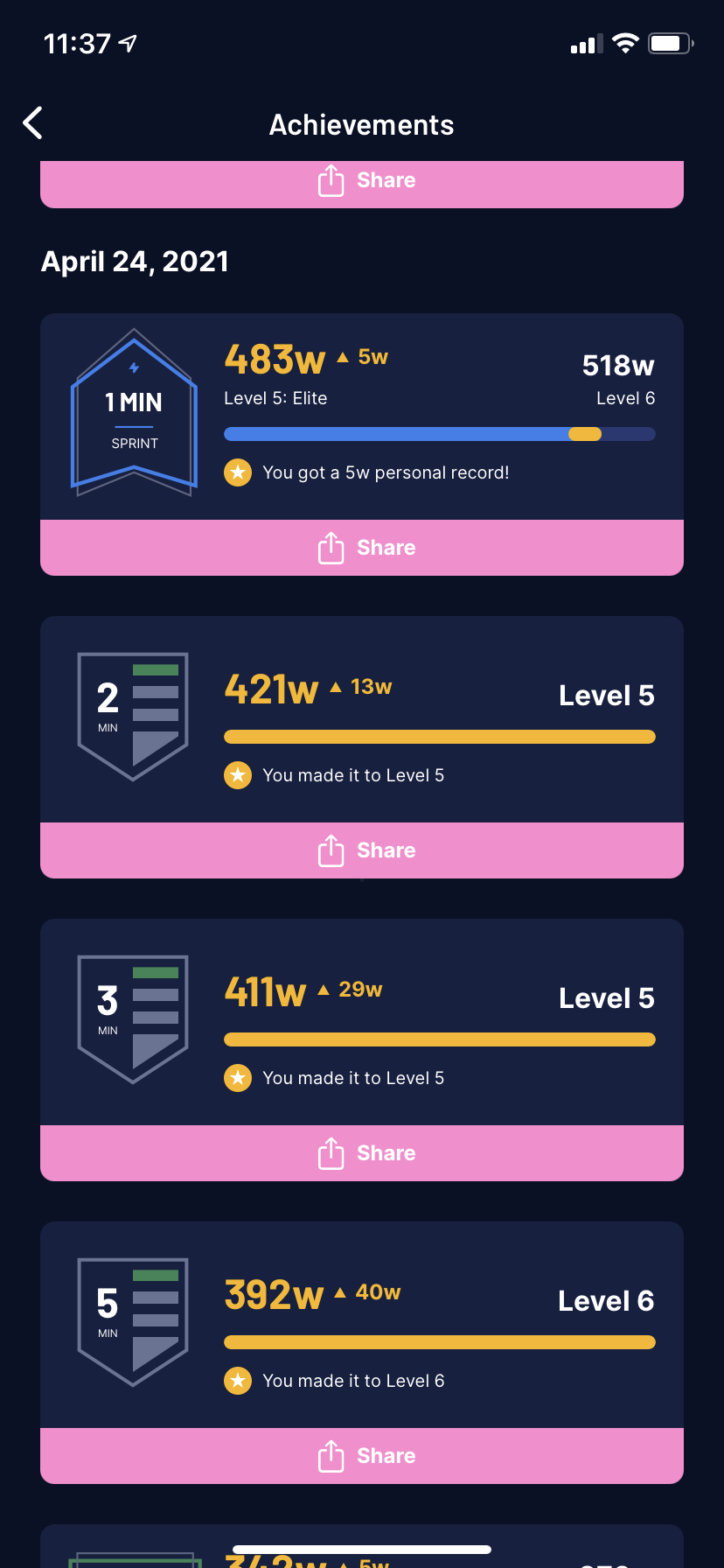
While knowing where you stand in the universe of cyclists may not appeal to the “non-competitive” types, The Breakaway analyzes every Strava ride you post, and alerts you when you get a PR, 2nd best, or 3rd best for any of the 12 Power Skills. Even if you’re only comparing yourself to yourself, seeing that you set a new 2-minute power PR feels good.
Screenshots from my Achievements page:
My latest PRs
Lots of PRs in a recent Crit City win!
It’s worth noting that you’ll only see new PRs if you pay for the app. (You can also sign up for the free month-long trial to check it out. More on that below.)
What Should I Do Next?
So The Breakaway can tell you your “Level”, and track new PRs. But neither of those features tells you how to improve. And this, dear reader, is where I see massive potential for The Breakaway.
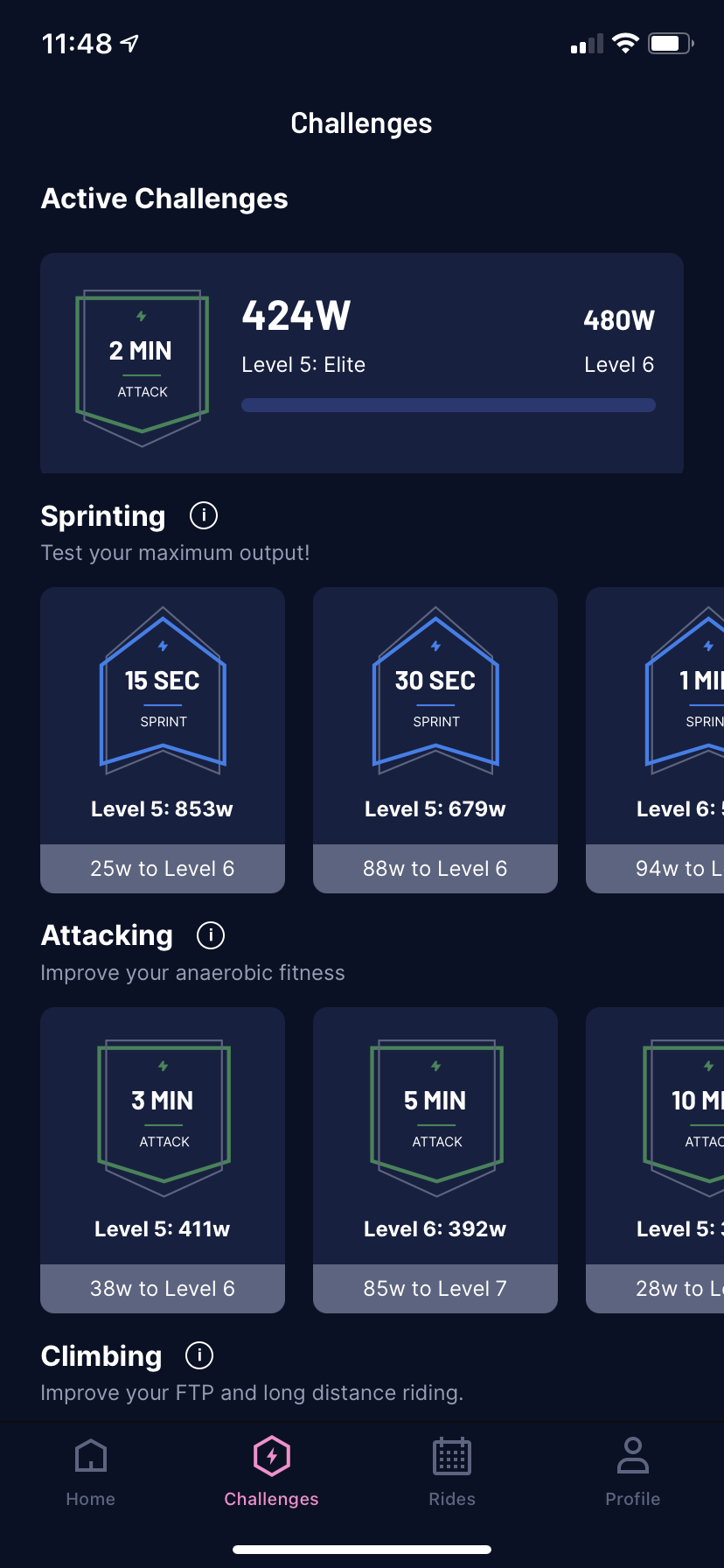
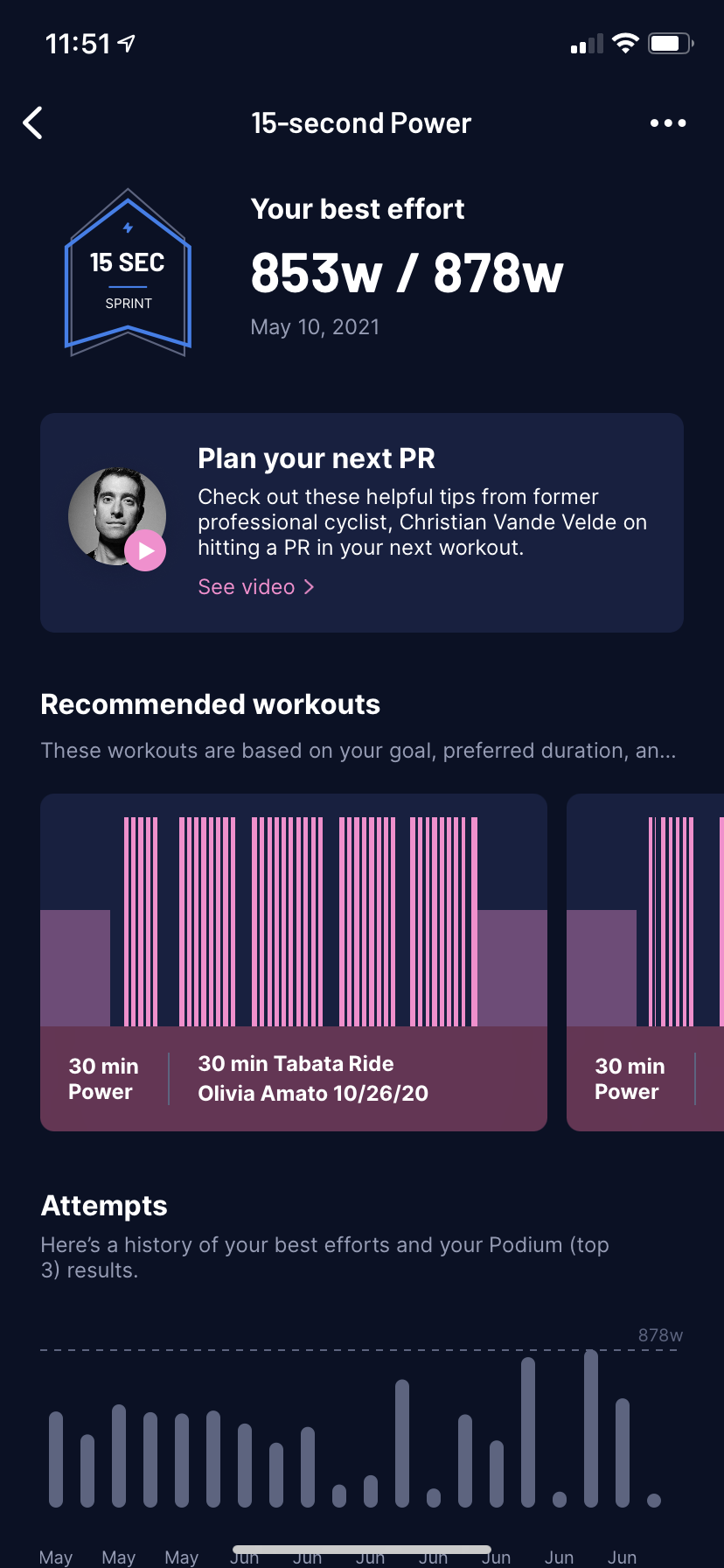
They’ve already created a “Challenges” feature where you can choose to work on a particular power interval in order to level up. For example, the app tells me if I added 25 watts to my 15-second power, I would move up to the semi-pro level. And if I decide to set that goal, I’m now given a screen with video tips from founding team member Christian Vande Velde as well as recommended workouts.
Here’s what my screen looks like:
The “Challenges” idea is a good one, and well-developed in the app. But the biggest weakness I see is a lack of training direction. Christian’s videos offer some very high-level tips focused on how to perform best when testing your power, but they don’t tell you how to train to improve.
There are some recommended workouts listed which vary depending on which Challenge you take on, but they seem to all be pulled from Peloton (*gasp!*) – you would need to manually create them in Zwift in order to execute them in Erg mode.
It’s early days for The Breakaway. But if they could integrate the app with Zwift so you could click a button and pop the recommended workout into your Zwift workouts folder, it would be a killer training tool, as long as the workouts were solid.
I would also love to see them add more videos from coaches – explaining key principles for training 15-second power, for example. I think we’ll see this eventually, as Jordan explained to me, “…we are very early and we have a lot more coming in recommended workouts, content, and more.”
Free vs Paid
You can install the app for free, and it will read in your Strava history, showing you your current level based on recent activity. But that’s just scratching the surface of what The Breakaway was created to do.
In order to have it read in your activities moving forward, you’ll need to pay (or sign up for the free month trial). Cost is $7.99/month, or $89.99/year. It is only available in the Apple App Store at this time (sorry, Android users).
More Coming Soon
The Breakaway team started working on the product in mid-2020, with the motivation of “looking at this opportunity for how we can do more with all of the data people are generating across platforms like Strava, Zwift, and Peloton.” I’d say they’ve built an impressive product in that time – and the future is bright.
I asked Jordan if they had any upcoming features he could tell me about. He explained that they are working on a lot of ideas right now, some of which need to remain secret. But one thing they’ll be rolling out is the ability to create a “Team” to see how you stack up against your friends. Jordan says:
This isn’t another social network, but a way to invite/follow your close training partners and see how you rank. What makes it fun is you can do this with people all over the world, and at different levels. Christian here can tell you about his feelings of being ‘beaten’ by me on our internal leaderboard…
Clearly Jordan, Christian, and the rest of the team are having fun building The Breakaway. Kudos to them!
Zwift: Please Take Note
Many Zwifters seem to endlessly clamor for more roads, new maps. And I get it. We all love new roads. But wouldn’t it be amazing if Zwift could flesh out our rider profiles, displaying metrics like The Breakaway?
Don’t get me wrong – I love what The Breakaway is doing, and I hope they keep up the good work. But Zwift competitor The Sufferfest features their 4DP (4 dimensional power) profile which includes 5-second, 1-minute, 5-minute, and 20-minute power numbers. Why shouldn’t Zwift offer all that, and more?
Imagine completing a Zwift race and getting a popup notifying you of a new 2-minute power PR.
Then imagine Zwift taking it a step further by allowing you to set a training goal and recommending workouts to meet that goal. Want to boost your 20-minute power by 10 watts? Here are 5 recommended workouts to make it happen. Better yet, here’s a training plan that will help you get it done in 4 weeks.
The possibilities for this sort of “virtual coaching” are massive, and Zwift hasn’t even scratched the surface. Yet. Whether or not they’ll develop these features or leave it to third-party apps like The Breakaway remains to be seen. But I’d sure love to see it in-game. And I think you would, too.
Your Thoughts
Have you tried The Breakaway yet? How stoked would you be if Zwift could offer some quality virtual coaching tools along the same lines? Share your thoughts below.
The View from the Top: VEveresting Special Edition
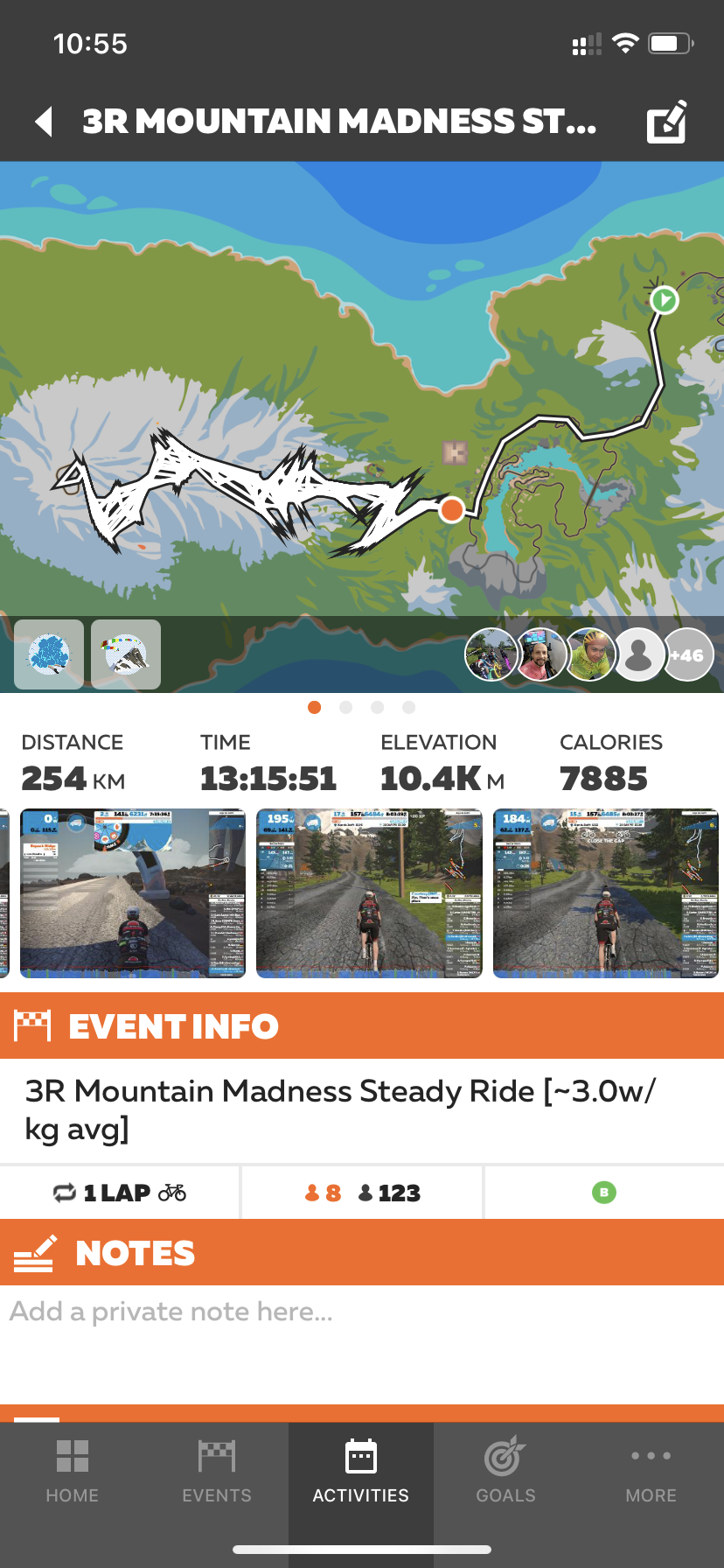
This is a bit of a long article, but in my defence, I do have 254km and over 13 hours of cycling drama to report on during my vEveresting attempt. This turned out to be my longest day ever in the saddle.
VEveresting – What’s it all about?
Virtual Everesting or VEveresting is where you climb the equivalent of Mount Everest, which is 8848 meters, in one go! To climb 8848 meters is a big task, so much so that Zwift has a dedicated reward if that goal is achieved. To climb it in one go could be argued to be the definition of insanity. However, here I waited, with members of the 3R Academy, who were equally as insane as I was, as the clock counted down to the start of my longest day on the bike. My motivation was the desire to raise money for the World Bicycle Relief Charity, whose goal is to provide a specially designed bicycle to developing countries.
The journey of getting to this point was not your typical one. I will be honest and state that when the vEveresting craze started, it was something that did not really appeal to me. However, in March I was contacted by George Parker-Fuller. He had created the 3R VEveresting Academy and I was invited to ride with the group to report on it for Zwift Insider. George had organised a 3-month training programme consisting of group rides where people would train together with the end goal being the undertaking of a mass vEveresting Challenge on 29th May compromised of 8.5 laps of the Alpe Du Zwift. The objective was to raise money for charity. It was a novel concept and one that appealed to me, so I was keen to attend their first training session.
The first training session was good fun and I sporadically attended additional training rides, before realising that these rides were becoming the highlight of my week. What made this training fun was their camaraderie and relaxed nature. The training was structured but not high-pressure.
About 6 weeks before the main event, I contacted George and signed up. There was no going back, I was all in.
Prior to the start of the event, I had been methodical in my preparation. I had paid close attention to my equipment and nutrition. The bike had been cleaned and a full inspection undertaken, I did not want a repeat of what happened when my gear cable snapped and I had to race a race a Gran Fondo with only two gears. In terms of nutrition, I had a blend of different drinks to keep me hydrated, snack bars, as well as a big bowl of risotto, which I could dip into between ascents, to keep me fuelled. Everything had been carefully planned, including the charging of all my tech, such as Bluetooth headphones, iPods, speakers, and new batteries added to the heart rate monitor. Finally, I left for bed, leaving the iPad to charge overnight.
The Epic Day Begins
The day of reckoning arrived and I was awake early with nerves. After a large breakfast of two helpings of porridge and weighing in, I went to log onto Zwift to update my details. I noticed I had an issue, the first of the day! The iPad that I had put to charge the night before, had not actually charged and was sitting at 43%! The charging wire was not fully inserted. I could not believe it! So, I frantically pushed the wire and hoped that in the hour that I had before the start, the iPad would have enough power to last the day.
This did not do much for my nerves. Still, nothing I could do now, so I logged into Zwift, updated my weight, and took the various screenshots to prove that I had configured the system properly, which is a requirement when submitting to get inducted into the Hells 500, who are the founders and custodians of the Everesting Challenge.
The Start – Lap 1
By the time I lined up at the start, I was not in a good space, mentally speaking. The battery had only charged to 63%. In the hour before the start, I had researched and learned that despite the iPad being connected to the power source, due to graphic usage, the iPad’s battery will drain. The question I had was “by how much?”
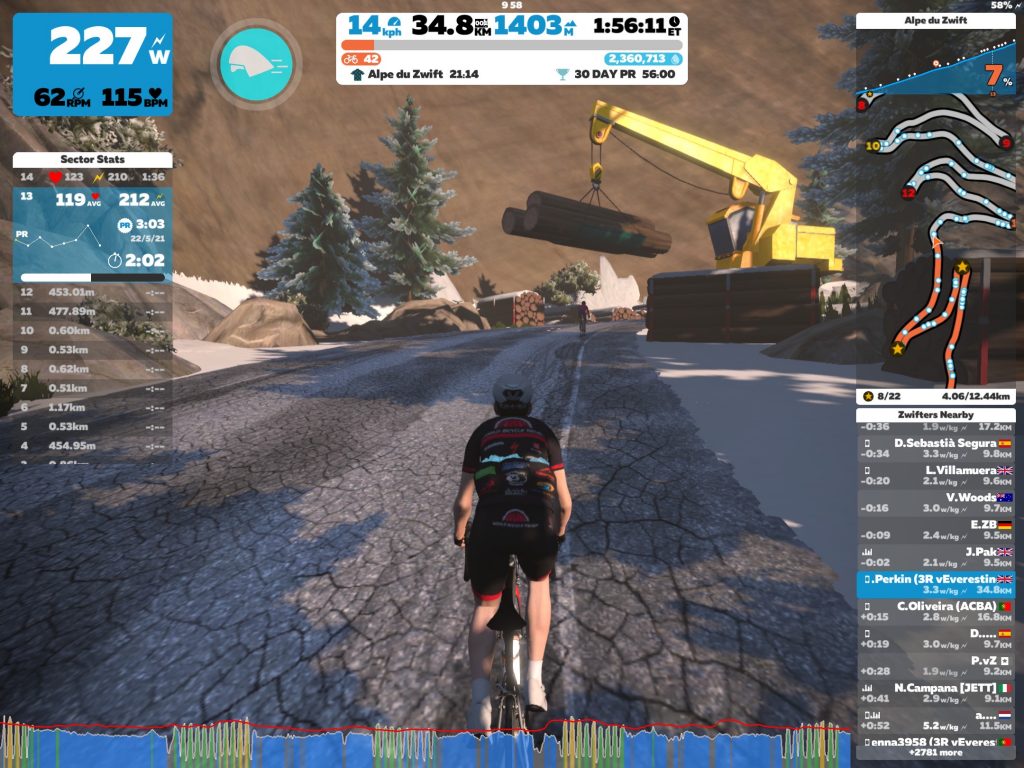
As we headed off towards the mountain, instead of focussing on my own watts, I was transfixed with the watts of the iPad. Within the first 12 minutes I had dropped 1%, so as I started by first ascent up the Alpe, I was doing mental arithmetic. 12 minutes meant that within an hour, the battery would have drained 5%. This means that within 10 hours, it would be down to 13% and considering I was budgeting on completing this in around 12 hours, I would be down to my last 1%.
To say I was flustered was an understatement. I was facing the reality that my challenge could be over before it began! I gave a shout out to the group for advice and was told to turn the screen brightness down. Despite doing this, 10 minutes later, the battery was down to 61%. I searched on Google whilst pedalling, frantically searching how to extend battery life. The first tip was adjusting the screen brightness, which I had already done, but then the other tips were to turn the app auto-update and location services off. This I did and would see how I got on.
Fortunately, that seemed to stem the power bleed and by the first hour I was at 60% battery life.
As a result of all this hopping on and off the bike, I had long since lost the connection with the group. I could not quite work out if they were ahead of me or behind me and I didn’t have the focus to try and work it out. Effectively, my plan for the entire event, which was to ride with the group, had exploded within the first few turns of the mountain. I already knew I was in for a long day, but I figured the day just got longer!
As if my battery issues were not enough, I started experiencing ‘tire slip’. As I would pedal, the resistance from the trainer would slip away and then come back. The closest thing I have experienced is when mountain biking and you go from a hard terrain to a soft, sandy one. It was impossible to get any rhythm. I couldn’t figure out the cause of the issue, but I had experienced something similar many months ago, whilst cycling in my Monday Mountain Massif TT event.
The first lap was a blur of tech issues, and feeling more like an IT Technician than cyclist, I crested the first ascent in 71:14. I let the avatar descend and I went to replenish my drink supplies, hoping that the ‘tire slip’ issue would fix itself.
Lap 2
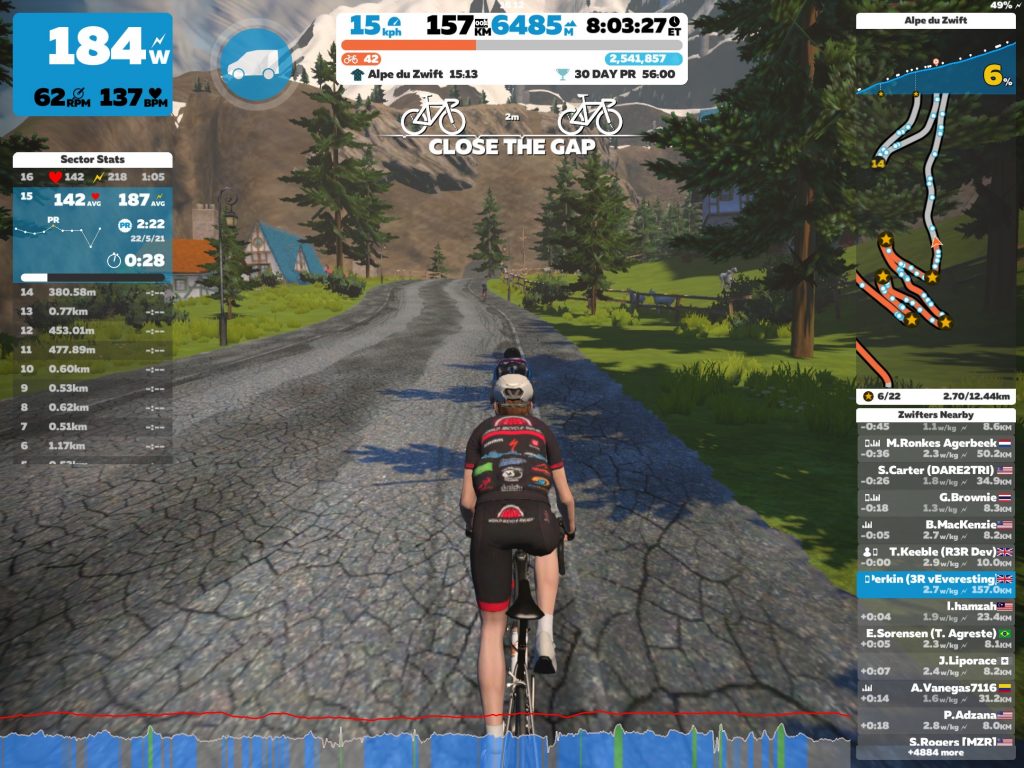
The second lap was marginally better than the first, with my focus remaining on the battery. By the end of the second hour, it was at 58%. However, the ‘tire slip’ issue remained to a lesser extent. I would cycle without issue for several minutes before it would return for a short period, disrupting my rhythm, before magically fixing itself, only for this to repeat itself. It was hideous. At one point, I got off the trainer and tried re-pairing the Bluetooth connection, but without success. This was a major task in itself as with screen brightness turned right down, a lot of “pressing and guessing” was being done.
Despite this ongoing issue, I ascended in 65:47 and once again got off the bike to get fresh drinks.
It is worth noting that despite these issues, I had made a point of continuing to drink. Switching between sports drink and water. During the descent, I went and weighed myself, which helped me keep track of my level of hydration. During this rep I also consumed a snack. I had 5 energy bars that was to last the day, as well as some sweets for an instant sugar hit, this was to top up the risotto that I would eat. During this rep, I consumed half an energy bar, conscious of not wanting to overeat and feel sick.
Lap 3
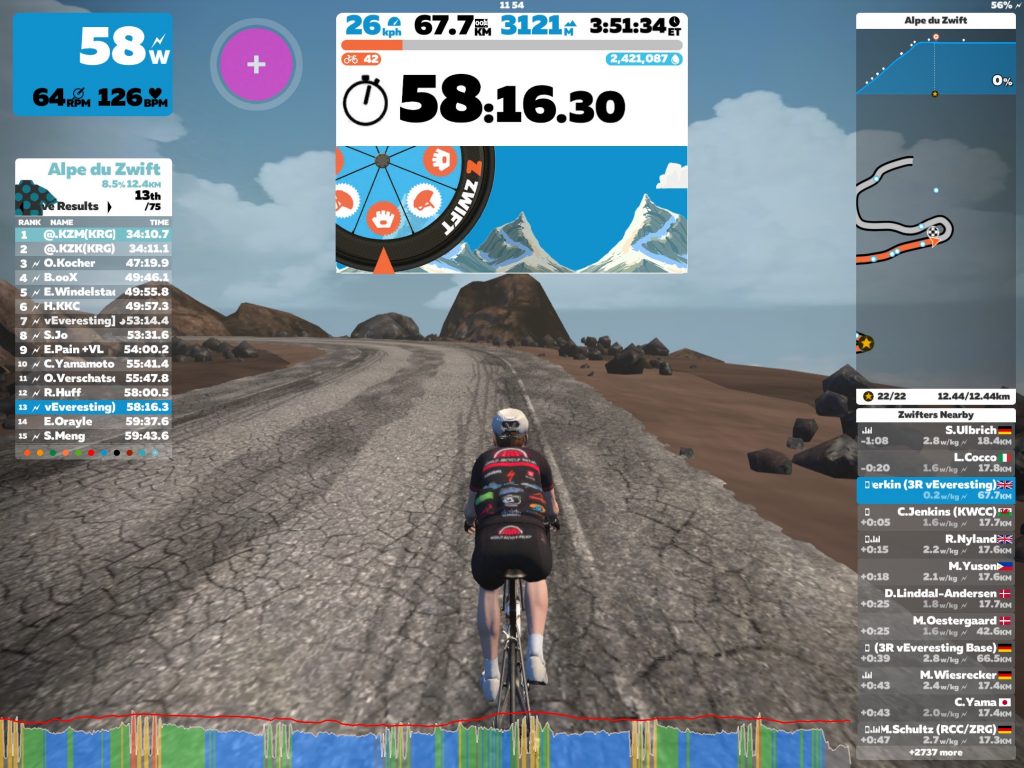
The ‘tire slip’ continued but I battled through and somehow reached the top in 58:16, at the time the 13th fastest on the Alpe for the day. I realised I had perhaps pushed it too hard, but this was in part due to the frustration that I could not contain.
The original plan that I was going to follow, had me stopping at this point and having a break. The idea was to have lunch and change my clothes but now 4 hours into the challenge and at 56% battery, I was focussed on getting to Base Camp and there was no time for a break or a change of clothes.
Lap 4
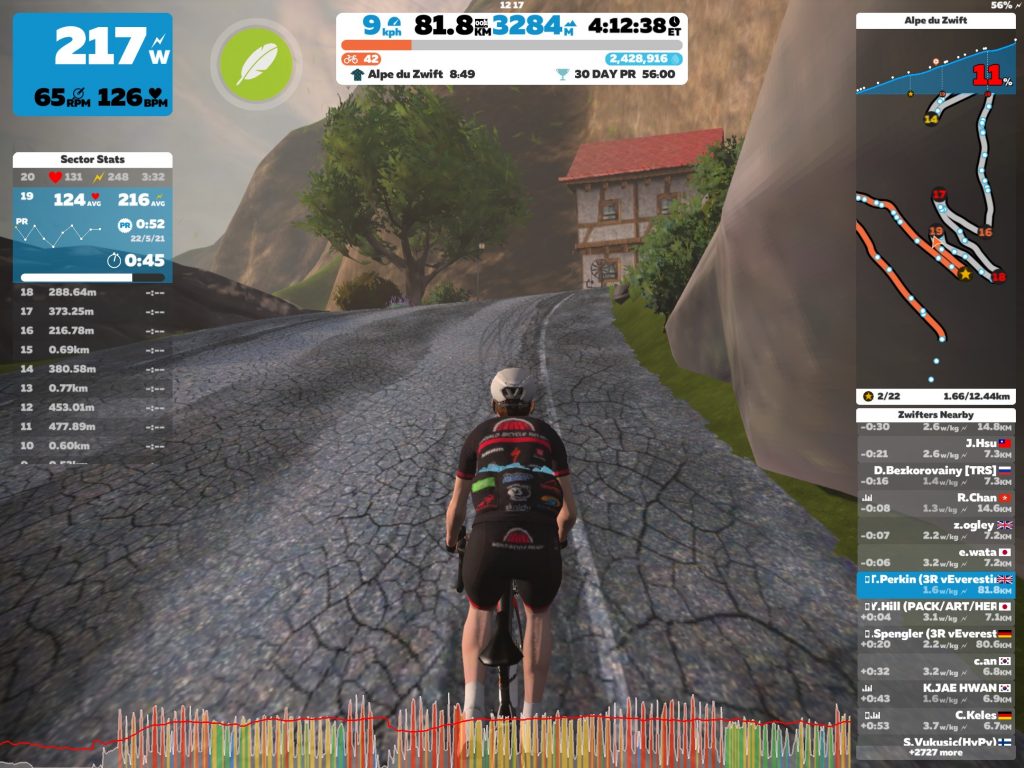
I pushed on the pedals to start my 4th ascent. Nothing happened. There was no power generated by my avatar. Nothing happened. I was desperate to get going because ahead of me, on turn 18, was Zwift Insider’s Luciano. Luciano’s articles always make me laugh, so was keen to catch up to him and spend the next hour chatting. I desperately tried to bring some life back into my avatar by ‘re-pairing’ the trainer but it wasn’t connecting. Somehow, on the descent, the inactivity had caused it to disconnect.
In frustration, I pulled the power lead out of the trainer, plugged it back in and miraculously the trainer reconnected. I turned all fans off, the air conditioning unit, my Garmin 1030 that I was using for dual recording. I was paranoid that maybe something was interfering and causing the issue. I hopped on the bike and chased after Luciano, who was patiently waiting.
The issues I had experienced before were now magnified and as I raced after Luciano, my power graph looked like the teeth of a sawblade, and with this technical issue my “Pain Cave” turned into more like a “Torture Dungeon.”
I caught Luciano and was absolutely red with rage. At this point, I’d had 4 hours of issues to contend with and was consumed by the feeling that this vEveresting attempt was doomed. At this stage, my goal was just to get to Base Camp and I was ready to throw the turbo trainer out the window because it felt like I’d suffered more technical issues than NASA.
There is a famous scene in cycling where during the 2003 Tour de France, Lance Armstrong is climbing a mountain and he gets his handlebar caught in a child’s bag. He falls off his bike and jumps back on but he is rightly flustered, his momentum lost. Why I remember the incident is because Lance had a teammate present, José Luis “Chechu” Rubiera alongside him. What is often overlooked during that incident is that it is Chechu who paces Lance back into the group that he was dropped from and it was Chechu that helped Lance regain his composure. Luciano was to be my Chechu.
Luciano could see I was having massive trouble as my power was fluctuating as I battled my trainer and so very calmly we troubleshot the problem. This is what we did:
Unplugged the trainer.
Repositioned a fan by the trainer to cool it.
Waited several minutes.
Re-plugged in the trainer.
Reconnected the trainer to Zwift.
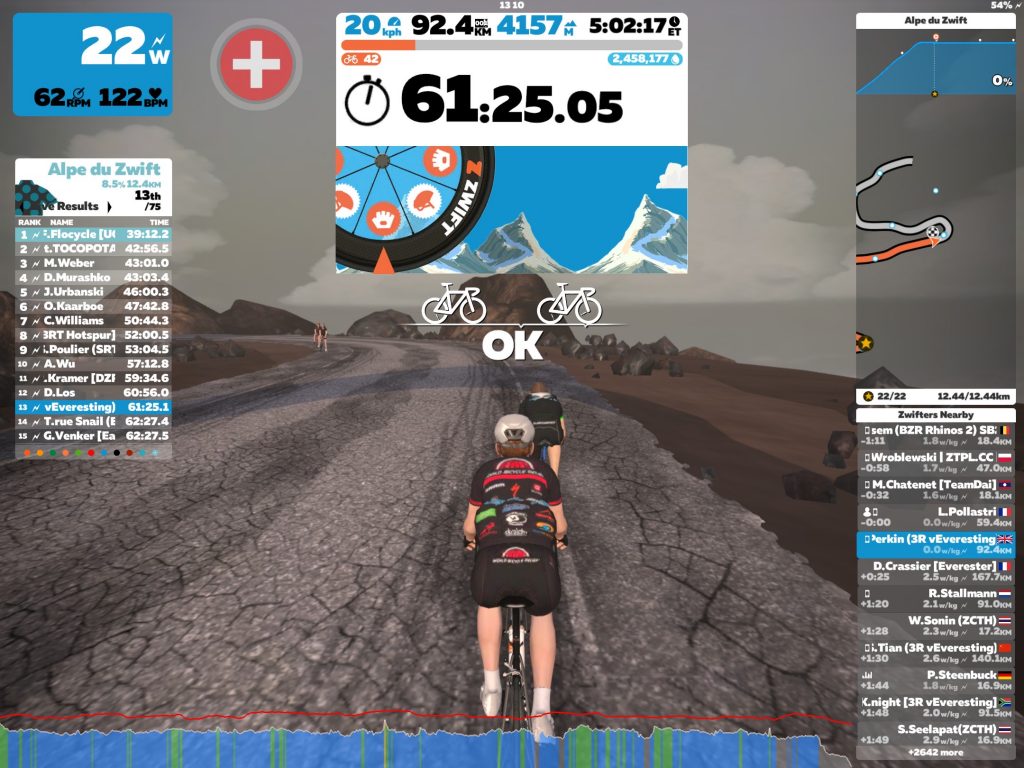
Bingo! It worked. As if by magic, the power issues had disappeared. There was no ‘tire slip’ and with that we shot off up the mountain. I stayed glued to the wheel of Luciano, who kept a strong pace, and we reached the top in a time of 61:25, my second fastest. In retrospect, I think the fast time was due to the adrenalin because of the roadside fix.
It had been an eventful 5 hours and I was not even halfway.
Lap 5
Luciano had left me at the end of Lap 4, but he had helped me through the worst moment of the day. Feeling energised by having a working trainer, I pressed on. I was finally able to cycle unhindered and at a tempo that suited. This was what I had signed up for.
During the stress of the lap previous, I explained to Luciano that because people had sponsored me for doing the event, I felt this additional pressure to complete the challenge, or at least reach my first target – Base Camp.
As I reached Base Camp, I felt a huge sense of relief. First target achieved. At this point, I decided that once I completed the 5th lap, I would stop for the risotto that I had been very much looking forward to.
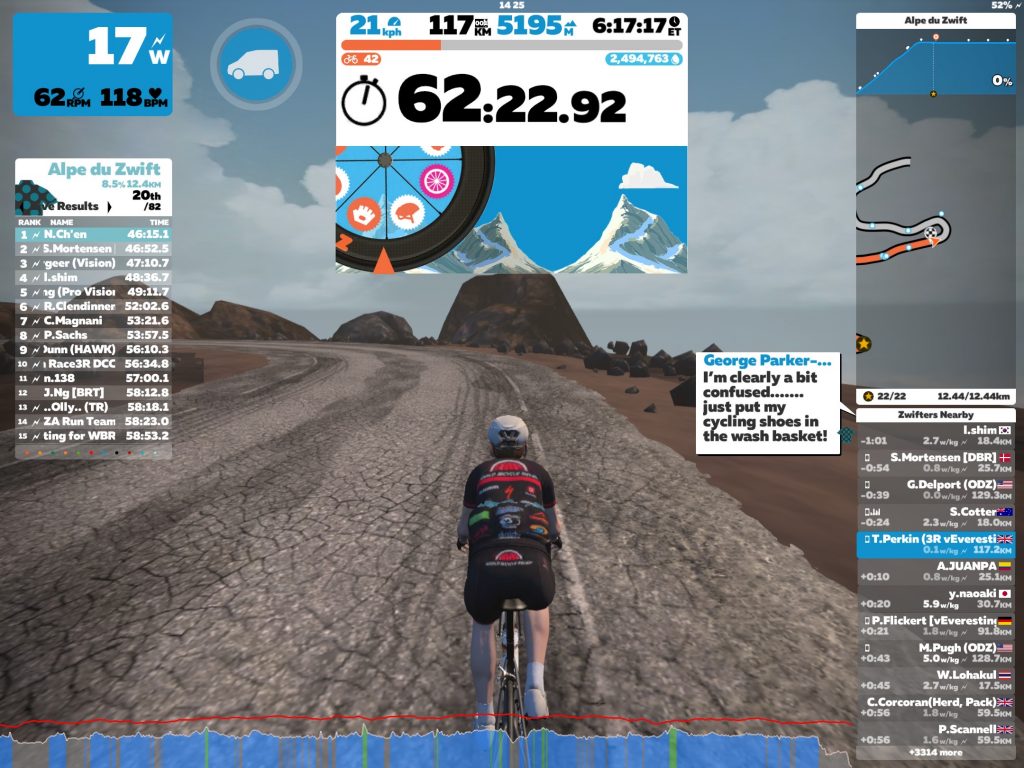
Lap 5 completed in 62:22. iPad battery now at 52%, including my own energy levels!
Sadly, with my own issues that I had experienced, I had not kept in contact with the group or kept track of their progress, I did catch a message just as I finished the lap from George, the organiser of the event and it read “I’m clearly a bit confused… just put my cycling shoes in the wash basket!” I certainly could relate that that.
Lap 6
With a hot meal and a working trainer, lap 6 was ironically the best so far. I was feeling settled and climbing at a little over 3 w/kg and with the Giro d’Italia for company, I was feeling inspired (dare I say it), having fun for the first time of the day.
At this point, I was able to check-in with the group, and it became clear that up and down the Alpe, we were all dealing with different dramas of varying kinds. George was suffering from an injury to his toe, another rider, JG had his session interrupted by his cat, causing his ride to be terminated and having to restart the challenge (fortunately, Hells 500 accepted his two-part ride).
Towards the end of the lap, literally 1 turn from the end, I was joined by fellow 3R rider Ted.
Ted had logged on to support the team and had opted to ride with me. I was grateful for the company. Ted is a brilliant rider and so consistent. Every team needs a rider like Ted and I was delighted when he joined the ranks of my team for the Zwift Racing League. More so when he said he could pace me up for a lap, so it was on to lap 7, after knocking out lap 6 in 65:58.
With the battery at 50%, I was beginning to believe that I may succeed in the challenge.
Lap 7
When I watch cycling on the television, I am fascinated when the riders enter the mountains and you have these trains of teams, all pulling one rider up the mountain. Well, for an entire lap I experienced this, but my team consisted of just Ted. But Ted was superb and all I needed.
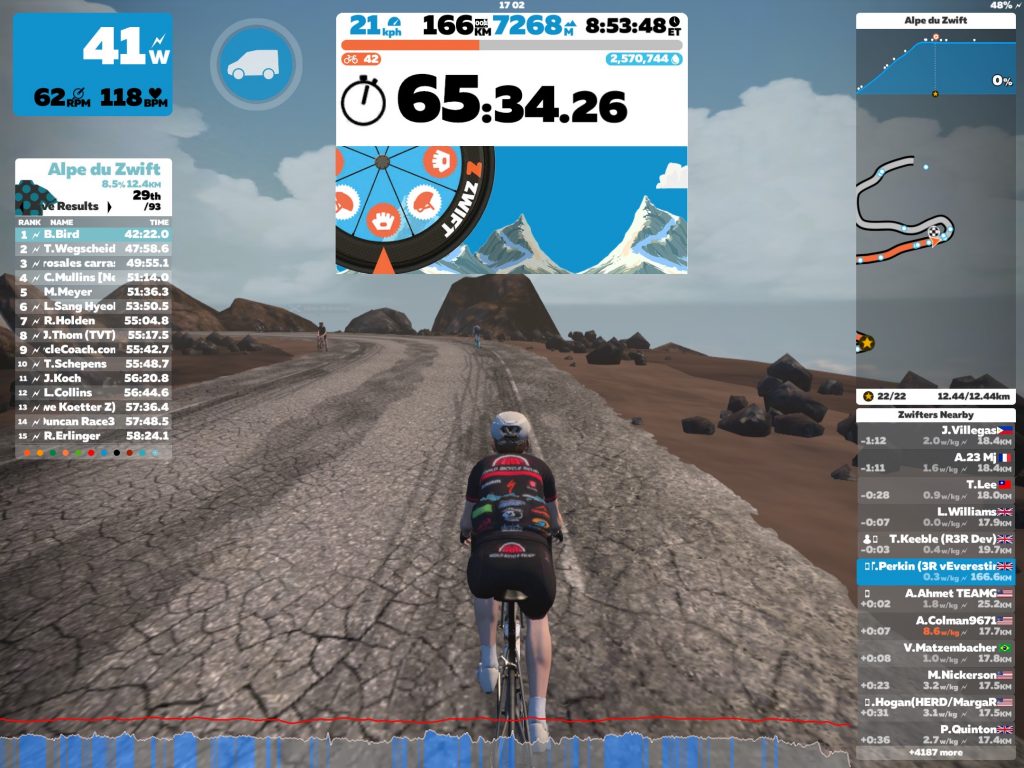
At the start of the lap, he asked me what pace I wanted, to which my reply was around 3-3.3 w/kg and I literally just sat on Ted’s wheel as he paced me up, never really deviating from the tempo except when there were slight variations in gradient. This and the time with Luciano (post trainer issues) was the best of the day without doubt. Ted set the tempo and I just rode. It was perfect. After 8 hours cycling, it was all I could do to sit on his wheel. Sadly, for Ted, I didn’t have the energy to engage in much conversation. I just focussed on his wheel and pedalled, and we turned out another very consistent lap of 65:34. The calmness of the lap was most welcome.
Lap 8
Ted was unable to join me for Lap 8, but I felt the excitement that the end was near. However, I was soon to be visited by another technical gremlin!
As I got back on the bike to start the last lap, the trainer had once against lost connection. “Here we go again!” Fortunately, I went into the pairing screen and reconnected the trainer. I decided for the descent of the 8th lap, it was safer to sit on and spin the legs, keeping the trainer active and thus mitigating any potential connection issues.
This ride was certainly an emotional rollercoaster.
To keep motivated and with the Giro d’Italia long since finished, I switched to music to help pace me. Despite being way over 20 years old, I find there is nothing better than the Propellerheads to help you keep motivated, so I turned up the volume on my mobile device. I didn’t have the courage to connect to my Bluetooth external speaker, fearing the Bluetooth connection may interfere with the trainer. (I am sure it wouldn’t but I wasn’t prepared to chance it.)
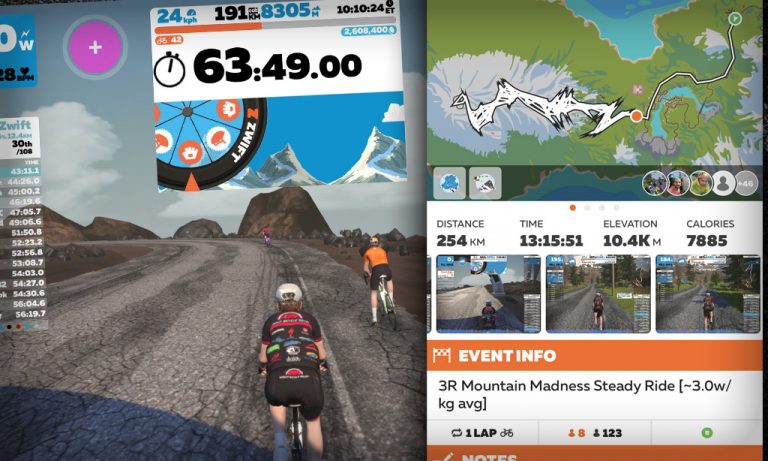
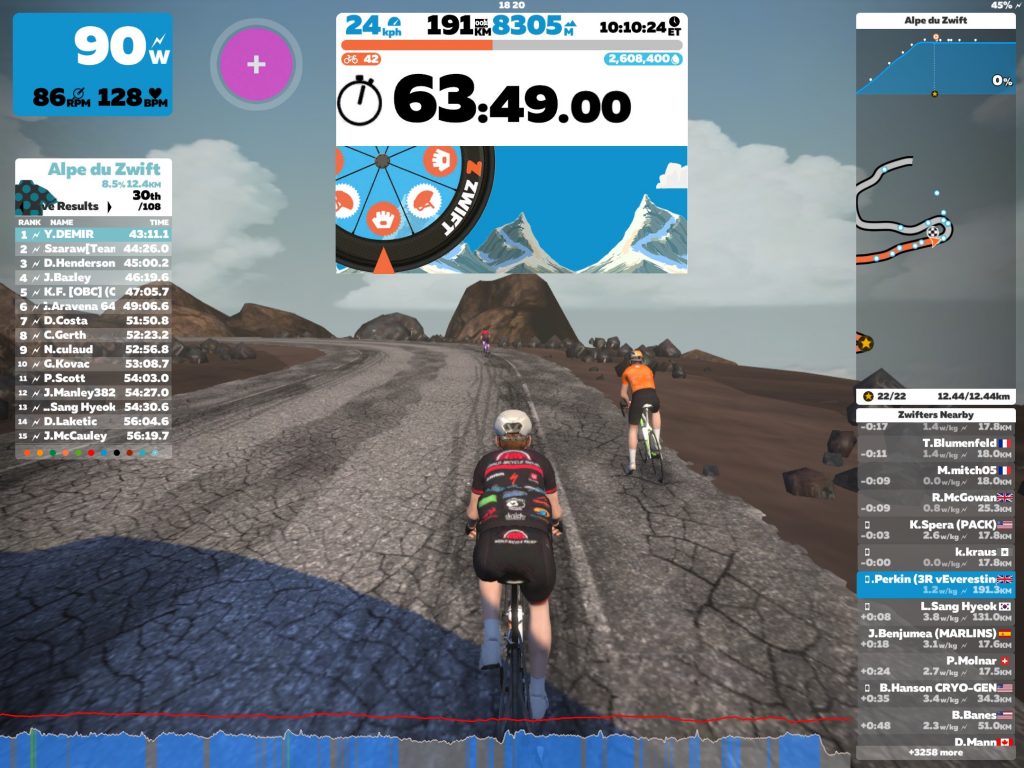
The Propellerheads album Decksandrumsandrockandroll quite literally propelled me up the climb, topping out at 63:49.
Lap 8 took me to 8305 meters climbed and 45% battery, total ride time 10 hours and 10 minutes. It was only at this point that I thought I could reach the VEveresting target.
Lap 9
I descended the mountain, spinning my legs like the fans that were now strategically located around the room. At the bottom, I made a u-turn and began my ascent to reach what seemed like an impossible goal only a few hours before. There was no heroic 5 w/kg attack, just more steady-paced riding. I watched as the meters crept closer to the magic 8848.
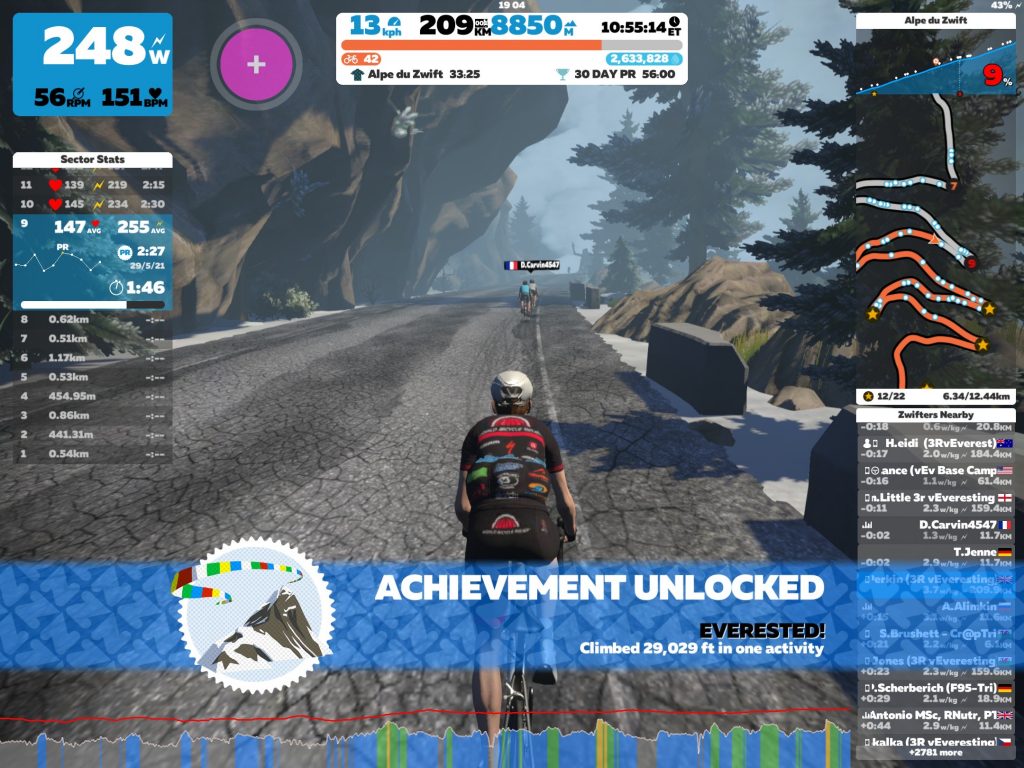
Then, on my approach to turn 9, the moment I thought would never come, “Achievement Unlocked – Everested!” It took 10 hours and 55 minutes of cycling and approximately 11 hours and 5 minutes total. Mission accomplished!
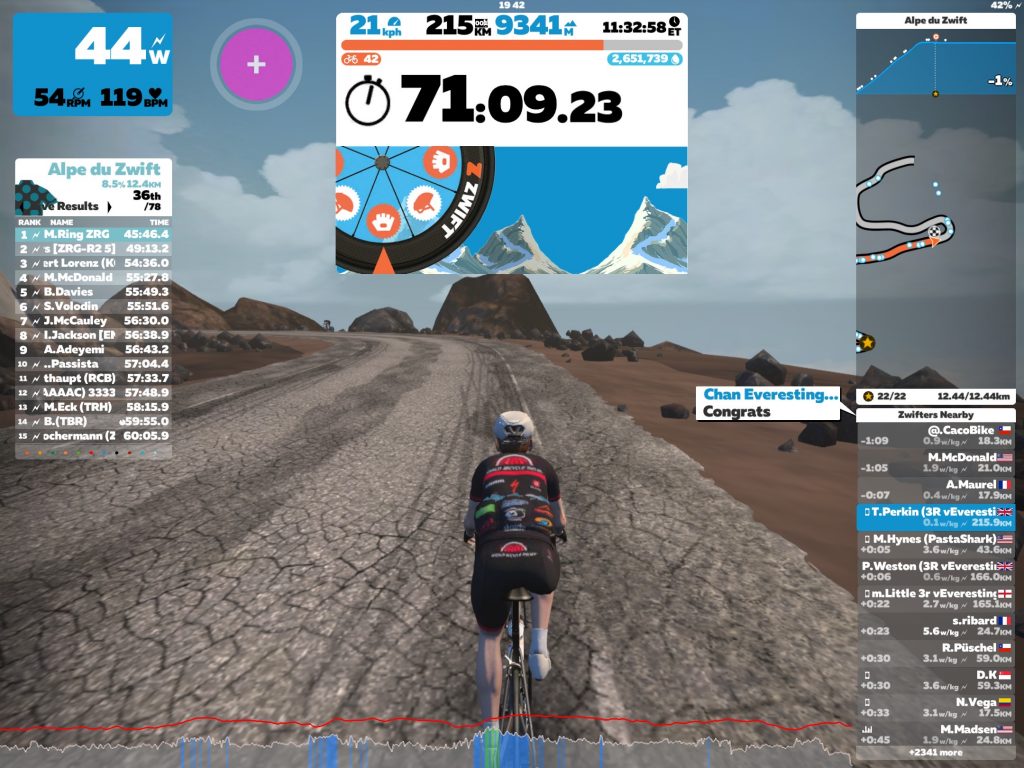
At this stage, most people would have just stopped, got off their bike and called it a day. But I was halfway up lap 9 and couldn’t leave the lap unfinished, so I ploughed on, topping out in 71:09 and 9341 meters.
As I climbed up to complete lap 9, I told the group that I had finished the challenge and was congratulated accordingly. However, they then asked if I was going to try for 10,000 meters? Well, this was never in the plan and so I asked more about the 10,000 meters and George explained that if you reached 10,000 meters climbing, this achievement is also recognised in the Hells 500 Hall of Fame.
Well, when you have done 9 laps, what’s one more?
Lap 10
The answer is a lot more. An awful lot more. On the descent from lap 9. I had what I considered to be the first rest of the day. This was fatal. Despite refuelling with the last of my risotto, I found eating quite difficult as my body started thinking I had finished and thus started to relax. When I got back on the bike to pedal the last few hundred meters, everything had seized up and I was noticeably down on power. I could not hold anywhere near the 3 w/kg I had been doing minutes before and instead tried to set a sustainable tempo. The legs had finally failed me.
As I pedalled, each meter ascended was felt. It felt like when you are on a long ride and you have had enough, but you are literally still a few hours from home and you know it doesn’t matter what you do, it’s going to take time to get back home, and you are going to suffer. You accept the suffering and just pedal. It was the same feeling, just I had to pedal uphill to get home.
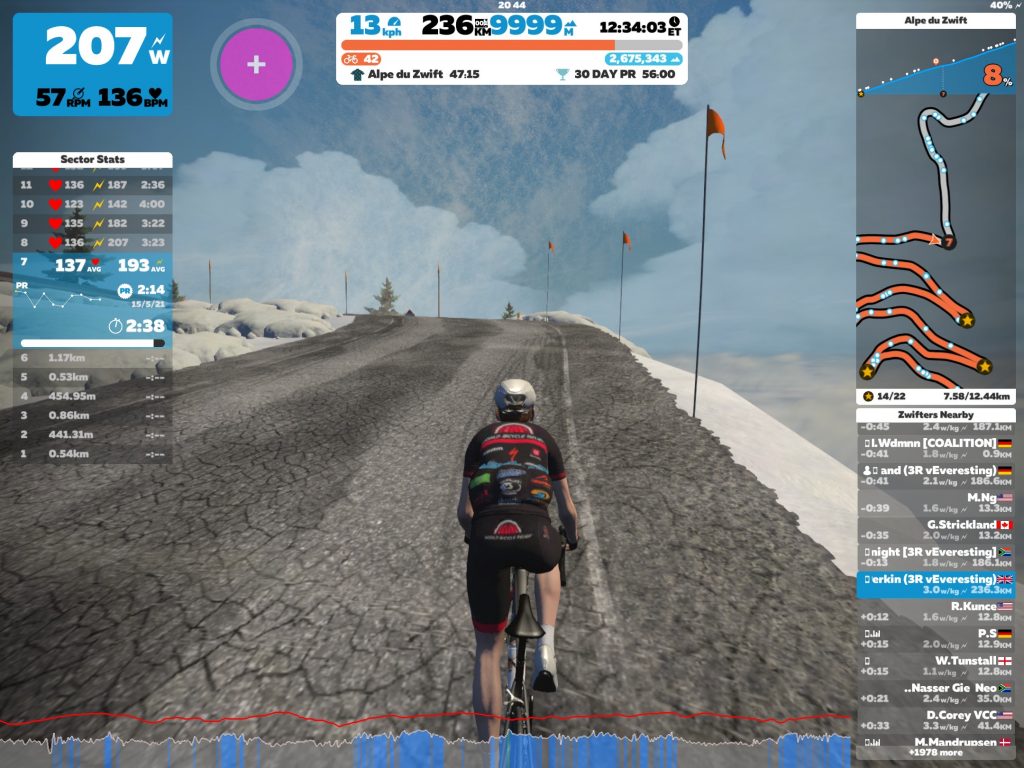
As I reached turn 8, I could see I was edging closer to 10,000 meters. I met my new target at the start of turn 7. It took 236 km, 12 hours and 34 minutes. I had been on the go now for a total of 12 hours and 44 minutes.
Challenge complete!
I was about to hit the u-turn button and descend the mountain when I got told to “make sure you do a bit extra to ensure the ride qualifies”. Well, how much is extra? At turn 7, I came to conclude that there really is not much of the Alpe left to do, so I thought, “I’ll just finish lap 10!” Clearly after close to 13 hours, I was delusional!
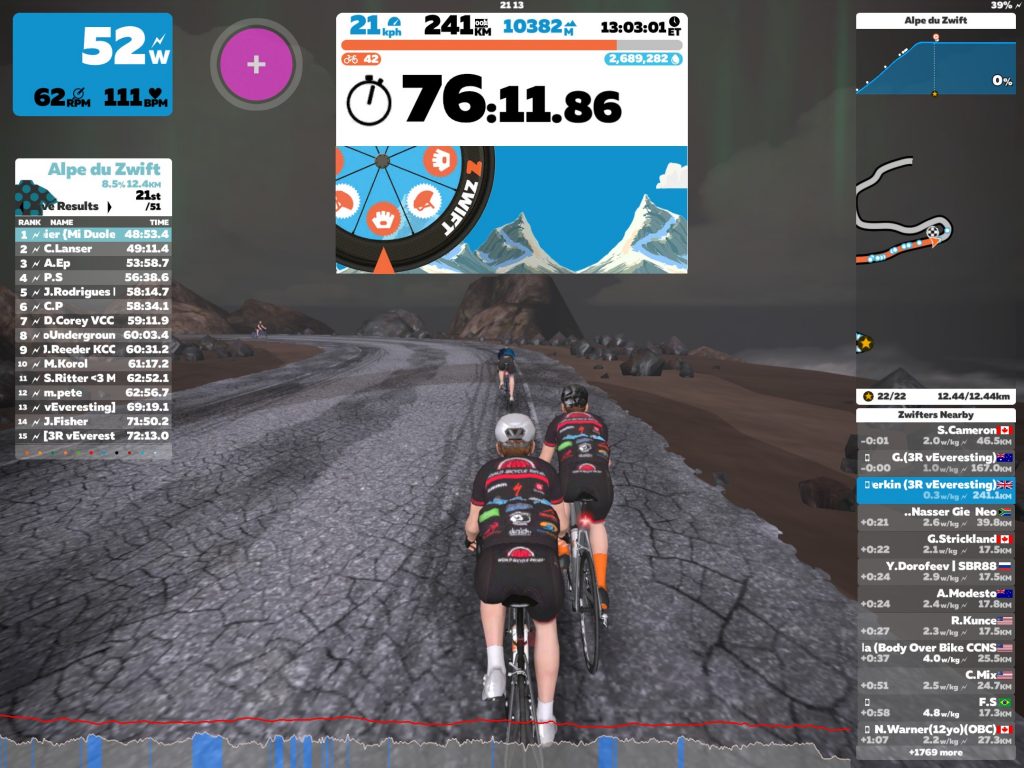
From turn 7, you can reach the summit between 15 and 20 minutes. With my fatigued legs, I struggled the last 6 switchbacks, reaching the end of my 10th and final lap in 76:11. A total of 13 hours and 3 minutes, spanning 241 km, totalling 10,382 meters climbed and with 39% battery remaining.
I turned the bike and let my avatar descend.
Summary
By the time my avatar had come to a natural stop at the base of the Alpe I had cycled 254 km, a moving time of 13 hours and 15 minutes, climbing over 10,000 meters in the process. This was by far my longest day in the saddle, the furthest I had cycled and the most I had ever climbed. Along the way, I had written my name into the Hells 500 Hall of Fame and most importantly, raised money for the World Bicycle Relief charity.
Looking back on the event, it is easy to see why many people attempt vEveresting but don’t complete it. There are many factors that need to line up for you to succeed and often many of these variables are out of your control. You can do all the training, but if there is any form of technical issue, then it can be “game over.”
Training, pacing each climb appropriately, a proper fuelling strategy and good equipment will only take you ¾ of the way up the mountain, you also need a degree of good luck, or a ‘Luciano’ or ‘Ted’ to help you in your time of crisis. The margins of success and failure are slim, I was fortunate to achieve my target so that, on this occasion, there was a happy ending. Ride On!
*A special thanks to George Parker-Fuller and the 3R Academy for making the day a memorable one. There is still chance to sponsor me / the Team for undertaking the event, raising money for the World Bicycle Relief Charity: Fundraising for World Bicycle Relief
The theme for this weekend’s picks is “Out of your comfort zone.” For one event in particular, this is putting it mildly!
Hardness Weekend Race powered by KALAS eSRT
This is the longest event I have ever seen on Zwift. As it says in the Companion app, “First of its kind, be sure to take part in this.”
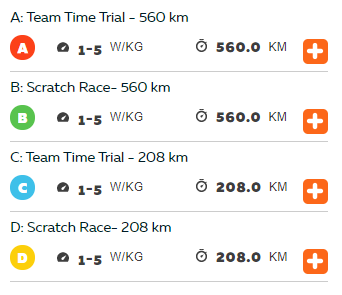
The distance is 560km, or if that is too much, try a mere 208 km, in France. The details for the different event categories are as follows but you also need to sign up by completing this form.
This is a ride that will certainly take you “out of your comfort zone” and probably well beyond!
Let’s confess. Many of us are slaves to data in Zwift, constantly checking power, heart rate, and any other bit of information that we think will help us put in a good performance. However, this race strips it all away as this is a No Heads Up Display event, which means you will be racing on “feel.”
Personally speaking, I am a ‘slave to data’ so an event like this would certainly take me “out of my comfort zone.” I actually think this would be quite fun and a throwback to the old days before we got obsessed by data. Certainly one to try.
Join me as I lead my first group ride (I will be well “out of my comfort zone”)! But I won’t be alone, with Zwift legend Tim Searle on hand to provide advice and guidance. He joins me as part of our two-part Zwift Insider article highlighting the challenges of leading group rides. I will also be joined by members of the 3R VEveresting Academy as they look to shake off any aches and pains from their previous VEveresting success.
“No one goes into leading a group ride wanting to do a bad job, but things happen.” ~Tim Searle
There are plenty of group rides on Zwift. We turn up, get led round, and often don’t consider the preparation and work that has gone into the event. The work of a ride leader is often understated, and a recent experience led me to realise what a difficult task it really is.
I attended a Trek Travel group ride with the intention of reviewing it for Zwift Insider. However, the ride leader was experiencing technical issues, couldn’t communicate, and eventually dropped out. This meant that the group ride didn’t really happen and people started complaining. That’s when I realized it would be interesting to understand the components that actually go into making group rides a success, and what sort of challenges leaders face.
To undertake this endeavour, I reached out to the Godfather of Group Rides, Zwift legend Tim “BacOn!” Searle. I caught up with him in Zwift on France’s R.G.V. route, and he was very forthcoming as we discussed what it takes to deliver a good group ride.
About Tim “BacOn!” Searle and AHDR
For those of you who don’t know who Tim Searle is, I will explain. Tim has the record for most kilometres ridden on Zwift, standing at 213,654km, which equates to 245 days and 15 hours. This is also the record for the most time spent on Zwift. The vertical elevation he has climbed is even more amazing, sitting at 1,326,795 meters. He rides between 27-30 hours a week, with 90% of that being on Zwift (using a Wahoo KICKR).
If there was a Zwift Hall of Fame, he would be the first entry. As well as being a Brand Ambassador for both Giant and Zwift, he is responsible for establishing the Aussie Hump Day Ride (AHDR) in April 2016, which is now an established team with two facets. The first facet is the community side, which everyone can join. The second is the race team, created to participate in activities like Zwift Racing League (ZRL).
The establishment of AHDR had its origins the previous year. Tim was a beta tester with Zwift in 2015, but following a bike crash that resulted in broken ribs he began using Zwift on a more regular basis. That’s when he noticed there were group rides being hosted on the platform, but often at times not suitable for Australian riders. Knowing there was a community of Australian cyclists using the platform, Tim published the time and date and route of a group ride and patiently waited in Watopia for fellow cyclists to join him. The first event had 29 riders and within three months, there were 200 regular joiners.
The name “Aussie Hump Day” was used because the event was hosted on Wednesday, the middle of the week. “Hump Day” is an Australian expression that refers to the rest of the week being a downhill ride.
Tim says, “from that, the ‘Aussie Hump Day Ride’ grew organically.”
Tim’s Early Group Led rides
I asked Tim about his early experiences leading group rides. “They were done by the seat of your pants (meaning improvised). There was no structure. No Beacon. We would publish on Facebook which route, which was usually Watopia Flat Route and we would ride for 4 laps, usually an hour. We would set the time, the course and turn up, it was as much organisation as we did. There was no ‘Meet-up facility.’”
Tim went on to explain that “At 7pm, we would roll out together at 2.5 w/kg and stay in a bunch and on the last lap we would race. This is where the ‘After Party’ came from. On one occasion, I forgot to tell people and shot off and people wondered what I was doing. The lesson I learned was that you need to tell people what you are going to do, especially if you are to race at the end.”
These early experiences highlights how much development Zwift have undergone in recent years. We actually have a very structured format not only for group rides but also we are able to arrange Meetups with friends relative ease.
Past Experiences
I was enjoying listening to Tim’s stories about the early days on Zwift, so I asked what stories he had about his group rides and the one tale that came straight to his mind was how he got his nickname “BacOn!” Searle.
Tim told me that Zwift had launched a series of updates and upgrades which included the yellow beacon function. He was invited to showcase this, along with Shane Miller (from the GPLama YouTube channel) in an event. Shane, a friend of Tim’s, was recording for his channel. Tim noted “I typed ‘follow the Beacon’, but it autocorrected to ‘BacOn’. It did this the entire ride and so I kept saying ‘Follow the BacOn’ and so everyone was laughing and the nickname has just stuck.”
Another tale Tim shared explained how one of his group rides came to an early end. “I was leading the group, there was a loud screech, a massive bang and then suddenly the power went out. I got off my bike and went to investigate outside the house, a lady had driven her car into the electrical substation outside the house, causing a massive power outage! – You never quite know what is going to happen!”
What Makes a Good Group Ride?
Tim shared the key components of a group ride for him, explaining that there are actually 3 different types of group rides:
Open Group Ride: This is where the Group Leader’s requests are simply suggestions. It’s free and not tightly controlled. No use of the fence feature.
Closed Group Ride: People ride with and around the Beacon, and the fence is utilised to help control the pacing. It’s not viewed favourable for riders to jump off the front of the group.
Structured Group Ride: Structured group-led workouts such as interval training. 3R and EVO run regular group structured workouts.
Tim noted that you need to decide what type of group ride you want to deliver and plan accordingly. Despite the differences in types of rides, there are fundamental leader tasks that make events a success.
Communication
Pre-Event: the ride needs to set up correctly. Within the Zwift Companion app dialogue box, explain what the event is, how it is structured, and be clear so everyone understands what the event will deliver.
Immediately prior to the event: enter the pen early before the start and get settled down. With a few minutes to go, briefly explain what the ride is about. If you write your message too early, those that join later, will not see the message. You are effectively briefing everyone about how the ride will unfold.
Start of the event: at the very start, just as you are rolling en-masse, outline what the plan is so people are again very clear.
During the event: communicate throughout. Repeat the key messages. Encourage people. Keep the messages positive, support those who are finding it a challenge.
The Start
The start is vital and sets the tone for the entire event. It’s important to start easy. People may not be ready and you don’t want to split the group blasting off at 300 watts. So start slow and ease into your pace. It’s far better to do that than to go hard then slow down, which will only frustrate people.
Pacing and Positioning
Try to stay in the middle of the group. This allows you to keep track of where people are much better than if you are at the back or front. With large groups, due to being able to only see 100 people on the minimap, if possible, try and have additional riders to support you, and position them at the front and rear, to provide updates on how the group is doing.
If you are behind the advertised pace, by making small adjustments you can bring the group back on track. Never surge. If you are above the pace, you can slow slightly without people realising. The important thing is to keep it steady.
If you have the capability to have a cycling computer that records power, you can use that to keep track of your average power over the ride. This helps to ensure you keep within the parameters of the event and keep things together.
Enjoy the Community
Enjoy the event, if you are having fun, it will be clear.
My Event
Equipped with Tim’s words of wisdom, we discussed the concept of me leading my own group ride, to understand the challenges leaders face, with Tim joining me as a mentor and providing feedback afterwards. I thought this would be an interesting undertaking so we discussed the finer details, including route selection.
At this point, being a complete novice, the more straightforward thing would be to pick a flat course and lead a group around that. But I have a liking for original ideas and with my Monday’s Mountain Massif TT in mind, I thought it would be a novel concept to run my group ride over the roads of my own event. Therefore, I have opted to undertake my group ride on the Mountain 8 route.
Having a mountain to contend with would add an extra level of difficulty, making it harder to keep the group together not only up the climb but on the descent. It will certainly make for an interesting follow-up article because I have literally dialed the difficulty setting to “maximum”! As I would like to keep the group together and will probably utilise the fence to help with pacing, this will be considered a ‘Closed Group ride.’ In terms of the route, it will be 32km in length, with 677 meters of elevation. The ride should last between 1 hour 10 to 1 hour 20 minutes.
The explanation visible in the Companion app will read:
“Fancy a group ride that is a bit of a challenge? Join me as I lead my first Zwift Group ride with one lap of the Mountain 8 route, on the same roads used in the Monday’s Mountain Massif TT event (which is hosted every Monday at 7pm CEST).
This ride will act a bit of a reconnaissance for those that want to race the Monday Massif TT but in this group ride we will be talking race tactics, and all things related to cycling.
The event will start at a pace of 2-2.3 w/kg, before hitting the base of the reverse Epic KOM. We will climb between 3.2-3.5 w/kg with the focus on keeping the group together.
The plan is to crest the Radio Tower in one mass group, with the real challenge being keeping together on the steepest section. This is not a race and the objective is for the stronger riders to help pace those who would not normally tackle such an endeavour.
Once the hard work has been completed, we descend the mountain and cycle together to the finish at a pace of 2-2.3 w/kg, giving people every opportunity to re-join the bunch, if they have slipped behind.
The objective of this ride is to stay together and help everyone to the finish line. It’s not a race and flyers will not be chased. The fence will be utilised to help with pacing.”
As this is a more challenging group ride, I am going to invite my friends from the 3R vEveresting Academy, who have just completed their expedition, so the ride will be stacked with good climbers to assist those who don’t consider themselves climbers. With Tim Searle on hand to assist, it should be good fun!
Join me and Zwift legend Tim Searle to see how I fair leading people up the Epic KOM reverse in my first attempt as a leader! The ride happens on Sunday 13th June at 10am CEST, 9am BST. I will then report back on how the ride went.
I’ll leave the final words to Tim, who told me, “Zwift is brilliant for socially connecting people and good group rides are fundamental to this, relying on good group leaders.”
How the “Race” Was Lost: Riding with Zwift HQ In SoCal
In the past few years I’ve developed a fun friendship with Steve Beckett, Chief Marketing Officer at Zwift. He’s a transplanted Brit with a distinct sense of style and intuitive marketing sense coupled with a laid-back approach that makes him easy to work with.
We first met at a Zwift corporate off-site event in Ojai in March 2018, where we had a nice long chat about where Zwift Insider fits into the Zwift universe, and how we could work with Zwift to make the relationship beneficial for everyone. For Zwift. For Zwift Insider. And for the Zwift community.
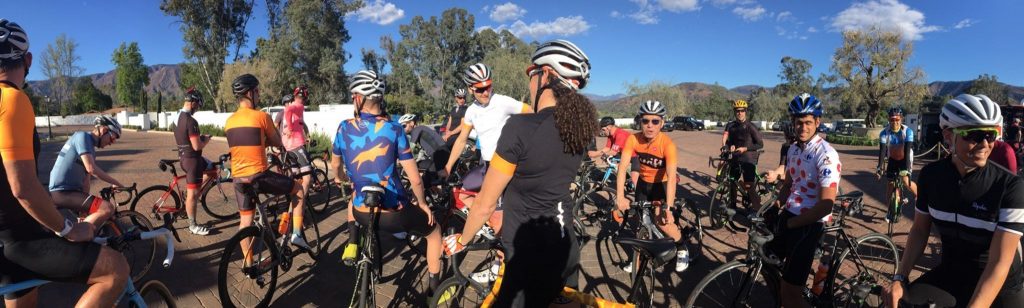
Ready to head out for a group ride in Ojai – March 2018
Since then, we’ve stayed in touch regularly via WhatsApp. He races with a ZHQ team in the Zwift Racing League, and his time slot is several hours after mine – so each week I would let him know how the race worked out for my team, offering any tips I could to help Steve’s squad. One day we got to talking about how neither of us had our Uber Pretzel badge, and the Zwift Insider Badge Hunter ride was born.
For a few months, Steve had been bugging me to get down to Southern California for a ride (Zwift HQ is in Long Beach, and Steve lives nearby). Then I noticed he’d been putting in some long rides on Strava, and I asked him what the increased effort was all about. That’s when he threw down the gauntlet:
Soon enough we had a date, and my flight was booked.
The Warmup
With the ride booked, I thought through the sort of training I should do so I could be as prepared as possible for the big day. We would be doing a lot of climbing, that was certain. And it would be a longer ride, probably 70-100 miles. Based on our Zwift race results, I knew Steve was a stronger climber than myself, but we were pretty evenly matched on flatter ground.
So I needed to do some extra climbing. Outdoors. And maybe even drop a few pounds.
They say the road to hell is paved with good intentions. Nowhere was this more true than in the weeks leading up to the ride, where I managed to put in pathetic levels of outdoor climbing and actually gain weight. I gently but repeatedly kicked myself as I boarded the plane to SoCal. Even at my best fitness, Steve was going to put the hurt on me in those mountains – but I certainly hadn’t done my part to prepare. This was going to be ugly.
The Start: Nichols Canyon
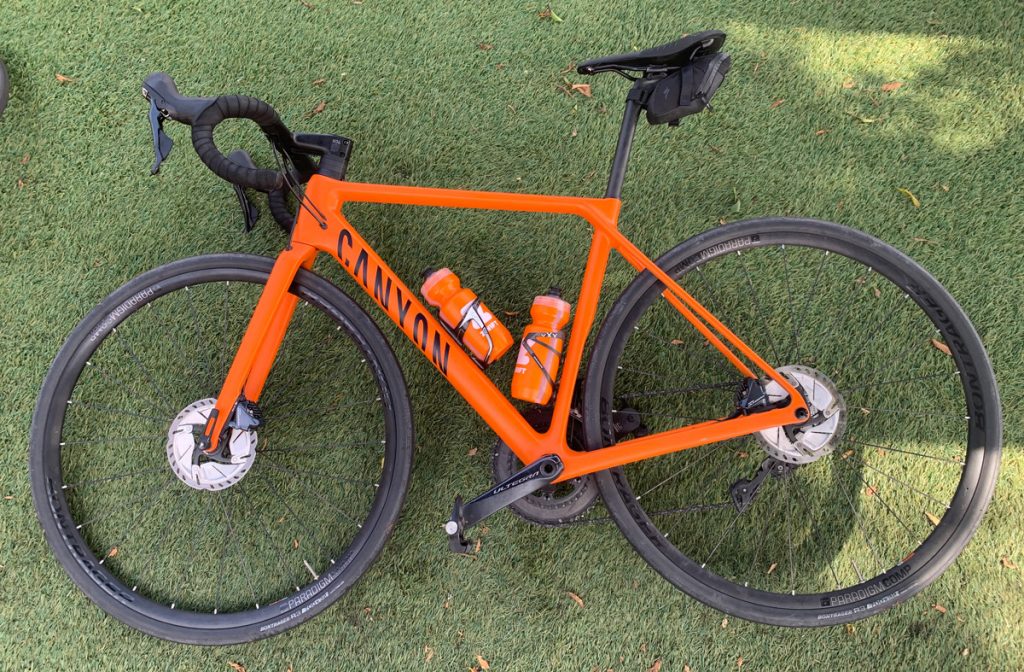
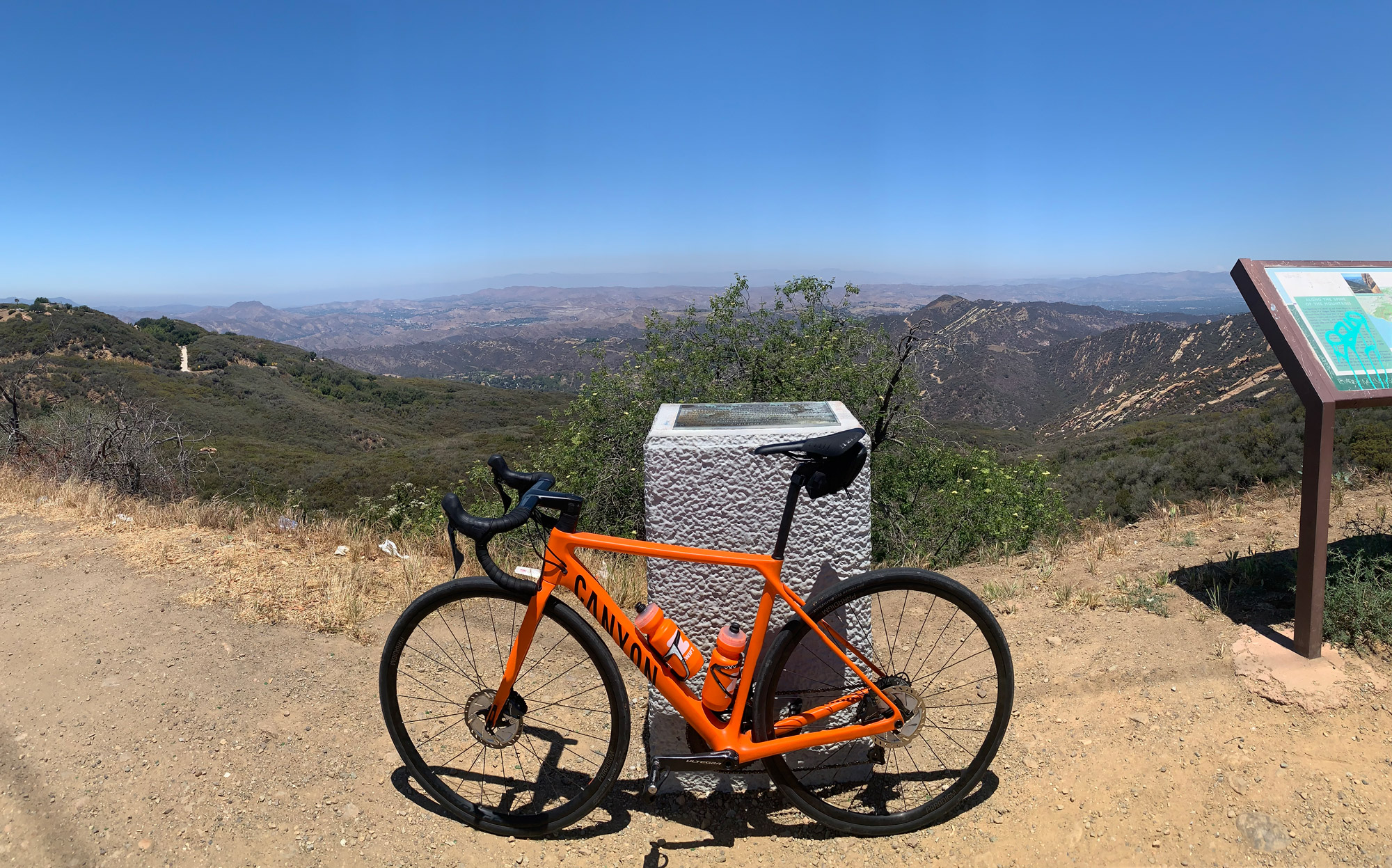
We headed out on Friday morning from Steve’s house. I had shown up a bit early to dial in the loaner bike Steve had secured for me from Zwift’s office – a Canyon Endurace, painted orange from a Zwift video/photo shoot.
Big Orange – my borrowed Endurace
I’d never had the chance to ride a Canyon, so this would be fun. It felt light and snappy compared to my Venge ViAS, and although the front brakes needed a little love and the Vector 3 pedals I’d brought had dead batteries, I knew Big Orange would do just fine.
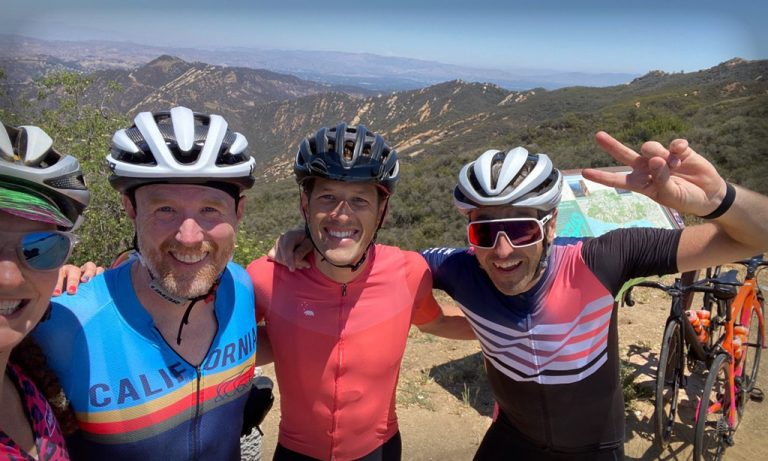
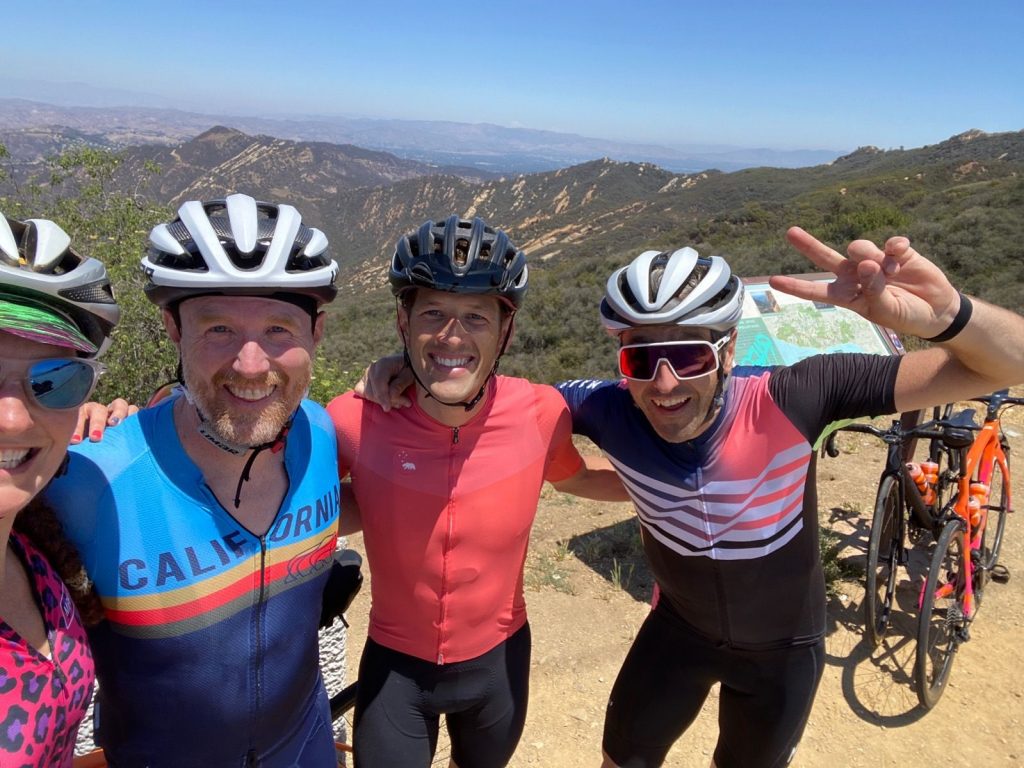
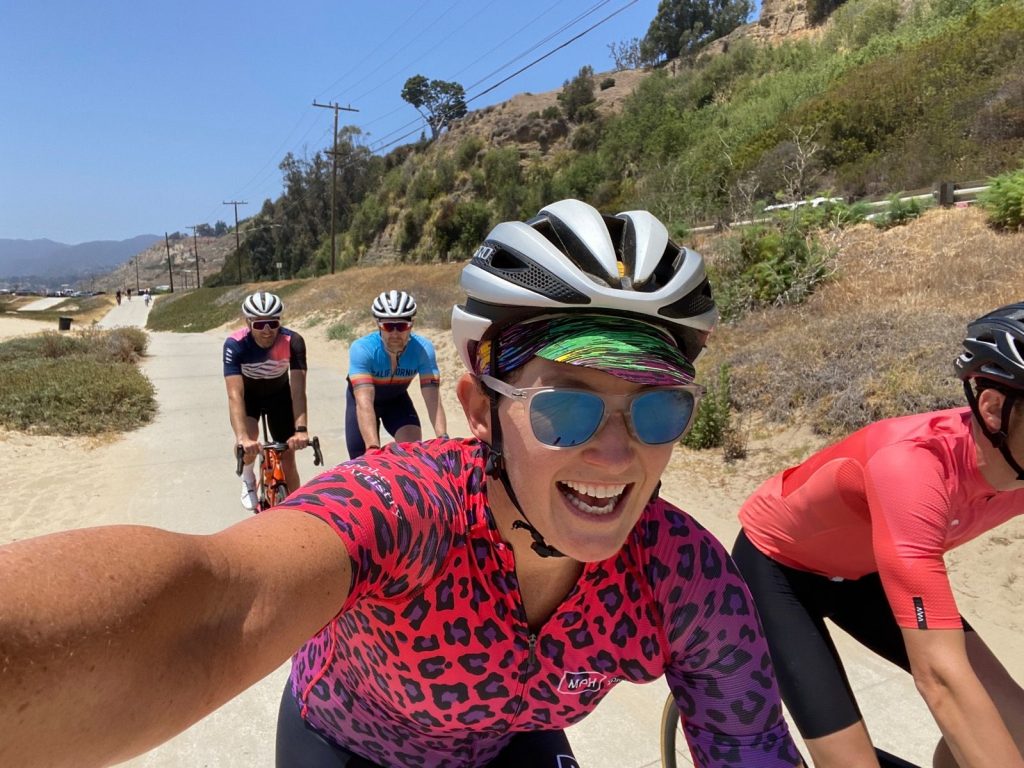
There were four of us: Steve, myself, Craig Taylor (Director of Growth Marketing – Running & Tri at Zwift), and Laurent Janneau (Senior VP of Brand & Communications at Zwift). The start was easygoing as we weaved our way through traffic and stopped at numerous traffic lights (except for those Laurent decided to skip).
This first part of our day would be a version of the famous Nichols Canyon La Grange ride, where 50-150 riders gather every Sunday morning to try and rip each other’s legs off. Zwift HQ folks show up to this ride regularly, so my companions knew these roads well.
We were heading away from the ocean, towards the mountains. Through Venice, Beverly Hills, and West Hollywood – then a left turn onto Nichols Canyon Road for the first climb of the day.
Steve set the pace as we left the grid streets and began climbing on the narrow road. I’d been told this was a “12-minute climb”, so I paced myself accordingly. Happily, Steve wasn’t hammering too hard, so I stayed just behind he and Craig as Laurent dropped back a bit.
A final dig up the last little pitch and we arrived at a good stopping point. As a beautiful McLaren zipped past, I took stock of things.
That first climb wasn’t terrible, but I’d probably pushed a bit harder than was wise on a ride of this length. On the plus side, Laurent was behind me, so I felt good to not be the last guy in the group. But I would have to be careful not to push so hard that I blew up – my main priority was to finish the ride, even if my companions had to wait for me a bit at the top of the climbs.
Trying to keep up with Craig (an Ironman athlete who never looks like he’s working hard on the bike) and Steve (who I knew could handily outclimb me) would be a fool’s errand.
Left to right: Laurent, Steve, and Craig
After a quick diversion to look at the Hollywood sign (see my unimpressive photo) we made our way across the top of the mountains. Laurent bid us adieu since he had an early meeting, then we descended into Brentwood for a coffee stop to meet up with Kate Veronneau (Senior Cycling Growth Marketing Manager at Zwift).
The Laurent for Kate trade was not a good swap from my perspective. I knew Kate was a strong rider, and this meant I’d certainly be the weakest link on the big climbs.
The Breaking: Topanga
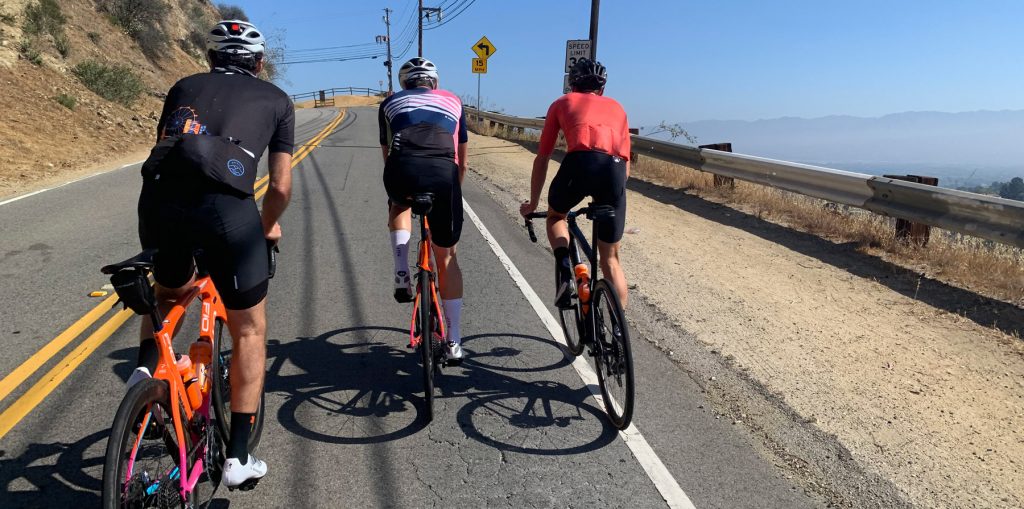
We rode down to the ocean and made our way up the Pacific Coast Highway to our next climb: Topanga Creek Road. This was a rather busy road, and a steady climb. As Steve began pushing the pace on the front, I dropped off the back. I was starting to sweat a lot, the legs were burning, and I knew there was an even tougher climb of unspecified length coming up.
They waited for me at the left turn to Fernwood (since I had no idea where I was going), and we began the real climb: Tuna Canyon Road. This was the climb that did me in. I was sweating like a pig at a luau, and the twisty road gave me no indication of when the climb would end. Was this a 15 minute effort? An hour? I had no idea – so I just kept chugging along, dripping sweat on the tarmac and questioning my life choices.
They waited for me at the next intersection (by my math, they had to wait several minutes). But the climb wasn’t quite finished! We still had Saddle Peak Road to ride, which took us (you guessed it) to the peak.
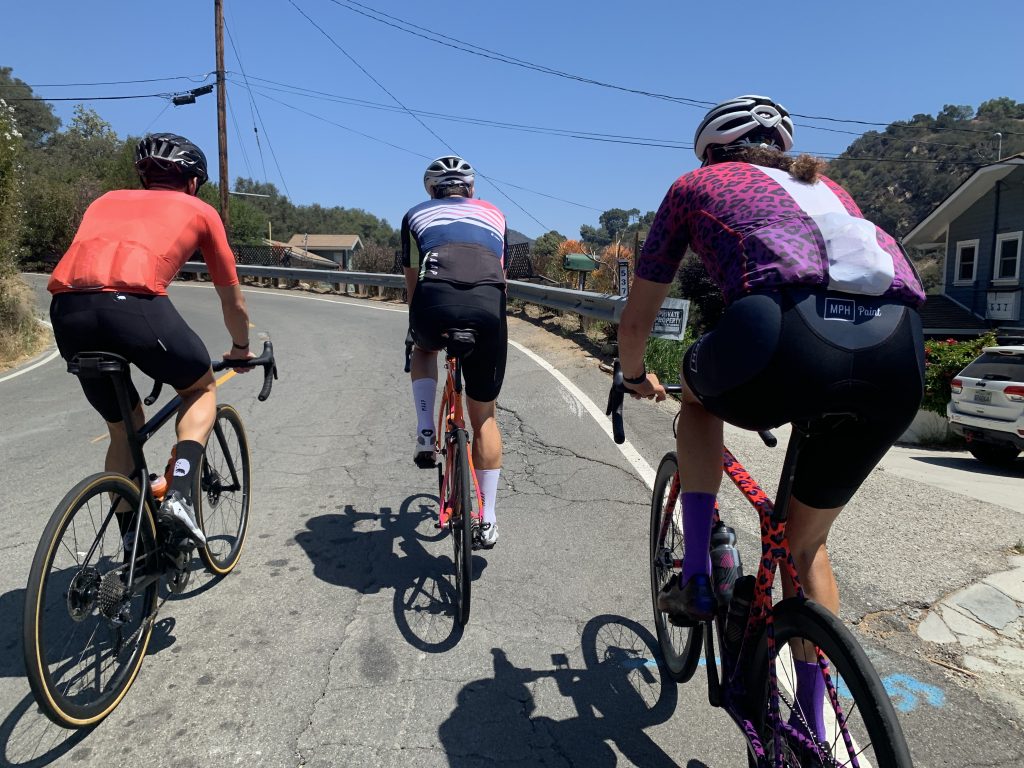
Craig, Steve, and Kate as we started up Saddle Peak
Here’s what the Tuna Canyon + Saddle Peak climb looked like:
We took a quick breather at the top, refilled water bottles, and discussed what to do next. Steve was sort of planning this ride as we went, and I think he decided to mercifully pull the plug so I wouldn’t have to tackle any more big climbs. I was OK with that.
Kate, myself, Craig, and Steve
Craig playing tour guide
Big Orange at the top
With our course decided, we enjoyed a long descent back to Topanga Creek Road. As the wind dried my sweat-soaked kit, my brain quickly forgot all the uphill pain.
That’s the beauty of cycling – you forget the just-finished suffering as you embrace what’s right in front of you. There’s a lesson here.
The Finish: Burgers and Beer
When we returned to Topanga Creek Road Steve went to the front and started drilling it a bit, keeping our speeds high for the long descent to the ocean. This was my kind of riding. Downhill, fast! I sat on Kate’s wheel and just enjoyed the adrenaline rush of a fast, windy paceline.
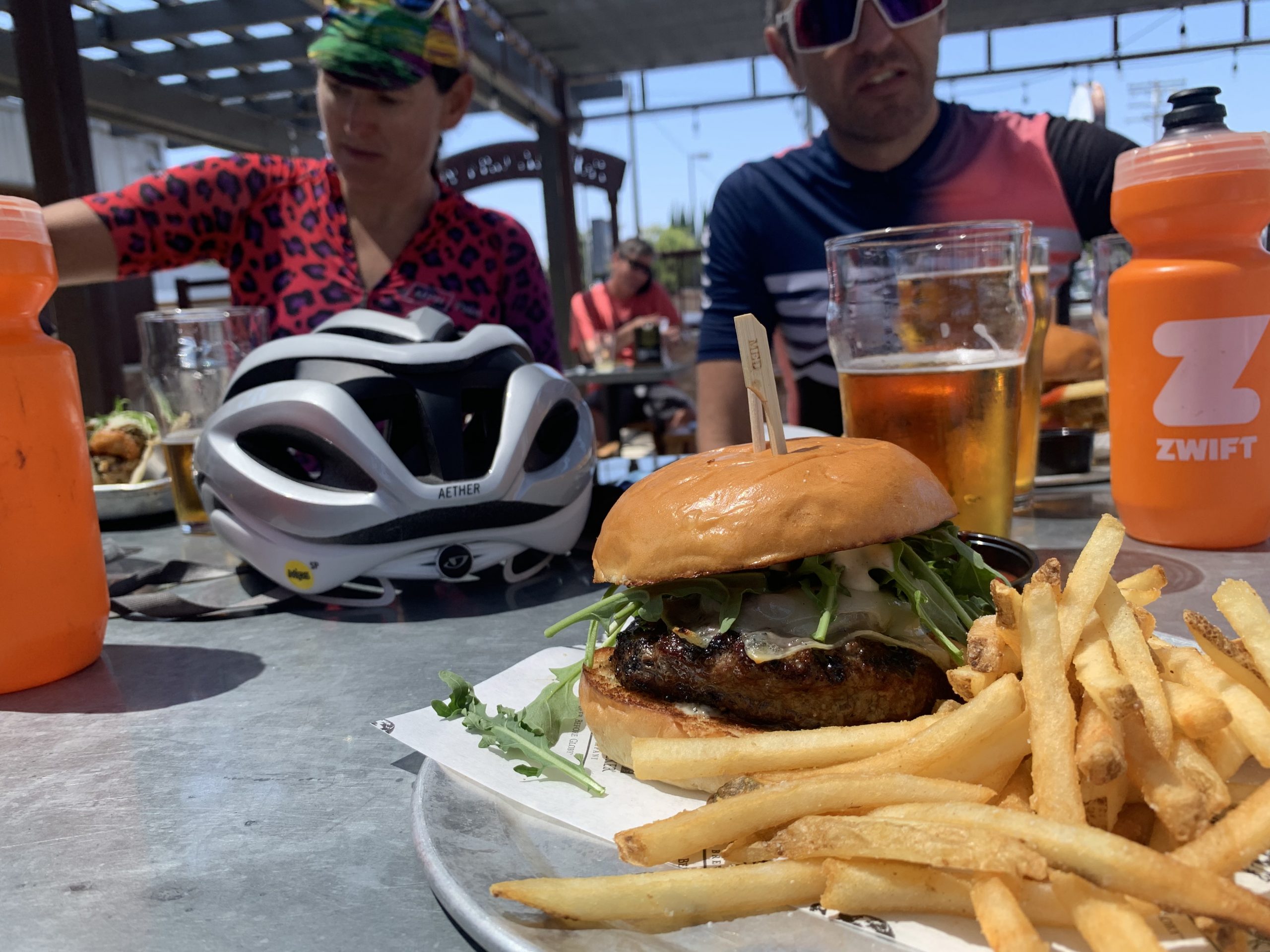
We returned to the PCH, then relaxed our way back into town. Craig peeled off for a meeting appointment and Steve, Kate and I grabbed a late lunch. There’s nothing like the feeling of good food after a hard ride!
I love riding new roads, and almost every bit of this ride was virgin territory for me. So that’s a win. And I got to ride it on a new bike, with friends from Zwift – more wins!
I’m not sure if Craig even broke a sweat as he kept pace with Steve, and I know Kate hung with those two just fine. While not every Zwift employee is a cyclist, many are – and some are very strong. It’s good to know my favorite cycling game is in the hands of people who love to ride.
Generally when I ride new roads, I’ve done some research so I know what I’m getting myself into on the big climbs, etc. That didn’t happen with this ride, and this lack of knowledge certainly didn’t help my performance. Next time I’ll make sure I know the route better before the ride begins.
Sure, in the end, Steve accomplished his goal of kicking my ass around the Santa Monica mountains. And he did so quite handily. While I was disappointed in my own performance, in the end, every day out on the bike with beautiful roads and good friends is a good day. So I’ll be scheduling another ride with Steve soon.
Your Thoughts
Have you ridden some of the SoCal roads I wrote about above? Got some tips to help me hang with Steve just a bit longer next time? Comment below!
This week’s Top 5 Zwift Videos feature a lot of racing and winning! But first, we have a video you might have missed about a popular training plan for new and returning cyclists. There’s also a look at some Zwift accessories that can take your indoor rides to the next level.
Zwift – Back to Fitness Workout Plan for Heavy Cyclists (Part 3)
Zwift’s “Back to Fitness” workout plan is designed for cyclists who have taken some time off the bike, or maybe starting structured training for the first time. Montee Rides Bikes explains what it’s all about and rides some of the workouts.
Top 5 Zwift Accessories
You only need a few pieces of equipment to start riding on Zwift, but a few more can make your experience much better! Here are David Lashlie’s recommendations.
Mick Boekhoff shows how his team, Backpedal B1, used smart tactics and strong legs to sweep the podium in a Zwift Racing League stage.
Zwift 1st Place in the D Category on 4 Hours of Training
It’s exciting when you start to see results from your training! Tony Stubb (“Coach Tony”) celebrated a race victory by helping others learn about Zwift racing.
Got a Great Zwift Video?
Share the link below and we may feature it in an upcoming post!
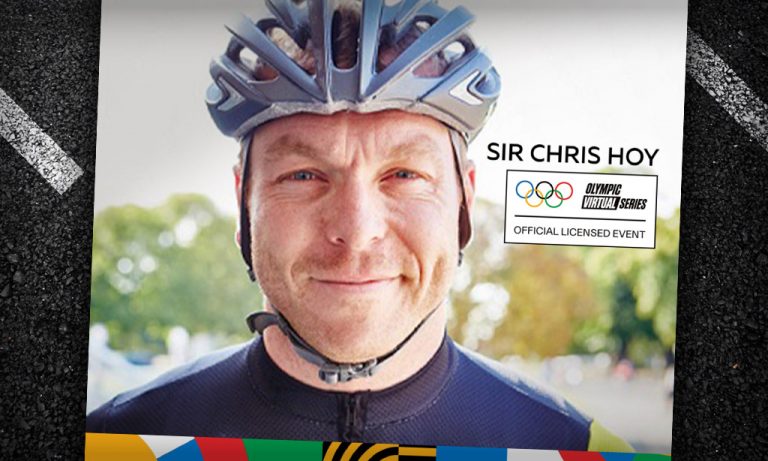
As part of the Olympic Virtual Series, Zwift is welcoming 6x Olympic Gold Medalist Sir Chris Hoy to the podcast. The second-most decorated Olympian cyclist of all time, he now races cars in the realm of motorsports.
The Olympic Virtual Series is jam-packed with exciting events, serving up a month of action June 1–27. Join other Zwifters for Olympian-hosted podcasts and Olympian-inspired workouts with surprise guests, all leading to 24-hour group rides as well as a broadcasted chase-style event with Olympians!
About the Podcast
The Zwift PowerUp Cycling Podcast features training tips from host Matt Rowe (Rowe & King), with regular co-hosts Greg Henderson, Rahsaan Bahati, Dani Rowe, and Kristin Armstrong.
Zwift has announced via a forum post that Pace Partners will be unavailable during a planned maintenance window tomorrow, June 9th.
The 6-hour downtime window begins at 7am UTC (12am PST/3am EST/5pm AEST) and ends at 1pm UTC (6am PST/9am EST/11pm AEST).
By our count, there are 37 group rides and 15 runs scheduled during the downtime – so if you were planning to join a Pace Partner so you could hang out with others, perhaps consider a scheduled group ride or run!
See the Companion app or (our favorite) the ZwiftHacks Events page for a list of upcoming rides.