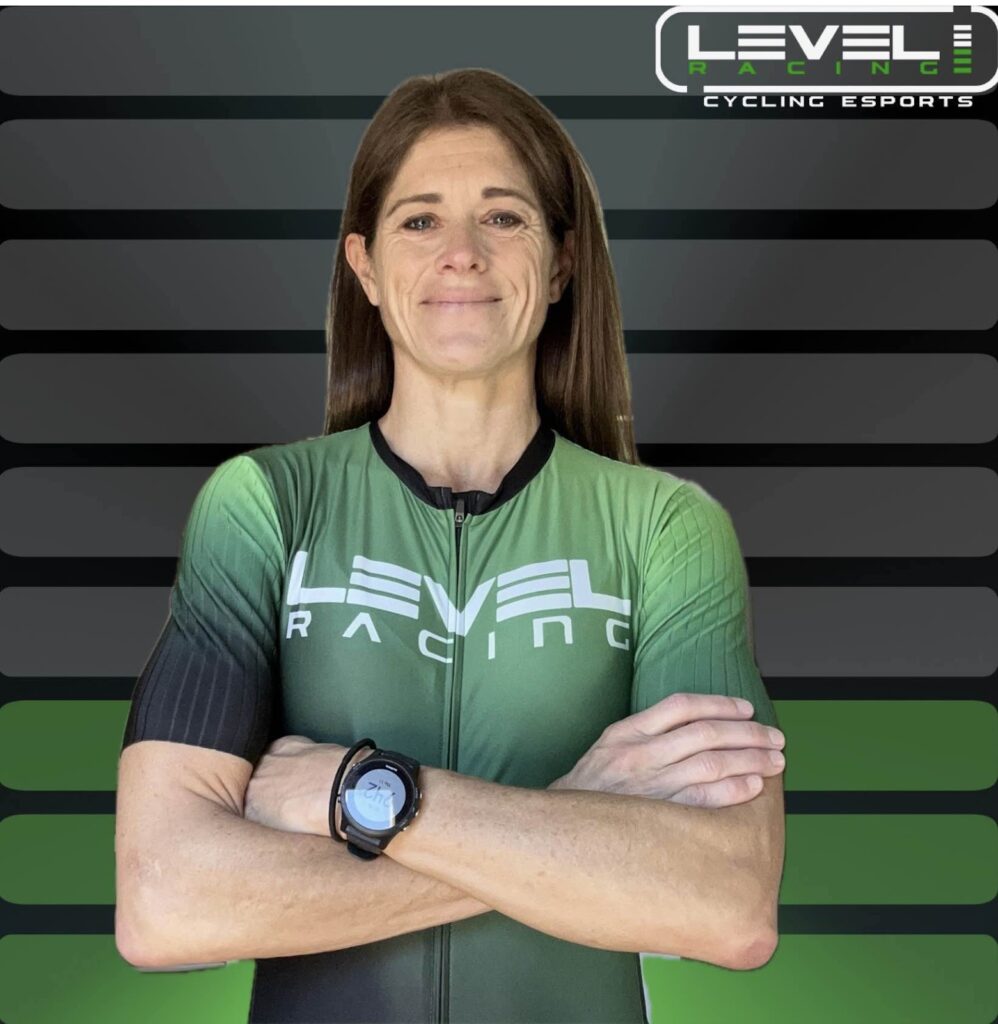
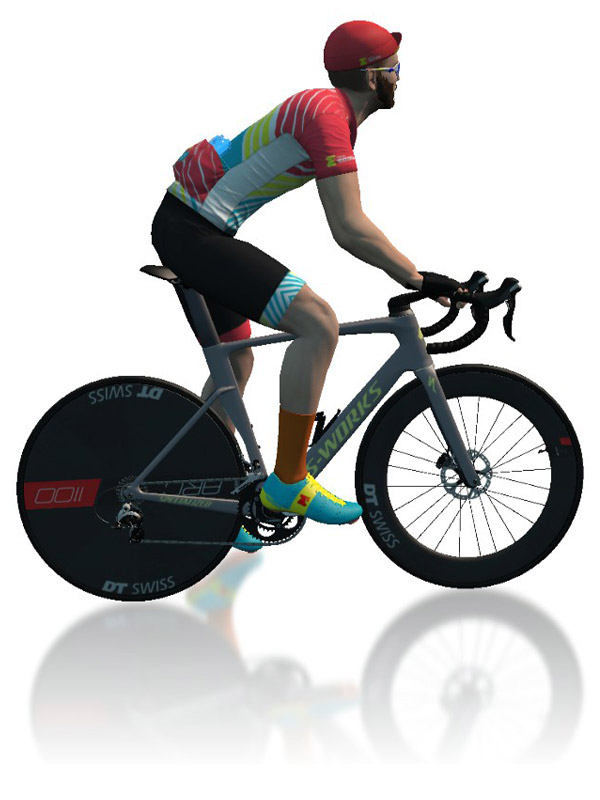
How did you get into cycling? I originally was a marathon runner but had back pain when I was pregnant that prevented me from running so I swam and biked on an “old school” trainer. After I had my two daughters, I was able to run again, so decided to give triathlon a go. The bike became my favorite leg… I loved the speed of it!
How many years have you been racing on Zwift? Four years. During 2020, I had 2 bike crashes on the road within 2 months and the doctor said I couldn’t afford another concussion, so I bought a smart trainer and started Zwifting. The triathlon team I was on IRL had a ZRL team. I was added to the team, and the rest, as they say, is history.
Fun fact… we were 5 women (The Spice Girls was our team name) from all over North America. We had never met IRL but became very close. In 2021, we met up in Maui to celebrate the wedding of one of the girls!
Are you part of a Virtual team? I am a member of Level Esports Racing. It is an amazing team that is always looking to introduce women to racing! In September, I was fortunate enough to meet up with some of the team members in Mallorca for 5 days of cycling led by Richy Howell, the team manager.
What do you love most about racing? The camaraderie. I have made amazing friends from participating on the teams. But what I love even more is taking part in a race series and seeing the same names that you race against. Women you never knew before start cheering for you. I love how the women can be so intensely competitive but so supportive and encouraging at the same time. It really is an amazing community.
What is your favourite style of race (e.g. points, scratch, iTT, TTT, Chase, duathlon)? TTT. Hands down. Working together with teammates to be the best we can be is just inspiring.
What is your favourite Zwift women’s race series? Honestly, I haven’t done a series I didn’t like. I have done WTRL, ZRL, FRR, Zwift Ladies Series, Tour de Boudicca, et al, and have enjoyed them all!
What is your most memorable racing experience, inside or outside or BOTH?Outside – Ironman World Championships Kona 2010… my first time qualifying and competing. My parents and my two daughters were there, and I placed 5th in my age group and 11th amateur female overall. The island during Kona week is just magical! Inside – I recently raced the Tour of Brittania FRR stage race. In the final race we had five Level Esports teammates all working together to help me hold my place in the GC and my teammate to win the green jersey!
What is your favourite food to eat post race? Chocolate milk and potato chips!
What advice would you give to a woman entering her first Zwift race? There are categories for every level so never say you aren’t good enough to race. Get in the pen early and have everything ready to go at least 15 minutes before the race starts to decrease any pre-race stress. Start pedaling with 3 seconds to go. The race will start fast but then settle in.
No matter how you do, be proud that you did it! Now you have a starting point and can work to get stronger. Celebrate every little improvement. Finally, feel free to message others and cheer them on. It’s a great way to “meet” fellow cyclists!
Any upcoming race you are looking forward to? I always love ZRL season. I ride for Level Wasps and Level Hornets.
Where can people follow your racing adventures? Kristin White is my Strava cyclist profile, or find me @trimomkw on Insta.
Tour de Zwift wraps up this weekend, so be sure to finish that final stage if needed. We’re also featuring two creative race events and two group rides held on new routes just released for the upcoming Zwift Games!
Tour de Zwift, the biggest ride series on the platform, is almost wrapped up. This weekend is your last chance to ride TdZ events, with makeup stages held every half hour. Cross of any missing stages, or go big and finish up the TdZ Ultimate Challenge!
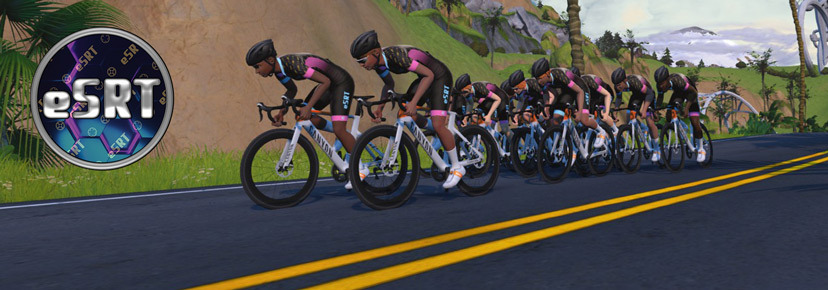
Women’s Mini Races (3 races in an hour) happen each Sunday, but the ULTIMATE Mini Races are a bigger monthly event organized by Vinnette Powell of Team eSRT. If you’re looking for some punchy women-only racing, check out these events.
This Sunday’s races arehilly and held on custom-length versions of the Hilly Route, Sea to Tree, and Oh Hill No routes. Two time zones are available.
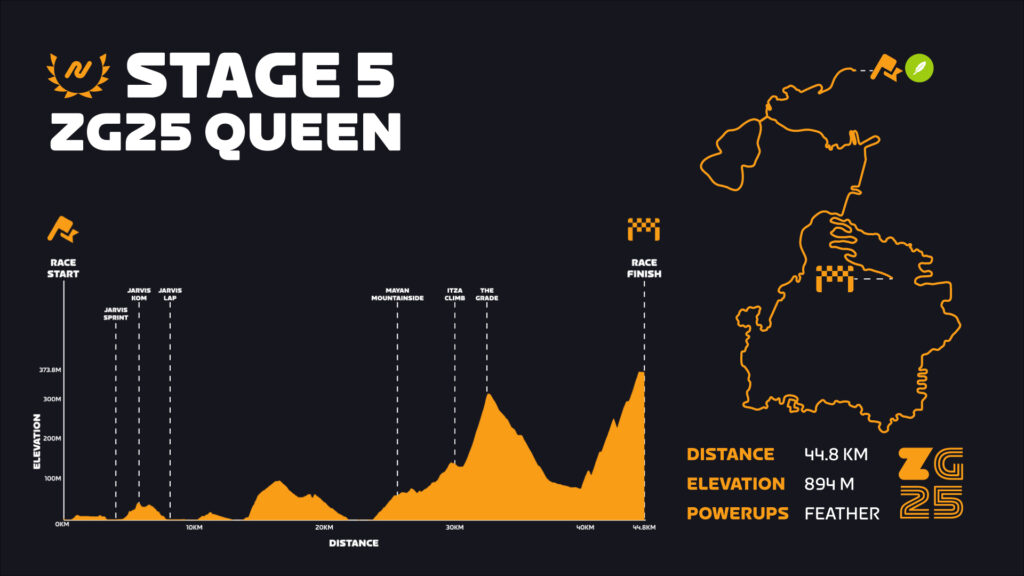
Grab some elevation toward your Tron bike challenge with this “keep-together” group ride on one of Watopia’s newest routes: ZG25 Queen! At 45km with 896m of elevation, this route has some climbing. Fear not, though: you’ll be accompanied by friends from the Phoenix Rising team, and as long as you keep pedaling, you’ll stay in the pack, no matter how hard you push.
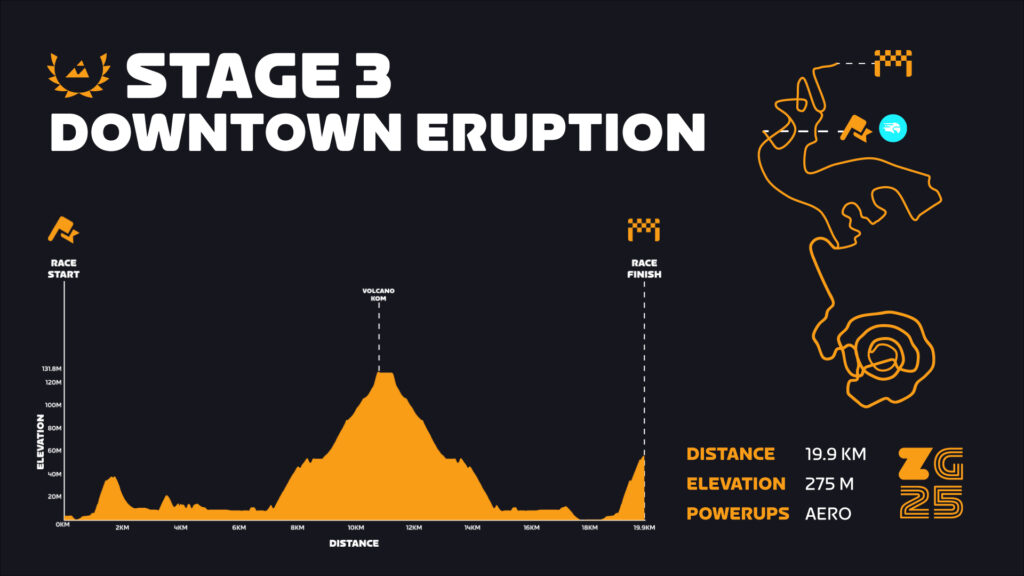
Enjoy a chill ride with the WYN Republic Racing team and friends on the new Downtown Eruption route (19.9km, 274m) in Watopia. Get the route badge and do some Zwift Games recon while you’re at it!
We choose each weekend’s Notable Events based on a variety of factors including:
Is the event unique/innovative in some way?
Are celebrities (pro riders, etc) attending/leading?
Are signup counts already high, meaning the event is extra-popular?
Does the ride include desirable unlocks or prizes?
Does the event appeal to ladies on Zwift? (We like to support this under-represented group!)
Is it for a good cause?
Is it just plain crazy (extra long races, world record attempts, etc)?
Is it a long-running, popular weekly event with a dedicated leader who deserves a shout out?
In the end, we want to call attention to events that are extra-special and therefore extra-appealing to Zwifters. If you think your event qualifies, comment below with a link/details and we may just include it in an upcoming post!
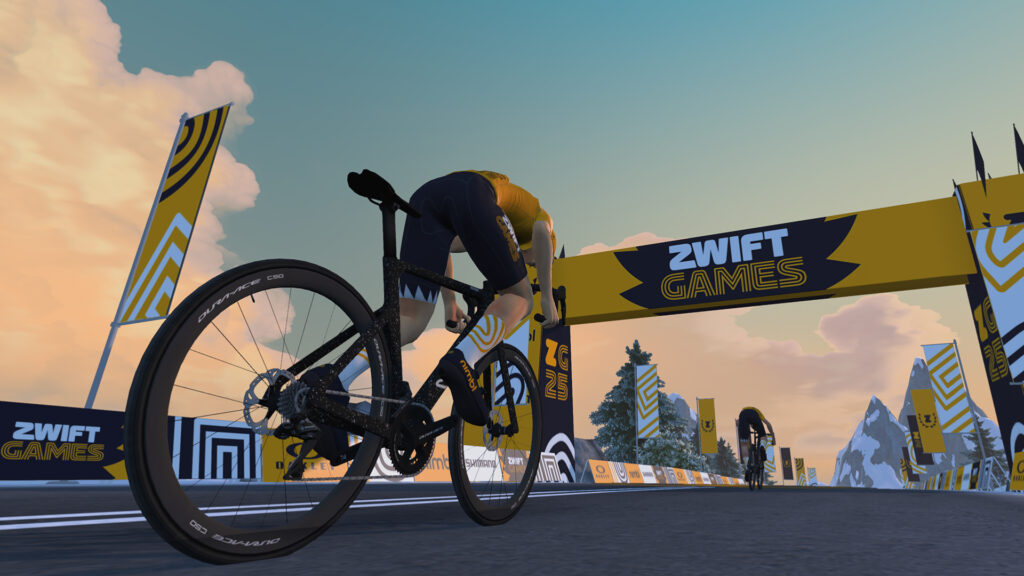
The second edition of Zwift Games, a massively popular 5-stage race series for community and elite racers, has just been announced for March 2025. Last year’s inaugural Games broke all the records for previous Zwift race events, and this year could be even bigger! Below, you’ll find everything you need to know about indoor cycling’s premier race festival.
New This Year
Zwift’s learnings from last year’s Games have been applied to this year’s events, leading to a swath of improvements including:
Zwift Racing Score Categorization: community races are categorized into Racing Score bands for a fresh level of competition.
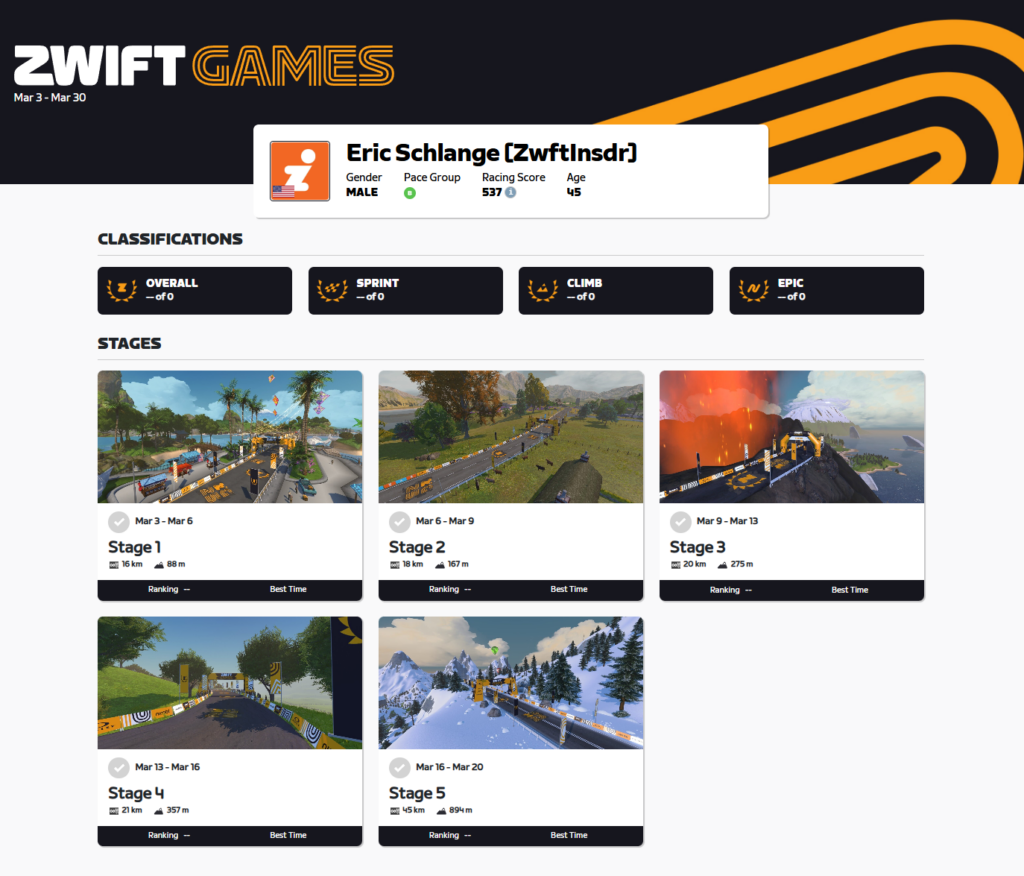
Web-Based Leaderboards: a new interface is launching at zwift.com to browse community race results and filter leaderboards based on various criteria (see below for details).
In-Pen Powerups, 1 Powerup Per Race: racers will receive just one powerup per race, and it will be given at the very start of the event. Use it wherever you’d like! (See below for details on which powerups are given for each race.)
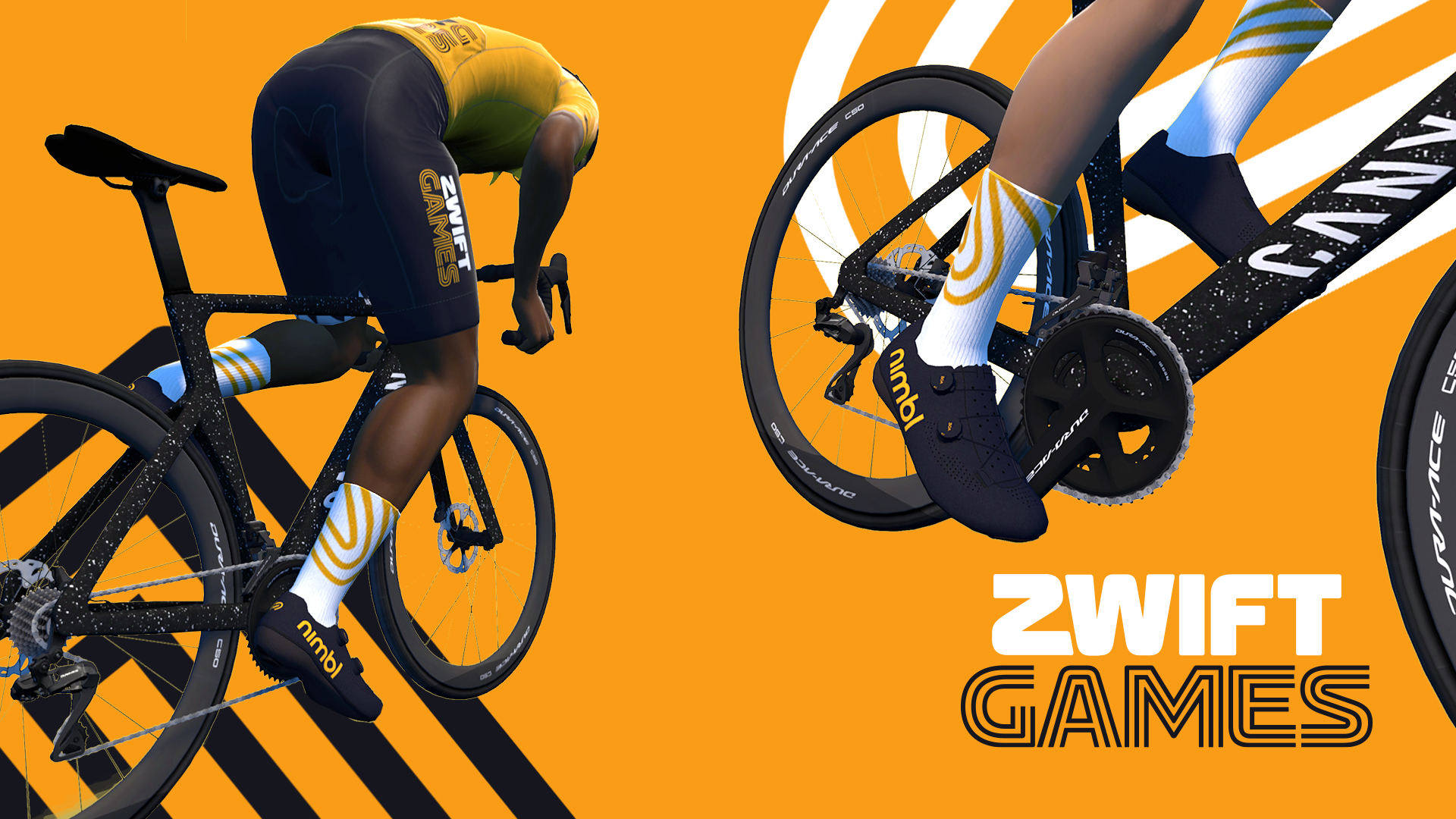
New Unlocks: unlock new sunnies, shoes, a helmet, and the ZG 25 kit as you finish each stage (see images below).
Fresh Routes: five new routes have been added to the game to host the 5 Games stages (see below for details).
Route Chaser Challenge: earn an extra 1000XP by completing the new Route Chaser: Zwift Games mini-challenge featuring the new routes. Do it as part of the games, or do it beforehand as race recon!
No Split Events: everyone at every level will take on the same courses, unlike like year where A/B racers were on longer routes than C/D for some stages.
Modified Elite Race Structure: a revamped prize and overall race structure incentivizes hard racing throughout for all elite riders (see below for details).
Elite Races Broadcast by GCN: this is the big time! GCN has 3.6 million followers on YouTube. Smile for the camera!
Community Races
Stage Details
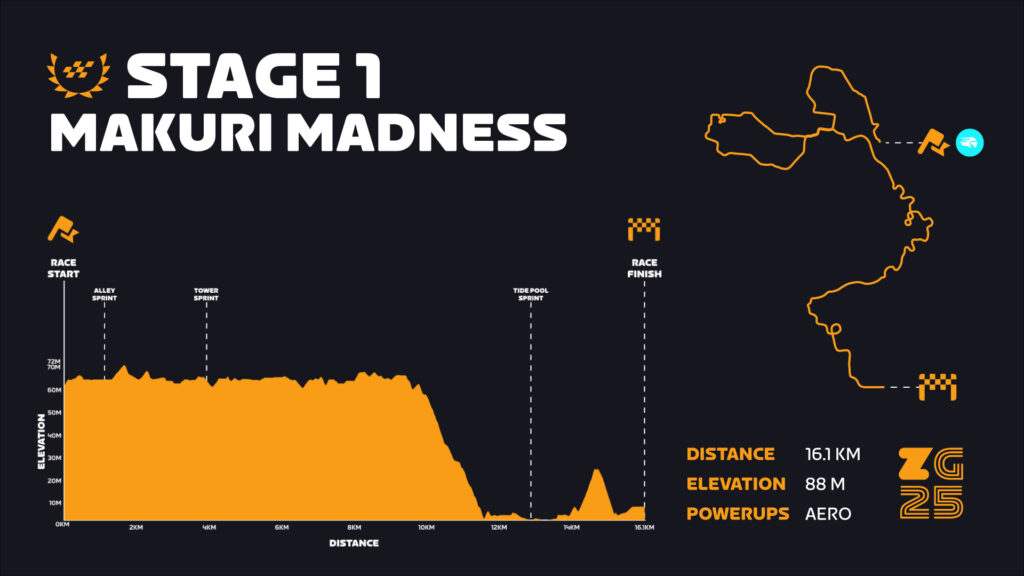
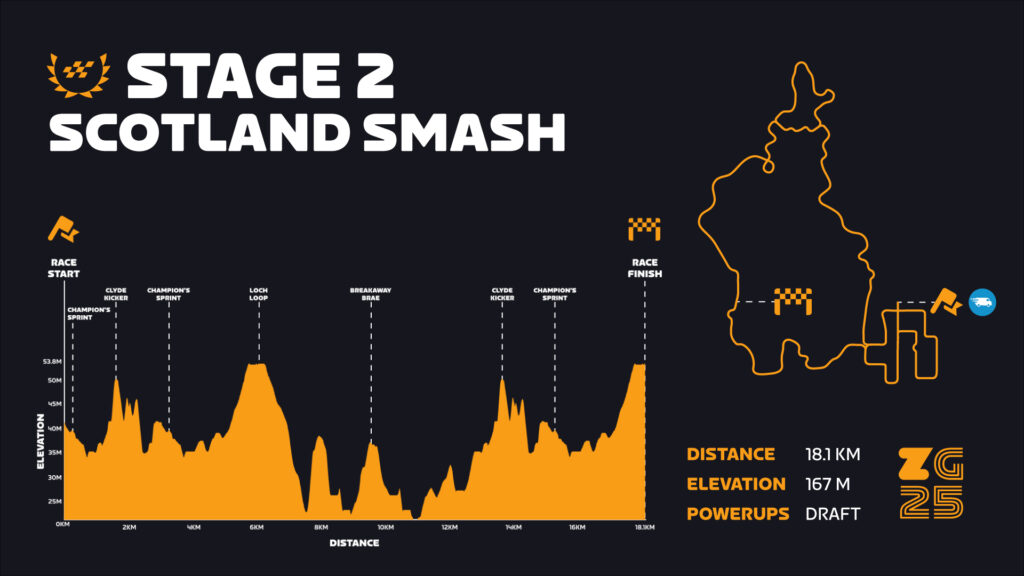
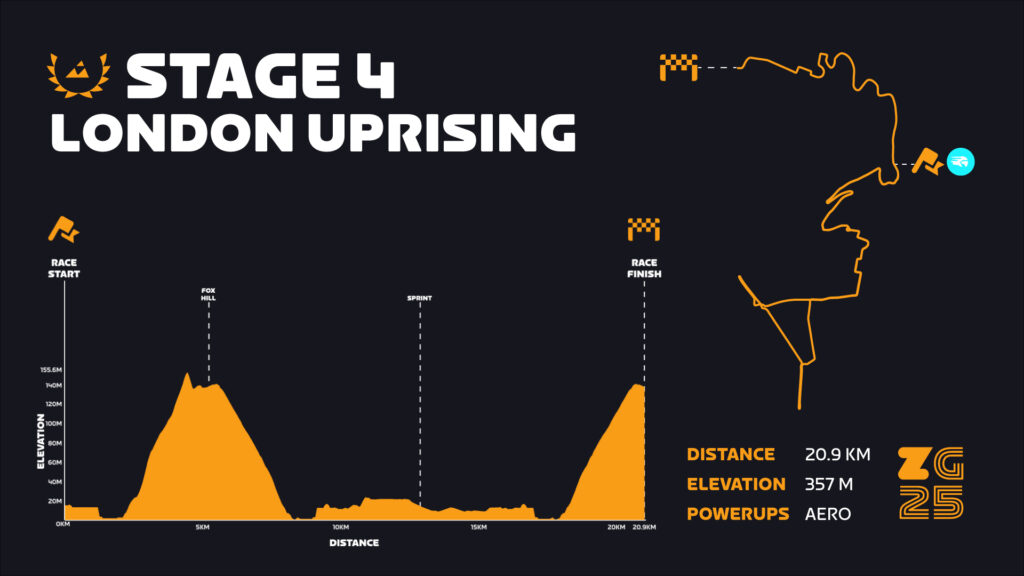
This year, Zwift Games is an escalating challenge! Stages get progressively more difficult, with each route longer and more climby than the one before:
The largest Zwift Games fields will be found in the standard (mixed) Community races which will be held hourly, 24x daily, at 10 minutes past the hour. Like recent ZRacing events, these races will alternate each hour between two different Racing Score ranges:
The two range options give racers a choice between a stronger category that may help them get a faster course time (great for the GC competition) or a slightly weaker category that gives them a better shot at a race win. They also effectively give racers 10 category ranges compared to last year’s 4, which should make for much more competitive racing.
Advanced Race Schedule
Racers with a racing score of 650+ can jump into the Advanced Races held 10-11x daily at 15 minutes past the hour. (These races are open to riders with lower racing scores as well, but be ready to go hard!)
These races happen every two hours on a schedule that shifts by one hour each day, to help riders find a time that fits into their plans. The only timeslots that will not feature advanced races are 17:15, 18:15, and 19:15 UTC.
Women-only community races will be held 5x daily to increase field sizes. These races will use their own Racing Score-based bands: 0-199 | 200-299 | 300-399 | 400-499 | 500+.
There are two noteworthy rules which apply to community and elite racers:
Neutralized Equipment: like last year’s Games, Zwift has set up all the Zwift Games events so frame and wheel performance is neutralized, just like the Elite races. This means you can ride any road bike frame or wheels from your garage (even the Buffalo or Safety Bike!) and it will perform the same as everyone else’s frames and wheels.
Steering and Braking Disabled: all riders will be steered automatically, including riders with steering devices such as Zwift Play connected.
New GC Leaderboards
For the first time ever, Zwift Games race results will be delivered via a new section of Zwift’s website! Final results will live here, and not on ZwiftPower.
This new interface includes:
Global leaderboards for 4 classifications:
Overall
Sprint (Stages 1 and 2)
Climb (Stages 3 and 4)
Epic (Stage 5)
Results broken down by stage
See your filtered ranking by Gender, Racing Score band (buckets of 100), and Country. These filters can be used in combination.
A total of four in-game unlocks are available to all Zwifters:
Any one stage: Oakley Velo Kato Glasses
Any two stages: Nimble Shoes
Any three stages: Oakley Velo Mach Helmet
All five stages: Zwift Games 25 Kit (and if you sign up for the Route Chaser: Zwift Games mini-challenge you’ll also receive a 1000XP bonus for completing all 5 stages)
How to Register
No special registration is required – simply join any Zwift Games event to participate. Registration is live on February 24th, at which time events will be available for signup and we’ll have more info on features like the new web leaderboards.
The world’s best racers have to meet strict criteria to qualify for the Zwift Games Elite Championships. (Final qualifiers are being held on February 22nd, and we will publish the final start lists here once they are shared.)
The Elite Championships will take place on three consecutive Saturdays at 5pm UTC:
Elite men and women will be awarded equal prize purses, making for a total prize purse of $112,700. That’s Zwift’s biggest prize pot ever! Prizes will be awarded thus:
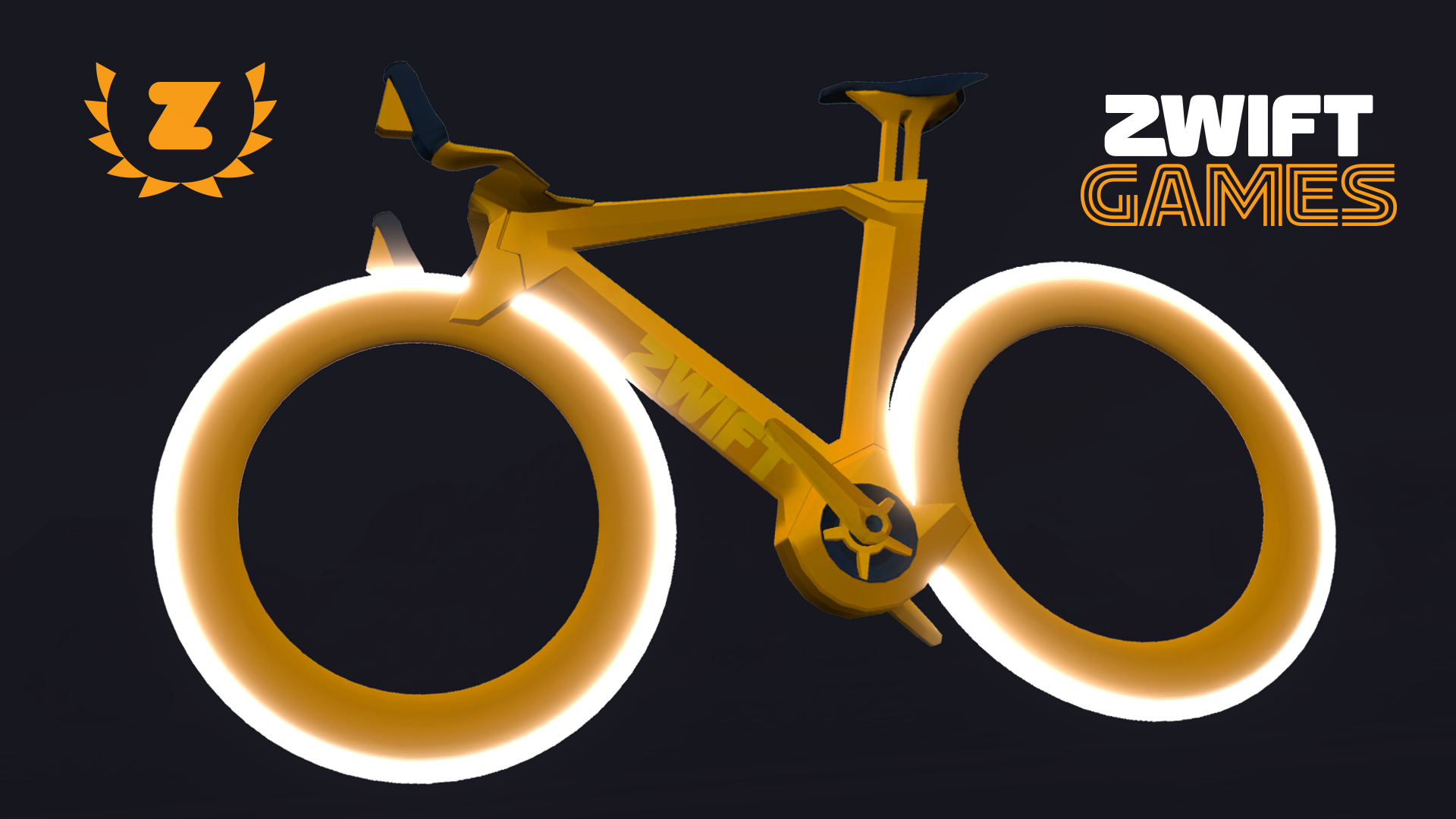
Per Championship: prize money for the top 3 in the Sprint, Climb, and Epic Championships, plus each championship winner will also receive a Gold Concept Z1 (Tron) bike in game.
Overall Individual: prize money down to 30th place, and winner receives Gold Concept Z1 (Tron) bike in game.
The overall men’s and women’s first-place winners will be determined by points earned based on finishing positions in each of the 5 stages. Each race awards 70 points to 1st, 69 points for 2nd, down to 1 point for 70th.
Race Broadcast
The Zwift Games Elite Championships will be broadcast live by GCN on YouTube.
The popular Iceni Women’s Series is back, celebrating Women’s History Month with a 4-week series of scratch races starting March 4th! Here are the details…
About the Name
The Iceni tribe was ‘peacefully annexed’ by the Roman Empire at some point before 47 AD, though it was allowed some autonomy. When the king died and Boudicca I became High Queen of Iceni, the Roman Empire saw her unfit to rule and invaded the region. Iceni led a revolt against the Roman Empire and regained its independence, along with the independence of several other tribes. This led to the subsequent formation of the Comhairle, an alliance of the British tribes. Iceni had a major say in Comhairle affairs and became an important center of trade, military, and leadership.
Schedule and Route Details
There are two time slots to choose from:
Slot 1: 6:30pm UTC/1:30pm ET/10:30am PT
Slot 2: 11:30pm UTC/6:30pm ET/3:30pm PT
* note that daylight savings time happens in the US on March 9, so these times will shift to 1 hour later starting with the March 11th race
Riders will receive points based on their finishing position in their category for each race: 100, 80, 70, 65, 62, 60, 59, 58, 57, 56, down to 1 point. The overall series ranking is based on your points total for the series.
Each time slot will have its own league on ZwiftPower. If you’re going for the overall series competition, you’ll need to finish all four races in the same timeslot.
Sign Up
Want to race the series? Start by signing up for the race events! Numbers attract numbers, so women are encouraged to sign up early.
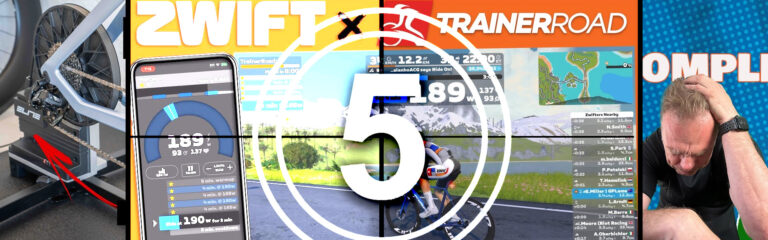
The announcement of Zwift and TrainerRoad’s integration is likely the biggest Zwifty news we’ve seen this year. In this week’s top video, hear from the one and only GPLama as he breaks down all the details.
This week’s top videos also include tackling The PRL Full, tips for better climbing, a review of the Elite Avanti, and advice on improving your pain cave.
Zwift x TrainerRoad Integration Finally Arrives!
Yup! It’s finally happened, TrainerRoad and Zwift are now integrated using Zwift’s Training API. Shane Miller, GPLama, shares all that you need to know about the integration.
Attempting London’s PRL Full on Zwift – My Longest Indoor Ride Ever!
J Dirom breaks down his attempt at The PRL Full in his ride with Zwift CEO Eric Min.
How to Climb Better
Eric Barfell shares tips on how to climb better on Zwift as he discusses his recent Tour de Zwift ride up La Reine.
DCRainmaker provides an in-depth review of the recently released Elite Avanti. Is it worth the price?
Five Ways to Optimize Your Indoor Bike Training
As someone who spends lots of long hours in his pain cave, professional triathlete Cody Beals shares five quick tips for enhancing your indoor cycling experience.
Got a Great Zwift Video?
Share the link below and we may feature it in an upcoming post!
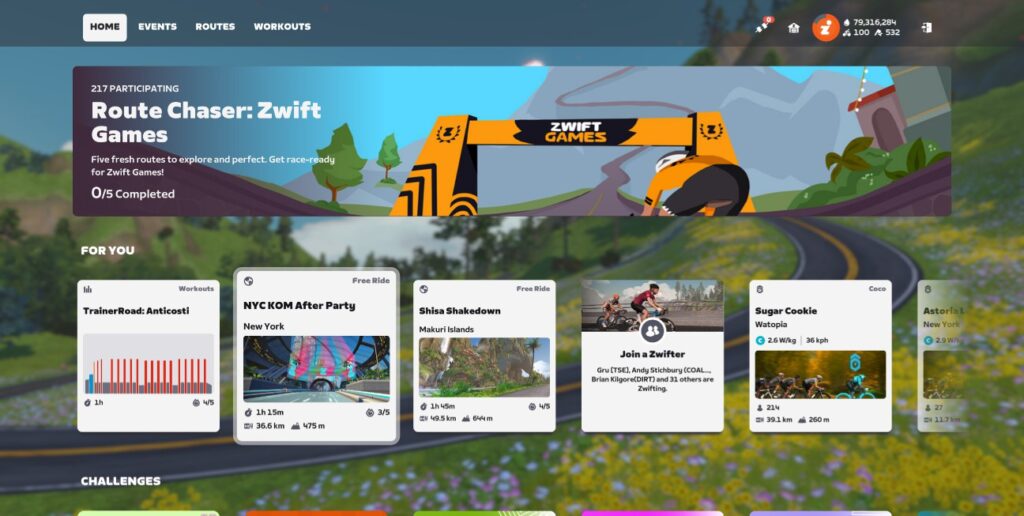
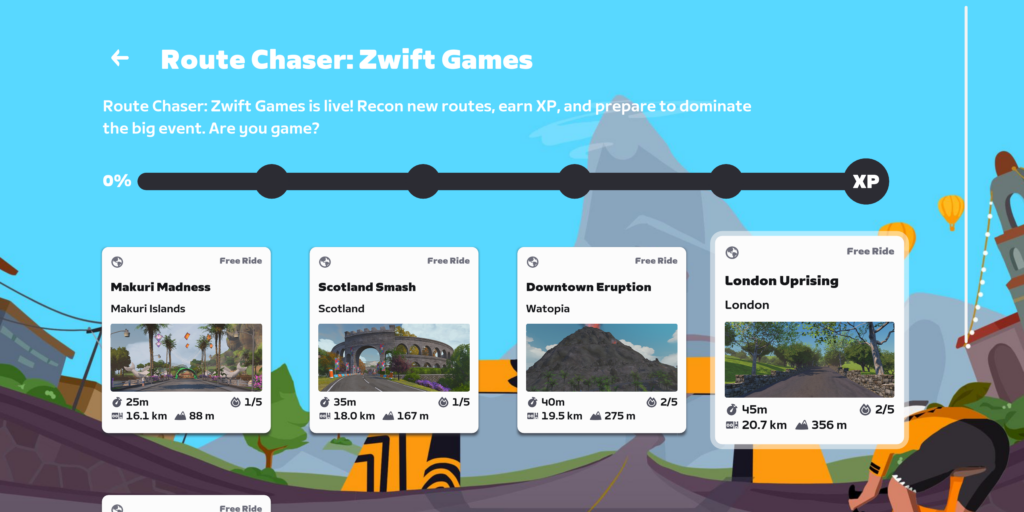
Today, Zwift launched their next “mini Challenge”, celebrating new routes created for the upcoming Zwift Games 2025. Named “Route Chaser: Zwift Games”, the challenge is to complete all five of the routes which will be raced in March’s Zwift Games series:
Note our ZIMetrics difficulty ratings for each route: they get higher as you move through the challenge! In fact, our estimates say Makuri Madness will take just 24 minutes to complete at 3 W/kg, while ZG25 Queen is estimated at 87 minutes at 3 W/kg.
Challenge Rewards
Your reward for completing all five routes? Boosted fitness of course. Because any ride is a good ride, right?
But also, you will surely earn a route badge or five, as these are all new routes. Each route badge is worth the amount of distance XP earned for riding the route’s length, meaning you effectively earn double XP the first time you complete a route and earn the badge.
As with other mini challenges, you will also get a 1000 XP bonus for finishing this one.
Joining the Challenge
To sign up for this Challenge, just click its card on the home screen (the big banner at the top):
If you see this screen, you’re signed up:
Clicking a route from this screen will take you to the corresponding map to ride that route. But you can also ride these routes via other methods once you’re signed up. Ride them in events, as workouts, or even as free rides by choosing them from the route picker. As long as you sign up beforehand, completing the route via any of these methods will mark it as complete for the challenge.
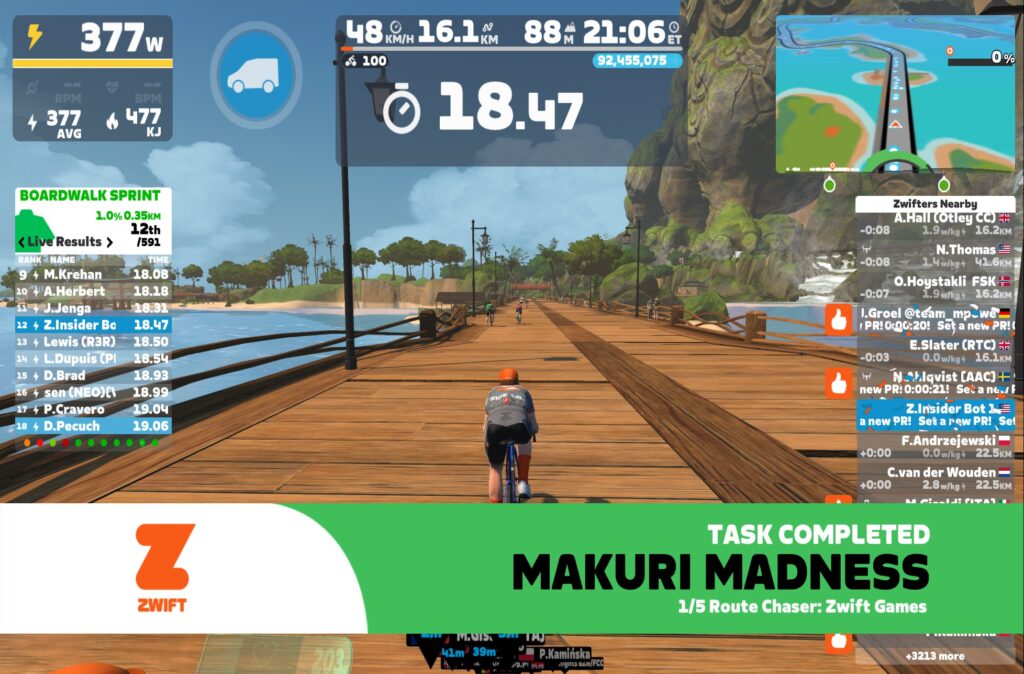
You’ll know you completed the route for the challenge because you’ll get a banner on your screen:
Getting Creative
Once you’re signed up for the Challenge, you can get creative about how you complete the routes. Do them in workouts, do them in events, do them as free rides. You do you!
Here’s a 200IQ move if you’re looking to complete as many of these mini challenges as possible: you can complete other workout-based challenges like Cardio Crusher or The Racer’s Edgeand this Route Chaser challenge by doing one of the Cardio Crusher/Racer’s Edge workouts on one of the Route Chaser routes! (But again, make sure you’re signed up first.)
Zwift Games: Coming Soon
Zwift Games begins in early March, and it’s going to be huge! Watch Zwift Insider for a post covering all things Zwift Games this Monday, February 24.
Zwiftcast Episode 211: TrainerRoad Integration, Zwift Academy Finals, and Older Women in Lycra
Zwiftcast co-hosts Rebecca Charlton and Dave Towle are back to bring you the latest fortnightly episode with news and updates galore, including the much-anticipated TrainerRoad integration, news of Sir Chris Hoy’s launch of Tour de 4, and the finals of Zwift Academy 2024.
Nick Kalkounis, Director of Product Management at Zwift, chats with Rebecca and Dave about that TrainerRoad news. Then Nathan, Shane, and Eric join the crew to discuss the latest Zwift news, including the Peak Zwift result.
Zwift version 1.84 begins its phased rollout today. This release contains a new setting for dialing in Zwift’s dynamic Elevation Display, a new route chaser mini-challenge for the upcoming Zwift Games, and more. Read on for details…
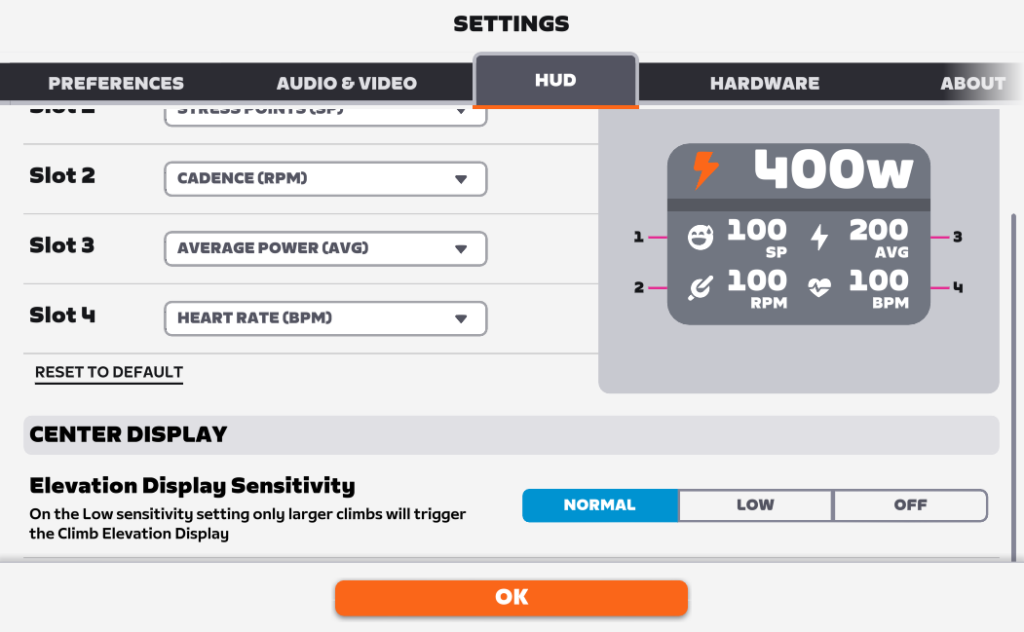
New “Elevation Display Sensitivity” HUD Setting
Zwift has added a new setting under Settings>HUD>Elevation Display Sensitivity so you can decide which climbs (if any) trigger the dynamic Elevation Display that pops up below the center HUD as you approach climbs:
I’m not sure what the cutoff is between “Normal” and Low”. That is, where’s the line between a slack climb like the one up from the downtown start banner into the Esses, where the dynamic Elevation Display only pops up if you have it set to “Normal”, versus a climb that shows up on both “Normal” and “Low” settings (as Watopia’s Hilly KOM does)?
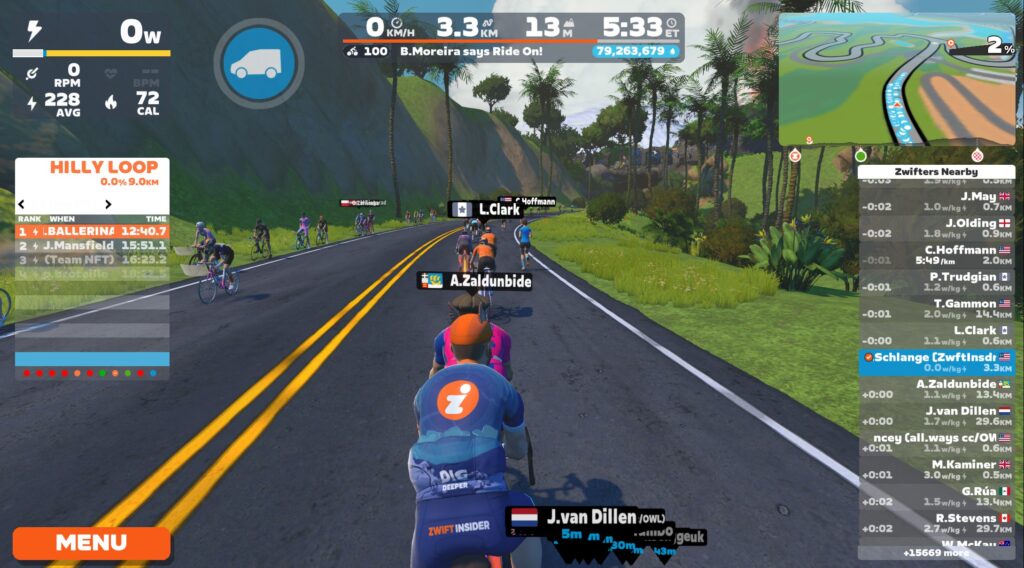
Elevation display pops up when set to “normal”Elevation display does not pop up when set to “low”
Perhaps knowing the precise answer isn’t terribly important. In simple terms, this setting could be seen as giving you three options when it comes to Elevation Display:
See it often
See it less often
Don’t see it at all
Take your pick!
Zwift Games Routes Now Available
While the five new Zwift Games routes were actually added to the game back in version 1.81, they haven’t been available for anyone to ride. Today’s release adds a Route Chaser: Zwift Games challenge and opens up the routes as free-ridable so Zwifters can access them ahead of the big Zwift Games races!
Here’s the list of Zwift Games routes (click for details):
We’ll be publishing a separate post on the Zwift Games ASAP. Stay tuned!
An Open Danger Noodle
Watopia’s Danger Noodle route, designed by Zwifter Mark Brzezinski (ZSUNR) and winner of the ZRL 2024/25 Round 3 design contest, is being raced today in ZRL’s final race.
If you aren’t a ZRL racer and thus haven’t unlocked the route badge, never fear: today’s release makes Danger Noodle free ridable, meaning you can pick it from the Watopia route list and finish it on your own, earning the XP bonus upon completion.
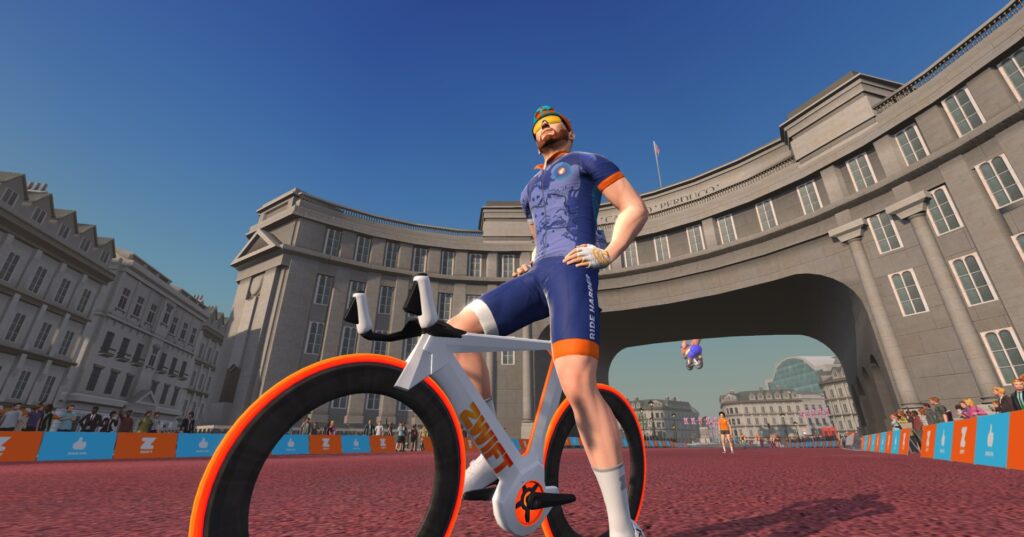
Sometimes, it’s Zwift’s little unannounced changes that I find most interesting. Today’s update changes the “resting” position of avatars on Tron bikes:
My contacts in Zwift tell me this new animation was put in place to prepare for a new bike coming to the game soon. Until then, only stopped Tron riders will see this avatar position.
Riders on non-Tron frames will not see a change in their resting position:
Release Notes
Zwift provided notes on additional tweaks and bug fixes in this update:
The Garage icon on the Home screen now displays the new unlocked item badge counter consistent with the Garage icon in the Pause menu.
Added new onboarding tips to loading screens.
Fixed an issue that could cause an incorrect route name to be shown for completed workouts.
Fixed an issue that could cause the Zwift Concept frame to appear black instead of white when selecting the Zwift Ride color scheme. Learn how to get the white Tron >
Fixed an invisible bump in the road after the intersection leading from Countryside to Neokyo in Makuri Islands.
Windows: Fixed a crash that could occur when resizing the Zwift window while loading.
Windows: Fixed an issue that could cause the Video Screenshots button to be disabled when running Zwift on a non-primary display.
tvOS: Fixed an issue that could cause the virtual gear display to be missing after completing a Zwift activity and starting a new activity.
iOS, tvOS: General stability improvements.
Android: Performance improvements and faster load times.
The sixth and final race of Zwift Racing League 2024/25 Round 3 happens Tuesday, February 18, and we’ll be in Watopia for a race on the new user-created “Danger Noodle” route.
There’s much to discuss, including a route we’ve never raced plus bike choice, powerup locations, and strategic approaches. Let’s go!
Route: Danger Noodle
If Watopia’s Danger Noodle isn’t familiar to you, you’re not alone. This route was recently added to the game as the result of a design contest, and ZRL race 6 is our first chance to ride it! The route is 32.3km long, with 413m of total elevation:
This is just a scratch race, so while some intermediate portions will be important, in the end all that matters is your finishing position.
The race begins with an out-and-back on The Esses, approximately 6km long. These pitchy rollers force you to constantly modulate your power in order to maintain a good pack position, but with no sustained climbing, we won’t see any major selections happening. It’s really just a warmup for what’s up the road!
You’ll have received a feather powerup through the arch at the start of the race. Use it on the entry climb to The Esses, or on the final kicker before descending to the JWB Sprint Reverse.
You’ll get a draft boost powerup through the sprint arch. Use this to save some energy while drafting in the pack any time before the downtown arch, where you will receive another feather powerup.
At 9.7km, riders will turn right into Titans Grove. This is sort of like The Esses on steroids – a constantly twisting, rolling escalator taking us to the base of the Titans Grove KOM Reverse, our first “proper” climb of the day.
Titans Grove KOM Reverse @13.3km: 890 meters long with an average gradient of 4.4%, this is a very draftable climb that many riders will complete in 1.5-2 minutes. Use your feather powerup to lighten the load, and be willing to push to the max to chase onto the wheels over the top, because this is where the first major selection will happen. If you get gapped from the front group on this climb, you may never come back! (Tip: you’ll get an anvil powerup through the KOM arch. Use it on the descent to add weight and boost your speed.)
Secret Feather Powerups
Here’s an interesting little hitch in the Noodle: for unknown reasons, it appears as though riders will get two extra Feather powerups as you ride through the tree/rock overhang on the Titans KOM. This seems to only happen in actual events on the Danger Noodle route (not when free riding) and we assume it’s some sort of temporary bug or config error:
That said, we recommend using your anvil before riding through this overhang on the descent after climbing Titans Grove KOM Reverse, so you can pick up the feather powerup.
(You’ll get another when you come back through this section, and in fact, our test showed a third secret feather at 20.0km as you exit the LAX roundabout. Was there a sale on feathers?)
After riding the Titans rollercoaster out of the redwoods, you’ll take the LAX roundabout and head right up the Col du Saddle Springs and back into Titans Grove to hit the same road in the other direction. What for a bit of climbing here. It’s short but punchy, and riders often hit the gas when the pack turns into Titans Grove and the road tilts steeper.
Titans Grove KOM @23km: this is the longest sustained climb on the day, but while the actual KOM segment is 2.6km, you really only climb for the last 1.8km. It’s a very draftable climb, so sit in the wheels if you’re struggling. Or attack off the front if you’re brave!
You’ll get the last powerup of the day over the top, an anvil. This is probably best used on the KOM descent immediately following, although it could be used on any of the rollercoaster descents just up the road.
The race finish is one most of us have done many times: a flat and fast downtown Watopia ending. With no helpful powerups for the final sprint, this one will come down to timing and a question of who has legs left after two terrible Titans. Will it be you? Good luck!
Riders will receive powerups at each arch, as noted above, for a total of 5 powerup opportunities. (Or 8. Because there are some secret feathers being given out, it appears. See above…)
Specific powerups will be given at specific arches, and they have been chosen so they’re particularly useful on the roads just ahead. Here’s more info about how each powerup works.
Lightweight (feather): reduces your weight by 10% for 30 seconds. Use on climbs, when weight matters the most.
Draft Boost (van): increases the draft effect you are experiencing for 40 seconds. Use at higher speeds (flats and descents) when you are already drafting off another rider (since this powerup only helps when you are drafting.)
Anvil: makes you heavier for up to 15 seconds, so you can descend faster. The amount of weight added is based on a percentage of your body weight, and that percentage increases as riders get lighter. It won’t hurt you, as it only adds weight when the road is at a -1.5% decline or greater.
Bike Frame + Wheel Choice
This route is rolling in profile, with climbs that are fast and draftable and a finish that is flat and fast. That means a pure climbing rig will cost you more than it’ll help, and even an all-arounder will be slower up the climbs than a pure aero machine.
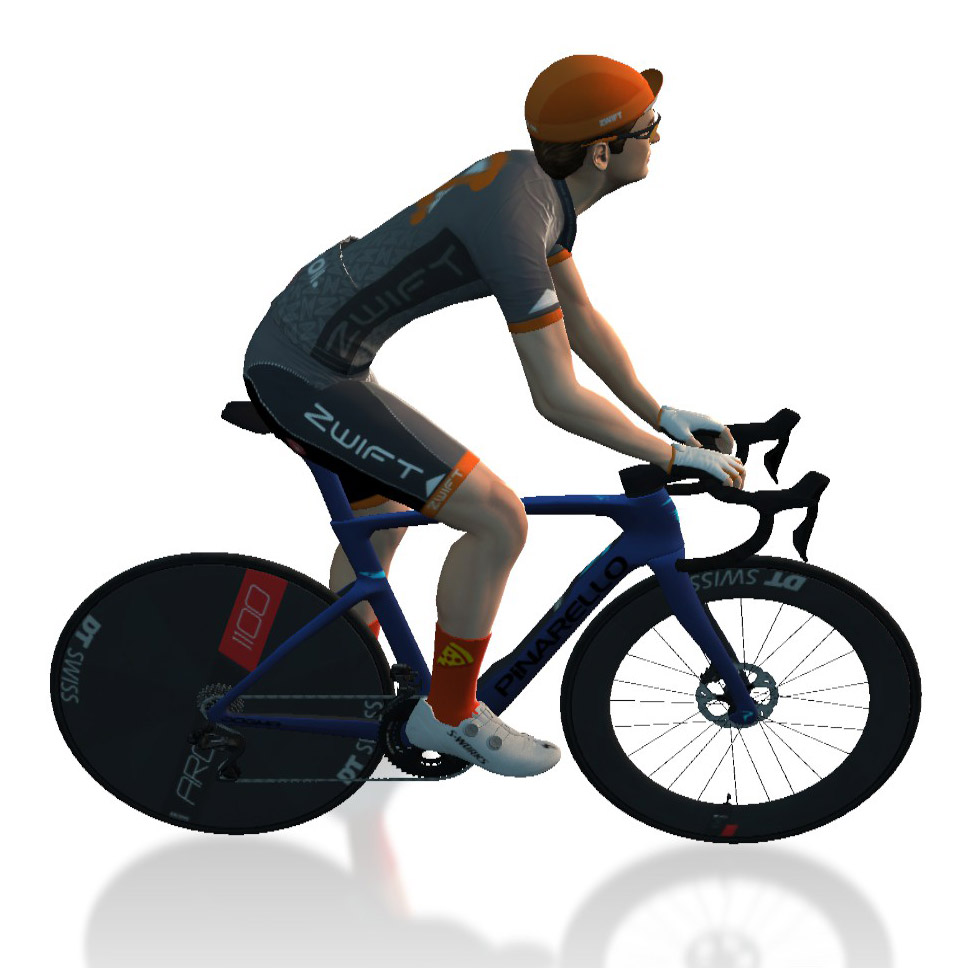
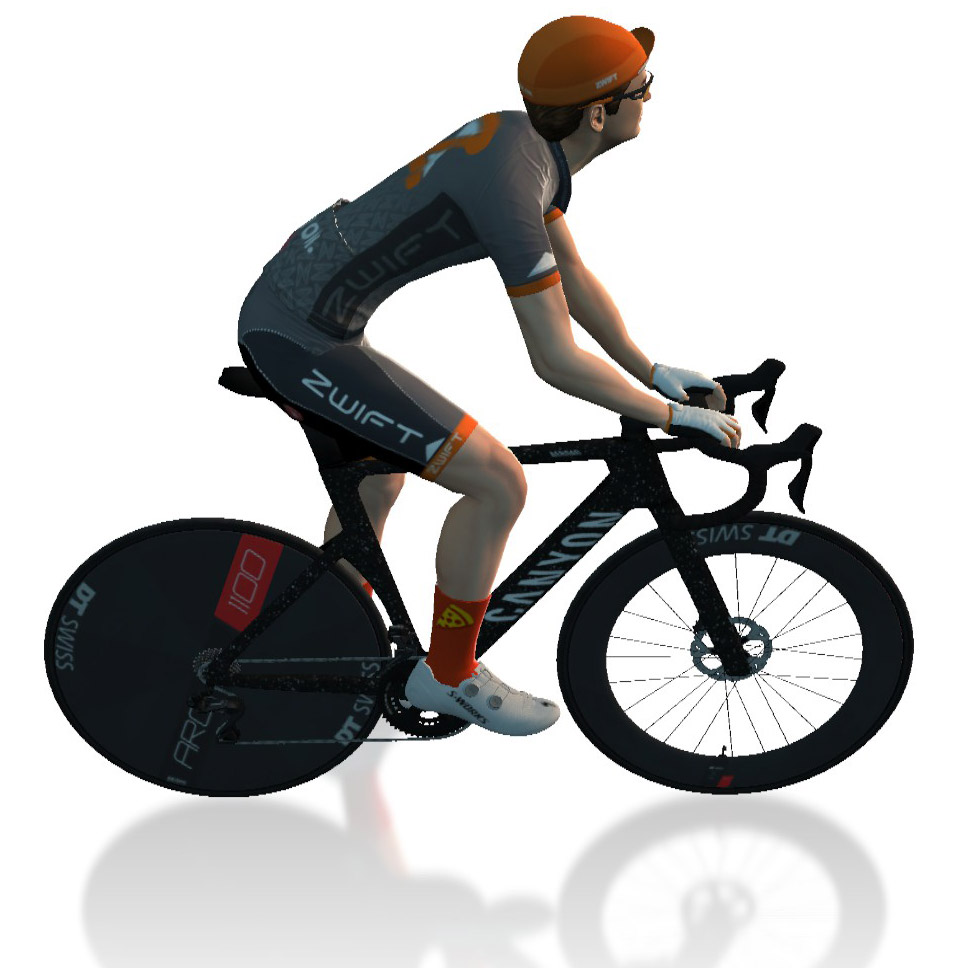
So we like the Pinarello Dogma F 2024 + DT Swiss Disc combo for its light weight combined with strong aero performance. The Canyon Aeroad 2024 is a strong pick as well, or you could even max out your aero advantage in the final sprint by going with something like the Specialized Venge S-Works + Disc:
Lots of recon events are scheduled on upcoming ZRL routes, led by various teams. See upcoming ZRL recons for this race at zwift.com/events/tag/zrlrecon.
J Dirom
The Syco-List
John Rice
Beccah Niesen
Strategic Options
With its rolling profile and two key Titans Grove climbs, this route as a scratch race has all the makings of a classic attritional Zwift battle. Make no mistake: the strongest riders will attack hard when the road tilts upward, particularly on the Titans Grove KOMs.
Any sprinters who can hang on over the top of the KOM will have a podium shot in downtown Watopia.
Here’s a fun option for riders willing to gamble that the secret feather powerups we (and others) have seen will indeed be awarded: use them strategically. You’ve got three coming your way after your first summit of the Titans Grove KOM.
One last bit of advice for the non-climbers: if you find yourself off the back over the top of the first or second Titans Grove KOM, don’t give up hope. You may just be able to chase back on. Find a friendly wheel, put in some work, use your anvil powerup smartly, and see if you can close gaps to riders ahead.
As always, the win will go to the team who plays their cards best.
Your Thoughts
Any insights or further thoughts on this race? Share below!