Home Blog Page 442

WTRL “GC-Timed” Triad Cup Series Begins Tomorrow

0

WTRL “GC-Timed” Triad Cup Series Begins Tomorrow

First, a Little Background

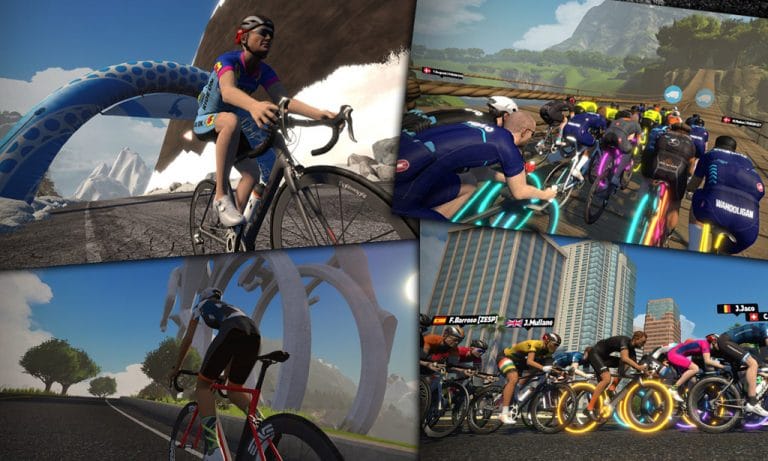
The World Tactical Racing League (WTRL) began almost a year ago when organizers Mark Swatton and Steven Milliken decided it would be great fun to get as many of their respective teammates to join the same race and have the two teams race each other in all 4 categories.

The concept was a success, and Mark (event and race organizer for Race3R) and Steven (race team leader for Team Type 1) learned that other teams wanted to join in. So in the summer of 2018 they developed the concept of a race series that was all about team racing in all of the 4 categories.

Winter Team Racing League launched in October 2018, and the original plan was to run for just the winter. It was a smashing success, with 136 different teams and over 1000 individual racers taking part!

After such a successful first series they realized there was a demand on Zwift for what they were providing, so they rebranded as World Tactical Racing Leagues in February 2019.

Mark told me, “Our main aim is to host races that are fun, fair and all-inclusive. Every racer matters to us. The last D rider deserves exactly the same race experience as the 1st A rider to cross the finish line. We believe this to be the future of Zwift racing and will always follow that ethos.”

Ride on, Mark!

Announcing the Triad Cup Series


The Triad Cup series is the next project for the WTRL’s Saturday time slot (8:45 EST, 13:45 GMT, 14:45 CET).

The concept is simple:  3 races over 3 successive Saturdays:

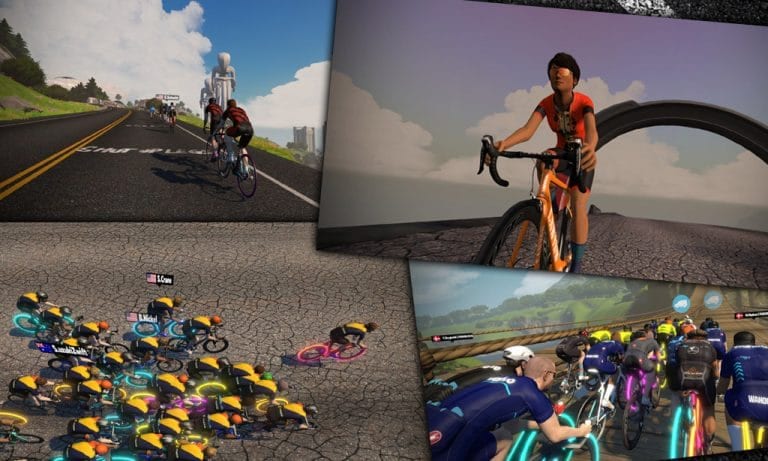
  • A Crit-style circuit course
  • A Hilly or Kom finish course
  • A longer flat race

Here’s the cool part: like a pro stage race, riders will be ranked by their time, not their finish position. So this is a “GC timed” race series, and at the end of the 3-week series whoever has the shortest overall time will be crowned their category’s champion. The series will then re-set to run again on a different set of race routes.

The series incorporates all the original aspects of the team racing league but adds to it an individual league, making it attractive to non-team racers who may have felt left out before.

Rules


Racing on Zwift – Challenges and Opportunities for Spectators

0
Virtual racing on Zwift is faced with many challenges, and this isn’t a surprise: it’s a young platform with an unproven business model. At the same time, virtual bike racing opens up new opportunities with its accessibility, reduced injury risk, gamification potential and much more. Although racing has been a part of Zwift since its early days, we are only now beginning to see it gain real prominence in the cycling world as pros engage, governing bodies endorse, and the user base expands. Now is a prudent time to examine this platform’s challenges and opportunities so we can work together to overcome the obstacles early and capitalize on the strengths. This is the first in a three-part series exploring Zwift racing’s challenges and opportunities. Today we will focus on spectating Zwift races. What’s working, what isn’t, and how do we fix it?

Challenge: How Do I Watch It?

Even though there are multiple race broadcasts each week, we still have no central schedule of upcoming Zwift race broadcasts. This is growing pains, the product of most race broadcasting being a grassroots effort with insufficient manpower/funding. And I’m confident this will change as Zwift continues to grow the racing segment. But for now, the simple truth is that a certain number of viewers never watch the live streams because they don’t know about them. And that’s a pity, because getting the word out is the easy part.

Opportunity: Stream Everywhere

Today’s technology makes streaming high-quality Zwift races affordable and easy. It doesn’t take much in terms of hardware to set up a decent broadcasting rig, and that stream can be broadcast free over YouTube, Twitch, Facebook, and other services. No licensing rights to purchase, no Internet bandwidth to lease. This means spectators should have access to Zwift race live streams wherever and whenever they want them, at no charge. On my smart TV, my phone, my computer? Yes, please. The only thing missing here is a central calendar of quality upcoming race streams. List the upcoming races, each with a link to click and watch. And send out email alerts while you’re at it. Who’s going to build it? Or perhaps (better) it could be included in Zwift Companion?

Challenge: Who Are These People?

Admit it: outdoor road races can be boring to watch, especially when you aren’t familiar with the riders. So much of cycling is about the stories of the individual racers, the rivalries, their individual strengths and weaknesses. The story of Mathew Hayman winning Paris-Roubaix after breaking his arm and recovering on Zwift comes to mind… But this is Zwift. A land of (mostly) unknown amateurs. And until spectators get to know some of the racers, watching a Zwift race will remain a somewhat disconnected, dispassionate affair.

Opportunity: Tell the Community’s Stories

I have no doubt that some of our community’s amateur “indoor specialists” will gain more notoriety than many pro riders as more eyes reach our platform in the coming years. Let’s tell their stories. If race broadcasters could better connect their viewers to the racers, they would build a much more passionate and dedicated audience. It may not be easy to weave several compelling personal storylines into a 45-60 minute race broadcast, but making an effort to do so will surely pay off. Other media also provide an opportunity to feature the stories of racers. Interviews here on Zwift Insider, posts about athletes on Zwift’s corporate blog, and good ol’ ZwiftPower stats all provide much-needed windows into the stories behind the avatars. It’s easy to turn off a race stream when you don’t have a hero in the front group. Let’s make some heroes.

Challenge: Live Spectating

The term “live Zwift race event” may seem like an oxymoron, but it’s actually far from it. I attended CVR World Cup Los Angeles at the VELO Sports Center last March, and it was fun! That said, what made it fun for me was interacting with the racers, cheering them on and even giving some of the less experienced riders advice as they approached certain parts of the course. This is doable when you have 10 racers and 50 spectators, but it doesn’t scale well. Would I want to sit “in the stands” and watch Zwift racers on stage? Sure, if the stakes were high. But I wouldn’t pay much money or spend time traveling to do so. Will Zwift racing ever have the pull of the Tour de France, with its claimed 12 million roadside spectators? Of course not… it’s a physical impossibility. Will it ever fill an e-sports arena? Perhaps. But focusing on live spectators is the wrong approach.

Opportunity: Massive Online Audience

Live streaming can bring the Zwift racing experience to a massive, global audience. Anyone with an Internet connection can watch Zwift races, and if the broadcast is compelling enough they will do so. Zwift must surely understand there is huge marketing potential here as well. We all have cycling friends who could benefit from Zwifting but haven’t given it a try yet. Get those folks to watch a quality Zwift race stream and they may just go out and buy a smart trainer the next day. So focus on getting Internet viewers, and only worry about live events if they somehow make the Internet viewing significantly more compelling.

Challenge: Lack of Live Action

Let’s face it: nobody wants to watch a Zwift race unless something is added to it. Avatars by themselves are only exciting if you are one of the avatars.  Zwift Community Live’s Nathan Guerra understands this, and he works to bring in other elements including post-race interviews and additional commentators. But we need more. We need to see and hear the real people behind the avatars.

Opportunity: Live Webcams

Racers could stream live video of themselves on the bike so we can see their pain faces and posture. Perhaps we even need to hear their efforts from time to time. (CVR had some good ideas in this vein before they went sideways, jumping ship to build their own racing platform.) If broadcasters can’t handle pulling up live streams of racers for a picture-in-picture view of the action, perhaps a live streaming site could be created which lets viewers choose from a variety of live webcams while the main broadcast audio and video continue to play. I’m not sure what the best solution is, but I know there’s one out there.

Challenge: Poor Visuals

At this point, broadcasters don’t have much more to work with beyond just watching other riders from within the Zwift game. Unlike outdoor races where riders position themselves in the draft and hold a wheel, Zwift pelotons are constantly churning, making it very tough to pick out who’s who. The constantly-changing rider list on the right doesn’t help much either. Is Rider X off the back? Off the front? In this pack? And what pack are we even looking at right now? Sometimes these answers are obvious… other times they are not. All of this information is available, if you know where to look (*ahem*… ZwiftPower… *ahem*) but Joe Spectator won’t know that.

Opportunity: Metrics to the Max

Here is an opportunity for Zwift to outshine outdoor racing in a big way. We have all the important data on all the riders, throughout the event. Here’s a quick list:
  • Speed
  • Heartrate
  • Power
  • Average Power
  • Distance completed, distance left
  • Elevation climbed, elevation still to climb
  • Time gaps between riders/groups
  • Current gradient
  • Current location on map
  • Total ride time
  • Rider list (including team name)
  • Etc…
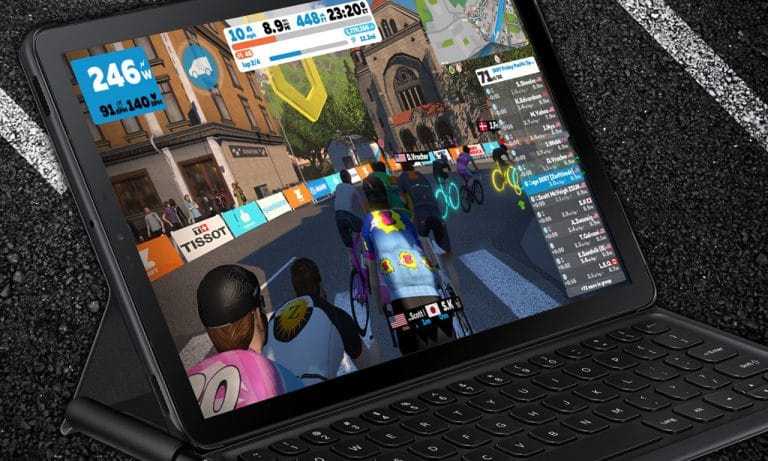
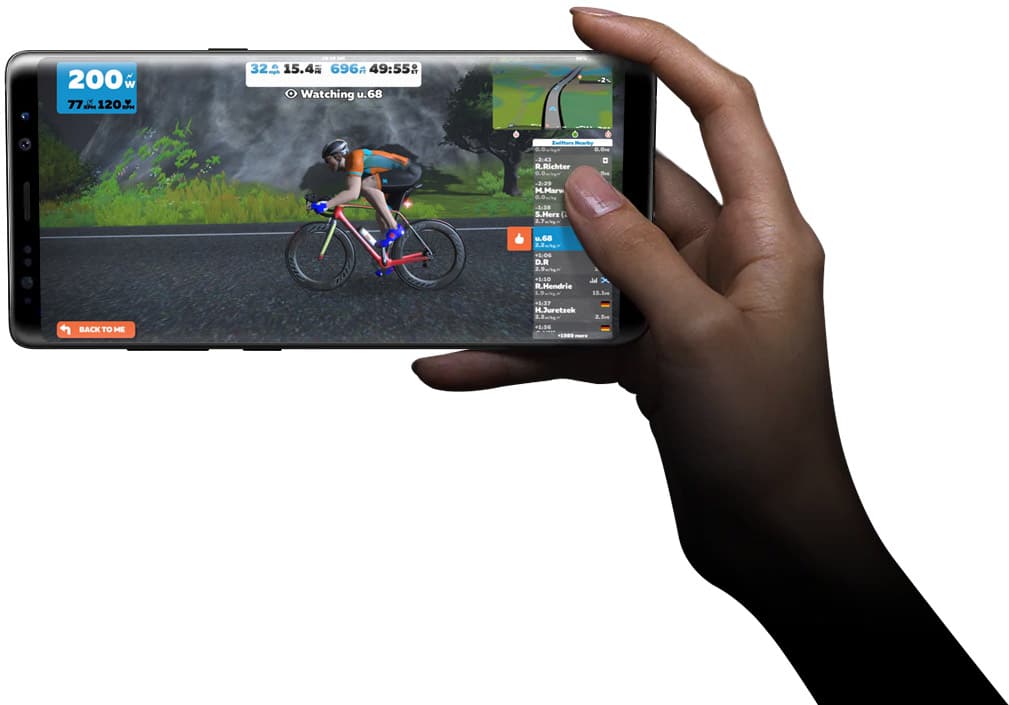
Spectators need a screen which lets them immediately, intuitively understand what is going on at any given time during the race. They shouldn’t see a message about “watching” a particular rider at the top of the screen… but at all times they should know what group or portion of the race we are currently watching, and how much distance is left. Display some of those key metrics when it makes sense, and let the broadcasters decide when to show or hide some or all of them. Take a cue from outdoor race broadcasts, but improve on it since we have amazing metrics at our fingertips. (More on this in part two, where we’ll focus on broadcasting Zwift races.)

Challenge: A Weak Finish

Some races end with a simple, “Well, here’s who won. See ya folks!” Sometimes the end result is a bit of a question mark, if a rider’s power numbers seem dodgy. (More on dodgy numbers in part three of this series). The important thing here is that, at the precise spot where spectators should feel the most excitement, things can just… fizzle. This isn’t every time, but it happens often enough that it’s an issue. We need a definite winner (or even a full podium) and we need to connect with those winners on a deeper level.

Opportunity: More Metrics, More Connection

What if a race ended, and immediately on screen we saw the winner’s name and final stats? What if there were other stats, perhaps for the rider with the highest 20-minute power, or advanced numbers like the rider who burned the most matches, or won the sprint competition, or…? The important thing is to get those results and metrics up quickly, and make them interesting and impressive. Lastly: get that winner (or the whole podium) on a webcam and talk to them within 5 minutes of the finish. Make that connection!

Conclusion

It’s still early days for Zwift racing, and this is evident when spectating races. Live streams are still hard to find, difficult to follow, and impersonal if you’re not plugged into the Zwift racing community. Still, there are big opportunities here to reach and engage a massive, global audience. If people will stand on the side of the road for hours just to watch the pro peloton fly by, they’ll certainly tune in to watch a short Zwift race…. but only if they can connect with the real riders and follow the action as it unfolds.

What Do You Think?

I’d love to hear your thoughts on the challenges and opportunities Zwift racing holds for spectators today. Share below!

Fun Facts for February Fondos (this weekend!)

0

Fun Facts for February Fondos (this weekend!)

[et_pb_section bb_built=”1″][et_pb_row][et_pb_column type=”4_4″][et_pb_text _builder_version=”3.19.12″]

February’s fondo events are this weekend, and riders can choose from one of three new custom Watopia fondo routes which were launched last month. Click a route below to learn all about it!

[/et_pb_text][et_pb_accordion _builder_version=”3.19.12″][et_pb_accordion_item _builder_version=”3.19.4″ title=”Invisible Row” link_option_url_new_window=”off” use_background_color_gradient=”off” background_color_gradient_start=”#2b87da” background_color_gradient_end=”#29c4a9″ background_color_gradient_type=”linear” background_color_gradient_direction=”180deg” background_color_gradient_direction_radial=”center” background_color_gradient_start_position=”0%” background_color_gradient_end_position=”100%” background_color_gradient_overlays_image=”off” parallax=”off” parallax_method=”on” background_size=”cover” background_position=”center” background_repeat=”no-repeat” background_blend=”normal” allow_player_pause=”off” background_video_pause_outside_viewport=”on” text_shadow_style=”none” box_shadow_style=”none” custom_css_before=”display:none;” custom_css_main_element=”display:none;” custom_css_after=”display:none;” custom_css_toggle=”display:none;” custom_css_open_toggle=”display:none;” custom_css_toggle_title=”display:none;” custom_css_toggle_icon=”display:none;” custom_css_toggle_content=”display:none;” hover_transition_duration=”300ms” hover_transition_delay=”0ms” hover_transition_speed_curve=”ease” /][et_pb_accordion_item _builder_version=”3.19.4″ title=”Bambino Fondo (C Group)” link_option_url_new_window=”off” use_background_color_gradient=”off” background_color_gradient_start=”#2b87da” background_color_gradient_end=”#29c4a9″ background_color_gradient_type=”linear” background_color_gradient_direction=”180deg” background_color_gradient_direction_radial=”center” background_color_gradient_start_position=”0%” background_color_gradient_end_position=”100%” background_color_gradient_overlays_image=”off” parallax=”off” parallax_method=”on” background_size=”cover” background_position=”center” background_repeat=”no-repeat” background_blend=”normal” allow_player_pause=”off” background_video_pause_outside_viewport=”on” text_shadow_style=”none” box_shadow_style=”none” hover_transition_duration=”300ms” hover_transition_delay=”0ms” hover_transition_speed_curve=”ease” text_shadow_horizontal_length=”0em” text_shadow_vertical_length=”0em” text_shadow_blur_strength=”0em”]

Official description:

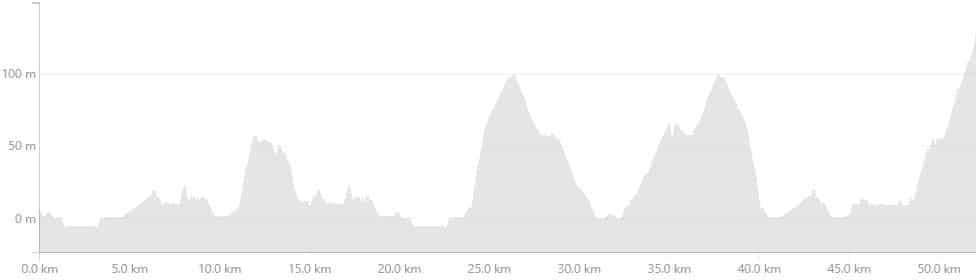
Take in the heart of Watopia with a flat warmup before tackling the original Watopia KOM. Then head over to the Mayan Ruins for a lap of the jungle – look out for the sloth! – before finishing up the Volcano Climb.

The Bambino Fondo is essentially these routes strung together:

Distance: 52.2km (32.4 miles)
Elevation Gain: 580m (1902′)
Strava Segment (from start pier)

[/et_pb_accordion_item][et_pb_accordion_item _builder_version=”3.19.4″ title=”Medio Fondo (B Group)” link_option_url_new_window=”off” use_background_color_gradient=”off” background_color_gradient_start=”#2b87da” background_color_gradient_end=”#29c4a9″ background_color_gradient_type=”linear” background_color_gradient_direction=”180deg” background_color_gradient_direction_radial=”center” background_color_gradient_start_position=”0%” background_color_gradient_end_position=”100%” background_color_gradient_overlays_image=”off” parallax=”off” parallax_method=”on” background_size=”cover” background_position=”center” background_repeat=”no-repeat” background_blend=”normal” allow_player_pause=”off” background_video_pause_outside_viewport=”on” text_shadow_style=”none” box_shadow_style=”none” hover_transition_duration=”300ms” hover_transition_delay=”0ms” hover_transition_speed_curve=”ease” text_shadow_horizontal_length=”0em” text_shadow_vertical_length=”0em” text_shadow_blur_strength=”0em”]

Official description:

Warmup with a trip to Sequoia Circle before climbing the original Watopia KOM in the longer, gentler reverse direction. From there the climbing continues with a trip up the Volcano KOM, and tour of the Mayan Ruins jungle, and then finish off with a long climb up the Epic KOM (arch; not tower).

The Medio Fondo is essentially these routes strung together:

Distance: 72.9km (45.3 miles)
Elevation Gain: 1010m (3313′)

Strava won’t let us create one segment for this route, so we split it into three. We also created a Strava route which covers this full route. The GPS elevation data for the Strava route appears to be corrupt in parts, but the numbers above for distance and elevation are from ZwiftHQ and accurate.

Strava Segment Part 1 (from start pier) Strava Segment Part 2 (from jungle turn-off) Strava Segment Part 3 (epic KOM) Strava Route

[/et_pb_accordion_item][et_pb_accordion_item _builder_version=”3.19.4″ title=”Gran Fondo (A Group)” link_option_url_new_window=”off” use_background_color_gradient=”off” background_color_gradient_start=”#2b87da” background_color_gradient_end=”#29c4a9″ background_color_gradient_type=”linear” background_color_gradient_direction=”180deg” background_color_gradient_direction_radial=”center” background_color_gradient_start_position=”0%” background_color_gradient_end_position=”100%” background_color_gradient_overlays_image=”off” parallax=”off” parallax_method=”on” background_size=”cover” background_position=”center” background_repeat=”no-repeat” background_blend=”normal” allow_player_pause=”off” background_video_pause_outside_viewport=”on” text_shadow_style=”none” box_shadow_style=”none” hover_transition_duration=”300ms” hover_transition_delay=”0ms” hover_transition_speed_curve=”ease” text_shadow_horizontal_length=”0em” text_shadow_vertical_length=”0em” text_shadow_blur_strength=”0em”]


Official description:

This longest Fondo route takes you on a meandering – and ascending – tour of Watopia. Start out with the original KOM in the reverse direction before climbing the Volcano. From there, you’ll do a lap of the Mayan Ruins jungle and then take on the steeper – but shorter – original KOM in the forward direction. Mix in flat laps around downtown Watopia and the Volcano Circuit before finishing at the Epic KOM summit (arch; not tower).

The Gran Fondo is very similar to the Medio Fondo in terms of key climbs and overall elevation, but ~25km (15.5 miles) longer due to some meandering around Watopia proper between the “Road to Ruins” section and the “Mountain Route” ending. This route is essentially these routes strung together:

Distance: 97.8km (60.8 miles)
Elevation Gain: 1196m (3924′)

Strava won’t let us create one segment for this route, so we split it into three. We also created a Strava route which covers this full route. The GPS elevation data for the Strava route appears to be corrupt in parts, but the numbers above for distance and elevation are from ZwiftHQ and accurate.

Strava Segment Part 1 (from start pier) Strava Segment Part 2 (to start/finish) Strava Segment Part 3 (to epic KOM)
Strava Route

[/et_pb_accordion_item][/et_pb_accordion][et_pb_text _builder_version=”3.19.12″]

UNLOCK THE FONDO KITS

All Zwifters who finish a Fondo route will unlock the official Zwift February Fondo kit. Each of the 6 Fondos from November to April has a unique kit to unlock.

[/et_pb_text][et_pb_image _builder_version=”3.19.12″ src=”https://zwiftinsider.com/wp-content/uploads/2019/02/zfondo_feb19.jpg” align=”center” /][et_pb_text _builder_version=”3.19.12″]

UPCOMING FONDO DATES:

  • February 10
  • March 10
  • April 7

See upcoming Fondo rides on ZwiftHacks >


This Week’s Top 5 Zwift Videos

This Week’s Top 5 Zwift Videos

[et_pb_section bb_built=”1″][et_pb_row][et_pb_column type=”4_4″][et_pb_text _builder_version=”3.19.12″]

Zwift Headquarters Office Tour

[/et_pb_text][et_pb_video _builder_version=”3.19.12″ src=”https://www.youtube.com/watch?v=74_qdaVrn1Q” image_src=”//i.ytimg.com/vi/74_qdaVrn1Q/hqdefault.jpg” /][et_pb_text _builder_version=”3.19.12″]

How would you imagine Zwift HQ looks? Personally, I’d place it in the middle of Watopia, so there must be a volcano somewhere. Triathlon Taren, one of the regulars in this series, had the privilege to figure it out from the inside.

[/et_pb_text][/et_pb_column][/et_pb_row][et_pb_row][et_pb_column type=”1_2″][et_pb_text _builder_version=”3.19.12″]

How To Zwift on a Spin Bike | Advantages & Disadvantages

[/et_pb_text][et_pb_video _builder_version=”3.19.12″ src=”https://www.youtube.com/watch?v=KPokCgVUKIY” image_src=”//i.ytimg.com/vi/KPokCgVUKIY/hqdefault.jpg” /][et_pb_text _builder_version=”3.19.12″]

Before Zwift, many of you were training on spinning bikes in your local gym. Maybe you miss this. But then your spinning kilometers don’t count for your Zwift miles. Or can they?

[/et_pb_text][/et_pb_column][et_pb_column type=”1_2″][et_pb_text _builder_version=”3.19.12″]

Zwift v Sufferfest v TrainerRoad (2019)

[/et_pb_text][et_pb_video _builder_version=”3.19.12″ src=”https://www.youtube.com/watch?v=oCEoZGEXYs0″ image_src=”//i.ytimg.com/vi/oCEoZGEXYs0/hqdefault.jpg” /][et_pb_text _builder_version=”3.19.12″]

Brian Davis wasn’t the biggest fan of Zwift when it launched, so he kept using also Trainerroad and Sufferfest. He has followed their evolution also over time. This makes his comparison of all three platforms interesting.

[/et_pb_text][/et_pb_column][/et_pb_row][et_pb_row][et_pb_column type=”4_4″][et_pb_text admin_label=”Ad” _builder_version=”3.17.6″]

[/et_pb_text][/et_pb_column][/et_pb_row][et_pb_row][et_pb_column type=”1_2″][et_pb_text _builder_version=”3.19.12″]

My open letter to Zwift… 

[/et_pb_text][et_pb_video _builder_version=”3.19.12″ src=”https://www.youtube.com/watch?v=114MHcOgISw” image_src=”//i.ytimg.com/vi/114MHcOgISw/hqdefault.jpg” /][et_pb_text _builder_version=”3.19.12″]

In typical Vlog style, it’s about this and that before Cameron addresses that never-ending discussion on weight doping. Now that Zwift is turning ever more serious at the top end, can they continue to take an agnostic approach to weight doping?

[/et_pb_text][/et_pb_column][et_pb_column type=”1_2″][et_pb_text _builder_version=”3.19.12″]

Cheap Zwift Climbing Hack

[/et_pb_text][et_pb_video _builder_version=”3.19.12″ src=”https://www.youtube.com/watch?v=4ADS2gf5tD8″ image_src=”//i.ytimg.com/vi/U6A4i_vuuro/hqdefault.jpg” /][et_pb_text _builder_version=”3.19.12″]

The Wahoo Kickr Climb is rather expensive… or you ride another brand’s trainer that isn’t compatible. Be happy: you can still get yourself a climbing setup. Which seems obvious afterwards…


Morning Grind Series 2, Race 1 Report

0

Morning Grind Series 2, Race 1 Report

The first race of Morning Grind’s second series was held on the “London Loop with Box Hill Finish” route. A category raced 2.5 laps while B, C, and D riders only had to suffer through 1.5 laps.

A Cat Report by Matt Gardiner

The Morning Grind Fondo kicked off the second series with one of the toughest courses imaginable. The starting pen was more full than it had ever been in series #1, and the caliber of riders also ticked up several notches—some of Zwift’s strongest showed up to throw down.

The bunch was very calm on the flats knowing what was ahead, and thankfully the race was boring until we hit Box Hill. As we turned right into the climb, the group split immediately, with half of the riders falling off the lead bunch.  Matt Gardiner took the KOM in 5:50 with the remaining in the lead group crossing the line under 6 minutes.

The group stayed together through the descent and flats until the second ascent of Box Hill. Jose Wence attacked at the base, getting a 0:03 gap before DRAFT closed the gap and controlled the pace. Shortly after, Lionel Vujasin attacked with 2 minutes left in the ascent, forcing riders to accelerate to not let him get away. In all, only 4-5 riders were dropped off the group as we hit the descent.

On the final climb to the finish, accelerations wreaked havoc on the bunch as riders fought for position—Sam Brännlund, Huang Xiao Yu, and Yunfei Wu attacked at the painted road and found a gap behind them before ramping up the sprint. The riders carried their effort through the finish going 1-2-3.

Series 2 A standings:

  • Sam Brännlund, Innovation: 80 pts
  • Huang Xiao, +1S: 72 pts
  • Yunfei Wu, +1S: 64 pts

B Cat Report by Ken Nowell

Series 2, race 1 was a massive success with a record 75 B riders in the pen! With individual categories having separate starts, it seemed to be a little bit less of a chaotic start at a slightly milder pace. But by the time we hit the first rollers, all hell was breaking loose and those that were in for the win were showing their teeth.

At about the 8-minute mark, a blistering pace was set up Box Hill that had us revving over 4 watts/kilo average. The hill shattered the peloton into a front group and a chasing pack. Activity on Discord was lively and riders were marked and breaks were chased down.

Team Type 1’s Paul Buckland made his intentions clear that he wanted the series 2 title and the race win. As the group hit the upper ramps of Box Hill on lap 2, a group of 5 strong riders including 2 from Team DIRT, Buckland and a few privateers broke off the front with a pace the others could not match.

With a quarter mile to go, the sprint was unleashed with the win for Buckland looking promising. Unfortunately for him, DIRT underdog Shawn McAfee pulled a hat trick and took the win with what was almost a premature celebration. The hilltop banner, unbeknownst to most riders was about 100 ft after of the finish line. Shawn can be seen throwing his hands in the air on his live stream just under the banner and had just enough speed to coast over the finish line in the front position. Well played, Shawn!

Series 2 B standings:

  • Shawn McAfee, DIRT: 80 pts
  • Chris Ostberg, R2R: 72 pts
  • Paul Buckland, Team Type 1: 64 pts

Check out B winner Shawn McAfee’s race recap video:

D Cat Report by Jamie Jackson

The second iteration of the series kicked off with a bang as the top five D finishers averaged 2.4w/kg and above.

Having separate category starts and a shorter course brought more D rider participation than in the past. The start was very strong but maintainable for the riders with a small initial split occurring. The remaining riders worked well in a group before being gutted on the first climb. The first series winner, Len Baird, lost the wheel of the main group at this point.

As the group strung out, one could see above category riders pulling away. This became more pronounced as the strongest Ds hit Box Hill holding 2.6w/kg while others were well above 3.0w/kg. A small lead group continued to push a steady pace leading to a split that seemed insurmountable.

The riders crested and made the push back towards the city with the subway stairs being the remaining challenge. Jamie Jackson [DIRT] (first MGF series runner up) went all out on the stairs to reduce the gap to a couple riders from the lead group. He and another triathlete, Jason Zilles [DIRT], raced each other to the line with Jackson taking the spot on the sprint.

With four riders over w/kg that put Jamie Jackson [DIRT] into first place for the race and series. Newcomer Wesley Stocker [DIRT] was second with Mike Ewing finishing in third.

Series 2 B standings:

  • Jamie Jackson, DIRT: 80 pts
  • Wesley Stocker, DIRT: 72 pts
  • Mike Ewing: 64 pts

View race results on ZwiftPower.com >


About the Morning Grind

The Morning Grind is a collaborative 12-week race series between Team DRAFT and Team DIRT where overall standings are tracked and prizes will be giving to category winners at the end of the series based on cumulative standings.

DRAFT is a virtual bike racing team that competes with the global community on Zwift promoting sportsmanship, unity, and integrity. DIRT (Dads Inside Riding Trainers) is a group of dads making time for ourselves for fitness, fun, and friendship on the Zwift platform by hosting daily rides and weekly races.


New York “Gotham Grind” Route Details

0

New York “Gotham Grind” Route Details

New York’s “Gotham Grind” was created in January 2019 and is currently only available as an event route (no free-riding).

Route Profile

This is figure 8 route which stays on the ground-level roads of the lower and middle Central Park loops. It avoids the upper loop (and thus Harlem Hill), giving this route a rolling profile with no substantial climbs.

The lower ground-level loop includes a sprint section, making this route ideal for events which include sprint efforts.

There are forward and reverse versions of this route. The reverse version travels north from the start pens, which means you do not ride through the start/finish banner until the end of the first lap. Therefore, we’ve created two Strava reverse segments: one beginning just after you exit the pens to cover your first event lap, and the other beginning at the start/finish banner for additional laps.

Route details:
Distance: 9.2km (5.8 miles)
Elevation Gain: 86m (281′)
Strava Forward Segment (Banner to Banner)
Strava Reverse Segment (Pens to Banner)Strava Reverse Segment (Banner to Banner)

rame>


Winner Ed Hopper’s Thoughts on KISS Super League Round 2 and a Virtual Racer’s Role from the Couch

Winner Ed Hopper’s Thoughts on KISS Super League Round 2 and a Virtual Racer’s Role from the Couch

Editor’s Note: Originally posted on the Bereda Training Journal, this is author Dennis Cottreau’s second conversation with Zwift Community All-Star member Justin Purificati as they follow his participation in Zwift’s new KISS Super League. Their first conversation can be found here. This article includes comments from Round 2 winner Ed Hopper as well as commentary from Justin after his view from the couch.


When a professional cyclist has the day off while their teammates race for the win on the roads of Europe, they’ll often be at home on the couch with their feet up if they’re not out training.

When it comes to virtual racing, it’s no different.

But the couch racer still has a role to play.

Last week, Justin Purificati announced himself to the KISS Super League with an impressive third-place finish up the finishing volcano climb for the Zwift Community All-Star team.

This week, with the course being much flatter, the team opted to include more sprinters in the mix.

Still, Justin had a job.

“I was still in the chat with the guys, and I still had the streams going on multiple computers,” he told us, talking about the All-Star team’s use of Discord to communicate strategy with each other during races. “So, we were just keeping tabs on who was left in the group.”

Team Strategy includes Providing Updates

Justin described what he was up to during the race to support his teammates suffering at home on their trainers: “We had Kim [Little] going for the sprint points, so, keeping an up to date tally on who was where on the point standings just so that we could not burn too many matches.”

Little, who organized the roster for the Zwift Community All-Star Team, had the intermediate sprint competition wrapped up after only the third of four sprints, and Justin was able to confirm this in real time “just because of the placing with second and third on the second and third sprints,” he told us.

With such an impressive showing in the intermediate sprints, I thought it must have been part of the game plan going into round 2 for the All-Stars.

“Well, originally we discussed that it’s not really that important, you don’t have to go for it, but… if you’re in a position to go for it, you know, just go ahead.”

The Low-down on Intermediate Sprints

With only 5-minutes of live broadcast before the start of the race, commentator Nathan Guerra didn’t have much time to establish what exactly was going on with the intermediate sprint competition and its purpose and implications for the series.

“Originally what they said for the first race was they were going to have a combativity award, so like, most combative, but the problem was they didn’t really have a way to score that, basically, so for the second round they turned it into a sprint competition,” Justin told us.

Weekly Changes in the KISS Super League

Things are changing quickly with the KISS Super Leauge. We’ve learned that they’ve recently banned the use of certain indoor trainers to participate in the series, including the:

We’ve also heard that racers might soon be required to film and send in videos of themselves on a set of scales to report and verify their weight as a precaution to cheating. YouTuber Cameron Jeffers recently mentioned this in his open letter to Zwift.

Racers are definitely being kept on their toes.

And these new intermediate sprints are just another example of changes to the racing format, which is understandable as Zwift uses the KISS Super League as a testing ground to refine how their eSports offering will work in the future.

Still, it makes having and sticking to the strategy difficult for teams.

All-Star’s Round 2 Gameplan

In our interview last week, Justin Purificati gave the nod to his own teammate, Steve Young, for the win in round 2.

Going into the race, Justin told us: “The overall plan for the day was to just watch the moves and just basically sit in and wait for the sprint.”

As predicted, that sprint to be delivered by Steve Young.

“We knew that they’d change things a little bit this week around,” Justin continued. “I mean, they took out ‘Double Draft’ like I said last week. If they wanted a little more excitement, a little more attacks, just take the double draft off and, of course, that’s basically what happened this week, right? So the point was to conserve and basically watch for moves going over the leg snapper because that’s a good 40-second effort, right, and if you’re not paying attention, you’re off the back, and if you’re on your own, good luck getting back on, so…”

And sure enough, when it came to the finish, Steve Young took the bunch sprint.

But not the win.

“I didn’t count on the solo lap breakaway,” Justing laughed, referring to Team Ribble‘s Ed Hopper who won round 2 in dramatic fashion, riding away from the pack with one lap to go and holding off a charging peloton in the final few minutes to secure the win.

Ed Hopper’s Dramatic Win

If you’re like me, one thing you might have noticed about the KISS Super League is that it provides a pretty jam-packed viewing experience. It’s exciting, but can sometimes be difficult to keep track of what exactly is going on.

During the live broadcast, all of a sudden I noticed someone off the front with one lap to go.

“Ed Hopper just seemingly rolled off the front,” I told Justin. “I actually had to go back this morning and rewatch the replay to see how he got away, and… it seemed very gentle! He kinda just, moseyed off the front, there was a gap, and then he just went up 6 watts per kilo and cruised away.”

“He basically rode at a steady, like, 500 watts almost,” Justin chimed in.


467 watts, on average for 12 minutes and 14 seconds, to be exact.

We actually caught up with Ed Hopper and got his thoughts on the race and the KISS Super League as a whole.

Comparing it to racing on the road, he said “In some ways easier, in some harder. You have real-time data so when I was away I could see that they were at 3 watts per kilo and I know I could just try and keep above them. So, if they lifted to 4 I could go to 6 for a bit. That’s definitely better than time checks,” Hopper told us.

“But it’s harder because you can’t see who’s suffering and you can push yourself harder on a turbo trainer because you can’t fall off.”

Hopper on Support from Fans

KISS Super League is an experiment in virtual racing, and even though it’s rightfully trying to be its own thing, it’s constantly being compared to professional racing on the road.

One way it’s being compared is through the racer’s experience, but equally important is the viewing experience for fans.

Ed Hopper has won many road races, but this was his first virtual win.

What was the fan support like? How did it compare? Might there be more response and engagement than through actual road racing?

“That’s already the case,” Ed told us. “It’s far more accessible to watch. People can watch me from their front room instead of driving hours to see me pass by a few times an hour. My parents were buzzing to be able to watch it.”

Of course, the top tier of road racing is accessible through broadcast as well. That said, if it’s not on regular cable television, it’s often gated behind some subscription membership for an internet broadcast service.

Not readily available and free like the KISS Super League on YouTube, Twitch, Facebook, and other social platforms.

“For someone like me who won’t ride the Tour of Britain with 100,000 viewers, 50,000 people watching [the KISS Super League] is huge,” Ed told us. “What’s even more crazy to me is I’m just a normal guy. I don’t get any money from cycling, just kit and race, etc.”

He’s just a normal guy.

“I was back in work at 5 AM the next day,” he said.

But virtual racing could present him an interesting, new opportunity. If the response from the fans and Zwift community is any indication, that could be true.

“It’s been immense!” Ed continued. Talking about virtual racing as a whole, he told us “It’s got the potential to be massive. You’ve just got to hope teams are staking their reputation on honesty.”

Double Draft Removal Enables Ed’s Attack

Despite the fact that it cost his teammate the win, Justin Purificati enjoyed watching Ed Hopper ride away for the win.

“I mean, that’s the great thing when you take off the double draft, right?” Justin told us. I mean, the pace is a little more controlled, and I think guys this week were a little  more aware of the fact that there wasn’t any point in trying to like, drill it on the front and split up the group because you weren’t getting anywhere.”

He was noticing a significant change in the racing dynamics after just one round.

“Even, like, as early as the second lap, guys were trying harder to just like, sit on and not really try to drive the pace because they knew it wasn’t really conducive to doing anything but burning yourself out…”

Turning to Ed Hopper’s winning move, Justin said: “I think he definitely saw that and he saw an opportunity to take advantage, so, he went for a little acceleration, got a gap, and then just put the gas on and took a solo lap.”

“It was pretty interesting to watch for sure!” Justin said.

The Impact of Zwift Experience

One thing Nathan Guerra was pointing out on the live stream was how the All-Star team and the Dream Team were finishing races with almost entire watts per kilo less, on average, than some of the pro riders.

Even this week, with the removal of the double draft.

It really shows how much knowing what you’re doing with Zwift really comes into play.

“When double draft first appeared it’s not so much you get a better draft, it’s just that things kind of accelerate to a point where ya, your draft is better but you’re also traveling faster,” Justin told us. “So maybe you’re not actually conserving as much as you would have thought.”

Double Draft Mechanics and Zwift’s “Blob Effect”

We posted a clip of last week’s discussion with Justin about Double Draft in the popular Zwift Rider’s Facebook Group which sparked some interesting opinions.

One commenter explained how, aerodynamic wise, there should really only be a few people breaking the wind at the front of the group which sets the pace. But, the bigger the group size gets in Zwift, the faster and faster they go.

“Essentially, the whole ‘blob effect’ in Zwift, gets worse,” Justin told us. “Everyone’s still going to work as hard as they were before but now all that’s happening with more draft is that more guys can just happen to roll through the draft and get on the front. So, I think it’s causing a lot more people to rotate through and it just creates this exponential factor where guys just keep accelerating to the point where you’re going really fast.”

On the road, a breakaway of 5 working well together has a chance at holding off a group of 20 behind. When asked about the likelihood of that happening with Double Draft, Justin said plainly:

“There’s no chance.”

Pros Learning Zwift Quickly

This was only the second round of the KISS Super League, and for some of the pros, their second ride on Zwift.

Still, some were starting to show some signs of improvement.

“We definitely noticed a few people learned not to go as hard right from the gun,” Justin said.

He also noticed fewer guys trying to attack and fewer guys getting dropped out as early as they did in round 1. The group stayed together much longer in the second week of the series.

“It’s still pretty evident that a lot of those guys [the pros] are still having like technical difficulties,” he added. “I mean, just having the right trainer set up and the Wi-Fi well connected and like, the right computer and not having too many apps open and all that kind of stuff interfering with the program.”

Not at all the standard things professional cyclists are used to thinking about before a road race.

“So, I think definitely from like a tactical point of view I think they definitely did a better job,” Justin concluded, saying that this week: “I think they knew a little more what they’re getting into.”

Power-Up Controversy

For a first time virtual race viewer, one thing that might have been surprising about the sprint finish of round 1 was all the green medallions floating above the avatars’ heads.

“Power-Ups”, they’re called.

Specifically of the aerodynamic variety.

In round 2, they were essential for the sprint finish as well.

Somewhat controversially, some of the racers are using a tactic where they log onto Zwift prior to the start of the KISS Super League and ride around in their warm-up long enough to collect one of these highly valued aero power-ups so they have it for the competition.

They could roll the dice and try to collect it during the race, but instead, they choose to start with it and hold onto it until the finish.

“You pretty much need it for the sprint,” Justin said. “I think it’s pretty fair for everyone to be able to get them. Some of the guys that are starting with a specific power-up. They’re in the entire race hanging on to that power up until the end, right? That’s their choice to do that whereas during the race there were a few guys that did use their aero power-ups, their feathers or their draft boost during the race. You kind of gambled on the fact that you know they might get the aero for the end.”

In the end, no one is breaking the rules.

“It’s pretty level in the sense that everyone has the same opportunity to use the power-ups,” Justin said, “so I think keeping them is probably fair. I think, depending on the course they probably could offer a couple more opportunities to get them so I mean, it really depends on the race.”

More Power-Ups, More Fun?

Where, in comparison to road racing, Zwift lacks the technical bike handling skills, the use of power-ups could provide somewhat of a skill-based dimension to this virtual racing format that seems to be missing.

Where a road racer might attack through a corner, some well-timed and unexpected power-ups could add more flavor to the new racing format.

“It definitely fills the void and gives it a bit more of individualistic feel instead of just straight-up power and how many watts you’re doing right?” Justin said.

It allows for more creativity.

“Yeah, I think, if anything maybe they should add more,” Justin continued. “More power-ups. Different ones.”

And I couldn’t agree more.

Right now power-ups don’t seem to be a big feature of the race, however, they’re a big feature of the finish of the race. Since they’re not well introduced to the viewer during the race, their big impact on the finish is a bit jarring.

Holding onto a specific power-up for the finish is a valid and strategic choice that adds a level of suspense to the race, in itself. But, perhaps riders shouldn’t be able to start with a specific power-up and instead be left to collect them out on course and make decisions about using them along the way.

It would lead to more overall usage.

Another option is to remove them completely. “I feel like it’s in a weird middle ground right now and it could go either way,” I told Justin at the end of our call.


Things are evidently very fluid in this, the first-ever professional virtual bike series, and we’ll keep an eye on how things evolve and continue to discuss it with those involved as the weeks continue.

At Bereda, we’re looking forward to what Round 3 has in store!


Dadurday Chase Race Report – Feb 2

0

Dadurday Chase Race Report – Feb 2

Editor’s note: the DIRT DADurday Chase Race is a new weekly event happening at 6:30AM EST every Saturday. New to chase races? These are inclusive “handicap” events, so slower categories start before faster ones, with the goal being a teamwork-driven chase followed by a mixed-category finish.

We’ve asked a member of the week’s winning group to write a race recon, and here is our first, from C cat’s Christopher Dornbach.


At approximately 6:30 AM EST smoke could be seen pouring out of basements, sheds, and apartments around the world… a C’s perspective of what can only be described as DIRT’s weekly culmination of trash talk, sportsmanship, and comradery. We call it the DIRT DADurday Chase Race! From the moment the ribbon dropped the C’s put pedal to the metal and quickly revved up to a strong 4.0w/kg and higher average. Surprisingly, the C’s held motivation for the first few minutes and the pack held strong.

As we settled in Martin Heintzelman, the C’s leader, established his presence at the helm and the w/kg at the front of the pack was set at rock steady 3.5w/kg. The C’s blob remained together as if glued but remained untested until we reached the base of what the Team Members of DIRT call the Leg Snapper, an aptly-named 7-8% grade .4 mile (.6km) long spike in the middle of the otherwise flat Innsbruckring course. Typically this is where the attacks would begin but being a chase race the fate of the pack relies on cohesion. Heintzelman hit up the text telling the herd to stay together while Ed Zook reiterated the importance of teamwork over the Discord channel.

As we hit the base chaos made an appearance. By the top of the hill many of the pack’s bigger pace setters had been dumped out the back with a lead-out of middlemen and climbers creating a large rift down the backside of the climb. By the first sprint zone the lead-out had combined into its own break with a blob of our pacesetters closely behind. Heintzelman once again steadied the pace and by the end of the 1st lap we were back together holding our targeted 3.5w/kg at the front.

Lap two the C’s held steady and stayed strong. The 2nd time up Leg Snapper the C’s proved that we can learn and while the group strung out by the top of the climb we were able to pull everyone back together by the sprint. Around this time splits started being reported and taunts of Baby Shark from the B’s started lulling over Discord. By now the energy was intensifying and engines started running hot again.

The C’s went into the final lap with around a 40-second advantage over the B’s. Survival was the prevailing thought and the pack held until the 3rd time we hit Leg Snapper. Without realizing it the C’s had closed the gap to the D’s. The motivation of flexing our mighty midgrade muscles and the fear of being publicly shamed after all of our trash talk proved to be stronger than the bond that had held us together to this point and every one of us knew it.

As we hit the bottom of Leg Snapper with the D’s mere feet in front of us, the C’s unleashed Hell’s furry. With rev limiters removed and throttles pinned, the C’s shot through the D’s mid-climb and by the time I hit the top the damage had been done. With Heintzelman and a couple fists full of other racers, a small contingent of C’s was formed on the backside of the climb. Instantly our race radio, Discord, started buzzing with the latest gap report and the B’s were quickly gaining ground on us.

With the latest time gap reports and the finish line just a few turns away, the remaining band of C’s throttled up, leaving many of our brethren C’s behind to fend for themselves. As we hit the final .5 mile (.8km) with the B’s seconds behind, I decided to lead-out and began pushing way too many watts to sustain over the remaining distance. In the final few hundred feet (75m), with the aid of an Aero PU and the finish line in sight, delusions of grandeur began fueling me and helped to maintain the effort. Then in a glorious implosion of epic proportions my engine blew. Immediately I was engulfed by the remaining DIRTy dozen of C’s who also had loosed their fears of being caught and replaced them with dreams of DADurday victory.

When the smoke settled, the heroic efforts revealed, and Zwiftpower had its final say many a C paid the ultimate price that any C could.

Many congratulations were showered on the bulk of the top C riders who survived to the finish… but not for their victories at the DADurday. Rather they were congratulated for their epic display of raw horsepower. Efforts that earned them a spot at the next DADurday with their other brothers in arms, The Killer B’s!

Big congrats to Troy Turley for his overall victory and Martin Heintzelman for his awesome display of steady power and leadership which rightfully earned him second place in both overall and in class.

See full race results on ZwiftPower.com >


The Endurance Lab Coaches’ Corner 61

The Endurance Lab Coaches’ Corner 61

In this episode:

  • What to eat before, during and after workouts
  • Complex vs. simple carbs
  • Solid foods vs. gels and liquid nutrition
  • Combining carbs and protein

and more!

[youtube https://www.youtube.com/watch?v=90VDIV2rz8s&w=560&h=315]

Recording Date: 02/04/2019


Introducing KISS Super League (Zwift PowerUp Cycling Podcast #22)

0

Introducing KISS Super League (Zwift PowerUp Cycling Podcast #22)

Note: the Zwift Coaching Podcast is now the Zwift PowerUp Cycling Podcast. Same hosts, slight name change. Here’s their first episode under the new moniker…

Strategy shifts gears when you’re racing virtually. Pros Tom Moses and Jon Mould chat with the crew on all the ways Zwift changes the game, as the hosts introduce Zwift’s KISS Super League.

About the Podcast:

The Zwift PowerUp Cycling Podcast features host Matt Rowe (Rowe & King), with regular co-hosts Greg Henderson (Coach Hendy) and Kev Poulton (Powerhouse Cycling). The hosts share tips on how road races can get faster in-game and outdoors.