Home Blog Page 269

3R Endurance Academy 12-Hour Challenge Report

2

3R Endurance Academy 12-Hour Challenge Report

On Saturday 15th January, the 3R Endurance Academy tackled their first of two challenges. Part 1 involved a 12-Hour epic.  I joined them for 3 hours of their ride and checked in throughout the day to see how everyone was faring. 

Leading the event was Rob Keunen, who was doing it in memory of his daughter, Feline, who sadly passed away 2 years ago.  In addition, Rob wanted to raise money for World Bicycle Relief, and now has successfully raised over £10,000, inspired by friend and fellow Race3R teammate Mitja Kovacic who had previously completed a 24-Hour ride in 2021.

Part 1 of the Endurance Academy: 12-Hour Challenge

Rob explained his unique journey in the final few weeks before the event:

It was the beginning of December. I started to feel weak, my power dropped, my race results were awful.  I had a higher-than-normal heart rate. I suspected that I had COVID-19, yet tests stated otherwise. 

I upgraded my Zwift setup to a direct driver trainer and on the 30th December rode 8 hours with the WBR 500 crew.  My confidence returned and all looked good for the main event two weeks later, but I needed to get my COVID-19 booster injection, which was scheduled for 7th January.

I did not react well to the booster injection.  My heart rate skyrocketed and I was forced to rest.  In test rides prior to the event, I noticed a high heart rate, even riding at 2 w/kg, which is well within my comfort zone.

I took the day off work before the event.  I rested, ate, prepared food, clothing, and double-checked my Zwift setup. 

He continues, telling the story of the actual ride:

I jumped on my bike at 7:30am CET on the 15th January without a lot of confidence, but determined to ‘ride through walls’ to complete the challenge.  I was accompanied by 17 members from the Endurance Academy, who had their own reasons for undertaking this challenge.

We started with our usual 120km, 3-hour group ride.  My heart rate was above 150bpm, even at 2.2 w/kg, where it normally is around 130bpm.

I shared that news with the group after an hour and they tried to calm me down, Catherine Allen had the same high heart rate during her 12hour ride, only a few weeks before.

My legs felt great, but my mind was spinning, how on earth could I pull this off with an average heart rate of 155bpm after 1.5 hours of riding? 

Leading the group for the next 3 hours kept my mind off the heart rate issue, and the big group was very supportive. I really felt positive seeing all that support from 3R and Zwift riders from all around the world. 

After the group ride completed and Zwift spawned us into the normal Watopia Tempus Fugit, my toughest hours began. Hours 3-6 were a real struggle, mentally speaking, and I had to remind myself many times why I was doing this.  My elevated heart rate would not destroy my goal.  With my beloved Feline in my mind, and the support from the riders, I pulled through.  The support from the community was invaluable.  Without them, I would have stopped.

After 6 hours, I stopped for 10 minutes to eat something with my wife and son.  It was during this break my wife said “Why don’t you take off your heart rate band, and ride without? You will continue anyway!” So, I did.  That was liberating.  From that moment on, I forgot about my heart rate issue and my mind focused on everything else that was important.

Hours 6-10 were great.  The high heart rate issue continued, I could feel it and I had to eat and drink a lot more than anticipated, to keep myself fuelled.  Fortunately, my stomach, legs, neck, back and arms, were all in a good condition.  I was not in any physical discomfort until hour 10. 

The support from the 3R and community was awesome. From around the world fellow riders, friends, 3R members, dropped in and out to support.   Being there was mentally very supportive, but also emotional.  

My ride was being broadcasted on YouTube by Mitja, so I had my family and friends watching, and sending me messages, throughout the day too. See the recording:

After 10 hours, I felt my legs become tired, which was not strange. I was already 2 hours over my longest ride ever, so I anticipated this.  It was at this point that the group split.  Some members of the Academy still felt great, and others like myself, needed a slower pace.

One of my original goals was to go for 500kms but after the first 6 hours, I let that goal pass, and focused on the original of 12-Hours.

I soon recalibrated my distance target to 450kms.  But to achieve that, I needed a tow.  There were so many riders, but a special “thank you” to Pete, Deej, Michael, Karel, Billy Bob and Ross, Thomas and Kate from Australia, who started with us in the morning, and jumped in again in the evening! 

The last 30 minutes I suffered.  I had developed cramps.  My legs were not in good health.  I had spent more energy due to my elevated heart rate.  I pushed through pain but had to stop several times to stretch. I had Deej, Karel, Ross, Thomas and Kate around me for the last 20kms, which was fantastic but I was really tired and emotional.  I was proud that despite all the challenges, I managed to ride 12 hours in honour of my daughter Feline. 

I eventually stopped at my target of 450km, in 12hours and 5 minutes.  8:45pm CET (so taking 40 minutes of breaks in total). Mitja, who sadly could not ride as he had COVID-19, was able to share this via the YouTube channel.

I stumbled off the bike, grabbed a beer, and dropped on the floor in the living room. My son was still up, waiting for me to finish, he gave me a hug, and said that “I did a great job!”

Riding for 12 hours at such a high heart rate does strange things to the body. Finally, at the beginning of February I am starting to feel normal again, my power is back to 80% and my heart rate has returned to normal.

Do I regret pushing ahead even with the high heart rate? No, I am proud that I finished the challenge even with all the setbacks. They are part of life, so I embrace them.  Am I going to do something like this again in the future? Yes, I discovered a love for cycling challenges, so I will do these things more often in the future.

A special thank you to all those who helped me on the journey, especially Emma Curtis, who jumped on the challenge from the beginning, completed it too, was a tremendous inspiration for me, and also a major help in the fundraising part of the challenge.

Part 2 of the Endurance Academy: 24-Hour Challenge

Looking ahead, the Academy is almost at its end.  Part 2, the 24-Hour Challenge is scheduled for the 26th February. 7 riders, amongst them Mitja, will tackle the challenge.  They will use Tempus Fugit, but ride at their own pace.  The event starts at 8:00am CET with the goal of raising funds for World Bicycle Relief.

 To donate, visit the 3R 24 Hour Challenge Academy’s team fundraising page for World Bicycle Relief 


St. George World Champs Course Preview With Tim Don (Zwift PowerUp Tri Podcast)

0

Matt Lieto sits down with Sarah True and Tim Don to discuss their recent trip to the Specialized Win Tunnel in Morgan Hill, California with the Zwift Academy Tri Team, as well as their recon of the St. George World Championships course.

About the Podcast

The Zwift PowerUp Tri Podcast is hosted by former pro triathlete Matt Lieto and Zwift Academy Tri mentor Sarah True. Both are passionate about lending their in-depth knowledge of the multisport to the Zwift Tri audience.

HJC Grand Prix Race Series Announced

11

HJC Grand Prix Race Series Announced

A new 4-week race series has just been announced, featuring helmet manufacturer HJC. Probably better known for their motorsports helmets, HJC also makes cycling helmets (see hjcsports.com for details), sponsoring WorldTour teams including Lotto Soudal and Israel StartUp Nation.

The 4-week series features flattish race routes, with each race between 19-27km long. Read on for the schedule, route specifics, and more…

Schedule and Routes

See schedule and sign up here >

Categories

These races use the standard ZwiftPower categories (A/B/C/D, and there is a women-only E category as well.

All categories will begin at the same time, so get ready to hold on to stronger riders as long as you can!

Warmup Rides

If you don’t fancy a race, or want to do a little route recon before your HJC race, warmup rides are available 45 minutes before each week’s events.

These 30-minute group rides are on the race course and feature special guest HJC ambassadors.

Helmet Unlock

The HJC Furion 2.0 in game

Unlock the new HJC Helmet after finishing any event (race or warmup ride). HJC is also running a giveaway on their Instagram page – follow @hjcsports and comment for an entry to win one of ten HJC Furion 2.0 helmets.

Motorsports… on Zwift?

The event description says, “hop on the saddle for heart-pumping cycling races with a motorsports feel.” While we’re not sure what a “motorsports feel” translates to in a Zwift race, signup numbers are already looking good for the first week’s events. If you’re looking for some stiff race competition (and a chance at big upgrade points), give the HJC Grand Prix a look.

See schedule and sign up here >

Questions or Comments?

Post below!


Zwift Racing League 2021/22 Round 2 Week 6 Race Guide: Climber’s Gambit

14

The sixth race of Zwift Racing League 2021/22 Round 2 happens Tuesday, February 15th and it’s the Queen Stage. With one sprint and two climb intermediates, this race has something for everyone. But make no mistake: a climber will win the day!

Let’s dig into the race, including tips for bike choice, powerups, strategy, and crucial segments.

Looking at the Route: Climber’s Gambit

Watopia’s Climber’s Gambit route was created for the 2021 Zwift Academy Road program as a test of sprint, VO2, and threshold power. And that’s exactly what riders can expect in their ZRL race! The route is 27.9km long, with 670m of elevation. And 400m of that elevation comes in the final climb.

Let’s discuss the four key pinch points of this route.

First, the Watopia Sprint Reverse (aka “JWB Sprint Rev”). Located 2.5km into your ride, this short, straight sprint is super fast thanks to a downhill lead-in. With no aero powerups this week, winning this sprint will require a good sense of timing and, of course, strong 15s power.

Second, the start of the Hilly Reverse KOM. Starting at 4.9km, you have a short ramp up and around the giant statues before taking a left onto the cutoff road to the Hilly KOM descent. Mind your position in the pack, give it a little gas to stay in the right spot, and you should make it over this hump unscathed. Then you can supertuck the descent!

Third, the Titans Grove Reverse KOM. At 11.9km you’ll begin the first KOM intermediate. Only 900m long and 4.3%, this quick climb can be done in under 75s by top riders. (The rest of us mortals are looking at more like 90-150s, though.)

The effort shouldn’t be high after the Titans Grove KOM, but watch that you don’t get gapped in the rolling, twisting hills of Titans Grove (before or after the KOM). Recover as much as you can, because the big effort is just up the road.

Finally, the Epic KOM Reverse. Beginning 21.7km into the race, this is the longest climb of our ZRL season at 6.2km and 5.9%! It’s really a series of three ~2km climbs, with short flats/downhills separating each. Draft the fast parts, hammer the steeps, and give it all you’ve got to the line, because the race ends at the KOM banner.

Read more about the Climber’s Gambit route >

PowerUp Notes

Riders will be awarded powerups through each banner, meaning we’ll get 3 powerups during the race (at the downtown start banner, the sprint banner, and the Titans Grove KOM).

These powerups will be randomly given out at each banner:

Anvil: makes you 50kg heavier for 30 seconds, so you can descend faster.
Useful this on downhills only. And since it lasts for 30s, which means you’ll only want to use it on downhills at least 30s long… so it’s really only useful on the Hilly KOM descent and Titans Grove KOM descent on this course.

Burrito: turns off draft effect for riders within a 2.5m radius for 10 seconds.
Use when attacking off the front so opponents have to work harder to follow you, or use it in the group to make nearby riders work harder for a bit. Be careful to avoid suicide by burrito!

Feather: reduces your weight by 10% for 15 seconds.
Best used on climbs, when weight matters the most.

Bike Frame + Wheel Choice

Scott Addict RC + ENVE 7.8, Tron, and Specialized Aethos + Lightweight Meilensteins

For most riders, a climb-friendly all-arounder setup is your best bet here. You want something decently fast for the sprint, but light enough to help you a bit on the two key climbs.

The Tron bike is a good all-arounder. We also like the Scott Addict RC + ENVE 7.8 wheels – a combo that climbs 2-3s faster than the Tron on the Epic KOM Reverse. See our Tron vs Top Performers chart for details on the performance of various top frames and wheels.

If you aren’t worried about getting dropped on the flats and descents, but also aren’t chasing sprint points, a pure climber will get you the best finishing result. The Specialized Aethos + Meilenstein or Alpinist combo will trim ~10s off your Epic KOM time compared to the Tron bike.

More Route Recon

Many events are now being planned each weekend on the upcoming ZRL route. If you’re not familiar with this course, jump into one of these events and do some recon! Here’s a list of upcoming Climber’s Gambit events.

Looking for a video recon, with lovely British commentary to boot? Check out Si and Sherpa’s recons below:

Si Bradeley

Sherpa Dave

Strategic Options

Points Distribution, Week 6

Maximum points a team of 6 could earn in this race. Since the race ends at the Epic KOM banner, we’ve added those KOM FAL points to the finishing points total in the chart.

As you can see from the chart above, segment points make up a large majority of the overall points. With 79% of the points being earned atop the two climbs, winning teams will be those whose riders have high VO2 and 20-minute watts per kilo.

So what strategies will riders employ in race 6? Here’s what we predict:

  • Big Eases Between Segments: smart climbers will know that sprinters won’t be contesting their KOM points, and sprinters won’t be able to drop the climbers on the flats or descents. So it doesn’t make sense for either set to push in between the intermediates… not with a 20-minute FTP test up the road.
  • Targeted Efforts: more than any other route featured in ZRL, Climber’s Gambit lends itself to particular riders targeting particular segments. Watch for sprinters and puncheurs to target the sprint and Titans Grove KOM. But the climbers will have their day on the Epic KOM Reverse!
  • Sag that Start: first across the finish line earns at least 50 points (40 finishing + 10 KOM FAL). But cagey, confident climbers will sag at the start, sitting in the back of the group across the start line then pushing to the front in order to earn FTS points as well. Do it perfectly and the Epic KOM Reverse could earn you 70 points!
  • Small Powerups: the feather, burrito, and anvil won’t prove terribly significant in this race. They certainly won’t affect the race like the steamroller or aero have in past events.

Watch the Premier Division Race

Zwift’s top racers will go head to head in the Premier Division the day before the community races. Watch it on GCN Racing’s Youtube channel below:

https://www.youtube.com/watch?v=_Rti2O7AvZg

Your Thoughts

Any insights or further thoughts on this race? Share below!

Notable Zwift Events for the Weekend of February 12-13

3

This weekend, we’ve found a range of events to try.


Tour de Zwift Make-Up Stages

Have you finished all 8 stages yet and unlocked this year’s TdZ kit? If not, Sunday is the final day to make up missed stages!

Various dates and times
Sign up at zwift.com/tour-de-zwift


INEOS Grenadiers Virtual Training Camp Week Three

Week Three of the INEOS Grenadiers Training Camp is one for the sprinters.  Earlier in the week, I tried Ben Swift’s training programme called “The Swift” which involved multiple sprints, at max effort.  The event was only 36 minutes in duration, but I was left physically and mentally drained. 

The alternative offered is called “The Pidcock” and looks equally as hard but slightly longer in duration.

Various dates and times
Sign up at zwift.com/events/tag/ineostrainingcampweekthree


David Lipscomb // BCS 2022 Social Ride

David Lipscomb (Director of Diversity and Inclusion USA Cycling) leads the group for an hour’s ride on the R.G.V. course in France.  Lisa Bourne, Senior Director of Diversity, Inclusion and Social Impact has recently interviewed David and the podcast can be heard here.

Saturday, February 12 @ 3pm GMT/10am EST/7am PST
Sign up at zwift.com/events/view/2714739


LEQP Provence Badge Hunter Series

My very first group rides were with the L’Equipe Provence, and it’s good to see them going strong nearly 2 years later.  Their group rides are always well-led and now with two different paces to ride, more accessible than ever before! This weekend, the team is helping people earn the “Mega Pretzel” badge, which is 111km in length and includes the Epic KOM climb.

Sunday, February 13 @ 7:30am GMT/Saturday 11:30pm PST
Sign up at https://www.zwift.com/events/view/2761873


dPAC Climbers Epic: Passo Stelvio

This is a race up the mountains, using the “Quatch Quest” route.  I raced this route for the first time recently and thoroughly enjoyed it because it was very tactical. You have to pick your moment to attack – go to soon, like I did, and you leave yourself a difficult solo climb up the mighty Alpe du Zwift!  

Saturday, February 12th @ 9am GMT
Sign up at zwift.com/events/view/2756937

Your Thoughts

Got other events that stand out this weekend? Share below in the comments!

Using AI to Predict Zwift Race Results: the ZRace App

8

Using AI to Predict Zwift Race Results: the ZRace App

If you’re anything like me, there are two questions on your mind as you enter a bike race:

  1. How well will I do today? This is the personal expectation piece. Do I anticipate a shot at the podium? Or will I be getting dropped at some point for some reason, and this is more of a workout or team effort than a win attempt?
  2. Who are the strongest riders in this race? If I’m contesting the finish or working for a teammate, who are the key riders I need to be watching? If a weak rider attacks I don’t need to waste my watts, but if a strong one does, I may want to respond!

Back in early 2021, one Zwifter created ZRace – an app that answers both of these questions with impressive accuracy. The app predicts the finishing places of riders signed up for Zwift races, and according to its creator, the tool’s Top 5 prediction is quite accurate, with a 95% probability that 3 predicted top 5 athletes will indeed finish in the top 5.

How It Started

In early 2021, Bruno Gregory had already created racedata.bike, an app that analyzes and predicts races across all categories of cycling in the US. Then Covid happened, sparking Bruno’s interest in Zwift and his subsequent participation in Zwift races.

He quickly learned there was a wealth of Zwift racer data available: power, heart rate, weight, age, sex, historical results, and more. And he realized that, given this additional data, analysis and predictions could be made much more accurate than the initial version of his app.

The “Random Forest” decision tree algorithm is used in the machine learning which powers ZRace

I won’t go into detail how exactly ZRace calculates its predictions, because those details are above my pay grade. But it uses machine learning (a form of AI), and the more races that happen, the more accurate it gets. (To read how the project unfolded, including Bruno’s iterative approach to selecting the best predictive models, read his post on Medium.com.)

What It Does

Bruno describes ZRace like this:

ZRace analyzes all athletes registered in a race and predicts possible winners. It also analyzes each category and presents the average power required for you to have a good result. In addition, athletes with specific profiles are identified, such as climber, sprinter, and time-trialist. This way, depending on the race’s course, it is possible to predict who will have a better result or even who you should keep an eye on for a certain part of the race.

Let’s dig into each of those features, which all live on the Race Predictor screen.

The Race Predictor

While many Zwifters simply visit ZwiftPower and sort the signup list by rank to find out who the top riders are, the ZRace Race Predictor is much more precise, using multiple variables plus a robust machine-learning algorithm to predict each rider’s finishing position.

From the ZRace.bike homepage, select any race. This will load up the Race Predictor for that event. In a multi-category event it defaults to showing the A category predictions, but you can select the category you’d like to view from the “Category” dropdown. Here’s the Race Predictor screen for an upcoming KISS Race:

Along the top you have a summary of each category’s signup list, including the number of riders signed up and the FTP average of the field.

You also have top riders selected by profile: a top sprinter, climber, and break away rider. Depending on the route profile and race situation, these would be good riders to watch.

List of Past Races

Curious how accurate ZRace’s predictions are? Click “Past Races on Zwift” on the left, choose a race, then click Results to see actual results and ZRace’s prediction.

Predict Me

Click Predict Me, select your race category, and enter your Zwift ID. The app will predict your result in the next hour’s Zwift races. (Not sure how to find your Zwift ID?) Here’s what it predicted for me, entering the B category:

Race Statistics

This portion of the ZRace app is quite interesting. It displays stats for:

  • Most popular days of the week and time to race
  • Winners by country
  • Most popular race events
  • Most popular race routes
  • Toughest races (based on power numbers)
  • Winner profile of men and women in all categories
  • Winners Ranking (top-ranked riders in each category based on ZRace’s algorithm)

A Few Gotchas

ZRace only lists ZwiftPower-registered riders, so it’s possible you could enter a race and get beaten by someone who hasn’t signed up for ZwiftPower. Then it’s up to you to wrestle with that age-old Zwifter question… if they aren’t on ZwiftPower, did they actually win?

The ZRace algorithm works well for iTT races and standard scratch races, but doesn’t work for handicap (chase) races. It also can’t predict the winner of a points race with intermediate point segments, since it is only predicting the finish order.

The system can take a bit of time to make its prediction, because it has to process rider data when you view an event. Be patient, it’s worth it!

Questions or Comments?

Share below!


Lucianotes: Entering the RPE (Rocker Plate Era)

Lucianotes: Entering the RPE (Rocker Plate Era)

As my Zwift sessions were getting longer and longer in preparation for Randonneurs Brevets in 2022, I began seriously considering getting a rocker plate. My main aim had nothing to do with a “more realistic” ride indoors, but with having a more comfortable one with less saddle pressure, as some tests seemed to demonstrate. 

I laughed at the “friends” suggesting a DIY Rocker Plate, as the only DIY things I am able to perform are undisclosable publicly. 

Following some exchanges with teammates and Eric, who is a rocker plate evangelist, I received the Lifeline Rocker Plate on January 17th, 2022. At that point I still did not know I was about to enter the fourth, fifth, or maybe sixth dimension. These can only be reached by taking the red pill or, as I learned, getting a rocker plate.

Editor’s note: the LifeLine Rocker Plate is sold by Wiggle. It is essentially identical to the KOM RPV1 Rocker Plate we reviewed last year, which is available on Amazon.

DIY Challenged Luciano Strikes Again

Don’t worry, they said, mounting the rocker plate is so simple, it takes max 5 minutes. Well, 5 minutes for a common mortal is equivalent to 2 hours for “Worthless Hands Luciano”. I will not detail the entire adventure but it was very far from “nothing can go wrong”. I’ll let your imagination work, knowing that it will be very far from the burlesque of what actually happened, no matter the creative effort you put into it. Hint: it seems inflating balls to similar PSI is a very challenging task for me.  

In addition to being useless with my hands, I am utterly impatient. That is why I immediately started my first rocker plate Zwift session at 1:30am. Disastrous. I felt almost seasick, nothing was in its right place, I could not properly coordinate my movements and had the impression I was going to fall all the time. 

The First Date With My Rocker Plate Did Not Go Well

At that point I was cursing Eric with the worst maledictions ever, ranging from “I hope from now on you always and only get the anvil powerup” to “I pledge you lose all your Zwift bikes”. I was THAT angry. 

Editor’s note: the anvil powerup I can deal with. But all my Zwift bikes? I thought we were friends, Luciano!

I decided to interrupt the workout and go to bed to give it a night. However, I “discovered” that going to bed infuriated is highly counterproductive. Your brain begins a negative loop to finish fuming. There is no other outcome possible other than acknowledging you are not going to be able to sleep. Therefore it made absolutely no sense to stay in bed…

So my second Zwift rocker plate session started at 4am that same night (morning). It was now a matter of honor between the rocker plate and myself. I would not retreat. 

This time I adopted a totally different approach: a very long Z1 spin running into a Z2 warmup to feel and understand the rocker plate dynamics and motion. I was psychoanalyzing my rocker plate, empathizing with it. Allowing an alignment and finally a common understanding of the situation took a while. But I became The Rocker Plate Whisperer. 

From then it was a steady and short learning curve. In two days I no longer noticed or remembered I had a rocker plate, and the blisters and sore b**t I was experiencing after long sessions almost disappeared (I have also changed to Chris Horner Noxzema bib short moisturizing procedure and maybe that helped too). 

Don’t Touch My FTP!

One of the fears I had before BRPE (Before Rocker Plate Era) was caused by some owners reporting a loss in FTP of close to 5% attributed to the rocker plate motion. Watts were mystically disappearing from their cleats to the smart trainer. That would have been inconceivable, an absolute no-go for me. I would rather lose an arm than 5% of my FTP. For real. In fact, I had already decided that if this happened, I would recycle the rocker plate plywood to feed my fireplace or the barbecue. Rocker plate barbequed steaks would have been a solid consolation prize and the perfect destination for any kind of object threatening my FTP. 

During the first week, the workouts seemed more difficult: l felt I needed more effort to produce the same amount of watts compared to BRPE. I attributed it more to an adaptation to the rocker plate than to a real power loss. 

My structured training plan had a 5-minute max power test the 24th of January 2022, just one week after the rocker plate arrived. I beat my all-time 5-minute personal record by 17 watts. From 406w to 423w. +4.2%. Hallelujah!

I have also used Assioma power meter pedals to compare with the smart trainer and the average power for the session was 0.2% difference (1 watt), meaning the same kind of differences I had before the rocker plate. We are safe. I can now enjoy my rocker plate without fearing a drop in my power output. It’s a wonderful life. 

A 10k vEveresting Accompanied by Walter 

The ultimate test for the rocker plate was my vEveresting attempt on January 29th. That’s another story which you can read here, however, from a rocker plate perspective there was a huge difference compared to my last year’s vEveresting attempt: a much more comfortable ride and substantially improved figures.

As it was clear it would be part of the family forever, it was time to give my rocker plate a name: Walter. 

All in all, the experience is extremely positive. Only two weeks into the Rocker Plate Era I can say I would never go back to BRPE.

What About You?

Have you tried a rocker plate? What was your experience? Share below!


How the Race Was Won: Temples and Towers Team Tactics (ZRL Race 5)

15

How the Race Was Won: Temples and Towers Team Tactics (ZRL Race 5)

Yesterday’s Zwift Racing League event on Makuri Islands’ Temples and Towers route was the climbiest race of the season so far. Without a single sprint point to be had, my team (the DIRT Roosters) knew we’d have to ride hard and ride smart in order to keep our winning streak alive.

What transpired was one of the most well-executed team races I’ve been a part of. Here’s the story…

Race Prep

I’ve developed a bit of a ZRL race prep formula, and this week was no different:

  • Recon race or rides in the days before, just to refresh my knowledge of the route
  • Easy effort the day before (spun with C. Cadence and did some sprint baseline testing for my Sprintbooster program)
  • Plenty of sleep the night before
  • A clean, carby oatmeal breakfast
  • Beet juice two hours before the race
  • Caffeine gum – three pieces (300mg), one hour before the race
  • PR lotion on my legs about 45 minutes before the race. More bicarb=less burning.
  • Pick my bike setup (Scott Addict RC + ENVE 7.8 wheels) and join the start pens with 30 minutes to go to save my spot in front.
  • A nice 30-minute warmup with the C. Cadence crew

My legs felt fresh, the team was chatting on Discord, and we had a plan. Let’s do this!

Starting off with some giggles

The Temples and Towers route is basically three KOMs, each harder than the one before. In between those climbs you’ve got flat roads, including an 11km run in to the finish. Smart racing here is about knowing when to go hard, and when to recover.

Climb #1: Rooftop KOM

Team captain Antoine had proposed a gutsy plan in the days before the race: a hard team attack in the final ~50s of this first climb, in an attempt to raid the FAL and FTS points.

And that’s exactly what we did. As we neared our launch point one rider jumped off the front, and the pace picked up a bit. Then we went through the arch at 4.6km as Antoine counted, “3, 2, 1…” and the Roosters launched!

Rooftop Rooster attack!

The attack splintered the group to pieces. We had a few riders mixed in with us at the front, but the Roosters came across the line in places 1, 2, 3, 5, 6, and 8, grabbing fastest thru segment points for places 1, 3, 4, 5, 6, and 7.

We couldn’t do the math, obviously. We were just trying to breathe. But we knew the attack had worked perfectly. (After the race I added up the points we grabbed in this 50s attack: 93!)

Once thru the KOM banner we basically sat up. No reason to put in extra work, when the groups would be coming back together anyway. Eventually a front blob formed of around 45 riders.

Climb #2: Castle KOM

The Castle KOM is my nemesis. In the handful of races I’ve done here, I’ve always been able to hang in until the lefthand hairpin when it gets steep. Then things blow apart.

This time didn’t feel much different. Admittedly, this was largely the Roosters’ fault. Clem, Antoine, Arjen, and Thomas were all near the front, stretching the group out as they pushed for segment points. Although this might mean other Roosters getting dropped, it was acceptable trade in our book.

I was in 18th by the time the road leveled out at the top of the climb, and I used my aero powerup for a bit of a boost on the flat section. But the group was strung out up the road. I sat in some friendly wheels, then gave a hard push on the slight incline to bridge up to the front group, who clearly weren’t pushing the pace.

Bridging to the front group

Then I tried to rest as much as I could. The dirty Temple KOM was just up the road.

Climb #3: Temple KOM

I didn’t hold out much hope of finishing the Temple KOM in the front pack. I hadn’t been able to do that in last season’s Countryside Tour race, and that was in a lower B division! So my goal was to reach the top in a decent position without blowing up, then hopefully chase back onto the front group.

Dropped by the front group

The climb was a sufferfest. It always is. I hadn’t landed a steamroller powerup (*shakes fist at Zwift gods*), so I just tried to ride smart. Draft on flatter portions. Go hard on steeper bits. Crossing the KOM banner, I surveyed the situation: I was in a pack of three riders (places 19-21), with more about 12s up the road, the front group even further away, and more chasing on behind.

I didn’t have the legs to bridge up to the group ahead, but I hoped my group would swell in numbers enough to put in a good chase.

The Finish

As the packs coalesced on the descent and flats, there were basically four groups within striking distance of the front:

  1. Front group of 7, containing Roosters Antoine and Arjen
  2. 2nd group, containing Thomas
  3. 3rd group, containing Clem
  4. 4th group of 9, containing myself

Thomas would eventually bridge up to the front group. Clem almost made it, pushing his group to within 6s of the front. My group didn’t want to work, and neither did I, so we just sat in and waited for the final sprint.

As I approached the sprint, I heard Antoine and Arjen executing their finishing plan. First Antoine surged to the front of the group, then with 400m to go he said, “OK, go Arjen!”

Arjen sprinted past Antoine as Antoine activated his burrito powerup. In my ears Antoine gleefully exclaimed, “I burritoed them!” It was a picture-perfect burritoing, too. As the other riders began sprinting they had no draft benefit since Antoine was holding his position in front of the group. Brilliant.

TFC’s Liame Dunne put in a massive sprint and almost caught Arjen at the line, but Arjen crossed it first, taking his first-ever ZRL win! Watch it on Antoine’s stream below:

30s behind, I was waiting for the right time to activate my aero powerup and sprint. One rider jumped, and I followed, crossing the line 2nd in my group for 17th place.

See ride on Zwift.com >
See activity on Strava >
See results on ZwiftPower >

Watch My Race Stream (Complete with Team Discord)

Team Result

Between our Rooftop KOM attack, Arjen’s win, and finishing with three riders in the small front group, we were confident we had taken the win. But we were amazed when the results showed us scoring 322 points overall, with the second-place team scoring 169!

That makes four wins in four races for the Roosters

Takeaways

While my personal performance wasn’t podium-worthy, I was happy to see two Strava KOM segment PRs and some power bests, including a 3-minute PR at 423W thanks to the Rooftop KOM attack. I also felt like I had more punchy high-end power than usual, probably due to a combination of recent sprint training and finally getting over Covid symptoms.

The Roosters are really working together well these days. After 4 seasons we know each other’s strengths, respect each other’s opinions, and can successfully strategize how to maximize our team points. This race was probably the best-executed team effort I’ve ever been a part of – and I’ve been in quite a few!

To honor Antoine’s masterful burrito drop, I ordered this carne asada-stuffed beauty from the local Mexican restaurant:

Some ZRL racers have complained that segment points are too heavily weighted, causing races where everyone goes all-in on segments, easy in between, and the finish isn’t as hotly contested as it should be. But I disagree. I think riders will always fight hard for the finish, and the intermediate points make the race more interesting, with riders attacking harder on segments than they would otherwise.

Your Thoughts

How did your Temples and Towers race go? Share below!


Lucianotes: How Chris Saved My 10k vEveresting

22

Lucianotes: How Chris Saved My 10k vEveresting

How many of us have seen a movie where one of the characters is about to fall from a skyscraper, and a miraculous hand appears out of nowhere to save them at the last second?

What I experienced during my vEveresting’s 7th ascent of Alpe du Zwift on Saturday 29th January 2022 is proof that this sort of things also happens in real life.

Saved by Christian

As I was being swallowed by a mental black hole and ready to throw the bike off a Watopian precipice, Christian Wieland saw my struggle and decided to continuously write to me through Zwift Companion while maintaining a steady but affordable pace. It was just the time I needed to forget about the pain and rebuild some strength to overcome the last 2k of elevation. Christian stayed by my side until 8848m and created something bigger than just me against ADZ. From then I knew I had won. I just can’t thank him enough. 

Why vEveresting, again!?

Back in October 2021, as most IRL Gran Fondo events I was supposed to race were canceled because of COVID, I agreed with my coach to prepare for a new vEveresting attempt, this time consciously preparing it. 

(Last year in January 2021 I joined a group of riders attempting the challenge together. Although I did finish, I could not help but think that with better preparation I could do much better.)

With tons of Z2 hours and tens of thousands of meters of elevation accumulated in the last three months, I had hope that this time, my legs would be good enough to continue up to 10k elevation once the Everesting completed.

We agreed on a target power (3-3.2 w/kg) and also a nutrition plan. Taking into account that following my bypass surgery I have a reduced stomach we had to adapt carbs, proteins, and liquid intake. To make sure I was not dehydrating I would weigh myself after each climb. I started at 79.5 kg (175.2 pounds). 

The Figures 

Saturday 29th January: here we go. I summarized everything in a table: 

You can easily spot the crisis during the 7th ascent, which required me to rest for a while. 

8.5 ascents of ADZ, with a sub 60 minutes average per climb. I could not be happier. I pushed to 10k elevation in “cool-down” mode at 2.5 w/kg 😂.

Started at 7h30 AM, finished at 21h30. 14 hours overall. By then a lot of people were congratulating me saying I should feel proud. However, at 21h35 I rather felt like s**t. 

Throughout the challenge, I was never by myself. I received tons of cheering messages, thank you all. Special thanks to Coalition riders joining me on ADZ’s slopes (Nils, Francesco, Maxime), and of course Christian. 

Post Mortem: Will I Do It Again?

Sunday 30th in the morning I am surprisingly in good shape. I can almost walk as any human being would. 

Looking back at the key success factors, without a doubt the preparation made me enter the challenge with a very solid physical capacity. Having a plan to stick to definitely helps.

Second success factor: having a community supporting you is a winner.

Third item: after Amanda (Kickr V4 Smart Trainer) and Hector (Kickr Climb), Walter the Rocker Plate has now joined the paincave family. And Walter is a life changer on longer rides. 

Despite the preparation and everything you can imagine, in the end this is still a freaking crazy challenge. The conclusion is therefore super easy: I am never doing it again… am I?


Coming Soon: Changes to Supported GPUs for Zwifters

Coming Soon: Changes to Supported GPUs for Zwifters

Last week, Zwift announced via a forum post that certain older integrated graphics processing units (GPUs) will no longer be supported for PC or Mac users starting in March 2022.

This deprecation announcement comes soon after Zwift ended support for old operating systems in December 2021 and January 2022, including Windows 7/8, macOSX 10.11, iOS 11, and Android 6.

Deprecation Details

Starting March 2022, Zwift will no longer run on computers using the following integrated GPUs:

  • Intel HD 2xxx series
  • Intel HD 3xxx series

Anyone Zwifting on a computer using these GPUs will begin to see messaging in-game with the February game release v 1.22, and should also receive notification via email. Starting with the March release of game version 1.23, the Zwift game app will no longer function on affected computers.

Integrated vs Dedicated

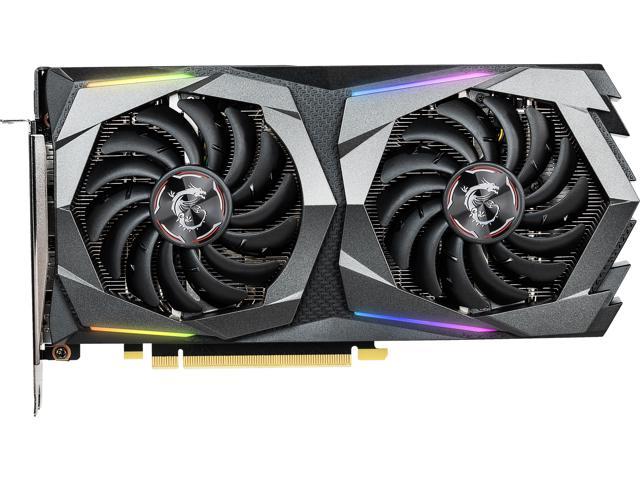
An “integrated” GPU is one built into the CPU, which is your computer’s main processor. An integrated GPU shares some of your main system memory. The other option for a GPU is a dedicated GPU, which is a standalone card that plugs into your motherboard and contains its own processor, memory, and cooling system.

Computers with integrated GPUs will typically cost less and consume less power than those with dedicated GPUs, but dedicated GPUs offer better graphics performance. That’s why computers called “gaming systems” tend to have dedicated GPUs, while budget laptops tend to have integrated GPUs.

What GPU Do I Have?

If you’re unsure which GPU your Mac or PC is using, follow these links for instructions on how to find out:

Two GPU Situations

It’s possible that you’re using a computer with multiple GPUs. Sometimes a PC is sold with integrated graphics, then an aftermarket dedicated GPU is added. And sometimes PCs are sold with integrated graphics, and a dedicated GPU installed.

If your PC has both integrated and dedicated GPUs, you’ll want to make sure you’re using the dedicated GPU for Zwift. Here’s an article explaining how to force Windows 10 to use your higher-performing dedicated GPU >

Goodbye, Potatoes

While Zwift has historically supported a wide range of devices, they cannot support aging hardware forever. Deprecation decisions like this are standard practice in the gaming industry, as supporting old hardware requires additional development time and can hamstring the implementation of new features.

Intel ended customer service support for HD 2000 and 3000 GPUs on June 24, 2016, having ceased manufacturing them years earlier. As we said about Zwift’s recent OS deprecations, software companies have to eventually stop supporting hardware when it is no longer supported by the manufacturer themselves.

Integrated HD 2000 and 3000 graphics power many of the computers Zwifters affectionately call “potatoes”. These are the computers many people have around the house that work just fine for web browsing and word processing, but really have no business running a 3D, real-time video game.

Upgrade Recommendations

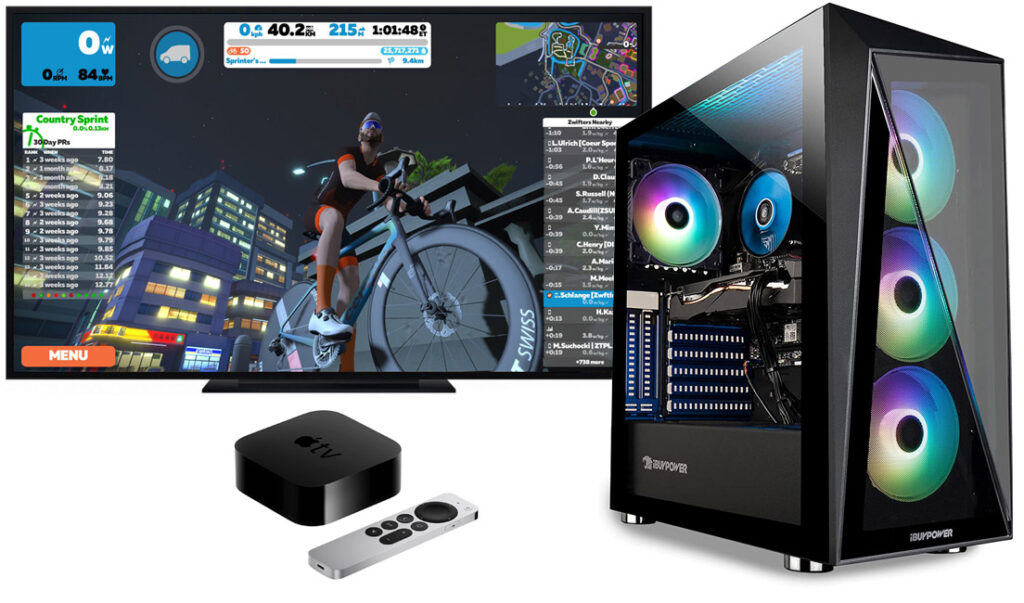
Most Zwifters probably have a device in their home which will run Zwift after the deprecations kick in: a newer iPhone or Android phone, a tablet, AppleTV, or a decent desktop or laptop computer.

If you need to purchase an upgraded device for your Zwifting, here are two recommendations at different budget levels:

  • Most affordable: 2021 Apple TV (32GB, 5th Gen): only $144USD on Amazon, the latest AppleTV is the most affordable Zwift device on the market today. It’s not perfect – the remote can be a bit of a pain. But it’s dead simple to use, and quite stable. There’s a good reason why a huge number of Zwifters use AppleTV!
  • Best gaming experience: Windows PC with a strong graphics card, fast single-core CPU performance, and an SSD drive. Zwift will run on just about any PC that can run Windows 10, but for premium Zwift performance (ideally connected to a big screen TV) you’ll want a dedicated Nvidia graphics card (1060 or higher), an Intel CPU, and a solid state drive. Here’s one tower on Amazon that would deliver great Zwift performance without costing an arm and a leg. (For more info on Zwifting on a PC, read “Zwift on PC: The Ultimate Guide to Running Zwift at Its Very Best“.)

Questions or Comments

Share below, and/or comment directly on Zwift’s forum post.