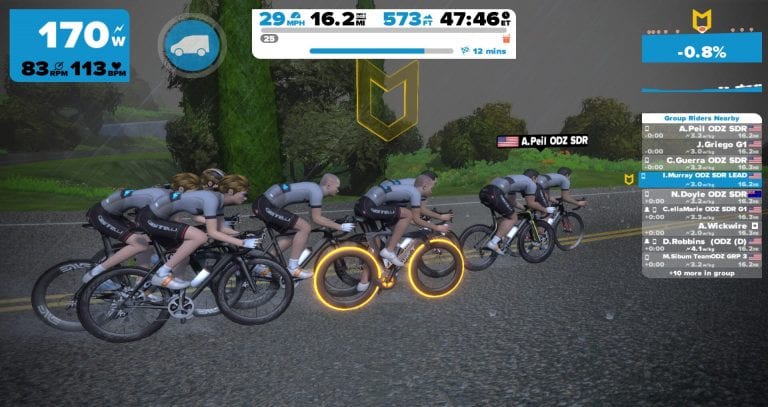
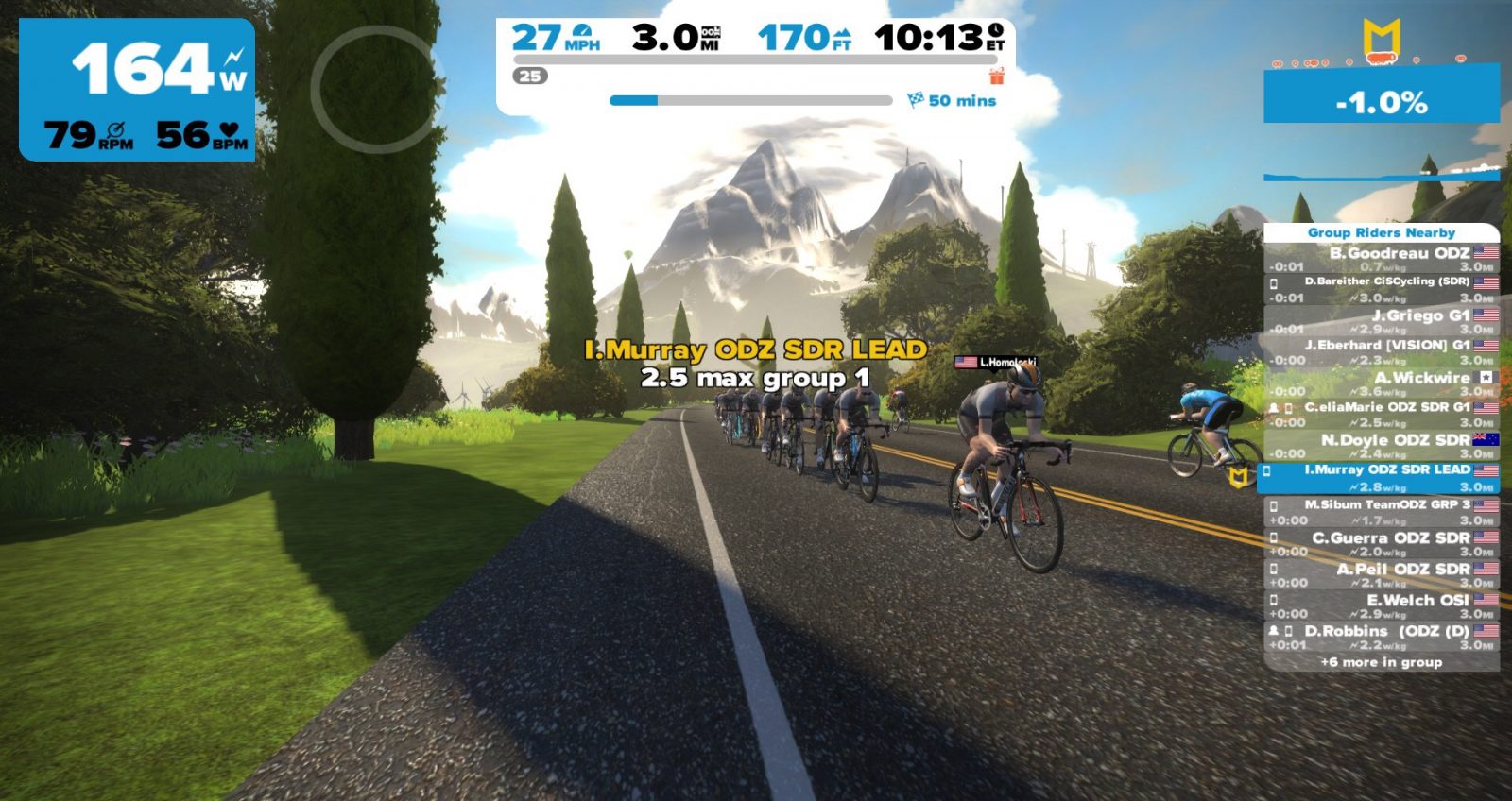
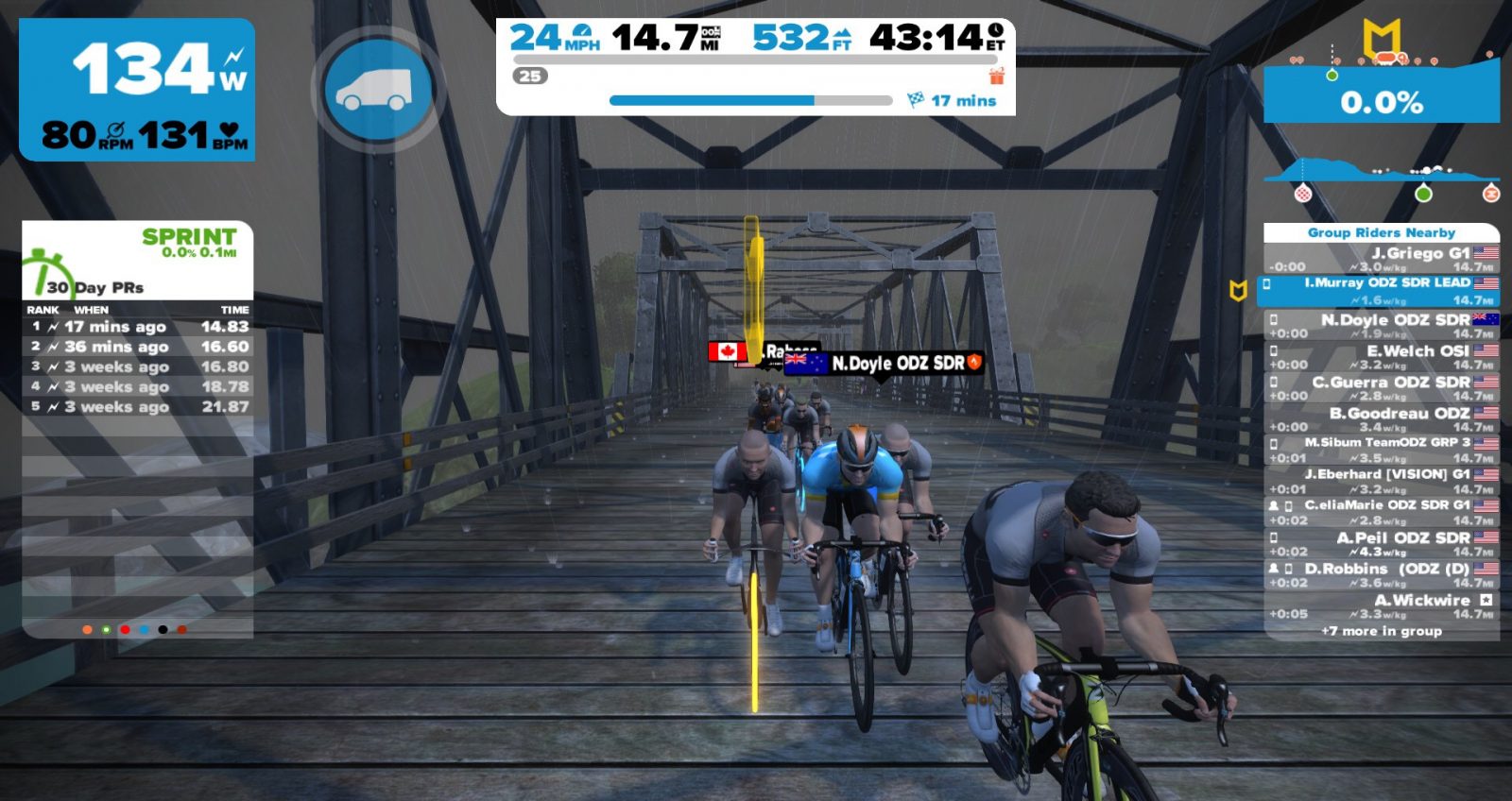
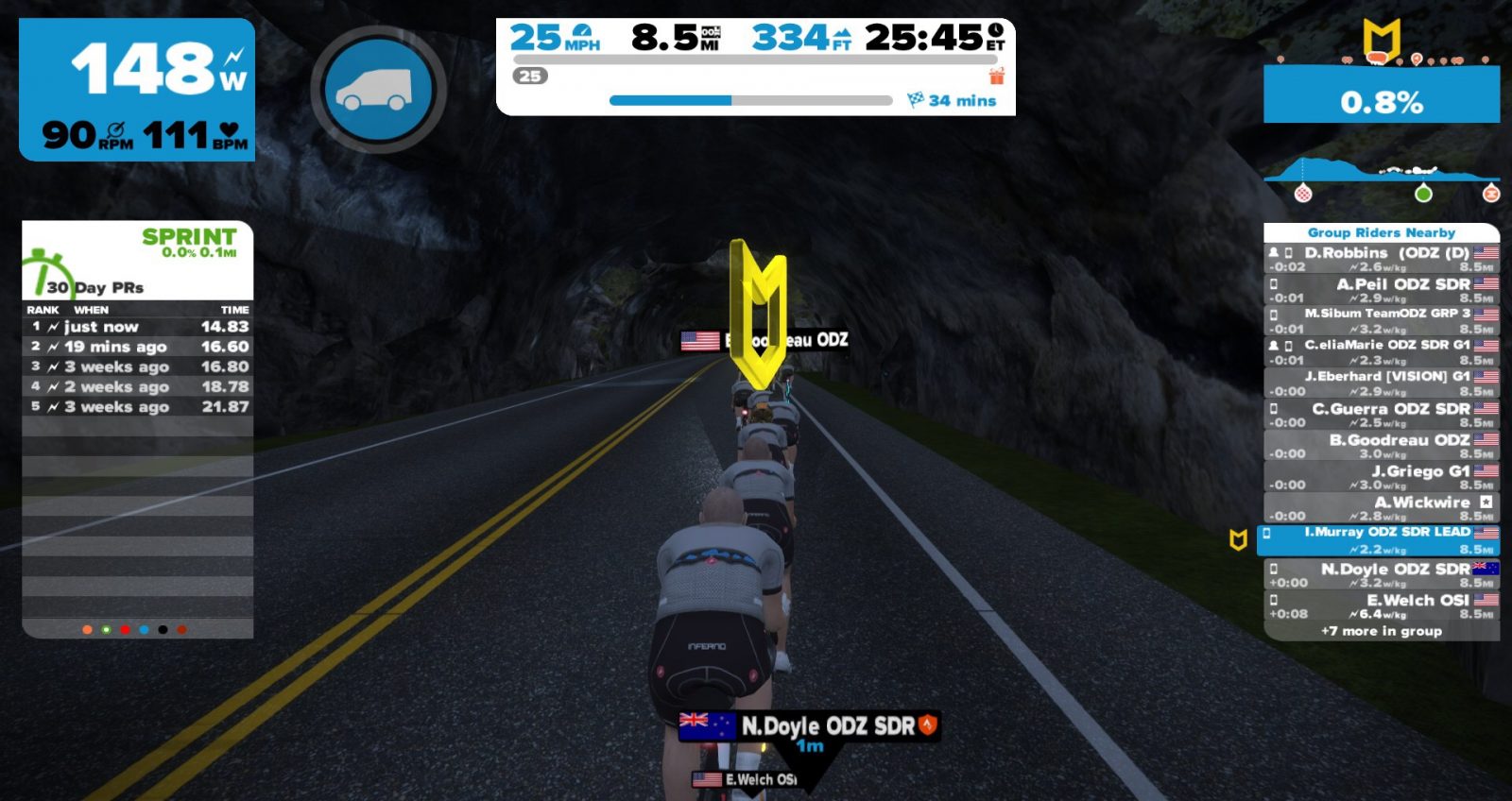
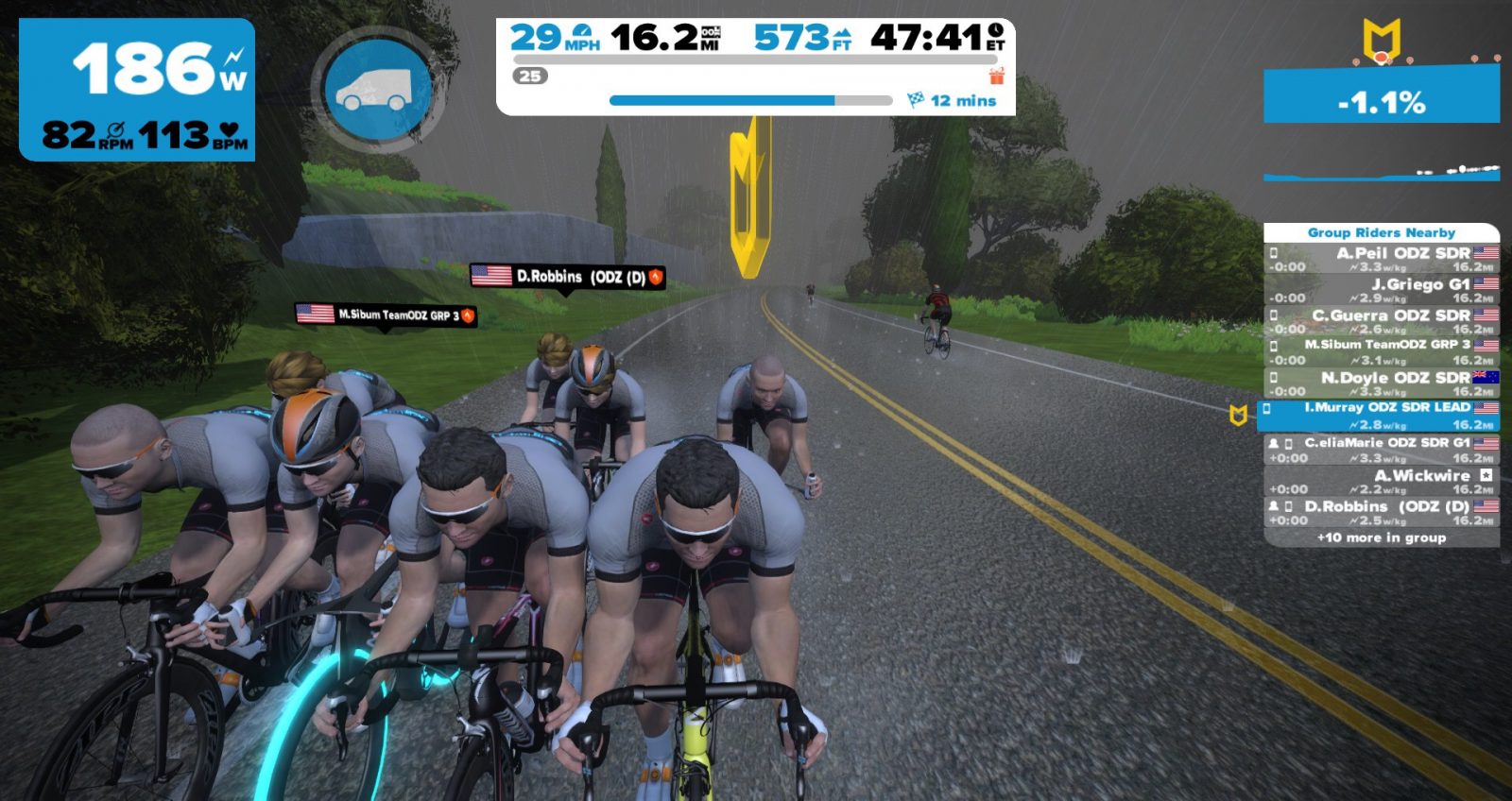
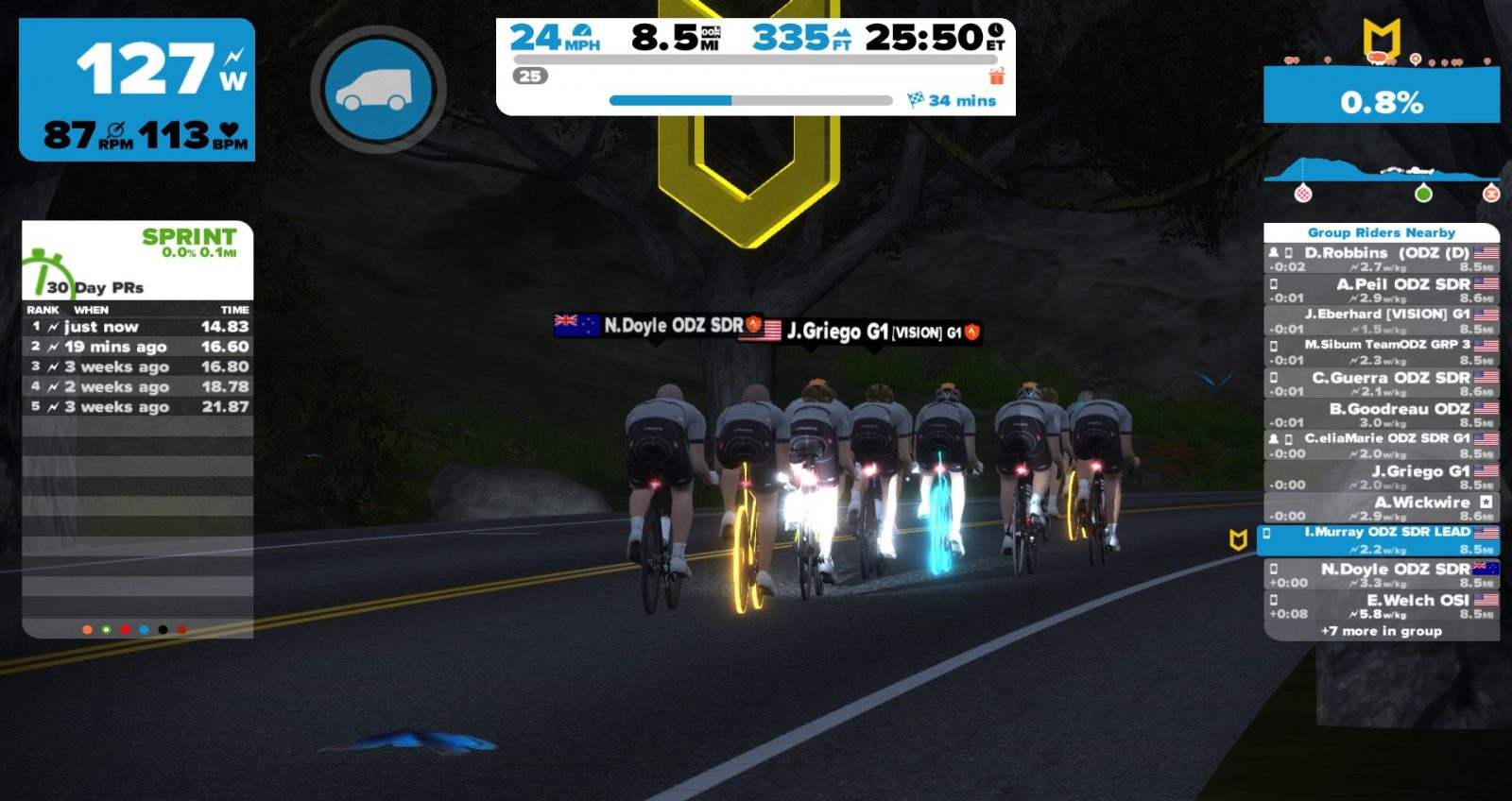
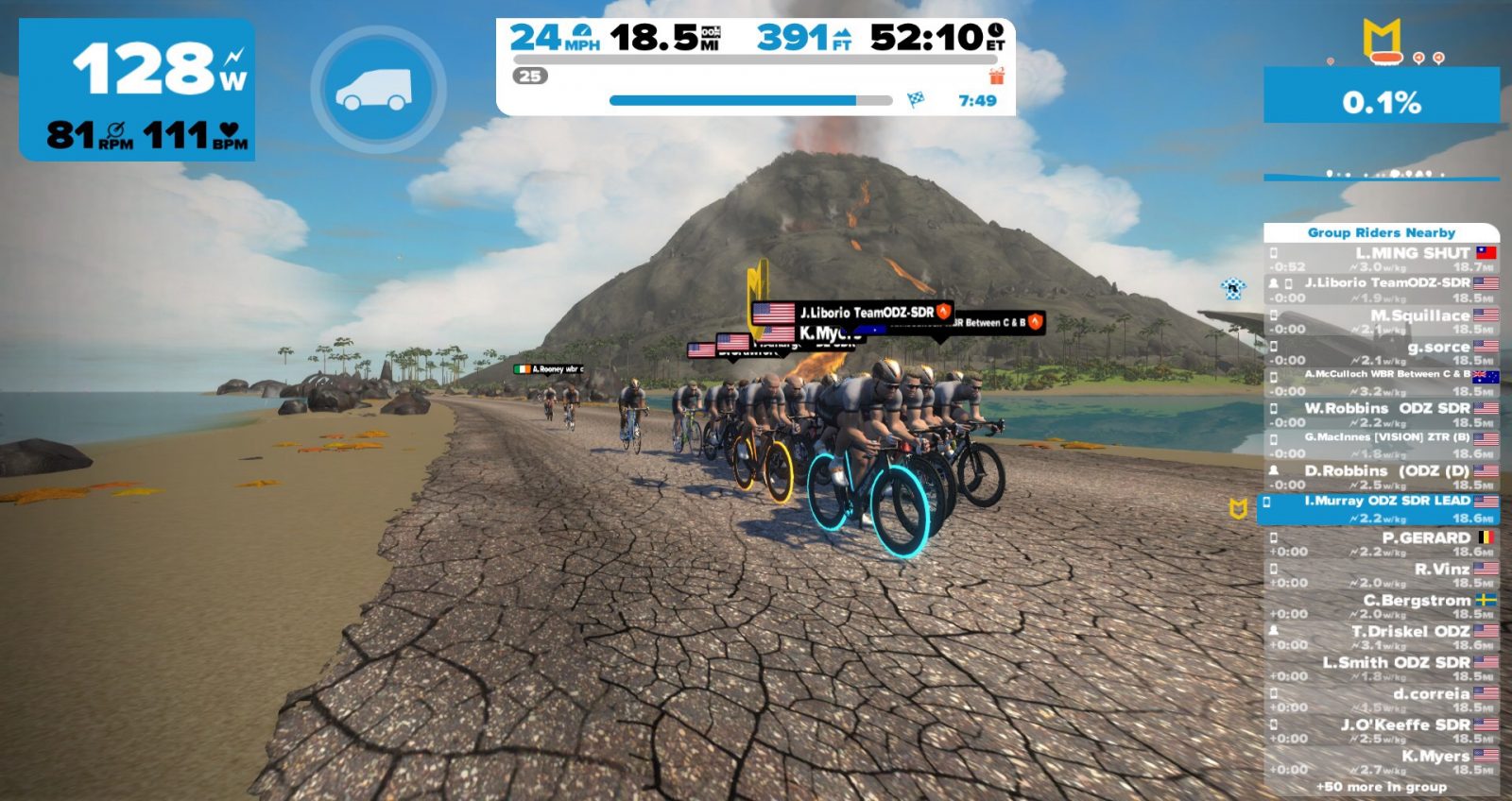
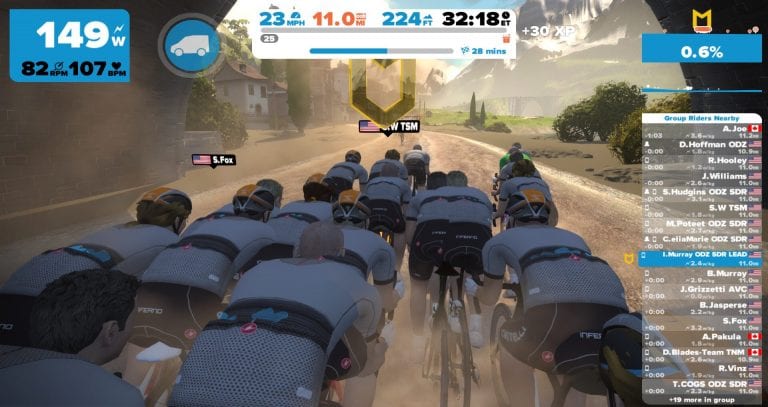
The “Watts up with Power?” ride is likely the slowest group ride you’ll find on Zwift, because it focuses on learning the basics of power based training while riding together on Zwift. Each ride is streamed to Zwift LIVE by ODZ on Facebook, and focuses on teaching specific principles of power-based training. For viewers that are unable to attend live, the teaching is made available for all to review afterwards.
Here is the summary for April 19th from ride leader Brett Jenner.
Power-Based Training: Where to Begin (*Bonus: Benchmark Testing for Triathletes)
Owning a power meter is often said to the be best investment a cyclist or triathlete can make–after hiring a coach that is. These devices allow us to quantify our efforts, guide our training, create benchmarks for training and racing, and inform us of increasing and decreasing levels of fitness.
While providing many key metrics we must also consider what, fundamentally, is required for an athlete to be successful? Beyond the obvious traits of grit – determination – passion – sacrifice – work ethic etc… what else is required?
The best answer I have come up with includes the following;
Smart Training Plan: French writer Antoine de Saint-Exupery famously wrote “A goal without a plan is just a wish.” That one may be obvious but important to note it is just one part of a multi-part mixture here.
Accountability: I believe that two of the drivers of performance are accountability and community; both of which a team provide. It is one of the reasons that I have always embraced trying to build belonging and community with my athletes.
Education and Feedback: Because you don’t want to learn all of life’s lesson the hard way… and feedback is essential to the process, be it numerical, muscular, or from an outside source like a coach.
Community: Perhaps the number one reason that Zwift-based TeamODZ has been as successful as it has. Community, in the end, speaks to that sense of belonging that we all have and, as mentioned earlier, can be a powerful driver of performance.
While cyclists interest lie in bike FTP, I was sure to include the following benchmark swim and run sessions for triathletes;
Swim 100 yard or meter and 1000 yard or meter times done after a proper warm-up. As a note here, I prefer to keep the warm-up consistent for my athletes allowing for limited variability between tests.
Bike FTP: 5min, 20min test for seasoned athletes or 3 x 8min for beginner.
Run – unless you are using a running power meter, you are going to want to setup your heart rate training zones based either off recent race results (i.e.10k or 15k) or a 30min best-effort run done after a proper warm-up.
The key is that no matter how much we try to take the guesswork out of endurance or multisport events, there will always be the need for energy management (pacing), gut feeling, and the necessity to train the ‘inner animal’ to be successful. All of the information and tools in the world can help create a picture for you, and deliver some practical real-world information but remember: this will never be a game of mathematics. It will always retain some pure and dirty straight-out racing. Use the tools to help you, but never at the cost of understanding the following things:
How it should feel
How it does feel
What to do with that feeling
So go ahead and embrace the adventure and enrich your life with something challenging but fun. Do this, and the benefits will bubble up, and your vigor and passion for the everyday will continue long into the season.
Making (and chasing) the break (Skillz and Drillz)
Castelli SkillZ and DrillZ Ride, 12 April – In the world of professional cycling, the breakaway is often the realm of those doomed to suffer for an extended period of time off the front of the group, only to have their hearts broken as the eventual winners catch and blow by them. Sometimes, this occurs within sight of the finish line, and the disappointment and anguish is apparent.
In Zwift racing and even in the non-pro ranks, the breakaway often rules the day. Today, we covered making the break and how to chase it down. Like usual, the video of today’s class can be found on Zwift Live by ODZ on Facebook or you can watch it below:
Warm-Up
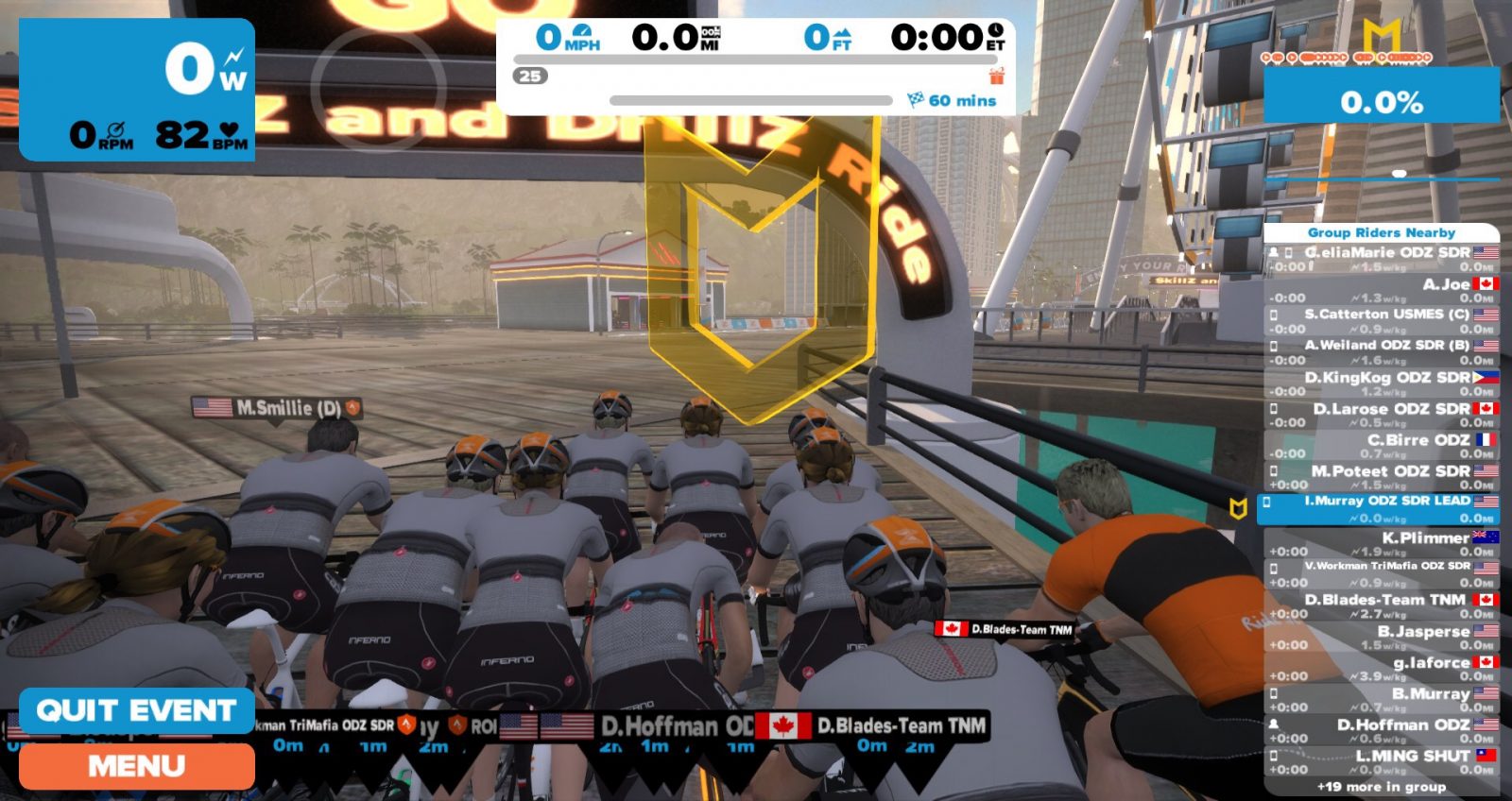
As usual, we got started with our brief warm-up where we practiced maintaining our position and moving around the peloton. Then, we got to the meat of the day. This week, we again divided into three groups: group 1 (G1) last names A-H, group 2 (G2) last names I-Q, and group 3 (G3) last names R-Z. We would use these three groups to form our breakaway group, our passenger group, and our chaser group.
The How and Why of Breakaways
Before we get started into the drillz, let’s discuss how breakaways form and what makes them successful. Breakaways in the professional peloton happen for a number of reasons. A small team may want to get some camera time for sponsors, or a team wants to position someone up the road to use later in the day. In some races, the winning move starts in a late breakaway like we saw in Paris-Roubaix. More often than not, the early break is brought back before a winning move is made or a bunch sprint occurs.
In Zwift racing and for IRL racing for us mere mortals, getting in the break can be the difference of competing for the win or just participating in a hard group ride. When the break goes, you have to make that split decision of whether you jump on the train or not. Once the move happens, the initial push will be hard, but it will settle. How long it takes to settle will depend on the size of the group and the ratio of drivers and passengers. The more drivers in the group, the more likely it is that the pace will stay high. Chasing the break down is merely a math problem. Are there more strong riders in the break than the chase pack, and are they willing to work? Whichever group has more firepower that is willing to work will likely take the day. Normally, numbers lie with the group, so it often falls to strength of riders.
Chasing the Break
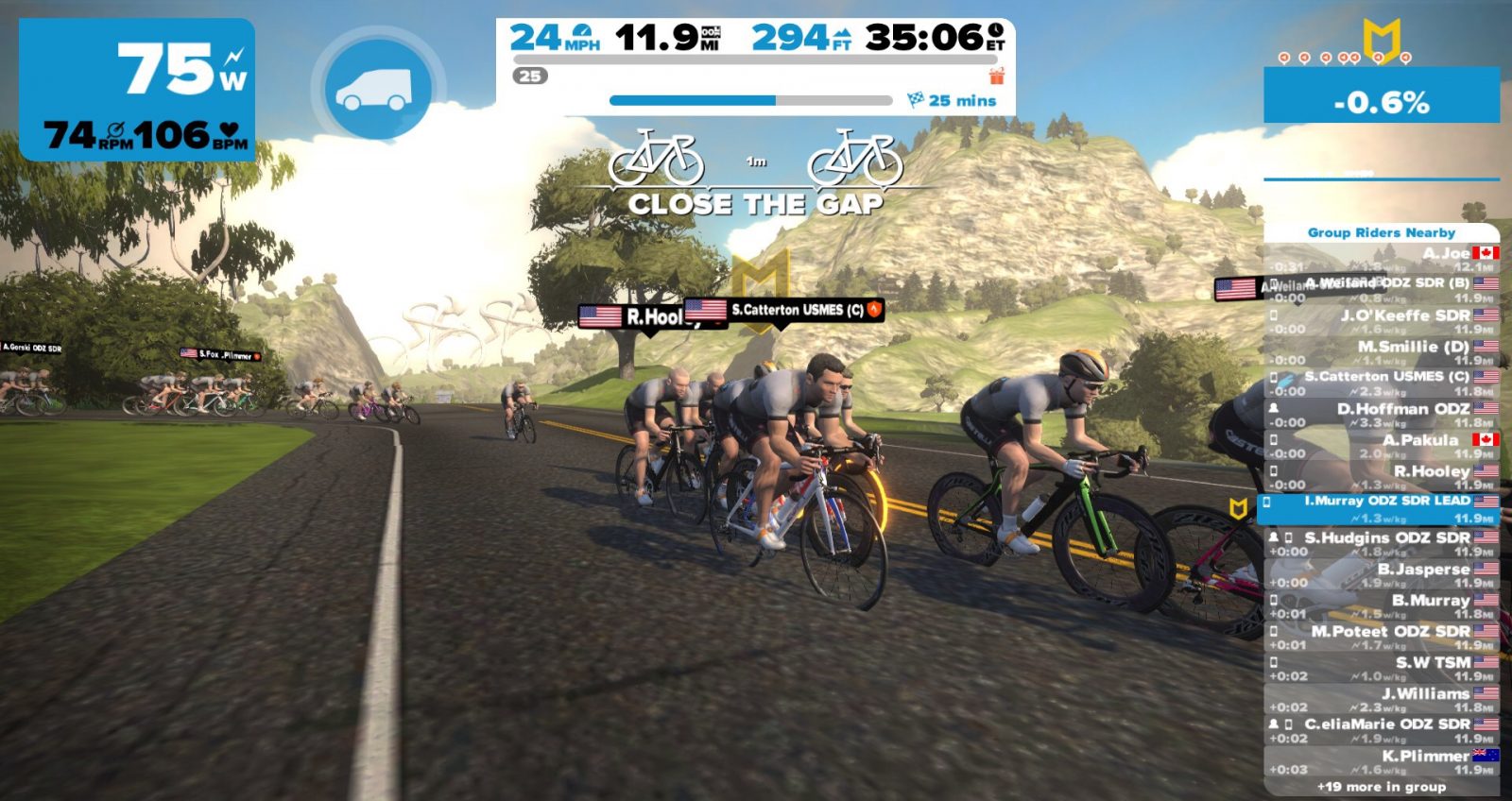
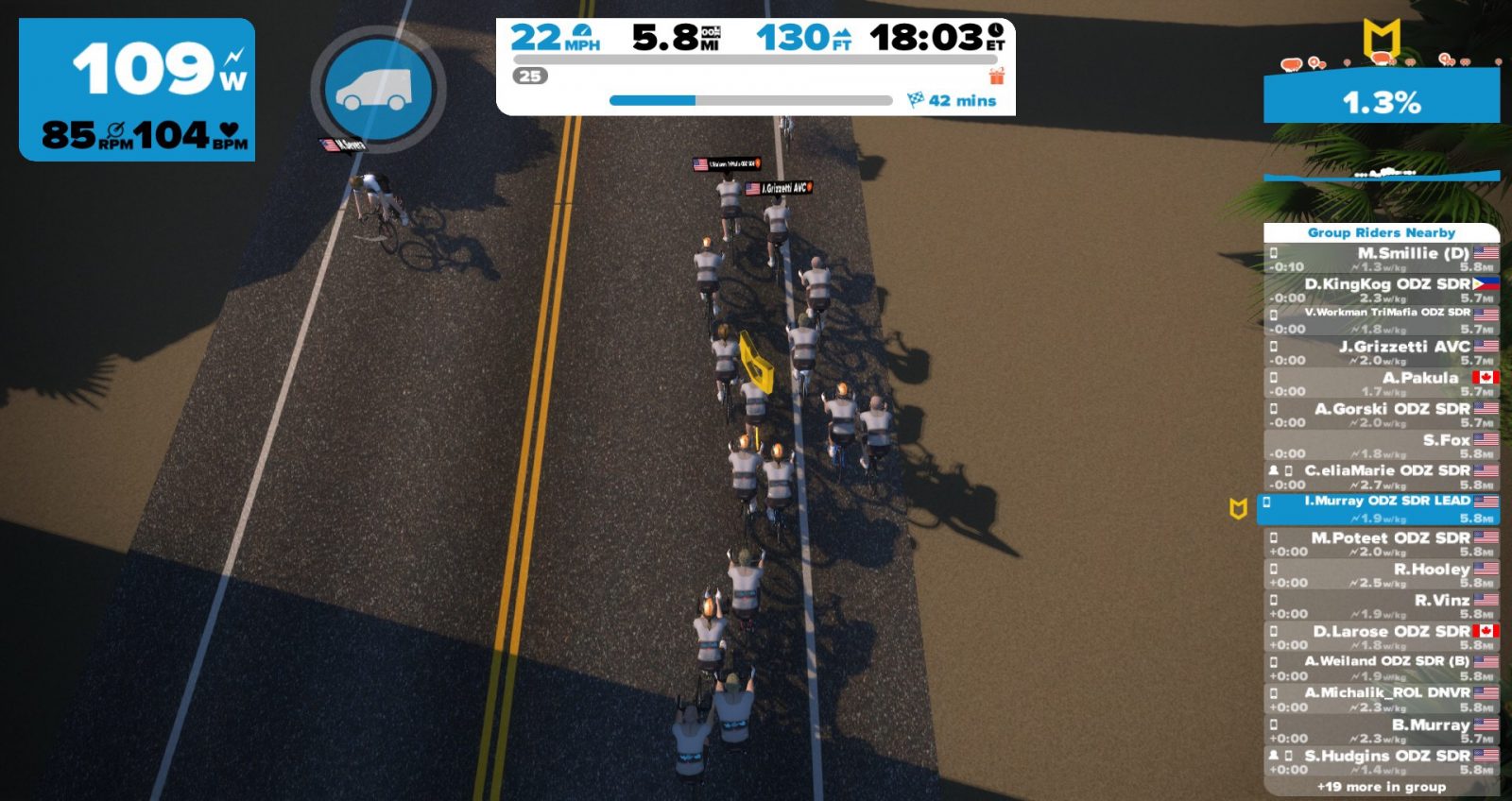
For our purpose, we practiced chasing the breakaway and disrupting the chase. The first drill was simple. G1 was told to go up the road to get small gap at a determined pace. After about a minute, G2 got on the gas to chase down the break. The key for G2, and G1 after swapping roles, was to work together. By keeping the bunch tight and rotating through, the chasers were able to pull the break back in short order, and that is the key. Short of having a monster on the front to do all of the work, you have to use the others in the group to share the workload. At the same time, you have to determine how much work to contribute to the chase while preserving enough energy to make the winning move later in the day. Be careful when making this decision. If you don’t catch the break, it doesn’t matter how fresh your legs are when you arrive at the finish because you will be sprinting for the lesser points.
Disrupting the Chase
What happens when your teammate is up the road in the break, and you don’t want the chase to succeed? Well, that’s when you have to practice your disruption skillz. For the second drill of the day, we added the element of someone interrupting the momentum of the chase pack. How is this done? Well, it’s simple. Be annoying. I don’t mean that you should ride up real close to other riders and say, “I’m not touching you” in a silly voice. I mean, go to the front and ease the pace. Allow gaps to open up, sure and slow, messing with the group’s ability to get a rhythm. Any of these techniques work.
During the drill, a member of the breakaway group remained with the chase group and joined me in the fun. Using the same gaps as during the previous drill, we showed that even mild disruption techniques made the chase longer and more work than the previous iteration. Now, there is a caveat with disruptions: it’s a lot easier to do in IRL racing, as riders can just ride through you on Zwift. Thus, it is harder to slow the group, but surging and slowing definitely keeps the group from working together effectively.
Conclusion
Being in the break is a great way to give yourself a chance to win a race from a reduced field. By working with your breakaway mates, you give yourself a chance to stay away… unless of course, you just want television time. Next time you see a move go, try to make the jump and do the work you can. If you missed the move, organize the chasers. You will see how much organization matters. That’s it for now. Next class we will cover sprinting. Until then, Ride On!
Episode 24 of Zwiftcast has been released. Here’s the full episode description:
Simon, Shane and Nathan are together – in the same place, and that place is Las Vegas! The Zwiftcasters are in the Nevada desert for the very first CVR World Champs, which is virtual bike racing as never before. Whilst the event takes top billing in this podcast, it’s not the only things the boys find time to talk about.
In a more chatty than usual podcast, the trio discuss Frank Garcia’s ambitious staging of Zwift racing as an ESport. If you don’t know what this is, after listening to this ‘cast, you’ll be much wiser. But there’s room for more than just racing.
Simon talks to Any Tough and his six year old son Daniel, about Kid Zwifting, its benefits and how the game can inspire youngsters to get involved in exercise and fitness.
Simon, Shane and Nathan also mull over the E Fondo on Zwift; the film Zwift made about Mat Hayman and the advent of more data with the Zwift Ride Report.
But the birth of Zwifting as an ESport at scale does dominate this ‘cast, not least because of Shane’s “surprise” second place. The chaps dissect the event and debate what it may mean for the development of the platform.
This podcast is a little more chatty than usual – perhaps not surprising as the hosts don’t have to wrestle with the obvious disadvantages of being on three different continents. We hope you enjoy it.
Power Tools: Making the Most of Training and Racing with Power
The “Watts up with Power?” ride is likely the slowest group ride you’ll find on Zwift, because it focuses on learning the basics of power based training while riding together on Zwift. Each ride is streamed to Zwift LIVE by ODZ on Facebook, and focuses on teaching specific principles of power-based training. For viewers that are unable to attend live, the teaching is made available for all to review afterwards.
Here is the summary for April 12 from ride leader Taylor Thomas.
Power based training is becoming more and more accessible to cyclists of all abilities. With the wide availability of both smart trainers and more affordable power meters, most cyclists are at least familiar with power. However, do you know what to look for in a meter, what to do with the data, and how to use it in your training?
What to Look for in a Power Meter
With so many options available it can be hard to know what you need in a power meter. Decide first if you want one that only reads power on one side, or takes a reading from both left and right sides.
Where are you going to be riding? What type of bike is it going on? What types of rides will you be doing? These questions will help inform your decision and choose the best meter for you.
Analyzing Your Power Data
What information is going to make you a better rider and help inform your training? The tools that you use should allow you to gain access to the insights you’re looking for.
Looking for insights within a single ride or race is good, but tracking adaptation over time is also critical. Understanding that it takes time for your body to adapt and compensate to the training load you’re applying is key. Don’t make judgements based on small data sets.
Keep track of your historical data. Once you begin training with power, log that information, and reference it consistently. Knowing how far you’ve come, and how your body has historically responded to training load, stress, duration, and intensity will help further inform your training decisions.
Your metrics are only as sound as the validity of your data. The importance of a properly calibrated power meter can not be overstated. Power spikes and erroneous data can dramatically impact your core metrics. Zero and calibrate your meter, as well as delete any data spikes to ensure you’re working with reliable data.
Using your Head Unit
Cycling computers, or head units, are more robust than ever. They offer tons of information to the rider in real time, but what’s important? Don’t crowd your screen with data that’s not useful. Hone in on 4-6 fields that you need visible during a ride.
Set up different screens for different types of rides. The information that’s valuable during an interval workout could be much different than during a group ride, or casual spin around the neighborhood. Know what you need, and when you need it.
Set up one of the data fields to register 5-10 second Normalized Power for interval sessions. Your computer is registering a power reading every 1/10 of a second, and that can make it hard to nail down a specific effort. Using a longer time period can help to “normalize” the data and provide a more consistent and usable number.
Castelli SkillZ and DrillZ Ride, 5 April – To close out the cobbled classics season, we finished off our series on the importance of positioning. While last week we focused on the short, punchy climbs, this week we stayed on the flats. Like normal, you can view the full class on Zwift Live by ODZ on Facebook.
Positioning is a common theme in many of the SkillZ and DrillZ lessons. That’s because positioning can be the small detail that can make or break your race or ride regardless of your fitness level. This weekend was one of the greatest one-day races of the year, Paris-Roubaix, and the need for being well-positioned is made abundantly clear. Over the 225-plus kilometers of racing, riders cross 29 sections of cobble stones, most of which are in the last 100 kilometers. Those sections represent 29 separate places where a positioning error can take a rider out of the mix. In this year’s edition, the favorites stayed right up at the front through the first two-thirds of the race. Then it happened. Tom Boonen slipped back to the back of the front group. Almost immediately, a small group went off the front and bridged to the leaders. Boonen did have a teammate go, but the gap jumped to over 30 seconds in the blink of an eye, too large of a gap to cross solo. Just like that, Boonen’s fairytale ending chance was over.
First Drill
After our normal warm-up and practice moving around the group, we got straight into it. Like last week, we divided the group into two, A-M for group 1 (G1) and N-Z for group 2 (G2). For the first drill, I had G1 move to the front and G2 sit at the back half of the group. When instructed to do so, G1 accelerated from 1.5 to 2.5 W/Kg. G2 had to wait to accelerate until they saw the G1 acceleration. Once the group stretched out, G2 was released to bunch the field back up. This caused chaos immediately. The accordion effect resulted in double digit gaps right away. It took us a while to chase back on, and the G2 folks had to expend considerably more energy than their G1 counterparts. After swapping positions between the groups, we confirmed for everyone that tail-gunning at the back of the field had potentially devastating consequences on energy expenditure and one’s ability to respond.
Second Drill
For the second drill, G1 sit at the back of the group and G2 moved to the front. On my signal, G1 attacked G2 from the back, but G2 was allowed to respond as soon as they recognized the attack. While the pace picked up, G1 never really got anywhere, as G2 was able to identify and respond before G1 riders could even get to the front. The same thing went for G2 when we swapped roles. Additionally, the attackers had to burn the acceleration matches just to get to the front, leaving little left to create a gap. And, as we have shown in previous classes, an attack is of no value if you can’t get a gap and consolidate it.
Crack the Whip
After finishing with the two DrillZ, it was time to play Crack the Whip. It is a very simple game. Stay behind the beacon. For those who break the rule, there is a punishment. Riders who pass the beacon had to sit up and stop pedaling for ten seconds, followed by a hard push to get back on the group. The purpose of the game was not to simply exact a toll from those who blew past the beacon. The focus is to keep another rider on the front. The purpose could be to have an advantage going into the final sprint or to make another rider work. In the end, the why is not important for Crack the Whip. The goal is just to keep the beacon on the front. Granted a few people simply sat two seconds off the beacon to avoid the risk of passing the beacon, but after a little cajoling, they joined the fun.
Conclusion
After about ten minutes of Crack the Whip, we ended the ride on the cool-down. To close out the day, we reviewed the day’s objectives. Remember, positioning can be critical to the success of a ride or a race. Sitting at the back is great if the pace is consistent and the terrain doesn’t change. Any accelerations, attacks, or rolling terrain, though, will make life at the back a horrible experience. Remember that when you try to position yourself during the next ride or race.
During the next Castelli SkillZ and DrillZ Ride, we will go back to covering breakaways where we will send a group off the front and chase it down. Thanks to those who joined us and those who watched the event streamed live. Until next week, Ride On!
Along with World Bicycle Relief swag bag prizes for our first place finishers, three random entrants will also get a water bottle from ZwiftHQ. Those three winners are:
Since we have no way of directly contacting entrants, prize winners must email [email protected] by April 18th with their full name and mailing address so we can get your prizes shipped out.
Castelli SkillZ and DrillZ Ride, 29 March – When we talk about decisive terrain, we often discuss Alpe d’Huez, Box Hill, or the Epic KOM. Sure those are decisive, but few races or rides actually have that sort of a significant terrain feature that everyone recognizes as important. More often than not, a small terrain feature turns out to be critical to the outcome of a race. It can be a type of road, a series of technical turns, or a very technical descent. Often, though, it comes down to a short, punchy climb that disrupts the normal flow and chase of the pack. As many of our Zwift courses have one of these climbs towards the end of the race, I thought we should cover it.
To see today’s lesson and hear the instructions, go to Zwift Live by ODZ on Facebook or watch it below:
Before we talk about attacking the short, punchy climbs, let’s examine what makes them special. First, these types of climbs favor powerful riders but not big riders. They also do not favor traditional climbers due to being short in duration, limiting the role of gravity over time. In terms of power output, sprinters and TTers are generally outmatched by those riders with a comparatively high 5-minute power, despite not having the best sprint or 20-minute power. Above all else, though, punchy climbs favor the tactically savvy and the brave attackers. I think that is what draws people to the Spring Classics above other one-day races… throwing caution to the wind is often rewarded, making those races so much fun to watch.
The Warm-Up
Like usual, we started our day with ten minutes of warm-up, practicing maintaining our position within the group. During this period, I reinforced the importance of this concept, as it would come into play later in the class. As we closed in on the end of our warm-up, we discussed the three key points for making a successful move on a punchy climb: momentum, positioning, and attacking through the crest of the climb.
Momentum
Momentum, while not the most important consideration, certainly can have a significant impact on how you handle the short, punchy climbs. As the climb approaches, you need to carry some speed into the base of the climb. It is a very simple concept because you are going to lose speed as soon as the road pitches up. Having some momentum will help you get up the first portion of the climb without losing touch with the front of the group. If you don’t carry speed into the climb, it can become very hard very quickly, and you will have to begin burning matches to get going again.
To show the value of momentum, we performed a simple drill. As we approached the small hill, we dropped our effort from 1.5 to 1.0 W/Kg. When the road turned upward, our speed dropped significantly, and it took a considerable amount of effort to get moving at speed again. We repeated the drill two more times, the first maintaining a constant speed of 1.5 going into the climb, and the second accelerating into the base of the climb. The third iteration showed that simply accelerating a little bit, from 1.5 to 2.0, allowed riders to get up and over the climb a lot easier.
Positioning
Positioning was our second topic of the day, and I would argue that it is key to either attacking or staying with the group. Speaking first about those who struggle with climbing, positioning can make or break their chances to sprint for the win. Eight years ago, Mark Cavendish showed that a pure sprinter could win Milan-San Remo. To do so, he had to get over the Poggio and the Cipressa with the lead group. If he had not been able to do that, he would have had zero chance to win. Cav trained hard all winter, but no amount of training would convert him from a sprinter to a climber. That’s not how his muscle fibers are made up. He’s a sprinter. What he did do, though, was make himself a less crappy climber and develop a plan. As the lead group approached each of the numerous climbs in the last 100K, his team brought him to the front, driving the pace to ensure that he could start each climb at the very front of the group. As the road kicked up, Cav slid back, not in an “I just dropped an anchor” way but more of a slow drift. While he may have lost his position at the front, he never lost contact with the group. He and his team repeated this drill over and over as each climb approached. The infernal pace leading up to each climb discouraged attackers, and Cav made it to the finishing straight and outclassed the field.
Now, I am not saying that this technique will work every time, but it is proven quite often. We practiced this technique a couple of times, dividing the group into two, with each group taking turns being the sliders. Besides allowing weaker climbers the chance to stay with the group, some found it a useful tool to save some energy, too. If you know that the decisive point will not be on the climb or immediately after, you can use the drift to conserve and then make your way back to the front of the group on the descent or the subsequent flat section.
For those wishing to attack, positioning is equally as important. More so in IRL racing than in Zwift, the punchy climb often creates a bottleneck that can prevent a rider from attacking or responding due to being blocked by slower riders. During this year’s Spring Classics, many of the favorites found themselves on the back foot due to being positioned too far back when a crash occurred or a rival attacked. That resulted in burning extra matches to chase or even the loss of the race.
We ran through a couple drills highlighting the difficulty of attacking when out of position to show why it is the less than optimal tactic. Unfortunately, most people understand that positioning is of the utmost importance, so that is why we often see the pace lift considerably as we approach these punchy climbs. Everyone wants to be at the front.
Attacking through the Crest of the Climb
Assuming you carried momentum into the climb, were well-positioned, and wanted to launch the brave attack, we now come to the third and final point of instruction of the day, attack through the crest of the climb. Attacks up these short, punchy climbs have to be well-timed and dosed. If you attack too early or too hard, you will not have enough to sustain the advantage, leaving your effort to be tagged as just another foolish move. However, attack from a point on the climb where you can sustain the effort through the crest and the first third of the descent, and your move could very well go down as something of legend. This is easier said than done, though. As we arrive at the top of a climb, most of us ease off on the pedals, drop our heads, gasp something about wanting to die, and attempt to catch our breath and drop our heart rate. If you are on the attack, though, you will have likely just given back everything you had taken. By holding the effort through at least the first third of the descent, you may actually stretch your lead, as you will be bombing down the hill while the chasers continue to climb. Sure, they will benefit from the descent, but you will have taken time that they may not be able to pull back if the terrain does not kick back up while they are on the descent.
The Watopia Esses are perfectly suited to this type of attack. If you can carry a ten second advantage into the last descent toward the finish line and really hammer the next 400 meters or so, you will be very tough to pull back without a Herculean effort on the part of your adversaries. The extra seconds you will gain on the bunch is just that much more effort they have to put out relative to you.
Conclusion
We ended our Castelli SkillZ and DrillZ session after practicing the last technique a few times and began our cool-down. As we wrapped up, we revisited our points from the day. First, carry some momentum into the short, punchy climbs. The length and often rapid change in incline do not allow much room for error. Rolling in with momentum gives you the best opportunity to do what you need on the climb. Second, positioning is key. Be where you need to be. If you want to avoid being dropped off of the back, get to the front and drift back on the climb. If you plan to attack get to the front and try to stay in the first ten wheels. Third, carry your attack through the first third of the descent. The extra effort will allow you to consolidate your attack and may give you just those few extra seconds you need to stay away.
That’s it for now. Thanks to Castelli Cycling for sponsoring today’s ride, giving away some swag to one lucky US-based rider who completed it, and thanks for joining. Until next time, Ride On!
Strava Smackdown Series, week 8: Radio Tower Climb
This week’s Smackdown covers Watopia’s Radio Tower Climb, which takes you to the highest point on Watopia. With an average grade of 14% this climb really hurts, even if it’s only .6 miles long! The Strava segment is titled “Radio Tower Climb (Zwift Insider verified)“.
First place for men and women will each receive a swag bag from our friends at World Bicycle Relief.
Three other random finishers will receive a Zwift water bottle from ZwiftHQ! These high-quality Specialized Purist 22oz bottles will make an excellent addition to anyone’s indoor setup.
Then select “Mountain Route” as your Watopia route. The segment on the uphill begins after you turn left onto the radio tower road after the Epic KOM banner, and ends when the climbing ends at the top.
You must enter between April 10-16 (UTC) to be eligible.
The “Watts up with Power?” ride is likely the slowest group ride you’ll find on Zwift, because it focuses on learning the basics of power based training while riding together on Zwift. Each ride is streamed to Zwift LIVE by ODZ on Facebook, and focuses on teaching specific principles of power-based training. For viewers that are unable to attend live, the teaching is made available for all to review afterwards.
Here is the summary for April 5 from ride leader Nate Dunn.
Training w/Power: The Why
There are a ton great reasons to train with power. Track fitness, analyze race performance, guide sports nutrition decisions, the list goes on. Today we’re focusing on how a better understanding of the science behind power can help you create a more measurable, process-based approach to your training.
A Process-Based Approach
A better training process starts with an understanding of the lactate threshold (LT). Put simply, the LT is “the point at which your body can no longer maintain equilibrium between lactate production and clearance.” Why does the LT matter? In short, it’s the best measure we have of endurance performance. So how do you measure and track your LT?
Typical Lab Test
A classic LT test involves executing a basic ramp protocol on a stationary bike in a laboratory. Ride intensity is increased every minute while blood lactate samples are taken at fixed intervals. The point at which blood lactate begins to rise sharply (generally around 4 mmol/L) is cross referenced with your power output on a curve. This “deflection point” of blood lactate along with your power output is defined as your “power at lactate threshold.”
Making LT “Functional”
The laboratory is a great place to objectively measure blood lactate levels but doesn’t serve as a very functional way to routinely and dynamically track fitness. Enter the mobile exercise physiology laboratory, the power meter. So how do we translate the 4 mmol/L threshold to power on the bike? A few ways. A cyclist’s laboratory defined power at LT is generally comparable to these “functional” power meter measures.
Average power over a 40k TT
Average power for 60m all-out TT
20m peak power less 5-15%
60m peak normalized power (NP)
In summary, the lab is interesting but a power meter on your bike is infinitely more functional and useable in day to day training. We’ve arrived at FTP, or Functional Threshold Power.
A Power-Based Process
So what does a power-based process look like? First, understand where FTP comes from, its origin in exercise science, and why it matters to your cycling. Second, develop specific, power-based goals. Third, track your progress. And finally, evaluate your goals making adjustments to your training as needed.
Last year’s Paris-Roubaix was fun to watch on many levels… but as the guy behind Zwift Insider, it was most fun for me to watch Mathew Hayman win, a guy I had actually ridden with a bit in Zwift just weeks before the race!
ZwiftHQ has just released a nice video featuring Mathew and discussing last year’s race. It offers a personal insight into the events leading up to the race, as well as the race itself. Nicely done!


 How to Enter