Home Blog Page 503

Zwift for iOS Frequently Asked Questions

Zwift for iOS Frequently Asked Questions

[et_pb_section bb_built=”1″ admin_label=”section”][et_pb_row admin_label=”row” background_position=”top_left” background_repeat=”repeat” background_size=”initial”][et_pb_column type=”4_4″][et_pb_accordion admin_label=”Accordion” border_style=”solid” _builder_version=”3.0.51″] [et_pb_accordion_item title=”Will it work with my trainer? What about my power meter/cadence/speed/heart rate monitor?”]

Zwift for iOS only works with bluetooth signals, no ANT+. Fortunately, today many smart trainers, power meters, and other sensors broadcast on both ANT+ and Bluetooth.

If your device only supports ANT+ I recommend the Viiiiva Heart Rate Monitor from 4iiii which (among other things) acts as an ANT+ to Bluetooth bridge, consuming your device’s ANT+ signals and rebroadcasting them via Bluetooth. Learn more here >

[/et_pb_accordion_item][et_pb_accordion_item title=”Can I use my iDevice to play Zwift on my big screen TV?”]

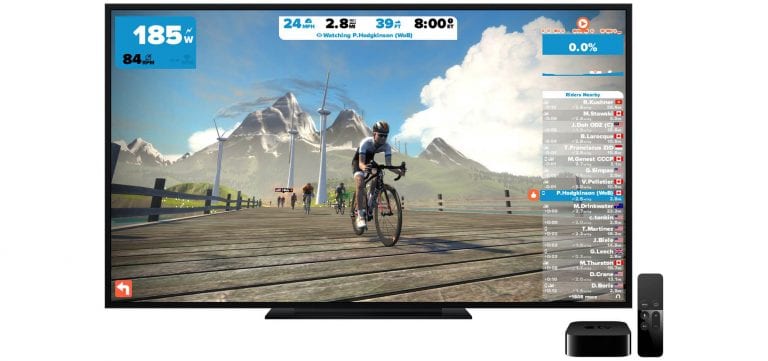
Yes! You’ll need an adaptor to do so–Apple’s Apple Lightning Adapter does the trick. It even includes a second place to plug your charging cord so your iDevice can charge while Zwifting on your big screen.

Some Zwifters are using Airplay to send Zwift from their iDevice through AppleTV to their TV, but I have heard reports of poor framerates using this method. One user told me this problem is AppleTV version specific, with 3rd generation not doing very well but 4th generation handling Zwift quite nicely.

[/et_pb_accordion_item][et_pb_accordion_item title=”How good are the graphics?”]

Very smooth and sharp on the actual iDevice. If you run your device into a big-screen TV you will lose some sharpness, but the overall quality is still quite acceptable, on-par with a mid to upper-range desktop computer running Zwift.

Generally, going from a iPhone to a TV will give you a worse picture than going from an iPad to a TV, since the iPhone runs at a lower resolution. But both maintain high frame rates and decent picture quality even on a large screen.

iPhones display at 16:9 aspect ratio, so Zwift on an iPhone will fill the entire screen of a typical big-screen TV. iPads display at 4:3, which means you will have unused space on either side of your picture.

[/et_pb_accordion_item][et_pb_accordion_item title=”Is my iDevice able to run Zwift?”]

Zwift for iOS requires iOS 9.0 or later. Compatible with iPhone 5s, iPhone 6, iPhone 6 Plus, iPhone 6s, iPhone 6s Plus, iPhone SE, iPhone 7, iPhone 7 Plus, iPad Air, iPad Air 2, iPad mini 2, iPad mini 3, iPad mini 4, all iPad Pro models, iPad (5th generation), and iPod touch (6th generation).

[/et_pb_accordion_item][et_pb_accordion_item title=”How much battery will it use?”]

Zwift needs a lot of power to run smoothly, so you should plug your iDevice into a charger while Zwifting. If you are unable to do that, try to start your Zwift session with a fully-charged battery and don’t plan to ride for more than 45-60 minutes.

[/et_pb_accordion_item][et_pb_accordion_item title=”How do I enter promo codes to unlock new kits?”]

Zwift has a lot of jerseys you can unlock, but there is no way to do it in the iOS app due to restrictions by Apple on in-game promo codes. For now, you will need to open your Zwift account in the desktop (PC/Mac) version, get into the game then hit “P” on the keyboard to enter your unlock codes. A full list of available kits can be found here.

[/et_pb_accordion_item][et_pb_accordion_item title=”How do I interact with the game?”]

Two-finger touch brings up a full list of gestures.

It is touch-enabled. Here are some of the things you can do while riding:

  • You can swipe with one finger to remove the left-hand leaderboard or right-hand rider list.
  • Tapping once on the screen will bring up a list of options you can click to give a ride on, send a group message, flip a u-turn, etc (swipe right or left to scroll through the options).
  • Tapping with two fingers brings up that entire list so you can easily select one.

[/et_pb_accordion_item][et_pb_accordion_item title=”How do I copy my custom workouts to my iDevice so I can use them there?”]

It’s pretty easy, actually! See this post for details.

[/et_pb_accordion_item][et_pb_accordion_item title=”How do I find my Zwift ID (for ZwiftPower usage)?”]

Trying to get set up on ZwiftPower.com using only your iOS device? You’ve just got to get a little creative–here’s how to do it.

[/et_pb_accordion_item][et_pb_accordion_item title=”Does Zwift for iOS support my Bkool trainer?”]

It will read power, but the resistance cannot be controlled by Zwift over Bluetooth thanks to Bkool’s proprietary protocols. So the answer is, “Not really.” But don’t blame Zwift! Read more here >

[/et_pb_accordion_item][et_pb_accordion_item title=”I’m getting no sound when using AppleTV to mirror from my iDevice to big screen. What am I doing wrong?”]

Nothing! This is a known bug that will be fixed in the next Zwift iOS version. From Lead Developer Jon Mayfield, “Whenever the next iOS update goes out it’ll most likely have airplay audio support.”

[/et_pb_accordion_item] [/et_pb_accordion][/et_pb_column][/et_pb_row][/et_pb_section]


How to use your wireless ANT+ sensors on Zwift for iOS

How to use your wireless ANT+ sensors on Zwift for iOS

Intro to Wireless

Cyclists use a variety of devices to measure their speed, heart rate, power, cadence, and more. When wireless versions of these devices first hit the market they used proprietary standards developed by each manufacturer, but today these devices typically use ANT+, Bluetooth, or both.

ANT+ has been largely popularized by Garmin, while Bluetooth is a more open protocol which has gained ground in recent years.

No ANT+ on Zwift for iOS

Zwift for iOS only communicates via Bluetooth. The desktop (PC and Mac) version of Zwift lets you connect directly to ANT+ devices using an ANT+ dongle, but if you want to connect ANT+ sensors to Zwift for iOS you will need to purchase a device which acts as a bridge between the ANT+ devices and Bluetooth.

This is where 4iii’s ~$80 Viiiiva Heart Rate Monitor shines. Not only is it a heart rate monitor which can store fit file data, it can also work as an ANT+ to Bluetooth bridge.

Read my Viiiiva review here >

Buy Viiiiva on Amazon >

Using the Viiiiva with Zwift for iOS:

  1. Install the iOS app for Viiiiva on your iDevice.
  2. Enable Bluetooth on your iDevice, open the Viiiiva app and pair your Viiiiva to your iDevice.
  3. Wake up your ANT+ devices and pair them via the Viiiiva app. Be sure to click “Done” to save your pairing.
  4. Turn off the Viiiiva app and start up Zwift, which will now be able to see your ANT+ sensors after it connects to your Viiiiva through Bluetooth.

Additional Notes

  • After pairing your ANT+ devices to Viiiiva you must turn off the Viiiiva app before Zwift can connect to your Viiiiva. This is a limitation of Bluetooth, not Zwift or the Viiiiva: Bluetooth devices may only interact with one app at a time.
  • Many smart trainers and power meters include cadence in their power meter ANT+ channel. If that is the case, do not pair up an additional cadence channel from the same ANT+ device or you will confuse the Viiiiva and cadence numbers will be wildly inaccurate.

Zwift for iOS available now

0

Zwift for iOS available now

Zwift’s much-anticipated iOS version arrived in the App Store just minutes ago, giving millions of iPhone, iPad, and iPod users access to Zwift’s incredible virtual cycling platform.

Download in the App Store >

This is the most significant event in Zwift’s short history, apart from their initial beta launch. Why? Because until now Zwift has only been available on 64-bit PC and Mac platforms, leaving those without powerful enough computers out in the cold (literally).

I expect to see a massive influx of new Zwifters since the iOS version lets you connect using only your iDevice and sensors/trainers you already own. (Of course, you’ll still need to pay $10/month!)

Need help getting Zwift for iOS up and running? Check out the Zwift for iOS Frequently Asked Questions >


Zwiftcast Episode 16

0

Zwiftcast Episode 16

Episode 16 of Zwiftcast has been released. Here’s the full episode description:


Simon, Shane and Nathan get together to discuss the latest in the land of Zwift… with the seemingly endless wait for the iOS version the first subject for a bit of light-hearted banter. The other eagerly-awaited new toy for Zwifters, the Tacx Flux, did show up this week – but the boys are a little concerned about its laggard sprint capabilities.

A matter which caused no little controversy on Zwift was Christopher O Hearn’s idea for a Trip Advisor-style ratings site to assess the quality of group rides. The notion has not gone down well with ride leaders and Christopher appears on the podcast to make his case. Simon, Shane and Nathan assess its merits, or otherwise.

The Zwift Academy scheme, whereby one female rider will be recruited to pro team Canyon SRAM after a months-long talent trawl on the platform, reaches its finale in the coming week. Finalist Leah Thorvilson, one of three riders to make the grade in the last casting call, tells listeners how she’s feeling about the test that awaits.

Trainer Road fought back this week – with a post from their CEO pleading with people to stop copying its workouts into Zwift. It’s a fair point and he’s quite right – but it prompts a discussion on how effective a competitor Trainer Road can remain as Zwift’s social cycling model just gets bigger and bigger.

Whilst Leah is in the final three of the ZA scheme, another very strong rider, Rachael Elliott, agonisingly, isn’t. Despite being invited to Mallorca, Rachael had to decline. The popular Zwift power-house explains what led her to have to say No.

With hundreds, perhaps thousands, of new Zwifters flooding on to the platform, the podcast asks: What Are Teams For? One of the biggest and most pioneering teams in Zwift, ODZ, is on hand to supply answers.

The lads wrap up this edition with a brief return to iOS – still trying to find the funny side.

Enjoy.


TFC Autumn Series – Hisses in the Esses

0

TFC Autumn Series – Hisses in the Esses

The TFC Autumn Series Finale took place on the Watopia Flat course. The A race came to a sprint finish, with Mark Worthington (BRTeam) taking the win over Casey Schumm (Team X) and Brett Boniface.

With a flat race and a peloton full of contenders, this ultimate race of the TFC Autumn Series was meant to see a lot of “cat & mouse” game, and it did. A bunch of riders tried to get away during the race, including Boniface, Schumm (Team X), O’Daniel and Lassen. But until the last kilometers, nobody could break away from the main peloton. Entering the last bumps of the race, there were still three contenders for the GC: Gray (Team X), Schumm (Team X) and Boniface. A kilometer from the line, Gray was dropped from the first peloton, so it was up to his teammate to take the GC off of Boniface’s hands.

With a bolt-fast sprint finish, Mark Worthington (BRTeam) took the win over Casey Schumm (Team X) and Brett Boniface. With his 2nd place, Casey Schumm (Team X) won the GC for a couple of points over Brett Boniface and Shawn “Earl” Gray (Team X).

The B race finished in the first peloton as well, with Rick Barbera (KissRT) taking the win over Miroslav Horak (BRTeam) and BJ Afonso (PTz). The B’s GC was already set before the race, as Mika Overmark (FK Team) had a comfortable lead over Rudi Heilund and Gordy Watt (Team TFC).

Three GC podiums for TFC

In the C category, Mogens Jensen (Vikings) outsprinted Rob Pughe (Team TFC) and Michal Lesniewski (Team Poland) to take the win. GC-wise, Svein Erik Vatle (§rytteme) kept his lead acquired over the first 7 races over Andrew Shutler (Team TFC) and Jason Robinson (BRTeam).

For the Ds, Jacob Merrill took the win over Sjoerd Wildschut and Damien Toomer. In the meantime, Joe Blogs (Team TFC) won the GC over Rune Tverraaen (§rytteme) and Sjoerd Wildschut. Finally, for the women riders, “Fred76” was first to cross the line, Katherine D (KissRT) took 2nd and Michele East (BRTeam) took 3rd.


Here is the race commentary from Nathan Guerra.
Check out his Twitch.tv channel >


TFC Autumn Series – Dec 9th / Provisional Results:
A Category:
1- M.Worthington (GBR-BRTeam)
2- C.Schumm (USA-Team X)
3- B.Boniface (CAN-U/A)
GC- C.Schumm (USA-Team X)
B Category:
1- R.Barbera (USA-KissRT)
2- M.Horak (CZE-BRTeam)
3- B.Afonso (POR-PTz)
GC- M.Overmark (FIN-FK Team)
C Category:
1- M.Jensen (DEN-Vikings)
2- R.Pughe (GBR-Team TFC)
3- M.Lesniewski (POL-team Poland)
GC- S.Vatle (NOR-§rytteme)
D Category:
1- J.Merrill (USA-U/A)
2- S.Wildschut (NED-U/A)
3- D.Toomer (GBR-U/A)
GC- J.Blogs (GBR-Team TFC)
Women:
1- Fred76 (FRA-U/A)
2- K.D (GBR-KissRT)
3- M.East (GBR-BRTeam)
GC- A.Malmborg (CAN-Sz)

-the q/l Report-


ODZ SkillZ and DrillZ Ride – December 7

ODZ SkillZ and DrillZ Ride – December 7

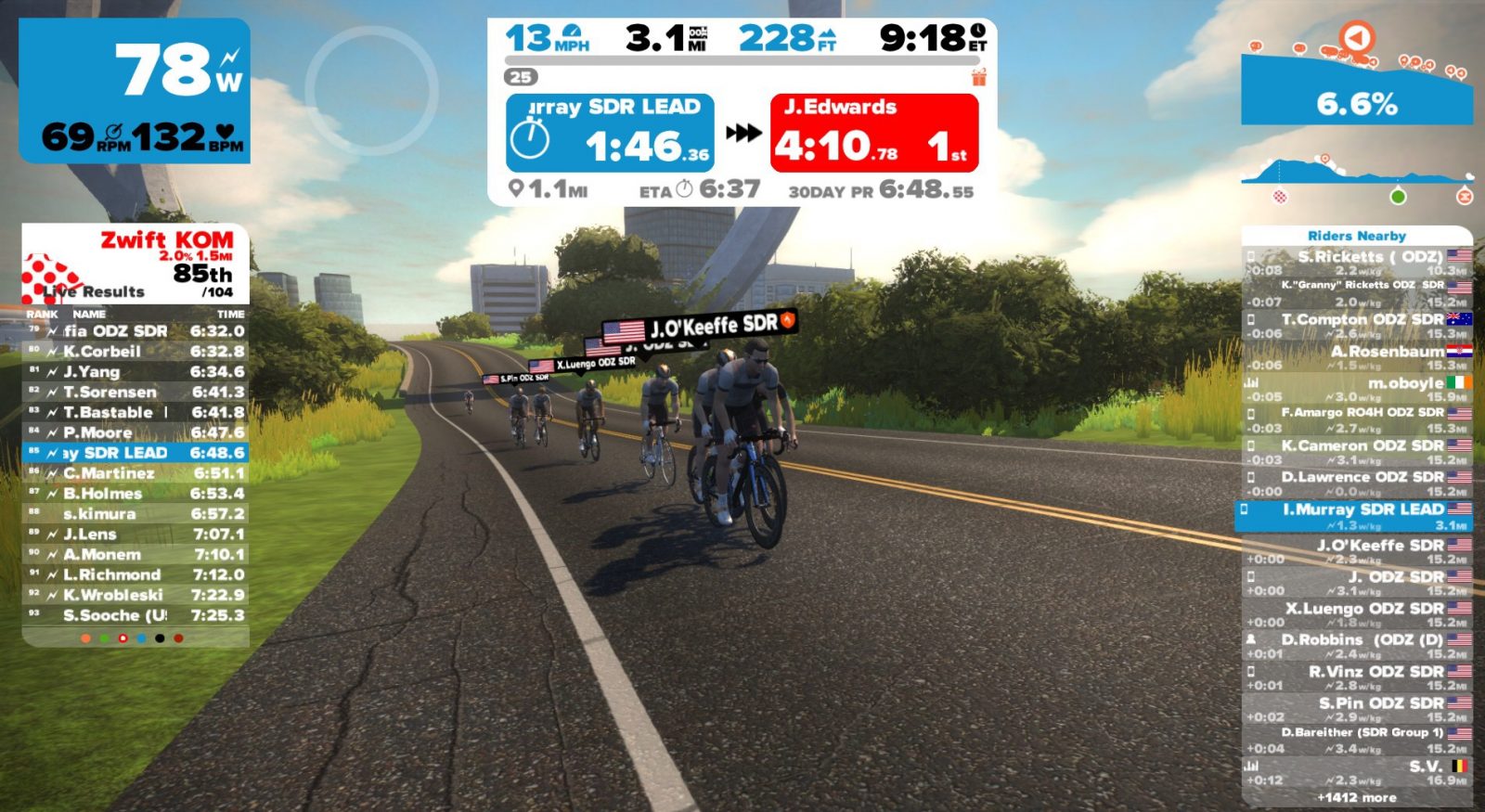
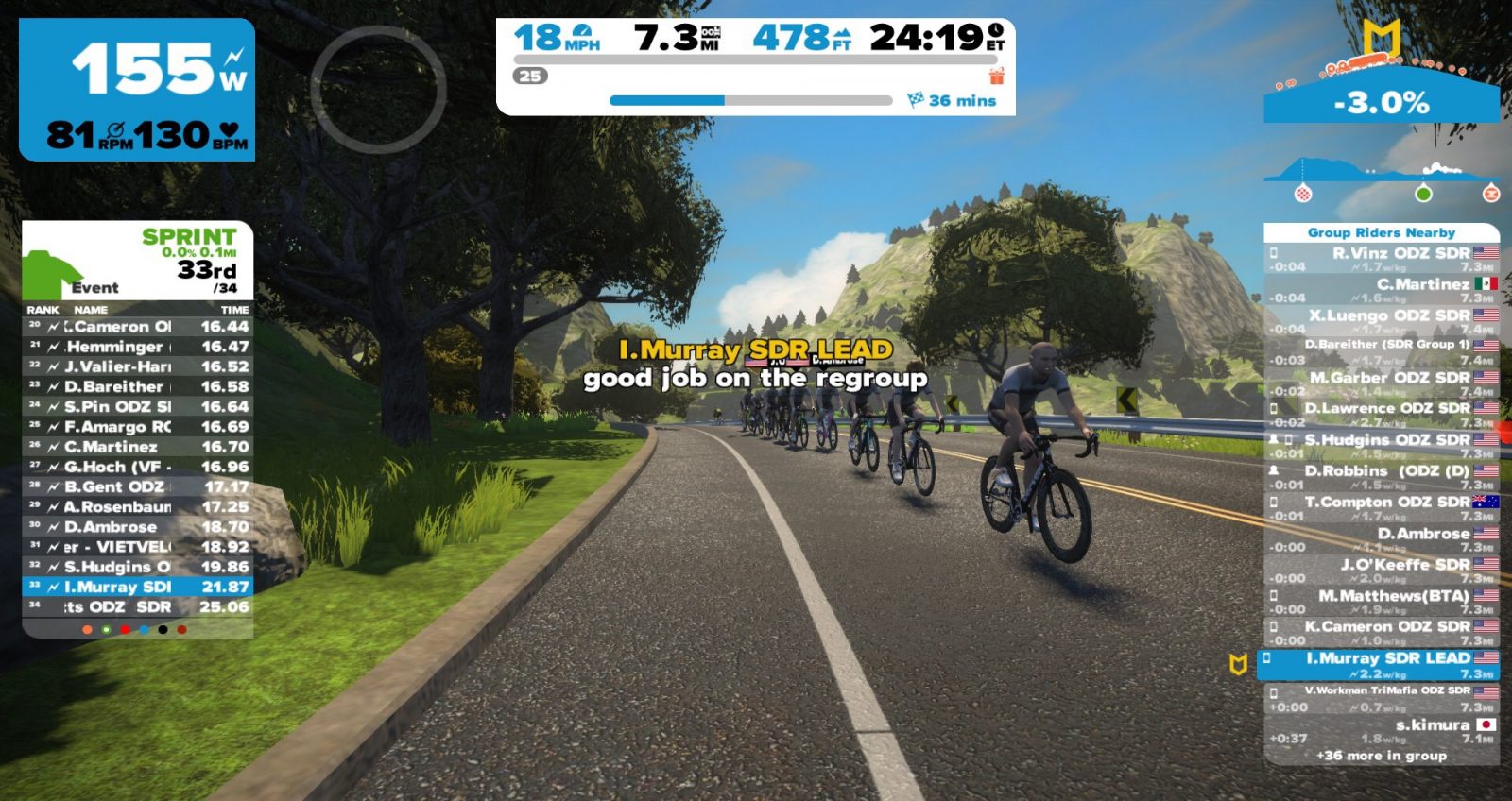
Today was another edition in our “Race Smarter not Harder” series where we practiced the art of bridging. And, yes, it is an art.

Before we get into the ride, let’s talk about racing smarter. As new racers, just as in rock climbing, we tend to rely on our perceived superiority in terms of fitness or strength, and that works until you move out of the CAT 5 ranks or up to the Cs or Bs in Zwift. Suddenly, riders who clearly can’t match your strength or fitness level hang with you and then beat you in the last 200 meters. Soon, you start getting really aggravated and begin launching multiple attacks well above your FTP, yet that same rider just sits there in sixth wheel until the end of the race, where he/she pips you at the line… again. You get more aggressive, and then you suddenly are getting dropped from the lead bunch because you are out of gas from the constant attacks.

What went wrong? Your FTP is higher than ever. Your body fat is in the single digits. Your leg muscles ripple like Peter Sagan’s. Yet that chubby old guy keeps linking you.

That’s because the chubby, old guy races with his brain and not his ego.

This leads us directly into a discussing of bridging. Last week we worked on responding to attacks by playing the crack the whip game. Responding to attacks is an important skill, but do you need to respond to every attack? How many of those efforts do you have in your legs, and will you be able to finish the race off if you cover every move? The answer is no–you probably do not have to respond to every attack.

So what happens if we don’t follow an attack, and a break forms or we lose a small group off of the front? That’s where the ability to bridge comes into play. The reason I call bridging an art is because you need to combine a feel for the race, knowledge of the course and other riders, and rolling calculus into your decision-making process. On the fly, you have to determine how hard you need to go for how long to cross a fluctuating gap. Oh, by the way, you have to ensure that you don’t gas yourself so much that you reach your target group too tired to hang with them or respond to any accelerations. It is demoralizing to bridge to a group only to get dropped immediately.

For today’s SkillZ and DrillZ, we practiced crossing gaps of various distances to a rider holding a variety of power levels. Like responding to attacks, it is important to not overshoot your target unless you plan on attacking immediately. For our purposes, though, we wanted to bridge and then sit on the group to recover.

With the help of TeamODZ member Justin L., we set up the exercise. Justin launched a ten second hard attack, dropped to 3.0 w/kg for 30 seconds, and settled at 2.0 w/kg until a group formed on him. During the first iteration, the group was slow to respond when given the green light to bridge. That made for a much longer effort than was planned, but it worked out. After a regrouping, we repeated the exercise but with Justin getting a bigger gap. This time it worked much better, with the biggest improvement being the reduction in the number of riders going into the orange during the bridge.

As we talked about earlier, bridging is about managing your effort. Going into the orange (referring to your w/kg numbers going orange in Zwift) means that you just lit a match. How long you hold that effort determines how many matches you burned from your finite book of matches. Therefore, you only want to go as hard as needed to cross the gap.

IRL racing is a little harder to judge, but Zwift gives you near perfect information regarding the gap to cross and the effort of the riders you are chasing. I say “near perfect” because you cannot see how much they are suffering or if they have a Black & Decker hooked up to the trainer.

The final bridging exercise was an individual effort.  Judging how people were responding on previous efforts, I decided to not send everyone all at once to bridge the gap. Instead, I made the riders wait until I called their respective names or messaged them. I sent the riders who were not as high on the power scale first, and the hammerheads last.  What that did was create a much bigger gap for the stronger riders to cover than the other riders.  During the previous exercises, the time gap was rarely over 20 seconds, so the bridge was not substantial.  However, in the last iteration, the gap got to well over a minute for the later bridgers.  By the time we all got back together, some of the later riders really understood the importance of dosing out the effort rather than going orange early.

After about 45 minutes, while we were wrapping up, one of the riders asked if we could go for the forward sprint.  Being the gracious host that I am, I gave my consent… with a caveat.  We would start our sprint from inside the village, rather than at the sprint line.  Besides just enjoying adding a little torture to the mix, I wanted to reiterate a point from an SDR a few weeks ago: starting the sprint early can be a very bad thing.  That nice long sprint put some pain in peoples’ legs, and the lactic acid caused many to sit up well before the sprint banner.  Lesson learned.

Next week, we will have something special for the group, so make sure you attend.  Until then, Ride On!
Today’s class was streamed live on Zwift Live on Facebook. Watch the full video replay here >


ODZ SkillZ and DrillZ Ride – November 30

ODZ SkillZ and DrillZ Ride – November 30

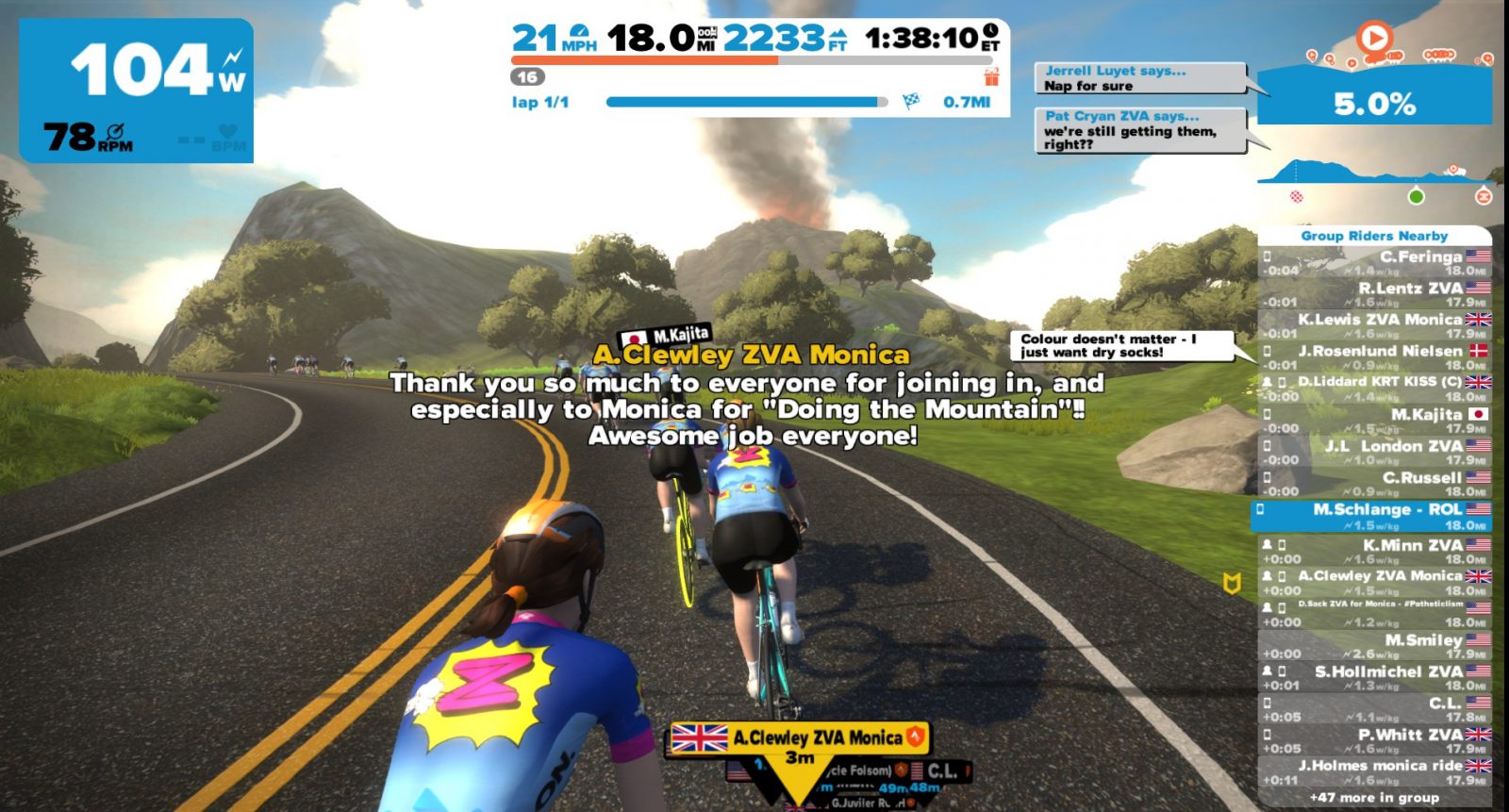
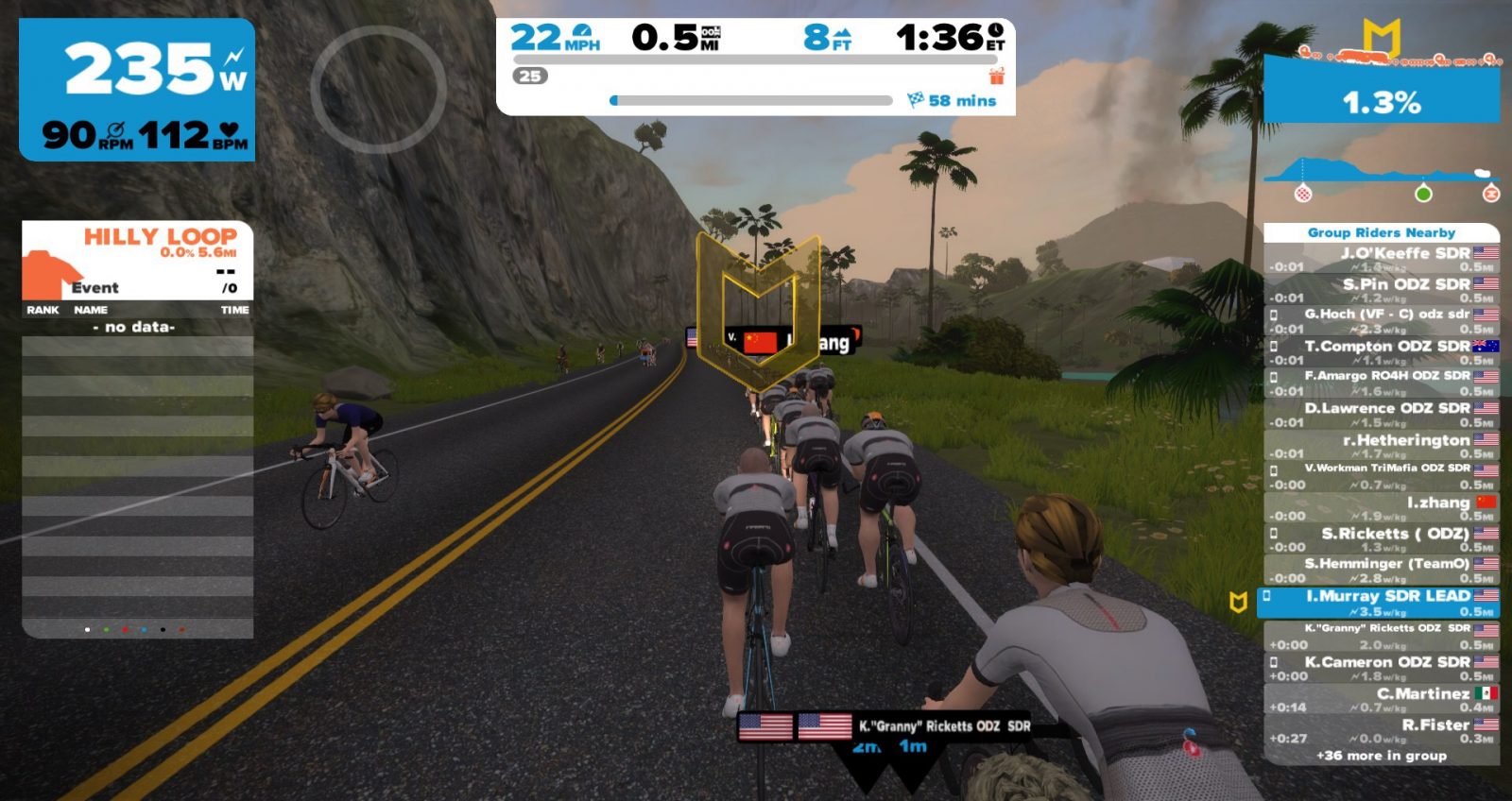
From the start, we had a big, feisty group with many on Discord. That made it easy to communicate the plan of the day, and I will say that the Discord users had a leg up on the other participants. The game really has one rule: stay behind the leader. That leader was me for the first lap and change.

Crack the Whip goes like this: the leader makes an attack of up to one minute as hard as he/she desires. Then the leader sits up to let the group catch on. The group has to respond and catch the leader without passing the leader. The object of the game is to recognize and cover attacks without being put on the front yourself. The purpose of this is to not allow another rider to trick you into expending extra energy by making a short attack, knowing that you will overshoot your target which would allow him/her to sit on your wheel. If the chasers overshoot the attacker, they have to drop back through the group, stop pedaling for ten seconds, and then chase back on. The action runs for five to ten minutes for each session of Crack the Whip. Thus, if a rider continues to pay the penalty, it gets harder and harder.

For our group, it was a bloodbath from the beginning. After my first few attacks, I eased up to the 1.5 w/kg pace, trying not to be too sneaky. Half of the group still rocketed right by me, not paying attention to my output or the rapidly closing gap.

Because of the difficulty of maintaining order with the majority of the people not being on Discord, I shifted to Phase II punishment immediately. Interestingly enough, people found that sitting up and having to sprint to catch back on the group was a sufficient deterrent to at least try not to fly by me.

We conducted multiple iterations of the game, regrouping periodically to allow everyone the opportunity to be at the front. To be honest, the drawback to having a lot of participants was that many riders could not see my information on the rider list, causing a delay in their response or unknowingly shooting right by me. The beacon was a big help, but it wasn’t big enough for some.

On the last lap, we switched up the attack to multiple attackers. It added a little confusion to the mix but created a more realistic experience, as most races have multiple animators. We finished off the ride by revisiting our group skills and then a brief cool down.

The big takeaway from today’s ride was to really focus on paying attention to moves off the front. Being able to respond quickly means that you get to conserve energy by getting into the attacker’s draft earlier. Likewise, you will have a better opportunity to decide whether you want to counterattack immediately or force the attacker to do more work at the front.

Like today, the remaining SkillZ and DrillZ Rides through the end of the year will focus on racing smarter. We’ll go into a deeper discussion during the 7 December SDR. Until then, Ride On!
Watch the ride recording below:


KISS EU – up high, down fast

0

KISS EU – up high, down fast

The London 8 route was on the menu for Dec 8th KISS EU. The A race came down to a sprint between David Allonby (Vision) and Stefano Sala. Philipp Diegner (Severe) took 3rd.

Diegner in the first climb.

On the top of first climb, Brett Boniface and Stefano Sala were up by 15″ over Allonby (Vision), Cartwright (KissRT), Kaland (KissRT), Diegner (Severe), Pluijmers (Team X), Norton and Browning. The 2 leaders were caught before crossing the line for the first time. “The weight differential really hurts me in the descents,” says Boniface. “I’m glad it’s not like that in real life: when I open a gap in the climb, it’s closed in the blink of an eye in the descent.” The same lead group was together at the beginning of Box Hill. The flat section of the second lap didn’t see much action, as everyone seemed anxious to see what the climbers had in store for the decisive part of the race.

Decisive Descent

Allonby on the “Tron” bike.

The second climb of Box Hill was total mayhem right from the get go, as Diegner attacked with a feather in the first slopes, with Boniface and Sala following, and the rest of the group falling a few seconds behind. The Italian climber managed to get away from Boniface in the second part of the hill, using the same skills that allowed him to win “La Marmotte” on the slopes on the Alpe d’Huez back in 2015. Flying towards victory, Sala saw David Allonby (Vision) come back in the descent, and the race ultimately came to a sprint between the two riders. The sprint was won by the Vision rider, adding a new line to his palmares.

Sternefalk sprinting to the win.

In the B race, Sebastian Sternefalk took the win in a late sprint against Matthew Rhyne and Greg “B.” Racing on one lap on the London 8 course, the C category saw Jim Fitzgerald (Renegade MTB) take the win over Skyler Street (KissRT) and Sean Dormaar. Ultimately, the D race was won by Brian Cooper, right at the category limit. Christopher Octa took 2nd place, and Vincent Lagendijk 3rd.


Here is the race commentary from Nathan Guerra.
Check out his Twitch.tv channel >


KISS EU – Dec 8th / Provisional Results :
A Category:
1- D.Allonby (GBR-Vision)
2- S.Sala (ITA-U/A)
3- P.Diegner (GER-Severe)
B Category:
1- S.Sternefalk (NOR-U/A)
2- M.Rhyne (USA-U/A)
3- G.B (USA-U/A)
C Category:
1- J.Fitzgerald (IRL-Renegade MTB)
2- S.Street (USA-KissRT)
3- S.Dormaar (CAN-U/A)
D Category:
1- B.Cooper (GBR-U/A)
2- C.Octa (USA-U/A)
3- V.Lagendijk (NED-U/A)

-the q/l Report-


Three Zwift Academy finalists announced

0

Three Zwift Academy finalists announced

Zwift HQ has announced the three Zwift Academy finalists. This first-of-its-kind program began in April 2016 with the end goal of recruiting one female Zwifter for the 2017 Canyon//SRAM women’s pro racing team. 1194 riders entered Zwift Academy, and that list has been narrowed to just three finalists:

  • Jessie Donavan (Vermont, USA): 3 Ironman Championships and 3 children on her resume.
  • Leah Thorvilson (Little Rock, AR, USA): injured national-level runner turned to cycling only recently, got t-boned by a deer and is now a dedicated Zwifter.
  • Yvonne Van Hattum (Dubai, UAE): rode for only a year before joining Zwift Academy, which she was inspired to join by her husband and training partner Jasper.

These three ladies are on their way to CANYON/SRAM’s training camp in Mallorca, Spain, where one of them will be offered a pro contract.

Congrats to Jessie, Leah, and Yvonne!
UPDATE: here’s a fun little video just posted as the ladies begin their training camp.

Left to right: Jessie Donavan, Leah Thorvilson, and Yvonne van Hattum

TeamODZ Omnium stage race announced for December 15-17th

0

TeamODZ Omnium stage race announced for December 15-17th

TeamODZ has announced their first ever omnium, taking place next weekend.

This edition of the ODZomnium will be held from December 15th to December 17th and will provide General Classification (GC) competitions for all the commonly-accepted Zwift racing categories (A, B, C, D). Each stage will depart promptly at 5:15 AM PST. (Race organizers assure me that future Omniums will have different start times to better serve various time zones.)

Like a real-world omnium, the ODZomnium will consist of three separate stages, each with its own particular characteristics. With an individual time trial, a short and fast criterium-style stage, and a grueling hilly stage, the tour route will provide exciting racing and cater to all riding styles. All stages will take place on the London course.

Stage Descriptions:

Day 1: 12/15/2016 – 6 laps London Classique Criterium (37.6km)

Stage 1 will be contested on the “flat and fast” roads of the London Classique route, where riders will fly through 6 laps of criterium style racing on some of London’s most famous and picturesque streets for a total of 37.6 km. This relatively short stage should make for aggressive riding, as opportunistic riders may try to attack and avoid a large final bunch sprint.

Day 2: 12/16/2016 – 2 laps London Loop Individual Time Trial (29.6km)

Stage 2 of the ODZomnium will see riders test their skill against the clock as they ride two laps of the London Loop route. Labelled the “race of truth”, this ITT will reveal who the overall GC contenders are, as the varied course will challenge both rouleurs and climbers. Can the lighter riders make up enough time on the two ascents of Box Hill, or will they be reeled in by the steadier power of their heftier adversaries?

This will be a MASS Start Individual Time Trial. All riders MUST have a time trial bike equipped and mounted prior to crossing the start line to ensure that no drafting is occurring and to maintain the integrity of the ITT.

Day 3: 12/17/2016 – 3 laps London 8 Final Showdown (60.9km)

The third and final day of the ODZomnium will be contested once again on the familiar London roads. Combining both the London Loop and Classique route, the “London 8” route will allow riders to showcase their area knowledge to plot a successful strategy. It will be all or nothing on this stage and in many cases the overall GC competitions will be decided on this last challenging stage. Who will have enough energy left in the tank after 3 days of consecutive racing?

To learn more about the race, visit the TeamODZ page >