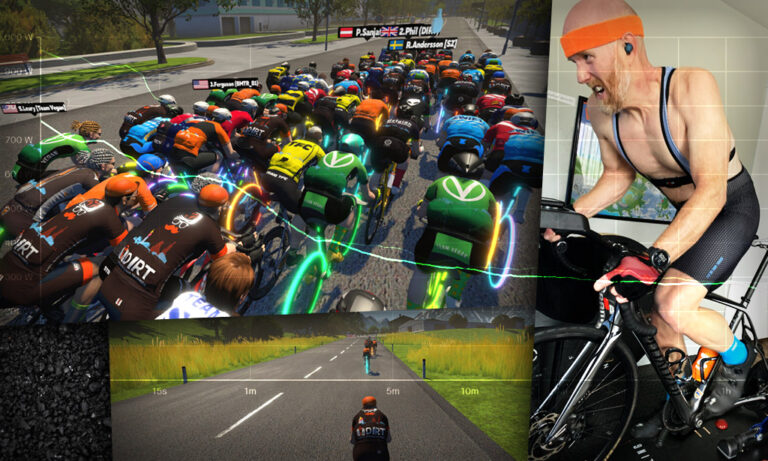
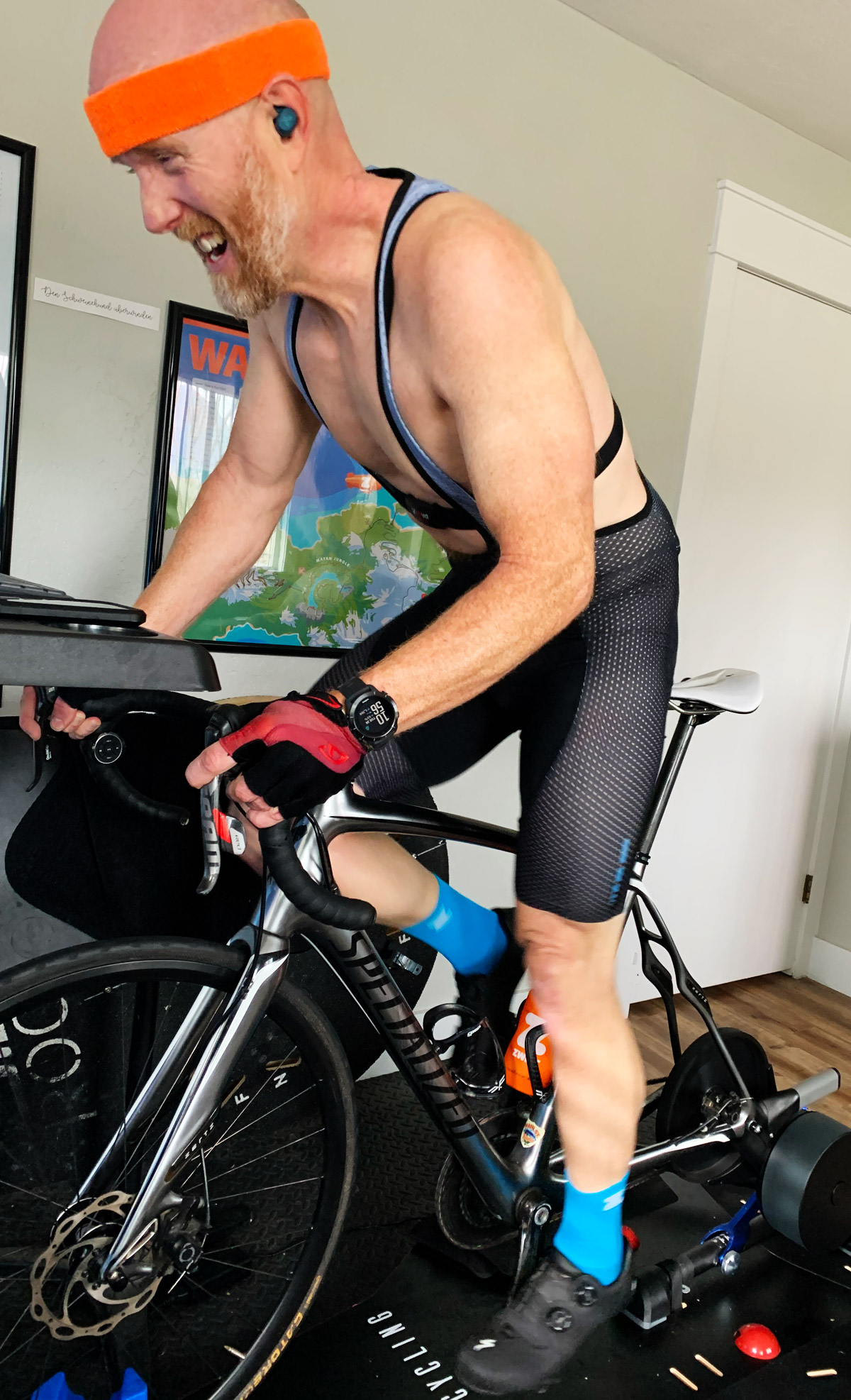
A new year often brings with it a newly-dedicated focus to our training and racing, but sometimes we overlook the little things that could benefit us most. In this episode, we bring in world-renowned bio-mechanist, author, and cookie connoisseur Jay Dicharry to enlighten us on what we really need to focus on structurally and posturally to have our best shot at hitting our training healthily and efficiently.
Listen in if you want to be faster and stronger this year, and if you want some laughs along the way!
About the Podcast:
The Zwift PowerUp Tri Podcast is hosted by former pro triathlete Matt Lieto and Zwift Academy Tri mentor Sarah True. Both are passionate about lending their in-depth knowledge of the multisport to the Zwift Tri audience.
Back in April 2020, Strava announced they would be making major changes to Zwift Strava segments, to “remove clutter and noise so athletes can experience the segments that matter the most.”
At that time, Strava swapped quite a few user-created segments to “private” so only the user who created the segment could see it. They appeared to backpedal a bit after the initial “culling,” with a lot of user-created segments still being visible in the weeks following their announcement.
Since that date, to the best of my knowledge, all segments created by Strava accounts other than Zwift Insider have been marked as private segments – Zwifters have no option to make a segment public. (This is why we’ve only seen Zwift Insider segments on the France and Paris maps – they were released after Strava made this change.)
Today: All Non-Zwift Insider Segments Hidden
I woke up this morning to several emails from Zwifters wondering what was going on with Strava segments. One rider said, “I rode for an hour in Watopia, and Strava only popped up with three segments. They were all Zwift Insider verified, and they were all hidden!”
It appears Strava flipped a switch overnight, marking all Zwift segments as private unless they were created by our Zwift Insider account.
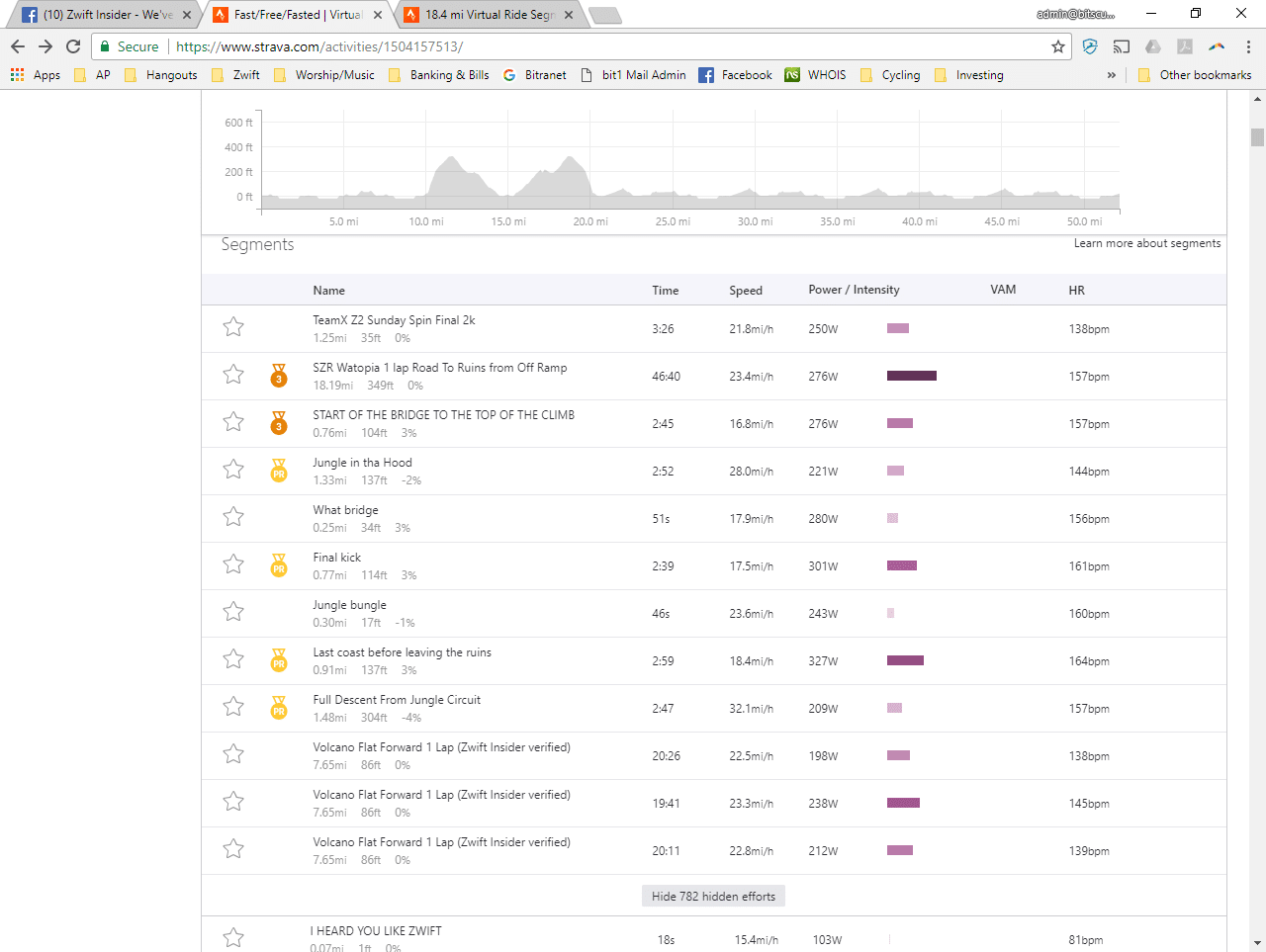
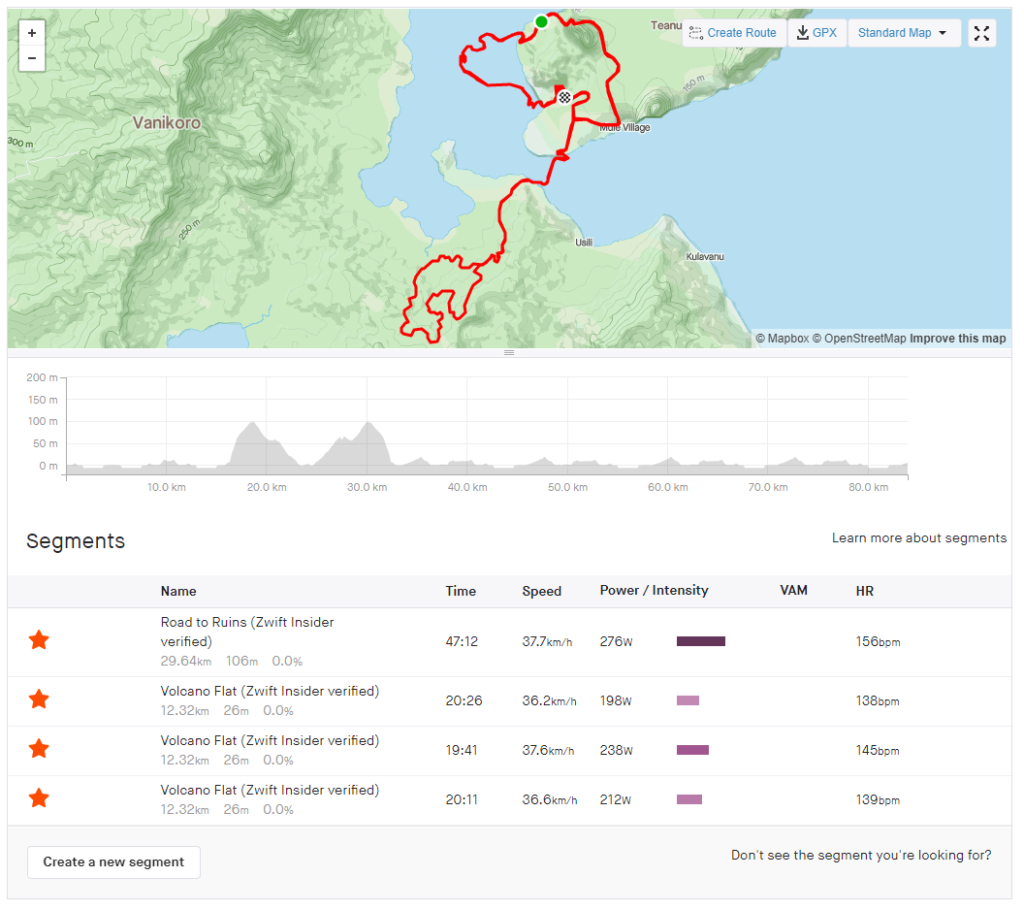
To give you an idea how dramatic this change is, here are snapshots of the segment list from a particular activity – first in April 2018 (before Strava’s initial culling), the second from today after Strava’s final culling:
April 2018: 794 segments
Today: 4 segments!
For some Zwifters, this will be a welcome change. But I also understand why others would be bugged by it, especially if you’ve been tracking progress on particular (non-ZI) segments.
(And for all the Zwift veterans, the legendary “first attempt. very intens” segment appears to be hidden once again, visible only to that long-time Zwifter who created it many years ago.)
No More (Zwift Insider verified)
Renaming in progress!
As I was composing this post, I refreshed a ride just in time to catch Strava in the act of renaming all the Zwift Insider verified segments, removing the “(Zwift Insider verified)” portion of the segment name.
Got an email from Zwift’s Wes Salmon just minutes later:
Hey Eric,
Quick note about some changes Strava is making for Zwift segments … since all the official segments you’ve created are now sanctioned by Strava, they are removing the (Zwift Insider Verified) since all Zwift segments are now default verified (by you). 🙂
The URLs should not change, just the titles.
An understandable change, although it a bit of a bummer for me, since having the segments tagged with Zwift Insider was a good way to remind folks to visit this website. The segment list will certainly look cleaner now…
Got Segment Suggestions?
With only Zwift Insider segments showing up, the segment list in Strava is indeed quite short for some rides. I don’t plan to re-clutter it, but I do think there is room for some additional segments across key portions of Zwift’s maps.
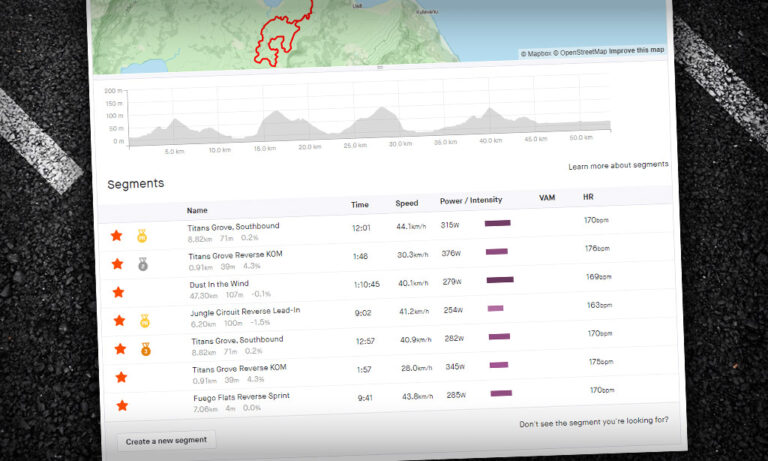
To that end, I’m working on creating a set of segments for the Epic KOM as I type this. This will include (for example) segments from the start of the forward and reverse climbs to the top of the Radio Tower. Not official in-game segments, but useful and interesting nonetheless. Here’s what I created so far today:
If you have suggestions for segments beyond the official ones we’ve already created, please post them in the comments below. If your segment idea seems like a sensible one, I’ll do my best to get it created!
Race 3 of Zwift Racing League Season 2 took place yesterday, finishing atop the Innsbruck KOM – the longest climb in Zwift Racing League history.
With a ~25 minute climb at the end, I knew I wouldn’t get anywhere near a podium finish. And I didn’t fancy my chances of earning intermediate sprint points, with the Leg Snapper standing guard like some sort of tarmac sentry just before the sprint.
Heck, I even volunteered to sit the week out, if my team could find a rider better suited to the route. But alas, no such rider was found: I would have to do what I could to grab points for my team.
Pre-Race Strategy
My team (the DIRT Hellhounds) had been chatting on Discord in the days leading up to the race, and we never really settled on a cohesive strategy because that was impossible to do. Instead, we discussed how the race would probably unfold, and we each set goals for how we would approach the race given our strengths.
For me, an “overmuscled cyclist” who sprints better than he climbs, it looked like this:
Attack the first Leg Snapper with max effort if needed, to stay in touch with the front group
If I make it over with the front, hit the sprint and try to get some intermediate points
Try to stay in touch with the front for the three laps of Innsbrucking, so I can put time into those behind and have a better chance of a higher final placing atop the KOM
The Warmup
Zwift Racing League‘s Tuesday events are my priority races each week, so I do my best to be fresh for race day. That meant a day off on Sunday, and an easy Monday. But Monday’s ride had me worried – I didn’t feel strong at all, and my heart rate didn’t want to get out of zone 2. This usually happens if I’m getting sick, or need recovery… or both!
So I didn’t push it on Monday, but made sure I ate and slept well. Then I executed my usual pre-race warmup routine on Tuesday, which included my three favorite race-day products:
Caffeine gum – three pieces (300mg), 1 hour before the race.
PR lotion on my legs about 45 minutes before the race. More bicarb=less burning.
The Nopinz Subzero kit, with two sets of freezer packs. One for the start, and one for the final climb!
I got on around 40 minutes before the race began, and spun with Cara Cadence for my warmup. I happily sensed that the legs felt good, and my heart rate was responsive. Soon enough it was time to hit the start pens. Let’s race!
The Start
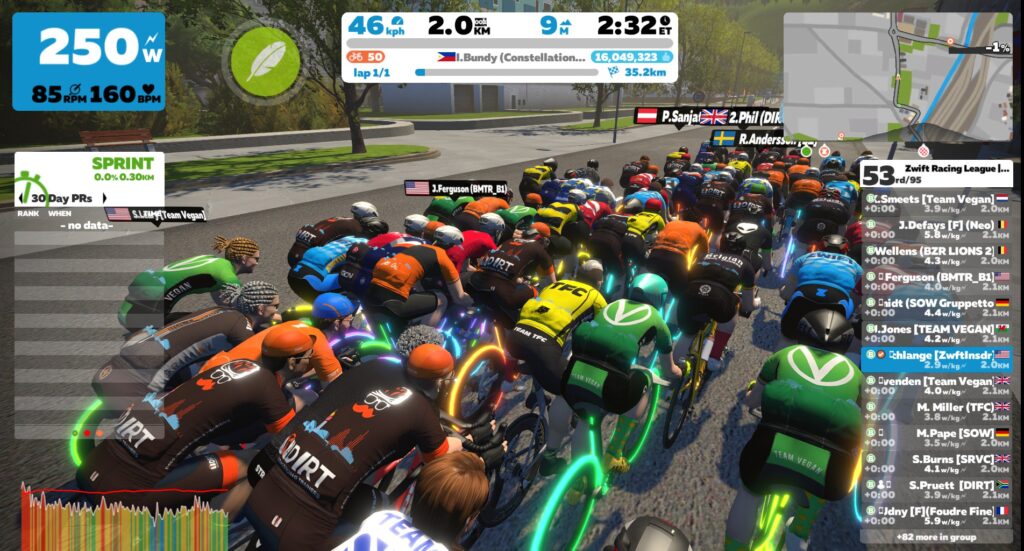
We figured the start wouldn’t be too crazy, because everyone knew the Leg Snapper is where the fireworks would happen. And that was exactly right: I averaged ~300W for the first three minutes to easily stay in the front group.
A big group at the start of lap 1
During the lead-in to the first Leg Snapper I was just conserving as much as possible, because I knew the first Snapper would be a max effort for me as the strongest riders pushed hard to make a selection so they could reduce the competition for the sprint intermediate. (My 1-minute power is a big weakness when it comes to short climbs in competitive fields – 6.5w/kg doesn’t keep you in the mix very long against guys who can do 8w/kg or more!)
As we hit the brown bricks leading into the Leg Snapper I worked my way to the front of the group so I’d be able to slip backward a bit on the climb if necessary while still staying in touch with the pack. I used my feather powerup as the road pitched up, so I could keep my entry momentum for just a bit longer. And I stayed seated for this climb, trying to keep my heart rate low and power consistent.
And I hung in there! Over the top things were a bit strung out, but it came back together on the descent. I was in the mix for the sprint!
Cresting the first Leg Snapper
In the front group heading into the first sprint
I had no powerup for the sprint, though… and I was far from recovered after a maximal 1-minute effort up the Leg Snapper. When riders began sprinting I went for it… but got left in the dust, crossing the sprint banner in 25th place. But two of my teammates (Tucker and Pruett) finished 1st and 2nd – extra points, baby!
Wash, Rinse, Repeat
As I predicted in my route recon post, the chase group caught our front group as we made our way around the Innsbruckring loop. The front group had no incentive to keep pushing, because they knew the group would split up the Leg Snapper yet again. But the chase group had incentive, because they wanted to stay close to the front group and hopefully pass some of them on the final climb.
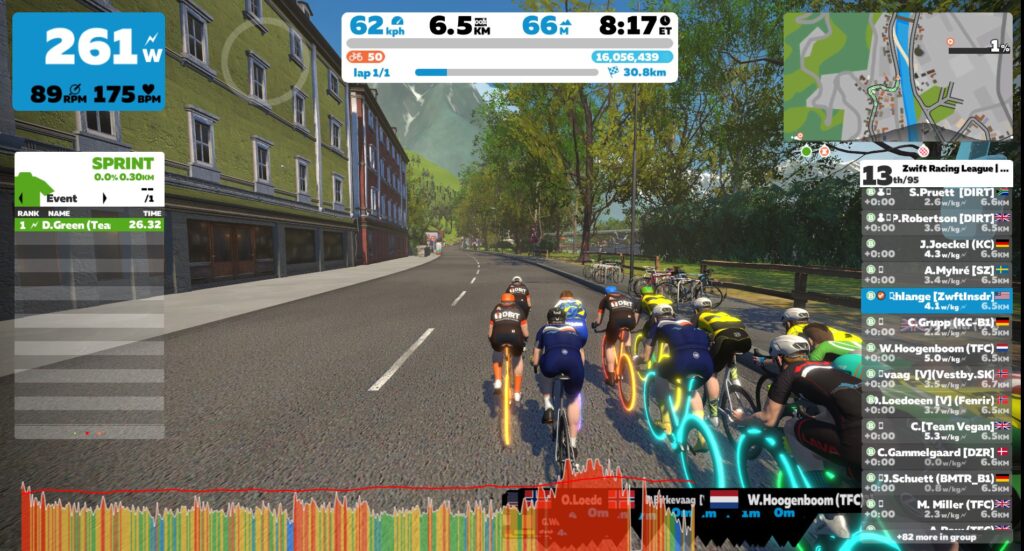
Laps 2 and 3 were similar to 1, just a bit easier. Each time a group of 30 or so split off on the Leg Snapper. I never had the legs to contest the sprint. After the third sprint I found myself even further behind the front group than I’d been on laps 1 and 2, so I waited for a few other riders to catch, and we easily caught up to the front group just before the final KOM began.
Going all in for the finish
The Final Climb
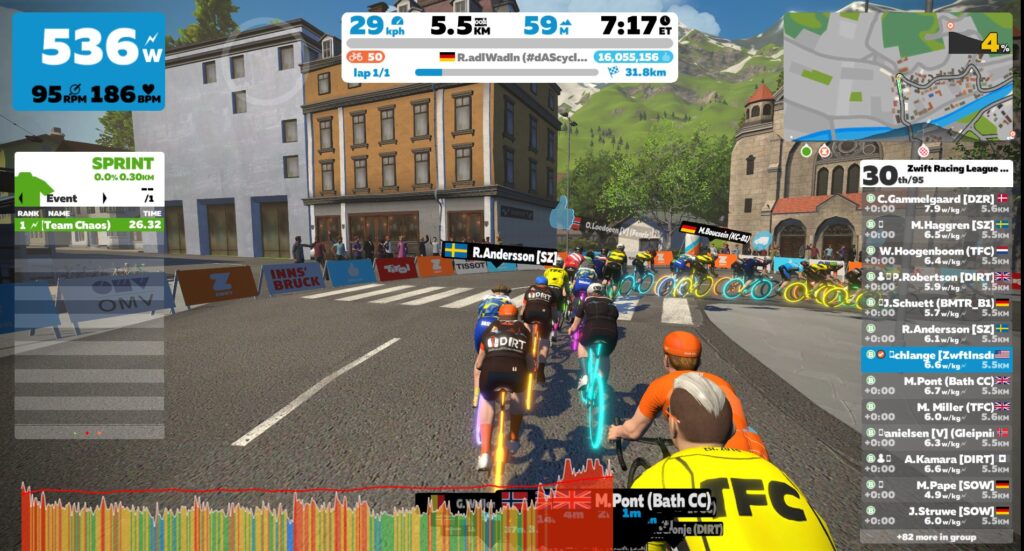
The Innsbruck KOM finish had given me nightmares for a week. I had hoped I would start the climb in the front group, thanks to any splits coming together. That all went according to plan. But how would the climb shake out? This was by far the longest climb we’d taken on in ZRL, and I had no idea how strong the competition would be.
But I knew it wouldn’t be pretty. And it wasn’t.
I started the climb in 39th place, the front group quickly riding away at a pace I knew I’d never sustain. Then I just tried to hold steady wattage – but my steady wattage wasn’t enough to keep me ahead of those chasing from behind. I finished in 50th place after putting in a max effort in the final kilometer to pass a few riders.
It felt good to gain a couple spots in the end… but losing 11 spots hurt more.
It looks like we took third overall, behind first place KIRCHMAIR B Bees and second place Foudre Bourgogne. That keeps us in second place on our division.
Foudre brought in a ringer for this race: one Camille Udny, a lady weighing in at 44kg and thus able to average 4.7wkg for this race while still being a B, since she’s nowhere near the 250W limit. Smart move by Foudre, and a commanding win by Camille who blew all the dudes out of the water, winning by 13 seconds!
Our top finisher was Scott Olsen in 5th. The sprint bonus points from Tucker and Pruett helped hugely, amounting to 40% of our total of 170 points. Me? I added a paltry 13 points to the team total.
Takeaways
My result is nothing to crow about, but it feels good to set some PRs if nothing else:
1-minute power PB on the first Leg Snapper: 537W
Leg Snapper PR: 50 seconds/550W
Innsbruckring PR: 11:22 (previous best was 12:02)
Innsbruck KOM PR: 23:37 (previous best was 26:34)
Given 20/20 hindsight, I would have grabbed more points for my team if I’d eased up on the Leg Snapper and sat in with the chase group through each sprint, content to reel in the front group each lap. This would have resulted in me arriving at the base of the KOM in the exact same place as I did in this race, but with fresher legs. (My guess is I could have finished perhaps 10 places higher with those hypothetically fresher legs.)
But that’s a big gamble to take! Some of the earlier races in the day had seen the groups coming back together – others had not. So I think the smartest approach would have been to handle the first lap just like I did – but ease up on the second and third laps, since I could be reasonably sure everything would come back together, and I knew I didn’t have the sprint legs to earn any extra points from the front group.
Next time!
Your Thoughts
Did you race in ZRL race 3? How did it work out for you and your team? Comment below!
Slovenia is a small country located in Central Europe, bordered by Italy to the west, Austria to the north, Hungary to the northeast, and Croatia to the southeast. For such a relatively small country (7,827 sq mi), Slovenia currently boasts some of the world’s best cyclists. First, there was Primož Roglič: 2019 and 2020 Vuelta Espana winner. Then there was Tadej Pogačar, 2020 Tour de France winner. And now there is Mitja Kovacic!
Mitja’s Challenge
On 30th January, Mitja is attempting to ride for 24 hours on Zwift.
The miles that Mitja accumulates will go towards the Doddie Active Inter-District challenge North & Midlands, which is a charity designed to tackle Motor Neuron Diseases. In addition, Mitja has set up a donations page to help raise funds.
Doddie Weir OBE is an ex Scottish Rugby player that earned 61 caps for his country and represented the British and Irish Lions on their successful tour to South Africa in 1997.
In June 2017, Doddie Weir revealed he was suffering from Motor Neuron Disease and subsequently set up a foundation named ‘My Name’5 Doddie’ in order to “raise funds for research into a cure for MND and to provide grants to people living with the condition.”
On 31 October 2018, Doddie announced that his charity had now raised over £1 million.
Motor neurone disease is a rare condition that progressively damages parts of the nervous system. This leads to muscle weakness.
It occurs when specialist nerve cells in the brain and spinal cord called motor neurones stop working properly. This is known as neurodegeneration.
Motor neurones control important muscle activity, such as:
Gripping
Walking
Speaking
Swallowing
Breathing
As the condition progresses, people with motor neurone disease will find some or all of these activities increasingly difficult. Eventually, they may become impossible.
There’s currently no cure for motor neurone disease. Treatment aims to:
Make the person feel comfortable and have the best quality of life possible
Compensate for the progressive loss of bodily functions such as mobility, communication, swallowing and breathing
About Mitja
Mitja, like his other Slovenia cycling compatriots, is tough. His Zwift stats are impressive: a Level 50 rider with over 20,000km accumulated, climbing an elevation of 206,698 meters with 28 days in the saddle. Needless to say that Mitja is a Category A rider and races for Race3R Team and SloZL Team (Slovenian Zwift League).
Mitja is a veteran cyclist, having spent the last 25 years riding outside where, like many of us, cycling provides the opportunity to relax from the stresses of everyday life. In contrast, Mitja is relatively new to Zwift, first using the programme in late 2019. He says the experience on Zwift is “a different beast” to cycling in real life (IRL).
Mitja explains that Zwift is the complete opposite to cycling IRL due to the mental challenges required to ride on a trainer. But he also says it is the community aspect and interaction that “makes you come back to the paincave every day and do things you would never think possible doing indoors. Like racing in a Team Time Trial, doing your max efforts for your team or leading a ride with hundreds of riders from all over the world and helping them survive their first ever hour on indoor trainer.” Incidentally, Mitja actually leads group rides on Zwift and this in itself is a massive skill and undertaking.
Mitja is not new to endurance events. Having never heard of ‘Everesting’ until late February 2020 and liking the sound of the challenge, he succeeded at the first attempt on Zwift a few months later and even climbed to a nice round 10,000 vertical meters in the process.
Most people would be happy with that, but Mitja decided to tackle the endeavour outside after Slovenian ultra cyclist and RAAM racer Marko Baloh mentioned it would take 29 repeats on his local climb to get to 8848 vertical meters. Despite not being short of amazing mountains to ascend in his native Slovenia, as suggested, Mitja opted to undertake the mission on his local climb, near Stara Vrhnika, achieving it in a little over 13 hours.
The idea of cycling 24 hours was mentioned by cycling club mate Ross Duncan, also an endurance cyclist, who undertook 14 ‘Everestings’ in 14 consecutive days. This was a challenge that Mitja could not pass up and, having read Doddie’s story, decided to combine his effort with the greater good.
It’s pretty obvious to say that Mitja classifies himself as a climber, having done 50 ascents up Alpe du Zwift and prefering longer races like the Fondos. As he states, “I like the long races. I’m like a diesel engine. The longer, the harder, the better.”
Mitja’s Plan
To cycle 24 hours is a huge undertaking, so I asked what the plan was to complete this very challenging task.
He explained that having decided very last minute to undertake the challenge, he is relying on his mileage from the previous year, but has been increasing his steady pace rides, accumulating between 15 to 25 hrs a week and managing to do a 7-hour ride, a 9.5-hour ride, and a 12-hour ride. From that point, it’s as Mitja describes “uncharted waters”, having only done a 14–hour trainer ride once before. Prior to the event, he will skip his max effort events like the Zwift Race League and take a rest day just before the event.
The route that has been selected for the challenge is Watopia’s Tempus Fugit, with the occasional Epic KOM to changes things and break the monotony of the flats.
He will start on Saturday, January 30th, 7:30am GMT with a 3R 200km Special Event ride and then continue for 24 hours.
In terms of food, being a vegetarian Mitja has opted to follow his everyday routine, paying attention to hydration and carbohydrate intake two days prior to the event. On the day of the event, he aims to start with a 2 litre smoothie made of bananas, mango, pear, orange, and melon for the first three hours. Later, he’ll be switching to pasta mixed with cottage cheese and honey. He states, “I find it easier to eat in small bites than large portions on a trainer.” The last 8 hours energy bars, recovery bars, and gels will be relied upon. It is estimated that he will drink 0.75l of fluids (energy/recovery drink, water, smoothie) per hour.
There are no breaks and sleep planned but stops will be allowed to change bibs/jersey, socks, and take toilet breaks. The event will be live streamed on YouTube.
Mitja’s Concerns
This is unquestionably a daunting challenge, and I asked Mitja’s about his biggest concerns. He explained:
My mind is ready. The real question is how my body will react. Changing kit and riding out of the saddle will be crucial to avoid bruising. Fatigued muscles can change your position on a bike, leading to lower back or knee injury. Palms, wrists, and toes can cause additional issues. Also, I don’t know how my digestion will cope with high energy intake after 16 hours of fuelling. I’m expecting the main mental and physical crisis to start at 16-18 hours into the ride and smaller challenges before that.
These are my main concerns. I’m not afraid of stopping and call it a fail if my body tells me to. I’ve learned to listen to my body while riding without HR monitor or power meter for most of my IRL rides. However, I will try to eliminate as many risks as possible to make it to 24 hours.
Come Support Mitja
Donate to the charity and come and ride with Mitja on 30th January! I for one will ride and support him whilst he is undertaking his challenge, I’ll even see if I can get a brief interview en-route. If not, be sure to support Mitja via his YouTube channel.
In the third week of Boone’s 6-week training program we continued pushing hard in each of his 4 rides. With such a short training program, each workout has to count!
Our goal: to transform a 265-pound rookie rider with a tested 1.92w/kg FTP into a cat C Zwift racer (2.5w/kg+) in 6 weeks.
We aren’t entirely sure if the goal is attainable in that time, but Boone’s willing to take a leap and find out. Sort of like that time – many years ago – when we tied a rope around his foot so I could lower from a 20-foot tree branch. (It didn’t end well. In hindsight, it’s a miracle we survived childhood.)
The first week was mostly about orientation and baseline testing. The second week was about building endurance and improving form on the bike. And this third week was about pushing that endurance – now that Boone could ride for a full hour, let’s get those watts up!
The Plan
As a reminder, here’s the basic plan we’ve settled on for the 6 weeks. (Many thanks to Alan Dempsey of HPP Coaching for giving us solid advice that sets Boone up for success).
Week 1: Benchmark testing + Endurance FTP test, attempt first Zwift race, and get some time on the bike
Weeks 2-4: Endurance + Cadence Work Lots of work from low zone 2 to mid zone 3, with some high-cadence drills to train the legs for efficient pedaling
Weeks 5-6: Endurance + Intensity, Finishing with Benchmark Testing Start with similar rides as weeks 2-4, with some VO2 and threshold efforts included in short durations. Toward the end of week 6 we’ll do another FTP test and Zwift race, so we can compare progress from week 1.
We aren’t doing ERG workouts – rather, we’re doing free rides and Zwift events with particular goals in mind.
Ride #9: Breaking 20MPH
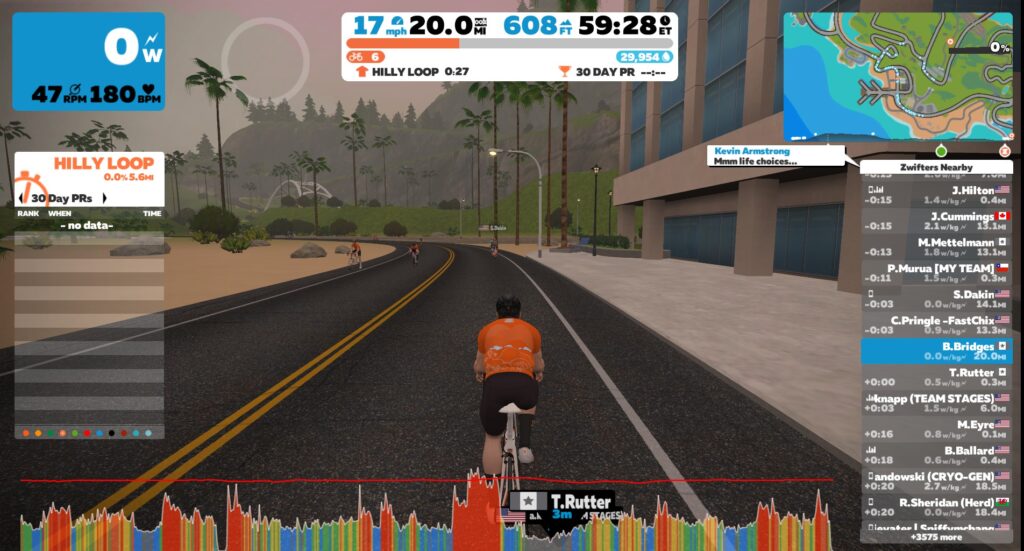
Boone had a simple goal for this ride: to average at least 20mph over an entire hour ride.
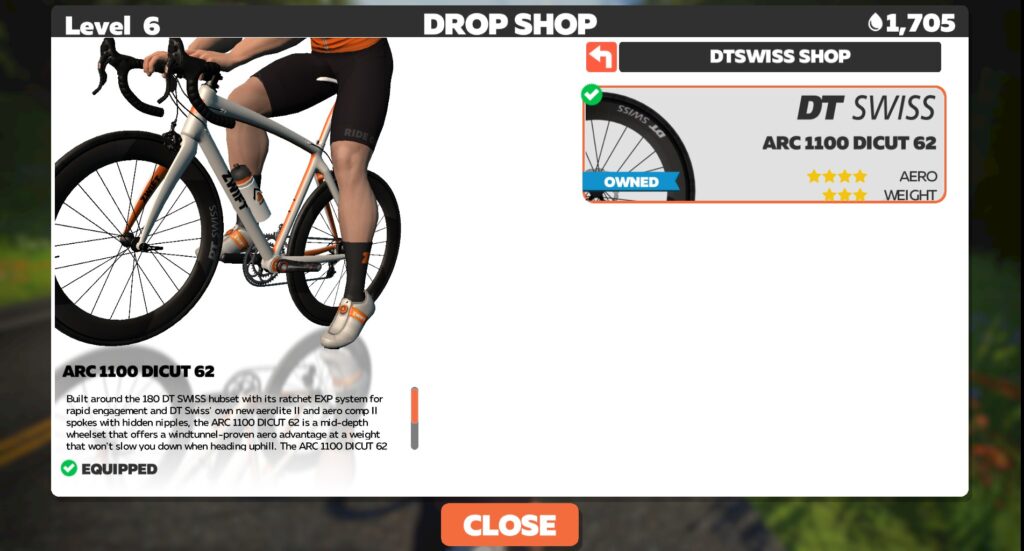
Before he got going, we popped into the Drop Shop and picked up a shiny new wheelset: the DT Swiss ARC 62’s. He had barely just enough drops to make the purchase!
In Zwift, wheel upgrades generally have 2-3x greater effect than frame upgrades. These wheels are about 25 seconds faster over an hourlong ride compared to the stock 32mm carbon wheels, so they would help Boone just a bit in achieving his goal.
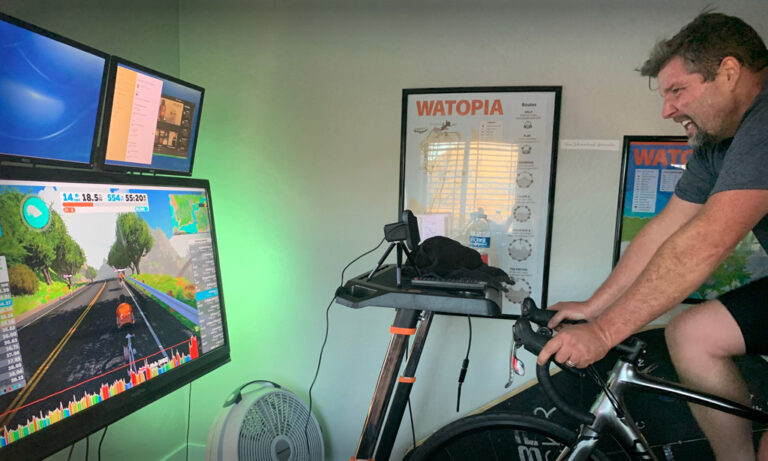
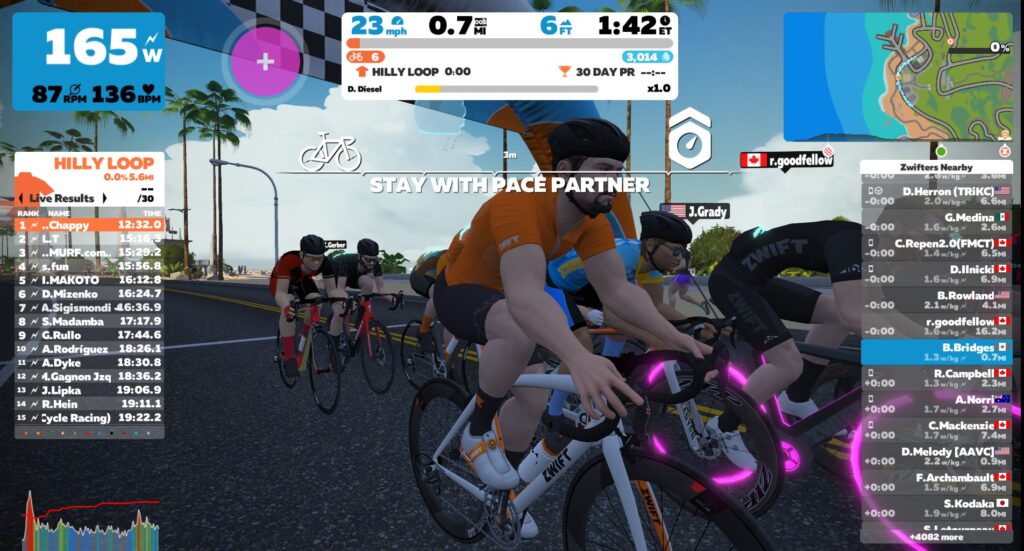
We put him in with Dan Diesel, but after a short warmup and some quick math Boone realized hanging with Dan wasn’t going to get him a 20mph average. So off the front he went, keeping his watts up, sitting on wheels, and using powerups to keep his speed high on Watopia’s Flat Route.
And he did it, with 32 seconds to spare!
Starting off with Dan
Sitting in, off the front of Dan’s group
20 miles in 59:28!
Boone got quite a few Ride Ons during this effort, and he wanted to make sure I mention in this post that 1) he’s grateful for the Ride Ons and 2) he wishes there was an easier way to reciprocate a Ride On someone gives you. Clicking around with your mouse or fumbling through rider lists is just too much hassle when you’re pushing hard!
Since Boone had been consistently dropping Dan Diesel, I figured it was time to move up to Cara – the next-fastest Pace Partner. Cara’s group clips along around 40kph, while Dan’s group is closer to 30kph. We figured Boone wouldn’t be able to sit in with Cara for a full hour, but he could try to hang for a while, then do his own ride for a total of 45-60 minutes.
The Pace Partners join screen said Cara was riding on Tempus Fugit (nice and flat – exactly what Boone wanted) but that was just a cruel prank. When we dropped into the game Boone was with Cara’s group riding the Hilly Route… in the rain!
Oh Cara, you evil woman!
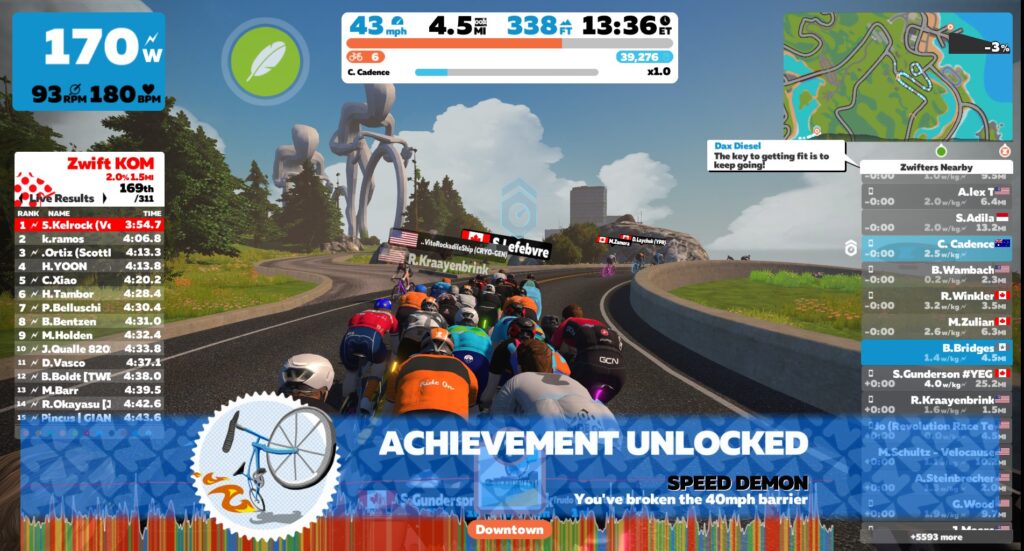
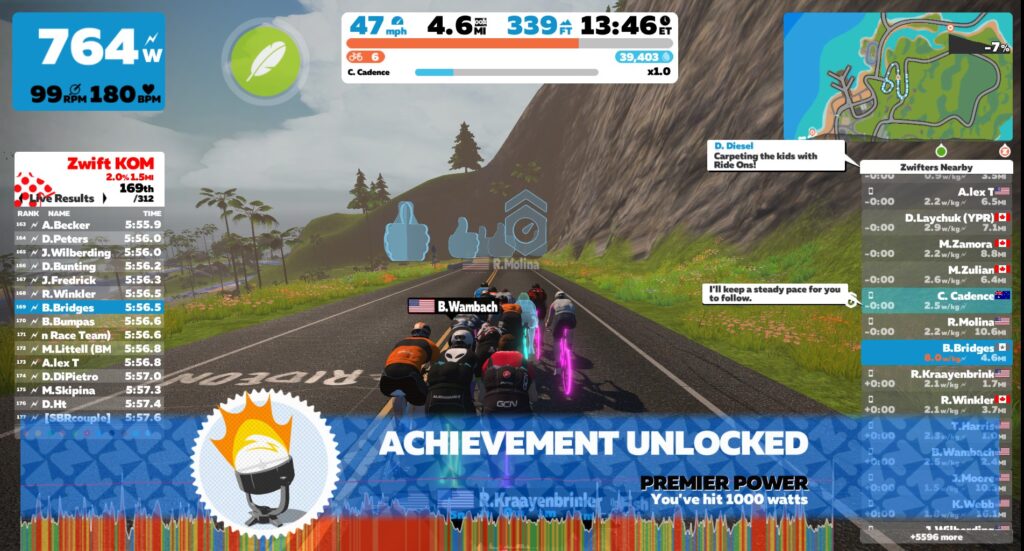
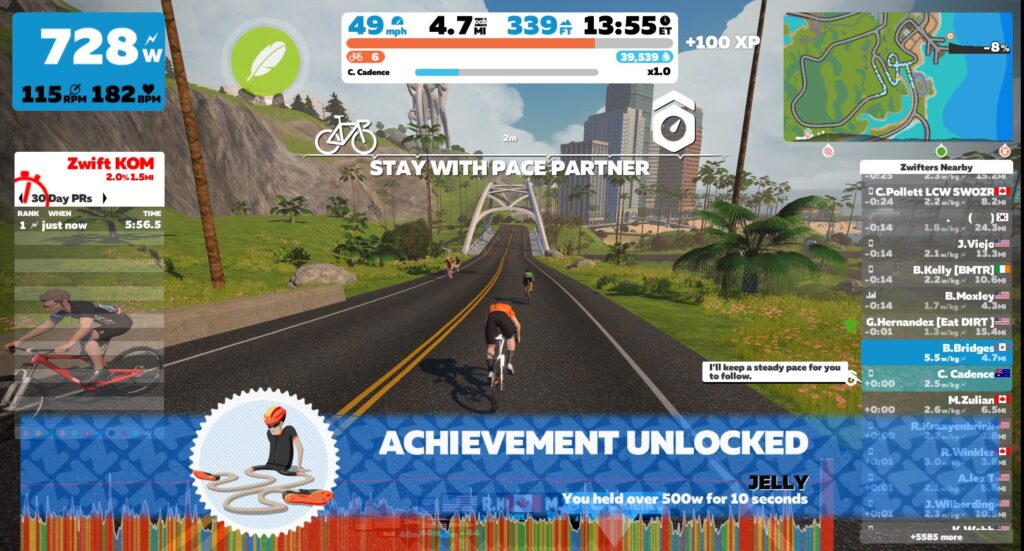
He hung in there for 15 minutes, but blew his legs up when he decided to randomly sprint on the descent. (He was trying to get the 50mph badge, you see). He didn’t quite hit 50mph, but he did unlock the badges for 40mph, holding 500W for over 10 seconds, and hitting 1000W!
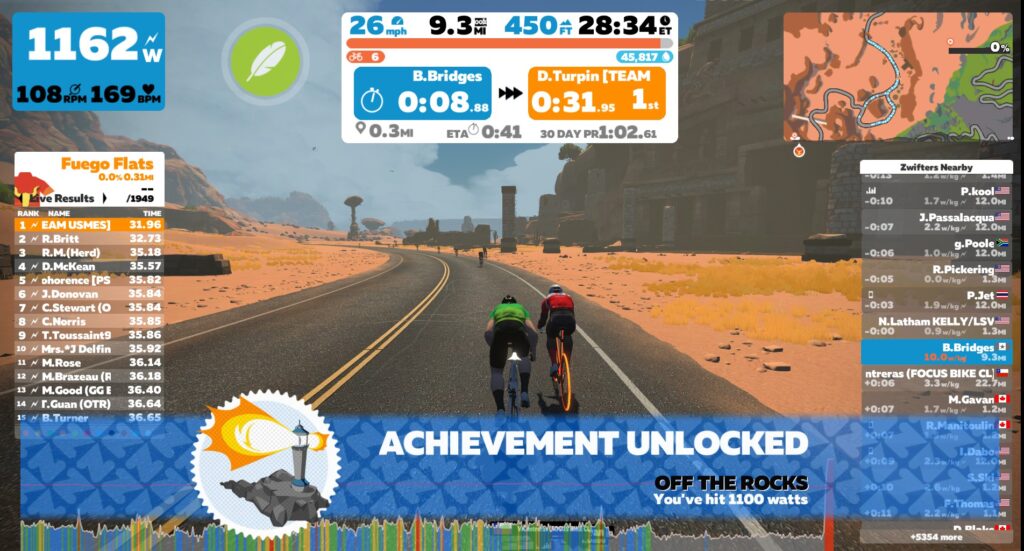
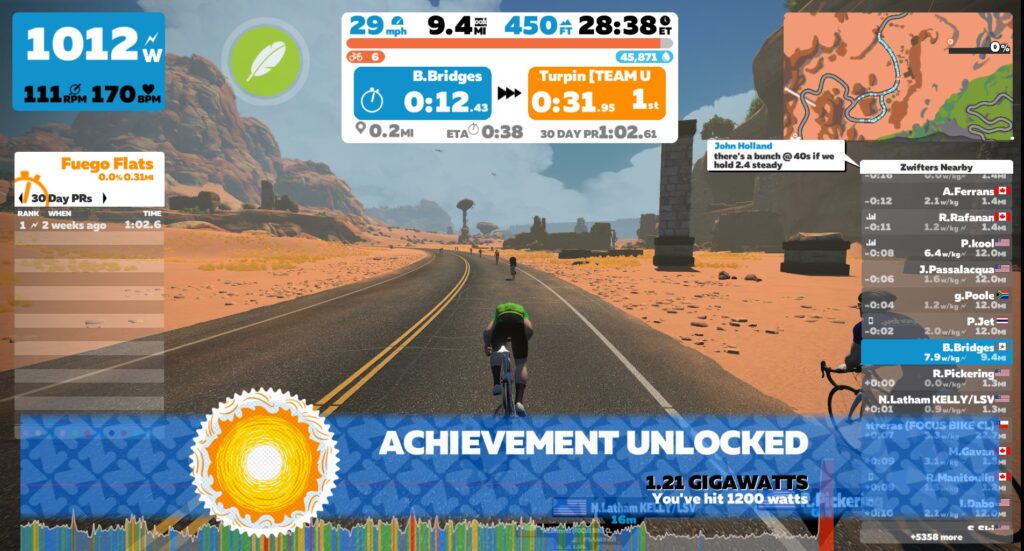
We headed over to Fuego Flats after this, where he rode for 30 more minutes. He was tired (hadn’t eaten much of anything that day) and basically ran out of juice. But he did manage one more sprint effort, enough to earn the 1100 and 1200W badges. All seated sprints!
I checked where Cara was actually riding before we joined her this time. She was in Fuego Flats (hurray!), so Boone hopped into the group to see how long he could keep up. He lasted 25 minutes, then spent the rest of his ride just trying to keep his power decently high until hitting the hour mark.
He ended up hitting new power bests across the 18-40 minute range. He also set a new hour distance record for himself: 22 miles! Nice gains.
Boone’s been dropping weight – we’ve been adjusting it on almost every ride!
Here’s a weird thing we discovered this week: Strava is showing a different calorie burn number than Zwift! (Boone is paying fairly close attention to this since he’s working on dropping weight while also consuming enough fuel for these training rides.)
Here are the numbers from some recent rides:
Strava Calories
Zwift Calories
829
710
614
526
834
715
313
295
If you’ve used more than one service to track fitness metrics, this may not surprise you one bit – each service has its own way of calculating calorie burn (learn more about how calorie burn calculations work). But the strange thing is, on my Strava account, the calories always match Zwift’s. Because Zwift passes those calories in via the .fit file, and Strava displays them. At least, that’s what this page leads me to believe. It says, “Strava shows Calories as they were provided to us from upload partners. If no value is sent, or you record with the Strava mobile app, we use our own calculations.”
So why do calories match on my Strava account, but not on Boone’s? All I can figure is it’s the difference between being a paying Strava subscriber and a free one. My theory is paying subscribers get Zwift’s number (calculated based on ~25% efficiency), while free ones get the number calculated by Strava (which appears to be calculated based on something like 21.3% efficiency). But I’d love to hear if you have a better idea!
Ride #12: Crit City D Race
Since we’re at the halfway mark, Boone thought it would be a fun to attempt the same Crit City race he tried the first week. In that first week, he got dropped from the front page 2.5 laps in. Could he last longer this time around? He was certainly stronger than the first week – and almost 15 pounds lighter. Plus he had the new faster wheels! But his result would also depend on the competition.
My buddy Zane came over once again to heckle and advise Boone – you can hear us alternatively cheering, jeering, and advising Boone in the video below.
13 riders joined this time around, compared to 17 in his first race. But right from the gun it was clear this would be a very different race. The front group thinned out more quickly, and the pace was higher. But Boone was hanging in there! At the 2.5 laps mark there were 5 riders in the front group, and several off the back who had been coned (no cones in Boone’s first race).
He was definitely on the rivet, but did a great job of sitting in the draft and conserving as much as possible. After the brick climb on the penultimate lap the pack strung out, and Boone couldn’t hang on, despite Zane yelling very loudly. He limped around the final lap as one of the lead riders got handed a green cone. He crossed the line in 4th. But 3rd on ZwiftPower!
Boone’s 3rd place result in his second race (above) doesn’t look much better on paper than his 4th place result in his first race. But the difference in performance between the two races is striking:
Race 1
Race 2
Watts Avg
216W
256W
HR Avg
179
182
HR Max
186
191
Total 6-Lap Time
21:45
19:31
Between weight loss and fitness gains his average wattage in these races went from 1.8w/kg to 2.3w/kg. Not bad for just three weeks!
For the next week we’ll be riding with Cara Cadence more, seeing if he can extend how long he can hang with her group. We’ll also be doing some cadence work to improve muscle efficiency, and sprints to see if we can find the top end of Boone’s power.
Support Boone
Thanks to everyone who followed Boone on Zwift and Strava and gave him lots of Ride Ons and Kudos. He’s loving it! If you haven’t done so yet, follow him on Zwift (name “Boone Bridges”) and Strava.
Your Thoughts
Got any tips for Boone? Comments on this week’s efforts? Share below!
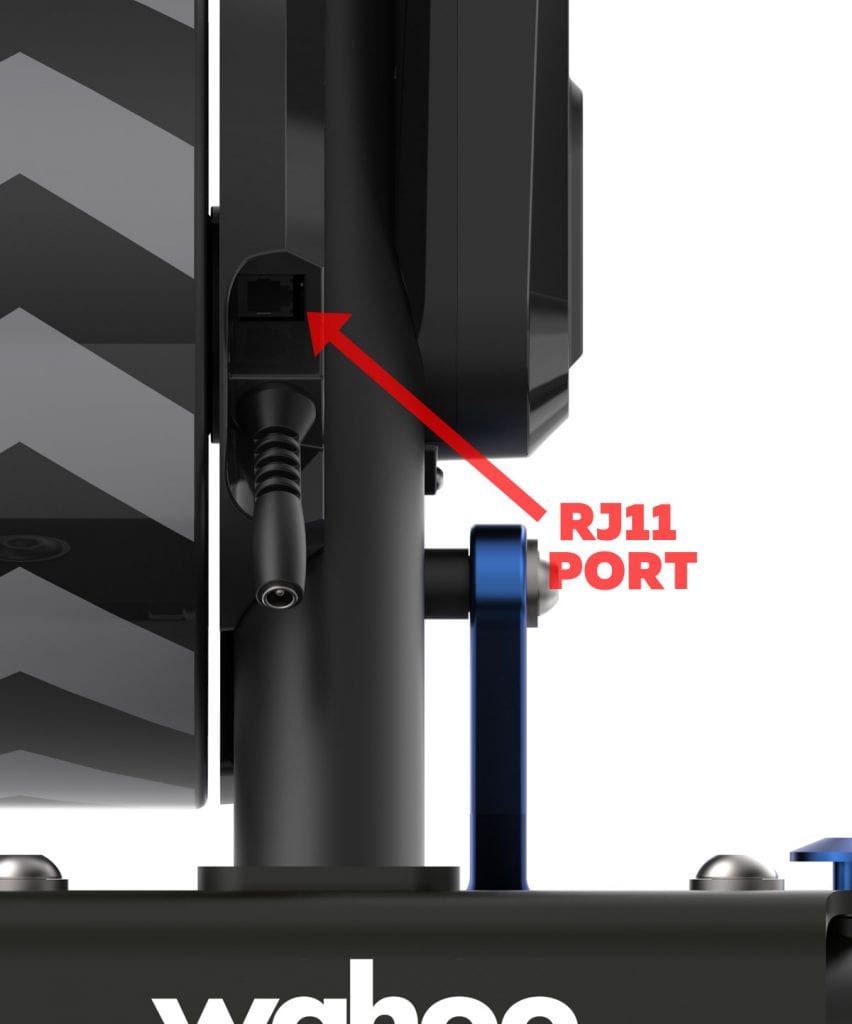
When Wahoo announced its latest KICKR back in August 2020, the most surprising new feature was the inclusion of an RJ25 port to allow for direct cable connections instead of wireless.
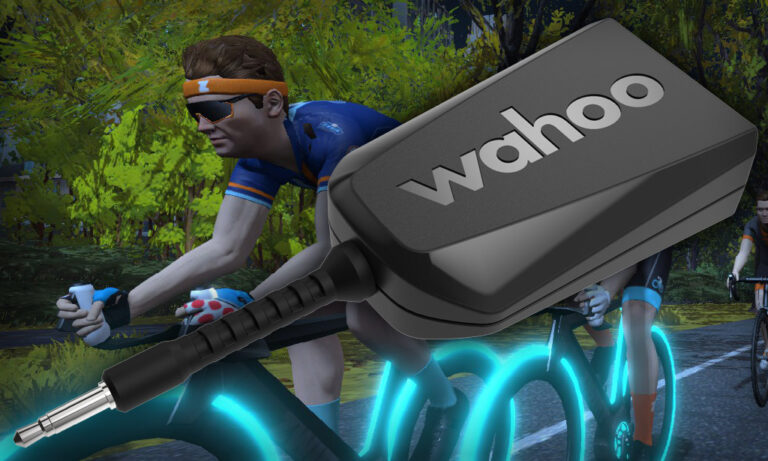
And while the port existed, there was no dongle released to plug into that port. Until today! Wahoo has just released their $99 “KICKR Direct Connect” accessory.
Many Zwifters have struggled with Bluetooth or ANT+ signal dropouts and connection issues. ANT+ users, in particular, are susceptible to USB port silliness and interference from certain WiFi channels and other electronics. And Bluetooth users often have problems due to other devices or programs taking the Bluetooth connection, or Windows Bluetooth acting a bit funky, or some combination of the two.
While it had been talked about for years, no trainer on the market has supported a direct connection until today.
It’s funny to talk about a wired connection like it’s an advancement – but for some, it is. Things can get especially ugly in “crowded” environments like we saw when CVR hosted Zwift races at the LA Velodrome, or Zwift hosted their own in-person races. In both places ANT+ dropouts were a problem, and spectators were asked to turn off their cell phones to reduce interference.
But Not With Zwift. Yet.
As of today, Direct Connect is compatible with SUF, TrainerRoad, FullGaz, and RGT Cycling. Wahoo says, “Other platforms are expected to become compatible in the coming months, including Zwift.”
We asked Zwift what their plan was for Direct Connect support, and they explained that Zwift’s product team now has the cable, and started work last week. They assured us that, “Zwift will support the cable but we don’t have any dates at this time.”
How Does It Work?
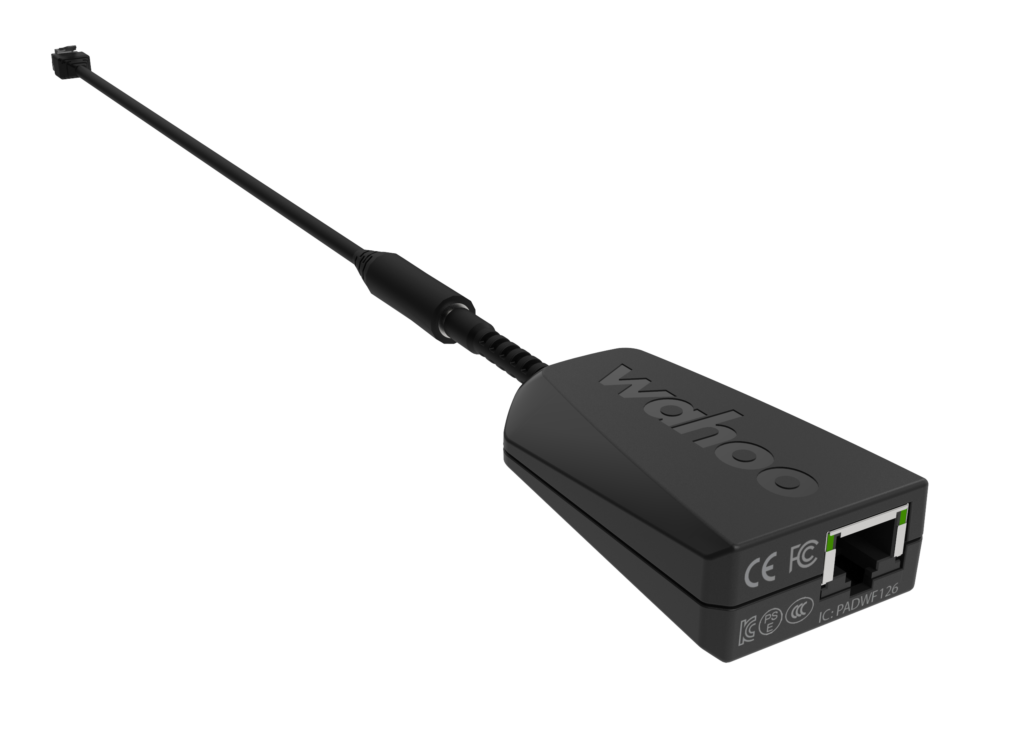
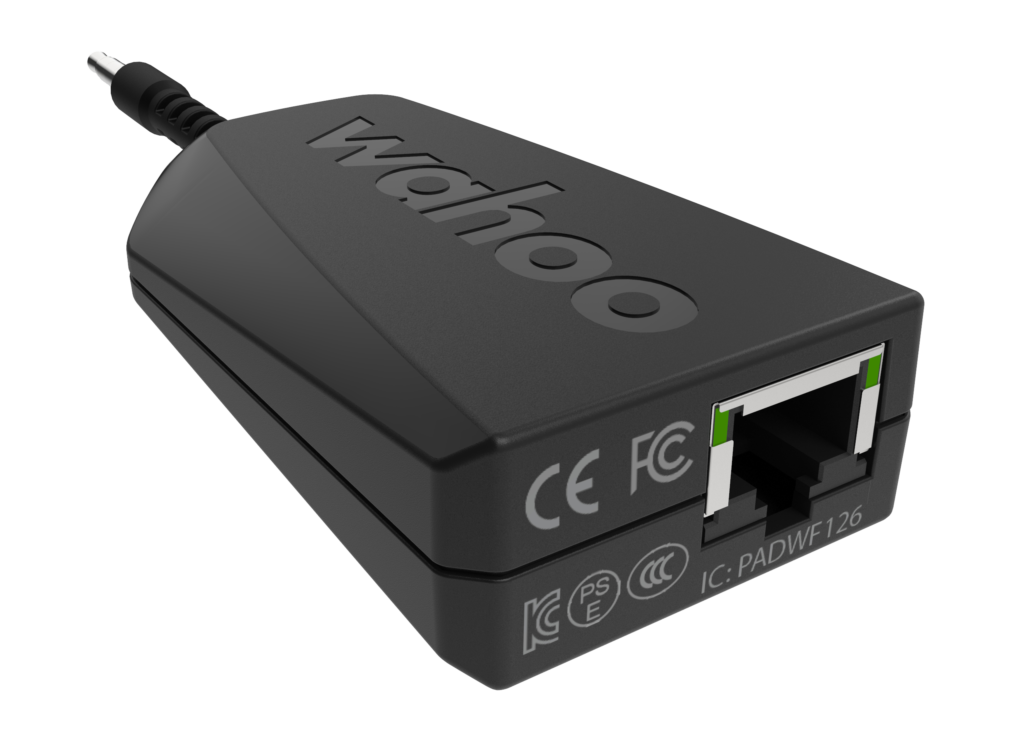
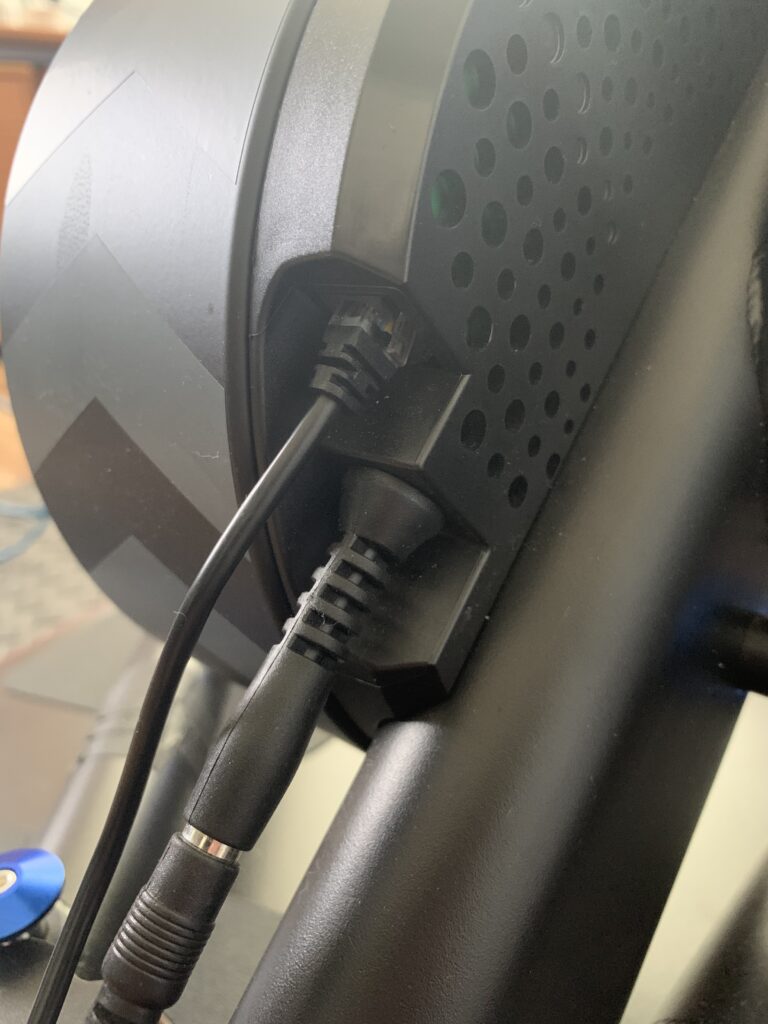
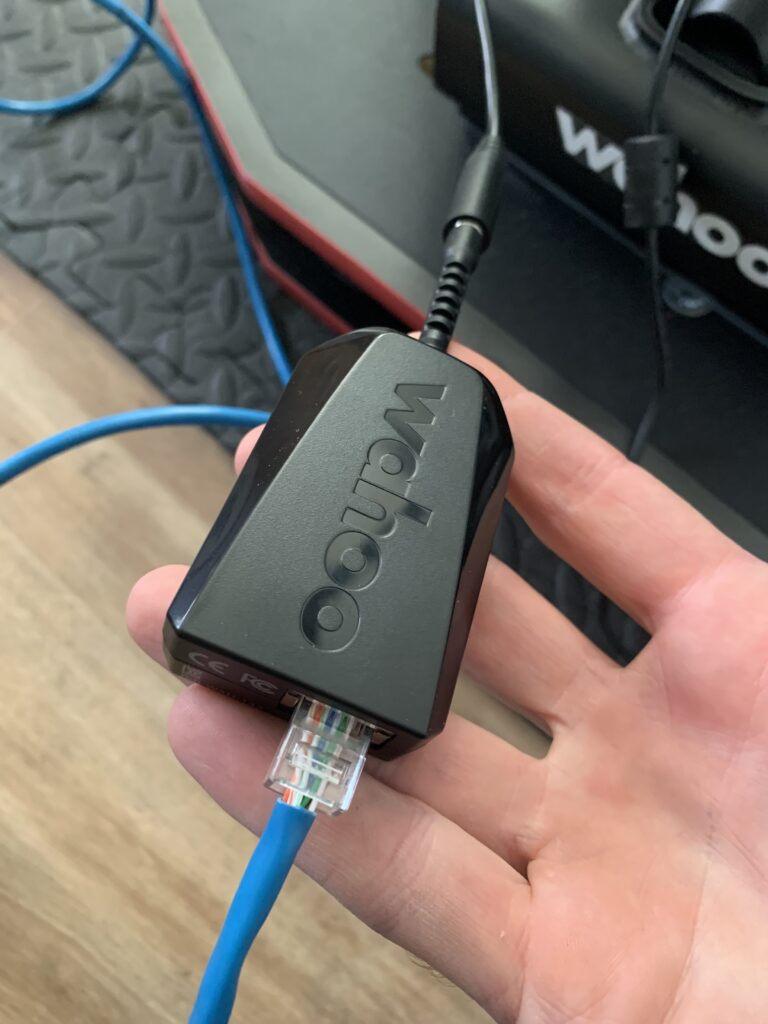
KICKR Direct Connect plugs into your Wahoo KICKR V5, then you plug a standard ethernet cable into the other end. That ethernet cable then plugs into your router or the ethernet port on your computer. Easy!
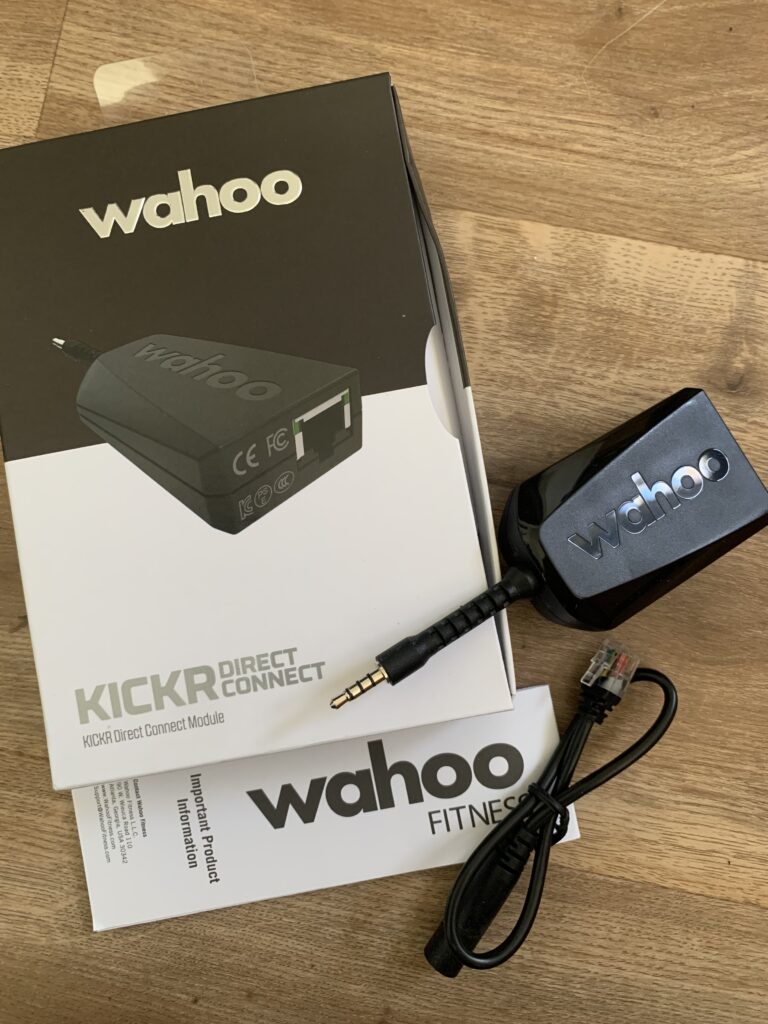
Contents of the $99 package
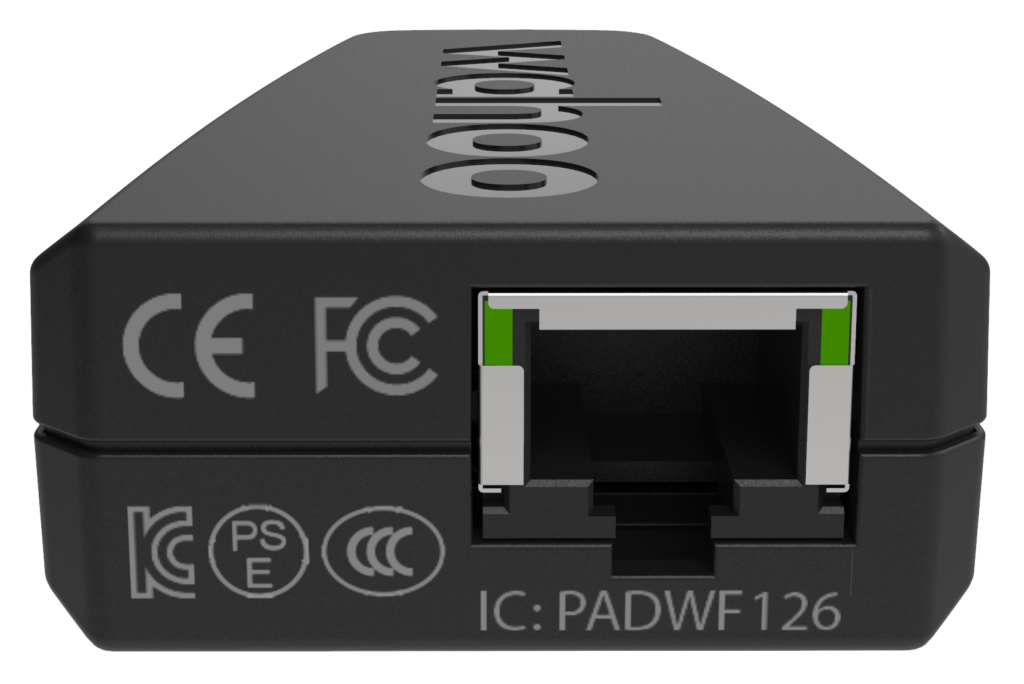
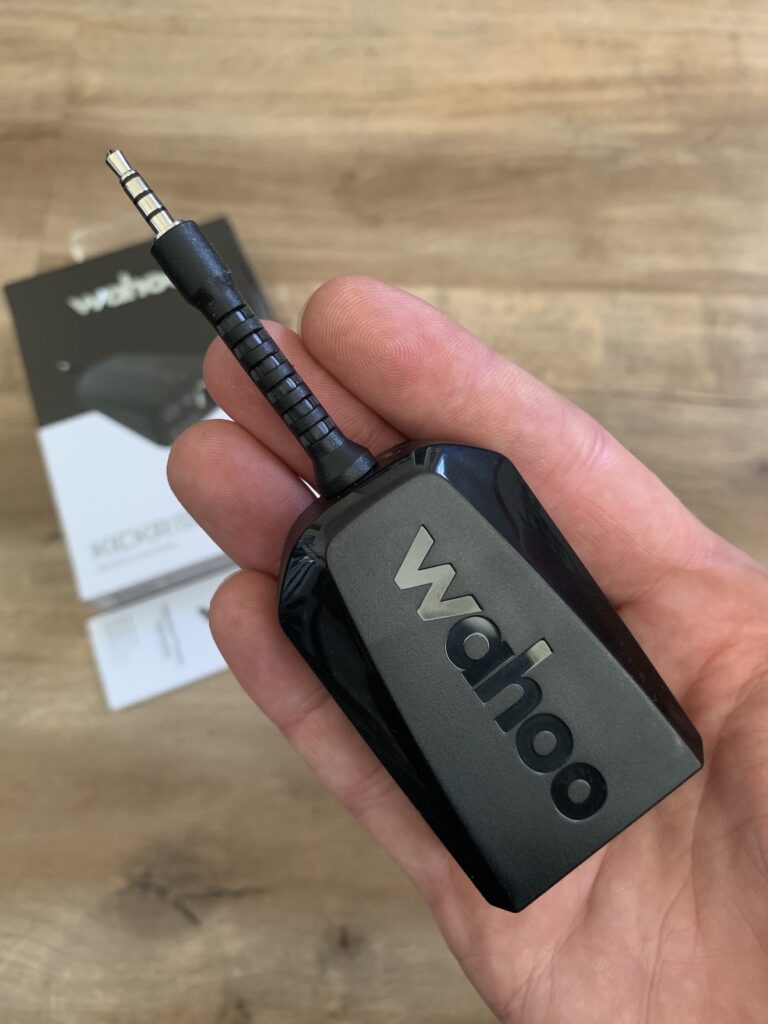
The Direct Connect Pod
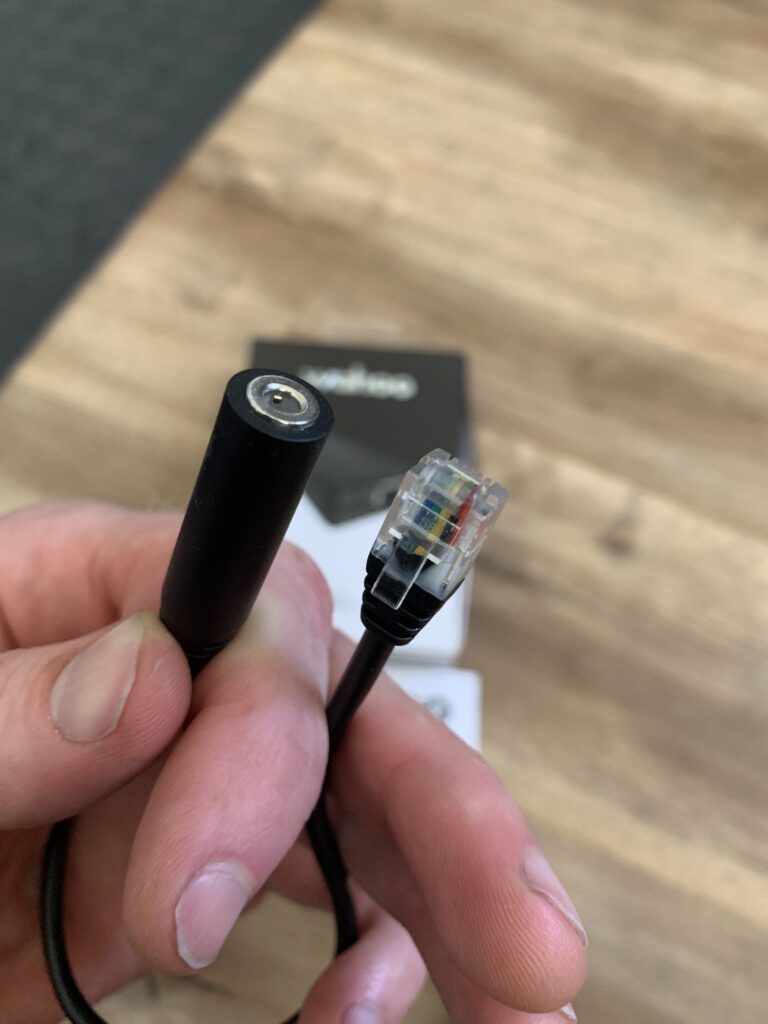
Quick disconnect cable
Plugged into the KICKR
All set!
The Direct Connect pod actually plugs into a quick disconnect cable, which then plugs into your KICKR. This allows for (you guessed it) quick disconnects, including the accidental sort that happen when your spouse trips over the new ethernet cable running across the living room floor.
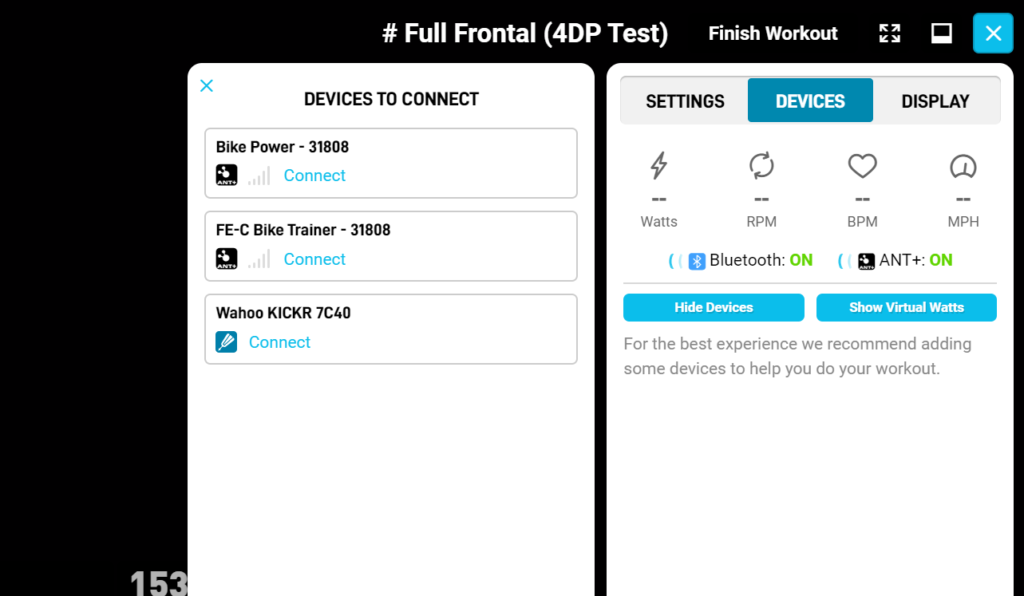
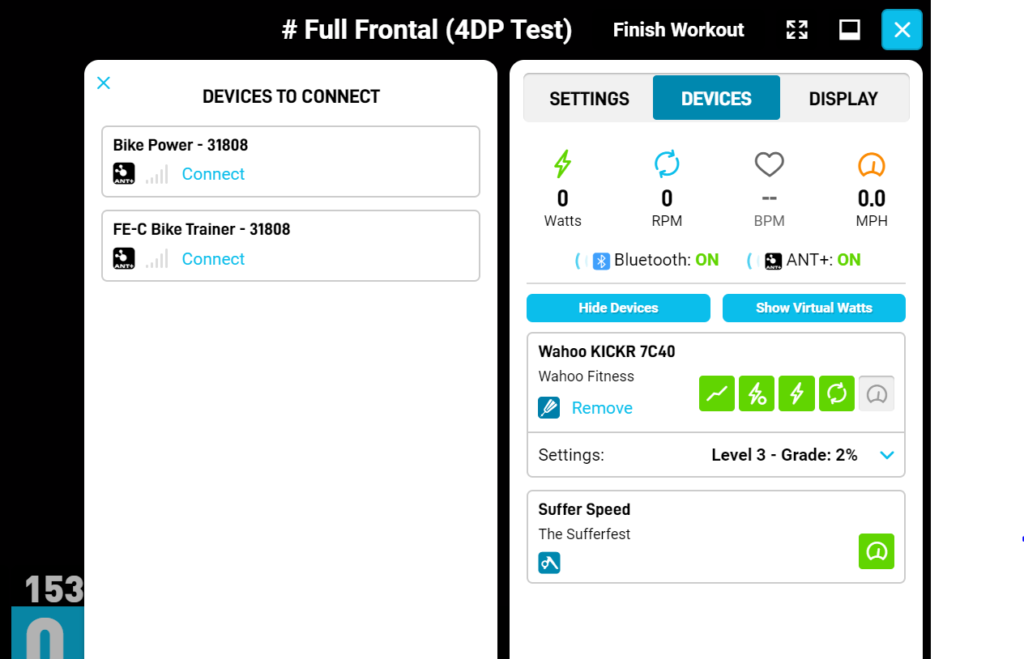
In Wahoo’s SUF app, it simply pops up as another connection option to the KICKR once everything is plugged in. We received a Windows Security Alert when plugging directly into the computer’s ethernet port, but clicking “Allow Access” let everything work just fine.
Connection options in SUF (Direct Connect is on the bottom)
Connected and ready to ride
Security alert
Conclusions
We like having options, especially when those options improve the overall Zwift experience. We can see the Direct Connect option becoming popular with competitive Zwifters living in high RF environments (areas with a lot of wireless frequency traffic) who struggle with ANT+ dropouts or unexplained Bluetooth issues.
Movistar and Zwift have just announced the Movistar Team Challenge, a talent ID competition to identify five men and five women to join the new Movistar E-Team.
The competition will be held exclusively on the Zwift platform, with the journey presented by GCN.
A Big First
This is headline news in our space because Movistar will be the first World Tour team with an official E-Racing squad. This is a first, but certainly not the last – we predict more World Tour (as well as Pro Continental and Continental teams) will develop e-racing squads in the near future. Why?
Perhaps Juan Pablo Molinero, Movistar Team CMO, says it best: because Zwift can “offer new possibilities to their [Movistar] fans, supporters and partners. The Movistar E-Team will enlarge our audience and “contact points” with our fans.”
From a business standpoint, the costs associated with running an e-racing squad are miniscule compared to an IRL pro squad. So the marketing ROI in e-racing is strong – and pro teams are beginning to figure this out.
About the Movistar Team
The Movistar Team is the longest-running, most successful squad in pro cycling’s top tier, the UCI WorldTour, which gathers together the 19 most prestigious men’s teams on the planet. 2021 sees the Blues’ men’s team in their 42nd consecutive season of activity with a roster of 29 riders. The squad also includes a 14-member women’s team, active since 2018 and part of the highest tier, the UCI Women’s WorldTour.
The squad is managed by the Abarca Sports corporation, based in Navarra, Spain.
Squad Goals
The Movistar E-Team’s stated goal is to target the Premier Division of the Zwift Racing League in both male and female categories, seeking to become one of the best cycling esports teams on the planet.
Competition Structure/Schedule
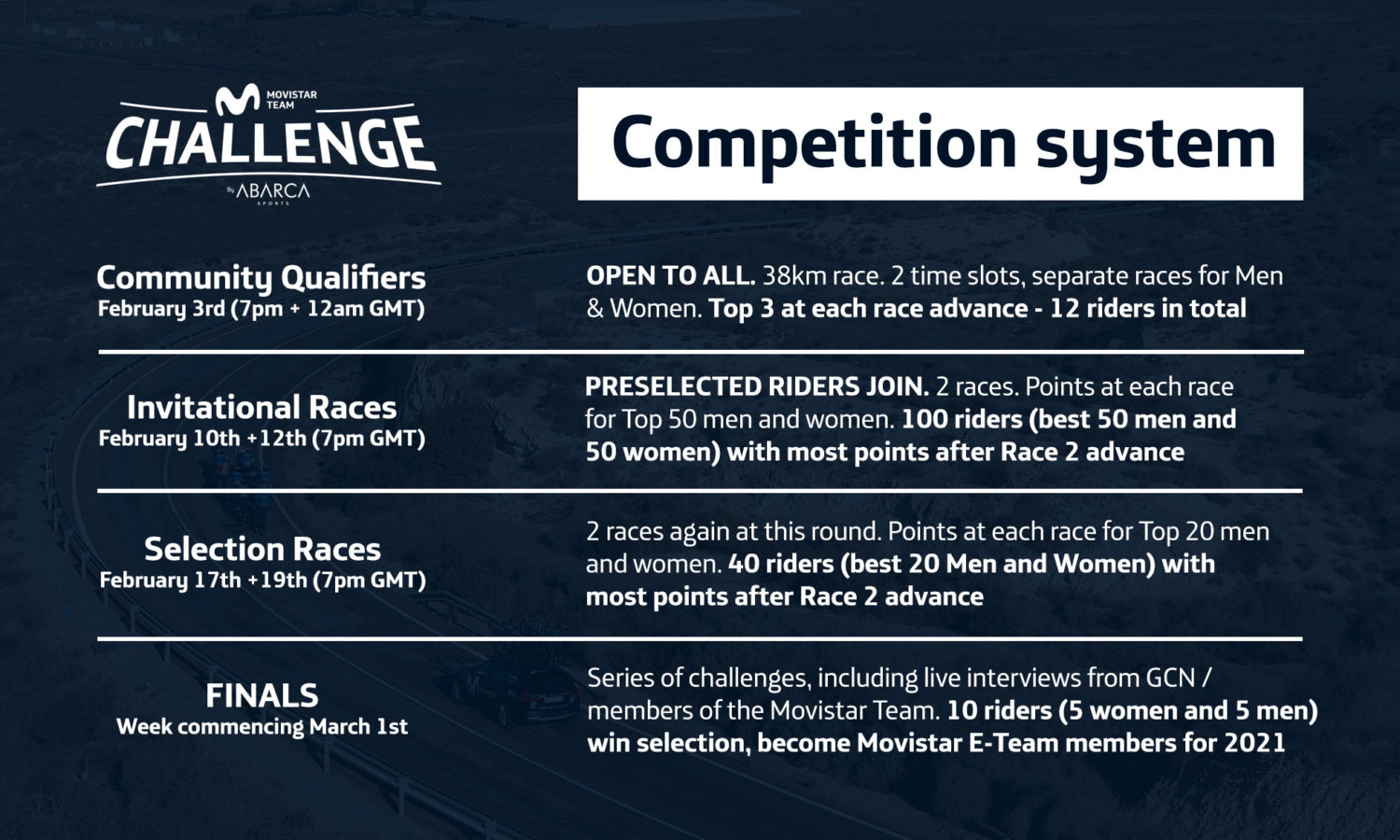
The competition is being held over 5 weeks, beginning February 3rd.
The Movistar Team and Zwift have already invited 300 of the best-ranked Zwift racers to the competition (150 men and 150 women). Many of these riders are currently racing Season 2 of the Zwift Racing League.
But everyone is invited to compete for a spot on the new Movistar E-Team! If you haven’t already been invited, open qualifying races are taking place on Wednesday, February 3rd. There are two event times – see details at zwift.com/events/series/movistar-team-challenge-community-qualifier.
The top three men and women in each race will advance to the next week (so a total of 6 men and 6 women) after Zwift Accuracy and Data Analysis (ZADA) verifies race results.
The 2nd week is a points competition for pre-selected riders only – the 300 invited prior to the competition, and the 12 top finishers from the open qualifiers. Riders will race two separate events this week, with the top 50 from each race receiving points. After the two races, the top 50 men and 50 women will advance to the next week.
Week 3 is similar in structure to week 2, except only the top 20 men and women will advance.
The final week’s challenges are not as clear-cut as the previous weeks, because Team Movistar is looking to assess the unique traits and abilities of each finalist, to determine who will be the best fit for the new team. Team Movistar’s guide says:
The Finals will feature a series of challenges, different from the previous races, where the riders will not only have to again prove their performance on the bike, but also show their personality and abilities in front of Global Cycling Network presenters and members of the Movistar Team, which will be able to interview them live during the event.
The team staff will watch the Finals and make their assessment on the sporting talent of the participants, while also evaluating their marketing value and social media presence. After those examinations, they will select the members of the 2021 Movistar E-Team roster.
For that final selection of 10 riders (5 men and 5 women), the Movistar Team may assign a maximum of 2 spots for exceptional reasons in its sole discretion.
Full Movistar Team kit (both in Zwift and IRL), as well as official products and services from the team as a fully-fledged Movistar E-Team member. Includes Le Coq Sportif lifestyle wear, ABUS helmet, 100%, sunglasses, Garmin cycle computers, RAW Superdrink, cryocompression systems from Aquilo…
Custom attention from the team, with training plans and systems, assessment of your nutrition and recovery,etc
Support from the performance team and coaches of the Movistar Team
Movistar Team Training Camps invites
Access to the Movistar Team Travel Experience cycling trips
1-year contract, subject to renewal upon review. No salary provided
Rules, Terms and Conditions, Etc
To compete for a spot on the Movistar E-Team, racers must meeting the following requirements:
A heart rate monitor
A direct drive trainer and power meter (correctly calibrated)
A ZwiftPower account (race performance will be compared against historical Zwift data)
A Strava account (race performance will be compared against historical data)
Correct weight/height
Be at least 18 years old as of March 1, 2021
Any rider to be in contention must be able to provide or carry out additional verification procedures as required by ZADA
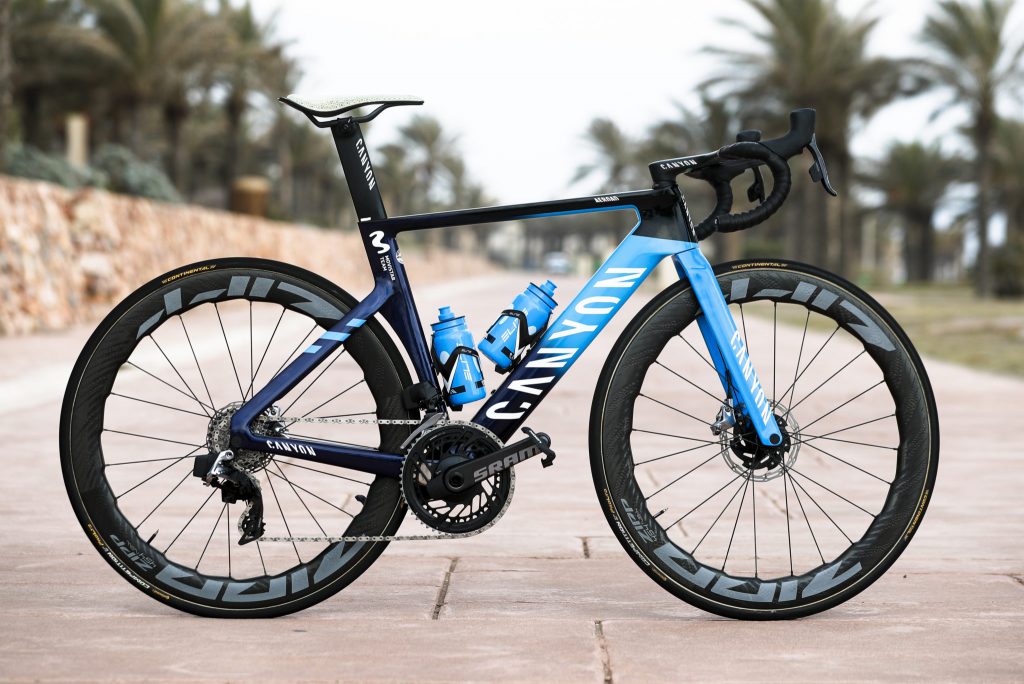
All riders will be assigned the Canyon Aeroad and Zipp 454 wheels to ensure equipment parity.
This continues my series of broad, foundationless speculation regarding Zwift feature development. One of my favourite pastimes!
First I took a high-level view of what could be next for Zwift. This generated over 300 comments, and even more on social media platforms. Cleary feature development is a subject that Zwifters love to debate. Following this, I took a deep dive into the future of racing on the platform, specifically how a ranking-based matchmaking system could work.
Today I will be looking specifically at Zwift Clubs – a FutureWorks feature that will hopefully see a broader release and some significant development progress in 2021.
What is Zwift Clubs today?
Zwift Clubs has been rolled out to a select beta audience made up mostly of the larger clubs and event organisers on the platform. The current feature set is quite limited; you can join a club, message within the club, and see total statistics for the club’s riders.
For a more detailed breakdown of Clubs as it exists today, please see Eric’s most recent Clubs feature breakdown.
Clubs homepage
Event editing
Member list tools
What type of clubs are there?
Before we look at the potential of this “system”, it is important to understand the types of groups that would consider themselves clubs, as their usage and use-cases can differ significantly.
Zwift virtual clubs – these are the likes of DIRT, CryoGen, BRT, and my own Socks4Watts. Communities of Zwift users who for the most part may have never met in real life, but come together under the same banner for Zwift races or events. Their numbers can be in the thousands, and for event series like the ZRL they may manage dozens of teams. They are also the most common hosts of official Zwift events.
Real-life clubs – often governing-body affiliated, these clubs typically organize real-life group rides and events with formal (paid) membership. (My understanding is that much of the boom in Meetups at the start of lockdown came from real-life clubs organizing group rides for their members.) They are typically interested in being able to arrange rides, group workouts, or events directly through the platform for their membership base.
Less formal clubs – maybe groups of friends that like to ride together in real life, or are using Zwift as a way to keep in touch and keep fit at the same time. They would use clubs as a way to better engage with their friends and share the content that Zwift has to offer. For example, they could see which rides their club mates have signed up to, or challenge each other for most miles/kms in a month.
It’s worth noting that a given individual may identify themselves as part of all three types of clubs.
What features can be contained within Clubs?
Meetups and Races
Within a club, you should be able to organize a meetup and invite everyone in the club with one click. It should be possible to plan these far in the future, and have a calendar of future meetups visible that you can join or decline. It should be possible to stage these meetups as races or time trials with full race capability, including start pens and finish lines. These types of events are only visible to club members.
Hosted events
These are events hosted by the club that are publicly visible, much like the events that we see today in the Companion app. It should be possible for club members to view and attend club-organised events from the club page. It should also be possible for club admins to create and submit events from this page. It is likely that Zwift would need to grant public event capability to certain clubs, and approve events once they are submitted.
Target club races/rides
A club should be able to flag publicly available rides or races as target events for the club. These should be visible in the club calendar for members to join.
Club kit
Current Club chat screen
This is a big one, but not an easy one. Clubs that already have an in-game kit, should be able to access a setting that grants the kit to all of the club’s members. If somebody leaves the club, they lose access to the kit.
For clubs without an in-game kit, a basic kit selector should be available. With a selection of colours and patterns, most clubs should be able to closely replicate their real-life kit, or at least select something unique to identify themselves with the game.
Communication
Within the Clubs portal, it should be possible to message members and post announcements. It is unrealistic that you will be able to replicate a feature set like Facebook groups, so the functionality should focus on the key elements to update members, and provide links to Discord, Instagram, club website, Facebook, etc.
Sub teams
Maybe an advanced feature, but it should be possible to subdivide a club with a parent-child relationship. This allows for a club to keep its portal relatively clean while allowing subgroups to communicate privately without clogging up the main feed.
Stats
The Club portal should host all of the club’s statistics – distance and elevation league tables over time, club member rankings, overall club ranking, etc.
How can Zwift Clubs be used in the wider world of Zwift?
Once Zwift has developed Clubs, it becomes possible to group riders together elsewhere in Zwift which enables a number of possible functionalities…
Races
Within a race, teammates can be clearly identified in the rider list and mini-map to help with team tactics. Potentially the game mechanics could also be adjusted. Imagine if you could auto-steer to the wheel of a teammate before a break, or if there were team-based powerups that gave all of your teammates in the vicinity an aero or drafting boost. This could increase the ability to execute team tactics.
TTTs
If Zwift can identify teams, it becomes possible to use the conveyor system for TTTs. Drafting could be limited to only your teammates so passing other teams is no longer an issue. It could also then be possible to use TT bikes in TTT events!
Local chat
There should be an option to make in game messages only visible to your club members. That way if you are in a race and spot a teammate, you can privately plan an attack without it being visible to all riders.
Your Comments
Well, that’s my brain dump for the potential of the Clubs feature. How do you think you would use it? What have I missed? What feature set would you like me to explore next time?
In the first diary entry, I touched on the symptoms and initial recovery from the virus, ending with details of the two functional threshold power tests I undertook in the first week of January.
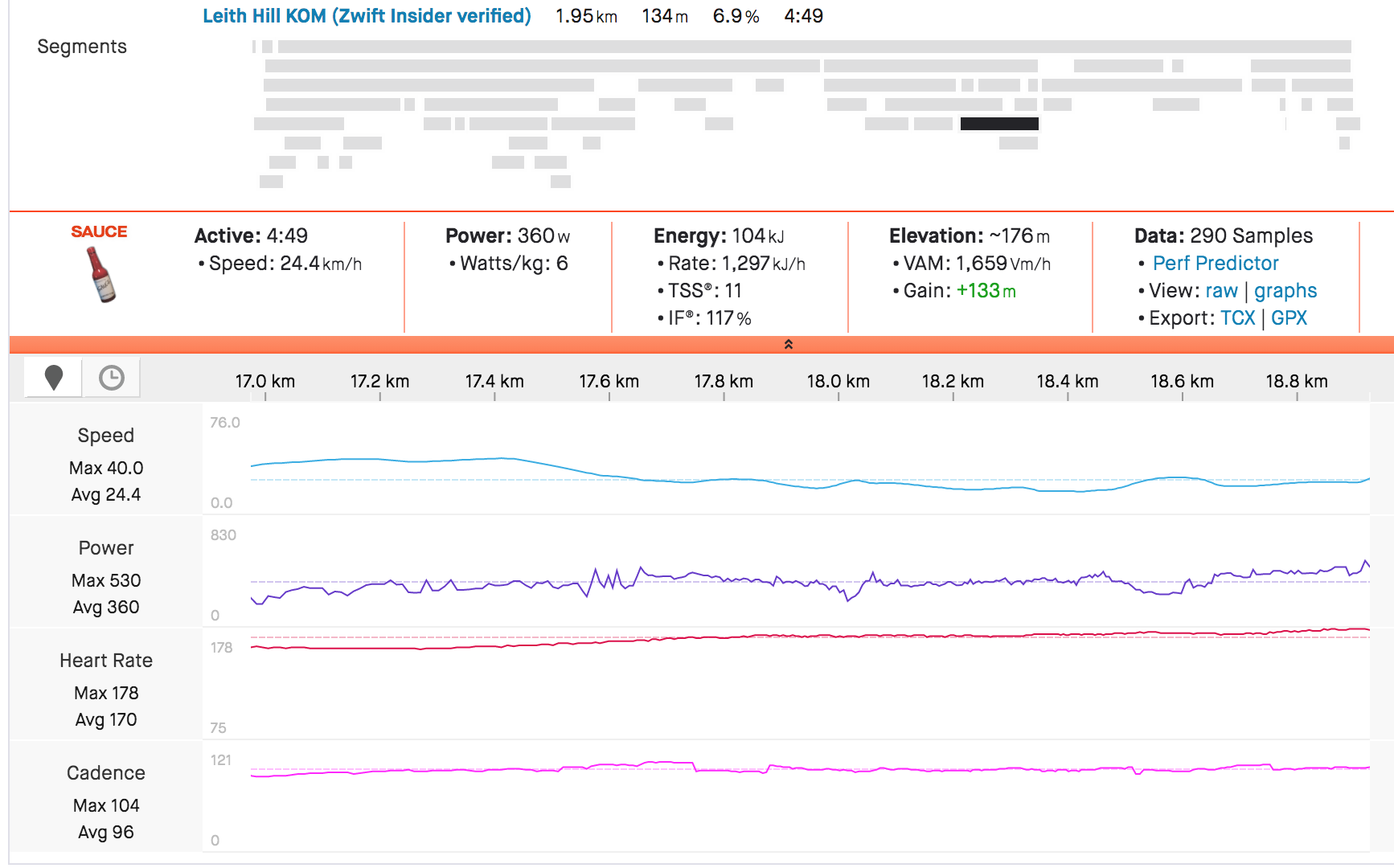
The day after the tests, I completed a group ride with the Wahoo LeCol team on one of the London circuits, and we tackled one of the most notorious climbs on the circuit (Leith Hill). This allowed me to test my shorter-term power and to my surprise and delight, I managed to squeeze out a considerably better-than-average 6 W/kg for just under five minutes.
A very good day
My goal for the following week was to gradually increase the time I spent on the bike. I had no specific training in mind – I felt it was more important to get the mind and muscle connection back and focus on remembering how to pedal with force, rather than just plodding along. On Friday I completed the Flanders Endurance Series and tried not to get carried away with the front group. In doing so, I managed to get a good session under my belt, totaling three hours, with a training stress score of 126. That number matched my heart rate average too, signaling small but important gains in my fitness.
On Saturday I included another endurance ride. This was a rather long and flat Evo CC 160 km base ride at 3 W/kg – obviously indoor distances are higher than outdoor distances, nonetheless it was a good four-hour session with my heart rate sitting below 130 bpm.
In the evening I lead my first group ride, an official Zwift event in collaboration with the Bolt Racing Team. For the event, I created workouts using my knowledge of the courses and knowledge of efforts to simulate the WTRL and Zwift Racing League events. These training sessions are usually between 30-60 minutes in duration, and I am delighted to say that we’re seeing over 300 participants. They are free to join and open to anyone who is looking for a good training session that stands up as an alternative to a race (see upcoming events).
This ended a really productive Saturday and the biggest training load I had achieved in several months, with a TSS of 225.
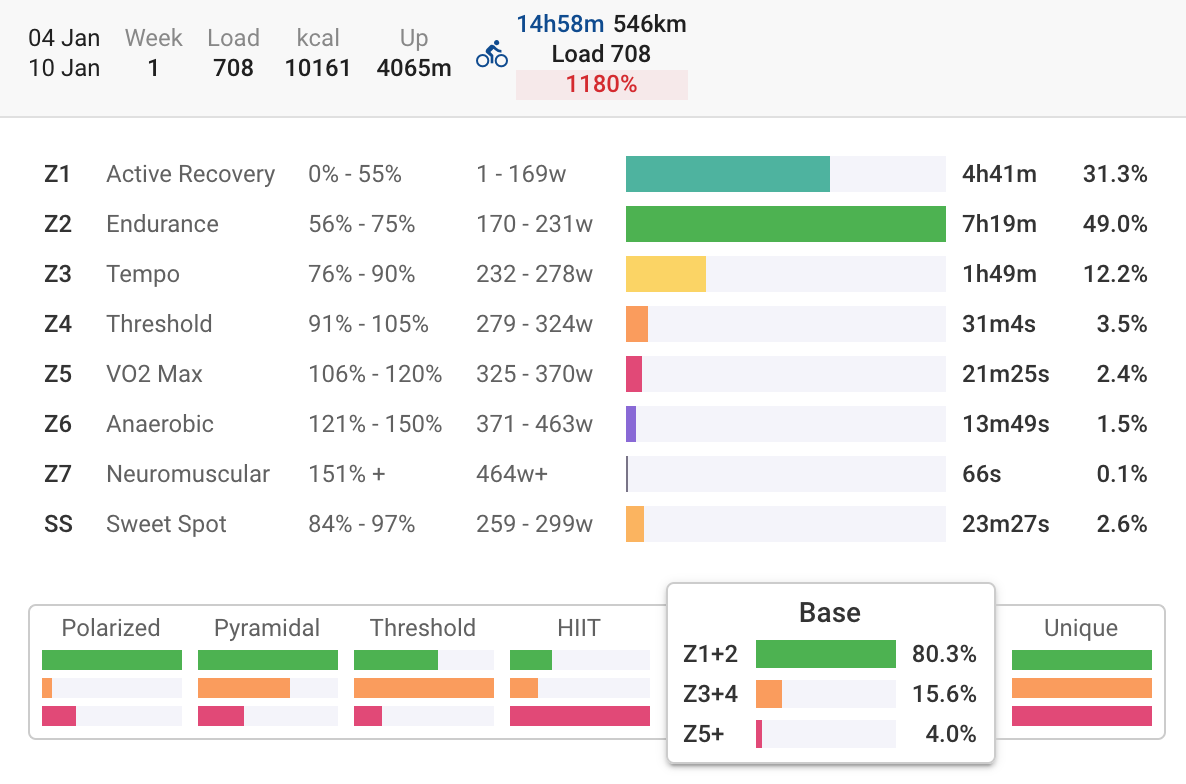
As you can see from my training zones and time in the saddle below, I had achieved a good solid block of time working on my base endurance. However, now it was time to start ramping things up and pushing myself a little harder.
The first round of the Zwift Racing League took place in Richmond on the reverse course, which is a particularly hard circuit with climbs coming early on into the race. During season one of the Zwift Racing League a few months ago, I won the opening race and enjoyed a successful run in the subsequent weeks before being brought down by illness.
It will be a fascinating period of racing for me over the next eight weeks because there will be an obvious improvement in my fitness and this increase in fitness will hopefully impact my finishing positions. Whilst some of the courses will suit me more than others, I hope I will be able to fight for a top 20 or a top 15 placing at some point later in the series.
The second week of training had less volume but slightly more intensity. I found myself spending more time in zone one because I was completing intervals, and more time in Sweetspot and zones four and five, because of the nature of the racing. I had my first really good day on the bike on Tuesday morning. My power was slightly higher than it had been recently for a general endurance ride and my heart rate was slightly lower. This is a good sign that things are moving in the right direction.
I know so many of us have life commitments and incidents of illnesses and stress that can cause a lack of consistency and drop-offs in overall fitness. There are things we can control and things that we can’t, but I want to draw attention to the fact that consistent, flexible training works, and you can come back quicker and safer than you think.
I am working in a 2:1 week block ratio at the moment, which is my favourite periodisation technique because I can overload much more effectively in two-week than three-week blocks. Speaking of which, I had really good days on the bike on Friday and Saturday, totaling almost 400 TSS.
On Saturday I did the arduous Four Horsemen route which includes the Alp. I used this event and race to give myself extra motivation to carry out some natural zone three tempo surges on the long climbs and some threshold/sweetspot efforts on the shorter climbs. I managed to stay with a front group for longer than I expected, and got tailed off at the bottom of the epic. Eventually, I was joined by four other riders at the bottom of the Alp, and used the opportunity to really test my fitness and race strategy by picking off riders one by one as we raced to the top.
I finished the event in around 40th position having had a very, very good day on the bike which concluded a great two-week foundation without any hiccups.
Overall, I am feeling good – my body is sending signals that it is happy with what I’m doing and I get the impression that I will have to retest very soon to make sure that my power numbers are accurate. The aim for these tests is to achieve accurate numbers, not better numbers, as you may get to a point where your numbers may plateau and only increase in very small increments (one to two watts at a time). This reflects a more accurate power increment. So, stay tuned!
Questions or Comments?
I predict that the next diary entry will have more test results attached – if I produced 309w last time, what are your guesses for next time?