Over 134,000 people signed up for Zwift Academy Tri, and all who completed the program’s 10 workouts and 2 bike and run races graduated with a chance to make the final team. The final six members were selected based on their Zwift Academy performance, past race results and personality.
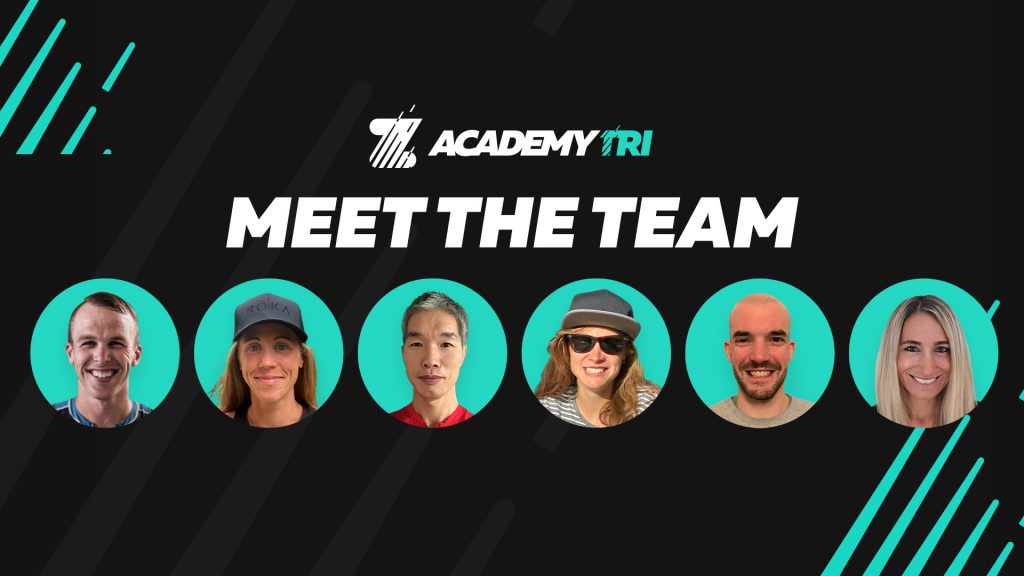
Originating from four different continents, the Zwift Academy Tri Team for 2021 is:
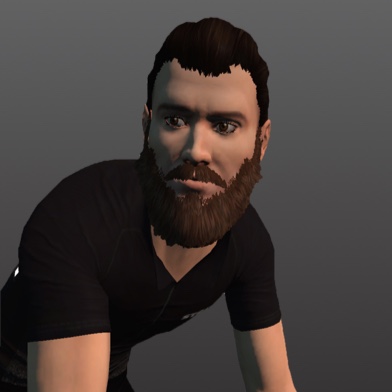
Eric Engel, USA: a digital marketer in Wisconsin and has been hooked on triathlon since university.
Kristen Yax, USA: she hails from Oregon where she is a psychology professor.
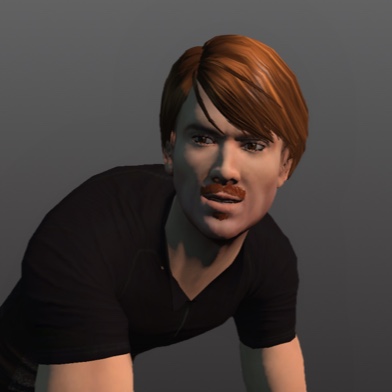
Rebecca Duxbury, UK: a former competitive hockey player who Oxfordshire home and is a full-time pharmacist.
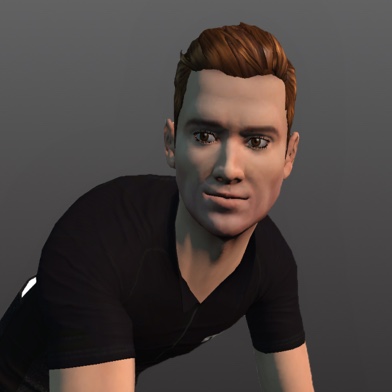
Lukas Bosmans, Belgium: a police detective who loves running and has won several beer miles.
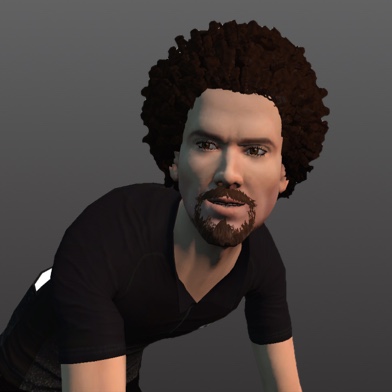
Kangsub Song, South Korea: a computer programmer and network engineer who is a committed Zwifter with level 50 on the bike and level 21 on the treadmill.
Vanessa Murray, Australia: from New Zealand but calls Melbourne home and spends her time coaching new triathletes.
The team will benefit from incredible support from some of the sport’s best-known brands as they build towards the IRONMAN World Championships in Kona”
Specialized will be supplying the team with bikes, race kits, shoes, helmets, and money-can’t-buy performance experiences
Wahoo is providing the full Wahoo ecosystem
WHOOP joins as the performance and recovery partner
ROKA wil provide eyewear and swim apparel
Science in Sport is providing the team’s sport nutrition and consultations
Returning as Zwift Academy Tri team mentors and ensuring the team get invaluable guidance are Tim Don and Sarah True.
Zwifters are invited to follow the highs and lows of the Zwift Academy Tri team’s journey as the team balances working, being parents and the other challenges life throws at them while being an amateur athlete. Learn more about the team and to stay up to date with their progress >
2021 will hopefully see races start to come back, with some of the team lining up for a race for the first time in over a year. Keeping up the momentum of training in a year without competition has been challenging – some of team have already qualified for Kona and will need to find that form again. Others are yet to qualify and will be looking to secure a lot in a year where the calendar is anything from certain.
We wish the 2021 Tri Team the best of luck in their training and racing as they prep for Kona!
Each week I give you a profile of the upcoming WTRL TTT route, guidance on bike choice, and some target times if you want to aim for the Premiere League (top-10 in each coffee class get to be in a special race televised on YouTube).
Not bad – all in the right kind of place except Espresso who were much faster than i anticipated! Let’s see if I can get a clean sweep next week.
Thursday 22nd October – Three laps of Innsbruckring
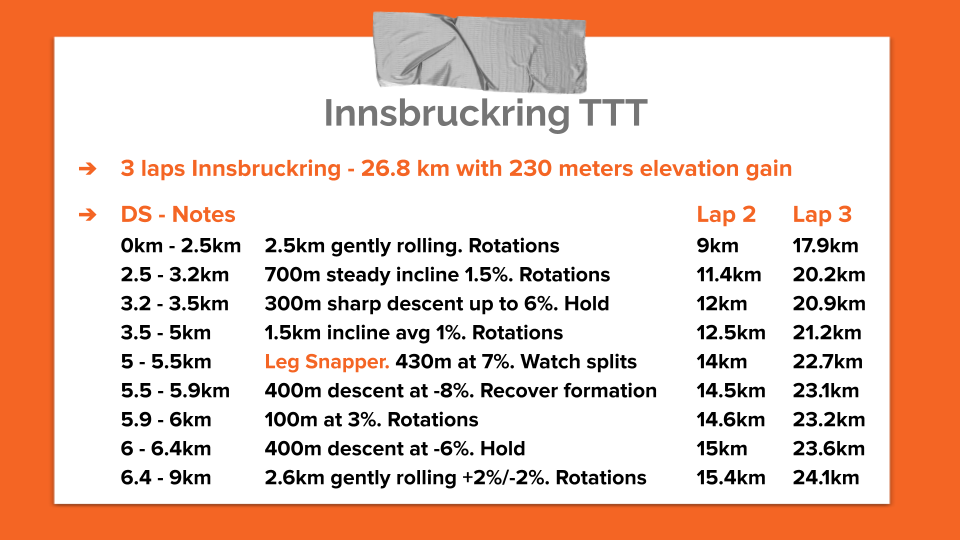
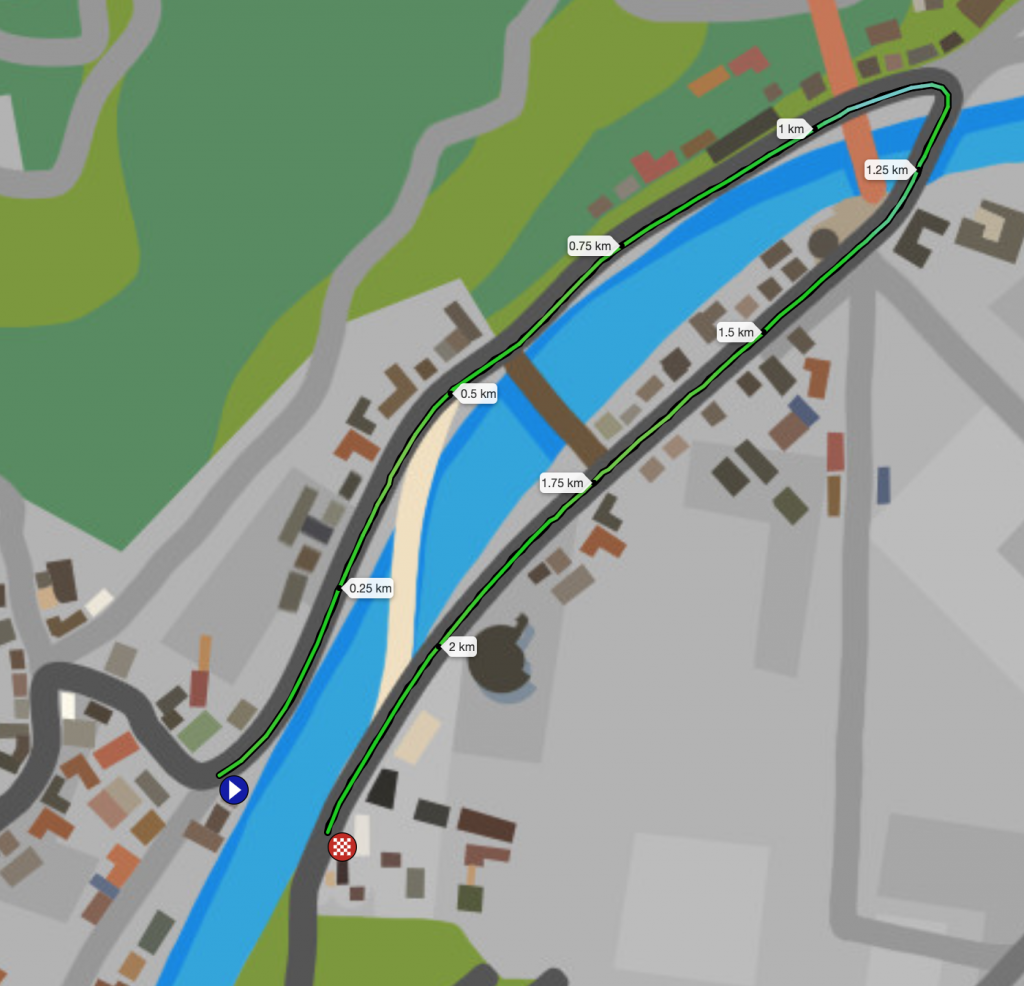
After a few weeks of hilly rides, this one is mostly flat, with just one stretch known as The Legsnapper (or Kleiner Hugel as I call it). We are off to continental Europe – to Innsbruck, Austria. The name Innsbruck literally translates to “bridge over the river Inn”, which we cross six times in the three laps of the city center map – and we cross the river Sil (a tributary of the Inn) six times too!
I’m excited for this race – I have raced it twice before and think it’s a great test of a team. Many teams look at this course and fear the Leg Snapper itself, but for me, the killer section is from the summit of the Snapper and the descent that follows. The nature of that descent exacerbates splits caused on the Leg Snapper, making them very costly to fix.
Three laps at 8.8km, plus a tiny lead-in make this a short, fast 26.8km with one awkward little bump in the middle of an otherwise flattish (gently rolling) course. Top-flight Espresso teams will be in and out in just over a half hour, while an under-staffed Mocha team will be around 50 minutes. My team is targeting 40 minutes this week – that’s aggressive as it’s 2 minutes faster than last time we tackled the Innsbruckring. Winning here is about being fast on the flat, and not allowing Kleiner Hugel to slow you down too much.
There is, of course, only one tricky stretch on this course. When you cross the Inn (5km, 14km, and 23km) you head up Kleiner Hugel then do a series of bumps down. Obviously staying together on the main hill is important – but as I mentioned above, equally important is not getting separated on the descent. Communication alone won’t help you here – you have to have a plan, and ideally time to practice. Once you finish the descent (6.4, 15.2, and 24 kms) it’s all fairly flat again. My fastest time for a lap was in the Tour of Innsbruck at 13:30 – I’ll do better this time.
Bike recommendation on this route is pretty straightforward. Yes there’s a hill… but other than that it’s flat. Aero rules the day. For me, it will be my trusty S-Works Venge and Super9 disc wheels.
There is a reason to not go pure aero though – if you are rider who is going to get dropped on the Leg Snapper, consider something lighter weight to help you over that bump. For this reason (despite what I said only one paragraph ago) I might end up on Tron!
Here’s my recommendations at different levels for Innsbruckring.
Level 5 Specialized SL7 with Roval CLX64 or ENVE SES3.4
Level 6 Ditch the Roval/ENVE and get the DT Swiss ARC 1100
Level 13 Ditch the Roval/ENVE for Zipp808
Level 23 – Ditch the SL7 and get the Canyon Aeroad… Zipps
Level 33 S-Works Venge… keep the Zipps
Level 40 S-Works Venge with Zipp 808/Super 9 (the disc wheel at the back)
Level 45 get those 858/Super 9 wheels and pair them with the S-Works Venge
I know I say it every week but I cannot stress highly enough that if you are racing you need to be working on Tron. It’ll take a while, but just set the Everest Challenge and forget about it for nine months… like having a baby.
Regardless of how the official race recon breaks the route up, I only see three sections…
Pen/Gate to the bridge at the foot of the Kleiner Hugel
Leg Snapper and the descent
Along the river, back across the Inn and home
I built out some DS-style notes – the race broken down into its component parts and some basic instructions. I’d love to hear what you think of these!
Pen / Gate to the bridge at the foot of Kleiner Hugel
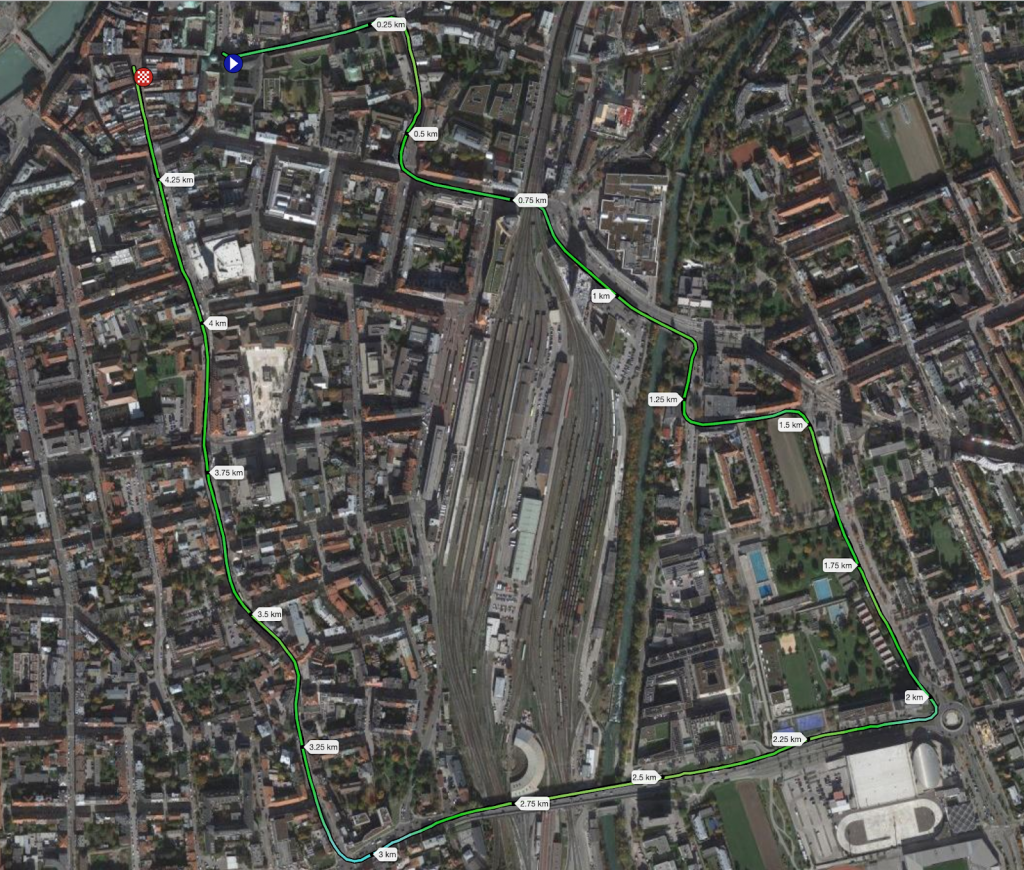
The lead-in is a short 200M – and the distance from the pen to the bridge is 4.7km. This isn’t flat exactly but there’s nothing taxing and nothing that will ruin your momentum if you’re paying attention. The most challenging is the long overpass over the River Sill (a tributary of the Inn) and railyards, but it is just a steady 600M at 1.5%. On the satellite view you can see it – the long straight at the bottom.
Leg breaker and descent
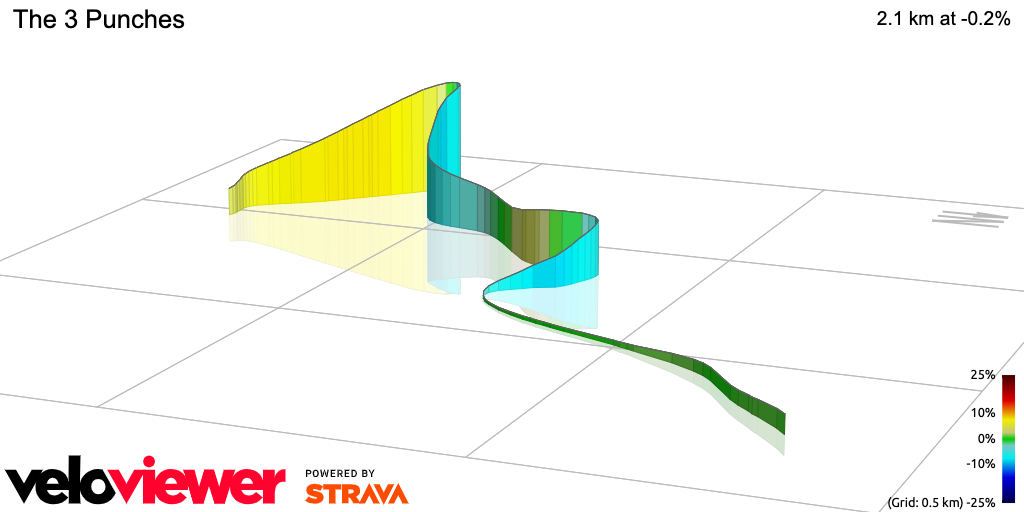
Kleiner Hugel is the only meaningful hill on the loop. It isn’t a brutal climb by any definition, but it’s long enough to grind your heavy sprinters into the dirt. By the time they are at the top they will be gasping! By the numbers, it’s 450M long and averages 6.8%. But the hill actually starts gently and ramps to 9% 100M from the top. You cannot afford to be timid on this bump – pick a speed on the edge of what the team can tolerate, and go for it!
After you crest the hill the descent comes. The problem here is that if you have a split going up the hill, the first guys over the top will accelerate down, while your slower riders can barely turn the pedals. A 2-3 second gap stretches to 10 seconds and you are done as a team.
I can’t emphasize enough – your plan for going up and down Kleiner Hugel will make or break your ride.
Along the river, back across the Inn and home
Through the sprint and along the side of the river to the bridge, sharp turn and back again to the start/finish gate. This isn’t flat – it undulates – but mostly between 1 and 2%. This stretch is 2.5km long.
The ride as a whole
There are three laps to do. On the first lap you should be fine. By the time you hit the Kleiner Hugel on the second lap your heavier riders will be spent, and you may have to choose whether you’re going to leave someone behind on the hill. At this point you’re only halfway through, and their help on the remaining 12km might be invaluable… but you will have to slow down for them to catch up. Is it worth it? Only you know!
The third time up Kleiner Hugel will be immeasurably worse! A half hour or more at threshold and everyone is on the edge. Again the heavier riders will struggle. Will you help them or leave them to the wolves?
Target times
Innsbruckring has featured a few times in WTRL’s schedule, but only once before in the three lap format. That was TTT #66 on July 23rd. Here’s how you did (in 11th place) for each Coffee Class then.
Category
#66
#79
My prediction
Vienna
41:24
39:17
39:30
Doppio
34:42
34:45
Espresso
34:49
35:24
35:30
Frappe
36:48
36:13
36:20
Latte
39:39
39:16
39:25
Mocha
44:41
44:52
45:00
Wrap up
This race is all about one specific decision, probably played out twice – the second and third time over the Kleiner Hugel. Do you wait, or do you go?
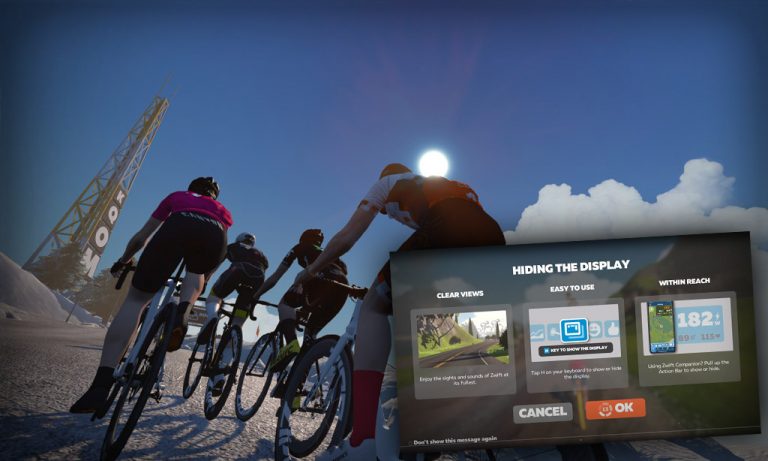
In the latest World of Zwift episode, lead game designer Wes Salmon chats with OJ about “Hide the Display Mode” – a new feature that appears to be releasing in Zwift’s next update.
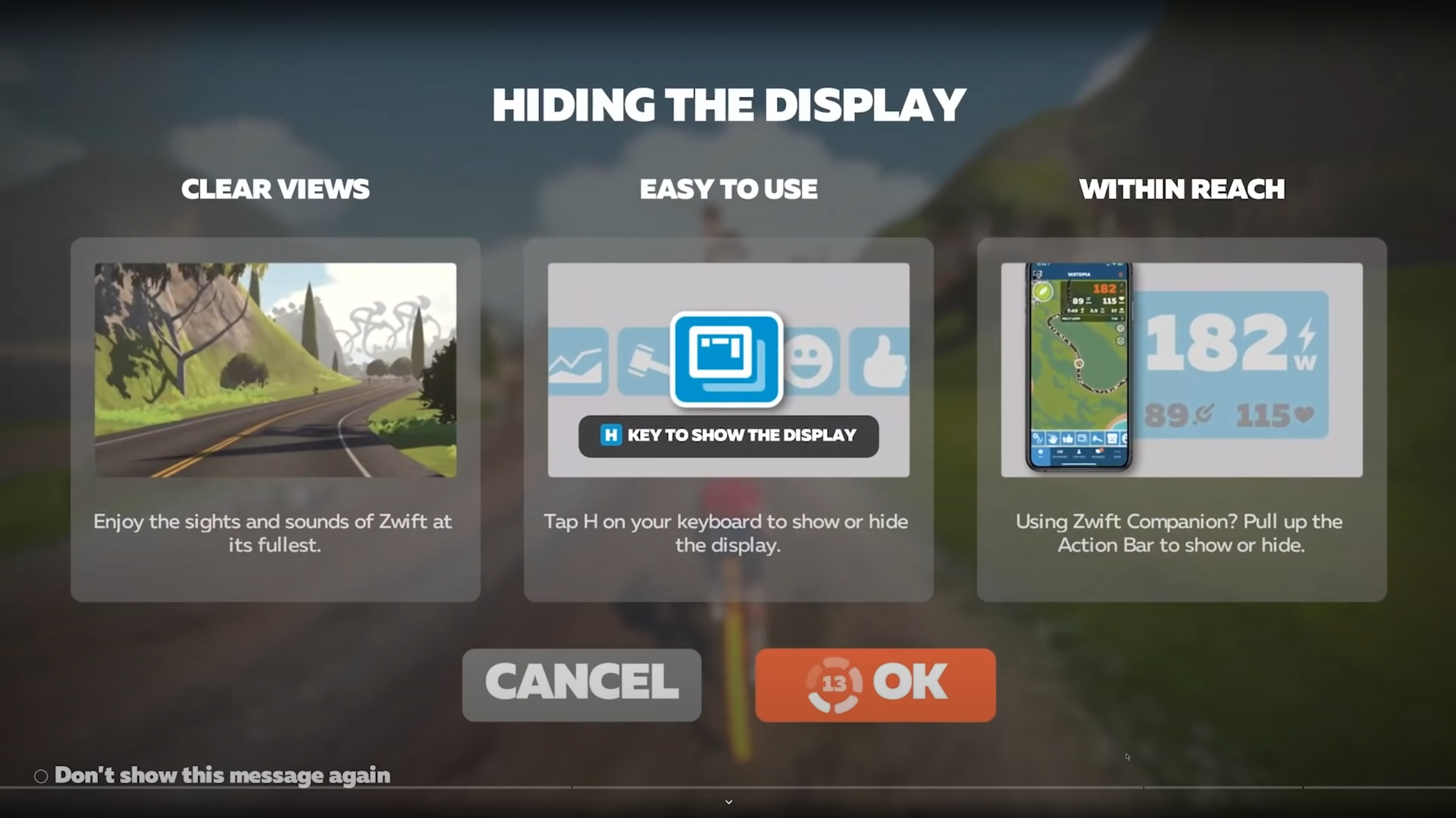
The feature isn’t live, but Wes gives us a sneak peak which includes this screen that pops up when you choose to hide the display:
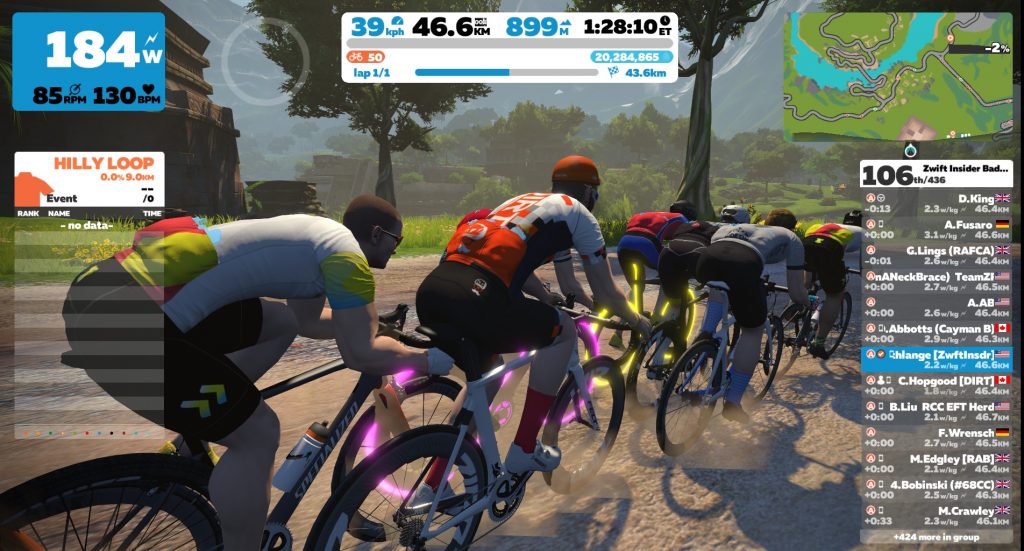
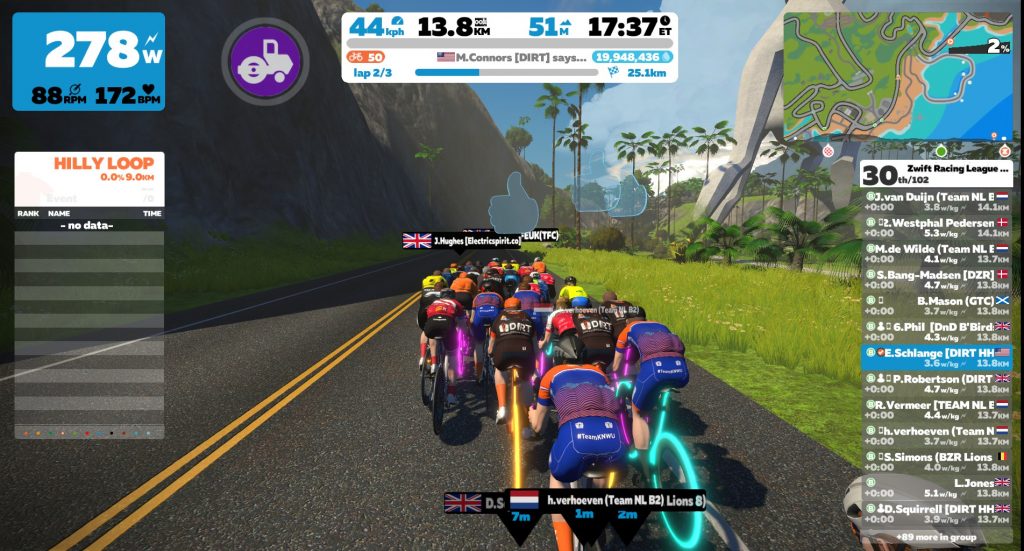
The end result appears to be the same as the “minimal UI hack” that PC and Mac users have had access to since Zwift’s early days. That is – all of the heads up display (HUD) elements leave the screen, so all you see is the virtual world. Here’s what your screen would look like in “normal” mode, then with the display hidden:
Normal mode
Displays hidden
I’ve written previously about racing with all the HUD elements hidden. It’s a super-cool experience that definitely forces you to pay closer attention to other riders as well as the terrain.
Zwift’s pending update for both the Companion app and the actual Zwift game will make it easy to toggle the HUD on and off whenever you’d like. PC users can just hit “H” on their keyboard, or you can use a new button in the Companion app’s action bar to accomplish the same.
Next Level
Of course, I wouldn’t be a Zwifter unless I requested more after seeing the preview of a new feature. 😊
Zwifters have talked for years about how they’d like to customize Zwift’s HUD elements to display the data they want, in the location they want. Perhaps we’ve all been spoiled by our customizable bike computer screens? “Hide the Display Mode” will be a nice first step, but hopefully in the future we’ll see some additional functionality, including:
Turning off specific HUD elementswhile keeping others visible
Moving HUD elements around so we can have our screen laid out just how we’d like (especially handy if you’re on a large screen)
Modify font (and overall) size of HUD elements: this a request we’ve seen from farsighted Zwifters, as well as those with large screens.
Change the actual metrics displayed: perhaps I want to see average power, average speed, calorie burn, TSS, etc while Zwifting?
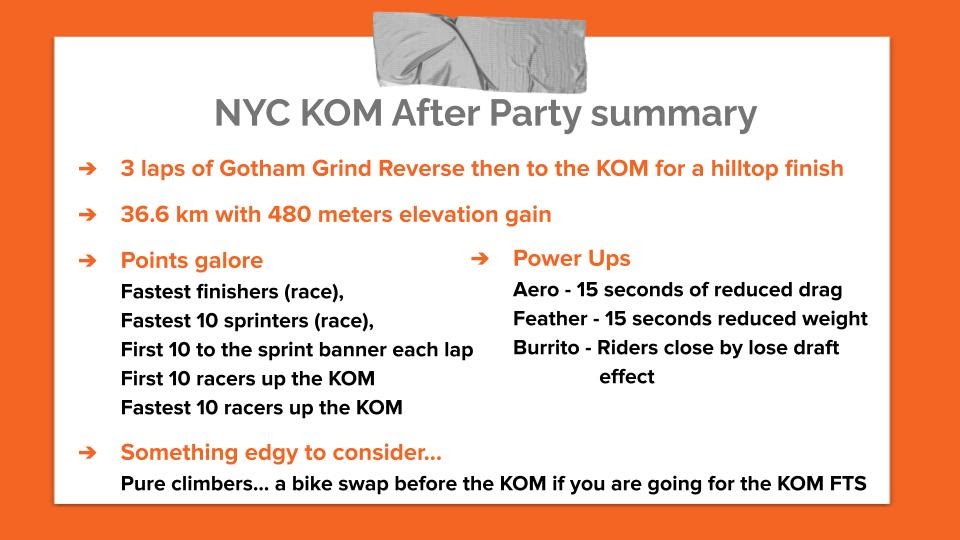
The second points race of Zwift Racing League Season 3 happens tomorrow, and we’re heading to New York City for an interesting race course that includes intermediate points opportunities for sprinters, with a finish line for the climbers.
While Gotham Grind Reverse is far from a flat route (nothing on NYC is flat), the climbs aren’t long or steep enough to really split the field. Keep your eyes wide open, mind your position in the group, and you should be able to hang in until the final climb begins.
Each lap includes the NYC Forward Sprint. This is a fairly long sprint section which ends on a slight uphill, so keep hammering to and through the finish! That’s right: the short climb continues for a bit after the sprint, and if you ease up too much after your sprint effort, the still-attacking pack may drop you like a bad habit.
The climb really comes in two phases: first, at 30.9km (19.2 miles) the paved Harlem Hill climb takes us onto the glass sky roads. This climb (see it on Strava) is 1.24km long, averaging 4.6%, and will see a lot of the “we’re just here for the sprint points” riders dropped from the front pack.
Then at 35.6km (22.1 miles) it’s onto the final climb of the day, the actual NYC Forward KOM (see it on Strava), which is 1.36km long at 6.4% average:
Dave’s Route Notes
Sherpa Dave has put together a race recon video and some helpful notes:
This is the jewel of the series. I see teams everywhere evolving their strategies to garner points, and this race has points options for every type of rider. Grimpeurs can capture FTS (Fastest Through Segment) on the KOM, the sprinters will take FTS on the sprint, while Rouleurs and Puncheurs can argue over the FAL (First Across the Line) points for sprint and KOM.
You will do 3/4 of the climbing before you get to the timed KOM segment, so don’t be deceived into thinking this is a flat ride with a hill at the end! The powerups won’t be as instrumental this week, but the Burrito is a pretty good weapon if used carefully on the sprint. This time though my advice is for anyone looking for FTS points is to consider a bike suited for that purpose: an aero bike for the sprint, or a climber for the KOM. An edgy choice perhaps, but one that could help you capture some precious intermediate points.
Key things to look out for:
Southbound Hill: 1.5km stretch of hill peaking at 7% at 2.5, 11.5 and 20.9km
Sprint: Short and uphill. Those seeking FTS points should consider a pure aero setup. Find the sprint at around 7.3, 6.6 and 25.8km
Start Gate Hill: Some bright spark will try and create a split on this short punchy climb. Find it at 8.5, 17.8 and 21km.
Ramp to the sky: Immediately after Harlem Hill (at 30.2km) begin the 1.2km climb at 5%, and head to the sky-roads.
Rick’s Route Recon
Here’s a recon video from Rick over at No Breakaways:
PowerUp Notes
Riders will be awarded powerups through the start/finish banner as well as the sprint banner, meaning we’ll get 6 powerups in the course of the race. Three powerups will be given:
Aero Boost (helmet): makes you more aerodynamic (reduces your CdA by 25%) for 15 seconds. Use this if you’re contesting the sprint intermediate, attempting an attack at high speed, or just trying to catch a breather in the peloton on flat or descending road.
Lightweight (feather): reduces your weight by 10% for 15 seconds. Use this when the road tilts upward. Useful for taking the edge off of a ground-level road’s lumpy climbs, or to help you grab extra points on that final KOM.
Burrito: turns off draft effect for riders within a 2.5m radius for 10 seconds. Best used when the draft is strongest and riders are working the hardest – so on flat ground, or perhaps slight inclines. Let your teammates know before you deploy!
The burrito is a painfully offensive powerup, but be careful when you use it, or it may bite you back! See “Misused Powerups: The Breakaway Burrito” for details.
Bike Frame + Wheel Choice
Zwift Concept 1 (Tron) bike
To choose your ideal frame and wheelset for this route, you’ll need to know the answer to the question: what is my goal for this race?
Chasing sprint points: go max aero (S-Works venge + disc wheel)
Chasing KOM FTS points: get the lightest rig (Tarmac Pro + Lightweights)
Contesting the overall win: any of the fast (aero) setups, but avoid the disc wheels if climbing is where you struggle
The Tron bike is the easy option here for all-around performance, but other all-around options like the Canyon Aeroad + DT Swiss (for lower-level Zwifters) turn in KOM times less than half a second slower, so the difference is minimal.
Strategic Options
This is a points race, so everything comes down to the three sprints, as well as the finish. All the miles in between are just the setup.
Here’s a fun thought project: what if you had two teams, each made up of very gifted specialists? One team had 6 amazing sprinters, the other 6 amazing climbers. If those riders finished at the top of the field for their respective specialties in this race, what would the points totals look like?
Sprinter Team
6 riders placing 1st-6th on the sprint each lap (45 FAQL points per lap * 3 laps = 135 points)
6 riders placing 1st-6th on sprint FTS points: 63 points
Total points: 198
Climber Team
6 riders placing 1st-6th in the overall race: 189 points
6 riders placing 1st-6th on KOM FAL points: 45 points
6 riders placing 1st-6th on KOM FTS points: 63 points
Total points: 297
But wait… we didn’t include the finishing points for the Sprinters! Well, that’s because it doesn’t fit into our neat experiment. But consider this: if they all finished together in 26th-31st place), their finishing points would give them the win over the Climbers!
Of course, this is the real (virtual) world we’re talking about, not some silly thought project. And no team will get all 6 riders across the line in first place. So how will teams play this race? We expect a mix of these strategies:
Sprint + Sink: if you believe you’ve got the power (and perhaps the powerUP) to contest a FTS or FAL on the sprints, go for it. There are a lot of points available at that green banner. Big, high-wattage riders who don’t think they’ll be able to hold onto the front up the KOM will go all-in on the sprints to try to grab a few extra points for their team before they drop off the back.
Conserve + Climb: stronger climbers won’t contest the sprints, but will conserve as much as possible while trying to stay in the front group, so they can attack the final climb(s) and go for the big win and the extra KOM points that come with it.
Rest + Swap: the final KOM will be an all-out effort after a challenging 50+ minutes of racing. We predict some lightweight/punchy riders who find themselves dropped off the front pack may take the opportunity for a breather, swap to a lightweight bike, and have a go at FTS points for the final climb.
Hanging On: this is the group many racers find themselves in – not strong enough to contest the sprints, but also doubting their chances at a top-10 finish on the final climb. For these riders, it’s about trying to stay in that front group so they can maximize their finishing position (and points).
Your Thoughts
Any insights or further thoughts on the big race? Share below!
Here’s an idea that’s been knocking around the Zwift community since early days: what if riders located anywhere in the world could virtually partner up to ride a tandem in-game? It could be used for free riding and group rides, but would get really interesting for races.
The beauty of this idea isn’t in replicating the outdoor tandem experience for a niche group of riders. Instead, think about how this would bring next-level teamwork to Zwift riding.
Sure, you can work with teammates today – sitting in their draft, letting one attack off the front while you recover in the group, riding in a TTT. But imagine if your speed in Zwift was directly linked to the power output of another rider. If your watts were simply added to your partner’s watts, and this power determined your in-game speed. Now that is what we call working together!
Just like outdoor tandem racing, it’s teamwork taken up a notch. Or perhaps several notches…
How Would It Work?
Physics
The physics of real-world tandem cycling would need to be implemented in Zwift for the idea to work. That means combining the power and physical characteristics of both riders in way that makes their in-game speed fairly realistic.
Power: the riders’ power would be summed, so one rider holding 300W with a partner holding 200W would result in a total of 500W
Weight: riders’ weights would be summed
Frame/wheel physics: aero and weight values for just one tandem frame plus one wheelset would be used in the speed calculations
Height: this is perhaps the most interesting calculation Zwift would make. As we know, rider height has a major effect on your Zwift speed, since it’s used to calculate your CdA. How would Zwift calculate a CdA for two riders in a virtual tandem setup? There are various options here, none of them terribly complex.
Matchmaking
In-game functionality would need to be developed which allows Zwifters to pair up into tandem teams. Chances are this would start as something simple, like being able to invite any of your followers to partner with you in an upcoming event or free-ride, Meetup style, on a course of your choosing.
But it could evolve into an automatic matchmaking tool. Perhaps a tandem group ride or race would allow individuals to sign up, then dynamically pair them in the final minutes (based on historic performance numbers) to help ensure each pair’s speed is close to the others.
Communication
The ability to communicate with your partner would be vital in a virtual tandem situation. Third-party solutions like Discord or even a simple phone call could fill the void, but it would be really nice to see Zwift develop a one-to-one voice chat functionality which could be baked into the product.
Rider Data
For the purpose of training, your individual rider data would still be recorded – power, cadence, HR. The only change to recorded info would be your virtual speed, which means some changes would need to be made in terms of Strava and in-game leaderboards (see below for more on this).
To Do List/Roadblocks
Obviously, a feature like this comes with some challenges. Each of these would need to be addressed in order for virtual tandem mode to be successful long-term:
Strava segments and activity type: tandem rides on Zwift would, of course, be much faster (at least on flat ground and descents) than solo rides. Strava would need to support a new “Virtual Tandem Ride” activity type in order to make sure leaderboards don’t get ugly and our Zwift times for solo efforts don’t get muddled with tandem times.
Split leaderboards: in-game leaderboards would need to filter out tandem efforts. Giving tandem teams their own leaderboards would be ideal.
ZwiftPower categories and data handling: tandem race results would need to display as such on ZwiftPower. This may be as simple as indicating which riders are paired together. Their individual data (power, HR, etc) could still be displayed. Additionally, race categories would need to be tweaked to work for a pair of riders.
New Zwift physics calculations: as mentioned above, Zwift programmers would need to add some modified physics calculations for tandem teams in order to ensure realistic in-game speeds.
New frames required: Zwift’s art team would need to create at least one tandem frame.
UI Changes: in-game interface elements would need to be added to allow riders to team up, display their names properly, etc.
Your Thoughts
Does this idea interest you? Does it seem doable, or are there roadblocks which would make it a non-starter?
Zwift Racing League season 3 is in full swing, and this week was the first points race of the season. Three laps of Watopia’s Beach Island Loop – a route that hasn’t been used yet in ZRL.
I had joined the DIRT Roosters team for season 3, and we TTTd our way into 1st place in EMEA N Division B5. Always nice to get a victory on the first time out as a new squad!
But for week 2, I was asked to join the DIRT Hellhounds in EMEA E Division B1. This is the same team name (and manager) as I’ve raced with for seasons 1-2, but many of the riders had moved onto other time zones. They needed a rider, so I jumped in. Competition would be stiffer in B1. Just how tough would it be? I wasn’t sure, but I was about to find out…
Watch the Summary Video
Look, I get it – my race videos are nothing fancy. Until now they’ve just been a straight recording of the race, dumped onto YouTube. Quick and easy for me, but not exactly time-efficient or enjoyable for you, dear viewer.
So I’m collaborating with my 14-year-old son to up Zwift Insider’s video game a bit – trying to make them shorter and more useful. This one’s still a bit long, but it’s an improvement. Check it out and let me know what you think in the comments!
The Warmup
My standard pre-race ritual looks something like this:
Chew some caffeine gum – usually 2 pieces (200mg) about an hour before the race
Rub PR lotion into my legs 30-45 minutes before the race
Warm up for 30-45 minutes, putting in some short, hard seated and standing efforts to get the muscles firing and get the heartrate up to 160+
Depending on the race route and its importance, I may add other things. This week, for example, I wanted to do my very best for the team. So I double-checked the route notes, made sure my Discord setup was working properly, chewed an extra piece of gum (more go go juice!) and even drank some beet juice I found in the refrigerator. And I made sure to click to join the start pens as soon as the option popped up, reserving my spot near the front of the pack.
Marginal gains, right?
I’m not sure if beet juice works, but its effects sure scare me the first time I use the bathroom after the race.
Having completed the warmup routine, I clicked to join the event for a second time with about 6 minutes to go. On Discord, I led our team in a short prayer to the powerup gods (I’m not joking): “Oh powerup gods, please grant us steamrollers on this day… in your mercy.”
Lap 1
The race started with a decently hard effort, but it wasn’t any tougher than any other B race. 102 riders started, and everyone seemed to know that the fireworks were coming down the road on the Dirty Sorpresa.
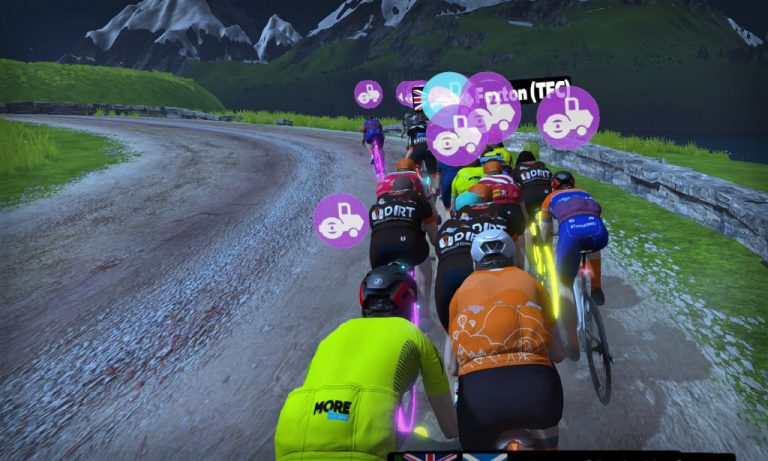
When we went through the start/finish banner everyone held their breath – “Will I get the steamroller?” Some were lucky. Others were not. I was not. An aero powerup for me, which meant I’d have to go hell-for-leather up the dirt so I wouldn’t miss the split. I figured I wouldn’t be in contention for segment points, but I could use the aero to help me make a bit of forward progress depending on the situation.
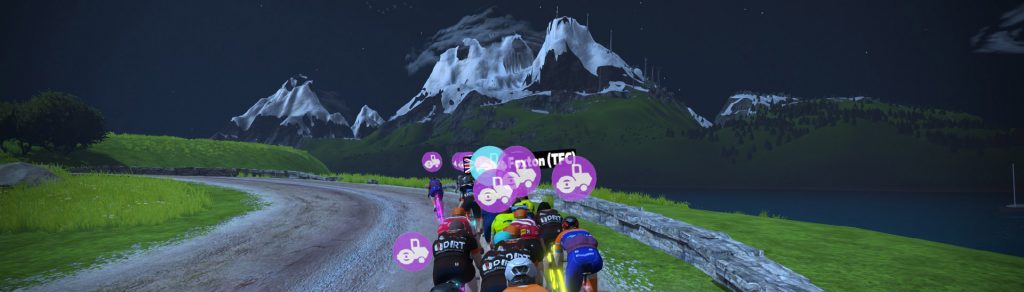
And that’s exactly what happened. I started the Dirty Sorpresa near the front – a trick used by poor climbers everywhere. I began drifting back near the top of the climb, hitting the cobbles around 32nd place. I used my aero and what little my legs had left in order to stay in touch to the banner, then I used my newly-acquired drafting powerup to help me grab onto the tail end of a small group which had formed at the very front.
That was it – the first big split of the race. From 102 riders we were down to ~40, and all those riders behind would never see the front again.
Lap 2
Hitting the start/finish banner to start the second lap, we all sent up quick prayers to the powerup gods once more. “Steamroller, please!”
The powerup gods smiled upon me for lap 2
And this time they answered me. With my trusty steamroller stashed in my saddlebag, I made my way to the Dirty Sorpresa with a newfound sense of confidence. As the dirt began, I held off on using my powerup, knowing the steamroller only lasts for 30 seconds. Then on the first hairpin turn to the left, I triggered it, giving me half a minute of sweet, fast-rolling bliss on that dusty gravel road.
I came over the top in 10th place – still gassed, but knowing I could sit in these wheels and let the riders behind catch me, since the small number of riders ahead wouldn’t be able to stay away from the larger pack behind. I used my new aero powerup as the groups coalesced, just trying to keep my effort as low as possible.
And that was the second split. We were down to about 30 riders in the front group.
Lap 3
I scored another steamroller at the start of our final lap. Glory! My entire goal at this point was to stay with the front pack of riders so I could be in contention for the final sprint. That meant triggering the steamroller on the first hairpin, then holding a position close enough to the front that I wouldn’t get gapped by the group that would stay away to the finish.
On this lap, more than the previous laps, it was clear riders were learning how powerful the steamroller was, and where to time it best. I counted several which all popped within a second or two of each other, quickly moving to the front of the pack!
Steamroller lessons learned
I made it to the top around 12th place, sitting nicely in the front pack. But I didn’t keep working to hold a good position, and nearly got dropped as ~12 stronger riders sprinted hard and jumped off the front! When I was about to use my aero powerup to bridge to the front pack, I saw they had eased up and my smaller group was catching them. Keep that aero helmet, Eric. You’ll need it for the finish!
Flyer Alert!
One rider flew through our front pack just as the group came together on the snaking descent to the fishing village. “Gomes” quickly gapped our front group, and just kept hammering away. When I clicked forward to check out his numbers, he was holding precisely 431w (6.1w/kg) although his cadence and HR were changing. Weird. I figured he’d get DQ’d… and I wasn’t wrong. He finished nearly 30s ahead of the next rider, but was removed from the results.
Our final front group had around 25 riders in it, and a few more would get dropped off as riders used steamrollers to attack in the dirt sections of the fishing village.
The Finish
This finish is always a tough one – the ramp up out of the ocean takes it out of you, then there’s a false flat that keeps the watts high. And before you know it you turn onto the main drag and it’s time to sprint!
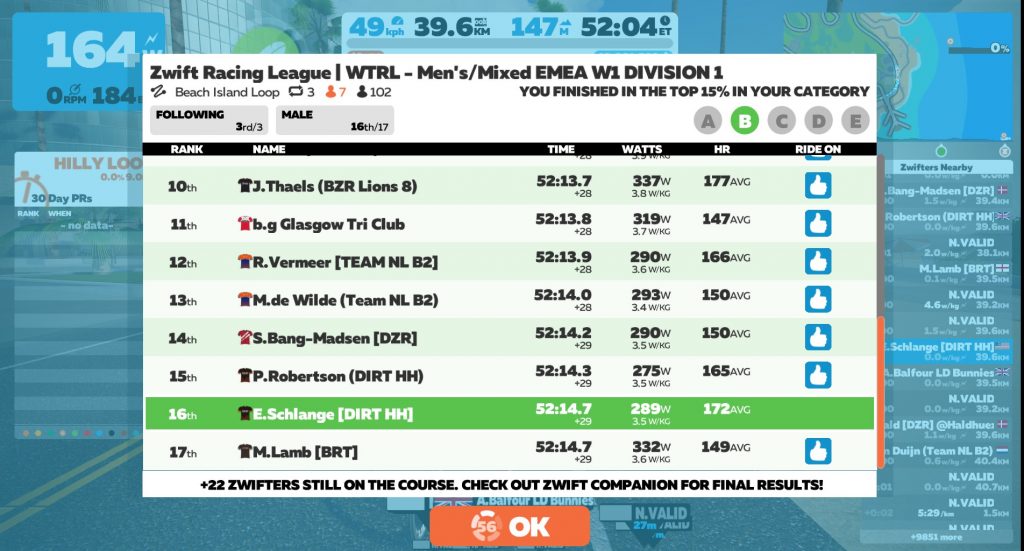
I had an aero powerup saved for the finish, but I didn’t have the legs to back it up. I was happy to have stayed in the front pack until the end, but finished a sad 17th out of around 21 riders. 16th on Zwift Power.
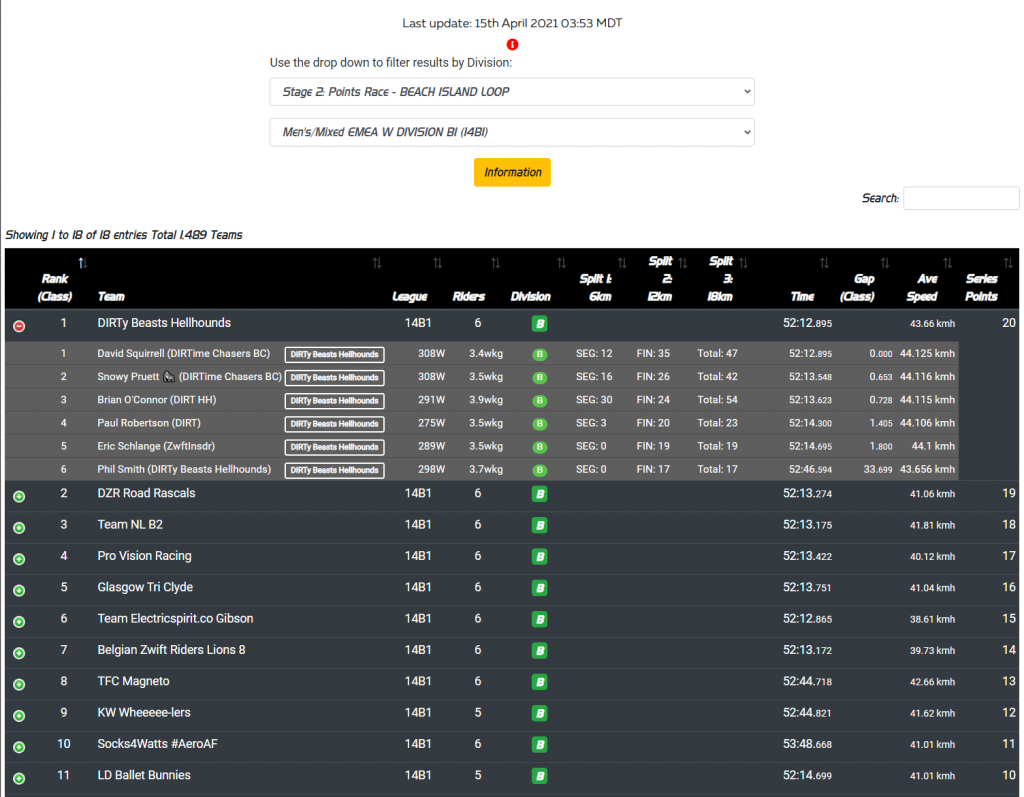
It took several hours for the results to show up, but when they did… it was good news! The DIRT Hellhounds had taken first place, scoring 202 points compared to second place’s 125. A strong win!
As you can see, I didn’t contribute my fair share to the team’s total (only 19 of the 202 points), mostly because I wasn’t able to score any intermediate points. But here’s the thing… all but one of our riders finished in the front group. That’s huge. If you had those numbers in front, you were basically assured a podium spot in this race.
Takeaways
This week was a revelation for many in the Zwift racing community who didn’t understand the power of the steamroller powerup. Heck, even I was a bit surprised by it, and I’ve done the math to show that it gives a 150-200W advantage in the dirt! Some racers are saying the steamroller was too powerful. I didn’t feel like that was the case, but then again – I got it. Twice. So I was pretty happy.
It’s possible that the steamroller needs to be shortened to perhaps 15 seconds. But honestly? I loved how this race unfolded, with the steamrollers attacking off the front, then the sprinters catching them near the line every lap. It was an action-packed 3-4 minutes each lap, thanks to the combination of powerups and course layout.
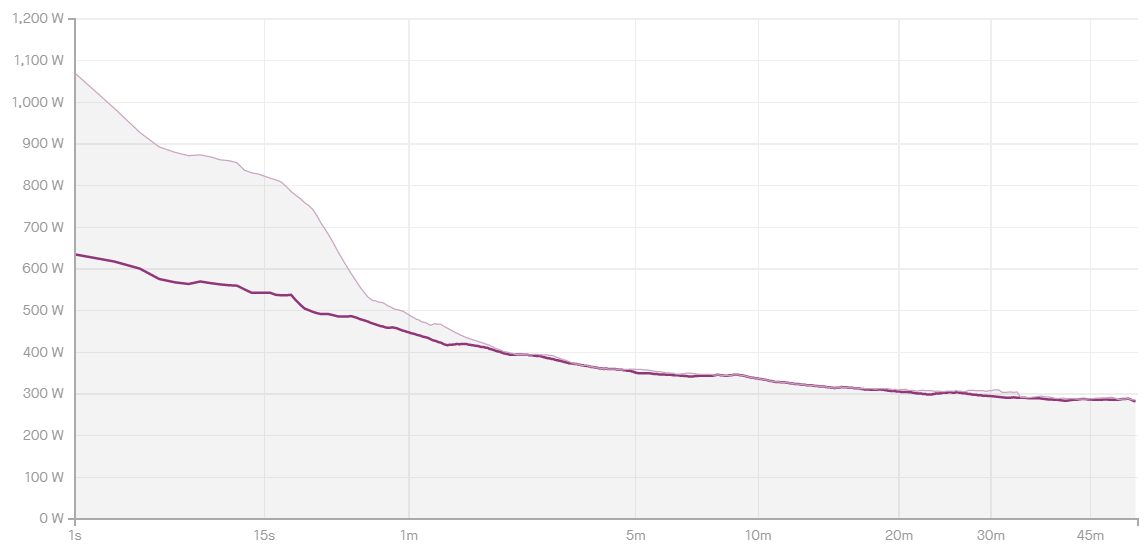
You can see that Dirty Sorpresa + sprint effort in my Strava power curve for this event – from 3:21-4:37 I set new 6-week power PBs with this race. (I also set some PBs at other intervals, as you can see).
And after last season’s route choices, let me just say it was refreshing to race a ZRL event where I didn’t get dropped on the climb. Thanks, WTRL + Zwift, for picking a route where the non-climbers could shine.
Your Thoughts
Did you race in ZRL week 2? Share your experience below!
UPDATE: Zwift has announced a postponing of the ZwiftPower height and weight hiding. Read more here >
Today Zwift announced a two updates via their forum which are being rolled out to mitigate harassment and increase community welfare.
#1: Weight and Height No Longer Public
Zwift says:
First, beginning next week, we will no longer publicly display Zwifter weight and height in ZwiftPower, Zwift Companion, nor on Zwift.com. Weight and height will continue to be an input requirement for the game but will no longer be displayed publicly in order to deter weight or height related harassment.
As some Zwift racers have already pointed out on the forum thread, hiding weight and height data is a double-edged sword. Yes, it should reduce unwarranted harassment while removing some triggers which can lead to disordered eating. That’s a good thing. But it will also make it nearly impossible for racers to spot weight/height dopers – and generally, racers have been relied upon to spot this sort of cheating, since race organizers have enough work on their hands.
It’s worth noting here that Zwift provides a form which racers can use to report racers they believe are cheating. According to Zwift, “Our CS agents have all the tools to look at egregious changes in weight and make informed decisions if someone is ‘weight doping’ or not.“Read more here >
Will race organizers have access to the now-private height and weight data, or will only ZADA be able to access it for performance verification of top-tier races? I posed this question to Zwift, but have not yet received a response.
Assuming race organizers can access the data via ZwiftPower, and the site includes simple tools for spotting potential weight or height dopers (perhaps flagging those who made dramatic changes recently), then hiding weight and height data from the public should work swimmingly. But if this simply lets cheaters cheat more, it may affect more people than it helps.
#2: New Reporting Features
Zwift says:
Secondly, we will be introducing new reporting features within Zwift Companion. An expansion to the existing flagging feature, the reporting feature allows riders and runners to report discrimination, bad language, or other forms of harassment in real time by clicking the three dots in the upper right hand corner of a member’s ZC profile. This feature will allow our team to monitor the situation and enact shadow banning when appropriate.
This is a welcome change, as it was unclear how the flagging feature in Companion actually functioned, and it was impossible to share additional details of your report when flagging a rider. The idea that a Zwift staffer can monitor these reports in real time in intriguing – it will be interesting to see if actions are taken quickly when bad actors are reported.
It’s fair to say that the vast majority of Zwifters haven’t had to endure bullying or harassment on the platform. But for those who have, the experience can have huge negative impacts on their zwifting experience and even their overall well-being. And that’s just not right. Zwift should be a safe place.
Changes Already Implemented
Zwift’s forum post included the following list of recent changes they’ve implemented to boost community welfare and reduce harassment:
Implemented tools that allow us to more effectively review in-game messaging to ensure in-game behavior meets our community guidelines.
Raising awareness on podcasts about disordered eating
Removing blog stories, missions, and challenges that glamorize unhealthy weight loss
With the full support of community group owners, we have collectively worked to ensure community groups promote health and wellbeing and avoid potentially unhealthy triggers.
Tightened privacy rules for ZADA (Zwift Accuracy and Data Analysis) verification videos – preventing athletes from sharing these publicly.
Instituting a 2-hour pre-race weigh-in submission window as is the acknowledged best practice across other sports and by the IOC
Zwift is rightly concerned with how its platform can encourage disordered eating behaviors. We dug into this topic in depth several weeks ago, our series “Extreme Dieting in Virtual Cycling“. It’s good to see Zwift working to protect racers.
Changes Coming
The forum post concludes with the following statement:
These are only the first steps. More steps are planned to enhance the features that improve the experience for all Zwifters and mitigate harassment.
Just what are those future changes? We’re not sure, but here are some guesses:
At least one forum reply also mentioned that Zwift could easily put in further controls to reduce weight and height doping – perhaps not allowing riders to change their measurements by more than X% on a given day.
Rolling out additional race categorization controls/anti-sandbagging tools would greatly reduce arguments and cheating accusations between racers. Forcing riders to race in a category which matches their historic power numbers, for example, is one foundational change that would clean up cheating and improve the racing experience for many, especially D and C riders.
Cleaning up messaging: currently, group ride messages are bleeding into free rides, which makes for confusing conversations where event participants banter and riders outside of the event get to “listen” in. Sometimes the free riders will even respond to the event messages, but of course the event participants will never see those messages. This all needs to get cleaned up.
Share Your Thoughts
What do you think of Zwift’s recent (and pending) changes? Share your thoughts below, but we’d also recommend sharing them on the official Zwift forum thread.
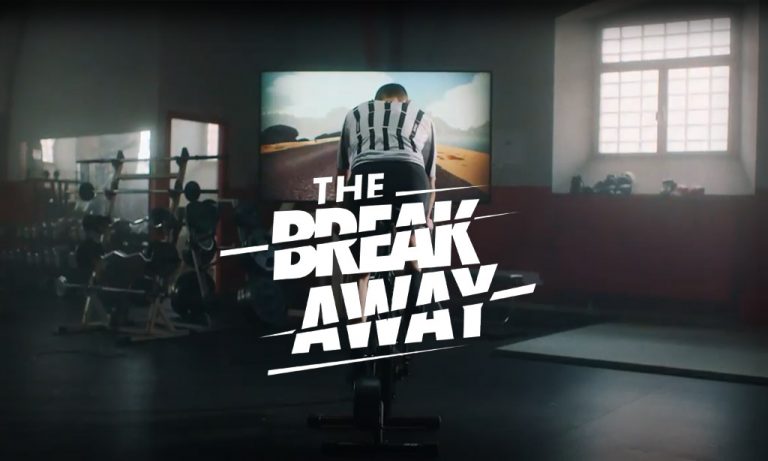
Each year, a few things happen on Zwift which take us by surprise and expand our view of what can be accomplished on a virtual fitness platform.“The Breakaway” is one such project.
It’s the first-ever virtual cycling team for prisoners. Based out of Oudenaarde prison in Belgium, the project is a collaboration between Decathlon, De Rode Antraciet vzw (a non-profit advocating sports activities & tradition inside prisons), Cellmade, and the Belgian Division of Justice.
Six inmates have been selected to join The Breakaway. They will be riding publicly on Zwift, both for training and in open races against thousands of riders from around the world.
The groundbreaking project may help answer an important question: can a virtual sport help inmates reintegrate into the real world?
Support the Team
The team members will remain anonymous, but you can still follow them in Companion (search for “John Doe 1, “John Doe 2”, etc) and on Strava.
According to the project website, in a few months the inmates will take on “their ultimate challenge”: a virtual race against judges, police officers, prison guards, and members of the Belgian Department of Justice. The race will be live-streamed on Facebook.
My Thoughts
Prison reform is a weighty topic, on both personal and societal levels. And it’s an issue which all countries struggle with to some extent. The Breakaway is based in Belgium, but I would welcome a similar project here in California, where our prison system is desperately overcrowded and truly “broken” on many levels.
It is my strongly-held belief that, for the vast majority of prisoners, a system focused on rehabilitation and healthy reintegration into society is the best solution.
People can change. And we, as Zwifters, know the power sports and fitness hold to transform mental and physical health. Perhaps Zwift can be a crucial role in helping prisoners reintegrate as healthy, productive members of society. I’d love to see it happen.