Home Blog Page 52

Notable Zwift Events for the Weekend of October 25-26

1

This weekend’s notable events are headlined by Zwift’s Fondo Series, but we’ve also got a popular community race series kicking off, a unique women’s team chase event, a massive charity ride, and more. See details below!

Note: European clocks change on Sunday, so some of the times for Sunday events below may shift by an hour depending on where you’re located!

✅ Bonus XP  ✅ Popular  ✅ Endurance Challenge  ✅ Jersey Unlock

This is the second weekend of Zwift’s popular monthly Fondo Series, and we’re already seeing lots of riders signing up for these long “fun races.”

Read all about the Zwift Fondo Series >

We’ll be on the Medio Fondo route (73km, 1005m).

Multiple timeslots this weekend
Sign up at zwift.com/events/tag/zfondos

Top-down view of three cyclists in matching black BMTR jerseys riding on a road, with the BMTR logo featuring a bear on the left side of the image.

✅ Good Cause  ✅ Endurance Challenge

On the heels of last week‘s 24-hour charity ride, BMTR is holding their annual Breast Cancer Awareness 500km event! There are four events set up which you can choose from if you aren’t able to ride the full 500km, or join all four and stick around afterward to finish the full 500km.

In all four events, the yellow beacon will ride at a C category pace, averaging 2.4-2.8 w/kg. However, BMTR encourages riders to form groups that work for your pace.

This event benefits Metavivor, whose mission to offer hope for those with metastatic breast cancer. Donate here >

First ride is Saturday, October 25 at 6:10am UTC/2:10am ET/Friday 11:10pm PT
Sign up at zwift.com/events/tag/bmtrcares

✅ Ladies Only  ✅ Popular  ✅ Unique Event

This interesting women-only event is a chase race… with a twist! This is truly a team chase race designed to encourage all riders in each category to work together to the end, because the final time for each rider is taken from the 4th rider in your category who crosses the line. (So your solo breakaway off the front isn’t going to help… you’ve got to work together!)

The race is on Scotland’s The Muckle Yin (23.7km, 282m) and groups are based on Zwift Racing Score.

Saturday, October 25 @ 3pm UTC/11am ET/8am PT
Sign up at zwift.com/events/view/5110250

Four cyclists in matching blue and green outfits ride in formation on a green gradient background, with the words THE HERD in bold white text on the left side.

✅ Popular Series  ✅ Mass Start  ✅ Long-Running Event

The popular HERD Winter Racing Series kicks off this weekend! This is a 20-week series of weekend mass-start races. The series has a mix of flat, rolling, short climb, and even some long climb courses, so there’s something for everyone. It also visits all Zwift worlds.

A GC on ZwiftPower tracks series results, with your best 16 finishes counting (so you can miss a race or four if needed). This week’s race is on France’s Gentil 8 (25.8km, 258m).

7 timeslots each weekend
See upcoming events at zwift.com/events/tag/herdhwr

✅ Endurance Challenge  

This popular group ride from Morning Glory Cycling Club returns this weekend after a summer break. The club describes this as “not an easy ride, but a friendly don’t get dropped type of ride.” A Discord channel for voice chat is available, which always helps pass the time on longer group rides.

Pacing notes: warm up ~2.0 for 7 minutes. The rest of the ride will be at around 2.3-2.5w/kg, and the hills will be max at 3.2w/kg. There’s also a finishing sprint!

This week’s event is held on Watopia’s Big Foot Hills (69.9km, 714m).

Saturday, October 25 @ 10:50am UTC/6:50am ET/3:50am PT
Sign up at zwift.com/events/view/5156745

How We Make Our Picks

We choose each weekend’s Notable Events based on a variety of factors including:

  • Is the event unique/innovative in some way?
  • Are celebrities (pro riders, etc) attending/leading?
  • Are signup counts already high, meaning the event is extra-popular?
  • Does the ride include desirable unlocks or prizes?
  • Does the event appeal to ladies on Zwift? (We like to support this under-represented group!)
  • Is it for a good cause?
  • Is it just plain crazy (extra long races, world record attempts, etc)?
  • Is it a long-running, popular weekly event with a dedicated leader who deserves a shout out?

In the end, we want to call attention to events that are extra-special and therefore extra-appealing to Zwifters. If you think your event qualifies, comment below with a link/details and we may just include it in an upcoming post!
Zwift Teases New York Map Expansion via Companion App

Zwift Teases New York Map Expansion via Companion App

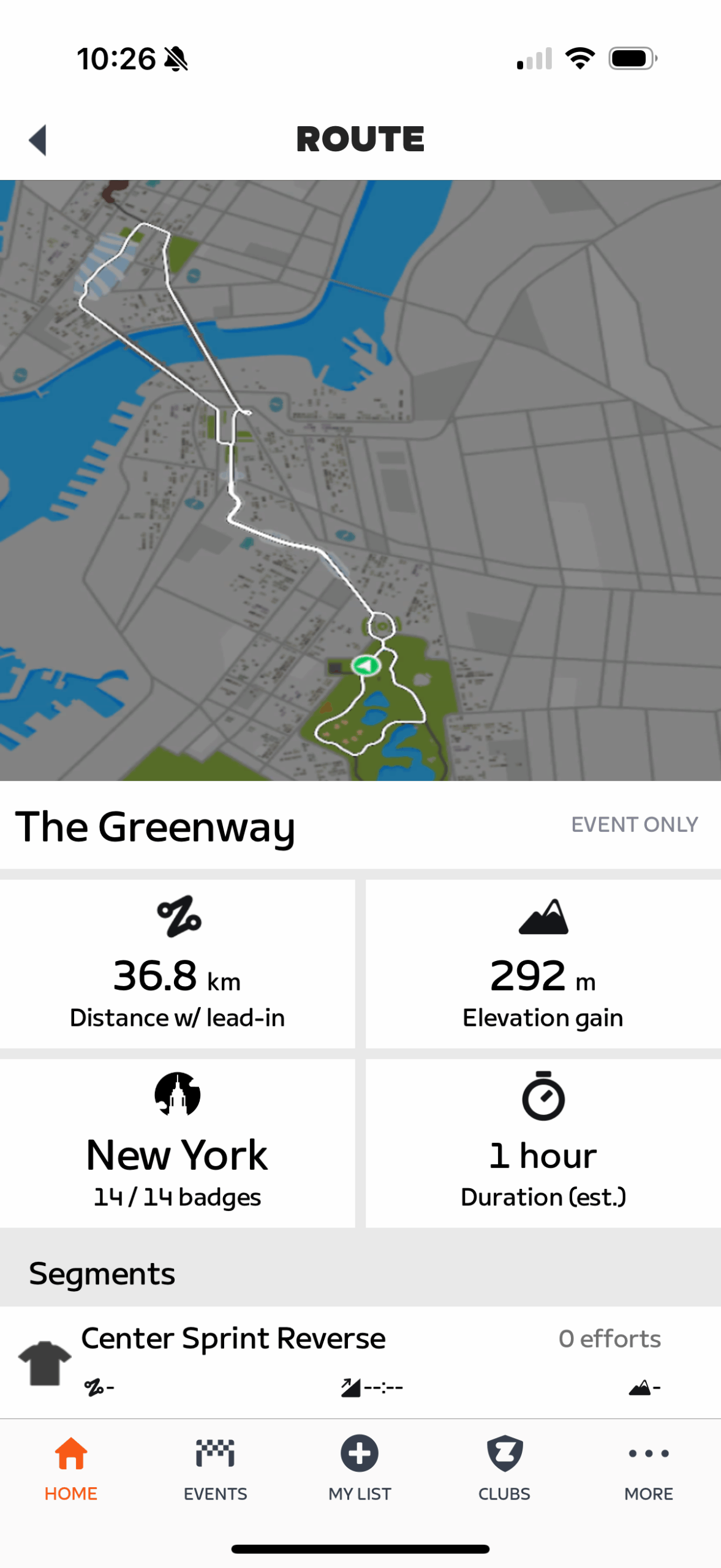
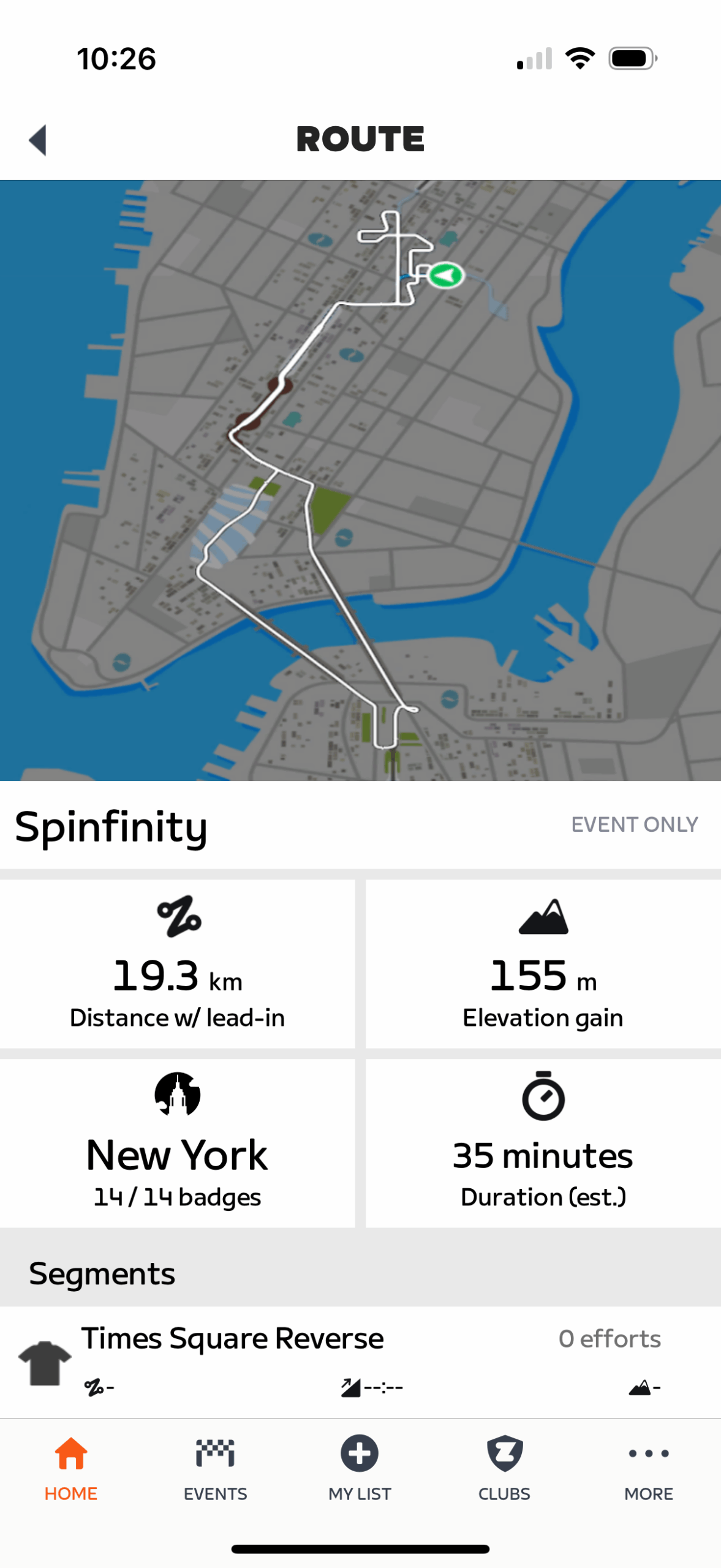
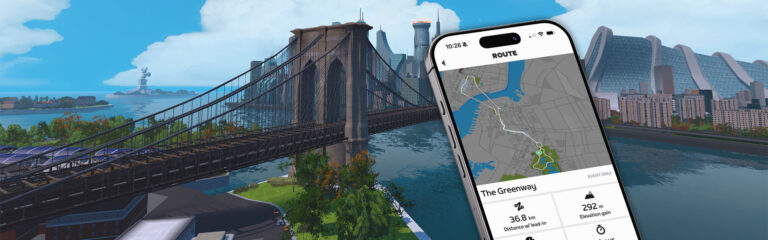
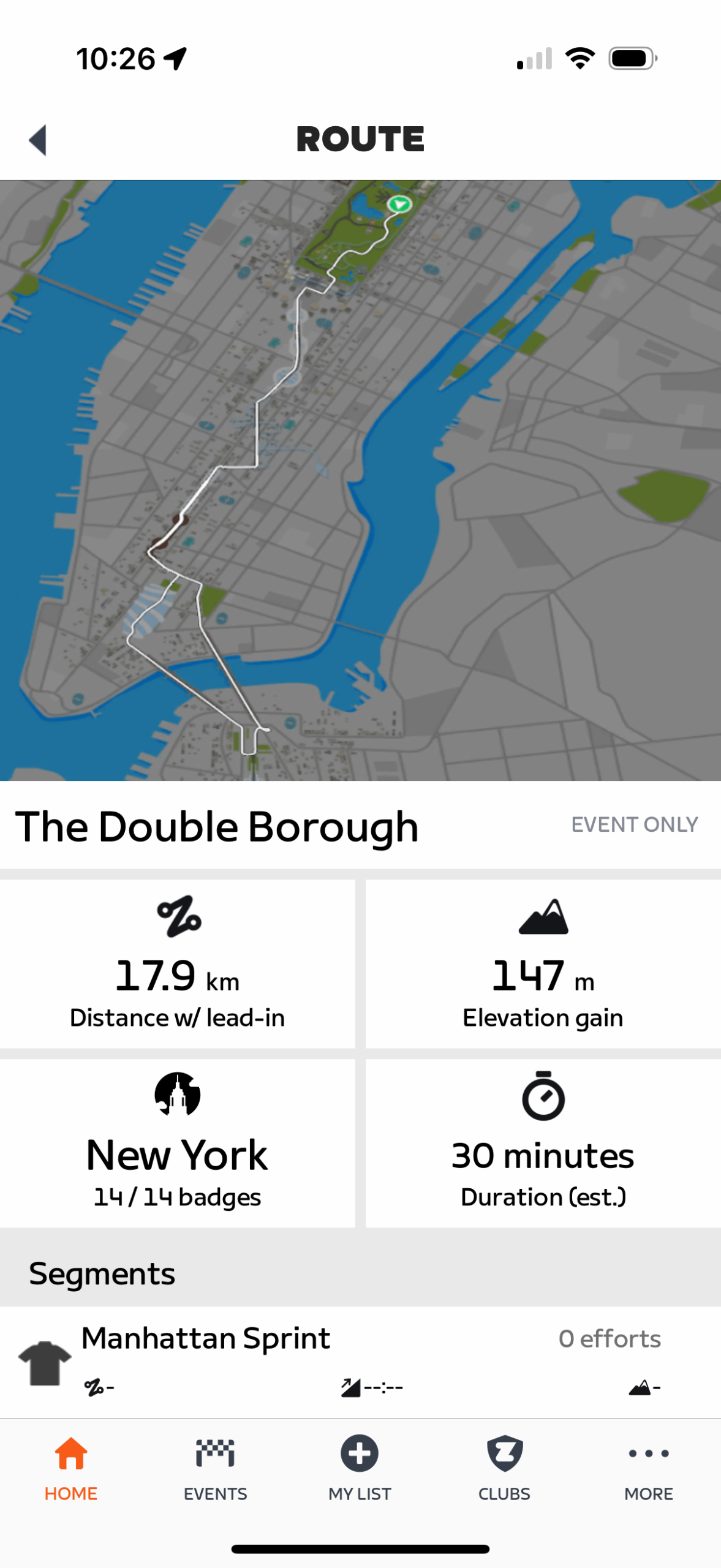
Yesterday, Zwift added a set of new New York City routes to the Companion app’s route browser. The new routes are marked as “event only” and include route length, total elevation, and a list of included leaderboard segments. The routes also include maps showing the new roads… here are a few examples:

New Routes

Here’s a complete list of the routes that showed up in Companion yesterday. (Click a route for details, which are pretty sparse right now. We’ll be filling in these route pages next week after we’re able to ride the routes, take cool photos, launch Strava segments, etc.)

New Sprint, KOM, and Other Segments

Since the Companion app lists which leaderboard segments are included in each route, we can figure out the names of new segments being added to the NYC map. (Again, click for details, which are currently sparse and will be filled in next week.)

There are also new lap segments for “Prospect Park Lap” and “Times Square Circuit” which will probably award orange jerseys like other in-game lap segments.

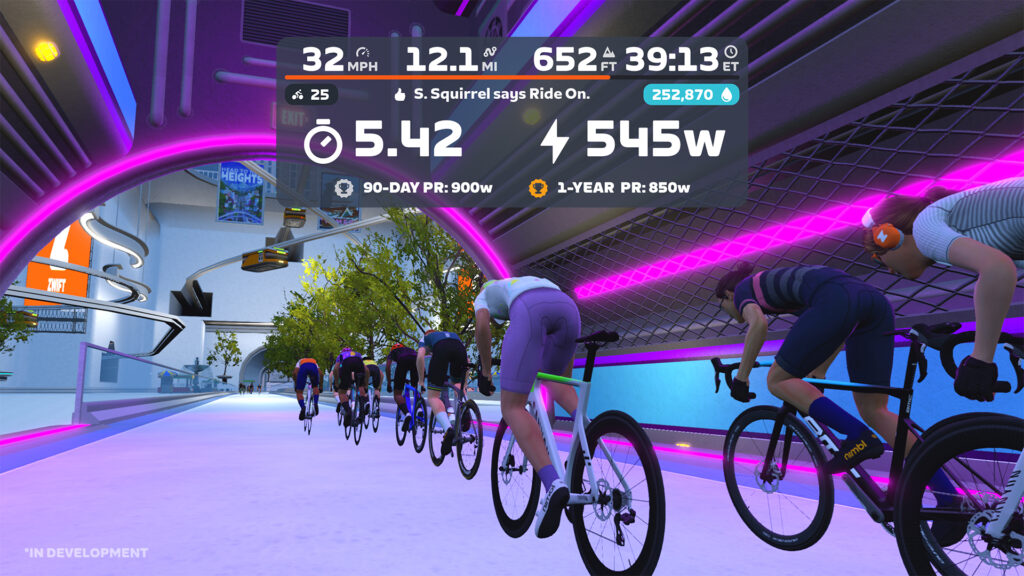
This expansion includes a new feature called “Power Segments” which are time-based (5 seconds, 20 seconds, etc) instead of distance-based like current sprint and KOM segments throughout the game. The leaderboards, in turn, rank results based on power output, not finishing time. I don’t see any mention of Power Segments in Companion, but it seems sensible that we would eventually be able to browse our power KOMs on these segments.

Cyclists ride through a neon-lit tunnel in a virtual cycling game. On-screen stats show speed, distance, climb, elapsed time, current power output, and records, with vibrant purple lighting and outdoor scenery visible.

When can we ride the new roads?

Some of the routes (The Greenway, Spinfinity, and Prospect Park Loop Run) added to Companion yesterday will be released on Monday, October 27, as they are the routes used in next week’s stage 4 of Zwift Unlocked.

Additional NYC routes will be featured for the final Unlocked stage the following week: Stay Puft Pursuit, The Double Borough, and Times Square Circuit Run.

It’s unclear when the other routes on the list will be available for free rides, club events, Meetups, etc. I’m guessing some or all of them will be available for free riding beginning this Monday, but we won’t know for sure until then.

Your Thoughts

This is the first time Zwift has “teased” an expansion via the Companion app. Are you looking forward to new roads next week? Share your thoughts below…


Pondering the Possibilities: Points Racing on Zwift

22

Pondering the Possibilities: Points Racing on Zwift

Today, we’ll focus on a race format that is already used on Zwift and also seen regularly in outdoor competition. Let’s dive in!

Points Race Basics

In very generic terms, points races are events where riders earn points based on their ranked performance against other riders. Instead of the winner being determined by who crosses the finish line first (a classic scratch race) or who survives the longest (an elimination race), you win by amassing more points than everyone else.

This opens up a world of possibilities for race organizers and racers:

  • Organizers can designate which “segments” they’d like riders to compete on, decide what sort of competition is being held (typically first across the line and/or fastest through segment), and decide how to allocate points to the finishers.
  • Racers must then strategize how to maximize points based on the race’s setup, their individual abilities, and competing riders.

The Now and Not Yet

Unlike some of the race concepts I’ve written about in this series, such as elimination and relay races, points races are already happening on Zwift. In fact, they are arguably some of the most popular races on the platform, showing up in Zwift Racing League, the Tiny Races, and other community-organized leagues!

But the current state of points racing on Zwift is best described as shoehorned into the platform. Nothing in the HUD or course design elements indicates that a particular section is a points segment, or how those points work. And instead of being natively supported and displayed in game, points are tabulated and displayed on third-party websites like ZwiftPower or WTRL.racing. You don’t see points in real time on Zwift’s HUD as you race. You only see them after the entire race is over, and then only if you know where to look.

This, of course, hampers riders’ ability to race strategically. Without native points support, it’s hard to know when to push and when to conserve, to know how well you’re doing, and to identify who your real competitors are.

Points Racing Possibilities on Zwift

What would it look like to upgrade the current Zwift Points Racing experience? From the riders’ point of view, upgrades fall broadly into two categories:

  1. Real-Time HUD: the first and most obvious experience upgrade would be a HUD that shows race points in an intuitive, useful, and immediate way as each unique race unfolds.
  2. Custom Segments: the second, less obvious experience upgrade would happen when race organizers have the ability to designate custom start and end points for points segments. Can you imagine the variety of courses and strategies that would unfold as a result? I don’t think anyone can! And that’s the fun of it.

With a real-time HUD in place and custom segments at organizers’ fingertips, points race possibilities become endless. Of course, you could do “standard” points races like we see in ZRL today, where riders compete for FAL (first across the line) and FTS (fastest through segment) on sprint and KOM segments. The real-time HUD would just take those races to the next level, especially if team functionality is also supported. You could also level up simple events like the Tiny Races, assuming Zwift builds a structure so multiple events can be scored.

But beyond upgrading existing races, the ability to designate custom points segments on any route would lead to a wide variety of new race experiences. Maybe it’s a new timed climb where no in-game KOM has ever existed, or a downhill sprint where we’ve never seen an arch before. Maybe it’s an extra-long segment that allows more strategic riding to unfold compared to the typical “sprint the segment” approach.

Perhaps some segments are FAL, while others are FTS. And perhaps the points awarded vary in such a way as to cause riders to truly think strategically about the best approach on the given course.

As you can see, the possibilities are virtually endless.

Fun For All

How can points racing on Zwift be made more fun for everyone? This is an important question to answer when it comes to any ride format in Zwift, because Zwift needs to remain an inclusive platform where everyone can find motivation and fun, regardless of fitness level.

There are two aspects of points racing which support Zwift’s inclusive ethos: segment variety and strategic complexity.

With a variety of segments possible in points races, organizers can ensure their event (or series of events) is a balanced competition that attracts all types of riders. Mixing up flat/downhill segments with climbs would make the race attractive to lighter riders with strong w/kg as well as heavier riders with strong pure watts. Longer and shorter segments could also be used to appeal to riders with strong short-term power as well as those whose strength lies in the longer efforts.

Organizers could make their points races as strategically complex as they’d like. A higher level of strategic complexity may prove extra attractive to “thinking racers” who can use their mental acuity to get a leg up on the competition.

Why Points Races?

Upgrading the Points Race experience on Zwift is important for several reasons:

  • A fresh approach: given the right tools, creative organizers could create a variety of points racing experiences never before seen on Zwift
  • Improving popular existing races: as mentioned above, some of the biggest races on the platform today are points races. Making improvements to support points races natively would level up these events.
  • Uniquely indoor: while points racing already happens outdoors, indoor training platforms can improve on that experience with intuitive HUDs and in-game elements, so riders are better informed and thus able to race more strategically.
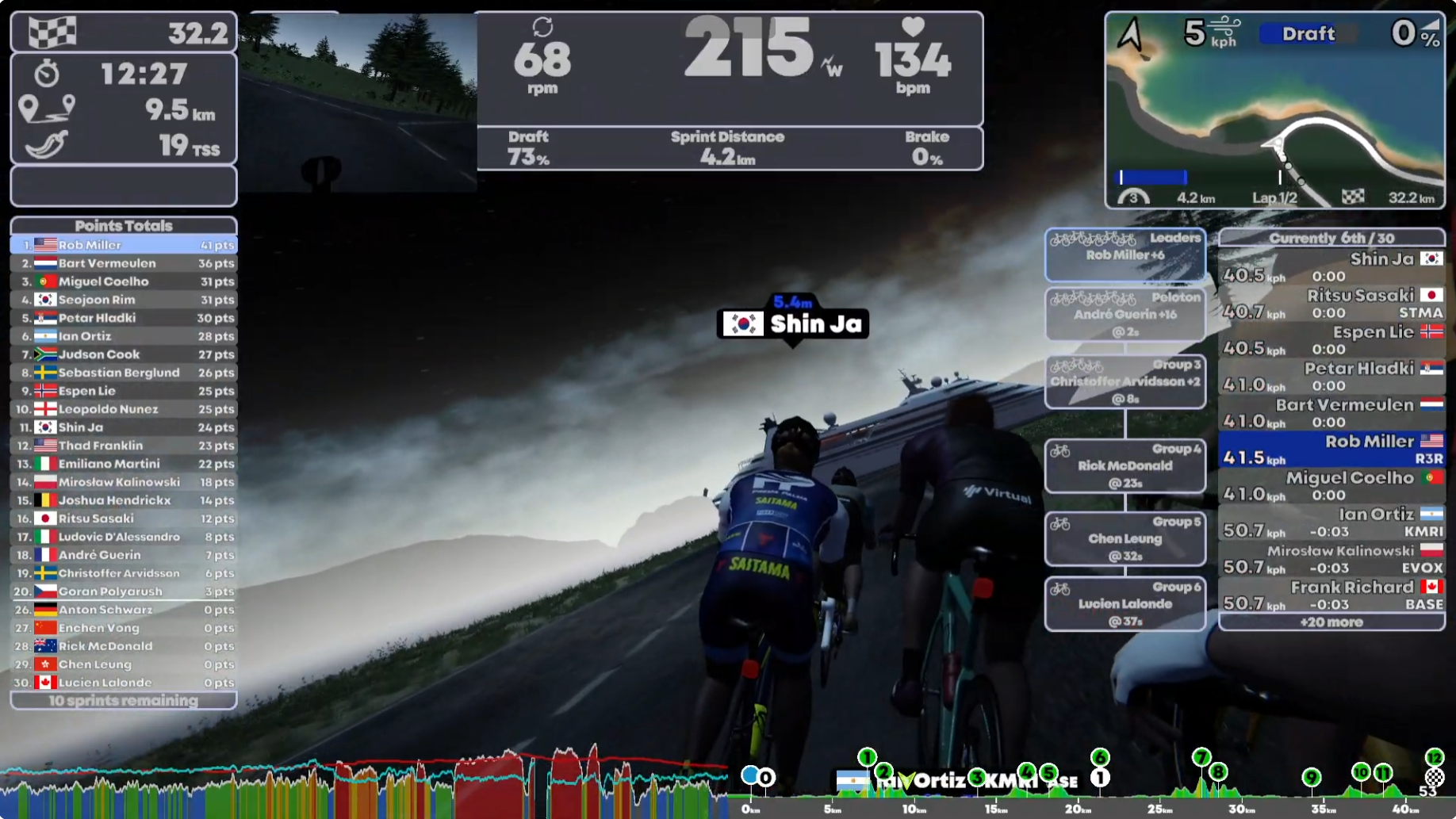
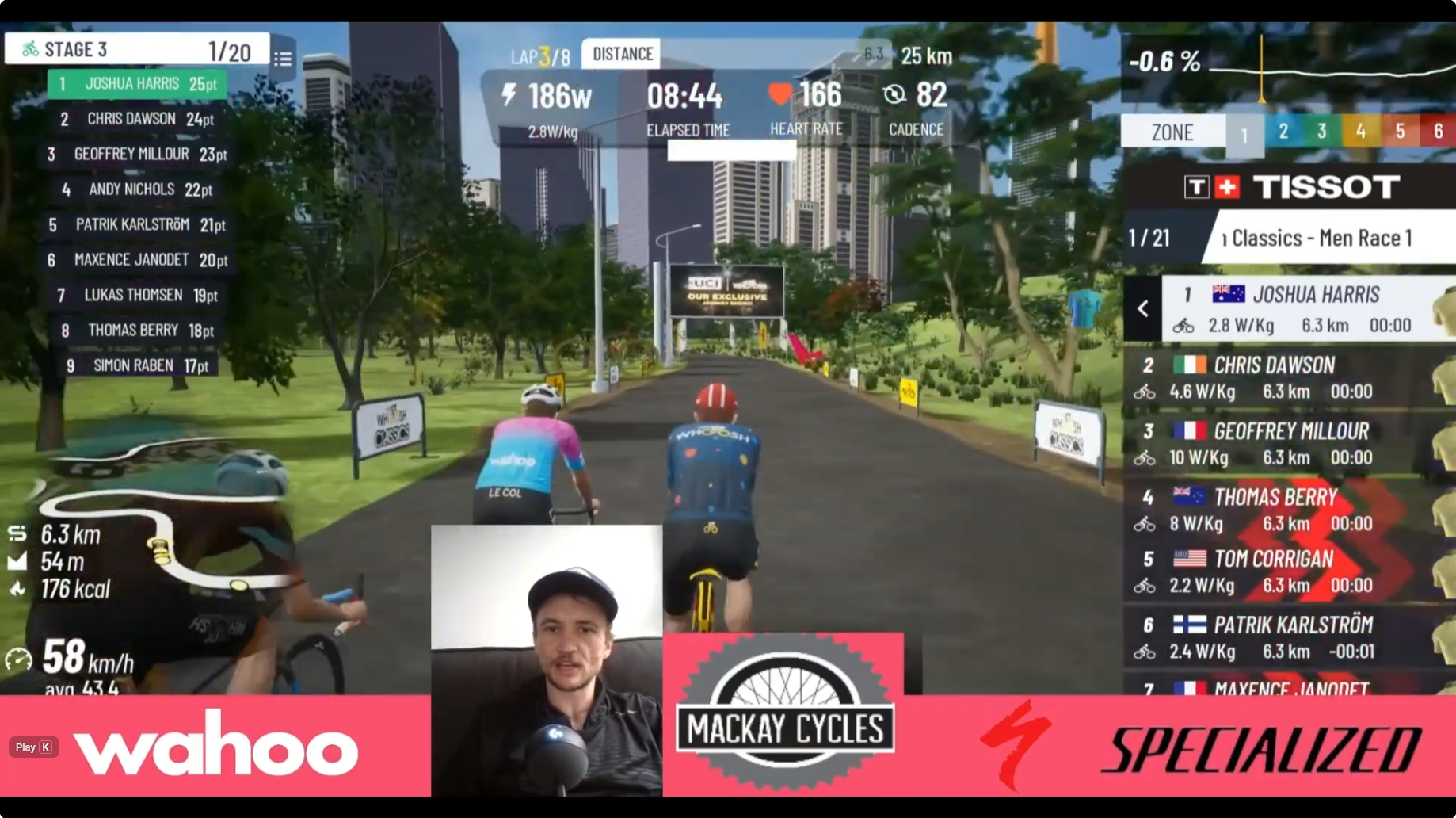
  • The competition is already doing it: both MyWhoosh and TrainingPeaks Virtual already support points racing natively, as shown from these livestream grabs:

Required Game Changes

What would Zwift need to implement in order to make points races work well as a native race format? With the disclaimer that I’m not a game developer or platform engineer, here are a few things I can think of:

Must Haves

  • Points HUD: races would have to display a real-time points tracker in the HUD.
  • Segment Visibility: it must be crystal-clear which segments in the race are being contested for points. Right now, this sort of information is (at best) buried in the event description text.
  • Results Screens: the standard race results screens in game, Companion, and at Zwift.com would need to be modified to rank results by points and display those points clearly.
  • Segment Designator: even if Zwift doesn’t let organizers define custom points segments, they’ll need to let them define which segments on a given course are assigned which points and based on which results (FTS and/or FAL).

Possible Extras

  • Team Builder UI: I’ve called this out in some other race format posts, but if points races are going to be contested by teams, ideally Zwift would build the menus and functionality to create teams so points can be tabulated on a team-by-team basis during and after a race.
  • Cross-Event Tracking: many points races are actually a series of events. Being able to view series points in the HUD, and not just points from the current event, would enhance competition and lead to more creative race series.
  • Custom Segment Creator: if Zwift wants to let organizers get truly creative and define their own points segments on course, they’ll need to create the tools to do so. A simple point-and-click web-based interface similar to ZwiftMap.com is exactly what race organizers like myself would love to see!

Your Thoughts

What did you think – should the points race experience be upgraded on Zwift? Did I miss any great ideas above? Share your thoughts below!


Tiny Race Series – October 25 Routes – Danny’s Crit Week

0

Tiny Race Series – October 25 Routes – Danny’s Crit Week

See zwiftinsider.com/tiny for current Tiny Race details.


Zwift Fondo This Weekend

22

Zwift Fondo This Weekend

Zwift’s big fondo events are a popular tradition where thousands of riders push themselves to finish long weekend rides. This season’s second set of fondo events happens this weekend, and finishers unlock the vintage February 2022 Fondo kit along with an XP bonus. Read on for details!

Route Details

This month’s fondo is on Watopia’s Medio Fondo route, which takes riders up the Hilly KOM Reverse and Volcano KOM and finishes on the Epic KOM. In between, you’ll ride the Jungle Circuit Reverse and various roads around Watopia proper.

  • Route: Medio Fondo
  • Length: 73.4km (45.6 miles)
  • Elevation: 1010m (3314’)

XP Bonus + Kit Unlock

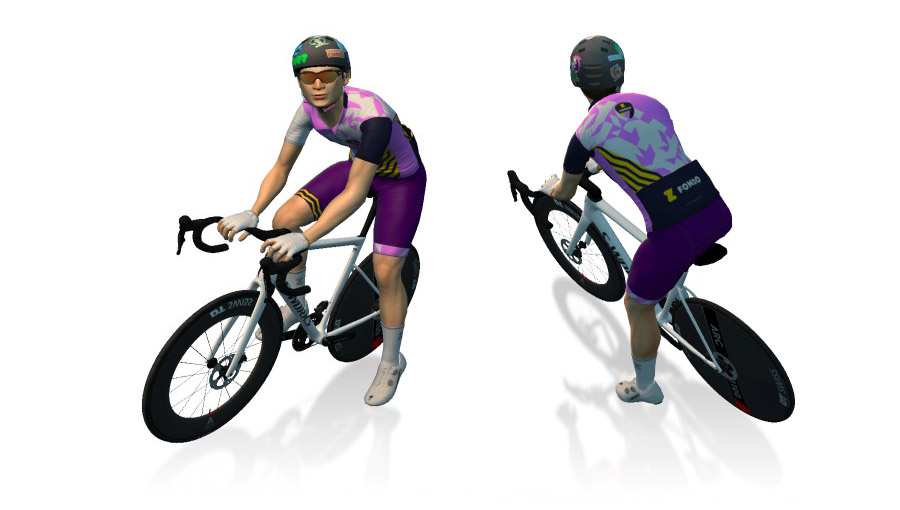
Instead of releasing another set of fondo kits this season, Zwift is awarding different legacy Zwift Fondo kits each month. October’s legacy kit was originally used for the ZFondo series in February 2022:

Additionally, this year Zwift is giving a 1000 XP bonus the first time you complete each month’s fondo event.

Is this a race?

Officially, no. But hundreds (possibly thousands) of riders will turn out for each of these popular “fun race” events, and the front of each event will certainly be filled with strong riders going all out.

With so many riders participating, everyone should be able to find a group that suits their desired pace. You do you!

Categorization and RoboPacers

You must choose a category when you sign up, but the category you choose is entirely up to you, and all categories start together and are visible to each other.

The idea is that you’ll choose a category at the approximate pace you plan to ride, making it easy to see and group up with other riders targeting a similar pace. Each category will include a RoboPacer with a beacon, and you can choose to ride with that RoboPacer group or not.

Available categories:

  • A: 4.2 W/kg (RoboPacer: Constance @4.2 W/kg)
  • B: 3.2 W/kg (RoboPacer: Jacques @3.2 W/kg)
  • C: 2.6 W/kg (RoboPacer: Coco @2.6 W/kg)
  • D: 1.8 W/kg (RoboPacer: Miguel @1.8 W/kg)
  • E: 1.5 W/kg (RoboPacer: D Bernie @1.5 W/kg)

Questions or Comments?

Post below!


Top 5 Zwift Videos: Zwift Stories, First Races, and Zwift Setups

For some, Zwift is just a tool for training during the long winter months. But for others, it’s a lot more than that! Watch one rider share how Zwift has propelled his wellness and fitness journey.

We’re also featuring videos about first Zwift races, getting started on Zwift, setups of pro triathletes, and racing in Zwift Unlocked.

In this video by John at Casual Creations, he discusses how Zwift has changed the course of his life.
Liam Shaw is on a mission to move up the racing score categories on Zwift. Hear from him as he talks through his experience as a category E Zwift racer.
New to Zwift? Chad Rides shares a step-by-step guide to getting you going.
Looking to upgrade your home training setup? Professional triathlete Megan Mcdonald shares tips and tricks for enhancing your indoor setup.
Watch as Manuel Essl tackles one of the fastest heats of Stage 2 of Zwift Unlocked. Can he hold on until the finish?

Got a Great Zwift Video?

Share the link below and we may feature it in an upcoming post!
Zwift Update Version 1.100 (153811) Released

Zwift version 1.100 begins its phased rollout today. Some Zwifters were wondering if v100 was going to include something big and cool, and it does. Well, sort of. There are new NYC roads (which you can’t ride quite yet) but also a serendipitous Streak count and 13 event-only routes that are now free rideable! Read on for details…

New New York Roads Incoming

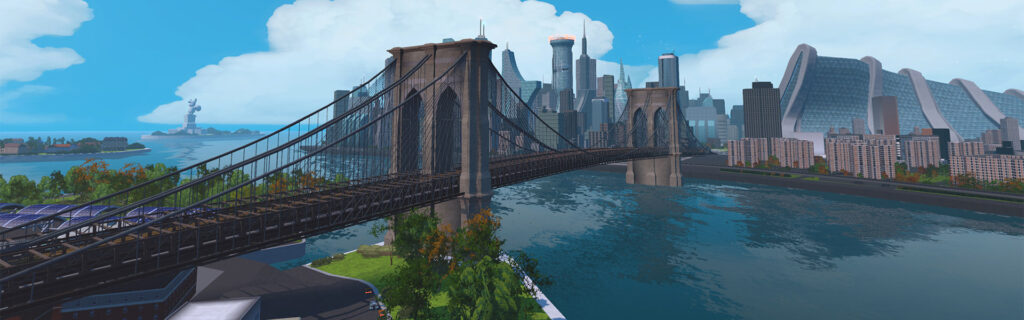
This latest Zwift update includes what should be the final version of Zwift’s New York map expansion, which we wrote about in TSOZ Closer Look: New York Expansion and Power Segments. This includes 31km of new pavement, which is a big expansion by Zwift standards!

We’ve seen an early release of the new roads, and while we can’t share details of all the new routes just yet (that comes on Monday, October 27) we can share the basics (length and elevation) of the new routes which will be used for Zwift Unlocked:

Stage 4, October 27-November 3

  • Long Ride – The Greenway (1 lap: 36.8km, 292m)
  • Short Ride and Race – Spinfinity (1 lap: 19.5km, 155m)
  • Run – Prospect Park Loop Run (1 lap: 5.5km, 37m)

Stage 5, November 3-10

  • Long Ride – Stay Puft Pursuit (1 lap: 31.4km, 409m)
  • Short Ride and Race – The Double Borough (1 lap: 17.9km, 144m)
  • Run – Times Square Circuit Run (2 laps: 7.2km, 40m)

Watch this space for route details next week!

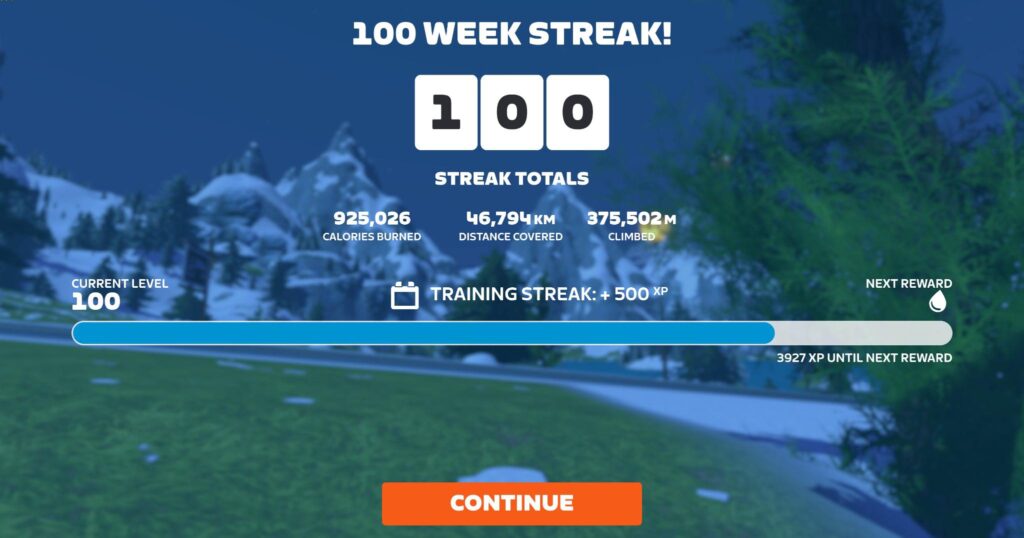
Week Streak #100

In a (frankly amazing) bit of serendipitous synchronicity, some Zwifters will be extending their Week Streak to 100 this week, as Zwift hits version 1.100.

The vast majority of riders who have kept their streak going since Week Streaks were released will hit 100 next week. But a small number of riders received the game update supporting Streaks a few days before the rest, leading to this odd situation.

Routes Available for Free Riding

The following 10 routes, originally released as event-only, are now available for free riding/running:

These run-only routes are also now available:

If you haven’t earned these route badges yet, the unearned badges are now visible on your Achievements page.

Want to organize events on these routes? They aren’t available in Companion quite yet for that purpose, but ZHQ says, “They will be available for club rides later this week, after the release is available to 100% of Zwifters. Should be by Friday given no unexpected issues.”

Release Notes

Zwift provided notes on additional tweaks and bug fixes in this update:

  • We’ve improved the route preview shown below the mini-map when Zwifters ride off-route: The route preview now shows the next 3 km / 1.86 mi of roadway so you have a better idea of what’s ahead of you, and if you turn at an intersection, the route preview will update accordingly. The name of the next intersection is also now displayed, along with the distance to it.
  • Improved device connection reliability when using Zwift Companion as a bridge.
  • Fixed an issue that could prevent JetBlack Smart Turn Block devices from being discovered in the Pairing screen.
  • Fixed an issue that could cause WiFi-connected fitness devices to be visible in the Pairing screen after being powered off.
  • Fixed an issue that could cause the device signal strength indicator to not be visible in the Pairing screen.
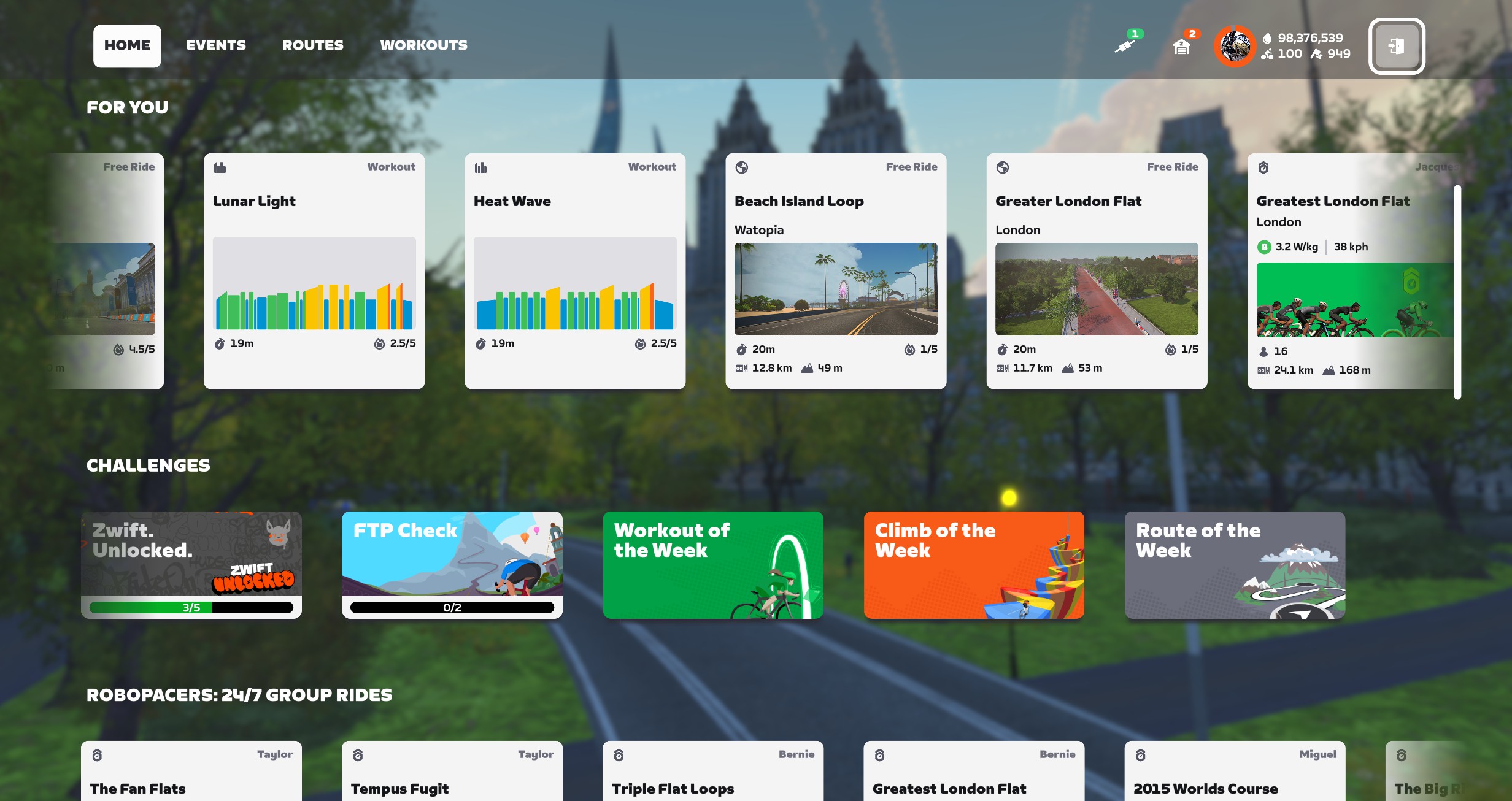
  • Fixed an issue that caused the Challenges row in the Home Screen to require two button presses to navigate horizontally.
  • Fixed a crash that could occur when starting a workout when using devices with less than 2 GB RAM.
  • iOS: Fixed a crash that could potentially occur when navigating to the iOS home screen while Zwift is active.

Discuss this update in Zwift’s forum >

Questions or Comments?

If you spotted any other changes or bugs in the update, please comment below!

“FTP Check” Challenge Launched

“FTP Check” Challenge Launched

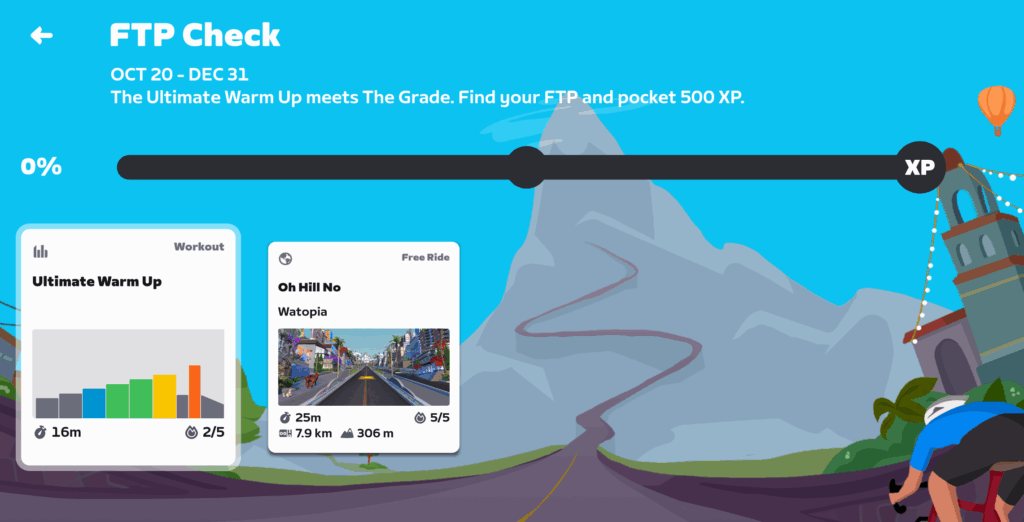
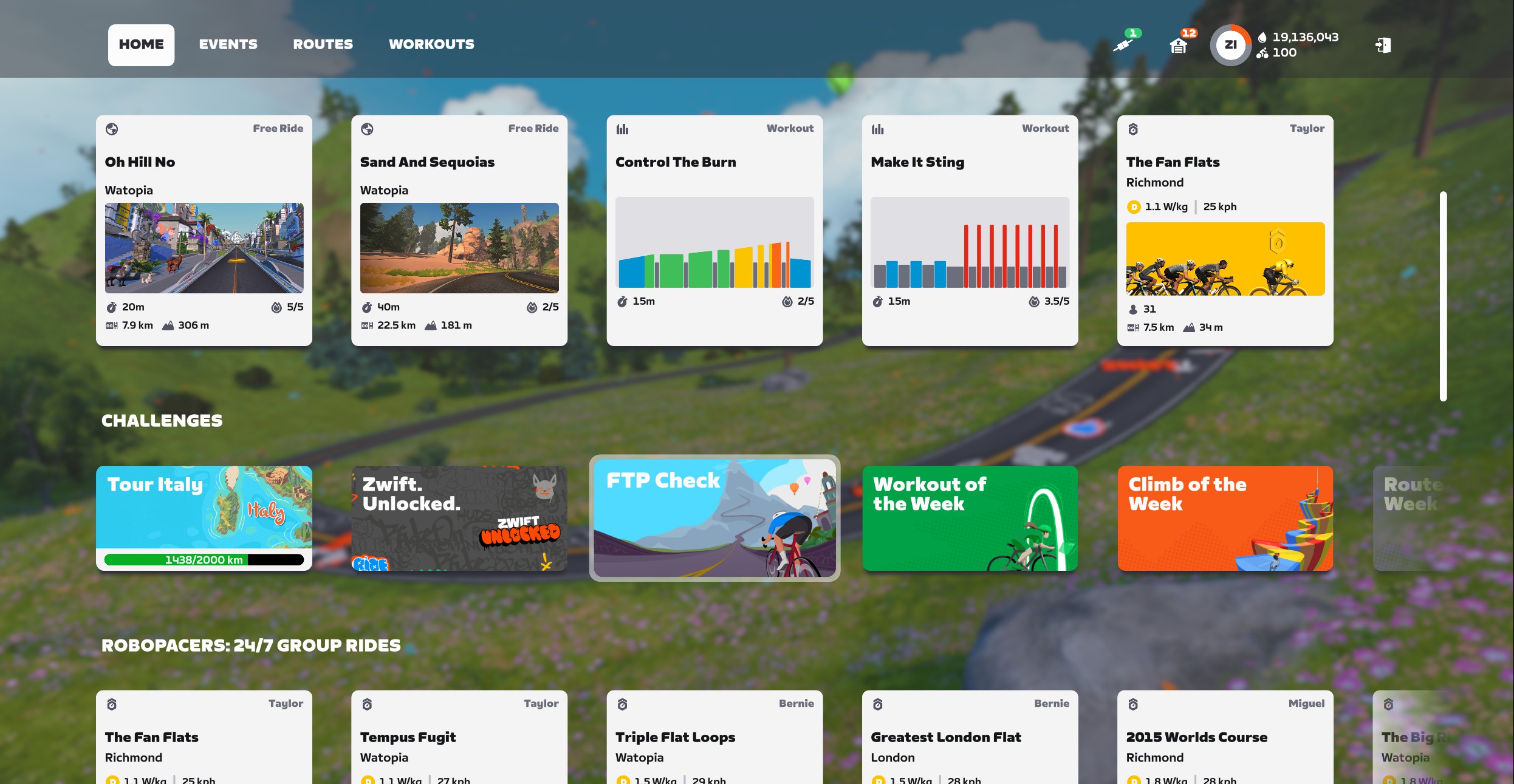
Today, Zwift launched a new “FTP Check” mini-challenge, with the goal of encouraging Zwifters to test their FTP in a uniquely Zwifty way so training metrics are accurate as we head into indoor season.

Challenge Requirements

The Challenge has two parts, which are meant to be completed in the same session:

  1. Ride the Ultimate Warmup
  2. Complete the Oh Hill No route, going full gas on The Grade KOM as an FTP test.

About “The Grade”

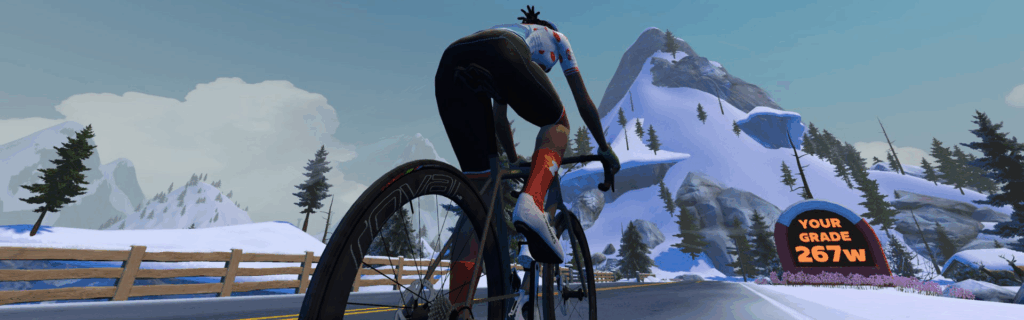
While Zwift now looks at all activities and will alert you to an FTP increase if it detects on, The Grade KOM is particularly designed as an FTP test. When you finish the KOM segment, the game looks at your average power on the segment, as well as your segment time, then computes an FTP estimate, displaying it on the sign as you ride through the KOM arch:

Read my review of riding “The Grade” FTP test >

If you’ve never ridden The Grade before, it’s helpful to have an estimate of how long it will take so you can pace yourself accordingly. Here are segment times from our bot tests with a 75kg, 183cm rider on the Tron bike at various power levels:

  • 150W (2 W/kg): 27:46
  • 225W (3 W/kg): 18:47
  • 300W (4 W/kg): 14:22
  • 375W (5 W/kg): 11:44
  • 450W (6 W/kg): 10:04

Challenge Rewards

Your reward for completing both parts of the challenge is 500 bonus XP, so you can level up faster.

Read more about Zwift levels and unlocks >

Joining the Challenge

To join the Challenge, just click its card on the home screen. If you return to the home screen after doing this, you’ll see the card now shows your progress. If it’s showing your progress (0/2, 1/2, 2/2) you know you’re signed up!

Deadline

This challenge is live from October 20-December 31. (We recommend finishing before the final day, though, as the Challenges sometimes end at an unexpected time on the last day.)

Questions or Comments?

Post below!


Building the Foundation to Elevate Women’s Cycling 

4

Building the Foundation to Elevate Women’s Cycling 

Women’s cycling is enjoying unprecedented attention and appreciation from a growing global audience, with more eyes than ever on its professional races and athletes. Women’s racing is dynamic, tactical, and CLOSE in a way men’s racing isn’t at the moment.  However, beneath this visible success lies a critical vulnerability: the foundational support and development structures may not be robust enough to sustain this boom and ensure the sport’s long-term health.  

Natascha Knaven-den Ouden, a Dutch development team lead with daughters in the pro peloton, posted the following on Instagram in spring 2025, highlighting what may be a growing problem with the evolution of women’s professional cycling.  

“On the surface, women’s cycling is booming. We see more live broadcasts, increasing prize money, and iconic races like the Tour de France Femmes and Paris-Roubaix are now part of the women’s calendar. Major WorldTour teams are fielding women’s squads, and fans are finally starting to recognize the talent and excitement in the women’s peloton.

It all looks like progress, and to a degree, it is.

However,  behind that spotlight is a problem we don’t talk about enough: the base of the sport is far too weak to support the weight of the top.

While the elite side is expanding, the broader structure, especially development and grassroots racing, is actually shrinking. Smaller races disappear. Continental and amateur teams struggle to survive. And most critically: young riders are left with fewer opportunities to grow gradually within the sport.

Today, it’s possible, even common, for a beginner to obtain a license, sign with a small continental team, and be thrown directly into the same races as world-class athletes like Lotte Kopecky. That would be unthinkable in football, tennis, or athletics. But in women’s cycling, it’s a reality.

This isn’t a criticism of individual riders or teams, it’s a systemic issue. A sign that we’ve focused too much on building the top, without strengthening the ladder that leads there. Without regional races, strong national calendars, and structured development programs, we’re setting up a system where only the most exceptional talent breaks through, and where many others drop out before they’ve had a chance to develop.”

Increasing the number of women racing bikes, inside or outside, has to become a priority for those interested in the future of the sport. The FemmeCycle Collab, a group of passionate cyclists and indoor cycling enthusiasts, has a few ideas to get more women onto the roads, whether they be virtual or IRL. We are dedicated to increasing the number of women racing bikes at all levels and ages.

What is something that could increase the number of women racing bikes?

Somewhat recent innovations such as indoor riding platforms (eg Zwift, MyWhoosh, Rouvy, and TrainingPeaks) are beginning to change the thin support for developing riders described above. These virtual environments serve as accessible training grounds, allowing women—whether casual riders or aspiring racers—to develop their skills and understanding of racing culture from home. These platforms enable riders to participate in structured workouts, group rides, and competitive events, with full transparency of their performance stats. Women can track their progress, analyze their strengths and weaknesses, and gain a deeper appreciation of racing strategies—all in a highly engaging, community-oriented environment.

Why are indoor platforms a good tool for accomplishing grassroots growth for women specifically?

While indoor platforms may not fully replicate training outdoor bike handling and pack riding skills crucial for professional racers, they offer a vital stepping stone. For racers in thinly populated areas, especially, these platforms provide an opportunity to compete against strong female competitors, helping them identify their unique talents, such as a “puncheur” superpower, which might otherwise go unrecognized when training with mixed-gender groups. Identifying an athlete’s strength is a starting point for building their personal race profile or strategies (think, Pidcock as a descender, or Cavendish as a sprinter, informing their training).

By engaging with these digital spaces, women can transition from casual cyclists to athletes, developing an understanding of their own racing tactics and the physical demands of competition. This accessibility democratizes participation by overcoming barriers like cost, geography, and time constraints often faced at the grassroots level. As more women utilize these platforms, they gain the skills, motivation, and confidence necessary to excel in outdoor racing.

Expanding participation through these virtual environments is not a substitute for traditional racing, but rather a complement that broadens the base of future cyclists. When women can immerse themselves in the sport digitally—competing, setting goals, and learning about race dynamics—they are more likely to stay engaged and aspire to compete in real-world events. Over time, these virtual experiences can feed into physical competitions, creating a seamless pathway from online training to outdoor racing.  The next step in this pathway would naturally be to take this larger pool of riders and build their skill level in outdoor settings in more local settings before they feed into the greater elite pool of riders.

Furthermore, increasing the number of women actively involved at every level—with the aid of such platforms—builds a strong, diverse talent pool. When participation is higher, talent is naturally identified earlier, and more riders receive the support they need to progress. A larger, more inclusive community nurtures the next generation of elite racers, ensuring that talent is not lost due to a lack of exposure or development opportunities.  In addition, indoor racing can help bridge the gap for riders who don’t have access to larger fields of racers in their hometowns.  Additionally, indoor racing offers a solution for riders in areas with limited access to larger competitive fields.

What’s one thing you’re doing right now to show you value racing?

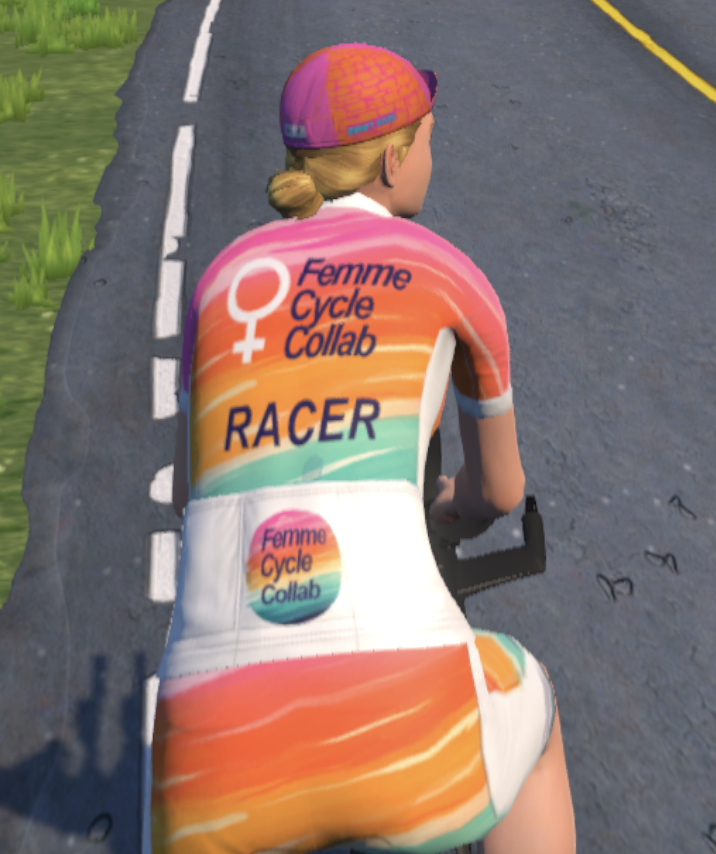
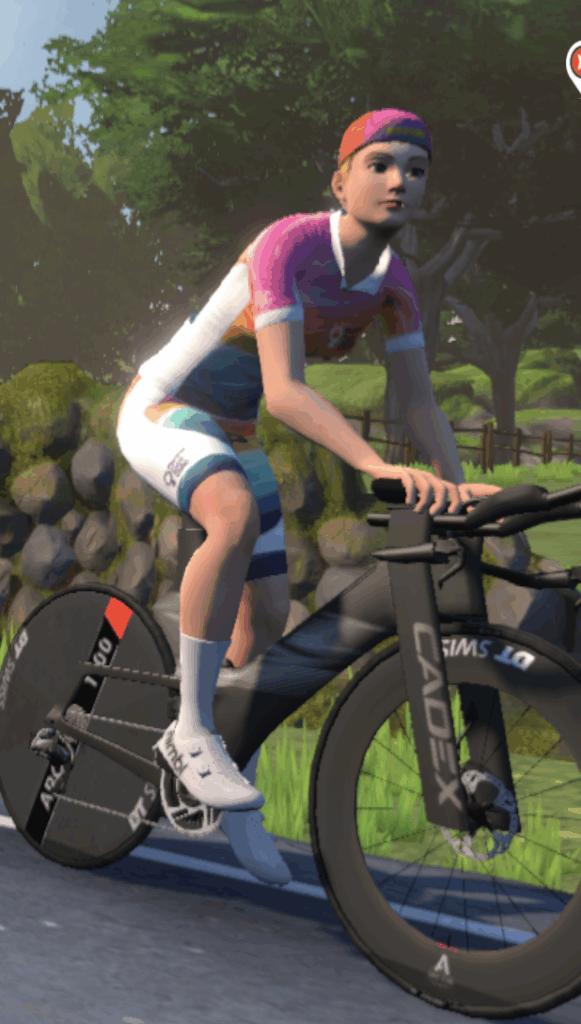
The FemmeCycle Collab created an in-game kit for Zwift that reflects our hopes for the future of the sport.  That jersey is a statement of our belief that women’s racing should be more approachable and more visible.  Identifying a rider as a female racer shows other women on the platform that there ARE women racing, not just the elites, but moms, grandmothers, retirees, and everyone else that doesn’t have the bandwidth or desire to train 12+ hours a week.  Because the more women who race means the more women’s fields will be needed, inside and outside. We hope that increasing the number of women who race will, in turn, drive the demand for more women’s fields, both virtually and in real-world events.

Elevating women’s cycling will require a multifaceted approach. Building a robust base of participation through grassroots races, structured development programs, and innovative platforms like Zwift is crucial. These efforts create a sustainable pipeline where women can progress from casual riders to seasoned racers, understanding and appreciating the sport’s culture and intricacies along the way. A strong top must be supported by an equally resilient foundation—only then can women’s cycling reach its full potential.

And what do you think is next?

With a growing number of women participating in cycling, it’s crucial for those competing at higher community levels to grasp performance verification in indoor training. This encompasses everything from accurately inputting height and weight online to a thorough understanding of their equipment. Initiatives like the Fair e-racing alliance (https://www.f-e-r-a.org/) are already assisting teams with this vital aspect of legitimizing online racing.

And then? 

The sky’s the limit. 


How Crank Length Setting Affects Power Meter Pedal Accuracy

How Crank Length Setting Affects Power Meter Pedal Accuracy

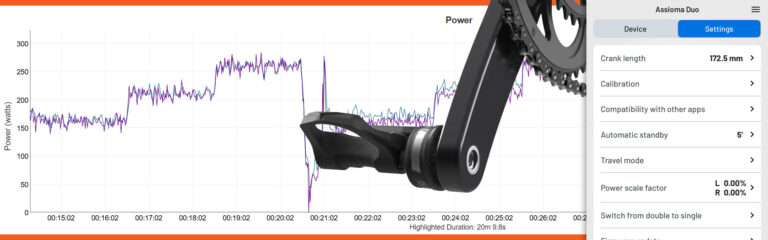
In recent weeks, thanks to procuring a new (used) gravel bike while also testing a new smart trainer, I’ve spent more time with power meters, smart trainers, and dual recordings than usual. This includes swapping my Favero Assioma Duo power meter pedals (read my review here) between bikes with two different crank lengths, while also testing the accuracy of the smart trainer (a Wahoo KICKR CORE 2) in various Zwift activities.

In doing this, I realized I’ve never written a post about how crank length setting affects power readings on popular pedals like the Garmin Vector 3 or Favero’s various offerings. And while this may not be a topic many care about – most will just set the crank length to whatever matches their setup – I believe the info below will help explain why high-end Zwift races require riders to use certain smart trainers as their primary power source, vs a power meter.

Let’s dive in.

Test Setup

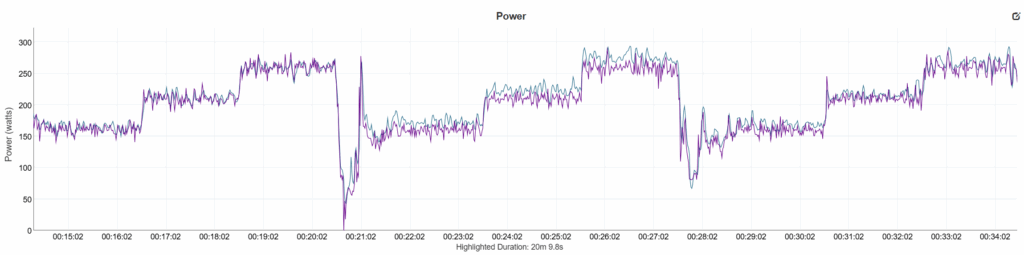
While simple math could deliver theoretical results, I wanted to prove the math using real equipment. So I created a simple Zwift workout which included three sets of the same three ascending 2-minute intervals.

The idea was to use a different crank length setting for each of the three sets and record the pedal power data to my head unit. Zwift would be recording my smart trainer’s power data, which should remain consistent across the 3 sets. Then I could compare the smart trainer’s data to the power pedal data to learn how much the crank length setting actually modified the power readings on the pedals.

Simple enough, right? Let’s look at the test results…

Test Results

You can see the full dataset on DC Rainmaker’s Analyzer tool, but I’ve summarized it below. I rode the first set of intervals with the crank length set too short, the second set with it too long, and the third set with it just right.

(Note that for each 2-minute interval, I took a 60-second sample of the data from the middle of the interval to arrive at my average power values below. This reduces data funkiness at the start of the interval as ERG targets change and trainer resistance adjusts.)

Set 1 (Crank Length: 167.5mm)

ERG Target WTrainerAssioma% VariationW Variation
160161.52164.671.95%3.15
210210.14211.950.86%1.81
260259.47260.180.27%0.71

Set 2 (Crank Length: 177.5mm)

ERG Target WTrainerAssioma% VariationW Variation
160159.76172.257.82%12.49
210210.56224.426.58%13.86
260259.85276.056.23%16.2

Set 3 (Crank Length Set Accurately to 172.5mm)

ERG Target WTrainerAssioma% VariationW Variation
160159.95167.734.86%7.78
210211.51216.922.56%5.41
260259.12266.852.98%7.73

Takeaways

In simple terms, power is calculated by pedals like the Favero Assioma Duo as torque * angular speed (cadence). Torque is force * crank length.

Based on the math, changing crank length from 167.5 to 177.5 should increase power readings by 177.5/167.5, or +5.97%. And in fact, that’s what my test actually showed. The differences in power readings between the 167.5mm and 177.5mm crank length settings were:

  • @160W Target: 5.87%
  • @210W Target: 5.72%
  • @260W Target: 5.96%

(These particular test numbers line up with the math quite nicely, although comparing other data like 172.5 to 177.5 doesn’t yield quite as clean a result. That’s sort of the nature of power testing, though. Between variations in power meter accuracy, pedalling style, drivetrain efficiency, and which data is actually being read and recorded by each recording device, you’ll easily see a variation of 1% from what the math says your results should be. And that’s OK.)

You may be wondering: in set 3, if the crank length is set accurately, why are the readings still higher on the pedals? I’d chalk this up to drivetrain loss, which most experts in the cycling world say runs between 2-3%. Every step of the way between your pedals and your hub, a bit of power is lost. Cranks, spiders, chainrings, chain, cassette… they can flex a bit, get worn, or be poorly lubricated. All those losses typically add up to a 2-3% reduction in power from what you’re putting into the pedals to what is actually delivered to your rear hub.

Power Meters and Zwift Racing

If power at the smart trainer is typically 2-3% lower than at your pedals, wouldn’t you want to use your pedals as your power source in Zwift? Well, yes, if no other factors were taken into account. Because we all want to put out more power, right? (Even if it’s unrealistic on some level, since outdoors, it’s the power at your rear hub that is driving your bike forward.)

There are other factors, though. Sticky watts is one factor that makes using a power meter on Zwift less desirable, unless you’re trying to cheat.

But I would submit that the biggest factor is that it’s very easy to change your power meter’s settings so it overreads power. While most modern mid and high-budget trainers are auto-calibrating, you can easily manipulate power data from a power meter.

Because of this, it’s become pretty standard for high-end indoor bike races to require riders to pair their smart trainer as the primary power source, even though they also require dual recording with a power meter.

Interestingly, I recently learned that Zwift Racing League leans this way as well, while stopping short of a hard requirement. From their rulebook:

6.1.3. Where a Smart Trainer is used, both its Power Meter and Resistance MUST be connected directly to the game as primary source. Participants using other forms of power meters when they have a smart trainer available may be penalised.

While Zwift allows event organizers to enable “hardware enforcement” that requires a power meter or smart trainer to be paired as the power source (no classic trainers/ZPower allowed), perhaps it’s time for Zwift to enable an even stricter setting, where only auto-calibrating smart trainers are allowed as a power source?

Your Thoughts

I hope you found this post interesting. Got questions? Thoughts on power meters or accuracy as they relate to Zwift racing? Share below!