Since Zwift workout intervals are generally based on percentages of your FTP, it is important to have your FTP set correctly so your workouts will have the proper level of difficulty.
Set your FTP too high, and your workout will be too tough. Set it too low, and it will be too easy!
There are actually several ways to change your FTP in Zwift. Here’s how each method works.
Method 1: Setting Your FTP via a Test (Preferred)
Testing is the most accurate way to determine your current FTP. But be warned: FTP tests require a maximal effort, which is always a challenge!
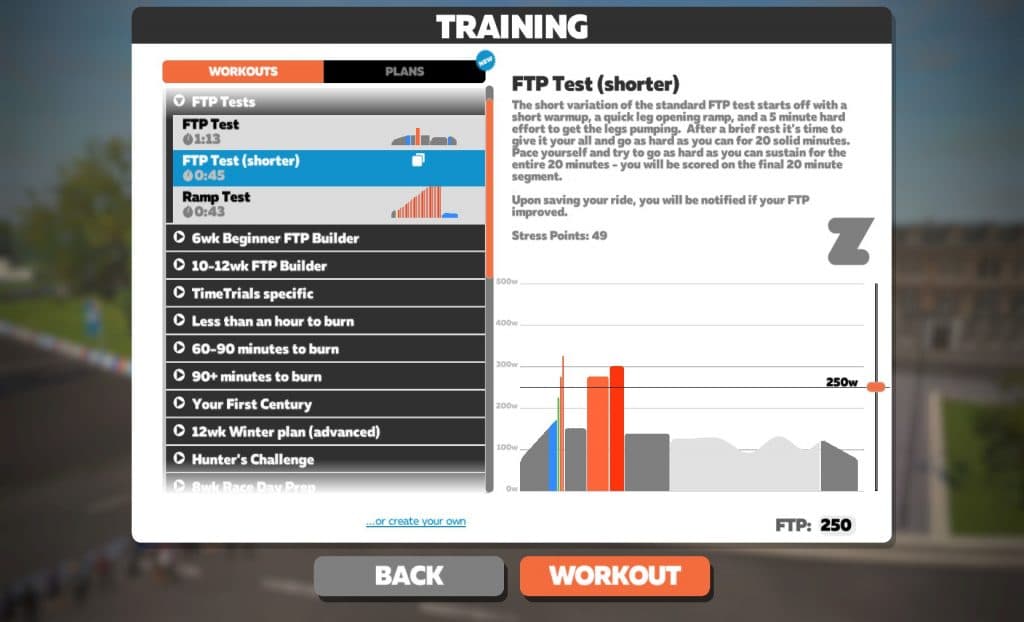
Zwift’s FTP tests can be found under Workouts>FTP Tests. You can get to the workouts screen by clicking “Training” from the startup screen, or hitting the “E” key on your keyboard in game.
There are three tests available. The first two (“FTP Test” and FTP Test shorter”) are “traditional” FTP tests in which you will put out a maximal 20-minute effort after warming up.
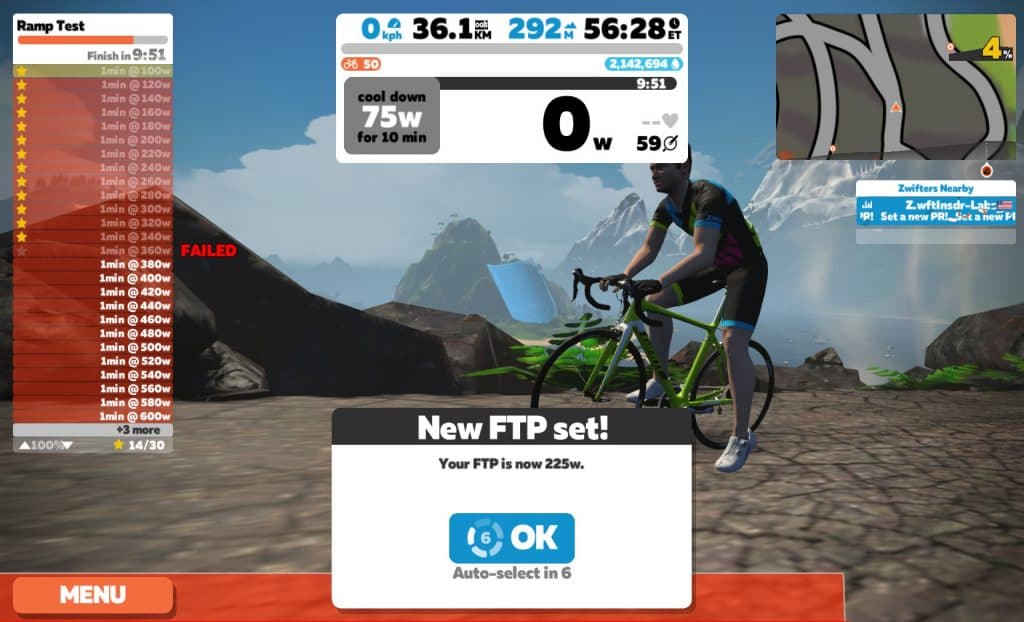
The third (“Ramp Test”) is a shorter effort which starts easy then ramps up in 20-watt increments every minute. The challenging portion of this test is typically 4-8 minutes long. Learn more about taking a ramp test >
Whatever test you choose, the game will prompt you to save your newly-tested FTP value once the test is complete.
Method 2: Manually Setting Your FTP
You can easily change your FTP to any number you’d like. This can be done in two different places, both only available from within the Zwift game.
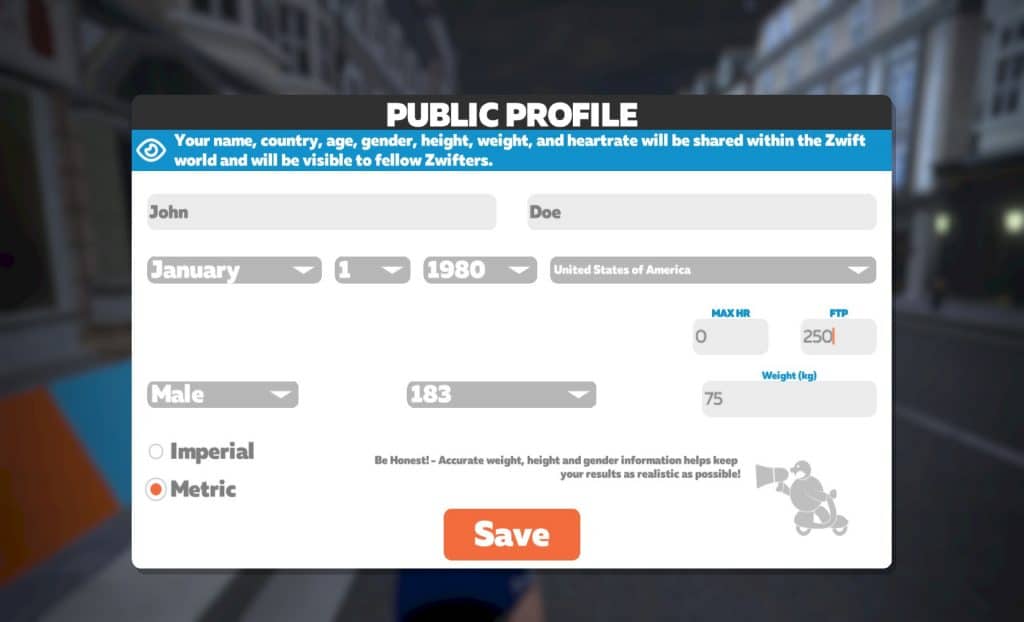
The first place you can adjust your FTP is under your profile. To get there, click “Menu” while in game, then click the edit icon next to your profile info at the top-right. Adjust your FTP, then click to save.
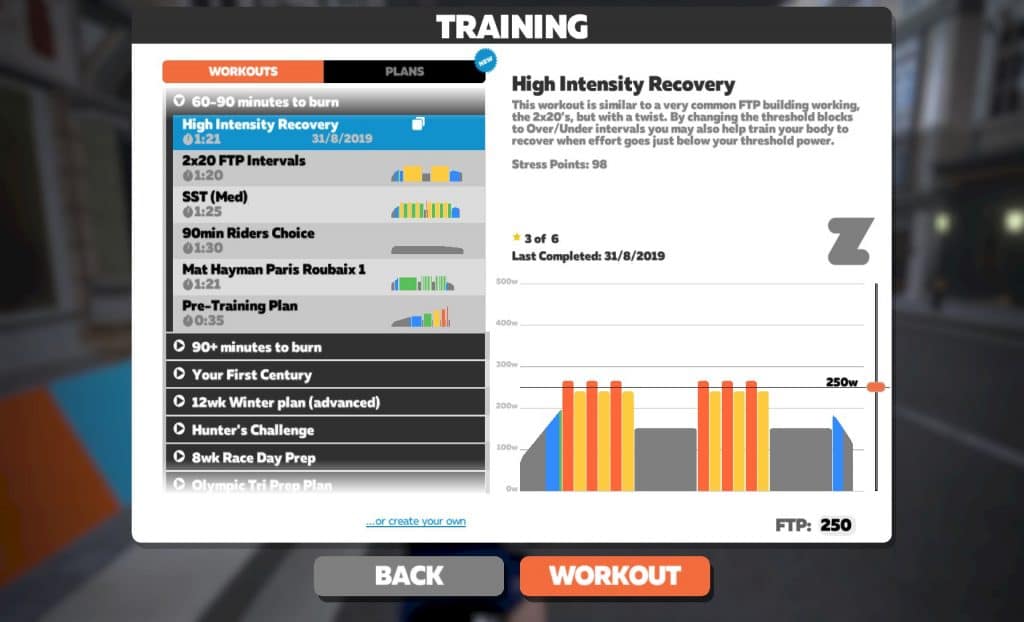
The other place your FTP can be adjusted is from the workout picker. Select any workout, then change the FTP number at the bottom-left. As soon as you change the number, your new FTP value will be saved.
Method 3: Setting Your FTP via Zwift’s Auto-Detection
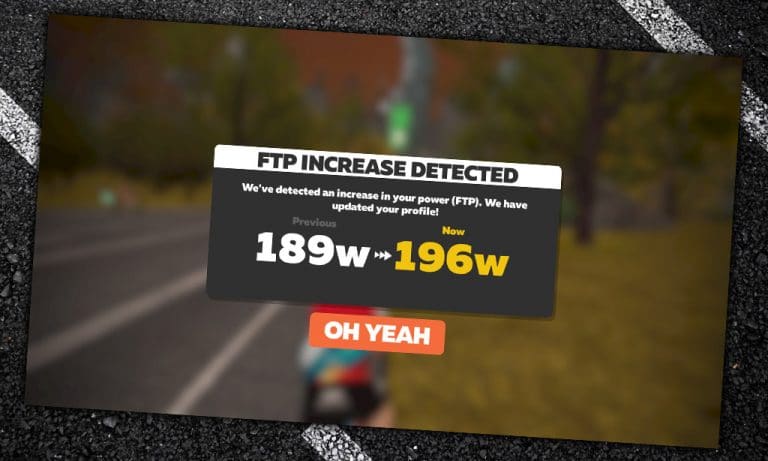
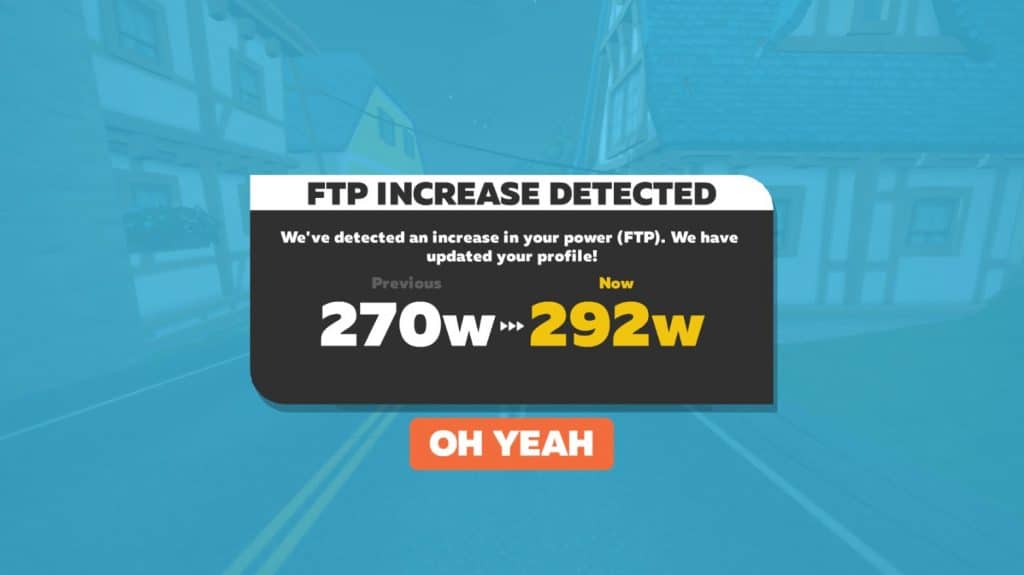
Zwift automatically tests your FTP on every ride, prompting you if an increase is detected. Your FTP value is calculated at the end of your ride as 95% of your highest 20-minute average power.
Example: if your FTP is set to 270 watts, and you averaged 307 watts for 20 minutes in a Zwift race, the game would prompt you with the screen below when you finished your ride:
Just hit “Oh Yeah” to save your new FTP. And of course, hit F10 to take a screenshot so you can share your new FTP on Zwift Riders Facebook and other social media. 😃
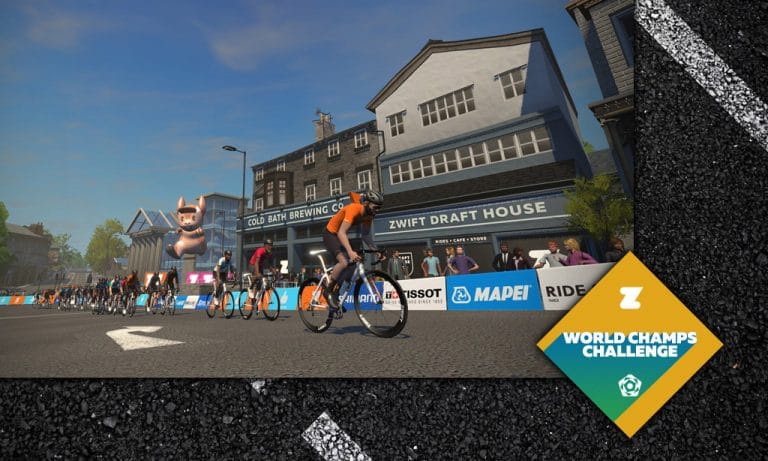
Zwift to Host 2020 UCI Cycling Esports World Championships
Zwift and the UCI have announced what may be the biggest bit of racing news in Zwift’s short history: the first-ever UCI Cycling Esports World Championships, to be held in 2020 on Zwift’s platform.
The UCI has enjoyed a mutually-beneficial relationship with Zwift since Zwift’s early days, with three UCI Road World Championship courses available in game (Richmond, Innsbruck, and Yorkshire). In fact, Zwifters have ridden over two million miles on these UCI courses!
We’ve known that the UCI has been taking Esports seriously, with April’s UCI progress report from president David Lappartient prominently including “e-cycling.” And the plans for 2020 aren’t exactly news, since his report included this:
… we have included e-cycling in our Regulations and are organising the first UCI e-cycling World Championships in 2020…
Still, today’s press release at the Zwift Draft House in Harrogate is our first confirmation that the 2020 WC’s will happen on Zwift–even though this shouldn’t surprise anyone!
Here’s Matt Stephens interviewing Craig Edmondson, CEO of Zwift Esports, about this news:
Big Horizons
Edmonson sees this as a chance to create something new which improves on some of the shortcomings of other cycling disciplines:
“The beauty of creating a new cycling discipline is that we have a blank slate and no limitations. Parity is incredibly important to us at Zwift and together with the UCI we will be working to create equal competition for both men and women. This means the same number of races, the same coverage for races, and of course, equal prize money. We will set the standard for fair play and equality.”
Eric Min, Zwift CEO, has championed Zwift as a platform for high-level racing at the UCI and Olympic levels for years. This is just one more step toward making this vision a reality.
“Earlier this year, we marked our ambition to develop an esports platform, but I think it’s much more than that. We are looking to establish a new cycling discipline. This partnership is a significant leap in that journey as we move further towards our ambition of delivering competition at the highest level in sport.”
Rhys Howell, Senior Manager, Strategic Partnerships at Canyon and Canyon ZCC Team Manager, said the decision to create an esports team was easy:
“Racing on Zwift is still in its infancy but compared to the cost of running a traditional cycling team, starting Canyon ZCC was a no-brainer of an opportunity. We’ve got a great opportunity to steal a march on future competition, and we are excited by the opportunity to reach new audiences.”
Martigny, Switzerland on Zwift
The UCI has just announced that next year’s Worlds will be held in Switzerland, with the race finishes happening on a 20km circuit in the town of Martigny. So it’s safe to assume we’ll see a new Martigny course released on Zwift, probably in August 2020.
More to Come
Of course, this is just the beginning–there’s a lot of work to be done before a World Championship can happen on Zwift.
Details on 2020 events are not yet finalized, and the UCI must implement a new rulebook for Cycling Esports as well. It’s going to be interesting to see this develop in the coming months.
Your Thoughts
What about you, Zwifters? Share your thoughts below!
World Championship Special #3 with Chloe Dygert, Alex Dowsett and Dan Bigham (Zwift PowerUp Cycling Podcast)
Episode 3 dives into all the action of the first half of the World Championship week. With stellar guests in newly-crowned TT World Champion Chloe Dygert, 5th place finisher in the men’s TT Alex Dowsett and Bronze medalist in the Mixed Relay Dan Bigham, the hosts cover all events whilst also sharing a taste of the World Championships.
World Championship Special #2, with Alex Dowsett (Zwift PowerUp Cycling Podcast)
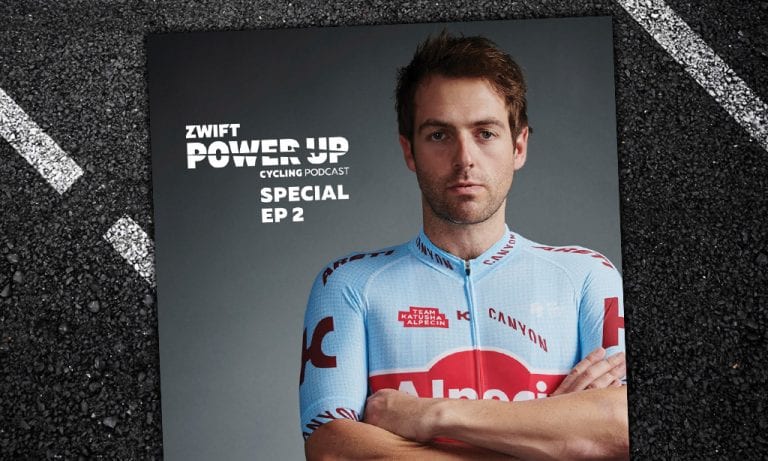
Team Sky. Movistar. Team Katusha-Alpecin. Top road racing teams all graced at one point or another by Alex Dowsett. He joins the hosts to chat about his early years in the pro scene as well as using Zwift to train ahead of the time trial event at the UCI Road World Championships in Yorkshire. All while sitting in a Glasgow bathtub before the Tour of Britain!
World Championship Special #1 (Zwift PowerUp Cycling Podcast)
Introducing a 5 part ‘Worlds Special’ that will feature special guests, analysis, and behind the scenes stories!
Matt Rowe teams up with Dani Rowe and Matt Stephens to discuss all things Yorkshire Road World Championships in Harrogate, Yorkshire. Plus, Kev Poulton will be on the podcast, offering a unique insight in to life as a coach for riders targeting the podium having used Zwift in training.
Have You Joined the Zwift World Champs Challenge on Strava?
It’s rare that Zwift sponsors a Strava Challenge, so when I saw one pop up last week I signed up right away! It’s called the Zwift x World Champs Challenge, and if you haven’t joined it yet, here are the details.
The Challenge
To complete the Challenge, you must ride the same length as the UCI Road World Championship Men’s Elite Road Race in Yorkshire between September 22, 2019-October 5, 2019. That’s 285 km (177 miles), and Zwift rides count as do outdoor rides. You can do it!
Here’s more fine print explaining what types of Strava rides count towards Challenge completion:
GPS and virtual rides both count towards the Challenge goal. Virtual rides are categorized as those that include GPS, distance, elevation, and time data from a simulated route.
Manual entries, e-bike rides, and non-virtual trainer rides will not count toward your Challenge effort. Activity privacy settings must be marked “Everyone” to count towards the Challenge goal.
All activities logged during the challenge period must be uploaded to Strava no later than three days after the challenge ends.
Prizes
There are two tiers of prizes for this Challenge:
One month free Zwift for those who complete the challenge. Available only to those who are not currently a Zwift subscriber.
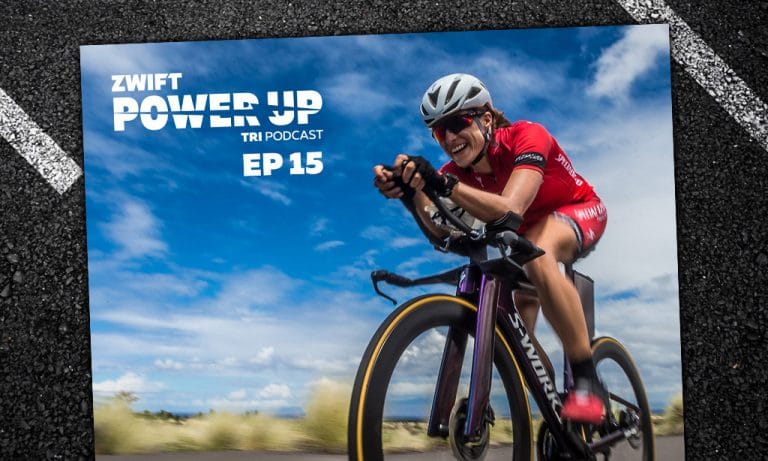
Sarah True on Depression in Endurance Athletes (Zwift PowerUp Tri Podcast #15)
Episode 15 brings recent Kona qualifier and Zwift Academy Tri mentor Sarah True in for a chat. We take this opportunity to talk about an often-overlooked yet important topic: depression in endurance athletes. We dive right in and speculate on why depression seems to be so common in athletes as well as our advice for dealing with it.
Sarah also offers a quick update on the Zwift Academy Tri team with Kona just around the corner. And in the tech corner, Jordan gives us the rundown on the hotly debated E-Bike racing scene.
About the Podcast:
The Zwift PowerUp Tri Podcast is hosted by former pro triathletes Matt Lieto and Jordan Rapp, lending their in-depth knowledge of the multisport to the Zwift Tri audience.
In the 1980s, Home Video Game consoles were dead. Sales had dropped, companies had gone out of business and consumer electronics magazines had declared that the silly fad of arcade games you can plug into your TV at home was over.
Enter Nintendo. A century-old Japanese company that got started making playing cards; they built an inexpensive, simple to use game console—and sold it in the toy aisle, not in specialty electronics stores. The Nintendo Entertainment System was a rousing success, and the video game industry was reborn.
Fast forward to today and Nintendo continues to try to find new ways to package videogames. From the Wii (a tremendous success) to the Wii U (a dismal failure). And in March of 2017, the Nintendo Switch.
The Switch is equipped with a 6.1-inch 720p LCD screen, and an innovative custom System-on-a-Chip from nVidia. The chip underclocks itself to save battery when games are played handheld at 720p, and then boosts itself when the Switch is in its dock, plugged into power and outputting to a TV at 1080p.
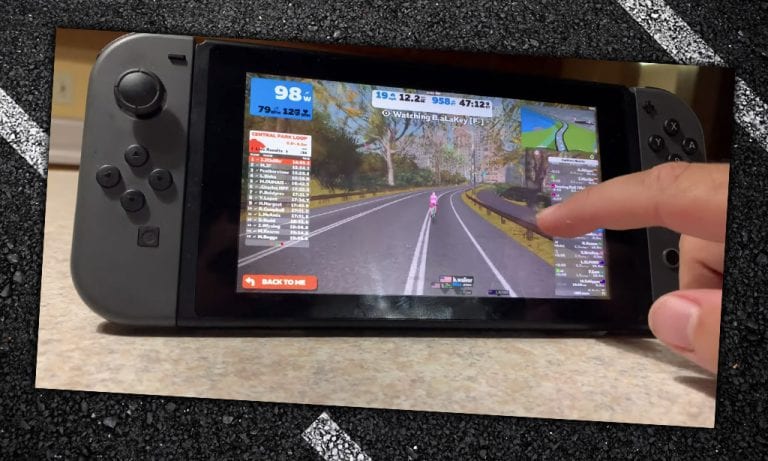
The portability and power of the Switch makes it an attractive console for developers. And for many of us Zwifters who own them, it’s natural to wonder what a Zwift experience might be on the portable handheld.
A Hack is Born
When the Nintendo Switch was launched back in 2017, hackers quickly discovered an internal recovery mode (abbreviated RCM). This was intended to be a way for technicians at Nintendo to repair the Switch by getting root access to its onboard memory. However, if an end-user is able to put the switch into RCM mode, then they can run unofficial, unsigned code. Things like home-brew emulators and even booting an entirely different operating system.
And that’s exactly what we’re doing here. By booting LineageOS, a special variant of Android 8.1, we suddenly have a powerful Android tablet with built-in game controllers!
For most Switch owners, this means having the best of both worlds. They can leave Horizon OS (the switch’s native operating system) unchanged, allowing them to play online through Nintendo’s servers without risking a ban, and allowing them to keep their system up-to-date. But, whenever they want, they can boot into Android and play games on Emulators, play Android games, or even access online video streaming services that don’t have native Switch support.
For us, this means we can Zwift!
FAQ’s
Will this work with my Switch?
Possibly. Nintendo patched the exploit in July of 2018. If you have a first-generation switch, it’ll work. This is a permanent exploit, if you have an early edition of the Switch, it will always be hackable. If you’re not sure, check this forum post and compare the list to the serial number of your Switch. If you’re shopping, some people have reported luck finding hackable models still on store shelves; but it’s been over a year now that the exploit has been patched, so you’d have to be pretty lucky. If you’re determined, you can find hackable Switch models on eBay, but expect to pay a premium.
How do I connect my trainer/sensors?
The experience is identical to an
Android phone or tablet. You’ll connect
them via Bluetooth. Zwift does not
support ANT+ under Android.
Will it work in docked mode?
Yep!
Though don’t expect great graphics.
Zwift and this particular Android implementation are not well optimized
for the Switch. This means that Zwift
will look worse than your favorite Switch games, all while consuming more
battery and running hotter. The Switch
display does not turn off when docked when running Android, but that doesn’t
seem to affect the experience.
Will I get disconnects or experience
crashes?
I haven’t. If you’re not getting sensor disconnects now, there’s no reason to think you suddenly would with the switch. It’s designed to work with Bluetooth controllers in docked mode, and it’s pretty reliable.
Will this void my warranty?
Potentially. Though if you have a Switch that’s still
under warranty, it’s not likely exploitable.
Will I get banned from Nintendo
Online?
No. Not if you’re only running Android. If you install Custom Firmware (CFW) or install homebrew apps on Horizon, then there is a risk. But the beauty if this Android implementation is that it runs entirely off of the microSD card, and doesn’t modify the Switch in any way.
Can I damage my console?
Yes.
But the risk is extremely low.
Follow the instructions and you shouldn’t have any issues. However, any sort of unauthorized modification
of a device carries some risk.
Why would I want to do this?
To be honest, if you have almost any other way to Zwift; such as a PC, Mac, Android device or iOS device; that’s probably a better experience. But for people like me who eventually take everything I own apart to see how it works, it’s fun!
What’s the Zwift experience like?
Framerates are smooth, but graphical fidelity is low and battery life is hilariously abysmal. It may be that despite the Switch’s decent hardware, it’s so unoptimized in Android that it can’t keep up. Or, it’s possible that Zwift simply doesn’t recognize the Switch and thus doesn’t apply its own graphical tweaks and settings.
Otherwise, it’s “just Zwift”. It works the same as any other Zwift experience.
How It’s Done
You will need:
A Nintendo Switch with an unpatched RCM exploit. (Pre July 2018)
A USB-C cable and a PC, OR a Payload injector such as SX-OS.
While it’s a little more expensive than other methods, my preferred method is SX-OS. It’s a kit that comes with an RCM Jig, a USB-C dongle and the software necessary to perform these modifications. It’s very easy to use, and for that, worth the extra $20 over other solutions.
Use a free tool called BalenaEtcher to flash the image containing Android to an empty MicroSD Card. (Note: The faster the SD card, the faster this process goes.)
Put the switch into RCM Mode. Follow the instructions for whatever method you chose. (Note: If using the SX-OS dongle, you’ll need to add the SX-OS boot.bin to the root of your microSD card).
Launch the Hekate payload, then select ‘switchroot’.
Hold ‘volume up’ to boot into TWRP. Then install all of your optional packages, including Open GApps. This MUST be done BEFORE booting into Android. I also recommend installing Magisk (which gives you root privileges) and the JoyCon fix (which helps the Joycons work for Android games and emulators)
Restart, put the switch back into RCM mode, and launch ‘switchroot’ again, this time without holding ‘VolumeUp’.
Wait 10 minutes for the first boot (it takes a while! Don’t be afraid of the blank screen.)
Follow the on-screen instructions.
Go to the Google Play Store, and Download Zwift.
And… that’s it! It’s a simple process. To get back to playing MarioKart, just
reboot. And anytime you want to boot
Android, just put it back into RCM mode and boot using the same method
above.
I found that the easiest way to keep
everything working was to have two separate microSD cards. One for my Switch and all of my Switch games,
and the other for Android.
“Rebel Routes” are Zwift rides that are not available on Zwift’s routes list, thus requiring manual navigation. The reward for your rebel ride? Exploring a new route, knowing you’ve gone where few Zwifters have gone before. And a Strava segment rank in the tens or hundreds instead of the thousands!
Here are all of Zwift Insider’s Rebel Routes. Enjoy!
Simply a combination of two well-known Watopia circuits: Volcano Circuit and Hilly Route. We begin with the Volcano Circuit – the “big ring” that is flat and fast. Then we hit the inner “little ring” of the Hilly Route with its namesake KOM.
We think the connector roads between Urukazi and Neokyo/Yumezi are some of the coolest parts of the Urukazi expansion, so we made this route which takes you on the shortest loop possible covering both of these connector roads.
Grab your gravel bike for this one, because it’s all dirt. This short loop takes you up repeated partial climbs of the all-dirt Temple KOM. A great route if you’re looking to do some VO2 intervals!
Planned along the same theme as the infamous Badwater Ultramarathon, this route takes you from the lowest point on Watopia to the highest point then back again. Suggested by Craig Devonshire.
A climber’s dream! This loop begins atop the Epic KOM, descends to the bypass road, cuts across, then climbs up. Perfect for ~20-minute sweetspot intervals.
Complete each of the four (“fower” in Scots) loops of the Scotland map in a counterclockwise direction, starting in Glasgow at the southwest side of the map and working your way northeast to the Tower area.
A pitchy little number covering the upper portion of Watopia’s oldest climb, “the KOM”. Great for building sprint/anaerobic power by going easy on the descents and all in for the climbs.
When this was created, it was our most challenging Rebel Route, taking on every timed KOM segment on Watopia, since no official Zwift routes accomplished this. (It is now outdated.)
Distance: 65.7km (40.8 miles) or 103.5km (64.3 miles) for Jungle Afterparty edition
Elevation Gain: 505m (1,657′) or 882m (2,894′) for Jungle Afterparty edition
A Watopia route designed to cover every timed lap segment on the map. Two versions included – with or without the Jungle, which adds quite a bit of distance!
This is the flattest Zwift route over 30km, with only 4.4 meters of climbing per kilometer of riding. And it’s a loopable route, not a one-way affair like many of Zwift’s southern coast routes.
Zwift launched a set of Mystery Spinners in Watopia as a fun lead-in to the Big Spin 2026 series, so we createdthe shortest possible route that hits all 8 spinners.
Our smallest Scotland Rebel Route, this quick loop always has the Loch in its center and includes the rarely-ridden Breakaway Brae Reverse climb each time around.
Covering the entire perimeter of Watopia, this route is just like Bigger Loop except it adds the radio tower and Alpe du Zwift climbs. Suggested by Jeff Cottrell.
Distance: 53.6km (33.3 miles) + Lead-In of 5.7km (3.5 miles)
Elevation Gain: 437m (1433′)
This route includes all four of the rarely-traveled road sections Zwift added back in December 2020. In fact, when this route was created, it covered three of those four roads in a direction no official Zwift route covered.
Several routes that began as Rebel Routes eventually made it into Zwift! We’ve removed them from the list above, but you can see the details of the official Zwift routes below: