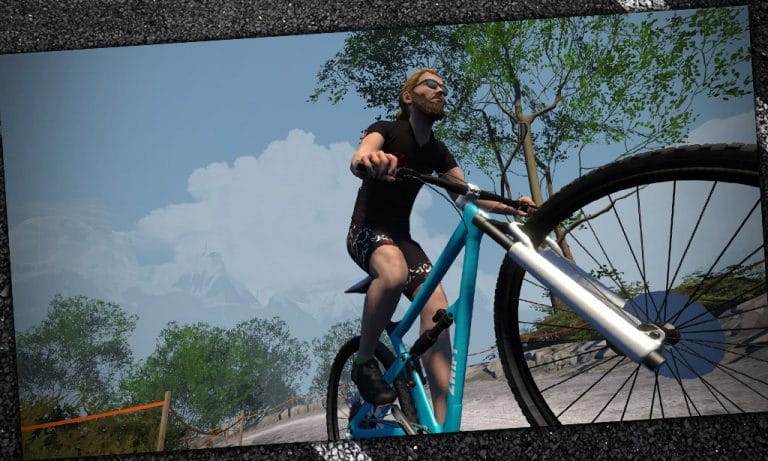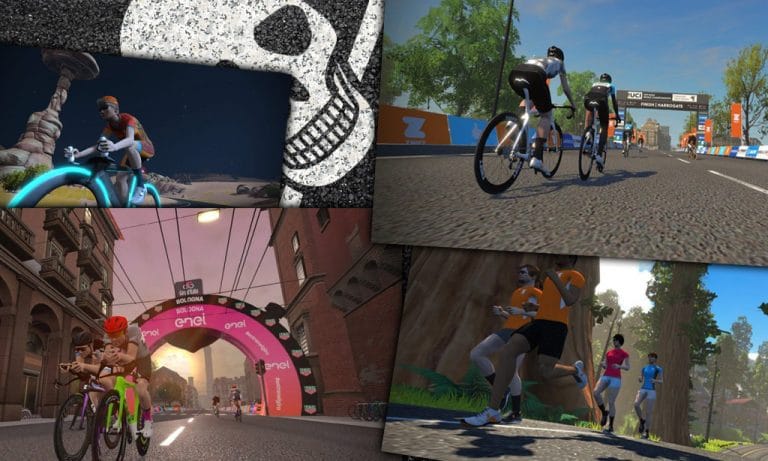
Ever messed up an FTP test? Oh yeah, I’ve done it. Paul The Punter has done it, too. But he also managed to bounce back from that and nail it. This really is a must-see video if you want to improve your FTP testing.
It has been some time that we featured content for our runners. For compensation, this is a big one. Stephen Cousins of Film My Run has delivered an extensive and awesome review of the Zwift Run Pod. If you want to run on Zwift, this is about the least expensive way to go.
All hardware reviews ultimately serve one purpose: find the best equipment to support your training. But how should you train? What kind of results can we expect when following Zwift’s training plans? Brian Davis has the answer.
Most of the top videos give you some sort of information. No, this one doesn’t. It’s just really a beautiful video. Nice kickoff to Zwift vlogging for Eric Lagerstrom.
With all the different training platforms out there, many of us actually subscribe to concurrent platforms. Each of them has different advantages. Meet Christie Brinker who explains how she pairs each platform with specific training needs.
Editor’s note: this is #2 in a series of articles focused on training advice for Zwifters. In each article, coaches bring their experience to the table and answer a single question. Here is this week’s…
Many cyclists are trying to lose a few pounds as they transition out of the winter holidays. What simple advice would you give to someone who is overweight and wanting to drop some of their extra baggage?
If weight loss is your goal, don’t get sucked into the obsession with burning calories. Focus on how you burn those calories, not how many you burn.
Mix small amounts of very high-intensity intervals into your regular training to tap into your deeper energy stores. Not only will you burn off additional calories during your workout, you’ll continue to burn calories as your body recovers from those hard efforts later in the day.
Remember too that your body will only be comfortable shedding excess fat if it’s being properly fueled. If you’re already running a calorie deficit during the day and you pile on another 500 calories of riding, you’ll be way behind. Be sure to put back *some* of those calories to prevent your body from overcompensating in the opposite direction and slowing your metabolism down.
So the take home: ride hard, fuel right, watch the weight melt off.
I like to tell my athletes looking to lose weight a few things…
1. Keep your eyes on your plate, not the scale. Focusing your energy on how much the scale says and performing frequent weigh-ins does nothing but set you up for failure. The athletes I work with for weight loss weigh themselves ONCE A MONTH, that’s it! Doing less frequent weight checks will allow you to see consistent improvements and set you up for success with a positive feedback loop.
2. Stay focused, everyone is given 24 hours and it is up to you to use them effectively. Successful, lean, mean athletes aren’t created, they are formed from consistently making good choices, training intelligently, resting when needed, and utilizing their 24 hours to the best of their abilities. Sometimes this means not watching television so you can squeeze in that workout after putting the kids to bed at 9 PM after working all day (people do it!). This can also mean not eating out, not falling into the trap of “fast food” and “convenience” stores, and preparing your meals ahead of time so you always have a healthy choice. Everyone has a finite amount of time, how do you want to use yours?
3. Weight loss is a century, not a criterium! This ties #1 and #2 together; don’t expect big changes to happen and to stick overnight. Weight loss isn’t a “30 Day Challenge” or a “7 Day Cleanse,” it is a life change that is hard at the beginning to make, has frequent bumps in the road, and will get easier as time goes on (I promise!). This is why having someone in your corner, like a coach, is a great asset to have. They can give you a kick in the butt when you need one and also give you a pat on the back when things are going well.
Try to add 30-60min easy fasted sessions into your Zwift routine (2-3 times per week). These rides, preferably on an empty stomach before breakfast, will help you burn extra fat. Your energy system will tap into your fat stores right away as it will have very limited glycogen (carbohydrates) available to rely on.
As a nice side effect, fasted training has proven to be very effective in improving your fat metabolism – a main factor of good endurance. Even short sessions around 30min at 50 to 65% of your FTP can help and will burn a good amount of extra calories. For diversion, add a few 8-12s all-out sprints every other workout but avoid longer intense efforts that would require carbohydrates as fuel.
Watts per Kilogram, the elusive Holy Grail of cyclists everywhere. To improve your relative FTP score you can train hard and increase your aerobic capacity, but you can also improve your performance simply by shedding a kilogram or two. So, how do you go about leaning down and speeding up?
By achieving Caloric Deficit!
It kind of sounds nasty and something best avoided but it is what you need to do in order to achieve weight loss. Essentially to burn fat and lose weight you need to burn more calories than you consume, simple as that. What that means is you can lose weight through:
Increasing Caloric Expenditure through regular aerobic exercise: Ride On people!
Decreasing Caloric Intake: eating fewer calories on a daily basis
Caloric Expenditure
My background, education, and expertise are on the Caloric Expenditure side of the equation so let’s start there. Quite simply the best way to burn calories as a cyclist is to ride your bike, a lot. Short 45 – 75 minute rides at a moderate to high intensity (75%+ of FTP) will burn a lot of calories in a short period of time but many of those calories will be from blood glucose and muscle glycogen stores.
To burn fat best, increase your ride durations (1.5 – 3+ hours) at a zone 1 – 2 intensity (40 – 75% of FTP). The more days you ride per week the more calories you will consume. Try to ride 4-6 days per week varying between shorter, high-intensity rides and longer, low-intensity rides.
Caloric Intake
I am not a dietitian or a nutritionist and if weight loss is your principal goal then I strongly advise that you get professional nutritional counseling and guidance. That said, here are my suggestions that I have gained through 20+ years of racing and numerous years of coaching.
Cut out the crap. Sugar, alcohol, fatty foods…. all the good stuff really….. so maybe don’t cut it out completely, but do try to cut back on these empty calorie foods
Eat a balanced diet with plenty of veggies, fruits, complex carbs, healthy fats, and complete proteins
Avoid ‘diets’ but rather make healthy food choices that you can realistically maintain through your lifestyle
Be conservative with the use of gels, sports drinks and other fast simple carbs (they tend to cause dramatic changes in your blood sugar levels)
Consider trying some Fasted Riding; low intensity rides done in the morning prior to eating anything – a proven way to train/force the body to burn fat stores
There are tons of diets, theories, and suggestions available on the Internet. Some are gimmicks, some work and others are unproven or may even be dangerous. The secret with anything whether it be nutrition or exercise is to do your research, get professional advice and find what works best for you personally.
How long do you think it takes to form a new habit? A week? A month? A year? The answer is at least 2 months (or about 66 days, on average) according to research.
That said, my advice for someone who is looking to drop a few pounds, is to stop treating weight loss like a sprint, because in truth, it’s a marathon.
Let me give you an example of what I am talking about.
Do you remember the old children’s story about the Tortoise and the Hare? You know the story where the hare said, “I am the fastest animal in the whole wide world. I’m faster than a cheeky cheetah, a kicking kangaroo, and a racing rabbit.” “OK,” said the tortoise, “I’ll race you then!”
Because he had started so fast and since the tortoise was so far behind, the hare decided it was safe to take nap under a tree. Meanwhile, the tortoise ambled along slowly enjoying the sun on his shell and taking the odd nibble of grass from time to time. In time, the tortoise passed the sleeping hare and crossed the finish line first.
What is the moral of this story? Slow and steady wins the race. Take your time to make small changes that stick better because they aren’t intimidating (if you do it right, you will barely even notice the changes you have made!).
If you are looking to focus on dropping a few pounds, the last thing you need to do is reinvent the wheel overnight. Work on thinking differently as it relates to weight loss. Crash diets and excessive exercise programs do not work, let us be honest with ourselves.
David in 2009 (252 lbs) and 2017 (185 lbs)
Add a positive habit per week until it becomes part of what you do on a day to day basis. For example, you could start with something simple like drinking more water, or getting more rest for the first week. Then maybe the next week focus on eating 2 to 3 fruits and vegetables each day. Lastly, add additional protein to every meal. And the list goes on.
Keep at it, never give up, go the extra mile and #getafterit. Take it from someone who knows. In May of 2009, I weighed 252 lb., and thanks to CIS Training Systems, I am fit and lean at 185 lb., and have kept the weight off since 2012.
Dropping weight is the low hanging fruit for many cyclists. I do primarily recommend that athletes work with a licensed nutritionist or dietitian, preferably someone who has knowledge on endurance sports. Whatever you do diet or weight loss wise, do it in moderation. Don’t go crazy trying to drop a lot of weight quickly, remember to be realistic and patient.
As far as advice I give my athletes, I start with having them track eating habits. Most cyclists will regularly track their ride data but don’t bother to track it when it comes to their eating “data.” You can start this pretty easily with a food log or journal. I personally like the app MyFitnessPal as it allows you to scan in or search almost any foods. It also breaks out macros and calories and can connect with several other fitness apps. Just seeing what and how much you are consuming can be an eye-opening experience. In many cases, once the athlete sees the big picture with their eating habits, it serves as a self-correcting measure to get their diet on track.
Also, just like you may regularly schedule time for bike training, get yourself on an eating schedule. This doesn’t have to be overly complicated, but set a time for each meal and a hard cut off time at night and stick to it. Track how you are or are not progressing and adjust the schedule and nutrition as needed.
Conclusion
Here are the key themes I see expressed by our coaches above:
Take it slow: if you want to lose weight in a healthy way and keep it off, you need to change habits in a sustainable way. This doesn’t happen in 7 or even 30 days!
Get advice from experts: the web is full of advice, but if you can talk with a nutritionist, dietitian, or coach their guidance will multiply the effectiveness of your efforts.
Be purposeful about your rides: fasted, longer zone 1-2 rides or high-intensity interval training are your best two ride types for weight loss. Use them!
Today was week 10 of 12 for The Morning Grind Fondo presented by Team Draft and Team Dirt. We’ve been battling it out for months and this was the longest stage yet with 2 laps of Greatest London Flat totaling 58 km/36 miles. As this series is a mass start with all categories in the same field, the first few minutes were flat out until it sorted into natural groups.
A strong group of B riders including DIRT’s Jason Stern and KRT’s Bryan Montgomery hung with the A’s who were slowly drifting back to a large B group of mainly DIRT riders which included the 2 top Cat C competitors, Timothy Busick (DIRT) and Luc Parent. DIRT worked for their C rider to get him over the line first for Cat C. Busick took the win with Parent on the second step and DIRT’s S. Olsen rounding out the C podium.
As the Cat C race was shorter, the B pack churned on trying to bridge the gap to the Stern-Montgomery group. Stern DNF’ed with a nagging knee injury and the large B pack slowly gained ground, attacking on all of the lumps to gain valuable seconds on the group that was about 2 minutes ahead. Team DIRT was well coordinated and worked with 2 riders from Team Type 1, Paul Buckland and Matt Corse. A few kilos out from the line, chances to catch the Montgomery group looked bleak, but as the pace revved up and the advantages of Double Draft came into play, they were caught at the line with Paul Buckland from TT1 taking 1st, C. Wolv from ODZ taking 2nd ad B. Montgomery taking 3rd.
For the series, TT1’s P. Buckland remains in the lead with 532 pts, DIRT’s D. Elliott in 2nd with 480 pts and DIRT’s J. Sterny in 3rd with 407 pts.
For Cat C, the top podium spots are held by Team DIRT with T. Busick in the lead with 9 pts, J. McKenna in 2nd with 9 pts and S. Olsen in 3rd with 5 pts.
Here’s a cool race summary video from DIRT team member Shawn McAfee:
Cat D Race Report by Jamie Jackson
Yeah, it’s winter–and a lone Norwegian dominates the Americans of Team DIRT. Norwegian cyclist Marius Nyheim won today’s race by 2:37, with DIRT riders Peter Mardosa and Len Baird finishing in second and third.
The start was even more brutal today as only a couple of the category D riders managed to make the split and keep with the main group of C riders. Mardosa and Baird were in the group but the fast pace and hill attacks dropped Mardosa and then Baird followed. A small group of C and D riders were chasing the main pack and picking up stragglers along the way.
Nyheim was part of this group that worked great together through several strong attacks on the climbs. This took its toll and split the group with Nyheim remaining and the other category D riders dropping off the back. Mardosa and Baird continued to work in a small group to the line where a monster sprint secured 2nd for Mardosa. The overall standings for category D remain unchanged with DIRT riders Len Baird in first, Jamie Jackson in second, and Joe Christman in third.
What is “Base Training” and why perhaps you should not do it as an amateur cyclist and triathlete
How to get the most out of Endurance Rides
Maple Syrup is a great way to fuel your workouts. Find out why and learn how to make your own cheap portable maple syrup energy gels here: https://youtu.be/XPHZ7umtCAk
I’m still amazed when I hear from Zwifters who don’t yet use a fan. How do you survive? Granted, I run pretty hot, and perhaps you don’t need as much cooling as I do. But you do need a fan for Zwifting, unless you are specifically training for heat adaptation.
WHY YOU NEED A FAN
Your body only runs at around 25% efficiency, which means that every watt of pedal power comes with three “wasted” watts which are turned into heat. Cruising along at 200 watts? You’re generating 600 watts of heat. Race at 400 watts and you’re producing enough waste heat (1200 watts) to power a toaster oven!
Without a fan, that waste heat creates a superheated pocket of air around your body. Soon enough your body temperature will rise, your RPE will increase, and your power output will decline as your body kicks in its “governors” to keep you from overheating and damaging internal organs. Without a fan, you simply can’t hold your maximum wattage! This is probably the biggest cause for new Zwifters complaining that they can’t hold the same power indoors as they can outdoors.
Adequate cooling also helps to reduce cardiac drift. Here’s what coach Hunter Allen has to say in this article:
Staying cool is very important while riding indoors, a small change in body temperature can create a large change in the amount of power you can produce. As your body becomes hotter and hotter, you will perspire more and more to help cool the skin. Losing that fluid creates thicker blood and therefore more resistance internally in the cardiovascular system. The result of this is that your heart has to pump faster in order to get the same amount of blood to your working muscles. This is called cardiovascular drift and while you are stressing the heart more, you are not increasing your absolute FTP.
By keeping yourself cool and hydrated, you will be able to produce more wattage for a given heart rate and thus increase your overall absolute fitness. Overheating can easily cause a reduction in indoor power by 20 to 30 watts alone, so it’s critical that you have a large fan blowing on you during your workout and if you can do it in a cool room, that will make a difference as well.
HOW STRONG IS MOTHER NATURE’S FAN?
One way to choose how much air you need blowing on you indoors is trial and error. But this is Zwift Insider, so let’s use some math to come up with another solution by calculating how much air cooling we receive when riding outdoors. Wind generated by fans is typically quoted in CFM, or cubit feet per minute. What CFM do we experience when riding outside? That is, how much air hits us every minute? We start by figuring out our frontal area. This obviously varies depending on rider size and position, but typical frontal areas taken from this page are:
Bar Tops: 0.632 square meters, or 6.8 square feet
Hoods: 0.40 square meters, or 4.3 square feet
Drops: 0.32 square meters, or 3.4 square feet
Then we multiply that frontal area by how far we travel in a minute in order to get CFM. At 20 miles per hour you are traveling 20*5280=106,600 feet per hour. Multiply that by our frontal area–let’s use the hoods for a best guess estimate–and we get 20*5280*4.3=454,080 cubit feet of air per hour. Divide by 60 and you get 7568 cubic feet per minute. This is how much air is hitting you when riding outdoors on a windless day on the hoods at 20mph (32.2kmph). What if we tweak our variables a bit?
20mph on the hoods = 7568 cfm
15mph on your bar tops = 8976 cfm
25mph in the drops = 7480 cfm
So you can see that at a minimum you need around 7500 cfm of fan power to replicate outdoor air movement in your pain cave.
HOW MUCH DO YOU REALLY NEED?
There are other factors to consider, of course:
Some of the fan’s output will miss your body, so you’ll need more than 7500 cfm of air movement in order to replicate the outdoor feel
Your ambient pain cave temperature may be higher or lower than outdoors, requiring more or less air movement
You may want more or less air movement than you receive outside
Cooling needs vary from person to person and setup to setup, but for me I like having two powerful fans so I can turn them both on or off independently when desired. I would say if you find yourself dripping sweat during anything other than maximal efforts, you need to improve your fan setup.
FAN RECOMMENDATIONS
Here are three good Zwifting fans with consistently good reviews on Amazon:
If you want a lot of air in a narrow window, “blower” fans are the ticket. They don’t move as much air as a good box fan, but they move a narrow column of air very quickly, great for keeping sweat off your face.
Kind of between a “blower” fan and the Wind Machine in terms of tightness of the air column, the Vornado packs a punch in a smaller footprint.
THE PREMIUM SOLUTION
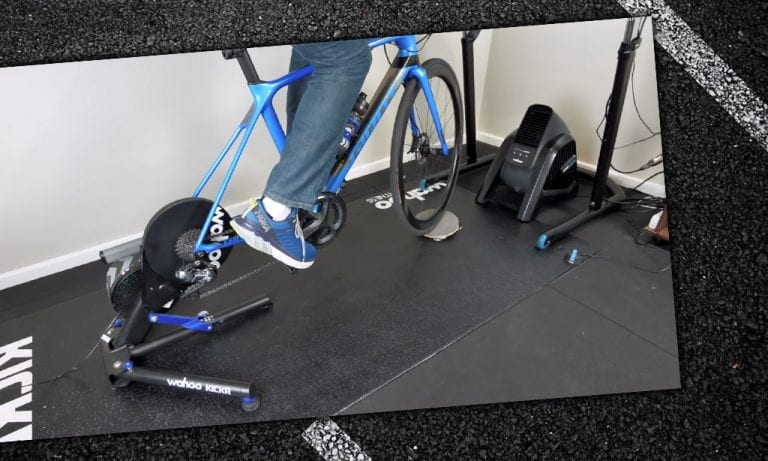
Want the very best? Check out Wahoo’s Kickr Headwind. It blows a very tight column of air right where you need it, and wind speed can be automatically modulated based on your virtual speed (to simulate a headwind) or heart rate (to cool you when you need it most). I’ll be posting a review on this soon, but everything I’ve read and seen on this has folks very pleased with its functionality.
Additional teams participating in the Women’s KISS Super League will be announced this month. The Women’s League will start racing in February once all participating teams have been confirmed.
Tour de Zwift has been a blast so far, with thousands of riders turning out to ride/race throughout Zwift’s five worlds. And even though the rides are fun, it can be difficult to fit all 9 stages into your schedule, no matter how badly you want to complete the tour and unlock that TdZ kit.
Zwift has your back: they’ve set aside the first weekend in February as makeup days, allowing riders to complete any and all missed stages. They’ve scheduled a pile of makeup events, with each stage available every two hours throughout the two days. Each stage is scheduled at 22 different times across February 2-3, so you should be able to find a time that works for you!
Looking to put in a lot of miles in the first weekend of February? Try stringing together stage events on Saturday and Sunday to ride the complete tour. It’s even possible to ride it all in one day!
Total distance (A group): 355km (221.2 miles)
Total distance (B group): 267km (165.9 miles)
Total distance (C group, women only): 284km (176.8 miles)
The Vegan Cyclist was the perfect opponent for Cameron Jeffers. In this video, he gives a recap on his experiences. As he goes quite in detail, he brings back the tension of the race itself.
Ed Laverack wasn’t formally part of the showdown between Cameron Jeffers and the Vegan Cyclist, yet he participated in the event and also carefully analyzed how it played out. As a pro rider, his view of the battle is quite interesting.
In fact, the Cam Jeffers vs. The Vegan Cyclist race garnered perhaps the biggest crowd of Zwift race participants ever: well above 1,000. We do not want to overlook the amazing performance of all those who joined. The Charlie, Carbs, and Cycling channel puts the spotlight on the actual race-winning efforts.
And in case you don’t care about that big Zwift race that we heavily feature this week… how about this entertaining Q&A with the man behind the Smart Bike Trainers channel?
Which race routes are the most popular, and why do you suppose that is? Recently ZwiftPower.com webmaster James Hodges produced a report for me summarizing which routes have been used the most by race organizers in the past three months.
It is worth noting that this report isn’t based on participation (that is, number of racers) but on which routes were selected by race organizers.
#1: Watopia Flat Route
No big surprise here, as this is the most popular route in-game. For all our talk about wanting big climbs, Zwifters gravitate towards the flat stuff. This, I believe, is why ZwiftHQ is working on bringing more flat roads to Watopia soon–because this route is quite crowded when freeriding on Watopia days.
Of course, this route isn’t completely flat: the slight climb up from Ocean Boulevard can be painful in a race, and the ramp into the Esses is where attacks always happen. But overall this is an exceptionally flat course, built for the wattage bazookas.
The “CCW” is key, because in the clockwise direction you don’t have a long enough climb to make things interesting. This is a super-fun crit course with one kicker per lap and a hard-to-nail finish. It’s one of my favorites and a favorite of many racers, so it’s no surprise seeing it at #2.
As a very flat course with a single kicker per lap, the Classique is sort of London’s version of Volcano Circuit CCW, but with a simpler finish. It’s a fun race course, especially if you get the feather powerup so you can attack on the kicker and put fellow racers in the hurt locker.
This route is just a bit flatter than Watopia Flat, with no significant climbs to speak of. It’s not a favorite because it’s interesting for racers: it’s a favorite because it’s so flat. It’s not one of my favorites, although in the reverse direction the dirt climb up to the Italian Village is fun.
#5, 6, and 7: Volcano Climb Watopia Hilly Route, Greater London Flat
We have a climbing route, a flat route, and a mixed route all tied for fifth place. How strange! Volcano Climb is the surprise here for me, since it features (by far) the largest climb of any route in our top 5 list. Why do you suppose it is a favorite of race organizers? My guess is it’s because 1) it’s on everyone’s favorite course, Watopia and 2) the Volcano climb is just long enough to force a split between many of the pure climbers and pure flatlanders. The Hilly KOM isn’t long enough to do this, and the Epic KOM is so long that it can become a TT and turn racers off.