

Eleven years ago today, I went for my first ride on Zwift.
The winter of 2015 was my first “indoor season” as a serious cyclist, and I was already dreading the roller sessions. At the time, none of my local riding buddies were on Zwift. None of them had even heard of it. But I saw it somewhere on Facebook, downloaded the game, ran it in “just watch” mode, and immediately knew I had to give it a try.
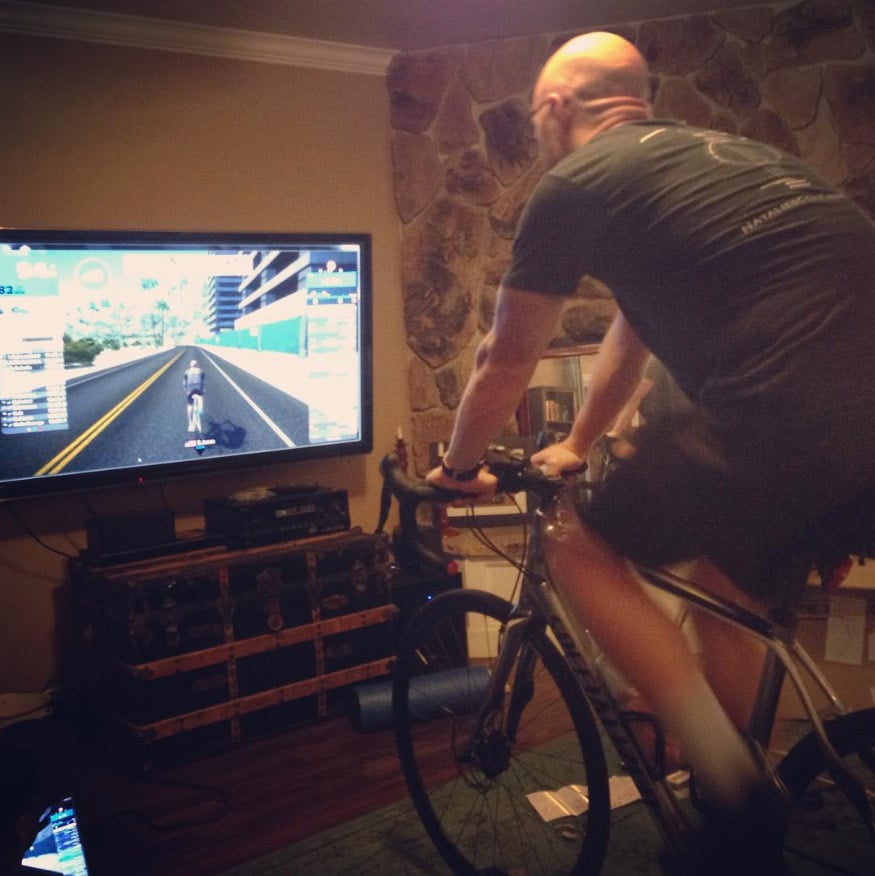
I found a website in Germany selling Tacx Vortex Smart trainers for ~$290 to my door (a smokin’ deal at the time), so I pulled the trigger. The night it arrived, I put it together, hooked my bike in, and went for my first Zwift ride from the middle of my living room. The trainer wasn’t calibrated, I had no fan, and I wasn’t dressed for a real ride… so that effort didn’t last long.
But two days later, I went for my first “real” Zwift ride – two laps of Watopia’s Hilly Route (the only route in Watopia at the time). Uploading it to Strava certainly confused local friends. “Are you in the Solomon Islands right now?”
That’s how it all began for me. And I jumped in with both feet! Less than a month later, I launched ZwiftBlog.com, which became Zwift Insider after two years.
I wish I had been on Zwift from the beginning, but when Zwift beta launched in 2014 I was just rediscovering cycling after an 18-year hiatus.
It has become my habit each November 12th to post a refreshed Zwiftversary article. So here I am, once again looking back at my journey and delivering my perspective as a Zwifter and the editor of the web’s biggest Zwift fansite (5,560 posts and counting).
Growth Trends
The all-time Peak Zwift of 49,114 came in January 2021. Remember that time? It was actually illegal to ride your bike outdoors in some European countries, as COVID lockdowns sent Zwift numbers off the charts.
A year later, traffic numbers were much lower than their mid-COVID peak, and really, since that time, if you remove seasonality, numbers have basically held steady as far as I can tell. We certainly aren’t seeing the massive year-over-year growth we saw each winter pre-COVID.
I believe there are still hordes of humans out there who could really benefit from what Zwift offers: older riders, younger riders, TT riders, busy riders. But Zwift has to figure out how to tap into each of those audiences.
I am seeing lots of brand-new riders on the platform in the past couple of years, which isn’t something you saw much in Zwift’s early years. Zwift’s big moves in the hardware space certainly have something to do with this, with (I would guess) north of 100,000 Zwift Rides being sold since the product launched.
Hardware: Improving On A Good Thing
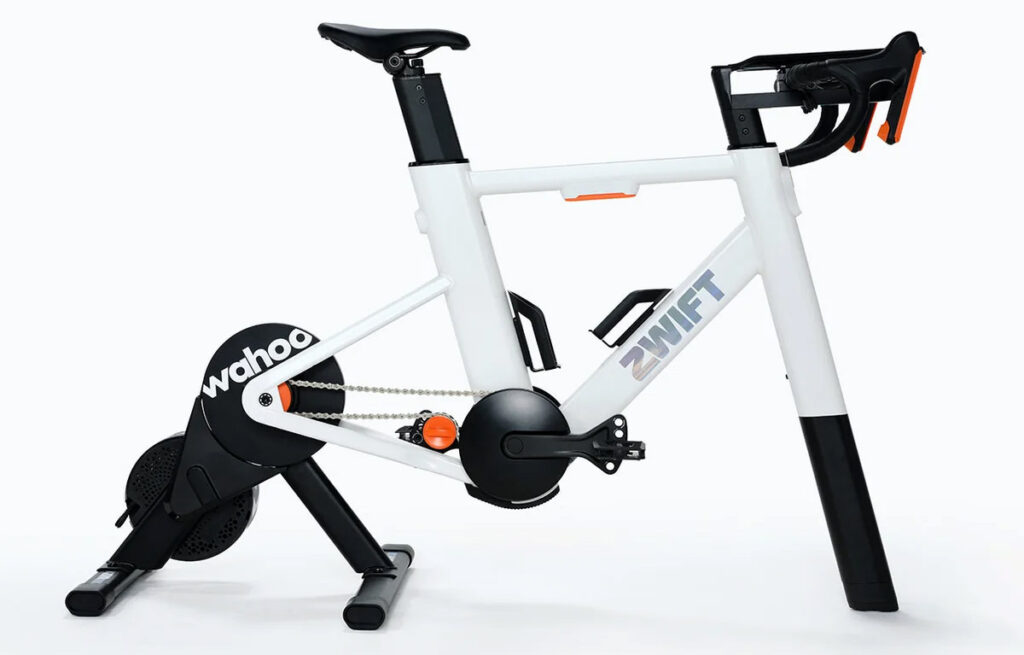
The Zwift Ride was released in June 2024, and it immediately disrupted the smart bike market. Priced at just $1299USD, it was half the price of the cheapest competitor (Wattbike) and one- third the price of the premium options (Wahoo KICKR Bike Pro, Tacx NEO Bike Plus). Overnight, it became the default smart bike recommendation for most Zwifters. It’s just really difficult to justify spending 2-3x more.
Two and a half years after its launch, Zwift Ride is now shipping as a refined version 2 frame, with the updated KICKR CORE 2. The package has improved, while the price has held steady.
While Zwift is clearly motivated to improve their core hardware offering and drive subscriber growth, price pressure from the Zwift Ride has made it more difficult for manufacturers to see positive ROI from new trainer development. So we haven’t seen much new in this space, apart from recent announcements of the Stages SB200 bike and Garmin’s Tacx Nēra.
Has smart trainer tech developed to the point where innovation isn’t needed? I would argue that we’re close. Table stakes for a smart trainer these days include WiFi and Zwift Virtual Shifting support, max wattage and incline that will accommodate nearly all riders, auto-calibration with power accuracy of 2% or better, and a mounting setup that works with nearly all bike sizes and types. These were dream features 10 years ago, but now they’re standard features on $500 trainers. That’s no small shift.
Training Partner Expansion

Zwift rolled out their Training API just over 2 years ago, and have been quietly adding partners ever since. I stopped tracking these additions because it was too much to keep up with, but according to Zwift’s support page, there are currently 38 platforms that send scheduled workouts to Zwift. That’s impressive.
It’s wild (but not inaccurate) to think how these new Training API integrations have infinitely expanded the library of workouts available on Zwift while also customizing that library to your specific needs. It may sound cliché, but we really are seeing training tools today that are exponentially more powerful than what we’ve had in the past. It’s fun to watch!
Rouvy and the Competition
Speaking of expansion, Zwift bought Rouvy back in April. That was a surprise, wasn’t it? Some Zwifters and Rouvy users (Rouvies?) are still dubious about Zwift sticking to their stated plan that “Both Zwift and ROUVY will continue to operate independently, with differentiated roadmaps and subscription packages.” We have already seen Zwift virtual shifting support rolled out to Rouvy, and rides on one platform now earn you progression XP in the other, as long as you have an active subscription on both.
So what does the competitive landscape look like today? Apart from Zwift and Rouvy, you’ve really only got two other viable platforms:
- MyWhoosh: After beating Zwift for the UCI Esports Worlds contract, MyWhoosh has gone all-in on racing. With cash purses in races and no subscription cost, budget-minded riders are attracted to the platform. Still, it feels like people use the platform for monetary reasons, not because it’s particularly good.
- TrainingPeaks Virtual: TrainingPeaks was acquired by Garmin in July, and I’m curious how that will affect further development. This is the more compelling platform for me, due to the intriguing combination of a popular training platform (TrainingPeaks) and a fast-moving, race-focused game developer (George Gilbert). I love how quickly they built out lots of powerful features, but I don’t love the UI or game environment.
Zwift Plus Launched
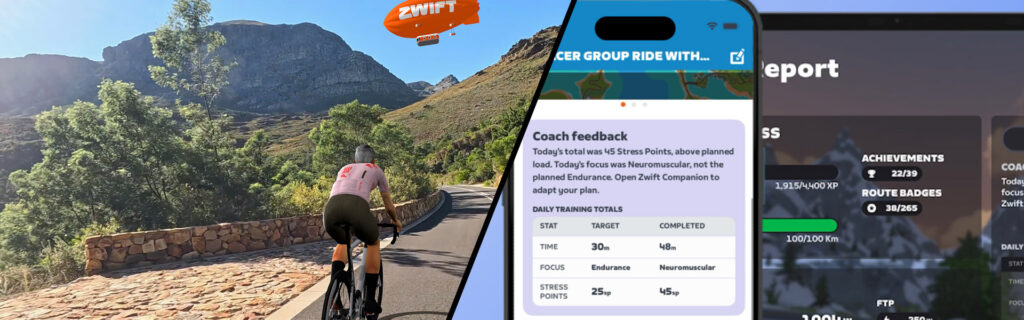
Zwift’s premium subscription tier launched almost 2 weeks ago, bringing with it two new features: Zwift Coach and Zwift Video. This is big news!
Zwift Video seems to have made the biggest splash, which is what anyone would have predicted. Because Zwifters do love a new road, don’t they? Reviews seem mostly positive. The biggest complaint about Zwift Video so far seems to be, “This is fun, but the list of routes is small.” Well, that and some folks learning that their garage setup’s WiFi connection is slower than they realized.
Zwift Coach is a bit harder to evaluate, though. You have to make a plan, try some of the recommended rides, see how it adjusts the plan, etc. It takes time and focus. So most of the initial Zwift Coach feedback seems to be, “I don’t need this.” But we’ll wait and see what Zwifters say after they’ve used it for a while.
From where I sit – a seat with admittedly limited visibility into Zwift’s user metrics – it would seem that Zwift Plus, so far, hasn’t been a big hit. (A quick look at the game right now showed that 3-4% of online users were on Zwift Video routes, which seems low given we’re still in the free access window for Zwift Plus.)
What Zwift launched here isn’t the final product, so it’s not surprising that some Zwifters are unimpressed. My guess is that Zwift is committed to the Plus idea long-term, and you’ll see it built out with more Video routes, event support for Videos, and better Coach features in the coming year. If you aren’t impressed right now, you’ll probably want to take a second look in 6-12 months.
Welcome to the Wattage Cottage
I’d be remiss not to mention Wattage Cottage in this post, the Zwifty podcast I started with Dave Towle and Shane Miller back in April. I’ve pondered launching a podcast for (literally) years, so I’m glad Dave was willing to do the heavy lifting to get this going. We’ve also been happy with the reception thus far. Be sure to follow us for our takes on all the latest Zwift stuff!
Here’s the latest episode:
Weathering the AI Storm
AI is changing the world in a million different ways, and I’ve felt it over at Zwift Insider. I noticed it last year, but didn’t include it in my Zwiftversary post. This year, though, I’m feeling it much more strongly.
Most notably, I’ve felt it in my wallet: with more and more people getting their Zwifty questions answered by ChatGPT or Google AI Overviews, fewer are clicking the links on those answers to visit the source material (often a post at zwiftinsider.com). That means less traffic and less income for me – and it’s a significant, noticeable difference.
My hope is that lawsuits already in the courts are soon resolved in favor of content creators like myself, and the AI platforms are forced to share revenue with the creators they’re sourcing from. Otherwise, it’s just a snake eating its tail, and that’s not a sustainable model in any world.
I recently added a clear AI policy to our submission guidelines, because I’ve been getting more and more articles and images sent from the community which are obviously AI-generated. I plan to keep the content on Zwift Insider human-generated, because I think real content from real humans is really important. (In related news, I posted a bit of a rant on Zwift Riders…)
One last note in this vein: thanks to AI coding tools, there are more cycling and fitness-related apps and sites out there than ever before. I’ve probably got 20 invites in my inbox right now from community members who’ve vibe-coded the “next big thing.” And maybe they have! But it’s really hard to grab my interest at this point. There are just too many options, and the more I see new apps built by vibe coders, the more I appreciate more established apps built and refined over the years by teams of real people.
I’m not entirely anti-AI. Not by a long shot. But I do believe it’s already both dangerous and overused, and will be even more so in the coming year. Let’s see what I have to say about it a year from now.
Development Needed
Zwift must continue to innovate and grow, and they, of course, have a roadmap for what is planned in the coming months. But I wouldn’t be a Zwifter if I didn’t have my own (obviously better) additions to that roadmap! Here are two:
1: Community Racing Development
It was heartening to sit in on a few meetings in the past 6 months between Zwift and community race organizers. Organizers have shared with Zwift where the pain points lie in their work, and what they’d love to see the platform support.
(Think fresh alternative formats, race data APIs, etc.)
Zwift, to their credit, is working on some of this. They’re also rolling out some things without any fanfare, including a Results API already being used on the websites of several big community organizers. The platform could really use an infusion of energy from the launch of fresh race formats like elimination, tandem, points, and on-demand TT. Hopefully that will come in the next 6 months.
2: Clubs Improvements
I’ve beaten this drum for a few years now. Here’s what irks me: even with one of the largest Clubs on Zwift (42.3k members, click here to join) I still struggle to put it to good use. The Club chat tool is very limited (no tagging members, no clickable URLs) which means most members just turn off notifications and never check the chat. And apart from chat, the club really just becomes a container for Club events.
Which is fine, I suppose. But having built and interacted with online communities for 25+ years, I can’t help but believe Zwift Clubs could be so much more. I’d love to see:
- Club kit designs
- Voice chat in game with Club members
- Team racing where Club members are automatically linked together
- More powerful Club chat/discussion tools
- Club leaderboards, to promote competition between Clubs
- and more!
So Many Rides, So Little Time
There was no in-game event calendar ten years ago – instead, the community put one together using Teamup (see it here). Today, there are ~420+ events per day on Zwift’s public calendar. Amazing! And that doesn’t even include private Meetups and Club Events.
Maintaining the perfect event calendar is no easy task, though. There is a tension that exists between Zwift-organized events like the currently underway Tour of Watopia and community-organized events. Big Zwift events get lots of marketing and calendar space and, consequently, attract a lot of overall participation. But this reduces numbers for community-organized events.
Is that a bad thing? Not necessarily. I would argue that the end-user experience is what’s most important, so if riders are enjoying Zwift’s big events, that’s a good thing.
But Zwift’s community is also a massive asset for the platform, and volunteer organizers in the community have pushed the platform forward in terms of event innovation since day one. (This is still happening: witness last weekend’s kickoff of a well-planned winter TT series from Cycling Time Trials, the national governing body for time trials in England, Scotland, and Wales. They had over 900 riders signed up to race the first week.) Zwift needs to be careful to cultivate and inspire event organizers, not battle with them for riders.
So once again, as the organizer of various Zwift events, including the Tiny Race Series, VO2sday, and Pizza Burner 100km, I’ll sound my clarion call for more event options and better event management tools. Based on my experience over the years organizing hundreds of events, I know that improving these systems would reduce event configuration errors, streamline organizer workflows, and allow the community to innovate in the space, all of which logically leads to higher-quality event experiences for end users.
The Future Is Bright
It’s not hyperbole to say my involvement with the Zwift community has been life-changing. It’s changed my fitness, my work life, and my vacation plans. This Zwift journey has taken me to many places, and I love being a part of it all. Every day, I’m reminded that I am truly blessed to serve the community through my work here at Zwift Insider. It’s something I hope to do for many years to come.
And with that, I’ll close out this year’s Zwiftversary post. Ride on!
What about You?
What’s your Zwift story? How long have you been on Zwift, and do you feel the platform is moving in a good direction? What features are at the top of your wishlist? Share below!

