Home Blog Page 113

Woman Racer Spotlight: Erin Ayala 

Woman Racer Spotlight: Erin Ayala 

Name: Erin Ayala

Hometown: Minneapolis, MN

How did you get into cycling? I started in triathlon and quickly realized I was best at the bike. I started to lean more into cycling, and the rest is history!

How many years have you been racing on Zwift? I think I started using Zwift in 2018 or maybe 2019. I’ve been racing pretty consistently since 2020.

Are you part of a Virtual team? REVO

What do you love most about racing? The team camaraderie is great, and it’s great for my motivation and training consistency during the cold, dark, and dreary Minnesota winters.

What is your favourite style of race (e.g. points, scratch, iTT, TTT, Chase, duathlon)?  Points or scratch races–especially flat ones 🙂

What is your favourite Zwift women’s race series? I love Zwift Racing League because we get some pretty good field sizes.

What is your most memorable racing experience, inside or outside or BOTH? Unbound 200. I’m not a crier, but couldn’t help myself as I crossed the finish line that first time.

What is your favourite food to eat post race? Cheeseburger, fries, and a cold IPA.

What advice would you give to a woman entering her first Zwift race? Just do it! You never need to be ready, fit enough, or fast enough. Everyone belongs! Also, the starts are super fast, so make sure you wind up early. I’m always out of the saddle with a VO2 max effort a few seconds before the start. It’s much different than IRL racing, but just as fun!


Tiny Race Series – April 27 Routes and Last Week’s Results

1

Tiny Race Series – April 27 Routes and Last Week’s Results

See zwiftinsider.com/tiny for current Tiny Race details.


Drafting in Zwift: is it easier to draft behind a larger rider?

Drafting in Zwift: is it easier to draft behind a larger rider?

It’s a question that has popped up in Zwift discussions many times over the years: do larger riders put out a bigger draft on Zwift? Conversely, is it harder to draft behind smaller riders?

It’s a logical question since anyone who has ridden road bikes outside knows there’s a big difference between drafting behind a larger rider or a small one.

It’s also a strategic question, because the answer could affect how you plan your next team time trial on Zwift.

Zwift calculates a CdA for each rider based on their height and weight – a key part of accurately simulating in-game speed. Years ago, I had a conversation with someone within Zwift (I forget who) who told me that the size/strength of the draft does indeed change based on the rider’s height and weight.

So I had always assumed that was the case. But I had also assumed that the difference was so small that I wouldn’t be able to measure it with the rudimentary methods I had at my disposal.

Then recently the question popped up again – twice in the same day, in fact – and I started thinking once about how I could test it. That’s when I realized Sauce for Zwift could help me make it happen.

Test Methodology

To test if the size of the front rider affects the draft received by the second rider, I devised the following simple test:

  1. Create a Meetup on Tempus Fugit, the flattest route in Zwift, and invite my two bots to the party. (A Meetup was used instead of a Club Event because this allowed me to dynamically change the height and weight of the front rider while remaining in the event.) No other riders were visible on course, and both bots were on the same basic bike: Zwift Carbon with 32mm Carbon wheels.
  2. Set the front rider to a very small size (152 cm, or 5′, and just 50kg in weight). Set that rider’s power so they are cruising as close to 40 kph on the flats as possible.
  3. Set my drafting bot to our standard dimensions (183 cm, or 6′, and 75kg in weight) then tweak this bot’s power until it is sitting on the first rider’s wheel at the lowest wattage possible.

I stayed in the Meetup (it was a 100-lap Meetup, after all) for quite a while, modifying the front rider’s dimensions and then tweaking both bots’ power until they were drafting nicely at 40 kph. Sometimes I changed that rider’s height, sometimes just the weight, sometimes both. I tested plenty of permutations until I was satisfied with the result.

With draft strength potentially differing by only a small amount, accuracy was crucial if my results were going to be useful at all. Zwift’s HUD shows no decimal points for speed, so I employed Sauce for Zwift in order to get at least one decimal place, which helped immensely!

I also used Sauce to show each rider’s current stats, and I kept the draft gauge up just out of curiosity.

Here’s a quick video summarizing what I saw:

Test Results

Front Rider Height, WeightFront Rider PowerRear Rider PowerSpeed
+/- 0.1 kph
152cm, 150kg378W225W40 kph
152cm, 50kg212W225W40 kph
198cm, 50kg254W225W40 kph
198cm, 150kg437W225W40 kph
198cm, 75kg306W225W40 kph
152cm, 75kg267W225W40 kph

Conclusions

The conclusion is clear: the strength of the draft does not change based on the size of the front rider.

I reached out to internal contacts at Zwift to confirm this conclusion, because I was surprised with the result after what I’d been told in the past. The contacts confirmed that this is in fact the case: height and weight are used to compute individual rider CdA, but that CdA does not affect the size/strength of the rider’s draft “shadow” in any way.

Not yet, at least. It sounds like Zwift may be looking into making some changes in this area. But of course, there’s nothing set in stone.

Zwift could simply change the overall draft strength based on rider dimensions – but that isn’t truly how it works outdoors, is it? Outdoors, what changes is the size of the draft. A taller rider casts a taller draft shadow. A wider rider casts a larger one. Could Zwift get so detailed that they’re actually changing the size of the draft shadow based on the rider’s size?

We’ll have to wait and see. I can only promise to report on any changes when they roll out!

Your Thoughts

Does this conclusion surprise you, or confirm what you already thought was true? Would you like Zwift to change the draft so it more accurately emulates the outdoor experience, or do you prefer how it works today? Share your thoughts below!

Introducing the Zwift TTT Calculator

12

Introducing the Zwift TTT Calculator

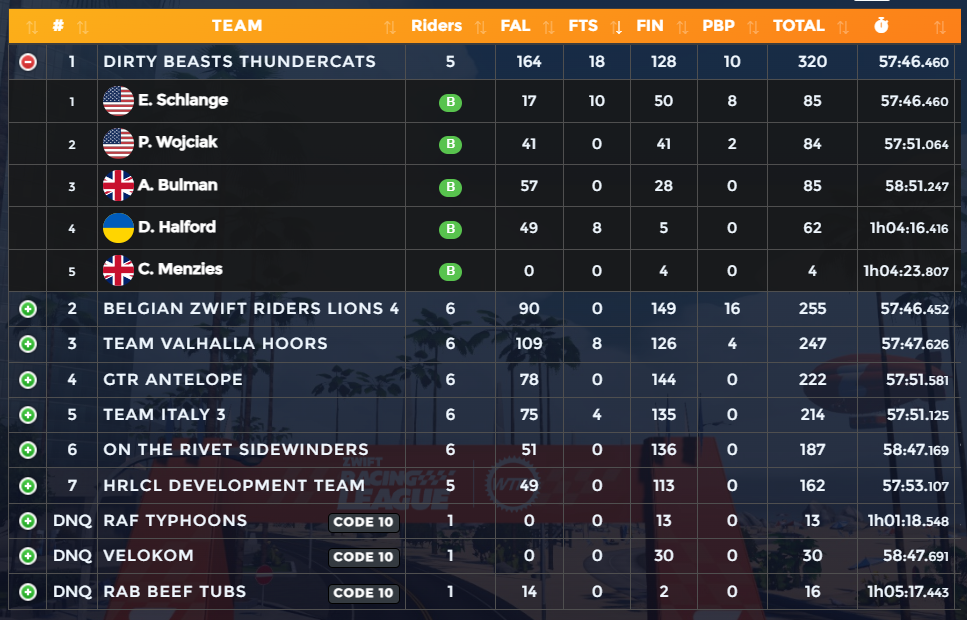
Last Thursday, nearly 400 teams comprising around 2,300 riders challenged themselves against the clock in the weekly WTRL Team Time Trial. For the captains, the preparation involved the daunting task of creating the perfect pull sheet.

Traditionally, this task requires grappling with inflexible and cumbersome spreadsheets, turning what should be a strategic exercise into a nightmare of inefficiency and imprecision. Manually entering all the rider data becomes a tedious chore, and making adjustments or visualizing changes adds to the frustration – a sentiment widely shared among Zwift racing teams. 

To combat these issues and enhance the experience, we developed the Zwift TTT Calculator – a game-changing tool designed to make preparing for race day easier, more accurate, and a lot more fun.

“This tool is amazing for TTT team captains!”

Sean Phillips (DIRTime Chasers Captain)

Development of the TTT Calculator

In close collaboration with DIRT team captains, who are long-established in the strategic nuances of Zwift racing, we sought to craft a tool that went beyond mere functionality—it needed to be designed to meet the specific needs of Zwift racers.

After numerous iterations and testing sessions, we refined a solution that integrates seamlessly with the zwiftracing.app API to pull real-time data, significantly automating the setup process. 

This tool officially launched to the public in early April, and since then, it has continued to evolve, driven by ongoing user feedback and our commitment to enhancing the Zwift racing experience.

Features and Benefits of the TTT Calculator

The TTT Calculator is loaded with features that simplify your race preparations:

  • User-Friendly Interface: Easily add riders to your roster using their Zwift IDs. The API automatically pulls in all necessary data.
  • Drag-and-Drop Functionality: Effortlessly organize riders, adjust target speeds, and set pull durations or power. This functionality also allows you to see the effects on a rider’s effort in real time.
  • Guided Optimization: Use sortable columns and heed warning icons to identify and resolve potential issues, ensuring an optimal rider lineup and strategic planning.
  • Intensity Factor Predictions: The calculator predicts Intensity Factor (IF) to help captains set appropriate power levels for each rider’s pull, ensuring that every team member can race at their optimal effort without risk of overexertion.
  • Instant Visuals: Generate and share a visual pull sheet with a simple click, facilitating easy strategy sharing among team members.

To further streamline the workflow, we have developed custom scripts using the Google Sheets API, allowing DIRT team captains to directly import data from our sign-up sheets into the calculator, nearly automating the entire preparation process. For public use, the zwiftracing.app API facilitates easy data retrieval using Zwift IDs. We are, however, also open to exploring requests from teams for custom integrations with Google Sheets and personalized branding options, enhancing the tool’s flexibility for TTT teams across Zwift.

How to Access and Use the Calculator

Getting started is easy:

  1. Access the Tool: Visit the Zwift TTT Calculator to access the tool.
  2. Set Your Team: Enter your team name and add riders using their Zwift IDs or enter the details manually.
  3. Organize Your Race Sheet: Utilize the drag-and-drop features to arrange your race sheet. Adjust speeds, pull powers, and assign an order to optimize each rider’s energy expenditure.
  4. Generate and Share: Produce a visual pull sheet with a simple click to easily share strategies with your team.

Future Developments and Roadmap

We’re excited about the future of the TTT Calculator. Planned features include:

  • Estimated Completion Times: We’ll provide captains with predicted finish times for different routes, enhancing strategic planning capabilities.
  • Auto-Optimization: The calculator will determine the optimal power output and rider order based on individual capabilities and team goals, making strategy setting more precise.
  • Terrain Modifiers and Power Curves: By integrating specific course profiles with advanced algorithms, we will adjust strategies according to varying terrains. This will further personalize Intensity Factor (IF) calculations for each rider, tailoring their efforts more closely to the race’s demands.
  • Customization and Integration Options: Future updates will expand customization features, allowing for more personalized exports of images and calculator parameters.
  • Advanced Power and Fatigue Profiles: We will enhance our understanding of how rider fatigue impacts performance, allowing for more personalized adjustments based on individual power curves.

Ready to ditch those clunky spreadsheets and take your team’s TTT preparation to the next level? Visit ZwiftGopher.com to access the tool. Give it a try for your next race and see the difference it can make for you and your team!

Join the Community

The Zwift TTT Calculator is designed and maintained by myself, Dave Edmonds, affectionately known on Zwift as the Gopher. With the invaluable support of the DIRTime Chasers Team Captains, I plan to continue to innovate and enhance the tool.

The Zwift TTT Calculator is a product of collaboration with the vibrant Zwift community. As we continue to refine and expand its capabilities, we invite you to join this exciting journey. Connect with us on our Discord server to contribute to the development of a tool that’s reshaping Zwift TTT race planning. Your insights and feedback are invaluable, helping drive innovations that benefit the entire Zwifting community!


Nine Years Ago Today on Zwift…

15

On April 24, 2015, Zwift launched Watopia. Here was their message to the small community of beta testers:

Together we’ve ridden 1 million miles (@1.6M km), 333K laps and climbed a total of 44M feet (@13.4M meters) on Zwift Island. That’s like climbing Mt Everest 1.5K times! We think that’s a big deal, so today we’ve launched our new course on the next isle to celebrate. Welcome to Watopia, your new home on Zwift!

As you can see, we’ve successfully moved and we’re ready for everyone to conquer our 10k course filled with fabulous vistas, bridges, and all new terrain. We’re still under construction so please be patient as we work to bring you the best ride possible (helmets encouraged!)…

See the full game release notes from Jon Mayfield posted April 24, 2015 >

A few fun facts:

  • It took the beta testers 5 months to ride 1 million miles, while in December 2017 the community rode over 700,000 miles in just 24 hours in a major fundraiser event. But in 2021, Zwifters rode 1.04 billion miles on the platform – that’s an average of 2.85 million miles per day!
  • The “Zwift Island” referenced is Jarvis Island, the first Zwift course. The honey-hunting bear in Titans Grove in named Jarvis in honor of this original Zwift map.
  • When first launched Watopia had only one 9.1km route, known today as the “Hilly Route“. The next Watopia expansion was Ocean Boulevard on December 30, 2015. Today Watopia is home to 88 routes (including some running-only and event-only routes).
  • The Richmond, Virginia UCI Worlds course was released on September 1, 2015, in between the first two Watopia updates.
  • Today Zwift hosts 212 routes spread across 12 maps (in order of release): Watopia, Richmond, London, Innsbruck, New York, Bologna, Yorkshire, Crit City, France, Paris, Makuri Islands, and Scotland.

Specialized 3D-Printed Saddle Shootout: Testing the Power Expert, Power Pro, and S-Works Romin EVO Mirror Saddles

Specialized 3D-Printed Saddle Shootout: Testing the Power Expert, Power Pro, and S-Works Romin EVO Mirror Saddles

3D-printed bike saddles are growing in popularity thanks to computer-aided design processes and quick manufacturing that allows saddles to be tested and tuned more precisely than ever before. My friends over at Performance Bikes have just launched a page all about Specialized Mirror 3D-Printed Saddles, so I partnered with them to review three of the company’s most popular 3D-printed saddles.

The saddles chosen for this review represent the three lines from Specialized: Expert, Pro, and S-Works. They also comprise two different shapes (Power and Romin), but it’s worth mentioning that Specialized just recently rolled out their Phenom saddle in a 3D-printed version.

Introducing the Saddles

All three saddles share some of the same features:

  • Patented Body Geometry designs for improved comfort and blood flow to sensitive areas
  • 3D-printed Mirror technology pads made up of thousands of individually-tuned struts and nodes printed from liquid polymer
  • SWAT-compatible mounts molded into the saddle base for sleek integrated storage

Power Expert Mirror

Unlike the other two saddles in this test, the Specialized Power Expert Mirror saddle comes in four sizes (130mm, 143mm, 155mm, 168mm) and includes a cover for a more traditional look that is easier to clean than open 3D lattice. Specialized says this is an “all around” saddle that could be used for road, gravel, or MTB.

It’s also the most affordable of the three saddles tested, retailing for $200US. It also (surprisingly) came in around 30g lighter than the Power Pro Mirror, at 225g for the 155mm size.

Unlike the other two saddles, the Power Expert Mirror uses 3D-printed Mirror technology for just a portion of the pad (the area under your sit bones). The patented Body Geometry design is used to improve blood flow, and rails are lightweight hollow Ti.

Power Pro Mirror

The Specialized Power Pro Mirror saddle is essentially a more affordable version of the S-Works Power Mirror. It comes in the brand’s two standard sizes (143mm and 155mm) and retails for $325US. It is the heaviest of the three saddles I tested, weighing in at 252g for the 155mm size.

The Pro version has the same Mirror pad as the pricier S-Works version (a “patent-pending matrix of 14,000 struts and 7,799 nodes”), but instead of the S-Works version’s carbon fiber shell and rails the Pro uses a nylon+reclaimed carbon fiber base and hollow Ti rails.

S-Works Romin EVO Mirror

The Romin shape is popular with pros, and the S-Works Romin Evo Mirror is at the top of the Romin line. It comes in the brand’s two standard sizes (143mm and 155mm) and, being the S-Works version, is the lightest (198g in the 155mm size) and most expensive saddle of the three tested here, retailing at $450US.

Despite its longer nose compared to the Power saddles, Specialized says the Romin is “designed to deliver exceptional comfort and ensure blood flow to soft tissue when riding in a low, aero position.” Specialized developed their first concave FACT carbon fiber shell for this saddle, allowing them to use the thickest Mirror pad to date, featuring 22,200 struts and 10,700 nodes. In the end, replacing Romin foam with Mirror technology reduces sit bone pressure “up to 26%.”

Important: the S-Works version of the Romin features oversized 7x9mm carbon rails which are not compatible with seatposts equipped with side-load clamp mechanisms for 7mm round rails.

Ride Experience

Having spent many hours atop older (foam) versions of the Power saddle in recent years, I was eager to try the newer Mirror versions. Additionally, I’d never ridden a Romin for any substantial length of time, so I was curious how it would feel to be back on a longer-nosed saddle.

The two Power saddles were tested both indoors (on Zwift) and outdoors, while the Romin was only used outside since my Specialized Venge ViAS is the only bike I have with compatible 7×9 side clamps.

The Power saddles felt more different than I would have guessed, with the Power Expert feeling a bit firmer under the sit bones and roomier in the nose than the Power Pro. Testing with both my fingers and my sit bones would indicate that the Mirror inserts in the Power Expert are a bit firmer than the Mirror pad used in the Power Pro, and you can also see that the channel ends a bit earlier in the Pro, which accounts for that feel of a bit more roominess in the Expert.

The Power Expert felt like a slightly firmer version of my well-used Power saddle (purchased back in 2017). The Power Pro, though, with its updated shape and full Mirror pad, felt significantly different. I’d say it felt more rounded in the back, and it bit more closed on the nose.

Every saddle I’ve ever used has creaked somewhat. Riding on Zwift, I noticed that the Power Expert creaked more often than the Pro, probably due to its nylon shell vs the Pro’s stiffer nylon/carbon shell.

The Power saddles have a shorter nose, a wider flair, and a flatter profile than the Romin. The shape of the Power Saddle is good if you don’t want to do a lot of moving around (fore-aft), while the Romin’s longer, narrower design allows for more movement.

I was actually surprised by how great the Romin felt. The narrower back felt roomier on the undersides of my thighs, whereas the Power saddle rubs a bit there – one of those things you don’t notice until it’s not there anymore. The Romin also curves up more in the back, which feels like a nice platform to push from. Lastly, the long, open channel feels quite roomy.

In the end, I was happiest with the Power Pro, but I’ll continue using the Romin on my outdoor bike as I was pleasantly surprised by its feel.

Which Saddle Is Best?

I can’t answer this question. Asking which saddle is best is like asking which helmet is best: I can say one is built inherently better than the other (carbon fiber vs nylon, etc), I can say what fits me the best, but in the end, the fit for you is what matters… and we’re all built differently.

Yes, 3D-printed saddles are pricey. But if you’re still searching for the perfect saddle, it’s worth taking a look at the latest crop of liquid polymer latticed super-saddles, because computer-aided design and manufacturing processes are allowing manufacturers to do dial in saddle design like never before.

Most online stores like Performance Bicycle offer 30-day money-back guarantees, and many local bike shops offer a try-before-you-buy program with saddles. These policies exist for good reason, since you may need to try more than one saddle before you find the one that fits. And don’t just ride a new saddle once – ride it for a week or so before making the decision.

Lastly, it’s worth noting that there are several companies making 3D-printed saddles today, from startups to established brands like  fi’zi:k and Selle Italia. If you want to learn more about these cutting-edge saddles, read the 3D printed saddles article over at Performance Bicycle.

Questions or Comments

What’s your favorite bike saddle? Have you tried any of the three above? Share below!

How the Race Was Won: Seaside Sprinting

7

How the Race Was Won: Seaside Sprinting

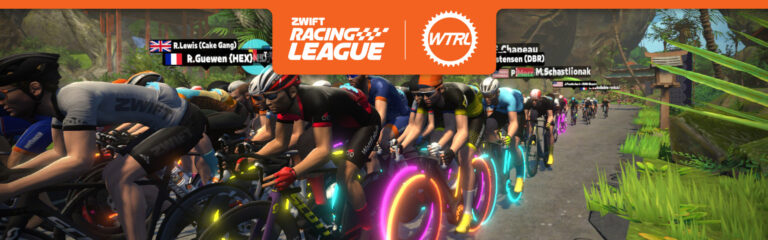
Watopia’s Seaside Sprint route has a special place in my heart, because it’s a route I created… the first Rebel Route I conceived which made it into the game’s official route list. It’s the perfect route for me as a racer, too – just enough punches to keep it interesting, no long climbs to get me dropped, and a flat sprint with a fast downhill lead-in.

So when I saw that Seaside Sprint was hosting week 3 of April’s ZRacing series, I knew I had to join.

The Warmup

I must be getting old.

Lately, I’m preferring a longer warmup. A 15-minute warmup used to be just right. Then it became 30. Nowadays, I like 45-60 minutes.

With a surprise XP Express event scheduled before my race, I knew I had the perfect warmup scenario. Ride with friends at whatever pace I’d like, getting double XP for 45 minutes. Then head over to the start pens for the race.

Before that, of course, I grabbed a couple of pieces of caffeinated gum. Because I’m not a coffee guy, but caffeine does wonders! 200mg of go-go juice.

The Start

We had just 35 B riders in the group. I checked the ZwiftPower signup list beforehand, and it showed only one rider ranked above me: Jan Itzchaky from the Danish team DZR. Jan ranks well above me in ZwiftPower and outperforms me at power levels, so I knew I needed to watch for moves from him and follow his wheel on any attacks.

The race started easily enough, with a short ramp into The Esses. P Warner from KISS put in a nice little dig on that ramp, and I followed his wheel along with a few others, hoping we might string the pack out and drop some riders or even better yet, cause a big early split and make things truly interesting! (With a smaller race, you never know what might happen.)

A handful of riders got dropped, but our 5-rider group got caught fairly quickly. There were 22 riders left as we finished the lead-in at the JWB Sprint banner. Three laps (18.9 km) to go!

Lap 1

Three riders (including Warner who had made the initial attack into The Esses) went up the road just before the climb into the Volcano, but our group of 19 didn’t give chase. I think we were all thinking the same thing: we’d be hammering soon enough. And hammer we did! Jan attacked up the kicker, and I followed, activating my draft boost powerup for maximum advantage.

We caught the three riders ahead, and the main peloton was now a few seconds back. Could this be the breakaway that sticks?

It was not meant to be. None of us were willing to put in hard pulls, and the pack behind had a rider or two who did. We finished the lap with the same 22 riders we’d started with.

Lap 2

Most of lap 2 was uneventful, until A Nordstrom attacked heading into The Esses and the group strung out. I gambled and sat in the wheels, hoping everyone else would pull it back. It worked! By the time we hit the descent into the sprint to the lap banner, I was sitting easily on the front.

(These are the kinds of split-second decisions you have to make in bike racing. It may be that the attack you let go is the one that sticks. But at the same time, you can’t follow every attack. You’re forced to take chances.)

I picked up a draft boost through the lap banner, which is exactly what I wanted for the final sprint. The Zwift gods were smiling on me today.

Lap 3

One lap to go, and 19 riders left in the front group. I expected someone to attack hard at the kicker into the Volcano, but despite lots of feathers flying, nobody pushed hard enough to get away.

As we hit The Esses with 1.8km to go, the pack was restless. Everyone was watching for someone to go long… then I saw Jan activate his draft boost powerup! The timing was strange, because he just sat in the wheels and didn’t attack through the group. (My best guess is that he activated it on accident… or he was having a bad leg day. Maybe he’ll see this post and comment about what really happened.)

Knowing Jan had no finishing powerup gave me a bit of a confidence boost. With 700 meters to go we hit the last little kicker before the descent to the finish, and I saw a rider activate their feather and attack hard through the group. Go time!

(This was too far out for me to sprint solo, but if I could sit on that wheel for a bit, they might just prove it be the perfect leadout.)

I pushed hard up the final bit of incline, with Warner kicking hard behind to try to grab my wheel. The rider ahead had a bit of a gap, but I knew I was still getting some draft benefit. I had to keep pushing!

Down the descent the rider started pulling away, but I had activated my draft boost anyway, knowing it would last through to the finish. We had a 1-2 second gap on the group behind, but the rider in 3rd place pulling the group back was none other than… Jan Itzchaky!

I used my Play Controllers to cut the corner on the hard left turn at the bottom, then kept hammering, flying past the rider ahead (Olsthoorn) with 150 meters left in the race. I still had a gap, but all the numbers behind were orange. I had to keep pushing! Head down, I put every last ounce of strength I had into the pedals. And I crossed the finish line… in first place!

See results on ZwiftPower >
See activity on Strava >

Watch the Race Video

Takeaways

This was my first B win in a long time. And I mean… I really long time. I won a small experimental race with just handful of riders several months ago, but the last time I won a legit race with a decent number of riders was December 2022. Yup, you read that right! It’s been over 15 months.

So this felt good.

Everything came together perfectly to make this win happen. My legs felt good on the day, strong riders didn’t make the kind of repeated attacks that might have sapped me, the finishing sprint laid out well for a rider like me, and the rider who attacked early was the perfect leadout.

The B category is stronger than ever thanks to how category enforcement works these days (the B upper limit is a zFTP of 4.2 W/kg and my zFTP is currently… 3.49 W/kg). I can finish in the front group on flatter races, but everything has to come together perfectly for me to win. Today it finally did.

Got a nice 2024 power curve bump in the 35-100 seconds range, too. Hurray!

Your Comments

Have you had any recent race wins? Got thoughts on the Seaside Sprint route (it’s now officially my favorite). Share below!

Top 5 Zwift Videos: Pain Caves, supertri E-World Champs, and Racing Mistakes

As Zwifters, we spend lots of our time cranking away on our indoor cycling setups. Watch as one prominent Zwifter provides a tour of his recently updated pain cave!

Also included in this week’s list are videos about Alpe du Zwift, racing tips, and the E-World Triathlon Championships.

Tariq from Smart Bike Trainers recently renovated his pain cave. Get a tour of his full setup!
Around a month after posting his first Alpe du Zwift attempt on YouTube, Omar, from Coffee Fueled Cycling, gives Alpe du Zwift another stab. How much time can he shave off?
Ollie Moore, aka Not Tadej Pogacar, provides commentary on his recent race. As he analyzes his performance, he shares 3 crucial things that riders should avoid doing in Zwift races. Ollie is so close to 1000 subscribers! Like his content? Help him out by smashing that subscribe button!
On episode 2 of The Alpe Ape’s journey to 6 w/kg up Alpe du Zwift, he does a weigh-in and snags a personal record up the Alpe.
Just this past weekend, the supertri E-World Triathlon Championship took place. What makes this series unique is that it takes place completely indoors… with the ride and run legs on Zwift!

Got a Great Zwift Video?

Share the link below and we may feature it in an upcoming post!

The Watt Wasting Window: Riding Second Wheel Efficiently on Zwift

The Watt Wasting Window: Riding Second Wheel Efficiently on Zwift

While doing some 2-rider drafting tests on Zwift recently, I noticed a pack dynamics “quirk” that I haven’t seen discussed elsewhere. You know how we love Zwift minutiae here at Zwift Insider… I couldn’t help myself! I went down the rabbit hole. For science. For Zwifting! And now you get to read the results. Let’s dive in…

The Watt Wasting Window

I’m calling this quirk the “watt wasting window” because it works like this: if you’re sitting in second wheel, there is a “window” or range of power you can hold to maintain your position.

There’s the minimum amount. This is what you want to hold in order to race efficiently.

But there’s also a maximum amount. This is the maximum power you can hold without coming around the rider in front of you and getting into the wind yourself.

The range of watts between minimum and maximum is large, which means you can waste a lot of watts in this situation. For example, in my video below, I show how you can sit on the wheel of a rider holding 300W at either ~230W (the minimum) or ~295W (the maximum). That’s a 65-watt swing. That’s big!

Here’s a quick video demonstrating how it works:

Before anyone asks: the overlays in the video are from Sauce for Zwift. It’s a very useful third-party Zwift add-on, but I used it for this video particularly so I could see more accurate rider speed and show the stats of both riders.

Applicable Scenarios

The most obvious scenario where this quirk matters is in a team time trial. Ever TTT racer knows that when you’re not at the front of the train putting in a pull, you have two jobs:

  1. Position yourself correctly
  2. Ride as efficiently as possible

It’s especially important to do these jobs well when you’re in the second position because messing them up can slow down your whole team or unnecessarily increase your fatigue right before you’re about to take a hard pull. To put it simply: you don’t want to waste any watts just before taking a pull in a TTT.

The watt wasting window grows larger the faster your front rider moves, too. That’s just how the math works! So if the front rider is holding 400W, the second rider can sit in at ~290W, but will also be sitting in at 395W – a range of 105 watts! Screenshots from recent tests:

It’s useful to know about this quirk in other scenarios too. In fact, just one day after running these tests, I found myself in a race sitting in a chase group with two other riders. As I sat second wheel putting out around 300W, I remembered what I’d seen the day before, and I eased up to around 250W. Guess what? I stayed on that rider’s wheel.

Now I wonder how many watts I’ve wasted since Zwift changed Pack Dynamics to behave this way.

Non-Applicable Scenarios

If you’re wondering why you’ve never noticed the watt wasting window before, it’s because this quirk is only noticeable in specific scenarios.

In a typical Zwift race you’ll spend a lot of time moving around in the peloton, just trying to sit in efficiently. You may also be attacking off the front, or maybe even putting in a hard pull on the front of the group to keep the pace high.

In these scenarios, the watt wasting window doesn’t apply. You can move freely around the peloton, you can fly off the front with your leg-snapping attack, or you can sit in the wind and put in a big pull to keep the pace high so your teammate can sprint to glory in the final 300 meters. All without worrying about wasted watts. (Well, at least not the wasted watts I’m talking about today.)

In fact, you may even find yourself accidentally rolling through the peloton and onto the front, into the wind, due to the virtual momentum your avatar had from the power you put down several seconds before. While this may be wasted watts as well, they’re wasted watts of a different type, and not the watt wasting window I’m discussing here.

It’s Not a Bug, It’s a Feature

The watt wasting window applies to very specific scenario: when you’re stably sitting second wheel.

Zwifters may see this pack dynamics quirk as a bug that Zwift needs to fix, but I don’t think that’s the case. Perhaps avatar behavior could be tweaked a bit, but there’s good reason why it works the way it does.

To put it another way: just because Zwift isn’t behaving like outdoor riding doesn’t mean something is wrong. There are limits to the simulation.

Consider this: what’s the alternative? Instead of staying on the front rider’s wheel, what should happen to the second rider when they bump their watts up to just below the front rider’s power?

Outdoors, if you rode at 295W behind a rider holding 300W (all other things being equal) you would ride into their back wheel and crash. Clearly, that’s not going to happen in Zwift. So how should Zwift position your avatar? There are three possibilities:

  1. You stay on the wheel of the rider ahead – this is what’s currently happening.
  2. You move forward, so your avatar melds with the one ahead. But this looks bad visually.
  3. You move forward and off to the side of the rider, like you might do outside to avoid crashing.

#2 is a nonstarter for me. I’d be interested in experiencing #3 to see if it creates a more intuitive simulation, where I begin to automatically modulate my power for maximum efficiency.

But #1, the way it currently works, also seems like a sensible approach. And it works in such a way as to help you find that magical minimum power number, if you pay close attention…

Finding The Magical Minimum

Zwift could modify the UI to help riders find that minimum power level in this scenario, perhaps by showing some sort of “watts wasted” graph. But that may prove confusing to riders, and Zwift (rightly) wants to keep their UI very simple.

The good news is, if you find yourself in this very specific scenario where the watt wasting window applies, you can find that magical minimum today as you ride! The key is to keep a gap to the rider just ahead. Outdoors, a 6″ gap feels super efficient. But on Zwift, that probably means you’re putting out too much power! Let the gap go out to 2-3 meters (you’ll get a “close the gap” message), then try to hold it there. You won’t lose any draft benefit. If the gap starts to close, you’re putting out too much power. And if it starts to stretch, you need to add a few watts.

Give it a try, and let me know how it goes for you. Ride on!

Your Thoughts

Share below!


Bikes & Banjo Hangouts: Zwift Insider Struck a Chord Creating Niche Online Communities

0

Bikes & Banjo Hangouts: Zwift Insider Struck a Chord Creating Niche Online Communities

Several weeks back, I got pipped at the line in a Zwift Games race by one Samuel Huntington. As it turns out, our meeting was serendipitous, and Sam reached out via a Strava comment to invite me onto his Hill Climbers podcast.

Hill Climbers is a newish, interview-style podcast featuring “stories of business and culture from cycling-centric folk.” Watch our interview below to learn about my origin story and where I think Zwift racing is heading, and check out the Hill Climbers website or Spotify for more episodes.

Episode Summary

Eric Schlange is one of the most well-known Zwift riders on the platform, and he comes to the notoriety honestly. When Eric started Zwifting in 2015, the veteran webmaster immediately identified a need for a Zwift knowledge base to address the nuances of riding in the brave new virtual world. Exponential traffic growth led to an official Zwift sponsorship, cementing Zwift Insider’s credibility.

This story does not entail scale-at-all-costs entrepreneurship. Instead, it is one of a self-professed community builder who understands the need, power, and commercial value of niche online hubs. In fact, Zwift Insider was not Eric’s first rodeo – that was www.banjohangout.org – THE banjo enthusiast destination for more than 20 years!
Sure enough, Eric is exactly the kind of guy you’d hope to be riding and racing with on the platform: friendly, witty, competitive, and resourceful. He demonstrates the core values and class of a true esport ambassador and this interview reflects his passion and ability to articulate both soft and hard reasons that Zwift earns precious hours of devotee training.

This interview covers Zwift Insider’s adolescence before organized platform racing, broad usership data, and a taste of the product roadmap, with Eric’s insider insight and stories sprinkled throughout.  You would be so lucky to race alongside Eric in Watopia, Richmond, or Glasgow. RIDE ON!